
Sage green and white kitchens balance soft, nature-inspired color with the fresh look of a light neutral. The pairing can suit farmhouse, cottage, traditional, Scandinavian, and modern homes because the surrounding finishes determine its character. Recent kitchen coverage continues to feature sage with white surfaces, natural wood, handmade-look tile, and warm metals, showing how adaptable the palette can be. () For a successful design, coordinate the cabinet color with the countertop undertone, backsplash, flooring, hardware, and lighting. Earthier sage shades usually feel warmer, while gray-green tones create a quieter finish. Whether you want a colorful island or fully painted cabinetry, these 20 sage green and white kitchen ideas offer complete, practical looks you can recreate.

1. Sage Green Lower Cabinets With White Upper Cabinets
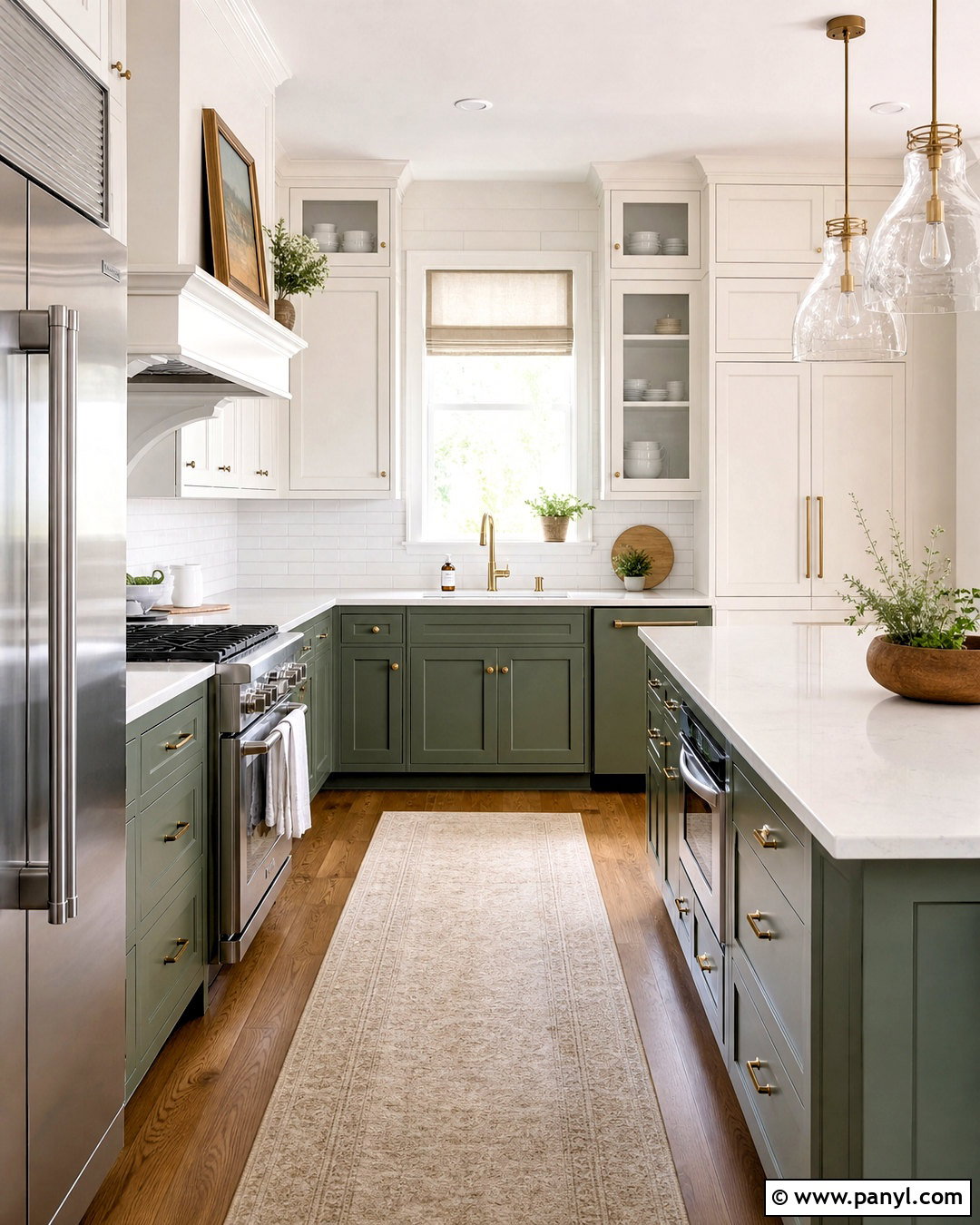
Sage green lower cabinets and white upper cabinets create an attractive balance of color and brightness. Choose simple Shaker doors for a look that works in both traditional and transitional homes. Continue the white from the upper cabinets onto the walls and install a white quartz countertop with faint warm gray veining. A glossy white subway tile backsplash reflects light without competing with the two-tone cabinetry. Add brushed brass knobs, an undermount stainless steel sink, and warm oak flooring to keep the palette welcoming. The green base cabinets visually ground the room, while the white cabinetry keeps the upper half open. Complete the kitchen with linen Roman shades, clear glass pendants, and a narrow neutral runner.
2. Sage Green Cabinets With White Quartz Countertops
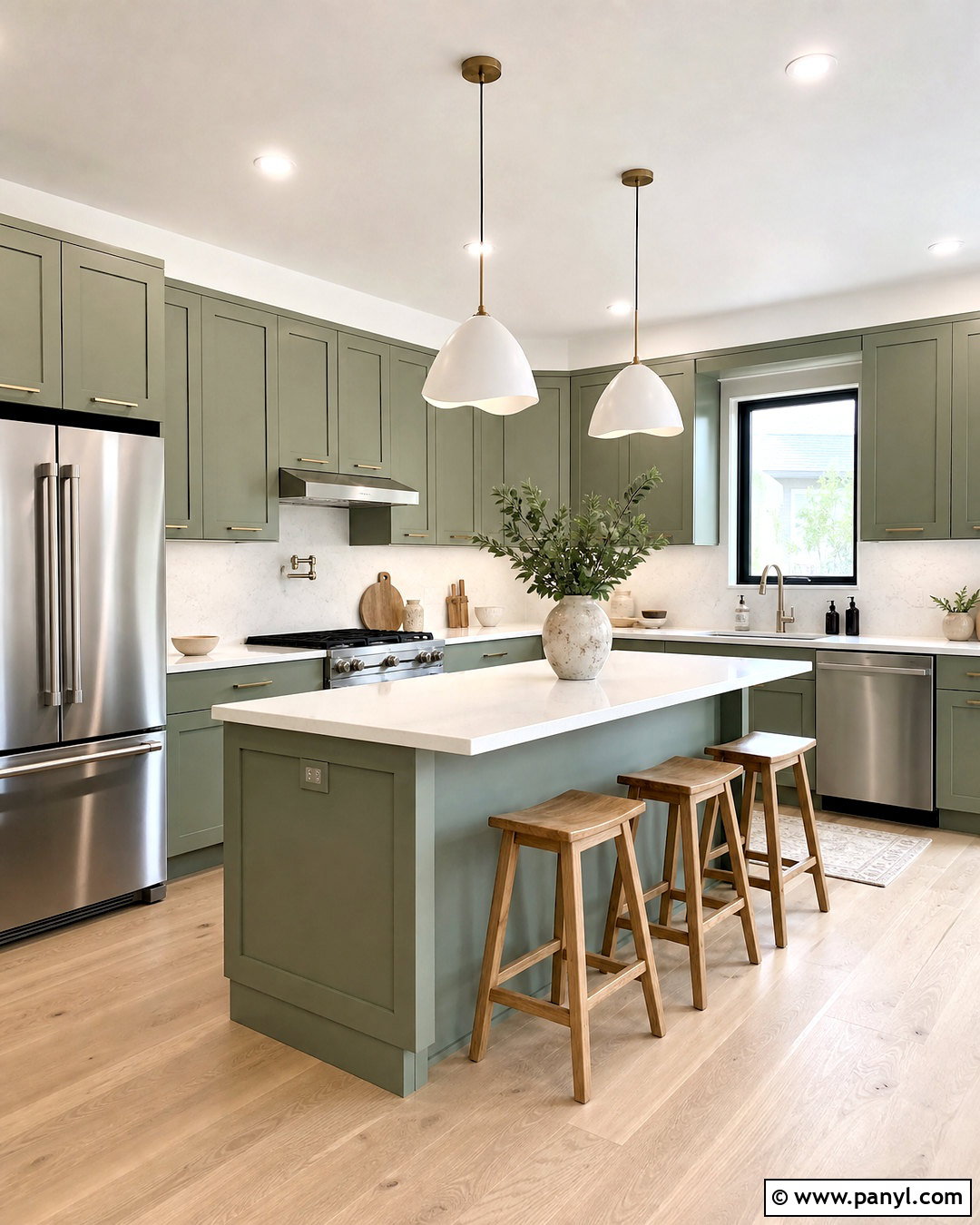
Imagine a calm kitchen where soft sage green cabinetry wraps around the room and clean white quartz provides a crisp working surface. Flat-panel or slim Shaker doors will give this combination a streamlined appearance. Select quartz with limited veining so the countertops do not distract from the cabinet color. Carry the same material several inches up the wall or use it behind the range for a seamless finish. Brushed nickel hardware, stainless steel appliances, and pale oak flooring create a modern foundation. Warm white walls prevent the kitchen from feeling overly cool. Finish the space with sculptural white pendants, backless wood stools, under-cabinet lighting, and a few simple ceramic pieces displayed on the countertop.
3. Sage Green Kitchen Island With White Cabinets
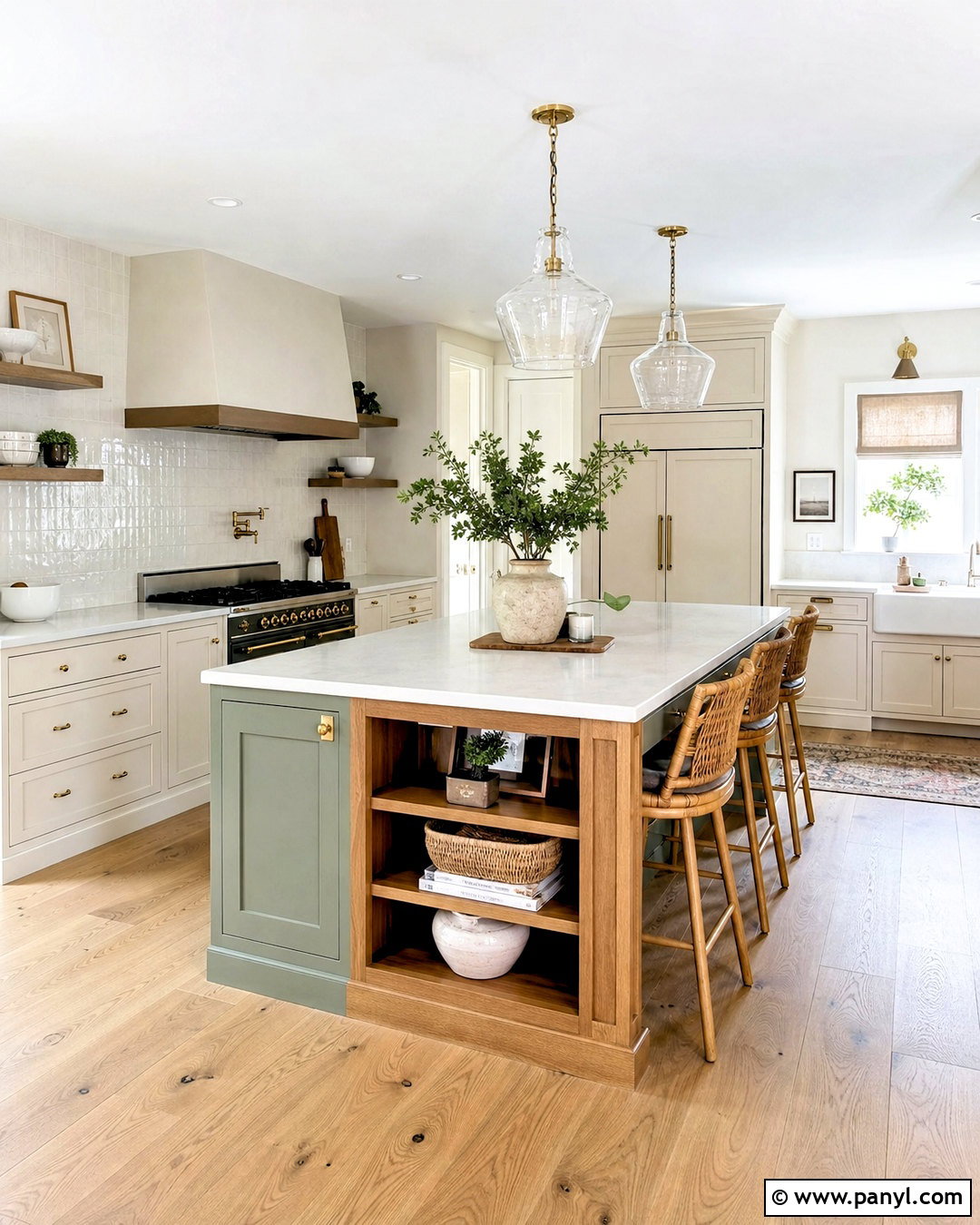
A sage green island can become the focal point without requiring every cabinet to be painted. Surround it with warm white perimeter cabinetry, a white handmade-look backsplash, and lightly veined quartz countertops. Use an earthy medium sage rather than a pastel shade so the island has enough visual weight. A natural oak base or oak end panels can add another layer of warmth. Install aged brass pulls and matching pendant lights to connect the green centerpiece with the surrounding cabinetry. Three woven counter stools make the island comfortable for everyday meals. Wide-plank oak flooring, cream walls, and a small vase of leafy stems complete this bright, relaxed kitchen while keeping the colored island clearly defined.
4. White Cabinets With Sage Green Backsplash
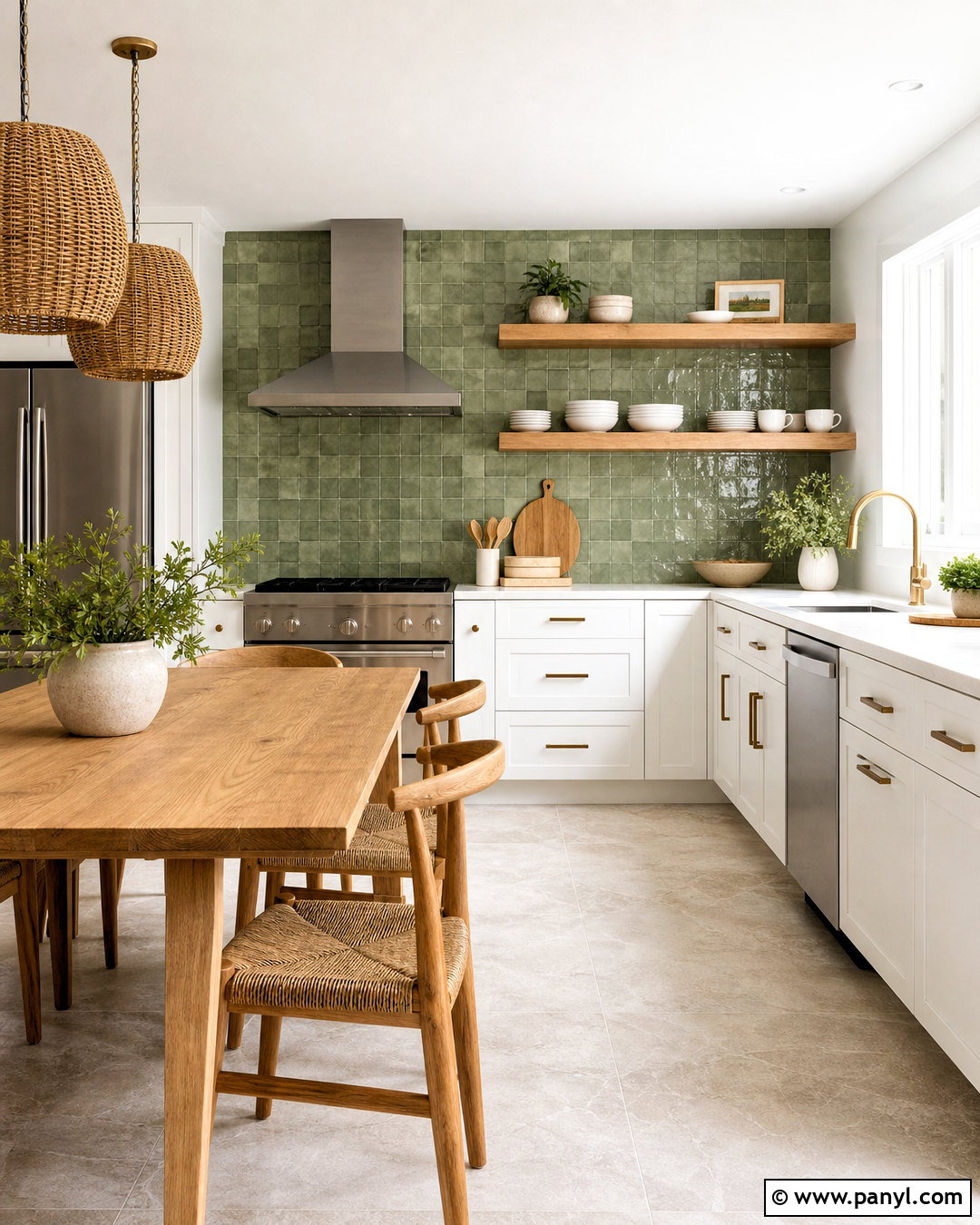
If permanent green cabinetry feels like too much commitment, introduce sage through the backsplash. Start with warm white cabinets, a pale white quartz countertop, and simple brushed brass hardware. Install glossy sage green zellige or ceramic tiles from the counter to the bottom of the upper cabinets. Their slight variations will create depth across the main work wall. Use off-white grout for a soft transition rather than sharp contrast. Natural wood shelves beside the range can display white dishes and everyday glassware. Complete the kitchen with an oak dining table, woven pendants, and limestone-look flooring. The final space feels colorful and layered, yet the large white cabinet surfaces preserve a clean, bright atmosphere.
5. Sage Green Shaker Cabinets With White Subway Tile
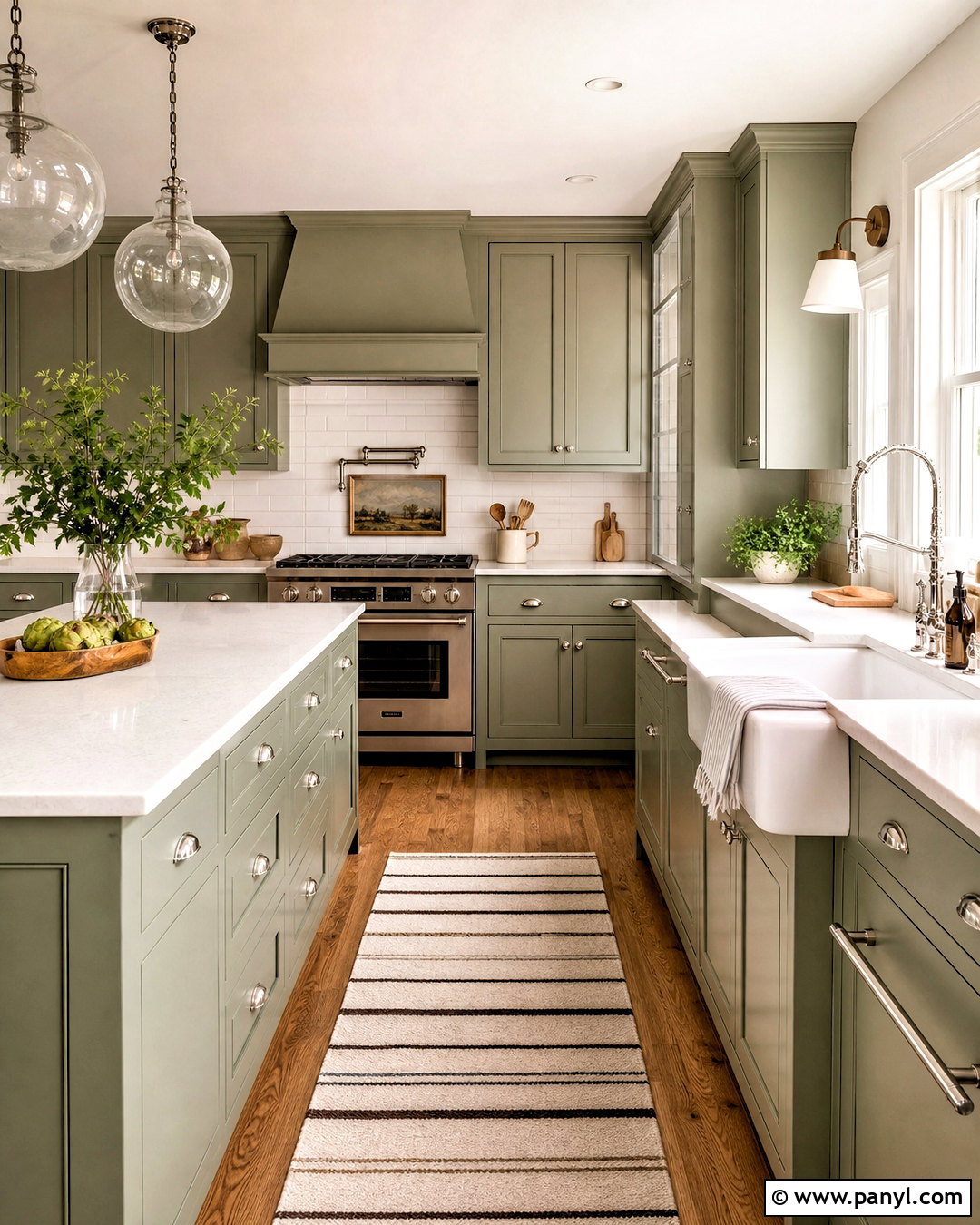
For an approachable classic kitchen, pair sage green Shaker cabinets with a clean white subway tile backsplash. Choose an earthy green with subtle gray undertones and continue it across both lower and upper cabinetry for a cohesive appearance. A creamy white quartz countertop softens the contrast and works well with warm white grout. Install the tile in a traditional horizontal pattern to reinforce the familiar character of the Shaker doors. A white apron-front sink, polished nickel bridge faucet, and medium oak floor add timeless details. Use cup pulls on drawers and round knobs on doors. Finish the room with glass globe pendants, a striped runner, and a small wooden rail for utensils near the range.
6. Sage Green Farmhouse Kitchen With White Apron Sink
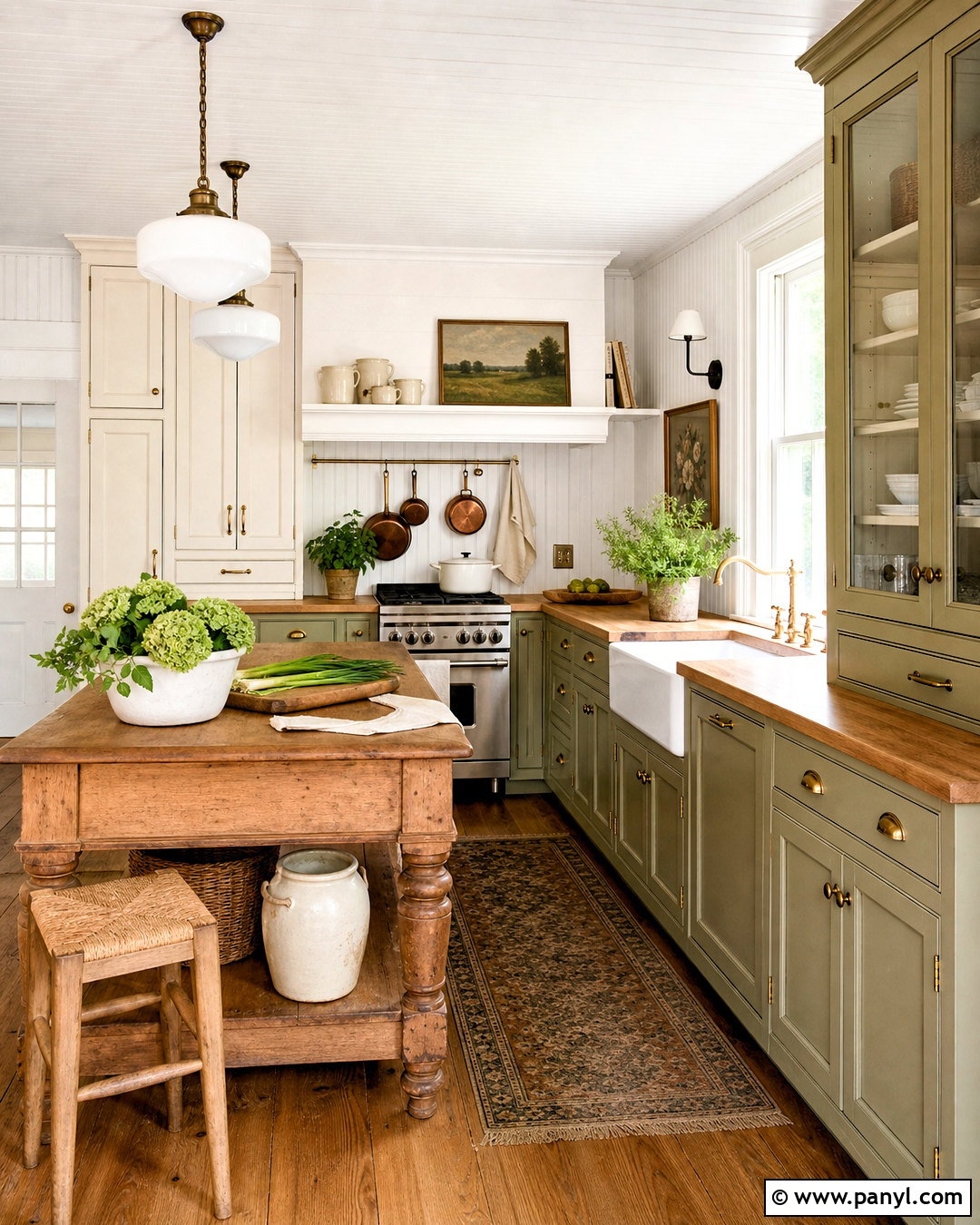
The welcoming character of a farmhouse kitchen pairs naturally with sage green and white. Paint Shaker base cabinets a muted herbal green, then use creamy white cabinets around the refrigerator and pantry to lighten the layout. Center a deep white apron-front sink beneath a window and add a traditional brass bridge faucet. Butcher block countertops provide warmth, while a white beadboard backsplash adds subtle texture. Include a freestanding oak island with drawers, open shelving, and sturdy turned legs instead of a highly polished built-in piece. Wide-plank wood flooring, milk-glass pendants, and woven counter stools reinforce the relaxed style. Keep accessories practical with stoneware crocks, wood cutting boards, linen towels, and potted kitchen herbs.
7. Modern Sage Green Kitchen With White Marble
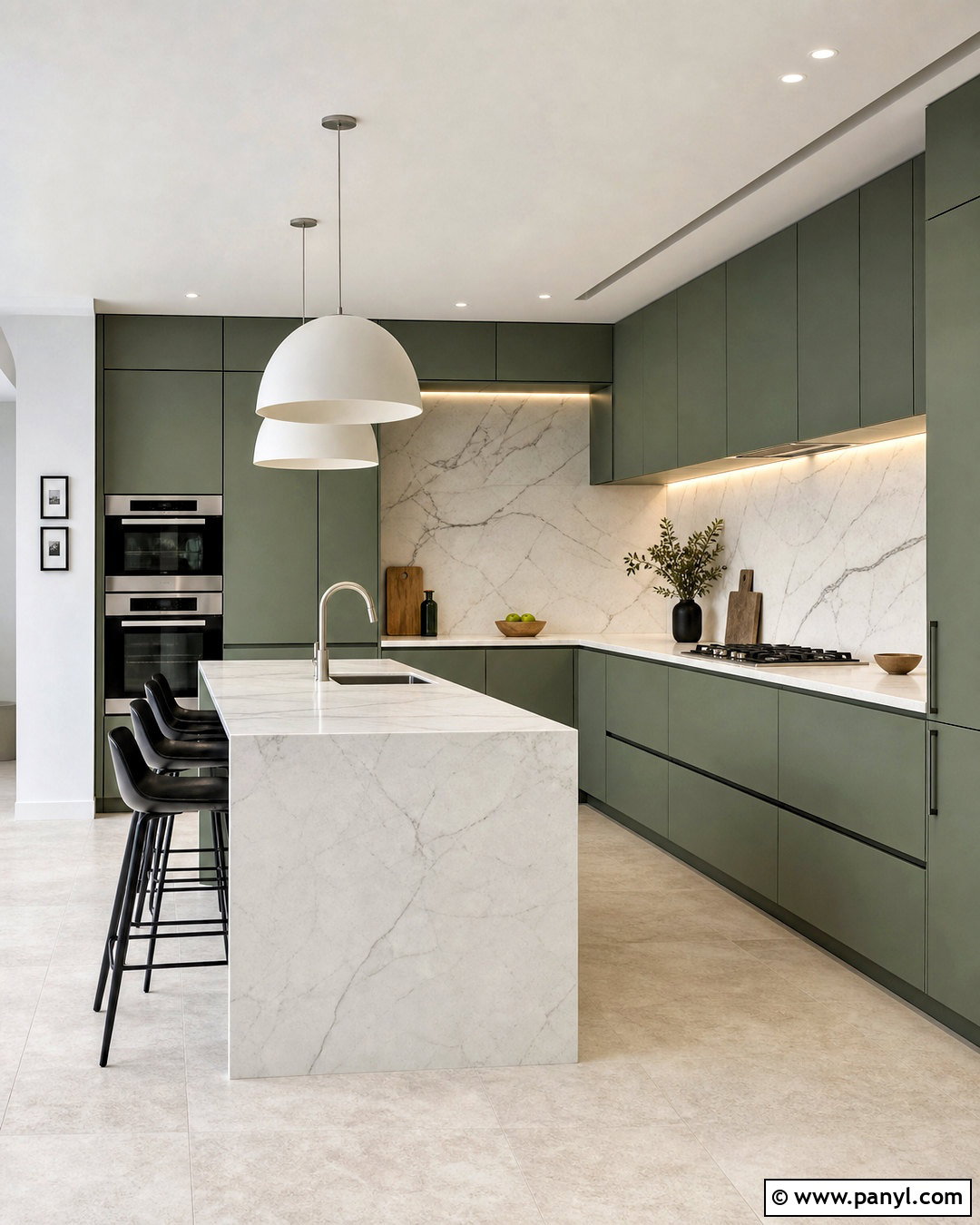
Clean lines give sage green and white a more sophisticated modern direction. Use handleless sage green cabinets with a smooth matte finish and pair them with white marble or marble-look porcelain countertops. Continue the counter material up the wall to form a full-height backsplash with quiet gray veining. Tall cabinetry should reach the ceiling to create an uninterrupted architectural look. Add integrated appliances wherever possible and choose a minimal stainless steel faucet. Pale terrazzo or large-format limestone-look flooring keeps the room light. Over the island, install two oversized white dome pendants for strong visual structure. Black counter stools and a few dark accents provide definition, while concealed lighting beneath the cabinets makes the stone surfaces appear clear and polished.
8. Small Sage Green And White Galley Kitchen
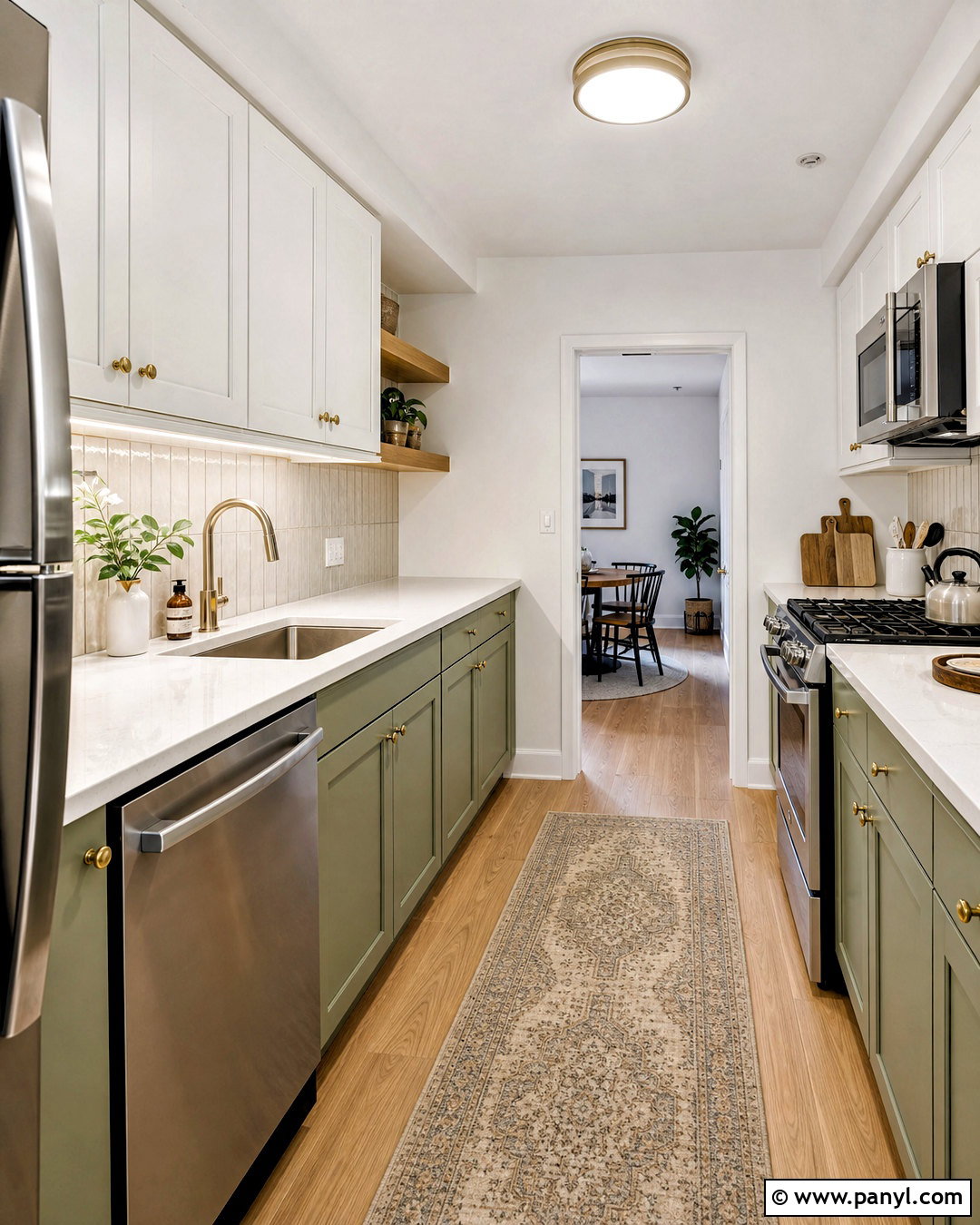
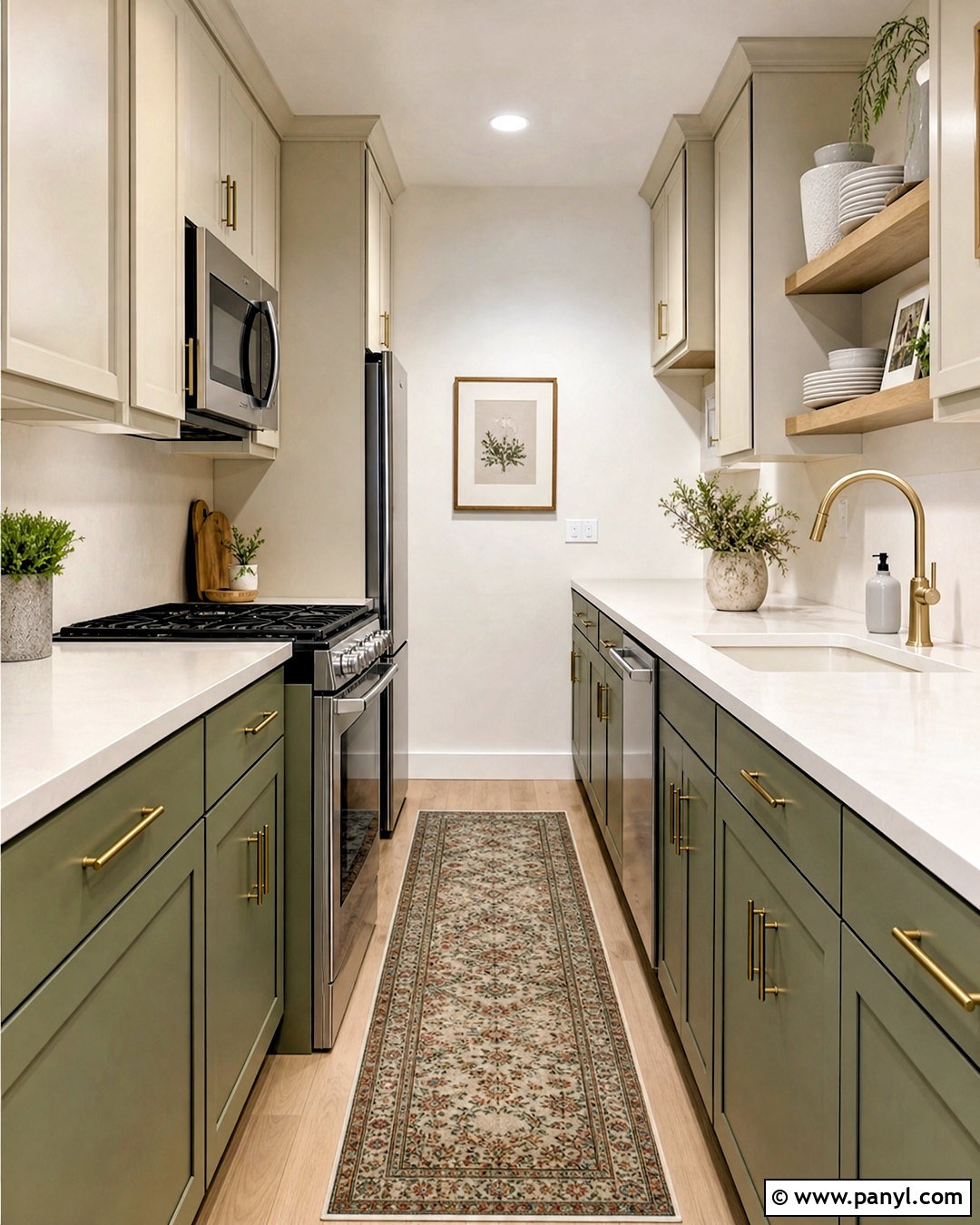
A narrow galley kitchen can handle sage green when the color is placed thoughtfully. Use muted sage base cabinets on both sides and white upper cabinets that blend with the walls. Select compact Shaker doors with small brass knobs so the cabinetry feels detailed but not crowded. White quartz counters and a glossy vertical backsplash help maintain a bright work area. Run pale oak flooring lengthwise to emphasize the kitchen’s full depth. Open shelves near the window can replace one upper cabinet and provide breathing room for white dishes. Add slim under-cabinet lights, a stainless steel range, and a single ceiling fixture with a simple profile. Keep counters mostly clear and use coordinated storage to make the complete layout feel calm.
9. Sage Green Kitchen With White Oak Accents
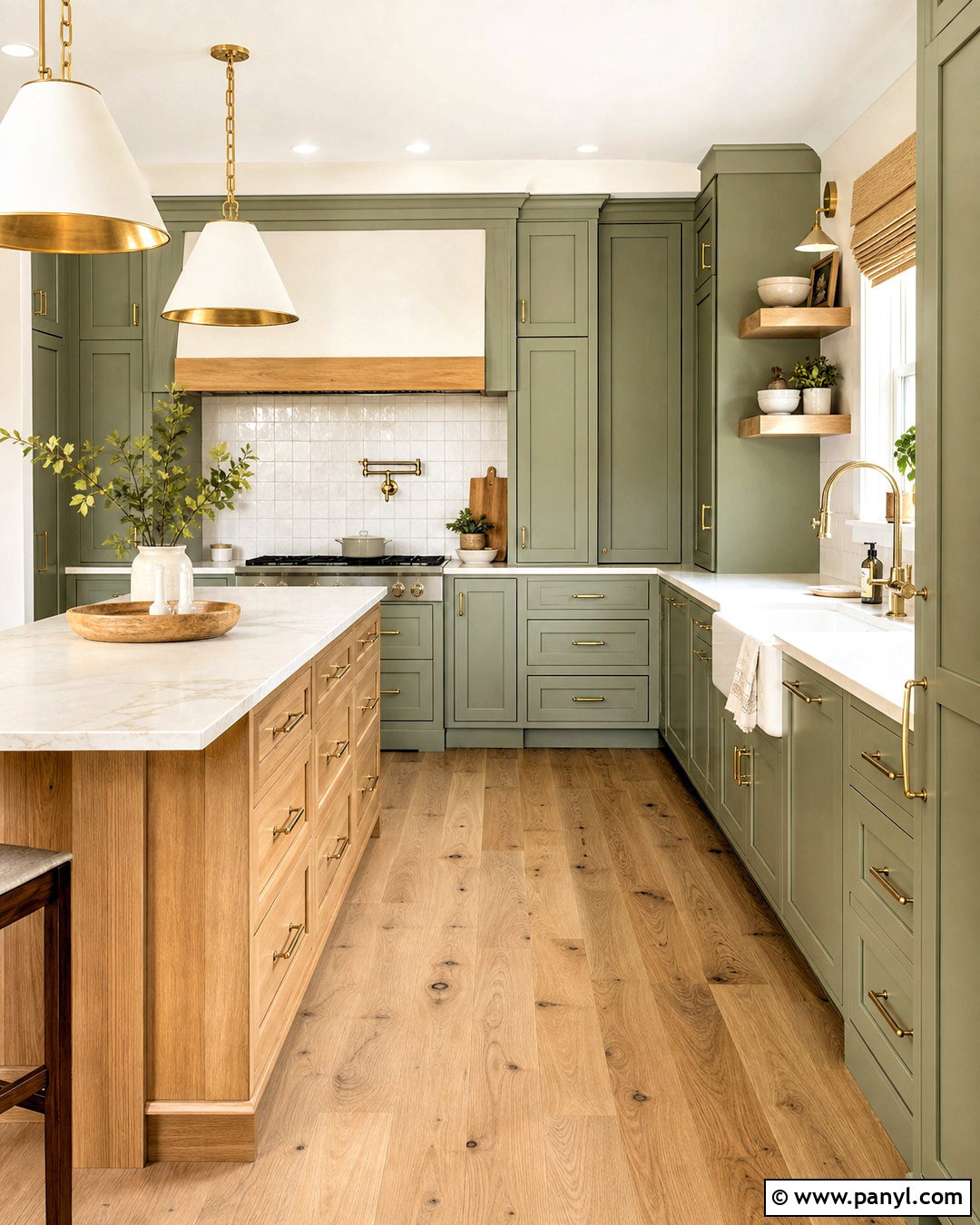
Warm white oak prevents a sage and white kitchen from looking overly cool or formal. Paint the main cabinets a medium sage green, then use white oak for the island, open shelves, and range hood trim. Choose white quartz countertops with fine beige veining to connect the painted and natural surfaces. A warm white square-tile backsplash creates a quiet background without flattening the palette. Add antique brass hardware and cream ceramic pendants for gentle contrast. The floor can be slightly darker oak, provided its undertone complements the island. Keep the walls soft white and dress the windows with woven shades. White stools, handmade pottery, and a neutral runner finish this organic kitchen without covering the beauty of the wood.
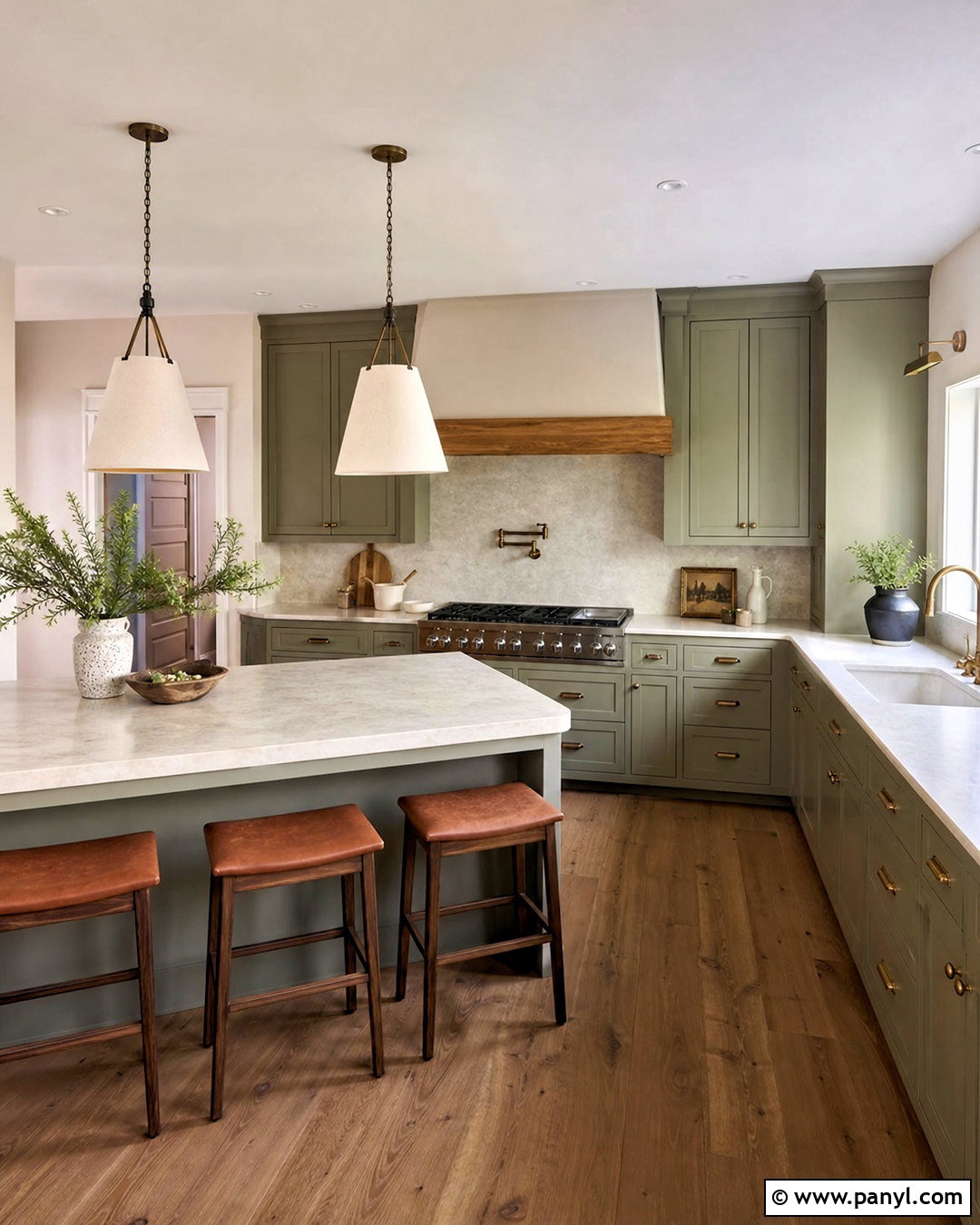
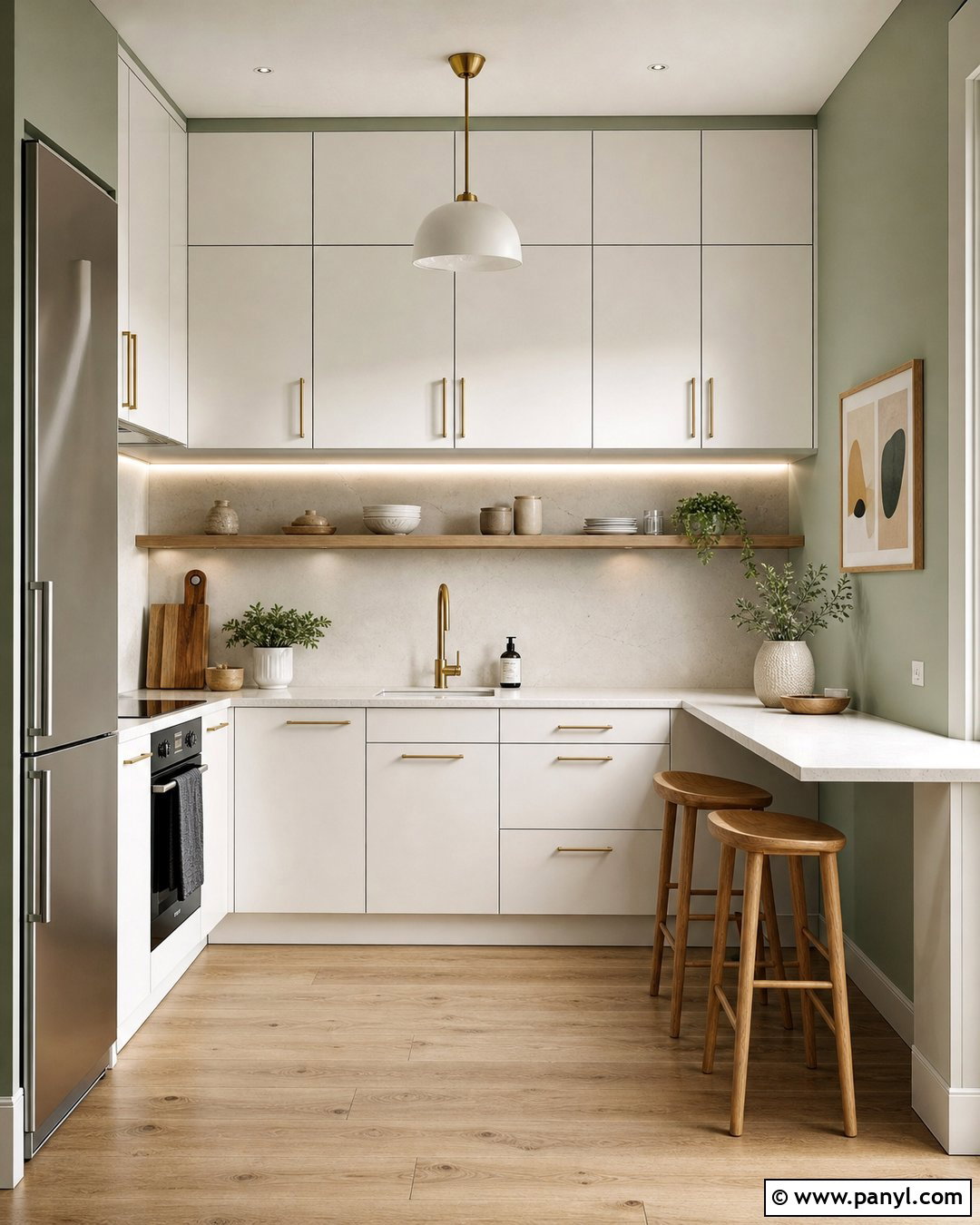
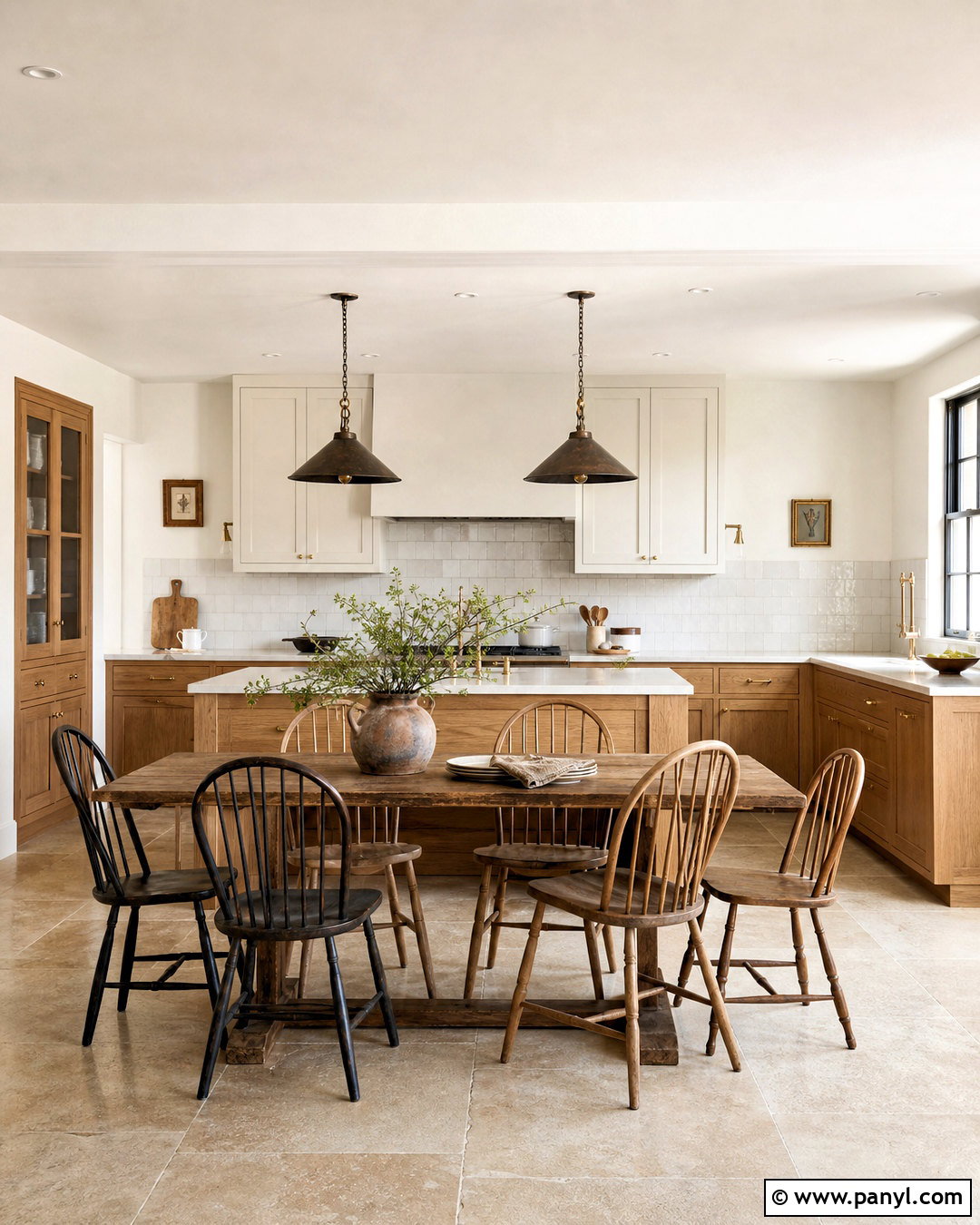
10. Sage Green Kitchen With White Penny Tile
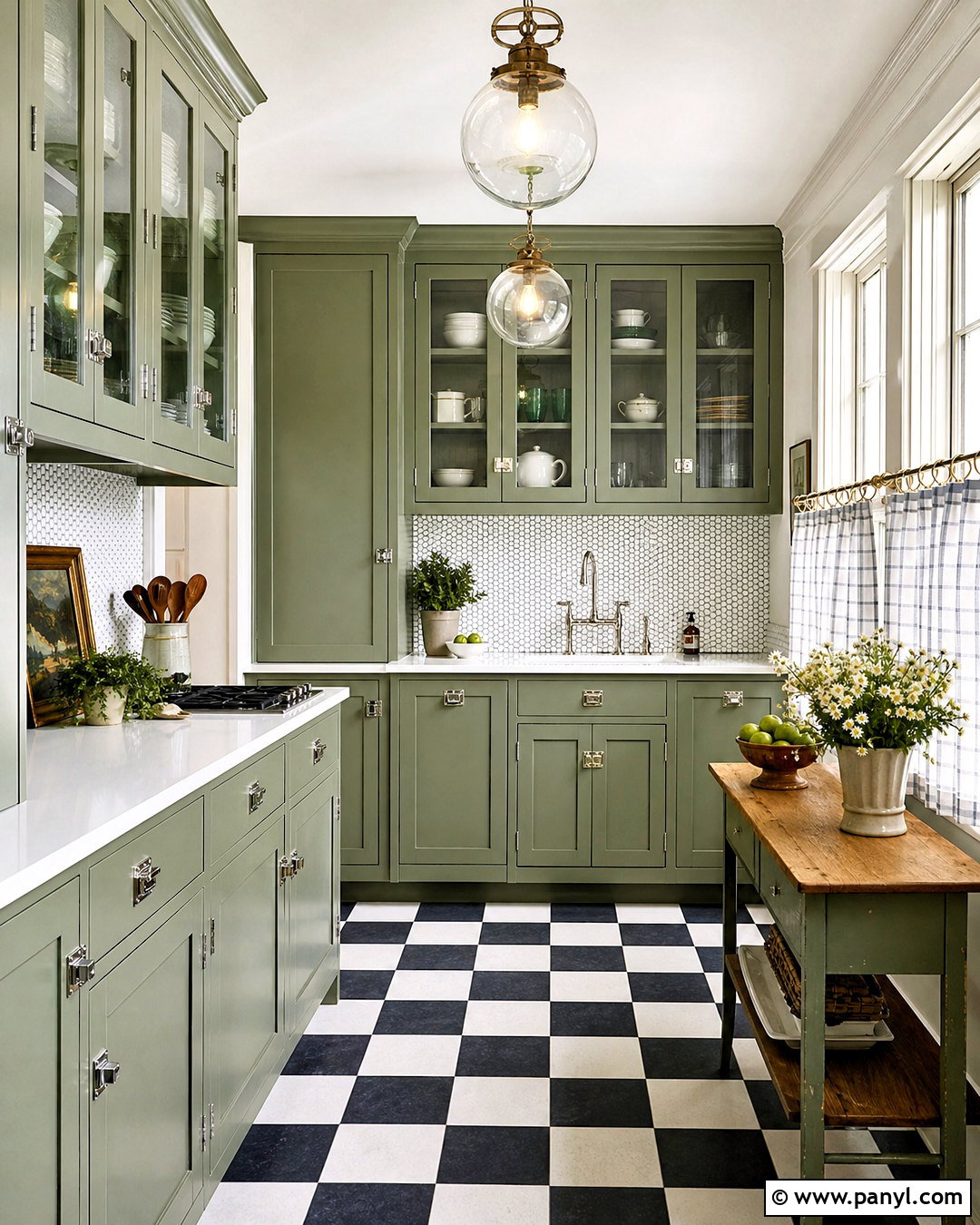
White penny tile introduces small-scale texture that works especially well in a compact or vintage-inspired sage kitchen. Choose medium sage Shaker cabinetry and install the round tiles across the entire backsplash with soft gray grout. Keep the countertop simple with solid white quartz and a gently rounded edge. Polished nickel latches, cup pulls, and a traditional faucet add period character without making the space feel themed. Black-and-white checkerboard flooring can create a lively foundation, while white walls and open glass-front cabinets balance the pattern. Add a small wood table or narrow mobile island if space allows. Clear globe lighting, white café curtains, and a few green-and-white ceramic pieces complete the cheerful, functional room.
11. Sage Green Kitchen With White Herringbone Backsplash
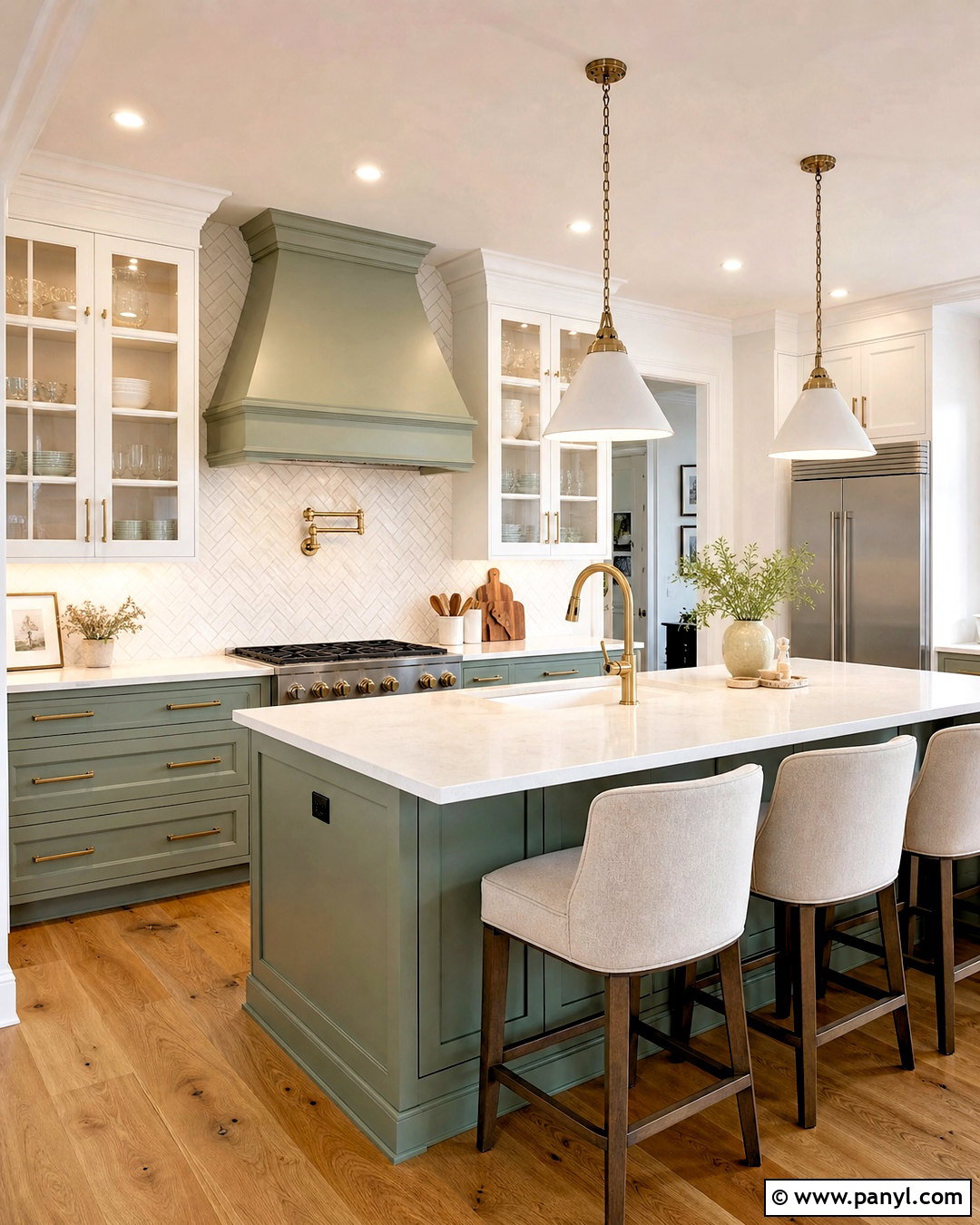
A herringbone backsplash makes the green-and-white palette more dynamic while preserving its light appearance. Use sage green lower cabinets, white glass-front upper cabinets, and a warm white quartz counter. Install slender white tiles in a herringbone layout behind the range and continue a simpler vertical pattern along the remaining walls. This controlled variation creates a focal point without introducing another color. Brushed brass hardware and a matching pot filler add warmth against the tile. Choose natural oak flooring and white upholstered stools for the island. A sage-painted range hood can connect the backsplash feature to the lower cabinets. Finish with understated pendant lights and minimal countertop decor so the tile pattern remains easy to appreciate.
12. Sage Green Kitchen With White Plaster Range Hood
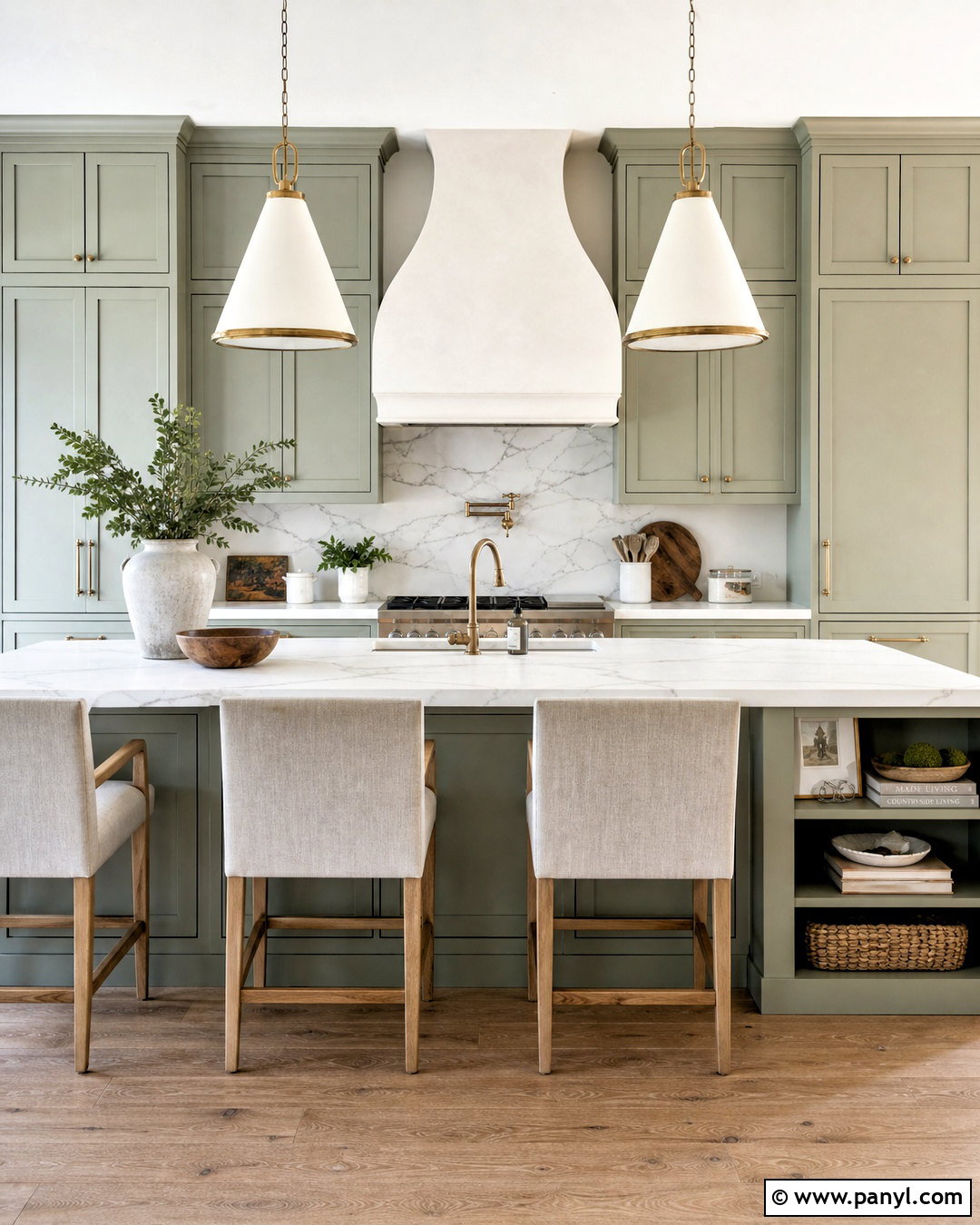
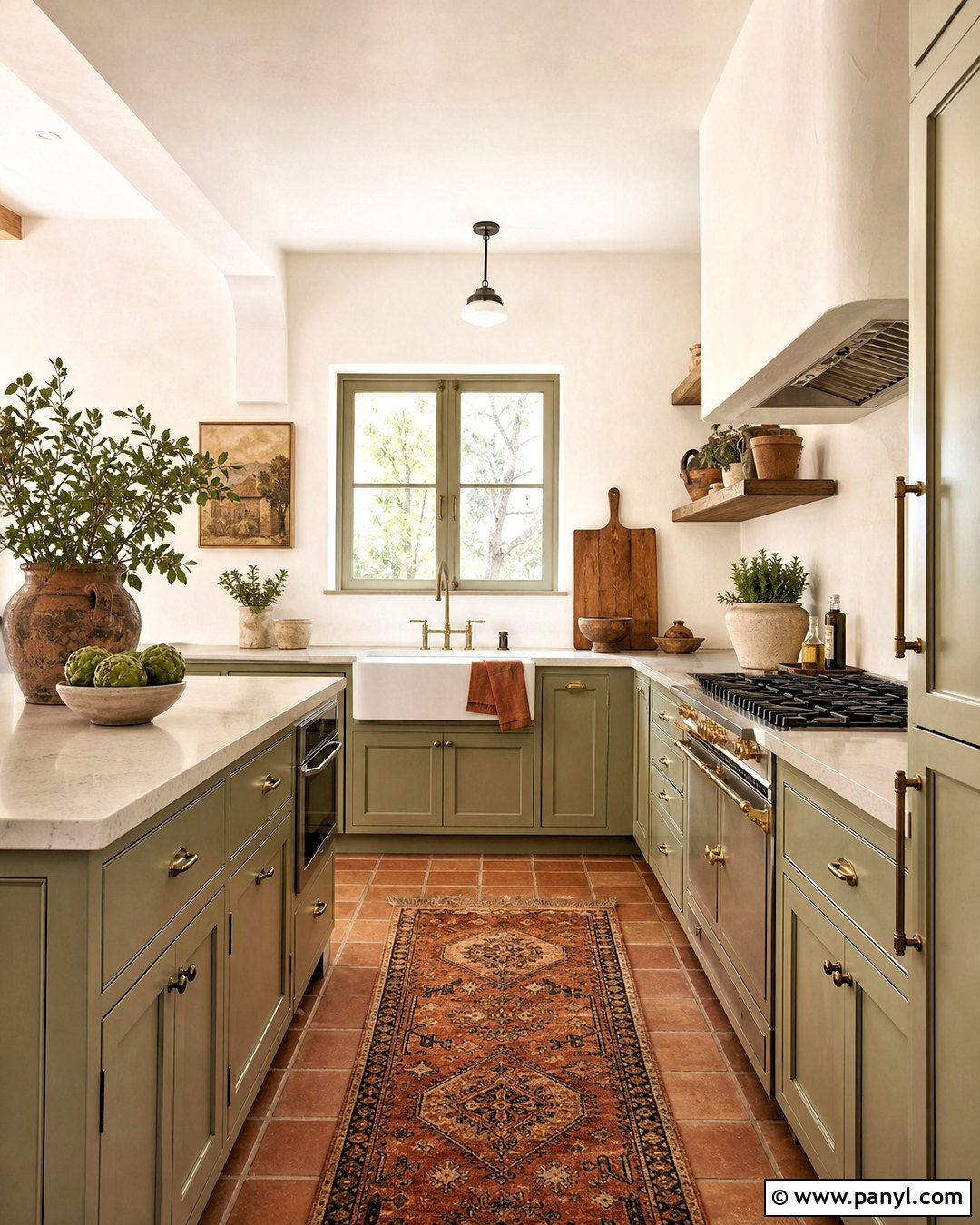
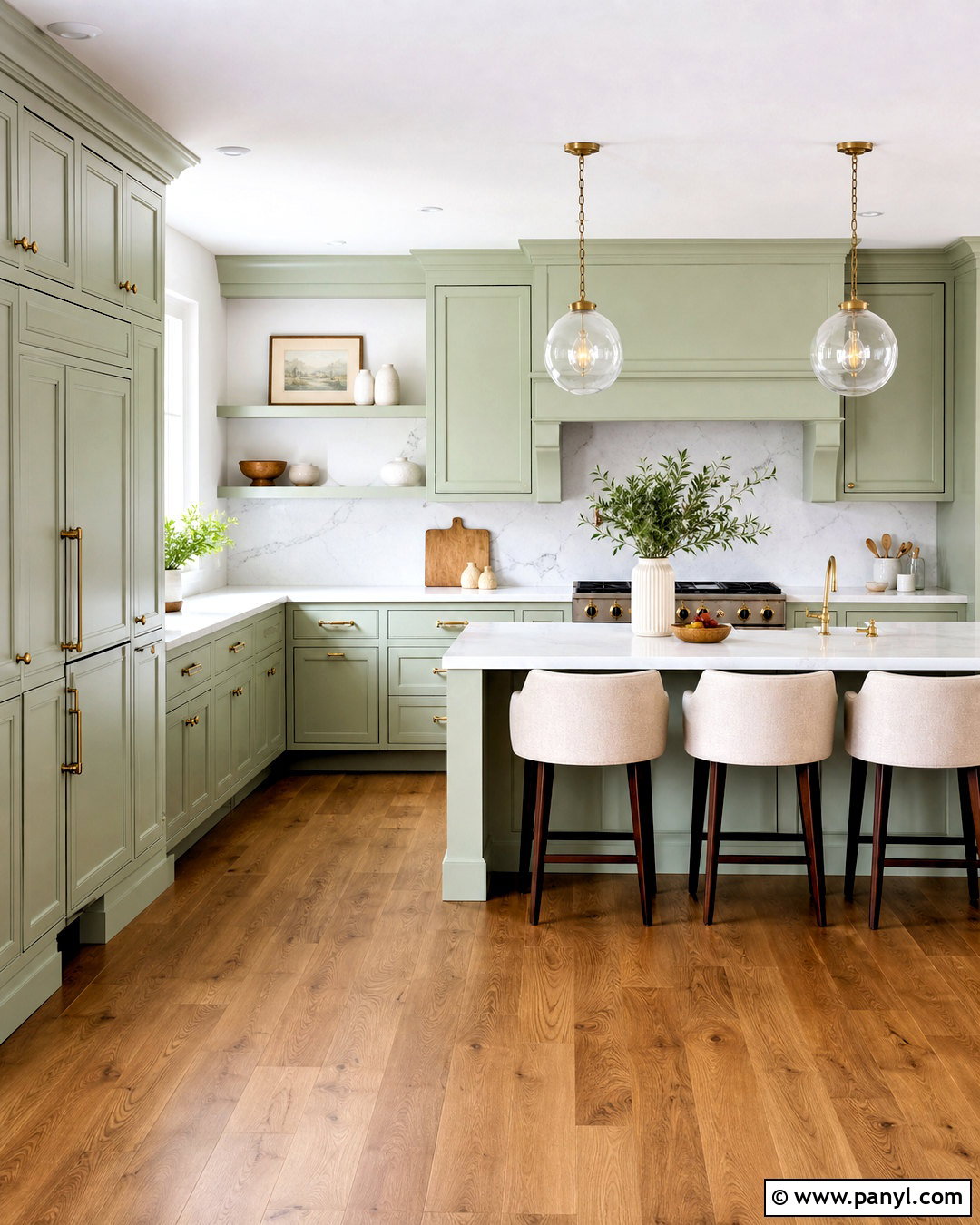
A white plaster range hood brings a handcrafted architectural element to sage green cabinetry. Place the hood above a wide range and surround it with sage Shaker cabinets that extend to the ceiling. Use a gently curved or tapered hood shape, finished in warm white plaster to coordinate with the walls. A full-height white marble backsplash behind the range adds subtle movement and protects the focal area. Continue the marble-look material across the countertops for consistency. Oak flooring, antique brass pulls, and linen-covered stools soften the formal cabinet arrangement. A spacious sage island can include deep drawers and open end shelving. Keep nearby accessories neutral so the range hood and earthy cabinetry remain the clear visual anchors.
13. Sage Green Cottage Kitchen With White Beadboard
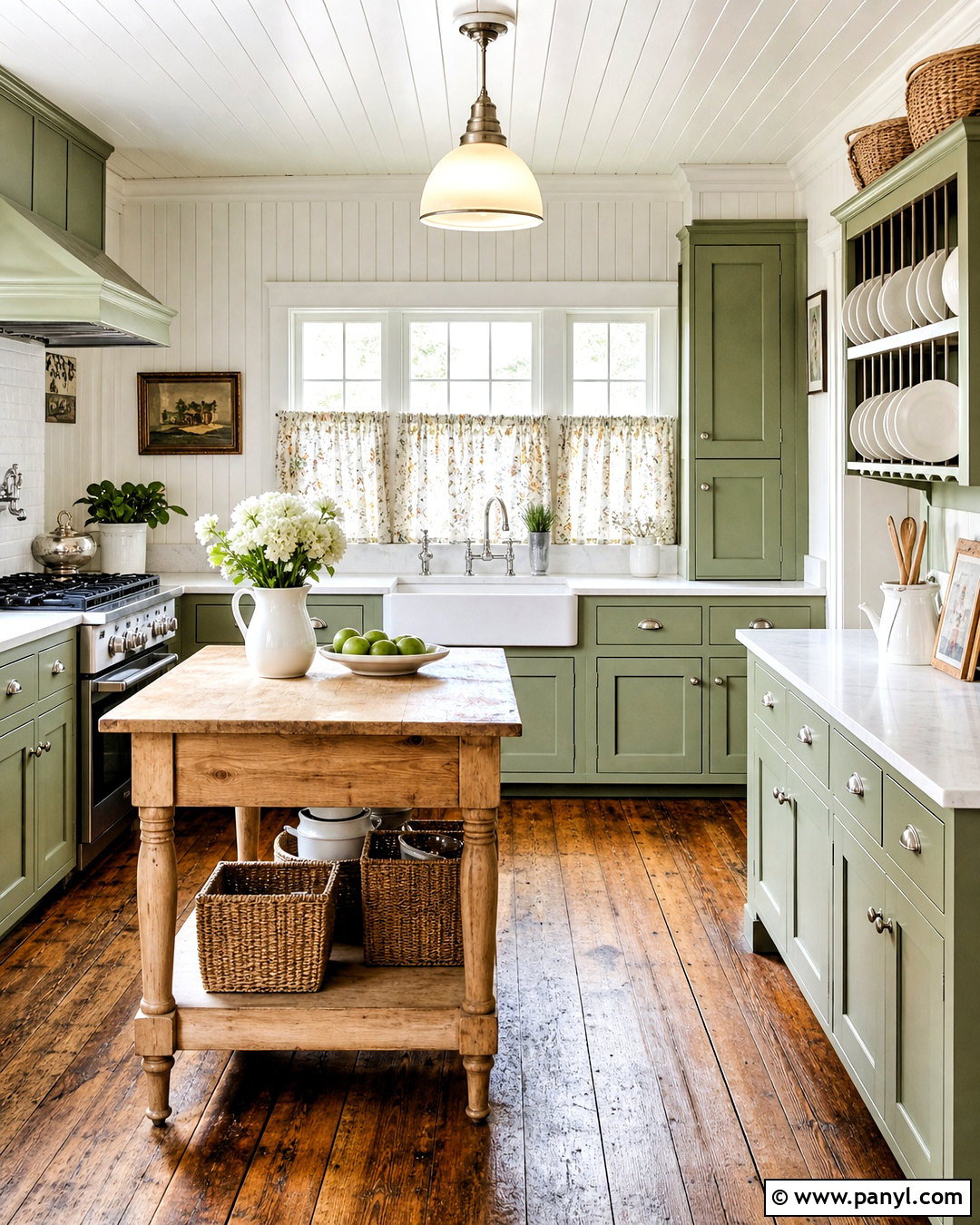
Cottage kitchens feel especially comfortable when sage green cabinetry is paired with white beadboard and vintage-inspired details. Paint simple inset cabinets a soft, slightly warm sage and use beadboard across the backsplash and exposed wall sections. White solid-surface countertops provide a practical contrast without looking too sleek. Include a white apron sink, polished nickel faucet, and a plate rack filled with everyday white dishes. A small central worktable in natural pine can offer preparation space while keeping the layout informal. Add painted wood flooring or lightly worn oak boards underfoot. Floral café curtains, schoolhouse lights, open shelving, and woven baskets provide charm. Limit small accessories to useful pieces so the finished room remains functional rather than cluttered.
14. Sage Green Kitchen With White Brick Walls
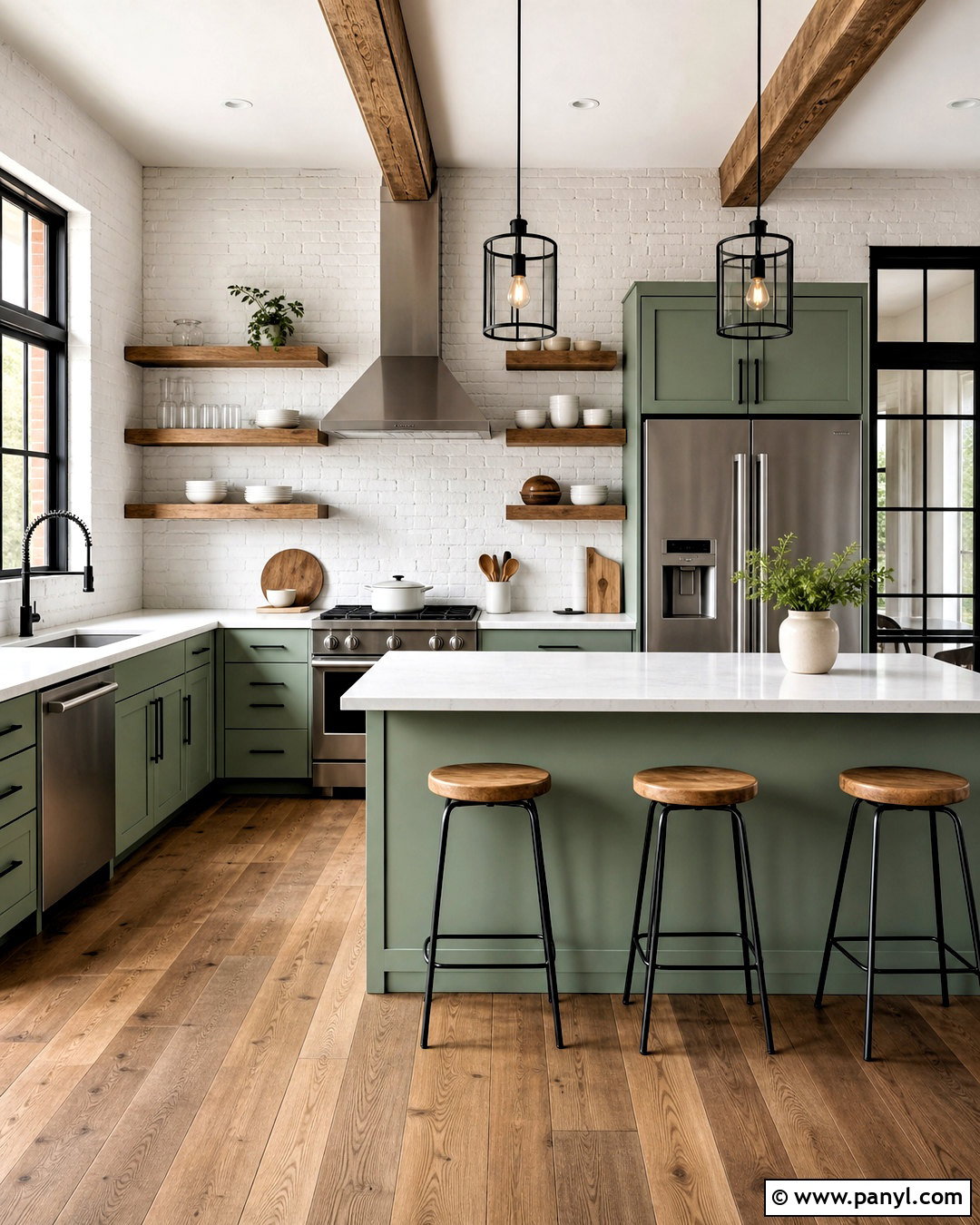
White brick gives sage green cabinetry an appealing mix of texture and relaxed urban character. Use flat-panel or narrow Shaker cabinets in a dusty sage tone and place them against painted white brick walls. Select smooth white quartz counters to balance the uneven masonry. Matte black hardware, a black faucet, and black-framed pendants add clear definition throughout the room. Warm reclaimed-look oak flooring keeps the palette from becoming too stark. For the island, combine sage cabinetry with a thick white countertop and simple wood stools. Open oak shelves mounted against the brick can hold white bowls and clear glassware. Stainless steel appliances and minimal window treatments complete a practical kitchen that blends industrial, modern, and natural elements.
15. Sage Green Kitchen With White And Brass Finishes
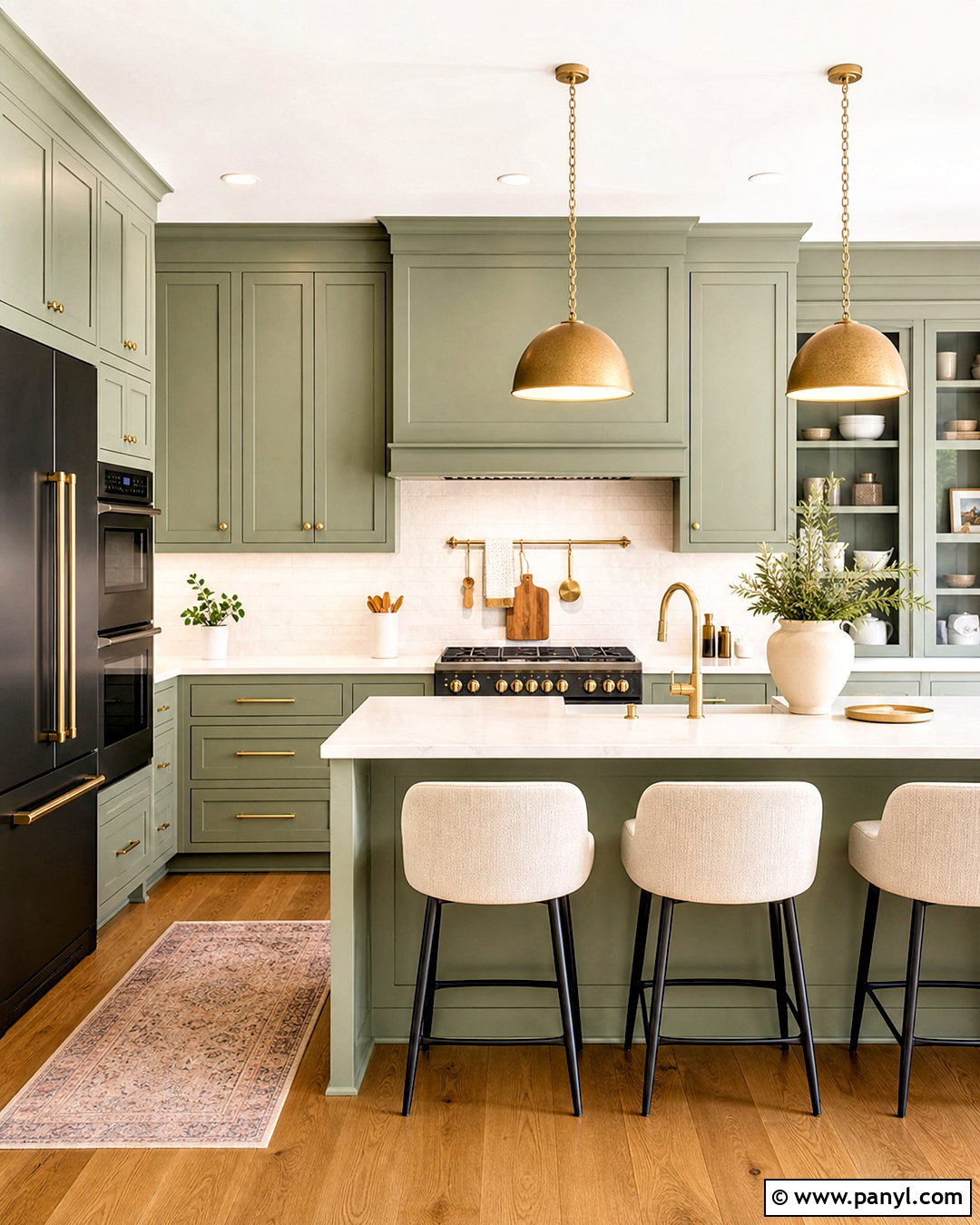
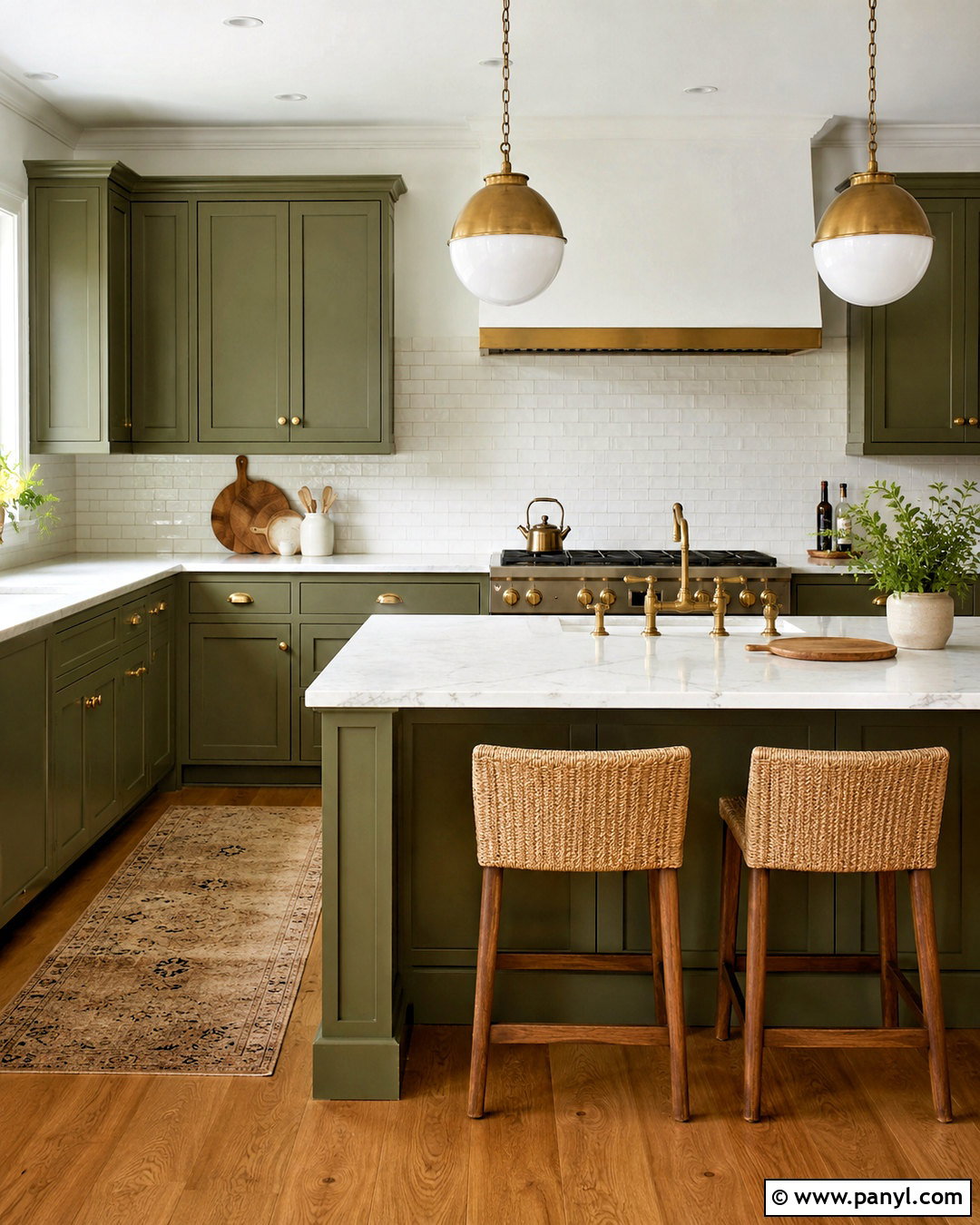
Brass brings a warm glow to sage green and white, but it looks most polished when used with restraint. Cover the cabinetry in a muted sage and introduce white through the quartz countertops, backsplash, walls, and ceiling. Select brushed or aged brass pulls rather than highly reflective gold hardware. Repeat the finish on two pendant lights, the faucet, and a narrow rail beneath an open shelf. Warm oak floors and cream counter stools prevent the white surfaces from feeling sharp. For balance, include a simple white range hood and a few black details around the appliances. Keep the countertops mostly open, adding only wood boards, white ceramics, and a small plant. The result feels cohesive, warm, and thoughtfully finished.
16. Sage Green Kitchen With White And Black Accents
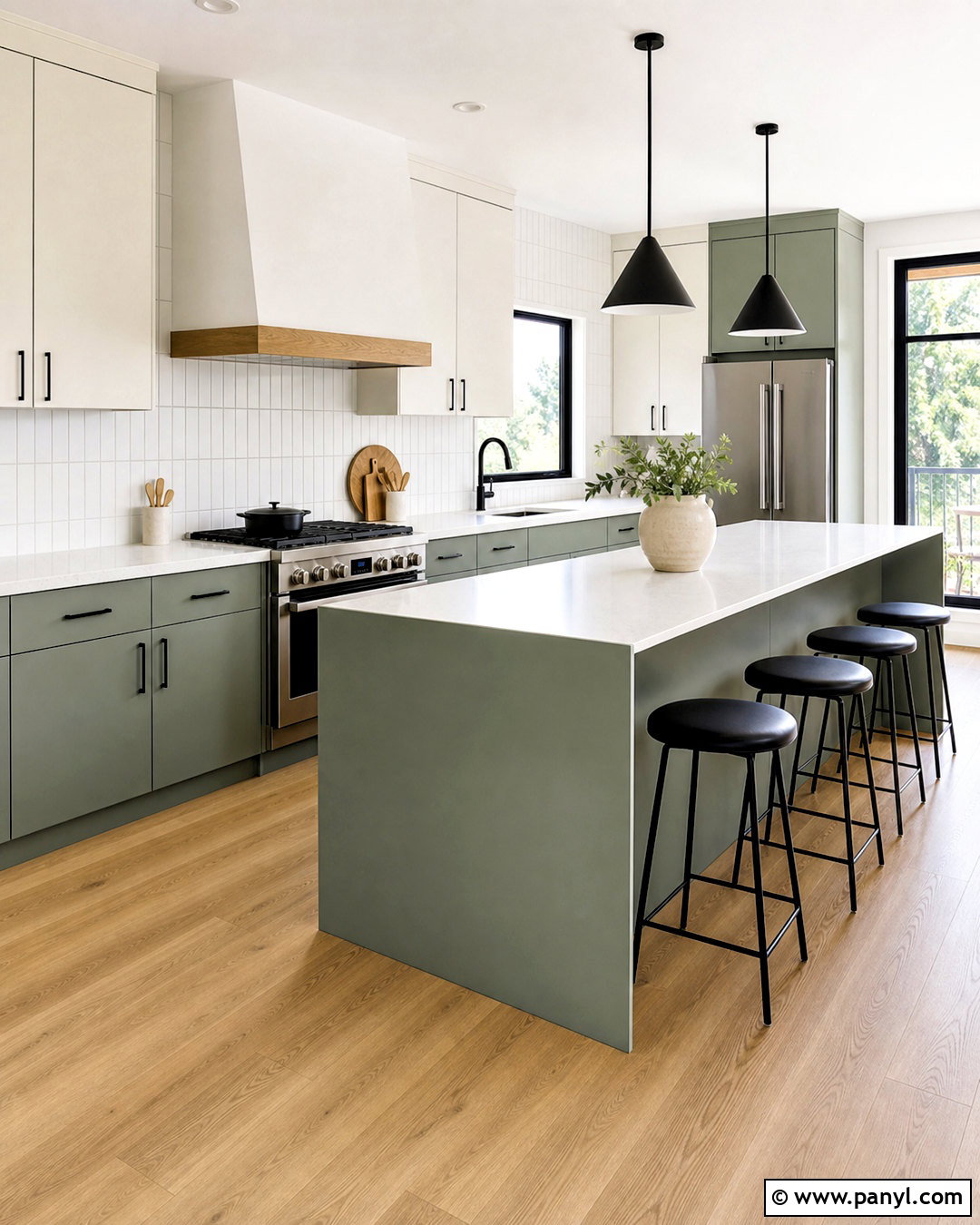
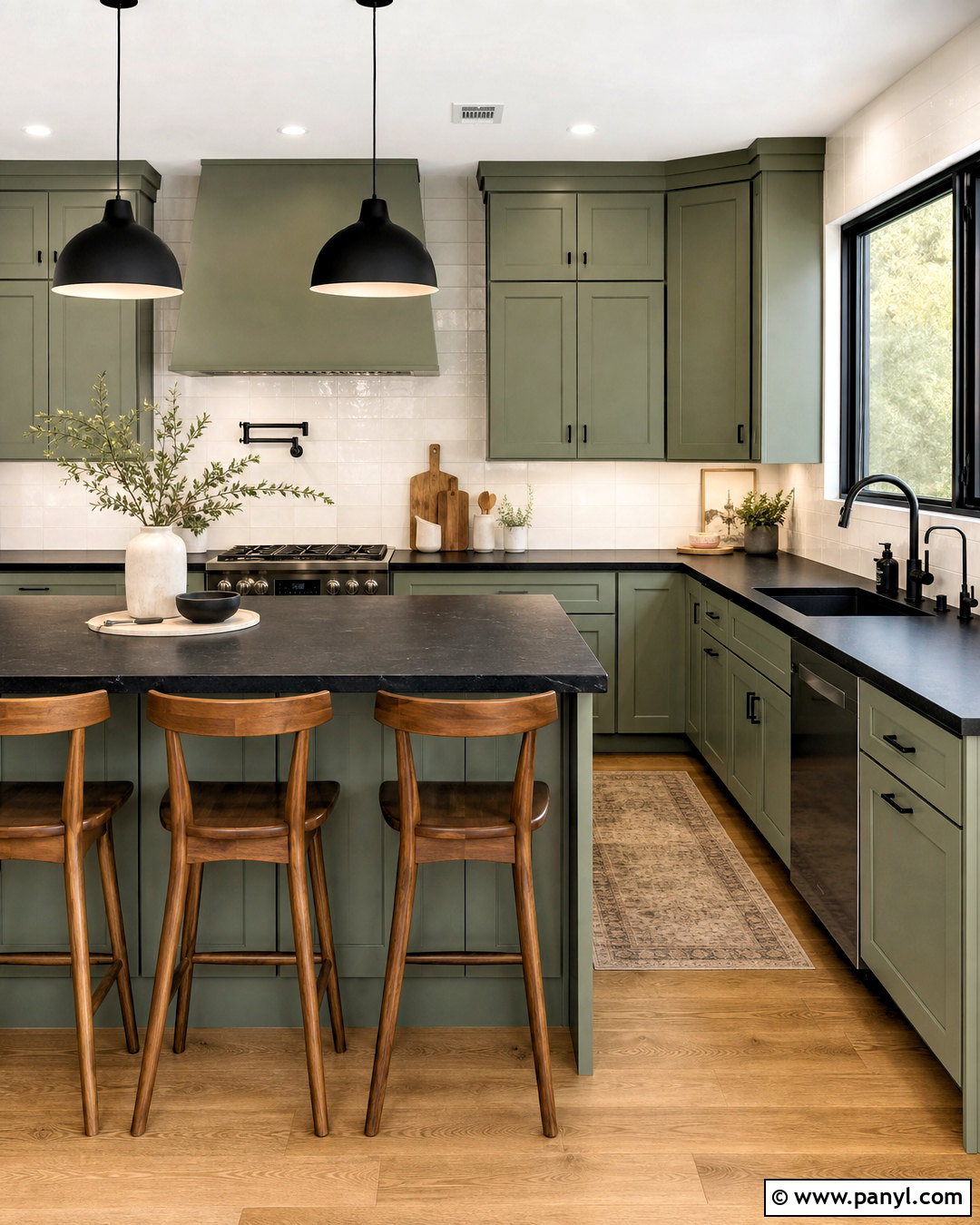
Black accents give a sage green and white kitchen a crisp, contemporary outline. Begin with sage flat-panel lower cabinets and white upper cabinets with minimal detailing. Add solid white quartz countertops and a white vertical-stack tile backsplash for a streamlined background. Use matte black bar pulls, a black faucet, and thin black pendant lights to establish strong contrast. Black-framed windows or stools can repeat the finish without overwhelming the room. Choose light oak flooring to soften the graphic palette and bring warmth beneath the cabinetry. A sage island with a waterfall-edge countertop can anchor an open layout. Finish the kitchen with white walls, integrated lighting, and a small group of neutral accessories rather than adding several competing accent colors.
17. Sage Green Kitchen With White Fluted Glass Cabinets
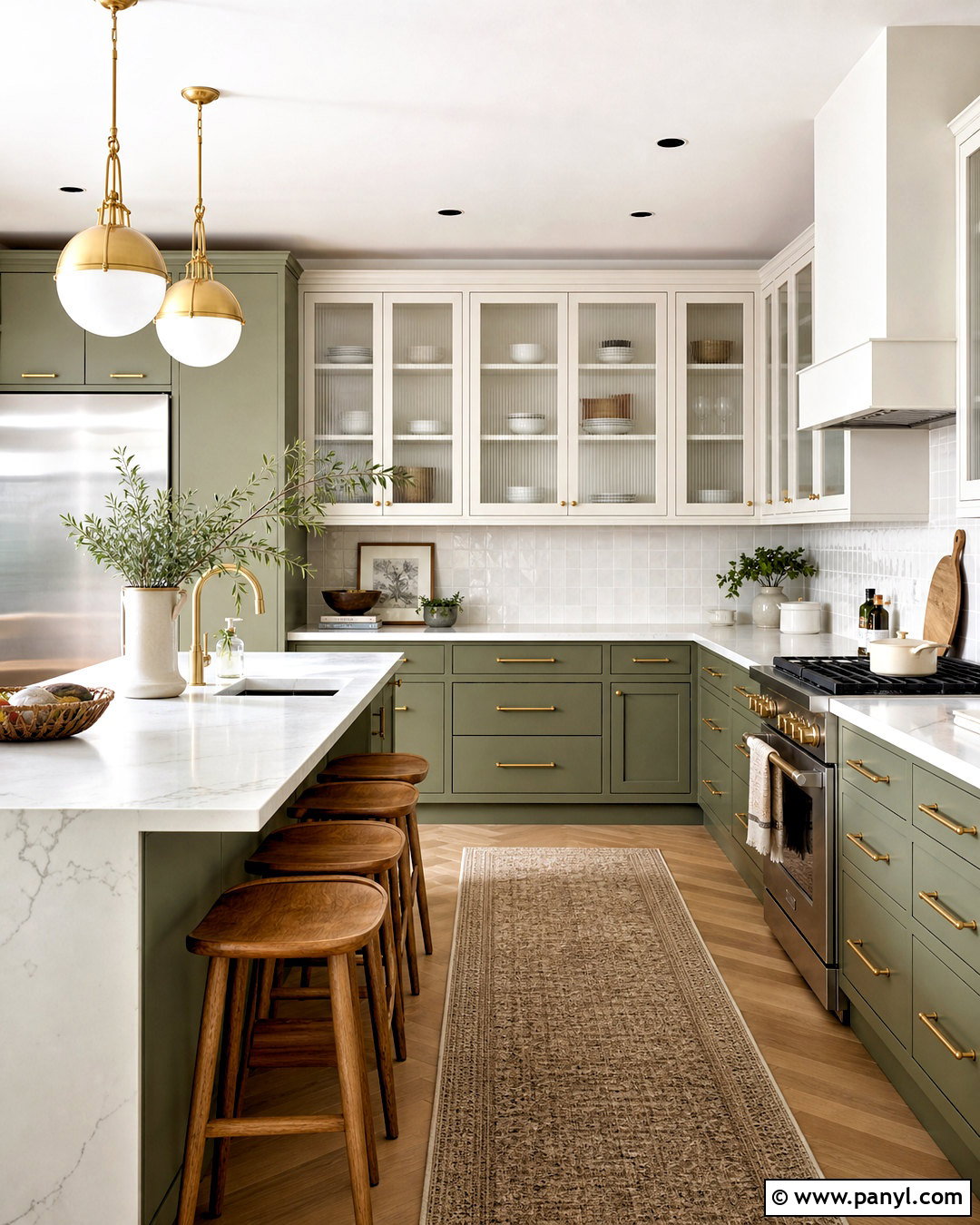
Fluted glass upper cabinets create privacy, texture, and a lighter visual rhythm above sage green base cabinets. Frame the glass doors in warm white so they connect with the walls, countertops, and backsplash. Choose a medium sage for the lower cabinetry and island, then add white quartz with delicate gray veining. A glossy white square-tile backsplash complements the vertical lines in the fluted glass. Use slim brass handles and simple brass pendants to bring warmth to the tailored design. Pale herringbone wood flooring adds another layer of pattern at a larger scale. Keep the visible cabinet interiors organized with white dishes. A linen runner, oak stools, and a few ceramic accessories complete the elegant but usable kitchen.
18. Sage Green Kitchen With White Open Shelving
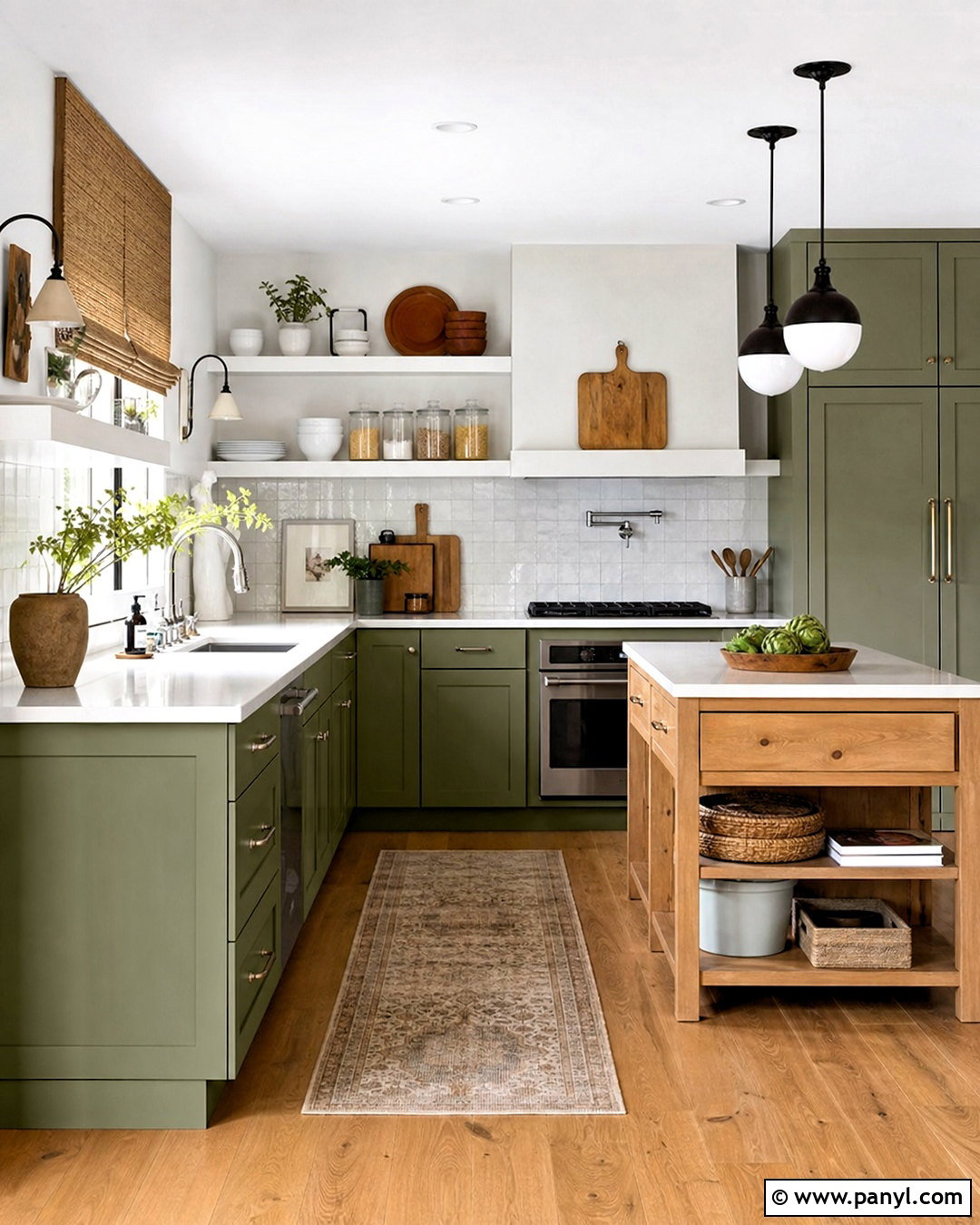
White open shelving can make a sage green kitchen feel relaxed and accessible, especially when bulky upper cabinets would crowd the room. Paint the lower cabinets and tall pantry units a warm sage, then install thick white shelves against a matching white wall. Use the shelves for neatly arranged dishes, glass jars, and a few wood serving pieces. White quartz counters and a handmade white tile backsplash keep the workspace bright. Add brushed nickel hardware for a clean finish that does not demand attention. Natural oak flooring and a compact oak island bring warmth to the open arrangement. Under-shelf lighting improves the work surface, while a simple pendant and woven shade complete the casual, practical design.
19. Sage Green Kitchen With White Waterfall Island
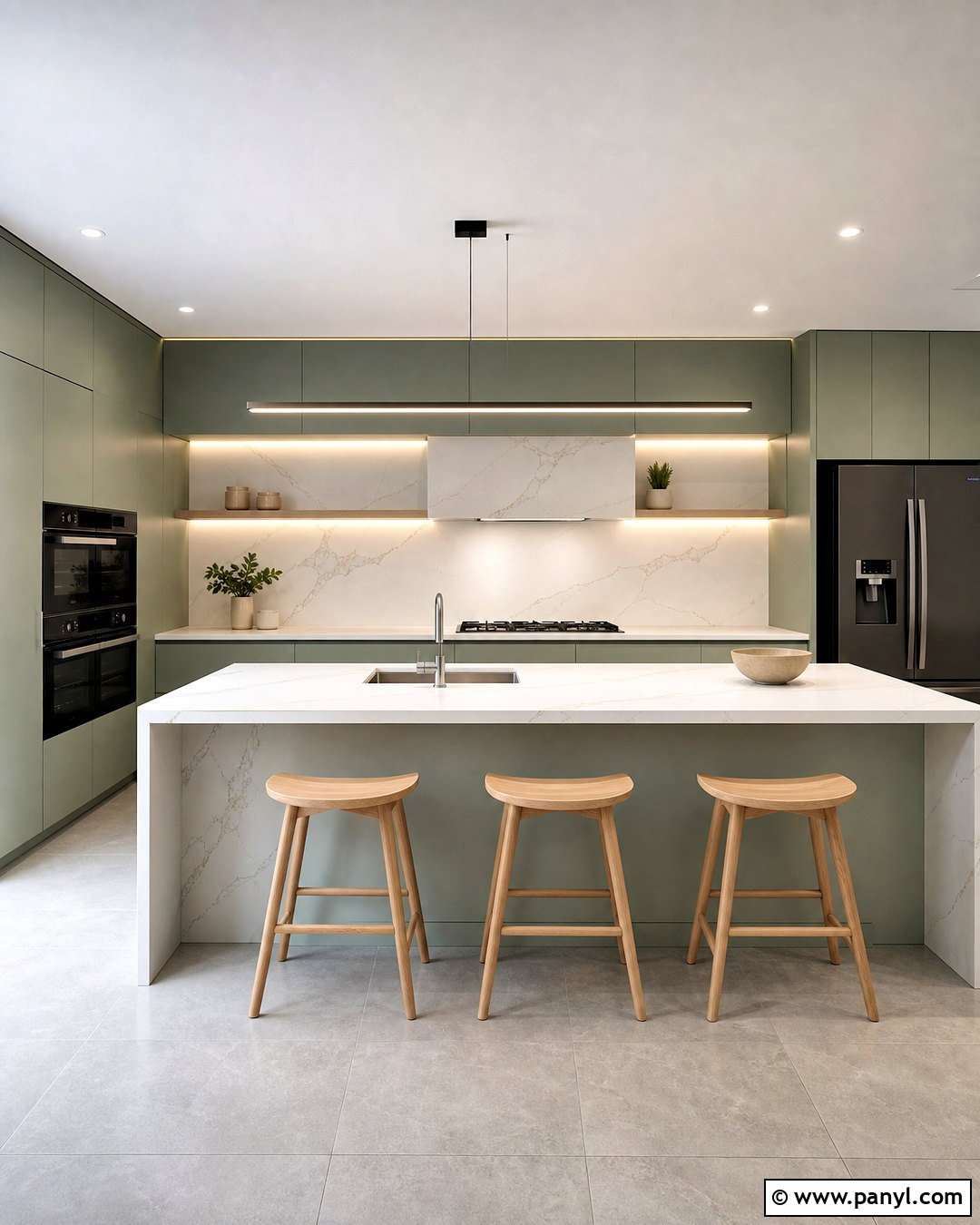
A white waterfall island gives sage green cabinetry a sleek architectural centerpiece. Use matte sage cabinets throughout the perimeter and repeat the color on the island base. Wrap the island’s top and both ends in white quartz with soft, widely spaced veining. Keep the backsplash equally restrained with a full-height slab or oversized white porcelain tile. Handleless cabinetry, integrated appliances, and a linear ceiling light support the modern approach. Add low-profile oak counter stools to warm the sharp white surface. Large-format pale gray floor tiles create a smooth foundation without introducing busy pattern. Finish the room with a minimal chrome faucet, concealed lighting, and one sculptural ceramic bowl placed at the center of the island.
20. Sage Green And White Scandinavian Kitchen
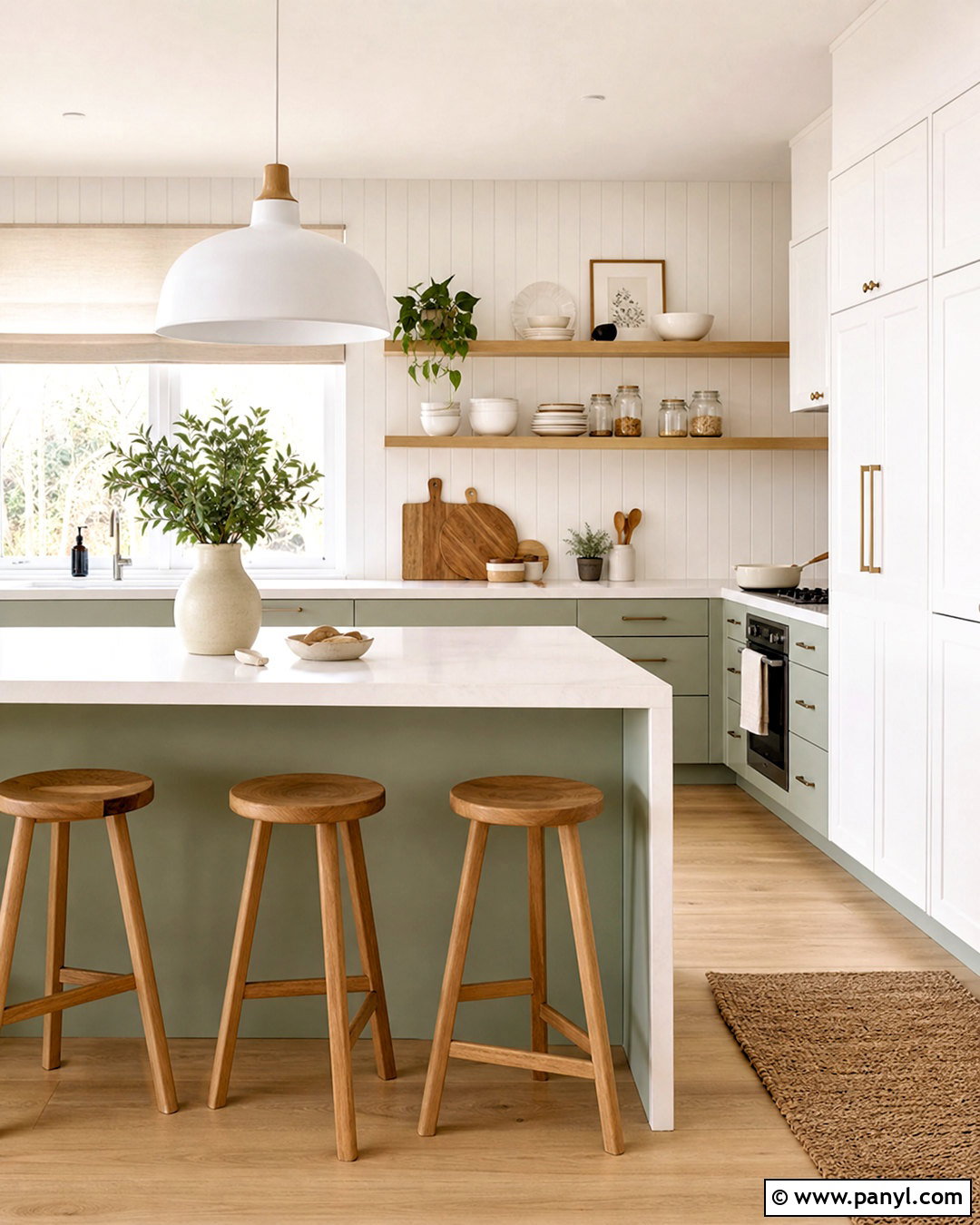
A Scandinavian-inspired kitchen uses sage green and white with simple forms, practical storage, and natural materials. Choose pale sage flat-panel base cabinets and tall white pantry cabinets with discreet integrated pulls. Install white quartz countertops and a vertical white tile backsplash with matching grout. Light oak open shelves, flooring, and counter stools introduce warmth without making the palette heavy. Use one large white pendant above a compact island or dining table rather than several decorative fixtures. Keep the windows uncovered or add plain linen shades to maximize brightness. A few useful objects, such as wood boards, white stoneware, and glass storage jars, can remain visible. The completed kitchen should feel comfortable, uncluttered, and easy to maintain.
Conclusion:
The best sage green and white kitchen ideas combine color, materials, lighting, and layout into one coordinated plan. Start by deciding where sage will have the greatest impact, whether that means lower cabinets, a central island, a backsplash, or full-room cabinetry. Then choose a white with an undertone that complements the green instead of fighting it. Natural oak, brass, nickel, black, marble, quartz, and handmade tile can each shift the palette toward a different style. Test all finishes together under your kitchen’s actual lighting before making final decisions. With balanced proportions and practical details, a sage green and white kitchen can feel fresh, welcoming, and distinctly personal.

Related Ideas and Inspiration:
Leave a Reply