
Benjamin Moore Rocky Coast 1595 is a rich, saturated gray that can shift between charcoal, blue-gray, and muted green-gray as the light changes. With an LRV of 17.28, it creates noticeable depth, making thoughtful lighting and contrast especially important. Benjamin Moore recommends crisp and softened neutrals such as Chantilly Lace, White Dove, Collingwood, and White Down as coordinating colors. () This versatile shade can anchor cozy bedrooms, polished kitchens, dramatic bathrooms, welcoming exteriors, and hardworking built-ins. The key is pairing its stormy character with warm wood, pale textiles, reflective finishes, and balanced accent colors. This guide to 35 rocky coast benjamin moore ideas covers complete, practical looks for rooms, cabinetry, architectural details, and home exteriors. Use these combinations to confidently explore 35 rocky coast benjamin moore ideas.

1. Rocky Coast Living Room With White Trim
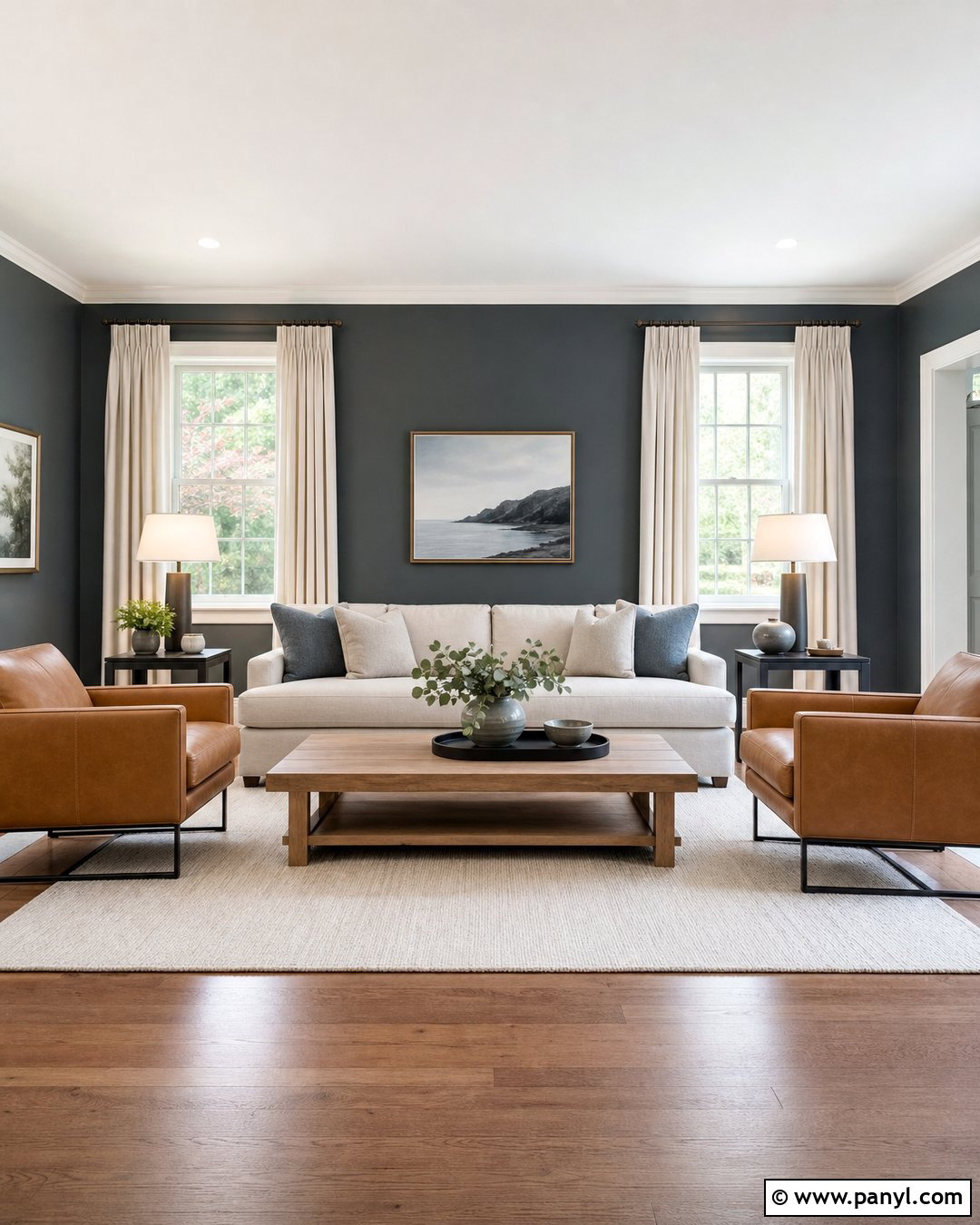
Paint every living room wall Rocky Coast and frame the space with crisp Chantilly Lace trim for a clean, tailored contrast. Choose a large oatmeal-colored sofa, two camel leather chairs, and a natural oak coffee table to warm the deep gray backdrop. An ivory wool rug will brighten the floor while connecting the lighter upholstery to the trim. Add brushed brass lamps, cream linen curtains, and pillows in slate blue and muted rust. Keep the ceiling white so the room remains open rather than enclosed. This complete look works especially well in a living room with large windows because natural light reveals Rocky Coast’s subtle cool character. Black picture frames and simple landscape artwork provide a polished finishing layer.
2. Rocky Coast Accent Wall With Beige Furniture
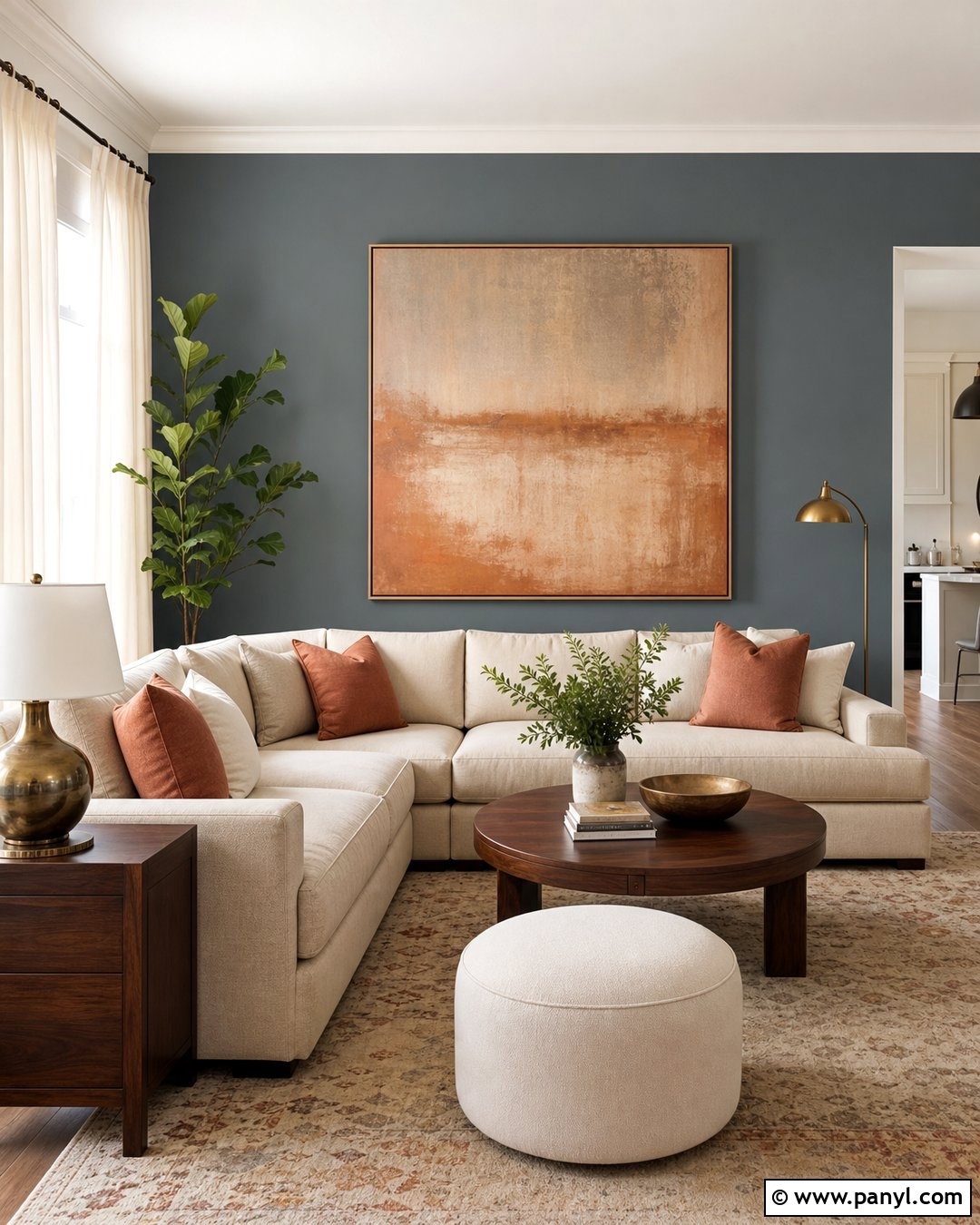
A Rocky Coast accent wall can give a neutral living room a stronger focal point without making the entire space feel dark. Place the deepest wall behind a streamlined beige sectional and hang one oversized piece of warm abstract artwork above it. Paint the remaining walls White Dove and repeat that soft white on the ceiling and trim. Ground the seating area with a taupe-and-cream patterned rug, then add walnut side tables and a textured ivory ottoman. Small touches of terracotta, muted olive, and antique brass will soften the cool gray. Use warm white floor and table lamps after sunset. The finished room feels contemporary and comfortable, with enough contrast to make the architecture and furnishings stand out clearly.
3. Rocky Coast Living Room With Natural Wood
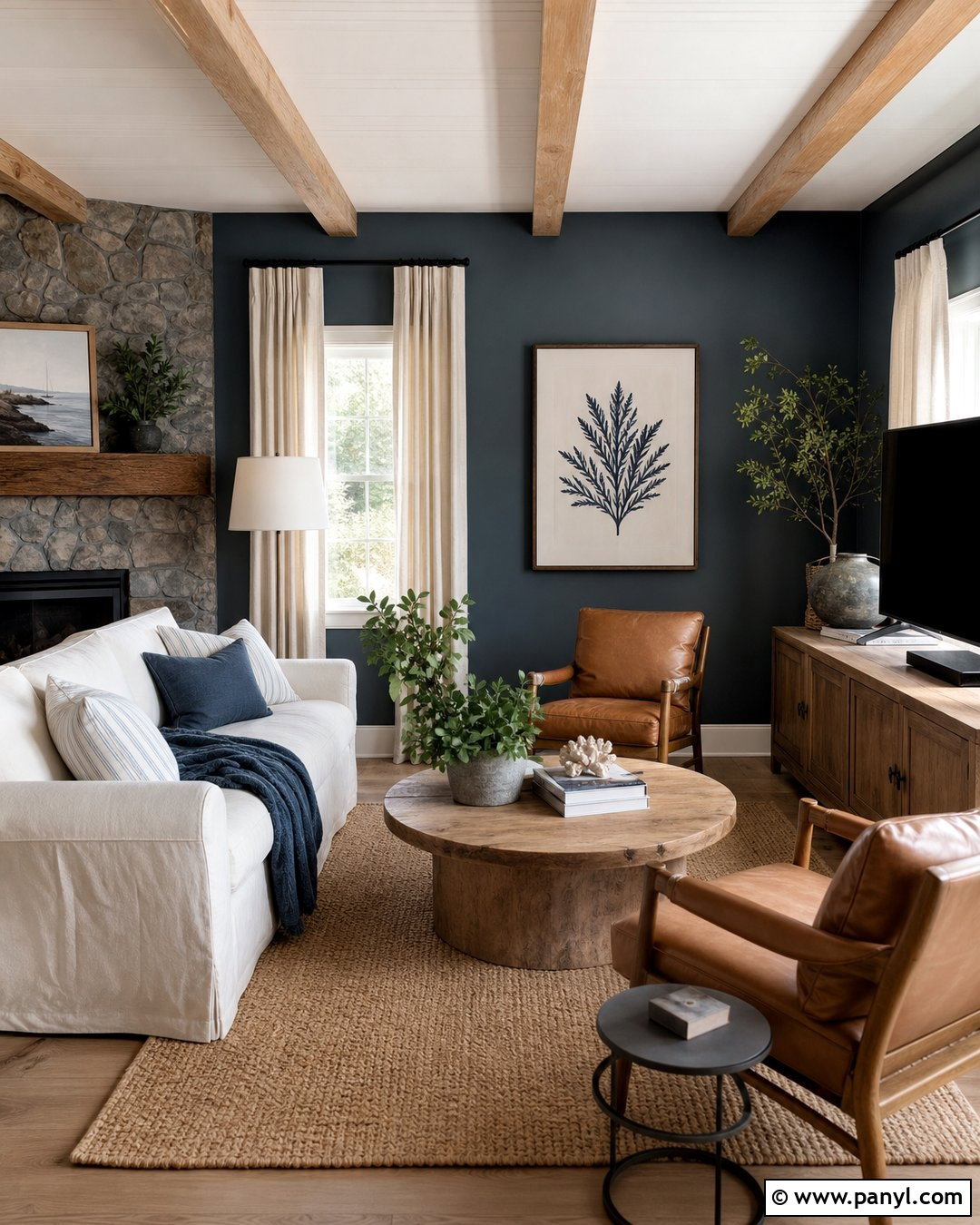
Natural wood brings out Rocky Coast’s earthy side and creates a relaxed living room that does not feel overly formal. Cover the walls in Rocky Coast, then introduce a medium-tone oak media console, exposed ceiling beams, and a round wood coffee table. A cream slipcovered sofa keeps the palette light, while cognac leather lounge chairs add warmth and durability. Layer the room with a woven jute rug, oatmeal curtains, and cushions in dusty blue, tan, and charcoal. Select pottery, baskets, and framed botanical prints instead of shiny decorative pieces. Soft white trim provides a gentle edge around doors and windows. Finish with matte black lighting and leafy green plants for a balanced, nature-inspired space that remains inviting throughout the year.
4. Rocky Coast Modern Living Room
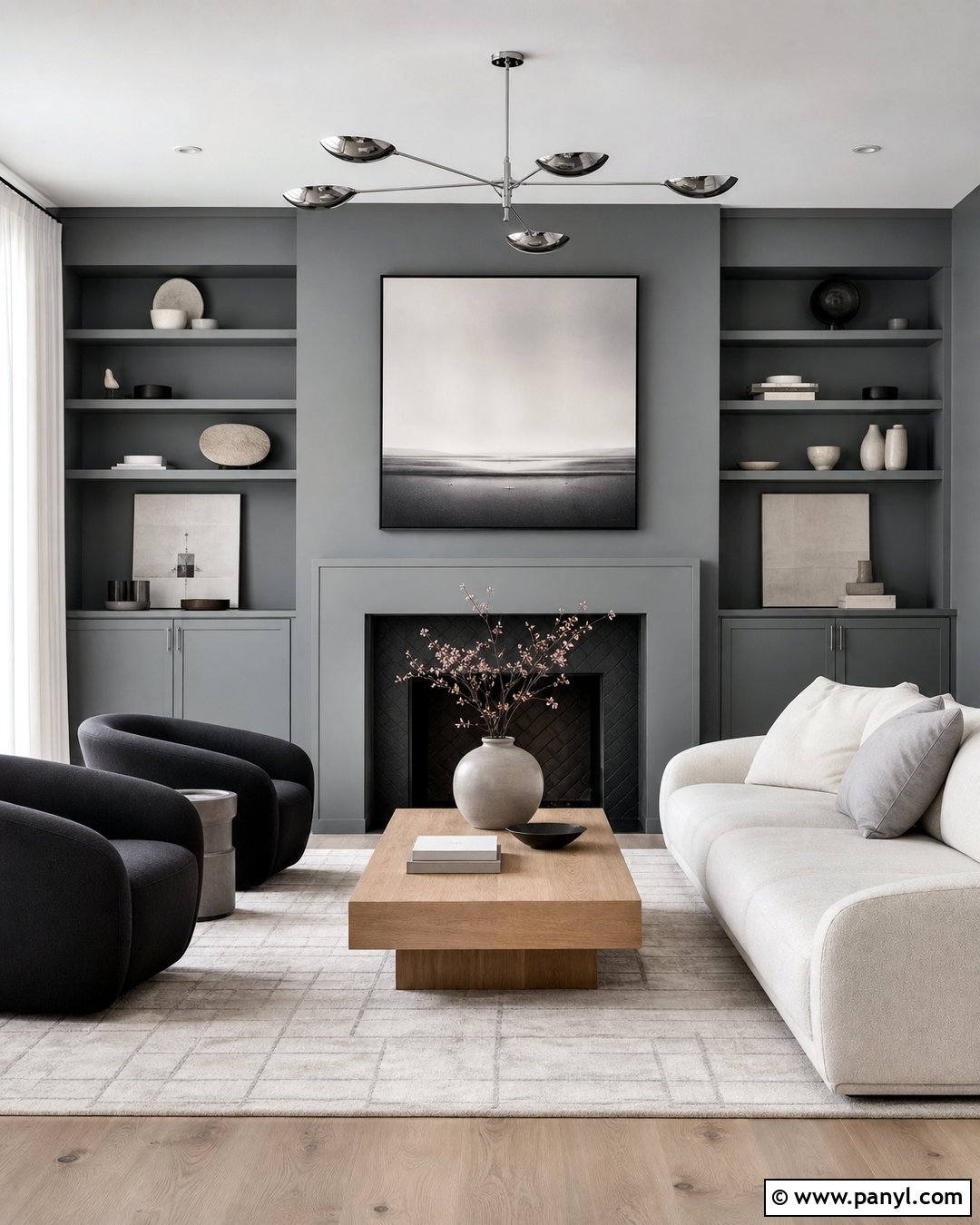
For a sharper modern look, use Rocky Coast on the walls, built-in media cabinetry, and fireplace surround. The repeated color creates a seamless architectural backdrop, while different finishes prevent the room from appearing flat. Choose matte paint for walls and satin for cabinetry. Add a low ivory sofa, sculptural black chairs, and a pale gray rug with a subtle geometric pattern. A rectangular coffee table in light oak introduces necessary warmth. Keep window treatments simple with ceiling-mounted white drapery panels. Chrome or polished nickel lighting gives the deep gray a cleaner, cooler edge than brass. Complete the arrangement with oversized monochrome art, a few ceramic vessels, and one tall indoor tree. The result feels uncluttered, dramatic, and livable rather than stark.
5. Rocky Coast Dining Room With Brass Accents
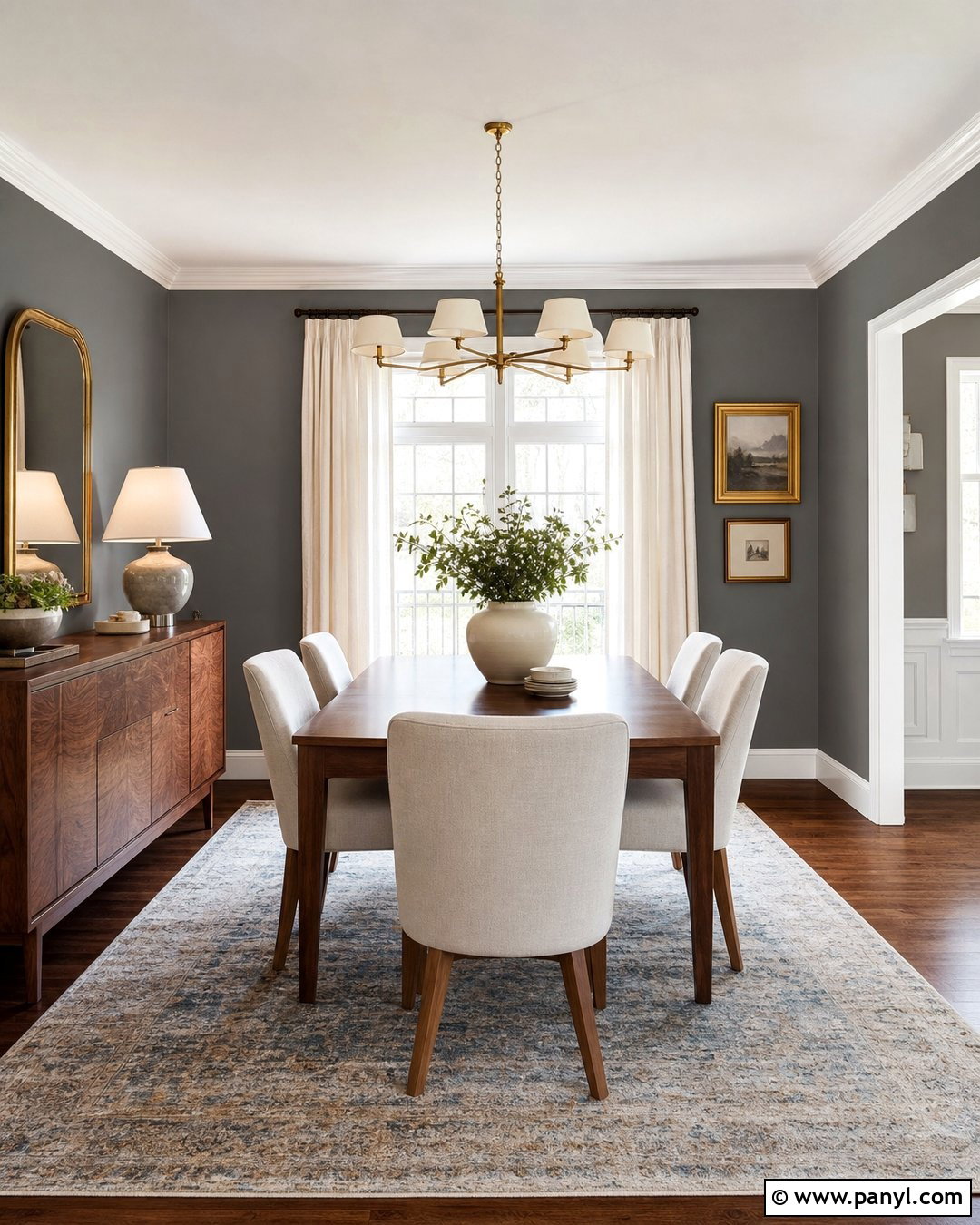
Rocky Coast can turn a formal dining room into an intimate space that feels especially appealing in the evening. Paint all four walls in a low-sheen finish and retain bright white crown molding, baseboards, and window trim. Center a medium walnut dining table beneath a modern brass chandelier. Upholstered chairs in cream performance fabric will lighten the room and remain practical for regular meals. Add a muted vintage-style rug containing gray, tan, and faded blue. A walnut buffet with brass hardware reinforces the warm metallic details. Hang a large mirror opposite the main window to distribute daylight across the dark walls. Finish the table with simple stoneware and greenery. This balanced scheme feels sophisticated without relying on ornate furniture or excessive decoration.
6. Rocky Coast Dining Room With Wall Molding
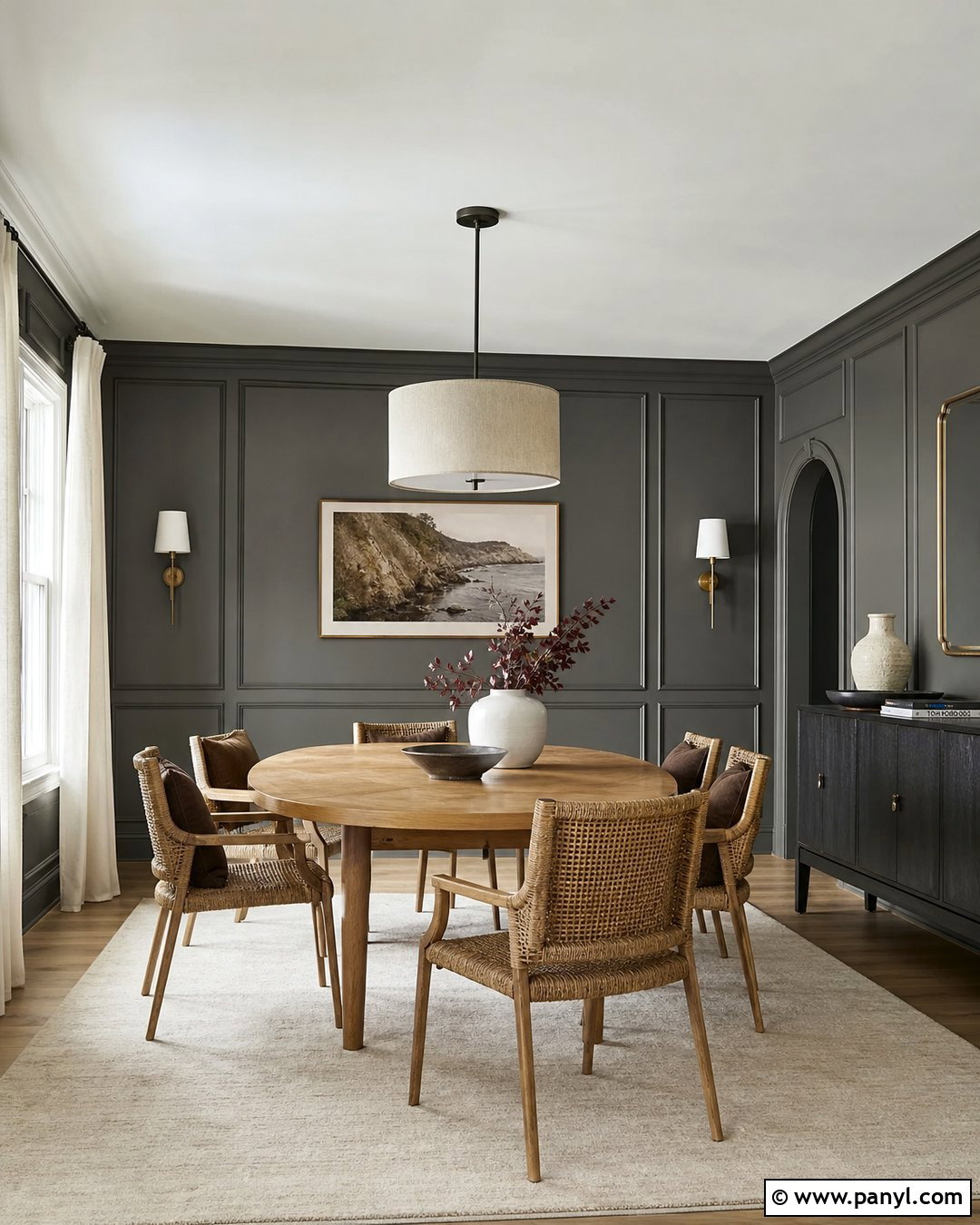
Traditional wall molding gives Rocky Coast extra dimension because shadows naturally define every panel. Install rectangular picture-frame molding from baseboard to crown, then coat the walls and molding in the same matte or eggshell color. Use White Down on the ceiling for a warmer contrast than brilliant white. Furnish the room with an oval oak table and woven dining chairs that keep the design relaxed. A linen drum pendant, cream rug, and off-white curtains prevent the architecture from feeling heavy. Introduce muted burgundy through artwork or seat cushions for a subtle complementary accent. A black wood sideboard can blend quietly into the palette. The completed room combines classic detailing with simple, approachable furnishings suitable for both casual dinners and special gatherings.
7. Rocky Coast Kitchen Cabinets With White Counters
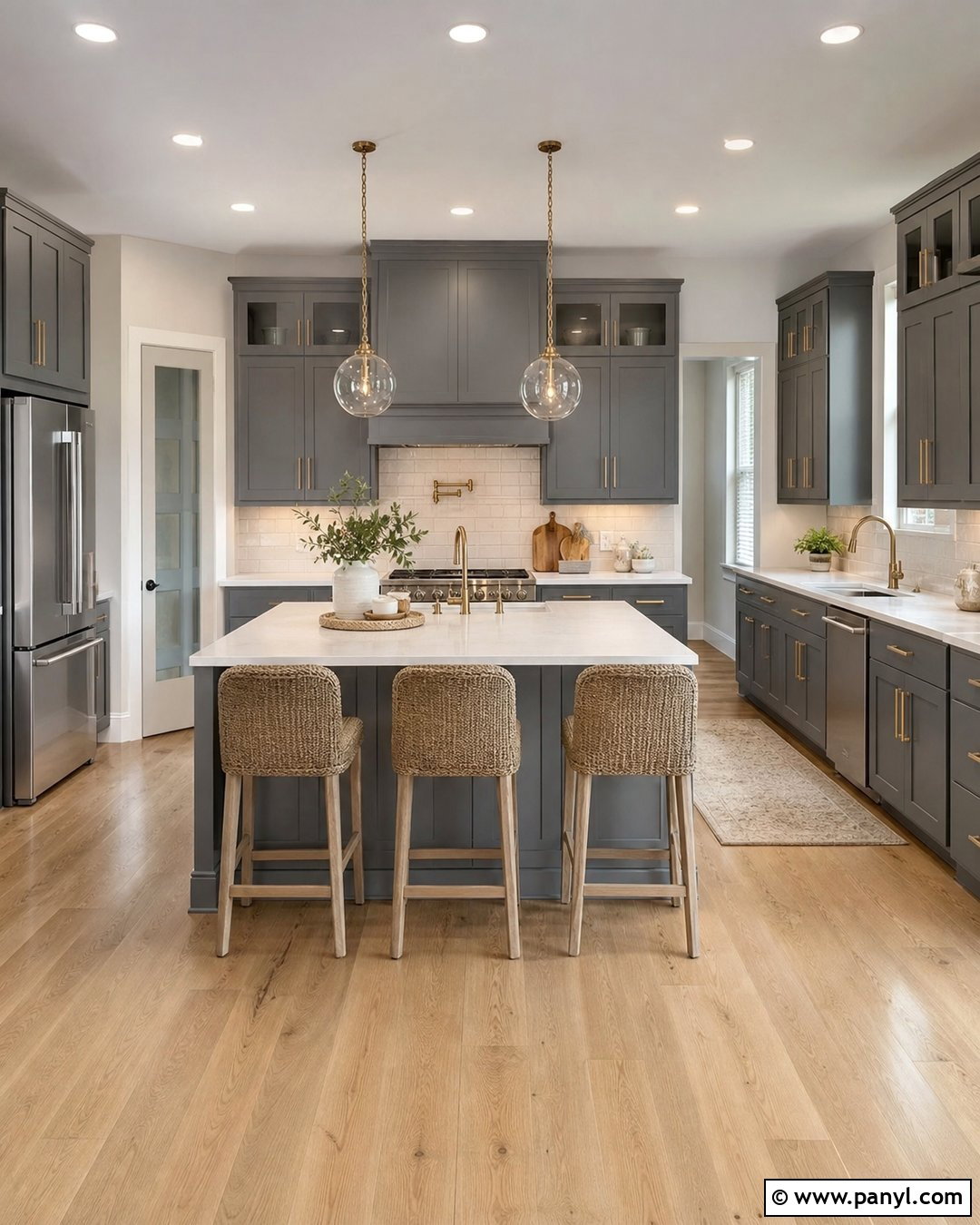
Rocky Coast kitchen cabinets create a grounded alternative to navy or black while still delivering strong contrast. Apply the color to both upper and lower cabinets for a cohesive look, using a durable satin finish that can handle regular cleaning. Pair them with warm white quartz counters and a simple off-white subway tile backsplash. Light oak flooring keeps the kitchen from becoming too cool. Choose unlacquered brass pulls, a brushed brass faucet, and clear glass pendants to introduce warmth without visual clutter. Paint the walls and ceiling White Dove. A medium wood island or breakfast table can break up the cabinetry and add a natural element. Finish with woven stools, cream runners, and understated pottery for a practical, collected kitchen.
8. Rocky Coast Kitchen Island With White Cabinets
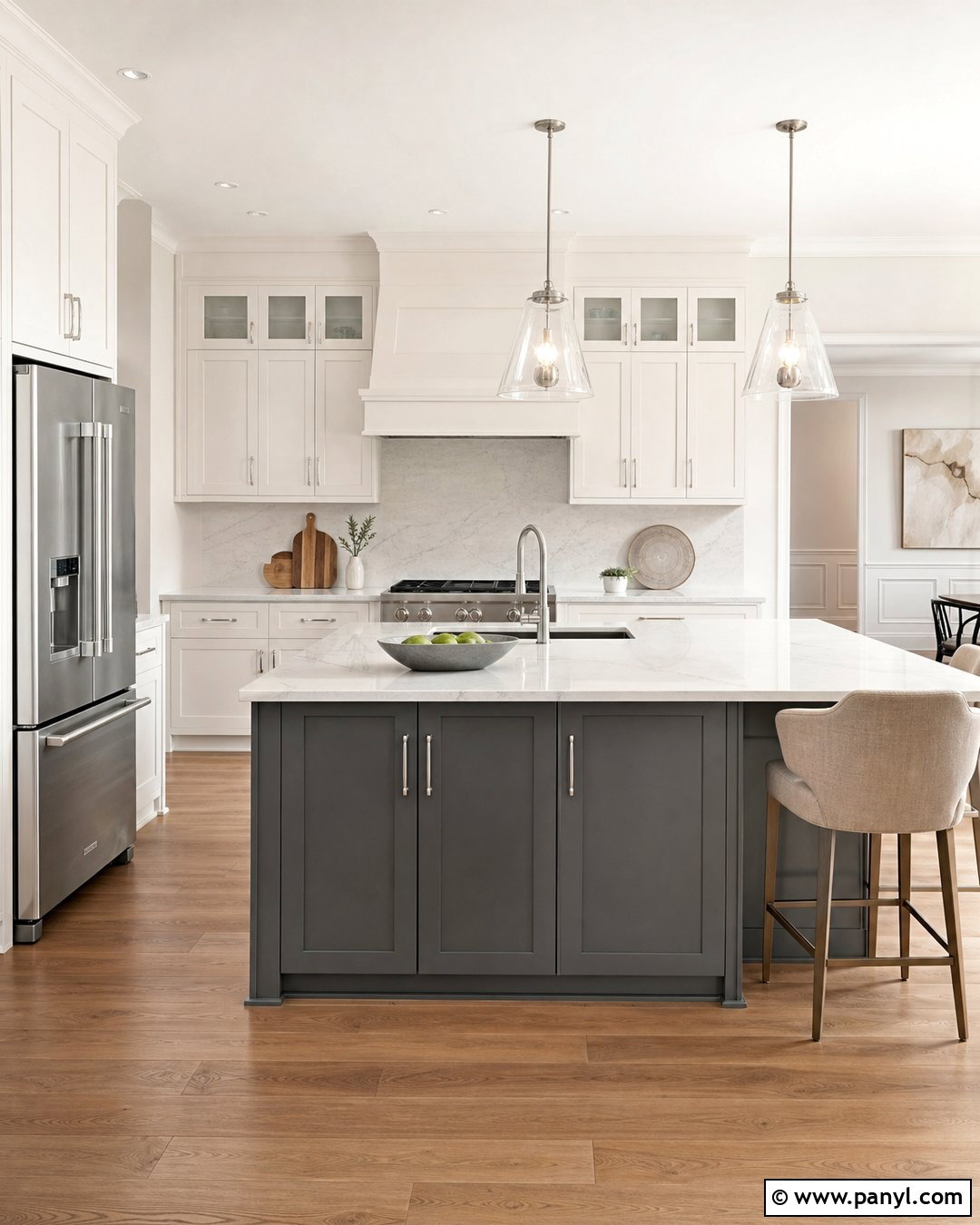
Using Rocky Coast only on the island offers a lower-commitment way to introduce the color into a bright kitchen. Keep the perimeter cabinets warm white and paint the large center island Rocky Coast in a satin or semi-gloss finish. Top every cabinet with softly veined white quartz so the two cabinet colors feel connected. Select medium oak flooring, nickel hardware, and simple glass pendant lights for a transitional appearance. Upholstered counter stools in light beige will soften the darker island base. Repeat Rocky Coast in a small Roman shade pattern or nearby artwork without matching it too precisely. Pale walls and abundant undercabinet lighting maintain an airy atmosphere. The finished kitchen feels layered and timeless while allowing the island to serve as a strong visual anchor.
9. Rocky Coast Kitchen With Walnut Cabinets
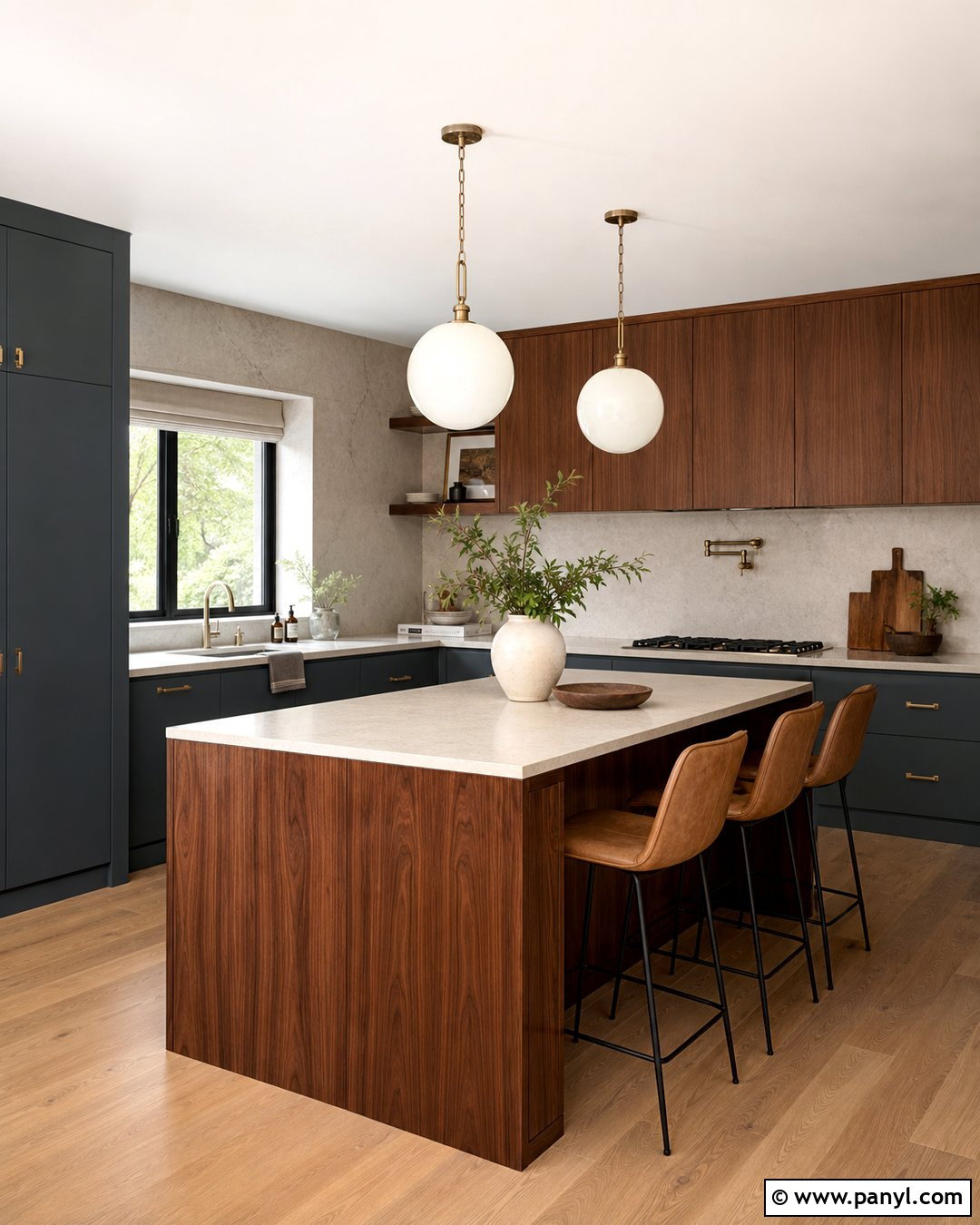
Combine Rocky Coast with walnut cabinetry for a warm, sophisticated kitchen built around rich natural materials. Paint the tall pantry units and lower cabinets Rocky Coast, then use flat-panel walnut for the upper cabinets and island. Cream quartz countertops and a matching slab backsplash will brighten the darker surfaces without introducing a busy pattern. Choose antique brass hardware and warm white globe pendants to complement the wood grain. Wide-plank oak flooring can continue the natural theme while remaining lighter than the cabinetry. Keep the walls White Down and limit open shelving to one carefully arranged section. Add counter stools in caramel leather and black metal. This full palette makes Rocky Coast feel earthy and refined rather than distinctly blue or overly industrial.
10. Rocky Coast Butler’s Pantry
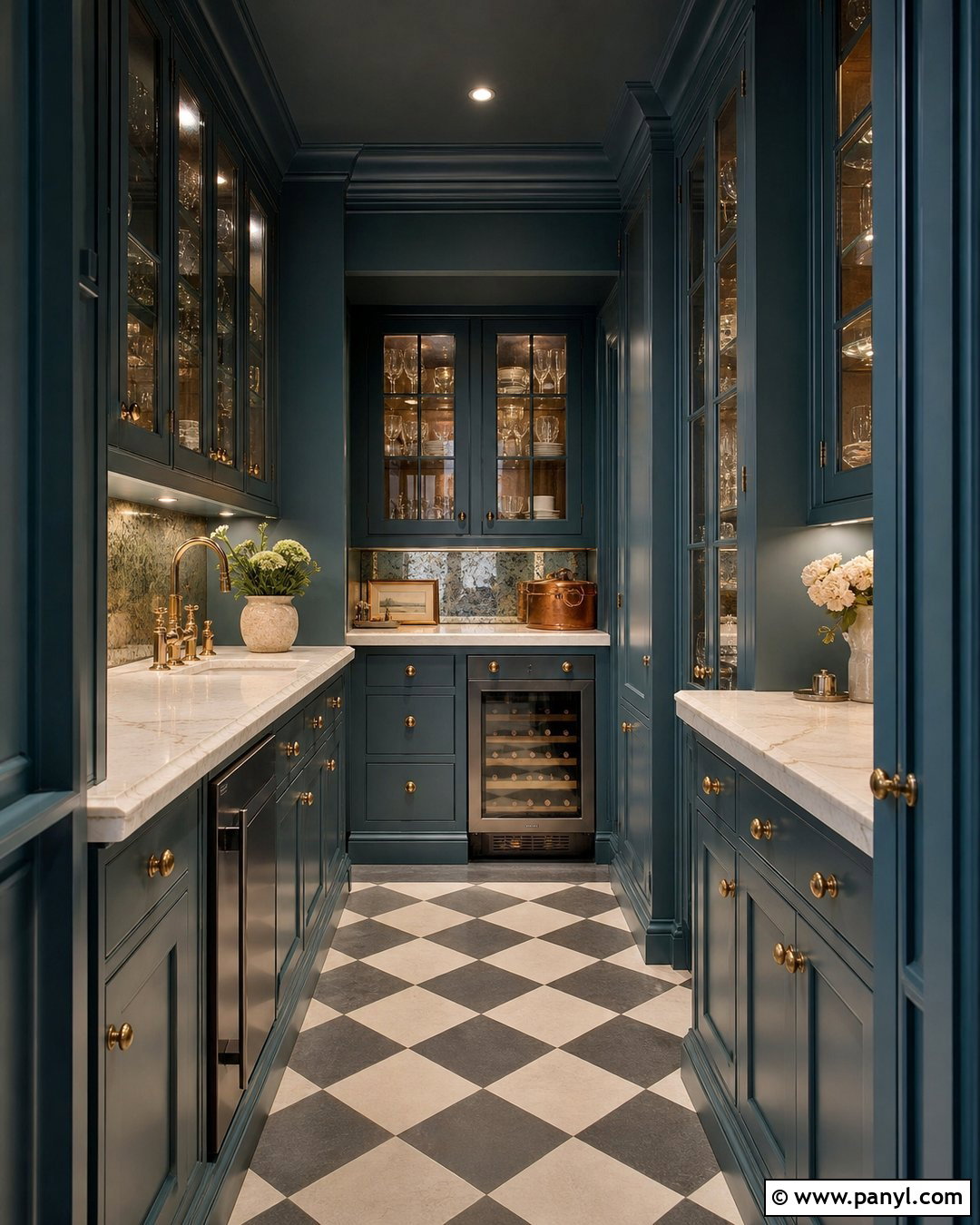
A compact butler’s pantry is an ideal place to use Rocky Coast from floor to ceiling. Paint the cabinetry, trim, door, and walls in the same color, varying the finish between matte walls and satin woodwork. Install creamy marble-look counters and a reflective antiqued mirror backsplash to bounce light through the narrow area. Brass knobs, a small brass faucet, and warm undercabinet lighting add a soft glow. Include glass-front upper cabinets for attractive dishes and closed lower storage for less decorative supplies. A light oak or checkerboard stone floor will prevent the scheme from feeling too enclosed. The resulting pantry becomes a memorable transition between kitchen and dining areas while still providing organized storage and a practical surface for serving and preparation.
11. Rocky Coast Bedroom With Linen Bedding
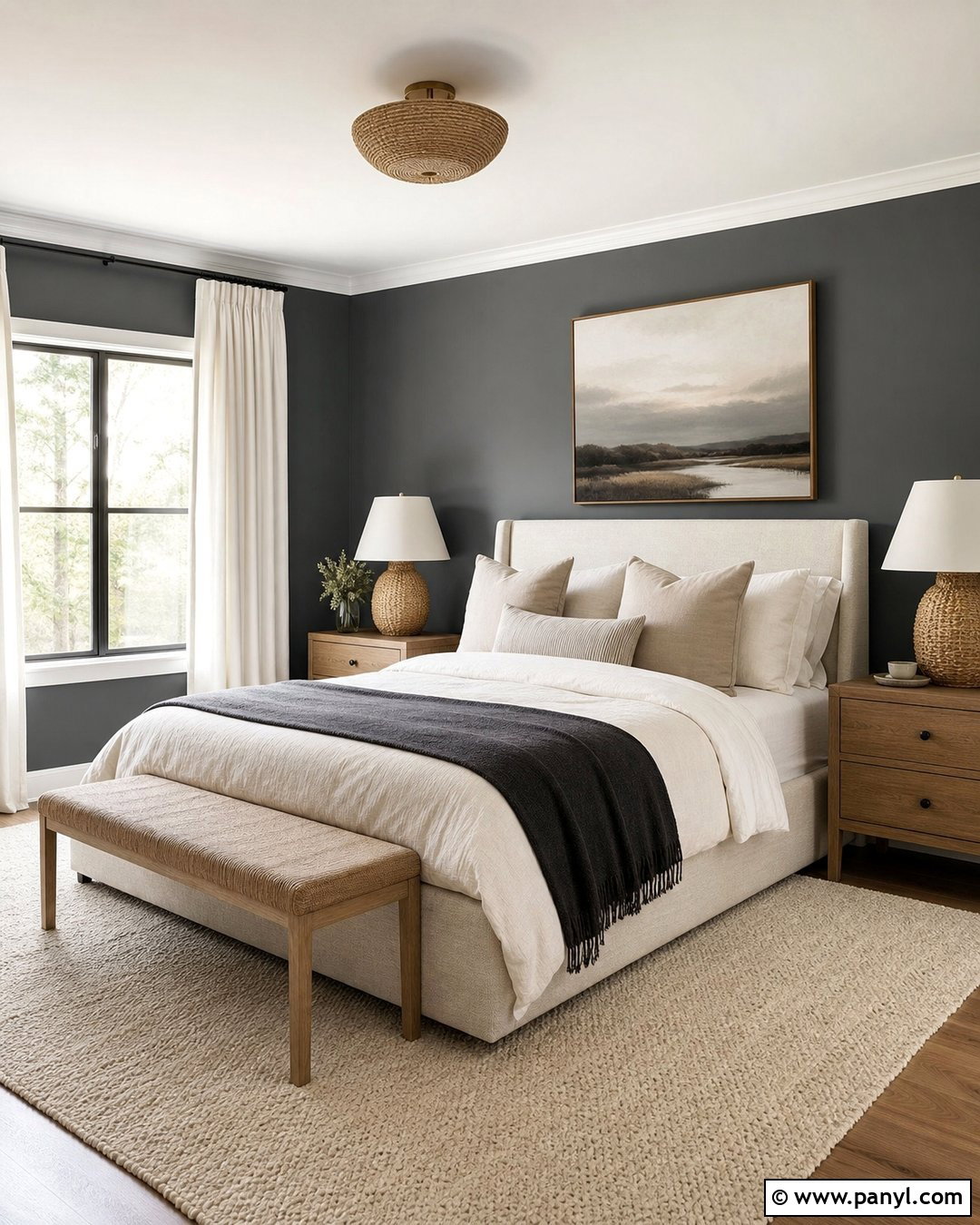
Rocky Coast creates a restful bedroom when it is balanced with soft fabrics and pale natural tones. Paint all the walls in a velvety matte finish, then select an upholstered bed in oatmeal linen. Layer the bedding with white sheets, a beige quilt, and a charcoal throw for quiet tonal contrast. Light oak nightstands and woven lamps introduce warmth on both sides of the bed. Use full-length ivory curtains to brighten the window wall and make the ceiling appear taller. A large cream rug will soften dark wood floors and create a comfortable landing underfoot. Keep artwork minimal, choosing muted landscapes or simple line drawings. With warm white bulbs and uncluttered surfaces, the finished bedroom feels cozy, calm, and comfortably enveloping rather than gloomy.
12. Rocky Coast Bedroom With Light Oak Furniture
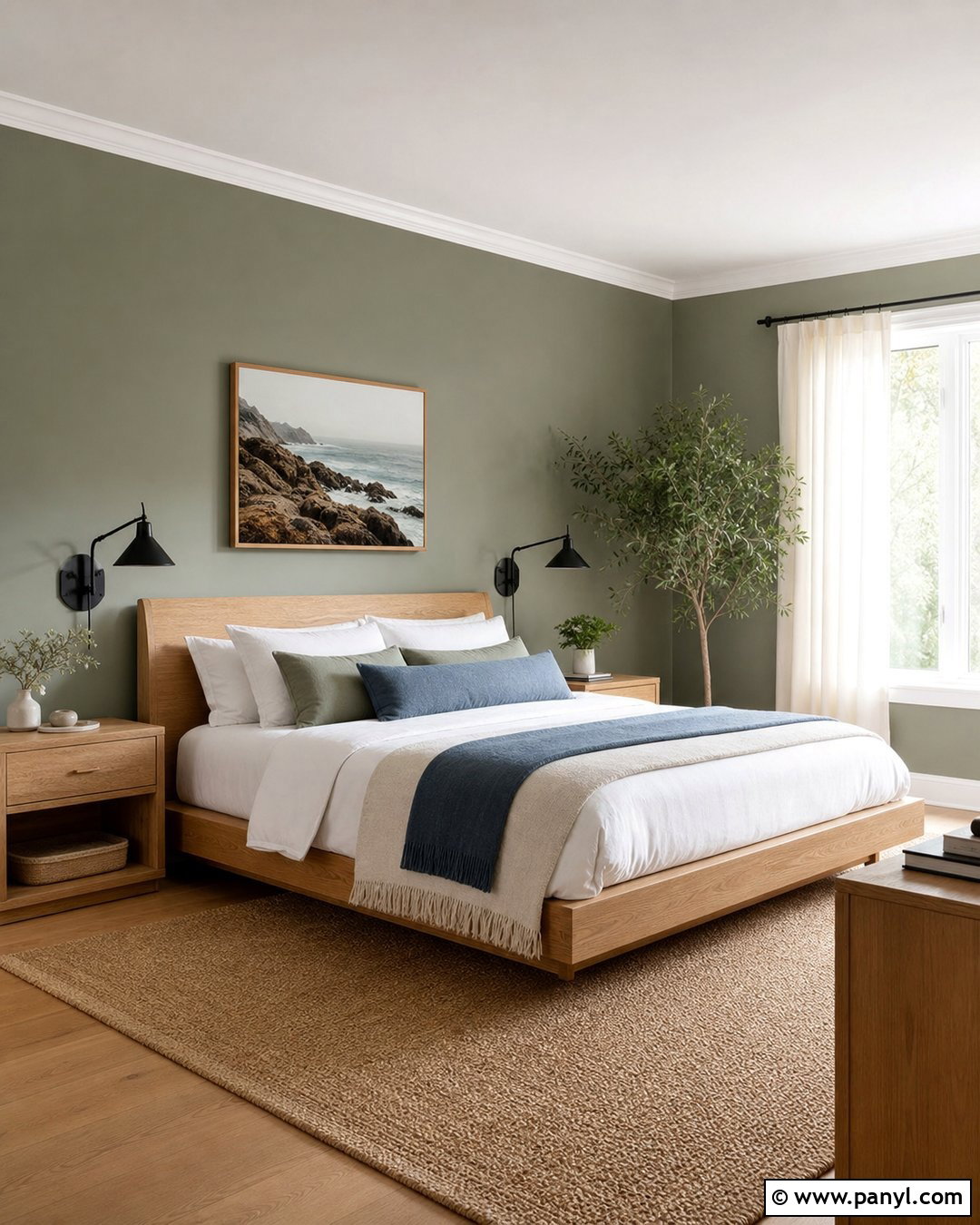
A light oak bedroom suite looks especially fresh against the deep gray-green character of Rocky Coast. Cover the walls with Rocky Coast, but keep the ceiling, baseboards, and doors in crisp Chantilly Lace. Choose a simple oak platform bed, matching nightstands, and a streamlined dresser. White bedding provides a clean foundation, while sage, denim blue, and sandy beige layers add gentle color. Place a large natural fiber rug beneath the bed and hang warm white curtains from black rods. Black sconces can repeat the curtain hardware and free the nightstands from bulky lamps. Add one tall plant and several ceramic accessories for texture. This complete combination suits modern, Scandinavian, and casual coastal homes without leaning too strongly into any single decorating theme.
13. Rocky Coast Bedroom Accent Wall
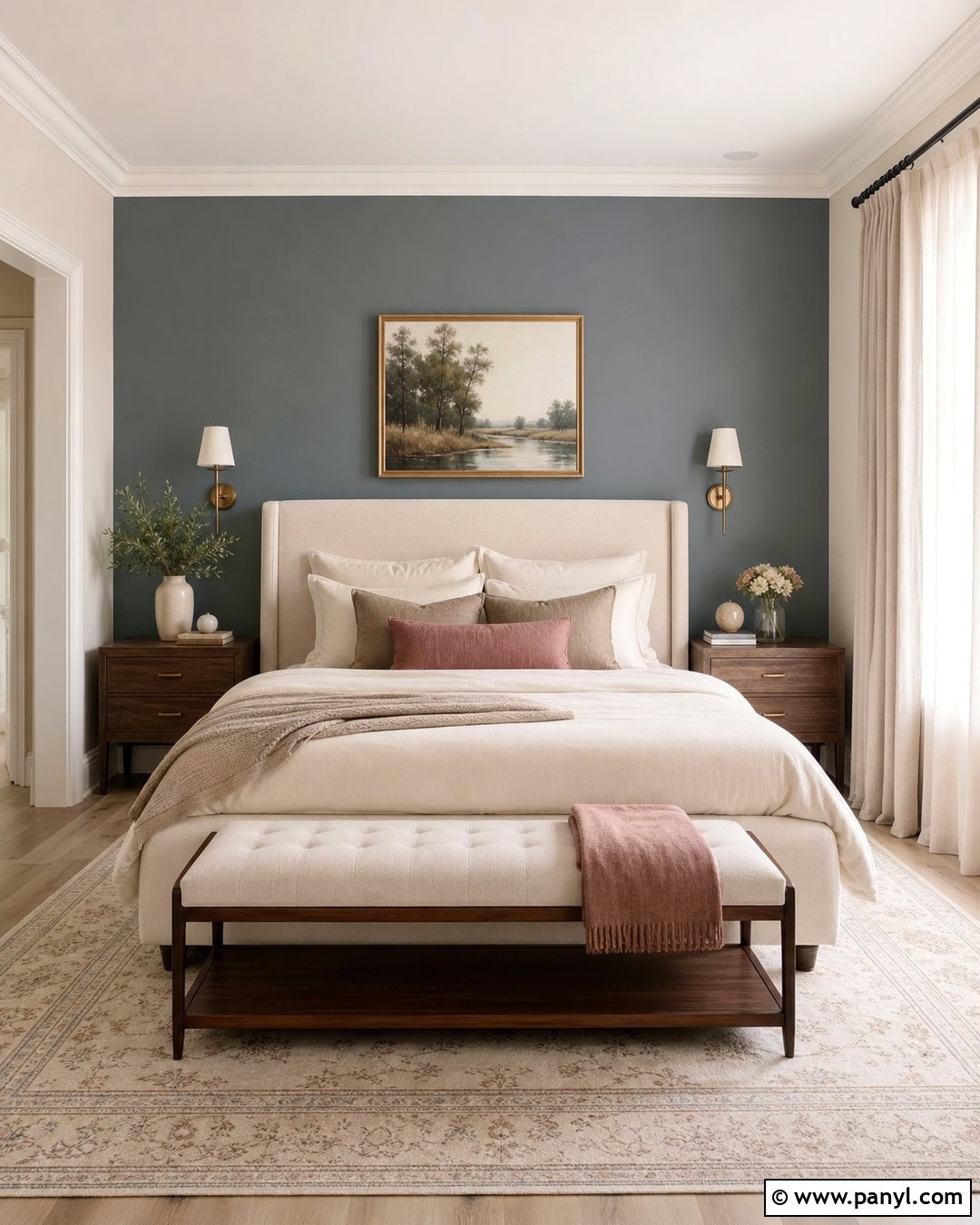
Place Rocky Coast behind the headboard to define the sleeping area while keeping the rest of the bedroom brighter. Paint the surrounding walls Collingwood for a soft transition rather than a high-contrast white. Choose a tall cream headboard, walnut nightstands, and matching bronze sconces to frame the accent wall symmetrically. Bedding in ivory, taupe, and dusty rose adds warmth and keeps the room from becoming overly cool. Use a pale patterned rug large enough to extend beyond both sides of the bed. Linen curtains should closely relate to the lighter wall color, helping the window disappear into the background. Finish with simple wood-framed art and a bench upholstered in caramel fabric. The completed design feels layered, restful, and easy to update seasonally.
14. Rocky Coast Color Drenched Bedroom
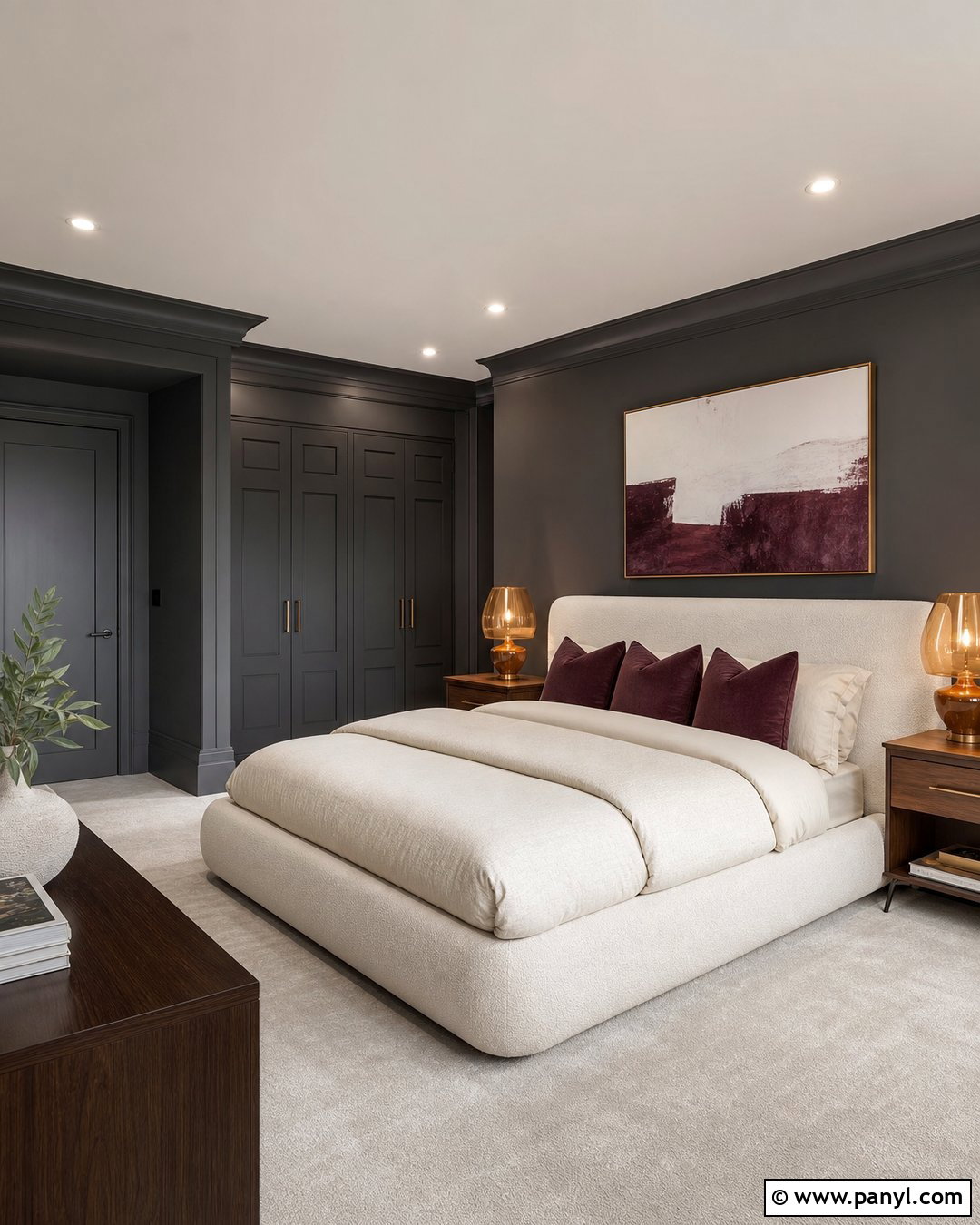
For a deeply cocooning bedroom, apply Rocky Coast to the walls, ceiling, trim, doors, and built-in storage. Use a flat finish overhead and slightly more reflective paint on woodwork to create subtle definition without breaking the monochromatic effect. Balance the saturated envelope with an ivory boucle bed, light carpet, and crisp cream bedding. Walnut nightstands and amber glass lamps contribute warmth, while muted plum cushions introduce restrained contrast. Avoid filling every wall with artwork; one large abstract canvas is enough. Install warm white dimmable lighting at several heights so the room remains comfortable after sunset. This complete color-drenched approach works best when pale textiles and reflective accents are distributed evenly, preventing dark corners from making the bedroom feel smaller than it is.
15. Rocky Coast Home Office With Built-Ins
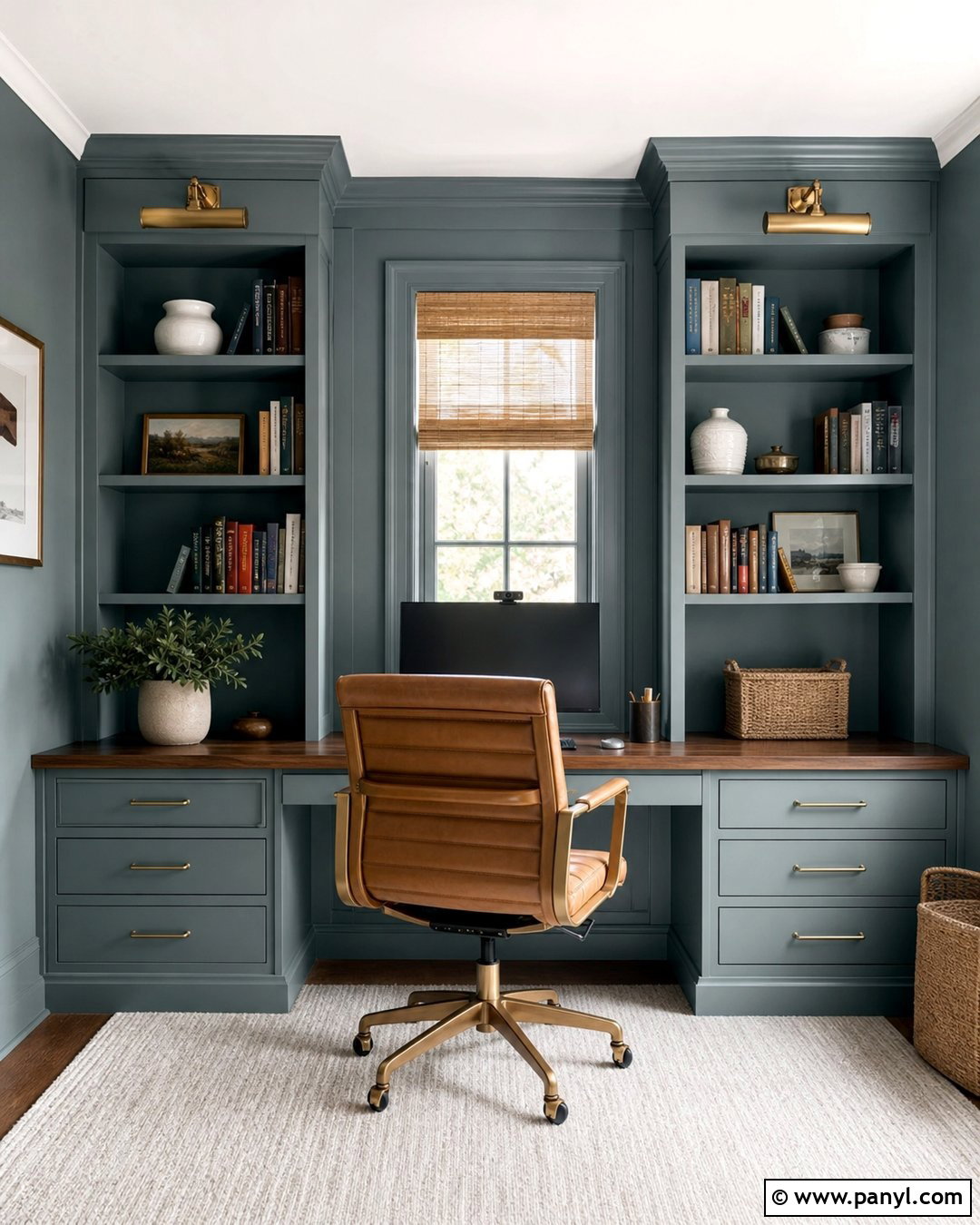
A home office painted Rocky Coast can feel focused, polished, and separate from the rest of the house. Cover the walls, bookcases, desk cabinetry, and trim in the same shade. Use satin paint on shelves and drawer fronts for durability, with matte paint on the walls. A walnut desktop gives the built-ins a warm work surface, while a tan leather chair adds comfort and character. Include a cream wool rug, woven window shade, and brass library lights to balance the dark backdrop. Arrange books with storage boxes and a few sculptural objects, leaving some shelf space open. The ceiling can remain White Dove to preserve brightness. This complete workspace offers useful organization while turning Rocky Coast into a professional background for calls, reading, and concentrated work.
16. Rocky Coast Small Office Nook
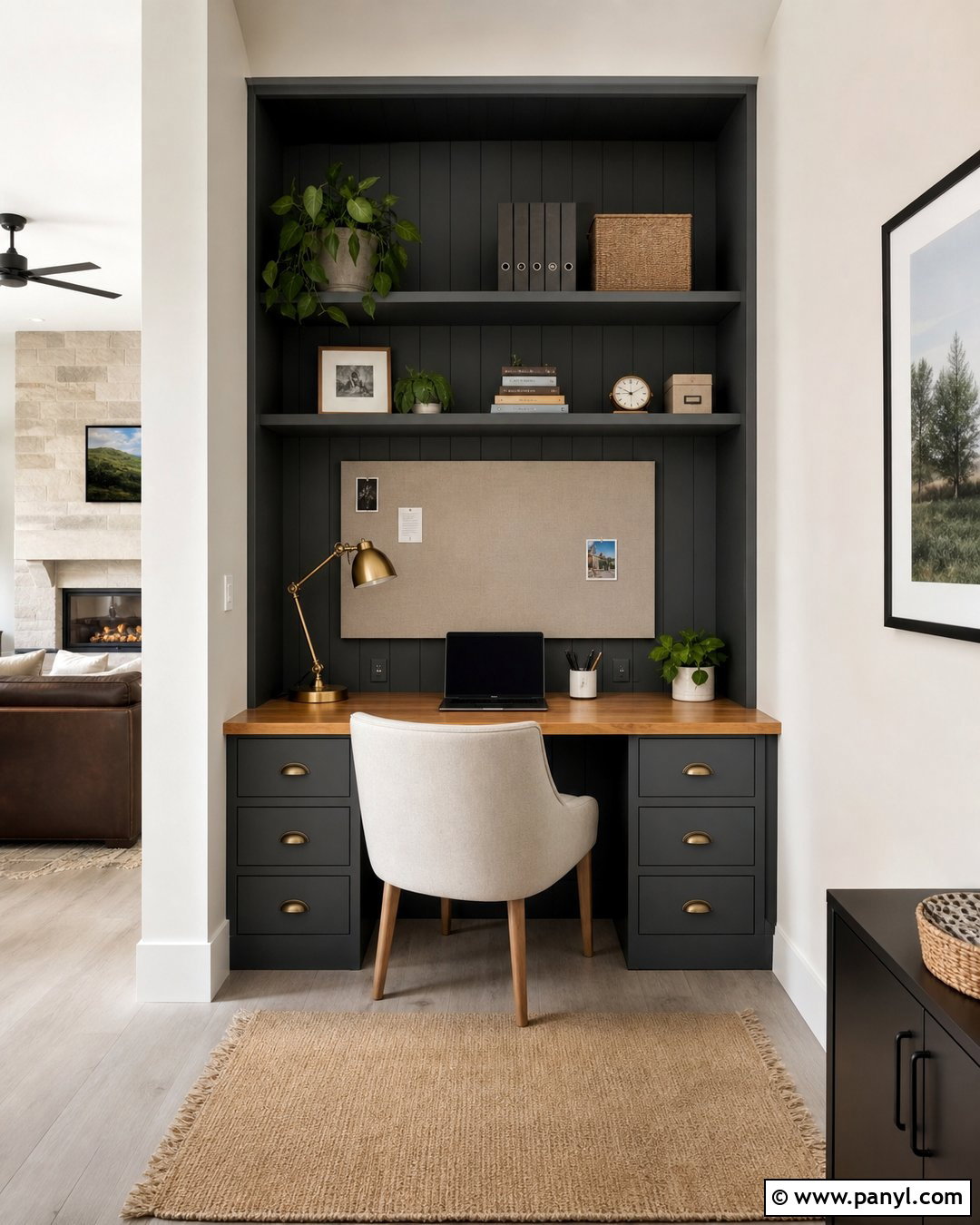
Even a small office nook can carry a complete design when Rocky Coast visually separates it from the surrounding room. Paint the back wall, floating shelves, and lower desk drawers in the same deep gray. Build in a natural oak desktop to provide warmth and practical working space. A compact cream chair, brass task lamp, and pale woven rug will keep the corner approachable. Use nearby white walls to frame the nook and prevent the dark color from spreading across a limited area. Add closed boxes for office supplies, a corkboard covered in neutral fabric, and two small pieces of artwork. Integrated shelf lighting is particularly helpful here. The final arrangement feels intentional and functional, not like a desk placed temporarily in an unused corner.
17. Rocky Coast Entryway With Wood Bench
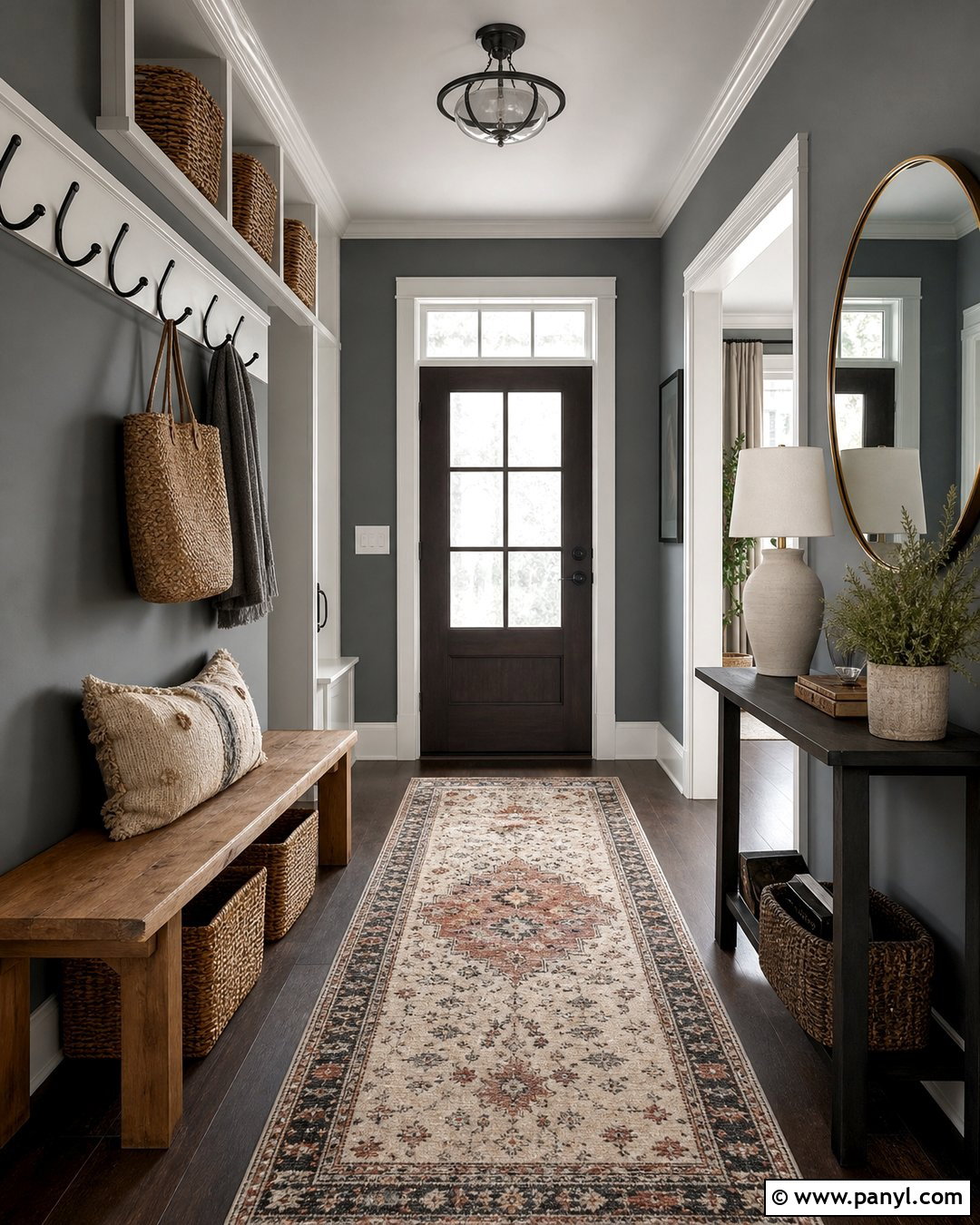
Rocky Coast can make an entryway feel established from the moment the door opens. Paint the walls in an eggshell finish and use White Dove on the ceiling, trim, and connecting doorways. Position a solid oak bench against the longest wall, with woven baskets underneath for shoes and everyday accessories. Above it, install black hooks and a large round brass mirror. A durable vintage-pattern runner in cream, rust, and charcoal will hide wear while warming the floor. Add a narrow console if space allows, topped with a ceramic lamp and a simple bowl for keys. The combination of deep gray walls, practical storage, and natural textures creates a welcoming transition. It also gives adjoining light-colored rooms a stronger sense of contrast and architectural definition.
18. Rocky Coast Mudroom Cabinets
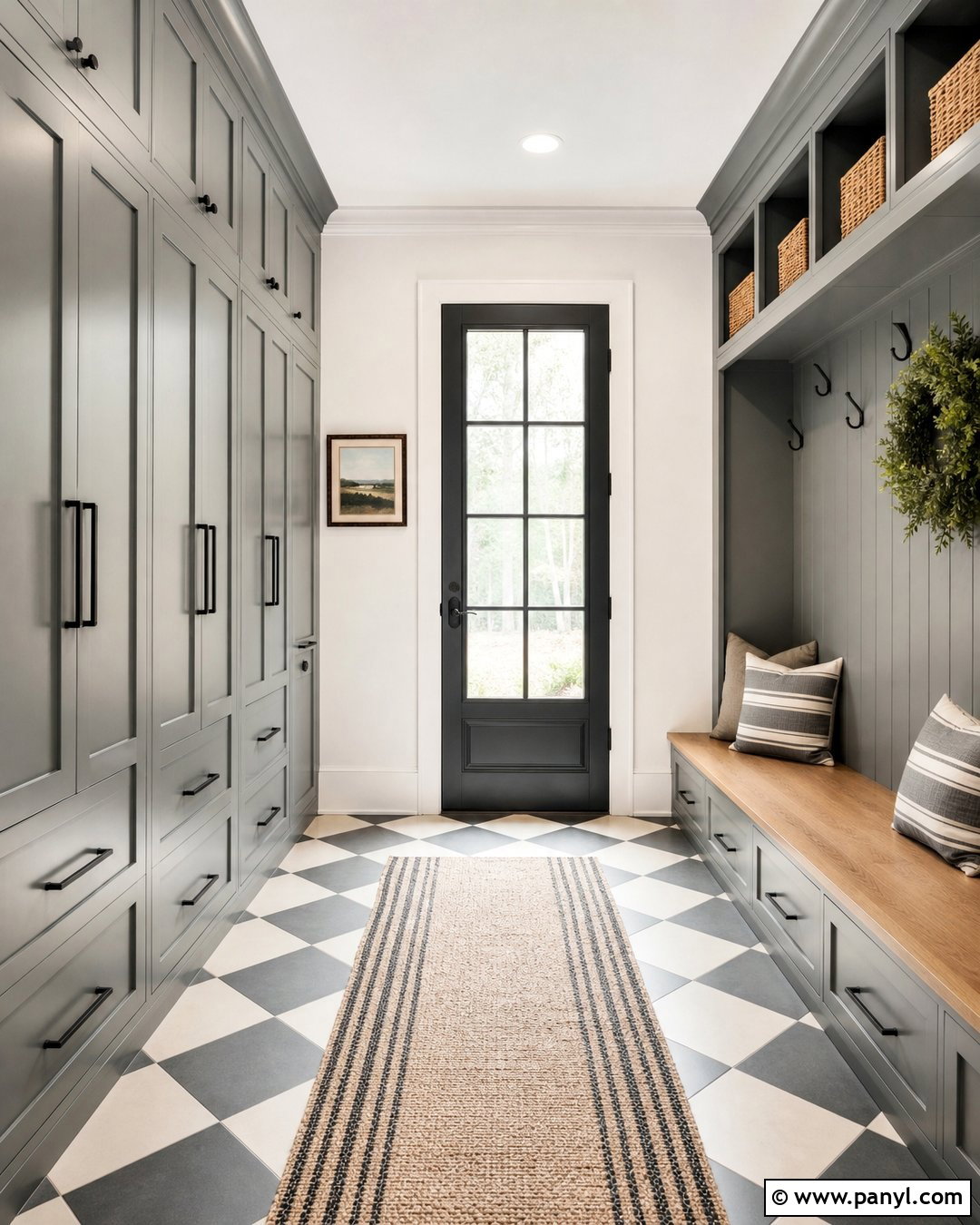
Rocky Coast is practical for mudroom cabinetry because its depth can visually disguise everyday scuffs better than a pale color. Paint floor-to-ceiling lockers, drawers, and a built-in bench in a washable satin finish. Pair the cabinets with warm white walls and a durable charcoal-and-cream checkerboard tile floor. Use white oak for the bench seat so the dark cabinetry gains a warm horizontal accent. Matte black hooks, cup pulls, and overhead fixtures keep the hardware simple. Add striped seat cushions and labeled woven baskets for family organization. A small washable runner can soften the center walkway. This full mudroom design provides each household member with defined storage while maintaining a coordinated appearance that connects naturally to both traditional and modern interiors.
19. Rocky Coast Hallway With White Doors
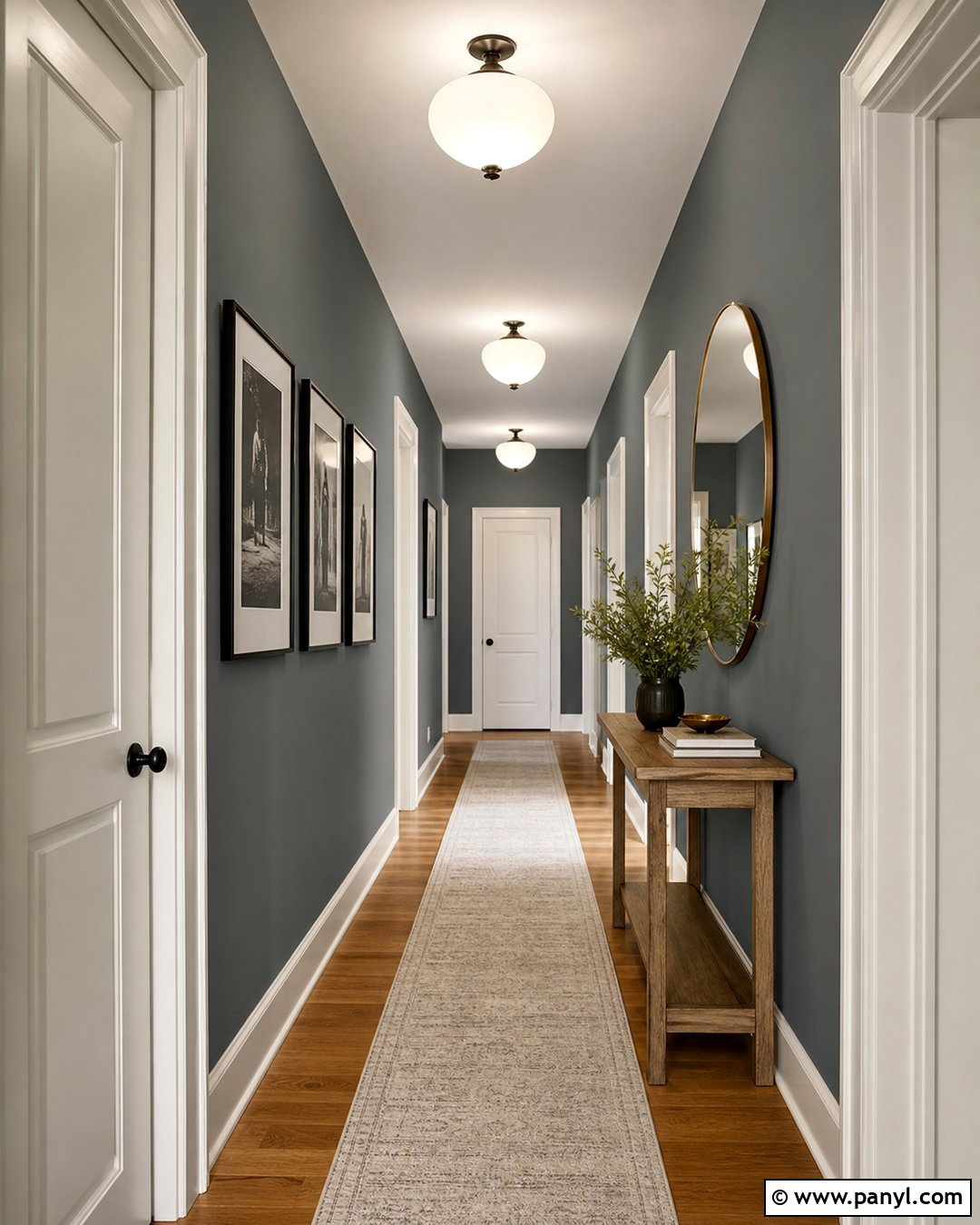
A narrow hallway gains depth when Rocky Coast walls are contrasted with bright white doors and trim. Choose Chantilly Lace for door casings, baseboards, and the ceiling, allowing those architectural lines to guide the eye through the space. Install medium oak flooring or a long cream runner to bring warmth underfoot. A row of black-framed photographs can create an orderly gallery without overwhelming the walls. Use flush-mount ceiling lights with frosted glass for broad, even illumination. If the hallway is wide enough, add a shallow wood console and a round mirror at one end. Keep decorative pieces minimal so circulation stays clear. The completed passage feels intentional and dramatic, turning an overlooked connecting area into a strong part of the home’s overall color story.
20. Rocky Coast Staircase With White Paneling
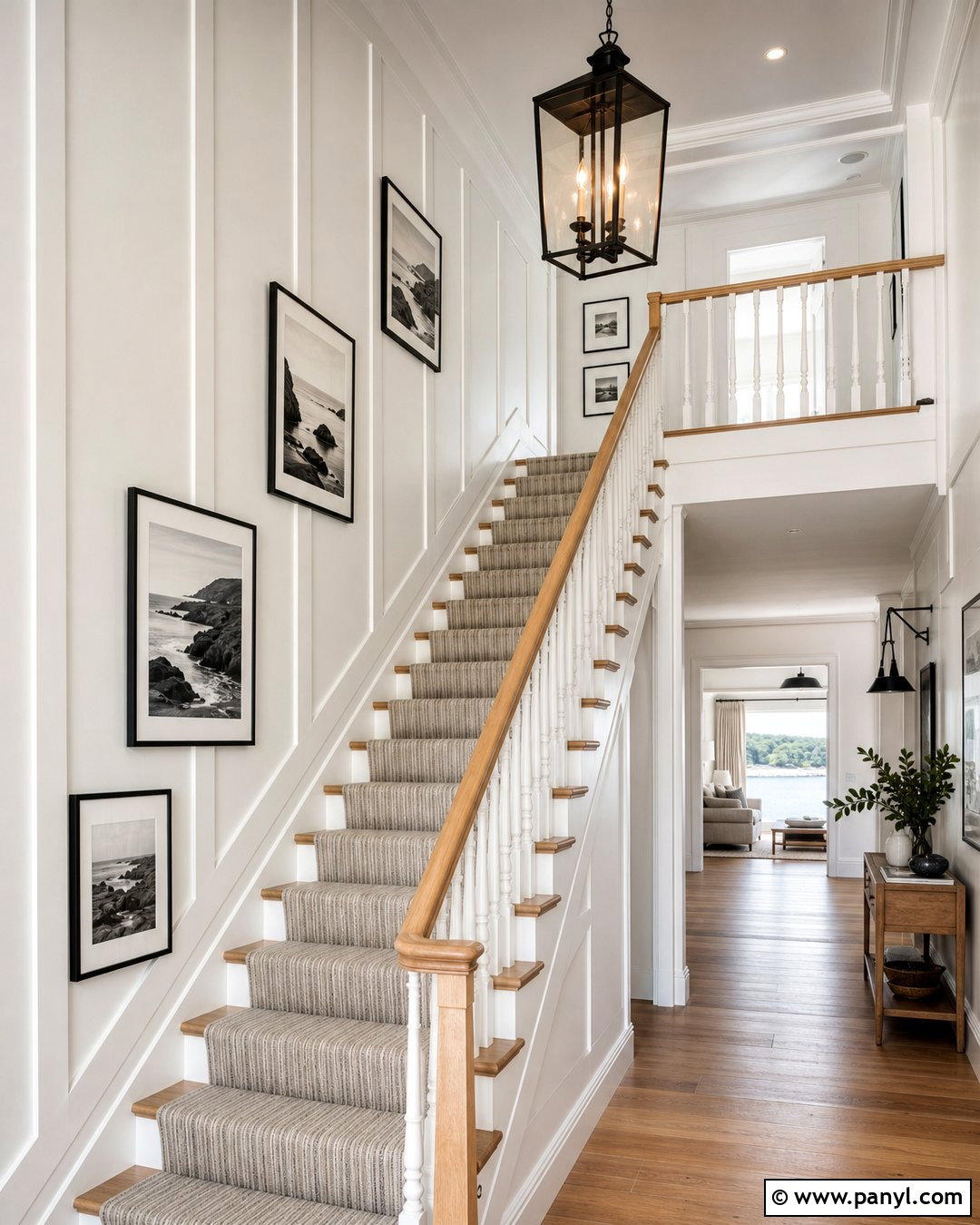
Use Rocky Coast above white stair paneling to create a classic two-tone staircase. Install board-and-batten or raised panel molding along the lower half, then paint it White Dove with a durable satin finish. Apply Rocky Coast above the molding and continue it through the upper landing for visual continuity. A natural oak handrail and stair treads will warm both paint colors, while white risers preserve a crisp look. Add a neutral striped runner secured with understated rods. Black-framed artwork arranged along the incline provides rhythm without competing with the architecture. Select a large lantern pendant for the stairwell and warm white sconces for the landing. This complete design makes the staircase feel finished, bright, and substantial while still showcasing Rocky Coast’s dramatic depth.
21. Rocky Coast Powder Room With Marble
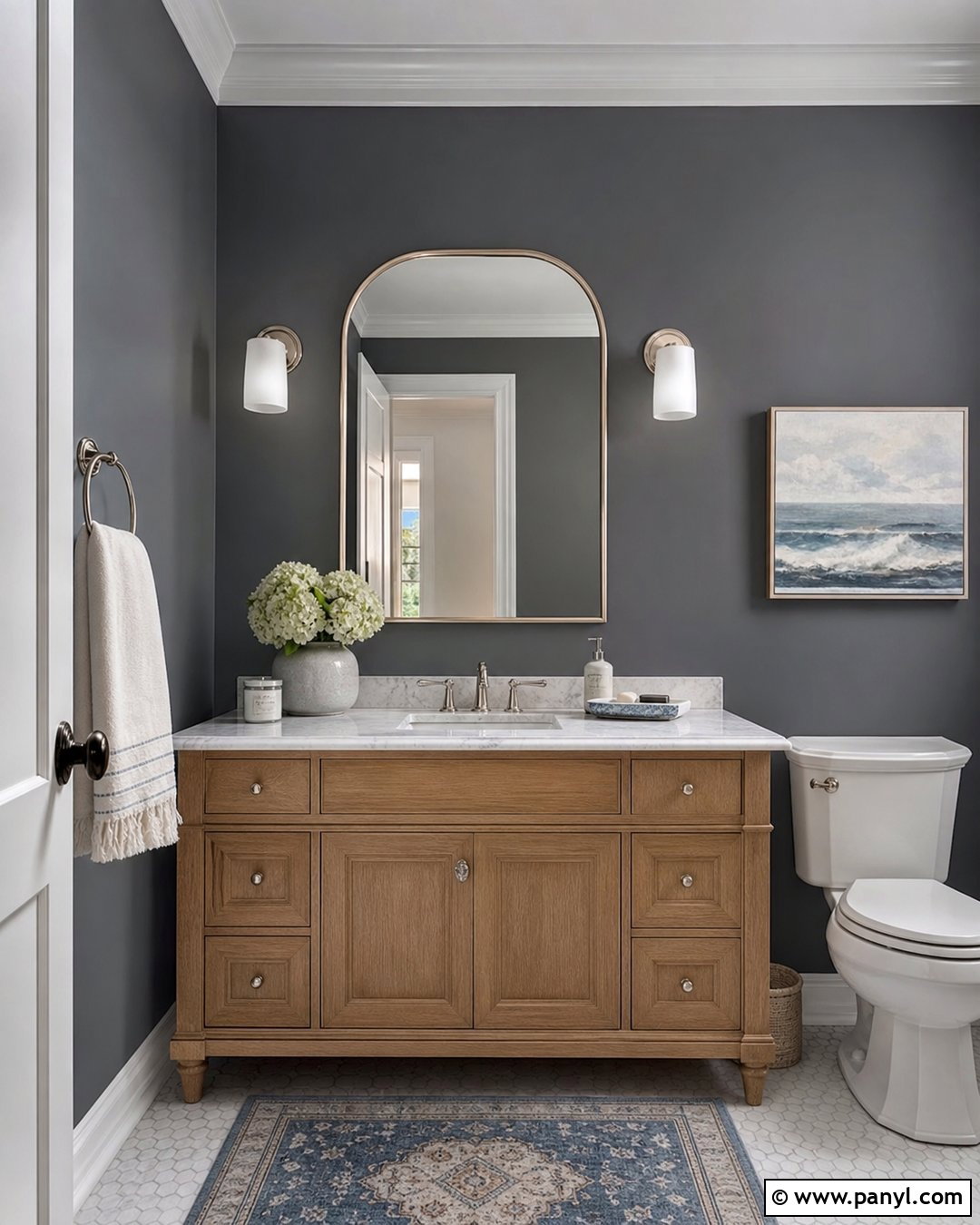
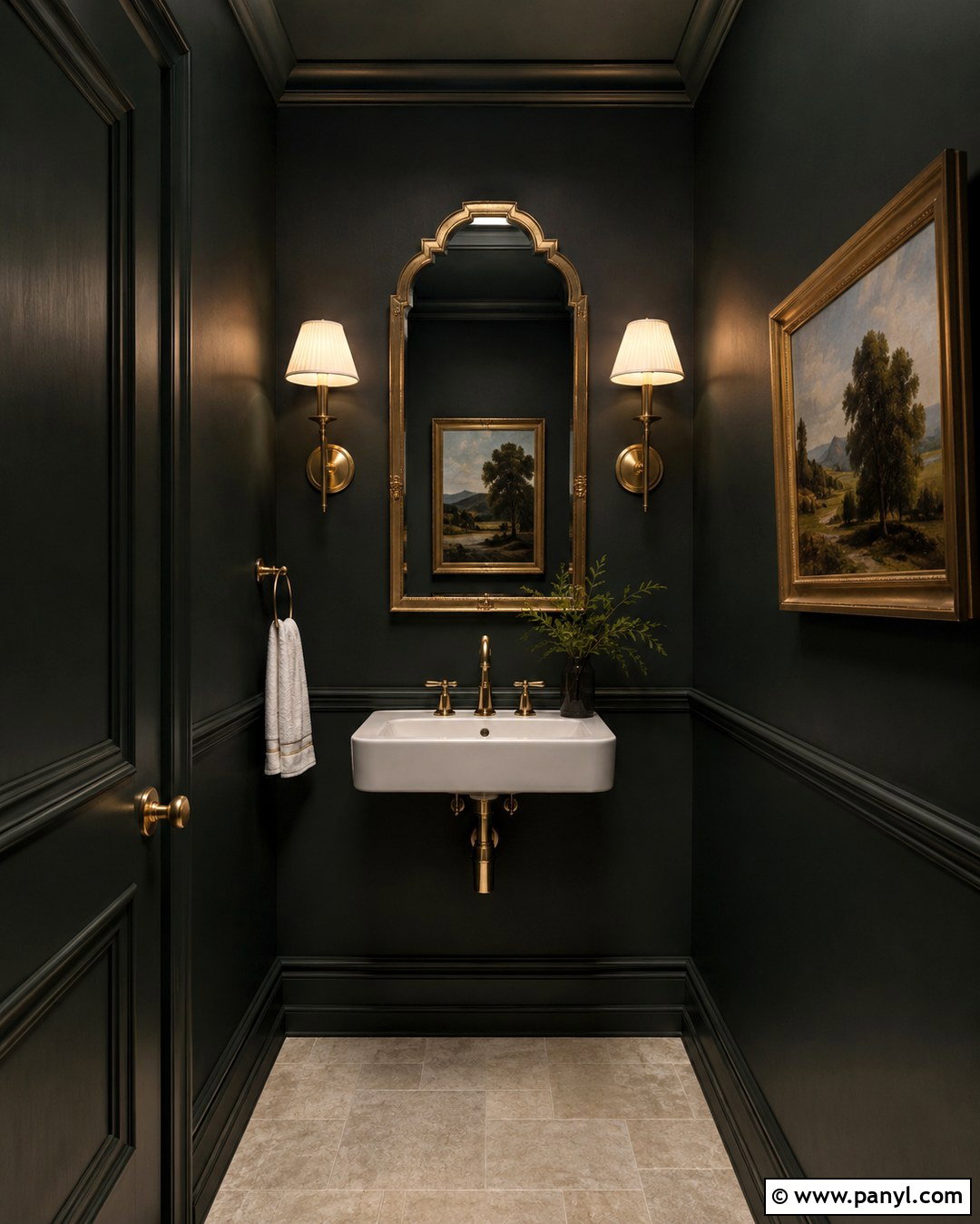
A powder room offers enough separation to use Rocky Coast boldly on every wall. Pair the deep color with a compact natural oak vanity topped by white marble or quartz. Install a polished nickel faucet and a curved metal-framed mirror to reflect light around the room. White hexagonal floor tile keeps the lower portion bright, while a simple white ceiling prevents the space from feeling closed in. Add two frosted glass sconces at face level for balanced illumination. Towels in cream and dusty blue will connect the wall color to the lighter finishes. Keep accessories limited to a stone soap dispenser, small tray, and greenery. The finished powder room feels dramatic and carefully composed, yet every surface remains practical for a frequently used guest space.
22. Rocky Coast Bathroom Vanity
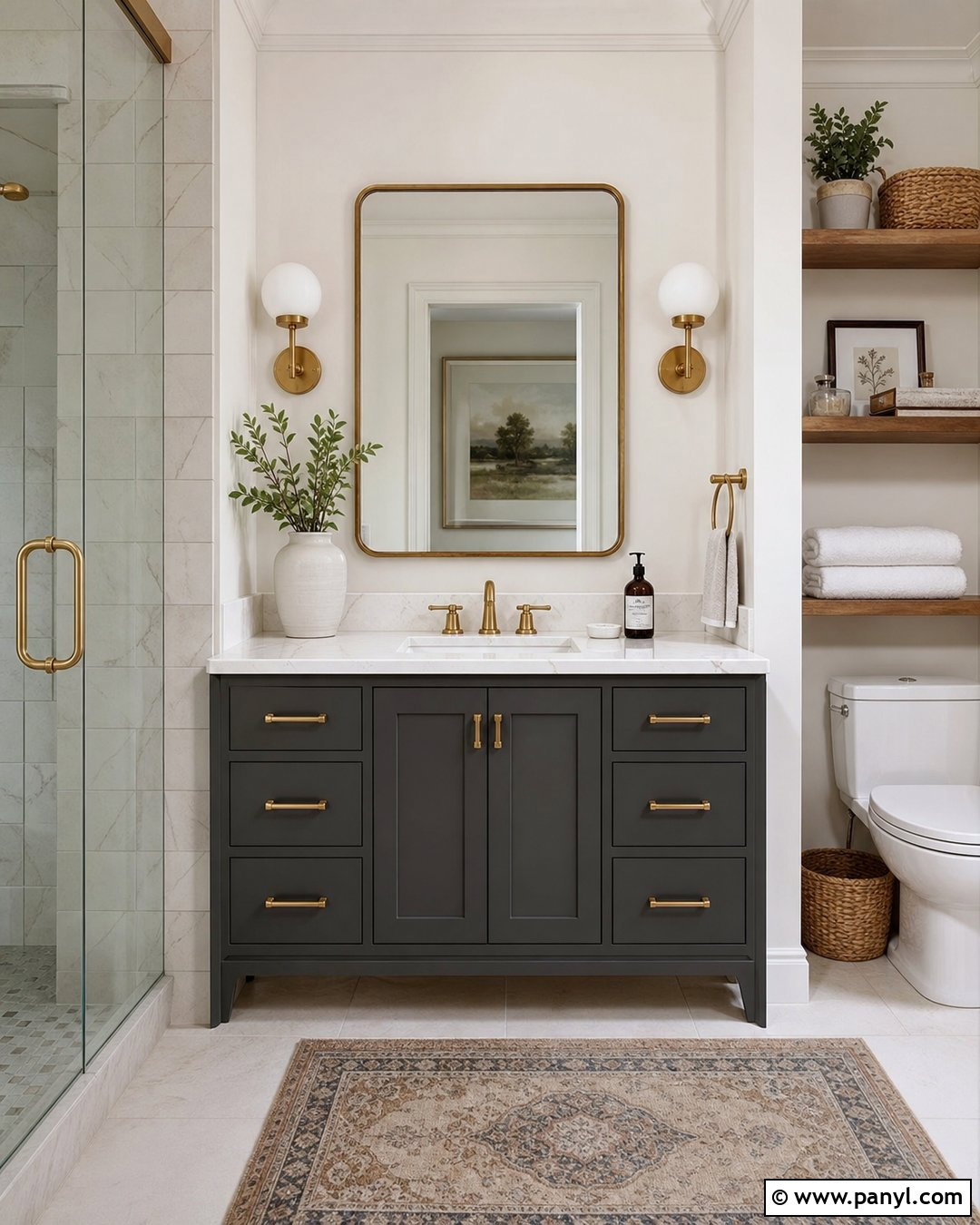
A Rocky Coast vanity can anchor a bathroom without requiring dark walls. Paint the cabinet in a moisture-resistant satin finish and combine it with White Dove walls, pale porcelain floor tile, and a softly veined quartz countertop. Brushed brass hardware adds warmth, while a matching faucet and framed mirror create a cohesive focal area. Choose a white undermount sink and simple globe sconces for a clean transitional look. Repeat the vanity color through a narrow border in the shower tile or a patterned bath rug. Natural wood shelves and woven baskets prevent the scheme from feeling too polished. This balanced design works well in both small and large bathrooms because Rocky Coast provides contrast at the correct visual height while lighter surrounding materials preserve openness.
23. Rocky Coast Bathroom With Wood Vanity
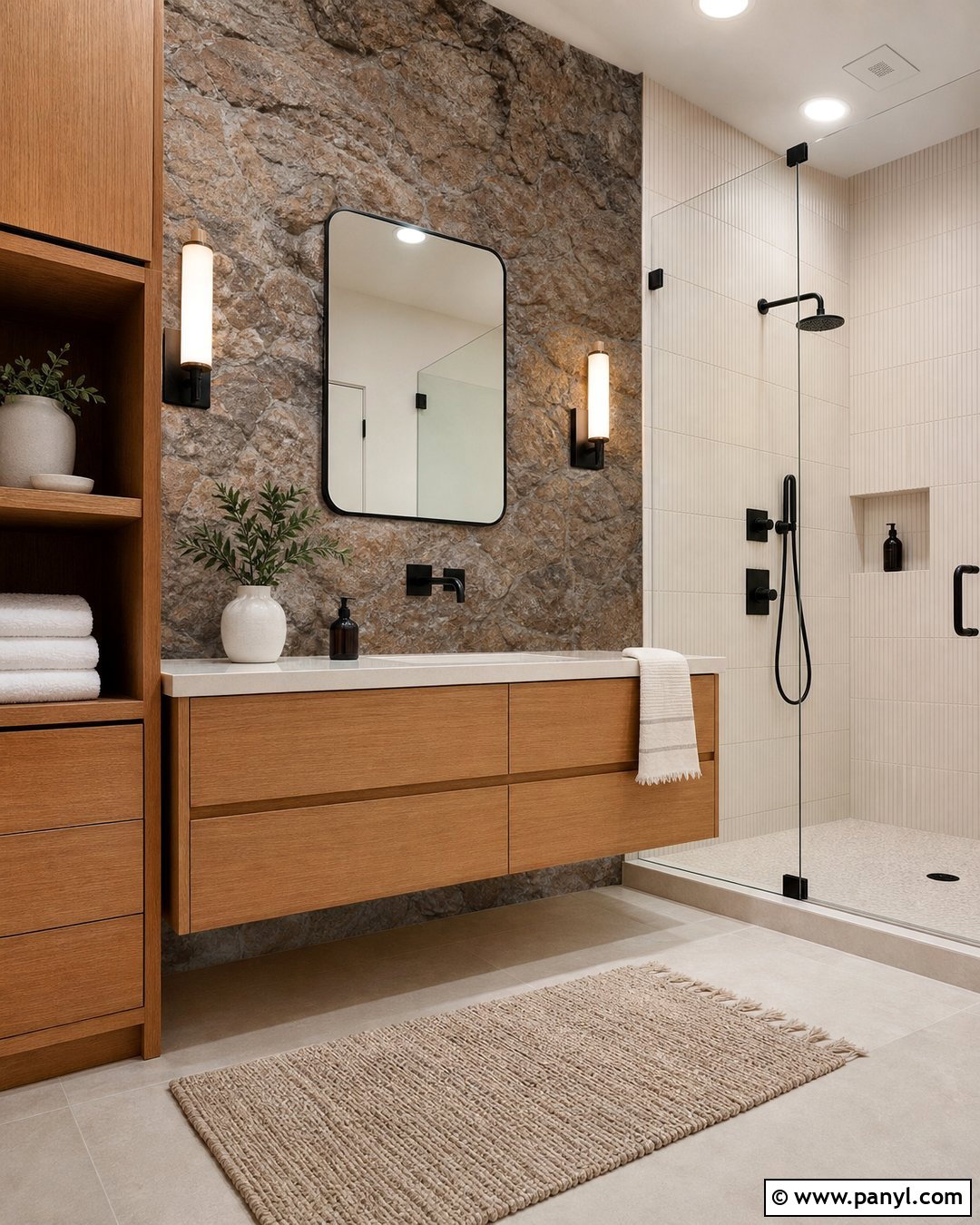
Paint the bathroom walls Rocky Coast and introduce a floating white oak vanity for a warm, modern contrast. Top the vanity with off-white quartz and select a large frameless mirror to reflect both the color and available daylight. Use cream vertical tile inside the shower and light limestone-look porcelain across the floor. Matte black faucets, sconces, and shower framing provide crisp definition without adding another color. White towels and a textured beige bath mat keep the room bright and comfortable. If storage is needed, install a shallow oak cabinet above the toilet to repeat the vanity material. This complete palette allows the walls to feel dramatic while the pale stone, glass, and natural wood maintain a clean bathroom atmosphere suitable for everyday routines.
24. Rocky Coast Laundry Room Cabinets
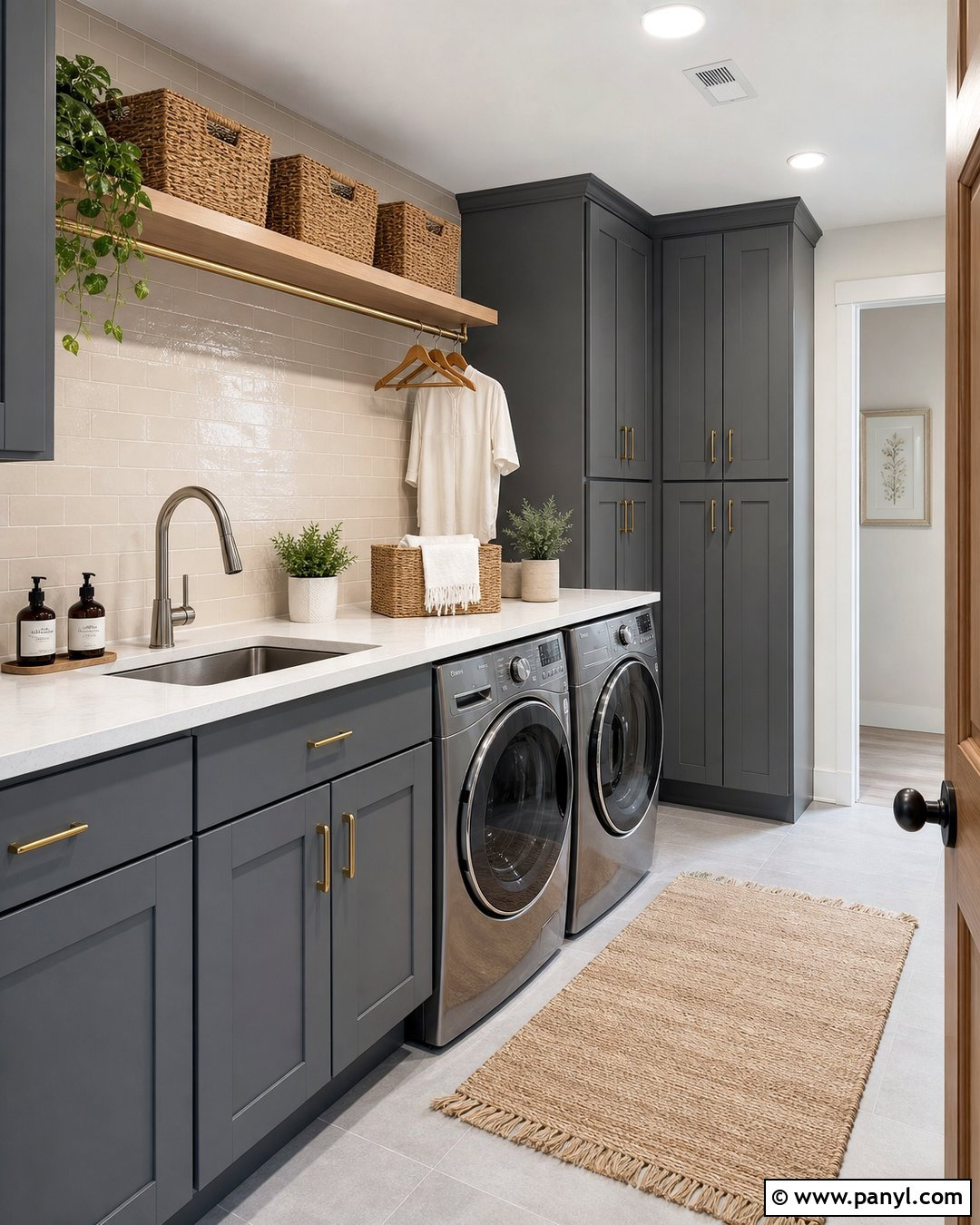
Turn a utilitarian laundry room into a coordinated workspace with Rocky Coast cabinetry and warm white walls. Use the color on lower cabinets, tall utility storage, and shelves above the appliances. Add white quartz counters over front-loading machines to create a folding area. A creamy elongated subway tile backsplash will reflect task lighting and protect the wall from splashes. Choose brass cabinet pulls, a brass hanging rail, and a practical stainless-steel sink. Light gray porcelain tile flooring provides durability without competing with the cabinets. Finish the room with woven storage baskets, labeled glass containers, and a small washable runner. The full design feels organized and elevated, but every detail supports useful storage, sorting, washing, drying, and folding rather than serving decoration alone.
25. Rocky Coast Built-In Bookshelves
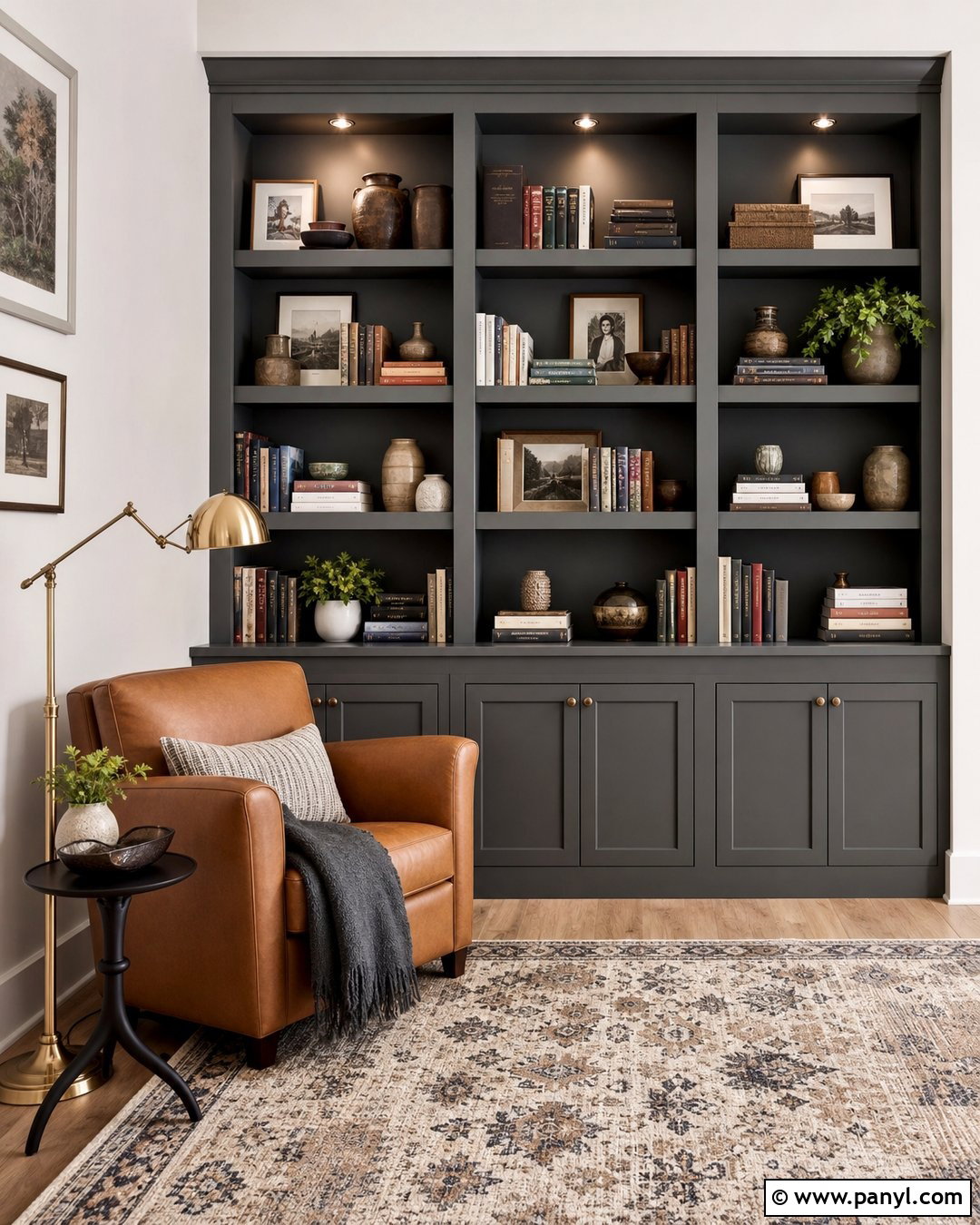
Rocky Coast built-in bookshelves can transform an ordinary living room wall into a substantial architectural feature. Paint the shelves, backing, lower cabinets, and surrounding trim in one satin finish for a seamless appearance. Leave the adjacent walls warm white to frame the installation. Place a camel leather reading chair and brass floor lamp nearby, then ground the corner with a cream patterned rug. Style the shelves with books, framed photographs, stoneware, and small wood objects, distributing light and dark pieces evenly. Closed cabinets beneath the shelves can hide electronics and household clutter. Warm integrated lighting will reveal the color and shelf contents after sunset. The finished arrangement creates storage, a reading destination, and a balanced focal point without requiring extensive decorative accessories.
26. Rocky Coast Fireplace Wall
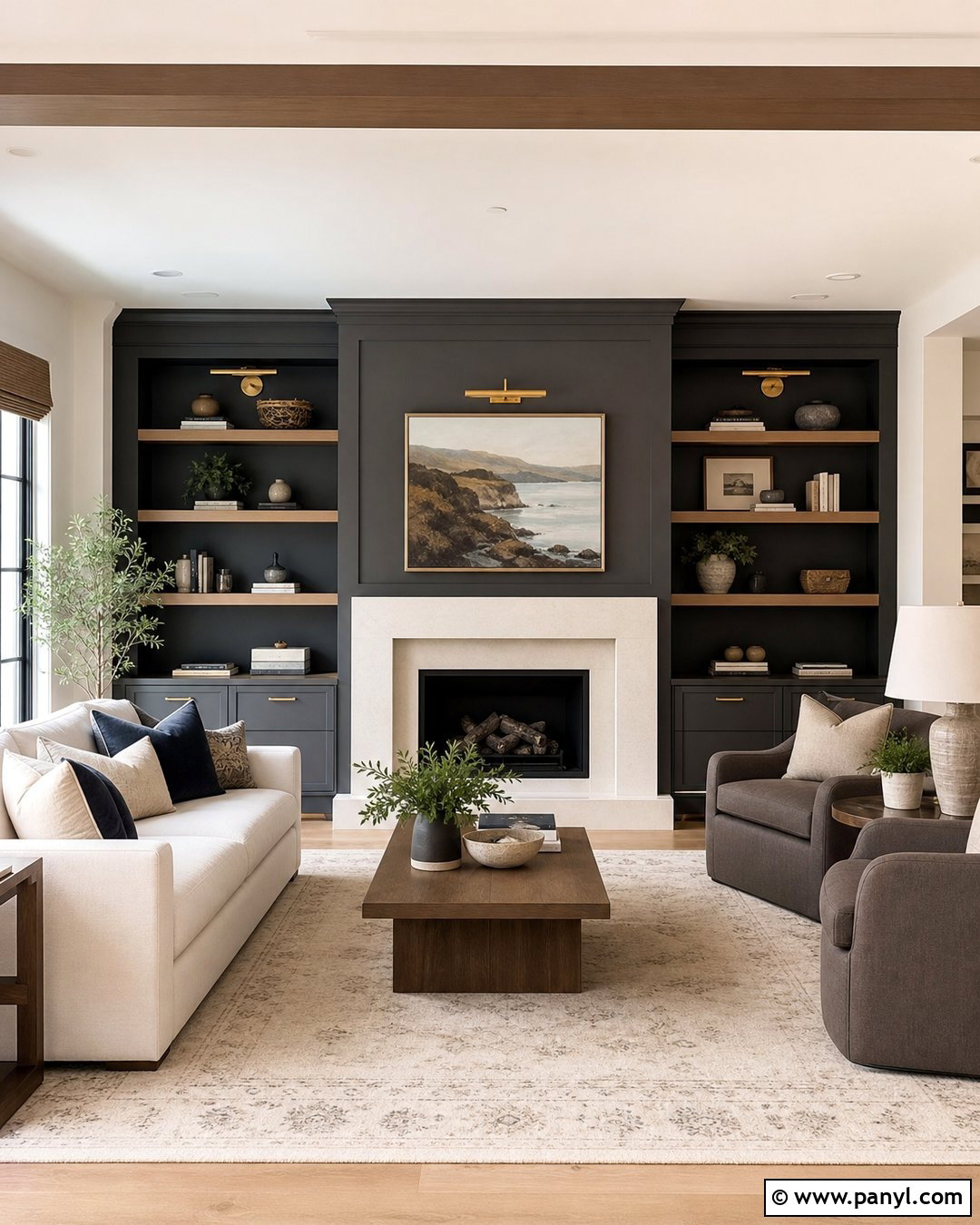
Make Rocky Coast the foundation of a complete fireplace wall by applying it to the chimney breast, surrounding built-ins, and lower cabinets. Use a pale limestone or honed white marble fireplace surround so the firebox remains clearly defined against the gray. Natural oak floating shelves introduce warmth, while brass picture lights illuminate artwork and accessories. Keep neighboring walls White Down and furnish the room with a cream sofa, taupe chairs, and a soft neutral rug. A walnut coffee table can connect the shelving to darker furniture tones. Avoid overcrowding the mantel; one large framed landscape and two low objects are sufficient. The completed wall looks custom and substantial, creating a strong focal point that functions equally well with traditional or streamlined furnishings.
27. Rocky Coast Interior Doors
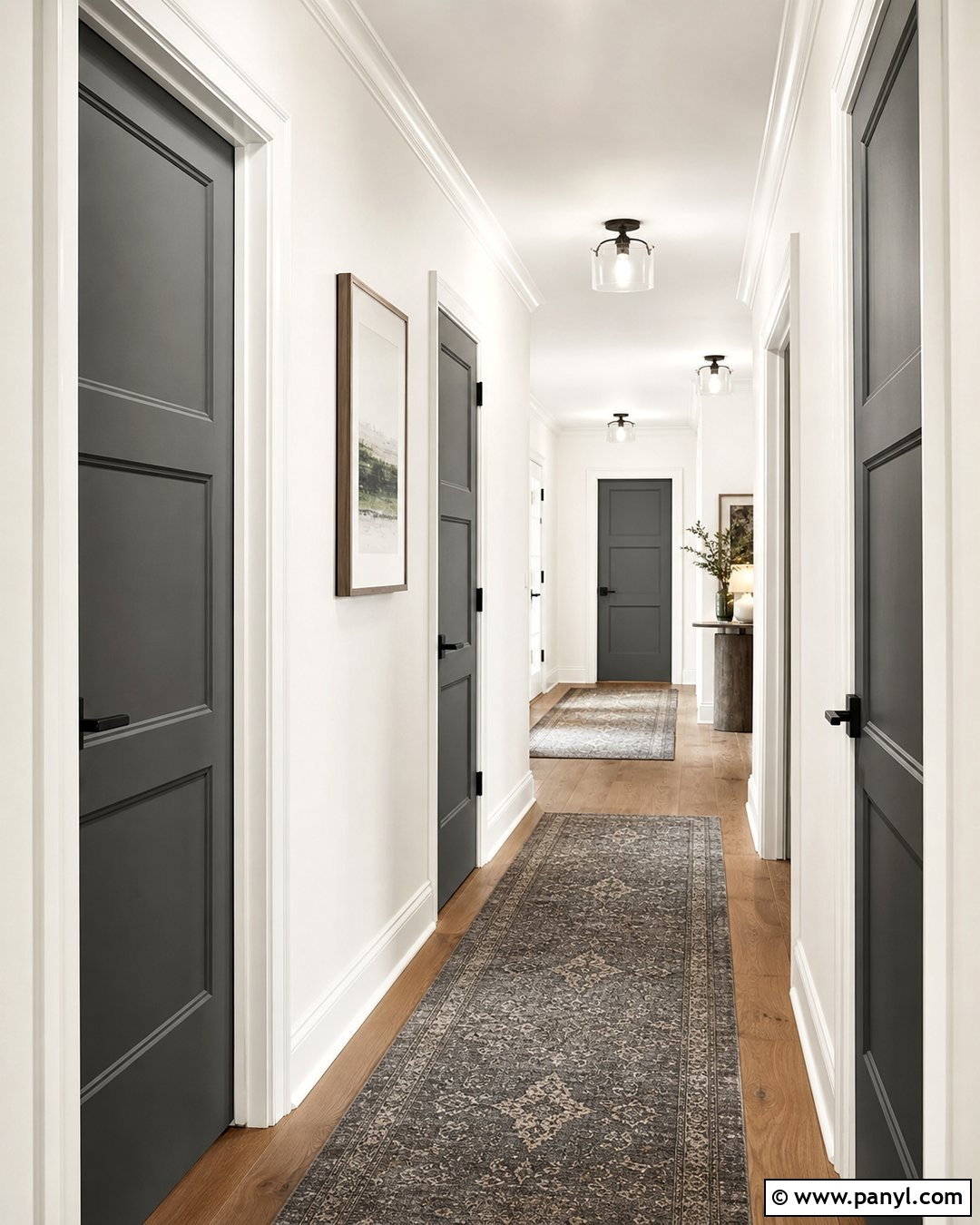
Painting interior doors Rocky Coast adds contrast throughout a pale home while leaving the main walls bright. Use the color on paneled doors in a satin finish, then keep the casings, baseboards, and walls White Dove. Choose matte black levers for a graphic look or brass knobs for a softer traditional direction. Connect the doors to the wider decor with charcoal window frames, gray patterned rugs, or small dark furniture pieces. Warm oak flooring will stop the scheme from appearing too cool. This approach works especially well along a hallway where several doors can create a repeated architectural rhythm. Keep the ceiling white and lighting bright. The completed look feels purposeful because Rocky Coast appears consistently across multiple doors instead of being limited to one unrelated accent.
28. Rocky Coast Front Door With White Siding

A Rocky Coast front door brings quiet depth to a white house without the severity of solid black. Paint the door in a durable satin or soft gloss finish and surround it with crisp white trim. Add aged brass hardware, a brass porch light, and medium-tone wood planters to warm the cool gray. Keep the siding a soft white rather than a creamy yellow, which could make the door appear colder by comparison. A natural coir mat and slate porch floor will reinforce the earthy palette. Fill the planters with structured evergreen foliage and seasonal white flowers. The complete entrance feels welcoming, polished, and easy to maintain. Rocky Coast also offers enough contrast for the door to remain visible from the street without dominating the whole facade.
29. Rocky Coast Front Door With Brick Exterior
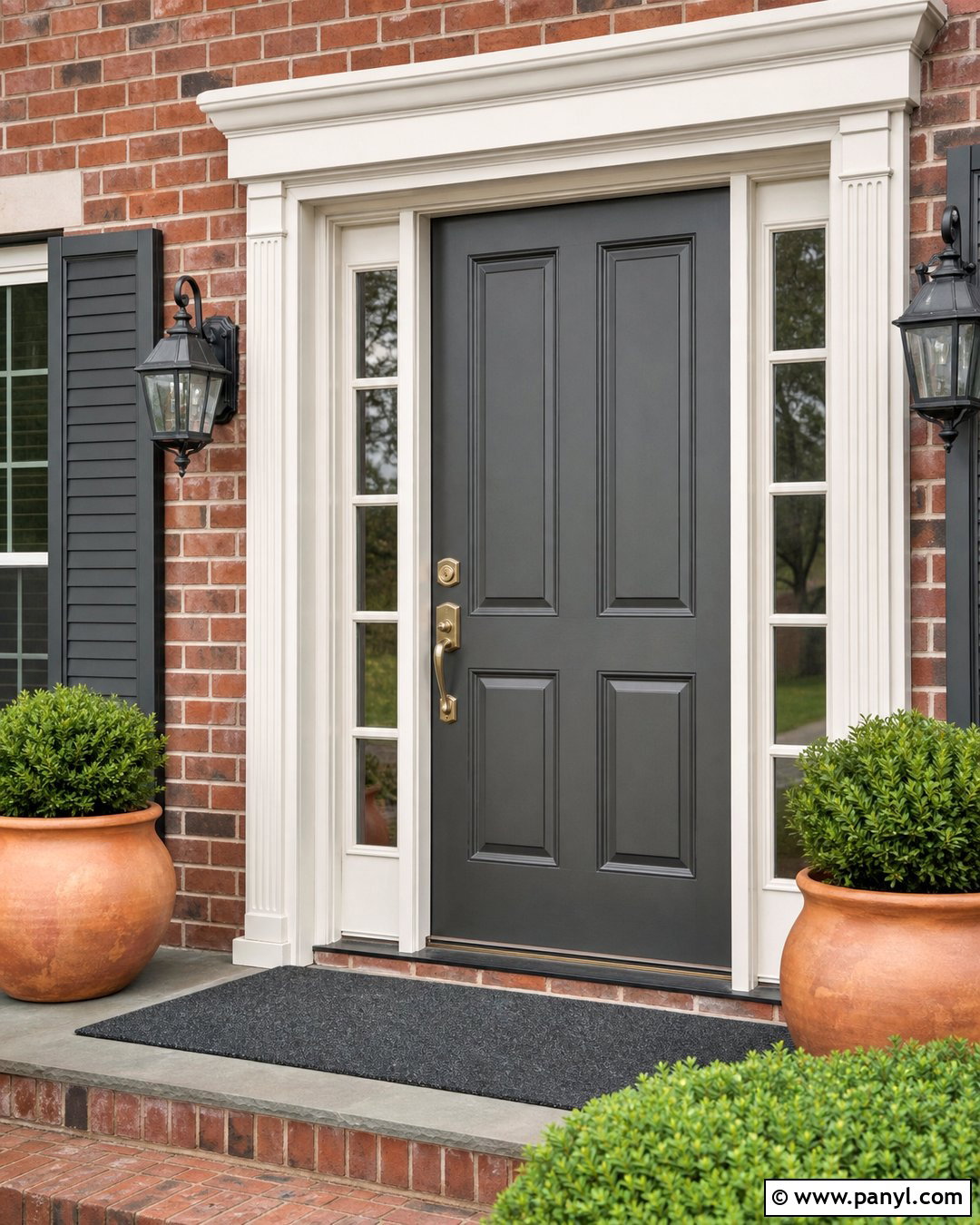
Rocky Coast can connect beautifully with the charcoal and weathered gray variations found in traditional brick. Paint the front door and sidelights in Rocky Coast, then use warm white on the surrounding casing and porch ceiling. Select antique brass hardware to relate to the red and brown notes in the masonry. Black lantern lights and a charcoal doormat provide small, repeated dark accents. Add large terracotta planters containing clipped greenery to echo the brick’s warmth. If shutters are present, keep them a soft black or matching Rocky Coast for consistency. The resulting exterior scheme respects the existing brick rather than competing with it. It feels updated but not overly trendy, making it suitable for ranch, colonial, cottage, and traditional suburban homes.
30. Rocky Coast Exterior With White Trim
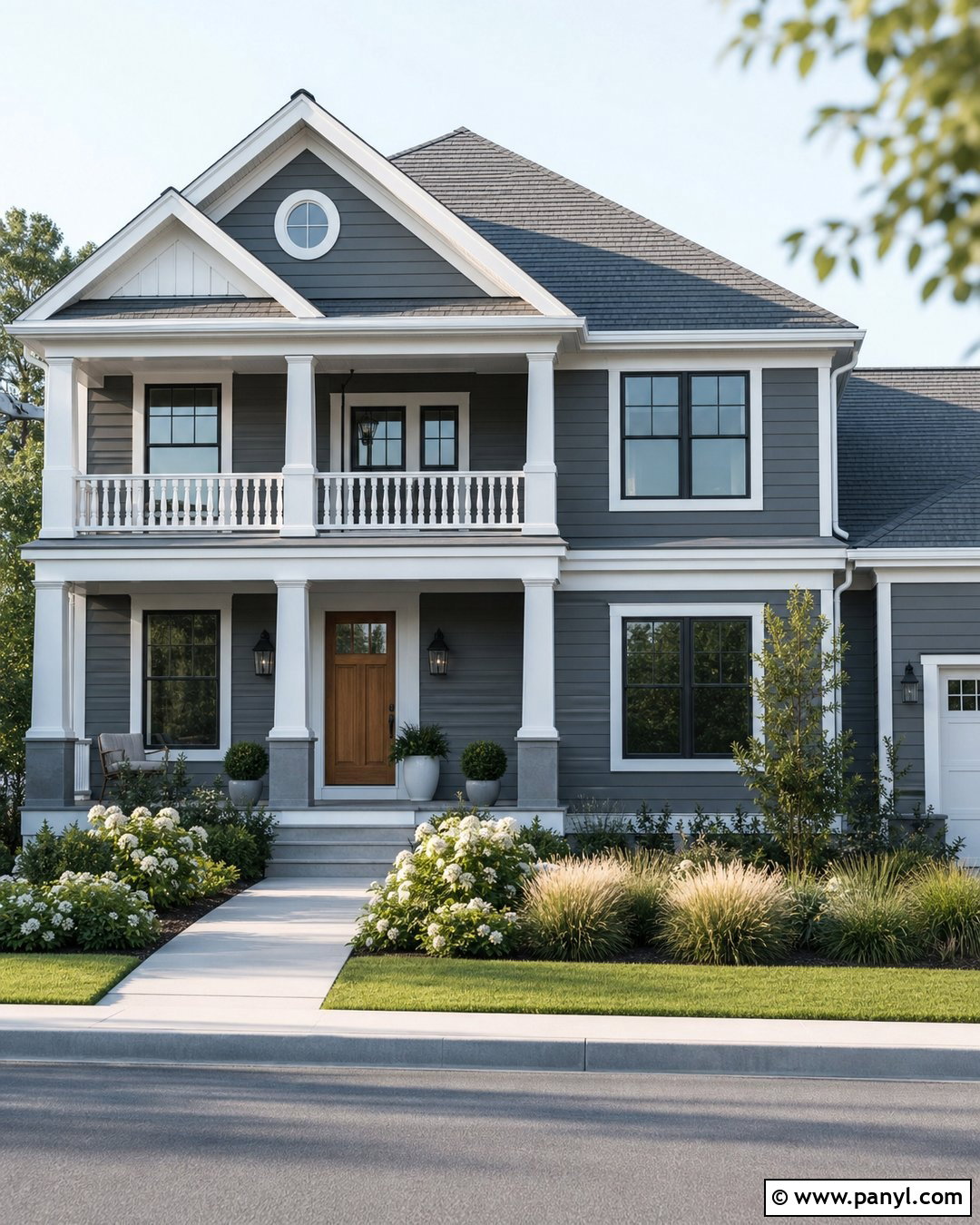
Covering the main siding in Rocky Coast creates a strong, sophisticated exterior with a coastal gray character. Use crisp white on fascia, window trim, porch columns, and railings so the architectural edges remain visible. A medium gray roof will blend naturally without making the facade look too busy. Choose a warm natural wood front door to soften the dark body color, then repeat that wood tone through porch furniture or garage details. Black lighting and gutters can create clean outlines. Keep landscaping bright with white flowering shrubs, ornamental grasses, and fresh green foliage. A pale concrete walkway will provide additional contrast. This complete color scheme feels grounded and timeless, especially on homes with simple siding patterns and generous natural light.
31. Rocky Coast Exterior With Black Accents
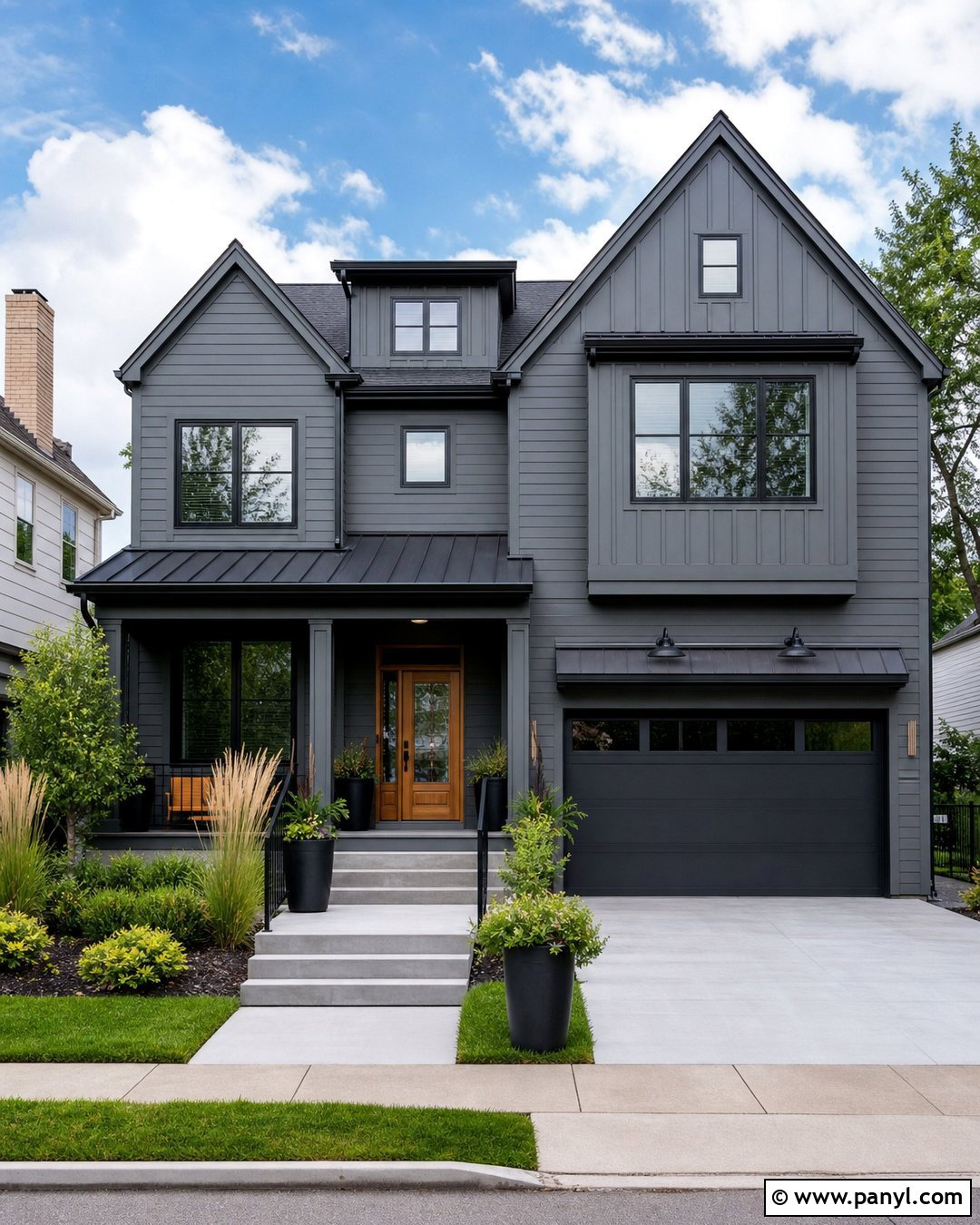
For a more modern exterior, pair Rocky Coast siding with matte black windows, gutters, railings, and garage hardware. Use a restrained warm white only on the soffits and small trim areas, allowing the dark materials to define the structure. A natural cedar front door introduces warmth and becomes the welcoming focal point. Choose a charcoal standing-seam metal porch roof or medium-dark shingles for a connected roofline. Simple concrete steps, black planters, and ornamental grasses support the contemporary palette. Avoid excessive decorative trim because the contrast between Rocky Coast, black, and wood already creates visual interest. The finished house feels graphic without becoming harsh, and the surrounding greenery brings necessary freshness to the deep neutral exterior materials.
32. Rocky Coast Exterior With Stone
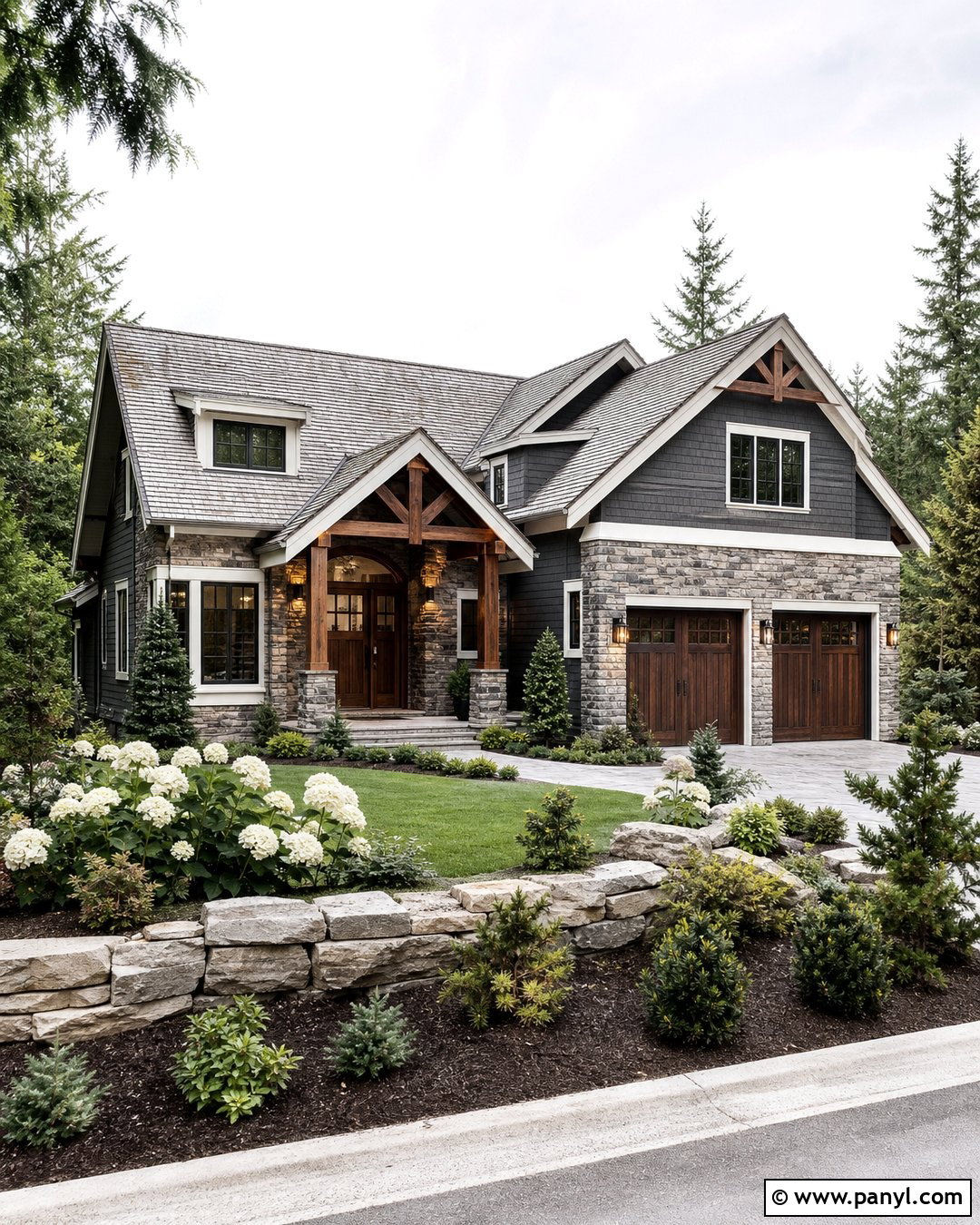
Stonework can make Rocky Coast feel naturally connected to the landscape. Use the paint on horizontal siding, upper gables, and garage doors, then select ledgestone containing gray, taupe, cream, and muted brown for the foundation or porch columns. Keep the trim soft white so windows remain distinct. A stained oak front door and matching porch beams will pull the warmer tones from the masonry. Choose a weathered gray roof and bronze exterior lights rather than sharp black fixtures. Layer the landscaping with evergreen shrubs, white hydrangeas, and low ornamental grasses. A light gravel or concrete path will brighten the approach. This full exterior palette suits craftsman, ranch, and mountain-inspired homes while keeping the stone, siding, and wood visually balanced.
33. Rocky Coast Garage Doors
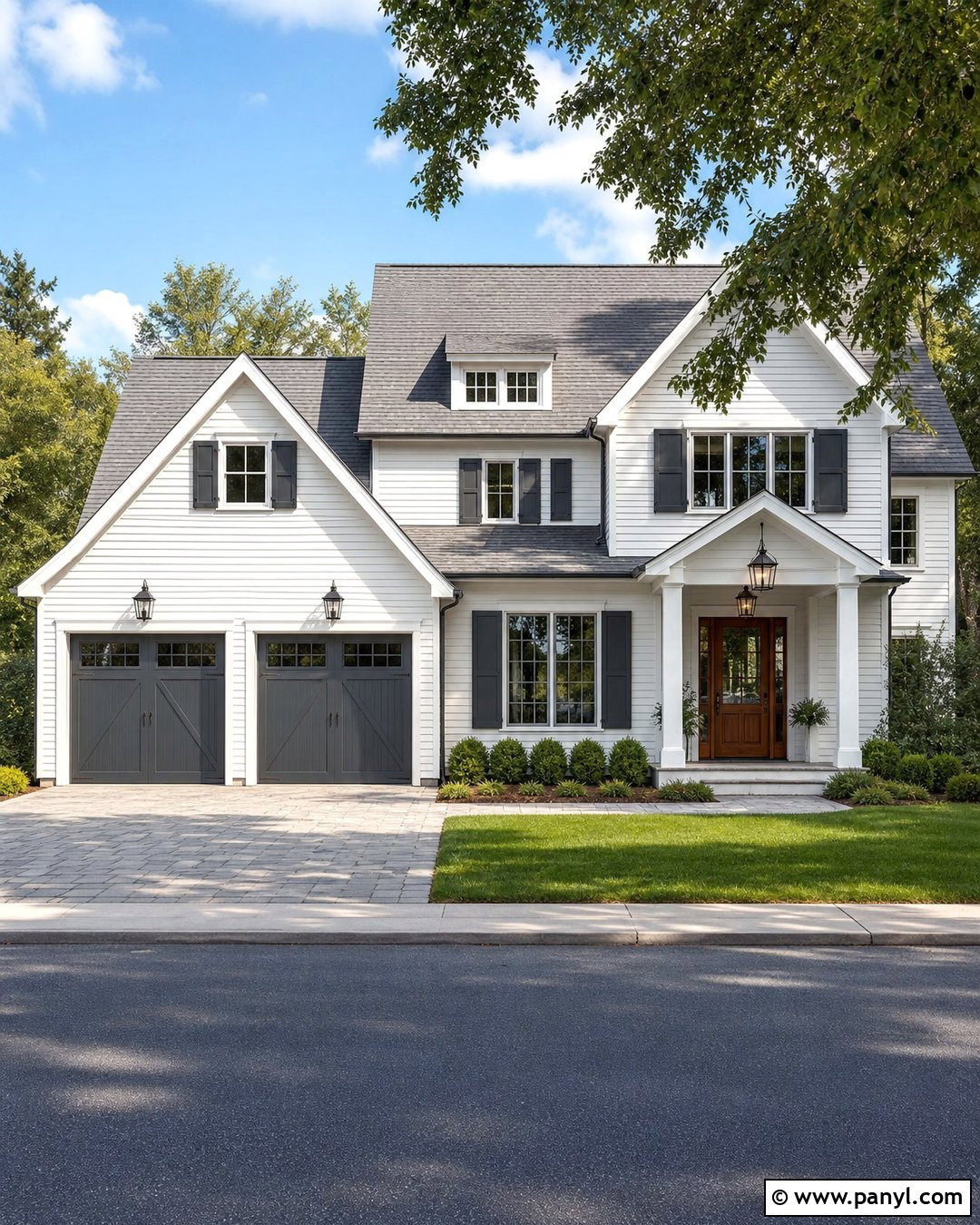
Rocky Coast garage doors can reduce the visual prominence of a wide garage while adding depth to a pale exterior. Pair the doors with soft white siding, Rocky Coast shutters, and crisp white window trim. Choose simple carriage-style doors with minimal decorative hardware, allowing the color to remain the main detail. A medium gray shingle roof connects the doors to the upper portion of the house. Use warm wood or aged brass at the front entry so it retains priority as the welcoming focal point. Black lanterns can frame each garage bay, while low green shrubs soften the driveway edge. This complete approach coordinates a large functional surface with the rest of the facade instead of treating it as an isolated afterthought.
34. Rocky Coast Covered Porch
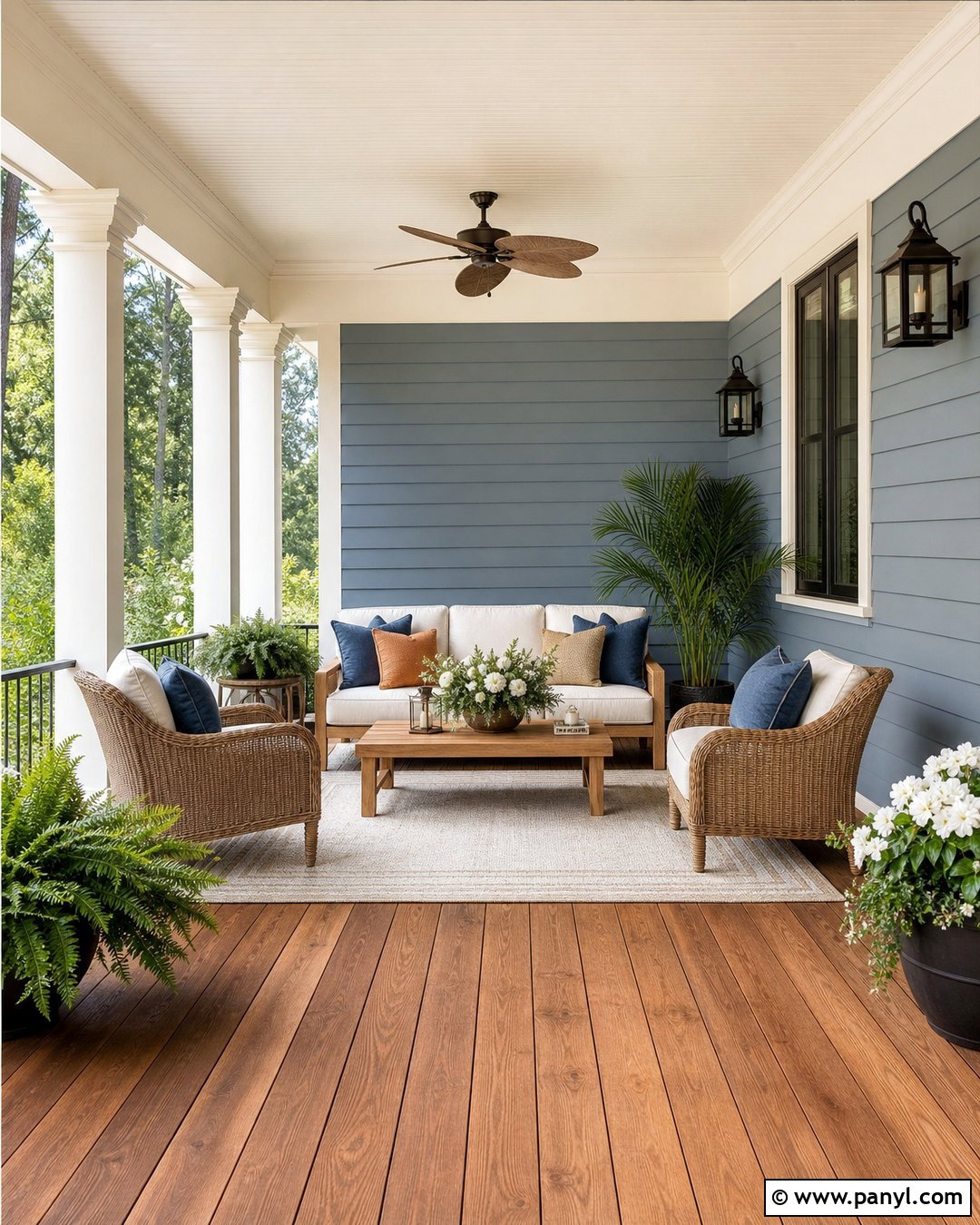
Paint the back wall of a covered porch Rocky Coast to create an outdoor room with a strong indoor-outdoor connection. Keep the porch ceiling and columns warm white, then add natural cedar flooring or medium-tone composite decking. Arrange a cream outdoor sofa with woven lounge chairs around a low teak coffee table. Cushions in slate blue, sand, and muted terracotta will complement the wall without disappearing into it. Use black lantern-style sconces and a simple black ceiling fan for practical comfort. Large planters filled with ferns and white flowers soften the architectural edges. A pale patterned outdoor rug defines the seating zone. The finished porch feels complete, sheltered, and welcoming while Rocky Coast provides a durable-looking backdrop for lighter furnishings.
35. Rocky Coast Backyard Studio
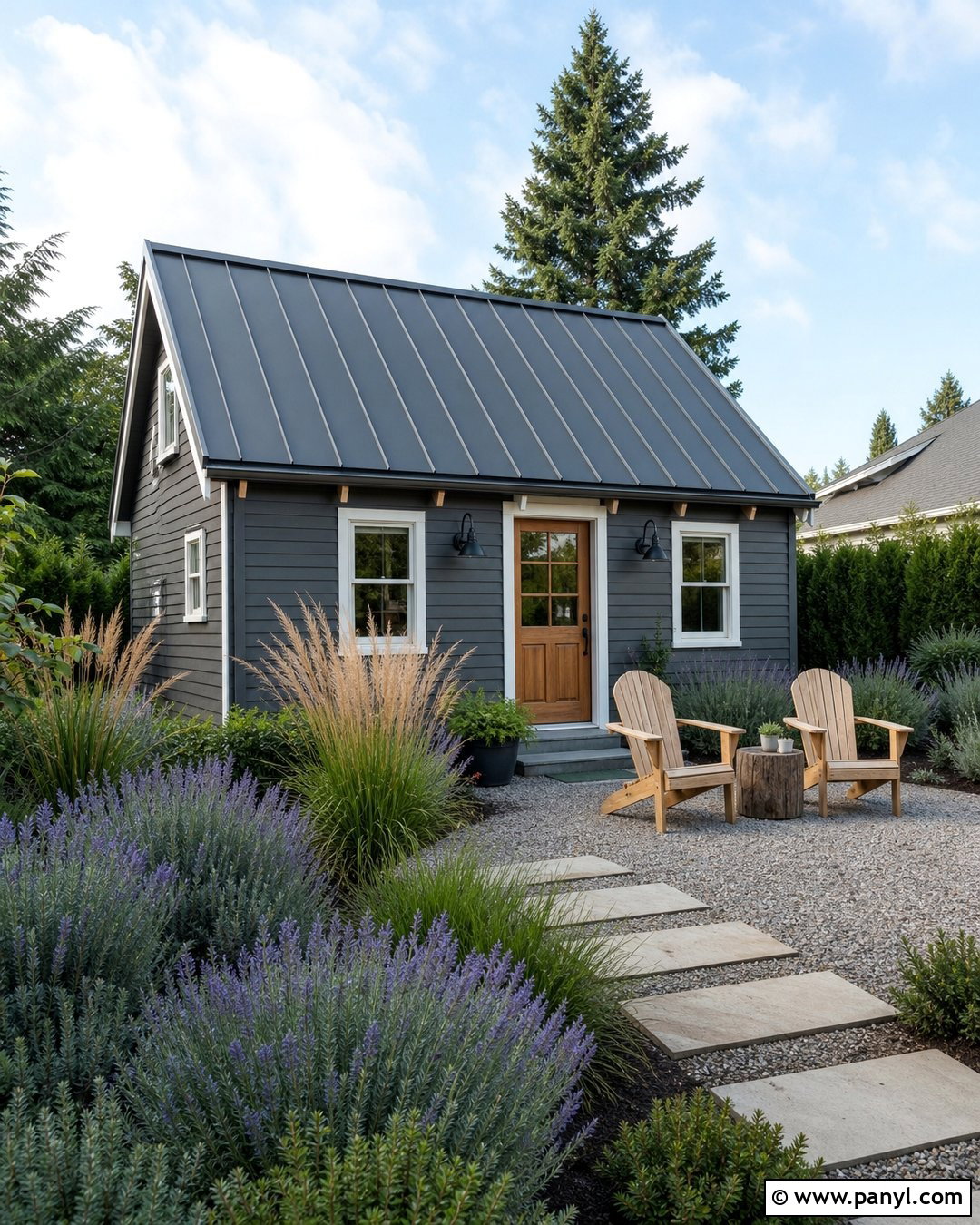
A small backyard studio painted Rocky Coast can become an attractive landscape feature rather than a purely functional outbuilding. Use the color across horizontal siding and pair it with white window trim, a natural wood door, and a charcoal metal roof. Add a compact gravel patio with two light wood chairs and a small table, creating an outdoor extension of the workspace. Black sconces and simple gutters support the clean palette. Surround the building with ornamental grasses, lavender, evergreen shrubs, and pale stepping stones. Inside, repeat Rocky Coast on one wall while keeping the remaining surfaces white and the floor light oak. This complete studio design feels connected to the garden and offers a calm destination for work, hobbies, or quiet reading.
Conclusion:
These 35 rocky coast benjamin moore ideas show how one deep gray can support many complete home looks. Rocky Coast can feel crisp beside bright white, warmer with oak and walnut, refined with brass, or modern with matte black. Its substantial depth makes lighting, finish, and material balance especially important. Before committing, test a movable sample on several walls and observe it during morning, afternoon, and evening light. Compare it directly with flooring, countertops, upholstery, roofing, or masonry that will remain in the space. Whether you use Rocky Coast on a single vanity, an entire bedroom, built-in cabinetry, or exterior siding, thoughtful contrast will help this stormy gray look intentional, comfortable, and beautifully connected.

Related Ideas and Inspiration:
Leave a Reply