
Red can make a kitchen feel warm, expressive, and full of personality, but the entire palette needs to work together. The best **Red Kitchen Wall Color Ideas** balance the wall shade with cabinets, countertops, flooring, lighting, and hardware. Bright reds often feel cleaner beside crisp white or black, while muted burgundy, brick, and rust pair naturally with wood and warm neutrals. Less-saturated reds with earthy undertones can also produce a calmer effect than clear, high-energy shades. () Before painting, test a large sample beside your permanent finishes during both daylight and evening hours. Undertones can shift considerably as lighting changes. From traditional brick red to contemporary crimson, the following complete kitchen schemes offer practical and stylish **Red Kitchen Wall Color Ideas**.
1. Burgundy Red Kitchen Walls With White Cabinets
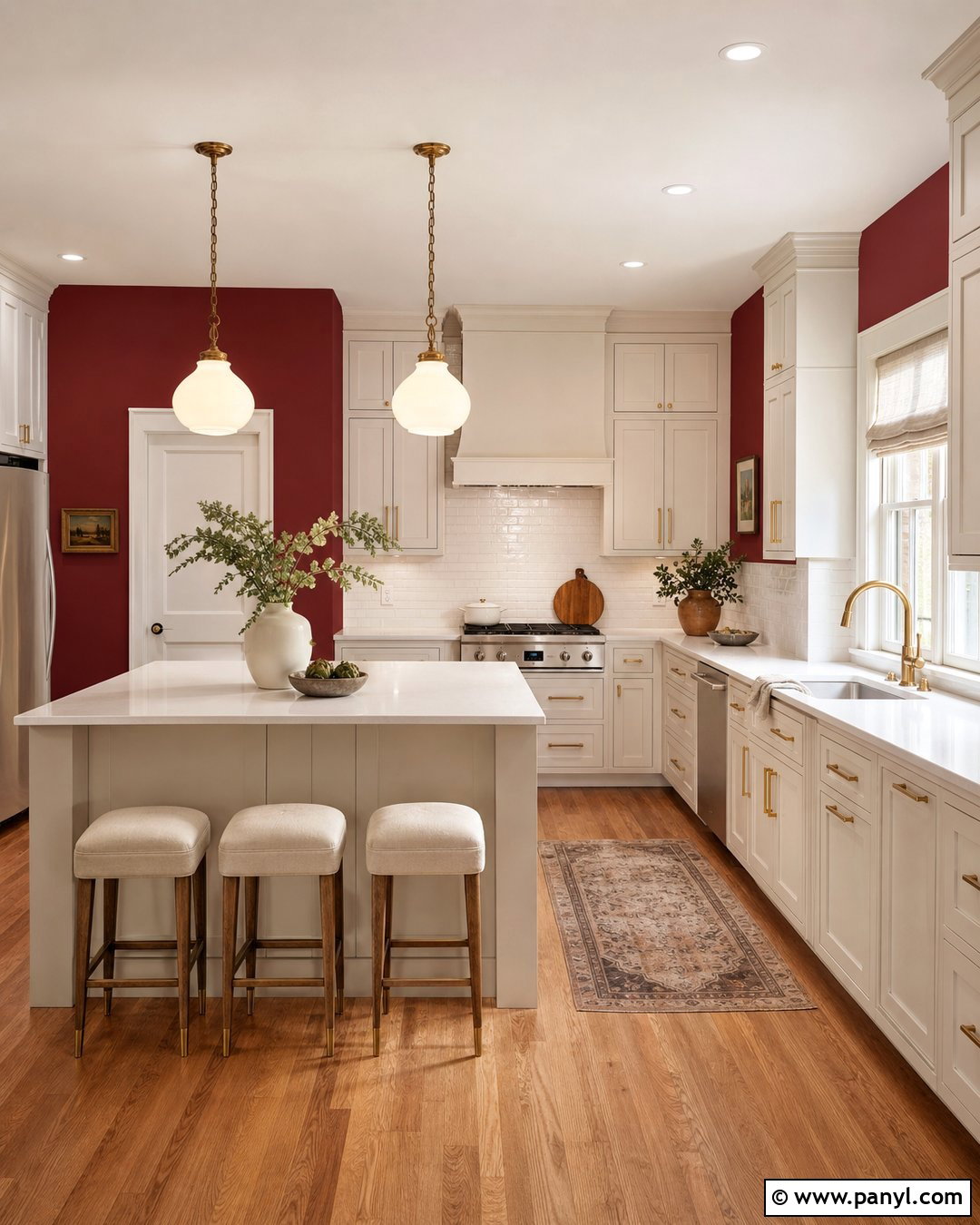
Deep burgundy walls create a sophisticated backdrop without the sharp intensity of brighter red paint. Pair them with warm white Shaker cabinets, lightly veined quartz countertops, and a simple white tile backsplash. The pale surfaces keep the kitchen open, while the burgundy adds depth above the backsplash and around windows. Choose brushed brass pulls and pendants to bring warmth into the contrast. Medium oak flooring prevents the room from feeling overly formal. For seating, use cream upholstered counter stools or natural cane chairs. Finish the design with linen Roman shades, framed botanical prints, and a few ceramic accessories. This complete palette works especially well in kitchens with plenty of natural light, where burgundy can appear rich rather than heavy.
2. Brick Red Kitchen Walls With Oak Cabinets
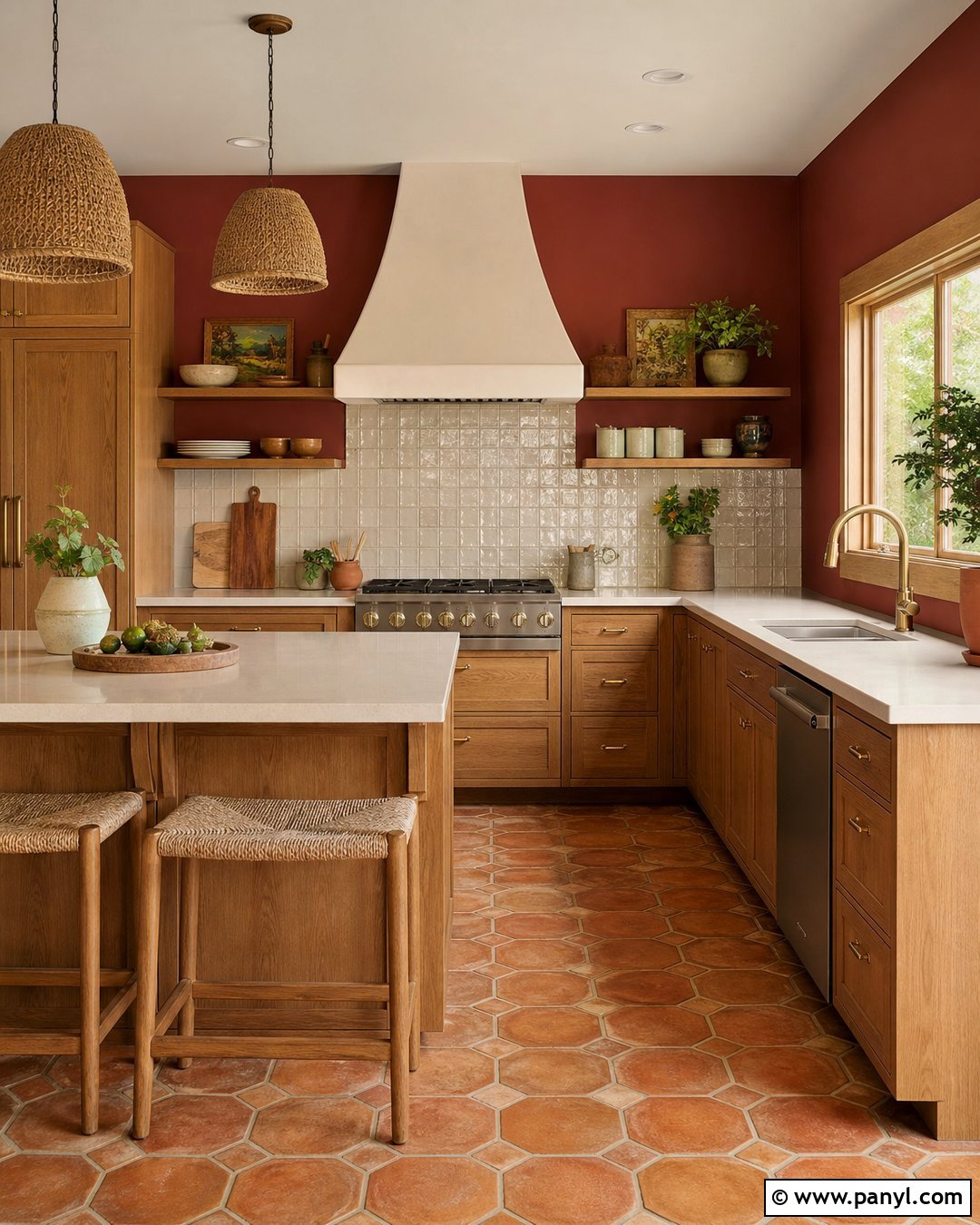
Brick red walls and natural oak cabinets form an earthy combination that feels inviting and easy to live with. Select a muted red with brown or clay undertones instead of a clear primary red. Keep the oak finish light or medium so the room does not become visually heavy. Cream quartz counters, handmade ivory backsplash tile, and aged brass hardware soften the overall look. Add a dark bronze faucet for definition without introducing a harsh contrast. Terracotta or warm beige floor tile continues the grounded palette underfoot. Open oak shelves can display white stoneware, cutting boards, and small green plants. Finish with woven pendant lights and oatmeal-colored textiles. The result is a complete casual kitchen that suits craftsman, cottage, and transitional homes.
3. Cherry Red Kitchen Accent Wall With Black Cabinets
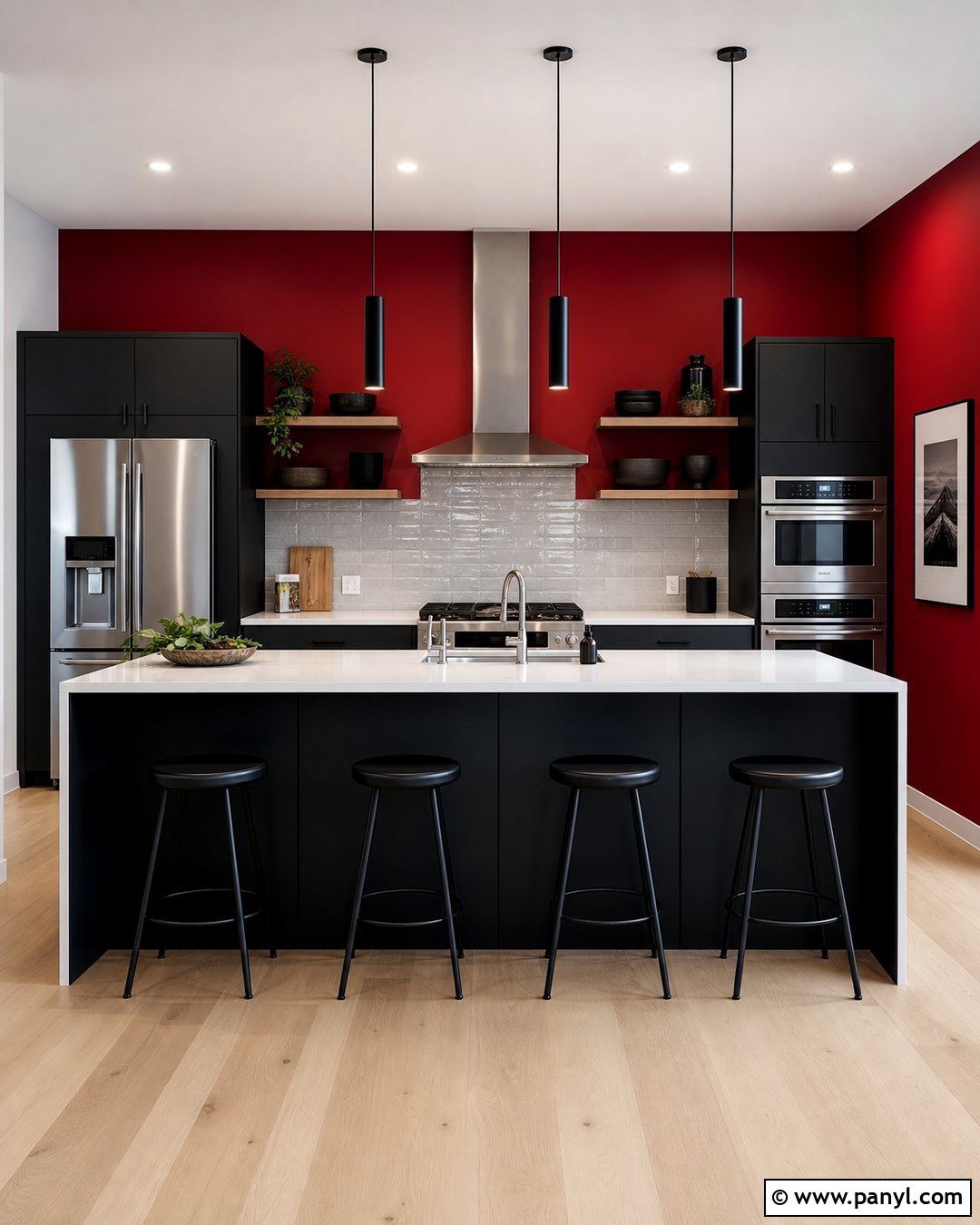
A cherry red accent wall gives a black kitchen a bold focal point while keeping the remaining surfaces controlled. Place the red behind a breakfast table, open shelving, or a freestanding storage cabinet rather than directly behind every work surface. Choose matte black flat-panel cabinets, white quartz countertops, and a pale gray backsplash to balance the saturated wall. Light wood flooring introduces warmth and helps separate the dark cabinetry from the red. Repeat the accent color sparingly through a small appliance, striped rug, or framed artwork. Brushed stainless steel fixtures provide a clean transition between black and white. This high-contrast scheme works best with strong overhead lighting, under-cabinet strips, and an uncluttered layout that allows the red wall to stand out.
4. Terracotta Red Kitchen Walls With Cream Cabinets
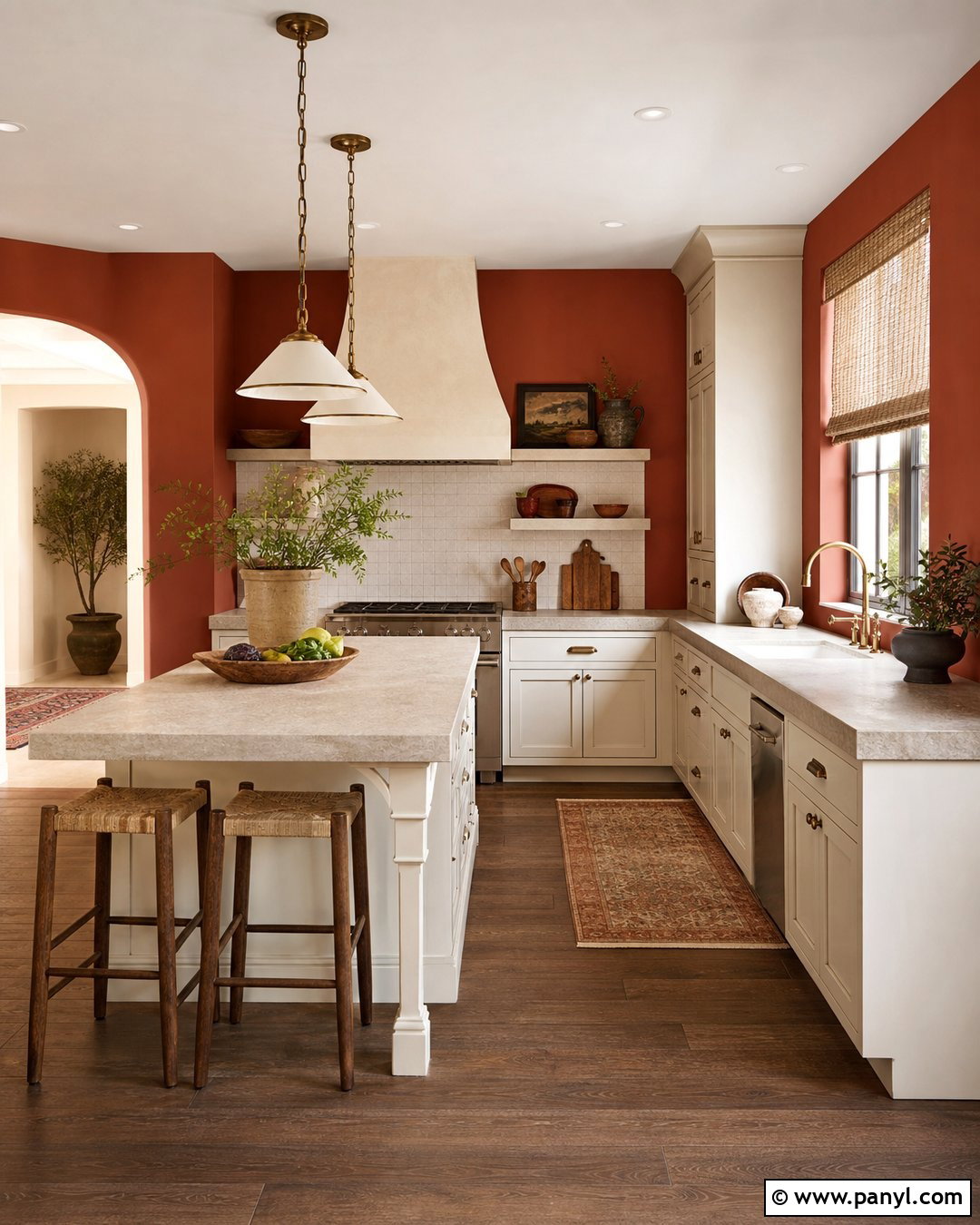
Soft terracotta red offers warmth while remaining gentler than classic scarlet. Use it across the main walls with creamy off-white cabinetry, honed beige stone counters, and an ivory zellige-style backsplash. The slight variation in handmade-look tile adds texture without competing with the wall color. Warm walnut or medium oak flooring supports the earthy palette. For hardware, consider antique brass knobs and cup pulls with a softly aged finish. A plaster range hood painted to match the cream cabinets creates a calm architectural focal point. Add woven shades, linen café curtains, and rustic wood accessories for a relaxed finish. This design feels especially cohesive when repeated materials are limited, allowing terracotta, cream, natural wood, and stone to define the entire kitchen.
5. Tomato Red Kitchen Walls With Glossy White Cabinets
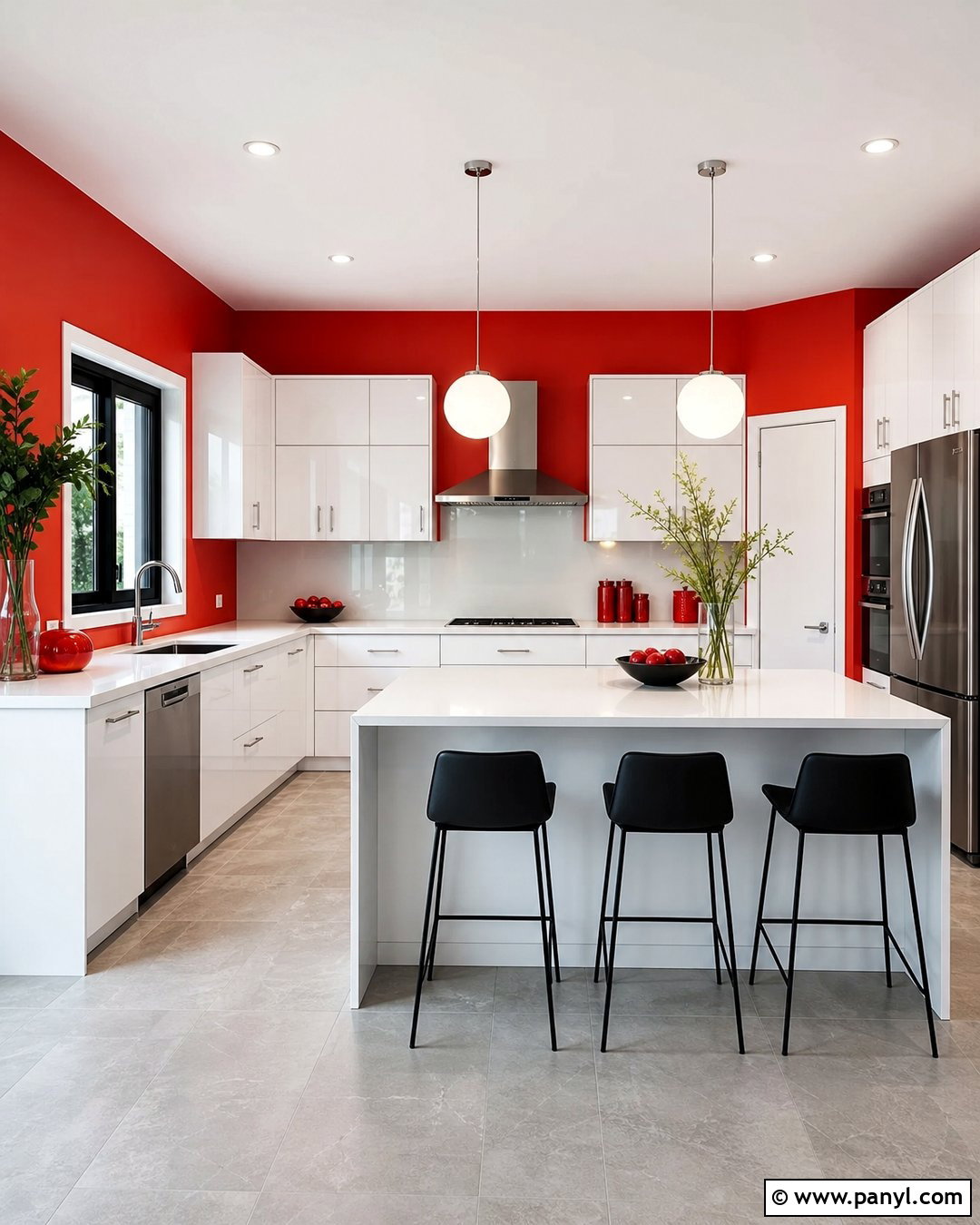
For a bright, upbeat kitchen, surround glossy white cabinets with vivid tomato red walls. This shade has a warm orange undertone that feels playful rather than dark. Keep the counters solid white and select a streamlined glass or white ceramic backsplash to avoid excessive pattern. Pale gray porcelain flooring grounds the room and provides a cooler break between the red and white surfaces. Chrome cabinet pulls, a polished faucet, and simple globe pendants complement the modern finish. Introduce black through narrow window frames or counter stools for crisp definition. Because the walls already provide strong color, limit accessories to white, clear glass, and a few natural wood pieces. The finished kitchen feels clean, contemporary, and energetic without becoming cluttered or theme-based.
6. Rust Red Kitchen Walls With Sage Green Cabinets
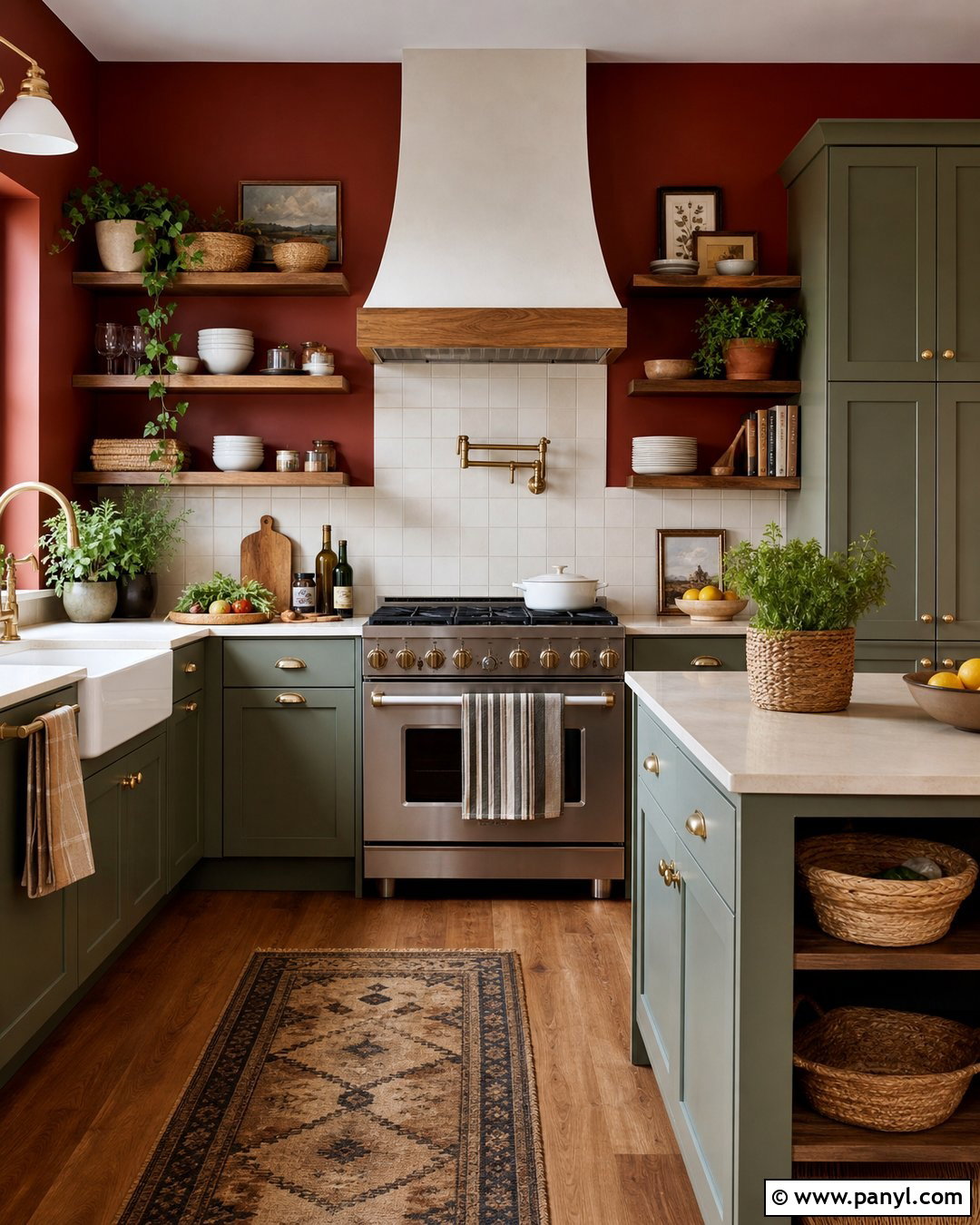
Rust red walls and muted sage green cabinets create a nature-inspired kitchen with balanced warmth and coolness. Choose a dusty, brown-based red rather than a bright shade, then pair it with soft green Shaker cabinetry. Cream countertops and an understated warm white backsplash give both colors breathing room. Use unlacquered brass hardware to connect the earthy tones, and add walnut shelves for depth. A medium-toned wood floor makes the room feel settled and welcoming. Keep the ceiling, trim, and interior doors creamy white so the palette remains clear. Decorative pieces might include stoneware, woven baskets, and small potted herbs. This full scheme works beautifully in cottage and traditional kitchens, but simple cabinet profiles can also make the combination feel comfortably contemporary.
7. Crimson Red Kitchen Walls With Walnut Cabinets
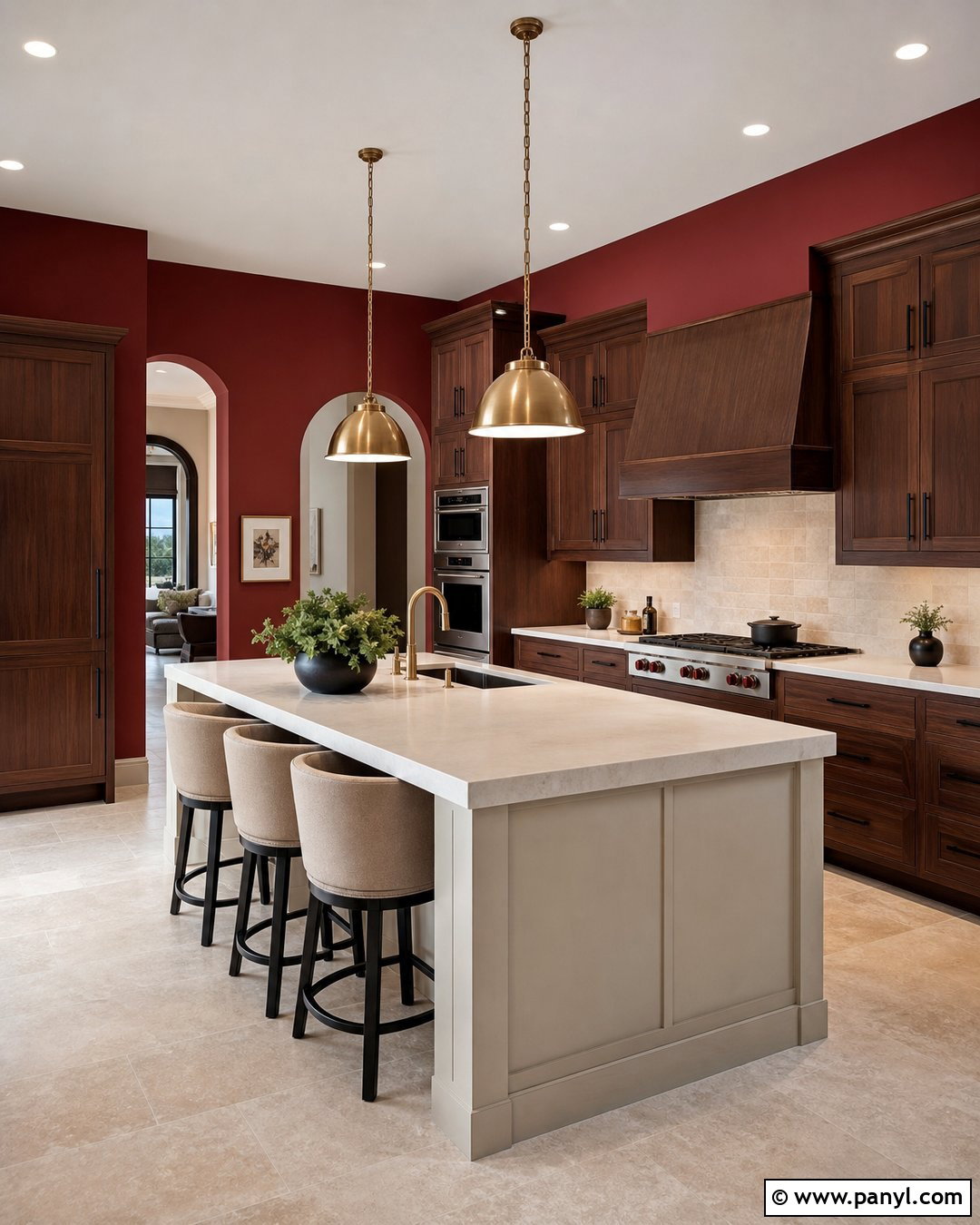
Crimson walls bring drama to the deep grain and chocolate tones of walnut cabinetry. Reserve the red for upper wall areas and a spacious dining nook, allowing a pale backsplash to break up the stronger colors around work zones. Select warm white quartz countertops with restrained veining and use matte black hardware for a tailored finish. Light limestone-look flooring creates essential contrast beneath the darker cabinets. A large cream island can further brighten the center of the kitchen while providing a visual pause. Install simple brass pendants above it to add a refined warm accent. Keep window treatments minimal and choose neutral counter stools. With controlled lighting and plenty of light surfaces, crimson and walnut can feel luxurious, layered, and intentional rather than overwhelmingly dark.
8. Muted Red Kitchen Walls With Greige Cabinets
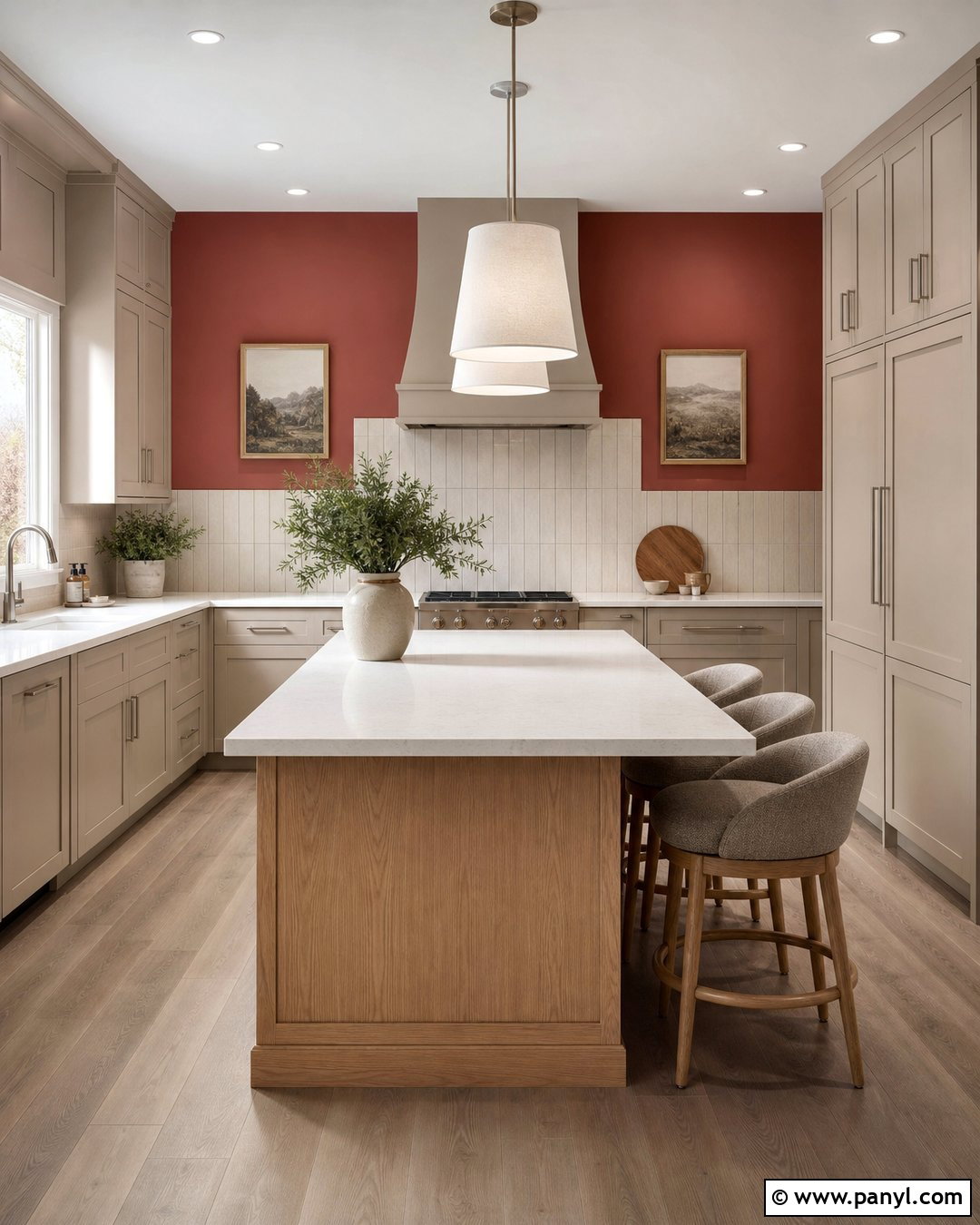
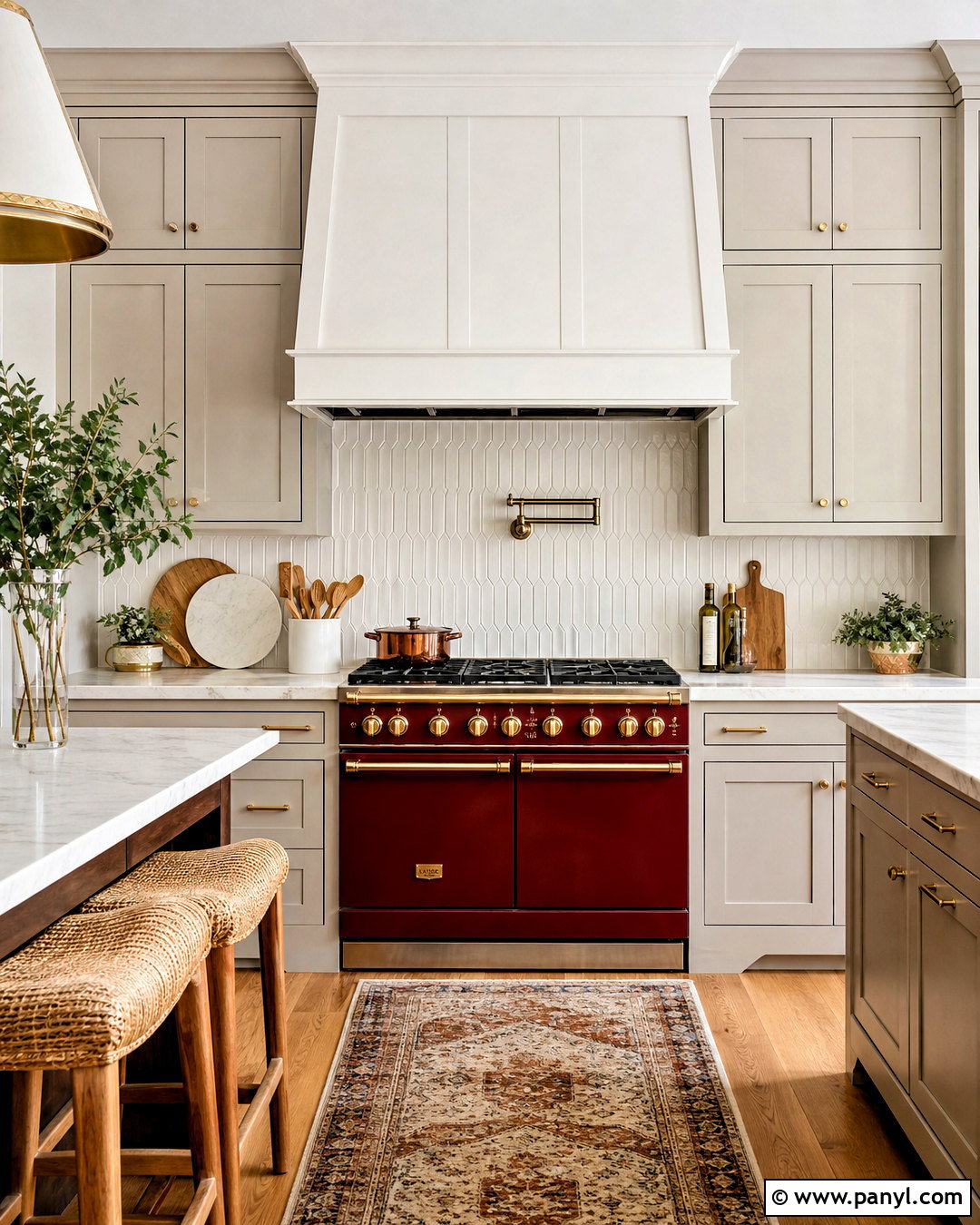
Muted red walls can add character to greige cabinetry without producing an overly colorful kitchen. Look for a dusty red with subtle brown, mauve, or clay undertones. Combine it with warm greige cabinets, off-white quartz counters, and vertically stacked cream tile. The cabinet color acts as a calm bridge between the walls and lighter work surfaces. Brushed nickel hardware keeps the scheme understated, while a natural oak island introduces welcome texture. Use warm gray stone-look flooring if wood is not practical. Soft white trim will frame the red cleanly without appearing too stark. Complete the room with linen pendants, taupe stools, and simple pottery. This flexible palette feels current but restrained, making it suitable for open kitchens connected to neutral living spaces.
9. Red Color-Drenched Kitchen
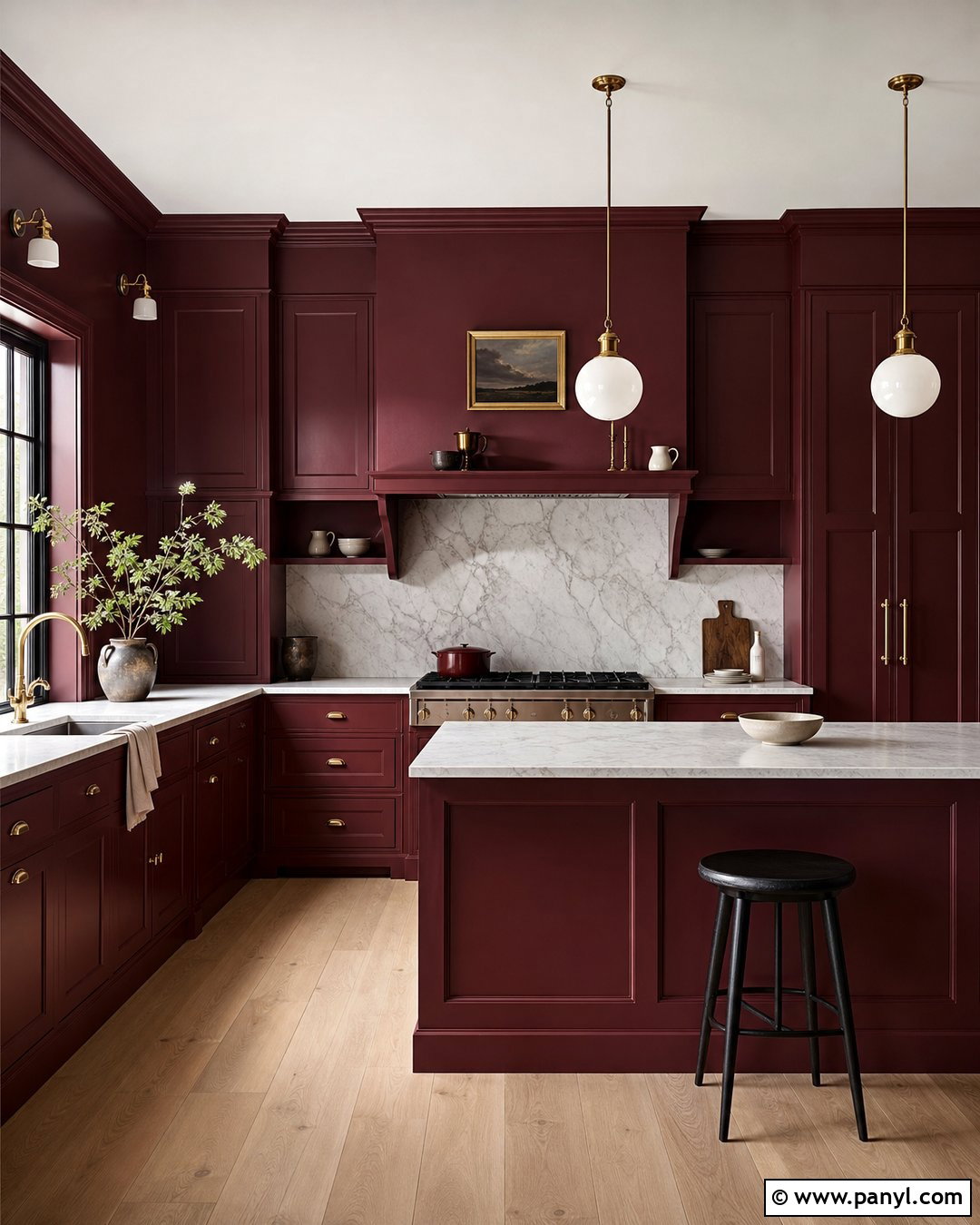
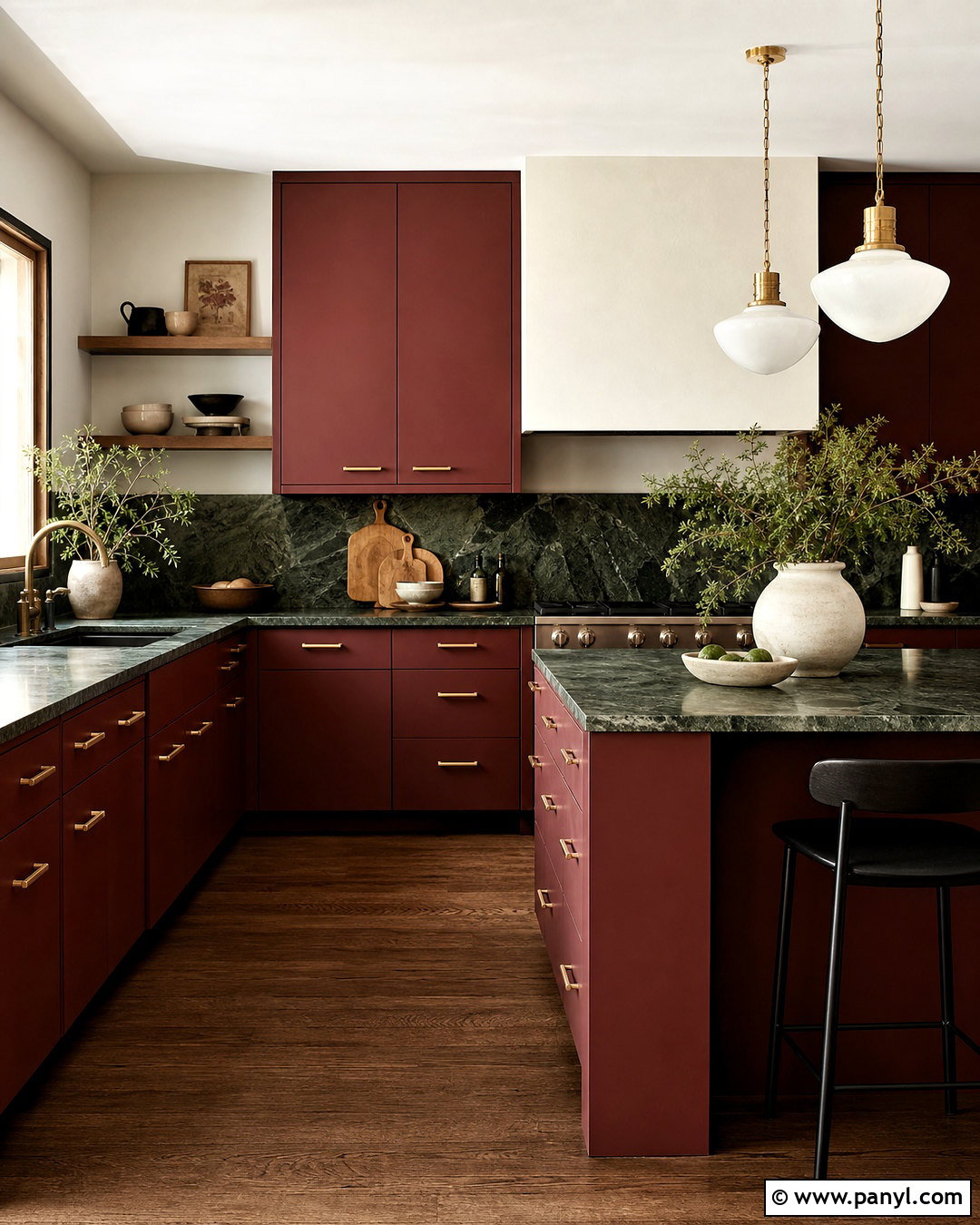
Color drenching turns red walls, cabinets, trim, and architectural details into one unified statement. A muted oxblood or earthy wine red works better for this approach than a highly saturated shade. Apply the same color in washable matte paint on walls and a durable satin finish on cabinets and trim. Break up the red with pale marble countertops, a matching slab backsplash, and light oak flooring. Antique brass hardware and cream globe lights add warmth without distracting from the enveloping palette. Keep the ceiling warm white if the room is small, or continue the red overhead in a spacious, well-lit kitchen. Minimal accessories are essential. Clear counters, simple furniture, and carefully placed ceramics allow the color-drenched treatment to look deliberate, polished, and visually restful.
10. Red Limewash Kitchen Walls
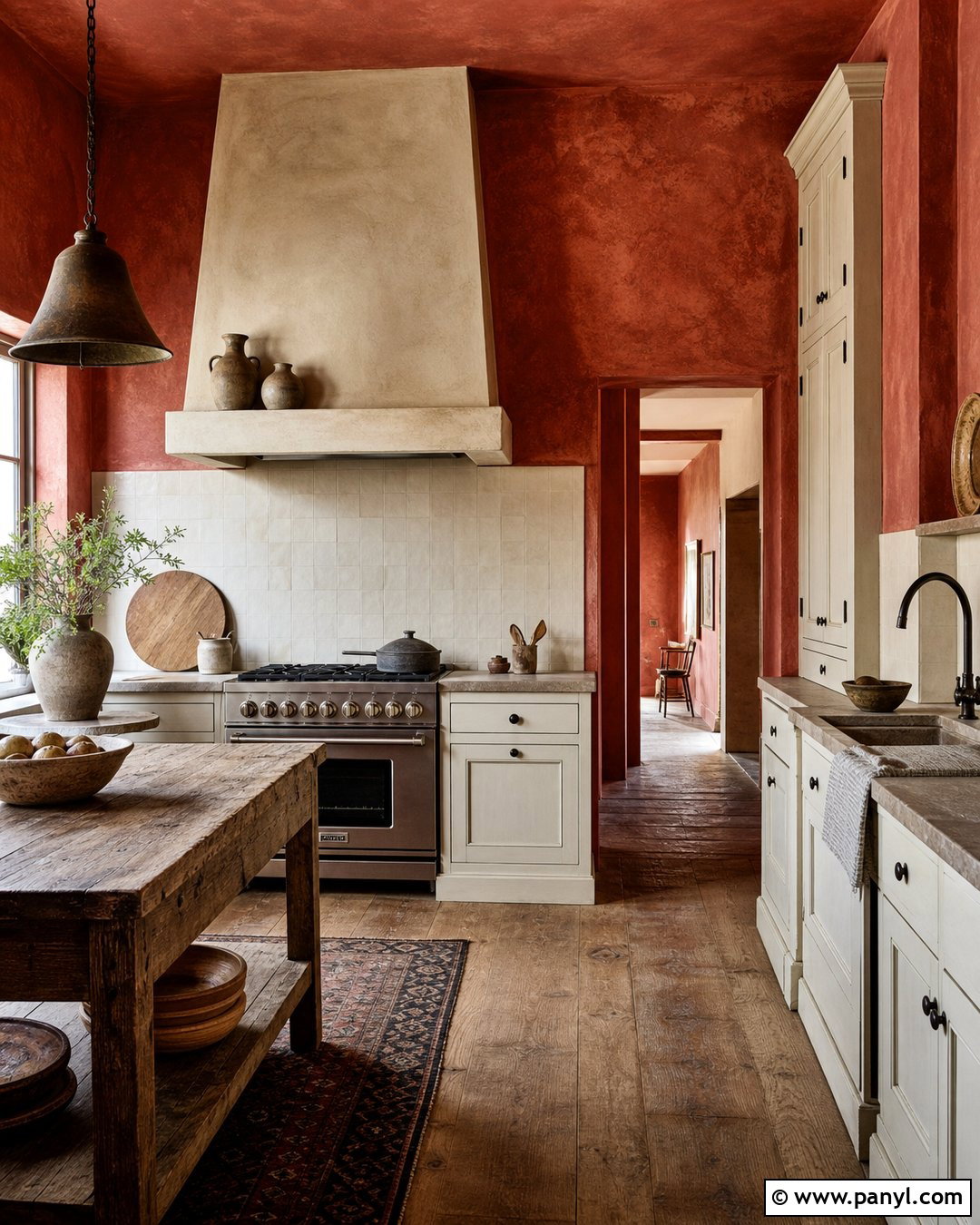
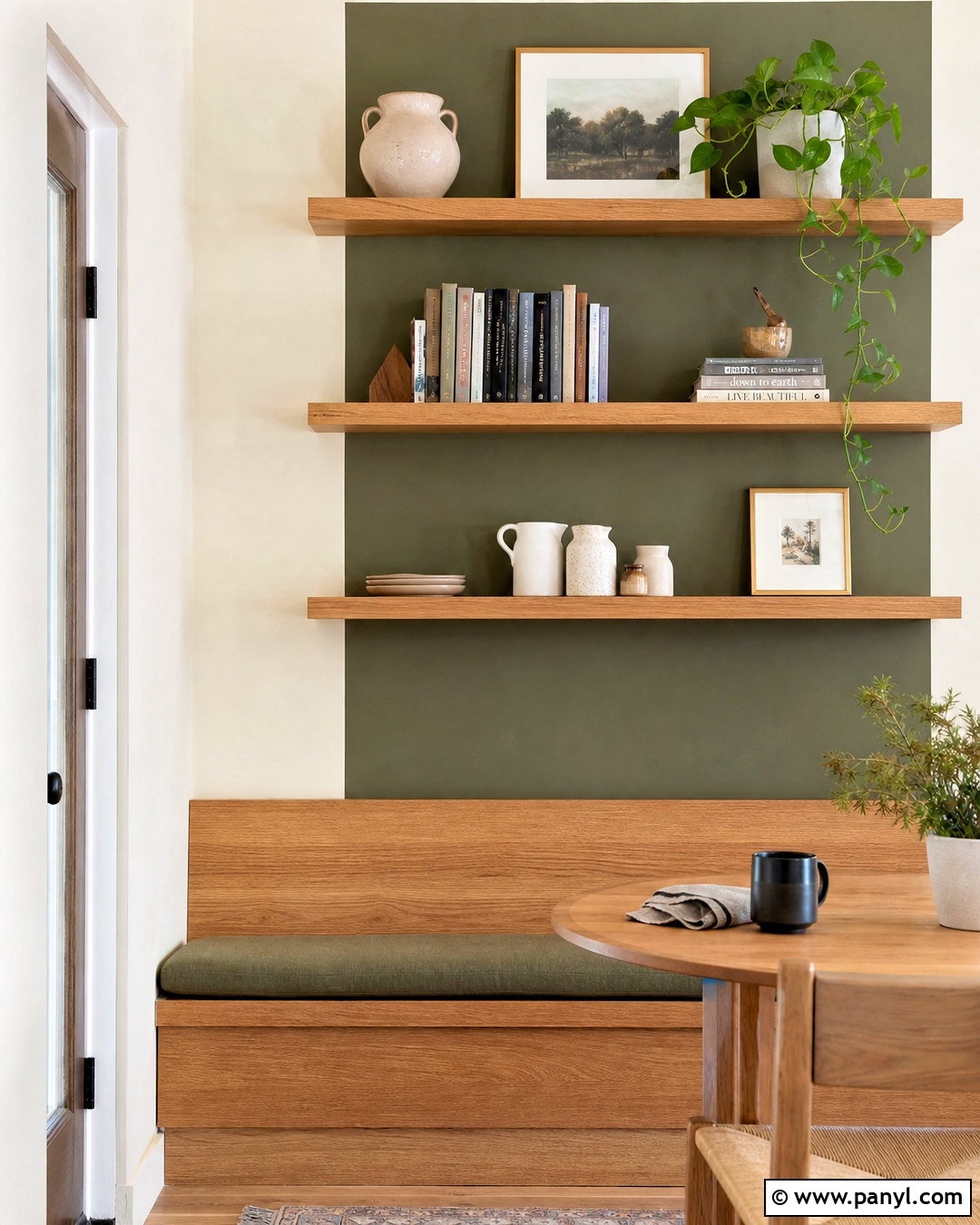
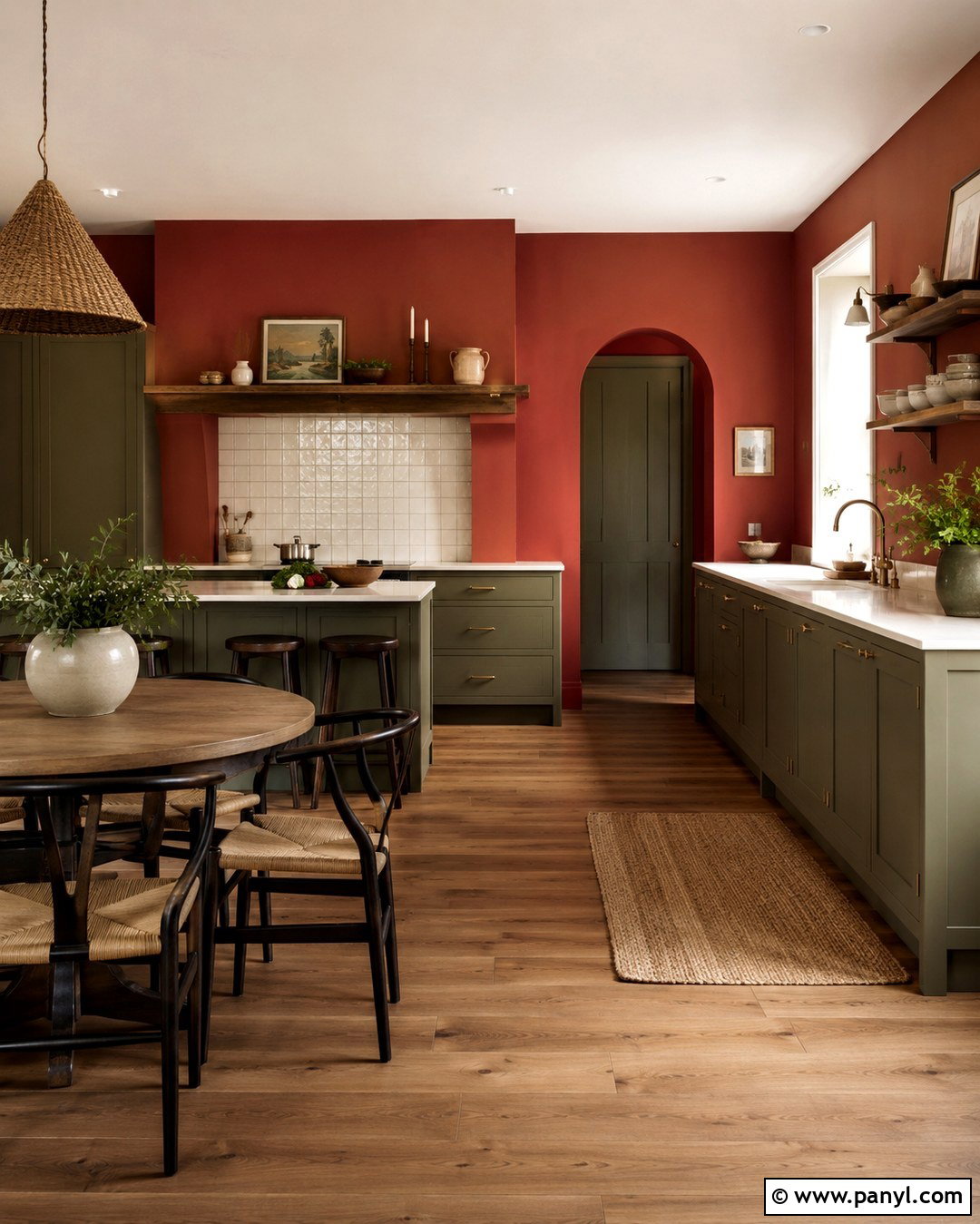
Red limewash-style walls introduce soft movement and old-world texture through layered shades of clay, rose, and rust. Use the finish around cream inset cabinets, natural stone counters, and a plaster range hood for a cohesive handcrafted look. The mottled surface should remain the primary decorative feature, so choose a restrained backsplash in warm ivory or pale limestone. Reclaimed oak flooring and a rustic wood prep table reinforce the relaxed character. Add aged bronze hardware, simple ceramic pendants, and open shelves with neutral pottery. Avoid glossy finishes, which can fight with the soft walls. Because limewash effects vary with application and light, sample the finish generously. The completed kitchen feels warm and atmospheric while remaining practical, especially when protected appropriately in splash-prone cooking areas.
11. Red Kitchen Walls With White Subway Tile
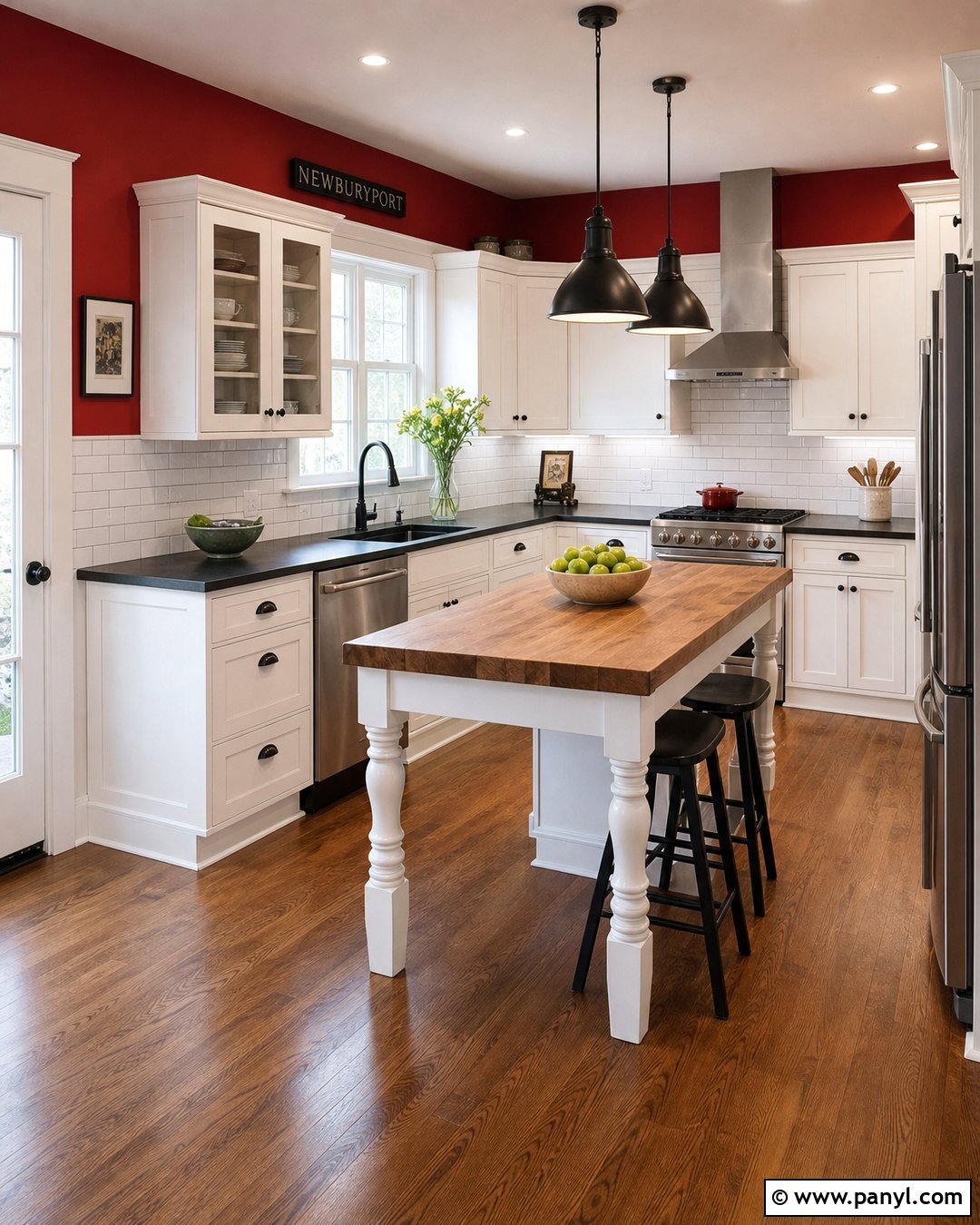
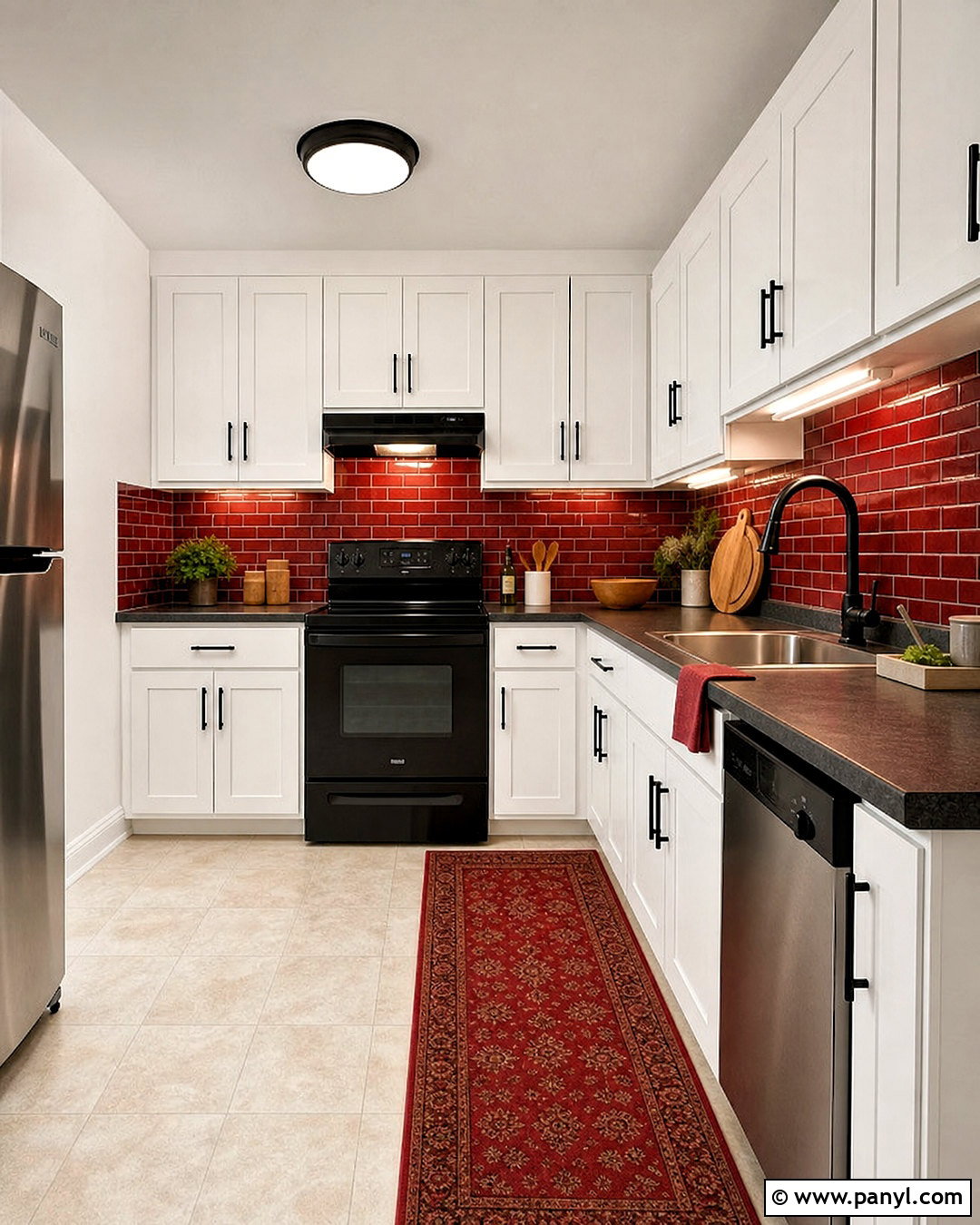
White subway tile gives red kitchen walls a clean, familiar counterpoint. Run the backsplash from the countertop to the bottom of the upper cabinets, then let a muted true red cover the surrounding walls. Choose white Shaker cabinets and black soapstone-look countertops for a balanced three-color palette. Dark grout can outline the backsplash and connect it to black hardware, while pale grout creates a softer, more continuous surface. Warm wood flooring keeps the black and white finishes from feeling cold. Add a butcher block island or wood counter stools to repeat this natural tone. Simple black pendants and stainless steel appliances complete the layout. The overall design is straightforward, durable-looking, and easy to personalize with artwork, textiles, or small countertop accessories.
12. Red Kitchen Walls With Black Backsplash
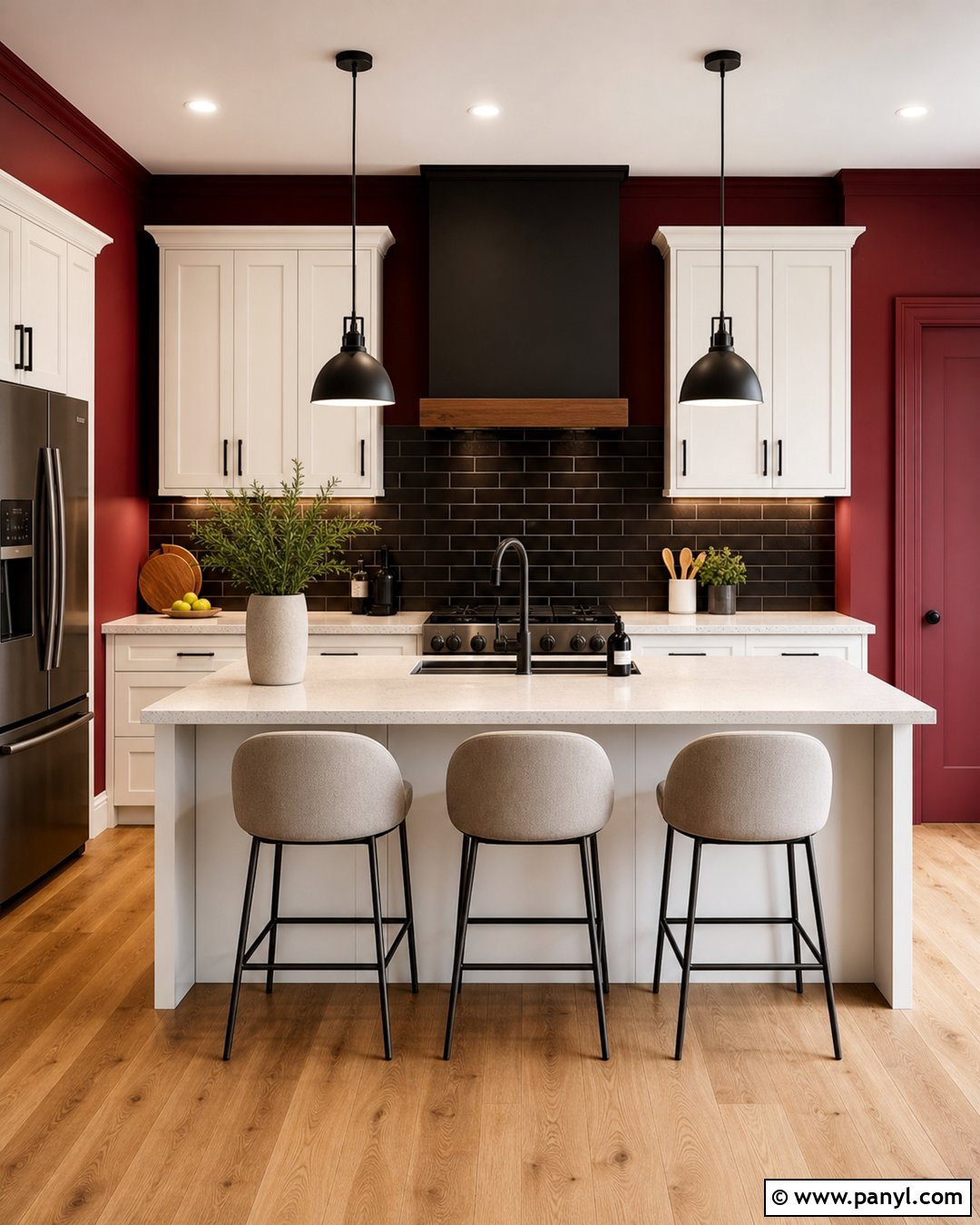
Pairing red walls with a black backsplash creates a dramatic kitchen that needs carefully placed lighter surfaces. Choose a deep garnet red for the walls and matte black rectangular tile behind the counters. Warm white cabinets prevent the two bold colors from enclosing the room, while pale quartz countertops provide a bright horizontal break. Use black grout for a seamless backsplash and repeat the finish on the faucet, cabinet knobs, and pendant frames. Light oak flooring introduces softness and natural movement. A white ceiling and generous under-cabinet lighting are important for maintaining clarity. Keep textiles neutral and select simple wood or leather counter stools. This coordinated design feels striking and contemporary, yet the white cabinetry ensures the red-and-black combination remains balanced enough for everyday use.
13. Red Kitchen Walls With Butcher Block Countertops
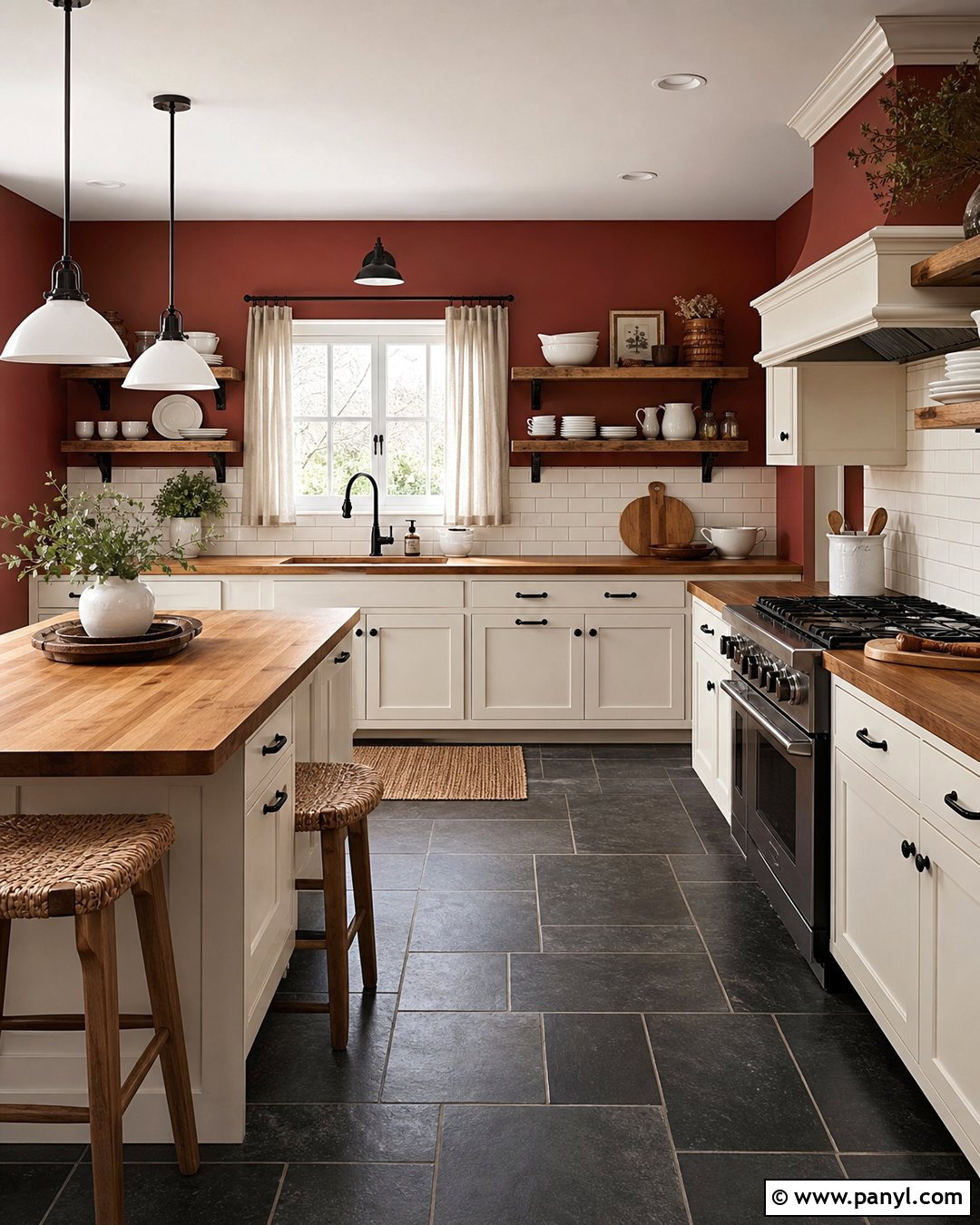
Butcher block countertops soften red kitchen walls with visible grain and natural warmth. Select a brick or barn red paint with muted brown undertones, then combine it with creamy white base cabinets and upper open shelving. Use butcher block on the perimeter counters, island, or both, depending on the desired maintenance level. A warm white backsplash protects the work area and stops similar warm tones from blending together. Matte black handles and a black bridge faucet provide crisp definition. Continue the relaxed look with slate-look flooring, linen café curtains, and woven counter stools. Display useful objects such as cutting boards, stoneware, and glass containers on the shelves. The completed kitchen feels welcoming and practical, with enough contrast to keep the red and wood from appearing overly rustic.
14. Red Kitchen Walls With Marble Countertops
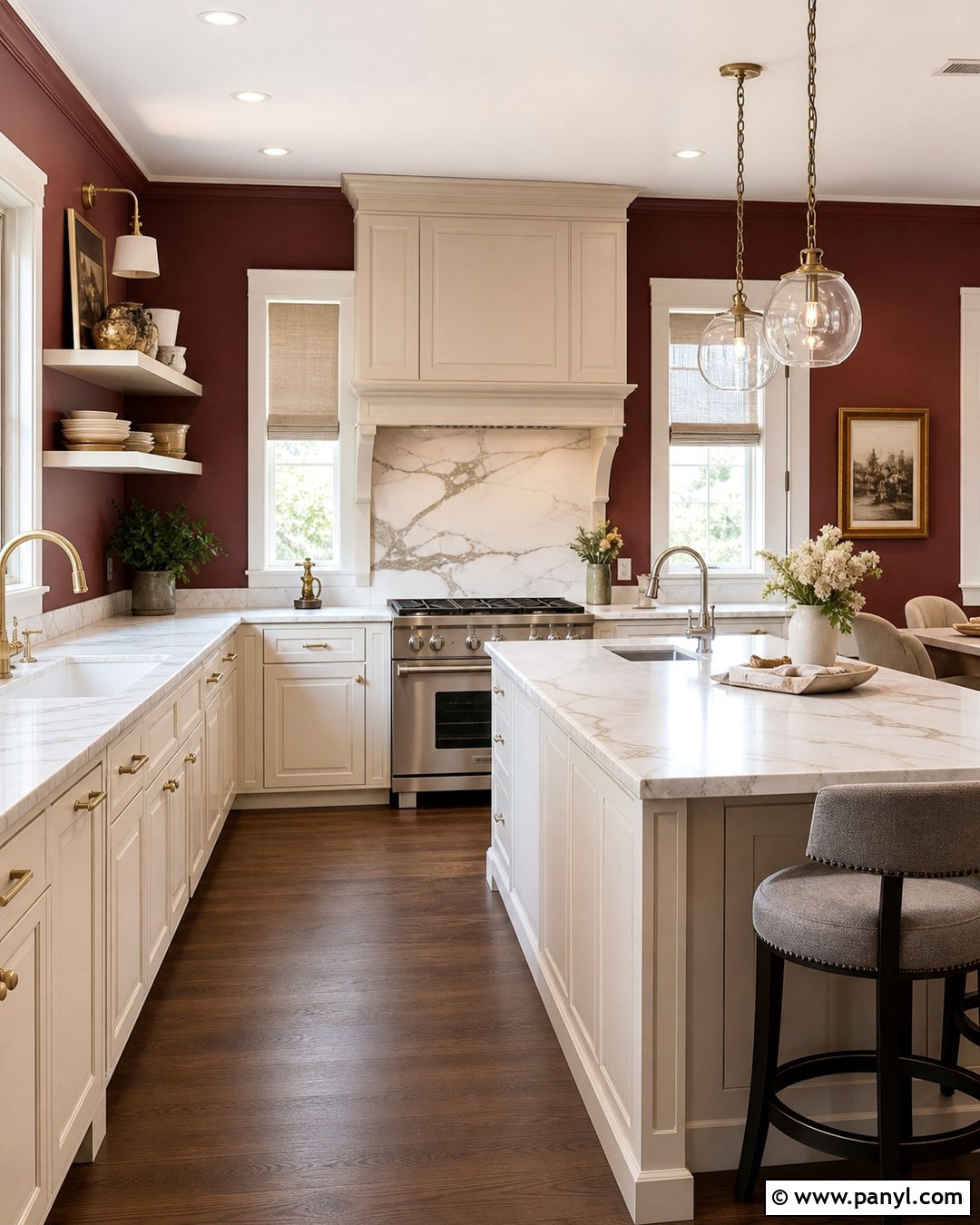
Rich red walls can make marble countertops look especially crisp and elegant. Choose a dark berry red, then pair it with creamy inset cabinetry and white marble-look counters featuring soft gray or warm taupe veining. Continue the countertop material up the wall as a short backsplash or full-height slab behind the range. This limited material palette keeps the room refined. Add antique brass latches, knobs, and faucets for warm detail. Medium walnut flooring anchors the pale cabinetry and supports the depth of the walls. A substantial island in cream or dark stained wood completes the layout. Use white linen shades and clear glass pendants to preserve brightness. The finished kitchen combines traditional richness with clean surfaces, making the bold wall color feel intentional and polished.
15. Red Kitchen Walls With Stainless Steel Appliances
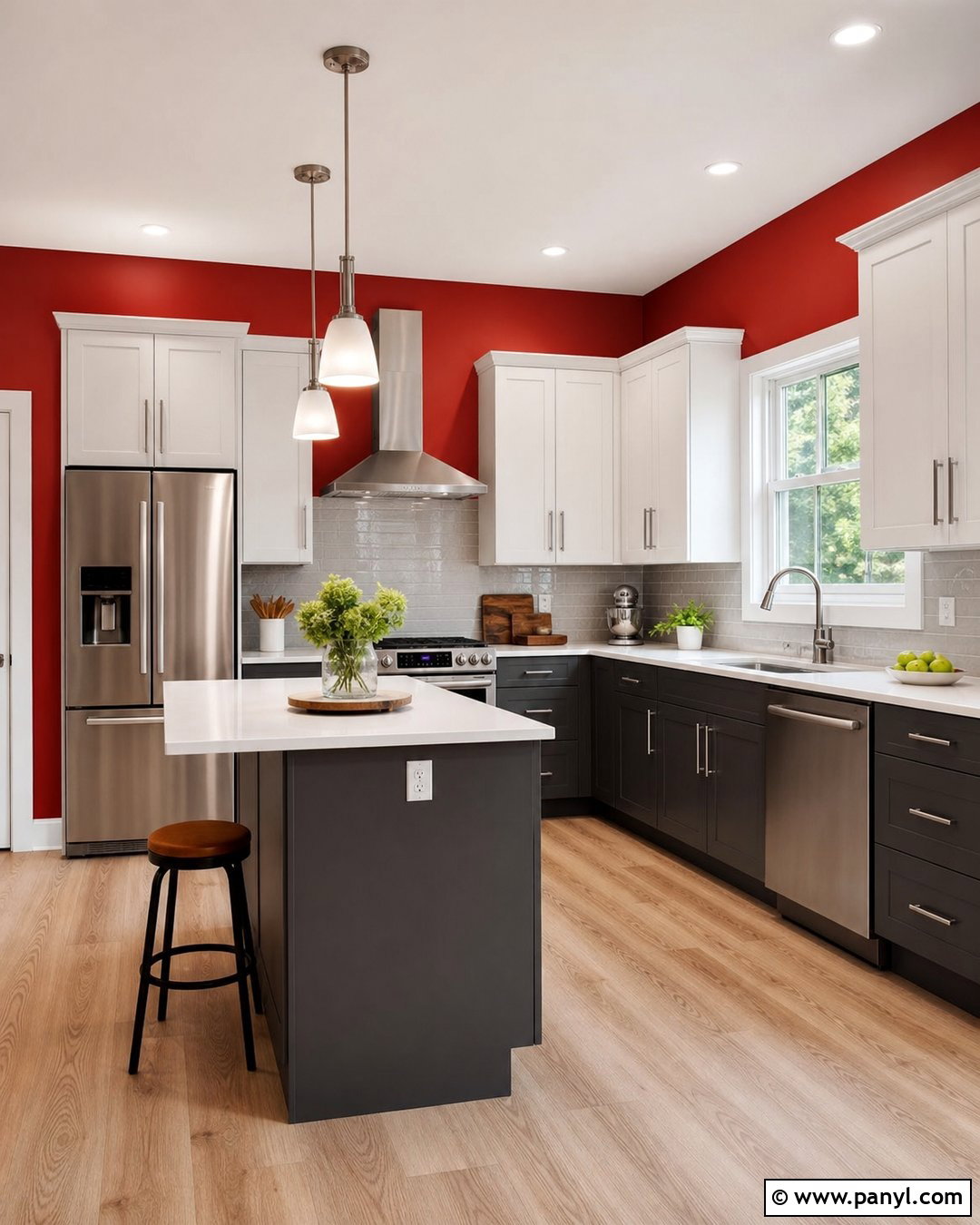
Stainless steel appliances bring a cool, reflective element to warm red walls. Use a balanced medium red rather than an orange-heavy version so the metal and paint do not compete. Surround the appliances with charcoal gray lower cabinets and warm white uppers to create a practical layered palette. White quartz countertops and a pale gray backsplash keep the work surfaces bright. Repeat stainless steel through the faucet, cabinet pulls, and pendant details for consistency. Light oak or blond wood flooring prevents the combination from feeling industrial. A compact island with a white top and gray base can organize the central space. Add only a few red accessories, since the walls already provide enough color. The result is streamlined, functional, and suited to a modern family kitchen.
16. Red Kitchen Walls In A Small Kitchen
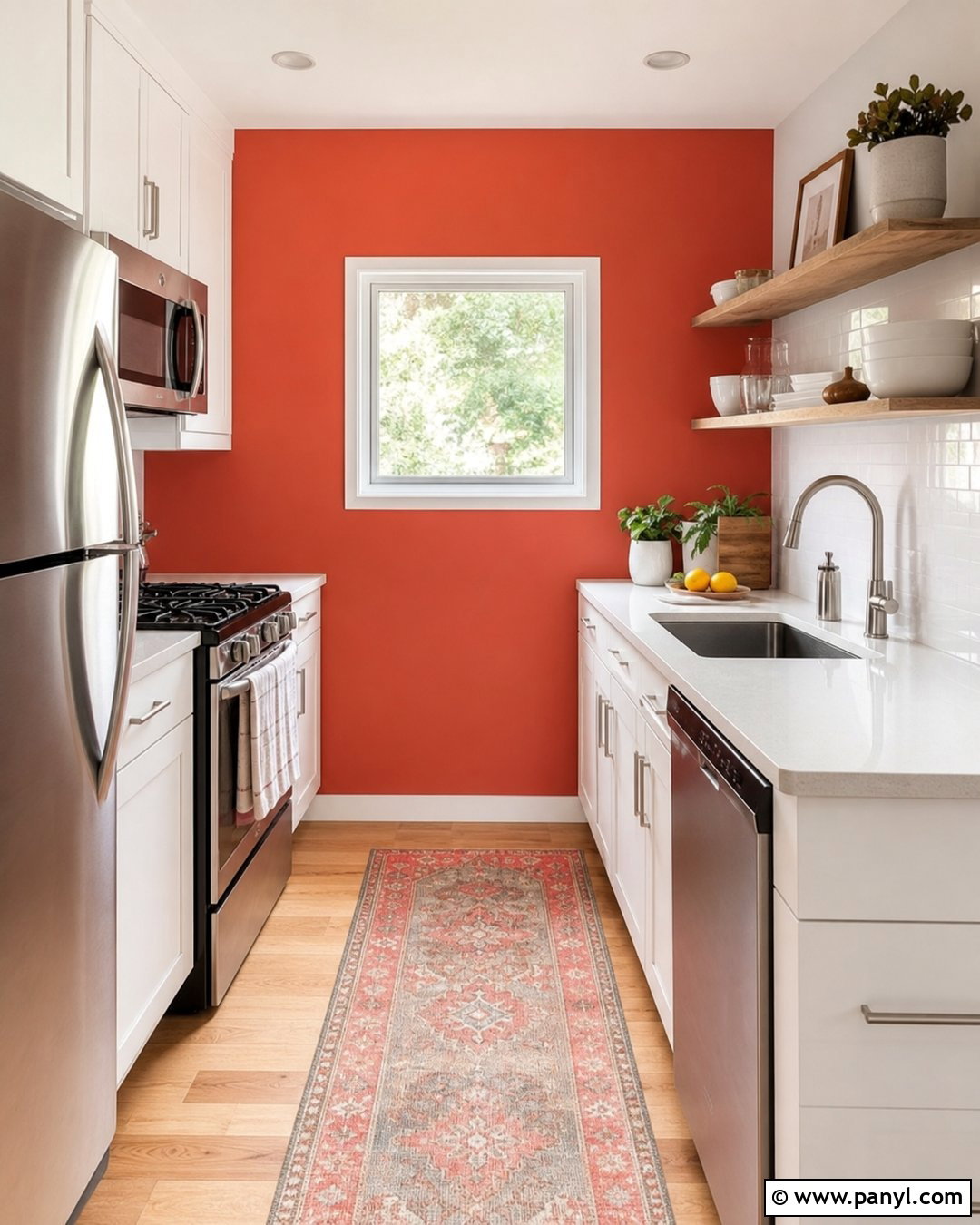
A small kitchen can handle red when the color is placed strategically and balanced with reflective surfaces. Paint one uninterrupted wall in warm coral red, then keep the remaining walls, ceiling, and cabinets soft white. Use slim-profile cabinetry, pale quartz counters, and a glossy white backsplash to distribute light throughout the room. Natural maple flooring adds warmth without making the space look crowded. Choose compact stainless steel appliances and minimal brushed nickel hardware. Open shelving on the red wall can provide storage while still showing the color behind it. Keep displayed items limited to white dishes, glassware, and a few wood accents. Bright ceiling fixtures and under-cabinet lighting complete the scheme. This layout delivers personality while preserving the clean, spacious impression a compact kitchen needs.
17. Red Kitchen Walls In A Farmhouse Kitchen
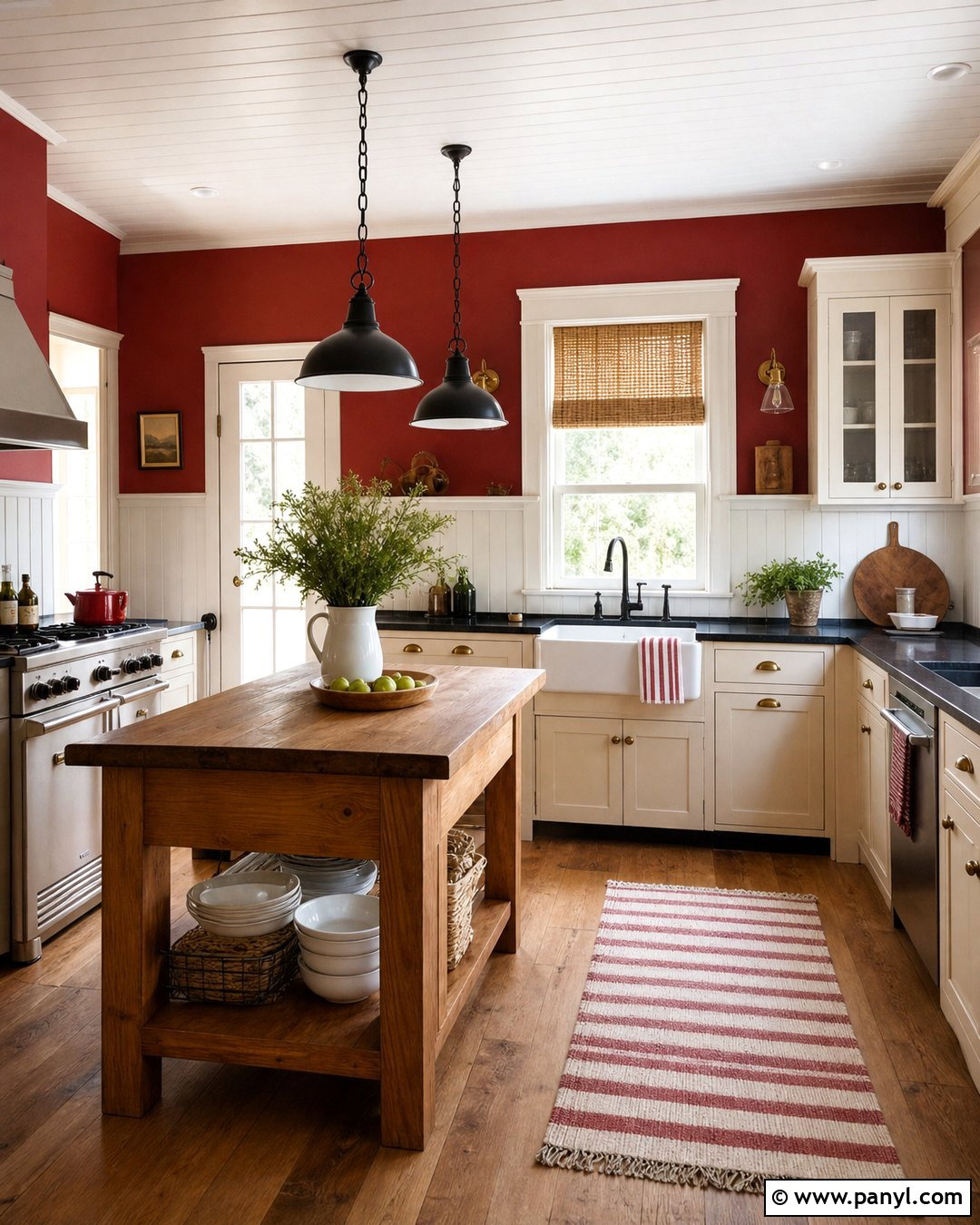
Barn red walls can give a farmhouse kitchen warmth without relying on overly themed decorations. Pair the paint with creamy Shaker cabinets, a large apron-front sink, and durable soapstone-look countertops. Use white beadboard or handmade subway tile as the backsplash to create texture around the work surfaces. A natural oak island with a thick wood top becomes the room’s practical centerpiece. Choose aged brass cup pulls, black iron pendants, and a bridge-style faucet for traditional character. Wide-plank medium oak flooring grounds the design. Add woven shades and simple striped textiles in cream and muted red. Open shelves should hold everyday pottery and useful cookware rather than decorative clutter. The completed space feels relaxed, functional, and collected, with red providing a strong but familiar backdrop.
18. Red Kitchen Walls In A Modern Kitchen
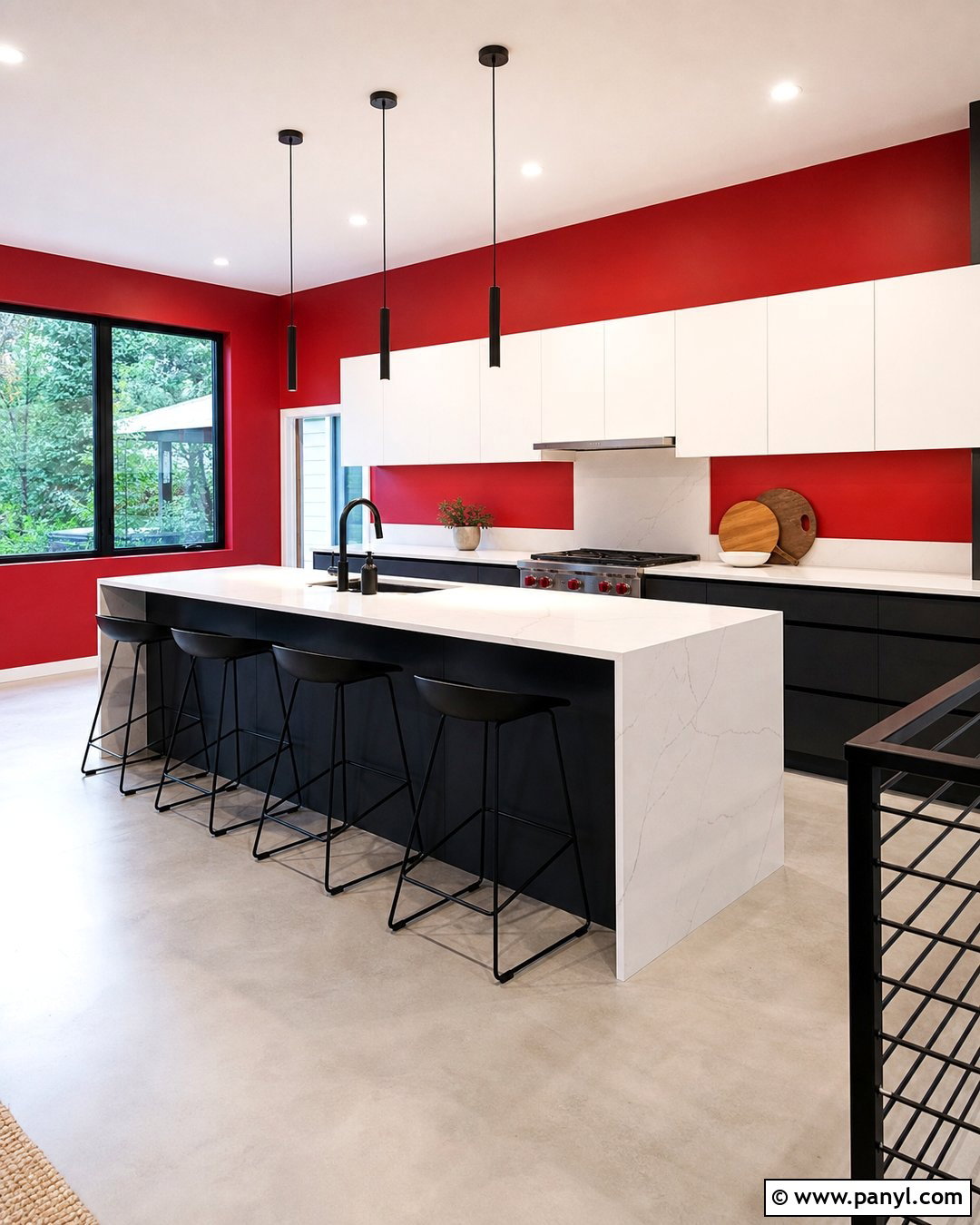
A modern kitchen gives vivid red walls the clean structure they need. Paint a broad feature wall in saturated red and combine it with handleless white upper cabinets and matte charcoal lower cabinets. Select thin white quartz countertops and a matching backsplash for an uninterrupted, streamlined appearance. Black-framed windows, linear pendant lights, and a simple black faucet sharpen the architecture. Pale concrete-look flooring offers a neutral foundation without adding wood grain or pattern. Keep the island rectangular with flat panels and concealed storage. Counter stools should have slim black frames and neutral upholstery. Limit decor to one sculptural bowl and a few functional objects. The result is graphic and uncluttered, allowing red to supply energy while the cabinetry and layout maintain a distinctly modern visual order.
19. Red Kitchen Walls In A Mediterranean Kitchen
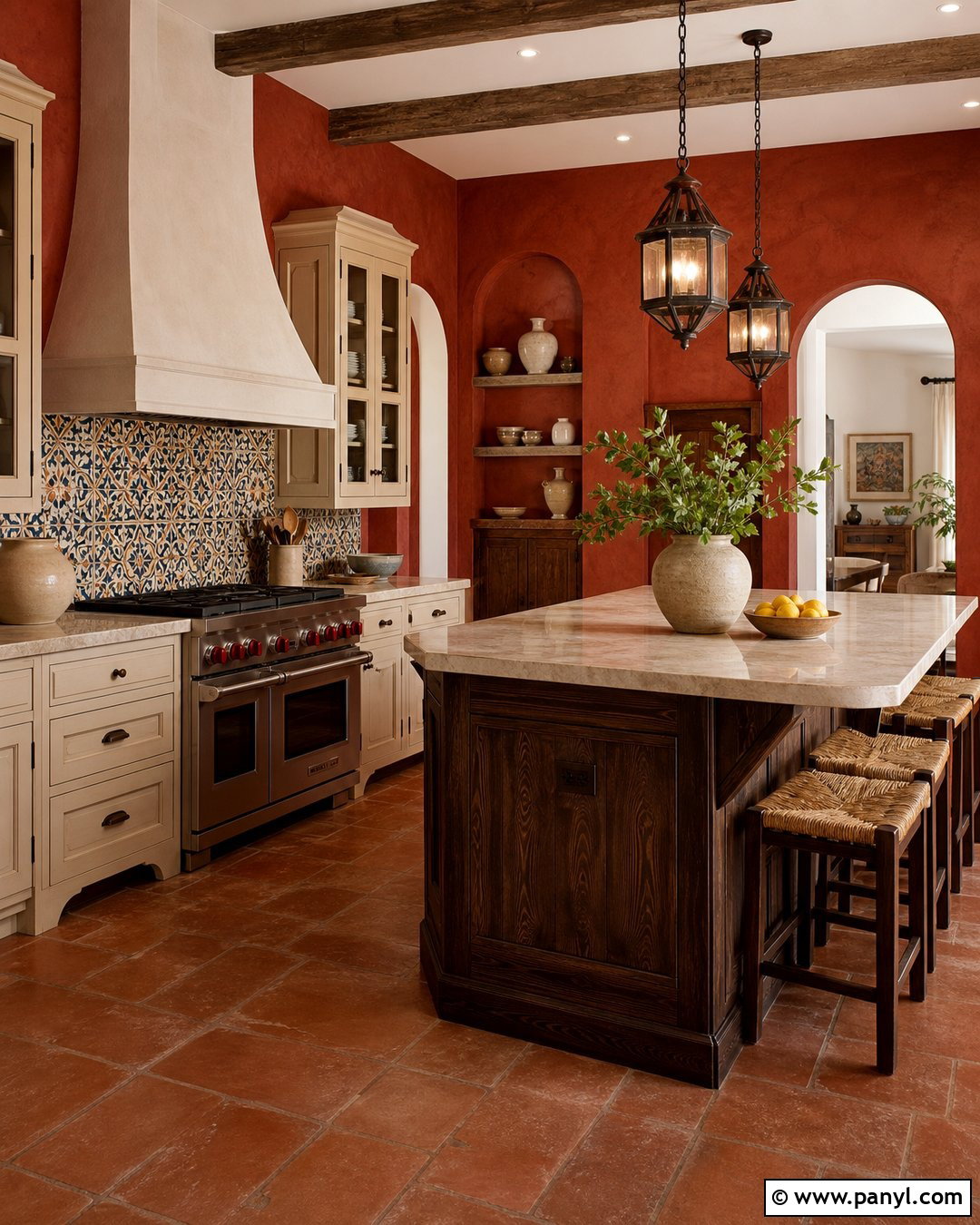
Earthy red walls fit naturally into a Mediterranean kitchen filled with tile, wood, and softly aged finishes. Choose a sunbaked red with terracotta undertones and pair it with warm cream cabinetry. Install a patterned backsplash using restrained blue, ivory, and rust details, keeping the counters a quiet beige stone. A dark wood island and matching ceiling beam introduce depth, while terracotta floor tile continues the warm foundation. Use aged bronze hardware and softly curved pendant lights to support the traditional architecture. Open niches can display cream ceramics and small green plants. Keep fabrics simple so the patterned tile remains controlled. This complete design feels colorful and welcoming, yet every shade connects back to the warm red walls and natural materials found throughout the room.
20. Red Kitchen Walls In A Vintage Kitchen
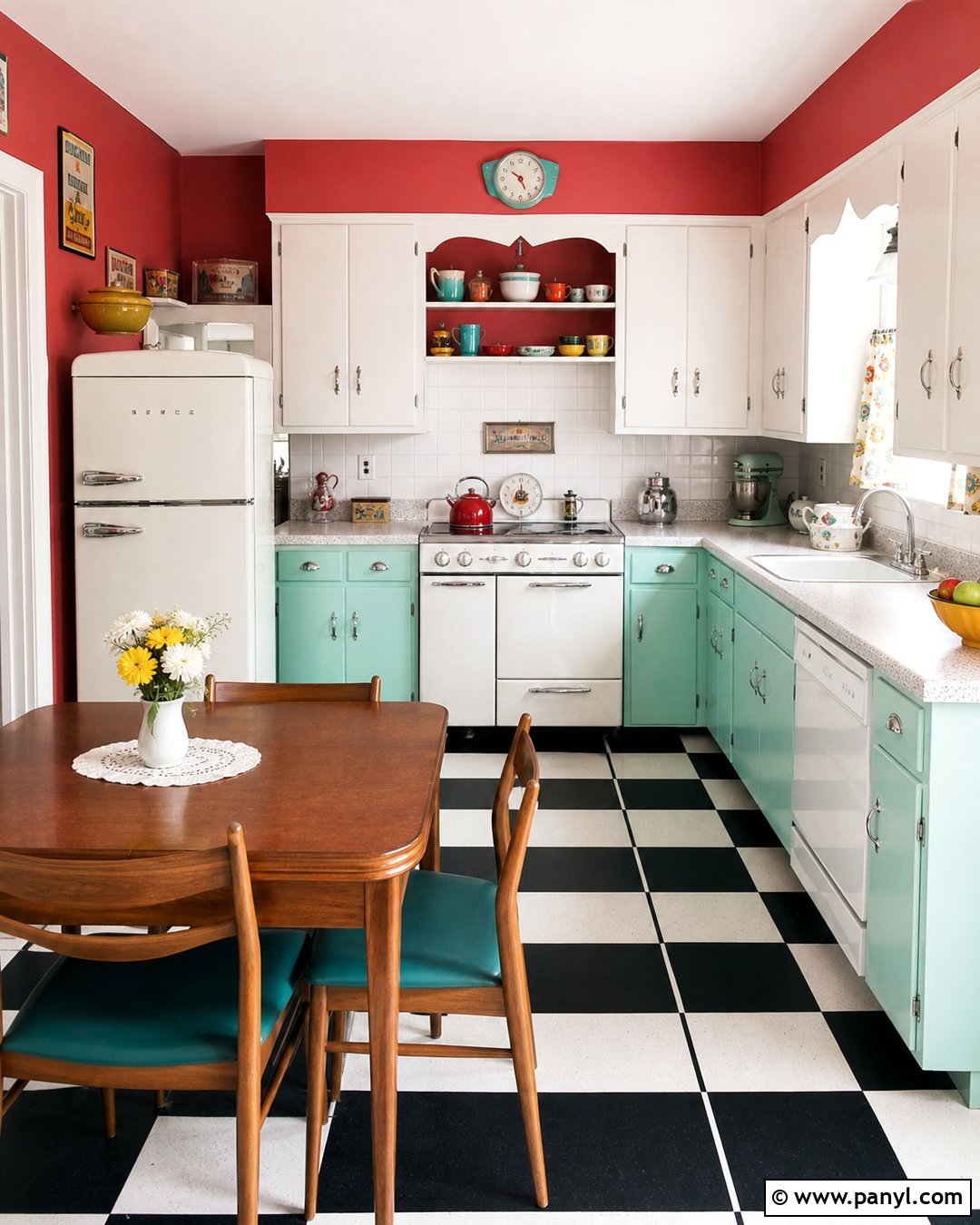
Cheerful red walls can support a vintage kitchen without making it resemble a themed diner. Select a slightly softened cherry red and pair it with pale mint lower cabinets, warm white uppers, and simple chrome hardware. White counters with subtle gray flecks provide a practical midcentury-inspired surface. Use small square white backsplash tiles with matching grout for a clean grid pattern. Black-and-white checkerboard flooring gives the room graphic character, while a compact wood dining set prevents the palette from feeling too hard. Add a white pendant, open shelves, and a few colorful ceramic pieces. A freestanding-style range or rounded refrigerator can strengthen the period influence if desired. The finished kitchen feels playful and nostalgic while remaining bright, organized, and suitable for everyday living.
Conclusion:
The most successful **Red Kitchen Wall Color Ideas** consider far more than the paint alone. Cabinet undertones, countertops, backsplash materials, flooring, hardware, and lighting all influence how red appears in the finished room. Warm brick, rust, and terracotta create relaxed, earthy kitchens, while cherry and tomato red produce brighter modern spaces. Burgundy, garnet, and crimson offer deeper drama when balanced with cream, white, or pale stone. Before committing, place large samples beside every fixed finish and observe them throughout the day. Whether you prefer a single accent wall or a color-drenched scheme, thoughtful repetition and controlled contrast will help red feel purposeful. Build the entire palette together, and the kitchen will look expressive, cohesive, and comfortable.

Related Ideas and Inspiration:
Leave a Reply