
Red kitchen walls can look rich, welcoming, and surprisingly balanced beside natural oak cabinetry. The key is choosing a red that works with the wood’s undertone rather than making it appear overly yellow or orange. Deep brick, muted paprika, earthy rust, and soft cranberry are often easier to coordinate than sharp primary red. Lighter counters, simple backsplashes, and controlled accent colors also keep the room from feeling heavy. You can use red across every wall, limit it to the dining area, or create one focused accent wall behind open shelving. Natural oak brings warmth and visible texture, while red gives the kitchen personality and depth. () The following complete looks offer practical ways to create beautiful **red kitchen walls with oak cabinets**.

1. Brick Red Walls With Honey Oak Cabinets
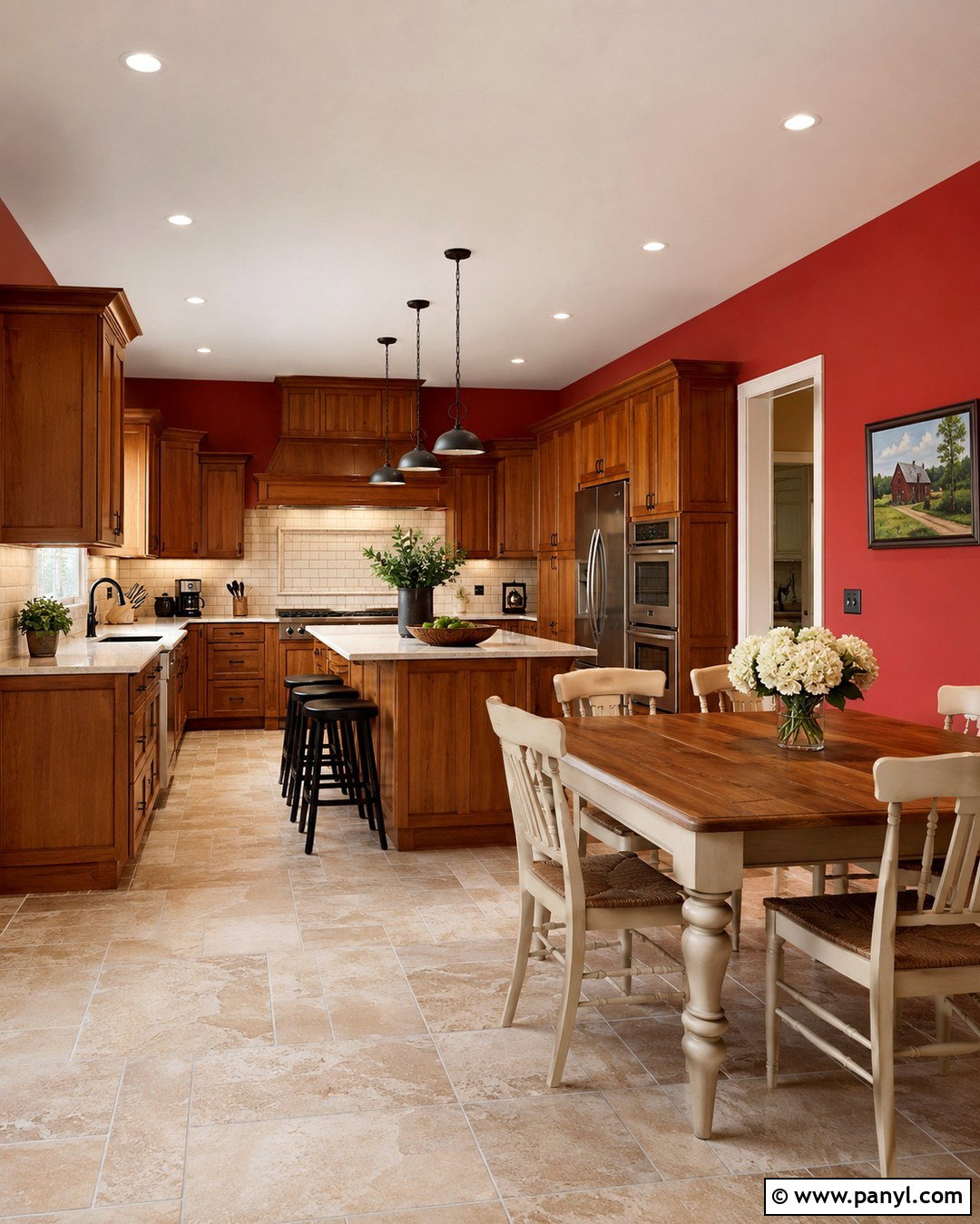
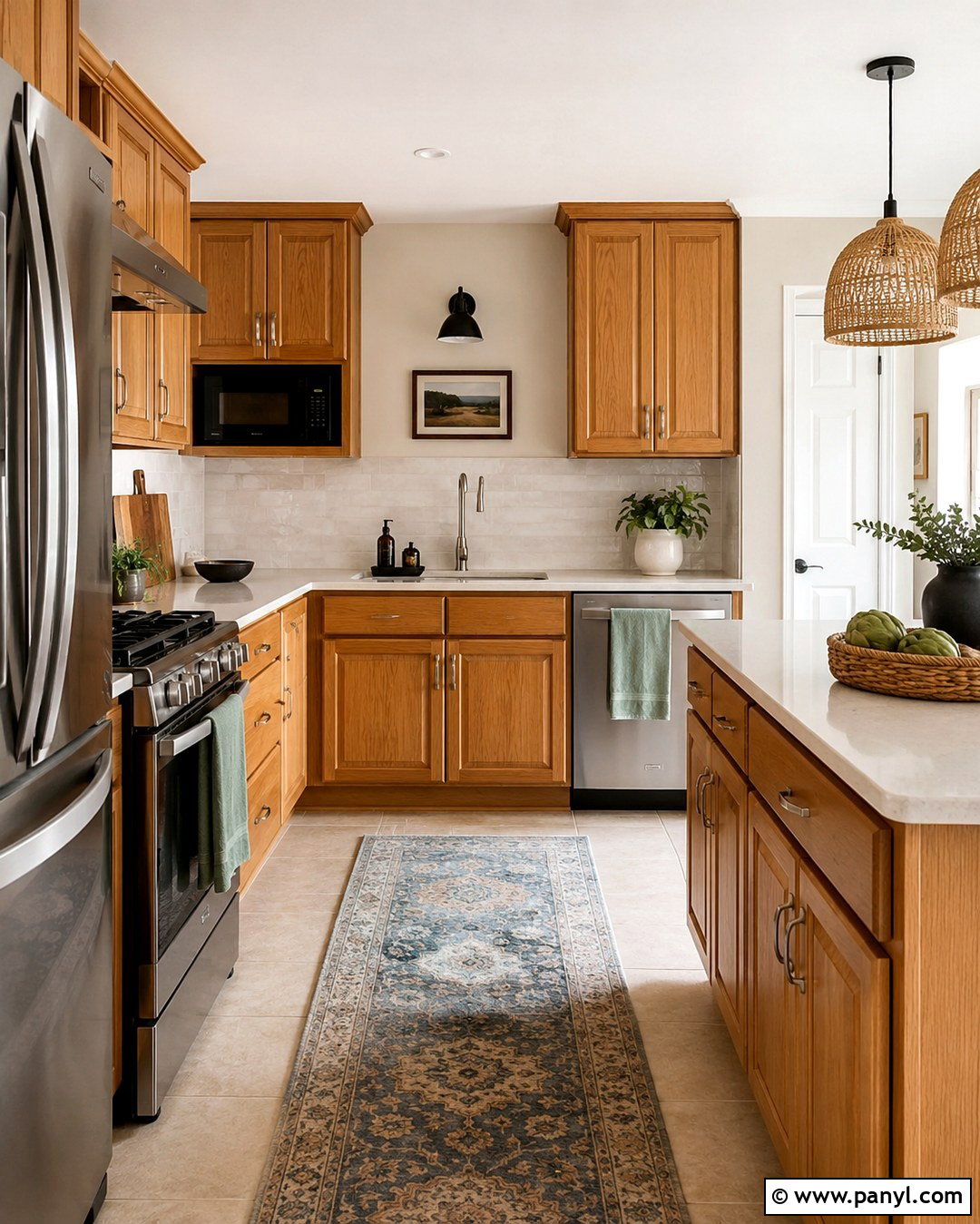
Brick red walls give honey oak cabinets a comfortable, traditional character without looking overly bright. Choose a muted red with brown undertones so it relates naturally to the golden cabinet finish. Add creamy white quartz counters and a simple ivory subway tile backsplash to lighten the room. Dark bronze knobs, a bronze faucet, and black metal pendant lights provide definition. For the floor, use warm beige porcelain tile or medium brown wood with minimal orange coloring. A small oak breakfast table can continue the natural finish, while cream upholstered chairs soften the harder surfaces. Keep countertop decor restrained with white stoneware, woven baskets, and green herbs. This complete palette feels warm and established, making it especially suitable for a traditional family kitchen.
2. Cranberry Red Walls With Light Oak Cabinets
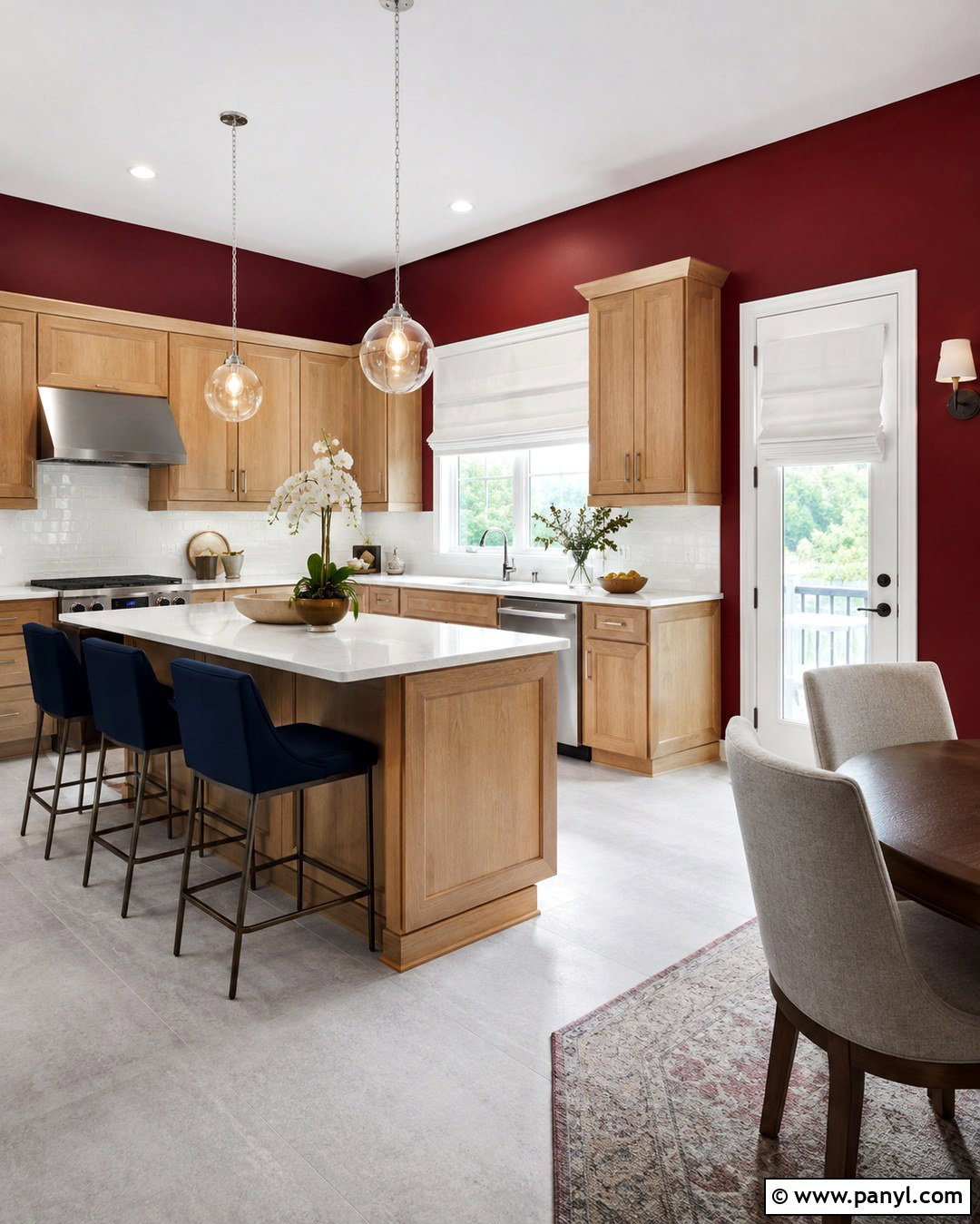
Cranberry red creates an elegant contrast against pale natural oak cabinets. Its cooler undertone helps distinguish the walls from the wood instead of blending everything into one warm surface. Pair this combination with white quartz countertops containing delicate gray veining. A glossy white backsplash reflects light and keeps the cranberry paint from dominating the room. Brushed nickel hardware, stainless steel appliances, and clear glass pendant lights introduce clean modern finishes. Choose light gray porcelain flooring or pale oak flooring that closely matches the cabinets. Navy blue counter stools can add a controlled secondary color, while white Roman shades maintain brightness around the windows. This look works particularly well in an open kitchen because the cranberry walls create a defined, polished cooking zone.
3. Paprika Red Walls With Natural Oak Cabinets
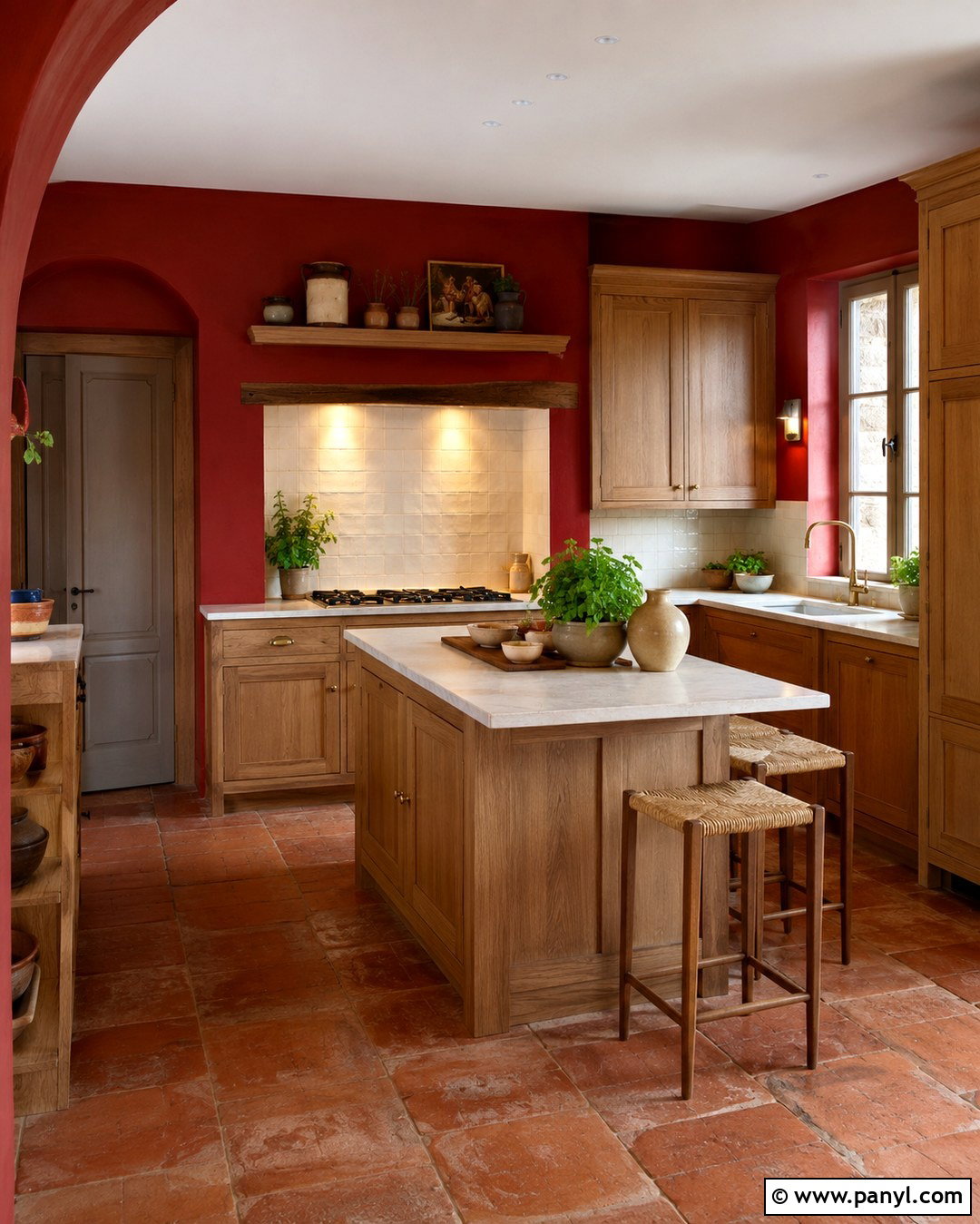
Warm paprika walls and natural oak cabinets create an earthy kitchen with relaxed European character. Select an aged, slightly dusty paprika rather than a strong orange-red. The softened color brings out the grain of the oak while still providing noticeable contrast. Use creamy limestone-look counters and handmade ivory backsplash tile to build a layered, tactile background. Unlacquered brass hardware, a bridge-style faucet, and simple dome pendants add warmth without introducing another bold color. Medium brown terracotta-look floor tile grounds the room and reinforces its rustic direction. Include a freestanding oak island with an off-white stone top and woven counter stools. Display neutral pottery, wooden cutting boards, and small potted herbs, but leave plenty of open space so the materials remain the focus.
4. Deep Red Accent Wall With Golden Oak Cabinets
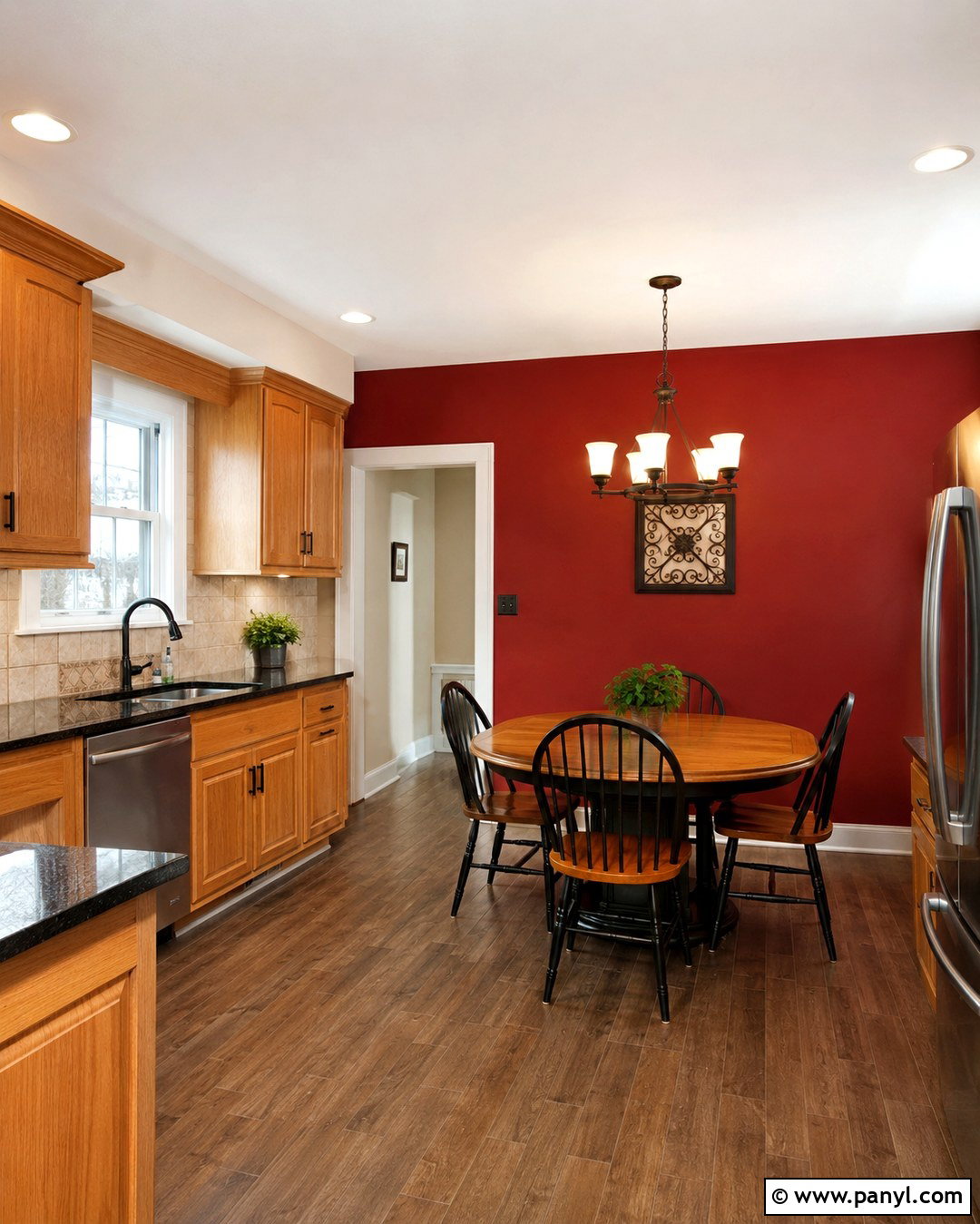
A single deep red accent wall offers strong color without surrounding the entire kitchen. Place it behind the breakfast nook, range, or open shelving so it becomes an intentional focal point. Keep the remaining walls warm white to balance golden oak cabinets and brighten the working areas. Black granite counters can connect the darker red to matte black cabinet pulls and a black metal chandelier. Add a cream backsplash with subtle tan variation rather than another high-contrast pattern. Medium brown flooring prevents the cabinets from appearing isolated, while a washable cream runner softens the center aisle. Complete the look with a round oak table, black spindle chairs, and simple framed botanical prints. This approach is practical for homeowners who enjoy red but want a lighter overall kitchen.
5. Rust Red Walls With Dark Oak Cabinets
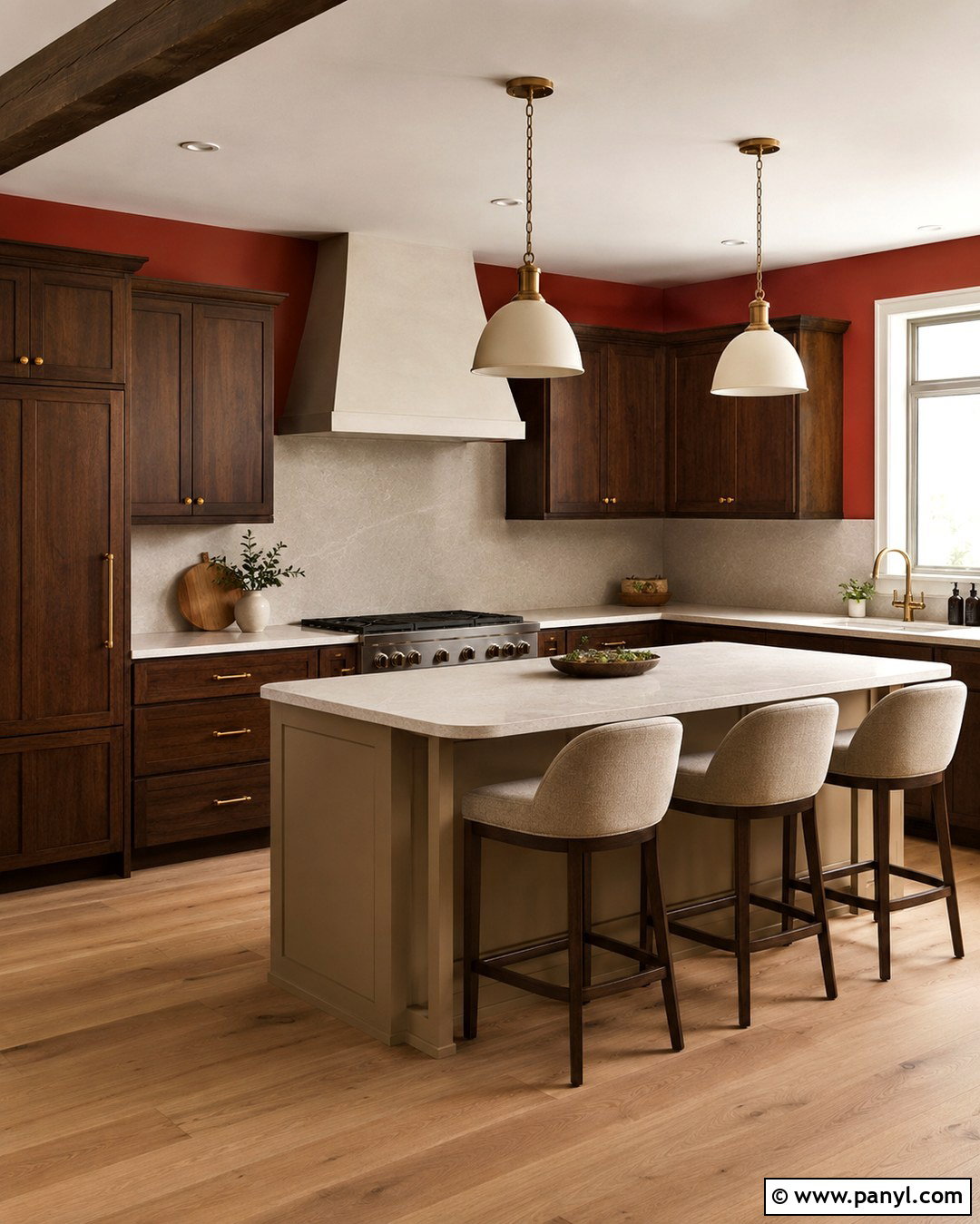
Rust red walls can make dark oak cabinets feel rich and grounded when lighter surfaces are used throughout the room. Choose a subdued clay-red paint with enough brown to complement the cabinet stain. Install warm white quartz counters and a matching full-height backsplash to break up the dark finishes. A pale oak or light beige floor adds another bright plane underfoot. Use aged brass cabinet pulls and cream ceramic pendants for a softer alternative to black metal. If the layout includes an island, paint its base warm putty and repeat the white countertop. Add linen window shades, oatmeal counter stools, and a few green plants for freshness. The finished kitchen feels earthy and inviting rather than dark, with every light element carefully positioned to balance the deeper wood and walls.
6. Muted Red Walls With White Oak Cabinets
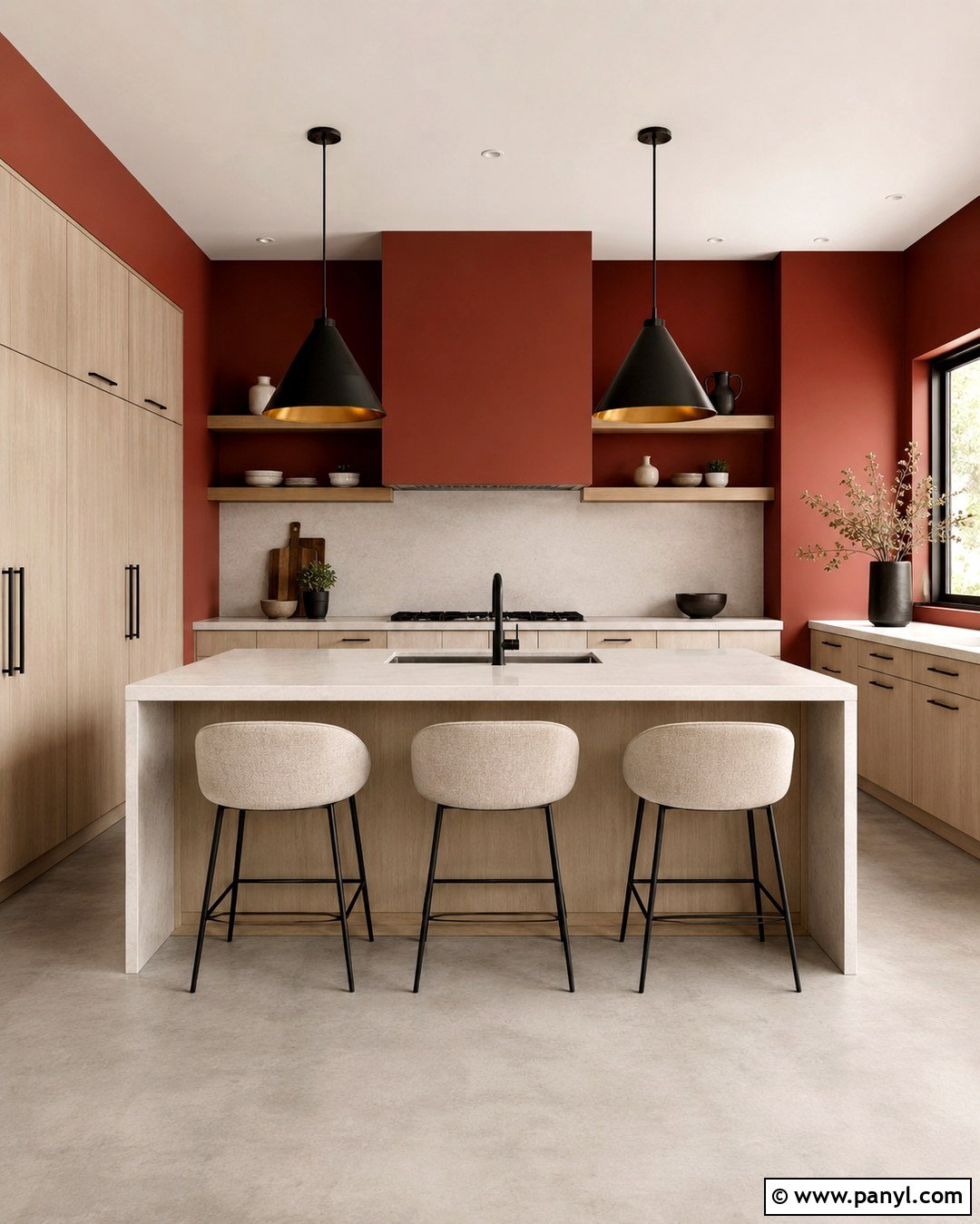
Muted red walls give streamlined white oak cabinets more personality while preserving their calm, modern appearance. Look for a softened red with subtle brown and gray undertones instead of a vivid scarlet shade. Flat-panel white oak doors keep the cabinetry clean and allow the wall color to carry the visual weight. Add off-white quartz countertops, an ivory slab backsplash, and pale concrete-look flooring for a simple neutral base. Matte black pulls and slim black pendants create crisp lines throughout the room. A waterfall island can include oak on the seating side to repeat the cabinets. Finish the space with oatmeal counter stools, white ceramic accessories, and one sculptural branch arrangement. This restrained design proves that red can work successfully in a contemporary kitchen without feeling loud or overly themed.
7. Barn Red Walls With Rustic Oak Cabinets
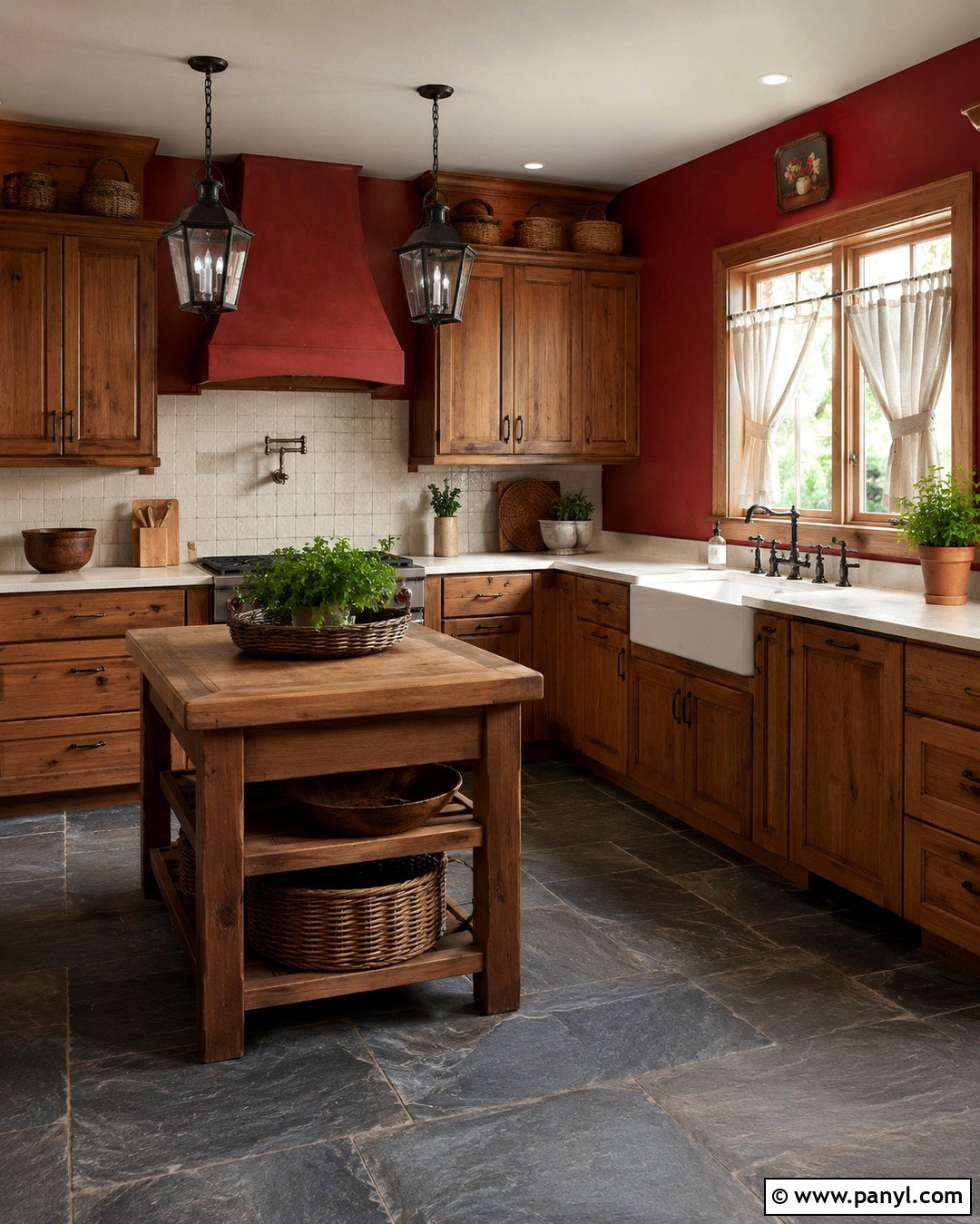
Barn red walls suit rustic oak cabinets when the room includes rugged materials and plenty of creamy neutral color. Choose a faded barn red that looks weathered rather than intensely saturated. Raised-panel oak doors, dark iron pulls, and a farmhouse sink establish the traditional base. Use butcher block on the island and light cream quartz around the perimeter to prevent too much wood from collecting in one area. A backsplash of handmade off-white tile introduces gentle variation, while medium gray slate flooring gives the warm palette a cooler foundation. Add black lantern pendants, woven baskets, and simple linen café curtains. A reclaimed oak dining table with cream chairs can complete an adjoining breakfast area. The result feels comfortable and collected, yet the light surfaces keep it fresh and functional.
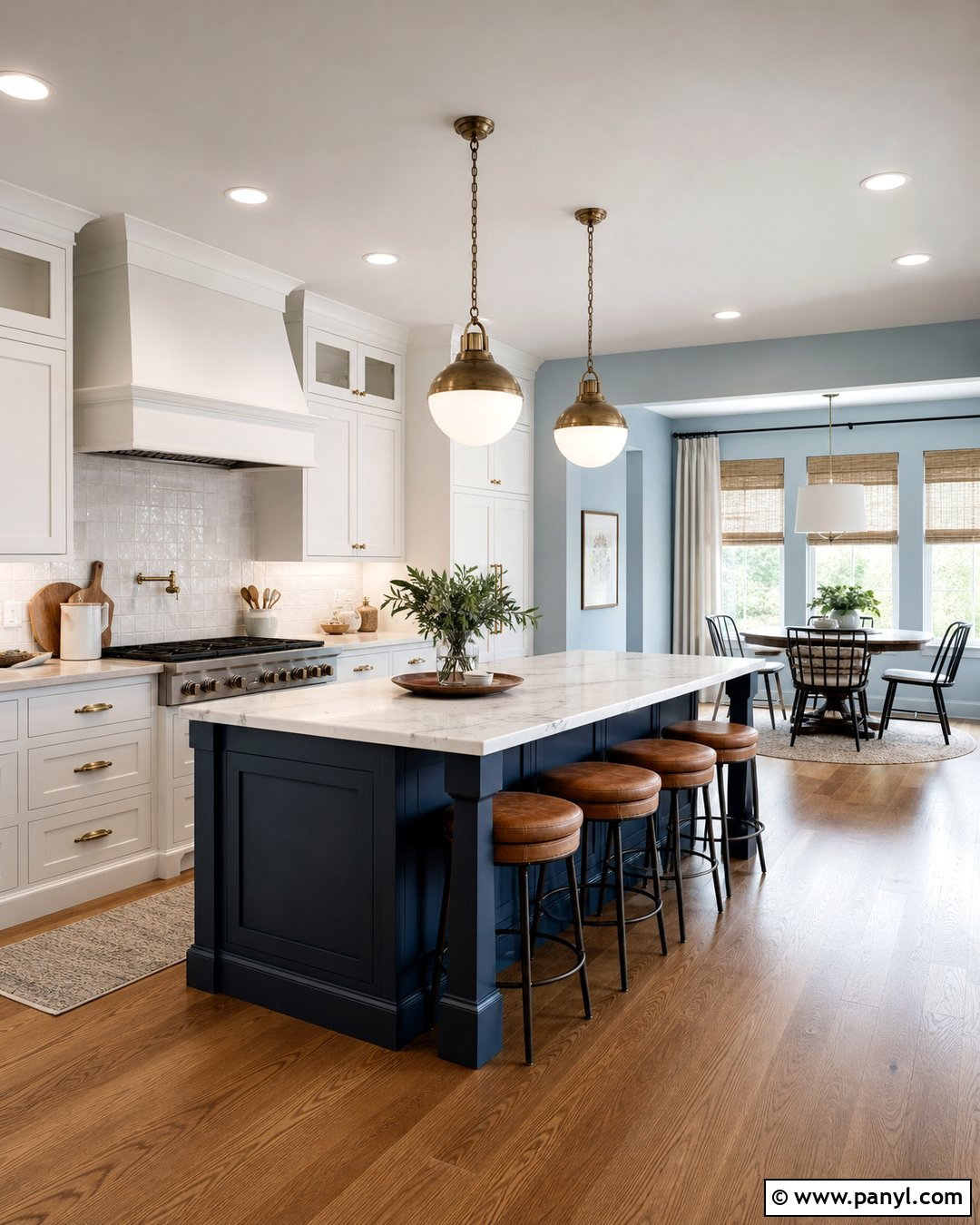
8. Cherry Red Walls With Medium Oak Cabinets
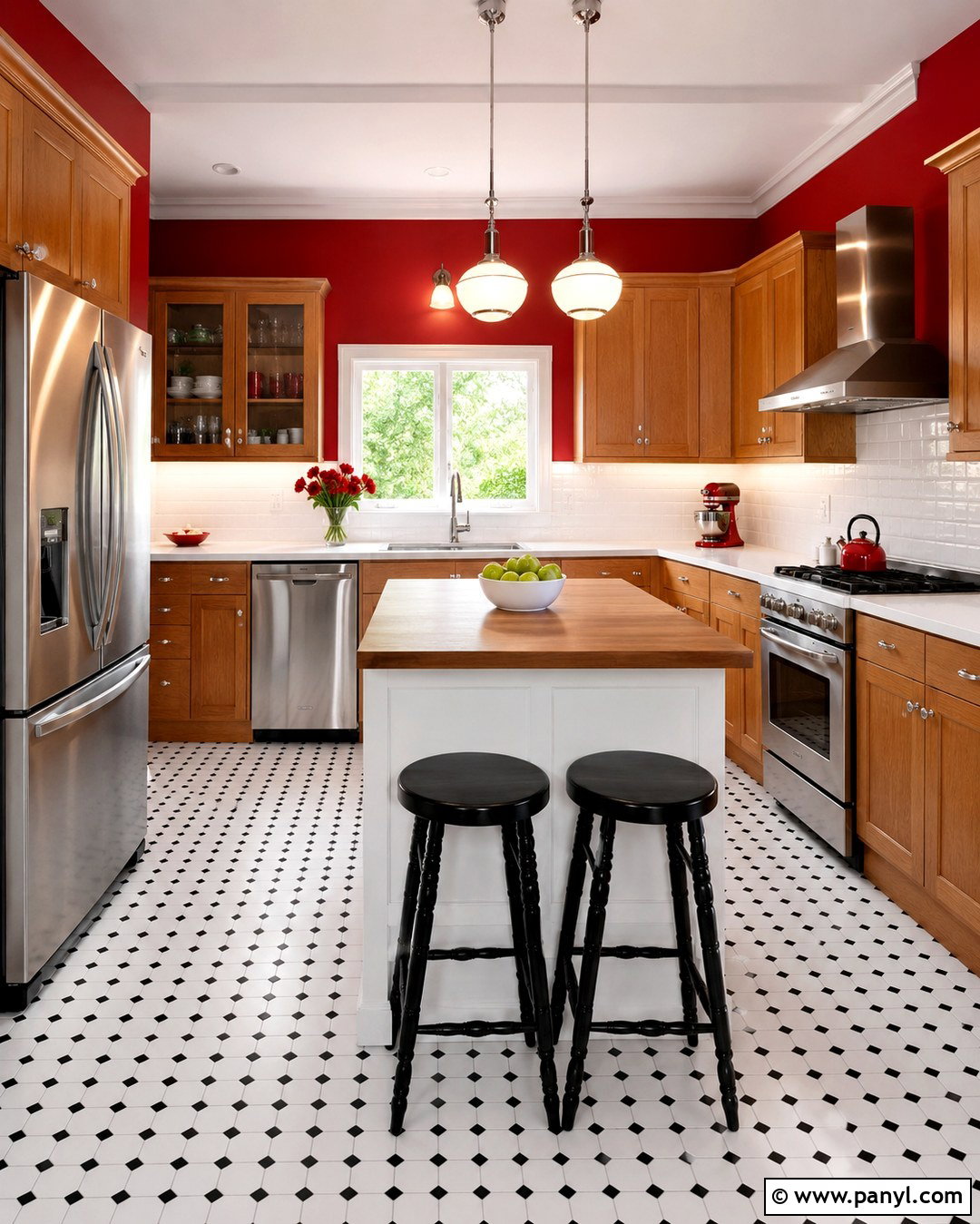
Clear cherry red creates an energetic kitchen when it is balanced with medium oak cabinetry and generous white surfaces. Use the red on walls with strong natural light, then keep the ceiling, trim, backsplash, and counters bright white. Shaker-style oak cabinets provide enough detail to ground the bold color without competing with it. Polished chrome hardware and stainless steel appliances add a clean reflective finish. Choose black-and-white patterned floor tile for a cheerful retro influence, but select a small-scale pattern that does not overwhelm the room. A white island with an oak countertop can connect the cabinetry to the lighter features. Finish with simple black stools, white pendant lights, and red used nowhere else. Limiting the strongest shade to the walls makes the complete look deliberate rather than overly coordinated.
9. Burgundy Red Walls With Oak Cabinets
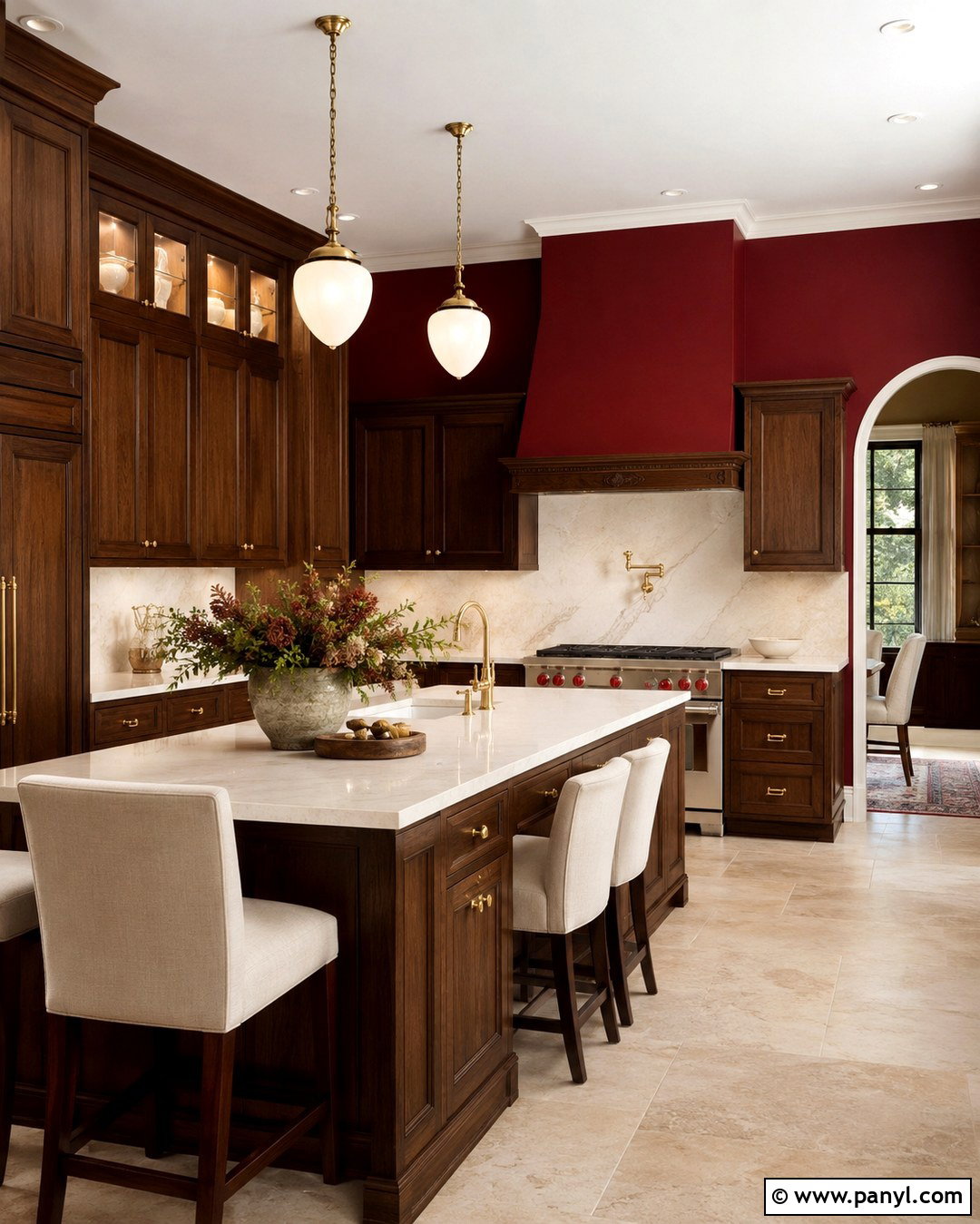
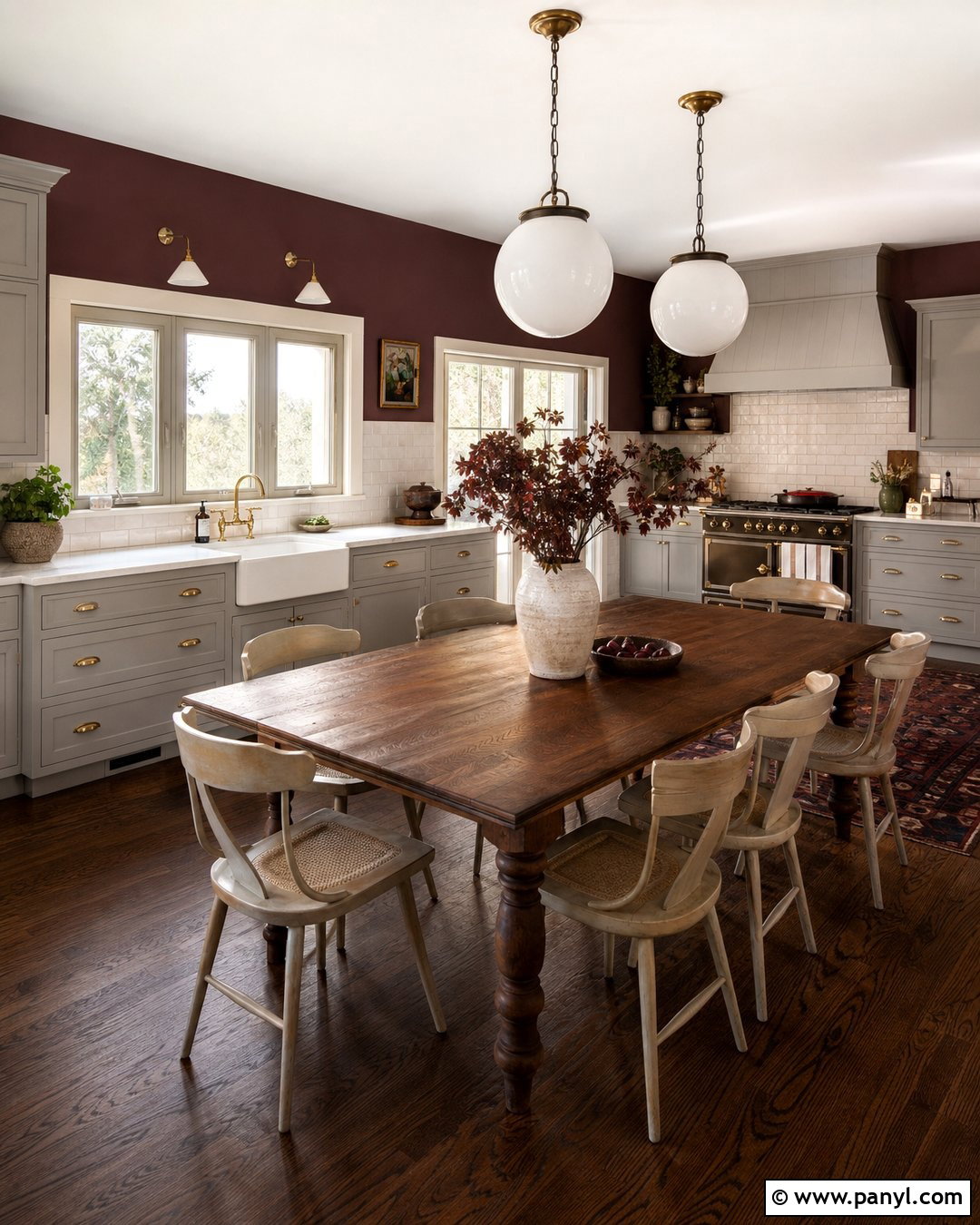
Burgundy walls create a refined backdrop for medium or dark oak cabinets. Because this red is deep and complex, use it in a spacious kitchen or in a room with several windows. Cream quartz countertops and an ivory marble-look backsplash are essential for reflecting light around the darker surfaces. Choose antique brass hardware and warm white glass pendants to complement both the cabinets and walls. A natural stone floor in pale beige adds texture without introducing busy color variation. For an island, use oak cabinetry with a thick light countertop and cream upholstered stools. Keep window treatments minimal and choose warm white fabric when privacy is needed. A few copper utensils and green foliage can finish the room, creating a layered traditional kitchen that feels formal, welcoming, and thoughtfully balanced.
10. Tomato Red Walls With Blonde Oak Cabinets
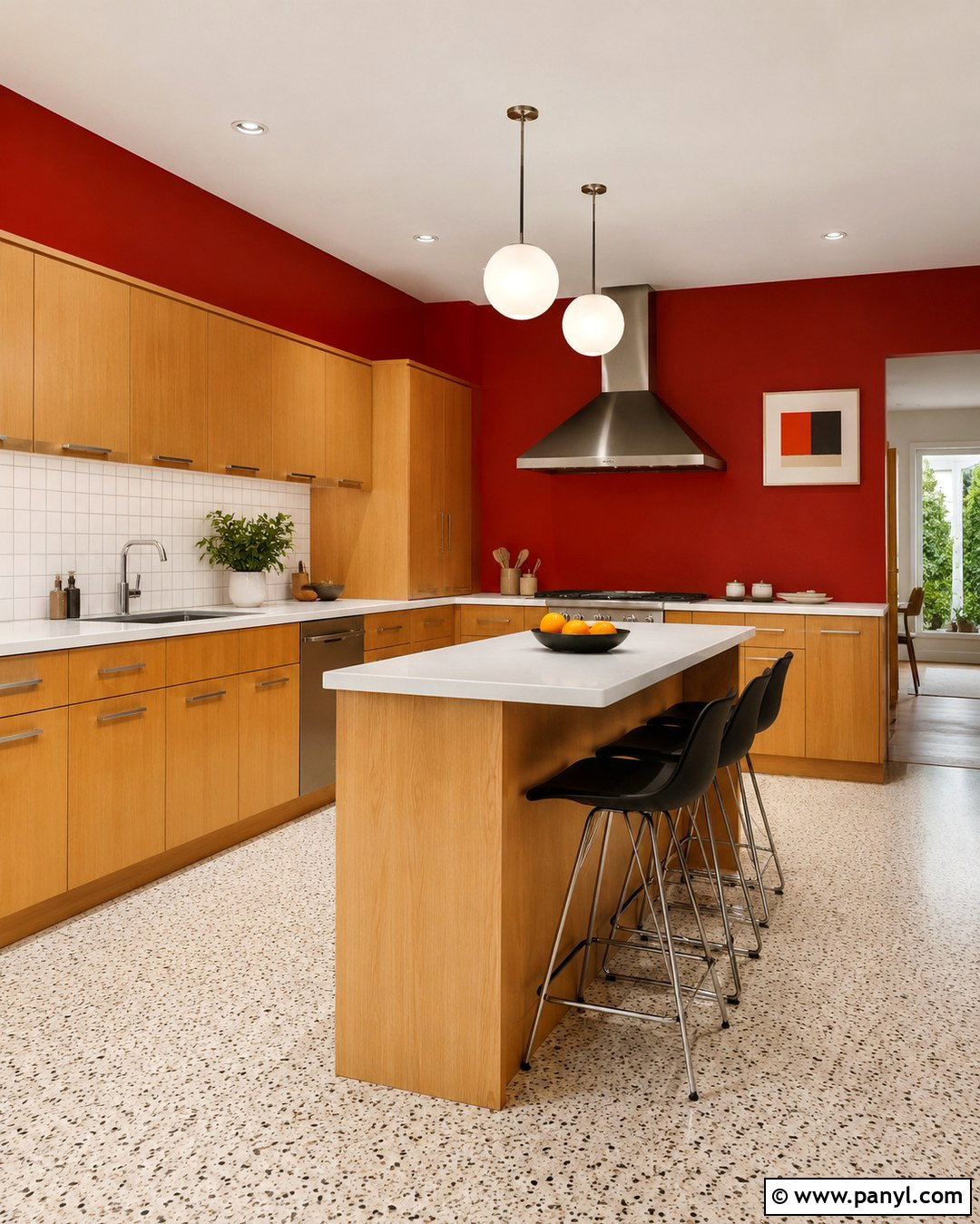
Tomato red walls and blonde oak cabinets produce a bright, playful kitchen with modern midcentury influence. Select a warm, clean red and use it beside flat-front cabinets with simple wood grain. White solid-surface countertops and a white square-tile backsplash create sharp visual breaks between the two warm finishes. Add brushed stainless steel pulls, globe pendant lights, and compact stainless appliances for a practical retro touch. Terrazzo-look flooring with small red, tan, and black flecks can tie the palette together without copying the walls. Choose a narrow island with a blonde oak base and white top to preserve circulation. Black molded counter stools provide contrast, while a cream roller shade keeps the window area uncluttered. The finished room feels lively, efficient, and nostalgic without resembling a themed diner.
11. Terracotta Red Walls With Red Oak Cabinets
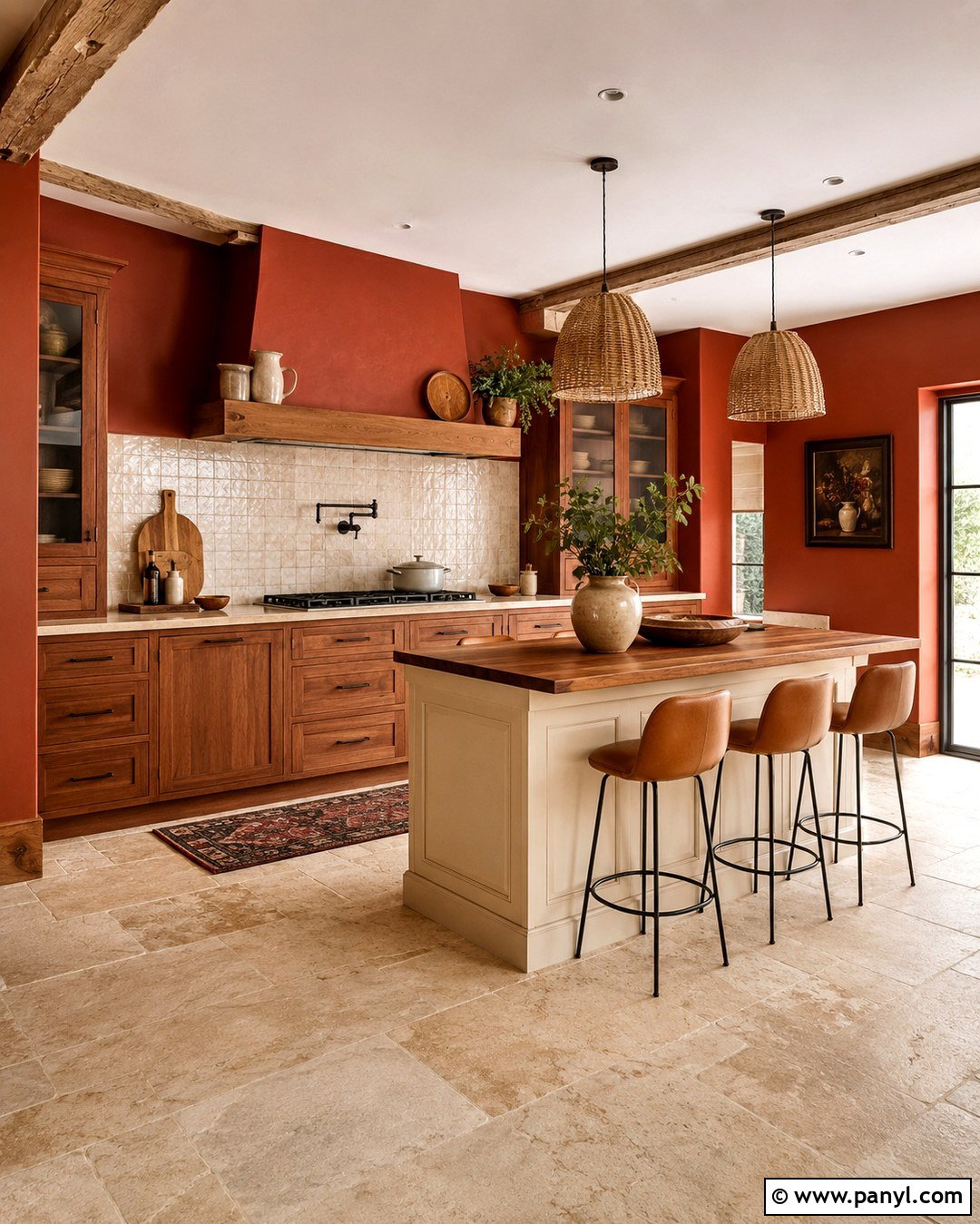
Terracotta red walls can complement red oak cabinets when both finishes are separated by pale, earthy materials. Choose wall paint with clay and brown undertones, then use creamy quartz countertops to create a clear boundary above the cabinetry. A handmade warm white backsplash brings soft texture and keeps the red tones from covering every surface. Select aged bronze hardware, an apron-front sink, and woven pendant shades for a casual organic look. Light limestone-look floor tile adds brightness while supporting the earthy palette. If the kitchen has space, include a rectangular island painted warm cream with an oak countertop. Natural linen shades, tan leather stools, and olive-green pottery complete the color story. The coordinated result celebrates warmth while still offering enough contrast for the oak grain and red walls to remain distinct.
12. Red Dining Nook Walls With Oak Cabinets
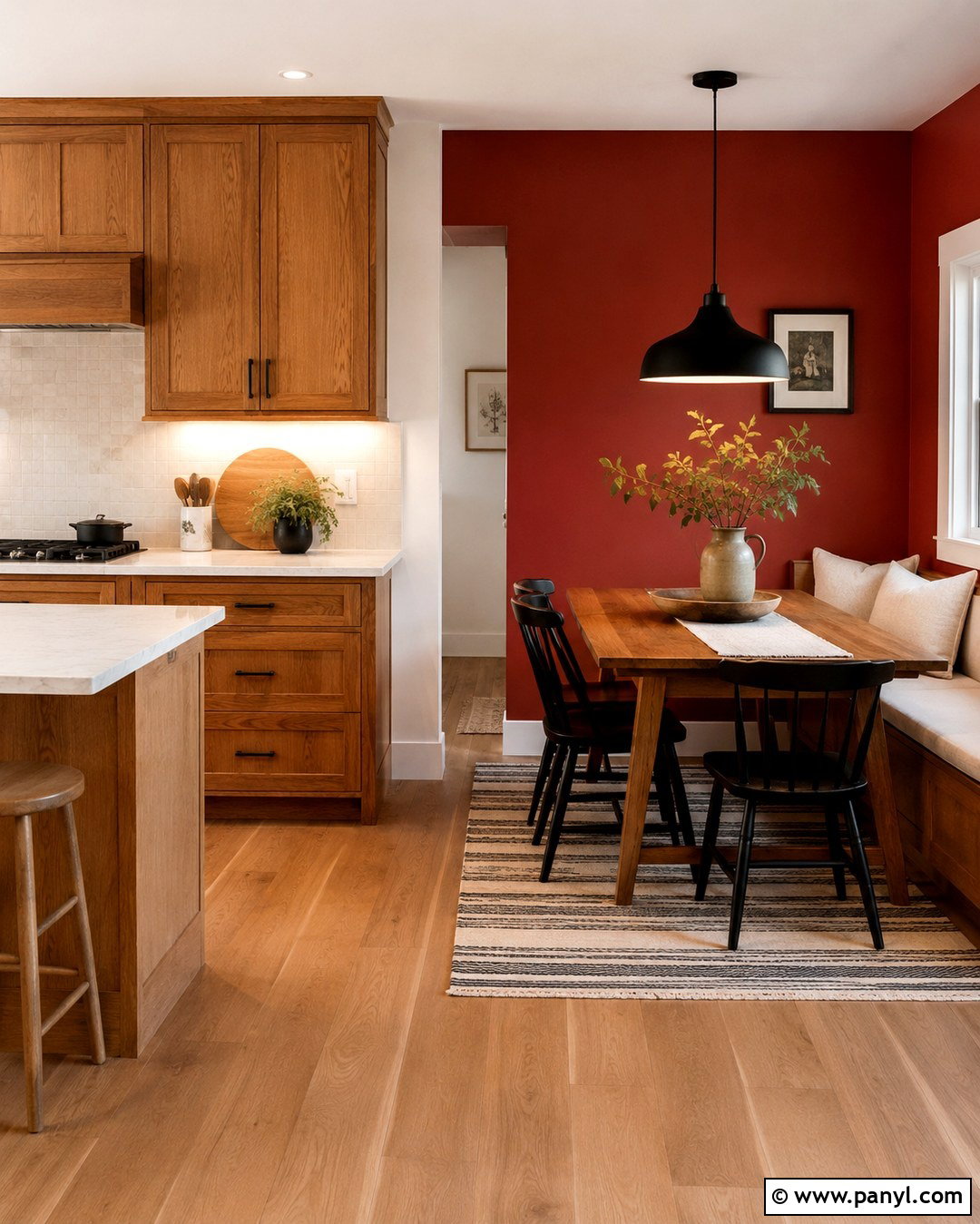
Painting only the dining nook red creates a natural destination inside a kitchen filled with oak cabinets. Use muted brick red around a built-in bench or small dining table, while keeping the cooking area warm white. This zoning technique gives the room depth without placing strong color directly beside every cabinet. Continue the oak finish on the table or bench trim to connect both areas. Add cream seat cushions, a washable striped rug, and a black metal pendant over the table. White quartz counters and a soft beige backsplash maintain brightness in the main kitchen. Matte black cabinet pulls repeat the dining light and create a consistent accent. Finish the red nook with two understated framed prints and a small plant, producing a cozy eating space that still belongs to the larger kitchen.
13. Red Walls With Oak Cabinets And Black Counters
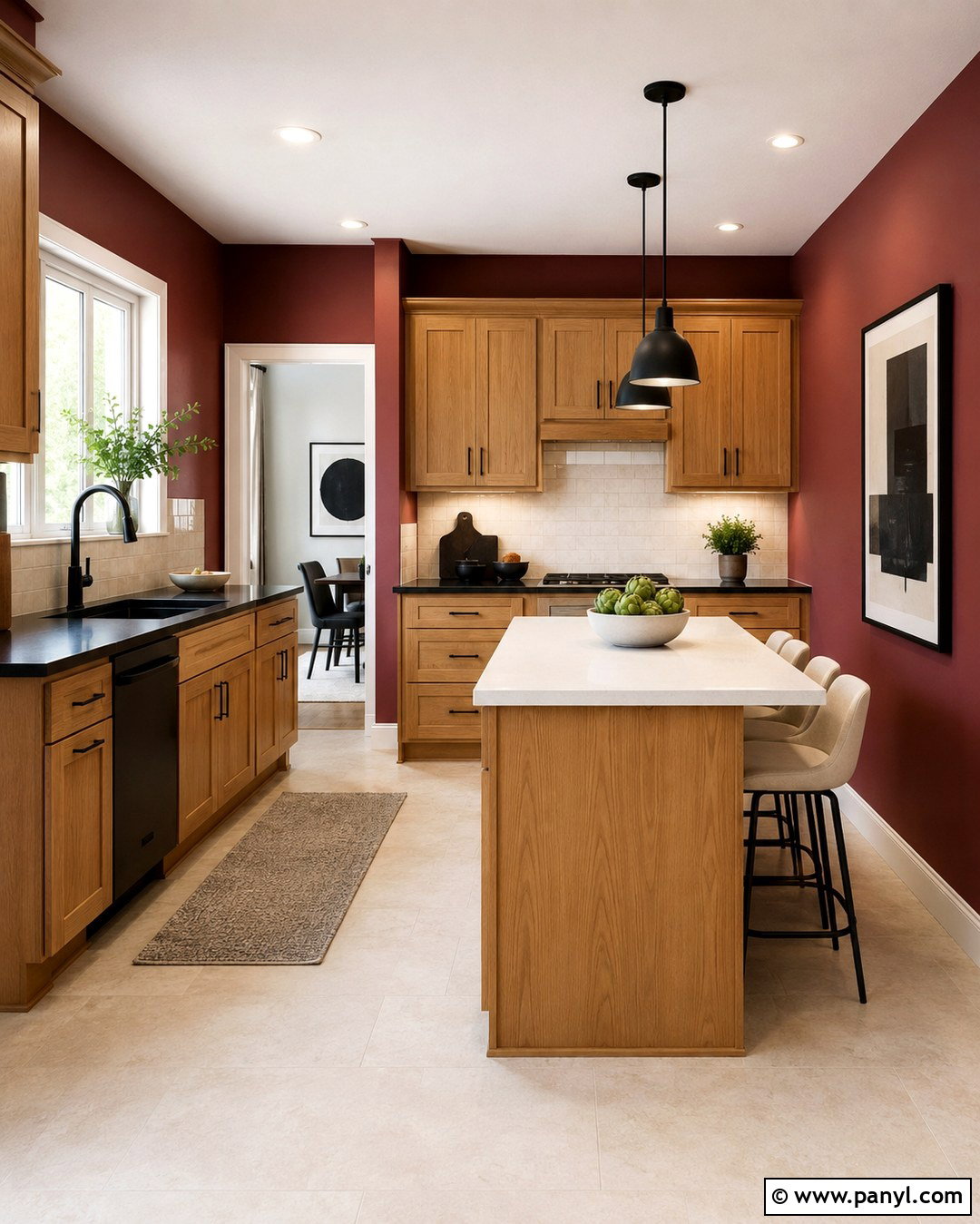
Red walls, oak cabinets, and black countertops form a bold palette that needs carefully placed light elements. Choose an earthy brick or muted cranberry red rather than a highly saturated primary shade. Keep the backsplash creamy white and extend it to the upper cabinets so the black counters have a bright background. Medium honey oak cabinets provide warmth between the red and black surfaces. Use matte black pulls, a black faucet, and simple black pendants to make the countertop feel connected to the room. Pale beige flooring and warm white ceiling paint prevent the combination from becoming too heavy. Add a small oak island with a white top if space permits. Cream stools, light window shades, and minimal white ceramics finish this dramatic but practical kitchen with welcome visual breathing room.
14. Red Walls With Oak Cabinets And White Counters
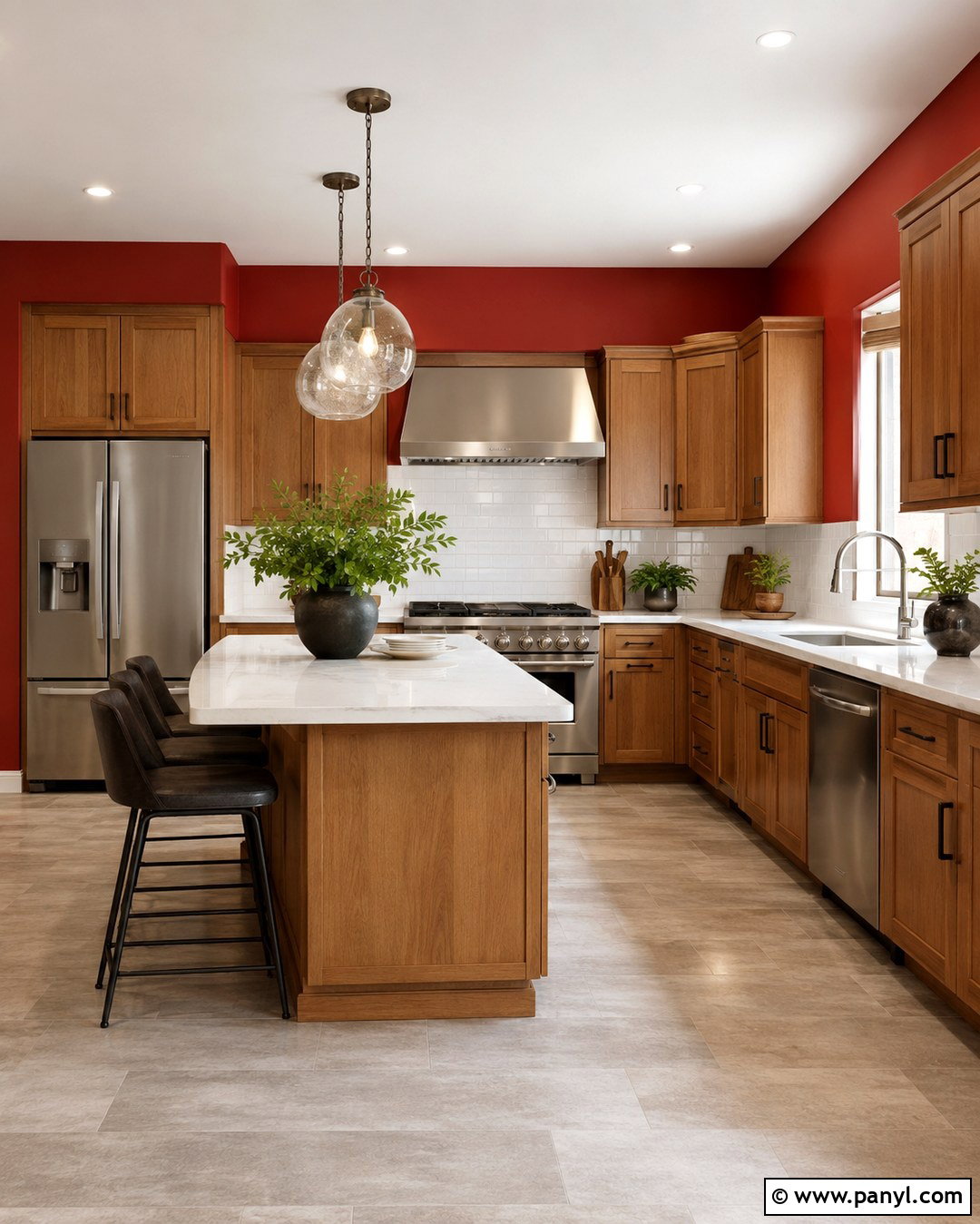
White counters provide the cleanest transition between red walls and warm oak cabinets. Start with a muted cranberry or balanced brick red that offers depth without reflecting too much orange onto the wood. Choose medium oak shaker cabinets and bright white quartz with very little pattern. Continue white through the backsplash, ceiling, window trim, and farmhouse sink to distribute light evenly. Brushed nickel hardware and stainless steel appliances add a cooler note that keeps the palette feeling current. For flooring, use pale taupe porcelain tile or light neutral wood. A matching oak island with white counters makes the kitchen feel cohesive, while charcoal stools add modest contrast. Complete the room with glass pendant lights, a neutral runner, and small green plants for a fresh, approachable look suitable for everyday family use.
15. Red Walls With Oak Cabinets And Cream Backsplash
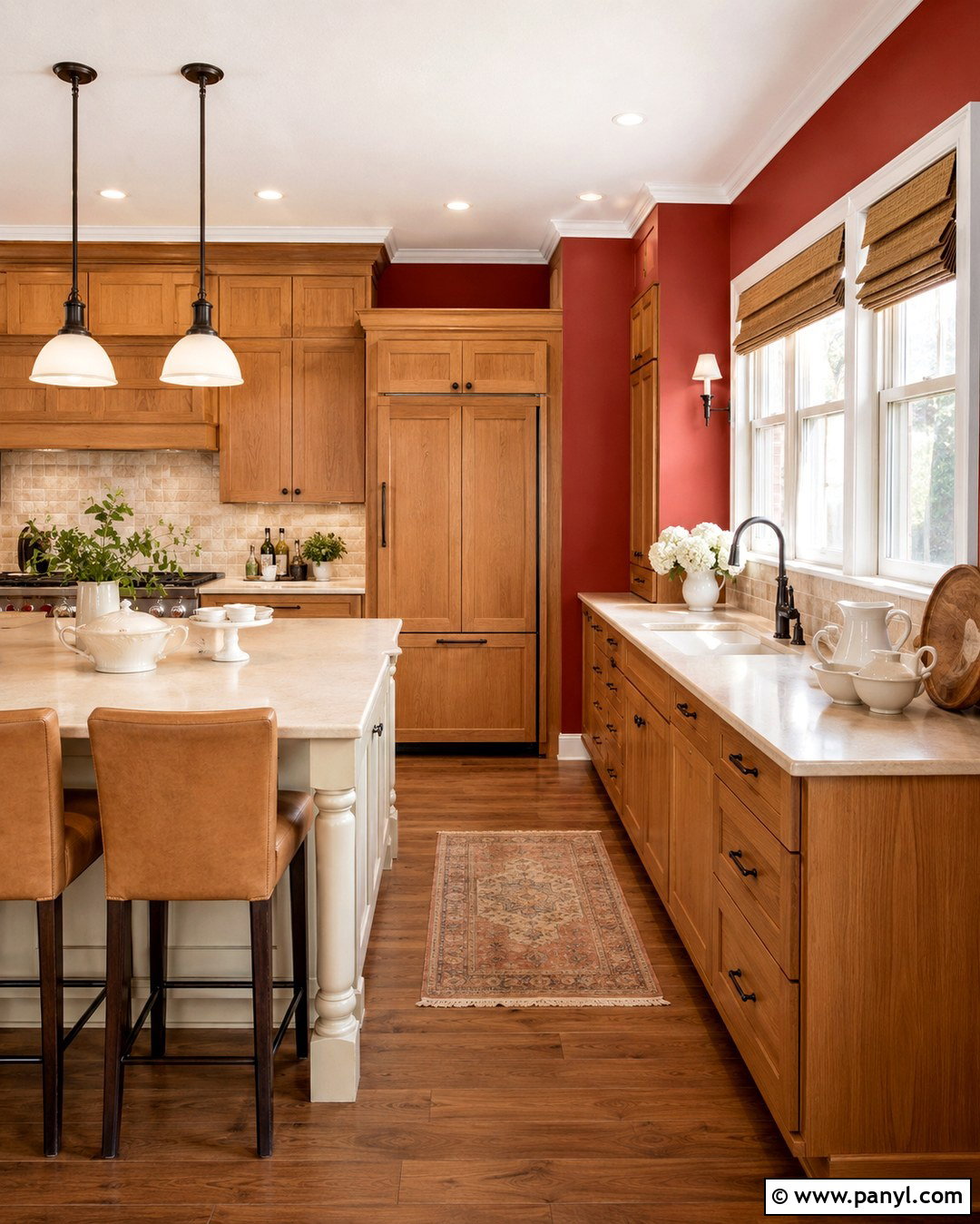
A cream backsplash softens the transition between red walls and golden oak cabinets. Select a warm brick red for the upper walls, then install creamy handmade tile from the countertop to the cabinets. The slight surface variation adds interest without creating a competing pattern. Use light beige quartz counters with minimal veining and medium-tone oak cabinets fitted with dark bronze hardware. Warm white glass pendants and under-cabinet lighting help the cream tile stay bright. Choose medium brown flooring that is deeper than the cabinets but less dark than espresso. An island painted soft cream can reduce the amount of oak while strengthening the backsplash color. Add tan leather stools, linen shades, and a few white serving pieces. The completed kitchen feels layered, warm, and comfortable rather than heavily red or yellow.
16. Red Walls With Oak Cabinets And Open Shelves
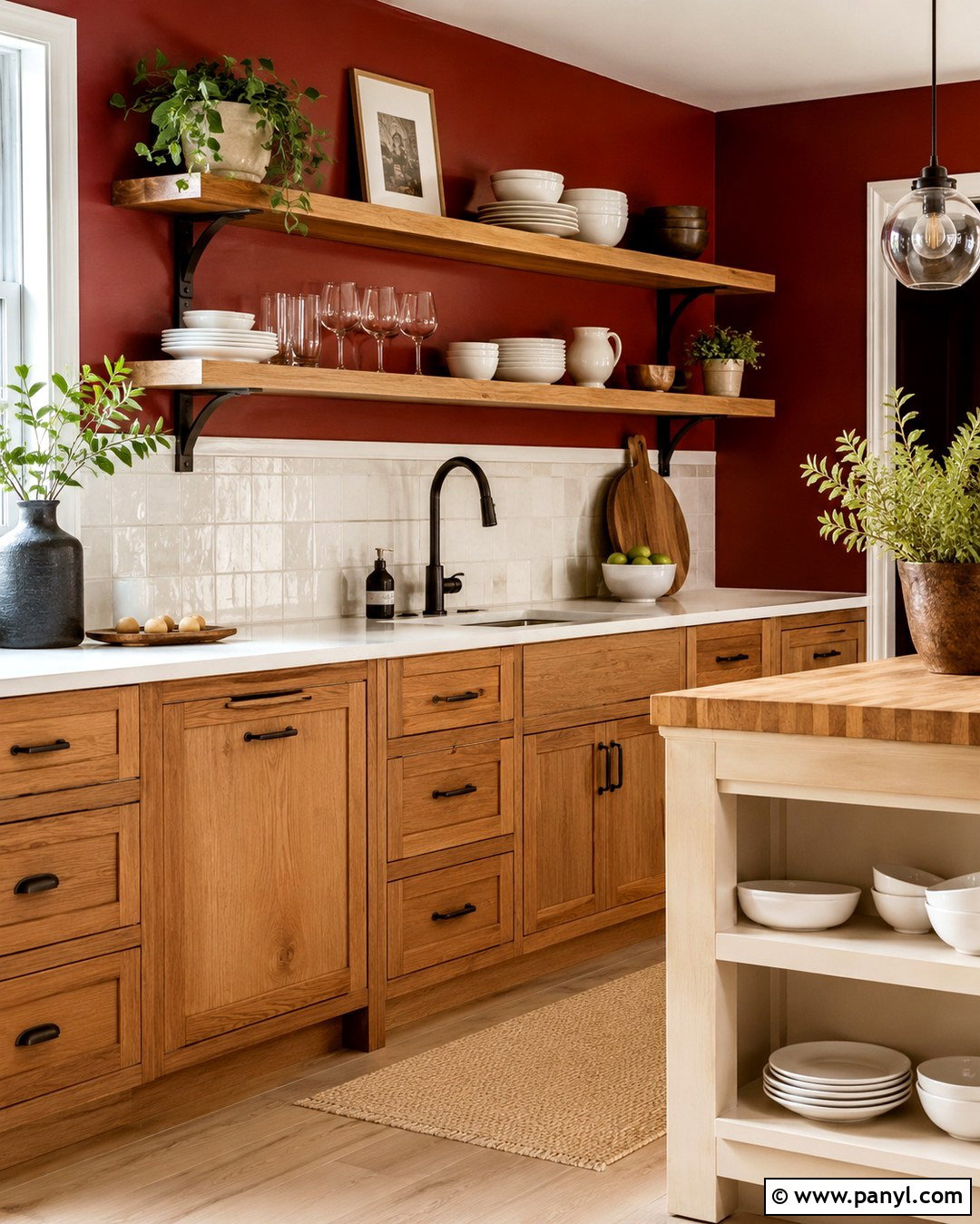
Open oak shelves allow a red wall to show through and become part of the kitchen display. Use a deep paprika or muted brick shade on the shelving wall, then keep the other walls creamy white. Match the floating shelves to natural oak shaker cabinets for a unified wood finish. Arrange white dishes, clear glassware, and a few green plants on the shelves so the red remains visible. Choose off-white quartz countertops and a simple ivory backsplash in the main preparation area. Matte black brackets, cabinet pulls, and pendant lights provide definition. Light oak flooring can create a seamless base, especially in a smaller room. Include a compact island painted warm white with an oak top, making this complete kitchen feel open, useful, and thoughtfully decorated without unnecessary clutter.
17. Red Walls With Oak Cabinets And Green Accents
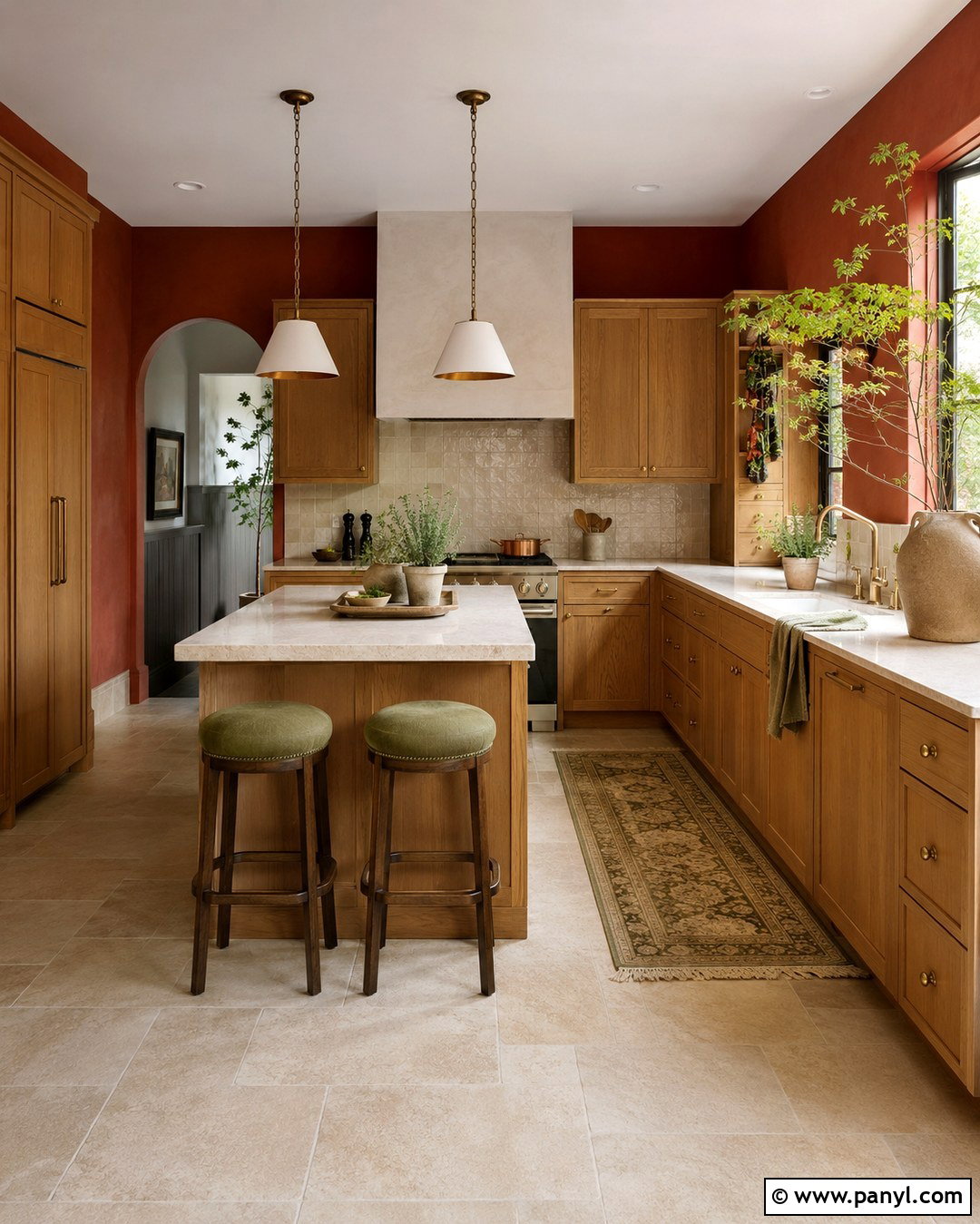
Green accents bring a grounded, natural counterpoint to red walls and oak cabinets. Begin with an earthy rust-red paint rather than a bright holiday-like red. Use medium natural oak cabinetry, cream quartz counters, and an off-white backsplash as the main foundation. Introduce olive or muted sage through counter stools, a washable runner, ceramic planters, and a simple Roman shade. Keep the green accents limited and slightly gray so they complement the oak instead of creating sharp contrast. Antique brass pulls and dome pendants add warmth, while pale stone flooring keeps the room visually open. A narrow oak island with a light countertop can hold two olive upholstered stools. This well-balanced combination feels botanical and sophisticated, with the neutral surfaces giving both accent colors enough space to breathe.
18. Red Walls With Oak Cabinets And Blue Accents
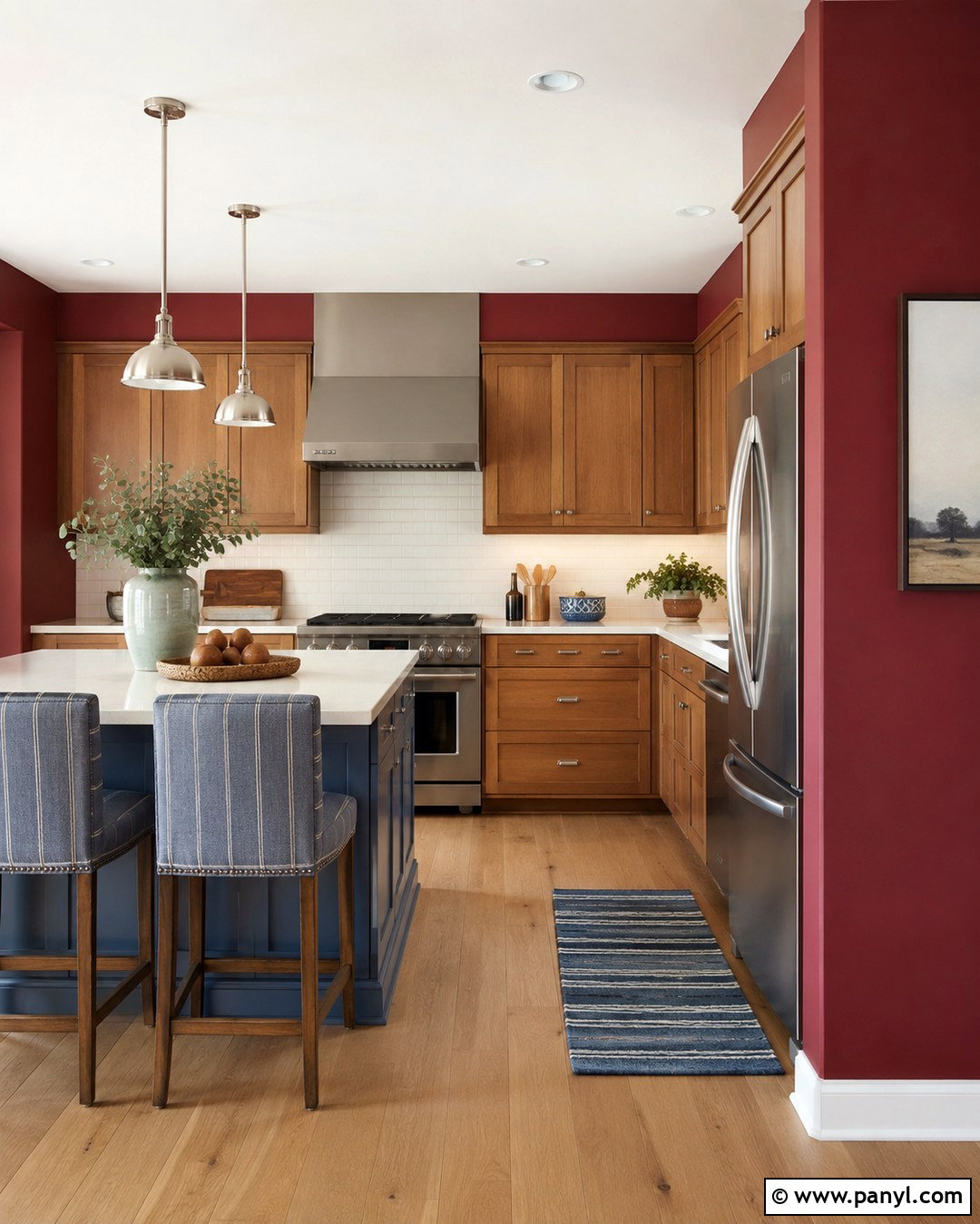
Dusty blue details can cool the warmth of red walls and oak cabinetry. Choose a muted cranberry red, natural medium oak cabinets, and generous creamy white surfaces for the primary palette. Add a soft blue-gray island base topped with white quartz to create a calm focal point. Repeat the blue on a striped runner, simple café curtains, or upholstered counter stools. A glossy ivory subway tile backsplash reflects light, while brushed nickel hardware connects the blue accents to stainless steel appliances. Use pale oak or light beige flooring so the room does not become visually crowded. Keep decorative objects mostly white, clear, or natural wood. The resulting kitchen feels collected and balanced, offering color contrast without relying on harsh primary shades or overly busy patterns.
19. Red Walls With Oak Cabinets In A Small Kitchen
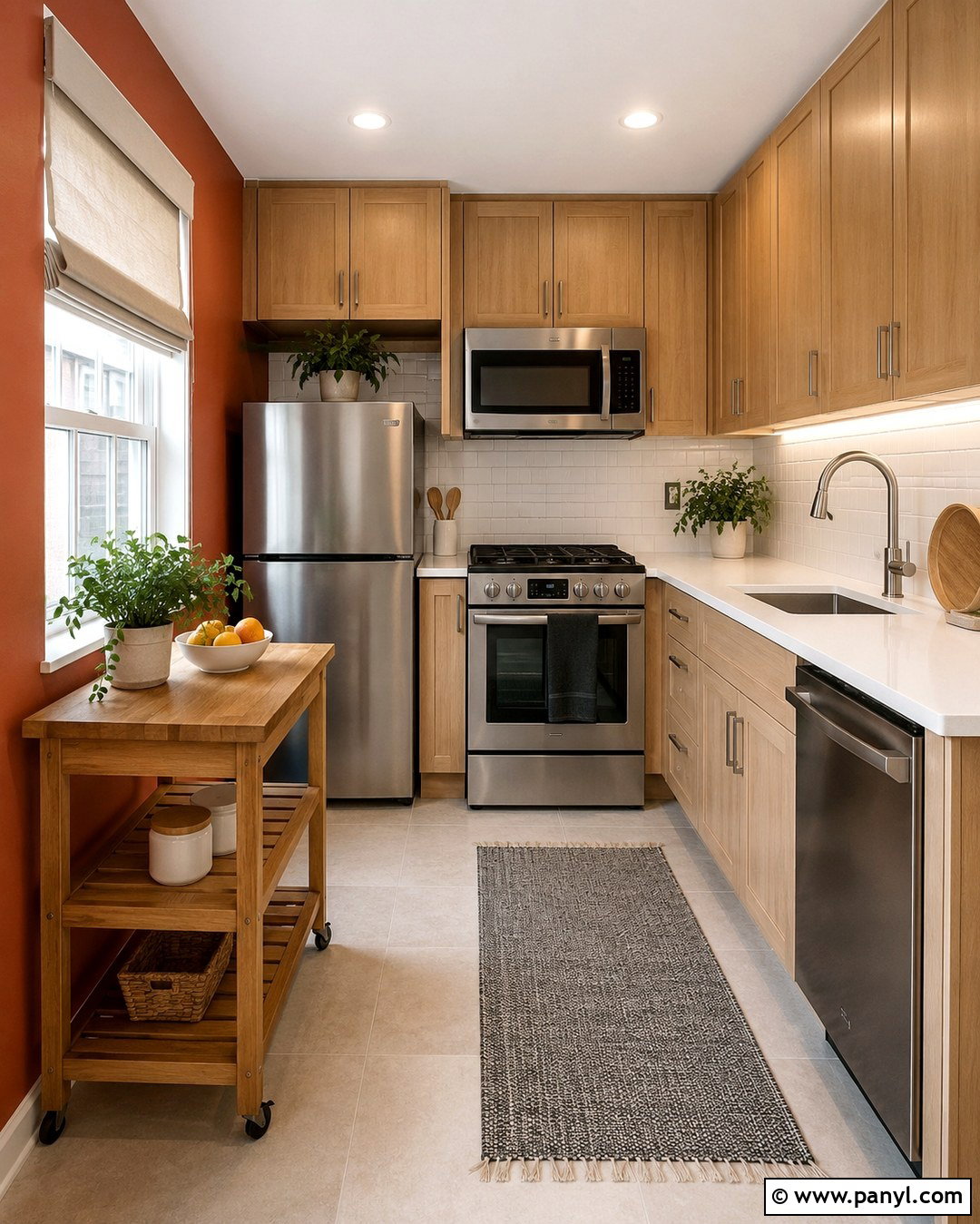
A small kitchen can handle red walls when the shade is placed carefully and balanced with reflective finishes. Use soft brick red on one uninterrupted wall or above a short backsplash, rather than covering every surface. Choose light oak cabinets with simple shaker doors to keep the woodwork visually quiet. Bright white quartz counters, glossy white backsplash tile, and warm white ceiling paint will make the room feel more open. Select compact stainless steel appliances and polished nickel hardware for subtle reflection. Pale beige flooring laid in a simple continuous pattern helps widen the space. Replace a bulky island with a slim oak cart or narrow peninsula topped in white. Finish with one clear glass pendant, cream window shades, and limited countertop decor for an organized, comfortable kitchen.
20. Red Walls With Oak Cabinets In A Modern Kitchen
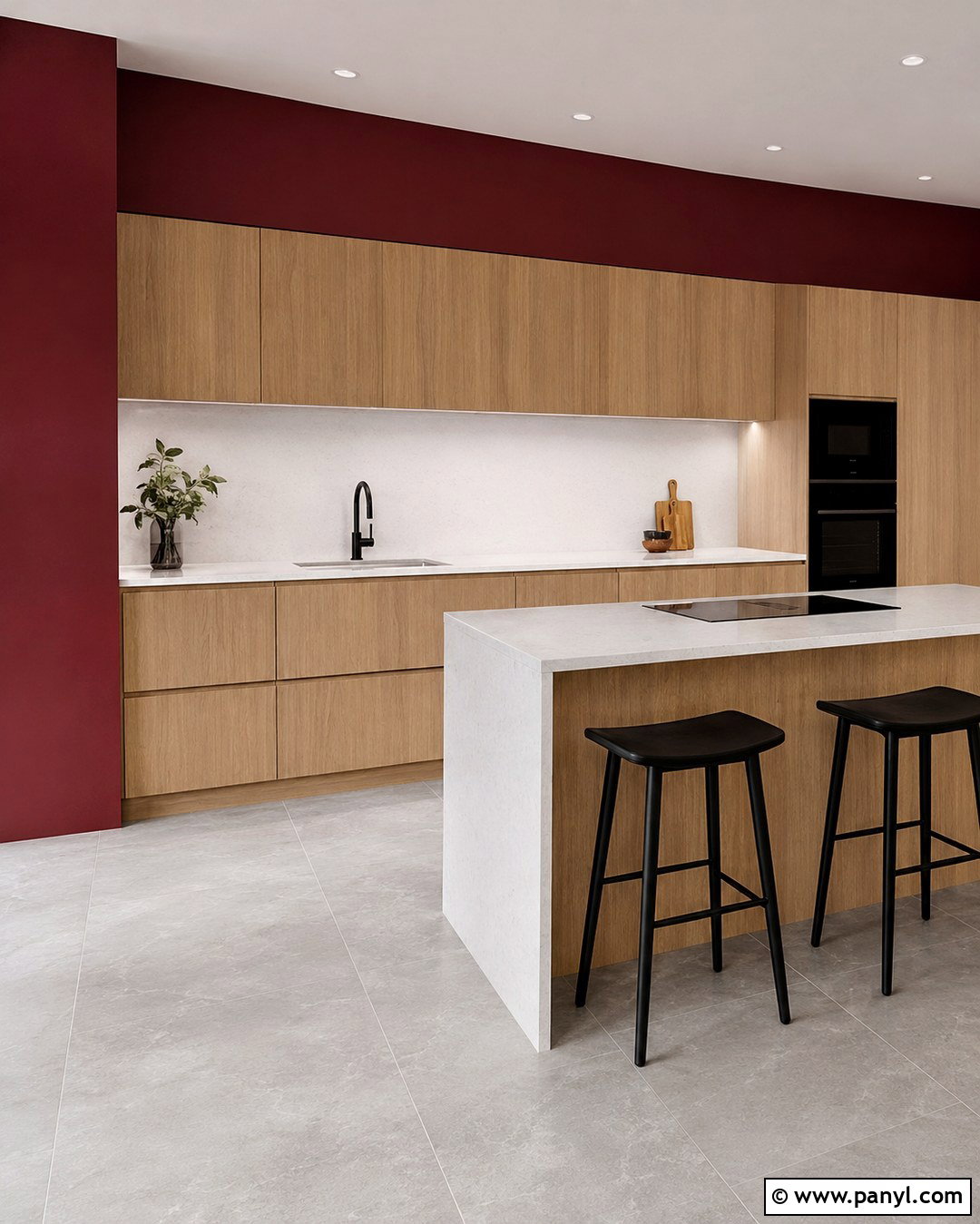
Modern red kitchen walls work best with clean oak cabinetry and a limited material palette. Choose a deep, slightly muted red for one large wall and warm white for the remaining surfaces. Flat-panel white oak cabinets create simple horizontal and vertical lines, while handleless doors prevent extra visual detail. Install crisp white quartz countertops and use the same material as a full-height backsplash. Matte black fixtures, slim linear pendants, and black-framed windows give the room a defined architectural edge. Large pale gray porcelain floor tiles introduce a cooler neutral and reduce visible grout lines. Complete the space with a streamlined white oak island, black counter stools, and one sculptural ceramic arrangement. The finished look is bold yet controlled, allowing the red to provide character without interrupting the kitchen’s uncluttered design.
Conclusion:
Successful **red kitchen walls with oak cabinets** depend on thoughtful balance rather than color alone. First, identify whether the oak looks golden, orange, pale, or dark. Then select a red with compatible depth and undertones. Brick, paprika, rust, cranberry, and burgundy usually create a more livable result than intensely bright red. White or cream counters and backsplashes can separate the warm finishes, while black, brass, nickel, blue, or green accents establish a clear design direction. Red does not need to cover every wall, either. An accent wall, dining nook, or open-shelf backdrop can provide plenty of impact. Test large paint samples in morning and evening light before committing, then coordinate every surrounding finish for a complete, balanced kitchen.

Related Ideas and Inspiration:
Leave a Reply