
This guide to **20 White Walls Dark Wood Floors** explores how to turn a high-contrast foundation into a balanced, welcoming home. White walls reflect light and create a clean backdrop, while dark hardwood brings depth, warmth, and definition. The combination can suit modern, traditional, farmhouse, coastal, and many other interiors when furniture, rugs, lighting, and accent colors work together. Warm whites complement reddish or espresso flooring, while cleaner whites pair beautifully with cooler brown and black-stained wood. Rugs can soften the contrast, and natural materials prevent rooms from feeling stark. Whether you are updating one room or creating a connected whole-home palette, use these **20 White Walls Dark Wood Floors** looks as practical inspiration.

1. Modern Living Room With White Walls And Dark Wood Floors
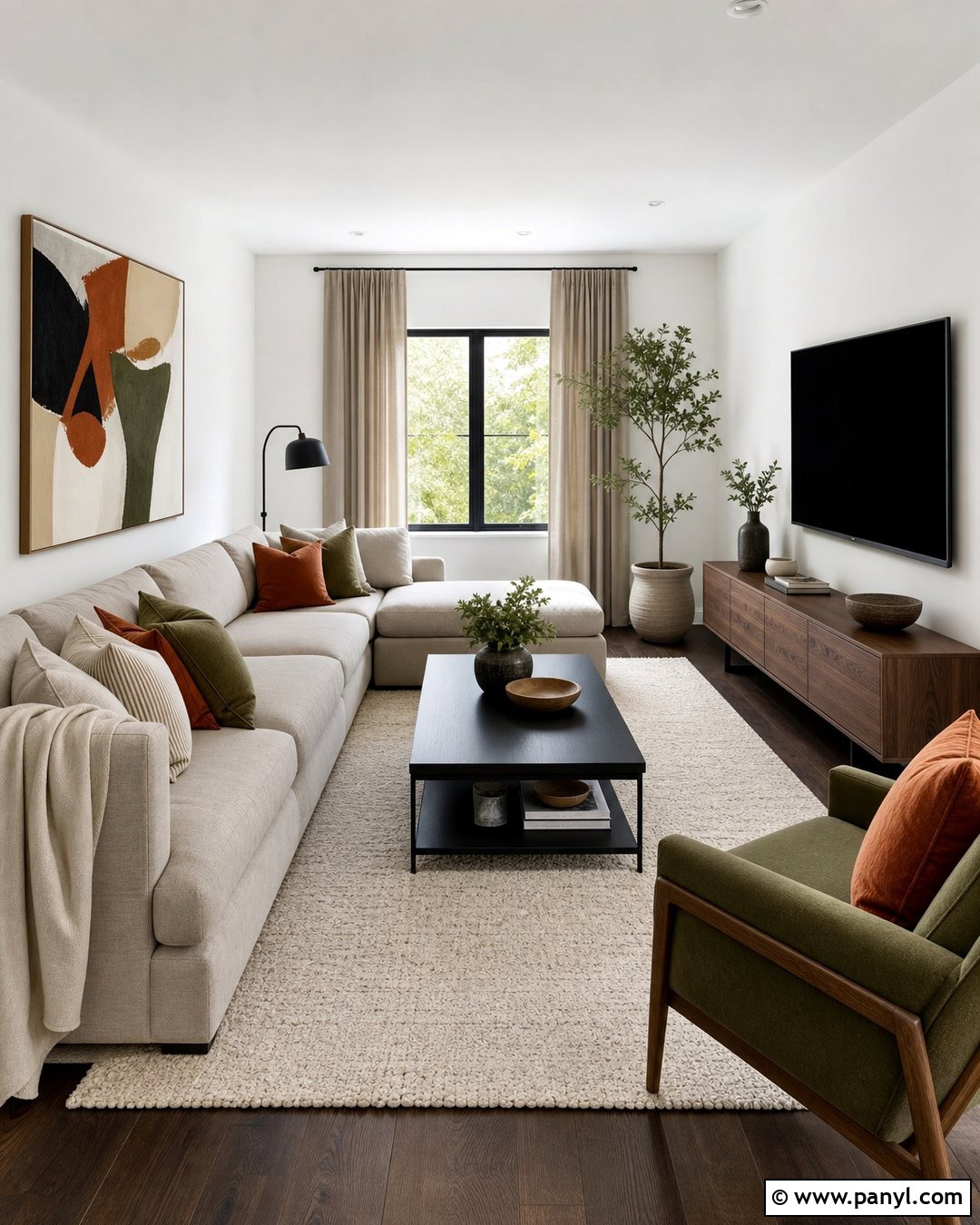
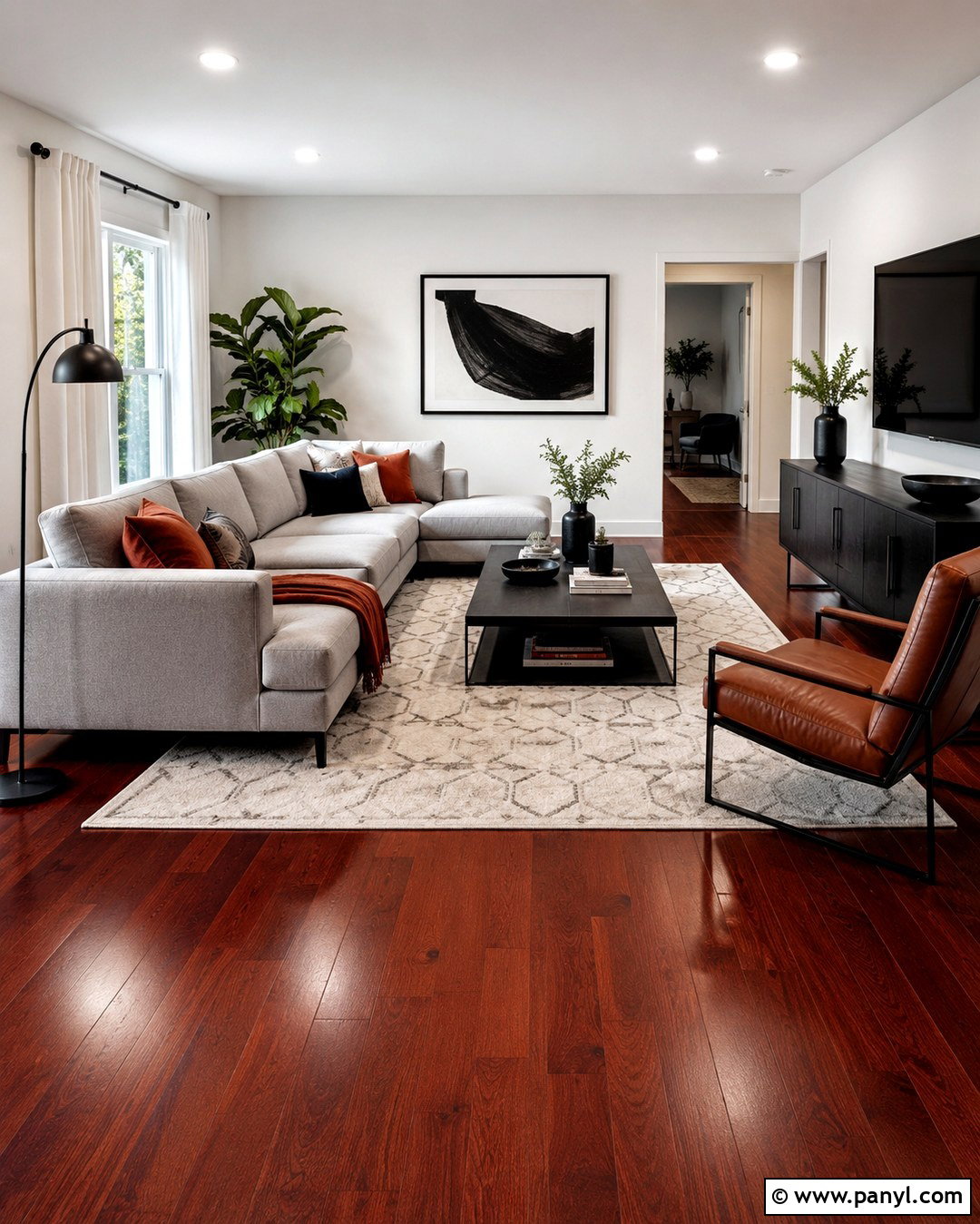
A modern living room feels polished when the strong floor-and-wall contrast is balanced with soft, low-profile furniture. Start with a light greige sectional placed on a large ivory textured rug, leaving a border of dark flooring visible around it. Add a slim black coffee table, a walnut media console, and one sculptural cream chair to create visual variety without clutter. Matte black window frames or curtain rods repeat the deepest floor tones. Use oatmeal curtains to soften bright daylight, then add rust, olive, or muted blue pillows for controlled color. A large abstract artwork can connect these shades. Finish the room with an arched floor lamp, simple ceramics, and one tall indoor tree.
2. Warm Minimalist Living Room With White Walls And Dark Wood Floors
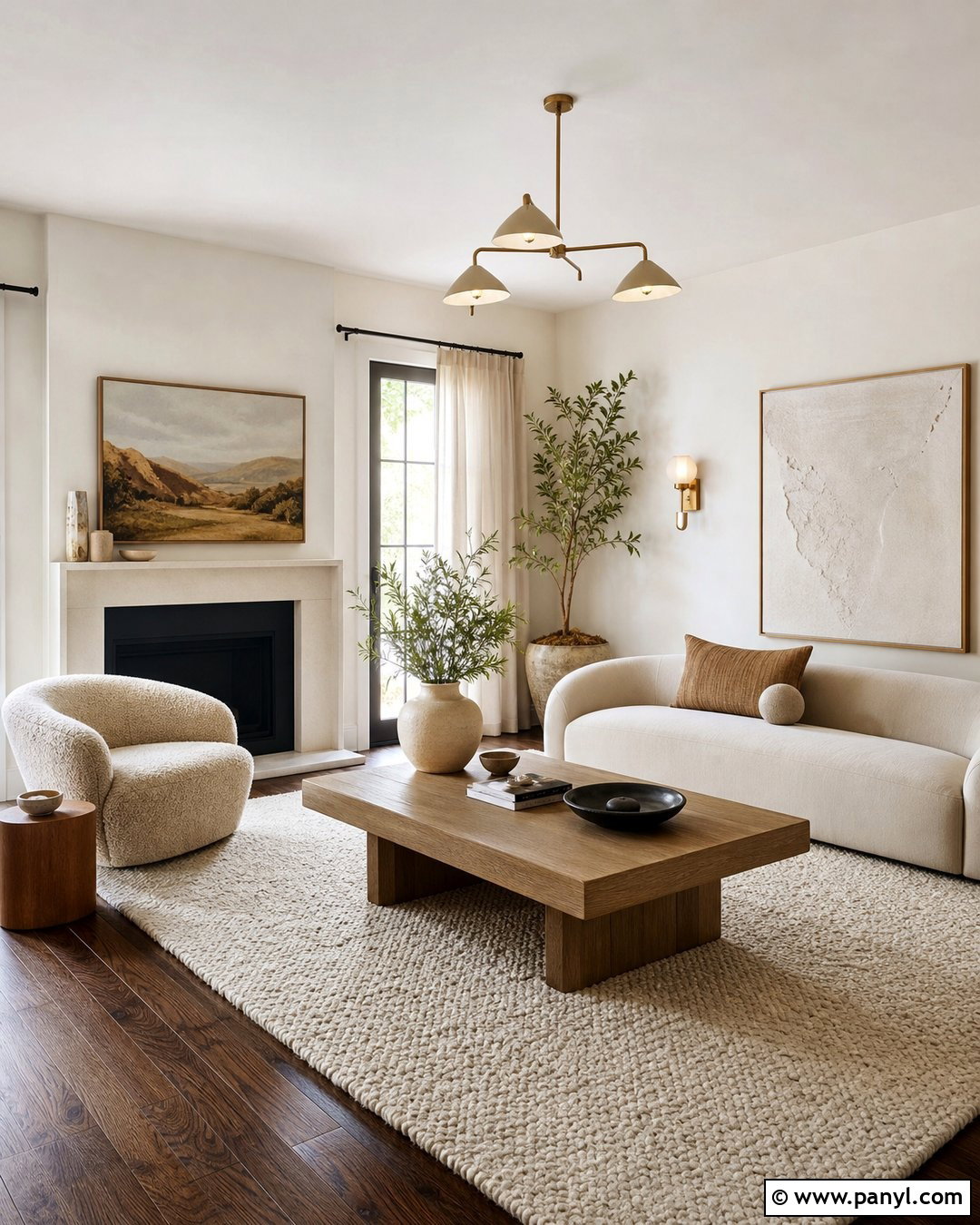
Warm minimalism keeps the room simple without making it look cold or unfinished. Choose creamy white walls rather than a sharp blue-white, especially if the dark floors have red or chocolate undertones. Center a rounded beige sofa on a thick wool rug in ivory or warm taupe. Pair it with a light oak coffee table so the furniture does not disappear into the flooring. Linen curtains, woven baskets, and boucle seating add gentle texture. Keep the layout open, with only a few substantial pieces instead of many small accessories. A plaster-style lamp and oversized neutral artwork complete the look. Add greenery in a stone planter to introduce natural color while preserving the quiet, uncluttered atmosphere.
3. Scandinavian Living Room With White Walls And Dark Wood Floors
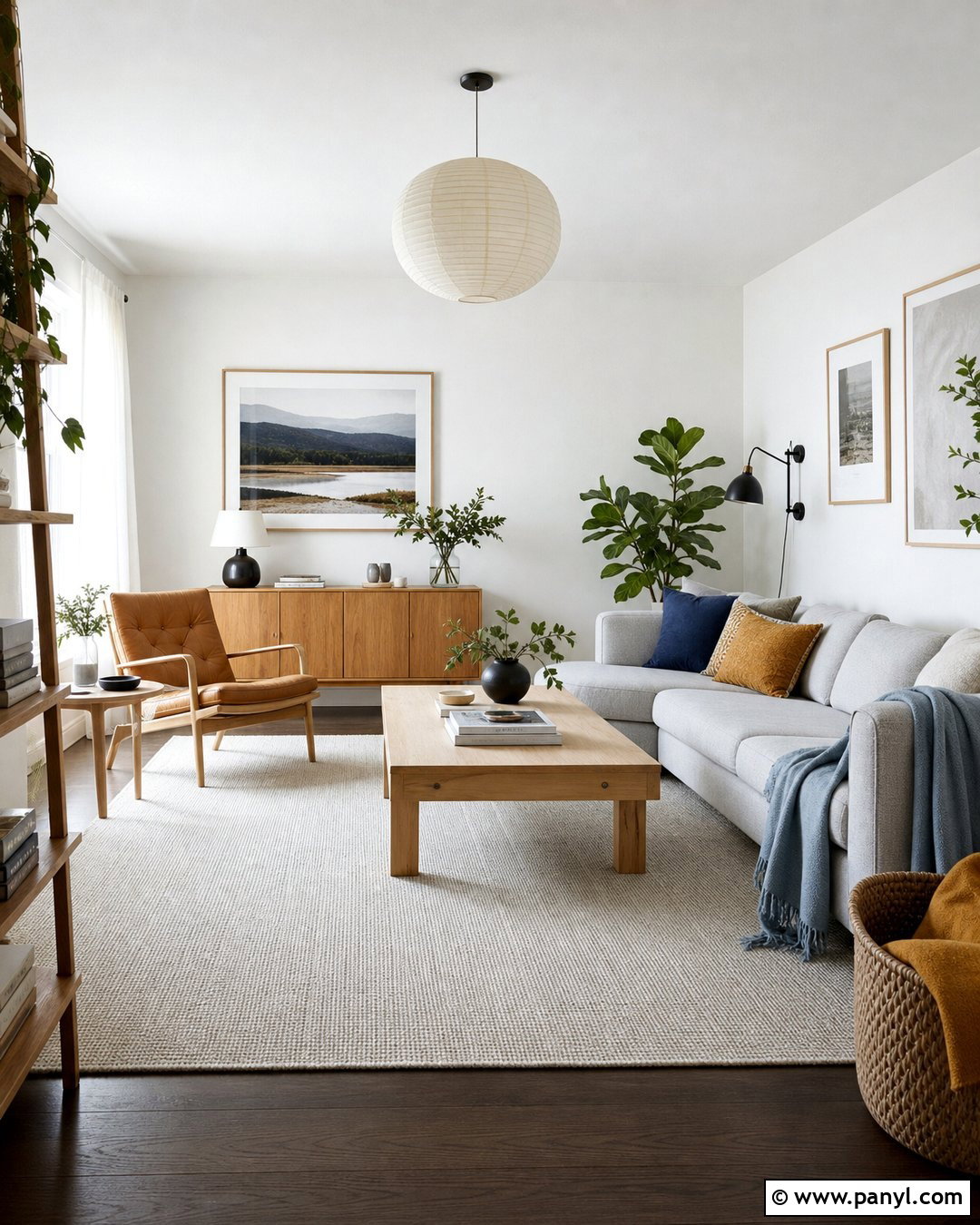
Can Scandinavian decor work with dark flooring? Yes, when pale furniture and practical simplicity keep the room bright. Place a light gray sofa with exposed oak legs against the white wall, then ground the seating zone with a large cream flat-weave rug. Add a blond wood coffee table, a compact leather lounge chair, and nesting tables with clean shapes. Sheer white curtains allow natural light to spread across the room. Introduce soft blue, moss green, and muted mustard through cushions and a folded throw. Simple framed prints provide decoration without overwhelming the walls. A paper pendant light, ceramic table lamp, and leafy plant create a comfortable layered finish that still feels distinctly streamlined and functional.
4. Traditional Living Room With White Walls And Dark Wood Floors
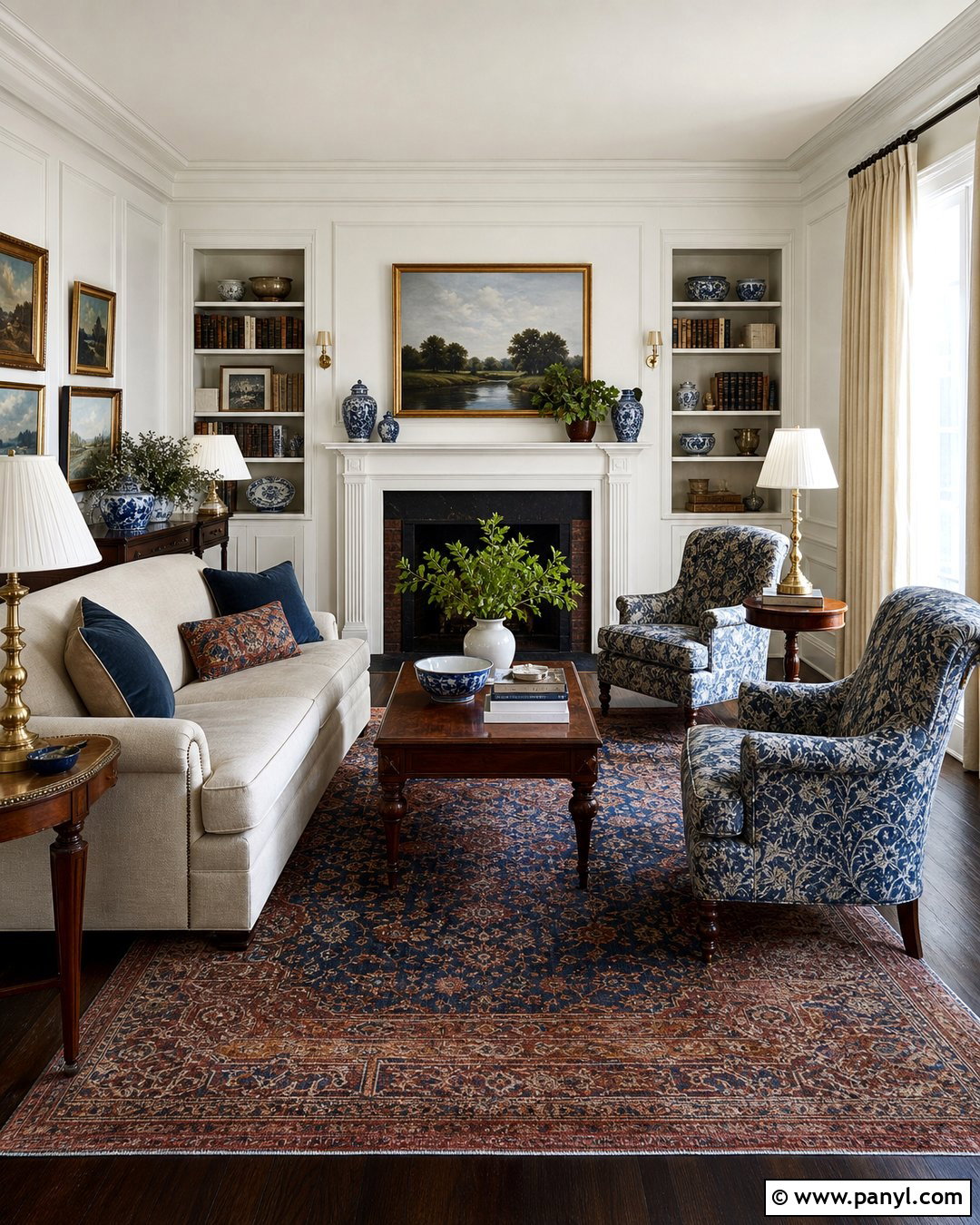
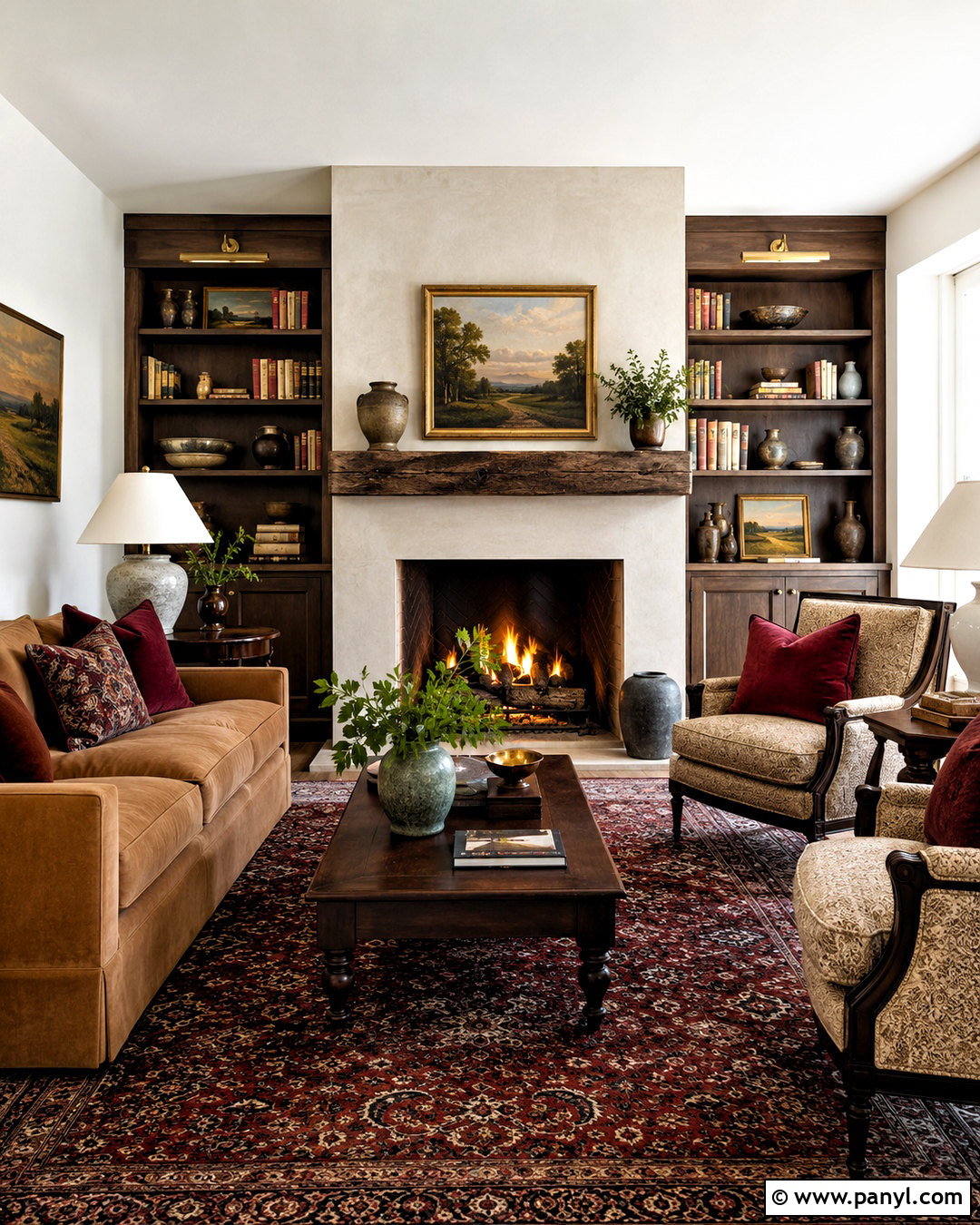
Traditional rooms benefit from the richness of deep walnut or espresso flooring. Give the white walls more character with picture-frame molding, substantial baseboards, and a classic fireplace surround. Arrange a tailored beige sofa and two blue patterned armchairs around a wood coffee table. A large Persian-style rug in faded navy, rust, and cream can unite the furniture while revealing enough flooring to maintain contrast. Choose medium-tone wood side tables so every wooden piece does not match the floor exactly. Brass lamps, linen shades, and full-length curtains introduce softness and warmth. Complete the room with landscape art, collected books, and a few ceramic objects. The finished space should feel layered, gracious, and comfortable rather than overly formal.
5. Small Living Room With White Walls And Dark Wood Floors
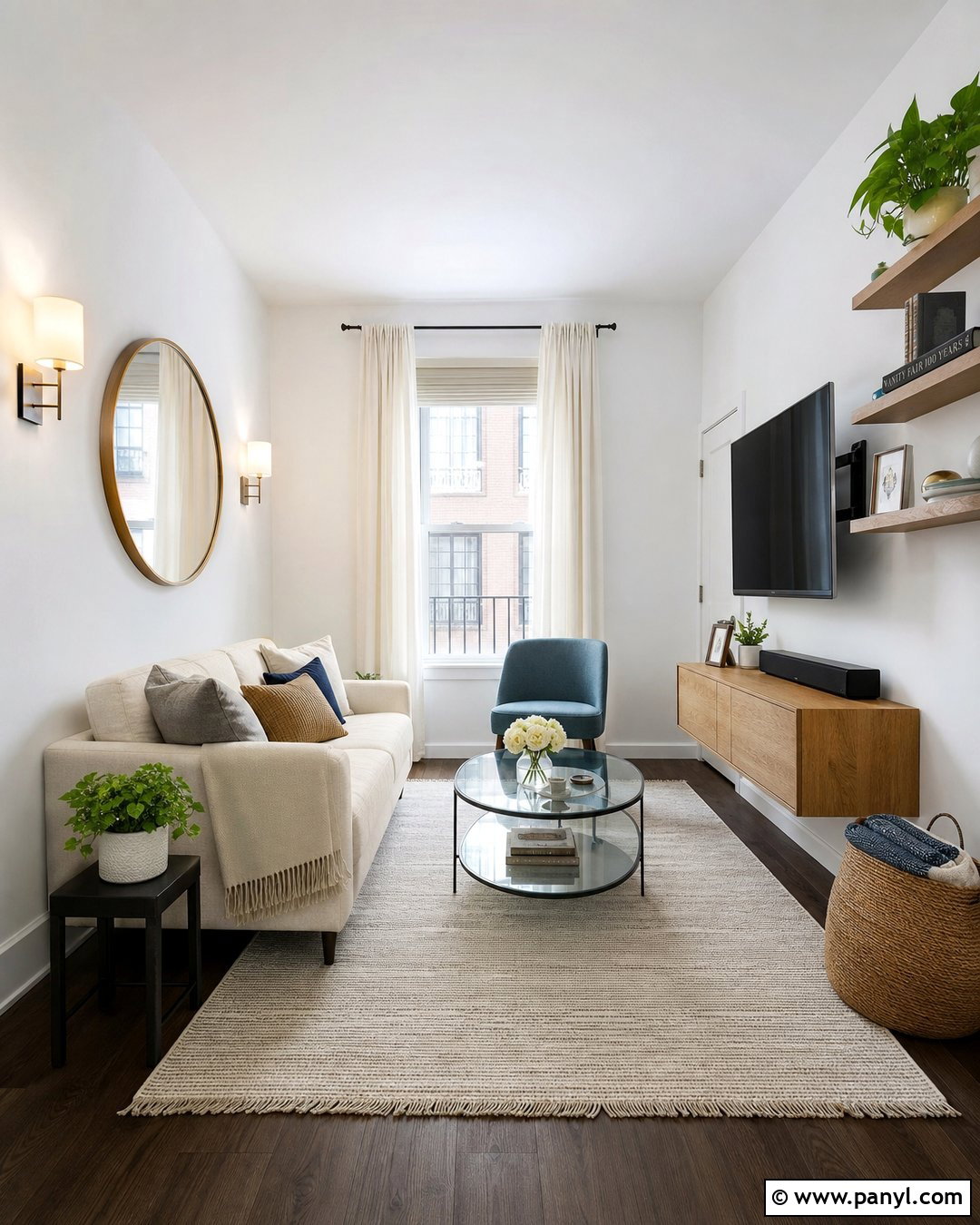
In a small living room, dark floors can define the space while white walls keep the boundaries visually open. Select an apartment-size sofa in warm ivory and place it on a light rug that extends beneath the front legs of every seat. Use a glass or narrow oval coffee table to preserve clear walking paths. A wall-mounted television above a floating oak console reduces the amount of furniture touching the floor. Hang curtains close to the ceiling and let them reach the floor to emphasize height. One compact accent chair in dusty blue adds personality without crowding the layout. Finish with wall-mounted lighting, a round mirror, and closed storage baskets. Keep accessories grouped so the room remains calm and organized.
6. White Kitchen With Dark Wood Floors
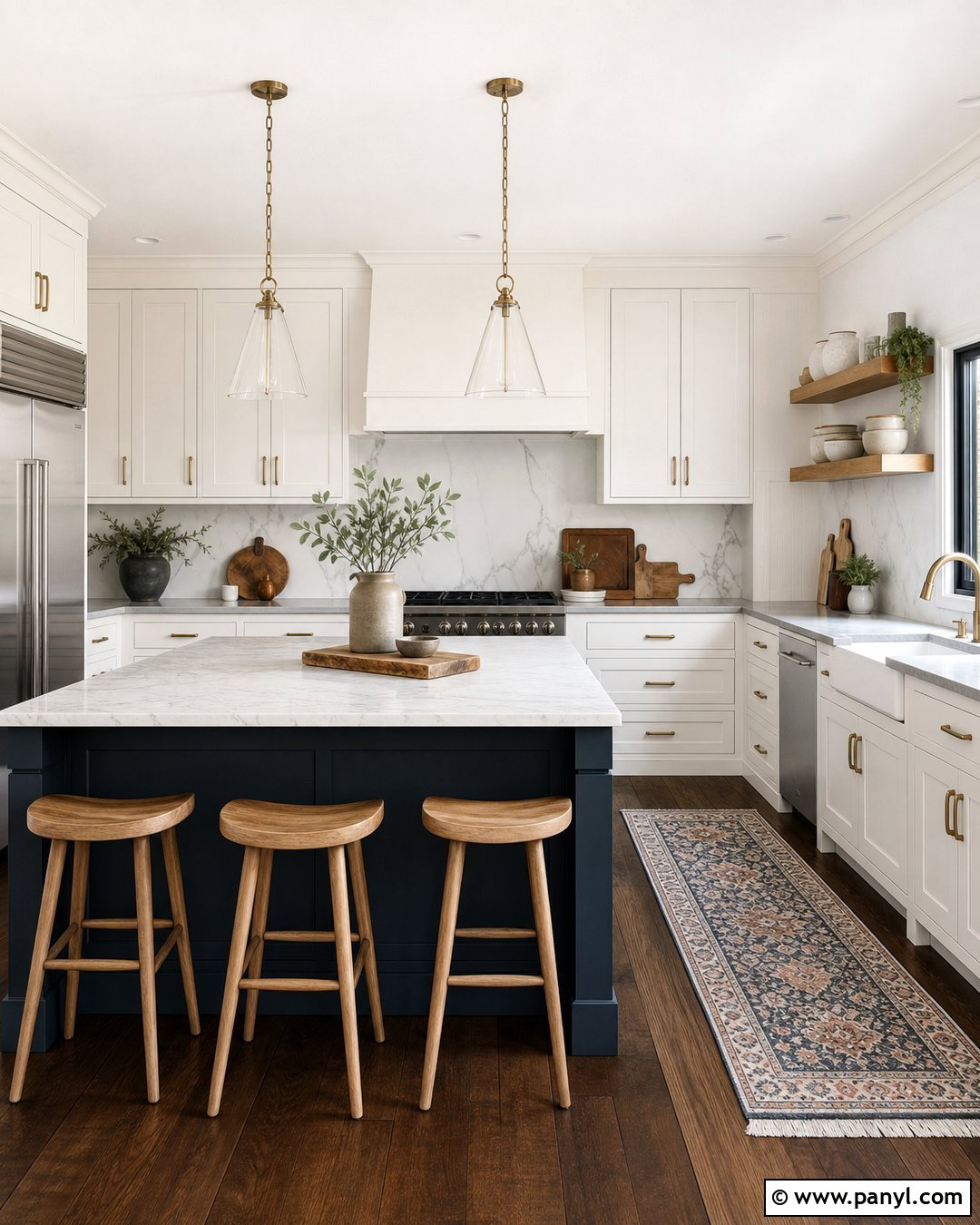
A white kitchen and dark wood flooring create a crisp contrast that can feel both classic and current. Use warm white shaker cabinets, pale quartz countertops, and a softly veined marble-look backsplash to build a bright foundation. An island painted muted navy or forest green adds depth without competing with the floor. Choose brushed brass hardware for warmth or polished nickel for a cleaner finish. Three glass pendants can illuminate the island while keeping sightlines open. Add counter stools in natural oak or woven cane to introduce a lighter wood tone. A washable runner near the sink softens the work area. Finish with simple ceramics, wood cutting boards, and minimal countertop decor so the cabinetry and flooring remain the dominant features.
7. Modern Kitchen With White Walls And Dark Wood Floors
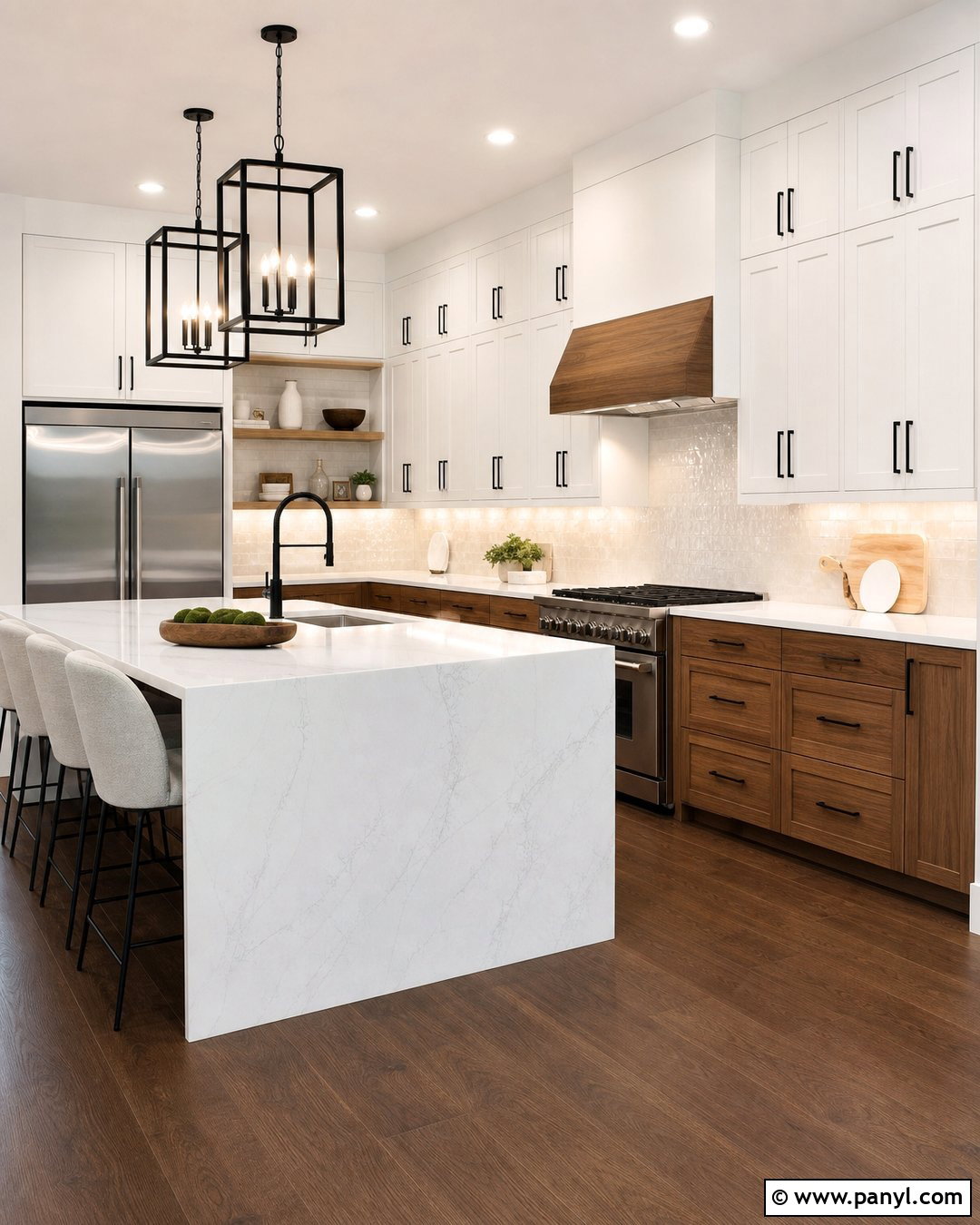
For a sleeker kitchen, combine flat-panel cabinetry with uncluttered surfaces and strong architectural lines. Install matte white upper cabinets to merge with the walls, then use medium walnut lower cabinets to create a gradual connection to the dark floor. A waterfall island in white quartz brings brightness into the center of the room. Keep hardware minimal with slim black pulls or integrated handles. Add black-framed pendant lights and matching faucets to repeat the deepest tones without making the space heavy. Backless cream stools maintain an open view across the island. Under-cabinet lighting prevents shadowed work surfaces, while a pale backsplash reflects additional light. Limit decor to a ceramic bowl, a small plant, and neatly arranged everyday pieces.
8. Dining Room With White Walls And Dark Wood Floors
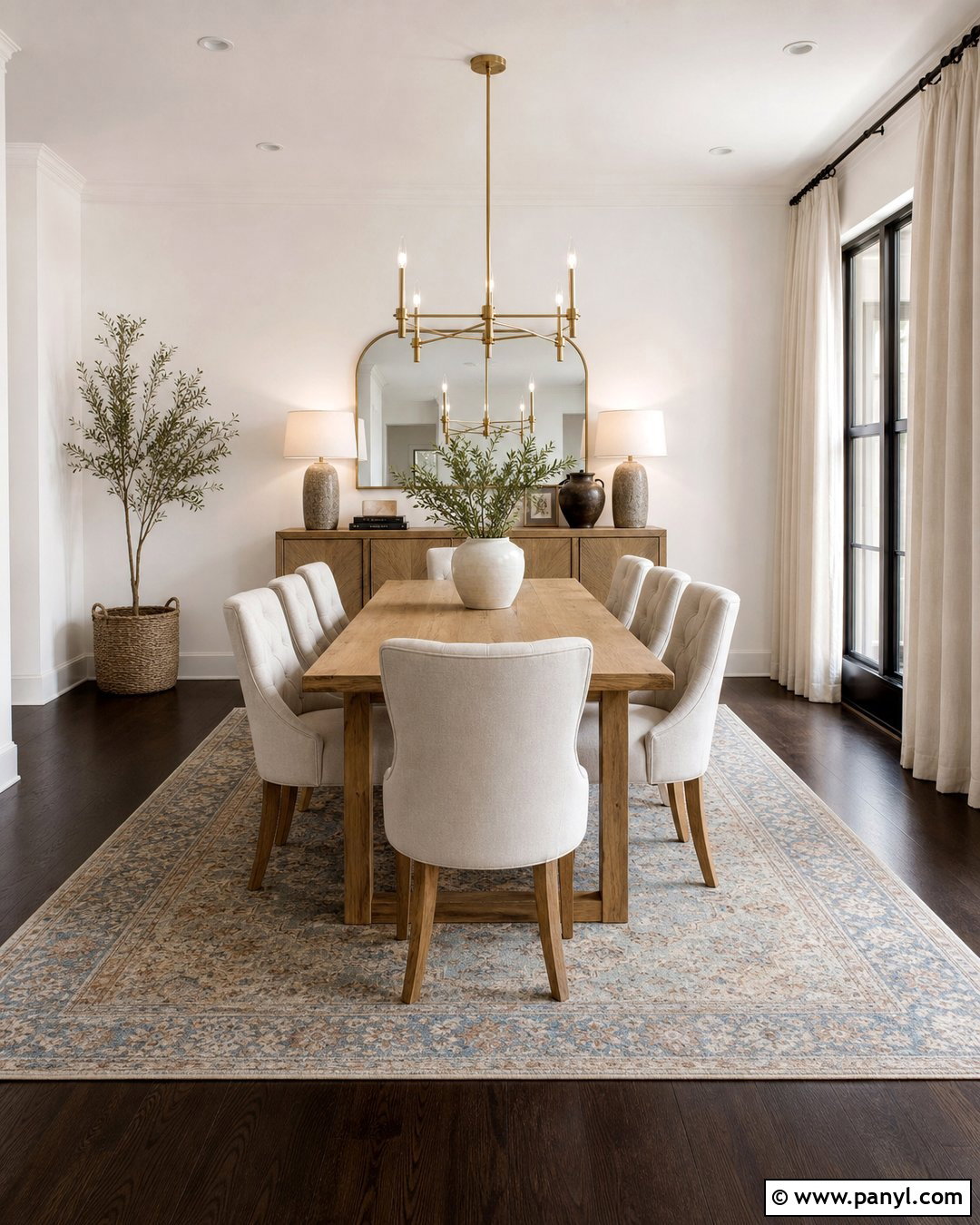
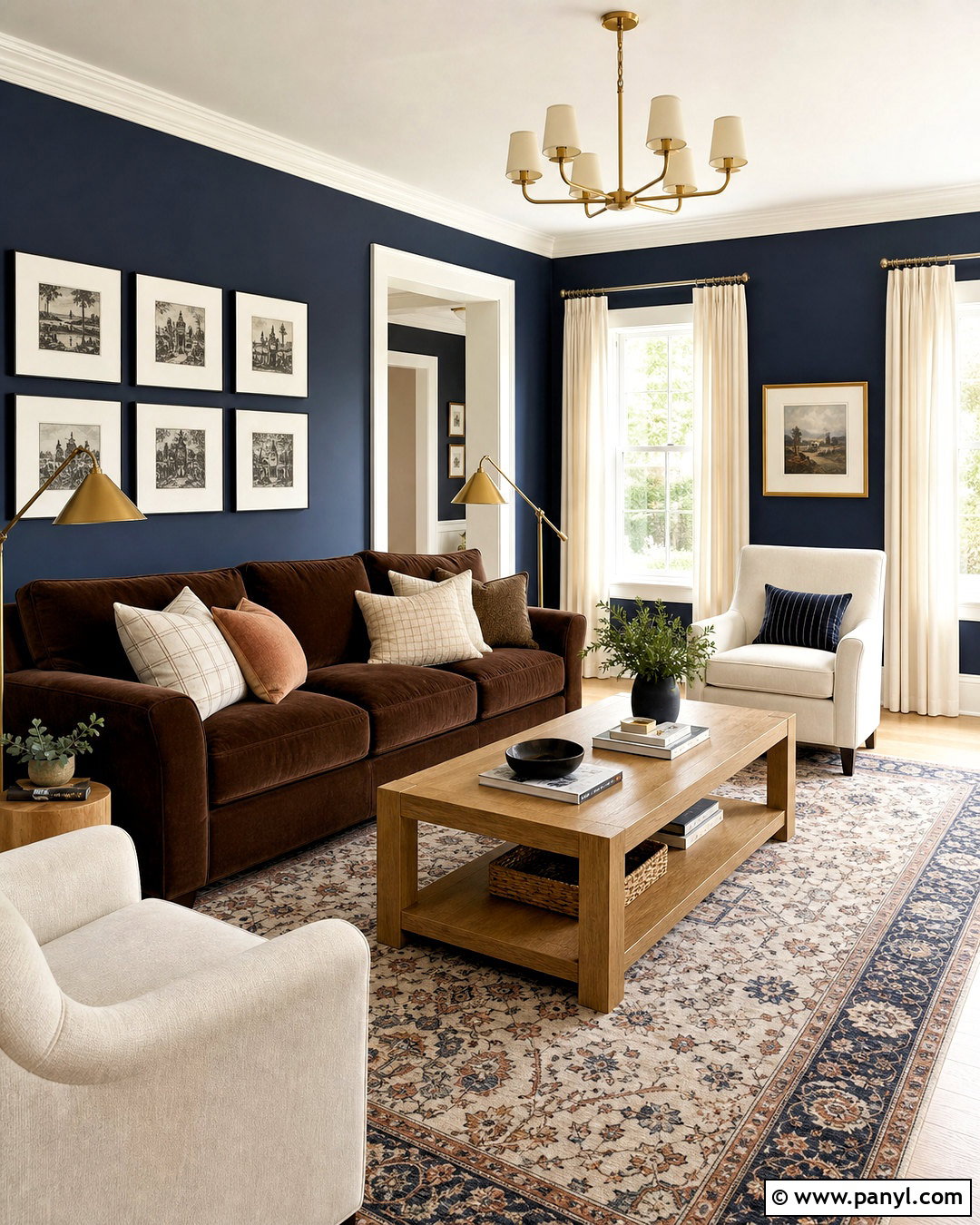
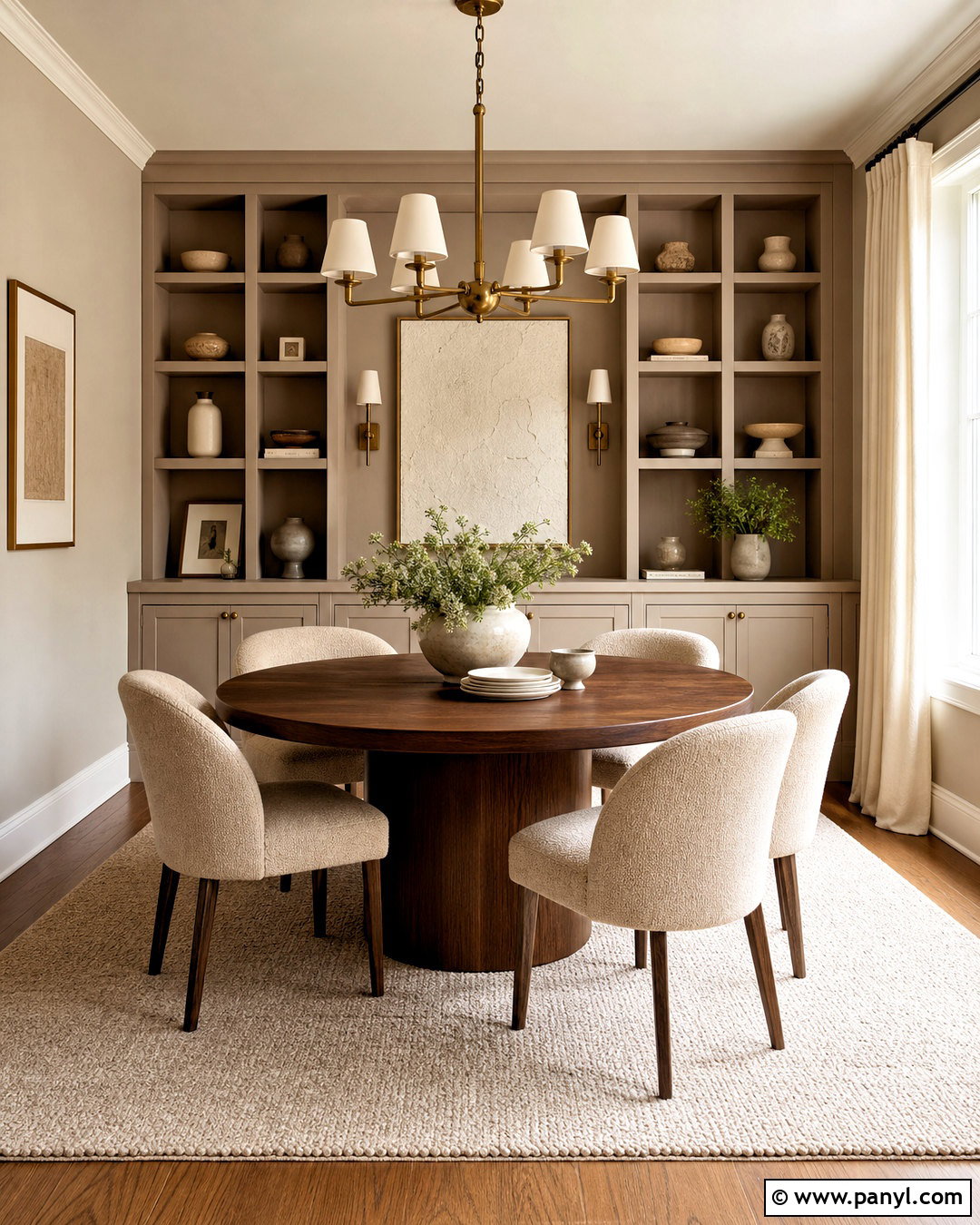
Dark flooring gives a dining room an elegant base, but the table should remain visually distinct from it. Choose a natural oak or weathered wood dining table instead of another espresso finish. Surround it with upholstered cream chairs, or mix oak side chairs with two fabric-covered end chairs. A generously sized rug in faded blue, beige, and charcoal anchors the arrangement and makes chair movement more comfortable. Above the table, install a linear brass chandelier or a large white pendant with a simple silhouette. Add a light wood buffet against one wall, topped with balanced lamps and ceramic decor. An oversized mirror can spread natural light. Finish with linen curtains and restrained artwork for a welcoming room suited to everyday meals and gatherings.
9. Neutral Bedroom With White Walls And Dark Wood Floors
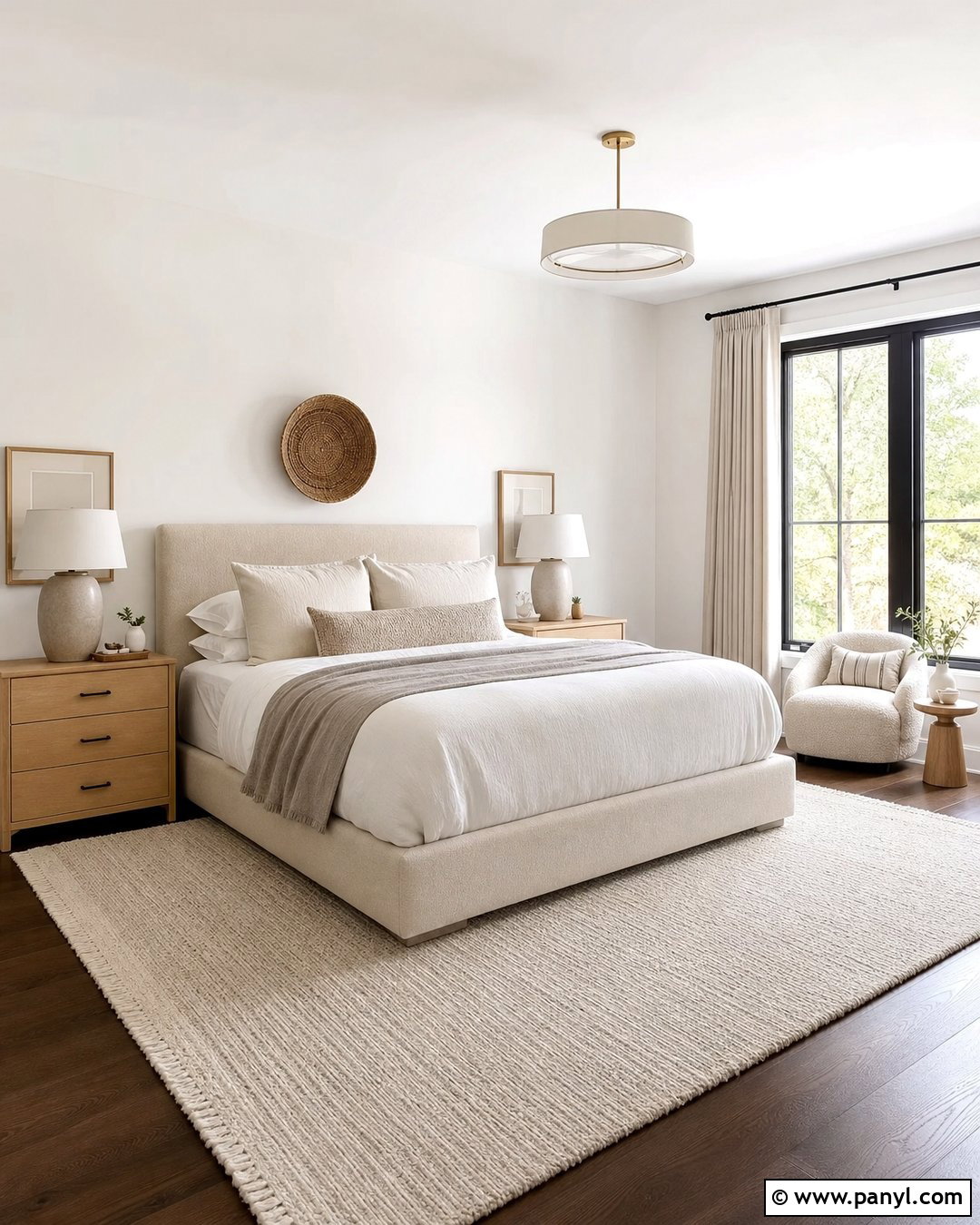
A bedroom with this contrast should feel soft underfoot and visually restful. Start with an upholstered bed in oatmeal or warm gray, centered on a large ivory rug that extends beyond both sides. Layer white bedding with taupe, camel, and muted brown pillows to connect the pale walls with the rich floor. Choose light oak nightstands rather than dark matching furniture, then add ceramic lamps with linen shades. Full-length beige curtains frame the windows and soften the room’s edges. A simple bench at the foot of the bed can provide function without crowding the layout. Keep artwork large and minimal. Natural woven accents, a boucle chair, and a few leafy branches complete the comfortable, understated bedroom design.
10. Bedroom With Green Accents And Dark Wood Floors
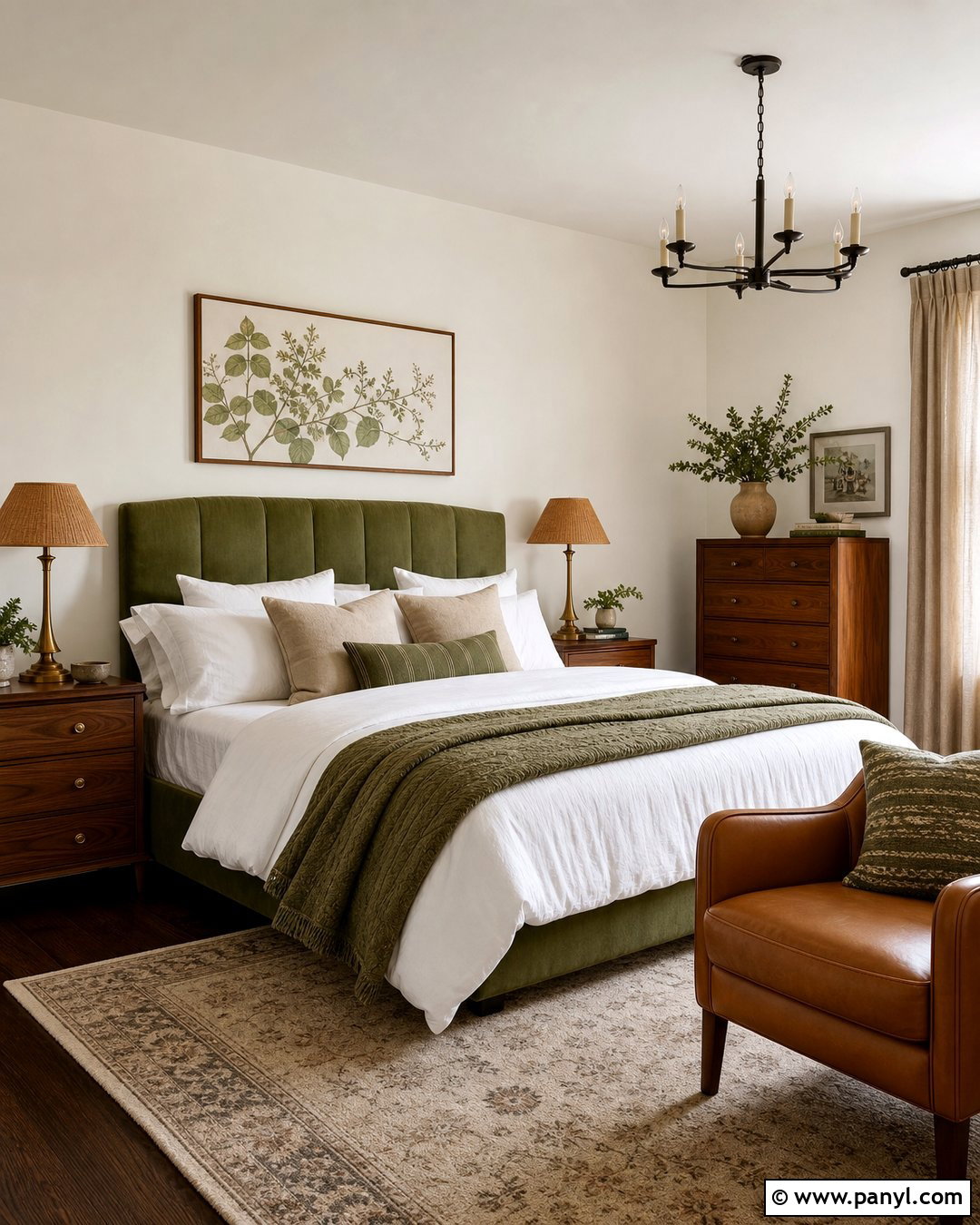
Deep wood flooring pairs naturally with green because both tones create an earthy, grounded palette. Keep the walls warm white, then introduce olive or sage through an upholstered headboard, quilt, and patterned pillows. Place the bed on a pale beige rug to reduce the visual weight of the floor. Light walnut nightstands provide a softer transition than nearly black furniture. Add antique brass lamps, woven window shades, and off-white curtains for warmth and texture. A small reading chair in camel-colored leather can bring another natural tone into the room. Hang botanical artwork in slim wood frames, but avoid covering every wall. The final design should combine restful neutrals, controlled green accents, and layered natural materials without becoming overly themed.
11. Home Office With White Walls And Dark Wood Floors
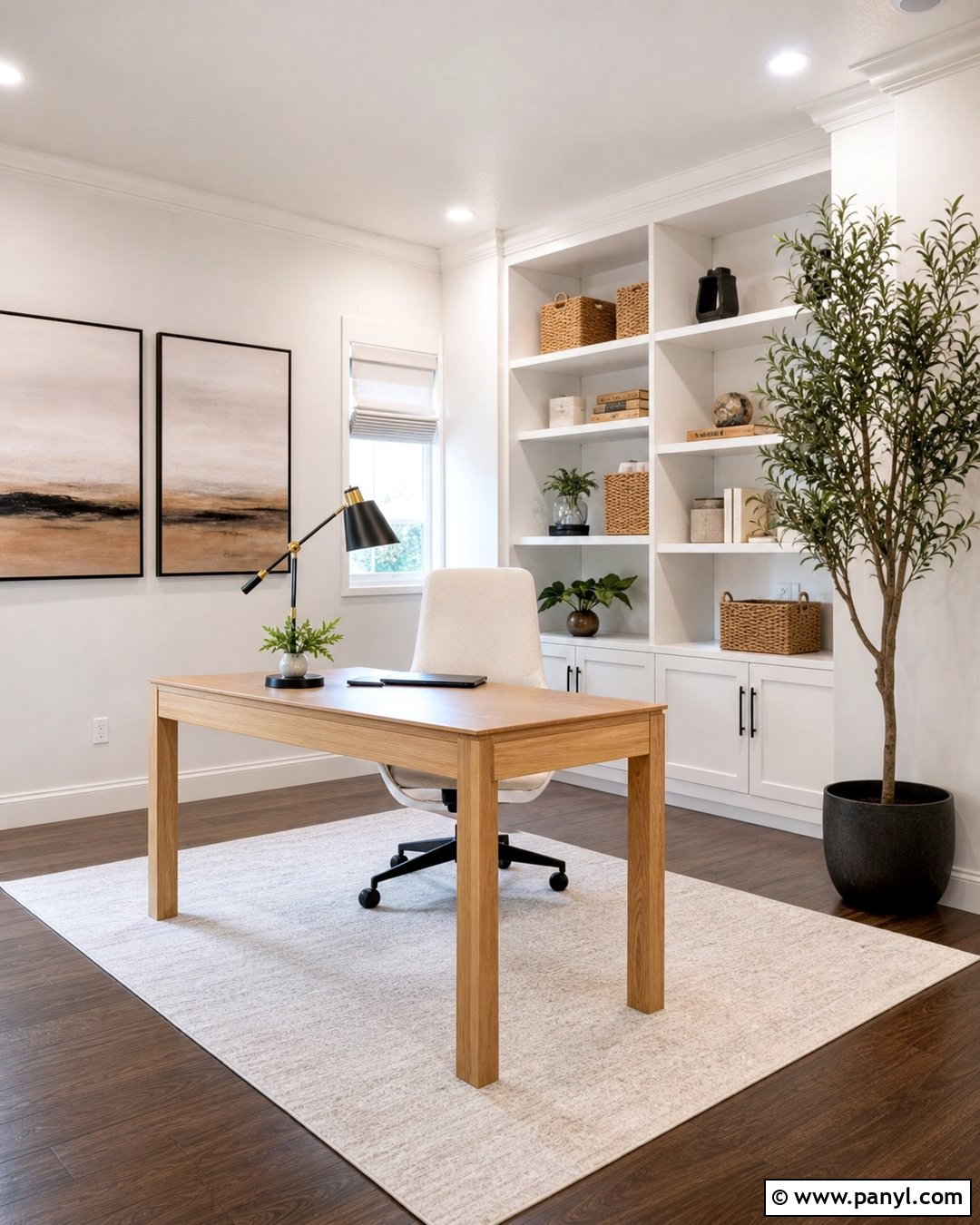
A bright home office can use dark floors to create focus and structure. Position a light oak desk near the window, with the work surface facing into the room when space allows. Add an ergonomic chair in cream, tan leather, or muted green so it stands out clearly against the flooring. A low-pile ivory rug defines the workspace and protects the wood beneath the chair. Install white built-in shelves along one wall, then use woven boxes and closed lower cabinets to manage clutter. Black picture lights or a black task lamp repeat the floor’s depth. Add framed artwork, several books, and one tall plant for personality. Keep cords concealed and pathways clear so the complete office remains practical, calm, and visually organized.
12. Entryway With White Walls And Dark Wood Floors
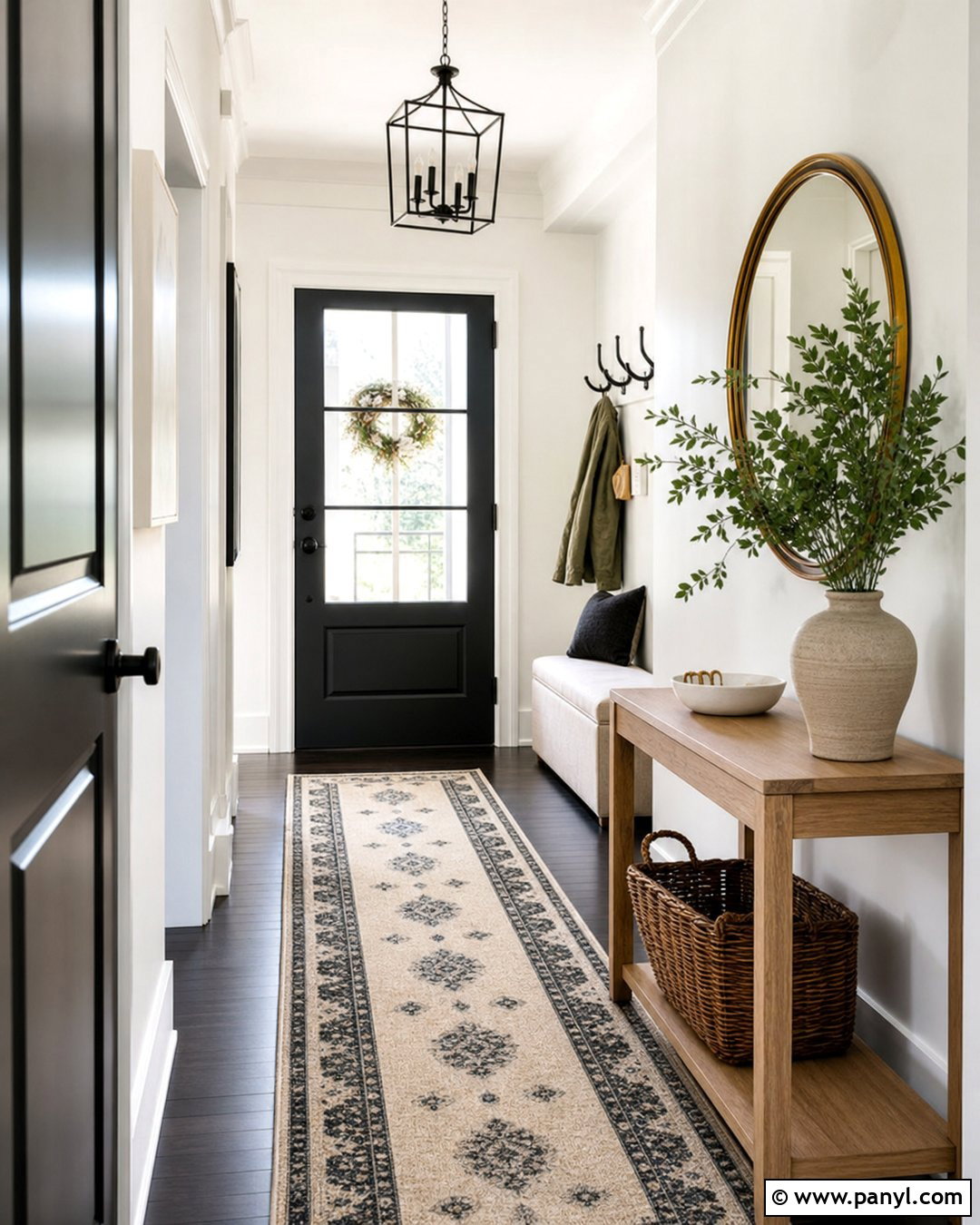
The dramatic contrast between white walls and dark floors can make even a modest entryway feel intentional. Place a narrow light wood console along the main wall, leaving enough room for an easy path through the space. Add a round brass or black-framed mirror above it to reflect daylight. A durable runner in cream, taupe, and charcoal protects the floor while visually lengthening the entry. Use an upholstered bench with hidden shoe storage if the layout permits. Wall hooks should match nearby hardware for a cohesive finish. A simple pendant or lantern provides clear overhead lighting. Complete the space with a ceramic bowl for keys, a woven basket, and one leafy arrangement. Keep the surface edited so the entrance always feels welcoming.
13. Hallway With White Walls And Dark Wood Floors
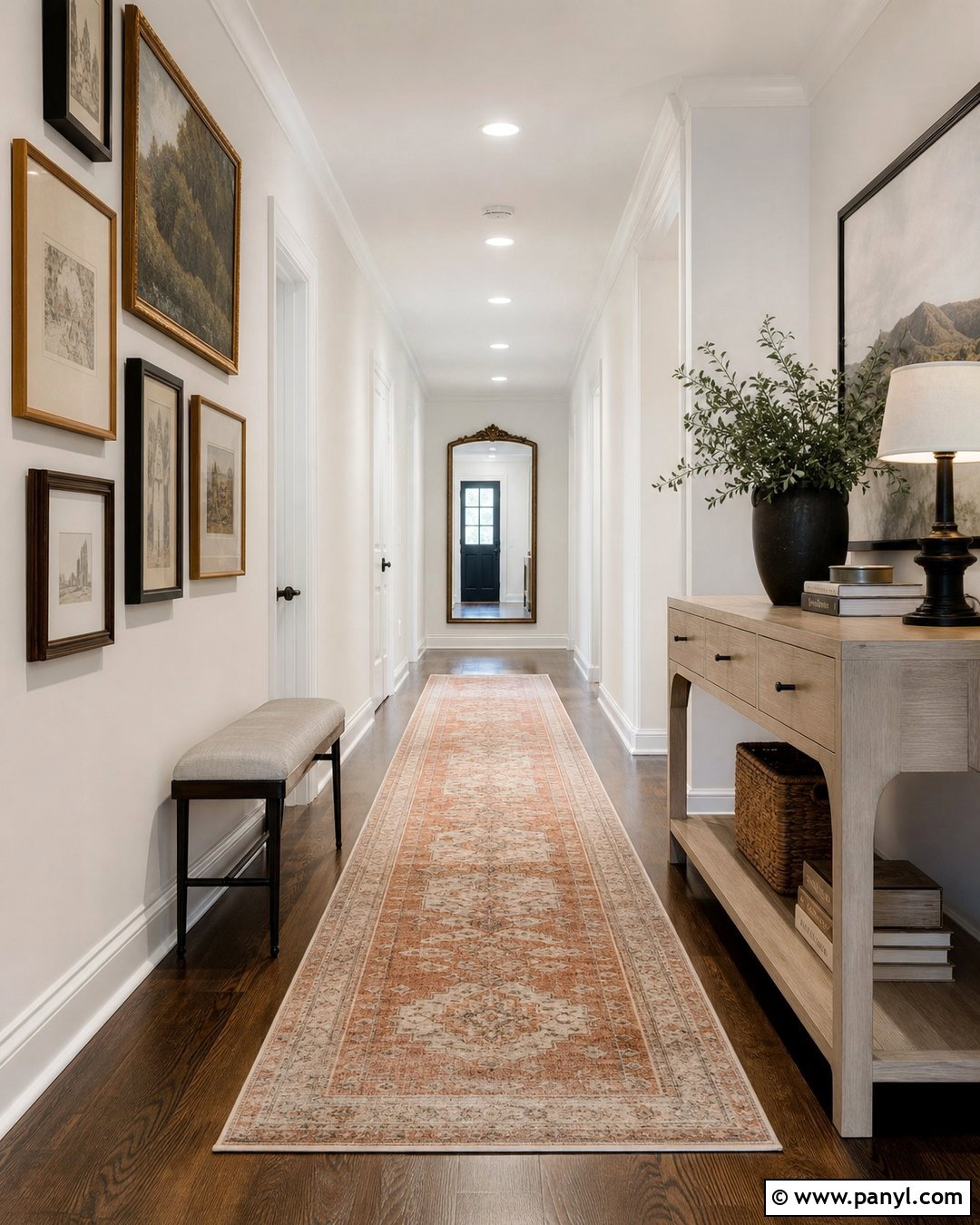
Long hallways can look tunnel-like when dark flooring is left completely bare. Break up the length with a patterned runner featuring ivory, faded rust, or muted blue. Maintain a visible wood border along both sides for a neat, tailored appearance. White walls provide an ideal background for a coordinated gallery display, but use matching frames and consistent spacing to prevent visual clutter. If the hallway is wide enough, add a slim console or shallow bench in pale oak. Flush-mount ceiling lights should be evenly spaced to eliminate dark patches. A mirror near the end can make the passage feel more open. Repeat one accent color from adjoining rooms so the hallway becomes a graceful visual connection rather than a forgotten transition area.
14. Open Concept Space With White Walls And Dark Wood Floors
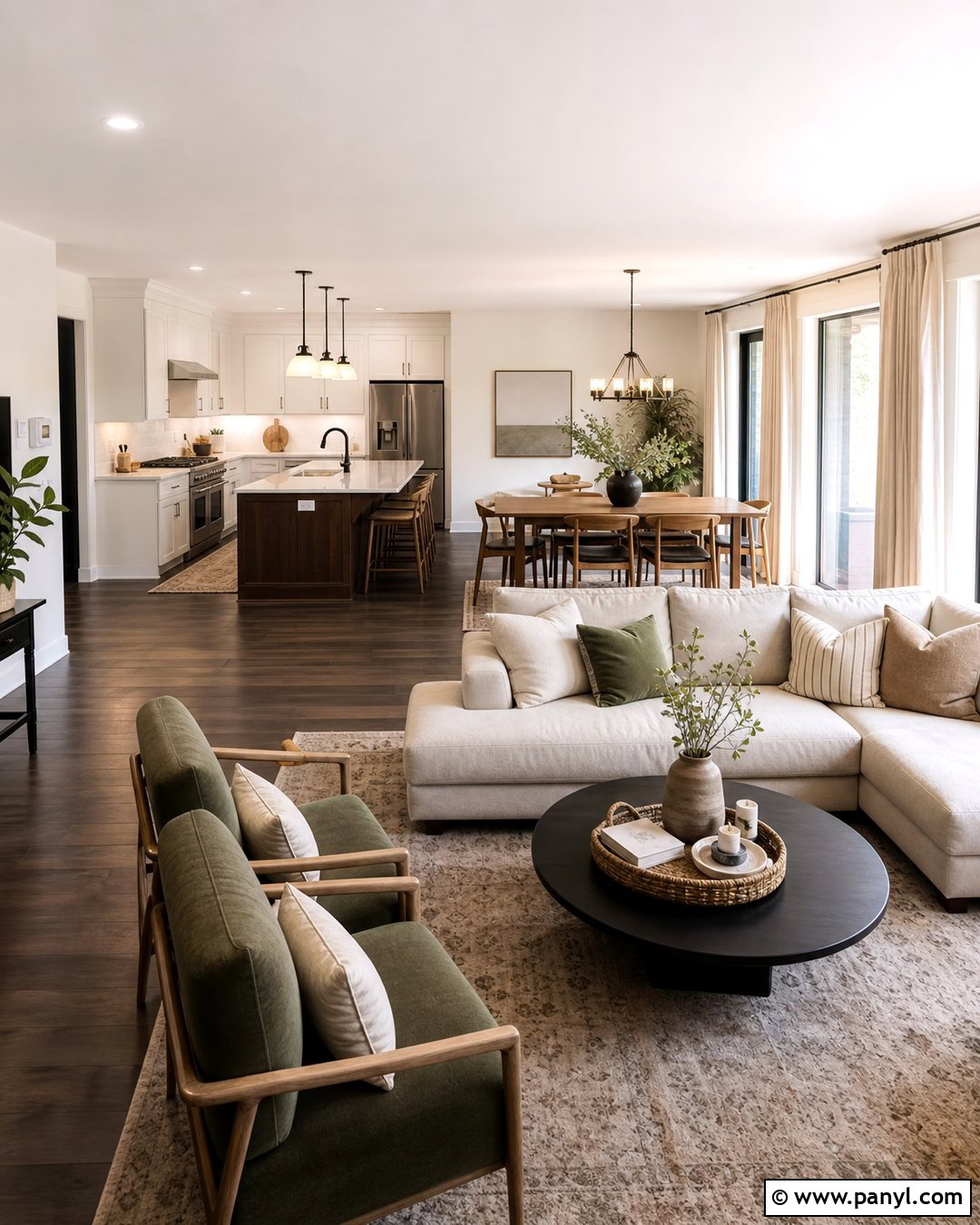
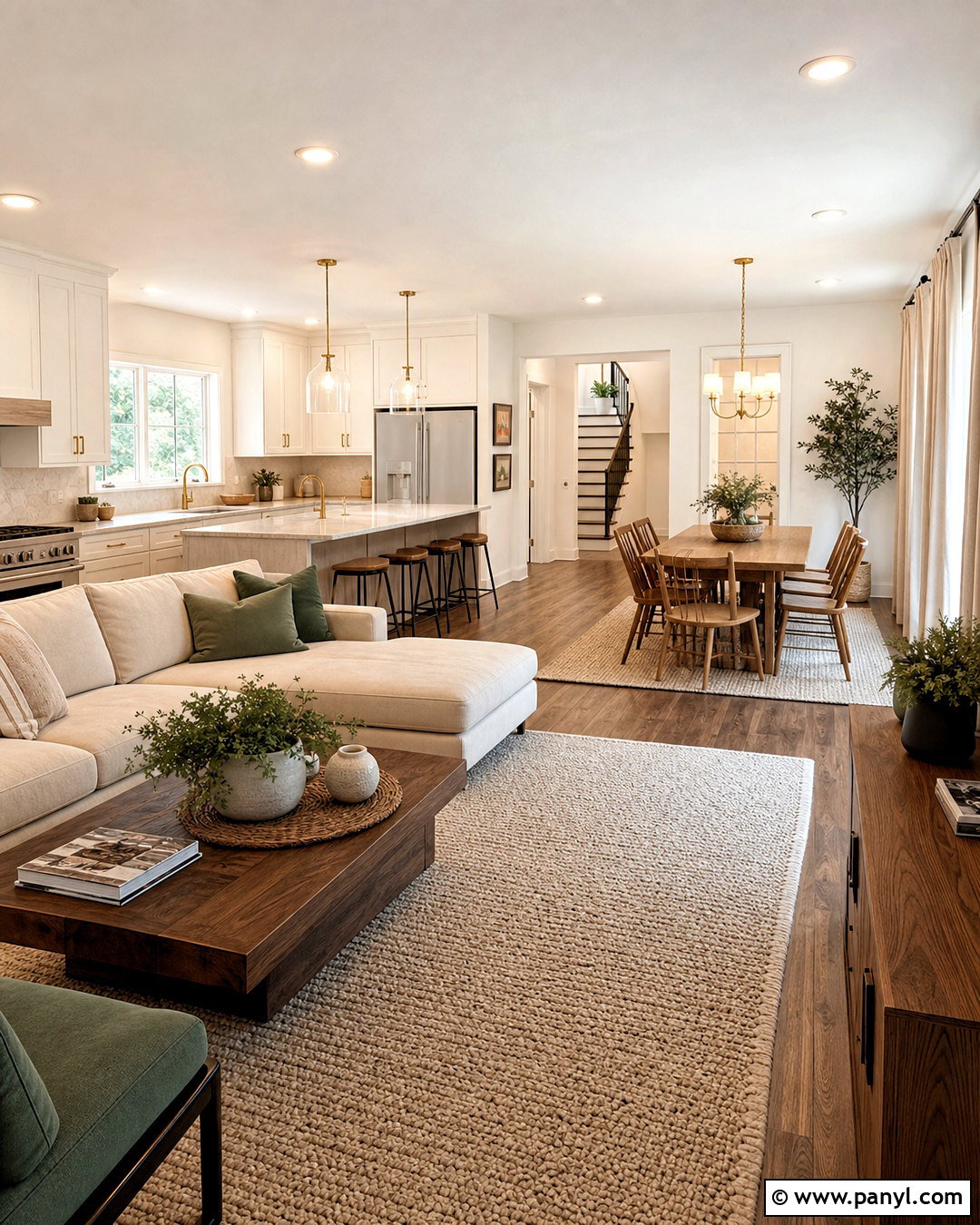
In an open floor plan, continuous dark flooring can unify the kitchen, dining, and living areas. Define each zone with furniture placement and appropriately sized rugs rather than changing floor materials. Use warm white walls throughout, then repeat a controlled palette of cream, oak, black, and muted green. A white kitchen with a walnut island can transition naturally into an oak dining table and a light neutral living room. Keep major furniture finishes related but not identical. Pendant lights can mark the island, while a statement fixture defines the dining table. Choose one larger rug for the seating area and leave the dining floor exposed. Consistent curtain fabric, hardware, and lighting finishes help the entire space feel connected and carefully planned.
15. Farmhouse Room With White Walls And Dark Wood Floors
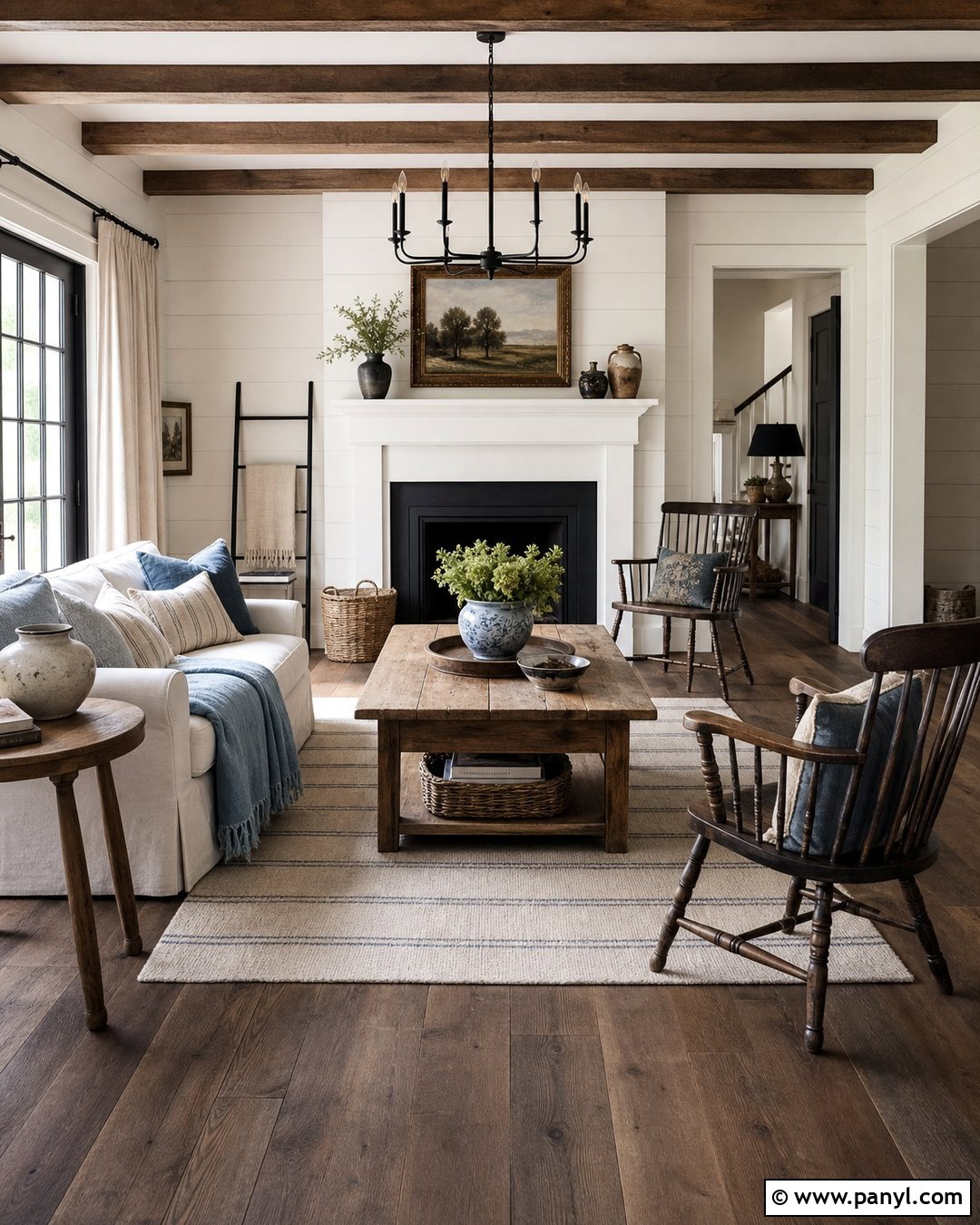
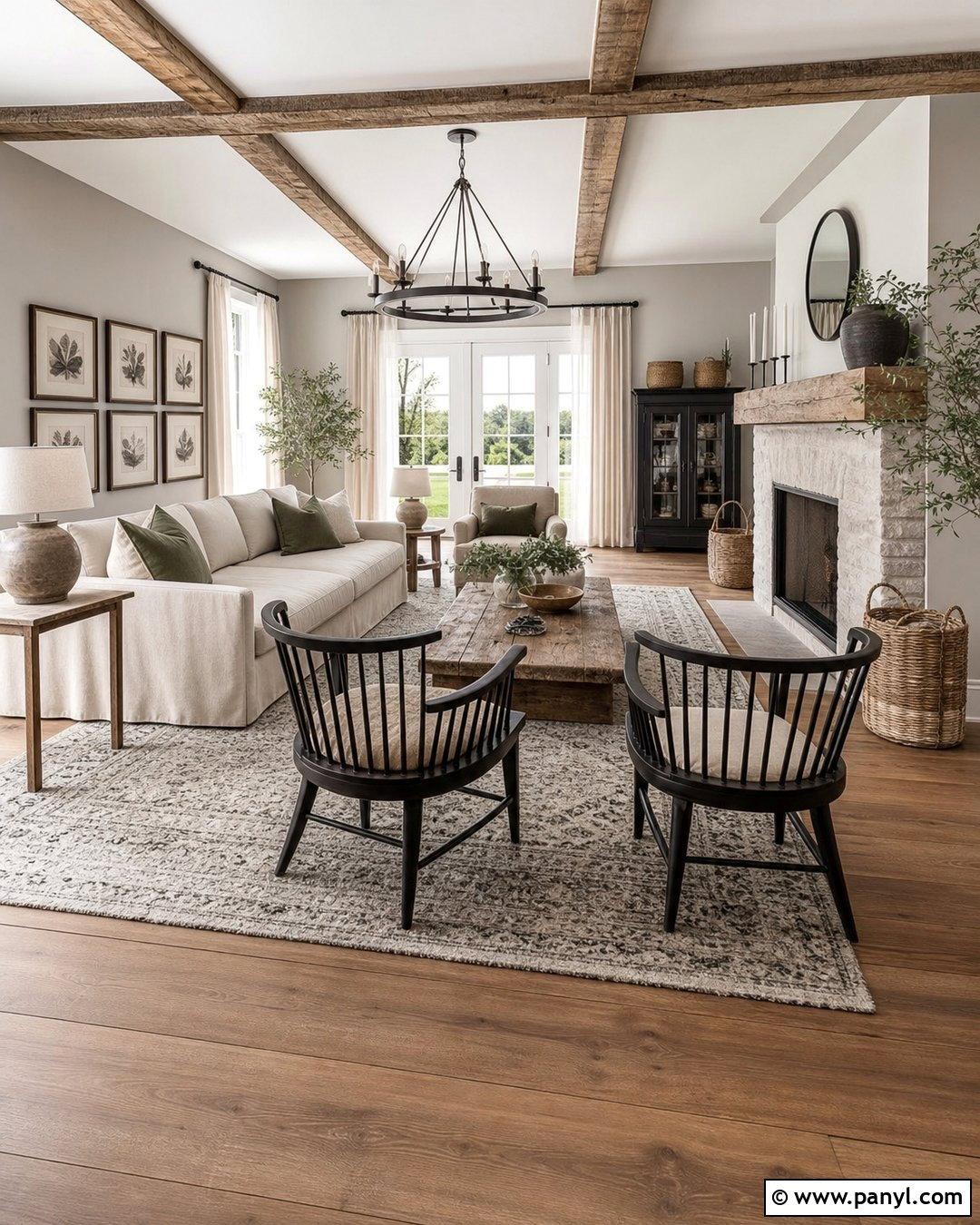
A farmhouse interior works best when it feels collected and practical rather than heavily themed. Pair warm white walls with dark wide-plank floors, then furnish the room with a slipcovered linen sofa, distressed oak coffee table, and two comfortable spindle chairs. Use a woven cream rug with subtle stripes to lighten the center of the room. Black metal lighting and simple curtain rods provide crisp definition. Add ticking-stripe pillows, a muted blue throw, and antique-inspired landscape artwork in wood frames. A white-painted fireplace or built-in cabinet can blend into the walls while offering useful storage. Finish with stoneware pottery, woven baskets, and leafy branches. Avoid excessive signs and decorative lettering, allowing the natural textures to create farmhouse character.
16. Midcentury Room With White Walls And Dark Wood Floors
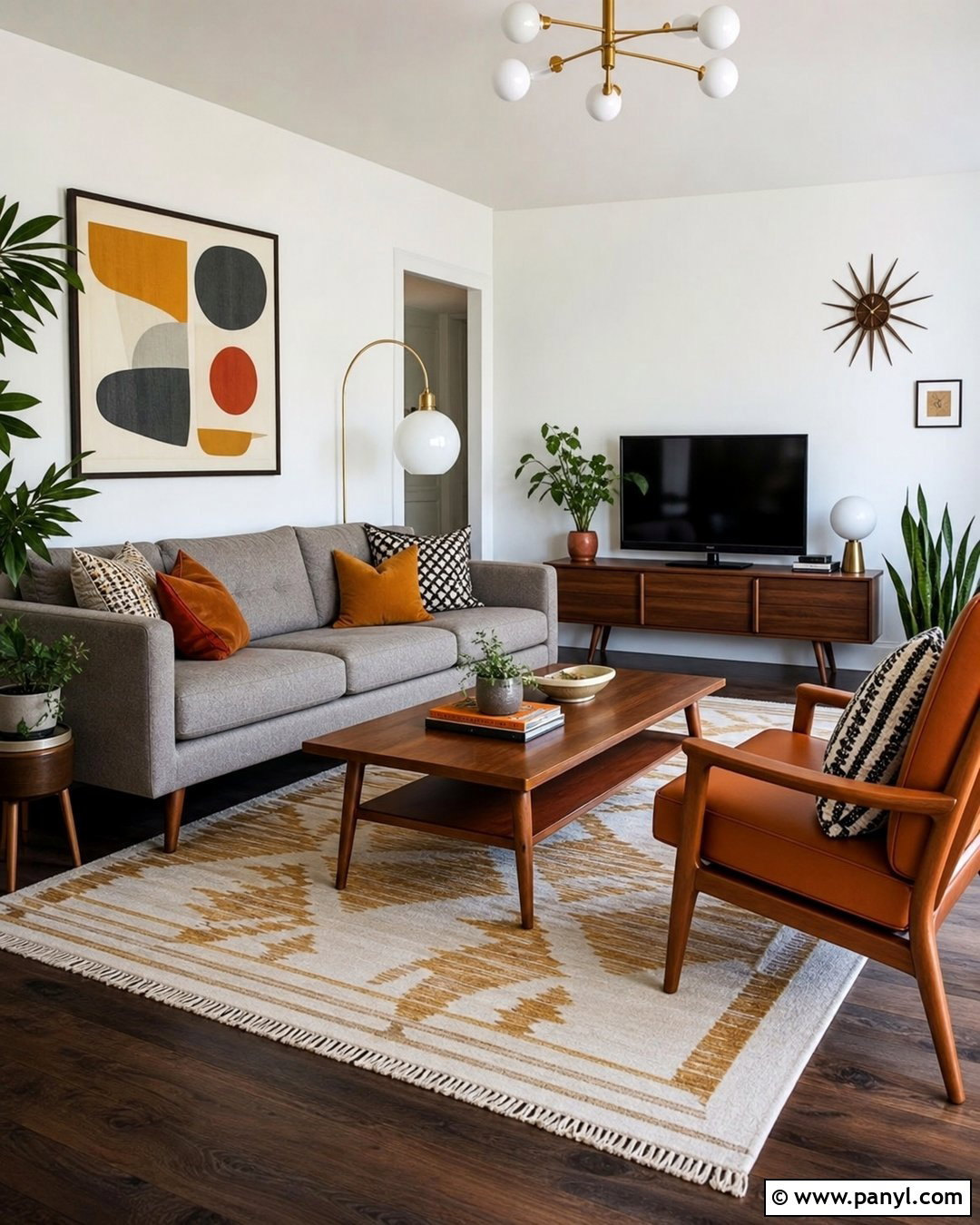
Dark wood flooring creates a fitting foundation for streamlined midcentury furniture. Choose a warm gray sofa raised on tapered legs, then pair it with a sculptural walnut coffee table and a cognac leather lounge chair. A geometric rug in cream, mustard, rust, and soft black prevents the furniture from blending into the floor. Keep the white walls clean and display one large abstract print or a neatly arranged set of graphic artwork. A low walnut media cabinet emphasizes the room’s horizontal lines. Add an arc floor lamp, globe table lamp, and simple window shades. Plants with bold leaves soften the angular furniture. This complete look should feel retro-inspired but livable, with functional pieces and controlled color rather than a crowded collection of vintage objects.
17. Coastal Room With White Walls And Dark Wood Floors
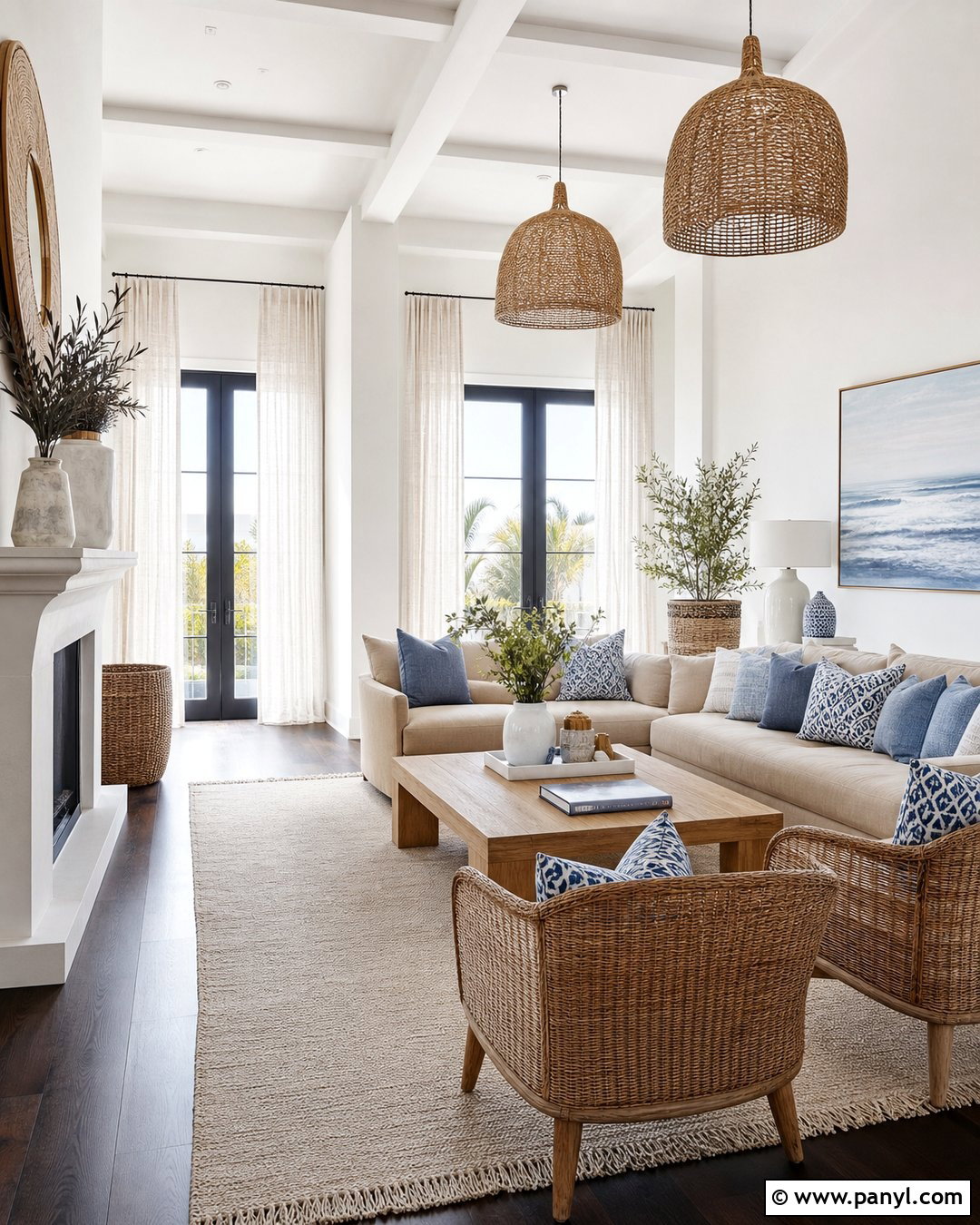
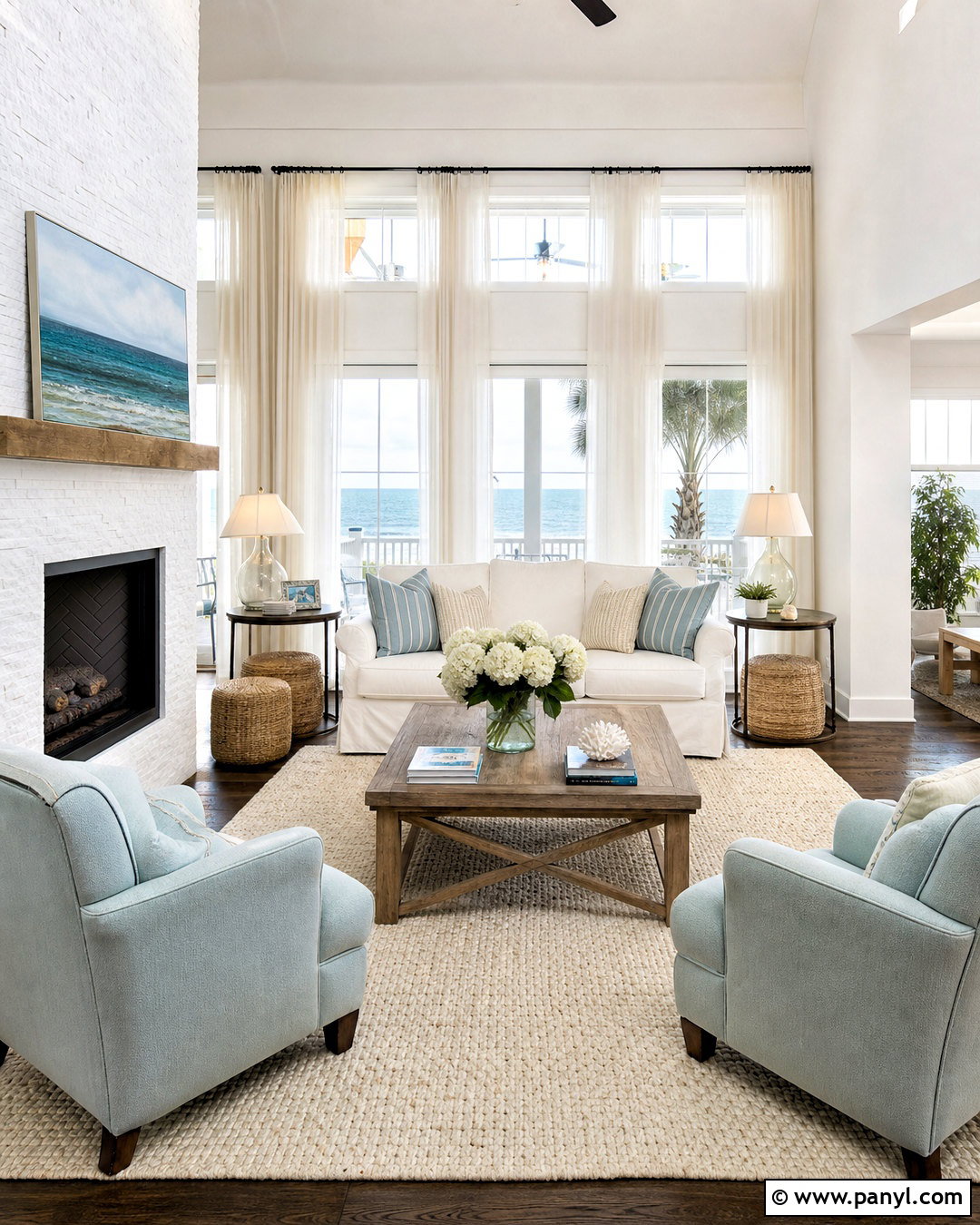
Coastal decor does not require pale flooring when the rest of the palette remains fresh and airy. Use crisp white walls, an oversized ivory rug, and a relaxed sofa upholstered in pale sand-colored fabric. Add woven rattan chairs, a light oak coffee table, and blue-gray pillows for subtle seaside color. Linen curtains should filter daylight without blocking it. The dark floor provides welcome contrast and keeps the room from appearing washed out. Choose simple coastal artwork, such as abstract ocean tones or natural landscape photography, instead of obvious themed accessories. A rope-textured lamp, ceramic vases, and woven baskets add dimension. Keep the layout casual and spacious so the room feels breezy, comfortable, and appropriate beyond a beach setting.
18. Industrial Room With White Walls And Dark Wood Floors
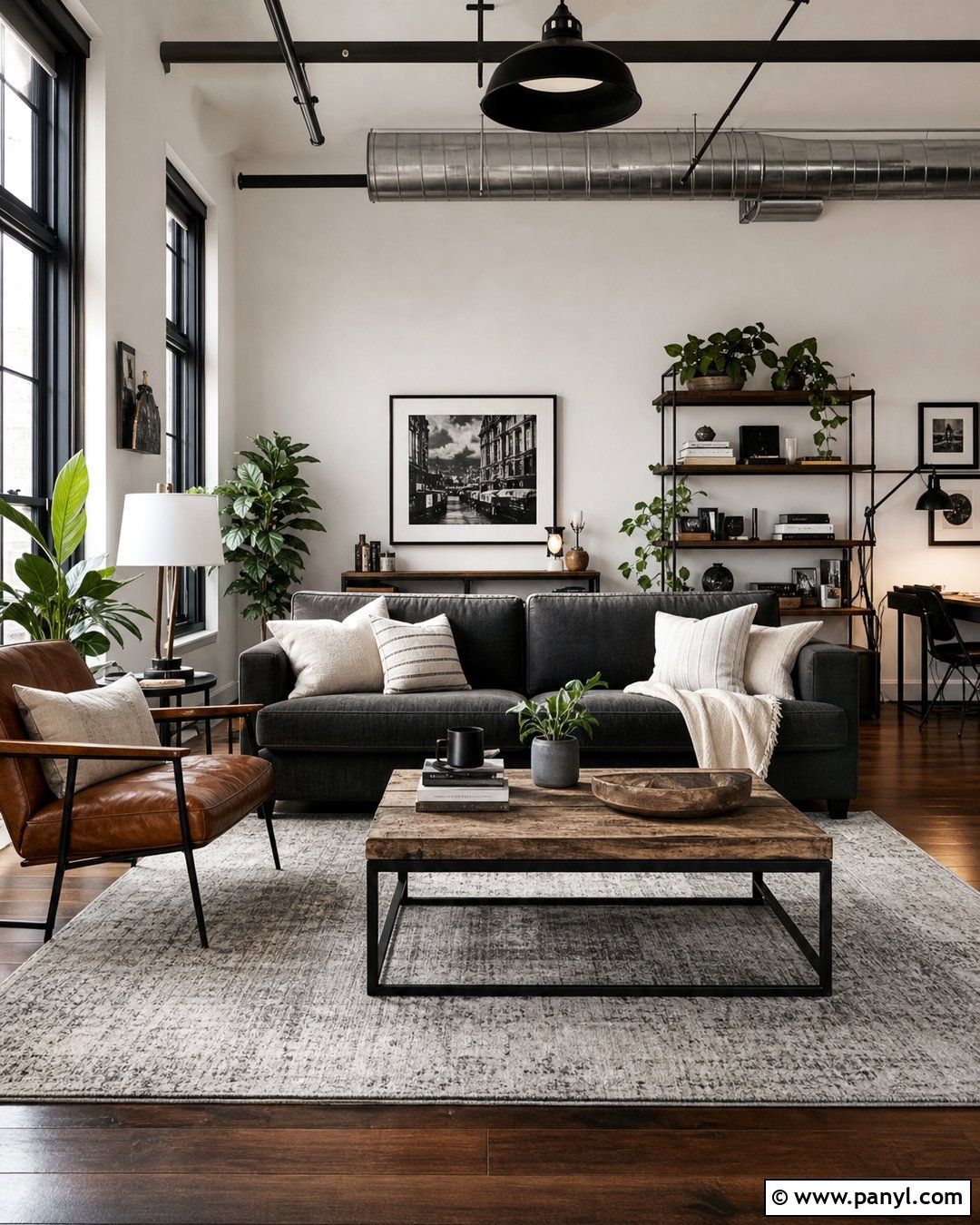
For an industrial look that still feels bright, let white walls soften black metal and weathered finishes. Arrange a charcoal sofa on a large faded gray rug, then add a reclaimed wood coffee table with a slim iron base. A cognac leather chair brings warmth and separates itself from the dark flooring. Use black-framed shelving to display books, ceramics, and storage boxes without filling every shelf. Factory-style pendants or adjustable wall lights provide character while maintaining practical illumination. Introduce linen curtains and cream pillows to keep the room comfortable. One exposed brick section can work as an accent if the space already has it. Finish with large-scale monochrome artwork and greenery, creating a balanced urban room rather than a harsh warehouse replica.
19. Bohemian Room With White Walls And Dark Wood Floors
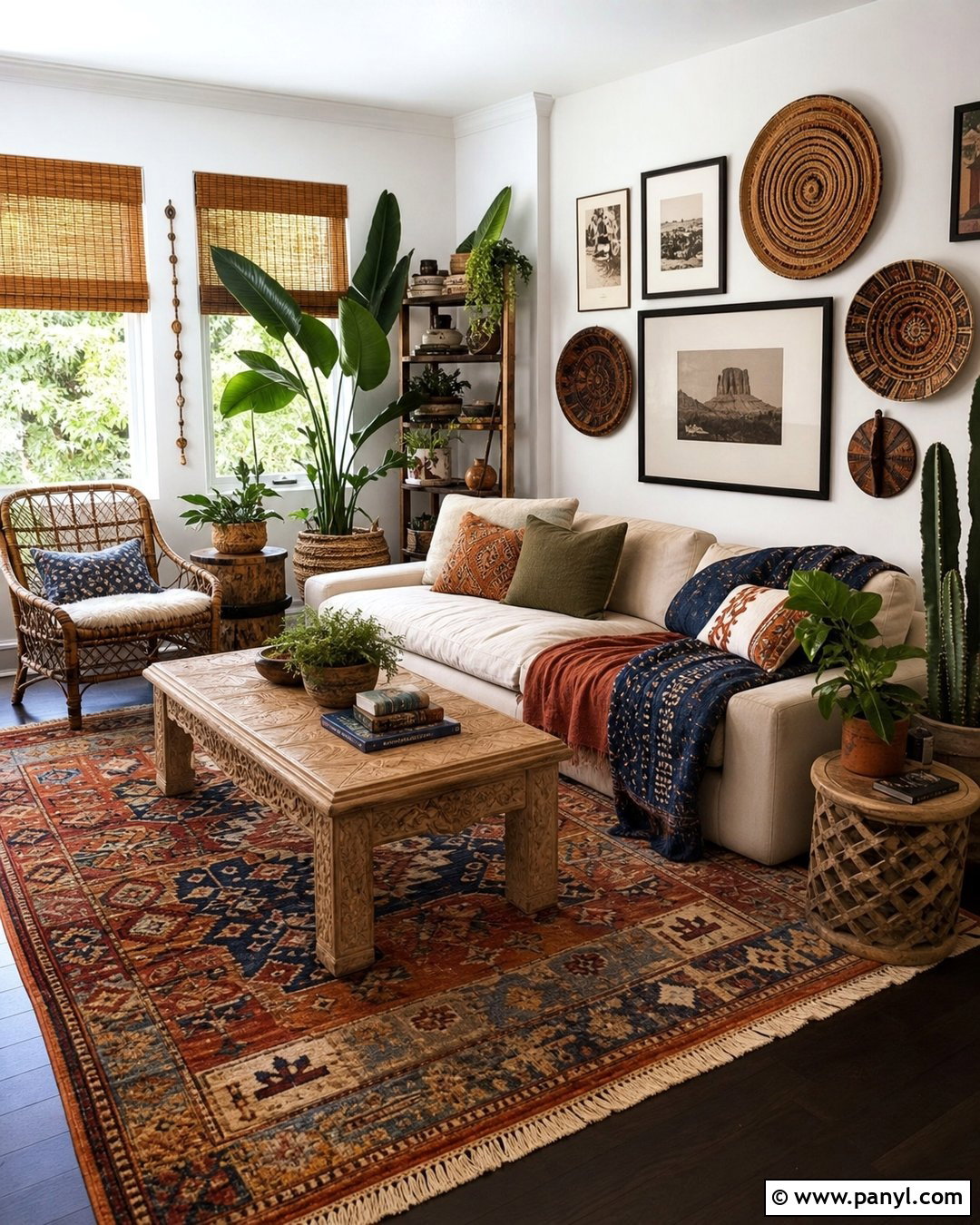
White walls allow a bohemian room’s patterns and collected pieces to stand out, while dark flooring creates a rich anchor. Begin with a low cream sofa layered with rust, olive, ocher, and indigo pillows. Place it on an oversized vintage-style rug that includes these same colors. Add a carved light wood coffee table, a cane lounge chair, and small mismatched side tables for a relaxed arrangement. Hang woven shades and soft linen curtains to layer the windows. Use framed prints, handmade baskets, and a few textile pieces across the walls, leaving open areas for balance. Plants at different heights bring movement and fresh color. Keep the room functional and carefully edited so the finished result feels personal rather than cluttered.
20. White Walls And Dark Wood Floors With Black Accents
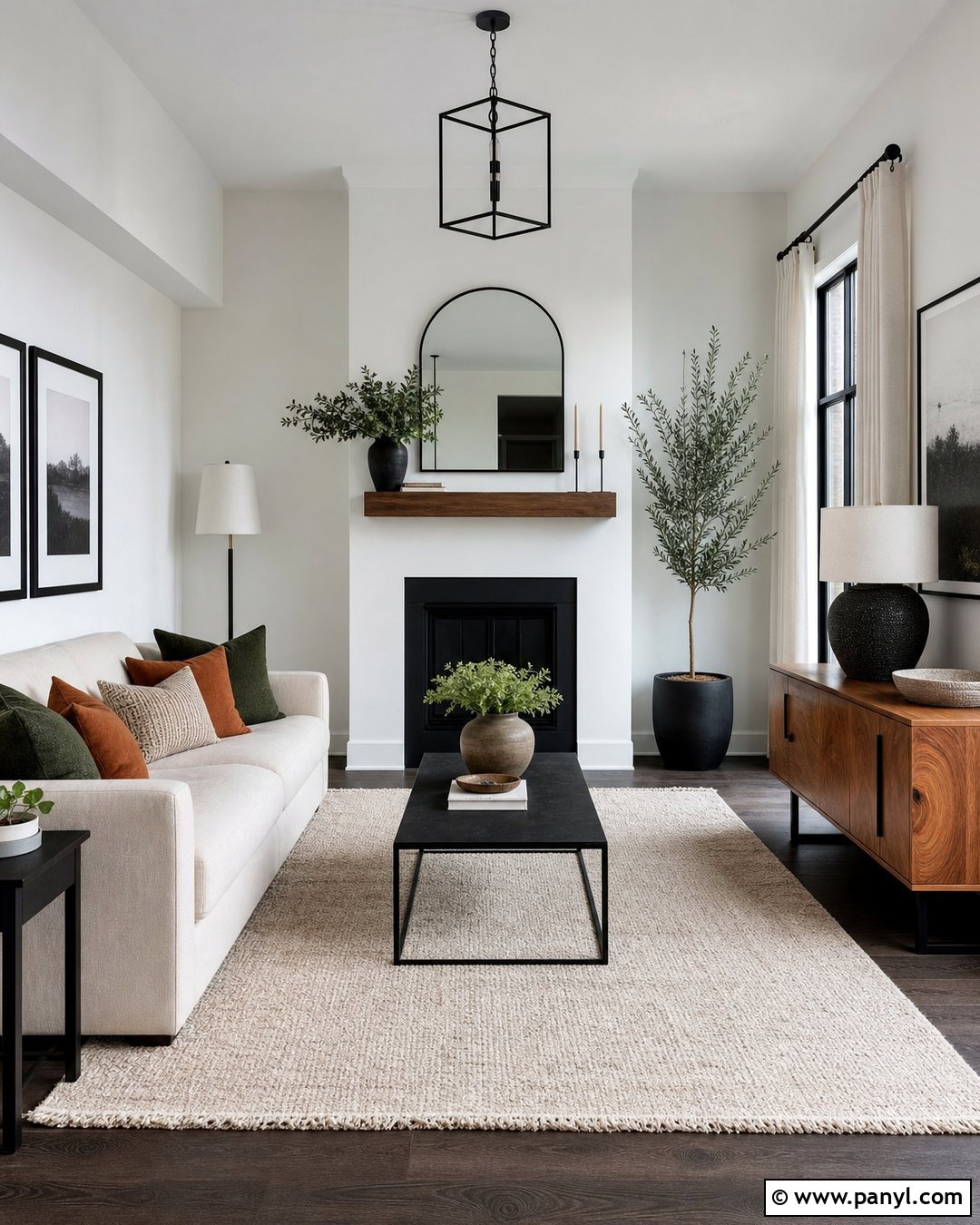
Black accents can sharpen the contrast between white walls and dark floors, but they should be distributed evenly throughout the room. Start with a cream sofa and a pale textured rug to create a bright center. Add a black metal coffee table, black curtain rod, slim picture frames, and one black floor lamp. Include medium walnut furniture so the design has a warmer layer between the light and dark extremes. Muted tan, forest green, or clay-colored cushions provide restrained color. If the room has a fireplace, use a white surround with a black firebox for a strong focal point. Finish with linen curtains, sculptural ceramics, and natural greenery. The result feels cohesive, graphic, and modern without becoming cold or severe.
Conclusion:
These **20 White Walls Dark Wood Floors** looks show how versatile this high-contrast combination can be. The key is creating a visual bridge between the bright walls and deep flooring. Light rugs, medium-tone woods, soft upholstery, and warm metals can make that transition feel natural. You can then shape the room through color, whether you prefer earthy green, coastal blue, traditional rust, or simple black accents. Pay attention to the floor’s undertone and the amount of natural light before choosing a white paint. Most importantly, design the entire space as one balanced composition. When layout, texture, lighting, furniture, and decor support each other, white walls and dark floors feel polished rather than stark.

Related Ideas and Inspiration:
Leave a Reply