
Benjamin Moore Pale Oak brings soft warmth to bathrooms without making them feel beige, gray, or stark white. This versatile greige has warm gray undertones and an LRV of 68.64, allowing it to reflect plenty of light while maintaining gentle contrast against crisp white trim. () It can support modern, traditional, coastal, farmhouse, and spa-inspired rooms depending on the tile, vanity, hardware, and lighting around it. Always test a large sample beside your permanent finishes because daylight and artificial bulbs can shift its appearance. The complete looks below pair Pale Oak with practical layouts, coordinated materials, and distinctive accents for bathrooms of different sizes and budgets. Explore these 25 Benjamin Moore Pale Oak Bathroom Ideas.

1. Pale Oak Bathroom With White Oak Vanity
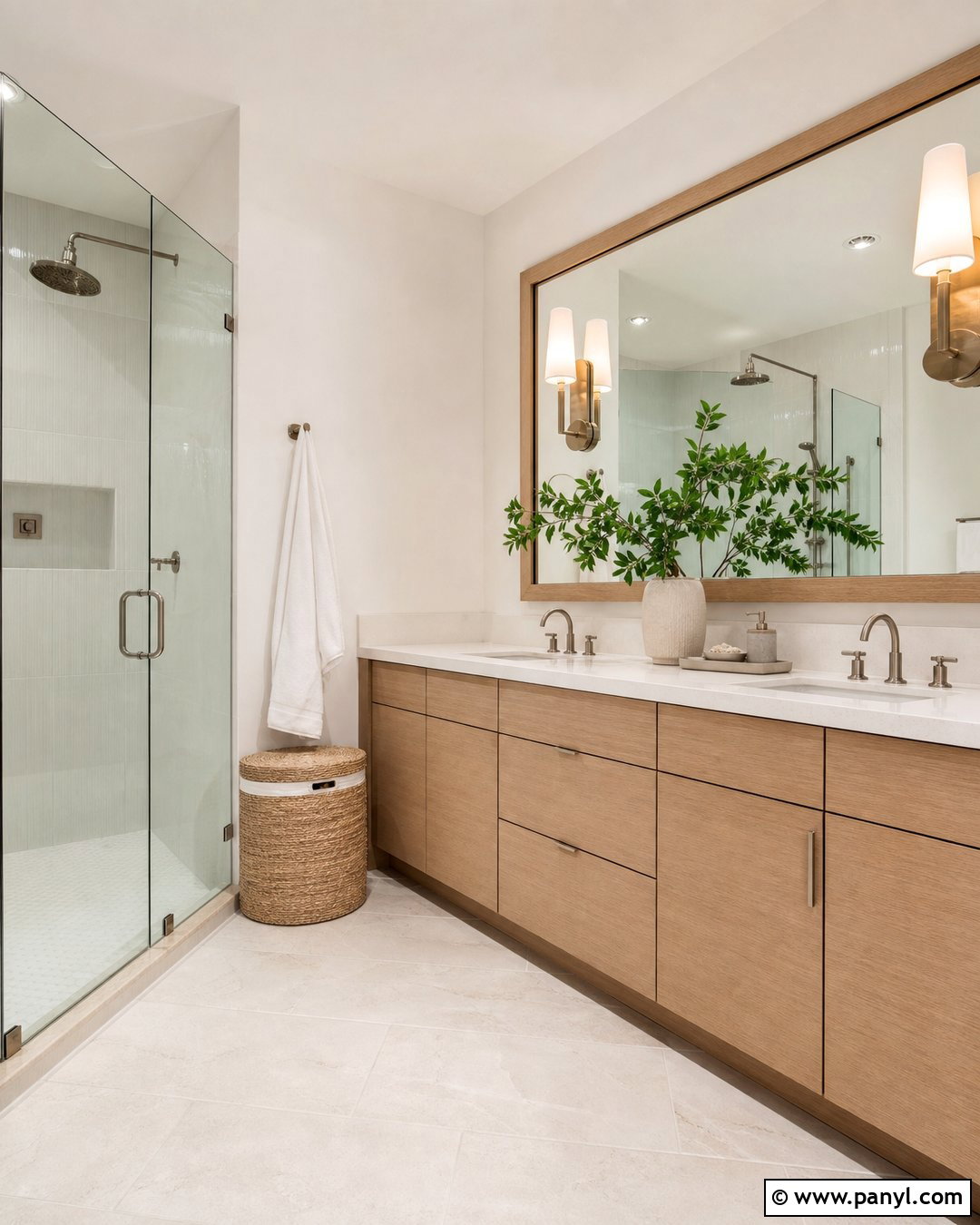
Create a naturally warm bathroom by pairing Pale Oak walls with a flat-panel white oak vanity. Choose a light, clear wood finish rather than anything strongly yellow or orange. A white quartz countertop and rectangular undermount sink keep the vanity clean and practical. Continue the quiet palette with large ivory porcelain floor tiles and a frameless glass shower. Brushed nickel faucets add a soft metallic finish that does not overpower the wood. Install a wide mirror with a thin oak frame and two simple milk-glass sconces. White towels, a woven hamper, and one leafy plant complete the room. This balanced combination feels relaxed and contemporary while allowing the Pale Oak walls and natural cabinetry to share equal visual weight.
2. Pale Oak Bathroom With Black Vanity
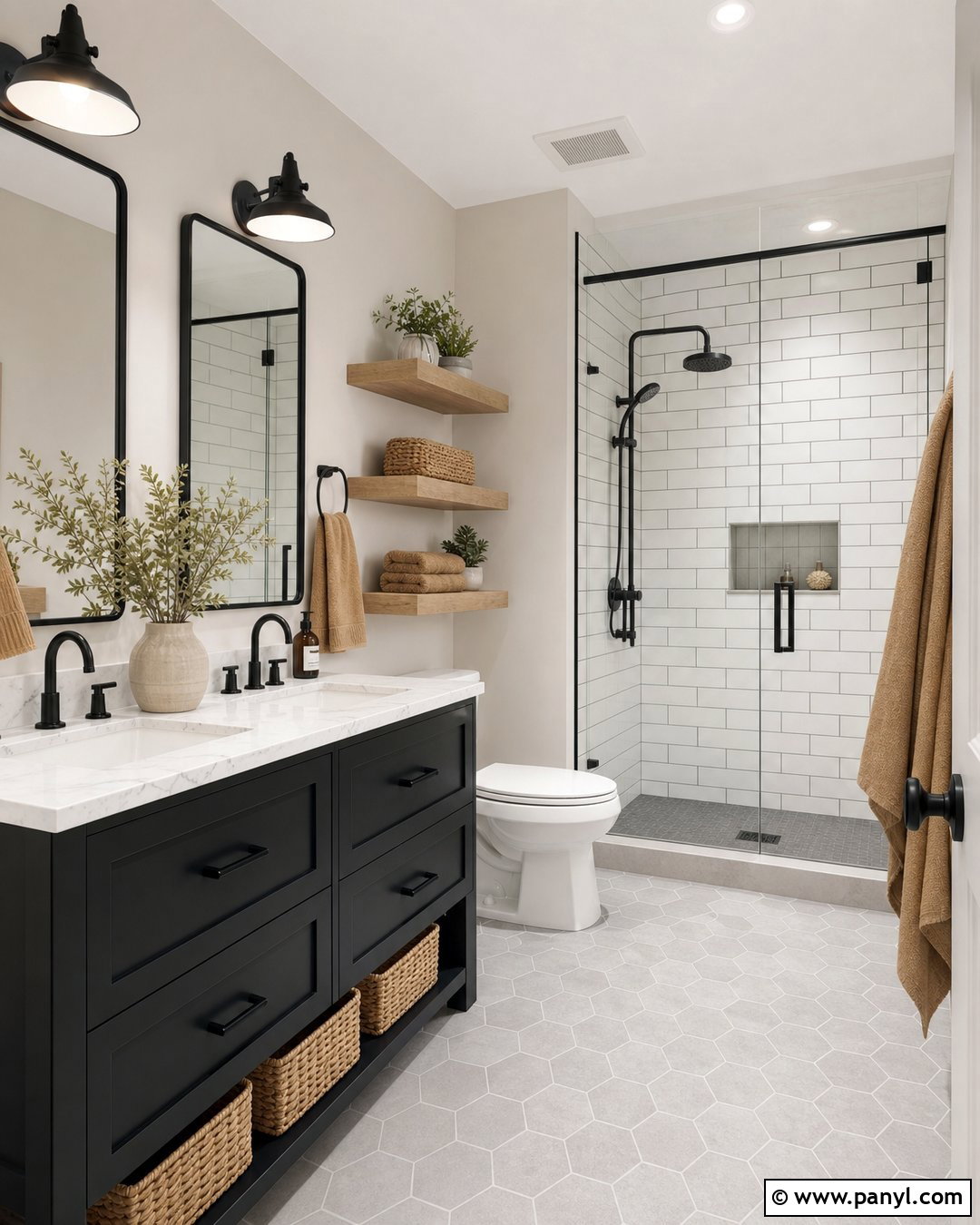
A black vanity gives Pale Oak bathroom walls a strong focal point without making the entire room dark. Select a simple shaker vanity in a satin black finish, then lighten it with a white marble or quartz countertop. White subway tile can cover the shower walls, while charcoal grout subtly connects the tile to the cabinetry. Use matte black faucets, shower hardware, and mirror frames for consistency. A pale gray hexagon floor prevents the contrast from becoming too sharp. Add warmth through light wood shelves, tan hand towels, and a natural woven rug. Keep the ceiling and trim crisp white. This complete scheme works especially well in a medium-size bathroom where there is enough light to support the dramatic vanity and hardware.
3. Pale Oak Bathroom With Sage Green Vanity
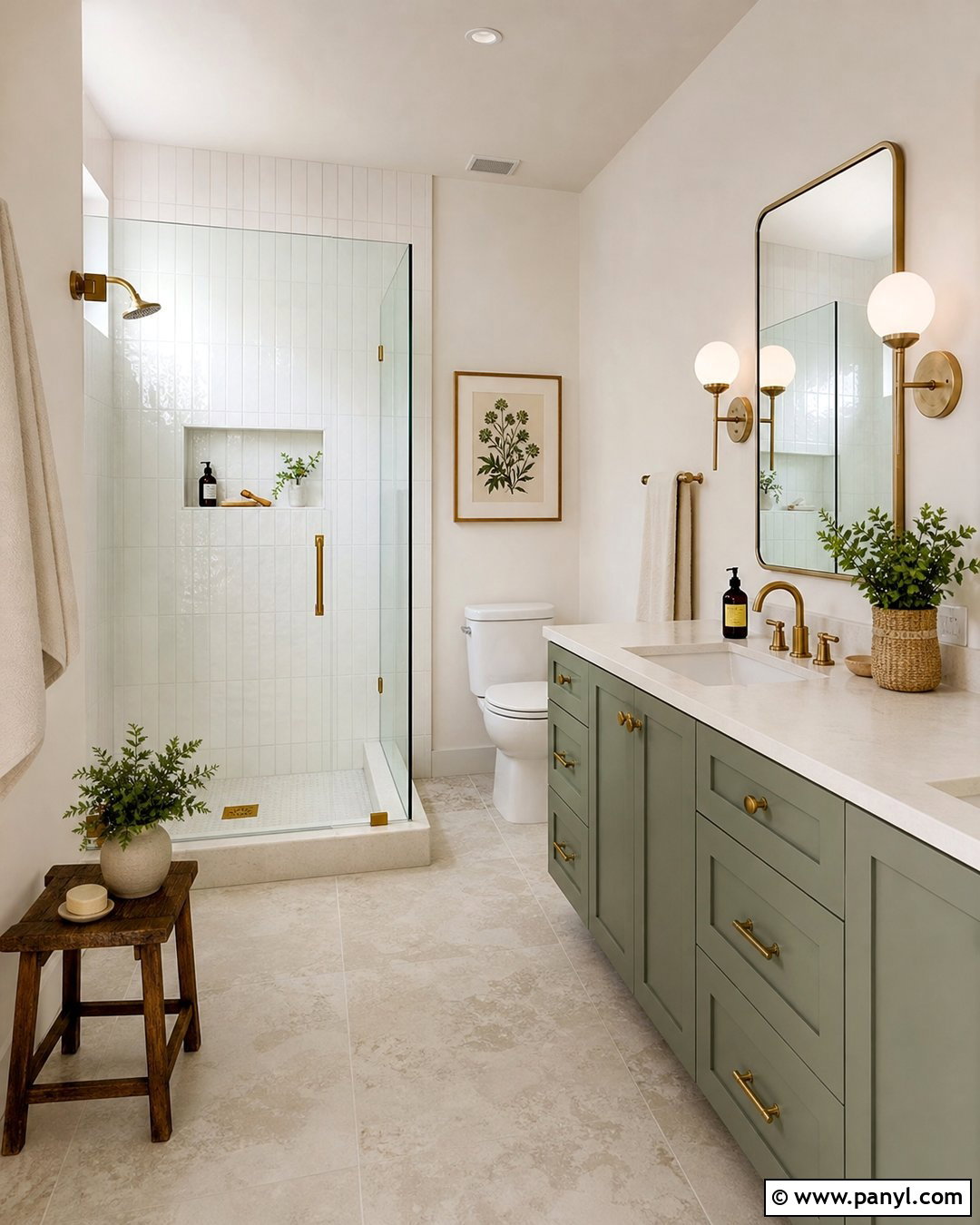
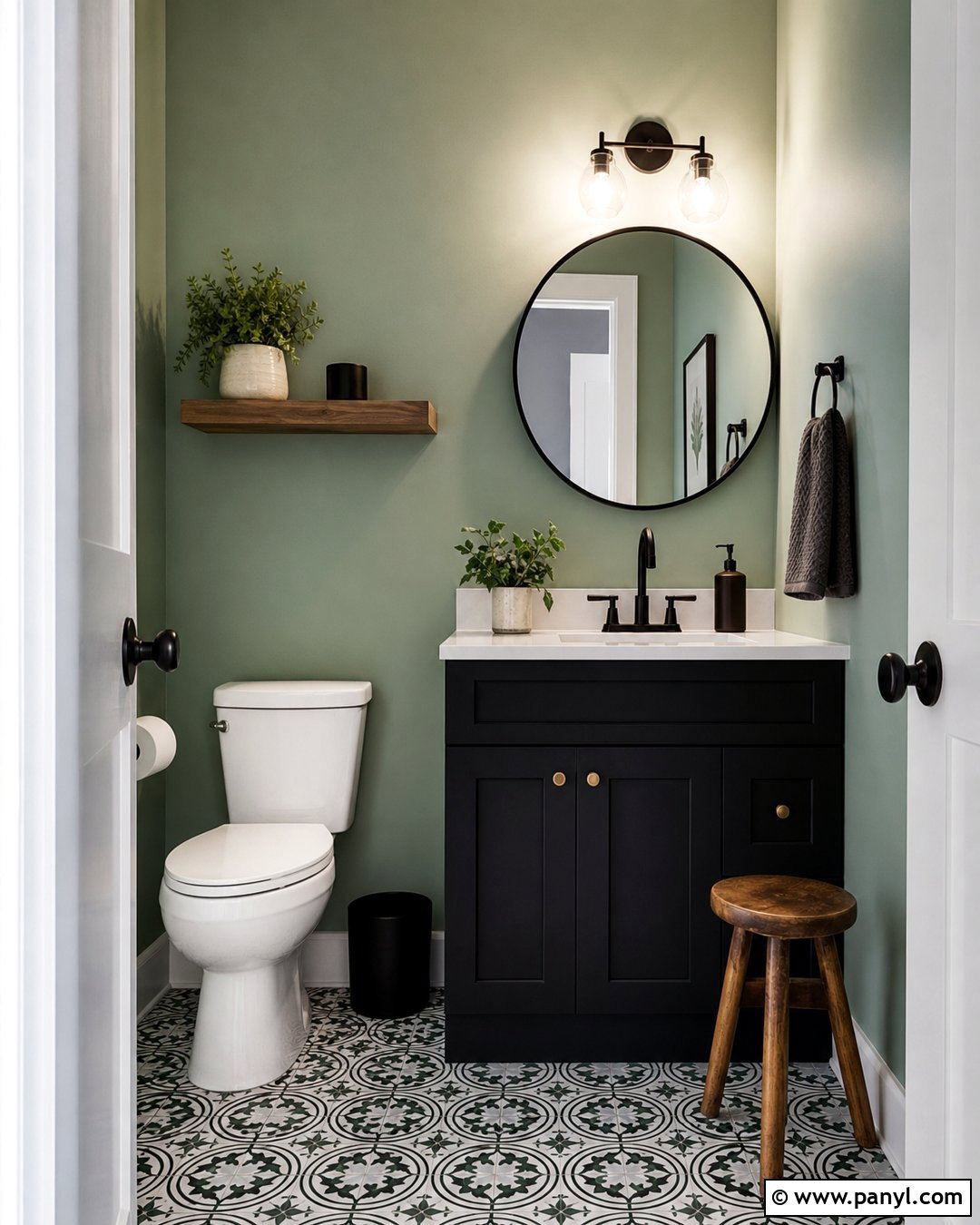
Soft sage green cabinetry brings an earthy layer to Pale Oak without competing with its warm neutral character. Use a muted sage vanity with shaker doors, brushed brass pulls, and a creamy white quartz top. Handmade white zellige tile around the shower introduces texture and reflects light through its uneven surface. Choose limestone-look porcelain for the floor to connect the green cabinetry with the greige walls. A brass-framed mirror and small globe sconces make the vanity feel polished. Finish the room with ivory towels, a wooden stool, and simple botanical artwork. The palette should remain dusty and restrained rather than bright. This combination creates a calming garden-inspired bathroom that feels fresh, welcoming, and carefully coordinated throughout the entire space.
4. Pale Oak Bathroom With Navy Blue Vanity
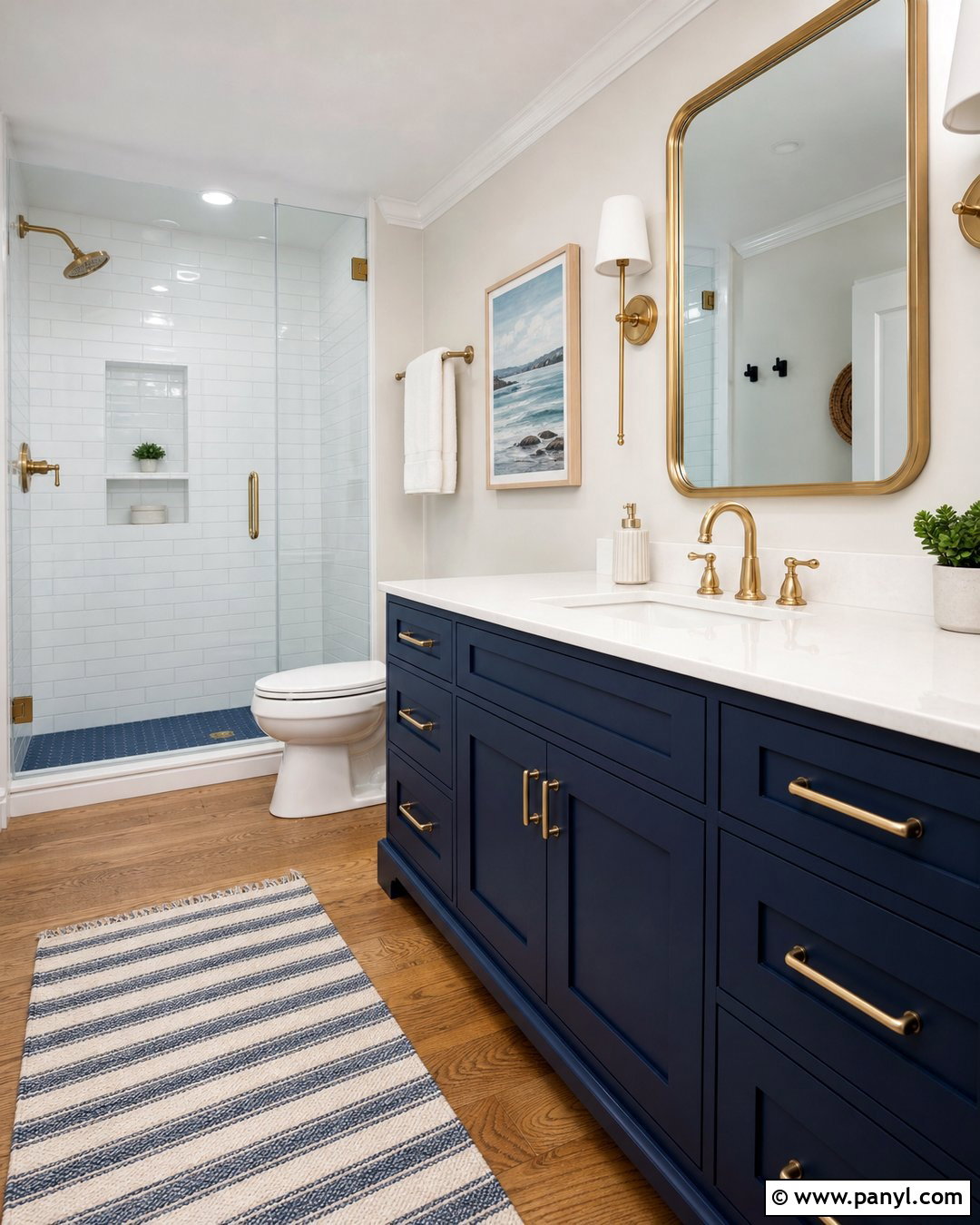
Do you want a neutral bathroom with noticeable color? Place a deep navy blue vanity against Pale Oak walls for a rich but classic contrast. A white quartz countertop keeps the dark cabinetry from feeling heavy, while polished brass hardware adds warmth and definition. Use glossy white shower tile with light grout and carry a small navy mosaic onto the shower floor. A brass-framed mirror, matching faucets, and clear glass sconces connect the finishes. Choose medium-tone oak flooring or realistic wood-look porcelain to soften the blue and white palette. Finish with white towels, a striped bath mat, and one framed coastal print. The resulting bathroom feels crisp and tailored, yet the Pale Oak walls prevent the navy accents from looking overly formal or cold.
5. Pale Oak Bathroom With Walnut Vanity
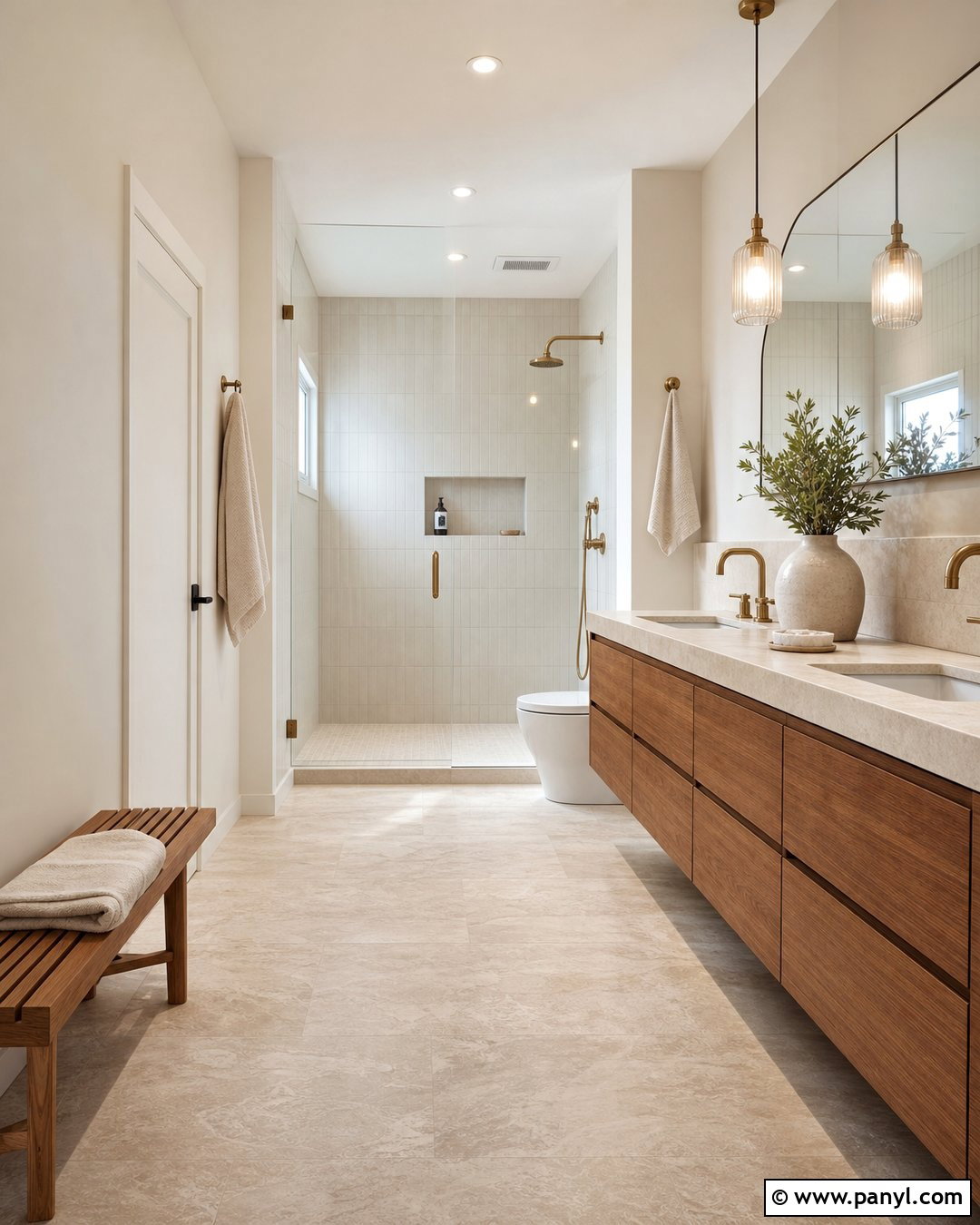
Rich walnut cabinetry highlights the warm taupe side of Pale Oak and gives the bathroom greater depth. Choose a floating walnut vanity with clean slab-front drawers and a pale cream stone countertop. Install warm white vertical tiles behind the vanity and throughout the shower to make the ceiling appear taller. Travertine-look porcelain flooring continues the natural color story without requiring high-maintenance stone. A frameless mirror and streamlined brushed brass fixtures keep the room modern. Add a ribbed glass pendant, ivory towels, and a low wooden bench near the shower. Avoid overly red walnut finishes, which may exaggerate the paint’s warmer undertones. A medium brown wood with balanced grain produces a sophisticated bathroom that feels organic, comfortable, and visually grounded.
6. Pale Oak Color Drenched Bathroom
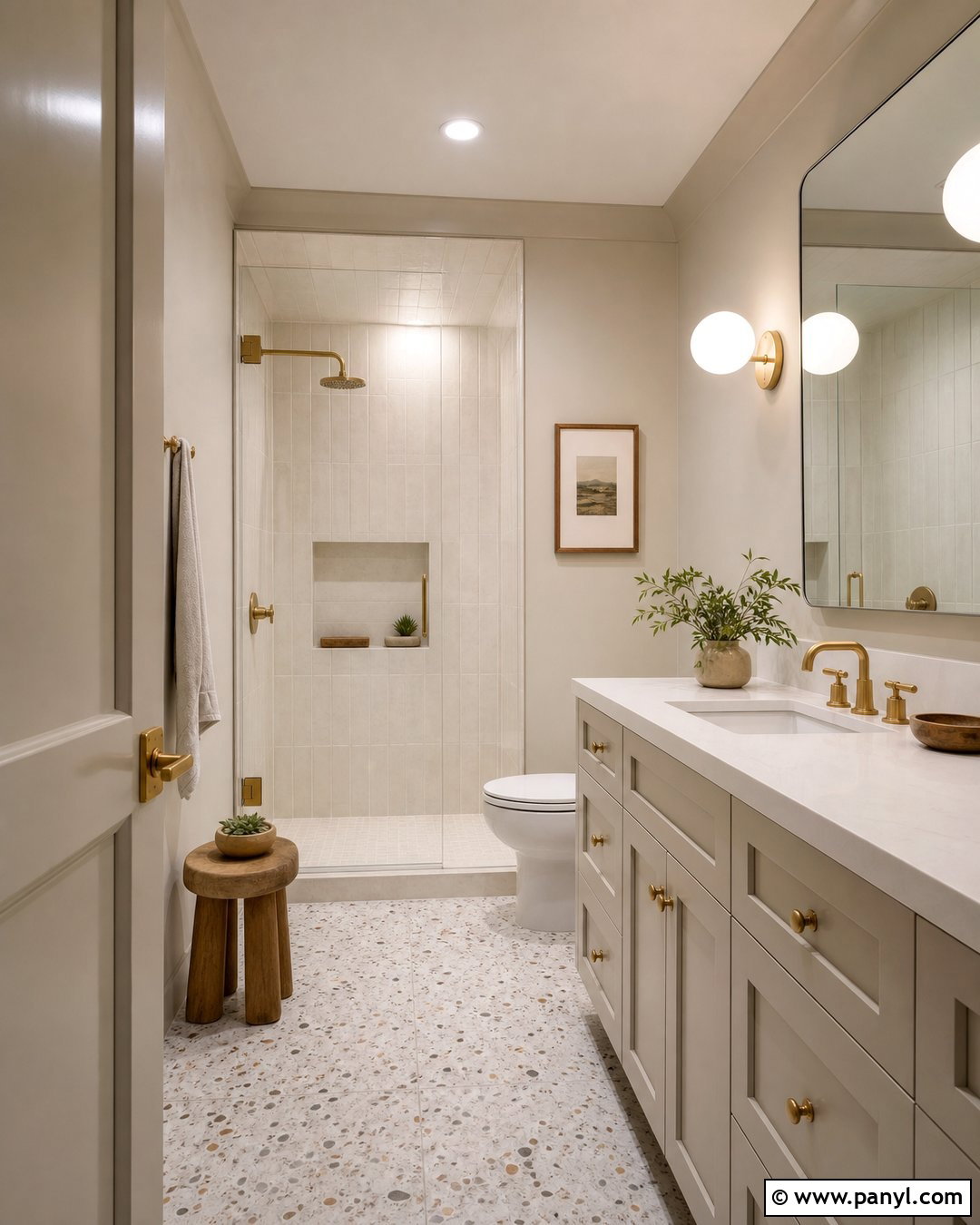
Using Pale Oak across several surfaces creates an enveloping bathroom with fewer visual breaks. Paint the walls, trim, door, and vanity in the same color, but vary the sheen for subtle definition. A washable satin finish suits the walls, while a smoother semi-gloss appearance can distinguish cabinetry and trim. Add a white quartz counter, white sinks, and creamy shower tile so the room does not become flat. Unlacquered brass faucets and warm oak accessories introduce quiet contrast. Use a frameless mirror and globe sconces with opal glass to maintain the seamless effect. A light terrazzo floor can add pattern without introducing a dominant color. This approach works beautifully in compact bathrooms because the continuous palette reduces busy edges and creates a calm, unified background.
7. Pale Oak Bathroom With White Wainscoting
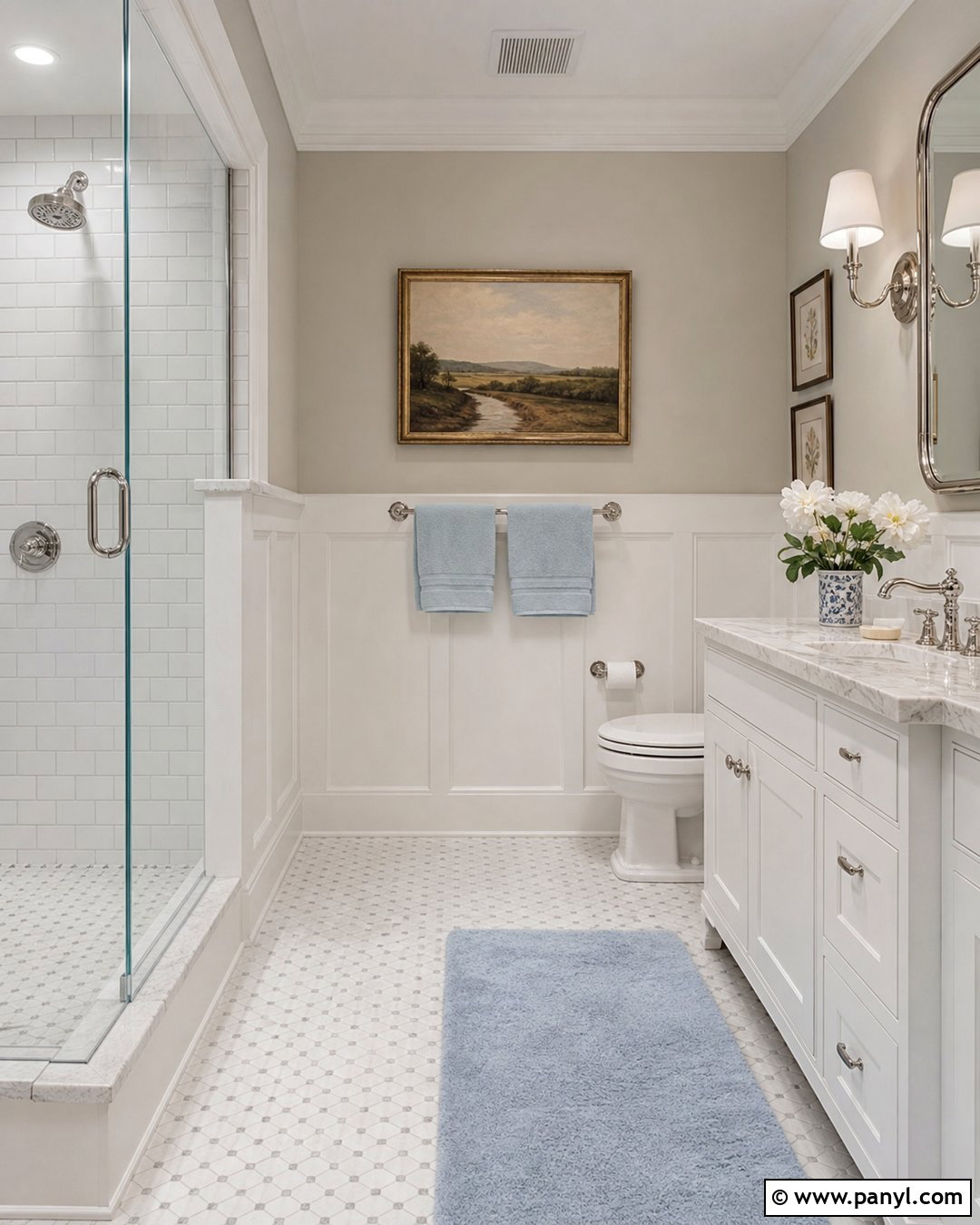
Crisp white wainscoting gives Pale Oak walls a traditional architectural framework. Install simple shaker paneling or tongue-and-groove boards on the lower half of the walls, then paint the upper area Pale Oak. A white vanity with a marble-look countertop continues the classic foundation. Use small white hexagon floor tiles with occasional gray details for subtle pattern. Polished nickel faucets, a curved metal mirror, and shaded wall sconces add a refined finish. Keep the shower bright with white subway tile and clear glass. Pale blue towels and a vintage landscape print can bring gentle color into the room. This full design feels especially suitable for a cottage or older home, yet the restrained lines and limited palette prevent it from appearing dated or overly decorative.
8. Pale Oak Small Powder Room
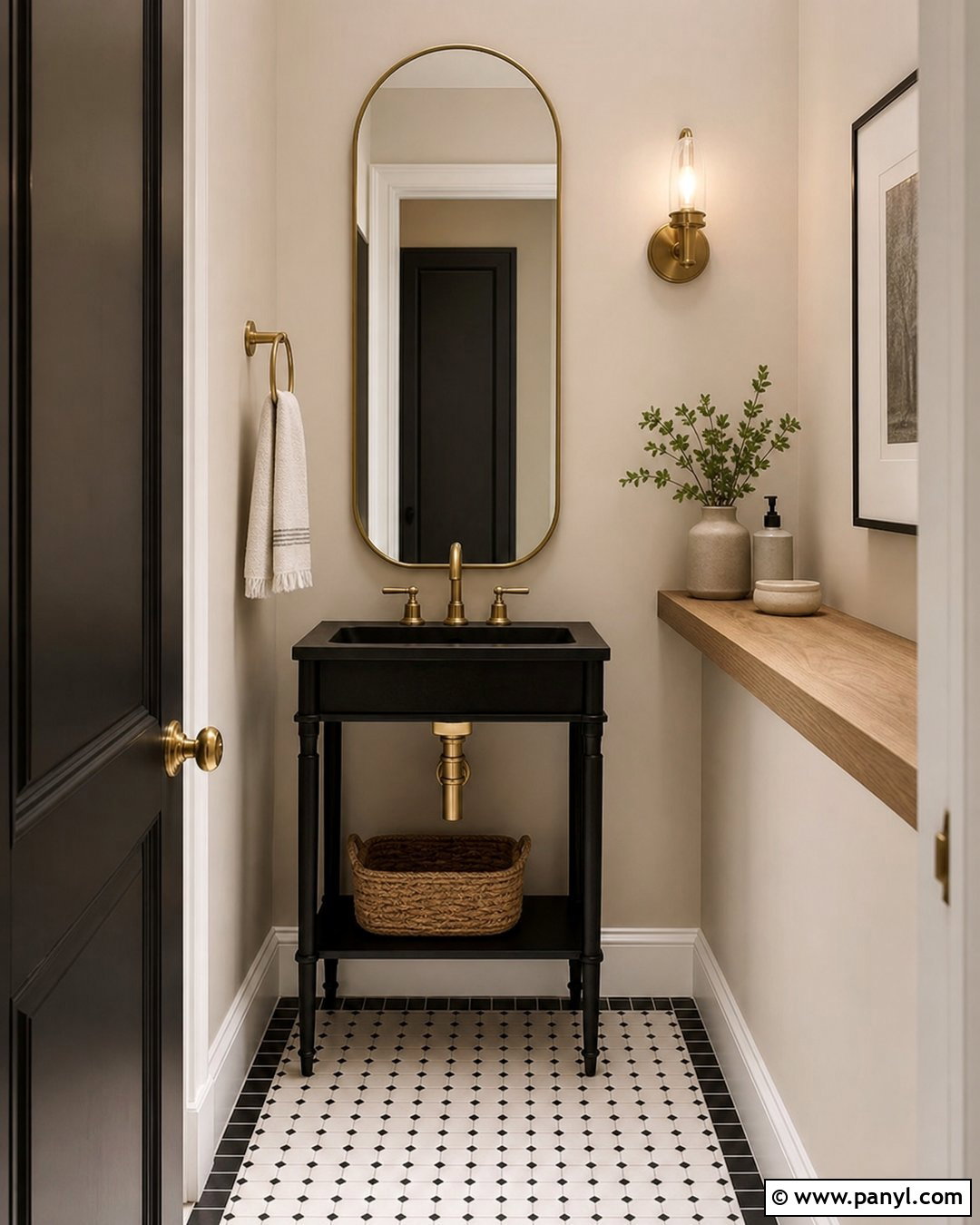
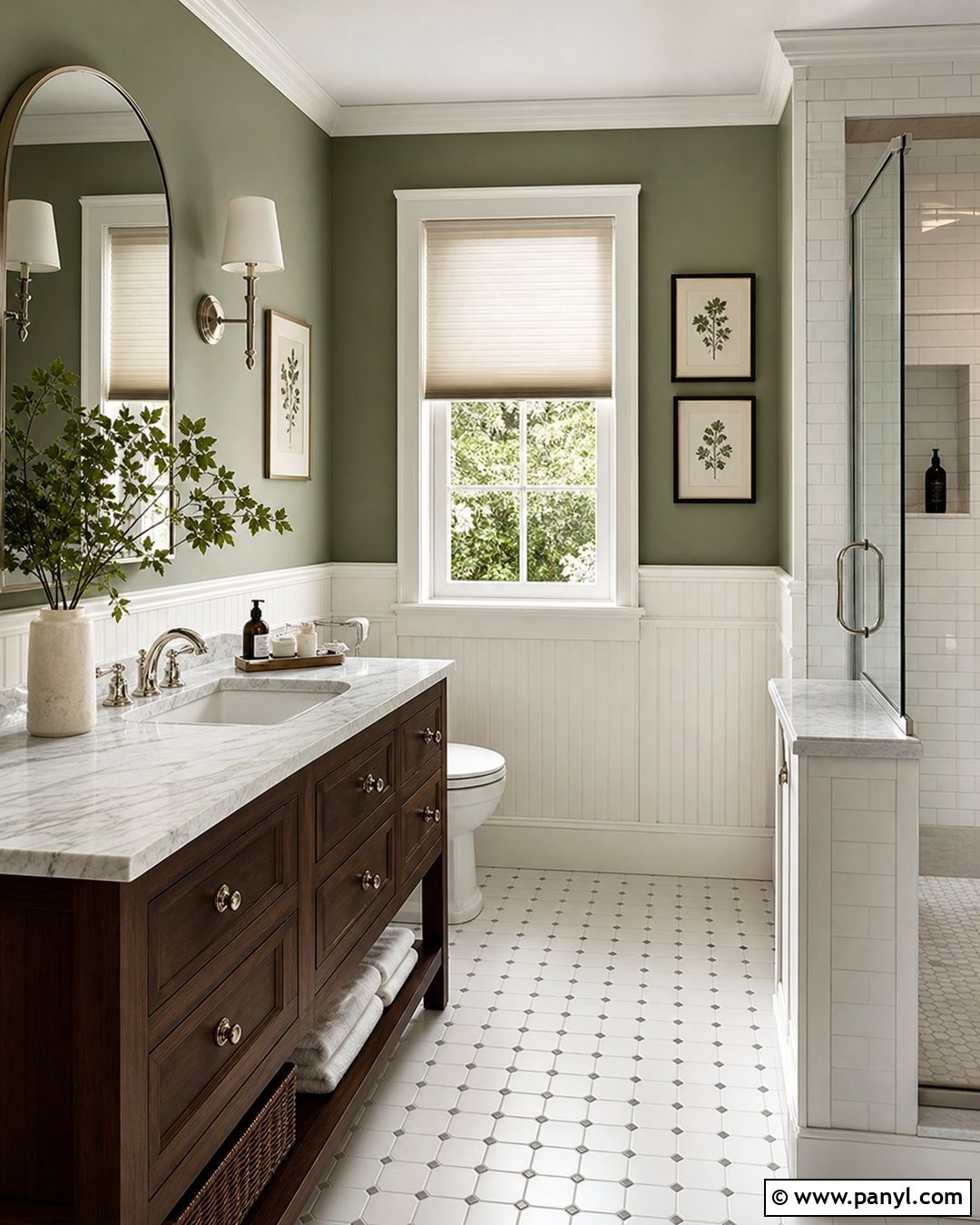
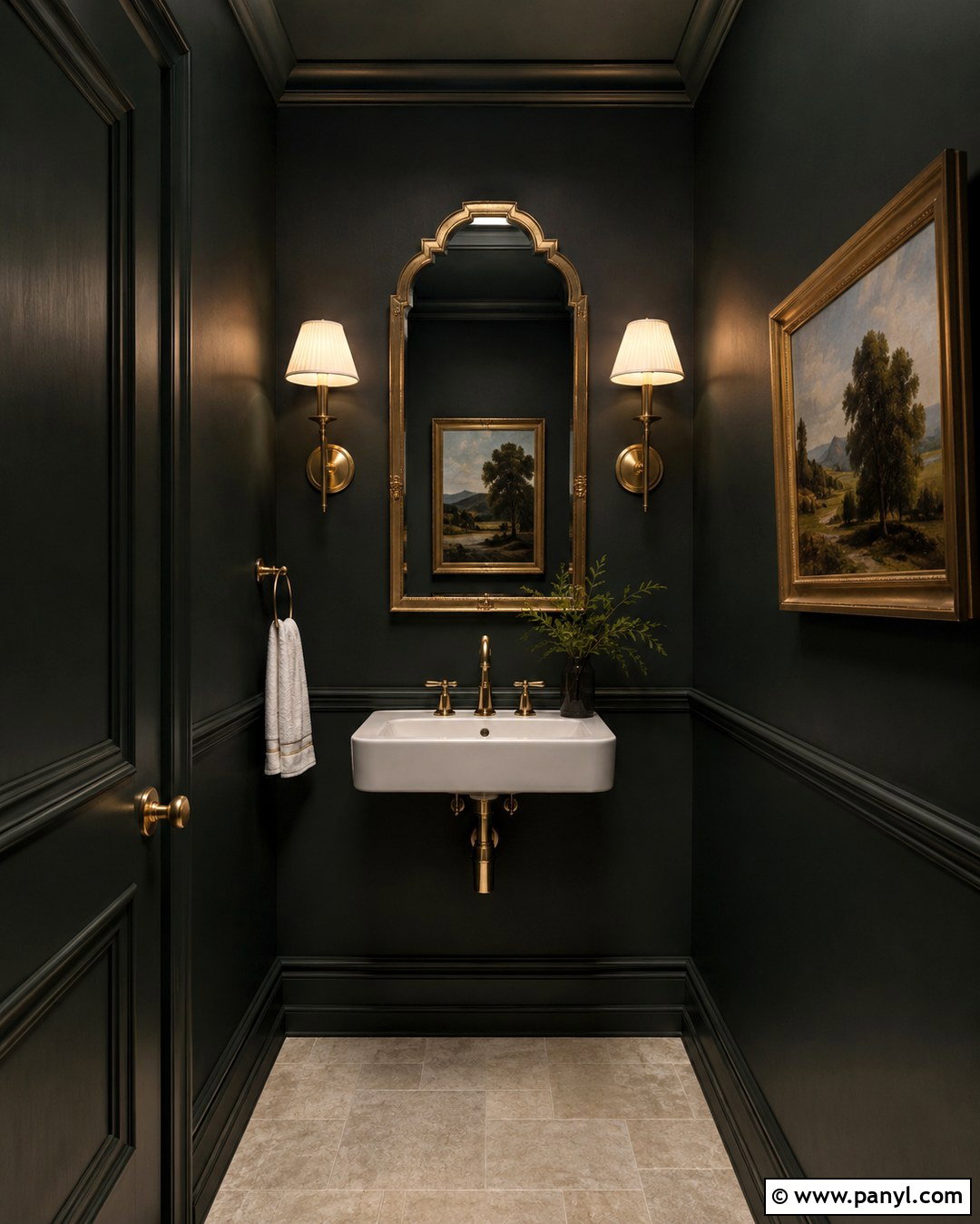
Pale Oak can make a small powder room feel finished and inviting rather than plain. Cover the walls in this soft greige, then introduce a compact black console sink with polished brass fittings. A tall arched mirror draws attention upward and visually extends the limited space. Use black-and-white mosaic tile on the floor for character, but keep the pattern small and orderly. One brass wall sconce above the mirror provides a decorative highlight without occupying counter space. Add a narrow oak shelf for hand towels and a small ceramic container. Paint the trim warm white to create clean boundaries around the door and baseboards. The mix of Pale Oak, black, brass, and white gives this tiny room enough personality while maintaining a practical, uncluttered layout.
9. Pale Oak Spa Bathroom With Freestanding Tub
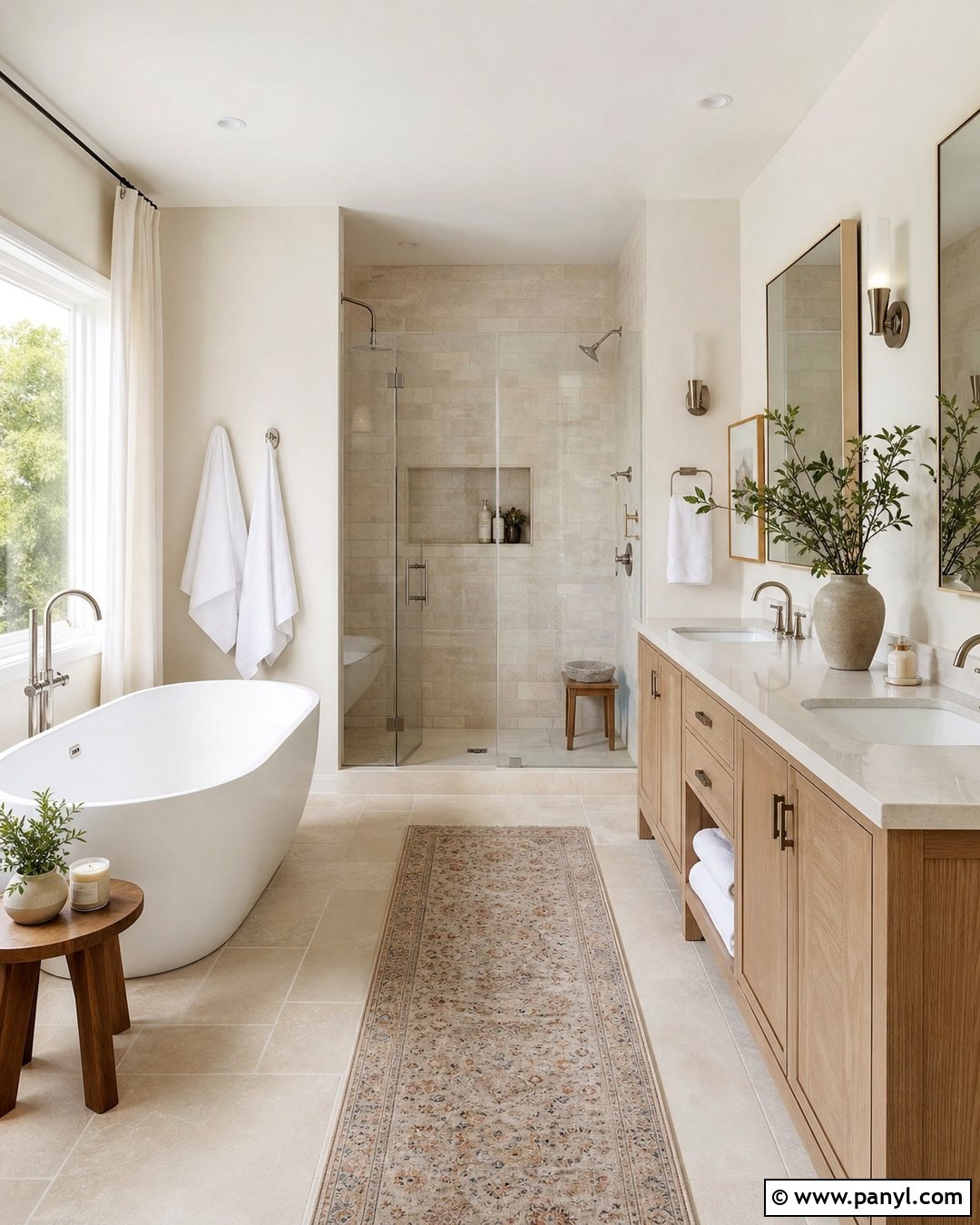
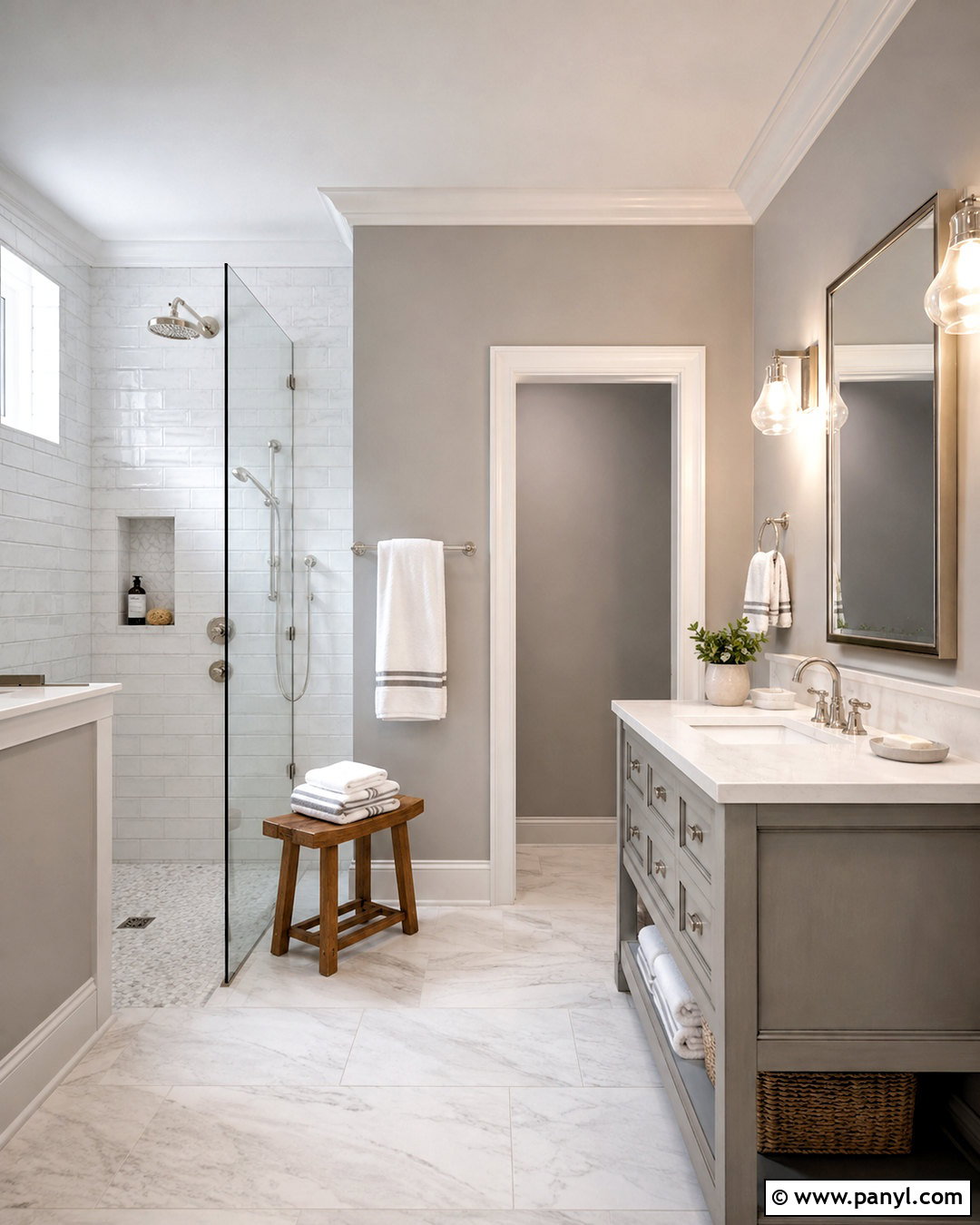
Turn a spacious primary bathroom into a quiet retreat by surrounding a white freestanding tub with Pale Oak walls. Place the tub near a window whenever possible and frame it with full-length ivory curtains for softness. Use large-format limestone-look tile across the floor and walk-in shower to create a continuous natural foundation. A double white oak vanity with creamy quartz counters provides generous storage. Choose brushed nickel fixtures, frameless shower glass, and oversized mirrors for a clean spa-like finish. A teak stool, folded white towels, and a neutral wool-look runner make the room feel comfortable instead of clinical. Keep decorative objects minimal. Pale Oak connects the wood, stone, and textiles, producing a restful bathroom where every element feels intentionally coordinated.
10. Pale Oak Farmhouse Bathroom
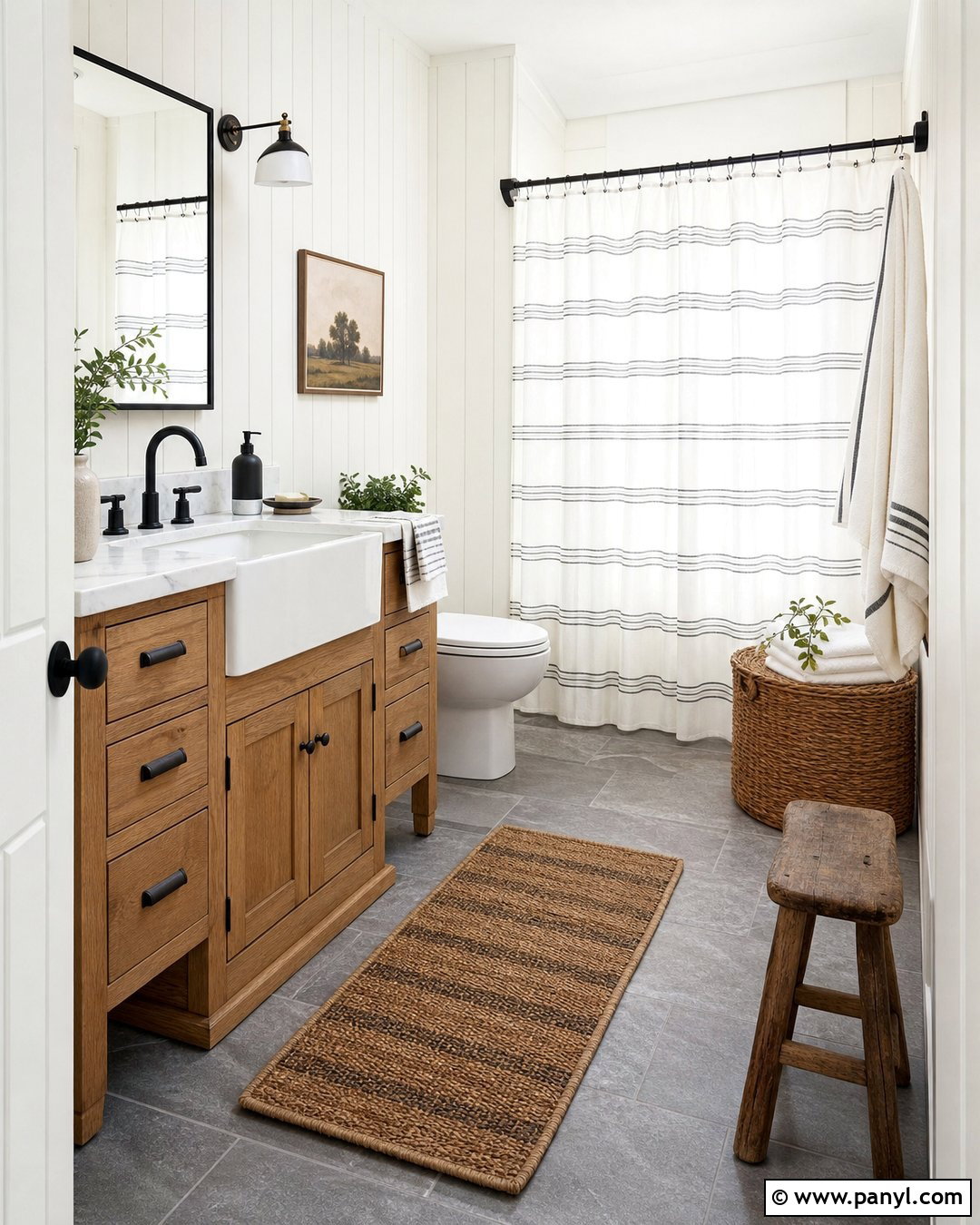
For a relaxed farmhouse bathroom, combine Pale Oak walls with a medium oak vanity and white apron-front sink. Add vertical white shiplap behind the vanity or bathtub, keeping the lines simple and evenly spaced. Matte black faucets, cabinet pulls, and a rectangular mirror provide practical contrast. Use warm gray slate-look porcelain on the floor for durability and a grounded appearance. A white shower curtain with a thin charcoal stripe can soften a standard tub alcove. Finish the room with woven baskets, white cotton towels, and one rustic wood stool. Skip excessive signs and themed accessories, which can make the room feel staged. The complete palette balances farmhouse character with cleaner modern details, allowing Pale Oak to serve as a warm bridge between white surfaces, dark metal, and natural wood.
11. Pale Oak Modern Floating Vanity Bathroom
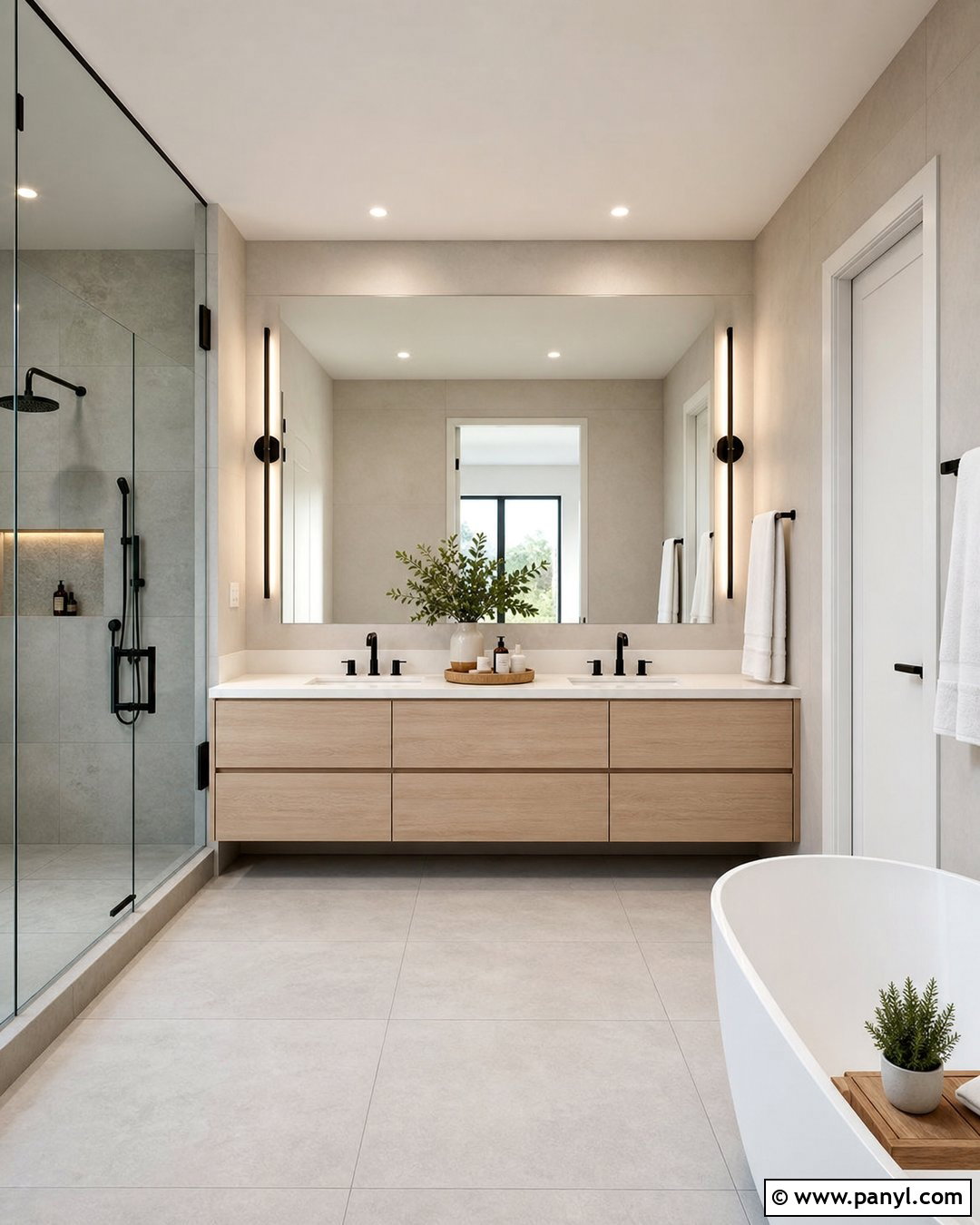
A floating vanity makes a Pale Oak bathroom feel open, streamlined, and easy to navigate. Choose a wide vanity in light oak or matte taupe with handle-free drawers. Top it with solid white quartz and either one long trough sink or two compact undermount sinks. Install a wall-to-wall mirror above the vanity to reflect the Pale Oak walls and available daylight. Large pale gray porcelain tiles can run across both the floor and shower for a seamless background. Use matte black faucets sparingly to add crisp definition. Recessed lighting and slim vertical sconces support the minimalist layout. Complete the room with white towels, a simple wooden tray, and concealed storage. The result feels modern and polished without becoming severe, thanks to the warm greige wall color.
12. Pale Oak Coastal Bathroom
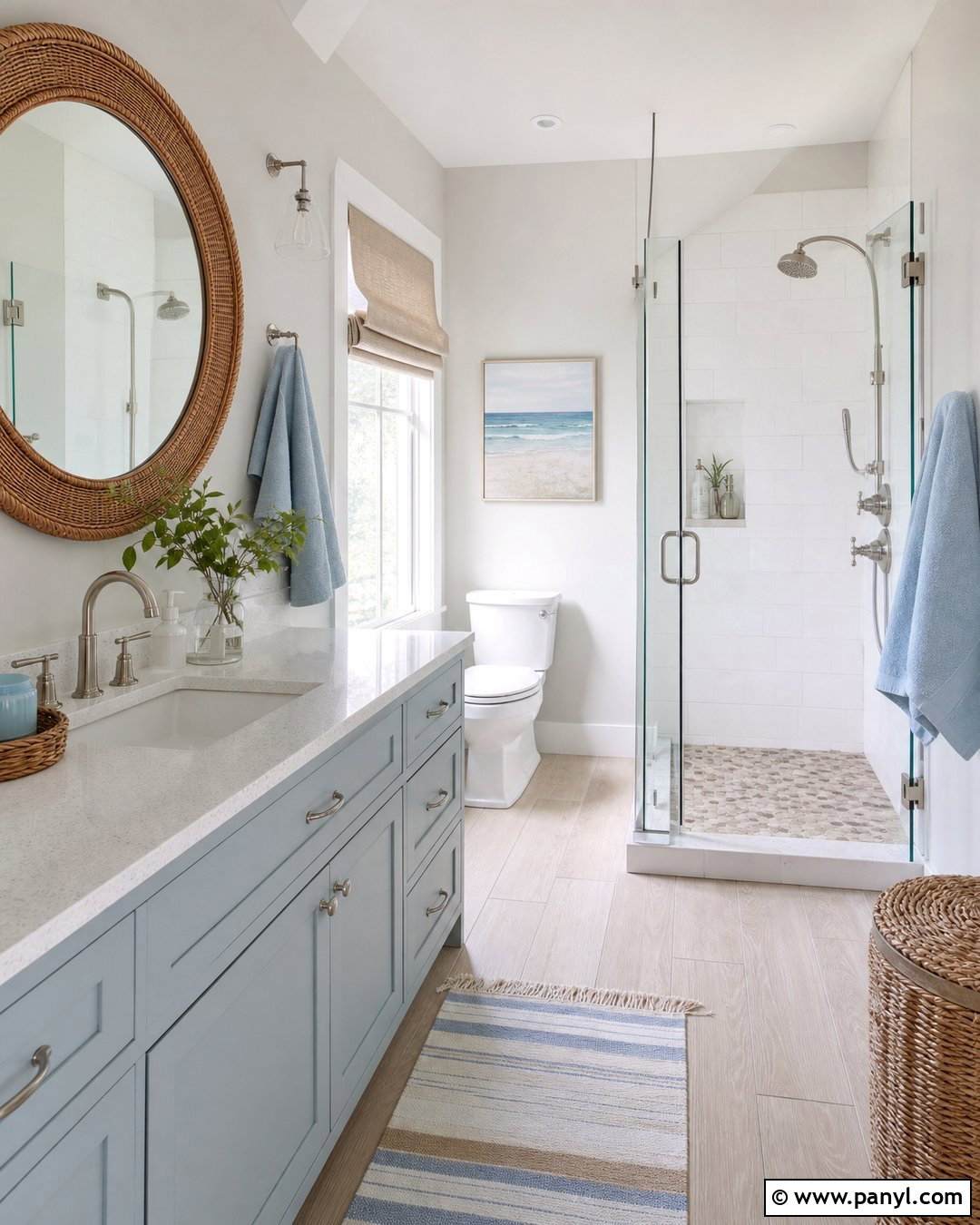
Pale Oak provides a subtle sandy foundation for a coastal bathroom that avoids obvious nautical themes. Pair it with a pale blue-gray vanity, white quartz countertop, and polished nickel fixtures. Use glossy white rectangular tile in the shower to reflect light, then install light beige pebble or small mosaic tile on the shower floor. A woven rattan mirror and natural linen Roman shade introduce texture. Choose white oak-look porcelain flooring for warmth and moisture-friendly practicality. Add soft blue towels, a striped cotton rug, and one piece of understated ocean artwork. Keep shells, anchors, and themed accessories to a minimum. This complete coastal palette feels breezy and relaxed because the colors suggest water, sand, and weathered wood without turning the bathroom into a literal seaside display.
13. Pale Oak Traditional Bathroom
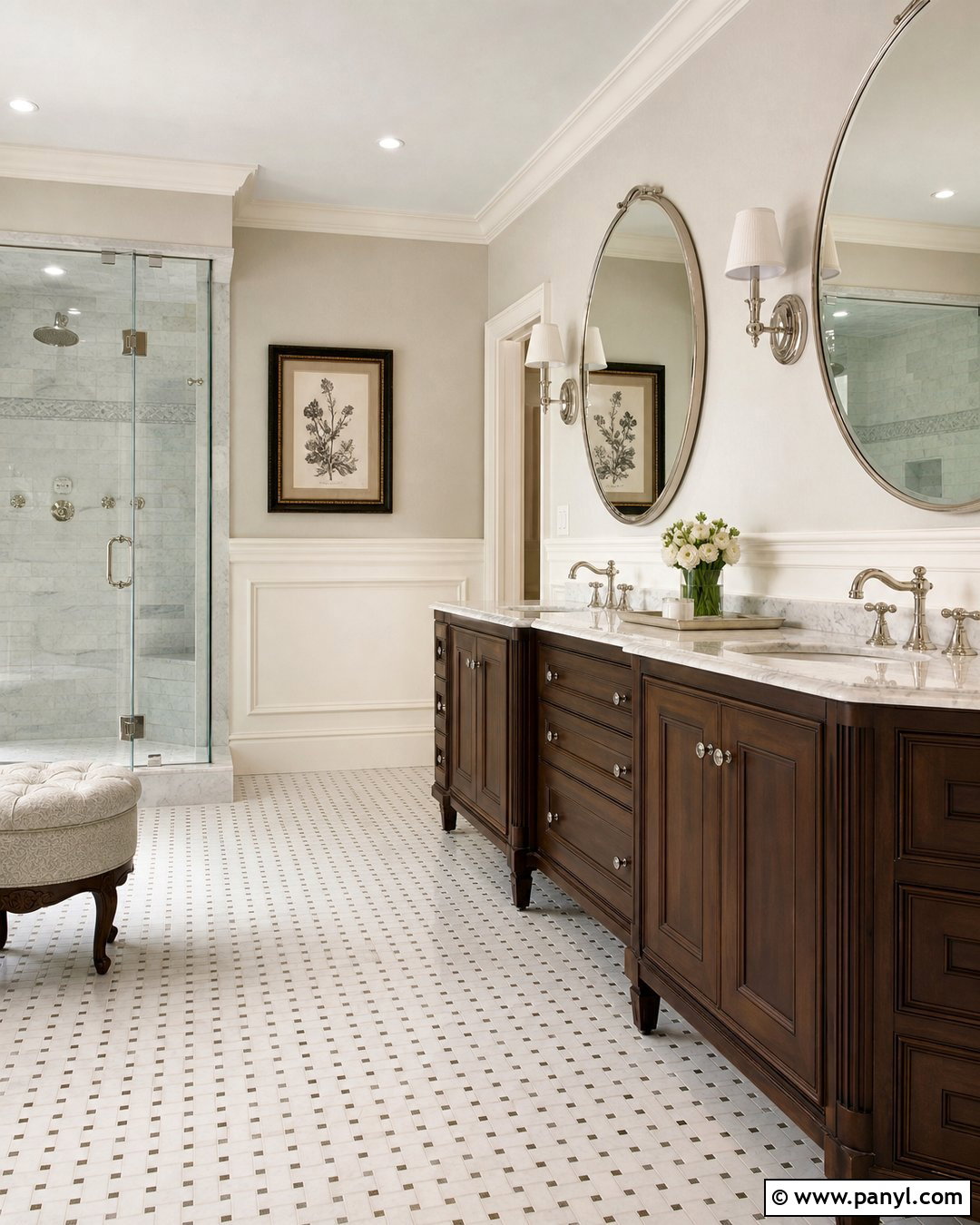
Detailed millwork and polished finishes help Pale Oak support a timeless traditional bathroom. Use the color above white raised-panel wainscoting and around a furniture-style vanity in dark stained wood. Select a creamy marble countertop with gentle gray veining and a matching backsplash. Polished nickel bridge faucets, oval mirrors, and fabric-shaded sconces add classic refinement. Cover the floor with white and gray basketweave tile, then keep the shower simple with white subway tile and framed glass. Include a small upholstered stool, white towels, and one traditional framed print. The dark vanity anchors the pale surfaces, while Pale Oak softens the transition between white millwork and warm wood. This complete arrangement feels formal enough for a primary suite but remains comfortable for everyday use.
14. Pale Oak Minimalist Bathroom
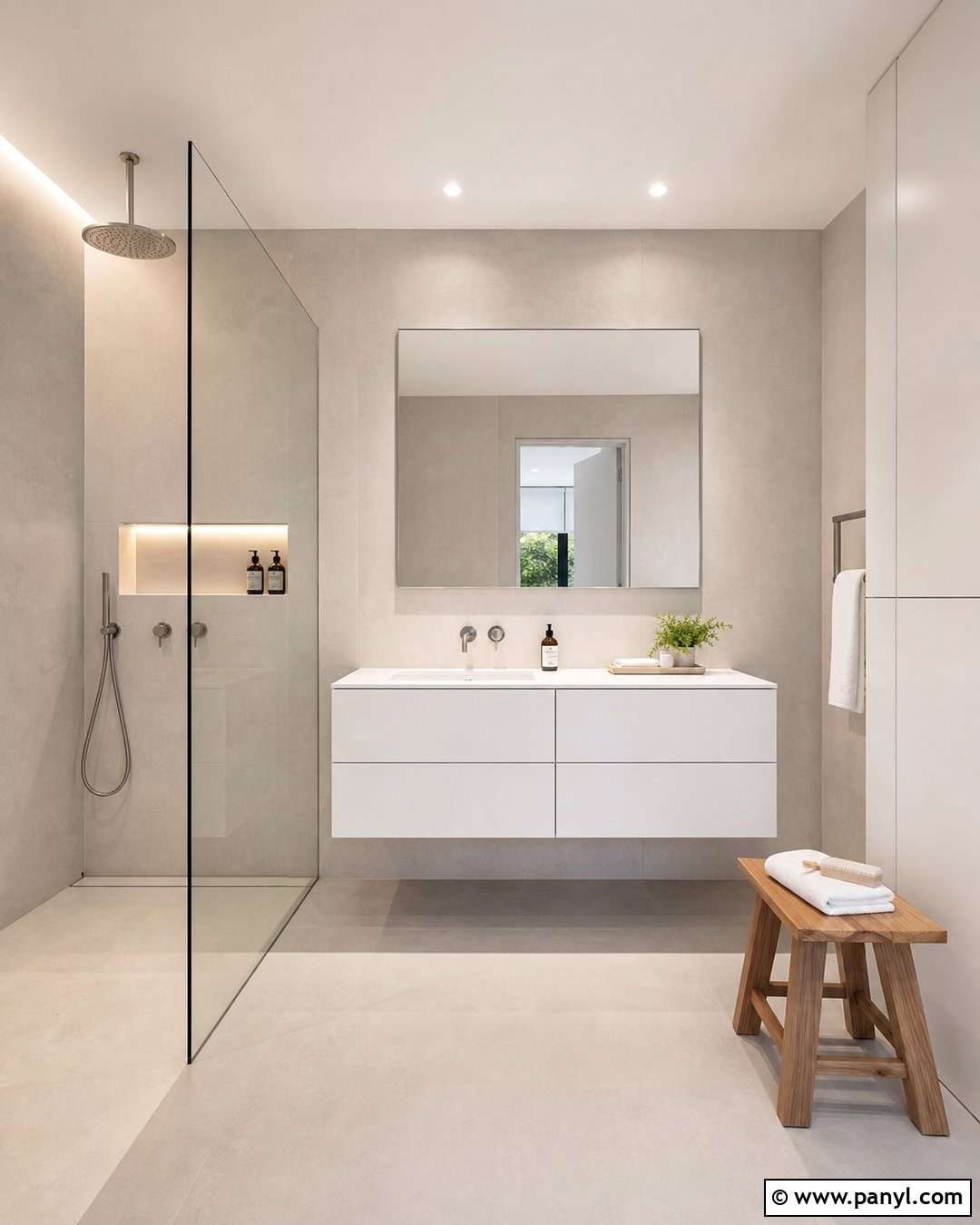
Can a neutral bathroom feel warm without adding many accessories? Pale Oak walls make that possible when paired with carefully chosen minimalist finishes. Install a wall-mounted white vanity with integrated sink and concealed drawers. Use large warm gray porcelain slabs in the shower and across the floor to reduce grout lines. A frameless rectangular mirror, chrome wall-mounted faucet, and clear shower panel maintain the clean geometry. Add one recessed niche for bath products and a simple oak stool for towels. Lighting should include discreet ceiling fixtures and a slim illuminated mirror rather than decorative pendants. Keep textiles white or oatmeal and remove unnecessary countertop items. The restrained palette allows the room’s proportions, surfaces, and precise layout to stand out while Pale Oak prevents the space from feeling sterile.
15. Pale Oak Vintage Bathroom
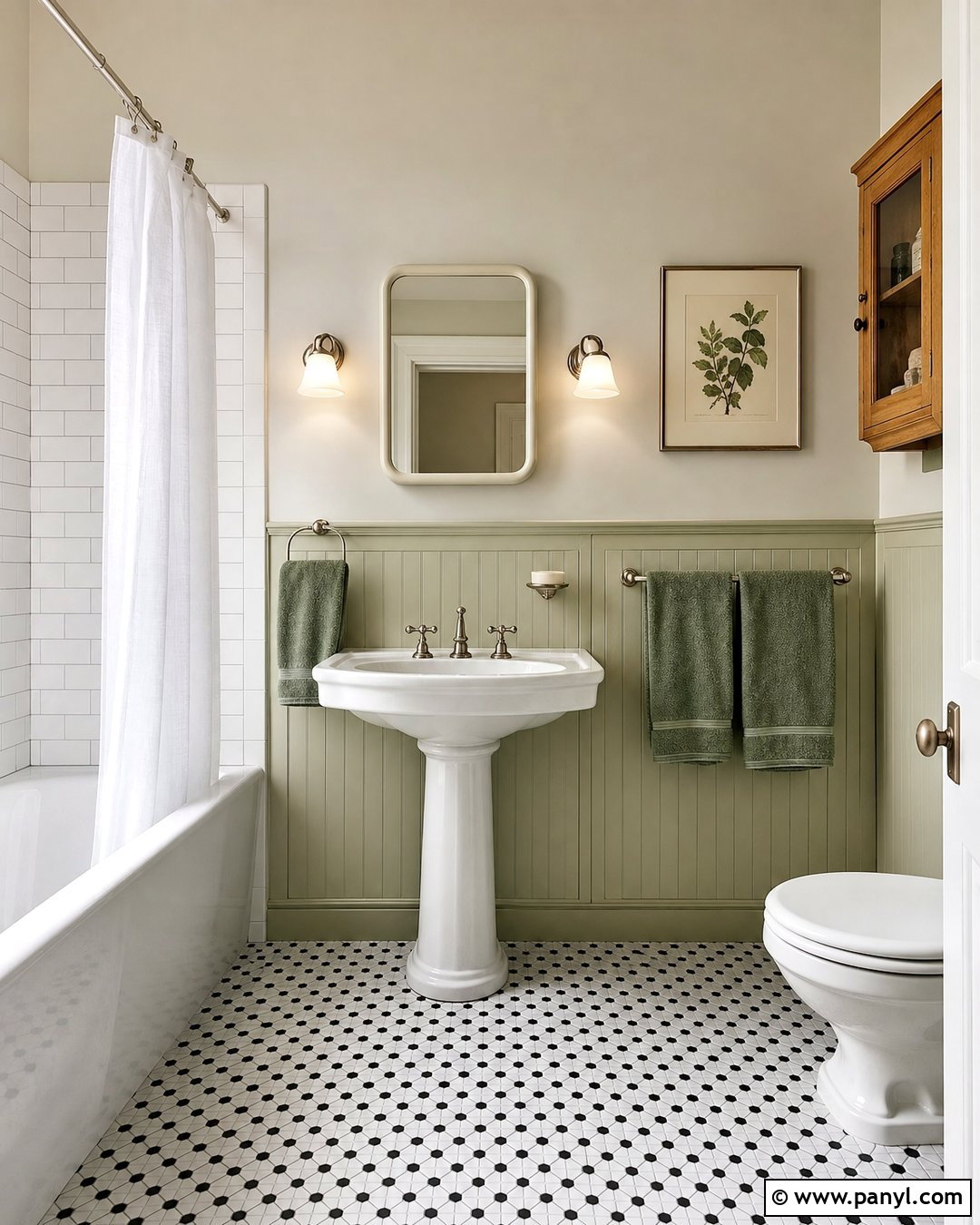
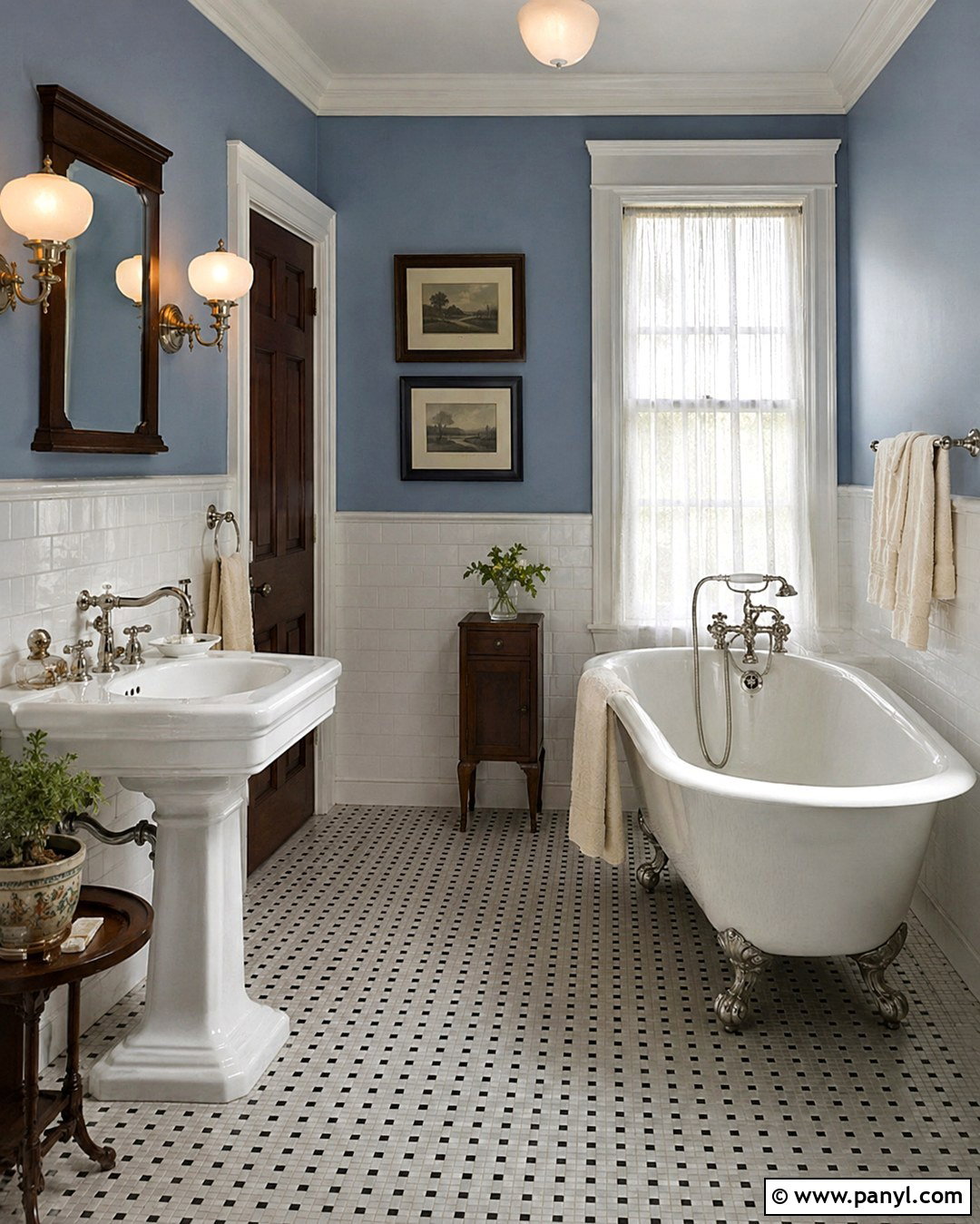
Give a Pale Oak bathroom vintage character with a pedestal sink, traditional tile, and gently aged metal finishes. Start with black-and-white hexagon mosaic flooring and a white subway-tile tub surround. Choose a white porcelain pedestal sink with polished nickel cross-handle faucets. Above it, hang a rounded medicine cabinet with a slim metal frame. Milk-glass sconces, a white shower curtain, and a small wooden wall cabinet reinforce the older-home atmosphere. Pale Oak walls warm the black-and-white foundation and make the room feel softer than a stark white scheme. Add faded green towels and one framed botanical print for muted color. The finished space should feel collected but not crowded, combining period-inspired details with dependable modern storage and an easy-to-maintain bathroom layout.
16. Pale Oak Bathroom With Terrazzo Floor
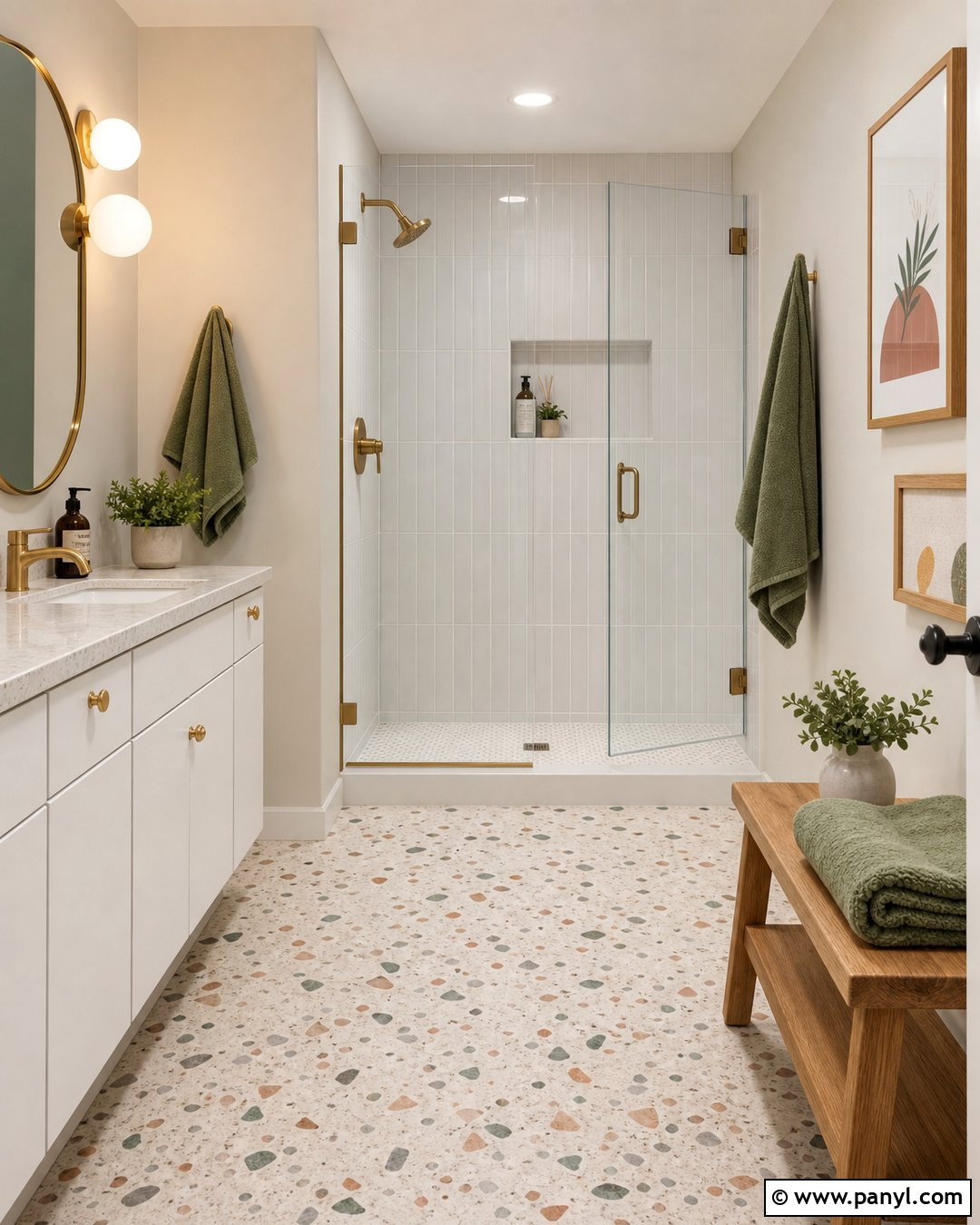
A terrazzo floor can introduce playful color while Pale Oak keeps the overall bathroom composed. Choose a light cream terrazzo tile containing small chips of taupe, terracotta, gray, and muted green. Pair it with a simple white vanity, integrated quartz sink, and brushed brass hardware. Continue Pale Oak across the walls so the warmer stone fragments have a coordinating background. Use large matte white shower tiles rather than adding another strong pattern. A rounded brass mirror and two white globe sconces repeat the floor’s curved chips. Add muted green towels and a small oak bench to finish the scheme. Keeping the fixtures and cabinetry simple allows the terrazzo to remain the focal point while the complete room still feels balanced, practical, and suitable for daily use.
17. Pale Oak Bathroom With Checkerboard Floor
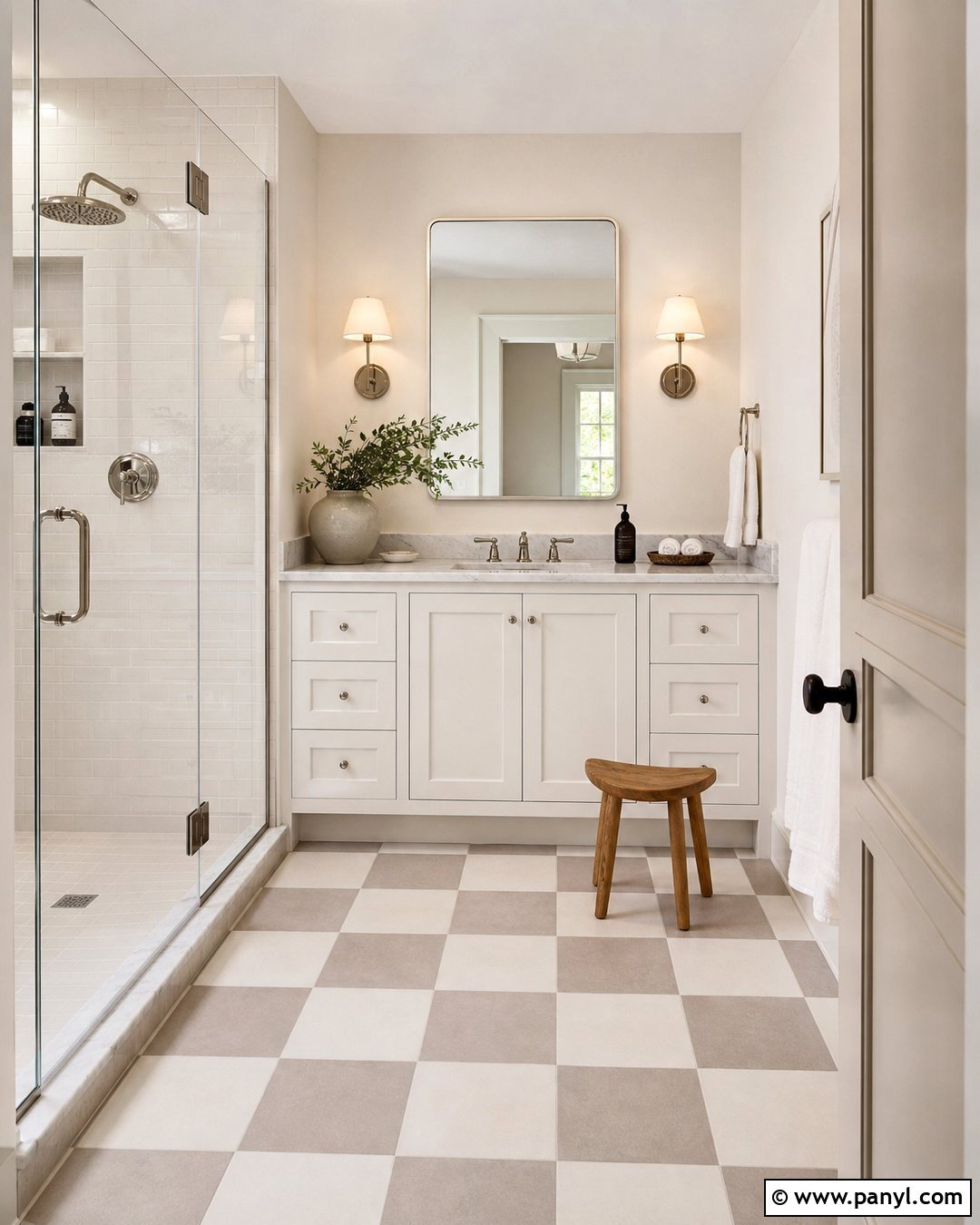
A checkerboard floor gives Pale Oak walls a graphic foundation that can suit both classic and modern bathrooms. Choose warm white and light taupe tiles instead of high-contrast black and white. Lay them diagonally in a larger bathroom or straight in a compact room for a quieter effect. Add a white shaker vanity with a pale stone top and polished nickel hardware. A frameless glass shower with ivory tile keeps attention on the floor. Use a simple rectangular mirror, shaded sconces, and white towels to maintain visual order. A natural oak stool can repeat the floor’s warmer tones. The Pale Oak walls connect the two tile colors, helping the pattern feel integrated into the complete design rather than appearing like an unrelated decorative feature.
18. Pale Oak Bathroom With Penny Tile
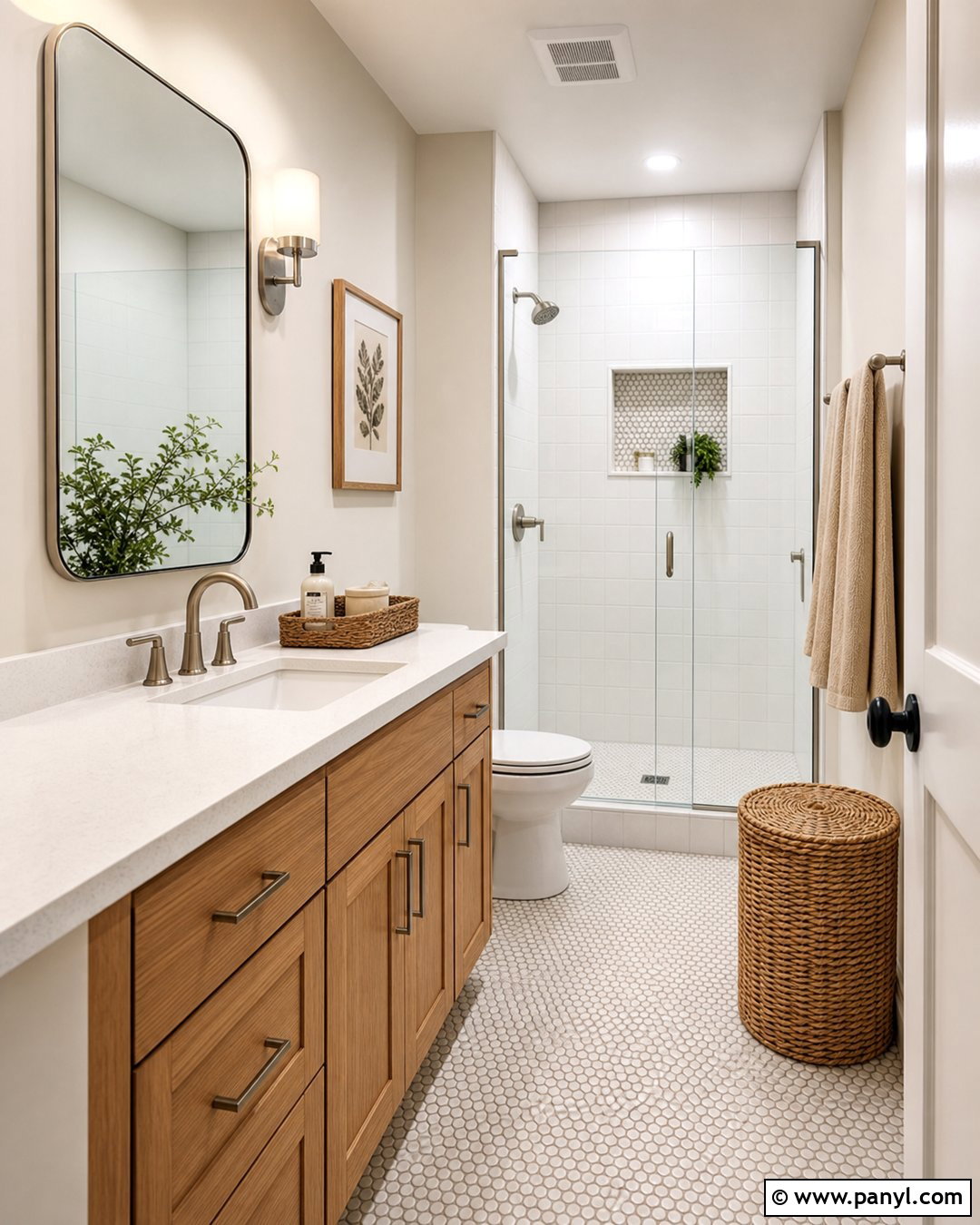
Small penny tile adds texture and movement to a Pale Oak bathroom without requiring bold color. Cover the floor with matte white penny rounds and use light warm gray grout to define the pattern. A medium-tone oak vanity and white quartz counter bring structure to the small-scale tile. Continue the shower with simple white square tiles and include a penny-tile niche for continuity. Select brushed nickel faucets and a thin metal mirror for a soft, understated finish. Pale Oak walls prevent the white tile from looking too clinical and complement the natural vanity. Finish with oatmeal towels, a woven storage basket, and one small plant. This coordinated look works especially well in narrow bathrooms where texture creates interest but large patterns might make the floor appear crowded.
19. Pale Oak Bathroom With Beige Tile
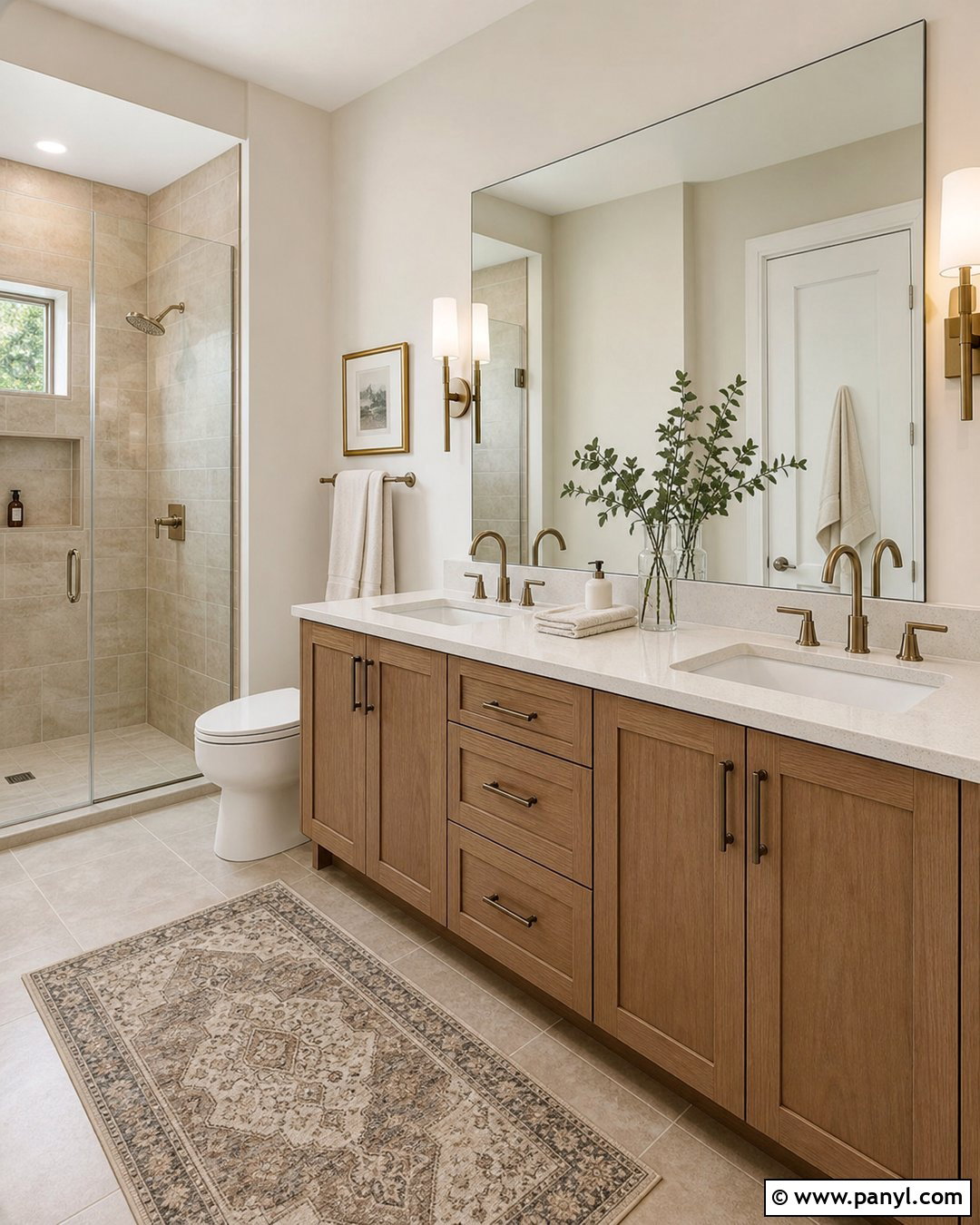
Existing beige tile can look more intentional when it is surrounded by Pale Oak and updated accents. Choose this scheme for a bathroom with tan porcelain flooring, a cream tub, or warm stone shower walls. Paint the remaining walls Pale Oak to create a smoother transition between beige finishes and white trim. Update the vanity with a medium brown wood finish and a creamy quartz countertop. Brushed brass or champagne bronze hardware complements the warmth without appearing overly yellow. Add a large frameless mirror, simple white sconces, and fresh ivory towels. A taupe-and-cream rug can connect the floor and wall colors. Avoid cool blue-gray accessories, which may make the beige appear more orange. The finished bathroom feels cohesive, warm, and deliberately layered rather than dated.
20. Pale Oak Bathroom With Gray Tile
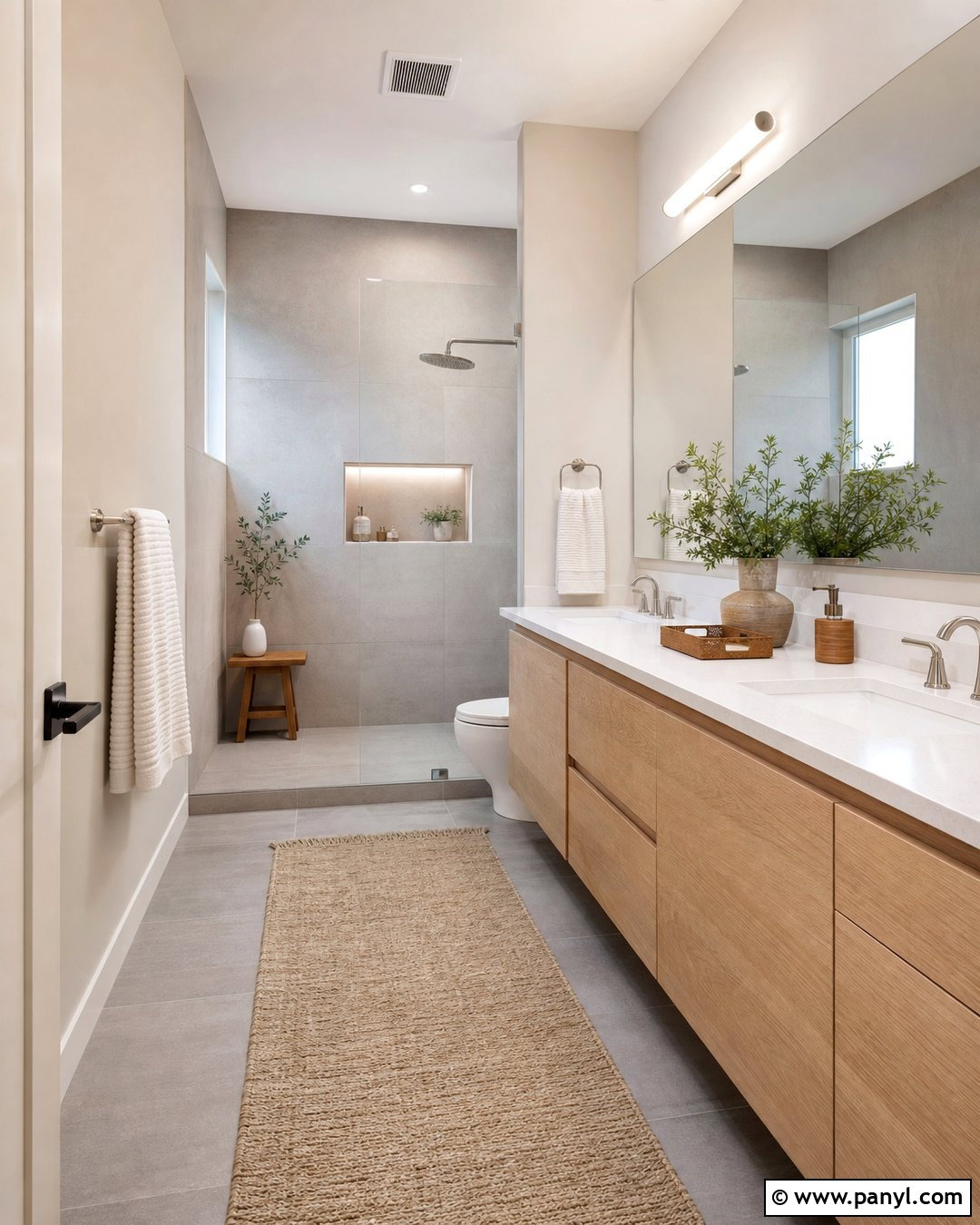
Pale Oak can soften a bathroom filled with cool gray tile by adding controlled warmth to the surrounding walls. Use it with medium gray porcelain flooring and a shower tiled in pale concrete-look slabs. Choose a white oak vanity to bridge the cool floor and warmer paint. A white quartz counter, brushed nickel faucets, and a frameless mirror keep the design clean. Add warm white towels, a beige runner, and small wooden accessories to prevent the room from becoming overly gray. If the tile has strong blue undertones, test Pale Oak beside it before painting the whole space. Balanced lighting also matters, so combine overhead illumination with sconces near the mirror. This complete palette creates a gentler, more welcoming bathroom while preserving the tile’s contemporary character.
21. Pale Oak Bathroom With Tub And Shower Curtain
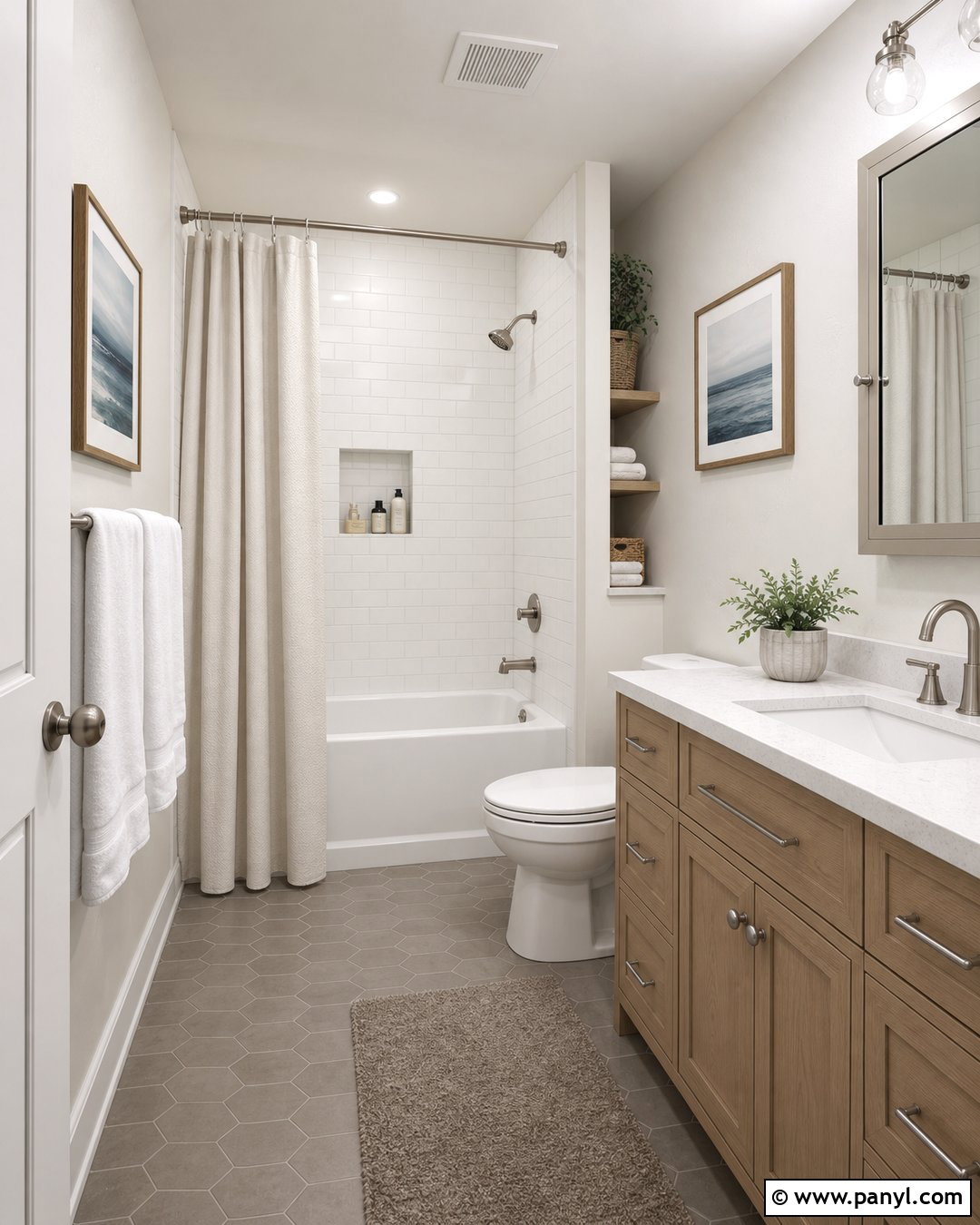
A standard tub alcove can become a polished feature when the entire bathroom follows one coordinated plan. Paint the open walls Pale Oak and surround the tub with glossy white subway tile. Hang a full-length ivory shower curtain close to the ceiling to emphasize height and conceal everyday bath products. Use a light oak vanity with a white quartz top and brushed nickel fixtures. Warm gray hexagon floor tile adds a durable pattern without overwhelming the room. Install a recessed medicine cabinet and a slim wall shelf to increase storage. Finish with white towels, a taupe bath mat, and a small framed print. This approachable design works for family bathrooms because it combines practical surfaces and storage with a neutral palette that feels bright, calm, and thoughtfully finished.
22. Pale Oak Bathroom With Walk-In Shower
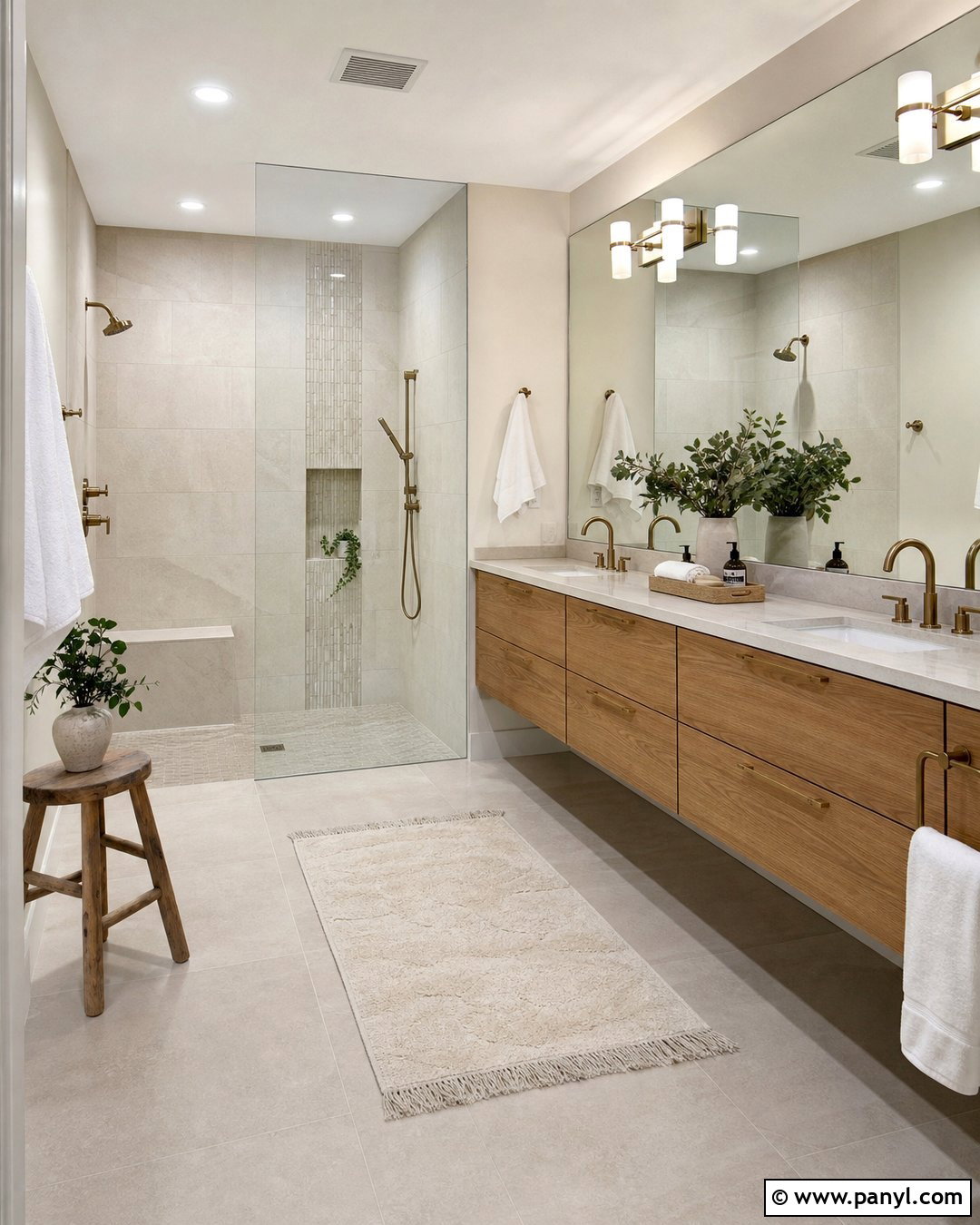
Make a walk-in shower the centerpiece by balancing transparent glass and textured tile with Pale Oak walls. Use large warm white tiles inside the shower, then add a vertical mosaic feature behind the fixtures or within the niche. Select a floating oak vanity with a creamy quartz countertop and wide frameless mirror. Brushed brass faucets and shower hardware bring gentle warmth to the neutral surfaces. Continue pale limestone-look porcelain across the main floor and shower floor for a connected appearance, choosing an appropriate smaller format where extra grip and drainage are needed. Include a built-in shower bench and recessed storage niche for comfort. White towels and a wooden stool complete the design. Pale Oak quietly links the stone, wood, tile, and metal into one cohesive bathroom.
23. Pale Oak Windowless Bathroom
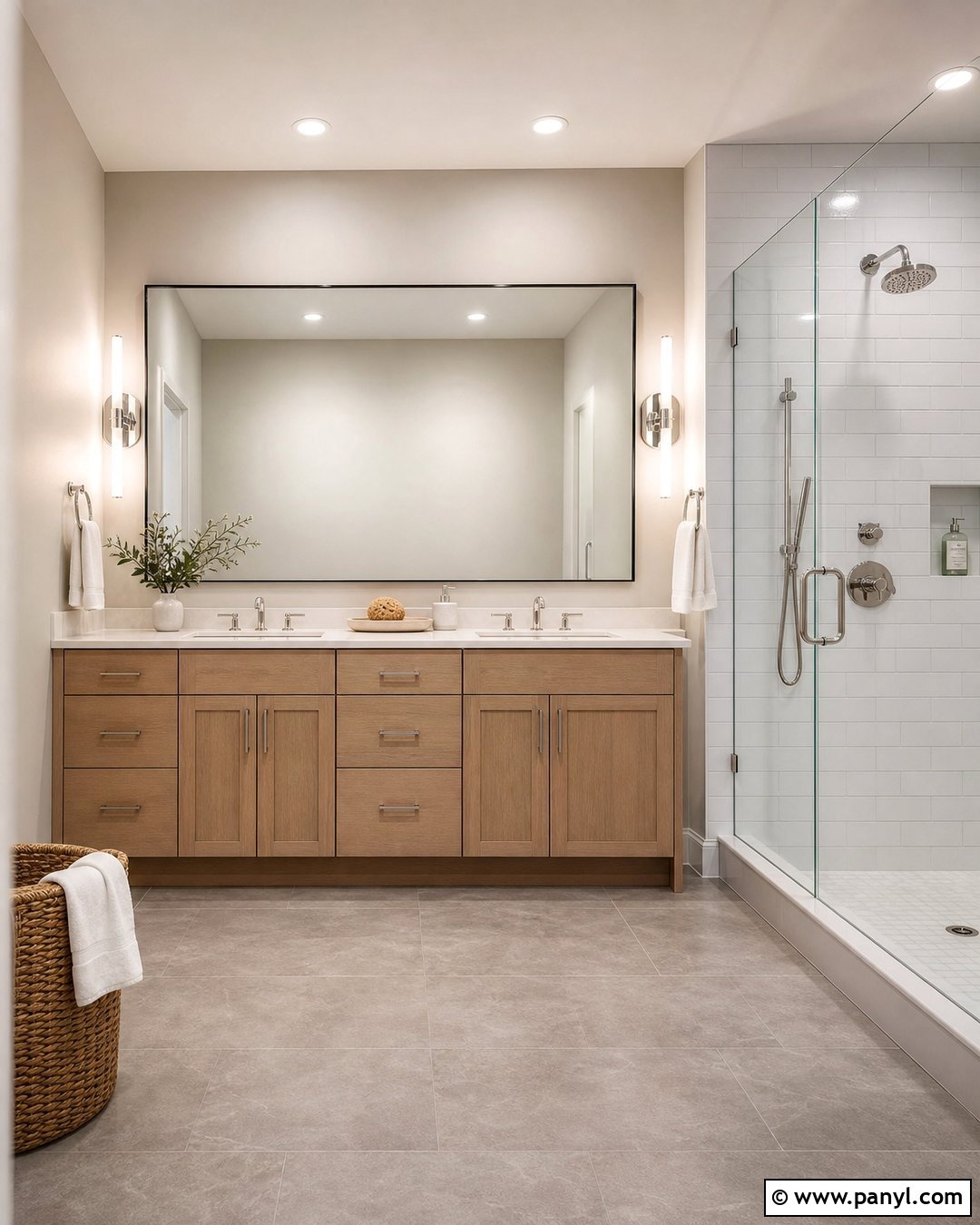
A windowless bathroom needs layered lighting and reflective finishes to keep Pale Oak from appearing dull. Use a large mirror above a white or pale oak vanity, then place bright wall sconces on both sides for even illumination. Add recessed ceiling lights and choose clean, neutral-white bulbs that render colors clearly. Glossy white shower tile, polished nickel fixtures, and a clear glass door help bounce light around the room. Keep the floor slightly darker with warm gray porcelain so the design has a stable foundation. Paint the ceiling and trim a clean white to provide visible contrast against Pale Oak walls. Add white towels, a light woven basket, and minimal countertop decor. The resulting room feels open and comfortable despite having no natural daylight.
24. Pale Oak North-Facing Bathroom
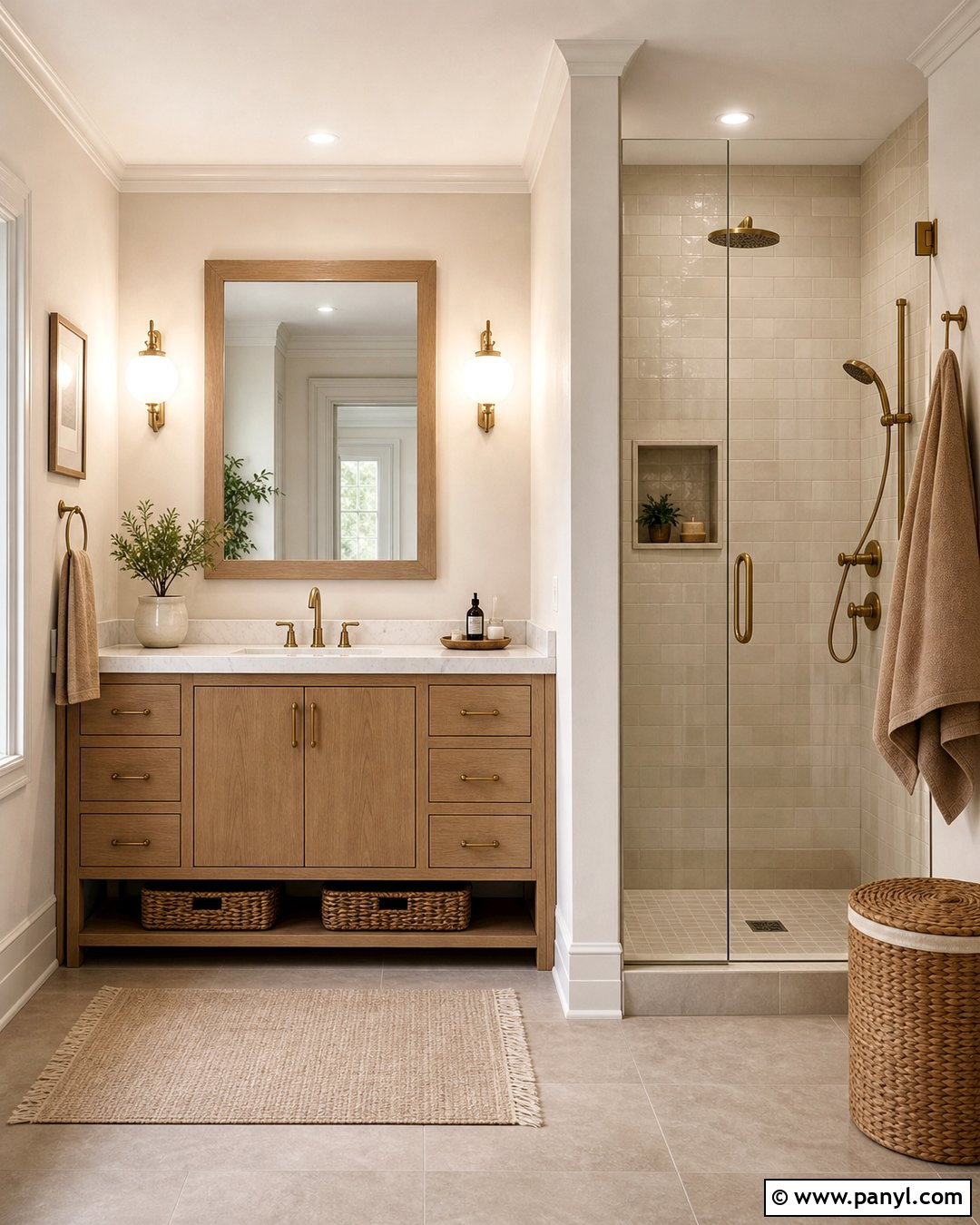
Cool northern daylight may encourage Pale Oak to read grayer, so support it with warm materials and balanced lighting. Pair the walls with a natural oak vanity, creamy quartz countertop, and ivory shower tile. Avoid icy white finishes or strongly blue-gray flooring. Instead, use light taupe porcelain tile and an oatmeal bath rug. Brushed brass hardware can provide warmth, while opal-glass sconces produce a soft, even glow around the vanity. Paint the trim a gentle warm white rather than a noticeably blue white. Add tan towels, woven storage, and a simple wood-framed mirror to reinforce the welcoming palette. The complete bathroom remains light and neutral, but every supporting material helps offset cool daylight and brings out Pale Oak’s softer beige and taupe qualities.
25. Pale Oak Budget Bathroom Makeover
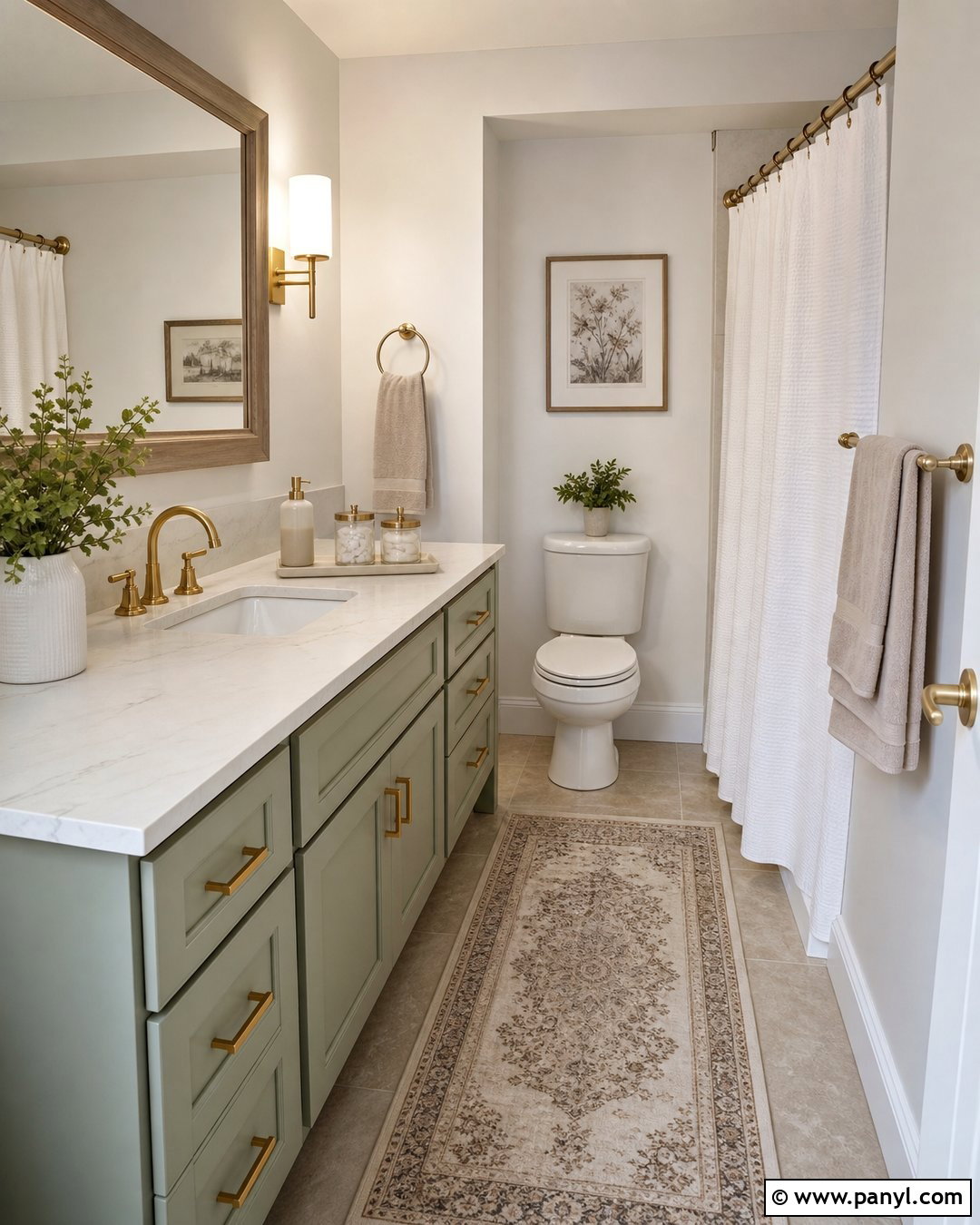
A budget-friendly Pale Oak bathroom makeover can feel complete without replacing every permanent finish. Paint the walls first, then refresh an existing vanity with satin white, muted sage, or deep charcoal paint. Replace dated knobs with simple brushed brass or matte black pulls. Add a large framed mirror and a pair of clean-lined sconces for immediate impact. Keep existing neutral tile, but introduce a washable runner that combines cream, taupe, and gray. A new white shower curtain, coordinated towels, and matching countertop containers make the room feel organized. Use peel-and-stick flooring only on a properly prepared surface and choose a subtle stone or geometric pattern. Pale Oak ties these affordable updates together, helping the bathroom look planned rather than assembled from unrelated individual changes.
Conclusion:
These 25 Benjamin Moore Pale Oak Bathroom Ideas show how one warm neutral can support many complete bathroom looks. Pale Oak works with white oak, walnut, painted vanities, crisp white tile, warm stone, graphic flooring, and several metal finishes. The strongest results come from treating the room as one coordinated composition rather than choosing each element separately. Consider the undertones of existing tile, the direction of natural light, and the color temperature of your bulbs. Sample Pale Oak beside the vanity, countertop, floor, and trim before committing. Once those relationships feel balanced, add storage, textiles, mirrors, and lighting that strengthen the chosen look while keeping the bathroom comfortable, cohesive, and practical.

Related Ideas and Inspiration:
Leave a Reply