
Choosing the right wall color can make a living room feel brighter, larger, and more welcoming without requiring a full remodel. These 20 light paint colors for living room ideas go beyond basic white, offering warm neutrals, gentle pastels, and nature-inspired hues that work with many decorating preferences. Warm whites, creamy neutrals, pale blues, and soft greens remain especially useful because they create an airy backdrop while allowing furniture and artwork to stand out. Paint can shift noticeably as daylight changes, so test large samples beside your flooring, upholstery, and trim before committing. () From cozy traditional rooms to relaxed modern spaces, the complete looks below make it easier to explore 20 light paint colors for living room ideas.

1. Warm White Living Room Paint
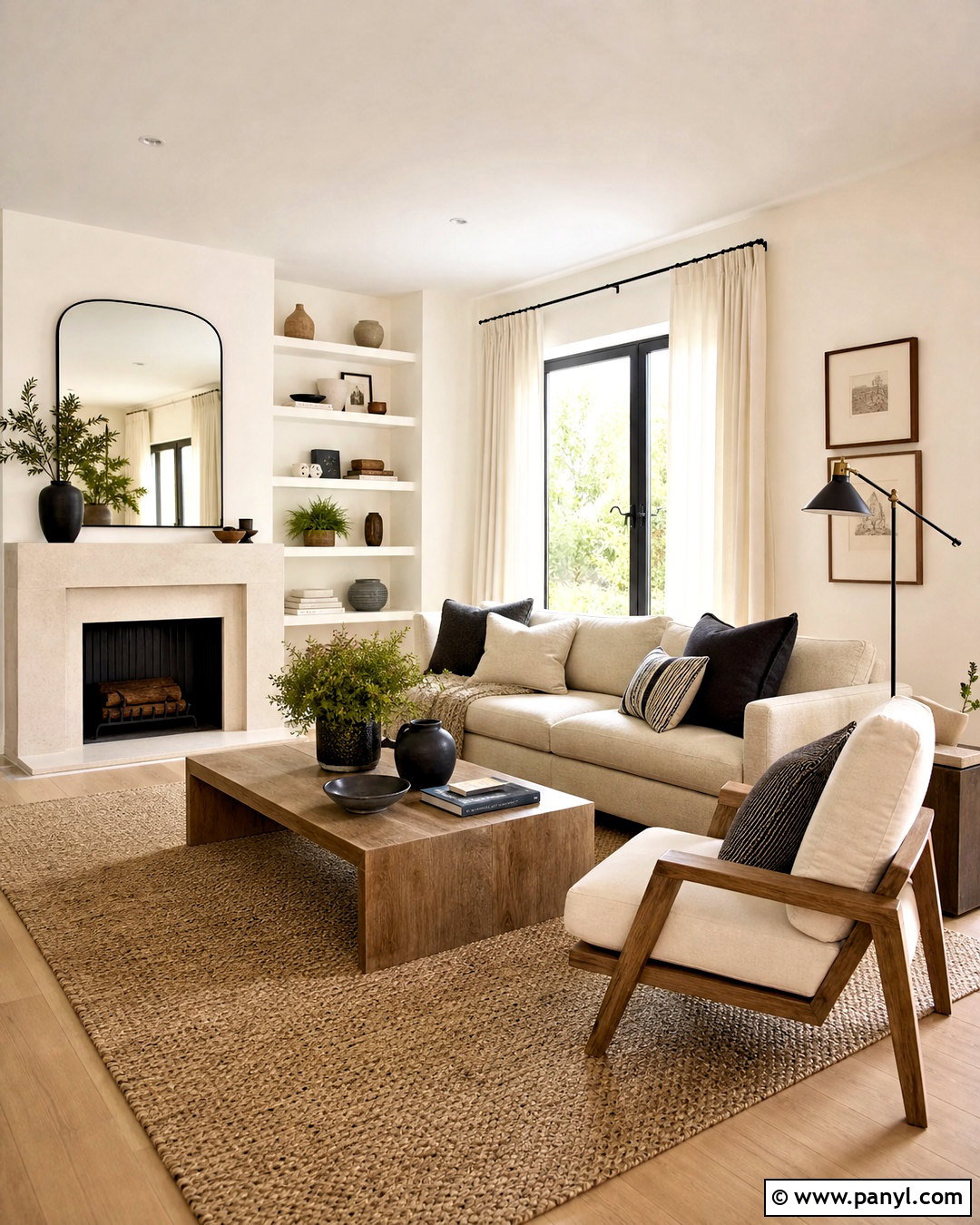
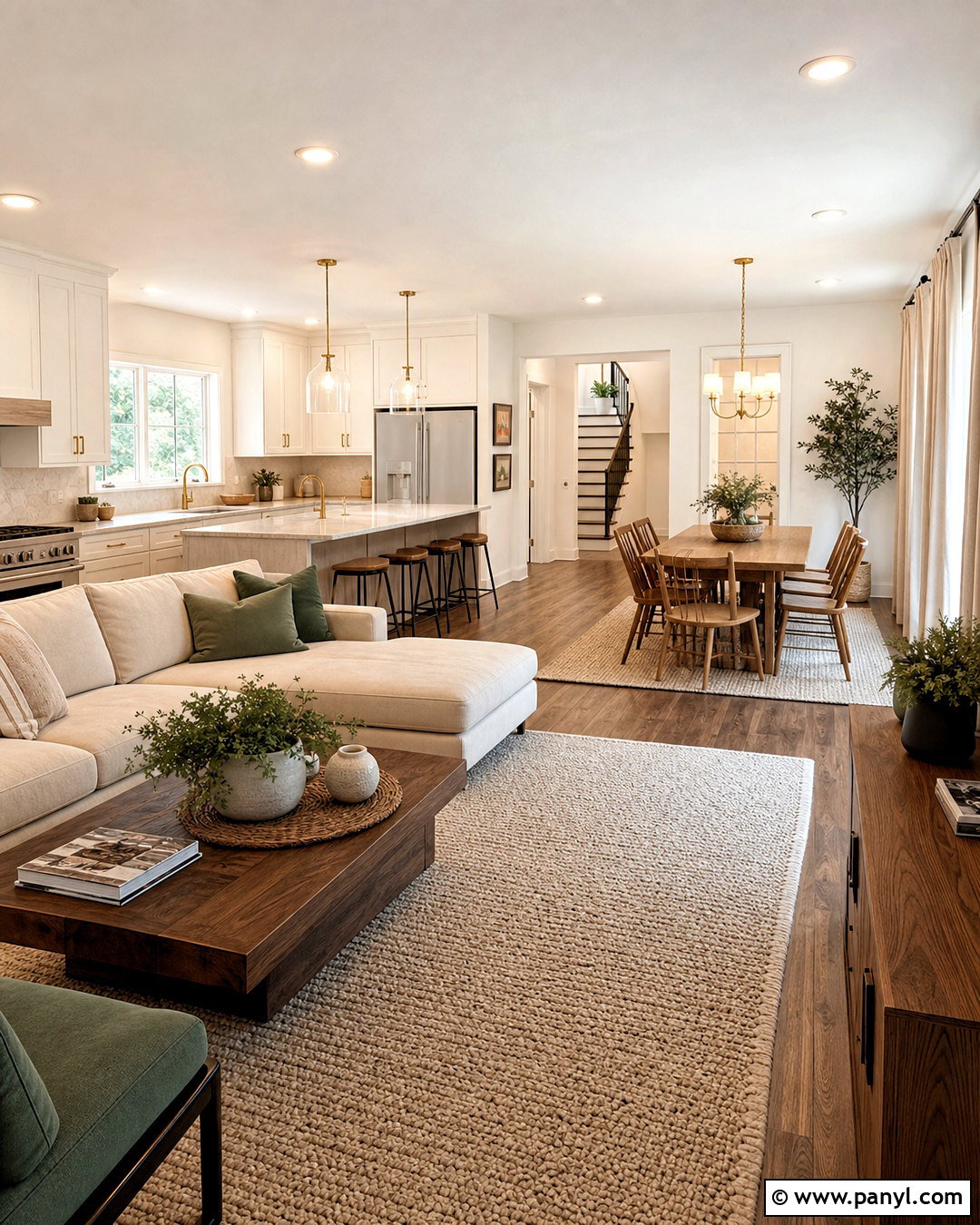
Warm white walls create a clean living room without the cold feeling that sometimes comes with pure white. Choose a shade with soft cream or beige undertones, then repeat that warmth through an oatmeal sofa, natural oak coffee table, and woven area rug. Off-white curtains can soften the windows while maintaining an open appearance. Add contrast with matte black floor lamps, dark bronze frames, and a few charcoal pillows. Green plants and handmade ceramic pieces keep the room relaxed rather than overly polished. This complete scheme works particularly well in living rooms with warm wood flooring or limited daylight. Paint the ceiling and trim a slightly cleaner white so the walls retain their gentle, welcoming character.
2. Creamy White Living Room Paint
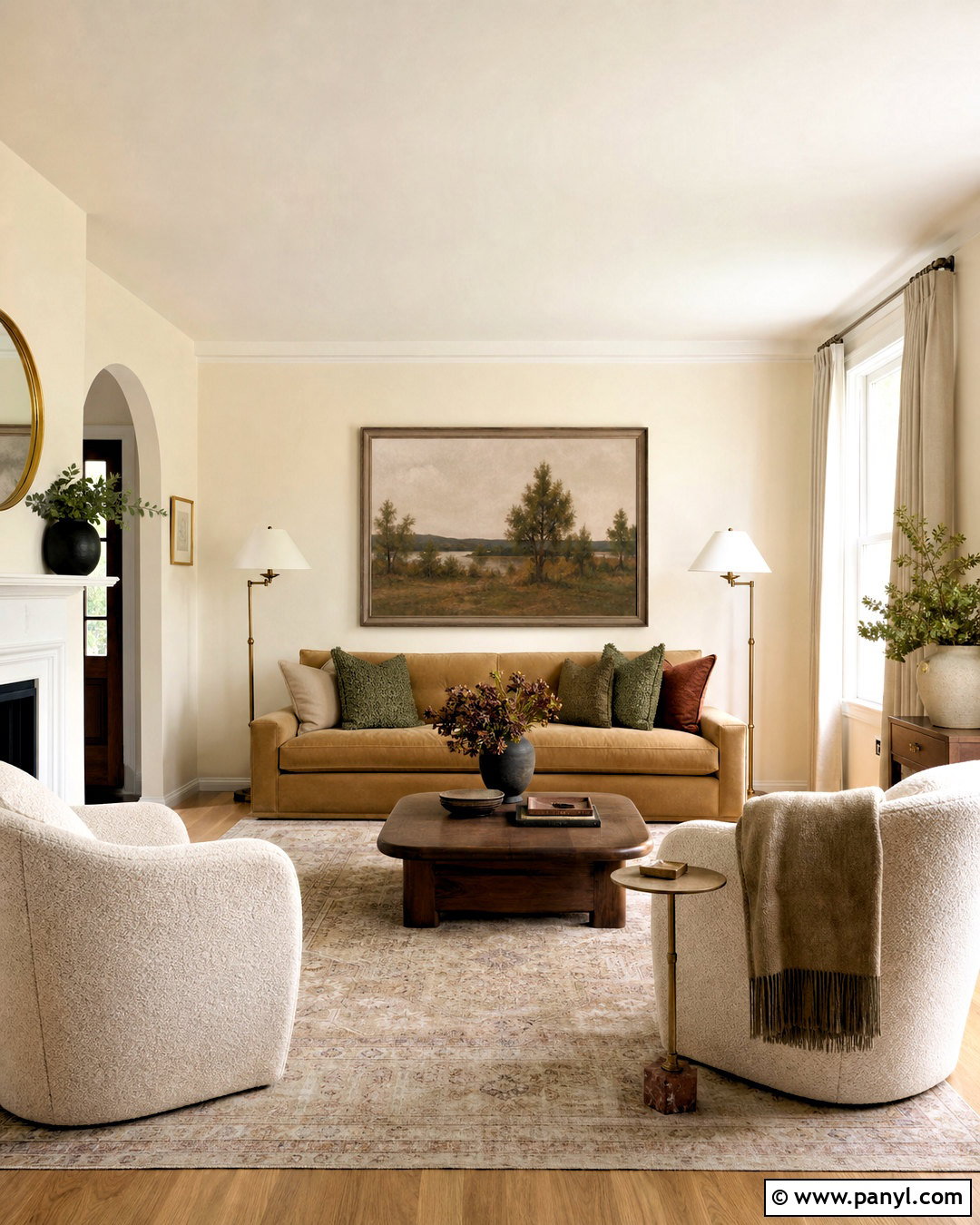
Imagine a softly glowing room where every finish feels comfortable and connected. Creamy white paint supplies that warmth while remaining light enough for a smaller living room. Pair it with a camel-colored sofa, ivory boucle chairs, and a medium-tone walnut coffee table. A faded beige rug can define the seating area without creating a harsh boundary. Use antique brass lamps, linen curtains, and muted landscape artwork to build a layered traditional look. Rust, olive, and chocolate brown pillows introduce restrained color. Keep larger furniture simple so the warm walls remain elegant instead of yellow-looking. Creamy white is especially attractive around a painted fireplace, where matching walls, mantel, and built-ins can create a seamless and spacious result.
3. Soft Ivory Living Room Paint
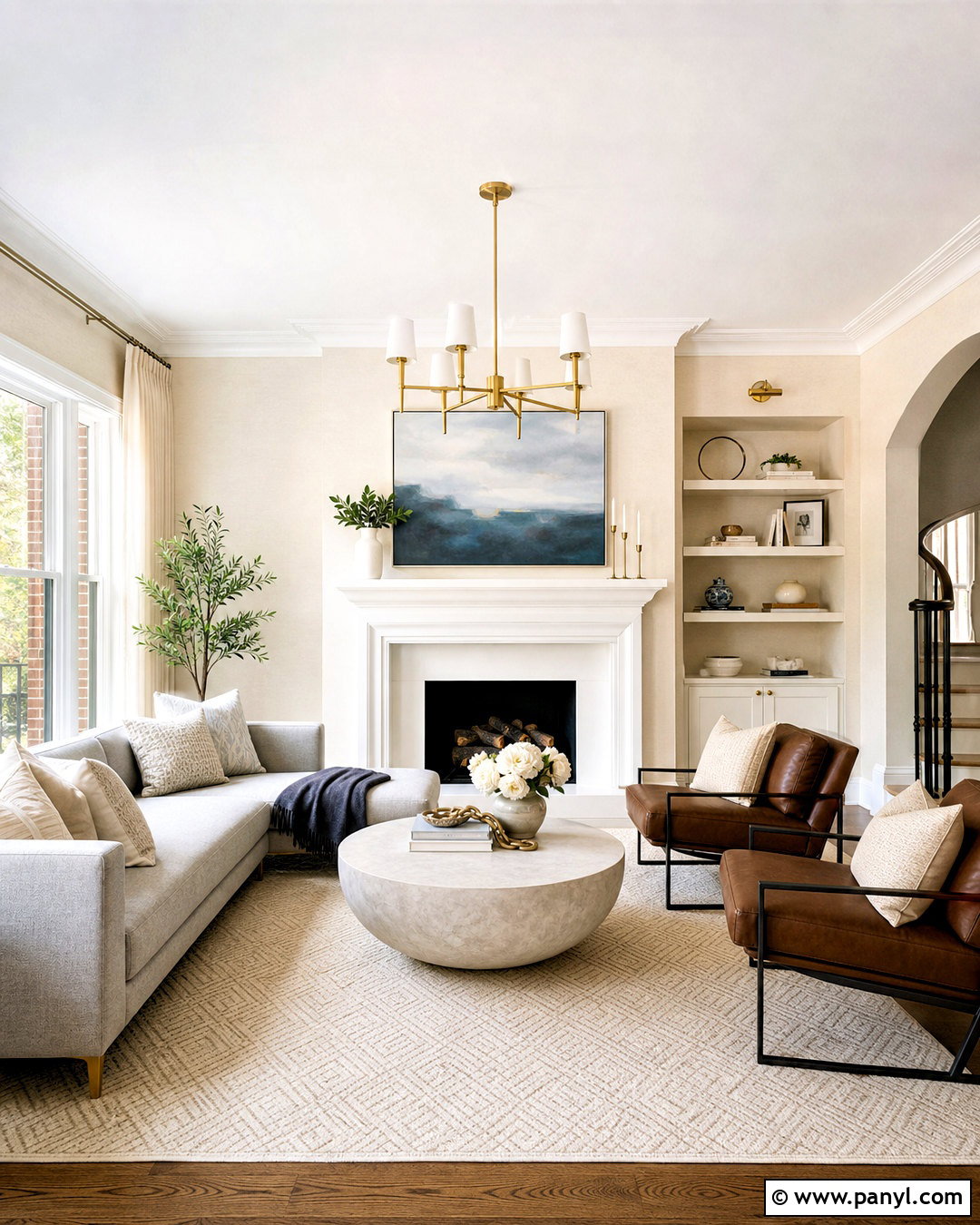
Soft ivory provides a graceful middle ground between crisp white and noticeable cream. It looks especially inviting in a transitional living room with classic furniture and modern accessories. Begin with an ivory wall color, white-painted trim, and light oak flooring. Arrange a pale gray sectional opposite two tan leather chairs, using a round marble coffee table to keep the center visually open. Add full-length flax linen curtains and a cream rug with a subtle geometric pattern. Brushed brass lighting brings warmth, while blue-gray pillows prevent the palette from becoming overly beige. A large abstract artwork can introduce muted blue, sand, and terracotta. The finished room feels polished and bright, yet comfortable enough for daily family use.
4. Light Greige Living Room Paint
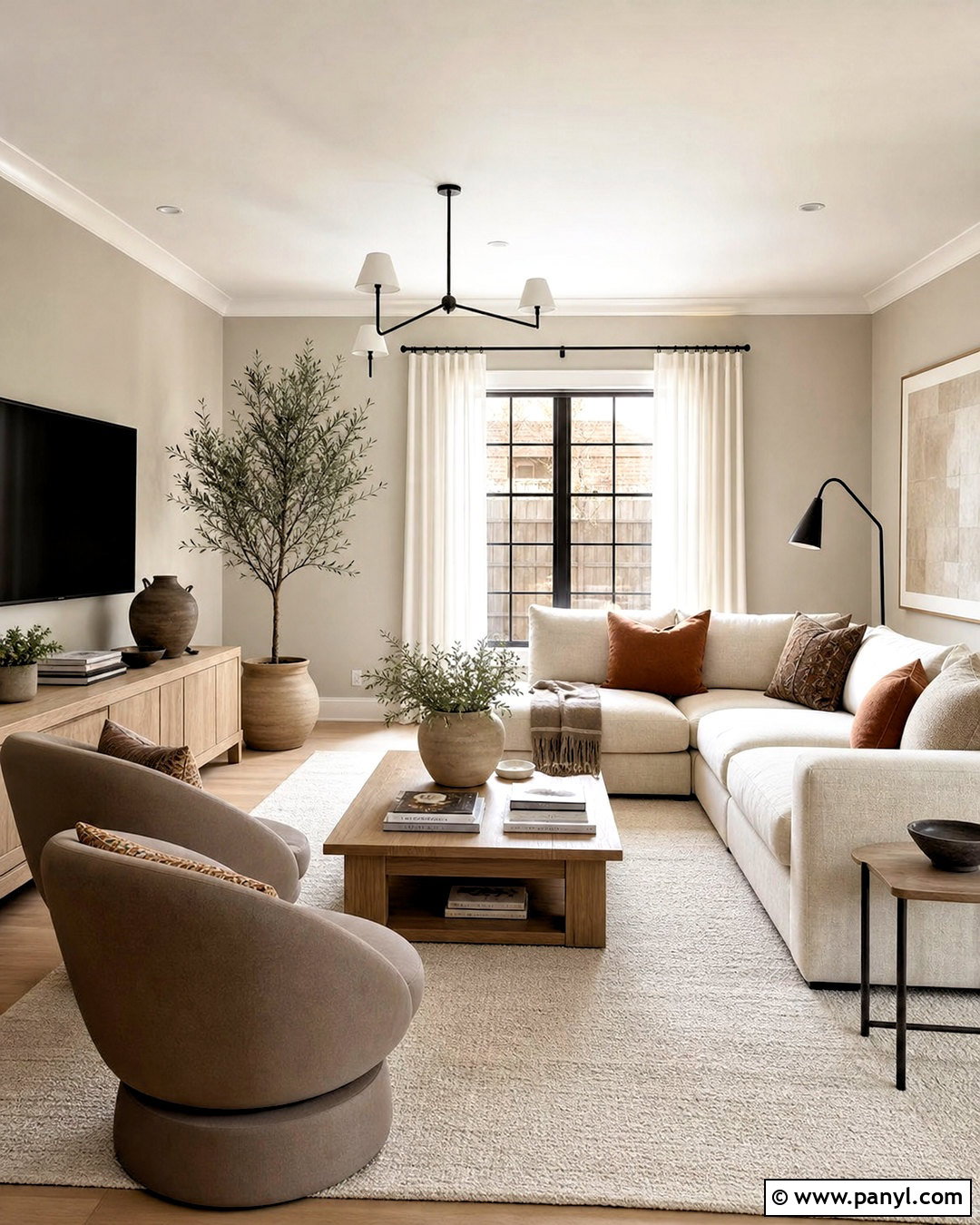
Can’t decide between gray and beige? Light greige combines both, creating a flexible background that changes gently with the room’s light. Use it in a modern living room with a cream sectional, taupe swivel chairs, and a pale oak media console. A textured wool rug in ivory and gray can connect the seating arrangement. Add black metal lamps and slim black curtain rods for definition, then soften them with warm white drapery. Terracotta pillows, earthenware vases, and leafy branches prevent the neutral scheme from appearing flat. Greige also helps visually connect open living areas with nearby kitchens or dining spaces. Choose a balanced shade that complements the flooring instead of turning noticeably purple, pink, or green beside it.
5. Pale Beige Living Room Paint
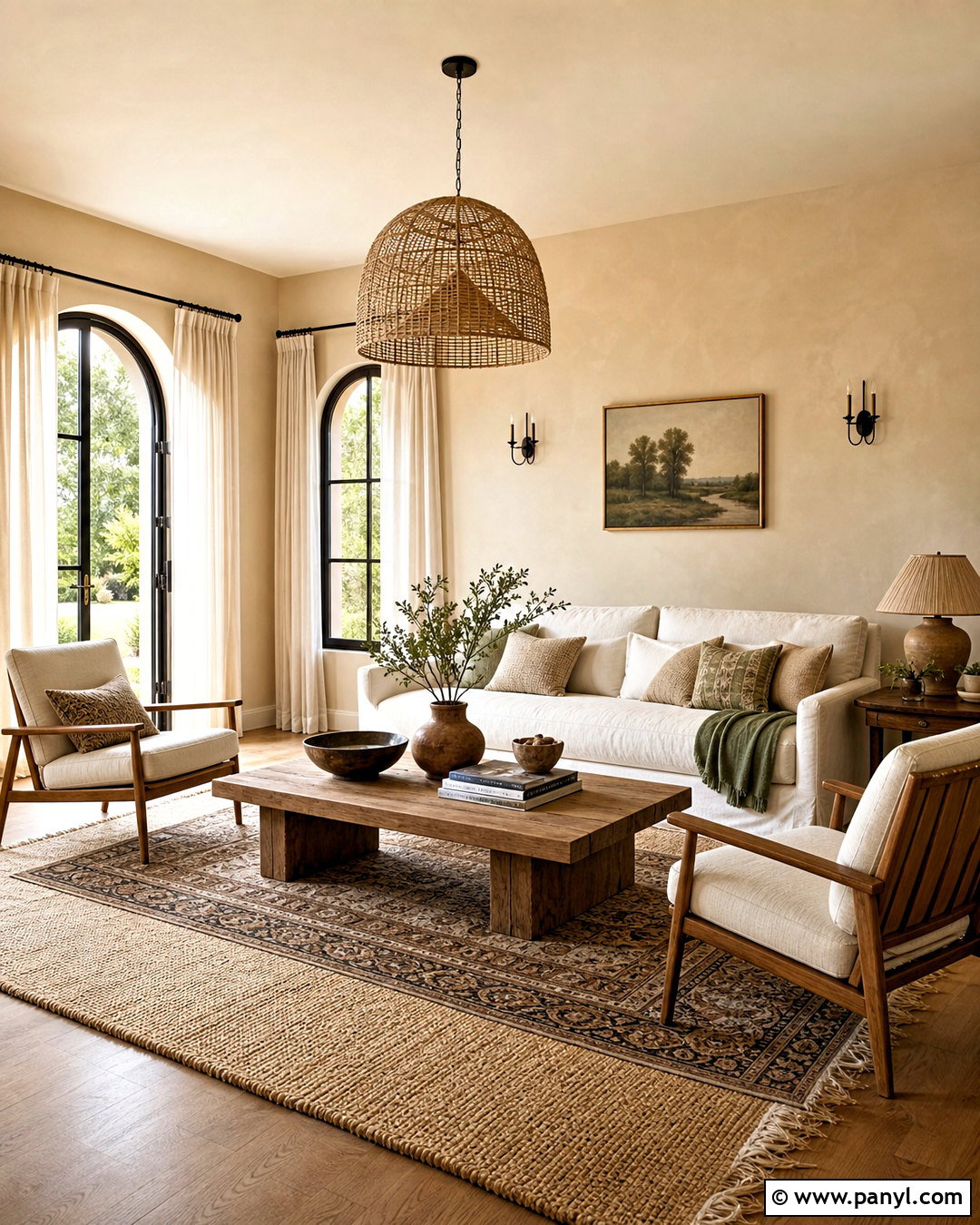
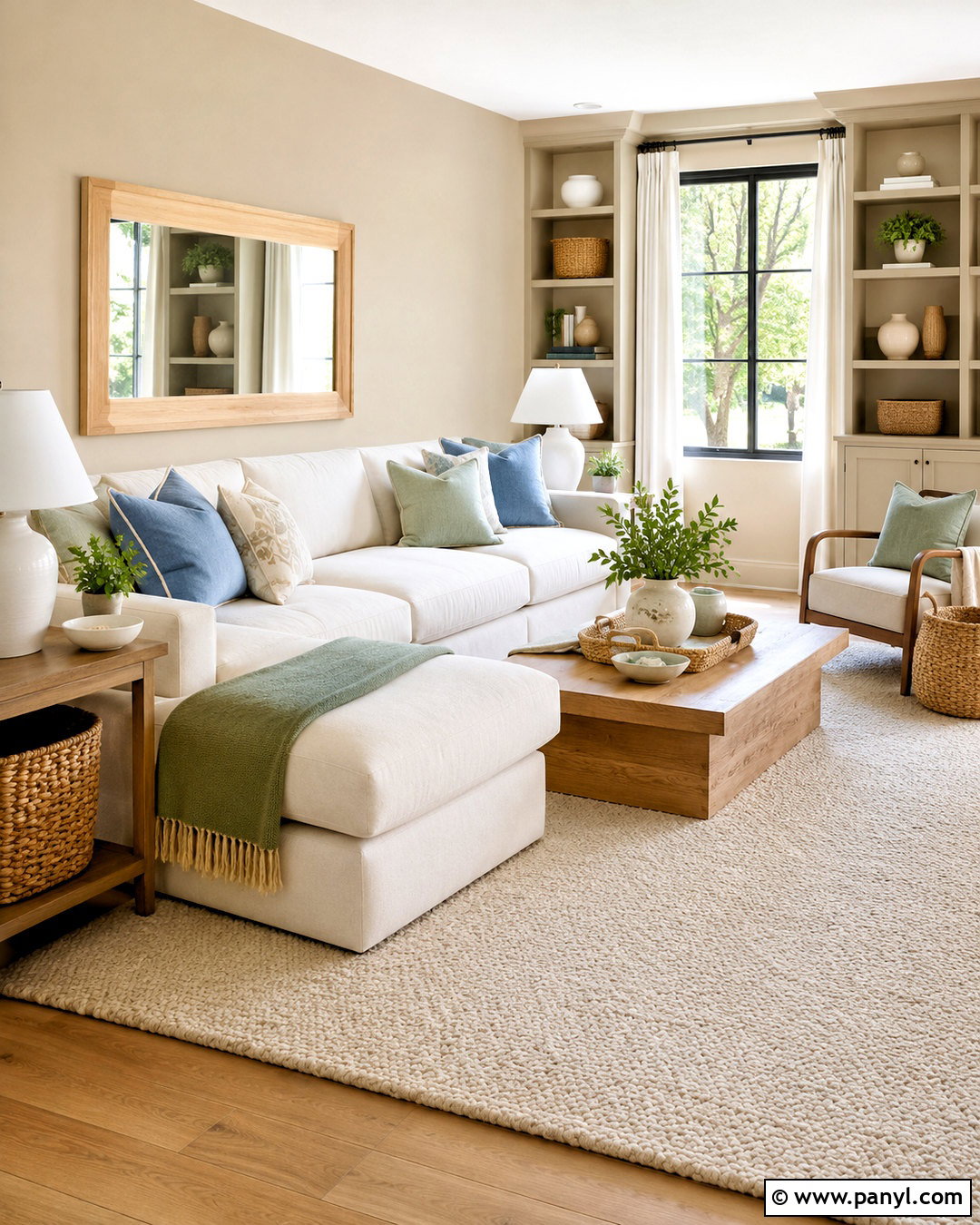
Pale beige walls can make a living room feel sun-washed, calm, and naturally comfortable. Create a relaxed organic scheme with a slipcovered cream sofa, light wood lounge chairs, and a chunky oak coffee table. Layer a flatwoven jute rug beneath a softer patterned rug to give the seating area more depth. Linen curtains in warm white maintain the room’s airy character. Use accents of muted olive, clay, and warm brown through pillows, ceramics, and framed prints. A woven pendant or large rattan floor lamp adds texture without overwhelming the light palette. Keep the trim creamy rather than stark white for a smoother transition. This complete look suits casual homes where durability, warmth, and simple everyday comfort matter equally.
6. Light Taupe Living Room Paint
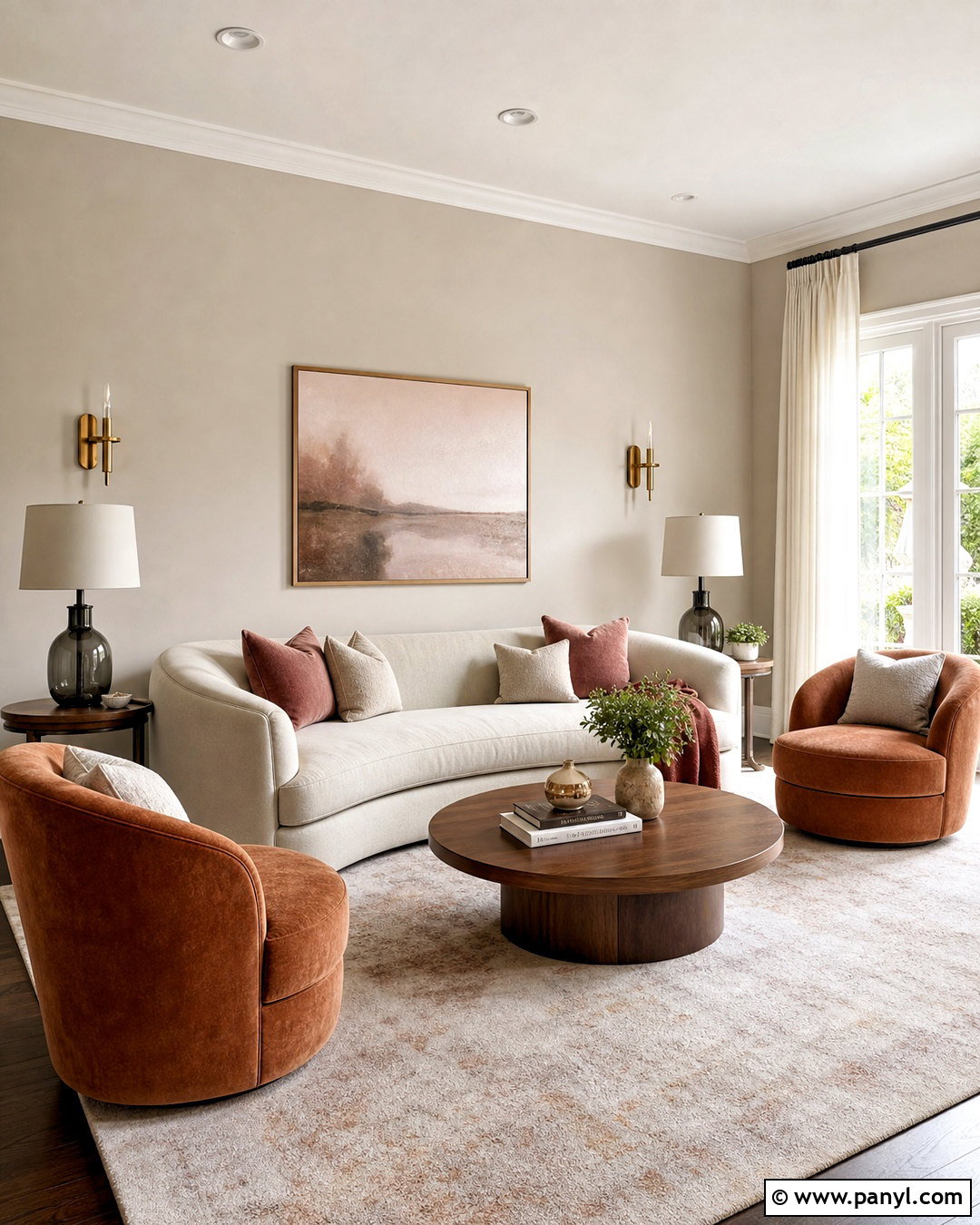
Light taupe introduces more depth than beige while preserving a bright, neutral atmosphere. It works beautifully in a refined living room containing a curved ivory sofa, walnut side tables, and two upholstered chairs in soft caramel. Place a large cream-and-taupe rug beneath the entire seating group to make the arrangement feel generous and grounded. Install warm white curtains close to the ceiling to emphasize height. Bronze sconces, smoked glass lamps, and dark wood frames add quiet contrast. Bring in muted burgundy or dusty rose through a few small textiles for a sophisticated color accent. Because taupe can carry gray, brown, or violet undertones, compare the sample directly with the flooring. The final palette should look warm and balanced throughout the day.
7. Soft Mushroom Living Room Paint
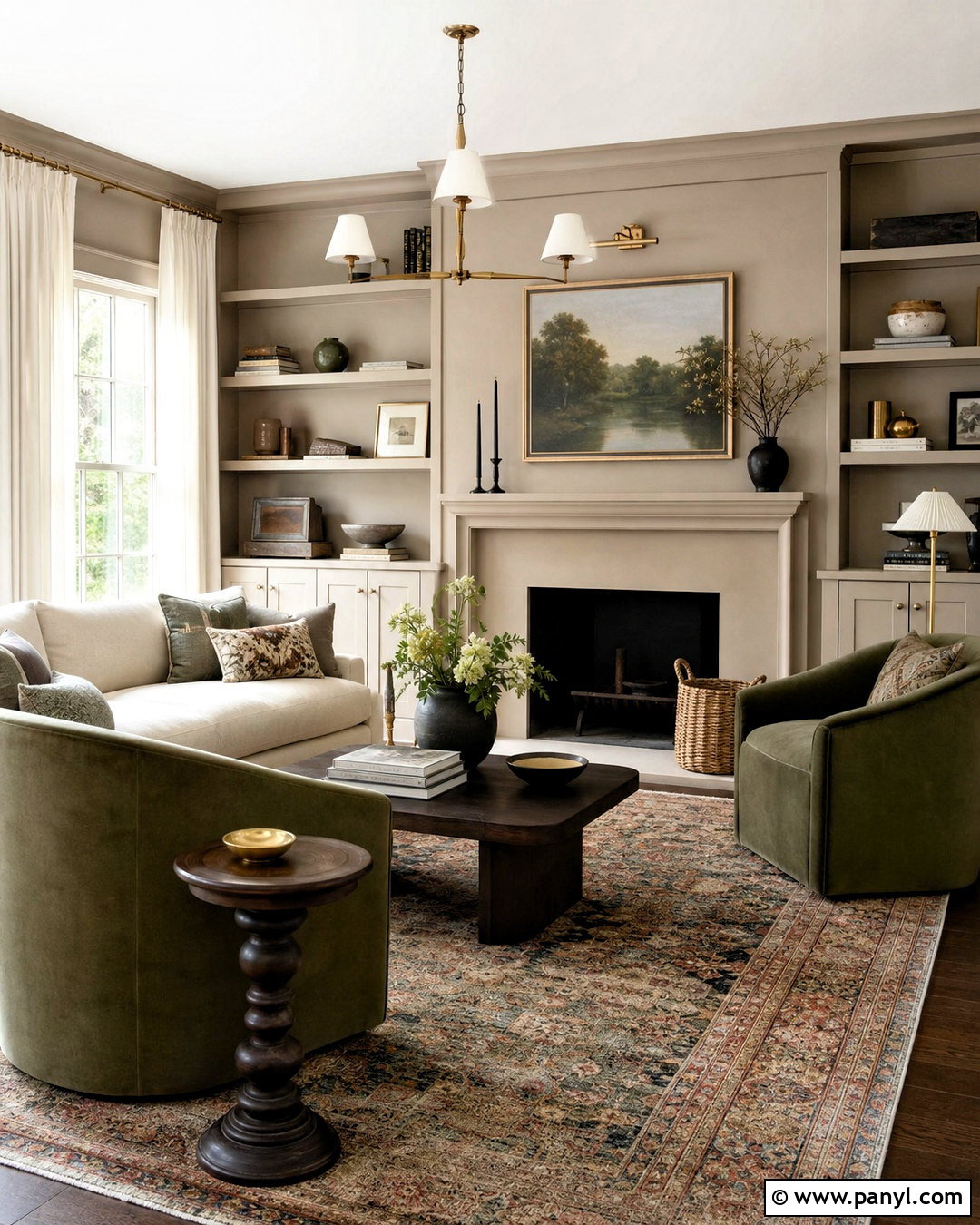
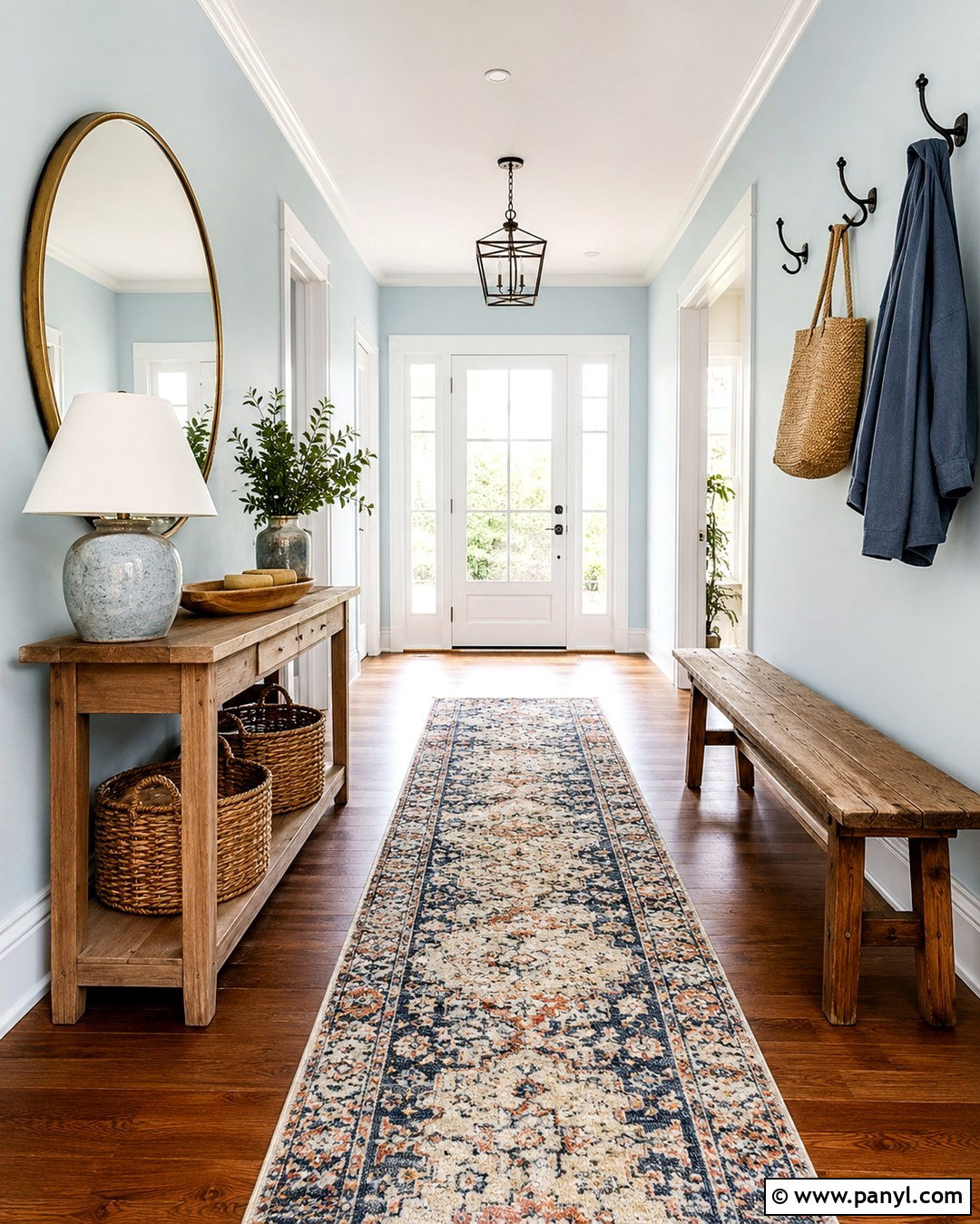
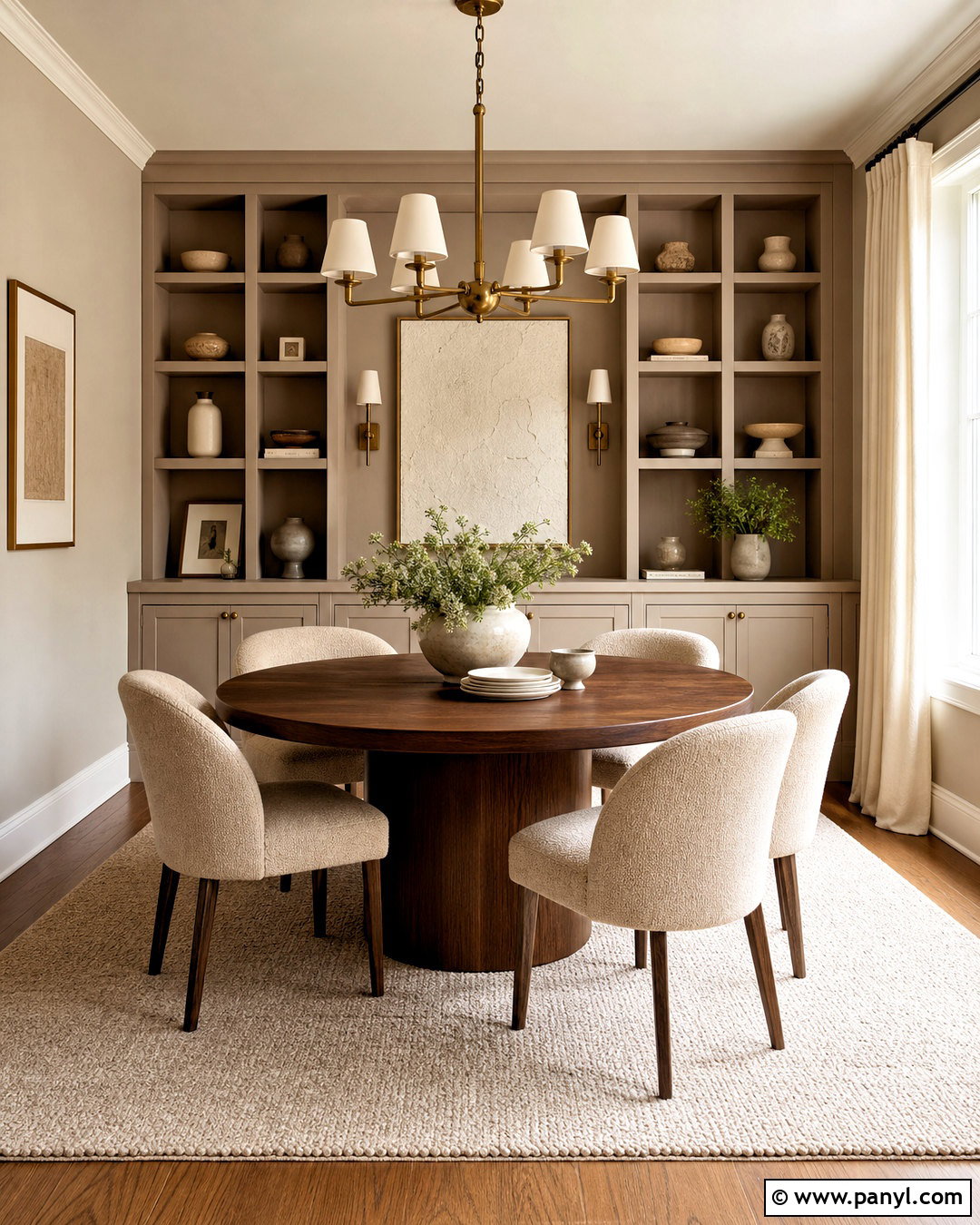
For a neutral living room with a little more personality, consider soft mushroom paint. This pale brown-gray shade creates an earthy envelope that complements both vintage and contemporary pieces. Pair it with an off-white sofa, moss green armchairs, and a dark walnut coffee table. A faded Persian-style rug can bring together beige, olive, rust, and charcoal tones. Use aged brass lighting and simple linen curtains to support the warm, collected appearance. Built-in shelves painted the same mushroom shade will blend into the walls and make books, pottery, and framed artwork more noticeable. Finish with a few black accents to sharpen the palette. The result feels cozy and established without making the living room appear dark or heavily decorated.
8. Light Gray Living Room Paint
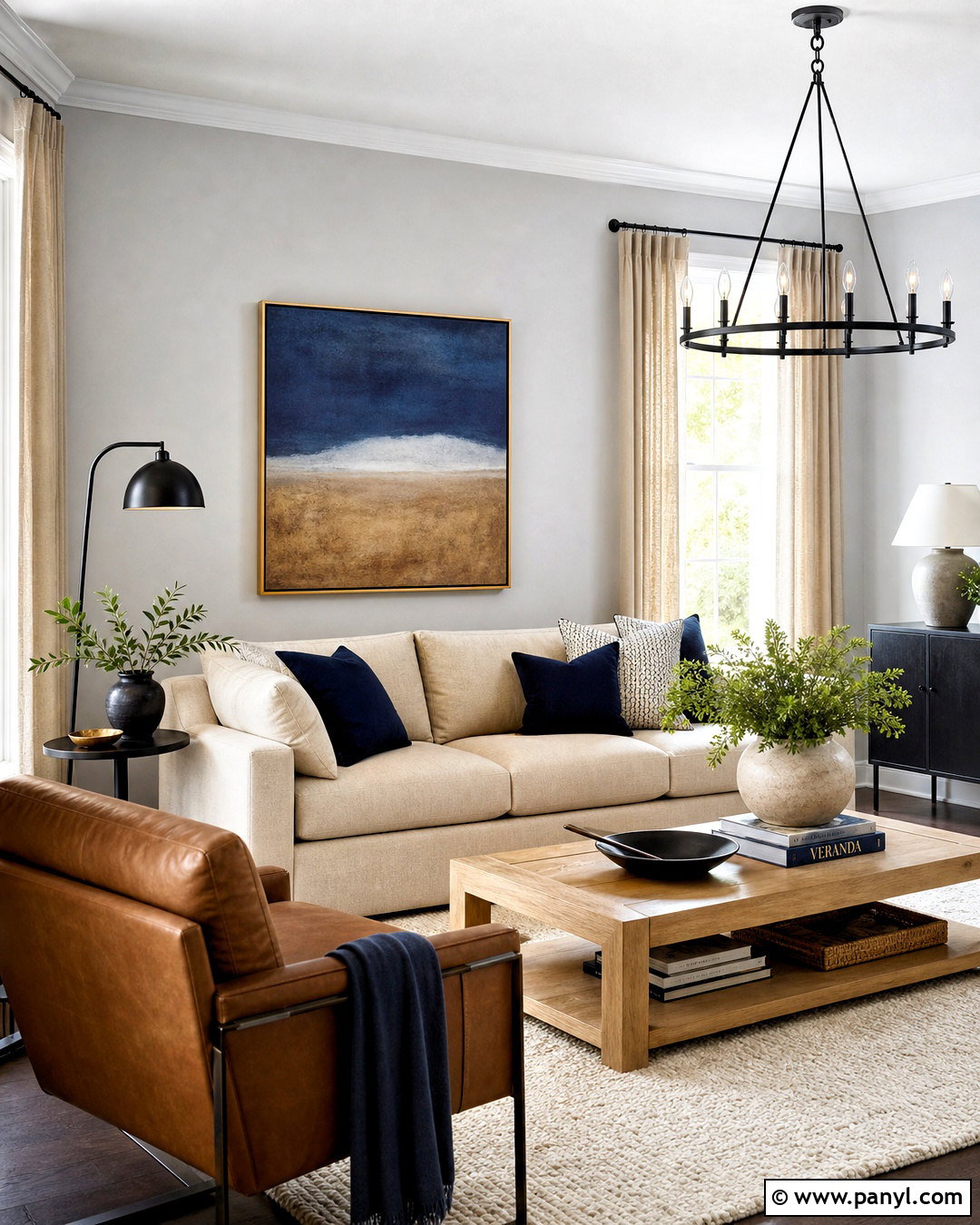
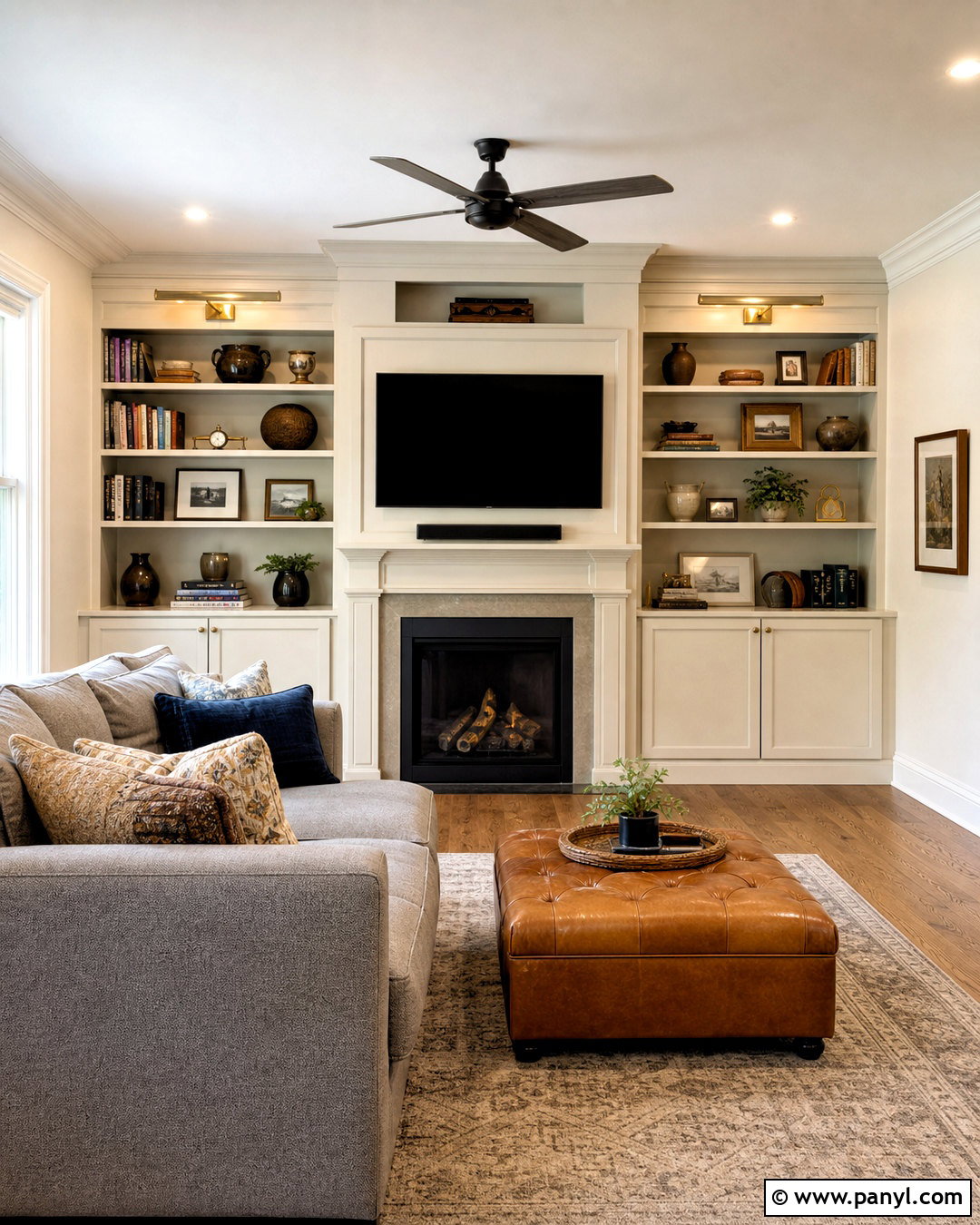
Cool, clear light gray can give a living room a tailored and uncluttered appearance when it is balanced with enough warmth. Paint the walls a gentle gray and keep the ceiling bright white for definition. Add a warm beige sofa, cognac leather chair, and natural oak coffee table rather than using gray furniture everywhere. A cream rug and oatmeal curtains soften the room, while navy pillows and black metal lighting provide contrast. Display large artwork containing blue, tan, and white to connect the color scheme. This combination works especially well in a south-facing room with strong natural light. Avoid icy blue-gray flooring and overly silver accessories together. Warm woods, tactile fabrics, and softly rounded furniture will make the complete room feel welcoming.
9. Blue Gray Living Room Paint
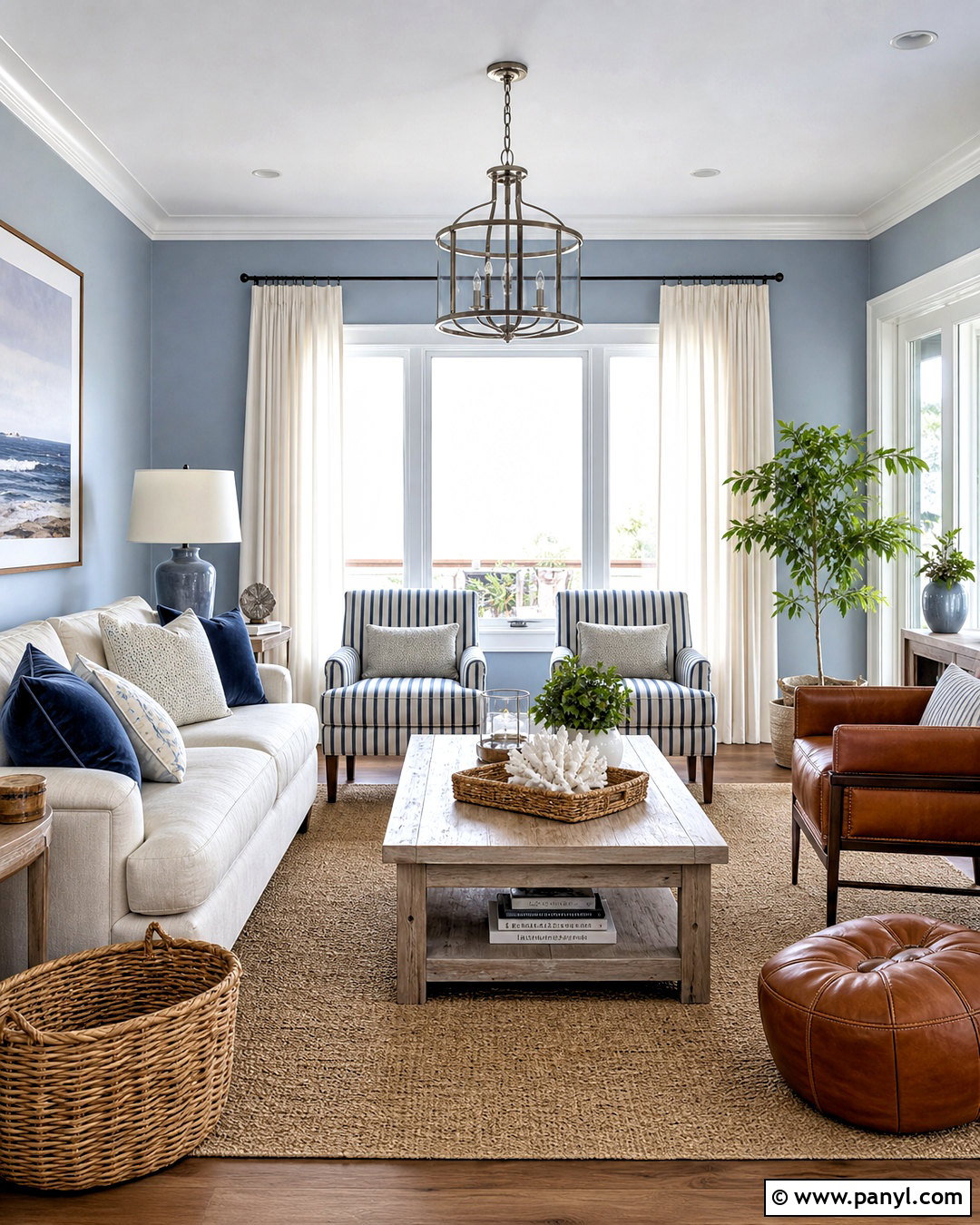
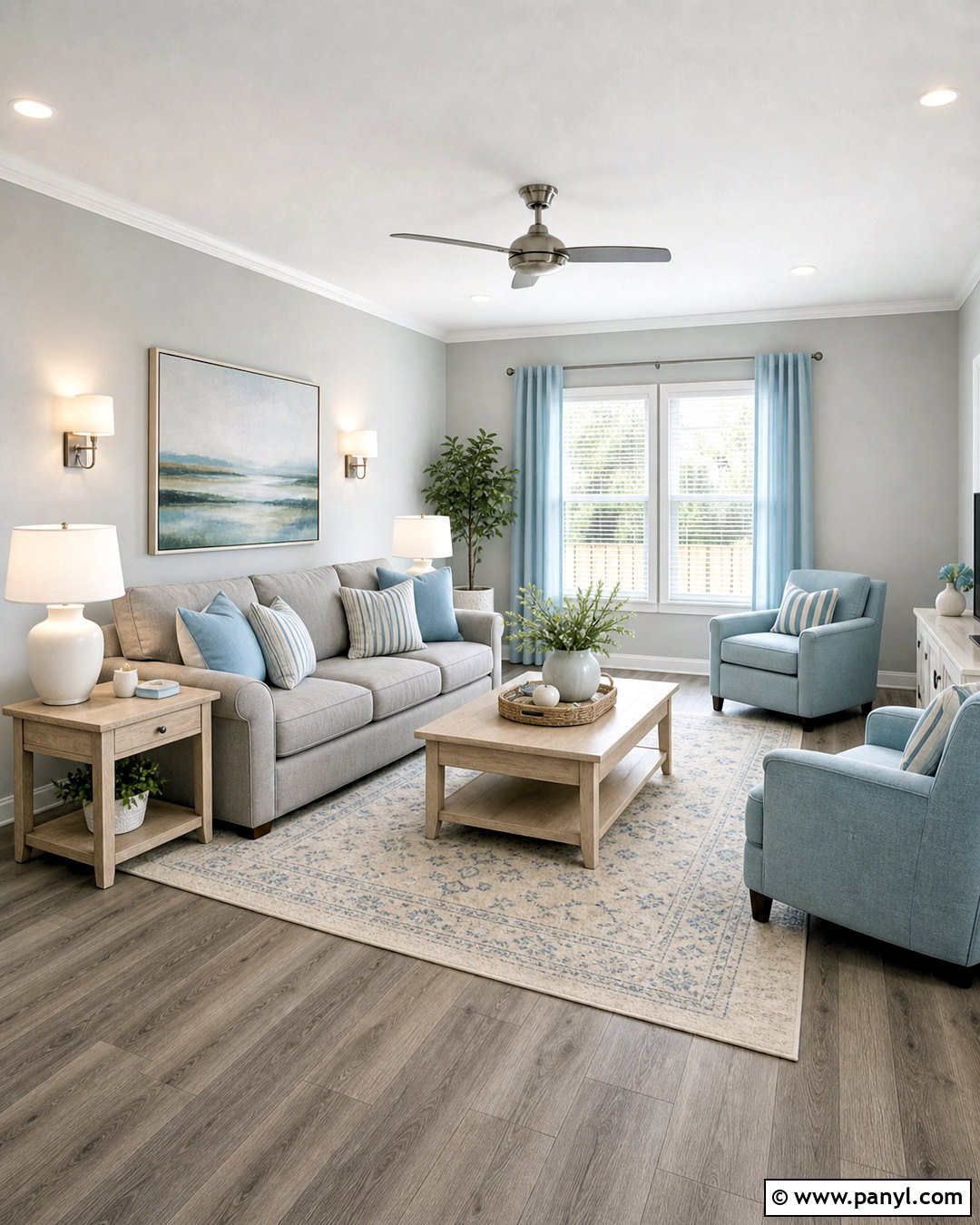
Blue-gray paint brings quiet color to the walls while still functioning like a versatile neutral. Build a comfortable coastal-inspired room around a pale blue-gray backdrop, a sandy beige sofa, and two striped cream-and-navy chairs. Choose a weathered oak coffee table and a large natural fiber rug to add casual texture. White linen curtains keep the windows bright, while brushed nickel or aged pewter lighting complements the cooler wall tone. Introduce warmth with cognac leather, woven baskets, and medium-brown picture frames. Avoid obvious nautical decorations; simple landscapes, pottery, and subtle stripes will feel more timeless. The entire palette should suggest open sky and water without becoming themed, making it suitable for both suburban homes and relaxed coastal interiors.
10. Powder Blue Living Room Paint
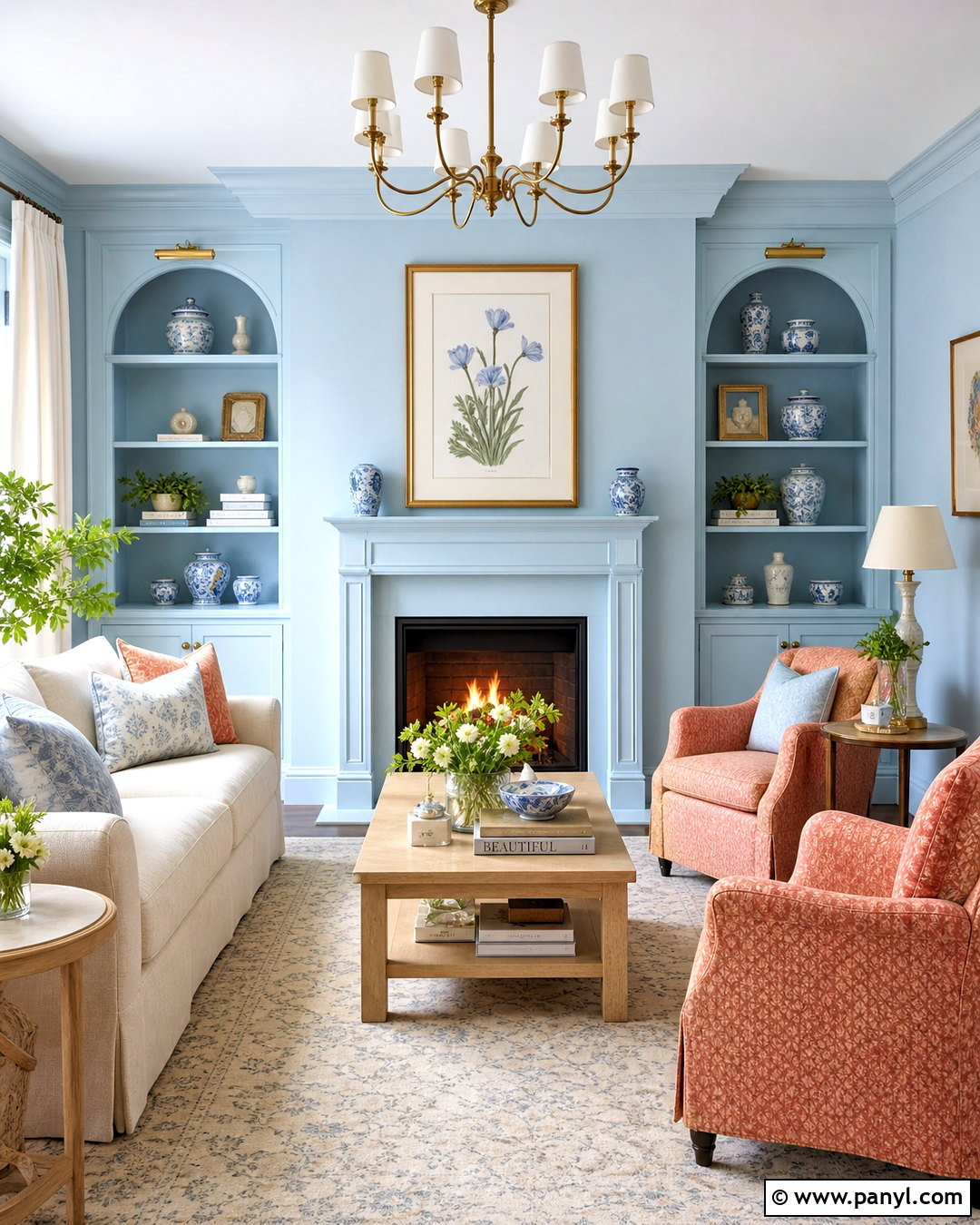
Powder blue walls can transform an ordinary living room into a fresh, uplifting space with gentle color. Pair this light hue with a cream sofa, pale oak tables, and a pair of soft coral or dusty rose chairs. The warm upholstery prevents the blue from feeling chilly. Ground the arrangement with an ivory rug featuring a small blue pattern, then add white curtains and a simple brass chandelier. Botanical artwork, blue-and-white ceramics, and green plants create a layered but approachable finish. For a more immersive look, paint the built-ins and fireplace surround in the same powder blue, using a slightly glossier finish for subtle contrast. This complete palette feels cheerful and polished while remaining light enough for smaller rooms or homes with traditional architectural details.
11. Sky Blue Living Room Paint
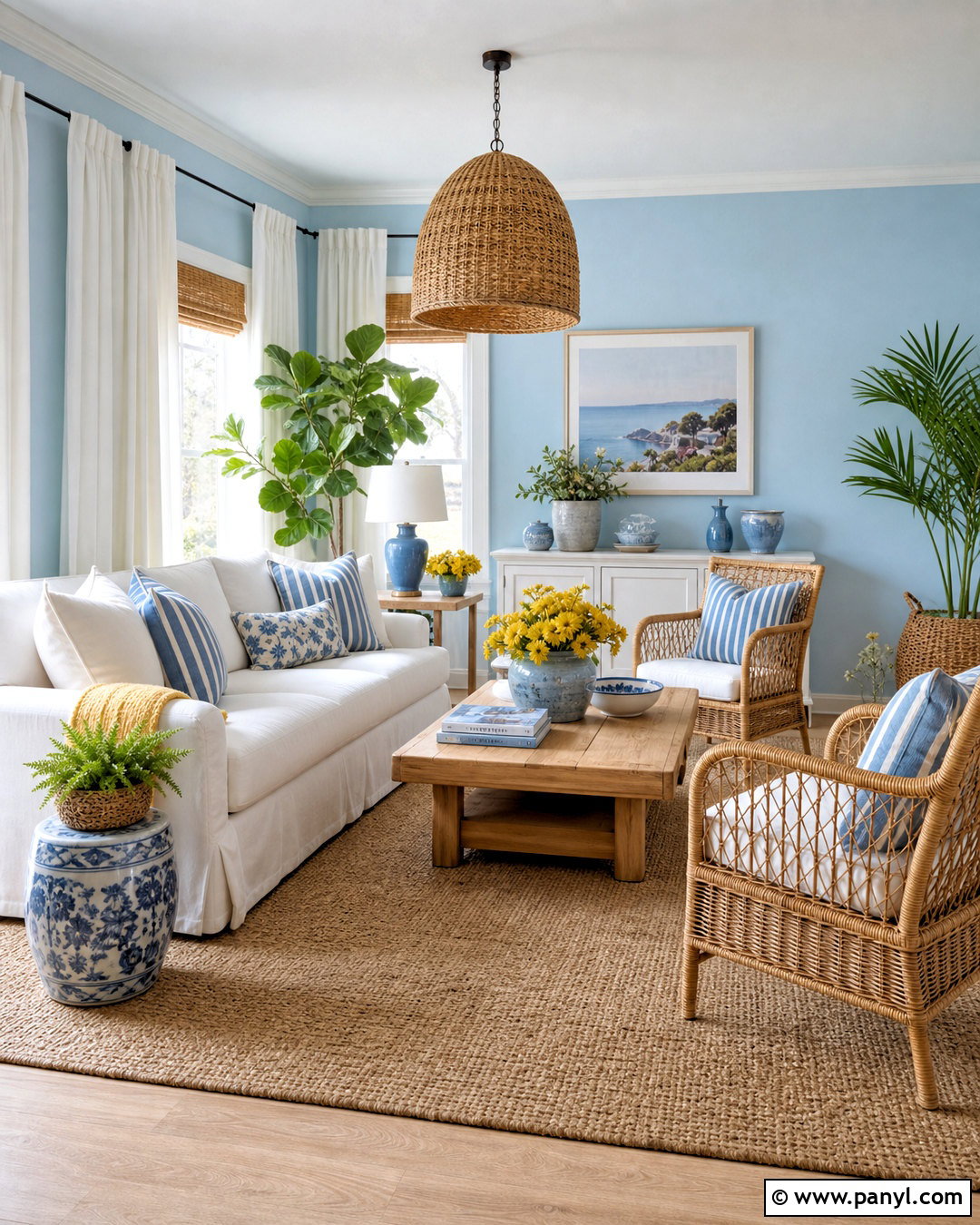
A clear sky blue creates an energetic living room that still feels open and easy to decorate. Use the color across the walls, then balance it with a white sofa and natural rattan lounge chairs. A light wood coffee table, woven pendant, and sisal rug can support a relaxed modern coastal look. Add striped pillows in blue and cream, plus small accents of sunny yellow for warmth. Keep window treatments simple with airy white cotton curtains that allow daylight to move through the room. Matte white trim will make the blue appear cleaner and more intentional. Instead of filling the space with beach-themed objects, select abstract artwork, sculptural pottery, and leafy plants. The completed room feels breezy, youthful, and suitable for everyday gathering.
12. Pale Aqua Living Room Paint
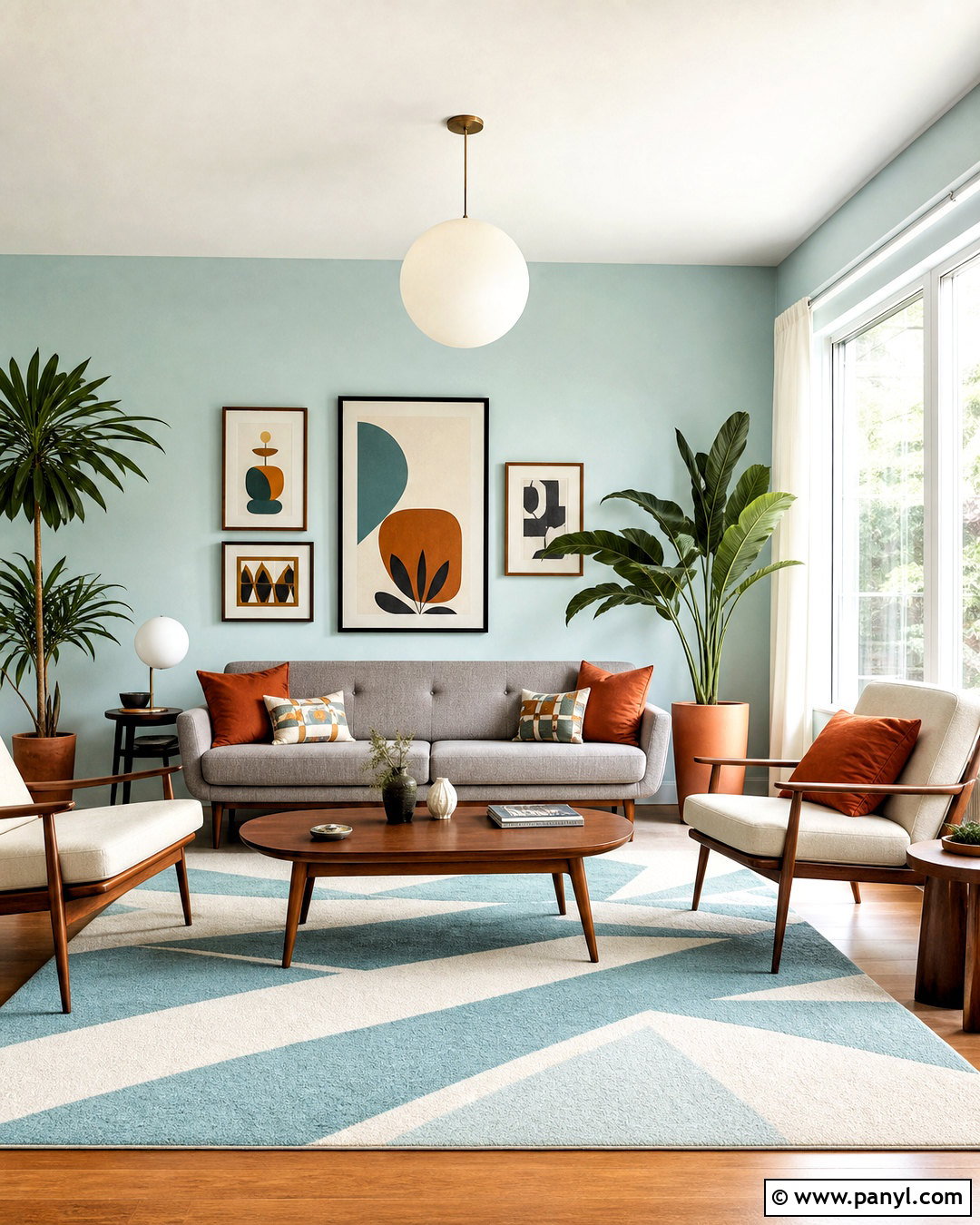
Pale aqua offers a refreshing blend of blue and green that can brighten a living room without demanding too much attention. Create a casual midcentury scheme with aqua walls, a warm gray sofa, and walnut-framed lounge chairs upholstered in cream. Use a low walnut coffee table and a geometric rug containing ivory, aqua, and muted orange. Globe lighting in opal glass reinforces the clean retro influence. White curtains and trim keep the wall color crisp, while terracotta planters and rust-colored pillows add necessary warmth. A few large plants will strengthen the natural connection without cluttering the room. When the furniture combines straight lines with rounded shapes, the entire design feels balanced, distinctive, and much more livable than a heavily themed turquoise interior.
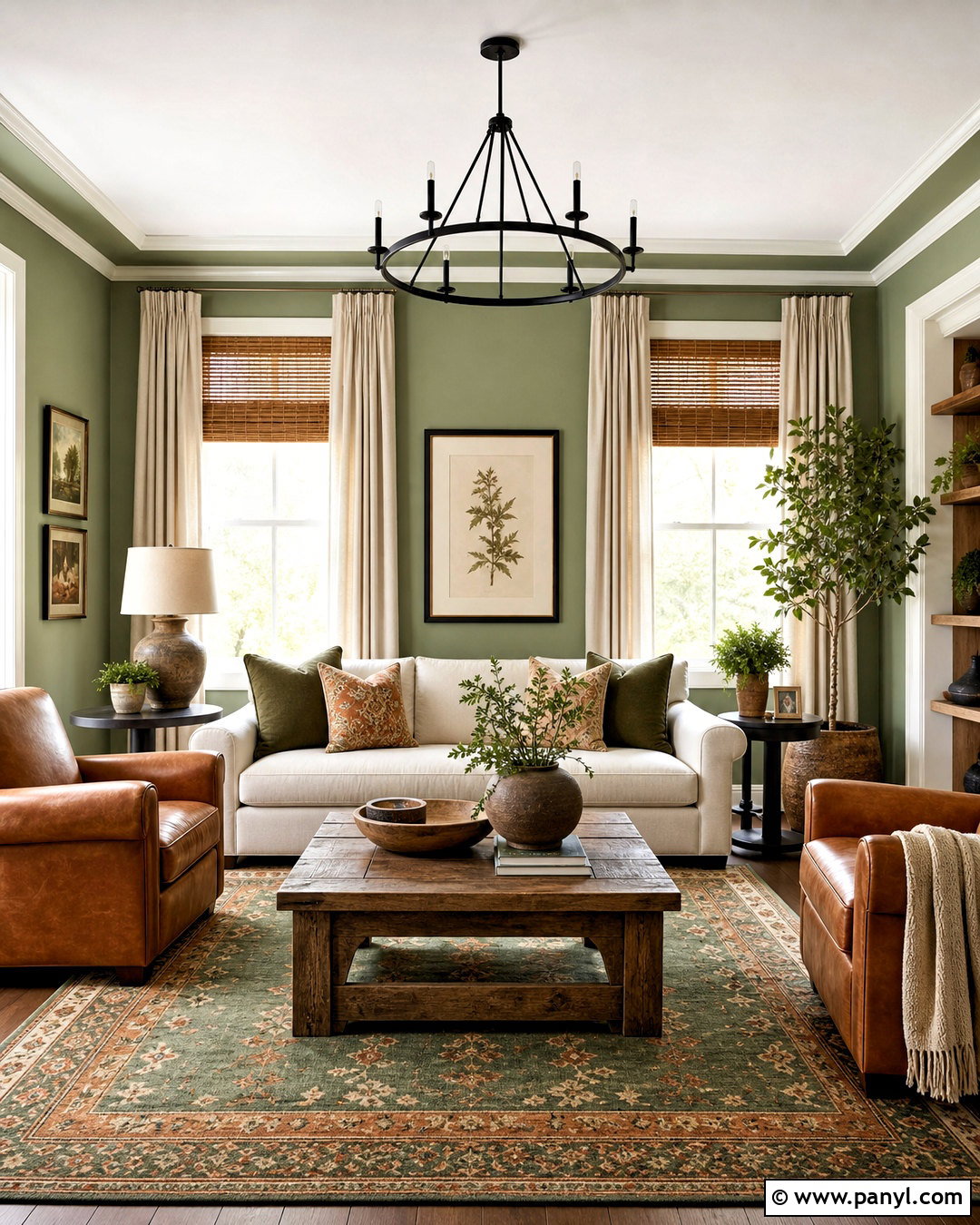
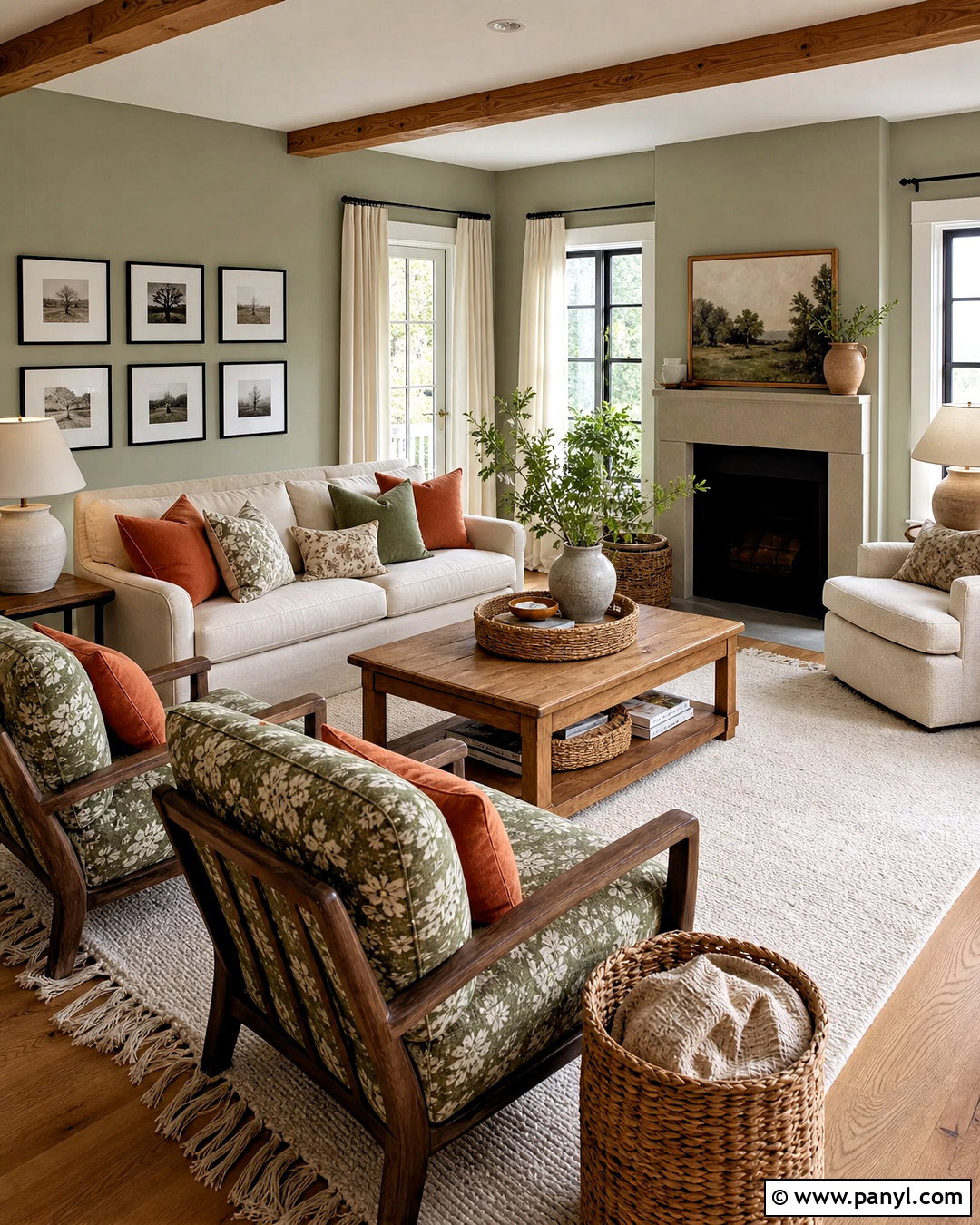
13. Soft Sage Living Room Paint
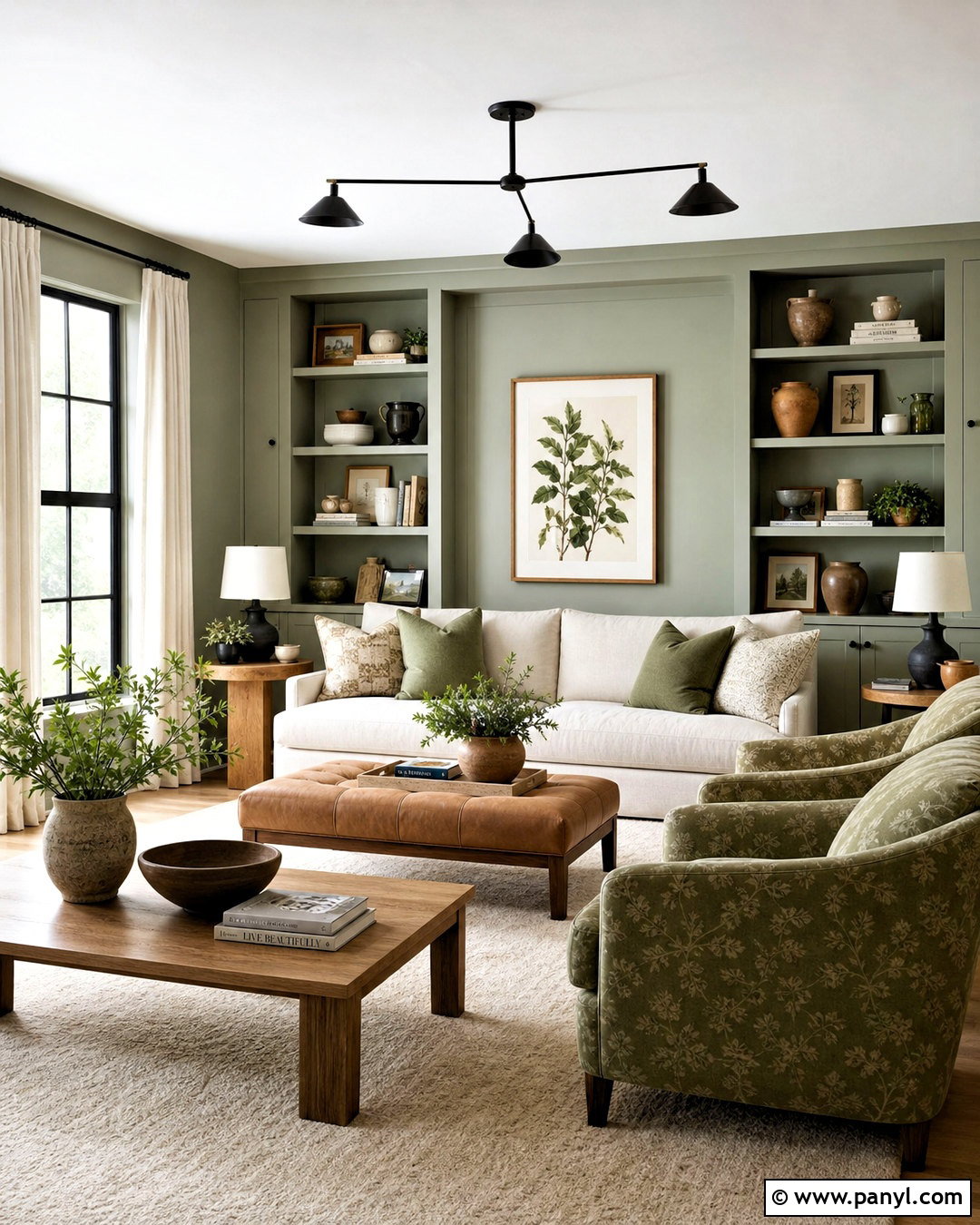
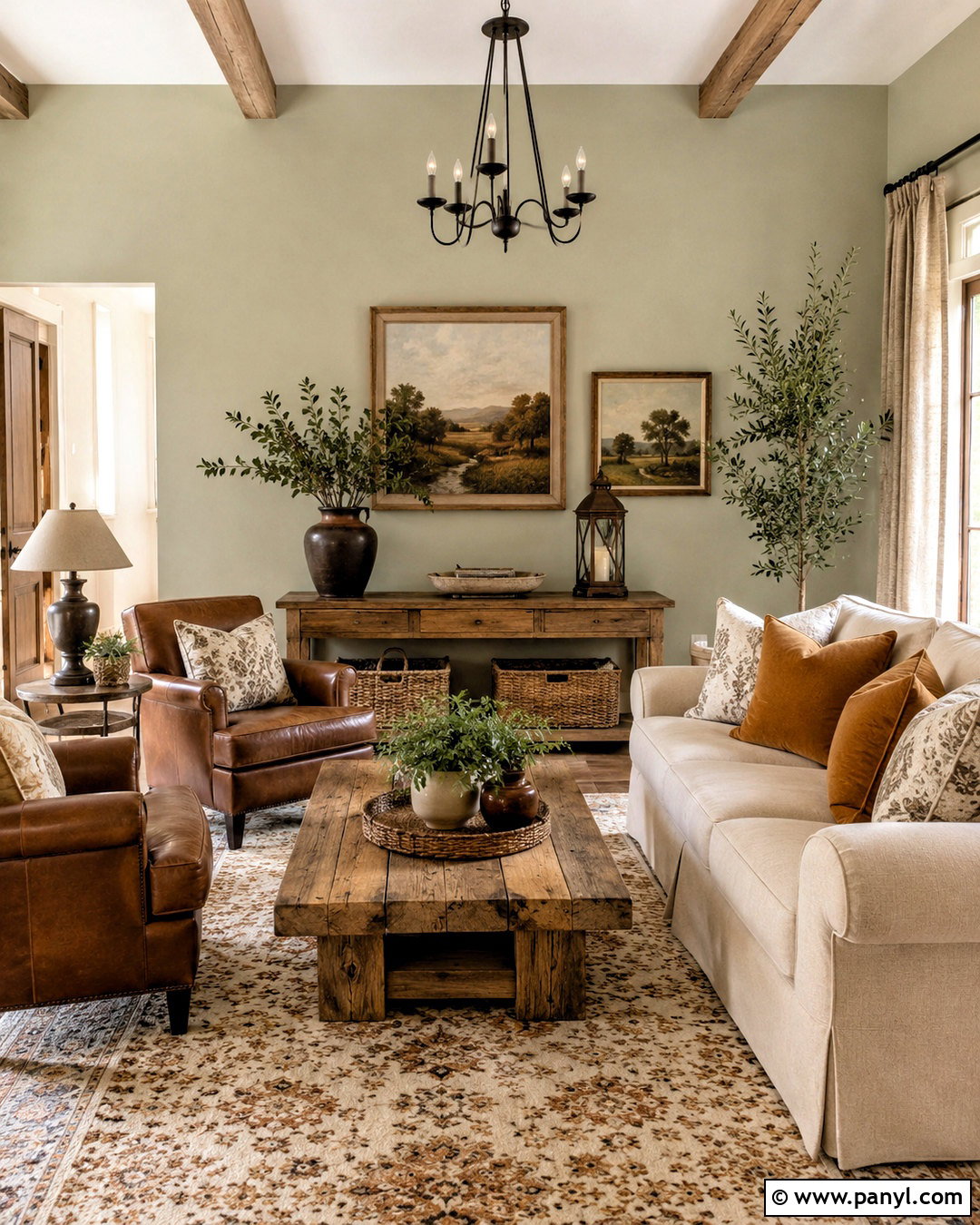
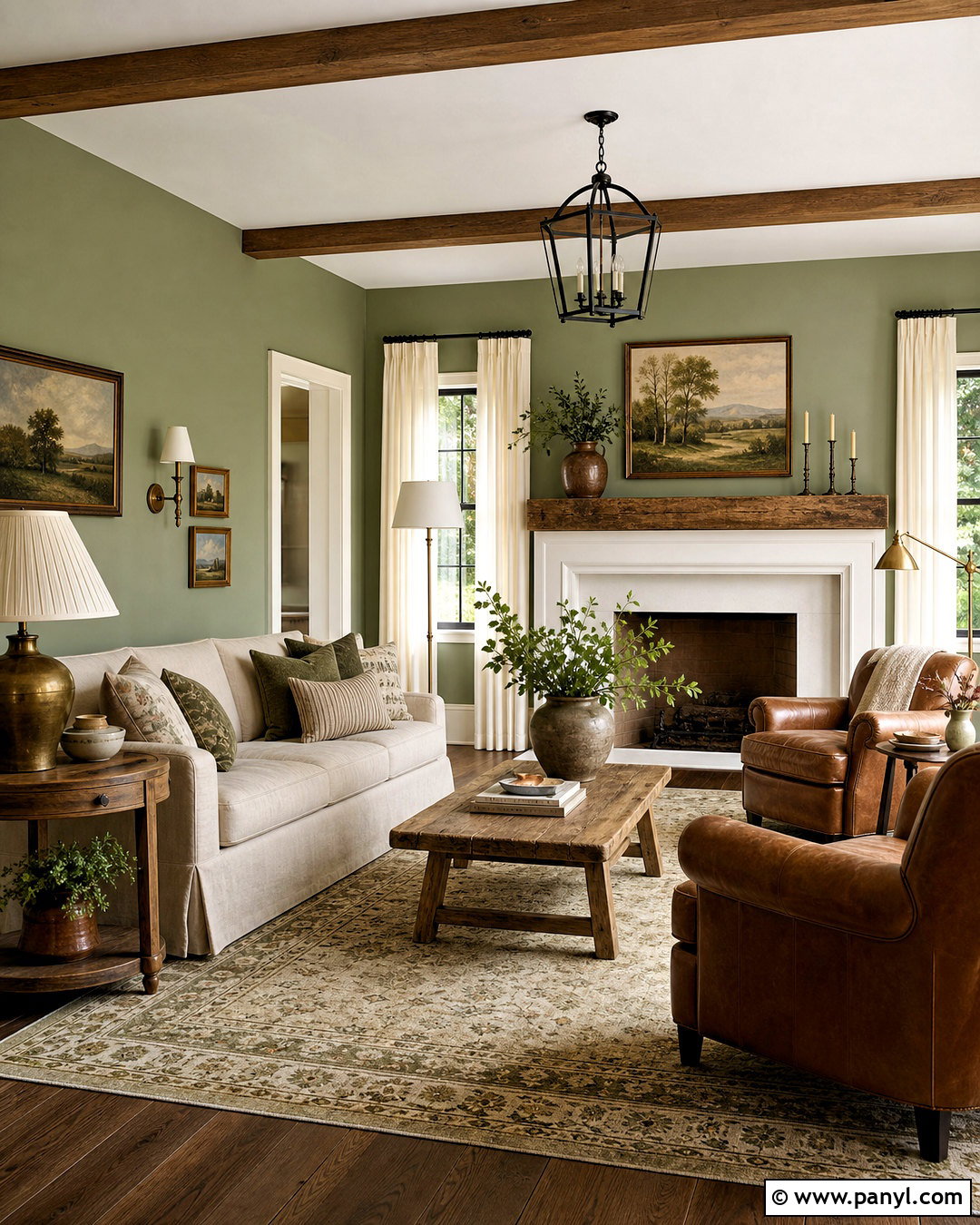
Soft sage green can make a living room feel peaceful, grounded, and closely connected to nature. Pair the walls with a cream linen sofa, tan leather ottoman, and light oak side tables. Two patterned chairs containing olive, beige, and muted blue can add character without disrupting the restful palette. Choose a wool rug in warm ivory and hang natural linen curtains at the windows. Black metal lighting and dark picture frames create enough contrast to prevent the room from appearing washed out. Complete the look with botanical prints, handmade pottery, and a few healthy plants in simple clay pots. Painting built-in shelving the same sage color produces a cohesive background. This versatile scheme works for farmhouse, traditional, Scandinavian, and casual contemporary living rooms.
14. Pale Olive Living Room Paint
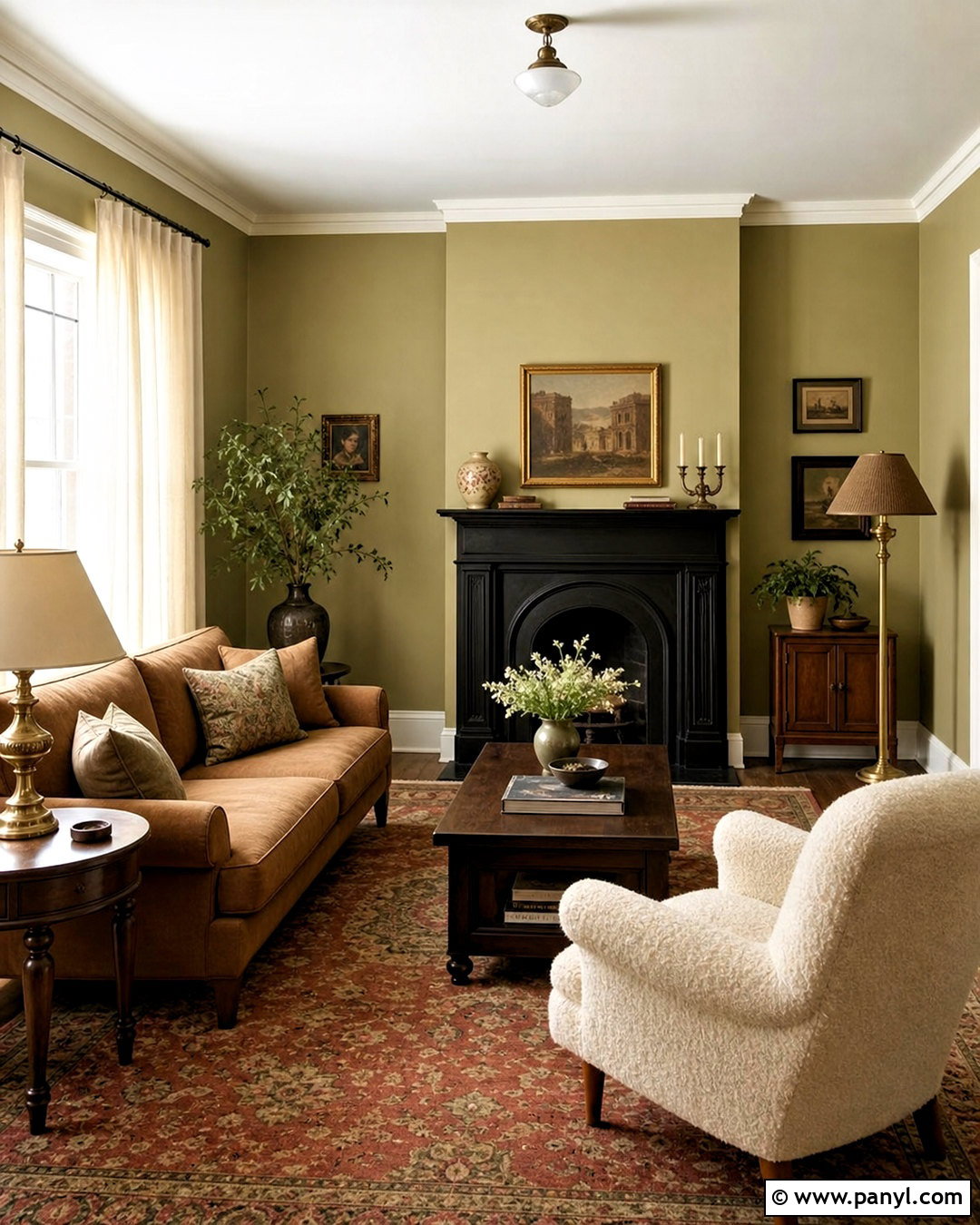
Pale olive paint offers an earthier alternative to sage, giving the living room subtle warmth and vintage character. Surround the color with a camel sofa, cream boucle chair, and dark wood coffee table. An aged rug featuring faded rust, tan, and muted green can unite the palette and establish a collected appearance. Use warm white curtains, antique brass lamps, and traditional framed artwork for a comfortable, layered effect. A black fireplace surround or dark wood media cabinet provides a strong focal point. Keep accessories restrained, selecting pottery, books, and woven boxes in natural colors. Pale olive is particularly effective with warm hardwood flooring because the related undertones create continuity. The finished space feels rich and established while remaining bright enough for daily living.
15. Mint Green Living Room Paint
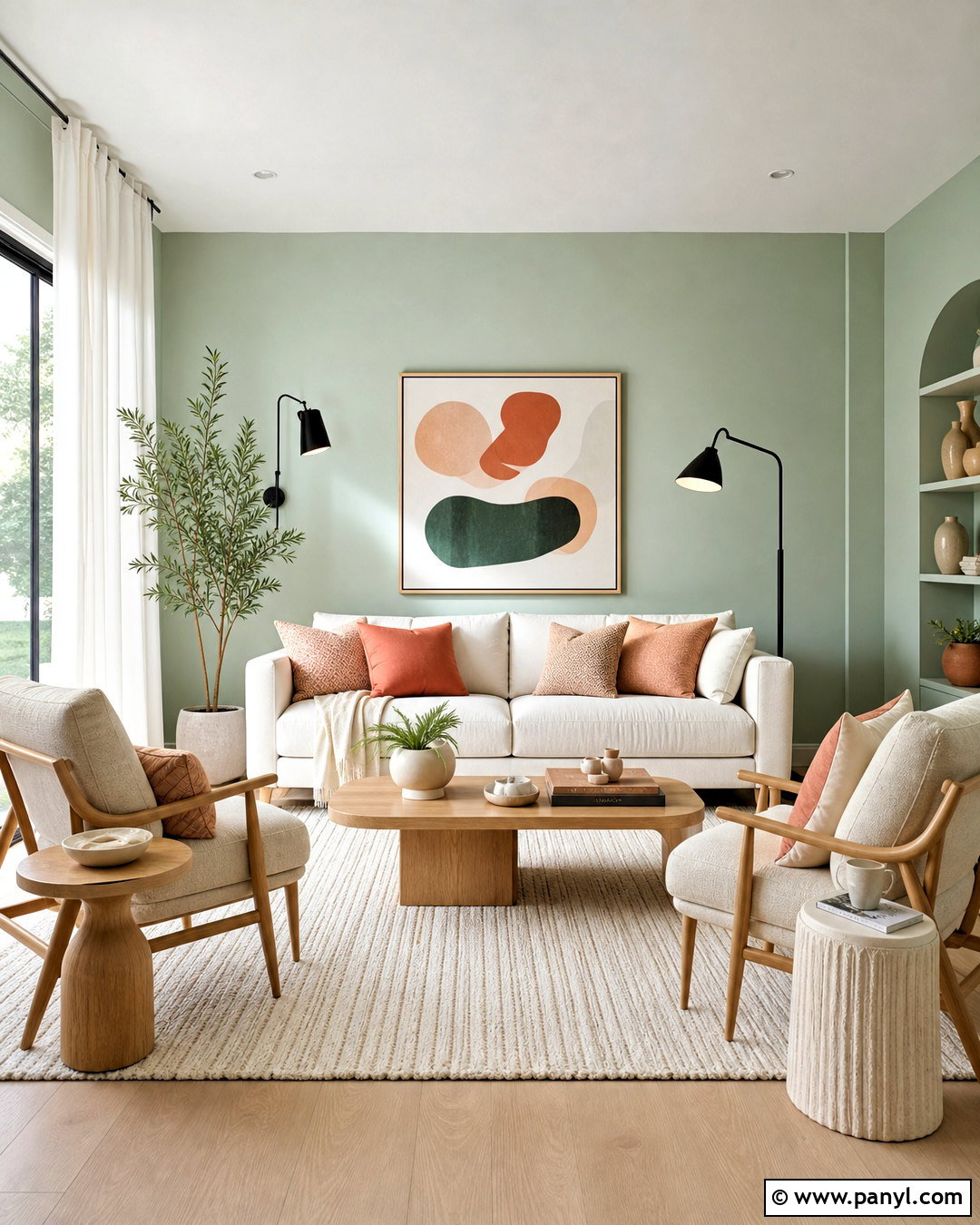
Fresh mint green gives a living room a lighthearted appearance, but thoughtful furnishings keep it from feeling childish. Choose a muted mint with gray undertones and combine it with a warm white sofa, blond wood tables, and soft beige lounge chairs. A cream rug with thin green lines can define the seating zone while maintaining visual openness. Add polished chrome or matte black lighting for a crisp modern edge. Peach, coral, and terracotta pillows introduce warm contrast, while simple white curtains make the wall color appear clean. Limit green accessories so the paint remains the primary statement. Abstract artwork and sculptural ceramics will complete the contemporary scheme. This finished room feels bright, playful, and organized rather than overly pastel or sweet.
16. Light Lavender Living Room Paint
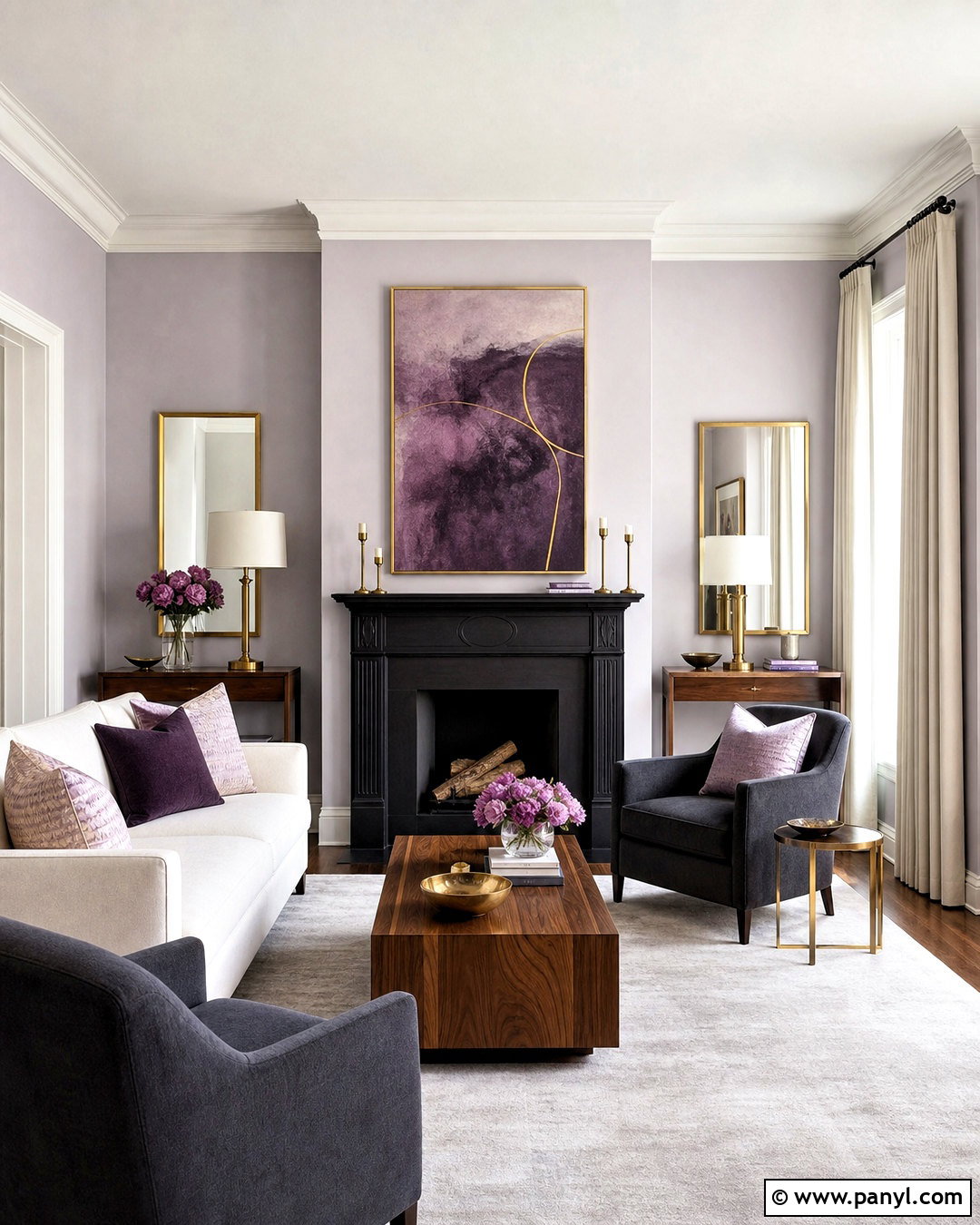
Light lavender can behave like a surprisingly elegant neutral when it contains enough gray. Use it in a sophisticated living room with an ivory sofa, charcoal accent chairs, and a medium-tone walnut coffee table. A pale gray rug will ground the arrangement, while off-white curtains soften the windows. Bring warmth through antique brass lamps, plum pillows, and small touches of muted blush. Black frames and a dark fireplace surround provide structure against the delicate walls. Avoid pairing lavender with too many sugary pastels. Instead, choose substantial materials such as wood, stone, wool, and linen. Large abstract artwork containing ivory, violet, and smoky gray can connect the palette. The finished design feels subtle and distinctive, changing gently between cool daylight and warmer evening illumination.
17. Dusty Blush Living Room Paint
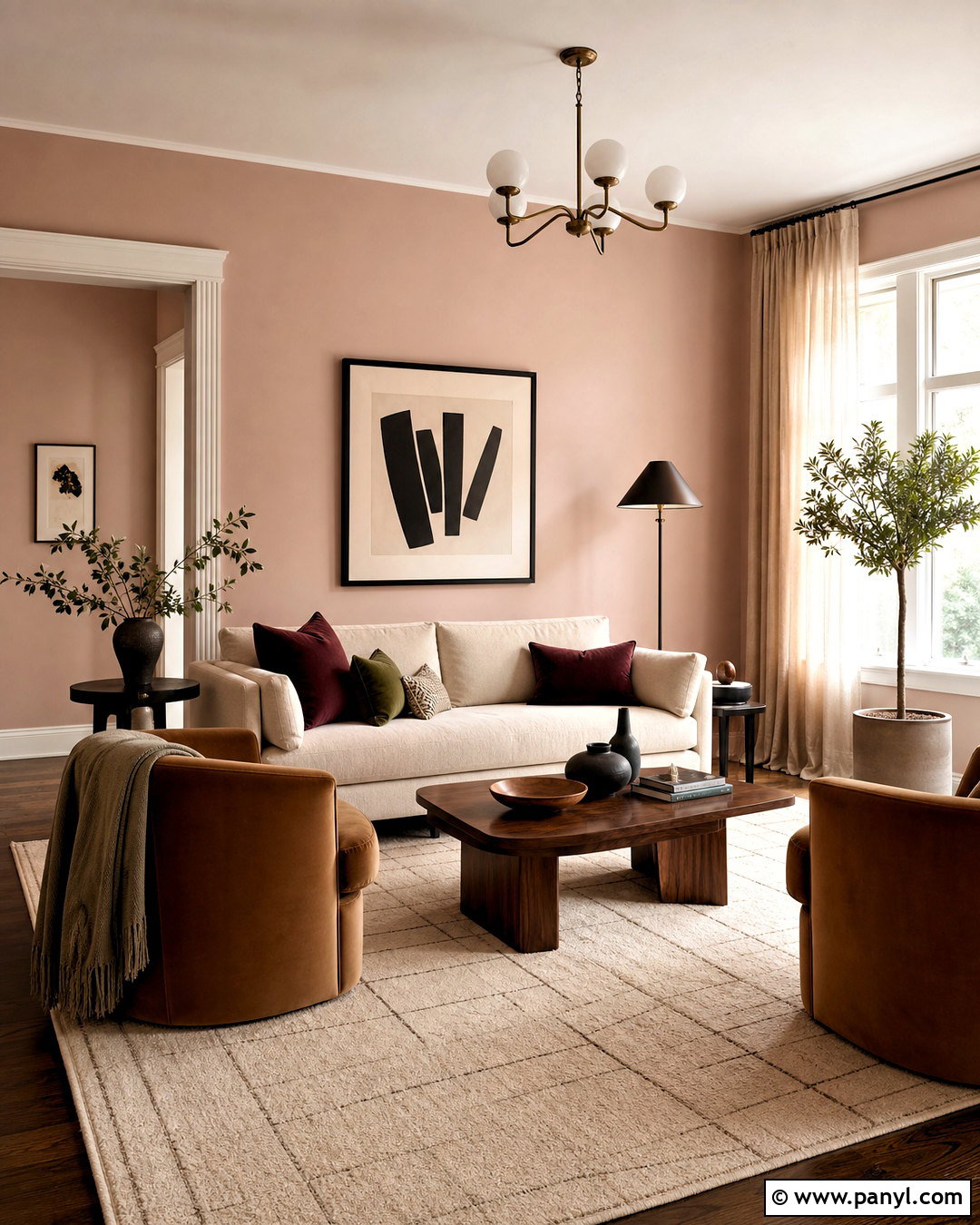
Dusty blush walls create warmth and softness without making the living room feel overly feminine. Select a pale pink with beige or gray undertones, then pair it with a cream sofa and tailored camel chairs. A walnut coffee table and dark bronze floor lamp will add visual weight. Use an ivory rug with a quiet geometric design, along with natural linen curtains for an airy finish. Accent pillows in burgundy, olive, and chocolate brown create a mature palette. Abstract art containing clay, black, and cream can reinforce the wall color while adding contrast. Keep decorative objects minimal and sculptural. With balanced neutrals and darker grounding elements, blush paint becomes a sophisticated background suitable for modern, eclectic, or updated traditional living rooms.
18. Pale Peach Living Room Paint
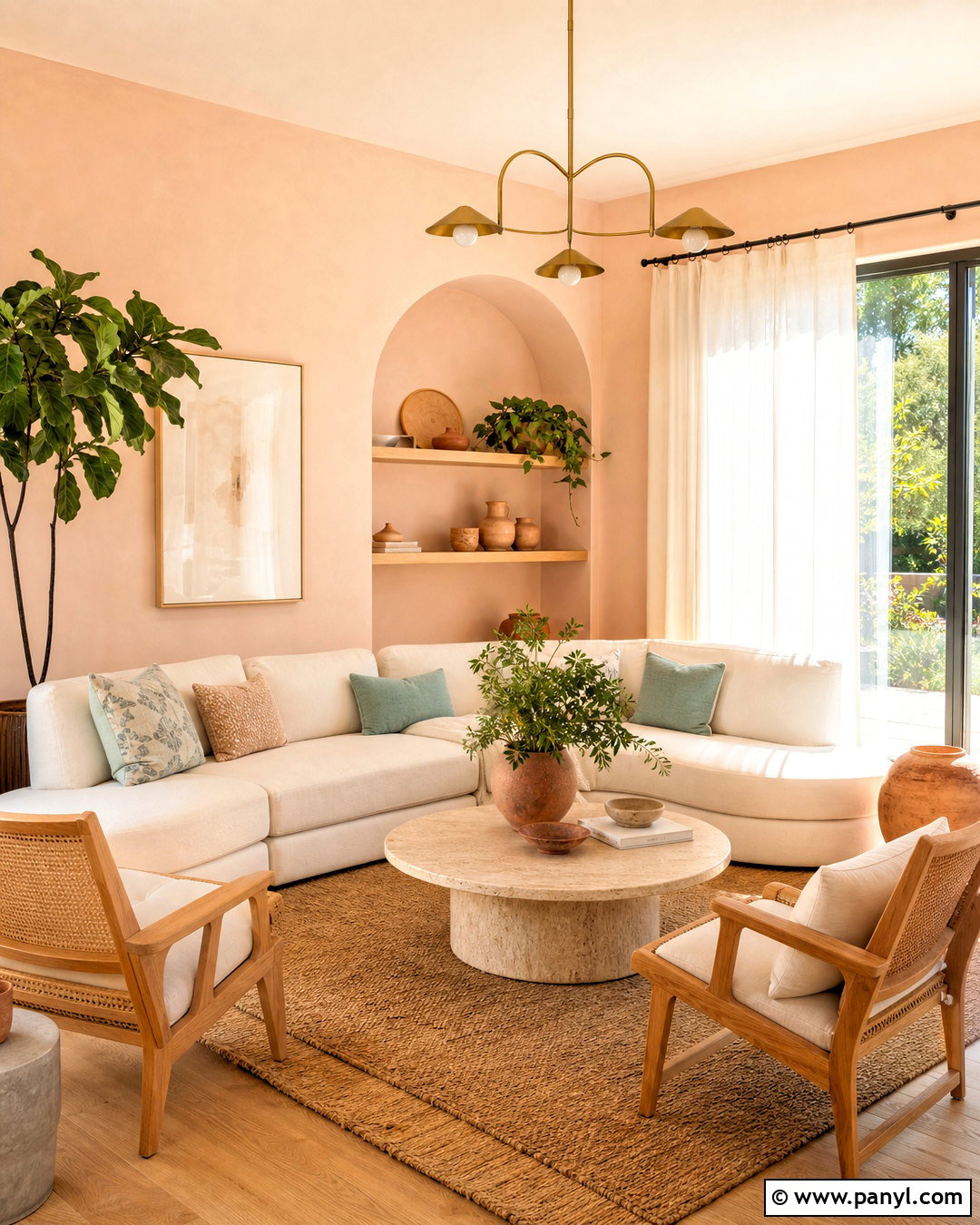
Pale peach brings a gentle sunlit glow to a living room, making it especially appealing in spaces that need warmth. Create a relaxed contemporary scheme with peach walls, a creamy white sectional, and two light oak chairs upholstered in beige. Add a natural jute rug, rounded travertine coffee table, and gauzy white curtains. Muted teal pillows provide cool contrast, while terracotta ceramics connect naturally to the wall color. Use brushed brass lighting sparingly for a warm metallic finish. Large green plants can make the peach appear fresher and less sugary. Keep the ceiling and trim soft white rather than bright blue-white. The complete room should combine smooth stone, woven fibers, pale wood, and simple furniture for an inviting, modern result.
19. Buttery Yellow Living Room Paint
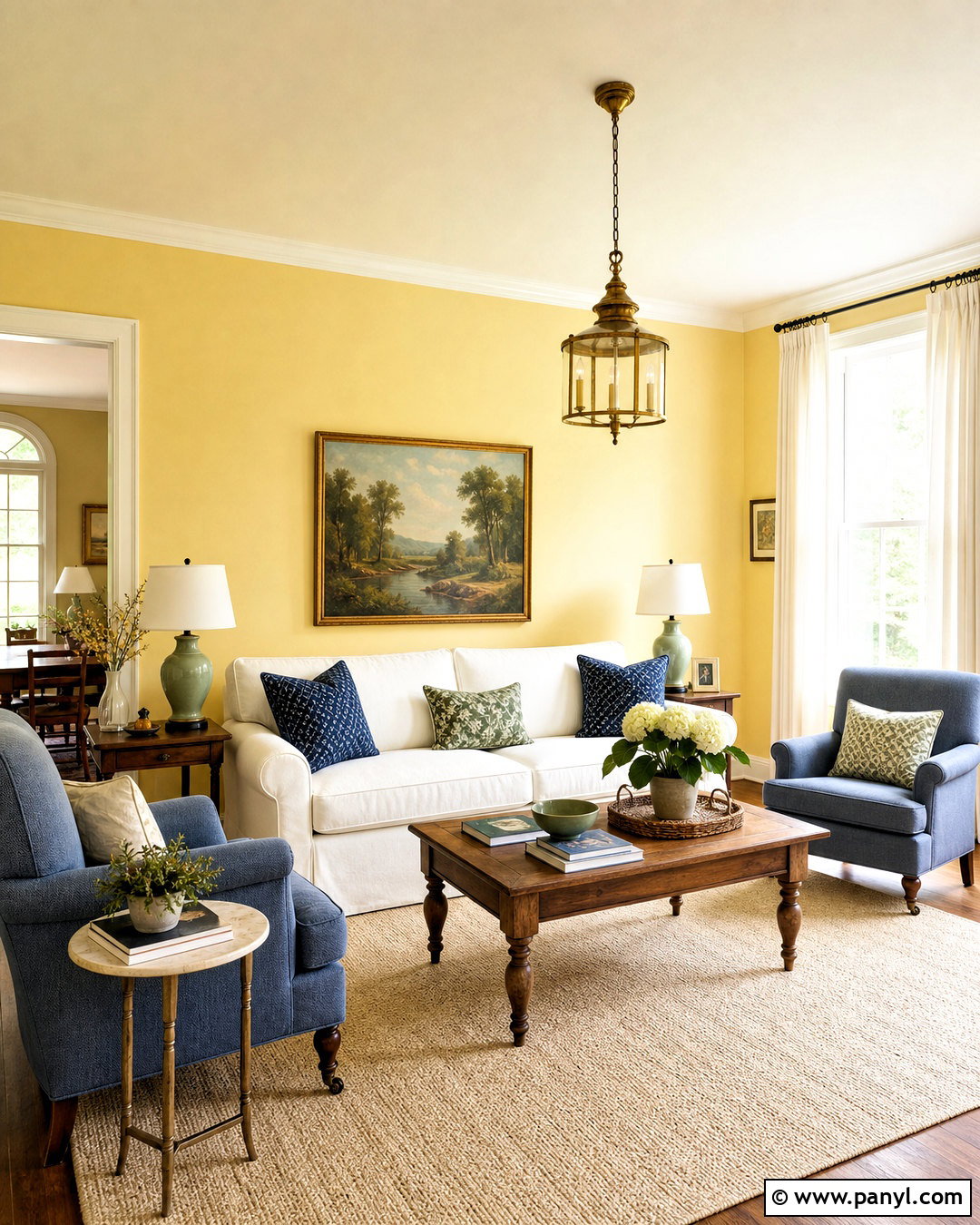
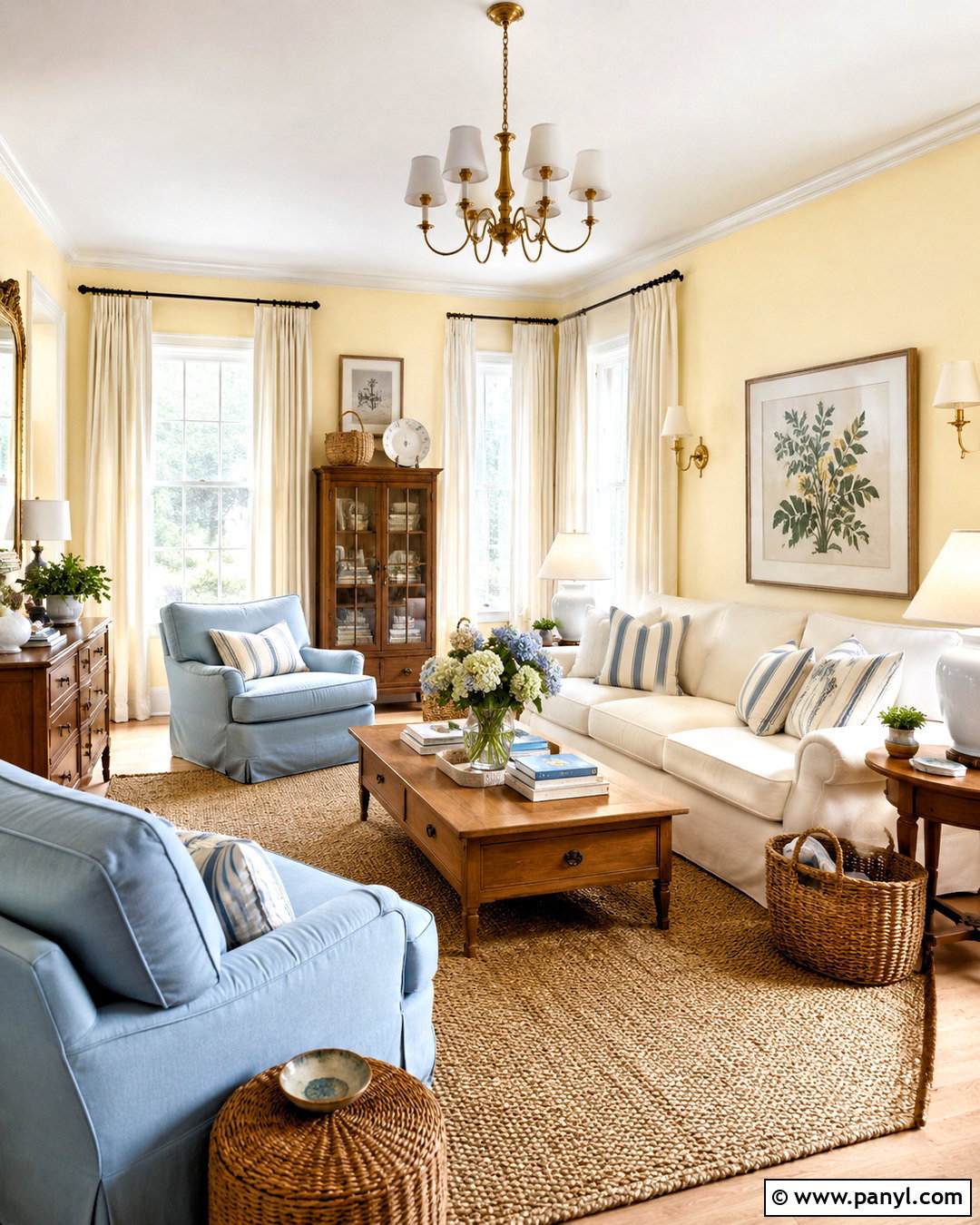
What if a living room could feel sunny even on an overcast afternoon? A pale buttery yellow can produce that effect when the shade is soft rather than highly saturated. Pair it with a white slipcovered sofa, natural oak coffee table, and blue-gray armchairs. Use a cream wool rug and white linen curtains to maintain brightness. Small accents of navy, sage, and warm brown will balance the yellow walls and keep the palette grounded. A simple brass pendant and traditional landscape artwork complement the welcoming character. Avoid filling the room with additional yellow furnishings. Let the paint supply the warmth while furniture remains neutral. The completed look feels cheerful, classic, and comfortable without resembling a brightly colored children’s space.
20. Soft Clay Living Room Paint
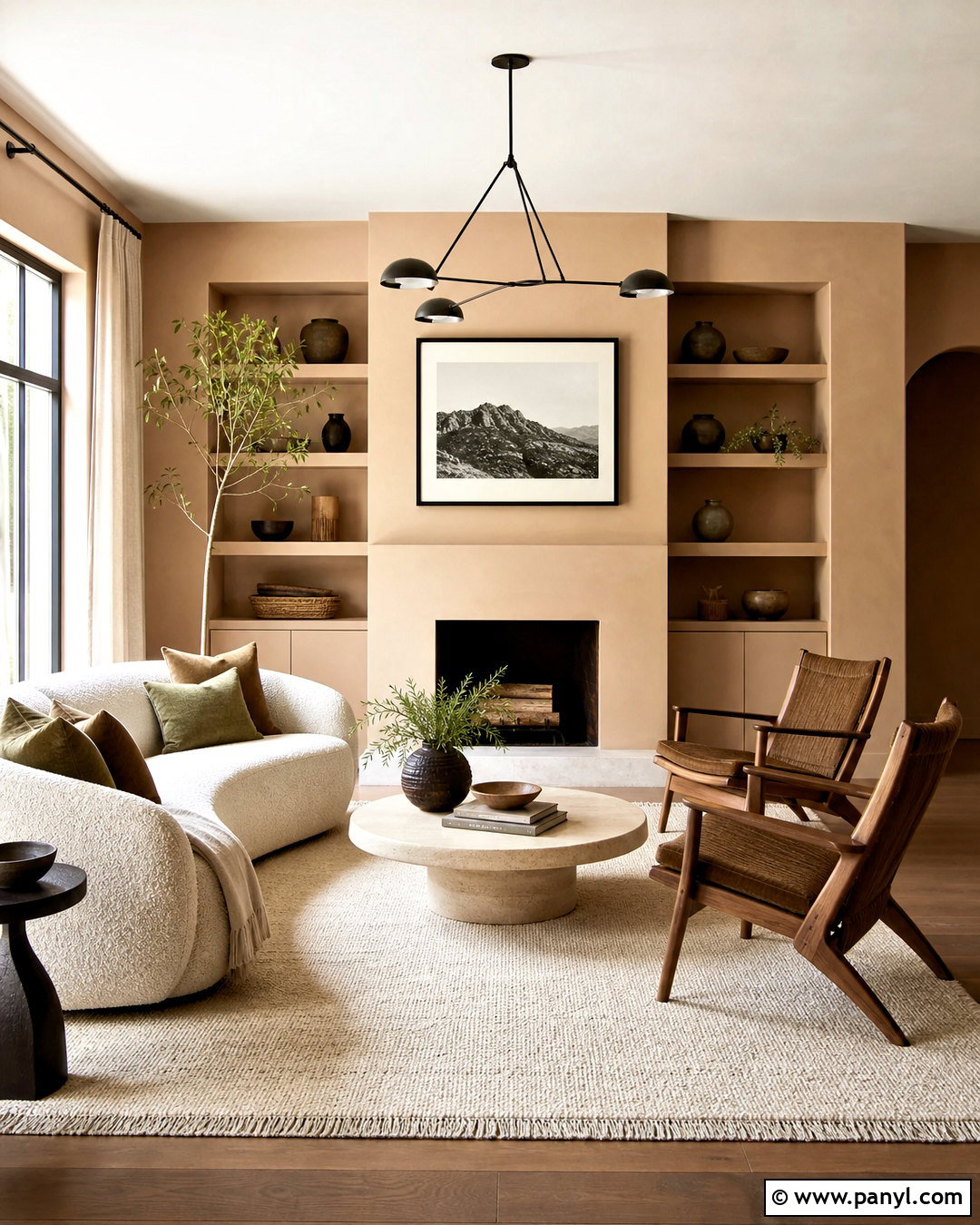
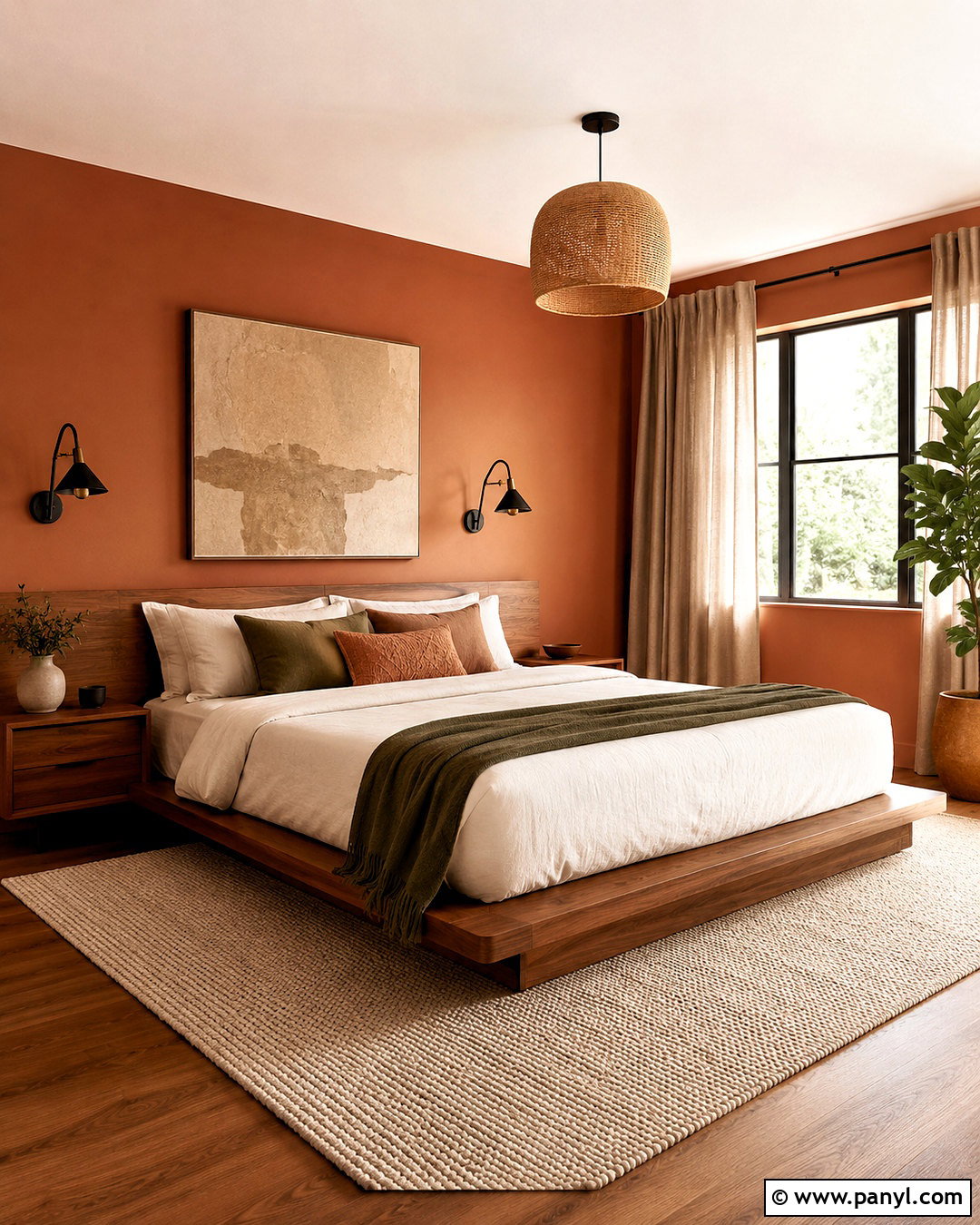
Soft clay paint blends pale terracotta, beige, and dusty pink into a warm neutral that feels current yet highly livable. Cover the living room walls in this muted shade and pair them with a cream boucle sofa, walnut lounge chairs, and a round stone coffee table. A textured ivory rug will brighten the floor, while flax curtains add natural movement at the windows. Use deep olive pillows, dark bronze lighting, and black-framed artwork for contrast. Handmade ceramics and woven baskets reinforce the earthy palette without making it overly rustic. Consider painting the fireplace and nearby shelving the same soft clay for a cohesive, architectural finish. The completed room feels warm, modern, and layered, with enough color to stand apart from standard beige interiors.
Conclusion:
The best light living room color should complement the room’s daylight, permanent finishes, furniture, and overall mood. Warm whites, creams, beige tones, and greiges offer flexibility, while pale blue, sage, blush, and clay bring gentle personality. Build a complete palette instead of choosing the wall shade in isolation. Compare it with the flooring, trim, upholstery, curtains, and lighting before making a final decision. Paint large sample areas on different walls and observe them throughout the day, since undertones can become more noticeable as the light changes. Whether you prefer an earthy, coastal, traditional, or contemporary room, these 20 light paint colors for living room ideas provide practical starting points for a brighter, more cohesive home. ()

Related Ideas and Inspiration:
Leave a Reply