
Burgundy brings warmth, depth, and a welcoming sense of drama to a dining space. It can cover the walls, appear on upholstered chairs, or simply add richness through curtains, rugs, and artwork. The key is balancing this deep red tone with lighter colors, natural materials, and effective lighting. Cream, warm white, sage green, navy, blush, gray, and wood finishes can all create a polished palette. Burgundy also works across many aesthetics, from modern and farmhouse rooms to traditional and maximalist interiors. These complete looks include practical combinations for different room sizes, budgets, and decorating preferences. Whether you want subtle color or a fully immersive space, explore these 20 burgundy dining room ideas for a design you can confidently recreate.

1. Burgundy Dining Room Accent Wall
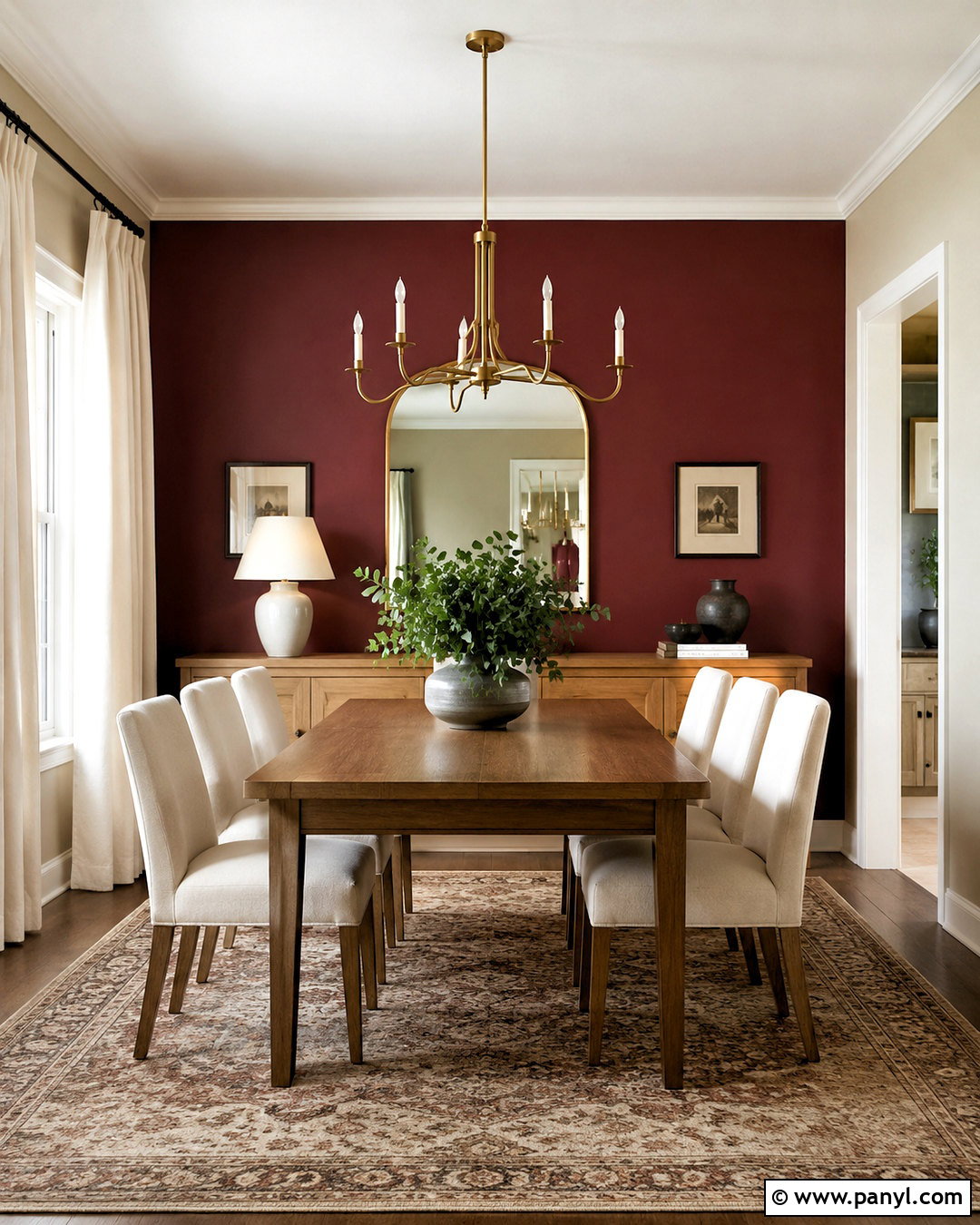
A burgundy accent wall creates a strong focal point without making the entire dining room feel enclosed. Place it behind a light oak sideboard or the head of the dining table so the color anchors the layout. Keep the remaining walls warm white, and choose a medium-tone wood table to soften the contrast. Cream upholstered chairs add brightness, while a patterned rug with burgundy, beige, and muted blue connects the palette. Hang a wide brass-framed mirror or simple artwork over the sideboard to reflect light. A modern brass chandelier brings warmth overhead. Finish the room with white linen curtains, ceramic tableware, and a low arrangement of leafy branches that will not block conversations across the table.
2. Burgundy Dining Room With Cream Walls
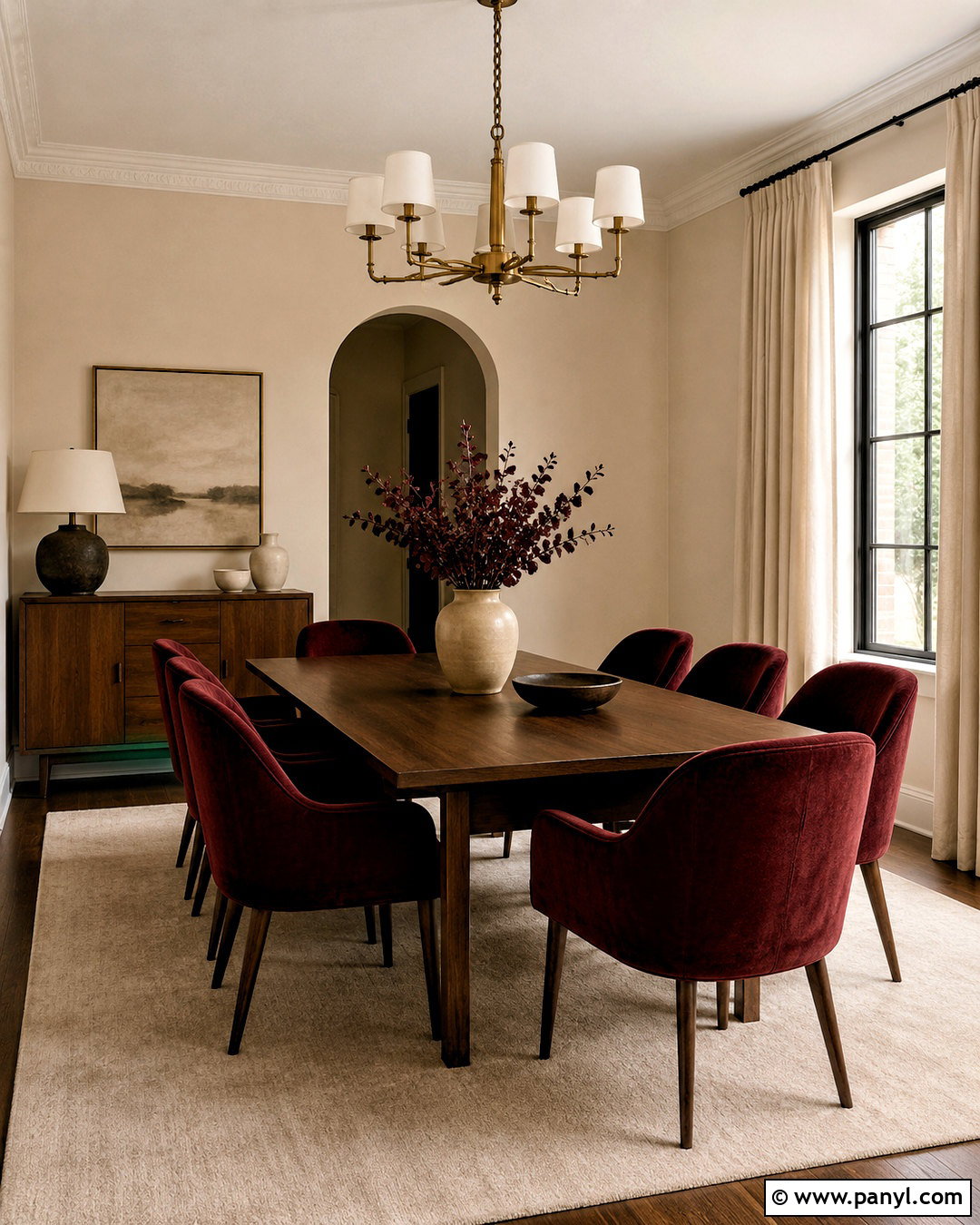
Cream walls give burgundy furniture room to stand out while keeping the dining area soft and inviting. Build the look around burgundy velvet dining chairs and a walnut table with a simple rectangular shape. Add a cream wool rug large enough to remain beneath the chairs when they are pulled out. Floor-length ivory curtains can frame the windows and spread natural light throughout the room. Choose an antique brass chandelier with frosted glass shades for gentle illumination. A walnut sideboard provides storage and repeats the table finish. Style it with cream pottery, a burgundy glass vase, and understated artwork. The result feels elegant but comfortable, making this combination suitable for formal meals, casual dinners, and open-plan homes.
3. Burgundy And Gold Dining Room
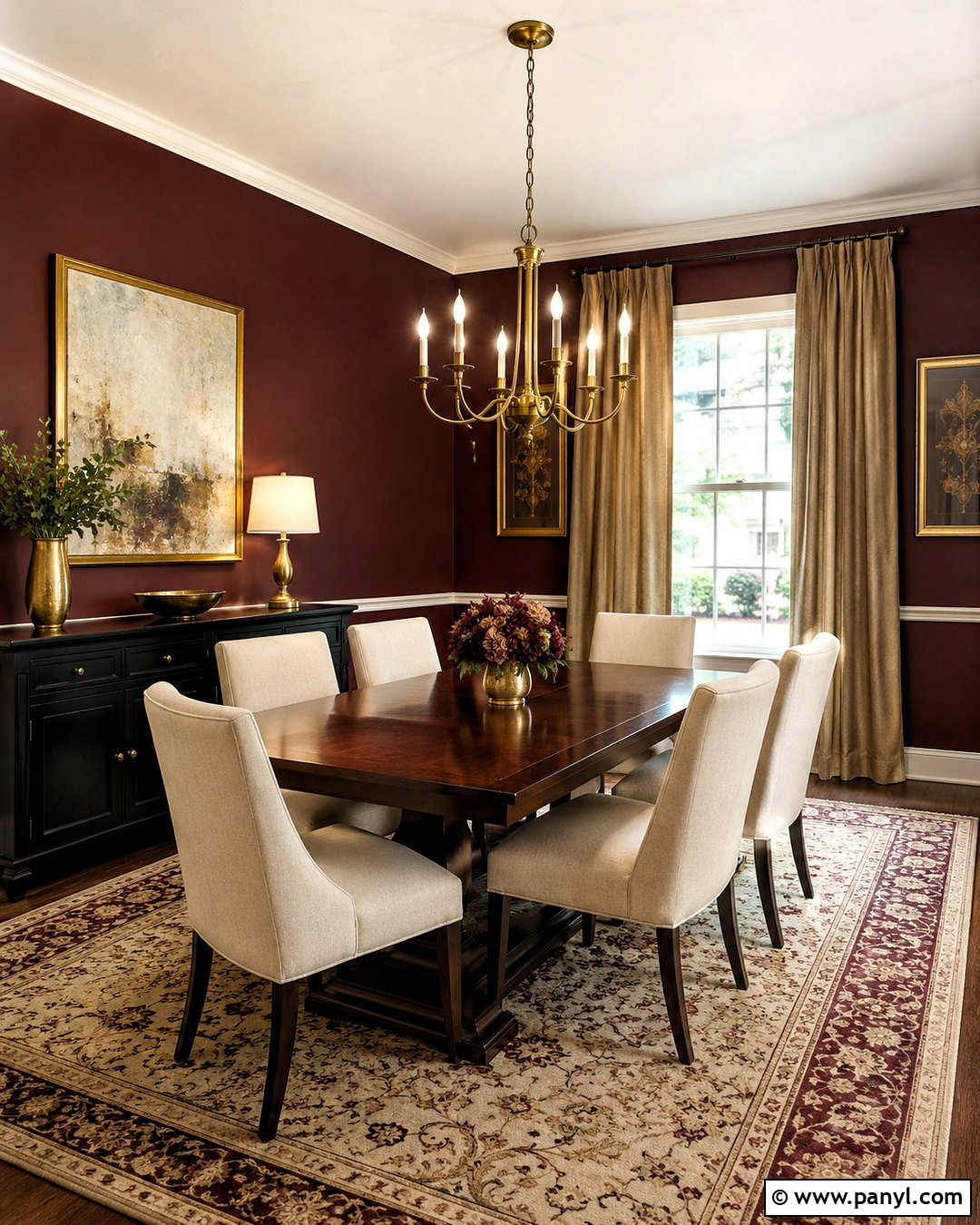
Burgundy and gold create a rich dining room that feels polished without becoming overly ornate. Paint the walls a muted burgundy with a matte finish, then use warm white on the ceiling and trim for definition. Center a dark walnut table beneath a sculptural aged-brass chandelier. Dining chairs upholstered in cream fabric prevent the deep walls from overpowering the room. Bring burgundy back through a subtle patterned rug and tailored window panels. A black sideboard introduces a grounding contrast, while gold-framed artwork adds controlled shine. Keep tabletop decor simple with ivory dishes, clear glassware, and one low brass bowl. Layered sconces and chandelier light will help the burgundy retain its warmth after daylight fades.
4. Modern Burgundy And Black Dining Room
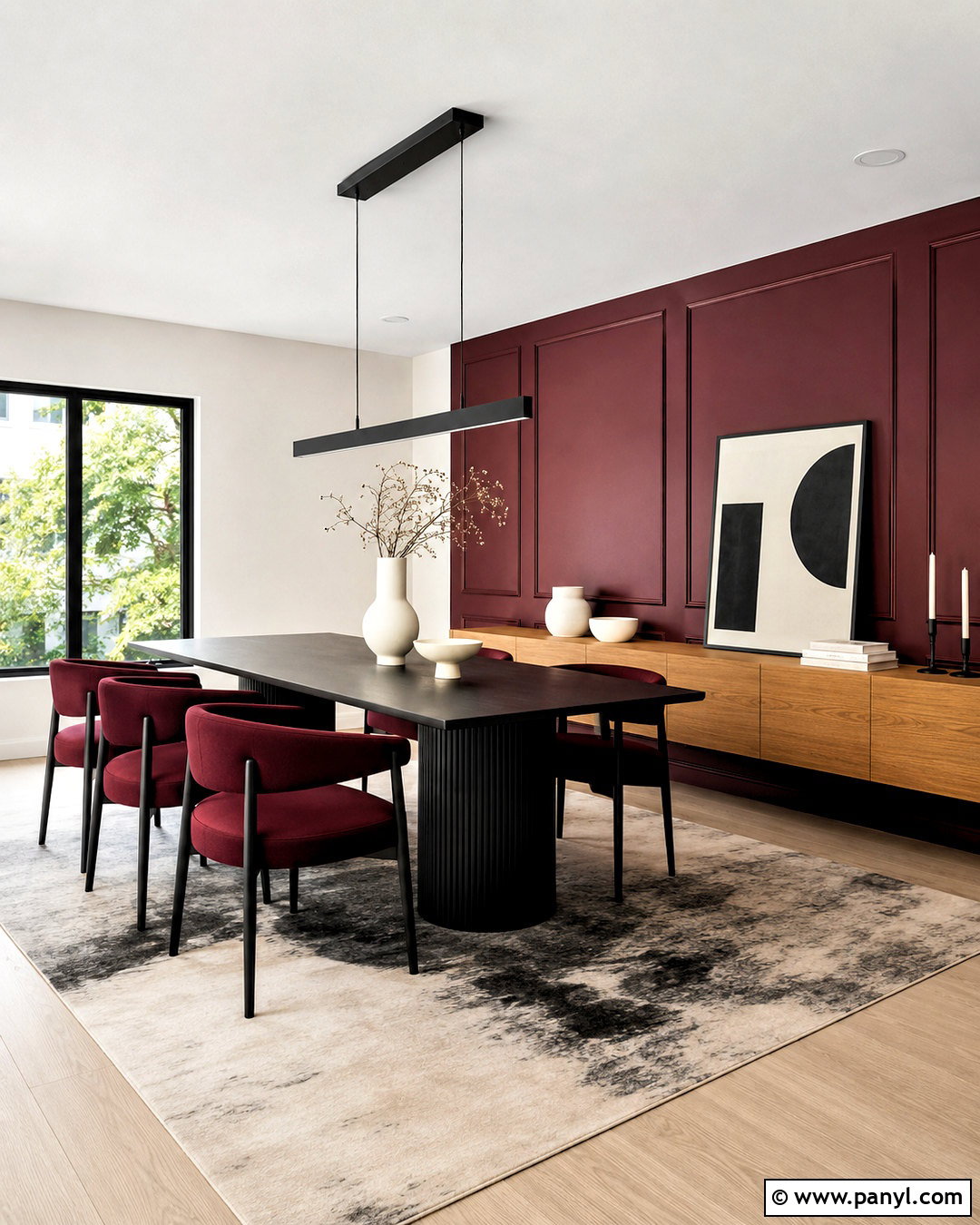
For a clean, modern approach, combine burgundy with matte black, pale wood, and crisp architectural lines. Use burgundy on one paneled wall, then paint the other walls a soft warm white. Choose a streamlined black dining table with slim legs and burgundy upholstered chairs in an easy-to-clean performance fabric. A large abstract rug featuring cream, charcoal, and muted red will soften the arrangement. Hang a linear black pendant over the table to emphasize its shape. A floating oak sideboard keeps the room from feeling too heavy and provides practical serving storage. Complete the design with minimalist artwork, black-framed windows or curtains, and sculptural white ceramics. Limit small accessories so the strong color contrast remains intentional and uncluttered.
5. Burgundy And Sage Green Dining Room
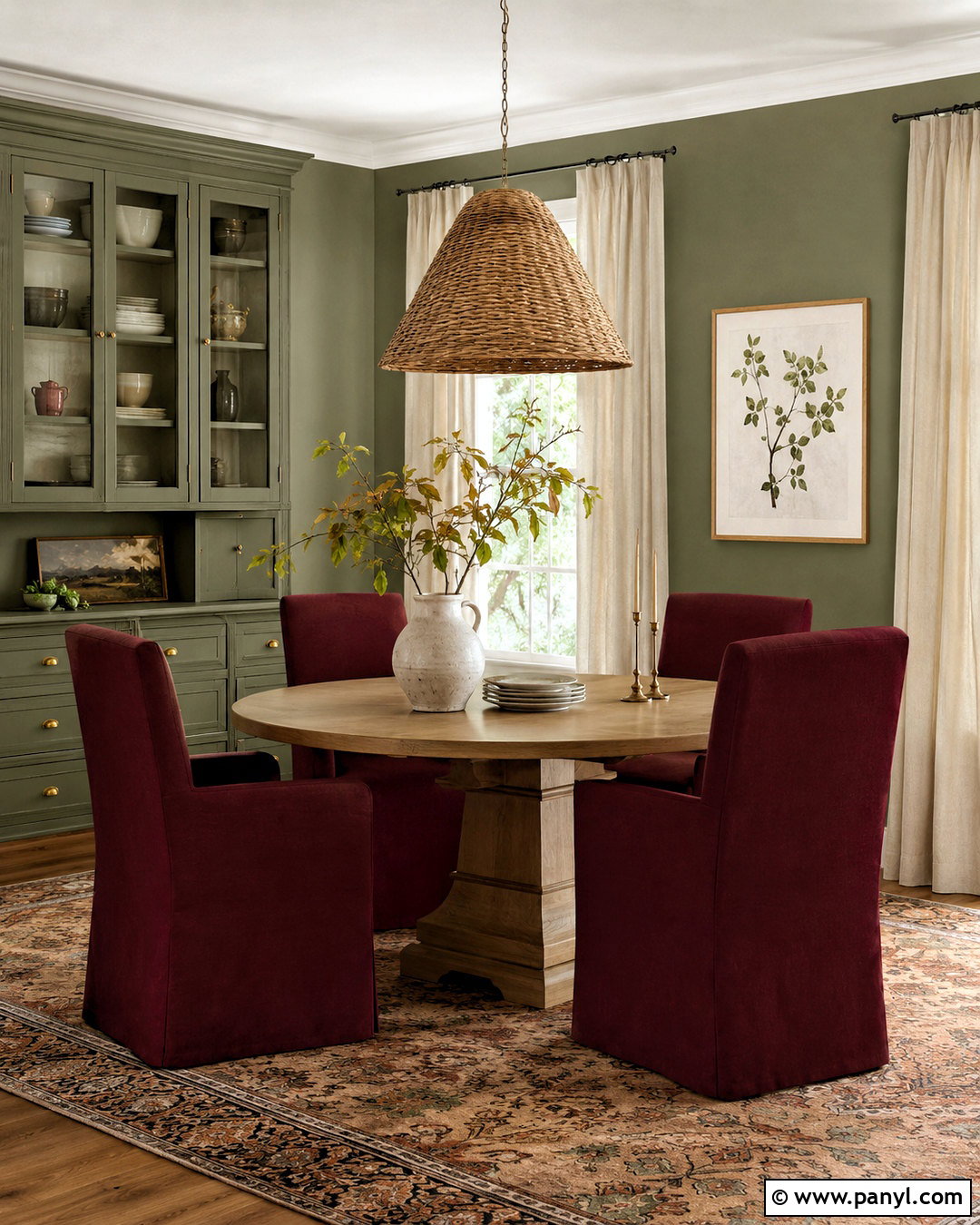
Sage green gives burgundy a calmer, nature-inspired character that works beautifully in a relaxed dining room. Paint the walls a dusty sage and introduce burgundy through linen-upholstered chairs, a patterned rug, and botanical artwork. A round oak dining table encourages conversation and makes the palette feel casual rather than formal. Choose a woven pendant light to bring warm texture overhead. Light beige curtains and natural oak flooring will brighten the deeper red accents. Against one wall, place a sage-painted cabinet with brushed brass hardware for dishes and linens. Complete the table with cream stoneware, green glassware, and a simple ceramic vase filled with branches. This balanced scheme feels fresh, grounded, and suitable for everyday family dining.
6. Burgundy And Navy Dining Room
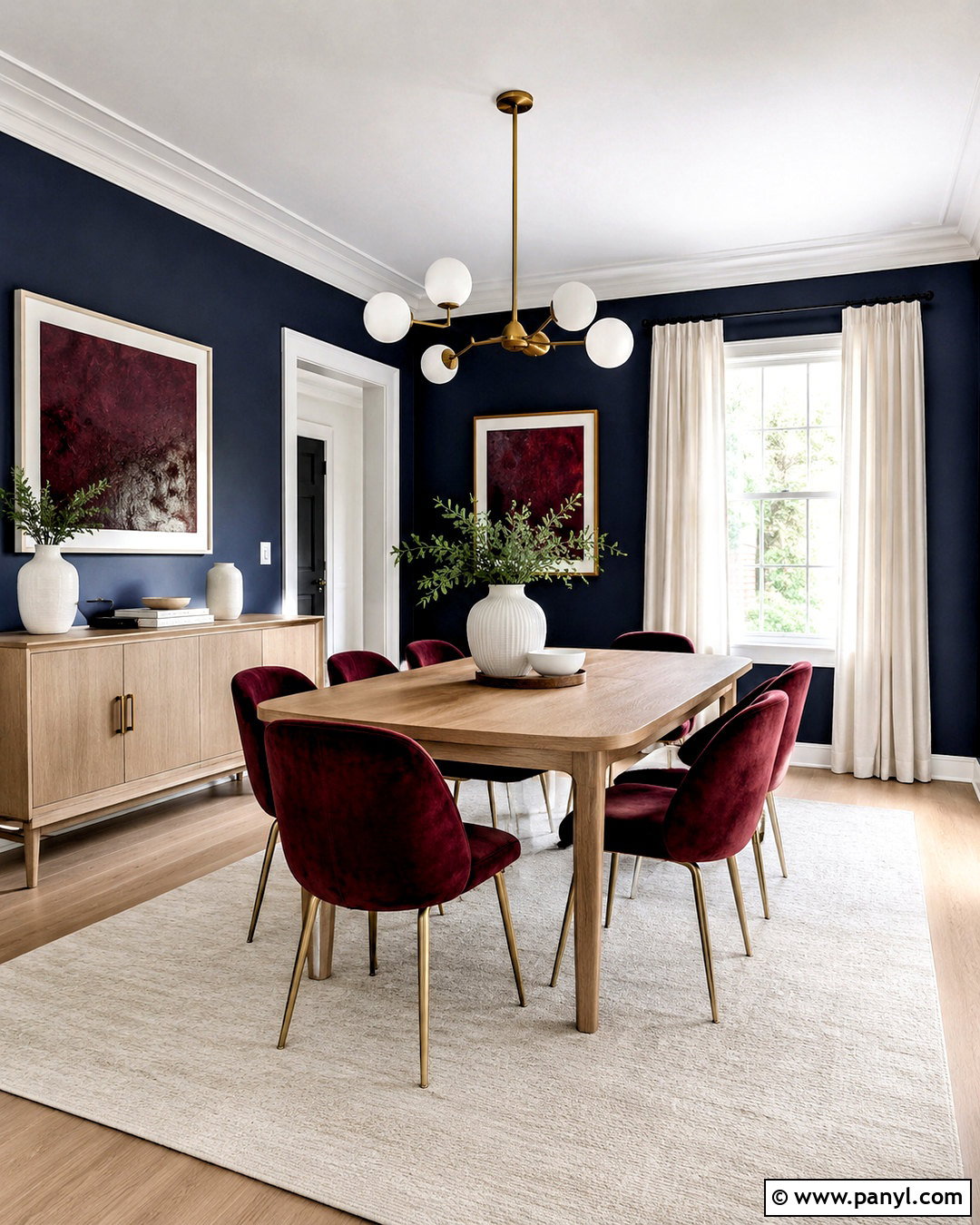
Burgundy and navy can share a dining room when lighter materials separate the two saturated colors. Cover the walls in a soft navy blue and use burgundy velvet on the dining chair seats and backs. A pale oak table adds essential brightness, while an ivory rug creates a visual break beneath the furniture. Hang a white globe chandelier with brass fittings to illuminate the dark palette evenly. Cream curtains should extend from near the ceiling to the floor, making the windows appear taller. Add a light wood sideboard topped with white ceramics and one burgundy vase. Framed artwork containing blue, red, and beige will connect every element. The finished room feels bold, tailored, and welcoming rather than dark or overly formal.
7. Burgundy And Blush Dining Room
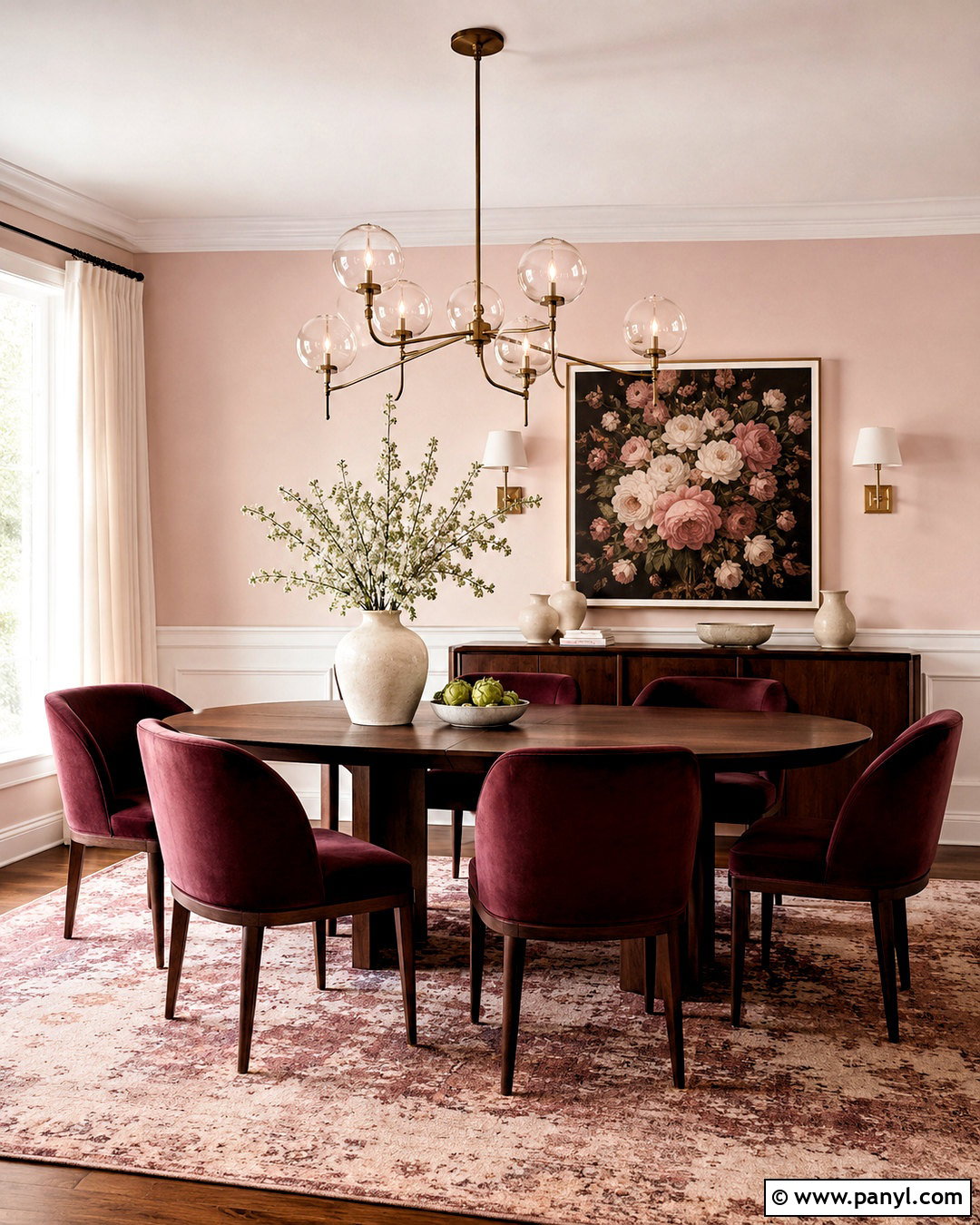
Blush pink softens burgundy and creates a dining room with warmth, gentle contrast, and a slightly romantic character. Use pale blush paint on the walls, then place burgundy upholstered chairs around an oval walnut table. A faded rug combining rose, cream, taupe, and burgundy will make the transition between colors feel natural. Choose a frosted glass chandelier with aged-brass details instead of a highly decorative fixture. Warm white curtains provide privacy while maintaining an airy backdrop. A slim walnut console can hold serving pieces without crowding the room. Add simple floral artwork, cream ceramic dishes, and dusty pink linen napkins. Black picture frames or a few dark wood accents will provide definition and keep the rosy palette from appearing overly delicate.
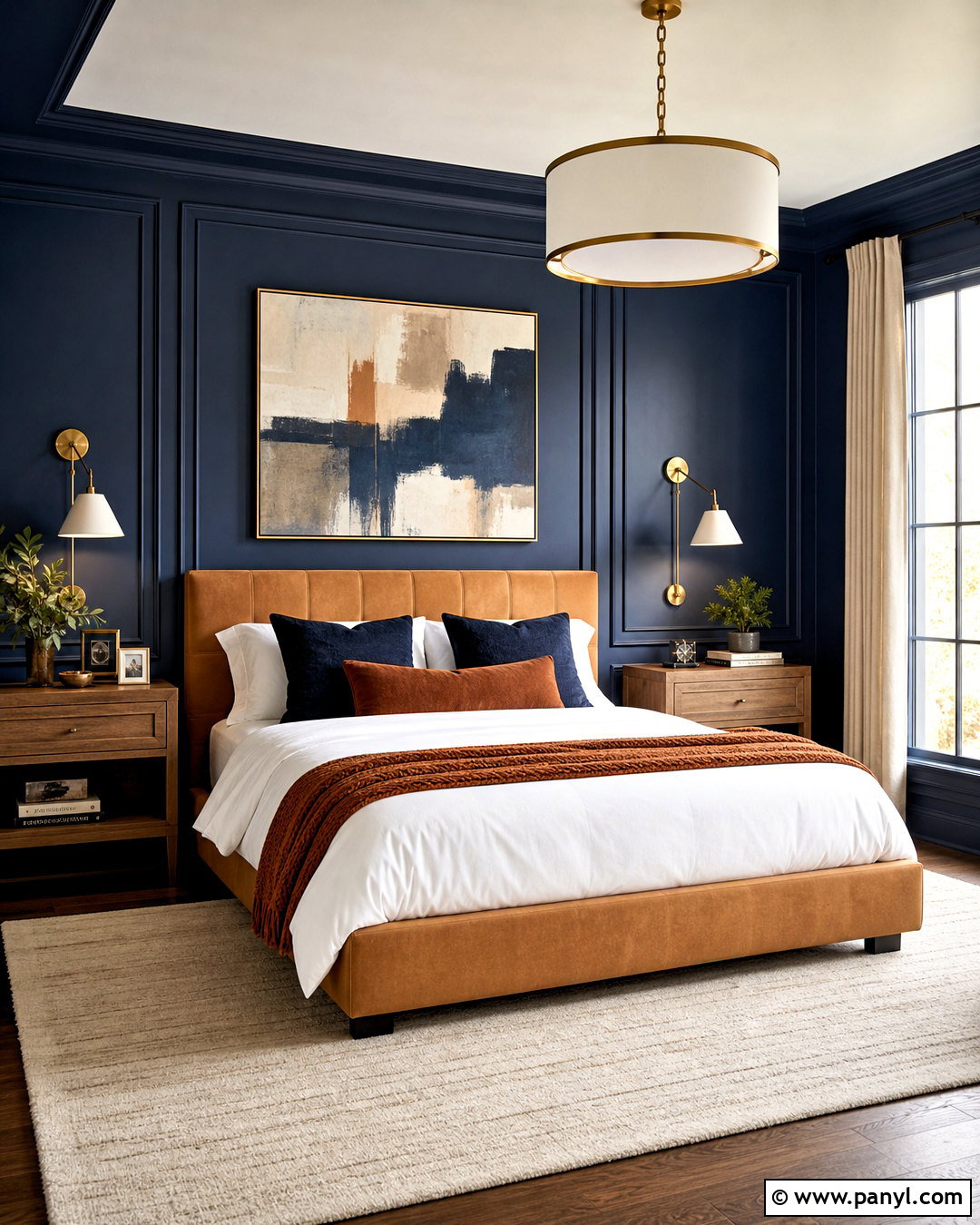
8. Burgundy And Gray Dining Room
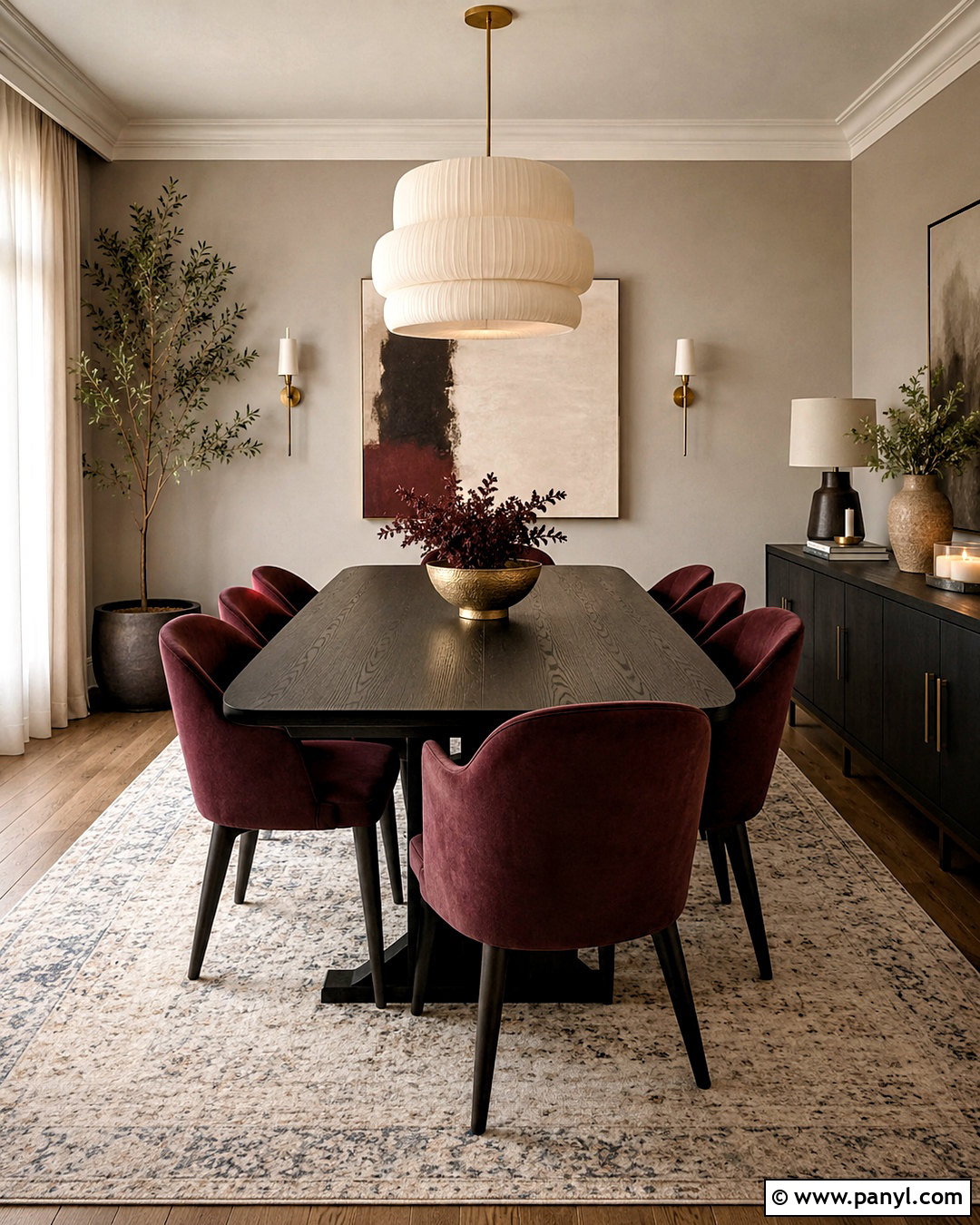
A burgundy and gray dining room can feel modern and comfortable when the gray has warm undertones. Paint the walls a light greige rather than a cool silver gray. Introduce burgundy through six tailored dining chairs, a textured area rug, and one large piece of wall art. A black-stained oak table gives the layout a contemporary foundation. Hang an oversized white pendant above it to brighten the center of the room. Sheer off-white curtains soften daylight, while a charcoal sideboard provides practical contrast and storage. Add brushed brass hardware, pale ceramic accessories, and a few natural wood pieces to warm the palette. This design works especially well in newer homes where clean lines need richer color and more visual depth.
9. Burgundy Velvet Dining Chairs
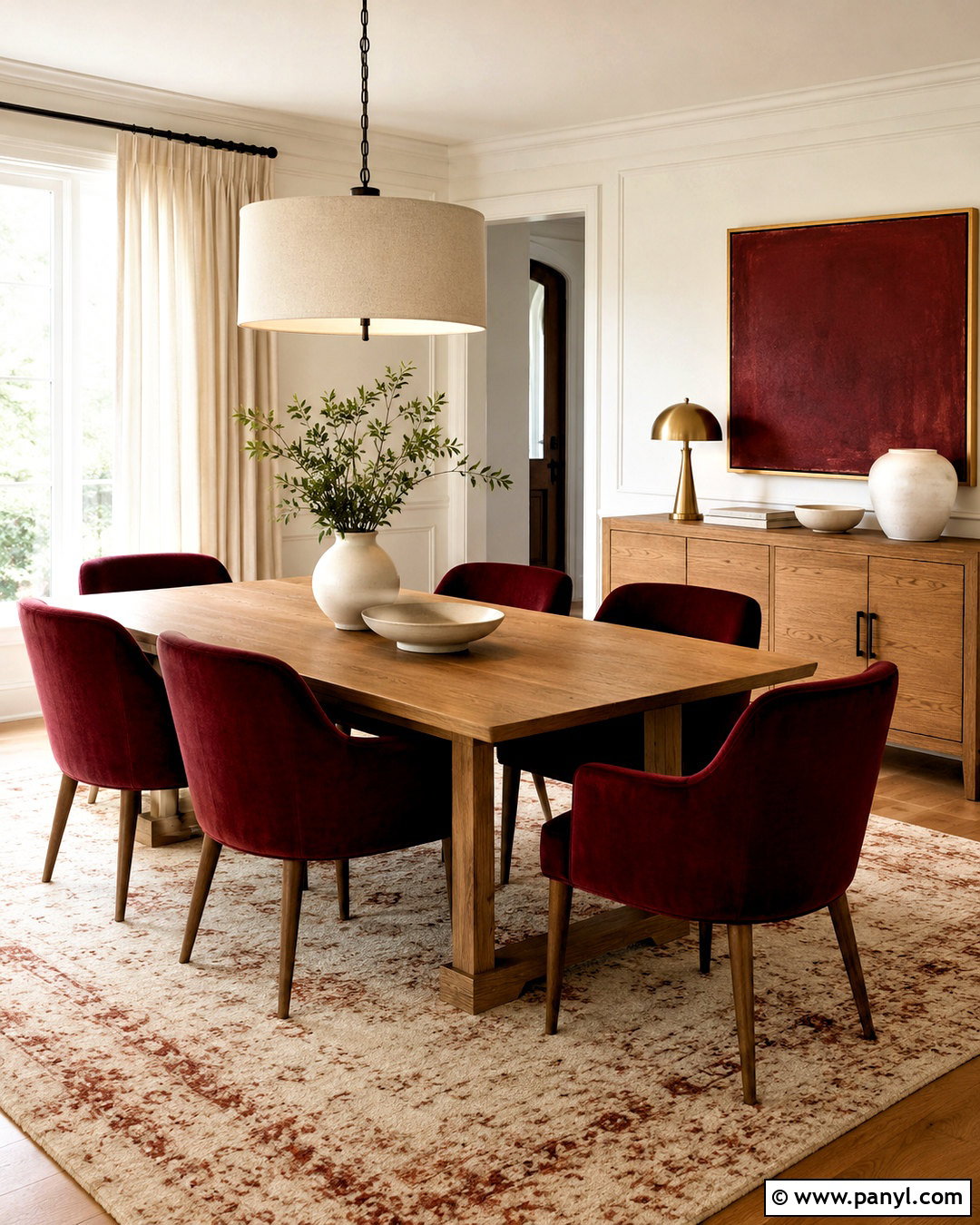
Burgundy velvet chairs can define the entire dining room when their color is repeated thoughtfully. Arrange them around a substantial natural oak table so the luxurious fabric meets a more relaxed material. Keep the walls warm white and add simple picture-frame molding for quiet architectural detail. Underfoot, use a low-pile rug with cream, rust, and faded burgundy motifs. A broad linen drum pendant will balance the softness of the velvet without adding too much shine. Choose a light oak sideboard and style it with burgundy artwork, white pottery, and one brass lamp. Full-length oatmeal curtains complete the layered look. Using burgundy in several controlled places makes the chairs feel integrated instead of looking like an unrelated burst of color.
10. Burgundy Dining Room Curtains
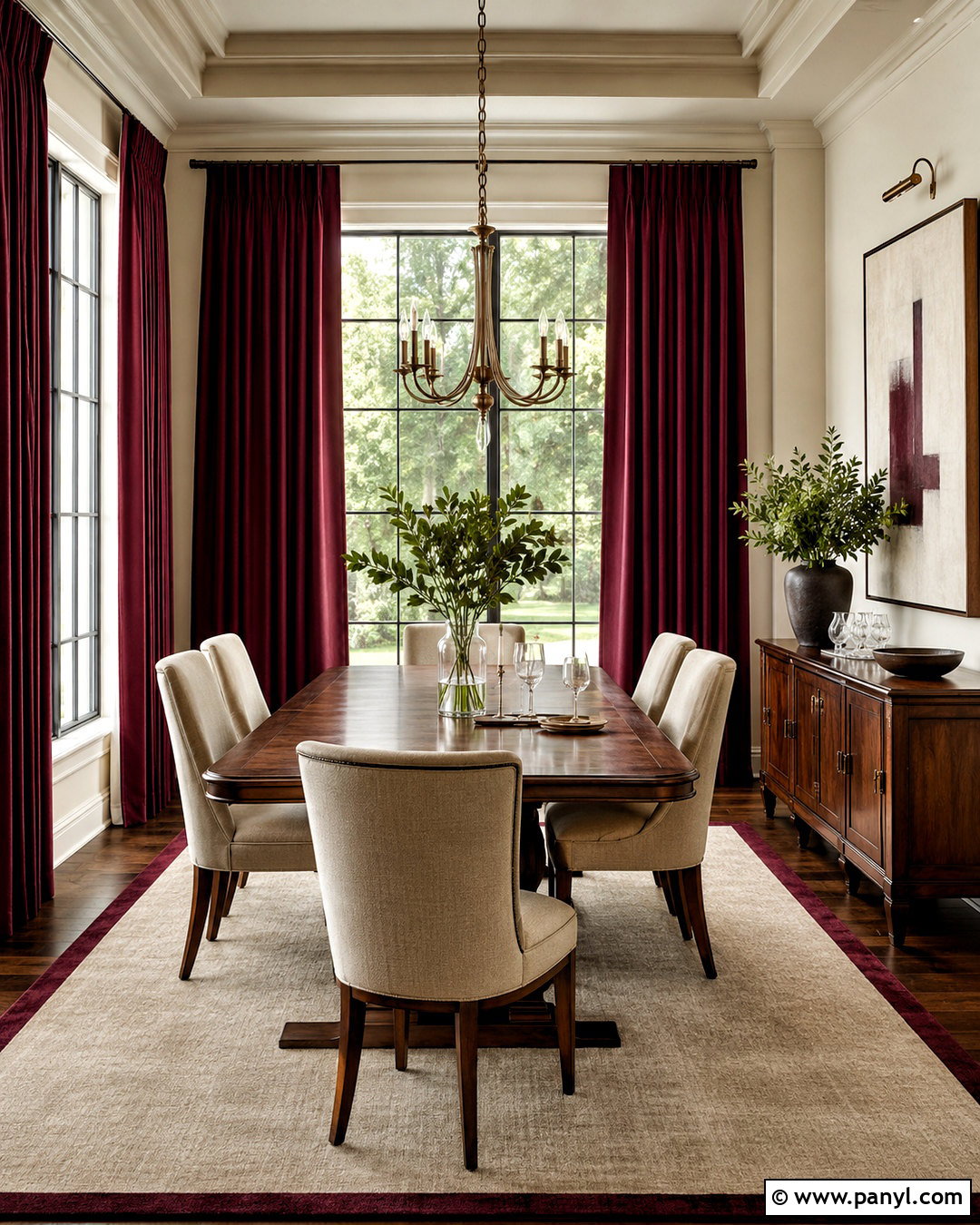
Floor-length burgundy curtains can bring drama to a neutral dining room while remaining easy to change later. Use lined linen or velvet panels mounted close to the ceiling, allowing them to frame the windows without covering the glass. Keep the walls creamy white and select a warm walnut dining table with oatmeal-colored chairs. A beige rug with a thin burgundy border will connect the windows to the seating area. Add a bronze chandelier and a medium wood sideboard for extra warmth. Above the sideboard, hang artwork featuring small touches of deep red and brown. White tableware, clear glass accents, and a leafy centerpiece will freshen the palette. This complete look offers bold color without requiring painted walls or permanent architectural changes.
11. Burgundy Dining Room Wallpaper
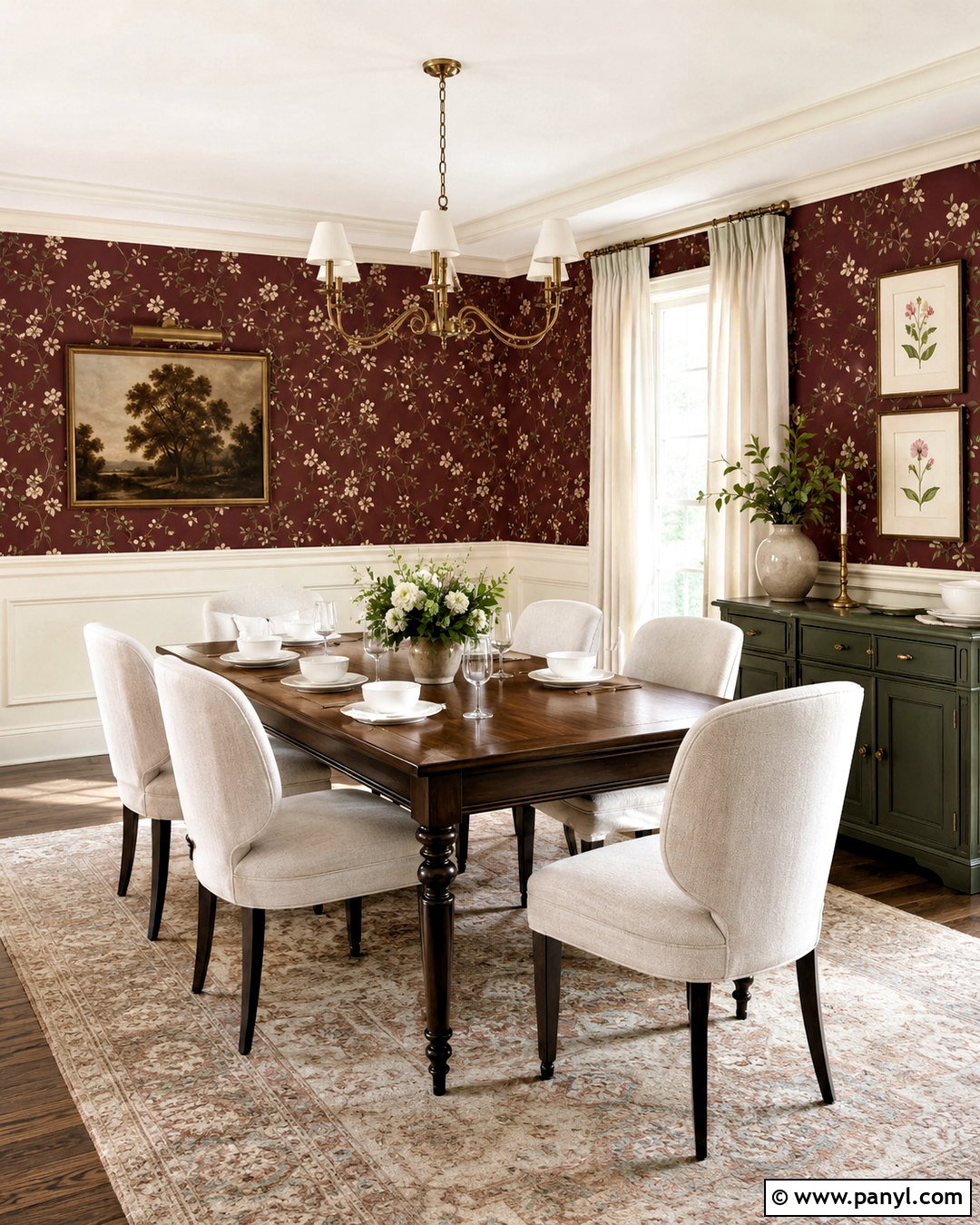
Burgundy wallpaper adds pattern, character, and depth when the rest of the dining room remains carefully edited. Choose a small botanical or geometric print with burgundy, cream, and muted green details. Cover all four walls in a well-lit room, or use it above cream wainscoting for a lighter effect. Place a dark oak table at the center with simple cream upholstered chairs. A vintage-style brass chandelier complements the pattern without competing with it. Use plain ivory curtains and a softly faded neutral rug to provide visual rest. A green-painted sideboard can repeat a secondary wallpaper color. Finish with traditional framed artwork, white dishes, and restrained tabletop decor. The cohesive scheme feels collected and distinctive rather than busy or mismatched.
12. Burgundy Dining Room Wainscoting
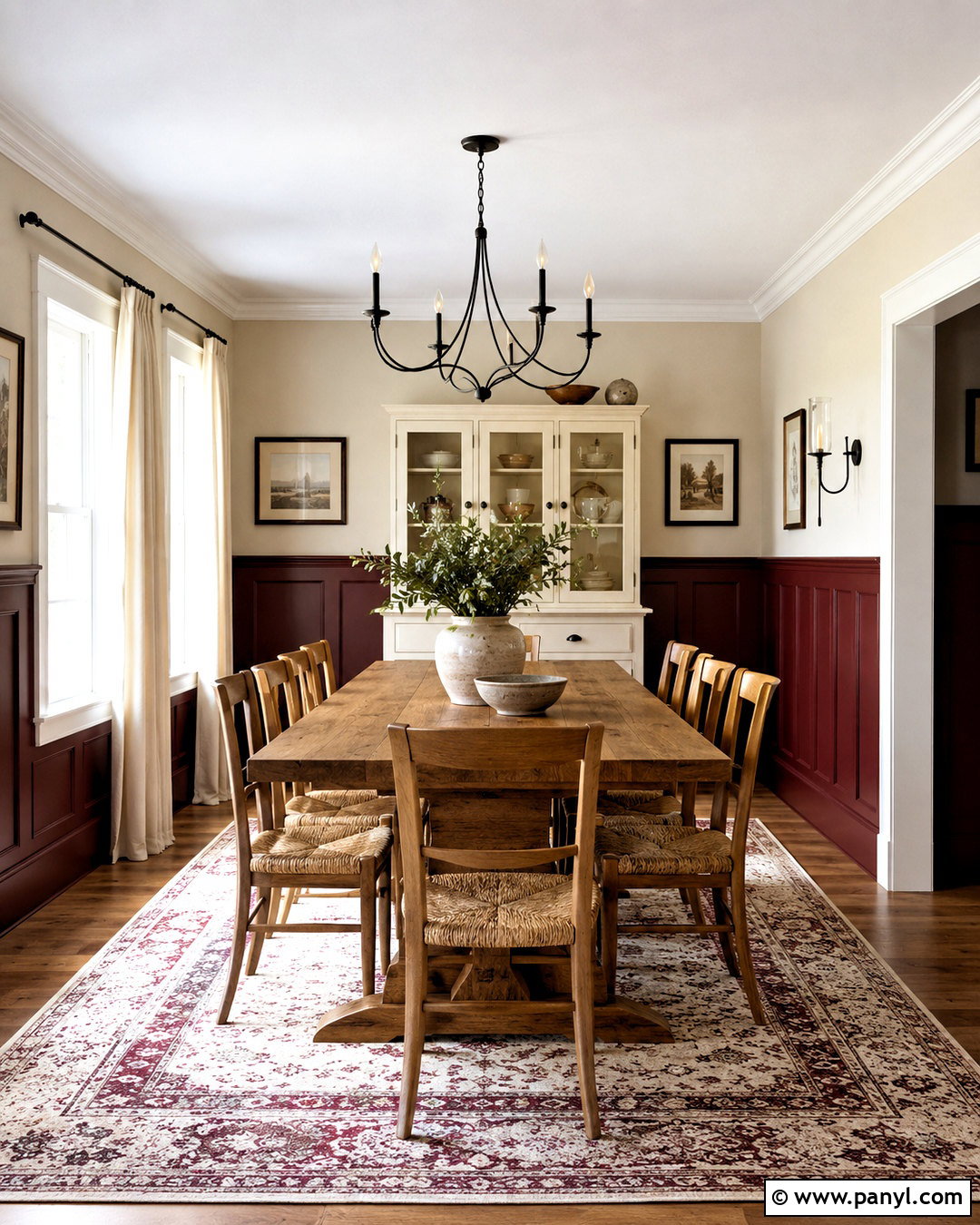
Burgundy wainscoting introduces strong color at a manageable height while giving the dining room architectural structure. Install simple Shaker-style paneling on the lower third of the walls and paint it deep burgundy. Use warm cream paint above it to reflect light and emphasize the panel detail. A rectangular oak table and woven-seat chairs will make the treatment feel relaxed and current. Add a cream and burgundy patterned rug, natural linen curtains, and a black metal chandelier with clean lines. A painted cream cabinet can store dishes while blending into the upper wall color. Decorate with black-framed prints and a low ceramic centerpiece. This balanced layout protects high-contact wall areas and offers a polished alternative to a full room of saturated paint.
13. Small Burgundy Dining Room
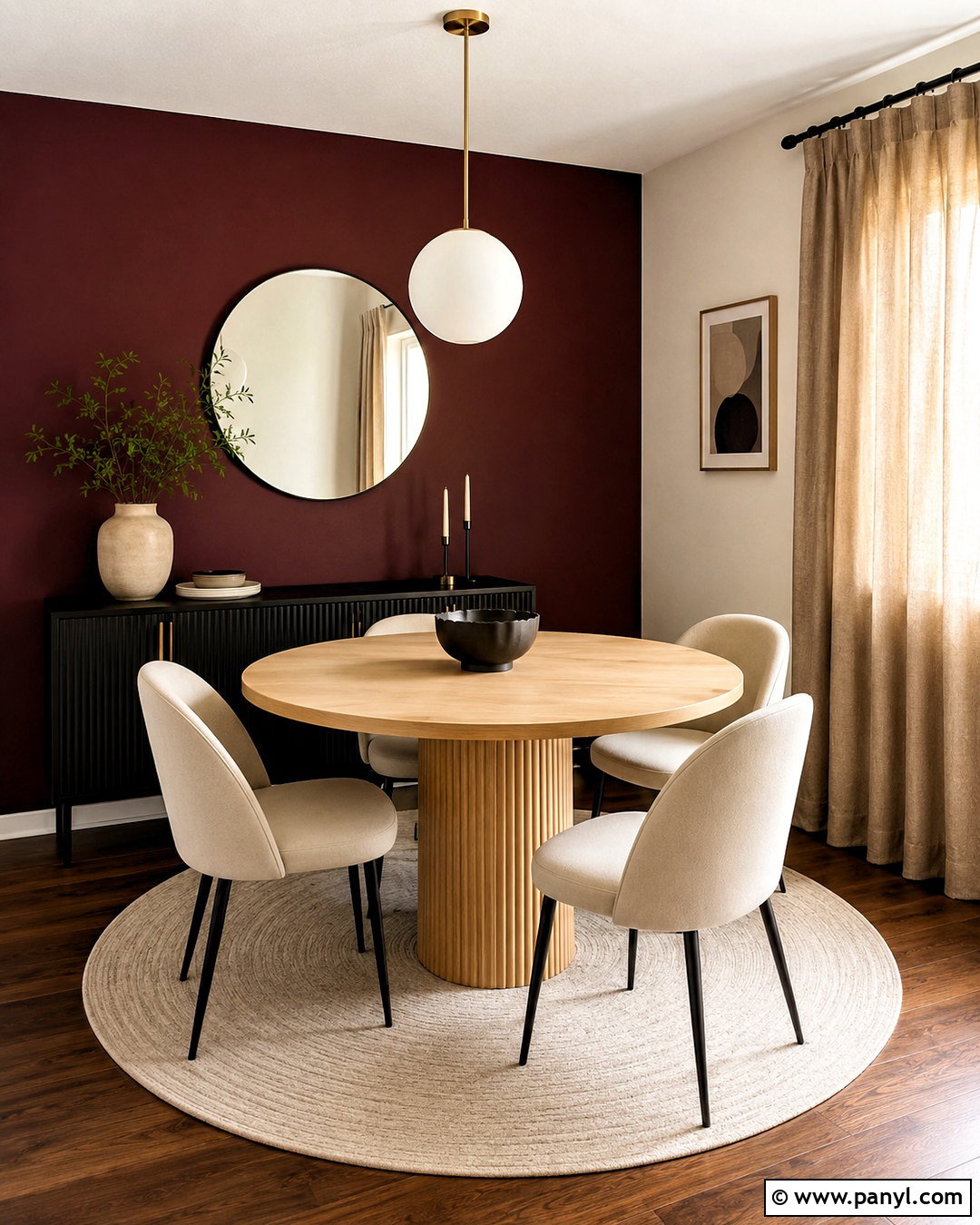
In a small dining room, burgundy works best as a focused feature supported by light surfaces. Paint the wall behind a round pedestal table in burgundy and leave the other walls warm white. Choose a pale oak table that seats four, along with compact cream chairs that can slide fully underneath it. A round washable rug will echo the table shape and establish a clear dining zone. Install a small white globe pendant instead of a visually heavy chandelier. Hang one large mirror on the burgundy wall to spread light and increase the sense of space. Add narrow floating shelves or a shallow cabinet for storage. Soft beige curtains and minimal tabletop decor will keep the room functional, comfortable, and visually open.
14. Farmhouse Burgundy Dining Room
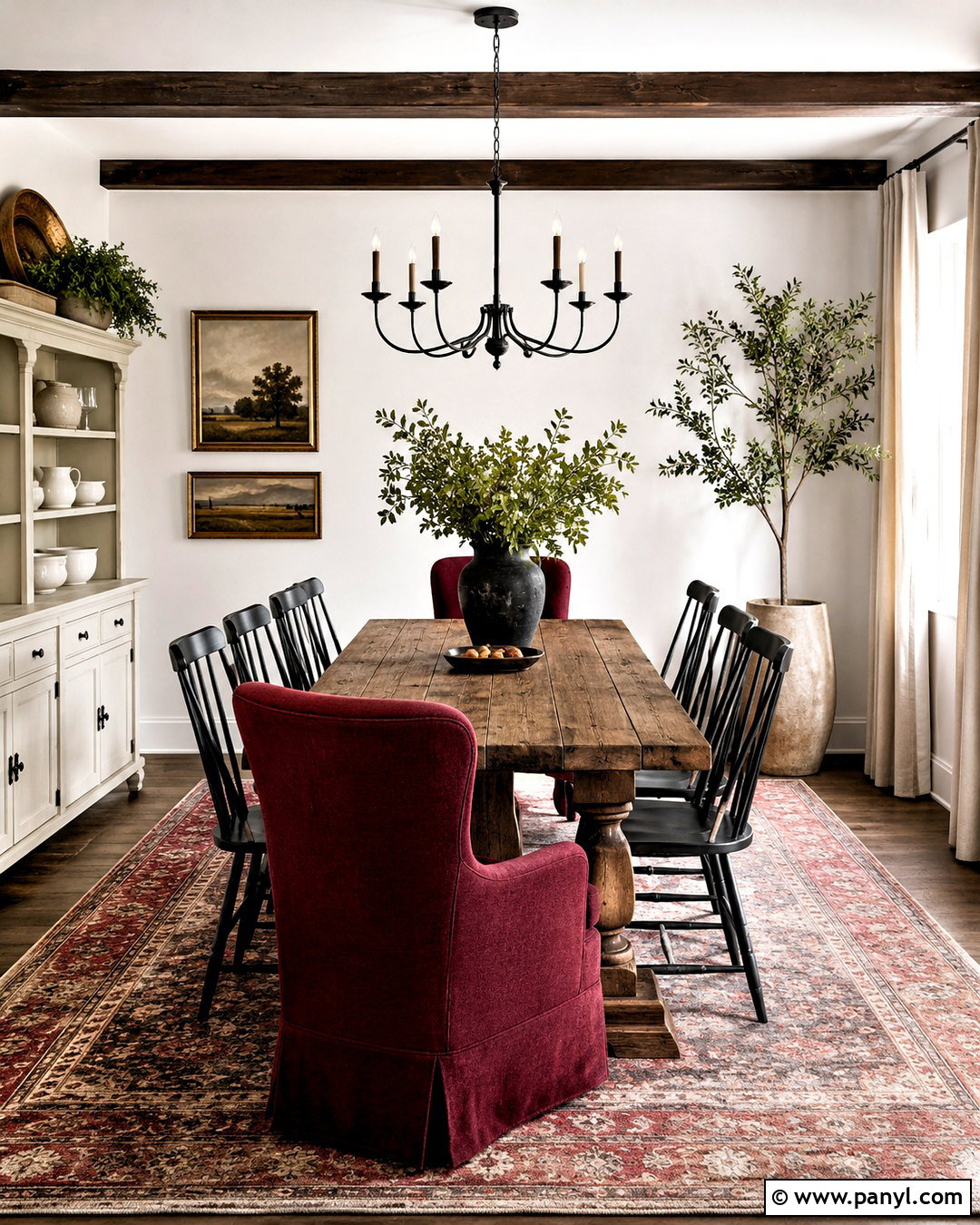
Burgundy gives a farmhouse dining room extra warmth without taking away from its comfortable, practical appeal. Start with creamy white walls and a long reclaimed wood table with a natural, slightly weathered finish. Use black spindle-back chairs at the sides and burgundy upholstered host chairs at each end. A vintage-inspired rug with burgundy, beige, and faded olive tones will ground the arrangement. Hang a simple black iron chandelier overhead and add linen curtains in warm oatmeal. A painted cream hutch offers visible storage for white stoneware and serving dishes. Display understated landscape art in wood frames rather than overly themed decorations. Finish with a stoneware pitcher and fresh greenery for a complete farmhouse look that feels updated, useful, and welcoming.
15. Midcentury Burgundy Dining Room
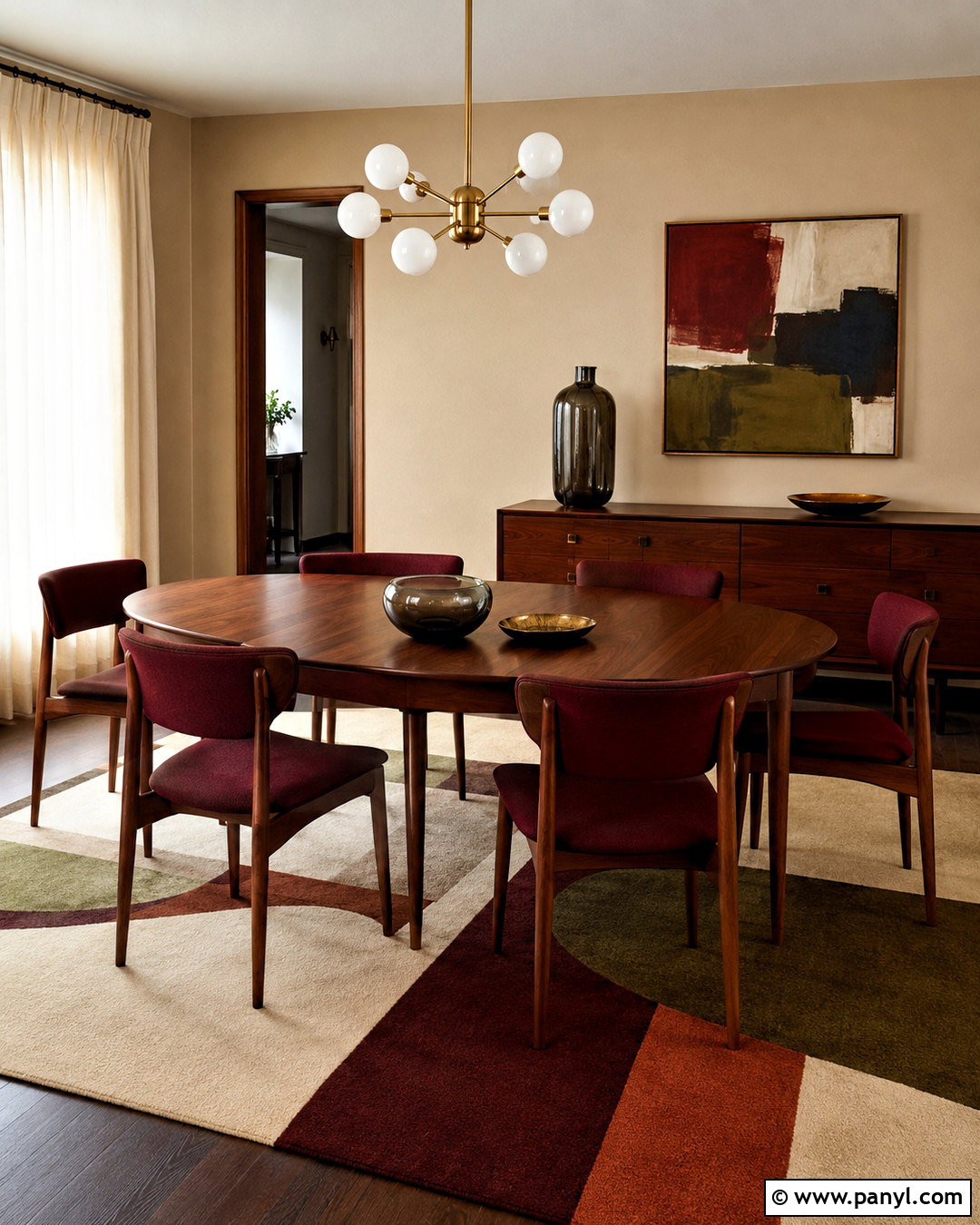
Warm wood, simple silhouettes, and burgundy upholstery create a natural midcentury dining room palette. Choose an oval walnut table with tapered legs and surround it with low-profile burgundy chairs. Paint the walls a soft beige or warm off-white to highlight the furniture shapes. A geometric rug in rust, cream, olive, and burgundy adds period-inspired pattern without making the room look dated. Install a sculptural globe chandelier with brass and opal glass details. A long walnut credenza provides storage while reinforcing the horizontal lines associated with the look. Add one large abstract artwork, a smoked-glass vase, and neatly arranged ceramic pieces. Keep window treatments simple with unlined ivory panels so natural light reveals the wood grain and rich red fabric.
16. Boho Burgundy Dining Room
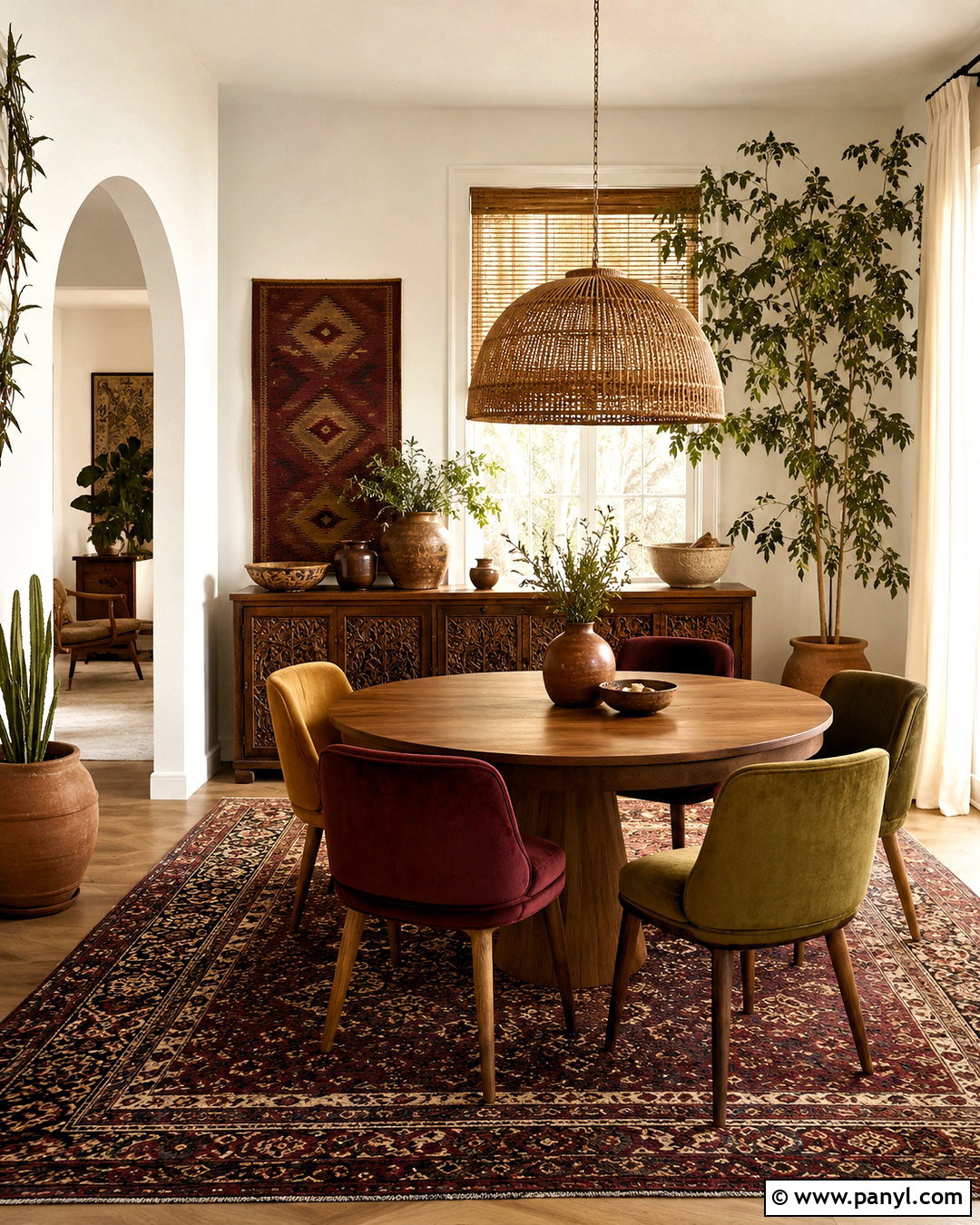
A boho burgundy dining room feels layered and personal when color, pattern, and natural texture are balanced. Paint the walls warm white, then introduce burgundy through a large vintage-style rug and mixed upholstered chairs. Use a round medium-tone wood table to keep the layout informal. Add one or two chairs in muted mustard or olive for variety, while repeating burgundy in patterned seat fabric. A large woven pendant creates a relaxed focal point overhead. Style a carved wood sideboard with handmade pottery, framed prints, and leafy plants in terracotta containers. Finish the windows with lightweight linen curtains and bamboo shades. The room can include many details, but maintaining clear floor space and an organized tabletop prevents the collected design from feeling cluttered.
17. Traditional Burgundy Dining Room
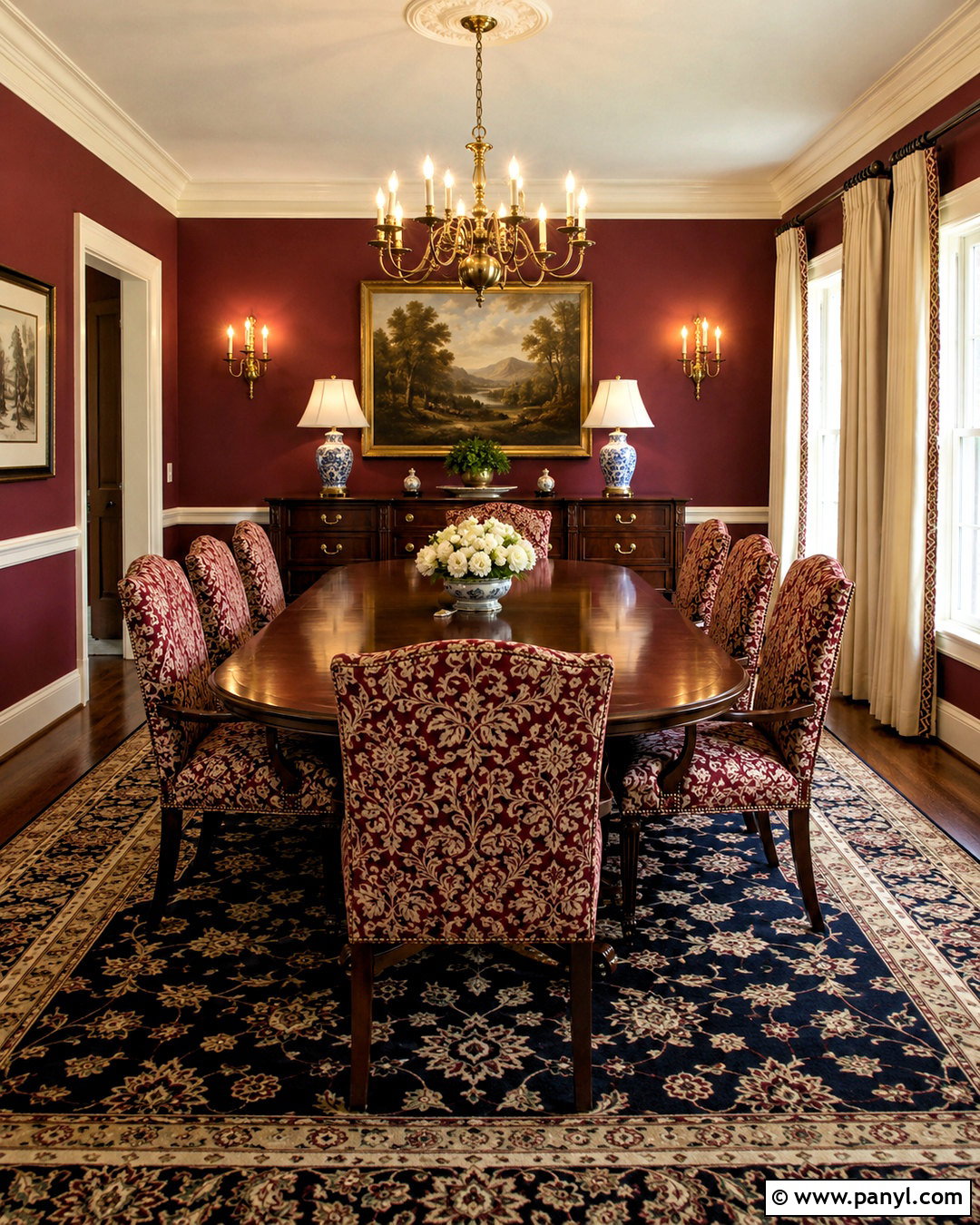
A traditional burgundy dining room benefits from symmetry, classic furniture, and layered lighting. Paint the walls a softened burgundy and highlight the trim, crown molding, and ceiling in warm ivory. Center a polished mahogany table beneath a brass chandelier with cream fabric shades. Use upholstered chairs in an ivory and burgundy pattern rather than solid dark red, creating a more detailed and balanced look. Place a traditional rug with navy, beige, and burgundy beneath the full dining set. Matching wall sconces can frame a large landscape painting above a mahogany sideboard. Add ivory curtains with a subtle burgundy border. A pair of ceramic lamps, white serving pieces, and a restrained floral centerpiece will complete the formal but still approachable arrangement.
18. Contemporary Burgundy Dining Room
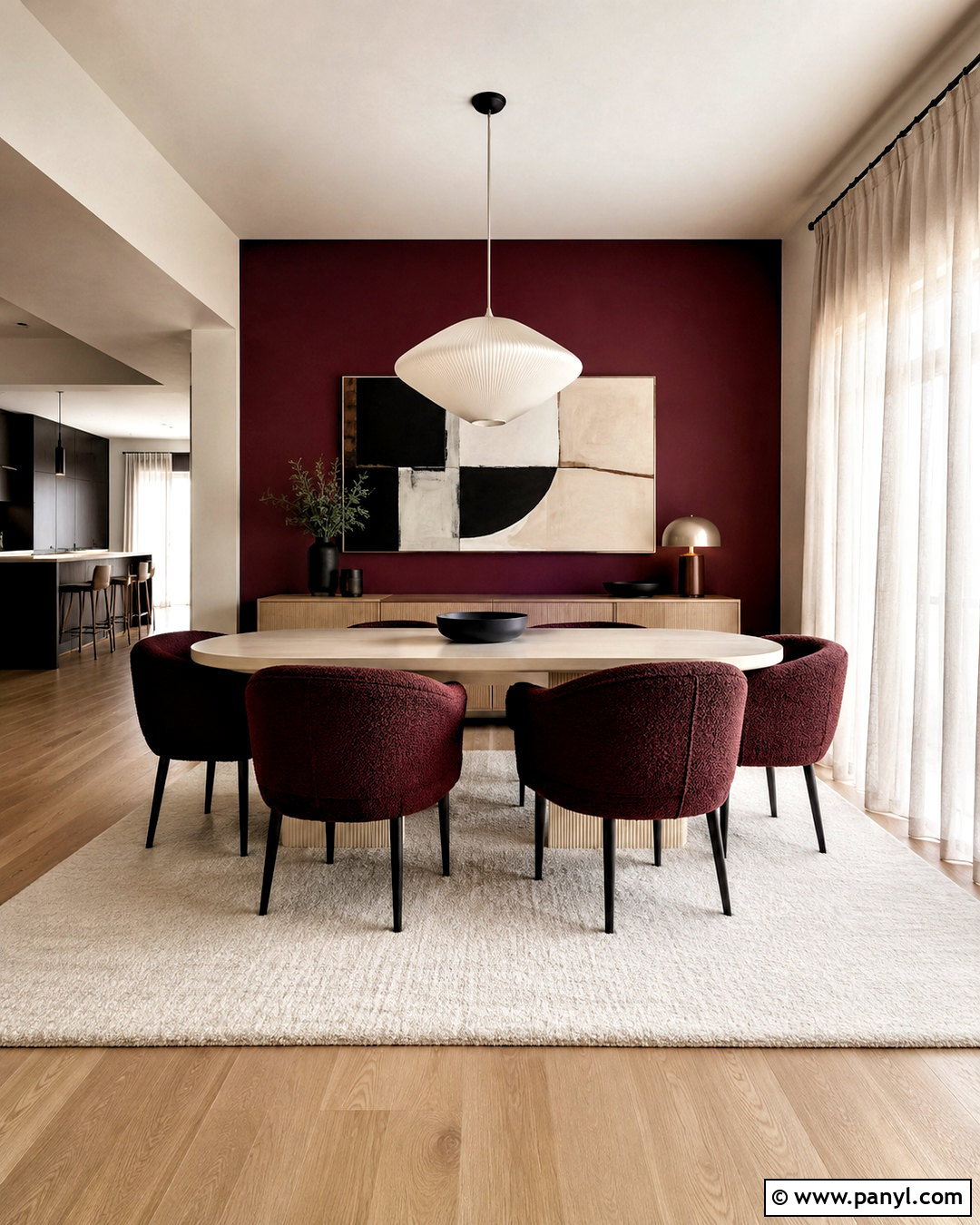
Clean shapes and a restrained palette allow burgundy to feel fresh in a contemporary dining room. Paint one wall a muted red-burgundy and use soft greige on the remaining surfaces. Choose a rounded rectangular dining table in pale ash wood, paired with burgundy bouclé chairs for rich color and texture. A large cream rug provides contrast and reduces visual noise. Hang a sculptural matte white pendant low enough to define the table while preserving clear sightlines. Select a wall-mounted sideboard in light wood with handle-free doors. Oversized abstract artwork can combine cream, burgundy, and black in broad, simple forms. Complete the room with sheer curtains, black metal accents, and one low ceramic centerpiece. Every piece should feel purposeful, leaving generous open space around the dining furniture.
19. Rustic Burgundy Dining Room
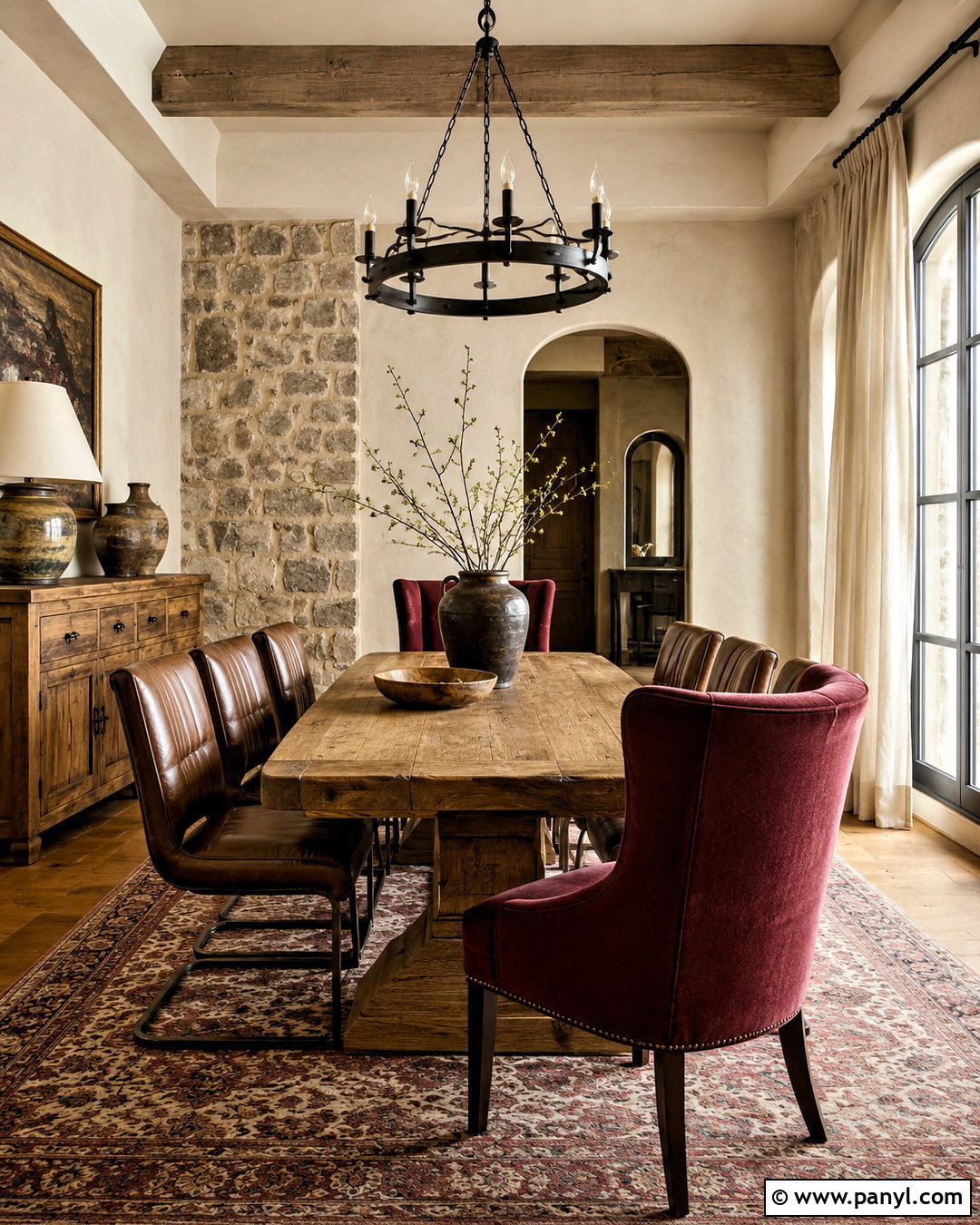
Rich burgundy textiles pair naturally with rugged wood, stone, and aged metal in a rustic dining room. Build the design around a thick trestle table in medium brown oak. Add leather side chairs and two burgundy fabric chairs at the ends to introduce comfortable color. Keep the walls a warm, chalky cream and feature one stone or reclaimed wood surface if the room already has it. A faded red and beige rug softens the floor, while an aged iron chandelier provides a sturdy focal point. Use oatmeal linen curtains and a substantial wood sideboard with black hardware. Complete the setting with handmade pottery, framed countryside artwork, and a simple arrangement of branches. The finished room feels grounded, inviting, and suitable for everyday use.
20. Maximalist Burgundy Dining Room
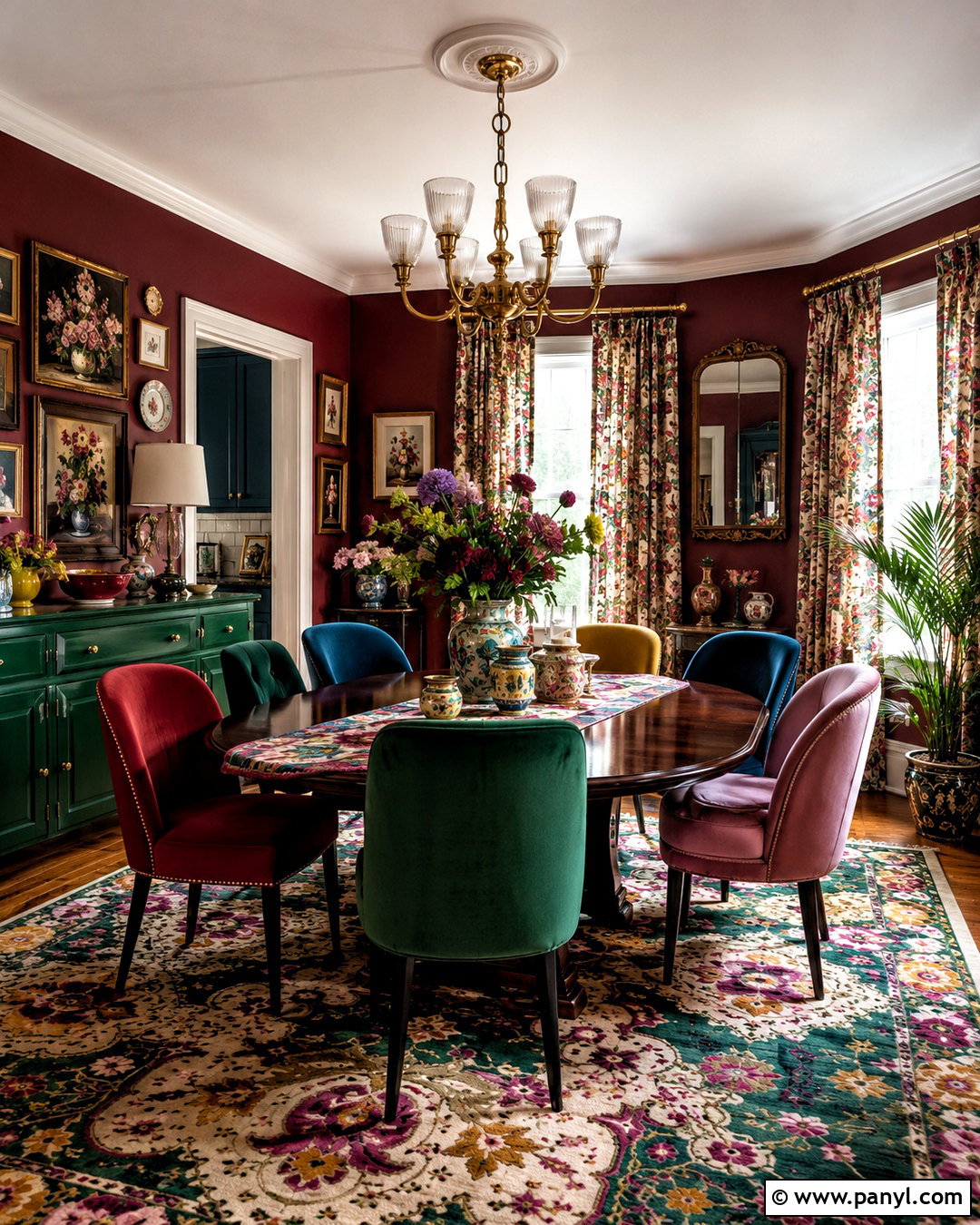
A maximalist burgundy dining room can hold multiple colors and patterns when burgundy remains the clear connecting thread. Paint the walls deep burgundy, then add a patterned rug featuring emerald green, blush pink, mustard, and cream. Surround a glossy dark wood table with mixed chairs upholstered in coordinating jewel-tone fabrics. Use a large brass chandelier to brighten the saturated palette. Burgundy and floral curtain panels can frame the windows, while a dark green sideboard introduces another strong color block. Create a gallery wall with varied gold and black frames, keeping consistent spacing between pieces. Decorative ceramics, colorful glass, and patterned table linens add personality. Leave some surfaces open so the final room feels layered, intentional, and visually exciting instead of overcrowded.
Conclusion:
Burgundy can transform a dining room through paint, upholstery, curtains, wallpaper, or carefully chosen accents. Its depth works especially well with cream, warm wood, brass, sage green, navy, blush, and soft gray. Before decorating, consider the room’s natural light, size, and connection to nearby spaces. A brighter or smaller room may need one concentrated burgundy feature, while a larger dining area can support saturated walls and layered patterns. Repeat the color in two or three places to create continuity, then use light neutrals to maintain balance. With thoughtful furniture, lighting, textiles, and storage, these burgundy dining room ideas can create a complete space that feels warm, distinctive, and comfortable.

Related Ideas and Inspiration:
Leave a Reply