
Choosing a kitchen palette is easier when cabinets, countertops, backsplash, flooring, hardware, and walls are planned together. These 20 kitchen color combinations ideas range from warm neutrals and natural wood to deep blue, earthy green, charcoal, and soft pastels. Current kitchen design is leaning toward warmer materials, wood cabinetry, contrasting islands, and white or off-white countertops rather than cool gray surfaces everywhere. () Each look below creates a complete, coordinated kitchen instead of focusing on one isolated color. You will also find practical guidance for balancing undertones, selecting finishes, and controlling contrast. Whether you are remodeling or refreshing existing cabinets, use these 20 kitchen color combinations ideas to build a kitchen that feels intentional and inviting.

1. White And Natural Wood Kitchen
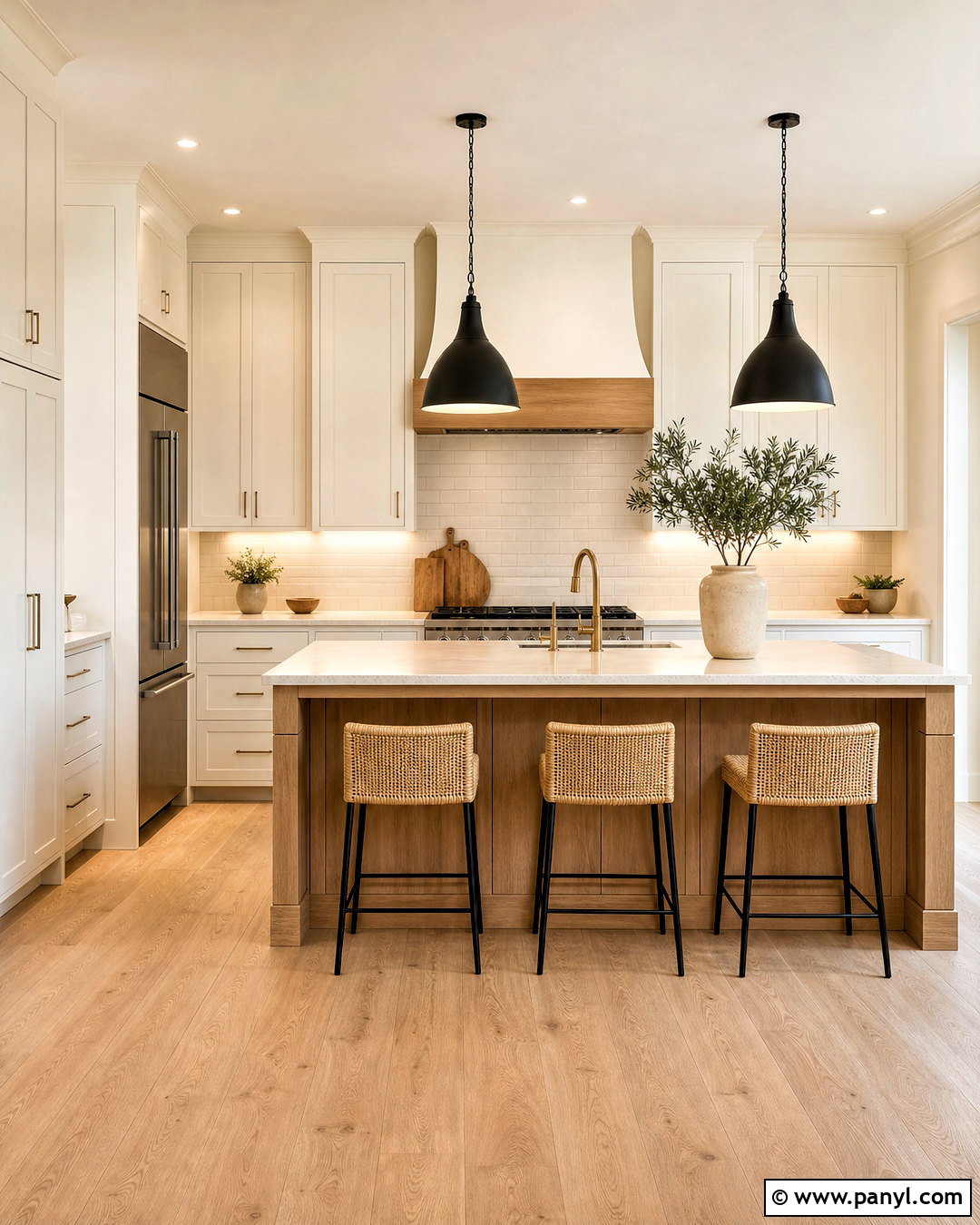
Crisp white and natural wood create a kitchen that feels bright without looking cold. Use warm white Shaker cabinets around the perimeter, then introduce a white oak island with visible grain. Creamy quartz countertops will connect the two finishes more gently than stark blue-white stone. Continue the warmth with light oak flooring, woven counter stools, and brushed brass hardware. A glossy ivory subway tile backsplash adds subtle texture while reflecting light across the room. Paint the walls a soft warm white that shares the cabinetry’s undertone. Matte black pendants can provide definition above the island, but keep other dark accents limited. This balanced combination works especially well in open kitchens where the finishes need to coordinate with nearby living spaces.
2. Sage Green And Cream Kitchen
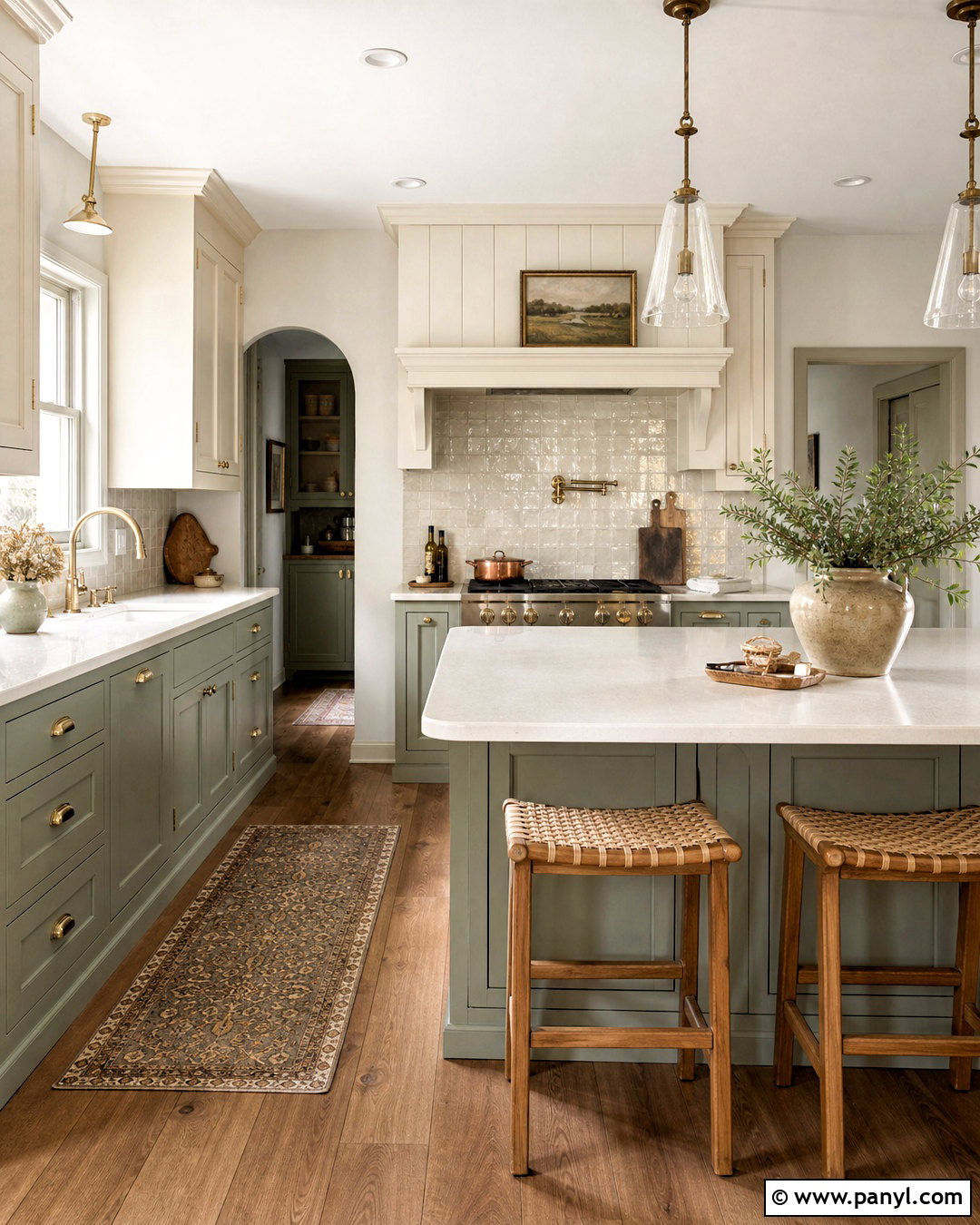
Soft sage green cabinets can make a kitchen feel calm, fresh, and connected to nature. Pair sage base cabinets and a matching island with creamy white upper cabinets to keep the room open. Choose off-white quartz countertops with delicate beige veining instead of cool gray patterns. Handmade cream zellige tiles bring gentle variation to the backsplash, while aged brass knobs add warmth. Medium oak flooring and simple wood stools support the earthy palette without competing with the green. For the walls, use a light oatmeal or warm ivory paint. Finish the room with linen shades and clear glass pendants. This complete scheme suits farmhouse, transitional, and cottage kitchens, especially when the sage has muted gray undertones rather than a bright mint appearance.
3. Navy Blue And White Kitchen
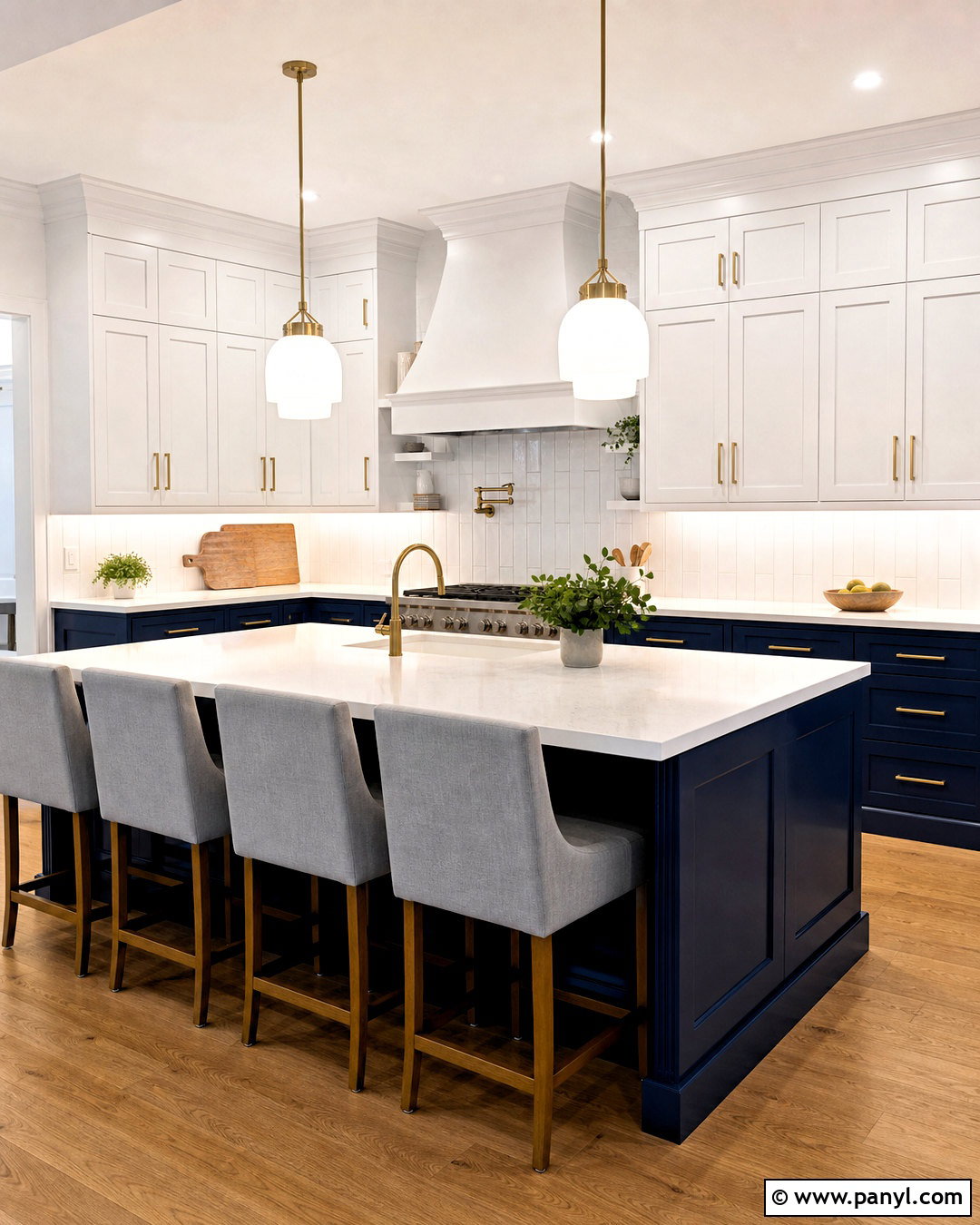
Navy blue and white deliver strong contrast while remaining practical and familiar. Cover the island and lower cabinets in deep navy, then use warm white cabinetry above to prevent the space from feeling heavy. White quartz countertops with subtle blue-gray veining create a clean bridge between both cabinet colors. Add a white backsplash in an elongated subway or vertical stacked pattern for a more current finish. Brushed brass pulls, a brass faucet, and warm oak flooring soften the crisp palette. Paint the surrounding walls pale greige rather than pure white, particularly in kitchens receiving cool northern light. Large milk-glass pendants will illuminate the navy island beautifully. Repeating navy through counter stool upholstery or a washable runner makes the whole room feel coordinated.
4. Black And Warm Wood Kitchen
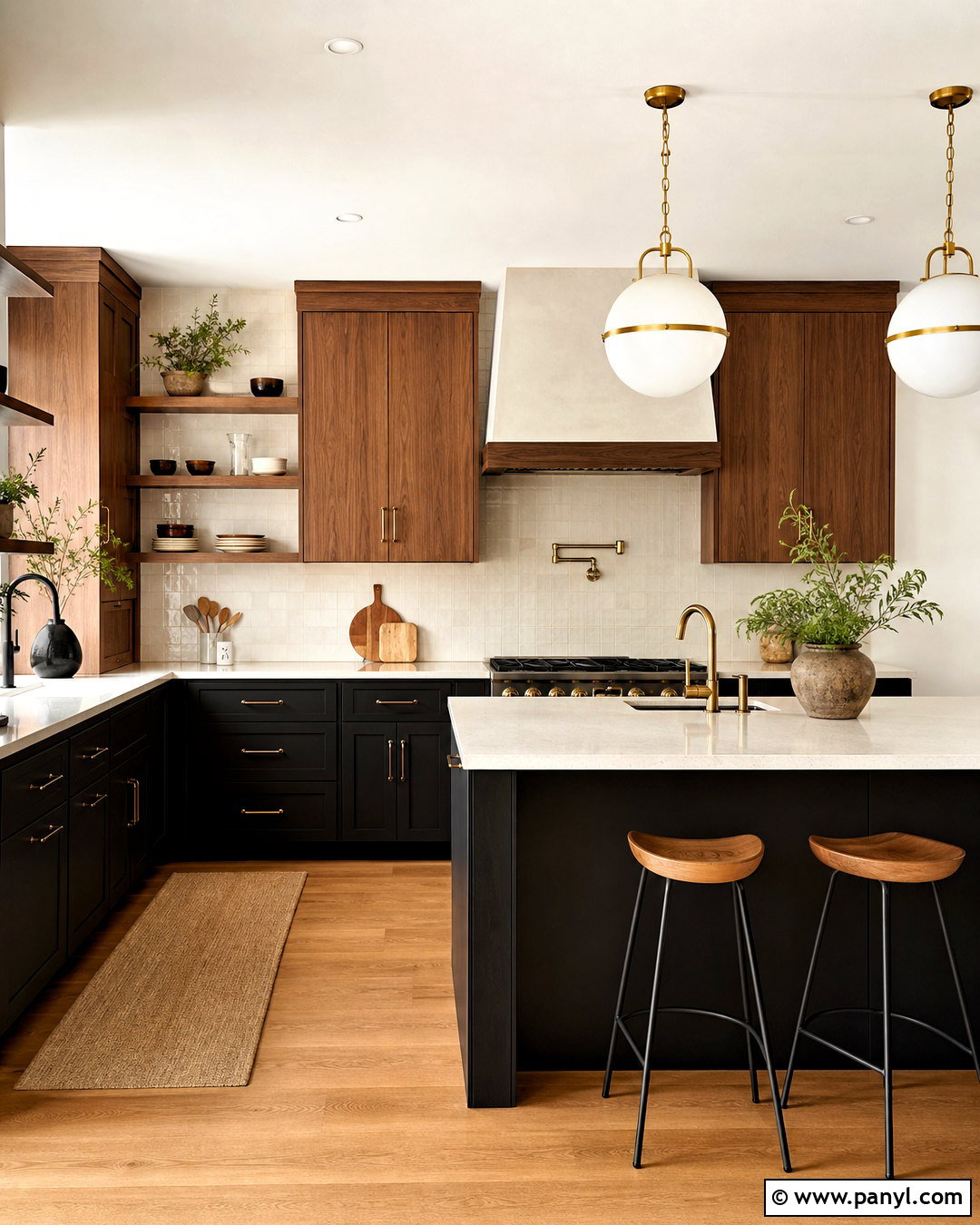
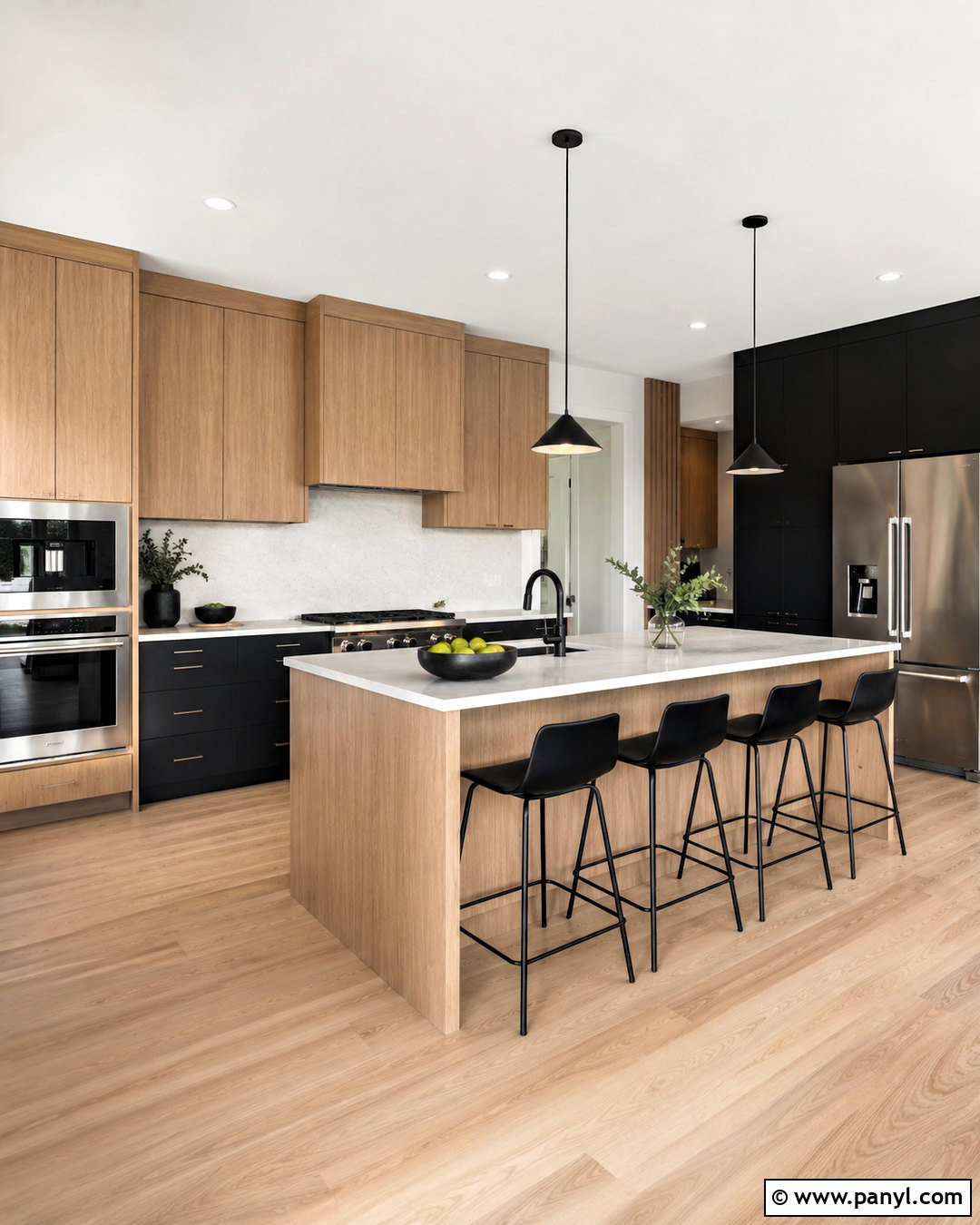
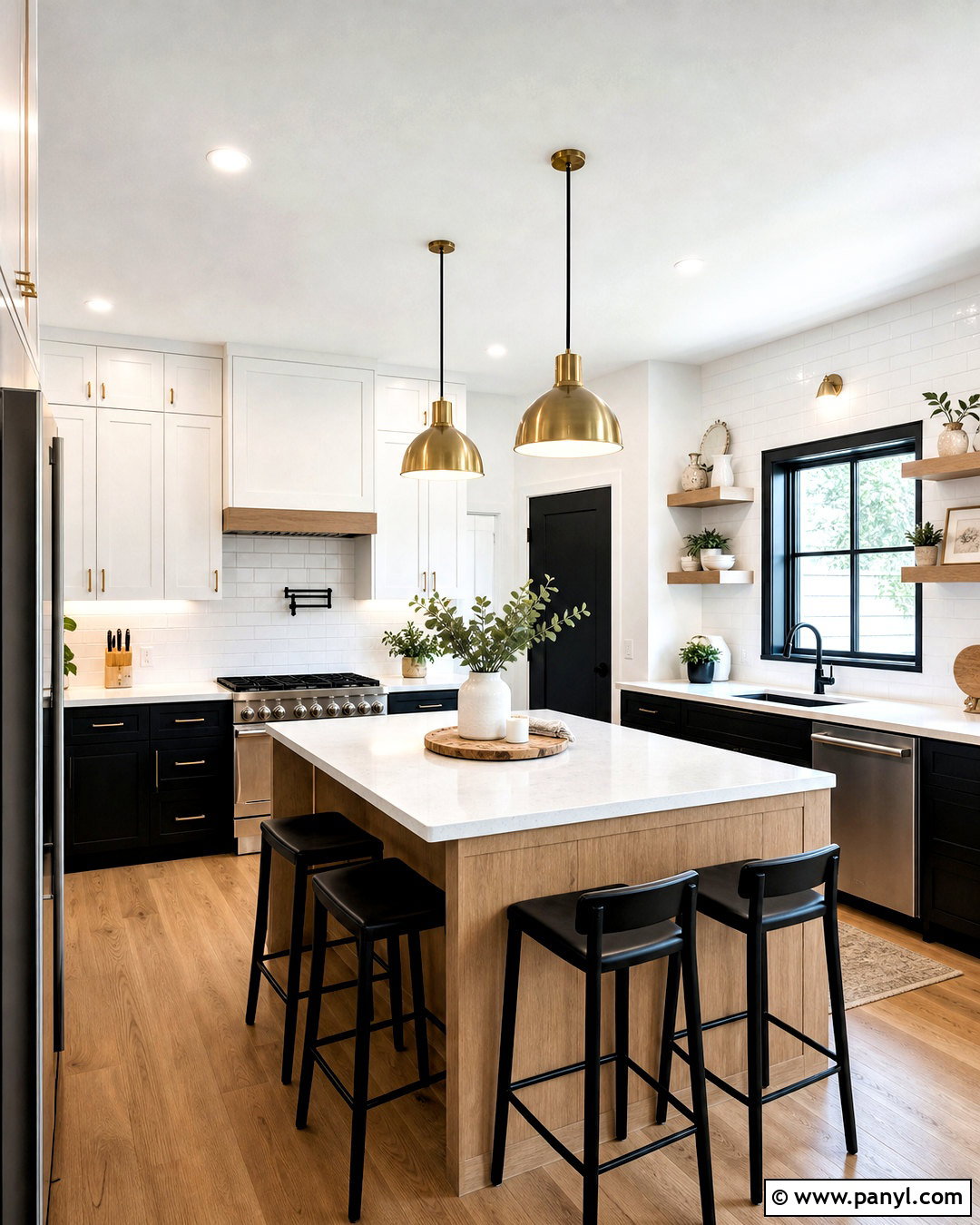
Black and warm wood can create a bold kitchen that still feels comfortable and livable. Use matte black cabinets on one wall or across the lower cabinetry, then balance them with walnut or medium oak cabinets elsewhere. Select creamy white quartz or lightly veined quartzite countertops to brighten the work surfaces. A warm ivory backsplash prevents the scheme from becoming too dramatic, while natural wood flooring continues the organic character. Choose brushed brass hardware and simple globe pendants for a soft metallic glow. Warm white walls will provide necessary breathing room around the darker finishes. This combination works best when black is treated as an anchor rather than covering every surface. Open wood shelving can also break up a long section of dark cabinetry.
5. Cream And Mushroom Kitchen
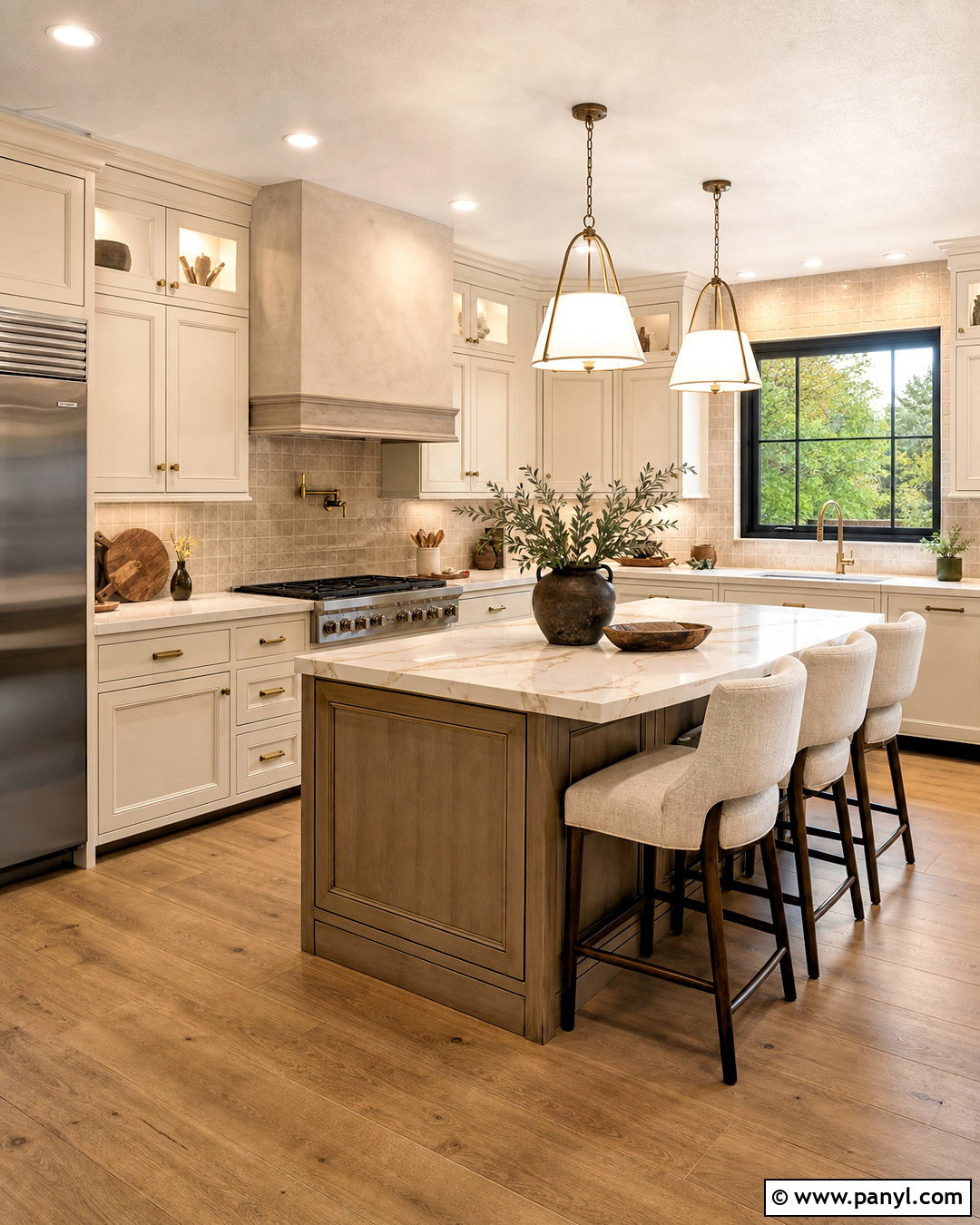
Cream and mushroom produce a layered neutral kitchen with more depth than an all-white palette. Paint perimeter cabinets a soft cream and use a deeper mushroom beige on the island. Look for shades with warm taupe undertones rather than cool purple-gray ones. An off-white quartz countertop with fine caramel veining can unite both cabinet colors. For the backsplash, choose warm limestone-look porcelain tile or glossy ivory squares. Light oak flooring, antique brass hardware, and upholstered oatmeal stools complete the understated look. Keep the walls slightly lighter than the cream cabinets so the millwork remains visible. A plaster-style range hood in a matching warm white adds another gentle layer. This combination is especially useful for creating warmth in kitchens with limited direct sunlight.
6. Forest Green And White Oak Kitchen
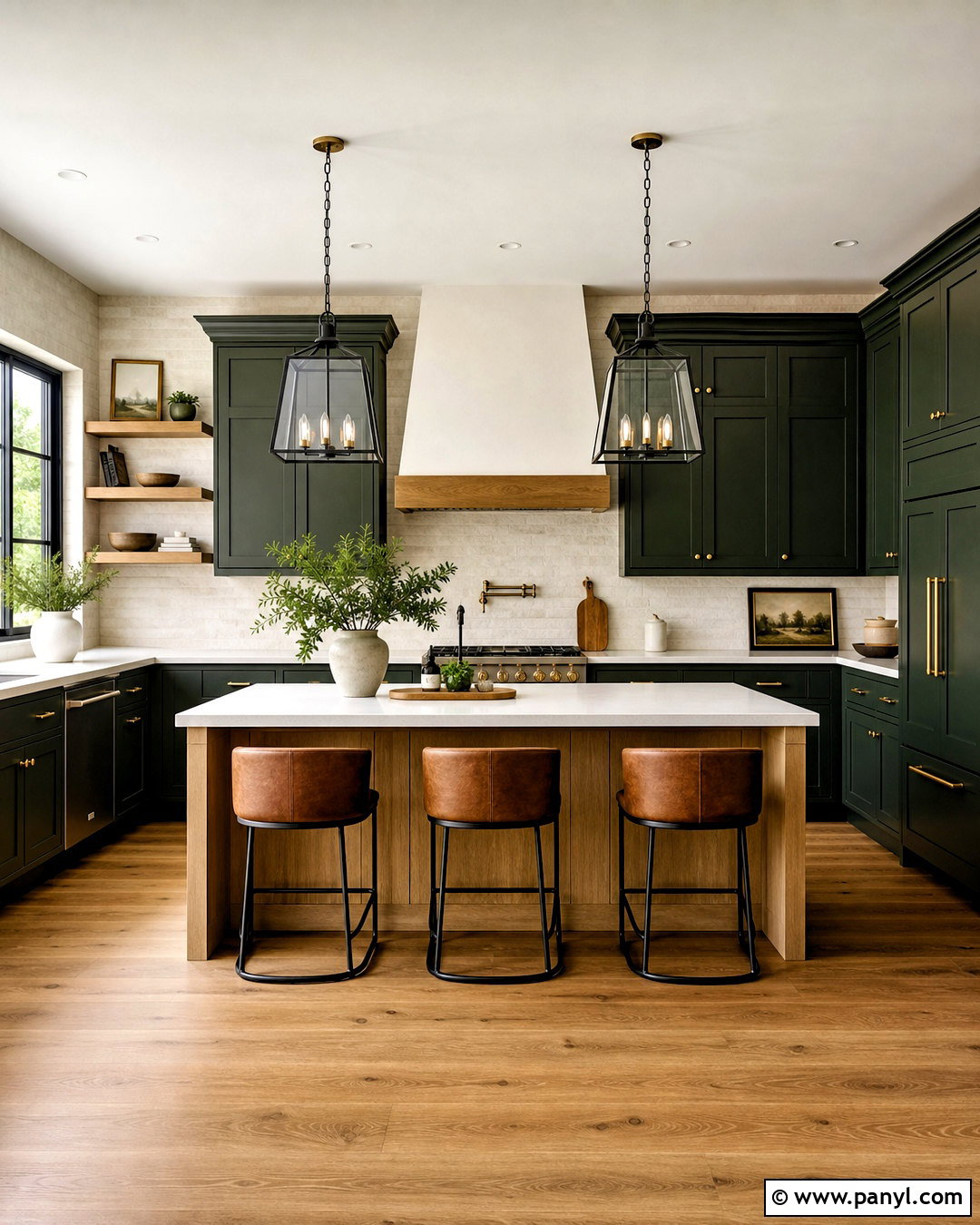
Deep forest green paired with white oak gives the kitchen a rich, grounded personality. Use green cabinetry along the main cooking wall and natural white oak on the island or tall pantry units. Warm white quartz countertops will add brightness without introducing busy patterns. Continue the organic mood with an ivory stone backsplash, medium oak floors, and saddle-brown leather counter stools. Aged brass hardware looks particularly attractive against dark green doors, while simple black-framed pendants add structure. Paint the remaining walls a soft putty white that complements both the wood and stone. If the room is small, limit forest green to lower cabinets and use oak or cream above. The finished kitchen feels dramatic, natural, and welcoming rather than formal or overly dark.
7. Light Blue And Soft White Kitchen
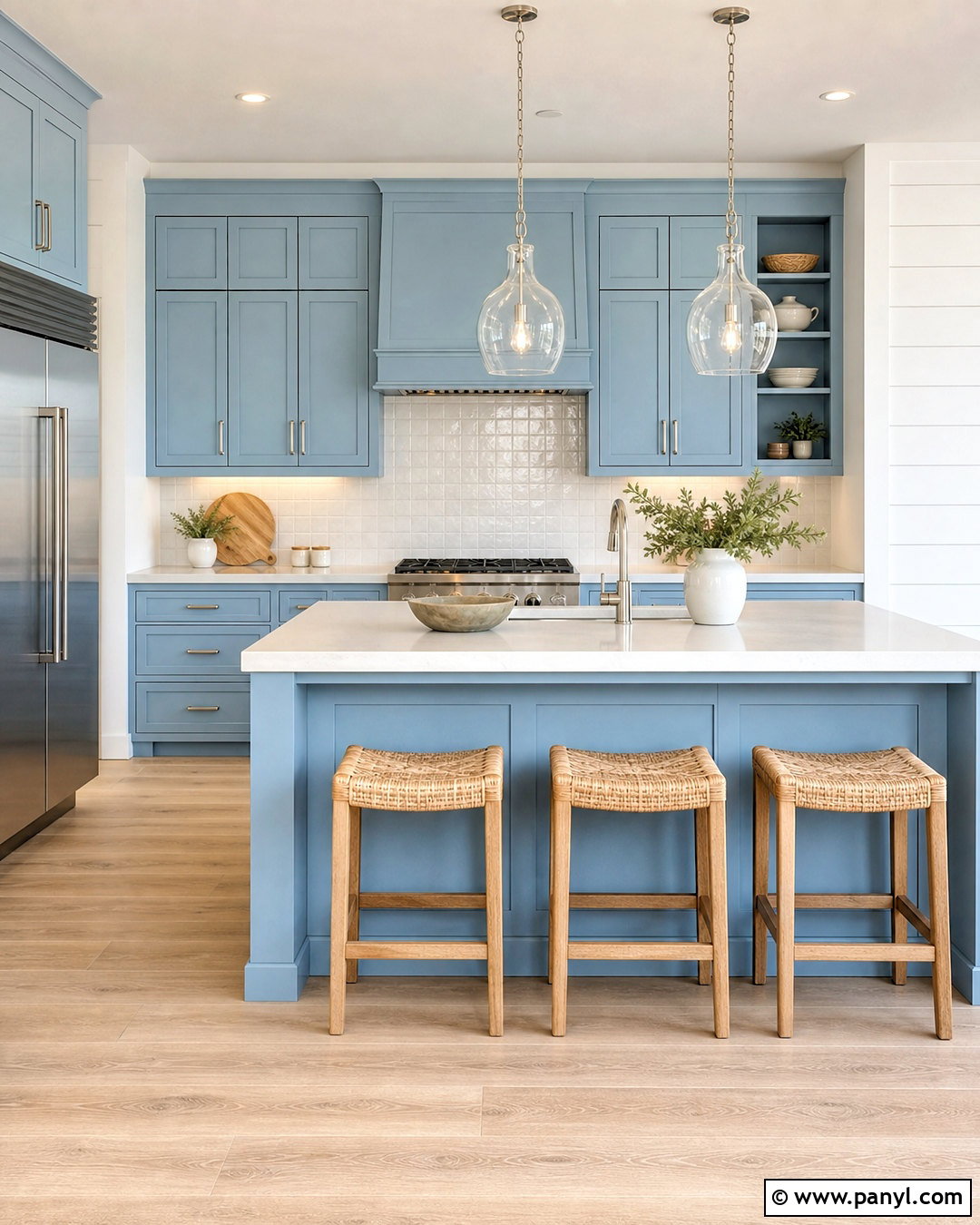
A light blue and soft white kitchen feels airy, gentle, and relaxed. Choose dusty blue cabinets with subtle gray undertones, then add soft white quartz countertops and matching warm white walls. A backsplash of glossy white square tiles will bounce light around the room while keeping the palette uncomplicated. Bring in pale oak flooring, natural woven stools, and polished nickel hardware for a clean coastal influence. Avoid overly themed decor; a few ceramic pieces and simple striped textiles are enough. A white oak island can be introduced when more warmth is needed, particularly in a large space. Finish with glass pendants and a brushed nickel faucet. This color combination works beautifully in smaller kitchens because the low-contrast surfaces help the room appear more open.
8. Terracotta And Warm White Kitchen
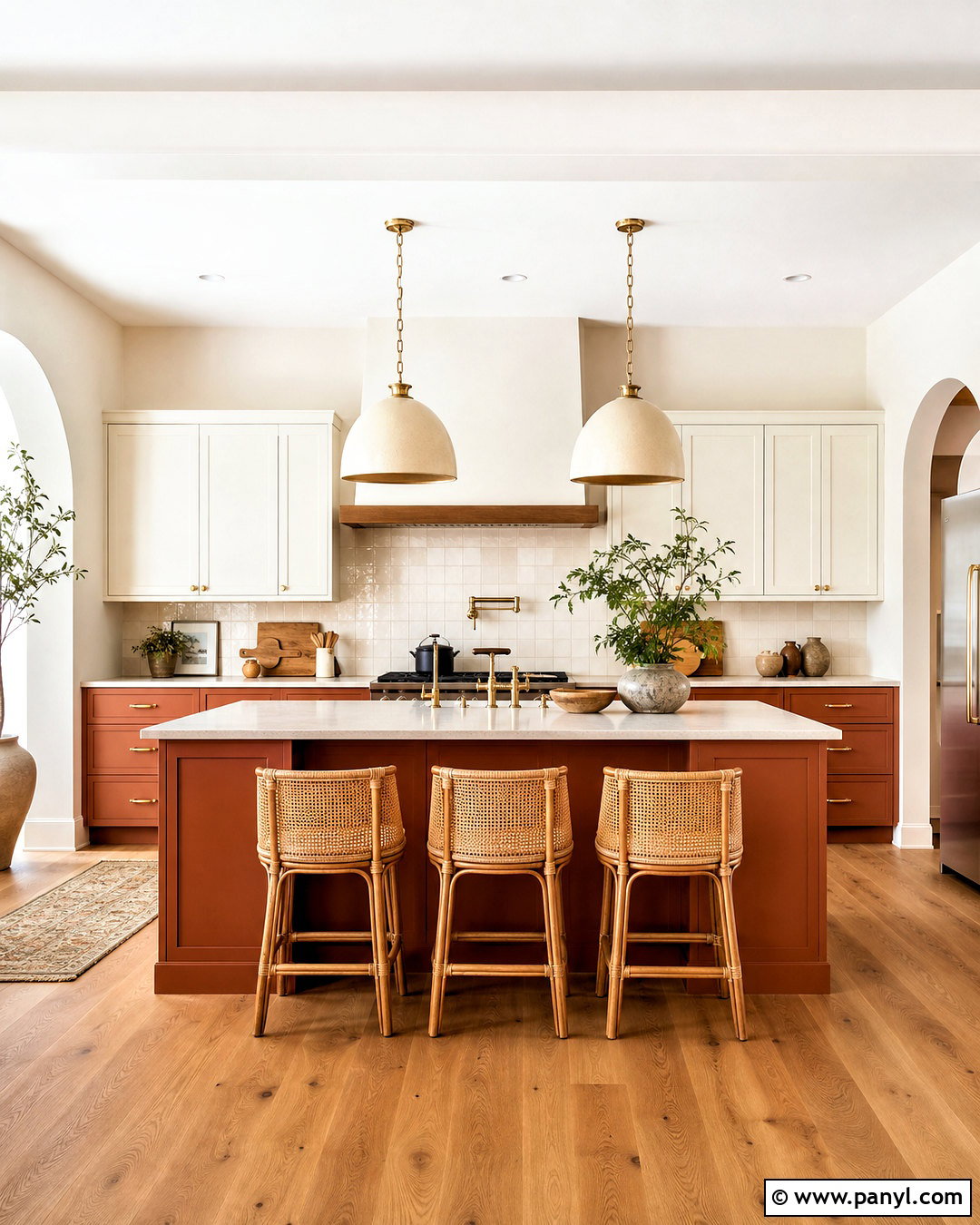
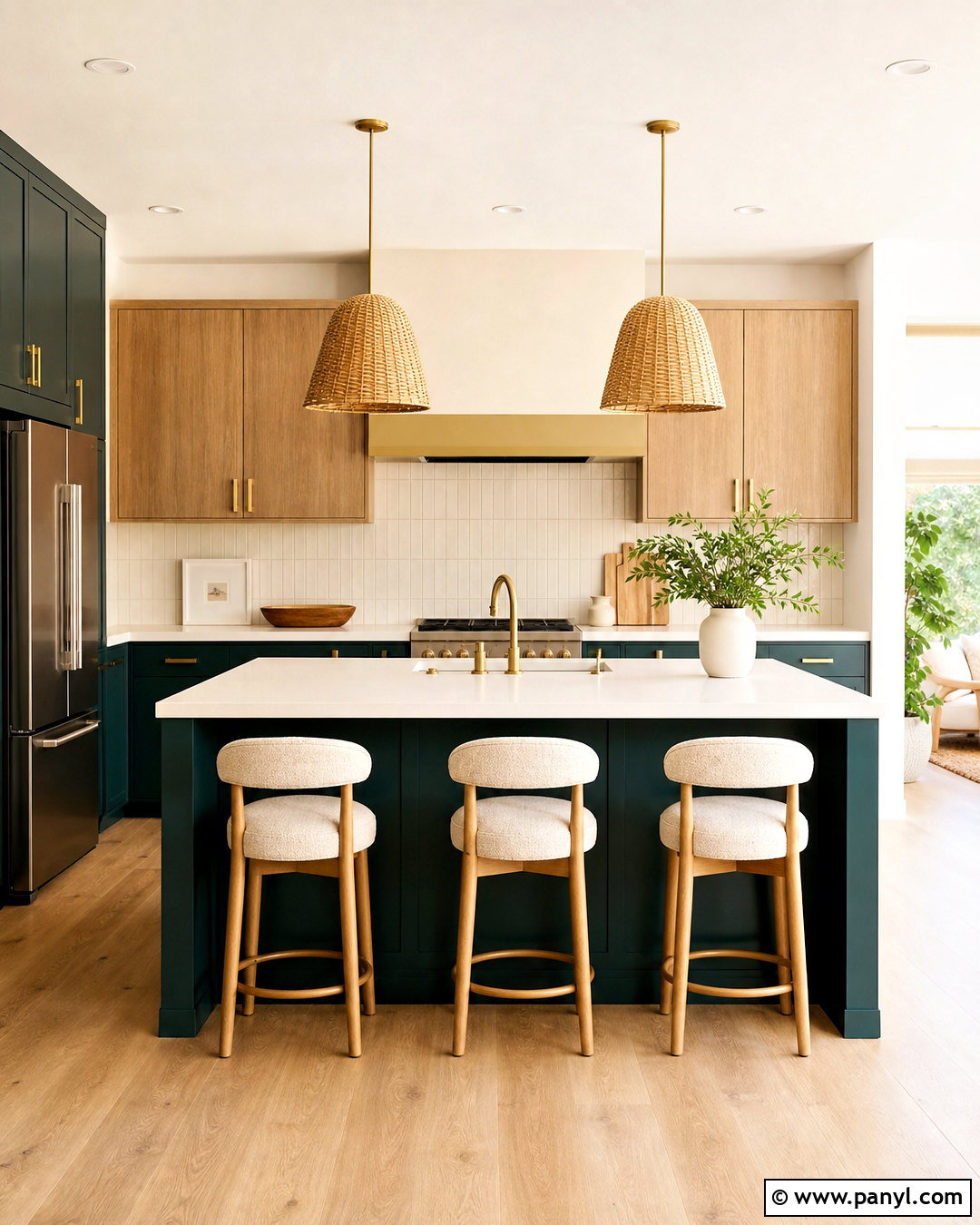
Earthy terracotta cabinetry brings warmth and personality to a kitchen without requiring bright primary color. Use the clay-inspired shade on the island and lower cabinets, then balance it with warm white upper cabinetry and walls. Cream quartz countertops with sandy veining will complement the red-orange undertones. For the backsplash, choose handmade ivory tile or pale beige vertical tile with softly varied surfaces. Natural oak flooring, cane-backed stools, and aged brass hardware enhance the sunbaked palette. Add simple cream pendants instead of black fixtures to keep the room feeling light. A small amount of dark bronze can appear through the faucet or window frames. This complete combination suits Mediterranean, modern organic, and relaxed transitional kitchens while still feeling approachable in an average home.
9. Charcoal Gray And Oak Kitchen
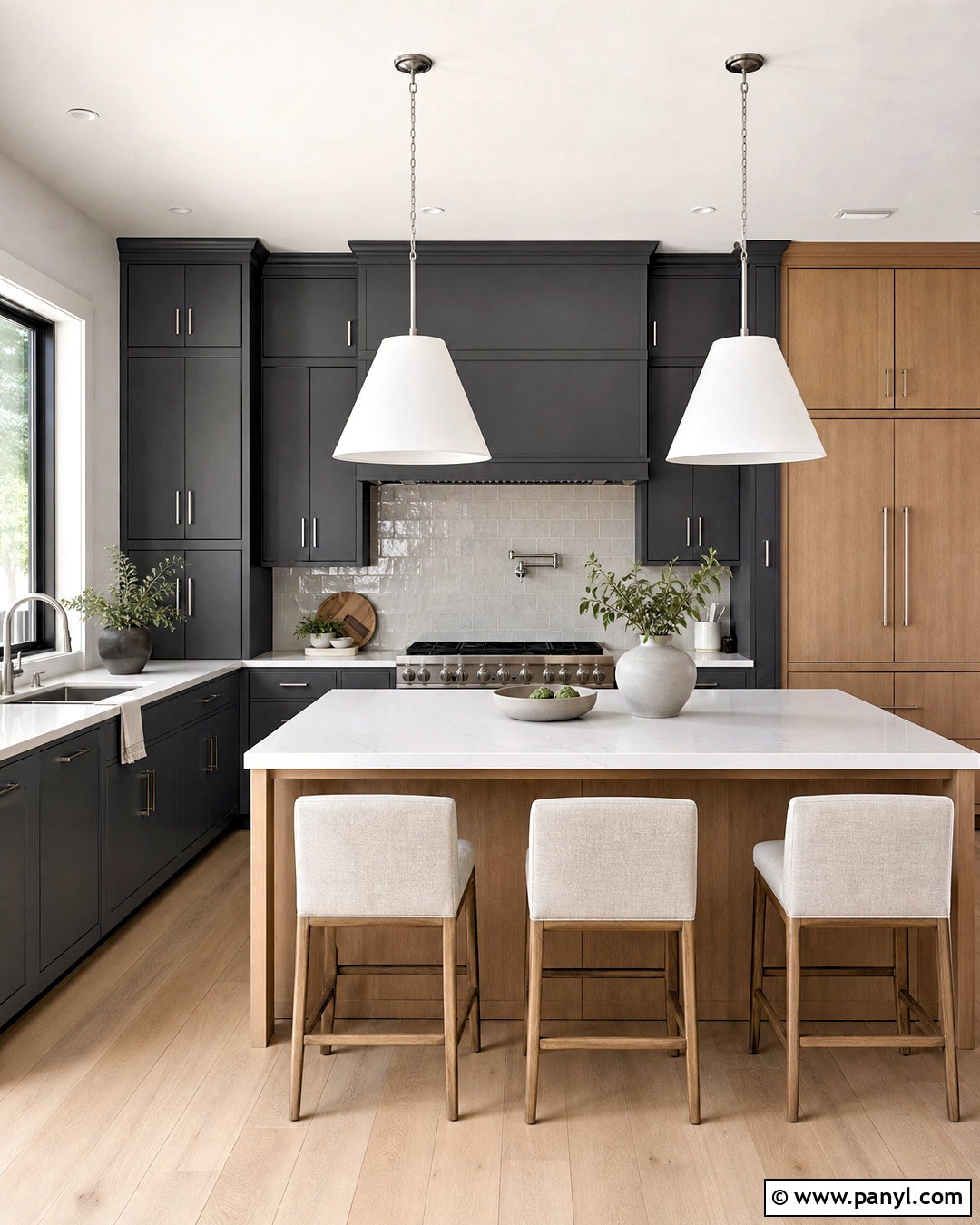
Charcoal gray becomes more inviting when it is combined with warm oak and creamy surfaces. Use charcoal cabinets around the range and lower perimeter, then select rift-cut white oak for the island and pantry wall. An off-white quartz countertop with warm gray veining will connect the dark paint and natural grain. Choose a pale greige backsplash in handmade rectangular tile for texture without another strong color. Medium oak flooring, brushed nickel hardware, and linen counter stools keep the room balanced. Walls should be warm white rather than cool gray, which could make the charcoal appear flat. Install large white pendants over the island to brighten the center of the kitchen. This scheme offers contemporary contrast while avoiding the dated effect of gray used across every finish.
10. Olive Green And Walnut Kitchen
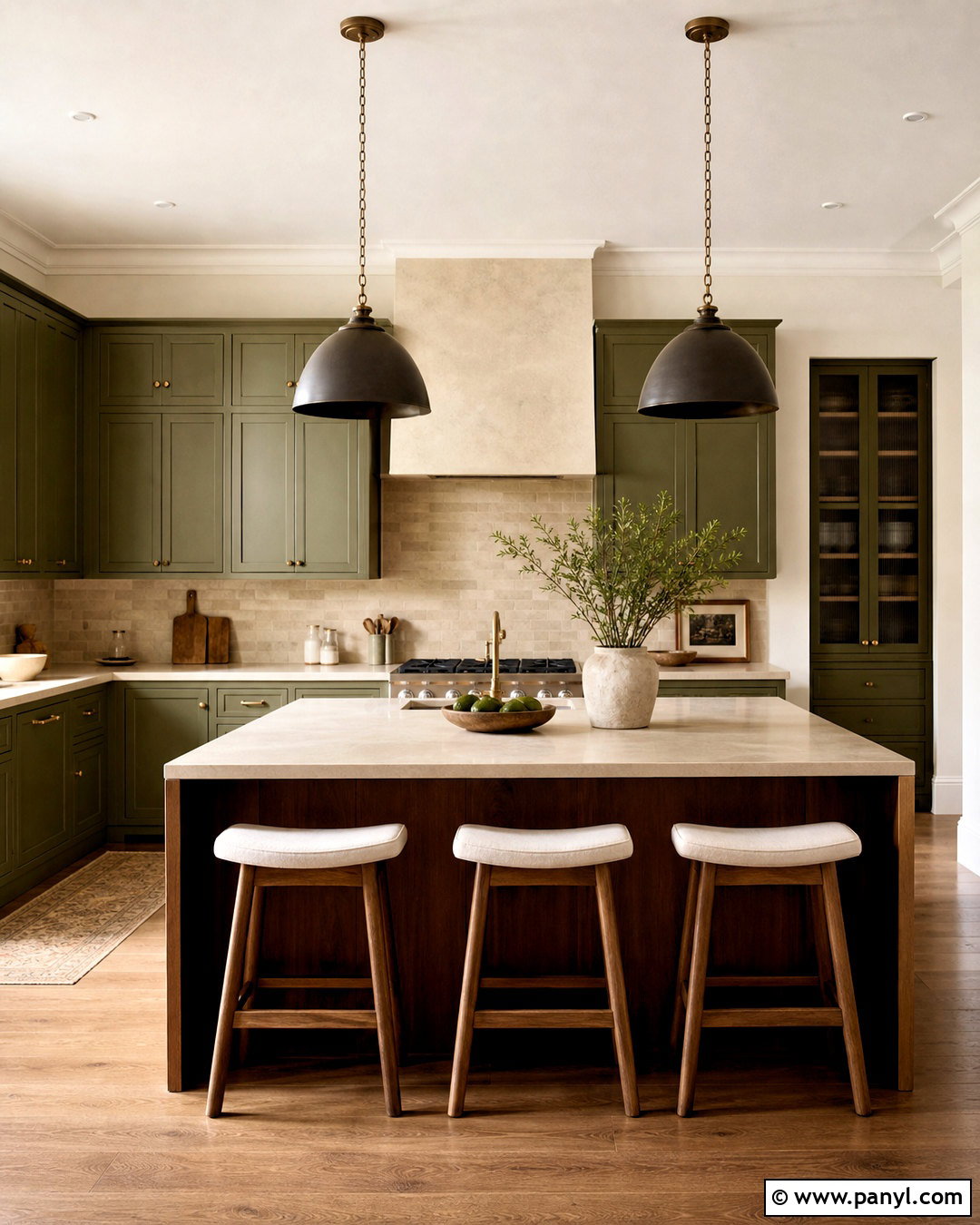
Olive green and walnut create a sophisticated kitchen with unmistakable warmth. Cover the perimeter cabinets in muted olive, using a shade that leans earthy rather than yellow. Introduce a walnut island with flat-panel doors to showcase the wood’s deep brown grain. Cream quartzite or marble-look quartz countertops add brightness and a refined finish. A warm beige backsplash, such as honed limestone or limestone-look porcelain, supports the natural palette. Use unlacquered brass hardware, dark bronze pendants, and medium brown flooring to complete the room. Walls painted a light flax or creamy neutral will soften the transition between surfaces. Because both primary finishes are visually rich, keep accessories simple. Off-white pottery, linen shades, and restrained greenery provide enough decoration without overwhelming the complete design.
11. Burgundy And Blush Kitchen
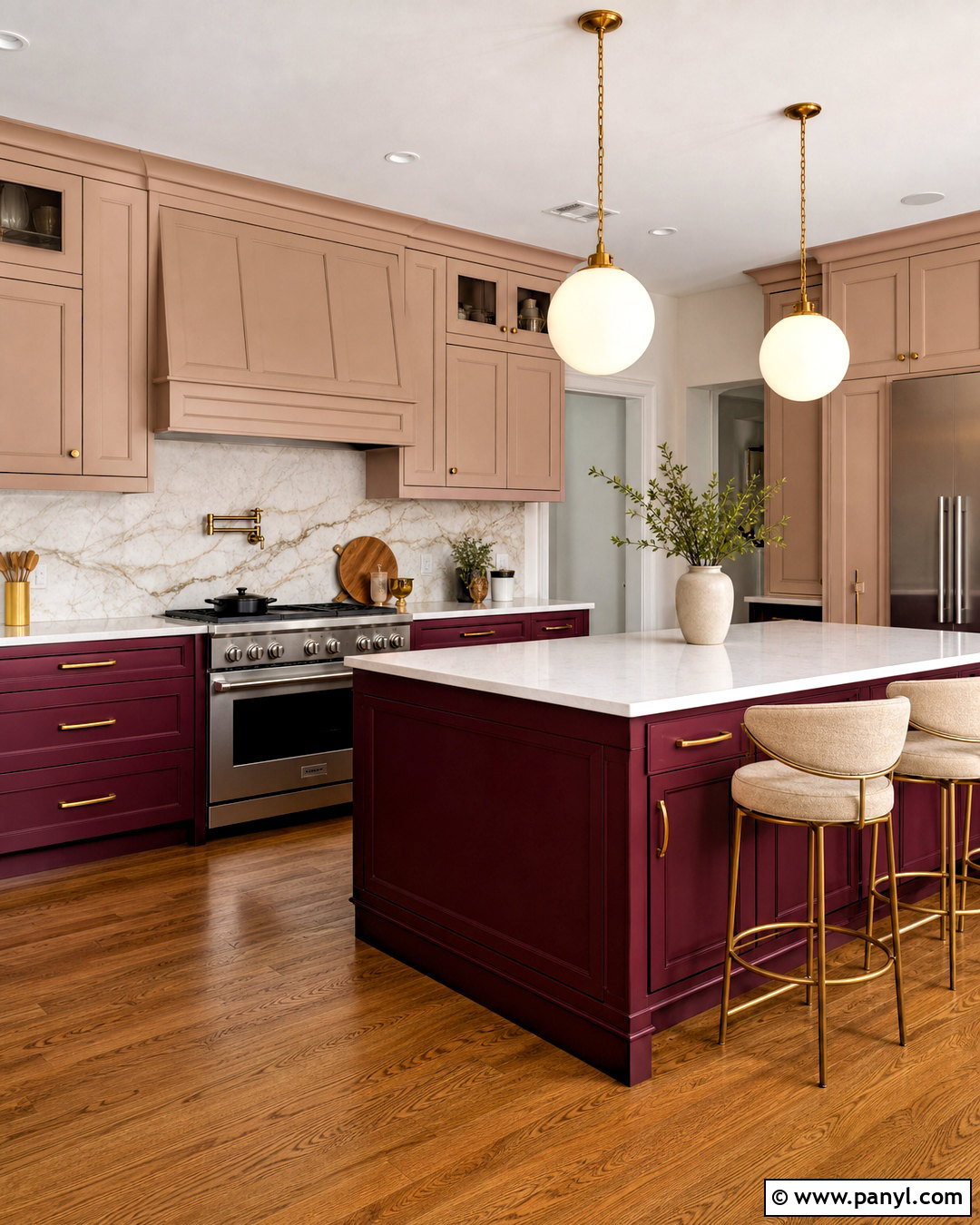
Burgundy and blush offer an expressive kitchen palette that can still look elegant and grown-up. Use deep burgundy on the island and lower cabinetry, then select a very pale blush-beige for upper cabinets or surrounding walls. Warm white quartz countertops will keep the work area bright, while a marble backsplash with gentle rose or brown veining can connect the colors. Add walnut flooring or medium oak boards to reinforce the warmth. Brushed brass pulls and opal glass pendants provide a polished finish without making the room feel ornate. Keep large appliances paneled or stainless steel so they remain visually quiet. Cream counter stools and neutral window treatments will balance the stronger cabinetry. The result feels colorful and inviting while avoiding an overly sweet or highly themed appearance.
12. Teal And Cream Kitchen
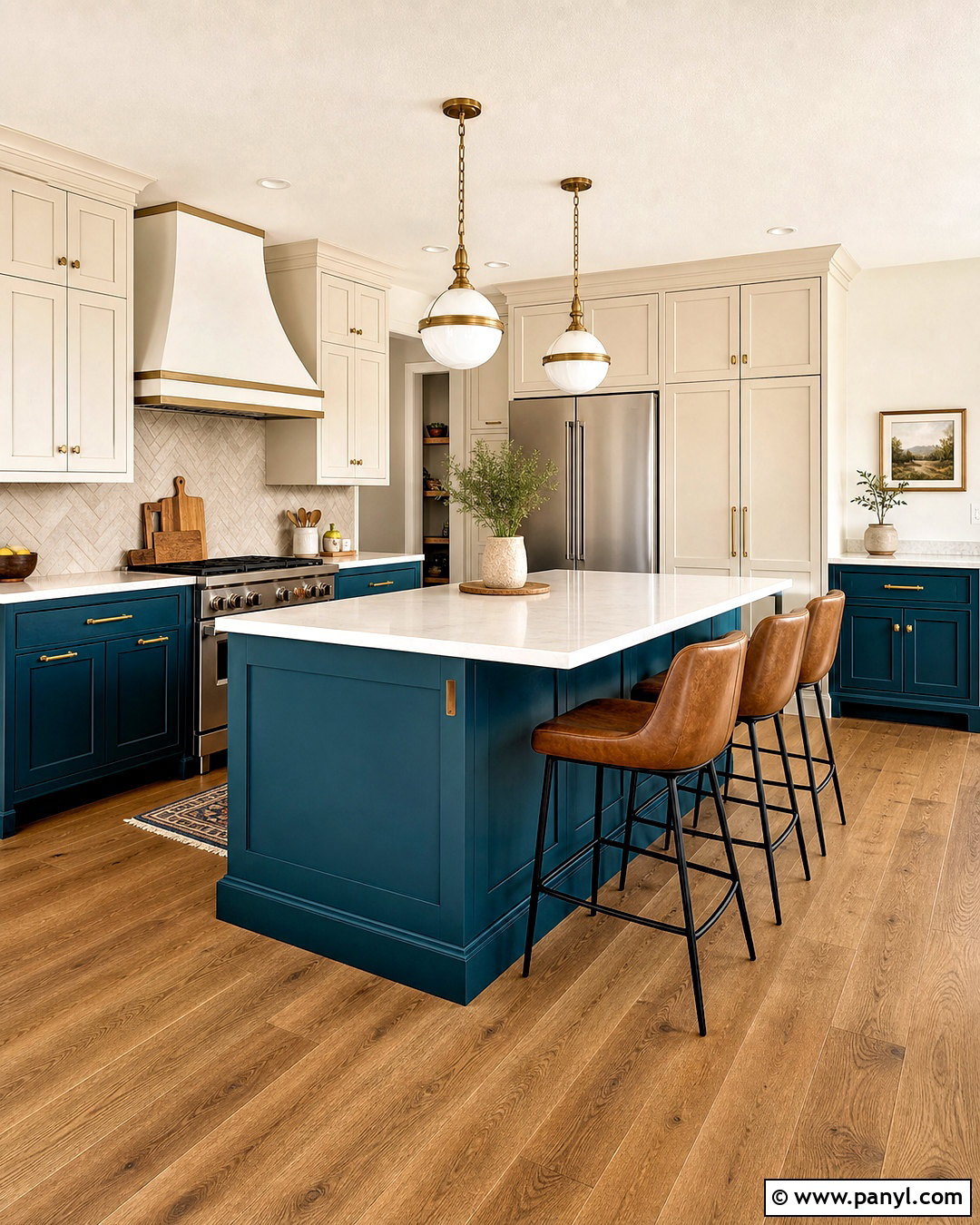
Deep teal cabinetry can make a kitchen memorable, especially when surrounded by creamy neutrals. Apply teal to the island and main lower cabinets, then use cream-painted upper cabinets to maintain an open feeling. Select off-white quartz countertops with small warm flecks instead of dramatic veining. A cream herringbone backsplash introduces movement while remaining within the restrained palette. Warm oak flooring, cognac leather stools, and brushed brass hardware highlight teal’s green undertones. For the walls, choose a light neutral that sits between ivory and pale beige. White glass pendants will provide clean contrast over the island. If the kitchen lacks natural light, reserve teal for one focal section. Repeating it through a runner or small accessories will make the distribution of color appear purposeful.
13. Greige And White Kitchen
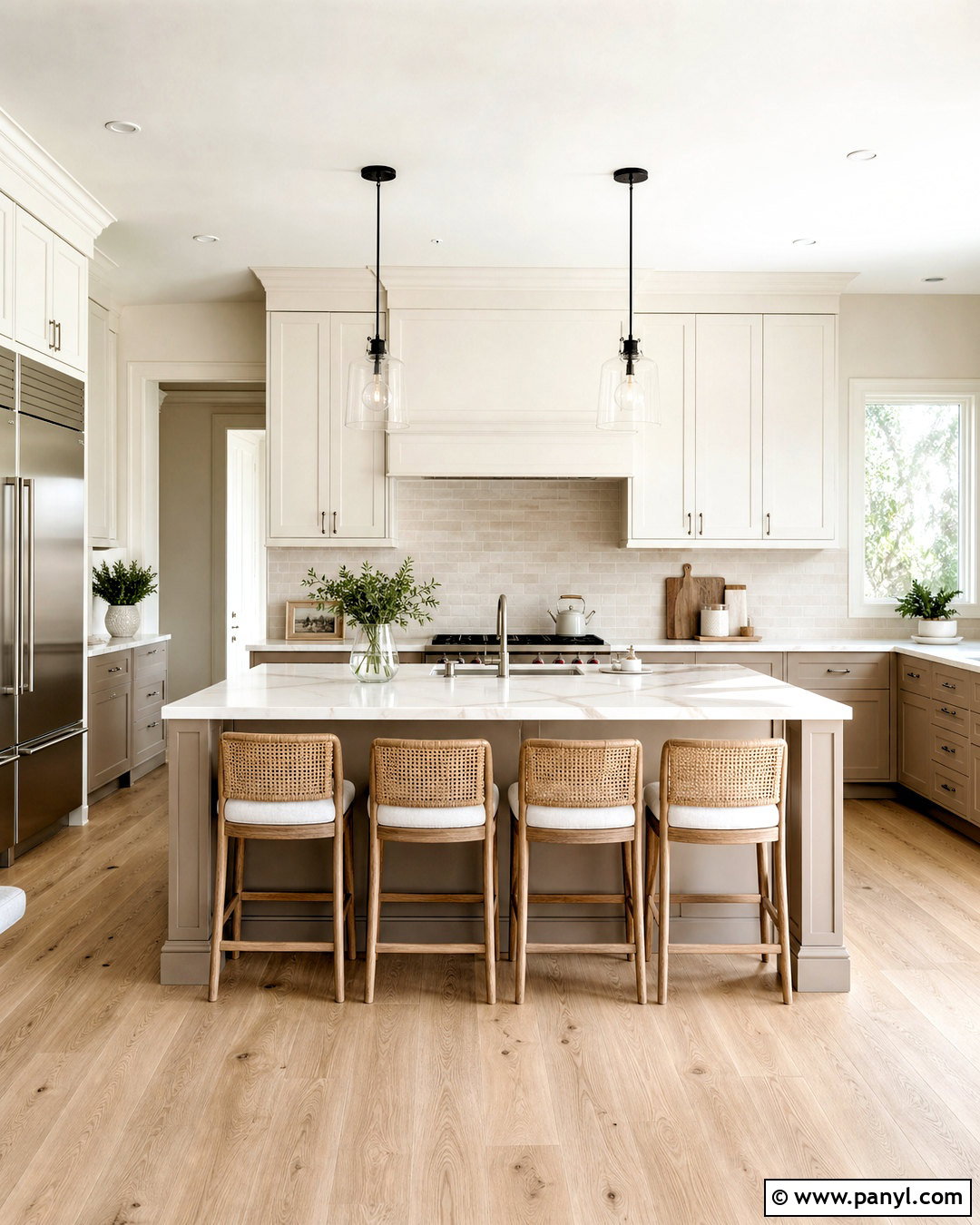
Greige and white provide a timeless neutral foundation that can adapt to many decorating preferences. Use warm greige on lower cabinets and the island, then select creamy white upper cabinets and walls. A white quartz countertop with subtle taupe veining will tie the two finishes together. Continue the light appearance with an ivory backsplash in a simple stacked pattern. White oak flooring and brushed nickel hardware give the kitchen natural warmth and a clean finish. Add black only in small amounts, such as narrow pendant frames or window details. Counter stools in woven cane or oatmeal upholstery will make the island feel welcoming. Before painting, compare the greige directly with the countertop and flooring. The correct shade should share their warm undertones without blending into either surface completely.
14. Chocolate Brown And Ivory Kitchen
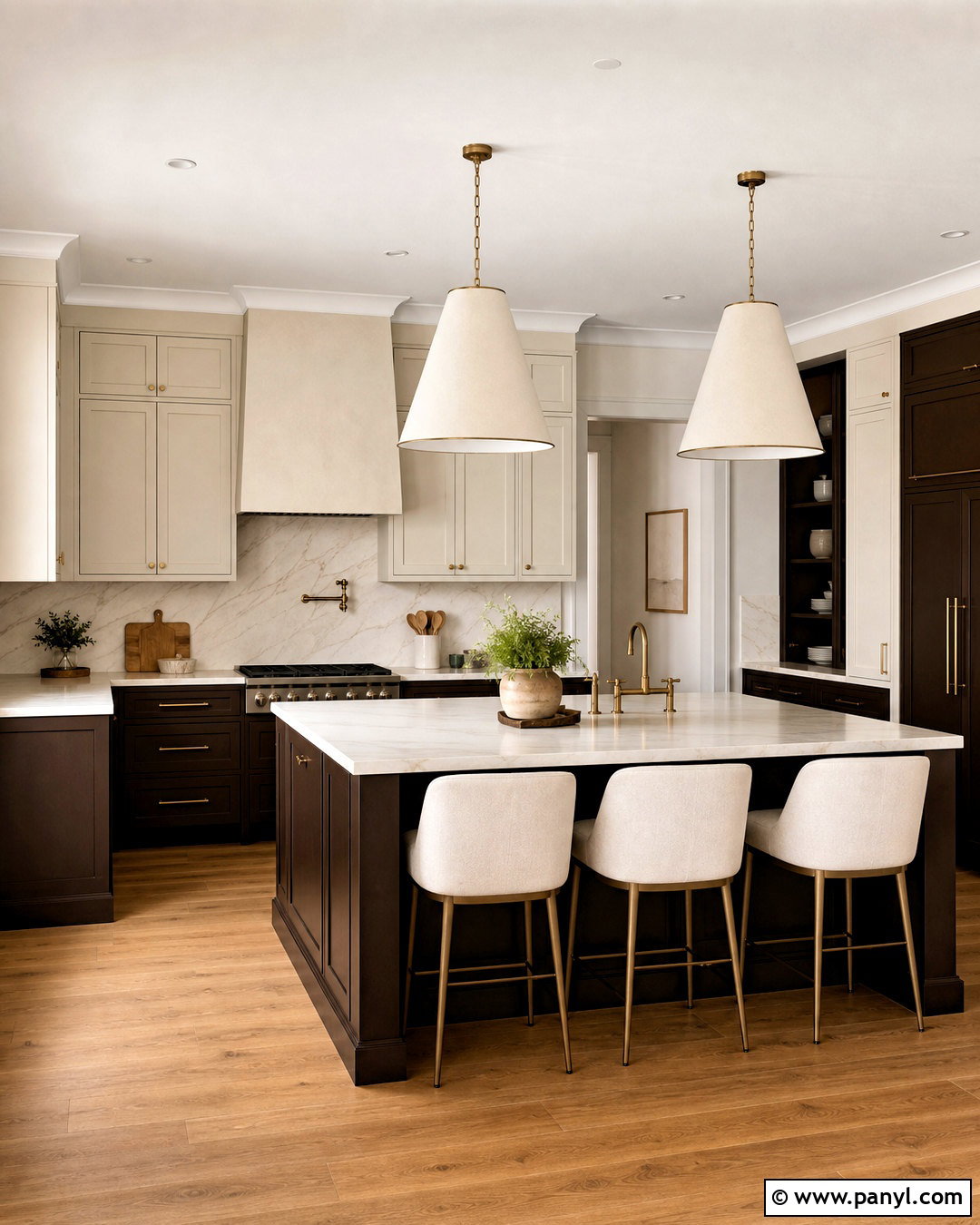
Chocolate brown cabinets can feel luxurious and comforting when balanced with plenty of ivory. Choose dark brown painted cabinetry or richly stained walnut for the lower units and tall storage. Use ivory cabinets above, especially in a kitchen with average ceiling height. Creamy marble-look quartz countertops and a matching slab backsplash will create a clean, continuous surface. Add warm oak flooring, brushed brass pulls, and ivory upholstered stools to soften the contrast. Walls in pale sand will blend naturally with both cabinet finishes. Oversized cream pendants above the island can brighten the dark cabinetry while adding visual scale. Avoid cool gray stone, which may clash with the brown undertones. This complete palette works well in traditional and contemporary kitchens, depending on whether the cabinet doors are Shaker or flat panel.
15. Dusty Pink And Gray Blue Kitchen
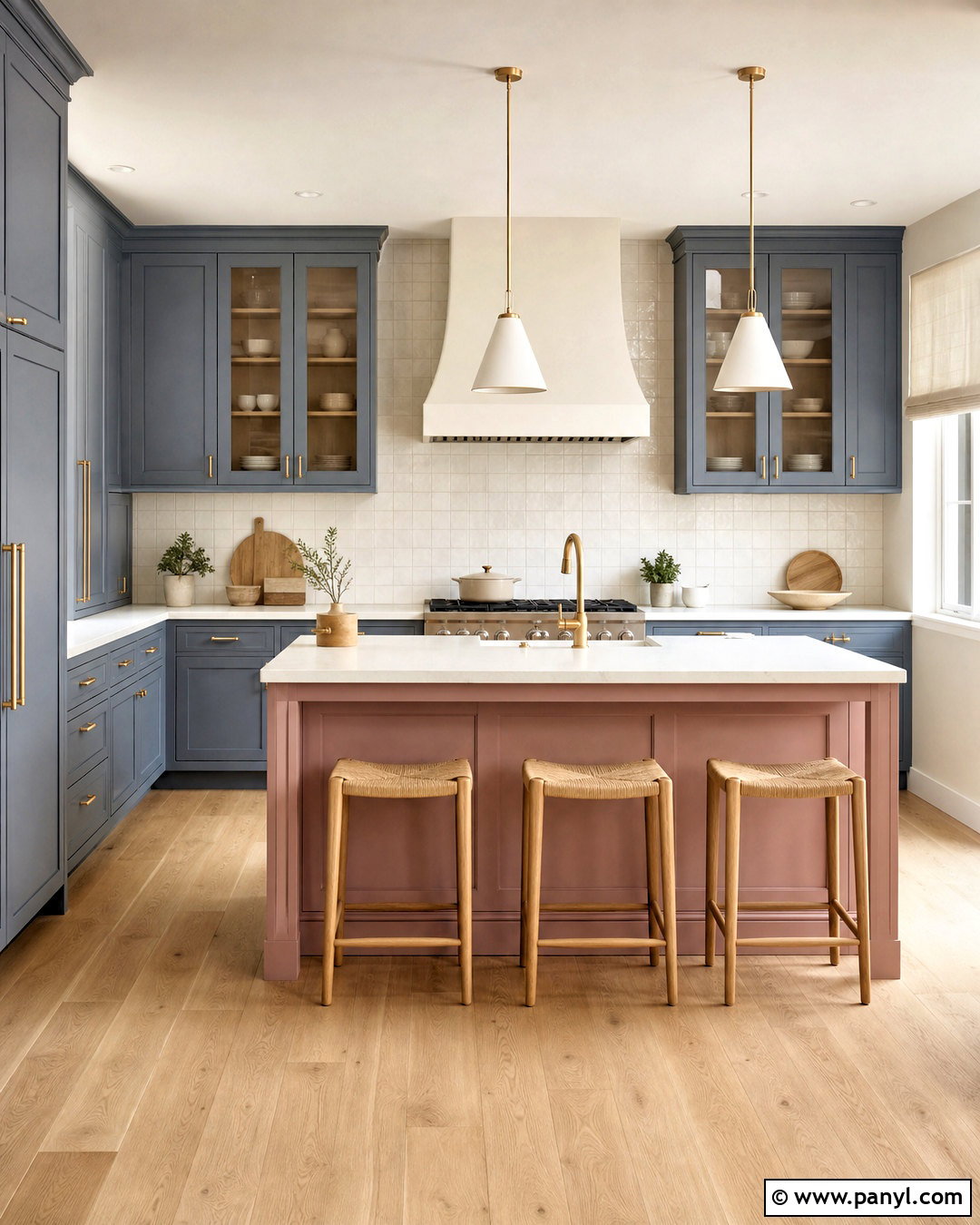
Dusty pink and gray-blue form a soft, unusual combination that remains easy to live with. Use muted gray-blue cabinetry around the perimeter and introduce dusty pink on a compact island or breakfast nook. Keep the countertops warm white with minimal veining so the cabinet colors remain the focus. An ivory backsplash in small square tile will add texture and prevent the palette from appearing too cool. Pale oak flooring and brushed brass hardware bring warmth and cohesion. Paint the walls a light creamy neutral rather than repeating either cabinet color. Choose simple white pendant lights and natural wood stools to keep the finished room approachable. Both colors should be softened with gray undertones, creating a quiet contrast rather than a bright pastel or overly playful kitchen.
16. Yellow And White Kitchen
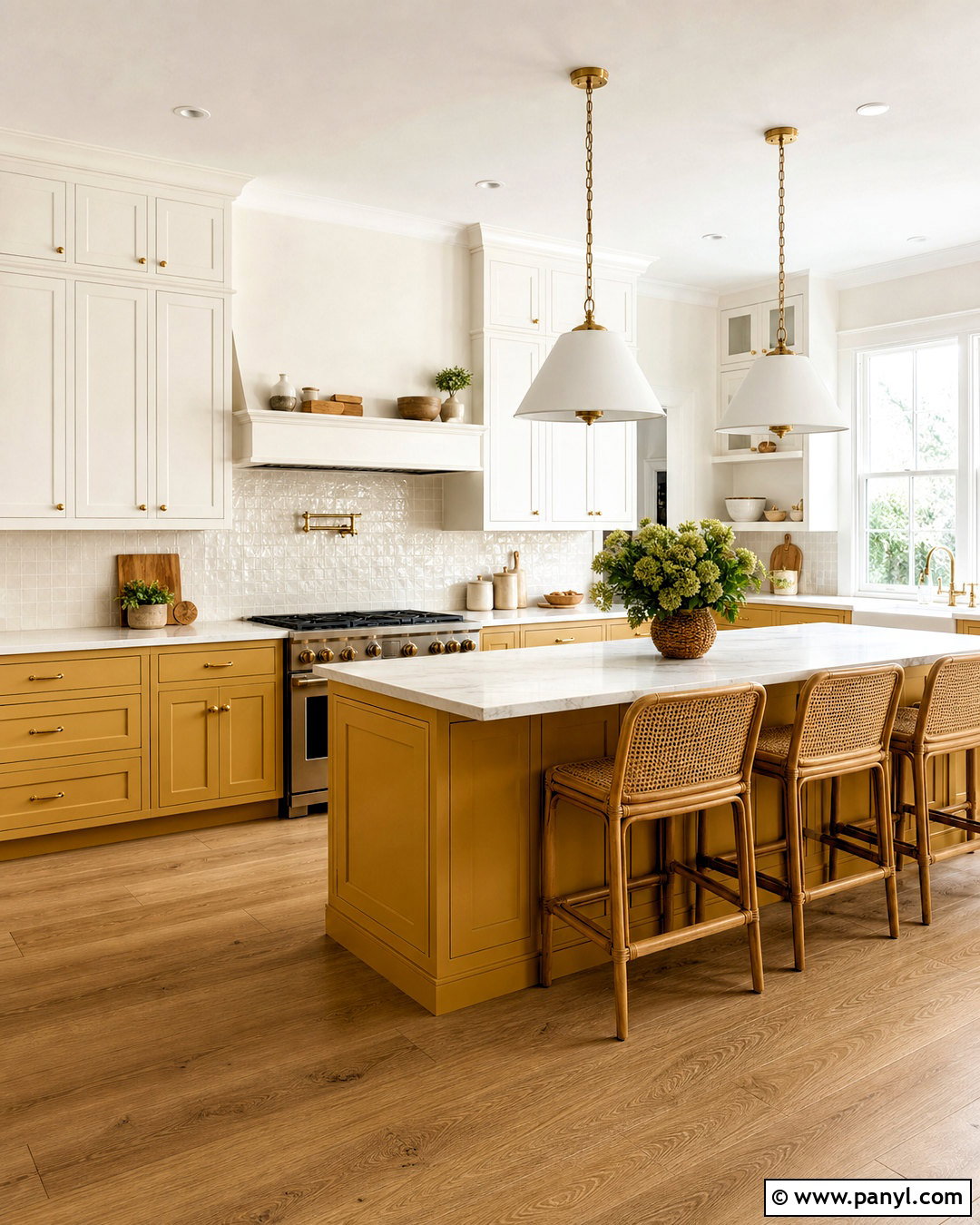
Muted yellow and white can make a kitchen feel sunny even on cloudy days. Choose buttery ocher or soft mustard for the island and lower cabinetry, avoiding sharp lemon tones. Pair the color with warm white upper cabinets, creamy quartz countertops, and a lightly textured ivory backsplash. Medium oak flooring will strengthen the golden undertones, while aged brass hardware creates a seamless transition between yellow and wood. Use simple white walls and fabric-shaded pendants to keep the look calm. Counter stools in natural cane or light brown leather provide practical contrast. Repeat yellow sparingly through a striped runner or one ceramic accessory. This complete palette works especially well in cottage and farmhouse kitchens, but clean flat-panel doors can give the same combination a more modern direction.
17. Black And White Kitchen
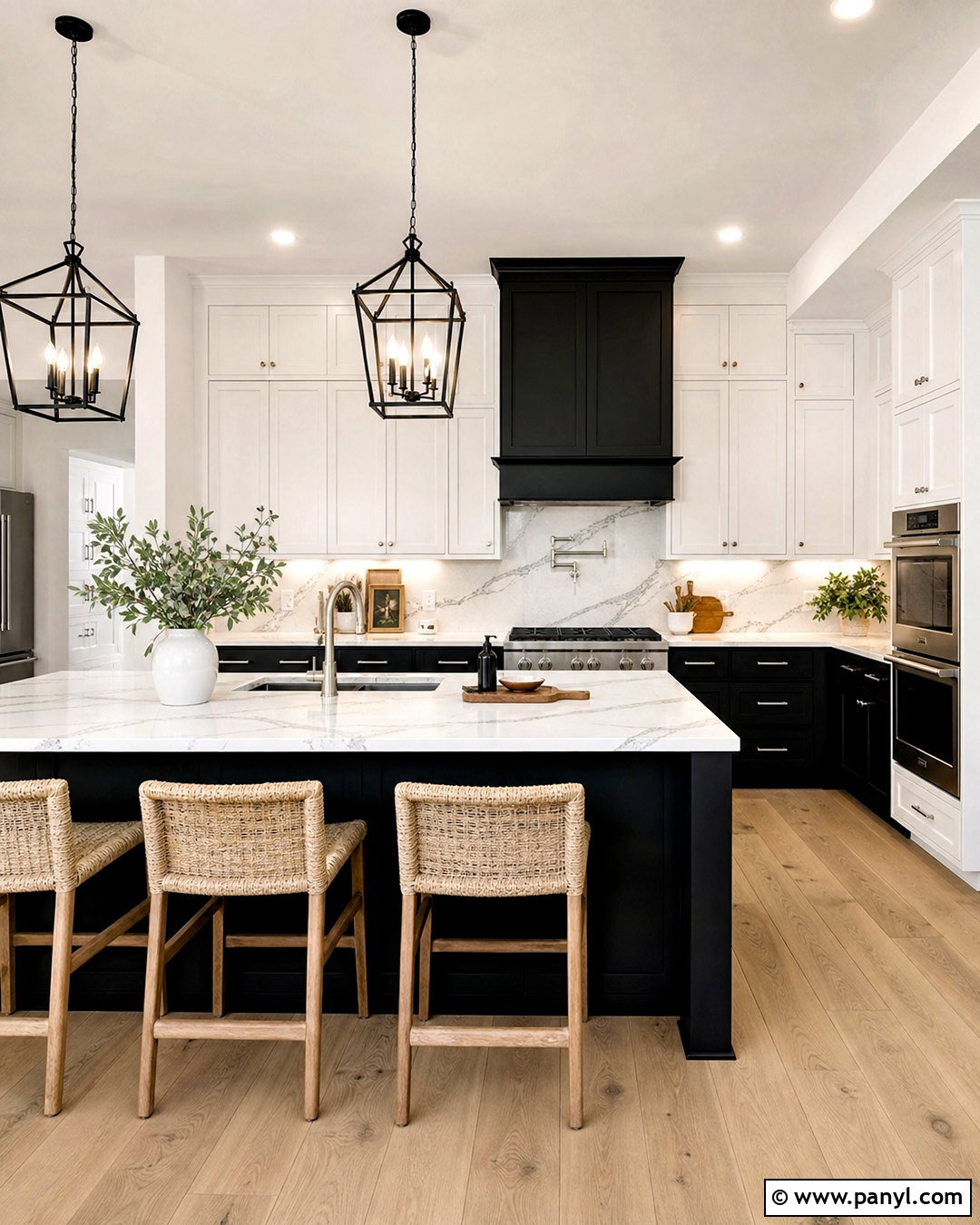
A black and white kitchen looks best when natural texture softens the graphic contrast. Use matte black on the island and lower cabinets, then choose warm white cabinetry above and around tall appliances. Install white quartz countertops with fine charcoal veining and a matching slab or large-format backsplash. White oak flooring and woven counter stools prevent the room from feeling stark. Select polished nickel hardware for a crisp appearance or aged brass for additional warmth. Walls should match the warm white cabinets to reduce visual breaks in a smaller room. Add black metal pendants above the island, but choose open or white-lined shades that cast plenty of light. Keeping the countertops mostly white ensures that the kitchen remains functional, bright, and visually balanced throughout the day.
18. Blue Green And Light Oak Kitchen
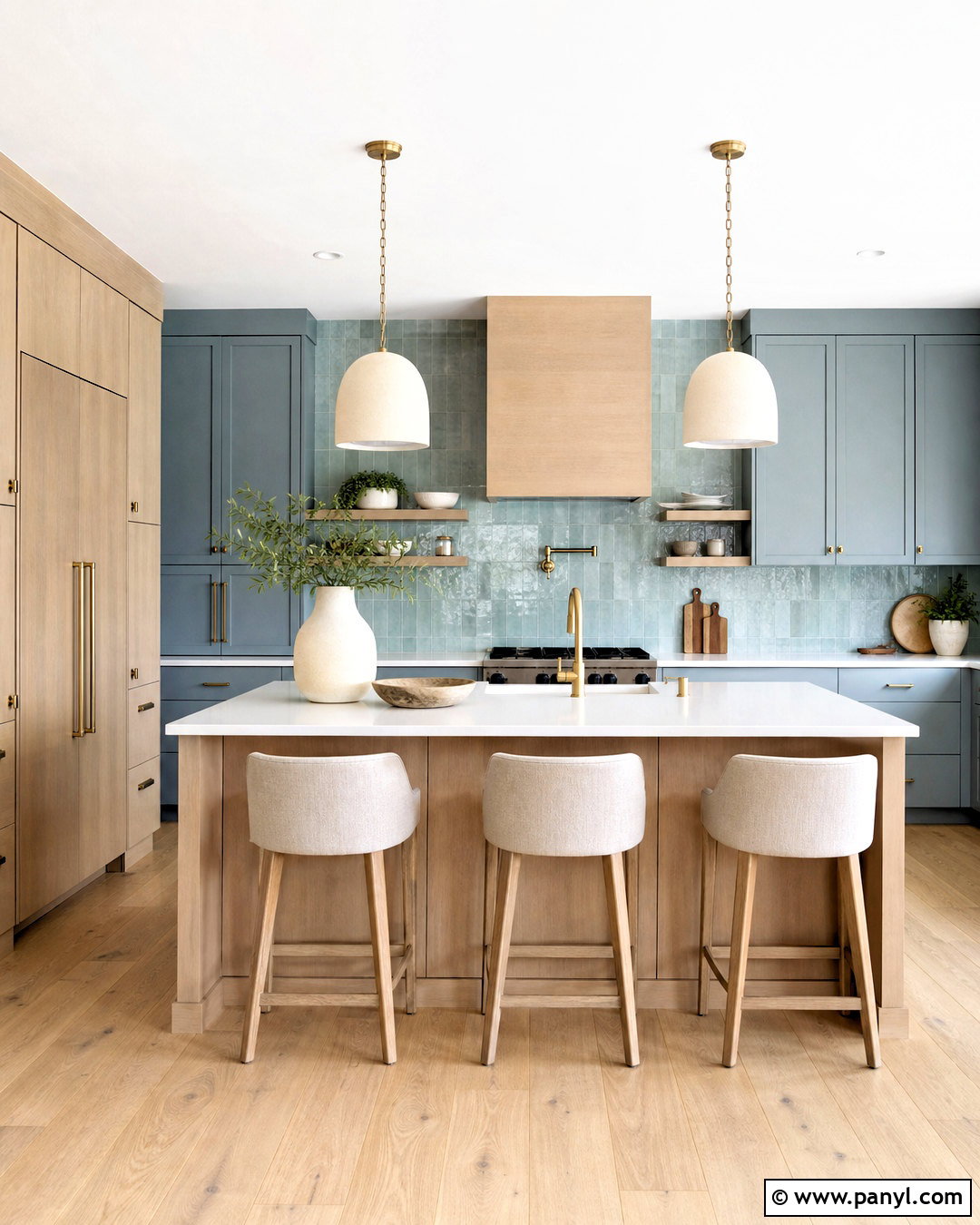
Blue-green cabinets and light oak create a refreshing kitchen inspired by water and natural landscapes. Choose a medium, muted blue-green for the main cabinetry and install light oak on the island, floating shelves, or pantry doors. Warm white quartz countertops will brighten the room, while a pale aqua or ivory zellige backsplash adds controlled variation. Use brushed brass hardware to emphasize the green side of the cabinet color. Pale oak flooring, linen stools, and simple ceramic pendants complete the relaxed palette. Paint the walls a soft off-white with no strong yellow undertone. If the room connects to a dining area, repeat the oak and blue-green through furniture or textiles. The finished kitchen feels colorful yet calm because the wood acts as a substantial neutral element.
19. Red And Natural Wood Kitchen
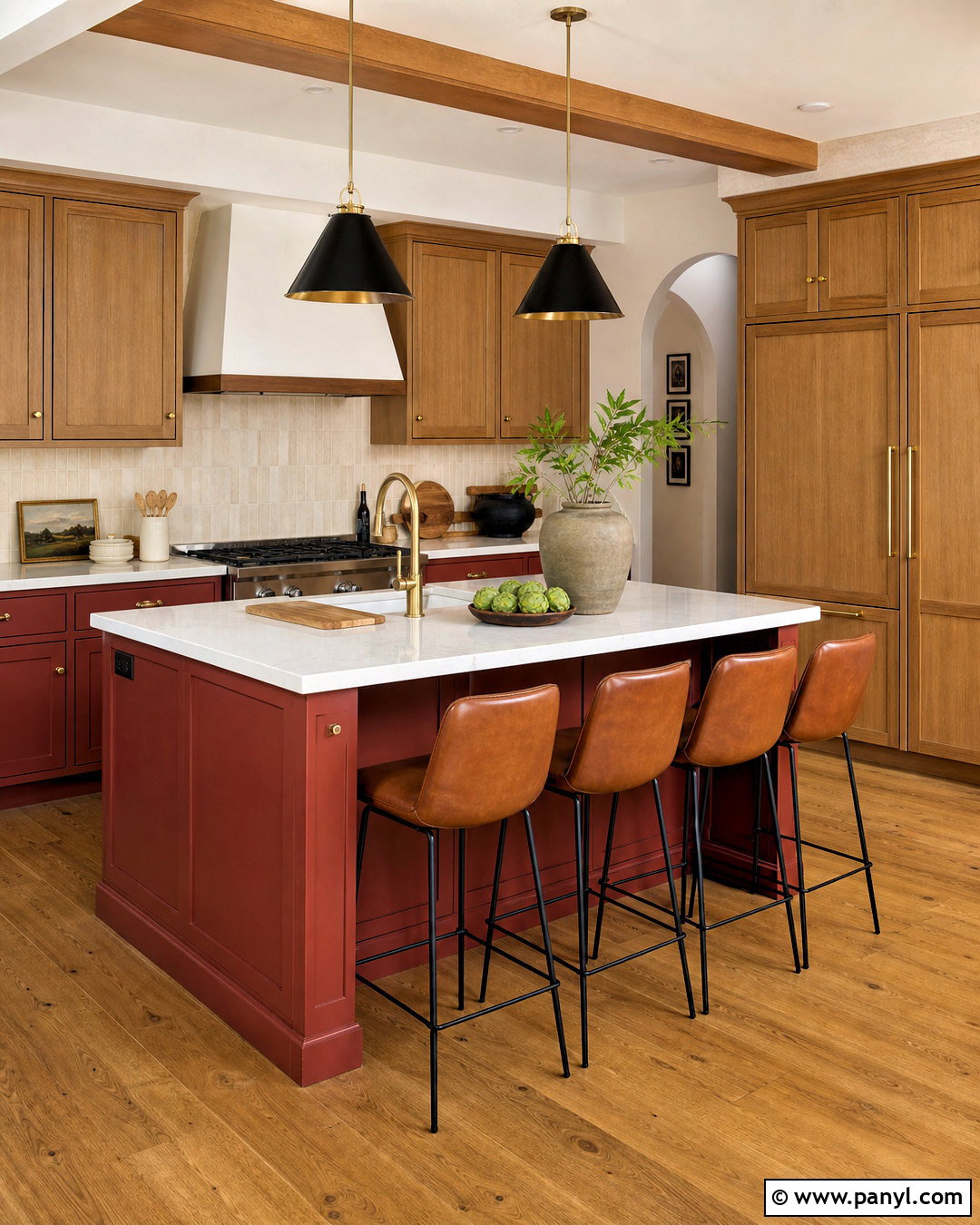
A deep red and natural wood palette brings warmth, confidence, and a handcrafted character to the kitchen. Choose brick red or muted oxblood for the island and lower cabinets rather than a bright fire-engine shade. Pair it with medium oak upper cabinets or a full oak pantry wall. Cream quartz countertops and a warm ivory backsplash will calm the richer colors. Add aged brass hardware, oak flooring, and simple black pendants for definition. Walls painted in light putty will create a softer backdrop than pure white. Keep textiles neutral, using tan leather stools and an understated cream runner. This balanced combination works particularly well in traditional or transitional kitchens, while slab-front oak cabinetry can move the same palette toward a cleaner contemporary look.
20. Lavender And Warm Gray Kitchen
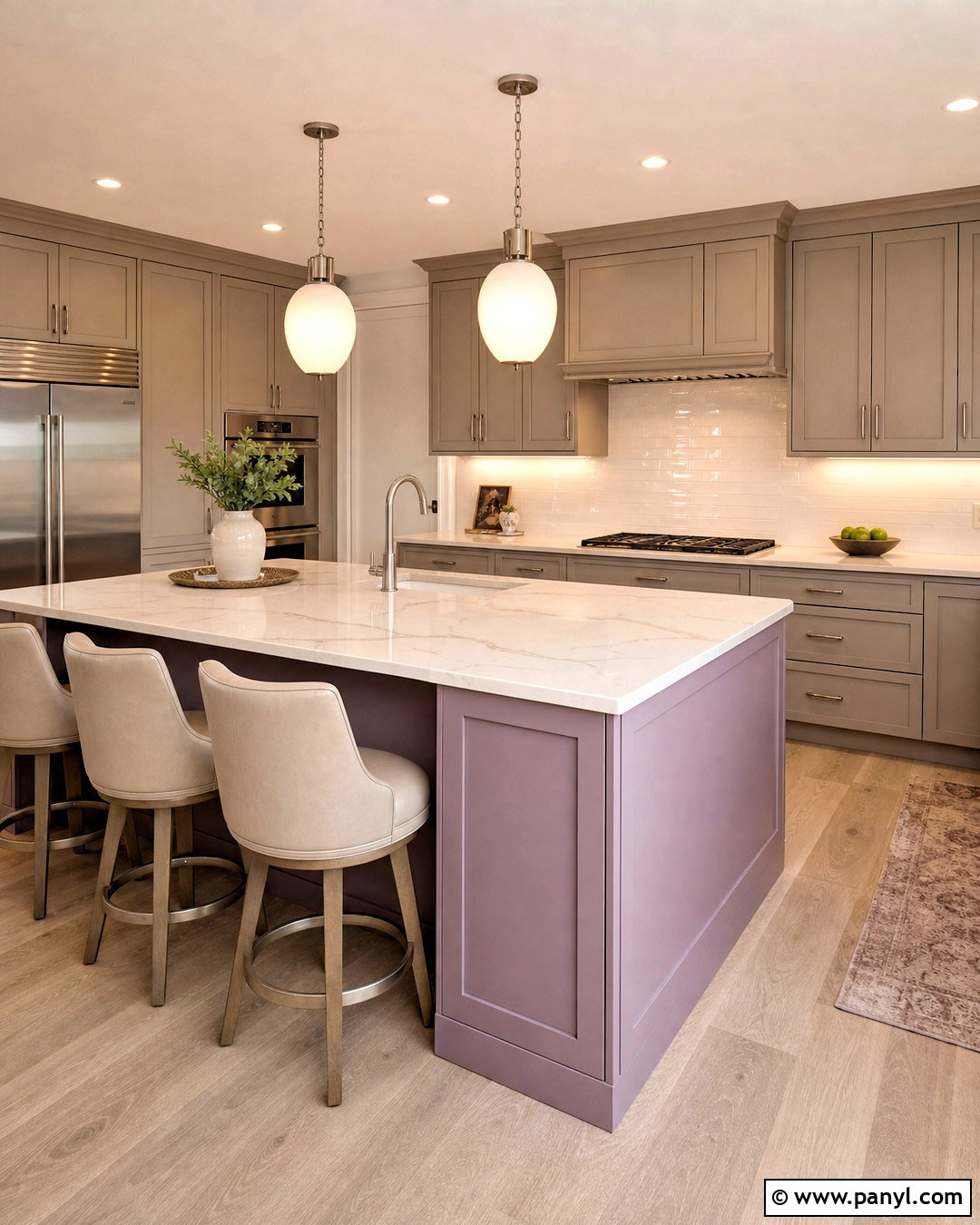
Muted lavender and warm gray create a distinctive kitchen that feels soft rather than overly decorative. Paint the island a dusty lavender with gray undertones, then use warm gray or mushroom cabinets around the perimeter. Choose creamy white quartz countertops with subtle taupe veining to unify the palette. A glossy ivory backsplash will reflect light and add a clean contrast behind the work areas. Pale oak flooring, brushed nickel hardware, and light beige stools keep the kitchen grounded. Walls should be a delicate warm white, allowing the lavender island to remain the focal point. Add opal glass pendants and restrained ceramic accessories instead of repeating purple everywhere. When both cabinet colors share similar muted undertones, the complete room feels coordinated, sophisticated, and comfortable for everyday use.
Conclusion:
The best kitchen palette connects every visible finish, from the largest cabinet doors to the smallest hardware details. Start with fixed materials such as flooring and countertops, then select cabinet colors that share their undertones. Warm whites complement wood and earth colors, while deeper shades benefit from pale countertops, reflective backsplashes, and generous lighting. Samples should always be viewed together inside the actual kitchen at different times of day. You can also use one strong color on an island while keeping expensive permanent surfaces neutral. These 20 kitchen color combinations ideas show that a cohesive room does not need to be predictable. With balanced contrast, repeated finishes, and practical materials, color can make any kitchen feel personal and complete.

Related Ideas and Inspiration:
Leave a Reply