
The White Walls Brown Cabinets pairing creates a kitchen that feels bright, warm, and grounded without relying on an overly complicated color palette. White walls reflect light and provide a clean backdrop, while brown cabinetry introduces natural depth and character. Wood cabinetry has also regained attention in recent kitchen renovations, with medium and light wood tones leading many updated designs. () The key is coordinating cabinet undertones with countertops, flooring, hardware, and lighting. Pale oak can feel relaxed and modern, while walnut, espresso, and chocolate finishes create a richer result. Whether you prefer farmhouse warmth, clean minimalism, or traditional detail, these complete kitchen looks offer practical ways to design with White Walls Brown Cabinets.
1. Light Oak Cabinets With White Walls
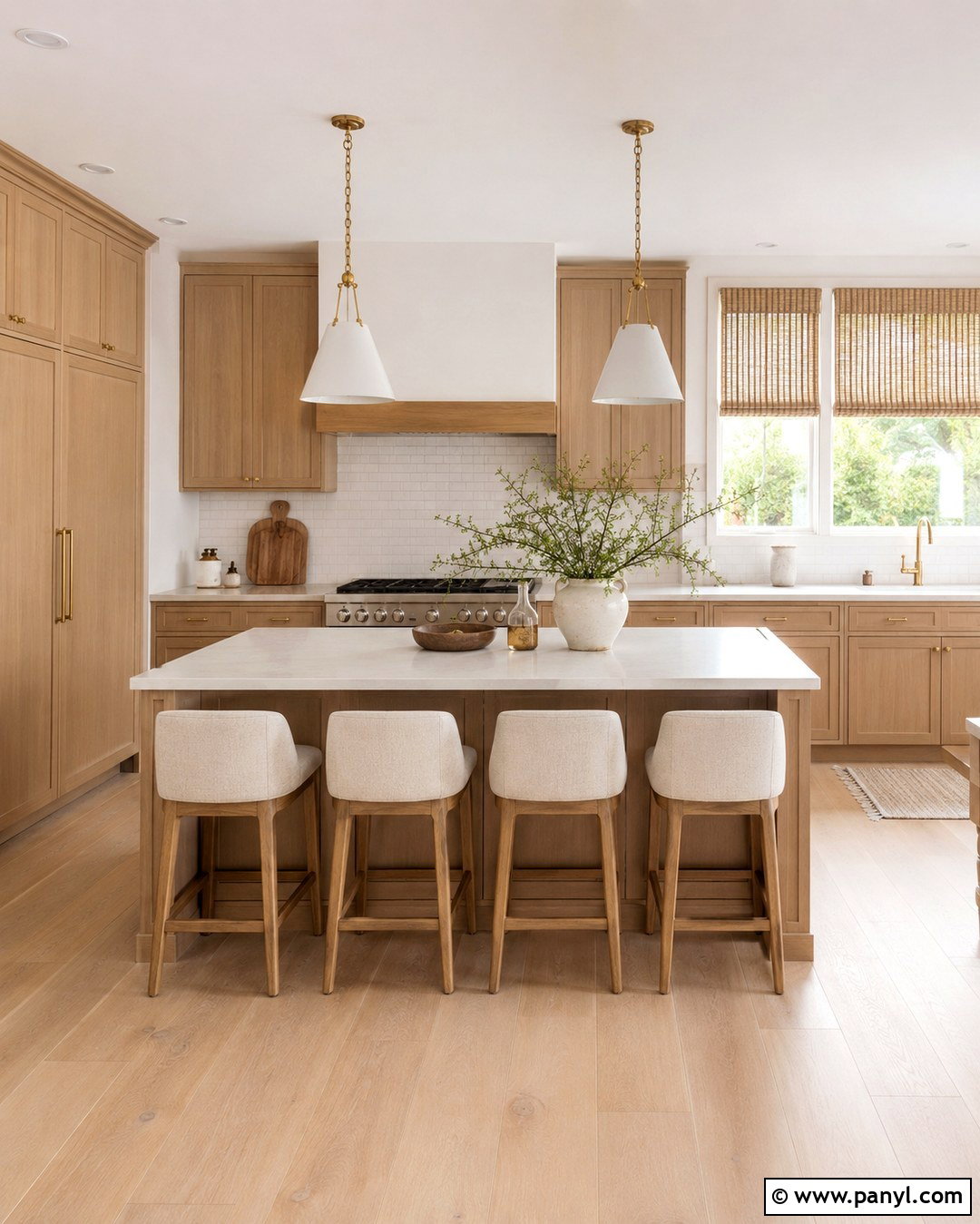
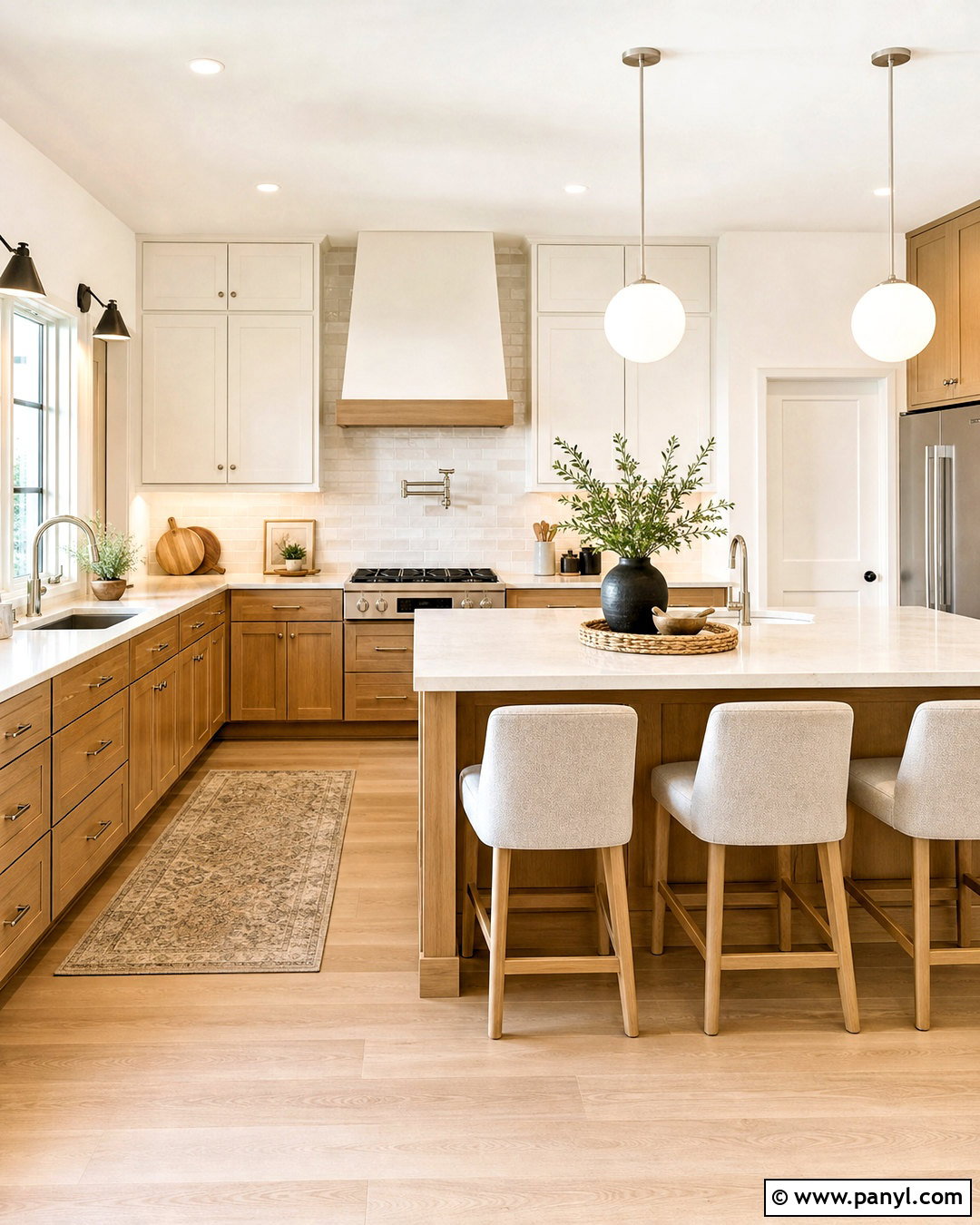
Light oak cabinets create an airy kitchen that still feels warmer than an all-white space. Choose flat-panel or slim Shaker doors with a matte natural finish that keeps the grain visible. Pair them with soft white walls, creamy quartz countertops, and a backsplash made from handmade white rectangular tile. Pale oak flooring can work, but select boards slightly lighter or darker than the cabinetry to avoid a matching showroom effect. Add brushed brass pulls, simple globe pendants, and counter stools upholstered in oatmeal-colored fabric. A narrow oak shelf displaying neutral pottery connects the vertical surfaces to the lower cabinets. Finish the room with woven window shades, a beige runner, and a few green plants for a comfortable modern kitchen.
2. Walnut Cabinets With White Quartz
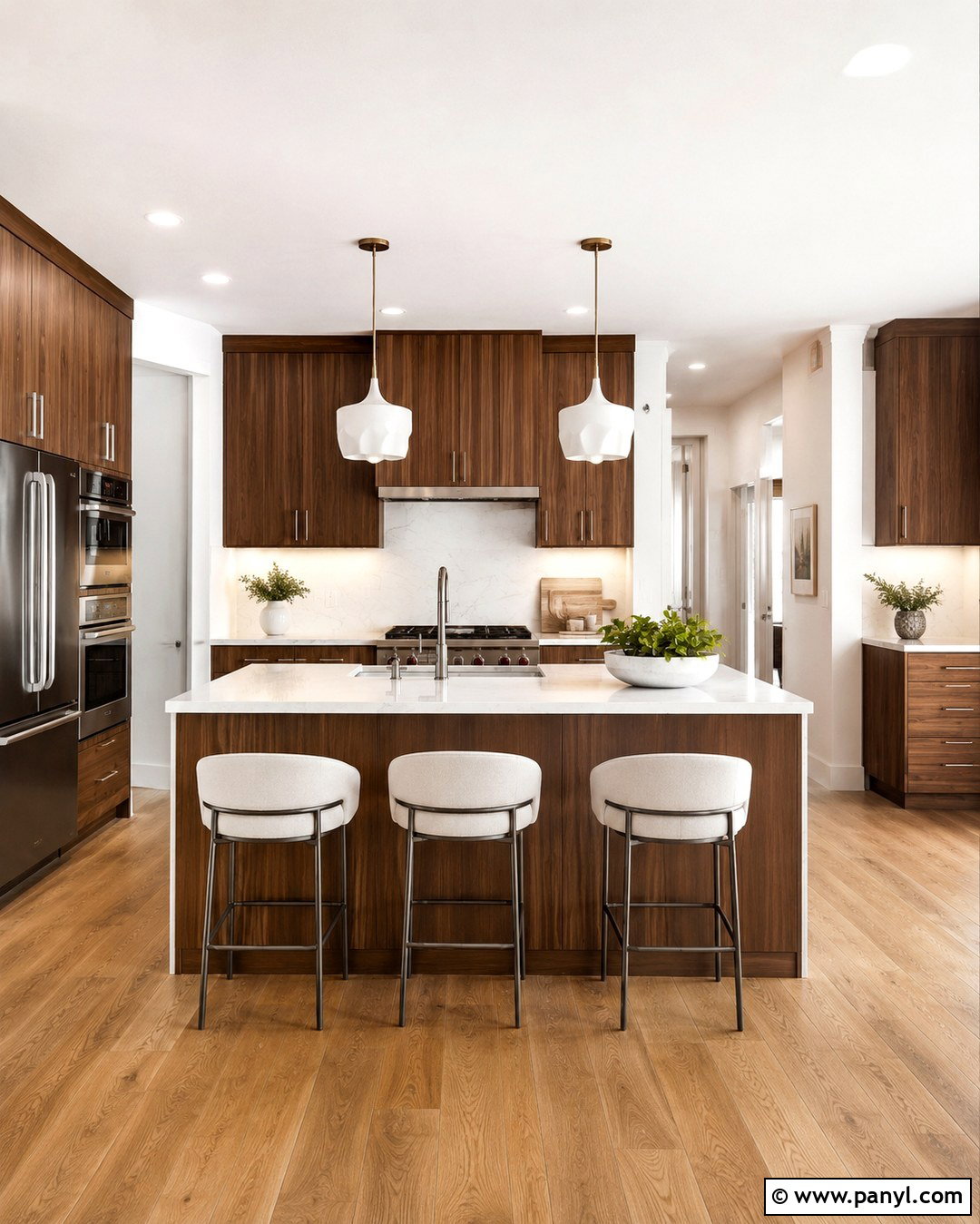
Rich walnut cabinets look polished against clear white walls, especially when the room receives plenty of natural light. Use full-height cabinetry with simple slab doors to emphasize the wood grain without adding visual clutter. Bright white quartz countertops create a sharp, practical work surface, while a matching quartz backsplash gives the kitchen a seamless finish. Balance the darker cabinets with medium-tone white oak flooring rather than another deep brown material. Brushed nickel hardware and stainless steel appliances add a cool contrast that keeps the walnut from feeling overly traditional. Complete the layout with a long island, sculptural white pendant lights, and pale upholstered stools. Minimal ceramic accessories and glass-front display cabinets can soften the solid cabinetry without weakening its dramatic presence.
3. Espresso Cabinets In A Small Kitchen
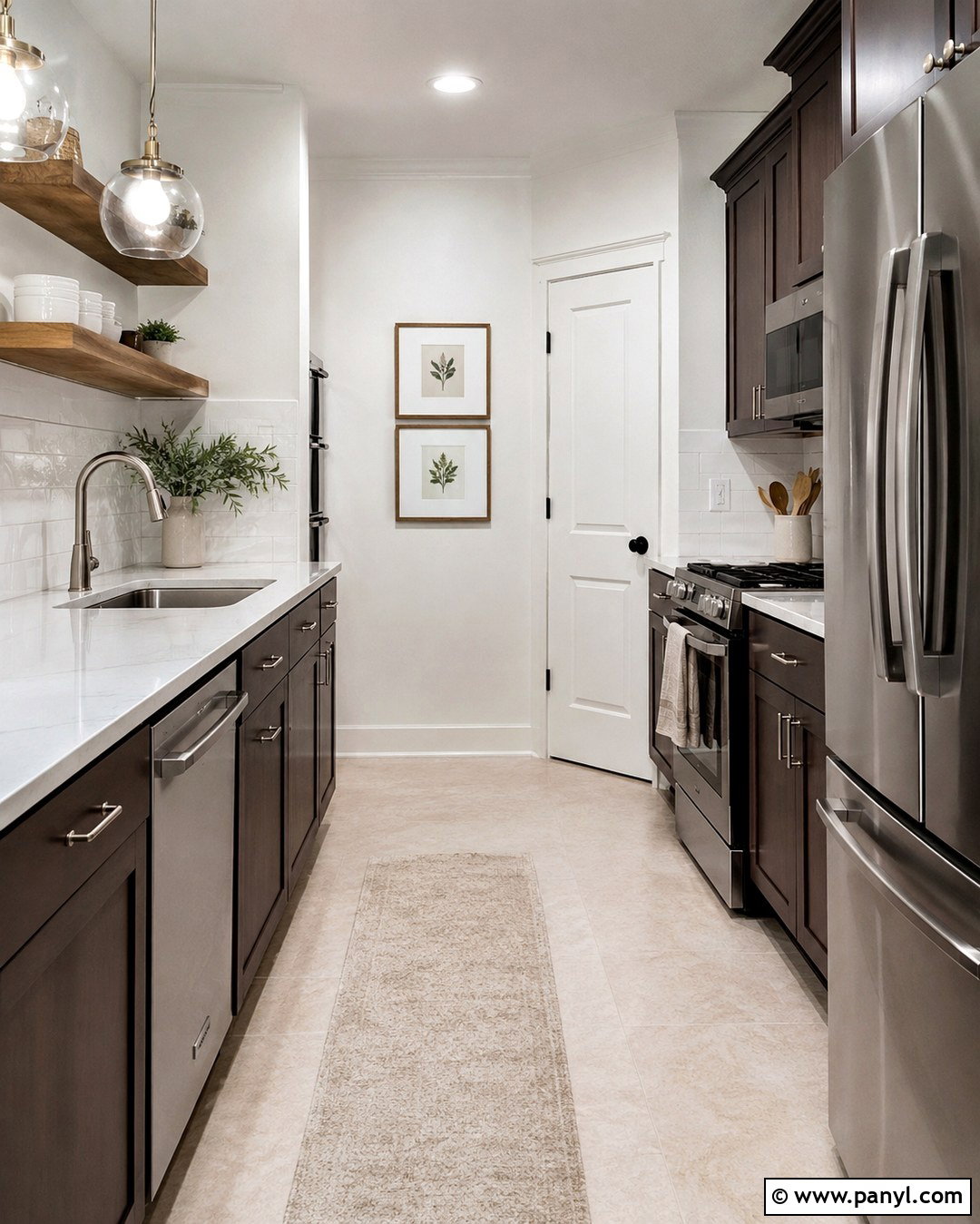
Can dark cabinetry work in a compact room? Espresso cabinets can feel surprisingly balanced when white walls, reflective surfaces, and an efficient layout surround them. Keep the upper cabinets limited to one main wall and use open white oak shelves near the window. Select slim Shaker doors, polished nickel hardware, and white quartz countertops with very subtle veining. A glossy white subway tile backsplash will bounce light across the deeper cabinet finish. Choose pale porcelain floor tile or light natural oak flooring to prevent the lower half of the room from looking heavy. Under-cabinet lighting is essential for keeping work areas clear and welcoming. Finish with a small cream runner, clear glass pendants, and uncluttered counters that preserve a sense of openness.
4. Honey Oak Cabinets With White Walls
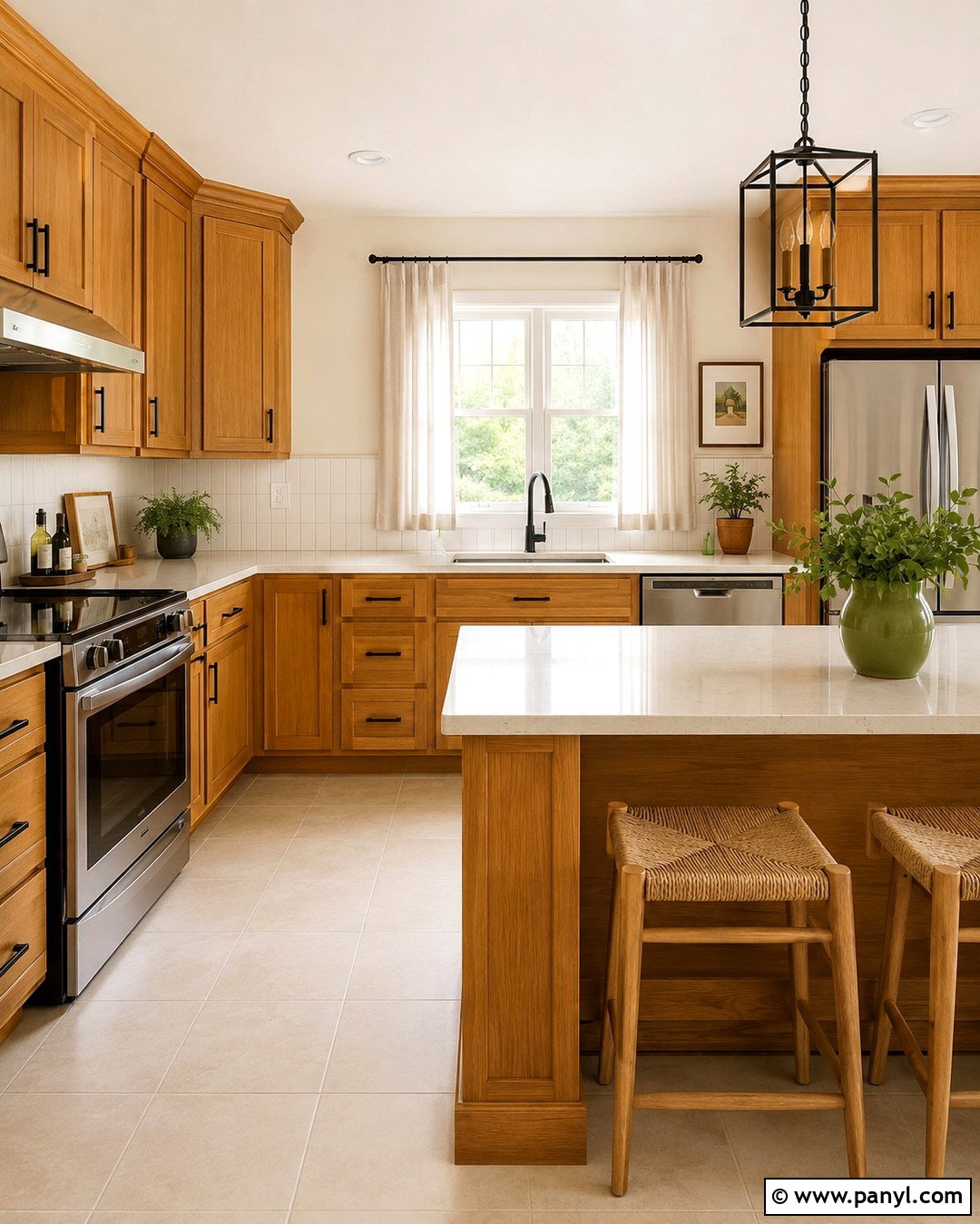
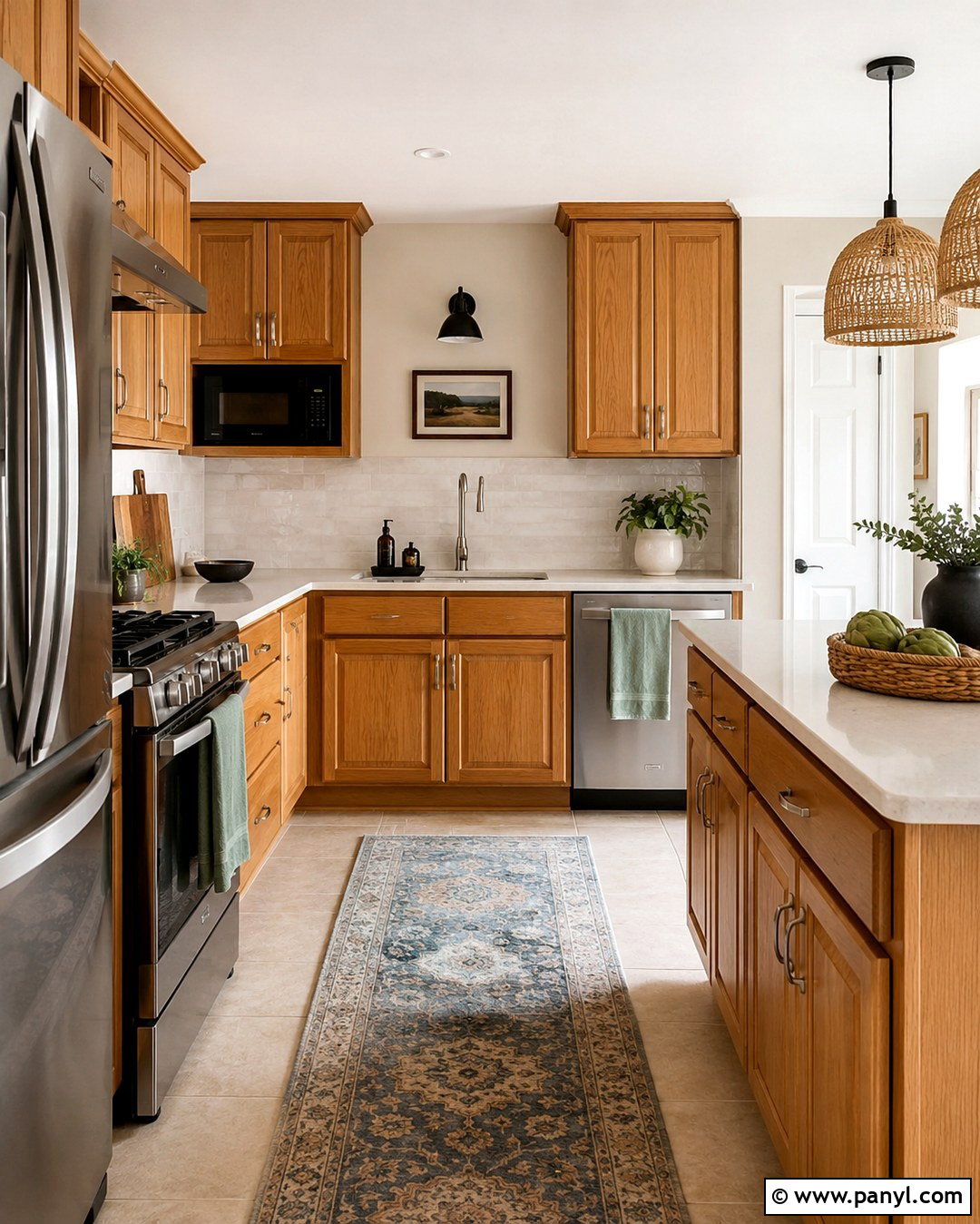
Honey oak cabinets can look fresh when their golden coloring is balanced with warm white walls and restrained finishes. Keep the existing wood visible, but replace decorative hardware with simple matte black or aged brass pulls. Add creamy white quartz counters instead of busy brown granite. A vertical white tile backsplash introduces clean lines and helps taller upper cabinets feel more current. Choose medium-toned oak flooring with less orange than the cabinets, or use warm beige porcelain tile for gentle contrast. A black lantern pendant above the island gives the room definition, while woven counter stools support the oak’s natural warmth. Decorate with white stoneware, linen café curtains, and muted green accents. The result feels inviting without returning to an overly rustic palette.
5. Brown Shaker Cabinets With Marble Counters
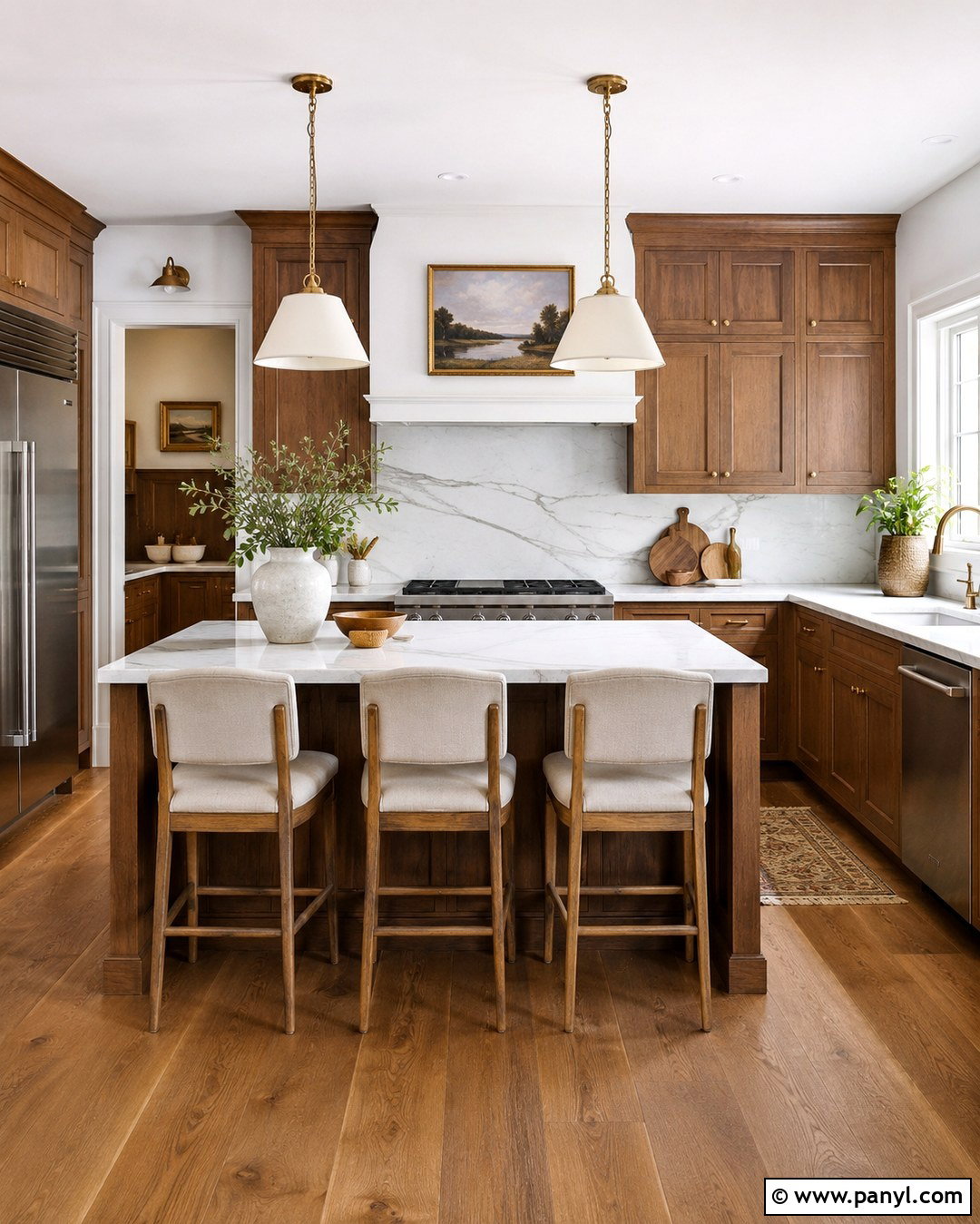
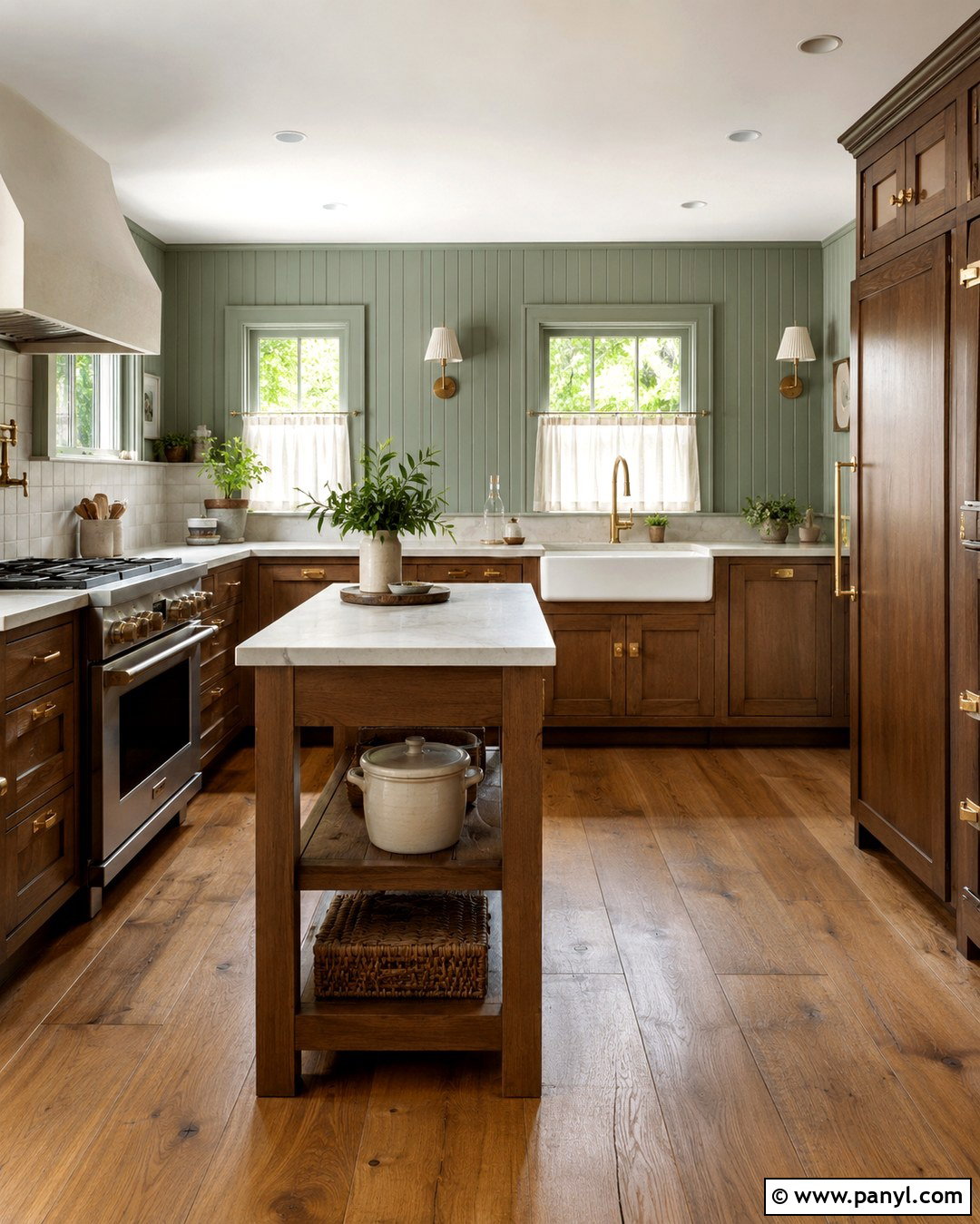
Medium brown Shaker cabinets offer the structure of traditional millwork without making a kitchen feel formal. Pair their framed doors with warm white walls and softly veined marble or durable marble-look quartz counters. Continue the countertop material several inches up the wall or use it as a full-height backsplash behind the range. A stained oak island can match the perimeter cabinets, while off-white upholstered stools provide contrast. Choose antique brass knobs, a bridge-style faucet, and simple shaded pendants to complement the cabinetry. Wide-plank oak flooring gives the room a comfortable foundation. Keep decorative elements purposeful, using a framed landscape print, a ceramic lamp, and a wooden bowl. This combination works especially well in transitional homes with open dining areas.
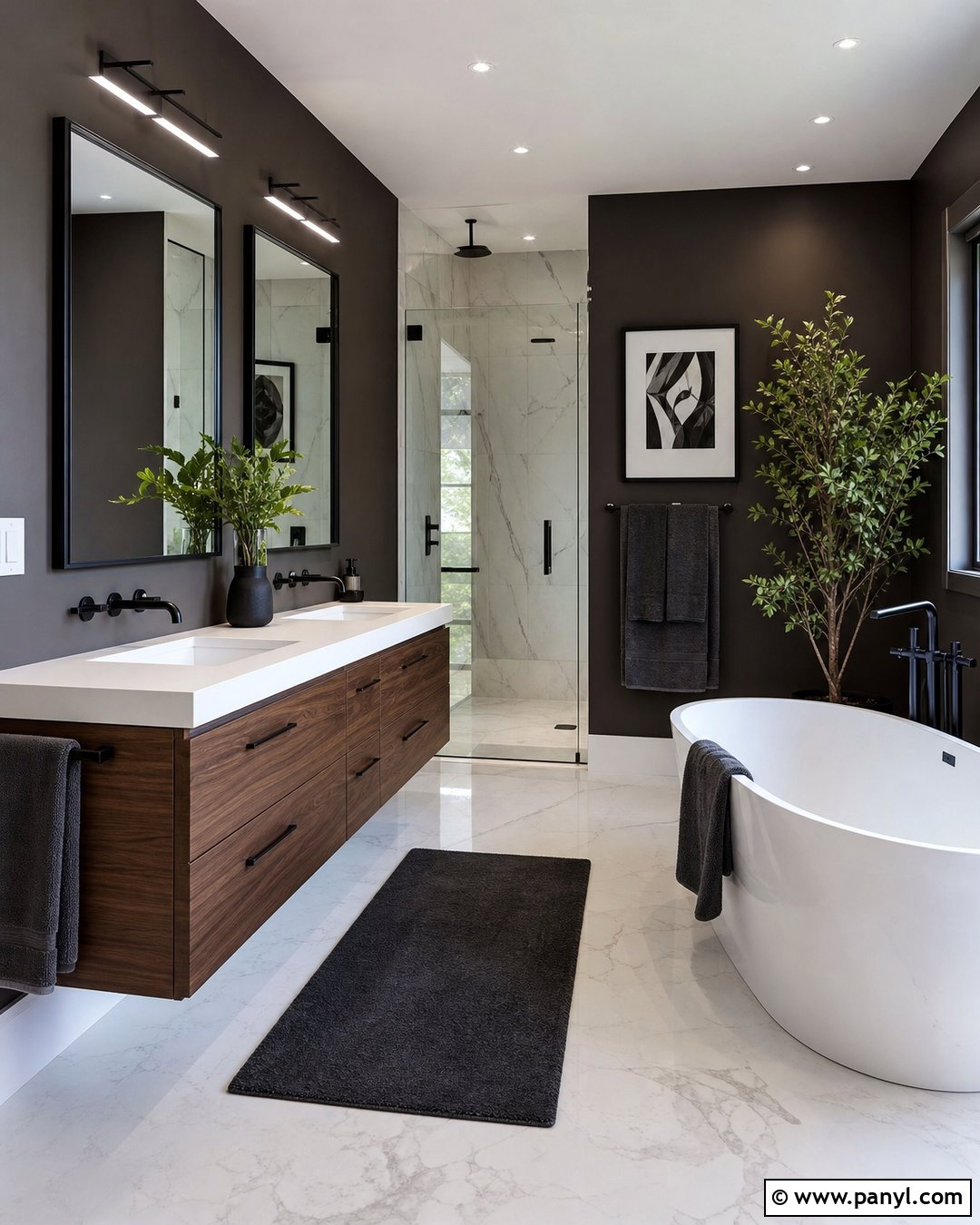
6. Flat Panel Brown Cabinets With Black Accents
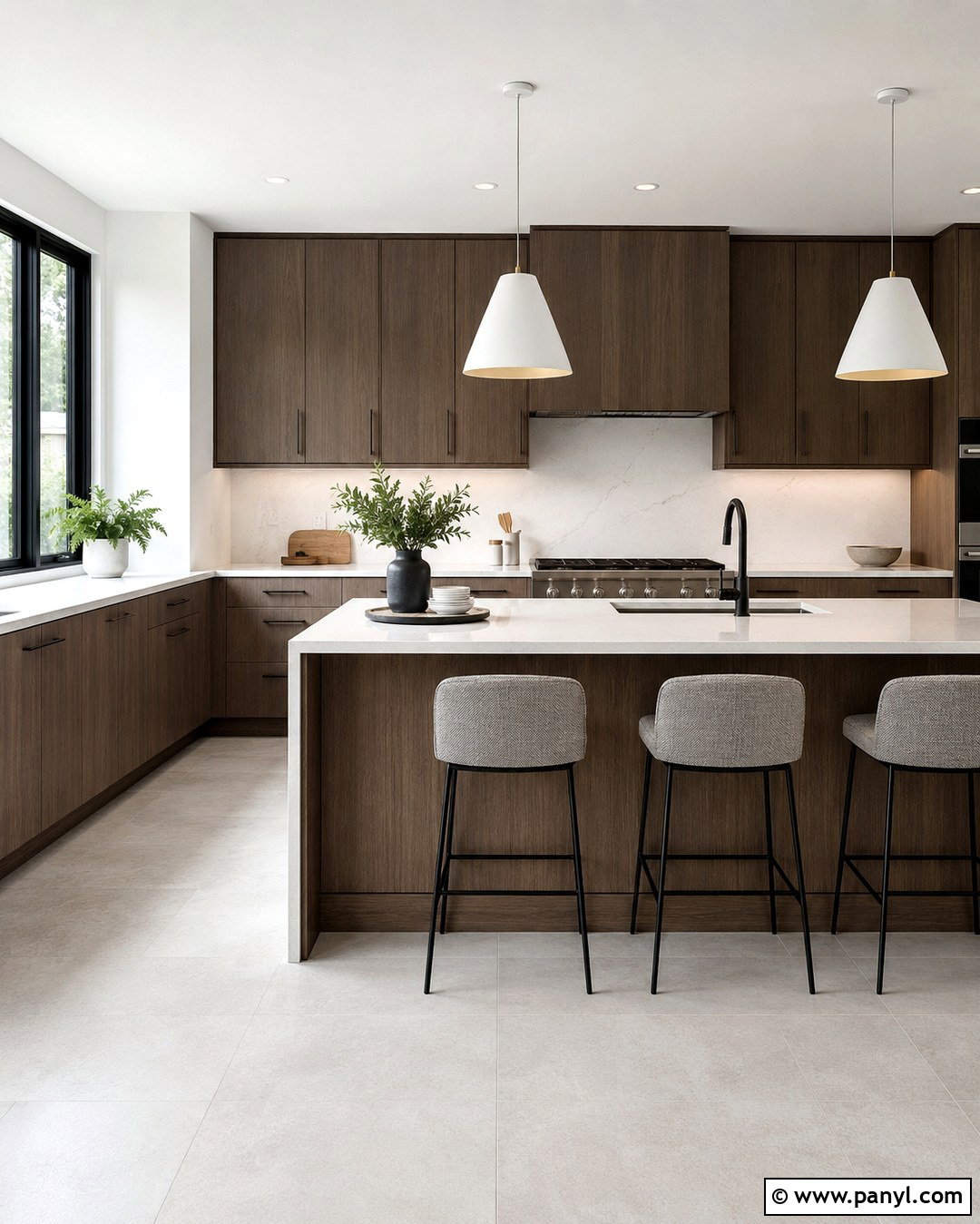
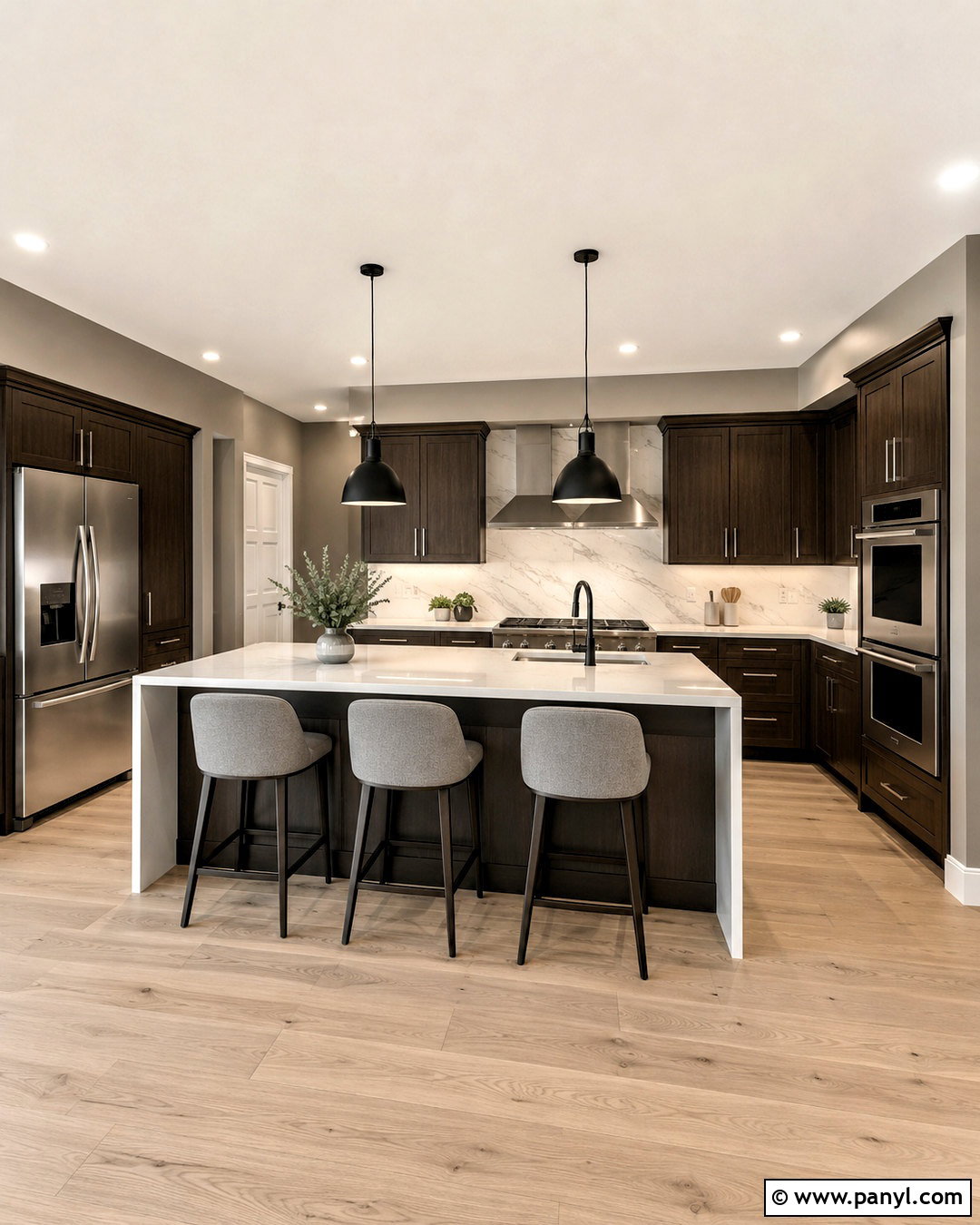
Clean flat-panel brown cabinets form a strong base for a modern kitchen with bright white walls. Select a medium walnut or smoked oak veneer with consistent vertical grain. Use thin matte black pulls, a black faucet, and dark-framed windows to repeat crisp lines across the room. White counters and a large-format white backsplash balance the darker details and keep the overall palette uncomplicated. Add a waterfall island with brown cabinetry beneath its bright quartz surface. Concrete-look porcelain flooring introduces subtle texture without competing with the wood. Instead of several small fixtures, hang two oversized white pendants above the island. Finish with black-framed stools, pale gray upholstery, and one large leafy plant. The completed room feels bold, organized, and comfortable rather than stark.
7. Rustic Brown Cabinets With Wood Beams
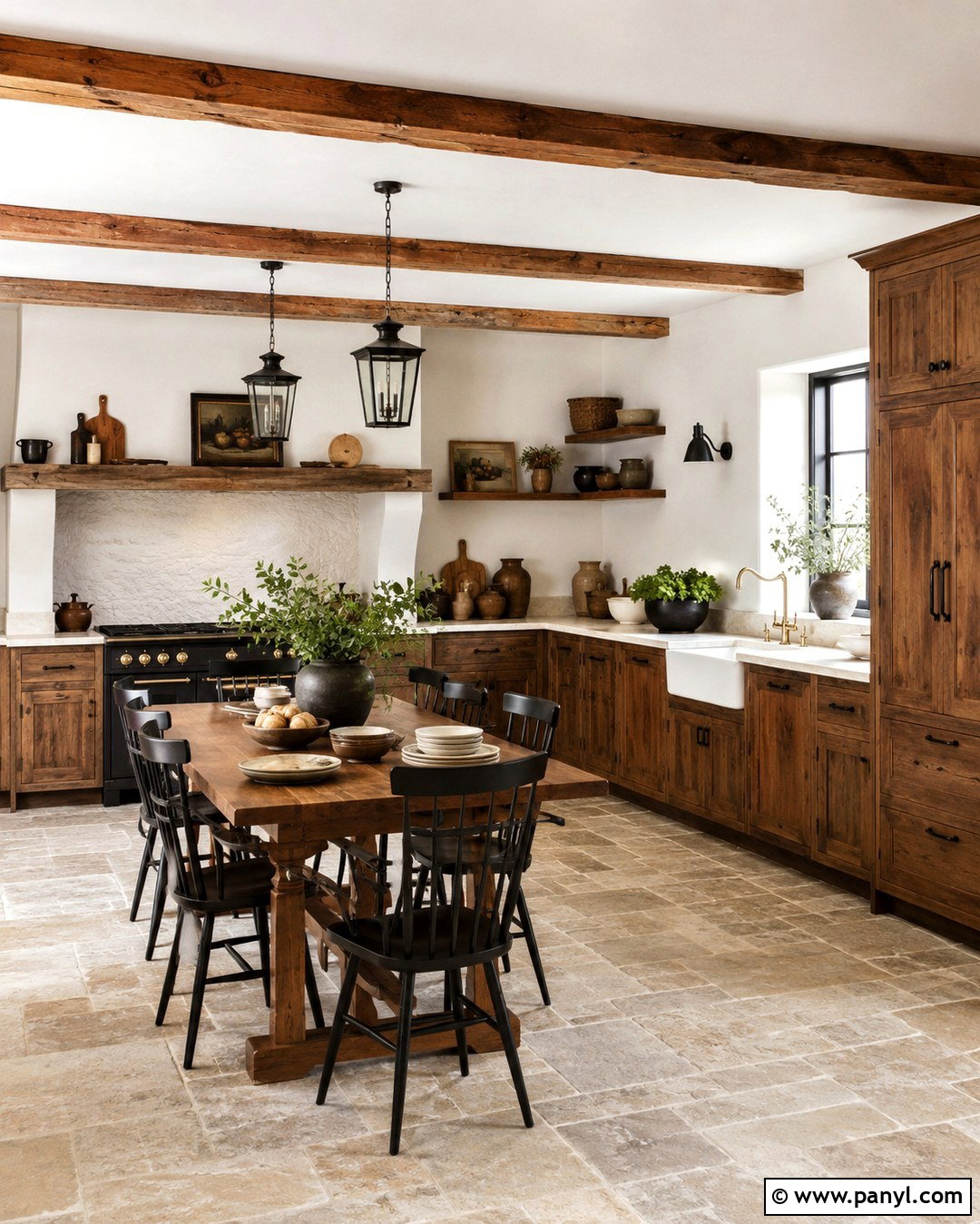
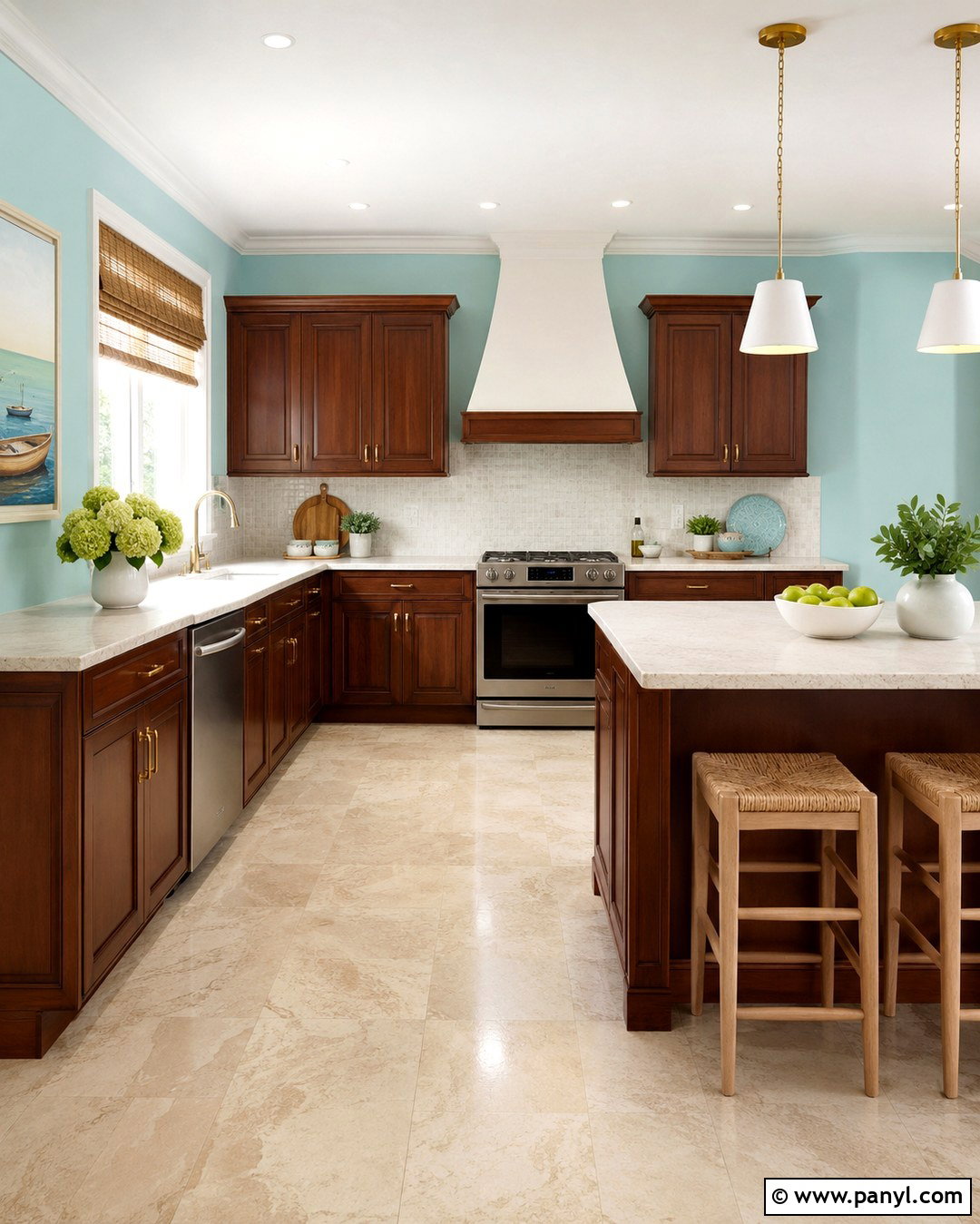
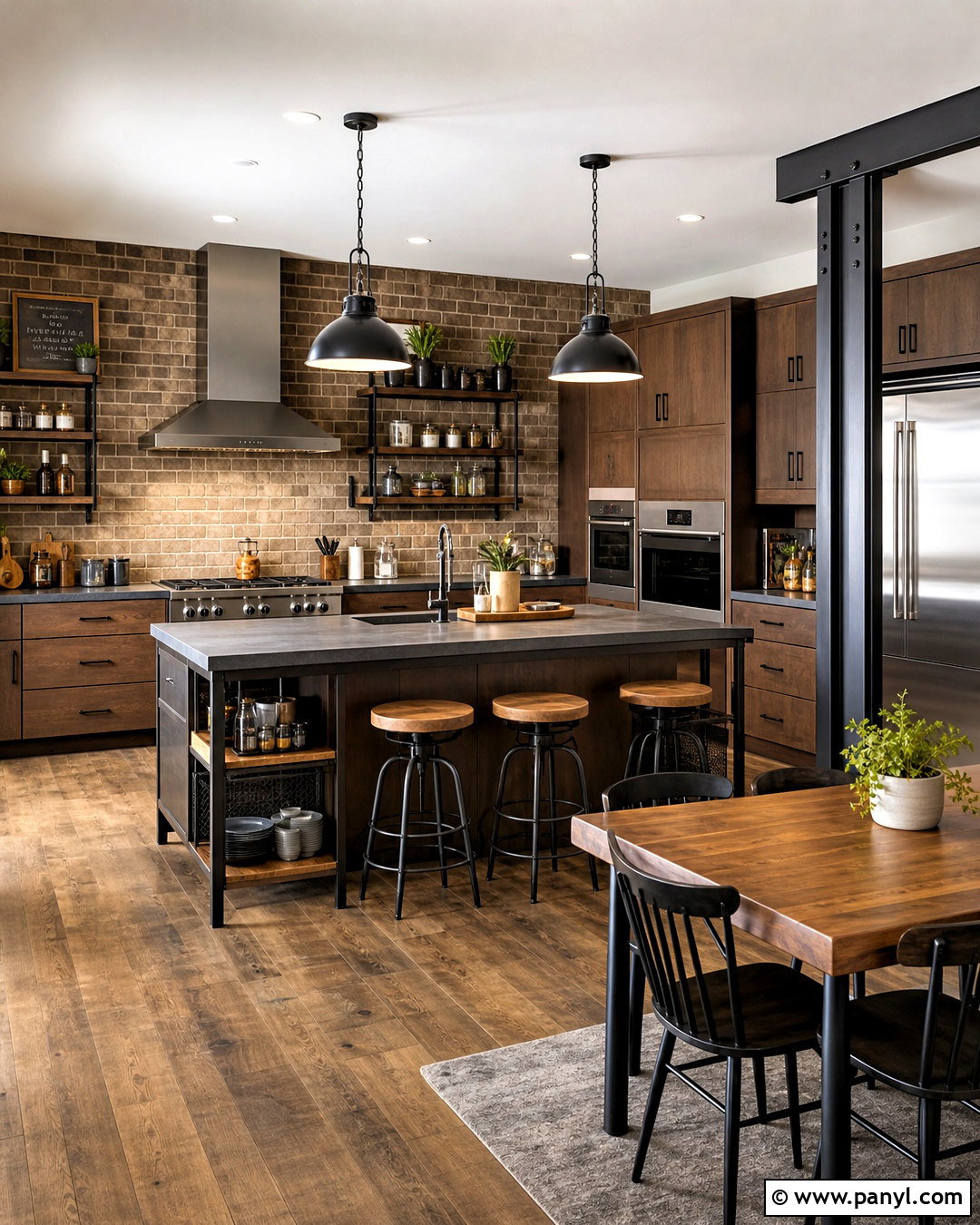
A rustic kitchen becomes brighter and more livable when substantial brown cabinets are paired with clean white walls. Choose knotty alder or reclaimed oak cabinet fronts in a medium stain rather than an extremely dark finish. Repeat the wood overhead with exposed beams, but keep the ceiling white so the room remains open. Creamy stone counters, an off-white apron-front sink, and a textured white backsplash create a softer transition between wood and wall. Use aged bronze hardware and simple iron pendants for an authentic finish. Natural limestone or warm beige porcelain flooring can handle daily traffic while complementing the cabinets. Complete the space with a sturdy central table, spindle-back chairs, linen curtains, handmade pottery, and woven baskets placed neatly above a freestanding pantry.
8. Midcentury Walnut Cabinets With White Walls
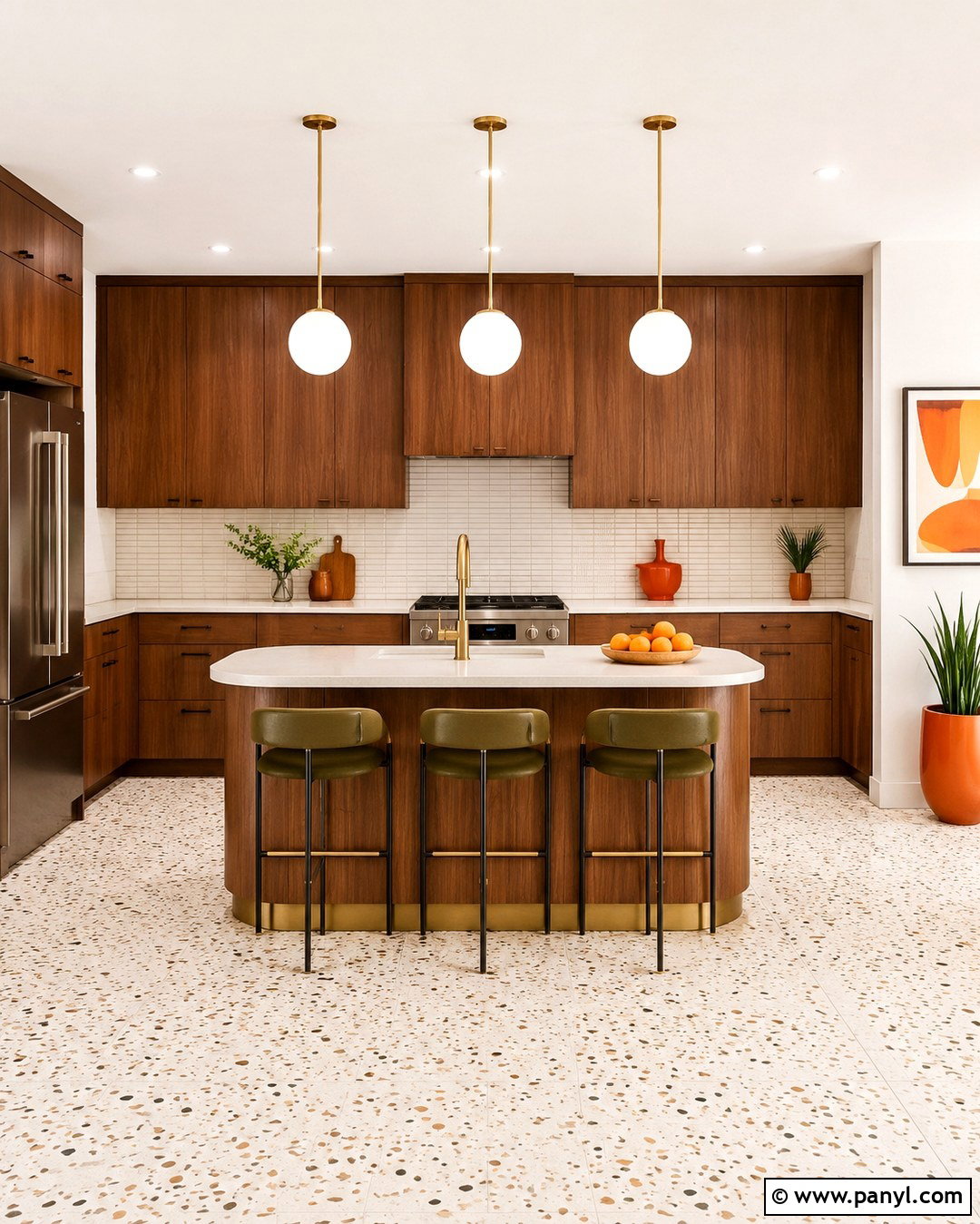
Warm walnut cabinetry naturally supports a midcentury kitchen filled with simple shapes and practical details. Use flat doors, integrated finger pulls, and a furniture-style cabinet base with tapered legs where possible. Crisp white walls and white solid-surface countertops will define the wood’s reddish-brown grain. Add a backsplash of narrow off-white tiles arranged in a stacked pattern for subtle period character. Terrazzo flooring or warm gray porcelain tile provides texture without overwhelming the room. A compact island with rounded corners makes circulation easier and echoes classic midcentury furniture. Finish the design with globe pendants, olive green stools, and small accents in burnt orange. Keep decor sparse but distinctive, using sculptural pottery, a wooden fruit bowl, and one graphic print near the breakfast area.
9. Scandinavian Oak Cabinets With White Walls
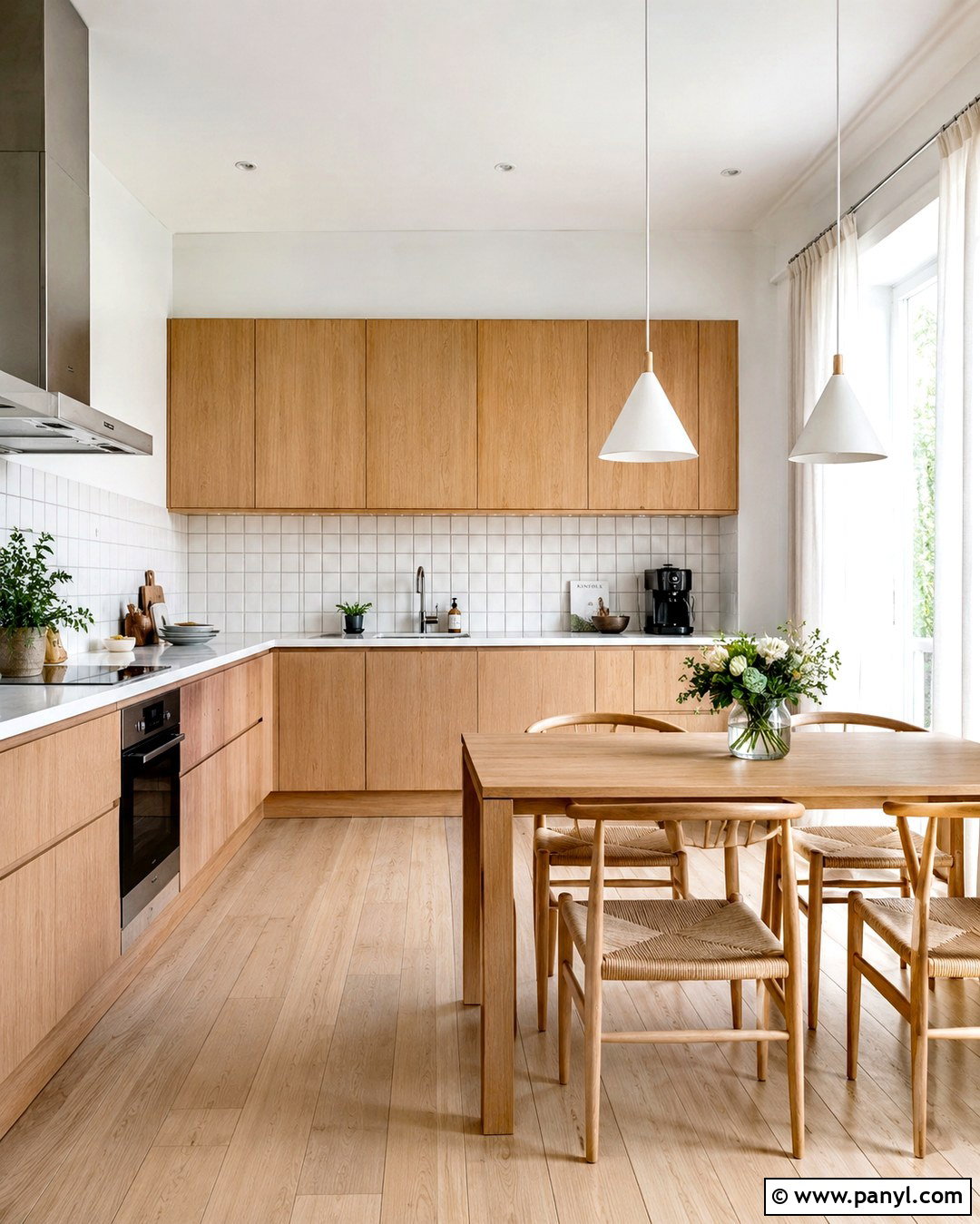
Soft brown oak cabinets can bring warmth to a Scandinavian kitchen while preserving its bright, uncomplicated character. Choose lightly stained slab doors with recessed pulls and limited upper cabinetry. Warm white walls, pale quartz counters, and a simple white square-tile backsplash create a calm background. Install light oak flooring, but vary the grain direction or tone slightly so the cabinets remain visually distinct. A compact dining table can replace a large island in smaller rooms, providing an informal place for meals and food preparation. Add white cone pendants, natural linen curtains, and woven-seat chairs with slender wood frames. Open shelves should hold only useful pieces, such as cream dishes, clear glasses, and a few wooden boards. Small black accents will sharpen the otherwise gentle neutral palette.
10. Dark Brown Cabinets With Brass Hardware
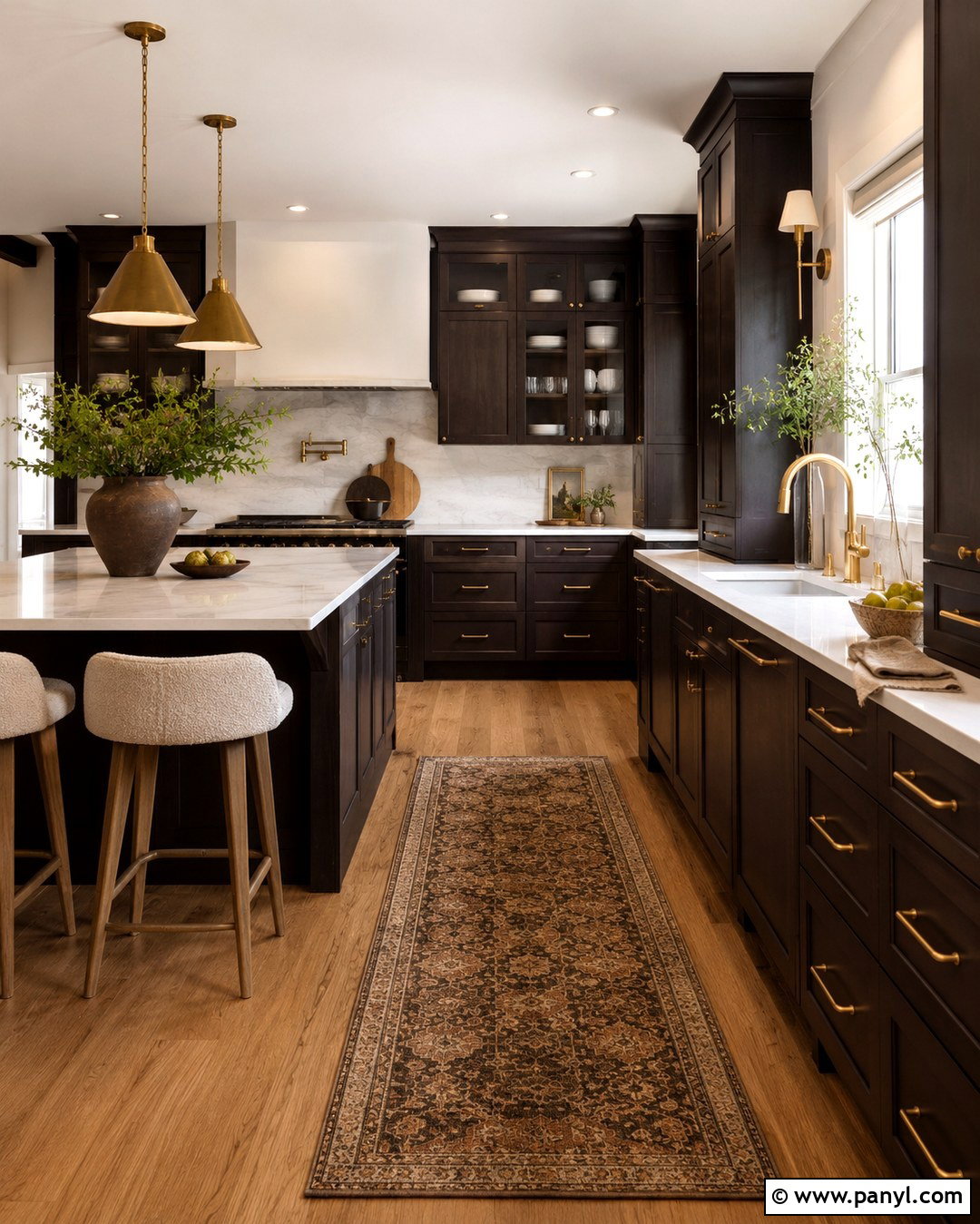
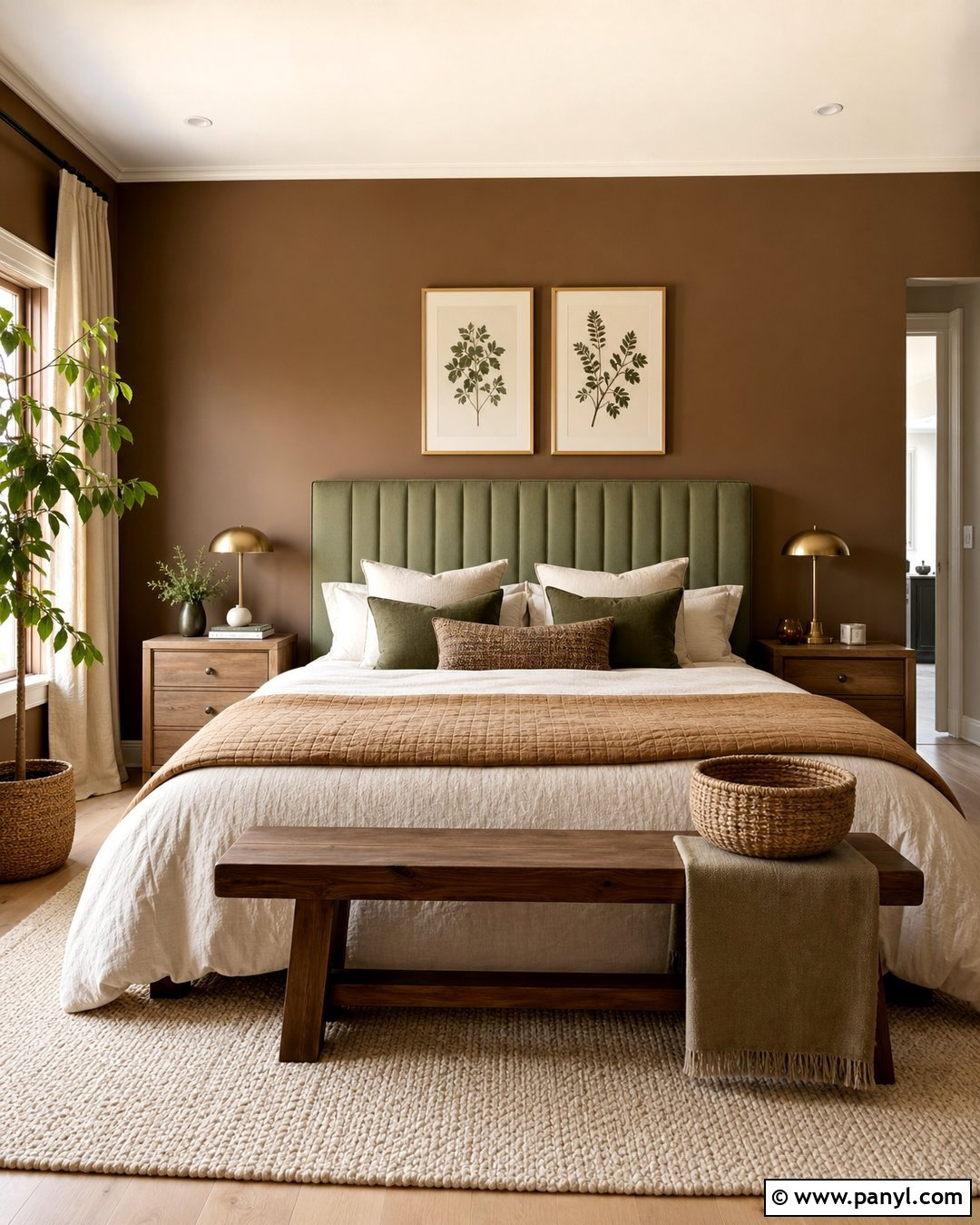
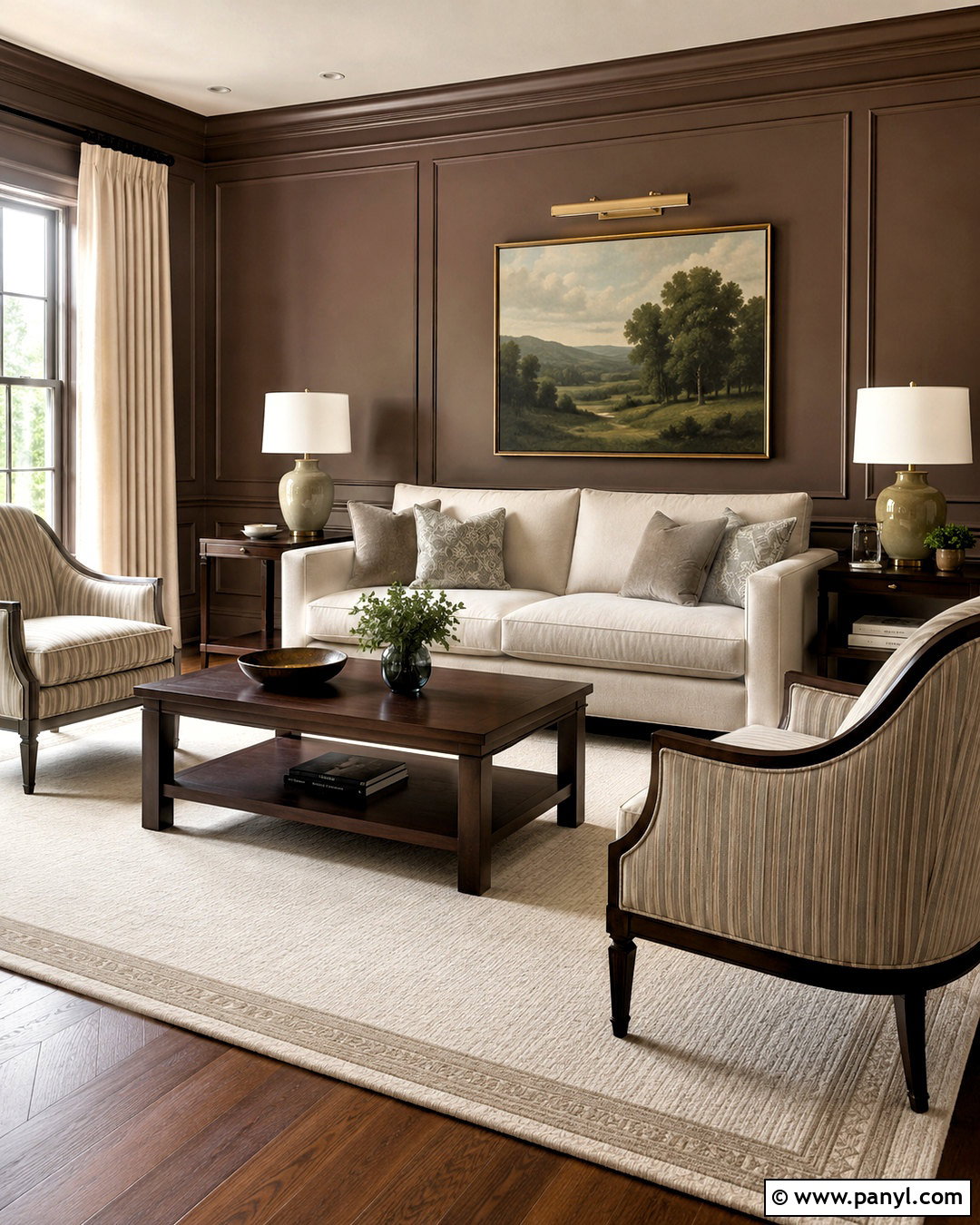
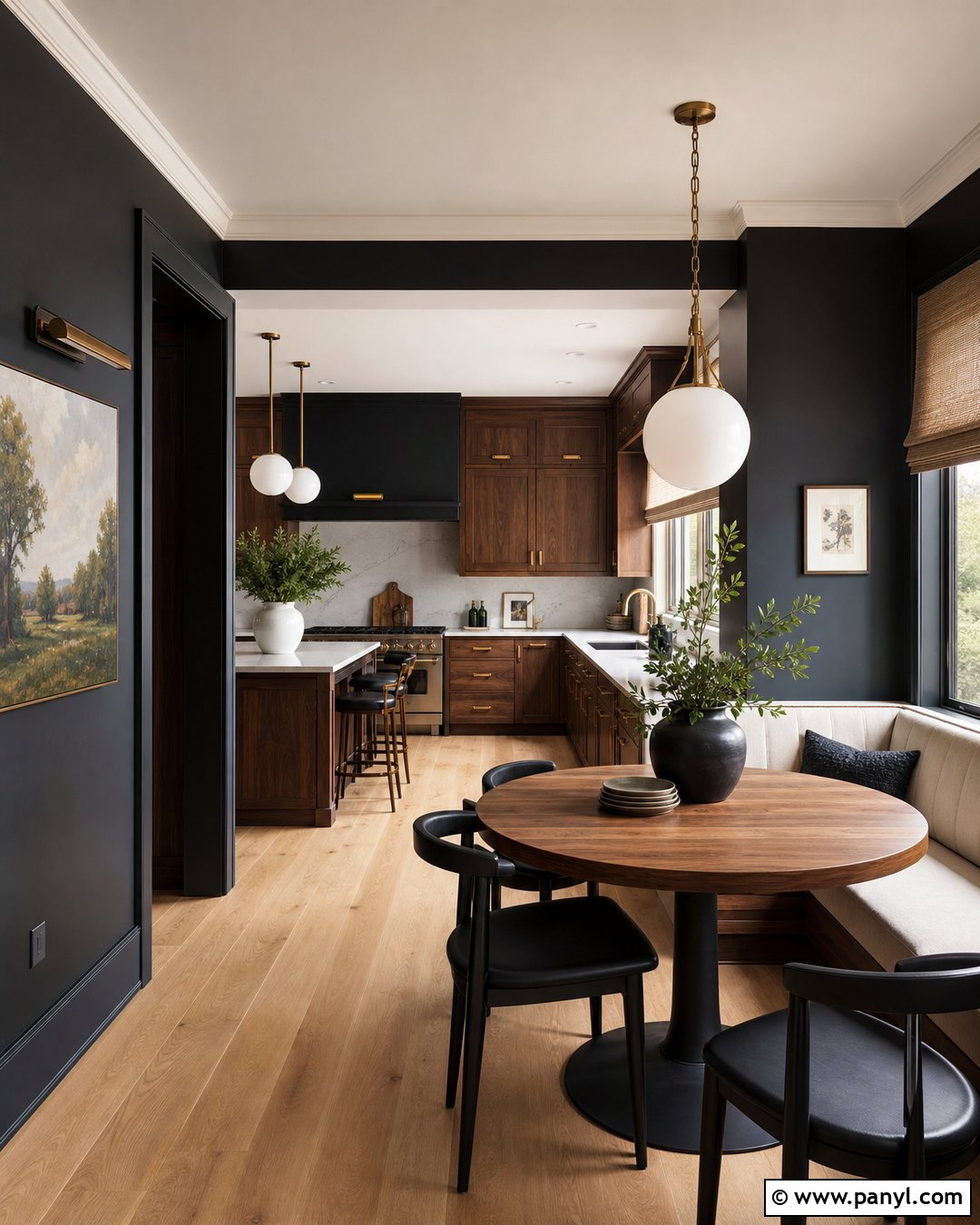
Dark brown cabinets and warm brass hardware create a refined kitchen with a welcoming glow. Select deep chocolate cabinetry with simple Shaker doors, then surround it with warm white walls that have creamy rather than blue undertones. Use white marble-look quartz across the counters and backsplash to break up the darker cabinet runs. Brass knobs, cup pulls, pendants, and a matching faucet should share a similar aged or satin finish. Medium oak flooring will prevent the room from becoming too formal. For the island, repeat the dark cabinets but add pale boucle stools to lighten the center of the space. Glass-front upper doors can display white dishes and introduce visual breathing room. A vintage-inspired runner and softly colored artwork will make the finished kitchen feel layered and personal.
11. Brown Cabinets With White Subway Tile
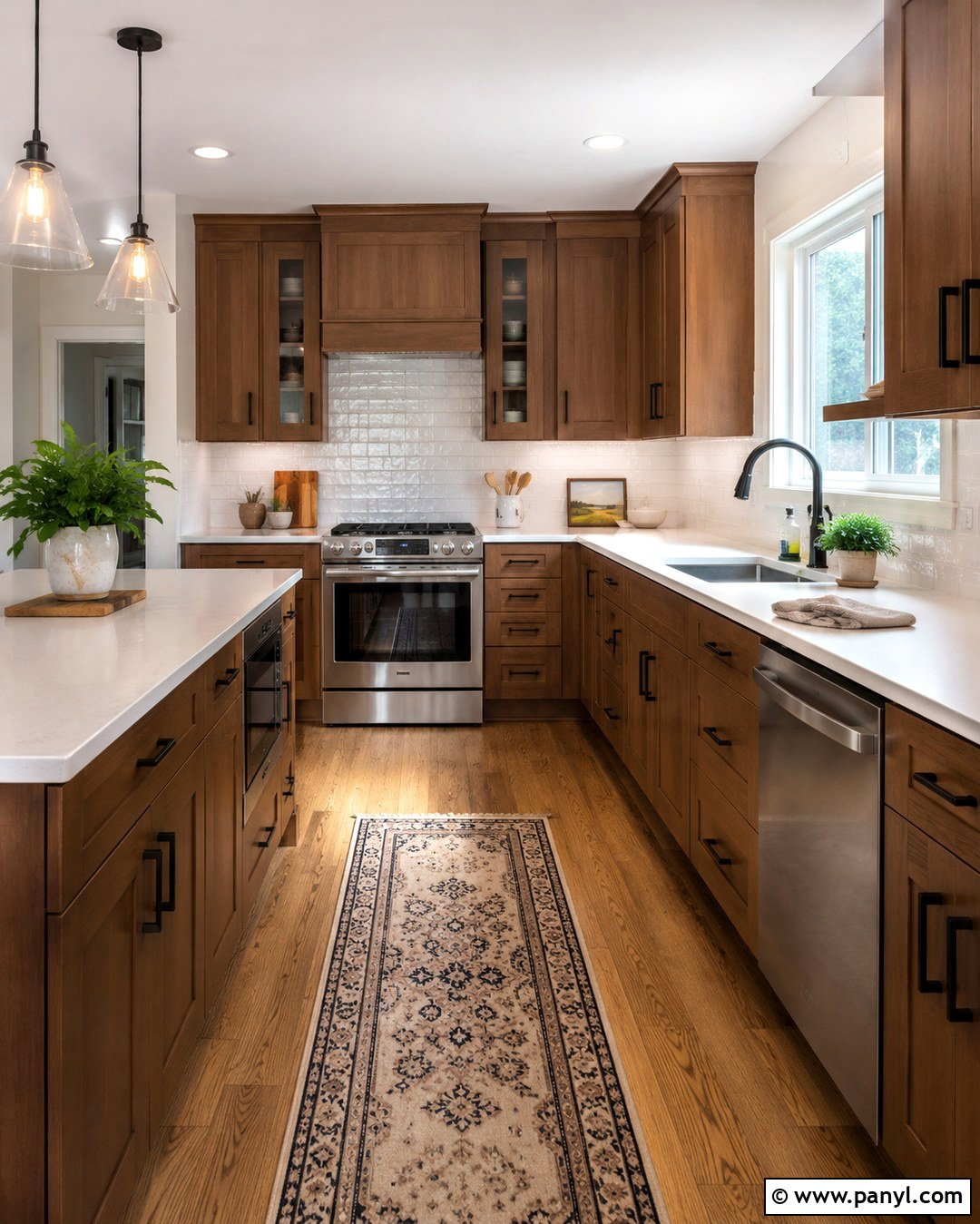
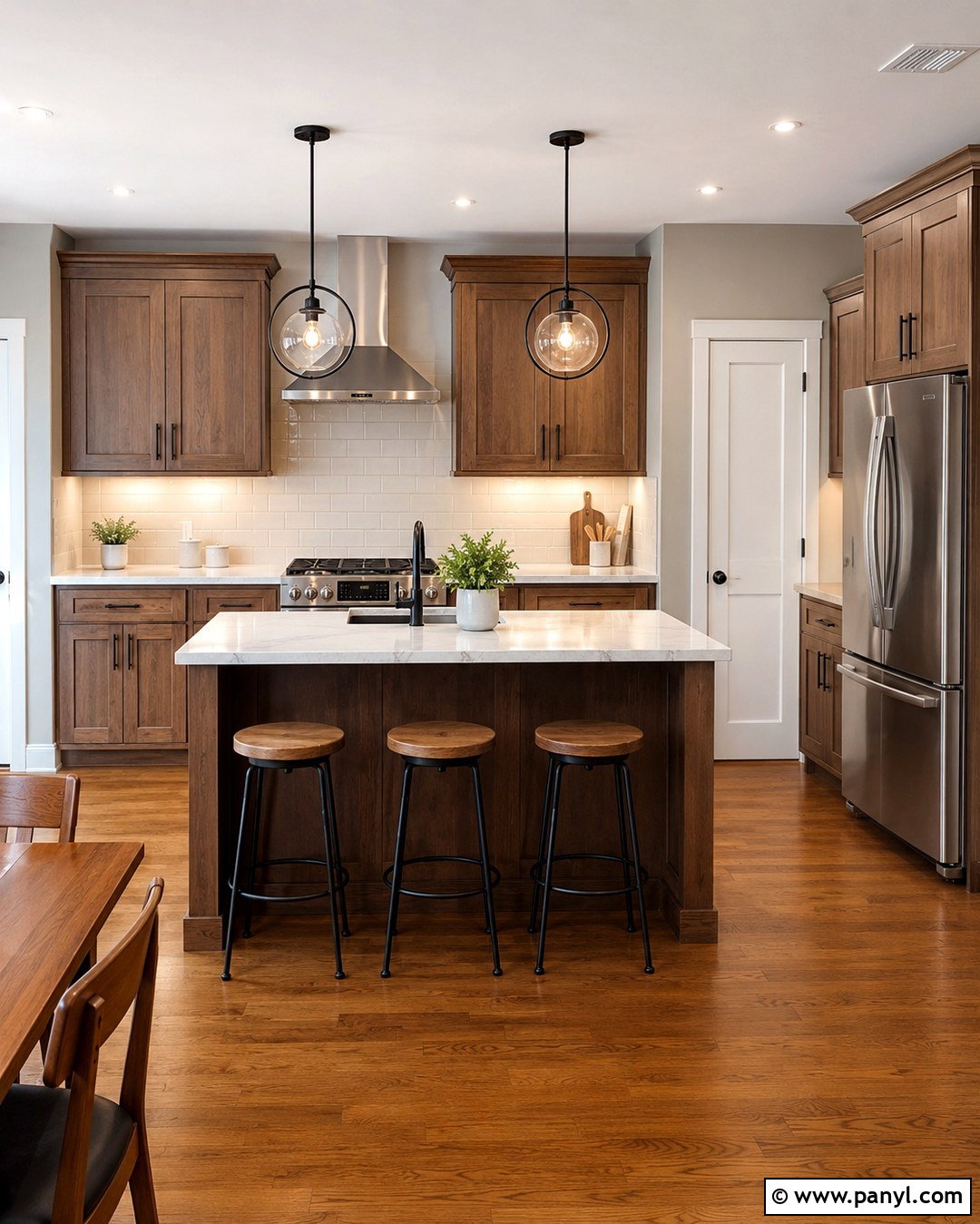
White subway tile offers an affordable and dependable bridge between white walls and brown cabinets. Choose medium brown cabinetry with a straightforward Shaker profile, white quartz counters, and a backsplash of slightly irregular white tile. Light gray or warm beige grout will outline the pattern without producing a harsh grid. Continue the white walls above the cabinets and around windows to increase the feeling of height. Matte black hardware gives the familiar materials a more current edge, while stainless steel appliances keep the kitchen practical. Add medium oak flooring and a washable runner with cream, rust, and muted blue details. Clear glass pendants will preserve open sightlines above the island. Finish with wooden cutting boards, white canisters, and a few herbs near the window.
12. Brown Cabinets With Marble Backsplash
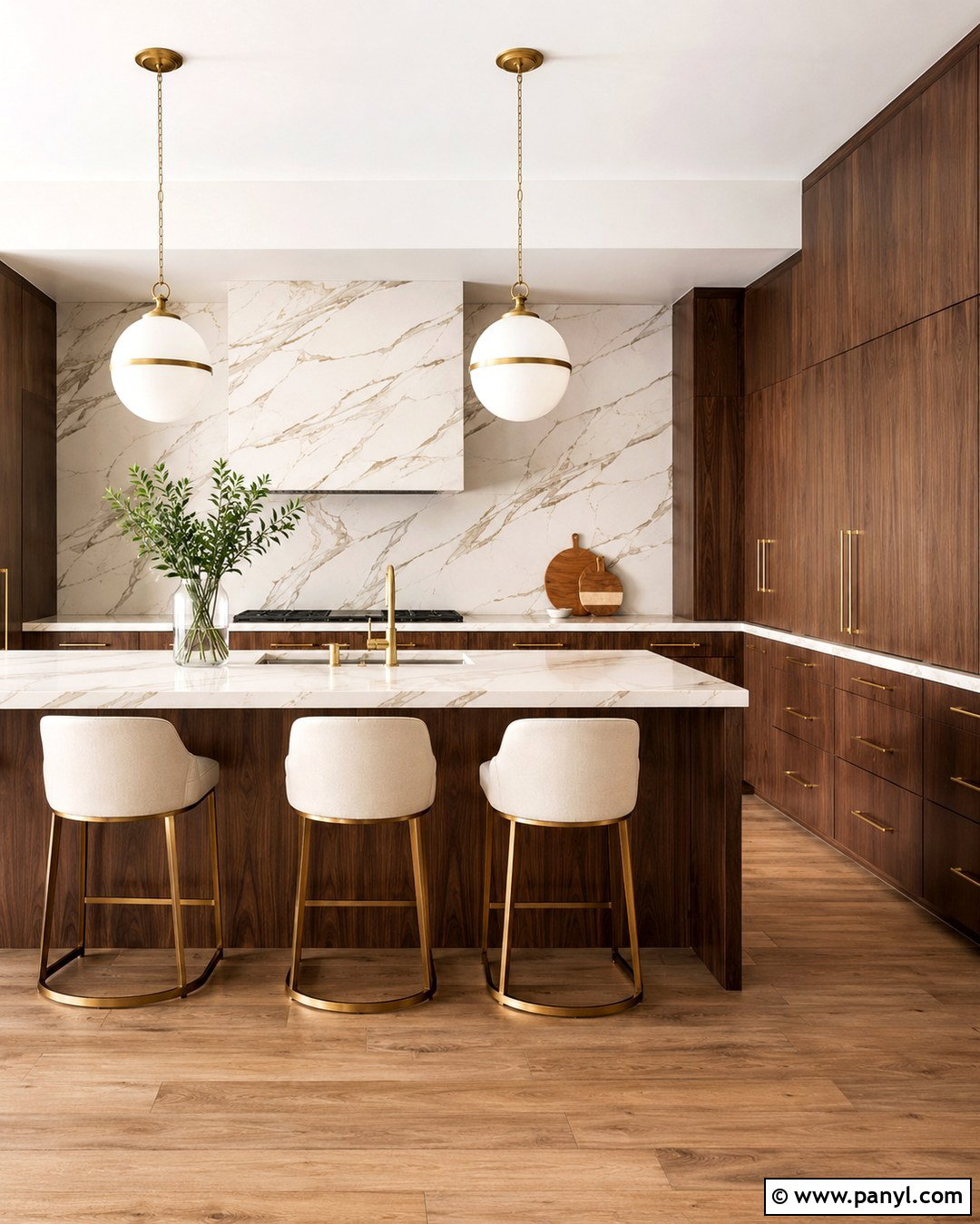
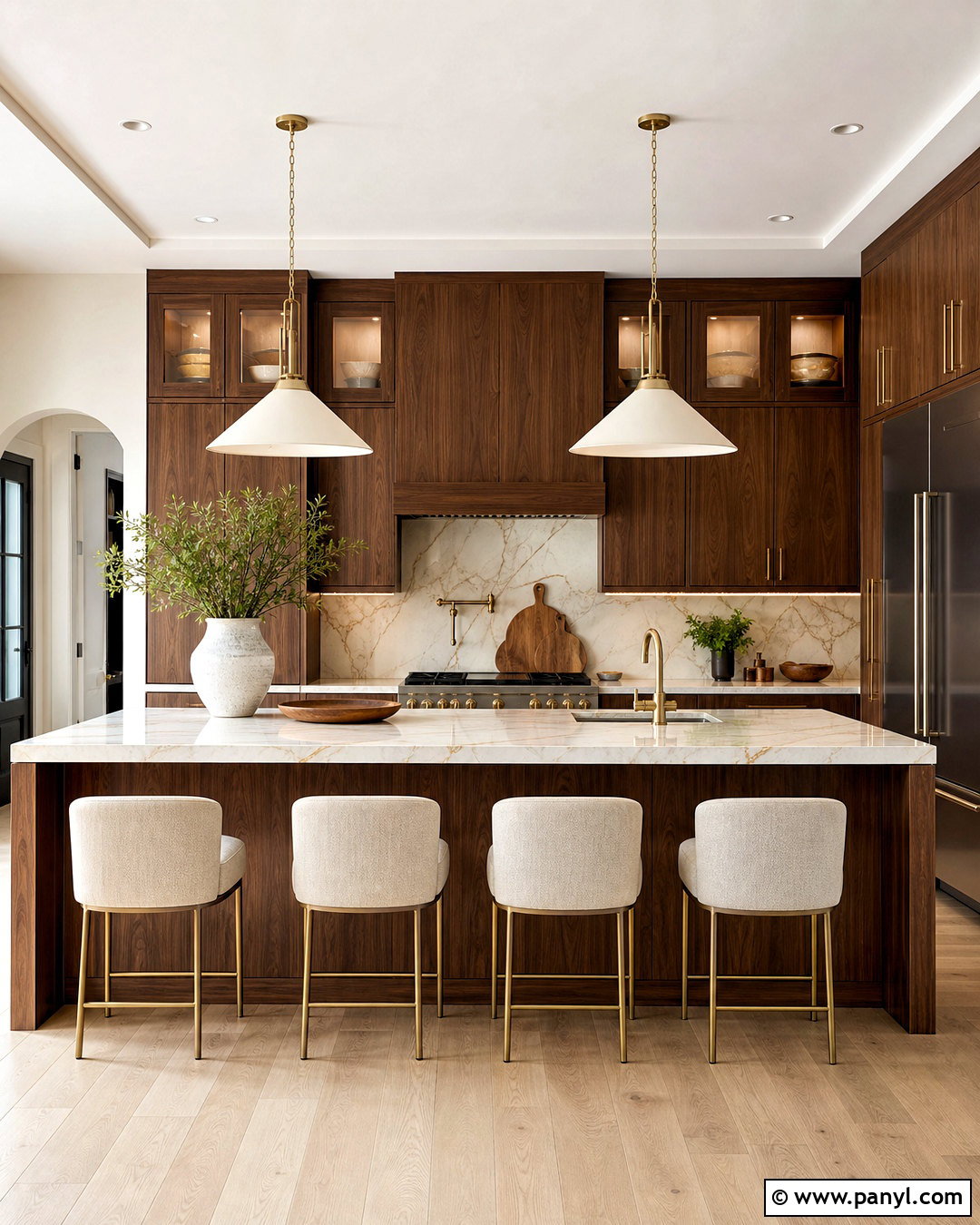
A full-height marble backsplash turns brown cabinetry and white walls into a more elevated, continuous design. Choose walnut or deep oak cabinets with quiet slab fronts so the stone remains the strongest pattern in the room. White marble with soft brown, taupe, or gold veining will connect naturally to the cabinet color. Use the same material for the countertops to reduce unnecessary seams and transitions. Warm white walls should frame the stone around windows and adjoining dining areas. Add satin brass pulls and a matching faucet for a gentle metallic accent. Wide oak floorboards balance the polished surfaces with organic texture. Complete the room with understated cream stools, milk-glass pendants, and minimal counter decor. This approach feels luxurious, yet its limited palette keeps the kitchen calm and approachable.
13. Rift Cut Oak Cabinets With White Walls
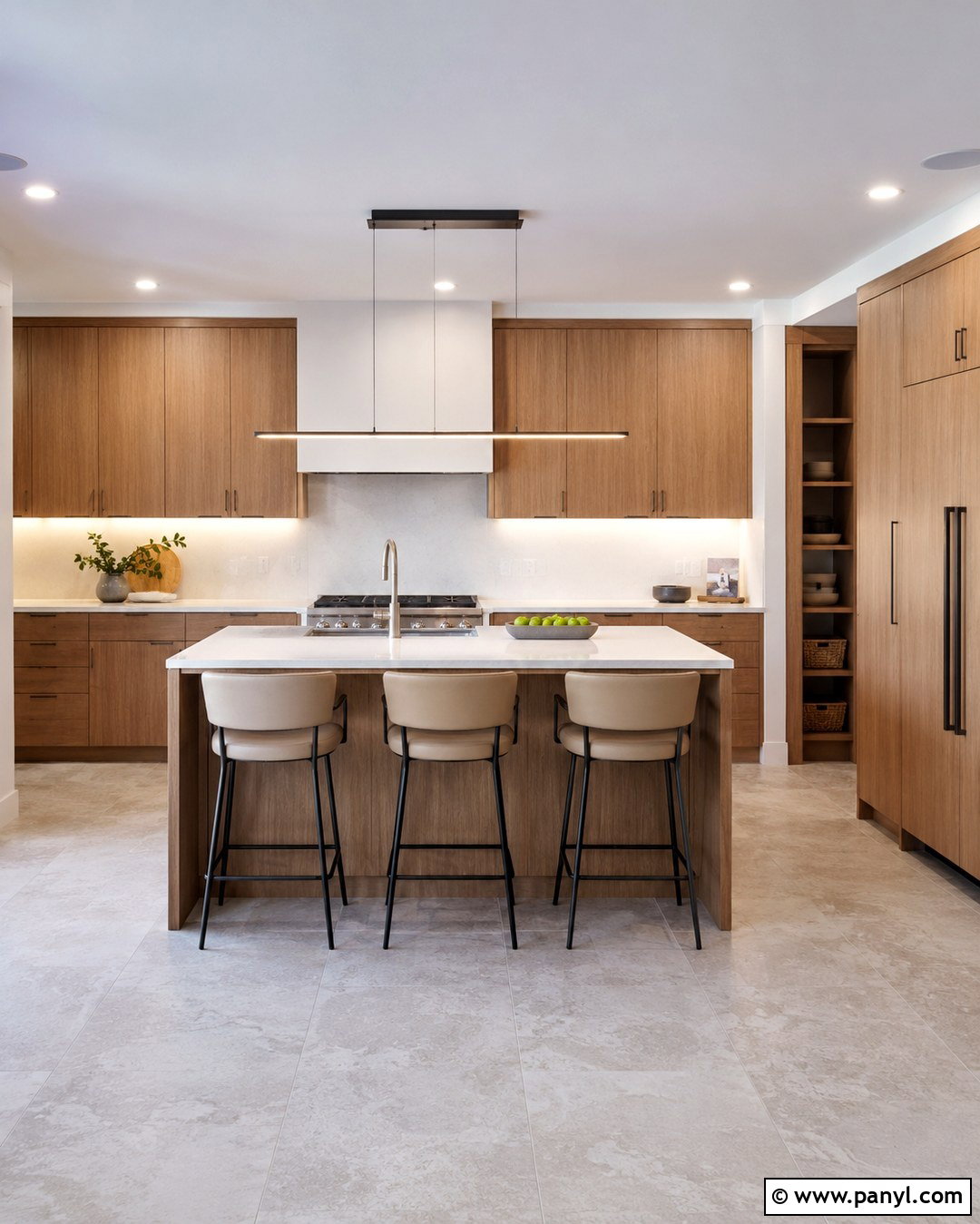
Rift-cut oak cabinetry gives brown cabinets a clean, consistent grain that suits streamlined contemporary kitchens. Select a medium natural stain and run the grain vertically across tall pantry doors and base cabinets. Bright white walls, thin white quartz countertops, and a simple slab backsplash will highlight the precise cabinet pattern. Use handleless doors or narrow bronze edge pulls to protect the uninterrupted appearance. Pale gray limestone flooring introduces a cooler surface that balances the warm wood. Add an island with generous drawer storage and three low-profile stools in cream leather. Linear pendant lighting should follow the island’s shape without blocking views into adjoining rooms. Complete the look with recessed task lighting, one open display niche, neutral ceramics, and a small arrangement of fresh branches for controlled organic movement.
14. Brown Cabinets With A White Farmhouse Sink
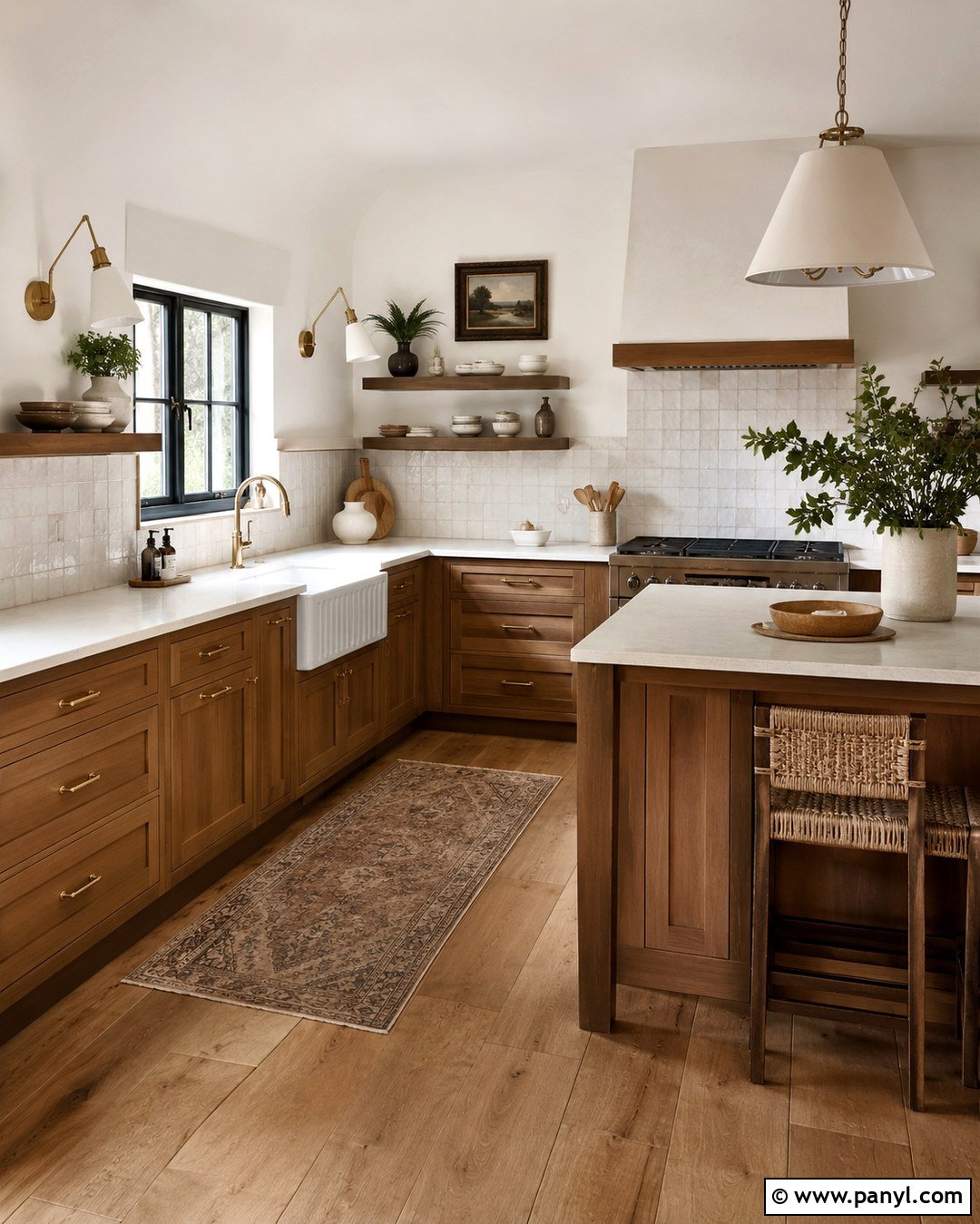
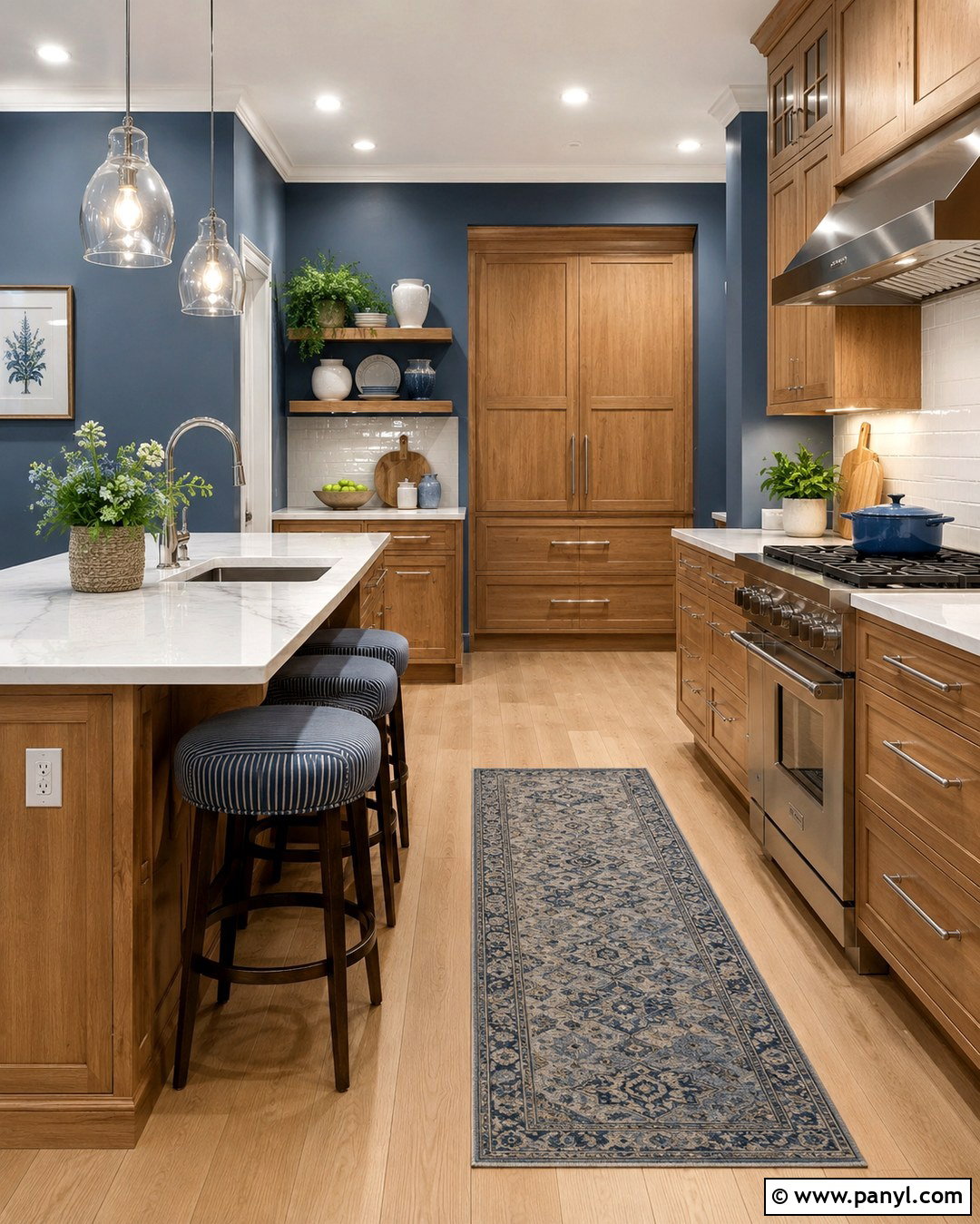
The bright front of a white farmhouse sink creates an attractive focal point within a run of brown cabinets. Choose medium-stained Shaker cabinetry, warm white walls, and creamy quartz counters for a relaxed farmhouse look. Center the sink beneath a window and frame it with two simple wall sconces or glass-front upper cabinets. An aged brass bridge faucet and matching cabinet latches provide traditional character without excessive ornament. Use handmade off-white tile for the backsplash and medium oak planks underfoot. A furniture-style island with turned but restrained legs can provide storage and casual seating. Complete the room with linen Roman shades, woven stools, and a patterned washable runner. White crockery and natural cutting boards will tie the sink, walls, and wood cabinetry together in a practical way.
15. Brown Cabinets With Concrete Floors
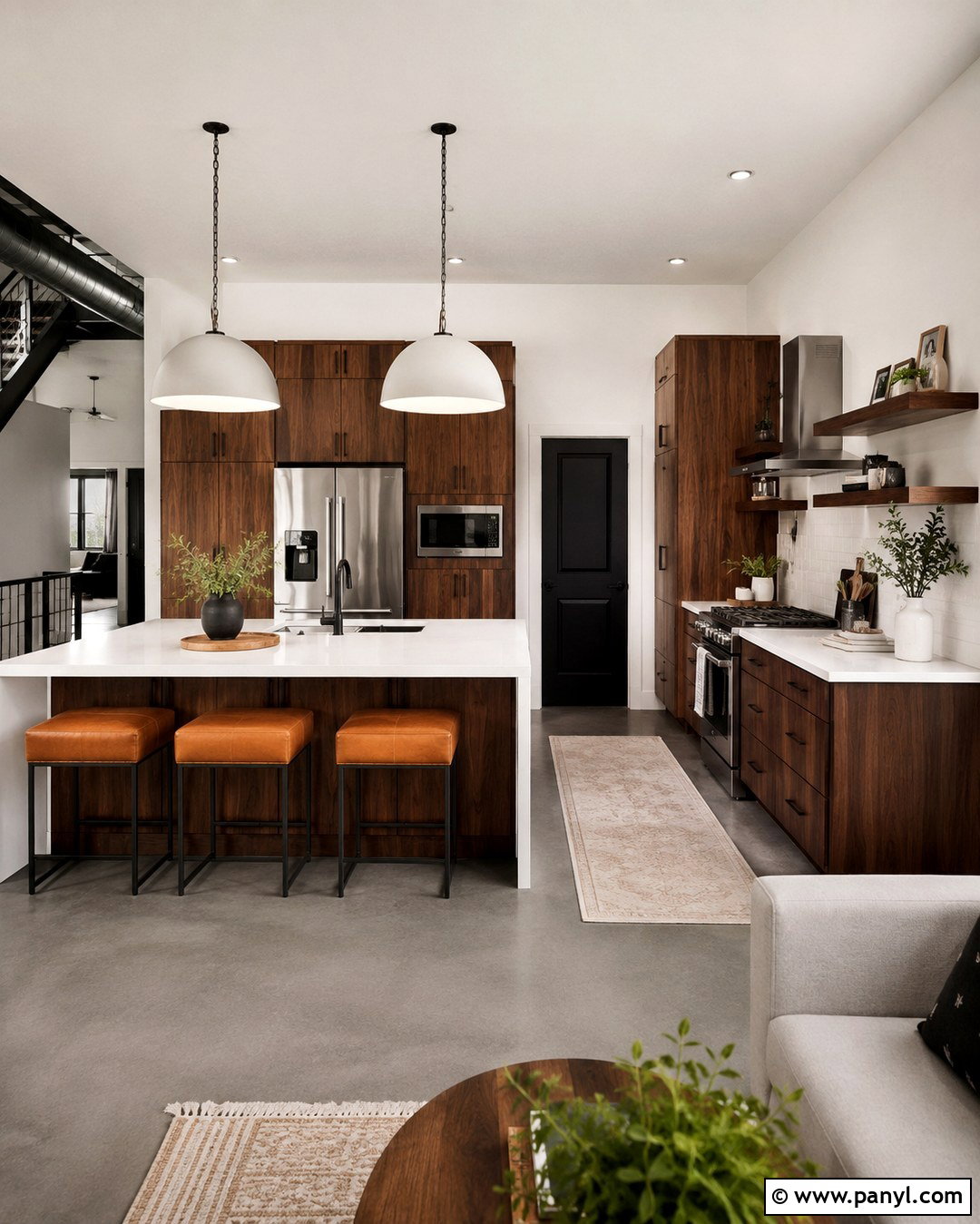
Smooth concrete floors provide a modern counterpoint to the natural warmth of brown kitchen cabinets. Use medium walnut slab cabinetry across the perimeter and island, then balance it with bright white walls and clean white quartz surfaces. A soft gray concrete floor with a matte finish will ground the room without making it appear industrial or cold. Repeat gray through stainless steel appliances and a brushed nickel faucet. Large white pendant lights can brighten the island, while under-cabinet strips illuminate the backsplash and work surfaces. Introduce comfort with tan leather stools, a textured cream runner, and a small oak breakfast table. Keep shelves and counters mostly clear. One large abstract artwork, neutral stoneware, and leafy greenery are enough to soften the architectural materials and complete the space.
16. Brown Cabinets In A Galley Kitchen
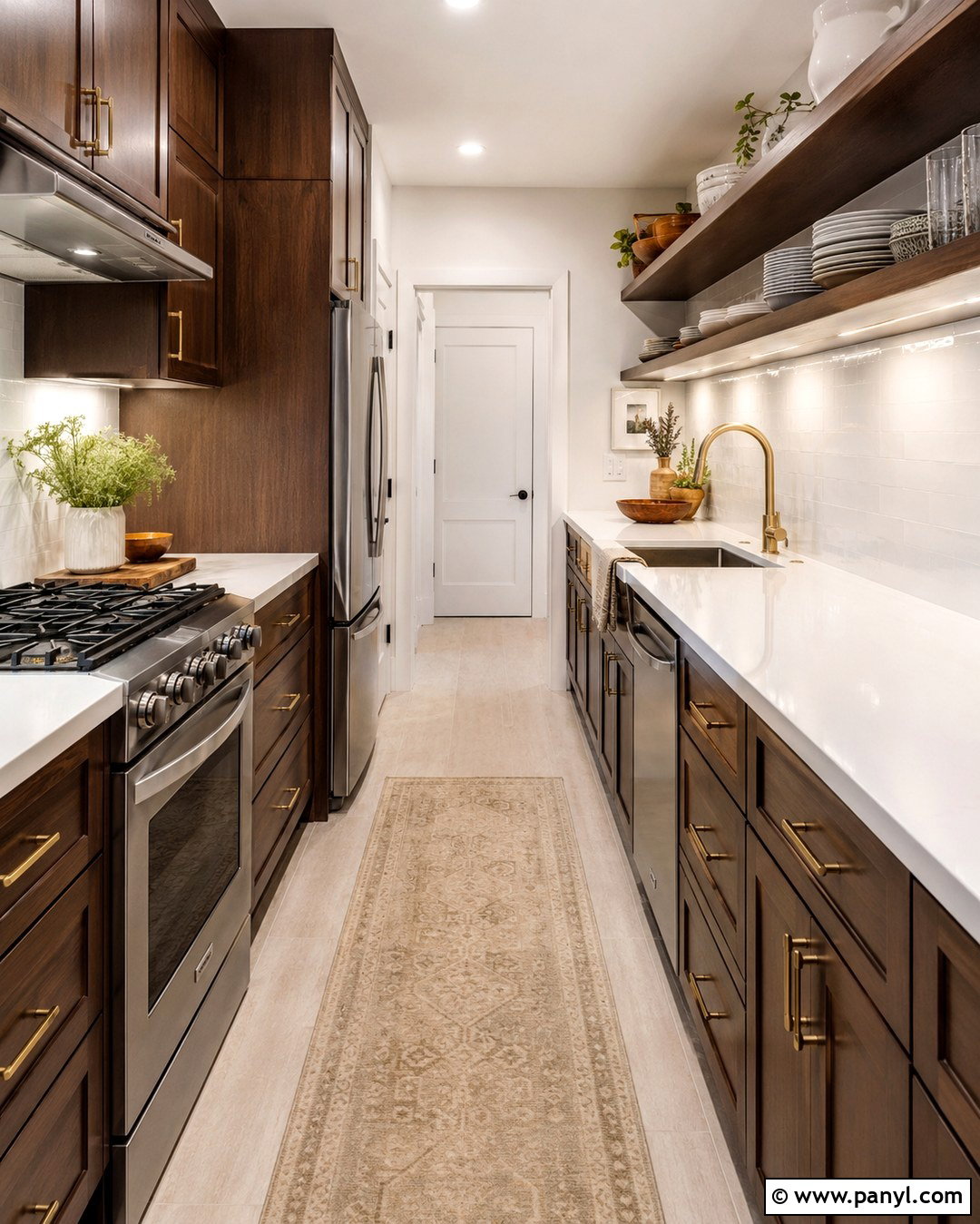
A galley kitchen needs careful contrast so brown cabinets do not visually narrow the walkway. Place medium brown base cabinets along both sides, but limit tall units to the far end of the room. Warm white walls and a white backsplash will keep the upper half open. Choose bright quartz counters with minimal pattern and simple brass or nickel pulls. Light oak or pale beige flooring should run lengthwise to reinforce the kitchen’s longest dimension. Install strong under-cabinet lighting and use a flush ceiling fixture instead of pendants that interrupt the view. If storage allows, replace one short upper cabinet with open shelving for frequently used dishes. A slim washable runner, light wood cutting boards, and uncluttered counters will make the completed galley feel efficient, warm, and spacious.
17. Brown Cabinets In An Open Plan Kitchen
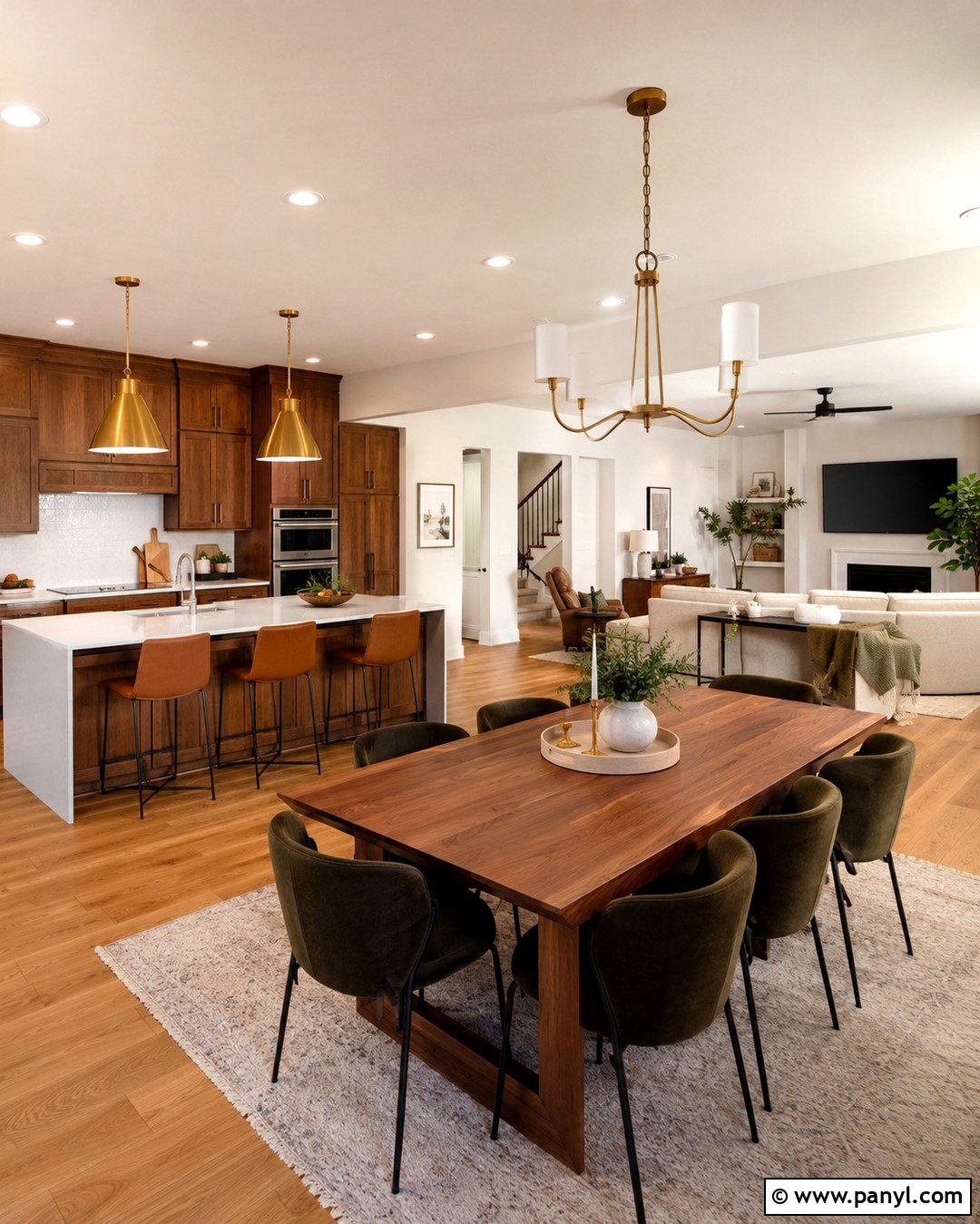
In an open-plan room, brown cabinets should connect visually with the living and dining furniture rather than look like a separate block. Select a medium walnut finish and repeat that tone through the dining table, occasional chairs, or media console. Warm white walls can continue throughout the connected areas, creating one consistent backdrop. Use white quartz countertops and a low-contrast backsplash to keep the kitchen bright. A large island should face the living space and include comfortable cream or camel-colored stools. Add black or brass pendants that coordinate with nearby lighting instead of matching it exactly. Wide-plank oak flooring can run continuously through every zone. Finish the arrangement with a neutral rug, soft green textiles, ceramic decor, and plants that gently repeat colors across the entire shared space.
18. Taupe Brown Cabinets With White Walls
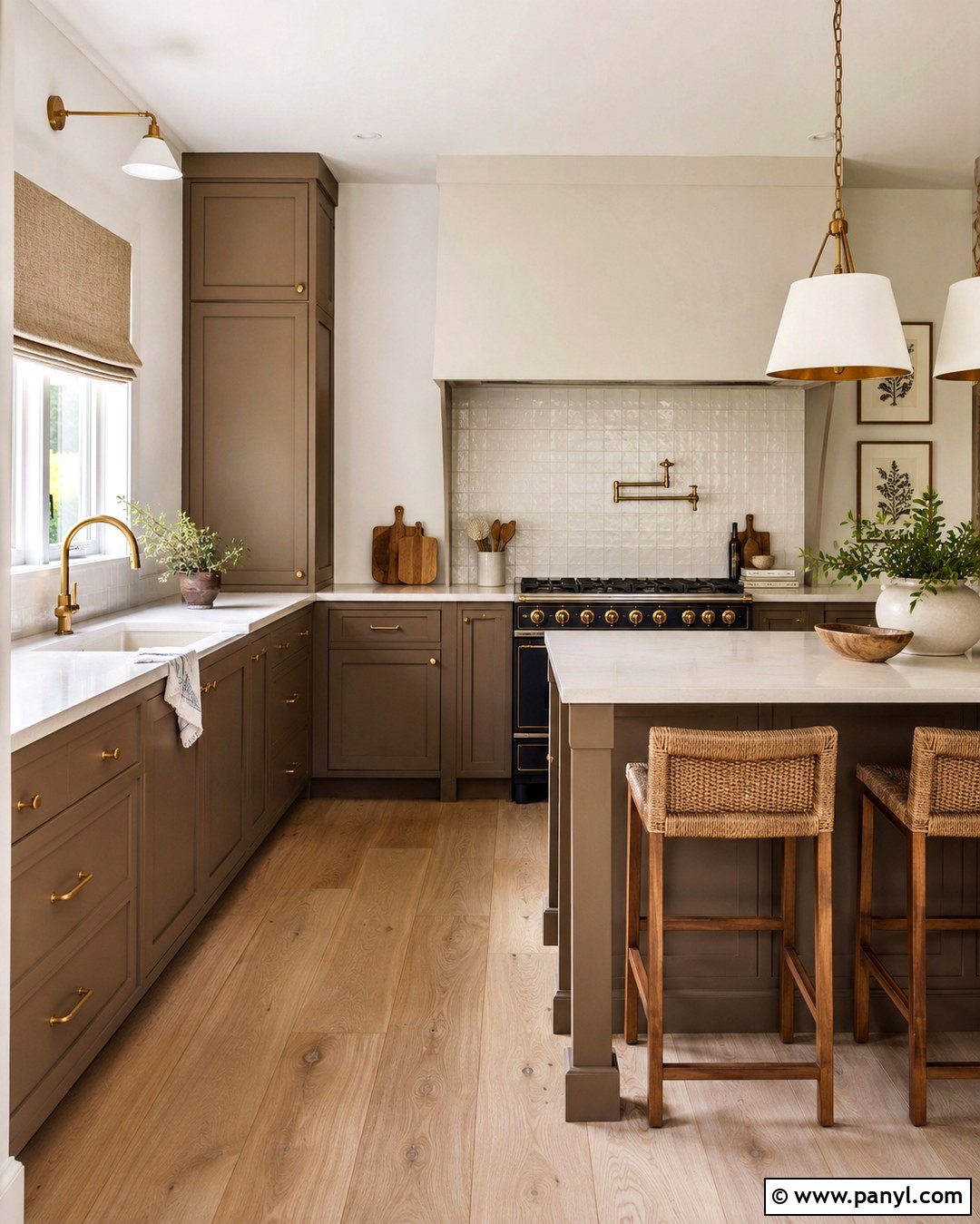
Painted taupe-brown cabinets provide an alternative to visible wood grain while preserving the warm effect of brown cabinetry. Choose a soft mushroom shade with balanced gray and brown undertones, then pair it with warm white walls. Slim Shaker doors will give the painted finish depth without looking overly decorative. Add creamy quartz counters and a backsplash made from glossy off-white zellige-style tile. Aged brass hardware enhances the earthy palette, while pale natural oak floors keep the room bright. For contrast, use a charcoal range or black-framed window as a single dark anchor. A small island can repeat the cabinet color with a light stone top. Finish with linen shades, woven stools, neutral pottery, and restrained botanical artwork for a softly layered transitional kitchen.
19. Existing Brown Cabinets With Updated Finishes
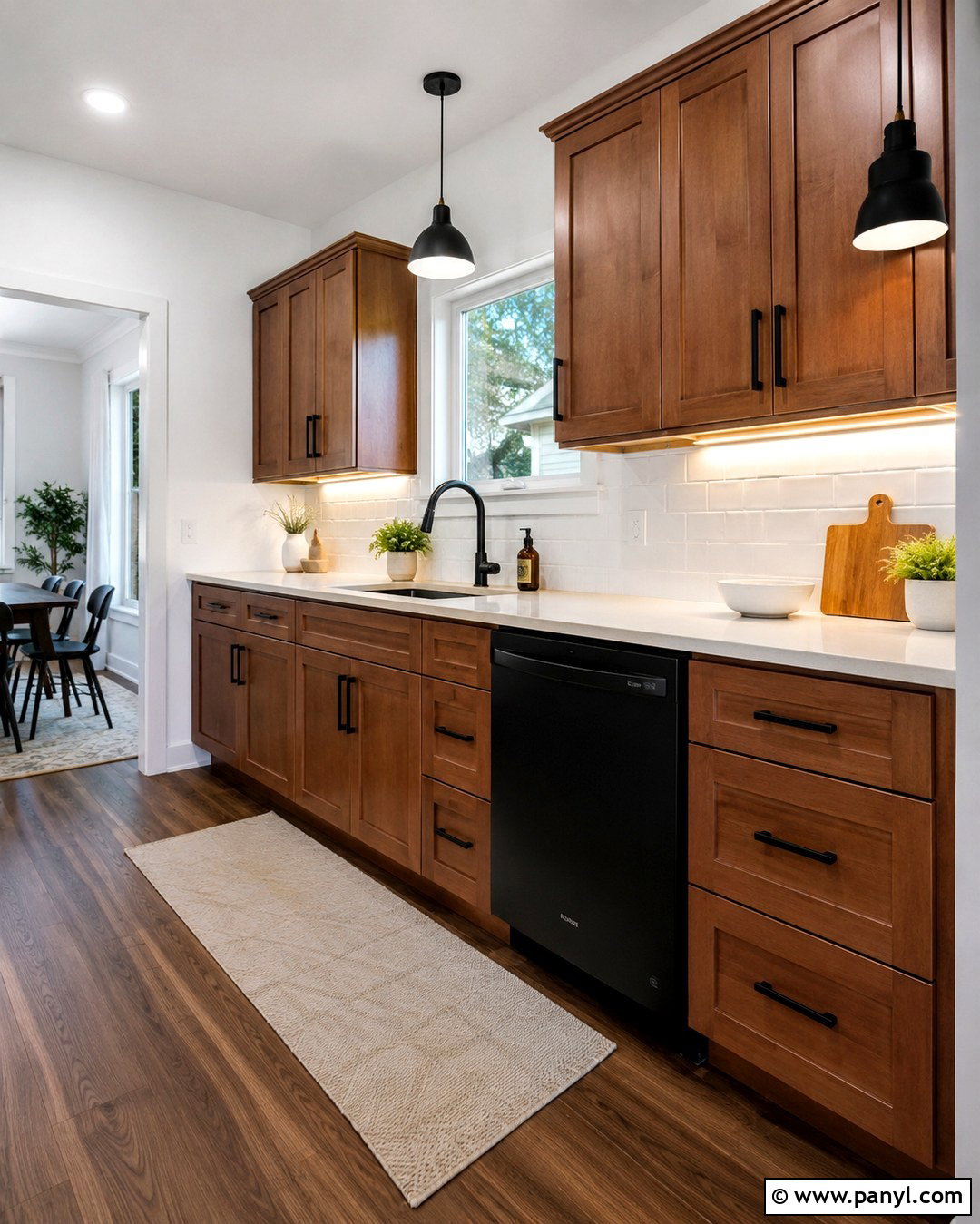
Updating existing brown cabinets does not always require paint or replacement. Start by cleaning and conditioning the wood, then replace ornate pulls with slim brass, bronze, or matte black hardware. Paint surrounding walls a warm, clean white and remove any dark valances that block natural light. Exchange busy countertops for white quartz when the budget allows, or update only the backsplash with affordable white ceramic tile. A new faucet, simple pendant lights, and bright under-cabinet lighting can change how the wood finish appears. Keep floors light with a cream runner if replacement is not practical. Remove clutter from cabinet tops and counters, then add a few white dishes, wooden boards, and green plants. These coordinated changes create a complete refresh while respecting solid cabinetry already in place.
20. Brown Cabinets With Terracotta Accents
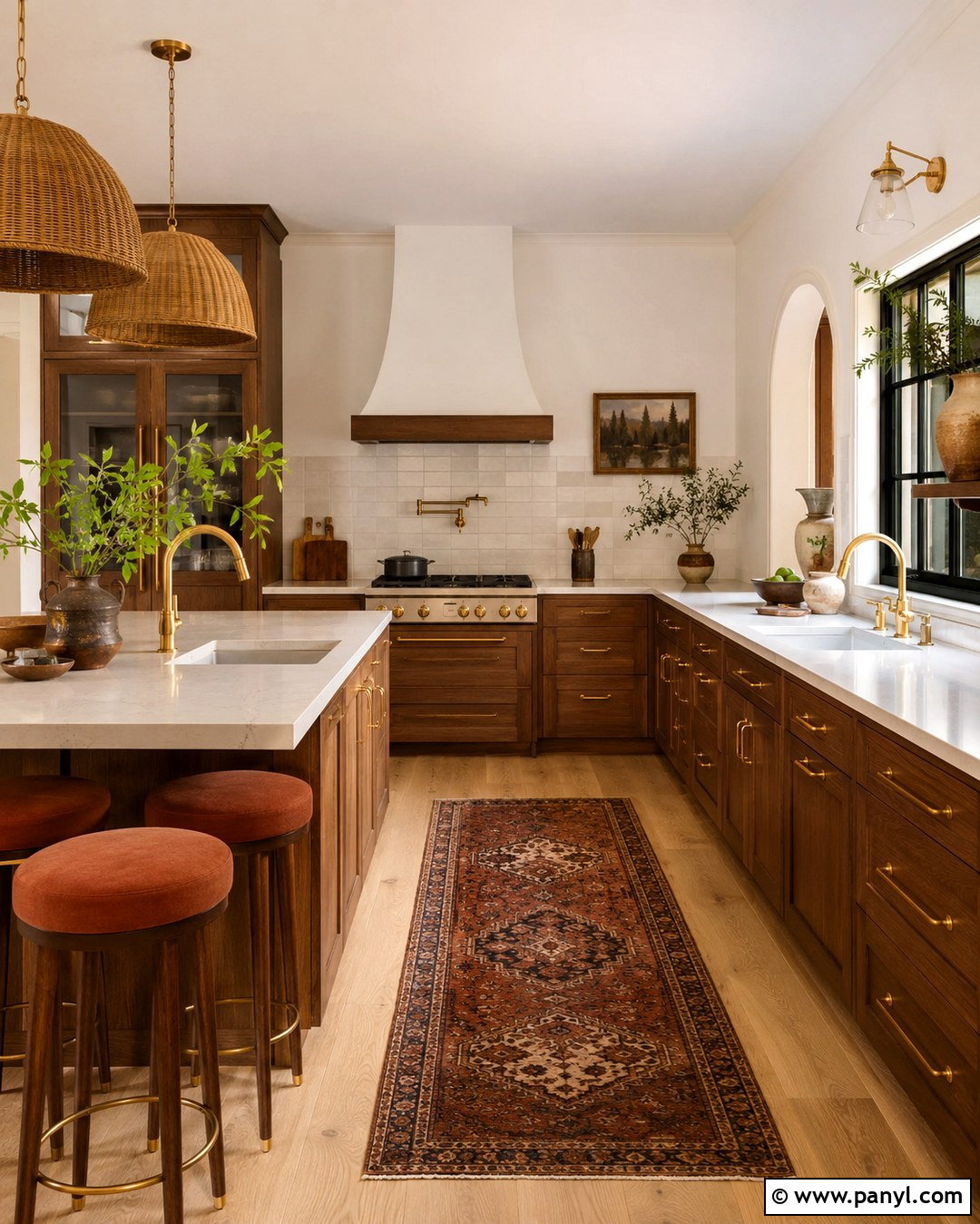
Terracotta accents bring an earthy layer to brown cabinets without competing with the brightness of white walls. Choose medium oak or walnut cabinetry, creamy quartz countertops, and a simple off-white backsplash. Introduce terracotta through counter stools, a patterned runner, pottery, or a tiled section behind the range. Keep these warm accents controlled so the kitchen remains balanced rather than heavily themed. Aged brass hardware and woven pendant lights will support the natural palette. Use pale oak flooring or warm beige porcelain tile to connect the cabinet and accent colors. Add muted olive green through a Roman shade, small plant pots, or dining chairs. The completed kitchen feels collected and welcoming, with white walls providing enough visual space for every brown, rust, cream, and green detail to remain clear.
Conclusion:
White Walls Brown Cabinets can support nearly any kitchen direction, from Scandinavian simplicity and modern walnut to relaxed farmhouse warmth. The strongest designs treat the room as one complete palette rather than selecting each finish separately. Compare the cabinet undertone with the wall white, countertop, floor, and metal finishes under your actual lighting. Dark brown cabinets usually benefit from pale counters and flooring, while lighter oak can handle stronger black, brass, or terracotta accents. Thoughtful lighting is equally important, especially in small or narrow kitchens. By repeating the cabinet tone through furniture or natural accessories and keeping brighter surfaces uncluttered, you can create a kitchen that feels coordinated, comfortable, and lasting.

Related Ideas and Inspiration:
Leave a Reply