
Green walls bring color, texture, and a refreshing natural presence into rooms without taking up valuable floor space. From full living plant systems to preserved moss panels and simple wall-mounted planters, this feature can suit nearly any interior style. The best designs do more than cover a blank surface. They connect greenery with the room’s furniture, lighting, materials, and overall color palette. Before installing one, consider sunlight, irrigation, drainage, ventilation, and access for maintenance. Artificial and preserved options can create a similar visual effect in spaces where live plants are impractical. Whether you are planning a dramatic living room or a compact kitchen garden, these 20 greenwall interior design ideas offer complete, achievable looks for creating a greener home.

1. Living Room Green Wall
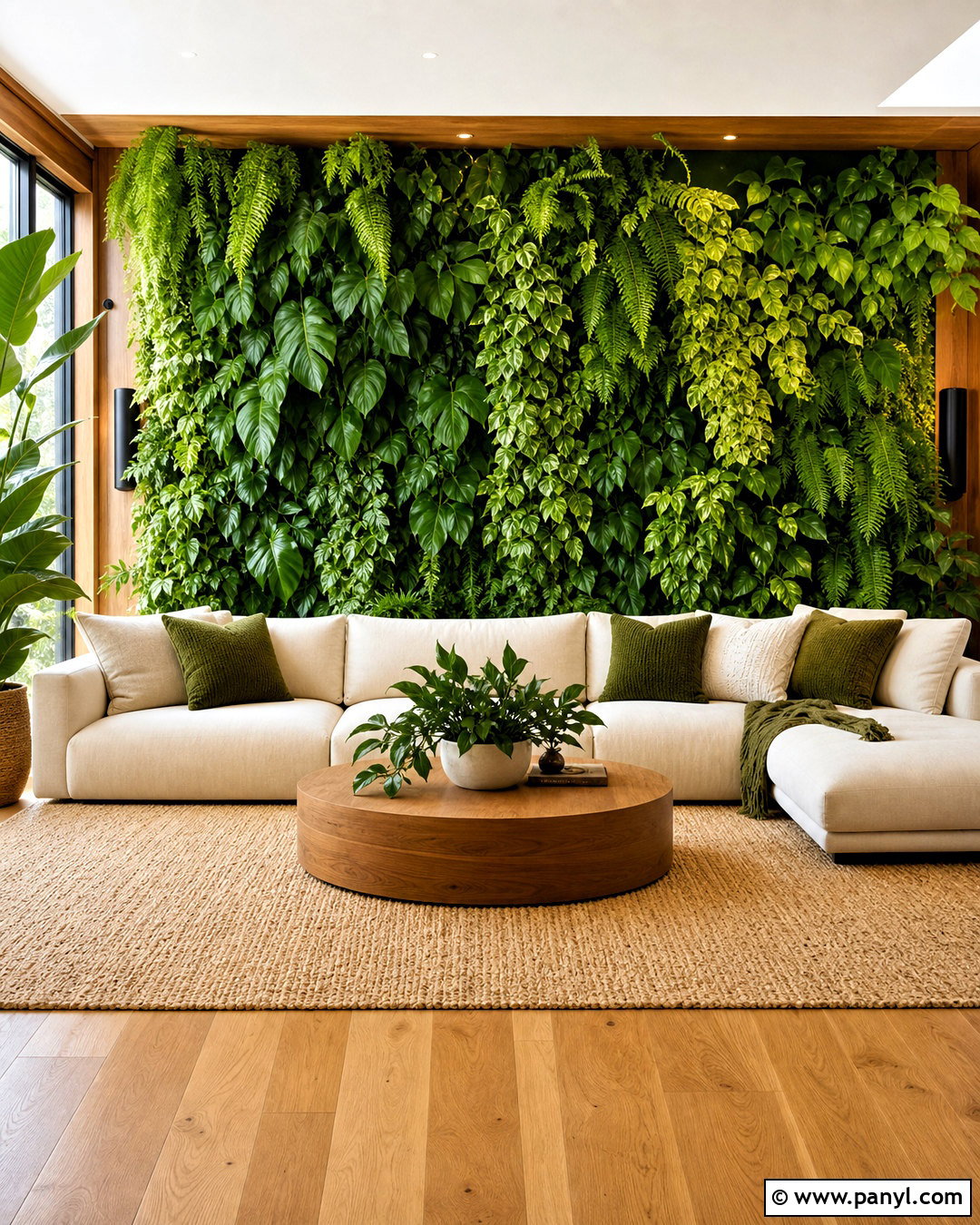
Make a living plant wall the centerpiece of a bright, comfortable living room. Place the installation behind a low-profile cream sofa so the foliage remains visible without overwhelming the seating area. Use layered pothos, heartleaf philodendrons, ferns, and compact peperomias to create varied leaf shapes and green tones. Warm oak flooring, a woven wool rug, and a round wood coffee table reinforce the natural look. Keep the other walls soft white to prevent the room from feeling too busy. Add slim black sconces above the plants and discreet grow lights near the ceiling. Neutral pillows with small olive accents connect the furniture to the green wall while maintaining a calm, balanced design.
2. Green Wall Behind TV
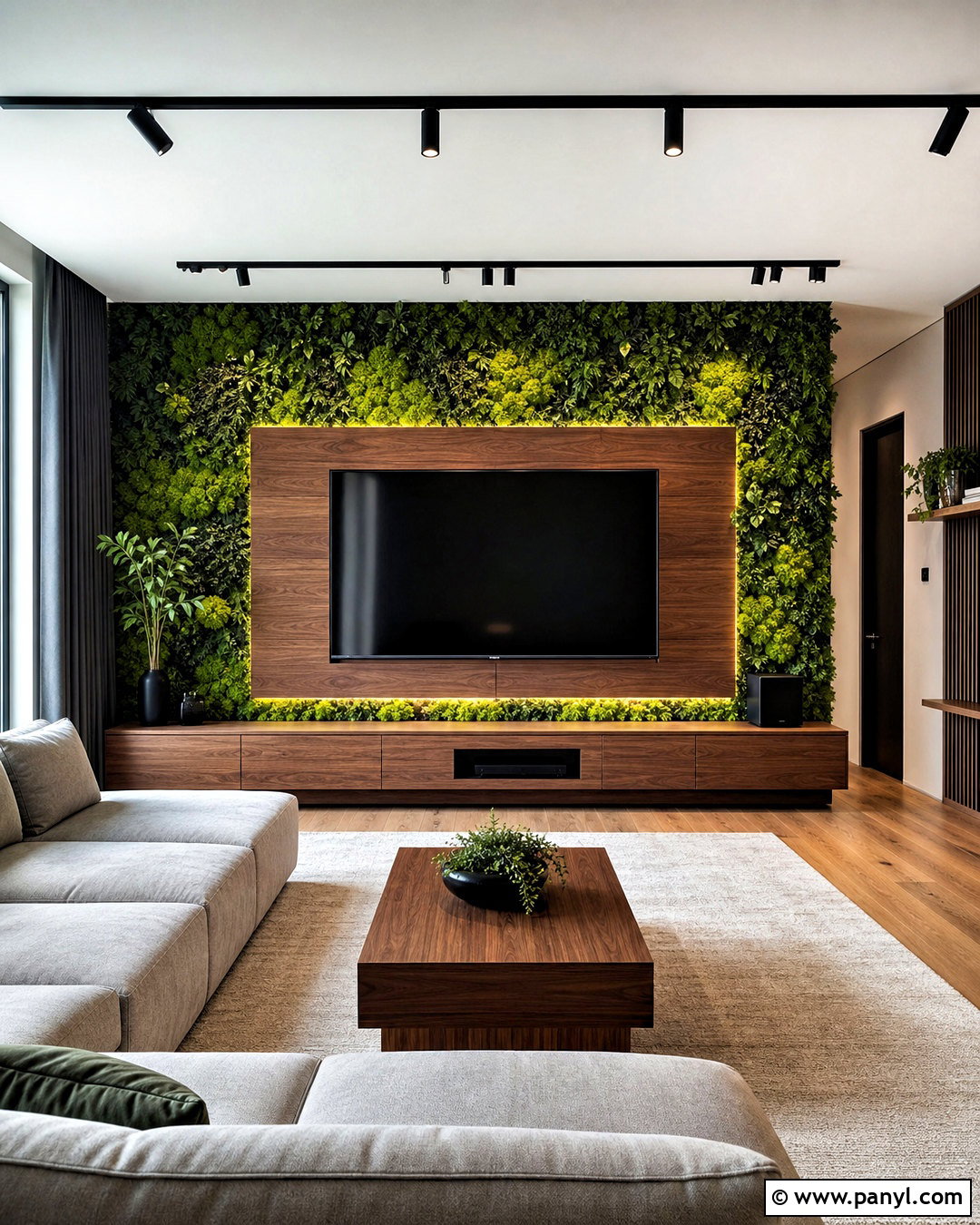
A green wall can soften the hard, technical appearance of a television when the layout is carefully planned. Mount the TV on a central walnut panel, then surround it with preserved moss or realistic artificial foliage. Leaving a clean border around the screen prevents leaves from blocking ventilation or distracting from viewing. Complete the room with a streamlined walnut media console, a light gray sectional, and a textured beige rug. Matte black lighting and hardware give the setup a modern edge. Conceal wires inside the wood panel for a polished finish. This low-maintenance arrangement works especially well in rooms with limited daylight because preserved greenery does not need watering, drainage, or dedicated plant lighting.
3. Dining Room Green Wall
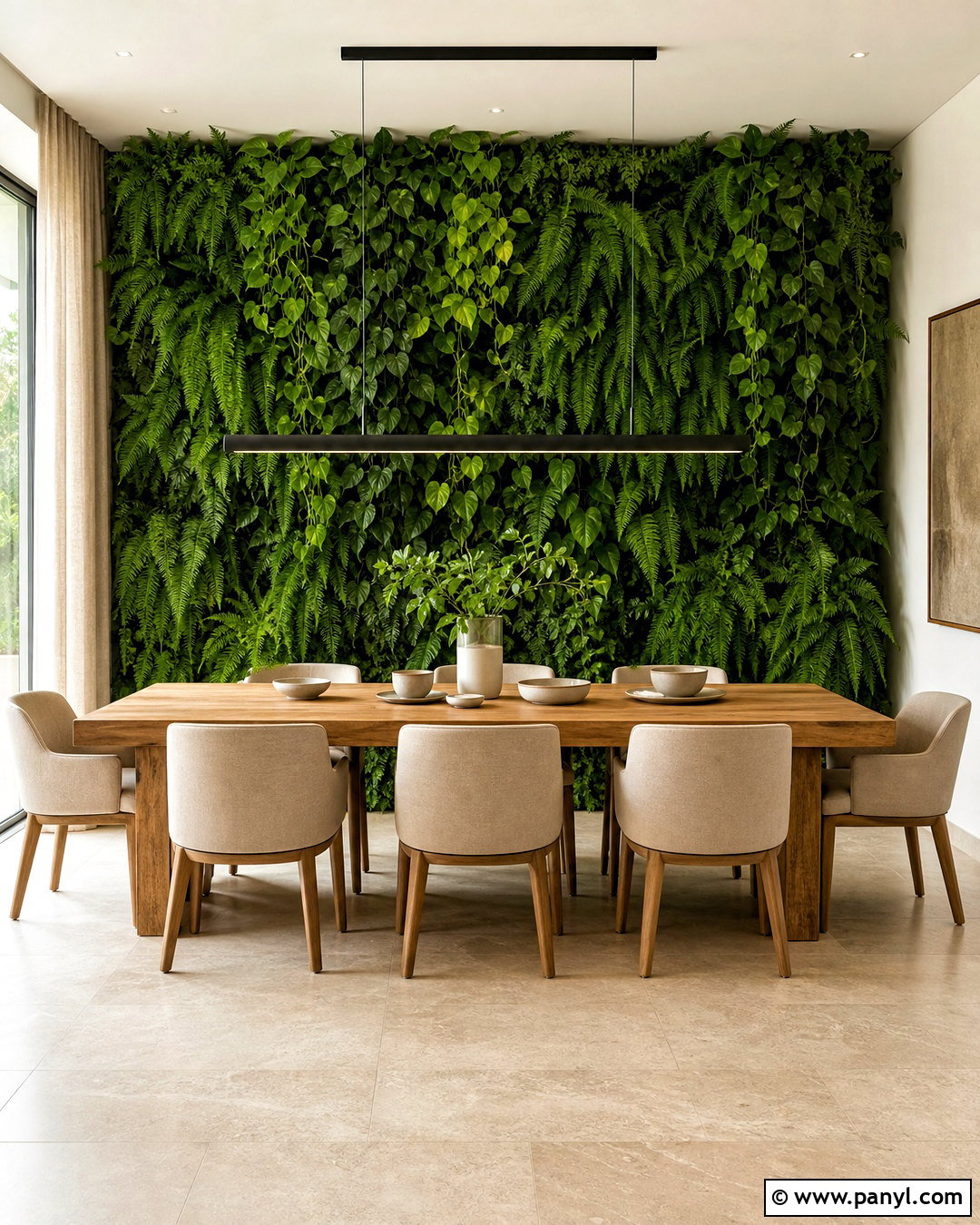
Imagine sharing meals beside a lush wall that makes the dining area feel connected to a garden. Cover the wall behind a solid oak dining table with a mixed vertical planting system featuring ferns, trailing philodendrons, and small clusters of deep green foliage. Choose simple upholstered chairs in warm beige so the plants remain the visual focus. A linear black pendant provides structure above the table, while limestone-look flooring keeps the palette light. Include integrated drip irrigation and a narrow waterproof base beneath the wall. Ceramic tableware, linen curtains, and one sculptural wood centerpiece finish the look. The result is an inviting dining room that feels fresh, modern, and thoughtfully layered rather than overly decorated.
4. Bedroom Moss Wall
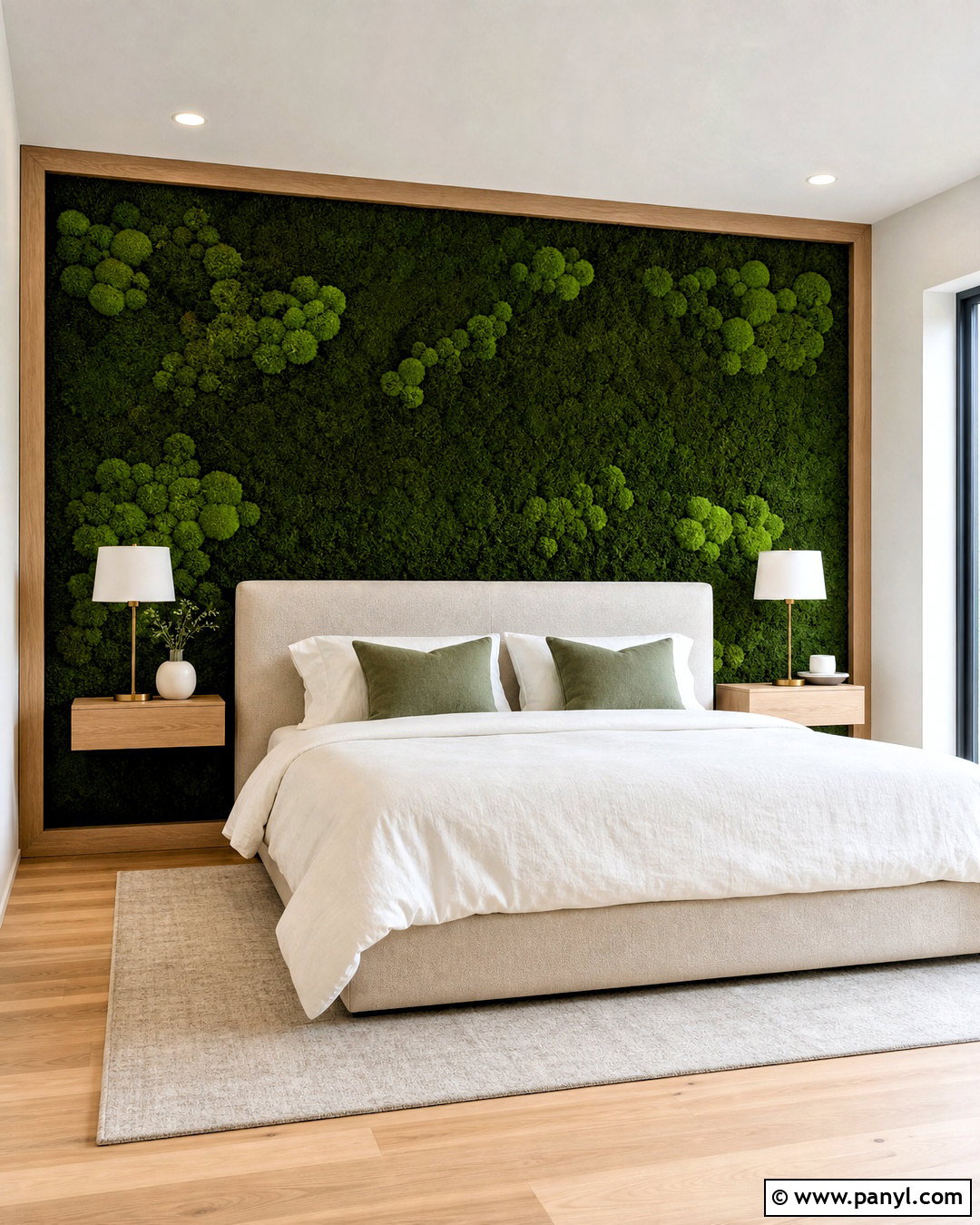
For a quiet bedroom retreat, use a preserved moss wall as a soft, textural backdrop behind the bed. Combine forest green flat moss with rounded bun moss in an organic arrangement framed by slim natural oak trim. Select a low upholstered bed in oatmeal fabric, then layer it with white bedding, sage pillows, and a muted olive throw. Floating oak nightstands keep the floor clear, while simple ceramic lamps provide gentle symmetry. Warm white walls and pale wood flooring prevent the darker moss from making the bedroom feel enclosed. Because preserved moss does not require soil or irrigation, it is practical near sleeping areas. Keep the remaining decor minimal so the natural texture creates a restful focal point.
5. Home Office Green Wall
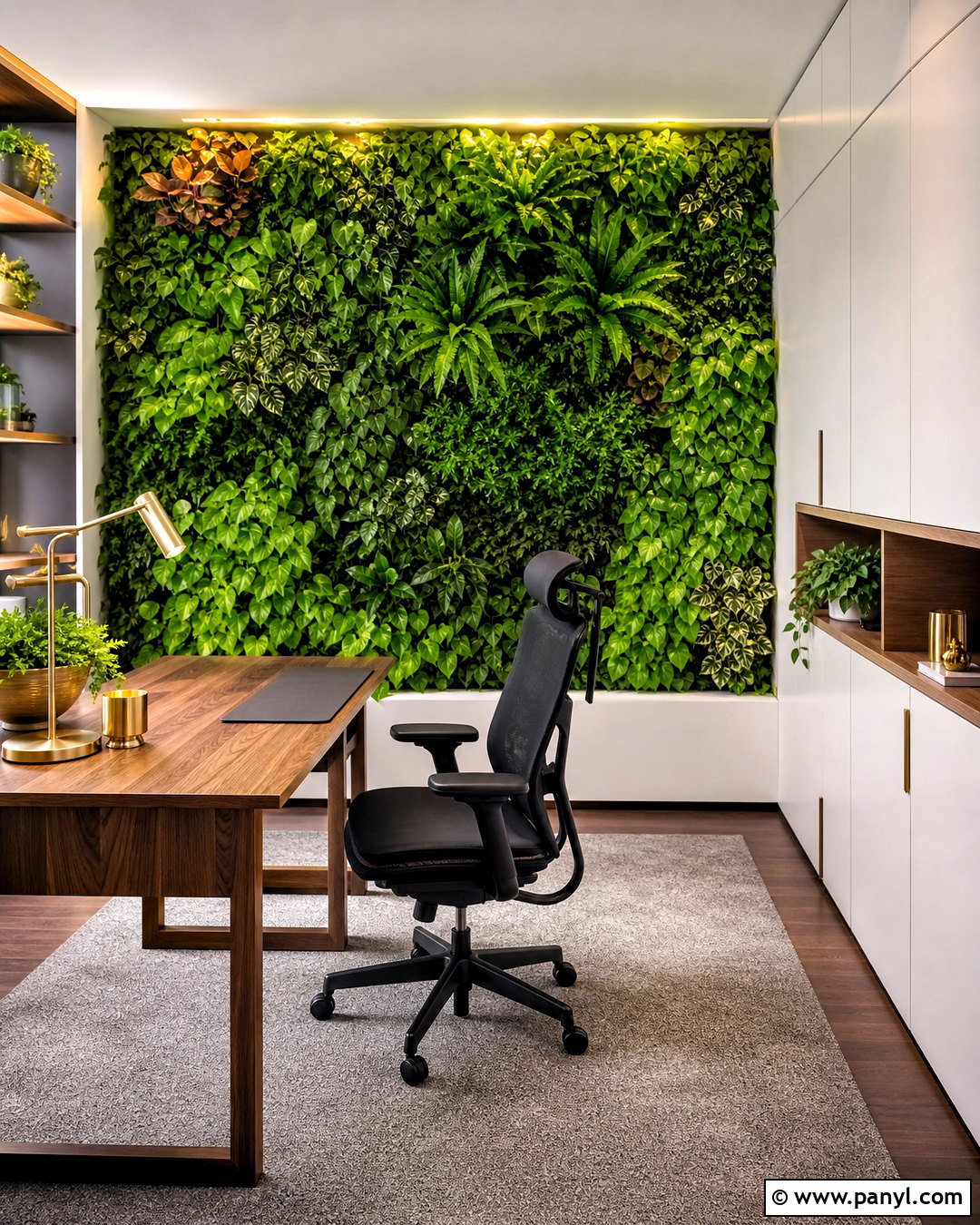
Could your workspace feel more energizing without becoming visually distracting? Install a narrow living wall behind or beside a walnut desk, using compact pothos, bird’s nest ferns, and peperomias with manageable growth. Position the desk perpendicular to the plants so video calls have a polished green background while the monitor remains free from glare. Add an ergonomic black chair, closed white storage, and a soft gray rug to balance the organic feature. Adjustable ceiling-mounted grow lights can support the plants when window light is limited. Include a small access panel for irrigation controls and use waterproof backing. A few brass desk accessories provide warmth, creating a focused home office that feels professional, comfortable, and connected to nature.
6. Small Apartment Green Wall
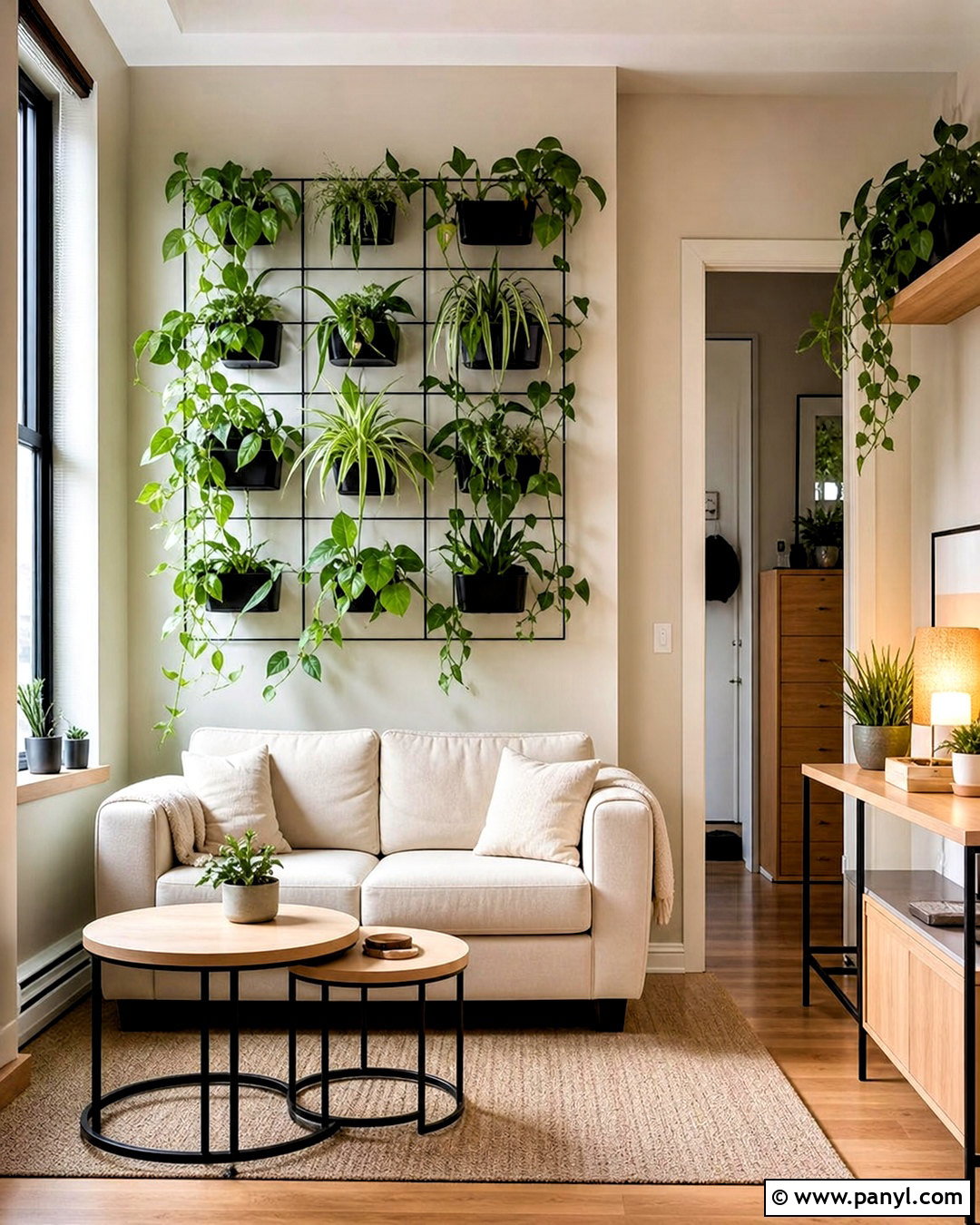
Limited square footage calls for a green wall that provides impact without making the room feel crowded. Use a slim grid of wall-mounted planters above a compact loveseat rather than installing a deep planting system. Fill the containers with trailing pothos, spider plants, and small philodendrons that can be removed individually for watering. Choose a pale greige wall, a light oak loveseat frame, and cream upholstery to keep the apartment bright. A nesting coffee table and wall-mounted lighting preserve walking space. Repeat green in only two or three small accents, such as a pillow and ceramic vase. This lightweight arrangement creates a vertical garden effect while remaining flexible enough for renters or frequently changing layouts.
7. Entryway Green Wall
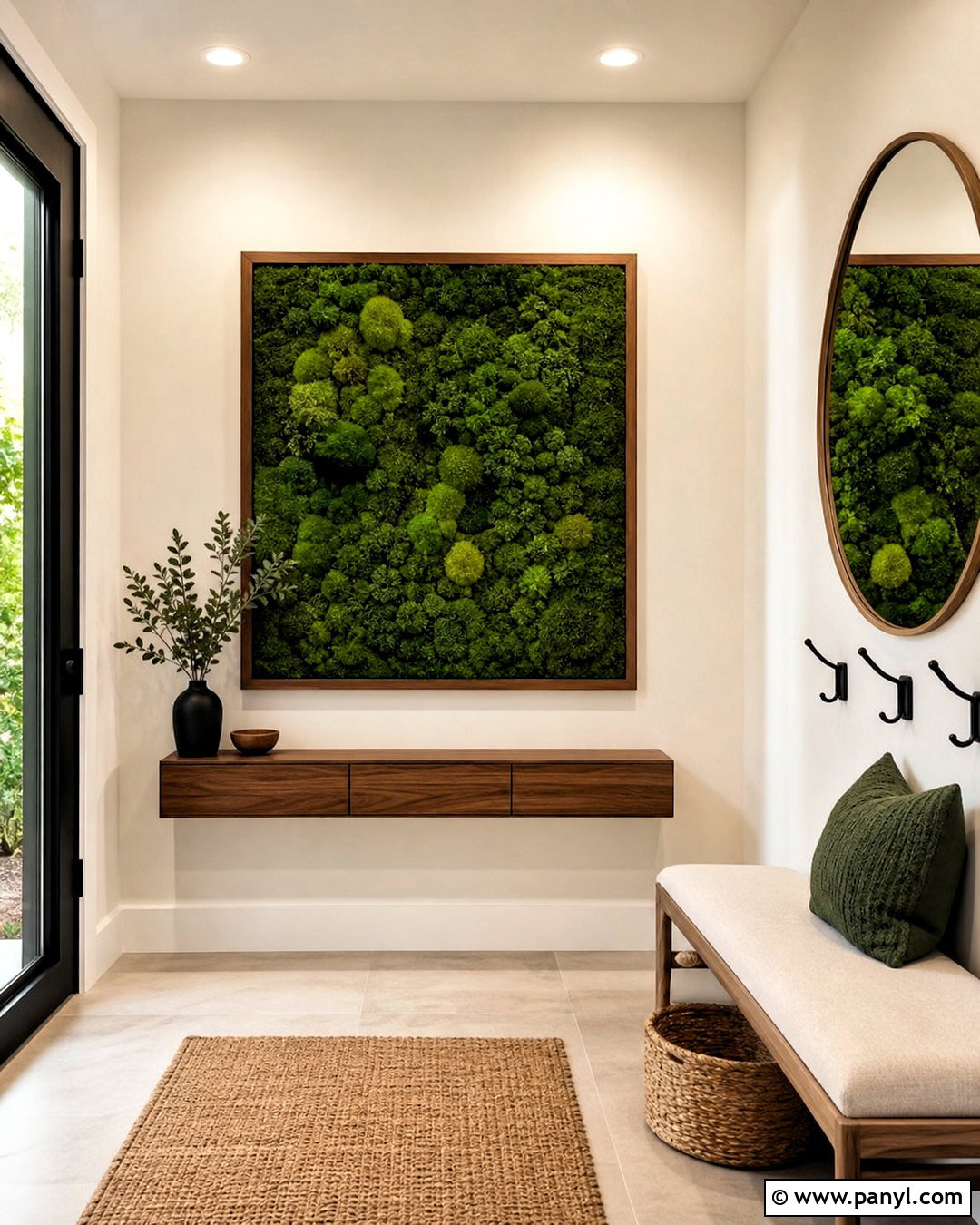
Give guests an immediate sense of freshness with a neatly framed green wall in the entryway. Place a preserved moss panel above a narrow floating console, using a rectangular walnut frame to make the installation feel like oversized botanical artwork. Pair it with warm white walls, light stone flooring, and a round mirror positioned on the neighboring wall. A small upholstered bench, woven basket, and matte black hooks keep the space functional. Add a directional ceiling light to highlight the moss texture without creating glare. Since entryways often receive inconsistent natural light, preserved plants are usually easier to manage than live varieties. Keep shoes and everyday items concealed so the green feature remains clean, welcoming, and visually prominent.
8. Kitchen Herb Green Wall
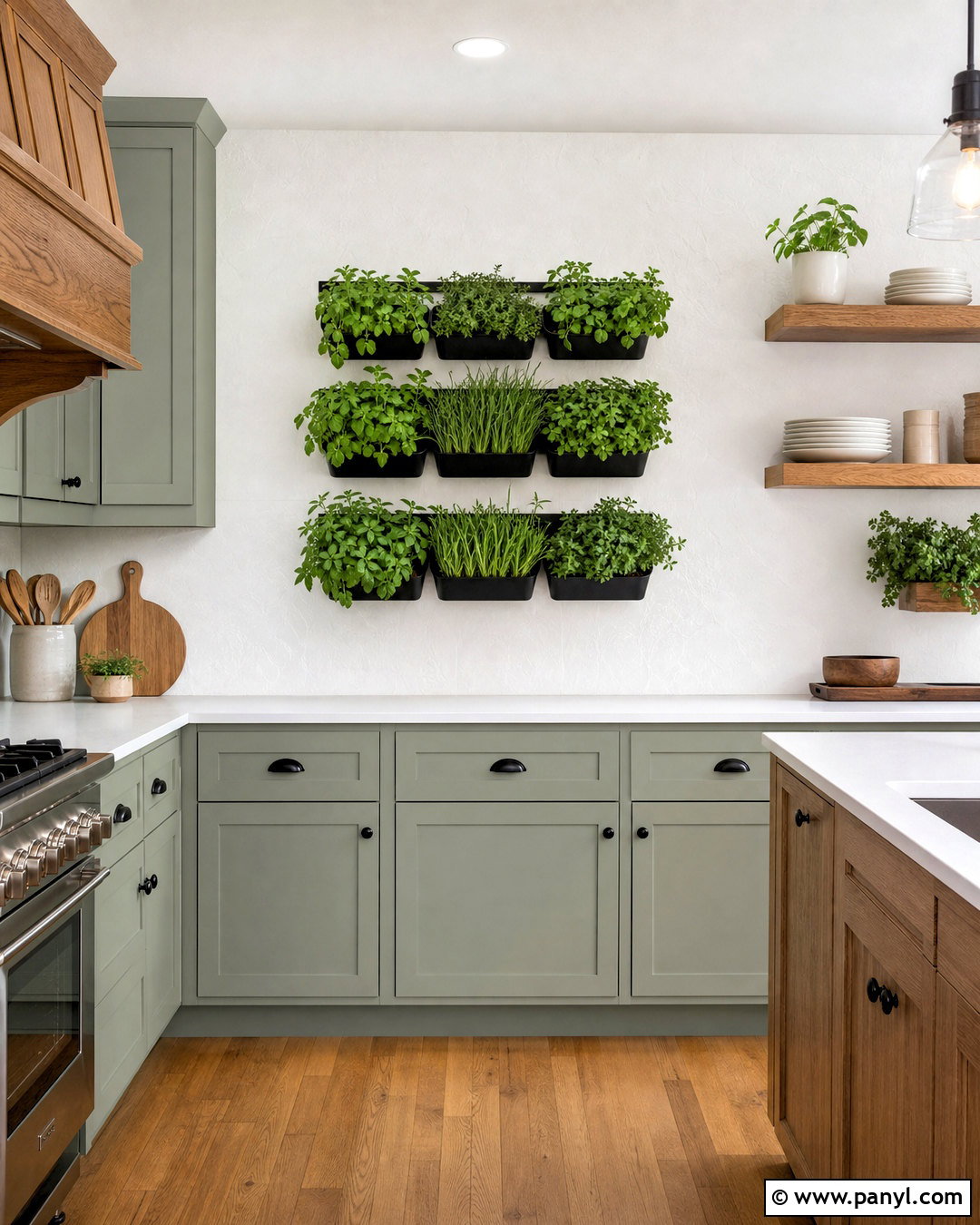
Turn an empty kitchen wall into a practical vertical herb garden with rows of removable planters. Position the installation near a bright window but away from direct heat produced by the range. Grow commonly used herbs such as basil, parsley, mint, chives, and thyme in separate containers for easier care. White quartz countertops, flat-panel sage cabinets, and warm oak shelving create a clean backdrop for the edible greenery. Install a waterproof backsplash behind the planters and include trays to catch excess moisture. Small labeled containers may be useful in daily life, although the arrangement should remain visually simple. Under-shelf grow lights can supplement weak daylight, creating a kitchen feature that feels organized, useful, and naturally decorative.
9. Bathroom Green Wall
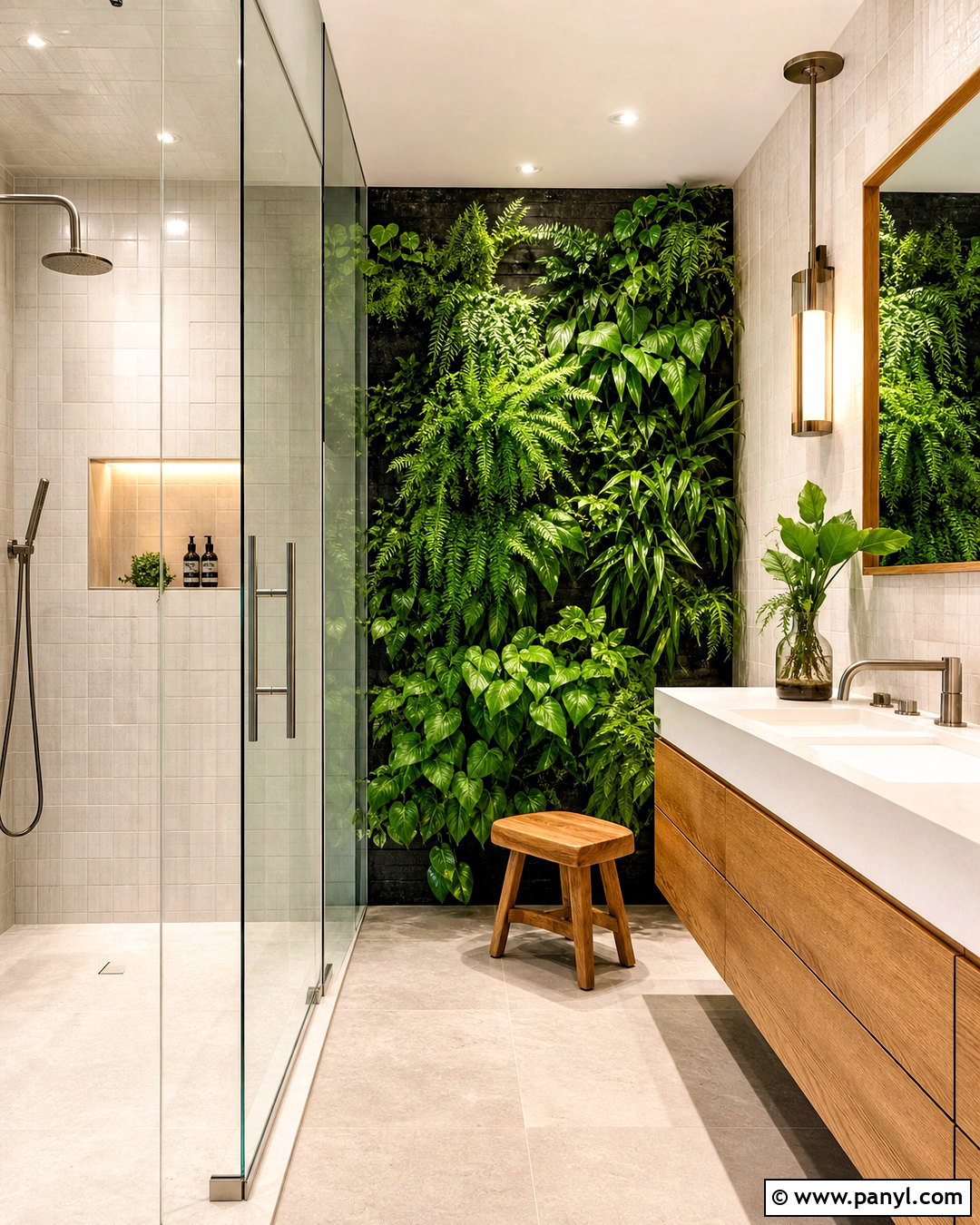
A bathroom green wall can create a refreshing, spa-inspired atmosphere when plants and materials suit the conditions. Install a compact living system opposite the shower, where it receives humidity without constant splashing. Use moisture-tolerant ferns, pothos, and philodendrons, supported by proper ventilation and waterproof wall protection. Surround the greenery with large warm-white tiles and a floating white oak vanity. Brushed nickel fixtures, a frameless mirror, and pale stone flooring maintain a clean modern appearance. Add overhead grow lighting if the bathroom has no suitable window. Rolled white towels, a teak stool, and simple ceramic accessories complete the room. Keep foliage trimmed so it does not block fixtures or make the bathroom difficult to clean.
10. Staircase Green Wall
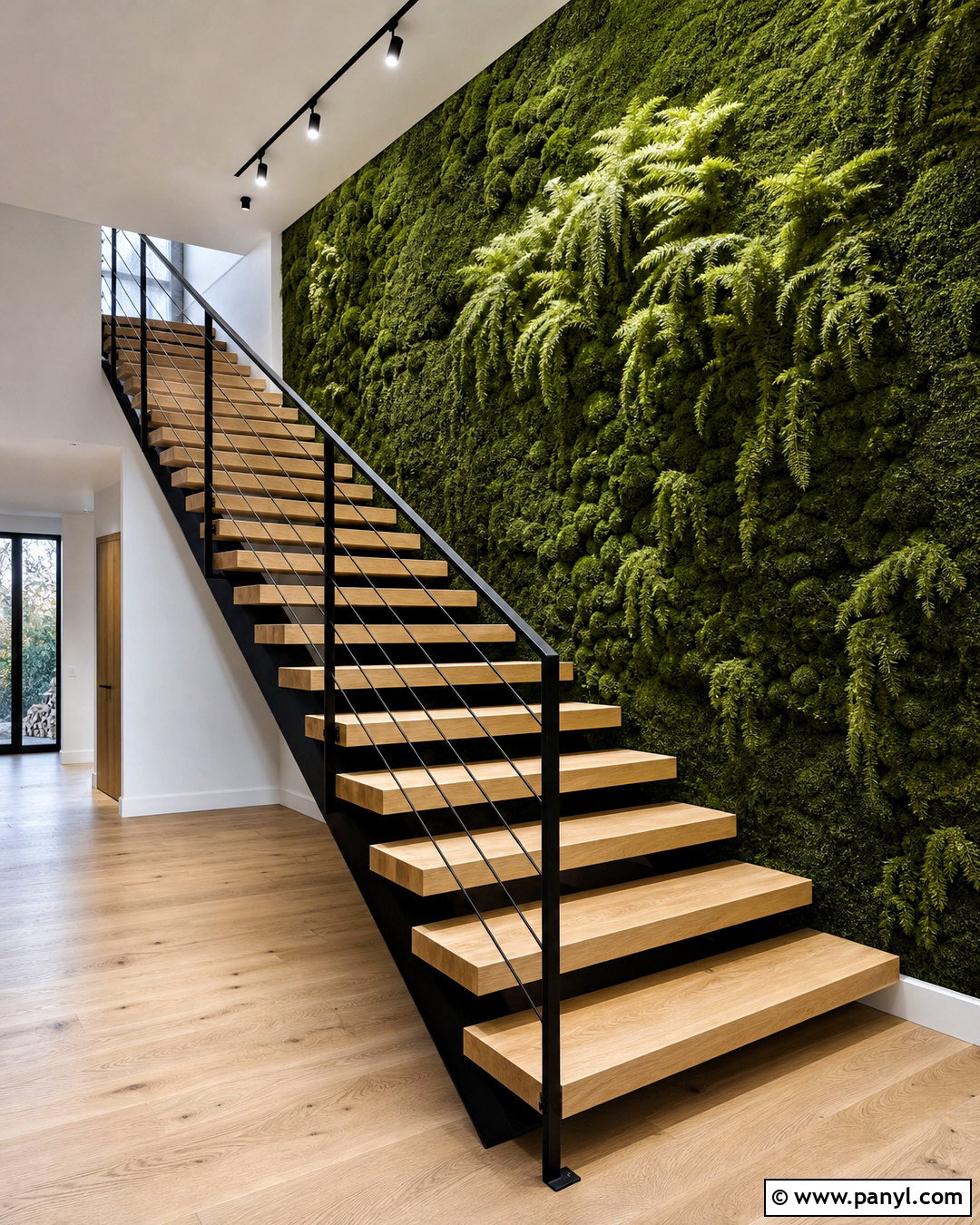
A tall staircase wall offers enough vertical space to create an impressive green feature that can be viewed from several levels. Use modular preserved moss panels in a sweeping composition that follows the rise of the stairs. Combine deep forest green moss with subtle patches of lighter fern-shaped preserved foliage for depth. Natural oak stair treads, white walls, and a slim black metal railing provide a simple architectural frame. Install directional ceiling spotlights to evenly illuminate the entire display. Keep the lower edge safely above handrail height and avoid loose trailing pieces near the steps. A clear landing and minimal nearby artwork allow the installation to stand alone, making an overlooked circulation area feel intentional, finished, and connected to the rest of the home.
11. Green Wall Room Divider
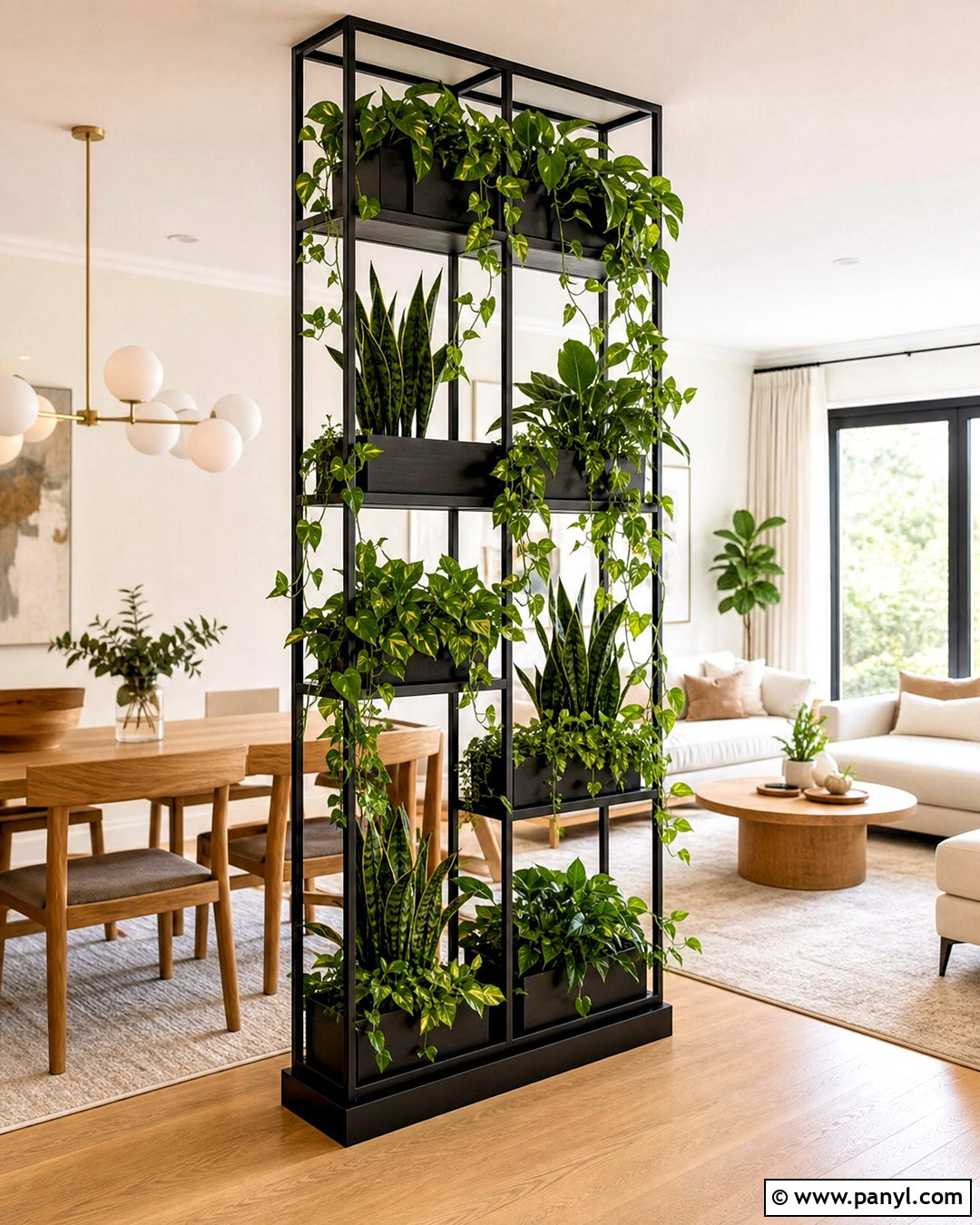
An open-plan interior can gain definition from a freestanding green wall that separates spaces without completely blocking light. Build a narrow black metal frame with integrated rectangular planters and open sections between plants. Use trailing pothos, upright snake plants, and compact philodendrons to create privacy while preserving an airy appearance. Position the divider between the living and dining zones, then coordinate both areas with oak furniture, cream upholstery, and black accents. A washable neutral rug anchors the lounge, while a round wood table defines the dining side. Place the divider where it can receive indirect window light and include locking casters if flexibility is important. This design adds greenery, structure, and practical zoning to one cohesive room.
12. Green Wall Reading Nook
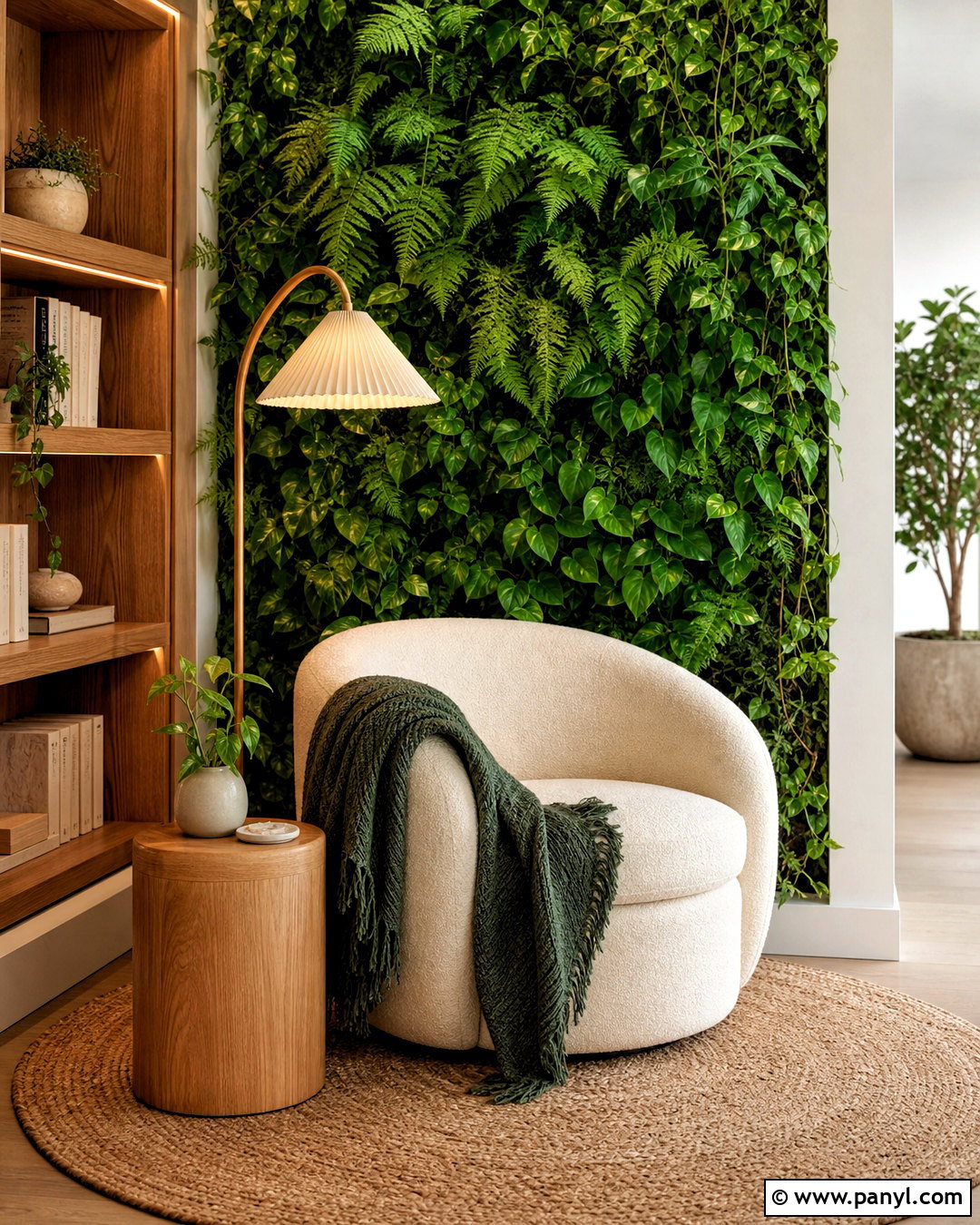
Create a comfortable reading corner by wrapping a compact seating area in soft foliage and natural textures. Install a narrow living wall behind a curved oatmeal armchair, using ferns, pothos, and fine-leaved plants for a full but relaxed appearance. Add a small oak side table, a cream floor lamp, and a deep green wool throw. Built-in shelves on one side can hold books while framing the garden feature without covering it. Choose light oak flooring and a round jute rug to make the nook feel warm underfoot. A nearby window should provide filtered daylight, supported by a discreet grow light when needed. The finished space feels secluded and peaceful while remaining visually connected to the larger room.
13. Green Wall With Wood Slats
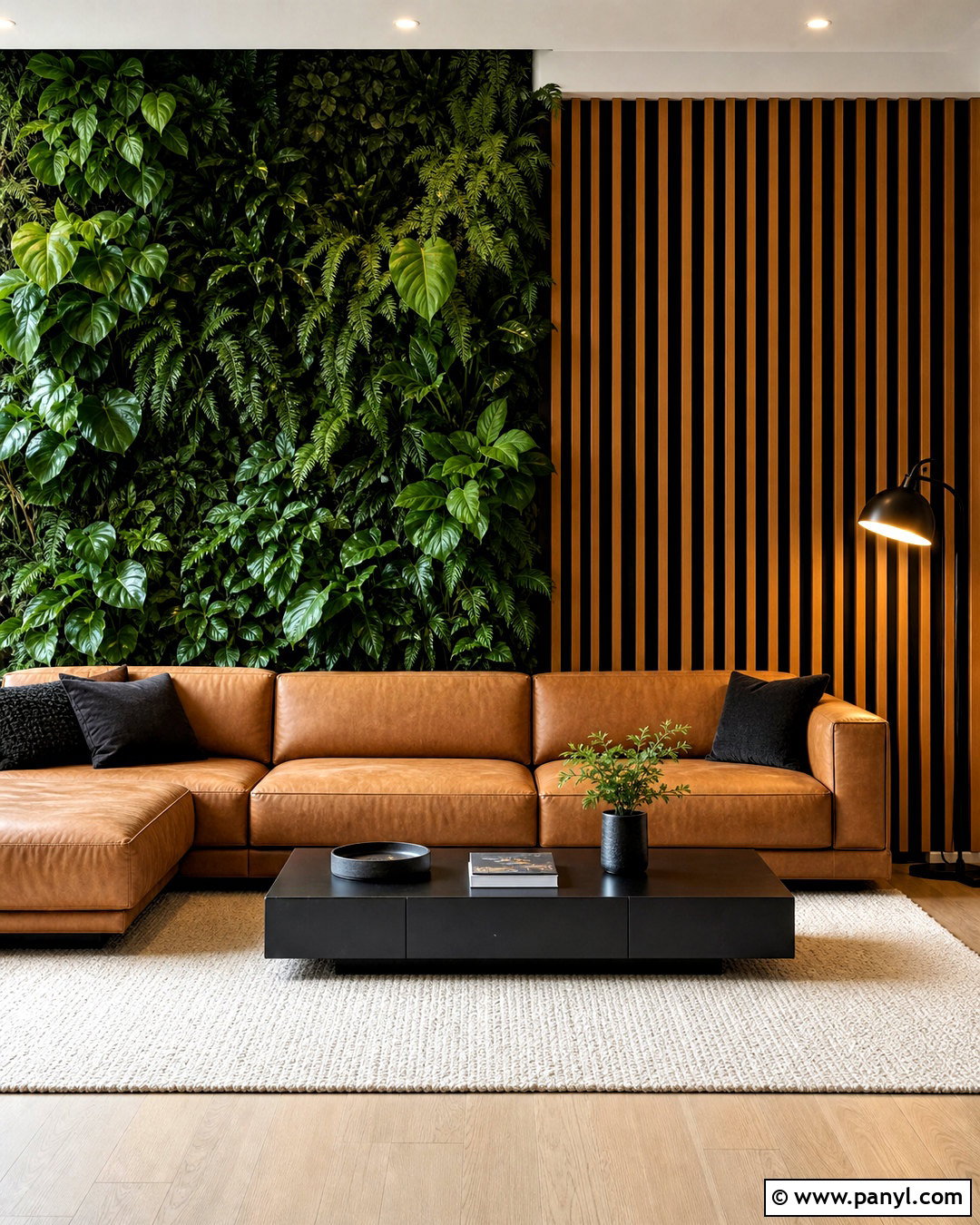
Pairing greenery with wood slats creates a structured feature wall that works well in modern interiors. Cover one-third of the wall with a dense vertical garden, then continue the remaining surface with evenly spaced oak slats over black acoustic backing. Place a camel leather sofa in front, leaving enough space for plant maintenance and airflow. A low black coffee table, cream rug, and sculptural floor lamp complete the seating area. Use mixed philodendrons and ferns to contrast with the straight architectural lines of the wood. Conceal irrigation equipment behind a matching oak access panel. Repeating the oak finish in flooring or shelving helps the wall feel integrated into the room rather than added as an isolated decorative feature.
14. Green Wall With Floating Shelves
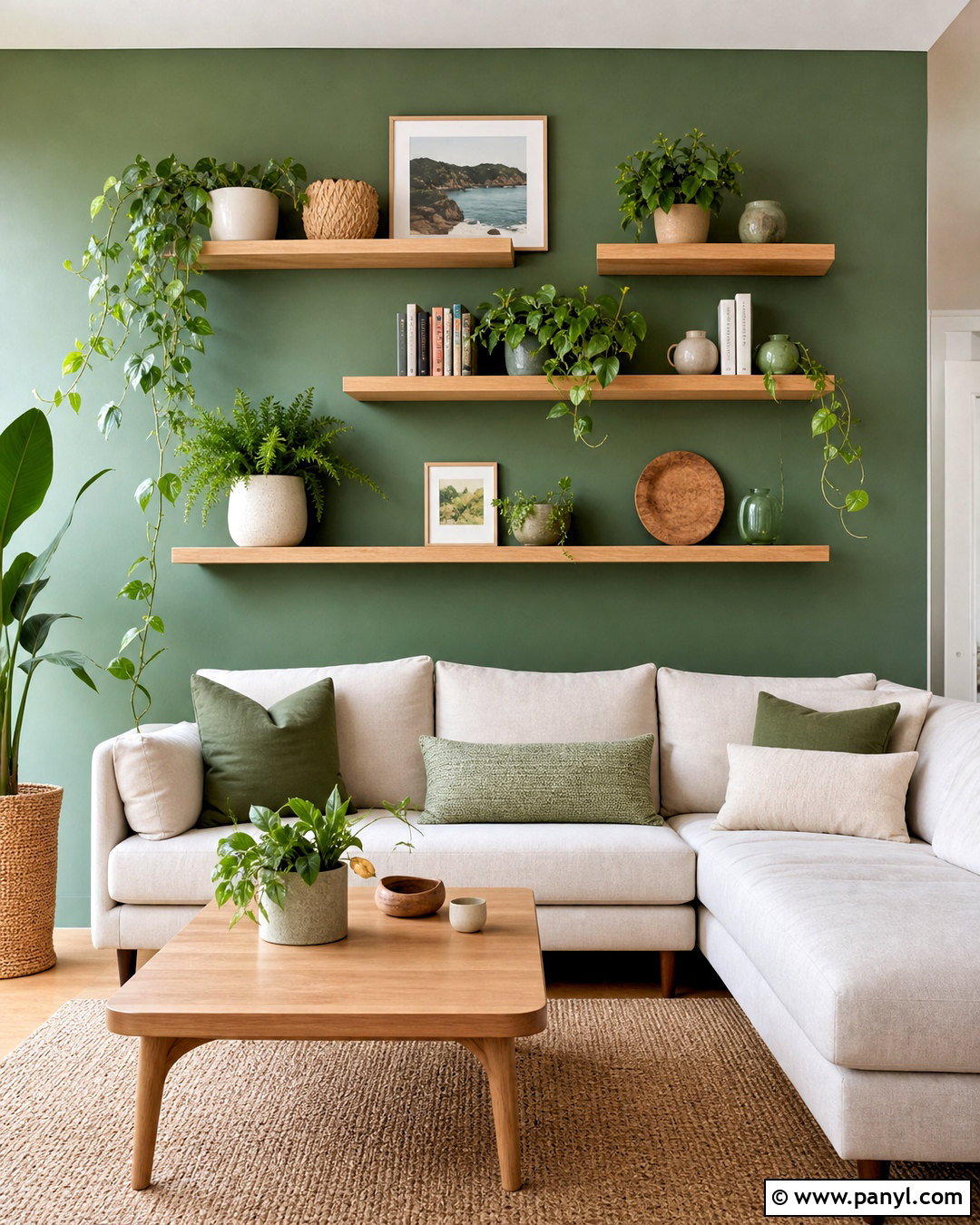
Wall-mounted shelves can turn a simple plant display into an adaptable green wall with useful storage. Install three staggered oak shelves across a soft white wall, leaving room for trailing pothos, compact ferns, and peperomias in coordinated matte ceramic pots. Mix the plants with a small number of books, sculptural objects, and framed art, keeping plenty of open space between groups. Below the arrangement, use a streamlined linen sofa with sage and cream pillows. A light wood coffee table and woven rug continue the relaxed palette. Place water-resistant trays beneath every pot and choose shelving strong enough for moist soil. This design provides the layered effect of a vertical garden without requiring a permanent irrigation system.
15. Green Wall Fireplace
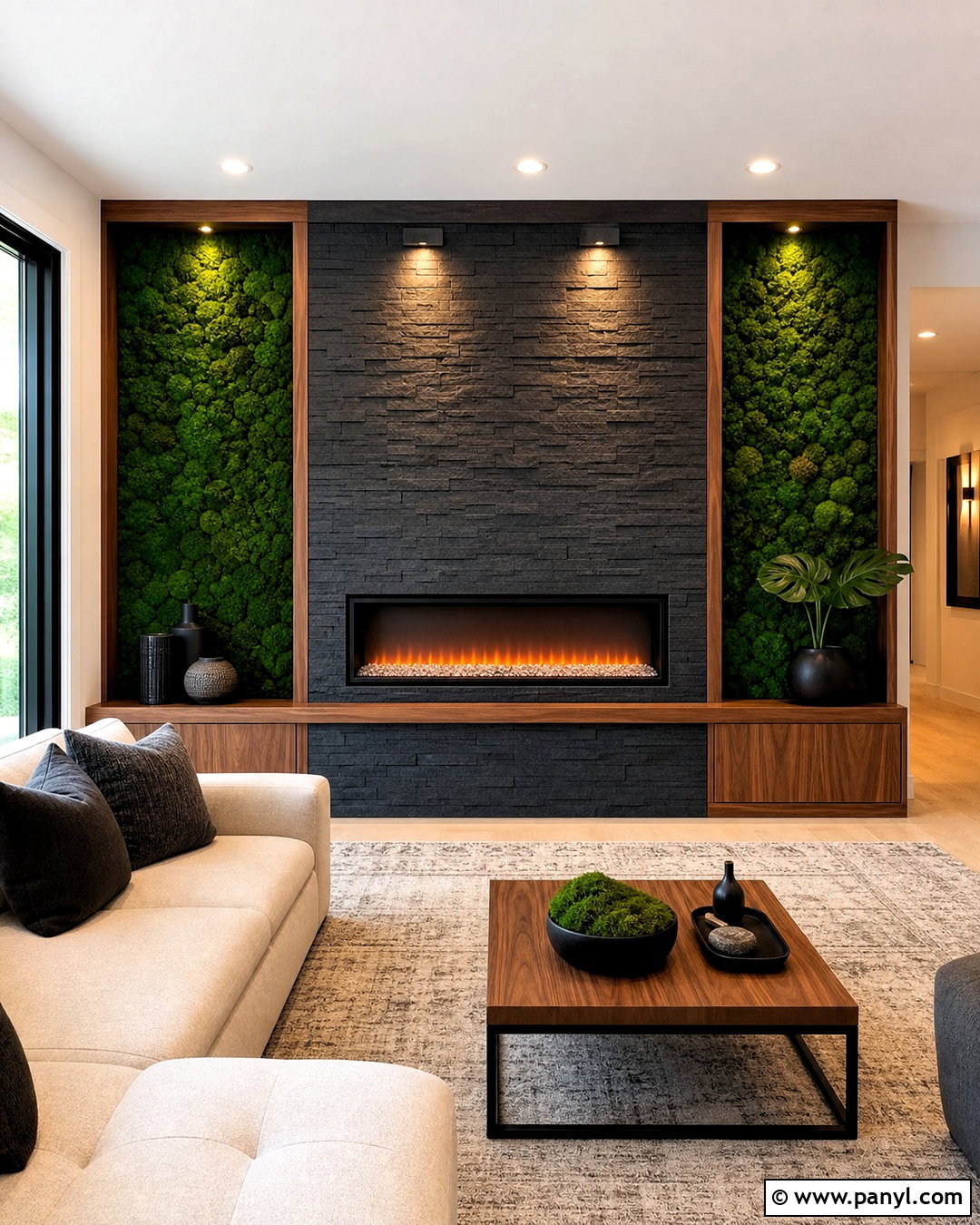
A green wall around a fireplace creates a dramatic focal point, but heat clearance and plant protection must guide the layout. Center an electric fireplace within a wide charcoal stone surround, then position preserved moss panels on both sides rather than directly above the heat source. Frame the greenery with warm walnut trim to connect it visually with built-in storage. Furnish the room with a cream sectional, walnut coffee table, and softly patterned beige rug. Recessed lighting can reveal the texture of the moss without adding heat. Minimal ceramics and black metal accents maintain a contemporary look. The symmetrical arrangement balances stone, wood, and greenery while keeping combustible or delicate materials safely separated from the fireplace opening.
16. Green Wall Hallway
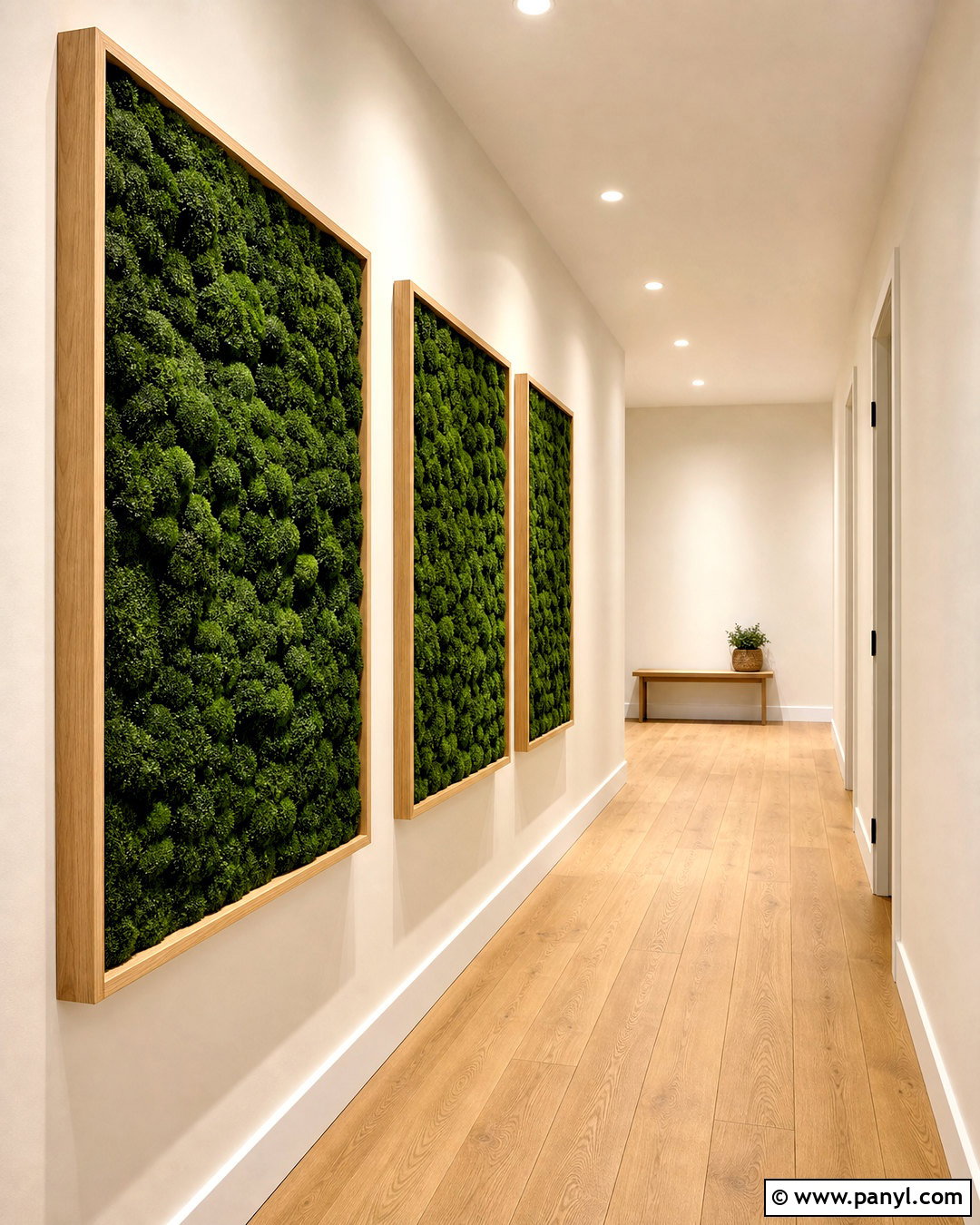
A long hallway can become a destination rather than a forgotten passage with a shallow green wall installation. Create a series of three preserved moss panels in matching light oak frames, spacing them evenly along one side. Use varied moss textures while maintaining a consistent forest green palette. Paint the opposite wall warm white and add slim ceiling lights that wash light across the panels. Pale oak flooring and simple white baseboards keep the narrow area bright. A small bench at the far end provides function without interrupting circulation. Because the panels project only slightly from the surface, they work better than deep planters in tight spaces. The repetition creates rhythm, making the hallway appear organized, longer, and carefully designed.
17. Green Wall Under Skylight
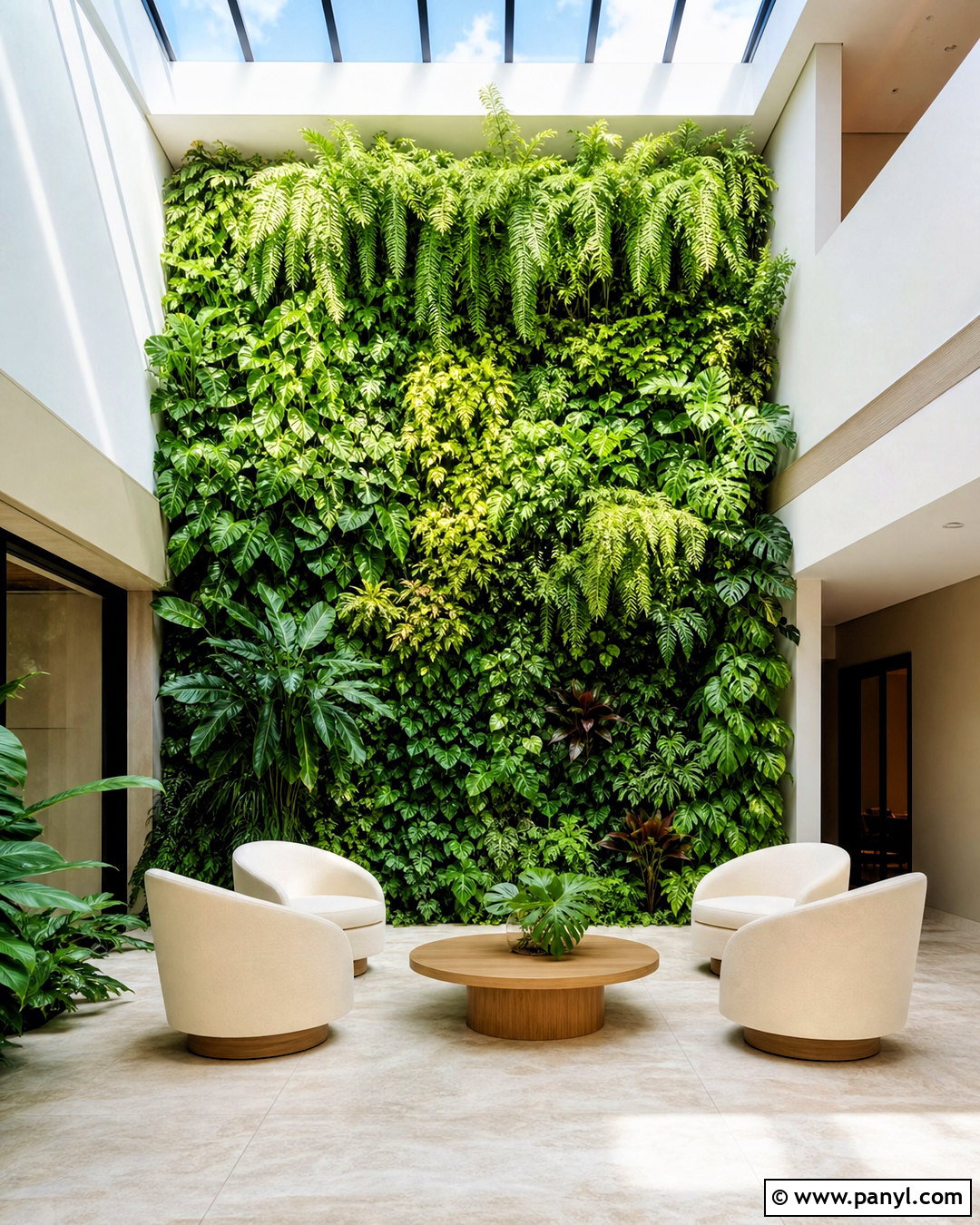
Natural overhead light makes the area beneath a skylight an excellent location for a vibrant interior garden. Install a floor-to-ceiling living wall where the plants receive bright, indirect light for much of the day. Combine ferns, pothos, philodendrons, and small bromeliads to build layers of color and leaf shape. Place a pair of curved cream chairs nearby with a round oak table to form a relaxed conversation area. Use pale limestone flooring and white walls to reflect daylight throughout the space. The planting system should include waterproof backing, drainage, and accessible irrigation controls. Monitor the skylight’s direct sun exposure because intense rays can scorch sensitive foliage. Sheer overhead shading can help maintain an evenly lit, comfortable indoor garden.
18. Artificial Green Wall
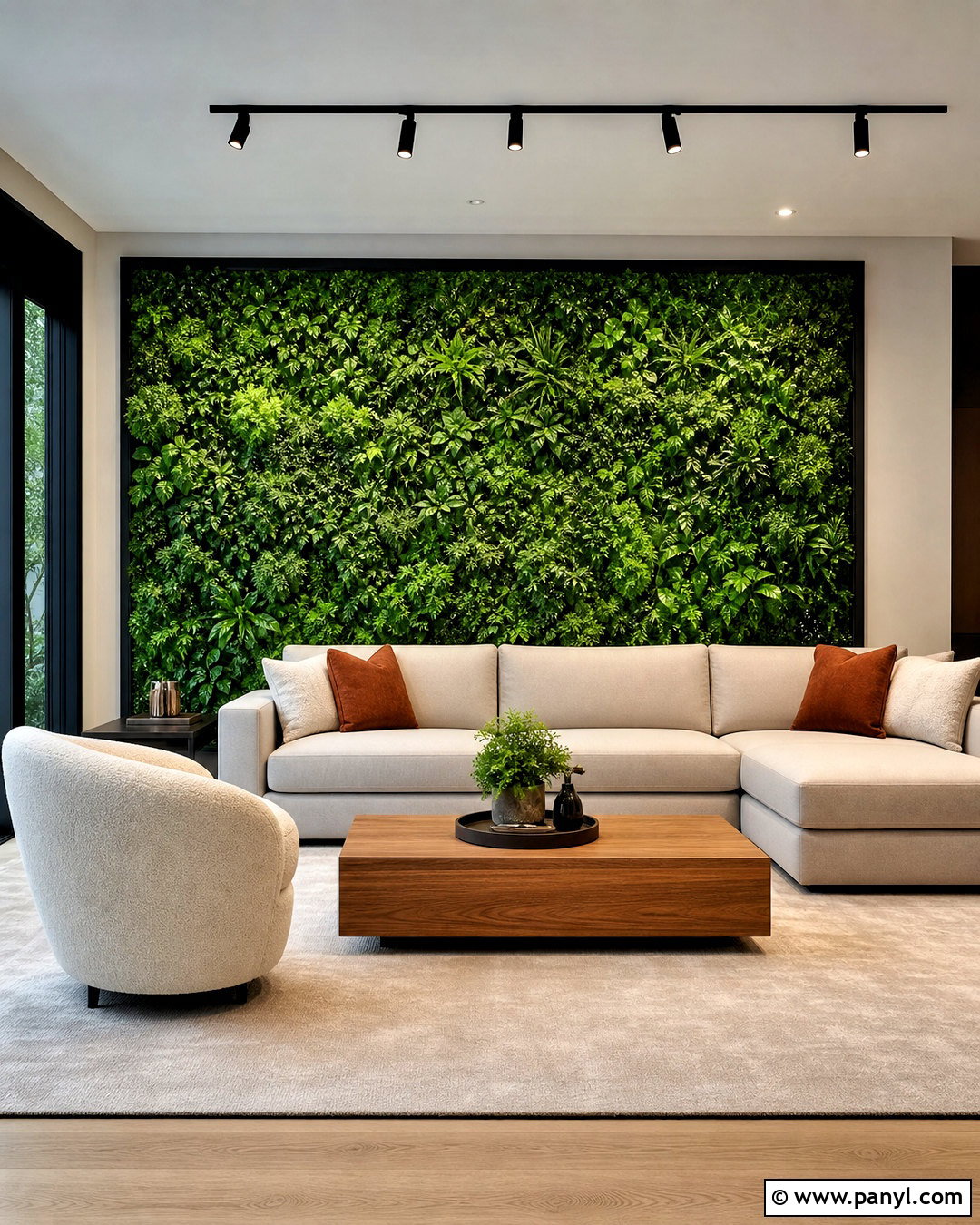
When plant care is unrealistic, a high-quality artificial green wall can provide lasting color with minimal upkeep. Select panels containing varied leaf sizes and several natural green tones rather than one repetitive plastic texture. Install them across the full wall behind a light beige sectional, then frame the edges with slim matte black trim for a clean finish. Add a warm wood coffee table, rust-colored pillows, and a cream boucle chair to prevent the room from appearing overly green. Directional ceiling lights create shadows that make the foliage look deeper and more realistic. Avoid placing artificial leaves directly beside strong heat sources. Occasional dusting and careful shaping will help the feature maintain a convincing, polished appearance.
19. Green Wall With Neon Lighting
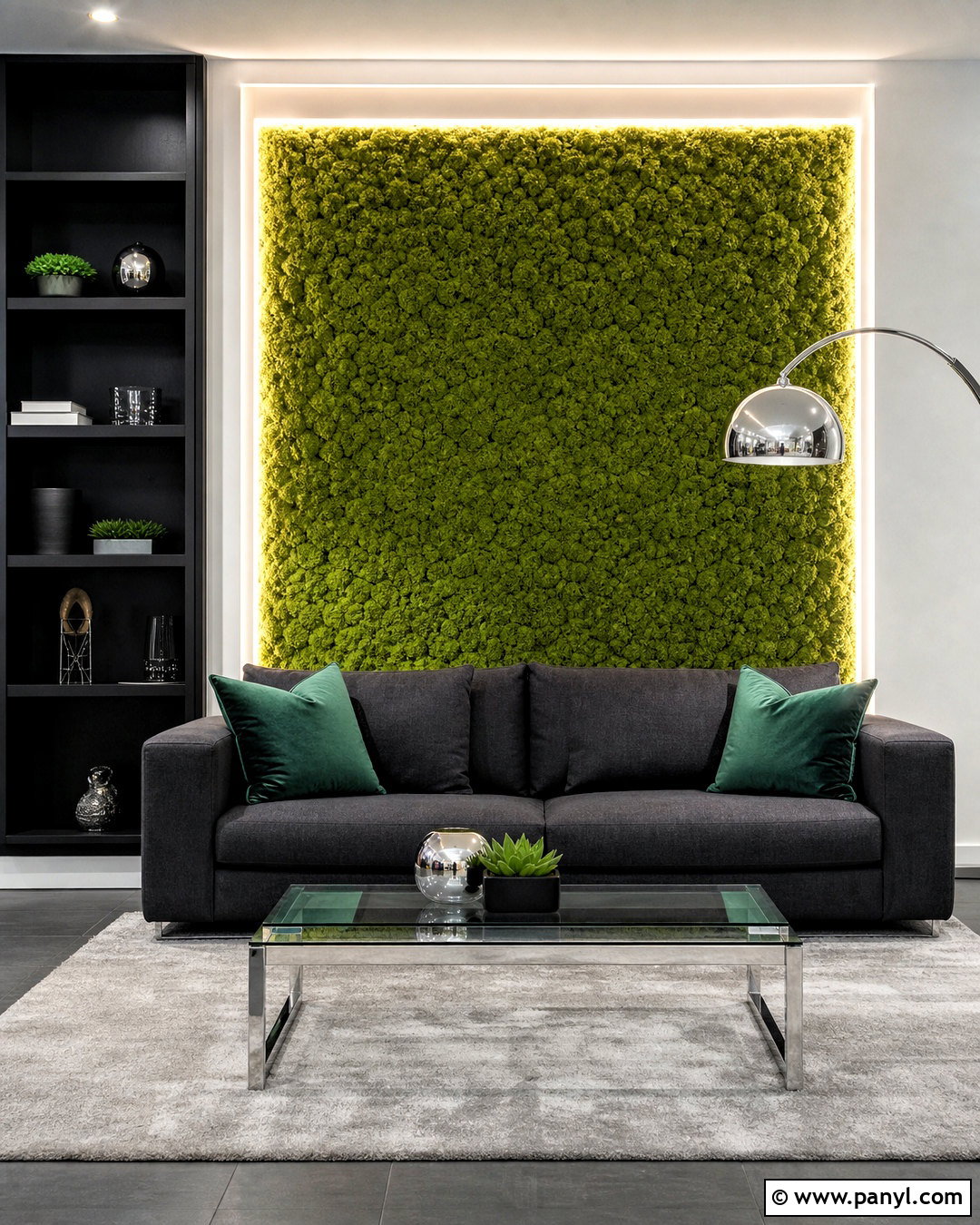
For a youthful contemporary room, pair a green wall with subtle linear lighting instead of a bright sign or decorative text. Frame a preserved moss panel with a recessed white LED strip that produces a clean halo around the foliage. Place the feature behind a compact charcoal sofa, then add a glass coffee table, light gray rug, and two emerald accent pillows. Matte black shelving and chrome accessories sharpen the modern palette. Use dimmable lighting so the wall remains comfortable in both daytime and evening settings, while keeping the overall room bright. The moss adds organic texture to the sleek materials, and the crisp illuminated edge makes the installation feel intentional without relying on excessive decoration or complicated plant maintenance.
20. Luxury Green Wall Interior
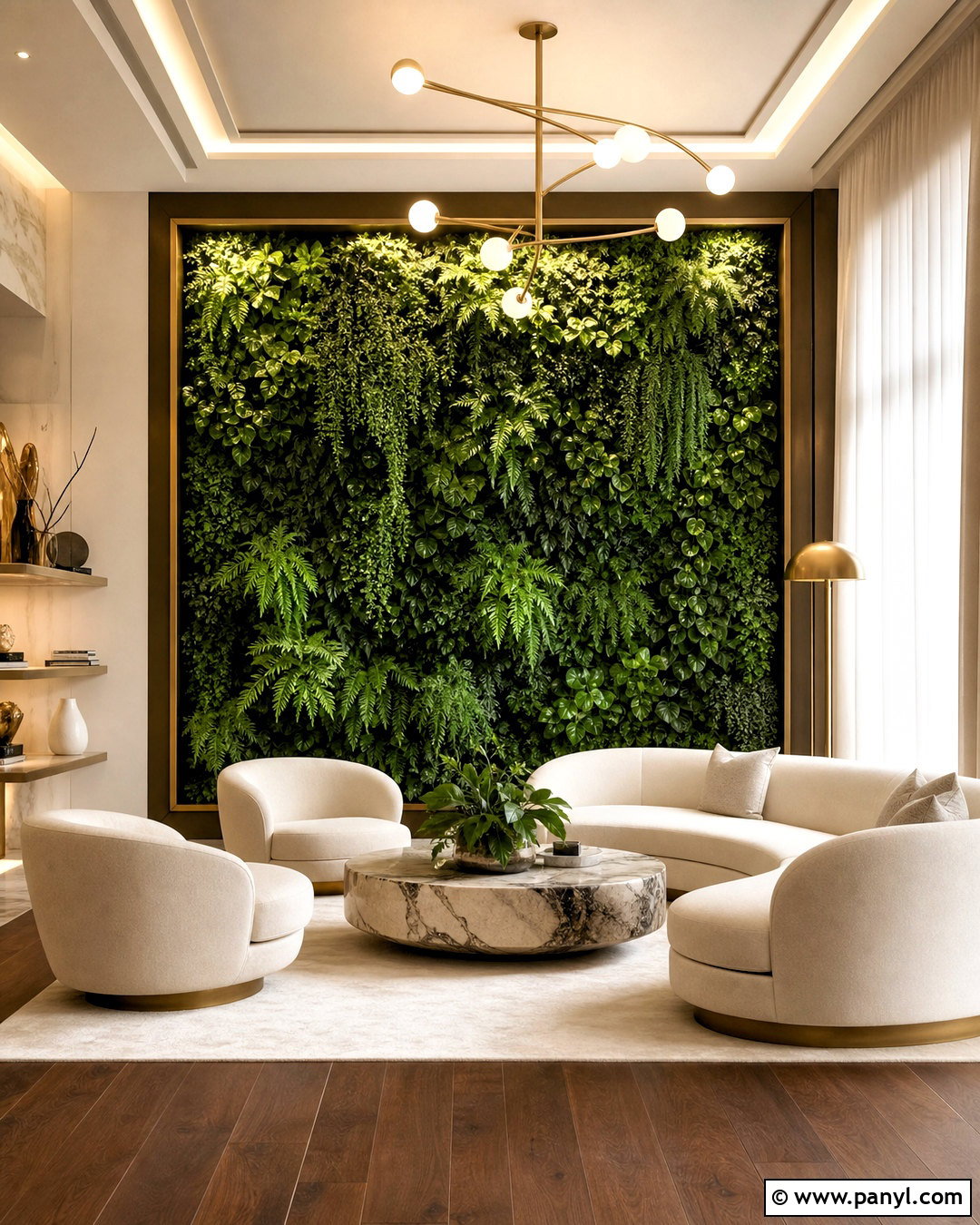
A refined green wall can feel luxurious through scale, craftsmanship, and carefully coordinated materials rather than excessive ornament. Install a large living wall within a floor-to-ceiling bronze frame, using dense ferns, philodendrons, and trailing plants arranged in broad organic sweeps. Face the wall with two sculptural ivory sofas and a veined marble coffee table. Wide-plank walnut flooring, full-height cream curtains, and brushed brass lighting add warmth and polish. Keep artwork to a minimum so it does not compete with the foliage. Integrate irrigation, drainage, ventilation, and grow lights into the surrounding millwork for a seamless appearance. The finished room balances rich greenery with tailored furniture, creating an elegant interior that still feels comfortable and welcoming.
Conclusion:
A successful green wall should feel like part of the room rather than a separate decoration. Coordinate the foliage with furniture, lighting, flooring, and nearby architectural finishes to create a complete design. Live installations offer changing texture but require suitable light, drainage, irrigation, and regular care. Preserved moss, artificial panels, and removable planters provide easier alternatives for dark rooms, rentals, and busy households. Start with the space’s practical conditions, then choose a system that matches your budget and maintenance preferences. From compact herb displays to floor-to-ceiling gardens, these 20 greenwall interior design ideas show how greenery can transform ordinary walls into functional, welcoming, and memorable interior features.

Related Ideas and Inspiration:
Leave a Reply