
Blue Kitchen Walls With Dark Cabinets can create a kitchen that feels rich, inviting, and full of personality. The key is balancing the depth of the cabinetry with the right blue undertone, reflective surfaces, and warm finishing materials. Pale blues help black or espresso cabinets feel lighter, while navy and teal walls produce a more dramatic, color-drenched effect. Countertops, flooring, hardware, and lighting should connect both colors so the room feels intentional rather than heavy. Warm dark cabinets generally pair well with softened blues, while charcoal and black cabinetry can handle cooler shades. () From coastal kitchens to traditional cooking spaces, the following complete looks show how to confidently decorate with Blue Kitchen Walls With Dark Cabinets.

1. Light Blue Kitchen Walls With Black Cabinets
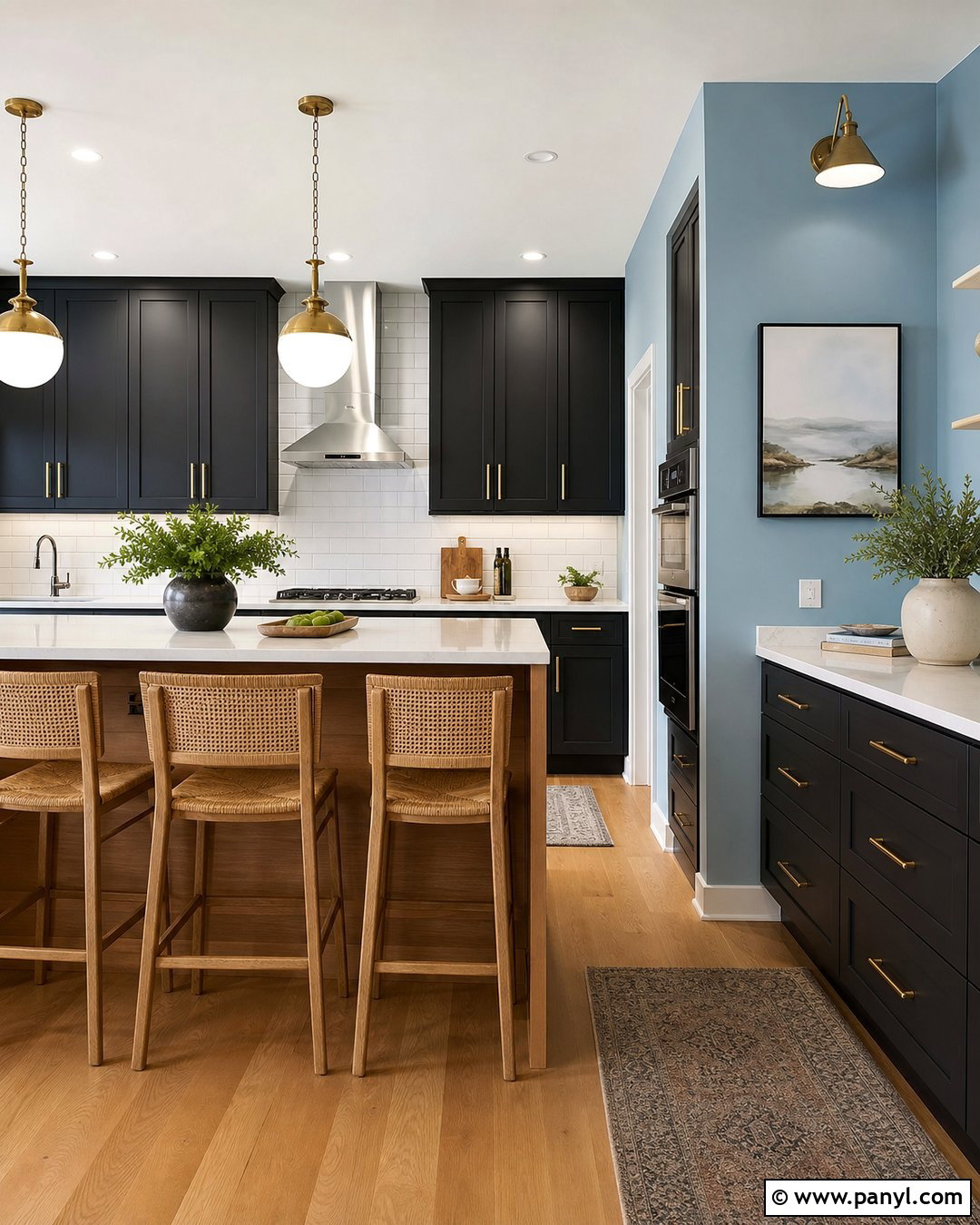
Light blue walls provide a fresh backdrop for matte black cabinets without creating severe contrast. Choose a soft blue with a slightly gray undertone, then add white quartz countertops and a simple white subway tile backsplash. These bright surfaces keep the black cabinetry from visually closing in the room. Warm oak flooring introduces natural color, while brushed brass pulls and pendant lights soften the black-and-blue combination. A medium wood island can add another layer of warmth if space permits. Keep window treatments white and lightweight so daylight reaches every corner. Finish the kitchen with counter stools in woven cane, a pale blue runner, and a few ceramic accessories that repeat the wall color without making the room feel overly coordinated.
2. Dusty Blue Kitchen Walls With Espresso Cabinets
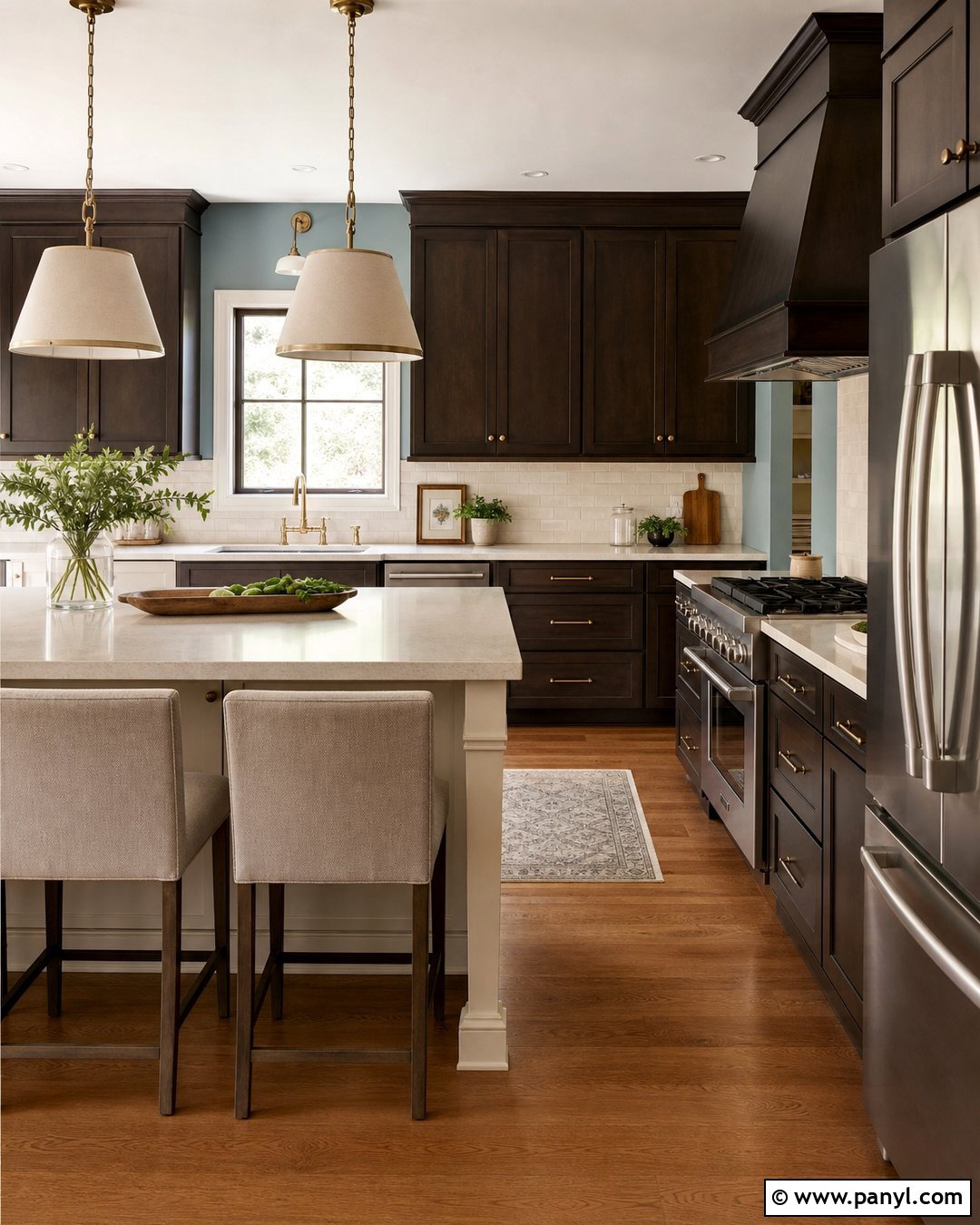
Dusty blue walls can cool the red and brown undertones commonly found in espresso cabinets. Select a muted shade that feels soft rather than icy, especially if the kitchen receives limited natural light. Cream quartz countertops and an ivory backsplash bridge the cool walls and warm wood cabinetry. Continue that balance with medium oak flooring, aged brass hardware, and linen pendant shades. A cream-painted island can lighten the center of the room while preserving the richness of the surrounding cabinets. For a finished transitional look, use upholstered counter stools in oatmeal fabric and display pale stoneware on one open shelf. Warm white ceiling paint and strong under-cabinet lighting will prevent shadows from collecting around the dark cabinet doors.
3. Slate Blue Kitchen Walls With Walnut Cabinets
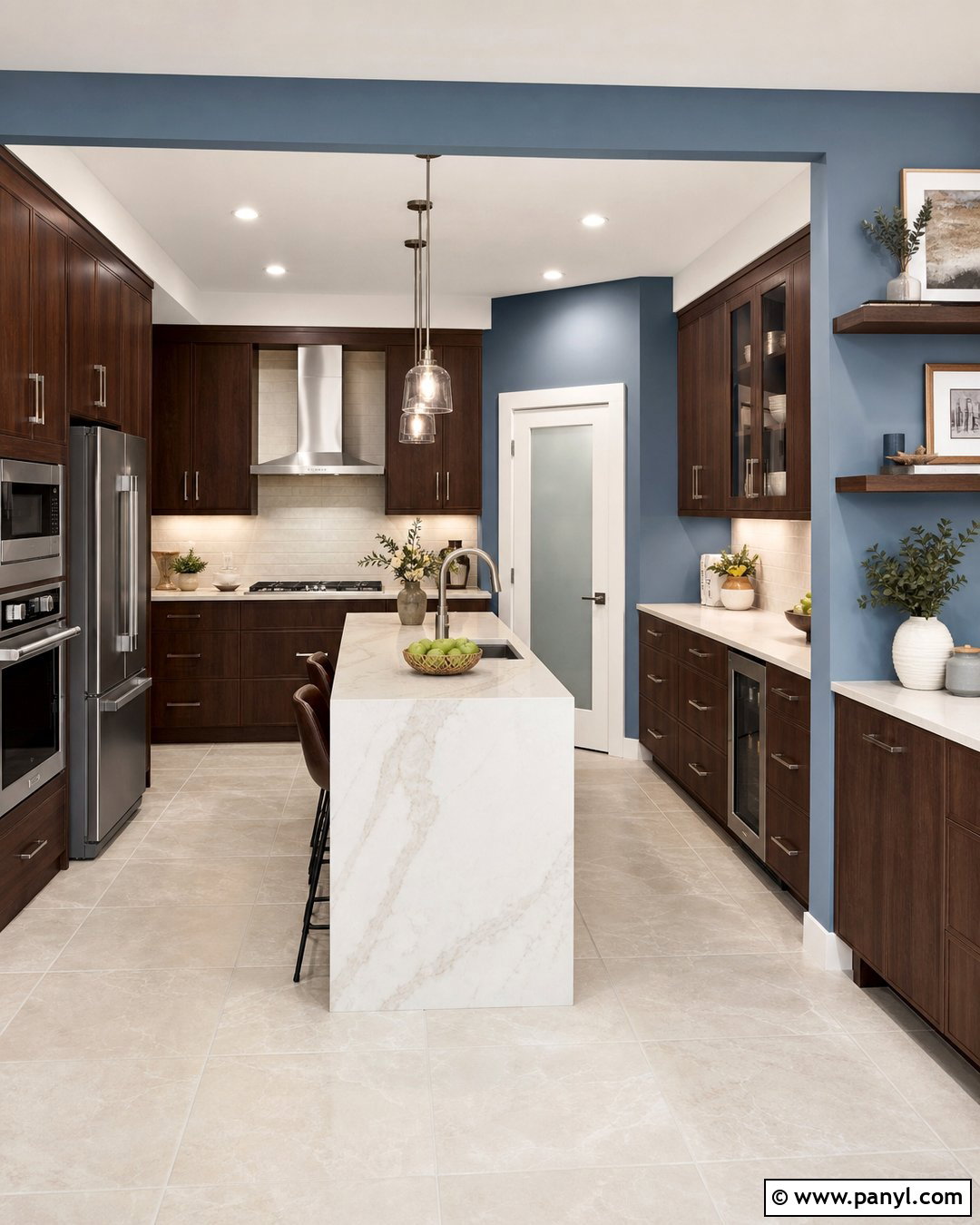
Slate blue walls and dark walnut cabinets form a grounded palette that highlights natural wood grain. Because both finishes have visual depth, bring in a broad expanse of light material through creamy marble-look quartz countertops and a warm white backsplash. Flat-front walnut cabinets create a streamlined effect, while brushed nickel pulls connect beautifully with the gray notes in the blue paint. Choose light limestone-look floor tile to brighten the lower half of the room. A narrow island with a waterfall countertop can keep the layout feeling open and contemporary. Add clear glass pendants, pale upholstered stools, and minimal pottery in warm white. The completed kitchen feels modern and natural, with enough contrast to define every surface clearly.
4. Navy Blue Kitchen Walls With Charcoal Cabinets
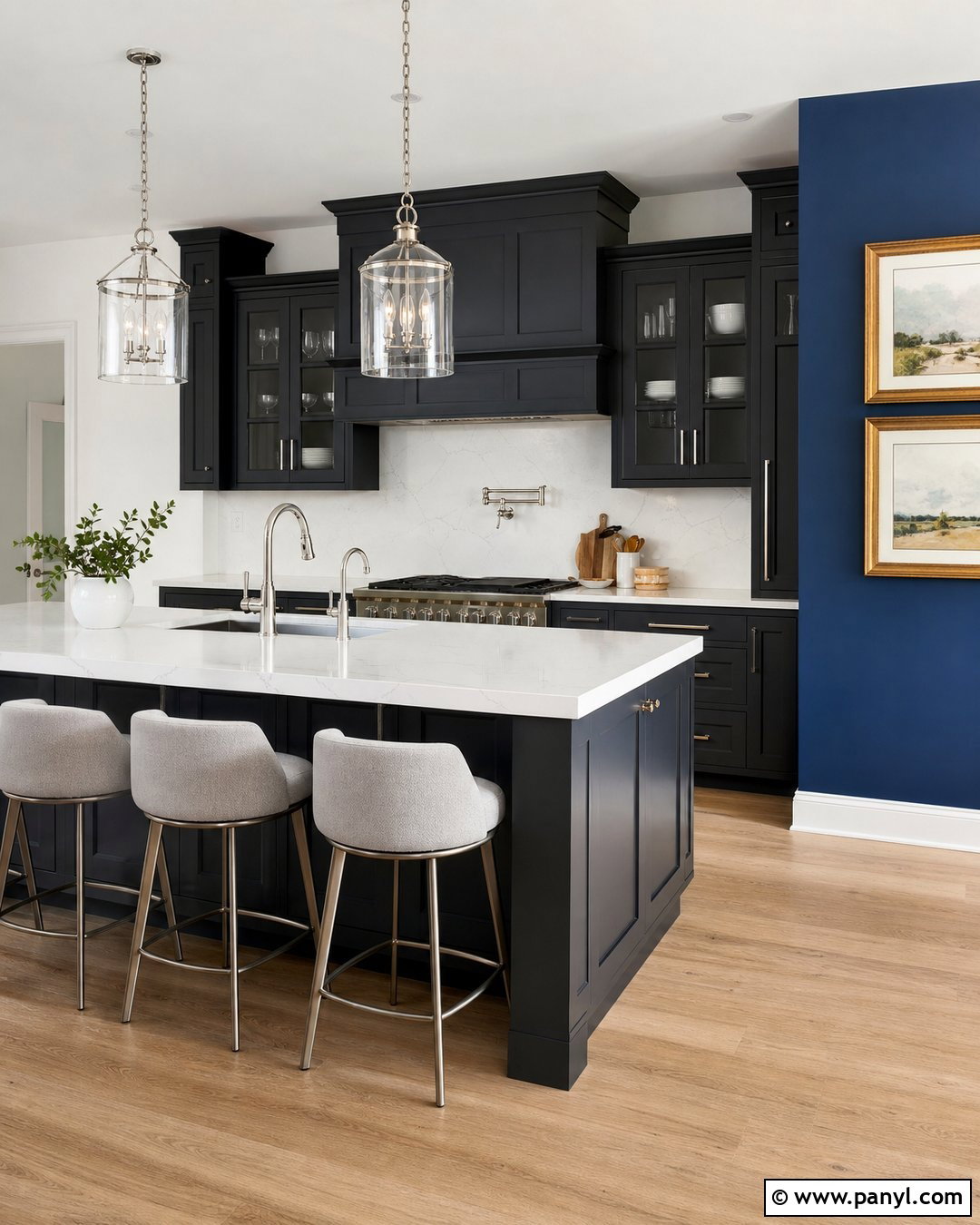
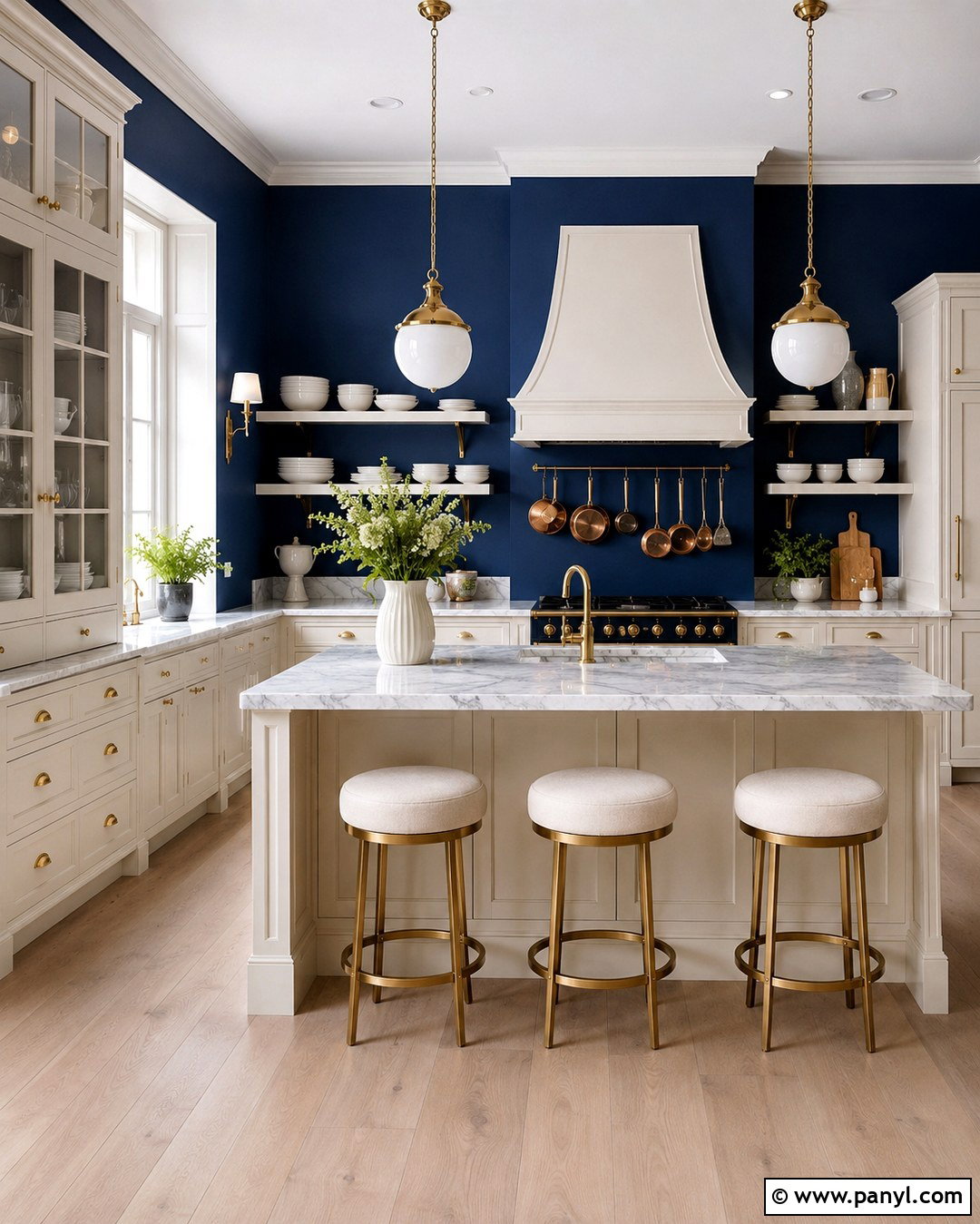
For a bold kitchen, combine navy blue walls with charcoal cabinets and deliberately lighten the working surfaces. White quartz countertops with subtle gray veining provide essential contrast, while a full-height white backsplash reflects light around the room. Use charcoal shaker cabinets for architectural detail and polished nickel hardware for a clean, cool finish. Light white oak flooring prevents the palette from becoming overly dark and adds a relaxed natural element. If the kitchen includes an island, top it with the same pale quartz and use light gray stools to preserve visual continuity. Large glass pendants and bright under-cabinet lights are especially important. Keep accessories simple, choosing white ceramics, clear glass, and one or two wood cutting boards.
5. Powder Blue Kitchen Walls With Dark Brown Cabinets
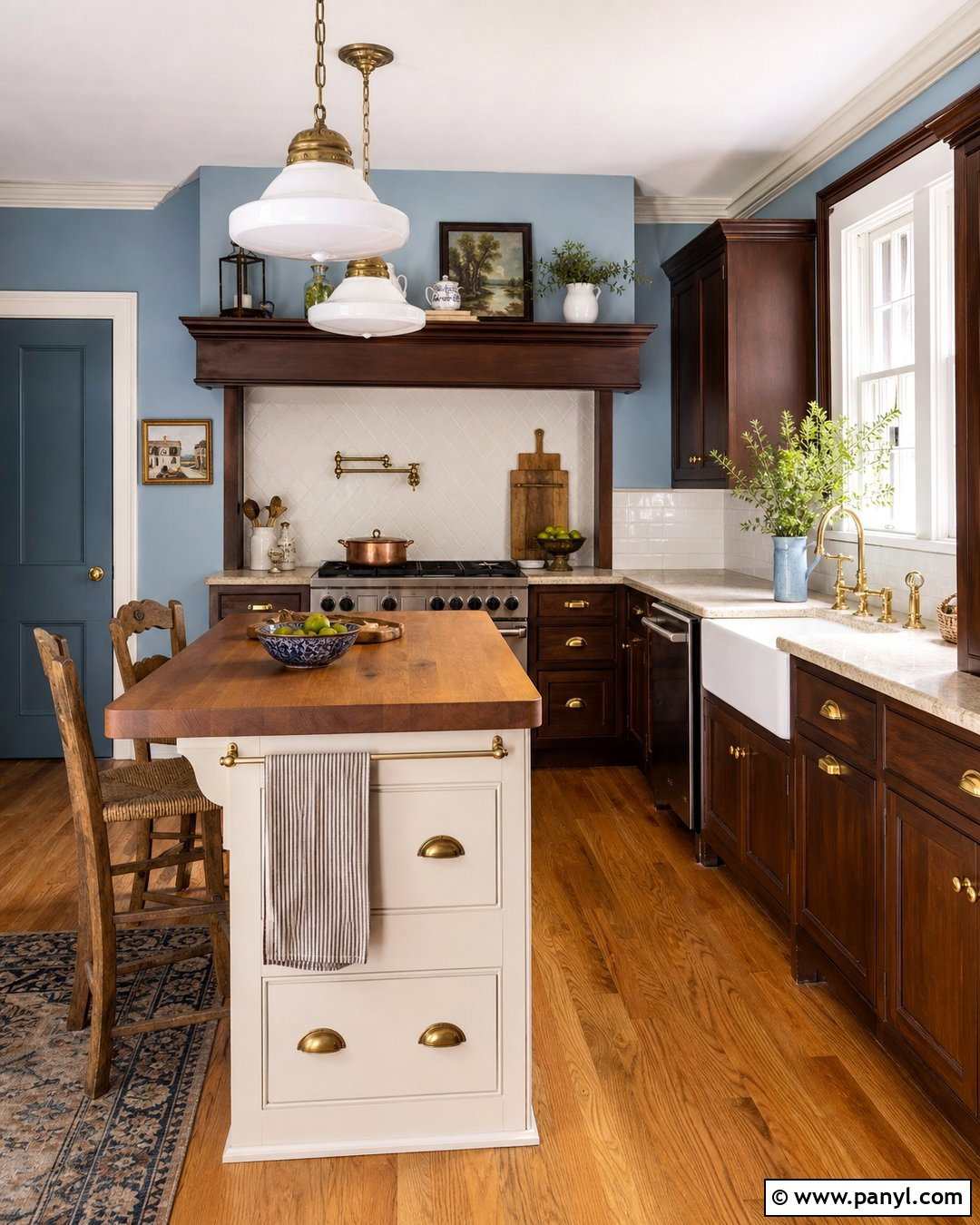
Powder blue walls can make traditional dark brown cabinets feel brighter and more relaxed. The gentle wall color works especially well with raised-panel doors, antique brass hardware, and warm wood details. Install cream granite or quartz countertops with quiet brown veining to connect the cabinetry with the lighter surfaces. A handmade ivory tile backsplash adds texture without introducing another strong color. Honey-toned oak flooring will warm the blue and keep the room welcoming. Consider a furniture-style island painted warm white, finished with a butcher-block top and classic turned legs. Complete the look with simple brass lantern pendants, a washable blue-and-cream runner, woven counter stools, and soft white window shades that allow plenty of daylight into the kitchen.
6. Teal Blue Kitchen Walls With Matte Black Cabinets
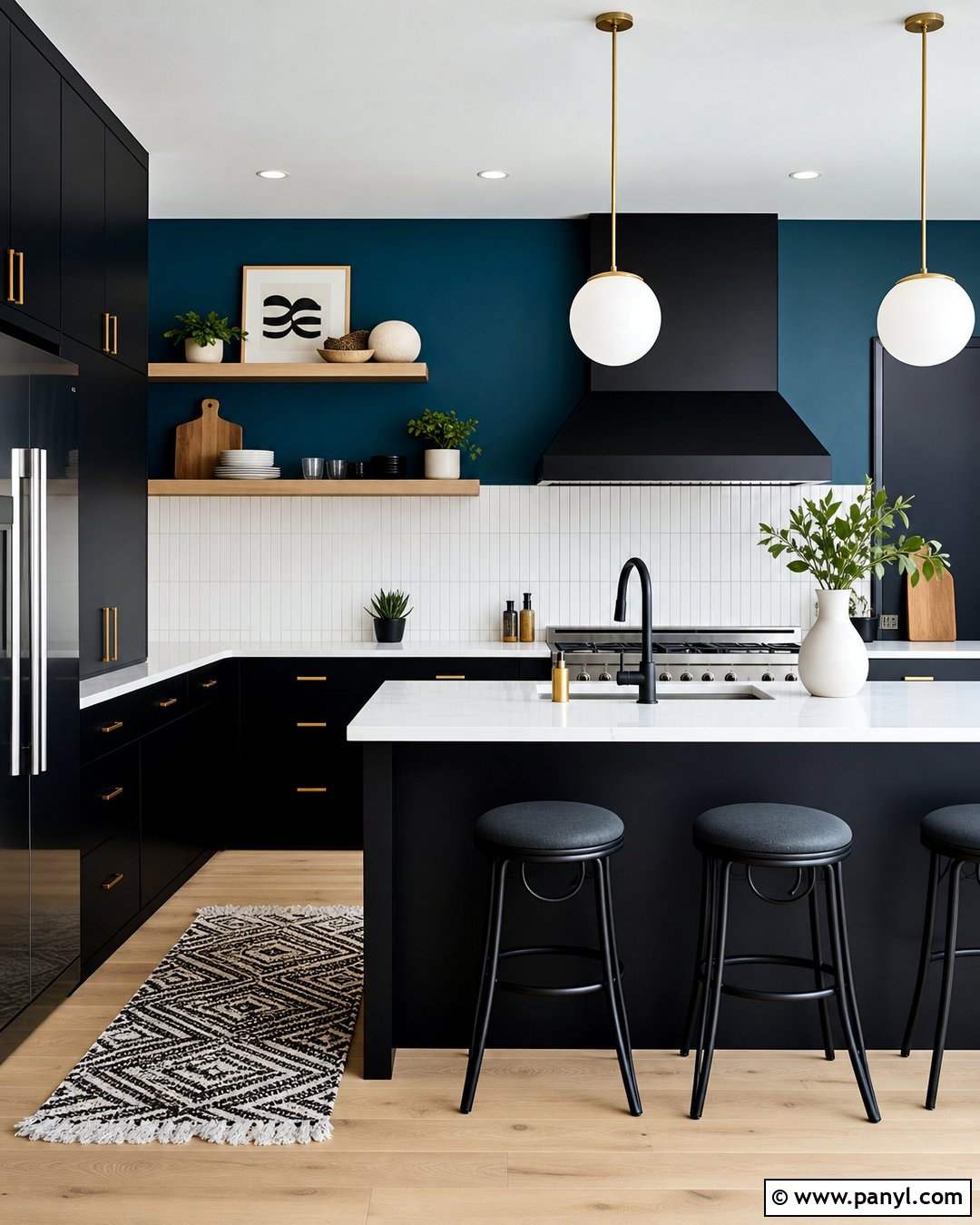
Teal blue walls bring energy and character to matte black cabinets, making this pairing ideal for a confident contemporary kitchen. Choose a medium teal that clearly reads as blue rather than green. Balance the saturated walls with white quartz counters and a vertical white tile backsplash. Flat-panel black cabinets, slim brass pulls, and a sculptural brass faucet create a sharp but welcoming finish. Use pale oak flooring and matching open shelves to introduce warmth throughout the room. A black island can remain cohesive when topped with thick white quartz and surrounded by light wood stools. Globe pendants, under-cabinet lighting, and uncluttered counters keep the bold palette crisp. Add only a few cream ceramics and leafy herbs for a natural finishing touch.
7. Blue Gray Kitchen Walls With Espresso Cabinets
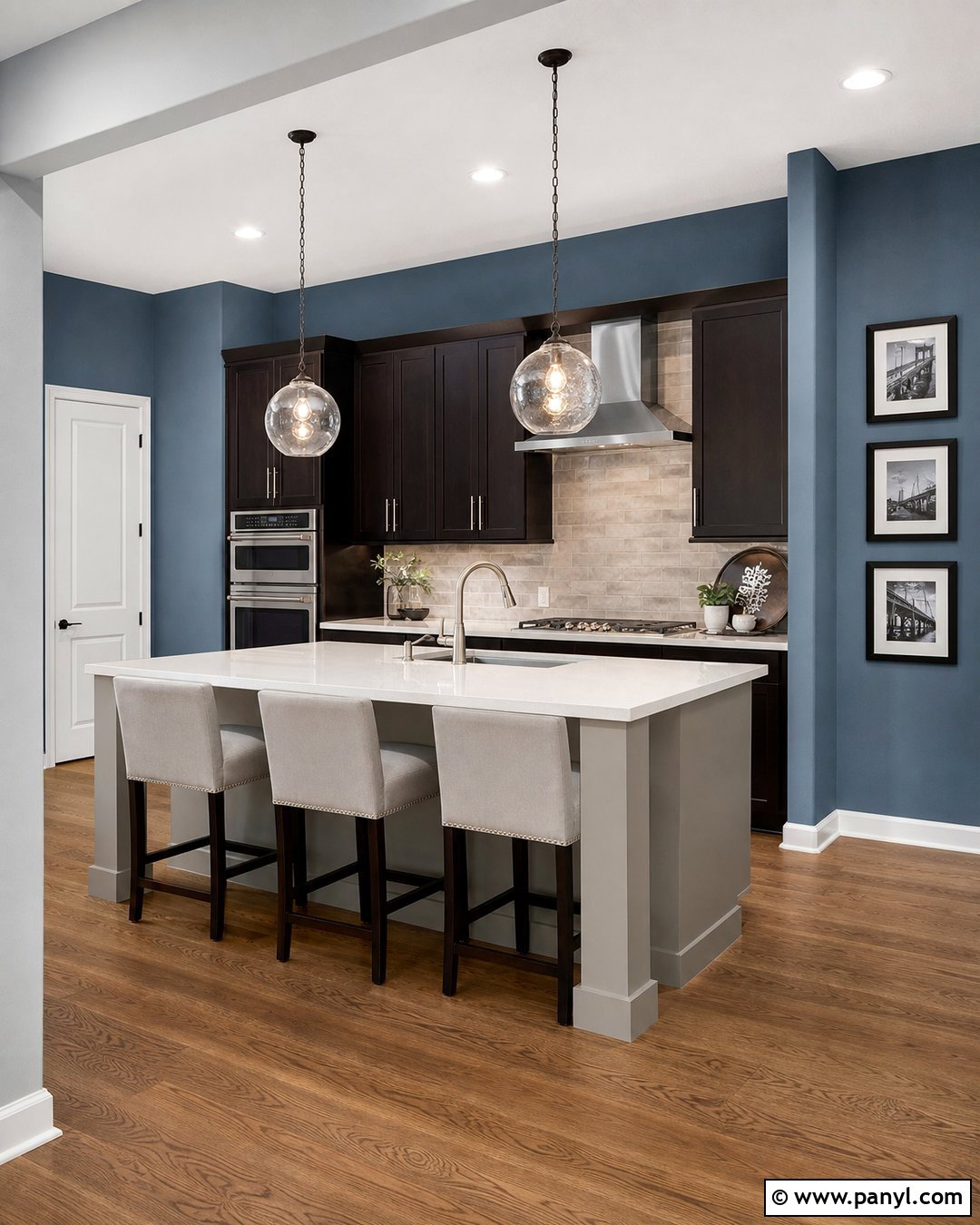
Blue-gray walls are a practical choice when espresso cabinets need a cooler, more updated background. Look for a shade with enough blue to appear colorful in daylight but enough gray to remain calm under artificial lighting. Warm white quartz counters prevent the room from feeling cold, while a greige stone backsplash connects the blue walls with the brown cabinetry. Choose brushed bronze hardware and medium-tone oak flooring to reinforce the cabinet warmth. A compact island painted soft greige can break up a long run of espresso wood. Finish the design with cream counter stools, simple glass pendants, and a washable patterned runner that combines faded blue, beige, and brown. This layered palette suits both traditional and transitional kitchens.
8. Coastal Blue Kitchen Walls With Dark Navy Cabinets
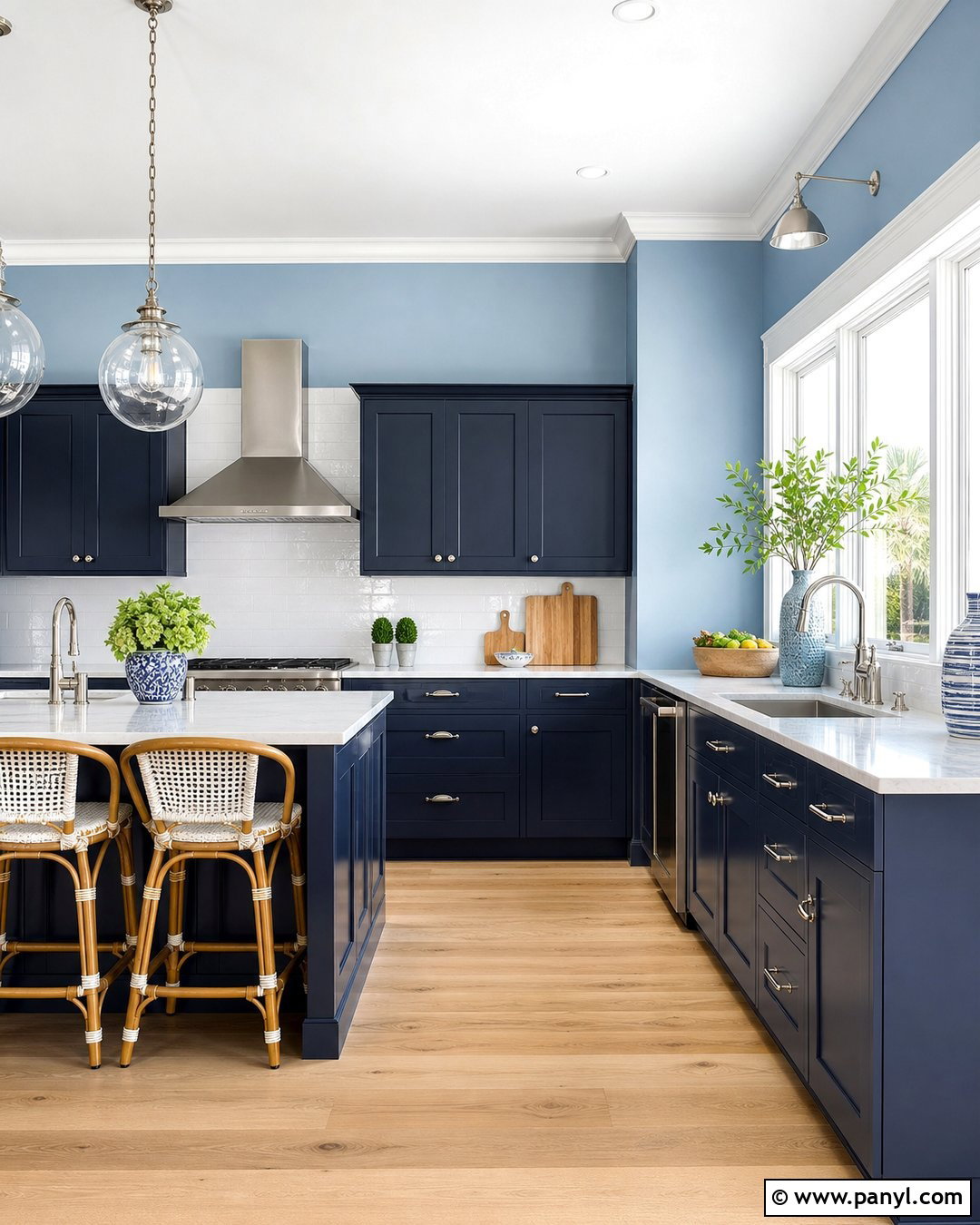
Coastal blue walls can keep dark navy cabinets from feeling formal or imposing. Use an airy blue with a small amount of gray, paired with crisp white quartz countertops and a glossy white backsplash that carries light through the space. Navy shaker cabinets create definition, while polished nickel cup pulls and clear glass pendants add a clean coastal finish. White oak flooring and woven rattan counter stools introduce warmth without competing with the blue palette. Consider a white island with a pale wood base or open end shelves to create a lighter focal point. Keep the decor relaxed but restrained with white stoneware, striped cotton textiles, and natural fiber shades. Avoid obvious themed accessories so the finished room feels timeless and residential.
9. Cobalt Blue Kitchen Walls With Black Cabinets
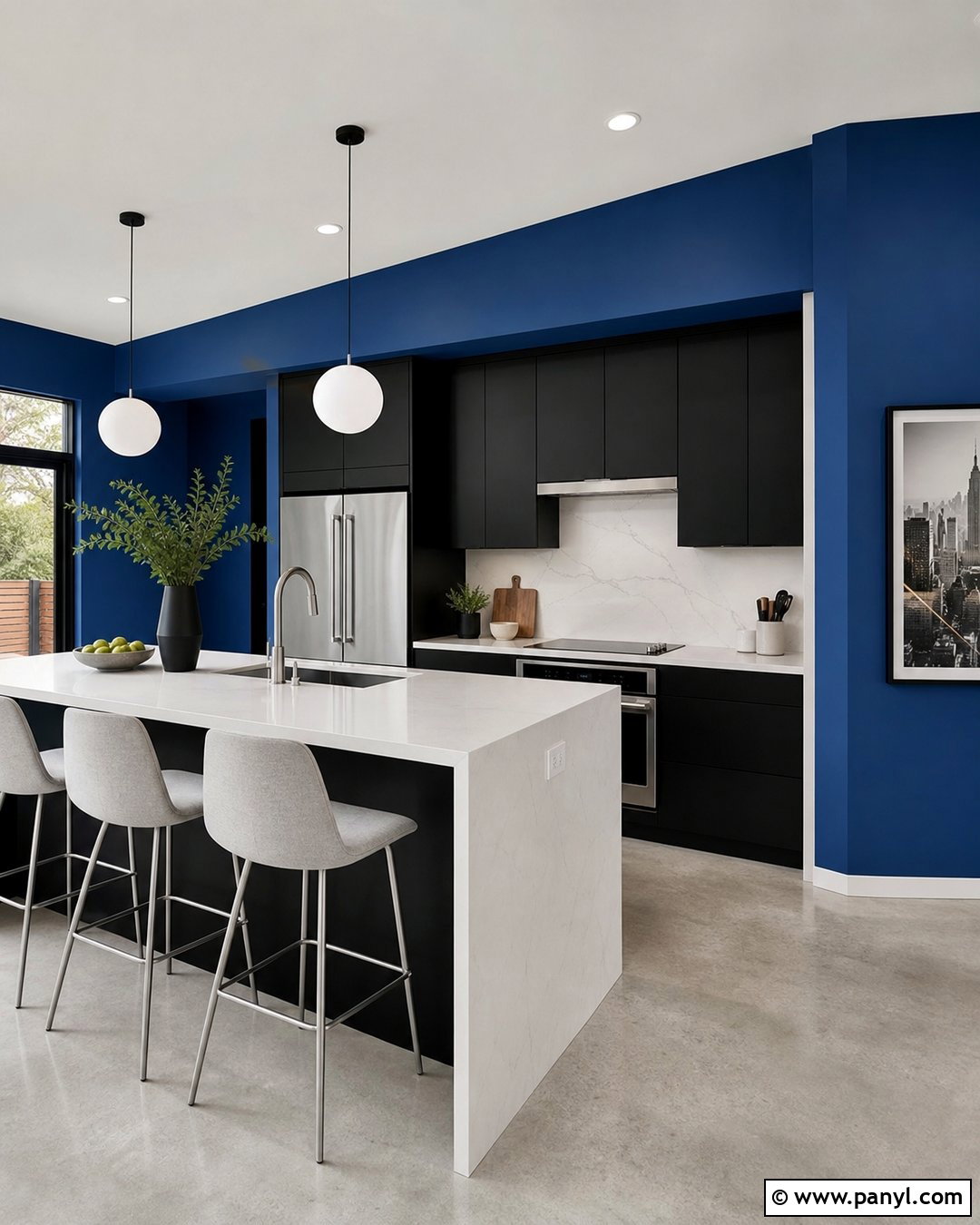
Cobalt blue walls create a vivid backdrop for black cabinets and work best when surrounded by simple, high-contrast materials. Select sleek black flat-panel cabinetry and continue it around integrated appliances for a unified modern look. Bright white quartz countertops and a large-format white backsplash provide visual breathing room between the two strong colors. Pale concrete-look flooring adds an urban edge without making the kitchen darker. Use stainless steel fixtures, minimal black hardware, and oversized white globe pendants to keep the finishes controlled. A white waterfall island should become the room’s bright central feature, paired with light gray counter stools. Limit decorative pieces to clear glass, white ceramics, and one pale wood tray so the cobalt walls remain the most memorable element.
10. Duck Egg Blue Kitchen Walls With Dark Wood Cabinets
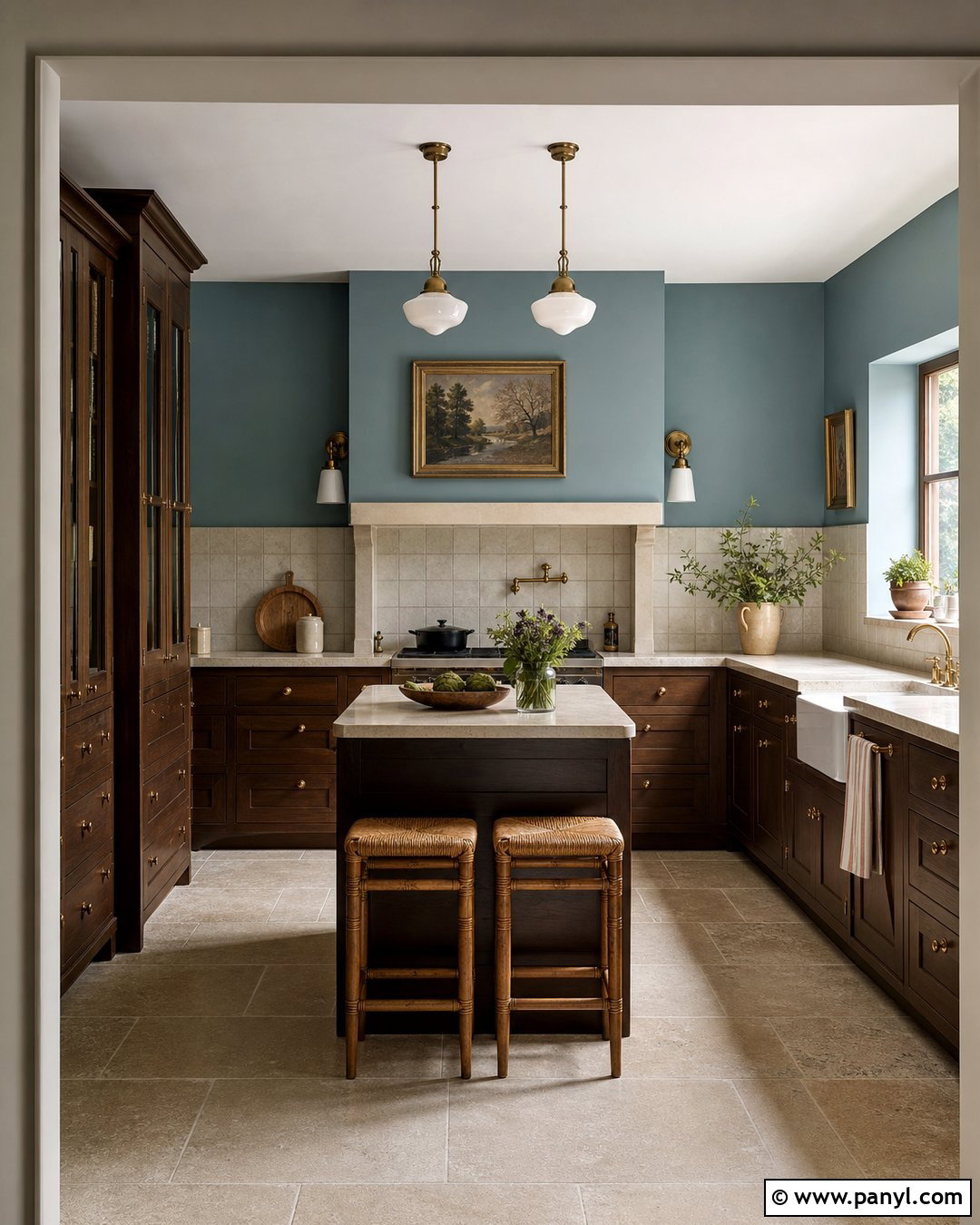
Duck egg blue walls offer a soft, vintage-inspired partner for dark wood cabinets. Choose cabinets with visible grain and simple shaker fronts, then add creamy soapstone-look quartz counters for a gently aged appearance. An off-white square tile backsplash with warm grout will link the counters to the walls without looking stark. Aged brass knobs, a bridge-style faucet, and schoolhouse pendants support the traditional character. Use warm limestone flooring or light oak planks to brighten the space from below. A small dark wood island can work when topped with pale stone and paired with woven stools. Finish with linen Roman shades, cream crockery, and a muted patterned runner. The result feels collected and comfortable rather than overly rustic.
11. Sky Blue Kitchen Walls With Charcoal Cabinets
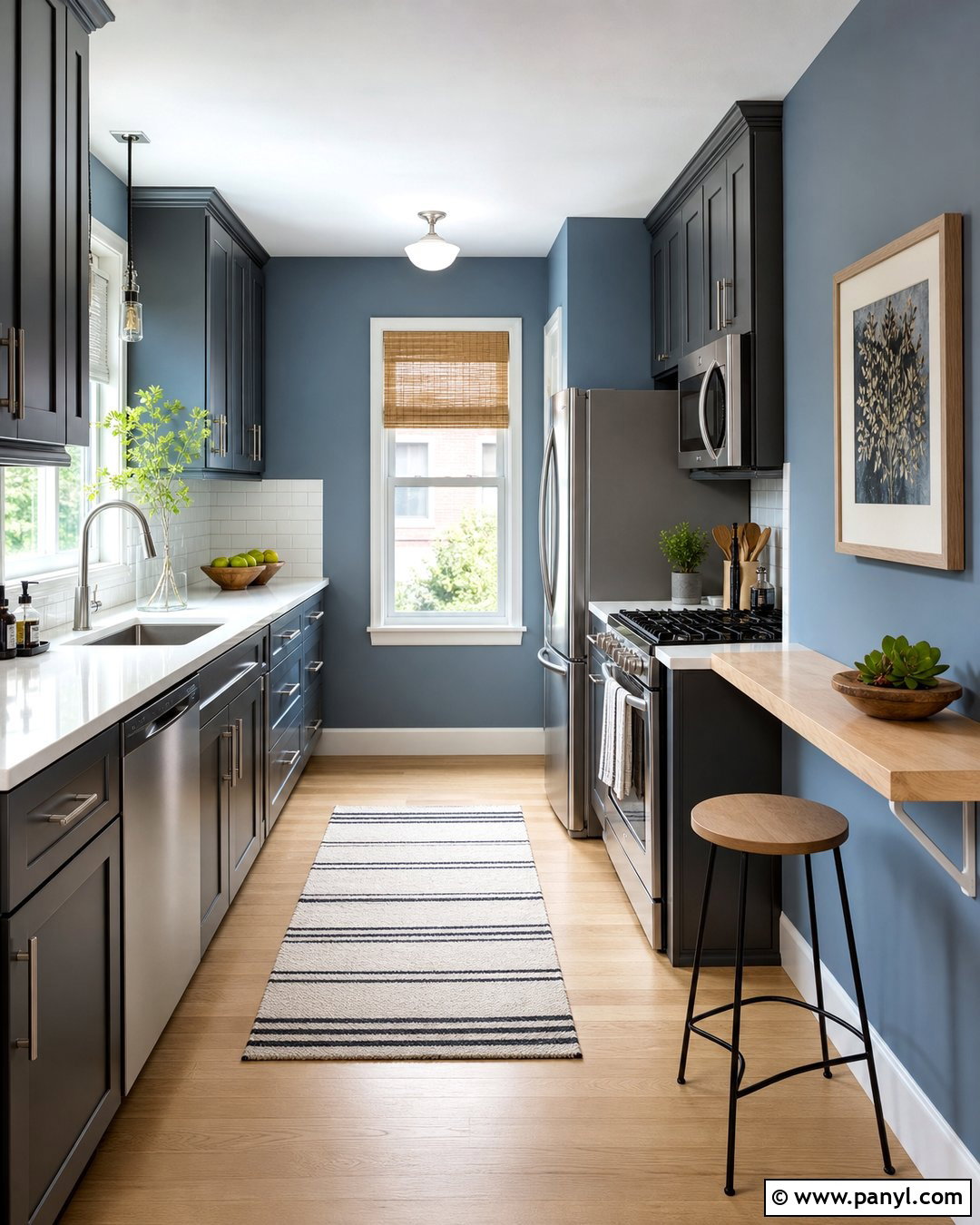
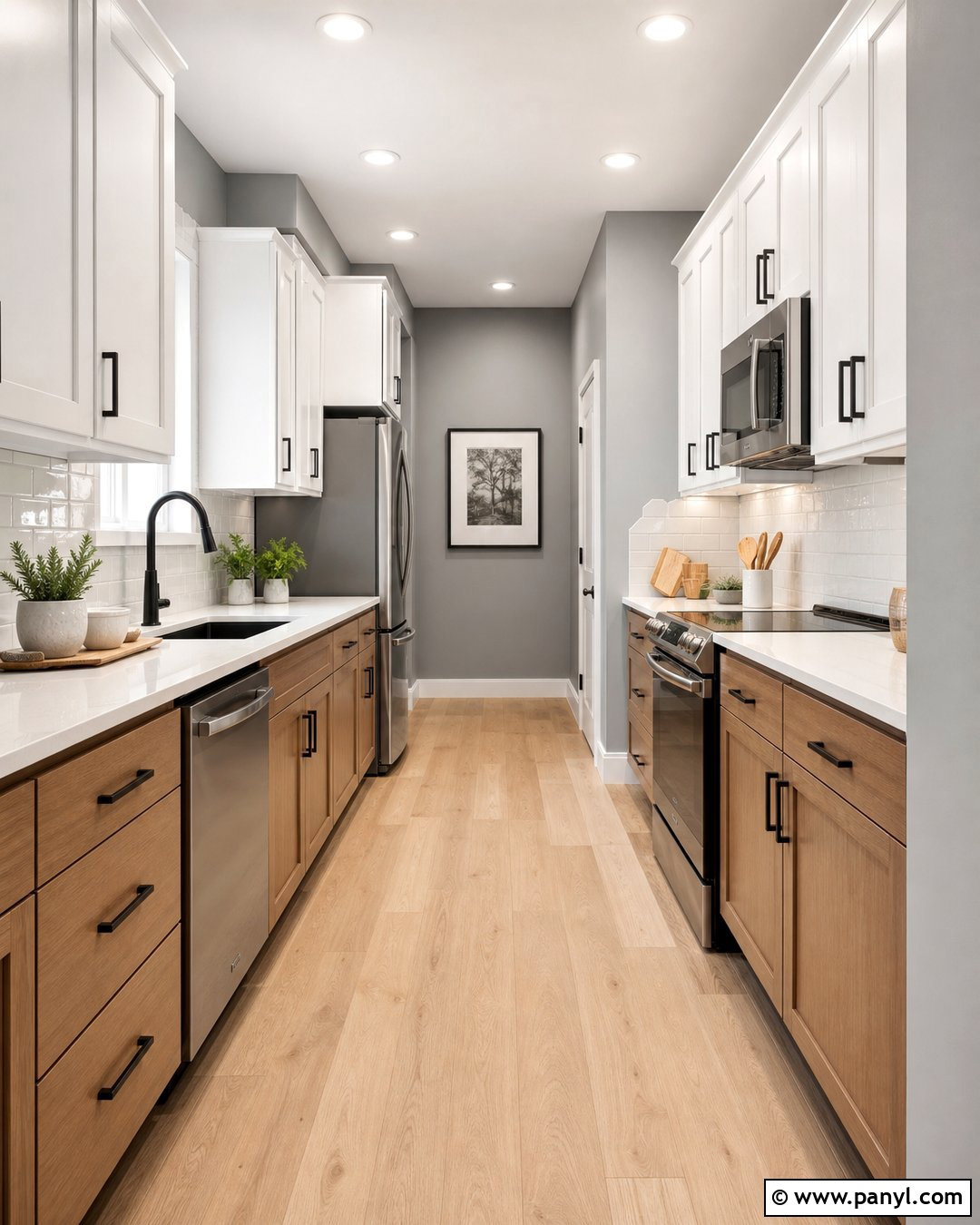
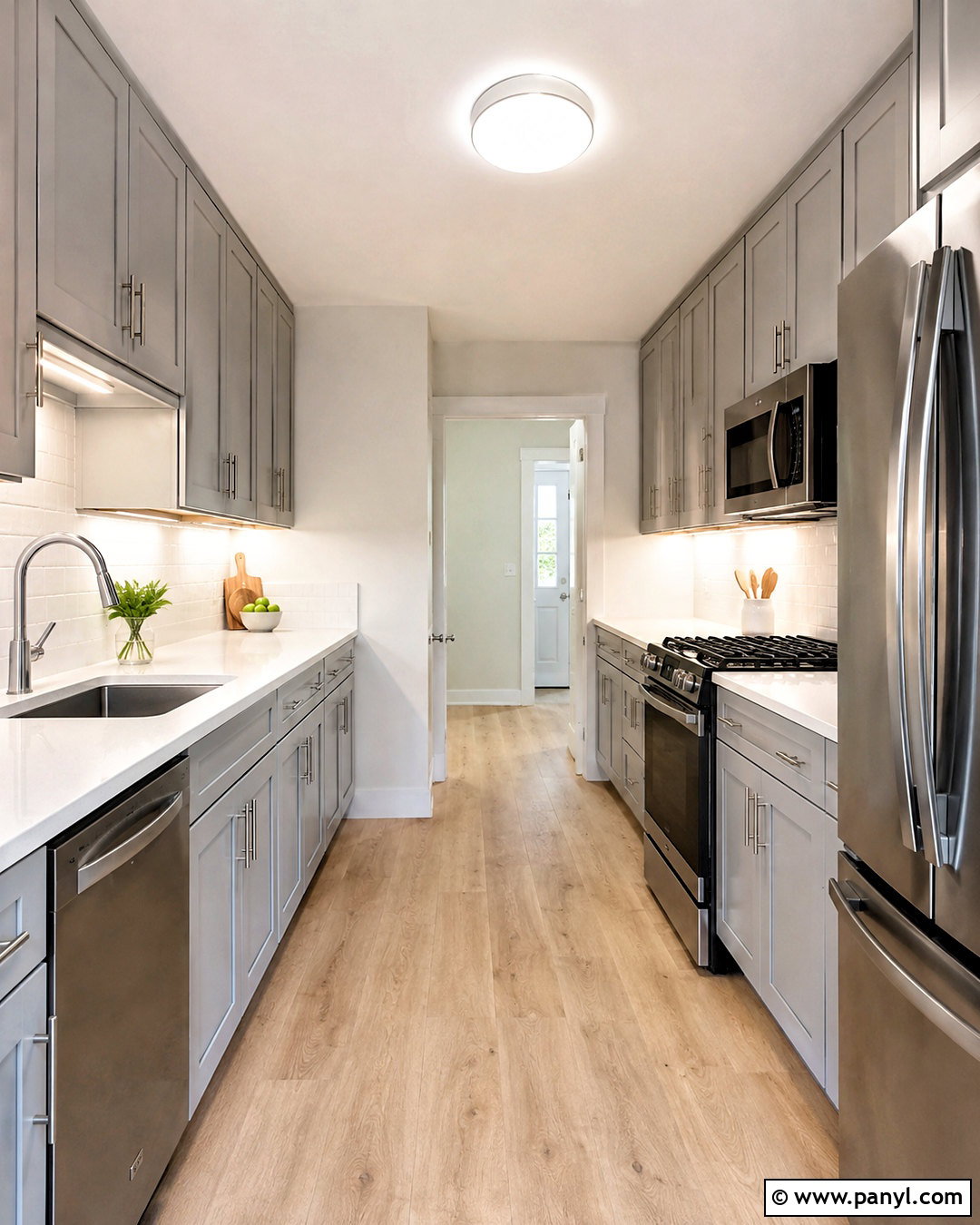
Sky blue walls can visually open a compact kitchen furnished with charcoal cabinets. Use a clean but softened shade rather than a highly saturated blue, then repeat white across the countertop, backsplash, ceiling, and window trim. This broad use of white prevents the charcoal cabinetry from dominating the narrow layout. Select simple shaker doors, brushed nickel hardware, and a stainless steel sink for a crisp transitional finish. Light maple or oak flooring adds subtle warmth. In a galley kitchen, keep the center walkway clear and use wall-mounted lighting or small glass pendants instead of bulky fixtures. A pale wood breakfast ledge can provide casual seating. Complete the room with white pottery, a blue-striped runner, and minimal countertop appliances.
12. Steel Blue Kitchen Walls With Black Cabinets
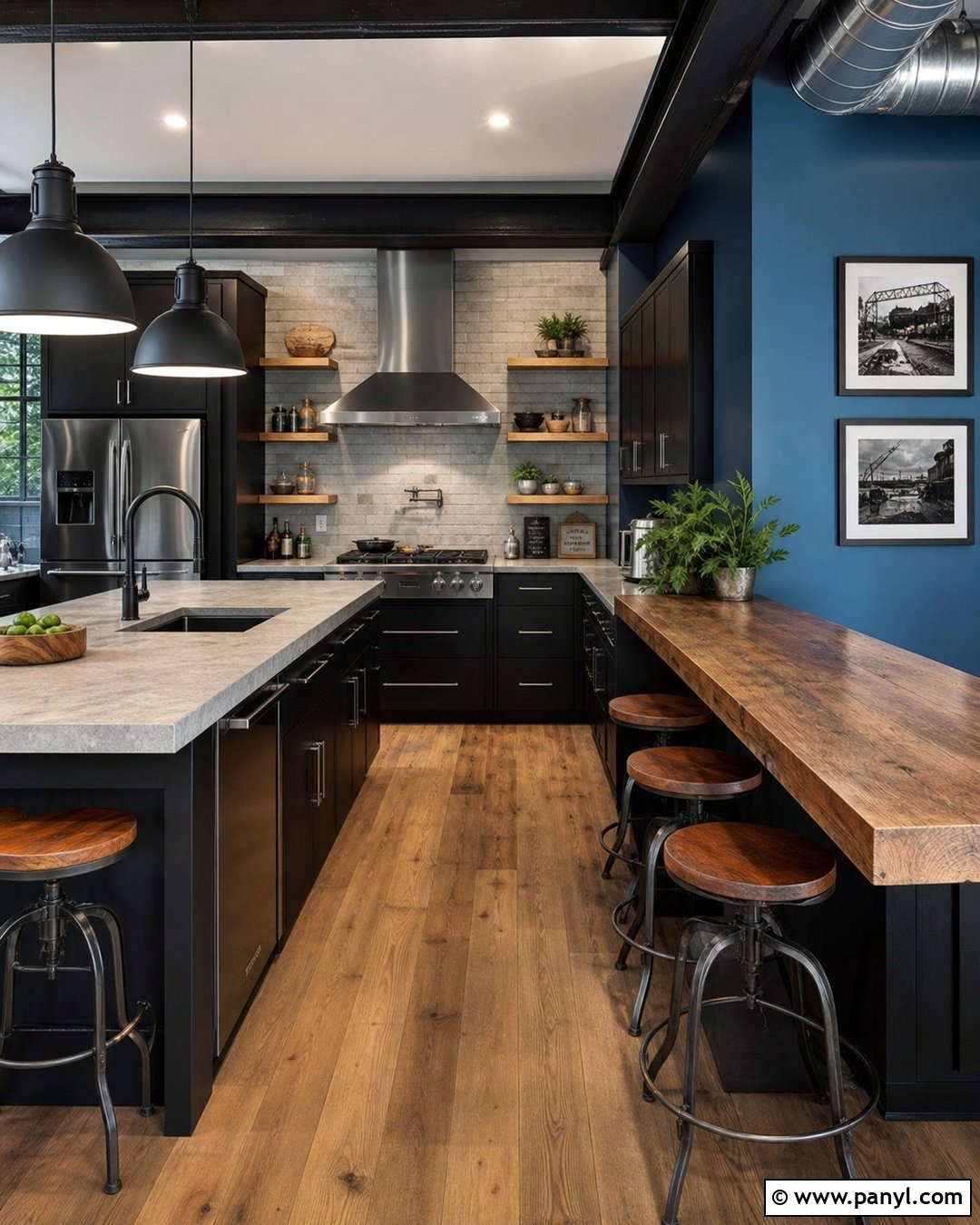
Steel blue walls create a sophisticated industrial background for satin black cabinets. The blue should have noticeable gray undertones so it coordinates naturally with stainless steel appliances and metal fixtures. Choose black slab-front cabinetry, concrete-look quartz countertops, and a white or pale gray stacked tile backsplash. Warm the cool combination with wide-plank oak flooring and a thick wood breakfast bar attached to the island. Matte black pendants maintain the clean architectural lines, while brushed stainless steel hardware adds a subtle contrast against the cabinet doors. Keep the room functional with open oak shelves, neatly arranged white dishes, and concealed appliance storage. A textured neutral runner and tan leather-look stools can add softness without distracting from the strong blue-and-black palette.
13. Cornflower Blue Kitchen Walls With Espresso Cabinets
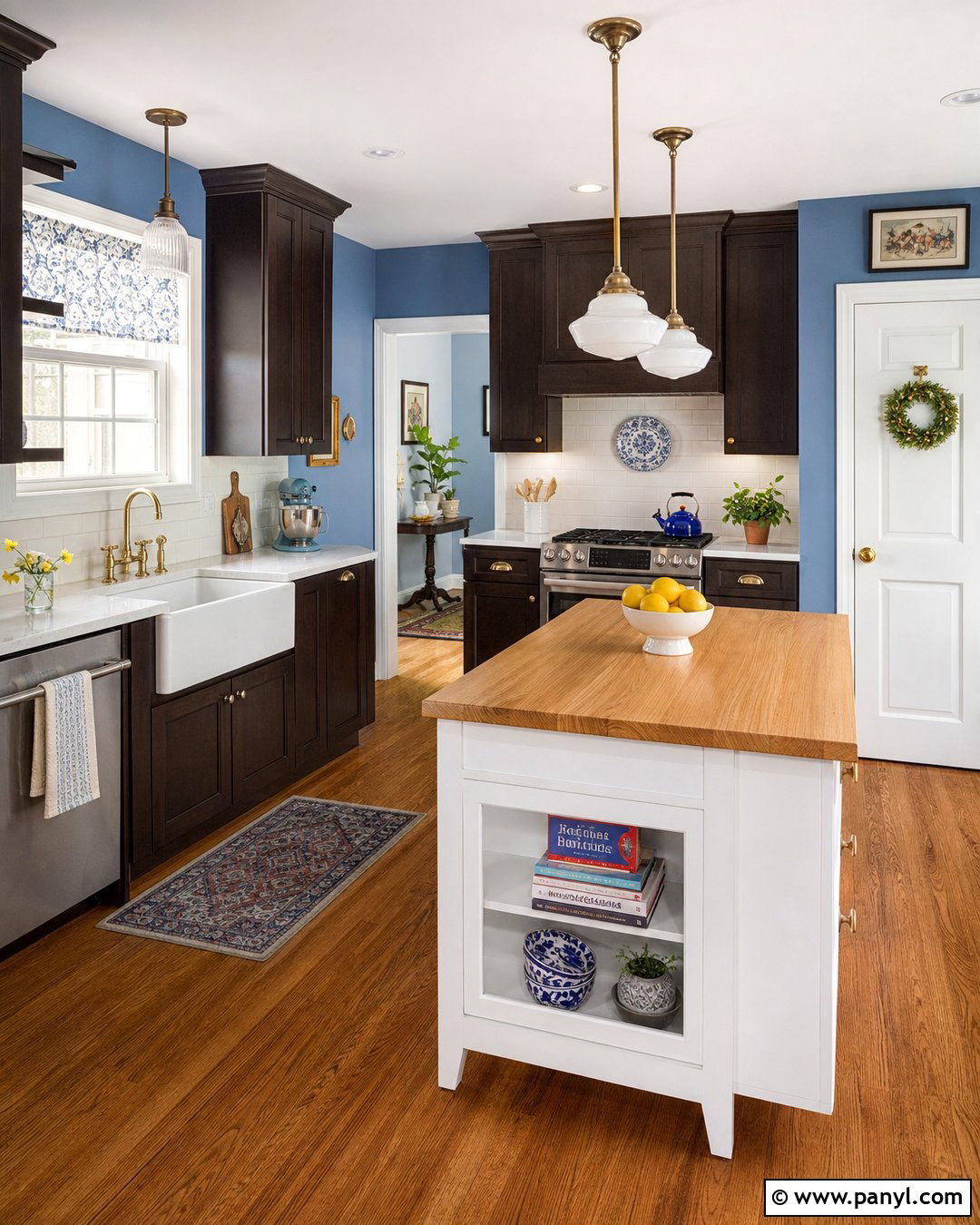
Cornflower blue walls can refresh espresso cabinets with a cheerful color that still feels comfortable in everyday use. Choose a softened cornflower tone rather than a bright primary blue. Pair it with warm white quartz, an ivory subway tile backsplash, and medium oak flooring to balance the dark brown cabinet finish. Traditional shaker doors, antique brass knobs, and a cream farmhouse-style sink create an approachable cottage look. Paint the island warm white and top it with light butcher block to establish a bright center. Glass-front upper cabinets can further reduce the visual weight of the espresso wood. Finish the room with woven pendants, checked blue-and-cream textiles, simple pottery, and natural wood boards arranged neatly against the backsplash.
14. Denim Blue Kitchen Walls With Dark Walnut Cabinets
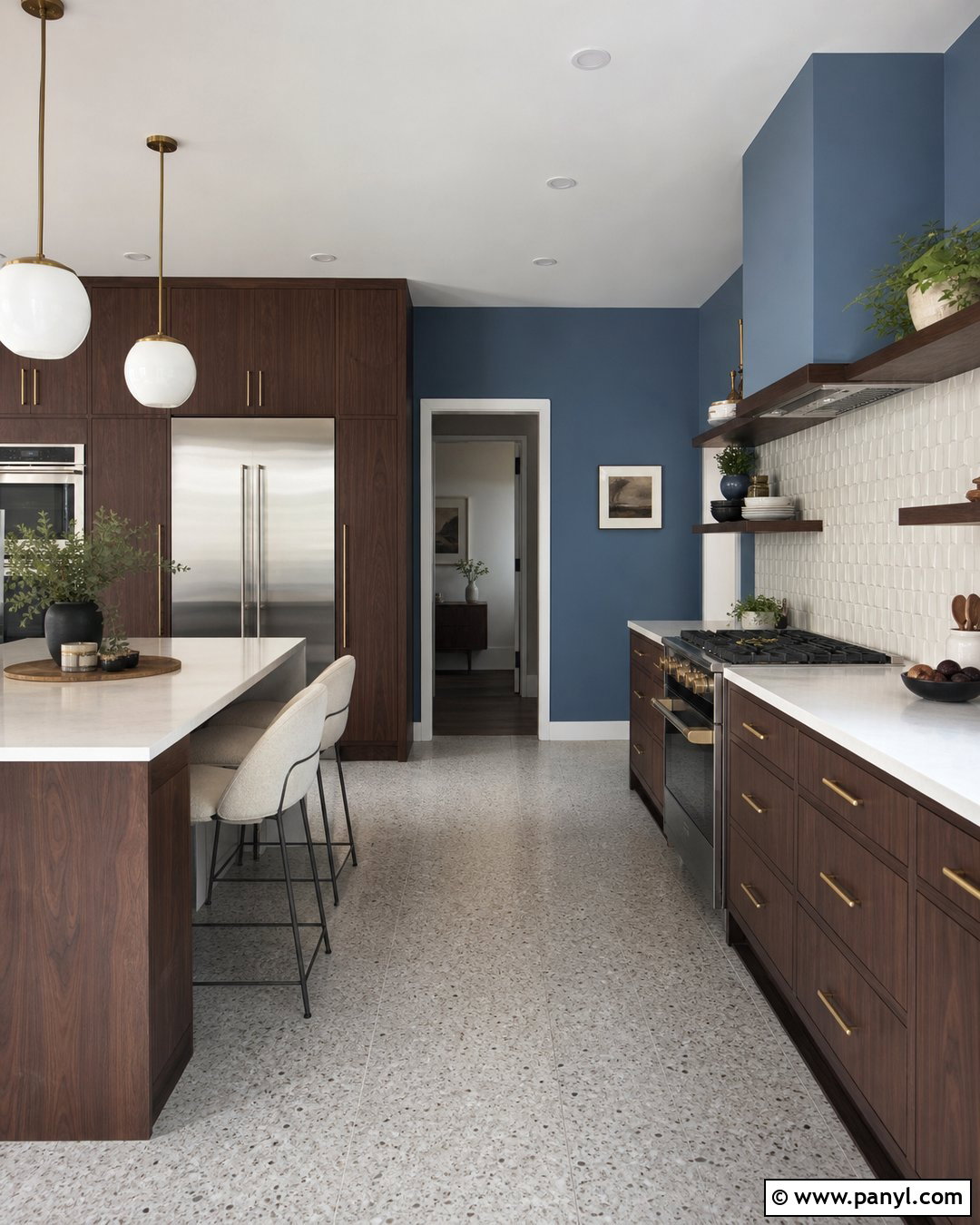
Denim blue walls and dark walnut cabinets create an easygoing kitchen with a tailored, modern character. A medium denim shade offers more color than blue-gray while remaining quieter than cobalt or navy. Use walnut slab cabinets to emphasize the wood grain, paired with creamy quartz countertops and handmade off-white backsplash tile. Brushed brass pulls and a matching faucet warm the blue, while light terrazzo flooring introduces subtle pattern. Add a streamlined walnut island with a pale stone top and oatmeal upholstered stools. Large milk-glass pendants will illuminate the dark wood without adding more visual weight. Keep open surfaces restrained with cream ceramics, a small wood bowl, and linen towels. The finished palette feels warm, current, and highly livable.
15. Turquoise Blue Kitchen Walls With Black Cabinets
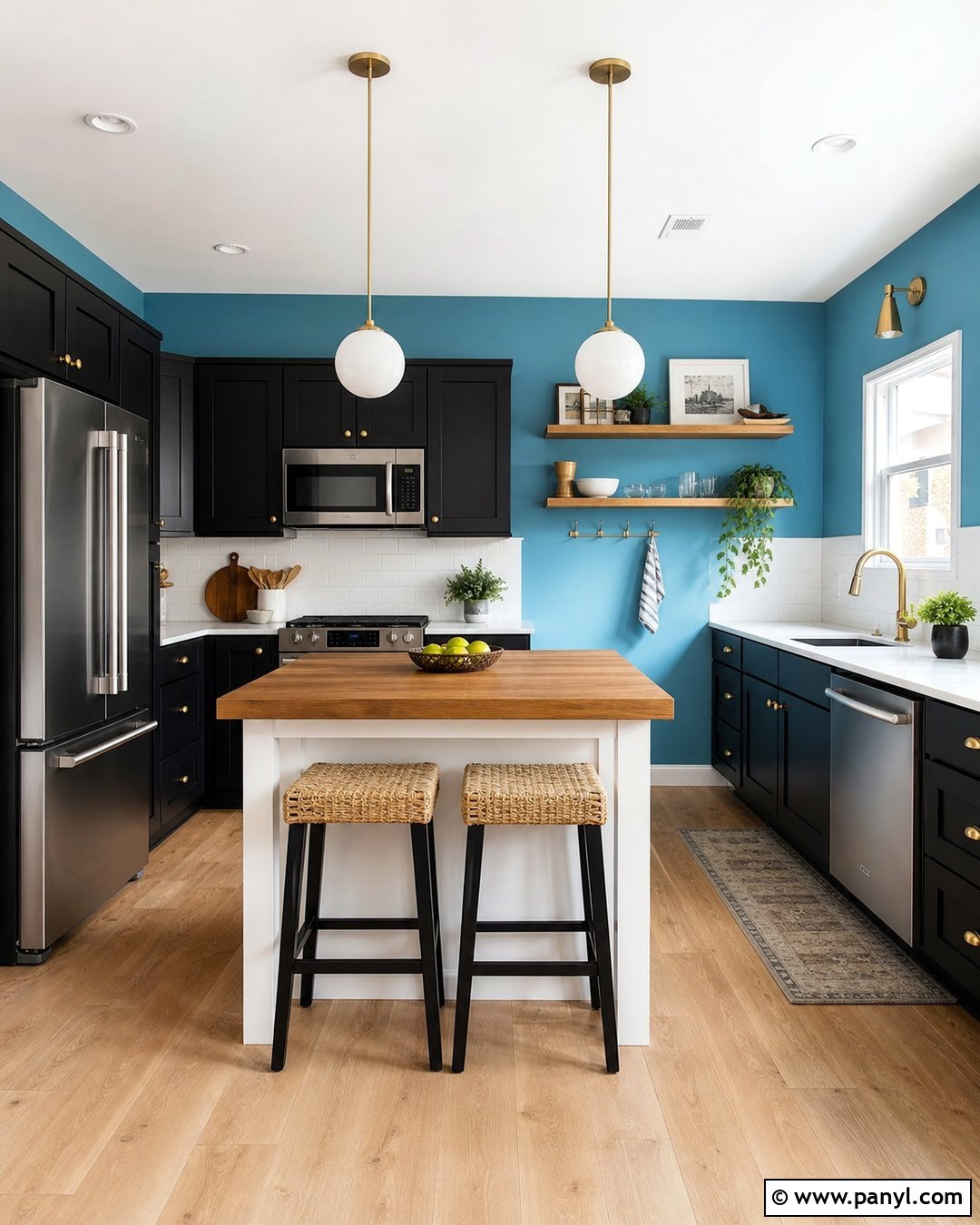
Turquoise walls can transform black cabinetry into a playful focal point when the surrounding finishes remain controlled. Choose a softened turquoise with balanced blue and green notes rather than a neon shade. Use matte black shaker cabinets, white quartz countertops, and glossy white rectangular tile to create clean visual boundaries. Light oak flooring and a matching wood island top warm the strong color contrast. Simple brass knobs and globe pendants add polish without making the design overly formal. If the layout allows, include a white island with open shelving and natural woven stools. Complete the kitchen with neutral dishware, pale wood accessories, and one washable geometric runner that includes small touches of turquoise. Ample white lighting keeps the saturated walls clear and uplifting.
16. Deep Blue Kitchen Walls With Charcoal Cabinets
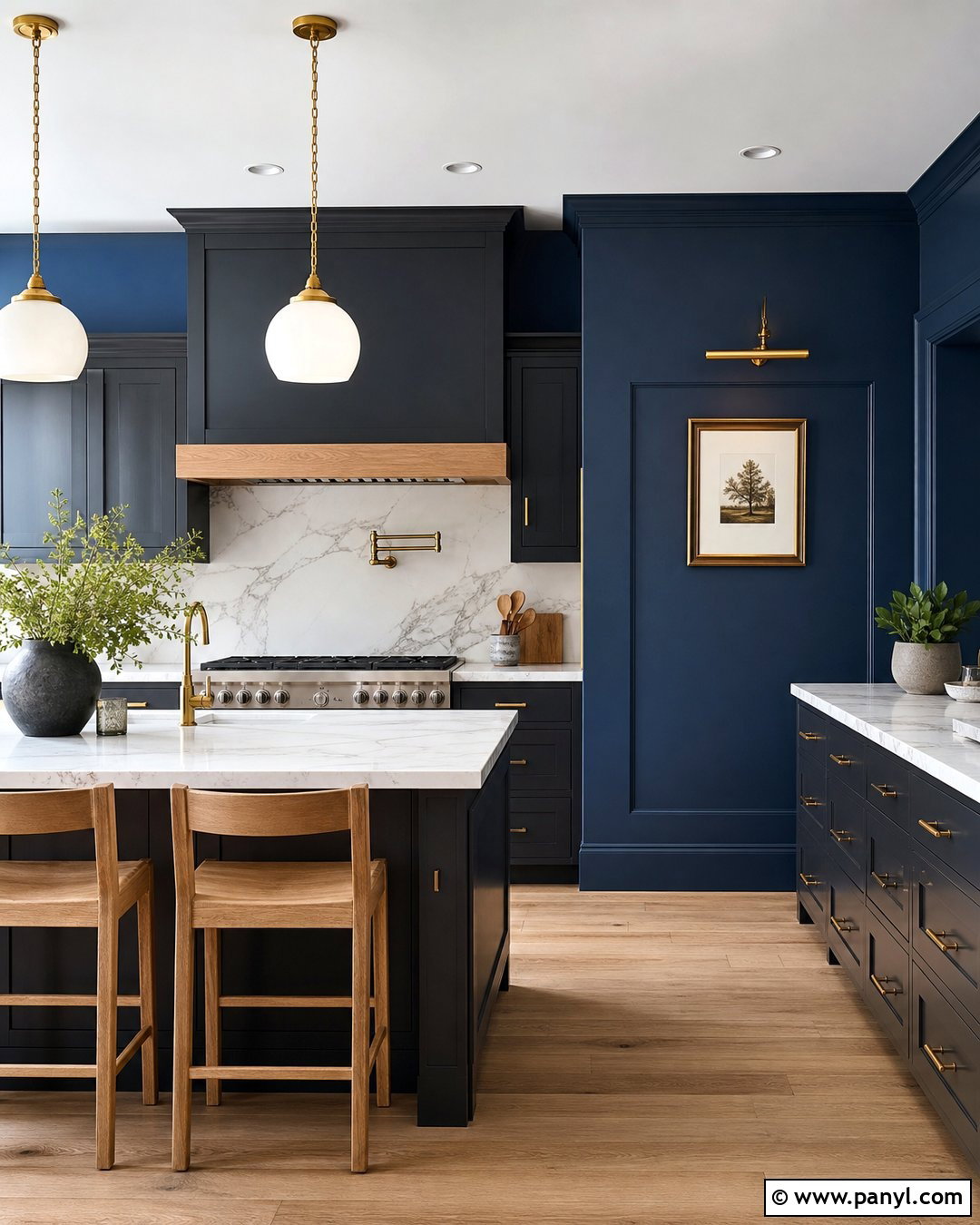
Deep blue walls paired with charcoal cabinets create a color-drenched kitchen that feels intentional rather than accidental. This look works best in a room with generous windows or a connected open layout. Use charcoal flat-panel cabinetry and paint the walls a strong blue that remains visibly distinct from the cabinet finish. Install pale marble-look quartz across the countertops and backsplash to interrupt the darker surfaces. Light oak flooring, oak counter stools, and a wood-trimmed range hood add necessary warmth. Choose brushed brass hardware and oversized opal glass pendants for bright reflective accents. Keep the ceiling warm white and install lighting beneath every upper cabinet. Minimal cream pottery and neatly arranged wood boards complete the dramatic but balanced design.
17. French Blue Kitchen Walls With Dark Oak Cabinets
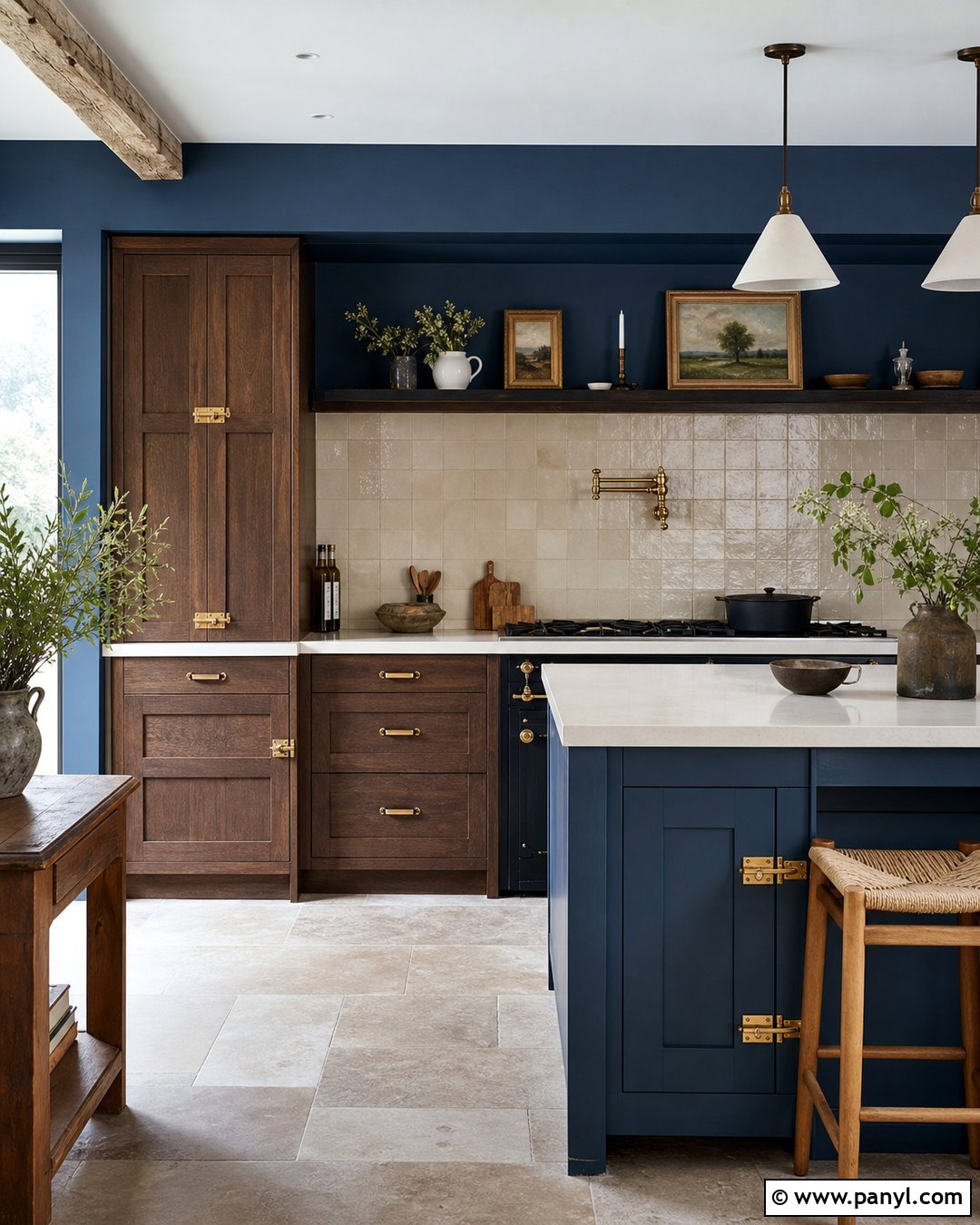
French blue walls bring softness and understated color to dark oak cabinets. Choose a muted medium blue with subtle gray undertones, then support it with warm ivory countertops and an off-white zellige-style backsplash. Dark oak shaker cabinetry provides natural texture, while aged brass latches and cup pulls create traditional detail. Pale limestone-look flooring keeps the room light and complements the cabinet’s brown undertones. A freestanding island painted French blue can repeat the walls, but its cream stone top should remain bright. Add linen-shaded pendants, rush-seat counter stools, and simple cotton window treatments. Display cream plates behind one glass cabinet door and keep other accessories minimal. This complete scheme feels established, comfortable, and suitable for an older or newer home.
18. Aqua Blue Kitchen Walls With Espresso Cabinets
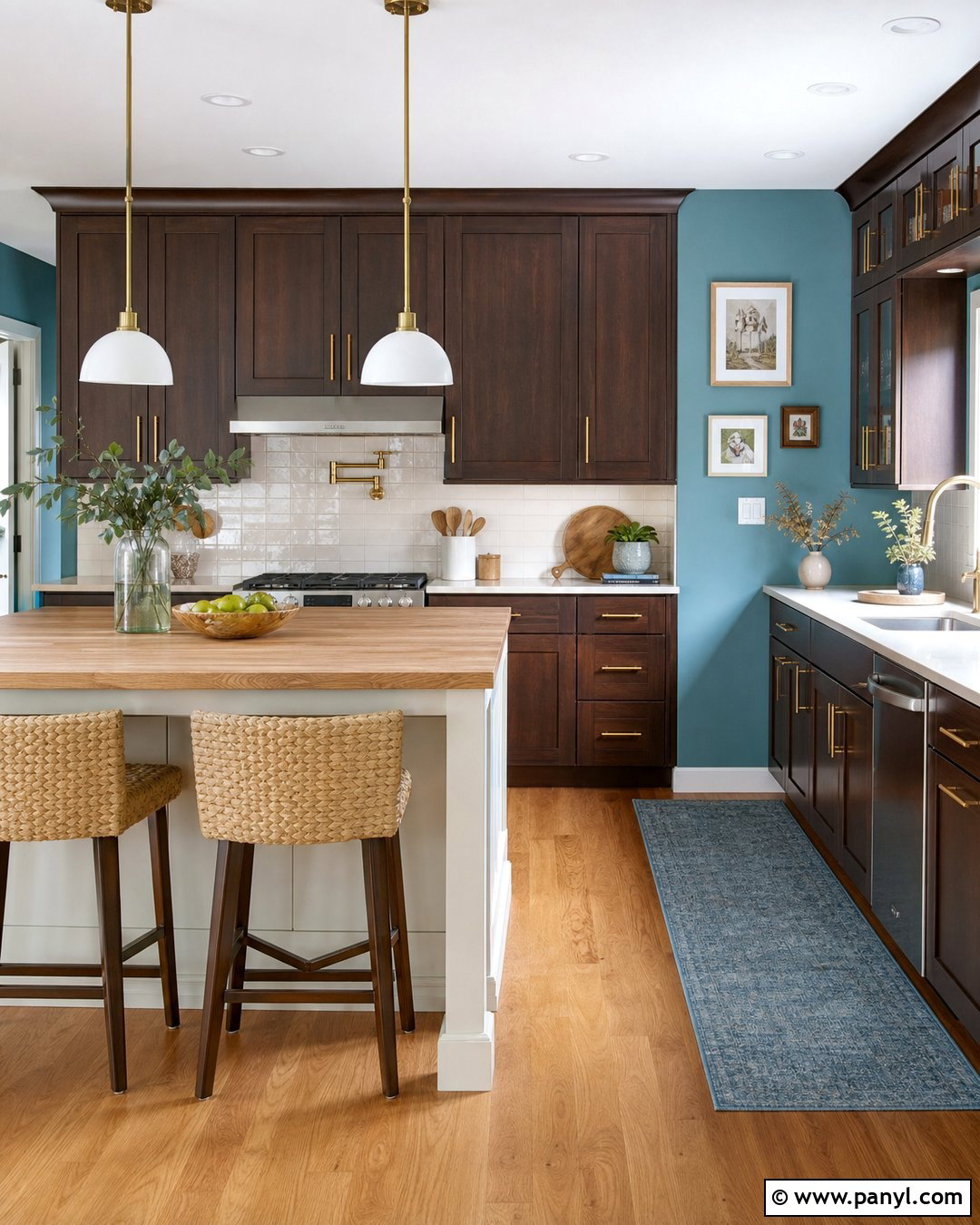
Aqua blue walls can lift espresso cabinets in a family kitchen that needs more brightness and color. Select a pale aqua with restrained green undertones so it remains easy to coordinate. Cream quartz countertops and a glossy ivory tile backsplash soften the contrast, while honey oak flooring connects naturally with the brown cabinetry. Use simple espresso shaker doors, brushed brass handles, and warm white pendant lights for a friendly transitional finish. A cream island with a butcher-block top creates a lighter gathering point and provides a visual break from the dark perimeter cabinets. Add woven counter stools, washable striped rugs, and practical white ceramics. Keep the window treatments sheer or woven so natural light strengthens the fresh quality of the aqua walls.
19. Midnight Blue Kitchen Walls With Black Cabinets
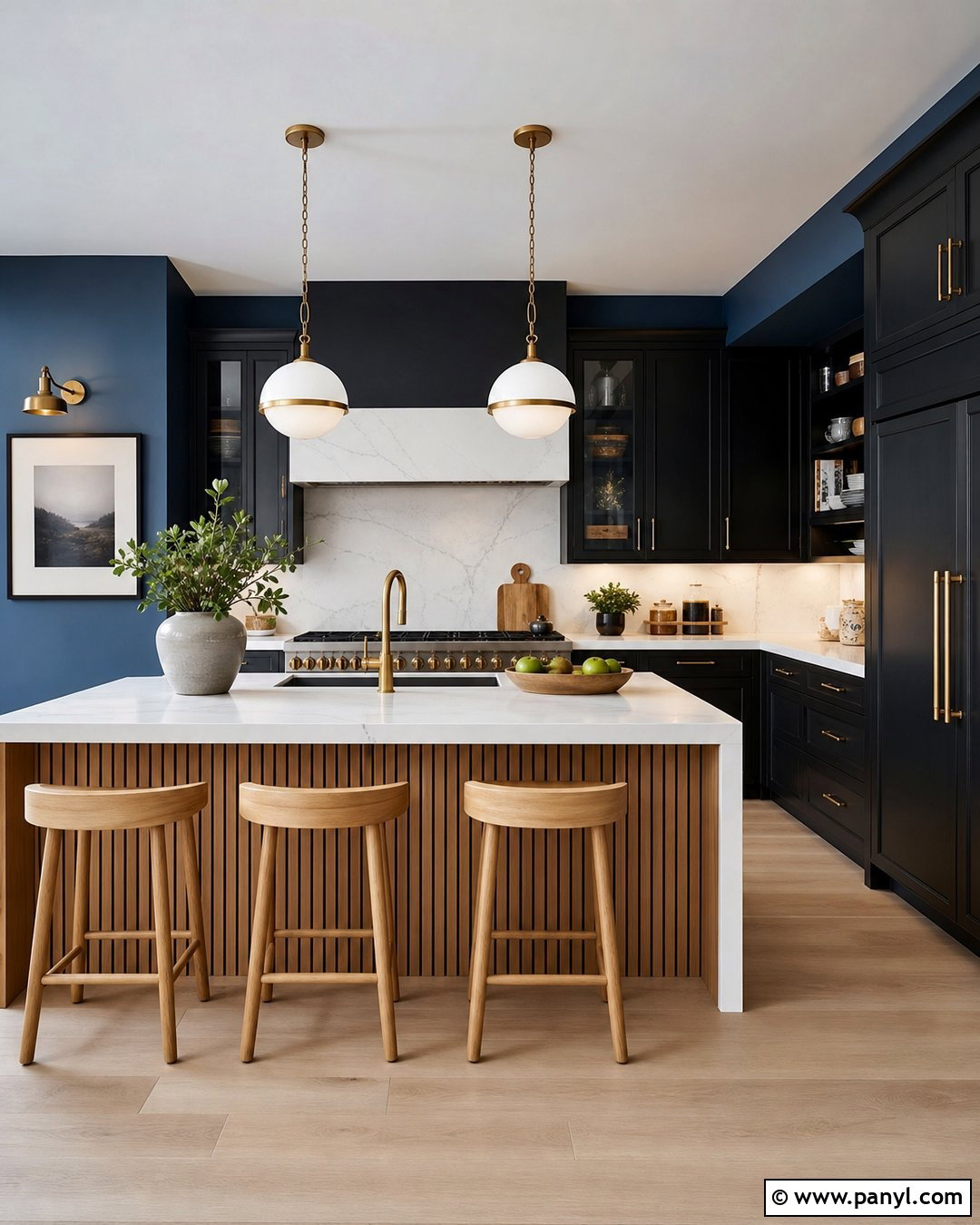
Midnight blue walls and black cabinets can produce a striking kitchen when texture and light are carefully layered. Keep the cabinetry satin rather than completely flat so it reflects a small amount of light. Install white marble-look quartz on the countertops and continue it up the backsplash for a broad, uninterrupted bright surface. Pale oak flooring and a matching slatted island accent prevent the blue-black palette from appearing cold. Use unlacquered brass pulls, a brass faucet, and large milk-glass pendants to introduce warm highlights. A central island with a white waterfall top will anchor the room while maintaining contrast. Finish with light wood stools, white stoneware, and strong under-cabinet illumination. Avoid excessive decor so the dramatic color pairing remains sophisticated.
20. Soft Blue Kitchen Walls With Dark Green Cabinets
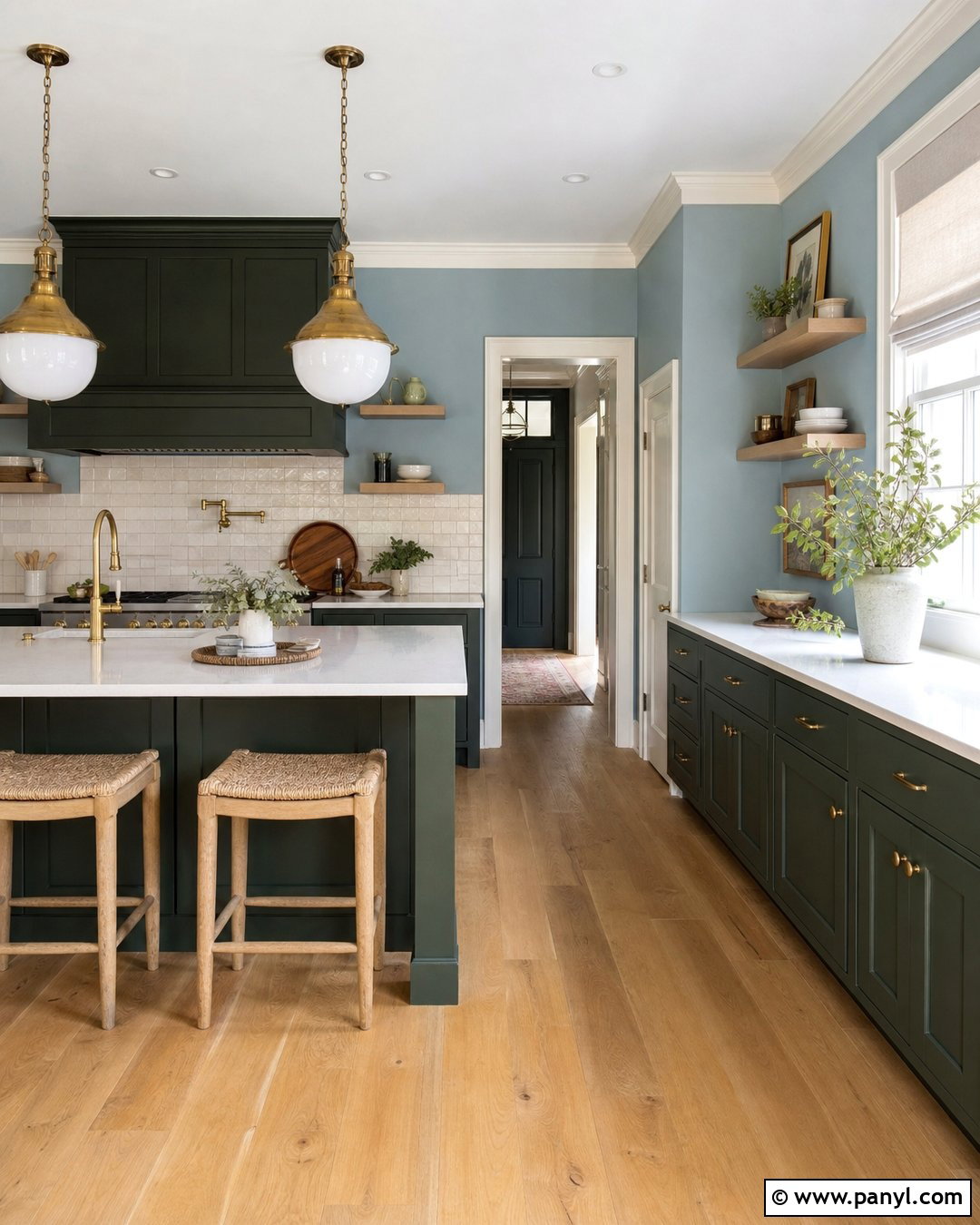
Soft blue walls provide an unexpected but balanced partner for dark green cabinets, especially when both colors share muted gray undertones. Choose deep forest green shaker cabinetry and a quiet blue wall color that feels light in changing daylight. Warm white quartz counters and a creamy backsplash separate the two colors and prevent the palette from becoming muddy. Use natural oak flooring, oak floating shelves, and woven stools to establish a warm foundation. A dark green island can remain cohesive when paired with a pale countertop and bright brass pendants. Add aged brass hardware, linen window shades, and a faded blue runner with touches of green. The completed kitchen feels nature-inspired and layered while still centering blue walls and genuinely dark cabinetry.
Conclusion:
Blue Kitchen Walls With Dark Cabinets offer much more flexibility than the bold pairing might initially suggest. Pale blue can brighten black, charcoal, or espresso cabinetry, while teal, cobalt, and navy create deeper, more dramatic rooms. The strongest combinations use pale countertops, intentional lighting, and warm flooring to keep visual weight evenly distributed. Cabinet undertones also matter. Warm brown woods usually benefit from softened or slightly green blues, while black and charcoal finishes work naturally with cooler shades. Before painting, test large samples beside the cabinets, counters, backsplash, and flooring throughout the day. Once those colors connect, the finished kitchen can feel balanced, personal, and complete rather than dark or overly coordinated.

Related Ideas and Inspiration:
Leave a Reply