
Yellow Wall Green Cabinets create a cheerful kitchen palette that feels warm, natural, and full of personality. The key is choosing yellow and green shades with compatible undertones, then balancing them with thoughtful countertops, flooring, hardware, and lighting. Soft butter walls can make sage cabinets feel calm and inviting, while mustard walls and forest green cabinetry create a richer, more dramatic room. White stone, warm wood, handmade tile, and mixed metals can further shape the look. Whether you prefer farmhouse charm, midcentury character, modern simplicity, or traditional detailing, this color combination offers plenty of flexibility. The following complete kitchen looks show practical, stylish ways to coordinate finishes, furniture, appliances, and decor around Yellow Wall Green Cabinets.
1. Butter Yellow Walls With Sage Green Cabinets
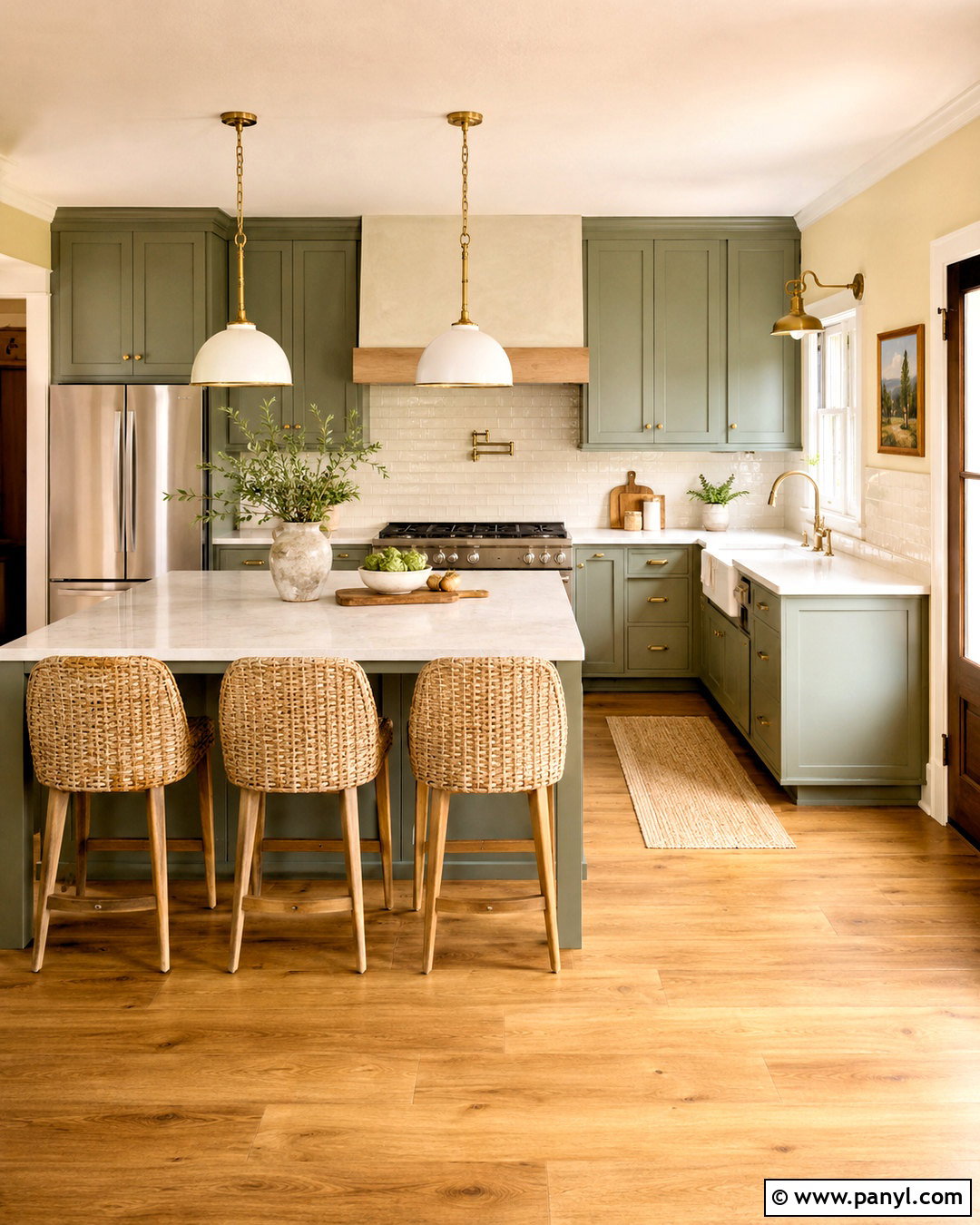
Soft butter yellow walls and sage green cabinets create a bright, relaxed kitchen that feels naturally welcoming. Choose simple Shaker doors in a muted sage finish, paired with brushed brass knobs and cup pulls. White quartz countertops keep the palette clean, while a cream subway tile backsplash creates a gentle transition between the two colors. Warm oak flooring gives the room an organic foundation without adding another strong hue. Complete the kitchen with a white farmhouse sink, an aged brass faucet, and woven counter stools around a sage island. Linen Roman shades, ceramic bowls, and small potted herbs provide easy decoration. Keep the ceiling and window trim warm white so the yellow remains sunny rather than overly saturated.
2. Mustard Yellow Walls With Forest Green Cabinets
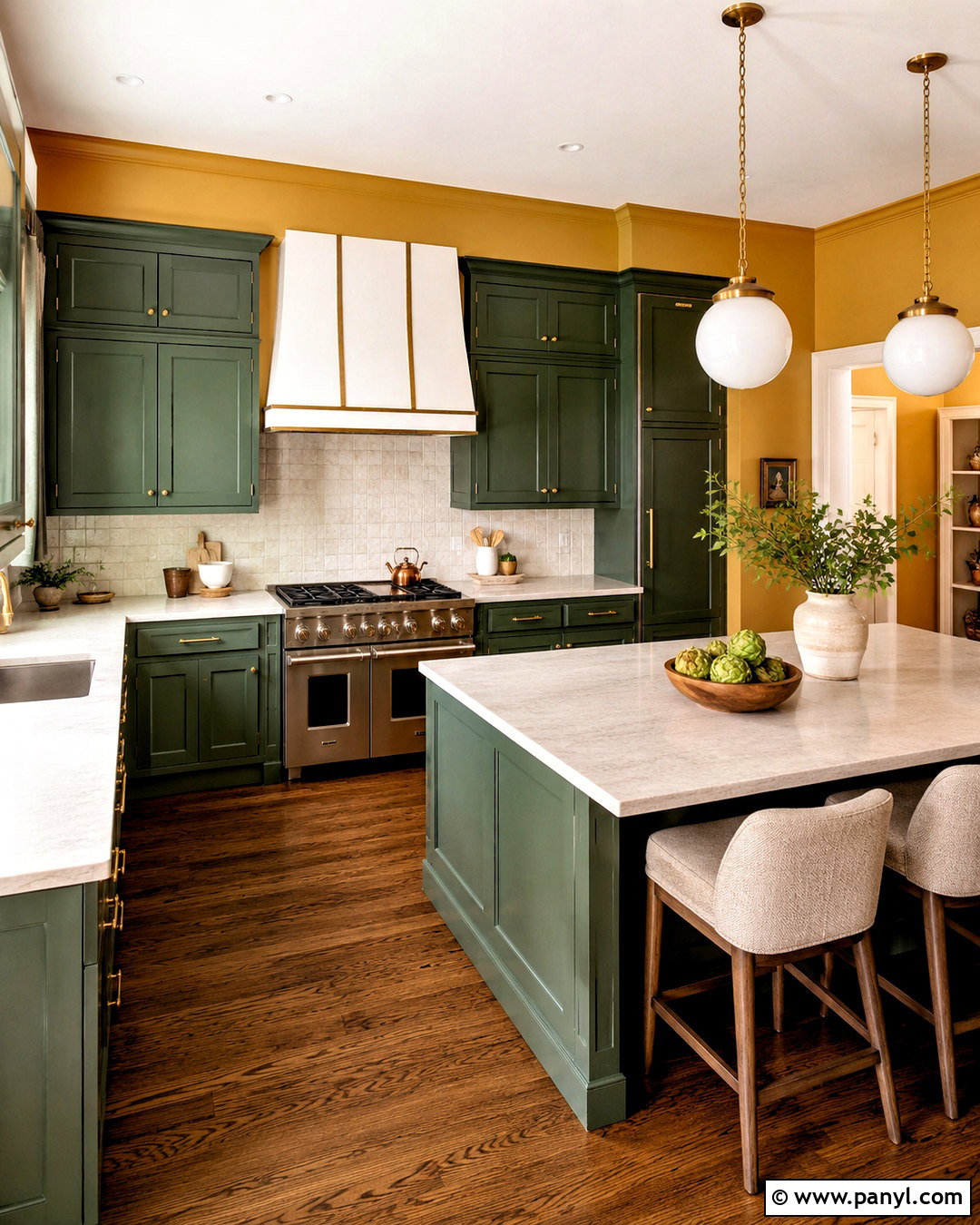
Deep forest green cabinets can ground mustard yellow walls and produce a kitchen with rich, confident character. Use full-height cabinetry with traditional inset doors to give the darker color a polished appearance. Cream quartz countertops soften the contrast, while a backsplash of handmade ivory tile reflects light around the work areas. A dark-stained oak floor supports the dramatic palette without competing with it. Add aged brass hardware, a bridge-style faucet, and two simple opal glass pendants above the island. Upholstered counter stools in natural oatmeal fabric introduce another quiet neutral. Keep appliances integrated when possible, and display only a few wooden cutting boards or cream ceramics. This combination works especially well in a spacious kitchen with generous natural light.
3. Pale Yellow Walls With Olive Green Cabinets
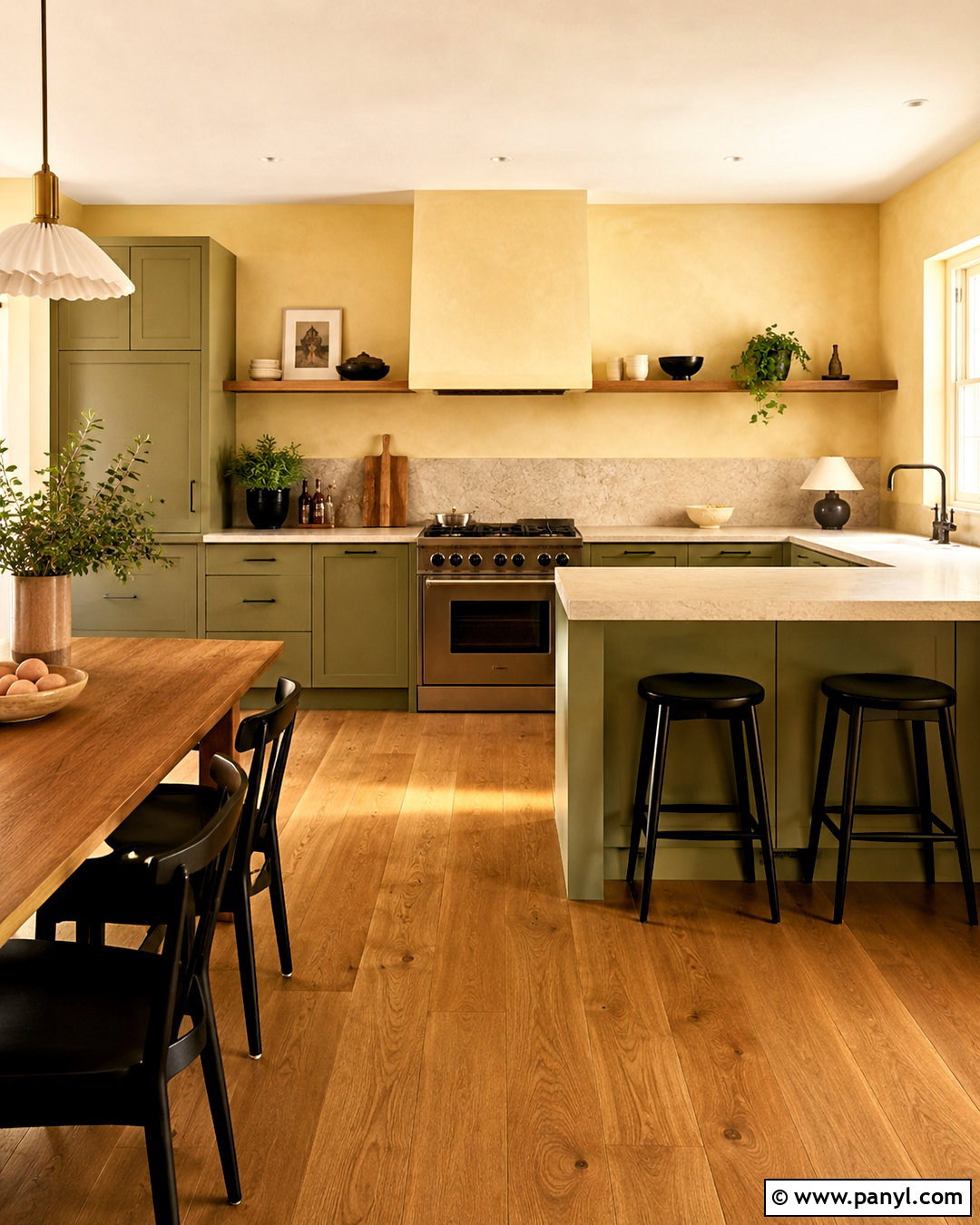
Pale yellow walls bring freshness to earthy olive green cabinets without making the kitchen feel overly colorful. Select matte olive cabinetry with uncomplicated flat-panel doors for a clean transitional look. Light beige limestone counters and a matching slab backsplash create a calm, seamless work surface. Medium oak flooring emphasizes the natural quality of the green, while black hardware adds a small amount of definition. A wooden dining table positioned beside the kitchen can connect the cabinetry to the floor. Finish the room with cream dining chairs, woven pendant lights, and off-white linen curtains. Instead of filling every wall with storage, include one section of oak floating shelves for everyday dishes. The finished palette feels warm, grounded, and appropriate for both compact and open kitchens.
4. Lemon Yellow Walls With Mint Green Cabinets
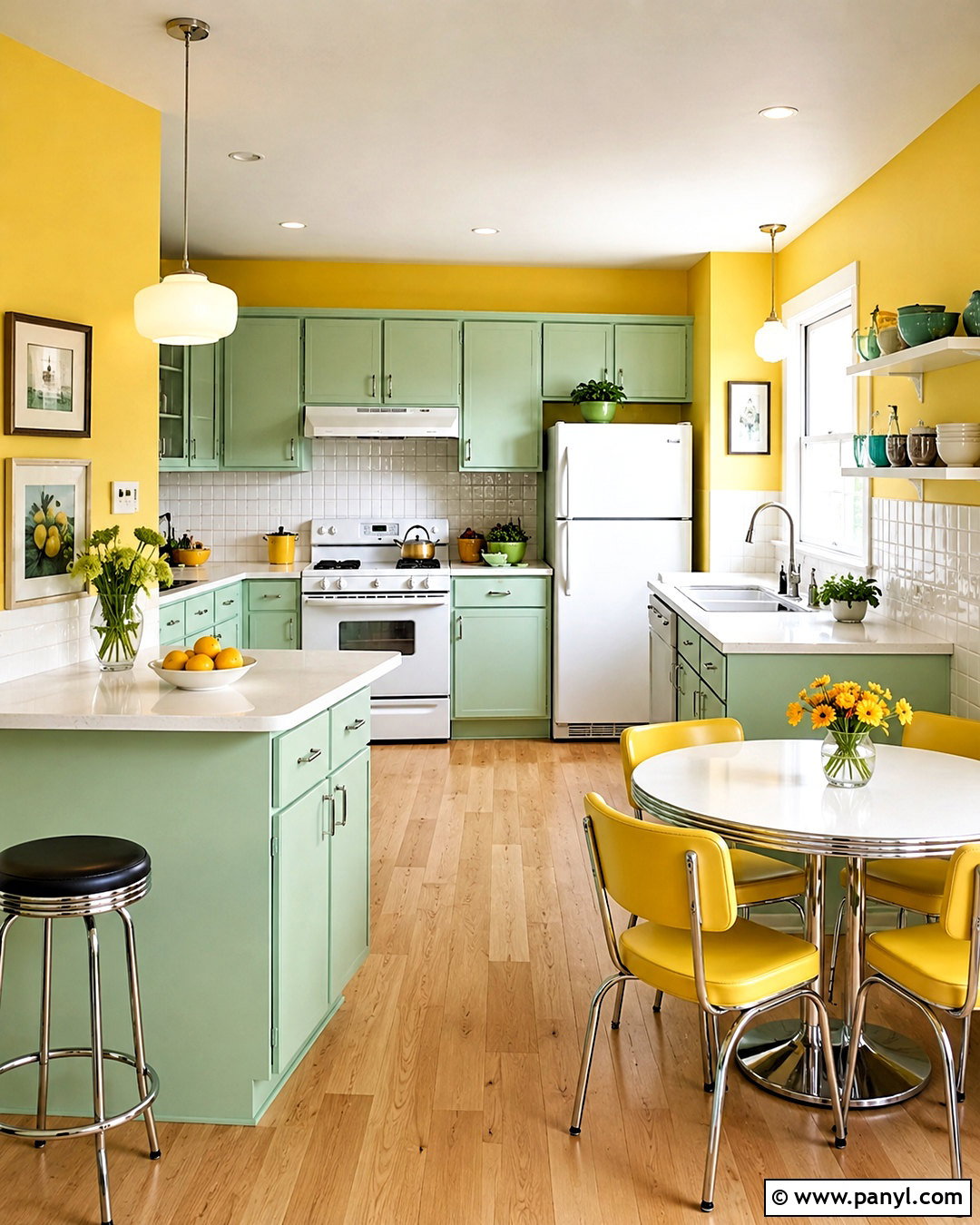
A kitchen with lemon yellow walls and mint green cabinets can feel playful while remaining practical and polished. Keep the mint soft and slightly gray so it balances the brighter wall color. White solid-surface countertops, glossy square backsplash tiles, and light maple flooring help maintain an airy atmosphere. Use polished nickel hardware for a crisp finish that does not add more warmth. A compact mint peninsula can provide seating and extra preparation space without overwhelming the room. Choose white appliances or paneled fronts for a cohesive retro-inspired effect. Add a glass globe ceiling light, simple striped café curtains, and a small white dining set. Limit decorative accents to pale wood and clear glass so the yellow and green combination remains the primary visual feature.
5. Golden Yellow Walls With Hunter Green Cabinets
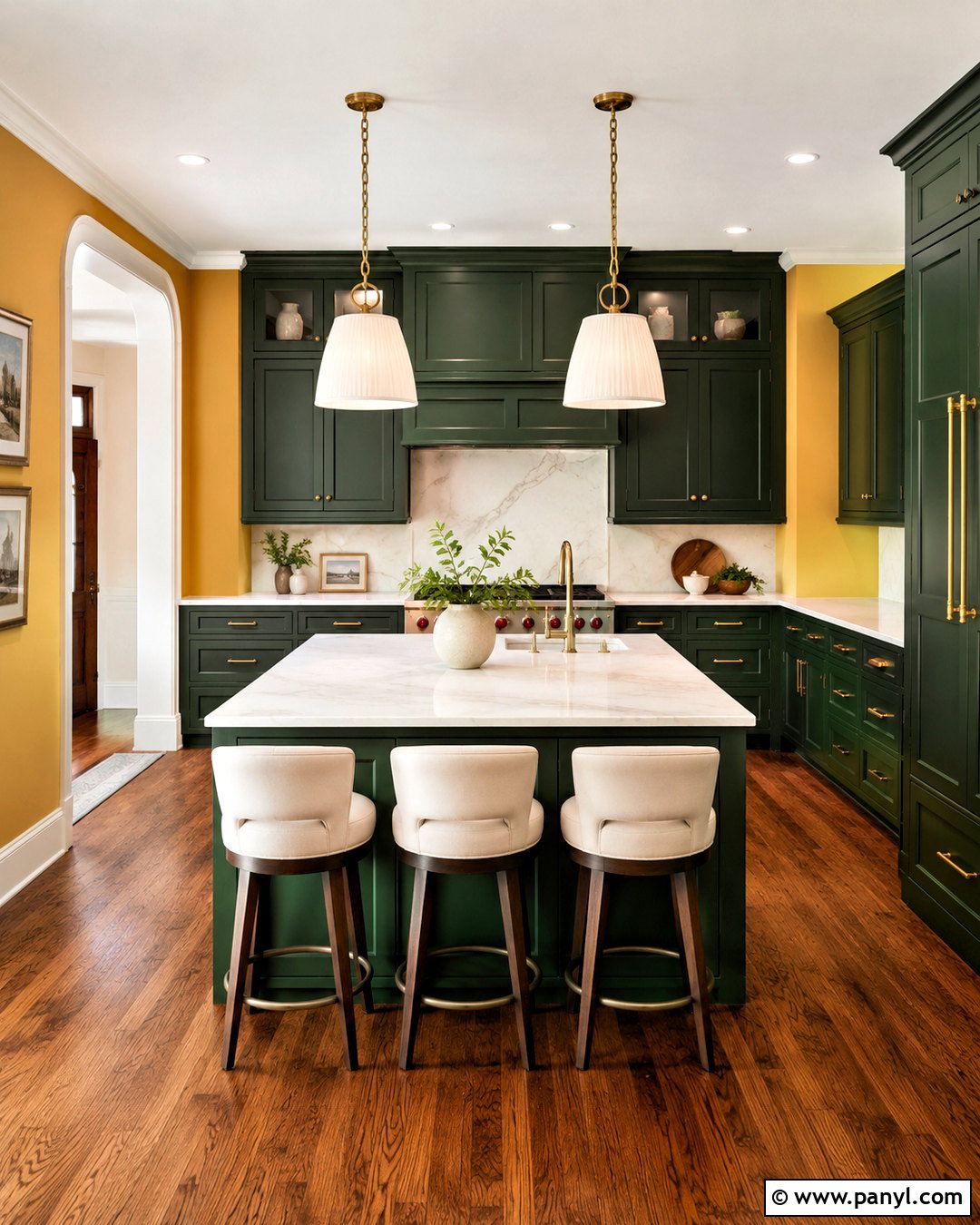
Golden yellow walls look sophisticated beside hunter green cabinets when the remaining finishes are simple and substantial. Choose dark green Shaker cabinetry extending to the ceiling, with a matching island to create visual continuity. White marble-look quartz counters introduce brightness and subtle movement. Behind the range, continue the countertop material vertically for a clean focal point that will not compete with the strong colors. Wide-plank walnut flooring adds depth, and antique brass hardware reinforces the traditional warmth. Use cream upholstered stools and oversized white pendant lights to lighten the island area. A plaster-style range hood painted golden yellow can blend into the walls. Finish with framed botanical art, neatly arranged stoneware, and greenery in restrained amounts rather than covering every surface.
6. Creamy Yellow Walls With Moss Green Cabinets
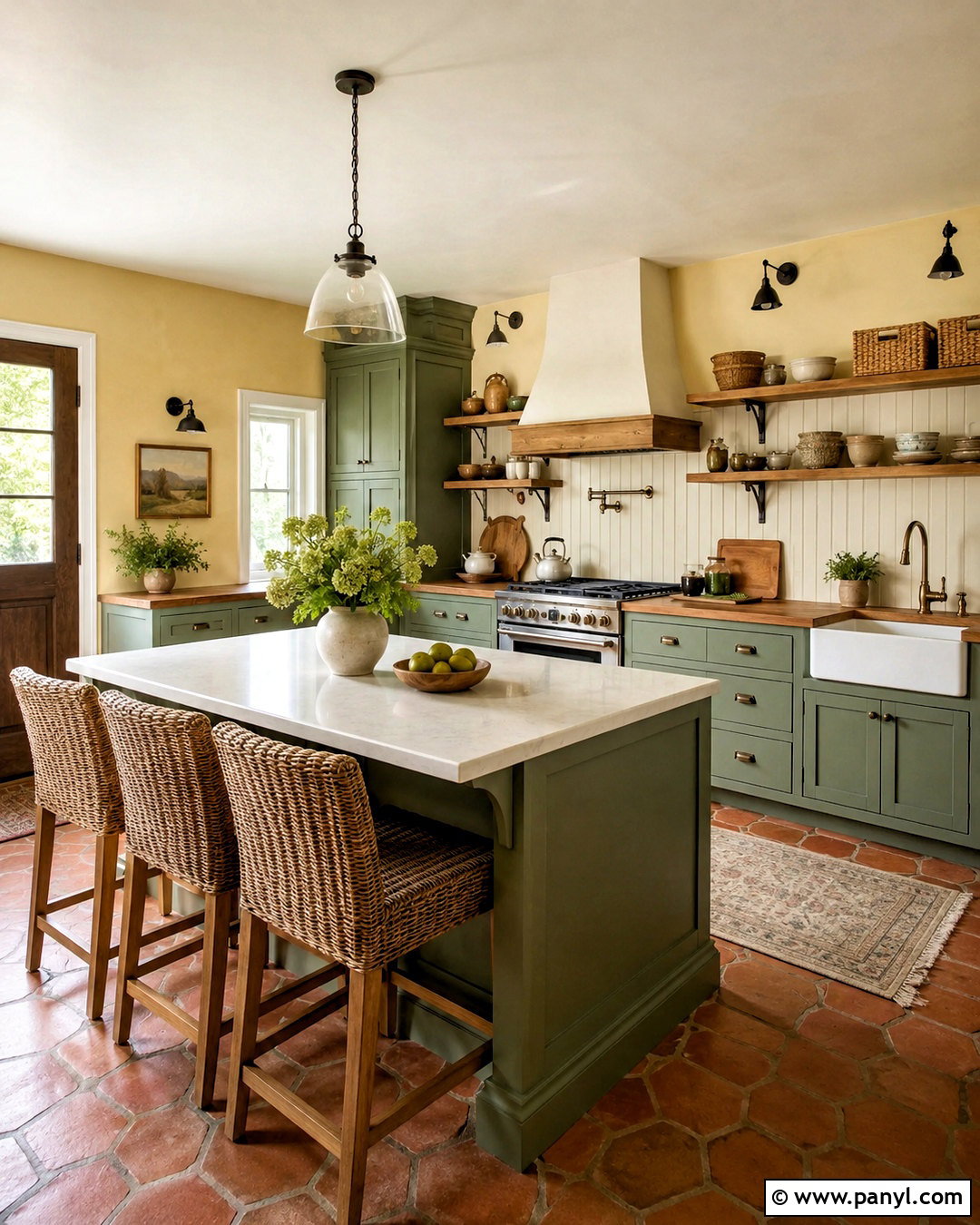
Creamy yellow walls and moss green cabinets produce a soft, lived-in kitchen inspired by woodland colors. Use beadboard-front cabinets or classic Shaker doors to support the comfortable cottage character. Butcher block countertops bring warmth to the perimeter, while a durable off-white quartz surface can cover the central island. A cream beadboard backsplash keeps the background simple and adds gentle texture. Terracotta floor tiles introduce earthy variation that complements both main colors. Complete the look with aged bronze hardware, a white apron-front sink, and open oak shelving for practical storage. Woven baskets, neutral pottery, and checked linen curtains add pattern without creating clutter. Paint the ceiling warm white and use clear glass pendants so the room remains bright despite the cabinet color.
7. Warm Yellow Walls With Emerald Green Cabinets
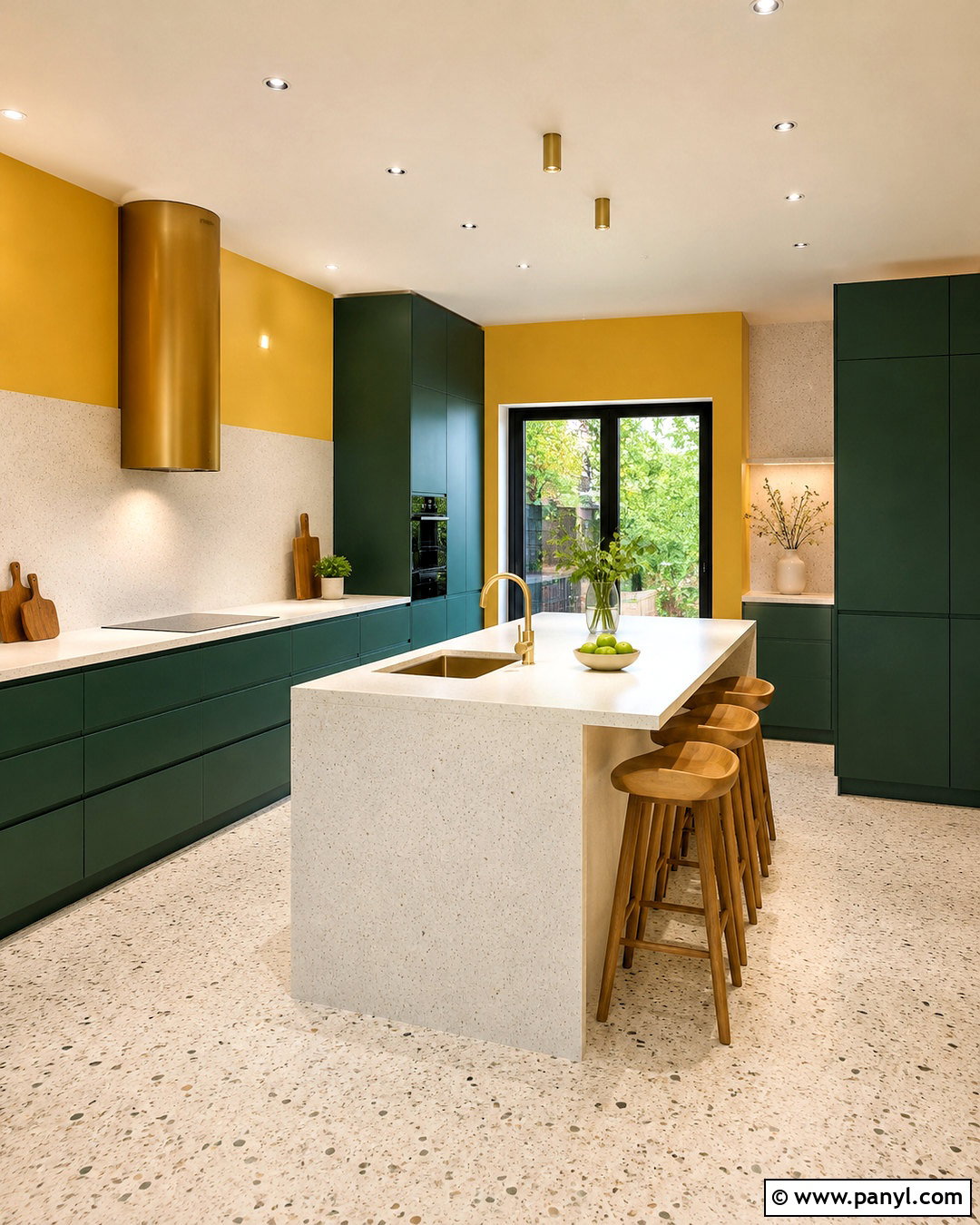
Emerald green cabinets make a striking statement against warm yellow walls, especially in a streamlined contemporary kitchen. Use smooth, handleless cabinetry with a satin finish to let the jewel-toned green appear refined rather than theatrical. White quartz counters and a matching backsplash provide a clean visual break between the colors. Pale terrazzo flooring can introduce subtle green and beige chips that tie the palette together. Choose brushed brass fixtures sparingly, perhaps on the faucet and slim pendant lights. A large emerald island with waterfall countertop edges creates a strong central feature. Keep seating simple with light oak stools and neutral cushions. Minimal artwork, concealed appliances, and carefully placed ceiling lights allow the bold color pairing to remain organized, modern, and comfortable for everyday use.
8. Soft Yellow Walls With Dark Green Cabinets
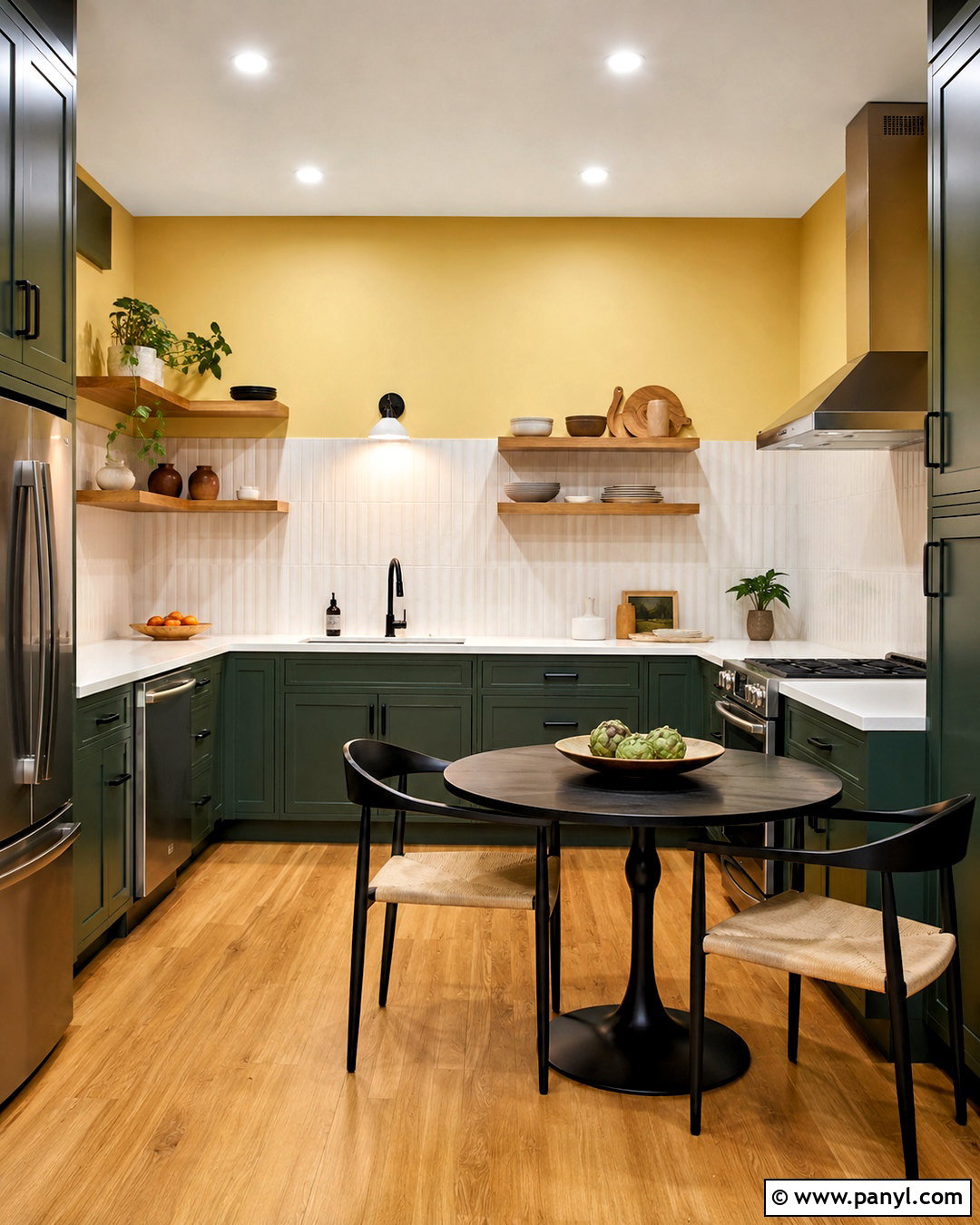
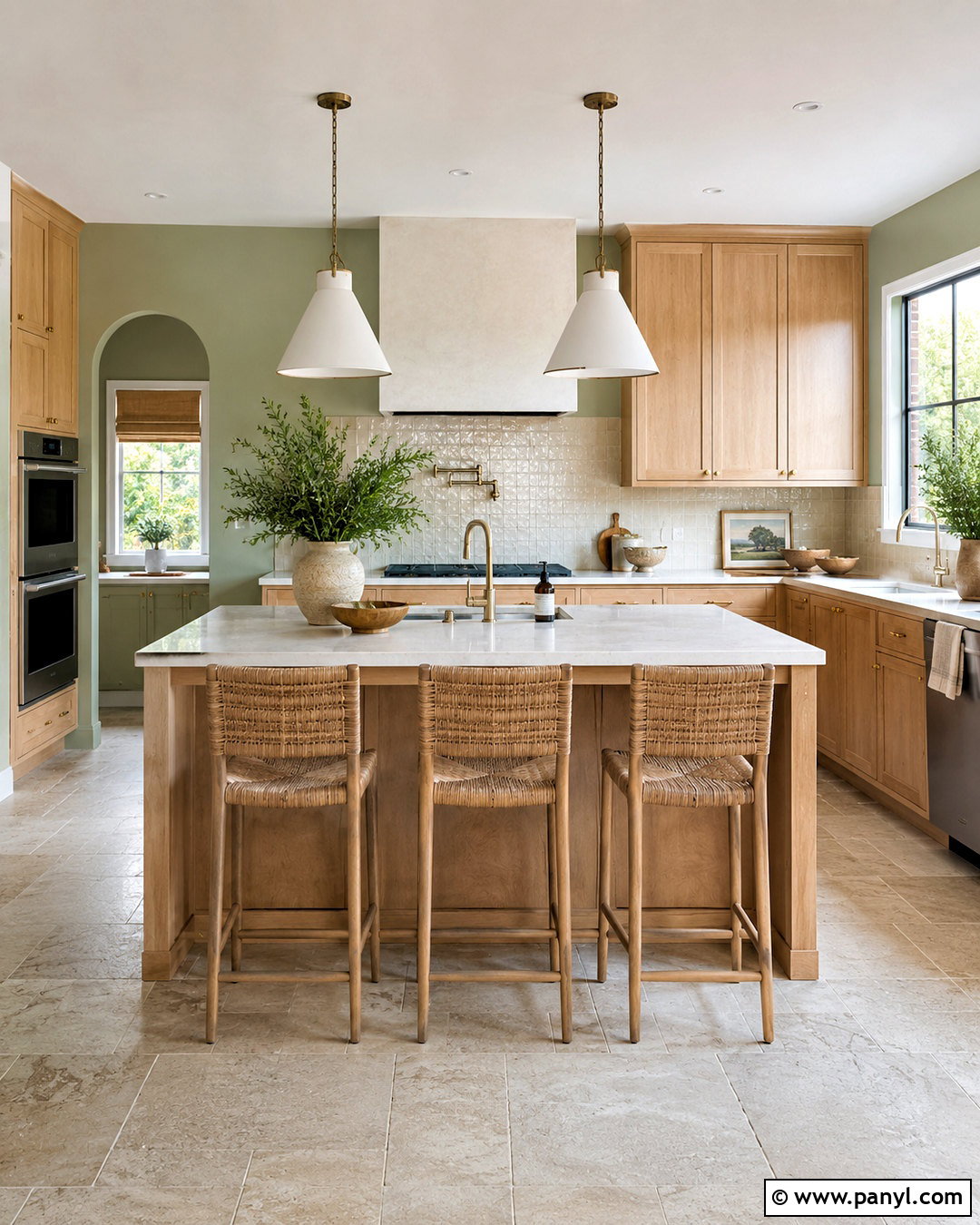
Soft yellow walls can prevent dark green cabinets from making a small kitchen feel heavy. Concentrate the deep green on lower cabinets and one tall pantry unit, leaving the upper areas visually open. White quartz counters and vertically stacked ivory tile brighten the work zone. Install two oak shelves instead of upper cabinetry on the longest wall to create room for plates, glasses, and a few useful containers. Light oak flooring continues the airy effect, while matte black hardware gives the cabinetry clean definition. A small round dining table with spindle-back chairs can fit near a window without blocking circulation. Add a white ceiling, simple linen shade, and under-shelf lighting. The finished room feels balanced because the darkest color remains mainly below eye level.
9. Ochre Yellow Walls With Army Green Cabinets
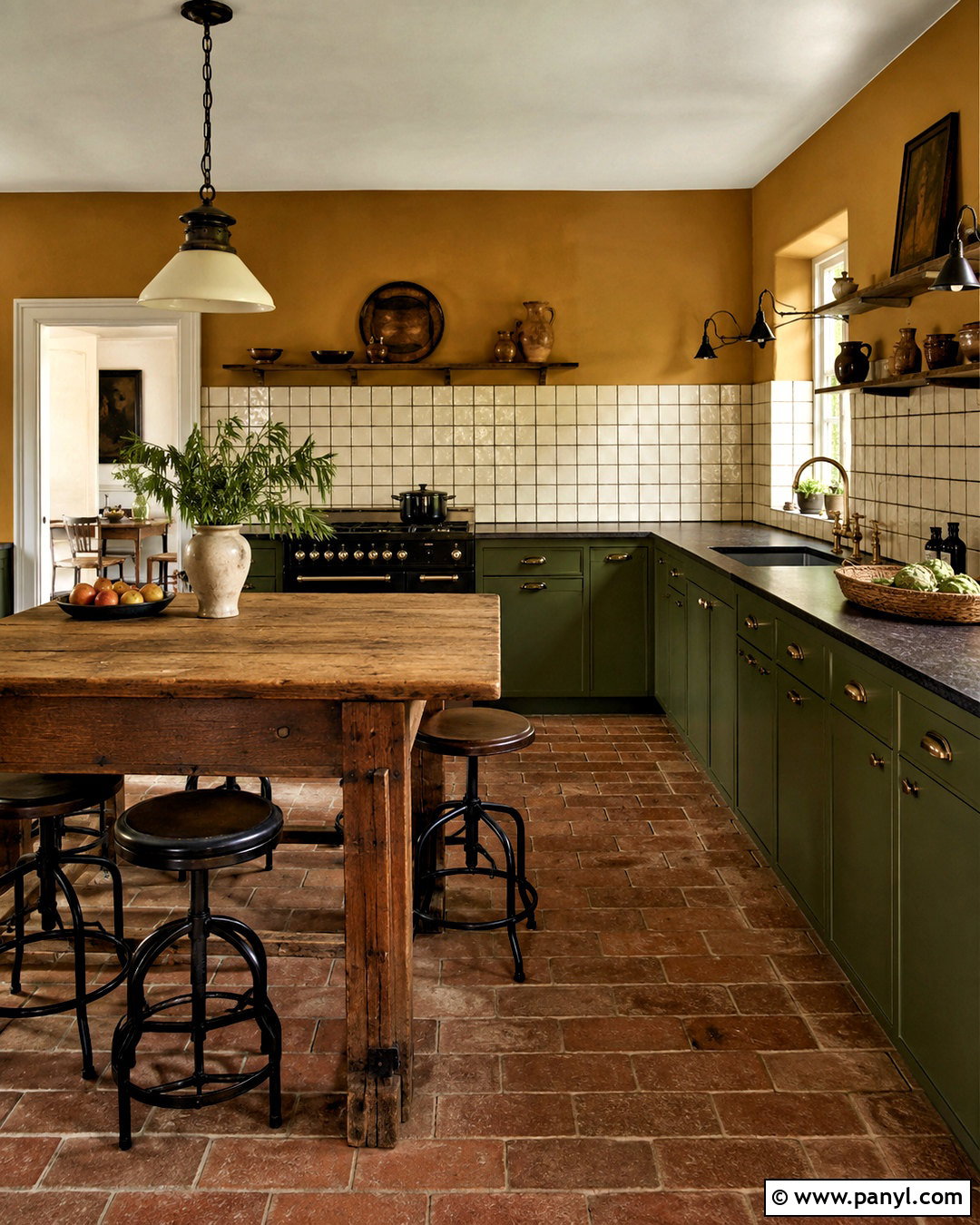
Ochre yellow walls and army green cabinets create a warm, earthy kitchen with subtle vintage influence. Choose slightly muted colors rather than highly saturated versions to keep the room comfortable. Flat-panel green cabinets work well with long antique brass handles, while honed black granite countertops add a sturdy, practical surface. Use cream square tiles with dark grout for a backsplash that connects the walls and counters. A brick or brick-look floor introduces texture and reinforces the old-world palette. Complete the design with a freestanding wood table used as an island, black metal stools, and a simple cream pendant light. Copper cookware can provide a restrained decorative accent. Natural linen window treatments and a few stoneware containers finish the room without making it feel themed.
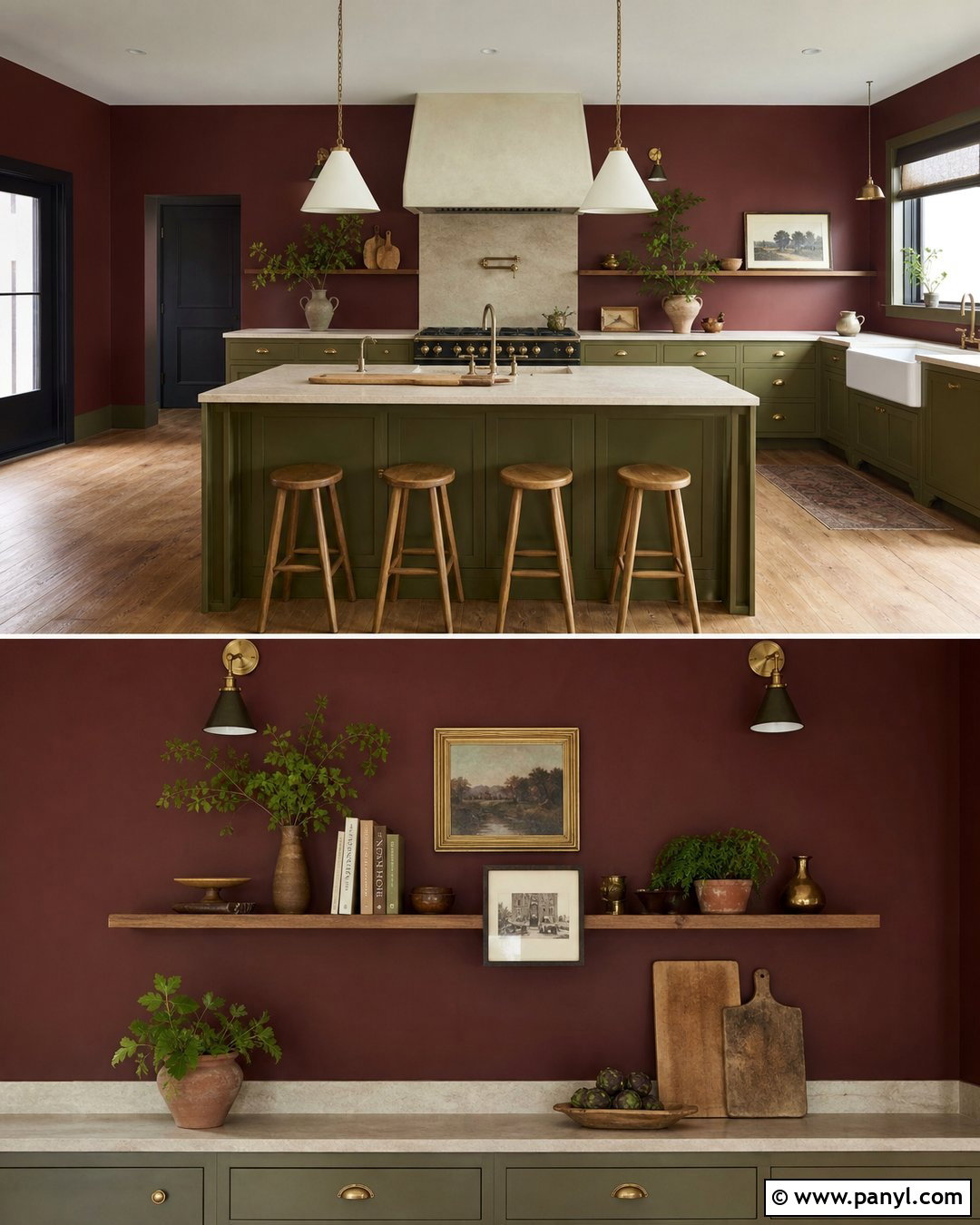
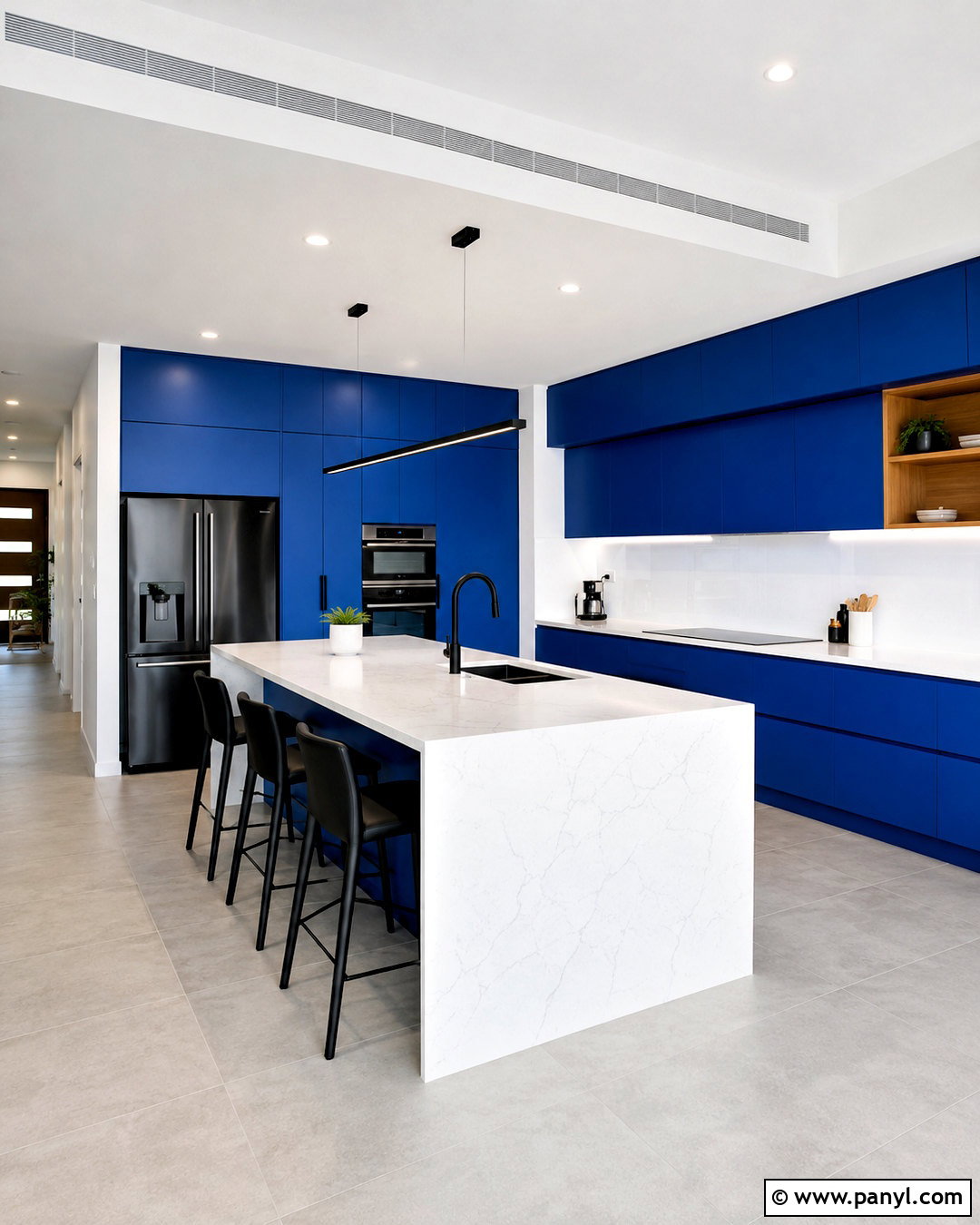
10. Pastel Yellow Walls With Seafoam Green Cabinets
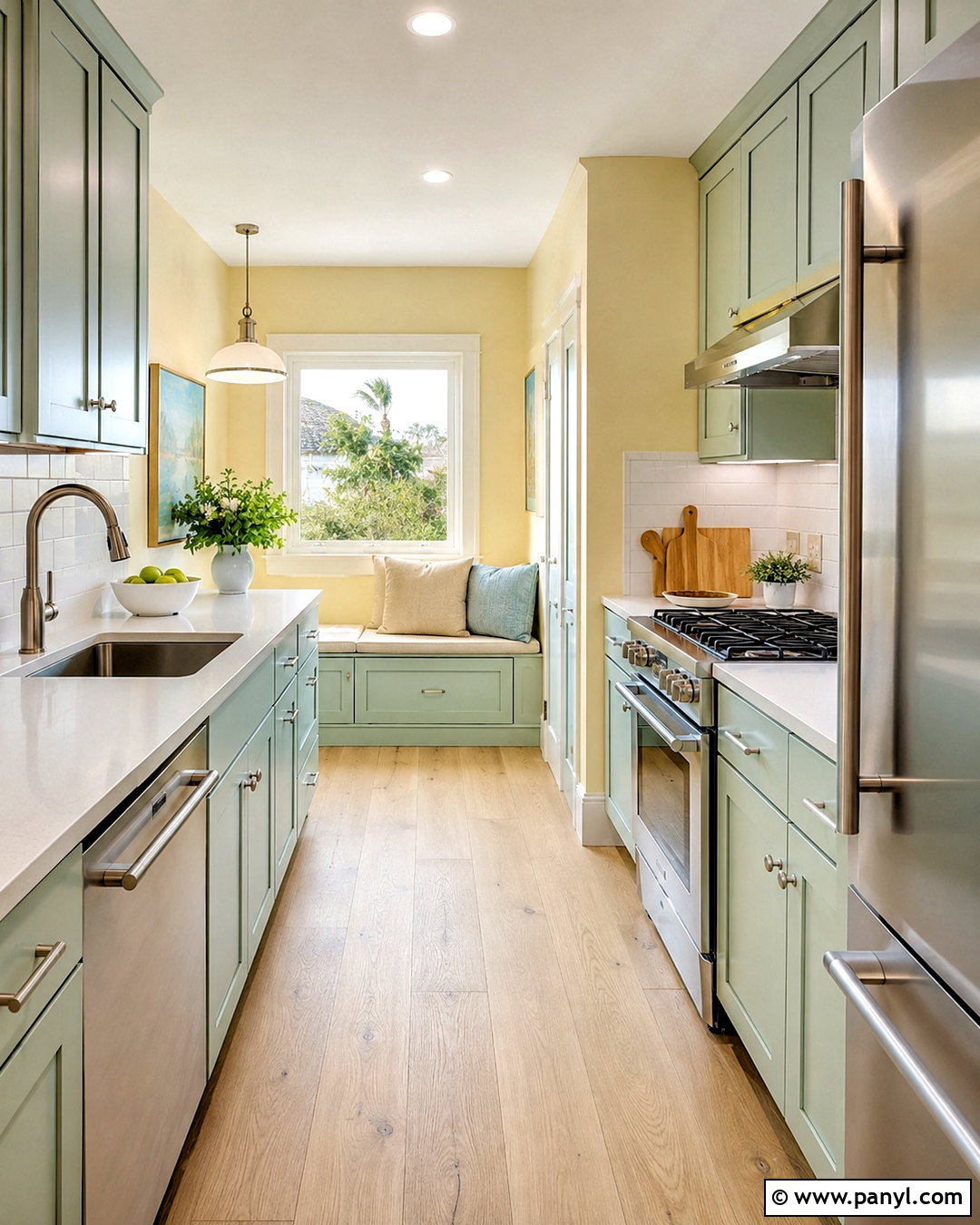
Pastel yellow walls and seafoam green cabinets can make a narrow galley kitchen appear open, light, and cheerful. Choose semi-matte Shaker cabinets on both sides, but keep tall units limited to one end to preserve clear sightlines. White quartz counters and a glossy white subway backsplash reflect light along the entire room. Pale blond wood flooring adds warmth while maintaining a low-contrast foundation. Use brushed nickel handles and a stainless steel faucet for a clean, understated finish. At the far end, place a small breakfast bench beneath the window with cream cushions and a compact pedestal table. A row of simple ceiling lights provides even illumination. Keep accessories white, glass, or natural wood so the gentle green and yellow colors remain uncluttered.
11. Sunflower Yellow Walls With Pine Green Cabinets
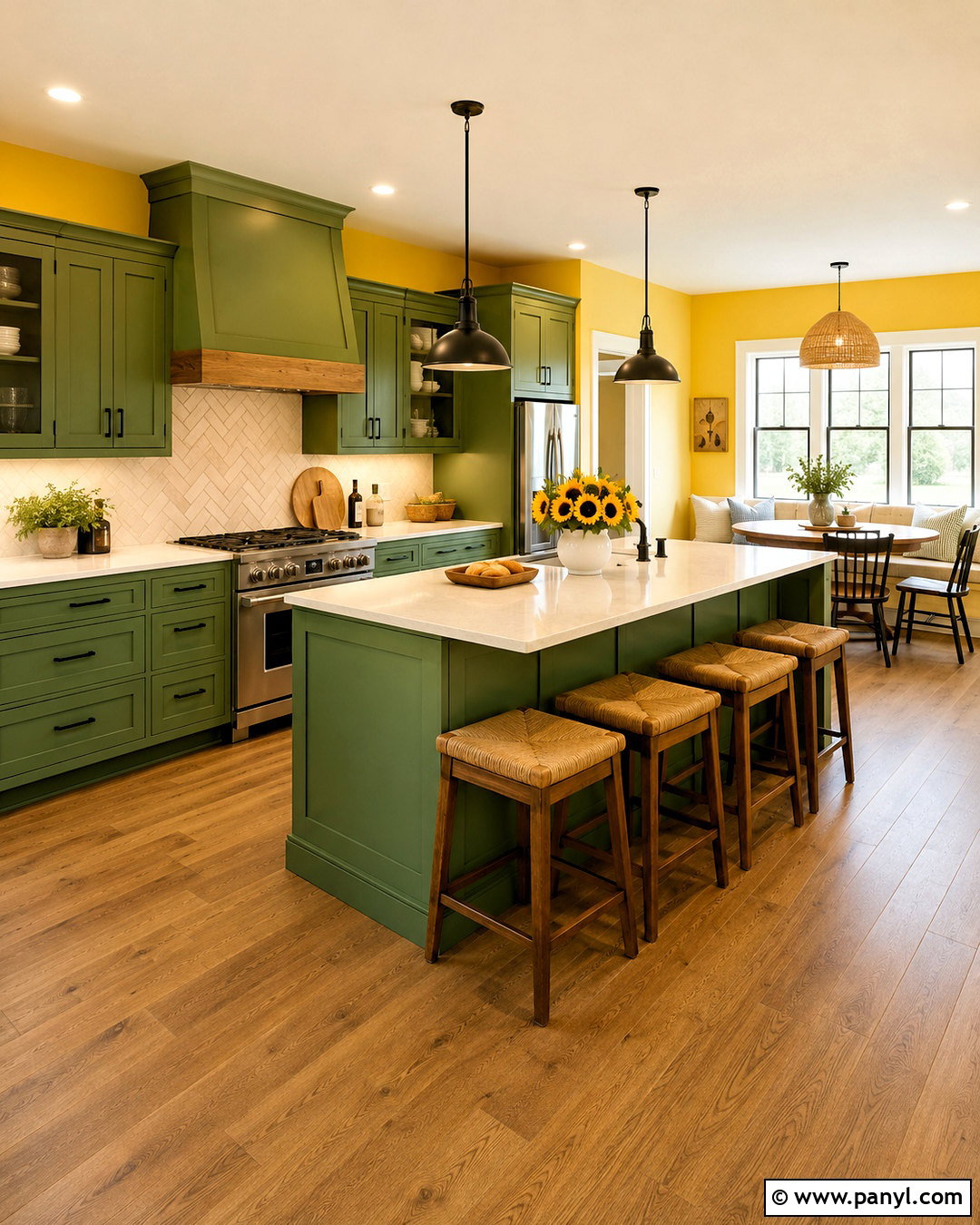
Sunflower yellow walls bring lively warmth to pine green cabinetry, creating a colorful kitchen suited to a casual family home. Use the deeper green on base cabinets, tall storage, and a large island, then add a few glass-front upper cabinets to reduce visual weight. Durable white quartz countertops make daily cleanup easy, while an ivory herringbone backsplash introduces quiet pattern. Medium-tone oak flooring balances the saturated colors and hides everyday wear. Choose matte black cabinet pulls, a black bridge faucet, and black-framed pendant lights for consistent contrast. Wooden stools and a built-in breakfast nook make the space comfortable for meals and homework. Add washable cream cushions, simple green-striped fabric, and practical countertop storage rather than delicate decorative objects.
12. Muted Yellow Walls With Eucalyptus Green Cabinets
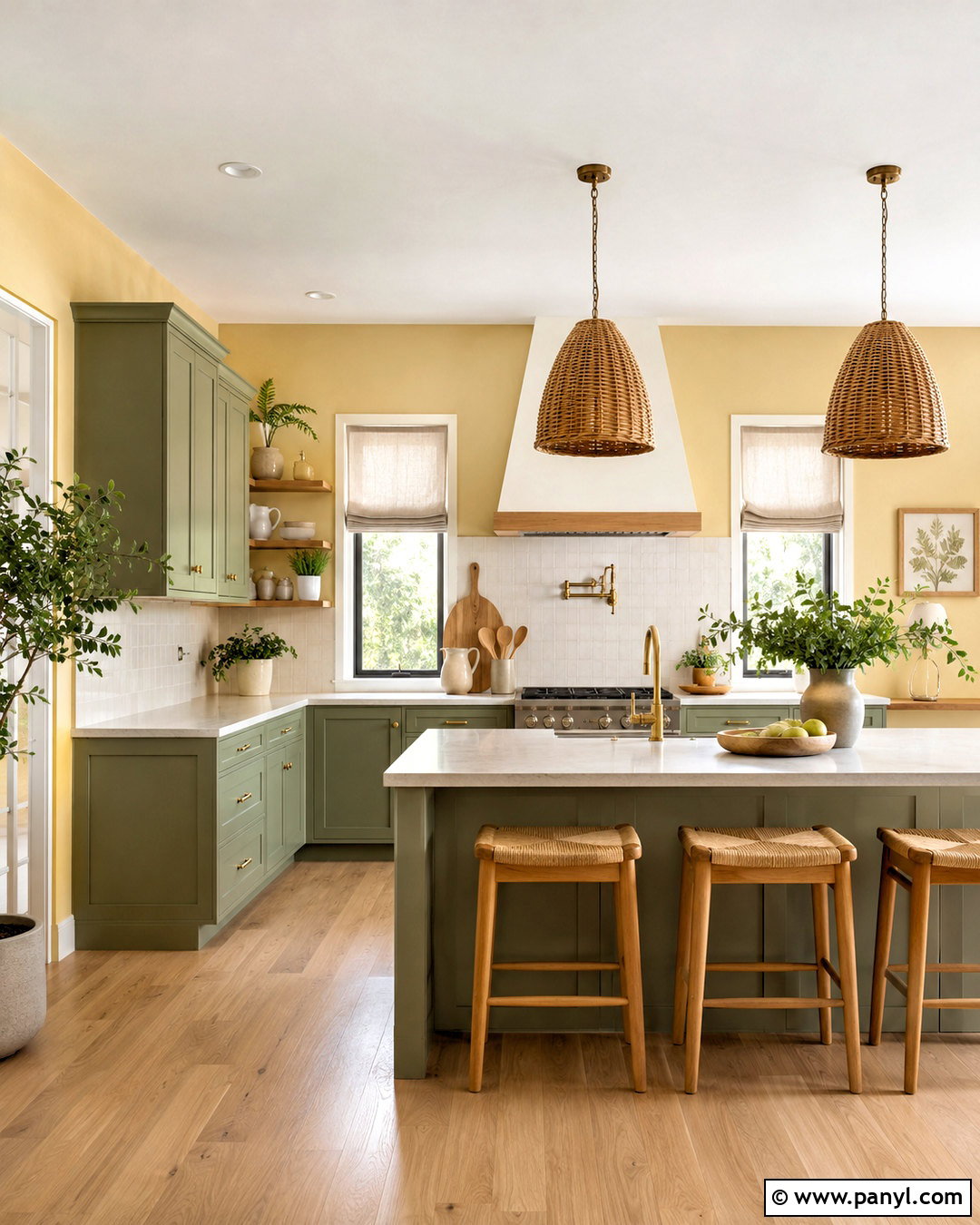
Muted yellow walls paired with eucalyptus green cabinets create an understated kitchen with a soft, botanical mood. Select cabinetry with slim Shaker frames and a velvety matte finish. Cream-colored quartz counters with delicate beige veining keep the work surfaces light and coordinated. A backsplash of handmade off-white zellige tile adds variation without introducing a competing color. Natural white oak flooring, shelves, and counter stools bring gentle warmth throughout the room. Use unlacquered brass knobs and a matching faucet, allowing their finish to develop character over time. A eucalyptus island can include deep drawers, seating, and a built-in microwave. Complete the design with woven pendants, oatmeal linen shades, and restrained ceramic decor. The result feels layered and welcoming without relying on bold contrast.
13. Honey Yellow Walls With Avocado Green Cabinets
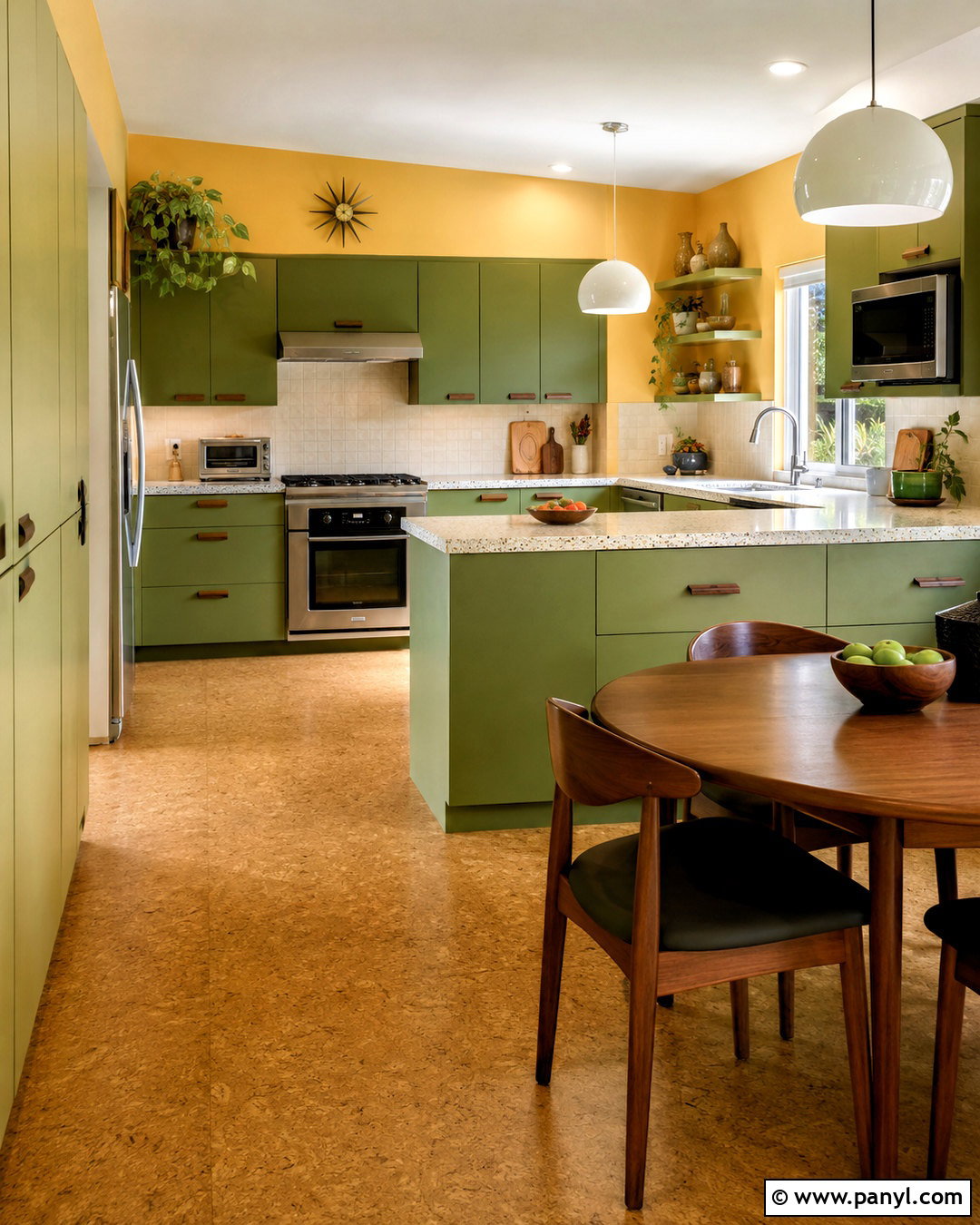
Honey yellow walls and avocado green cabinets can reference 1970s color without turning the kitchen into a period replica. Use slab-front cabinetry with clean edges and a low-sheen finish for a modern update. Cream terrazzo counters featuring tan and green flecks connect the two main colors naturally. Continue the terrazzo onto a short backsplash, then allow the honey wall paint to remain visible above it. Warm cork flooring offers texture and strengthens the retro influence. Choose brushed stainless steel appliances, simple walnut handles, and dome-shaped white pendant lights. A compact walnut dining table with curved chairs adds another authentic material. Keep accessories minimal, using cream ceramics and one graphic rug. This careful mix feels nostalgic, functional, and current rather than overly themed.
14. Daffodil Yellow Walls With Kelly Green Cabinets
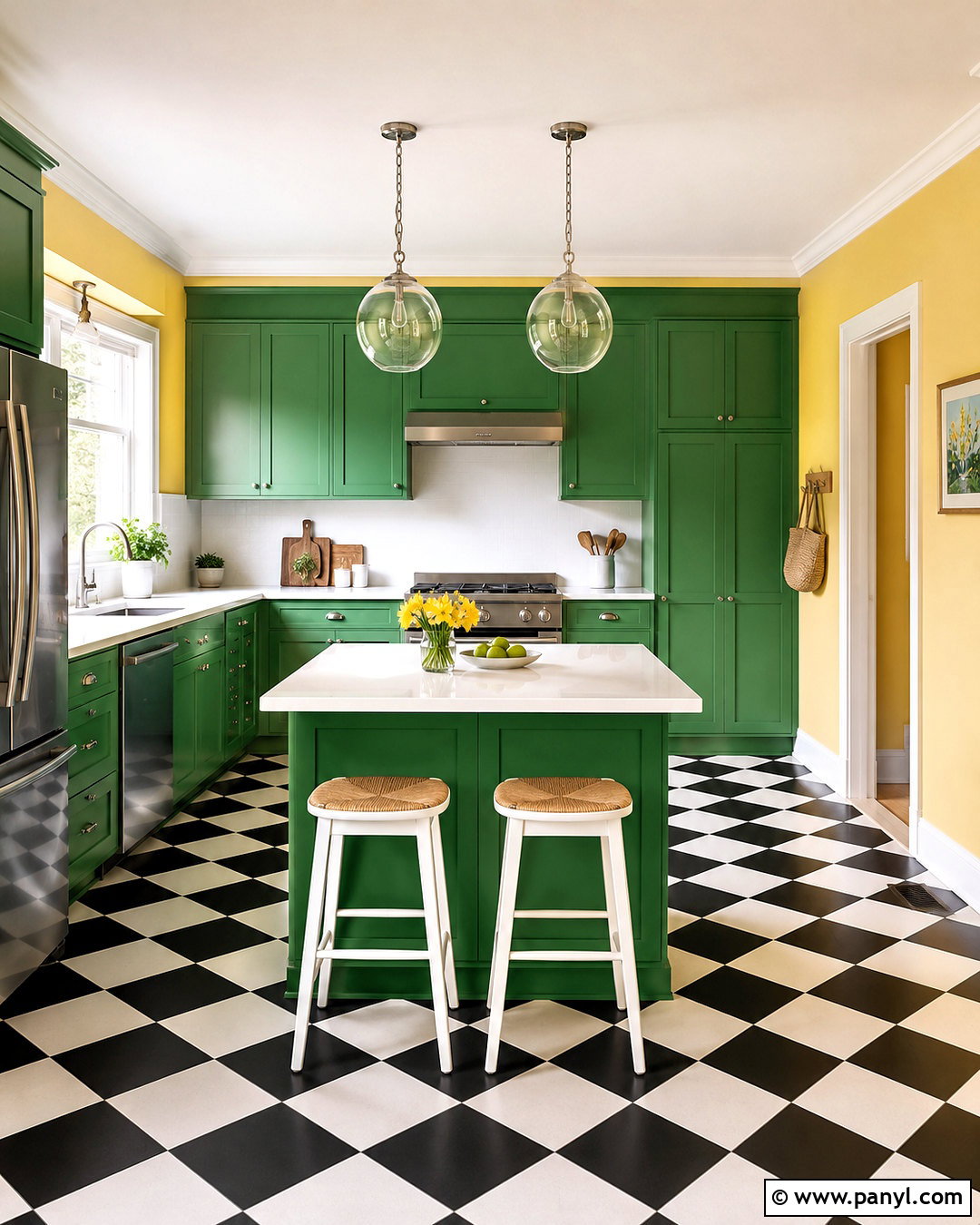
Daffodil yellow walls and Kelly green cabinets create an energetic kitchen for homeowners who enjoy clear, confident color. Use crisp Shaker cabinetry with a satin finish and limit decorative molding so the palette does not become too busy. Bright white quartz counters and a plain white backsplash provide necessary breathing room. Black-and-white checkerboard flooring gives the room a graphic base and helps anchor both vibrant hues. Choose polished chrome hardware, a white farmhouse sink, and simple glass pendant lights to maintain freshness. A green island with white counter stools offers useful seating and storage. Keep window treatments white and lightly tailored. Small touches of natural wood, such as cutting boards and a dining tabletop, can warm the room while allowing the yellow and green to remain dominant.
15. Banana Yellow Walls With Fern Green Cabinets
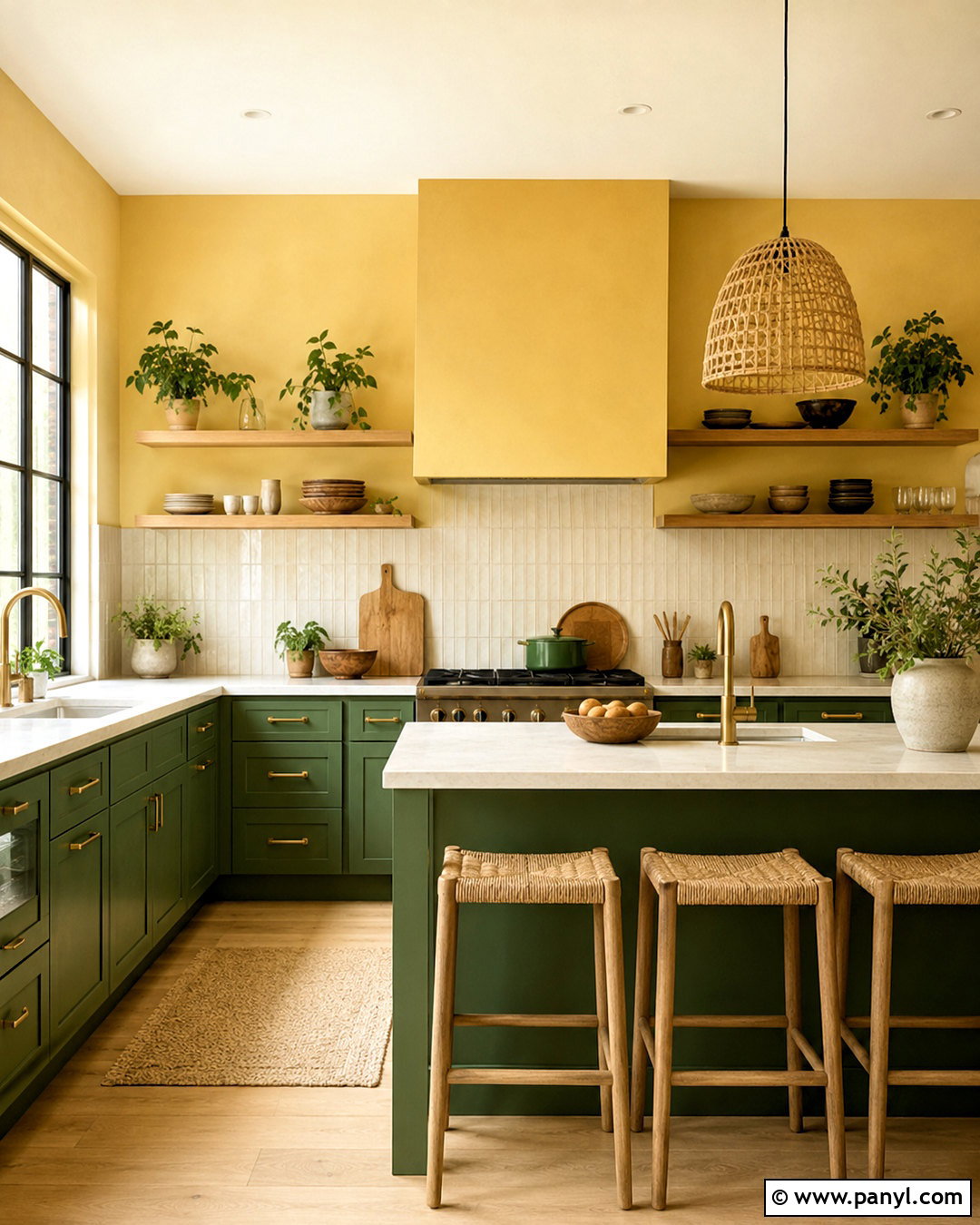
Banana yellow walls can work beautifully with fern green cabinets when both colors are softened by natural textures. Use the fern shade on lower cabinets and a tall pantry, while replacing some upper units with light oak shelving. White concrete-look countertops introduce a matte neutral surface that suits the relaxed palette. Add vertically laid cream tile behind the counters to create height and understated pattern. Pale oak flooring, woven stools, and a large rattan pendant reinforce the organic atmosphere. Choose brushed brass pulls and a matching gooseneck faucet for warmth. A slim green island can hold preparation space, storage, and two seats. Finish with linen towels, clear storage jars, and several useful potted herbs, keeping decorative objects simple and connected to everyday kitchen activities.
16. Straw Yellow Walls With Laurel Green Cabinets
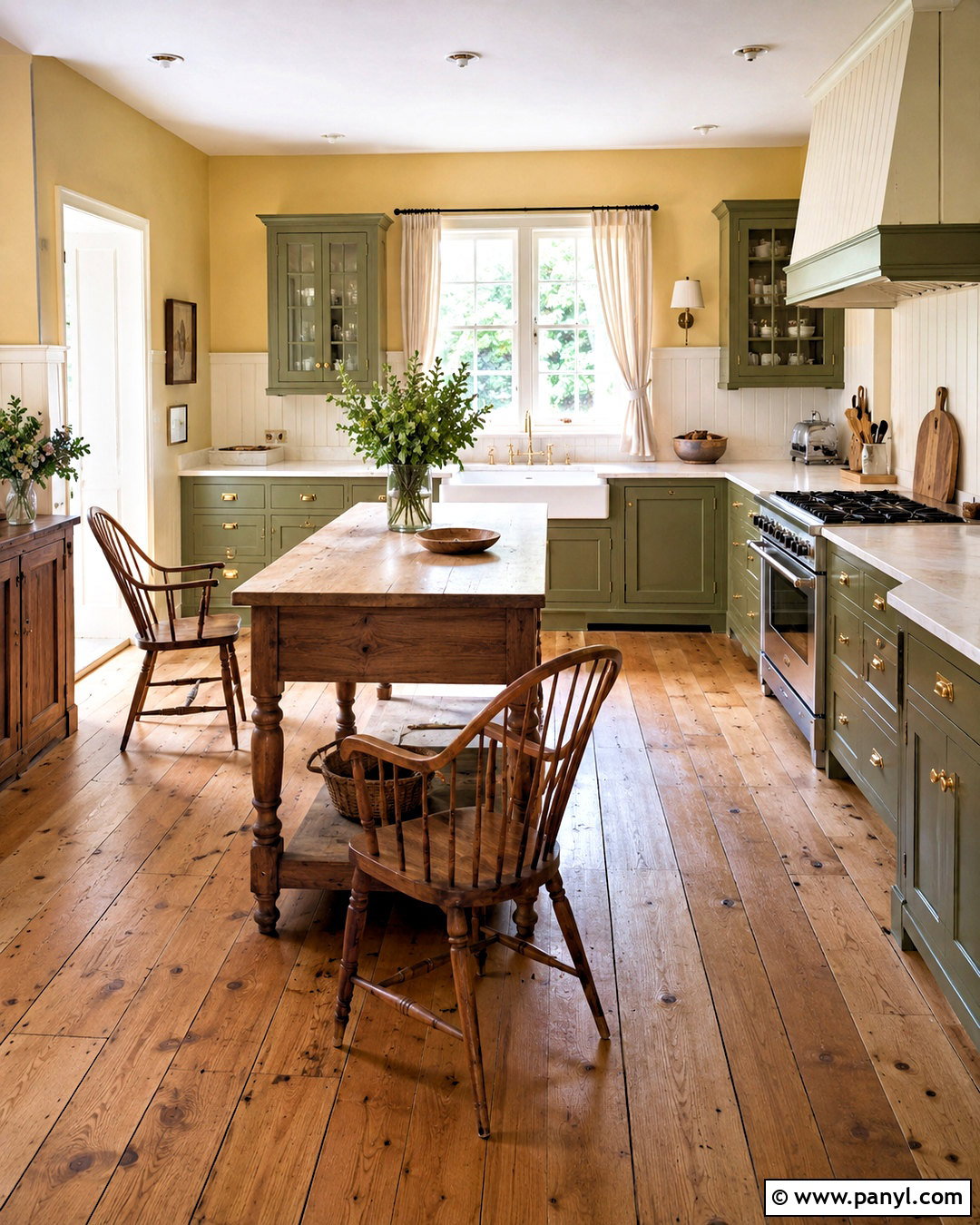
Straw yellow walls and laurel green cabinets form a calm country kitchen palette that feels warm without appearing overly rustic. Choose inset cabinetry with simple frames, brass latches, and a large green pantry cupboard. Cream soapstone-look quartz counters deliver durability while preserving the traditional appearance. Use an off-white beadboard backsplash around the sink and a simple stone slab behind the range. Wide oak floorboards add age and texture to the design. Place a sturdy wooden worktable in the center instead of a built-in island, leaving comfortable pathways around it. Windsor chairs, a ceramic pendant, and unlined linen curtains complete the informal arrangement. Display only practical items, such as mixing bowls, cutting boards, and neatly arranged pantry jars, to maintain an authentic working-kitchen character.
17. Marigold Yellow Walls With Jade Green Cabinets
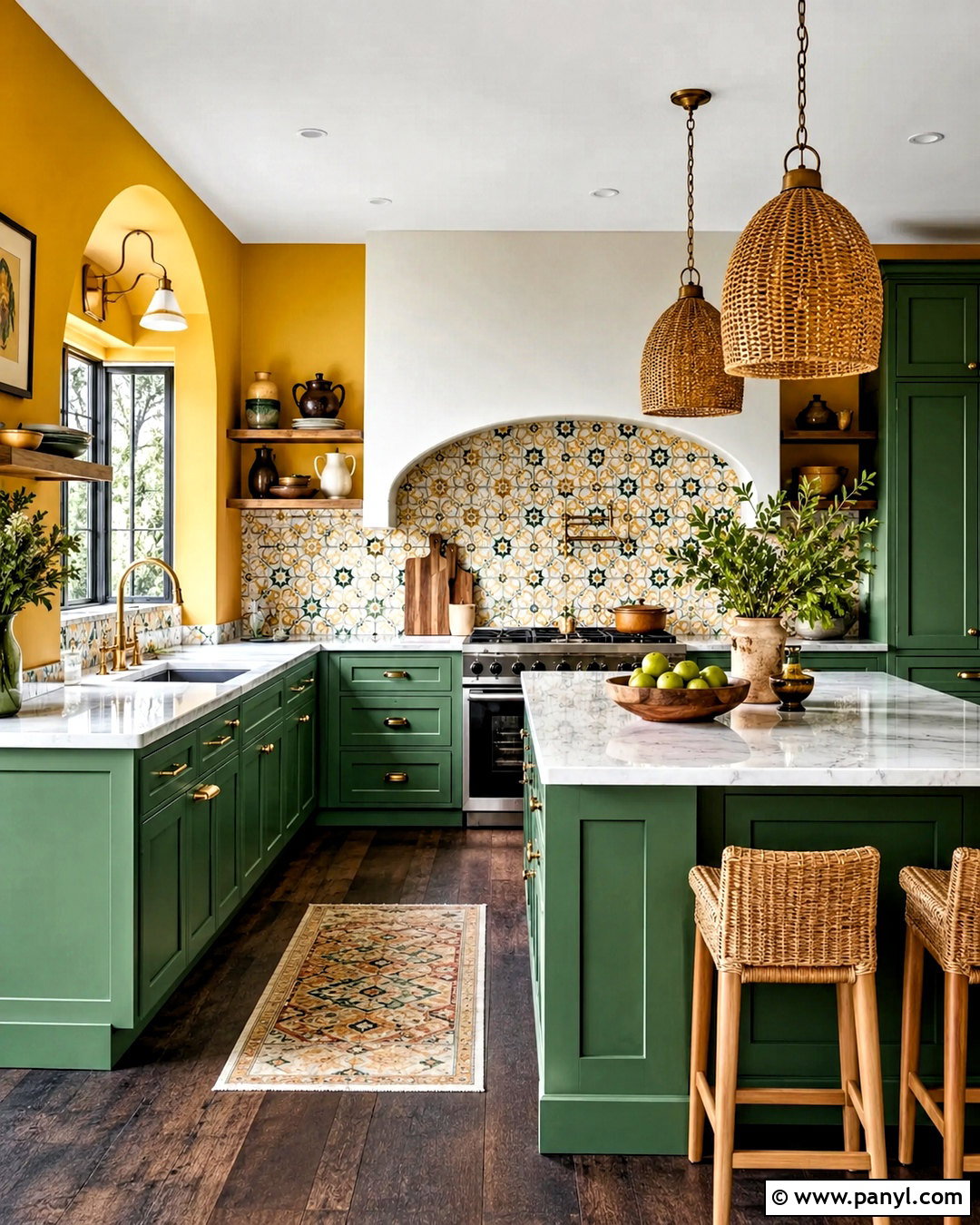
Marigold yellow walls create a warm backdrop for jade green cabinets in an eclectic kitchen with handcrafted details. Use rich green cabinetry around the perimeter and repeat the shade on a freestanding island. White marble counters cool the saturated palette, while patterned backsplash tiles containing cream, green, and small yellow accents connect the room. Dark walnut flooring provides a steady foundation beneath the color and pattern. Add aged brass hardware, an arched plaster range hood, and large cream globe pendants. Counter stools with woven seats contribute texture without another strong hue. Keep open shelving limited to one wall and arrange it with white dishes and clear glassware. The completed kitchen feels collected and expressive, yet the repeated finishes prevent it from becoming visually chaotic.
18. Light Yellow Walls With Celadon Green Cabinets
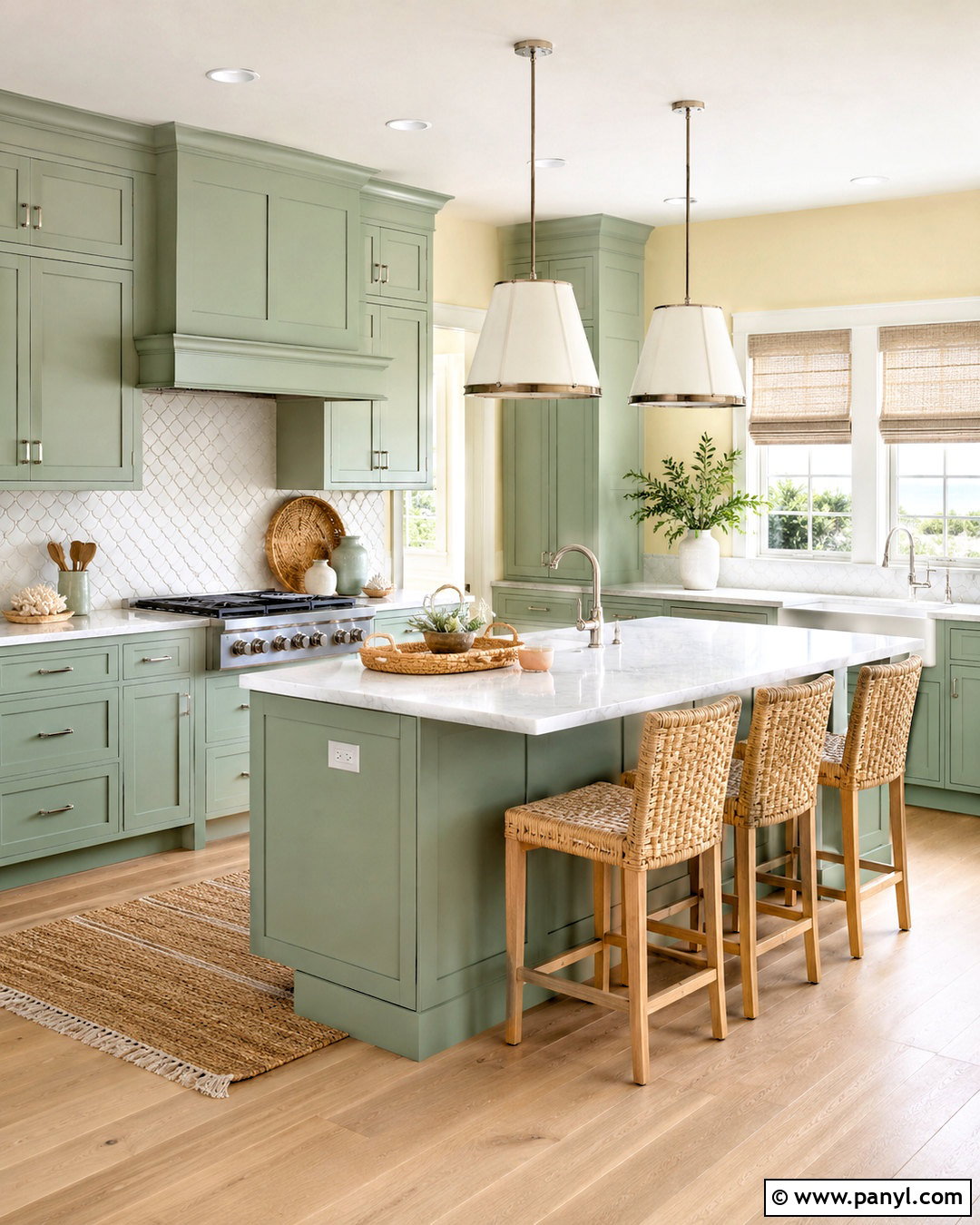
Light yellow walls and celadon green cabinets create a peaceful kitchen that suits a coastal or casual traditional home. Select pale green Shaker cabinetry with polished nickel knobs for a clean, light-reflective finish. White marble-look quartz countertops and a soft white fish-scale backsplash add subtle movement while preserving the airy palette. Use light natural oak flooring throughout the kitchen and nearby dining area for visual continuity. A celadon island can include open end shelves, drawers, and comfortable woven stools. Hang simple white pendants above it and install a linen Roman shade at the sink window. Decorate with pale ceramics, clear glass, and a few blue-gray accents. Avoid obvious nautical objects so the coastal influence remains relaxed, subtle, and easy to live with.
19. Amber Yellow Walls With Spruce Green Cabinets
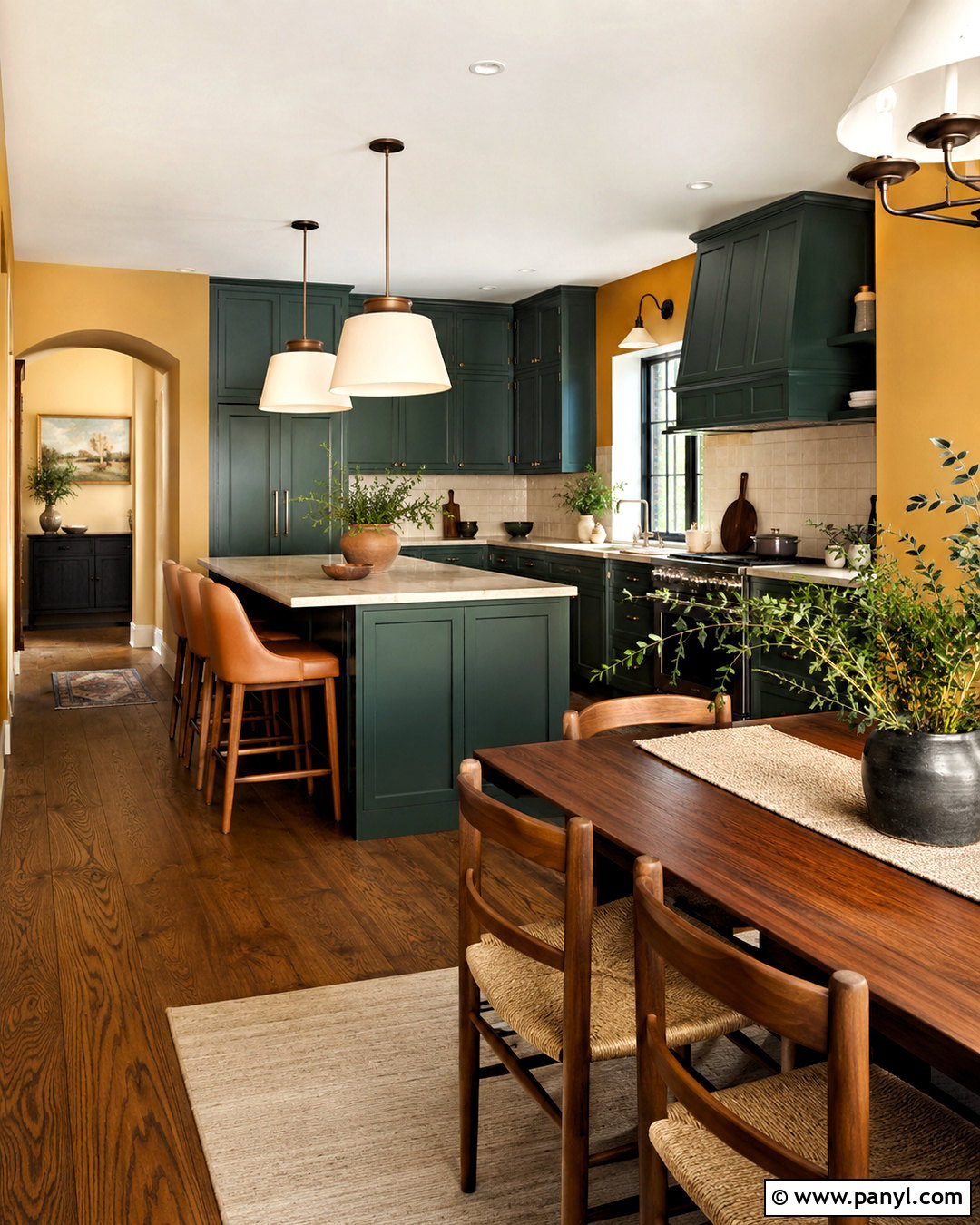
Amber yellow walls and spruce green cabinets make a cozy kitchen feel polished when paired with deep wood and stone finishes. Choose spruce cabinetry with narrow Shaker detailing and dark bronze hardware. Cream quartzite-look counters introduce soft veining, while an ivory rectangular tile backsplash keeps the wall area bright. Walnut flooring and a matching dining table strengthen the room’s warmth. Use the green on a central island, then add leather-look counter stools in a medium tan finish. Oversized cream pendants provide visual balance above the darker island. A bronze faucet, framed landscape print, and neutral woven runner complete the design. Keep the ceiling, trim, and interior doors warm white to separate the amber walls from the wood and prevent the palette from feeling overly golden.
20. Dusty Yellow Walls With Gray Green Cabinets
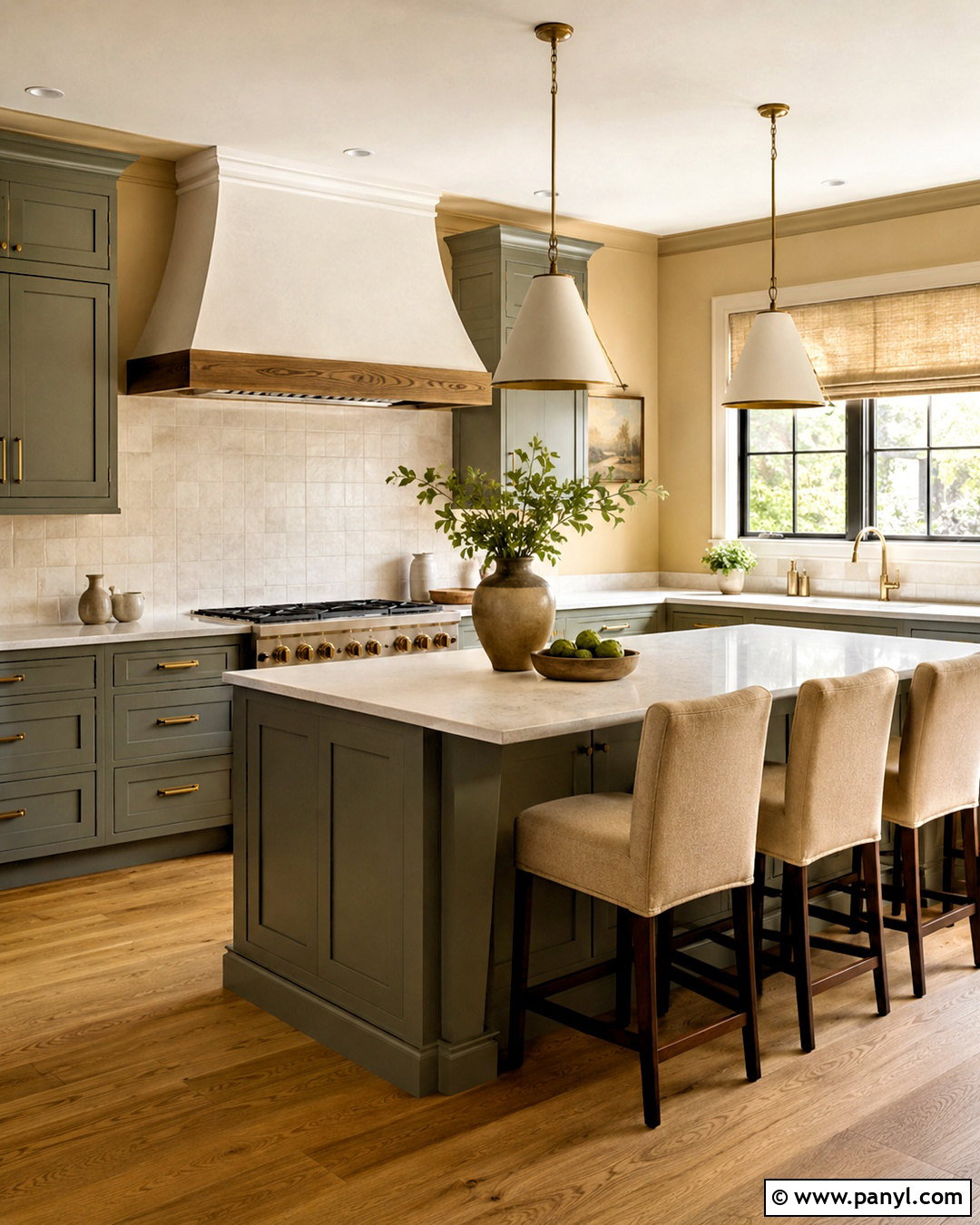
Dusty yellow walls and gray green cabinets offer a restrained version of this colorful kitchen combination. The softened hues work especially well in a practical transitional space with simple architectural details. Choose matte gray green Shaker cabinets, white quartz counters, and a backsplash of elongated cream tiles. Medium oak flooring adds enough warmth to prevent the gray undertones from feeling cool. Use brushed brass hardware in a slim, modern shape and repeat the finish on the faucet and understated pendant lights. A matching island with cream upholstered stools provides storage and a comfortable gathering point. Finish the room with a warm white ceiling, oatmeal linen window coverings, and minimal stoneware. The overall look feels calm and timeless while still offering more personality than a neutral kitchen.
Conclusion:
Yellow Wall Green Cabinets can transform an ordinary kitchen into a warm, memorable space, but the best results come from treating the room as one complete palette. Begin with compatible yellow and green undertones, then use white, cream, wood, or stone to create breathing room. Light green cabinets suit compact kitchens, while forest, hunter, and spruce tones can anchor larger rooms. Hardware, flooring, backsplashes, lighting, and furniture should support the main colors rather than compete with them. Test paint samples in morning and evening light before making a final choice. Whether the finished kitchen feels cottage-inspired, modern, retro, or traditional, a balanced approach will keep this colorful pairing comfortable, practical, and cohesive.

Related Ideas and Inspiration:
Leave a Reply