
Bathroom color is becoming warmer, richer, and more personal, making **25 Bathroom Color Trends 2027** a useful guide for planning a fresh remodel. Because 2027 is still ahead, these palettes are forward-looking predictions based on the nature-inspired greens, softened blues, earthy browns, expressive reds, and nuanced neutrals gaining momentum in 2026 forecasts. Early 2027 interior forecasting also points toward authenticity, softness, and optimistic color rather than cold, flat finishes. () The strongest bathrooms will use color across the whole room, including tile, cabinetry, walls, fixtures, and natural materials. Some schemes feel quiet and spa-like. Others bring character through deeper shades and confident contrast. Ahead, you will find complete and practical looks inspired by **25 Bathroom Color Trends 2027**.

1. Warm White Bathroom
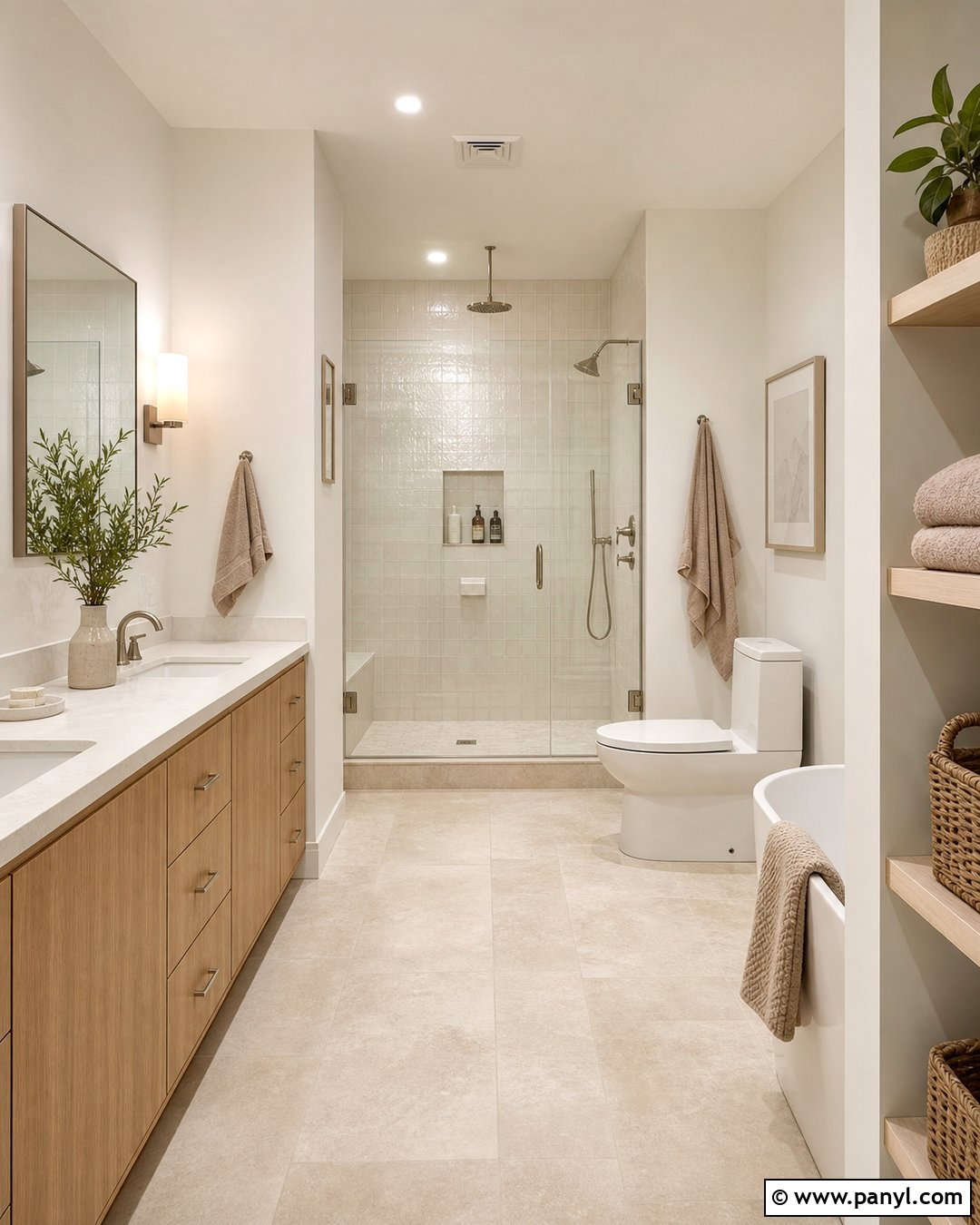
Warm white creates a clean bathroom without the sharp, clinical feeling of brilliant white. Choose creamy white walls and handmade ivory shower tile with subtle variation. Pair them with a light oak vanity, honed limestone floor, and white quartz countertop featuring soft beige veining. Brushed nickel fixtures keep the palette fresh, while woven baskets and oatmeal-colored towels add comfortable texture. Continue the wall color onto the ceiling for an open, seamless effect. A frameless glass shower and a wide mirror will reflect light throughout a smaller room. For gentle contrast, use mushroom-colored grout and a slim taupe vanity light. This complete palette feels calm and lasting, yet its layered natural finishes prevent the bathroom from looking plain.
2. Mushroom Beige Bathroom
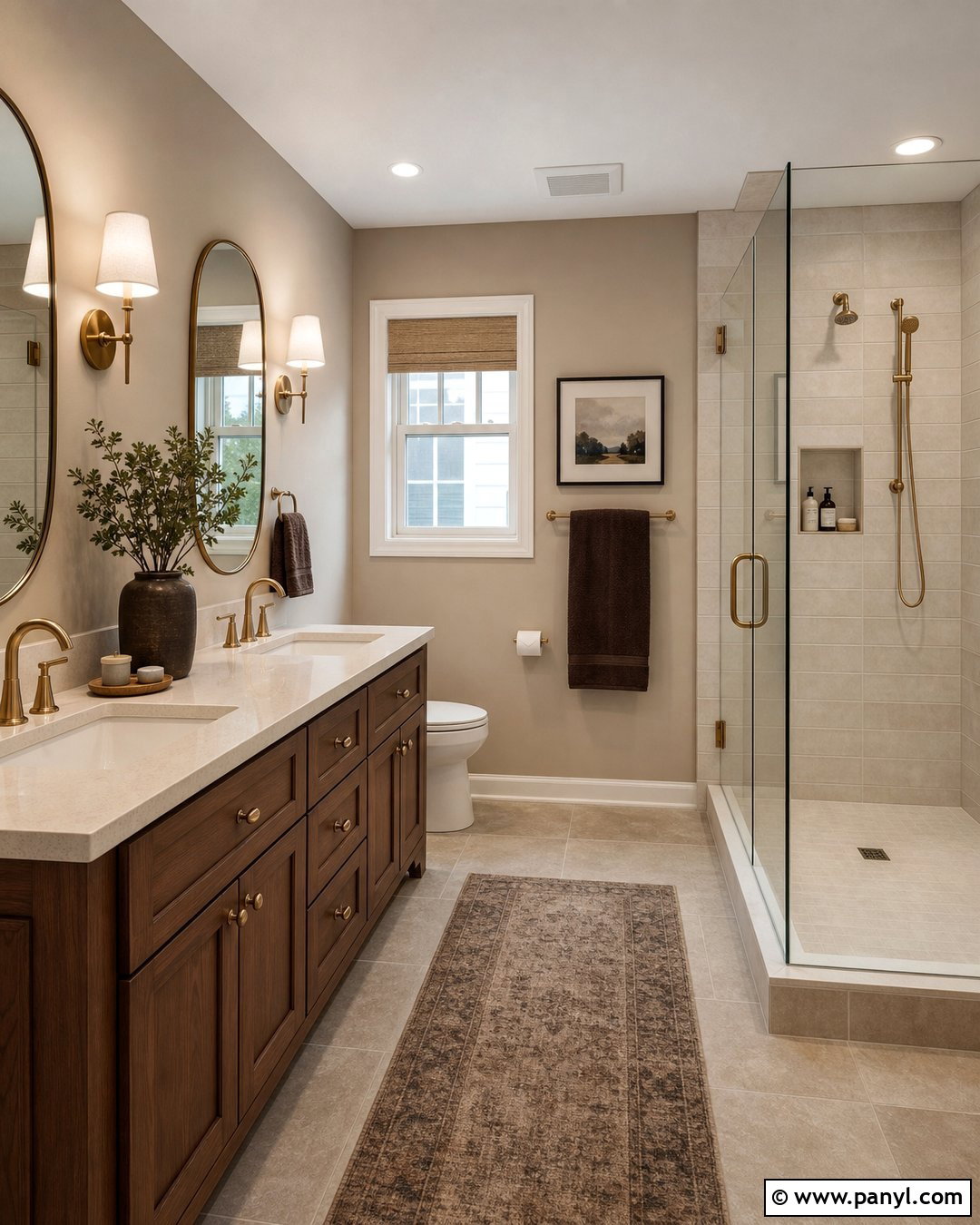
Mushroom beige sits between taupe, brown, and soft gray, making it an adaptable alternative to traditional greige. Use the color on moisture-resistant walls and repeat its warm undertone in large-format porcelain floor tile. A walnut vanity brings depth, while a creamy quartz top keeps the room bright. Choose an off-white tiled shower with mushroom grout so every surface feels connected. Aged brass faucets, rounded mirrors, and linen Roman shades complement the earthy palette without making it overly rustic. Add one deeper accent through cocoa brown towels or a painted storage cabinet. Warm LED lighting is important because cool bulbs can flatten this subtle color. The finished bathroom feels polished, grounded, and easy to coordinate with adjoining neutral rooms.
3. Soft Greige Bathroom
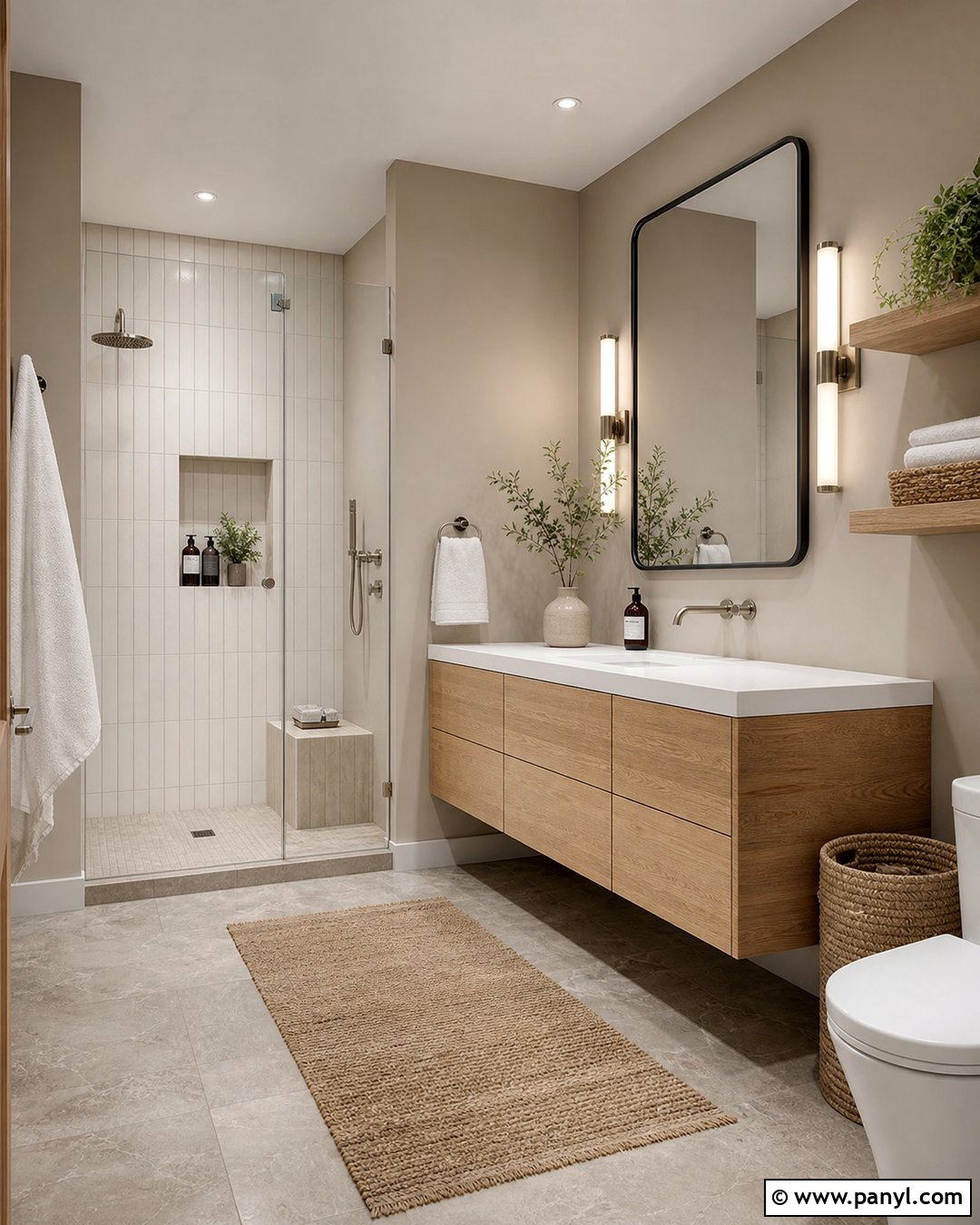
Could greige feel fresh again? For 2027, the strongest version looks warmer and more dimensional than the cool gray-beige combinations of previous years. Cover the walls in soft greige and choose pale stone-look floor tile with gentle taupe movement. Add a floating white oak vanity, matte white countertop, and vertical ivory tile inside the shower. Polished nickel hardware provides a crisp reflection without creating harsh black lines. Introduce contrast through a charcoal-framed mirror, but keep other dark accents minimal. White towels, a natural linen shower curtain, and one sculptural ceramic vase complete the restrained look. This palette works especially well in bathrooms with limited daylight because it remains light while hiding everyday marks more easily than pure white.
4. Sand Beige Bathroom
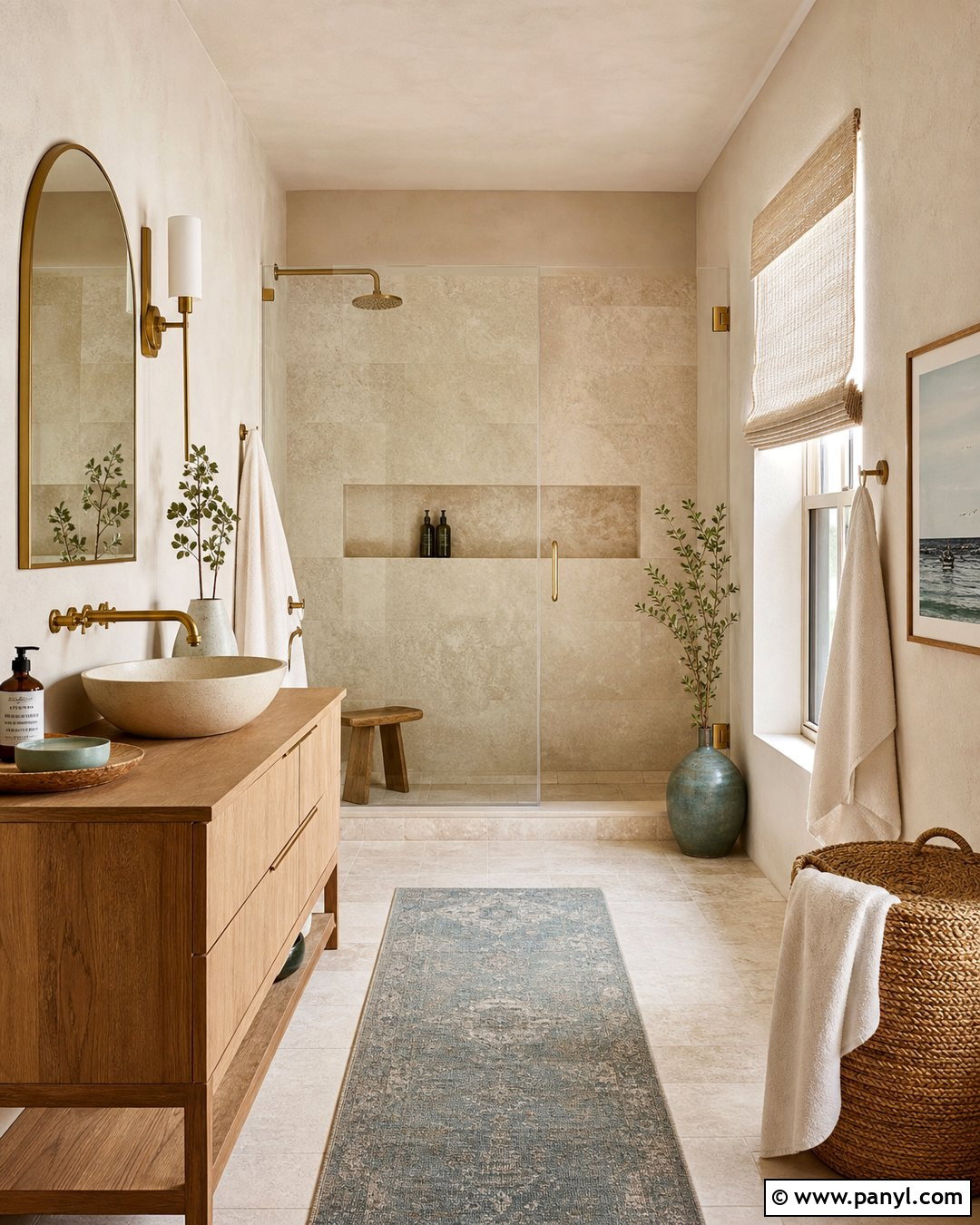
Sun-warmed sand tones can make an ordinary bathroom feel like a relaxed coastal retreat without relying on obvious beach decorations. Start with sandy beige plaster-look walls and pale travertine floor tile. Use the same stone on the shower walls to create a quiet, continuous backdrop. A medium oak vanity, creamy vessel sink, and brushed brass faucet enhance the warmth. Keep the textiles simple with ivory towels, a flax-colored bath mat, and a softly woven window shade. Curved mirrors and globe sconces introduce smooth shapes that balance the natural stone. A small amount of muted blue-green, perhaps on a stool or ceramic planter, adds refreshing contrast. The overall bathroom should feel airy, tactile, and connected to the landscape rather than themed.
5. Clay Taupe Bathroom
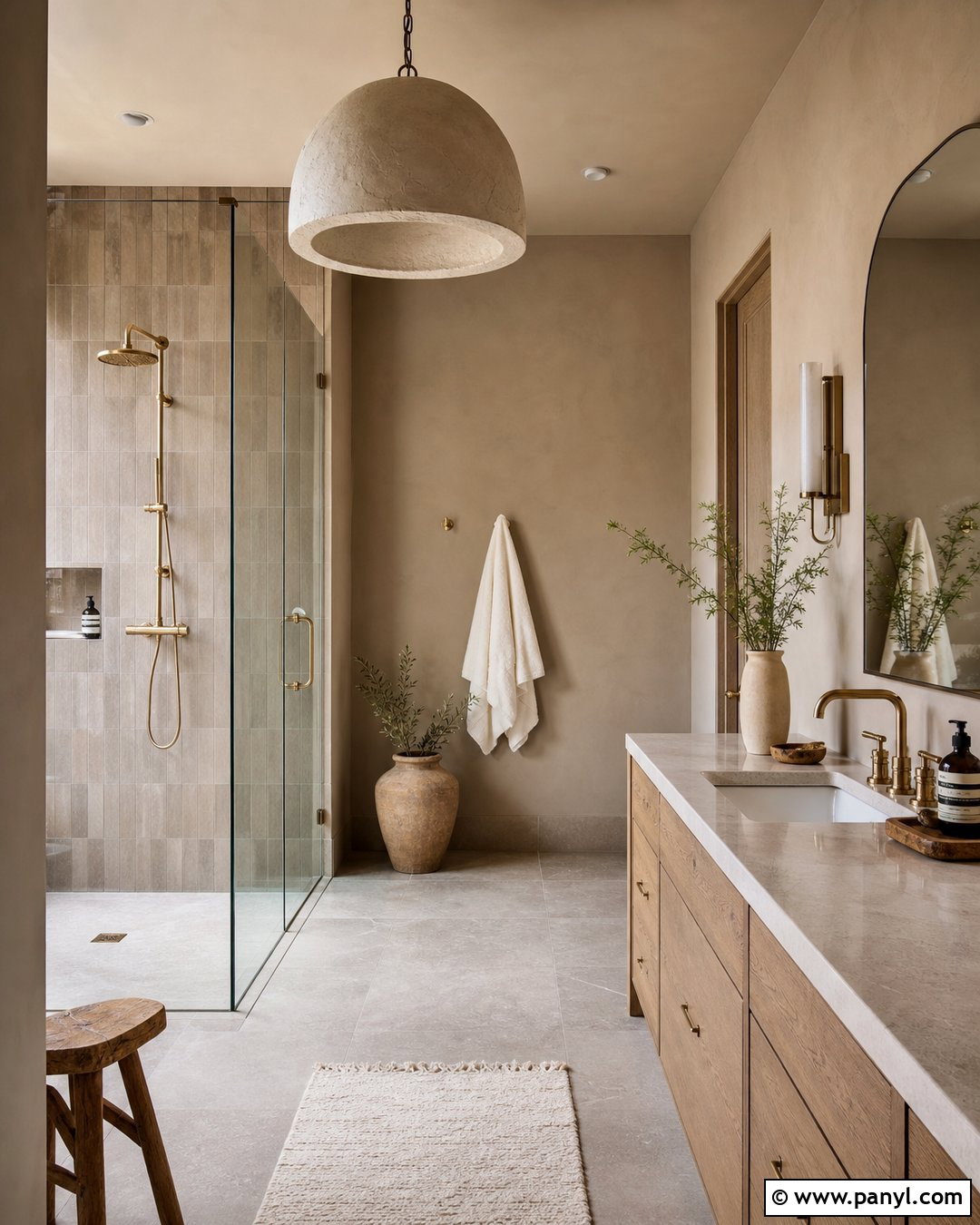
Clay taupe offers more character than beige while remaining subtle enough for a primary bathroom. Apply a mineral-style taupe finish to the walls for gentle movement, then anchor the room with warm gray limestone flooring. A rift-cut oak vanity with a thick cream counter creates a strong natural centerpiece. Inside the shower, combine vertical taupe tile with a slightly darker mosaic floor for practical definition. Choose unlacquered brass or antique brass hardware to deepen the earthy effect. Soft white towels, a rounded plaster pendant, and simple wood accessories prevent the palette from becoming heavy. If the bathroom has wainscoting, paint both sections in neighboring taupe shades. The tonal layering produces a sophisticated room that looks collected, comfortable, and pleasantly understated.
6. Terracotta Bathroom
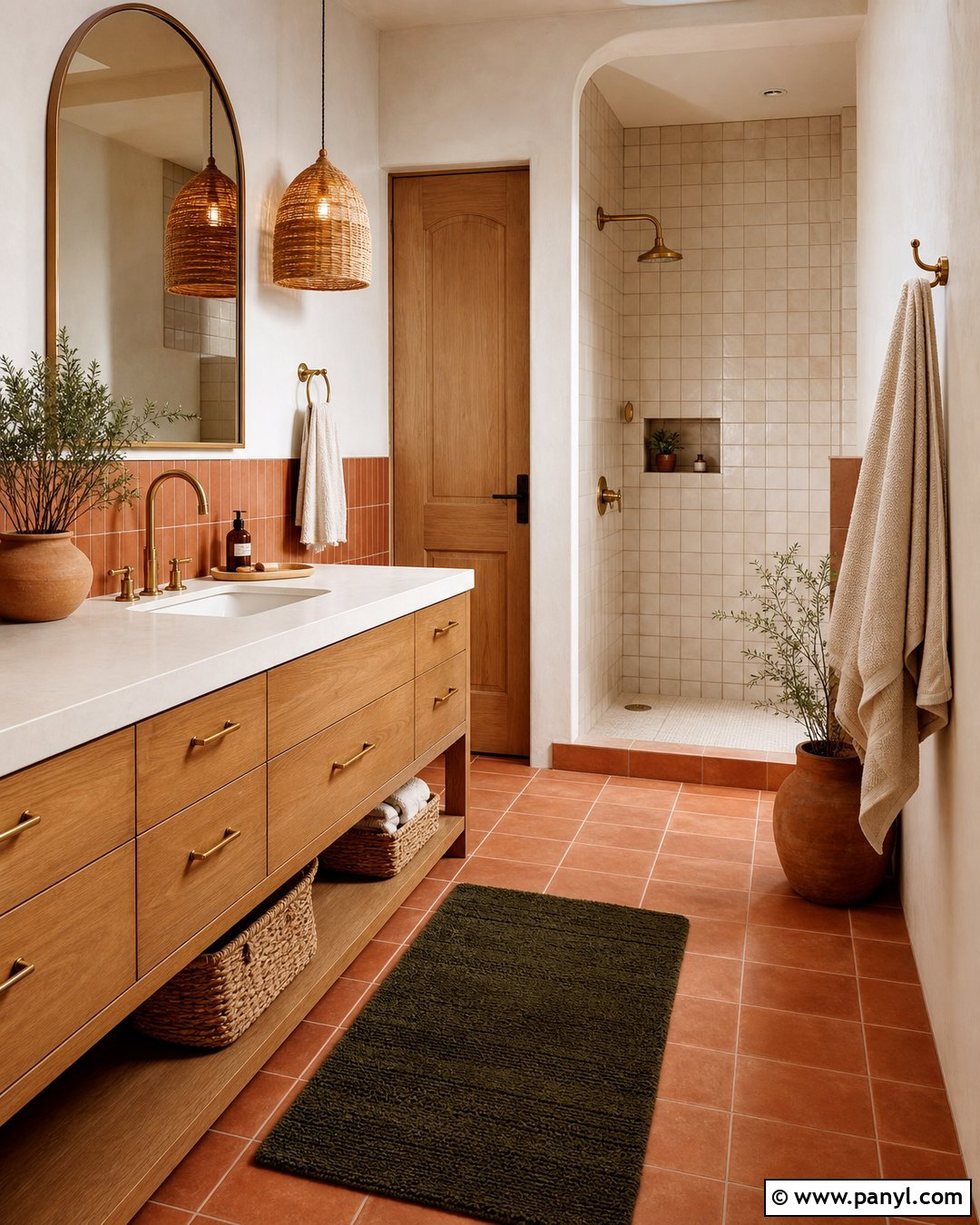
Terracotta is moving beyond small accessories and becoming the foundation of complete bathroom palettes. Use muted terracotta tile across the floor and continue it halfway up the walls for a strong architectural effect. Balance its rusty orange warmth with creamy plaster above, an off-white quartz vanity top, and light oak cabinetry. A walk-in shower lined with slim ivory tile keeps the room bright, while terracotta-colored grout connects it to the floor. Brushed brass fixtures feel natural beside the warm clay tones. Add oatmeal towels, a woven pendant, and one deep olive bath mat for contrast. Avoid combining too many patterned surfaces because the tile already provides movement. This bathroom feels sunny and inviting while maintaining a practical, modern layout.
7. Burnt Sienna Bathroom
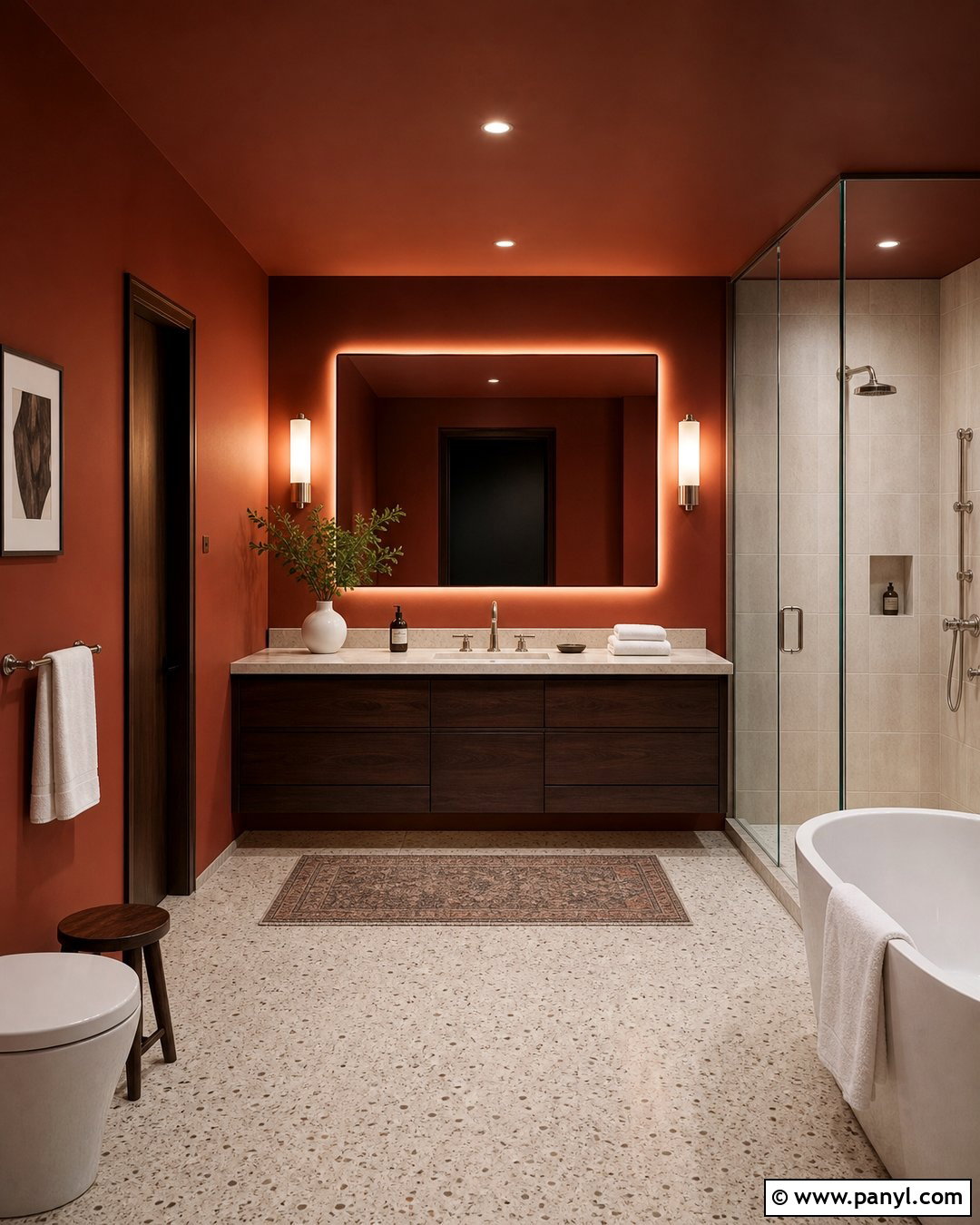
Rich burnt sienna creates a dramatic bathroom that still feels grounded in nature. Paint the walls and ceiling in the same deep reddish-brown shade, then introduce lighter materials through a cream terrazzo floor and pale stone vanity top. A dark walnut vanity enhances the cocooning character without clashing with the red undertones. Use large ivory tiles in the shower to create visual relief, and add slim sienna grout lines for continuity. Polished nickel fixtures offer a cooler counterpoint that keeps the room balanced. A wide backlit mirror, white towels, and frosted glass sconces brighten the darker envelope. This look is particularly effective in a powder room or naturally lit ensuite where saturated color can become an intentional feature rather than an overwhelming backdrop.
8. Plaster Pink Bathroom
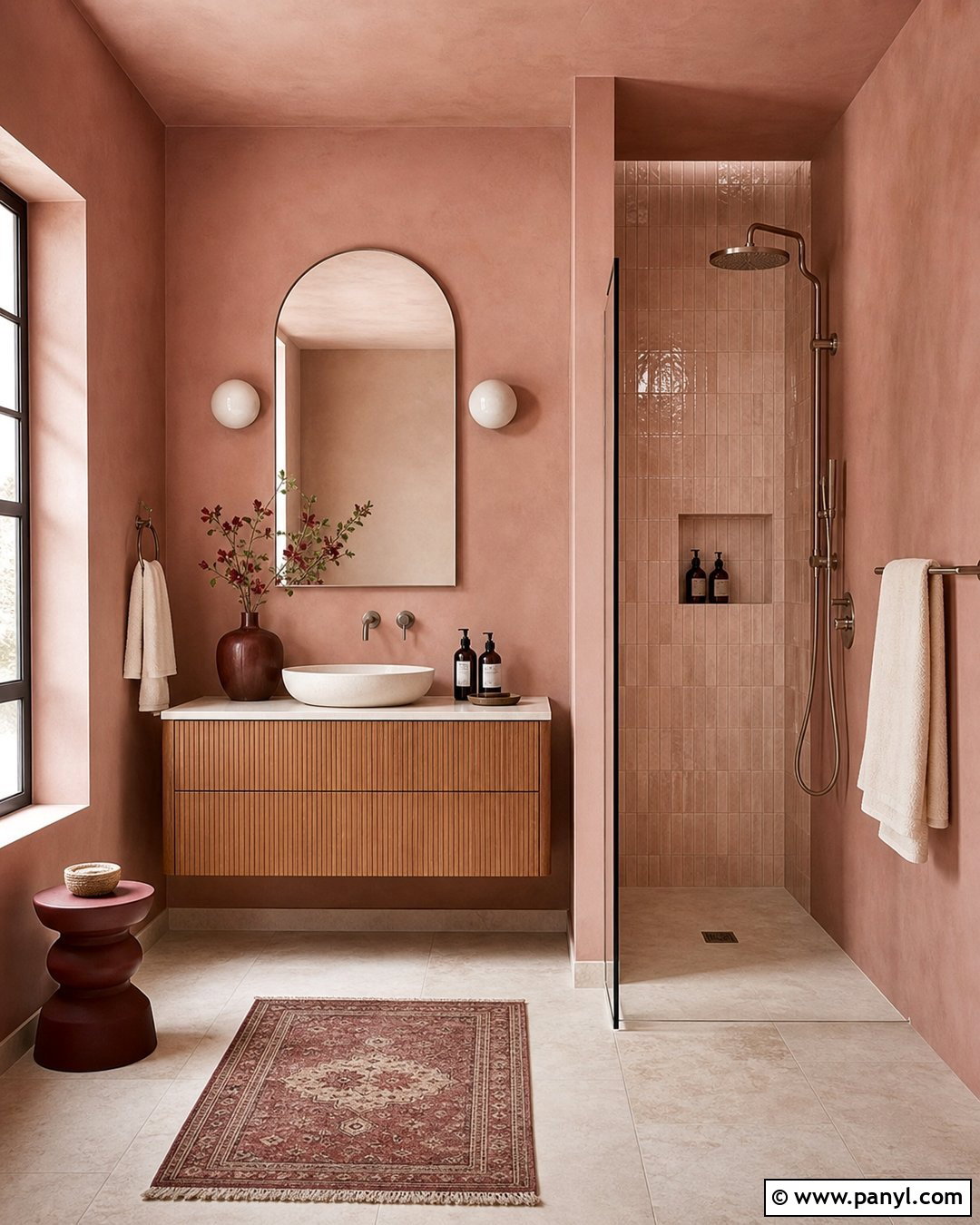
Soft plaster pink gives a bathroom warmth without creating an overly sweet or decorative result. Choose a dusty mineral pink for the walls and pair it with creamy limestone flooring. A fluted oak vanity, off-white basin, and brushed nickel hardware keep the scheme clean and contemporary. Inside the shower, use pale blush zellige tile with visible tonal variation, allowing the handmade surface to become the room’s main detail. Add a frameless arched mirror, simple globe sconces, and ivory cotton towels. Small accents in burgundy or chocolate brown will ground the pink more effectively than pastel accessories. Carrying the wall color onto the ceiling makes the room feel cohesive. The completed look is soft, flattering, and sophisticated enough for everyday use.
9. Dusty Rose Bathroom
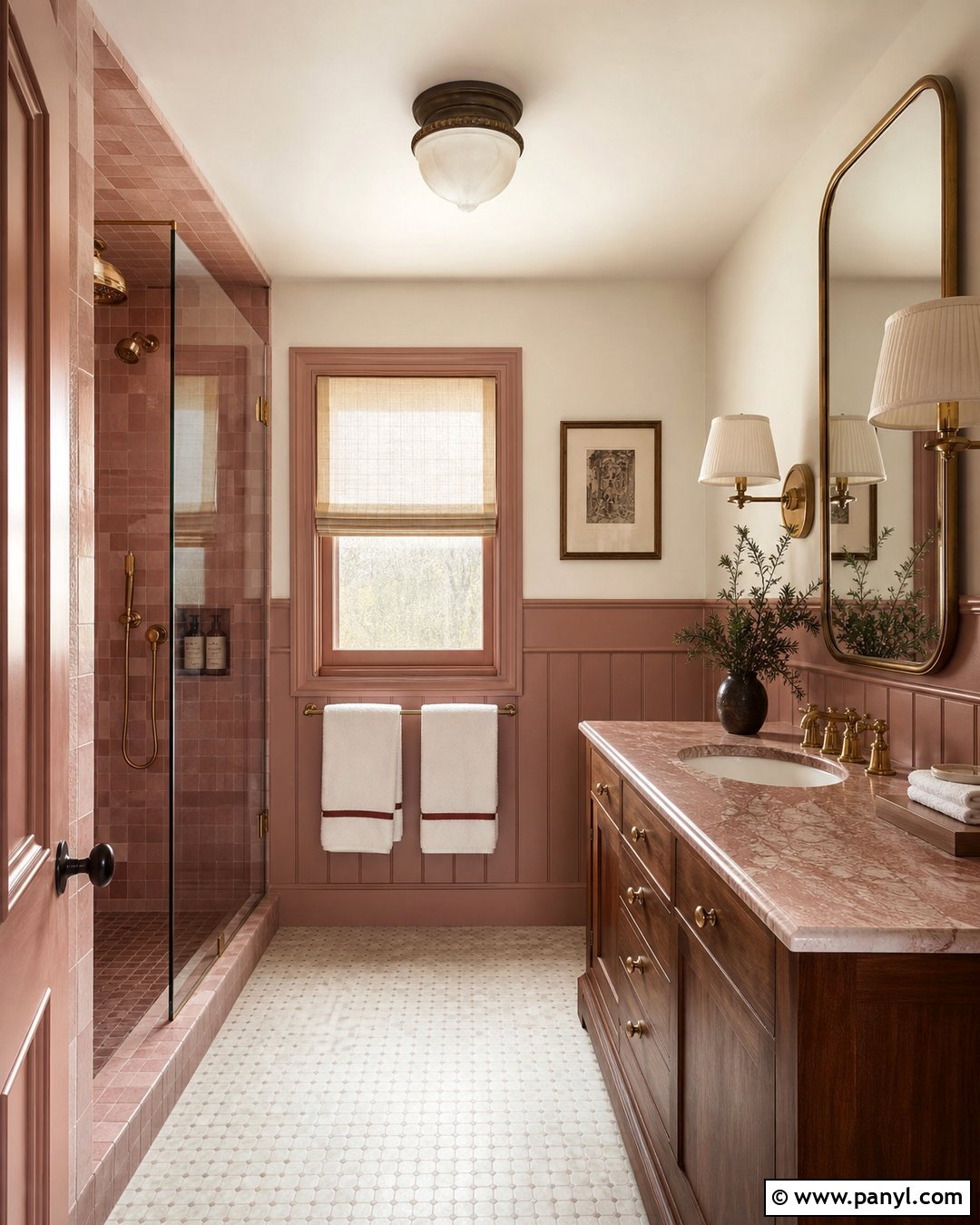
Dusty rose brings a deeper, more mature expression of pink to bathroom design. Use it on painted paneling around the lower walls, then finish the upper portion in a warm off-white. A rosy marble or convincing marble-look countertop can connect both colors without overwhelming the space. Choose a walnut vanity, antique brass faucets, and small cream mosaic floor tile for an inviting vintage-modern mix. In the shower, repeat the dusty rose through vertically stacked ceramic tile and use a pale grout for definition. Add a rectangular brass mirror, linen shade, and burgundy-edged towels for subtle layering. Plenty of bright lighting will keep the red undertones clear. This complete scheme feels nostalgic but polished, especially when paired with streamlined fixtures and uncluttered surfaces.
10. Butter Yellow Bathroom
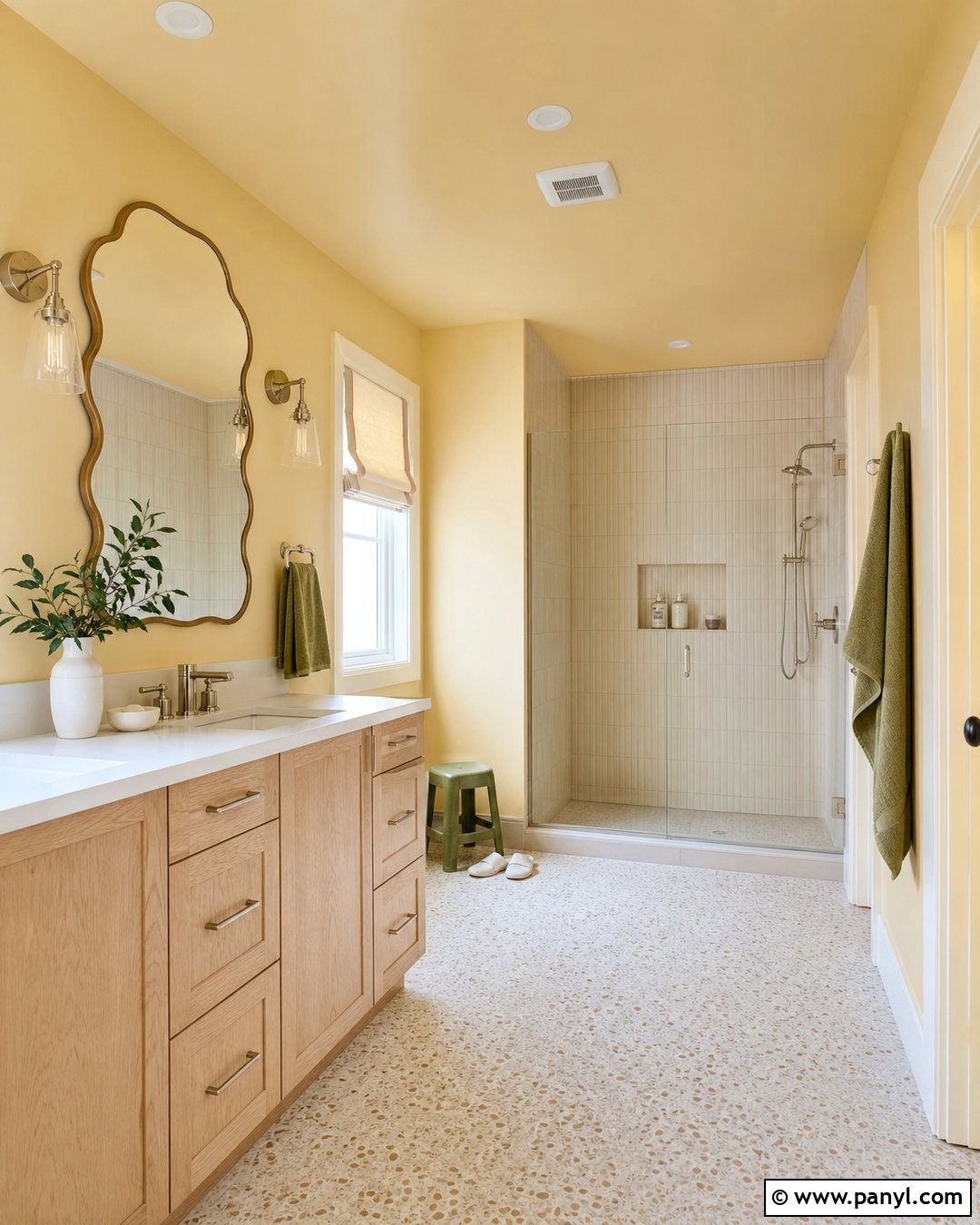
Imagine beginning the day in a bathroom filled with soft, sunny color. Butter yellow works best as a pale, creamy shade rather than a bright primary yellow. Paint the walls and ceiling in the same gentle tone, then add a white oak vanity and ivory terrazzo floor. Glossy cream shower tile reflects light, while yellow-beige grout creates a warmer transition between surfaces. Use polished chrome or nickel fixtures to sharpen the palette and prevent it from feeling overly vintage. A white countertop, scalloped mirror, and simple glass sconces maintain an airy look. Introduce one grounding color through olive towels or a muted green stool. The finished room feels cheerful and restorative, making it especially effective in small bathrooms with modest natural light.
11. Golden Ochre Bathroom
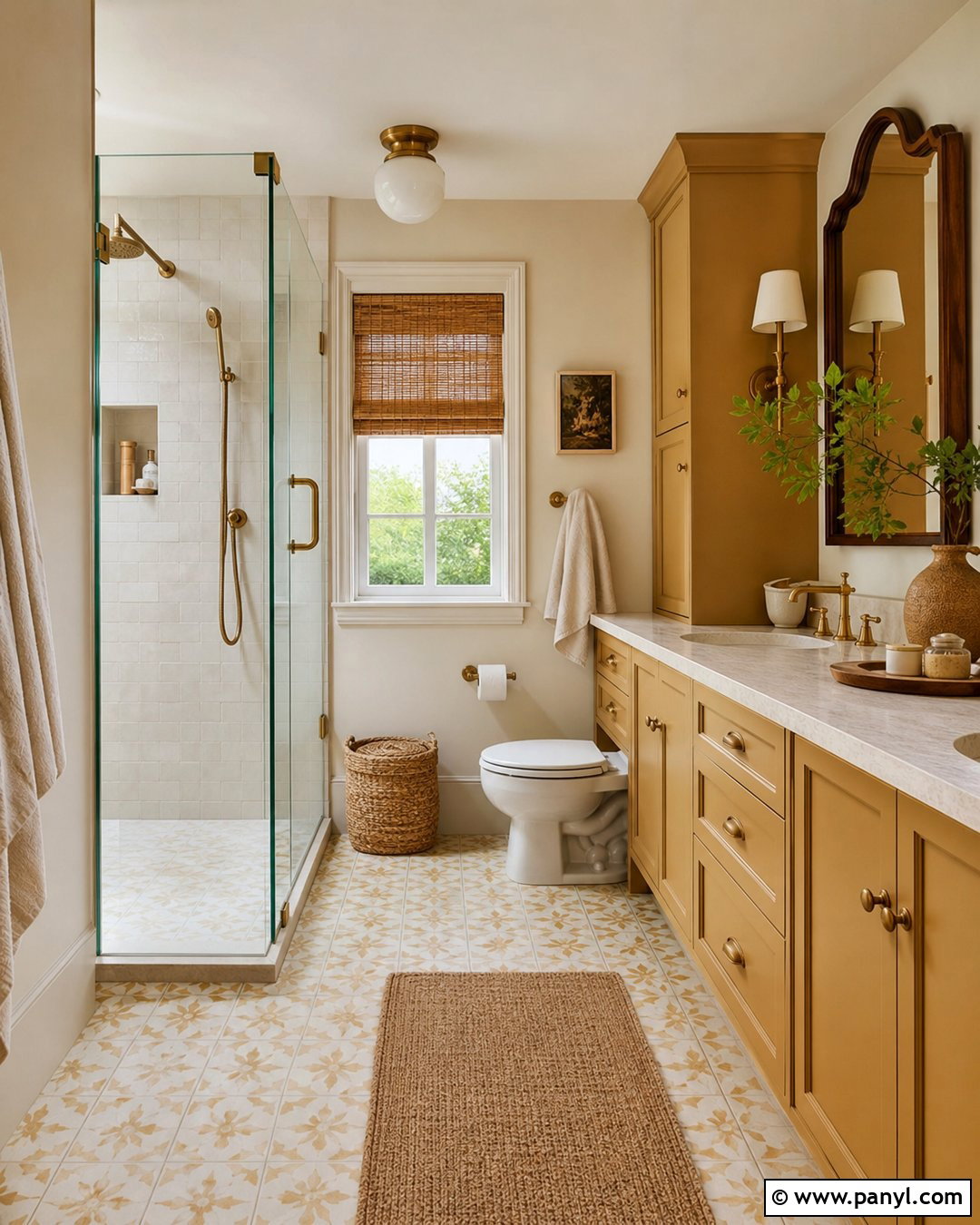
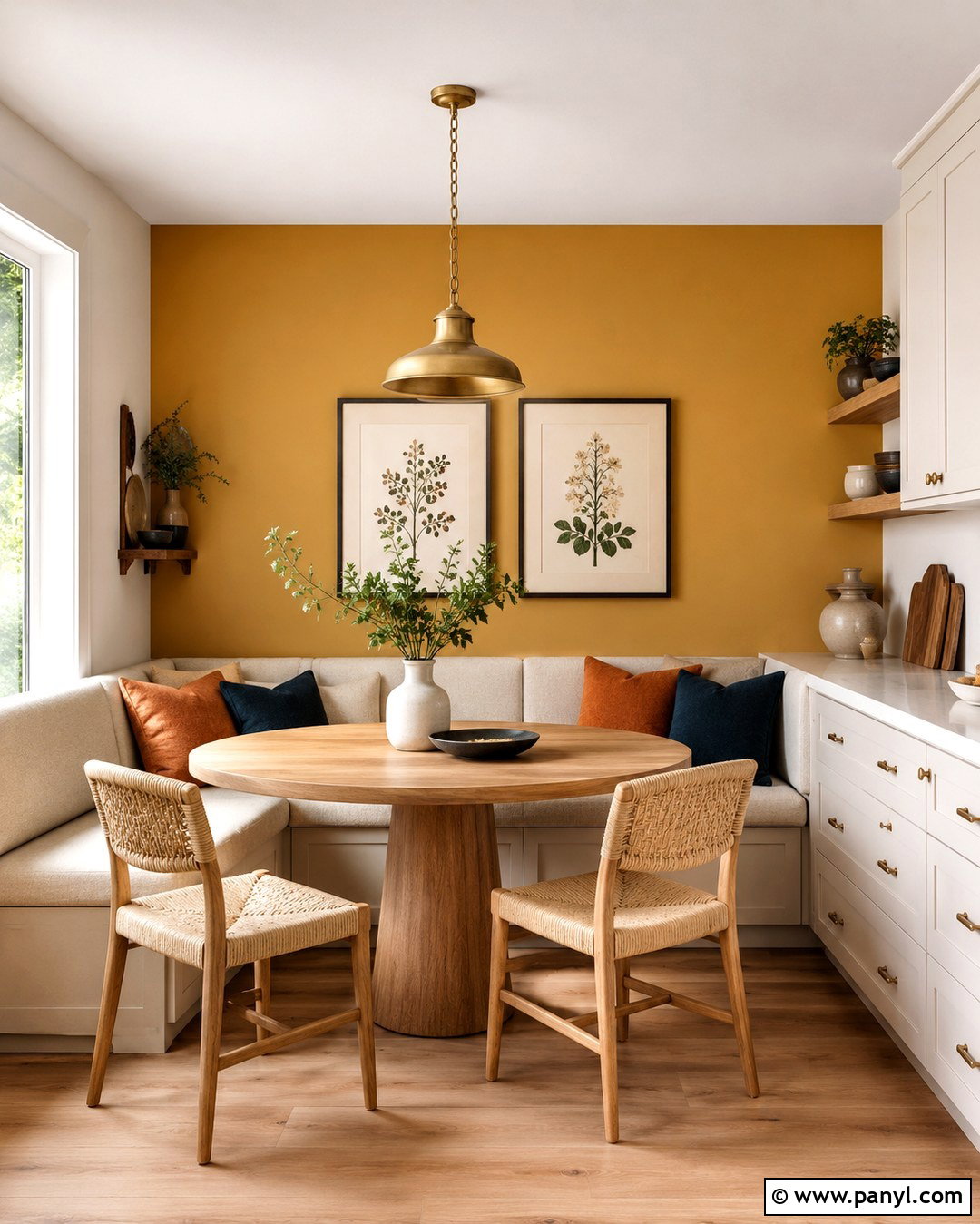
Golden ochre can transform a plain bathroom into a warm, confident space when it is balanced with calm materials. Use ochre on the vanity cabinetry and repeat it through a patterned encaustic-look floor containing cream, tan, and muted gold. Keep the walls soft ivory and line the shower with simple off-white rectangular tile. A pale limestone counter prevents the vanity from becoming visually heavy. Choose aged brass hardware for a tonal effect, then add a dark walnut mirror frame to introduce definition. Natural linen towels and a woven shade soften the stronger cabinetry color. Rather than scattering yellow accents everywhere, allow the vanity and floor to lead the scheme. This controlled approach creates a lively bathroom that remains practical, cohesive, and welcoming.
12. Sage Green Bathroom
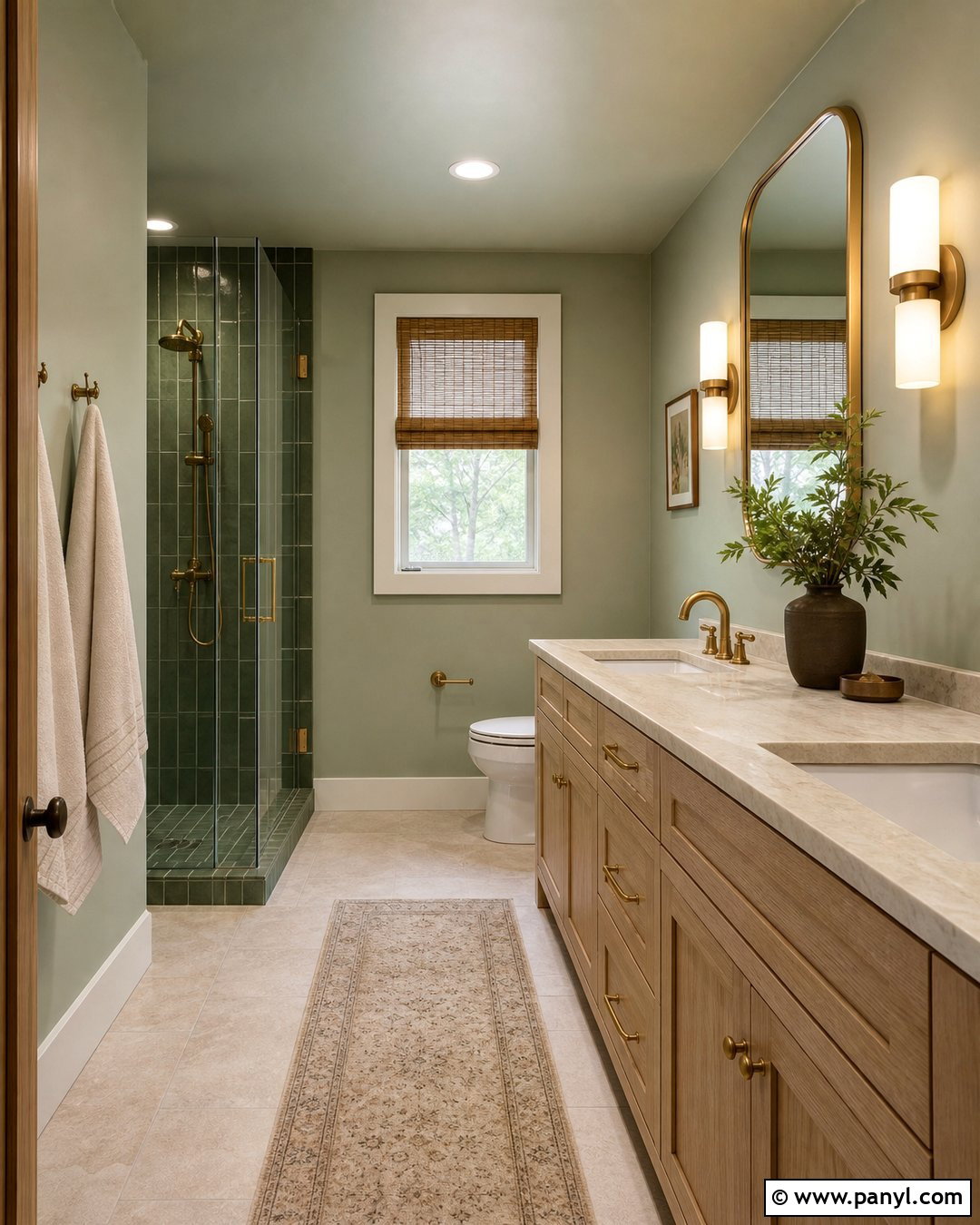
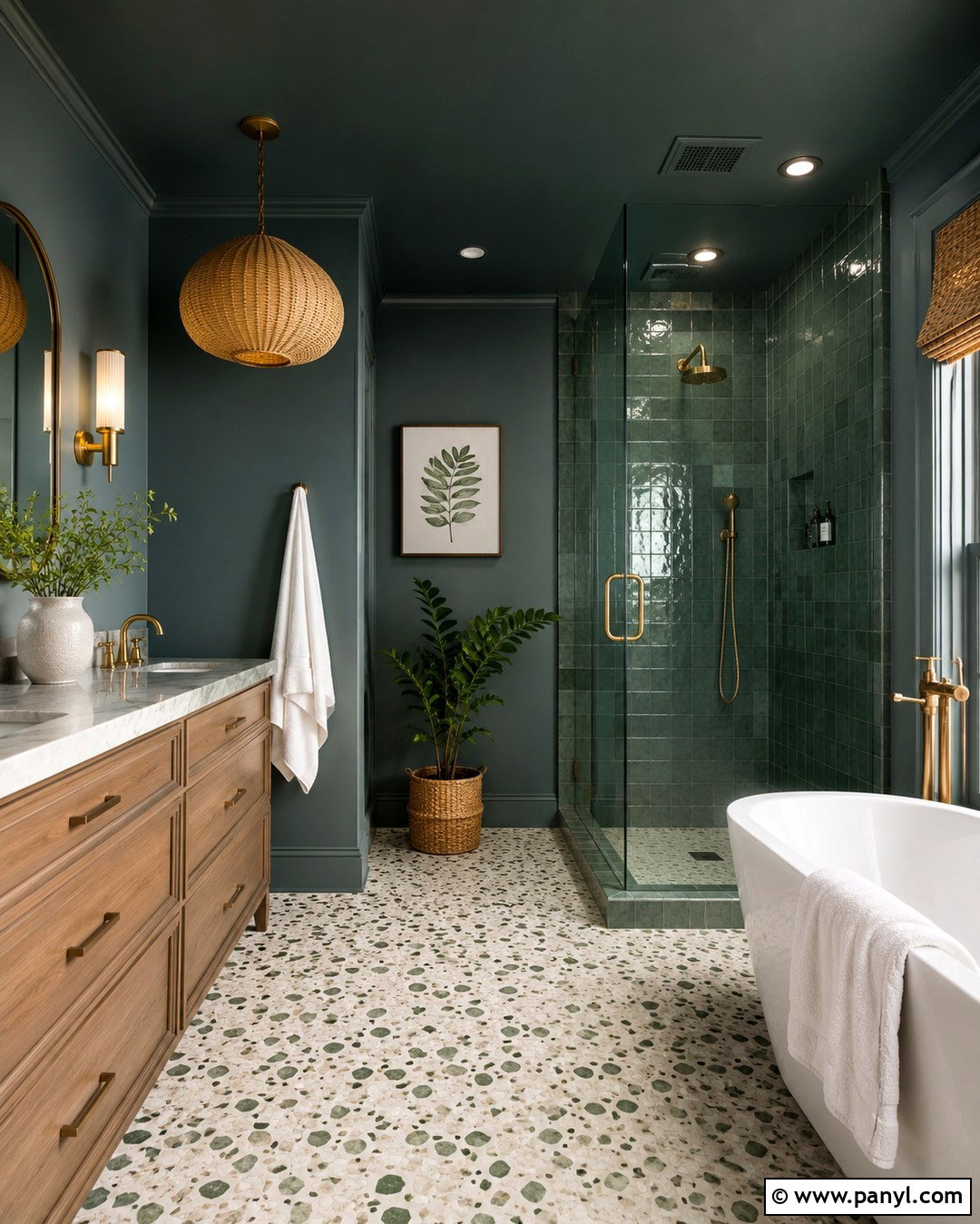
Sage green remains appealing because it connects easily with wood, stone, and soft neutral finishes. For a complete 2027 look, paint the walls and ceiling in a muted warm sage. Install a white oak vanity with a creamy quartz counter and use limestone-look porcelain across the floor. The shower can feature vertically stacked sage tile in a slightly deeper shade, creating tonal variation without introducing another major color. Brushed brass faucets provide warmth, while off-white towels and a natural woven shade keep the room light. Add a rounded mirror and two simple opal sconces for balanced illumination. Avoid gray grout, which may cool the palette unnecessarily. Warm ivory grout creates a smoother transition and preserves the bathroom’s peaceful, nature-inspired character.
13. Olive Green Bathroom
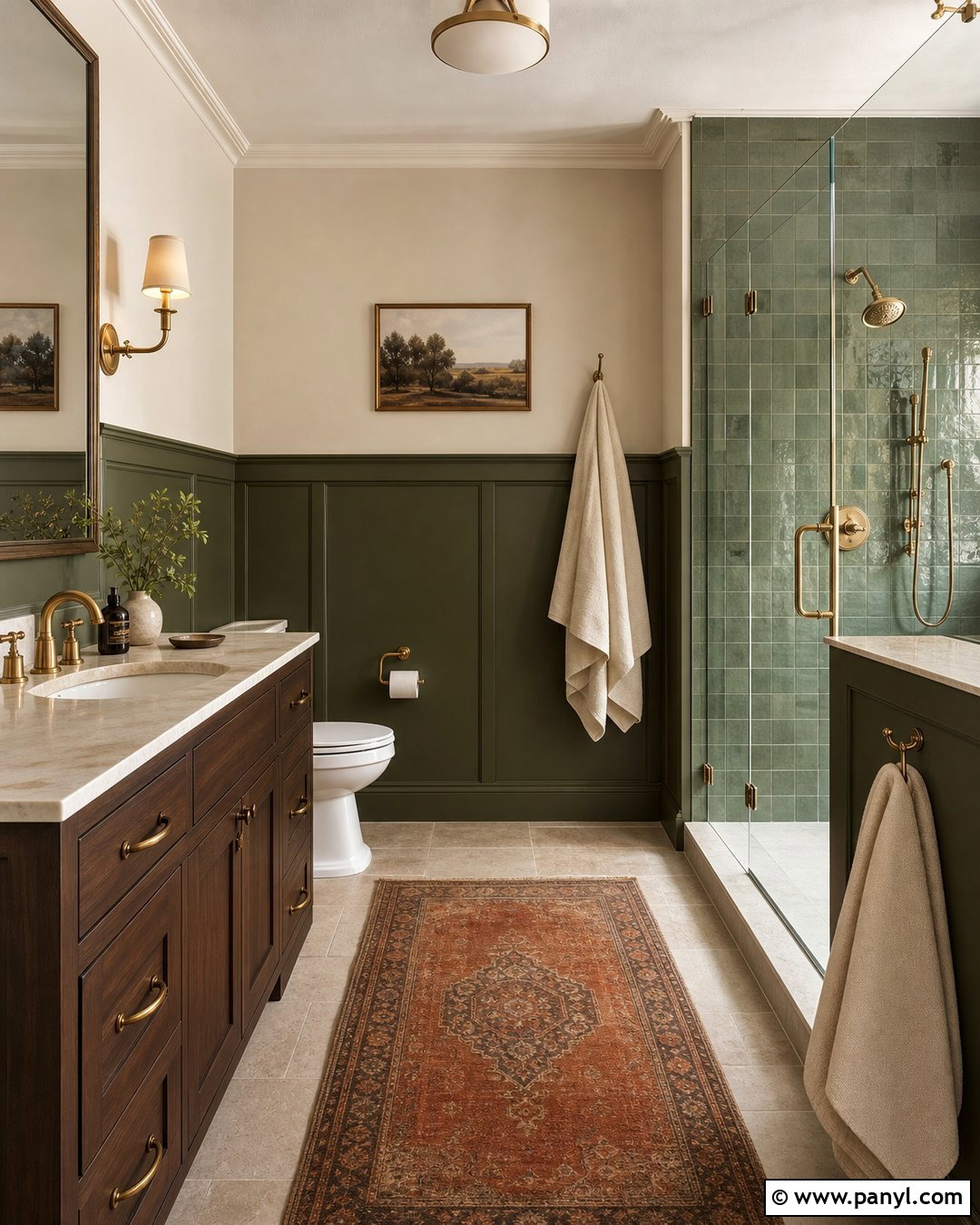
Olive green gives a bathroom a richer and more architectural identity than pale botanical colors. Apply deep olive paint to paneled walls and use a warm cream above if full color drenching feels too intense. A walnut vanity, ivory stone counter, and tumbled beige floor tile create a balanced foundation. Continue the olive theme inside the shower with handmade green tile, but choose a lighter variation to reflect more light. Antique brass fixtures strengthen the old-world warmth, while a contemporary frameless mirror keeps the room from looking overly traditional. Add cream towels, one rust-colored bath mat, and simple ceramic accessories. The entire bathroom should feel layered rather than dark, so include bright ceiling lighting and sconces positioned on both sides of the mirror.
14. Moss Green Bathroom
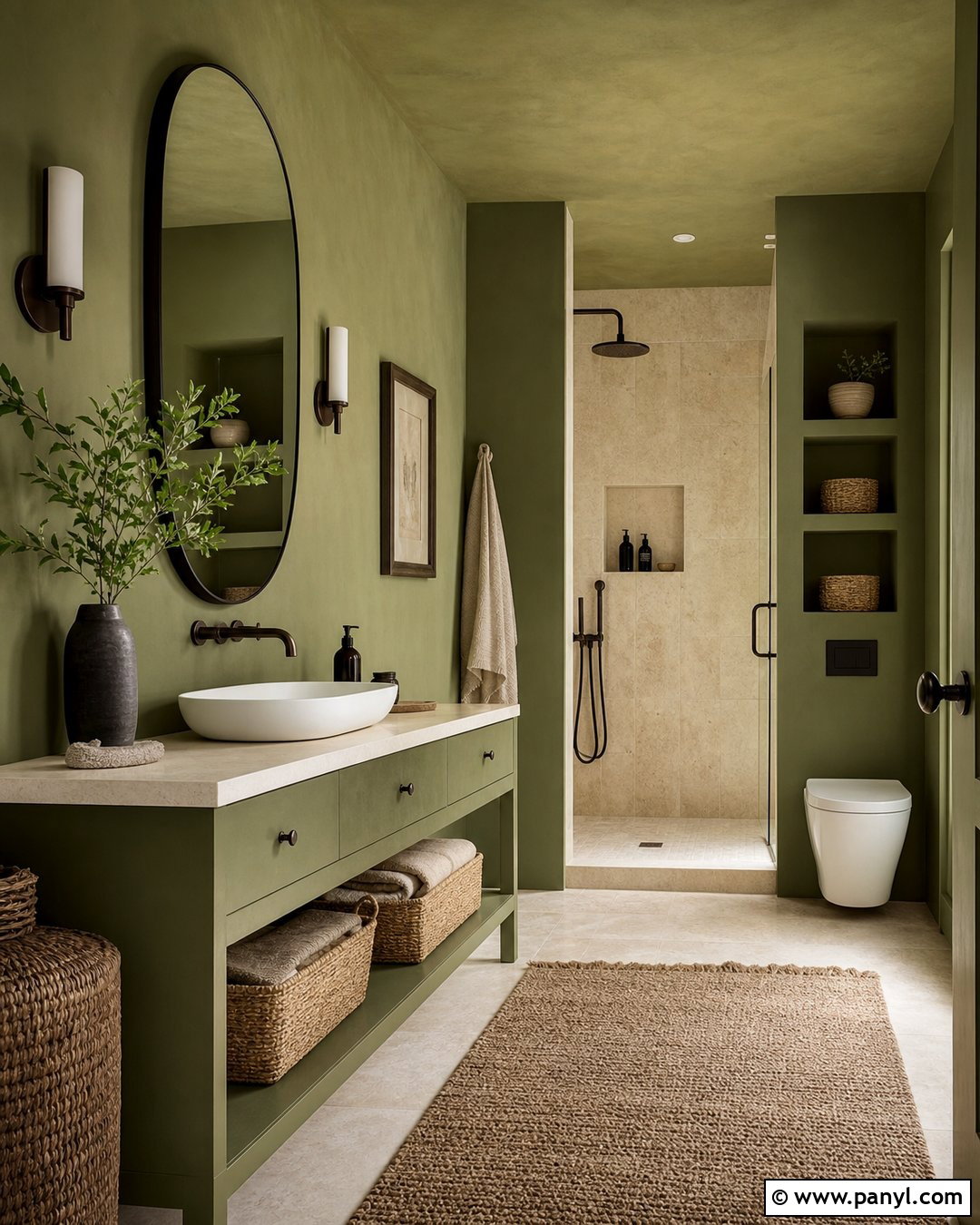
Moss green creates the feeling of a sheltered garden and works beautifully with textured stone. Use a medium moss tone across the walls, ceiling, and vanity for a deliberate color-drenched effect. Ground the room with pale travertine flooring and carry that stone into a walk-in shower. A creamy solid-surface counter and white basin provide necessary brightness. Choose aged bronze hardware for a quiet contrast that feels softer than matte black. A large oval mirror, woven storage baskets, and oatmeal textiles complete the organic palette. If natural light is limited, select a moss green with warm yellow undertones rather than a blue-green version. The finished bathroom feels enveloping and restorative, with enough tonal contrast to keep every functional element clear and visually balanced.
15. Eucalyptus Green Bathroom
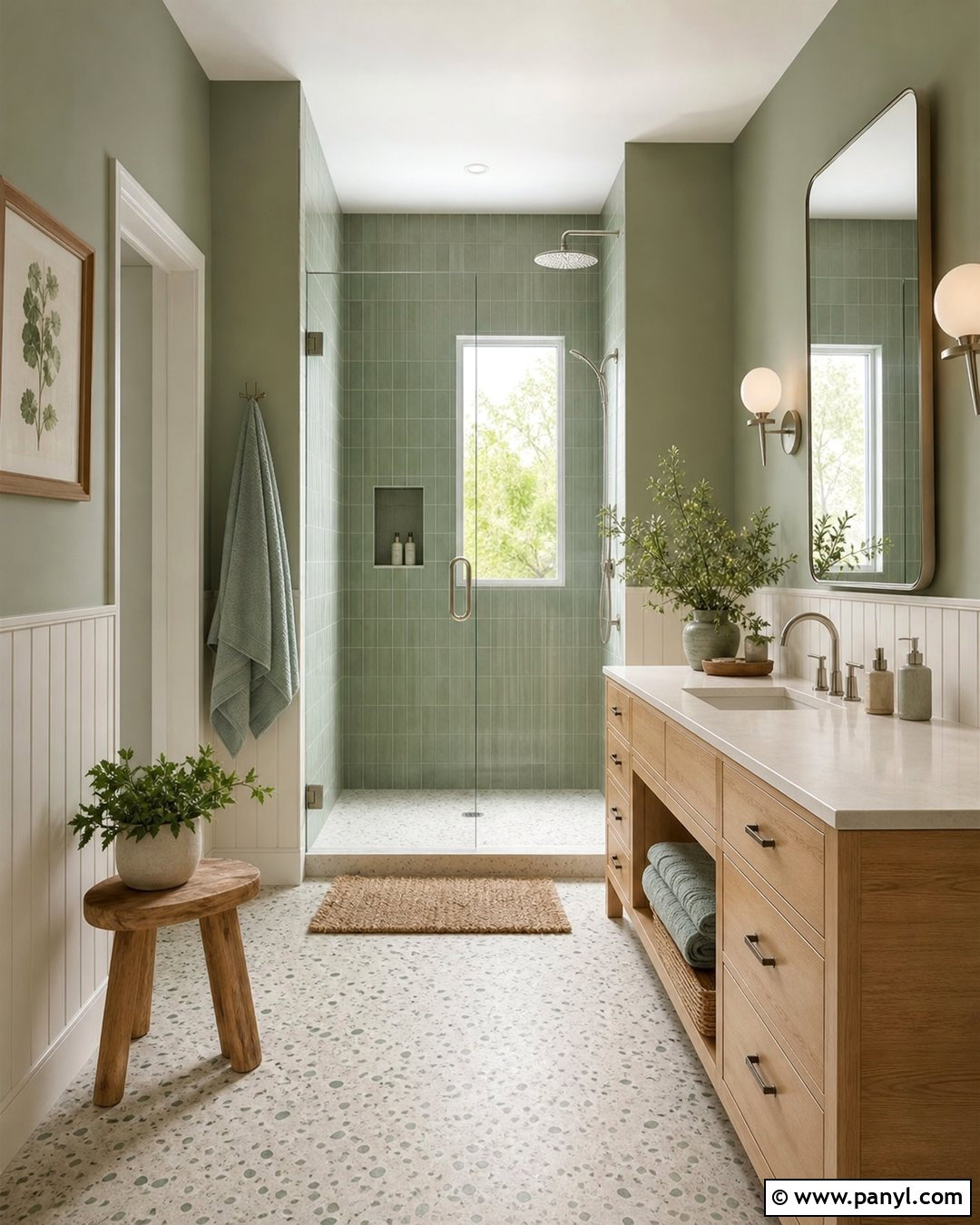
Fresh but not overly cool, eucalyptus green brings an airy botanical quality to small and medium-size bathrooms. Paint the upper walls this soft gray-green and install matching vertical tile around the tub or shower. Use narrow cream paneling below to add architectural detail and prevent the color from dominating. A light oak vanity with an ivory quartz top supports the relaxed palette. Brushed nickel fittings, a frameless mirror, and white globe sconces make the space feel crisp. Pale terrazzo flooring can introduce tiny flecks of green, beige, and warm gray for subtle movement. Finish the room with white towels, a natural bath mat, and minimal leafy greenery. This complete scheme feels clean and contemporary while remaining warmer and more welcoming than a traditional cool mint bathroom.
16. Smoky Teal Bathroom
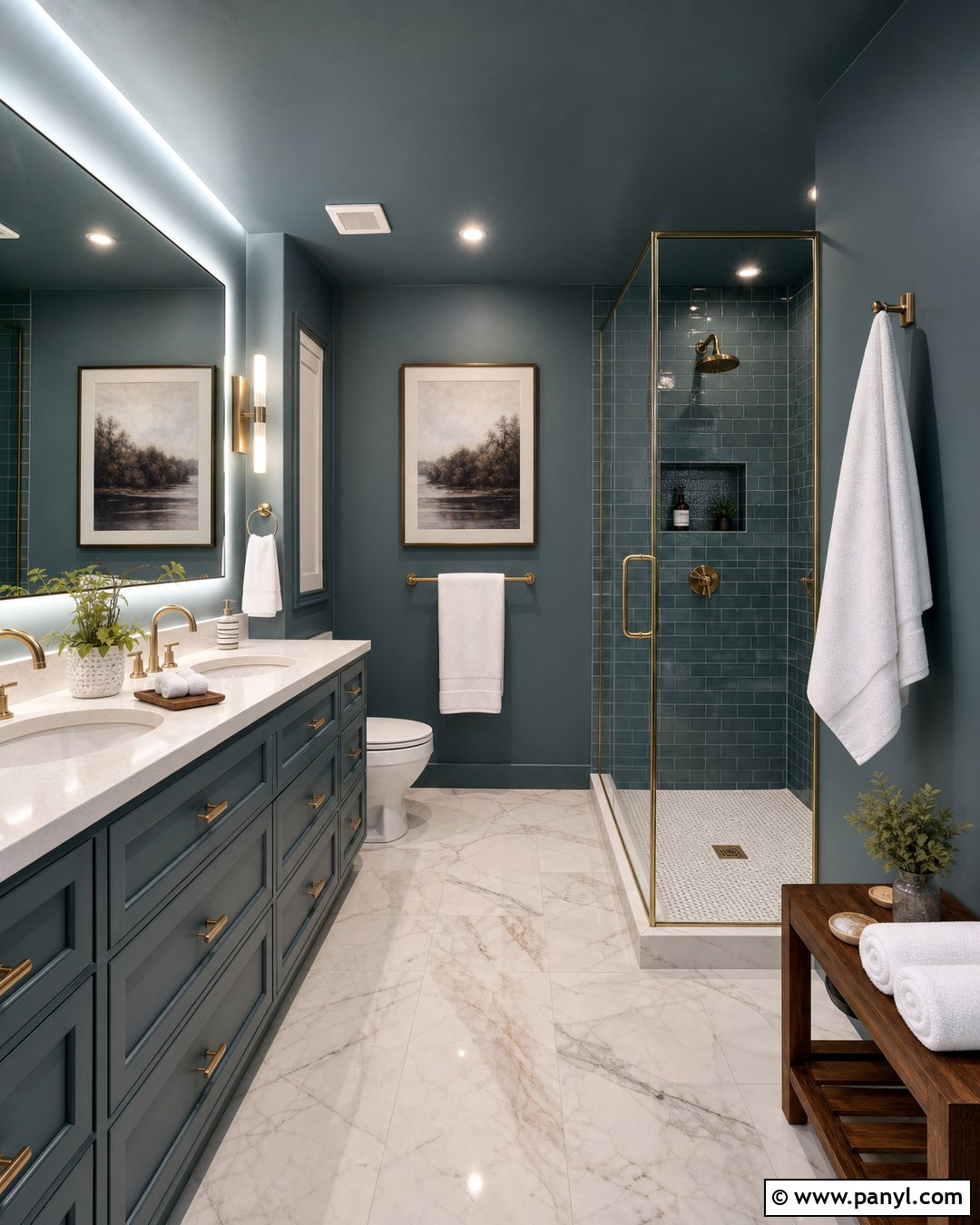
Smoky teal delivers deep color while its gray undertone keeps the bathroom sophisticated. Use it on the walls, vanity, and ceiling to create a cohesive jewel-box effect. Balance the saturation with creamy marble-look floor tile and a pale quartz countertop. Inside the shower, choose glossy teal tile in varied shades so the surface catches and reflects light. Brushed brass fixtures emphasize the green undertones, while white basins and towels create clear visual breaks. Install a broad mirror with integrated lighting to brighten the room evenly. Small walnut accessories can add another warm natural note without competing with the teal. The resulting bathroom feels immersive and luxurious, yet its straightforward layout and limited material palette make the look practical to recreate in an average home.
17. Sea Glass Bathroom
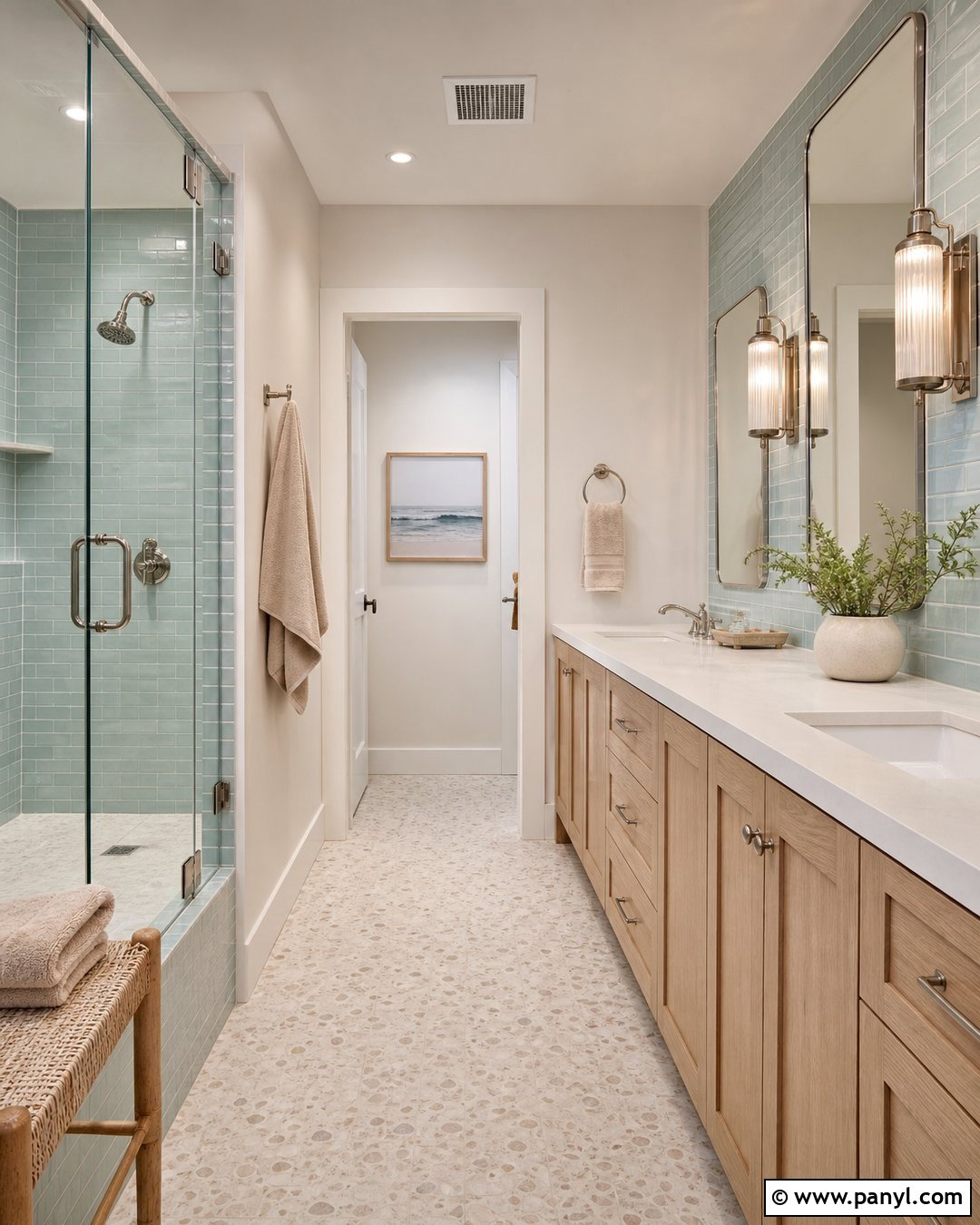
Sea glass color sits between pale green and watery blue, offering a refreshing alternative to standard bathroom aqua. Cover the shower walls with soft sea glass tile and extend it behind the vanity for continuity. Keep the remaining walls warm white so the delicate color remains visible. A bleached oak vanity, pale terrazzo floor, and ivory countertop support the coastal influence without creating a themed room. Choose polished nickel fixtures and a thin silver mirror frame for a clean reflection. Sand-colored towels, a woven storage bench, and ribbed glass sconces add texture while preserving the gentle palette. Use warm white grout instead of stark white to soften the tile grid. The completed bathroom feels open, breezy, and serene in every season.
18. Powder Blue Bathroom
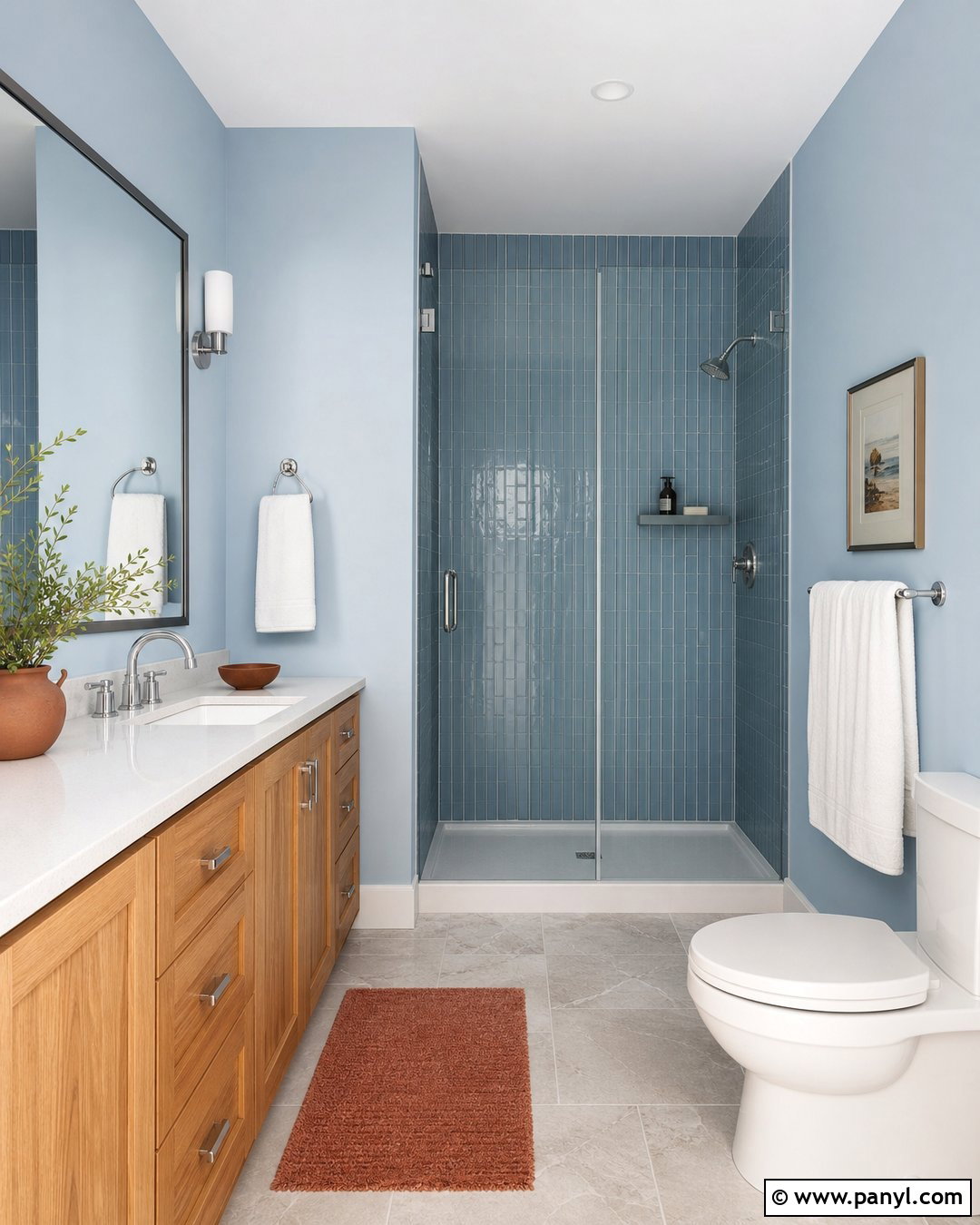
Powder blue can look modern when combined with warm wood and clean architectural lines. Apply a softly muted blue to the walls and repeat it in glossy shower tile laid in a vertical pattern. A medium-tone oak vanity introduces warmth, while a white quartz counter and pale stone floor maintain brightness. Polished chrome fixtures complement the freshness of the blue without creating a decorative gold contrast. Add a wide rectangular mirror, streamlined wall sconces, and thick white towels for a hotel-like finish. A small amount of rust or clay, perhaps through a bath mat and ceramic container, prevents the scheme from feeling chilly. This balanced bathroom offers gentle color that is easy to live with, especially in family spaces that need to feel clear and cheerful.
19. Slate Blue Bathroom
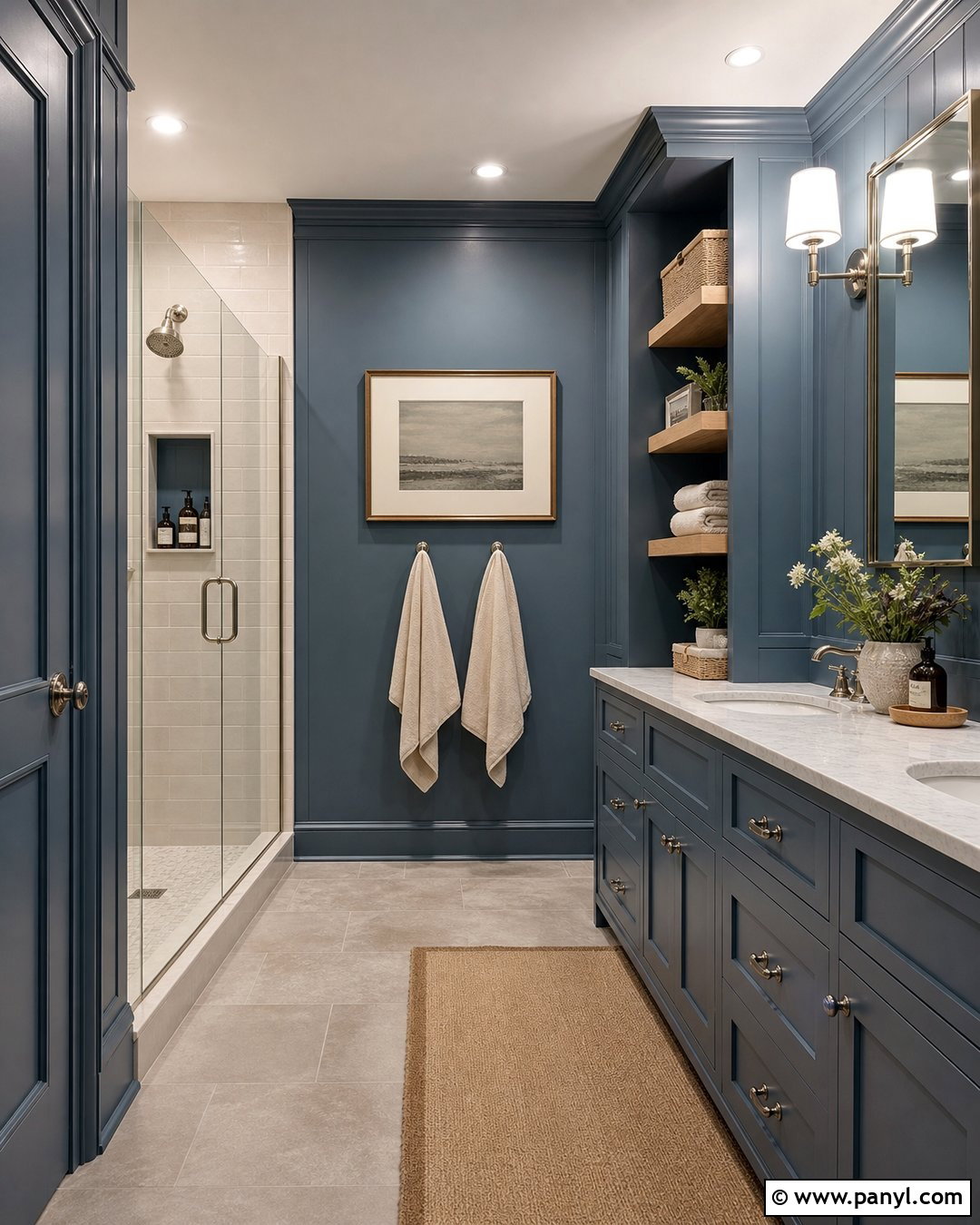
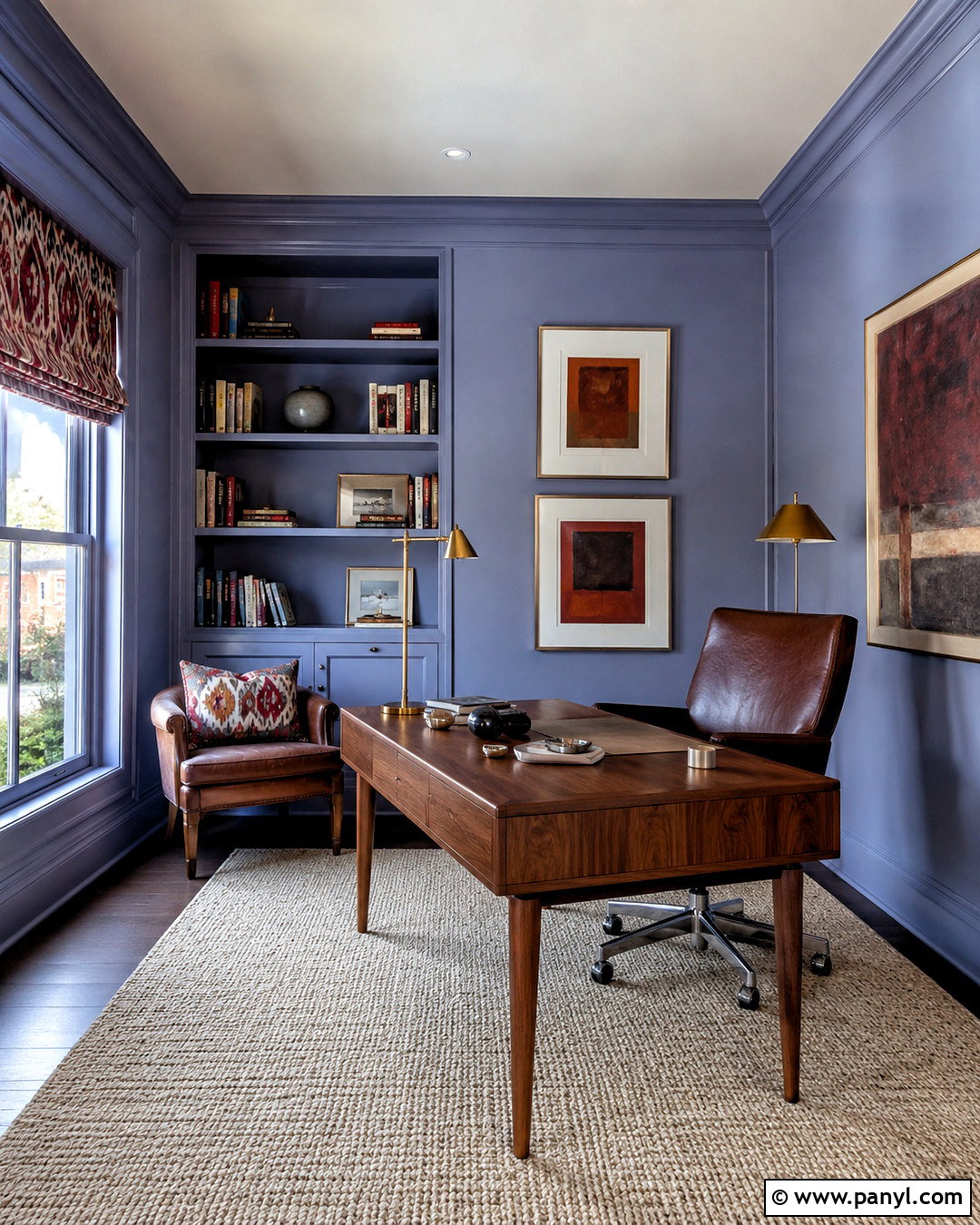
Slate blue brings the calming quality of blue together with the strength of charcoal. Use this medium-dark color on the vanity and paneled walls, leaving the ceiling warm white for openness. Large beige-gray floor tiles provide a neutral base, while the shower combines off-white tile with a slate blue niche. A pale marble counter introduces fine movement without competing with the cabinetry. Choose polished nickel or chrome fixtures to add a clean highlight against the muted walls. Light oak shelving, cream towels, and a soft tan runner bring essential warmth. If the bathroom has a window, a natural linen shade will filter daylight gently. The final look feels tailored and substantial but avoids the heaviness of a completely dark navy or charcoal room.
20. Deep Navy Bathroom
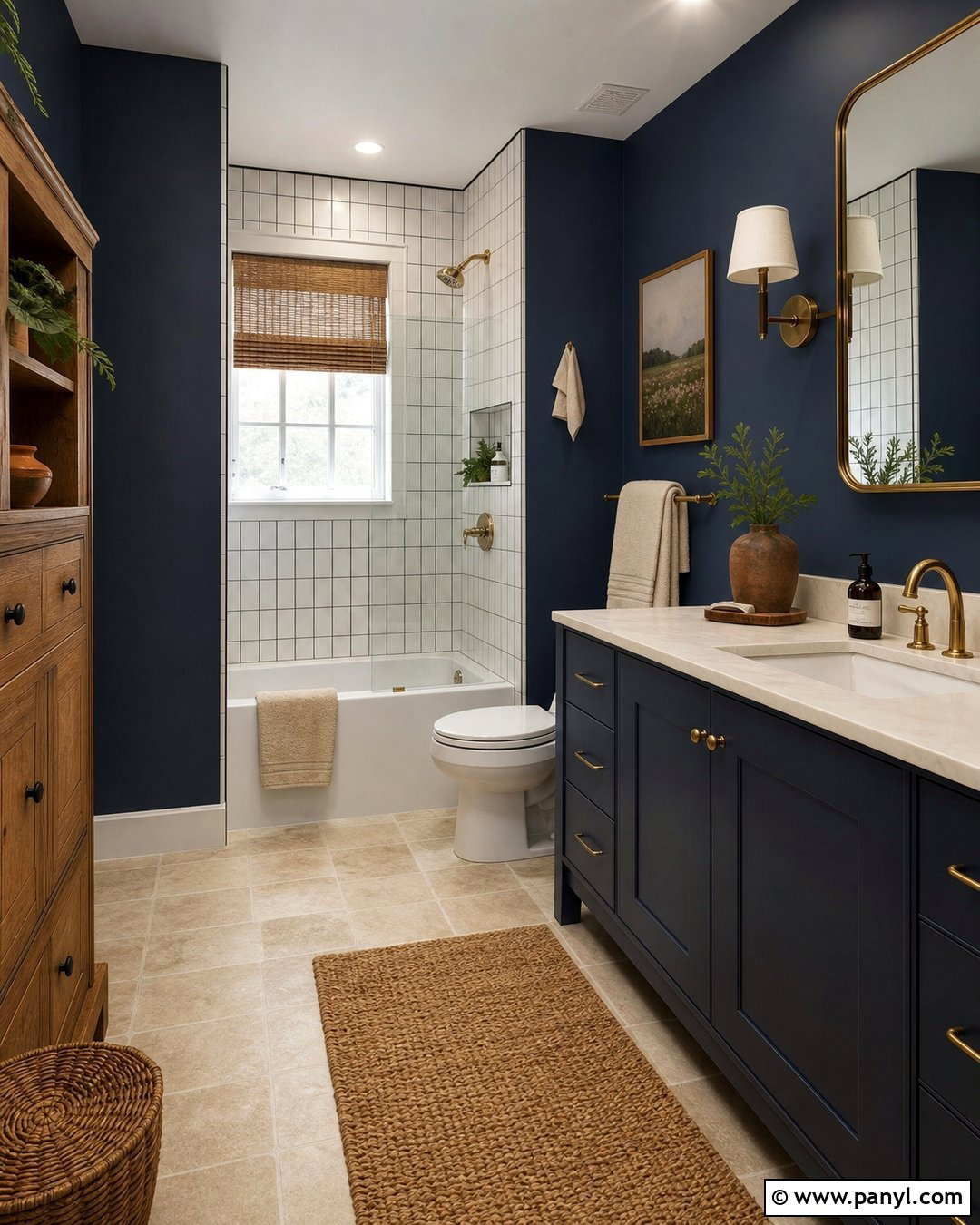
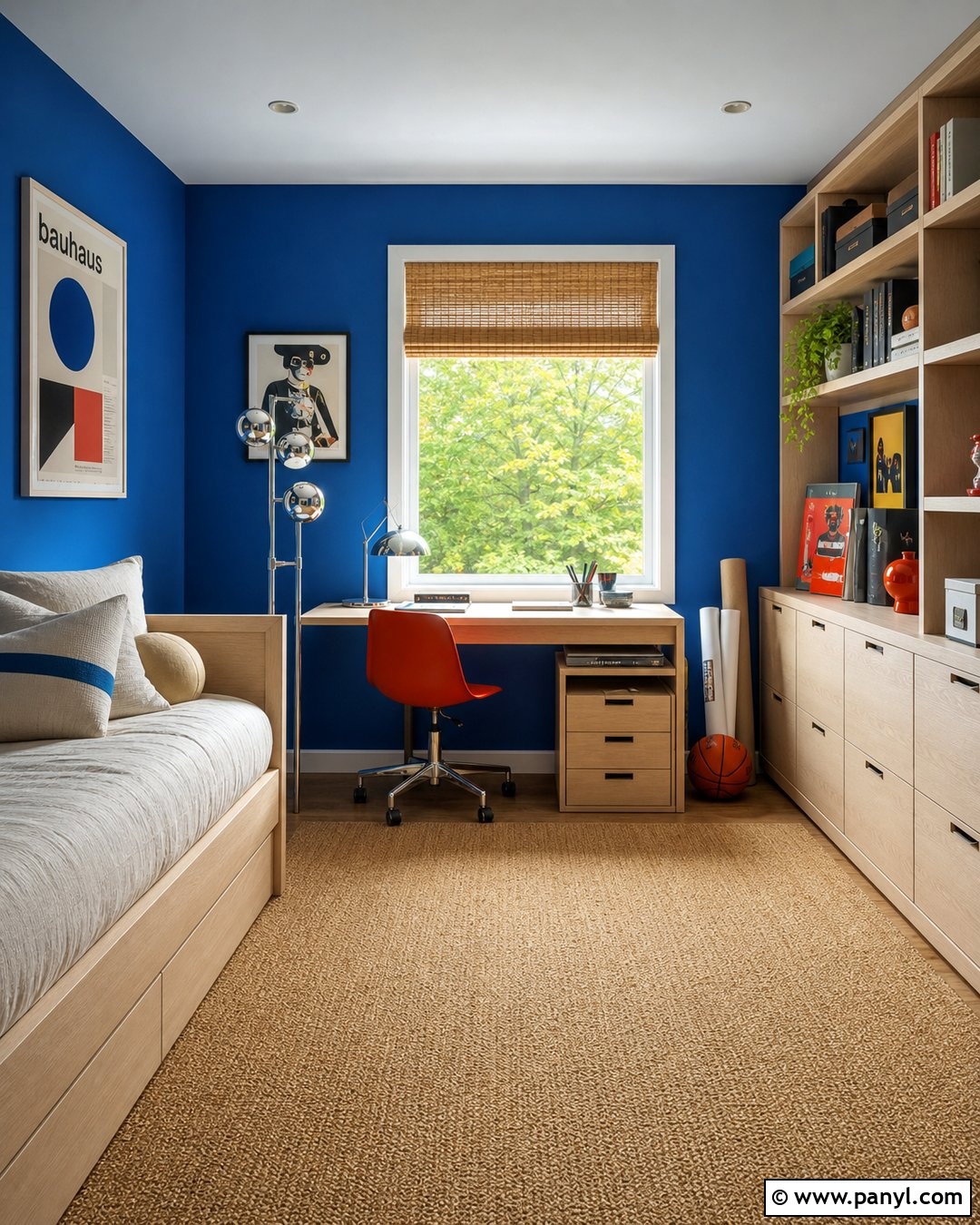
Deep navy remains a powerful option for bathrooms, but the newer approach mixes it with warm neutrals rather than crisp black and white. Paint the walls and vanity in a softened ink navy, then add a creamy limestone floor and ivory quartz counter. Line the shower with glossy off-white tile and use navy grout as a precise graphic detail. A warm oak storage cabinet and woven window shade soften the contrast. Choose polished brass fixtures for brightness, along with a large mirror that reflects as much light as possible. Ivory towels and a camel-colored bath mat complete the room. Keeping the ceiling pale cream prevents the saturated walls from closing in. This bathroom feels dramatic, classic, and noticeably warmer than earlier nautical navy schemes.
21. Muted Plum Bathroom
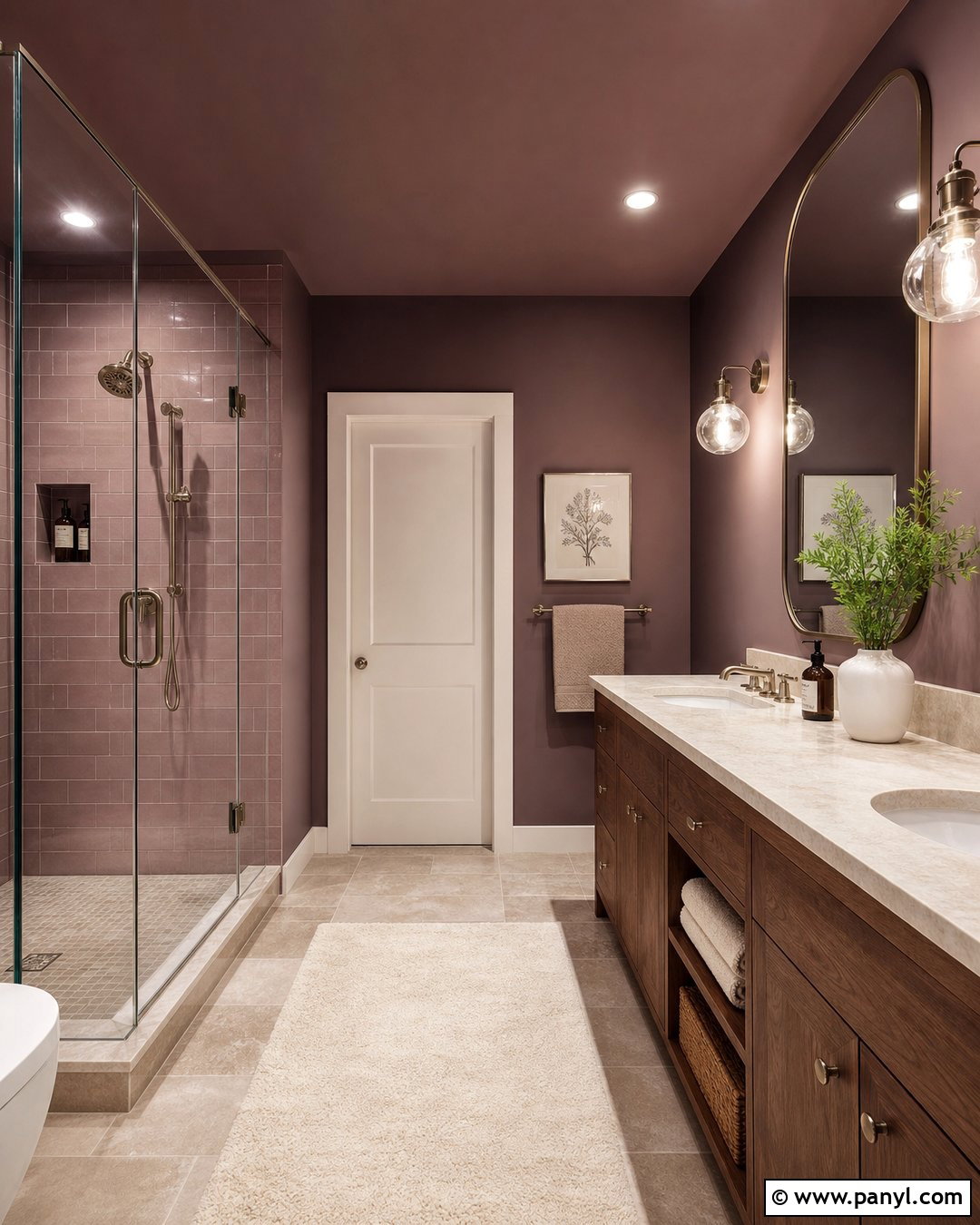
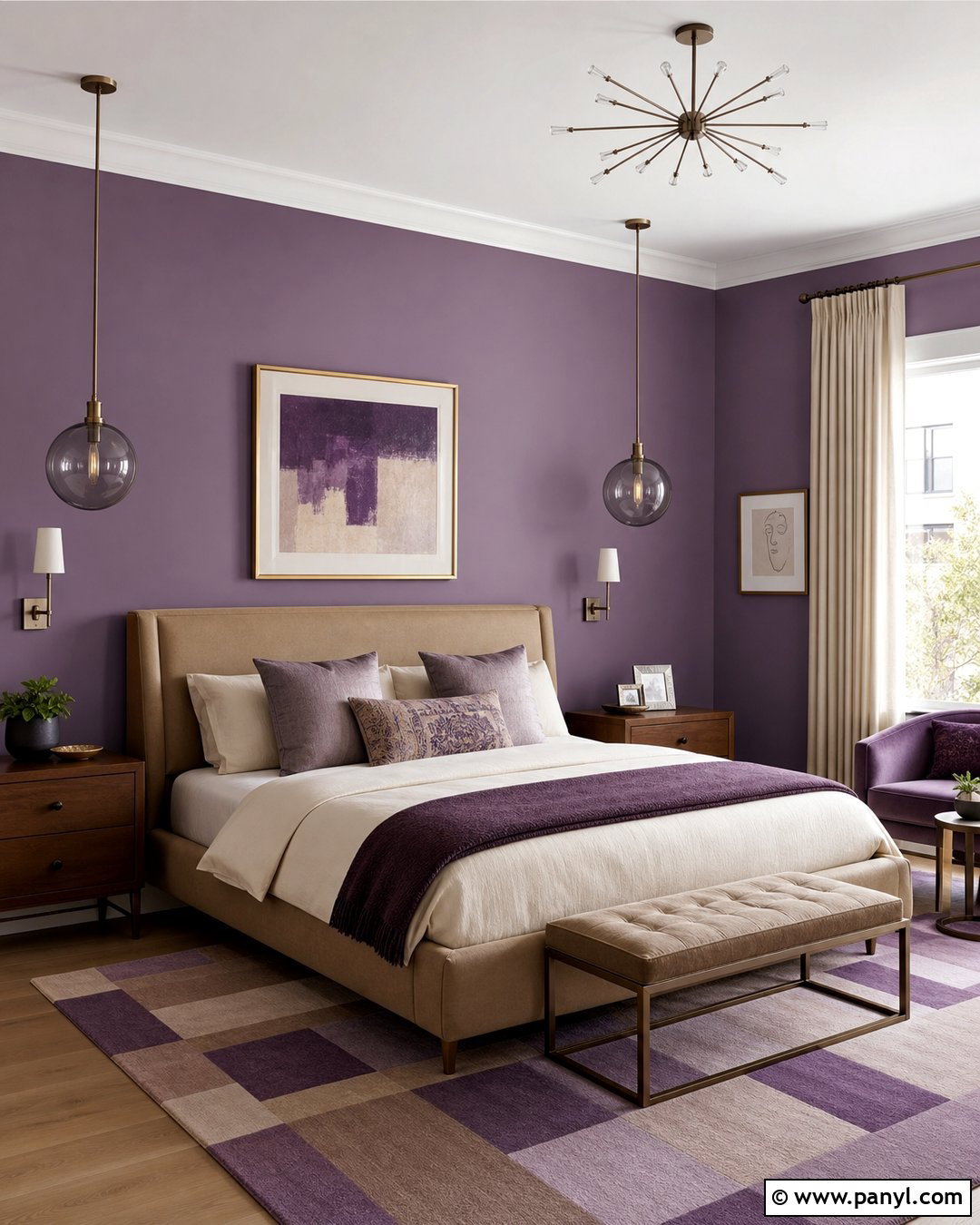
Muted plum introduces purple in an earthy, highly livable form. Select a brown-based plum for the walls and ceiling, then pair it with a walnut vanity and creamy stone countertop. The shower can feature pale mauve tile with subtle tonal changes, bordered by warm white grout. Use brushed nickel fixtures to create a balanced cool accent rather than intensifying the room with gold everywhere. A limestone-look floor, oatmeal towels, and a rounded ivory bath mat bring softness to the saturated palette. Add a large arched mirror and clear glass sconces to distribute light. Avoid bright lavender accessories, which can make the scheme feel disconnected. When every shade contains a muted undertone, the complete bathroom appears atmospheric, comfortable, and unexpectedly timeless.
22. Burgundy Bathroom
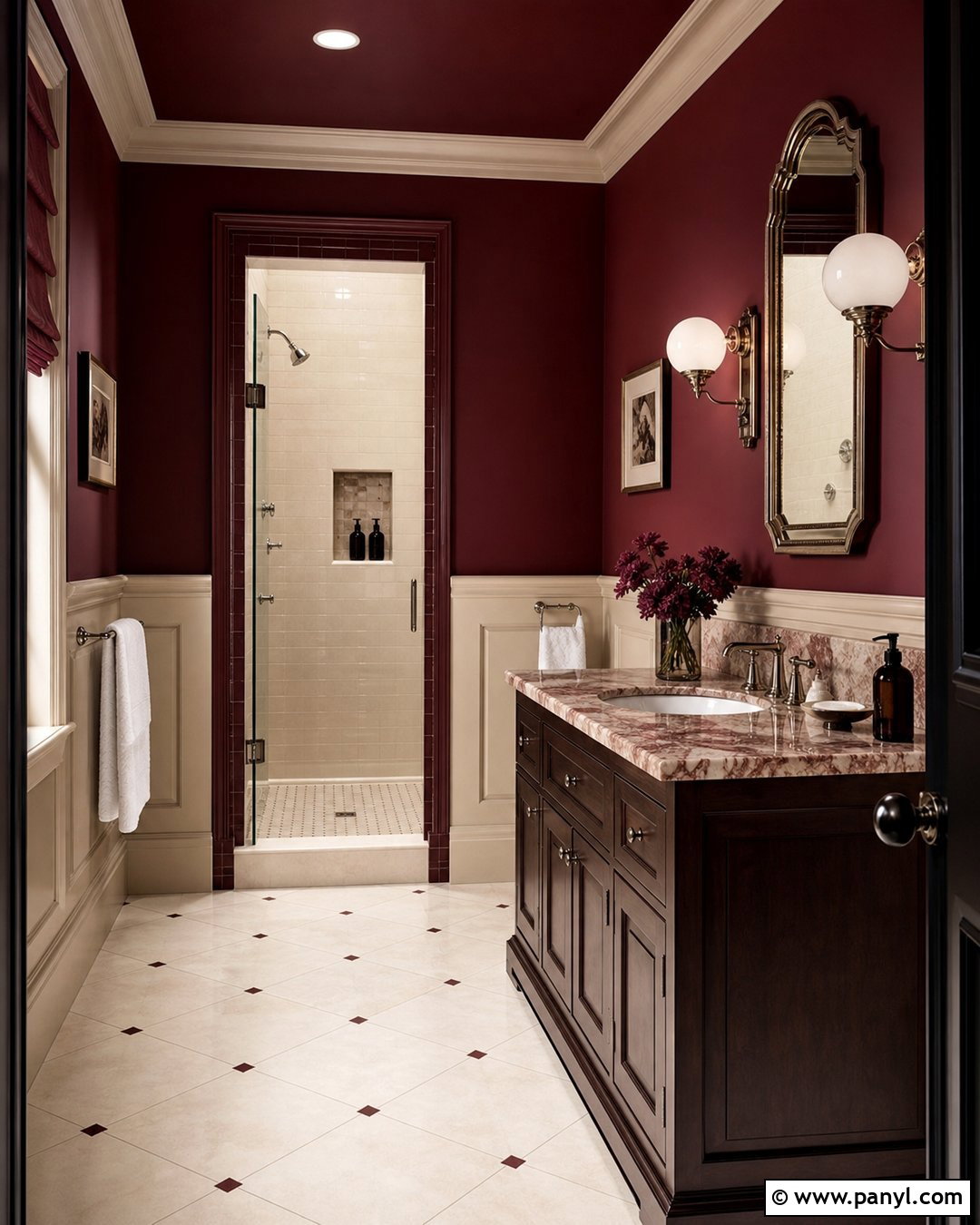
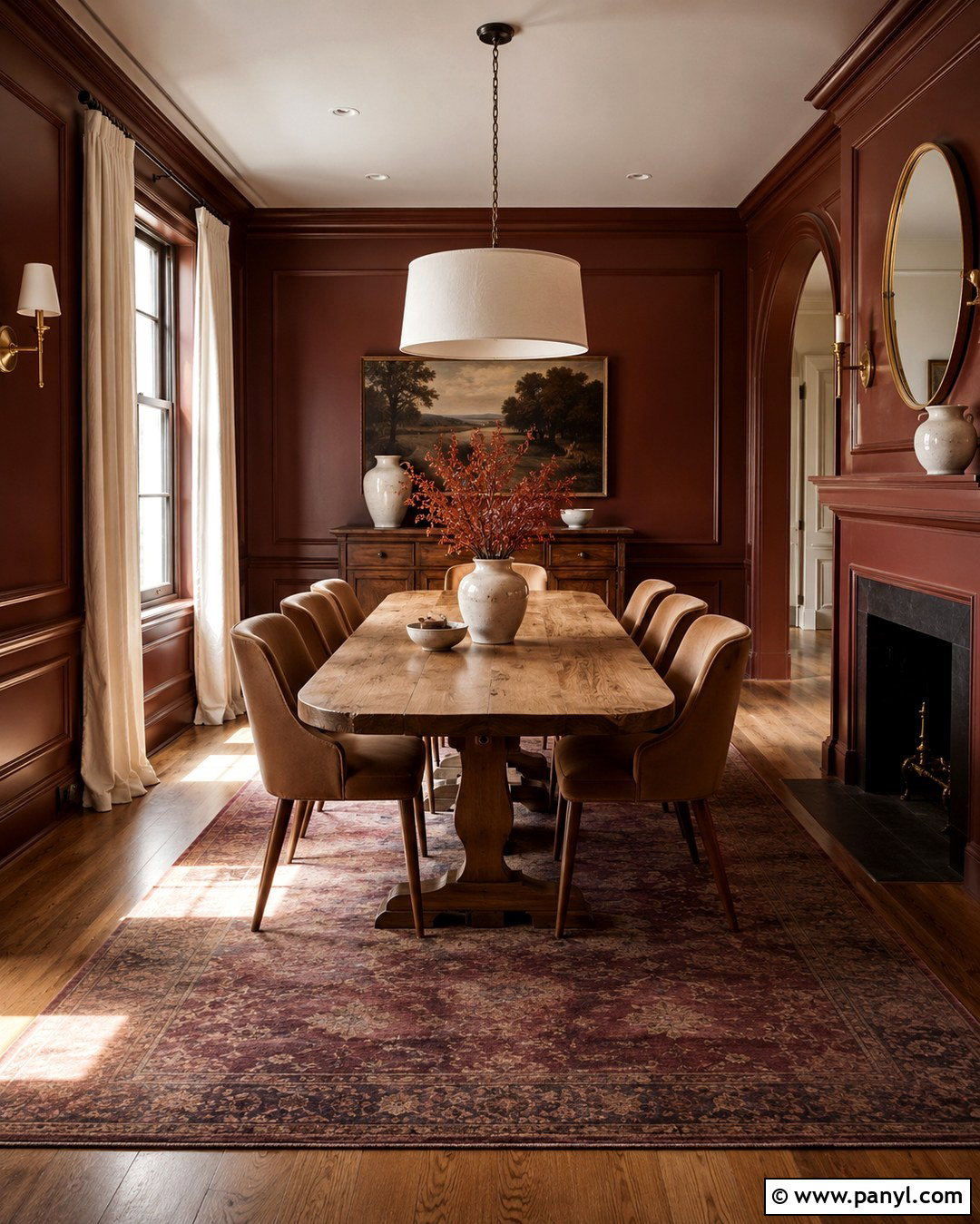
For homeowners ready to embrace confident color, burgundy offers depth without the severity of black. Use rich wine-red paint on upper walls and the ceiling, then add warm cream paneling below to brighten the room. A dark walnut vanity with a pale rose-veined stone counter ties the red and neutral surfaces together. Choose ivory floor tile and a cream shower surround so the saturated wall color remains the focal point. Polished nickel faucets introduce a crisp, reflective finish, while burgundy grout can provide a thoughtful connection inside the shower. Finish with white towels, an antique-style mirror, and opal globe sconces. This complete look works especially well in powder rooms, though balanced lighting and generous neutral surfaces can make it suitable for larger bathrooms too.
23. Chocolate Brown Bathroom
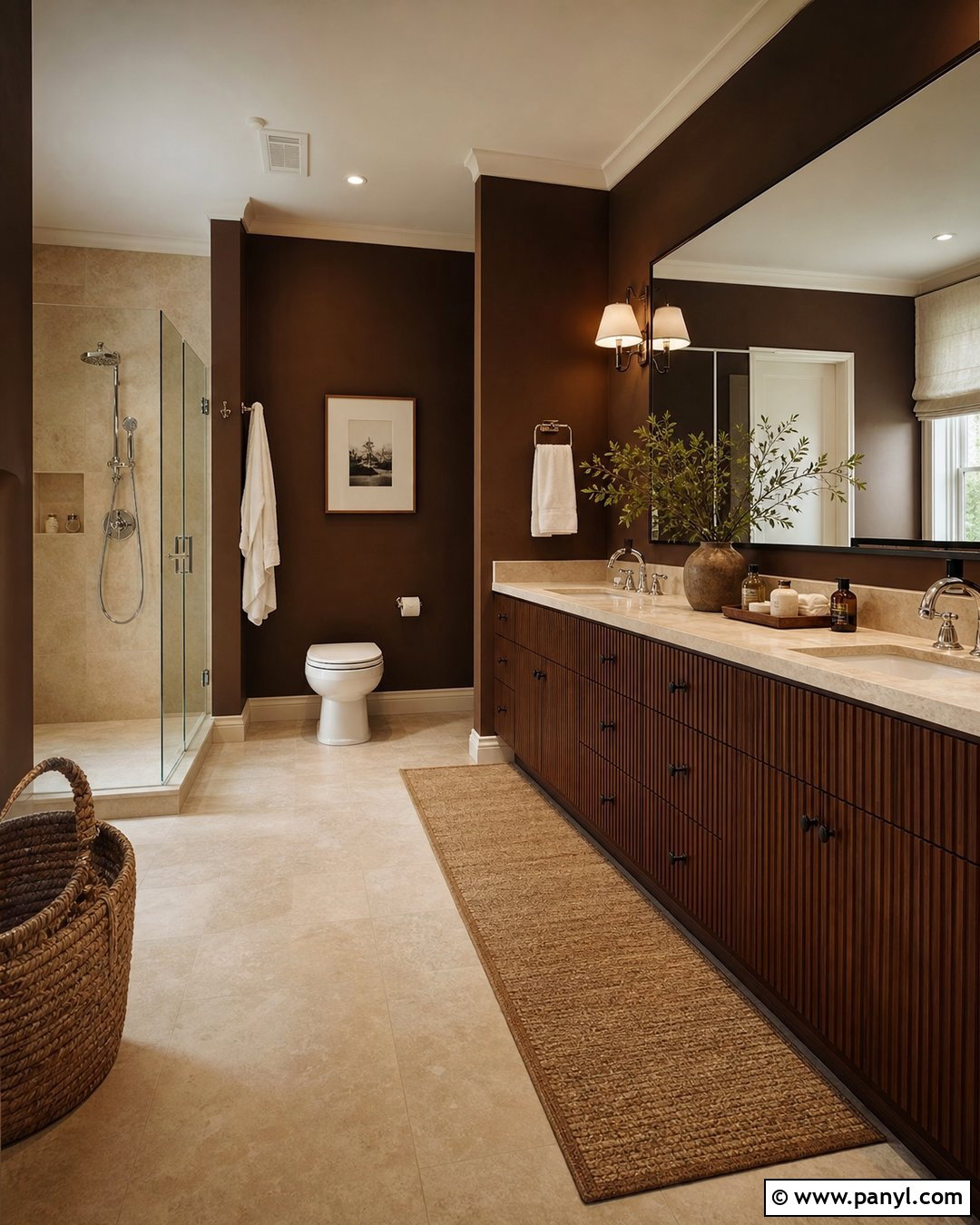
Chocolate brown creates a warm, enveloping bathroom that highlights pale stone and reflective metal. Paint the walls a rich cocoa shade, but keep the ceiling creamy white to maintain height. Install a medium walnut vanity with a light travertine counter, taking care that the wood and wall colors remain visibly different. Beige limestone flooring and matching shower tile produce a seamless foundation. Use polished chrome fixtures for bright contrast and a contemporary edge. A wide mirror, white towels, and ivory linen shades prevent the palette from becoming too heavy. Add texture through ribbed cabinetry and softly varied stone rather than unnecessary decorative objects. This finished bathroom feels refined and comforting, replacing cool industrial gray with a deeper neutral inspired by natural wood and earth.
24. Soft Charcoal Bathroom
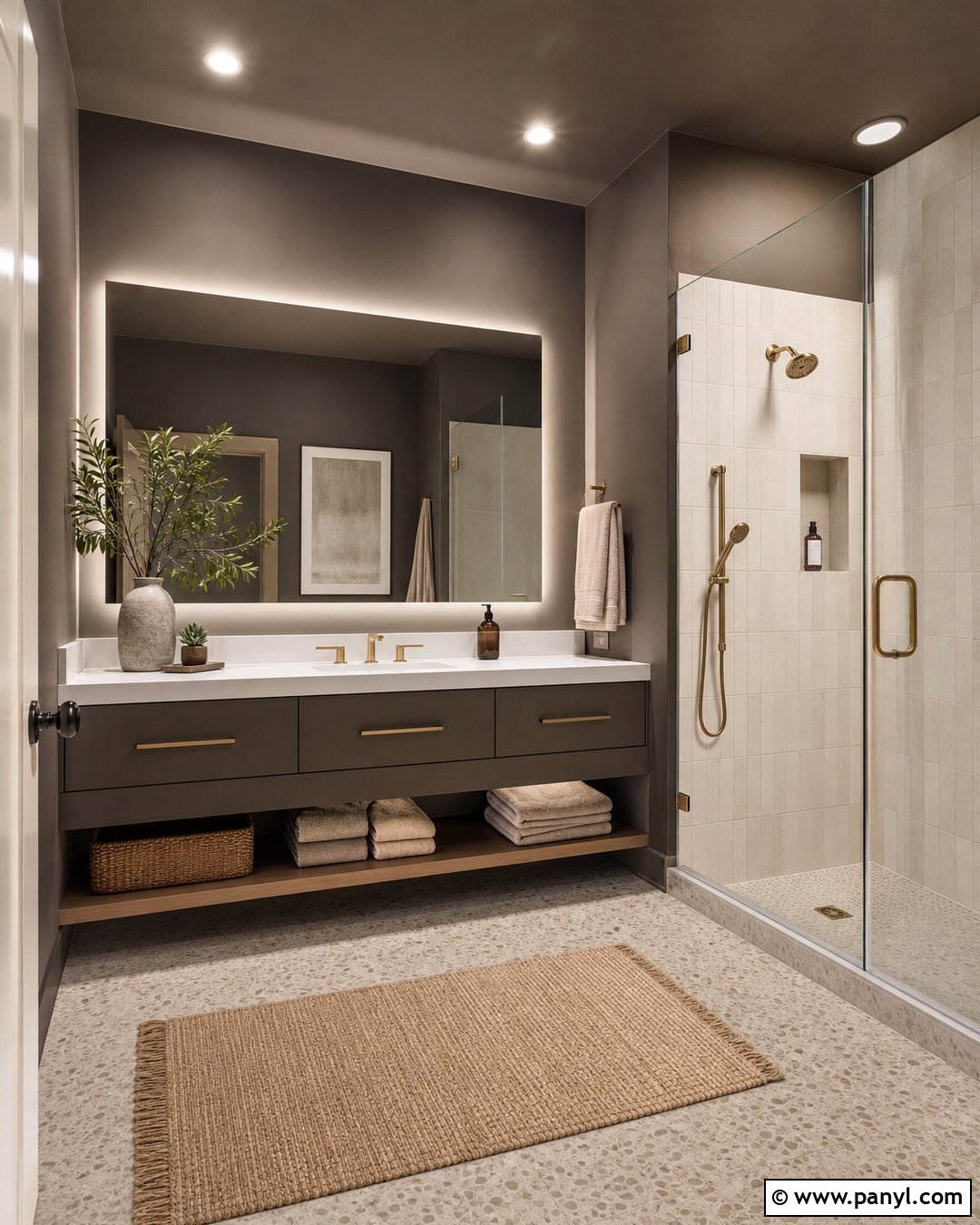
Soft charcoal is shifting from a harsh modern statement to a warmer, more textural bathroom neutral. Choose a charcoal with brown undertones and apply it to the vanity, walls, and ceiling. Offset the dark envelope with creamy terrazzo flooring, a white quartz counter, and an ivory tiled shower. Brushed brass fixtures add warmth, while a frameless glass enclosure keeps sightlines open. Install a large illuminated mirror and multiple ceiling lights so the charcoal reads as intentional color rather than shadow. Pale oak shelves, oatmeal towels, and a natural woven bath mat provide softer layers. Limiting the palette to charcoal, cream, wood, and brass keeps the room organized. The final result feels intimate and contemporary without becoming cold, severe, or visually cluttered.
25. Black And Cream Bathroom
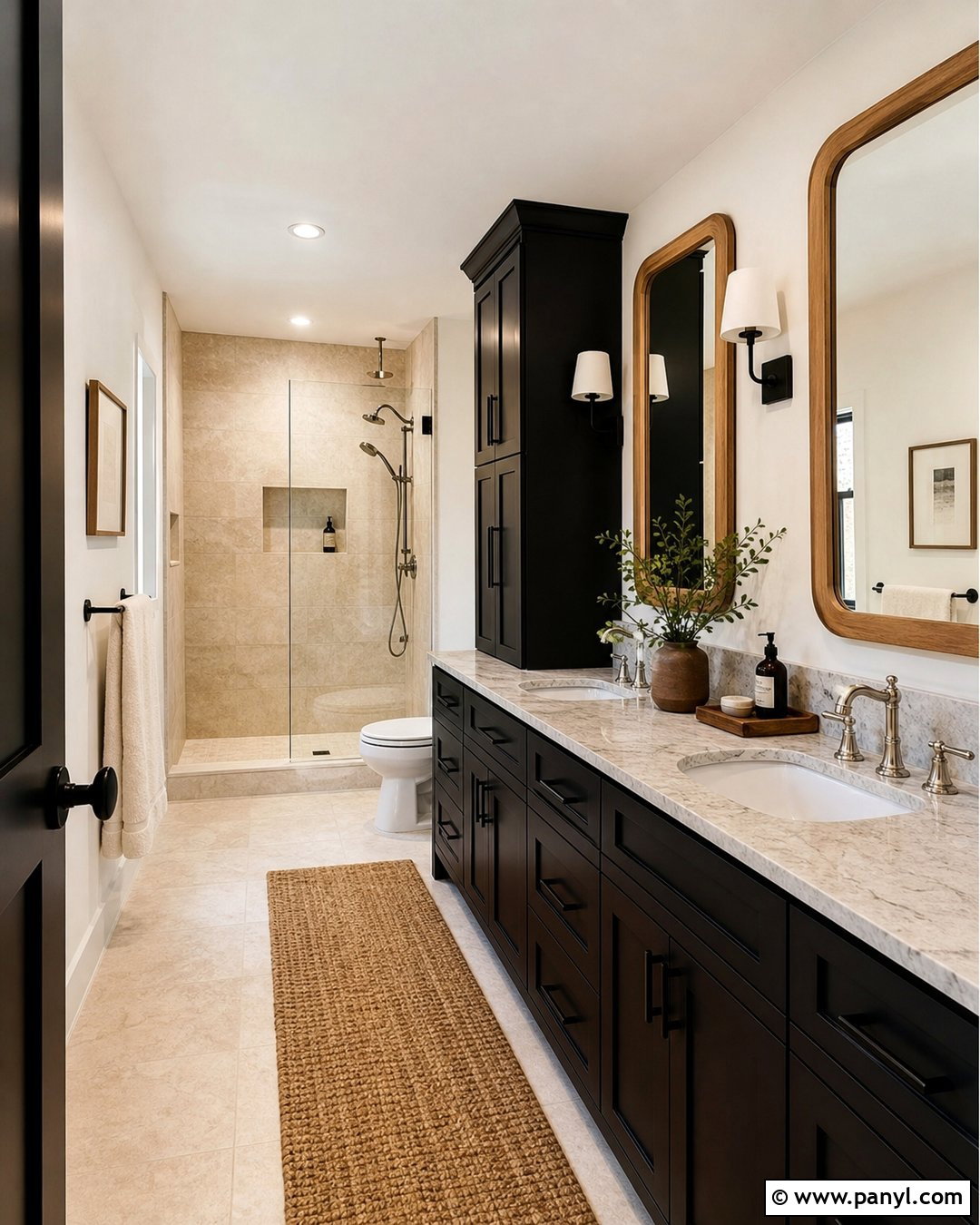
Black and cream delivers timeless contrast, but the 2027 version favors softened tones and natural surfaces. Use warm cream tile across the shower and floor, choosing subtle variation instead of bright white uniformity. Paint the vanity satin black and repeat that color on the window frame or one slim storage cabinet. A creamy marble counter with gentle brown veining connects the contrasting finishes. Mix matte black cabinet hardware with polished nickel faucets to prevent the scheme from looking overly matched. Add a light oak mirror frame, ivory towels, and a tan woven runner for warmth. Keep the walls pale cream and avoid excessive black grout. This balanced approach creates a crisp bathroom where dark accents define the architecture without overpowering the comfortable neutral foundation.
Conclusion:
The strongest **25 Bathroom Color Trends 2027** move beyond safe gray and brilliant white, offering warmer neutrals, botanical greens, softened blues, earthy reds, and dramatic brown-based shades. A successful bathroom palette should connect every major surface instead of treating paint as an afterthought. Consider how the wall color relates to tile, flooring, cabinetry, counters, fixtures, grout, and lighting. Test samples in the actual room because moisture, daylight, and artificial light can change their appearance. If a bold color feels risky, use it on a vanity or powder room wall first. Whether you prefer quiet sand tones or enveloping burgundy, choose a complete palette that supports your home and daily routine.

Related Ideas and Inspiration:
Leave a Reply