
Choosing from **20 colors that go with gray living rooms** is easier when you treat each pairing as a complete design, not just an accent pillow. Gray can feel cool, warm, light, dramatic, or earthy depending on its undertone and surrounding materials. Blues and greens often create a calmer palette, while yellow, orange, and red bring noticeable warmth and energy. () Before decorating, compare samples beside your gray walls, sofa, flooring, and curtains at different times of day. Then repeat your chosen partner color through several elements so the room feels connected. These combinations include soft neutrals, nature-inspired shades, and bolder statement colors for many decorating preferences. Use the complete looks below to compare **20 colors that go with gray living rooms**.

1. Gray Living Room With White
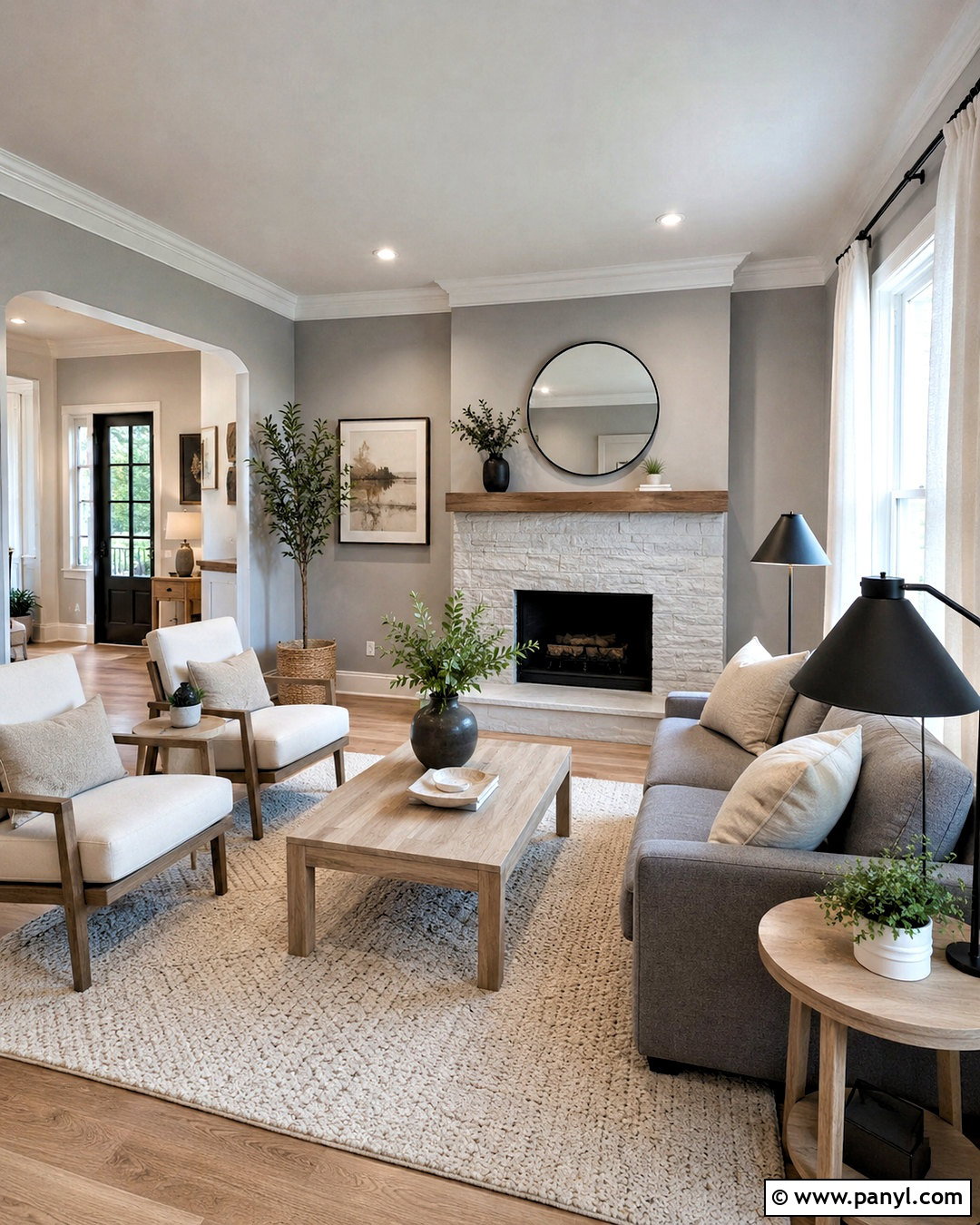
White gives a gray living room a clean, open look without competing with the main neutral palette. Start with soft gray walls and a medium-gray sofa, then add warm white curtains, an ivory wool rug, and crisp white painted trim. A white stone fireplace can create a strong focal point while reflecting light around the room. Prevent the scheme from feeling cold by introducing pale oak tables, woven baskets, and textured linen pillows. Matte black lamp bases provide a small amount of definition. Choose warm white rather than icy white if the gray has beige or taupe undertones. In a cool gray room, a clearer white can look fresh and balanced. Finish with simple greenery and light ceramic decor.
2. Gray Living Room With Cream
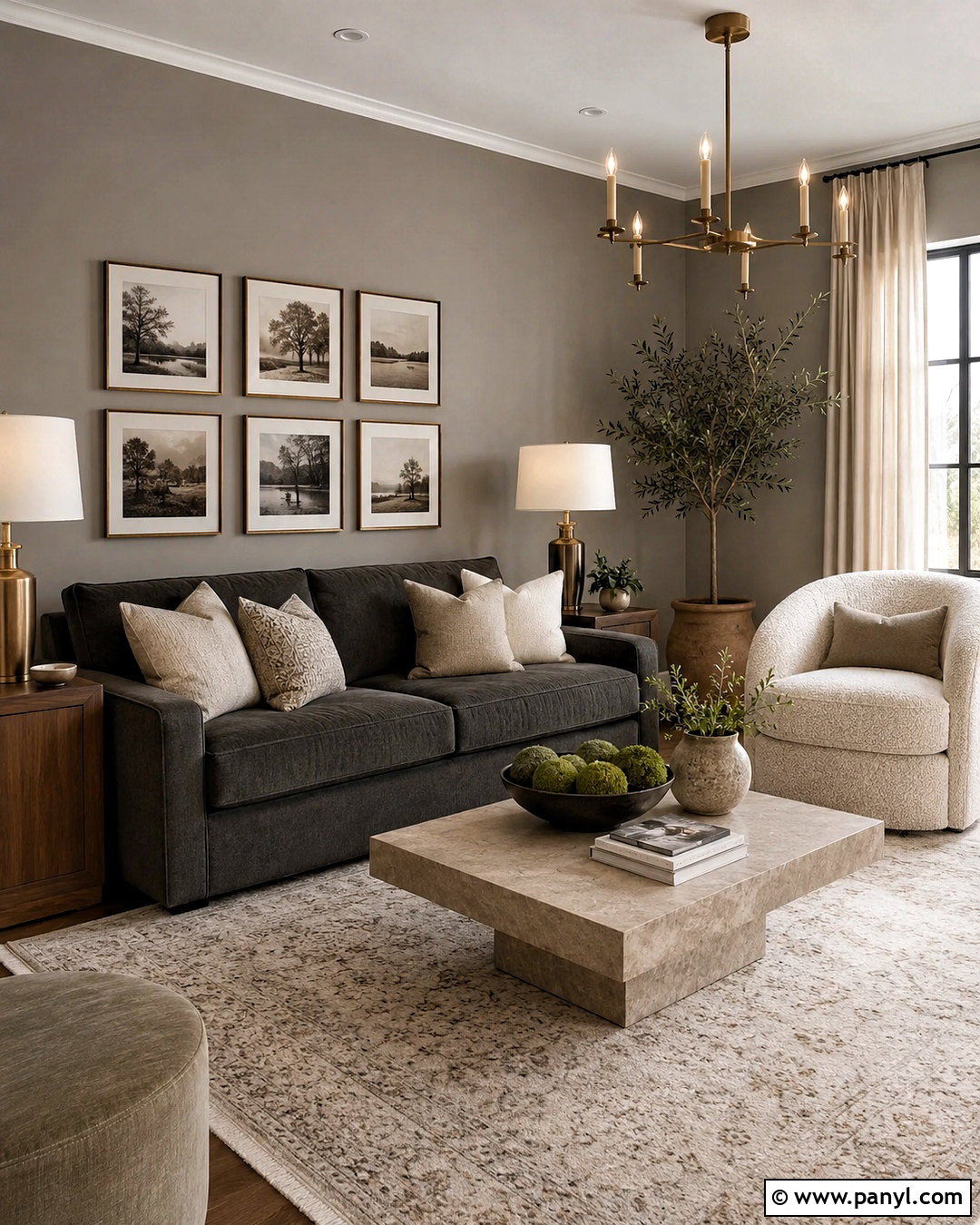
Cream softens gray and creates a relaxed room that feels warmer than a strict gray-and-white palette. Cover the largest surfaces in light warm gray, then layer a cream boucle chair, oatmeal curtains, and an ivory patterned rug around a charcoal sofa. A travertine coffee table adds natural variation without introducing a distracting color. Continue the warm effect with antique brass lighting, walnut side tables, and cream pillows in several textures. Keep brighter white to a minimum because it may make cream appear yellow by comparison. This combination works particularly well in living rooms with limited sunlight or cool northern exposure. A few dark accents, such as bronze picture frames or a black fireplace screen, will give the pale palette enough structure.
3. Gray Living Room With Beige
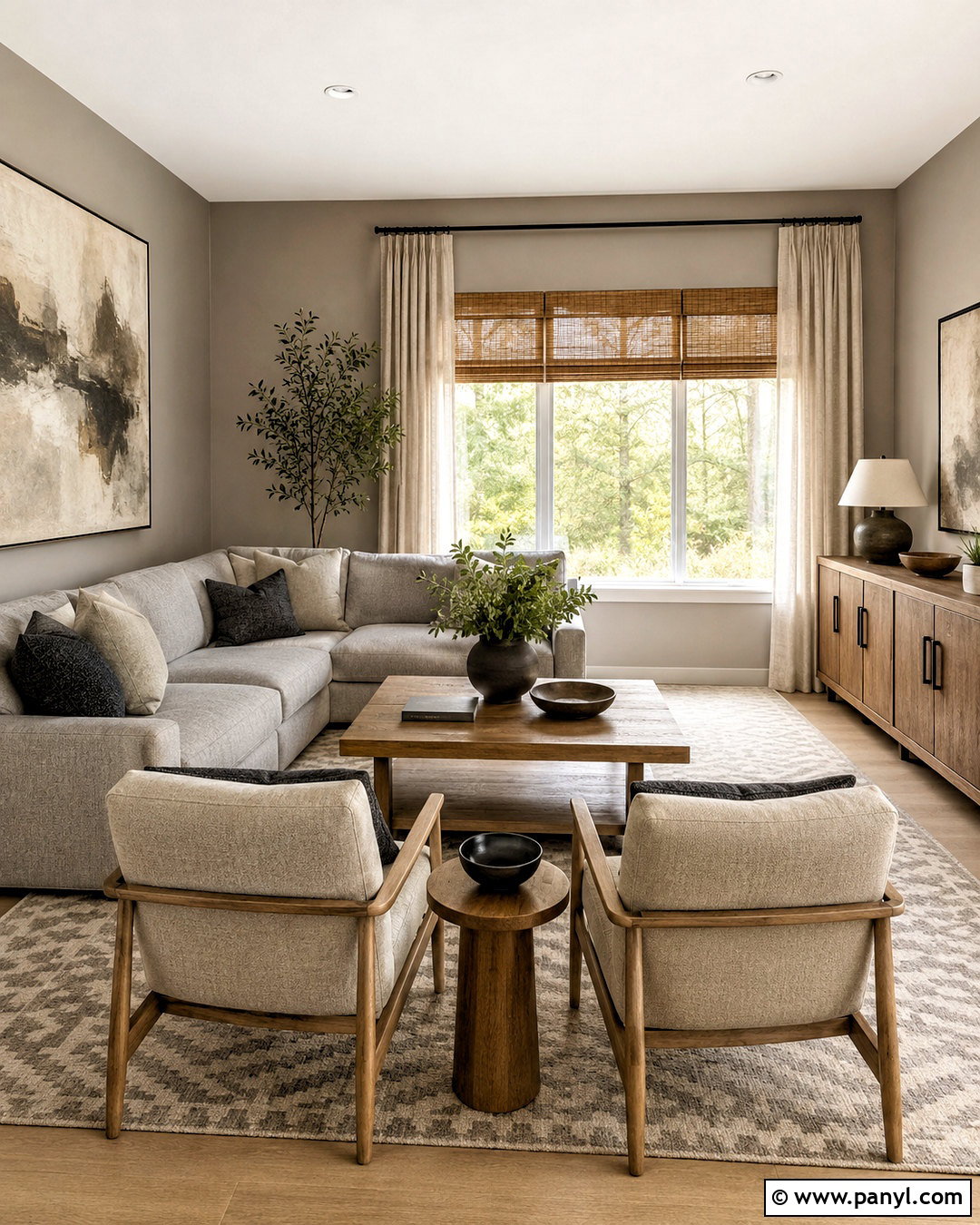
Does your gray living room feel too cool or unfinished? Beige can bridge the gap between gray surfaces and warm wood furniture. Use greige-gray walls, a soft stone-gray sectional, and a large beige rug with a subtle geometric pattern. Add sand-colored linen curtains and a pair of light beige accent chairs to distribute warmth across the room. Medium oak tables, woven shades, and natural fiber baskets will make the combination feel intentional rather than mismatched. Choose beige with a muted, slightly gray undertone instead of a strongly yellow shade. Add contrast through charcoal pillows and aged brass lamps. A large abstract artwork containing gray, beige, cream, and brown can unite every major color while giving the seating area a clear focal point.
4. Gray Living Room With Brown
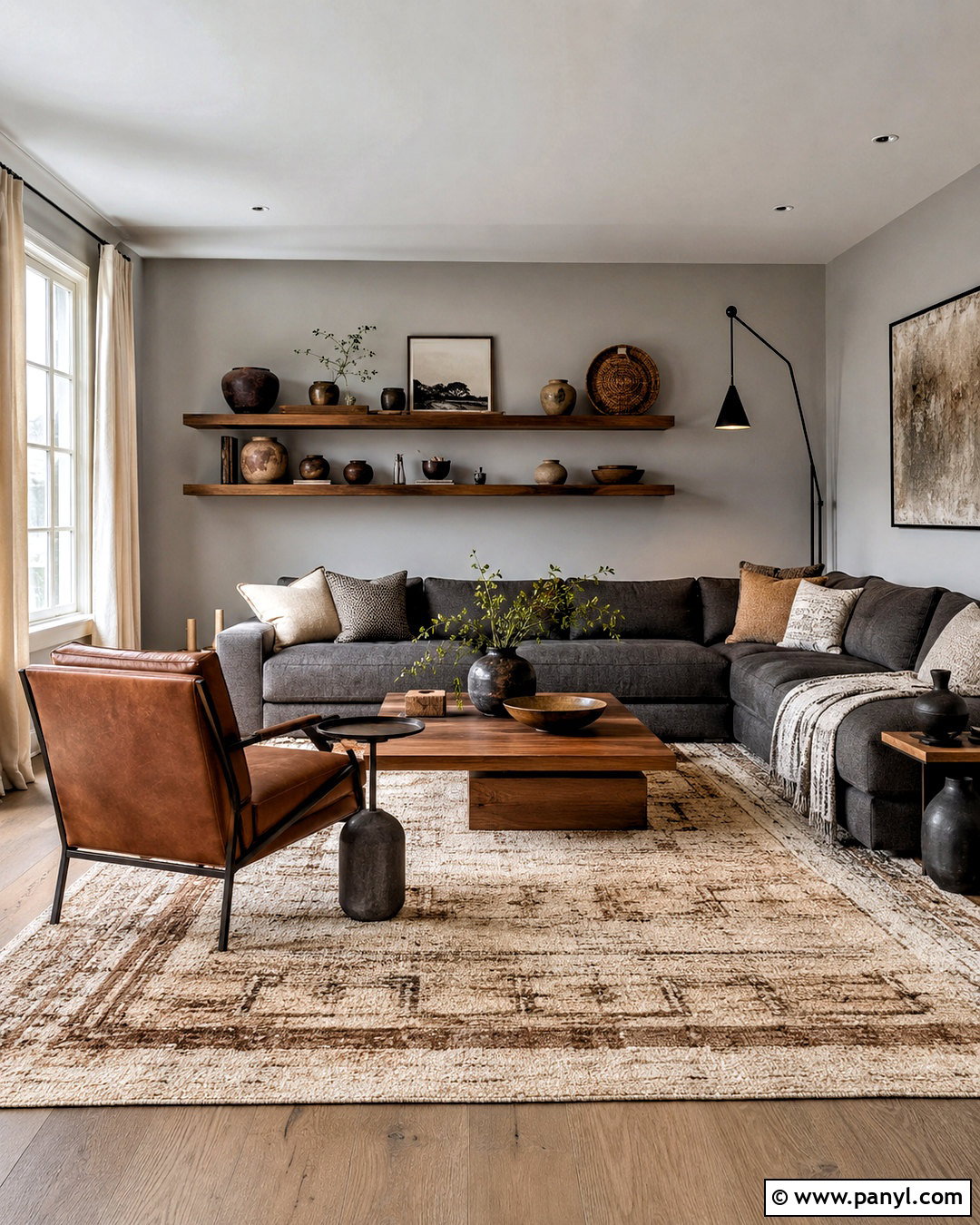
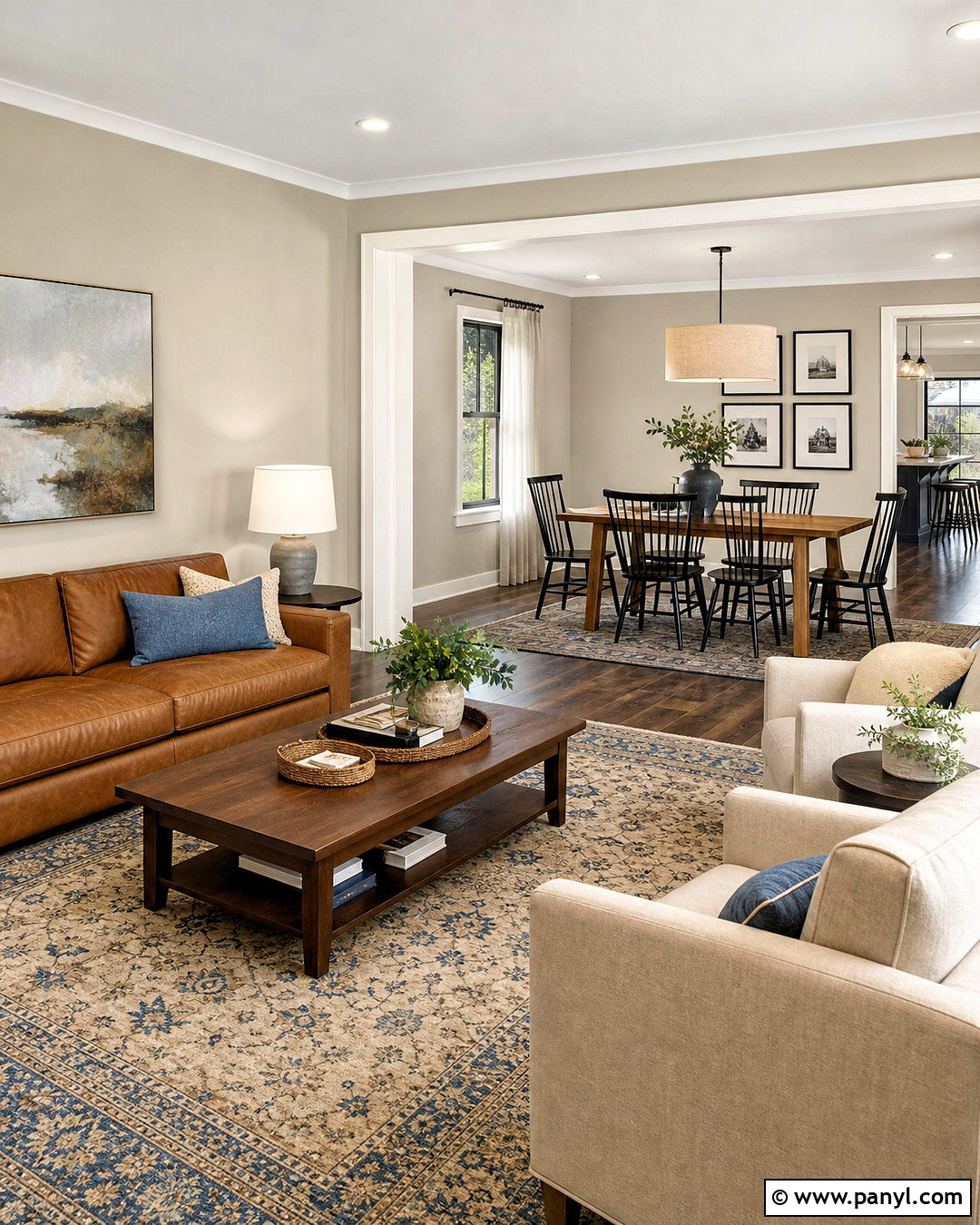
Brown brings organic warmth and visual depth to a gray living room, especially when it appears through real wood, leather, and woven materials. Pair pale gray walls with a charcoal sectional and a cognac brown leather chair. Ground the seating arrangement with a cream-and-brown wool rug, then add a walnut coffee table and matching floating shelves. Repeat cognac in two small pillows so the leather chair does not look isolated. Linen curtains, clay pottery, and a jute basket reinforce the natural palette. For a modern finish, use slim black metal lighting rather than heavy traditional fixtures. The mixture of soft upholstery, polished wood, and worn leather keeps the neutral room interesting while remaining practical, comfortable, and easy to update over time.
5. Gray Living Room With Black
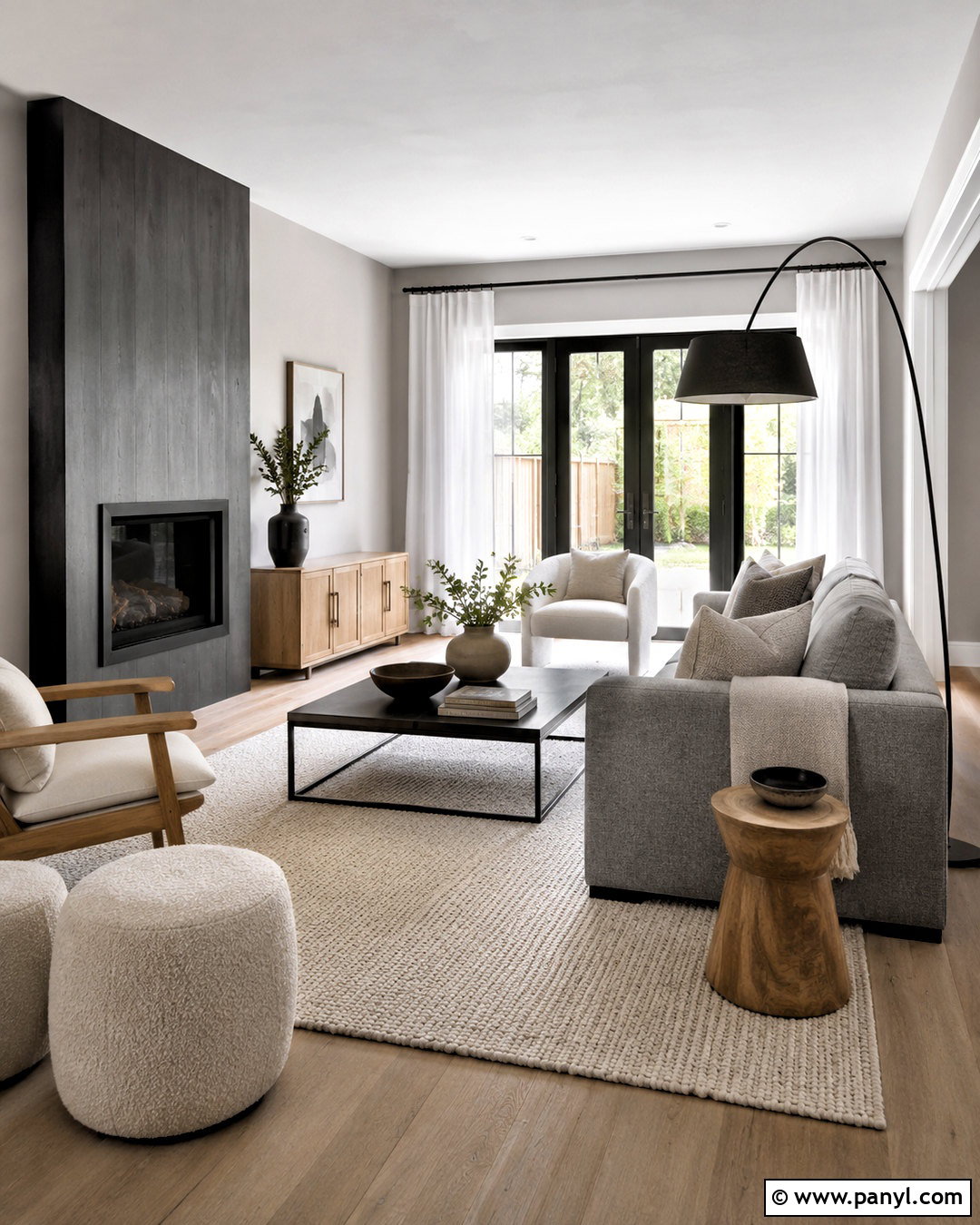
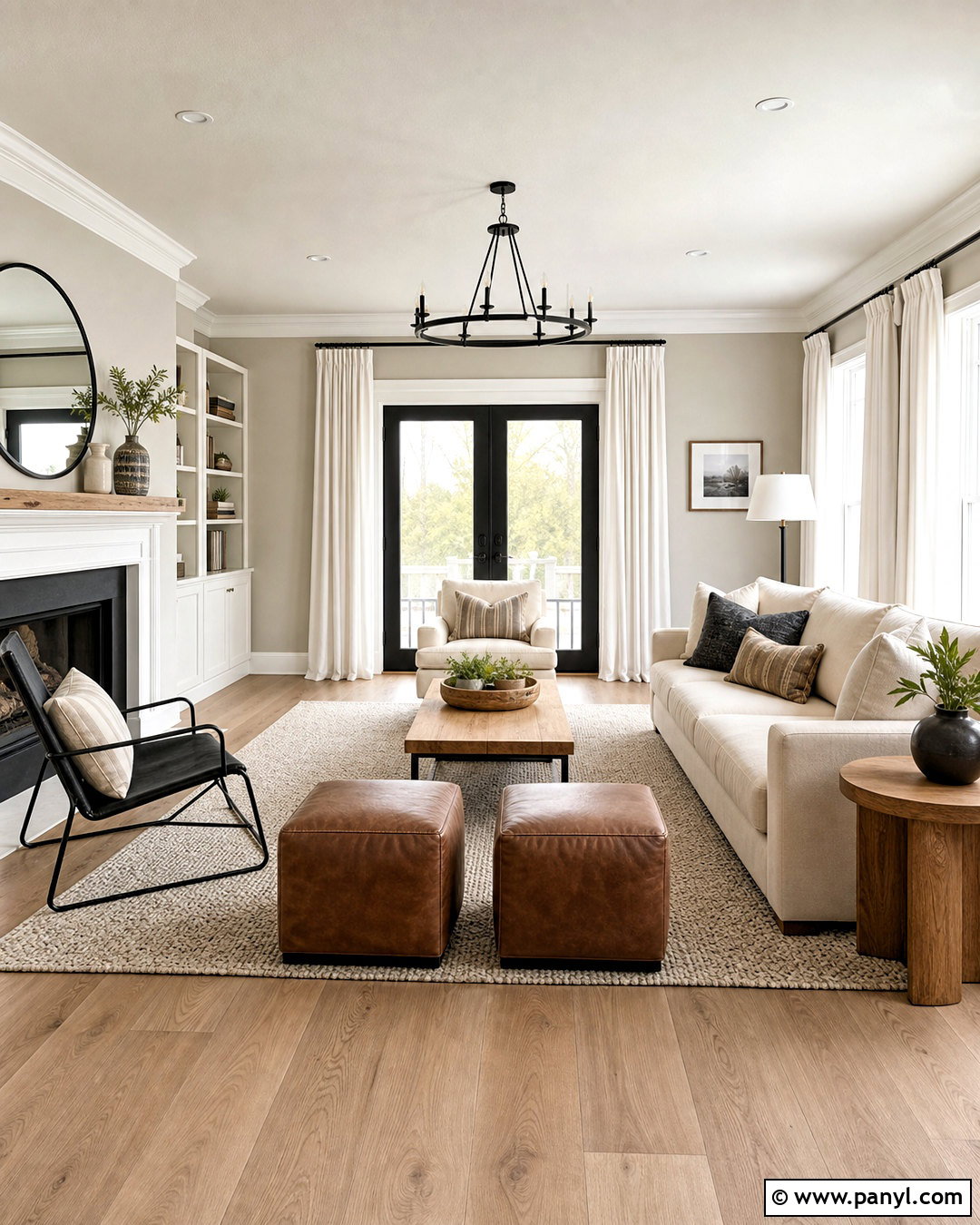
Black can turn a basic gray living room into a sharper, more architectural space. Keep the room from becoming dark by using light gray walls, a medium-gray sofa, and a pale textured rug as the foundation. Introduce black through a steel-framed glass door, a slim fireplace surround, picture frames, and a sculptural floor lamp. A black coffee table can anchor the center, but select one with an open frame or glass top to preserve visual space. Add white curtains and light oak furniture to balance the contrast. Softer materials are important, so include boucle seating, linen pillows, and a thick woven throw. Use black repeatedly in small, controlled amounts rather than concentrating every dark element in one corner.
6. Gray Living Room With Navy Blue
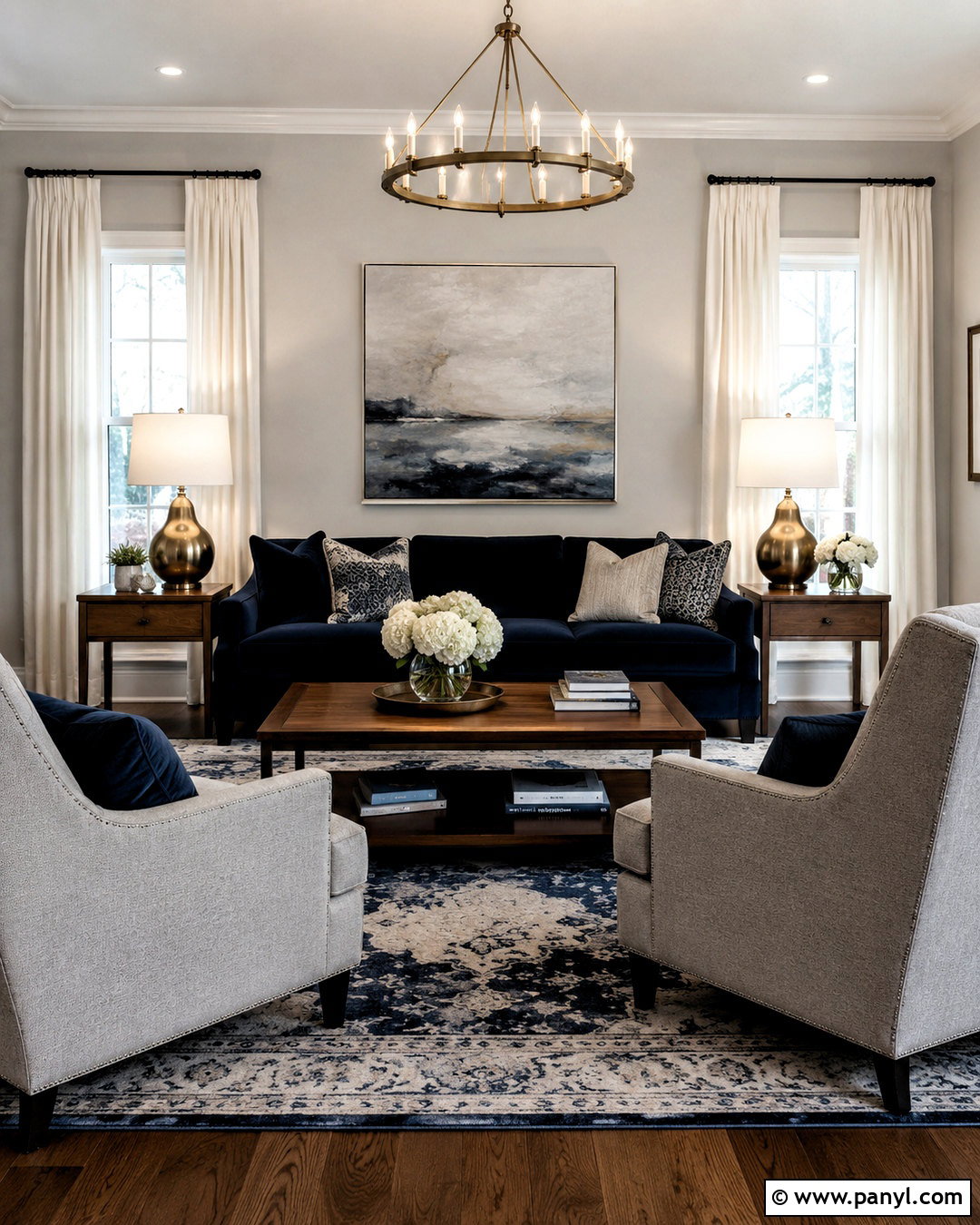
Navy blue creates rich contrast against light or medium gray while remaining calm enough for an everyday living room. Paint the walls a pale warm gray and place a navy velvet sofa opposite two light gray armchairs. A patterned rug containing navy, cream, and gray will connect the seating pieces and make the palette feel planned. Introduce walnut tables and aged brass lamps for warmth, then hang off-white curtains to keep the room bright. If the existing sofa is gray, use navy on an accent wall, built-in cabinets, or a substantial pair of chairs. Repeat it in pillows and artwork, but leave breathing room between navy elements. This complete arrangement feels polished without relying on overly formal furniture or expensive finishes.
7. Gray Living Room With Cobalt Blue
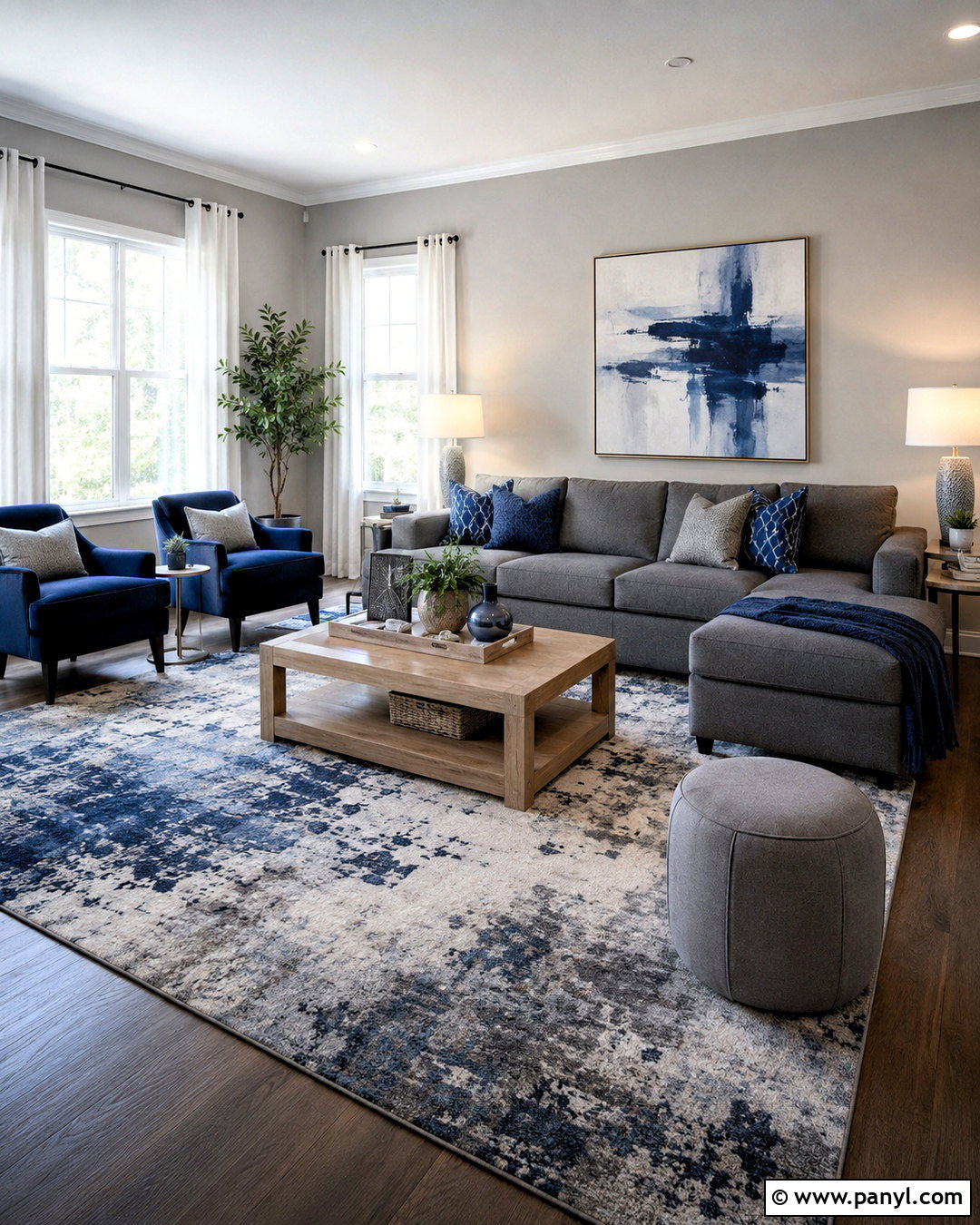
For a gray room that needs energy, cobalt blue provides a clear and lively focal color. Start with soft dove-gray walls and a deep gray sectional, then add two cobalt blue lounge chairs or one generous blue ottoman. Choose a modern rug that combines cobalt, pale gray, white, and small black details. White curtains and a light oak coffee table will stop the stronger colors from overwhelming the space. Repeat cobalt in an abstract canvas, a ceramic lamp, and two sofa pillows rather than filling every surface with blue. Brushed chrome or polished nickel suits the cooler character of this palette. Keep the furniture lines simple and the remaining decor restrained so the saturated blue looks deliberate, balanced, and sophisticated instead of random.
8. Gray Living Room With Powder Blue
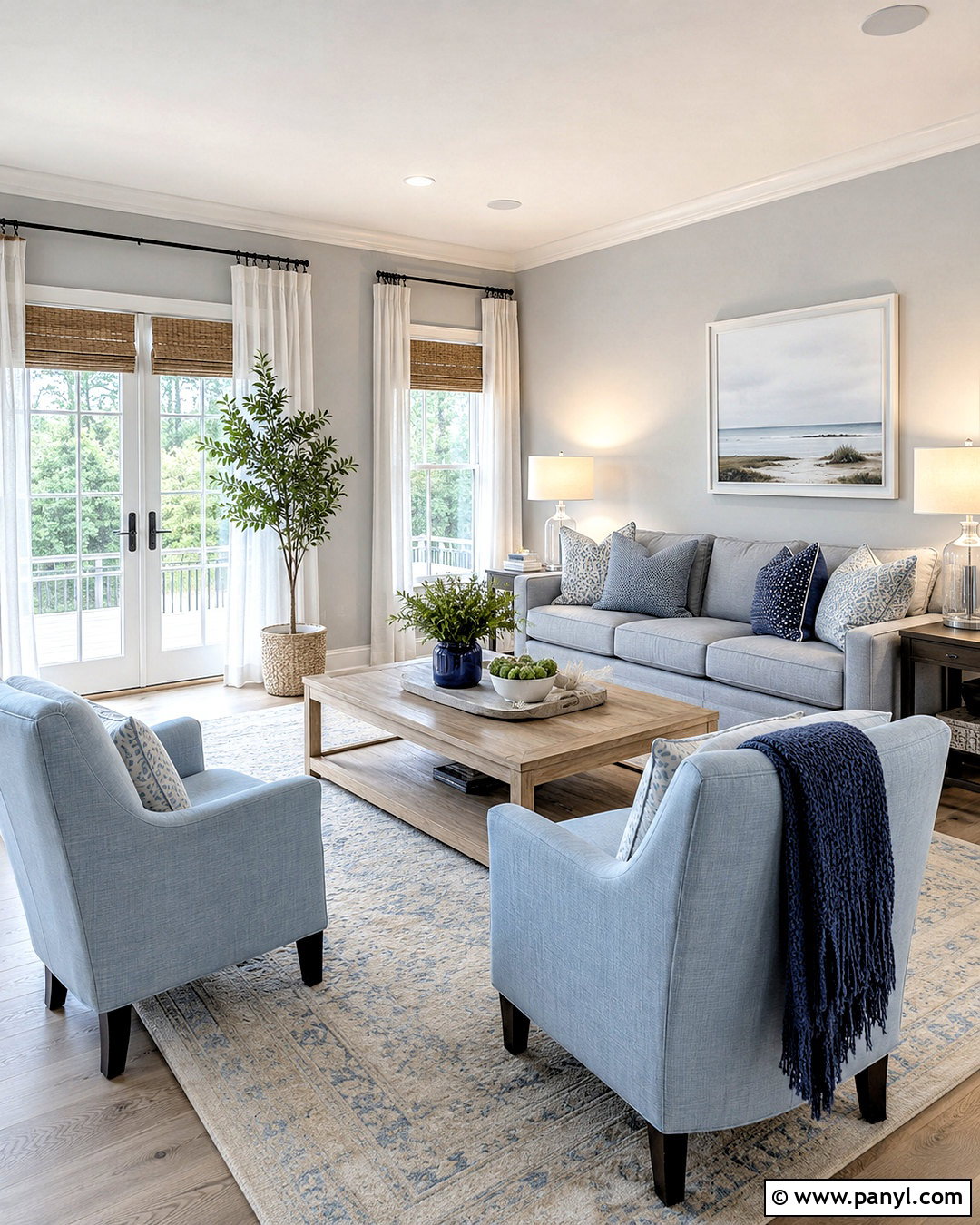
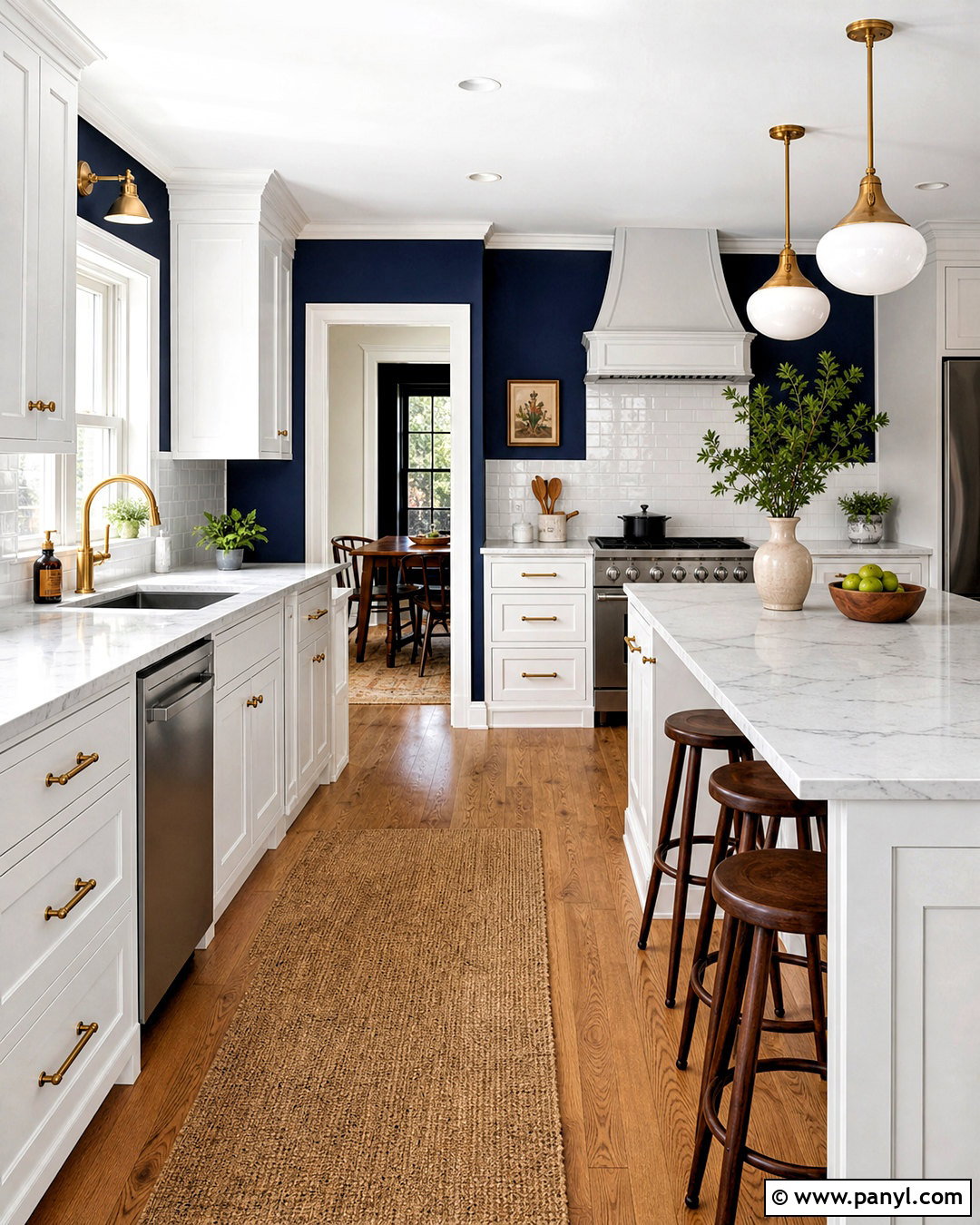
Powder blue and light gray create an airy living room suited to relaxed coastal, transitional, or contemporary interiors. Use pale gray walls, a soft blue-gray sofa, and two powder blue linen chairs arranged around a bleached oak coffee table. Add a cream rug with a faint blue pattern, sheer white curtains, and brushed nickel lighting. Natural woven shades can introduce warmth without disturbing the quiet color scheme. For more definition, include navy piping on pillows or one dark blue ceramic vase. Avoid covering every item in equally pale tones; a medium-gray sideboard or charcoal fireplace surround will give the room an anchor. The finished space should feel layered through linen, wool, wood, and glass rather than dependent on strong contrast.
9. Gray Living Room With Teal
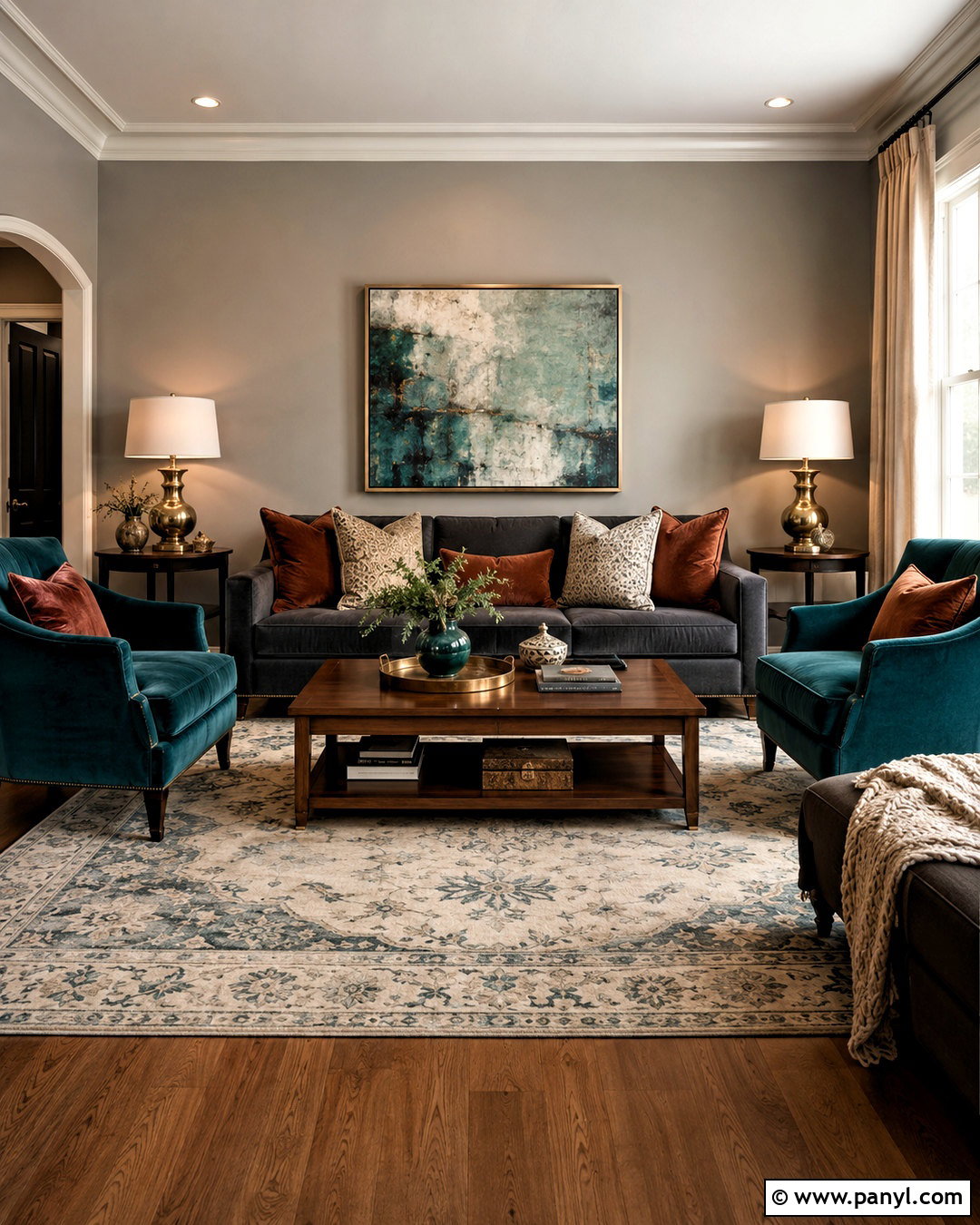
Teal gives gray living rooms a confident mixture of blue-green color and refined depth. Pair warm gray walls with a charcoal sofa and two teal velvet armchairs. Position the chairs near a window where the fabric can catch natural light, then connect the seating with a cream rug featuring muted teal and gray details. Walnut tables, antique brass lamps, and rust-colored pillow accents add warmth to the cooler palette. If teal furniture feels too permanent, paint a bookcase or fireplace wall in a deep muted teal instead. Repeat the shade through artwork and one or two accessories. Keep the curtains neutral and allow some plain gray surfaces to remain visible. This creates a balanced room where teal acts as a focal color, not a visual distraction.
10. Gray Living Room With Sage Green
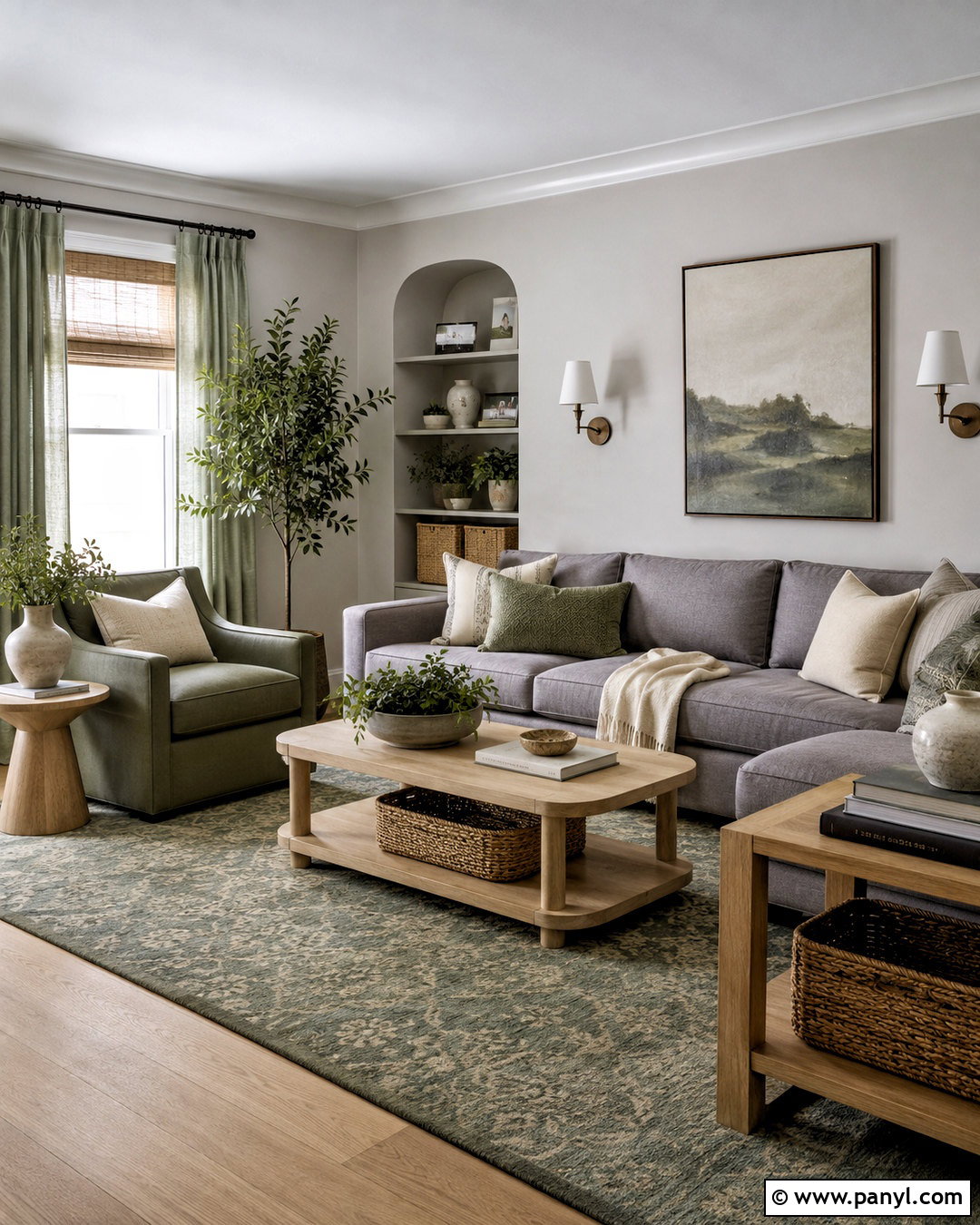
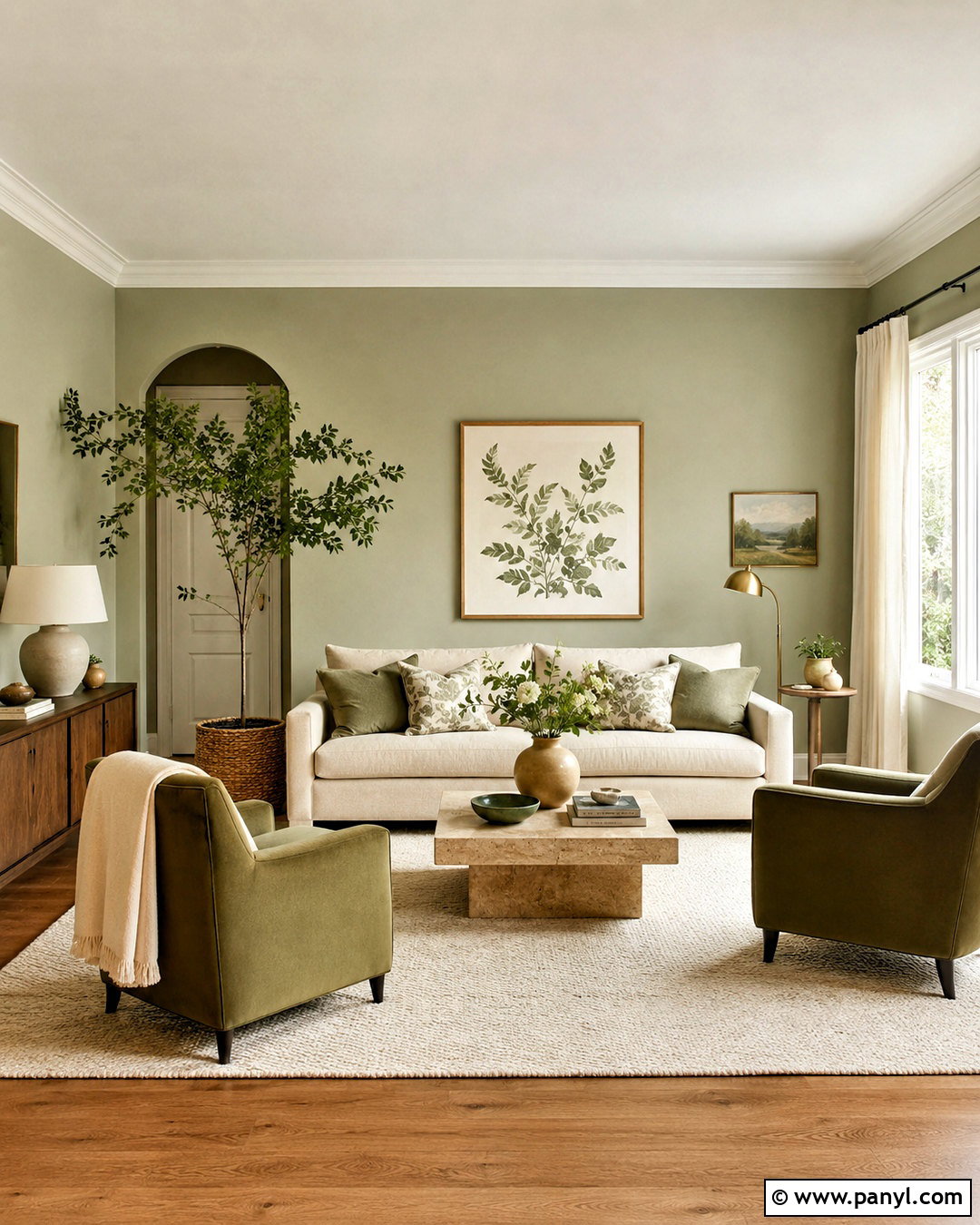
Sage green gives a gray living room a gentle, nature-inspired character without introducing overwhelming color. Use warm light-gray walls and a medium-gray sofa, then add sage linen curtains, a green patterned rug, and an upholstered sage chair. Pale oak tables and woven baskets reinforce the organic look, while cream pillows lighten the seating area. Include several real or realistic leafy plants, but vary their height and placement instead of crowding one surface. A stone fireplace or travertine side table can add another natural texture. Choose muted sage with gray undertones so it blends smoothly with the main neutral. Small black or bronze accents in lighting and frames will outline the softer colors and keep the completed room from appearing washed out.
11. Gray Living Room With Olive Green
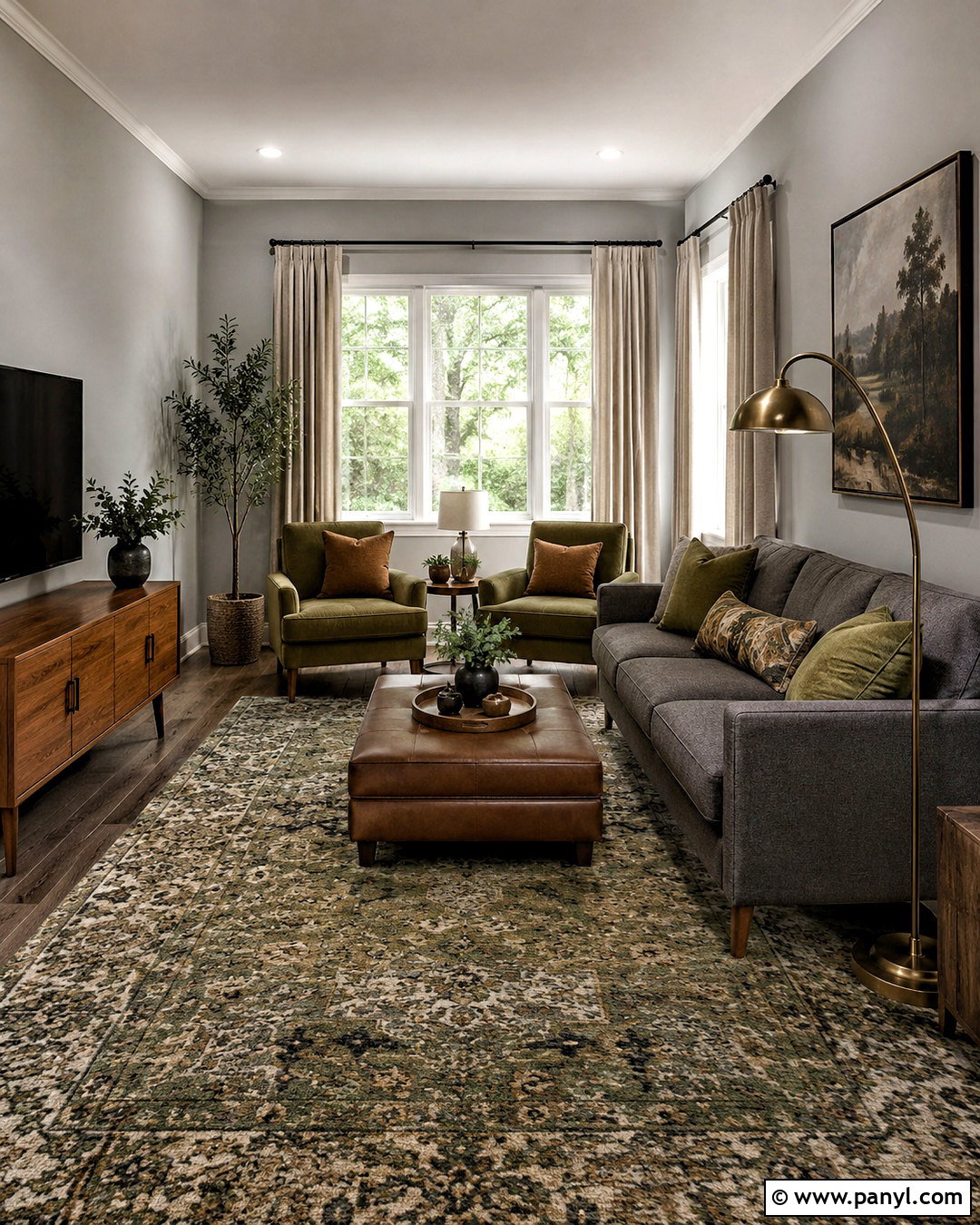
Olive green produces an earthier and warmer effect than pale sage. It works especially well beside charcoal upholstery, walnut furniture, and vintage-inspired textiles. Build the room around light gray walls and a dark gray sofa, then add olive green armchairs with clean, comfortable shapes. Use a patterned rug that includes olive, beige, charcoal, and muted cream. A walnut media console, brown leather ottoman, and aged brass floor lamp deepen the scheme. Repeat olive in the curtains or a large landscape print, but select a lighter fabric if the room receives little daylight. Textured pillows in oatmeal and tan will soften the darker colors. The final look feels grounded and inviting, with enough contrast to prevent the gray furniture from disappearing into the background.
12. Gray Living Room With Emerald Green
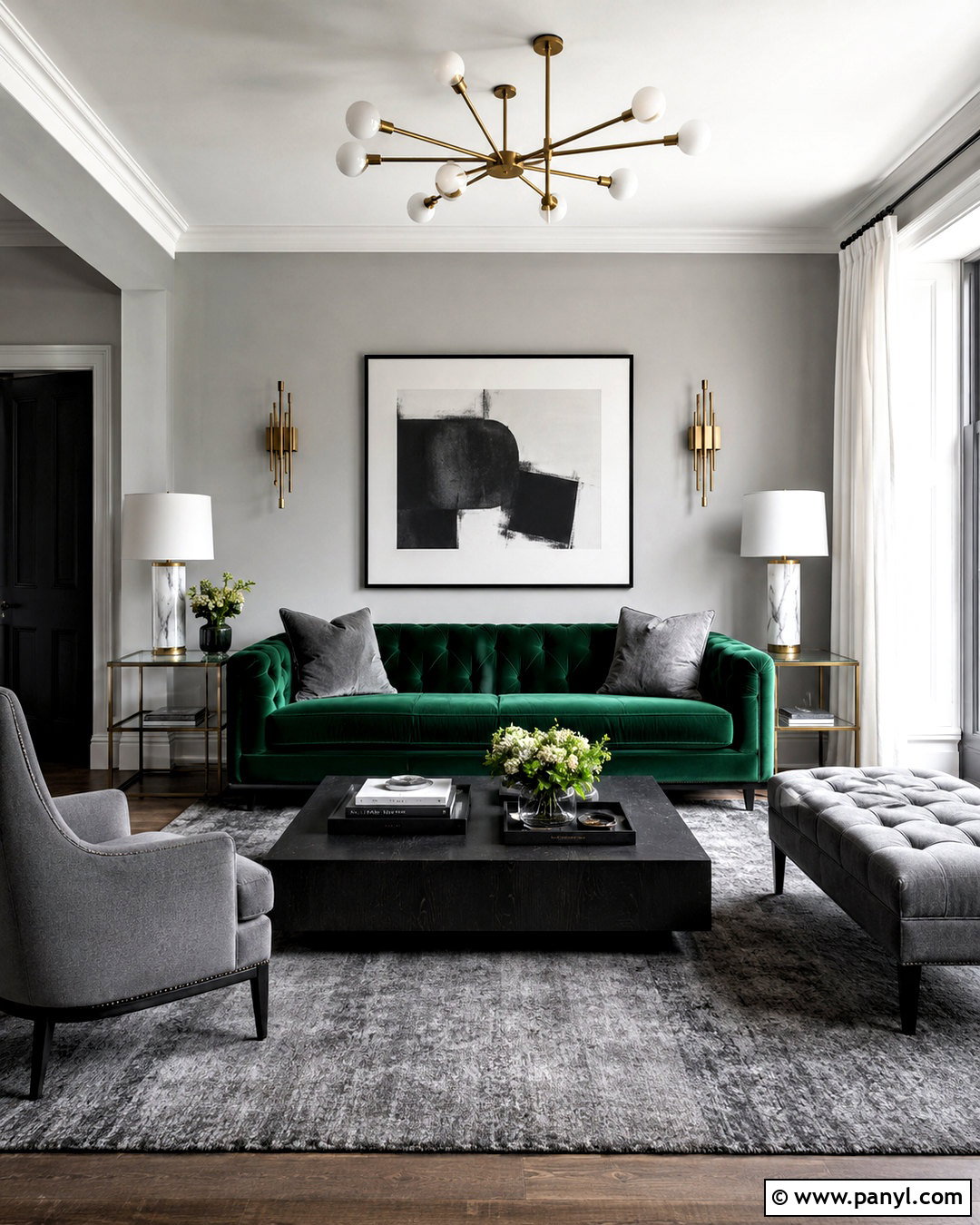
Emerald green adds a bold, polished quality to a gray living room and works best when given one substantial role. Against pale gray walls, place an emerald velvet sofa or a matching pair of statement chairs. Surround the feature with a charcoal rug, white linen curtains, and a dark wood coffee table. Brushed brass lamps, picture frames, and table legs complement the jewel-like green, but keep metallic finishes consistent throughout the room. Add black-and-white artwork and solid gray pillows to control the visual intensity. If the room is small, use emerald on an armchair and inside built-in shelves instead of across a full wall. Rich fabric, smooth wood, wool, and glass create a complete layered design that feels dramatic while remaining comfortable.
13. Gray Living Room With Blush Pink
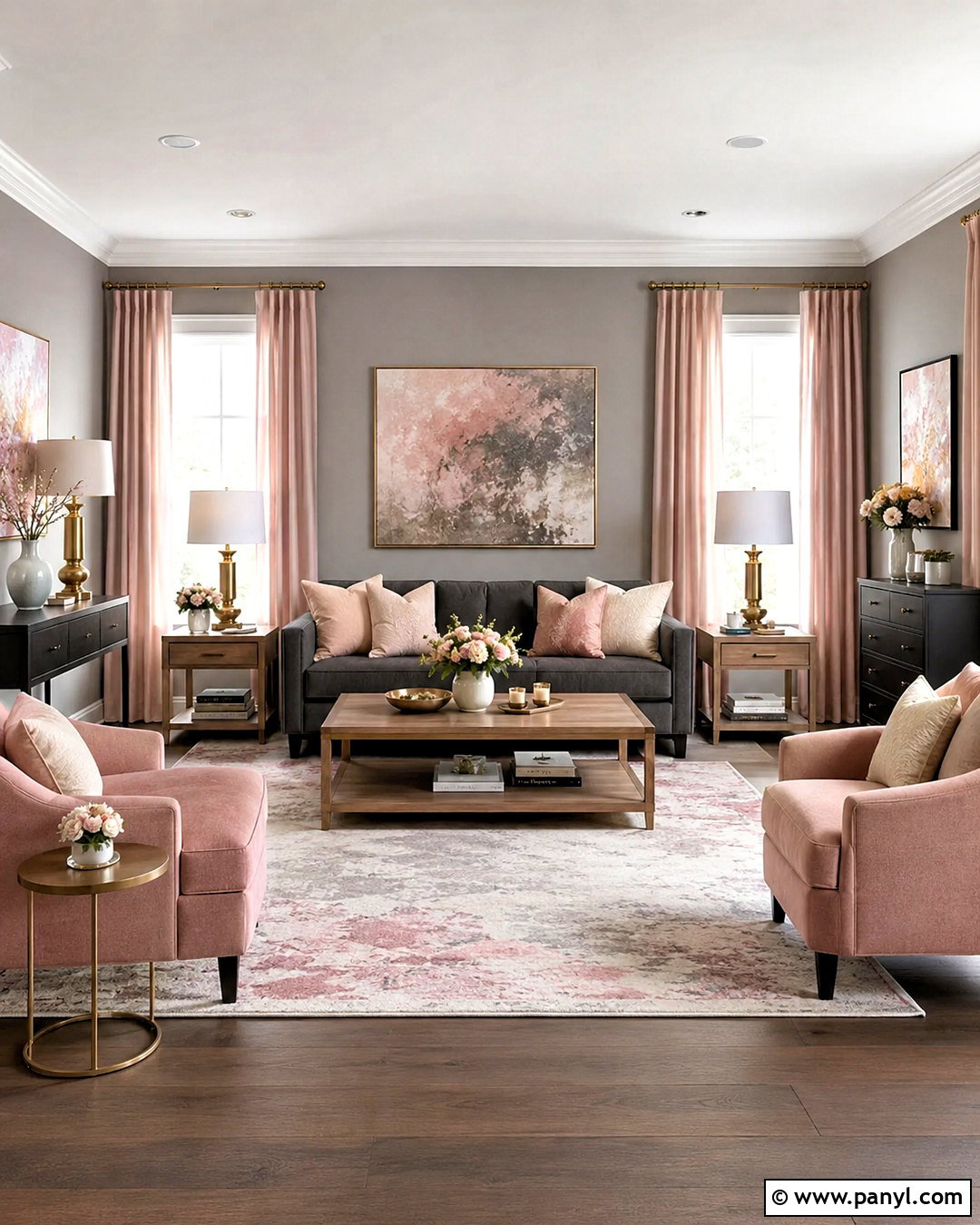
Blush pink can warm gray without making the living room feel overly sweet. Choose dusty blush with beige or gray undertones, then use it on a pair of upholstered chairs, full-length curtains, or a large abstract rug. Keep the foundation simple with warm gray walls and a charcoal or medium-gray sofa. Add cream pillows, a pale oak coffee table, and brushed brass lighting to support the softer palette. A dark brown or black side table will provide useful contrast. Avoid filling the room with tiny pink accessories; larger, repeated areas of muted color look more intentional. Complete the arrangement with neutral artwork that contains blush, cream, and gray. The finished room feels calm, welcoming, and suitable for both contemporary and traditional furnishings.
14. Gray Living Room With Coral
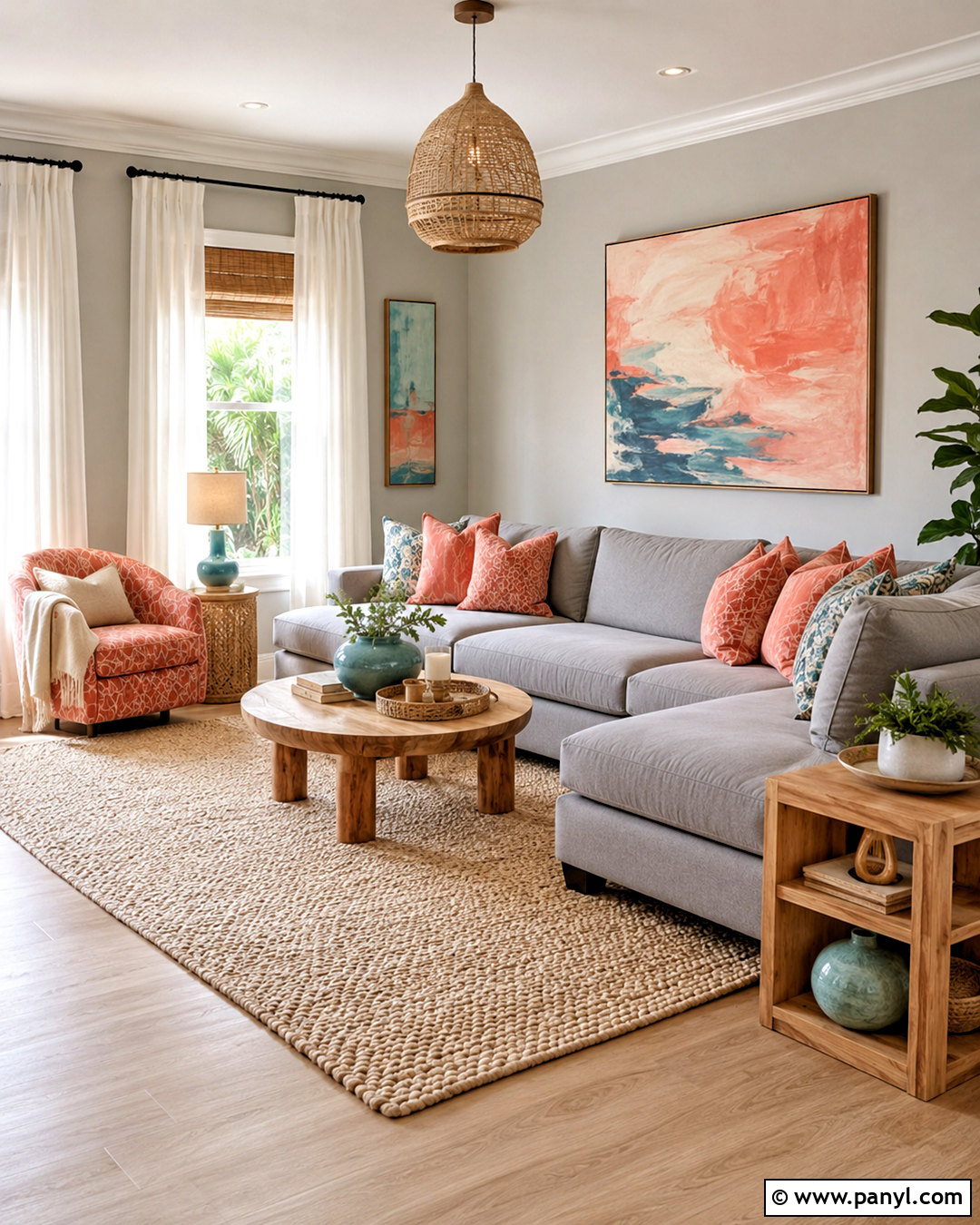
Coral introduces cheerful warmth to gray and works particularly well in bright, casual living spaces. Begin with pale gray walls, a medium-gray sectional, and an ivory woven rug. Add coral through two substantial elements, such as a patterned accent chair and a large piece of artwork above the sofa. Repeat it more quietly in pillows, a throw, or ceramic decor. Light oak furniture, white curtains, and woven pendant lighting keep the overall design fresh and informal. Include touches of muted blue or teal in the rug to balance coral’s warmth and create a more developed palette. Select softened coral rather than fluorescent orange-pink. With plenty of neutral space surrounding it, coral can make a gray room feel lively without taking over every surface.
15. Gray Living Room With Mustard Yellow
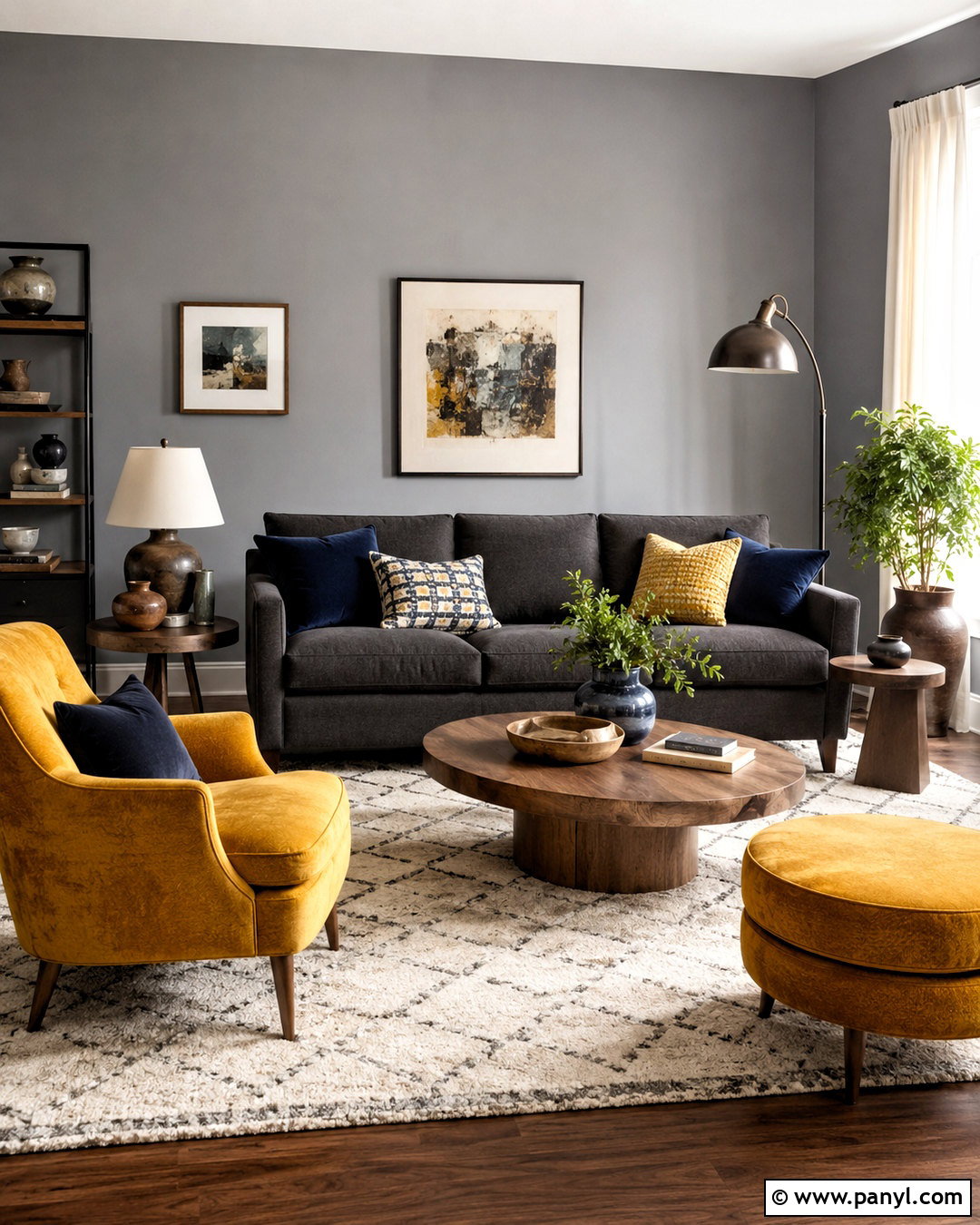
Mustard yellow is a practical choice when a gray living room needs warmth, contrast, and a stronger personality. Pair cool gray walls with a charcoal sofa, then add a mustard upholstered chair and matching bench or ottoman. Tie the colors together with a cream rug containing gray and muted golden details. Walnut tables, dark bronze lighting, and off-white curtains support the warm accent color. Repeat mustard in only two or three smaller places, such as pillows and artwork, to avoid an overly coordinated appearance. Deep navy or black can serve as a secondary accent and sharpen the palette. Because mustard has an earthy quality, it looks especially appealing with woven wool, linen, wood, and handmade pottery rather than shiny plastic or highly polished finishes.
16. Gray Living Room With Terracotta
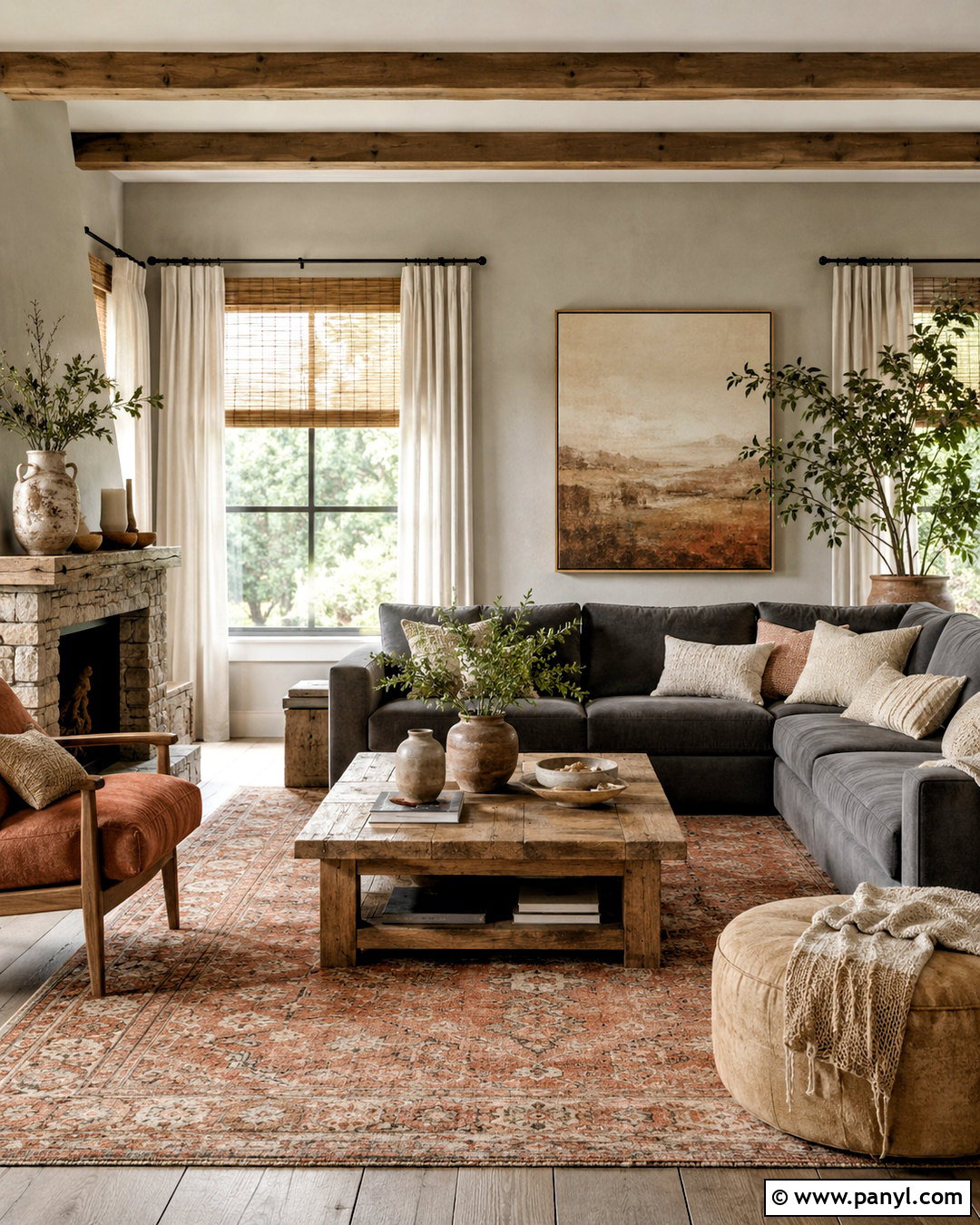
Warm terracotta can transform an all-gray living room into a grounded, inviting retreat. Use pale gray walls and a soft charcoal sectional as the neutral backdrop. Bring in terracotta through a large vintage-style rug, clay-colored linen pillows, and one upholstered lounge chair. Choose natural oak or walnut tables and add woven shades to strengthen the earthy atmosphere. Cream curtains and an ivory throw keep the scheme from becoming too dark. Unglazed pottery, stone accessories, and a few leafy plants complete the room without making it feel themed. Look for muted terracotta with brown or dusty red undertones rather than a vivid orange. Repeating the color at floor, seating, and eye level will create balance and connect every part of the living area.
17. Gray Living Room With Burnt Orange
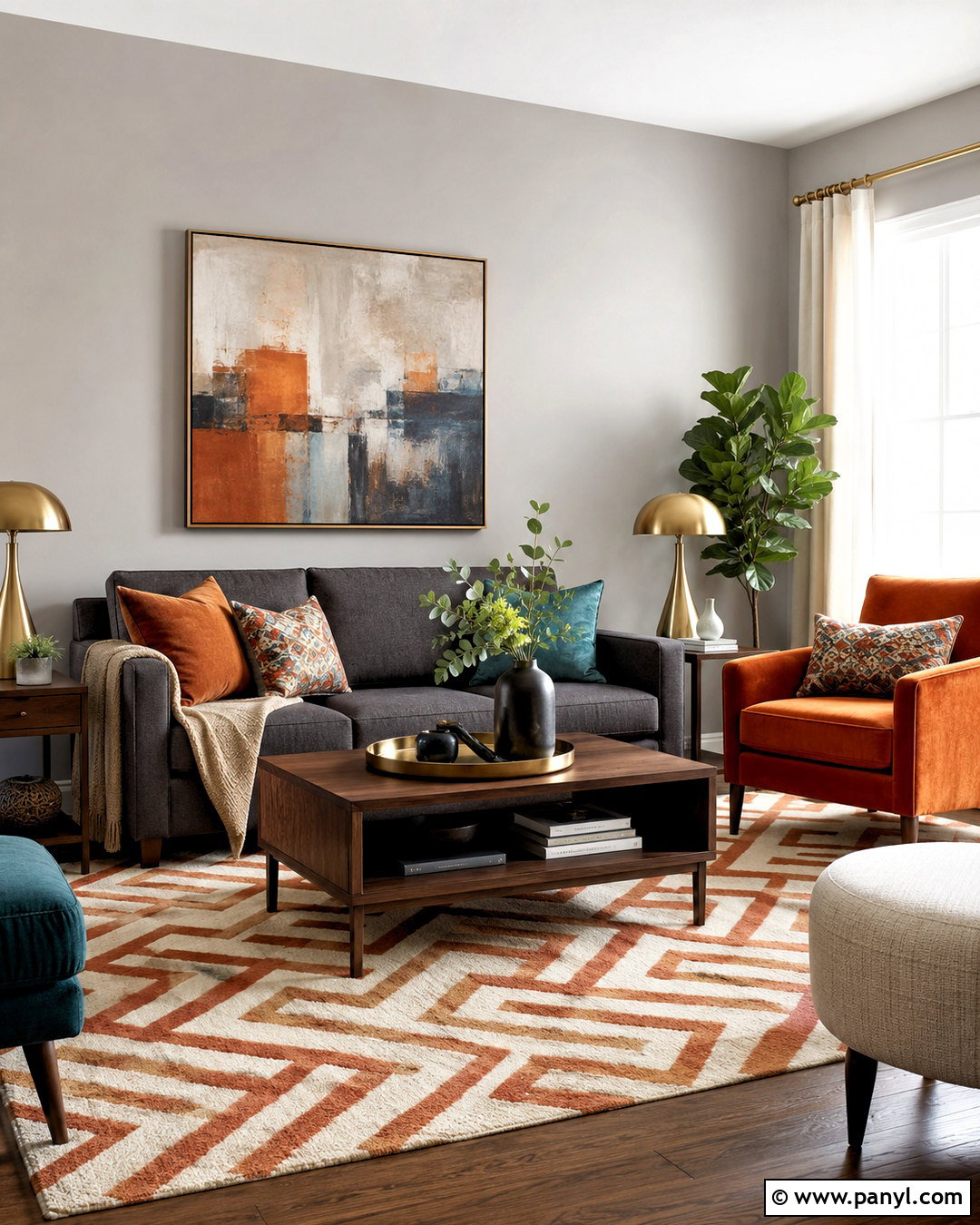
Imagine a charcoal-gray sofa surrounded by the warm glow of autumnal orange textiles and rich wood. Burnt orange creates a more dramatic statement than terracotta while still feeling earthy. Keep the walls light gray, then introduce burnt orange on a velvet armchair, a large geometric rug, and two patterned pillows. Use dark walnut tables and aged brass lighting to deepen the effect. Cream curtains and a pale upholstered ottoman can provide relief from the stronger tones. Add one small accent in deep teal or navy for sophisticated contrast. Burnt orange should appear in a few meaningful areas instead of numerous small decorations. The complete design feels energetic and cozy, making it especially effective in rooms used for conversation, reading, and relaxed entertaining.
18. Gray Living Room With Red
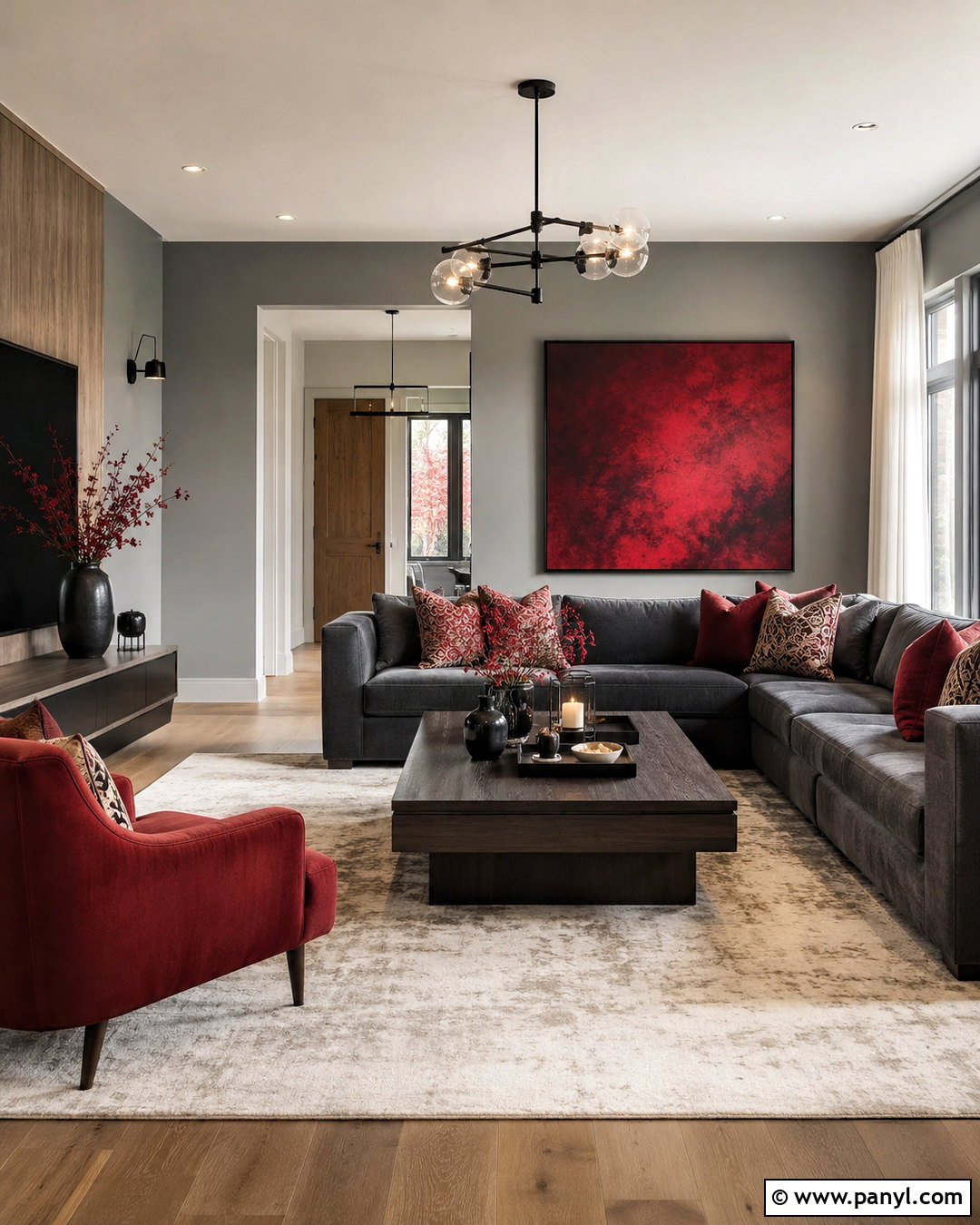
Red creates a confident focal point in a gray living room, but it benefits from careful placement and a restrained supporting palette. Start with soft gray walls, a charcoal sectional, and a light neutral rug. Add one substantial red feature, such as a deep red lounge chair, lacquered media cabinet, or oversized artwork. Repeat the red in two modest pillow patterns so the main piece feels connected. Use black metal lighting, dark wood tables, and white curtains to frame the combination. Avoid mixing several unrelated reds; choose one clear shade and repeat it consistently. Natural leather or warm oak can soften the contrast. This room works best with uncluttered surfaces and simple furniture silhouettes, allowing the red to look purposeful rather than visually overwhelming.
19. Gray Living Room With Burgundy
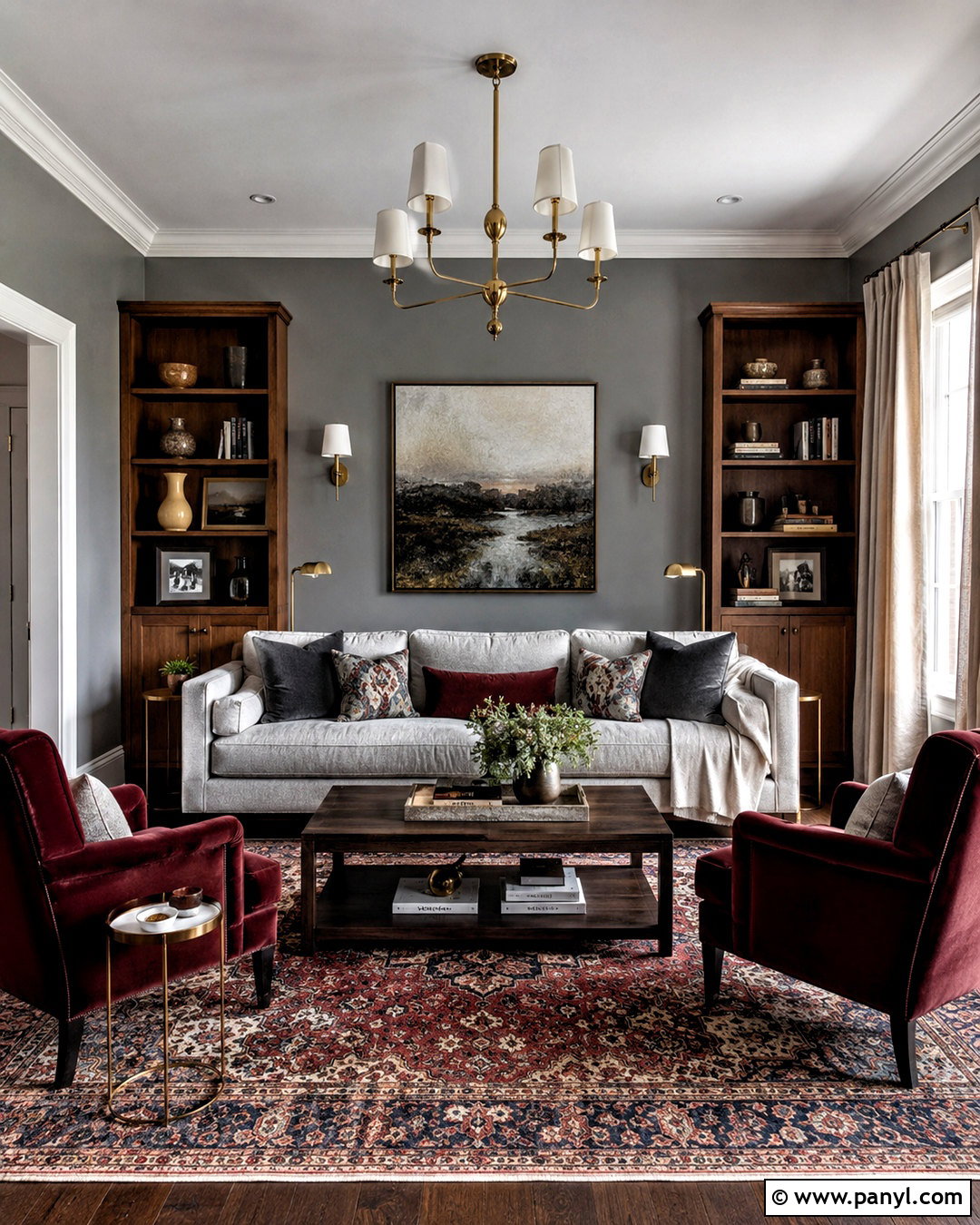
Burgundy provides the warmth of red with a deeper, more sophisticated character. Pair medium-gray walls with a light gray sofa and burgundy velvet chairs placed around a dark wood coffee table. A Persian-inspired rug containing burgundy, charcoal, cream, and faded blue can connect the full color scheme. Add walnut shelving, antique brass lighting, and oatmeal curtains to keep the room warm and layered. Burgundy also works on built-in cabinetry or a fireplace wall when colorful furniture is not practical. Repeat the shade through one artwork or throw, then allow the other accessories to remain neutral. Soft wool, velvet, leather, and aged wood suit this rich palette. The completed living room feels cozy and established without requiring ornate furniture or excessive decoration.
20. Gray Living Room With Lavender
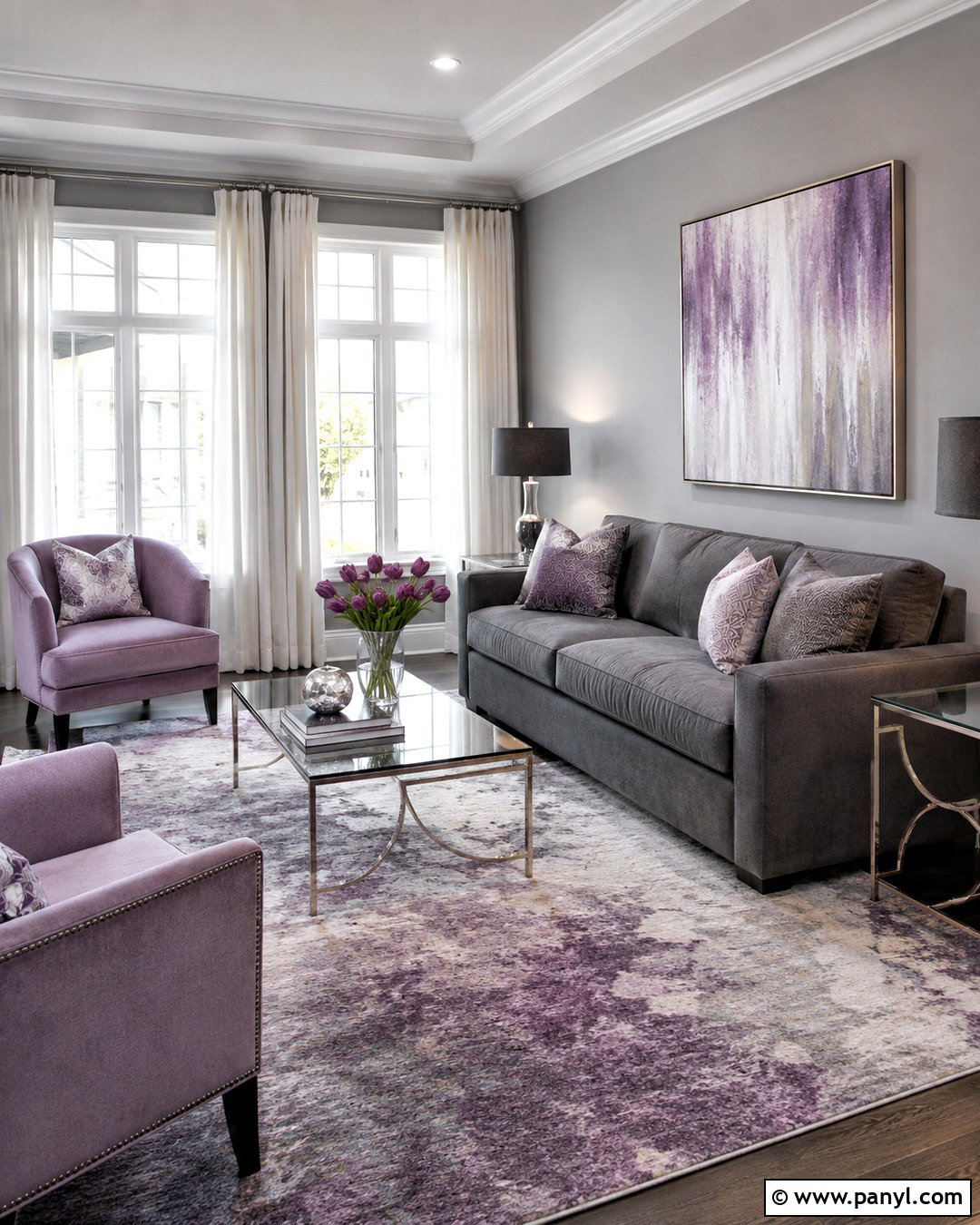
Lavender offers a softer alternative to blue and pink while giving gray a subtle, refined lift. Use dove-gray walls and a deeper gray sofa, then add dusty lavender chairs, a lavender-and-cream rug, and pale purple pillows in mixed fabrics. Choose silver, glass, or light oak tables to preserve the airy feeling. White linen curtains will brighten the room, while one charcoal lamp or side table provides definition. Look for muted lavender with gray undertones rather than a bright candy-like purple. A large abstract artwork can combine lavender, soft blue, gray, and ivory to unify the seating area. Keep decorative objects simple and limited. The finished room feels peaceful and polished, with enough gentle color to distinguish it from an entirely neutral interior.
Conclusion:
The best partner for gray depends on the room’s natural light, the gray’s undertone, and the atmosphere you want to create. White, cream, and beige keep the space quiet, while brown and terracotta add natural warmth. Blue and green combinations feel fresh and balanced. Mustard, coral, orange, and red create stronger focal points. Whatever color you choose, repeat it at least a few times through furniture, textiles, artwork, or built-ins. Mix smooth, woven, soft, and natural materials so the palette does not look flat. Most importantly, test colors beside your existing finishes before committing. These **20 colors that go with gray living rooms** provide flexible starting points for creating a cohesive, comfortable space.

Related Ideas and Inspiration:
Leave a Reply