
Warm, earthy, and surprisingly versatile, terracotta brings instant character to a kitchen without making it feel overly decorated. Its clay-inspired range includes pale peach, dusty coral, baked orange, and deep rust, so the color can suit bright modern rooms as easily as rustic country spaces. The key is treating each kitchen as one complete composition. Cabinet color, countertops, backsplash, flooring, lighting, and hardware should all support the walls. Natural wood, creamy stone, aged brass, and grounded greens are especially useful partners. Cooler blues, charcoal details, and stainless steel can create a sharper contrast. This guide to **40 terracotta kitchen walls** explores complete, practical looks for different layouts, styles, and budgets. Browse these 40 terracotta kitchen walls to find a combination you can recreate at home.
1. Terracotta Kitchen Walls With White Cabinets
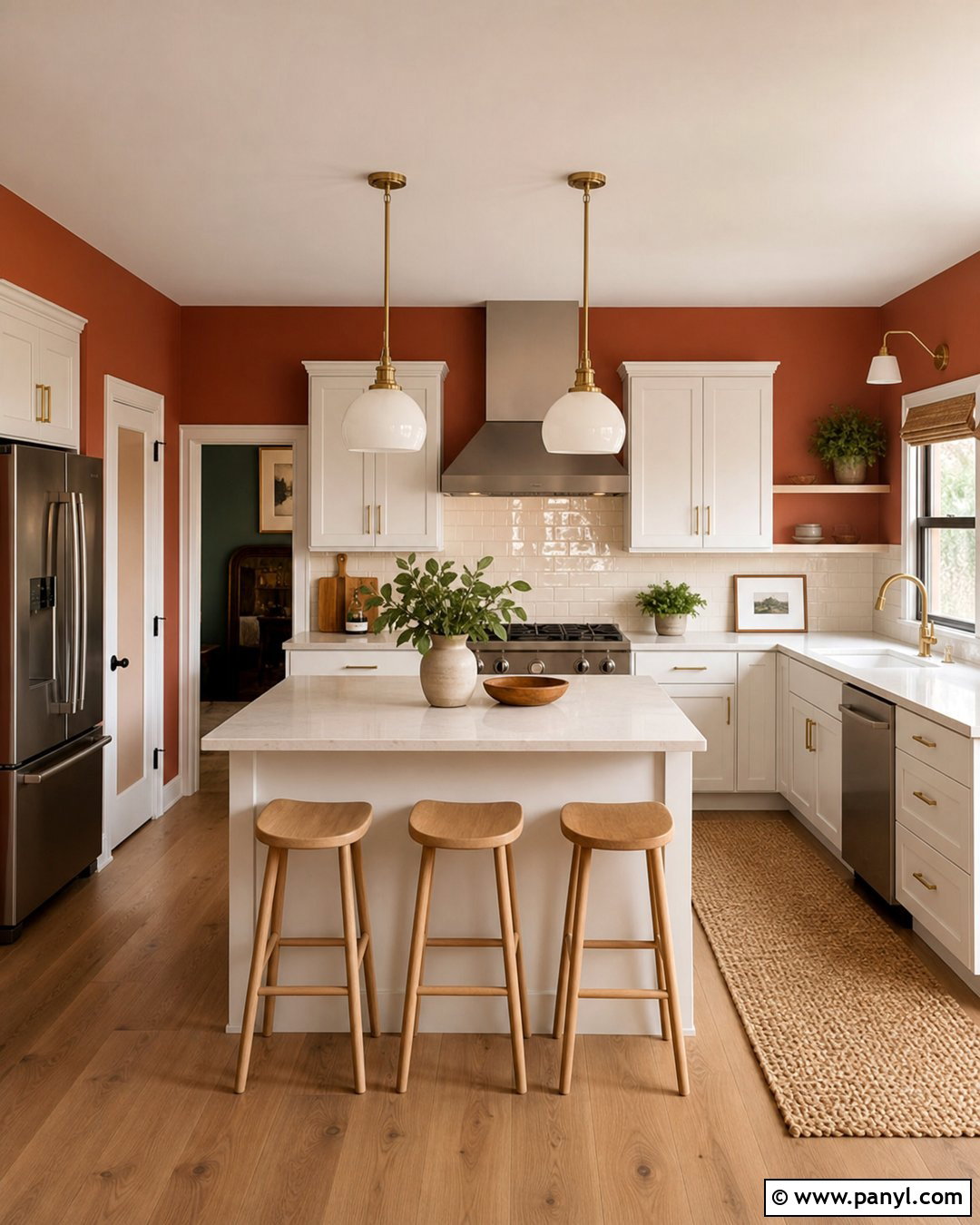
Crisp white cabinets give terracotta kitchen walls a clean, fresh contrast that works especially well in small or moderately sized rooms. Choose a muted clay shade rather than a bright orange so the walls feel warm and settled. Simple Shaker cabinets in warm white will soften the transition between the two colors. Add creamy quartz countertops, an ivory subway tile backsplash, and brushed brass pulls for a polished finish. Light oak flooring keeps the kitchen airy, while a woven runner adds texture without introducing another strong color. Finish the room with opal glass pendants, pale wooden stools, and a few green herbs. This balanced combination feels welcoming, practical, and easy to update as tastes change.
2. Terracotta Kitchen Walls With Cream Cabinets
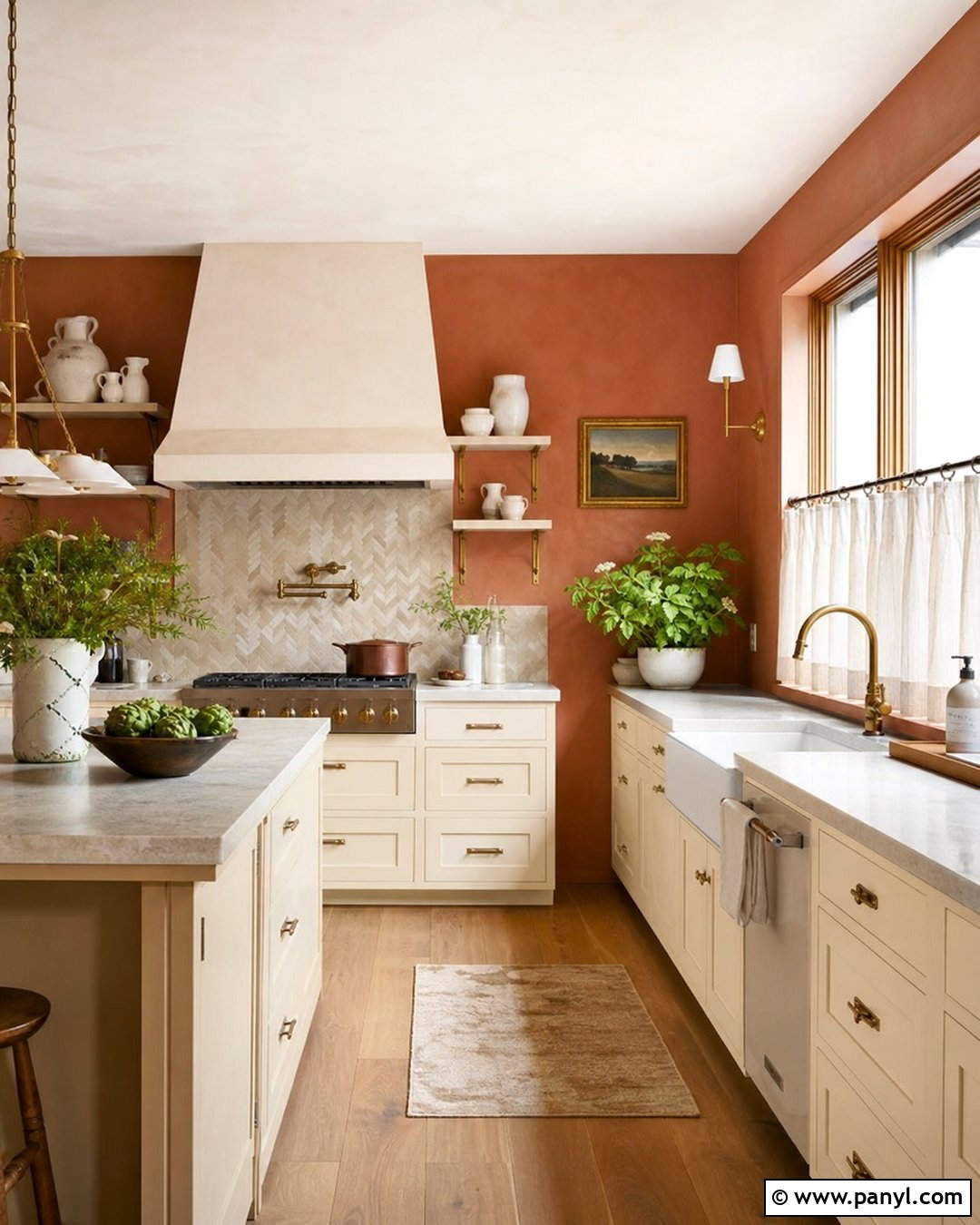
For a softer alternative to bright white, pair terracotta kitchen walls with creamy cabinetry and gently aged finishes. The warm undertones connect naturally, creating a comfortable kitchen that feels collected rather than sharply contrasted. Use inset cabinets in an ivory or vanilla tone, topped with beige limestone or lightly veined quartz. A simple plaster range hood can match the cabinets and provide a quiet focal point. Bring in unlacquered brass hardware, oak cutting boards, and natural linen café curtains. Medium-toned wood flooring prevents the pale surfaces from appearing washed out. Keep decorative pieces restrained, using cream pottery and muted greenery. The completed room should feel sunny, relaxed, and cohesive without becoming too orange or beige.
3. Terracotta Kitchen Walls With Sage Green Cabinets
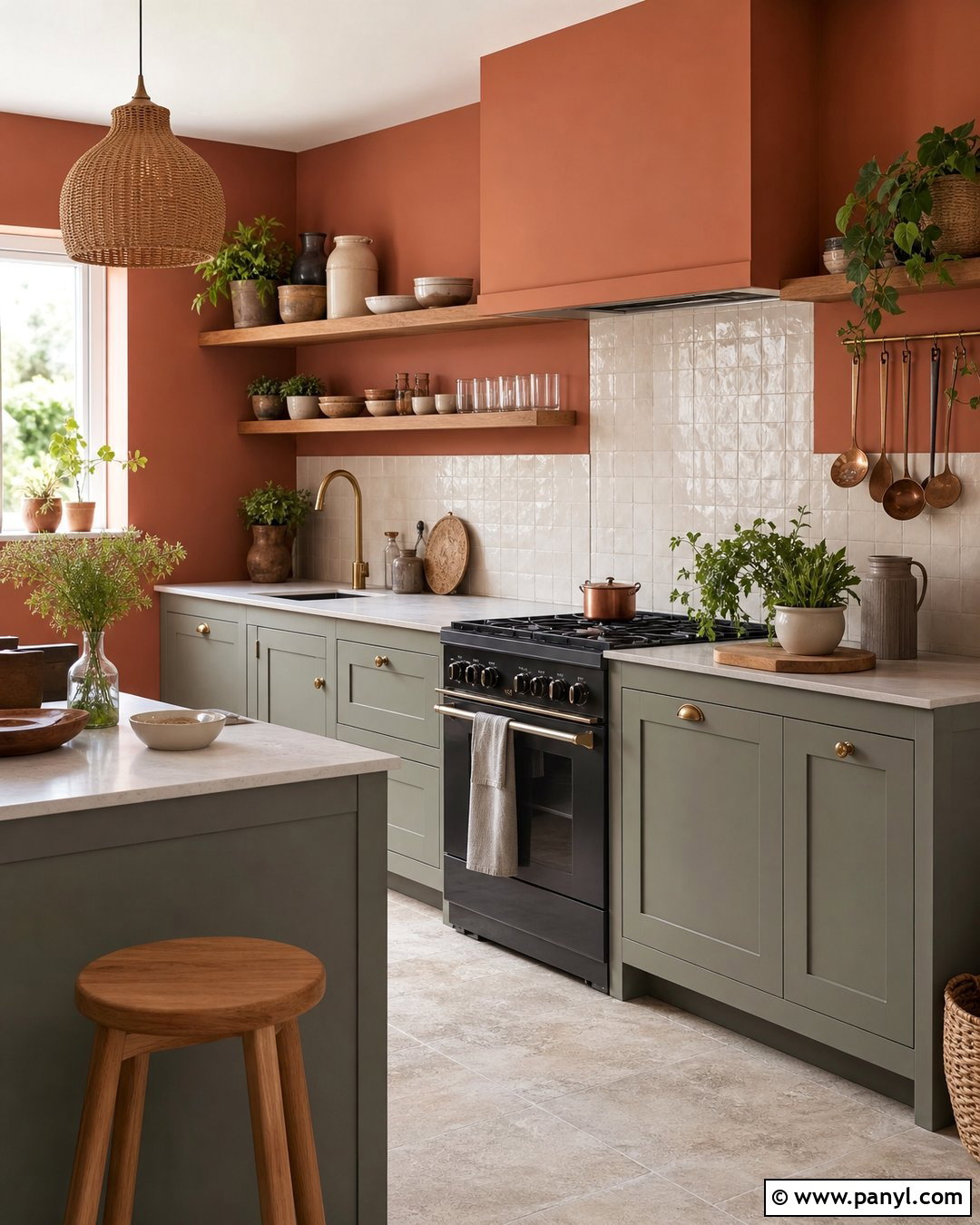
Terracotta and sage green form an earthy palette inspired by clay pots, herb gardens, and sun-warmed landscapes. Paint the walls a medium dusty terracotta and choose sage cabinets with gray undertones so neither color feels too saturated. Warm white quartz countertops will create a useful visual pause between the walls and cabinetry. Add an off-white zellige backsplash whose irregular surface reflects light around the room. Light oak shelves, aged brass knobs, and woven counter stools continue the natural theme. Consider a warm stone-look floor for durability and subtle texture. A small display of potted herbs, wooden bowls, and cream ceramics completes the kitchen. The result feels colorful but calm, making it suitable for both modern and traditional homes.
4. Terracotta Kitchen Walls With Dark Green Cabinets
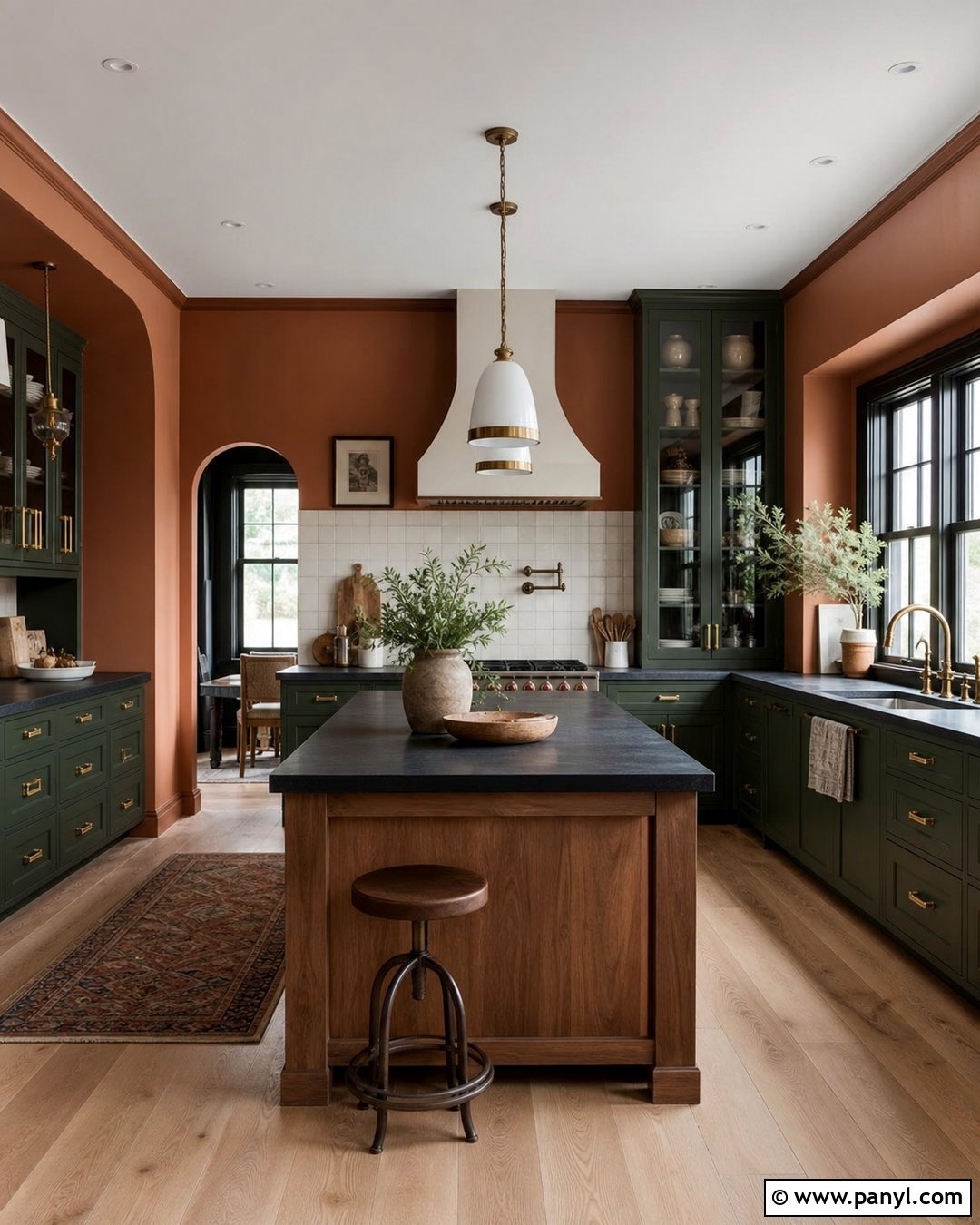
Deep green cabinets make terracotta kitchen walls look richer and more dramatic, particularly in kitchens with generous natural light. Choose a warm forest or olive green rather than a blue-green shade. Ground the cabinetry with dark soapstone countertops, then introduce a cream backsplash to prevent the room from feeling heavy. Brass hardware and a matching bridge faucet add warmth against the dark cabinet fronts. Use medium oak floors and a substantial wooden island to soften the contrast. Open shelves can display pale pottery that stands out against the terracotta background. Large windows, glass-front upper cabinets, and well-placed ceiling lights will keep the palette balanced. This complete scheme feels sophisticated, cozy, and connected to natural materials.
5. Terracotta Kitchen Walls With Navy Cabinets
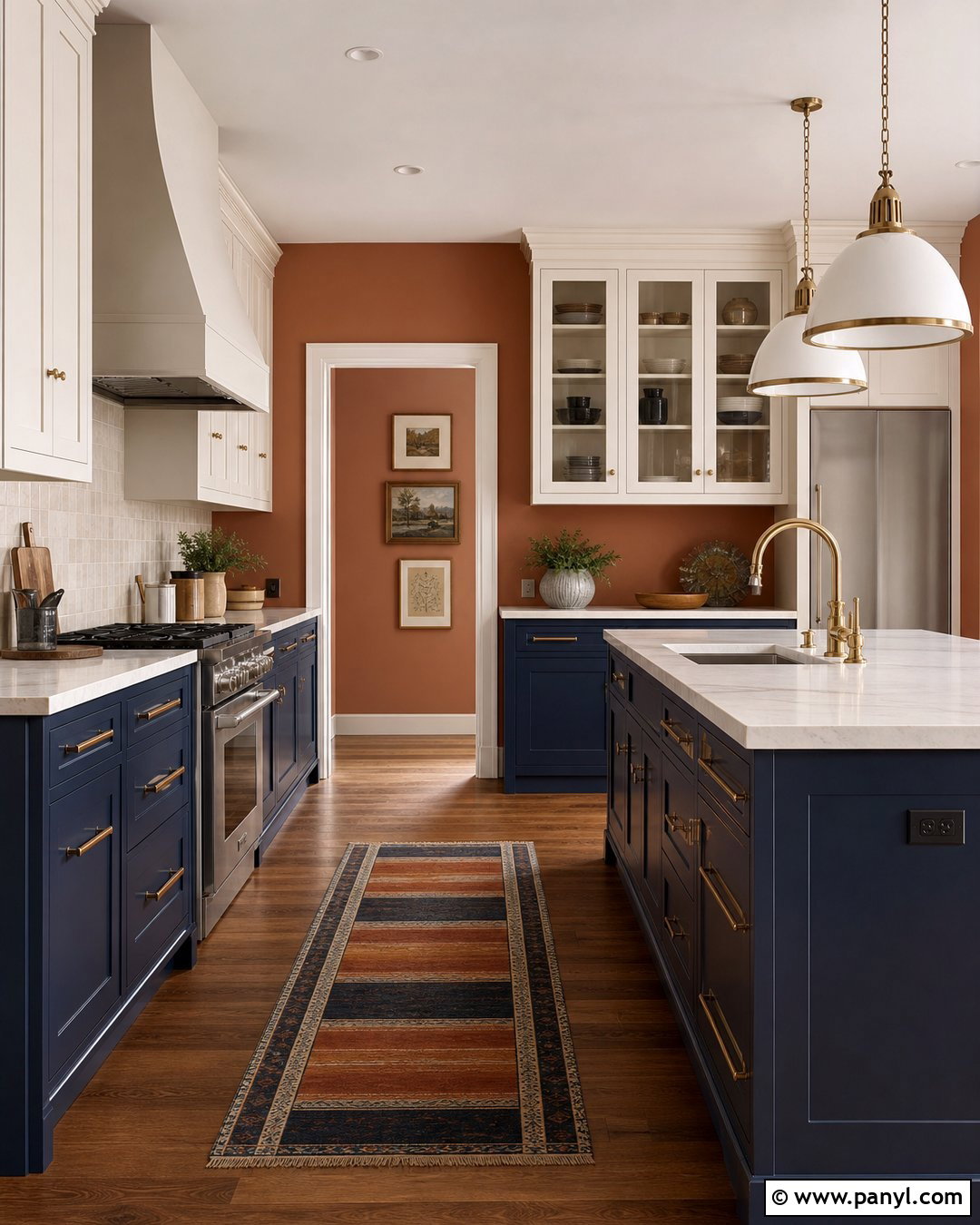
Can a warm terracotta kitchen work with a cool cabinet color? Navy blue creates a strong yet controlled contrast, especially when repeated carefully throughout the room. Use terracotta walls with a slightly brown or dusty undertone rather than a vivid orange finish. Paint the lower cabinets and island deep navy, while keeping upper cabinets warm white to preserve brightness. Choose white marble-look quartz countertops and a simple cream backsplash. Brass handles bridge the warm and cool colors, while medium walnut flooring adds depth. Complete the design with navy counter stools, woven shades, and a striped runner containing both rust and blue. This polished palette suits transitional kitchens that need color, definition, and a memorable central island.
6. Terracotta Kitchen Walls With Black Cabinets
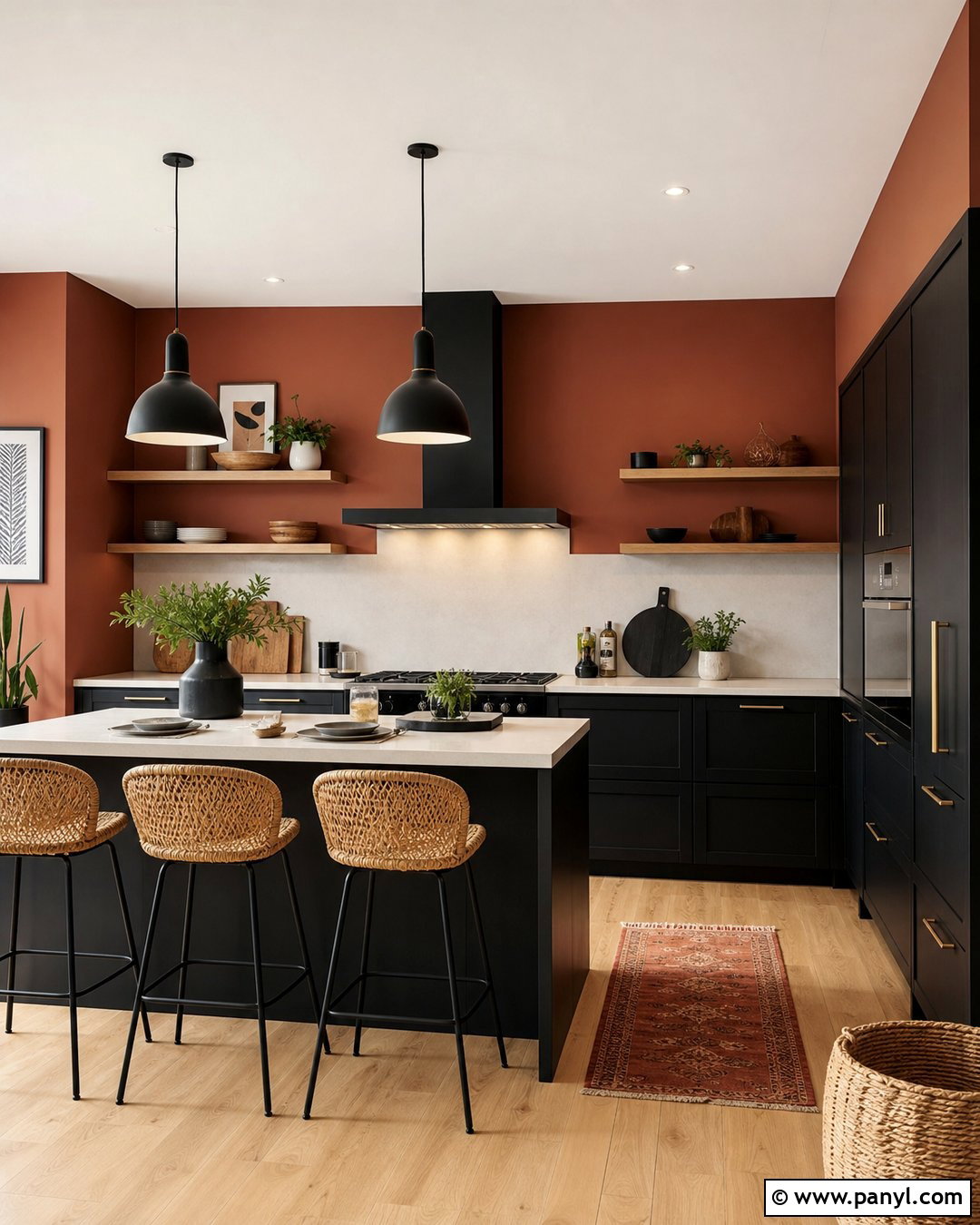
Black cabinetry gives terracotta kitchen walls a bold architectural edge without requiring elaborate decoration. To keep the combination usable, reserve matte black for lower cabinets and one tall storage wall. Choose open oak shelving or light upper cabinets to break up the darker surfaces. Pale quartz countertops and a warm white backsplash will reflect light and separate the black cabinetry from the clay-colored walls. Repeat black through slim pendant lights, window frames, and barstool legs. Natural oak flooring and woven baskets add enough softness to prevent an industrial appearance. Use under-cabinet lighting to brighten work areas. The completed room feels contemporary and grounded, with terracotta supplying warmth and black creating structure, contrast, and visual focus.
7. Terracotta Kitchen Walls With Oak Cabinets
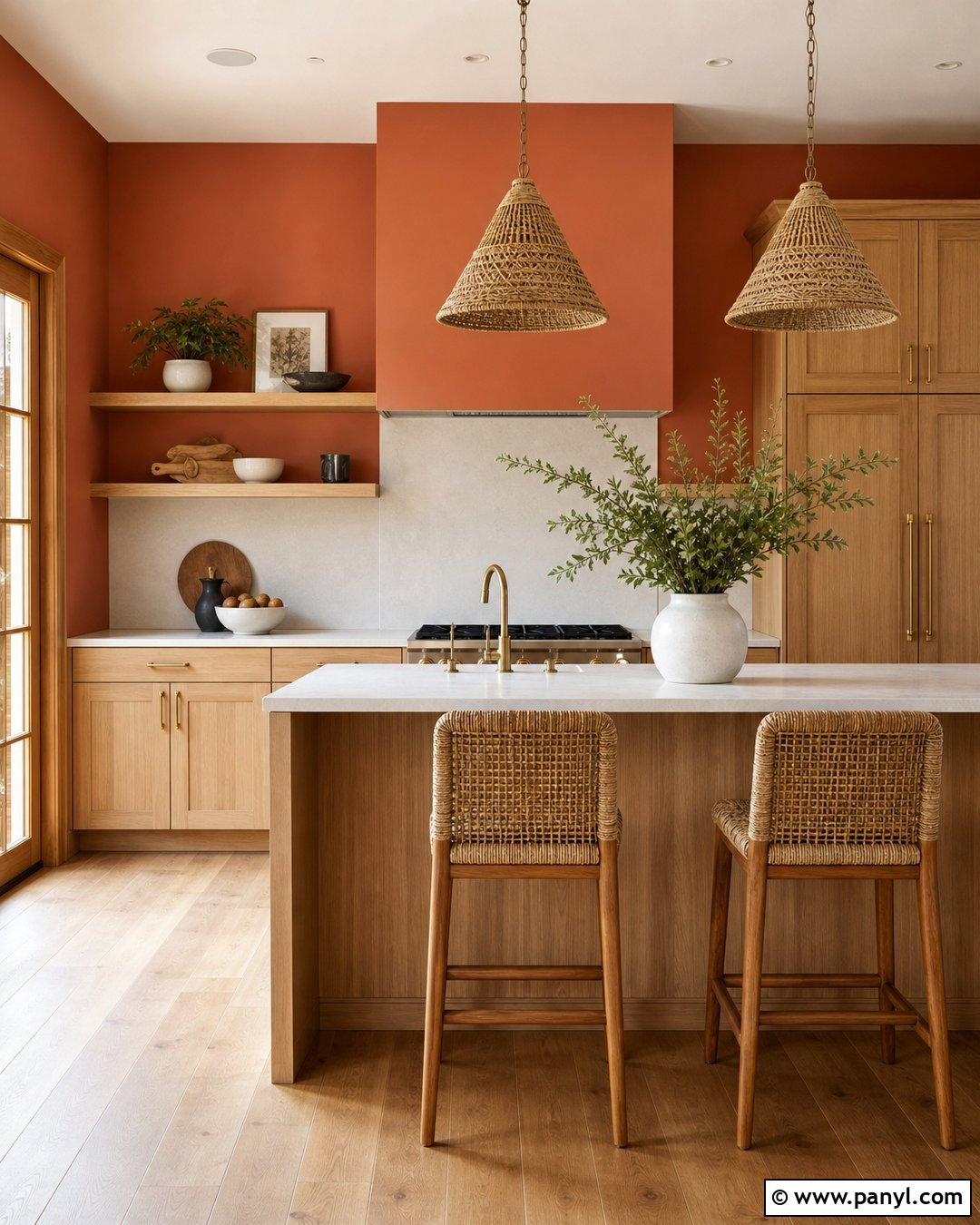
Light oak cabinetry makes terracotta kitchen walls feel relaxed, natural, and quietly modern. Select a soft clay wall color with muted red undertones, then use flat-panel oak cabinets that clearly show the wood grain. Cream quartz counters and an understated ivory backsplash provide separation between similar warm finishes. Add brushed nickel or aged brass hardware, depending on whether you want a cleaner or more traditional result. Wide-plank oak floors can work if they are slightly darker than the cabinets. A plaster pendant, woven stools, and handmade ceramic bowls bring in varied textures. Avoid adding too many orange accessories. Instead, use warm white, olive green, and charcoal accents to create a balanced kitchen with depth and everyday practicality.
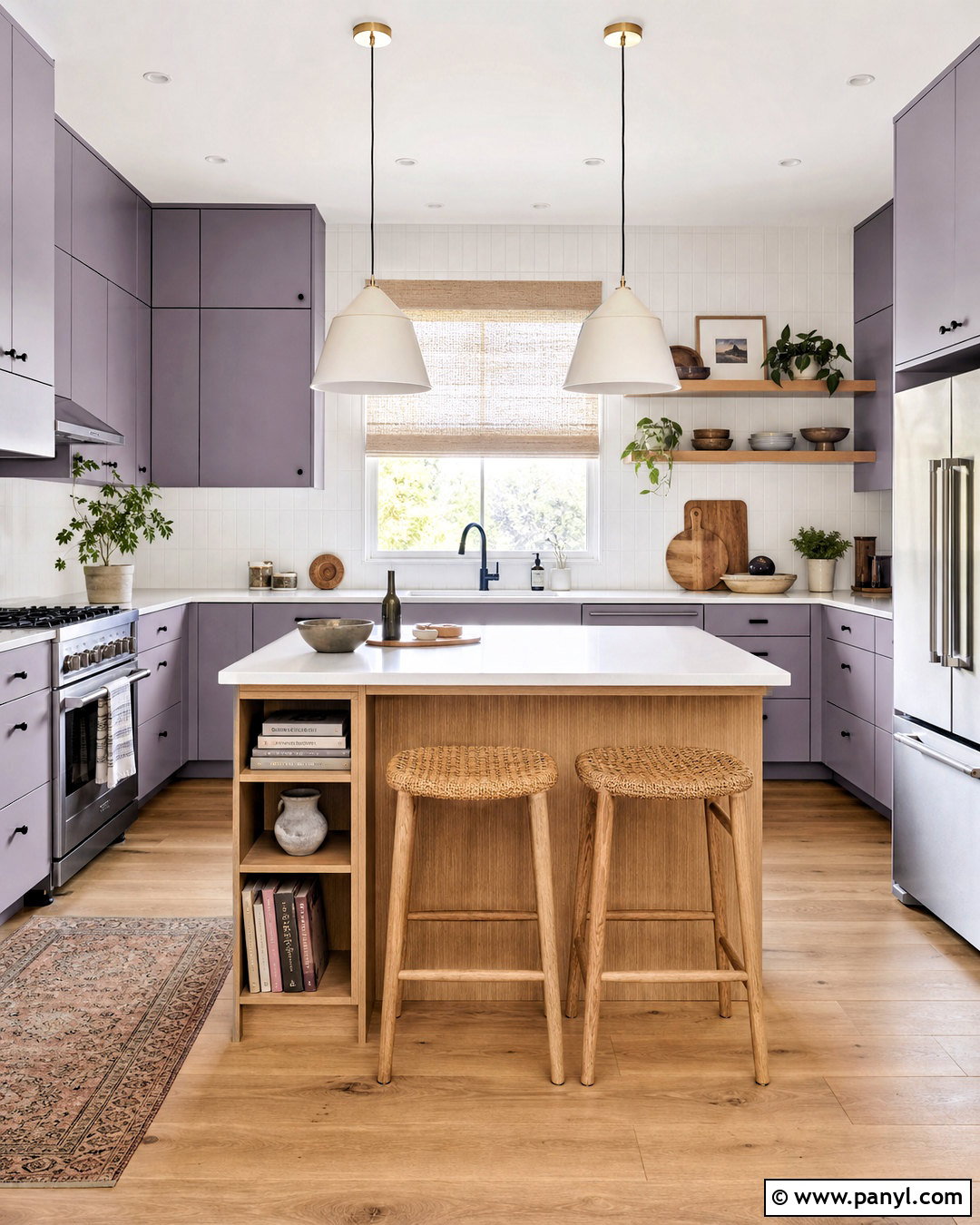
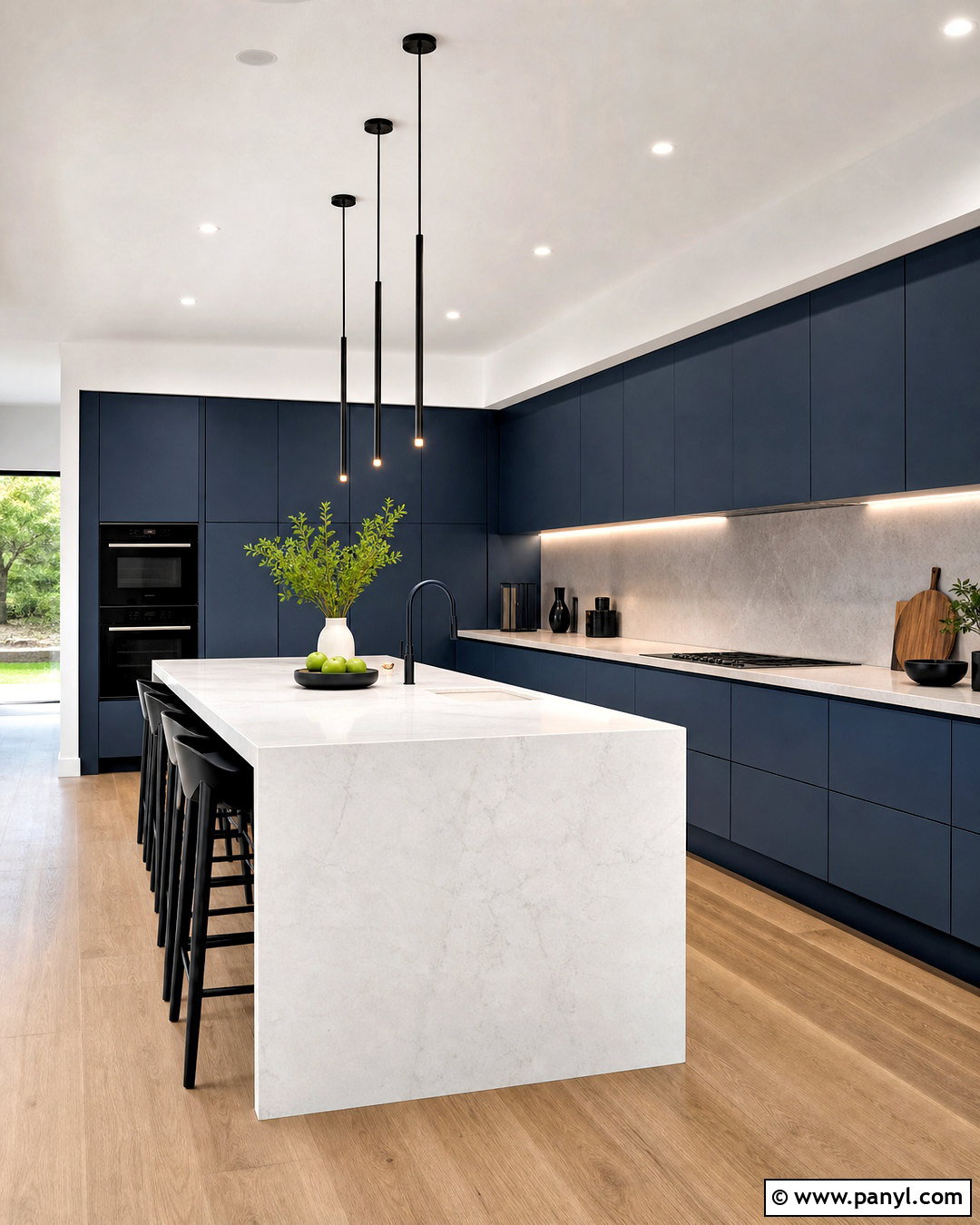
8. Terracotta Kitchen Walls With Walnut Cabinets
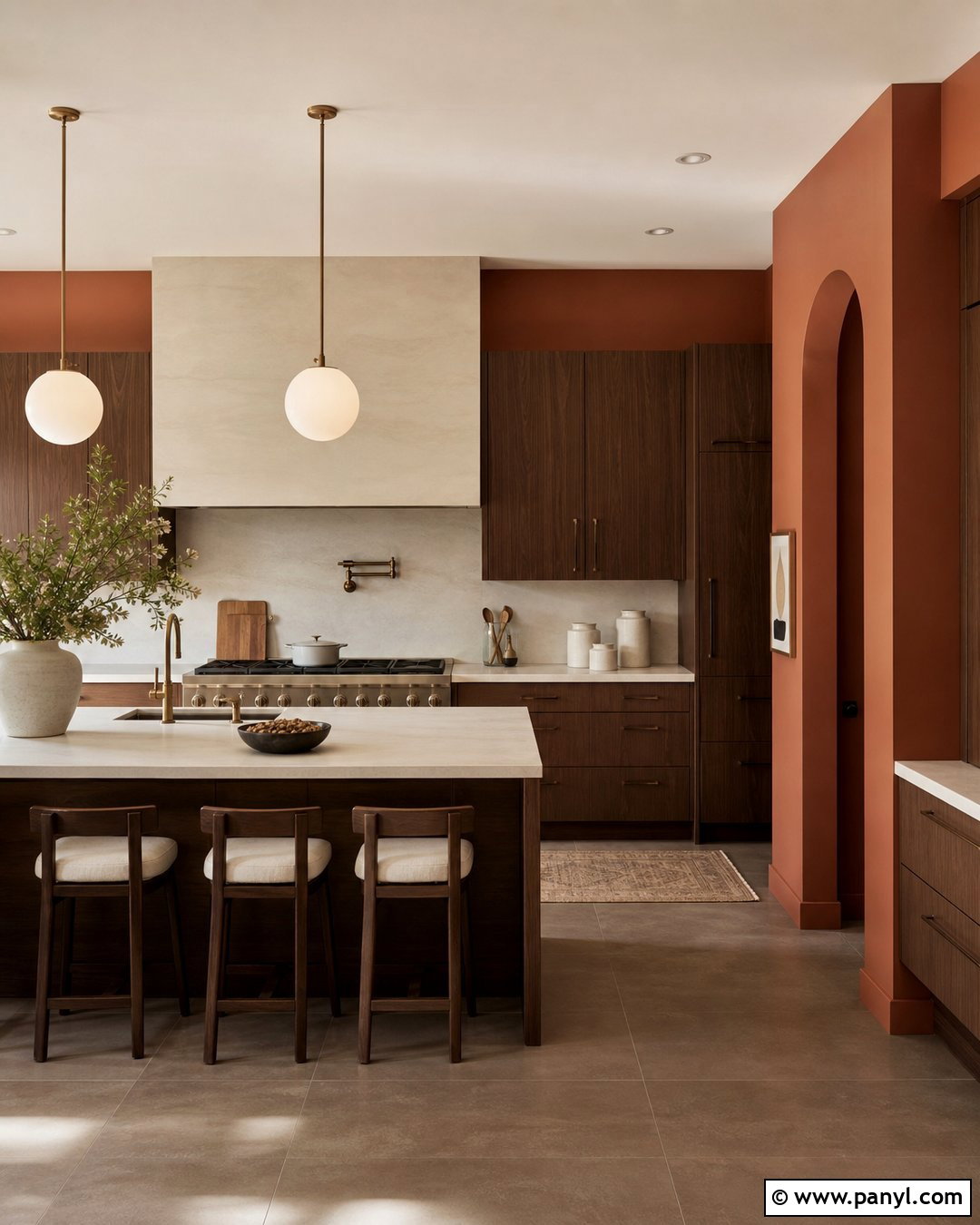
Walnut cabinets create an enveloping, sophisticated setting when combined with terracotta kitchen walls. The wood’s deep brown grain looks best against a clay shade that leans red instead of bright orange. Choose streamlined walnut cabinetry with minimal hardware and use pale creamy stone across the countertops and backsplash. This uninterrupted light surface keeps the darker materials from closing in the room. A large island can combine walnut panels with a waterfall stone top for a refined focal point. Add globe pendants in milk glass, dark bronze fixtures, and warm gray porcelain flooring. Keep shelves and counters lightly styled with white ceramics and a few leafy plants. The finished kitchen feels luxurious yet welcoming, with rich color and natural texture working together.
9. Terracotta Kitchen Walls With Gray Cabinets
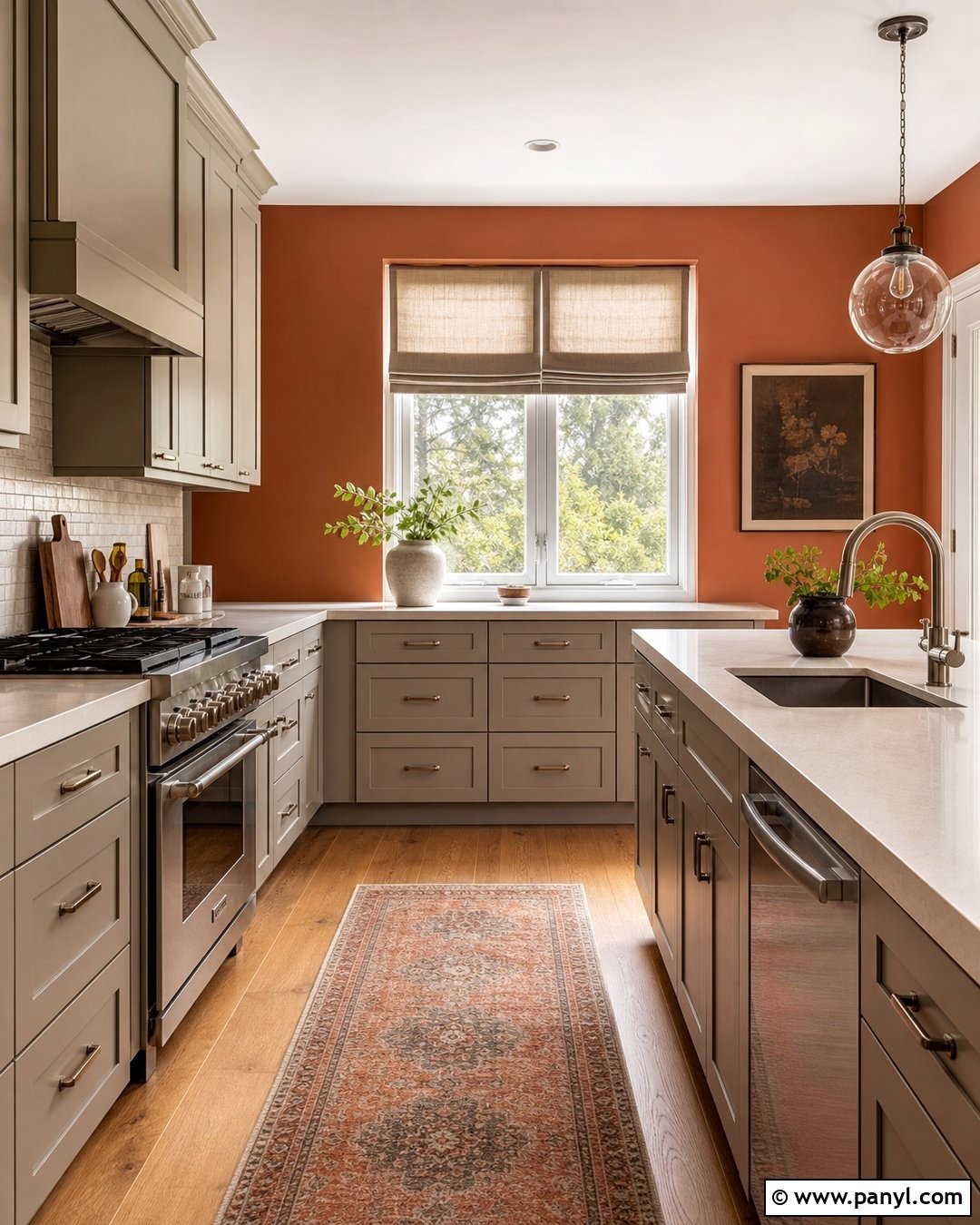
Soft gray cabinets can calm terracotta kitchen walls and create a practical transitional kitchen. Look for a warm gray with taupe or mushroom undertones, since icy blue-gray may feel disconnected from the earthy wall color. Use simple Shaker cabinet fronts, brushed nickel hardware, and light quartz countertops with subtle brown veining. An ivory rectangular tile backsplash will gently connect the cabinets and walls. Warm wood flooring is essential because it prevents the overall scheme from becoming flat or cool. Complete the room with linen Roman shades, a wood-topped breakfast table, and a washable runner containing rust, beige, and gray. This arrangement offers a restrained way to introduce terracotta while keeping the kitchen versatile, familiar, and easy to coordinate.
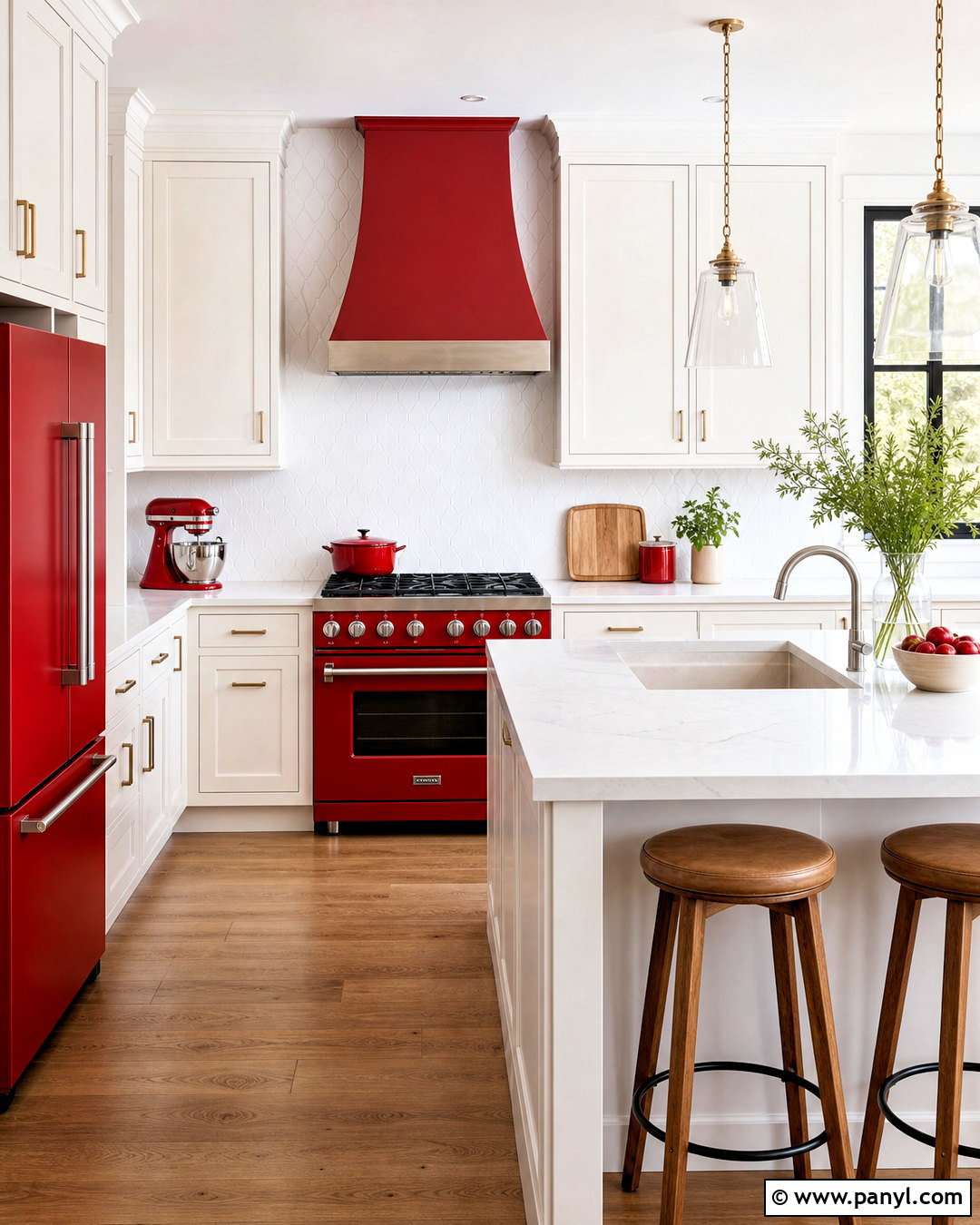
10. Terracotta Kitchen Walls With Greige Cabinets
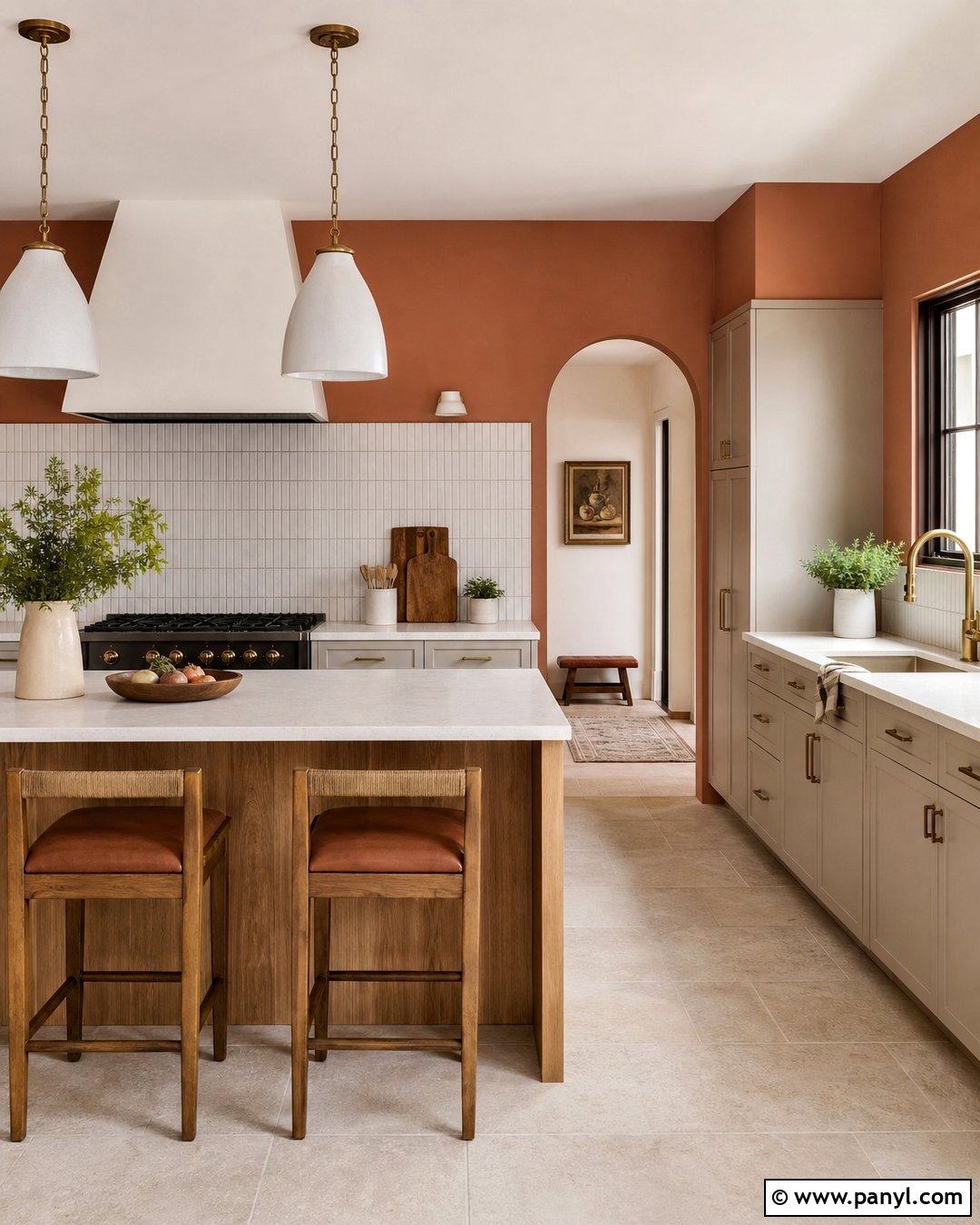
Greige cabinetry provides a quiet neutral foundation that allows terracotta kitchen walls to supply most of the personality. Choose a medium terracotta paint with softened brown undertones and a light greige cabinet finish that appears warm in both daylight and artificial light. Pair the cabinetry with creamy quartz countertops and vertical off-white tiles for subtle height. Champagne bronze hardware adds a delicate glow without looking overly decorative. A natural oak island can introduce variation while remaining within the warm palette. Complete the kitchen with pale limestone-look flooring, upholstered counter stools, and simple ceramic pendants. Black can appear sparingly on the faucet or window frame. This full scheme feels current but not overly trendy, making it a dependable choice for an everyday family kitchen.
11. Terracotta Kitchen Walls With Beige Cabinets
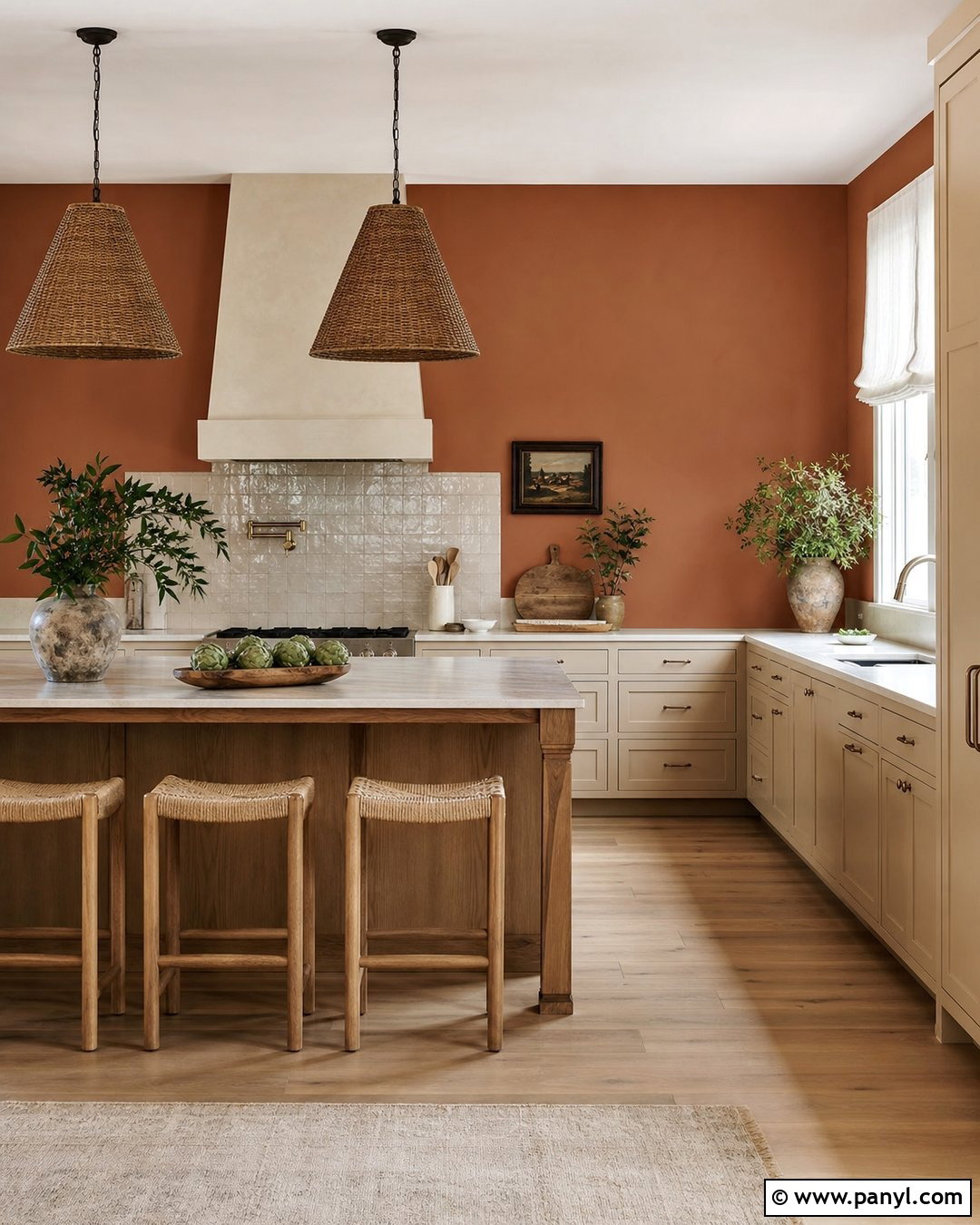
A tonal palette of terracotta walls and beige cabinets creates warmth without relying on dramatic contrast. Use sandy beige cabinetry, muted clay-colored walls, and a backsplash in creamy handmade tile. The slight variations between these finishes will give the room depth while preserving a calm atmosphere. Select countertops in honed limestone or durable quartz that imitates its soft movement. Medium oak flooring and a matching wood island make the kitchen feel grounded. For definition, introduce dark bronze handles, a bronze faucet, and simple black-framed artwork. Woven pendant shades and linen window treatments reinforce the relaxed look. This kitchen works best with uncluttered counters and a few substantial accessories rather than numerous small decorations. The result is warm, layered, and comfortably understated.
12. Terracotta Kitchen Walls With Blue Cabinets
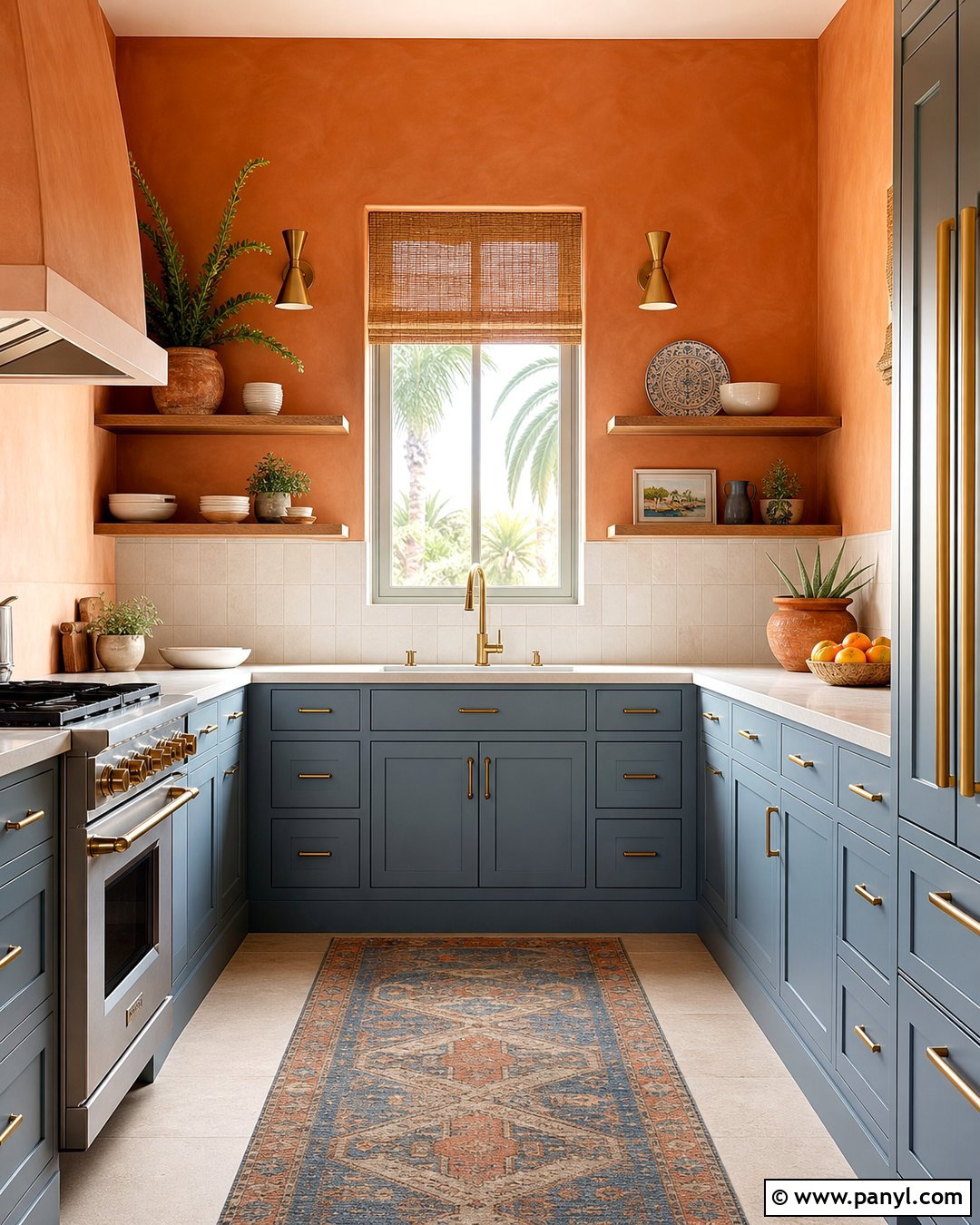
Dusty blue cabinets bring a relaxed, slightly coastal feeling to terracotta kitchen walls without making the room look themed. Choose a softened blue with gray undertones and pair it with pale, sun-washed terracotta paint. Warm white countertops and an ivory backsplash will keep the color pairing clear and bright. Consider leaving upper cabinets white or replacing some with oak shelves to open the room visually. Add brushed brass pulls, light wood stools, and woven shades for warmth. A pale stone floor supports the breezy palette, while a runner with faded blue and rust connects both main colors. Keep accessories useful and simple, such as white pitchers, wooden boards, and herb pots. The final kitchen feels colorful, casual, and naturally balanced.
13. Terracotta Kitchen Walls With Teal Cabinets
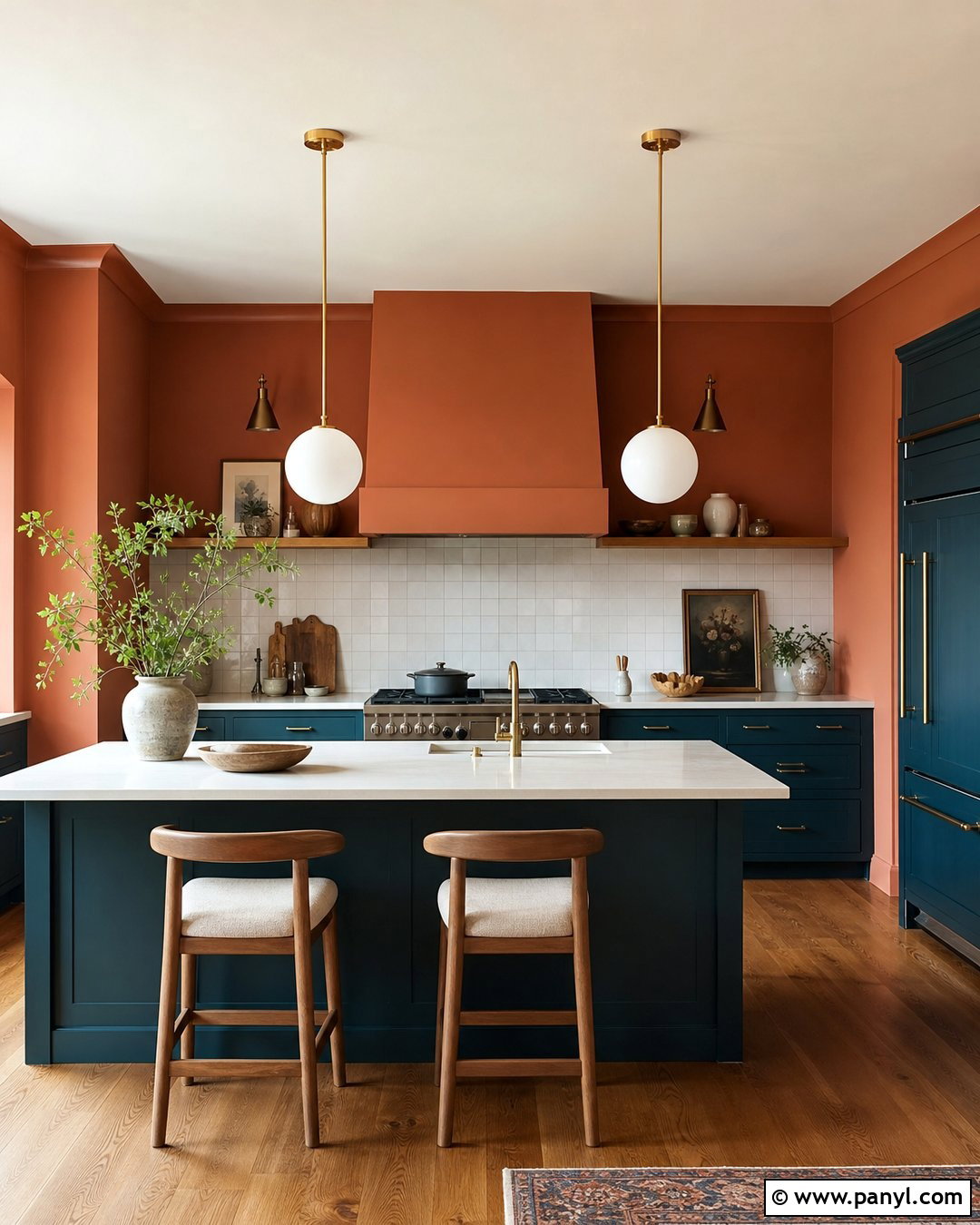
For homeowners who enjoy stronger color, teal cabinets can transform terracotta kitchen walls into a vibrant but thoughtful composition. Select deep, muted teal for the island and lower cabinetry, then keep the upper storage minimal or warm white. A soft clay wall color will complement the blue-green cabinetry without competing with it. Use pale quartz counters and off-white square tiles to give the eyes a resting place. Aged brass hardware works beautifully between the two saturated colors. Add medium oak floors, simple globe lights, and counter stools upholstered in neutral fabric. Avoid highly patterned backsplashes, which could make the design feel busy. Instead, let the walls and cabinets lead. The completed kitchen feels energetic, distinctive, and carefully controlled rather than overwhelming.
14. Terracotta Kitchen Walls With Burgundy Cabinets
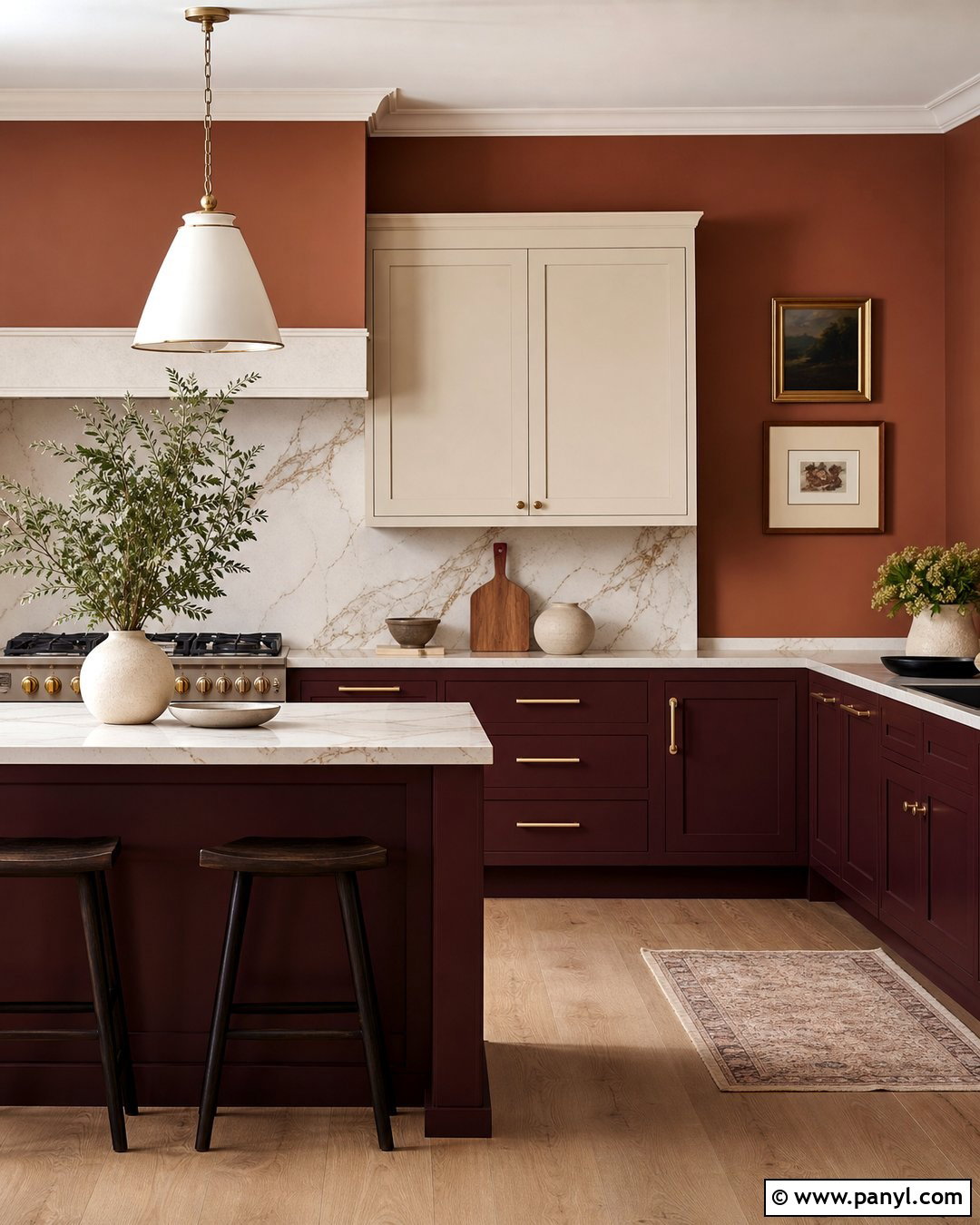
Deep burgundy cabinetry brings a sophisticated tonal quality to terracotta kitchen walls. Choose dusty terracotta paint that carries a muted red base, helping the wall and cabinet colors relate without appearing identical. Burgundy works especially well on a large island and lower cabinets, balanced by cream upper cabinetry or open shelves. Use warm marble or quartz with soft brown veining across the counters and backsplash. Antique brass hardware, dark wood stools, and a bronze range hood can reinforce the elegant palette. Keep flooring relatively light, such as natural oak or beige stone, so the darker cabinetry remains defined. Cream pottery and restrained greenery provide freshness. This completed kitchen has dramatic color, but its natural materials and controlled contrasts keep it refined and livable.
15. Terracotta Kitchen Walls With Butcher Block Counters
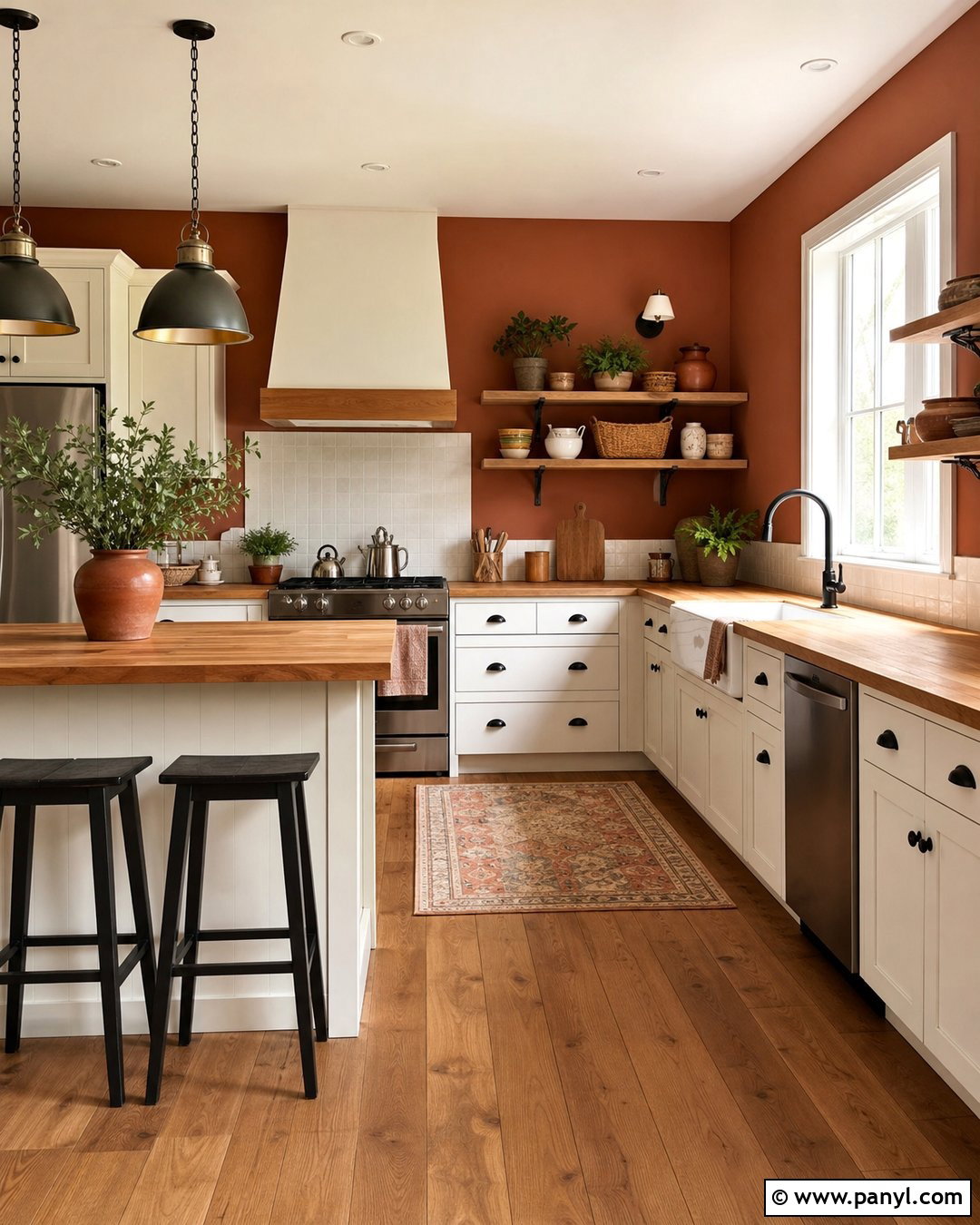
Butcher block countertops reinforce the organic warmth of terracotta kitchen walls and offer an approachable option for a casual remodel. Pair muted terracotta paint with warm white Shaker cabinets and medium-toned maple or oak worktops. Protect busy sink areas with a durable stone insert or carefully maintained finish. An ivory tile backsplash keeps splashes manageable while letting the painted walls remain visible above the cabinetry. Choose black cup pulls and a black faucet for definition, then repeat the dark accent in simple pendant lights. Natural wood flooring can work, but vary its tone from the counters to avoid a matched appearance. Add woven baskets, cream dishware, and practical open shelving. The finished room feels relaxed, functional, and comfortably connected to farmhouse design.
16. Terracotta Kitchen Walls With Marble Counters
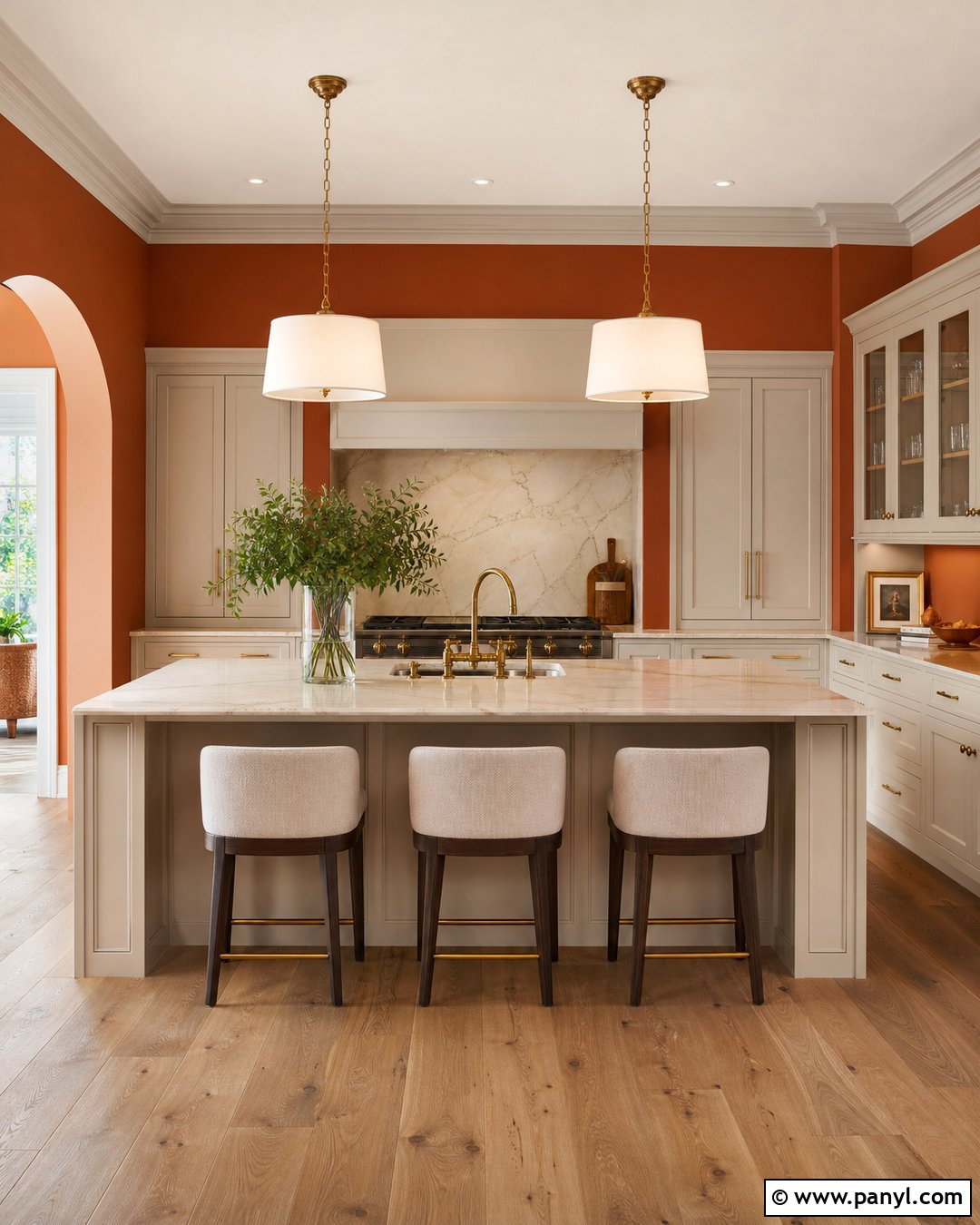
Veined marble gives terracotta kitchen walls an elegant contrast while preserving the room’s natural character. Use a rich, earthy terracotta across the visible walls and balance it with cream cabinetry. Select white or warm ivory marble containing soft beige, rust, or gray veining. Carry the same stone a short distance up the backsplash or install a full-height slab behind the range. Brass fixtures and tailored pendant lights enhance the refined effect. Choose medium oak flooring and upholstered stools to soften the hard surfaces. Keep decorative accessories minimal so the marble movement and wall color remain the focus. If maintenance is a concern, quartz with realistic warm veining can create a similar appearance. This kitchen feels polished, bright, and timeless rather than excessively formal.
17. Terracotta Kitchen Walls With Soapstone Counters
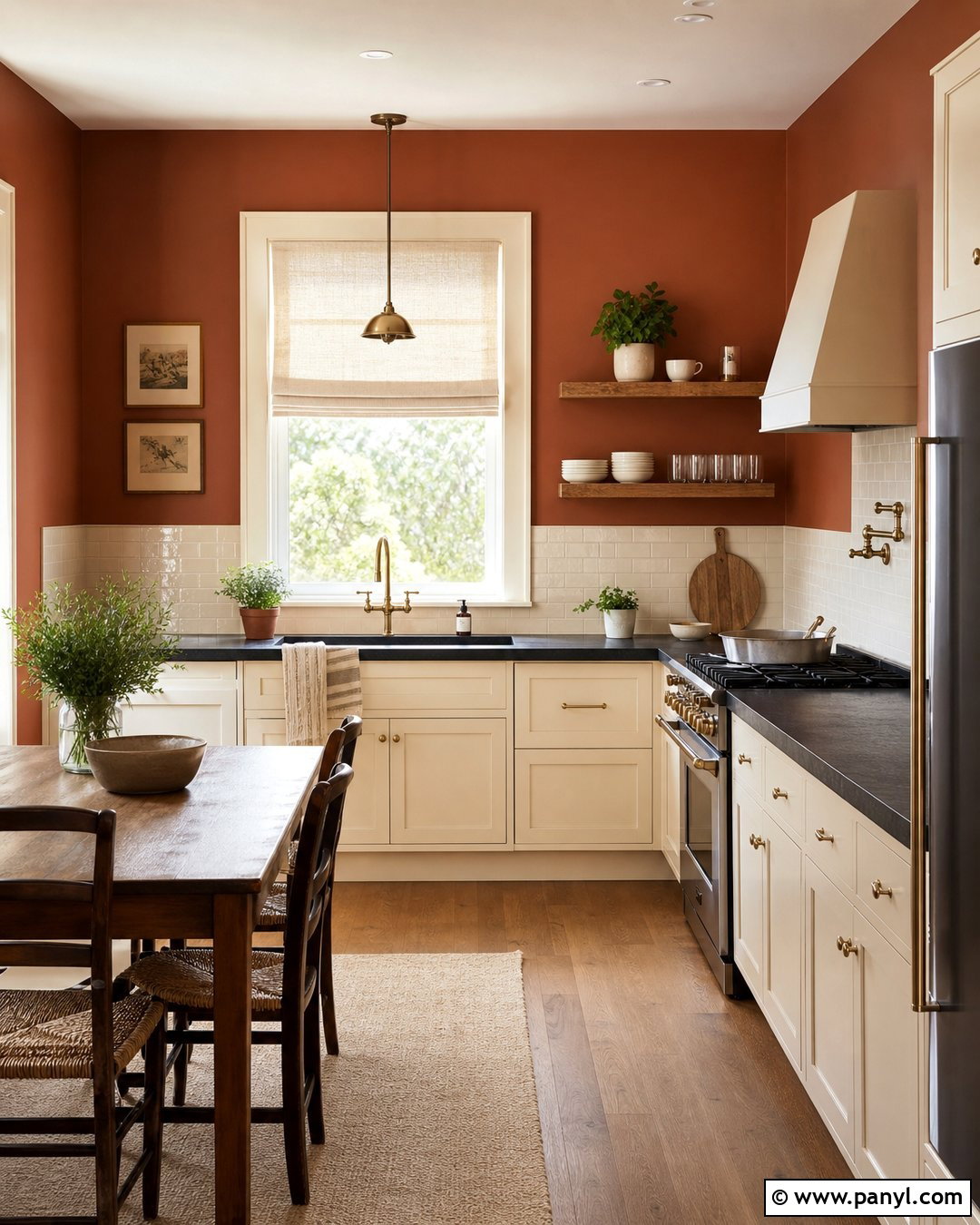
The dark, quiet surface of soapstone creates an appealing anchor beneath warm terracotta kitchen walls. Pair these elements with cream or natural oak cabinetry to balance the room’s darker notes. A simple soapstone backsplash behind the range can establish continuity, while ivory ceramic tile in other areas keeps the kitchen from becoming too heavy. Choose aged brass or matte black hardware and repeat the finish on the faucet. Warm oak floors, a substantial wood table, and linen shades introduce softer textures. Display only a few useful pieces, such as pale stoneware, wooden utensils, and herb pots. This complete kitchen feels grounded and enduring. It suits older homes particularly well, but clean cabinet lines can easily adapt the combination to a more modern interior.
18. Terracotta Kitchen Walls With Concrete Counters
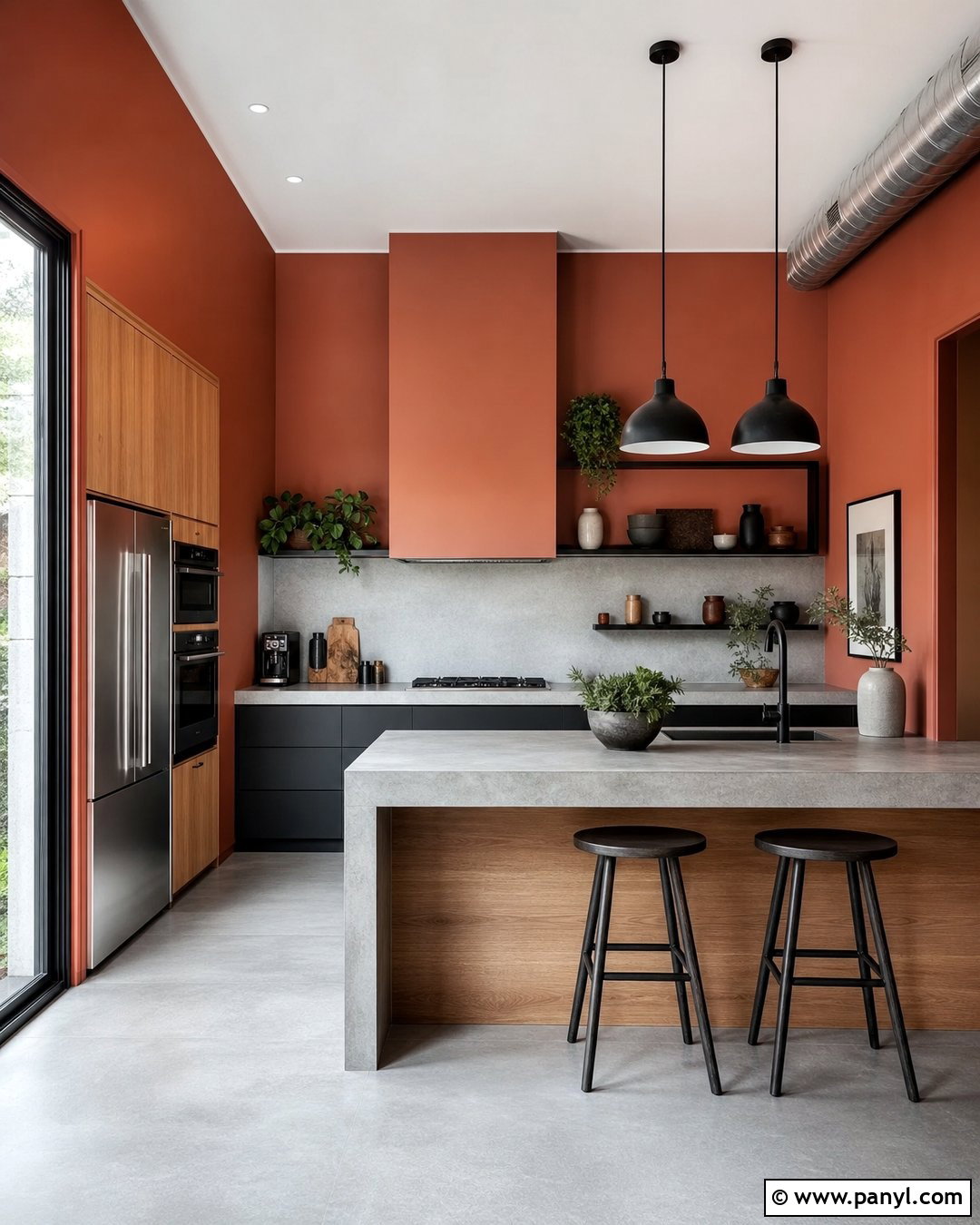
Concrete countertops give terracotta kitchen walls a cooler counterpoint that works well in modern and industrial-inspired interiors. Select a smooth, muted terracotta wall finish rather than a distressed treatment. Pair it with flat-panel oak or matte charcoal cabinetry and pale gray concrete counters. Continue the concrete up the backsplash for a seamless, easy-to-read work zone. Black metal shelving, slim pendant lights, and stainless steel appliances add definition, while wood grain prevents the room from feeling stark. Choose a warm gray porcelain floor or refinished wood flooring. Add softness through linen towels, a neutral runner, and simple ceramic vessels. The finished kitchen combines warm color with practical, architectural surfaces, resulting in a contemporary room that still feels comfortable and connected to home.
19. Terracotta Kitchen Walls With White Subway Tile
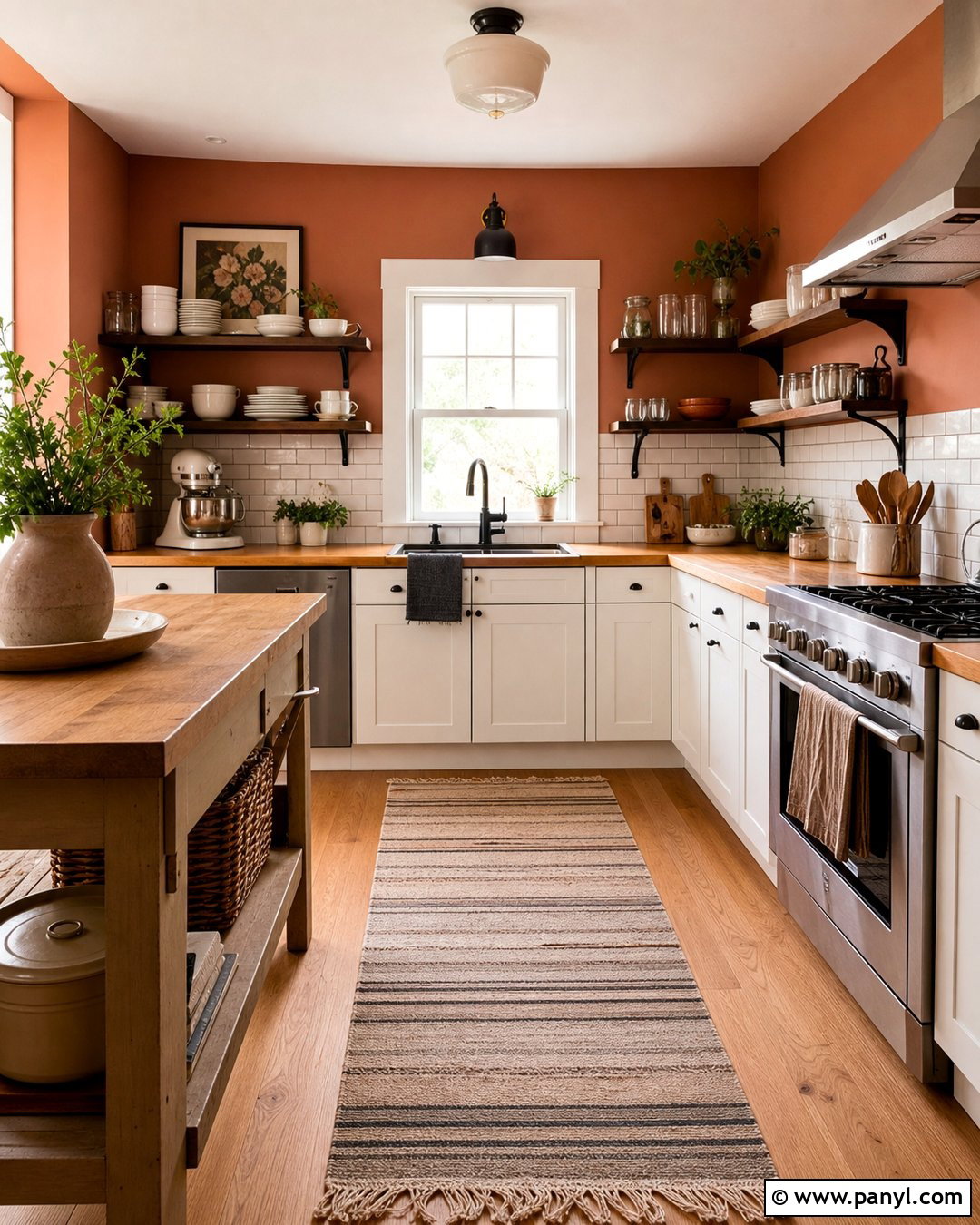
White subway tile can keep terracotta kitchen walls looking crisp and familiar, especially in an affordable kitchen refresh. Choose a warm white tile rather than a cool, blue-white option. Install it in a classic running bond with light beige grout for a softer transition. Warm white cabinets and oak counters will continue the accessible, welcoming palette. Use black hardware sparingly to outline drawers, doors, and lighting fixtures. A simple wood table or narrow island can add useful prep space without crowding the layout. Complete the room with medium oak floors, a washable striped runner, and open shelves holding everyday white dishes. The final kitchen feels bright and organized, while the terracotta paint introduces enough warmth and individuality to move beyond a standard white design.
20. Terracotta Kitchen Walls With Zellige Backsplash
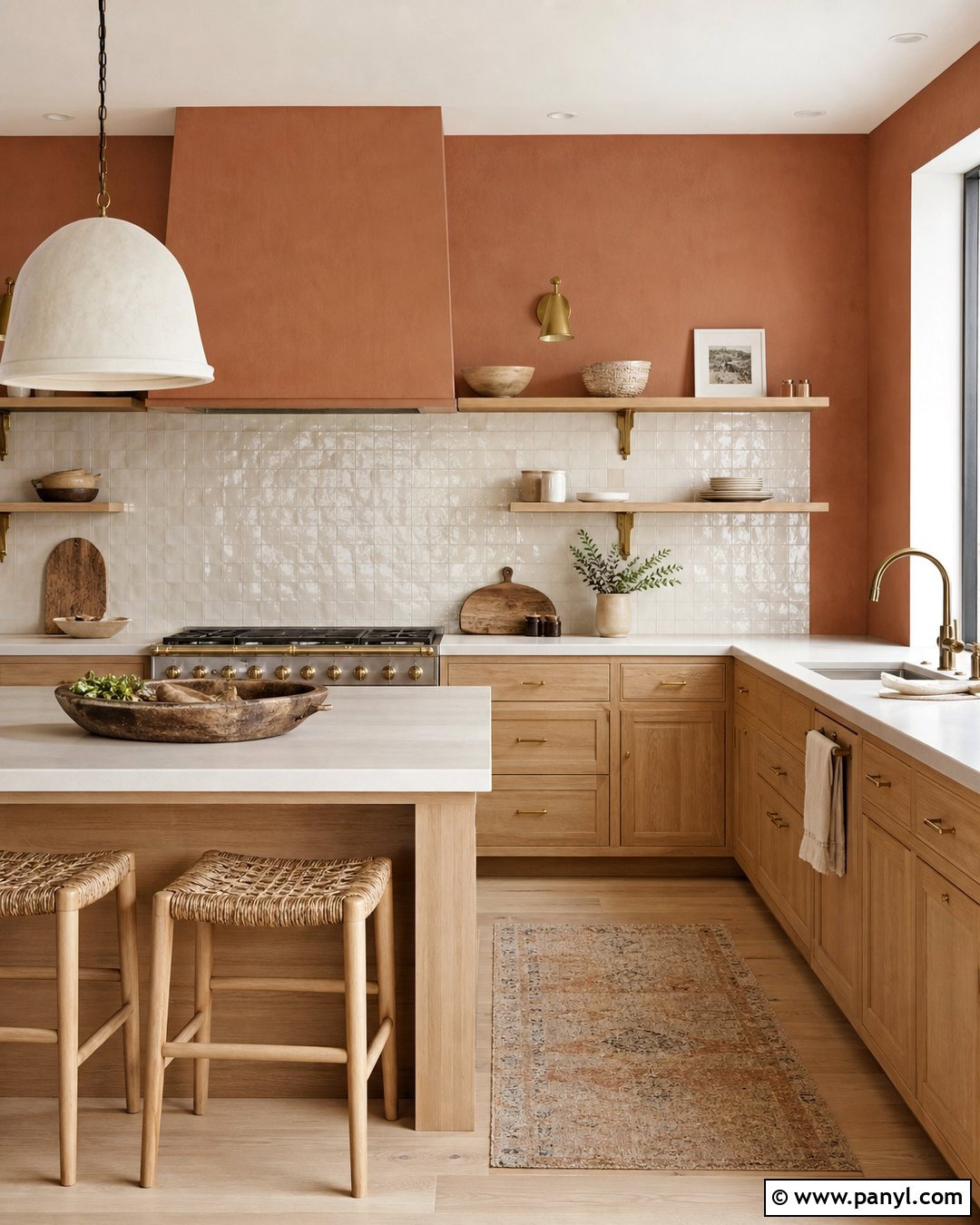
Glossy zellige tile adds shifting light and handmade texture beneath matte terracotta kitchen walls. Choose creamy white or pale sand tiles so the backsplash supports the wall color rather than repeating it exactly. Pair this combination with natural oak cabinets, honed quartz countertops, and aged brass pulls. The irregular tile edges and gentle color variation will provide interest even in a simple layout. Use light wood flooring or warm beige stone to continue the organic palette. A plaster pendant above the island and small brass sconces near open shelves can create layered illumination. Keep accessories understated, with handmade bowls, linen towels, and potted herbs. This complete kitchen feels tactile and elevated, but the familiar materials ensure it remains warm, functional, and inviting.
21. Terracotta Kitchen Walls With Patterned Tile
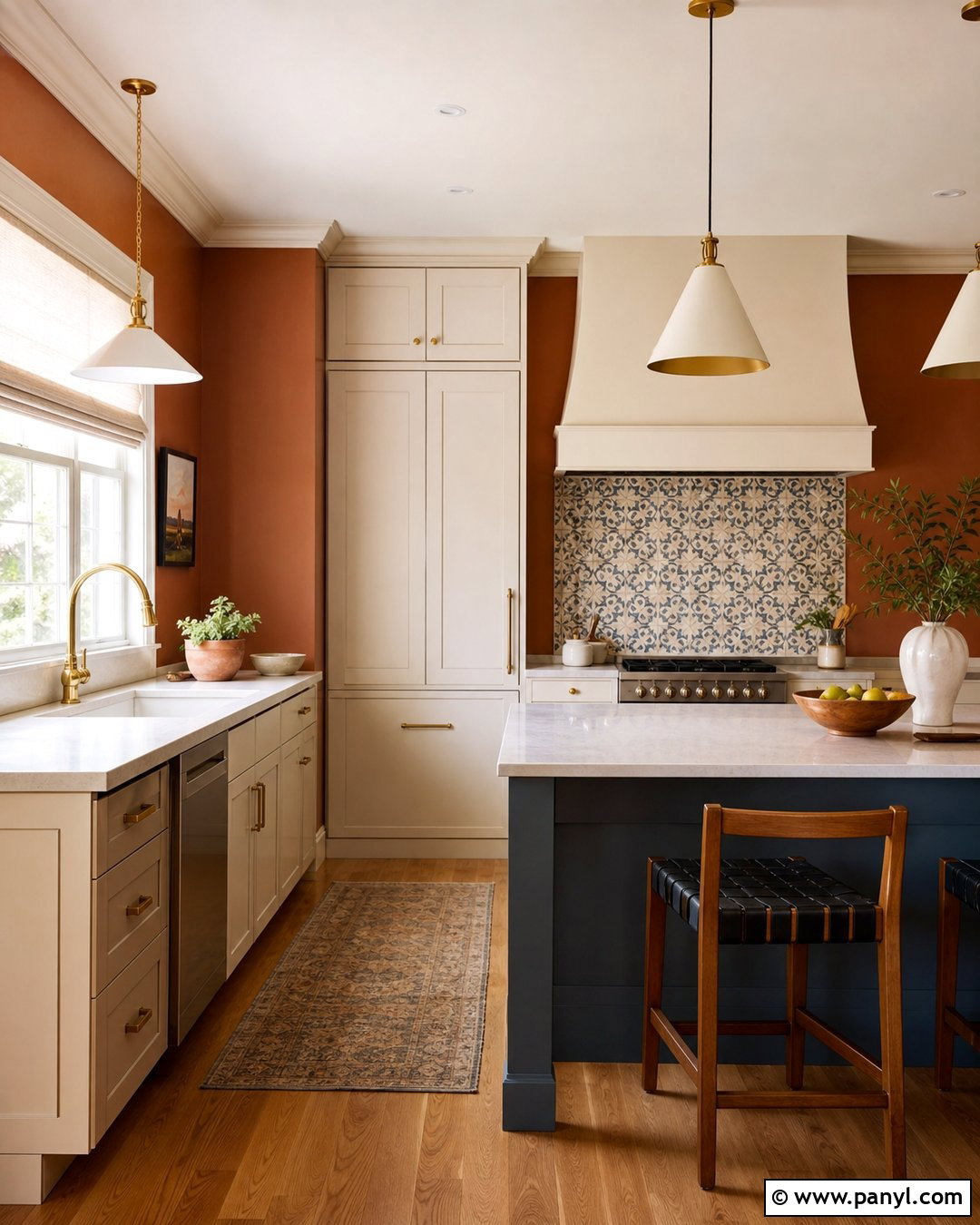
Patterned tile can complement terracotta kitchen walls when the palette is limited and thoughtfully repeated. Select a backsplash with cream, muted blue, and small clay-colored details rather than a highly saturated multicolor pattern. Use the tile behind the range as a focused panel, then install simple cream tile elsewhere. Warm white cabinets and pale quartz counters will prevent the design from becoming crowded. Repeat the muted blue on the island or through counter stools, and add aged brass hardware for warmth. Medium oak floors give the room a stable, natural base. Keep window treatments and accessories plain so the pattern remains special. The completed kitchen feels personalized and lively, with a clear visual hierarchy instead of several surfaces competing for attention.
22. Terracotta Kitchen Walls With Brick Backsplash
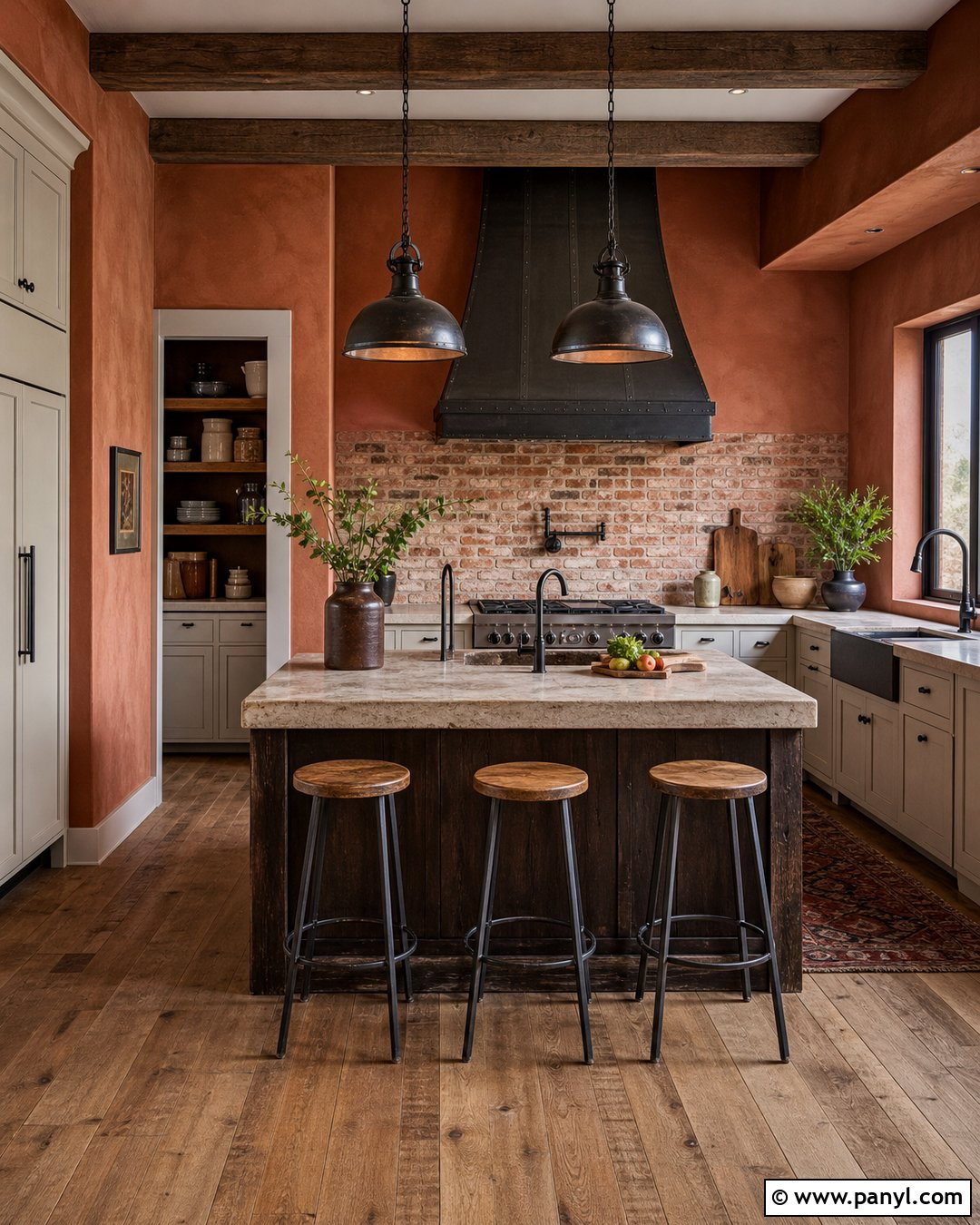
A brick backsplash can deepen the rustic character of terracotta kitchen walls, but variation is necessary to keep the surfaces distinct. Use a smooth, dusty clay paint on the upper walls and choose reclaimed brick in mixed red, brown, and pale mortar tones for the backsplash. Cream cabinets and light stone countertops will separate the warm layers. Add a dark wood island, aged iron hardware, and simple metal pendants to reinforce the room’s sturdy character. Wide-plank oak flooring works well if its color is more neutral than the brick. Open shelves can hold cream pottery and copper cookware, but avoid filling every available surface. The finished kitchen should feel authentic and textured, with enough pale material to balance the darker, earthier architectural elements.
23. Terracotta Kitchen Walls With Wood Shelves
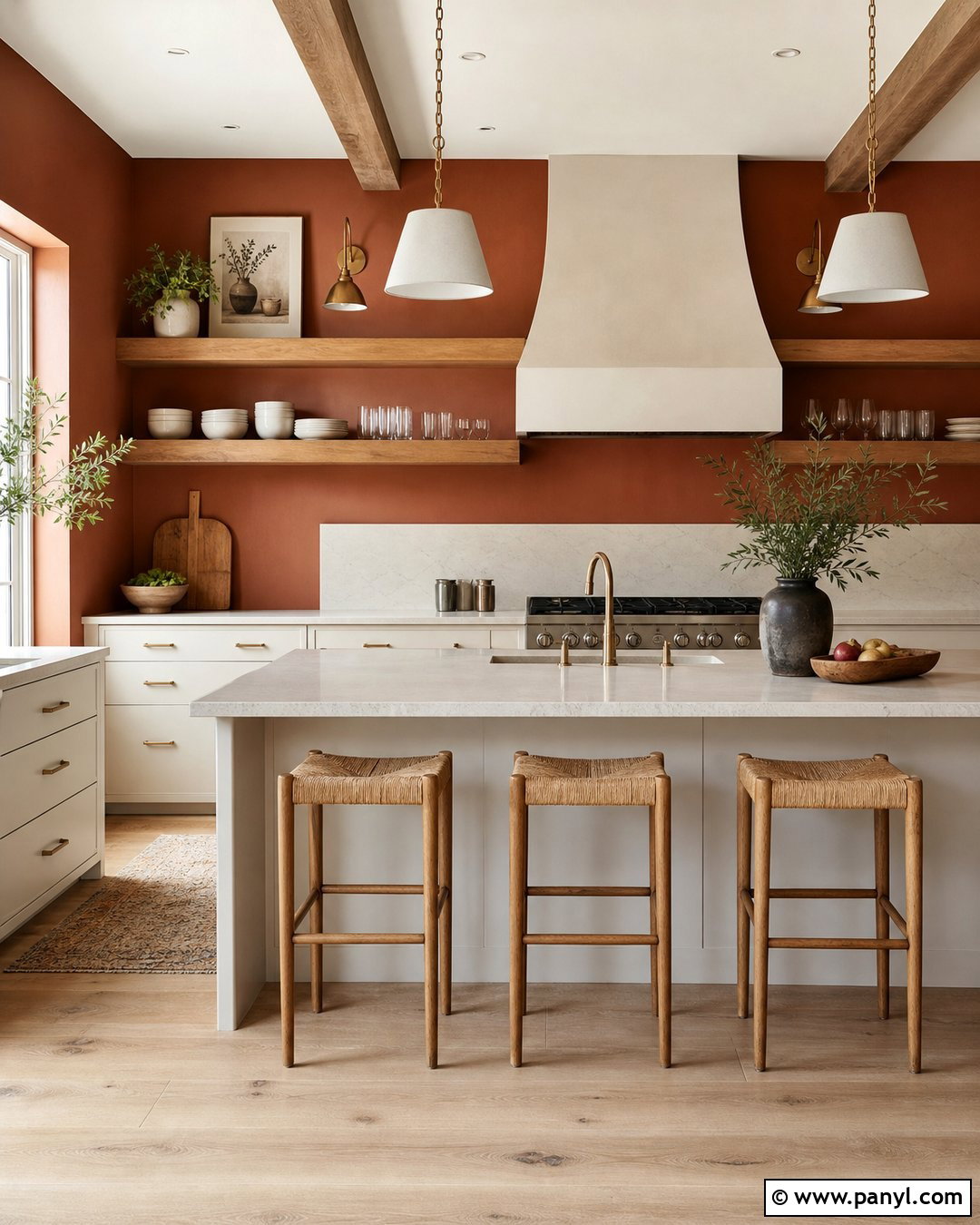
Open wood shelving gives terracotta kitchen walls space to remain visible while adding convenient everyday storage. Choose thick oak or walnut shelves mounted with hidden supports for a clean appearance. Combine them with warm white lower cabinets, creamy quartz counters, and a low ivory backsplash. The terracotta wall becomes a rich background for pale dishes, clear glassware, and a few handmade ceramics. Keep the shelf arrangement practical and loosely spaced instead of packing it with decoration. Brass sconces above the shelves provide useful task lighting and a refined finishing detail. Light wood flooring and simple woven stools maintain the relaxed tone. This design works especially well in smaller kitchens because removing bulky upper cabinets creates openness without sacrificing all accessible storage.
24. Terracotta Kitchen Walls With Black Shelves
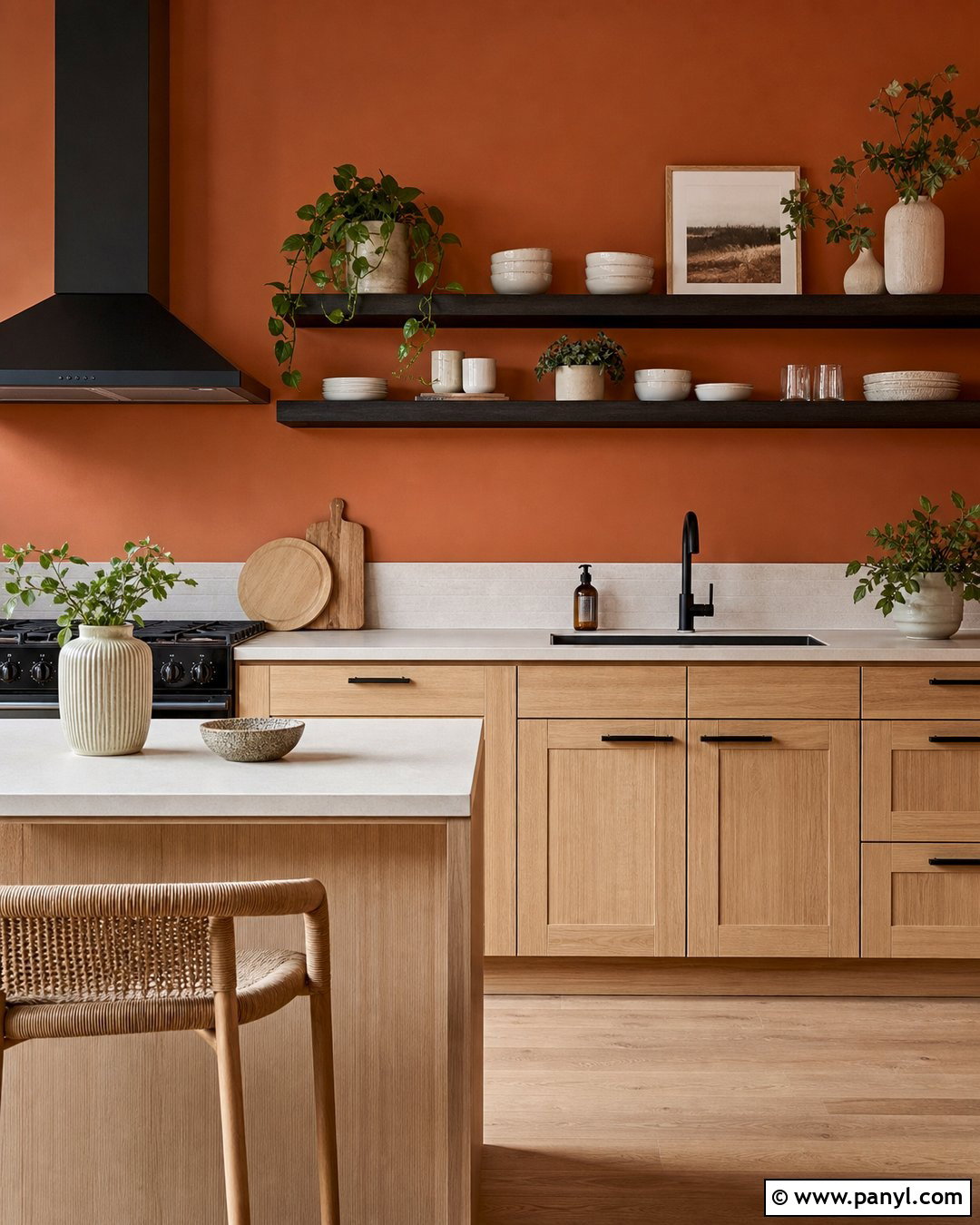
Slim black shelves create graphic definition against terracotta kitchen walls and suit compact contemporary spaces. Install two evenly spaced metal or black-stained wood shelves over a pale countertop and simple lower cabinets. Warm white or light oak cabinetry will balance the stronger wall and shelf colors. Use a short cream tile backsplash to protect the work area while preserving plenty of visible terracotta. Repeat matte black on the faucet, cabinet pulls, and a streamlined ceiling fixture. Natural oak floors and woven accents soften the straight lines. Style the shelves with white ceramics, glass containers, and a limited number of green plants. The completed kitchen feels organized and modern, with strong contrast that remains approachable because warm color and natural materials surround the darker metal details.
25. Terracotta Kitchen Walls With Brass Hardware
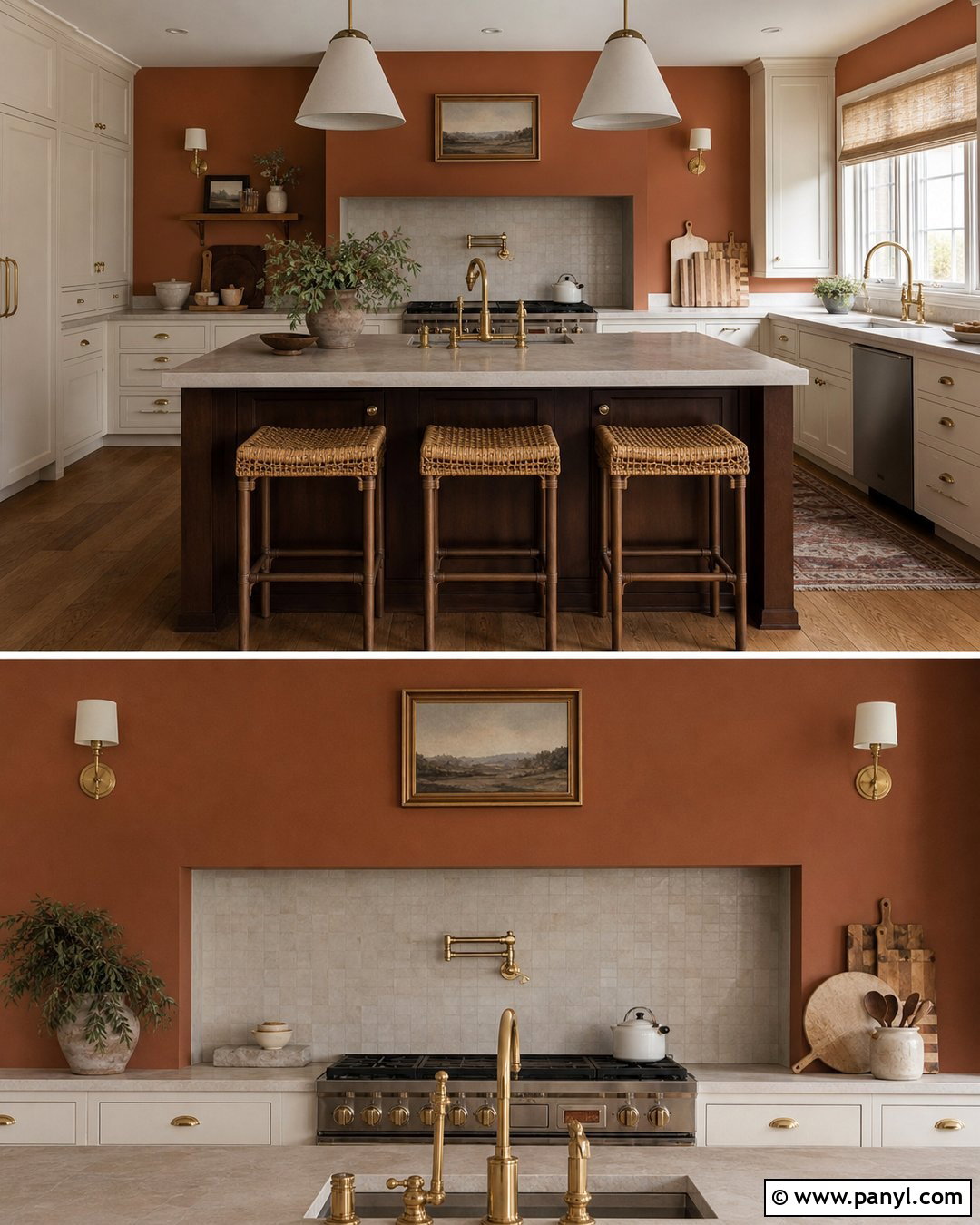
Brass hardware brings out the golden undertones found in many terracotta kitchen walls. Build the room around muted clay paint, cream Shaker cabinetry, and pale stone countertops. Choose unlacquered or aged brass handles instead of highly polished yellow finishes for a softer, more natural result. Continue the metal on the faucet, pot filler, and two simple pendant lights, but avoid using brass on every accessory. An ivory tile backsplash and medium oak flooring will provide quiet support. Consider a dark wood island to add depth and keep the warm palette from appearing too pale. Finish with linen shades, woven stools, and restrained greenery. This complete kitchen feels warm and refined, with brass acting as a connecting detail rather than the main attraction.
26. Terracotta Kitchen Walls With Black Hardware
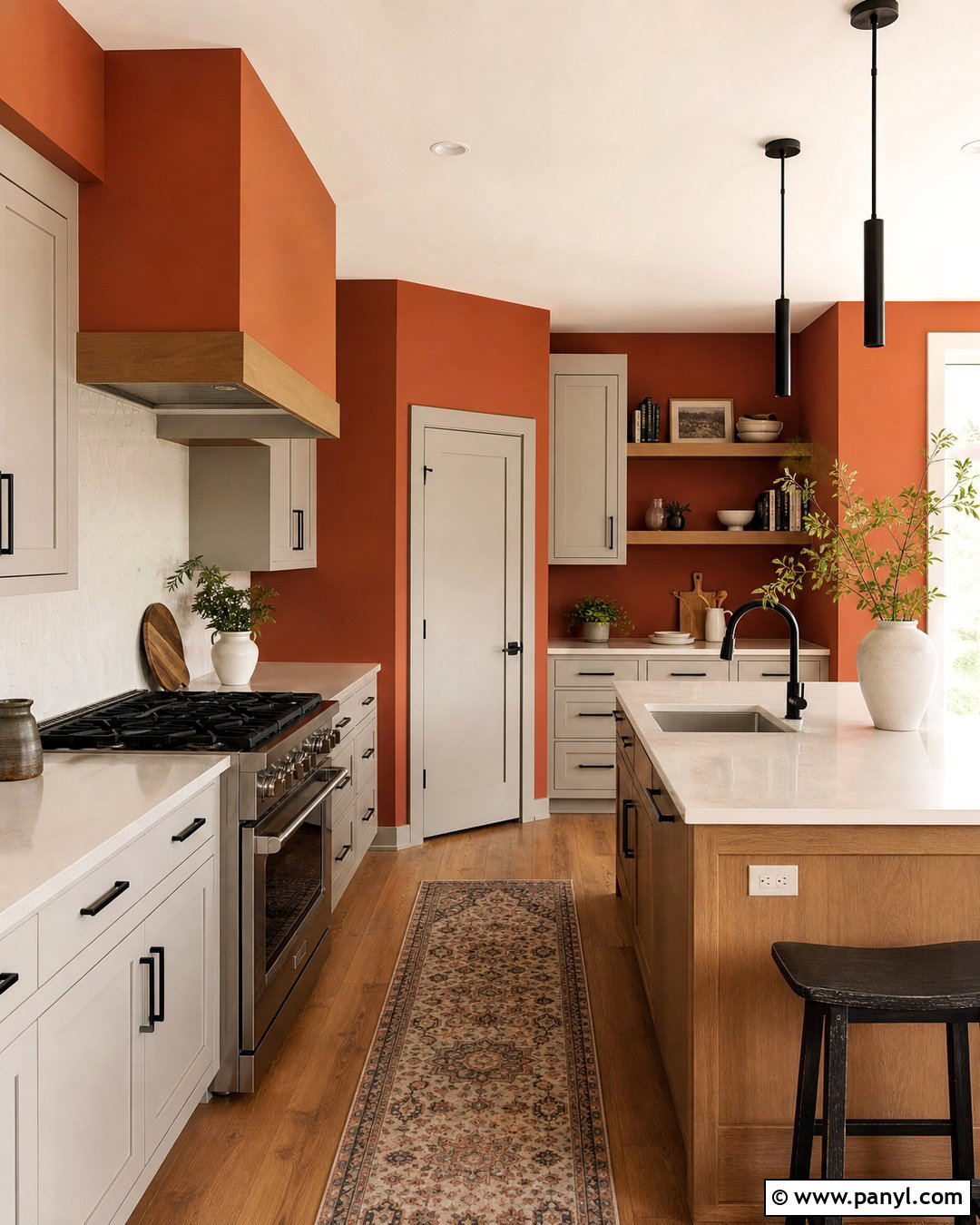
Matte black hardware can sharpen terracotta kitchen walls and create a clean, contemporary kitchen without a major renovation. Pair the walls with light greige or warm white cabinets, then use black pulls, a black faucet, and slim black pendant lights to establish rhythm. Cream quartz countertops and a lightly textured white backsplash will keep the work surfaces bright. Introduce natural oak through the flooring, stools, or a small island so the strong outlines do not feel harsh. Black-framed windows can reinforce the palette if they already exist, but they are not essential. Add a neutral runner with a small rust-colored pattern and keep accessories simple. The completed design feels structured and modern while retaining the inviting warmth that makes terracotta so appealing.
27. Terracotta Kitchen Walls With Copper Accents
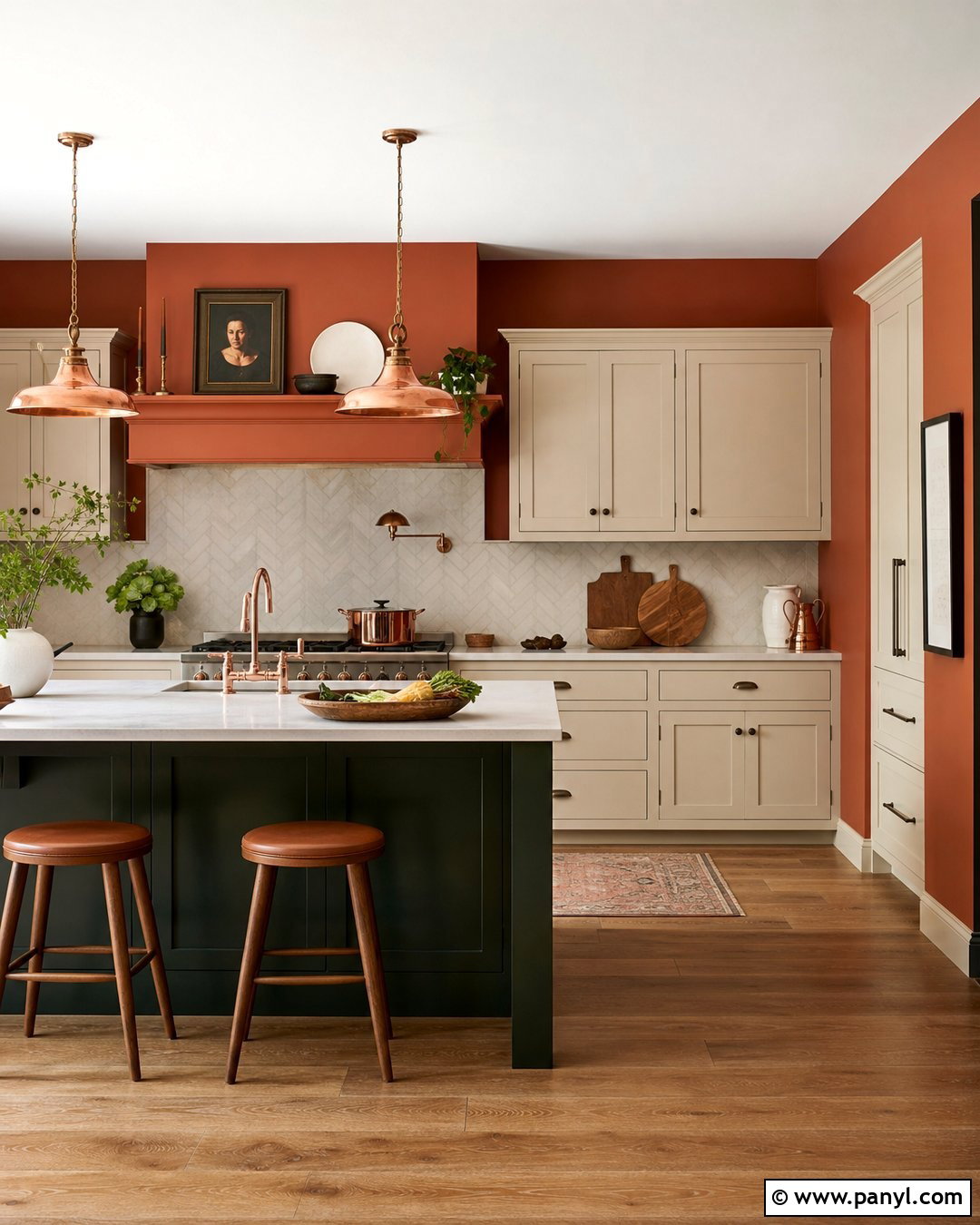
Copper develops a natural connection with terracotta kitchen walls because both finishes carry warm red and brown undertones. Use copper selectively on pendant lights, a faucet, or a neatly arranged rail rather than covering several large surfaces. Cream cabinetry and light stone countertops create breathing room between these warm details. Choose a dusty terracotta wall paint, an ivory backsplash, and medium oak flooring for a soft, layered foundation. A dark green island can provide welcome contrast and prevent the palette from becoming overly orange. Display only a few copper pans, mixing them with white pottery and wood boards. The finished kitchen feels rich and welcoming, with enough variation in color and texture to make the coordinated warm materials look intentional rather than overly matched.
28. Terracotta Kitchen Walls With Stainless Steel
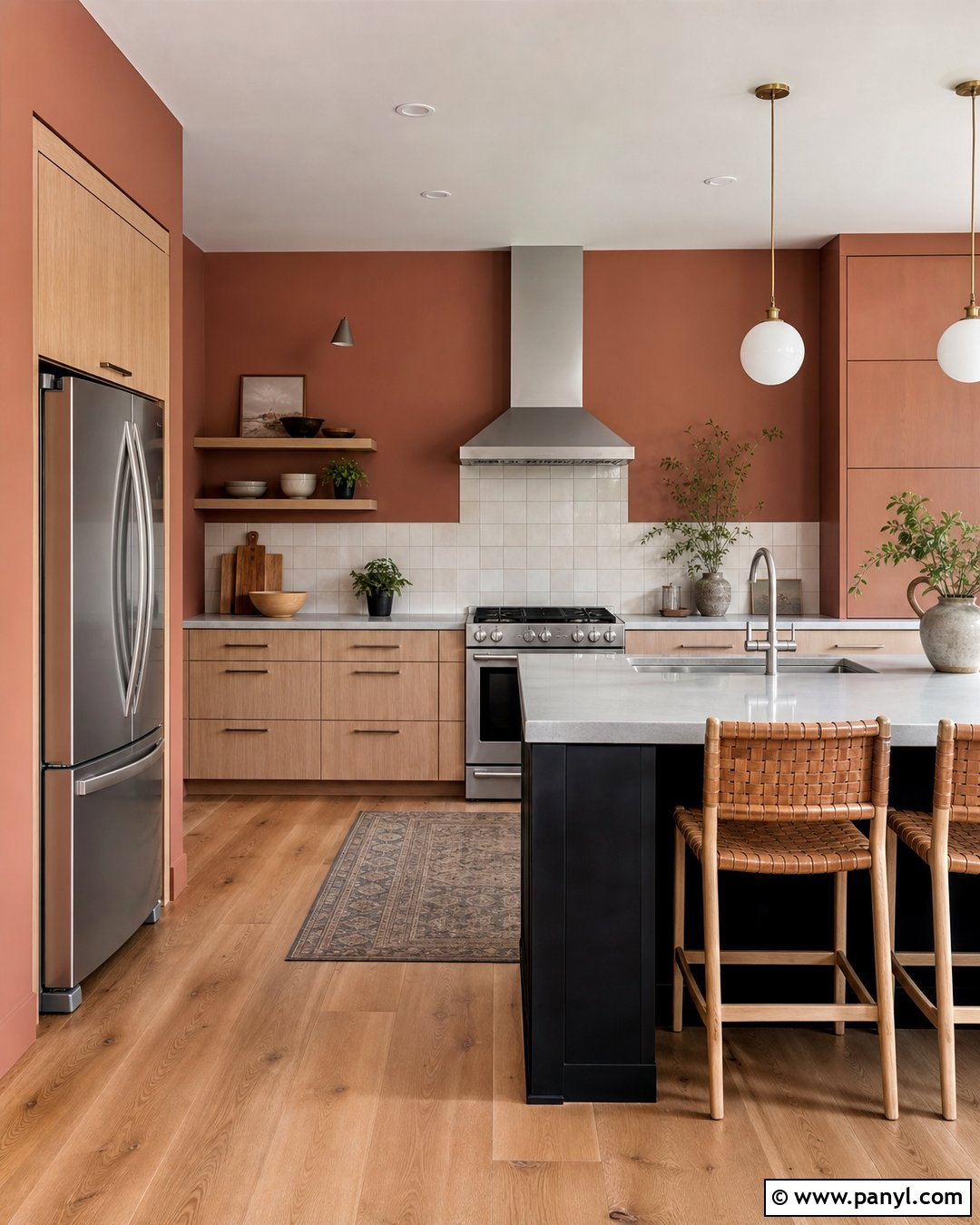
Stainless steel appliances introduce a cool, practical contrast to terracotta kitchen walls. This pairing works best in a modern room with flat-panel oak or warm white cabinetry. Choose a subdued clay wall color and repeat the stainless finish through the range hood, faucet, and streamlined cabinet handles. Pale gray quartz counters and creamy backsplash tile bridge the difference between the cool metal and warm walls. Use oak flooring and woven stools to keep the kitchen from appearing commercial. A black island base can provide additional structure, while white globe lights soften the harder finishes. Keep countertops uncluttered and arrange storage efficiently. The finished design feels professional enough for serious cooking but warm enough for everyday meals, conversation, and relaxed family use.
29. Terracotta Kitchen Walls With Arched Details
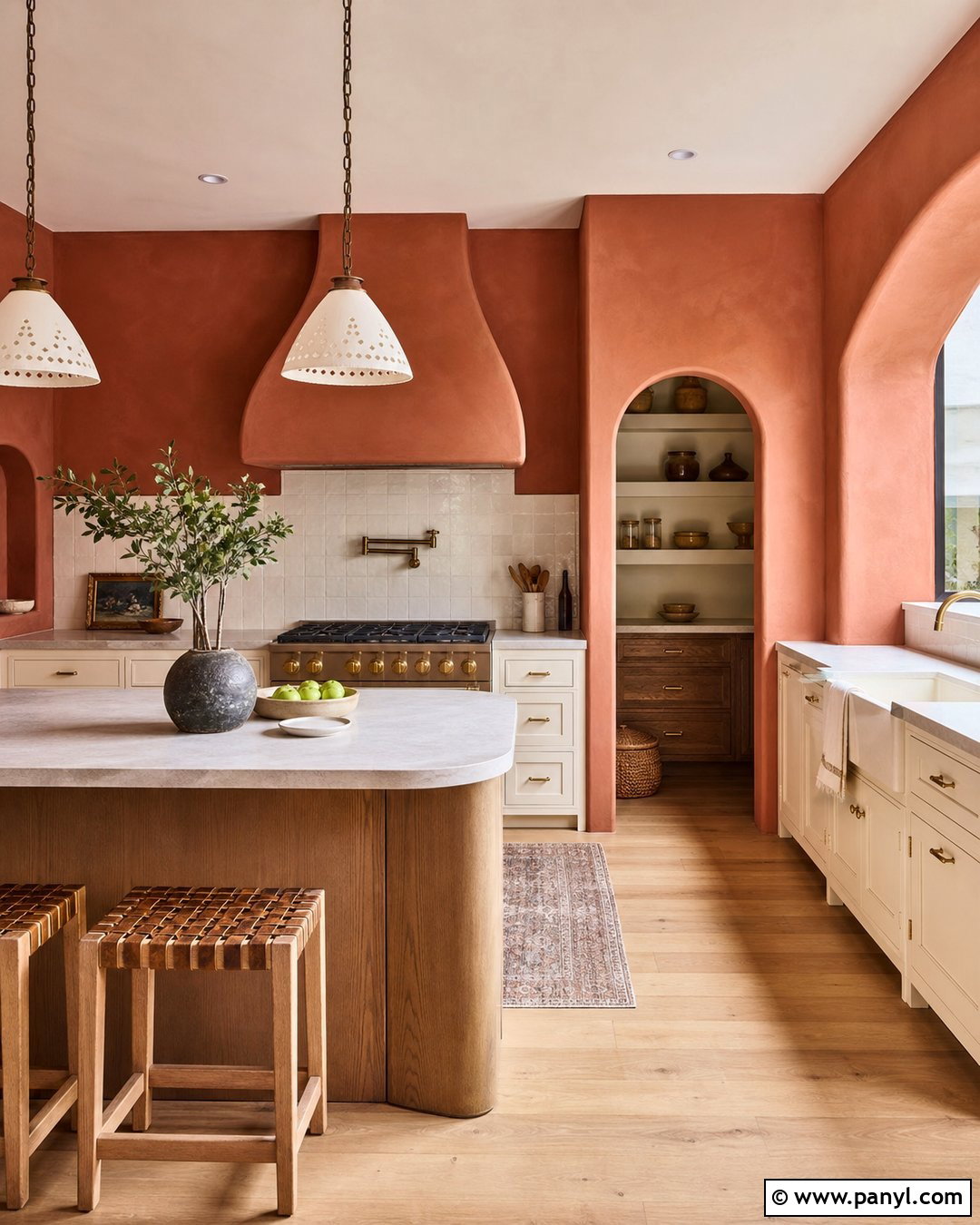
Arched openings and curved features reinforce the soft, architectural quality of terracotta kitchen walls. Carry a matte clay paint across the main walls and through a rounded doorway leading to a pantry or dining area. Pair it with cream inset cabinets, a gently curved plaster range hood, and pale limestone countertops. A rounded island end or arched cabinet niche can repeat the form without becoming theatrical. Add oak flooring, aged brass handles, and simple ceramic pendants for an earthy Mediterranean influence. Keep the backsplash quiet with ivory handmade tile. Woven stools and linen window shades provide comfortable texture. This complete kitchen feels sculptural but still practical, using repeated curves and natural materials to create continuity instead of relying on excessive decoration.
30. Terracotta Kitchen Walls With Exposed Beams
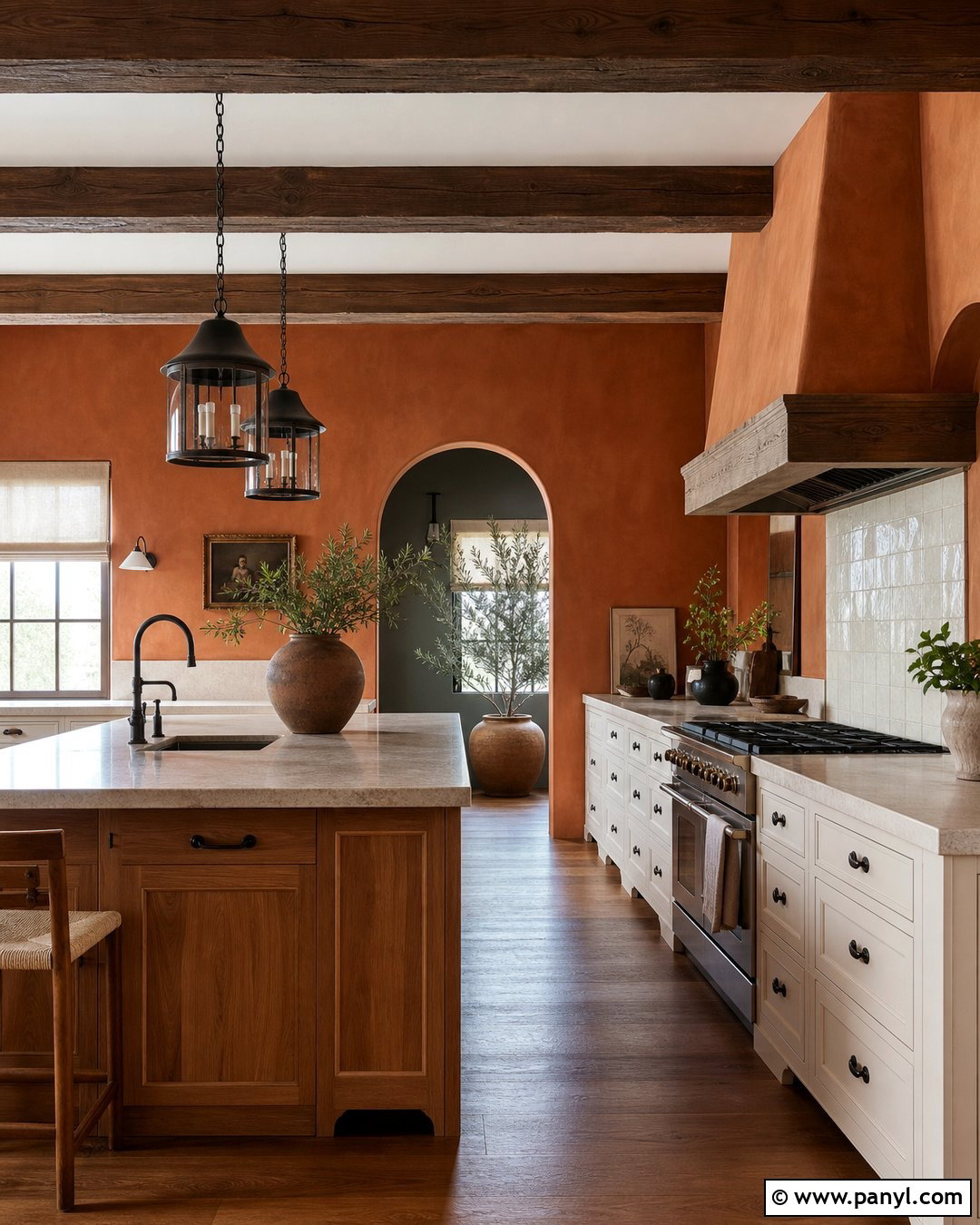
Exposed ceiling beams add rustic structure above terracotta kitchen walls and help a larger kitchen feel more intimate. Stain the beams medium or dark brown, then choose a muted clay wall shade that remains clearly lighter. Cream cabinets, limestone-look countertops, and an ivory backsplash will brighten the lower half of the room. A substantial oak island can provide seating and reinforce the natural material palette. Use simple black iron pendants and dark bronze hardware to connect visually with the beams. Wide-plank flooring should be slightly lighter than the overhead wood to avoid excessive heaviness. Add linen Roman shades, woven baskets, and plain ceramic accessories. The completed kitchen feels established and welcoming, with enough pale surfaces to balance the rich ceiling and wall colors.
31. Terracotta Kitchen Walls With Limewash Texture
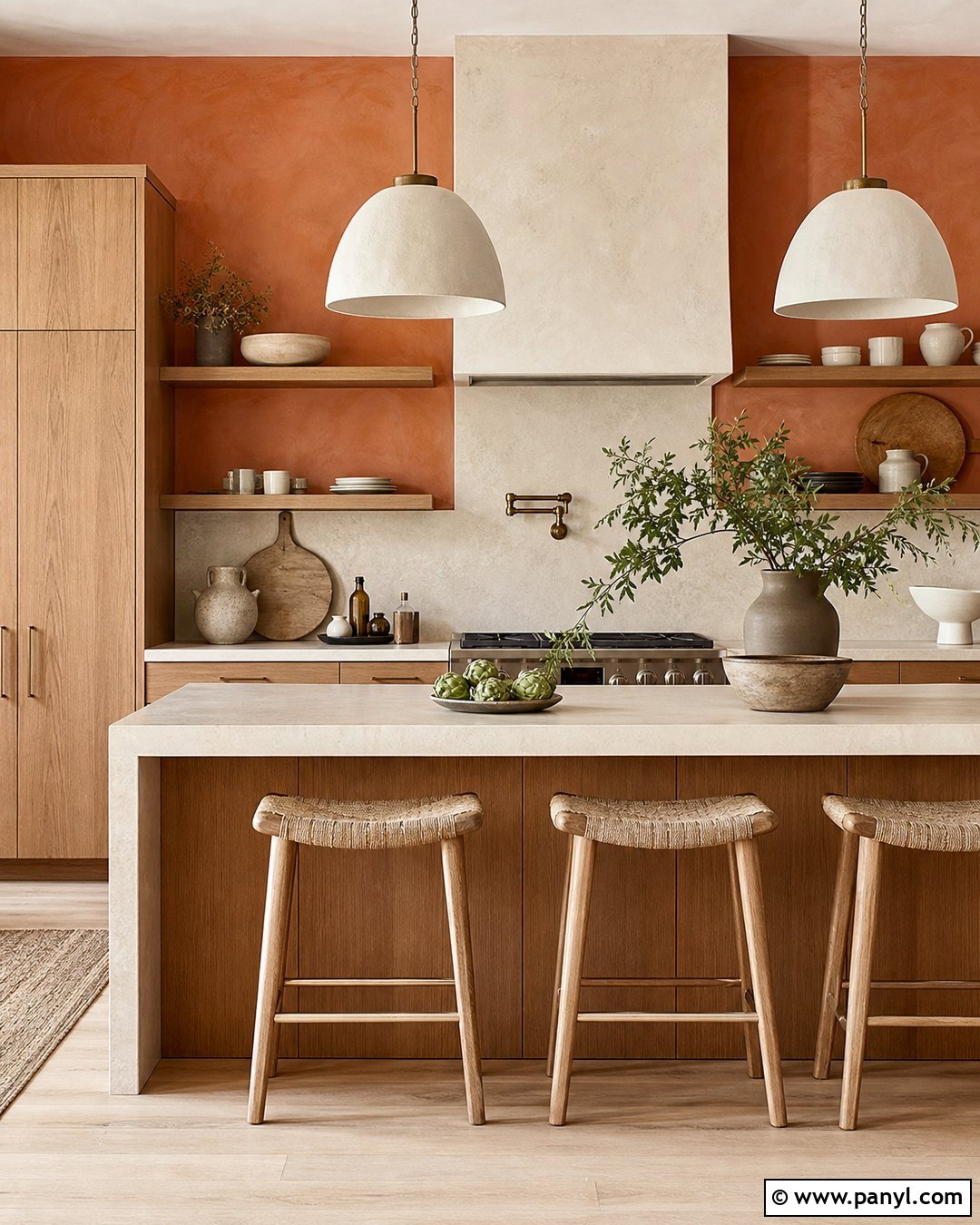
Limewash-style terracotta walls create gentle movement and an aged, mineral appearance that changes subtly across the room. Use the finish on broad, uninterrupted walls where its tonal variation can remain visible. Pair it with flat-panel oak cabinets, creamy stone countertops, and a matching stone backsplash. Avoid busy patterns, since the softly mottled wall already supplies texture. Choose aged brass fixtures, simple plaster pendants, and natural woven stools. Pale oak or warm beige flooring keeps the design light and cohesive. Open shelving can display a small collection of white and brown ceramics without hiding too much of the wall. This completed kitchen feels relaxed and handcrafted. It works particularly well in spaces that receive bright natural light, which helps reveal the finish’s subtle depth.
32. Terracotta Kitchen Walls With Venetian Plaster
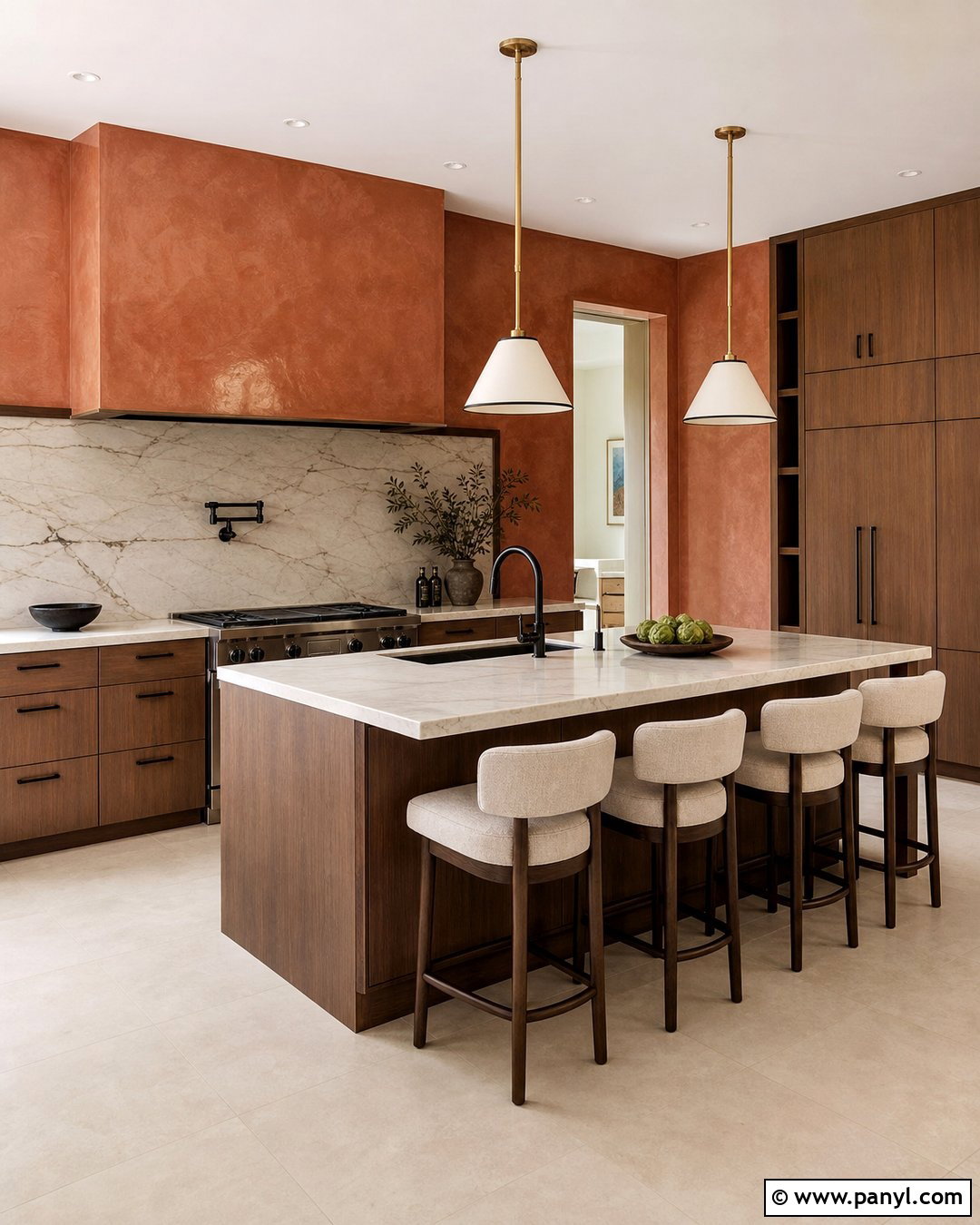
Polished terracotta plaster gives a kitchen more depth and light reflection than flat paint while retaining an earthy color. Use it on the walls and range hood for a continuous architectural effect. Balance the rich finish with understated walnut cabinetry and a full-height creamy marble backsplash. Choose dark bronze hardware and minimalist pendant lights so the material remains the focal point. Pale stone flooring will offset the darker cabinets and prevent the kitchen from feeling enclosed. A streamlined island with comfortable neutral stools creates a practical central gathering area. Keep wall decor to a minimum because the plaster’s movement provides its own interest. The finished kitchen feels refined and tactile, combining old-world surface character with clean cabinetry, modern appliances, and an efficient contemporary layout.
33. Terracotta Kitchen Walls With Two-Tone Paint
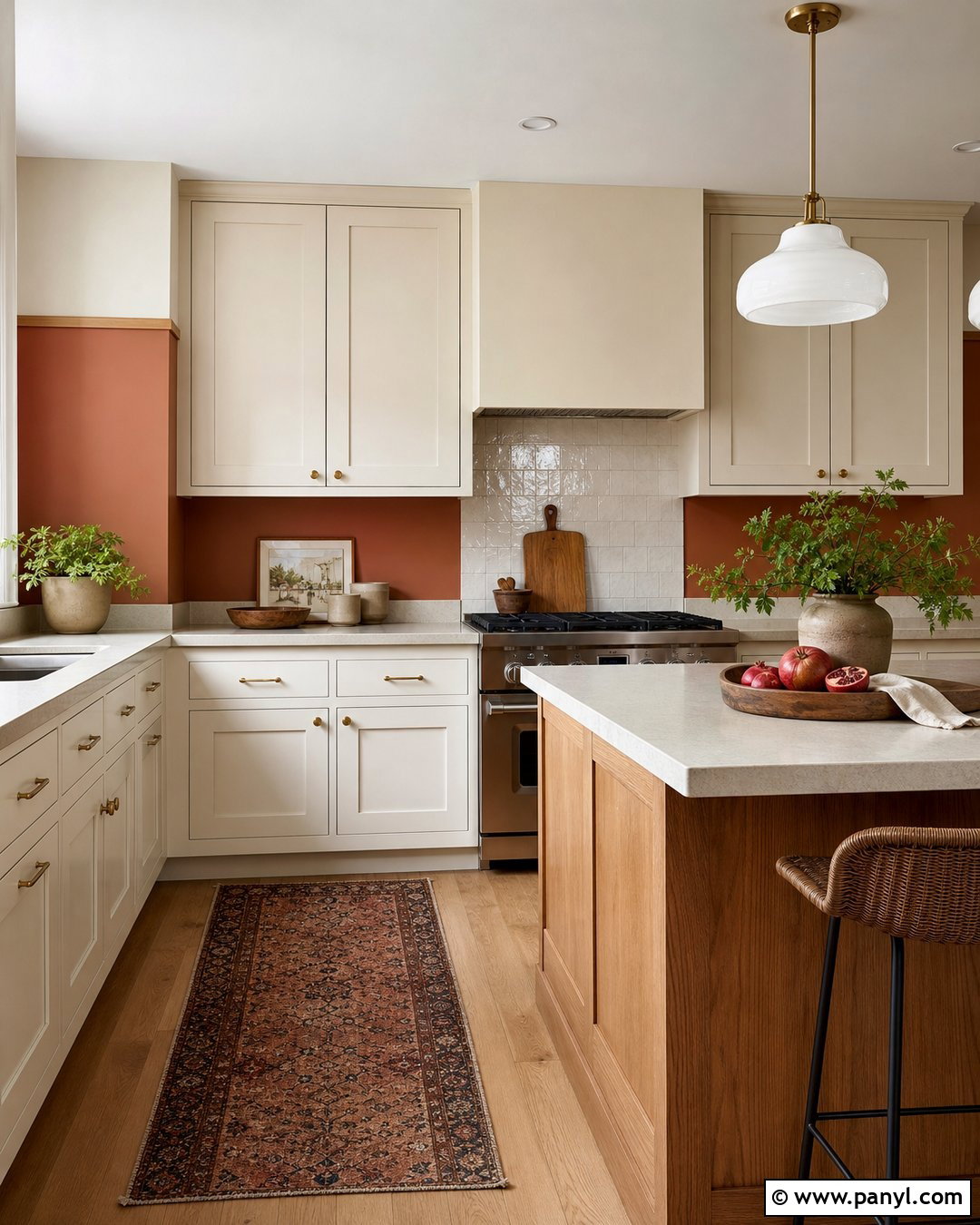
Two-tone walls offer a flexible way to use terracotta without surrounding the entire kitchen in a strong color. Apply terracotta to the lower portion of the walls and warm cream above, separating the colors with a narrow wood rail or crisp painted line. Use cream cabinetry so the upper area feels connected, then add a medium oak island for warmth. Pale quartz counters and a simple ivory backsplash will maintain a clean working zone. Repeat terracotta through a restrained runner or ceramic bowl rather than numerous accessories. Brass hardware and white glass pendants complete the welcoming palette. This treatment can visually ground a room with tall ceilings. The finished kitchen feels balanced and approachable, making it useful for homeowners testing a bolder wall color.
34. Terracotta Kitchen Accent Wall
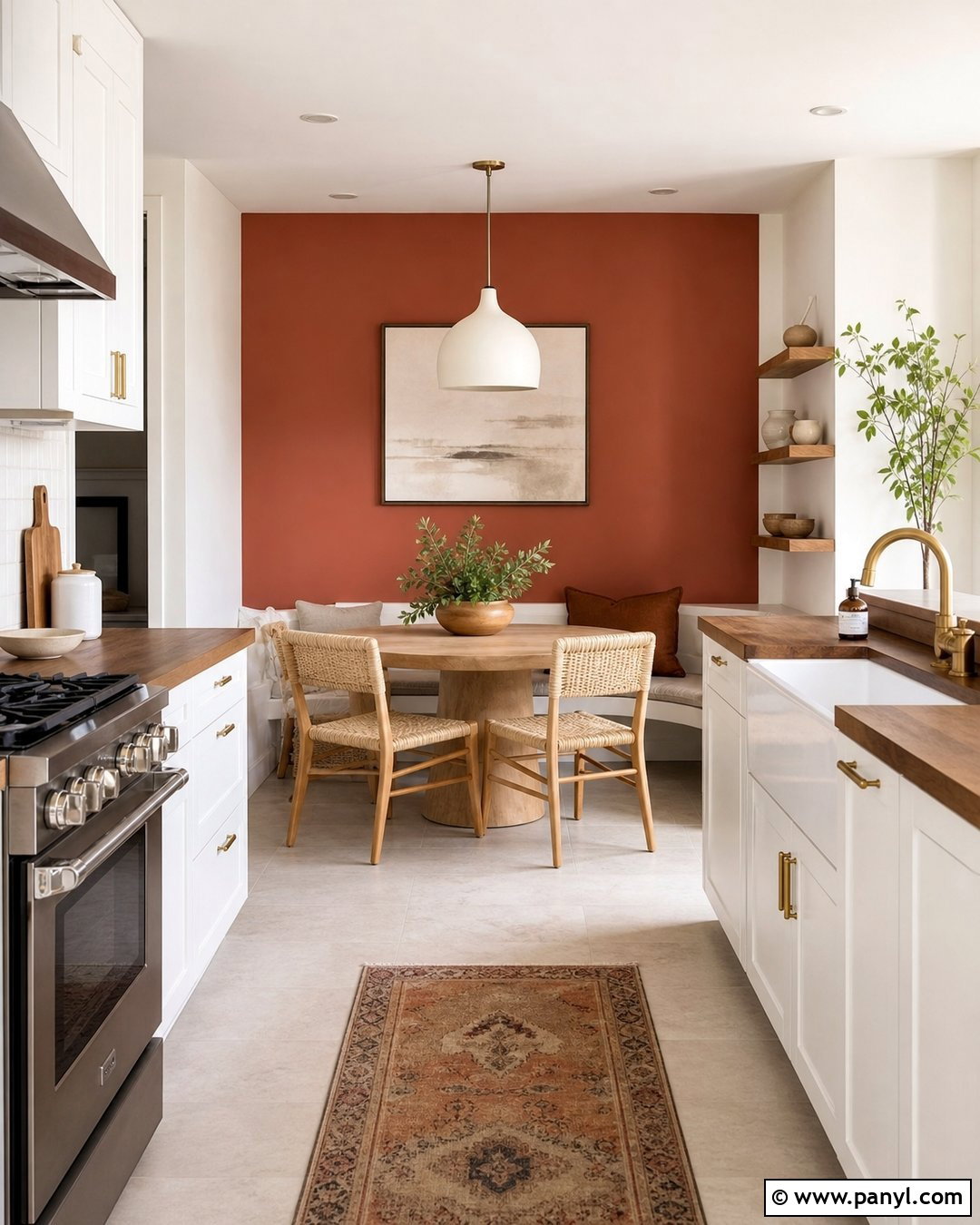
A single terracotta kitchen accent wall can provide strong color while leaving the rest of the room light and adaptable. Choose the wall behind a breakfast nook, open shelving, or freestanding hutch rather than a surface mostly hidden by cabinets. Paint the remaining walls warm white and use matching white cabinetry for continuity. Introduce natural oak countertops or a wood island to connect the accent wall with the center of the room. A cream backsplash, pale flooring, and simple brass fixtures keep the kitchen bright. Against the terracotta wall, add a light wood table, woven chairs, and one large piece of neutral artwork. The completed design feels intentional from every angle, with the feature wall anchoring a functional dining or storage area instead of standing alone.
35. Terracotta Color-Drenched Kitchen Walls
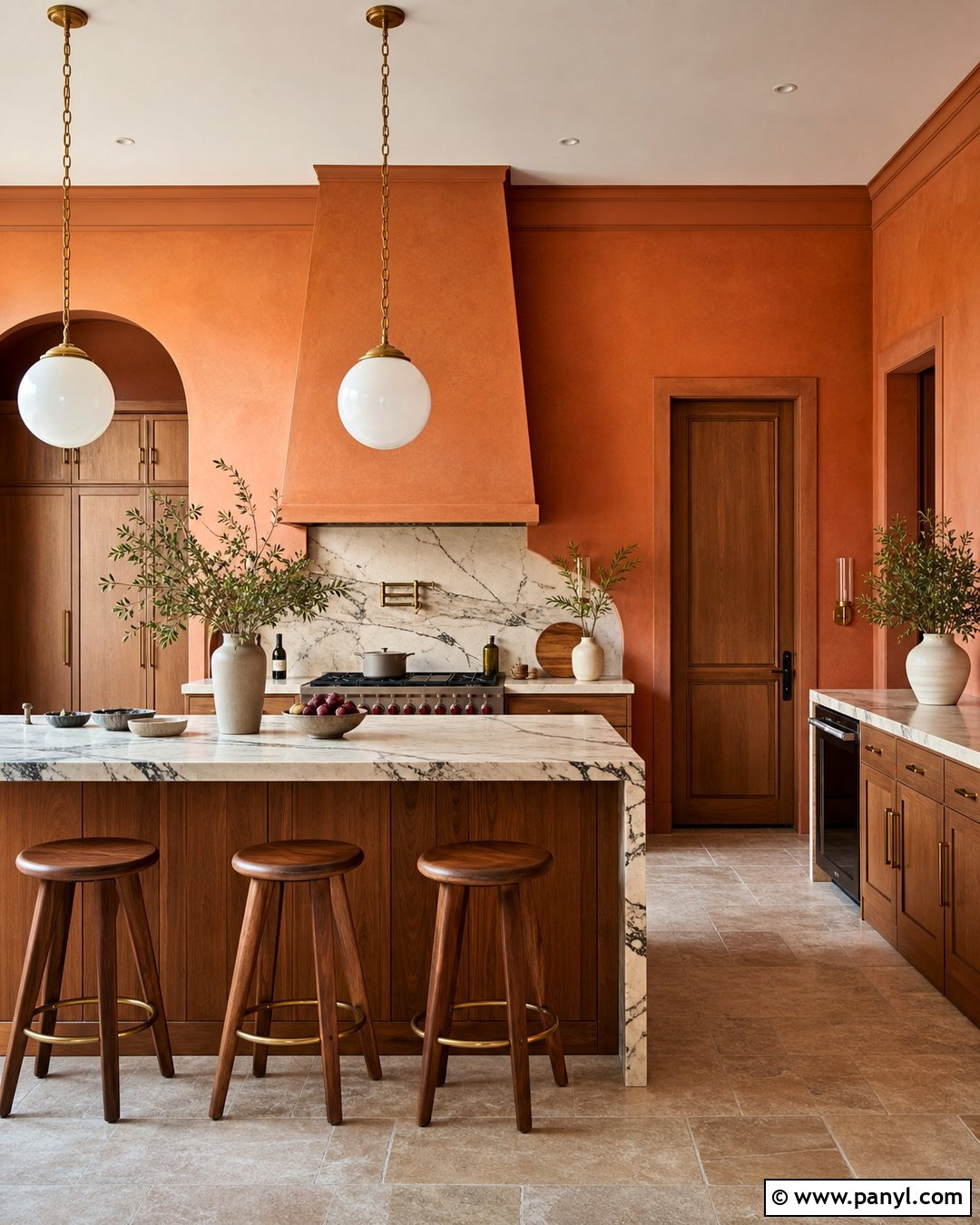
For a confident, immersive design, extend terracotta across the kitchen walls, trim, doors, and range hood. Use the same color in slightly different finishes, such as matte on walls and satin on trim, to create subtle depth. Keep the cabinets natural oak or deep walnut so the room does not become a single block of orange. Cream marble countertops and backsplash slabs provide an important visual break. Choose bronze hardware, simple globe pendants, and warm stone flooring. Large windows or strong layered lighting are valuable in this darker scheme. Limit accessories to pale pottery, clear glass, and fresh greenery. The finished kitchen feels dramatic and cohesive, while natural wood and creamy stone maintain enough contrast for the architecture, storage, and work surfaces to remain clearly defined.
36. Pale Terracotta Kitchen Walls
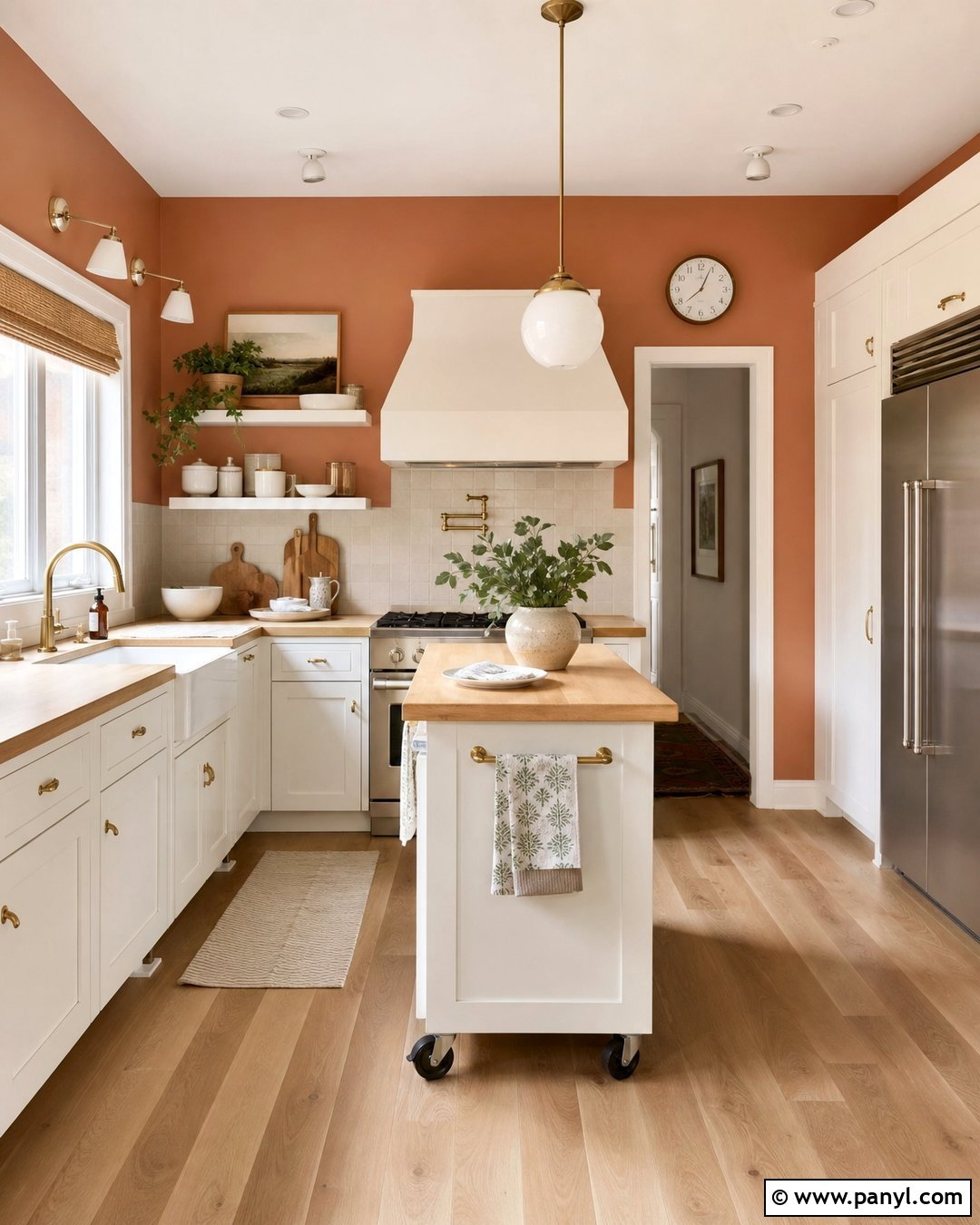
Pale terracotta kitchen walls deliver warmth with less visual weight, making them useful for compact rooms or kitchens with limited daylight. Select a soft peach-clay shade with muted brown undertones rather than a sugary pink. Combine it with warm white cabinetry, pale oak countertops, and an ivory backsplash. Light wood flooring will help the boundaries of the room feel open and continuous. Use brushed nickel or soft brass hardware for a quiet finish. A narrow island or movable wood cart can add storage without blocking circulation. Finish with white glass lighting, woven shades, and small accents in sage green. This complete kitchen feels bright, gentle, and easy to live with, while the subtle wall color still offers more personality than a standard neutral.
37. Deep Terracotta Kitchen Walls
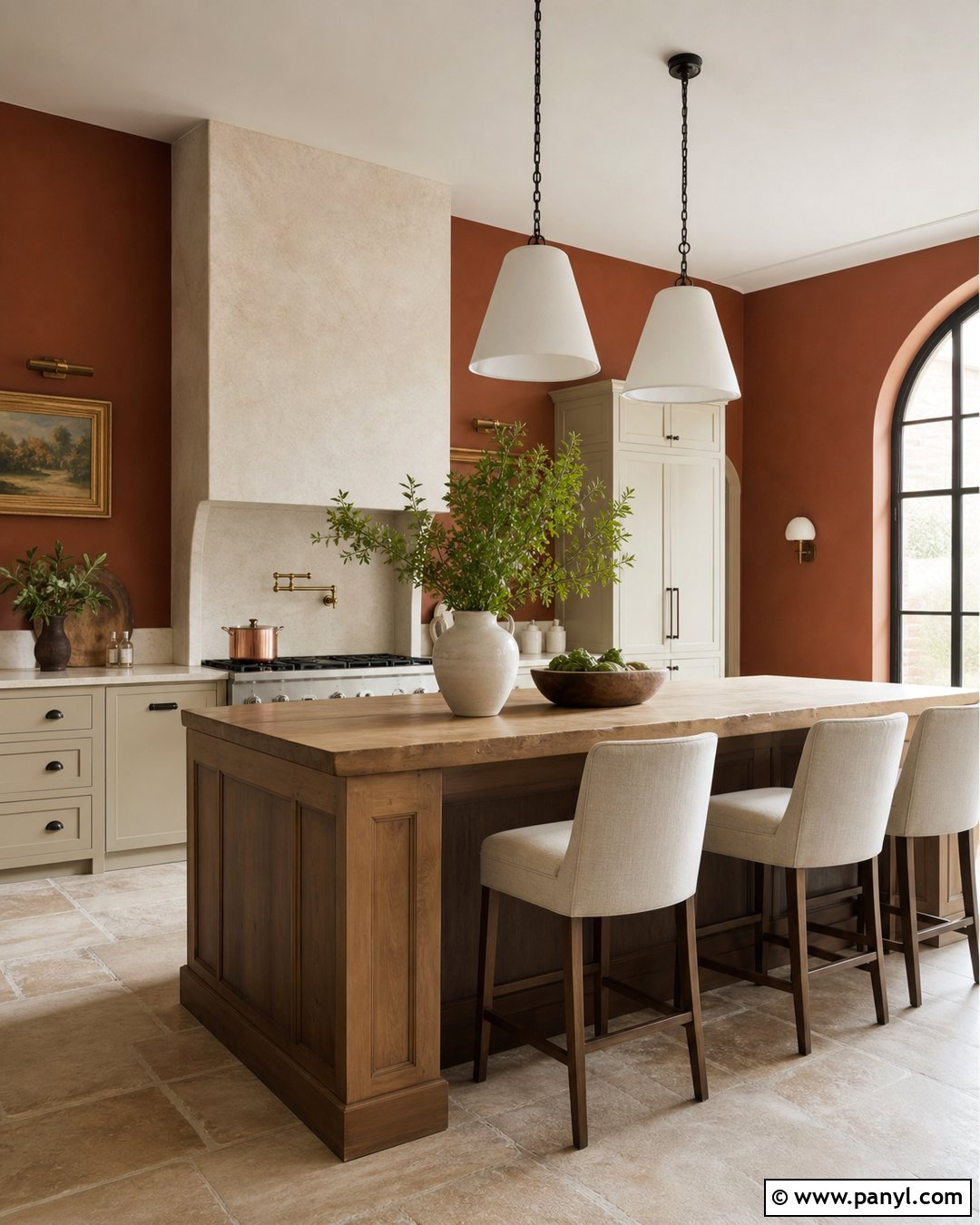
Deep terracotta walls can make a spacious kitchen feel intimate, grounded, and visually memorable. Choose a brown-red clay shade and balance it with creamy cabinetry, pale countertops, and generous task lighting. Use the color on open wall areas while keeping the ceiling warm white to preserve height. A large natural oak island will introduce texture and create a practical gathering place. Add a full-height ivory stone backsplash behind the range, then repeat dark bronze through the faucet and cabinet hardware. Medium stone flooring works better than very dark wood in this rich palette. Linen stools, pale ceramics, and restrained greenery add softness. The finished room feels dramatic without becoming oppressive because each deeper surface is balanced by a lighter, reflective material nearby.
38. Terracotta Kitchen Walls In A Small Kitchen
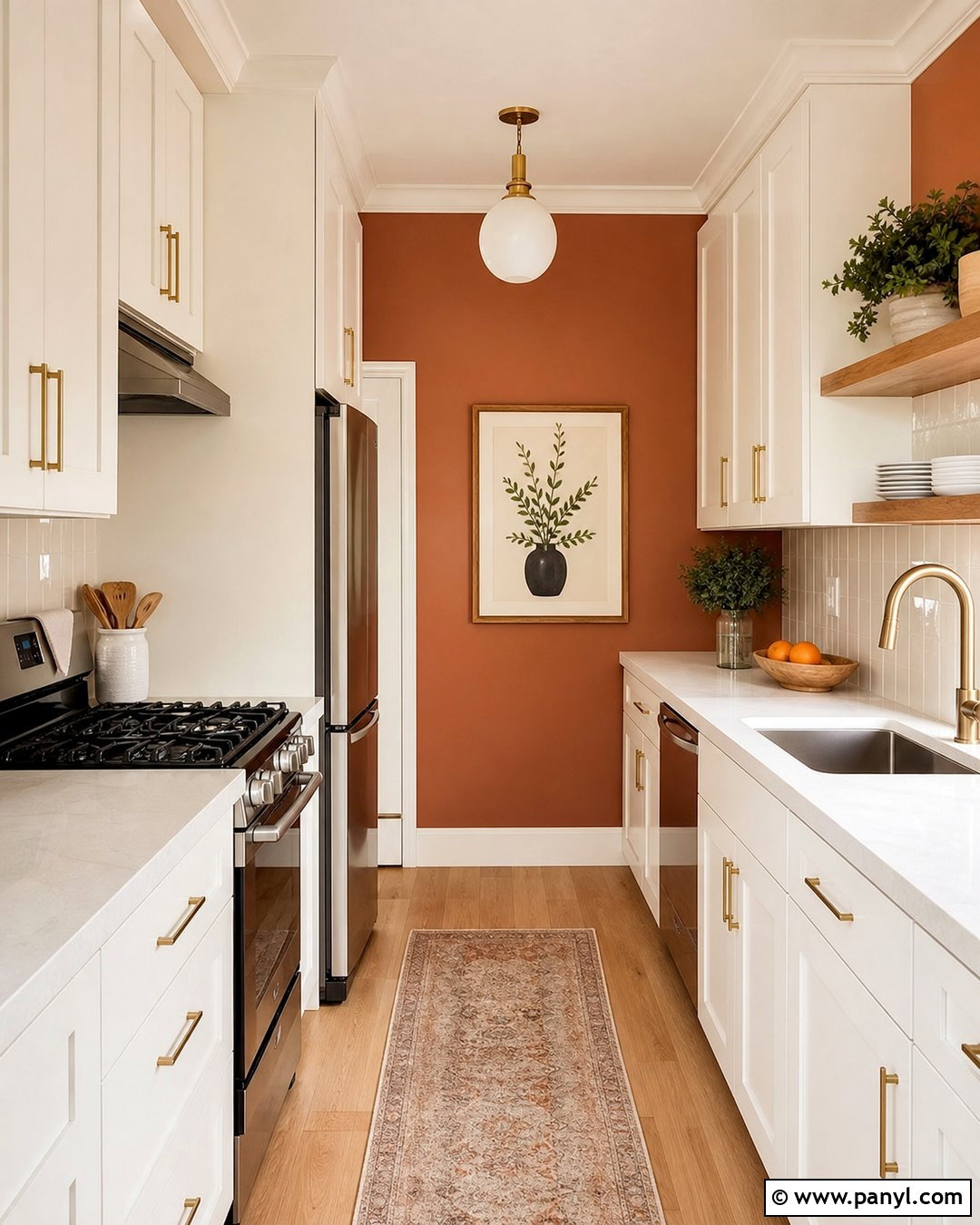
In a small kitchen, terracotta walls can create warmth as long as the surrounding surfaces remain simple and bright. Choose a muted, medium-light clay paint and pair it with warm white cabinets extending to the ceiling. Pale quartz countertops and a glossy ivory backsplash will reflect light around the compact layout. Replace one upper cabinet with an oak shelf to provide visual breathing room. Use slim brass handles, a compact white pendant, and light oak flooring. Keep appliances integrated where practical and choose a narrow runner instead of several small mats. Limit the counter display to a wood board, a utensil container, and one herb pot. The completed kitchen feels colorful and inviting without sacrificing storage, usable preparation space, or a comfortable sense of openness.
39. Terracotta Kitchen Walls In An Open Kitchen
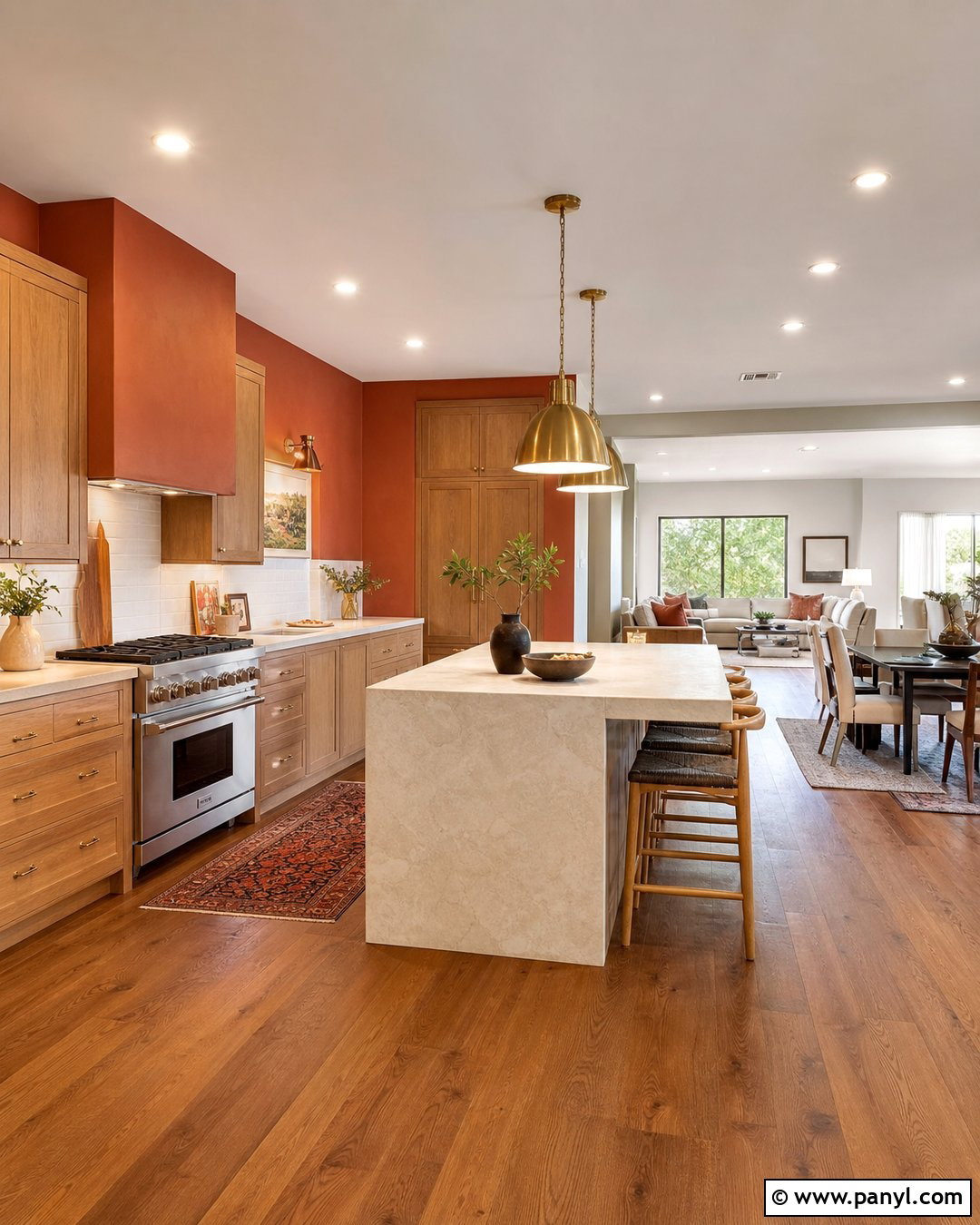
An open kitchen needs a wall color that connects naturally with nearby living and dining areas. Use terracotta on the main kitchen walls, then carry a softer cream or warm greige through the adjoining spaces. Choose oak cabinetry and a cream stone island so the kitchen feels like part of the larger room rather than a separate color block. Repeat small terracotta notes in dining textiles or living room cushions to create continuity. A low-profile ivory backsplash, brass pendants, and medium oak flooring keep the main materials consistent. Position stools neatly under the island to maintain clear sightlines. The completed open layout feels coordinated from multiple viewpoints, with terracotta defining the kitchen while shared woods and neutrals unite the entire space.
40. Terracotta Kitchen Walls On A Budget
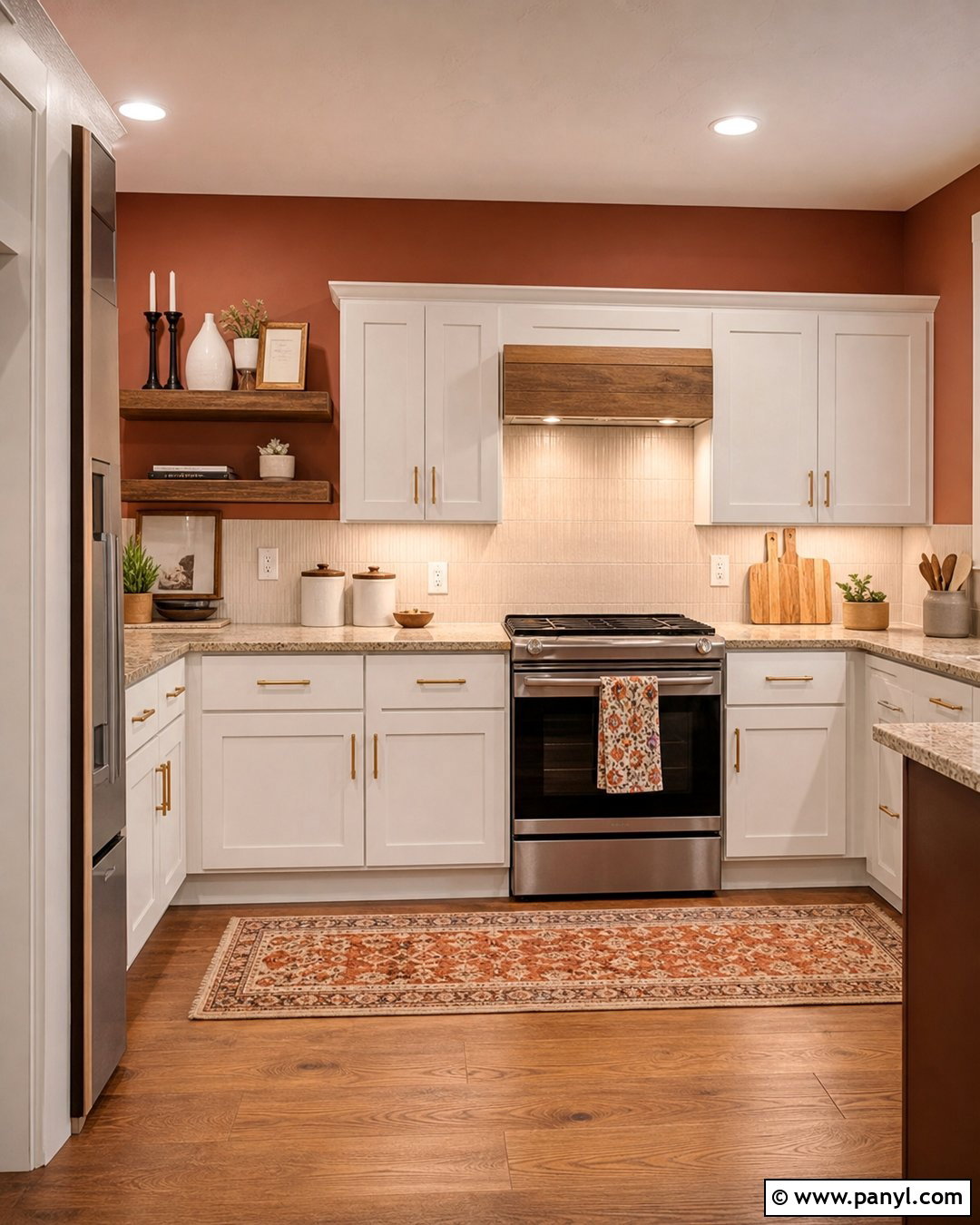
A budget-friendly terracotta kitchen can feel complete without replacing cabinets, countertops, or major appliances. Begin with warm clay-colored wall paint, carefully testing it beside the existing fixed finishes. Refresh dated wood cabinets with warm white paint and add simple matte black or brass handles. Use peel-and-stick ivory backsplash panels only if they provide a convincing tile texture and clean edge. A washable rust-and-cream runner can disguise tired flooring while connecting the palette. Replace one outdated ceiling fixture with a bright, simple pendant and install under-cabinet lights for better function. Add a wood shelf, coordinated storage containers, and a few useful ceramic pieces. The finished kitchen looks intentional because color, lighting, hardware, and accessories support one clear design direction.
Conclusion:
The best terracotta kitchen walls do more than add warm color. They establish a foundation for the cabinets, counters, flooring, lighting, and decorative details around them. Pale clay shades can brighten a compact room, while deeper rust tones create drama in open or generously lit kitchens. Warm white, cream, oak, sage, navy, and black each produce a different complete look. Natural materials such as wood, stone, brass, and handmade tile are reliable partners because they share terracotta’s grounded character. Before painting, compare samples beside every permanent surface at different times of day. Whether you prefer rustic warmth or modern contrast, these **40 terracotta kitchen walls** offer a practical starting point for a cohesive transformation.

Related Ideas and Inspiration:
Leave a Reply