
Gray flooring creates a versatile base, but the right wall color determines whether the room feels warm, crisp, dramatic, or calm. The key is to study the floor’s undertone before choosing paint. Blue-gray flooring usually works best with cool whites, blues, and blue-based greens. Greige or brown-gray floors welcome cream, taupe, clay, and other earthy shades. Light floors can support deep wall colors, while charcoal flooring often looks better beside softer, brighter paint. Furniture, trim, lighting, and textiles should also connect both surfaces into one complete palette. Always test a large paint sample beside the floor during daylight and after dark. The combinations below offer practical, complete room schemes through **40 Wall Colors To Match Gray Flooring Ideas**.

1. Crisp White Walls With Gray Flooring
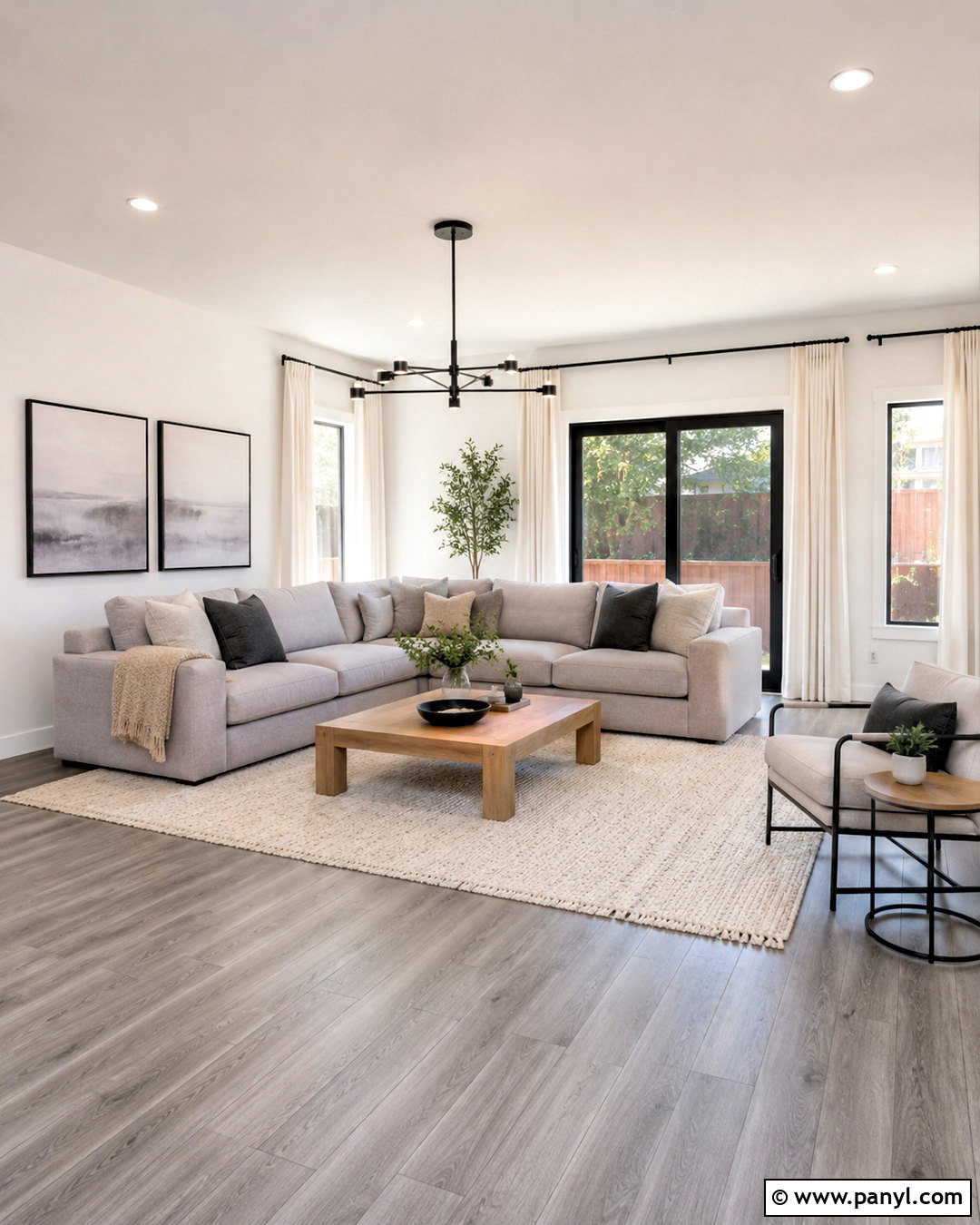
Crisp white walls give gray flooring a clean, modern appearance, especially when the floor has cool blue or neutral undertones. Create an airy living room with a light gray sectional, black-framed artwork, and a pale oak coffee table. Add ivory curtains and a textured cream rug to prevent the space from feeling stark. Matte black lighting provides definition without competing with the flooring. Use the same white on the ceiling, but select a slightly glossier finish for trim and doors. This combination works particularly well in smaller rooms or spaces with limited natural light. If the floor is very dark, introduce medium-tone wood furniture to soften the strong contrast and make the complete room feel more welcoming.
2. Warm White Walls With Gray Flooring
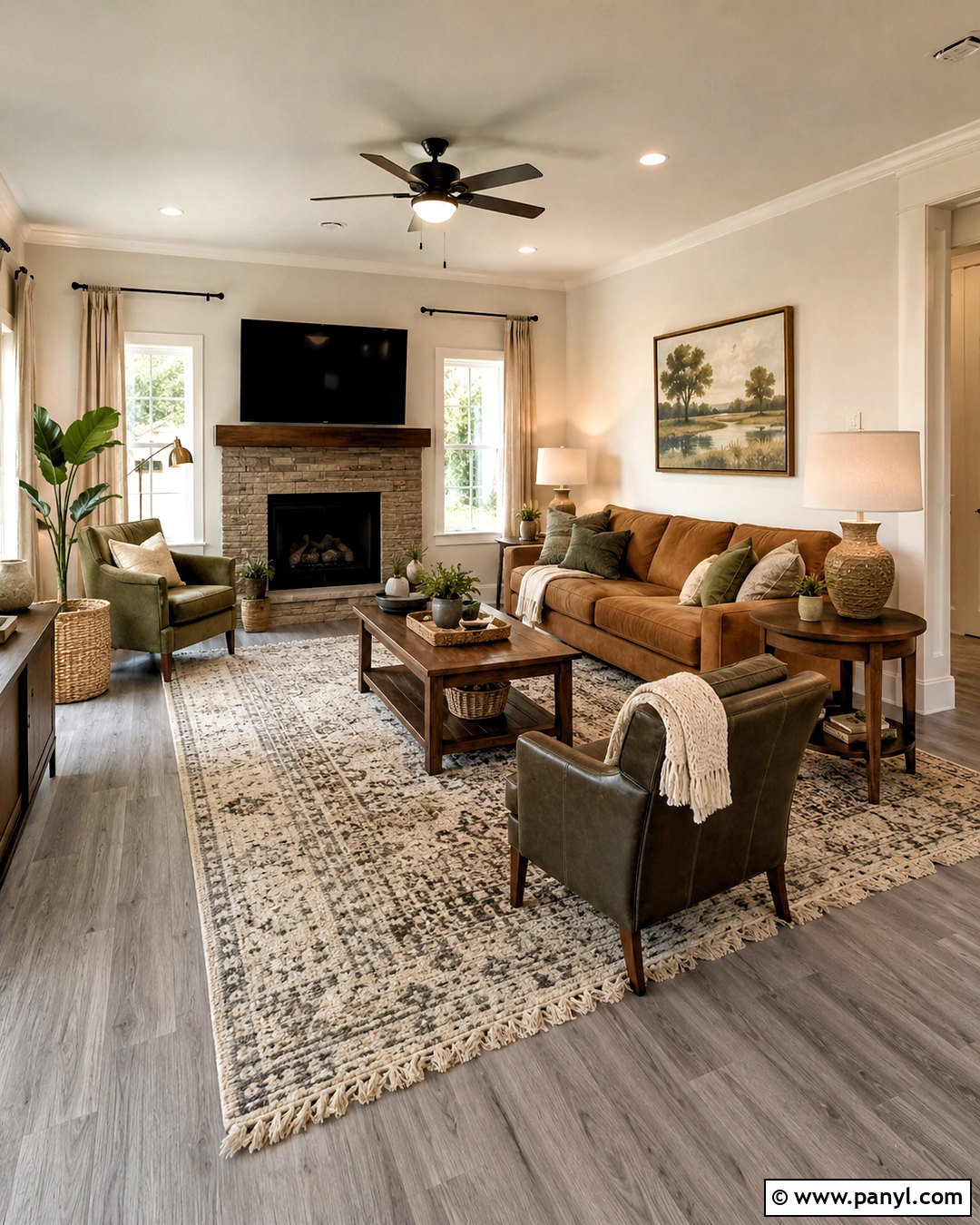
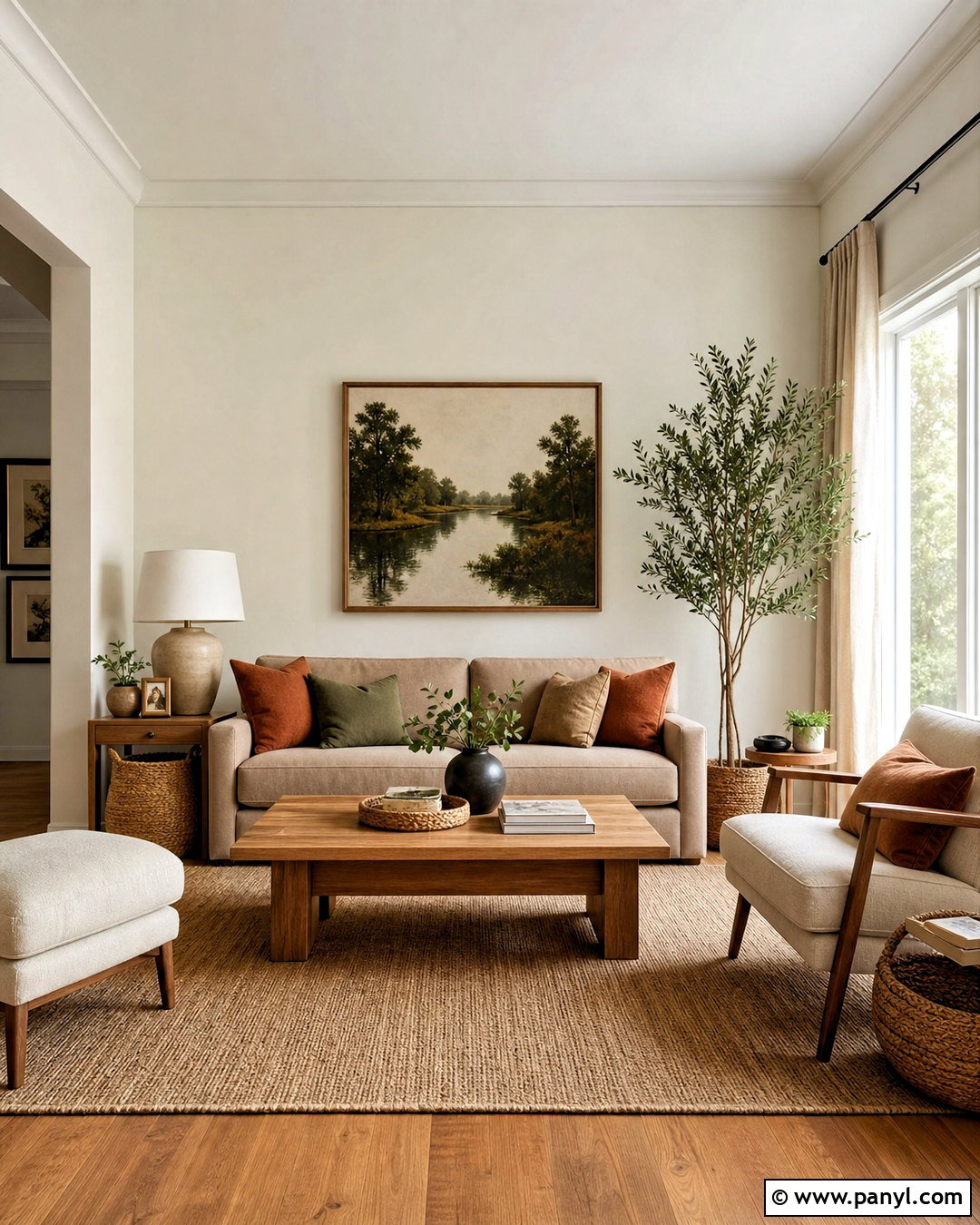
Warm white paint can take the chilly edge off gray laminate, tile, or wood-look flooring. Choose a soft white with subtle beige undertones rather than a noticeably yellow shade. Build a comfortable family room around a camel-colored sofa, natural linen curtains, and walnut side tables. A woven rug containing cream, gray, and muted brown will visually connect the walls to the floor. Finish the room with aged brass lamps, simple pottery, and a few olive-green accents. Warm white is especially useful when gray flooring must coordinate with existing wood cabinets or furniture. Keep the ceiling and trim softly white as well, ensuring the surrounding surfaces feel related instead of creating a harsh, overly bright border around the warmer walls.
3. Ivory Walls With Gray Flooring
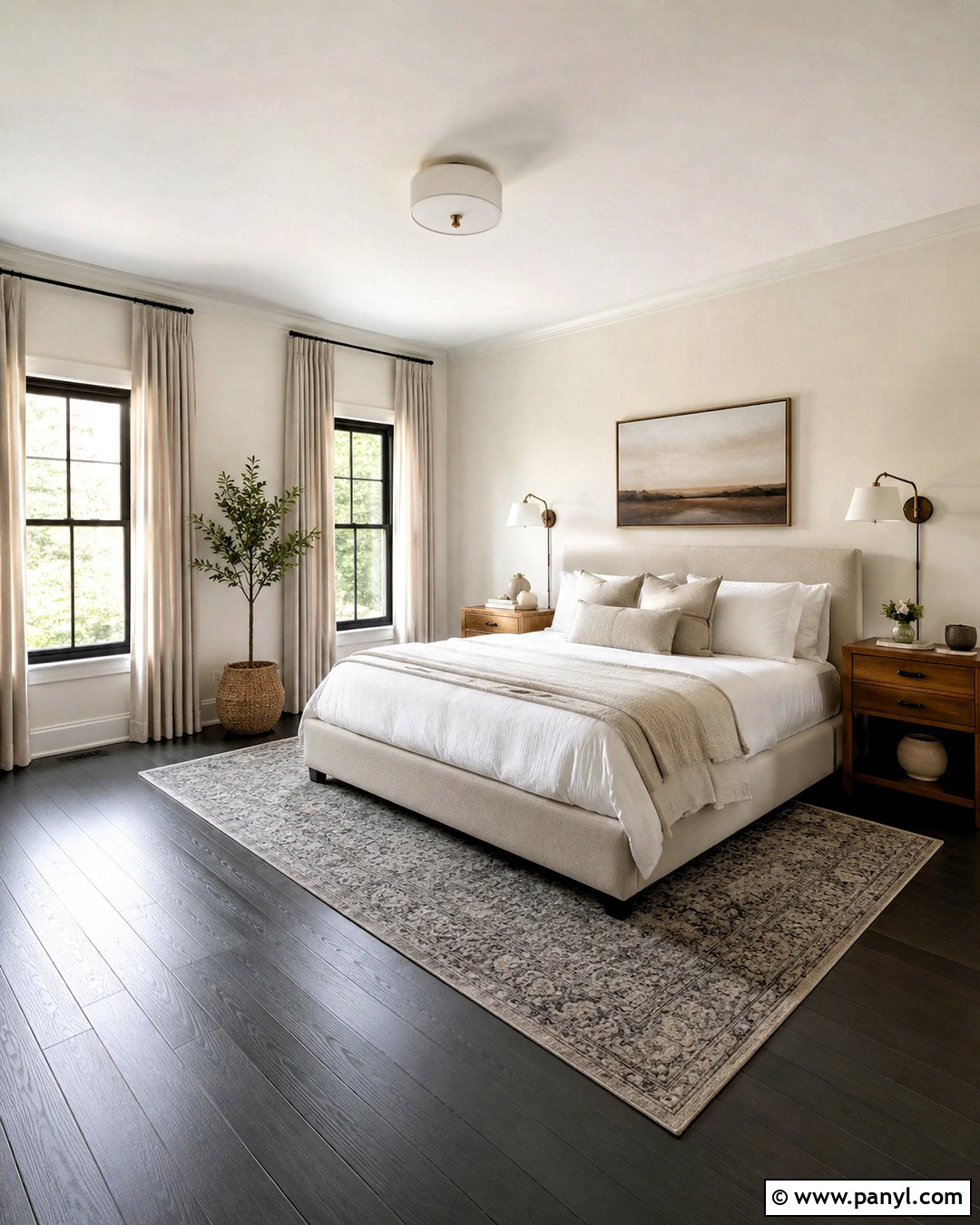
Ivory walls produce a softer contrast than pure white, making them a natural partner for medium or charcoal gray flooring. This combination suits a relaxed bedroom with an upholstered oatmeal bed, warm wood nightstands, and layered white and beige bedding. Introduce gray through a patterned area rug or a few tailored pillows so the floor does not appear disconnected. Antique brass sconces and light-filtering linen curtains add warmth without making the palette look traditional or heavy. Choose an ivory that remains relatively neutral in your room’s lighting. A strongly yellow version may clash with blue-gray floors. Complete the design with restrained black accents, such as curtain rods or picture frames, to add structure and quietly reference darker markings within the flooring.
4. Cream Walls With Gray Flooring
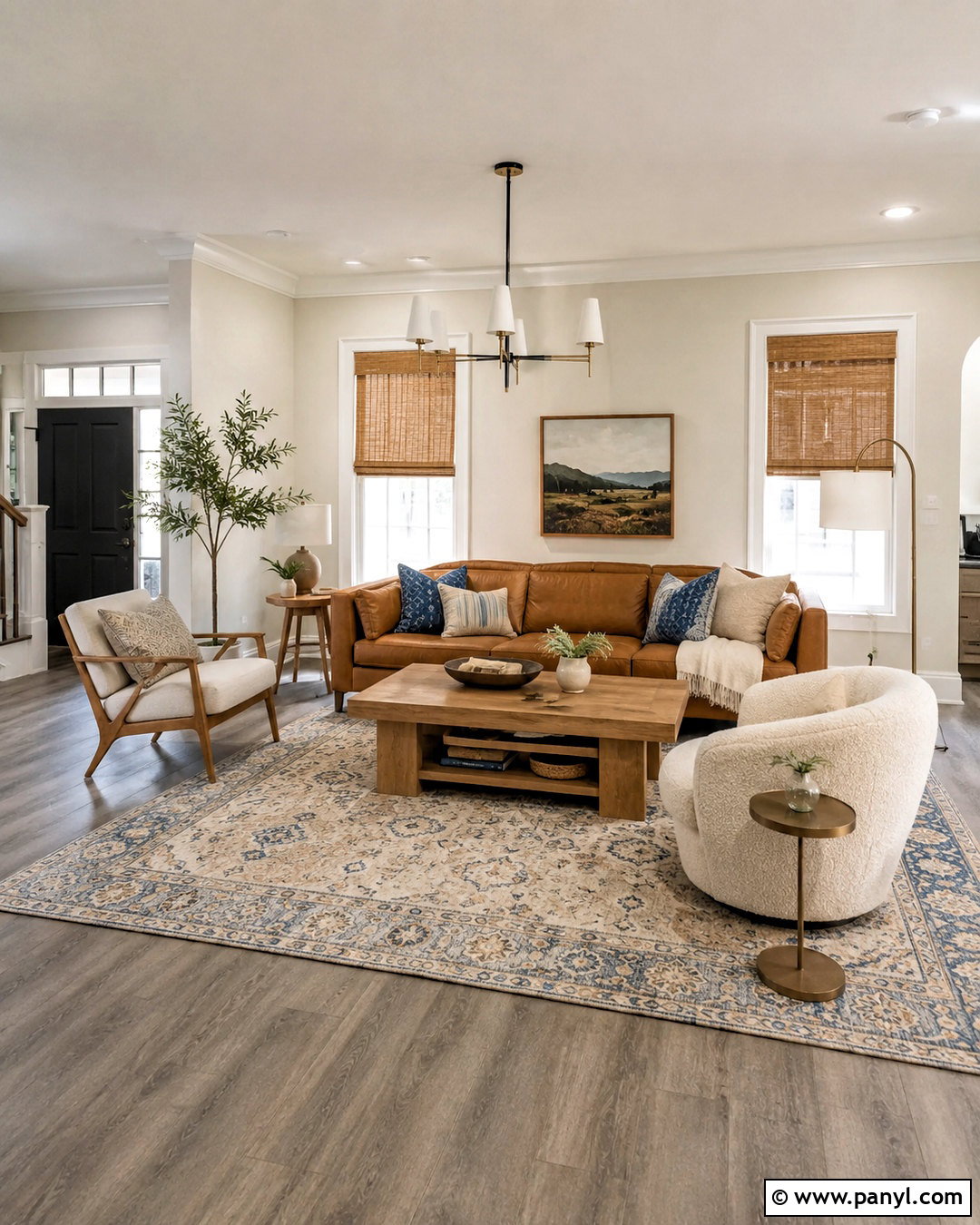
Cream walls can transform cool gray flooring into a warmer, more comfortable foundation. Use this pairing in a living room with a caramel leather sofa, an off-white boucle chair, and a substantial medium-oak coffee table. A vintage-inspired rug featuring cream, faded blue, and gray helps bridge the contrasting color temperatures. Add woven shades, warm metal lighting, and textured pillows for depth. The room should include enough neutral gray details to make the floor look intentional, but avoid filling every surface with more gray. Select cream paint with a muted beige base rather than bright golden undertones. This complete scheme works best with warm gray or greige flooring and creates an approachable transition between contemporary floors and classic furniture.
5. Light Greige Walls With Gray Flooring
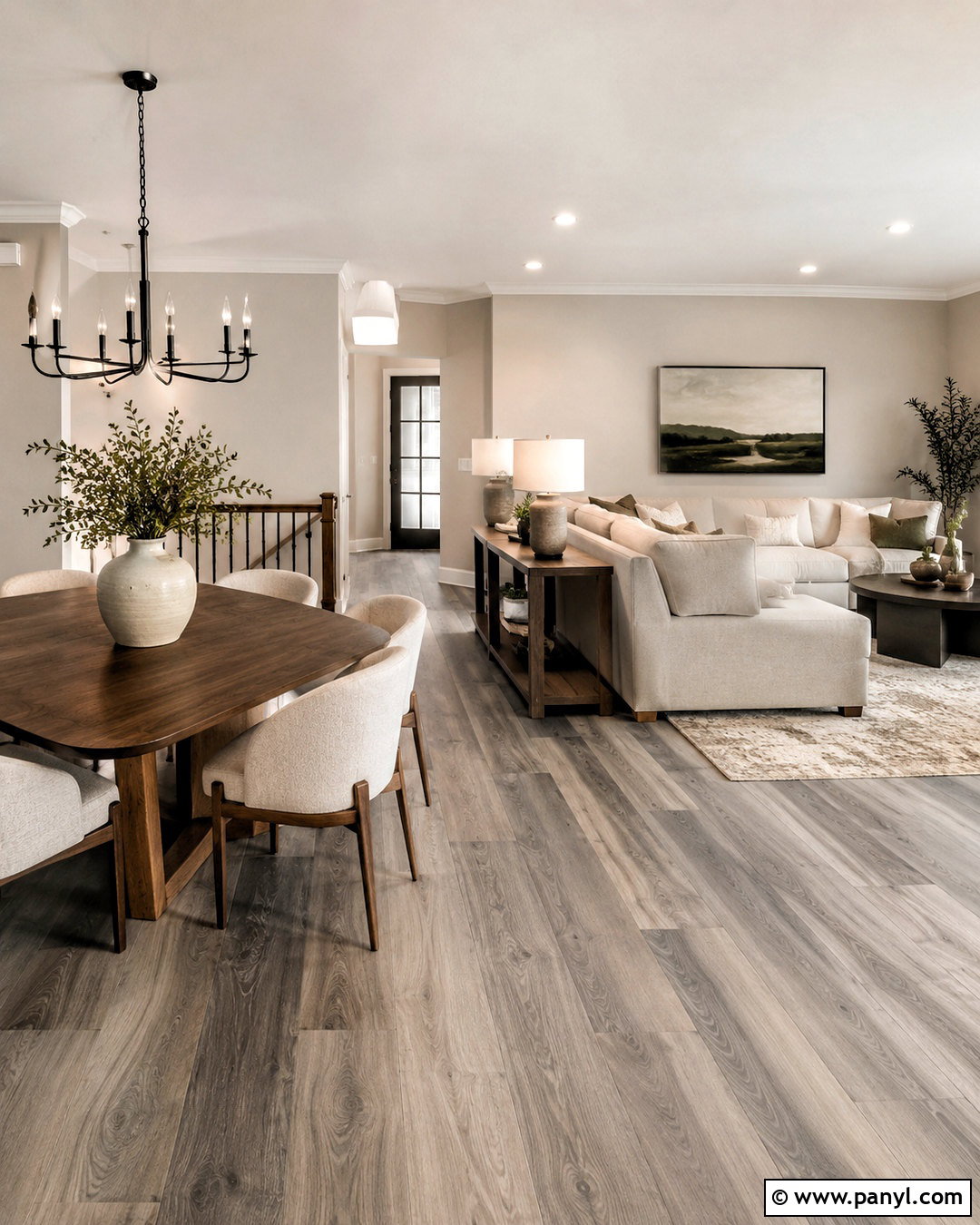
Light greige walls combine gray’s balance with beige’s warmth, offering an easy transition from gray flooring to natural wood furniture. For a polished open-plan room, pair the walls and floors with an oatmeal sofa, walnut dining table, and softly curved cream chairs. Keep the wall color a shade or two lighter than the flooring so the surfaces remain distinct. Layer in black hardware, warm white curtains, and a rug that mixes taupe, ivory, and muted gray. Green plants can provide a fresh accent without interrupting the neutral palette. This scheme is particularly effective when the floor contains both cool and warm grain variation. Test the greige carefully, since certain shades may turn lavender, green, or pink under artificial lighting.
6. Warm Taupe Walls With Gray Flooring
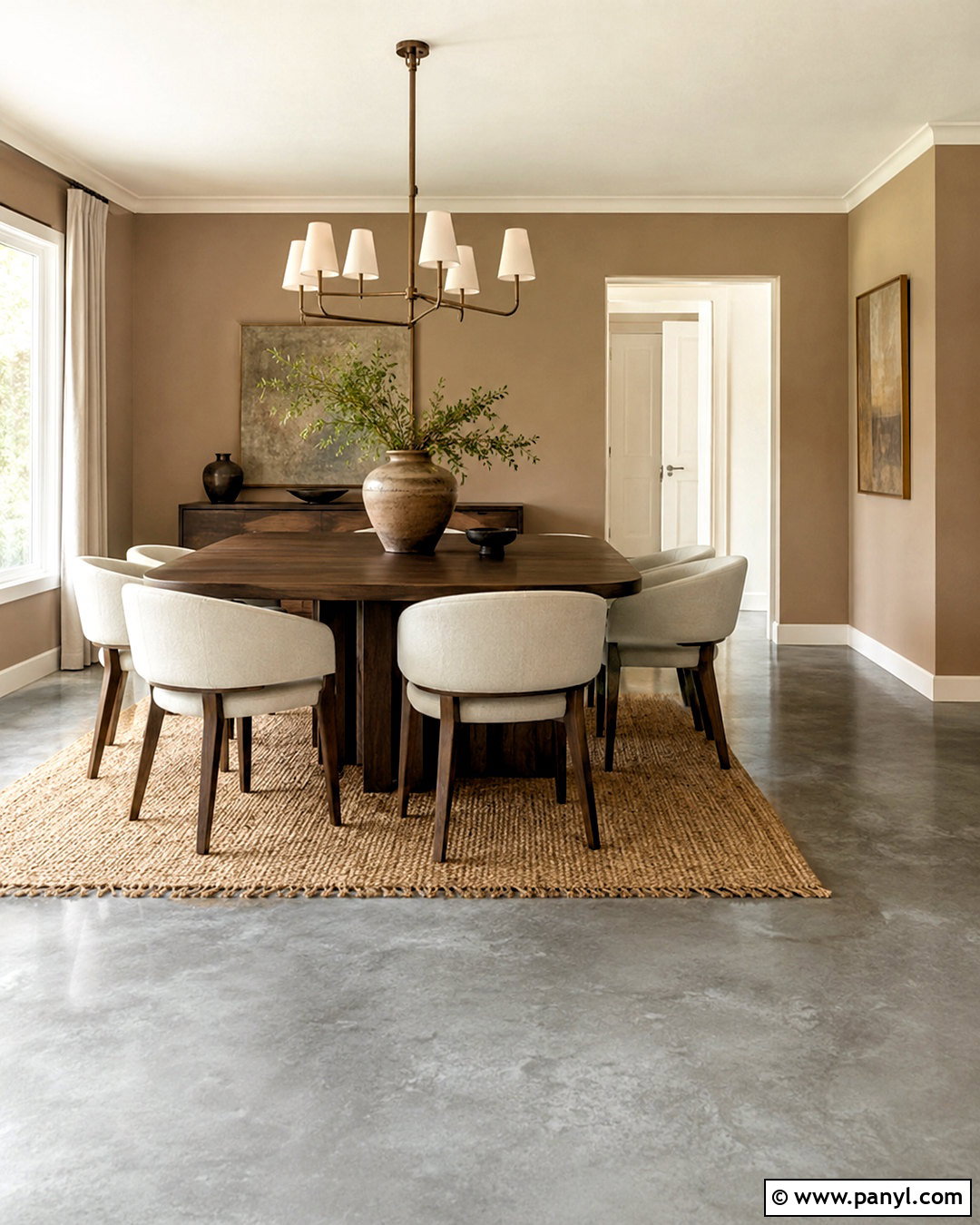
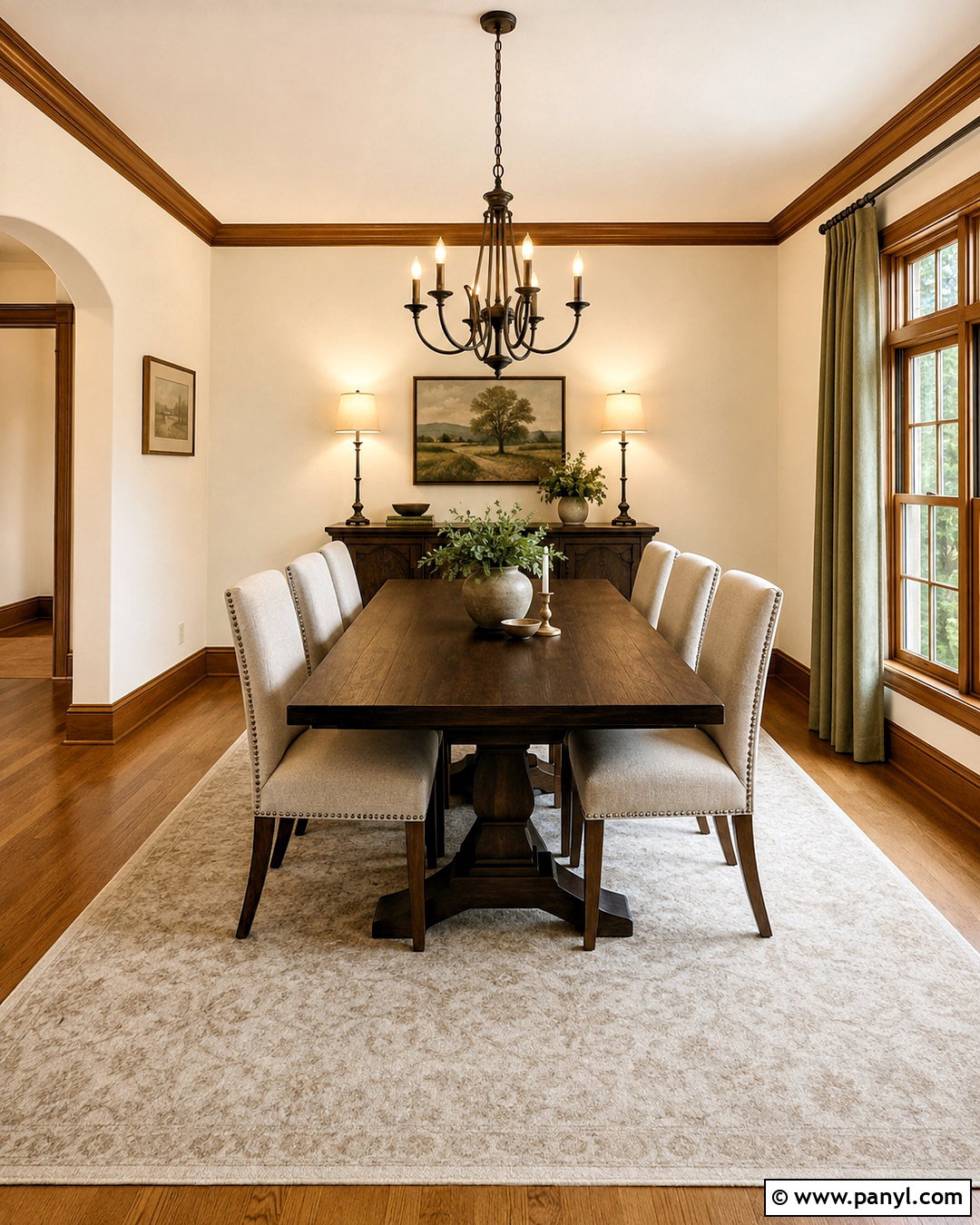
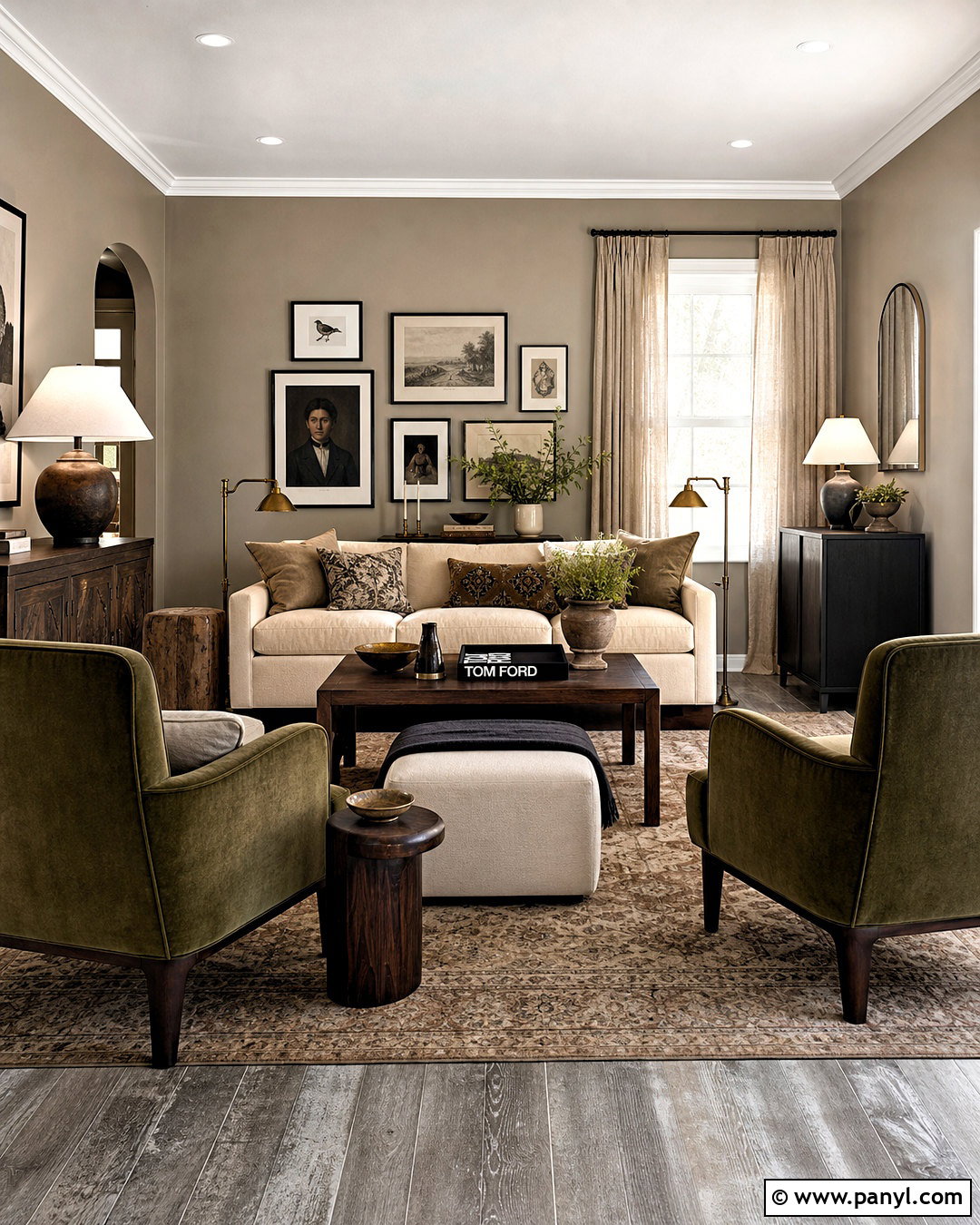
Warm taupe walls bring earthy depth to gray flooring while maintaining a quiet neutral design. This color works beautifully in a dining room with a dark walnut table, upholstered cream chairs, and a large natural-fiber rug. Add bronze lighting, textured ceramic vessels, and artwork containing gray, brown, and off-white. Taupe is especially effective beside warm gray concrete, stone, or wood-look floors because both surfaces share subtle brown undertones. Paint the trim a soft warm white rather than a brilliant white that could make taupe look muddy. For sufficient contrast, choose taupe walls slightly deeper than pale gray flooring or noticeably lighter than charcoal flooring. The finished room feels grounded, sophisticated, and comfortable without depending on bright accent colors.
7. Mushroom Walls With Gray Flooring
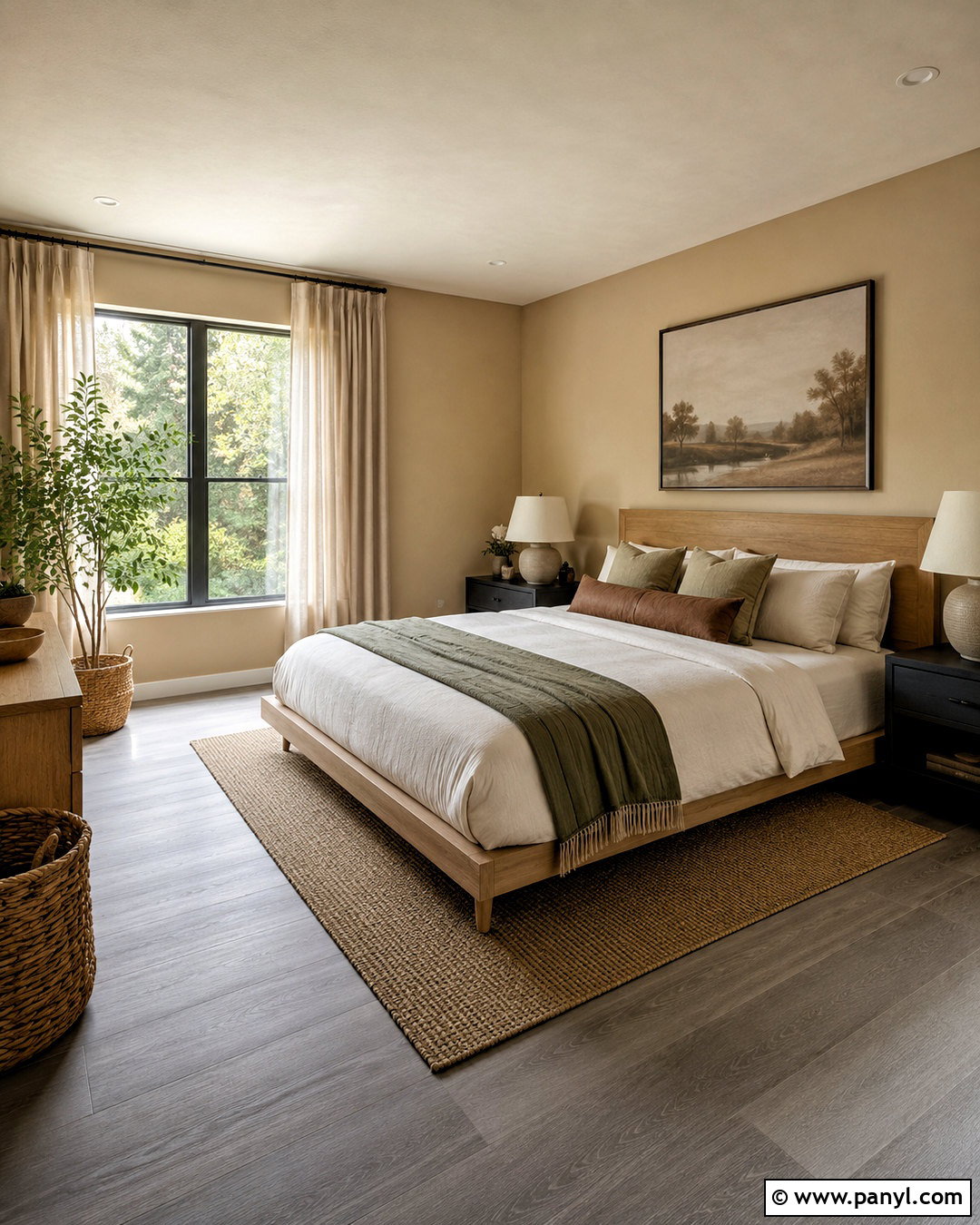
Mushroom paint sits between taupe, beige, and muted gray, making it an adaptable choice for mixed-tone gray floors. Create a restful bedroom with mushroom walls, a light oak platform bed, and bedding layered in ivory, cocoa, and faded olive. Use a charcoal bench or nightstand to repeat the floor’s deeper gray details. Linen curtains, woven baskets, and ceramic lamps introduce texture while keeping the muted palette interesting. Mushroom walls look especially balanced when the flooring has warm brown or violet undertones. They may feel flat next to very cool silver flooring, so include warm wood and soft textiles when necessary. Paint the ceiling warm white and keep the room uncluttered, allowing the nuanced wall color and flooring variation to remain visible.

8. Soft Beige Walls With Gray Flooring
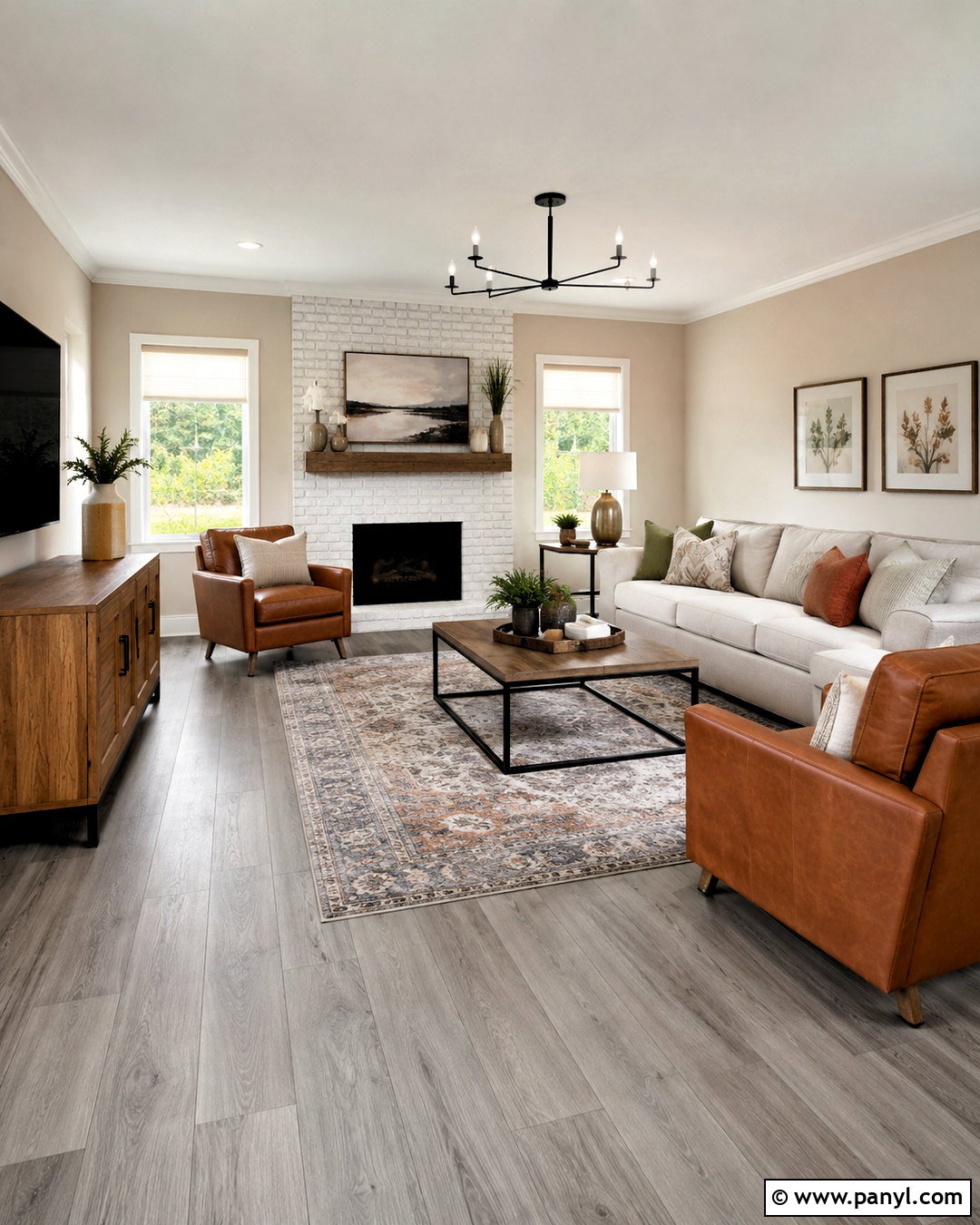
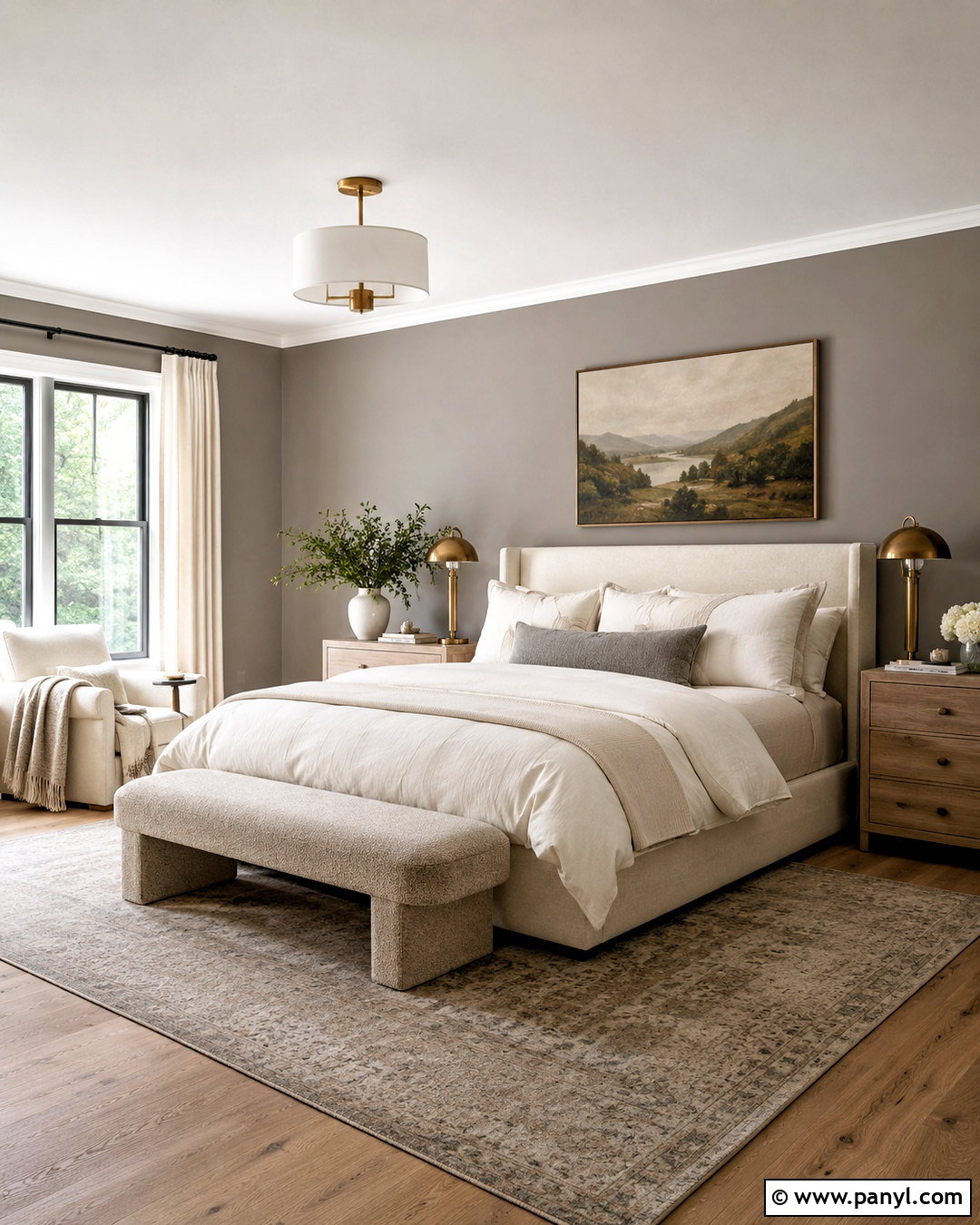
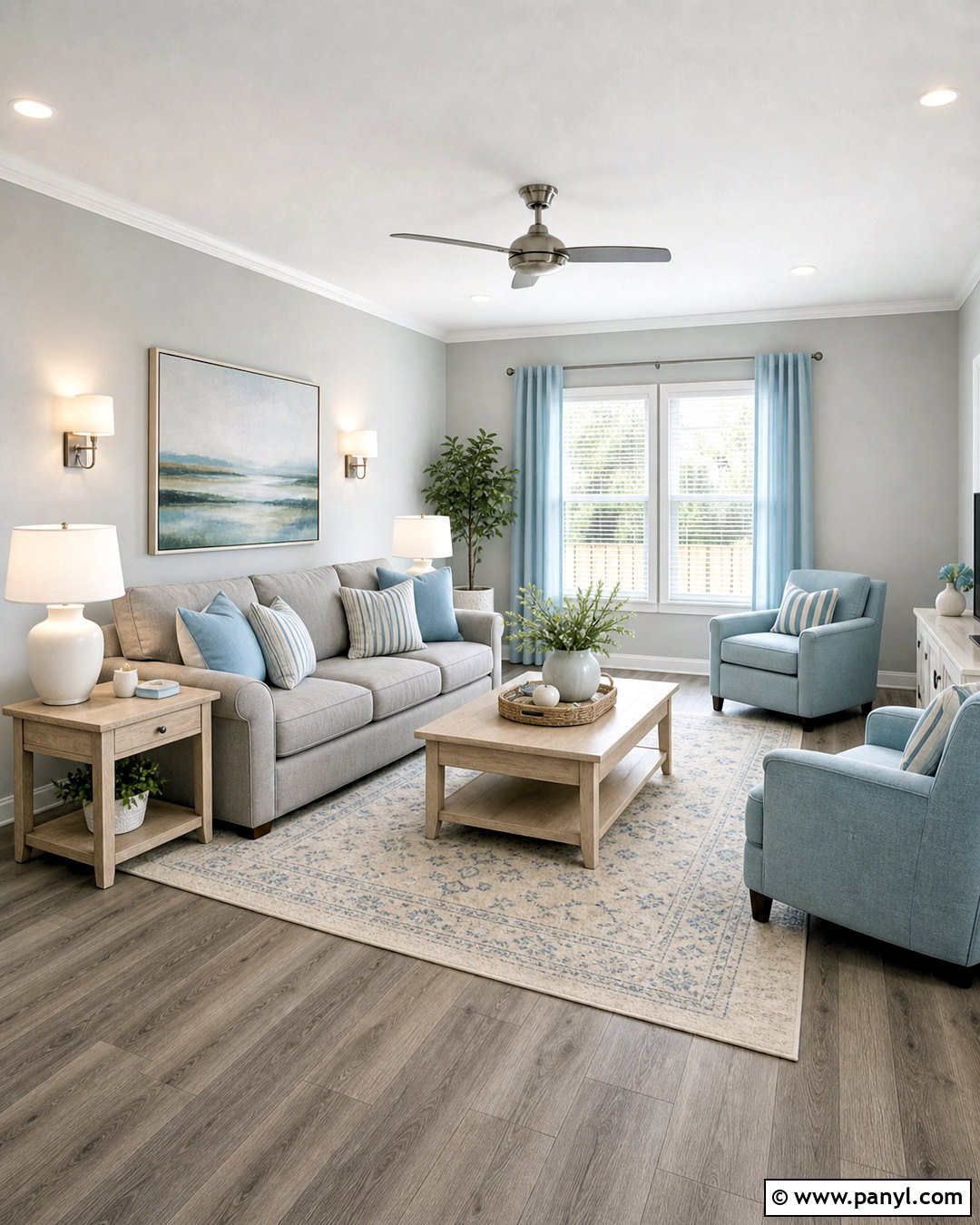
Soft beige walls are an effective way to warm up gray flooring without creating a strong yellow cast. Design a welcoming living room with beige paint, a cream sofa, cognac leather chairs, and an oak media cabinet. Choose a large rug that includes beige, gray, and muted rust to unite the floor with the warmer furniture. Black metal lighting and charcoal-framed artwork can repeat the deepest tones in the flooring. The beige should have a balanced or slightly gray undertone, particularly if the floor leans cool. Natural linen curtains and tactile materials will make the contrast appear deliberate rather than mismatched. This complete palette is practical for busy family spaces because it remains neutral while supporting seasonal pillows, artwork, and decorative accessories.
9. Sand Walls With Gray Flooring
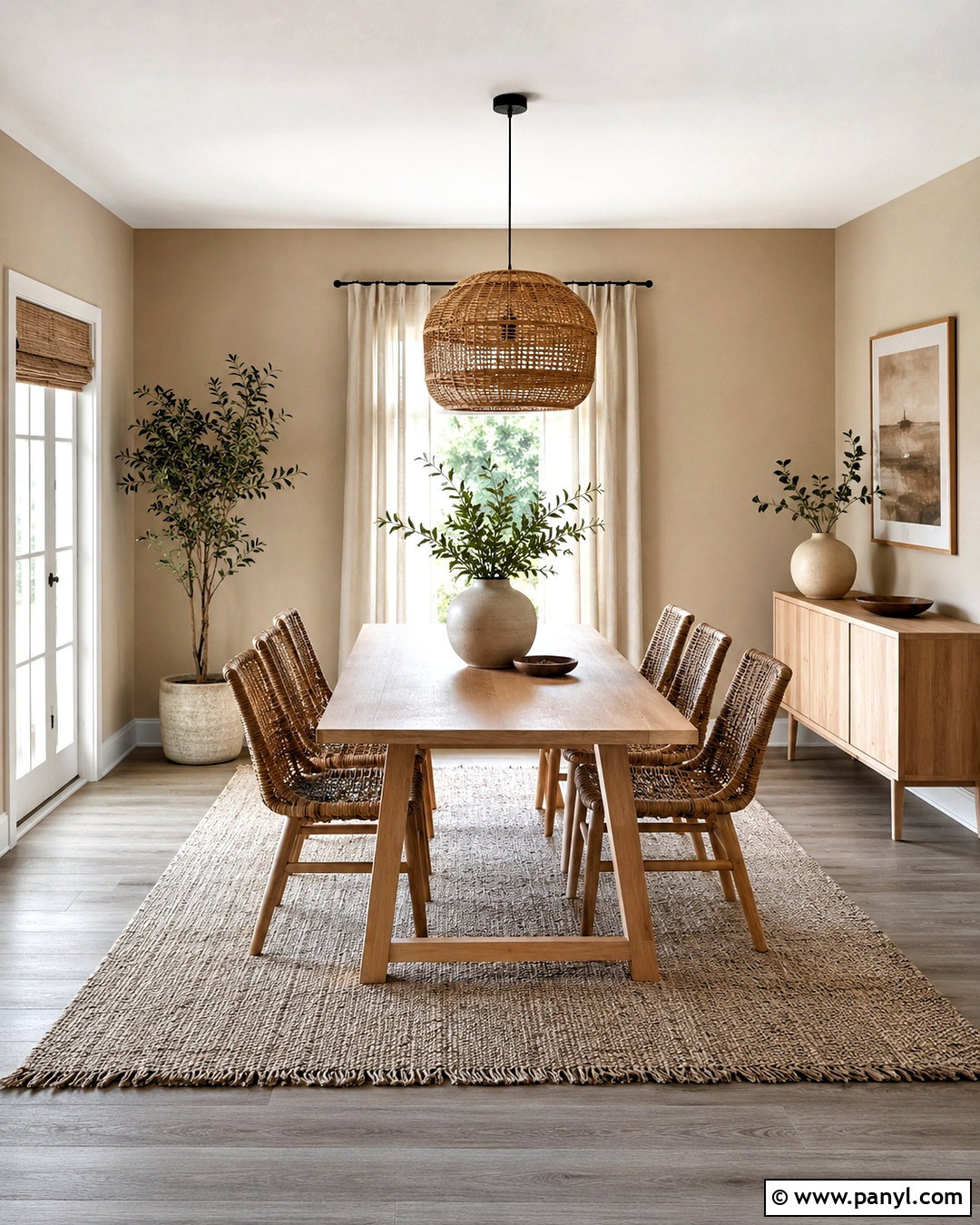
Sand-colored walls introduce gentle warmth while preserving the light, relaxed character of gray flooring. This pairing suits a casual dining area with a pale oak table, woven chairs, and an ivory-and-gray flatweave rug. Add light linen curtains, handmade pottery, and a simple pendant in natural rattan or woven fiber. Soft blue cushions or table linens can connect the sandy walls to cool gray flooring without creating an overly coastal theme. Keep trim warm white and use matte black sparingly through frames or cabinet pulls. Sand paint works best when it looks muted and mineral-based rather than bright tan. The completed space feels bright and organic, with enough variation in wood, fabric, metal, and ceramics to keep the neutral palette from appearing unfinished.
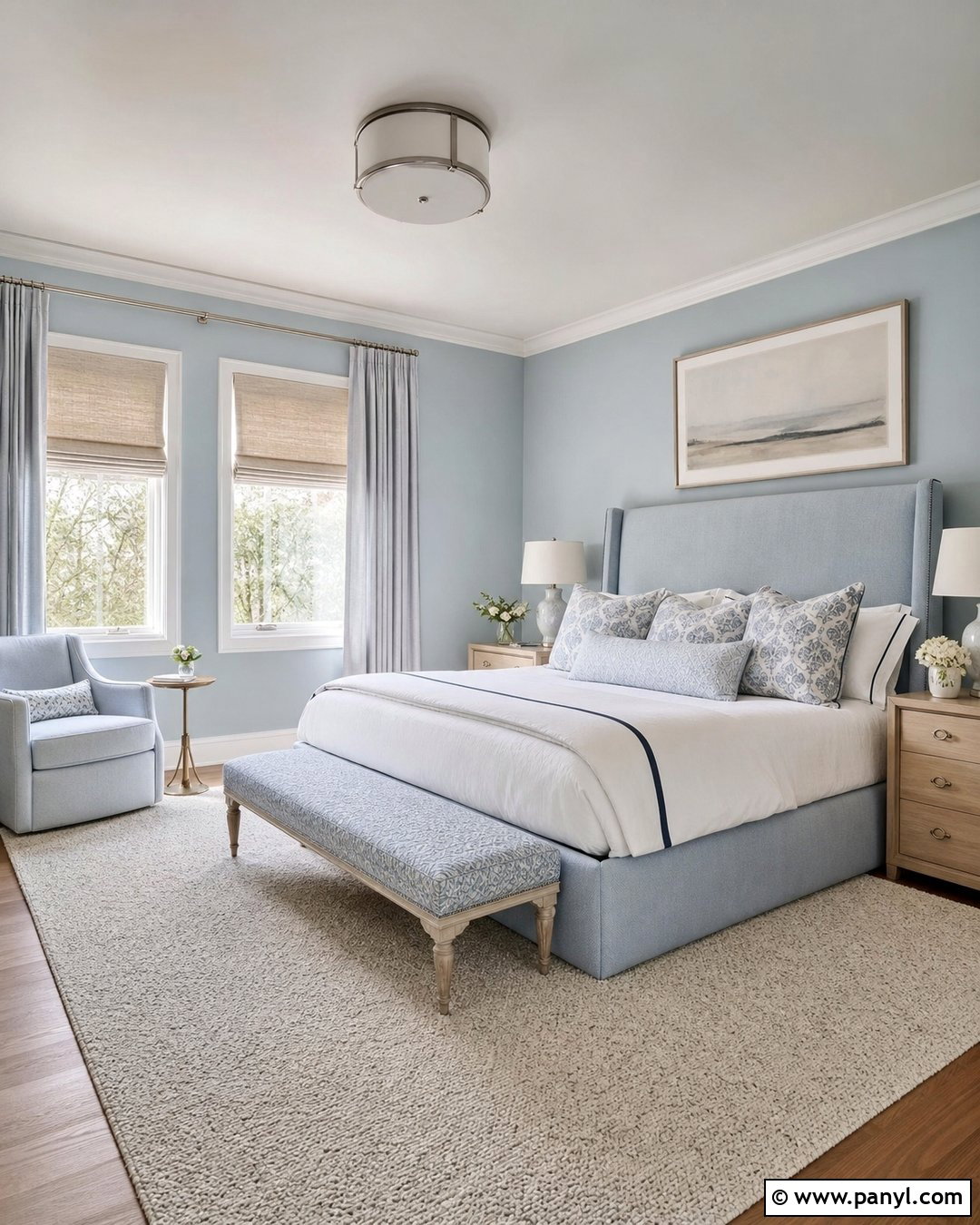
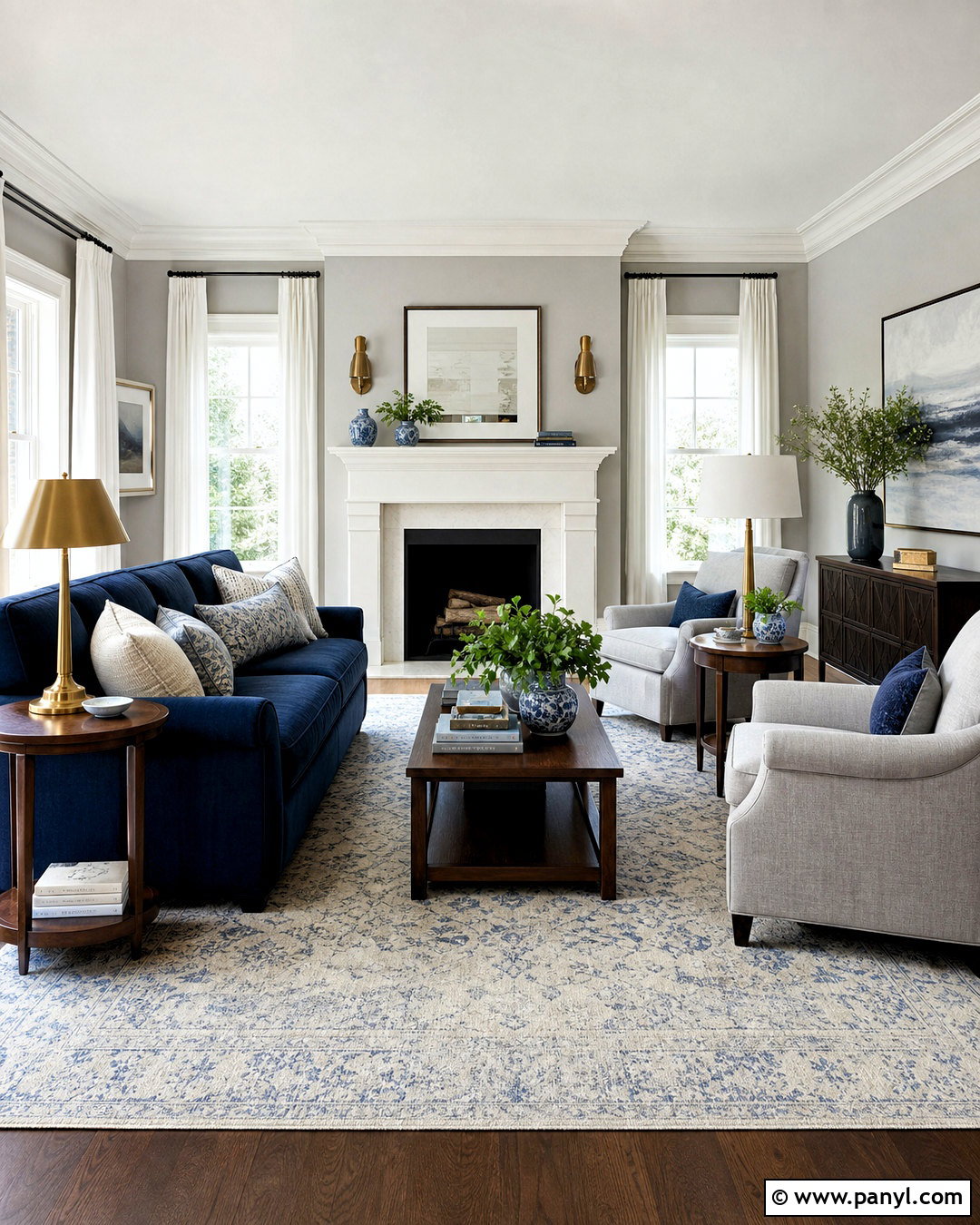
10. Pale Gray Walls With Gray Flooring
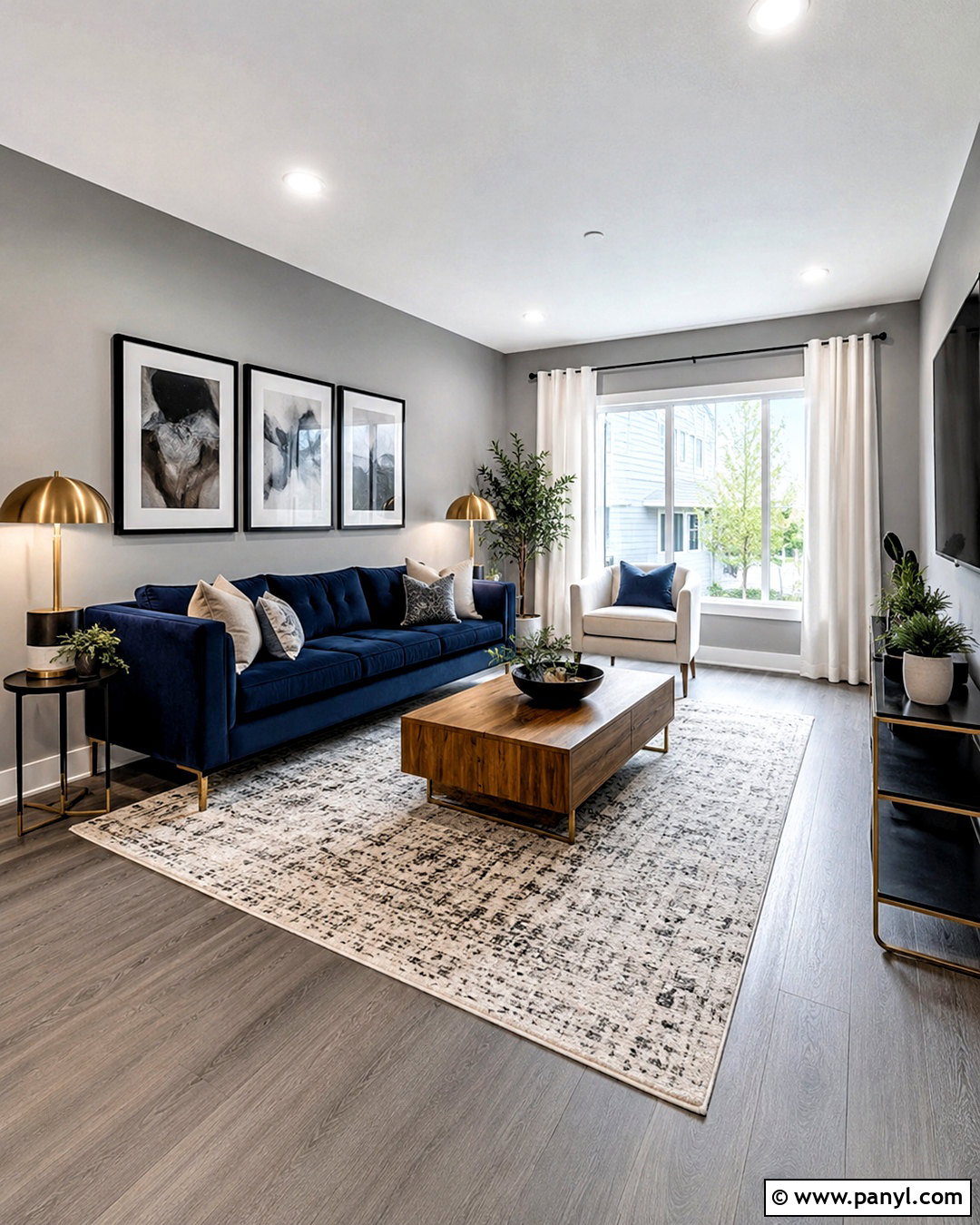
Pale gray walls can create a seamless tonal interior when their undertone relates closely to the flooring. Prevent a flat result by choosing walls that are clearly lighter than the floor and adding contrasting materials. In a contemporary living room, combine pale gray paint with a deep navy sofa, a warm oak coffee table, and cream curtains. A textured rug in ivory and charcoal will define the seating area without hiding the flooring entirely. Use brushed brass lighting to add warmth and black frames for crisp structure. If the floor looks blue-gray, select a similarly cool wall gray. For warm greige flooring, use a softened warm gray instead. The room will feel cohesive, but the varied textures and accent colors keep it from becoming monotonous.
11. Medium Gray Walls With Gray Flooring
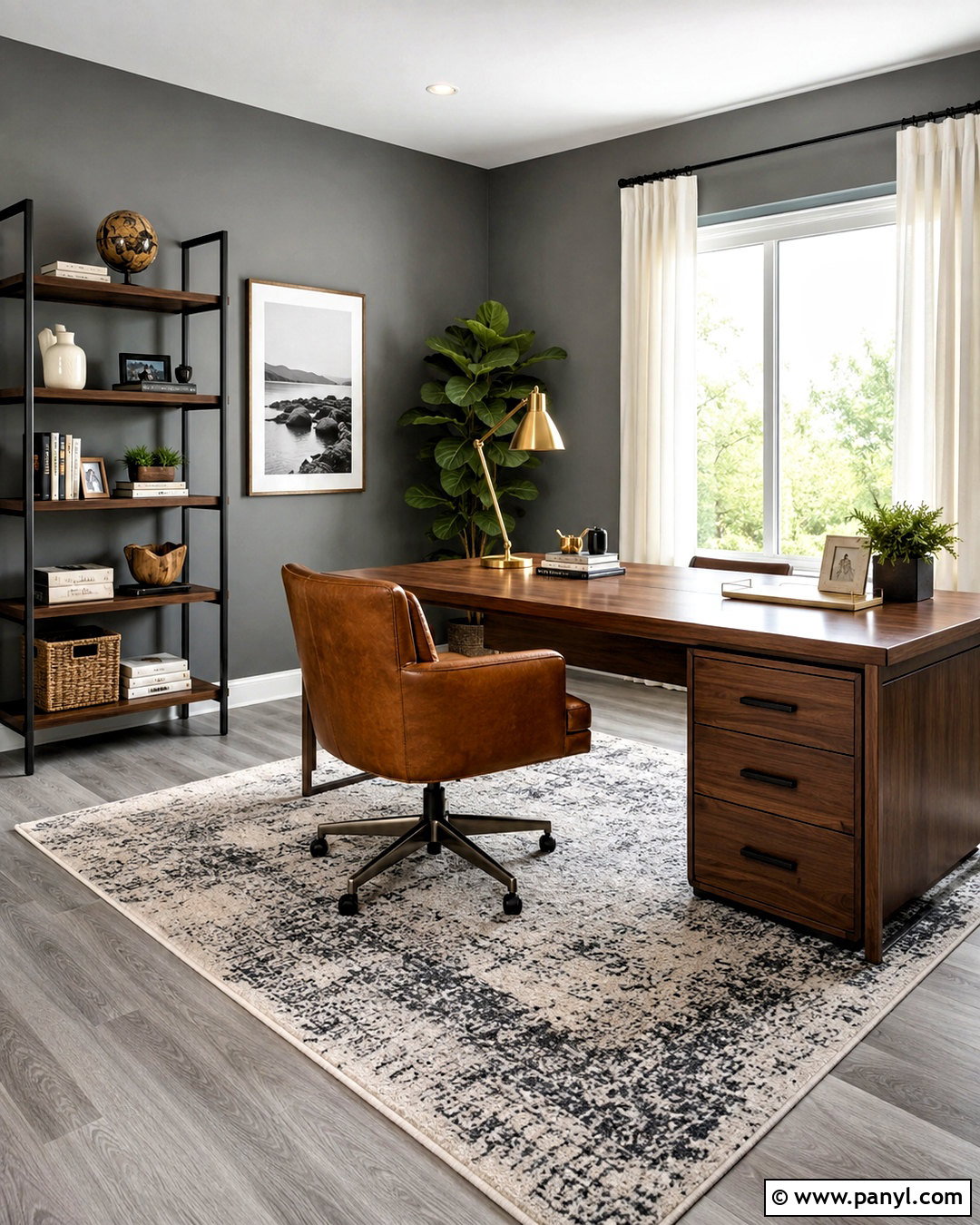
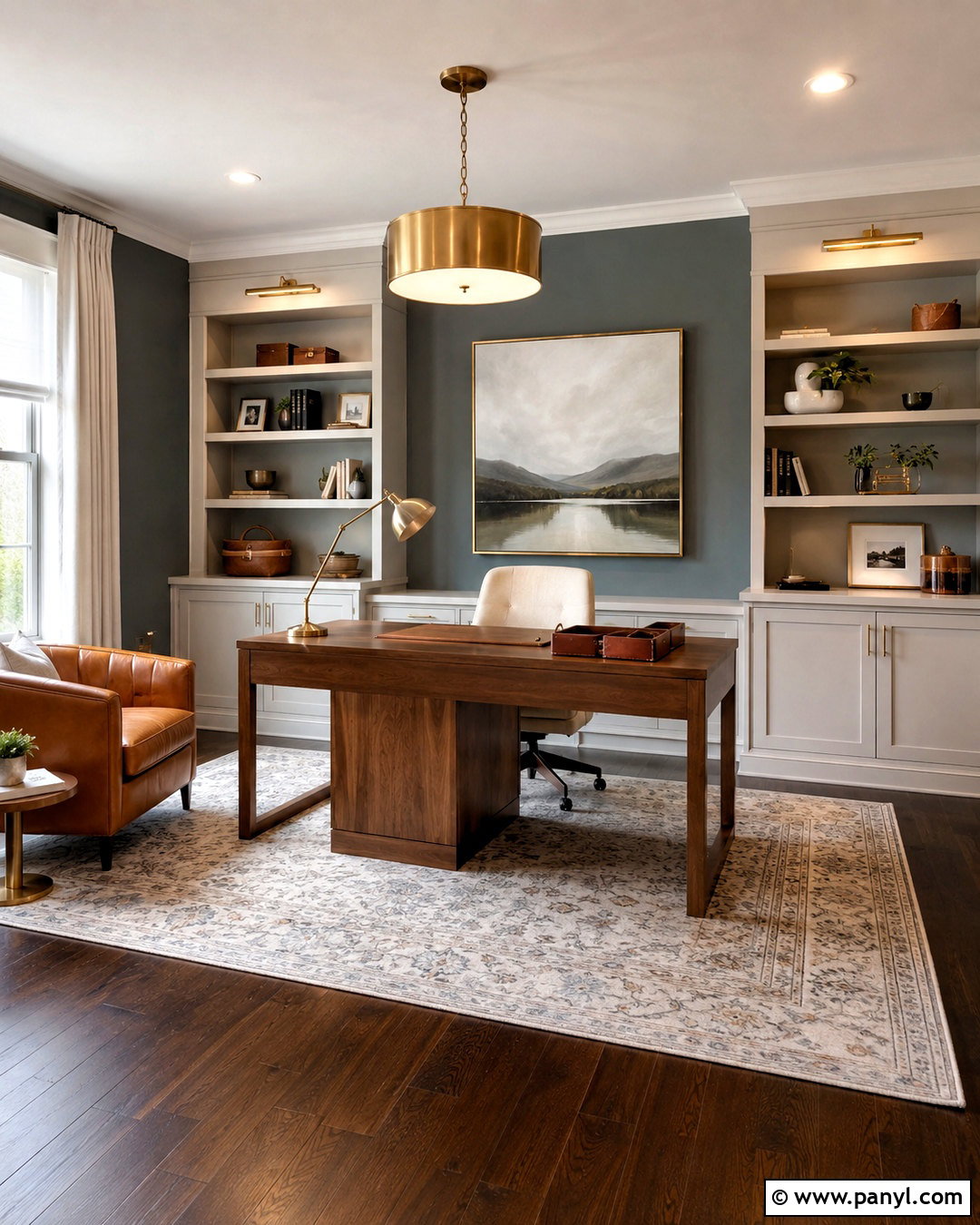
Medium gray walls create a cocooning, tailored effect when paired with noticeably lighter gray flooring. This scheme works well in a home office featuring a walnut desk, black shelving, and a cognac leather chair. Choose a wall gray that shares the floor’s undertone but offers enough value contrast to remain visually separate. Install warm white curtains and add a cream-and-charcoal rug beneath the desk. Brass task lighting and natural wood accessories will keep the space from feeling cold or corporate. A white ceiling provides relief overhead, while matching gray baseboards can make the walls look taller and more streamlined. Limit extra gray furniture and instead use brown, black, ivory, and muted green to produce a complete, layered workspace.
12. Charcoal Walls With Gray Flooring
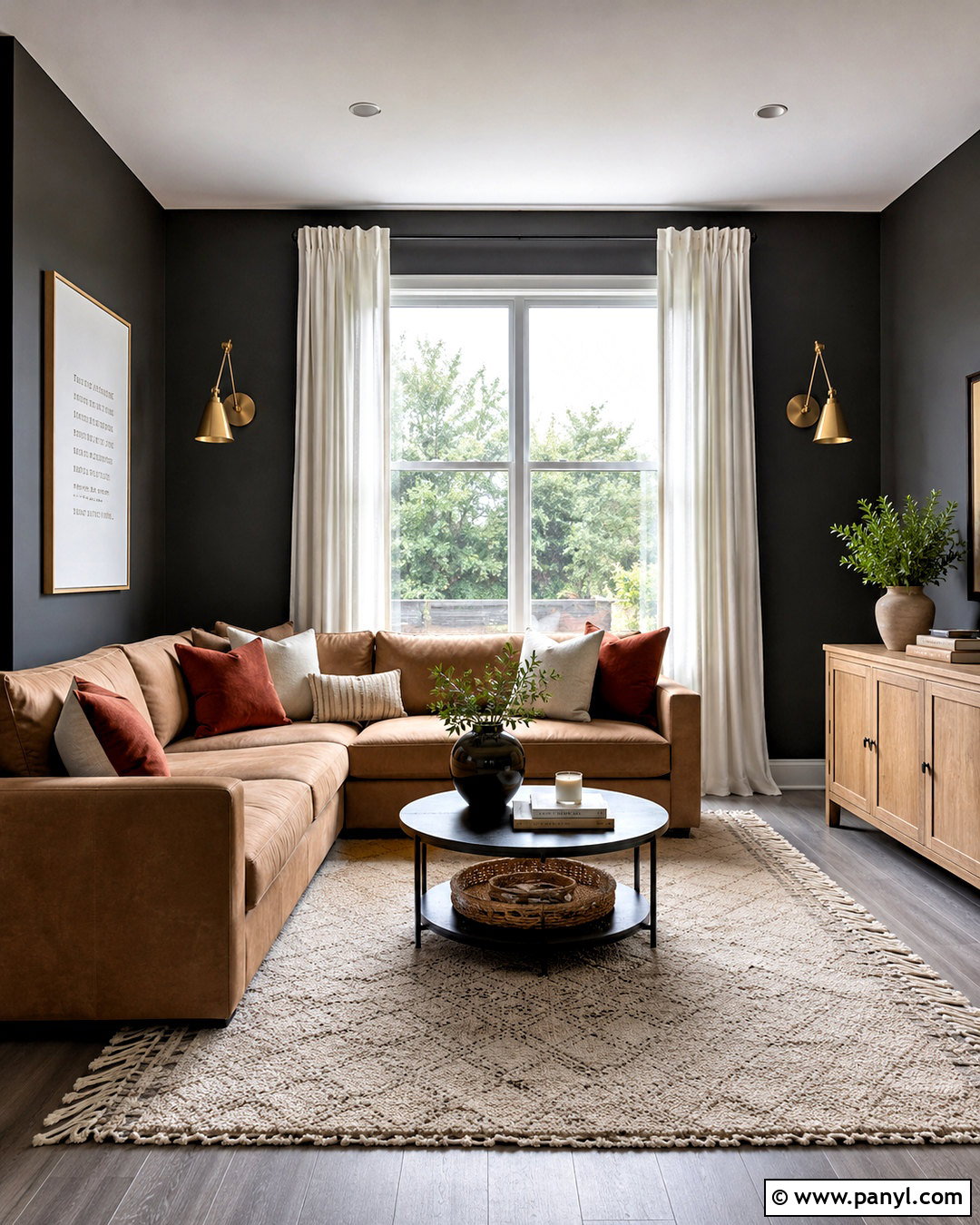
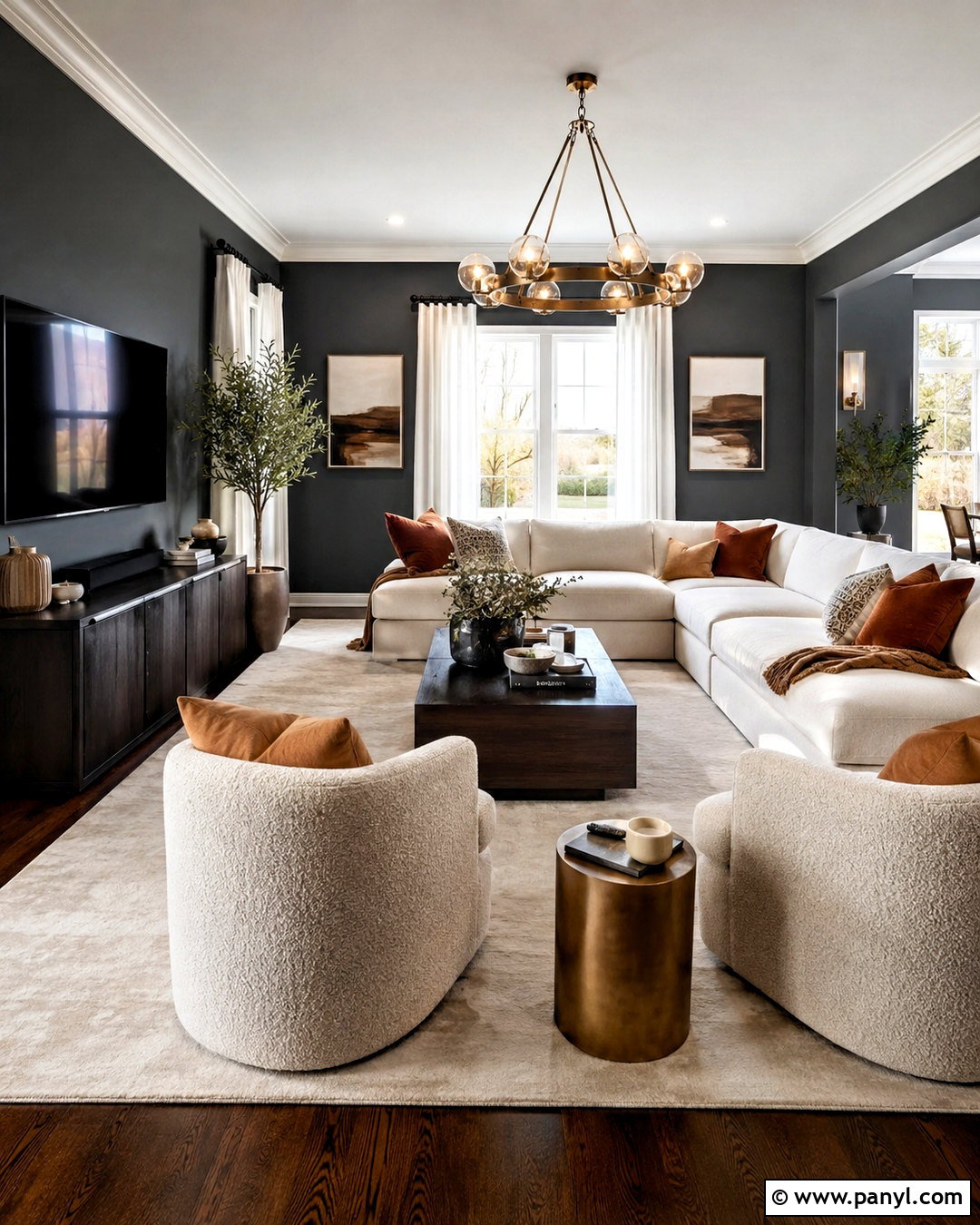
Charcoal walls offer striking contrast against light gray flooring and can make a large room feel more intimate. Use the color in a media room or den with a camel sectional, an oak console, and a cream textured rug. Keep the ceiling warm white if the room is compact, or continue charcoal overhead for a fully enveloping effect in a bright, spacious setting. Add aged brass sconces, ivory curtains, and cushions in rust, tan, and muted blue. The light floor reflects brightness upward, balancing the dark walls. Choose charcoal with a similar blue, green, or brown undertone to the flooring. Avoid relying on black furniture throughout the room; warm wood and pale upholstery are essential for creating dimension and comfortable visual balance.
13. Soft Black Walls With Gray Flooring
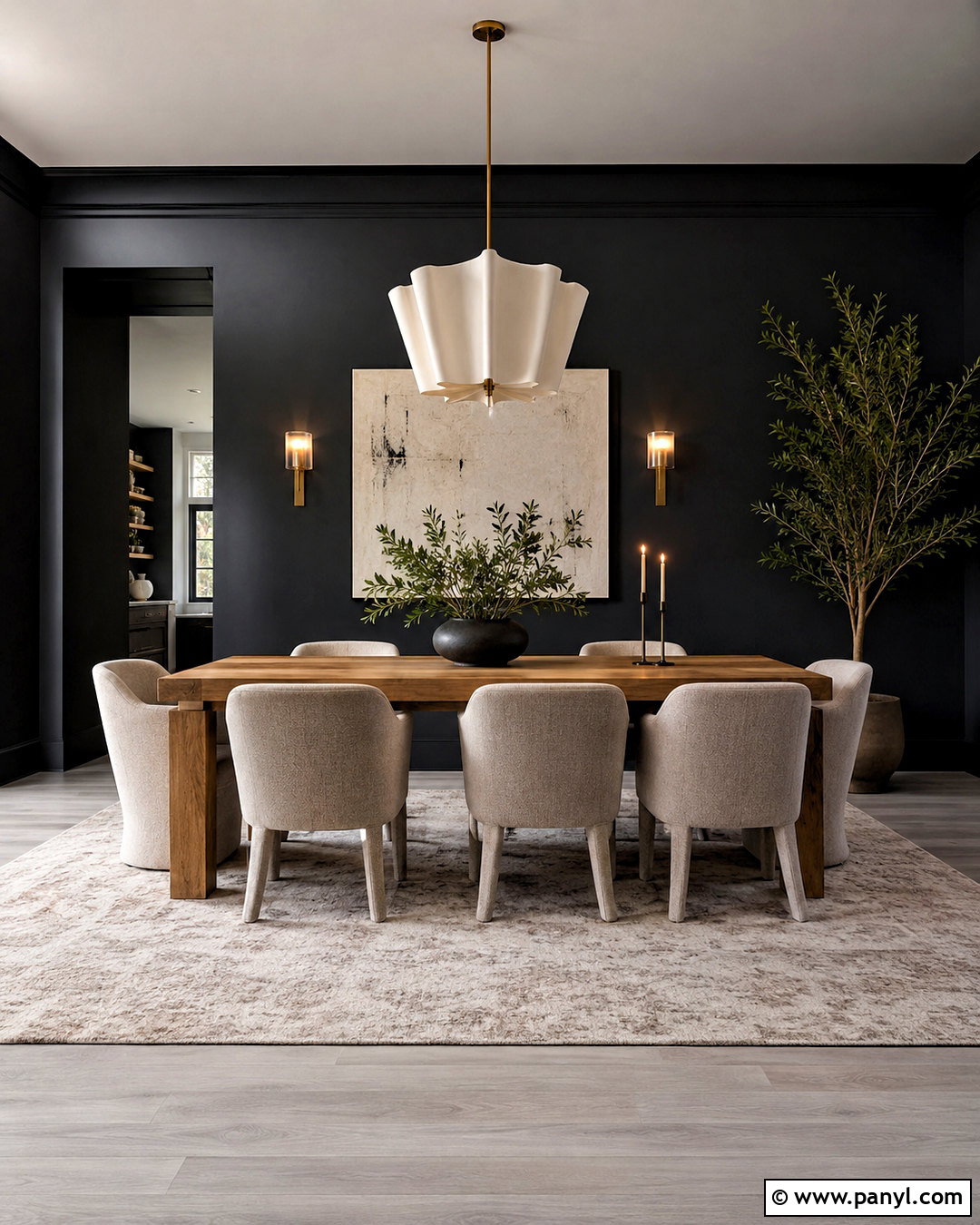
Soft black walls can make gray flooring appear lighter and more refined. Unlike a harsh true black, a softened shade with charcoal, brown, or blue undertones is easier to use across a complete room. Create a dramatic dining space with a medium-oak table, oatmeal upholstered chairs, and a sculptural white pendant. Hang light artwork with generous matting and introduce a faded gray-and-beige rug under the table. Warm metals, natural linen, and greenery prevent the black walls from dominating. Paint the trim the same color for a seamless finish, or use warm white trim for sharper definition. This pairing works best with generous windows and light gray floors, which supply enough visual brightness to balance the deep, sophisticated wall treatment.
14. Navy Blue Walls With Gray Flooring
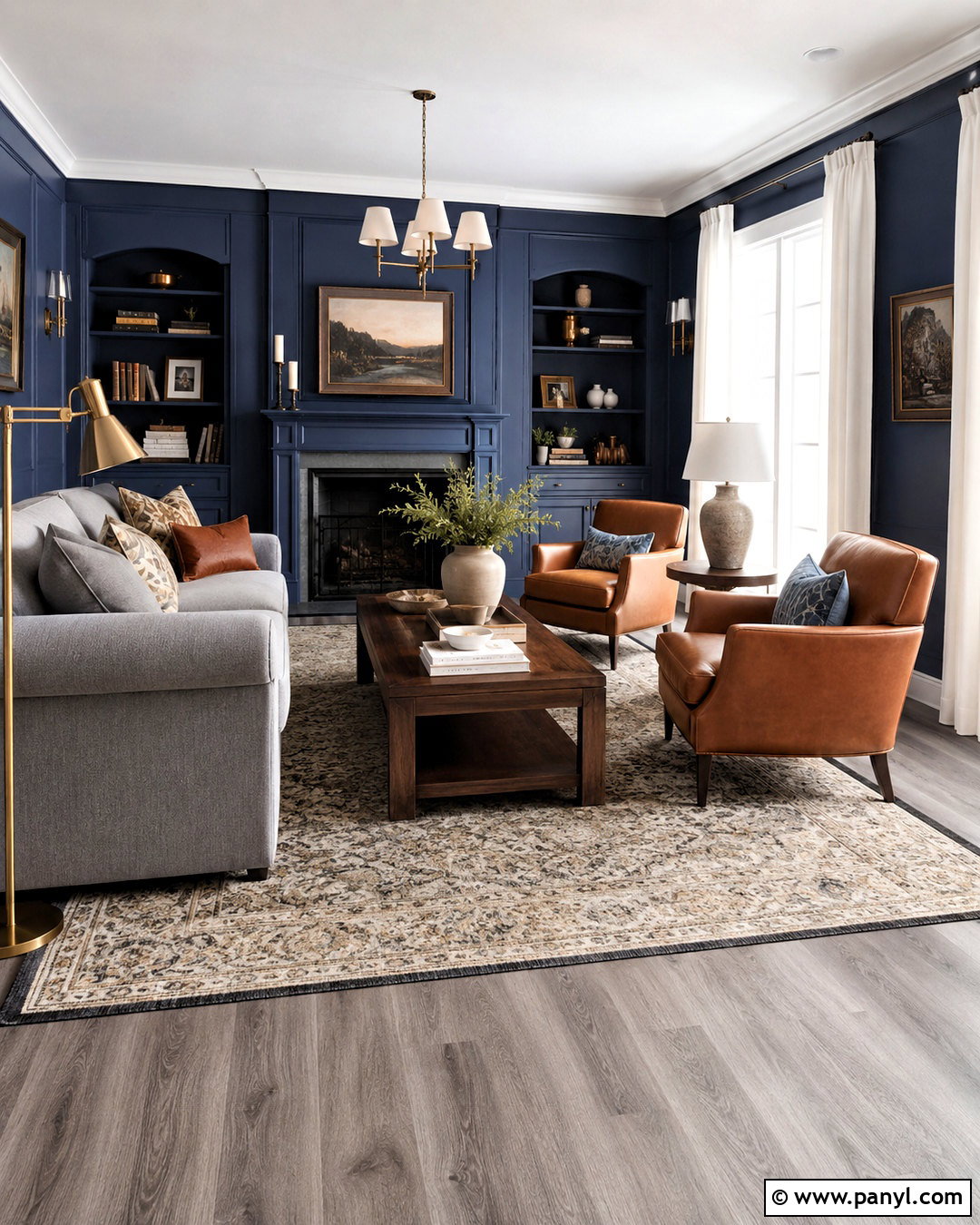
Navy blue walls give gray floors a rich, classic partner while keeping the palette cool and coordinated. Design a living room with navy paint, a light gray sofa, cognac leather accent chairs, and a medium-tone walnut coffee table. Add a cream rug with subtle blue and gray patterning to brighten the floor area. White curtains, warm brass lamps, and restrained red or rust accents can introduce contrast. Choose a navy with slightly muted undertones rather than an intensely bright blue, especially beside weathered gray flooring. In a small room, keep the ceiling and trim warm white to preserve openness. The final design feels substantial and balanced because pale textiles and warm wood counter the weight of the dark blue walls.
15. Slate Blue Walls With Gray Flooring
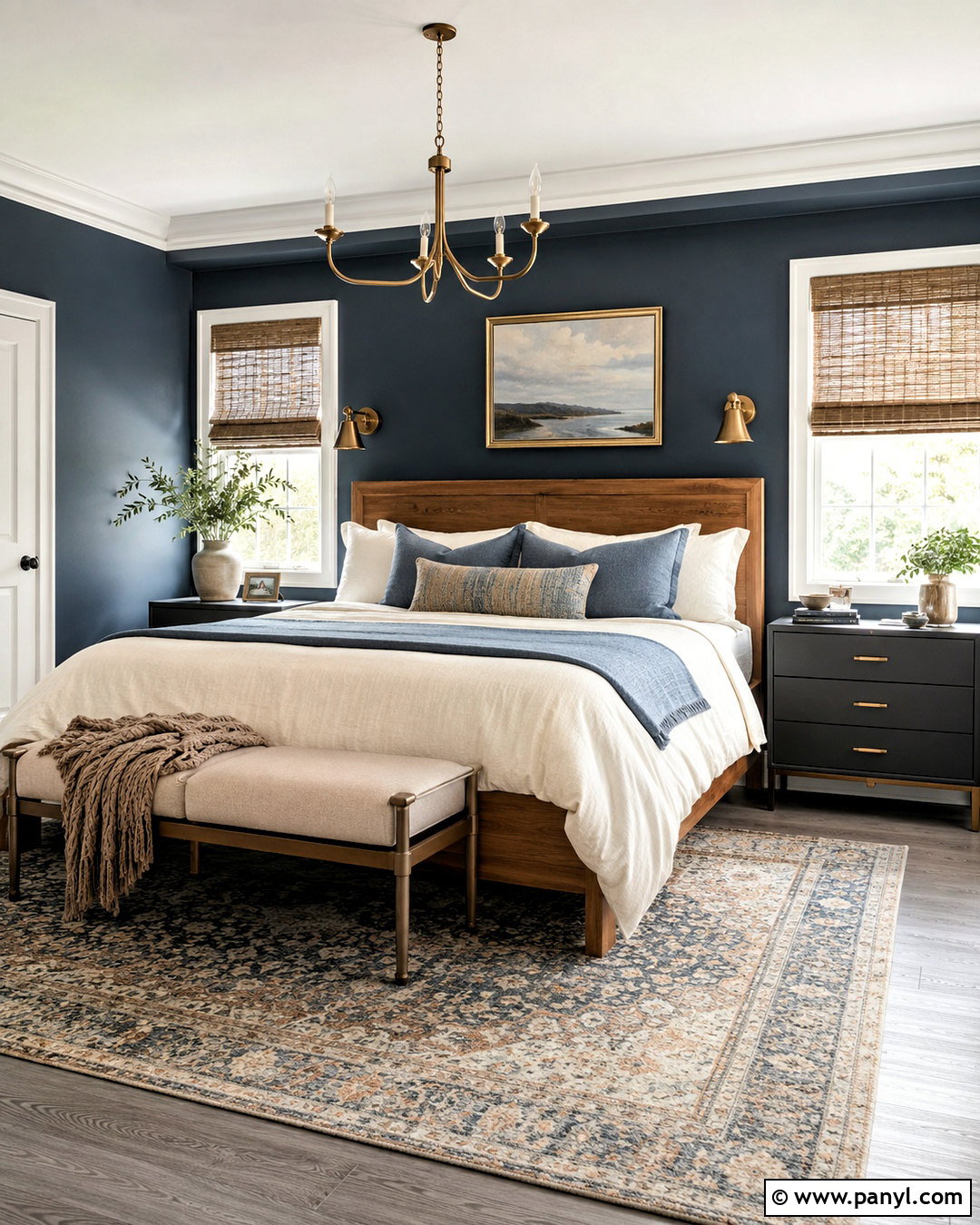
Slate blue walls echo the cool character of gray flooring while adding more color than another neutral. This combination is ideal for a quiet bedroom with a warm wood bed, ivory bedding, and charcoal nightstands. Layer the bed with faded blue, taupe, and cream textiles to link the walls, floor, and furniture. Use woven shades under white curtains to bring natural warmth to the windows. A vintage-pattern rug containing muted blue and gray will soften the hard flooring and anchor the bed. Slate blue can read gray in dim light, so test it throughout the day. Select a softened shade with enough blue pigment to remain recognizable. Brass sconces and small terracotta accessories complete the room with controlled warmth.
16. Dusty Blue Walls With Gray Flooring
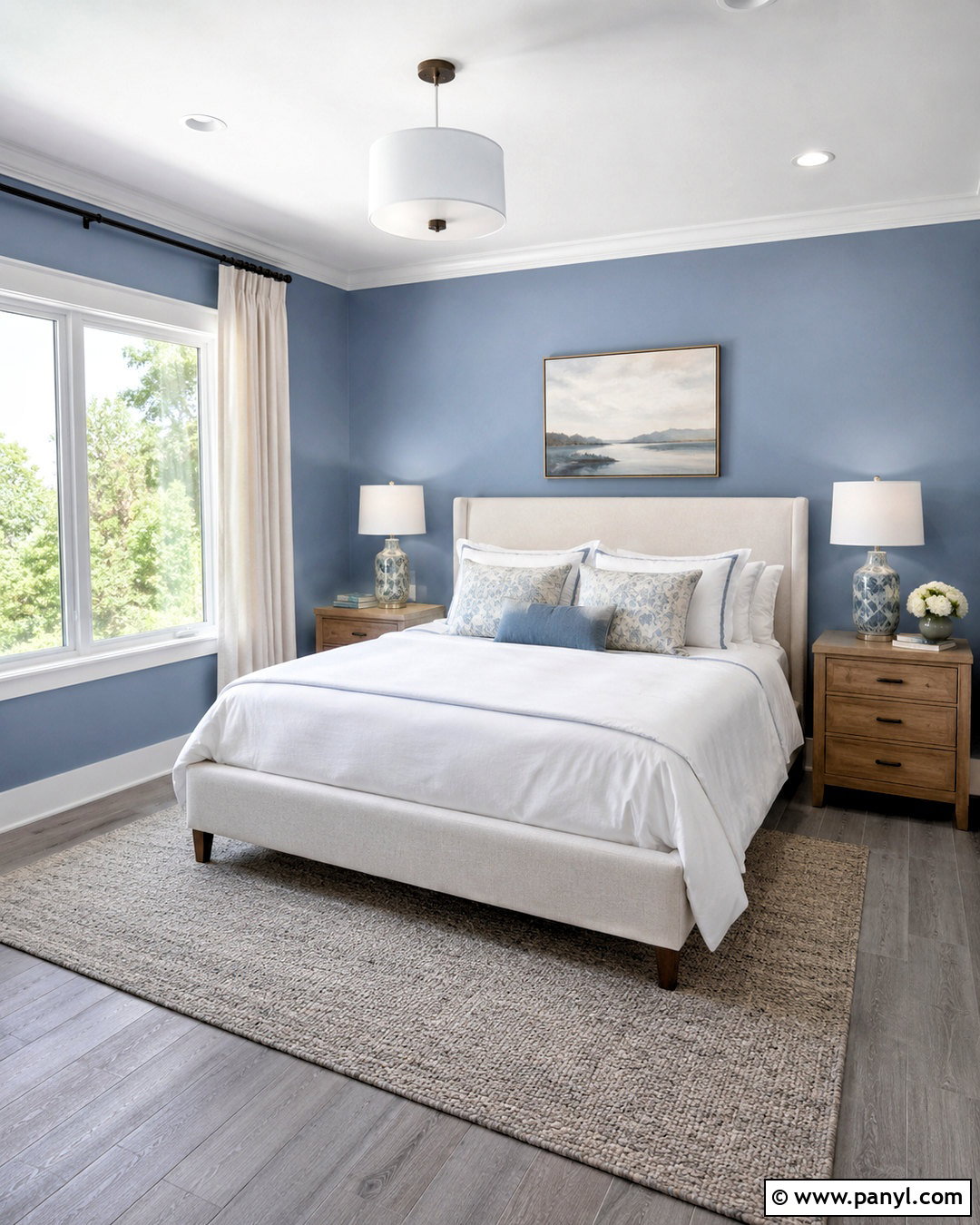
Dusty blue walls create a soft, livable palette beside cool or neutral gray floors. For a comfortable guest room, combine the wall color with an upholstered cream bed, oak nightstands, and white bedding trimmed with muted blue. Add a gray-and-tan rug that exposes a border of flooring around the room. Linen curtains, ceramic lamps, and a few warm brown accessories keep the pale blue from feeling overly cool. Dusty blue is less demanding than a bright sky blue because its gray undertone relates naturally to the floor. Keep trim clean white for freshness, and introduce black only in thin lines, such as frames or curtain rods. The complete scheme feels calm, collected, and suitable for both modern and traditional furnishings.
17. Pale Blue Walls With Gray Flooring
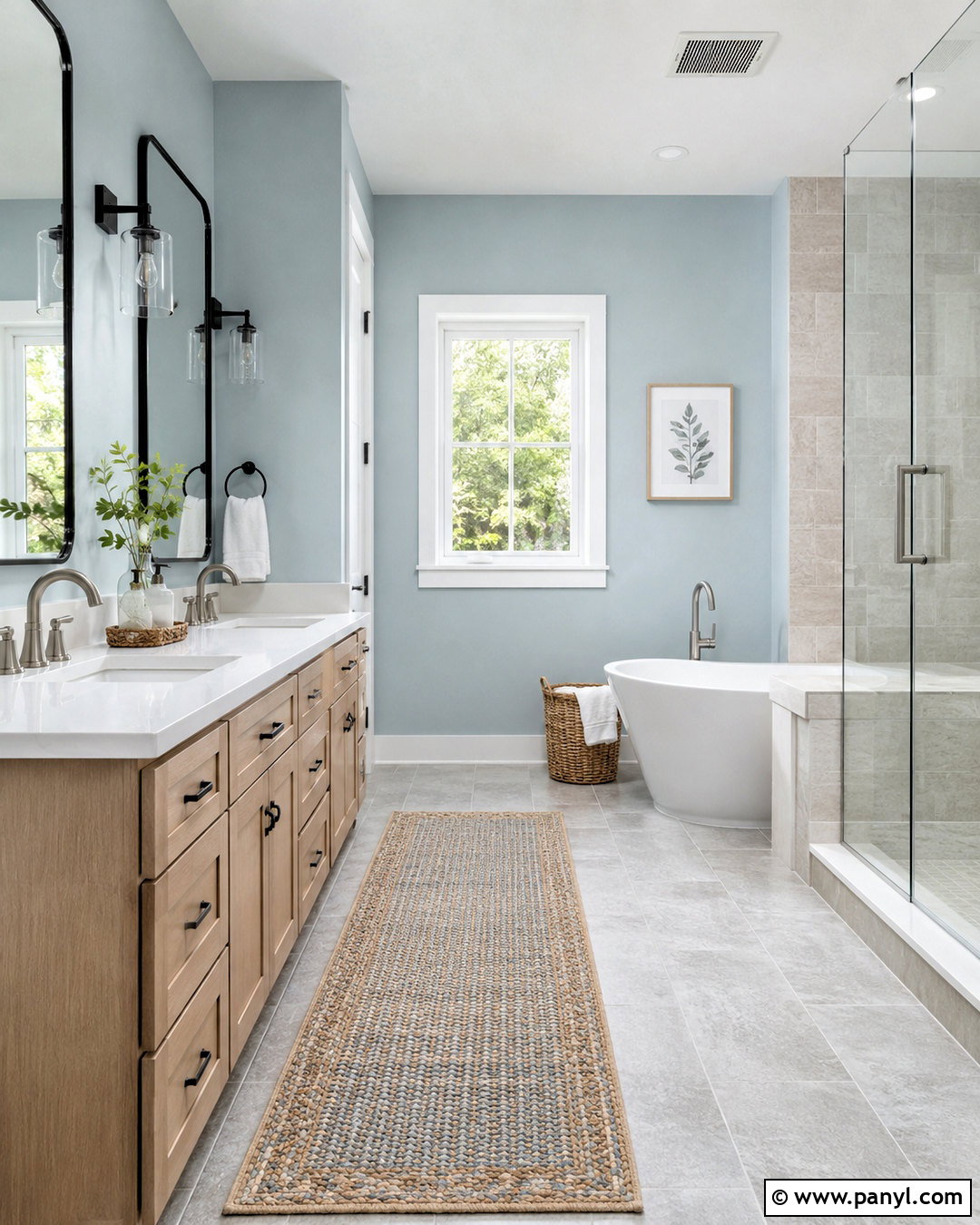
Pale blue walls can make a room with gray flooring feel open and refreshed, particularly when natural light is limited. Use this combination in a bathroom with a white oak vanity, white quartz countertop, brushed nickel fixtures, and soft white towels. A woven runner containing beige and blue adds warmth while leaving the gray tile visible. Keep the ceiling and trim crisp white, and choose simple mirrors with thin black or nickel frames. The blue should be muted enough to coordinate with the flooring rather than resemble a bright nursery color. If the floor has warm brown undertones, add wood and beige accessories to bridge the temperature difference. The completed bathroom feels clean and peaceful without becoming cold or clinically white.
18. Teal Walls With Gray Flooring
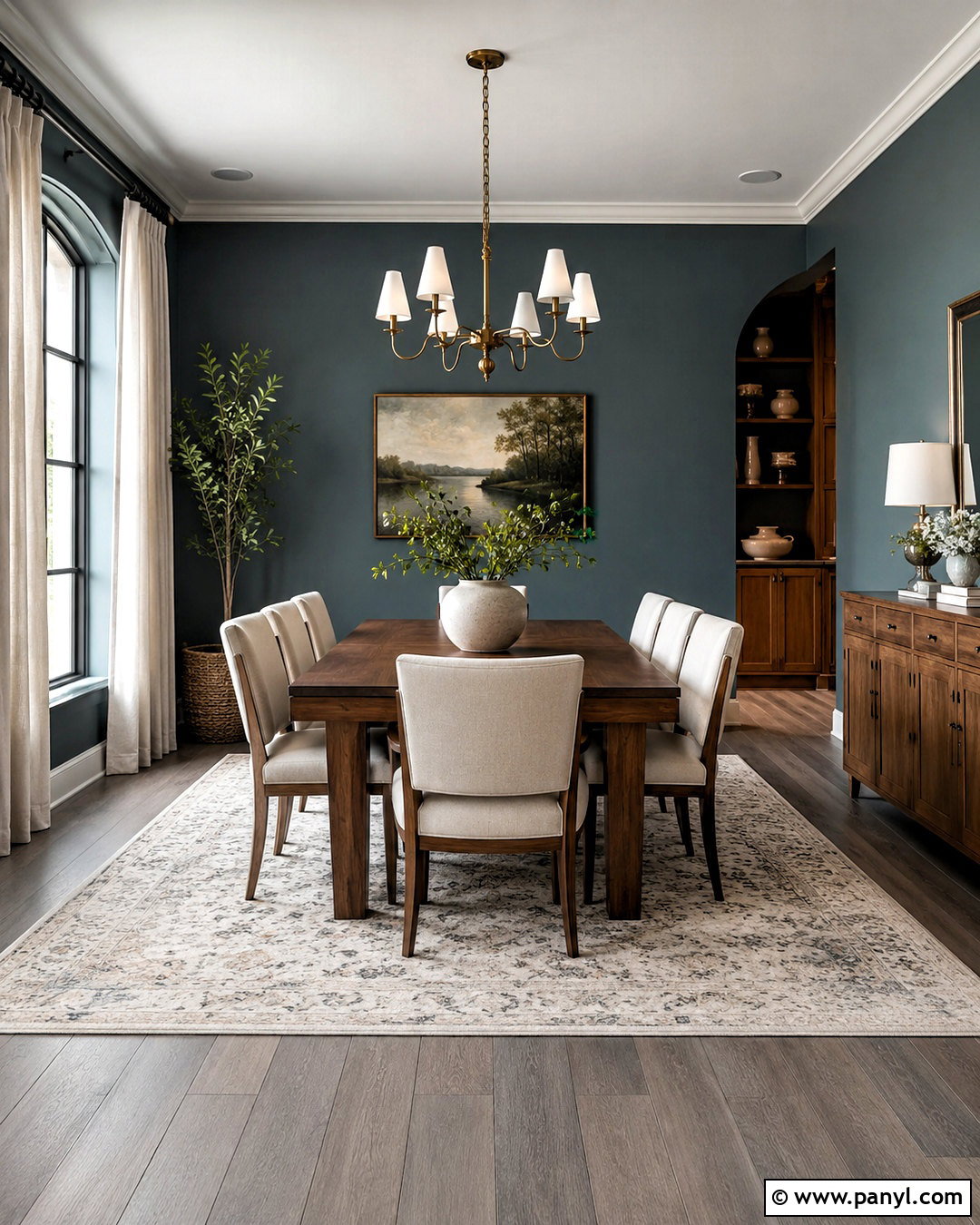
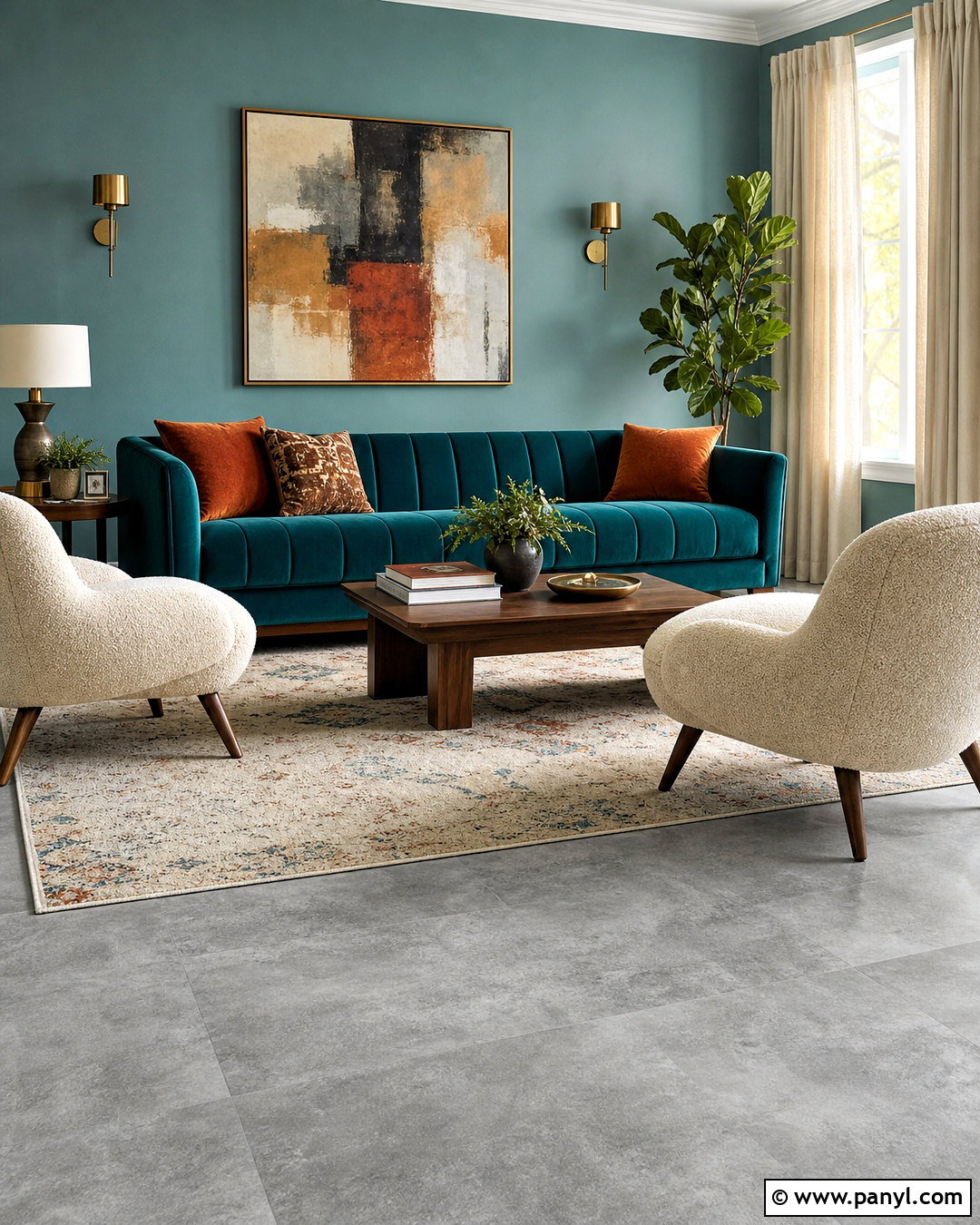
Teal walls create an energetic yet sophisticated contrast with gray flooring. A deep, muted teal works particularly well in a dining room with a walnut table, cream chairs, and a large gray-and-ivory rug. Introduce aged brass through the chandelier and cabinet hardware, then repeat warm wood in a sideboard or picture frames. Light curtains and a warm white ceiling help balance the saturated walls. Teal contains both blue and green, allowing it to connect with many cool gray flooring undertones. For warm gray floors, include rust, cognac, or terracotta accessories to bridge the combination. Avoid adding several other strong colors. Let teal remain dominant while gray, cream, wood, and brass complete the room in a controlled, cohesive way.
19. Sea Glass Walls With Gray Flooring
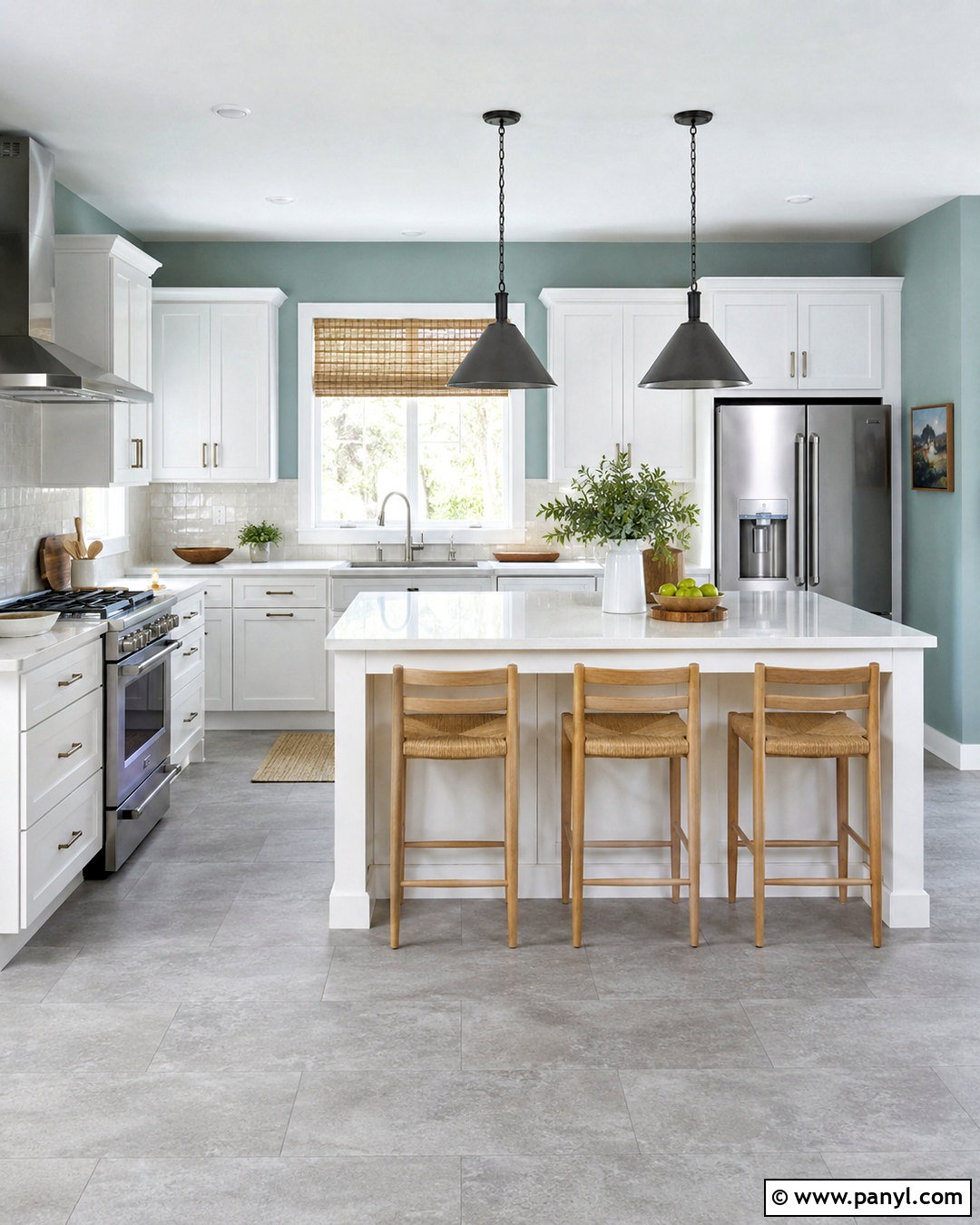
Sea glass walls bring a gentle blend of blue, green, and gray to rooms with cool flooring. This shade is well suited to a light-filled kitchen with soft white cabinets, brushed nickel hardware, and pale oak counter stools. Use white quartz counters and a simple handmade tile backsplash to keep the palette fresh. Natural woven shades and light wood cutting boards provide enough warmth to prevent the kitchen from looking icy. If the gray flooring has strong blue undertones, sea glass will create a smooth, low-contrast transition. Add charcoal pendant lights for definition and a washable runner containing muted green, cream, and gray. The full design feels clean and relaxed, but the layered materials keep it from appearing overly themed or decorative.
20. Sage Green Walls With Gray Flooring
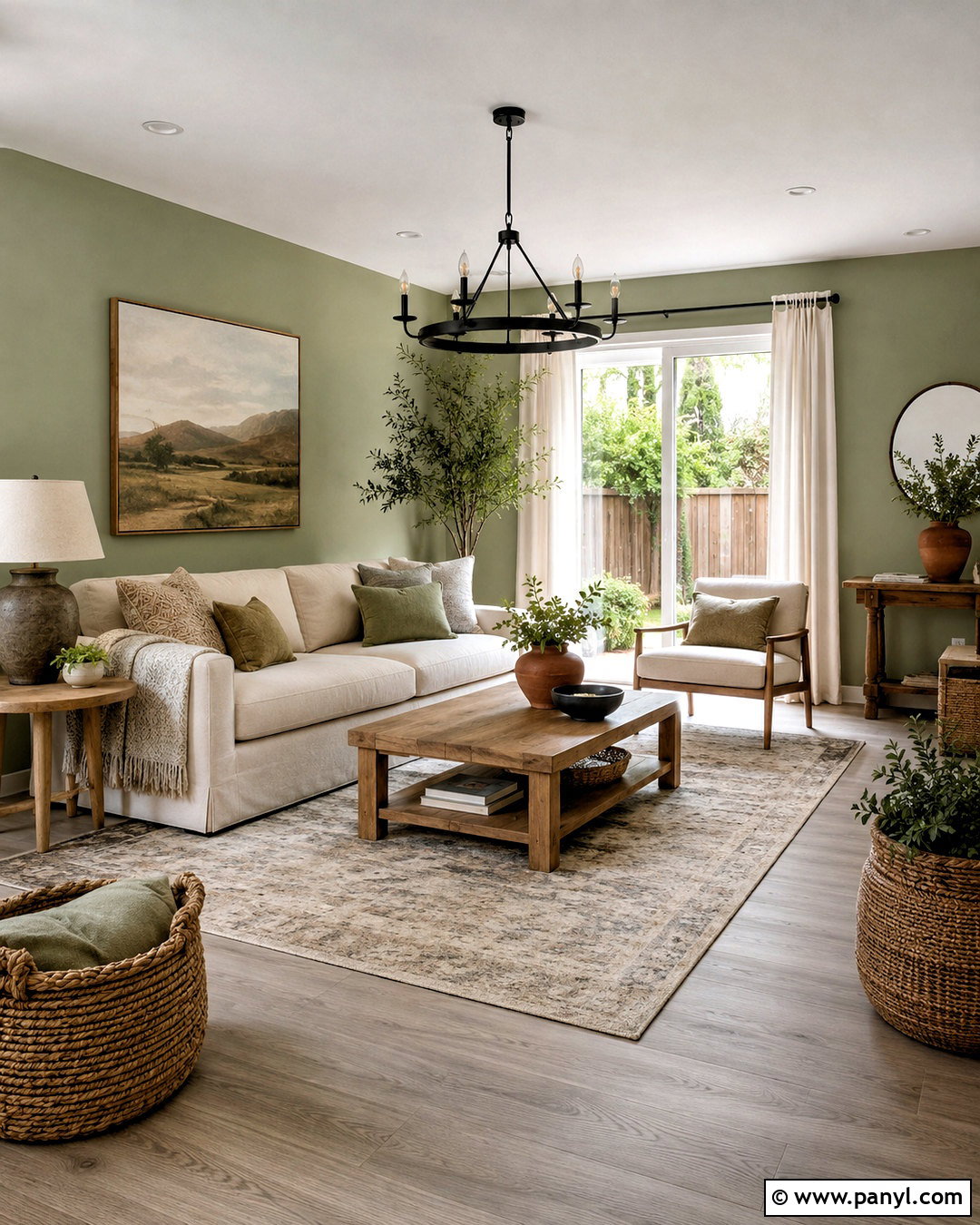
Sage green walls soften gray flooring by introducing a muted color drawn from nature. Create a balanced living room with sage paint, a cream sofa, warm oak tables, and linen curtains. Place a large patterned rug containing sage, gray, beige, and faded rust over part of the floor. Black metal lighting adds definition, while terracotta pottery and woven baskets supply warmer texture. Sage works especially well with gray floors that have green, greige, or neutral undertones. For blue-gray flooring, select a cooler sage rather than one that appears strongly yellow. Use warm white trim and keep upholstery relatively light. This complete combination feels current but not overly trendy, making it practical for a room that needs to remain adaptable over time.
21. Olive Green Walls With Gray Flooring
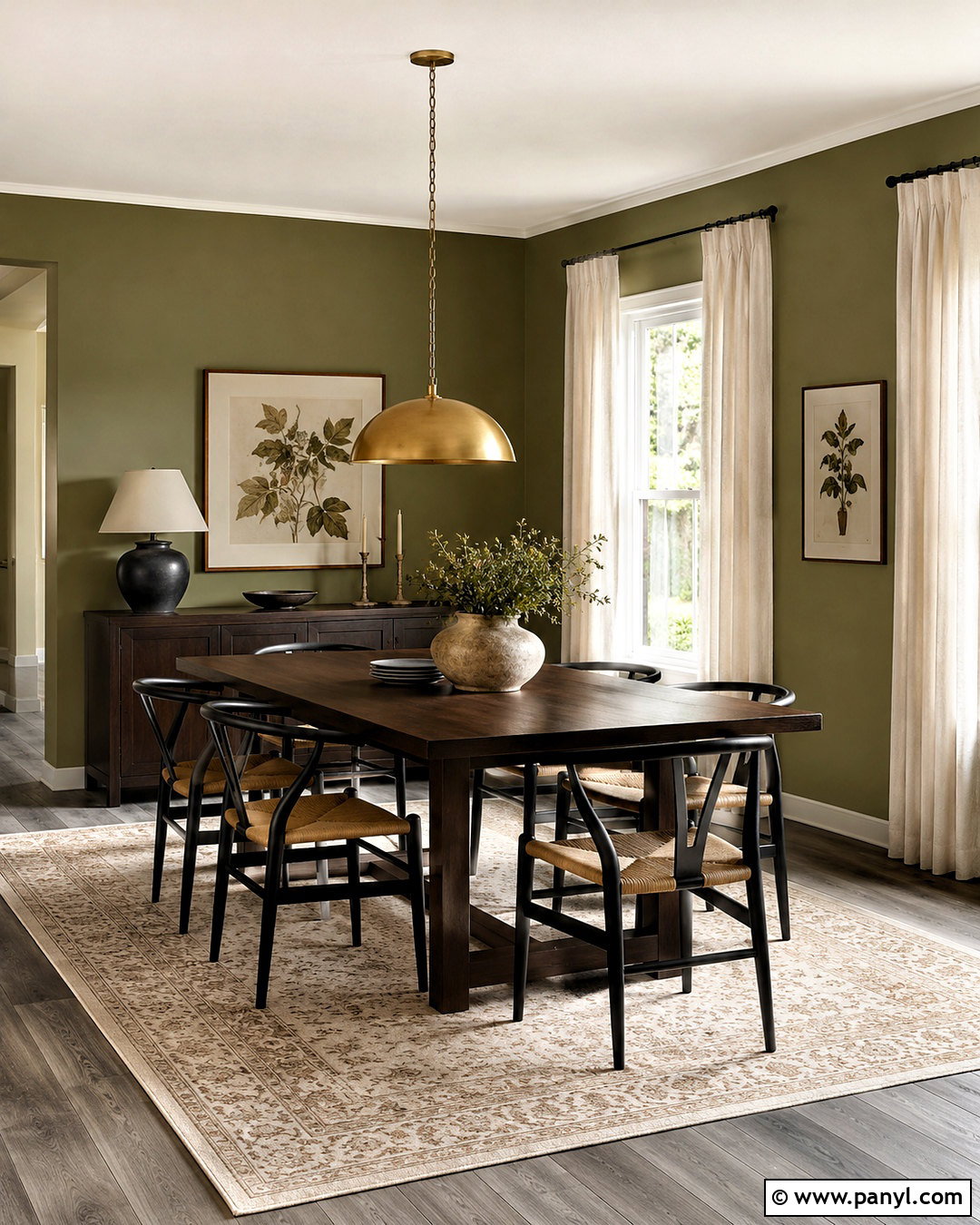
Olive green walls give gray flooring a warmer, earthier personality. This combination can transform a dining room with a dark wood table, woven-seat chairs, and an ivory rug patterned with gray and olive. Add a brass pendant, linen curtains, and framed botanical artwork with generous cream matting. Olive is most harmonious with warm gray or greige floors, although cognac leather and walnut can help it work beside cooler flooring. Choose a muted olive with brown or gray undertones instead of a bright yellow-green. Soft white on the ceiling prevents the space from becoming too heavy. The complete palette feels grounded and comfortable, with natural textures supporting the strong wall color and pale textiles preserving enough brightness throughout the room.
22. Forest Green Walls With Gray Flooring
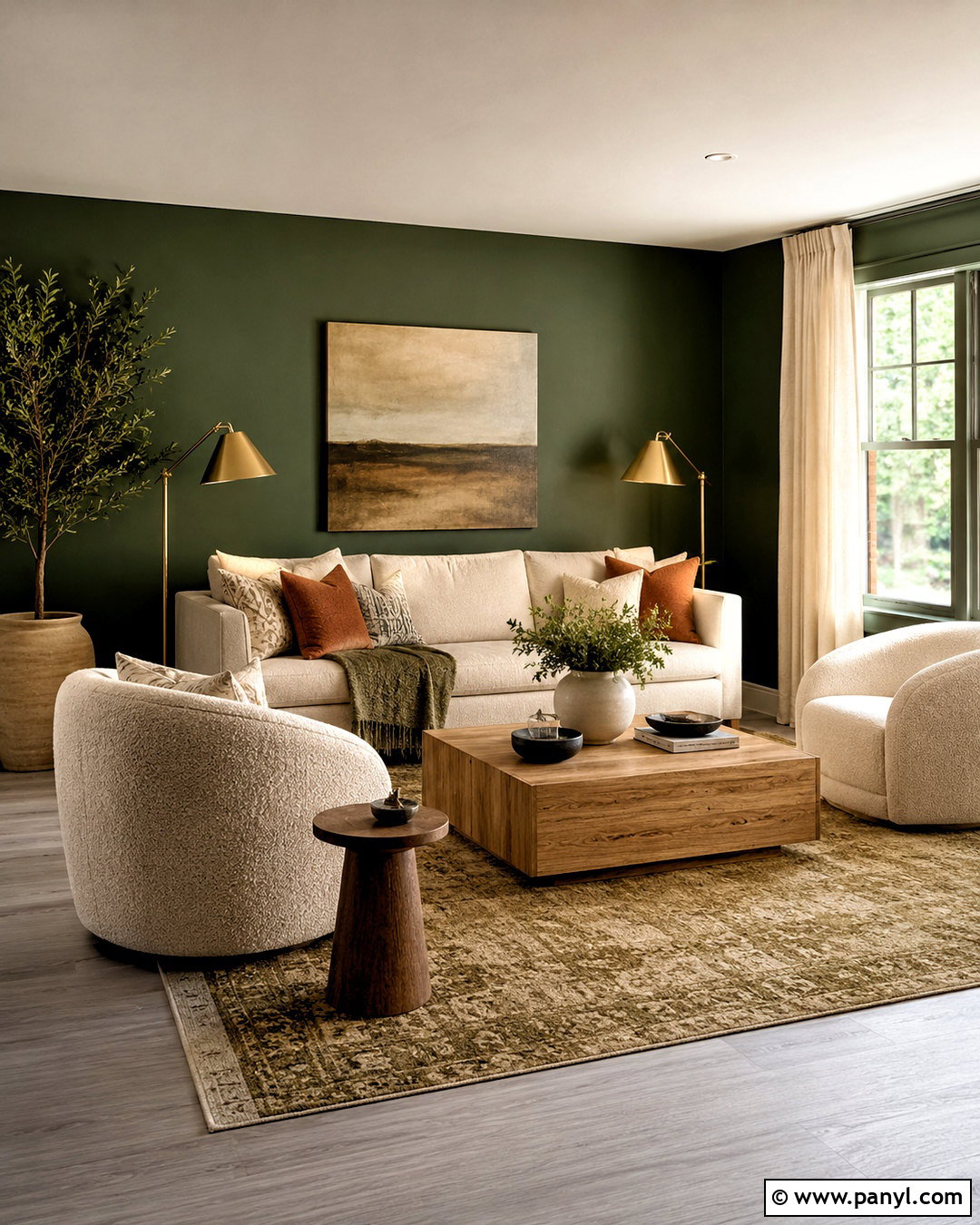
Forest green walls provide deep contrast against pale gray floors and create a strong backdrop for light furniture. In a living room, combine the walls with an oatmeal sofa, a natural oak coffee table, and cream boucle chairs. Use a gray, beige, and green rug to anchor the seating arrangement while connecting the walls to the floor. Brass lamps, warm wood frames, and rust-colored cushions introduce needed warmth. Keep the window treatments light and simple so daylight can balance the dark paint. Forest green looks especially cohesive when gray flooring carries subtle green undertones, but it can also complement neutral concrete. Limit additional dark furniture, since pale upholstery and warm materials are what make this dramatic wall-and-floor combination comfortable and visually balanced.
23. Eucalyptus Green Walls With Gray Flooring
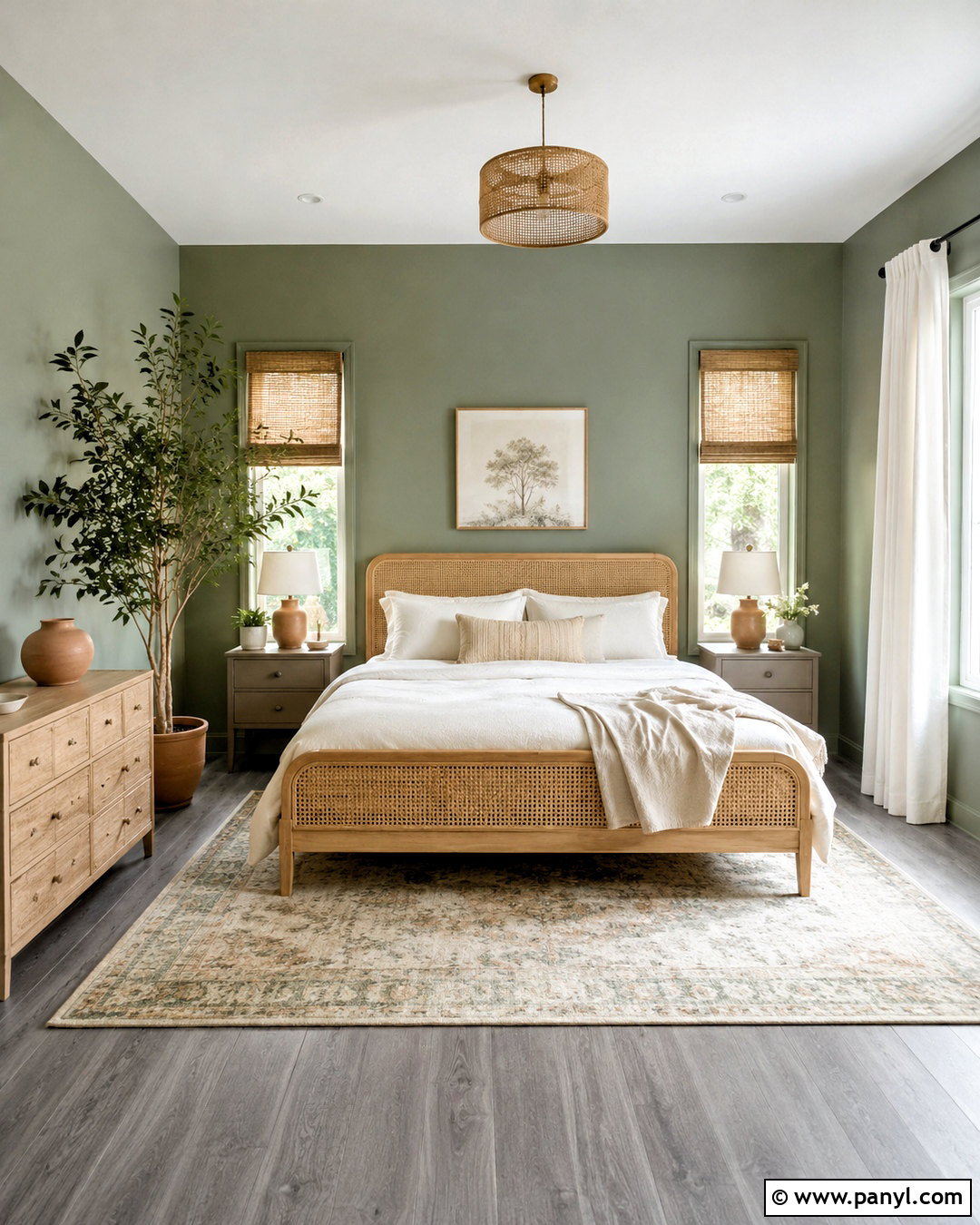
Eucalyptus green offers more softness than sage and less intensity than forest green, making it an easy wall color for gray floors. Use it in a bedroom with a cane or light oak bed, ivory linen bedding, and warm gray nightstands. Layer in a cream rug with muted green detailing, then add woven shades and soft white curtains. Small accents in terracotta, tan, and brushed brass provide warmth without overwhelming the peaceful palette. Eucalyptus walls are particularly effective beside medium gray flooring because the two surfaces have similar softness while remaining clearly different. Choose paint with a restrained gray base and avoid overly minty versions. The finished bedroom feels natural, calm, and carefully connected through repeated colors and organic materials.
24. Muted Mint Walls With Gray Flooring
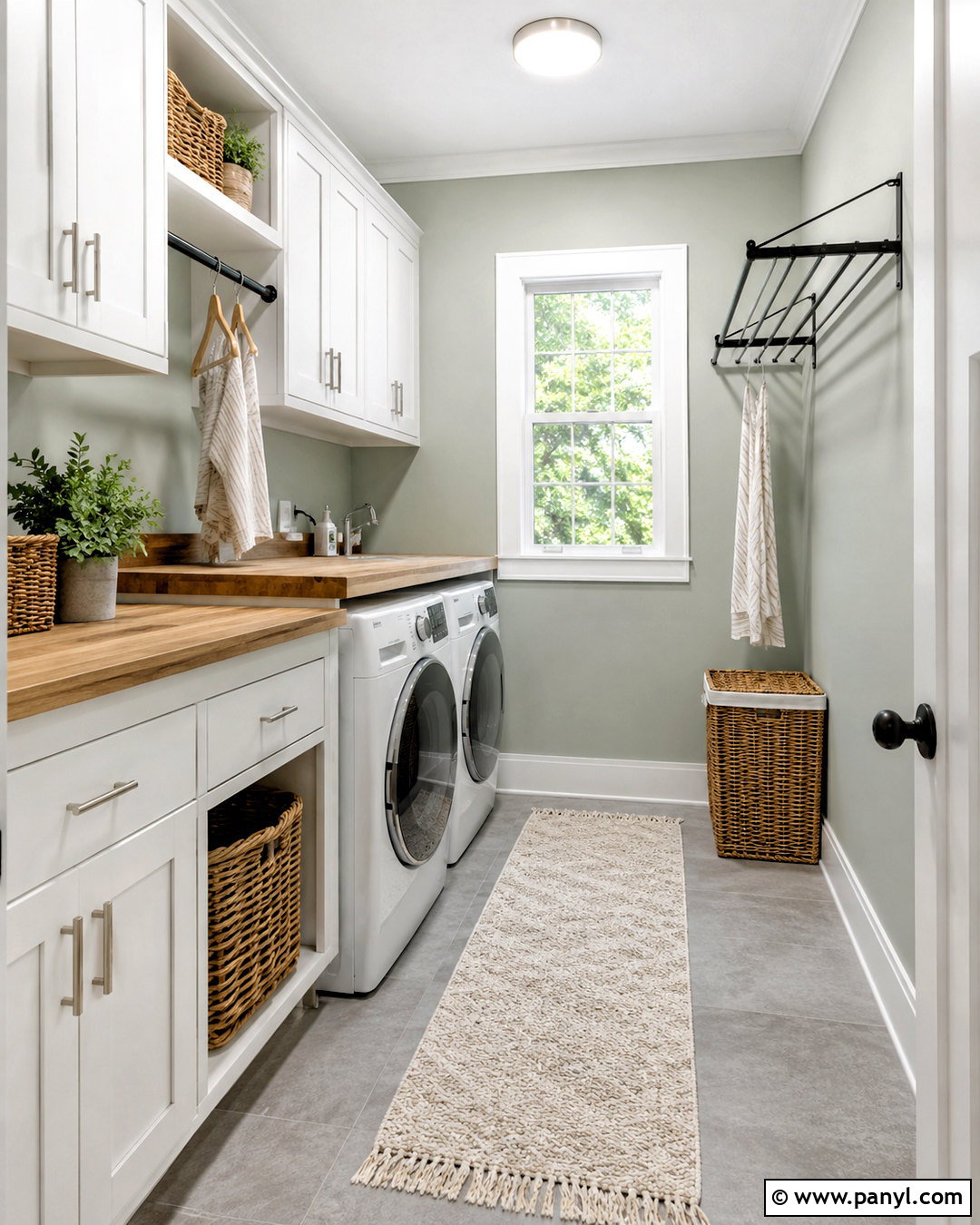
Muted mint walls can brighten gray flooring without producing an overly sweet or youthful room. This pairing works well in a compact laundry room with white shaker cabinets, a butcher-block counter, and brushed nickel hardware. Add woven baskets, clear storage containers, and a narrow gray-and-cream runner to make the practical space feel finished. Choose mint with noticeable gray undertones so it relates to the flooring. Bright white trim and ceiling paint maintain a clean appearance, while natural wood prevents the combination from feeling sterile. A matte black drying rail or light fixture adds a small amount of contrast. The result is a cheerful, organized room in which cabinetry, storage, flooring, and wall color all contribute to one coherent design.
25. Blush Pink Walls With Gray Flooring
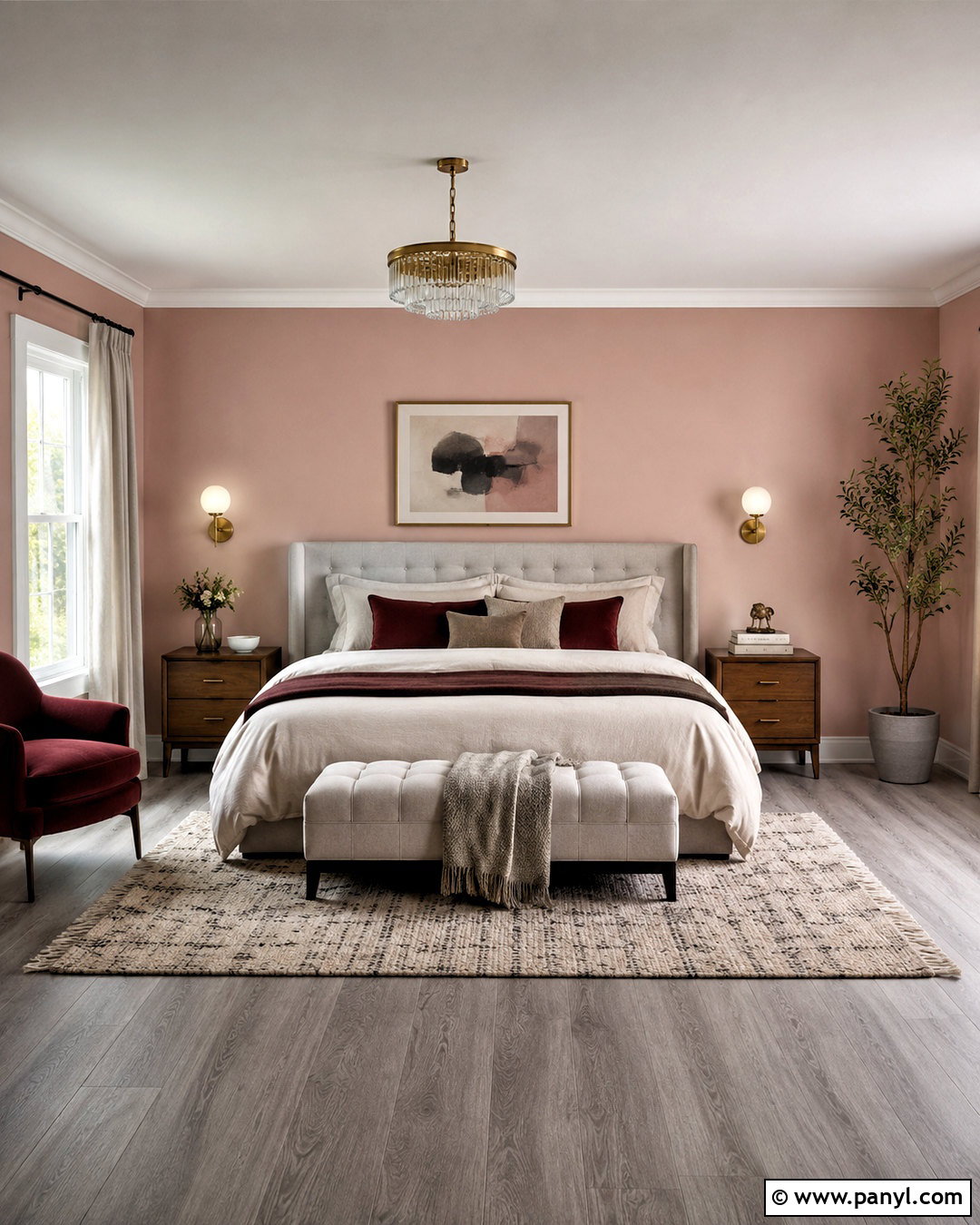
Blush pink walls offer a gentle warm contrast to gray floors, especially in a bedroom or dressing area. Choose a dusty, muted blush rather than a bright bubblegum shade. Pair it with a light gray upholstered bed, walnut nightstands, and bedding in white, taupe, and soft rose. A cream rug with subtle charcoal patterning will connect the pale walls to the floor. Add brass sconces, linen curtains, and one or two deep burgundy accents for depth. Blush can soften cool gray flooring, but warm wood is important for bridging the two colors. Keep the trim warm white and avoid covering the room with pink accessories. The finished space should feel layered and mature, with blush functioning as a quiet background.
26. Dusty Rose Walls With Gray Flooring
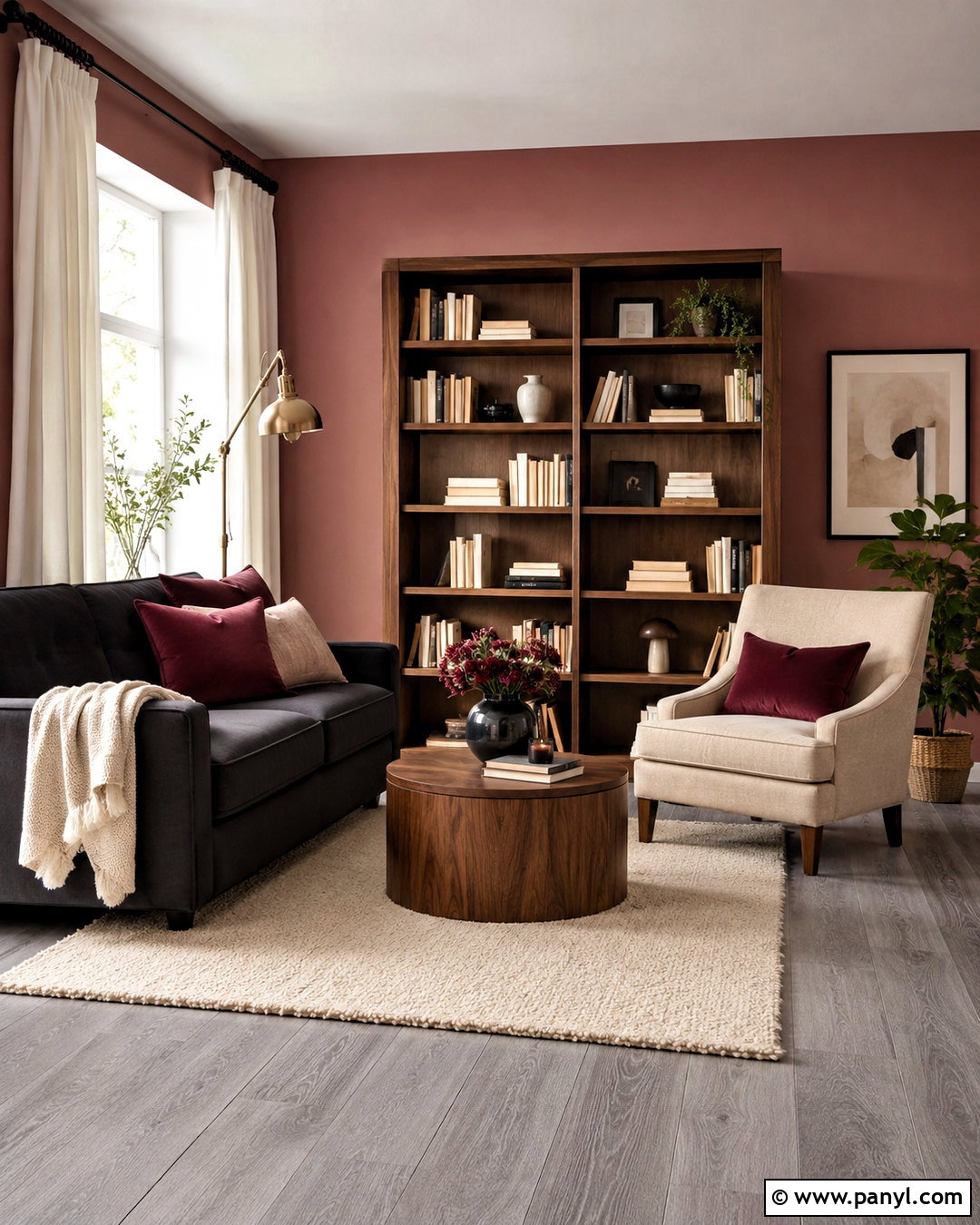
Dusty rose walls create a richer, more grounded look than pale blush while still warming gray flooring. Design a reading room with rose-colored walls, a charcoal sofa, a walnut bookcase, and a cream wool rug. Add an oatmeal accent chair, aged brass floor lamp, and pillows featuring gray, burgundy, and muted pink. Dusty rose contains gray or brown undertones, which help it coordinate with both cool and warm flooring. White curtains and a soft white ceiling keep the room from becoming visually heavy. Use dark accents selectively so the rose remains clear and the gray floor retains definition. This complete palette feels comfortable and distinctive, offering color without the intensity of red or the sweetness of a brighter pink treatment.
27. Mauve Walls With Gray Flooring
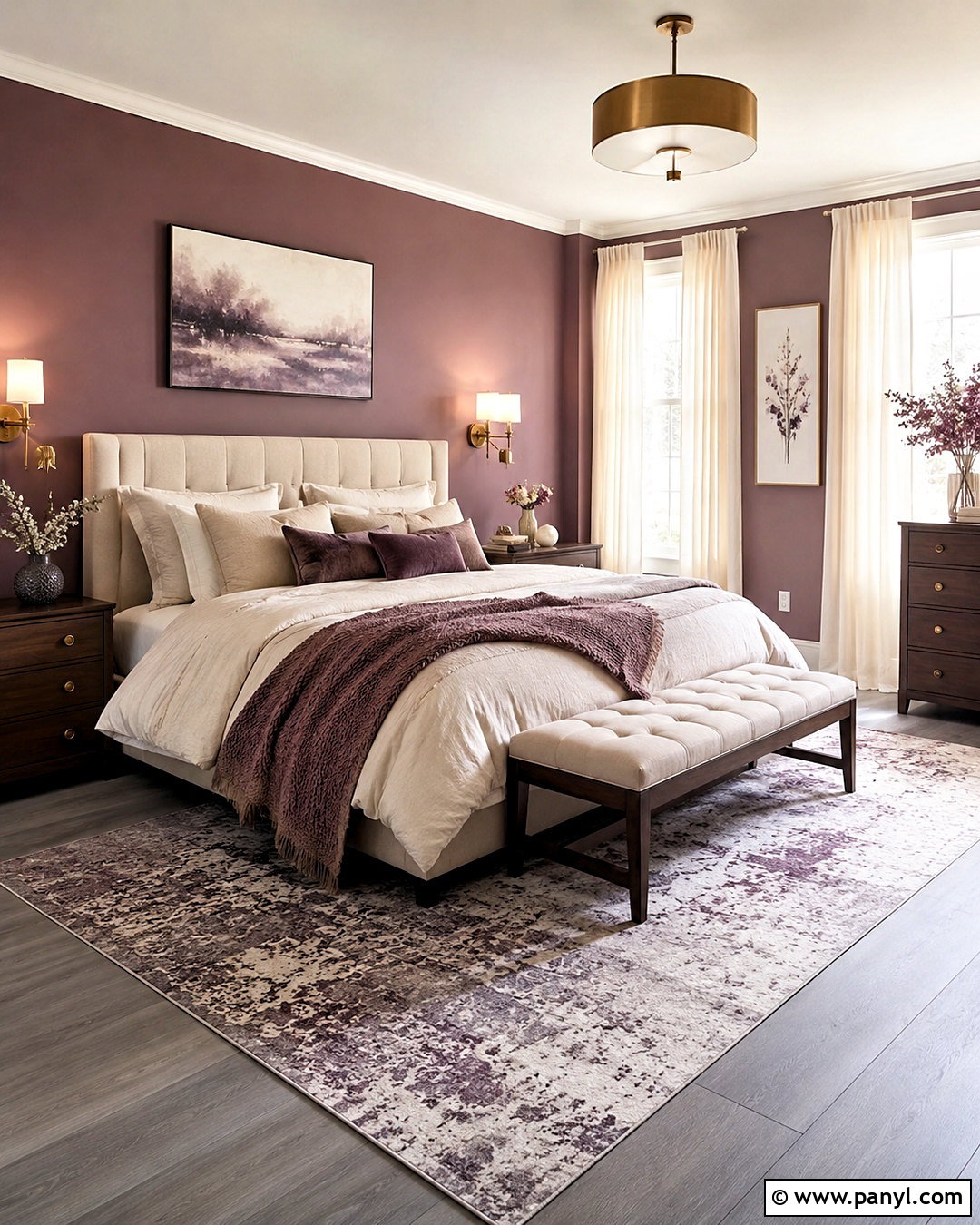
Mauve walls pair naturally with gray flooring that contains subtle violet, taupe, or brown undertones. Create a sophisticated bedroom with muted mauve paint, an oatmeal upholstered headboard, dark walnut furniture, and layered ivory bedding. Add a large rug combining gray, cream, and faded plum, leaving enough flooring exposed to maintain contrast. Brushed brass lighting and warm white curtains will prevent the room from appearing dull. Choose a restrained mauve that reads as a softened neutral rather than a vivid purple. If the floor leans strongly blue, add beige textiles and warm wood to balance the cooler surfaces. The completed room feels gently colorful and polished, with each material supporting the nuanced relationship between the mauve walls and gray flooring.
28. Terracotta Walls With Gray Flooring
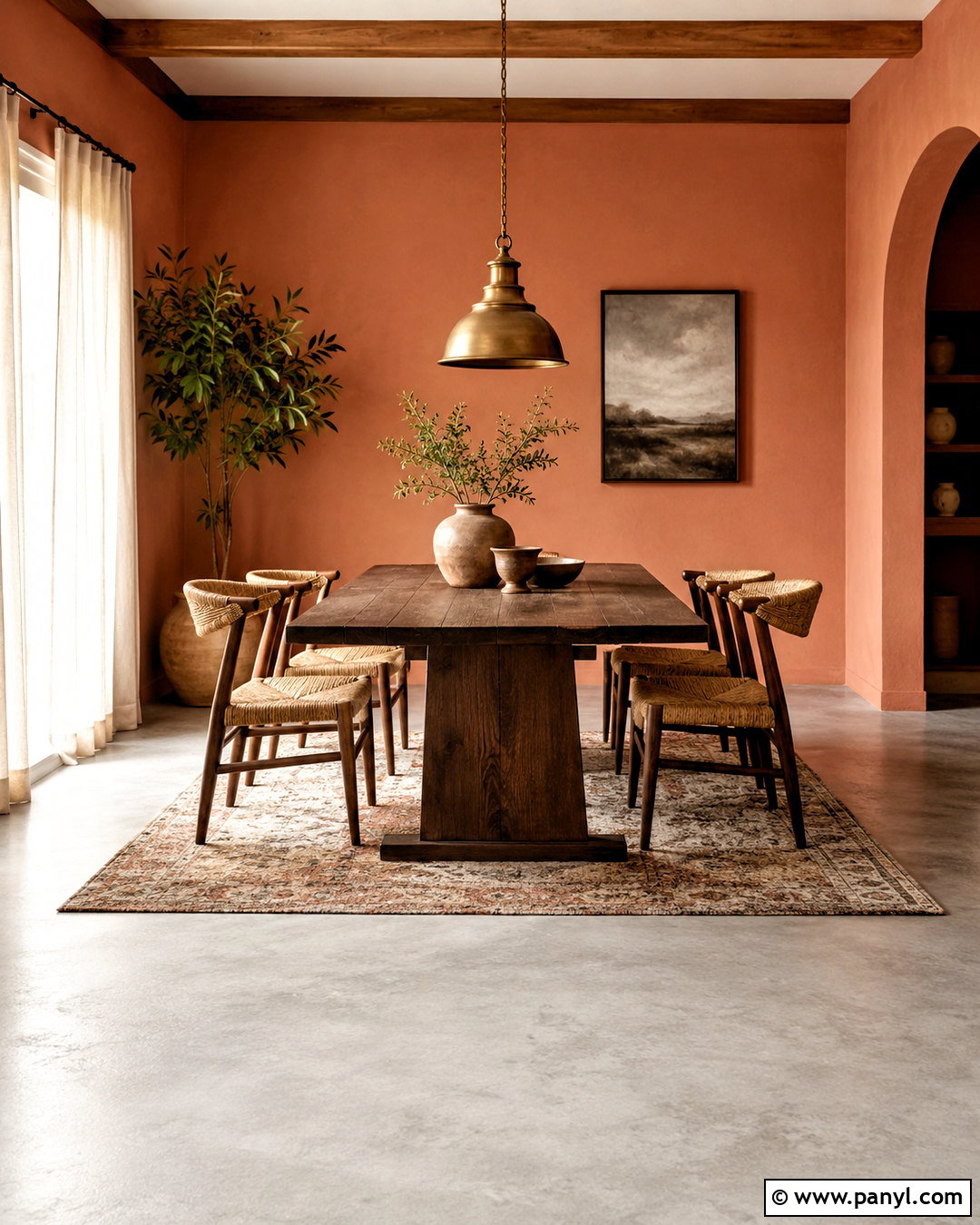
Terracotta walls provide an earthy counterpoint to gray flooring and can make a cool room feel considerably warmer. Use this color in a dining area with a black or dark walnut table, woven chairs, and a large cream rug containing rust and gray. Add off-white curtains, aged brass lighting, and ceramic decor in natural clay tones. A muted terracotta with brown undertones will be easier to coordinate than a highly saturated orange. Light gray floors keep the bold walls from making the room feel too dark, while black accents establish a clean modern outline. Repeat gray in small details, such as seat cushions or artwork, so the floor remains connected. The final space feels grounded, welcoming, and intentionally colorful.
29. Soft Clay Walls With Gray Flooring
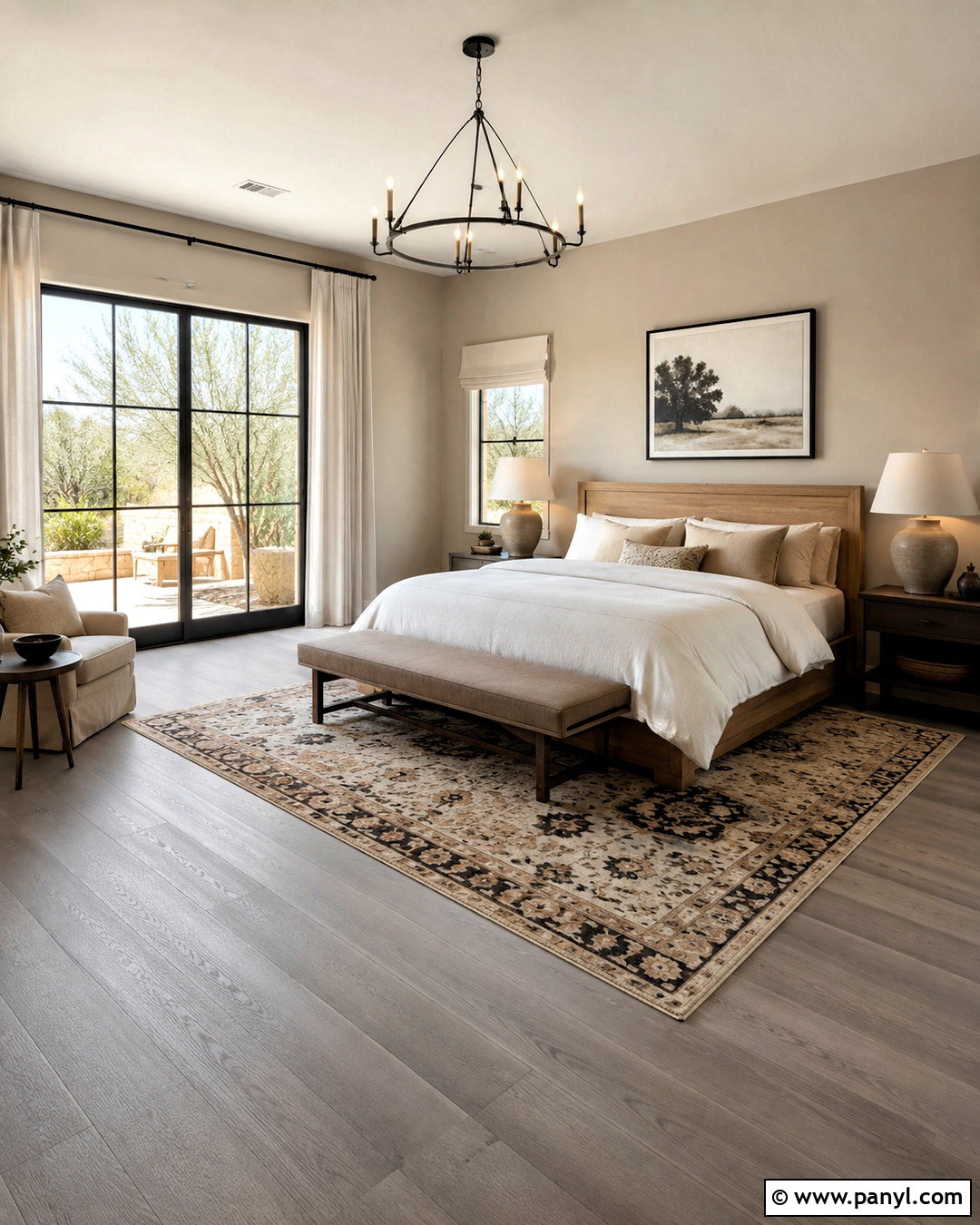
Soft clay walls blend beige, pink, and muted terracotta, offering gentle warmth without the strength of orange. This wall color works beautifully in a bedroom with gray flooring, a pale oak bed, ivory linens, and a warm taupe bench. Use a faded rug containing cream, clay, and charcoal to connect every major surface. Add linen curtains, ceramic bedside lamps, and black-framed artwork for contrast. Clay paint is especially flattering beside warm gray floors, but it can also soften cool gray when supported by natural wood. Keep the ceiling warm white and choose bedding with varied textures rather than busy patterns. The complete look feels calm and organic, giving the existing flooring a warmer role within the overall palette.
30. Muted Peach Walls With Gray Flooring
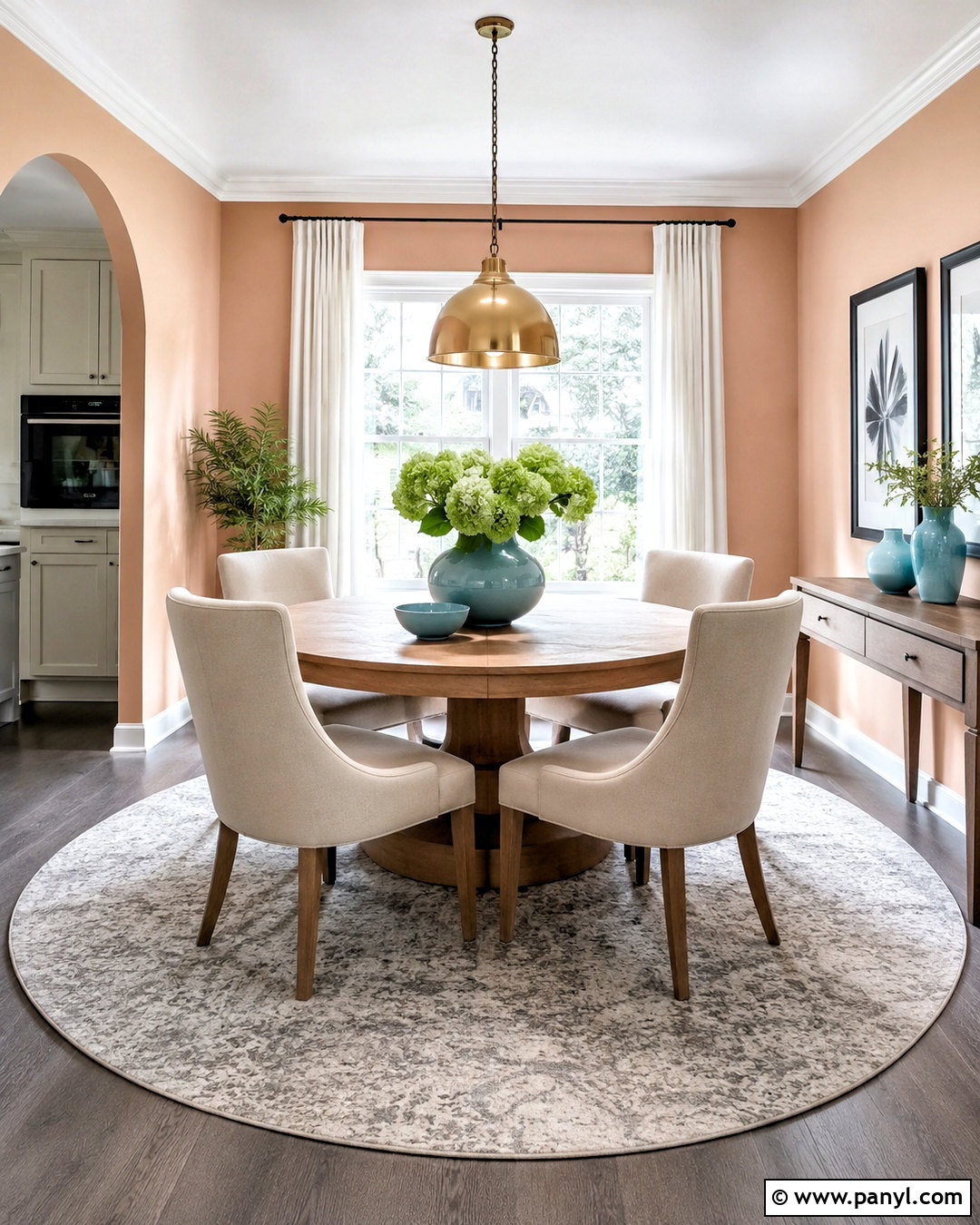
Muted peach walls bring warmth and light to gray flooring without feeling overly bright. For a welcoming breakfast room, pair the walls with a round oak table, cream upholstered chairs, and a soft gray-and-beige rug. Add white curtains, a simple brass pendant, and tableware in warm white and pale blue. Select peach paint with beige or gray undertones rather than a vivid orange base. This softer version can complement medium gray tile, laminate, or wood-look planks while making the room feel more inviting. Repeat peach only once or twice through artwork or patterned fabric. Charcoal frames and hardware will reference the floor and sharpen the pastel palette. The completed room feels sunny, balanced, and suitable for everyday use.
31. Butter Yellow Walls With Gray Flooring
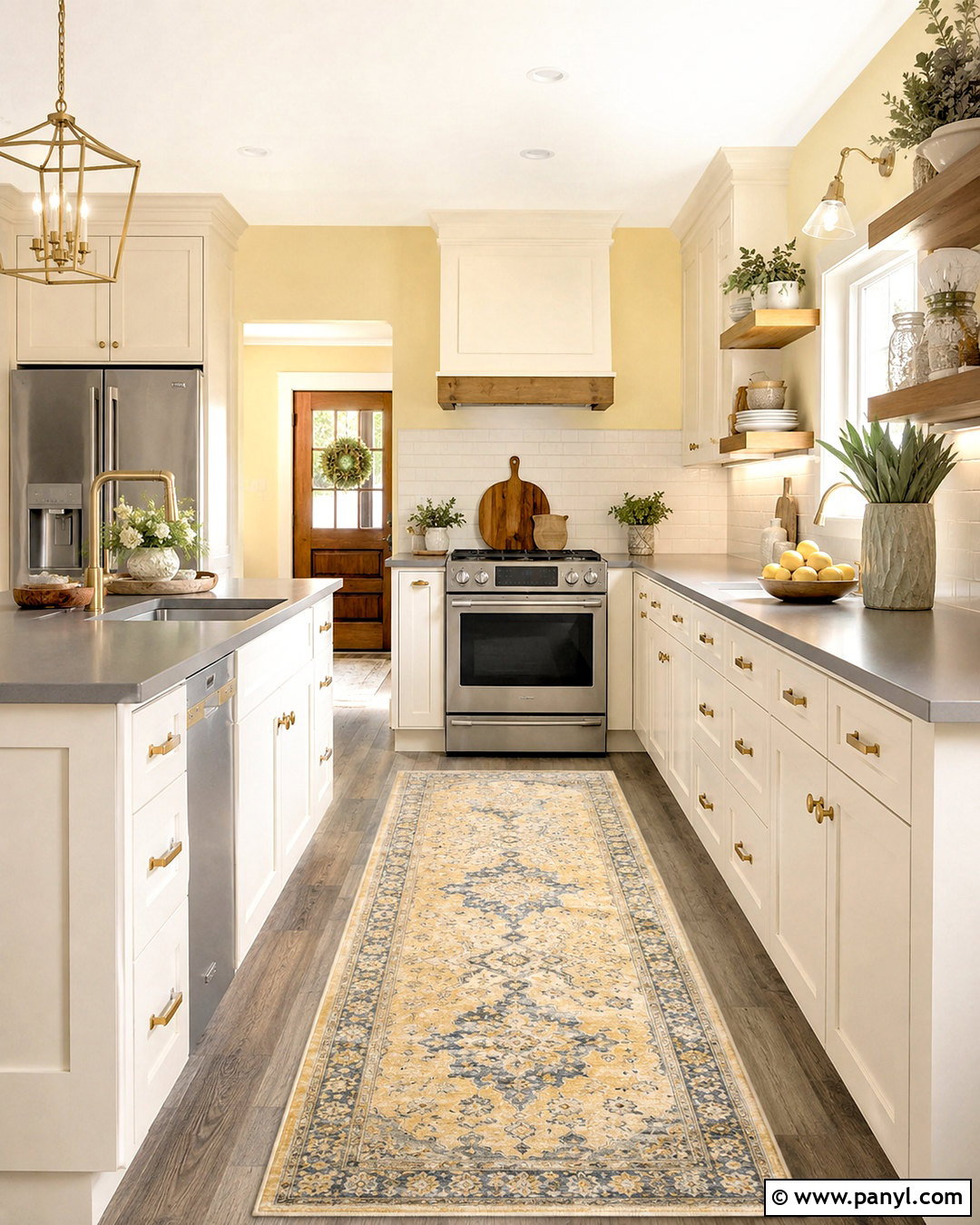
Butter yellow walls can brighten gray floors while keeping the room soft and approachable. Choose a pale, creamy yellow rather than a strong lemon shade. In a kitchen, combine the walls with warm white cabinets, gray quartz counters, and medium-oak shelves. Use brushed brass hardware, simple white tile, and a washable runner containing yellow, gray, and muted blue. The wood elements help bridge the warm wall color and cooler flooring. Keep the ceiling and trim warm white so the yellow appears subtle instead of intensified by contrast. Butter yellow works best with warm gray or neutral floors; blue-gray flooring requires a particularly muted shade. The complete kitchen feels cheerful and comfortable without losing the clean structure provided by the gray floor.
32. Mustard Yellow Walls With Gray Flooring
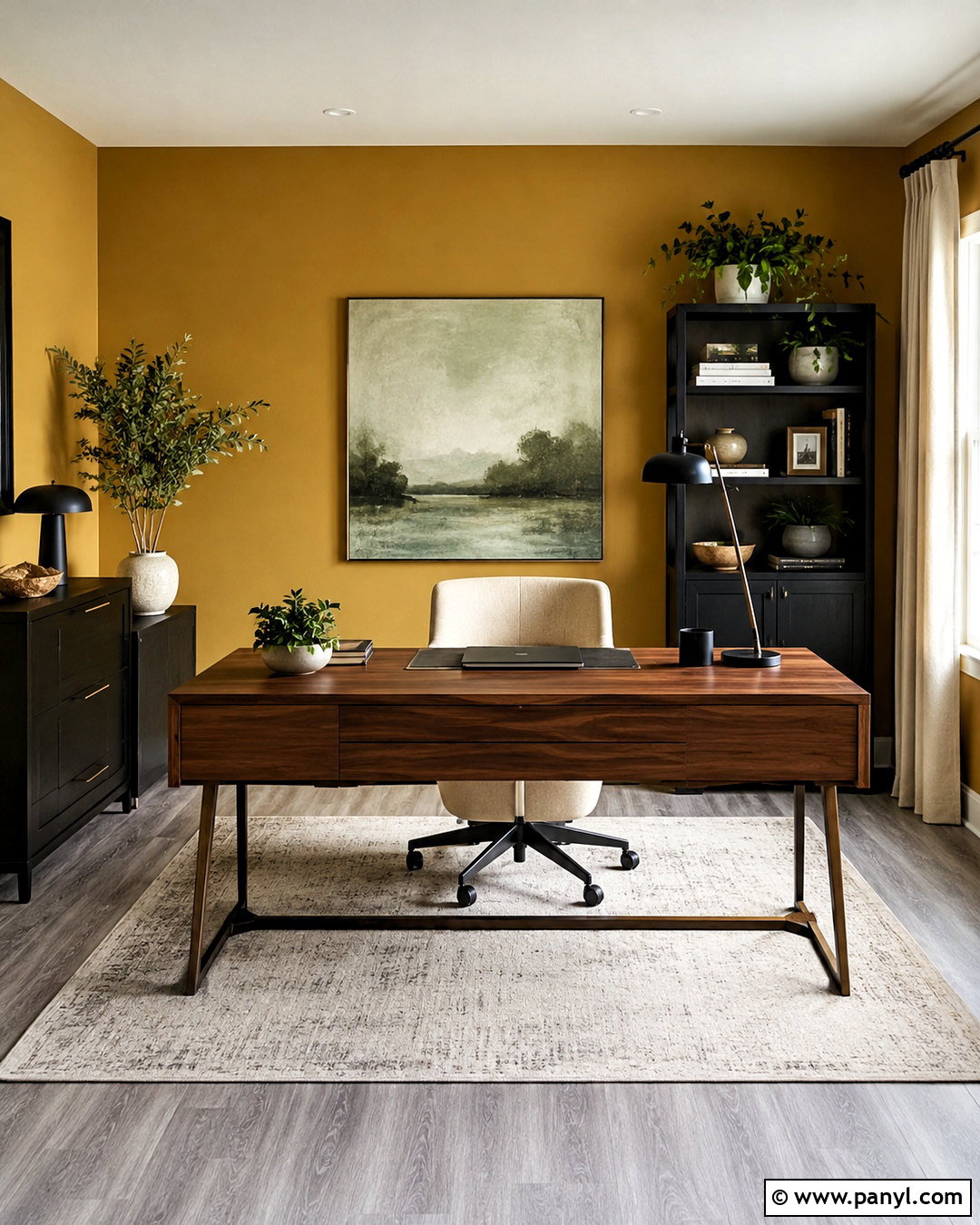
Mustard yellow walls make a confident statement beside gray flooring, particularly in a home office or creative room. Build the space around a walnut desk, black storage cabinets, and a cream upholstered chair. Add a gray-and-ivory rug, warm white curtains, and framed artwork containing mustard, charcoal, and muted green. The depth of mustard balances pale gray flooring, while the floor prevents the saturated walls from feeling visually overwhelming. Choose a browned, earthy mustard instead of a sharp yellow. Use brass sparingly because too many golden details can make the palette feel overly coordinated. White trim and ceiling paint provide breathing room. The finished office feels energetic and grounded, with practical furnishings supporting the strong wall color rather than competing against it.
33. Lavender Walls With Gray Flooring
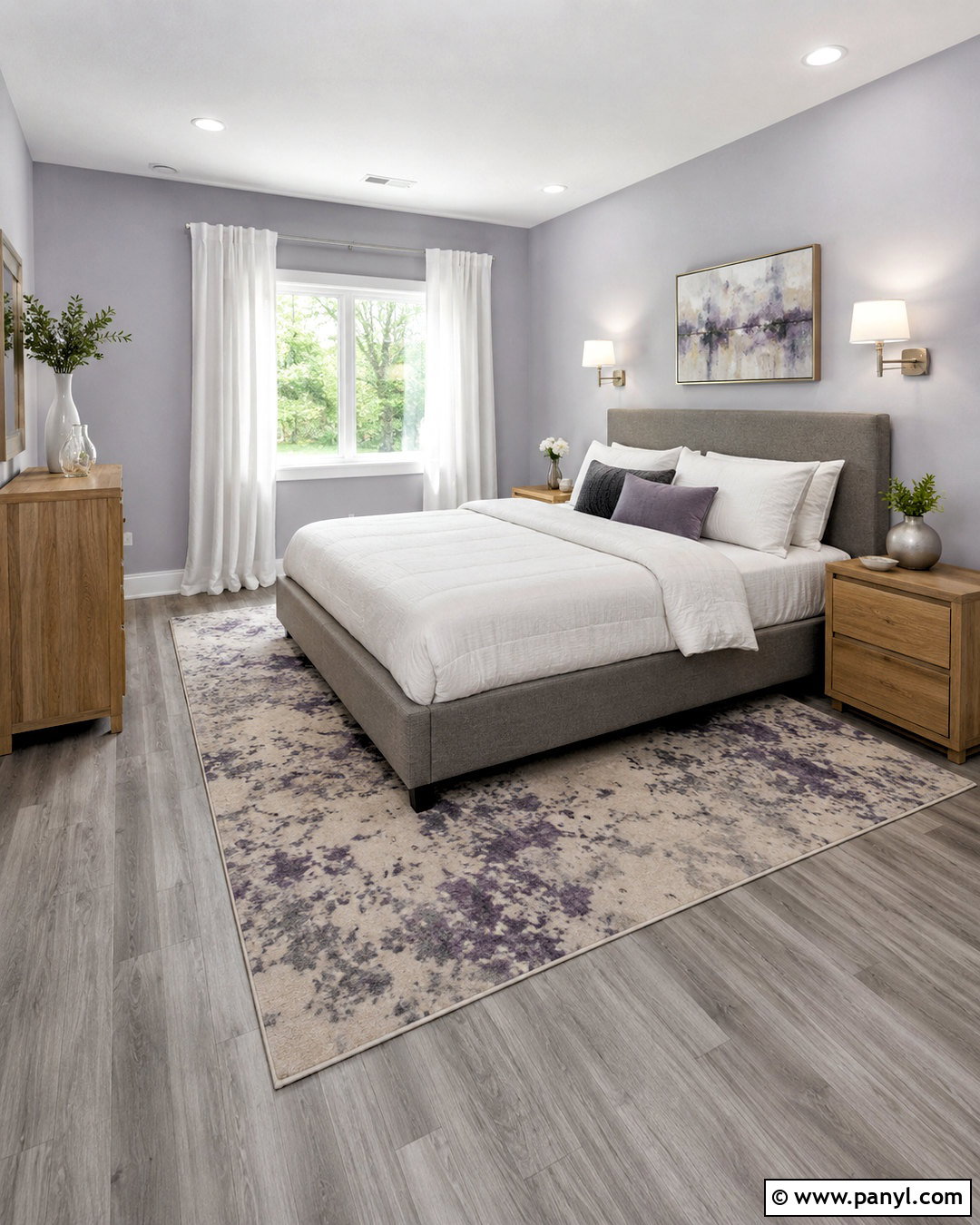
Lavender walls can complement cool gray flooring when the paint is pale, muted, and slightly gray. Use this combination in a bedroom with a warm gray bed, white bedding, and light oak nightstands. Layer in a cream rug with subtle lavender and charcoal details, then add soft white curtains and brushed nickel sconces. Warm beige pillows and natural wood prevent the cool palette from becoming icy. Lavender works particularly well when the flooring has violet or blue undertones, but testing is essential because some shades may turn pink under warm artificial light. Keep accessories restrained and avoid adding several competing pastels. The complete bedroom should feel restful and clean, with lavender providing gentle color while gray flooring supplies a stable neutral base.
34. Deep Plum Walls With Gray Flooring
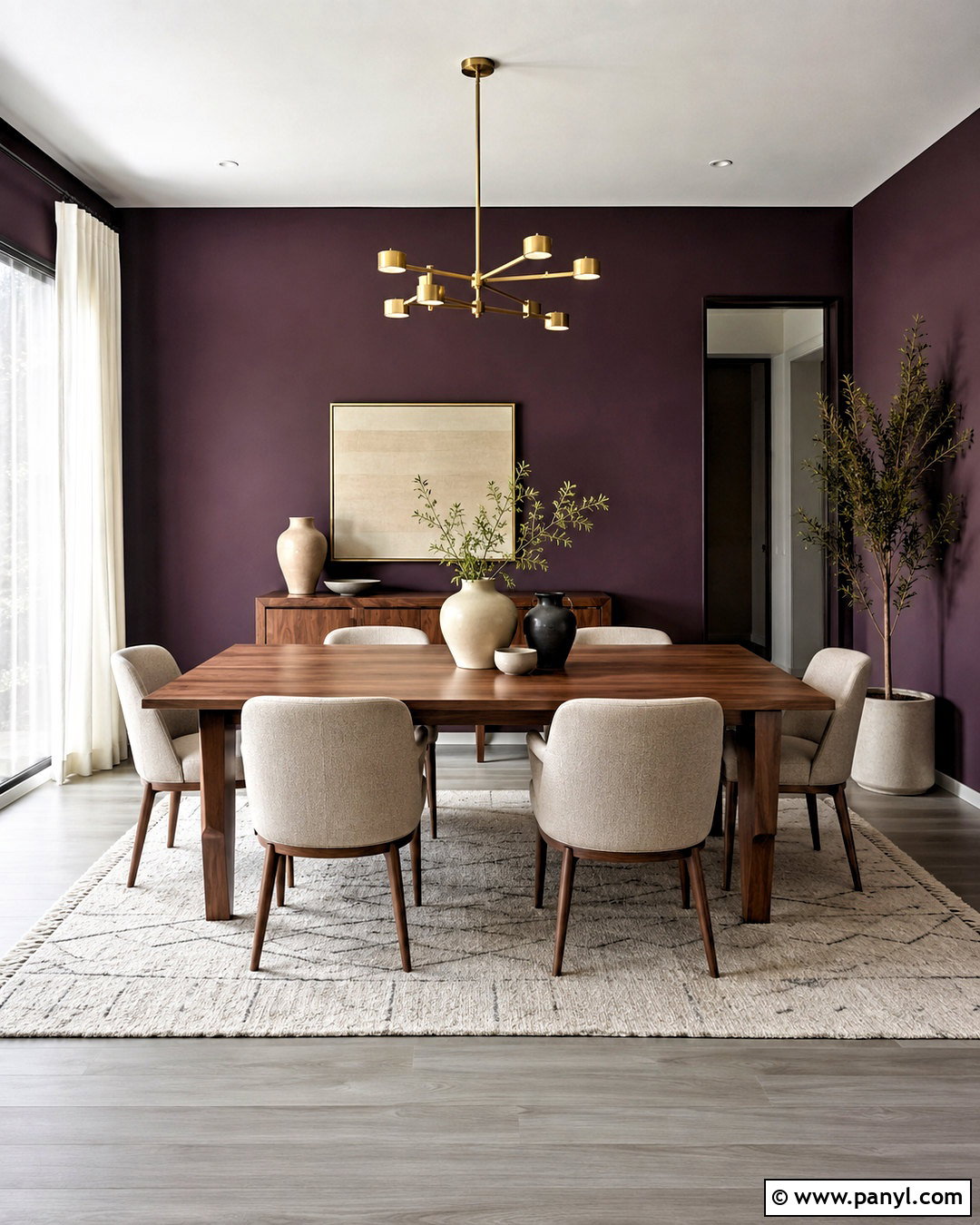
Deep plum walls add rich color to light gray flooring and create a cozy, luxurious atmosphere without requiring an ornate room. In a dining space, pair the walls with a walnut table, oatmeal chairs, and an ivory rug featuring charcoal accents. Introduce aged brass lighting, white curtains, and simple ceramic decor. Plum often contains gray, red, and blue undertones, allowing it to coordinate well with neutral or violet-gray floors. Keep the ceiling warm white to balance the depth of the walls. A few olive or rust accessories can add complexity, but avoid filling the room with purple furnishings. Light textiles and reflective finishes are important because they keep the finished design bright enough for everyday use while preserving the dramatic effect.
35. Burgundy Walls With Gray Flooring
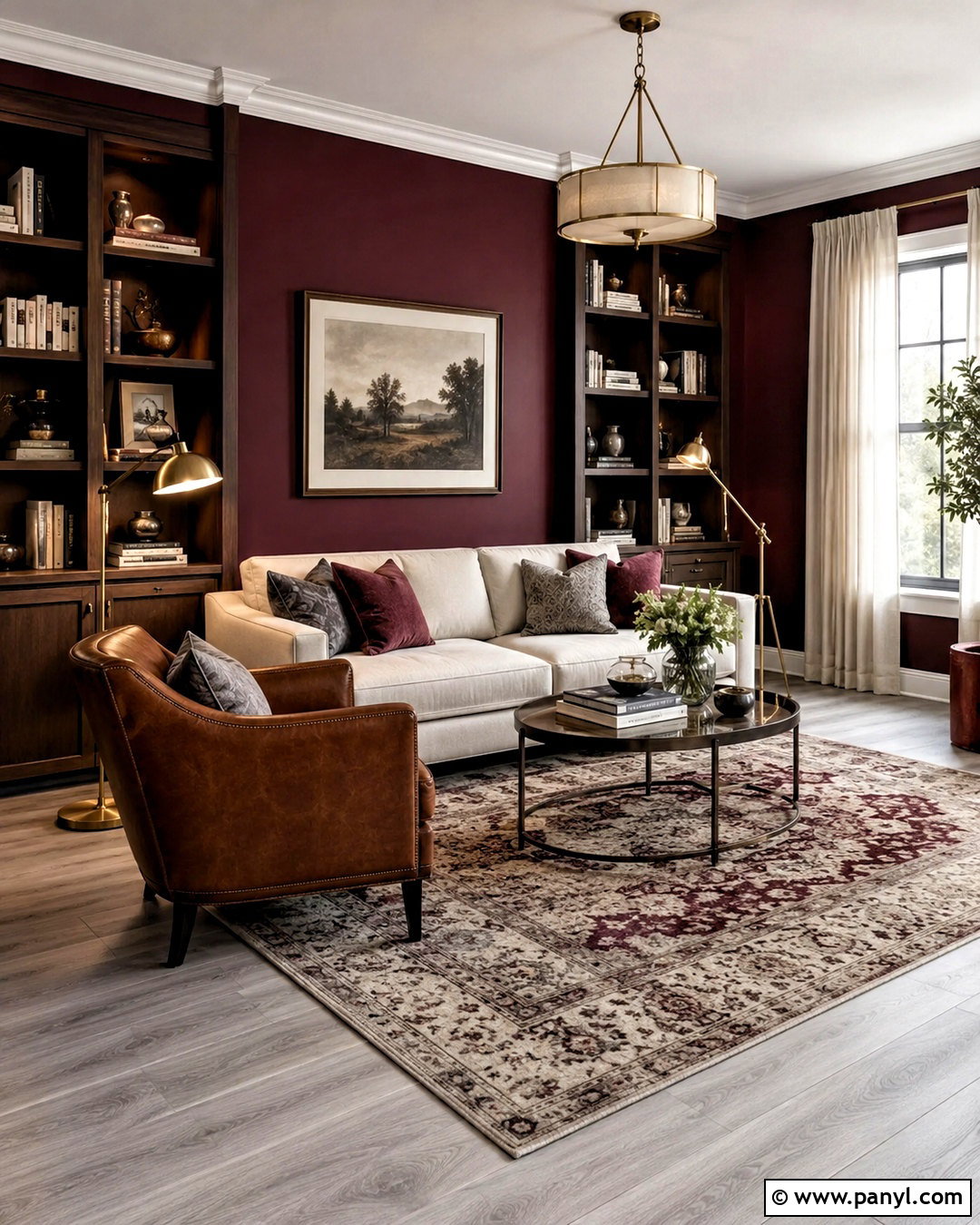
Burgundy walls can give gray flooring a stately, warm contrast when the room includes plenty of lighter materials. Create a library-inspired sitting room with a cream sofa, cognac leather chair, and dark wood bookcases. Place an ivory, burgundy, and gray rug over the floor to unify the palette. Add brass reading lamps, linen curtains, and artwork with soft white mats. Choose a muted burgundy with brown undertones instead of a vivid red, which may feel harsh beside cool gray. Light gray flooring is ideal because it offsets the visual weight of the walls and furniture. Keep the ceiling warm white and introduce texture through wool, leather, and wood. The completed room feels intimate, grounded, and carefully balanced rather than excessively dark.
36. Chocolate Brown Walls With Gray Flooring
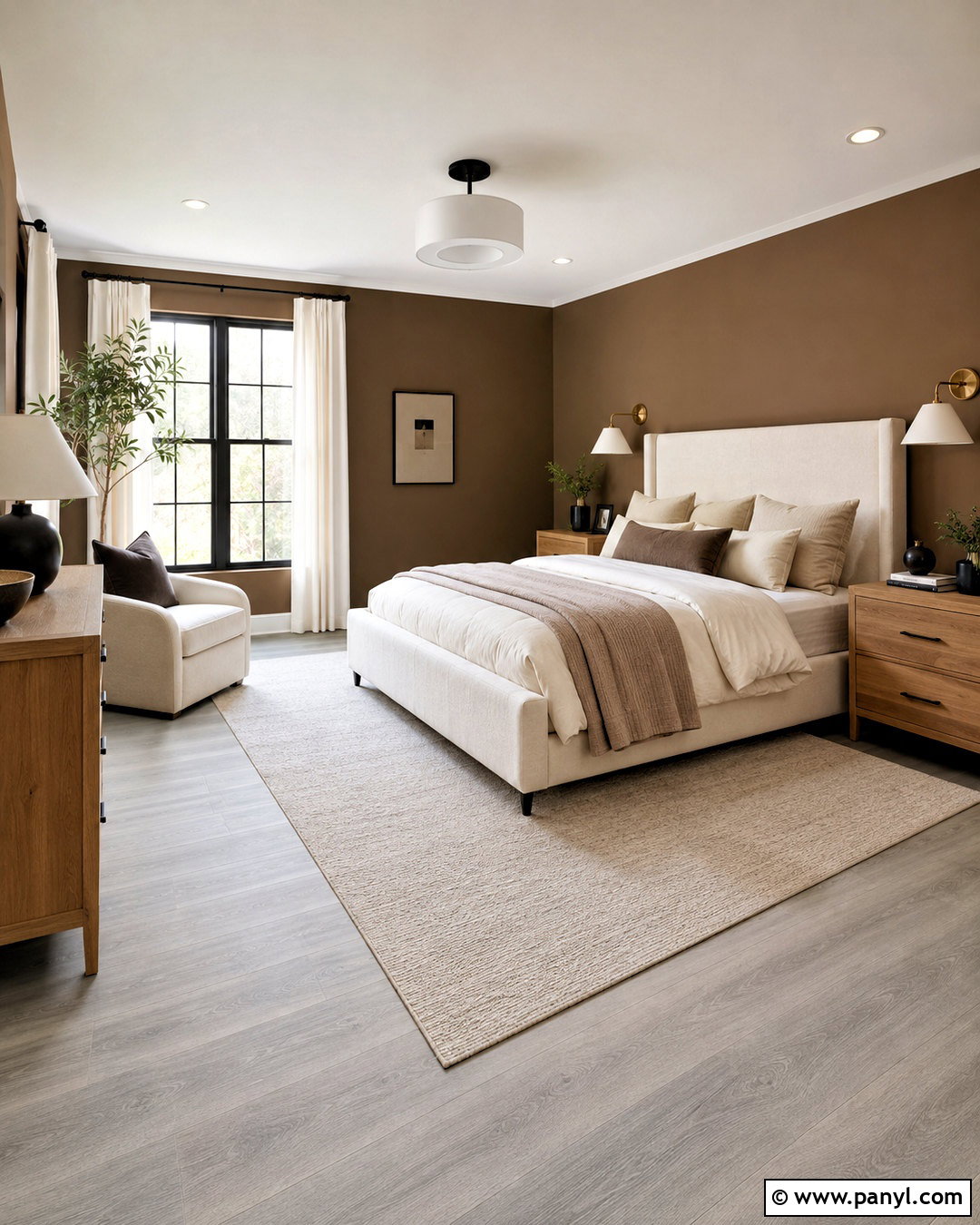
Chocolate brown walls can warm gray flooring while giving the room a comfortable, enveloping quality. This combination works best with light gray floors and generous natural light. Furnish a bedroom with an ivory upholstered bed, warm oak nightstands, and cream bedding layered with taupe and charcoal. Use a pale rug to define the bed area while allowing the flooring to form a gray border. Brass sconces and white curtains add brightness, while a few black details sharpen the palette. Select a softened chocolate brown rather than an almost-black shade if the room is small. Brown walls, light textiles, and gray floors create a balanced neutral scheme in which color temperature changes gradually, preventing either surface from looking isolated or accidental.
37. Caramel Walls With Gray Flooring
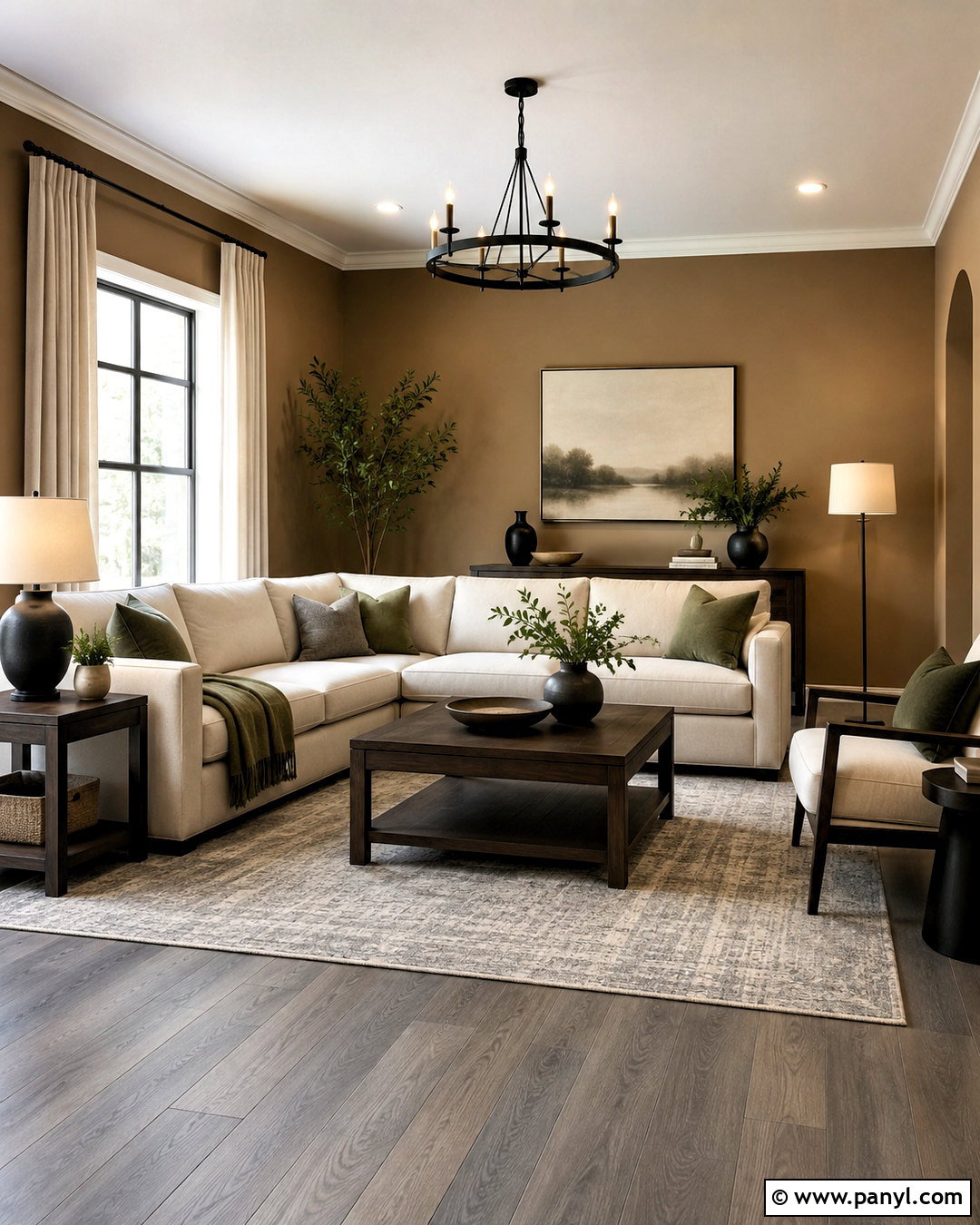
Caramel walls introduce golden brown warmth that can make gray flooring feel less industrial or cool. For a relaxed living room, combine caramel paint with an ivory sofa, dark walnut tables, and a large cream-and-gray rug. Add olive cushions, linen curtains, and black metal lighting for contrast. The caramel should be muted and slightly earthy rather than bright orange or yellow. This pairing is most successful with warm gray or greige floors, although cool floors can work when the rug and furniture include both color temperatures. Paint the ceiling soft white and use simple trim to maintain a fresh outline. The complete room feels warm and layered, with the flooring providing a calm counterbalance to the richer walls and natural wood furniture.
38. Rust Walls With Gray Flooring
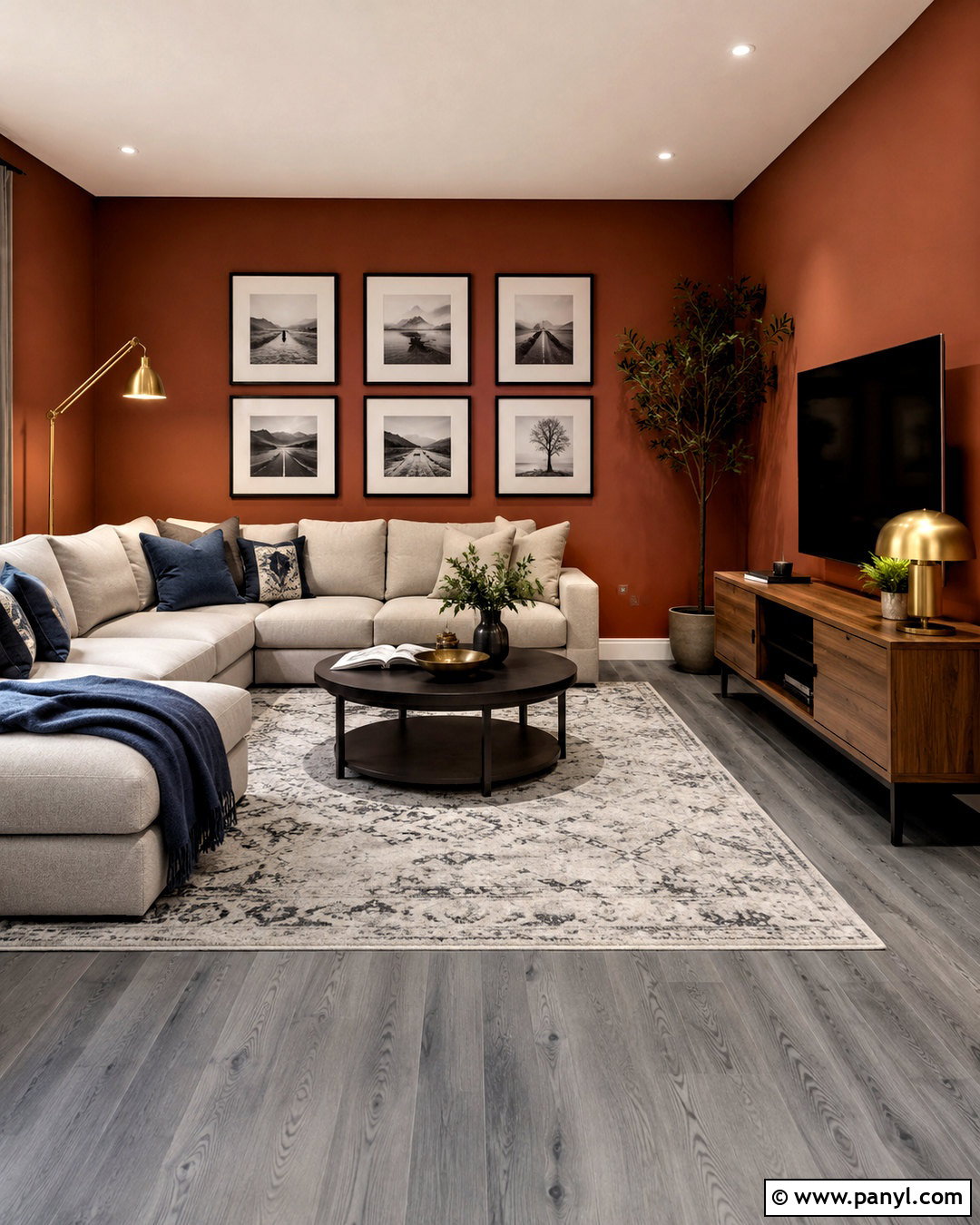
Rust walls create a bold, earthy palette beside gray flooring, particularly when balanced by cream upholstery and natural wood. Use this combination in a den with a light beige sectional, an oak media console, and a gray-and-ivory patterned rug. Add black-framed art, aged brass lamps, and cushions in muted blue or olive. Rust’s red-orange warmth contrasts with cool gray, while its brown undertone prevents the combination from feeling too sharp. Choose light curtains and a warm white ceiling to preserve brightness. If the flooring is dark, consider using rust on one principal wall and warm white elsewhere. The finished room should repeat rust sparingly through textiles, allowing the painted walls to remain the main source of warmth and personality.
39. Muted Coral Walls With Gray Flooring
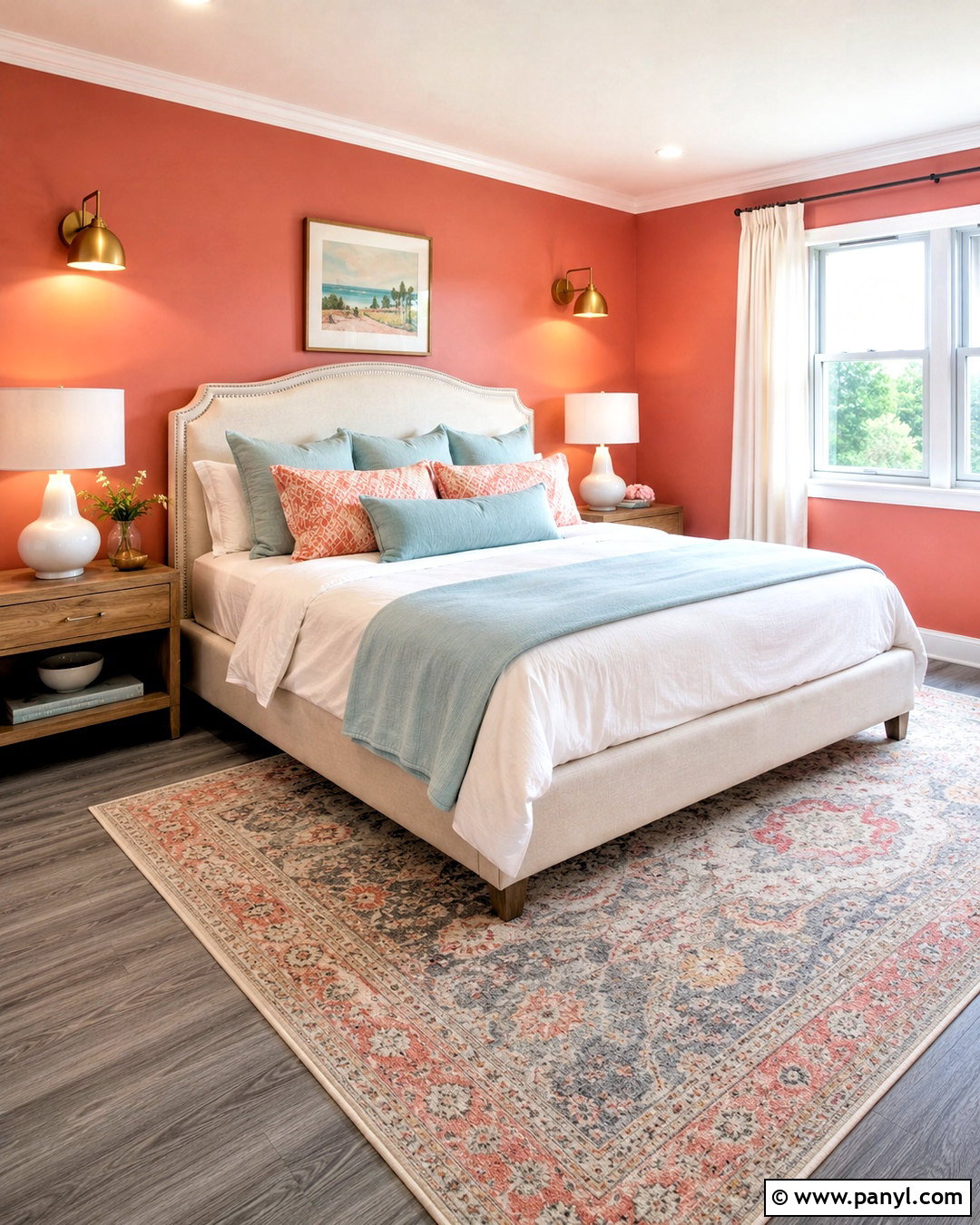
Muted coral walls can energize gray flooring while maintaining a soft, residential appearance. Use the color in a bright guest room with a white or cream bed, oak nightstands, and an ivory rug patterned with gray and faded coral. Add pale blue bedding details to connect with cool flooring, then finish the windows with simple white linen curtains. Brushed brass lighting introduces warmth without adding another strong color. Select coral with dusty pink and clay undertones instead of a vivid tropical shade. This makes the paint easier to coordinate with gray tile, laminate, or wood-look planks. Keep furniture lines simple and accents limited. The completed room feels cheerful and welcoming, but the gray floor and neutral textiles maintain visual balance.
40. Emerald Green Walls With Gray Flooring
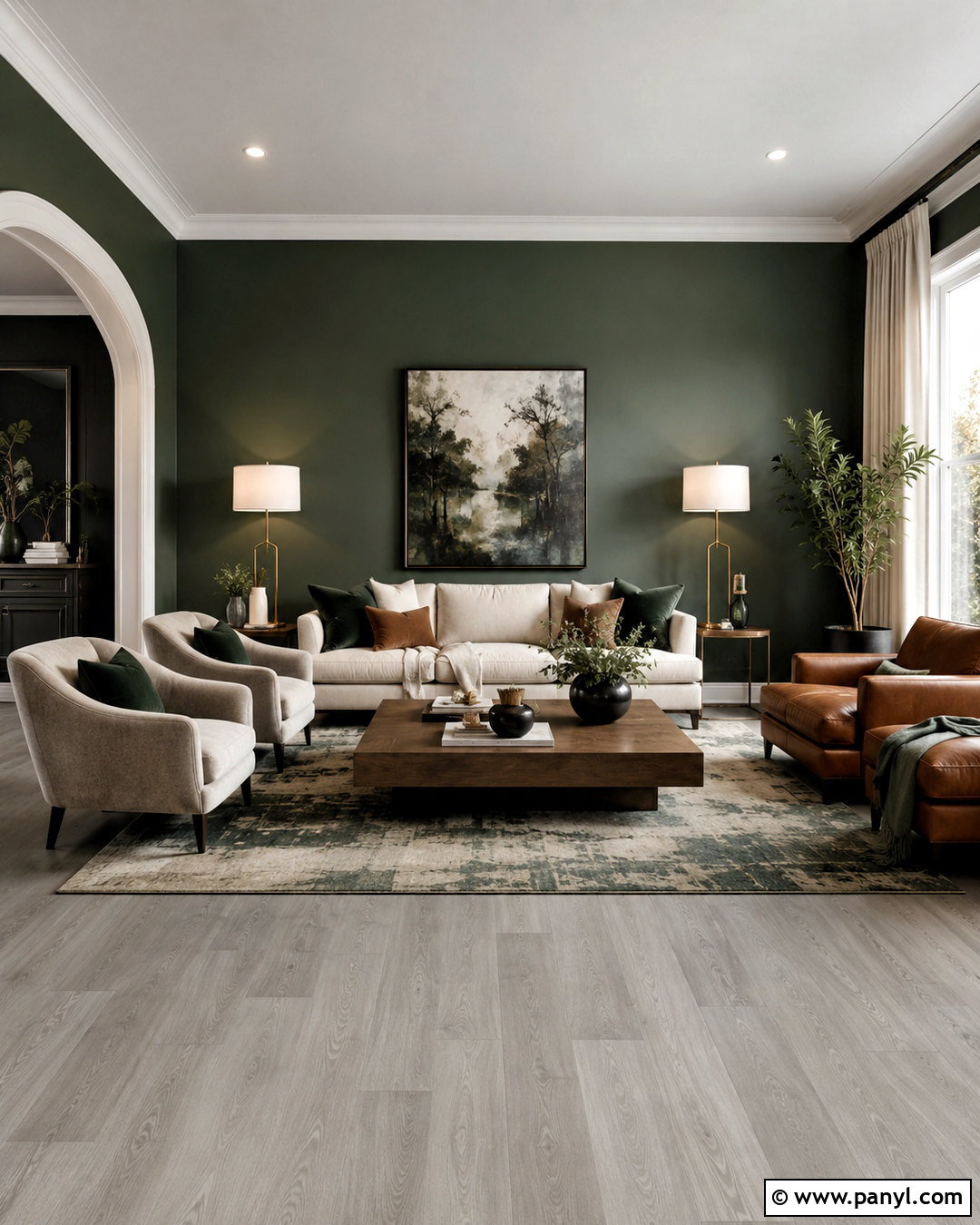
Emerald green walls make a dramatic partner for pale or medium gray flooring. Create an elegant living room with a cream sofa, walnut coffee table, and light gray accent chairs. A large ivory rug with subtle green and charcoal patterning will anchor the furniture and connect the strong walls to the floor. Add warm brass lamps, off-white curtains, and cognac leather details for richness. Choose a slightly muted emerald rather than a jewel-bright green, especially in smaller rooms. White trim and a soft white ceiling provide crisp definition and preserve brightness. The complete palette works because gray flooring acts as a quiet neutral foundation, while light upholstery and warm wood ensure the saturated green walls feel inviting rather than heavy.
Conclusion:
Choosing among these **40 Wall Colors To Match Gray Flooring Ideas** begins with identifying whether the floor looks cool, warm, or truly neutral. Use related undertones when you want an easy, harmonious palette, or create controlled contrast when the room needs more warmth and personality. Light gray floors can support charcoal, navy, forest green, terracotta, and other deeper colors. Dark flooring usually benefits from warm white, cream, pale blue, or soft beige walls. Complete the design with rugs, wood furniture, textiles, lighting, and trim that connect both surfaces. Most importantly, test large paint samples directly beside the flooring at several times of day before committing to the final color.

Related Ideas and Inspiration:
Leave a Reply