
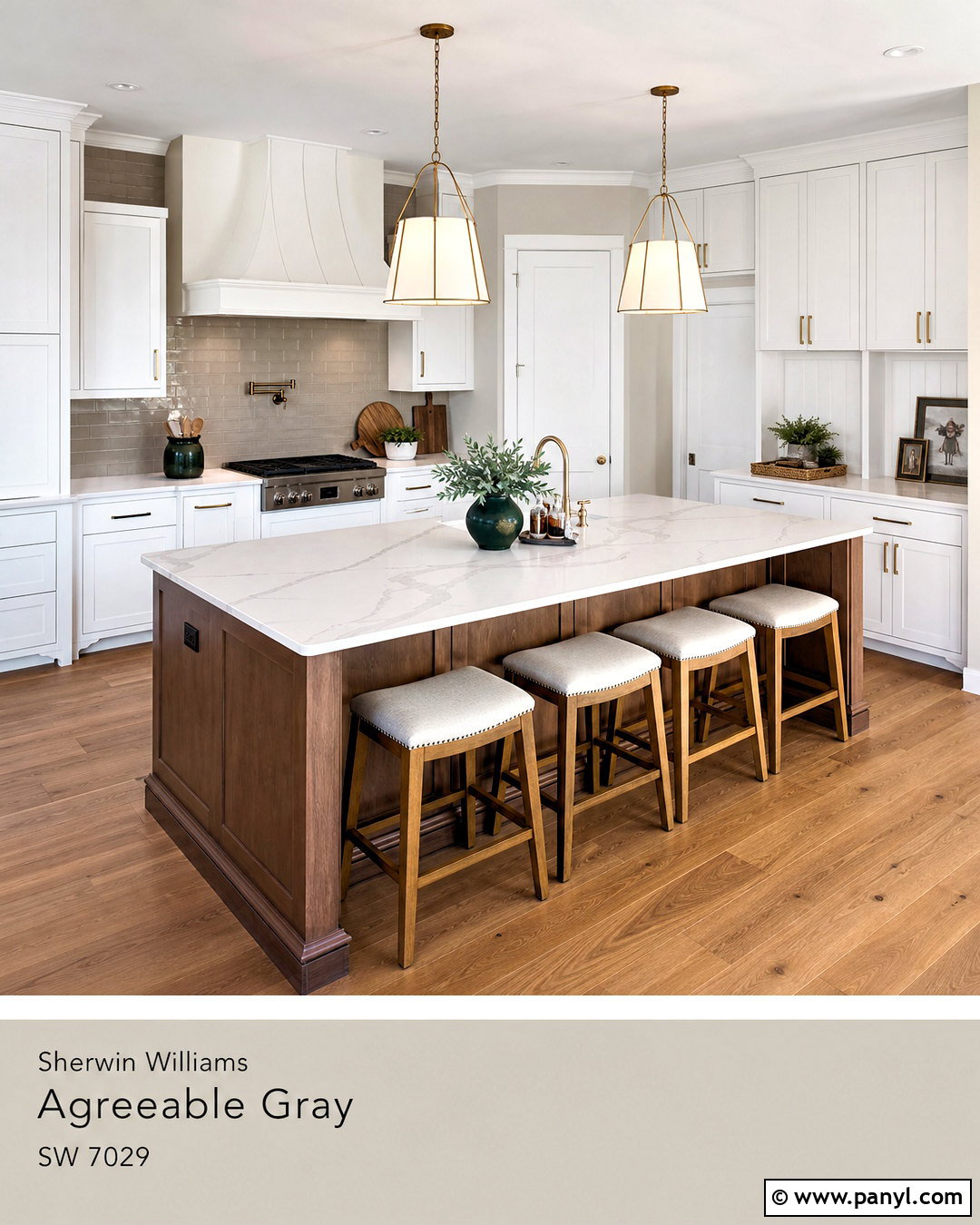
Agreeable Gray is a warm greige that can shift slightly beige, gray, or taupe as daylight and surrounding finishes change. That flexibility makes it a useful kitchen backdrop, but cabinet color still needs careful planning. Whites create brightness, wood tones emphasize warmth, and deeper blues, greens, or charcoals introduce definition. Current design guidance also favors adding contrast and natural texture so a neutral kitchen does not feel flat. () Before committing, compare samples beside your countertop, backsplash, flooring, and trim during different times of day. This guide to **20 cabinet color with agreeable gray walls** combinations covers complete, practical kitchen schemes you can confidently recreate.
1. White Cabinets With Agreeable Gray Walls
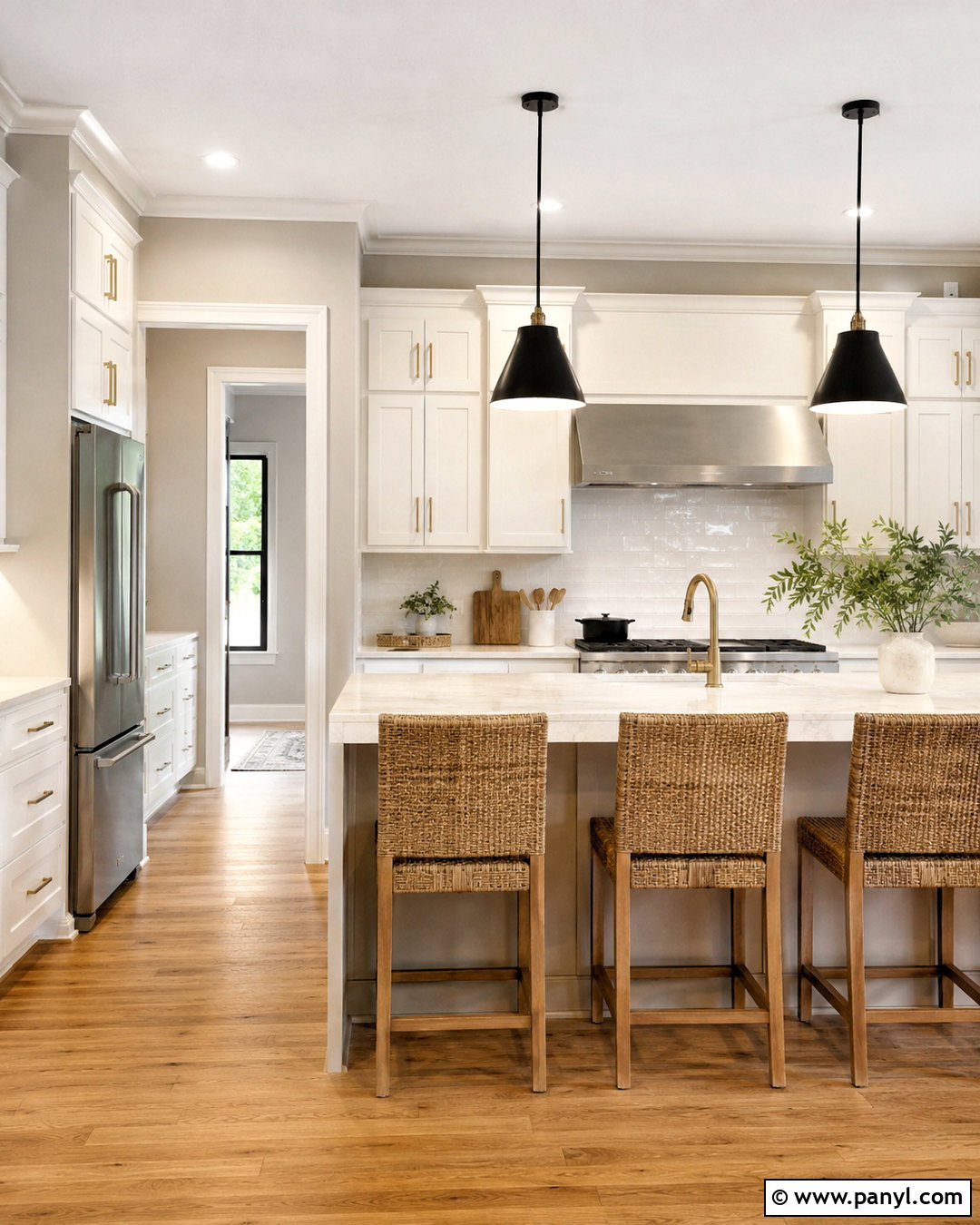
White cabinets give Agreeable Gray walls a clean, bright frame without making the kitchen feel overly cold. Choose a soft neutral white rather than a sharply blue-white finish. Complete the look with white quartz countertops featuring delicate warm-gray veining and a glossy white subway tile backsplash. Medium-tone oak flooring keeps the room grounded, while brushed brass pulls add gentle warmth. Use simple Shaker doors for a transitional kitchen or narrow-frame cabinets for a more modern result. Matte black pendant lights can provide a small amount of contrast above the island. Repeat Agreeable Gray in adjoining spaces so the kitchen feels connected, and add natural woven stools or wood accessories to prevent the white cabinetry from looking too sterile.
2. Cream Cabinets With Agreeable Gray Walls
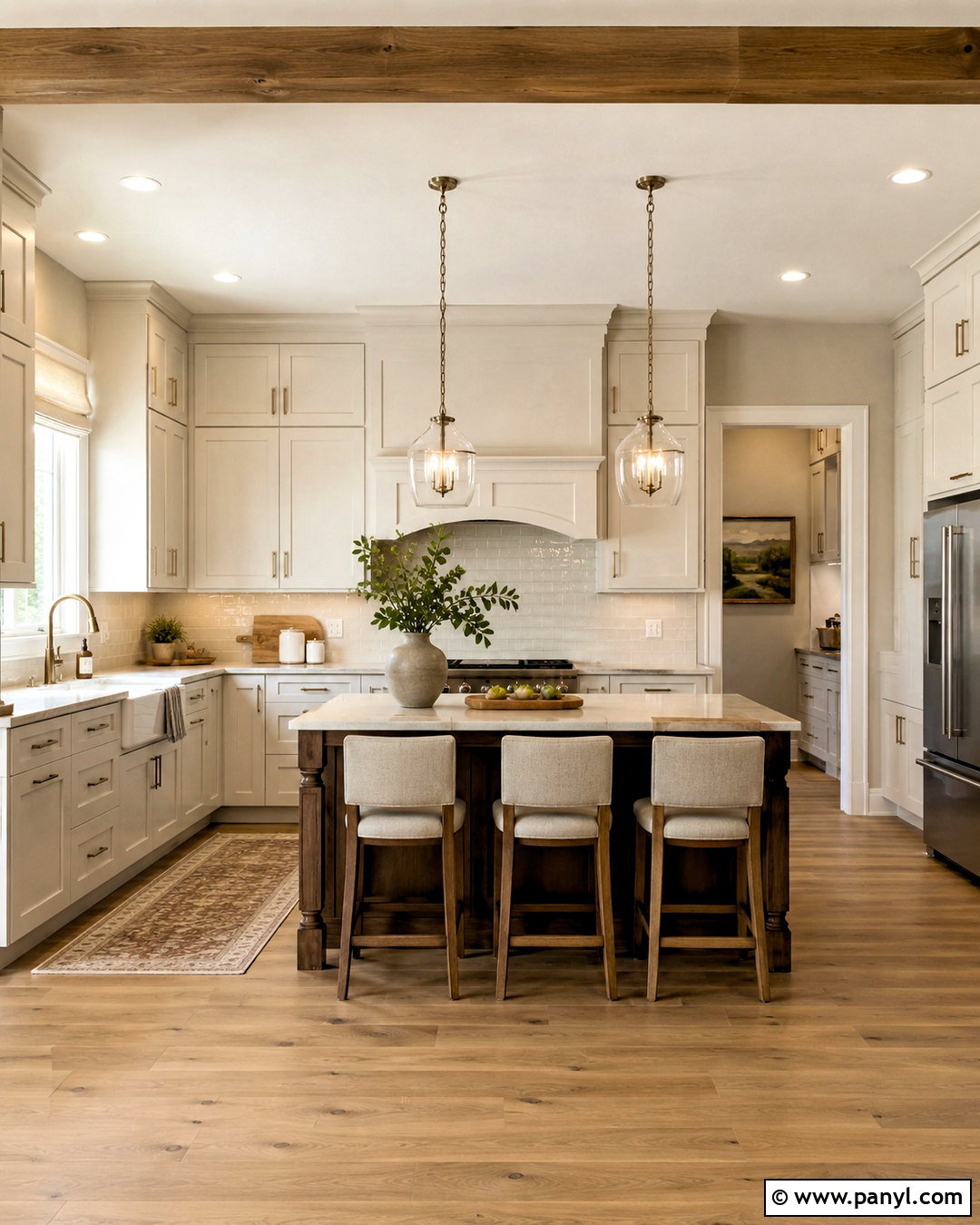
Cream cabinets bring out the warmer side of Agreeable Gray and create a relaxed, welcoming kitchen. Select a restrained cream with muted undertones instead of a strongly yellow shade. Pair the cabinets with warm white quartz, handmade ivory backsplash tile, and lightly stained oak flooring. Antique brass knobs and cup pulls support the traditional character without making the design feel dated. A medium brown wood island can introduce enough contrast to separate the similar neutrals. Finish the room with linen Roman shades, clear glass pendants, and simple ceramic accessories. This combination works especially well in kitchens receiving cooler northern light because the creamy cabinetry visually softens the room. Test the cabinet finish carefully to ensure it remains calm beside the greige walls.
3. Alabaster Cabinets With Agreeable Gray Walls
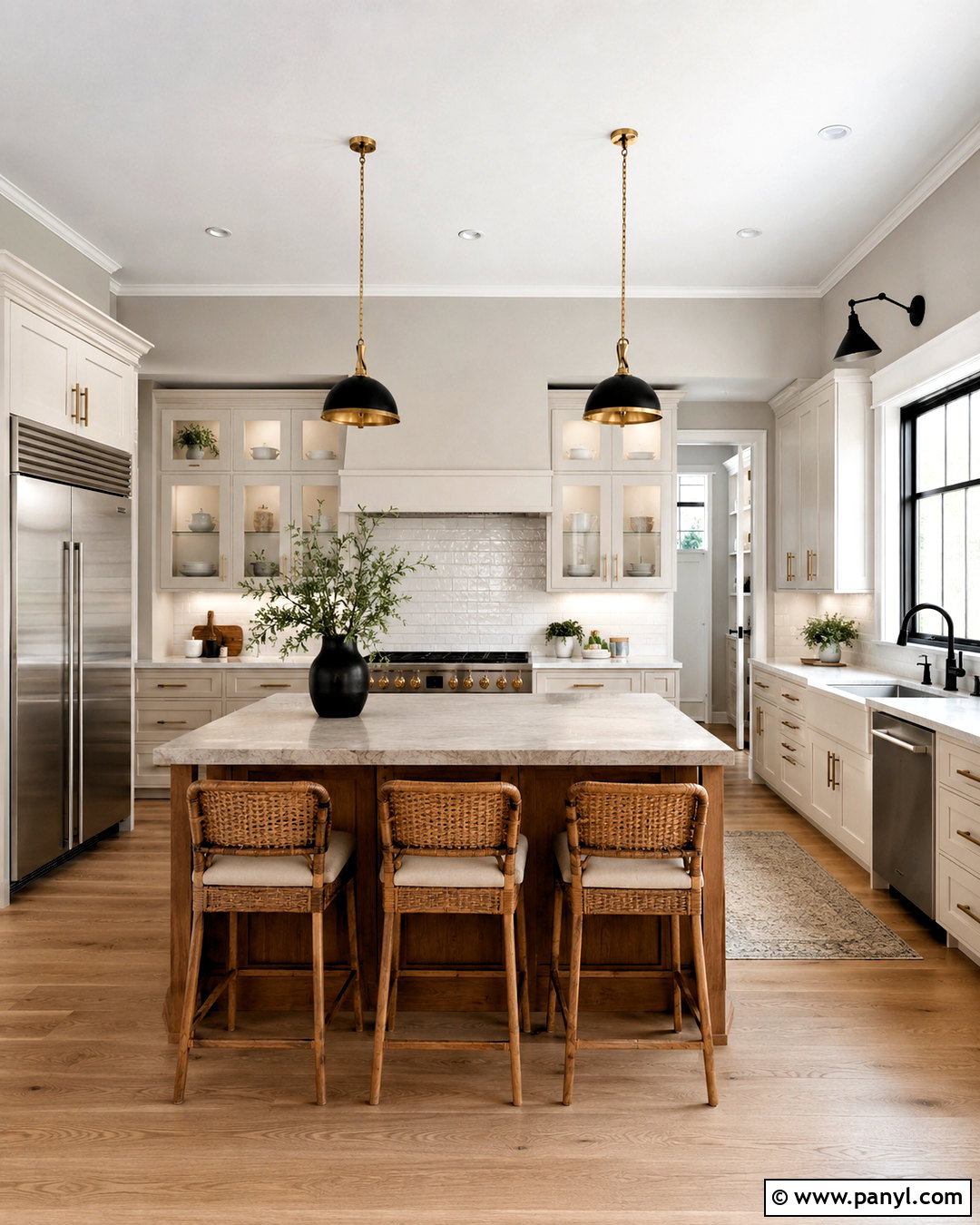
Alabaster cabinets create a softer transition than crisp white while still keeping the kitchen open and airy. The warm off-white cabinetry complements the beige influence in Agreeable Gray, making this pairing suitable for farmhouse, traditional, and transitional spaces. Use pale quartz countertops with subtle taupe veining and a full-height white tile backsplash for visual continuity. Champagne bronze hardware brings polished warmth, while natural oak flooring supplies texture. On the island, woven counter stools and a warm wood base can break up the light surfaces. Keep window treatments simple so daylight reaches the cabinetry. A few matte black accents, such as pendant frames or a slim faucet, will sharpen the palette without overpowering its gentle, neutral appearance.
4. Light Greige Cabinets With Agreeable Gray Walls
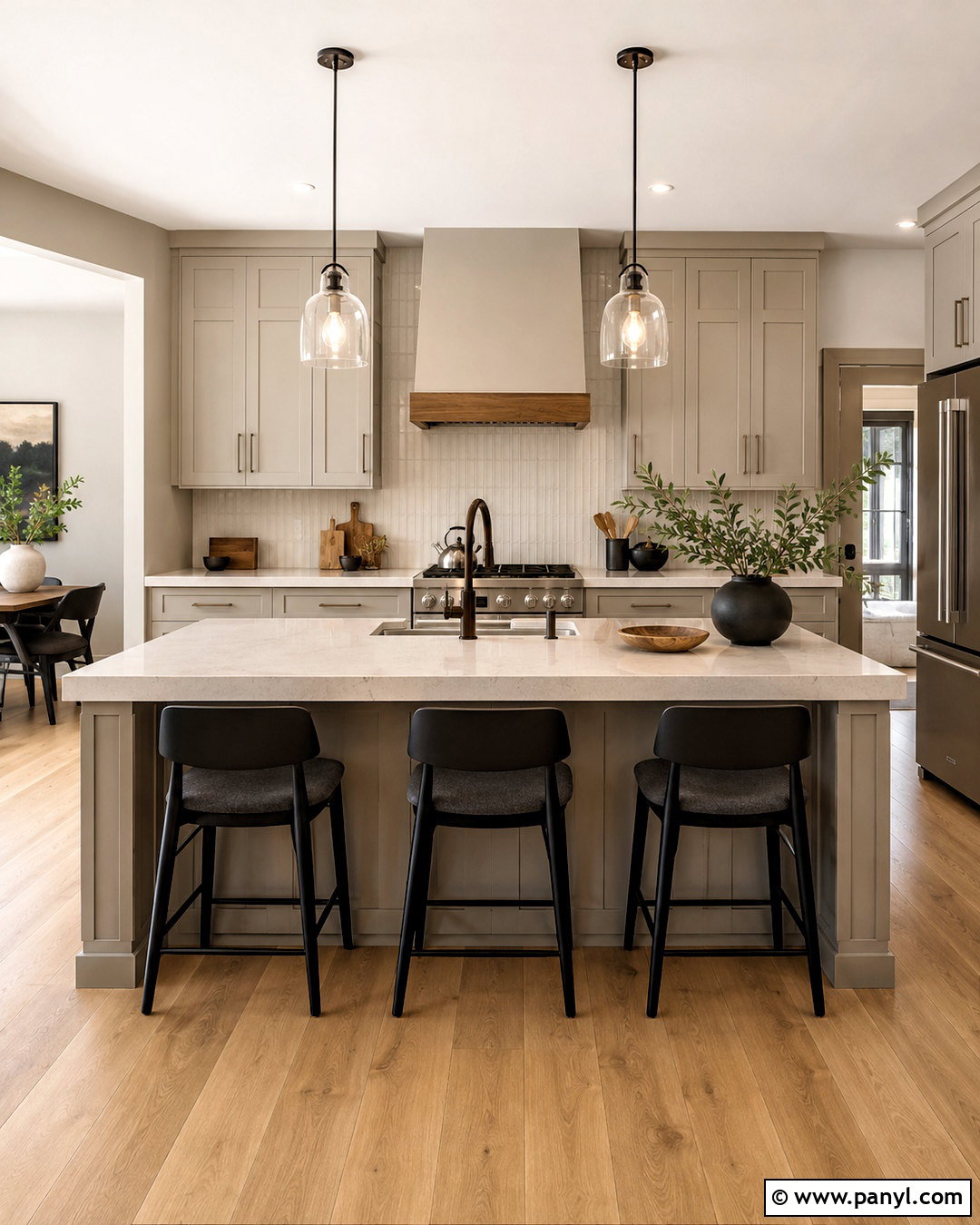
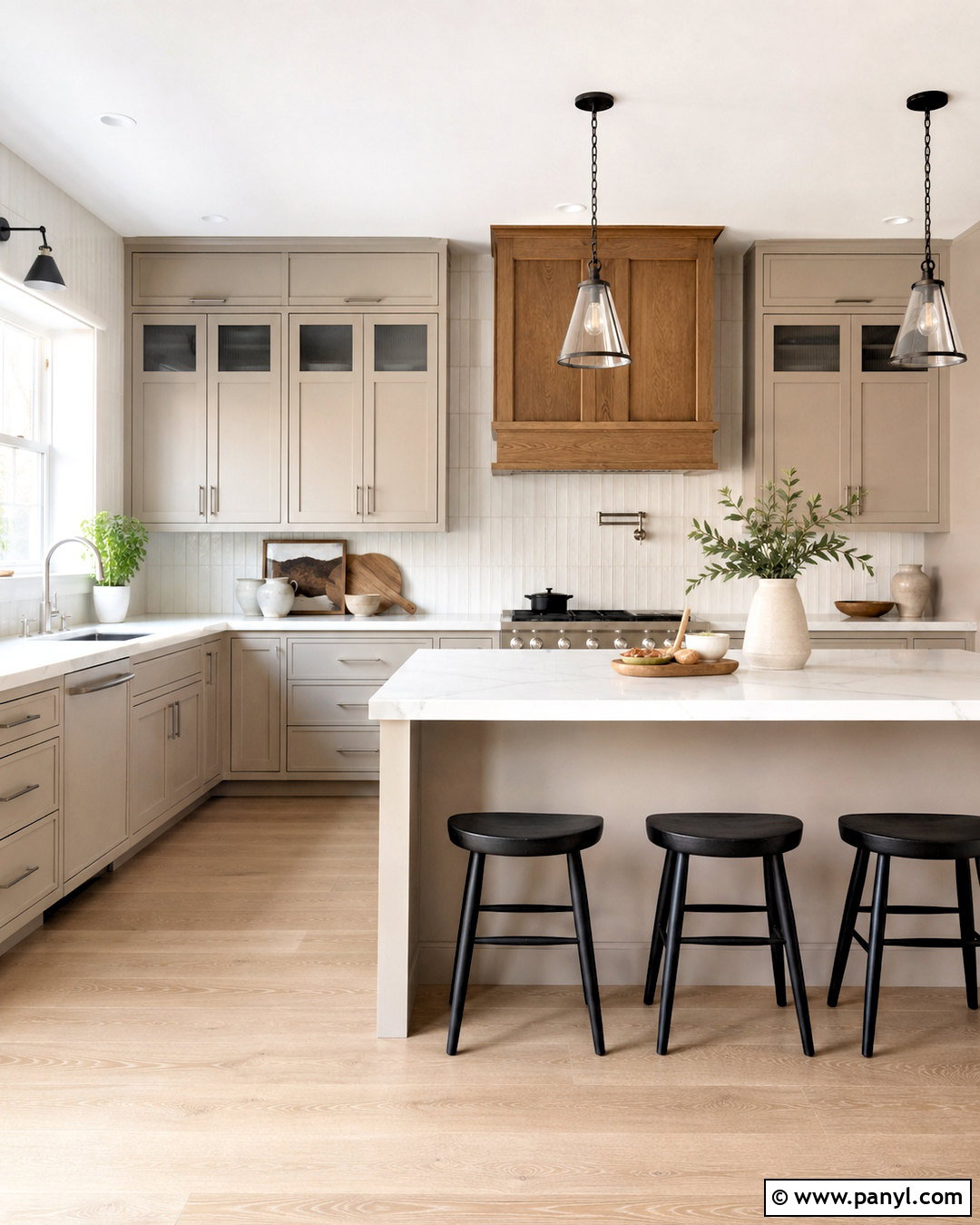
Light greige cabinets produce a quiet, layered kitchen that feels cohesive rather than heavily contrasted. The key is choosing a cabinet shade that is clearly lighter or darker than Agreeable Gray so the two finishes do not appear accidentally mismatched. Use flat-panel or slim Shaker doors, creamy quartz counters, and a vertically stacked warm white backsplash. White oak flooring and brushed nickel hardware keep the design understated and contemporary. Add definition through a dark bronze faucet, black window trim, or charcoal counter stools. Natural stoneware, pale wood cutting boards, and linen textiles prevent the neutral palette from feeling featureless. This scheme is particularly effective in an open floor plan because the cabinetry blends smoothly with surrounding walls while maintaining enough variation to show its shape.
5. Light Gray Cabinets With Agreeable Gray Walls
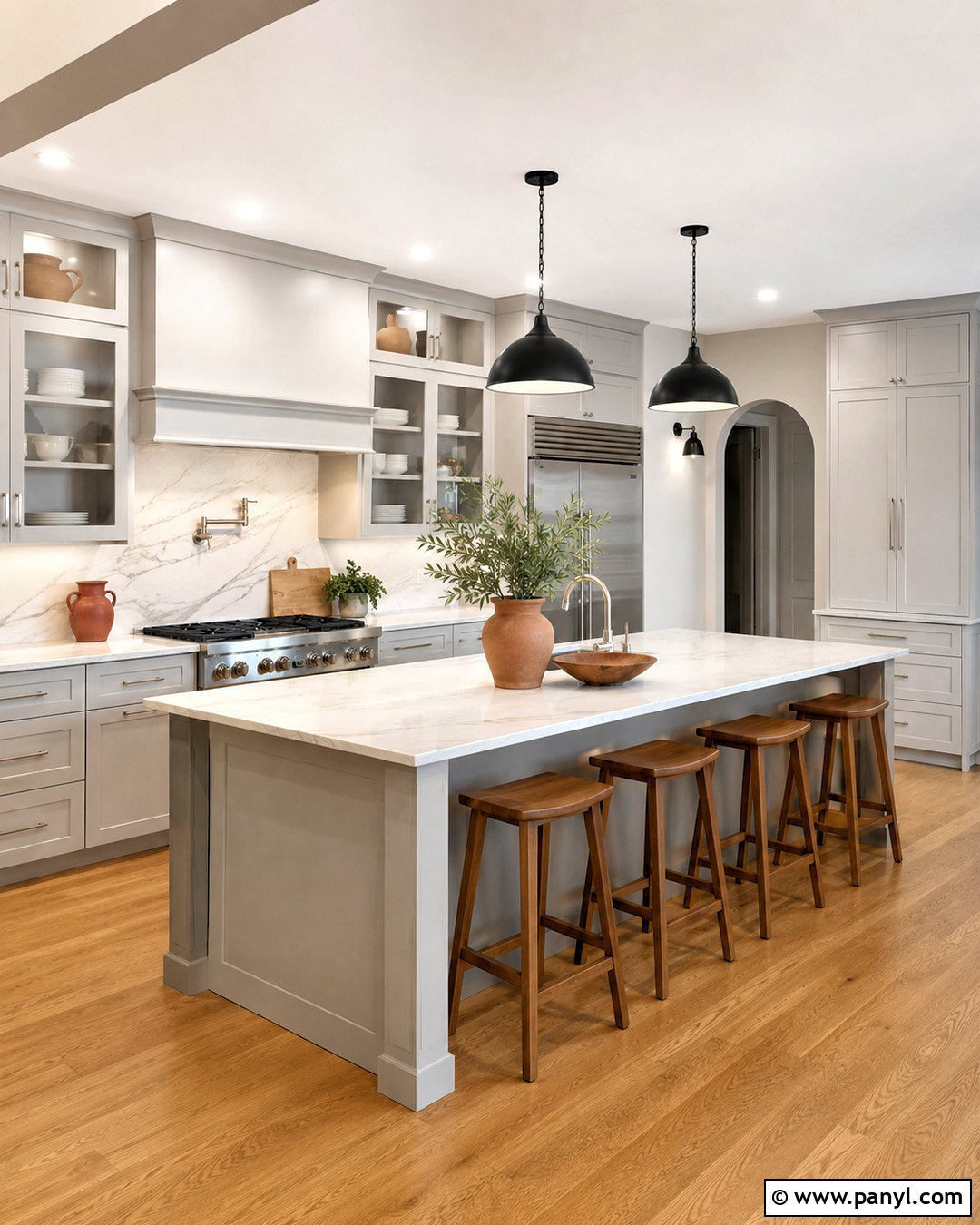
Cool light gray cabinets can balance the warmth of Agreeable Gray, but they need texture and contrast to avoid creating a washed-out kitchen. Select a soft gray that reads distinctly cooler than the walls. Add white marble-look quartz counters, veined stone backsplash tile, and honey-toned oak flooring to keep the overall design inviting. Satin nickel pulls suit the quieter palette, while black pendant lights introduce crisp structure above an island or peninsula. Consider glass-front upper cabinets to reflect light and reduce the visual weight of the gray finish. Warm wood stools, terracotta pottery, and small green plants provide natural color. Before painting, view the cabinet and wall samples together under both daylight and artificial lighting to check for unwanted blue or purple shifts.
6. Charcoal Cabinets With Agreeable Gray Walls
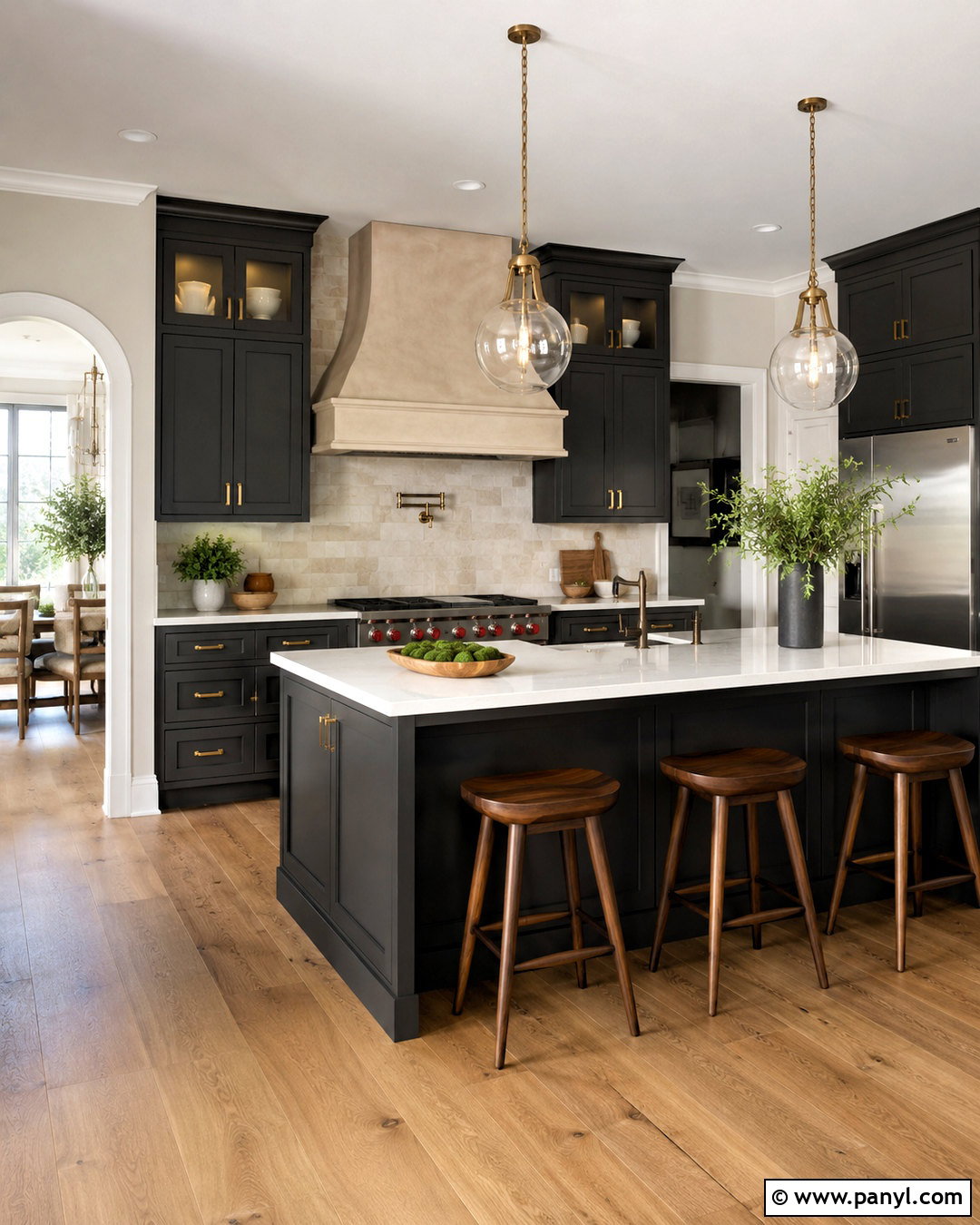
Charcoal cabinets create a dramatic kitchen while Agreeable Gray walls prevent the room from becoming too dark. Use the charcoal finish on both upper and lower cabinets in a large, naturally bright space, or reserve it for base cabinets and an island in a smaller kitchen. White quartz countertops and a pale stone backsplash will reflect light across the deeper cabinetry. Choose warm oak flooring, walnut stools, and aged brass pulls to soften the strong contrast. Glass globe pendants keep the sightlines open above the island. A simple plaster range hood painted to match the walls can offer visual relief between cabinet runs. The finished palette feels modern and substantial, with enough warmth from the greige walls and wood accents to remain comfortable.
7. Black Cabinets With Agreeable Gray Walls
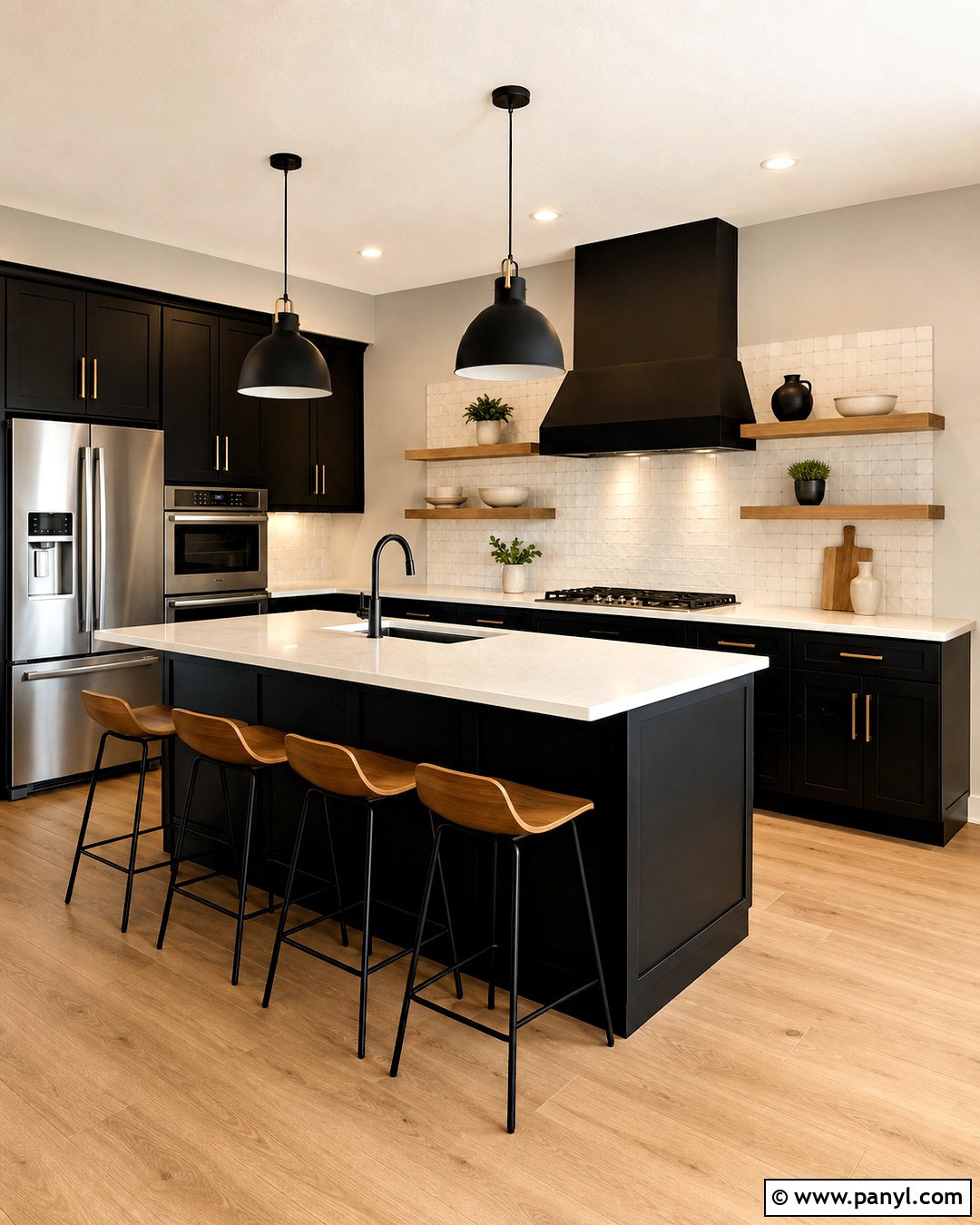
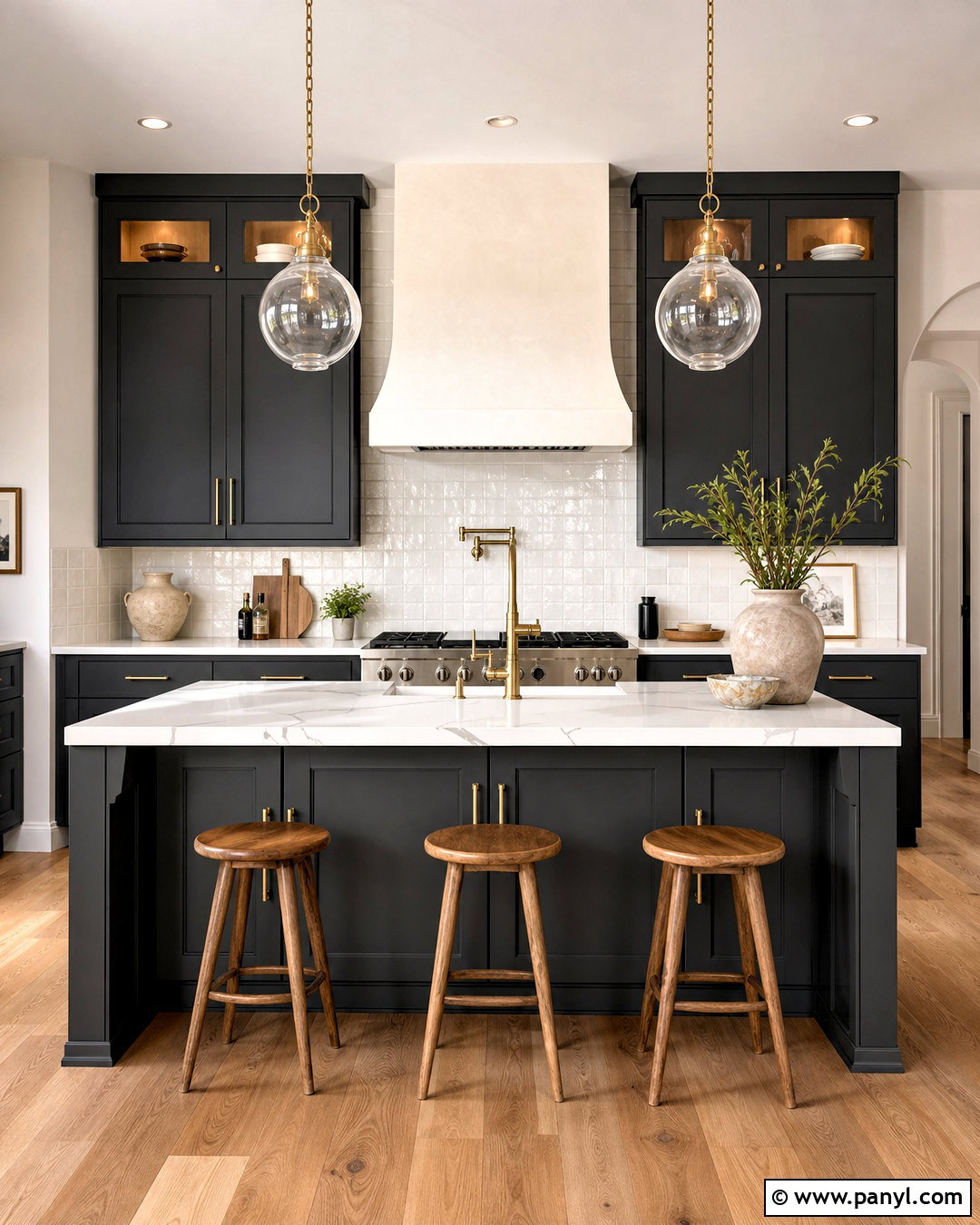
Black cabinets make Agreeable Gray appear lighter and warmer, producing a bold kitchen with clear architectural definition. For a balanced result, choose a softened matte black rather than a highly reflective jet-black finish. Pair it with creamy white quartz, a lightly textured zellige backsplash, and natural white oak flooring. Brushed brass hardware will stand out beautifully against the dark doors, while black pendants can visually connect the cabinetry to the ceiling area. Keep the countertop styling minimal and use open oak shelves for warmth and display space. In compact kitchens, install black cabinets below the counter and lighter cabinets above. Good under-cabinet lighting is essential because it brightens work surfaces and prevents the deeper finish from visually closing in the room.
8. Navy Blue Cabinets With Agreeable Gray Walls
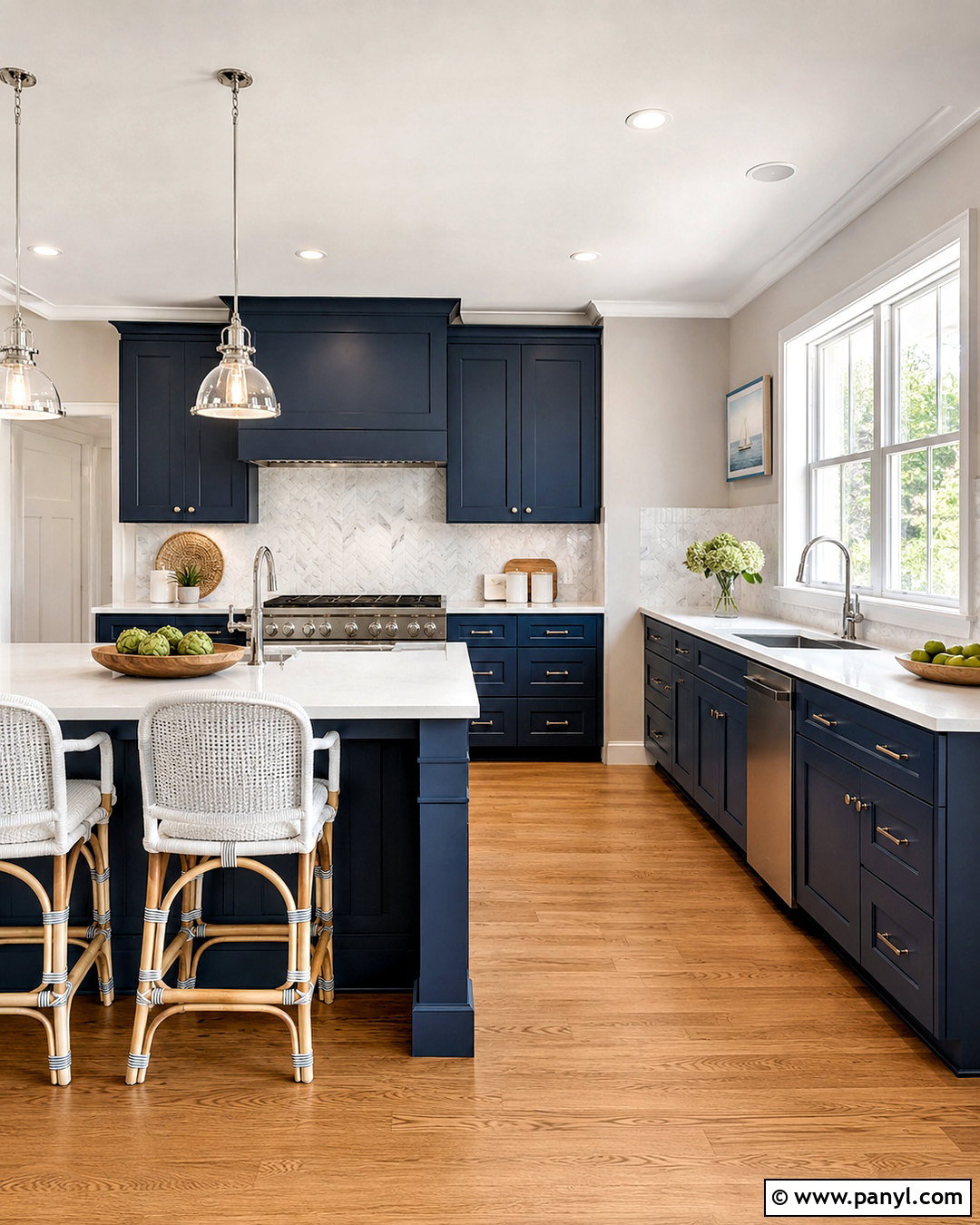
Navy blue cabinets provide classic contrast against Agreeable Gray walls without feeling as severe as black. Choose a muted navy with a slightly gray undertone so it relates naturally to the surrounding greige. Complete the kitchen with white quartz counters, pale gray marble backsplash tile, and medium-tone oak flooring. Polished nickel hardware creates a tailored result, while brushed brass produces a warmer and more decorative finish. Use white or oak counter stools to keep a navy island from looking too heavy. Simple glass pendants and bright under-cabinet lights will help the dark color remain crisp. For smaller rooms, navy lower cabinets paired with white uppers can preserve openness. The complete scheme feels established, practical, and easy to adapt to coastal or transitional homes.
9. Dusty Blue Cabinets With Agreeable Gray Walls
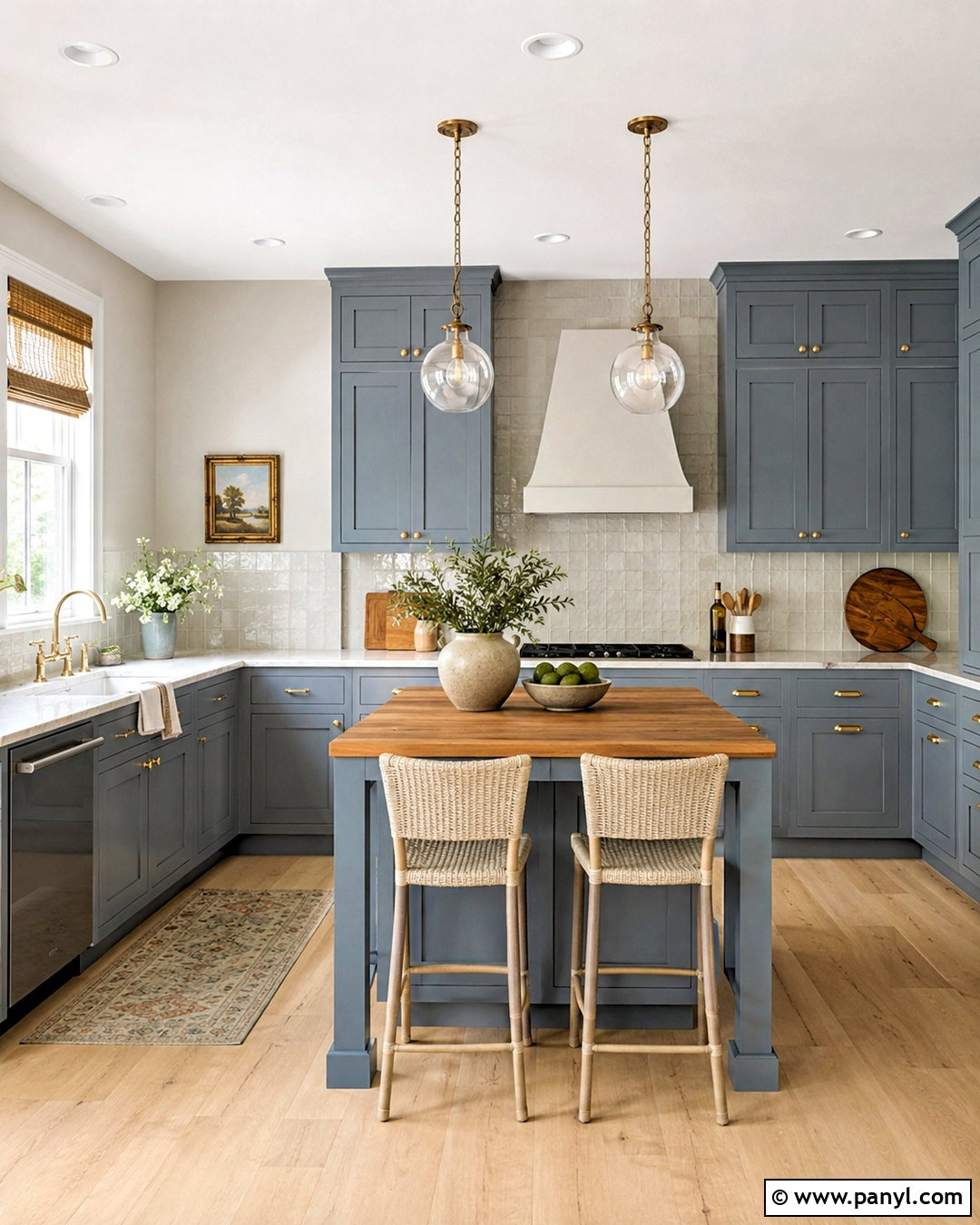
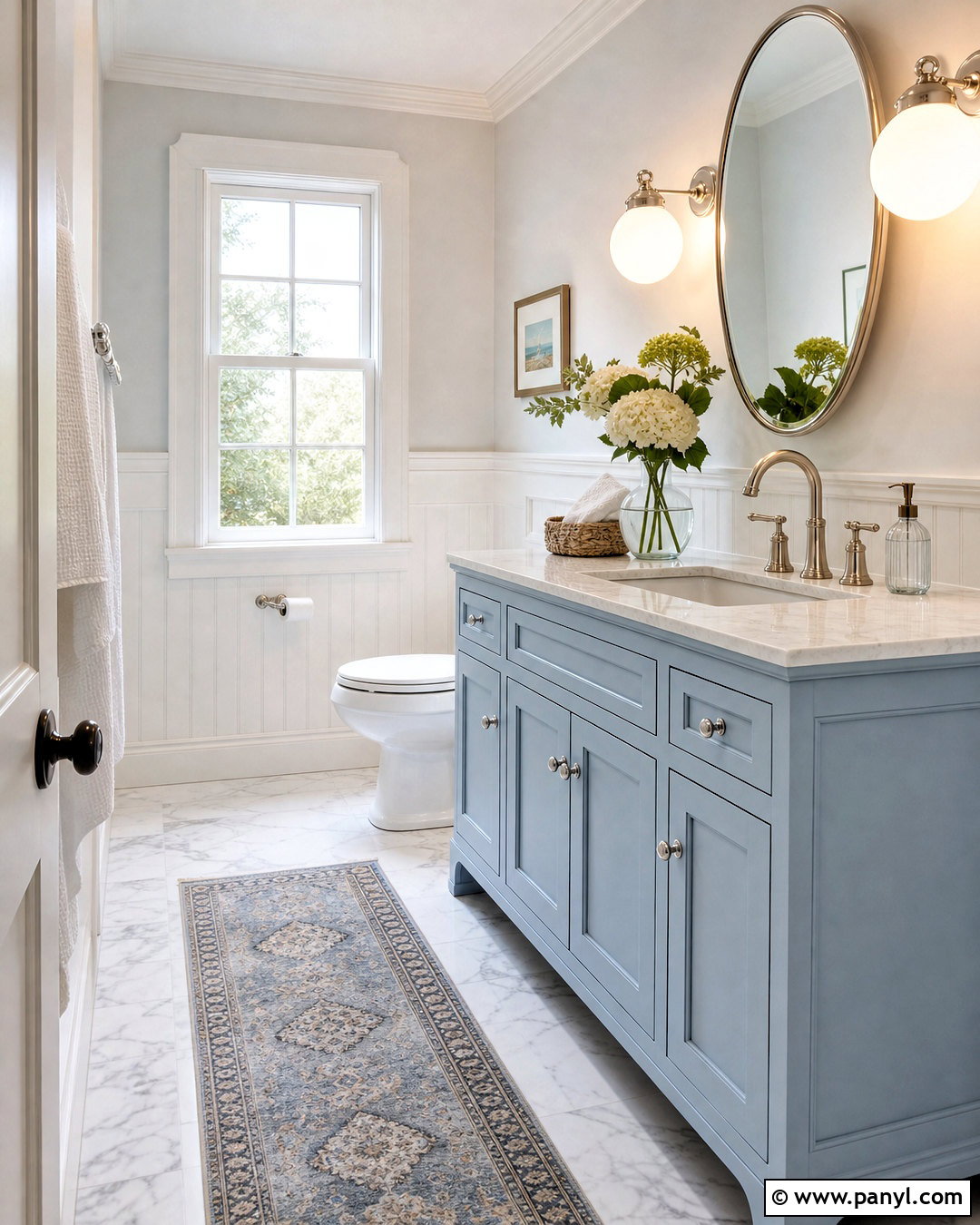
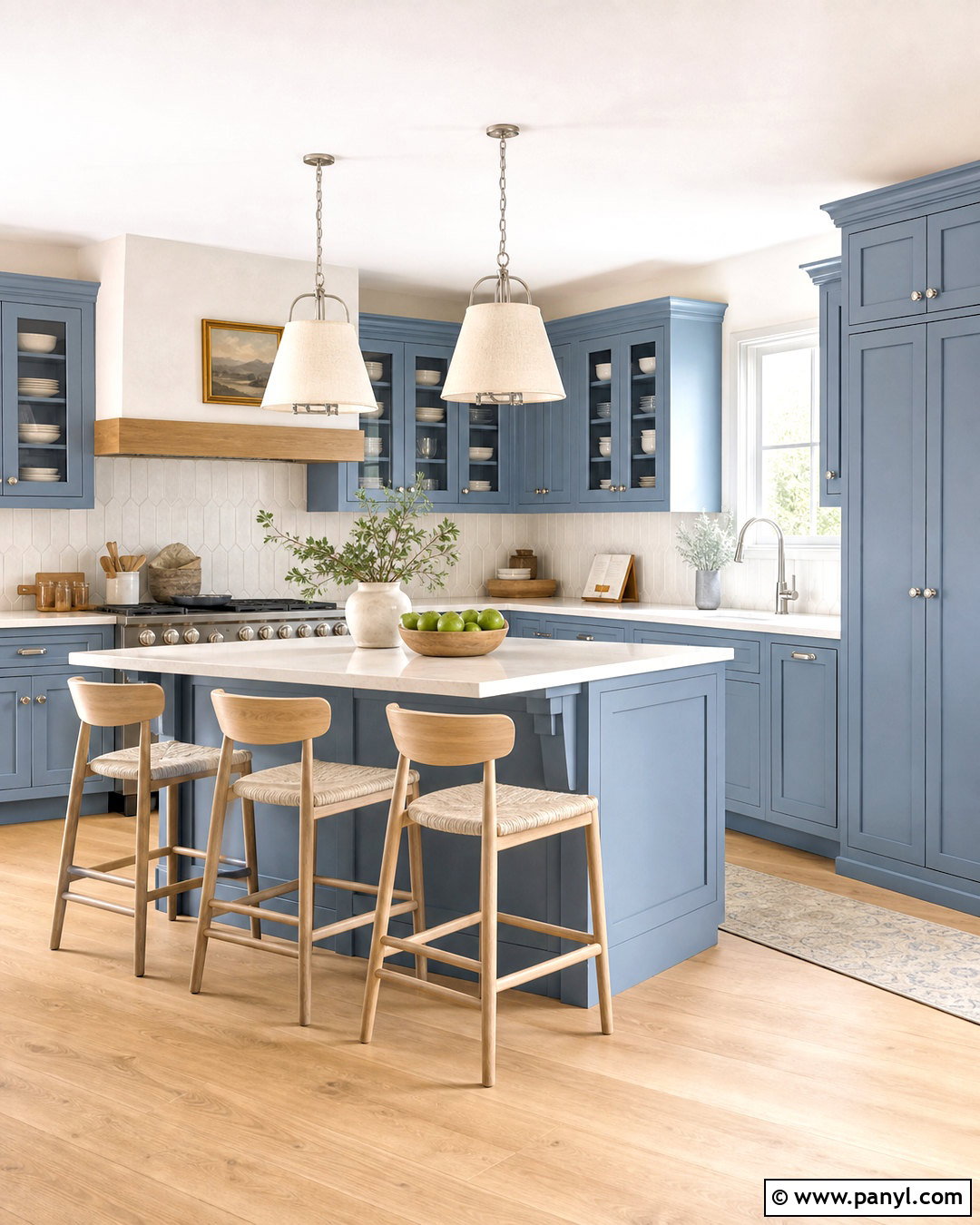
Dusty blue cabinets create a calm, approachable kitchen that works beautifully with the muted warmth of Agreeable Gray. Look for a medium-light blue softened with gray rather than a bright or highly saturated shade. White quartz countertops, creamy handmade tile, and pale oak flooring keep the design fresh and balanced. Use brushed nickel pulls for a cool, streamlined appearance or antique brass hardware for extra warmth. A natural wood island top can add texture without competing with the cabinet color. Complete the room with woven shades, simple glass lighting, and understated blue-gray textiles. This combination is especially useful when you want visible color but still prefer a neutral overall atmosphere. Carry the dusty blue onto a pantry door or built-in hutch for continuity.
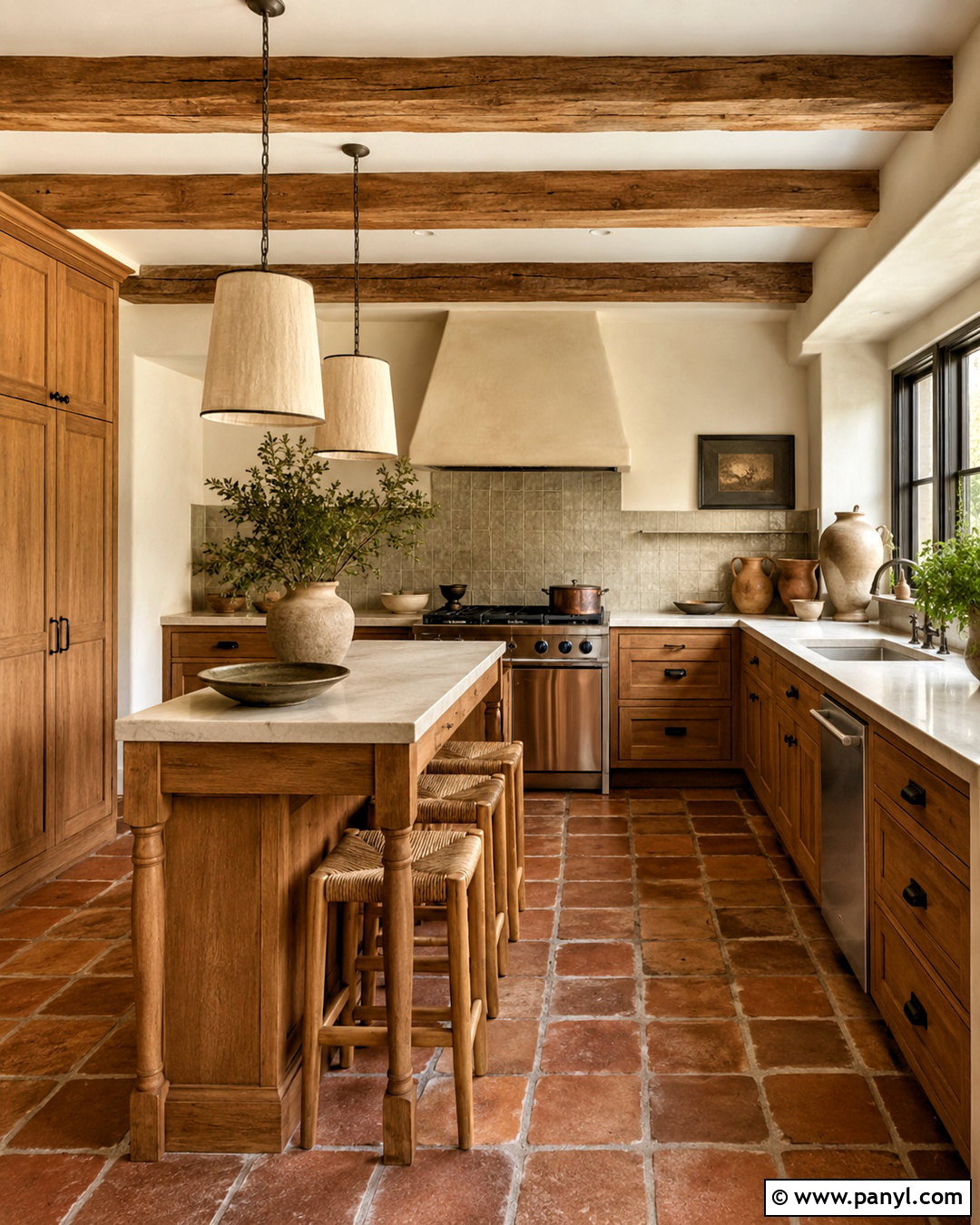
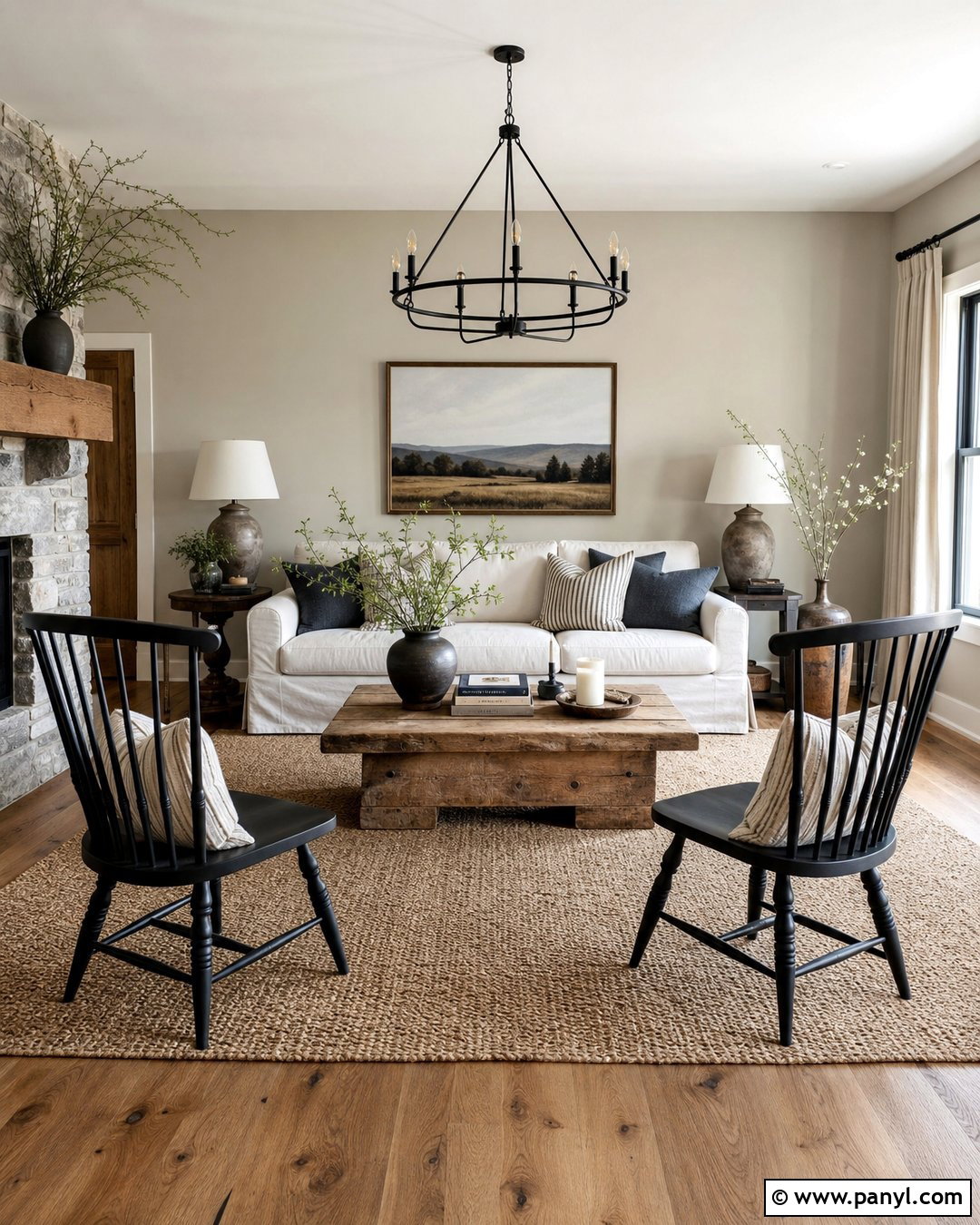
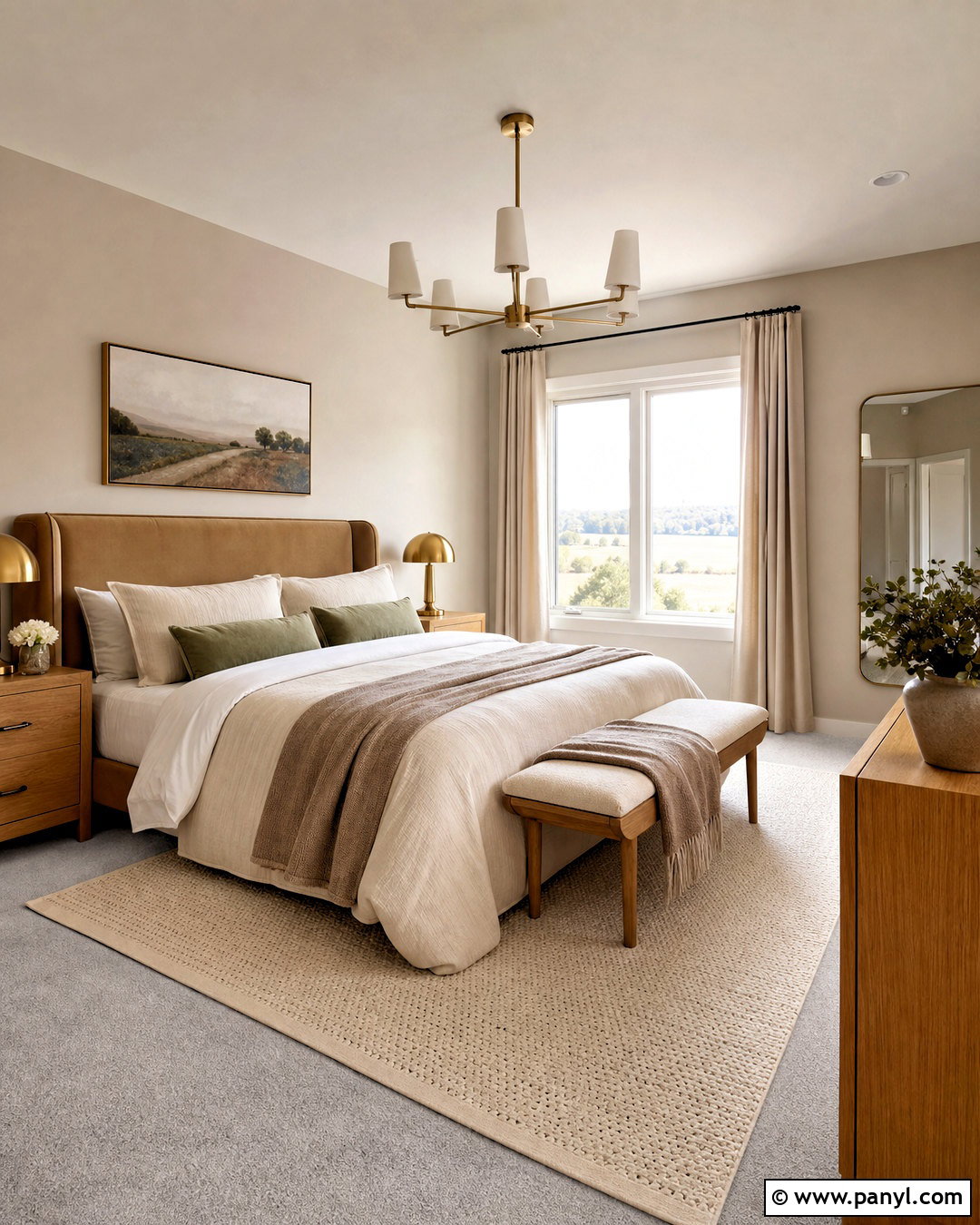
10. Sage Green Cabinets With Agreeable Gray Walls
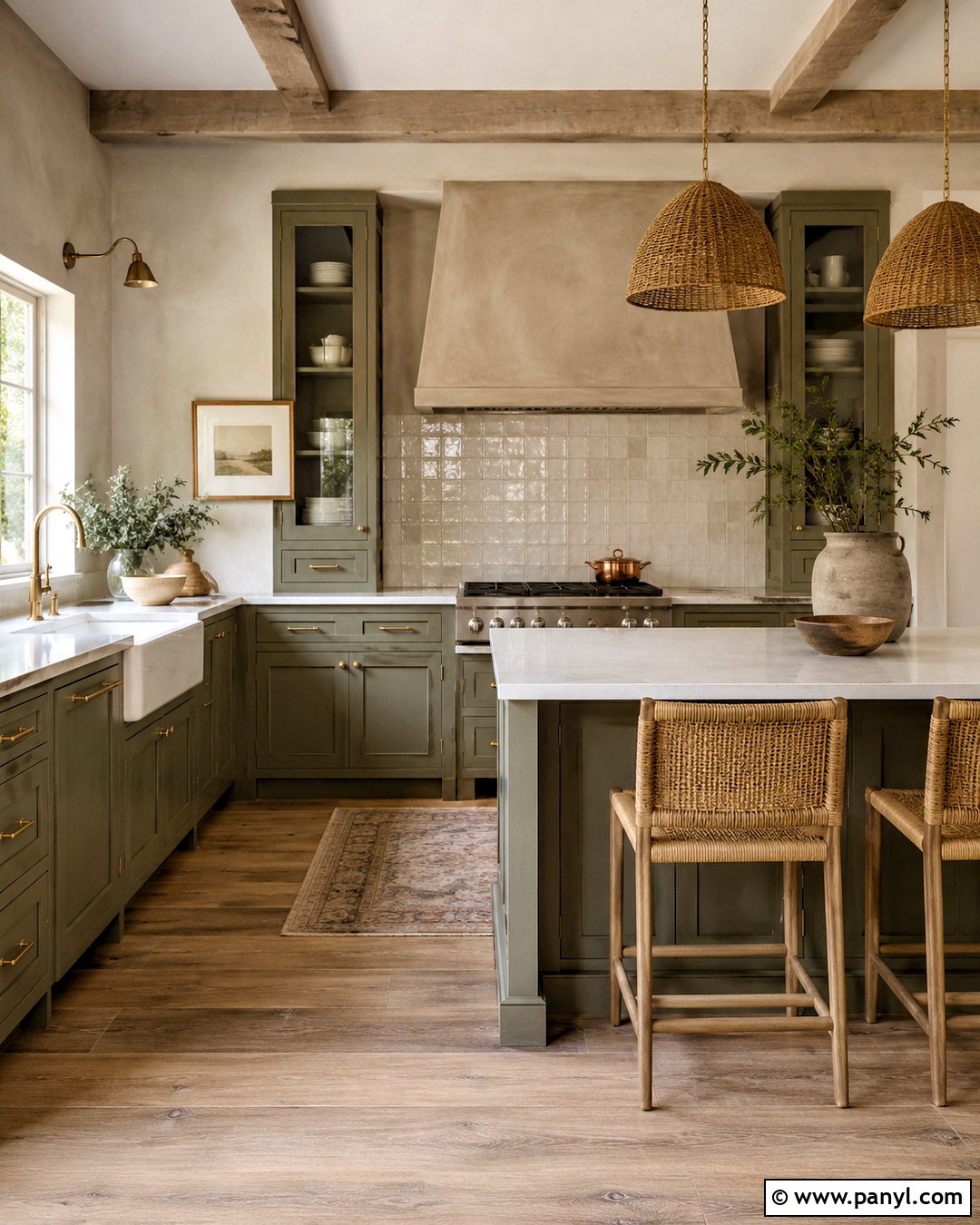
Sage green cabinets emphasize the earthy qualities of Agreeable Gray and give the kitchen a fresh but understated character. Choose a muted sage with gray undertones so it feels sophisticated rather than overly pastel. Pair it with warm white quartz, cream backsplash tile, and white oak or lightly weathered flooring. Aged brass hardware and a matching bridge faucet introduce warmth, while woven pendant lights add casual texture. Use a plaster range hood painted Agreeable Gray to create a gentle break within the green cabinetry. Natural accessories, including wood boards and off-white ceramics, reinforce the organic palette. This complete look works well in farmhouse, cottage, and transitional kitchens because the green supplies personality while the walls and countertops keep the room visually calm.
11. Olive Green Cabinets With Agreeable Gray Walls
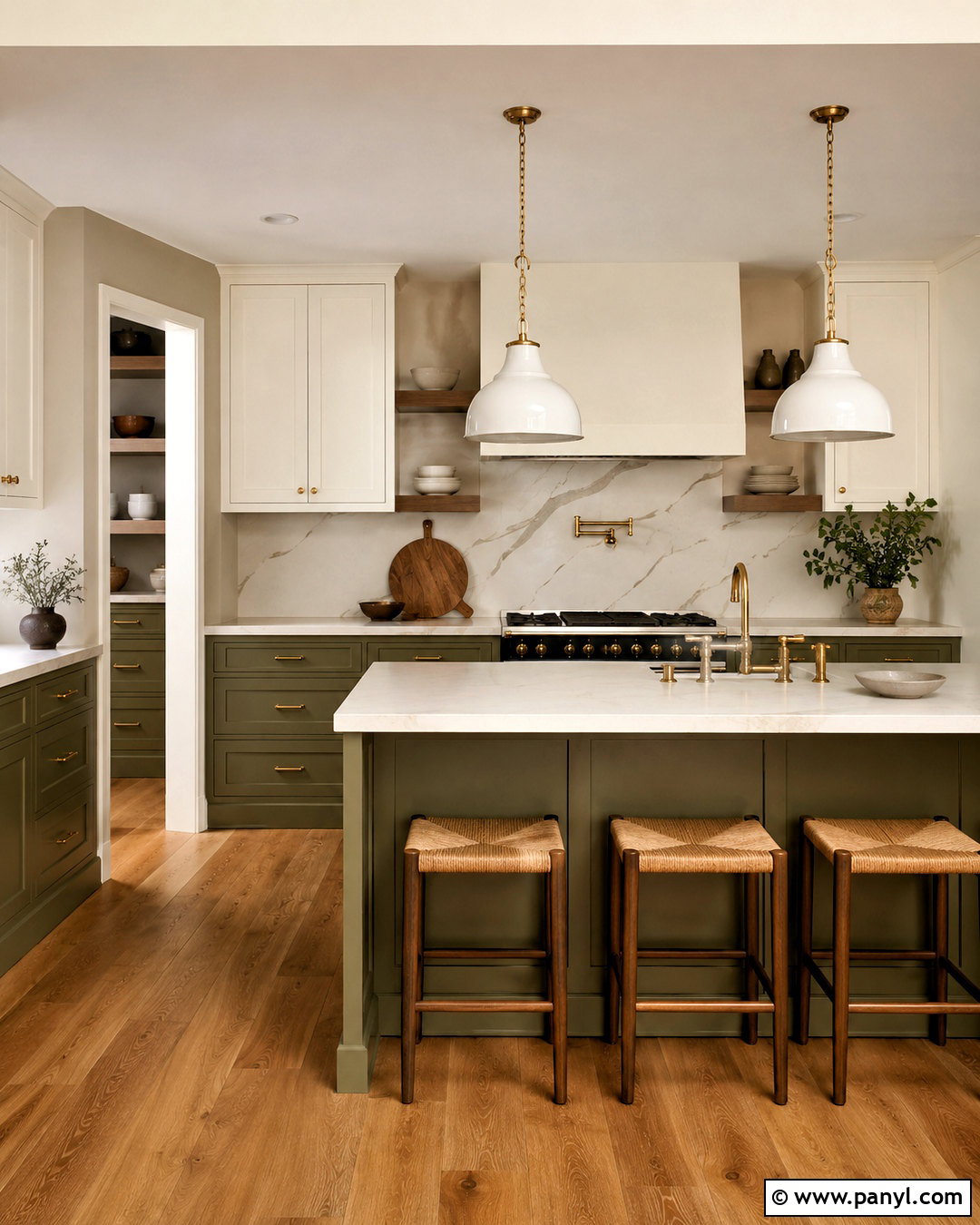
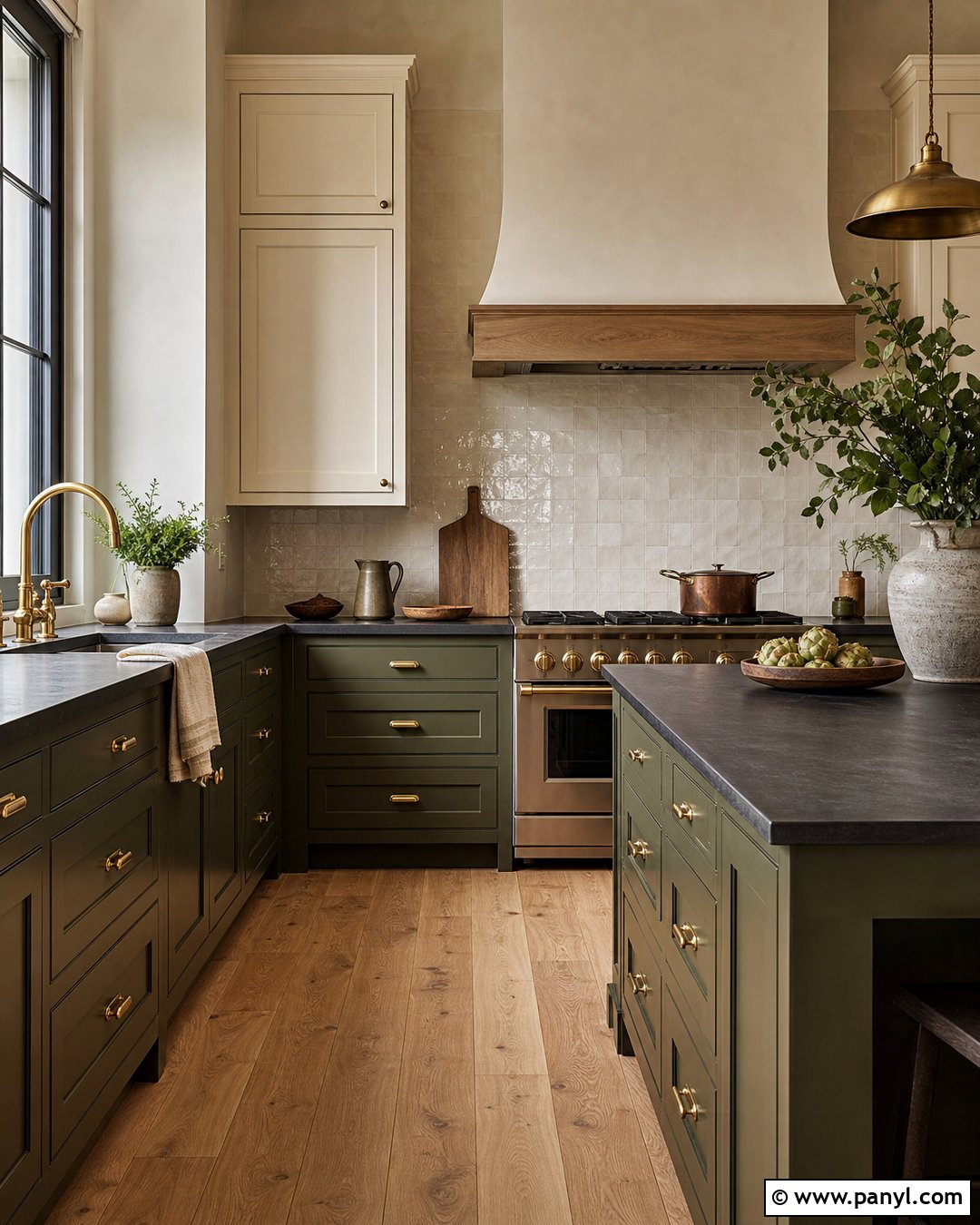
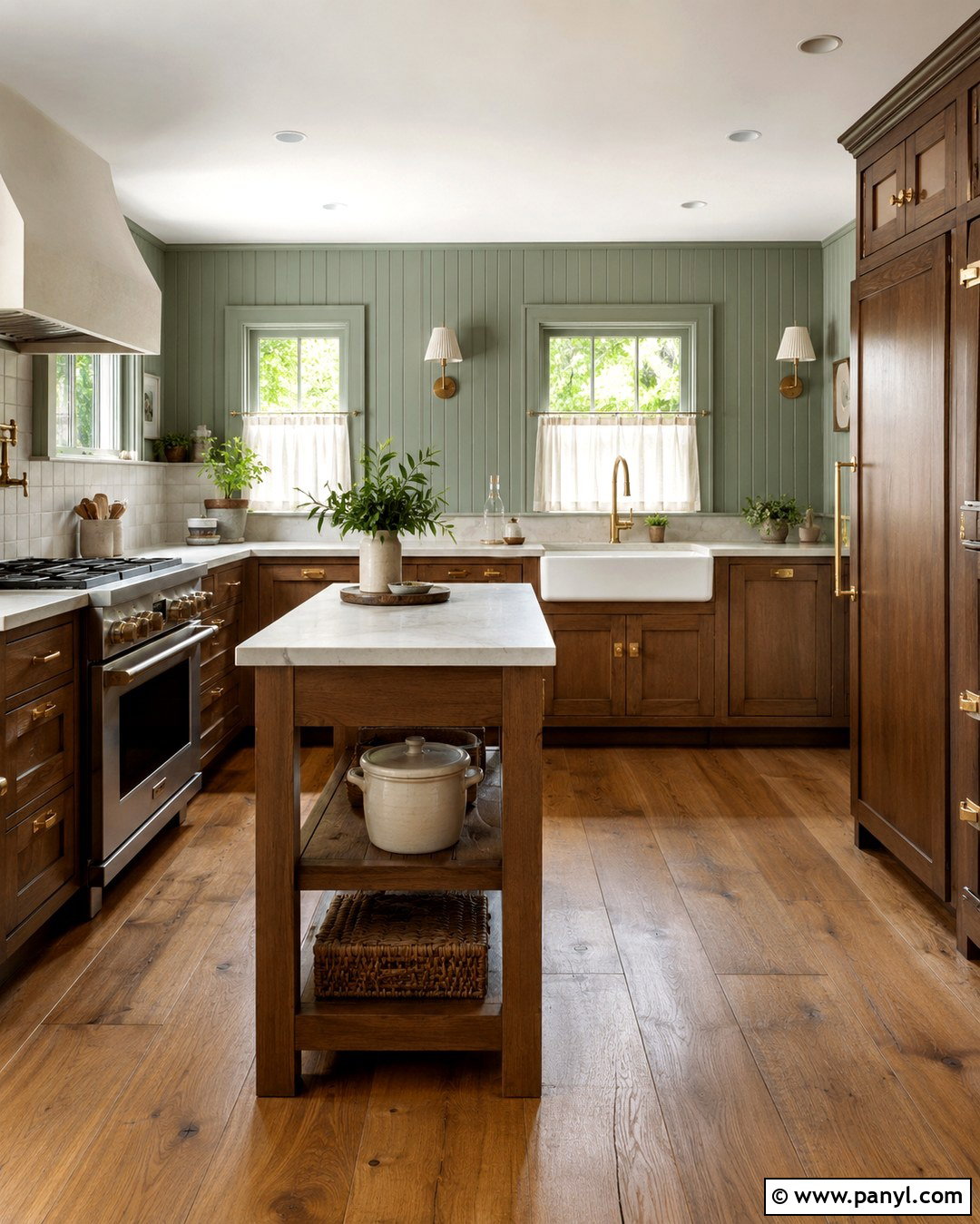
Olive green cabinets form a deeper, earthier partnership with Agreeable Gray walls. Select a softened olive that contains brown or gray rather than a sharp yellow-green. Cream quartz countertops and warm veined stone backsplash tile will connect the cabinets to the greige walls. Use walnut shelves, medium oak flooring, and unlacquered brass hardware to build richness throughout the room. A dark bronze faucet provides definition without introducing an unrelated finish. If the kitchen has limited daylight, use olive only on the lower cabinets and island, then choose warm white uppers. Linen shades and simple ceramic pendants complete the grounded appearance. The resulting kitchen feels layered and distinctive, yet every finish remains natural enough to support a comfortable, everyday setting.
12. Forest Green Cabinets With Agreeable Gray Walls
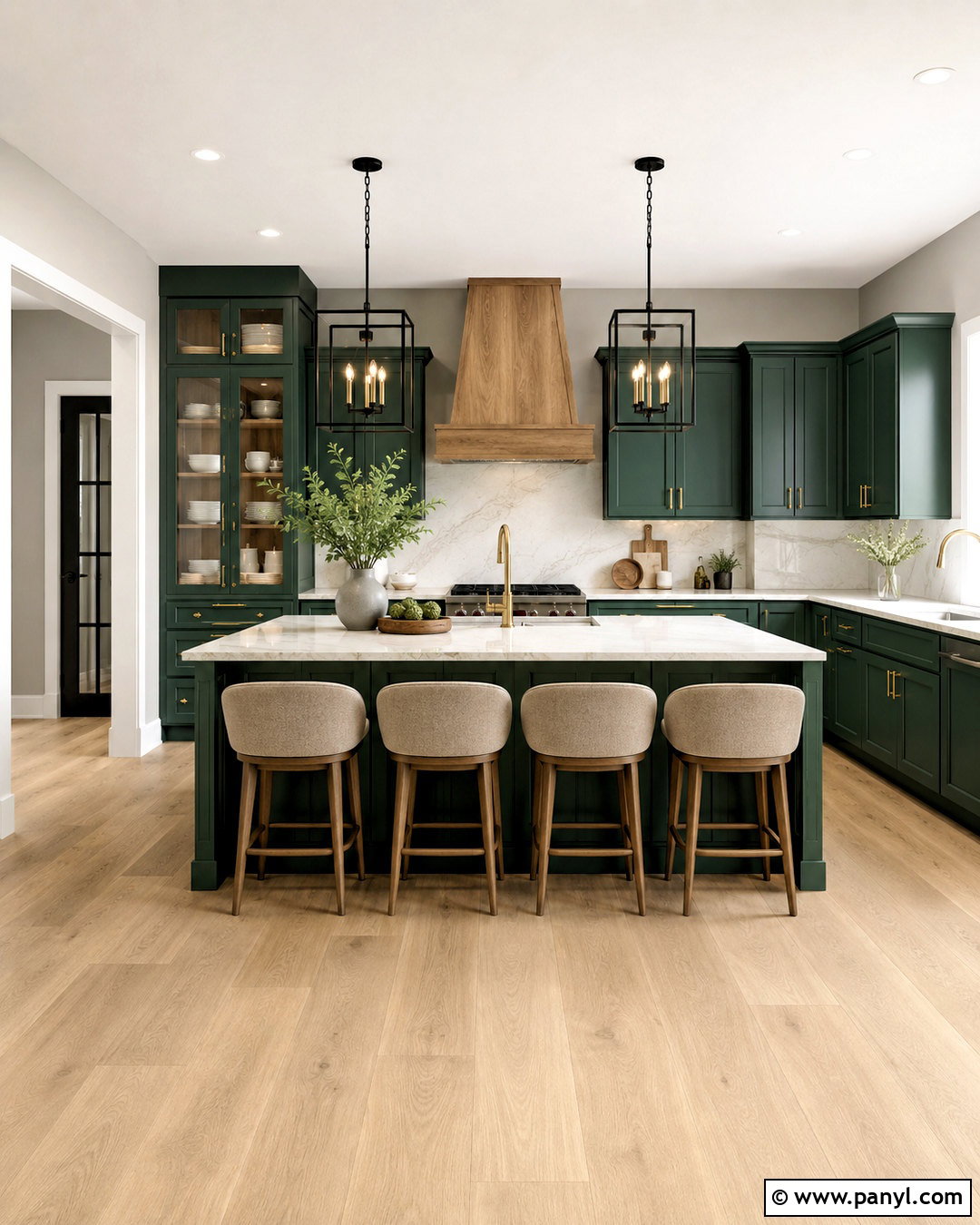
Forest green cabinets turn Agreeable Gray into a quiet backdrop for a rich, dramatic kitchen. This deeper color works best with generous natural light or when used selectively on an island, pantry wall, or lower cabinets. Add light marble-look quartz, a creamy full-height backsplash, and pale white oak flooring to offset the saturated cabinetry. Brass hardware gives the green a classic glow, while black-framed pendants add a modern edge. Keep upholstered stools and window treatments in oatmeal or warm ivory so they blend with the walls. A wood range hood or open shelf introduces another natural layer. The finished kitchen feels refined and grounded, with the light wall color providing breathing room around the strong cabinet finish.
13. Taupe Cabinets With Agreeable Gray Walls
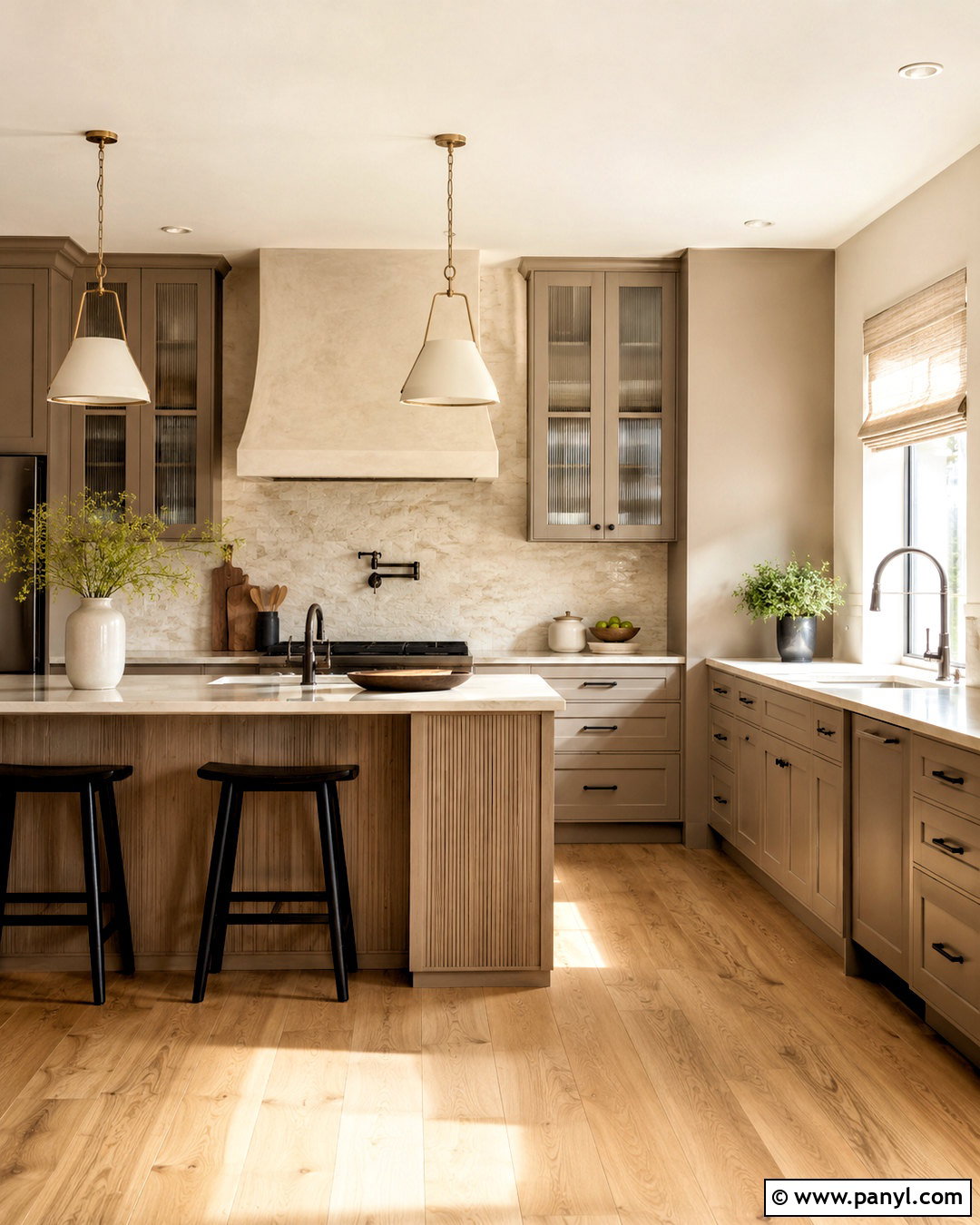
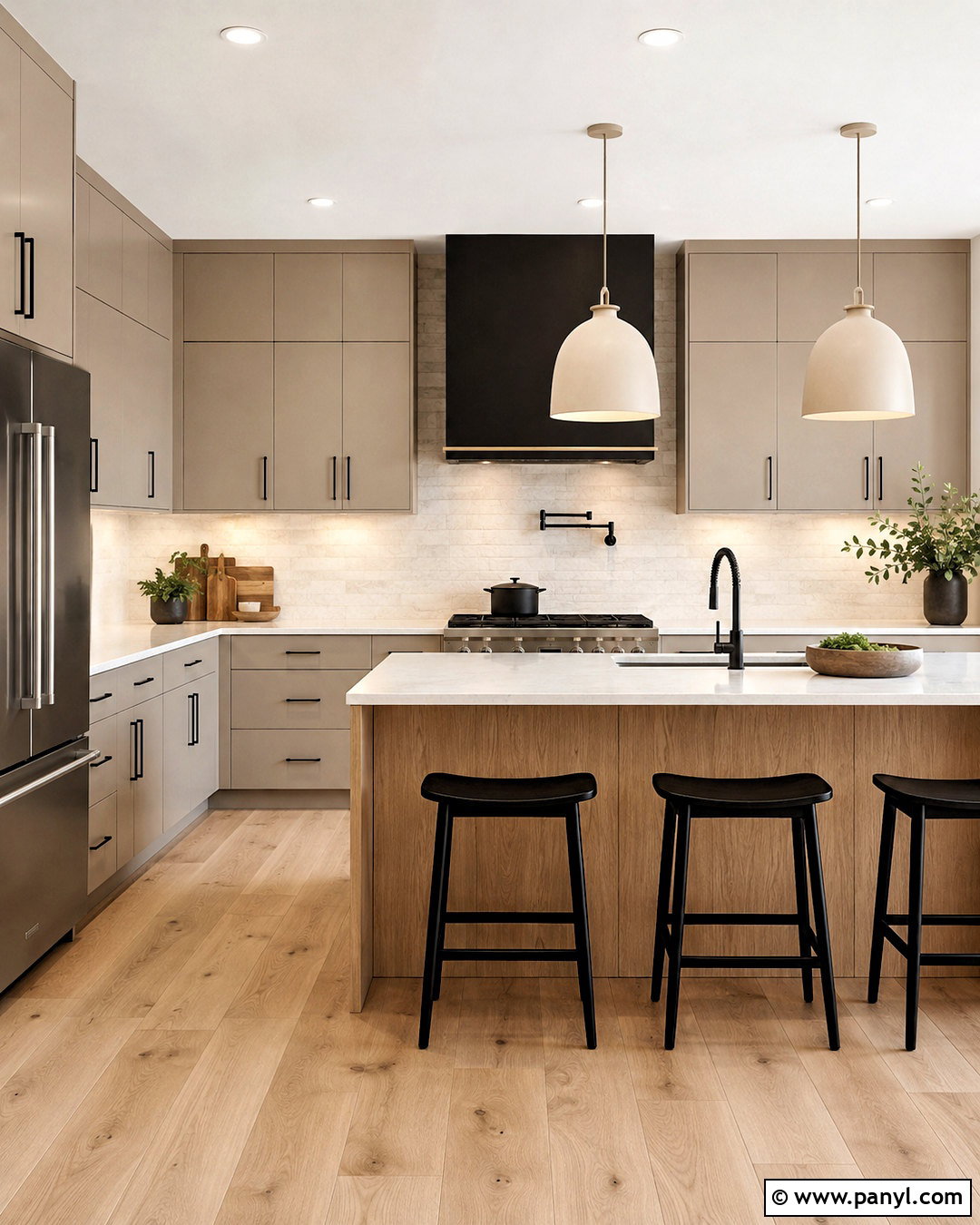
Taupe cabinets create subtle depth while maintaining the warm neutral direction of Agreeable Gray. Choose a cabinet color that is noticeably deeper than the walls, ideally with balanced gray-brown undertones. Pale quartz countertops, warm limestone-look backsplash tile, and medium white oak floors form a soft tonal foundation. Use dark bronze or matte black hardware to outline the cabinetry and stop the neutrals from blending together. Fluted glass cabinet doors and natural linen shades can add texture without introducing busy patterns. Above the island, install simple cream or black pendants depending on the desired contrast. This monochromatic scheme is especially effective in open kitchens where bold color might interrupt the surrounding decor. Wood stools and handmade ceramics finish the room with comfortable warmth.
14. Mushroom Cabinets With Agreeable Gray Walls
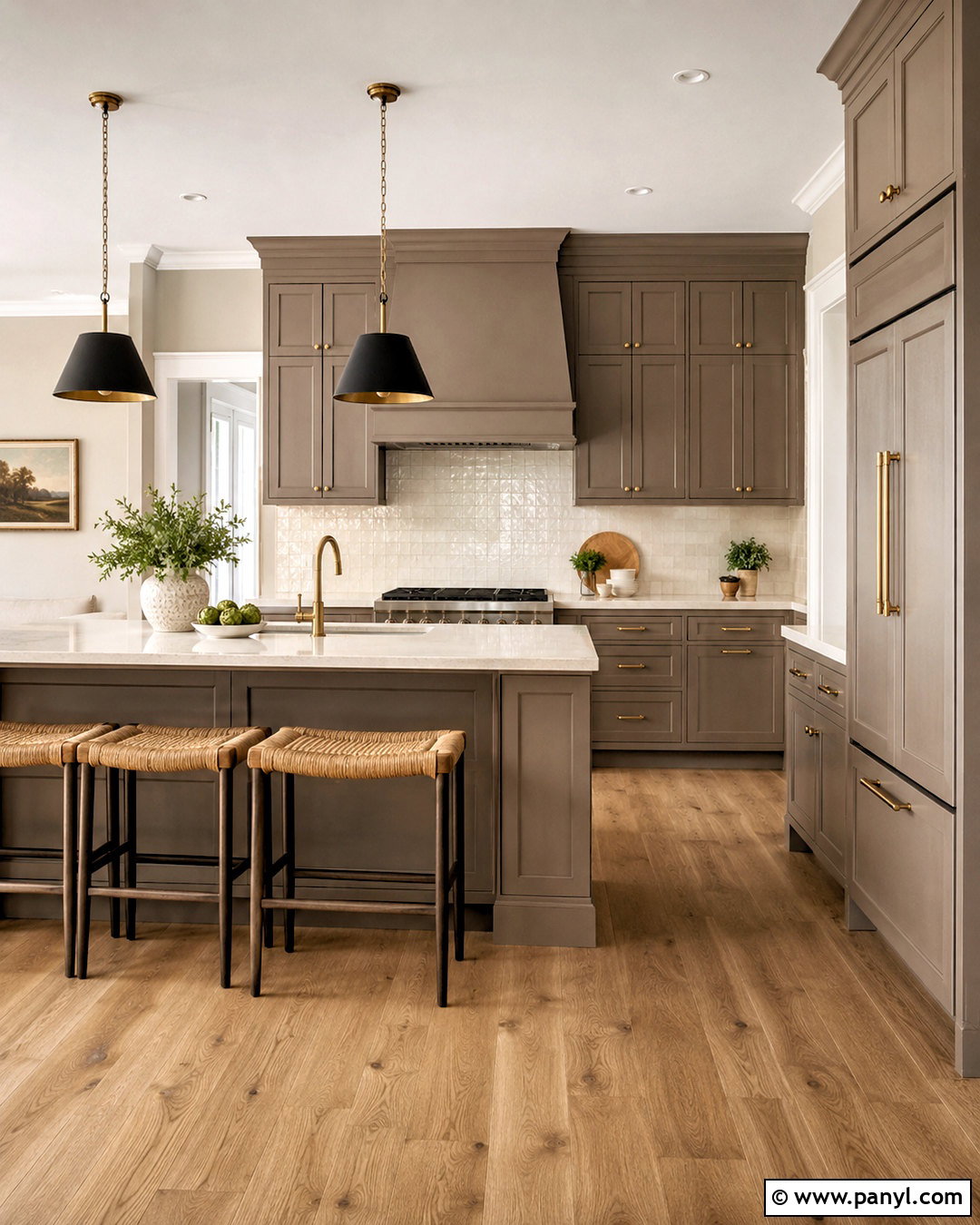
Mushroom-colored cabinets offer more depth than cream and more warmth than standard gray. Their brown-gray character complements Agreeable Gray while keeping the kitchen soft and cohesive. Select a medium mushroom shade for the base cabinetry and use it throughout the room if the lighting is strong. Pair it with creamy quartz, warm white backsplash tile, and lightly stained oak floors. Aged brass pulls enhance the brown undertones, while black accents on the faucet and pendants provide useful contrast. Consider a matching paneled refrigerator so the cabinetry reads as one continuous feature. Add woven stools, linen window treatments, and a few dark wood accessories. This complete neutral kitchen feels tailored and current without depending on stark whites or high-contrast color combinations.
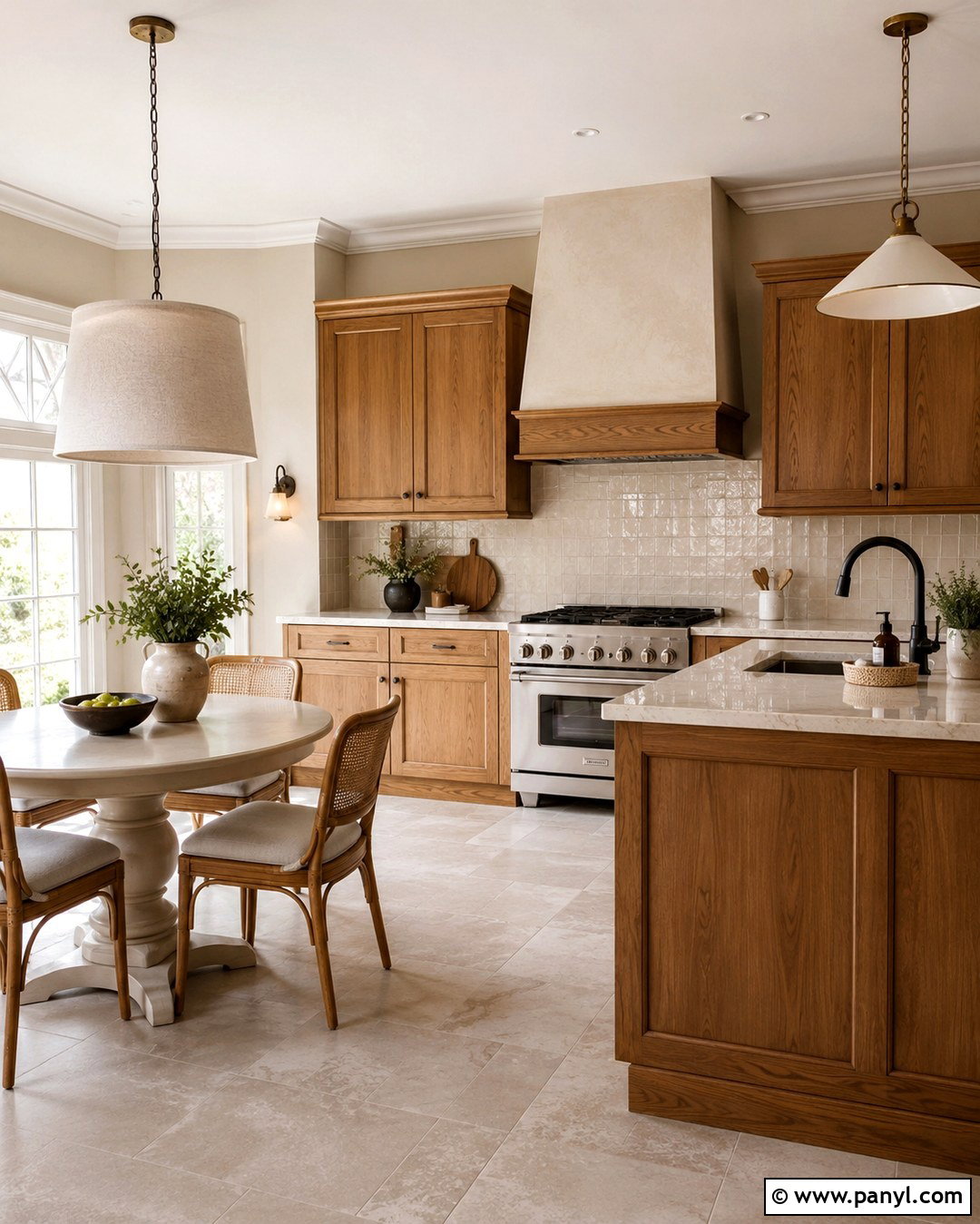
15. Natural Oak Cabinets With Agreeable Gray Walls
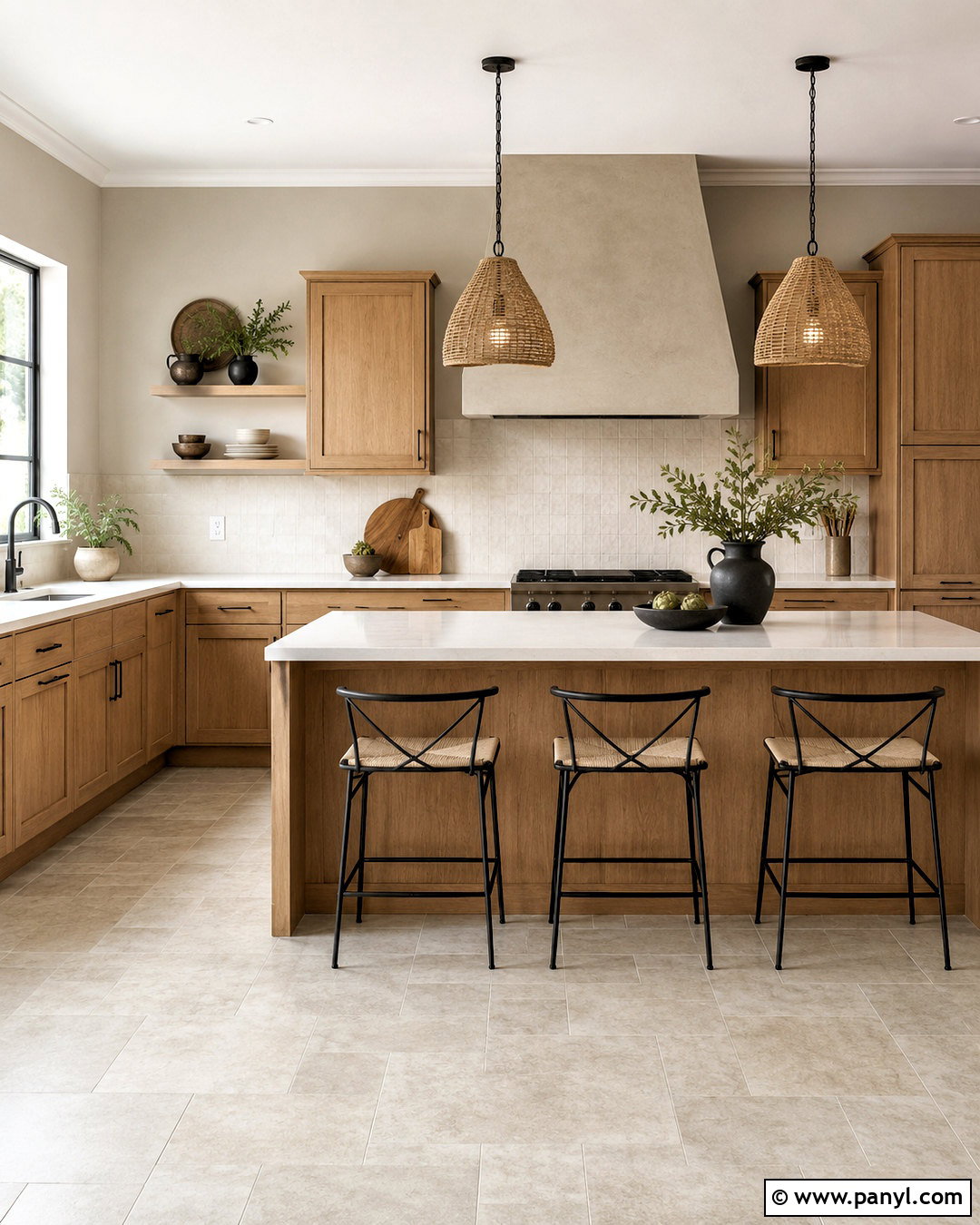
Natural oak cabinets bring visible grain, warmth, and organic variation to Agreeable Gray walls. Choose a clear or lightly stained finish that avoids strong orange tones. White quartz countertops and a simple warm white backsplash will keep the wood from making the room feel overly rustic. Black hardware adds definition, while brushed brass can create a softer transitional look. Use pale oak flooring in a slightly different tone or select warm stone tile to prevent too much matching wood. A plaster range hood painted Agreeable Gray connects the cooking area to the surrounding walls. Finish the kitchen with woven pendants, black-framed stools, and restrained ceramic decor. The resulting design feels natural, bright, and comfortable while allowing the oak grain to remain the primary visual texture.
16. White Oak Cabinets With Agreeable Gray Walls
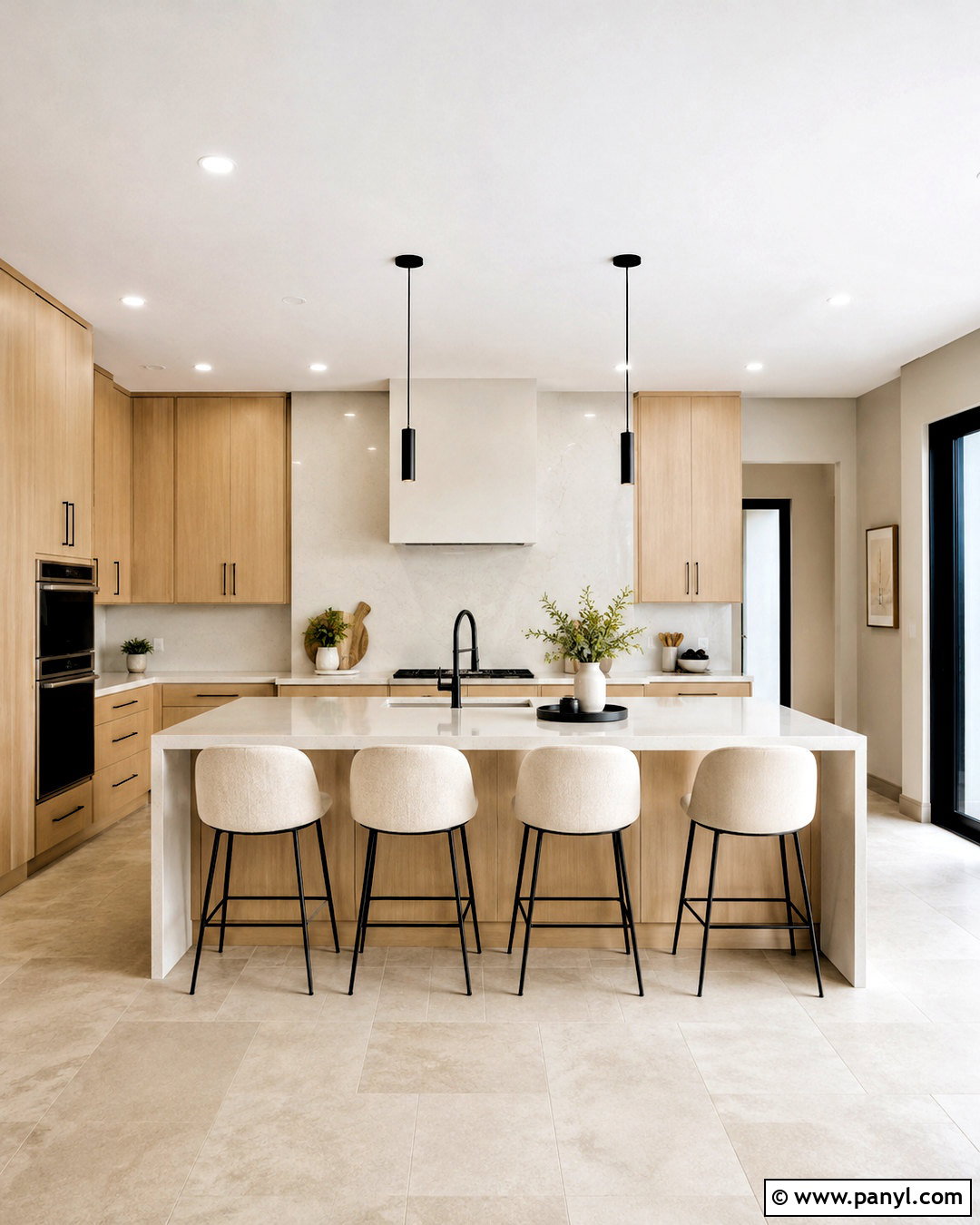
White oak cabinets create a lighter and more contemporary wood kitchen than traditional golden oak. Their subtle grain and neutral coloring sit comfortably beside Agreeable Gray without producing a strong color clash. Use slab-front cabinetry for a modern look or slim Shaker doors for a transitional room. Add soft white quartz countertops, a full-height quartz backsplash, and light limestone or pale wood flooring. Matte black pulls and pendant lights create sharp lines, while a brushed nickel faucet maintains a quiet finish at the sink. Include a few warm textiles and off-white stools to soften the clean surfaces. This scheme performs particularly well in compact or open-plan kitchens because both the walls and cabinetry stay light while their contrasting textures maintain visual interest.
17. Walnut Cabinets With Agreeable Gray Walls
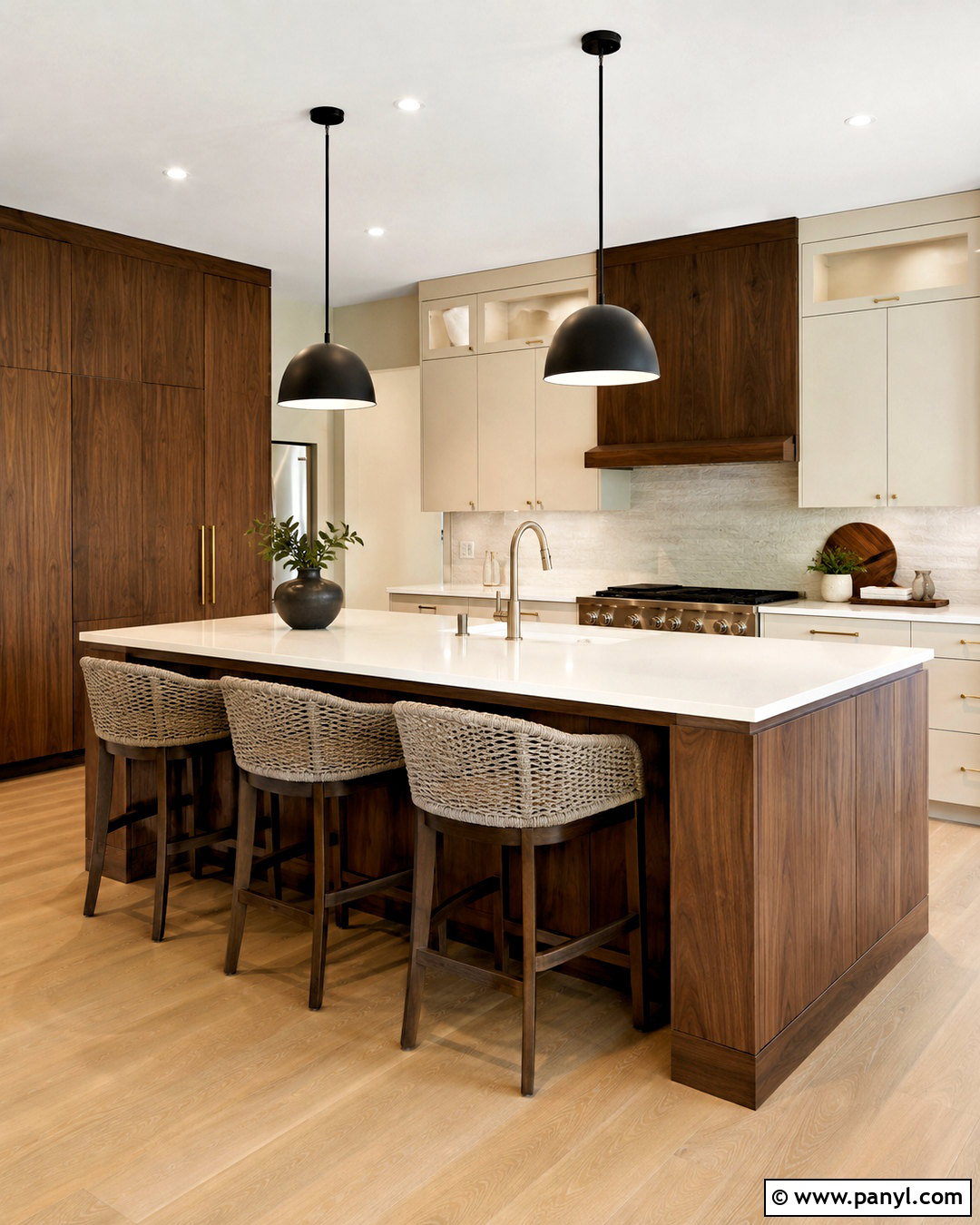
Walnut cabinets provide rich brown color that makes Agreeable Gray walls feel warmer and lighter. Because walnut has a strong grain, use simple cabinet doors and limited decorative detailing. Creamy white quartz countertops and a pale stone backsplash will balance the darker wood. Add warm gray porcelain flooring or light oak floors for contrast beneath the cabinetry. Satin brass hardware reinforces the walnut’s warmth, while minimal black pendants bring a contemporary outline to the room. If full walnut cabinetry feels too heavy, use it on base cabinets and the island, then install warm white upper cabinets. A few sculptural ceramics and woven stools complete the look. This kitchen feels polished and inviting without needing an additional bold cabinet color or complicated decorative palette.
18. Cherry Wood Cabinets With Agreeable Gray Walls
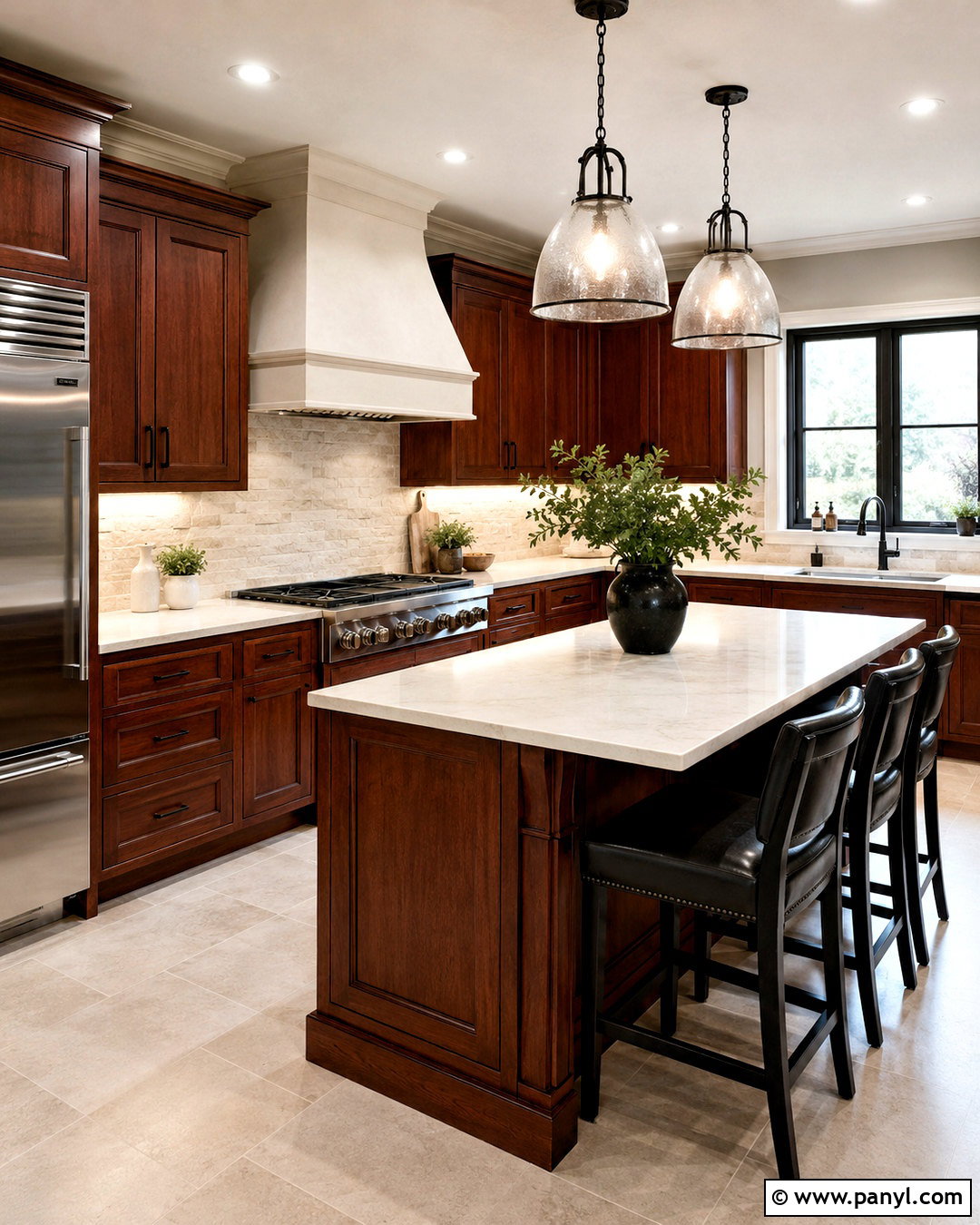
Cherry wood cabinets can work with Agreeable Gray when the rest of the kitchen is kept light and restrained. The wood’s reddish warmth creates noticeable contrast, so avoid yellow-beige countertops or highly patterned brown backsplash tile. Instead, use soft white quartz, creamy stone tile, and neutral oak or light porcelain flooring. Update traditional cherry cabinets with simple brushed nickel or matte black hardware. A white plaster hood and bright under-cabinet lighting will visually separate the darker cabinet runs. Keep textiles in oatmeal, ivory, and muted gray to connect with the walls. If the cherry finish appears too red, a brown glaze or professional refinishing treatment can soften it. The completed room preserves the character of real wood while looking brighter and more current.
19. White And Navy Cabinets With Agreeable Gray Walls
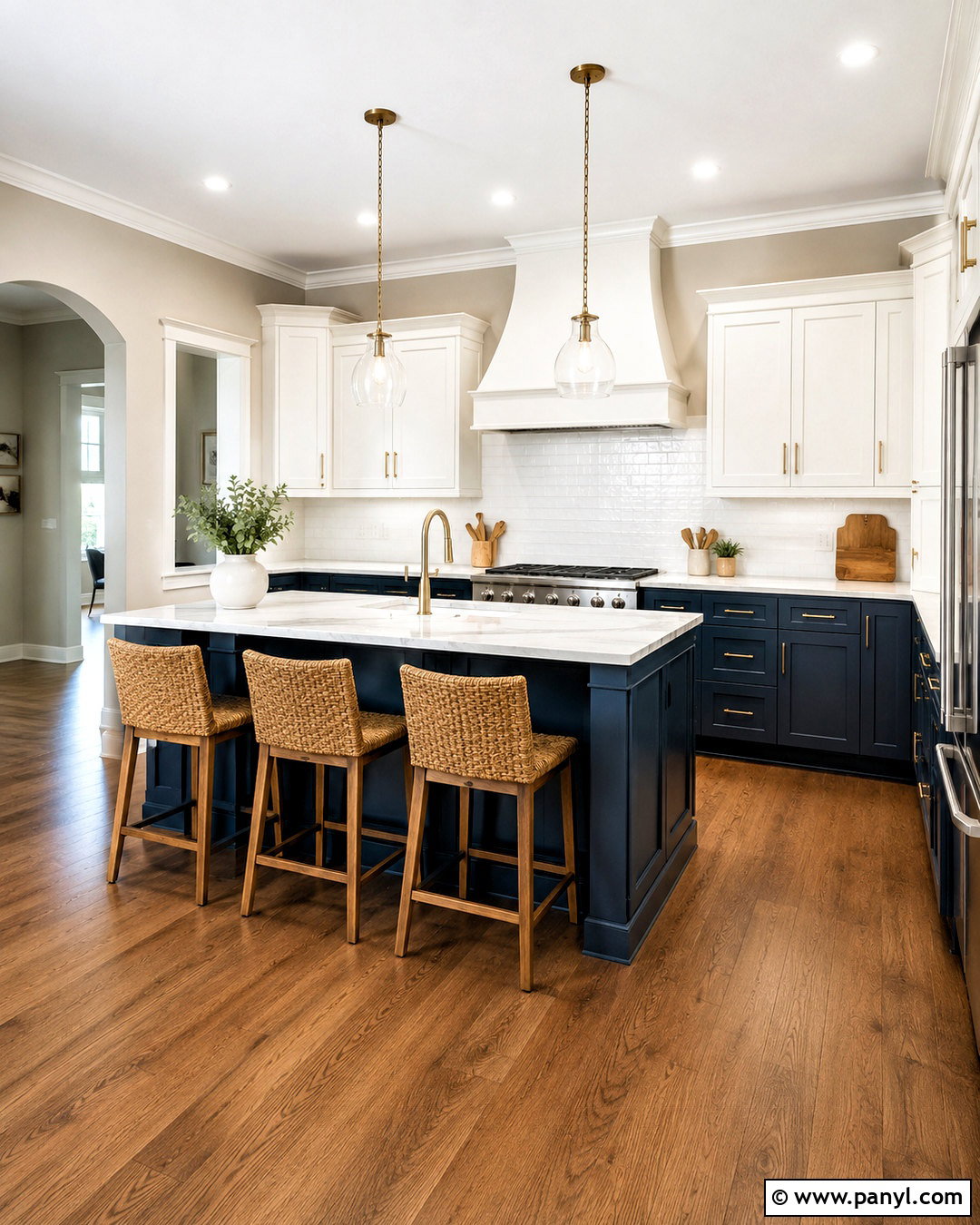
Two-tone white and navy cabinets create a balanced kitchen with brightness above and visual weight below. Use warm white upper cabinets, navy base cabinets, and a matching navy island against Agreeable Gray walls. Connect the colors with white quartz countertops containing subtle gray veining and a clean white tile backsplash. Brushed brass pulls add warmth across both cabinet finishes, while natural oak flooring prevents the palette from feeling overly formal. Install clear glass pendants above the island so they do not compete with the strong navy base. White counter stools or woven seats can lighten the center of the room. This approach is especially practical in smaller kitchens because dark color remains grounded below eye level while the upper portion stays open and reflective.
20. Oak And Black Cabinets With Agreeable Gray Walls
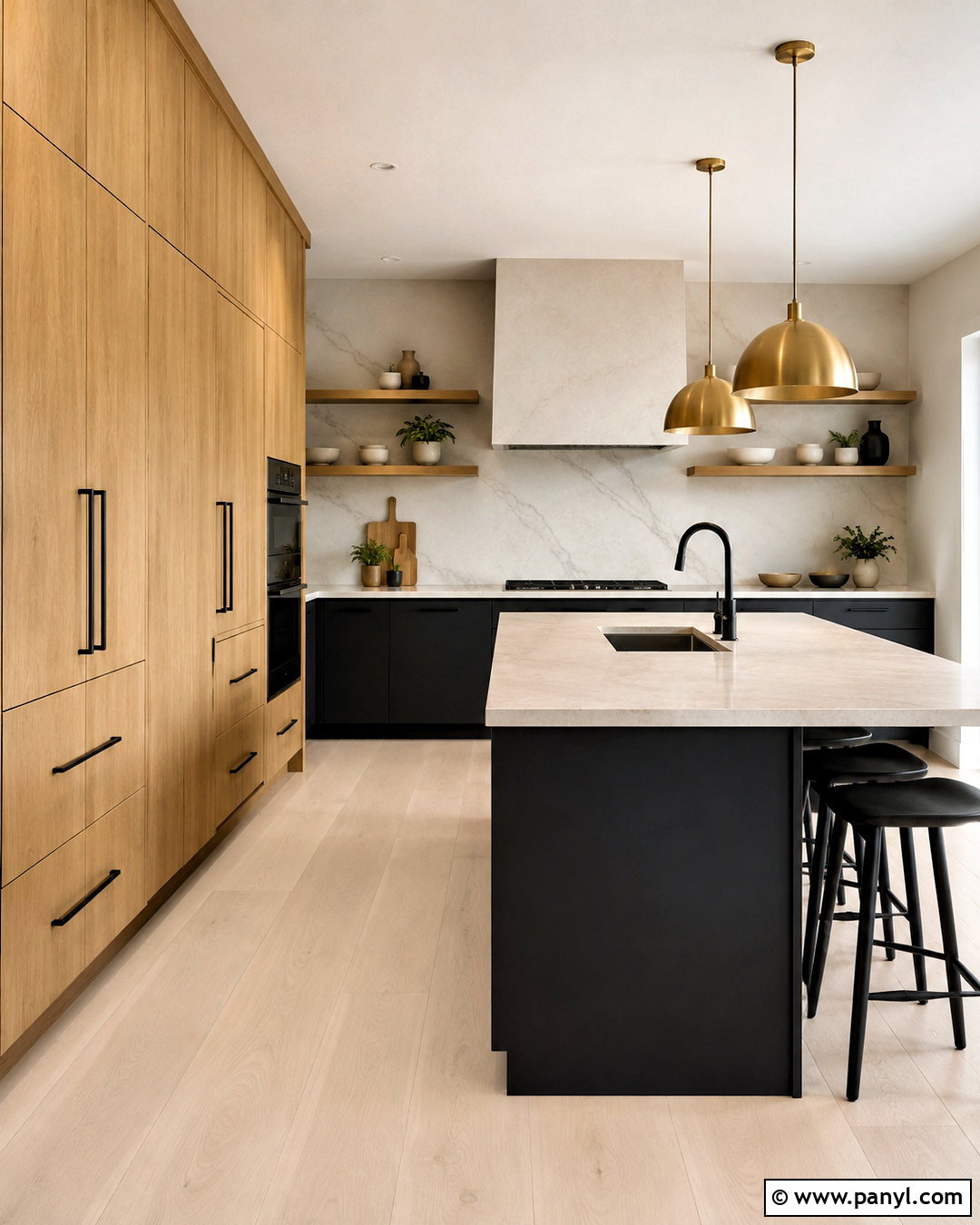
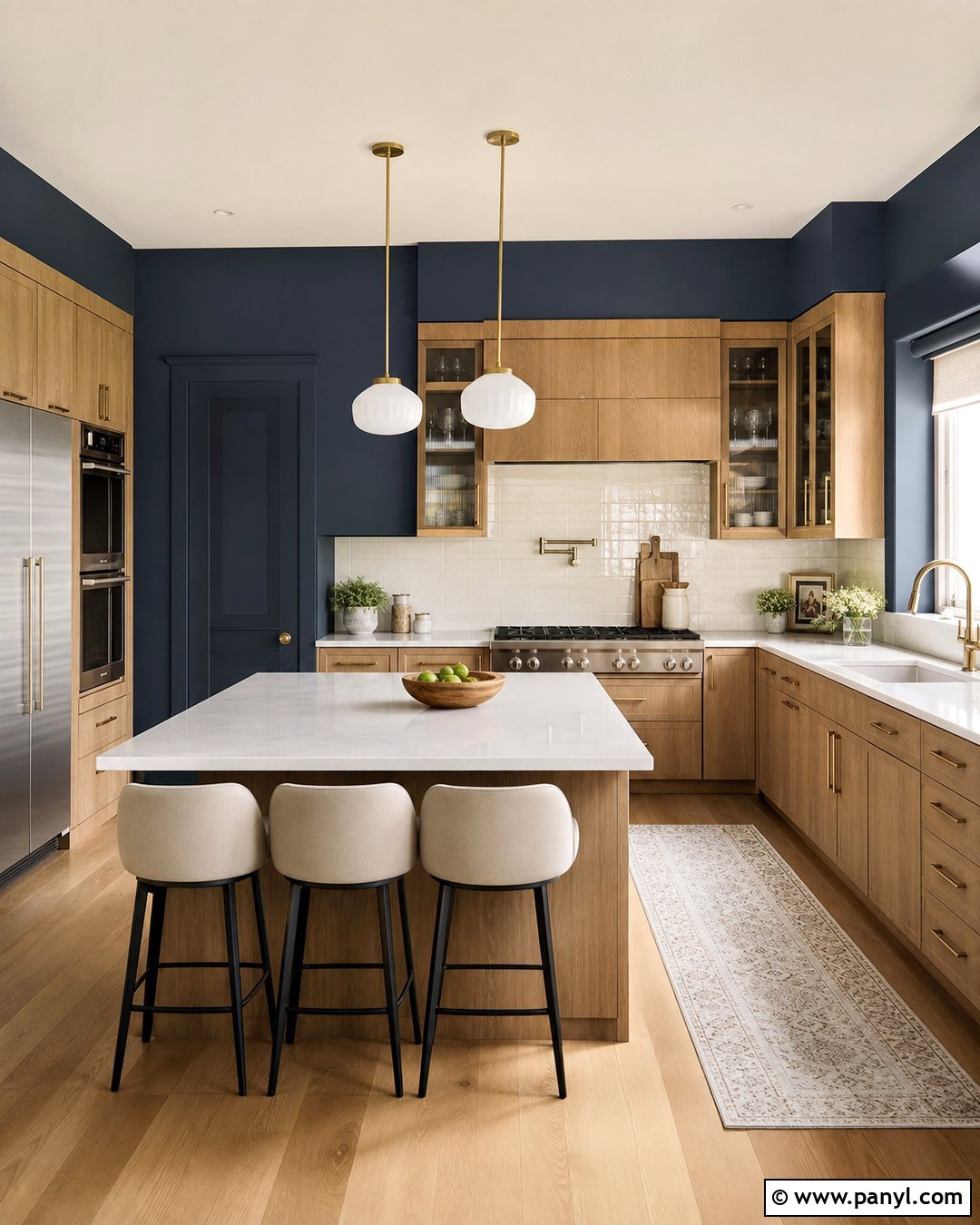
Oak and black cabinets deliver a warm modern kitchen with strong contrast and natural texture. Use white oak on the tall cabinets and upper storage, then apply matte black to the island and lower cabinets. Agreeable Gray walls soften the transition between these finishes. Choose creamy quartz countertops and a lightly veined slab backsplash to keep the design clean. Black pulls can unify both cabinet colors, while warm brass pendants add a controlled decorative accent. Continue the white oak on floating shelves or bar stool frames so the wood is distributed around the room. Pale flooring will stop the black cabinetry from dominating the space. This complete scheme feels contemporary but approachable, combining practical dark surfaces with lighter wood and a versatile greige background.
Conclusion:
The best cabinet finish depends on how much contrast, warmth, and color you want beside your walls. White, cream, and pale wood cabinets create an airy kitchen, while navy, forest green, charcoal, and black offer stronger definition. Taupe, mushroom, and greige finishes support a softer tonal design. Whatever option you prefer, coordinate the cabinetry with countertops, backsplash, flooring, hardware, and lighting as one complete palette. Always test large samples vertically beside Agreeable Gray because daylight and artificial bulbs can change how both finishes appear. With thoughtful material choices, these **20 cabinet color with agreeable gray walls** combinations can help you create a kitchen that feels balanced, functional, cohesive, and personal.

Related Ideas and Inspiration:
Leave a Reply