
Searching for 20 shoji white kitchen cabinets is a smart starting point when you want a kitchen that feels warm, light, and welcoming rather than cold or stark. Sherwin-Williams Shoji White SW 7042 is a creamy off-white with subtle greige influences, making it flexible enough for traditional, farmhouse, transitional, coastal, and modern spaces. () It pairs naturally with warm woods, soft stone, aged metals, and deeper accent colors. Lighting and surrounding finishes can change how the shade appears, so test a sample on multiple cabinet doors before committing. The complete kitchen looks below combine cabinetry, countertops, backsplashes, flooring, hardware, and lighting to help you confidently explore 20 shoji white kitchen cabinets.

1. Shoji White Cabinets With White Oak Island
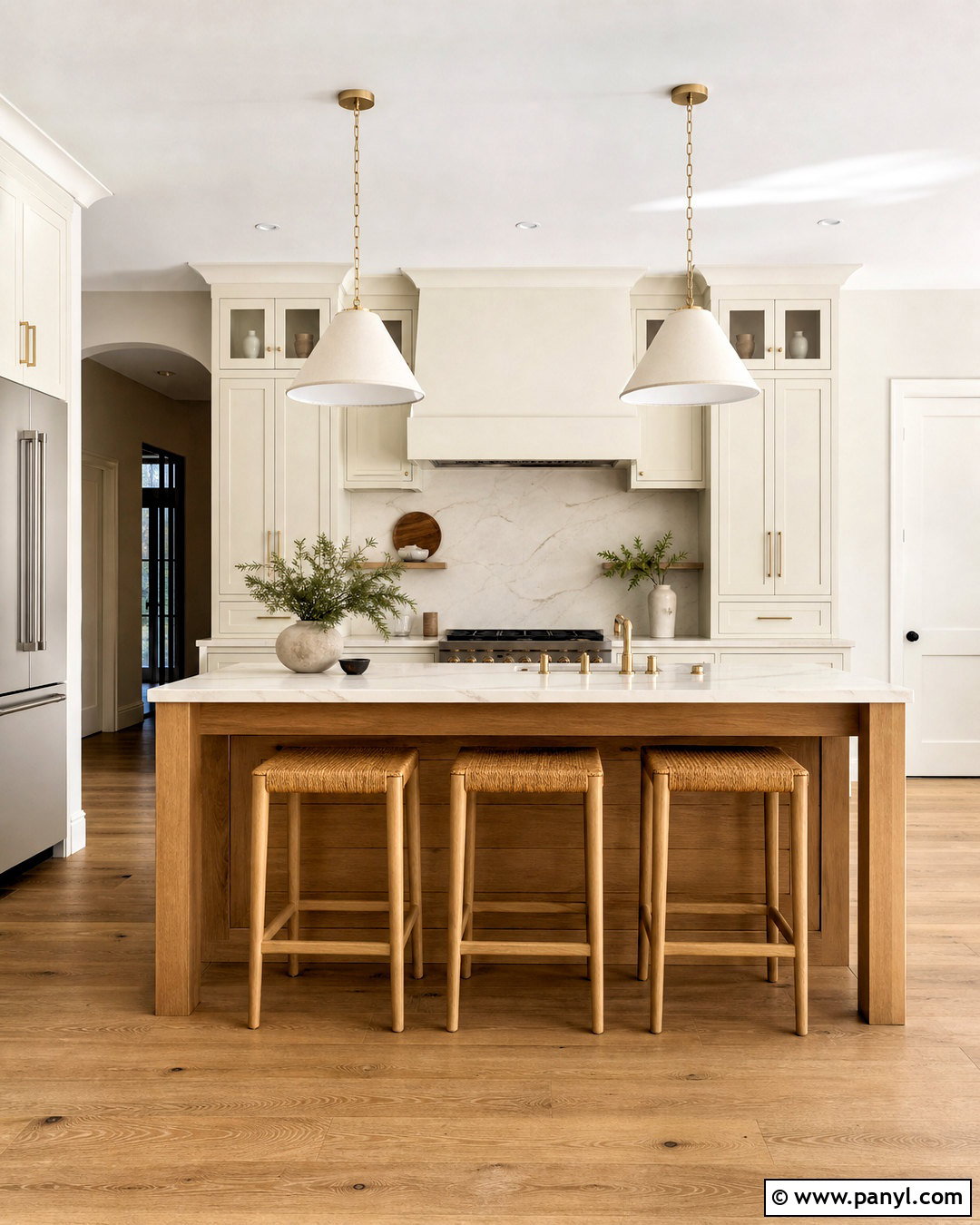
Shoji White perimeter cabinets and a white oak island create a balanced kitchen that feels warm without becoming too beige. Choose simple Shaker doors for the painted cabinetry and flat-panel or slim Shaker fronts for the island. A creamy white quartz countertop with quiet taupe veining connects both finishes. Continue the quartz onto the backsplash for a clean, low-maintenance surface. Brushed brass pulls add warmth, while oversized linen or milk-glass pendants soften the work area. Wide-plank natural oak flooring supports the island without making the room feel overly coordinated. Keep the walls a lighter warm white for gentle contrast. Finish the space with woven counter stools, ceramic bowls, and restrained greenery so the cabinetry remains the focus.
2. Shoji White Cabinets With Black Island
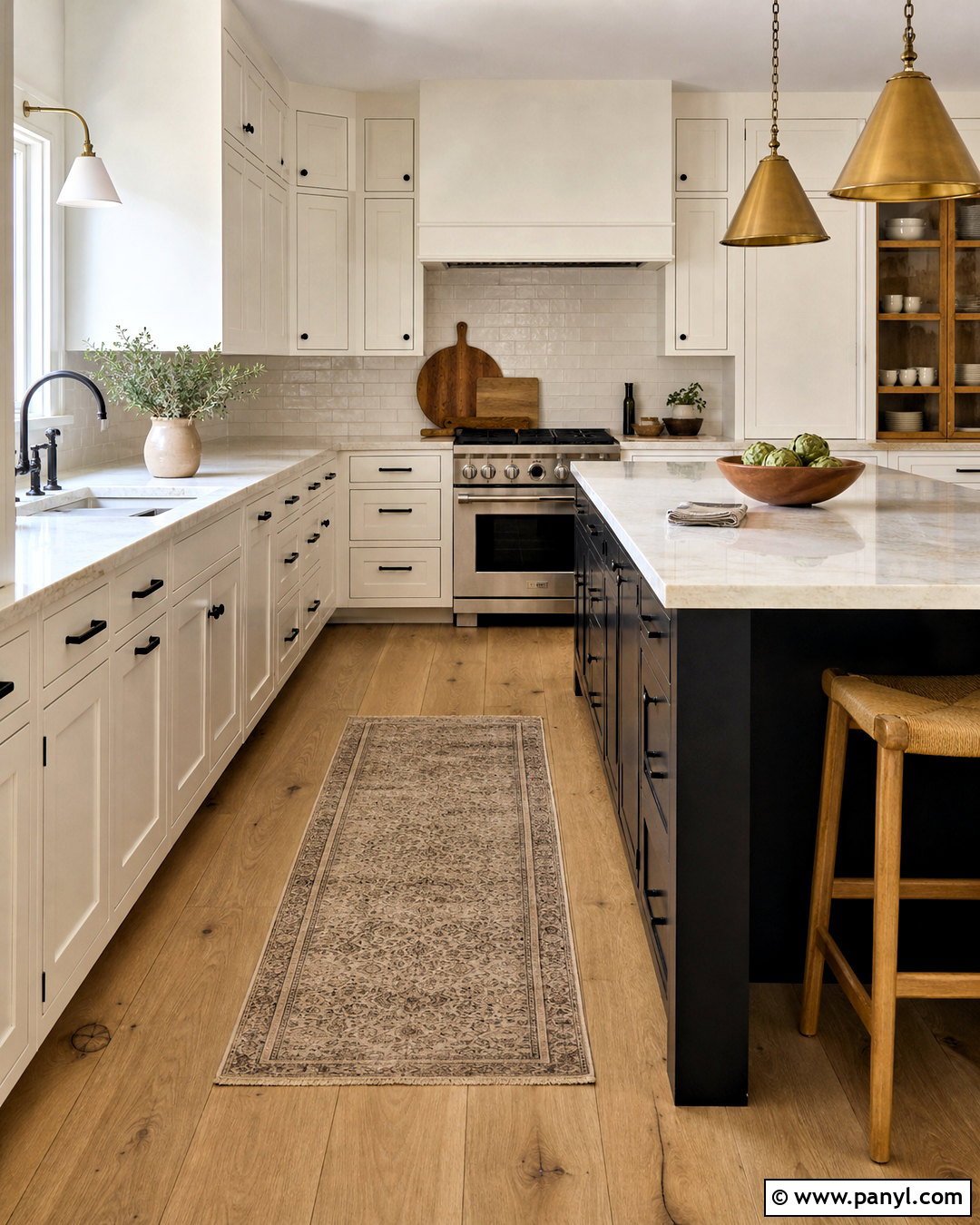
Do you want a white kitchen with stronger definition? Pair Shoji White cabinets with a soft black or charcoal island. This high-contrast combination works especially well in a transitional kitchen with tall upper cabinets, a substantial range hood, and balanced symmetry. Use white quartz countertops around the perimeter and a lightly veined quartzite surface on the island for subtle variation. Matte black knobs can connect the island to the surrounding cabinetry, while aged brass pendants prevent the palette from feeling severe. Medium-tone oak flooring introduces natural warmth underfoot. A handmade cream subway tile backsplash keeps the walls quiet but textured. Add light wood stools and a neutral runner to make the complete kitchen feel comfortable, polished, and suitable for everyday living.
3. Shoji White Cabinets With Brass Hardware
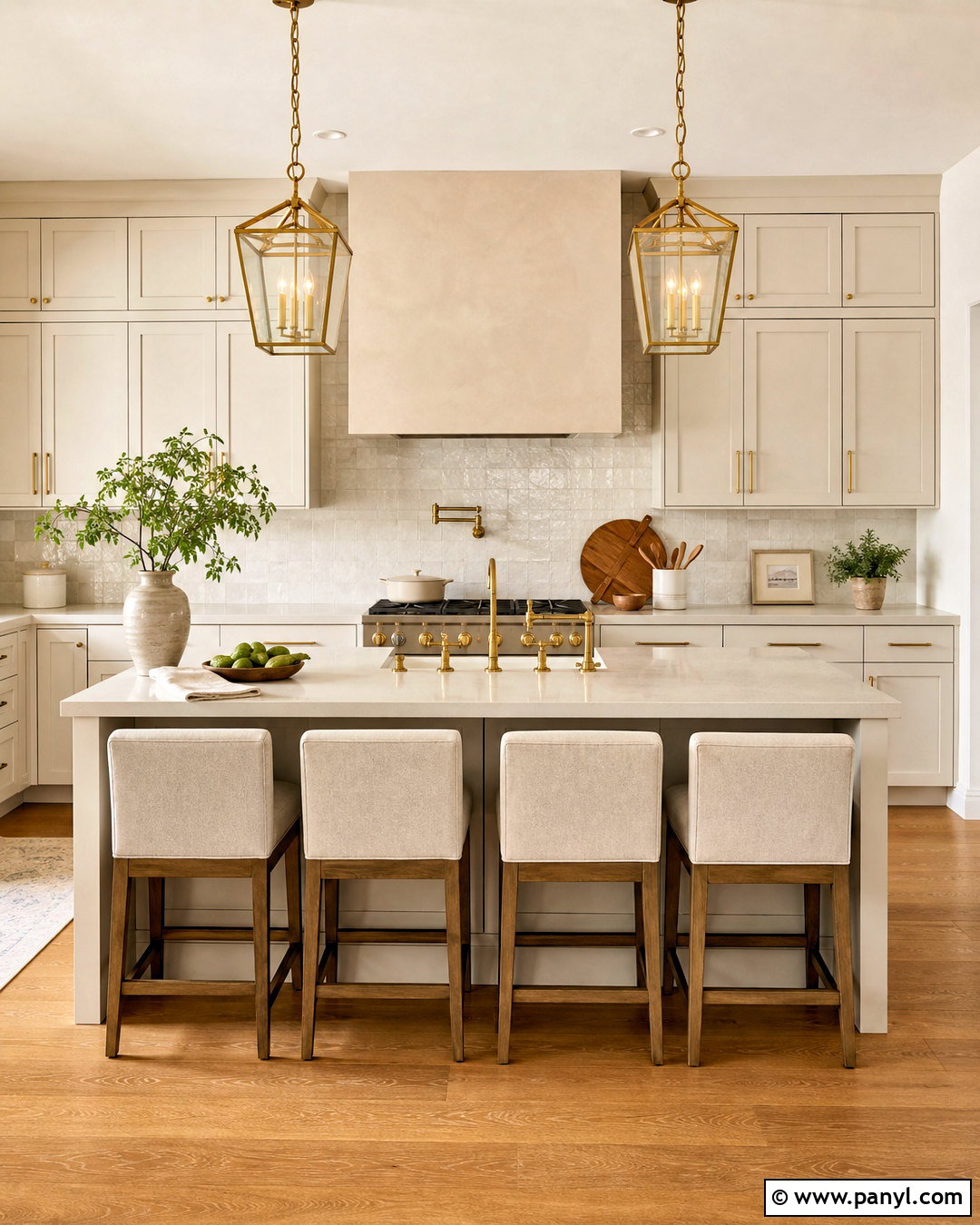
Warm metallic details bring out the creamy character of Shoji White cabinets. Choose unlacquered brass or softly brushed brass pulls with simple shapes rather than ornate designs. Use matching knobs on doors and longer handles on drawers for practical consistency. Complete the kitchen with warm white quartz counters, an ivory zellige tile backsplash, and honey-toned oak flooring. A plaster range hood painted Shoji White creates an uninterrupted focal point above the stove. Two brass lantern pendants over the island reinforce the hardware without overloading the room with metal. Keep faucets and pot fillers in the same brass family, but allow slight finish variation for a collected appearance. Light oatmeal stools and minimal pottery maintain a warm, relaxed kitchen instead of an overly formal one.
4. Shoji White Cabinets With Black Hardware
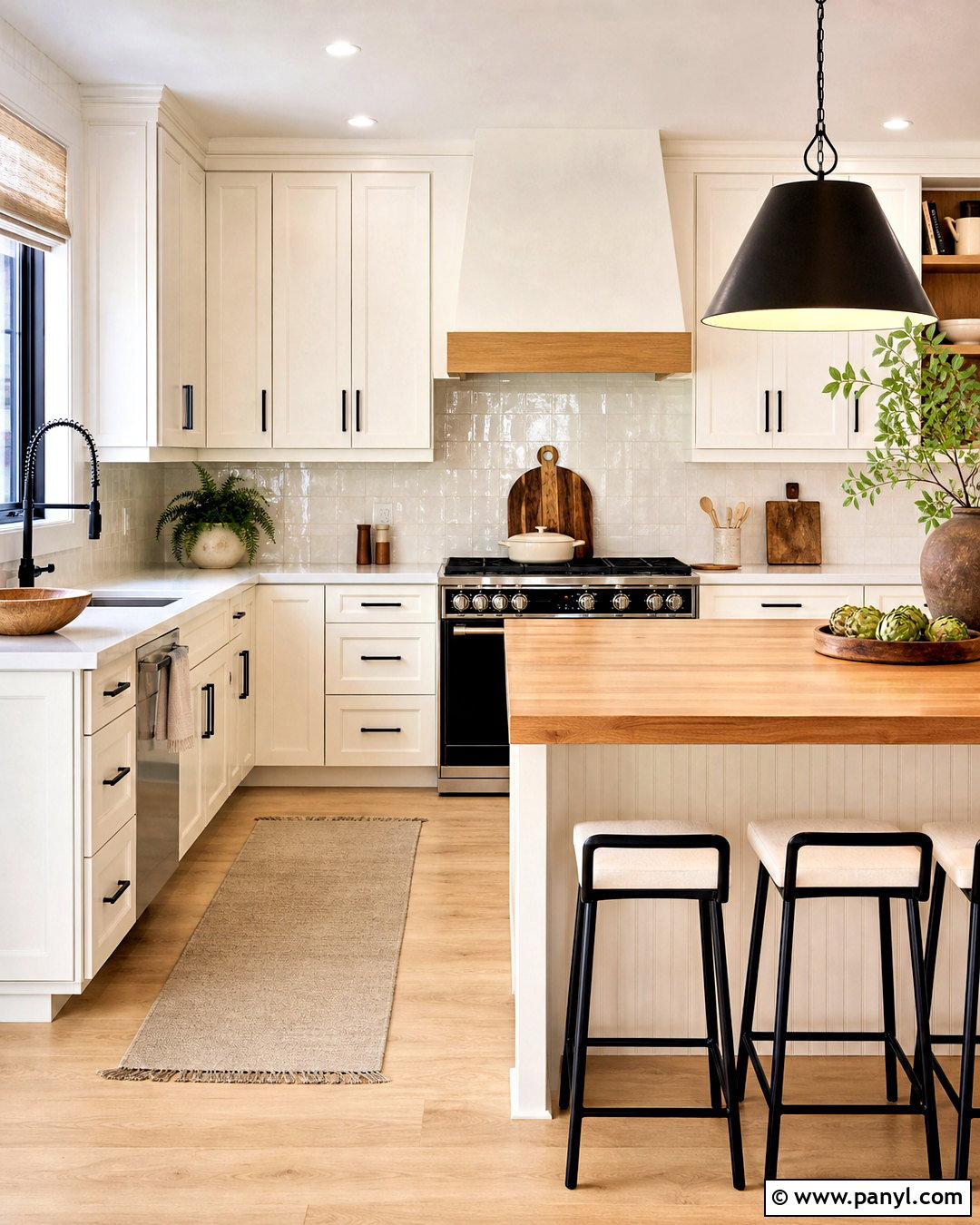
Crisp black hardware gives Shoji White kitchen cabinets a clean outline while preserving their inviting warmth. This look works well with Shaker doors, deep drawers, and a practical U-shaped or L-shaped layout. Select matte black bar pulls with comfortable proportions and repeat the finish on the faucet, pendant frames, and window trim. White quartz countertops with delicate gray veining keep the work surfaces bright. For the backsplash, use glossy off-white rectangular tile in a stacked or traditional running pattern. Light oak flooring prevents the black accents from dominating the room. A wood-topped island or butcher-block breakfast bar can add another natural layer. Finish with black-framed counter stools, linen Roman shades, and a few wooden accessories for a coordinated yet approachable kitchen.
5. Shoji White Cabinets With Marble Backsplash
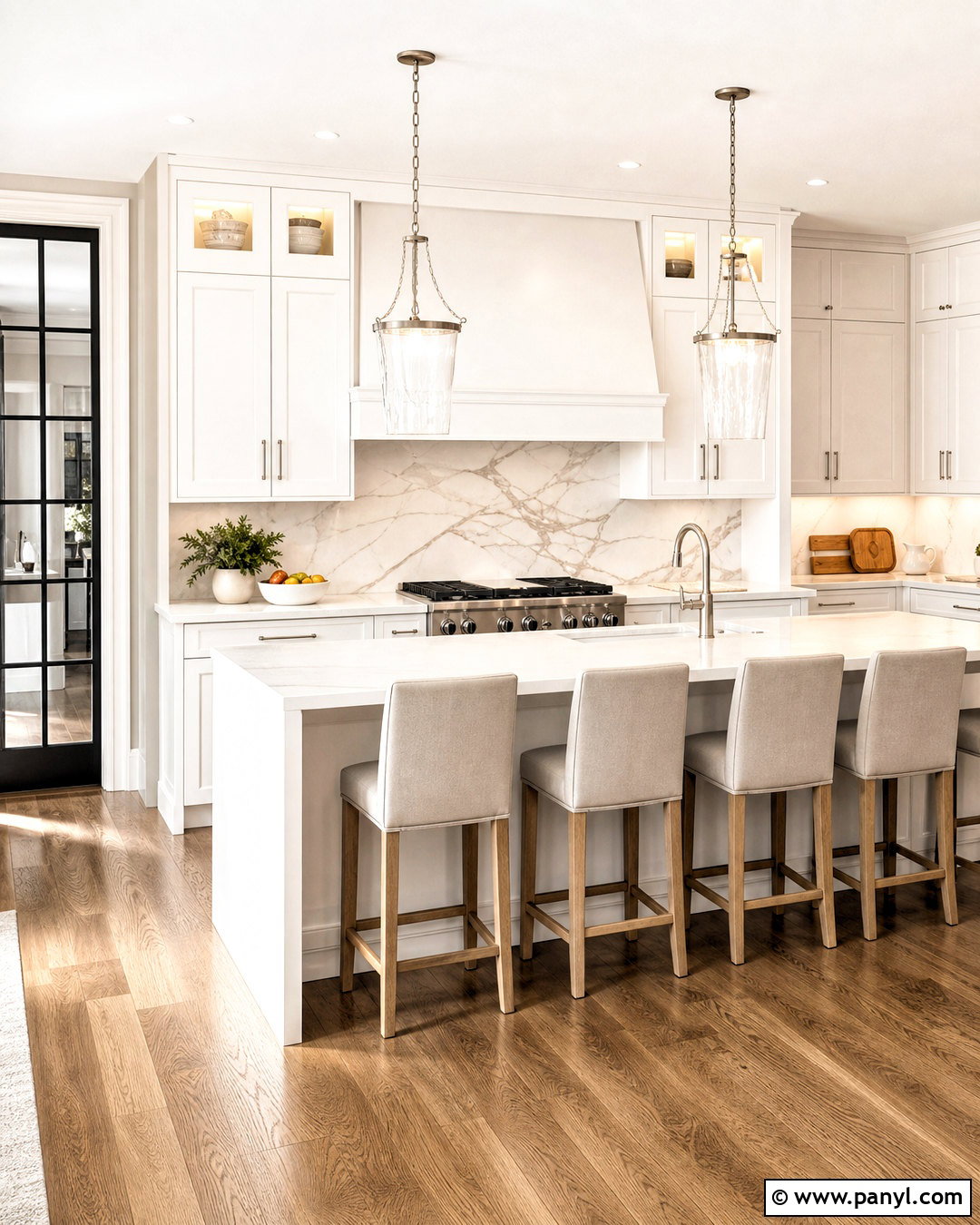
A marble backsplash can make Shoji White cabinets feel refined without losing their softness. Choose Calacatta or similar warm white marble with flowing gray, taupe, or faint gold veining. Use the same stone on the countertops for a seamless appearance, or pair the backsplash with durable warm-white quartz counters. Full-height slabs behind the range create a dramatic focal point with fewer grout lines. Keep the cabinet doors simple and let the natural stone supply movement. Polished nickel hardware offers a cooler, classic note, while aged brass creates a warmer result. Medium oak floors ground the pale surfaces. Add clear glass pendants and upholstered stools in light taupe. This complete scheme suits a spacious transitional kitchen but can also elevate a compact kitchen with uncomplicated architecture.
6. Shoji White Cabinets With Quartz Countertops
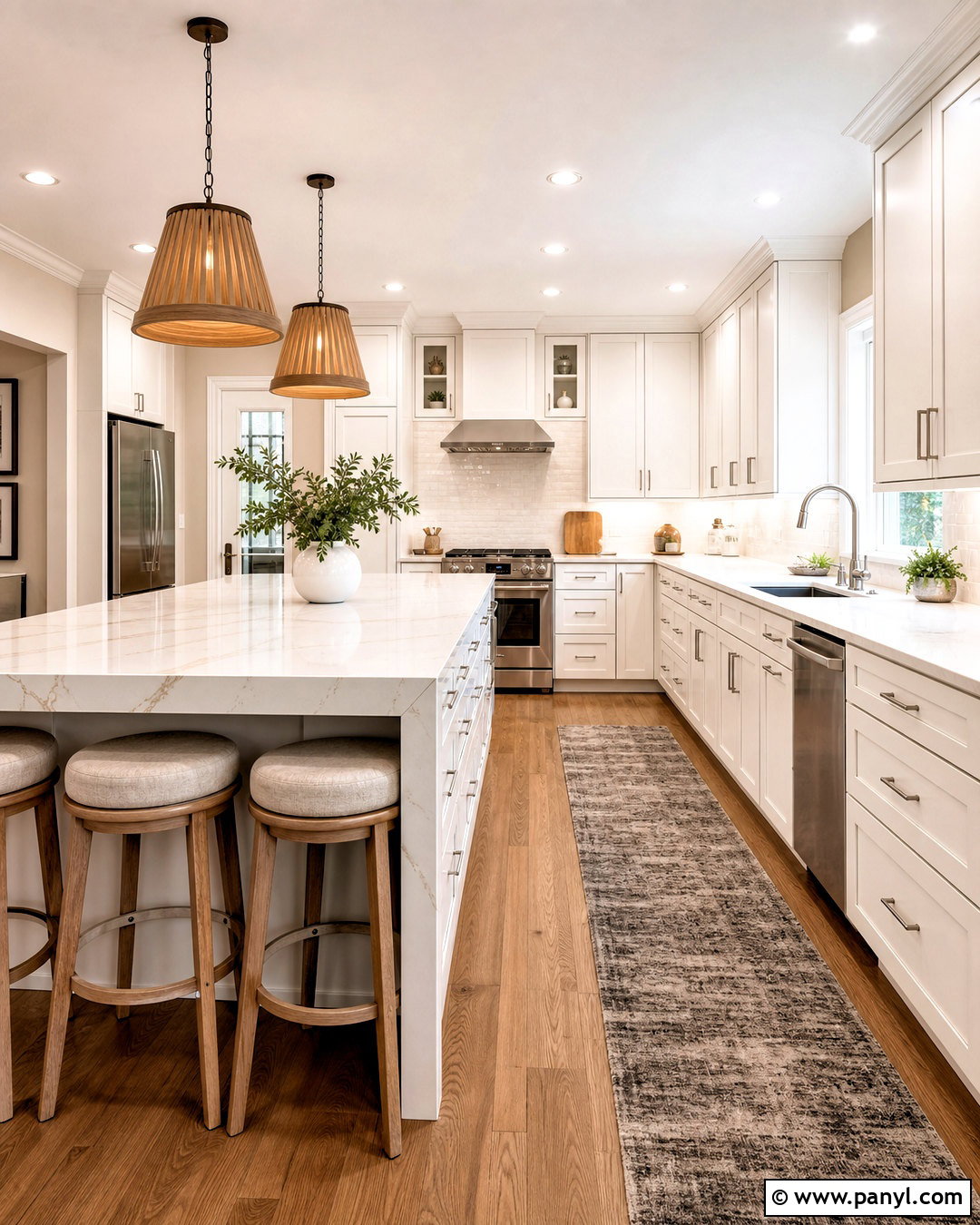
For an easygoing kitchen that supports busy daily routines, combine Shoji White cabinets with understated quartz countertops. Look for a creamy white base with thin beige or taupe veining instead of a bright blue-white background. That warmer undertone helps the countertop blend with the cabinets. Extend the quartz several inches up the wall or use it as a full-height backsplash behind the range. Satin nickel pulls provide a practical, low-key finish, while natural wood pendants introduce texture. Use medium brown oak or durable wood-look flooring to anchor the lighter palette. A generously sized island with drawers, waste storage, and seating improves function. Complete the room with washable counter stools, warm white walls, and a simple runner that includes beige, charcoal, and muted green.
7. Shoji White Cabinets With Zellige Tile
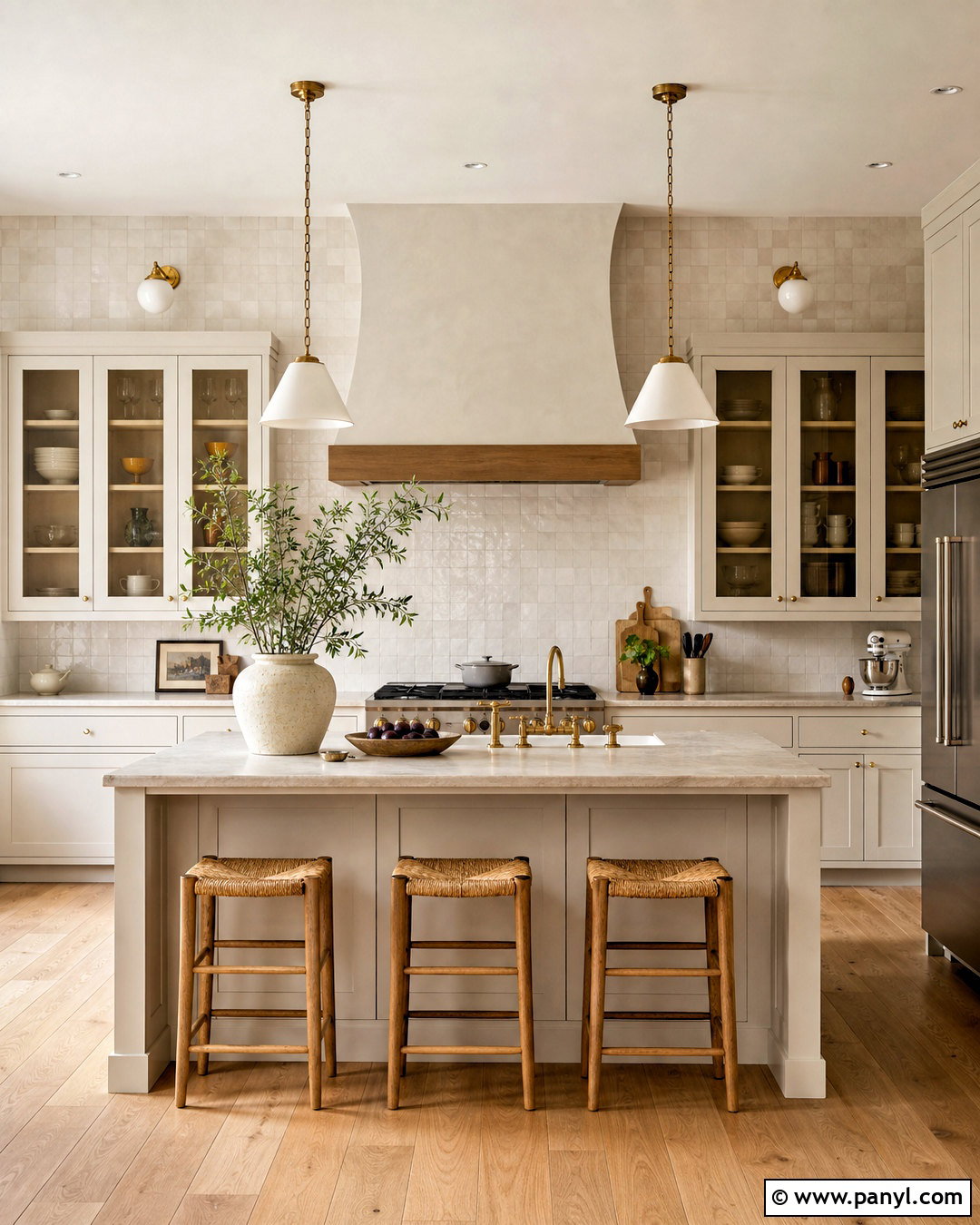
The uneven surface of zellige tile gives Shoji White cabinets depth and handcrafted character. Select warm ivory, creamy white, or pale greige tile so the backsplash complements the cabinet color instead of creating a harsh contrast. Slight shifts in tone and sheen will catch the light throughout the day. Pair this surface with honed limestone-look quartz counters and natural oak flooring. A simple plaster hood painted Shoji White keeps the range wall calm. Use antique brass knobs, a bridge faucet, and small shaded sconces for an old-meets-new effect. On the island, woven stools and a chunky wood bowl bring in casual texture. Avoid too many decorative objects because the tile already provides visual movement. The completed kitchen should feel layered, sunny, and comfortably imperfect.
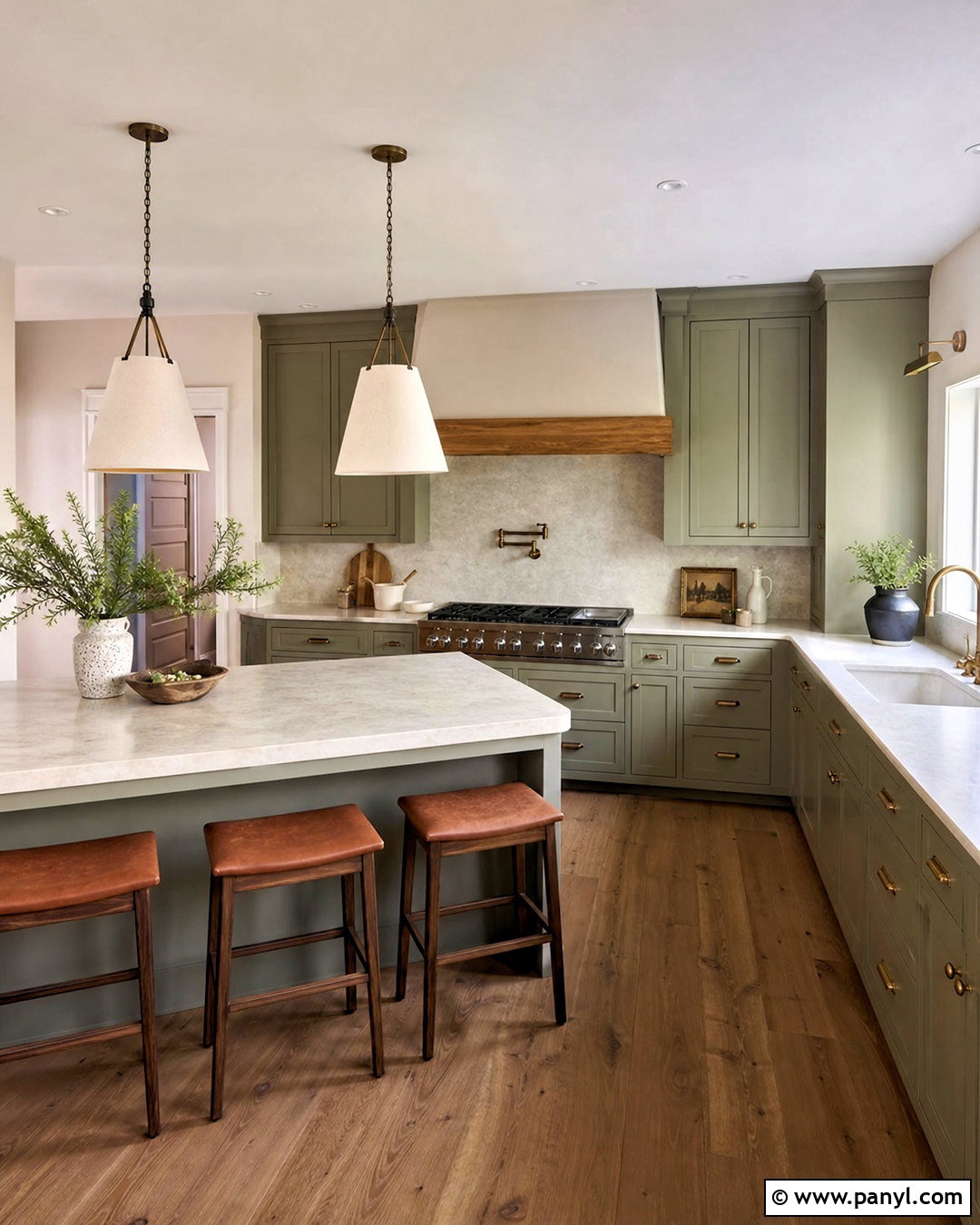
8. Shoji White Cabinets With Dark Wood Floors
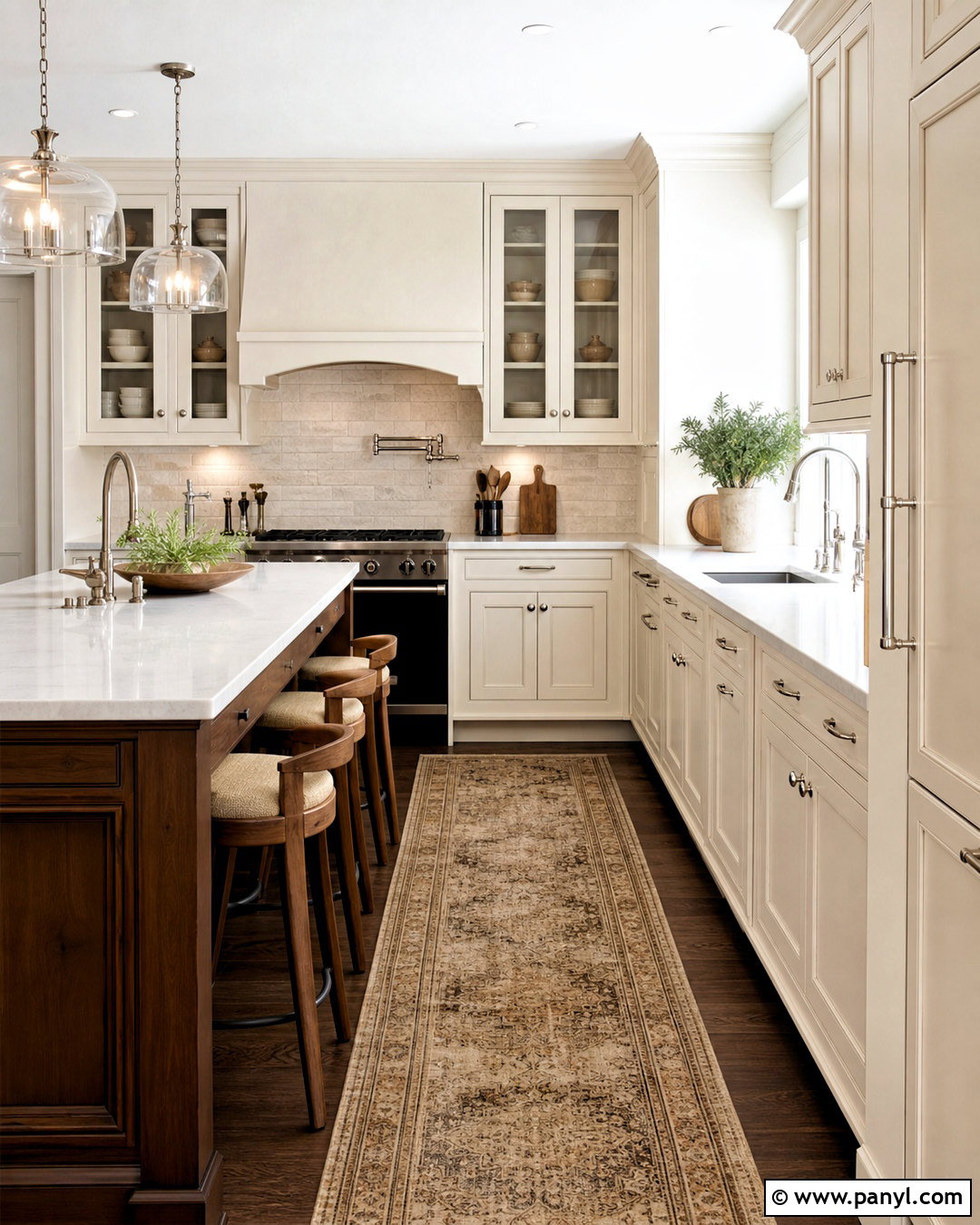
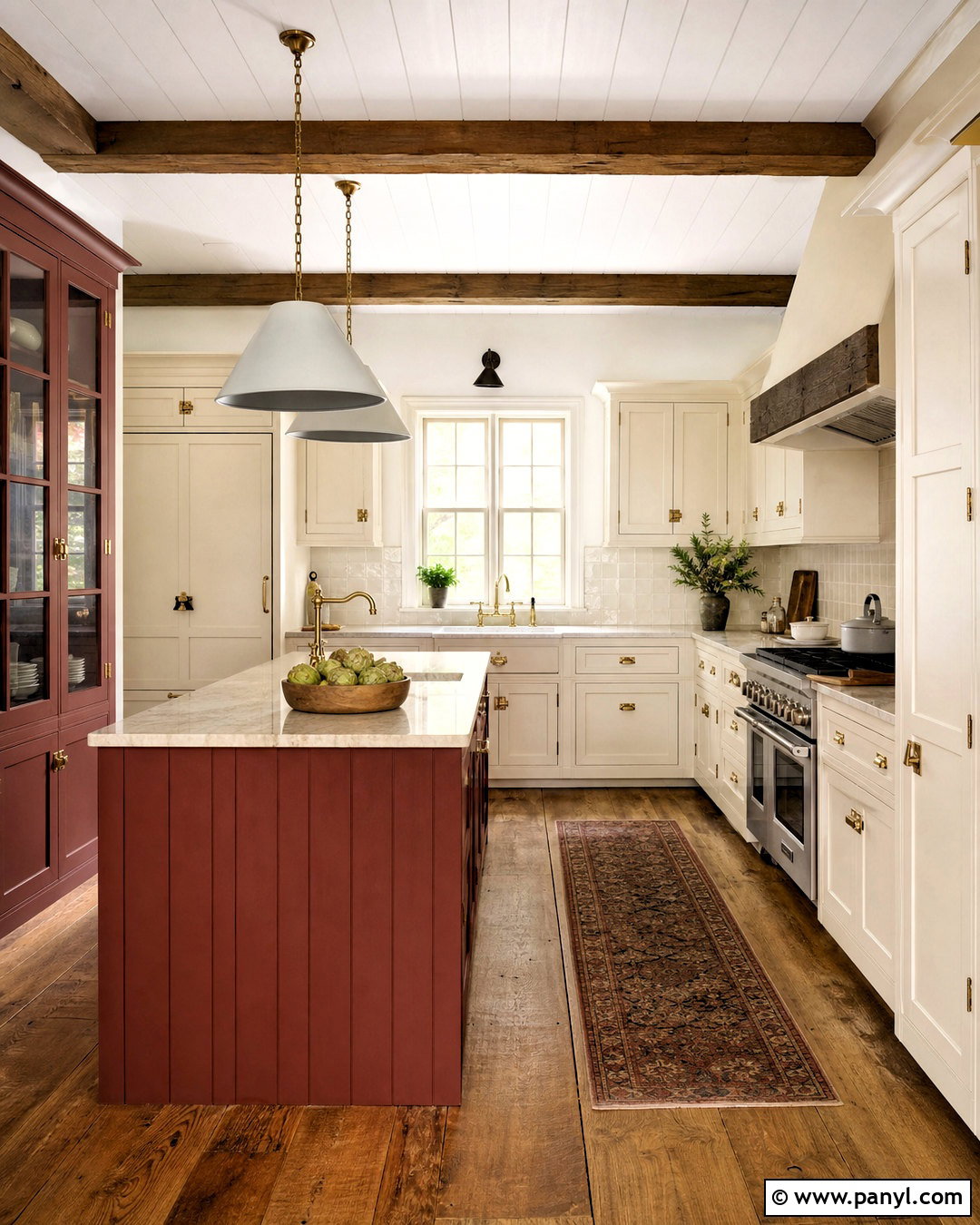
Rich walnut or dark oak flooring creates an elegant foundation beneath Shoji White kitchen cabinets. The contrast makes the cabinetry appear lighter while highlighting its creamy undertone. Use broad floorboards with a matte finish to keep the room current and minimize visible glare. Warm white quartz counters and a pale stone backsplash brighten the working areas above. Choose polished nickel hardware for a classic look or matte black hardware for stronger definition. A Shoji White island can maintain visual continuity, but adding a walnut accent panel or wood stools will connect it to the floor. Keep the walls light and the window treatments simple. Large glass pendants preserve open sightlines. A vintage-inspired neutral runner can bridge the dark floor and pale cabinetry while making the cooking zone more comfortable.
9. Shoji White Cabinets With Light Wood Floors
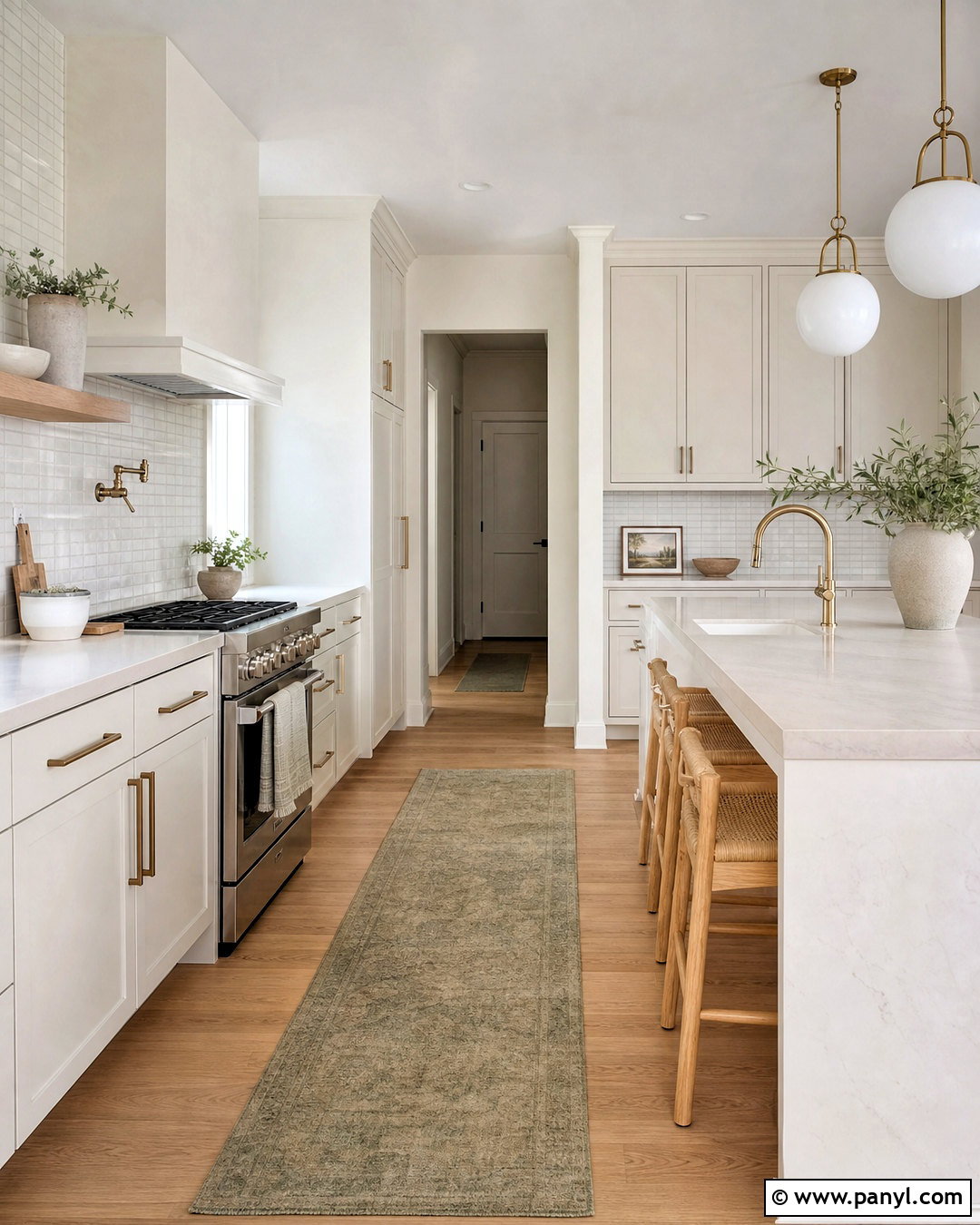
Soft white oak flooring creates an airy, low-contrast setting for Shoji White cabinets. This pairing is ideal for smaller kitchens or rooms with limited natural light because it avoids heavy visual breaks. Select oak with a natural matte finish and minimal orange or gray staining. Add creamy quartz countertops and a backsplash of narrow off-white tiles to introduce quiet texture. Brushed nickel or champagne bronze hardware will provide definition without looking too dark. Keep the island painted Shoji White, then add woven oak stools to reinforce the flooring. Simple globe pendants and recessed lighting should distribute brightness evenly. Finish with light taupe walls, pale linen shades, and a washable runner in muted blue or sage. The complete room feels open, calm, and easy to maintain.
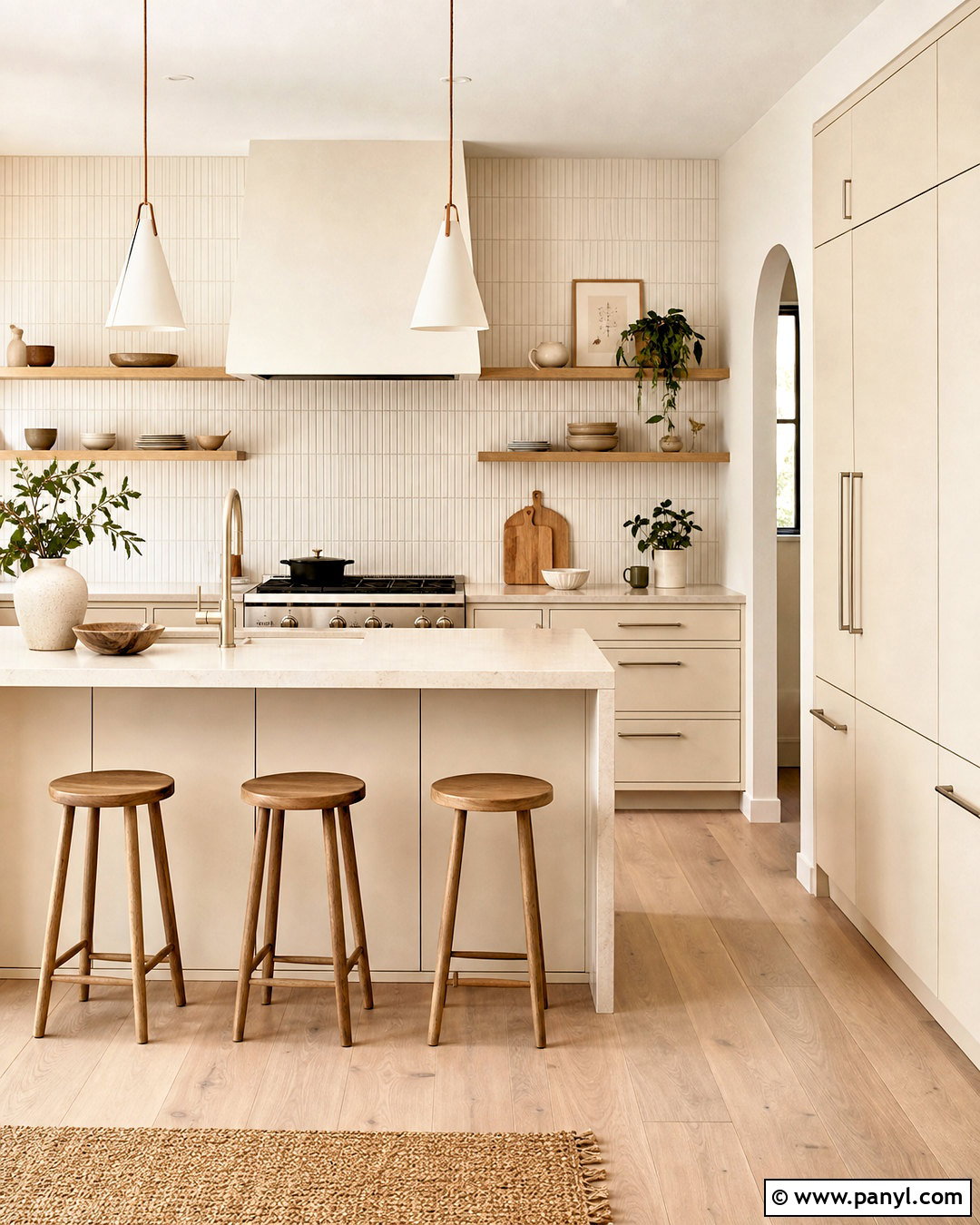
10. Shoji White Cabinets With Walnut Accents
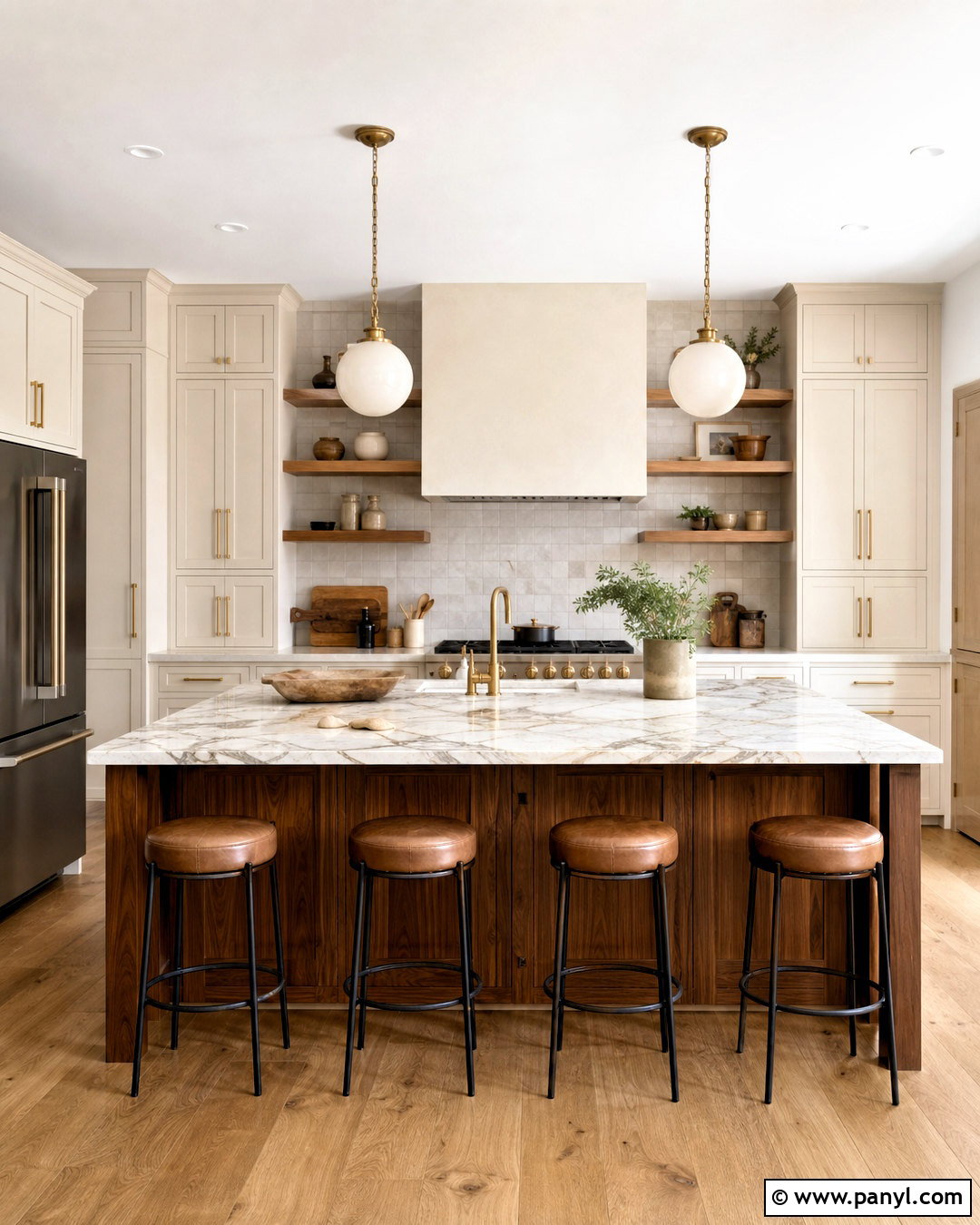
Walnut brings rich color and natural depth to Shoji White kitchen cabinets. Use it selectively on the island, open shelves, range hood trim, or a bank of pantry doors. This approach creates warmth without turning the entire kitchen into a wood-heavy space. Choose creamy quartz countertops with fine brown veining to connect the two cabinet finishes. A full-height ivory tile backsplash keeps the background bright and slightly reflective. Oil-rubbed bronze or aged brass hardware works naturally with walnut’s darker tones. Consider globe pendants with opal glass over the island and discreet under-cabinet lighting along the perimeter. Medium oak flooring can bridge the light and dark finishes. Complete the design with leather counter stools, handmade pottery, and minimal greenery for a polished modern-organic kitchen.
11. Shoji White Cabinets With Sage Green Island
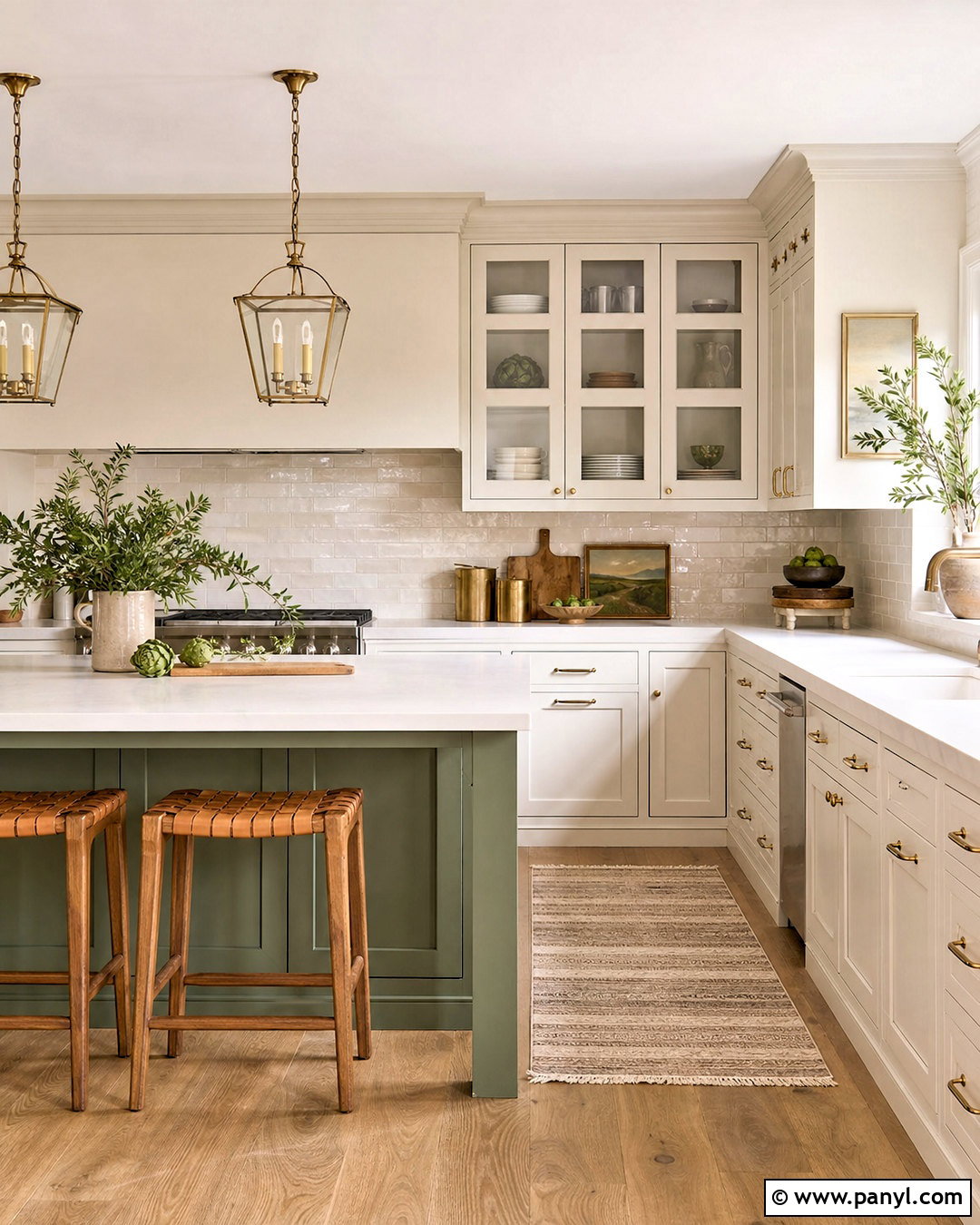
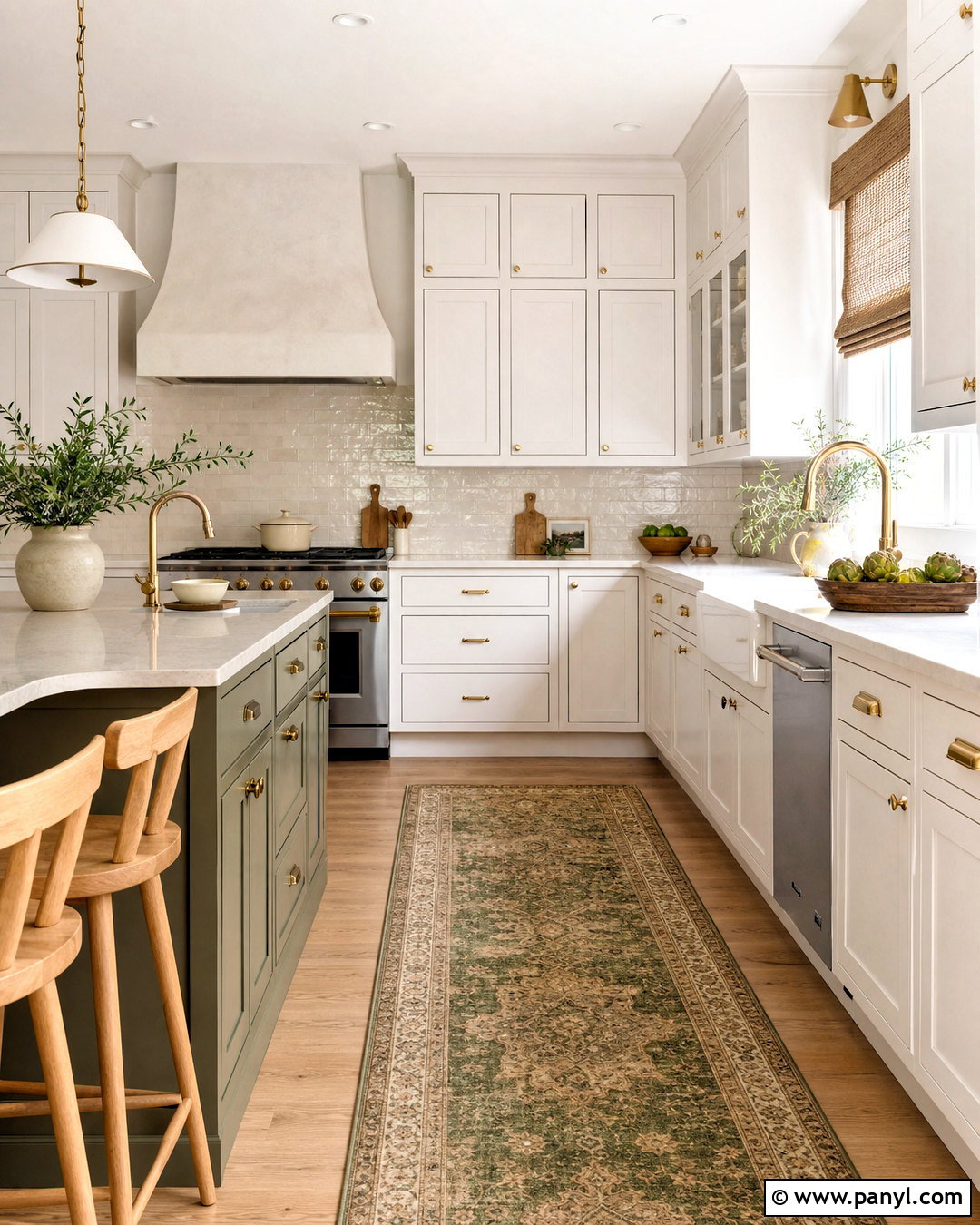
A muted sage green island brings gentle color to a kitchen lined with Shoji White cabinets. Choose a gray-based sage rather than a bright yellow-green so the pairing remains calm and timeless. Warm white quartz or lightly veined marble-look counters can cover both the island and perimeter cabinetry. Use antique brass pulls and lantern pendants to enhance the warm palette. An ivory tile backsplash and medium-tone oak floors provide neutral support without competing with the island. Carry sage into small details, such as a striped runner or Roman shade, but avoid matching every accessory. Wood counter stools add another grounding element. The resulting kitchen feels garden-inspired and welcoming, with enough contrast to define the central workspace while allowing Shoji White to remain the dominant cabinet color.
12. Shoji White Cabinets With Blue Island
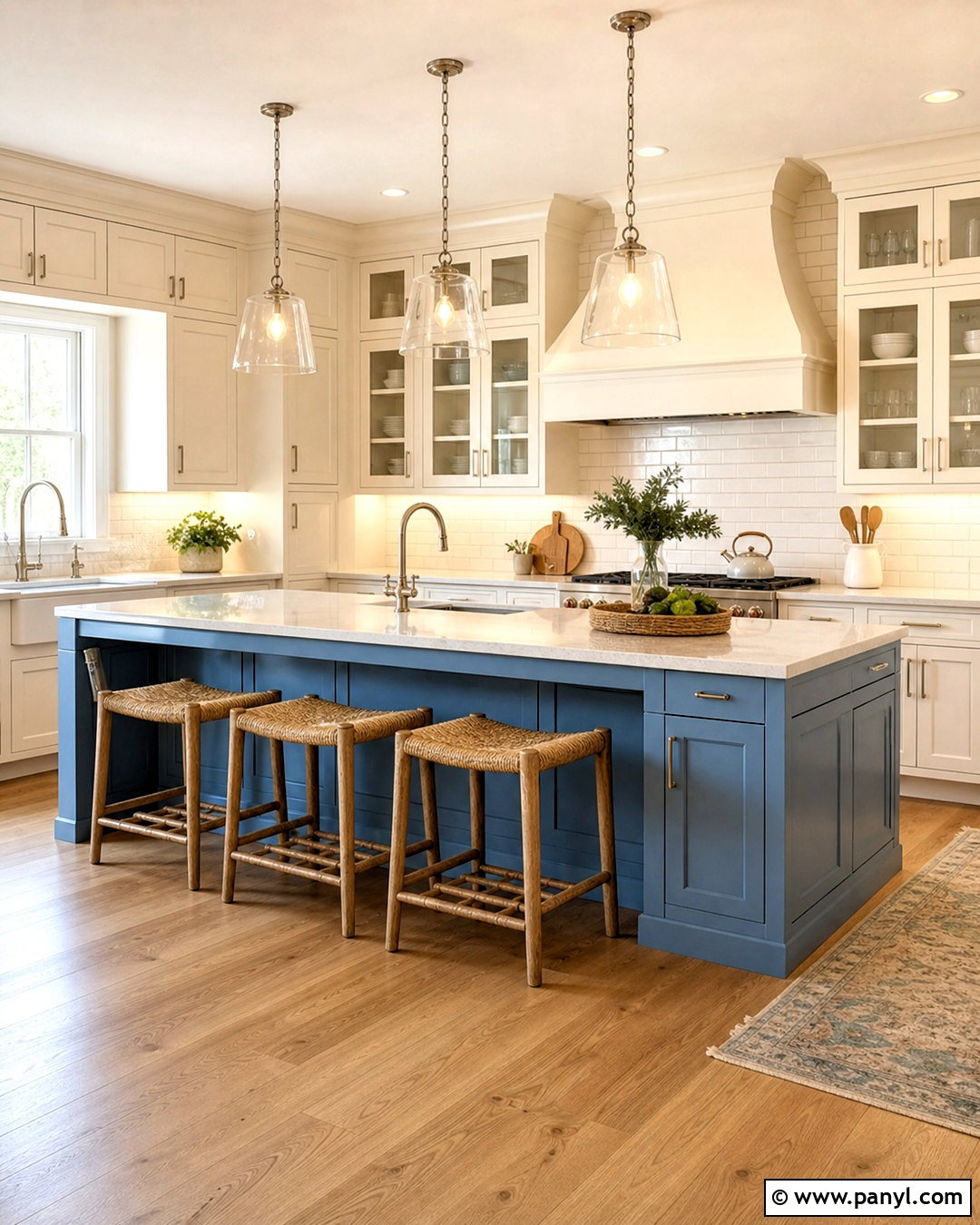
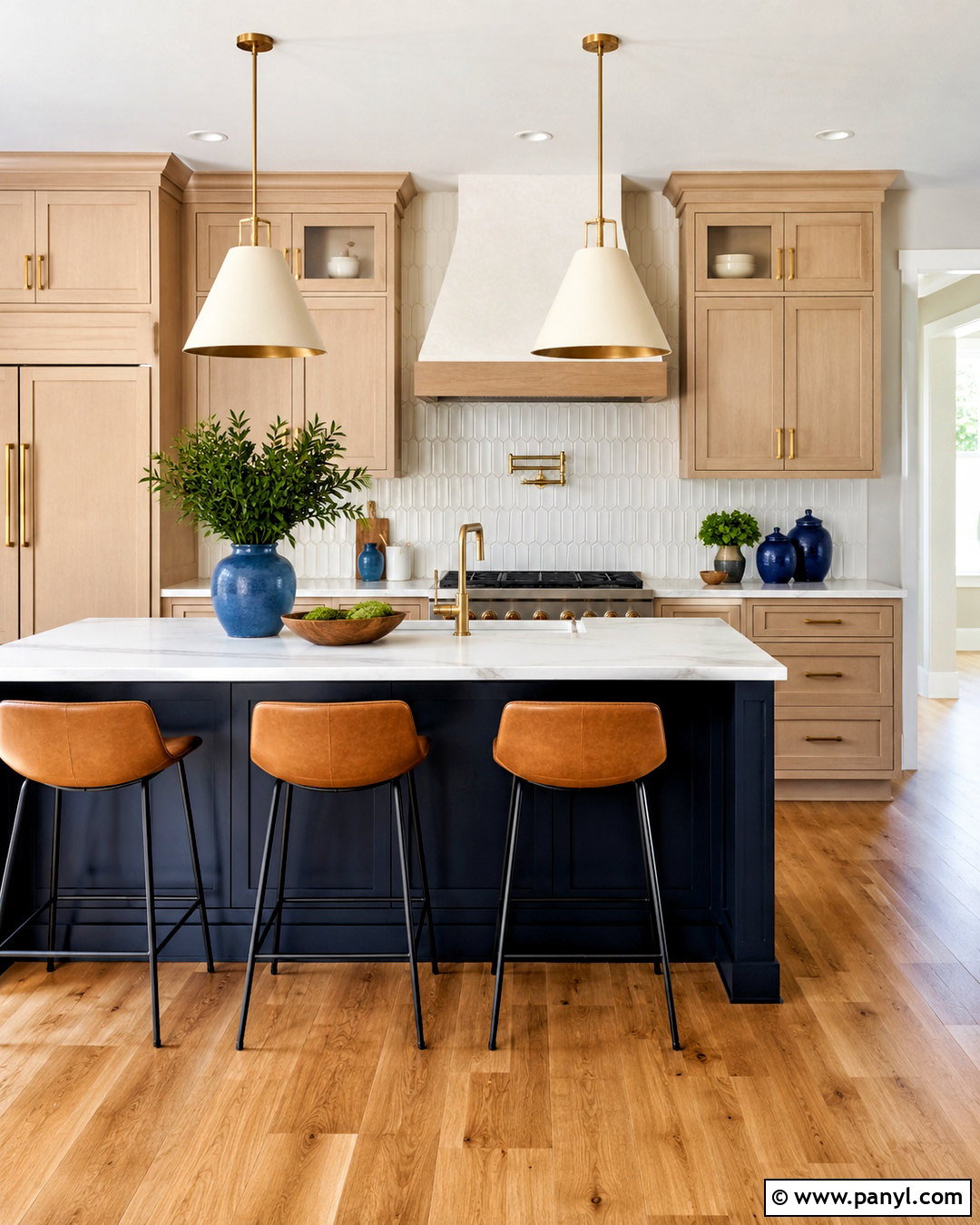
A dusty blue or muted navy island creates a dependable focal point among Shoji White cabinets. Dusty blue produces a softer coastal result, while navy feels more tailored and traditional. Pair either option with warm white quartz counters and an ivory subway tile backsplash. Polished nickel hardware reinforces the blue’s cooler quality, but aged brass can make the room feel warmer and more transitional. Choose medium oak floors and natural woven stools to prevent the palette from becoming overly crisp. Glass-front upper cabinets can display white dishes and add visual breathing room. Repeat the island color subtly in a patterned runner or window fabric. With balanced lighting and simple styling, this complete kitchen feels fresh and colorful without relying on a trend that may quickly overwhelm the space.
13. Shoji White Cabinets With Terracotta Tile
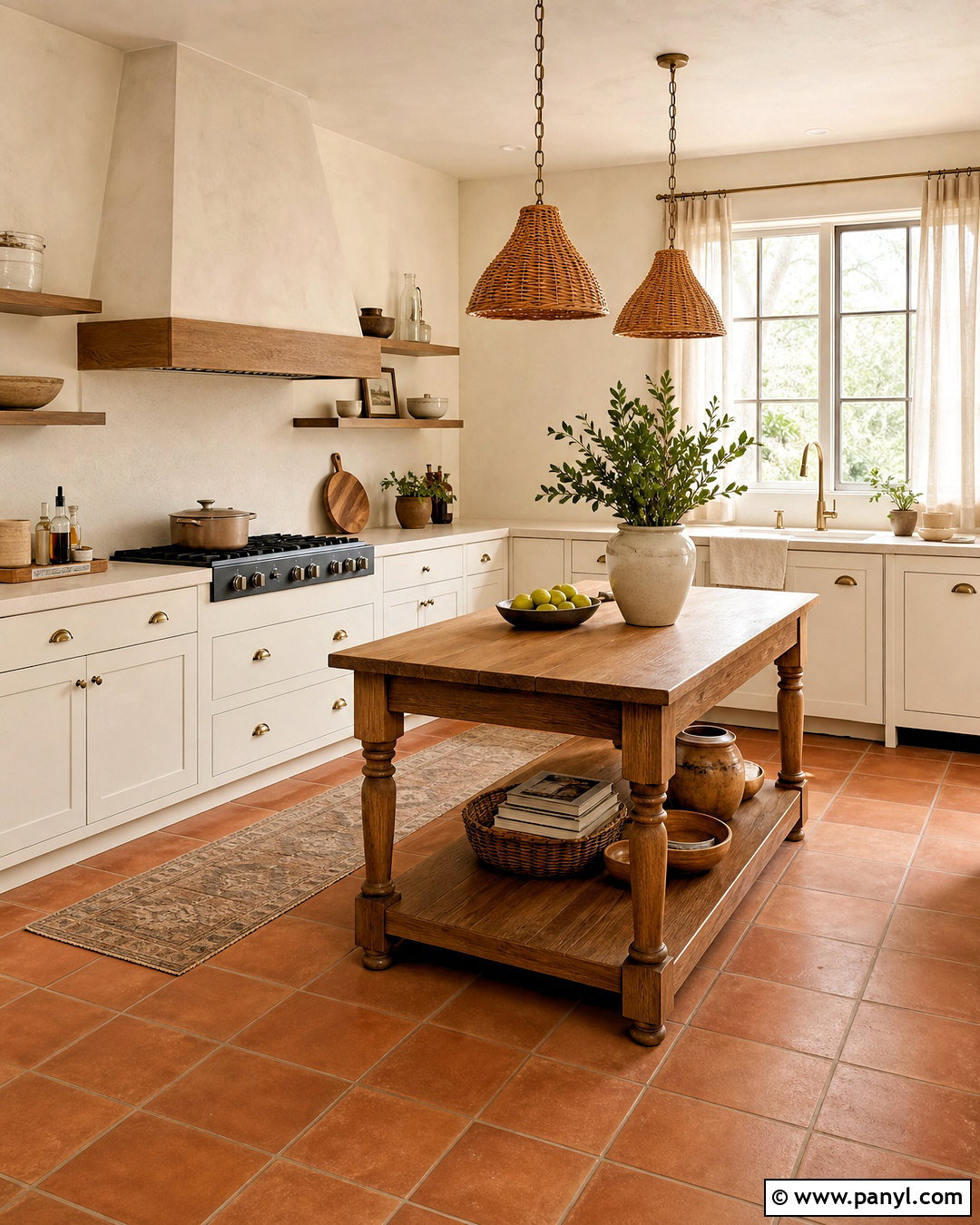
Earthy terracotta flooring creates a warm, Mediterranean-influenced foundation for Shoji White kitchen cabinets. Choose matte square, rectangular, or hexagonal tiles with natural color variation. Their rust and clay tones make the creamy cabinet color feel especially welcoming. Add pale limestone or warm quartz counters with minimal pattern. A simple ivory plaster backsplash keeps the room from becoming too busy, while open oak shelves provide practical display space. Use aged brass knobs, a matching faucet, and woven pendant lights to support the relaxed atmosphere. A large wood worktable can replace a built-in island in a smaller kitchen. Finish the space with linen café curtains, earthenware, and restrained herbs. The whole room should feel sunlit, useful, and collected rather than heavily themed.
14. Shoji White Farmhouse Kitchen Cabinets
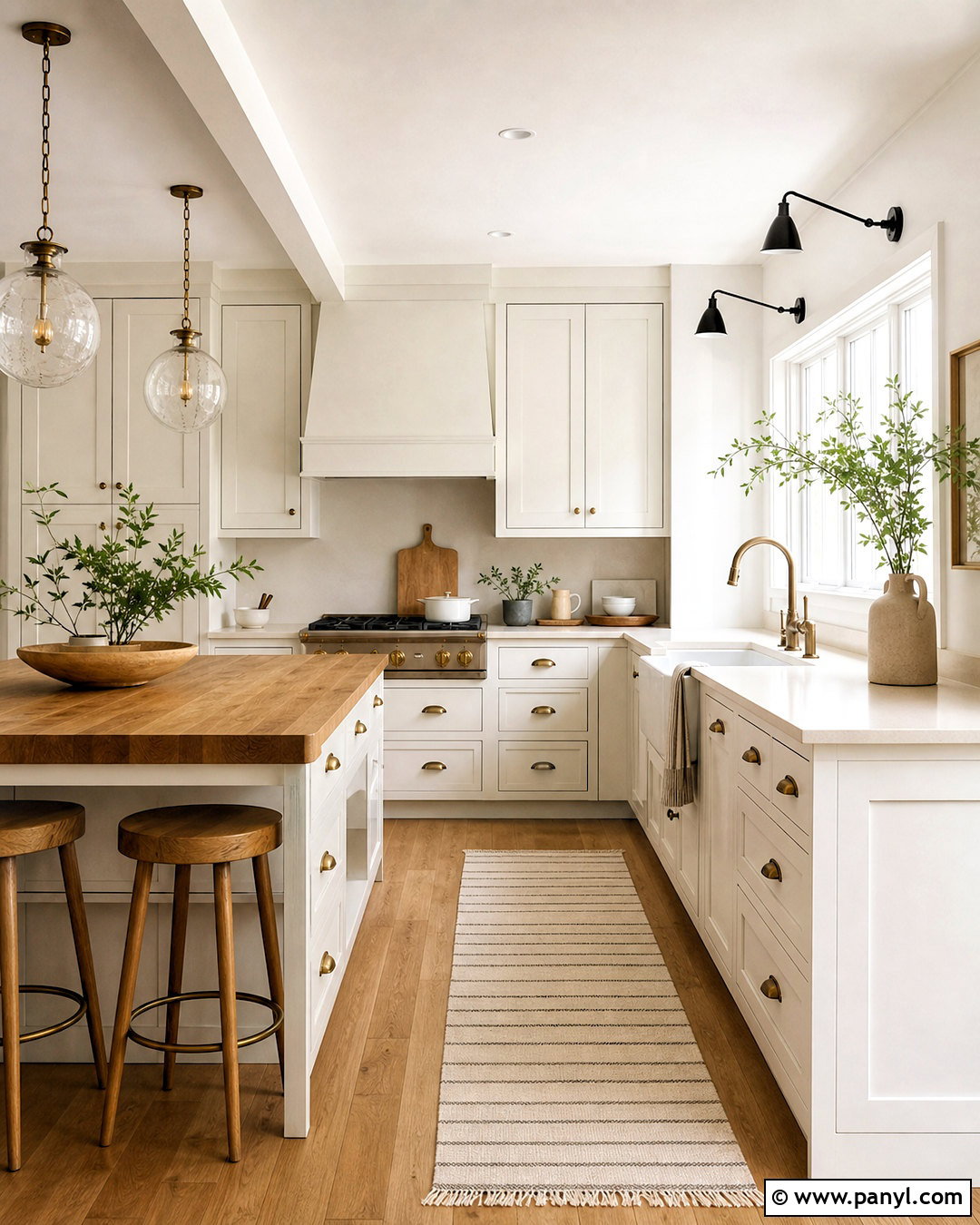
Shoji White farmhouse kitchen cabinets look most convincing when rustic details are balanced with clean, functional finishes. Use inset or Shaker cabinet doors, a wide apron-front sink, and a substantial range hood painted to match the cabinetry. Add butcher block to a compact island while using durable cream quartz around the perimeter. Warm brick-look or natural oak flooring gives the kitchen an established foundation. Choose aged brass cup pulls, simple black sconces, and clear glass pendants for a comfortable mix of finishes. A vertical tongue-and-groove backsplash can work in low-splash areas, while tile behind the stove simplifies cleaning. Complete the room with wood stools, a striped runner, and practical stoneware. Keep signs and overly distressed decor out so the farmhouse look stays fresh.
15. Shoji White Modern Kitchen Cabinets
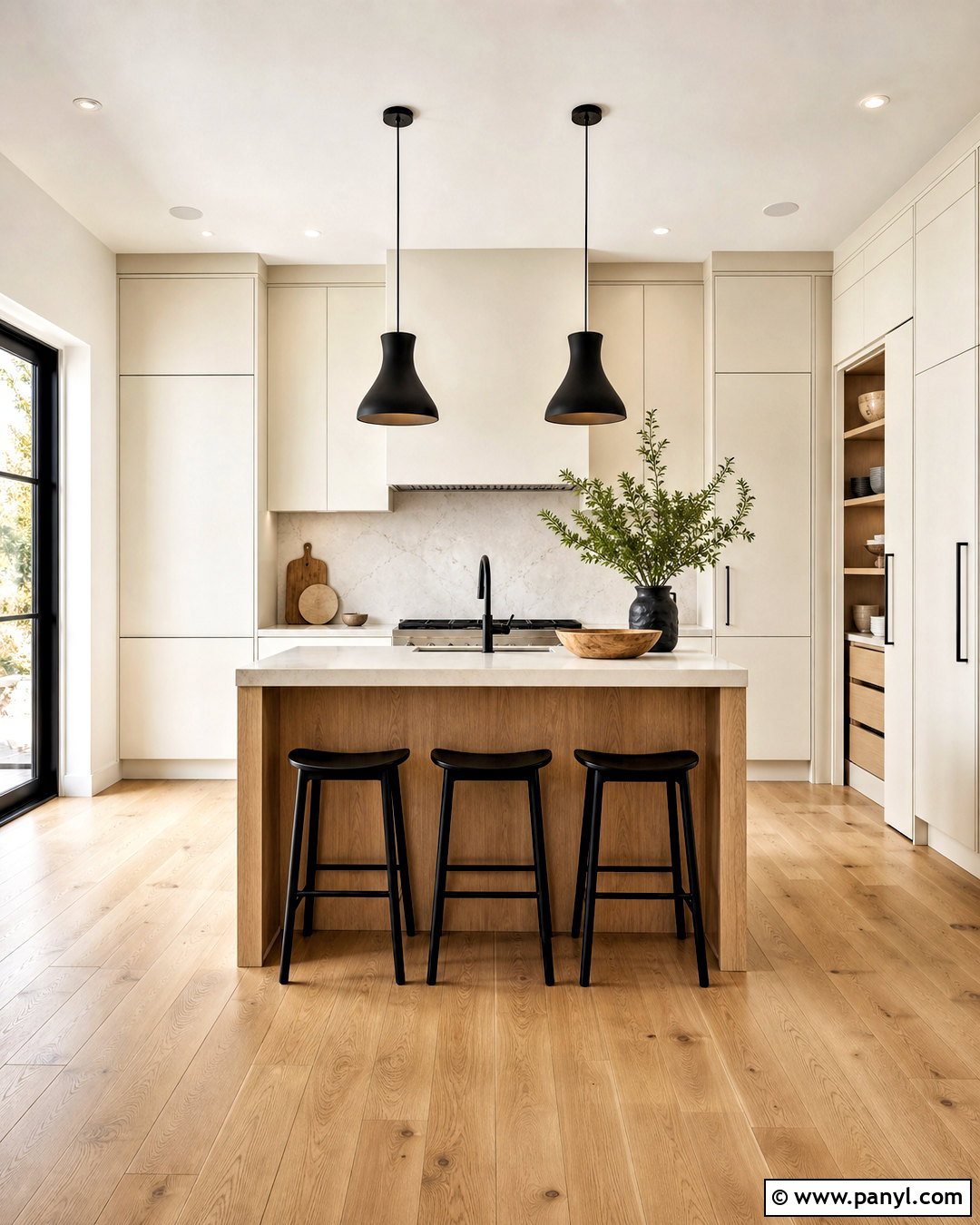
Flat-panel Shoji White cabinets can create a streamlined modern kitchen that still feels soft and livable. Use full-overlay doors, integrated pulls, or slim edge hardware to maintain clean lines. Pair the cabinetry with pale quartz counters and a matching slab backsplash for minimal visual interruption. A large white oak island introduces texture and prevents the room from appearing one-dimensional. Select sculptural black pendants, a matte black faucet, and discreet appliances for controlled contrast. Wide-plank oak flooring keeps the design warm, while hidden pantry storage reduces clutter. Avoid excessive open shelving and decorative accessories. Instead, display one wood bowl, a ceramic vase, and a small plant. The complete result is modern but not sterile, with practical storage and a neutral palette that remains comfortable.
16. Shoji White Traditional Kitchen Cabinets
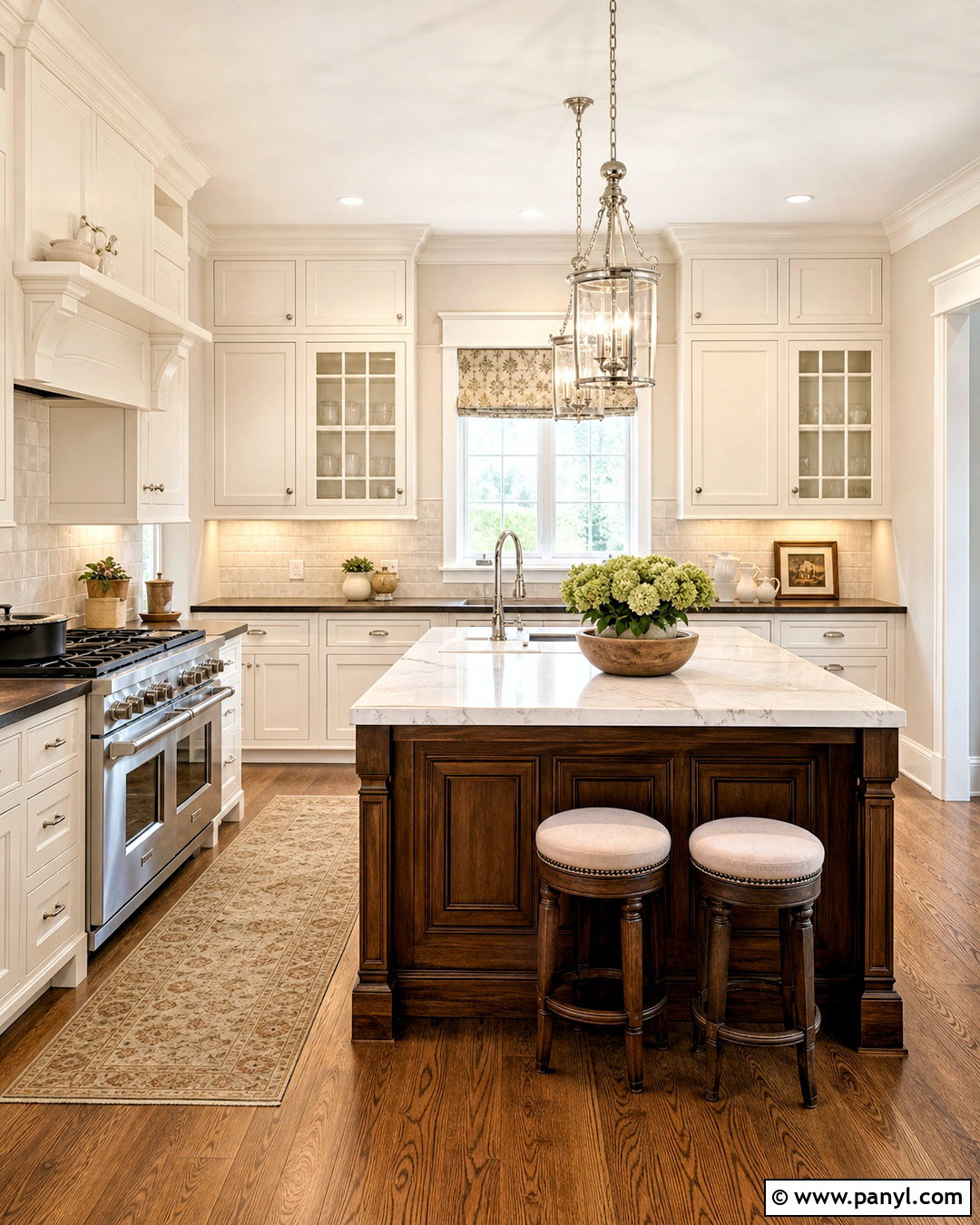
Detailed millwork gives Shoji White cabinets a graceful traditional character. Choose inset doors, modest raised panels, crown molding, and furniture-style feet on the island. Creamy marble-look quartz countertops deliver elegance with easier maintenance than many natural stones. Use a warm marble mosaic or beveled ivory subway tile for the backsplash. Polished nickel knobs, bridge faucets, and lantern pendants add classic shine without making the kitchen feel overly ornate. A stained walnut island provides depth and can support comfortable seating on one side. Medium brown oak flooring grounds the room and complements the wood centerpiece. Add glass-front cabinets for neatly arranged dishes, then finish with tailored Roman shades and a muted patterned runner. Maintain generous clear surfaces so the architectural details remain visible.
17. Shoji White Coastal Kitchen Cabinets
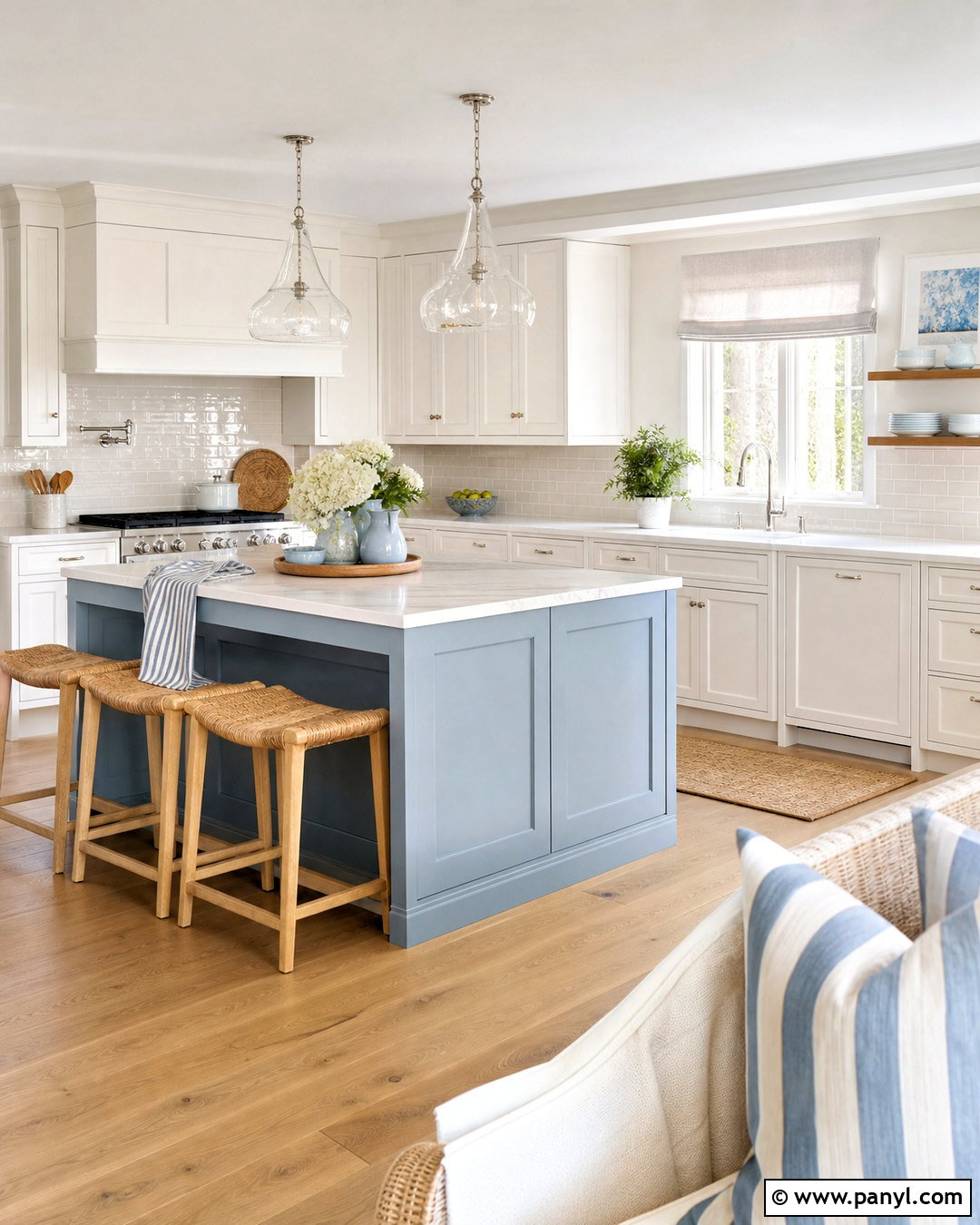
Shoji White cabinets offer a warmer alternative to brilliant white in a relaxed coastal kitchen. Pair them with a soft blue-gray island, pale oak flooring, and warm white quartz countertops. A glossy ivory backsplash will reflect light while maintaining the gentle color palette. Choose polished nickel hardware and clear glass pendants for an airy finish. Woven counter stools introduce natural texture, while linen Roman shades soften the windows. Keep coastal references subtle by using striped textiles, pale blue ceramics, and a single piece of understated artwork rather than themed decorations. Open shelving can display practical white dishes and wood serving boards. With uncluttered counters and abundant lighting, the entire kitchen feels breezy and casual while remaining polished enough for an open-concept home.
18. Shoji White Small Kitchen Cabinets
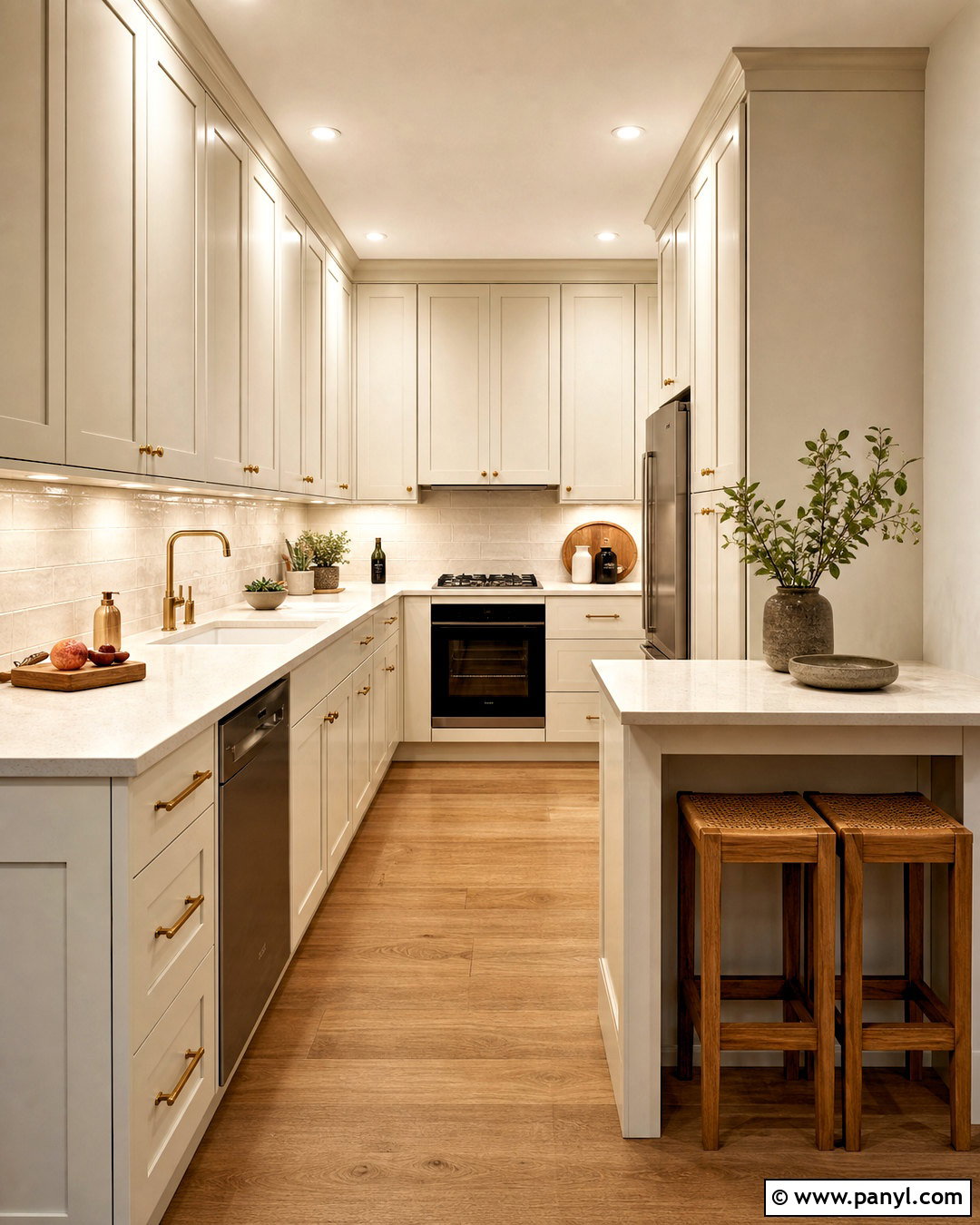
In a compact kitchen, Shoji White cabinets can make storage feel less visually heavy. Carry the cabinetry to the ceiling to maximize capacity and reduce dust-catching gaps. Use simple Shaker or slim-profile doors, then select small brass knobs that do not overcrowd narrow fronts. Warm white quartz countertops and a matching short backsplash keep surfaces cohesive. Above the range, extend glossy ivory tile to the ceiling to add reflected light. Light oak flooring laid lengthwise can visually emphasize the room’s longest dimension. Choose one compact pendant or low-profile ceiling fixture instead of oversized lighting. If space allows, add a narrow peninsula with two backless stools. Integrated appliance panels, internal organizers, and restrained countertop decor help the complete kitchen remain functional, open, and orderly.
19. Shoji White Galley Kitchen Cabinets
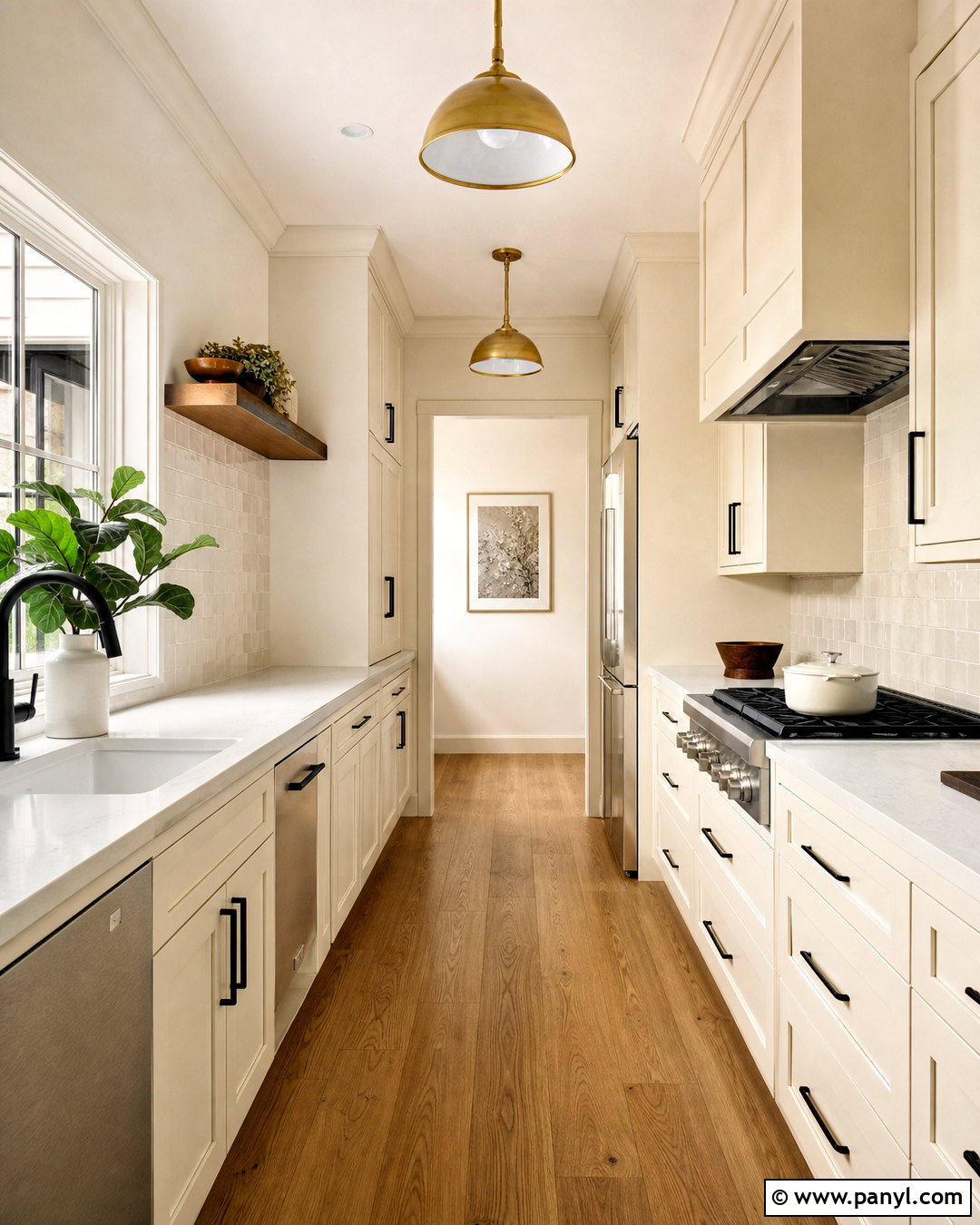
A galley layout benefits from the light, gentle appearance of Shoji White cabinets on both sides. Keep upper cabinets streamlined and consider glass doors or a short run of open shelves near a window to prevent a closed-in feeling. Use pale quartz countertops with minimal veining and a glossy cream tile backsplash to bounce light through the narrow space. Warm oak flooring adds direction and contrast beneath the cabinetry. Matte black handles can create crisp definition, while brass lighting adds a warmer accent overhead. Place major appliances in a practical work sequence and reserve uninterrupted counter space for preparation. At the far end, a window, framed print, or shallow display shelf creates a visual destination. The finished galley feels organized, bright, and comfortably proportioned.
20. Shoji White Open Concept Kitchen Cabinets
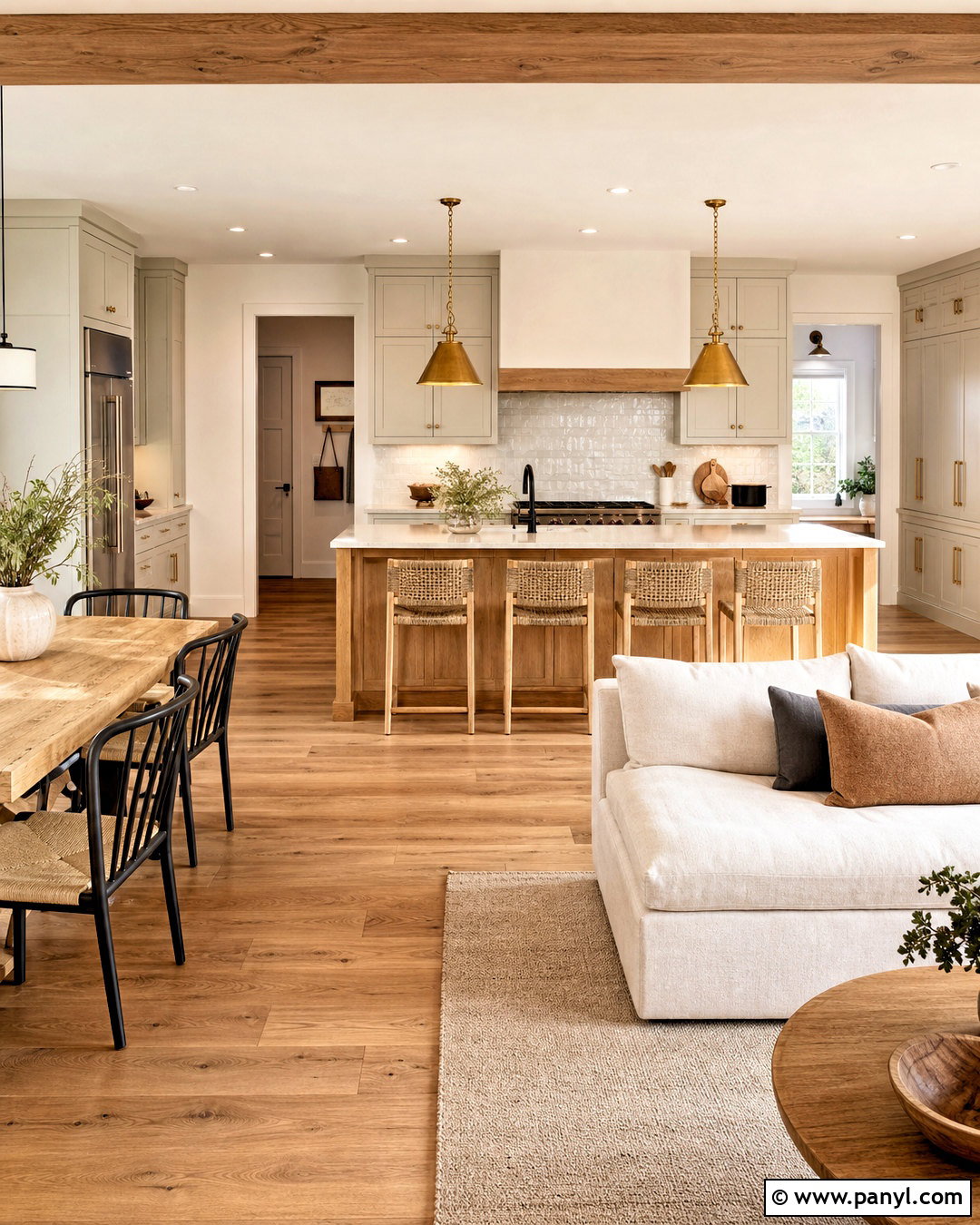
An open-concept kitchen needs finishes that connect naturally with nearby living and dining areas. Shoji White cabinets provide a soft neutral foundation that works well with warm white walls, oak furniture, and layered beige textiles. Use a substantial white oak island to define the kitchen without visually separating it from the rest of the room. Cream quartz counters and a lightly textured ivory backsplash keep the work zone cohesive. Choose brass pendants that relate to dining-room lighting, then repeat matte black in the faucet, window frames, and living-room accents. Wide-plank oak flooring should continue across the entire open area. Keep tall pantry cabinets grouped together and counters mostly clear. This thoughtful repetition gives the complete space a unified, intentional appearance from every viewpoint.
Conclusion:
Shoji White offers more warmth and depth than a bright, clinical white, making it a versatile choice for kitchens of many sizes and architectural styles. The most successful designs consider the whole room rather than the cabinet color alone. Countertop undertones, backsplash texture, flooring, hardware, lighting, and island finishes should all support its creamy greige character. Test painted samples vertically in morning, afternoon, and evening light before selecting the final finish. Then compare every permanent material beside the sample. Whether paired with oak, walnut, black, blue, sage, marble, or terracotta, these 20 shoji white kitchen cabinets show how one flexible shade can support distinctly different yet cohesive kitchen looks.

Related Ideas and Inspiration:
Leave a Reply