
Sage green painted walls bring a calm, natural quality to a home without feeling plain or overly cool. This muted green can function like a neutral, yet it adds more personality than beige, gray, or white. The key is choosing the right undertone and building a complete palette around it. Warm sage works beautifully with cream, oak, tan, and brass, while gray-toned sage pairs well with black, marble, walnut, and crisp white. Lighting also matters because the same paint may appear greener, grayer, or warmer throughout the day. From restful bedrooms to practical mudrooms, these complete room looks show how furniture, flooring, textiles, and finishes can support the color. Explore these 25 Sage Green Painted Walls for approachable inspiration in every part of the home.

1. Sage Green Living Room Walls
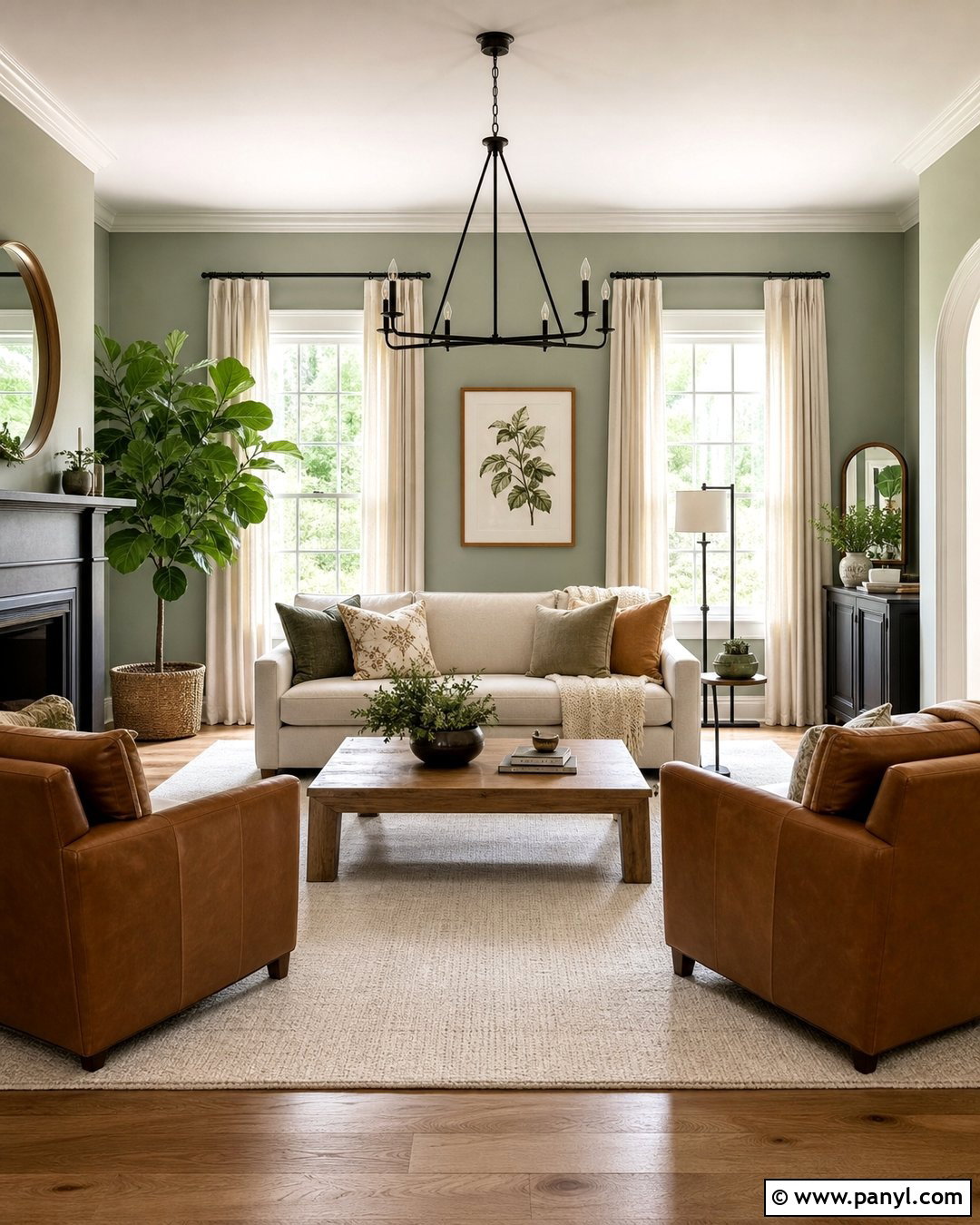
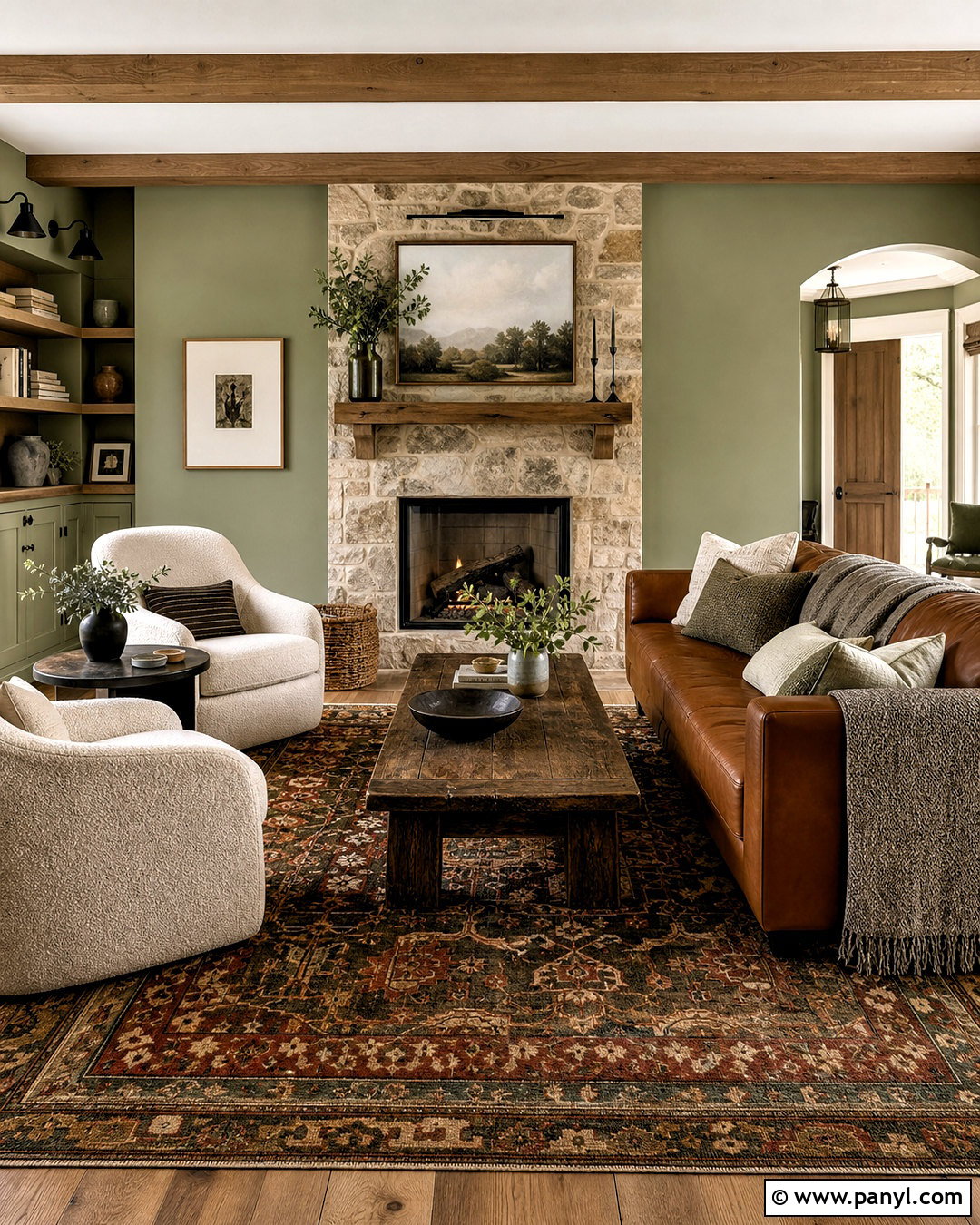
A soft sage green living room feels welcoming when the entire palette balances cool and warm tones. Paint all four walls in a muted, medium-light sage with an eggshell finish. Add a warm white ceiling and simple cream trim to keep the room bright. A beige linen sofa, two caramel leather chairs, and a natural oak coffee table provide comfortable contrast. Ground the seating area with an ivory wool rug featuring a subtle tan pattern. Black metal lighting and slim curtain rods add definition without making the space harsh. Finish the room with oatmeal curtains, botanical artwork, textured pillows, and a few large plants. This complete arrangement makes sage feel timeless rather than overly themed, while natural materials reinforce its quiet connection to the outdoors.
2. Sage Green Bedroom Walls
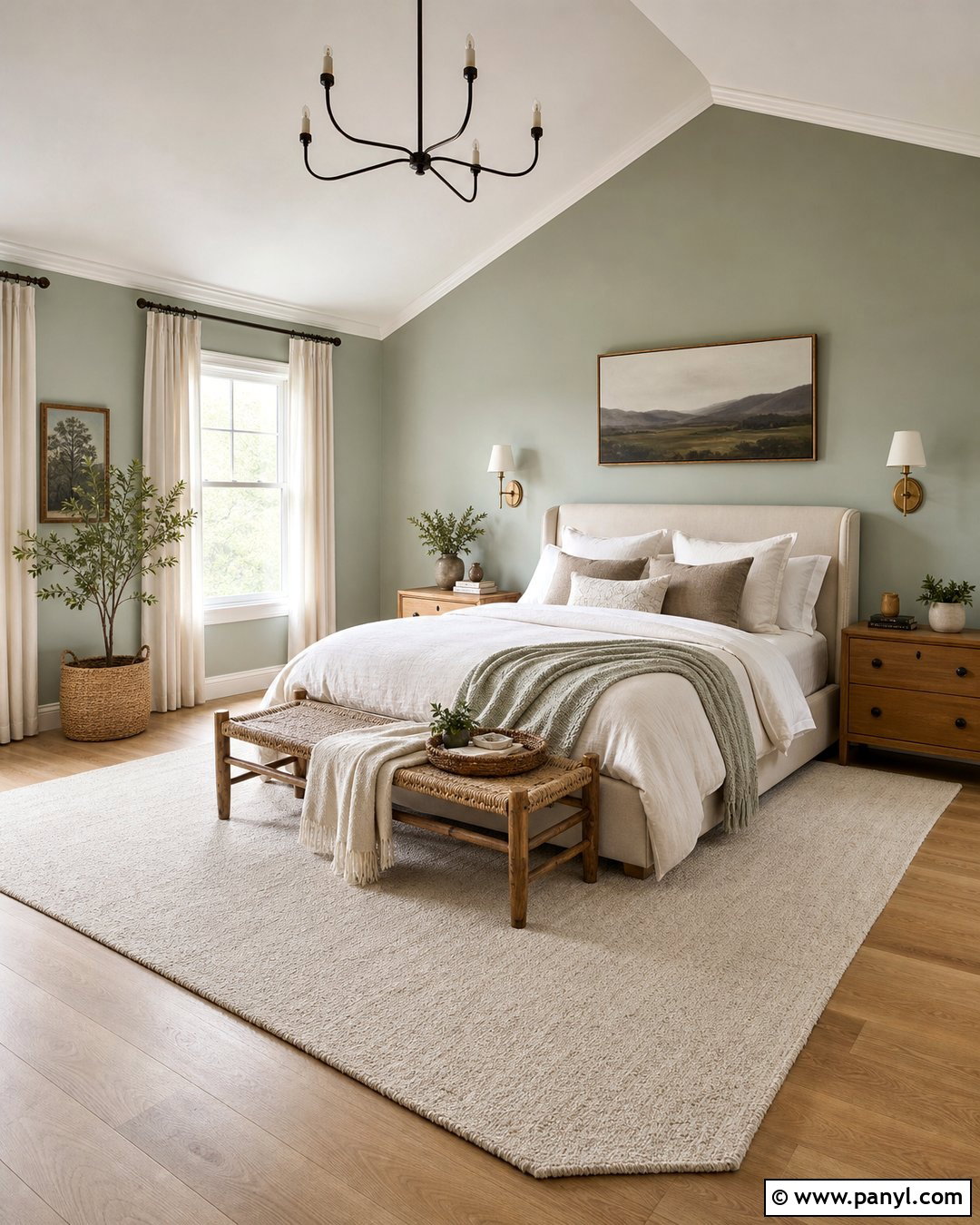
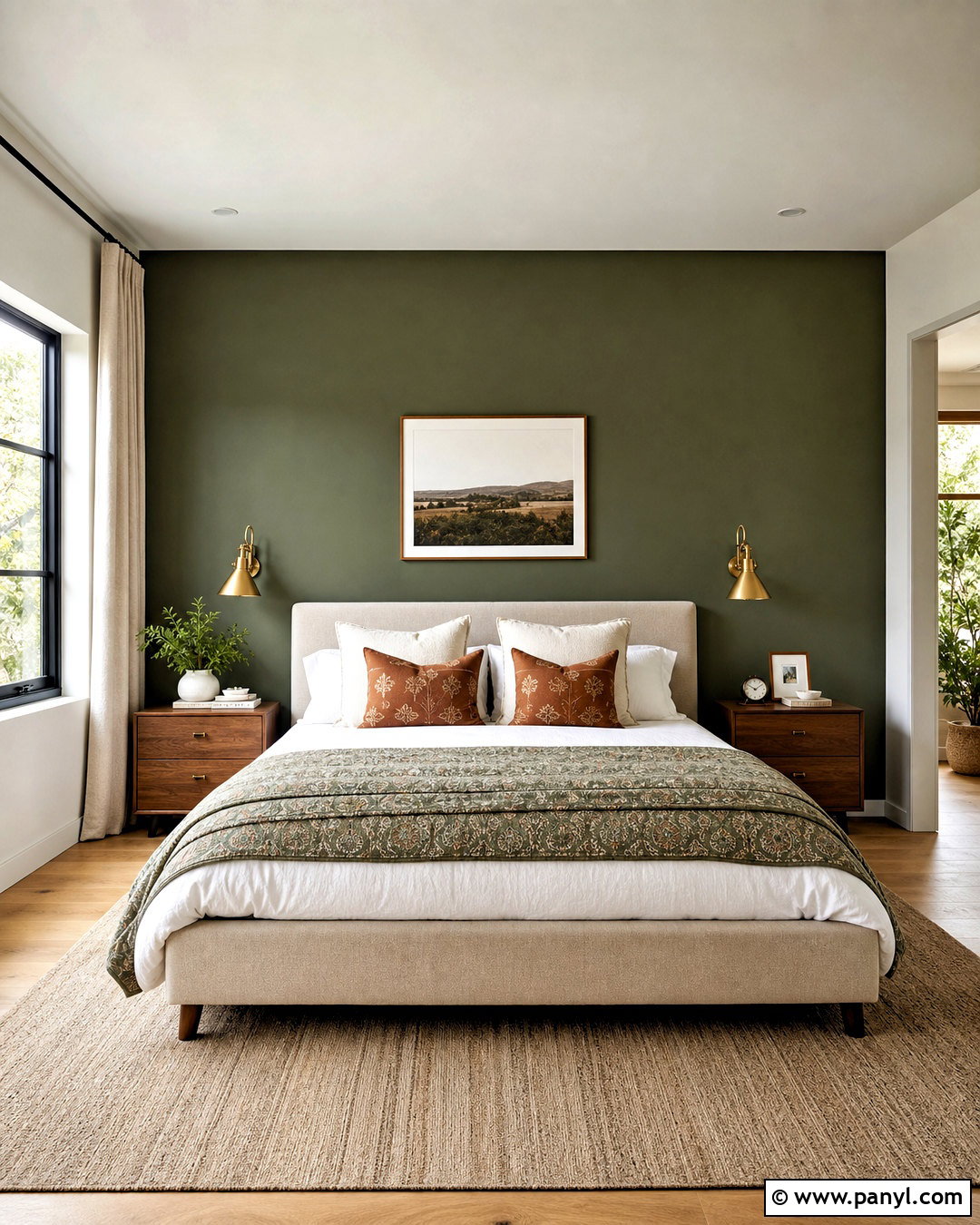
Imagine waking up in a bedroom that feels soft, quiet, and connected to nature. Use a gentle gray-sage paint on every wall, paired with warm white trim and a light oak floor. Center an upholstered oatmeal bed against the longest wall and layer it with white sheets, a flax-colored duvet, and a moss green throw. Matching oak nightstands maintain symmetry, while aged brass sconces provide warm reading light. Add full-length ivory curtains to soften the windows and reduce visual clutter. A simple landscape print above the bed introduces muted blue and brown tones. Complete the design with a woven bench, a low-pile cream rug, and restrained ceramic decor. The result is restful, polished, and easy to update as bedding preferences change.
3. Sage Green Kitchen Walls
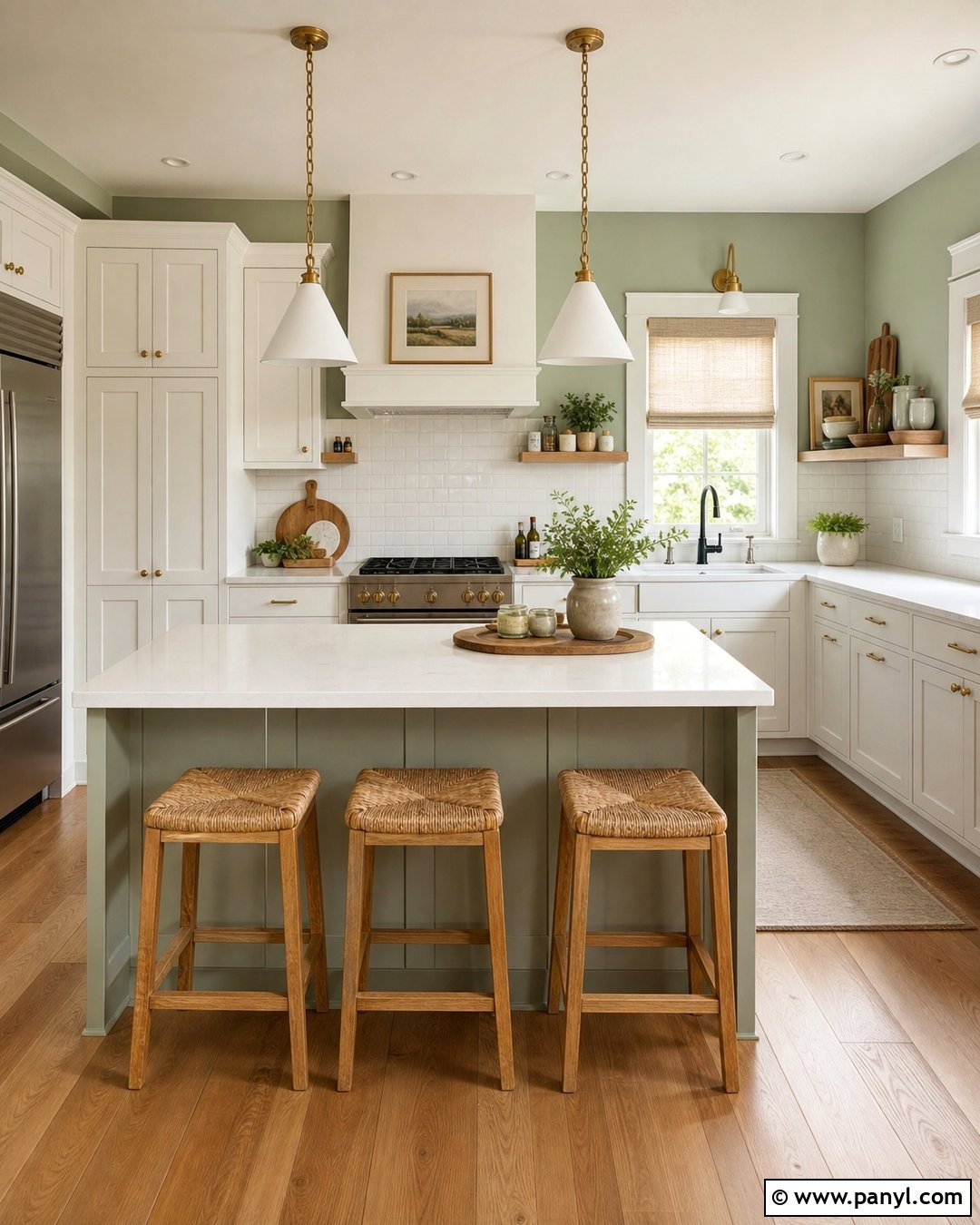
Sage green kitchen walls can soften a hardworking room without competing with cabinets or countertops. Choose a warm, pale sage for the walls and combine it with creamy white Shaker cabinets. Honed white quartz counters and a simple off-white subway tile backsplash keep the main surfaces clean and practical. Bring in warmth through medium oak flooring, woven counter stools, and a few wood cutting boards displayed near the range. Brushed brass cabinet pulls and pendant lights add a subtle glow. For contrast, use matte black on the faucet and narrow window frames. Finish the design with natural linen shades, neutral dishware, and small pots of herbs. This full kitchen palette feels fresh and current, yet every material is classic enough to age gracefully.
4. Sage Green Dining Room Walls
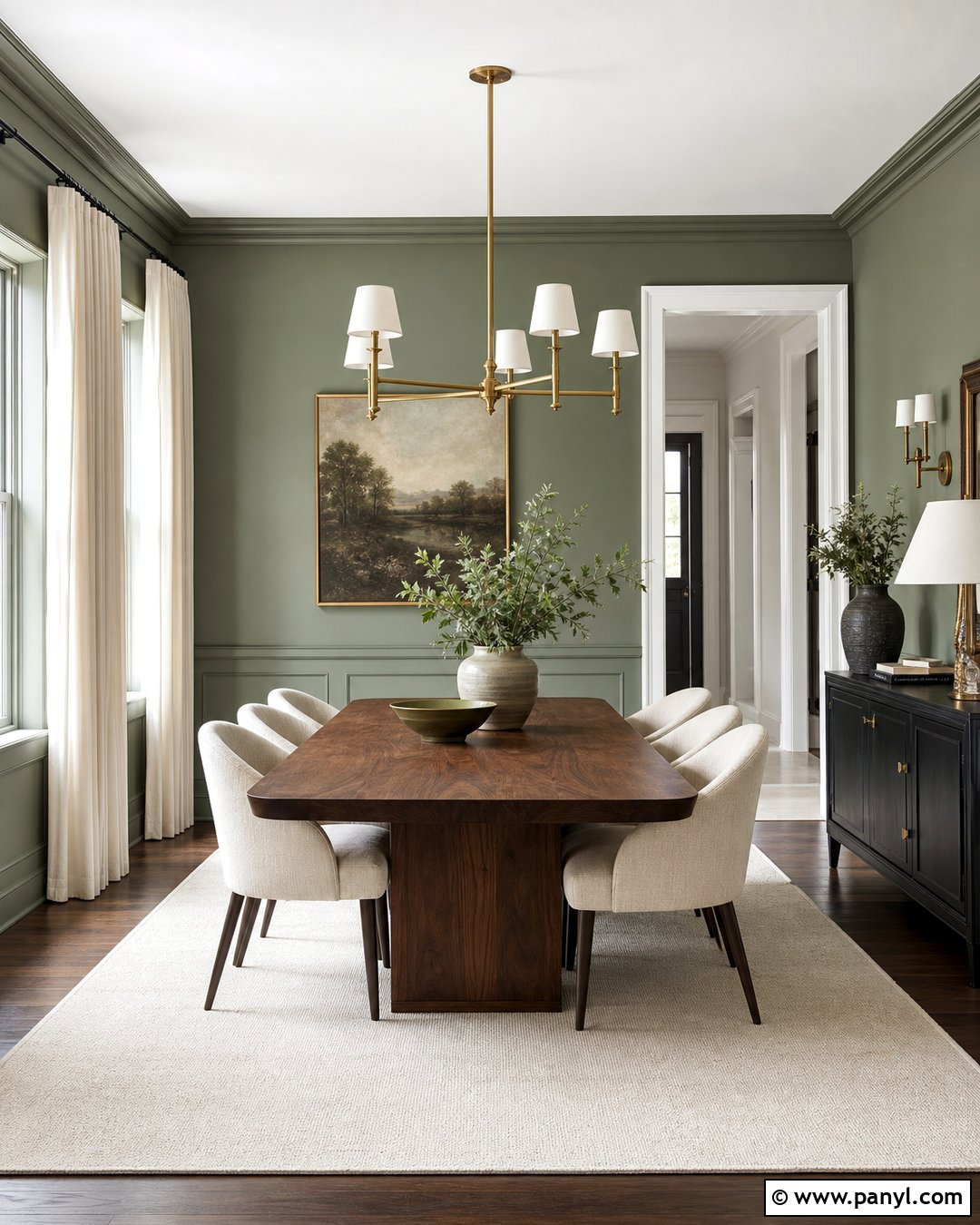
A dining room can handle a slightly deeper sage because it is often used during softer parts of the day. Cover the walls in a rich, earthy sage and continue the color across simple picture-frame molding for a tailored appearance. Pair it with a rectangular walnut table and curved dining chairs upholstered in warm ivory fabric. Above the table, hang a large linen drum pendant with aged brass details. An understated cream rug defines the dining zone and prevents the darker wood from feeling heavy. Use off-white curtains, ceramic table lamps, and traditional landscape art to complete the room. A black sideboard introduces a crisp anchor, while handmade pottery adds texture. The finished setting feels intimate enough for dinner but still bright enough for everyday family meals.
5. Sage Green Bathroom Walls
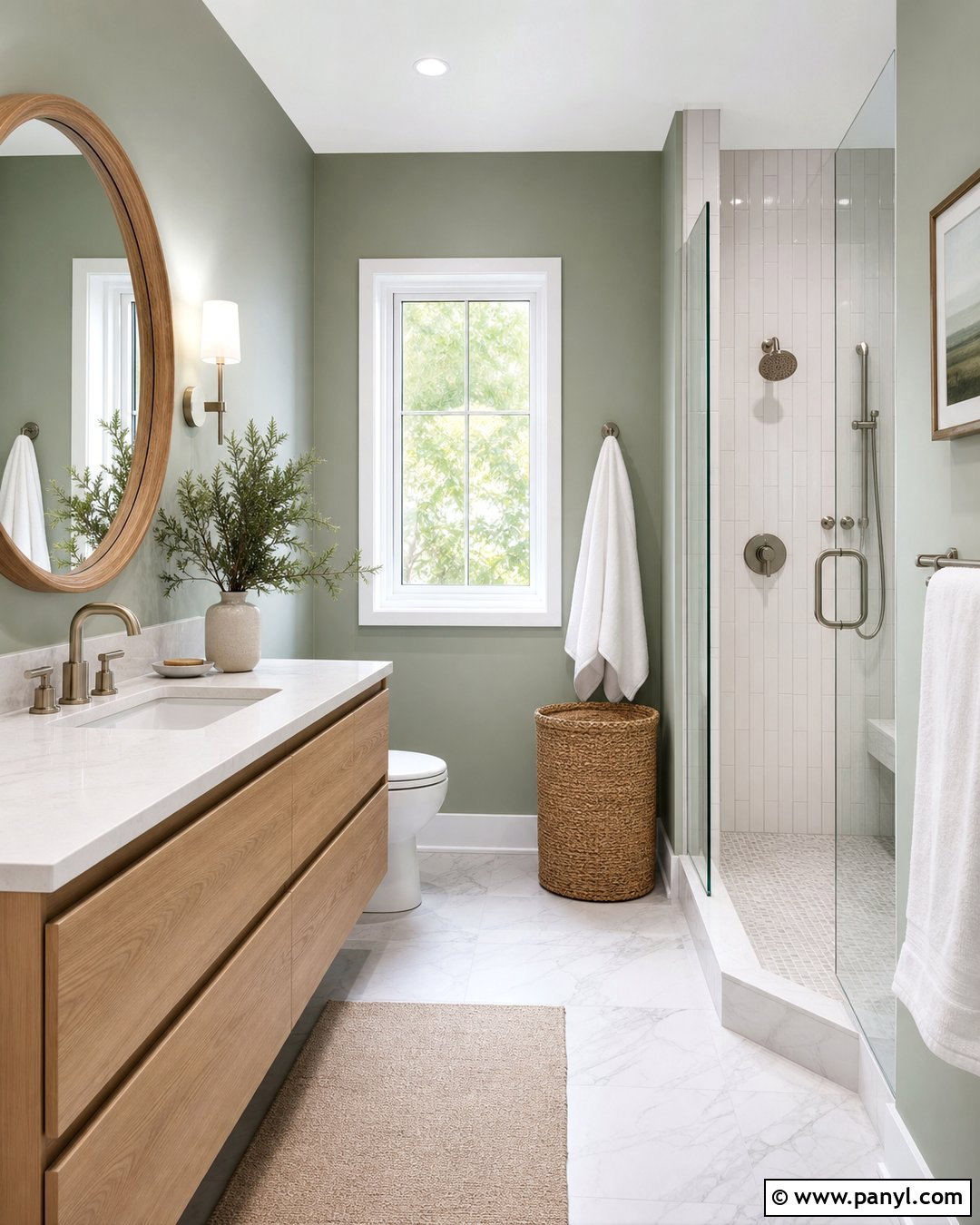
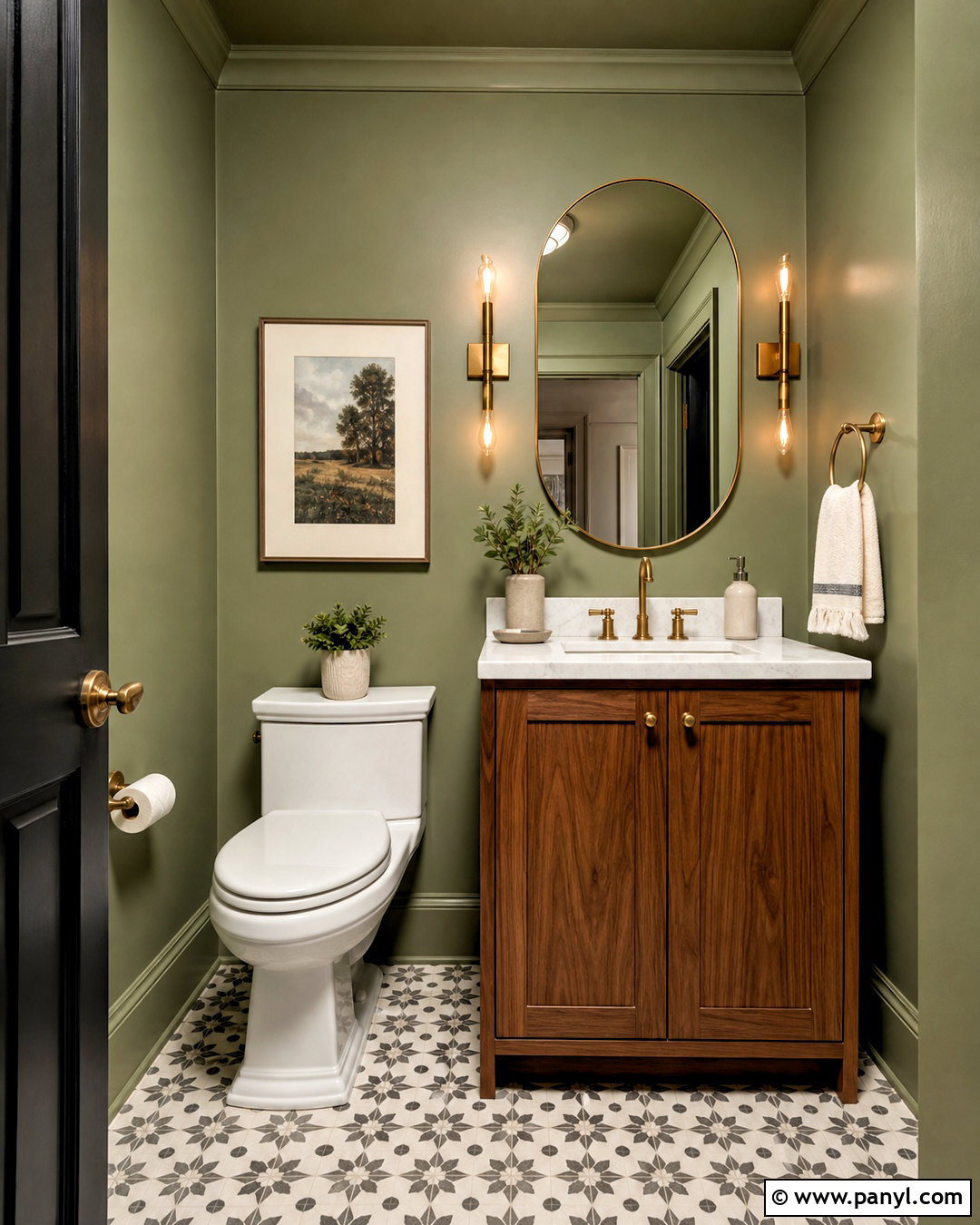
For a bathroom that feels clean without looking clinical, pair sage green walls with warm white surfaces and natural wood. Use a moisture-resistant satin paint in a light, balanced sage above white vertical wall tile. A floating white oak vanity keeps the floor visible and makes the room feel more open. Top it with pale quartz and install brushed nickel fixtures for a soft, practical finish. Choose a frameless glass shower enclosure and small marble-look floor tiles for subtle pattern. A round wood-framed mirror connects the vanity to the room’s organic palette. Finish with waffle-textured white towels, a woven hamper, and simple greenery. Bright lighting around the mirror is essential, since it keeps the sage from appearing dull while making daily grooming more comfortable.
6. Sage Green Home Office Walls
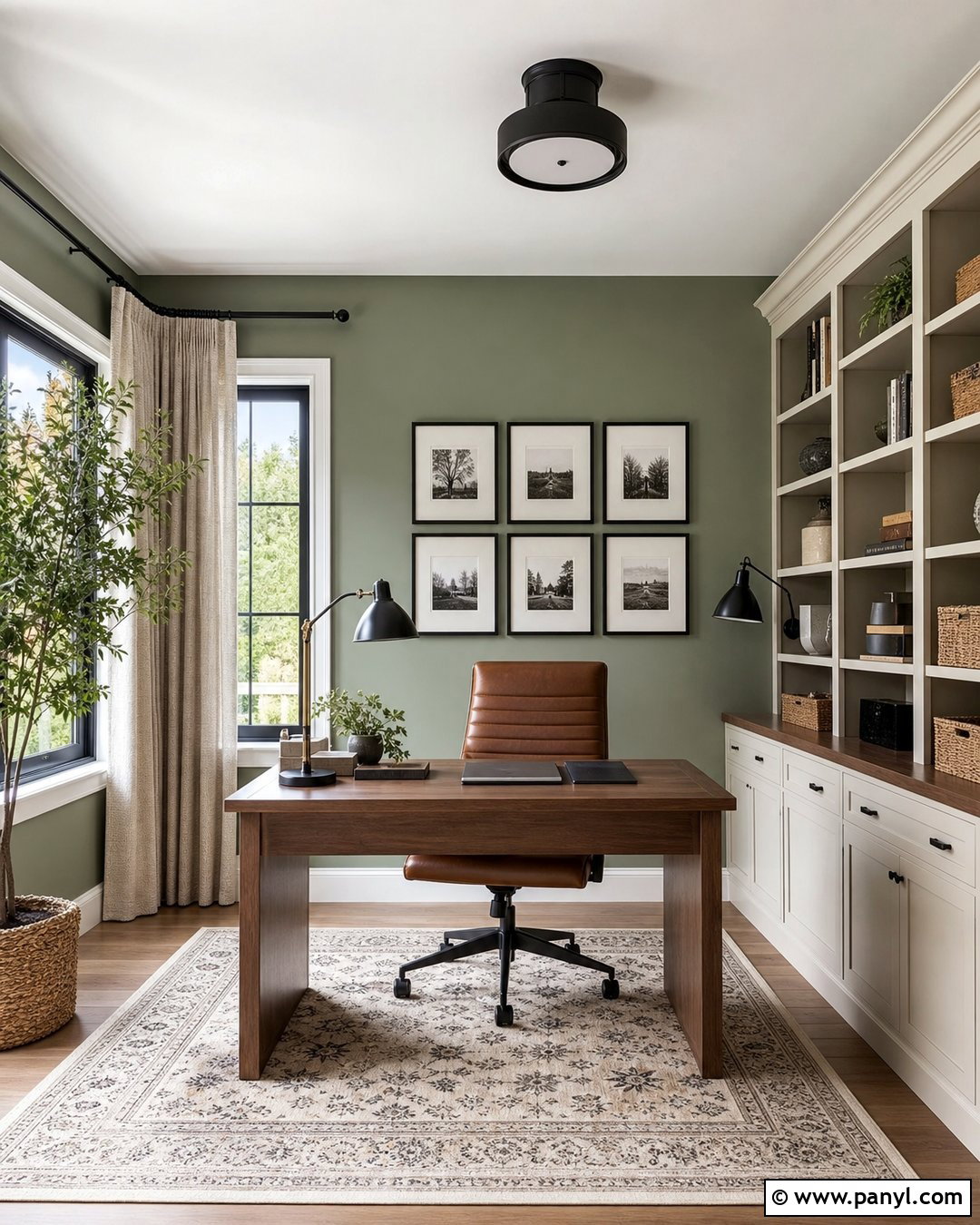
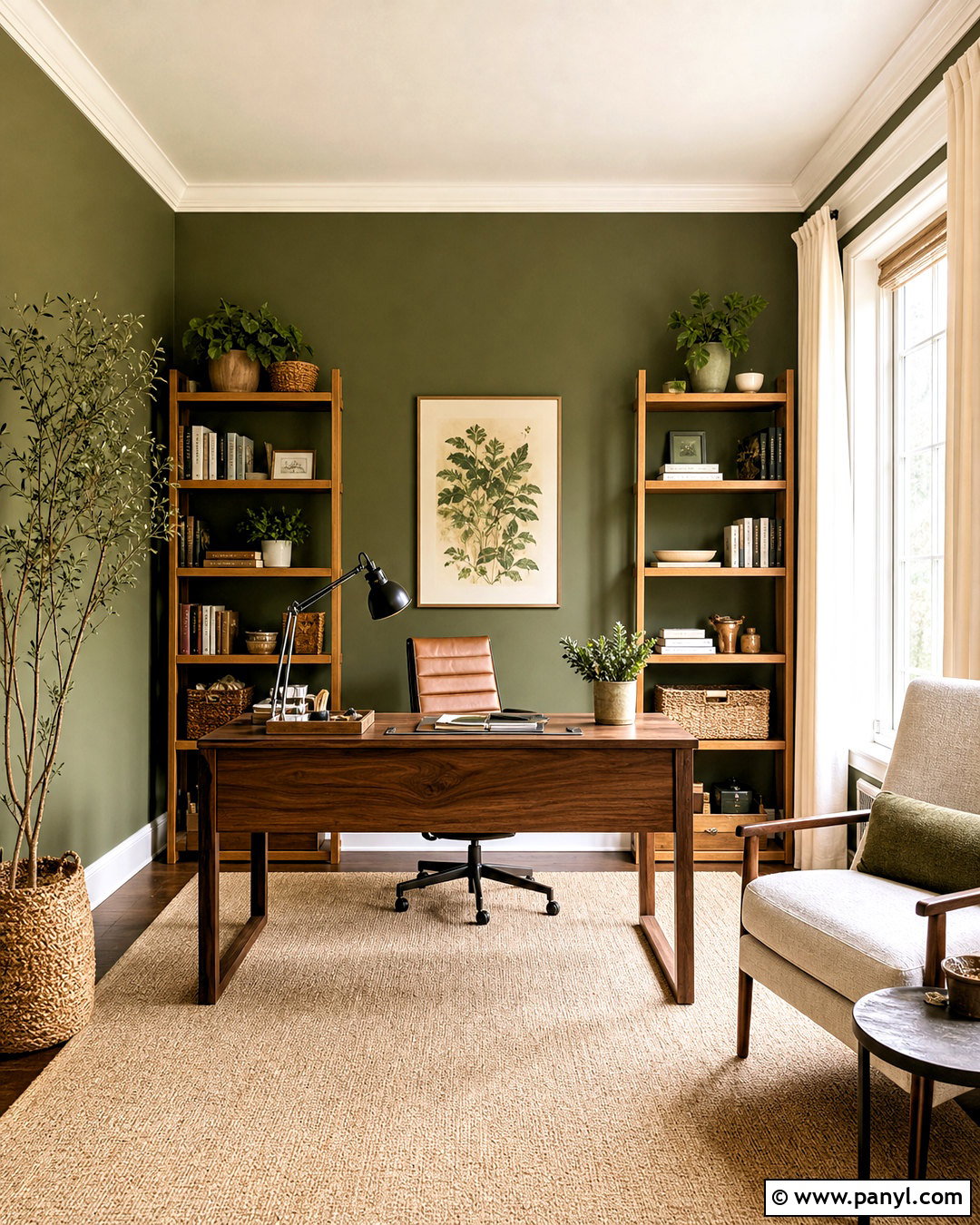
Could your workspace feel focused without becoming cold or overly corporate? Paint the office walls in a midtone gray-sage that reduces glare and gives the room a grounded background. Place a substantial walnut desk near the window, then add a comfortable tan leather chair with an adjustable shape. Built-in shelves painted warm white create useful contrast and provide organized storage for books, baskets, and office supplies. Use an ivory and charcoal rug to define the work area. Matte black hardware, a black task lamp, and framed monochrome artwork add clean structure. Full-length linen curtains filter harsh daylight while maintaining brightness. Finish with one large plant and a closed storage credenza. The full design feels calm, professional, and appropriate for both focused work and video meetings.
7. Sage Green Entryway Walls
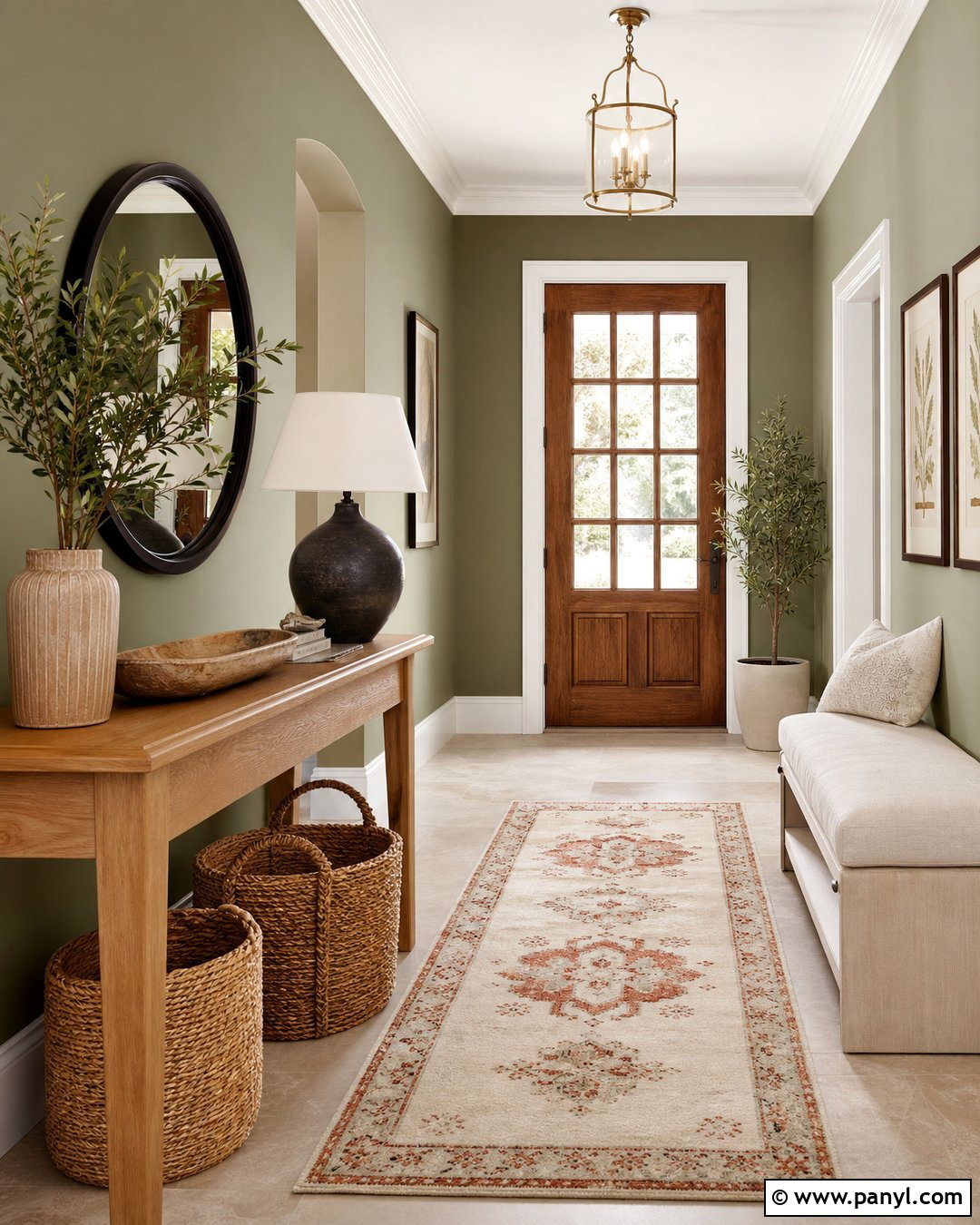
Set a relaxed tone from the moment the front door opens with warm sage green entryway walls. Pair the painted walls with bright white trim, a natural oak console, and durable limestone-look flooring. A round black-framed mirror above the console reflects light and gives the narrow area greater depth. Add a slim upholstered bench in oatmeal fabric for removing shoes, with woven baskets underneath to control clutter. A washable runner in cream, sage, and faded rust introduces pattern while hiding everyday marks. Use a simple brass ceiling light and a ceramic table lamp to create layered illumination. Finish with a wood bowl for keys, two framed botanical prints, and a restrained branch arrangement. Every piece has a purpose, allowing the entrance to appear welcoming and consistently organized.
8. Sage Green Hallway Walls
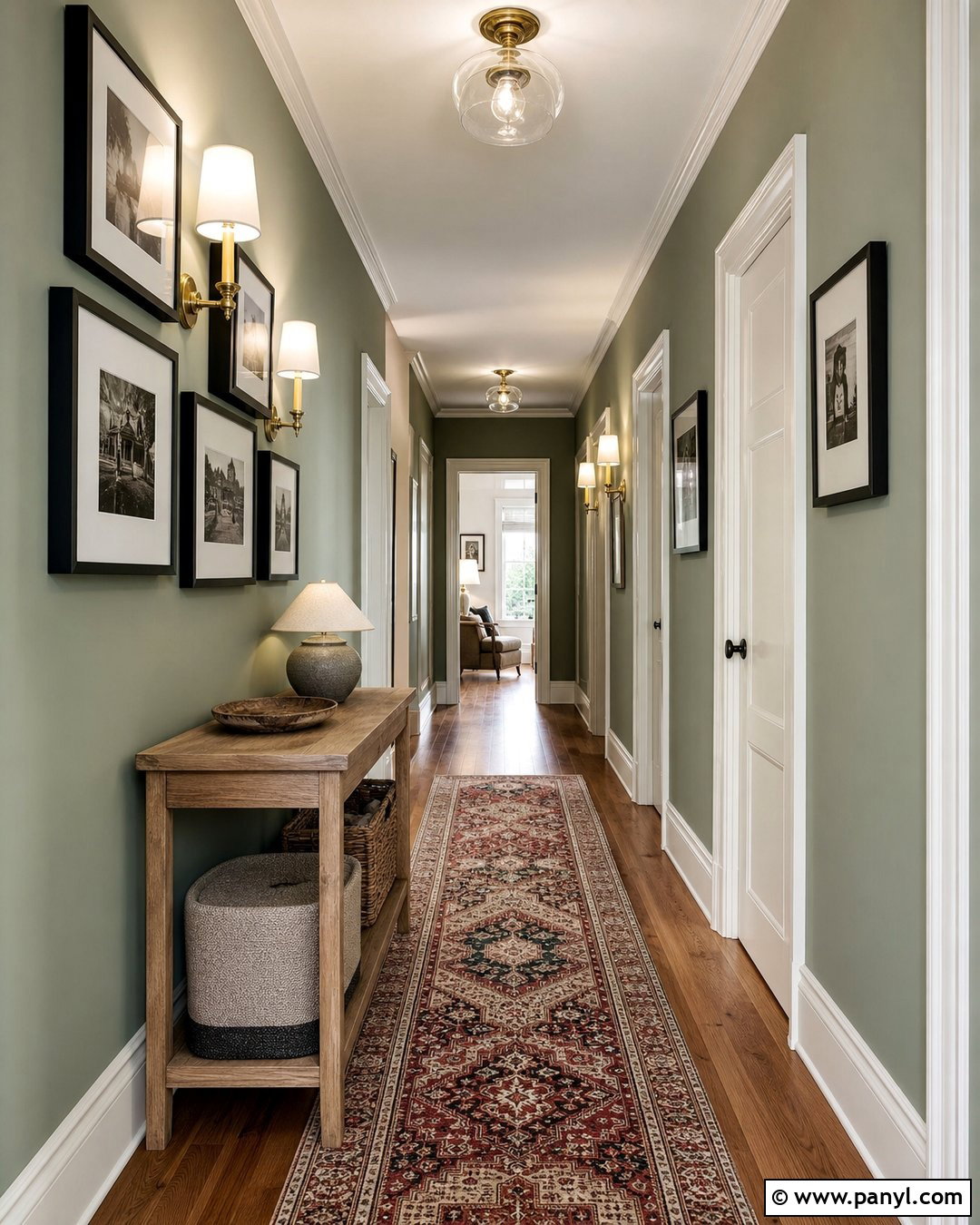
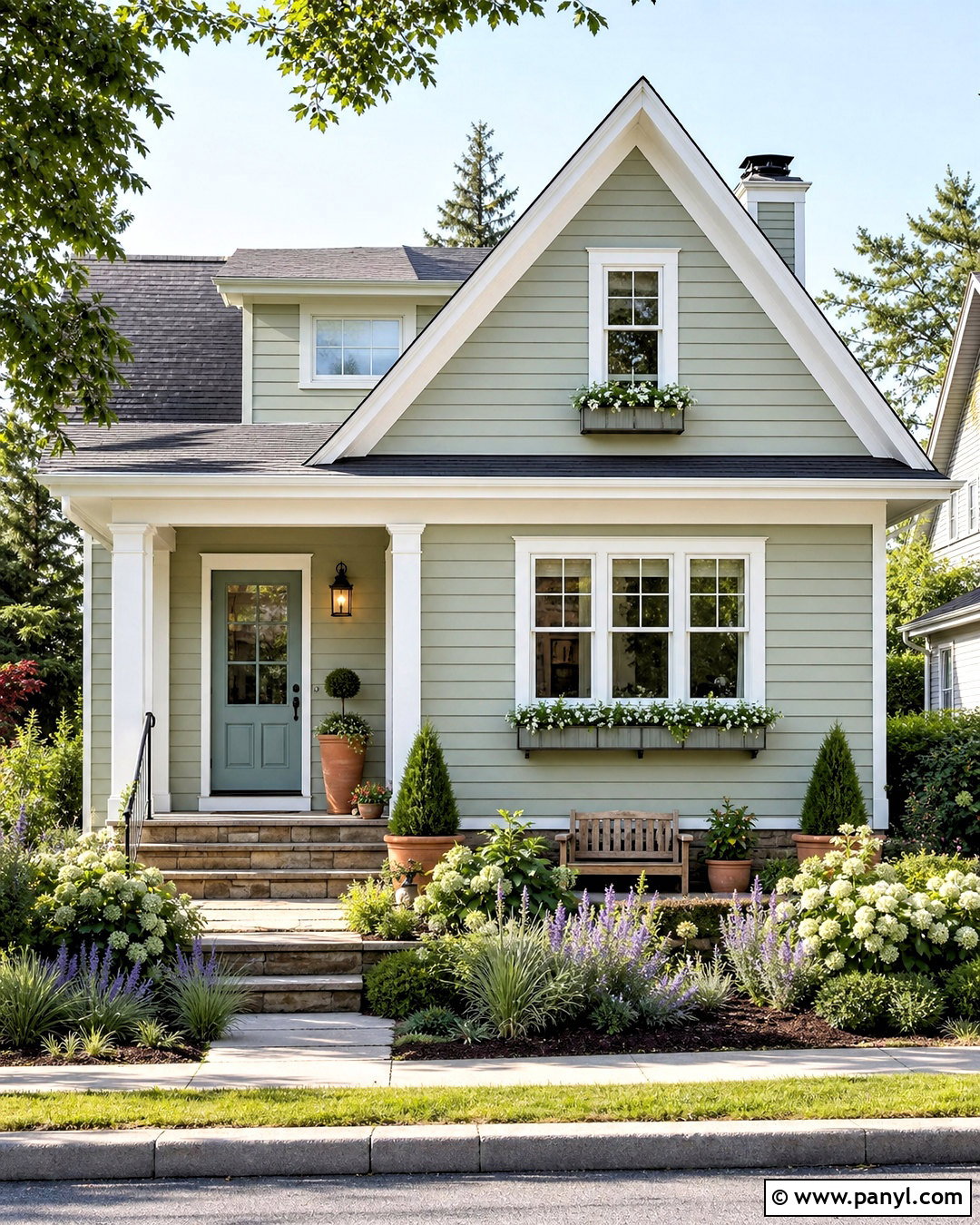
Long hallways often need color, rhythm, and practical lighting to feel intentional. Use a light, slightly warm sage green across the walls and keep the ceiling and baseboards creamy white. Install a row of matching black-framed photographs at eye level to create an orderly gallery. A narrow vintage-style runner in muted red, beige, and green breaks up the floor and adds warmth beneath the soft wall color. If space permits, place a shallow oak console at one end with a small lamp and covered storage baskets. Repeated brass wall sconces provide even light and stop the passage from developing dark corners. Keep doors white for crisp contrast, or paint them sage for a seamless effect. This complete treatment transforms a basic connecting space into a polished part of the home.
9. Sage Green Nursery Walls
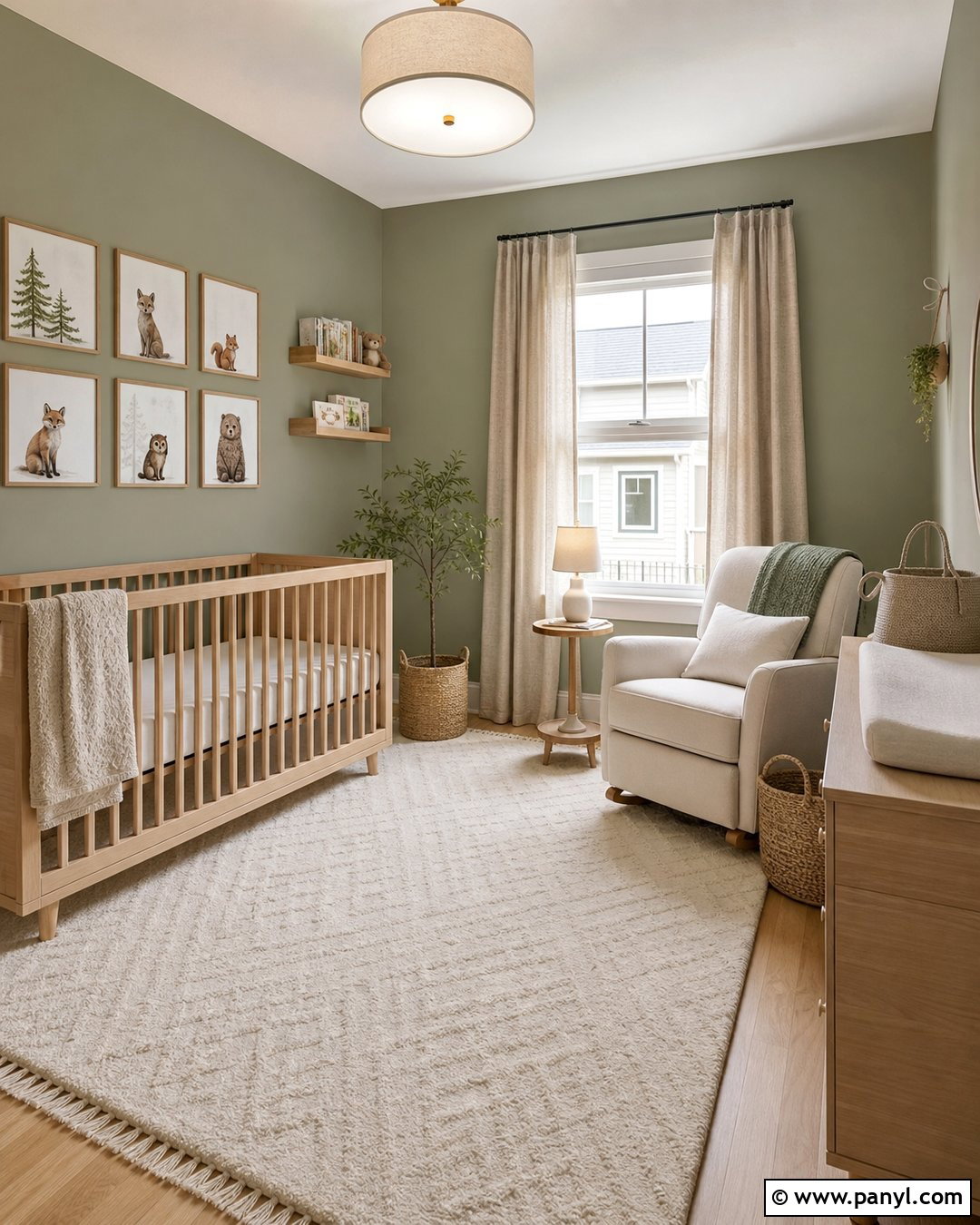
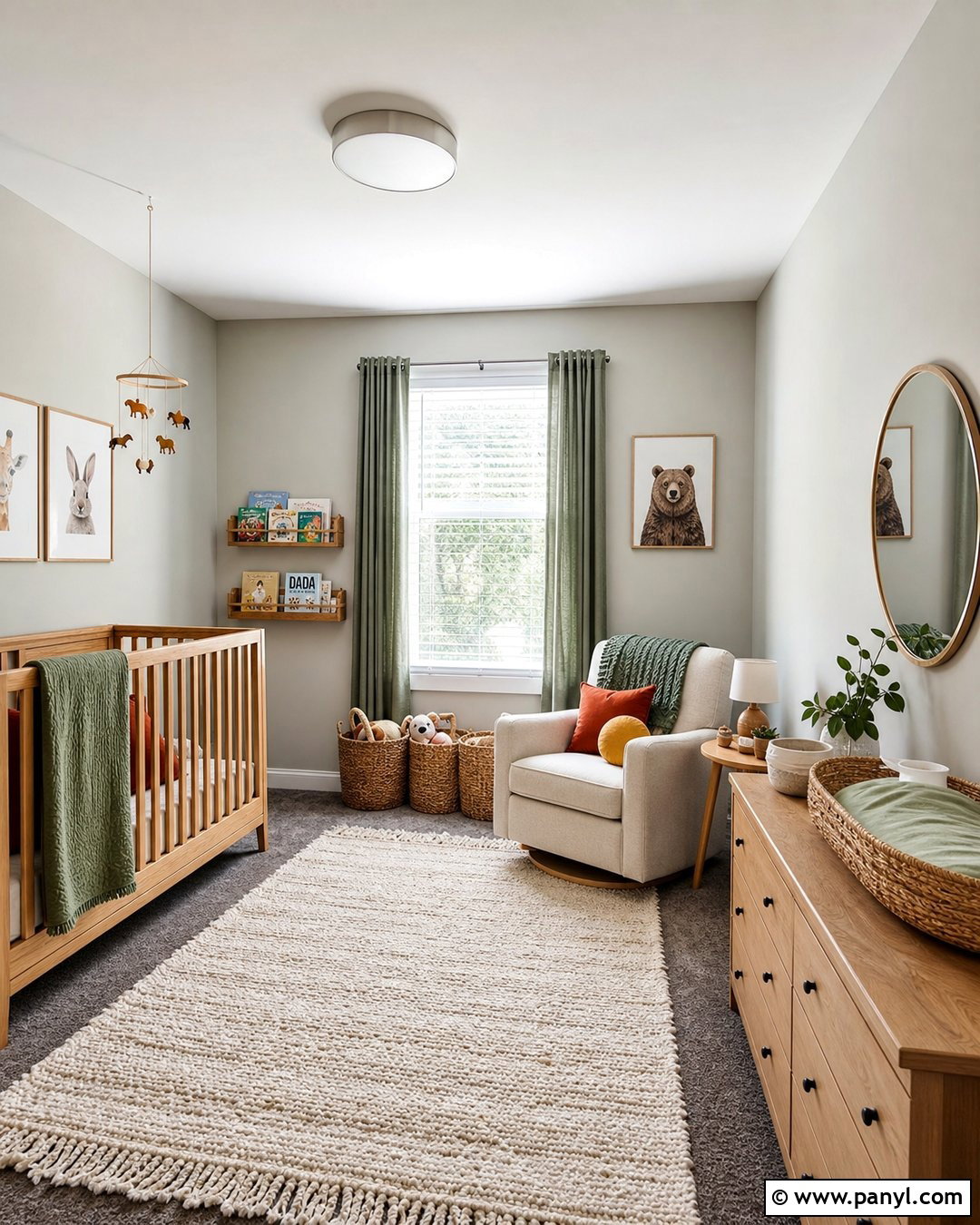
Sage green nursery walls offer a gentle backdrop that can adapt as a child grows. Select a pale, warm sage with low color intensity, then pair it with soft white trim and natural maple flooring. Place a simple light wood crib against the most visible wall, away from windows and cords. Add a comfortable cream glider, a washable ivory rug, and a low dresser that can also support a changing pad. Blackout curtains in natural linen help control light while warming the green. Choose playful woodland artwork in muted brown, rust, and cream instead of relying on a strong theme. Closed baskets, secure shelving, and a shaded ceiling fixture keep the space functional. The completed room feels soothing, practical, and easy to update with new textiles or artwork later.
10. Sage Green Guest Room Walls
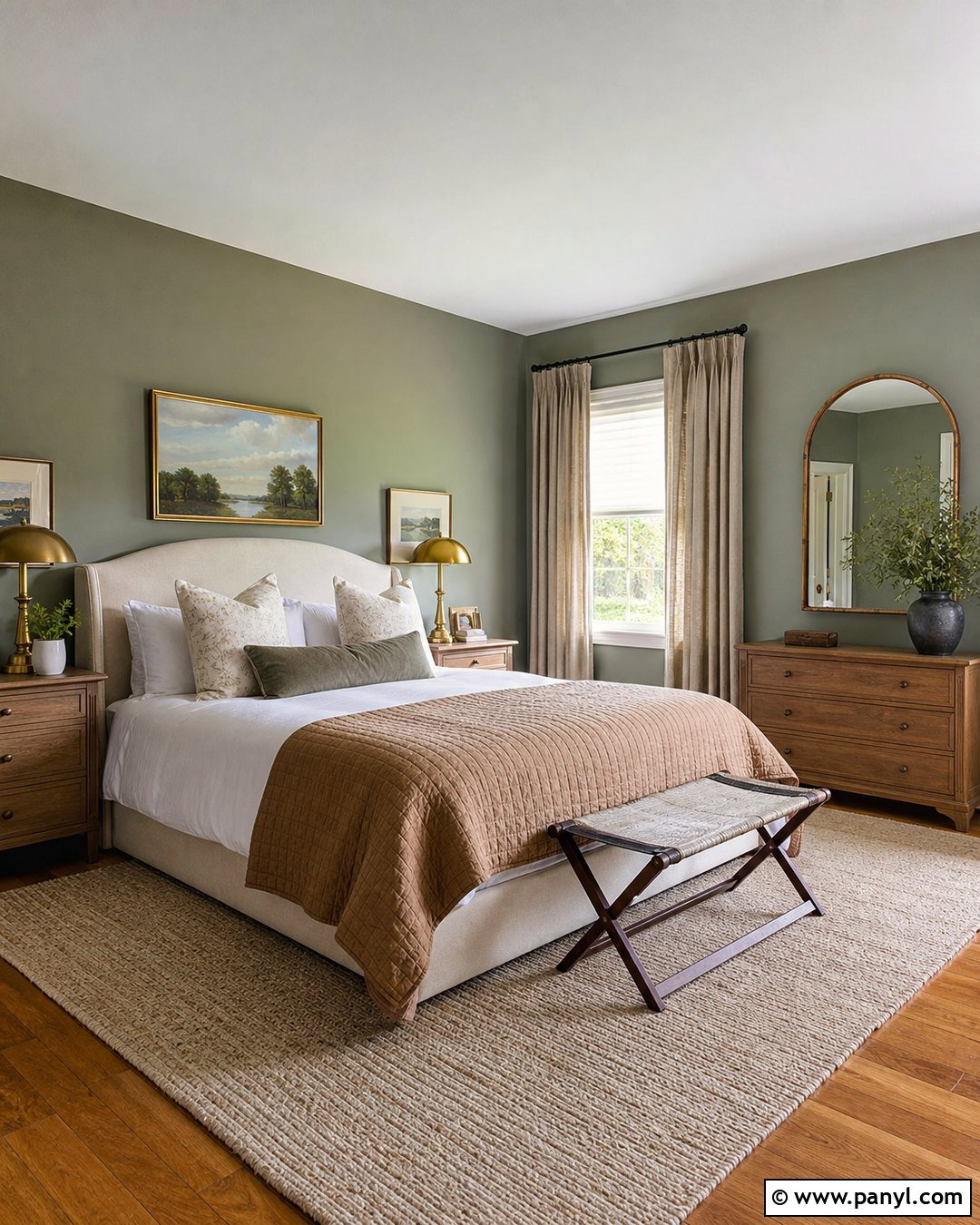
Make overnight visitors feel comfortable with a guest room built around soft sage green walls and familiar neutral furnishings. Paint the walls a medium-light sage with subtle gray undertones, then add an upholstered cream headboard and crisp white bedding. A quilt in muted terracotta, beige, and olive adds warmth without overpowering the room. Use matching oak nightstands with small brass lamps so both sides of the bed feel equally functional. A narrow wood dresser provides storage, while an arched mirror helps bounce daylight around the space. Ground the bed with a textured ivory rug and use light-filtering flax curtains at the window. Finish with simple landscape artwork, spare blankets, and an uncluttered luggage bench. The cohesive design feels personal and inviting rather than temporary or overly decorated.
11. Sage Green Laundry Room Walls
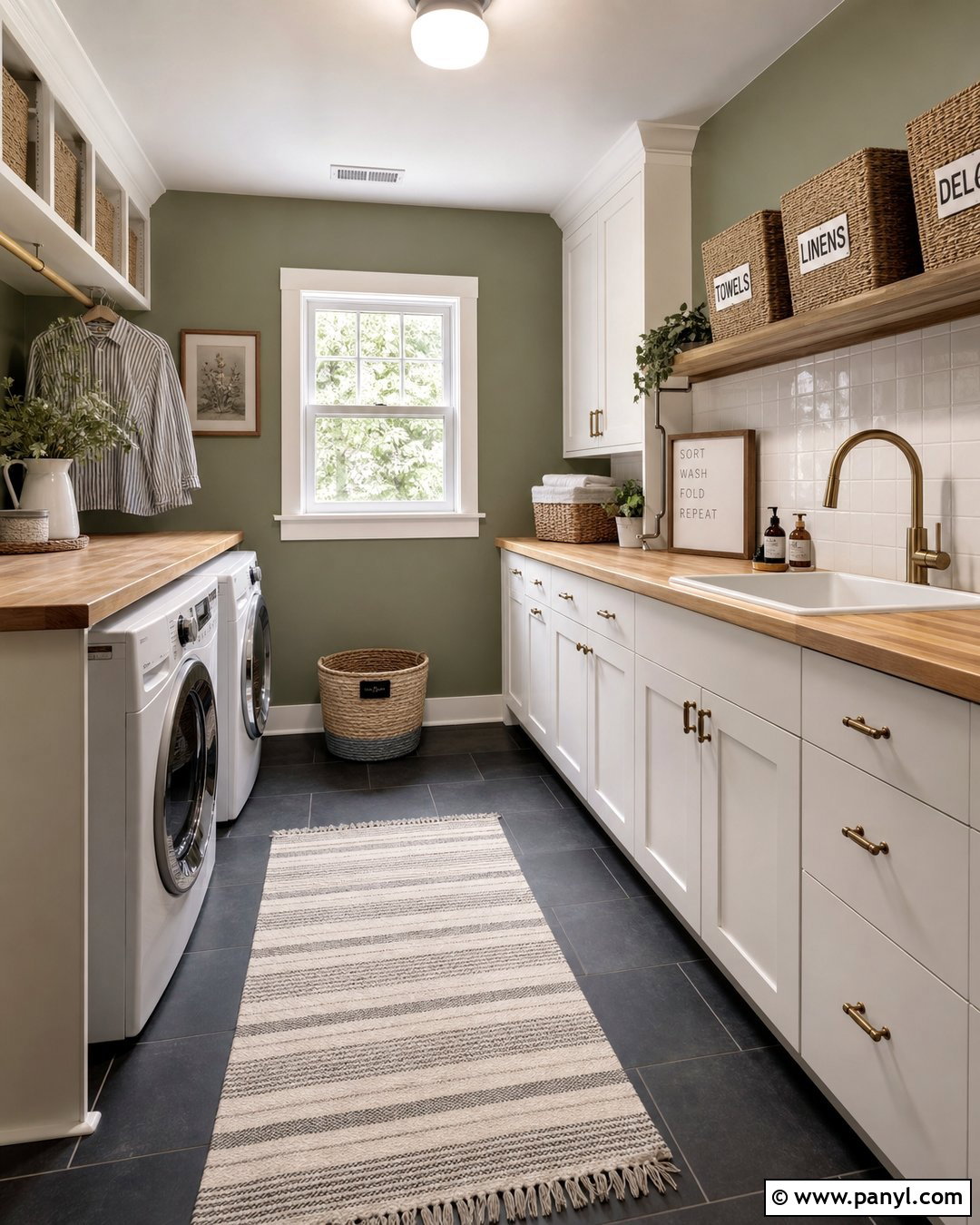
Laundry rooms benefit from a color that hides minor marks while making routine chores feel less sterile. Choose a medium sage green in a washable satin finish and pair it with warm white upper cabinets. Install a continuous butcher-block counter above front-loading appliances to create space for sorting and folding. A white square-tile backsplash protects the busiest wall and reflects overhead light. Use charcoal porcelain floor tiles for durability, then soften them with a washable striped runner. Brass cabinet pulls bring warmth, while labeled woven baskets make open shelves look orderly. Include a hanging rail for air-drying clothes and a deep utility sink if space allows. With bright ceiling lights, practical storage, and coordinated materials, the finished laundry room looks polished without sacrificing the functions needed for everyday use.
12. Sage Green Mudroom Walls
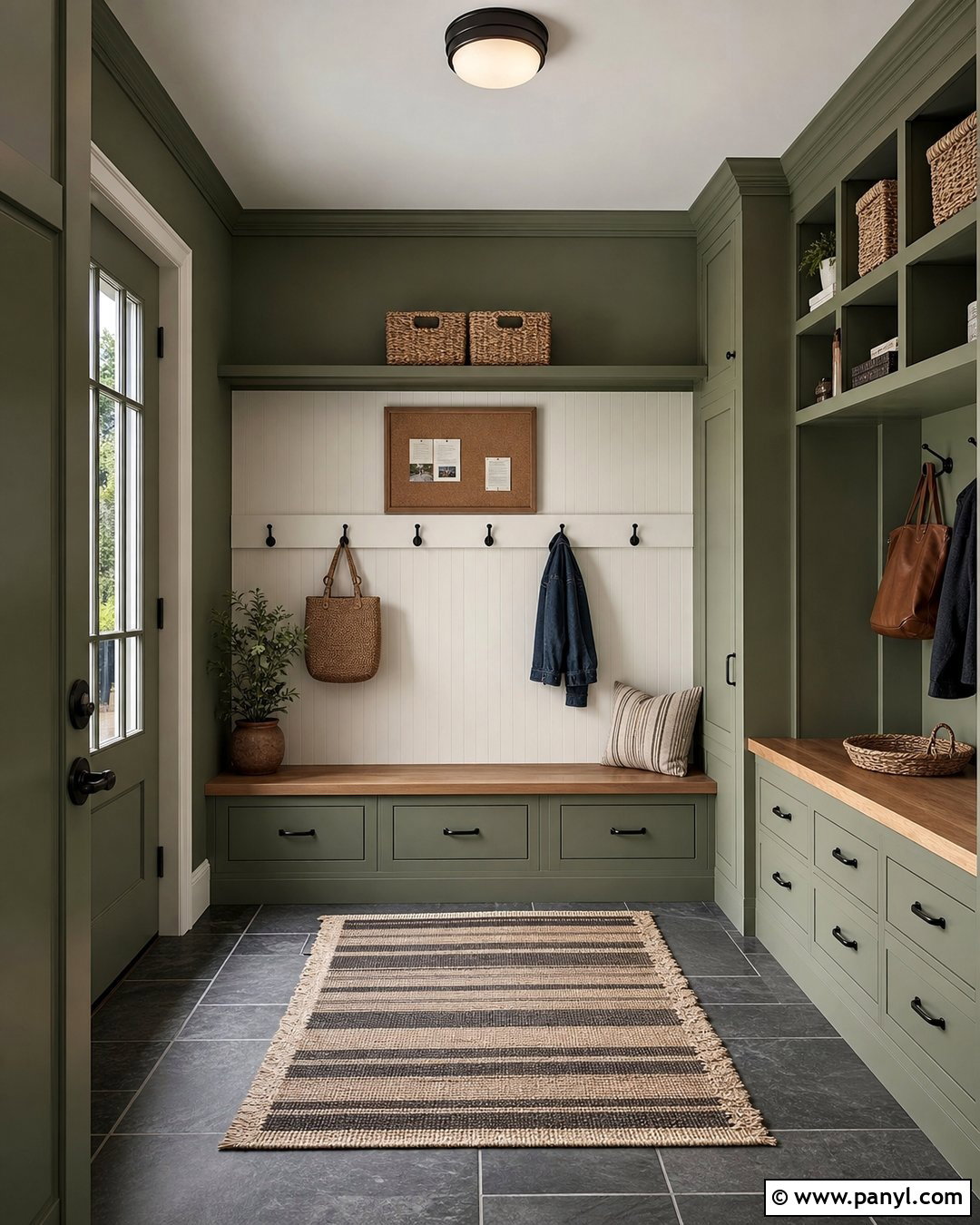
A busy mudroom becomes more composed when sage green walls are combined with sturdy storage and easy-clean finishes. Paint the upper walls in an earthy sage, then install warm white beadboard or paneling along the lower portion. Add a built-in oak bench with deep drawers for shoes and individual hooks for bags and jackets. Tall closed cabinets can conceal sports gear, cleaning supplies, and seasonal accessories. Use dark slate-look porcelain tile underfoot because it provides contrast and handles dirt well. A striped indoor-outdoor rug in cream and charcoal keeps the walkway comfortable. Black hardware and a simple flush-mount light sharpen the relaxed palette. Complete the area with woven baskets, a pinboard, and one washable cushion, creating a practical drop zone that still feels connected to the rest of the home.
13. Sage Green Fireplace Wall
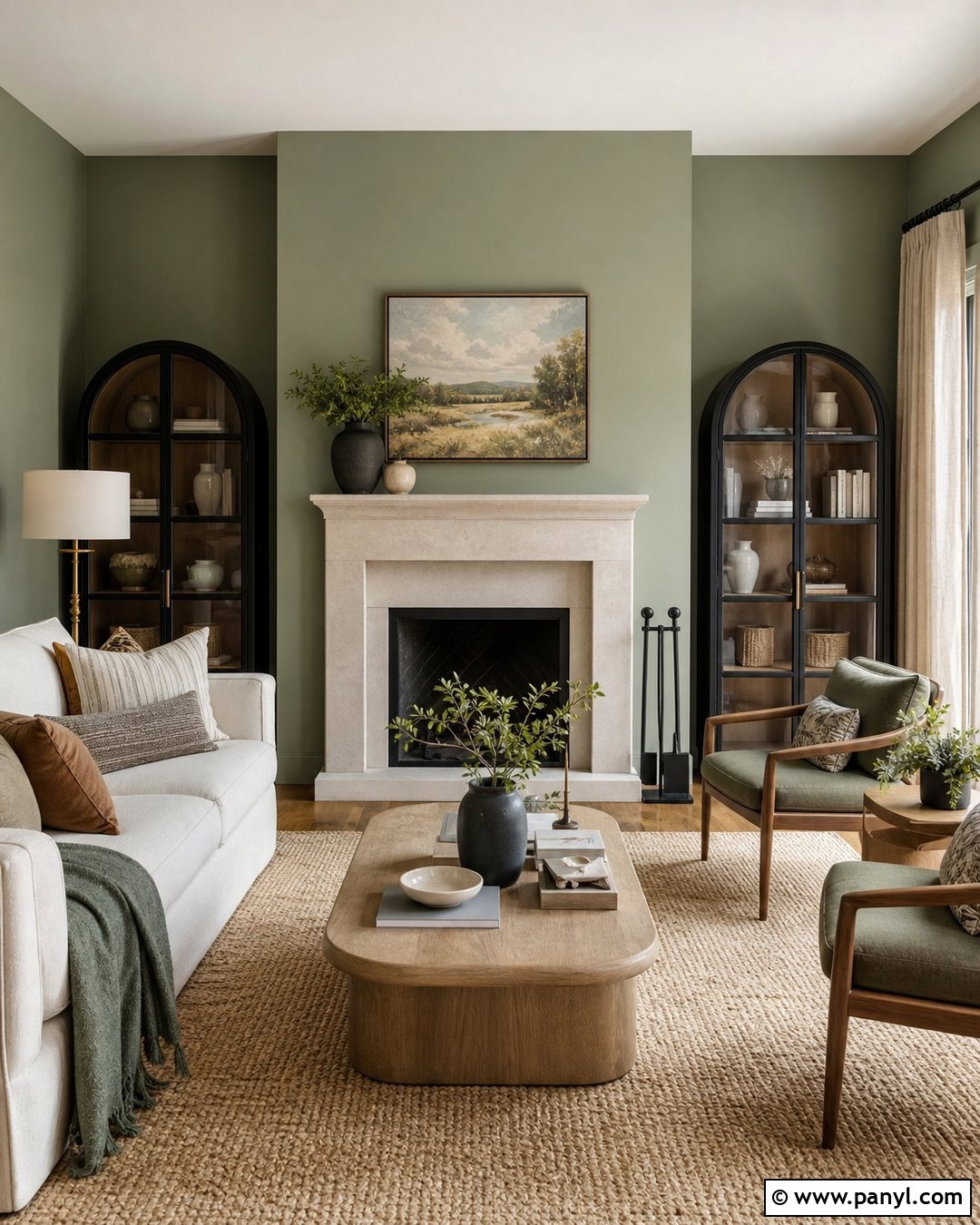
Turn the fireplace into a clear focal point by painting the entire surrounding wall a medium sage green. A simple white plaster or pale limestone fireplace provides light contrast against the muted color. Arrange a comfortable cream sofa opposite it, with two walnut-framed accent chairs angled toward the hearth. A low oak coffee table and textured beige rug maintain the natural palette. Keep the mantel styling restrained with a large landscape painting, two ceramic vessels, and a few stacked books. Black fireplace tools, curtain rods, and picture frames introduce definition. Use oatmeal drapes and warm table lamps to prevent the green from looking cool after sunset. The complete seating arrangement makes the painted wall feel integrated, while the fireplace remains prominent without requiring complicated architectural changes or excessive decoration.
14. Sage Green Accent Wall
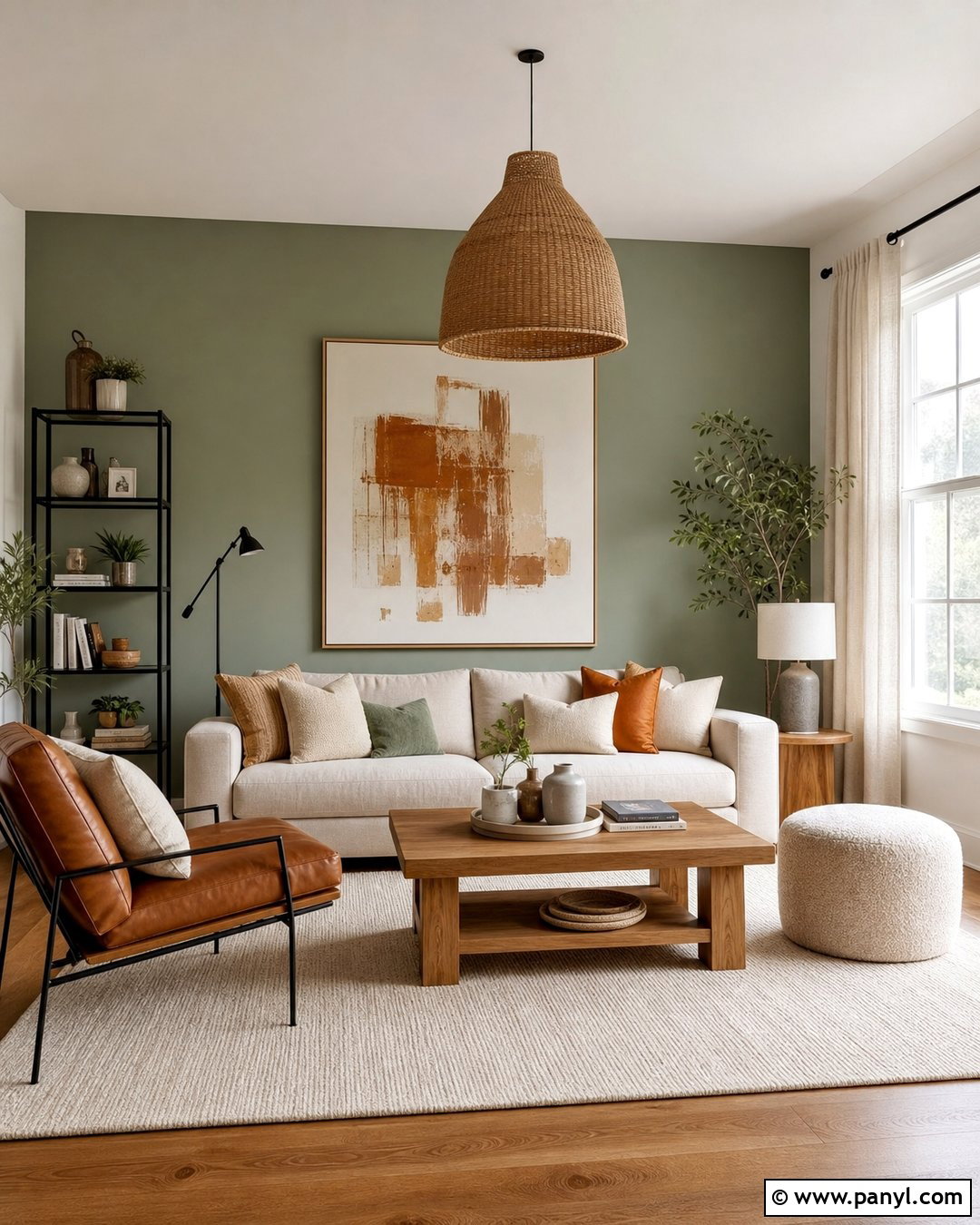
If painting an entire room feels like too much, a sage green accent wall can still establish a complete palette. Choose the wall behind a sofa or bed so the color has a clear purpose. Paint the remaining walls warm white and repeat sage through only a few textiles or artwork details. In a living room, pair the accent wall with a light beige sofa, cognac leather chair, oak tables, and an ivory rug. Hang one oversized abstract piece containing cream, rust, and deep green rather than scattering small decorations across the wall. Natural linen curtains and a woven pendant introduce softness. Add black metal details for contrast and warm bulbs for evening balance. This approach makes the sage wall look deliberate while keeping the room bright, flexible, and visually open.
15. Sage Green Paneled Walls
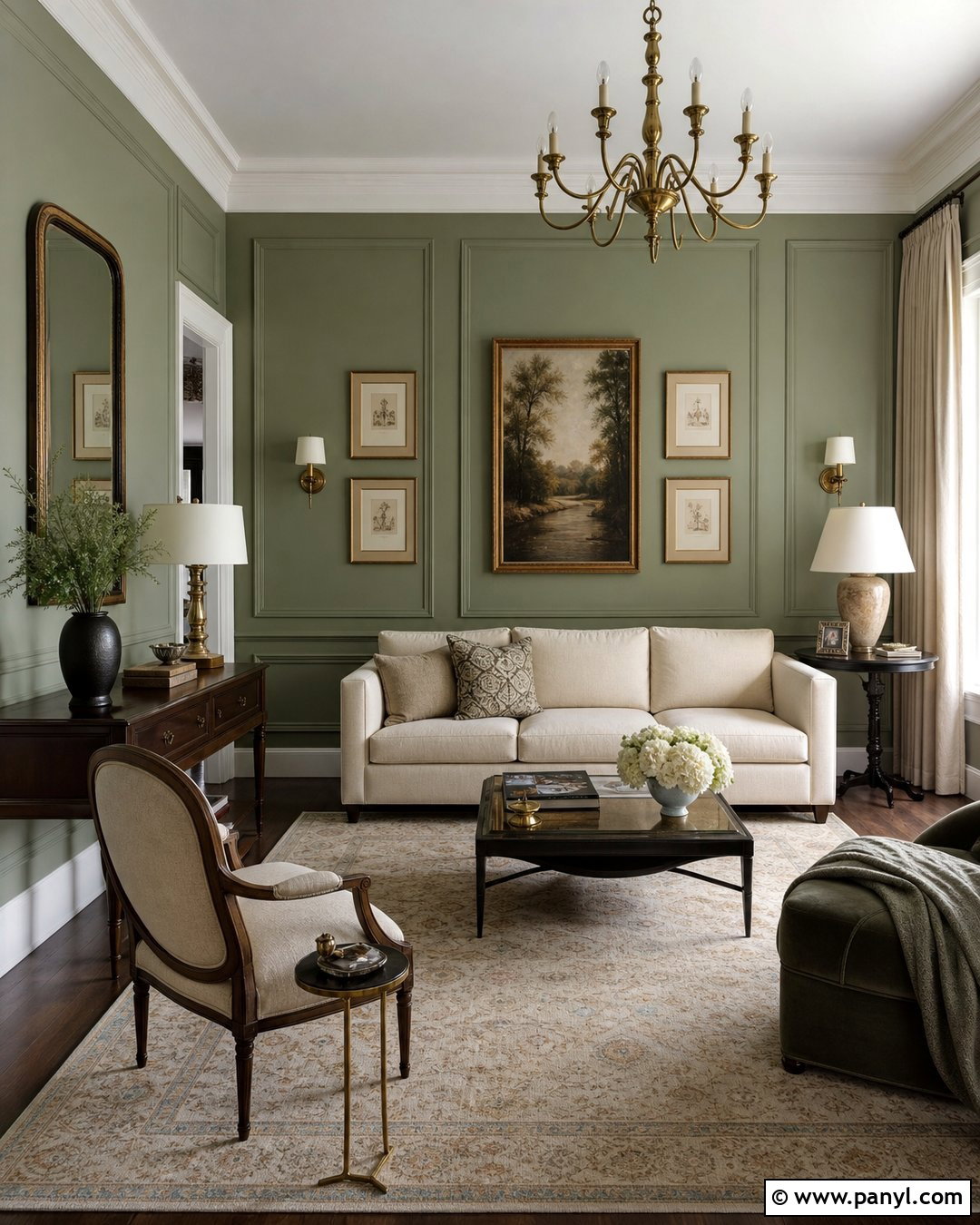
Sage green paneled walls create architectural depth even in a fairly simple room. Add square picture-frame molding or vertical paneling, then paint the walls, trim, and molding in the same muted sage for a continuous finish. Use this treatment in a dining room or formal sitting room where the shadows can be appreciated. Balance the detailed walls with a clean-lined cream sofa, a dark walnut console, and a traditional ivory rug. A large brass chandelier adds warmth and highlights the paneling without competing with it. Choose full linen drapes in a slightly lighter neutral and hang them near the ceiling. Finish with classic framed artwork, sculptural lamps, and a few dark accents. The cohesive design feels refined, but simple furniture keeps it from becoming overly formal or visually crowded.
16. Sage Green Walls With White Trim
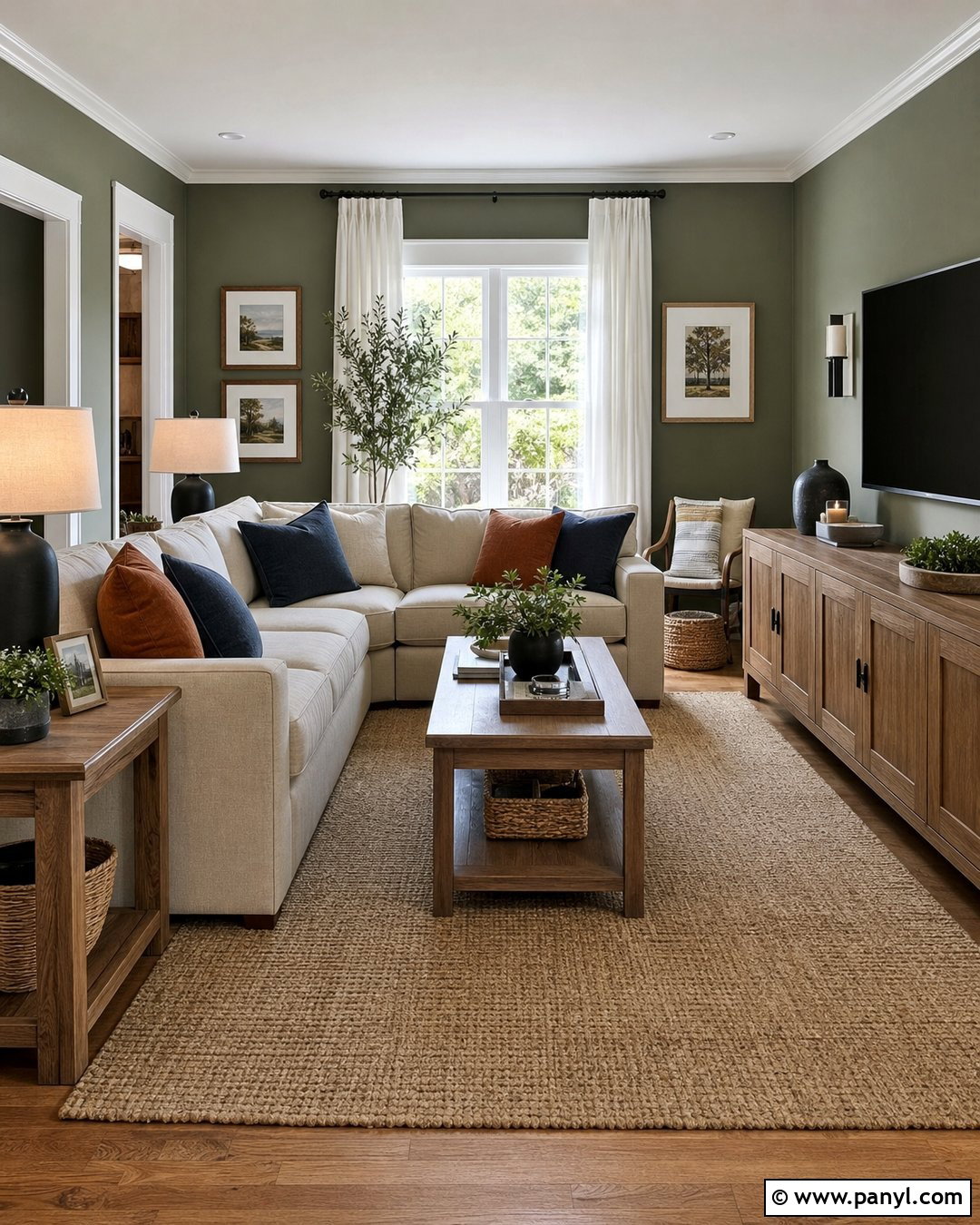
Crisp white trim gives sage green walls a fresh, defined appearance that suits both traditional and modern homes. Select a balanced sage that is dark enough to contrast with the baseboards, window casings, and doors. Use warm white rather than blue-white trim to keep the room comfortable. In a family room, combine this paint treatment with a large oatmeal sectional, a medium oak media console, and durable beige carpet or a washable rug. Navy and rust pillows can introduce stronger color in controlled amounts. Hang simple white curtains on black rods to connect the window treatment to the trim. Add woven baskets, black table lamps, and natural wood frames. This complete palette is approachable and practical, while the white architectural lines keep the green walls looking clean and intentionally finished.
17. Sage Green Walls With Wood Trim
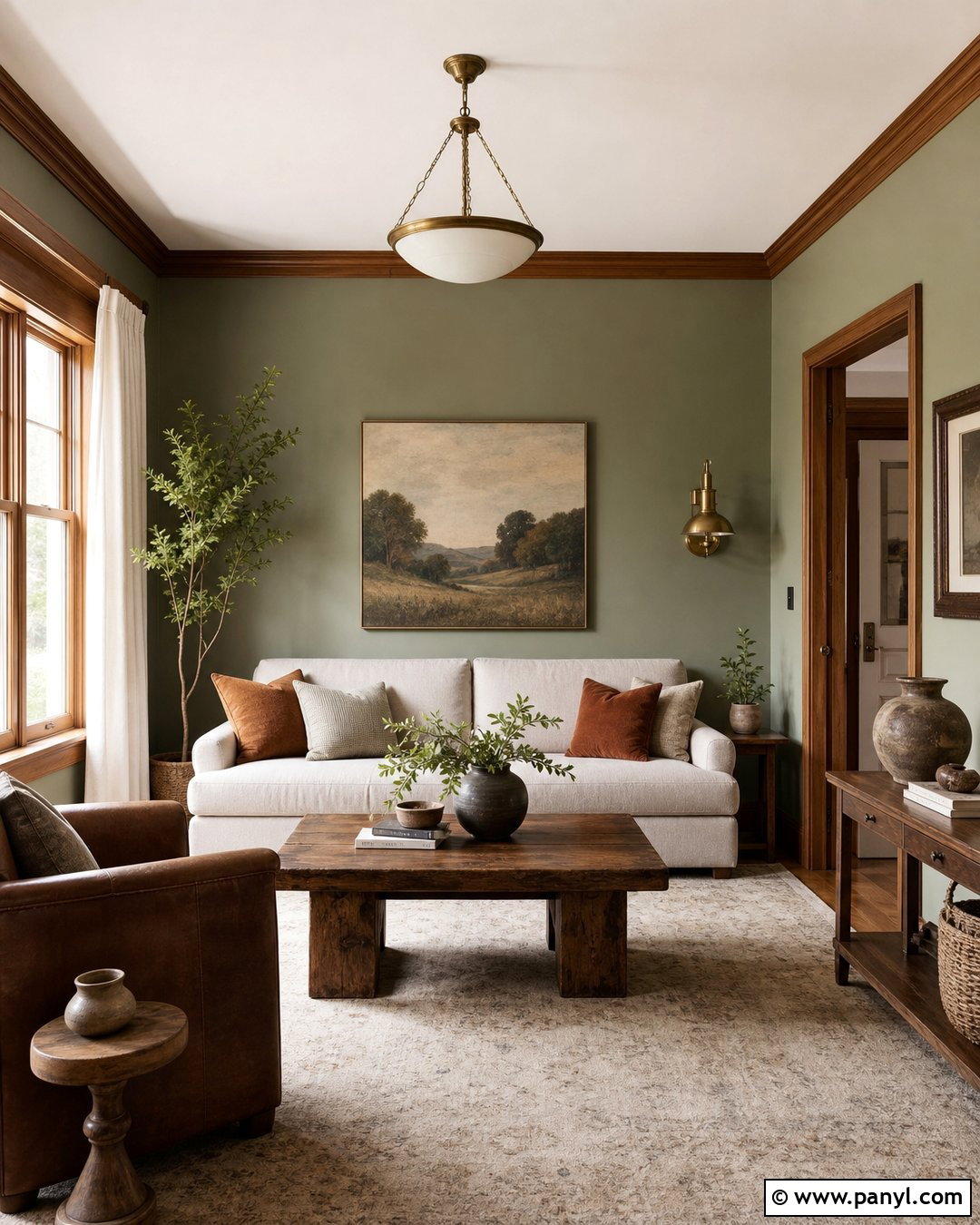
Original woodwork becomes a feature when it is surrounded by restrained sage green walls. Choose a soft sage with warm or brown undertones to complement honey oak, chestnut, or medium walnut trim. Avoid an overly blue green, which can make warm wood appear orange. Furnish the room with a cream sofa, a brown leather chair, and a solid wood coffee table that echoes the existing molding. An ivory rug with a faded green pattern unifies the floor and walls. Add antique brass lighting, linen curtains, and landscape prints in aged wood frames. Keep decorative accessories simple so the grain and craftsmanship of the trim remain visible. The finished room feels layered and welcoming, showing that natural wood does not need to be painted white to work with a softer contemporary palette.
18. Sage Green Walls With Black Accents
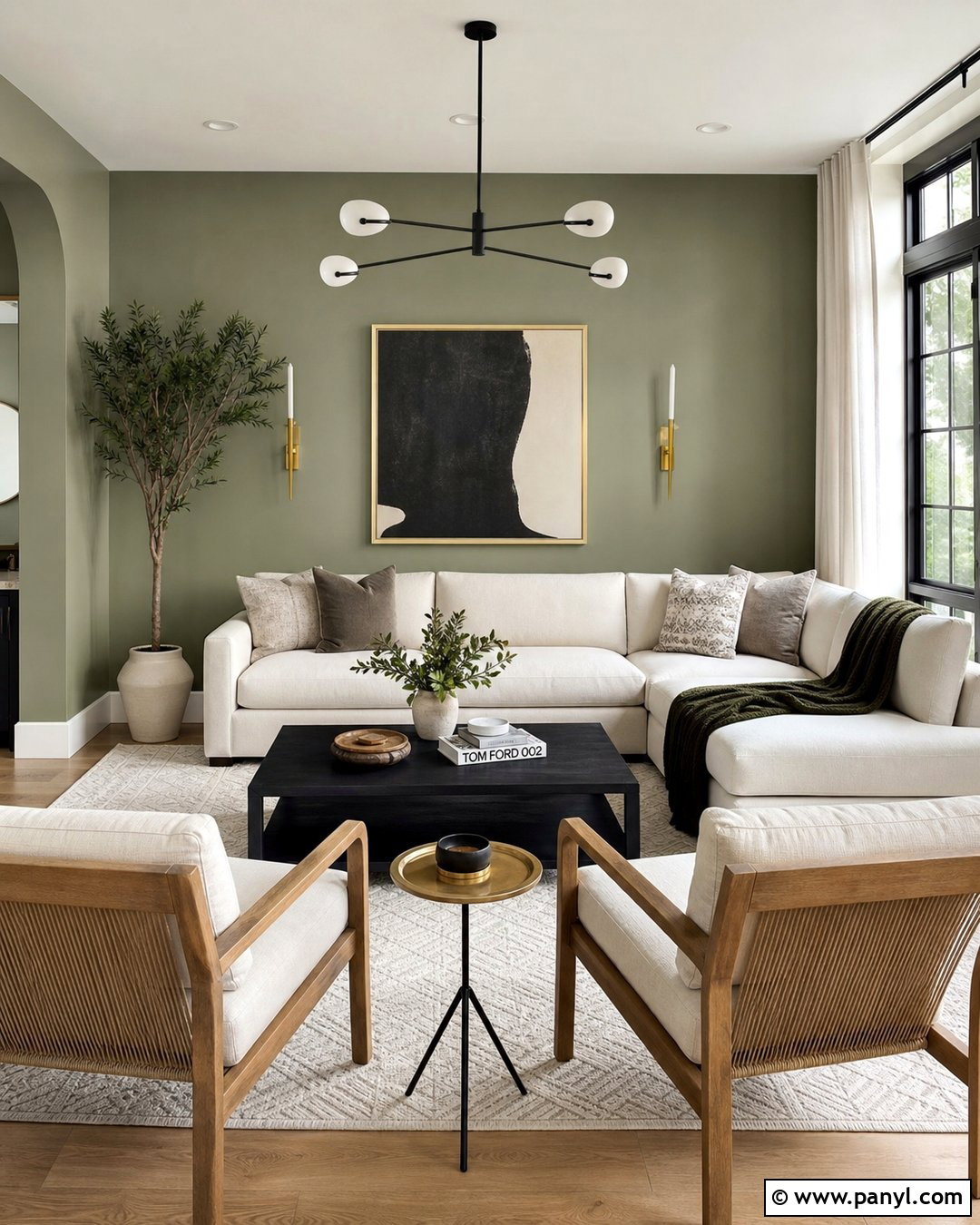
For a cleaner, more contemporary room, frame sage green walls with controlled matte black details. Paint the walls in a muted gray-sage and retain a white ceiling to preserve brightness. Use black-framed windows if available, or introduce the color through curtain rods, sconces, side tables, and artwork frames. A streamlined ivory sofa and two light oak chairs keep the contrast from becoming severe. Ground the arrangement with a pale geometric rug and a black rectangular coffee table. Add cream curtains, textured neutral pillows, and one deeper green throw for softness. Warm wood and brushed brass can appear in small amounts to prevent the palette from feeling flat. This complete combination works especially well in open living spaces where clear lines and repeated finishes help different functional zones feel connected.
19. Sage Green Walls With Pink Decor
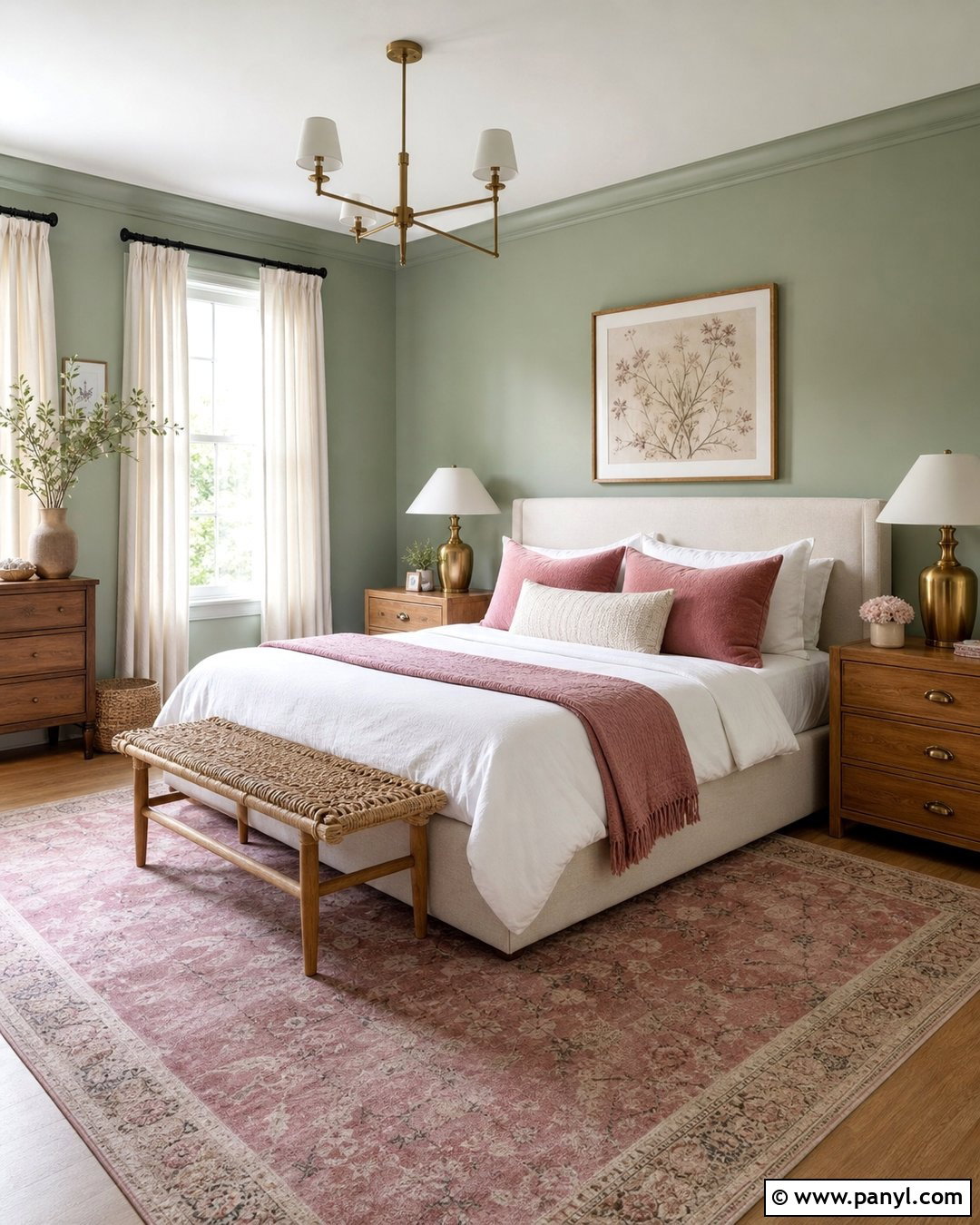
Sage green and dusty pink create a soft combination when both colors remain muted and balanced by neutrals. Start with warm sage green walls, then furnish the room with a cream sofa or an oatmeal upholstered bed. Introduce pink through a faded rose rug, two velvet pillows, and artwork containing blush, brown, and green. Avoid covering every surface in pink, since restrained repetition feels more grown-up. Natural oak furniture and woven textures make the palette earthy rather than overly sweet. Use aged brass lamps to reinforce the warm undertones, and choose ivory curtains for a light window treatment. A few terracotta accessories can bridge the green and pink naturally. The finished room feels warm, calm, and layered, making this palette suitable for bedrooms, sitting rooms, or welcoming guest spaces.
20. Sage Green Walls With Blue Decor
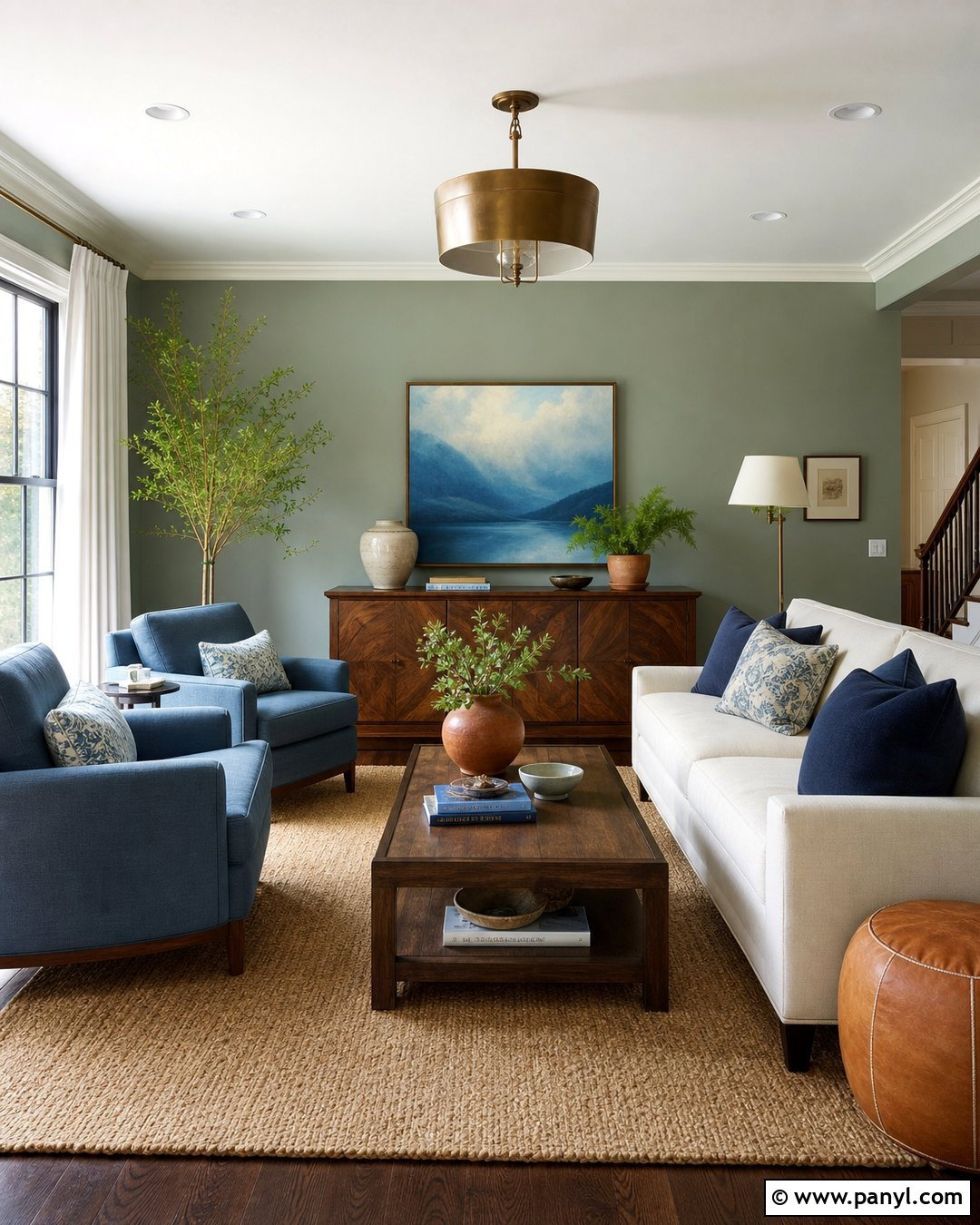
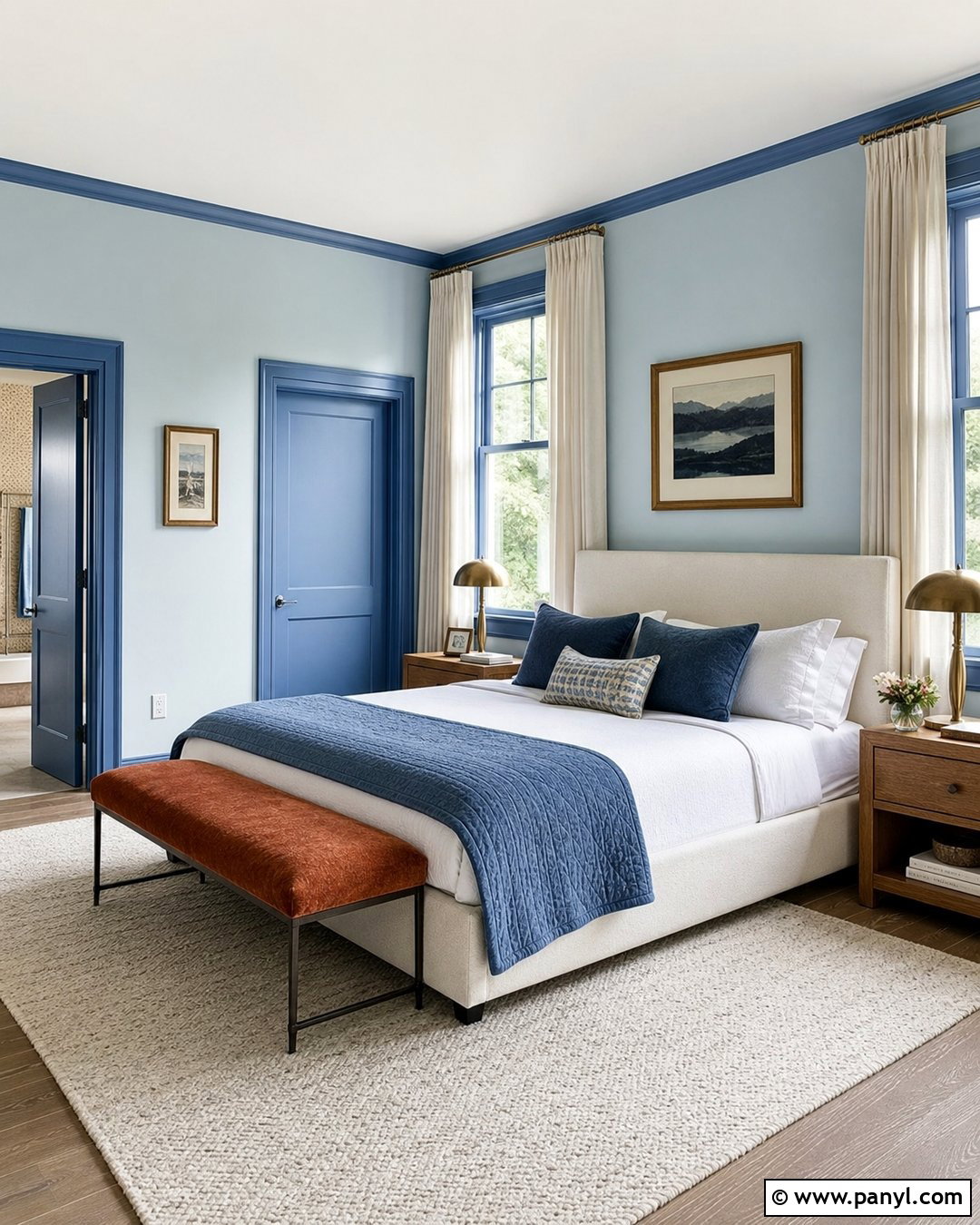
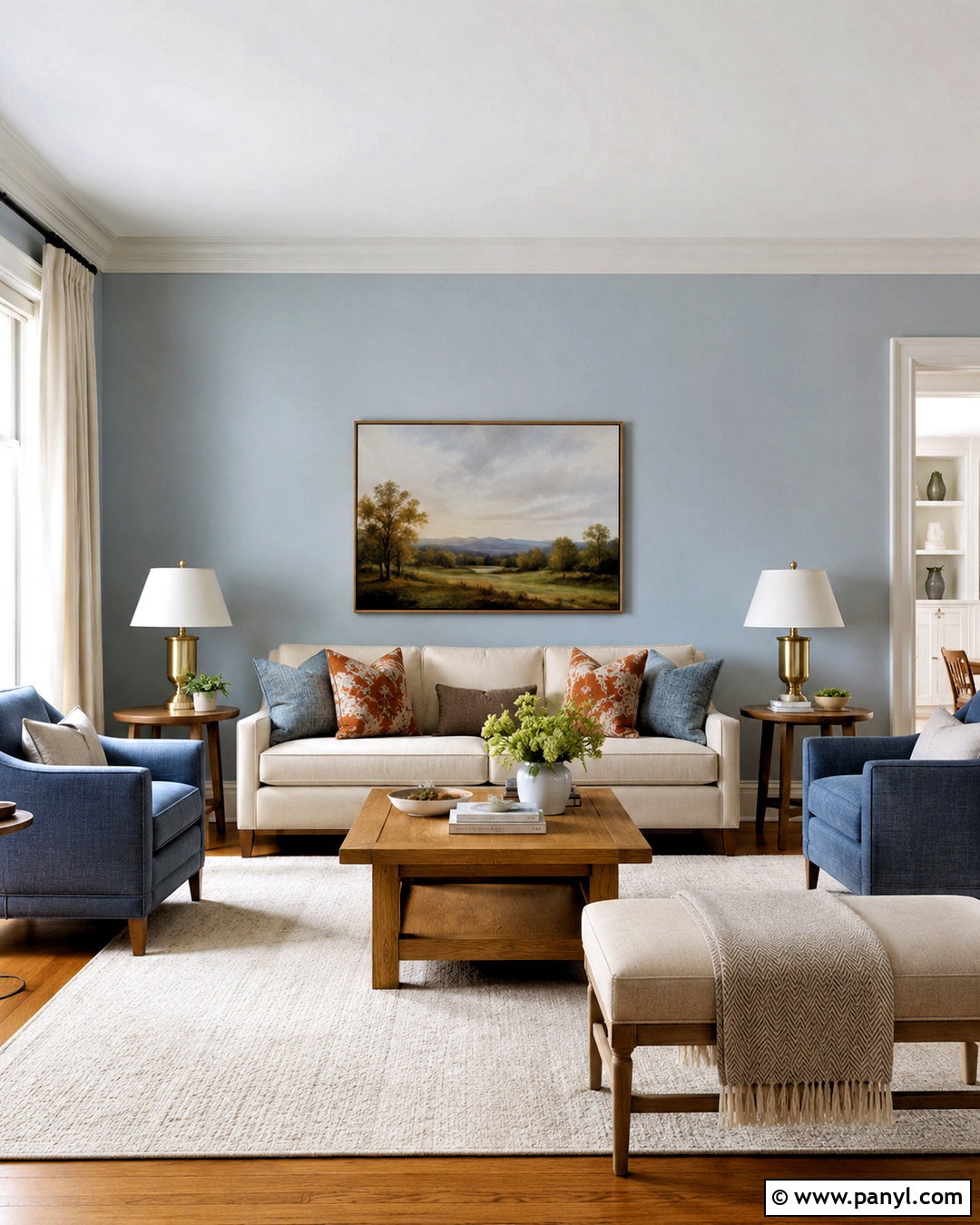
Cooler sage green walls pair naturally with dusty blue when warmer materials are included to keep the room balanced. Choose a gray-sage wall color and add a denim blue sofa or a pair of muted blue armchairs. Bring in walnut tables, tan leather details, and a woven jute-blend rug to offset the cool hues. White curtains and trim keep the edges crisp, while antique brass lighting adds a gentle glow. Select artwork that combines blue, green, cream, and earthy brown so the palette looks intentional. Textured pillows in oatmeal and deep navy provide definition without creating a nautical theme. Complete the room with ceramic lamps and a few plants in terracotta pots. This layered design feels relaxed and sophisticated, with enough warmth to remain comfortable in both daylight and evening light.
21. Sage Green Walls With Brown Furniture
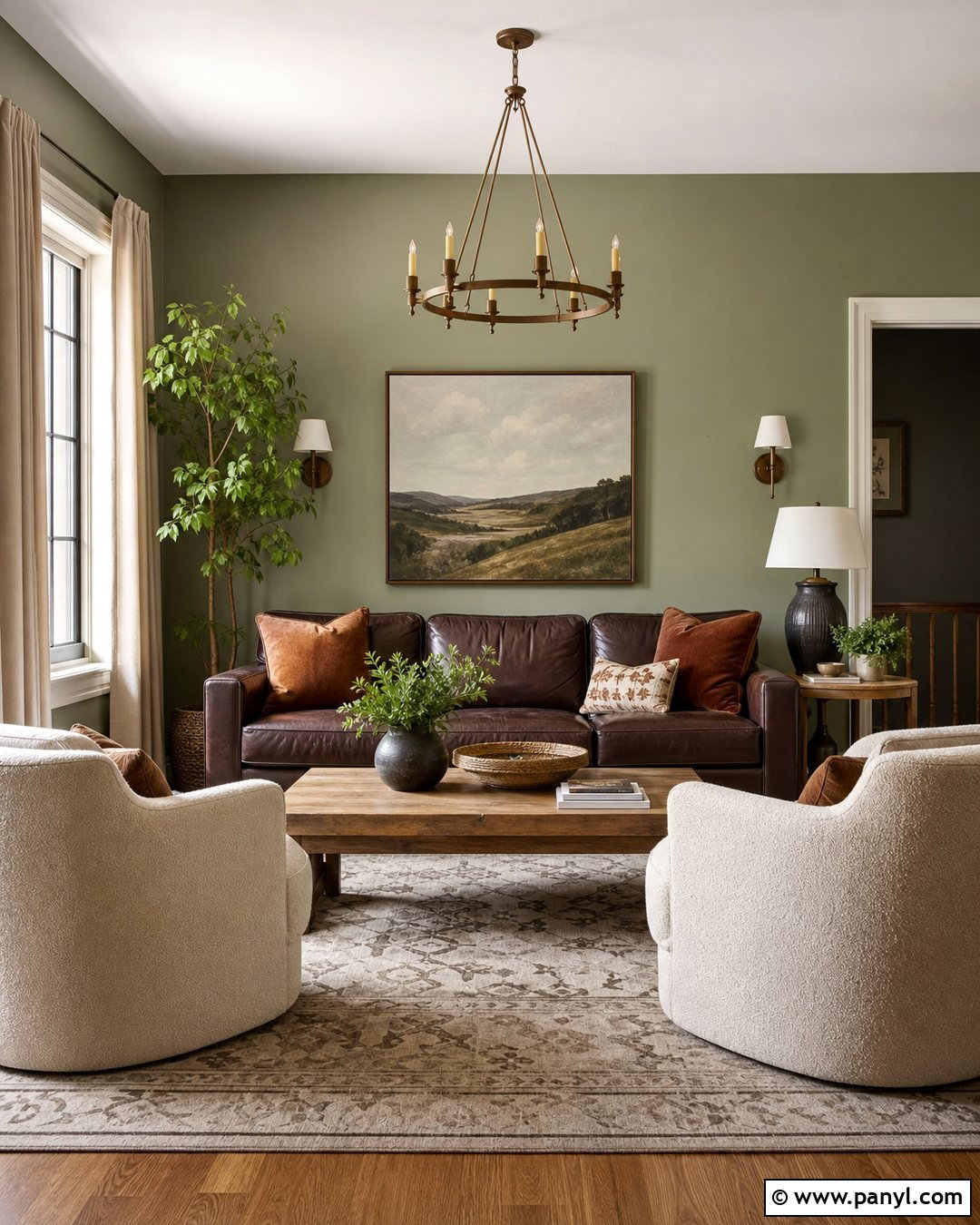
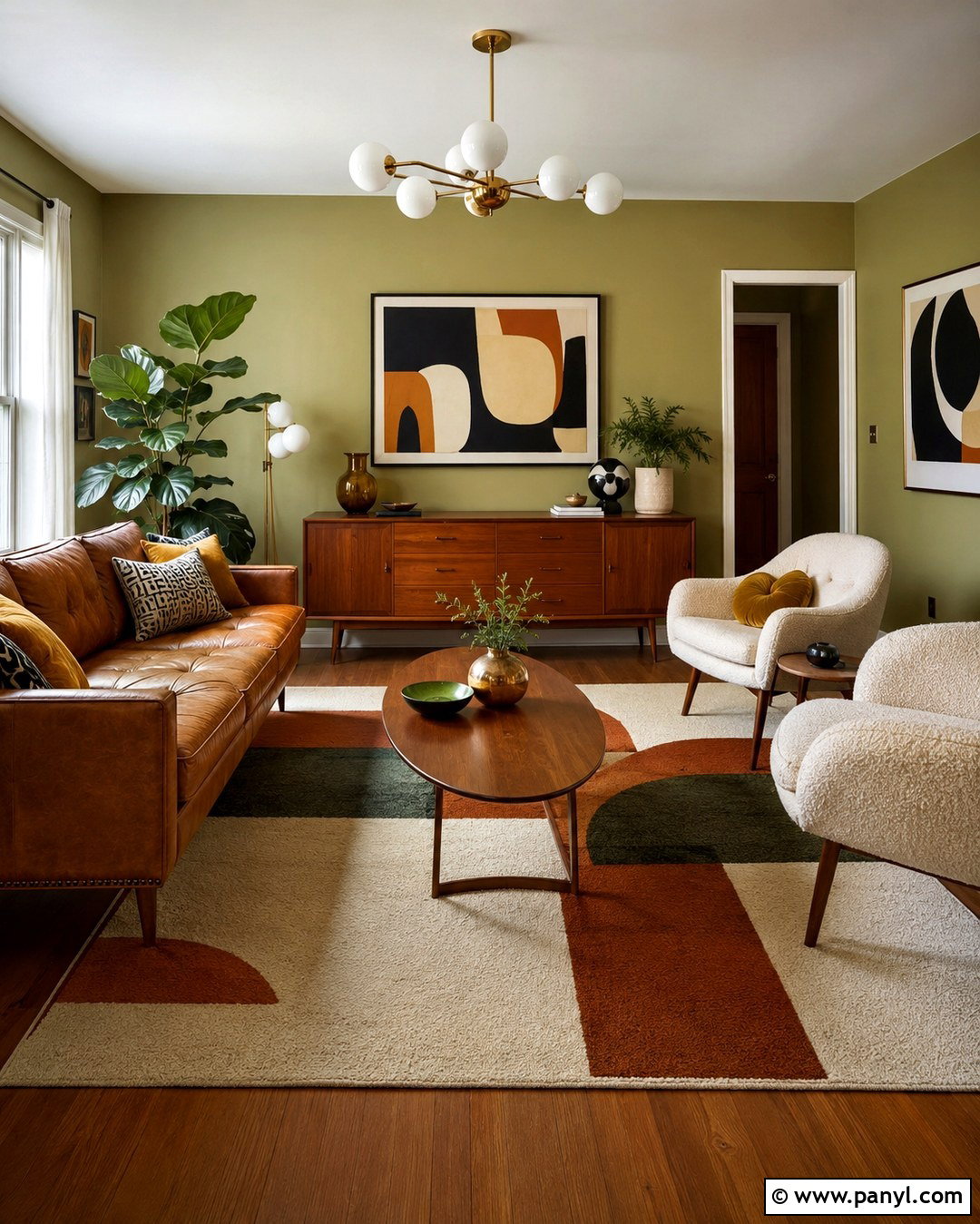
Rich brown furniture gives sage green walls depth and creates a comfortable, grounded room. Use a light or medium sage so the furniture remains distinct rather than blending into a dark background. Center the space around a chocolate brown leather sofa, then add cream boucle chairs and an oak coffee table to vary the textures. An ivory rug with a subtle brown pattern brightens the floor. Dress the windows with flax linen curtains and use bronze or antique brass lighting instead of shiny silver. Framed landscape artwork, rust-colored pillows, and handmade pottery continue the earth-tone palette. Keep the ceiling and trim warm white to prevent the space from feeling heavy. This complete look is especially effective in family rooms because leather, wood, and muted wall paint are attractive yet practical for daily life.
22. Sage Green Color Drenched Room
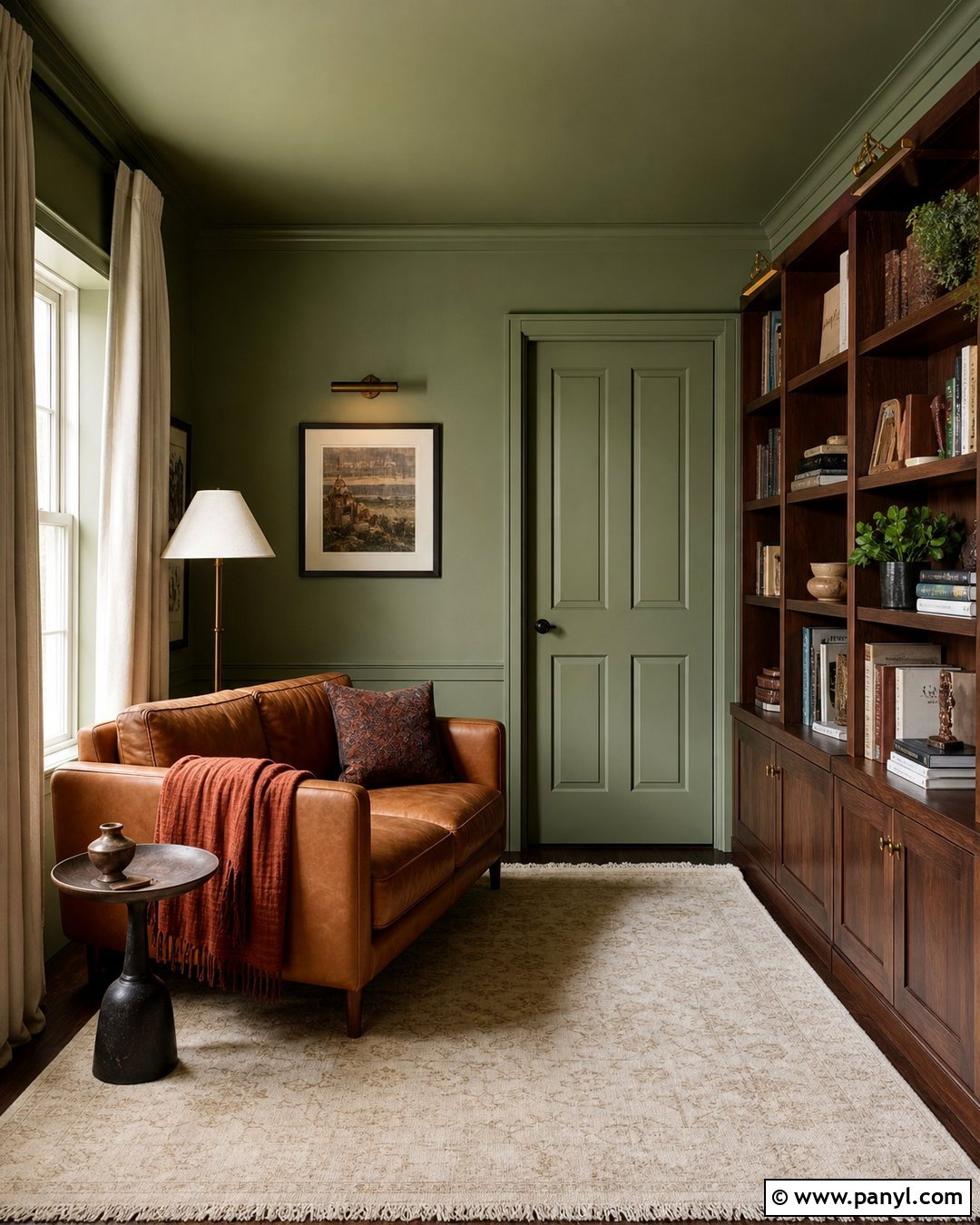
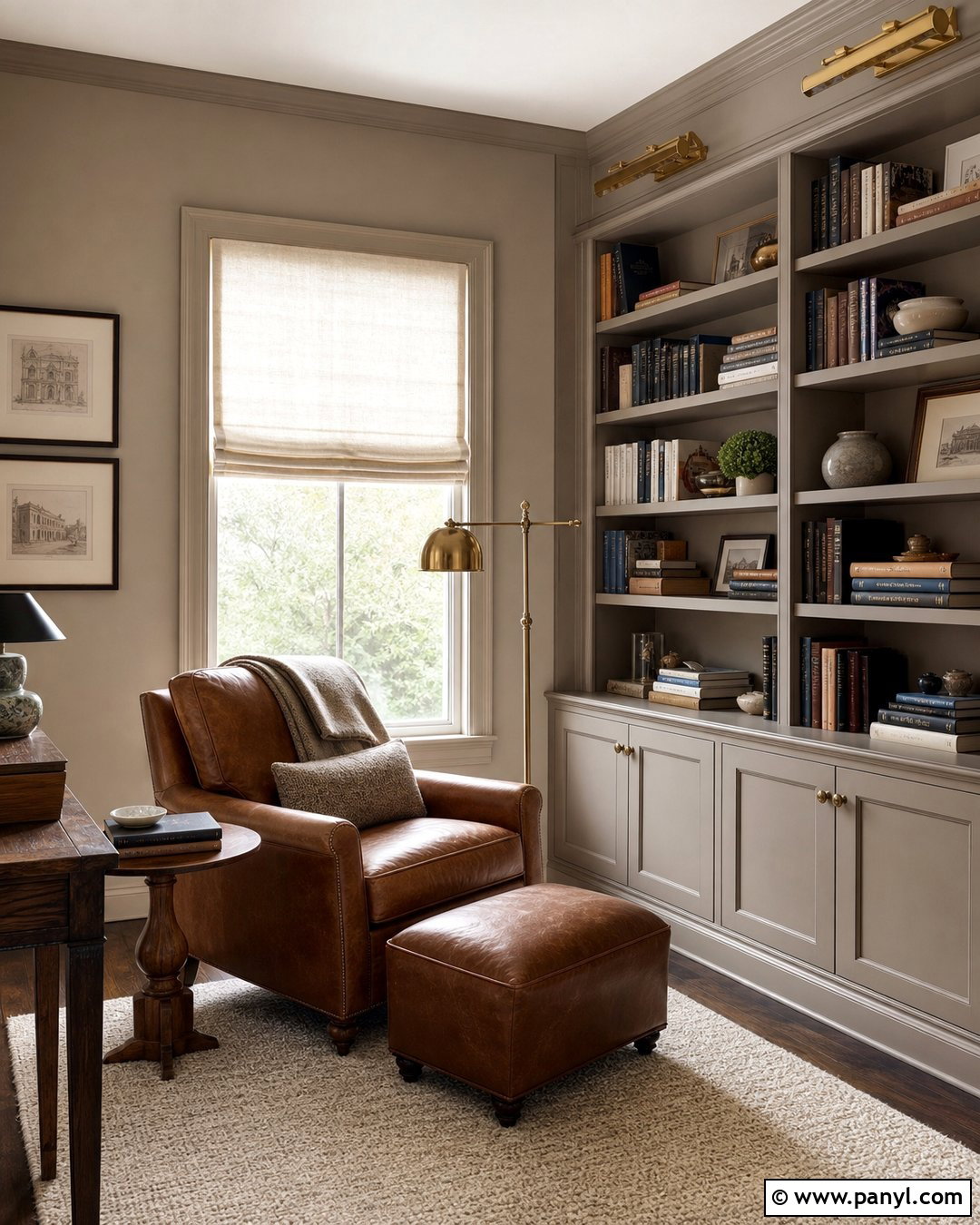
Color drenching creates a more enveloping effect by carrying sage across the walls, trim, doors, and ceiling. Select a light to midtone sage so the room remains livable, especially if windows are limited. Use different finishes for subtle dimension: eggshell on walls, flat on the ceiling, and satin on trim and doors. In a reading room, add a camel leather loveseat, a walnut bookcase, and a large cream rug to break up the green. Aged brass picture lights and a linen floor lamp provide warm illumination. Keep upholstery and curtains neutral, then add small burgundy or rust accents for depth. The result feels cohesive rather than busy because architectural lines visually recede. Sampling is important here, since the color will appear stronger when it covers every surrounding surface.
23. Dark Sage Green Walls
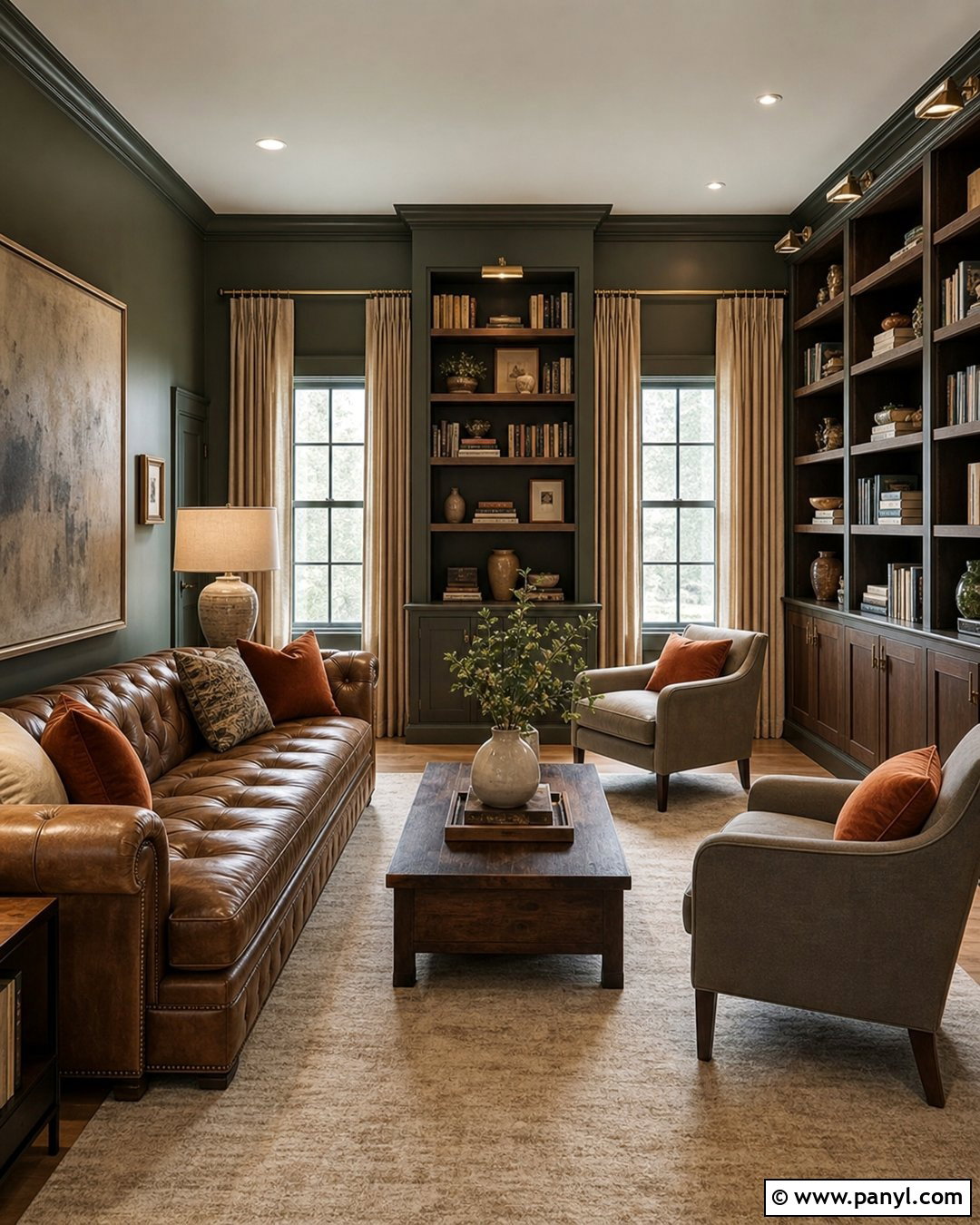
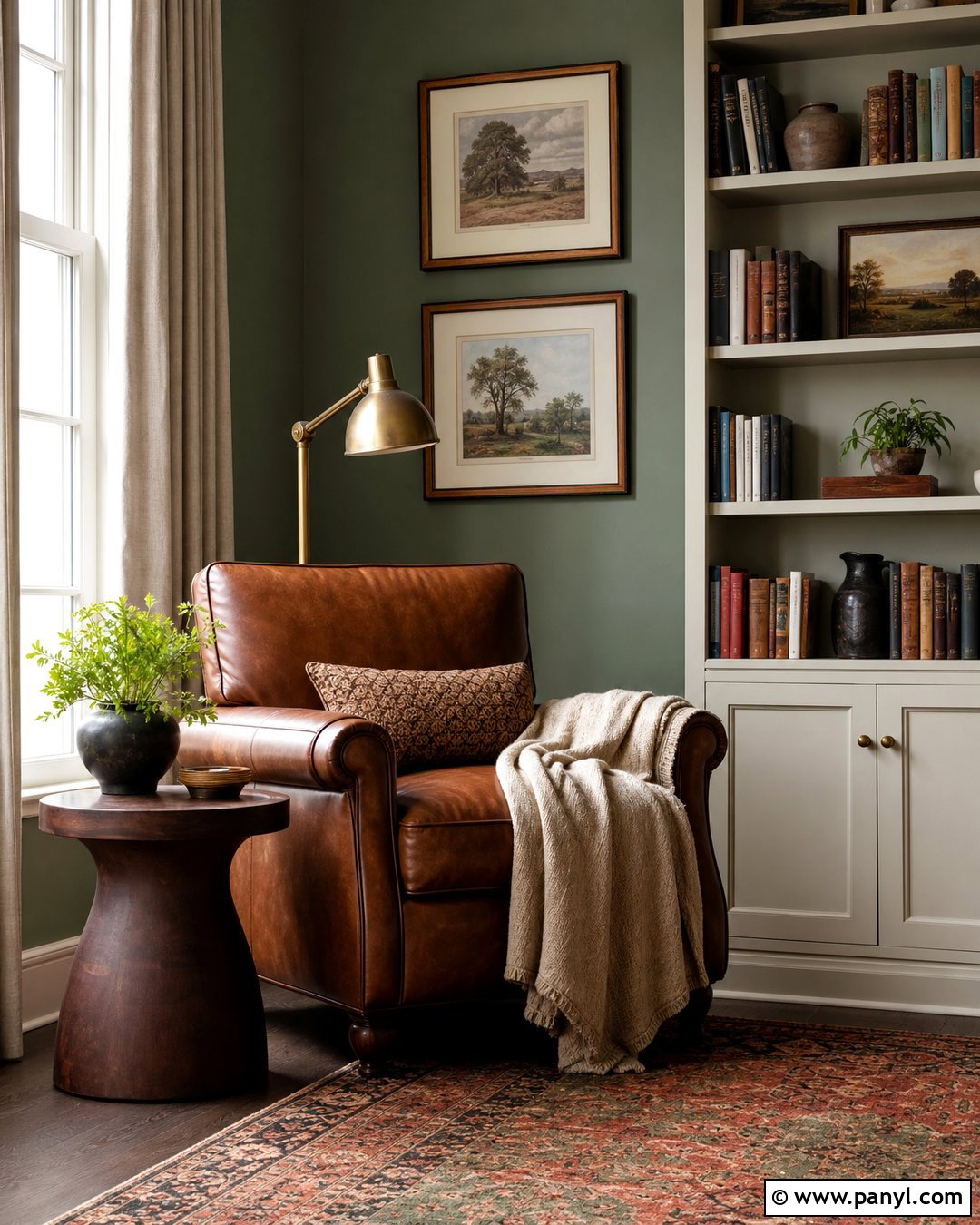
Dark sage green walls can make a bright room feel intimate while remaining softer than charcoal or navy. Choose a deep, muddy sage for a library, den, or formal sitting room with generous natural light. Pair it with a camel leather sofa, walnut shelving, and an ivory wool rug to prevent the palette from becoming gloomy. Paint the trim in the same green for a seamless look, or use creamy white for stronger definition. Add brass library lights, warm table lamps, and a large pale artwork that stands out against the walls. Curtains in oatmeal linen soften the windows without introducing another strong hue. Complete the room with rust-colored pillows and ceramic accessories. The finished space feels rich and comfortable, while natural textures keep the darker paint connected to an approachable residential setting.
24. Light Sage Green Walls
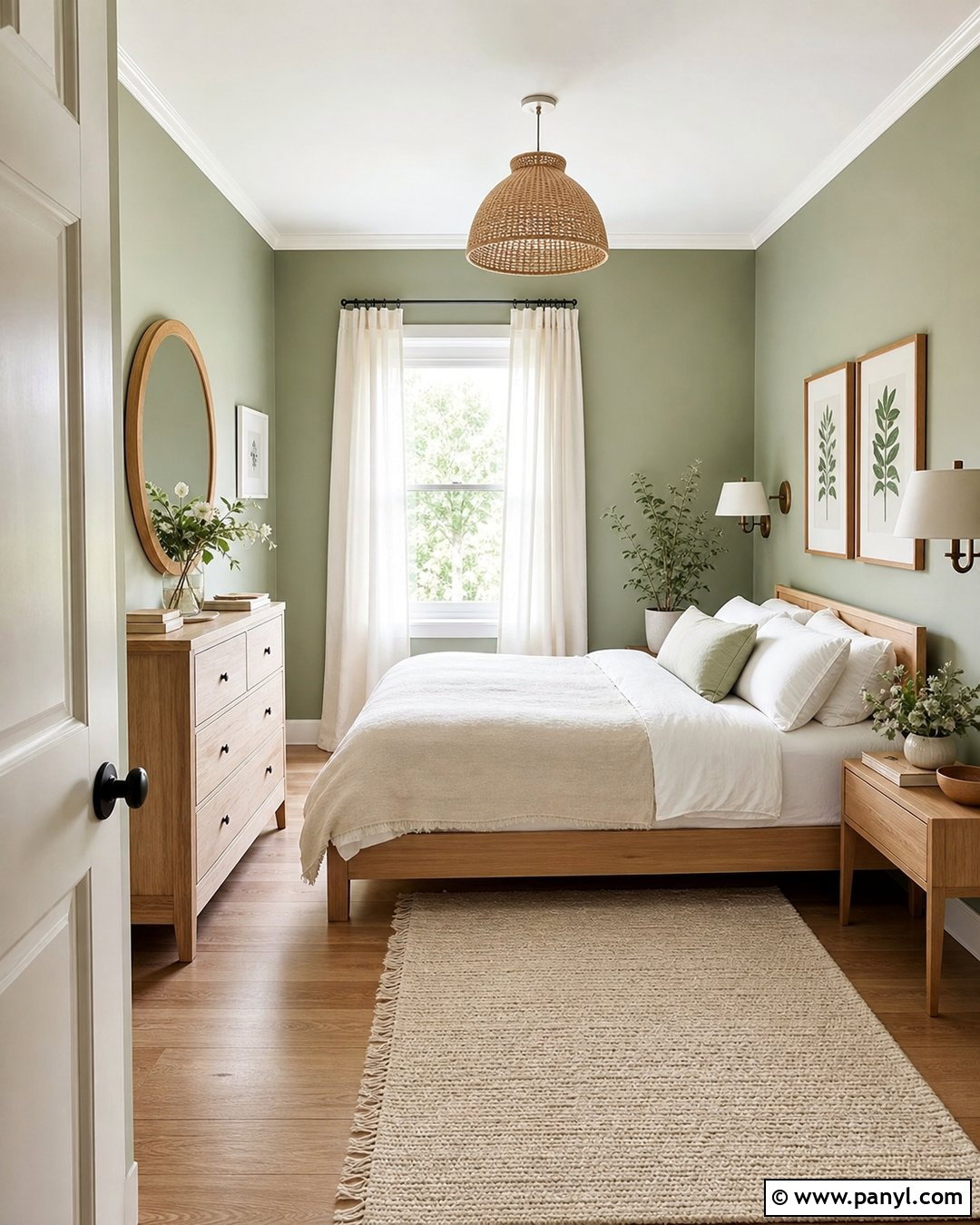
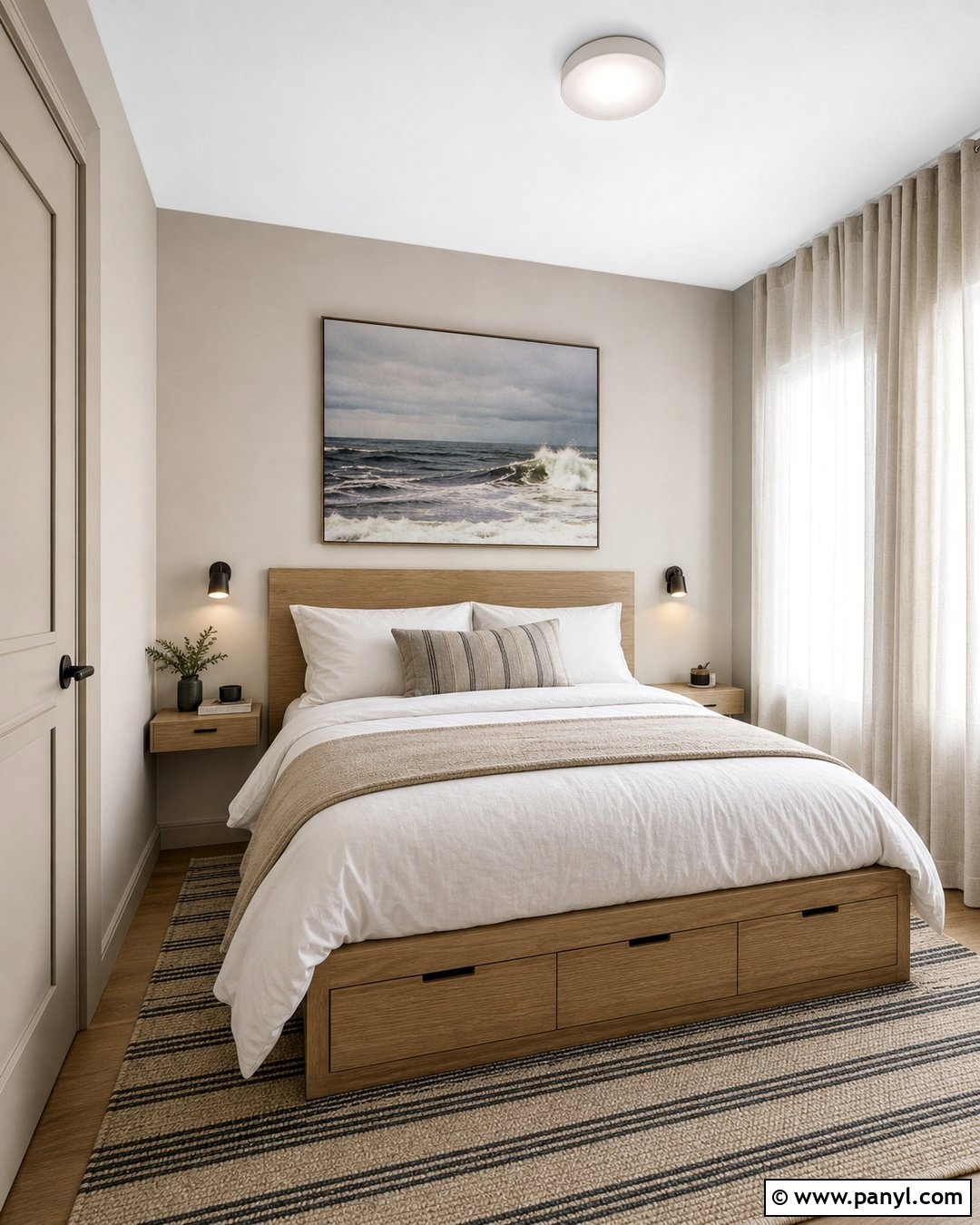
Light sage green walls are useful in smaller rooms because they provide noticeable color without absorbing too much light. Choose a pale, warm sage that retains a green appearance beside white paper and existing flooring. Pair it with a white ceiling, cream trim, and light oak furniture for an airy foundation. In a compact bedroom, use a simple wood bed, white cotton bedding, and a quilt with soft tan and green details. A narrow dresser, wall-mounted sconces, and a round mirror save valuable floor space. Keep window treatments light with ivory linen curtains or woven shades. Add a small cream rug and two botanical prints for gentle pattern. The entire room should remain edited and functional. This approach gives a modest space personality while maintaining the open feeling usually associated with neutral paint.
25. Sage Green Walls With Warm Neutrals
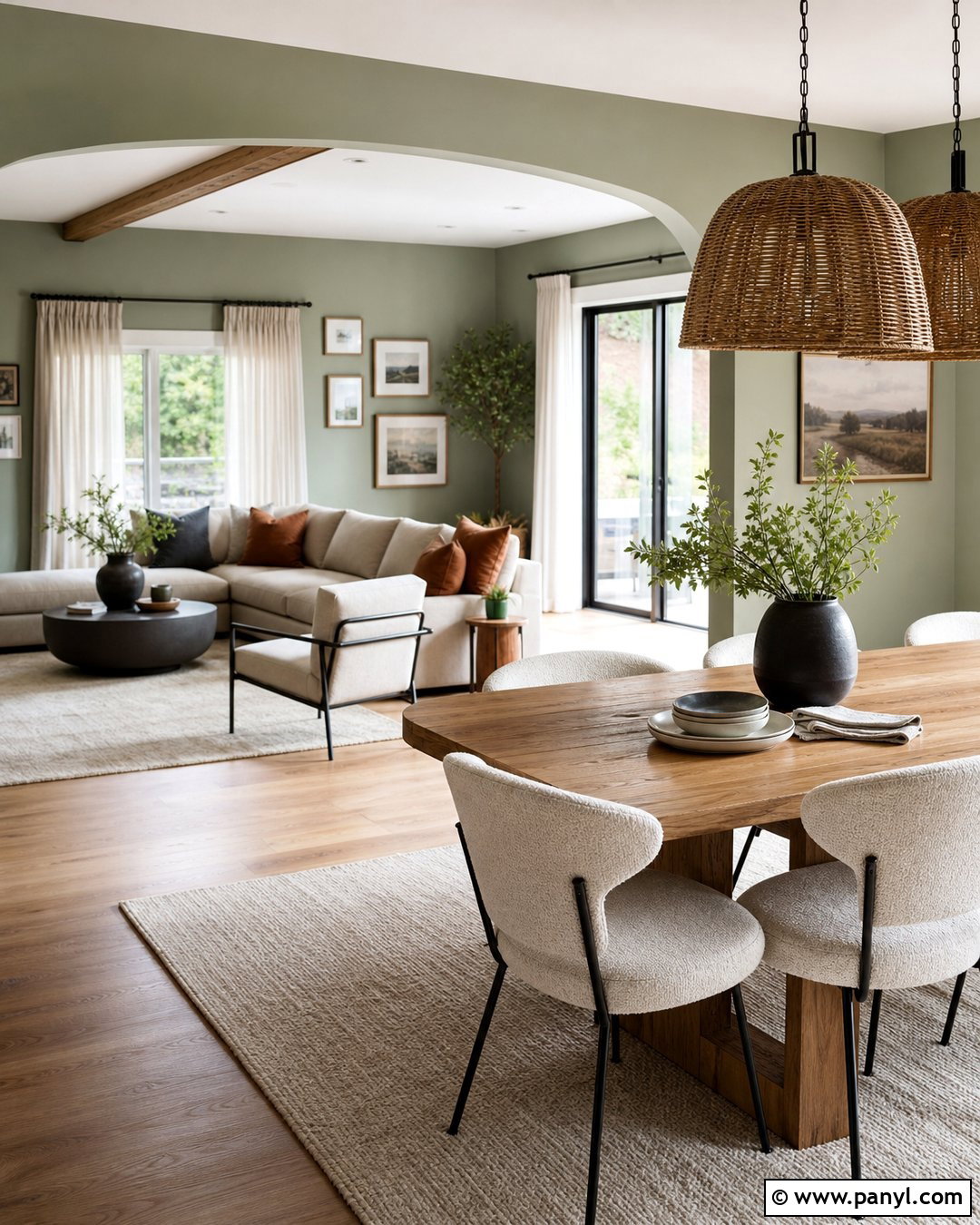
Warm neutrals bring out the earthy side of sage and create a palette that works throughout an open-plan home. Paint connected walls in a balanced, medium-light sage, then repeat cream, camel, tan, and natural oak across the furniture. A large beige sectional can define the living zone, while an oak dining table establishes the nearby eating area. Use coordinating ivory rugs to connect both spaces without making them identical. Linen curtains, woven pendant lights, and handmade ceramic decor add relaxed texture. Introduce charcoal only in small details such as frames or table legs. A few terracotta pillows provide warmth and prevent the green-beige scheme from looking washed out. The finished interior feels cohesive from multiple viewpoints, making sage an effective bridge between everyday furniture, natural materials, and changing seasonal accessories.
Conclusion:
The best sage green interior is built from more than a beautiful paint color. Lighting, undertones, furniture, flooring, trim, and textiles all influence how the finished walls appear. Pale sage can brighten compact spaces, while deeper versions create comfortable dining rooms, libraries, and dens. Warm woods, cream fabrics, brown leather, aged brass, and restrained black accents are dependable companions. Before committing, paint large sample areas and view them during morning, afternoon, and evening light. Also test the finish you plan to use, especially in kitchens and bathrooms. Whether you prefer one accent wall or a fully color-drenched room, these 25 Sage Green Painted Walls offer complete, practical looks that can be adapted to different homes, budgets, and decorating preferences.

Related Ideas and Inspiration:
Leave a Reply