
Dusty blue sits between soft blue and muted gray, giving rooms a calm sense of color without the intensity of brighter blues. Its subtle undertones can shift with daylight, surrounding finishes, and artificial lighting, so it may appear airy, smoky, green-blue, or slightly violet from one space to another. That flexibility makes 20 dusty blue paint color ideas useful for bedrooms, kitchens, bathrooms, living areas, and even home exteriors. Dusty blue also coordinates easily with warm white, natural wood, aged brass, terracotta, blush, and deeper blue accents. Always test large samples on several walls before committing, especially in rooms with limited sunlight. () The complete room schemes below offer practical ways to recreate 20 dusty blue paint color ideas.

1. Light Dusty Blue Living Room
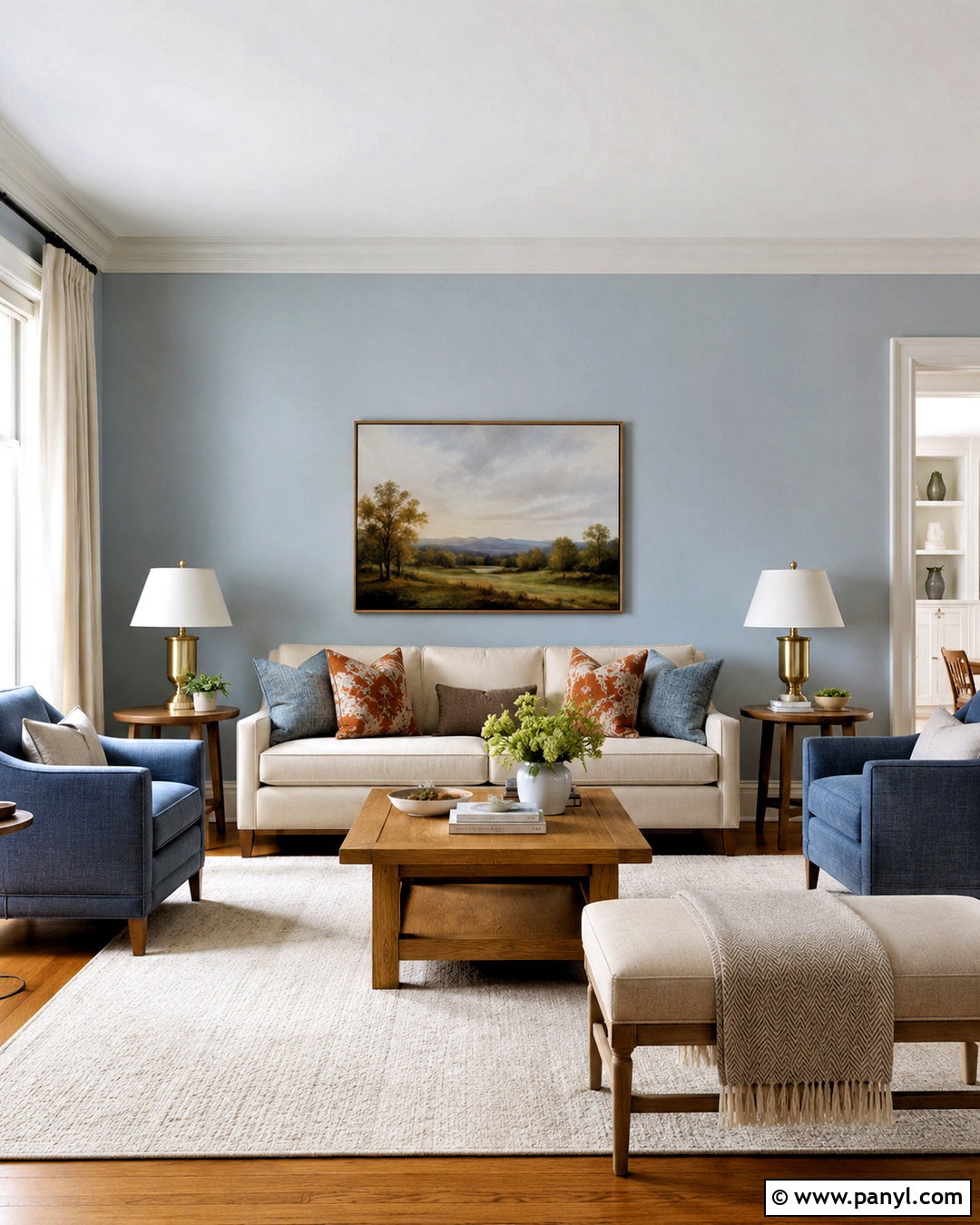
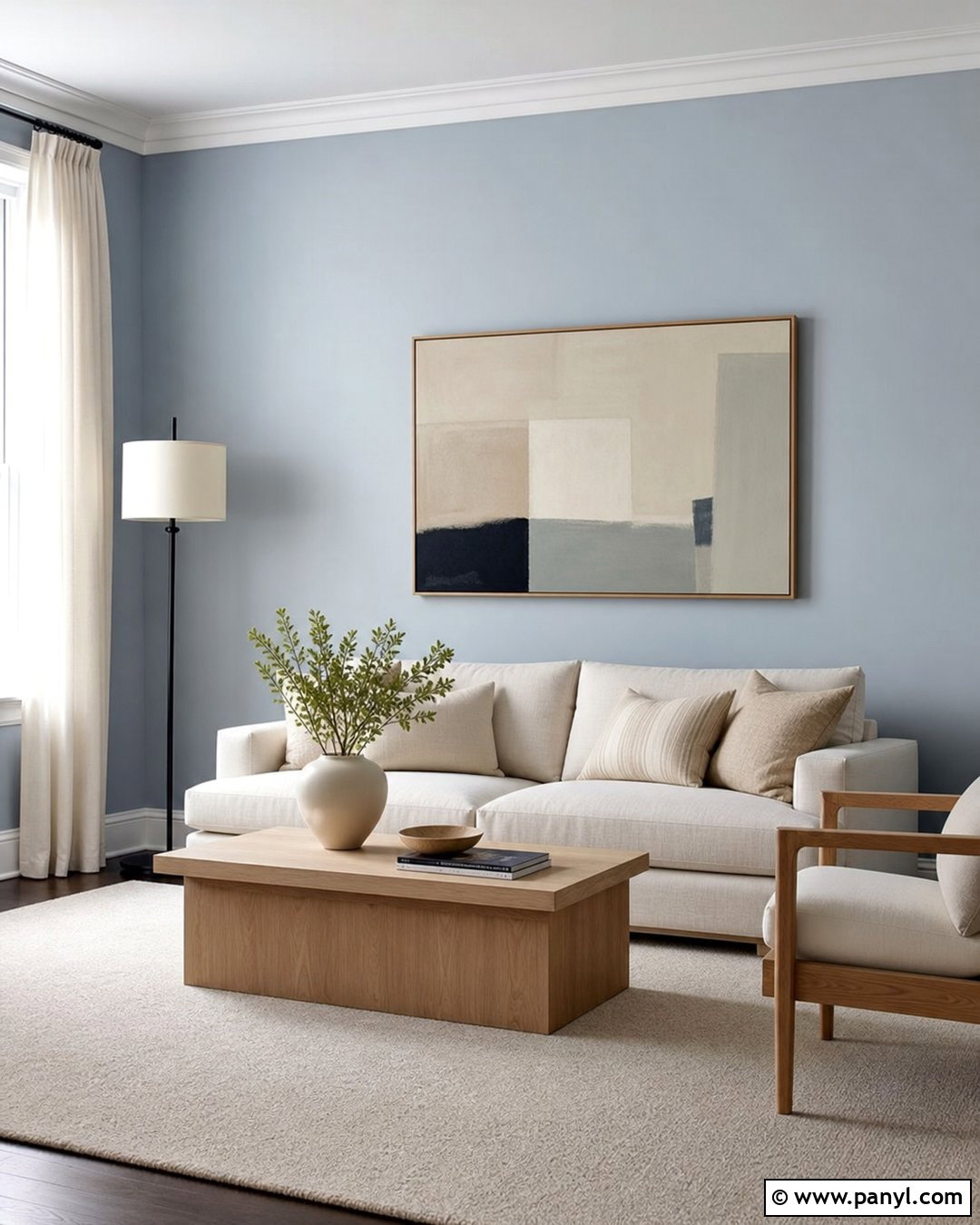
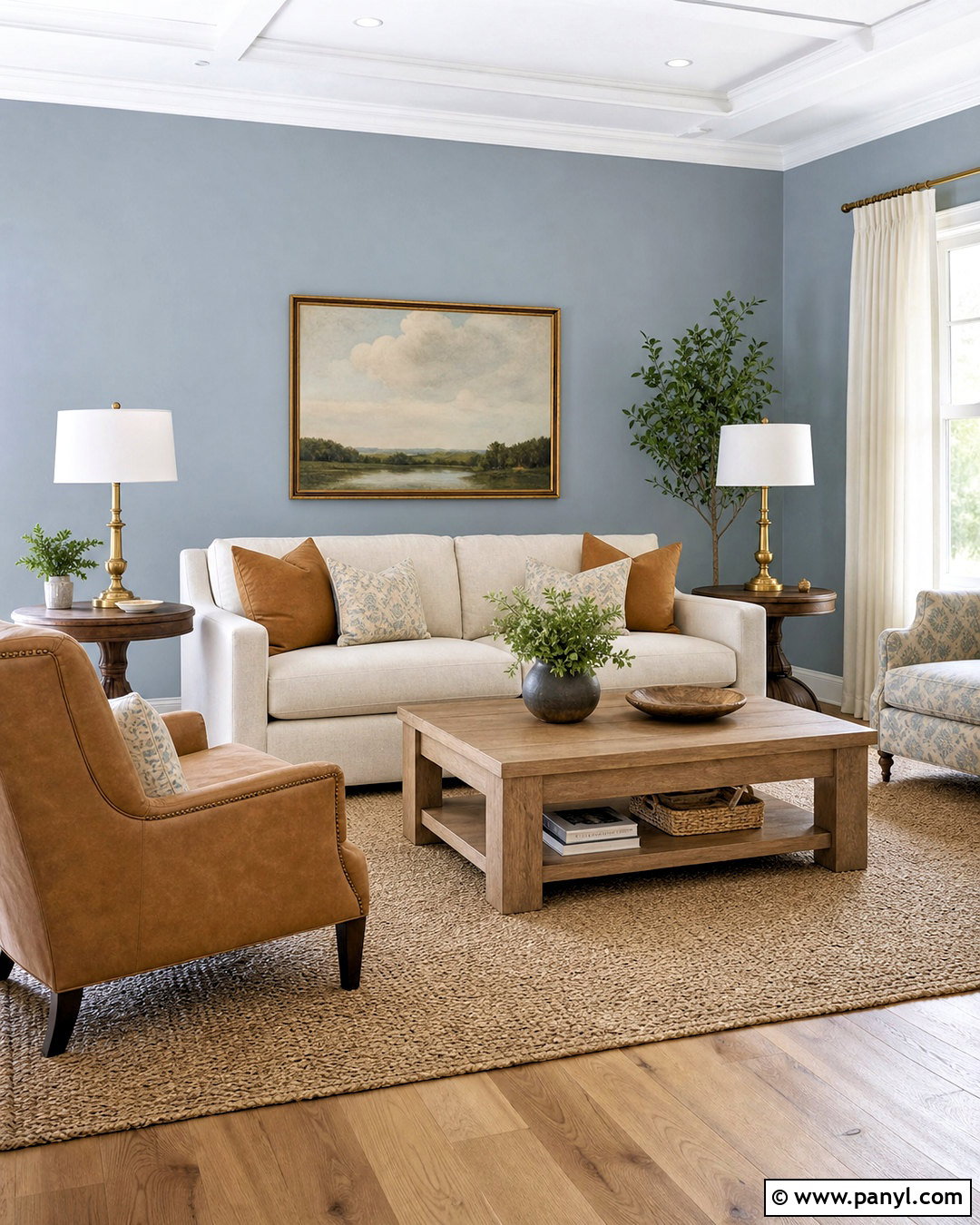
A light dusty blue creates a living room that feels fresh, relaxed, and more distinctive than standard gray. Paint every wall in a pale blue-gray with a softly muted finish, then use warm white on the ceiling, trim, and fireplace surround. Choose a comfortable oatmeal sofa, two medium-blue armchairs, and a natural oak coffee table to balance the cooler wall color. A cream wool rug keeps the floor light, while faded blue and rust pillows introduce gentle contrast. Add linen curtains, ceramic table lamps, and simple landscape artwork in weathered wood frames. Brushed brass accents provide warmth without making the room feel formal. This complete palette works especially well in a casual transitional home with plenty of daylight.
2. Dusty Blue And Warm White Bedroom
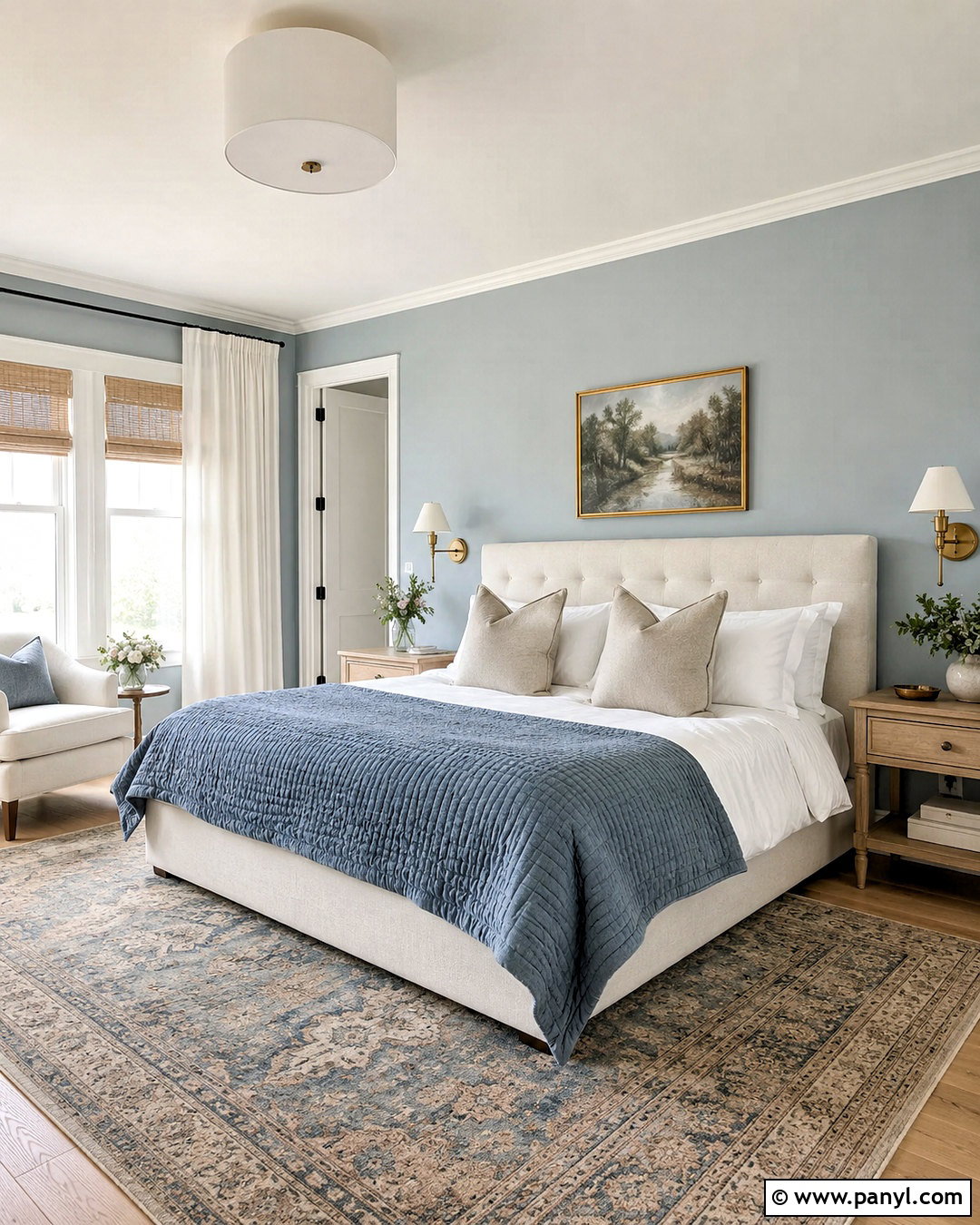
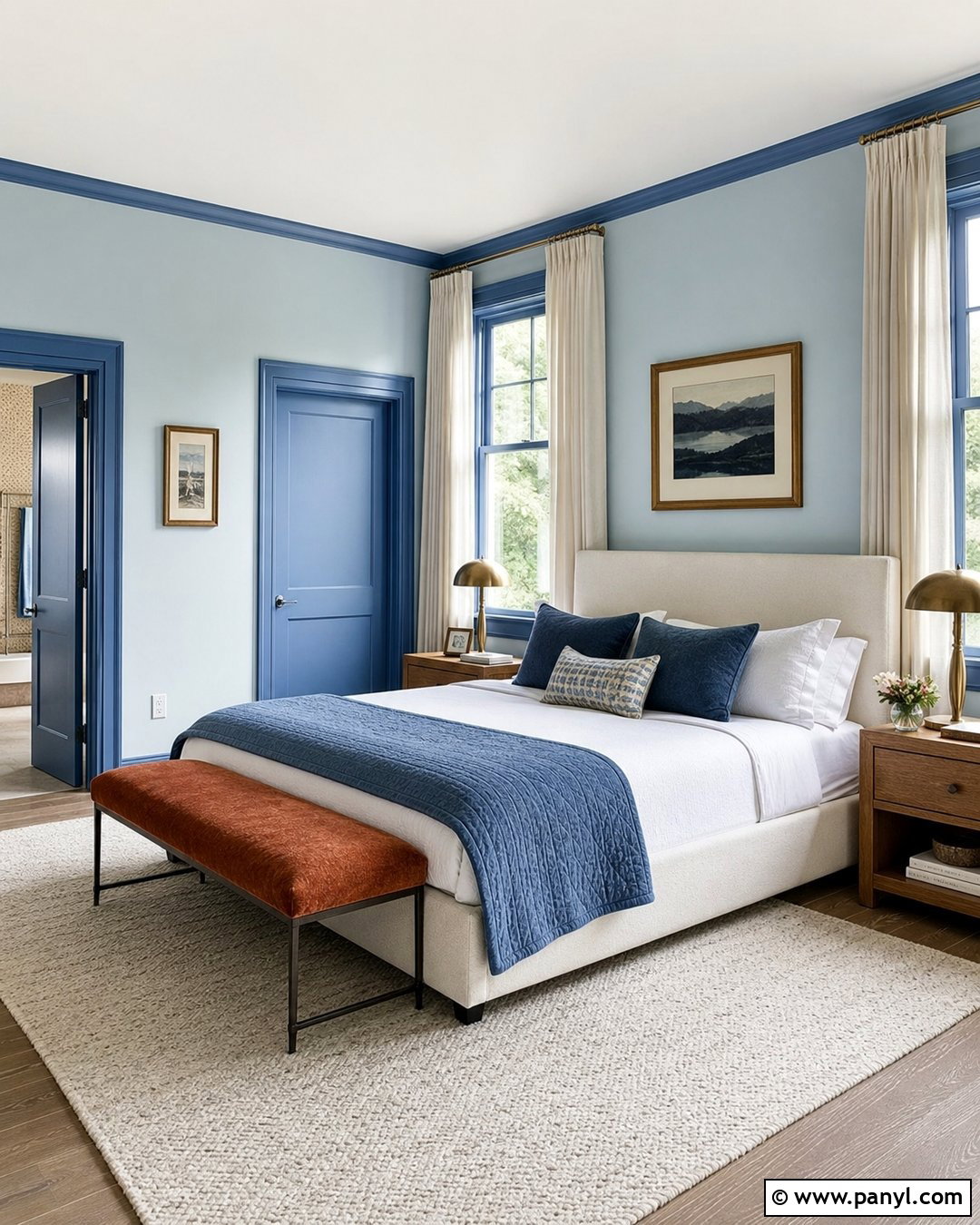
Soft color can make a bedroom feel restful without looking cold or plain. Cover the walls in a medium-light dusty blue and keep the ceiling, baseboards, doors, and window trim warm white. Center an upholstered cream bed against the main wall, layered with white bedding, a textured blue quilt, and muted taupe pillows. Pale oak nightstands and woven shades bring natural warmth into the scheme. Use aged brass sconces instead of table lamps to create a clean, balanced arrangement. A vintage-style rug featuring faded blue, ivory, and soft brown grounds the room. Finish with linen curtains and one simple framed print above the bed. The result feels comfortable, collected, and suitable for both traditional and modern homes.
3. Dusty Blue Kitchen Cabinets
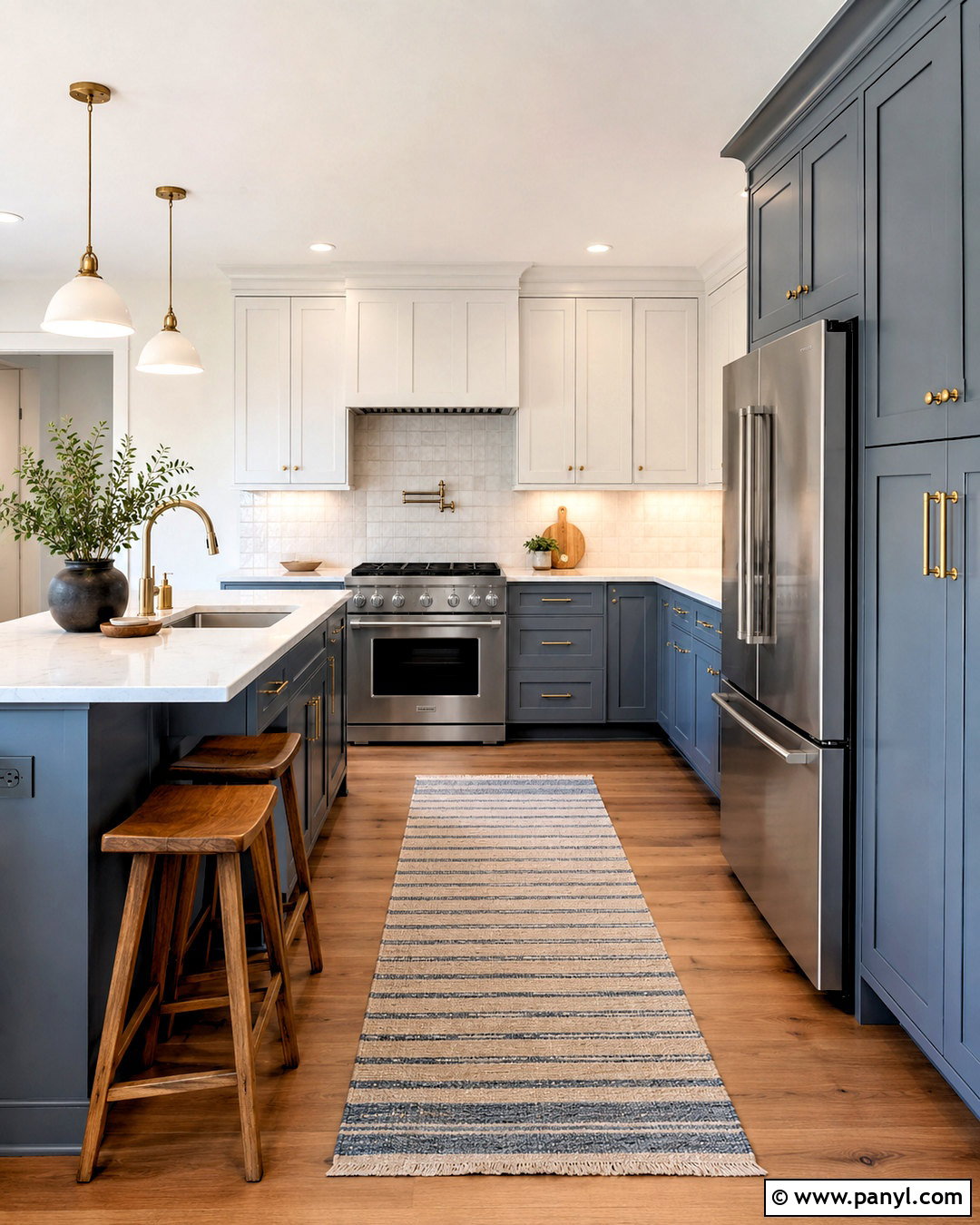
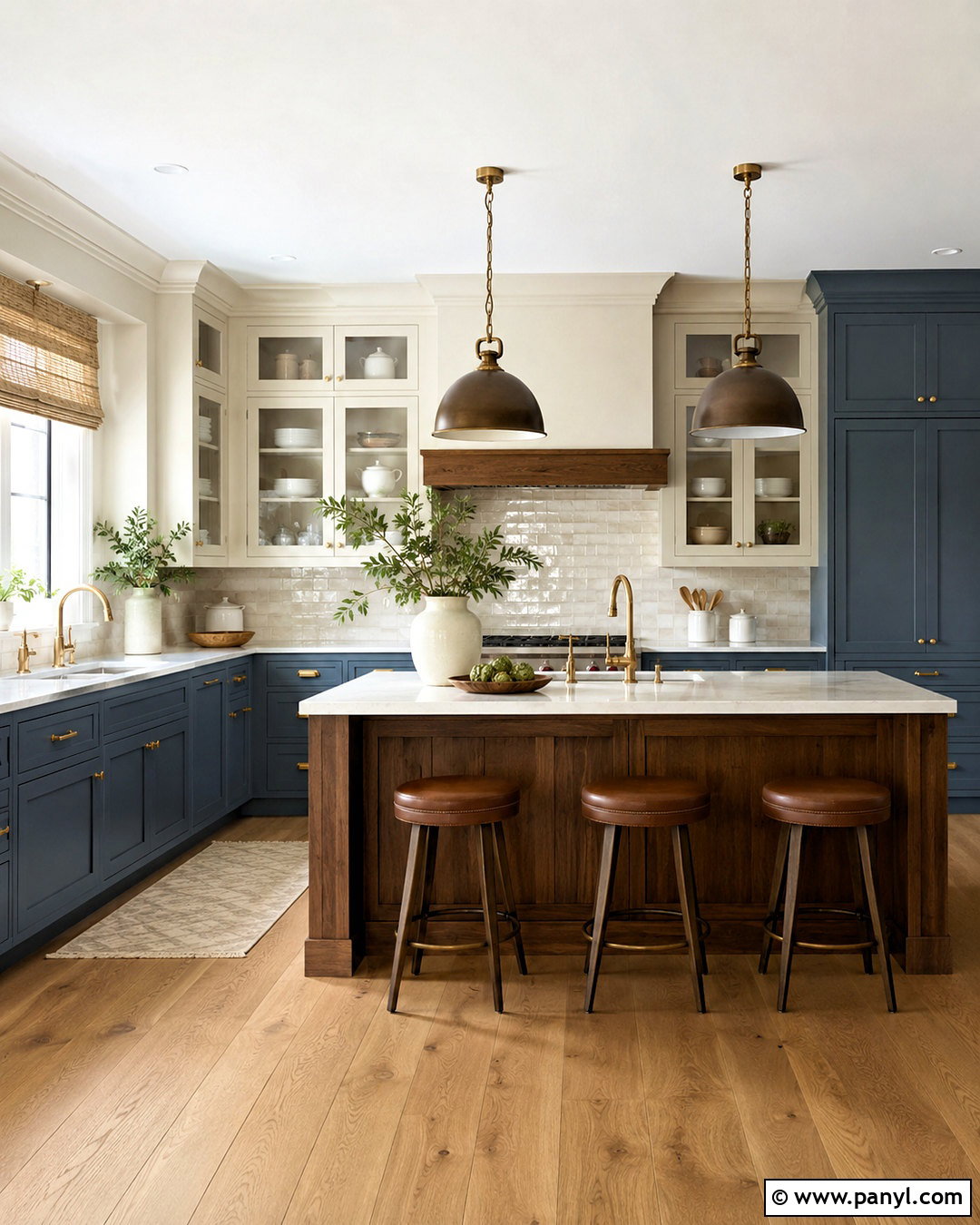
Dusty blue cabinets can give a kitchen noticeable color while remaining easy to coordinate with everyday materials. Paint the lower cabinets and tall pantry units in a medium dusty blue, then use warm white for the upper cabinets and walls. Add lightly veined white quartz counters and a handmade off-white tile backsplash for softness and texture. Brushed brass knobs, cup pulls, and pendant lights warm the blue finish. White oak stools and medium-tone wood flooring prevent the space from appearing too cool. Keep appliances stainless steel or panel-ready for a streamlined look. A simple striped runner and a few cream ceramic accessories complete the room. This balanced two-tone design feels welcoming, practical, and less visually heavy than an all-blue kitchen.
4. Dusty Blue Bathroom Walls
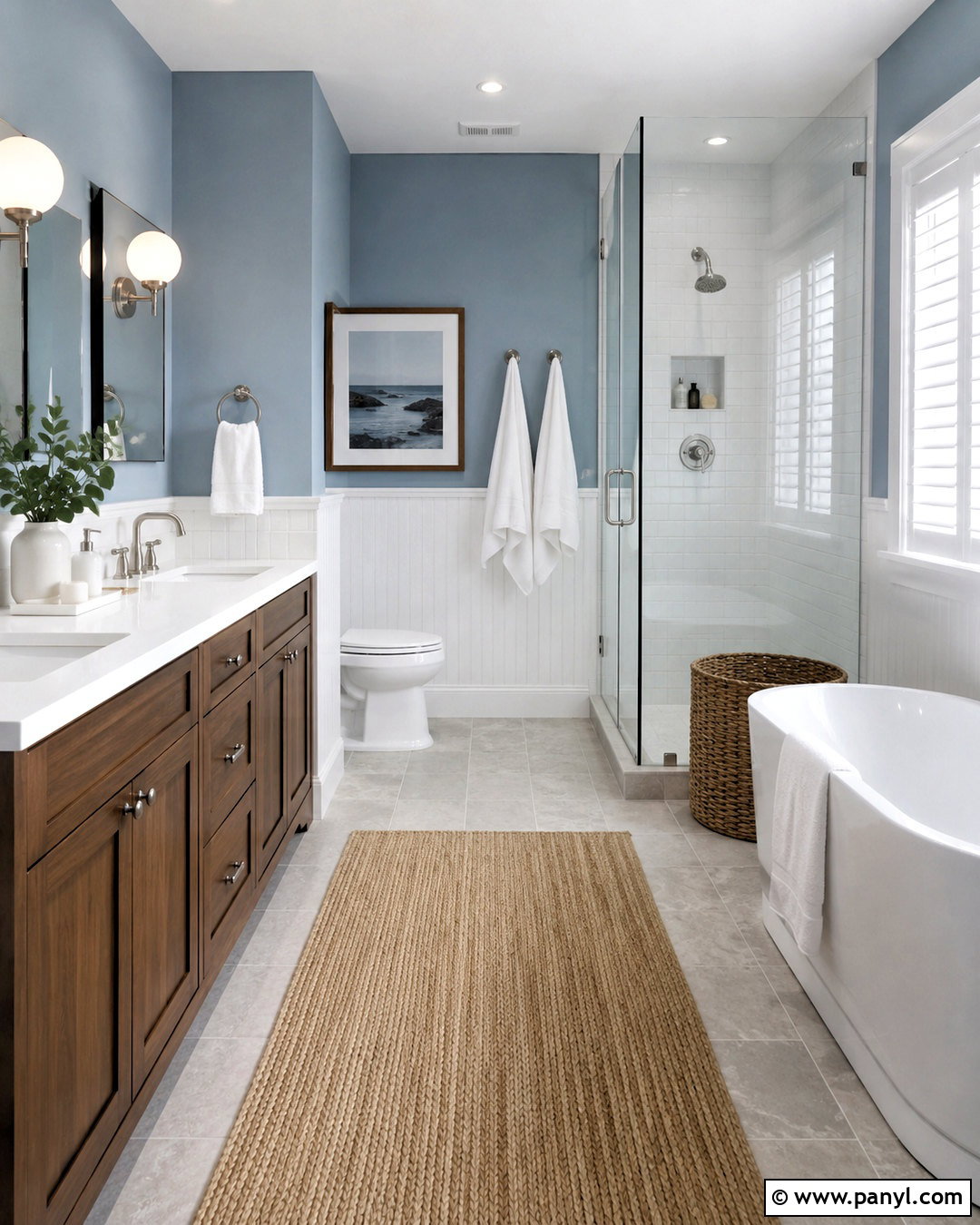
Imagine stepping into a bathroom that feels clean and calming but not overly coastal. Paint the upper walls in a soft dusty blue and install white vertical paneling or tile across the lower half. A walnut vanity introduces rich contrast, while a white quartz top keeps the room bright. Choose polished nickel fixtures for a crisp finish that complements the cool undertones of the paint. A frameless glass shower, light gray floor tile, and white towels maintain an uncluttered appearance. Add a round mirror, simple globe sconces, and one small piece of botanical artwork. A woven hamper and natural bath mat supply needed warmth. This complete bathroom scheme works well in compact spaces because the pale surfaces reflect light and visually open the room.
5. Dusty Blue Dining Room
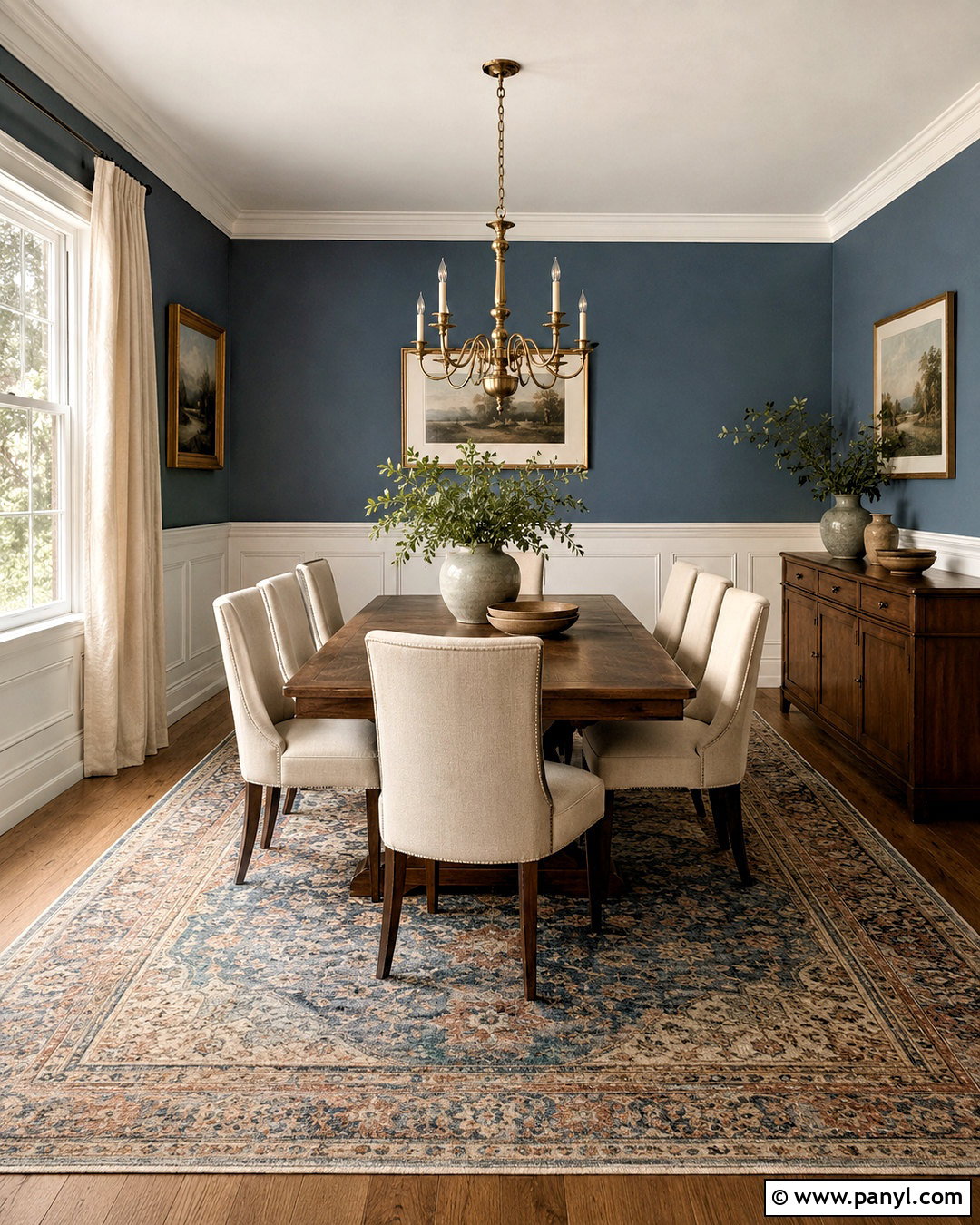
For a dining room with quiet character, choose a medium dusty blue that looks slightly smoky rather than pastel. Apply it to the walls above warm white wainscoting to create structure and balance. A medium walnut dining table gives the palette depth, while cream upholstered chairs soften its stronger lines. Hang a simple aged brass chandelier over the center of the table and use linen drapery in a warm ivory tone. A faded Persian-style rug can connect the blue walls with touches of rust, beige, and brown. Display a few stoneware pieces on a narrow wood sideboard instead of filling the room with small decorations. This thoughtful combination feels polished enough for gatherings but comfortable enough for casual meals, homework, and everyday family use.
6. Dusty Blue Home Office
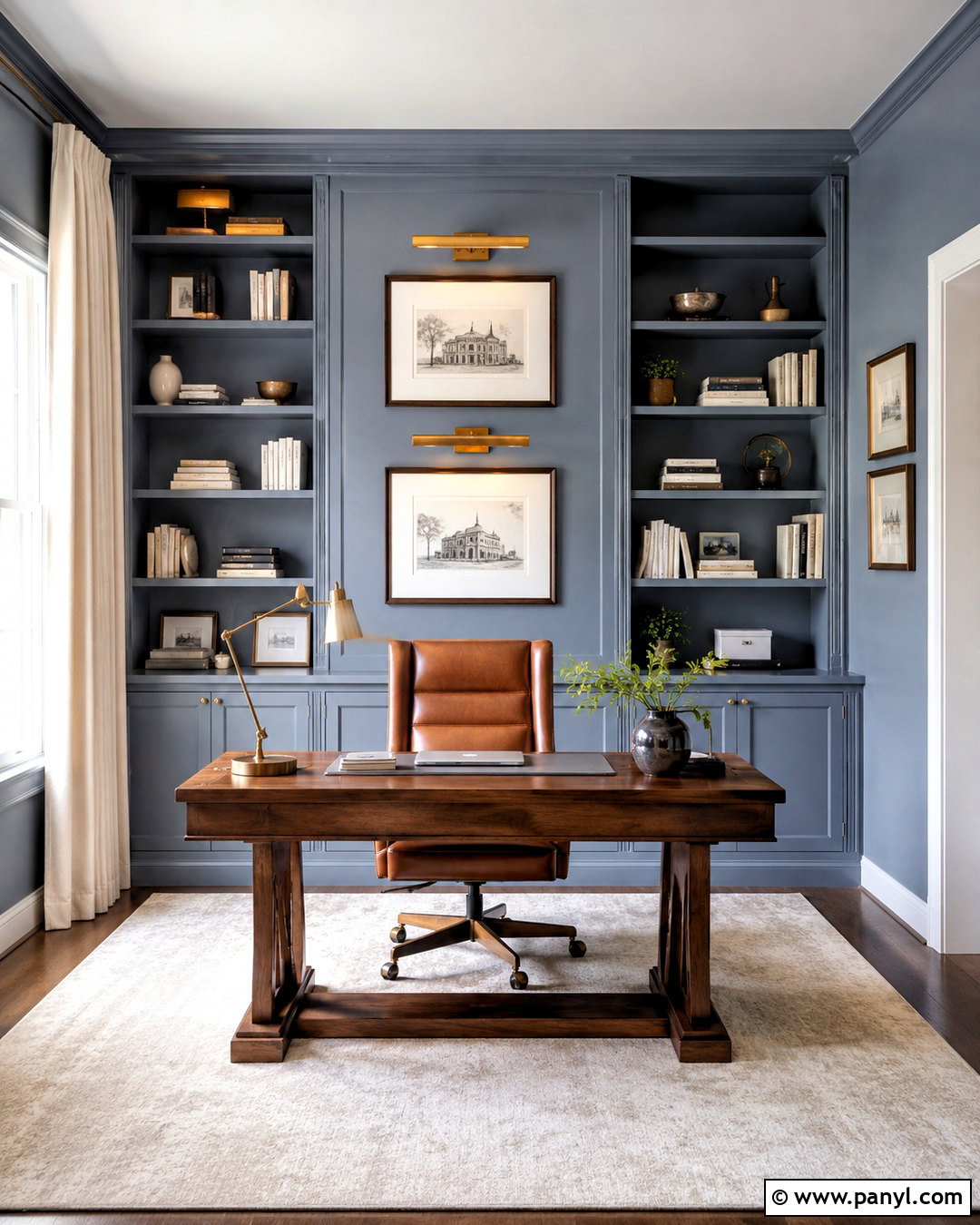
Could your workspace feel focused and inviting without relying on white or beige walls? A balanced dusty blue brings definition to a home office while maintaining a calm background for long workdays. Paint the walls and built-in shelving the same medium blue-gray, using a satin finish on the cabinetry and an eggshell finish on the walls. Position a walnut desk near the window and add a supportive tan leather chair. Cream curtains, an ivory rug, and warm white ceiling paint prevent the enclosed color from feeling heavy. Use brass picture lights above the shelves and organize books in restrained neutral tones. Framed maps or architectural sketches complete the arrangement. The finished office feels professional, warm, and visually cohesive rather than decorative or distracting.
7. Dusty Blue Nursery
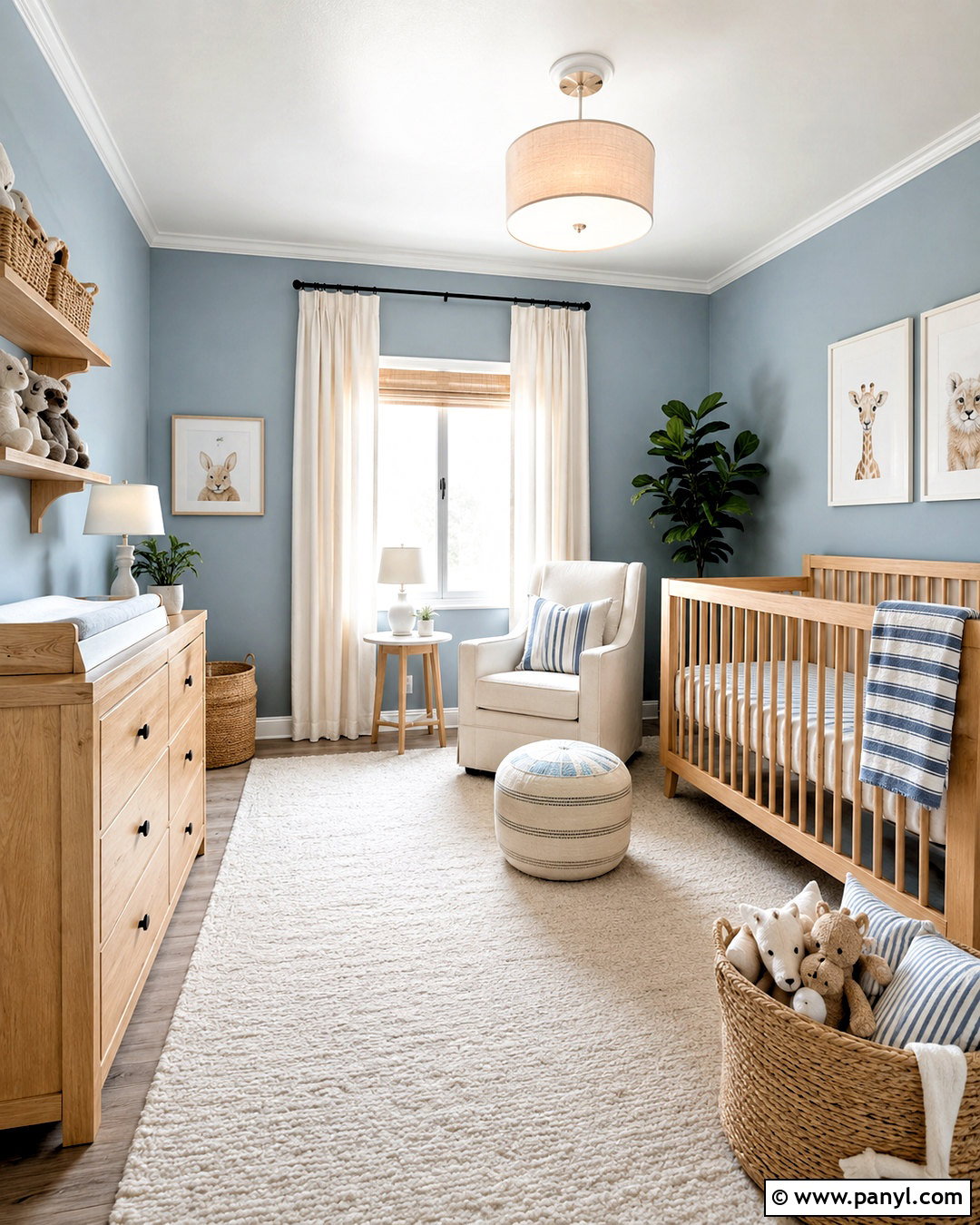
A pale dusty blue nursery offers a gentle backdrop that can grow with a child rather than feeling limited to one age. Paint all four walls in a soft blue-gray and pair them with creamy white trim. Place a natural oak crib against the longest uninterrupted wall, leaving clear walking space around the changing dresser and rocking chair. Choose a washable ivory rug, oatmeal blackout curtains, and simple striped bedding in blue and cream. A boucle or linen glider adds comfort without introducing another strong color. Decorate with light wood shelves, woven baskets, and a few framed animal illustrations. Keep toys and accessories in muted sage, tan, and rust. This complete room feels peaceful and practical while providing enough visual warmth for everyday family life.
8. Dusty Blue Entryway
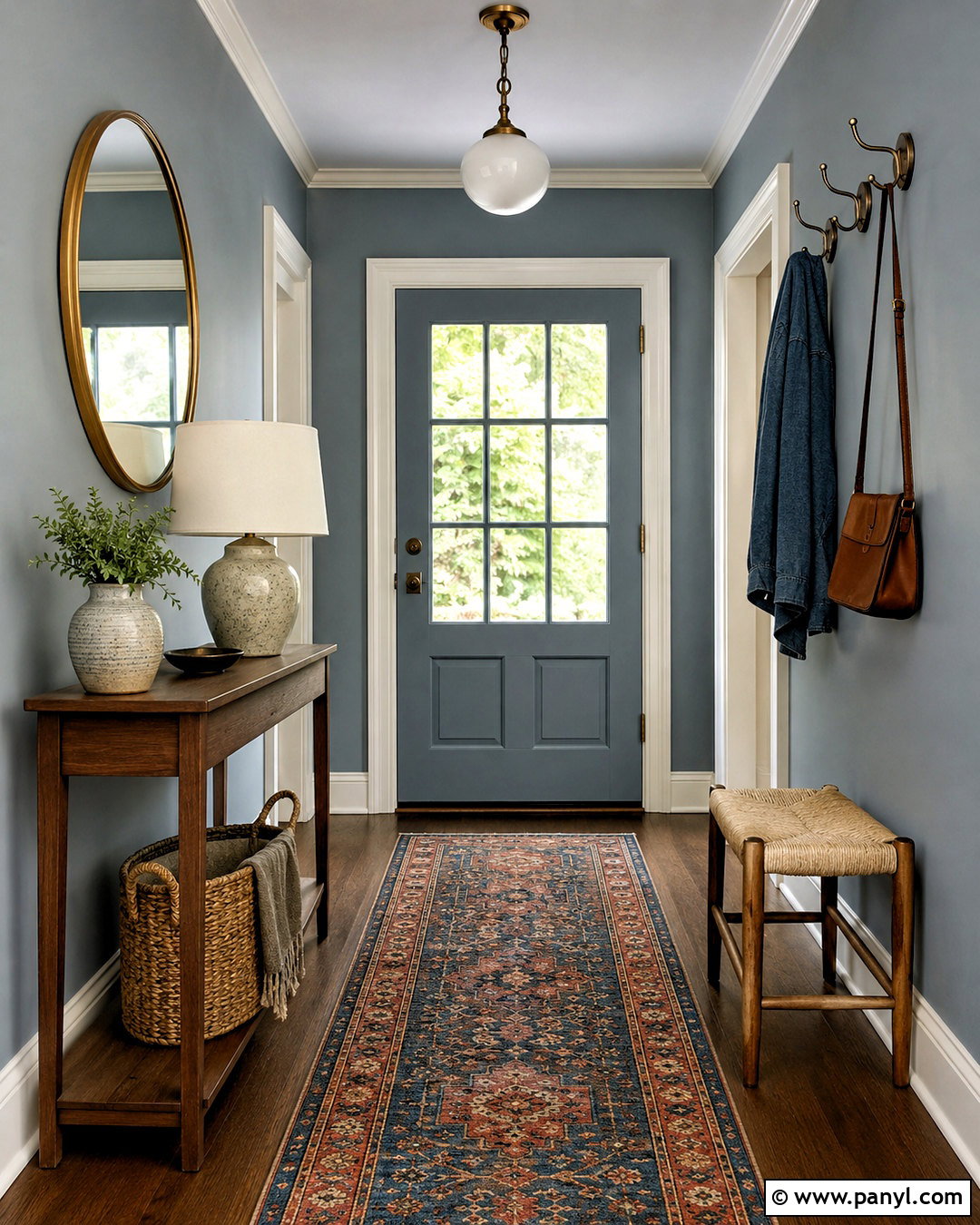
An entryway painted dusty blue can create a memorable welcome without overwhelming the rooms beyond it. Select a midtone blue-gray and use it on the walls, leaving the trim and ceiling a soft warm white. Place a narrow walnut console opposite the door with a round brass-framed mirror above it. A vintage runner featuring muted blue, brick red, and cream disguises everyday dirt while adding pattern. Include a small upholstered bench or woven stool for removing shoes. Wall hooks in antique brass provide accessible storage, and a ceramic lamp gives the space a comfortable evening glow. Keep decorative objects limited to a tray, small vase, and one covered basket. The coordinated arrangement makes even a modest entry feel finished, functional, and connected to the rest of the home.
9. Dusty Blue Mudroom Cabinets
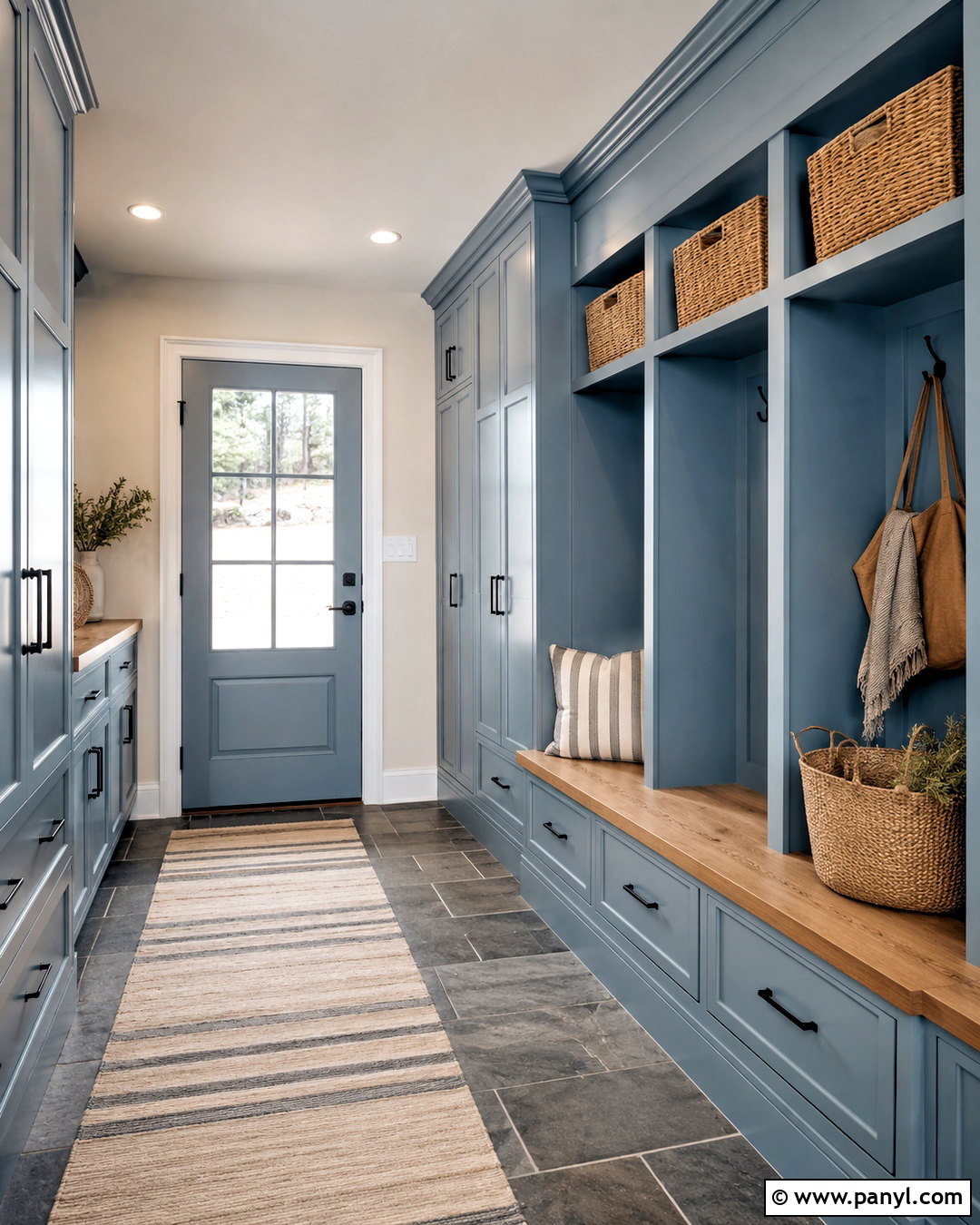
Busy storage areas benefit from a color that can hide minor scuffs while still looking attractive. Paint full-height mudroom cabinets, drawers, and the built-in bench in a medium dusty blue with a durable satin finish. Surround the cabinetry with warm white walls and install a light oak or butcher-block bench seat. Black hooks and cabinet hardware add clean contrast, while tan woven baskets provide concealed storage above. Use durable slate-look porcelain tile underfoot and add a washable striped runner in cream and blue. Include individual cubbies, closed shoe drawers, and overhead compartments so the design supports daily routines. A simple flush-mount light keeps the area bright. This complete setup turns a hardworking passage into an organized extension of the home instead of a cluttered drop zone.
10. Dusty Blue Laundry Room
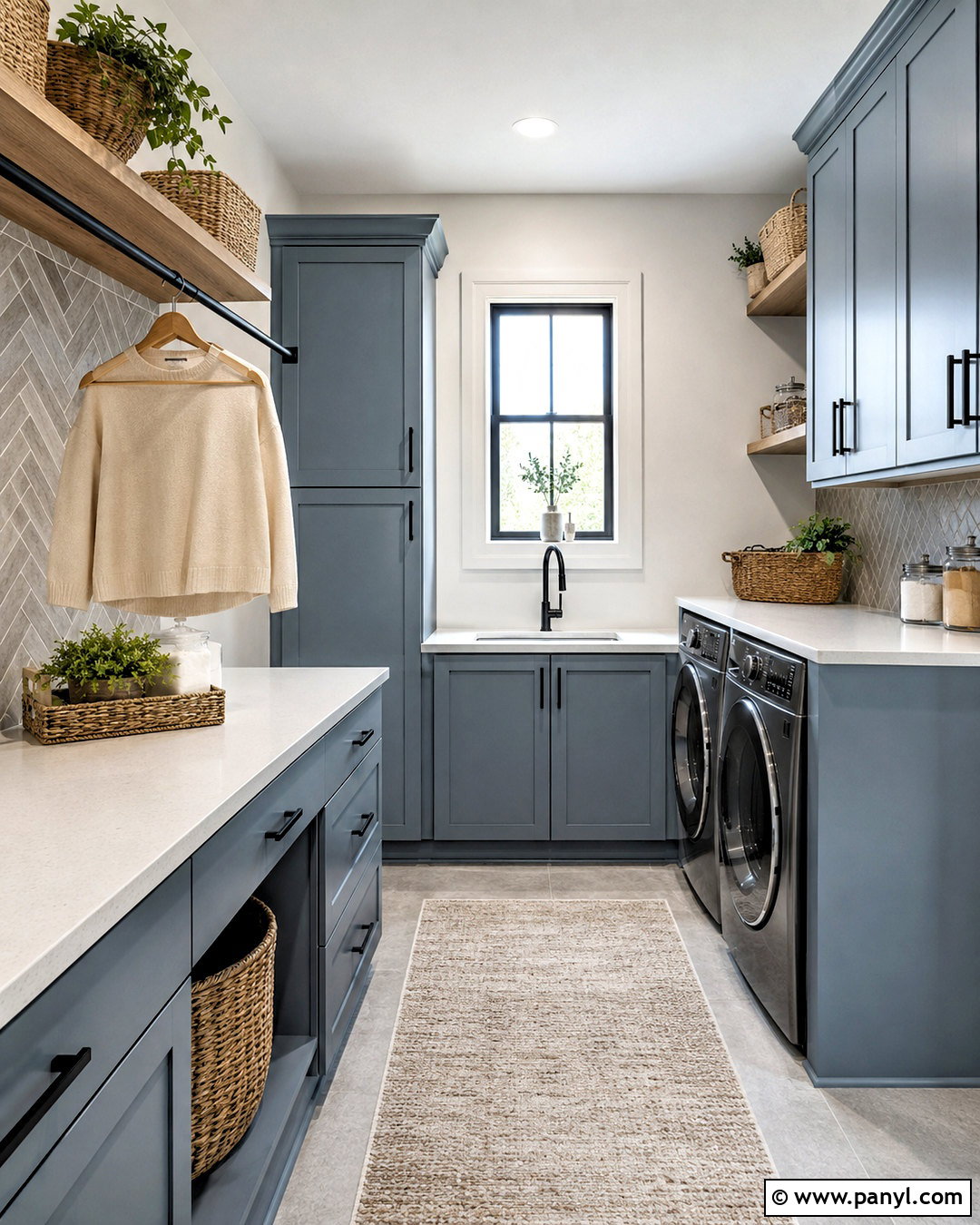
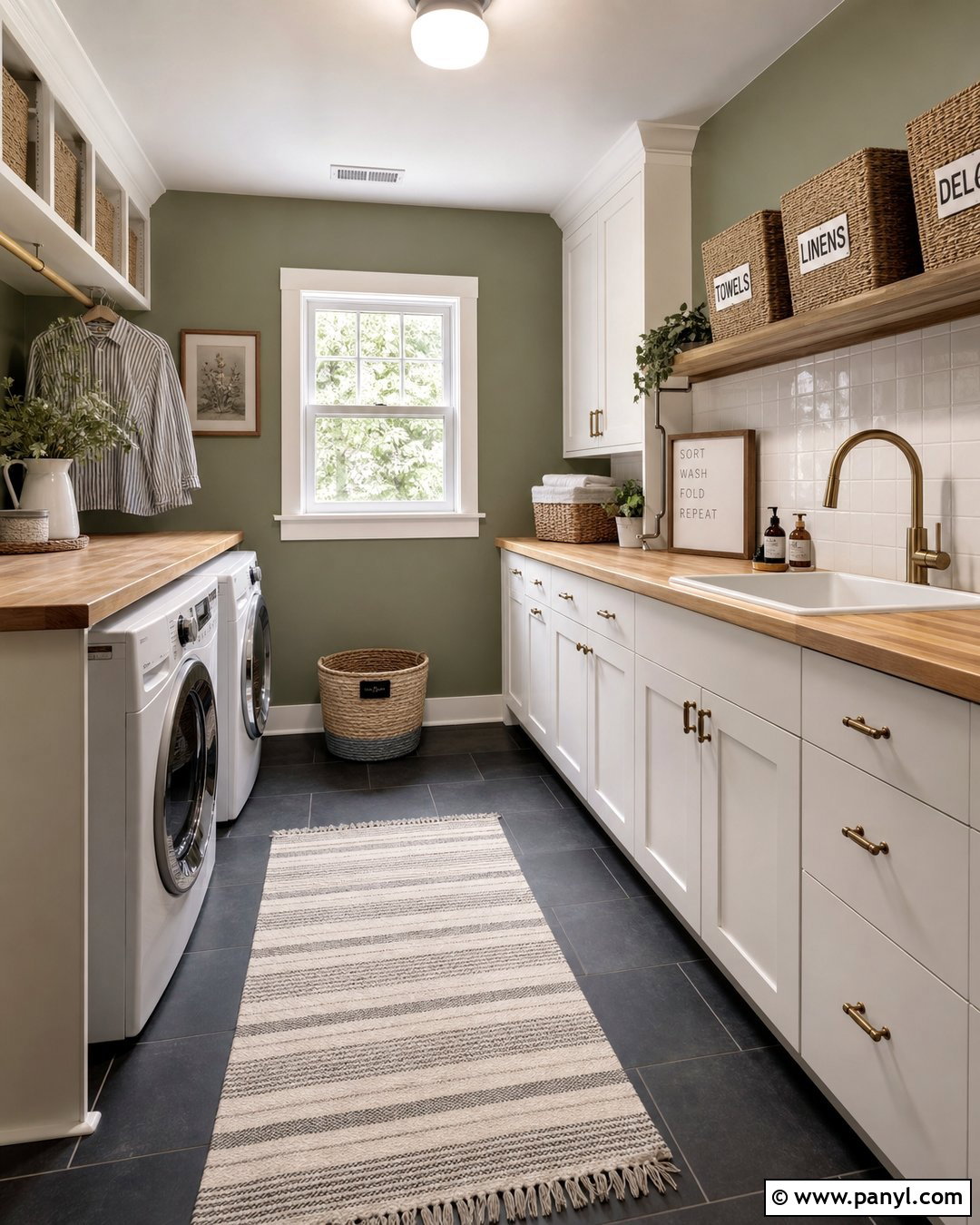
Small utility rooms can handle more personality than many homeowners expect. Cover the cabinetry in a muted dusty blue and use soft white paint on the walls to maintain an open feeling. Place a white quartz counter above front-loading machines, creating a practical surface for folding clothes. A warm gray herringbone tile backsplash adds subtle movement without competing with the cabinets. Choose matte black pulls, a matching hanging rod, and a compact black faucet for definition. Light wood floating shelves can hold clear containers, white towels, and woven baskets. Finish the floor with durable warm gray tile and place a narrow washable runner in front of the appliances. The result is efficient, coordinated, and cheerful enough to make a routine household task feel more pleasant.
11. Dusty Blue House Exterior
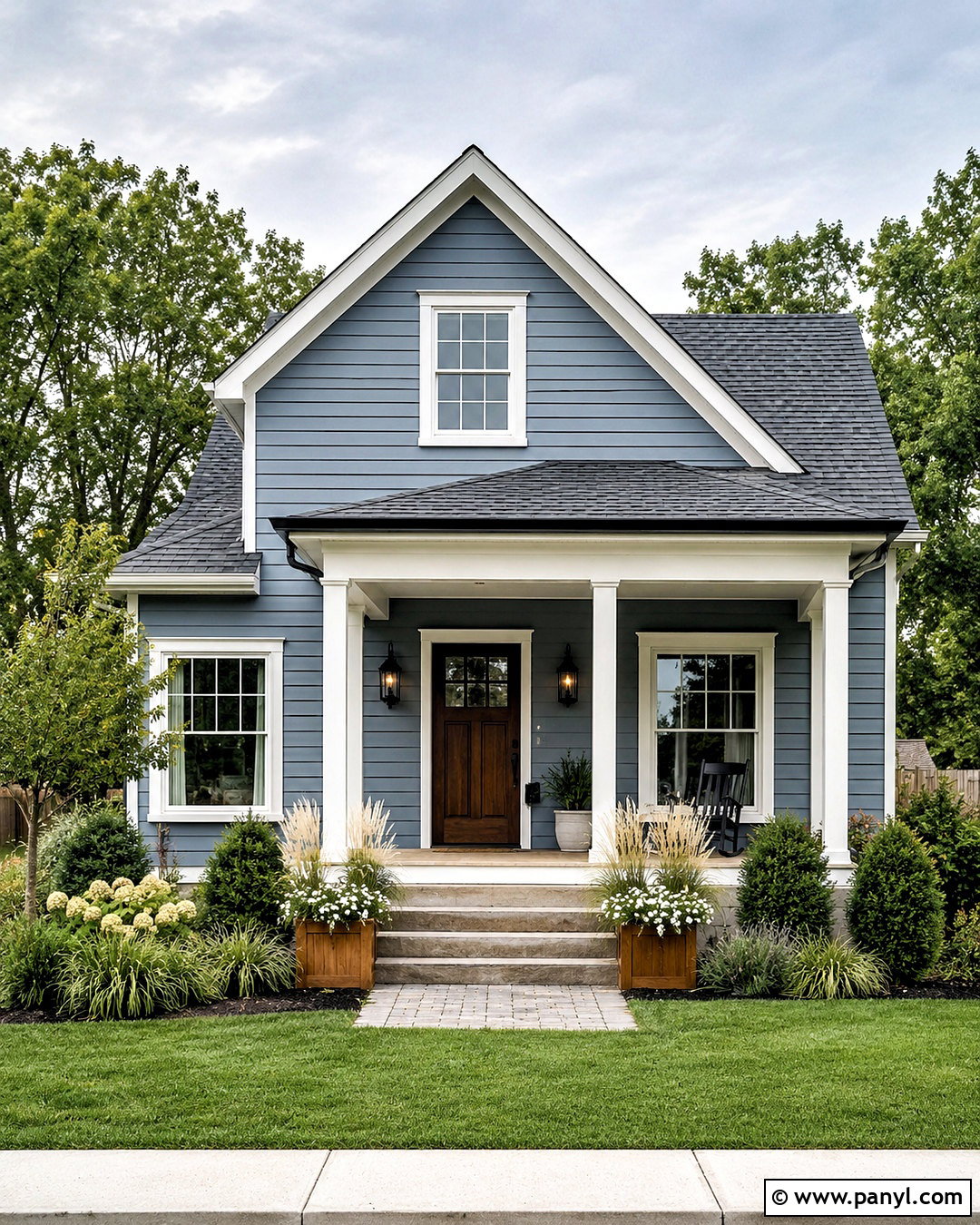
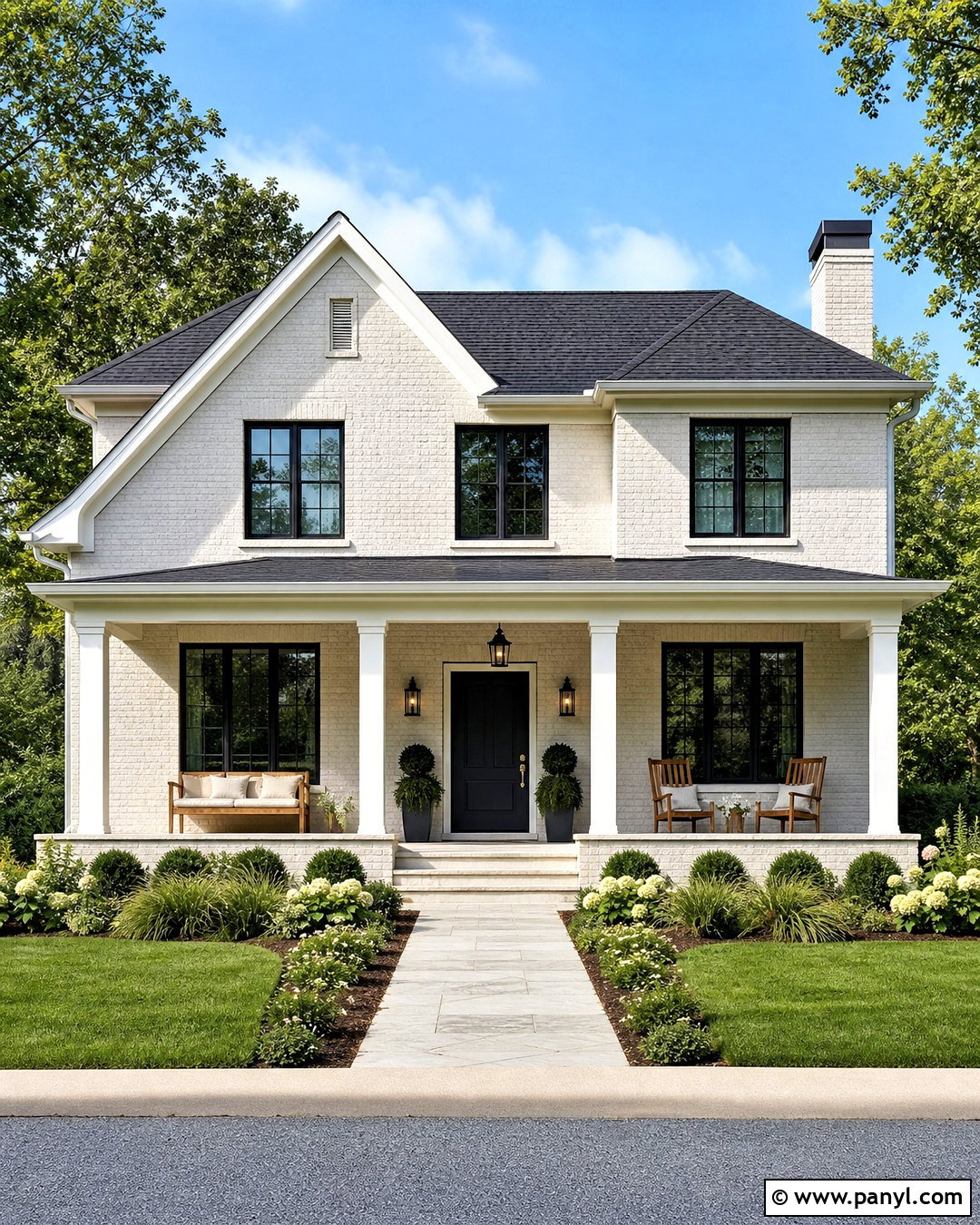
Dusty blue siding gives an average house a recognizable identity while remaining softer than navy or bright coastal blue. Use a medium gray-blue across the main siding and choose creamy white for the fascia, window trim, columns, and garage surround. A charcoal architectural-shingle roof anchors the cooler body color. Stain the front door a medium walnut brown and repeat that warmth through wood porch furniture or cedar planters. Black lanterns, gutters, and house numbers add definition without creating excessive contrast. Complete the curb view with curved planting beds containing evergreen shrubs, ornamental grasses, and white flowering perennials. This exterior scheme suits cottages, ranch homes, and simple two-story houses. Always evaluate outdoor samples in direct sun and shade because exterior light can make blue appear considerably brighter.
12. Dusty Blue Front Door
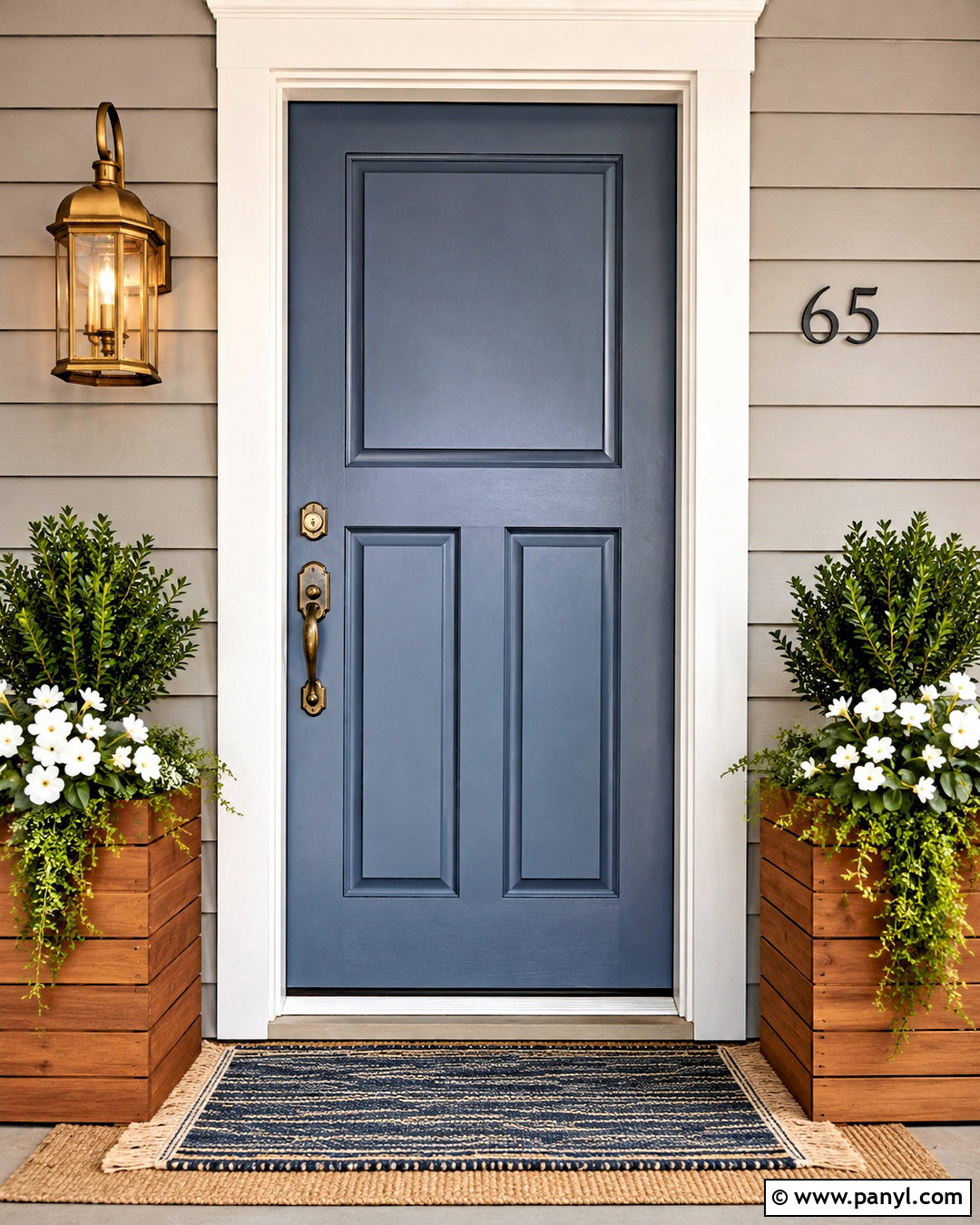
A dusty blue front door provides understated color for a neutral exterior and is easy to support with coordinating details. Paint the door in a medium blue-gray satin finish so the color has enough depth to remain visible from the street. Surround it with warm white trim and pair it with light greige or cream siding. Choose aged brass hardware and a matching lantern to bring warmth to the cool paint. A natural coir mat layered over a muted patterned outdoor rug creates a welcoming entrance. Place symmetrical cedar planters on both sides, filled with soft green foliage and white seasonal flowers. Black house numbers add one crisp note. The finished entrance looks intentional because the door, lighting, hardware, textiles, and landscaping function as one complete curb-appeal scheme.
13. Dusty Blue Built-In Shelves
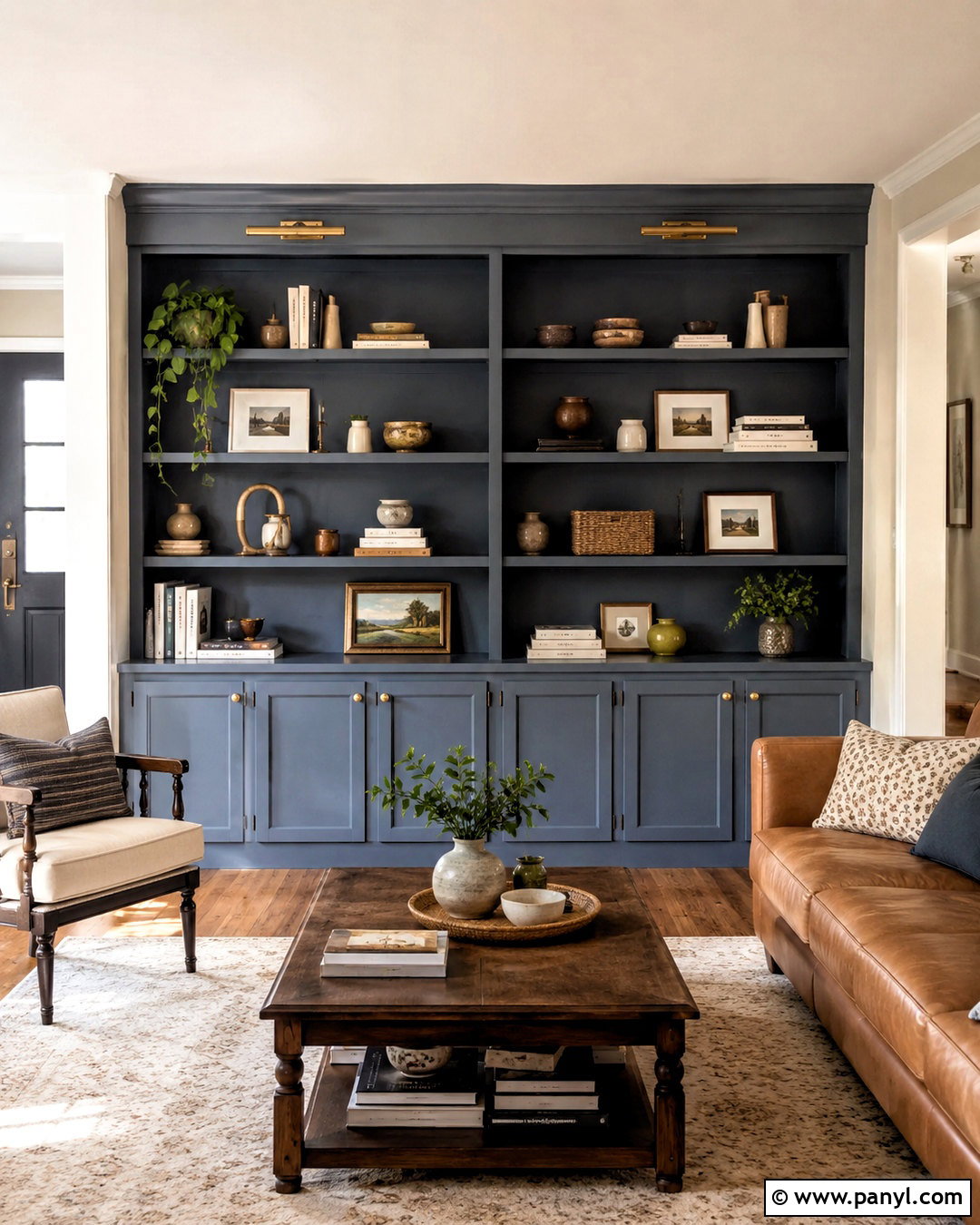
Built-ins become a strong architectural feature when their color is coordinated with the entire room. Paint the shelving, lower cabinets, and wall behind the shelves in a deep dusty blue, using a satin finish that is easy to clean. Keep the surrounding walls warm white to frame the cabinetry and prevent the room from becoming too dark. Add a camel leather sofa, an ivory rug, and a walnut coffee table for warmth. Install small aged brass picture lights above the shelves and repeat the finish on cabinet hardware. Arrange books, pottery, framed photographs, and woven boxes with enough open space to avoid clutter. Medium oak flooring grounds the palette. This finished living area feels substantial and personal, with the blue built-ins acting as both useful storage and the room’s main visual anchor.
14. Dusty Blue Fireplace Wall
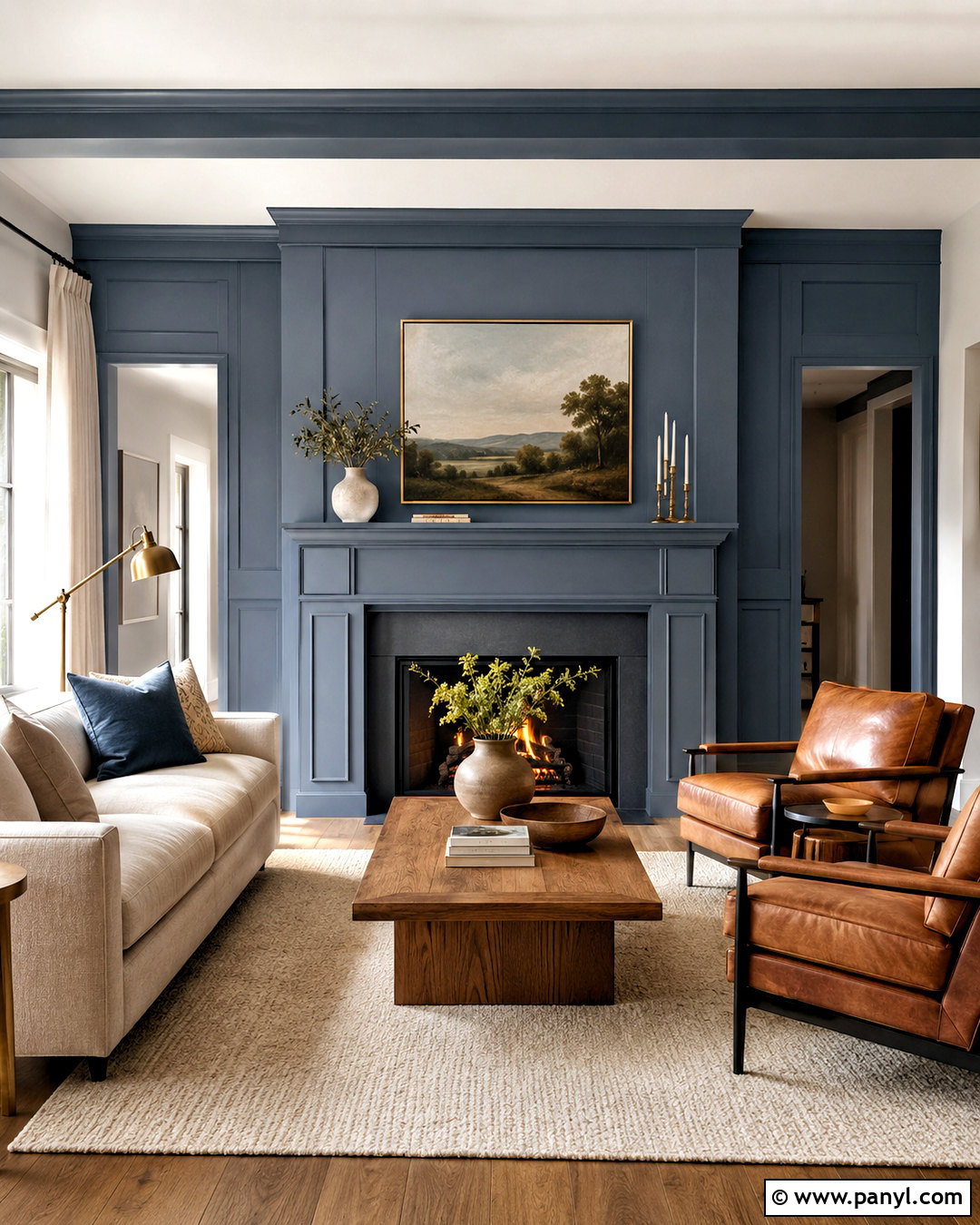
When a living room lacks a clear focal point, a dusty blue fireplace wall can supply one without requiring a major renovation. Paint the fireplace surround, mantel, and adjoining wall in a saturated blue-gray, then keep the side walls soft white. If the fireplace has a simple plaster or wood surround, use the same color throughout for a clean, built-in appearance. Position an oatmeal sofa and two cognac leather chairs around a natural wood coffee table. Add an ivory rug and linen curtains to brighten the arrangement. A large landscape painting above the mantel can repeat blue, cream, and earthy brown tones. Finish with black fireplace tools and aged brass lamps. The complete layout feels balanced because seating, artwork, lighting, and color all point naturally toward the fireplace.
15. Dusty Blue Color Drenched Room
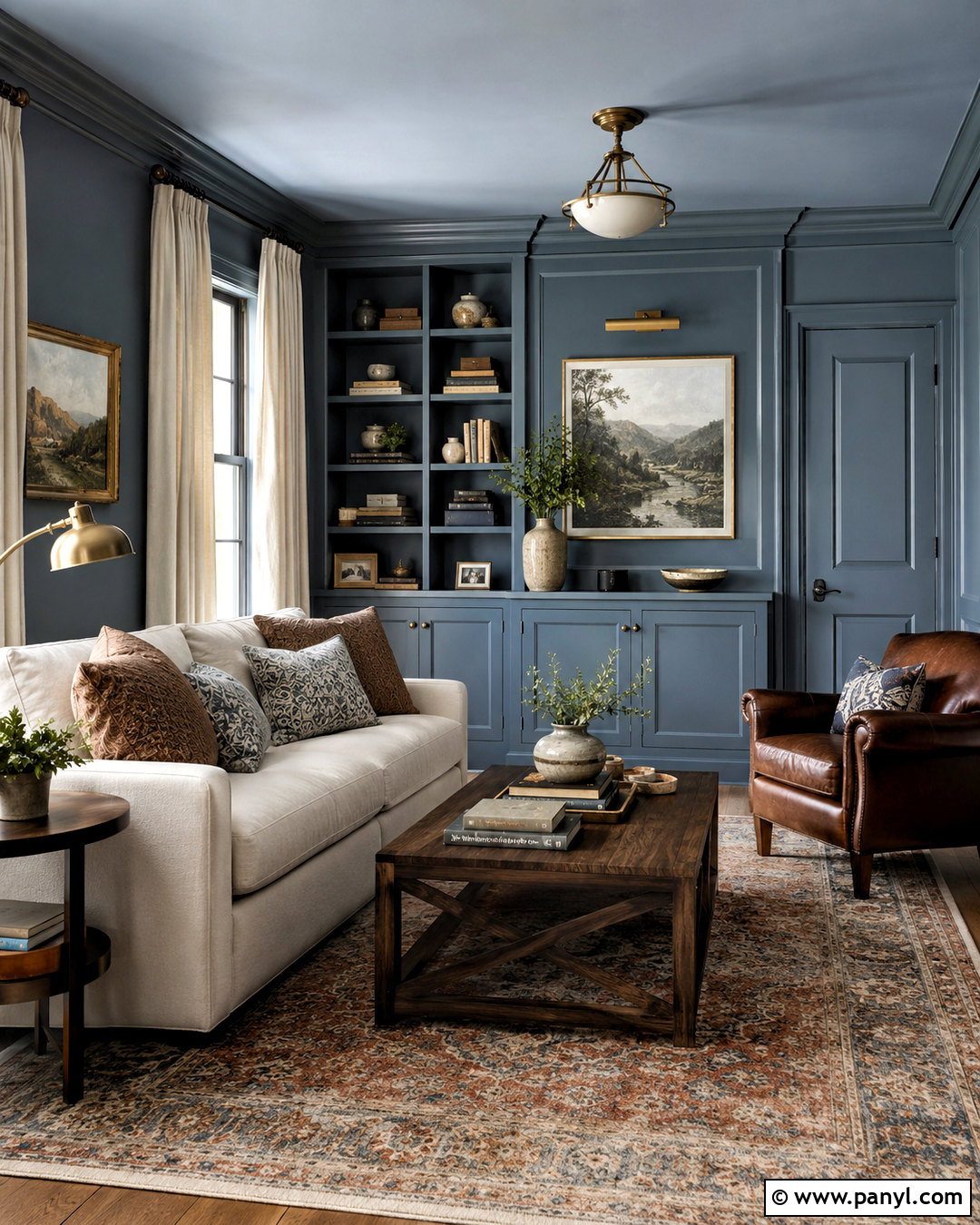
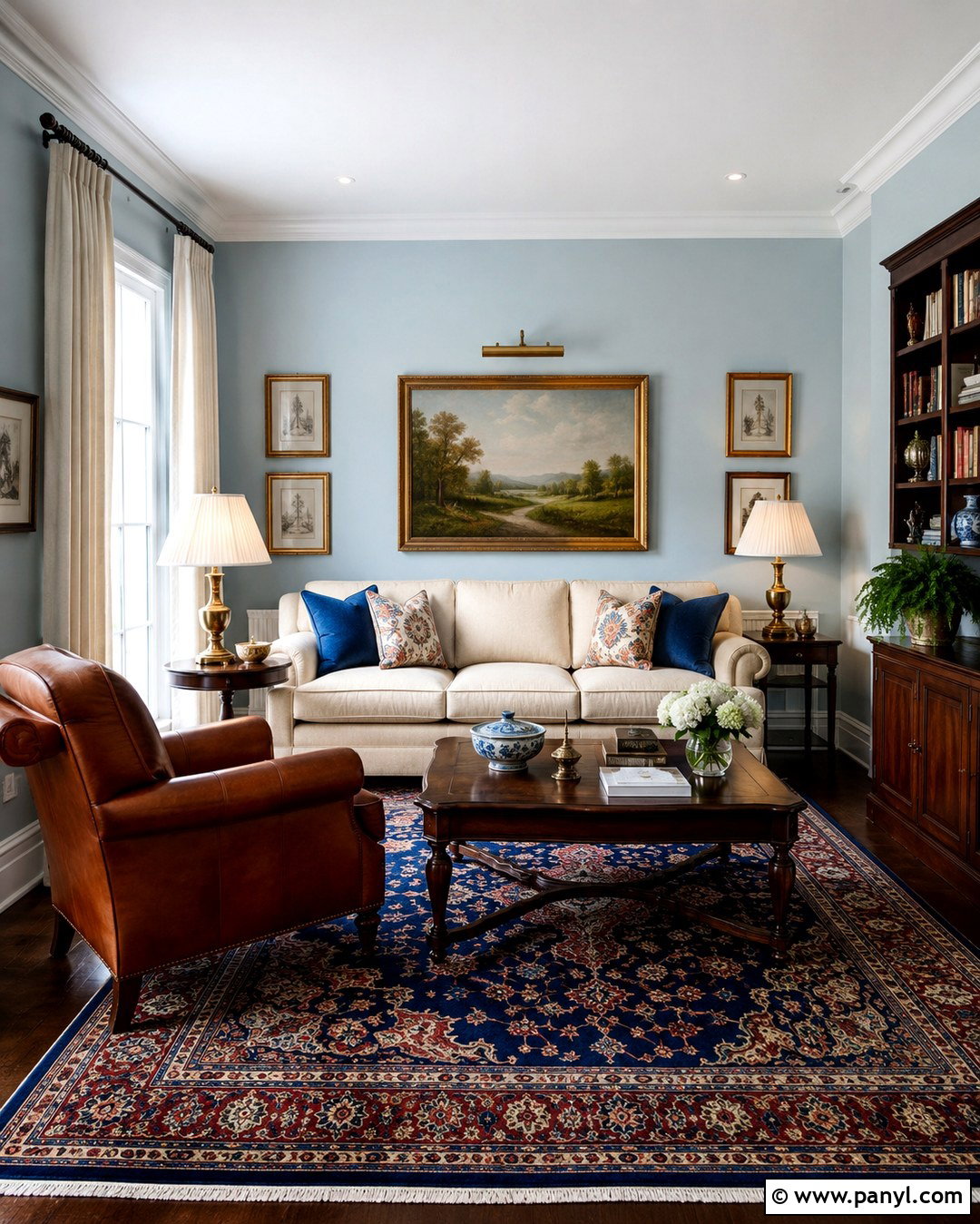
Color drenching creates an enveloping effect by carrying one shade across several architectural surfaces. Choose a medium dusty blue for the walls, trim, doors, and built-in cabinetry, varying the sheen instead of the hue. Use matte or eggshell paint on walls and satin paint on woodwork for subtle definition. Keep the ceiling a slightly lighter version of the same blue to preserve the continuous look without lowering it visually. Furnish the room with a cream sofa, dark walnut tables, and a faded rust-and-blue rug. Brass lighting and off-white curtains add warmth and brightness. This approach works particularly well in a den, library, or formal sitting room. Test large movable samples first, since daylight direction can noticeably influence whether blue-gray paint appears cool, green, or violet. ()
16. Dusty Blue And Walnut Living Room
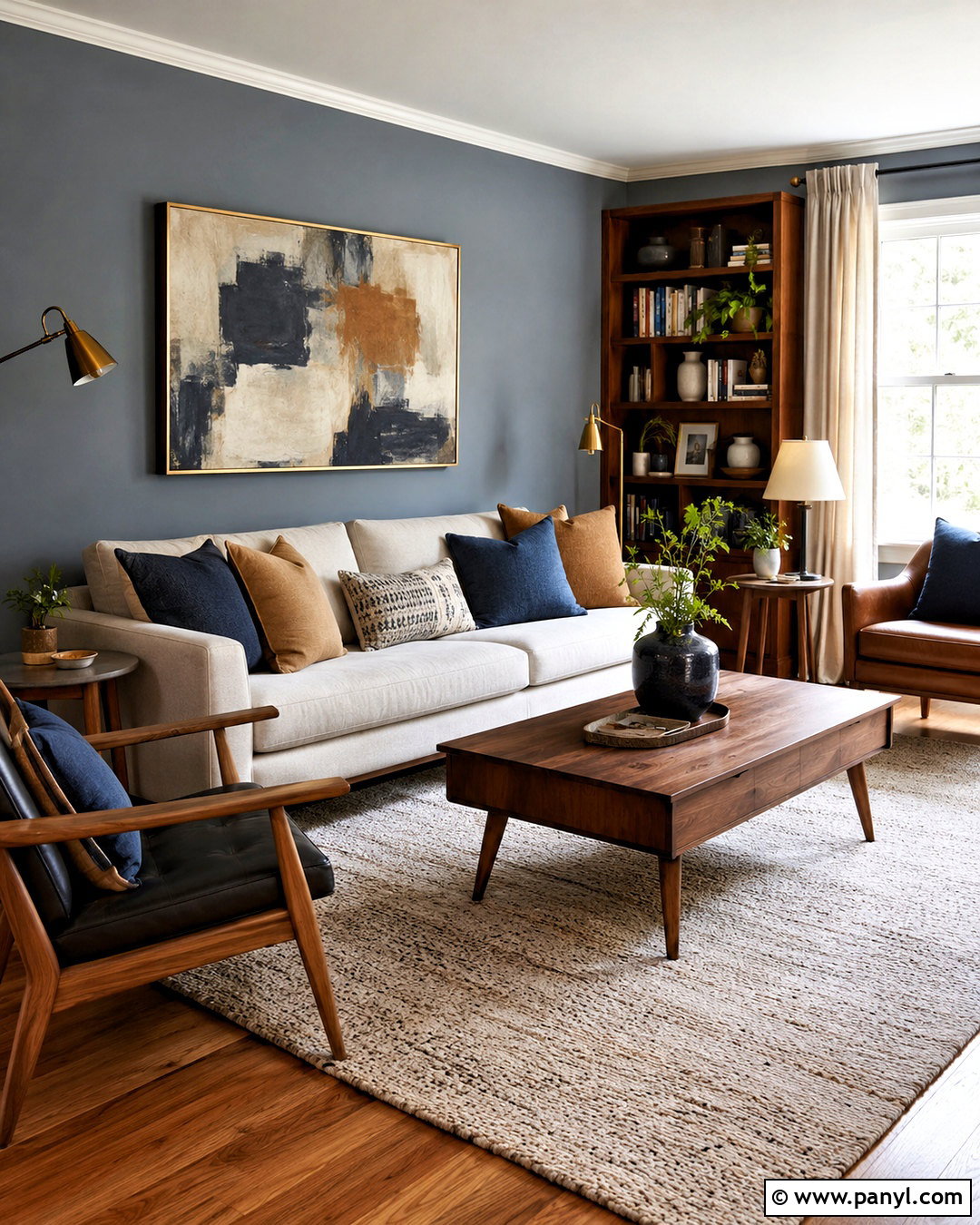
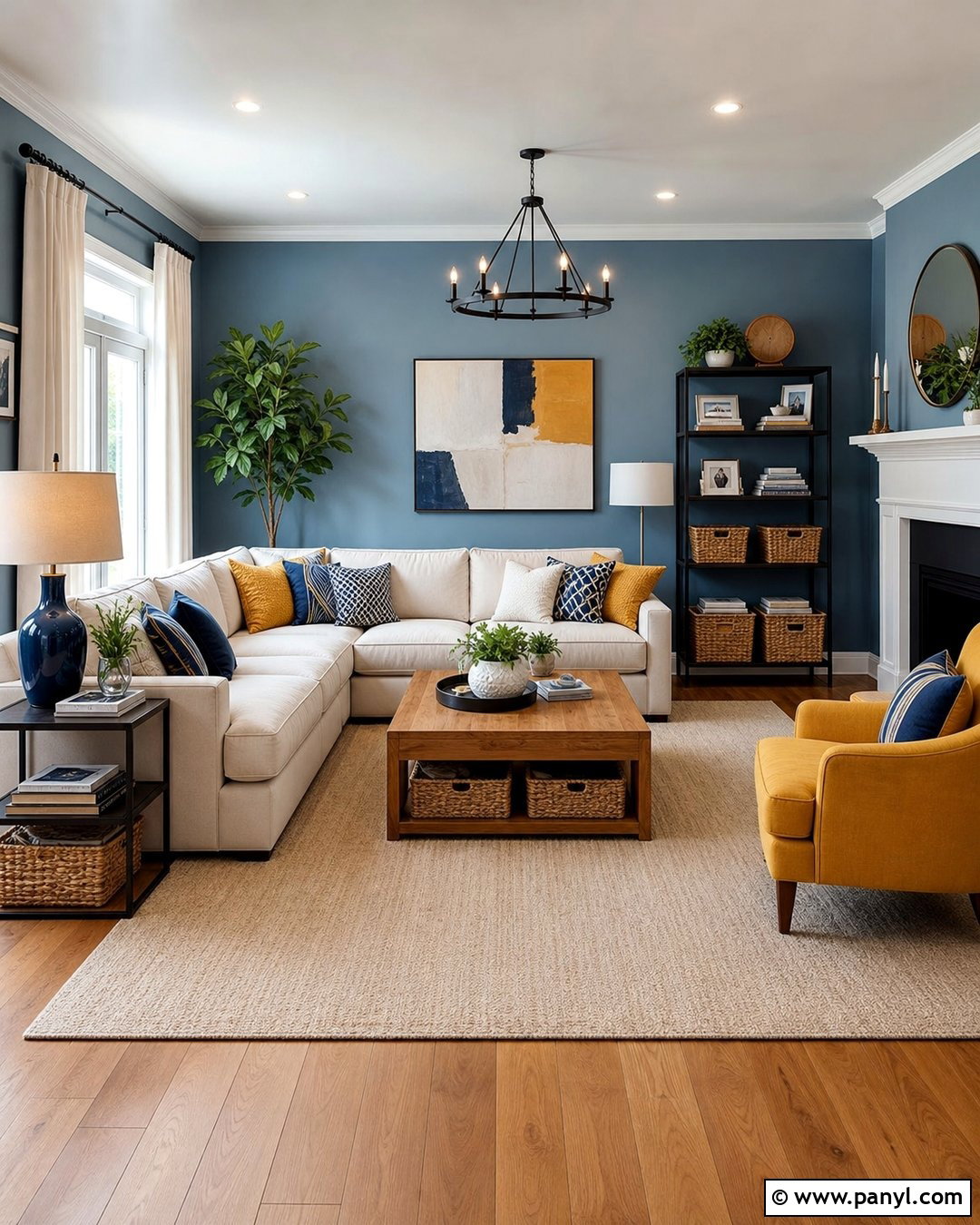
The contrast between muted blue and rich brown creates a living room that feels both calm and grounded. Paint the walls a medium dusty blue with a noticeable gray undertone, then introduce walnut through a media console, side tables, and open shelving. Choose a warm ivory sofa with tailored lines and add pillows in denim blue, caramel, and cream. A wool rug in soft beige keeps the floor from appearing disconnected from the darker furniture. Hang linen curtains close to the ceiling to make the windows look taller. Brass lamps and framed abstract artwork provide finishing detail without crowding the walls. Include a few green plants in stoneware pots for natural color. This full scheme suits midcentury, transitional, and contemporary homes because the materials are simple, warm, and easy to maintain.
17. Dusty Blue And Blush Bedroom
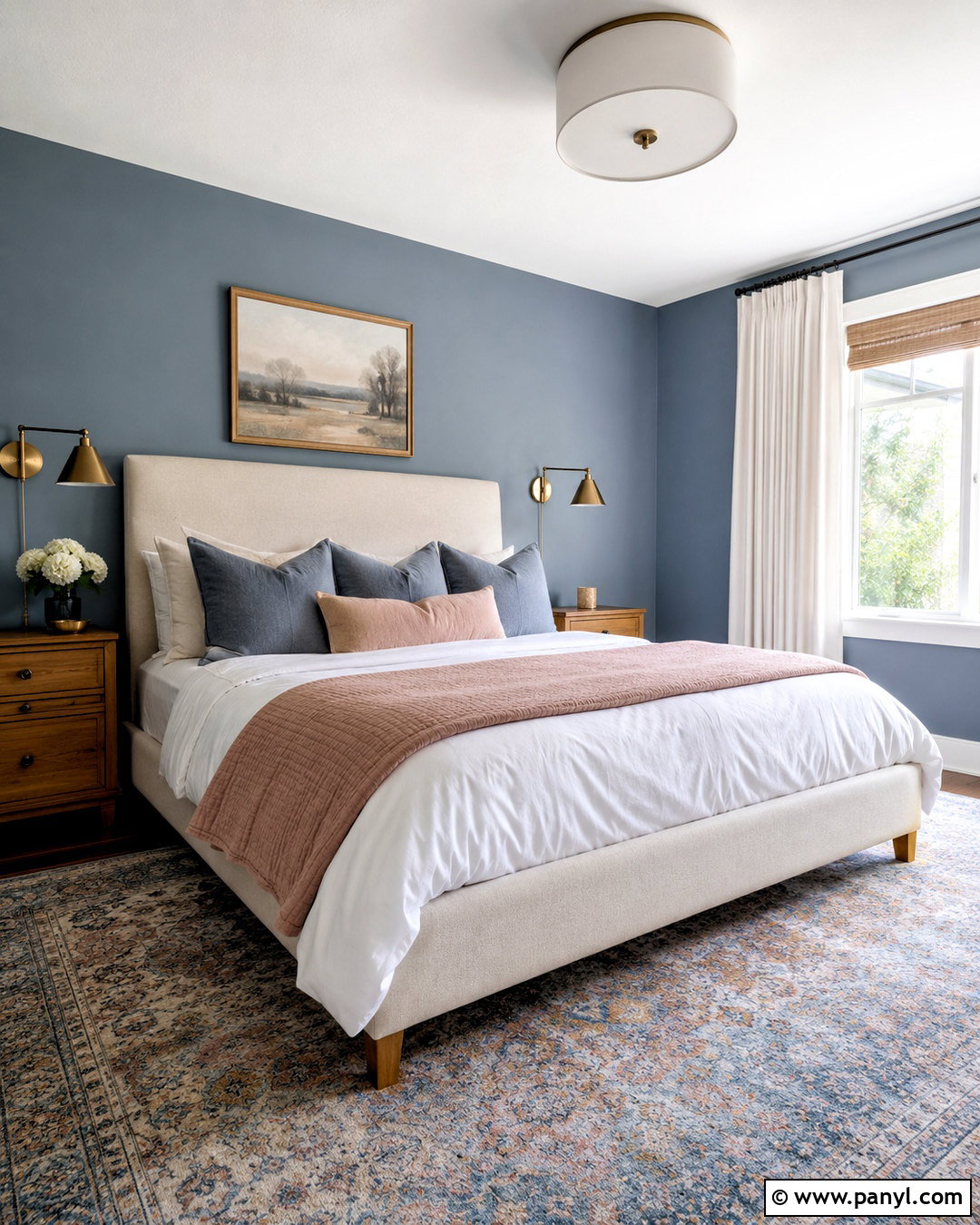
Dusty blue and blush can feel sophisticated when both colors are softened and surrounded by useful neutrals. Paint the bedroom walls in a smoky blue-gray and choose an oatmeal upholstered bed as the central piece. Dress it with white linens, a dusty rose coverlet, and a mixture of blue, cream, and taupe pillows. Medium wood nightstands keep the palette grounded, while brass sconces add a warm metallic detail. Hang full-length ivory curtains and place a vintage-style rug with faded blue, rose, and brown beneath the bed. Limit blush to textiles, artwork, and one ceramic lamp so it remains an accent rather than a theme. The completed bedroom feels layered and restful, with enough contrast to stay visually interesting in both daylight and softer evening light.
18. Dusty Blue And Terracotta Dining Room
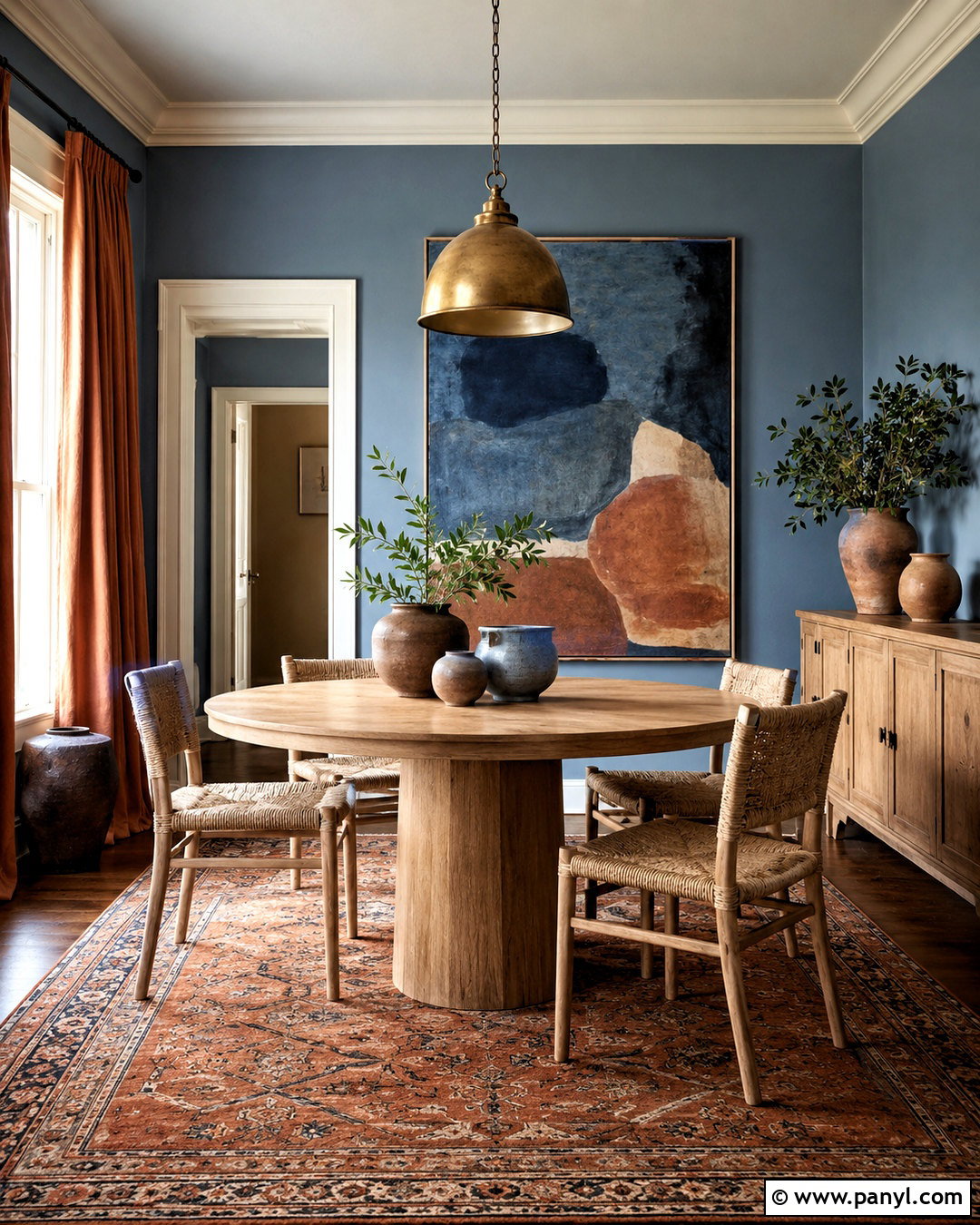
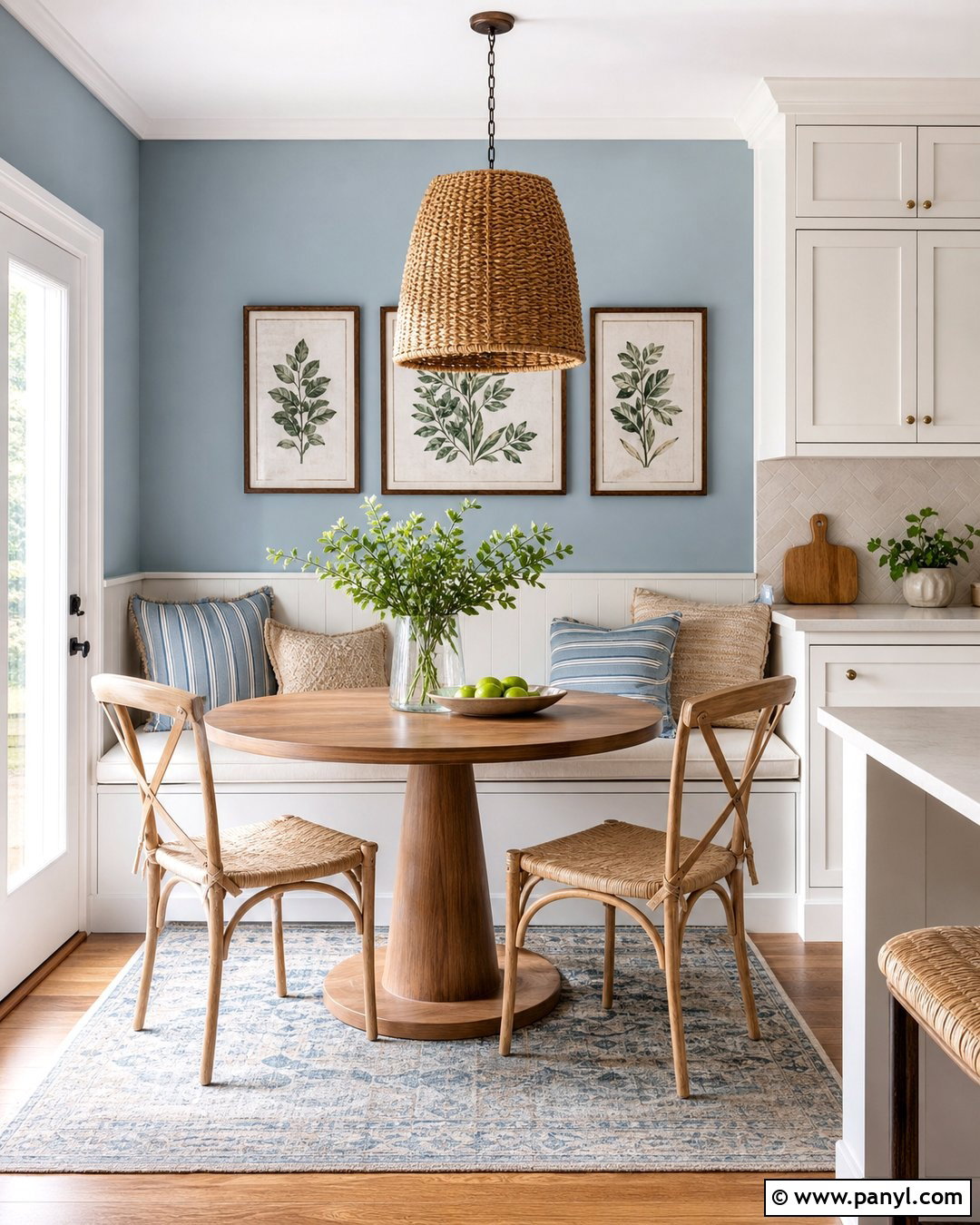
Warm terracotta makes dusty blue feel earthier and more inviting, especially in a social room. Cover the dining room walls in a subdued medium blue and keep the trim a creamy off-white. Pair the wall color with a round oak table, woven dining chairs, and a terracotta-toned vintage rug. Add rust-colored linen curtains if the room receives plenty of daylight, or choose ivory curtains with terracotta trim for a lighter effect. An aged brass pendant supplies warmth above the table. Display handmade pottery, a simple bowl, and one large abstract artwork combining blue, clay, and cream. Natural wood flooring completes the foundation. This coordinated design creates noticeable color contrast, yet the muted finishes prevent the room from feeling loud, trendy, or difficult to live with.
19. Dusty Blue And Sage Green Bedroom
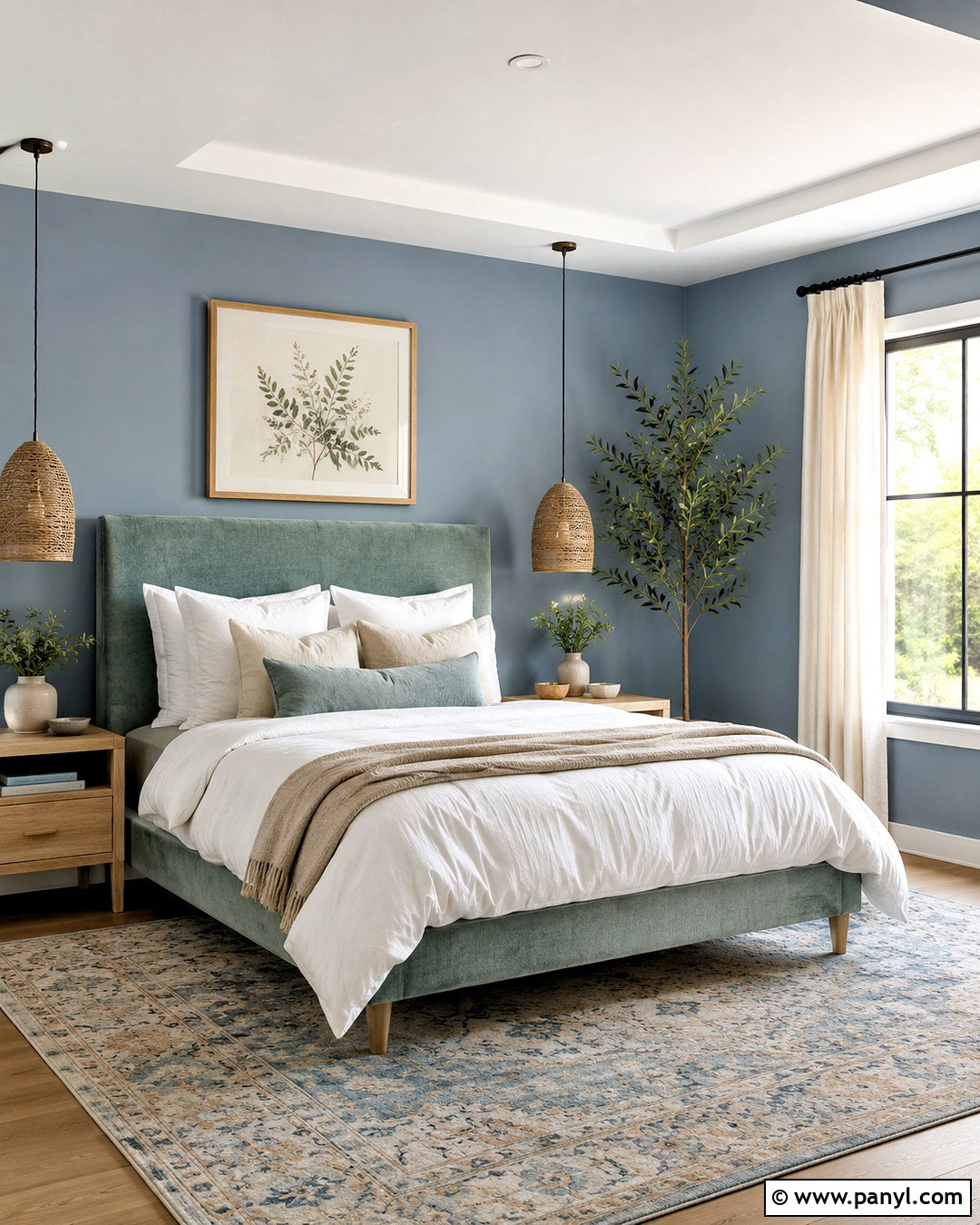
For a nature-inspired bedroom, combine dusty blue walls with restrained sage green accents and warm organic materials. Choose a light-to-medium blue-gray for every wall, then add an upholstered sage headboard or a muted green quilt. Keep the bedding mostly white and oatmeal so the two colors have room to breathe. Use white oak nightstands, woven pendant lights, and linen curtains to reinforce the relaxed palette. A patterned rug can blend blue, sage, tan, and cream across the floor. Finish the room with botanical artwork in thin wood frames and one tall plant near the window. Avoid bright greens or highly saturated blues, which can disrupt the soft effect. The finished space feels connected, balanced, and soothing without depending on obvious coastal or farmhouse decorations.
20. Deep Dusty Blue Library
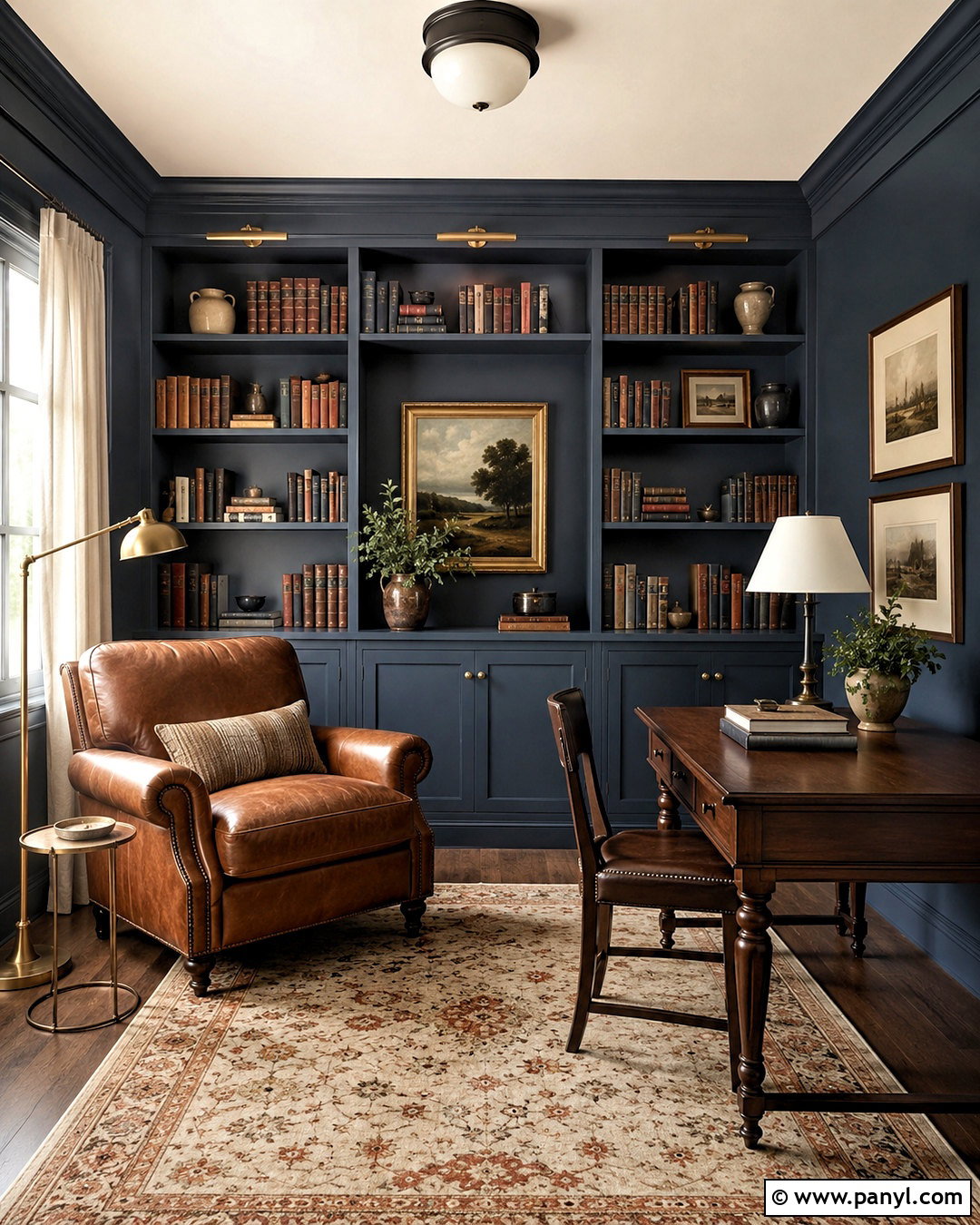
A small library or reading room can support a deeper dusty blue that might feel too strong in a large open space. Paint the walls, shelving, and trim in a dark smoky blue with enough gray to soften its richness. Leave the ceiling warm white or use a much paler blue to keep the room from feeling closed in. Place a cognac leather reading chair beside a walnut bookcase and add an adjustable aged brass floor lamp. A cream-and-rust patterned rug warms the floor, while oatmeal curtains frame the window without competing with the walls. Include a compact wood desk or round side table for added function. Carefully arranged books, framed art, and pottery complete the room. The finished library feels cozy and established while remaining bright enough for comfortable daytime reading.
Conclusion:
The best dusty blue spaces feel balanced rather than overly cool. Warm whites, walnut, oak, leather, brass, terracotta, and natural textiles can soften blue-gray paint and help it work with the rest of a home. These 20 dusty blue paint color ideas also show that the shade is not limited to bedroom walls. It can transform kitchen cabinets, built-ins, bathrooms, workspaces, front doors, and complete house exteriors. Before choosing a final color, paint large samples and observe them in morning, afternoon, and evening light. Compare each sample with permanent finishes such as flooring, tile, countertops, and roofing. That simple process makes it easier to select a dusty blue that remains attractive throughout the day.

Related Ideas and Inspiration:
Leave a Reply