
A thoughtfully designed bedroom should feel restful, personal, and practical at the same time. The best 20 bedroom inspirations go beyond attractive bedding or a trendy wall color. They combine a functional furniture layout, comfortable textiles, layered lighting, useful storage, and meaningful decor into one complete look. Whether you prefer warm neutrals, dramatic color, natural materials, vintage character, or clean modern lines, consistency makes the room feel finished. Start with a clear palette and one strong focal point, then repeat related colors and materials around the space. Small updates can also make a noticeable difference when they work together. Use these 20 bedroom inspirations to discover complete, achievable looks for bedrooms of different sizes, moods, and decorating budgets.

1. Warm Neutral Bedroom
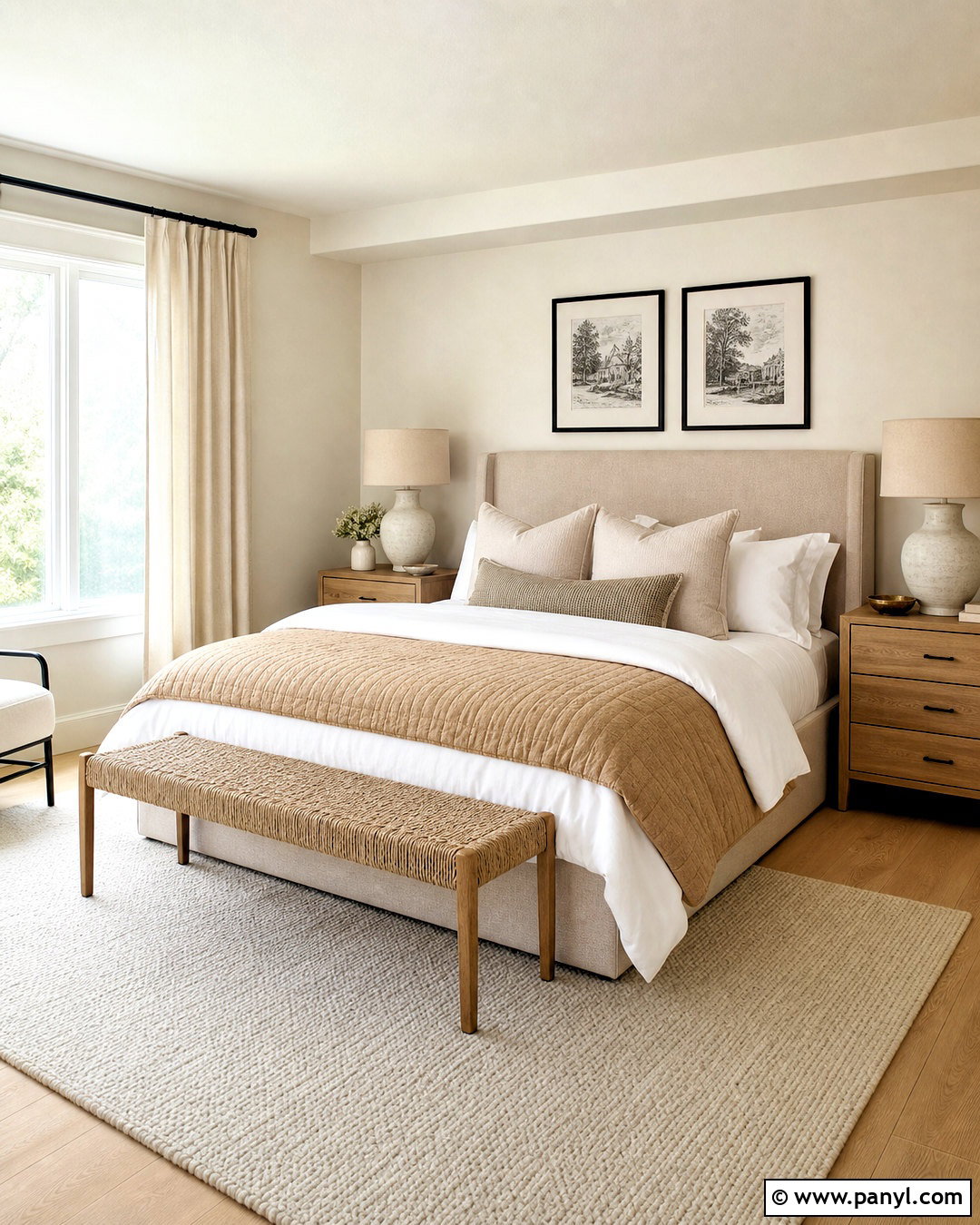
Soft beige walls create a calm foundation for a bedroom that feels warm rather than plain. Center an oatmeal upholstered bed on the main wall and balance it with matching light oak nightstands. Layer ivory sheets, a camel quilt, and several pillows in cream and muted brown. A large wool rug should extend beyond both sides of the bed, making the entire arrangement feel grounded. Choose linen curtains in a tone close to the wall color for a smooth, uninterrupted background. Ceramic lamps, black-framed artwork, and one rounded accent chair add contrast without disturbing the peaceful palette. Finish the room with a woven bench at the foot of the bed and a few natural branches in a simple stoneware vase.
2. Sage Green Bedroom
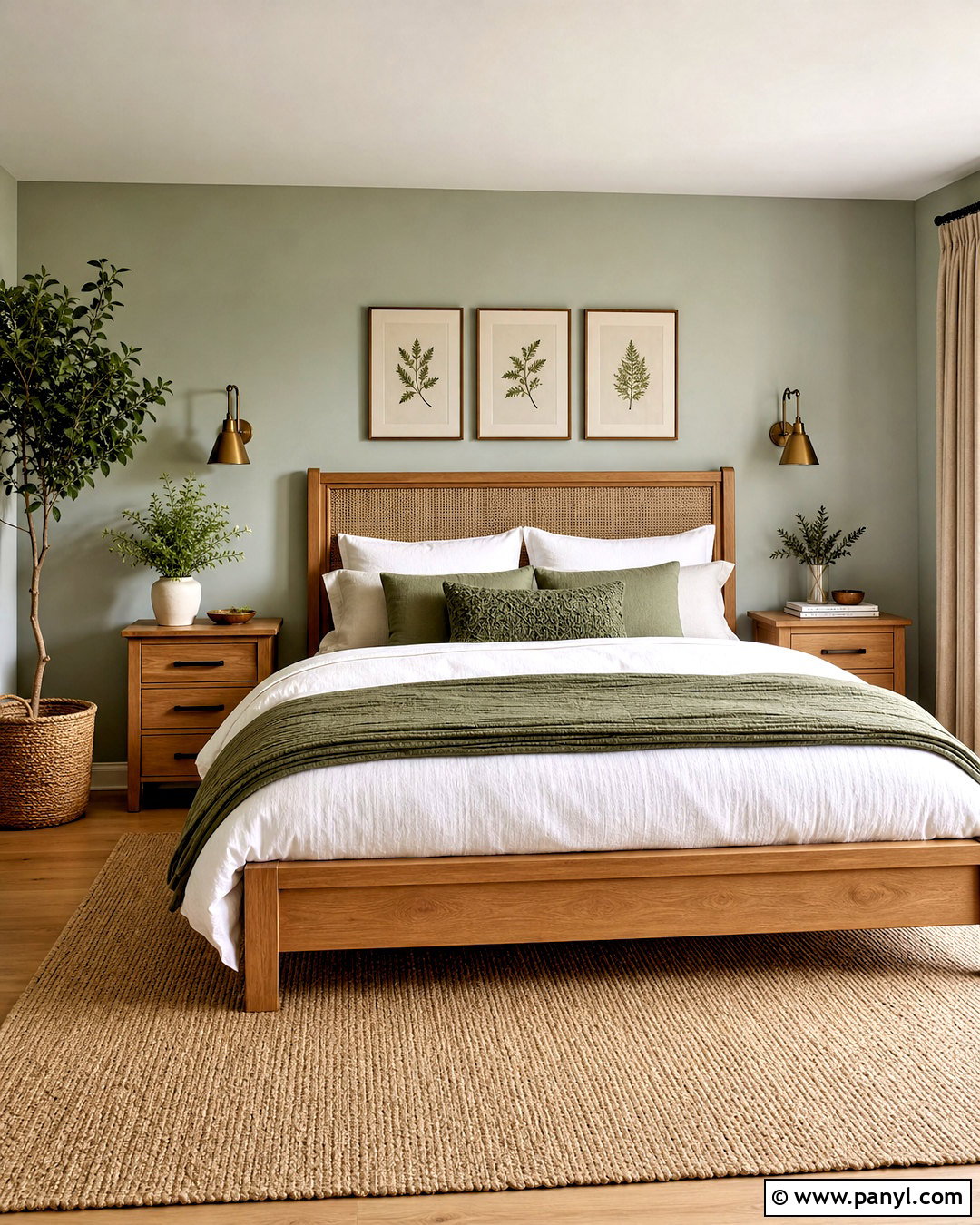
Imagine entering a bedroom wrapped in soft sage green, natural wood, and relaxed linen. Paint the walls a warm, muted green while keeping the ceiling and trim creamy white. A medium oak bed with a woven cane headboard brings an organic focal point to the room. Dress it with white sheets, a sage coverlet, and pillows featuring small botanical patterns. Add oak nightstands, aged brass sconces, and a low dresser that matches the bed. Full-length flax curtains soften the windows and complement a beige textured rug. Keep accessories simple with framed landscape prints, ceramic planters, and one comfortable reading chair. Repeating sage, cream, and oak throughout the room creates a connected design that feels naturally restful.
3. Blue Color Drenched Bedroom
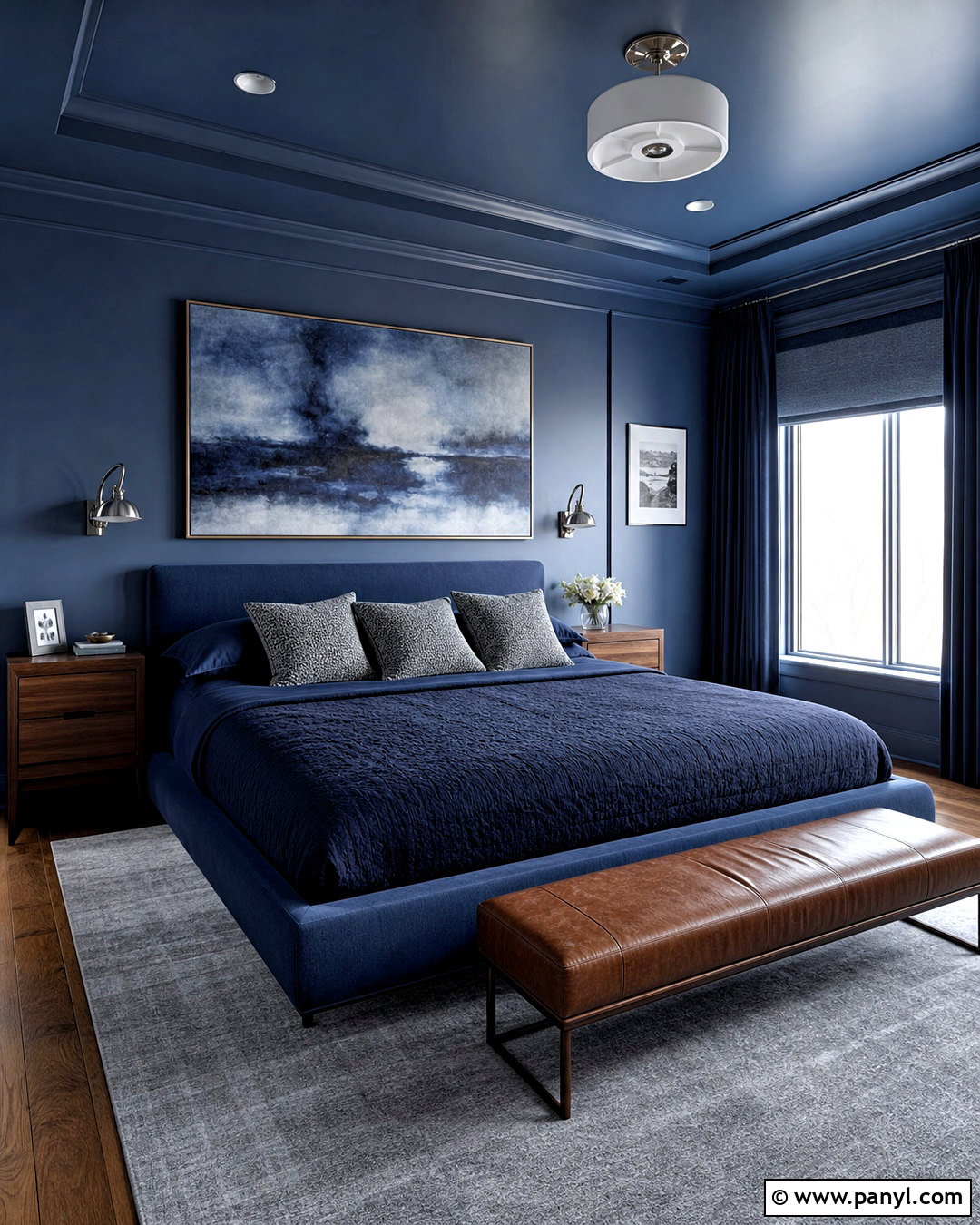
For a bedroom with depth and personality, cover the walls, trim, and ceiling in a smoky blue-gray. This continuous color treatment gives the room an enveloping appearance while reducing distracting visual breaks. Place a low upholstered bed in a similar blue tone against the longest wall. Use crisp white sheets, a navy coverlet, and patterned pillows that mix faded blue with warm tan. Walnut nightstands and a brown leather bench prevent the cool palette from feeling flat. Add brushed nickel sconces, full blue curtains, and a pale gray wool rug. Keep artwork limited to one large abstract piece above the bed. Natural wood, subtle shine, and lighter textiles provide enough contrast while preserving the immersive blue bedroom design.
4. Burgundy Bedroom
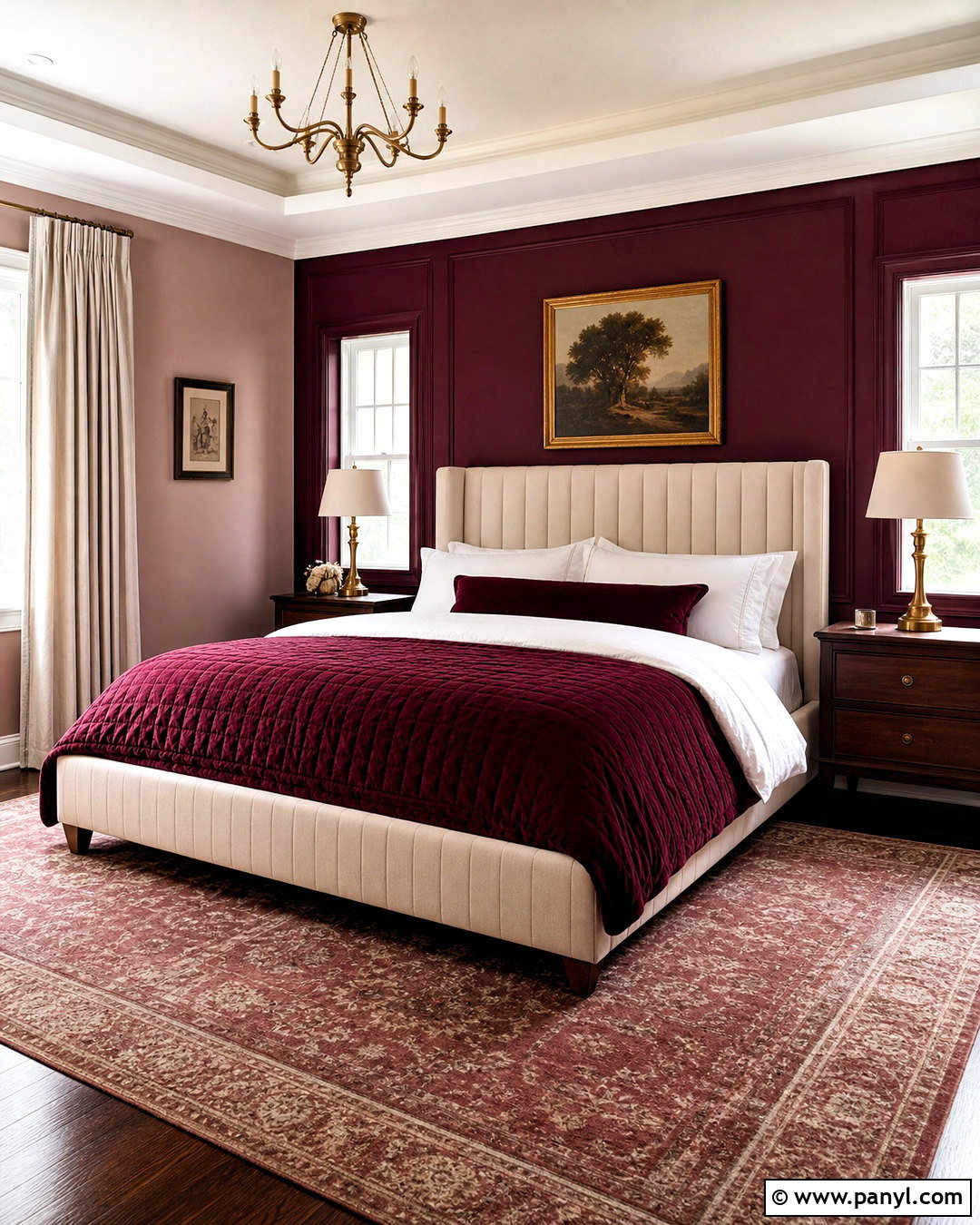
Deep burgundy can make a bedroom feel intimate and polished when balanced with softer materials. Use burgundy paint behind a tall channel-tufted headboard, then carry a lighter dusty rose across the remaining walls. Choose cream bedding with a burgundy velvet quilt folded neatly at the foot. Dark walnut nightstands, antique brass lamps, and a patterned rug in faded red and beige reinforce the rich palette. Hang floor-length oatmeal curtains to brighten the windows and reduce the visual weight of the darker colors. A small upholstered chair and pedestal table can form a quiet reading corner. Complete the look with traditional framed artwork and warm wood accessories. The finished room feels dramatic, comfortable, and collected rather than overly formal.
5. Modern Organic Bedroom
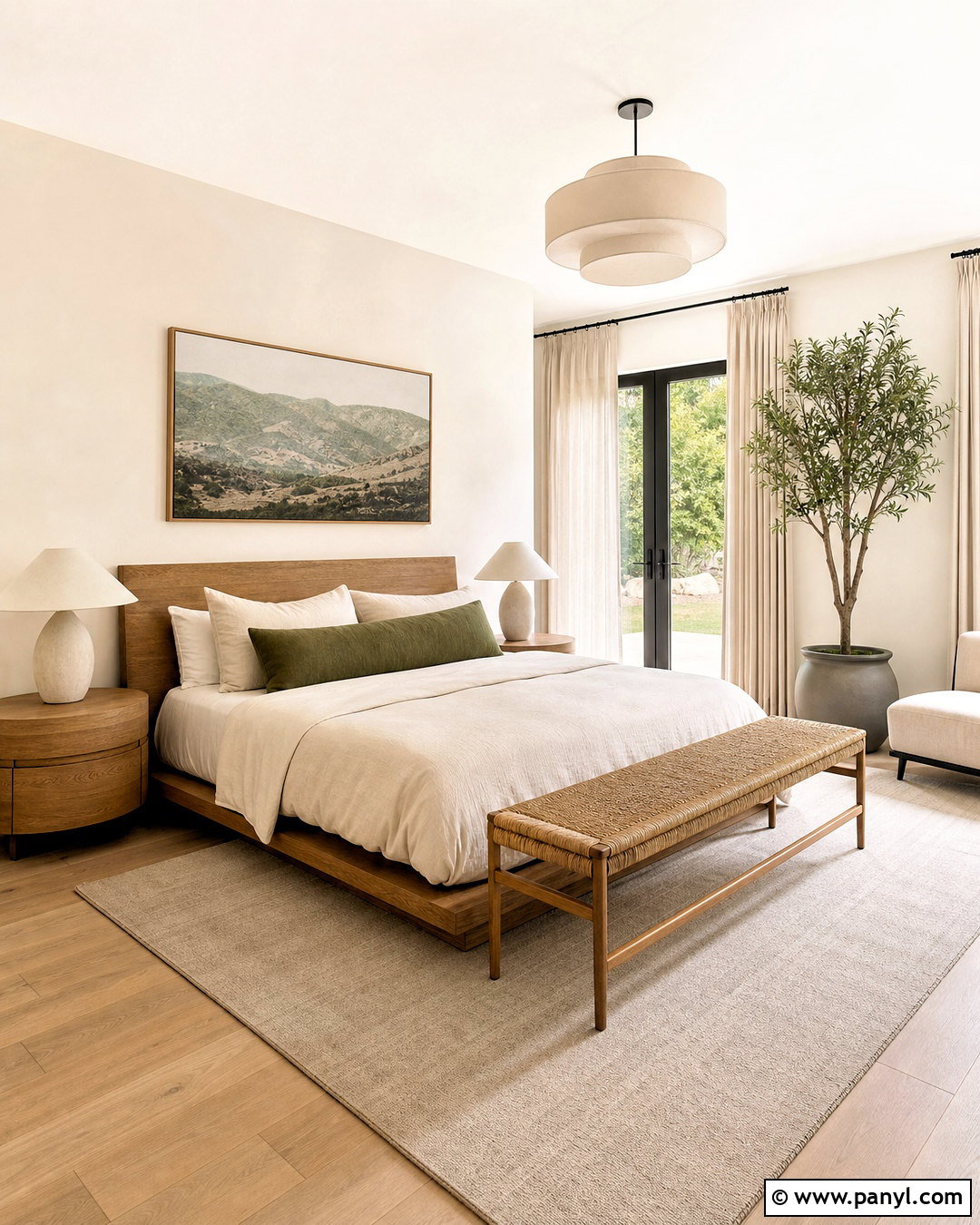
A modern organic bedroom works best when simple furniture is softened by natural texture. Begin with warm white walls, pale oak flooring, and a streamlined oak platform bed. Layer the bed with ivory linen sheets, a textured taupe blanket, and pillows in soft olive and sand. Place rounded wood nightstands on both sides and use sculptural plaster lamps for gentle contrast. A large jute-and-wool rug defines the sleeping area without introducing a busy pattern. Add ceiling-height linen curtains, a woven bench, and one oversized landscape print. A potted tree near the window brings height and a touch of green. Keep surfaces mostly clear so the grain, texture, and handmade finishes remain the focus of this balanced bedroom.
6. Cozy Minimalist Bedroom
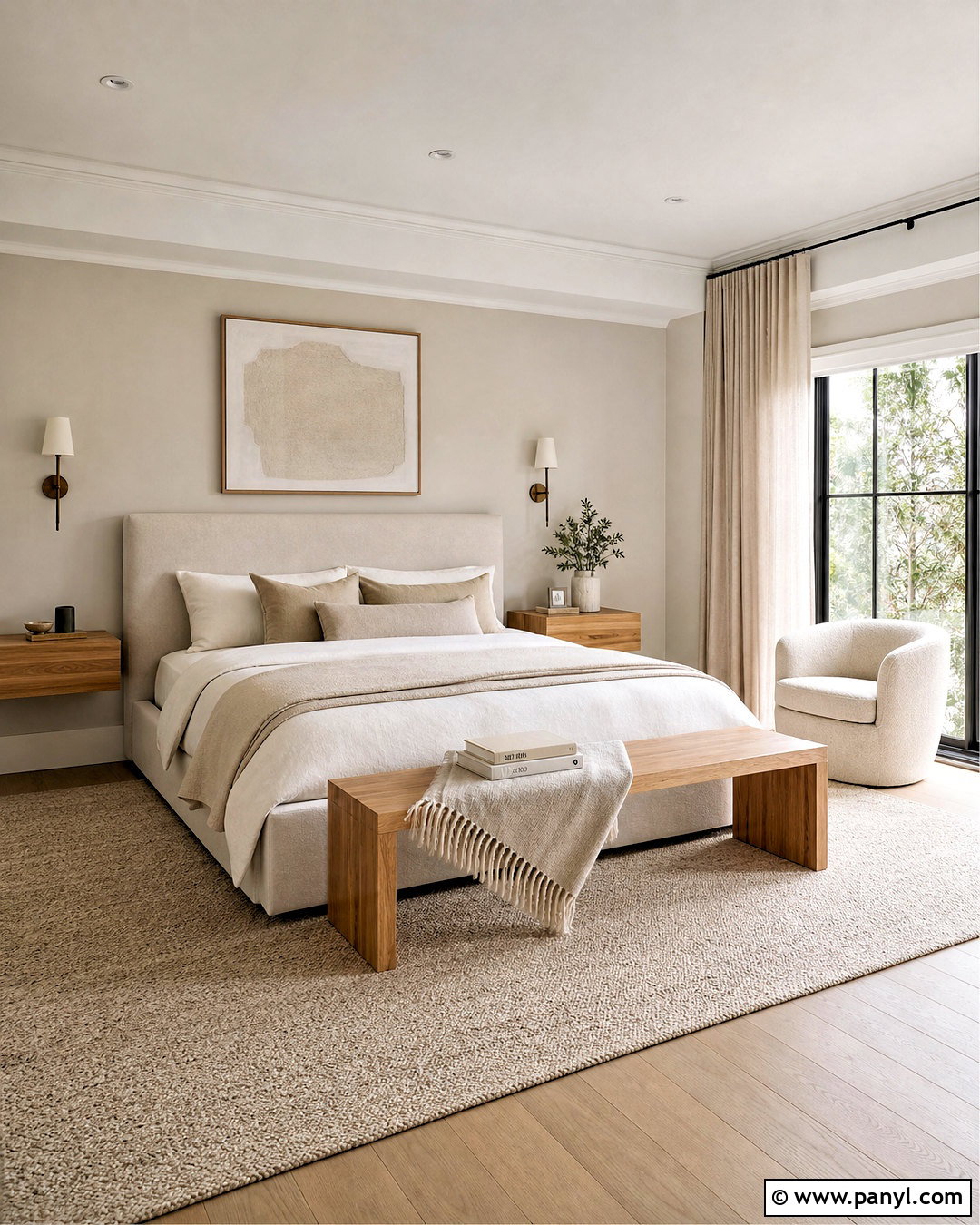
Can a minimalist bedroom feel inviting instead of empty? The key is using fewer pieces with warmer colors and richer surfaces. Paint the walls soft greige and place a simple upholstered bed in the center of the main wall. Choose layered bedding in cream, mushroom, and light brown rather than relying on a single white duvet. Floating oak nightstands provide storage while keeping the floor visible. Add compact wall sconces, one large textured artwork, and a thick wool rug beneath the bed. Full curtains should match the walls closely to maintain a clean background. Finish with a curved bouclé chair and a narrow wood bench. The uncluttered layout feels calm, but its tactile fabrics and earthy palette keep it comfortable.
7. Small Bedroom Storage
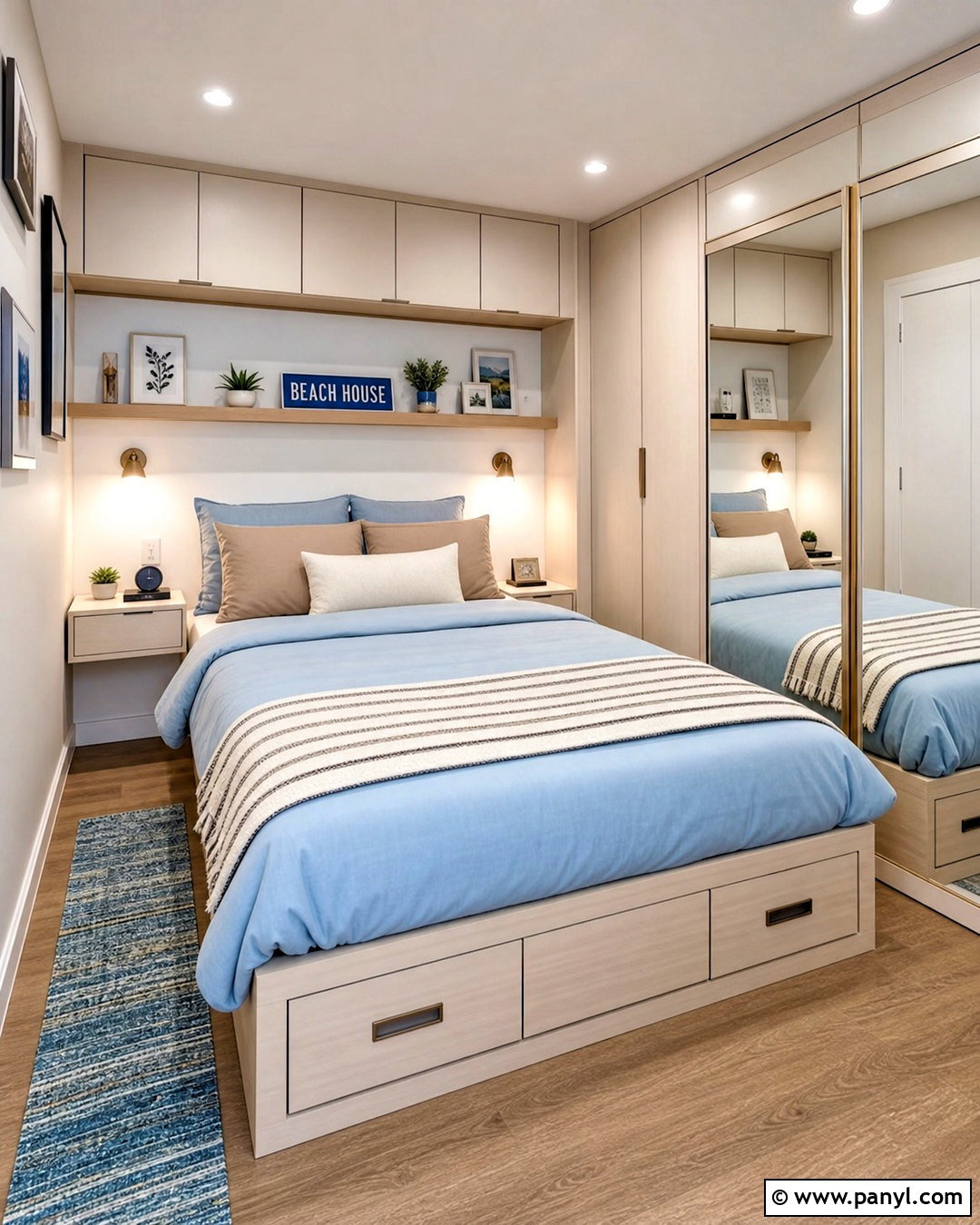
A small bedroom becomes far more functional when storage is planned as part of the complete design. Position a storage bed against the longest uninterrupted wall, leaving clear walking space near the doorway. Use shallow floating nightstands with wall-mounted lights so the floor remains open. Paint the walls and built-in storage a soft warm white to create a unified background. An overhead cabinet system can frame the bed, but keep its doors flat and hardware minimal. Choose light blue bedding, a striped throw, and a slim washable rug for subtle color. Add a mirrored wardrobe to reflect the window and reduce the need for a separate dresser. One narrow shelf above the headboard can display art without overcrowding the room.
8. Modern Farmhouse Bedroom
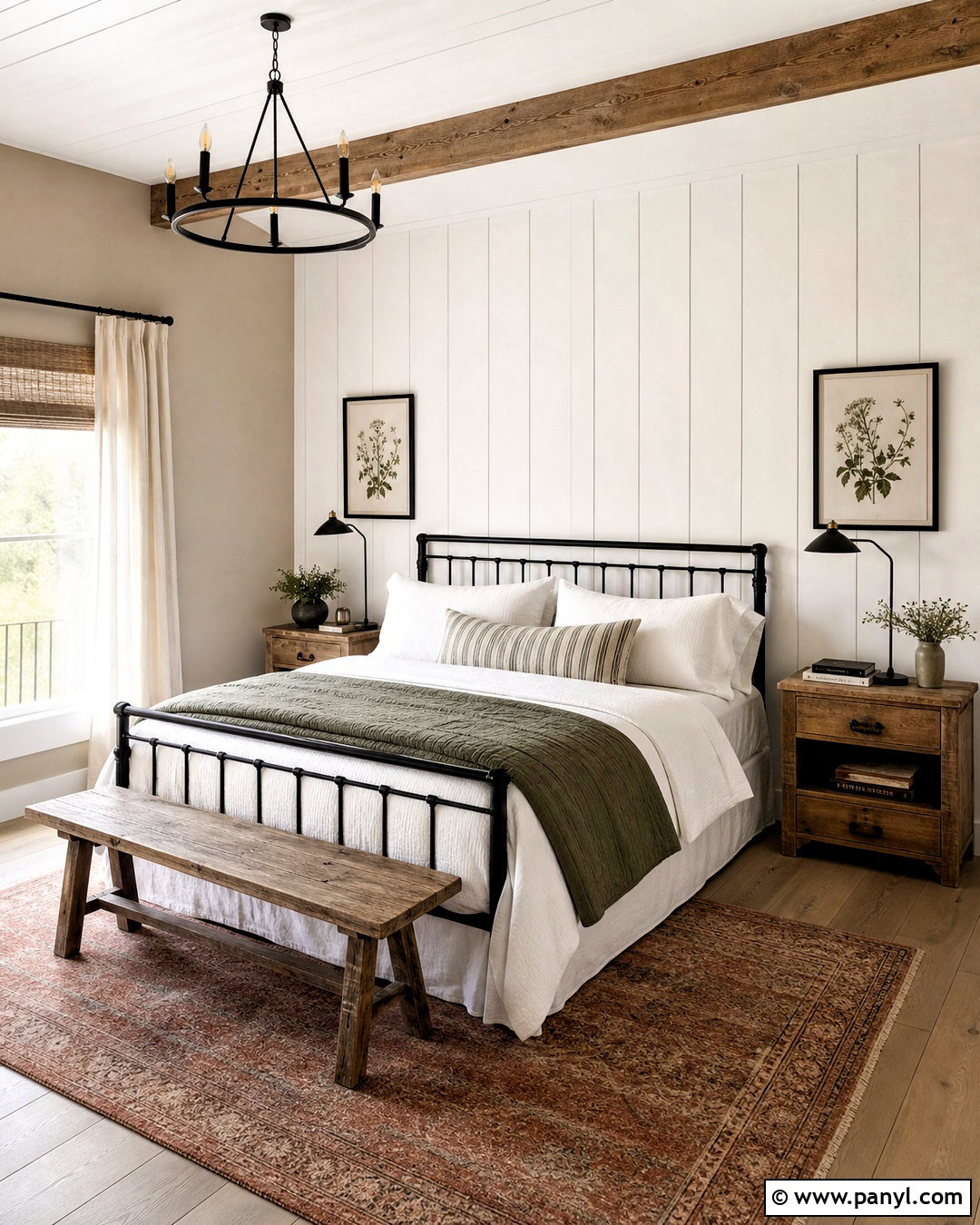
Warm wood and clean-lined furniture give a farmhouse bedroom character without making it feel overly rustic. Cover the headboard wall with vertical white shiplap and paint the other walls a gentle mushroom beige. Center a black metal bed on the paneled wall, then add white linen bedding, a muted olive quilt, and ticking-stripe pillows. Use reclaimed pine nightstands with simple black lamps for balanced contrast. A vintage-style rug in faded cream, rust, and gray anchors the furniture. Hang natural linen curtains from matte black rods and place a weathered oak bench at the bed’s foot. Complete the room with framed botanical drawings and a practical wood dresser. Every element feels relaxed, useful, and comfortably connected.
9. Coastal Bedroom
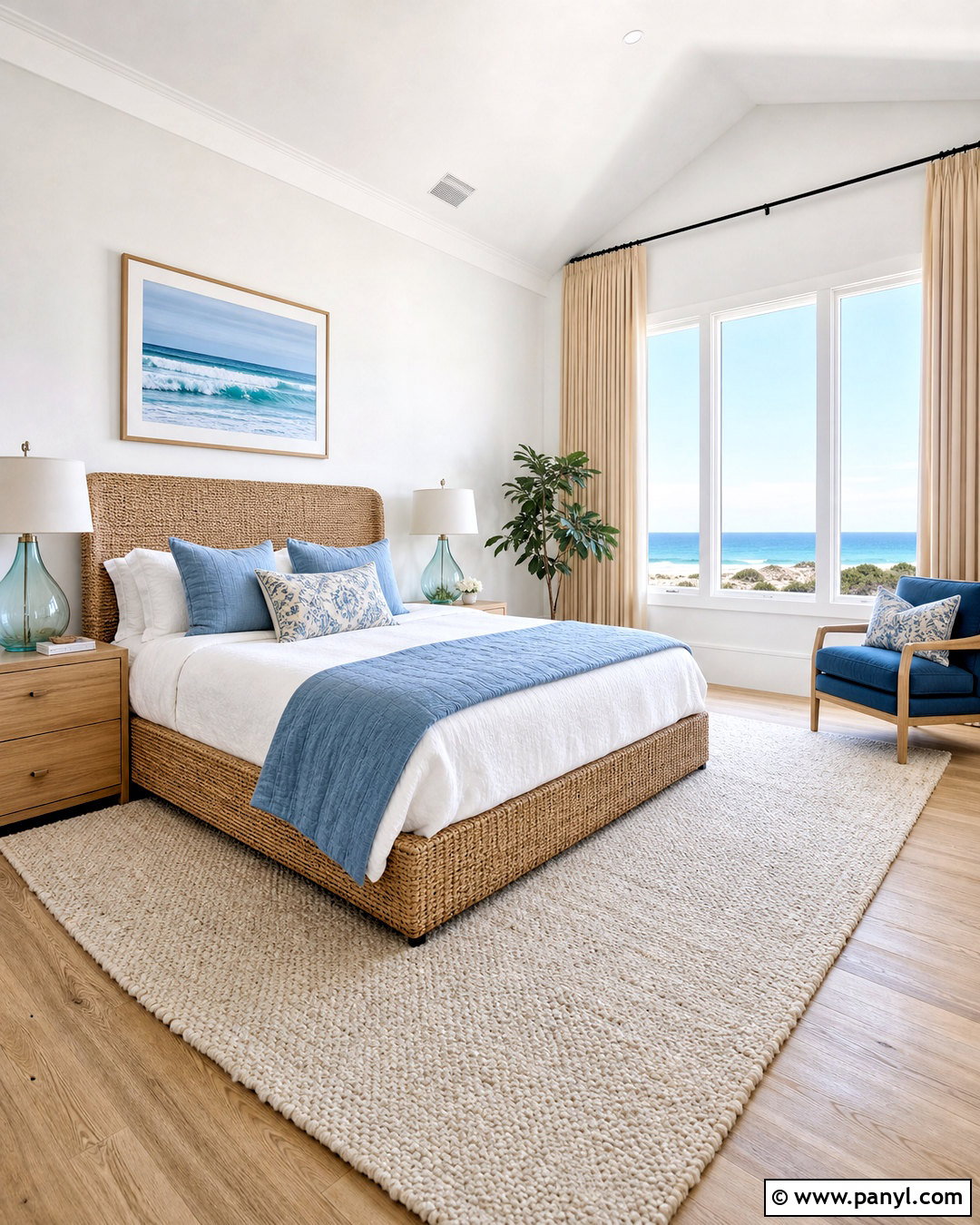
A coastal bedroom can feel fresh and sophisticated without relying on obvious nautical decorations. Start with soft white walls, pale wood flooring, and a woven natural-fiber bed. Layer white bedding with a washed blue coverlet and pillows in narrow cream-and-blue stripes. Light oak nightstands and clear glass lamps keep the room visually airy. Choose full-length linen curtains in a pale sandy beige and place a textured ivory rug beneath the bed. A blue upholstered chair near the window adds a practical reading spot. Finish with abstract ocean artwork, a driftwood-toned bench, and small ceramic accessories. The completed palette should suggest water, sky, and sand through color and texture while remaining suitable for an everyday home.
10. Mid-Century Modern Bedroom
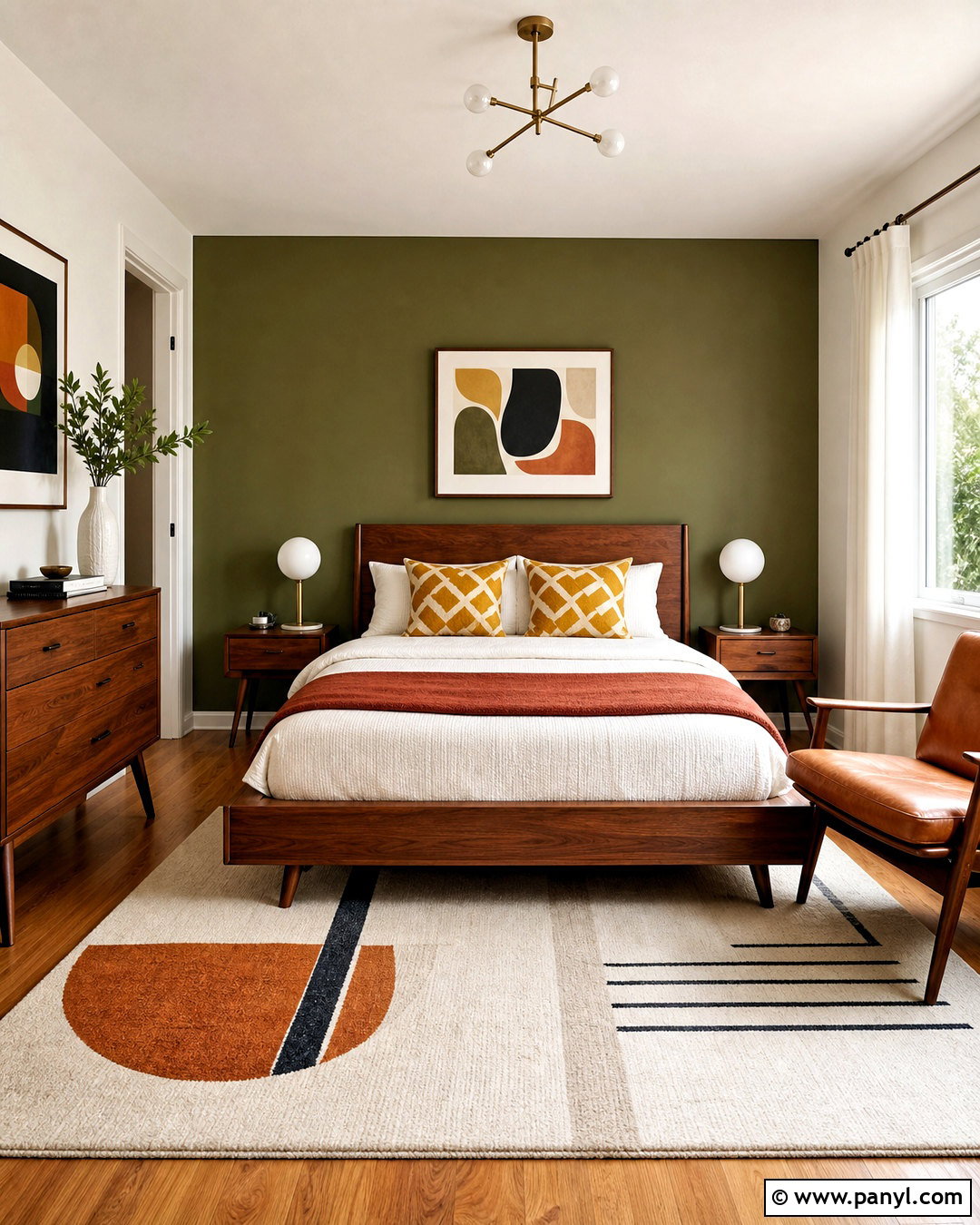
Rich walnut furniture and warm retro color can give a bedroom distinctive mid-century character. Place a low walnut bed with a gently curved headboard against a muted olive wall. Keep the other walls warm white to prevent the room from feeling heavy. Dress the bed in cream sheets, a rust-colored coverlet, and geometric pillows in mustard, brown, and olive. Add matching tapered-leg nightstands, globe lamps, and a streamlined six-drawer dresser. A low-pile geometric rug connects the room’s main colors without competing with the furniture. Finish with a caramel leather chair, simple abstract artwork, and one tall plant. Clean shapes, practical placement, and controlled color make the finished bedroom feel nostalgic yet current.
11. Vintage Eclectic Bedroom
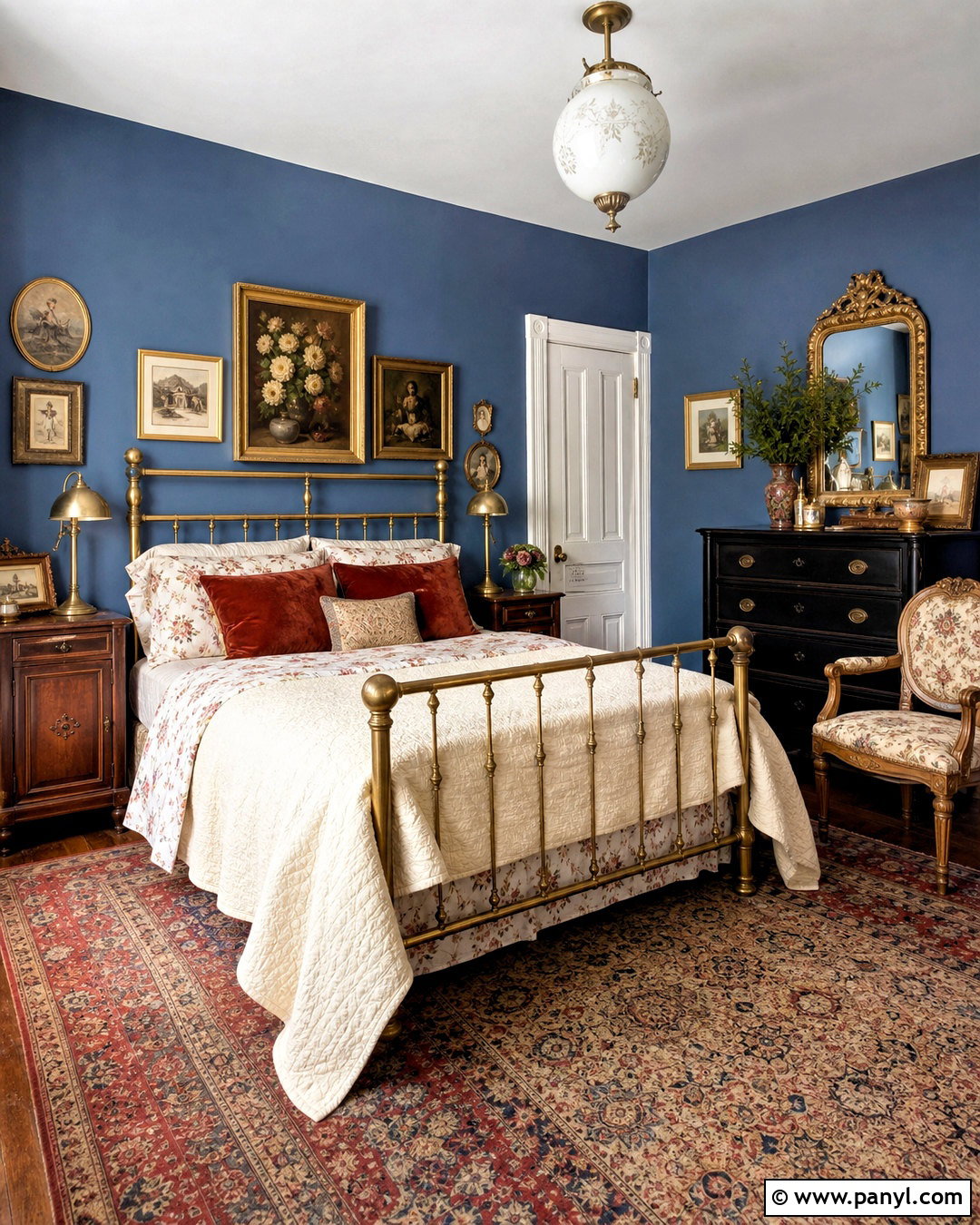
Rooms filled with collected pieces often feel more personal than spaces purchased all at once. Begin with pale dusty blue walls and an antique-inspired brass bed. Layer floral sheets, a quilted cream coverlet, and velvet pillows in rust and moss green. Instead of matching nightstands, pair a small wood chest with a round skirted table. Use vintage-style lamps that share a similar brass finish to connect the different furniture. A faded Persian-style rug brings the palette together beneath the bed. Hang a mixed arrangement of landscapes, portraits, and botanical prints above the headboard. Add a dark wood dresser and an upholstered reading chair near the window. Repeated colors keep the eclectic bedroom coordinated rather than cluttered.
12. Romantic Floral Bedroom
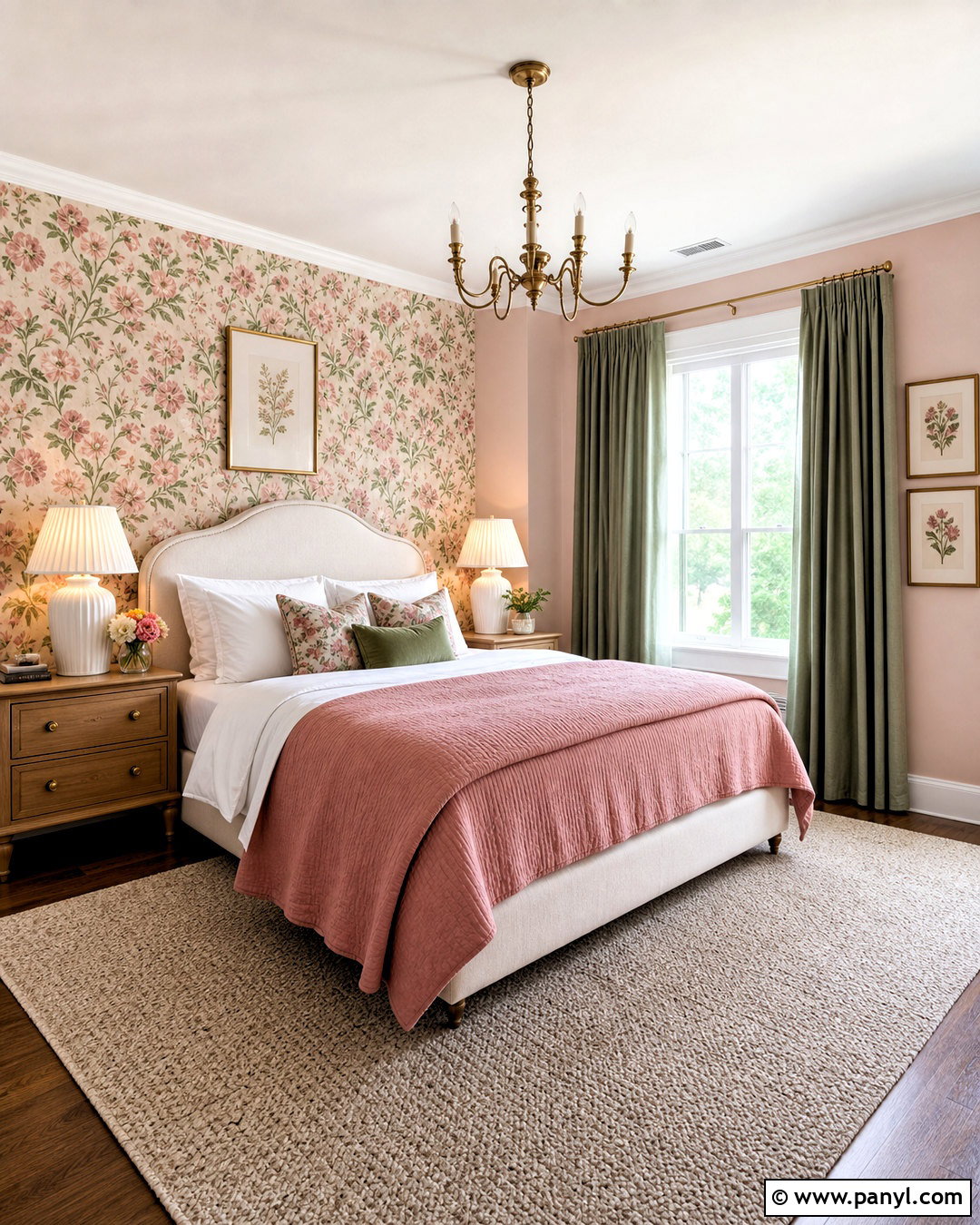
Delicate pattern can create a romantic bedroom that still feels fresh and grown-up. Apply small-scale floral wallpaper in muted rose, green, and cream to the headboard wall. Keep the surrounding walls pale blush and use warm white trim. Choose a curved cream upholstered bed, white cotton bedding, and a dusty rose quilt. Light wood nightstands and pleated ceramic lamps add softness without looking ornate. Hang full green linen curtains to pick up the leaves in the wallpaper. A neutral wool rug and a simple bench balance the decorative surfaces. Complete the look with a few botanical prints and fresh branches in a glass vase. The limited palette allows the floral details to feel intentional, peaceful, and easy to live with.
13. Scandinavian Bedroom
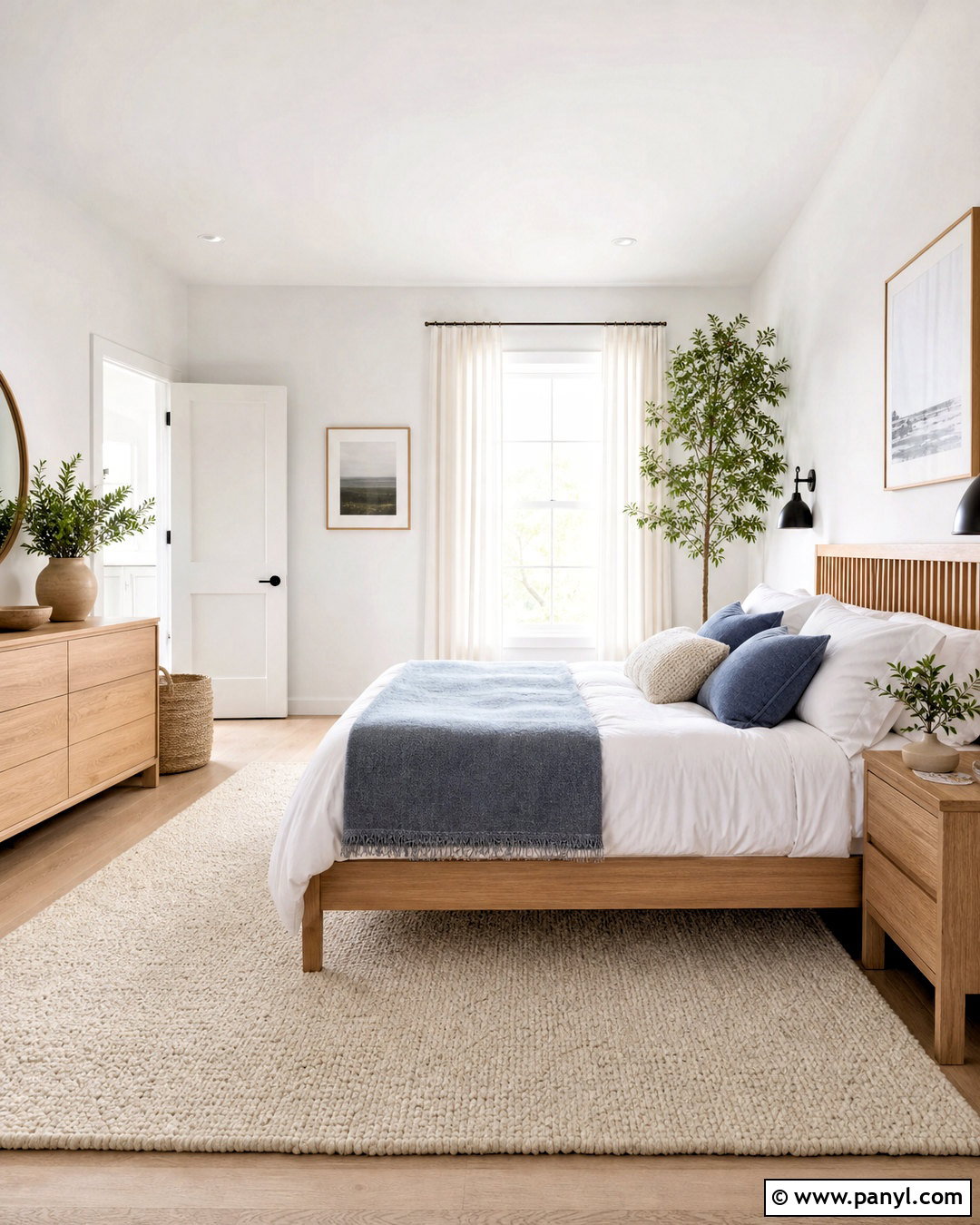
Bright walls, pale wood, and practical furniture form the base of an inviting Scandinavian bedroom. Paint the room a soft chalky white and choose a light oak bed with a simple slatted headboard. Use white bedding layered with a gray wool blanket and muted blue pillows. Matching oak nightstands should provide drawers for concealed storage, while small black sconces introduce crisp contrast. Place a thick cream rug under the bed and hang light-filtering white curtains at the windows. A streamlined wood dresser, rounded mirror, and compact lounge chair complete the furniture plan. Add warmth with woven baskets, handmade ceramics, and one graphic art print. The resulting space feels clean and functional without appearing bare or impersonal.
14. Japandi Bedroom
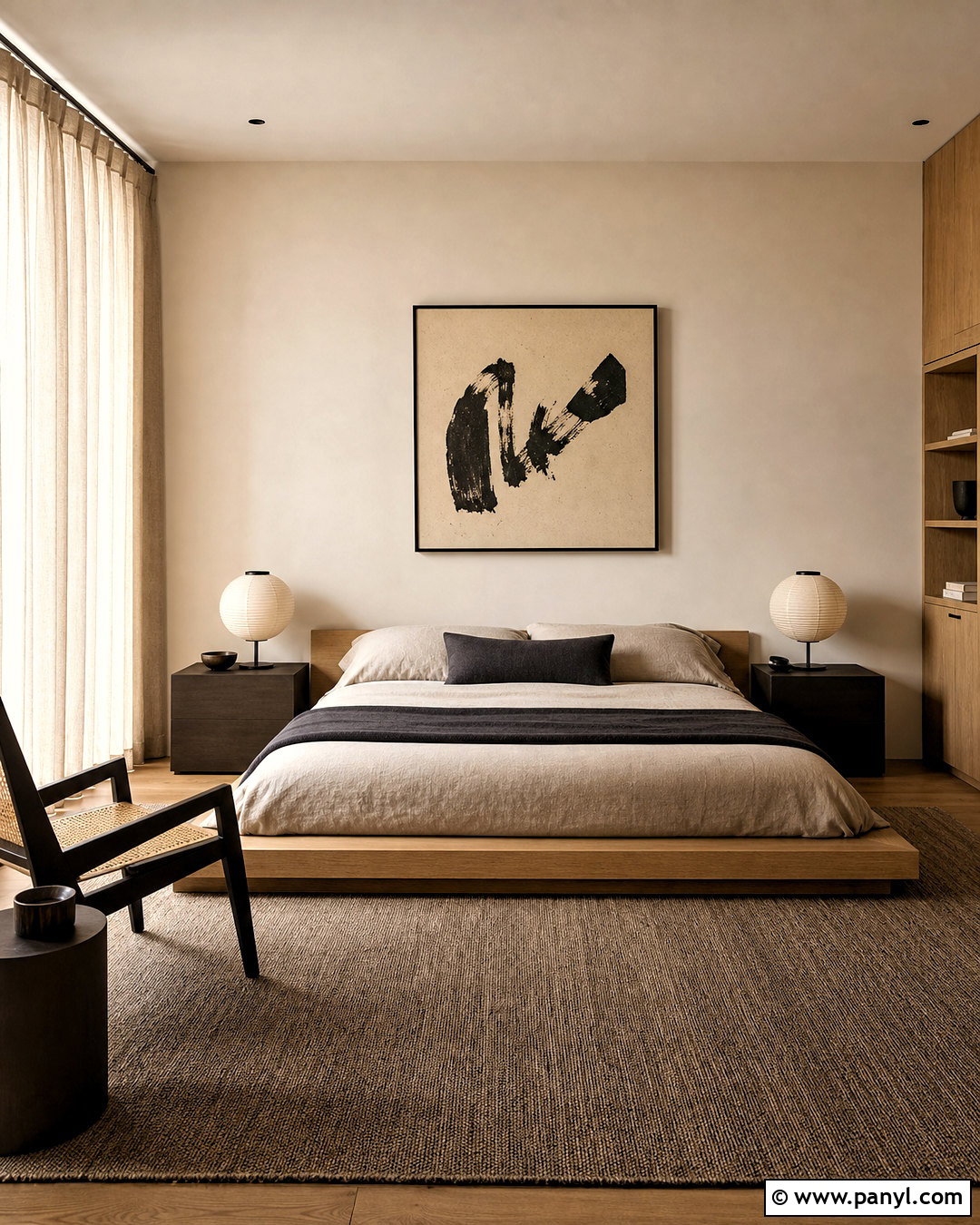
A Japandi bedroom combines low-profile furniture, natural materials, and carefully edited decor. Select warm off-white walls and a low oak platform bed with a wide wooden headboard. Make the bed with textured linen in sand, ivory, and muted charcoal. Use simple block-shaped nightstands and paper-shaded lamps to create symmetry. A large flat-woven rug in pale taupe softens the floor while preserving the clean layout. Choose natural linen curtains and keep the window treatment free from decorative hardware. Add one black wood chair, a ceramic vessel, and a restrained ink-style artwork. Built-in storage with smooth oak fronts can hide everyday belongings. The finished room should feel quiet, balanced, and connected through repeated wood tones and understated craftsmanship.
15. Dark Academia Bedroom
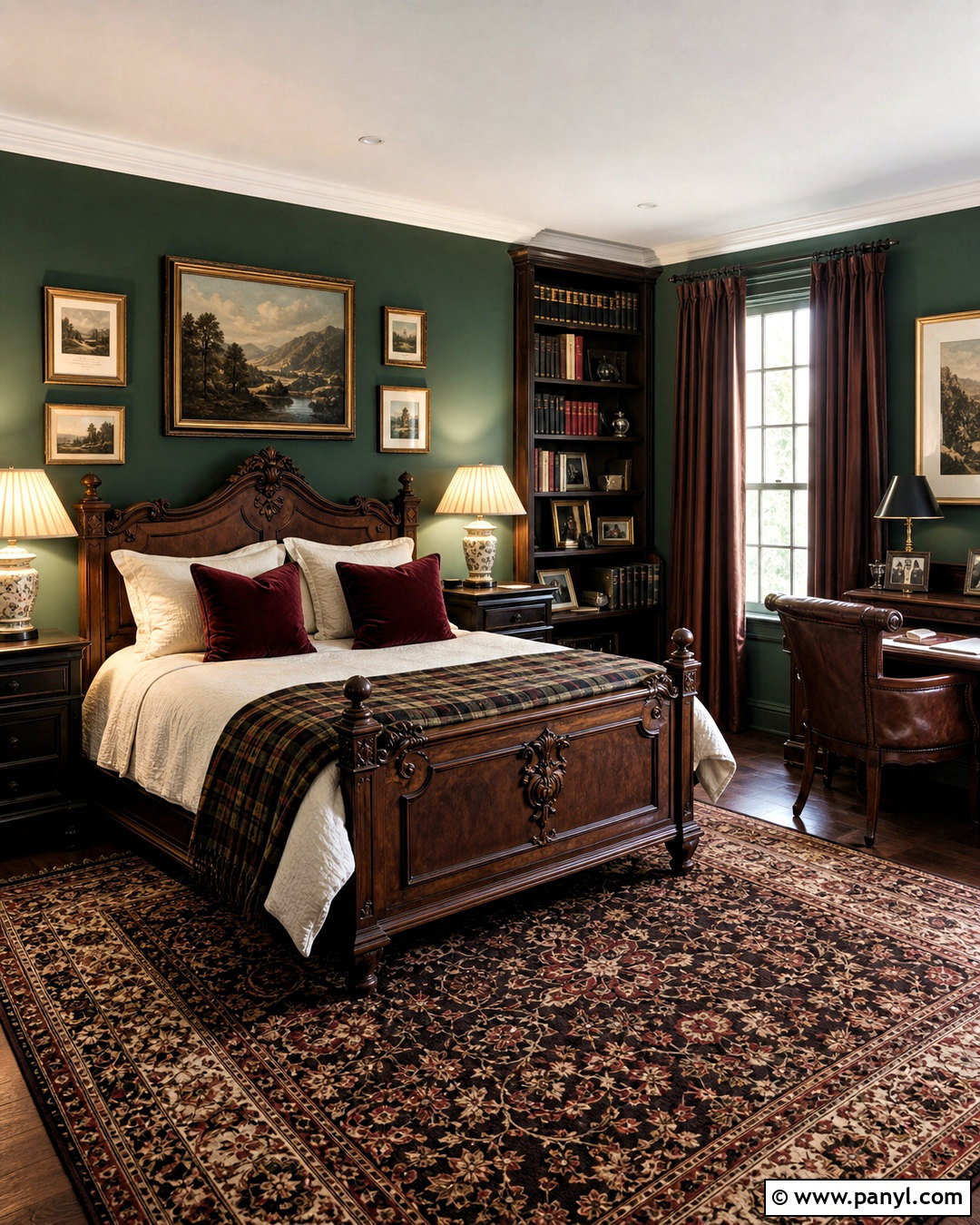
For a bedroom that feels scholarly and atmospheric, build the design around deep color and traditional wood. Paint the walls a dark forest green and use creamy white on the ceiling for balance. Center a carved walnut bed against the main wall and dress it with ivory sheets, a plaid wool blanket, and velvet pillows in brown and burgundy. Dark wood nightstands, pleated lamps, and a vintage-style rug strengthen the collected appearance. Include a compact writing desk with a leather chair near the window. Arrange framed landscapes and classic architectural prints above the bed. Floor-length brown curtains, aged brass accents, and a narrow bookcase complete the room. Keep the layout orderly so the rich materials feel cozy rather than crowded.
16. Hotel Inspired Bedroom
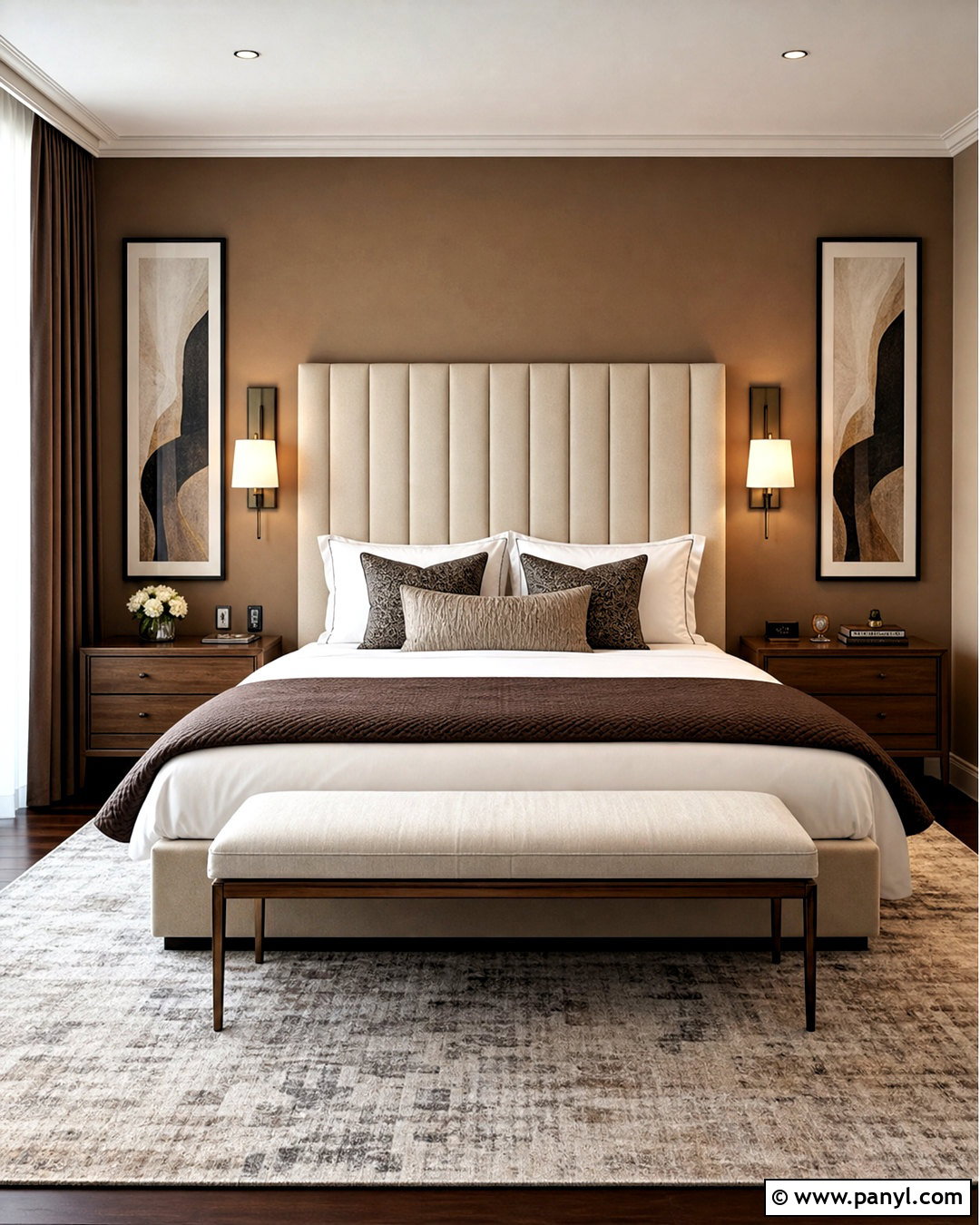
Symmetry is the easiest way to give an ordinary bedroom the polished feeling of a boutique hotel. Start with a wide upholstered headboard that extends behind both nightstands. Paint the walls warm taupe and use crisp white bedding with a tailored chocolate-brown coverlet. Matching wood nightstands, shaded sconces, and small framed artworks create an orderly arrangement on each side. Place a soft patterned rug under the entire bed and add a long upholstered bench at its foot. Ceiling-height blackout curtains should frame the window while hidden sheers filter daylight. Include a compact seating area if space allows. Keep cords and personal items concealed inside drawers. The final room feels comfortable, intentional, and ready for everyday relaxation.
17. Colorful Boho Bedroom
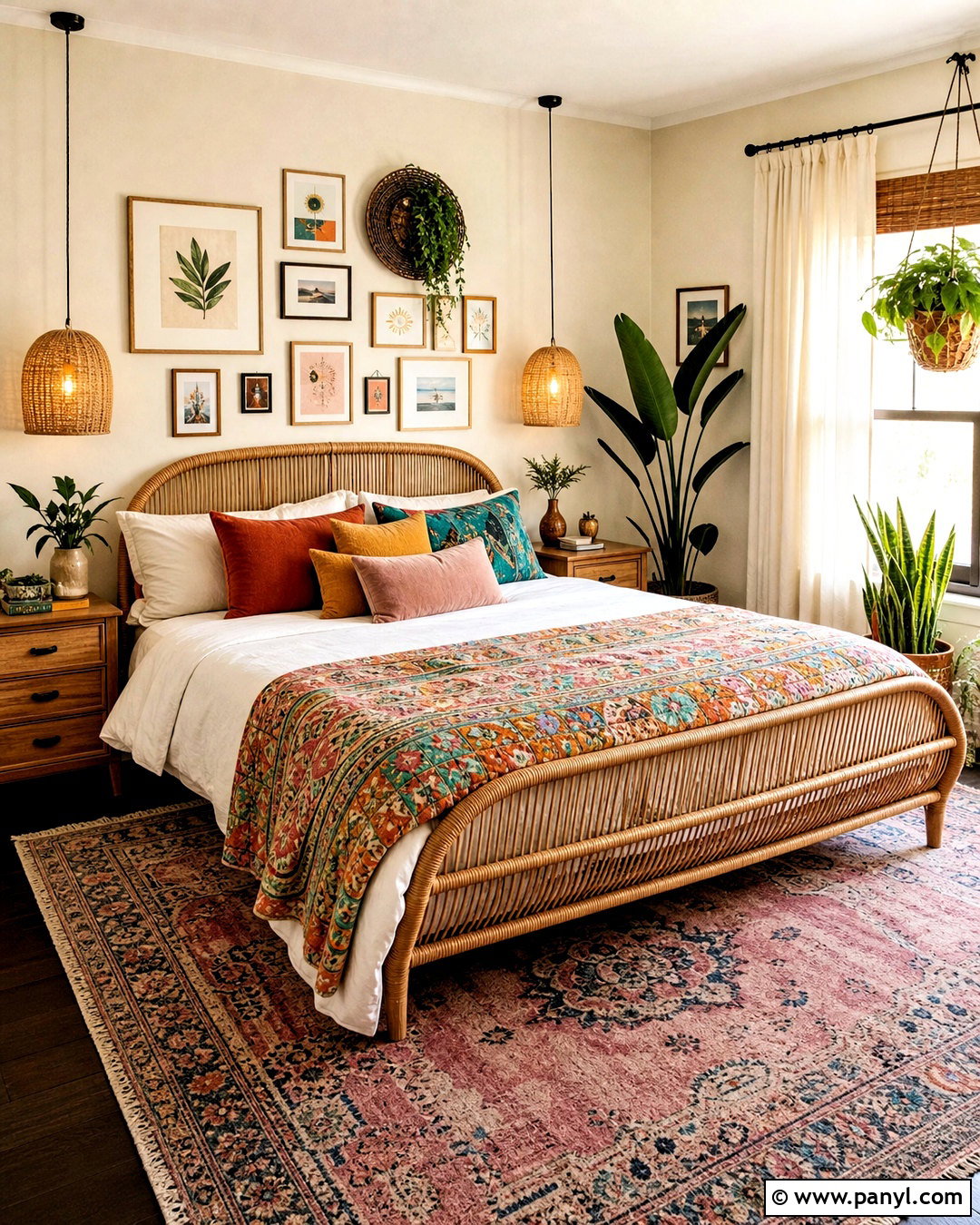
A colorful boho bedroom needs a controlled palette to remain comfortable and cohesive. Use warm cream walls as the background, then introduce terracotta, teal, mustard, and dusty pink through the bedding and rug. Choose a natural rattan bed with curved details and balance it with simple wood nightstands. Layer a white duvet, block-printed quilt, and mixed patterned pillows in the selected colors. A large vintage-inspired rug should anchor the bed and repeat the same tones. Hang woven pendant lights and soft linen curtains for additional texture. Complete the layout with a low dresser, an upholstered floor cushion, leafy plants, and a small gallery wall. Handmade-looking pieces give the finished room personality without overwhelming its restful purpose.
18. Black And White Bedroom
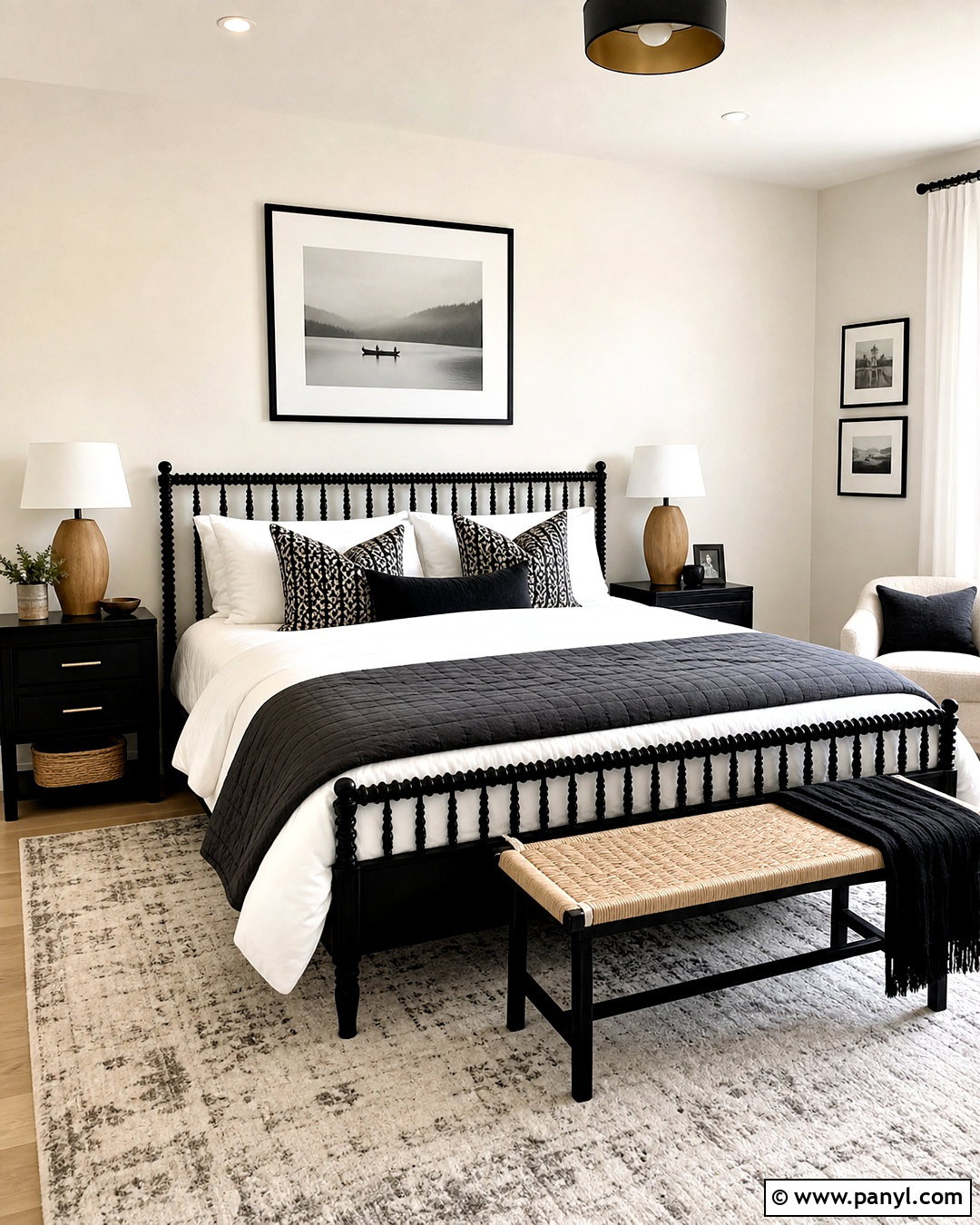
Black and white can create a striking bedroom when softer materials prevent the contrast from feeling severe. Paint the walls warm white and position a matte black spindle bed against the focal wall. Use white bedding with a charcoal quilt and pillows featuring small-scale black patterns. Black nightstands establish symmetry, while natural oak lamps and a matching bench add warmth. Place a gray-and-ivory rug beneath the bed to connect the strong colors gradually. White curtains with slim black rods keep the windows crisp and simple. Add oversized monochrome photography above the headboard and one curved cream chair in the corner. The complete bedroom feels graphic and modern, yet wood, wool, and layered cotton make it comfortable enough for daily use.
19. Terracotta Bedroom
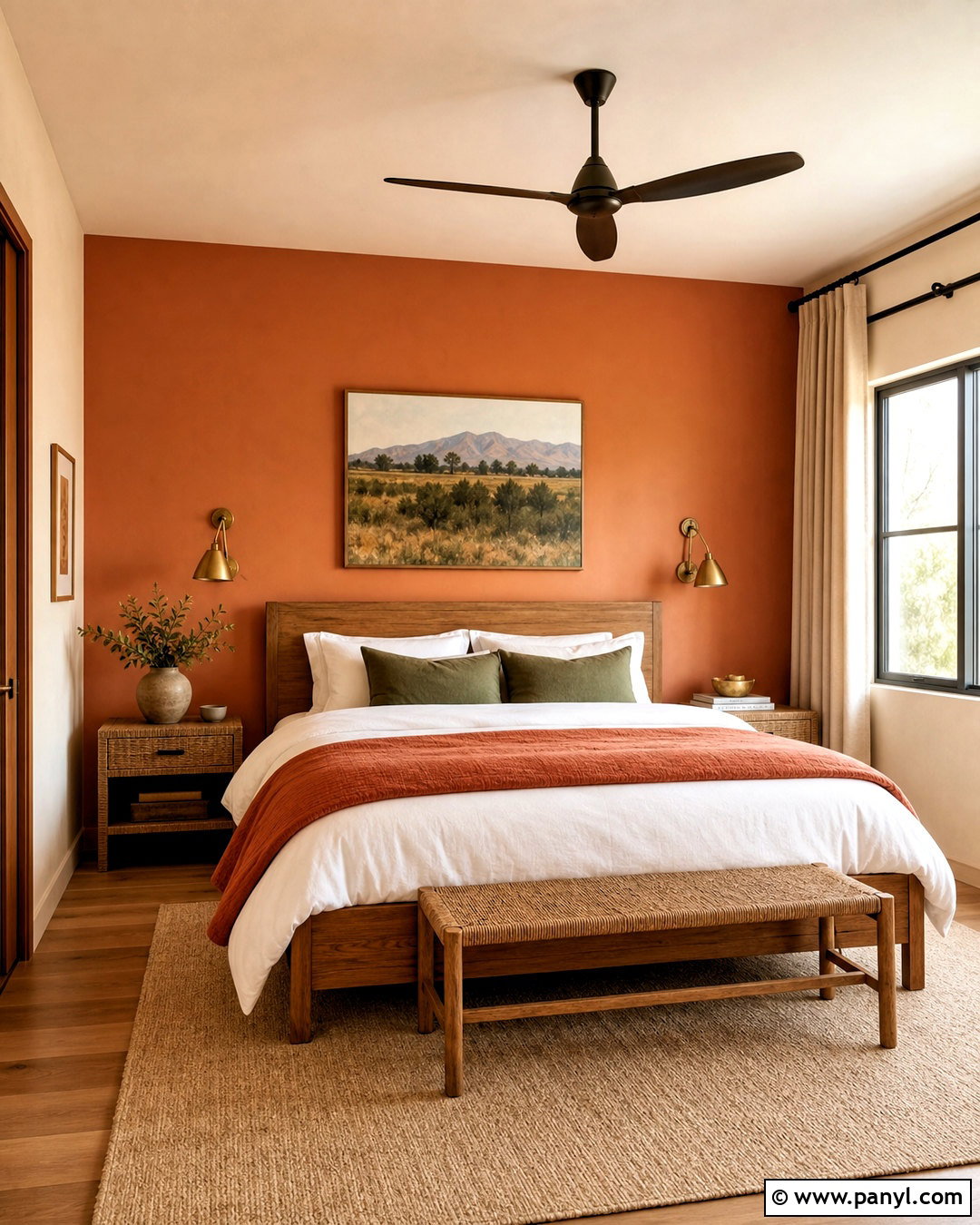
Sunbaked terracotta gives a bedroom warmth without requiring a dark or overly dramatic scheme. Paint the headboard wall a muted clay orange and keep the remaining walls creamy beige. Pair the color with an oak bed, woven nightstands, and white linen bedding. Add a rust-colored quilt, olive pillows, and a striped lumbar cushion for a balanced earthy palette. A tan wool rug should extend around the bed, while flax curtains soften the natural light. Use aged brass sconces and simple landscape artwork to bring character to the walls. A woven bench and a tall olive tree complete the room. Repeating terracotta in small amounts makes the design feel connected while cream and oak keep it bright and approachable.
20. Attic Bedroom
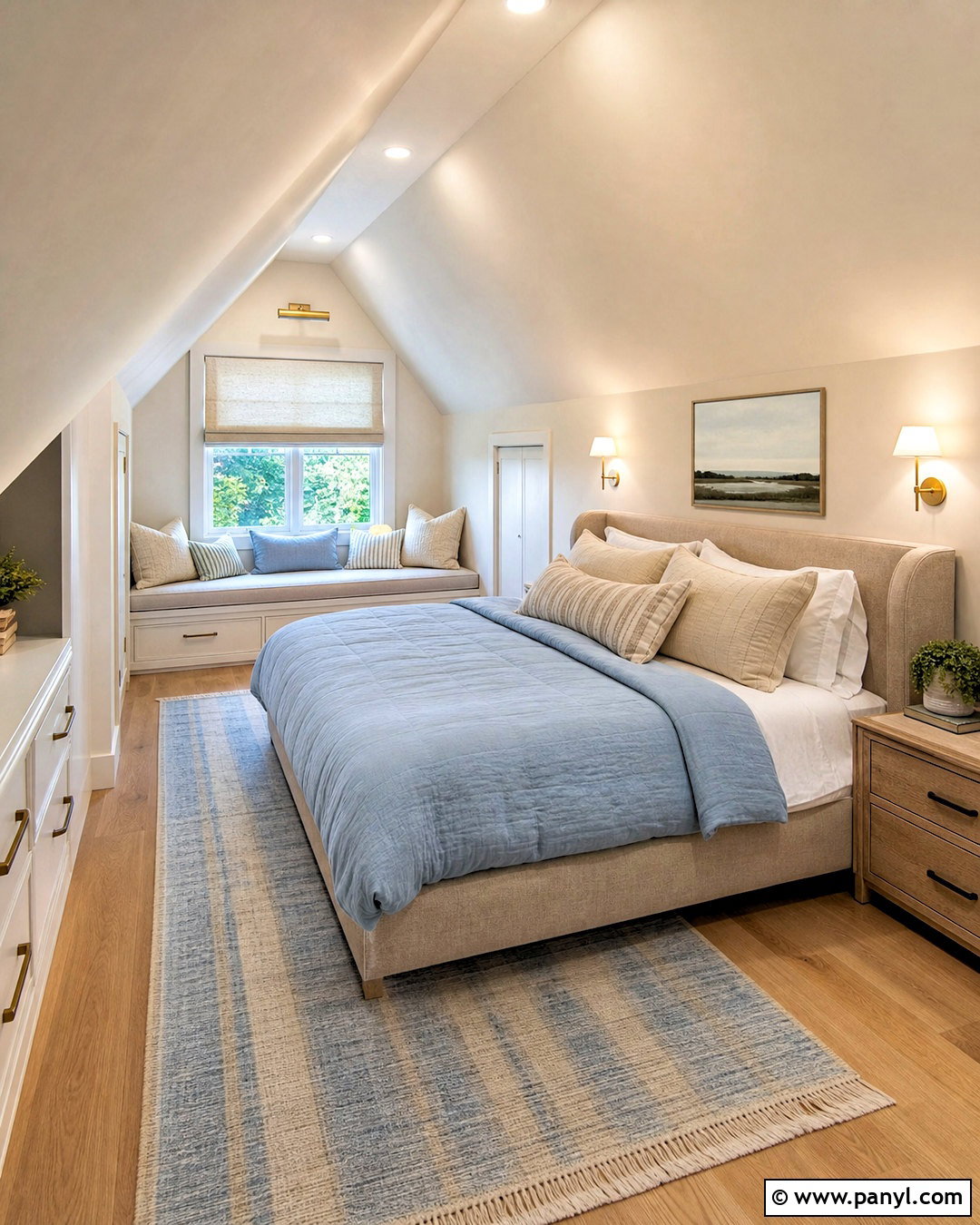
Sloped ceilings can become an appealing bedroom feature when the layout follows the architecture. Place a low upholstered bed beneath the tallest part of the ceiling, leaving the lower edges for built-in drawers and cabinets. Paint the walls, trim, and angled ceiling soft warm white to create a continuous backdrop. Add light oak flooring, a pale blue quilt, and layered cream pillows for a fresh palette. Compact wall sconces save nightstand space, while a fitted bench beneath the window creates a useful reading area. Choose a striped runner instead of an oversized rug if floor space is narrow. Simple artwork, linen shades, and low storage keep sightlines open. The completed attic bedroom feels cozy, organized, and intentionally designed.
Conclusion:
The most useful 20 bedroom inspirations treat every room as a complete, connected design. Instead of choosing furniture, paint, bedding, and decor separately, begin with one clear mood and a limited color palette. Plan the bed placement first, then add storage, lighting, window treatments, and textiles that support the layout. Repeating materials such as oak, brass, linen, or woven fibers helps different pieces feel related. You can adapt any of these looks to a small guest room, apartment bedroom, or spacious primary suite by adjusting the furniture scale. Most importantly, choose details that feel comfortable and personal. A successful bedroom should look beautiful, function smoothly, and make resting easier.

Related Ideas and Inspiration:
Leave a Reply