
Green walls can make a kitchen feel fresh, grounded, cheerful, or dramatic, depending on the shade and supporting finishes. The 20 Best Green Color For Kitchen Walls range from gentle sage and airy mint to earthy olive and deep forest green. The right choice should complement your cabinets, countertops, flooring, natural light, and overall decorating style. Warm greens work especially well with cream, oak, and brass, while blue-based greens create crisp contrast beside white cabinetry and stainless steel. Darker shades can bring intimacy to a spacious kitchen, whereas pale greens help a compact room feel open. Before painting, test a large sample in morning and evening light. Explore these complete kitchen looks to find the 20 Best Green Color For Kitchen Walls.

1. Soft Sage Green Kitchen Walls
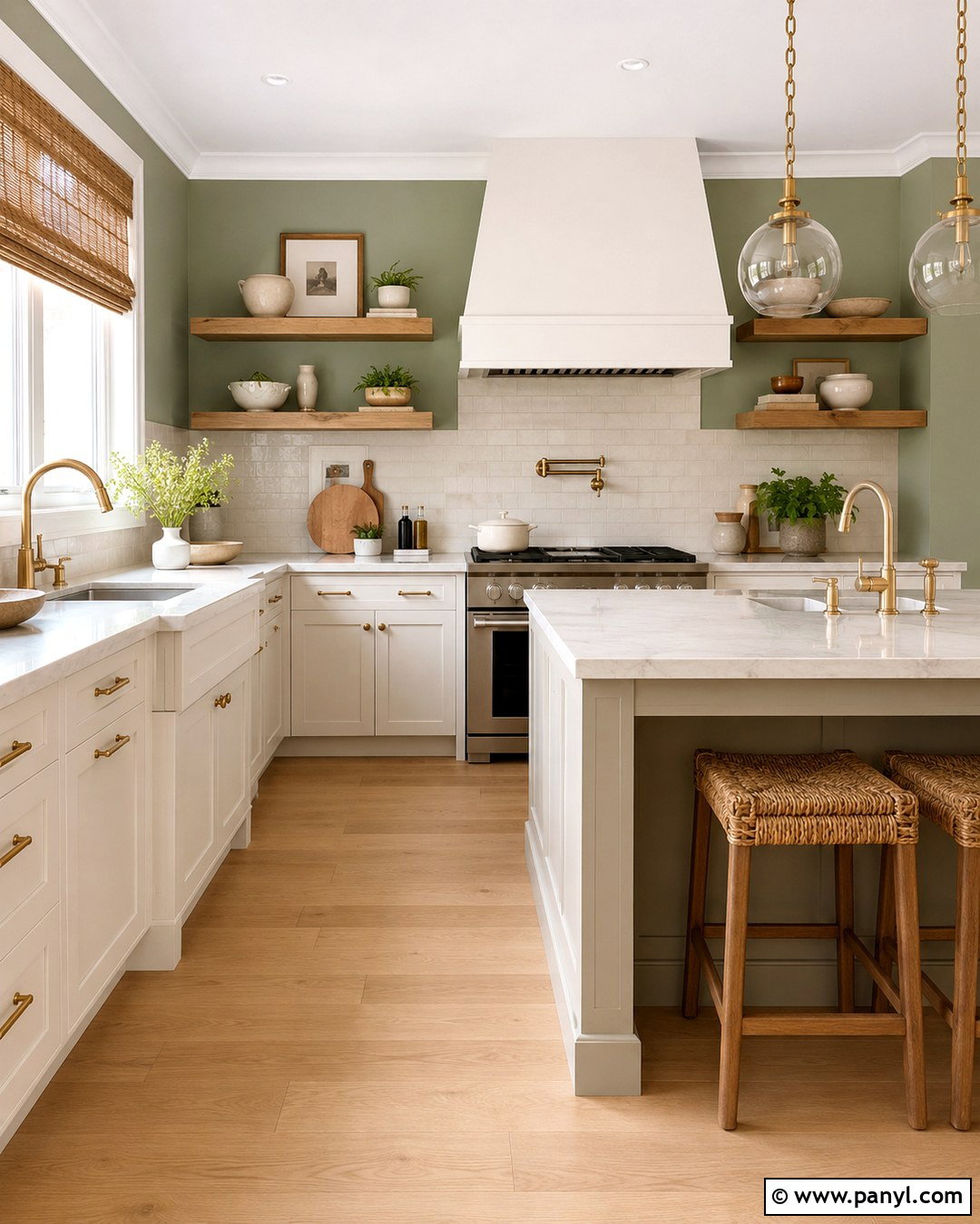
Soft sage green creates a calm kitchen that feels colorful without becoming overwhelming. Use it across the walls with warm white cabinets, lightly veined quartz counters, and a handmade cream subway tile backsplash. White oak flooring and matching floating shelves bring out the shade’s natural warmth. Complete the room with brushed brass hardware, woven counter stools, and simple ceramic accessories in ivory and muted brown. This palette works beautifully in a small kitchen because every surface remains light and connected. Choose linen Roman shades instead of heavy window treatments to preserve natural brightness. A few potted herbs add another gentle green layer. The finished room feels relaxed, clean, and comfortable, with enough contrast to keep the soft wall color noticeable.
2. Warm Sage Green Kitchen Walls
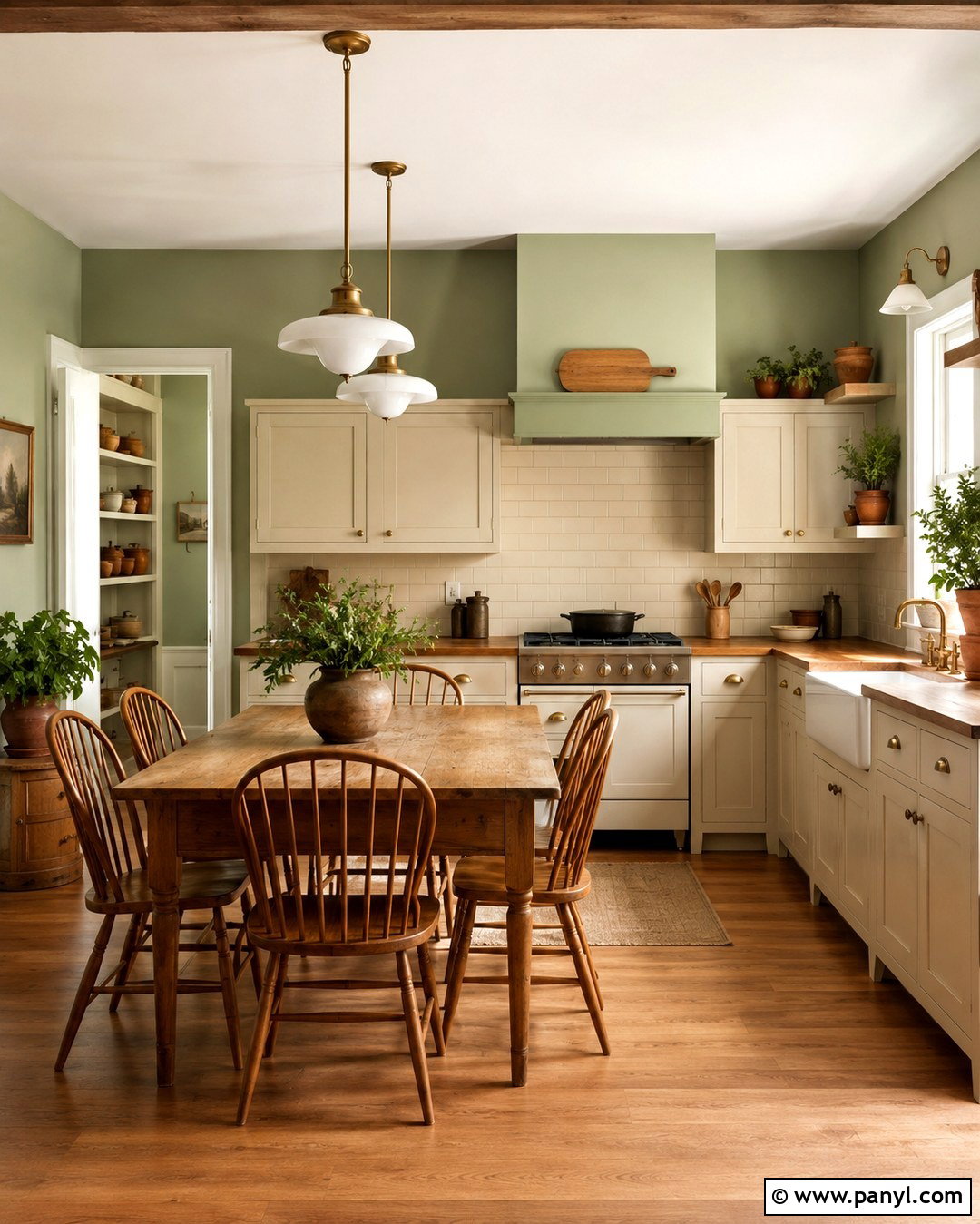
Imagine a welcoming kitchen where warm sage walls soften the hard surfaces and make everyday meals feel more relaxed. Pair this yellow-leaning green with creamy off-white cabinets rather than bright white ones. Add butcher-block countertops, an ivory backsplash, and medium oak flooring for a warm, coordinated foundation. A farmhouse table with spindle-back chairs can turn one corner into a casual breakfast area. Use aged brass knobs, milk-glass pendants, and natural linen curtains to support the inviting character. Terracotta planters and rust-colored textiles provide restrained contrast without overpowering the green. This complete scheme is particularly suitable for farmhouse, cottage, and transitional kitchens. The warm undertones prevent the room from appearing cool, even when stainless steel appliances are part of the layout.
3. Gray Green Kitchen Walls
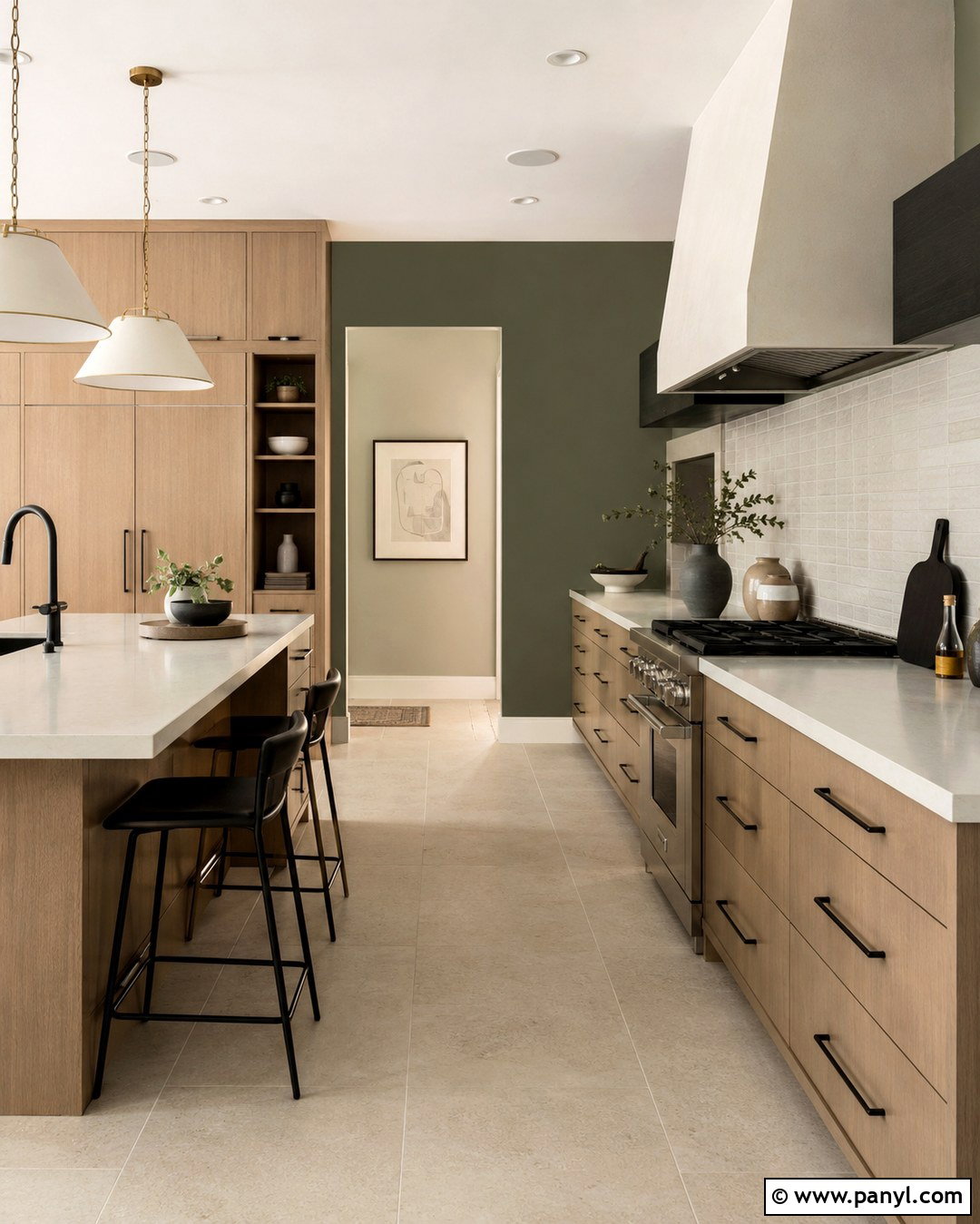
For a quiet contemporary kitchen, gray green provides subtle color with the versatility of a neutral. Cover the walls in a medium-light gray green and combine it with flat-panel white oak cabinets, pale quartz counters, and a simple white backsplash. Matte black faucets, cabinet pulls, and window frames sharpen the softer palette. Keep the flooring light, using limestone-look porcelain or wide oak planks to maintain an open atmosphere. A streamlined island with backless black stools creates a functional center without visual clutter. Add one large pendant with an off-white shade and minimal stoneware displayed on open shelving. This balanced design suits kitchens connected to living areas because the muted walls transition easily into neutral furnishings. It feels modern and composed rather than cold or overly industrial.
4. Eucalyptus Green Kitchen Walls
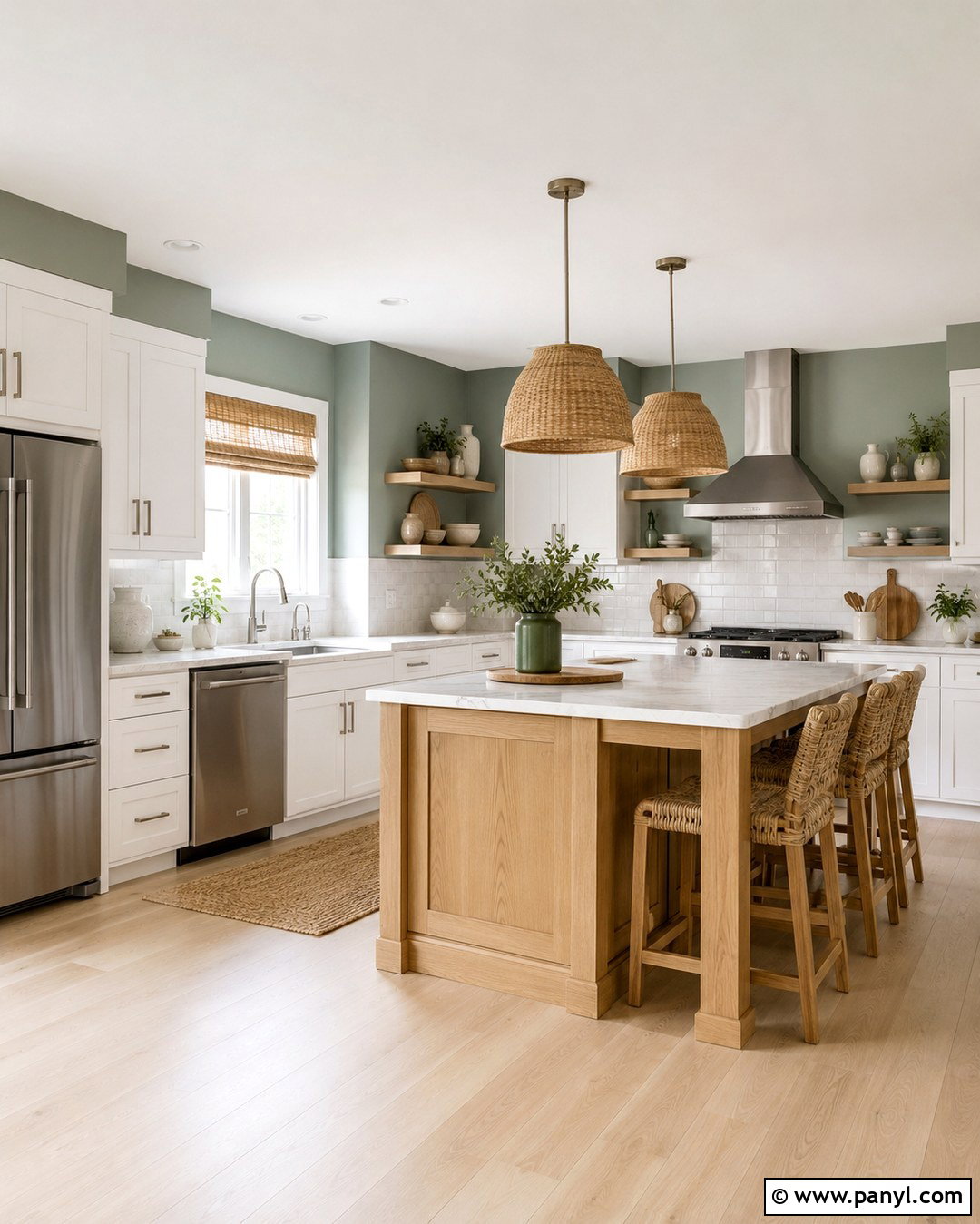
Eucalyptus green has a dusty blue-gray quality that can make a bright kitchen feel airy and polished. Pair the walls with crisp white Shaker cabinets and marble-look quartz containing delicate gray veining. Pale oak flooring adds warmth, while brushed nickel hardware connects naturally with stainless steel appliances. For the backsplash, use glossy white rectangular tiles in a stacked pattern to give the room a cleaner, more contemporary edge. A narrow island in natural oak introduces useful storage and reinforces the organic palette. Finish the windows with woven shades and place soft blue, cream, and charcoal accessories around the room. This combination works especially well in coastal and Scandinavian-inspired kitchens. The completed space feels fresh and restrained, with enough texture to prevent the pale surfaces from looking flat.
5. Muted Olive Green Kitchen Walls
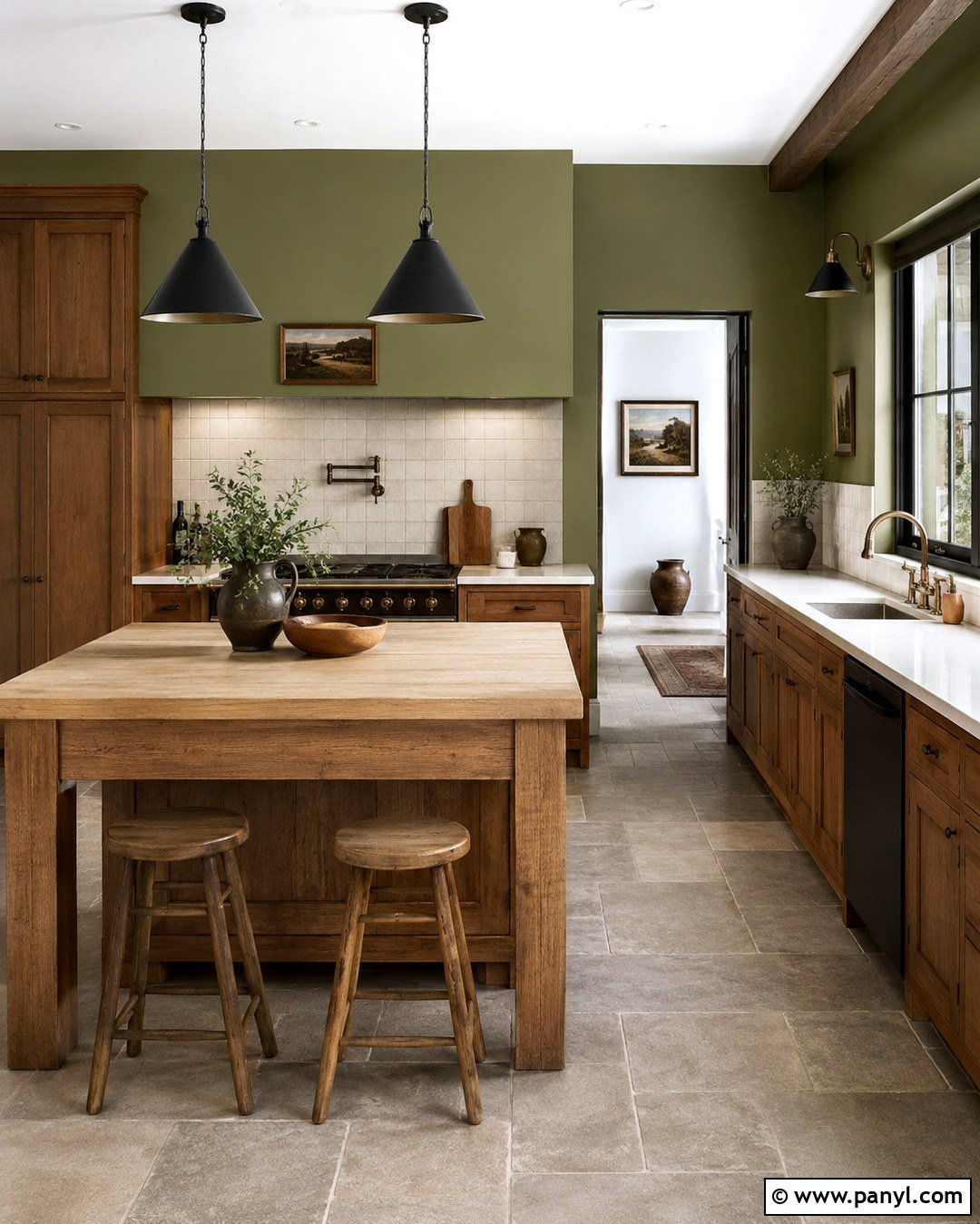
Muted olive green brings depth and warmth to kitchens with wood cabinetry. Use it behind walnut or medium oak cabinets, then introduce creamy quartz counters to keep the working surfaces bright. A backsplash made from warm white square tile adds gentle variation without competing with the earthy wall color. Choose aged bronze pulls, a bronze bridge faucet, and simple black pendants to define the room. Natural stone or warm greige porcelain flooring will connect the olive walls with the wood grain. If space allows, add a freestanding island painted soft cream and topped with butcher block. Linen café curtains and handmade pottery complete the relaxed appearance. This cohesive palette feels grounded and timeless, making it a strong option for traditional, rustic, or updated craftsman kitchens.
6. Light Olive Green Kitchen Walls
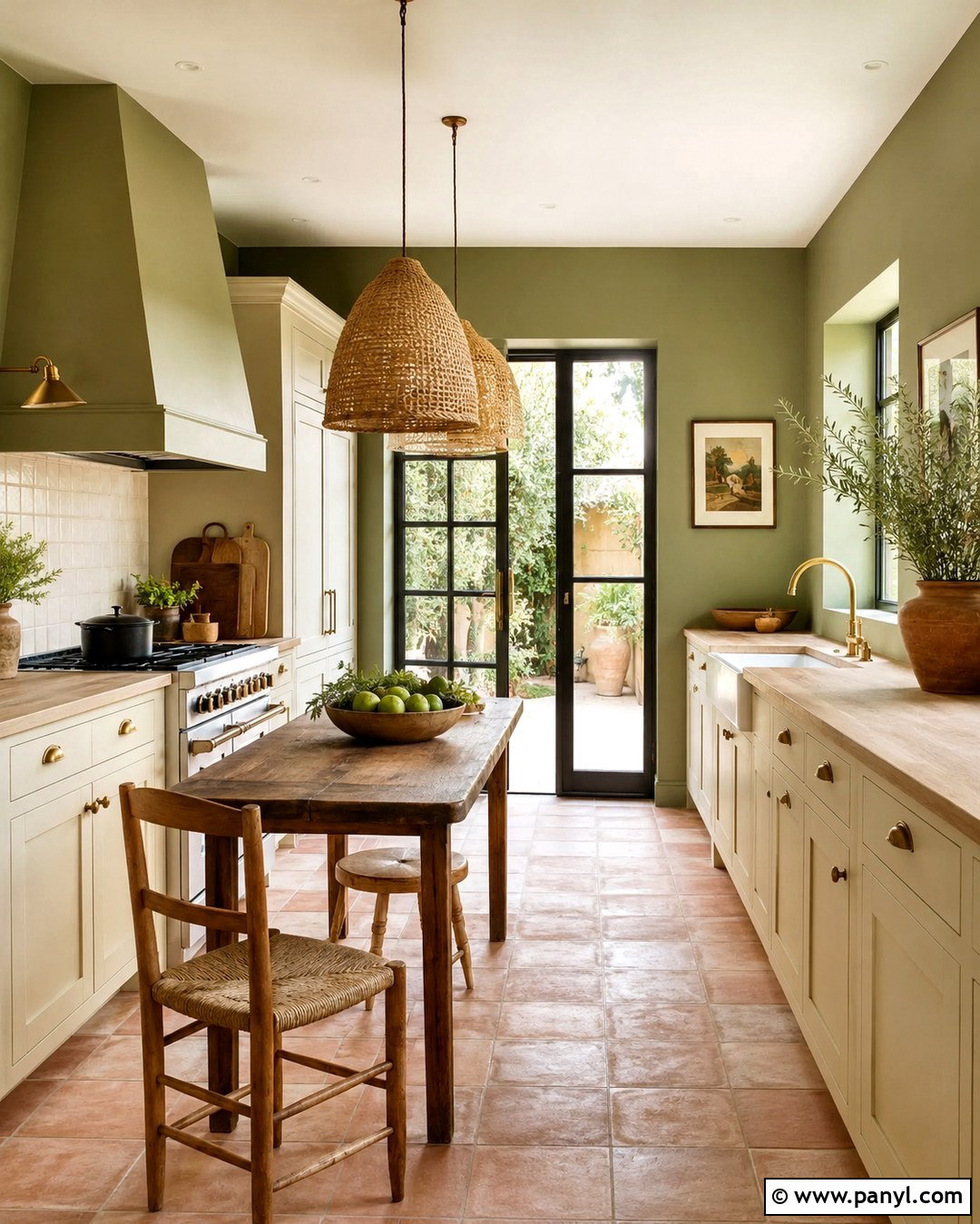
Could your kitchen use more warmth without a dark or heavy paint color? Light olive green offers an earthy solution that remains soft enough for everyday living. Combine it with ivory cabinets, pale wood countertops, and a creamy stone backsplash for a seamless tonal design. Terracotta floor tile introduces rustic character and emphasizes the green’s warm undertones. Use antique brass hardware and woven pendant lights to create natural texture throughout the room. A slim farmhouse table or compact island can provide additional workspace without crowding the layout. Decorate with cream dishes, wooden cutting boards, and small clay planters instead of numerous colorful accessories. The finished kitchen feels sunny and welcoming, particularly when the windows face south or west and strengthen the subtle golden notes in the walls.
7. Moss Green Kitchen Walls
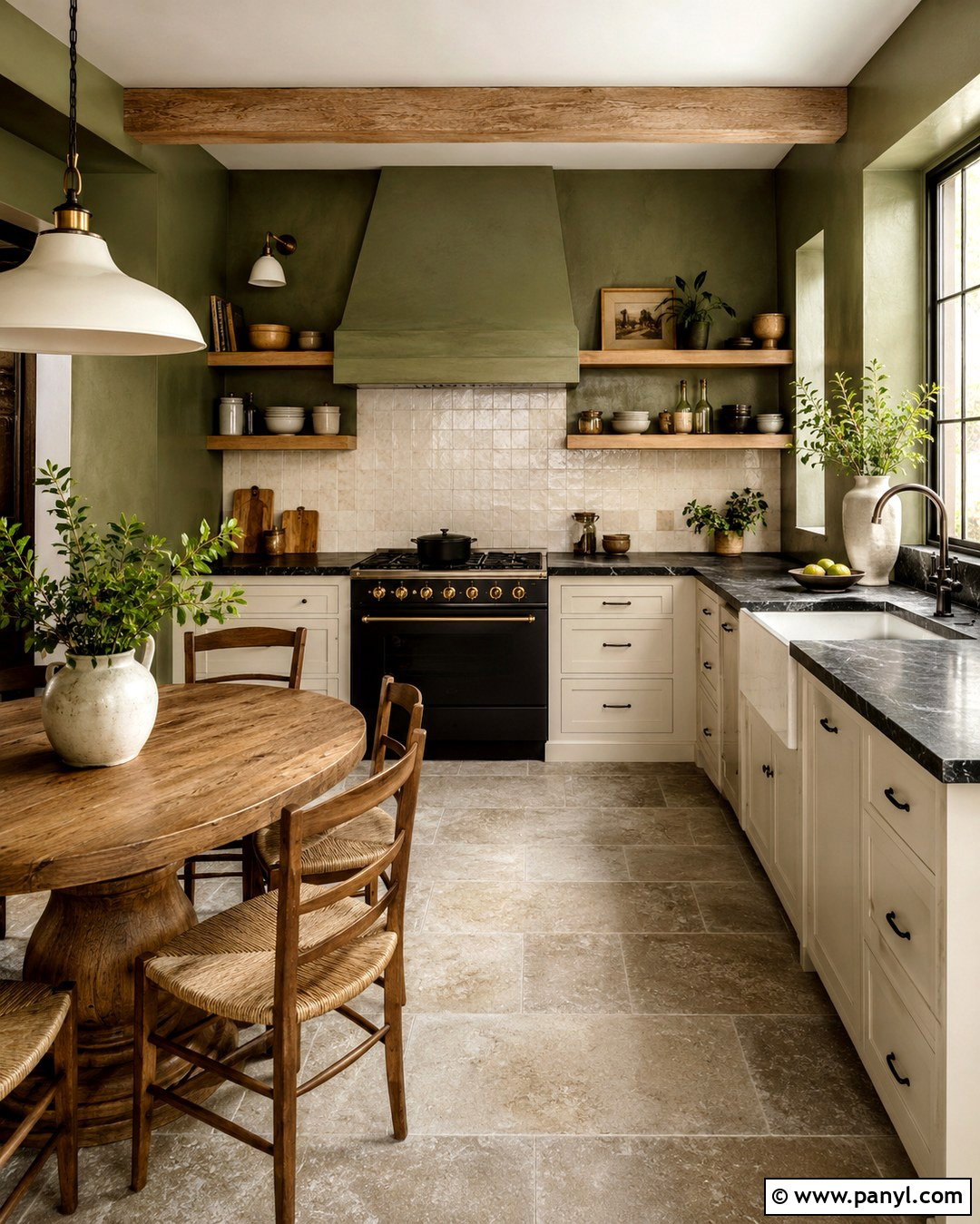
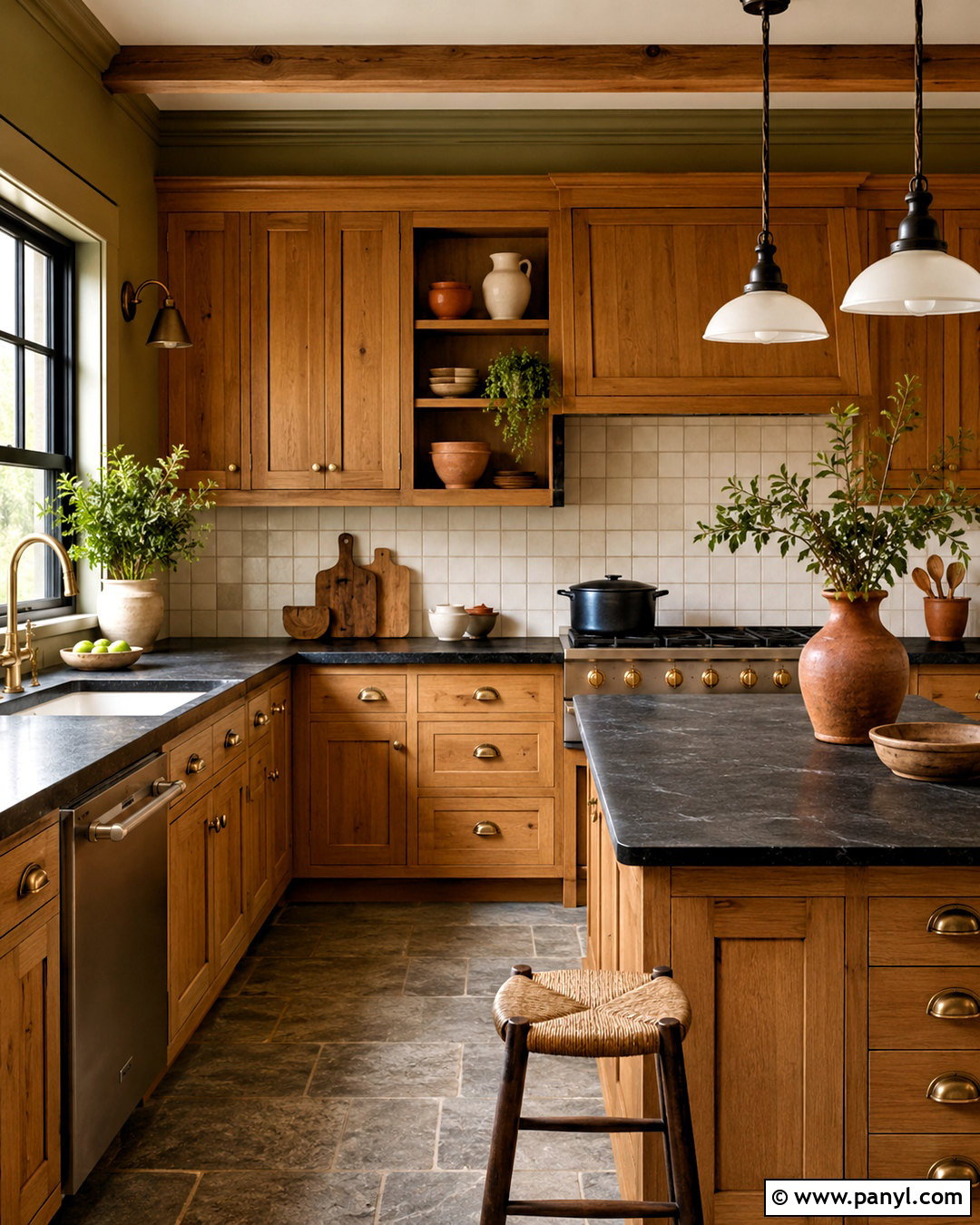
Moss green can transform an ordinary kitchen into a layered, nature-inspired space. Choose a muted midtone moss for the walls and balance it with warm white lower cabinets and natural oak upper shelving. Honed soapstone-look counters provide a dark anchor, while an off-white zellige backsplash reflects light around the cooking area. Repeat the organic theme with flagstone-colored flooring, woven baskets, and unglazed ceramic planters. Black iron hardware and a simple black range hood add definition without making the room too formal. For an eat-in layout, select a round oak table with rush-seat chairs and a linen pendant overhead. The complete kitchen should feel textured but uncluttered. Cream, brown, and charcoal accents allow the moss walls to remain the main source of color.
8. Mint Green Kitchen Walls
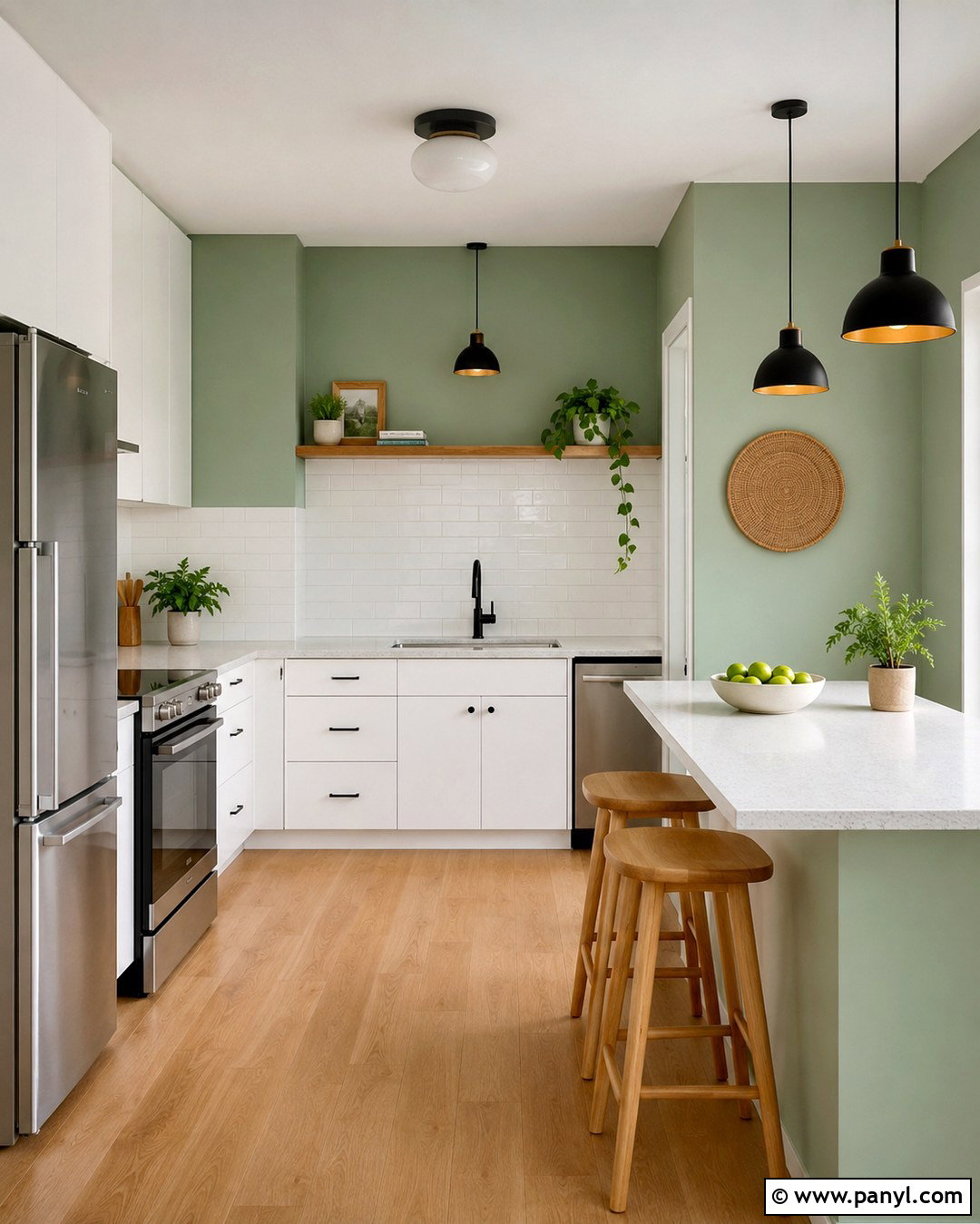
Mint green walls bring a crisp, cheerful quality to a small kitchen, especially when the room includes plenty of white. Pair this refreshing shade with white slab-front cabinets, pale quartz countertops, and a glossy white subway tile backsplash. Light maple flooring keeps the palette warm and prevents the kitchen from feeling clinical. Introduce black cabinet pulls, a black faucet, and two compact black pendants for clear visual structure. A narrow breakfast bar with pale wood stools can maximize an unused wall without restricting movement. Use glass jars, white dishes, and a few soft yellow accessories to add friendly color. This finished design suits vintage-modern and casual contemporary homes. Select a muted mint rather than a highly saturated pastel so the overall room remains sophisticated and easy to live with.
9. Seafoam Green Kitchen Walls
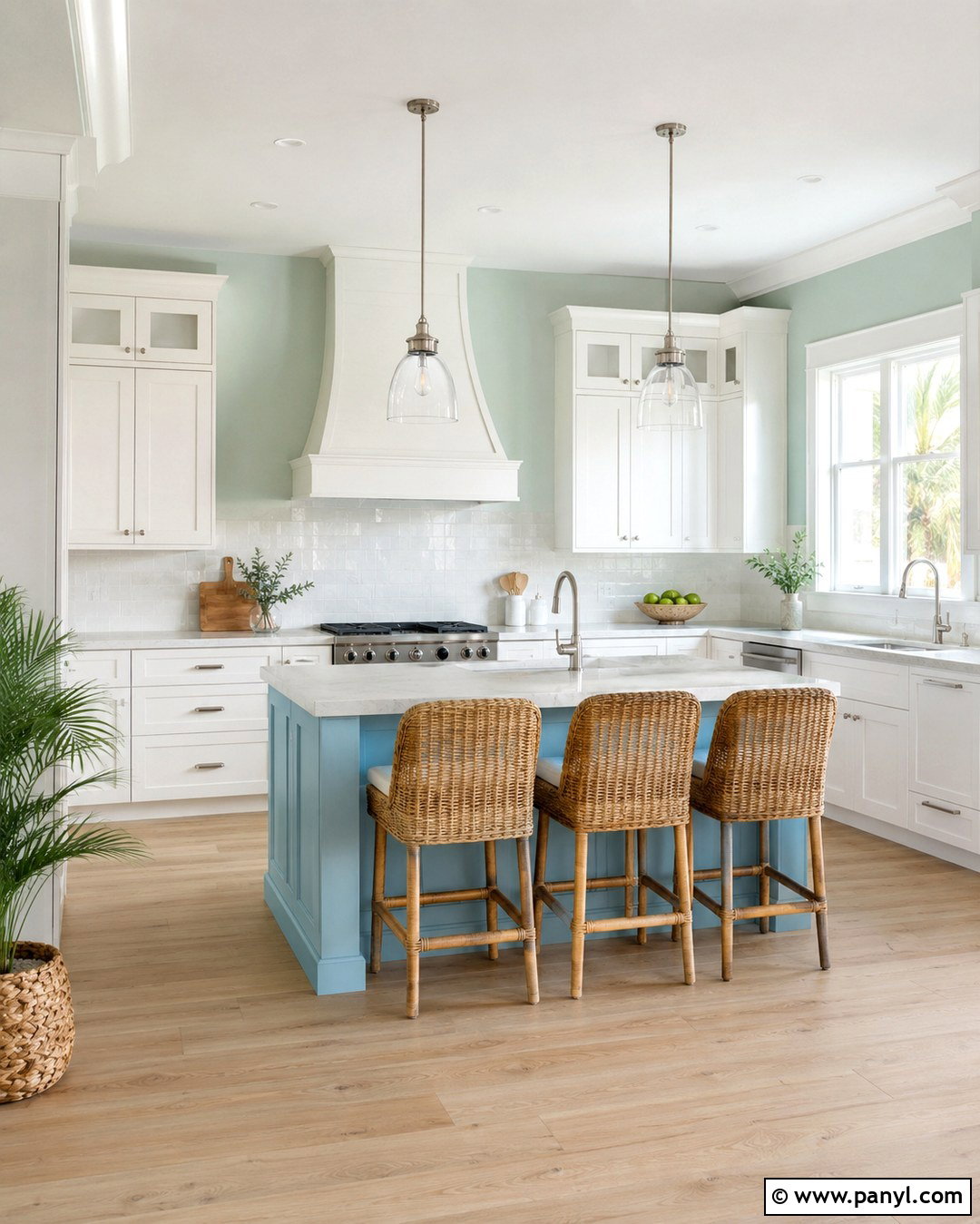
Seafoam green combines fresh green with a cool blue influence, making it ideal for a breezy coastal kitchen. Paint the walls this light aquatic shade and add bright white Shaker cabinets with polished nickel hardware. Use pale gray quartz counters and a pearly white tile backsplash to reflect daylight throughout the room. White oak flooring and woven rattan stools prevent the cool palette from becoming sterile. A soft blue island can provide gentle contrast while maintaining the relaxed coastal direction. Finish the windows with lightweight white Roman shades and display clear glass, white ceramics, and a few sandy beige accessories. Avoid obvious nautical decorations. Instead, rely on natural materials and clean shapes. The completed kitchen feels light, open, and comfortable without appearing themed or overly decorative.
10. Celadon Green Kitchen Walls
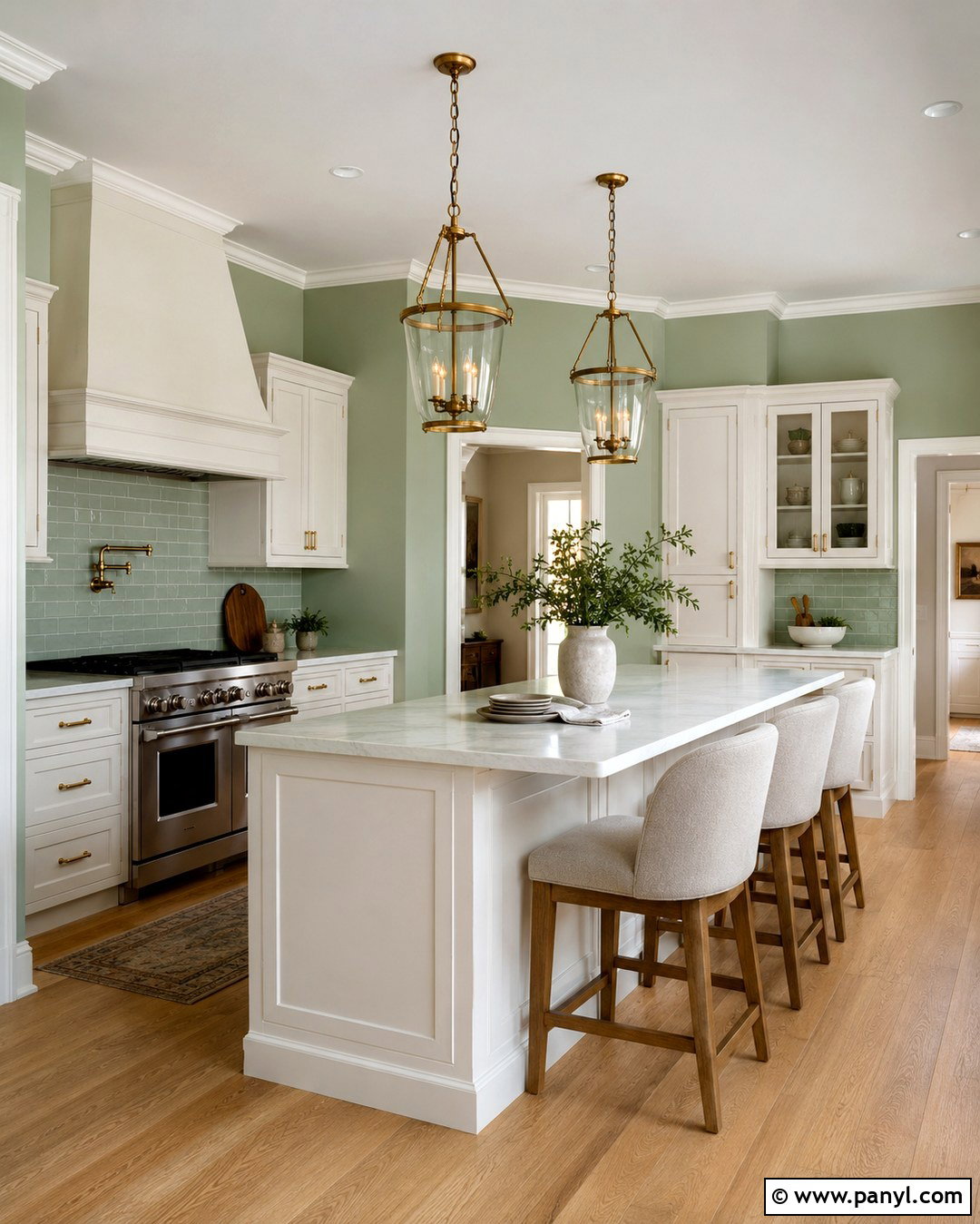
Celadon green delivers an elegant, understated look with its gentle combination of green, gray, and blue. Use it on every kitchen wall alongside creamy inset cabinets and pale marble-look countertops. A glossy celadon tile backsplash can continue the color near the range, but choose tile slightly lighter than the paint to create depth. Add polished brass hardware, traditional lantern pendants, and medium-toned oak flooring for warmth. A compact island painted warm white keeps the center of the kitchen visually open. Upholstered counter stools in oatmeal fabric add softness without introducing a competing color. This complete scheme is well suited to transitional homes that combine classic cabinetry with updated finishes. The room feels refined and calm, while the subtle green provides more character than a standard gray or beige wall.
11. Pistachio Green Kitchen Walls
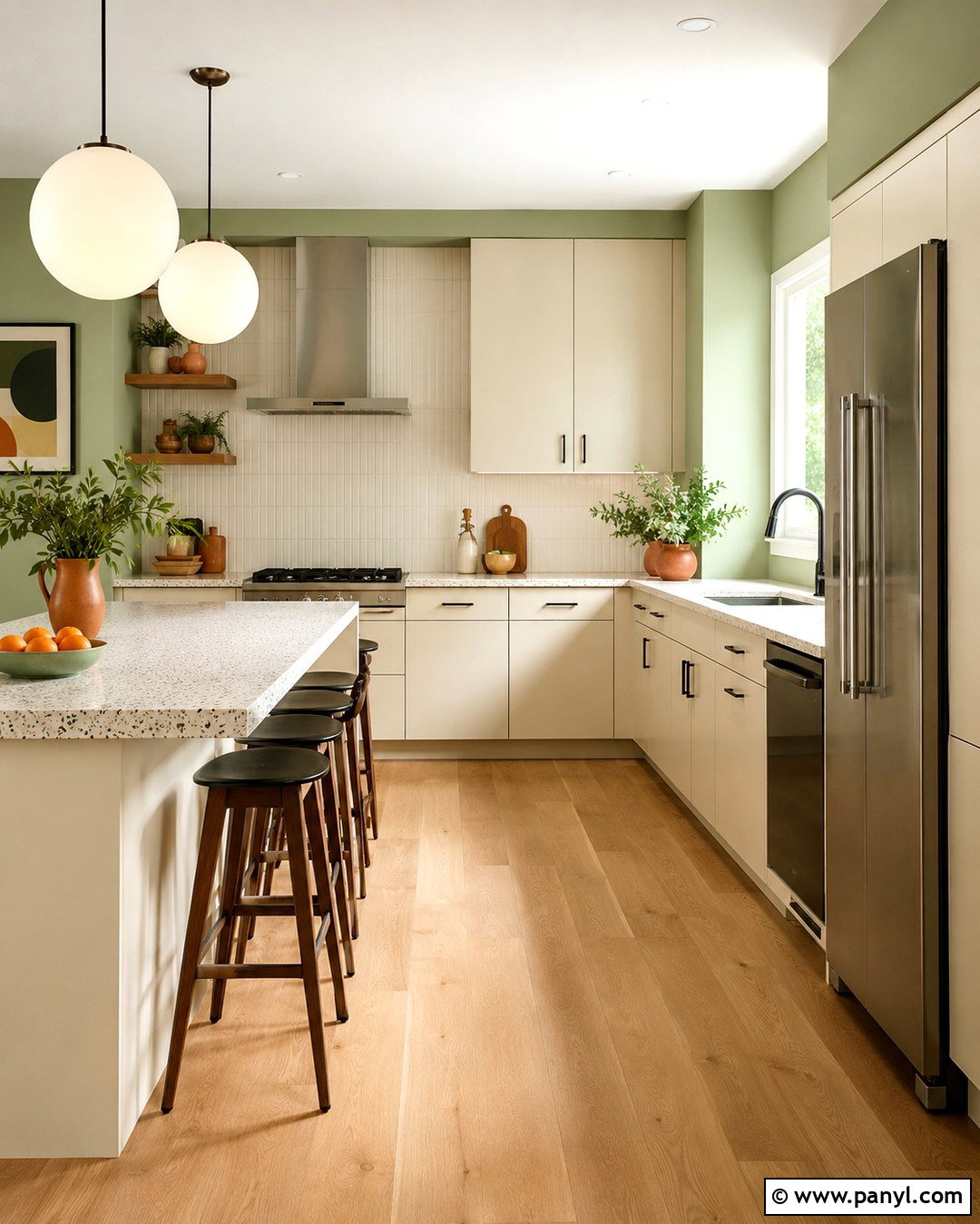
Pistachio green offers a playful kitchen color that can still look polished when paired with restrained finishes. Choose a softened pistachio for the walls, then balance it with cream cabinets, pale terrazzo counters, and a simple warm white backsplash. Light oak flooring and a matching dining table reinforce the casual, sunlit atmosphere. Use matte black hardware sparingly to outline the cabinetry, and add globe pendants with white glass shades above the island. Small touches of coral, dusty pink, or terracotta can appear in seat cushions and pottery. Keep these accents limited so the walls remain the focus. This complete kitchen works particularly well in a midcentury-inspired home. Clean cabinet lines and uncluttered counters prevent the brighter green from feeling childish, busy, or overly retro.
12. Fern Green Kitchen Walls
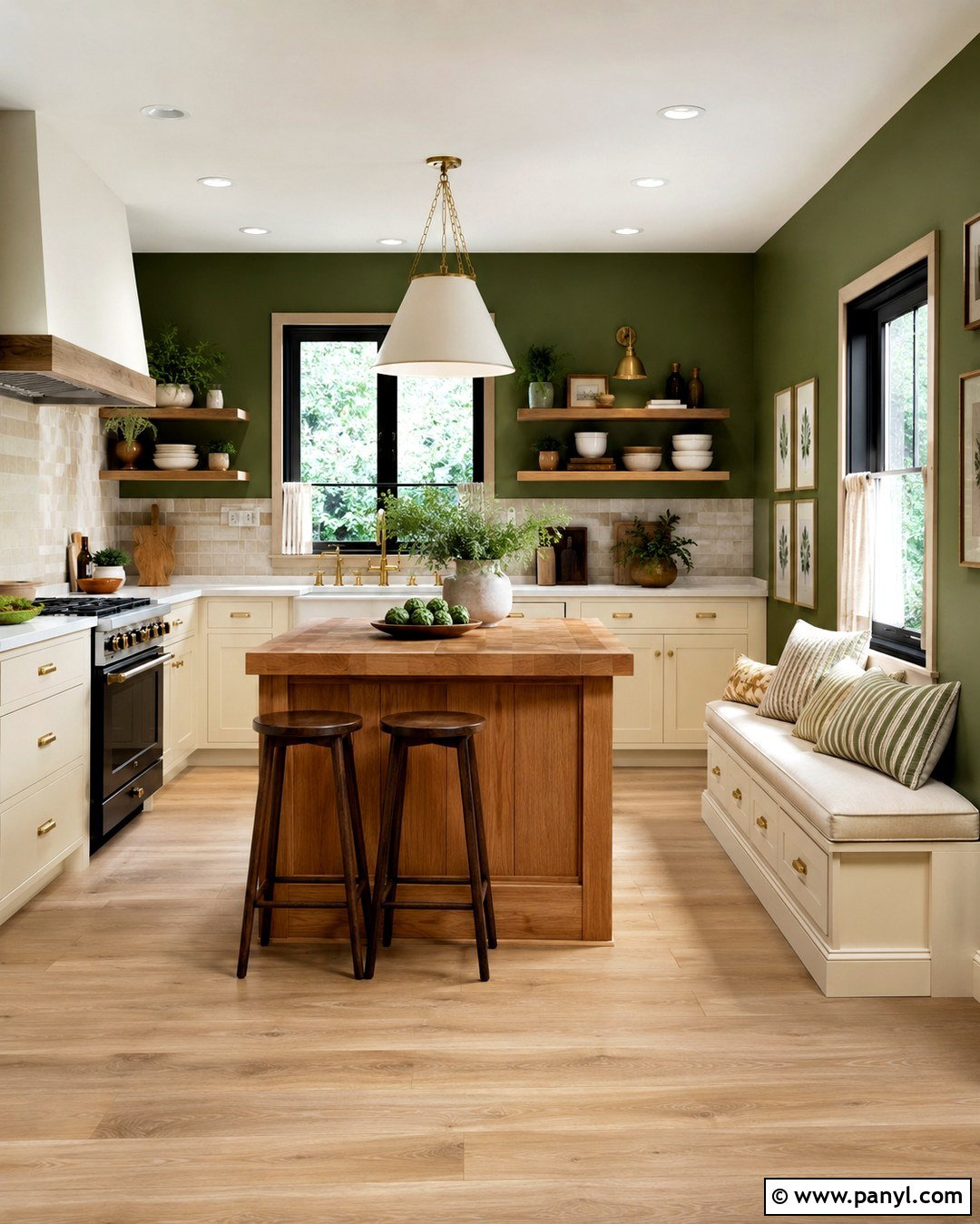
Fern green introduces rich garden color while remaining softer than emerald or hunter green. Apply it to the walls of a bright kitchen with cream Shaker cabinets and white quartz counters. Natural oak shelves, a butcher-block island, and medium oak flooring emphasize the shade’s botanical character. Use warm brass pulls and cone-shaped pendants to add a subtle glow against the green background. An ivory tile backsplash keeps the cooking area practical and visually calm. Near the window, arrange a small breakfast nook with a built-in cream bench, striped neutral cushions, and a round wood table. Limit decorative greenery to a few herbs because the walls already supply strong natural color. The finished room feels lively and grounded, offering a comfortable balance between bold paint and familiar neutral materials.
13. Artichoke Green Kitchen Walls
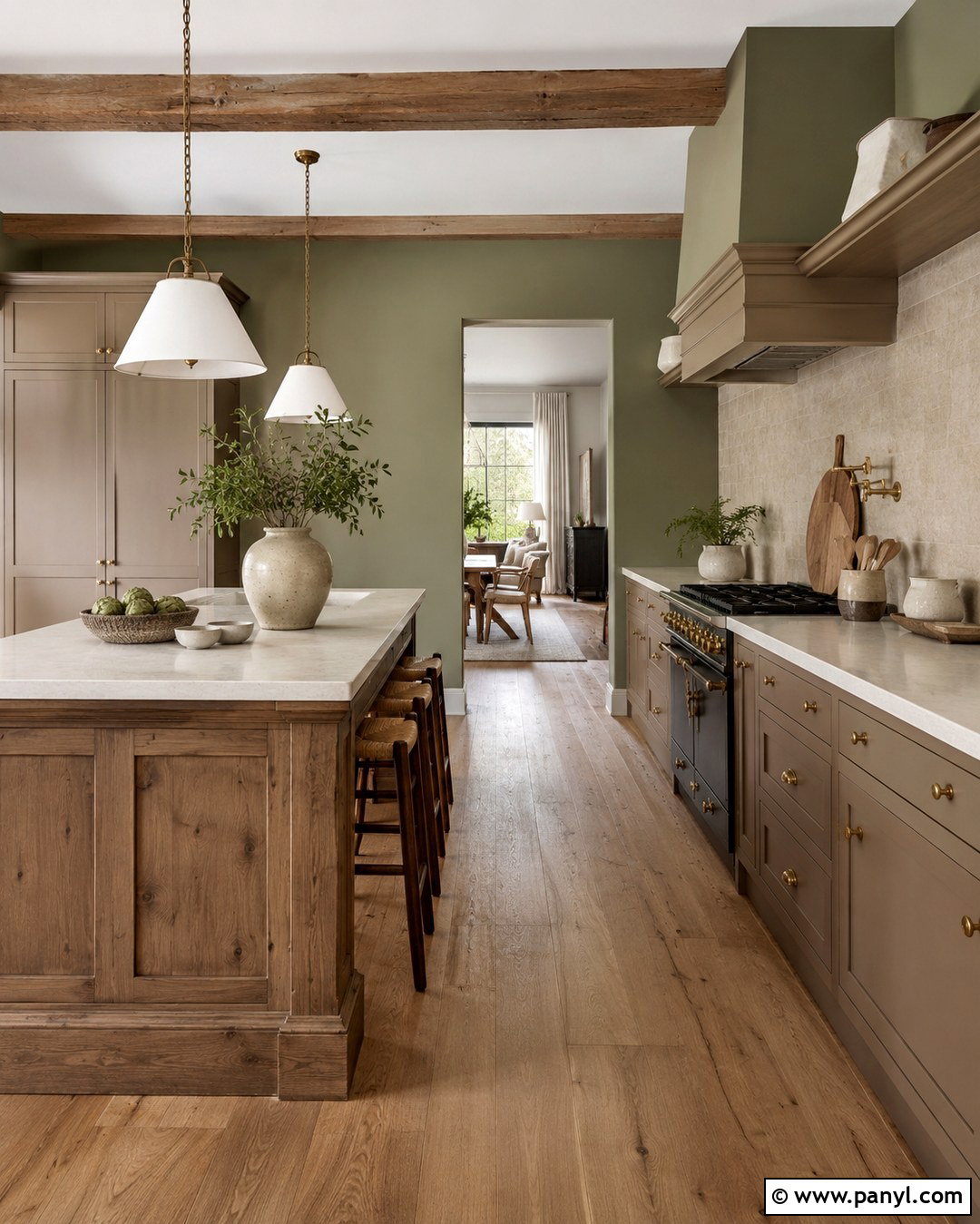
Artichoke green is a muted, slightly yellow green that feels especially harmonious with stone and wood. Cover the walls in this earthy shade and combine them with warm taupe cabinets for a sophisticated tonal kitchen. Select cream quartz countertops and a lightly textured limestone backsplash to keep the surfaces soft rather than stark. Wide-plank oak flooring, aged brass hardware, and two linen-covered pendants build warmth throughout the space. A substantial wood island can anchor the layout and provide a welcoming gathering place. Style the counters with stoneware crocks, wood boards, and neutral textiles instead of bright accessories. This palette works well in traditional and European-inspired kitchens where depth and patina are important. The completed design feels collected, comfortable, and distinctive without relying on dramatic contrast.
14. Laurel Green Kitchen Walls
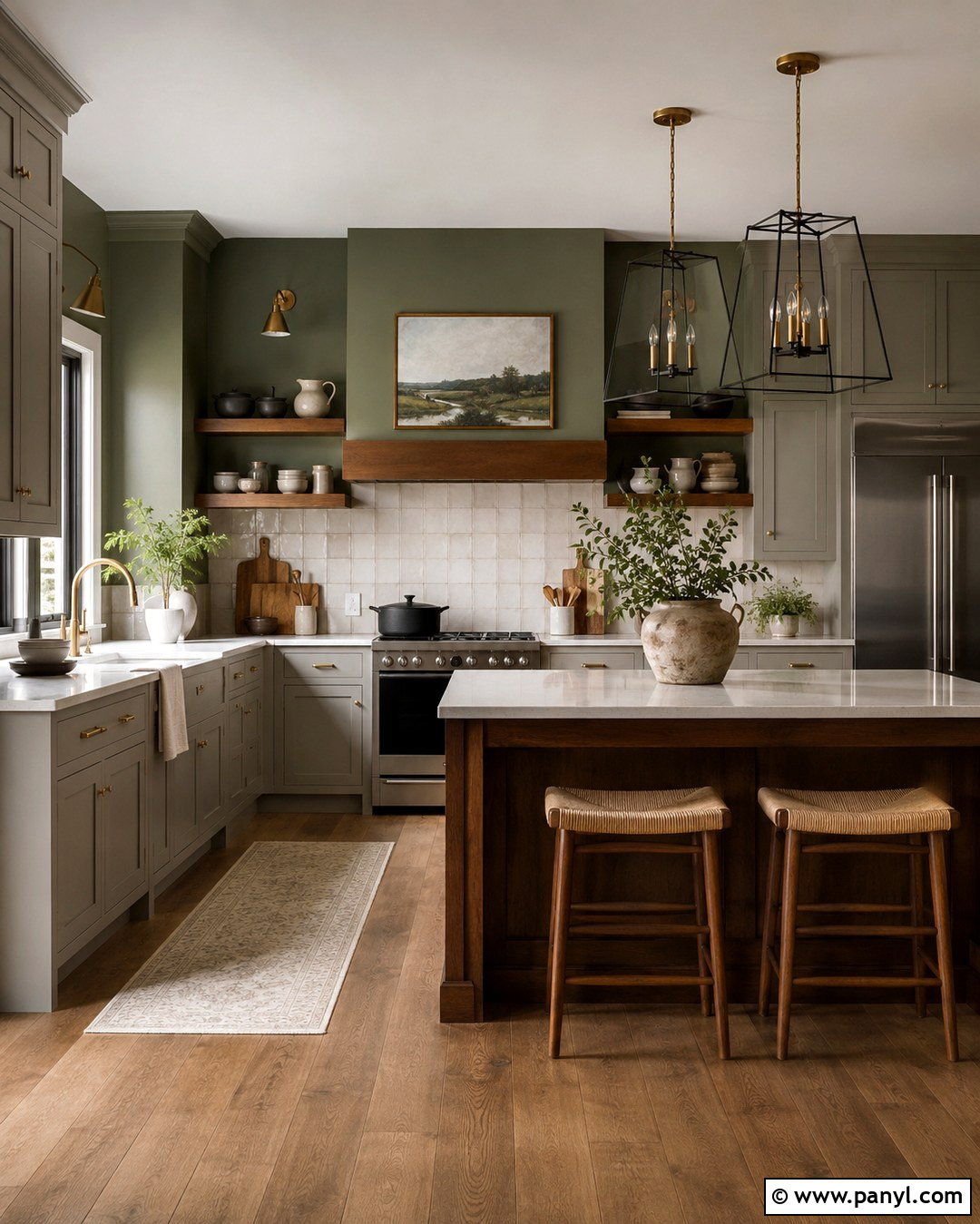
For a balanced green that sits between sage and forest, laurel green is an adaptable choice. Use it on the walls with pale greige cabinets, creamy quartz counters, and a handmade off-white backsplash. The slightly deeper paint gives the room presence, while the lighter cabinetry keeps the work zone bright. Add walnut accents through open shelves, counter stools, or a compact dining table. Brushed brass hardware and black-framed pendants can mix successfully when repeated in a deliberate way. Choose warm oak flooring to connect all the earthy colors. Simple linen shades, ivory ceramics, and charcoal cookware complete the room. This coordinated design suits transitional and modern farmhouse kitchens. Laurel green provides noticeable color, but its muted quality helps it remain comfortable across a large, open kitchen and adjoining breakfast area.
15. Deep Forest Green Kitchen Walls
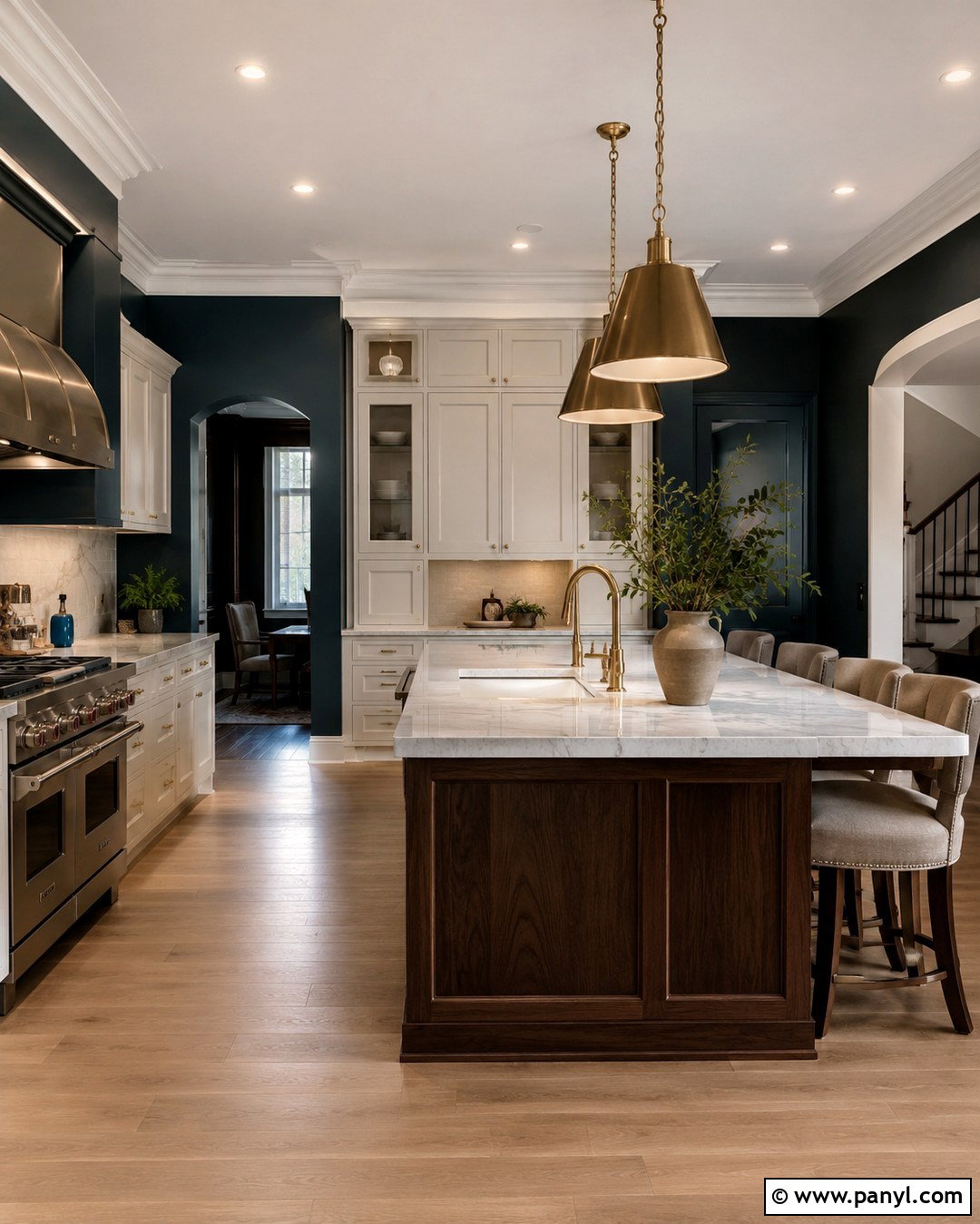
Deep forest green creates a dramatic kitchen when the room has sufficient windows and layered lighting. Use it across the walls with warm white cabinets to establish bold contrast. Add white marble-look counters, a reflective ivory backsplash, and pale oak flooring so the dark paint does not dominate every surface. An island stained medium walnut can bridge the light and dark elements. Choose aged brass cabinet pulls, sconces, and pendant lights because warm metal stands out clearly against forest green. Under-cabinet lighting is important for keeping work areas functional and bright. Complete the space with oatmeal stools, natural linen shades, and minimal framed artwork. This complete look is especially effective in larger traditional or transitional kitchens where the rich wall color can create intimacy without making the layout feel confined.
16. Hunter Green Kitchen Walls
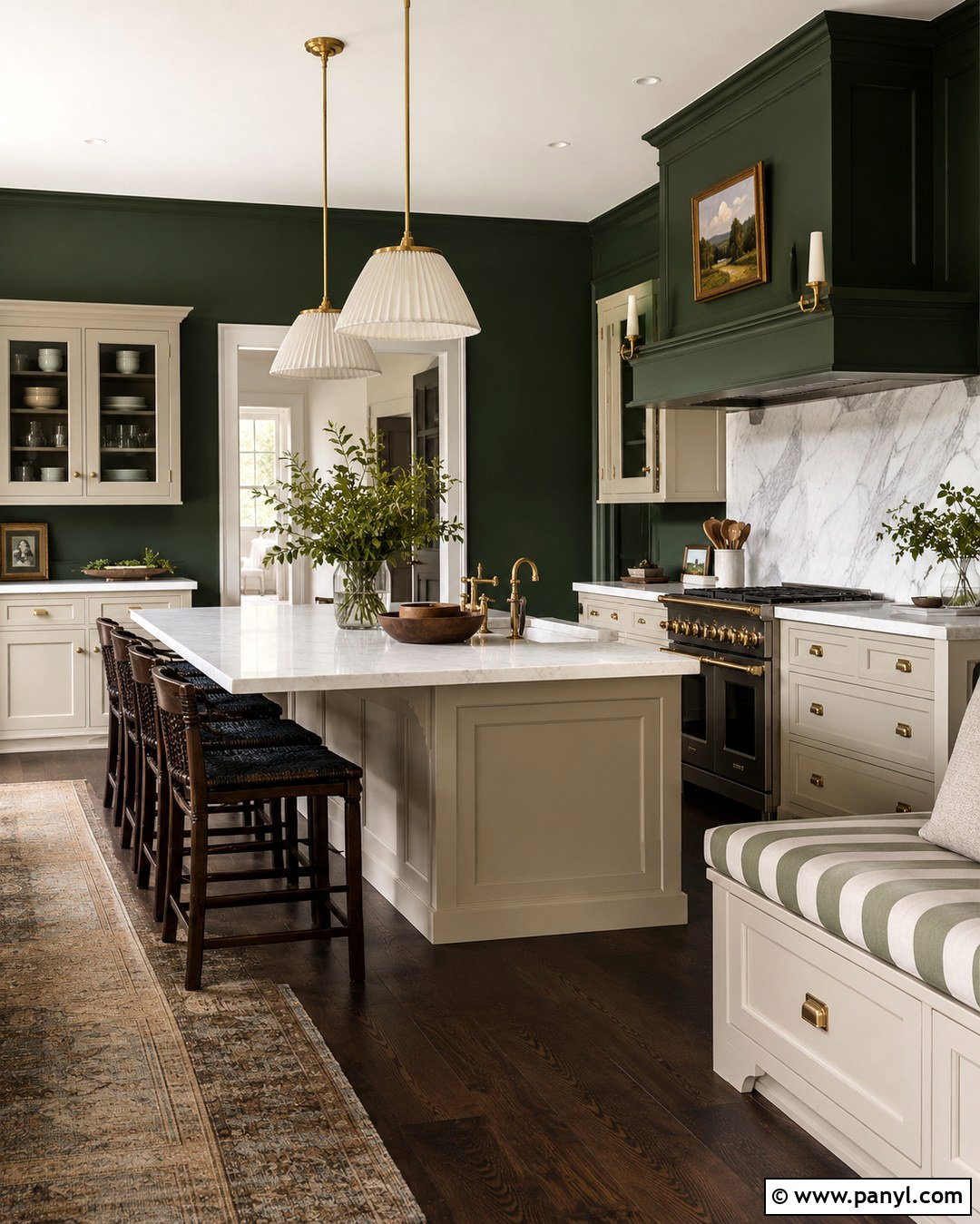
Hunter green brings a tailored, classic mood to a kitchen with architectural character. Paint the walls this dark, slightly cool green and pair them with cream inset cabinets, white stone counters, and a polished marble backsplash. Dark walnut flooring or a walnut island adds depth while maintaining the formal direction. Use unlacquered brass hardware, traditional wall sconces, and pleated pendant shades to soften the strong color. A built-in breakfast bench covered in neutral striped fabric can make the room more comfortable and approachable. Keep window trim and crown molding creamy white to frame the green walls clearly. Display only a few copper pans or white serving pieces on open shelves. The completed kitchen feels established and refined, with a thoughtful balance of dark color, bright surfaces, and warm metallic details.
17. Pine Green Kitchen Walls
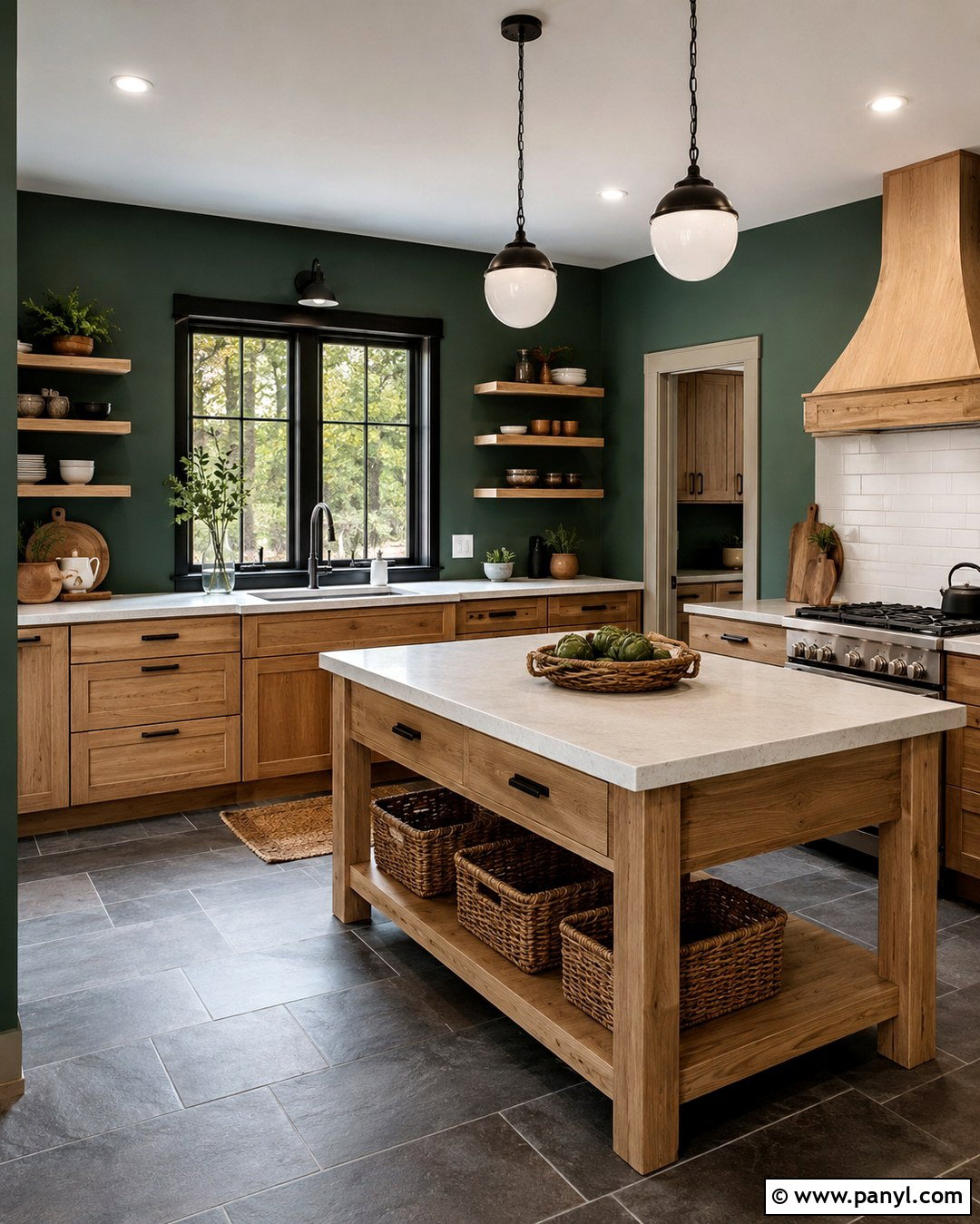
Pine green gives a kitchen a cool, woodland character without the jewel-like intensity of emerald. Use it on the walls with natural maple or white oak cabinets to create a strong organic pairing. Light quartz countertops and matte white backsplash tile will brighten the cooking zone, while dark slate-look flooring grounds the room. Introduce matte black hardware, simple globe pendants, and black-framed windows for a modern cabin influence. An island with a pale wood base and solid white counter provides useful contrast at the center. Add wool seat cushions, woven storage baskets, and off-white curtains to soften the harder surfaces. This complete palette works in contemporary rustic kitchens and homes surrounded by natural scenery. The clean forms keep the pine walls feeling current rather than themed or overly traditional.
18. Emerald Green Kitchen Walls
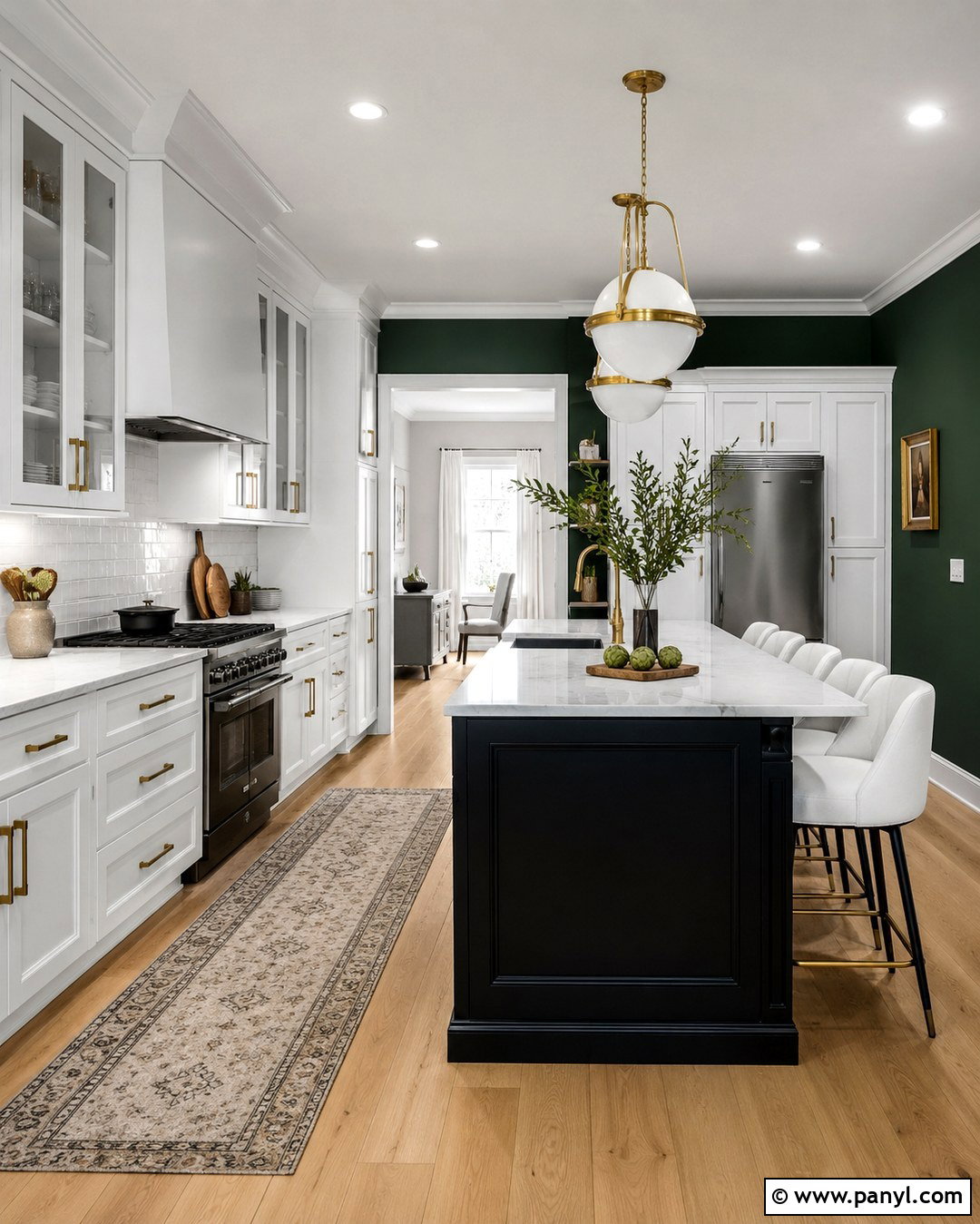
Emerald green walls can give a kitchen striking personality when they are balanced with clean, luxurious materials. Use the saturated color in a spacious room with bright white cabinets and lightly veined marble countertops. Continue the brightness with a glossy white backsplash and pale oak flooring. A black island topped with white stone creates a strong central feature without competing with the walls. Add brushed brass hardware, sculptural pendants, and simple white counter stools for a polished finish. Keep accessories minimal, using clear glass, white ceramics, and one or two green plants. Crisp white trim will outline doorways and windows while controlling the intensity of the emerald. The finished kitchen feels bold and modern, yet the familiar cabinet and countertop colors make the overall design practical and visually balanced.
19. Teal Green Kitchen Walls
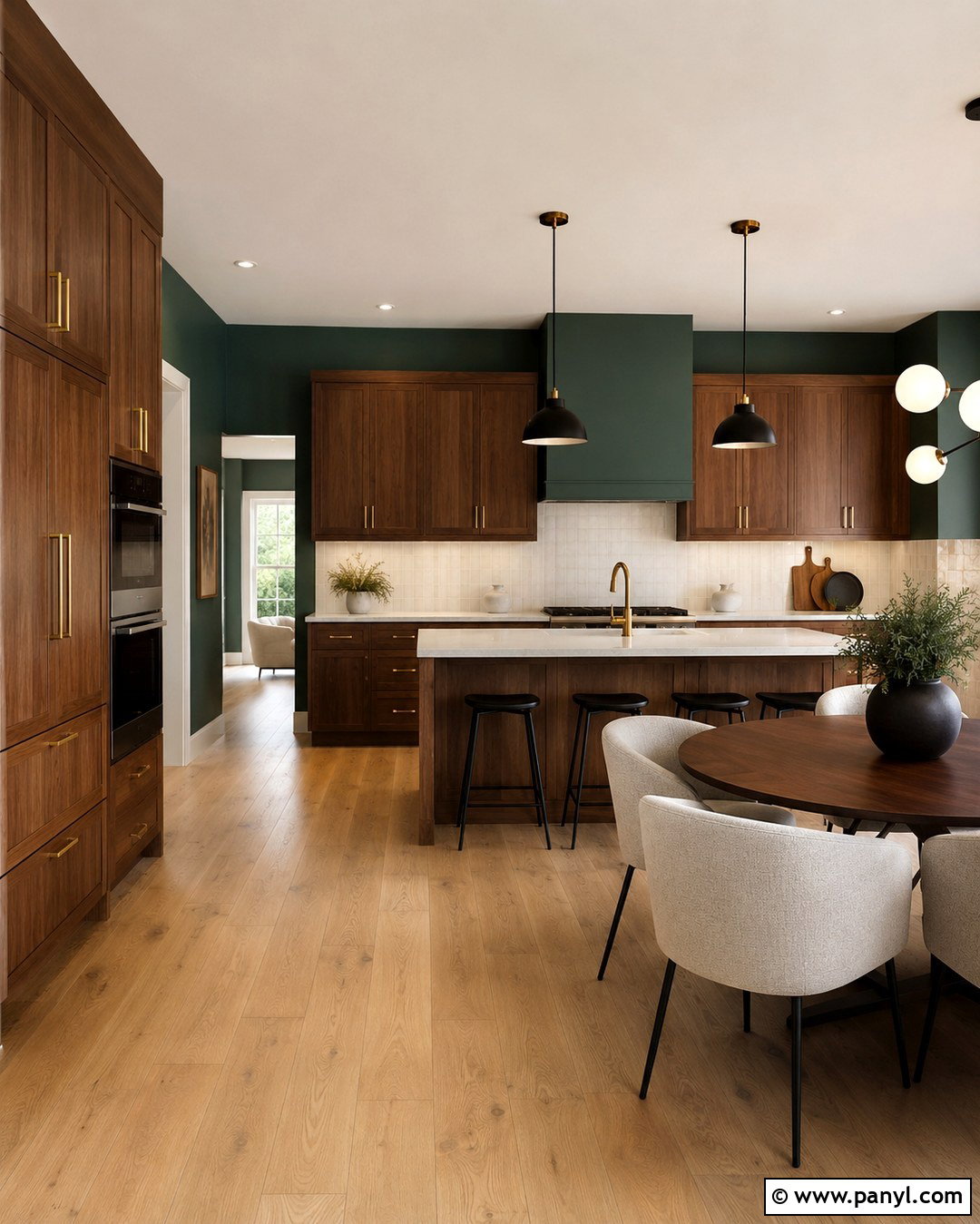
Teal green brings blue-green depth to a kitchen and pairs particularly well with warm wood. Paint the walls a muted midtone teal, then add walnut cabinets or a walnut island to create rich contrast. Use warm white quartz countertops and an ivory backsplash so the room does not become too dark or colorful. Brushed brass hardware strengthens the warmth, while black pendants and appliances add a contemporary edge. Choose light oak flooring to keep the foundation bright. In an eat-in area, combine a round wood table with oatmeal upholstered chairs and a simple cream pendant. Decorative accents should stay within cream, brown, black, and muted blue. This complete kitchen feels distinctive and welcoming, offering more depth than sage while remaining softer and easier to coordinate than a vivid turquoise.
20. Blue Green Kitchen Walls
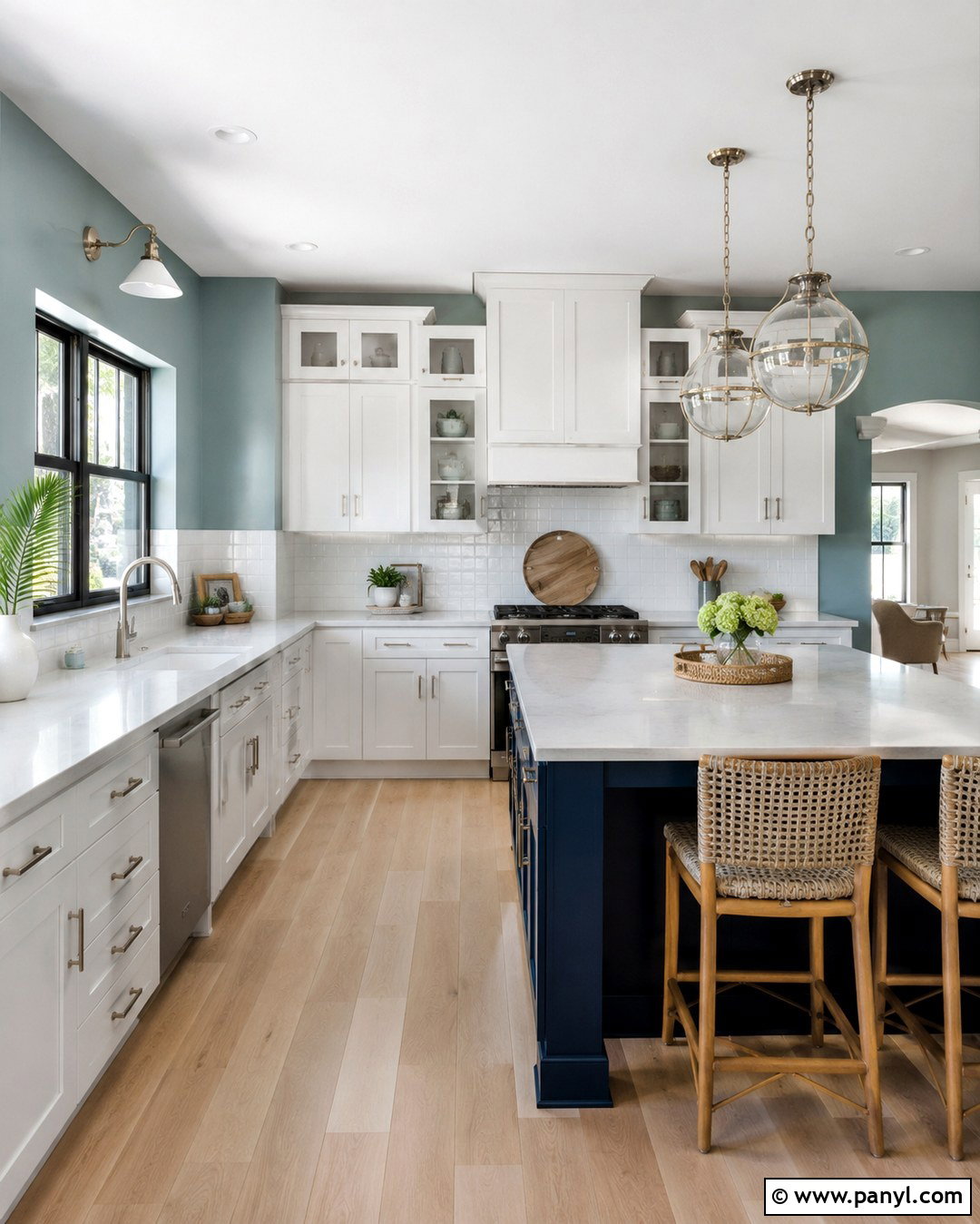
Blue green walls create a fresh, sophisticated backdrop that changes gently as daylight moves through the kitchen. Select a dusty, medium-light version and pair it with crisp white cabinets, pale gray quartz counters, and softly reflective white tile. White oak flooring and floating shelves add enough warmth to balance the cool paint. Use polished nickel hardware for a clean appearance, then introduce black through the faucet, range, or window frames for definition. A narrow island painted deep navy can complement the walls without looking overly coordinated. Complete the room with woven stools, white linen shades, and minimal ceramic accessories. This finished palette works well in coastal, contemporary, and transitional kitchens. It feels colorful yet controlled, making it suitable for an open floor plan with neutral adjoining rooms.
Conclusion:
Choosing among the 20 Best Green Color For Kitchen Walls becomes easier when you consider the entire room instead of viewing paint as an isolated decision. Pale sage, mint, seafoam, and celadon can brighten compact kitchens, while olive, moss, and artichoke bring warmth to spaces with natural wood. Forest, hunter, emerald, and teal offer stronger contrast for larger or naturally bright rooms. Coordinate the undertone of your green with cabinets, counters, flooring, metals, and backsplash materials. Then test large painted samples beside those permanent finishes at different times of day. Whether you prefer an airy coastal kitchen or a dramatic traditional space, a thoughtful green palette can create a cohesive, welcoming room that feels personal and complete.

Related Ideas and Inspiration:
Leave a Reply