
Dusty rose brings warmth, personality, and a sophisticated touch of color to the hardest-working room in the home. Unlike brighter pinks, this muted shade contains soft gray, brown, or mauve undertones, allowing it to work almost like a warm neutral. It pairs beautifully with white stone, natural wood, sage green, navy blue, brushed brass, and matte black finishes. () Whether you want a complete cabinet makeover or a smaller update using tile and paint, the key is creating a balanced palette around the rose tones. The following complete looks include modern, farmhouse, vintage, minimalist, and budget-friendly options, giving you practical inspiration for recreating these 20 dusty rose kitchen ideas.

1. Dusty Rose Kitchen Cabinets With White Quartz
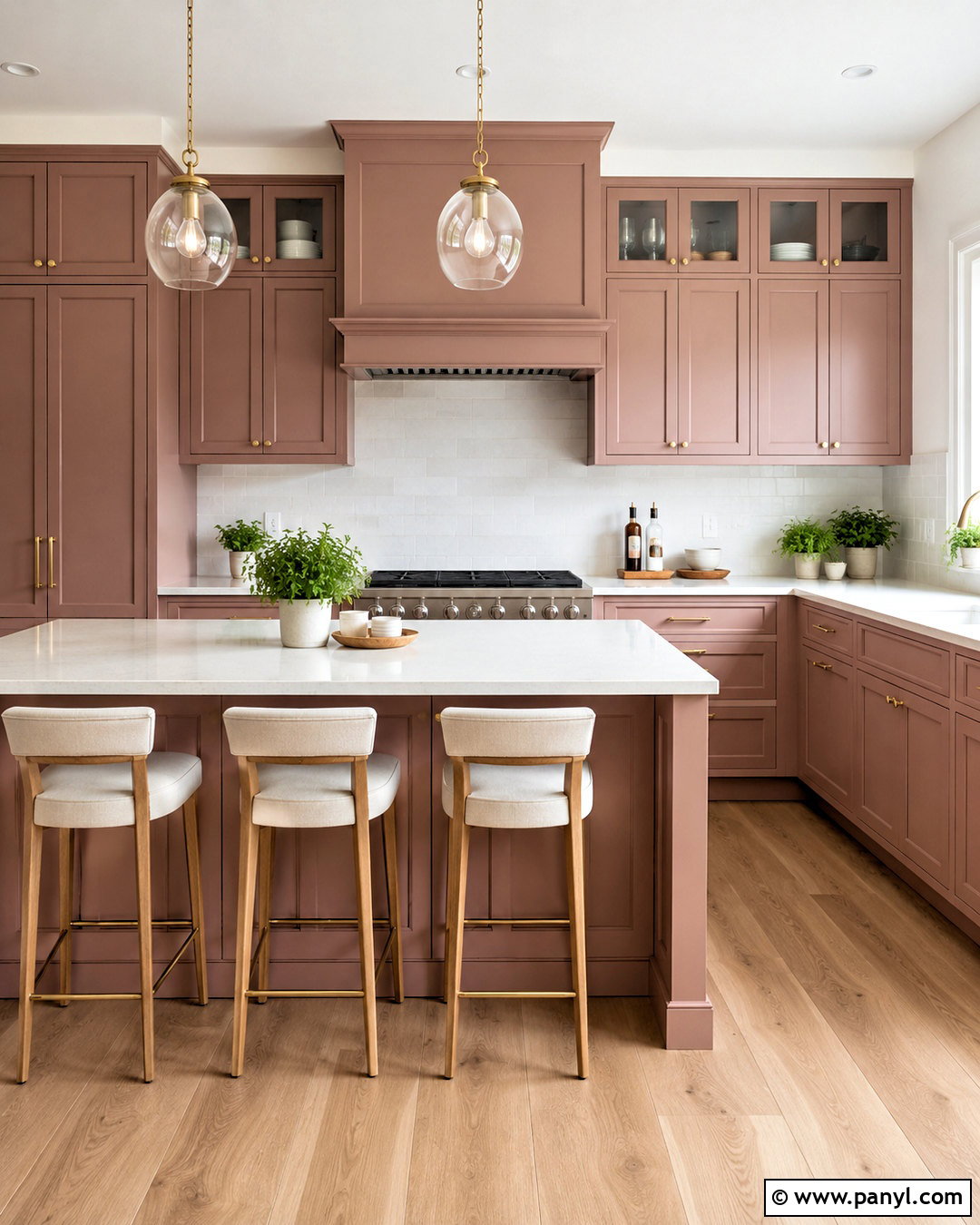
Covering the cabinetry in dusty rose creates a confident focal point without making the room feel overly sweet. Choose simple Shaker doors with a smooth satin finish, then balance their warmth with crisp white quartz countertops and a matching low-profile backsplash. Brushed brass handles and a brass bridge faucet add polish, while pale oak flooring keeps the overall palette natural. Use warm white on the ceiling and surrounding walls so the pink remains soft rather than intense. A central island in the same cabinet color makes a larger kitchen feel cohesive. Finish the space with cream counter stools, clear glass pendants, and a few green herbs in understated ceramic pots. The result feels welcoming, practical, and easy to live with.
2. Dusty Rose Kitchen With Natural Wood
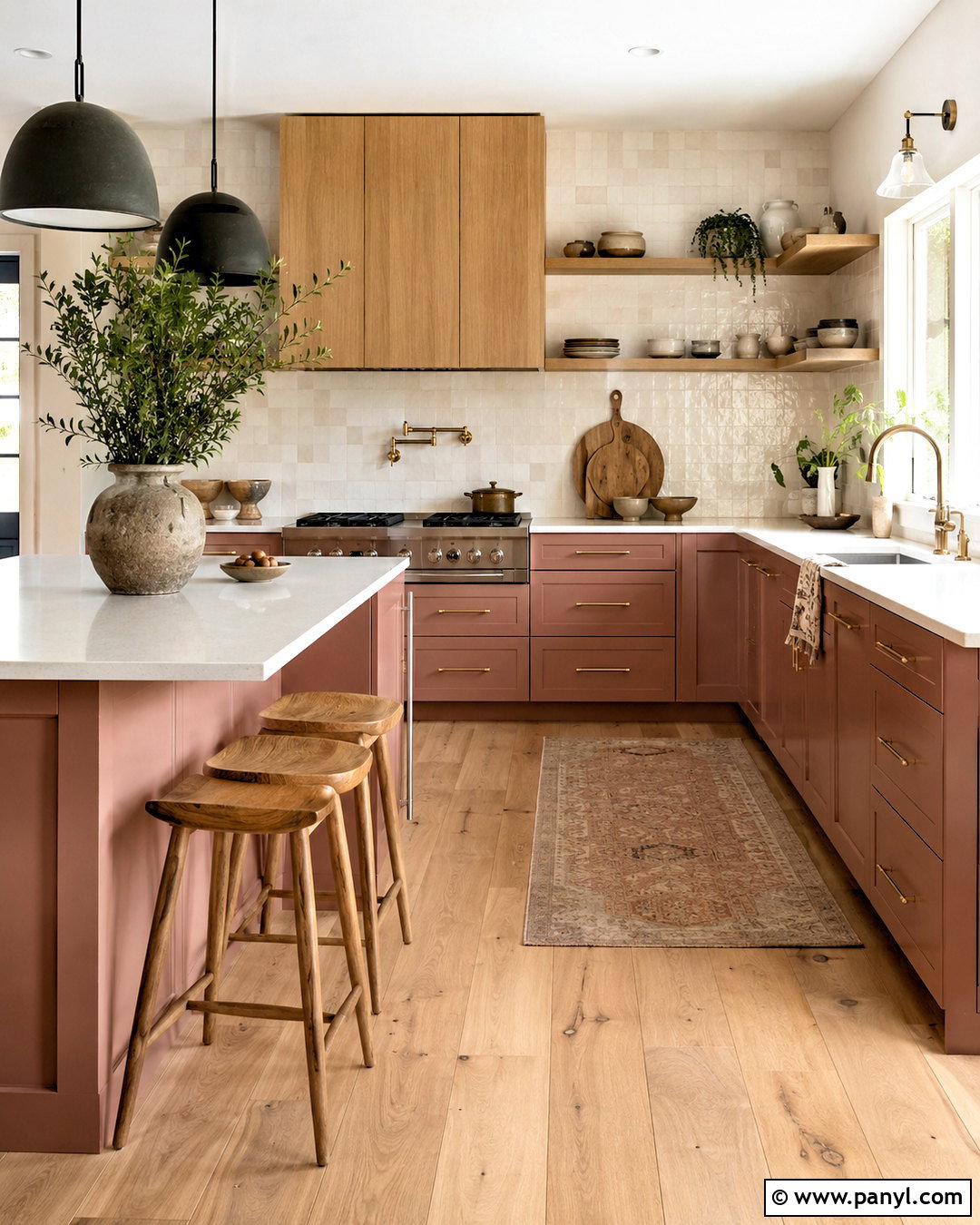
Warm wood tones make dusty rose feel earthy, relaxed, and less traditionally feminine. Paint the lower cabinets a muted rose shade and use rift-cut white oak for the upper cabinets, pantry wall, and open shelving. Continue the natural look with lightly veined cream quartz counters and handmade ivory backsplash tiles. A medium-toned oak floor connects the cabinetry, while aged brass hardware adds a subtle vintage note. Keep the walls soft white and introduce charcoal through the range and pendant lights for definition. On the shelves, arrange neutral stoneware, wooden boards, and small potted plants without overcrowding them. This complete kitchen works especially well in open-plan homes because its wood, cream, and dusty pink palette transitions naturally into nearby living spaces.
3. Dusty Rose Kitchen With Sage Green
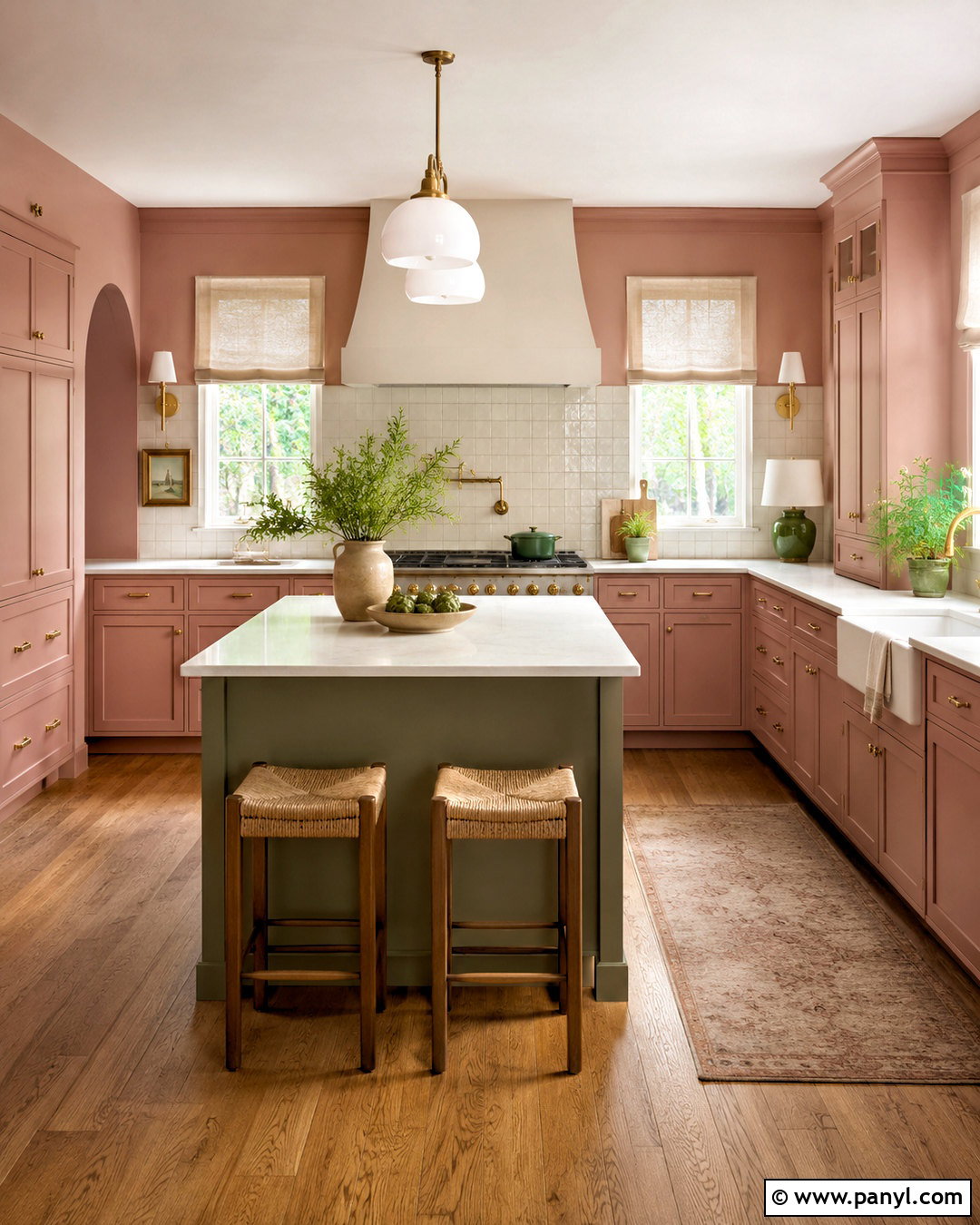
Dusty rose and sage green create a grounded color combination inspired by garden tones. Use rose-painted Shaker cabinets around the main work area and reserve soft sage for the island or a tall pantry bank. Cream quartz countertops keep the two colors from competing, while an off-white square tile backsplash provides a quiet backdrop. Add antique brass cup pulls, a warm metal faucet, and linen Roman shades to reinforce the traditional character. Medium oak flooring brings another natural layer into the room. A pair of milk glass pendants above the island provides gentle contrast without looking ornate. Finish with woven counter stools, green pottery, and herbs near the window. Each color has a clear role, giving the finished kitchen balance and visual structure.
4. Dusty Rose Kitchen With Black Accents
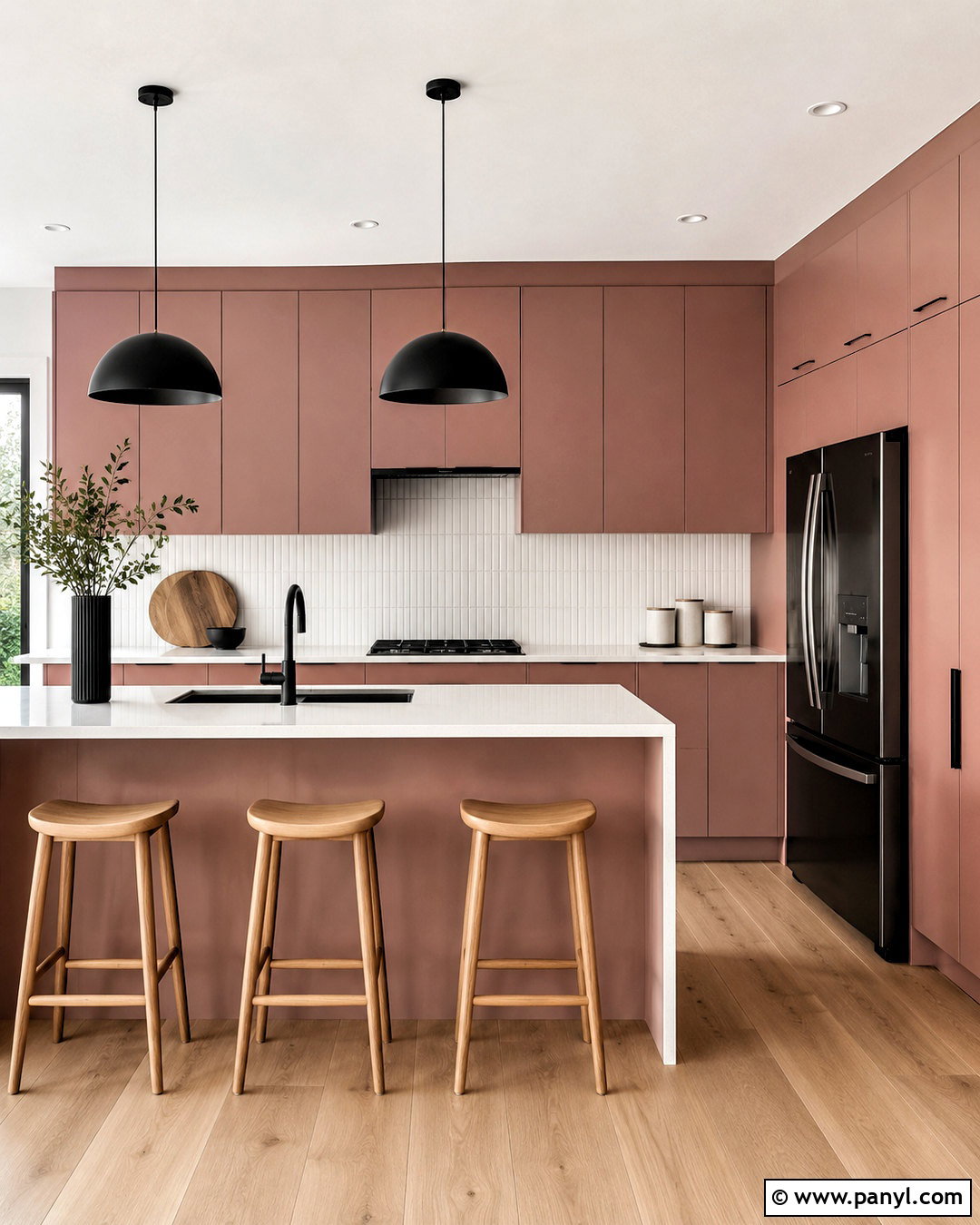
Can a pink kitchen feel sharp and contemporary? Pair matte dusty rose flat-panel cabinets with black accents to create a clean, architectural look. Install slim black pulls, a black undermount sink, and a streamlined matte black faucet. White quartz counters with subtle gray veining prevent the combination from feeling heavy, while a white vertical tile backsplash introduces texture. Choose pale oak flooring to soften the stronger finishes and add warmth beneath the cabinetry. A black-framed window or glass pantry door can repeat the contrast at eye level. Over the island, use simple black dome pendants and light wood stools. Keep countertop decor minimal, limiting it to a wooden tray, neutral canisters, and one leafy plant for a polished, clutter-free finish.
5. Dusty Rose Kitchen With Marble Backsplash
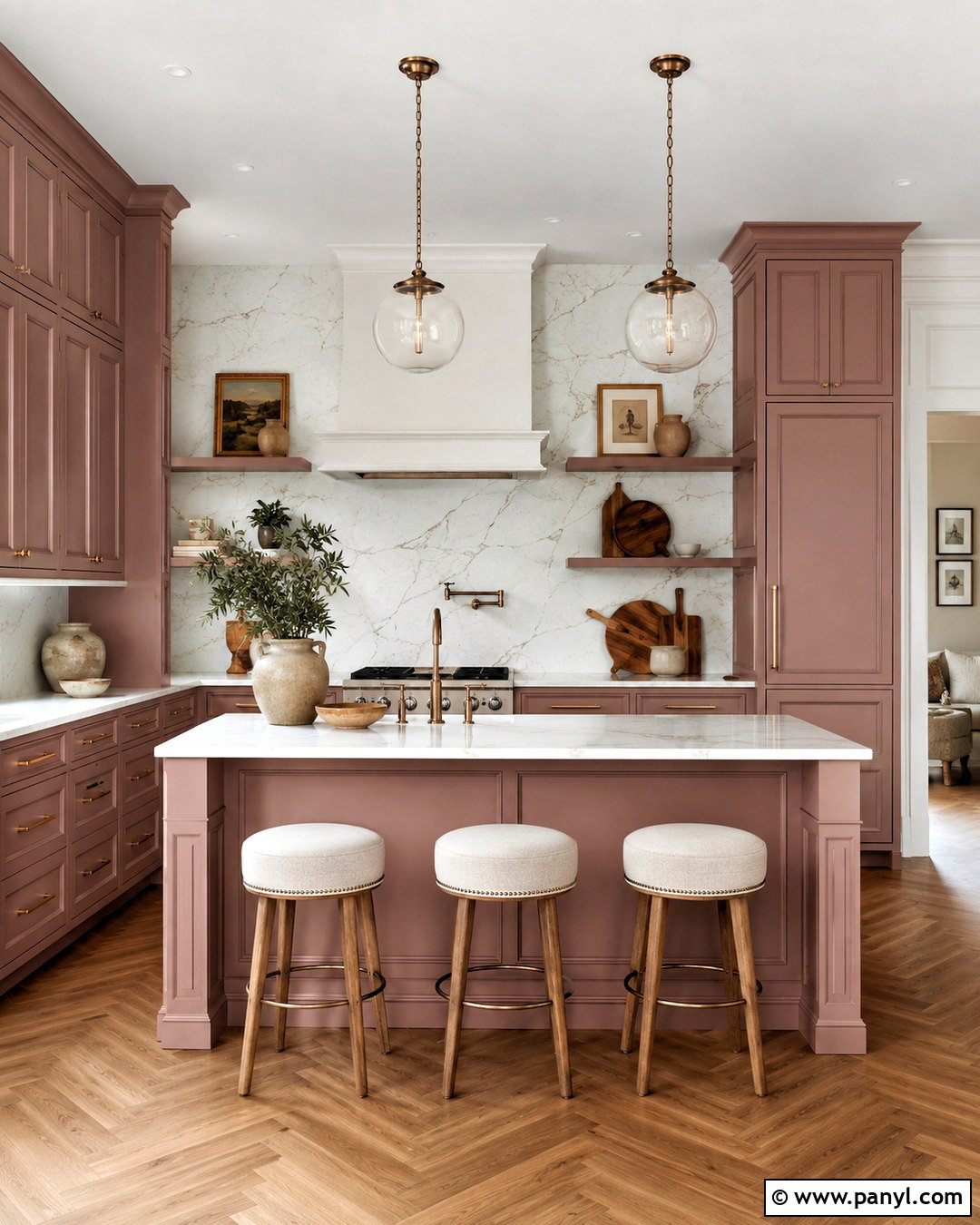
For an elegant kitchen, combine dusty rose cabinetry with a full-height marble backsplash that continues behind the range and open shelves. Select white marble with soft gray or beige veining instead of highly dramatic patterns, allowing the cabinet color to remain prominent. Use the same stone or a quiet coordinating quartz on the countertops for a seamless appearance. Brushed brass pulls, a warm brass faucet, and slender glass pendants add light-reflecting details. A medium oak herringbone floor introduces movement without competing with the stone. Keep the island dusty rose for consistency, but choose cream upholstered stools to break up the color. Minimal pottery, framed artwork, and neatly arranged wooden boards complete this refined kitchen while preserving a comfortable, residential atmosphere.
6. Dusty Rose Kitchen With Zellige Tile
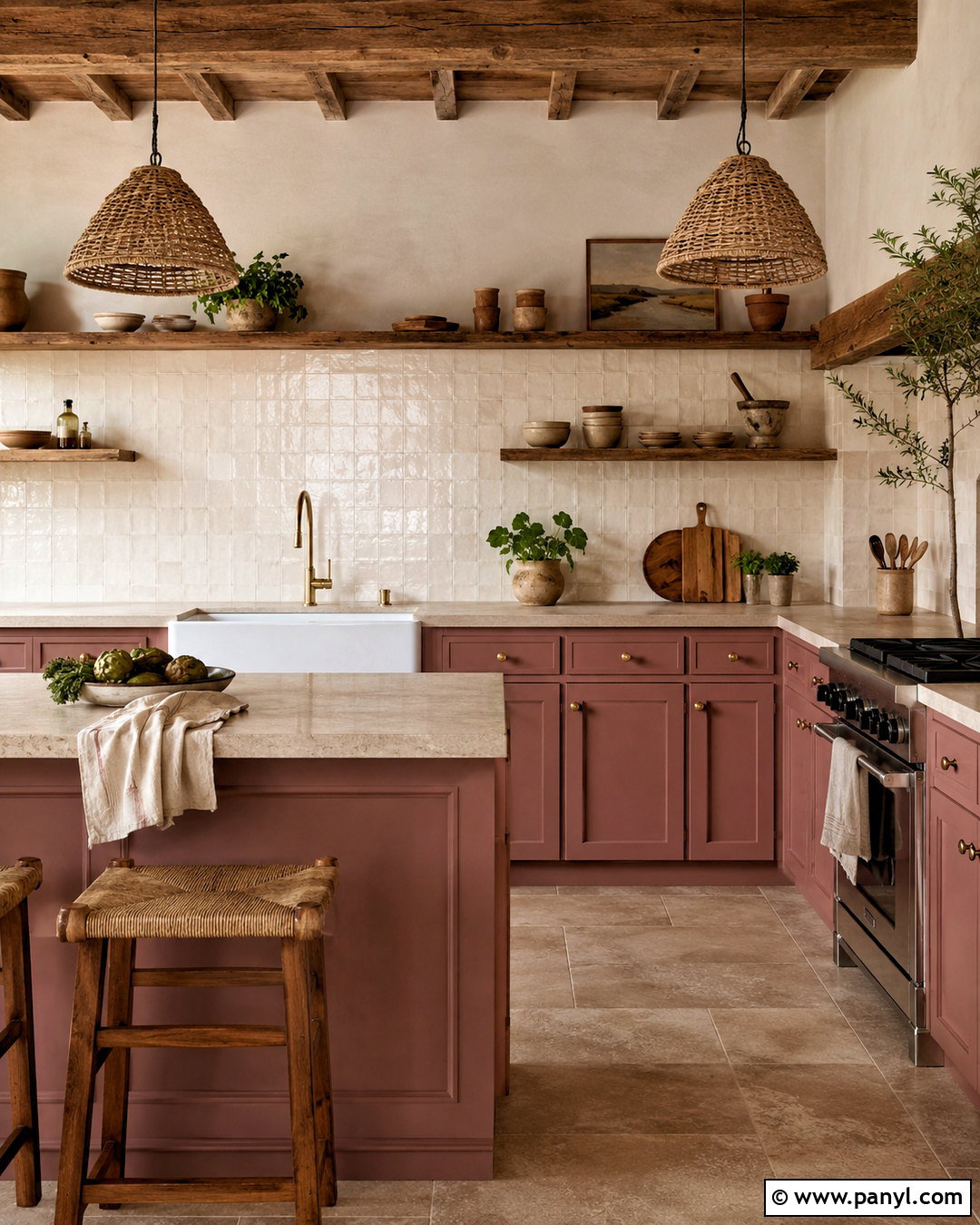
Uneven, light-reflecting tile gives dusty rose cabinetry a handmade quality that feels casual and character-rich. Start with muted rose base cabinets and matching tall storage, then use creamy white zellige tile across the full backsplash. Its varied surface provides dimension while maintaining a restrained palette. Choose honed beige quartz or limestone-look counters, unlacquered brass hardware, and a white apron-front sink. Reclaimed oak shelves add rustic warmth and provide accessible storage for everyday bowls and glasses. Underfoot, use wide-plank oak or durable wood-look porcelain. A woven pendant above a compact island introduces another natural texture. Keep accessories simple with linen towels, earthenware containers, and small herb pots. This layered kitchen feels collected and authentic rather than overly coordinated.
7. Dusty Rose Kitchen With Navy Blue Island
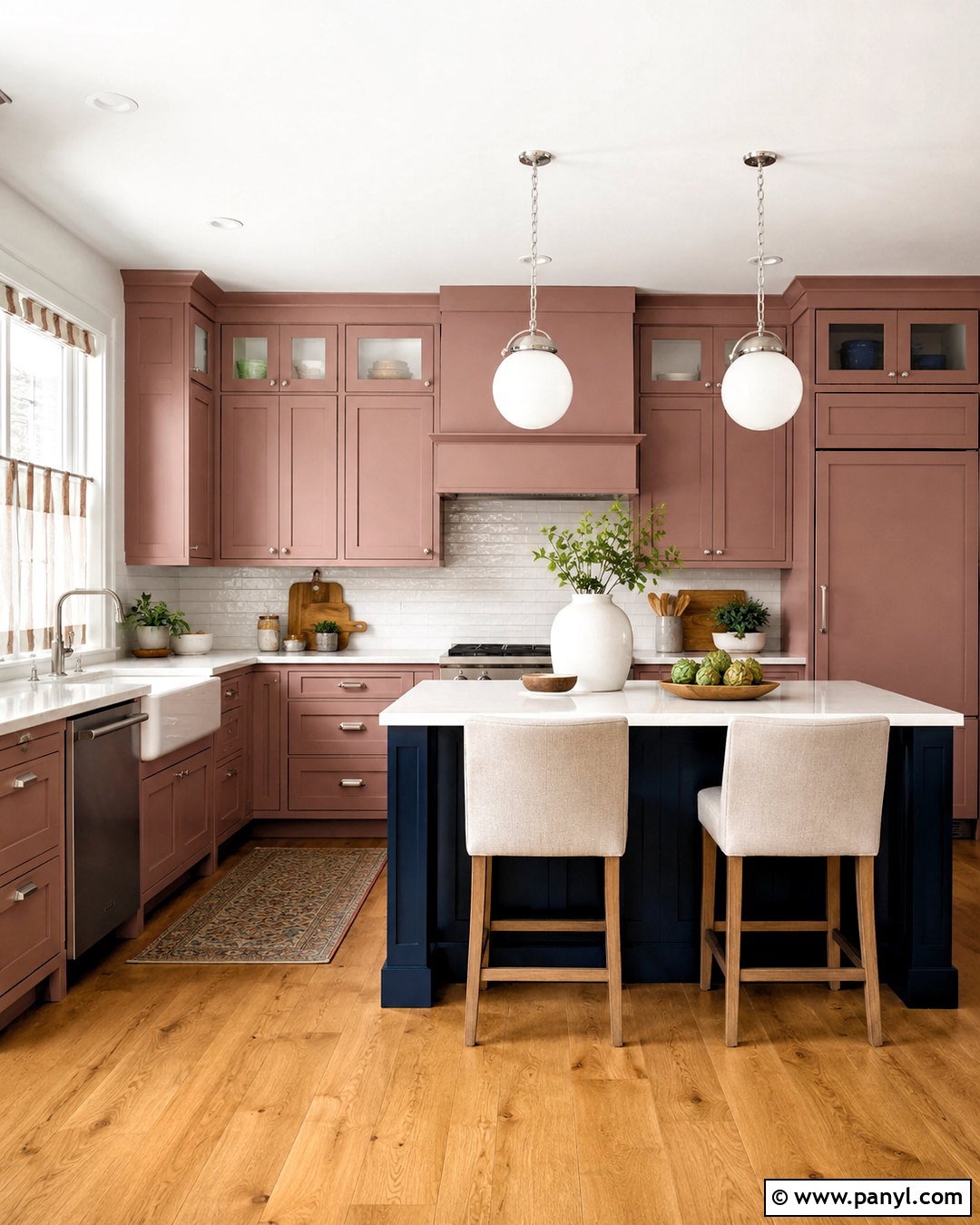
Deep navy gives dusty rose a strong, tailored partner that works especially well in a spacious kitchen. Paint the perimeter Shaker cabinets dusty rose and use rich navy blue on the central island. Connect both colors with white quartz counters and a backsplash of glossy ivory subway tile. Polished nickel hardware offers a cooler alternative to brass and helps the navy feel crisp. Warm oak flooring stops the scheme from becoming formal or cold. Choose upholstered counter stools in neutral oatmeal fabric and hang oversized white globe pendants above the island. A stainless steel range and refrigerator provide practical, modern contrast. Complete the room with striped café curtains, simple white dishes, and a few wooden accessories that repeat the floor’s warmth throughout the design.
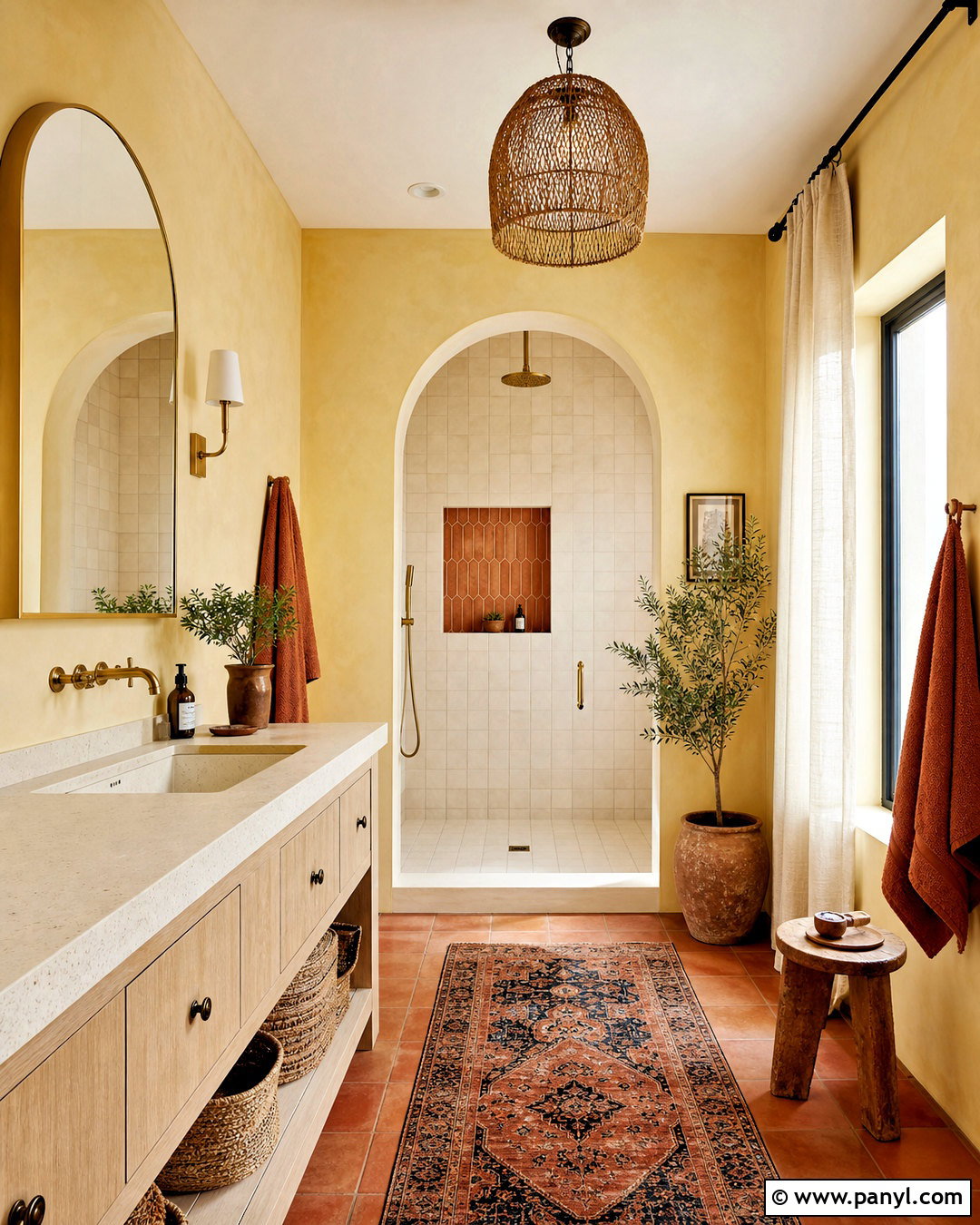
8. Dusty Rose Kitchen With Terracotta Floors
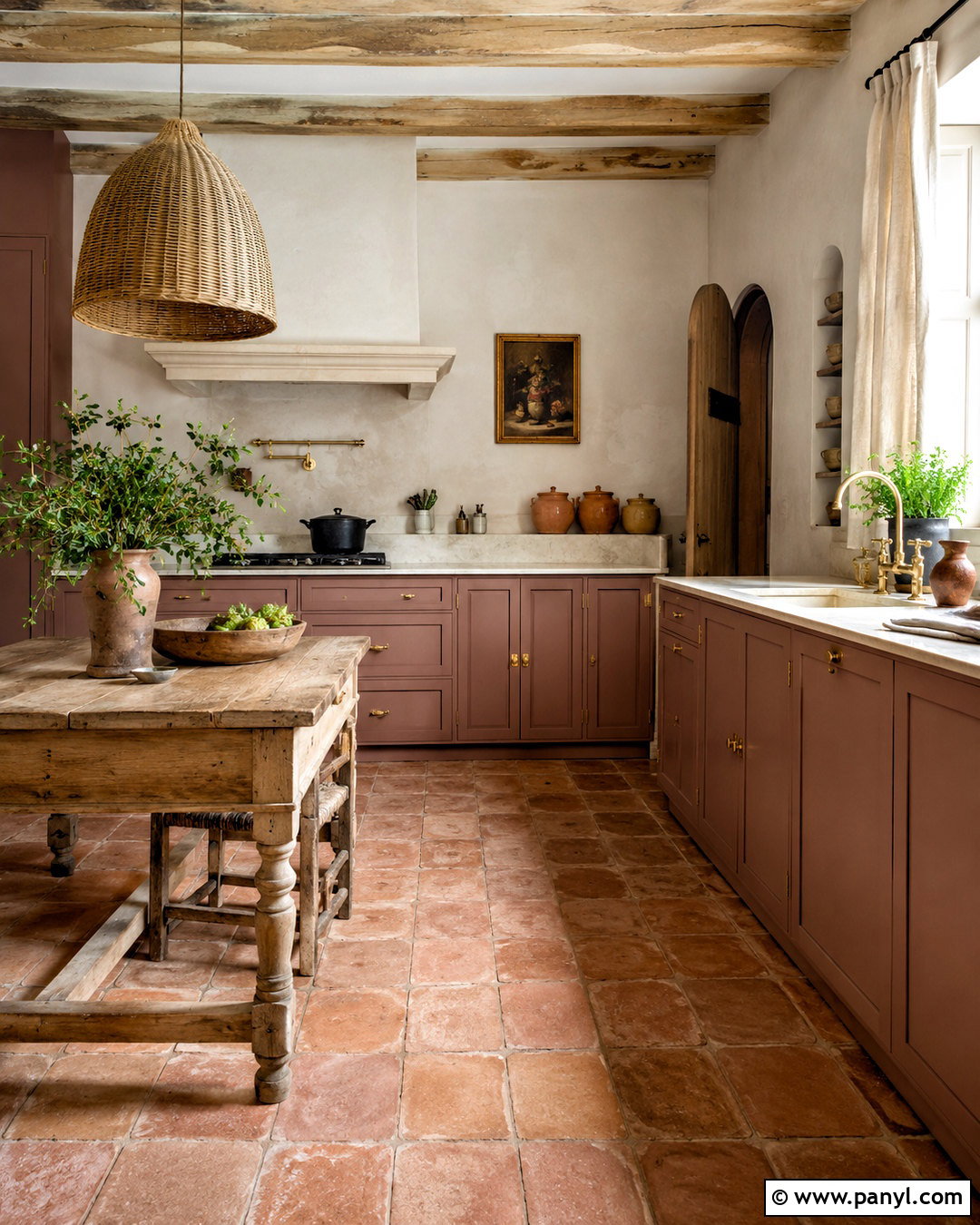
Terracotta flooring brings out the warm, earthy undertones hidden within dusty rose. Choose softly aged terracotta squares or hexagonal tiles for the floor, then pair them with muted rose cabinets in a simple inset or Shaker profile. Cream limestone-look counters and an ivory plaster backsplash keep the upper half of the room light. Use aged brass latches, cup pulls, and a traditional bridge faucet to complement the rustic materials. Natural oak ceiling beams or open shelves can add structure, but keep them light enough to avoid darkening the space. Finish with a farmhouse table or compact wood island, woven pendant lighting, and linen café curtains. Handmade pottery and herbs provide practical decoration, creating a kitchen that feels sunny, relaxed, and connected to natural materials.
9. Dusty Rose Kitchen With Butcher Block Counters
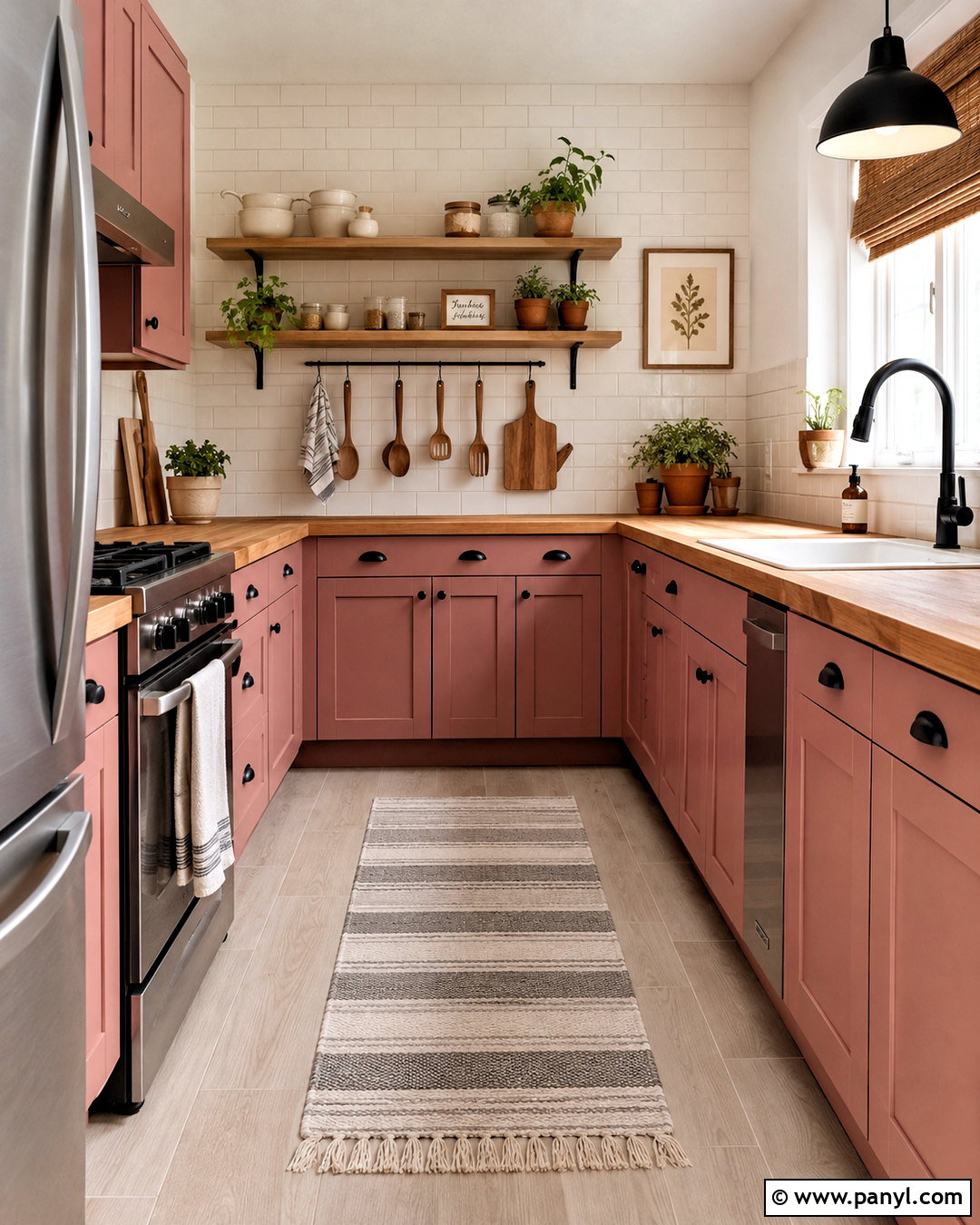
A smaller kitchen can feel instantly warmer when dusty rose cabinets are topped with natural butcher block. Use the color across the lower cabinets and keep the upper walls open with oak shelves or a few cream cabinets. Select a durable wood counter with a medium oak tone, then protect busy wet areas with a compact undermount sink and practical tile backsplash. Cream subway tile, white walls, and pale flooring will help the room feel open. Add black cup pulls and a black gooseneck faucet for clear contrast. Under-cabinet lighting ensures that the wooden work surfaces remain bright. Complete the look with neutral storage jars, hanging wooden utensils, a washable striped runner, and leafy herbs displayed in simple pots near the window.
10. Dusty Rose Kitchen With Open Shelving
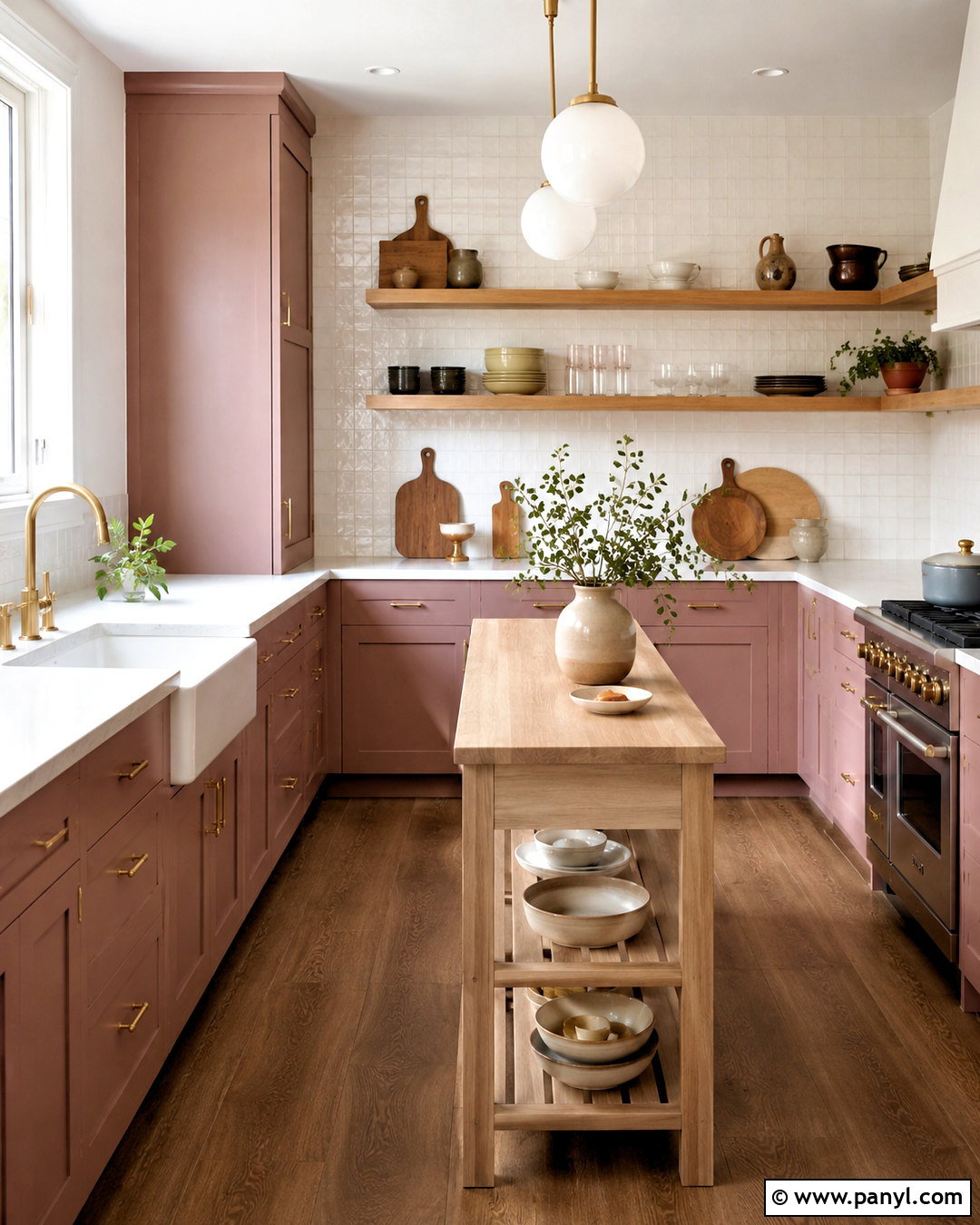
Open shelving prevents a compact dusty rose kitchen from feeling enclosed by too many upper cabinets. Use rose-painted base cabinetry around the sink and range, then install two long white oak shelves against a warm white backsplash. Continue the color on one tall pantry cabinet to create useful vertical storage and visual balance. White quartz countertops, brushed brass pulls, and an ivory ceramic sink keep the palette light. Arrange the shelves with everyday dishes, clear glasses, wooden boards, and a few pieces of pink or green pottery. Avoid filling every inch, since open space is important to the design. Add a narrow oak island or worktable, simple globe lighting, and light flooring. This practical layout combines accessible storage with a bright, relaxed appearance.
11. Dusty Rose Kitchen With Fluted Cabinets
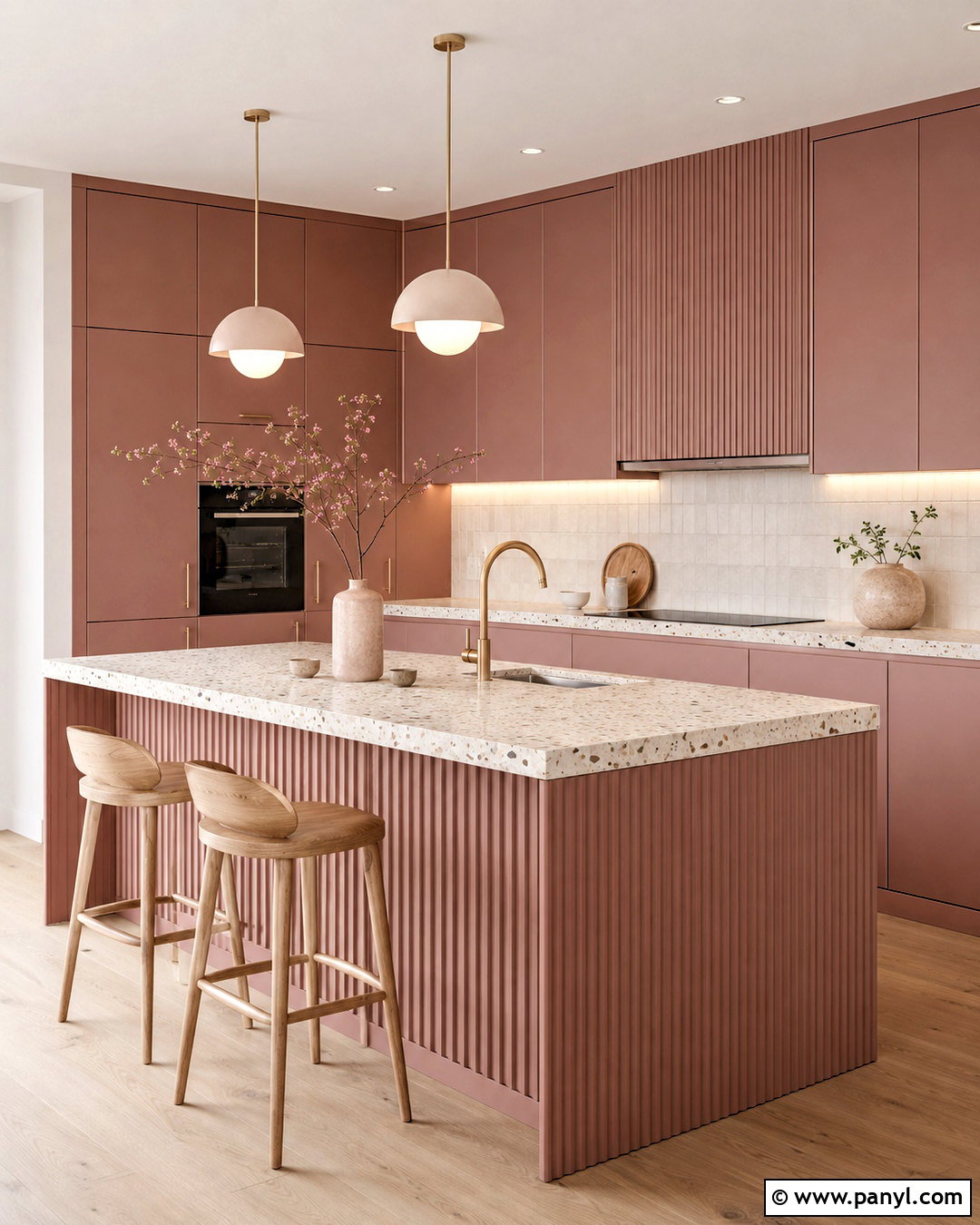
Fluted cabinet fronts introduce texture while maintaining the calm effect of a single dusty rose color. Use them on the island and selected tall cabinets, balancing the ridged surfaces with smooth flat-panel doors around the perimeter. A matte or low-sheen finish will keep the details refined rather than flashy. Pair the cabinetry with white terrazzo counters containing small beige and rose chips. Choose a plain warm white backsplash so the fluting remains the main feature. Brushed brass handles, a sculptural brass faucet, and rounded pendant lights complement the vertical lines. Pale oak flooring and curved wood stools soften the contemporary layout. Finish with minimal ceramic accessories and concealed appliances, creating a streamlined kitchen that still feels tactile, inviting, and visually distinctive.
12. Dusty Rose Kitchen With Green Tile Backsplash
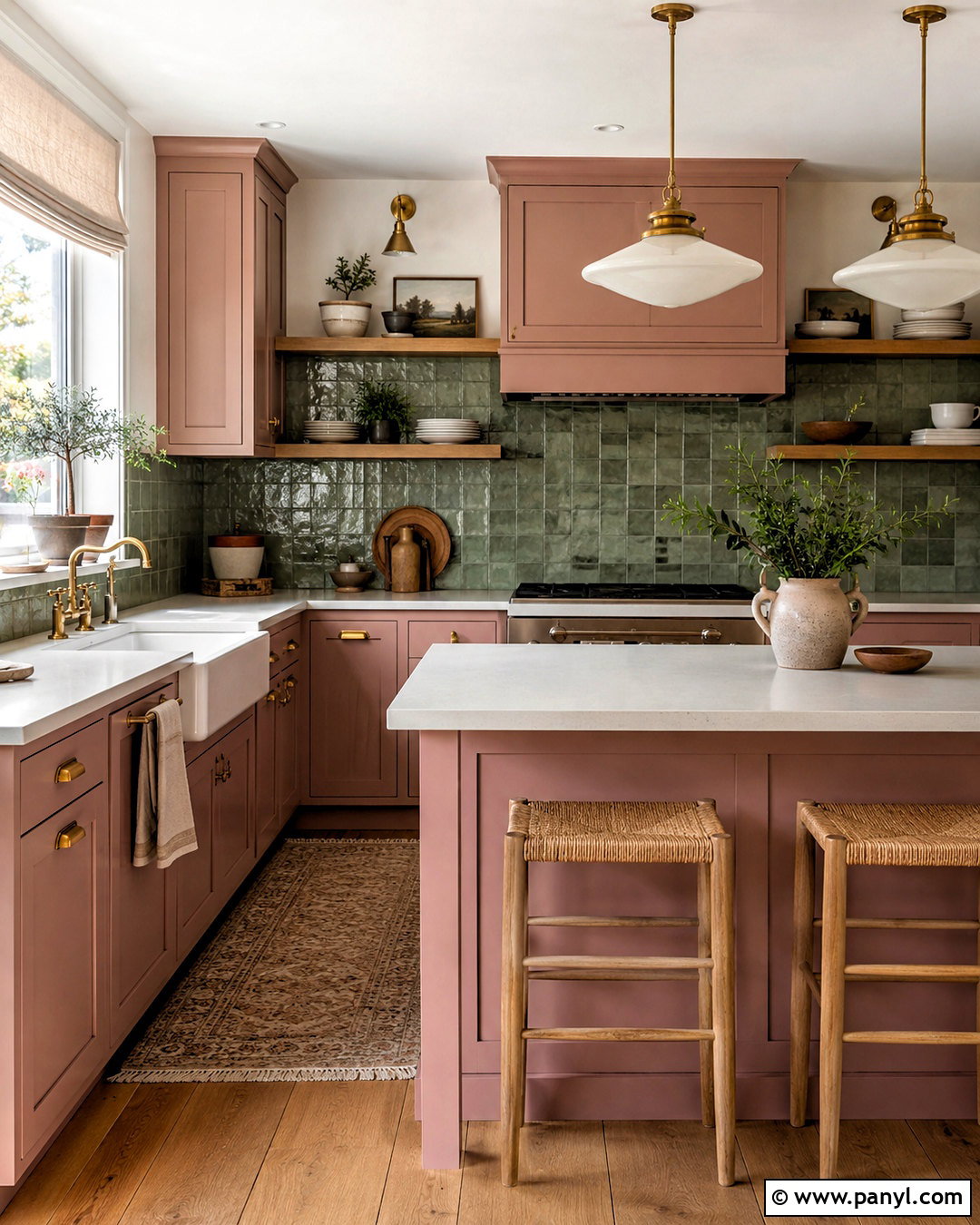
A green backsplash can turn dusty rose cabinets into a lively yet balanced kitchen scheme. Choose muted olive or sage square tiles with slight tonal variation, installing them from the countertop to the underside of the upper cabinets. Keep the cabinetry simple with rose Shaker doors and small aged brass knobs. Cream quartz countertops provide a quiet divider between the two colors. Medium oak flooring, wood shelves, and woven stools strengthen the natural character. Use warm white paint above the tile and on the ceiling to maintain brightness. A cream farmhouse sink and brass bridge faucet add traditional charm without overdecorating the room. Complete the kitchen with terracotta planters, neutral dishware, and linen window treatments that repeat the soft, organic quality of the palette.
13. Dusty Rose Kitchen With White Upper Cabinets
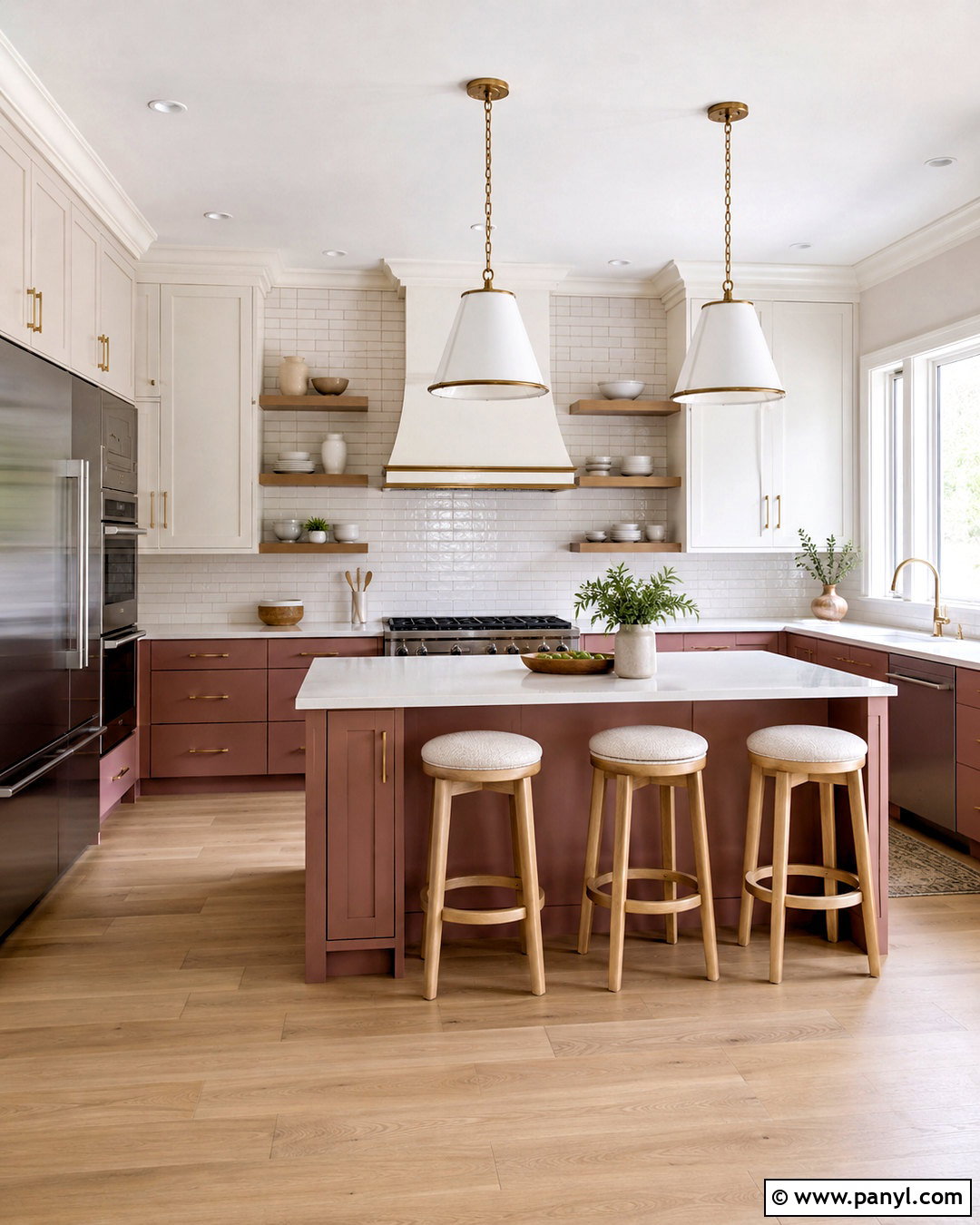
If painting every cabinet pink feels like too much, limit dusty rose to the base units and island. Use clean white cabinets above the counters to keep the room light and visually open. Match the upper cabinetry with white quartz countertops and a simple white backsplash, allowing the rose-colored lower section to anchor the design. Brushed brass knobs and pulls connect both cabinet colors, while pale oak flooring introduces gentle warmth. Choose pendants with white shades and brass fittings over the island. A few oak shelves can break up a long line of upper cabinets and provide space for neutral dishes. This two-tone arrangement suits narrow kitchens and open layouts because the stronger color remains below eye level, creating personality without overwhelming the surrounding space.
14. Dusty Rose Kitchen With Concrete Counters
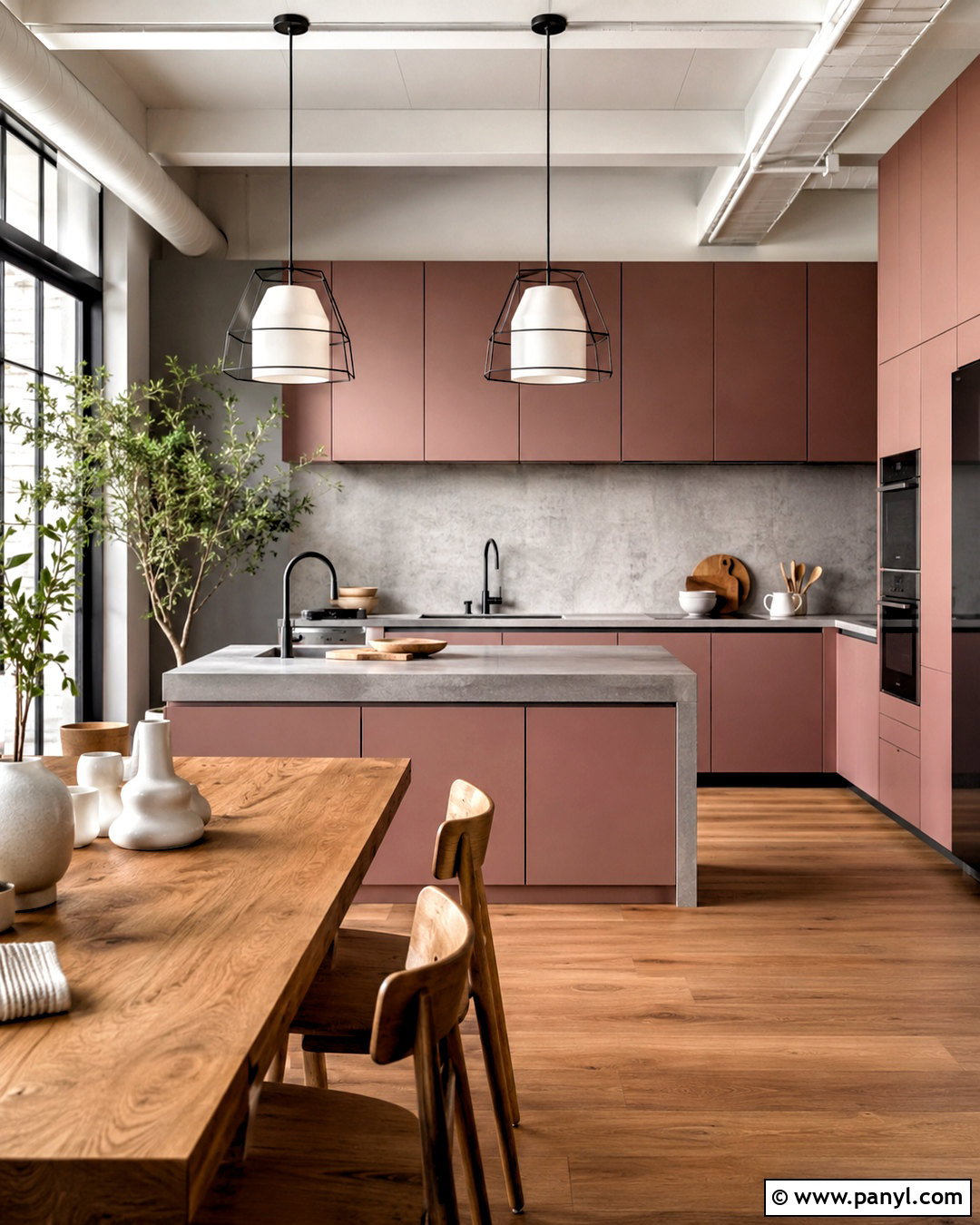
The softness of dusty rose can balance the raw appearance of concrete, resulting in a modern kitchen with subtle industrial character. Choose handleless rose cabinets with clean lines and pair them with smooth light gray concrete countertops. Carry the concrete up the wall as a short backsplash or use large-format gray porcelain for easier maintenance. Add matte black faucets, slim black pulls, and black-framed pendant lights for definition. Warm oak flooring and a matching dining table prevent the gray surfaces from feeling cold. Keep upper storage limited or use rose-colored floating cabinets to preserve the streamlined effect. Finish with sculptural white ceramics, a few wooden utensils, and one large green plant. The finished kitchen feels urban and contemporary while remaining warm enough for everyday family life.
15. Dusty Rose Farmhouse Kitchen
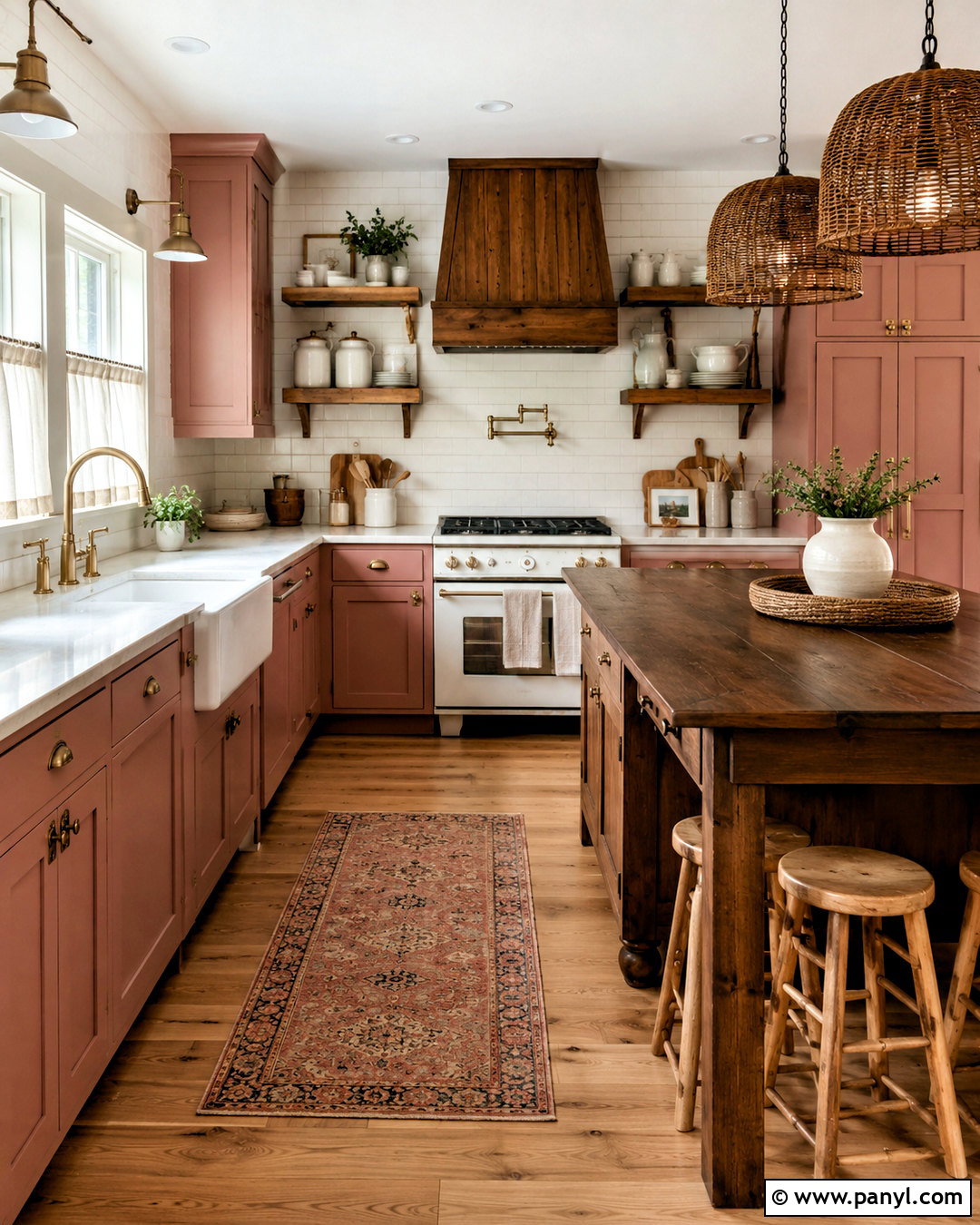
A farmhouse treatment gives dusty rose a familiar, comfortable quality. Select inset Shaker cabinets in a faded rose finish and pair them with creamy quartz countertops, an apron-front sink, and an ivory subway tile backsplash. Use antique brass latches and cup pulls instead of shiny contemporary hardware. A stained wood island can create contrast while providing seating and additional storage. Wide-plank oak floors, a simple wood range hood, and woven pendant lights strengthen the rustic character. At the windows, hang neutral café curtains or a softly patterned Roman shade. Keep open shelves tidy with white stoneware, glass containers, and wooden boards. A washable vintage-pattern runner adds gentle color underfoot, completing a practical kitchen that feels established, welcoming, and suitable for a modern home.
16. Dusty Rose Midcentury Kitchen
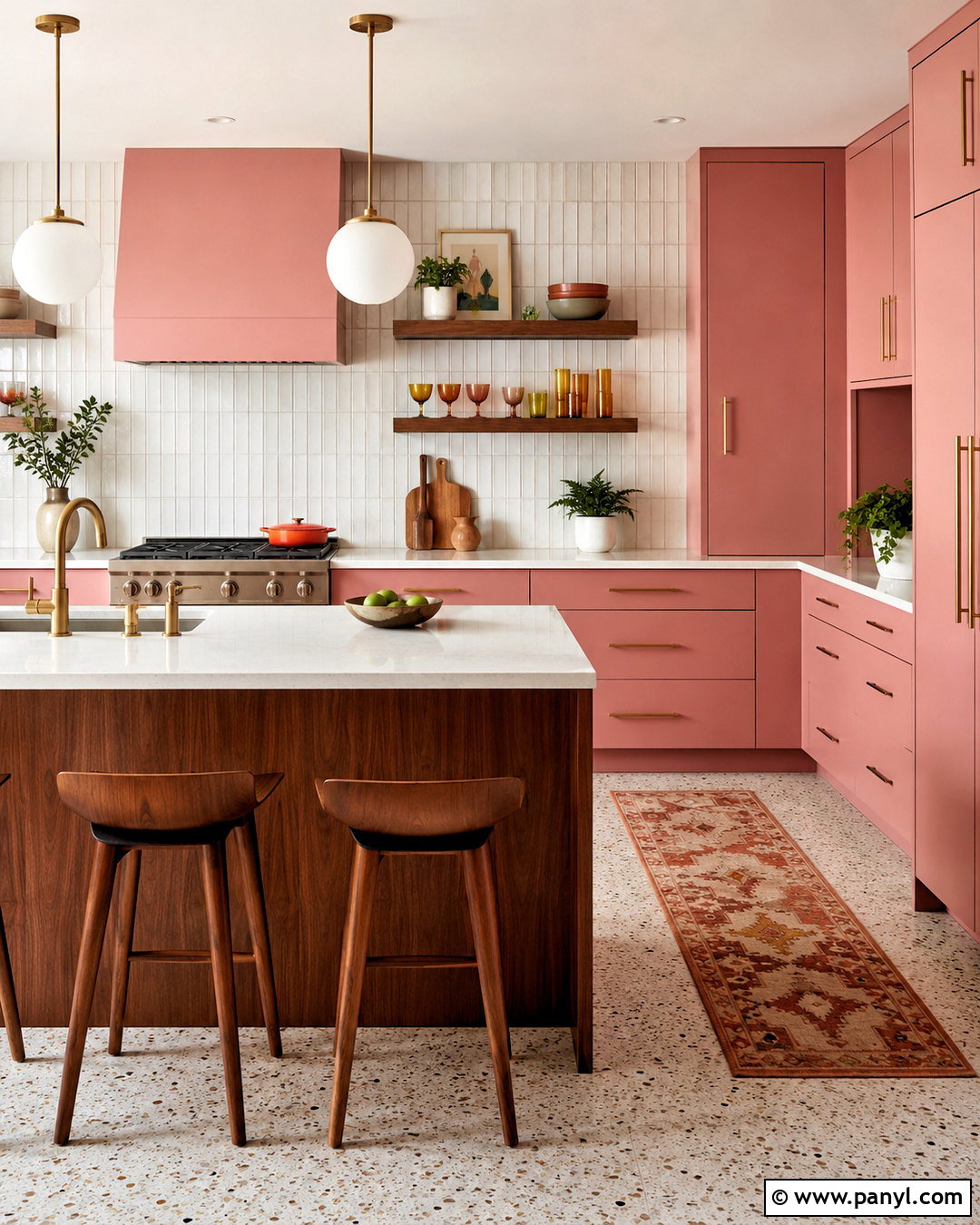
Clean cabinet fronts and warm walnut details give dusty rose a distinctly midcentury direction. Use flat-panel rose cabinets along the main walls and introduce walnut on the island, floating shelves, and integrated handle rails. White quartz countertops and a small cream rectangular tile backsplash keep the surfaces fresh and simple. Choose globe pendant lights with opal glass, tapered wood stools, and a geometric floor runner in muted rust and beige. Brushed brass fixtures add warmth without appearing ornate. Light terrazzo flooring can provide a playful period reference while remaining practical and bright. Keep decorative pieces streamlined, using a ceramic fruit bowl, a few colorful glasses, and small plants. This complete design feels nostalgic but avoids looking themed, making it appropriate for both older and newer homes.
17. Dusty Rose Galley Kitchen
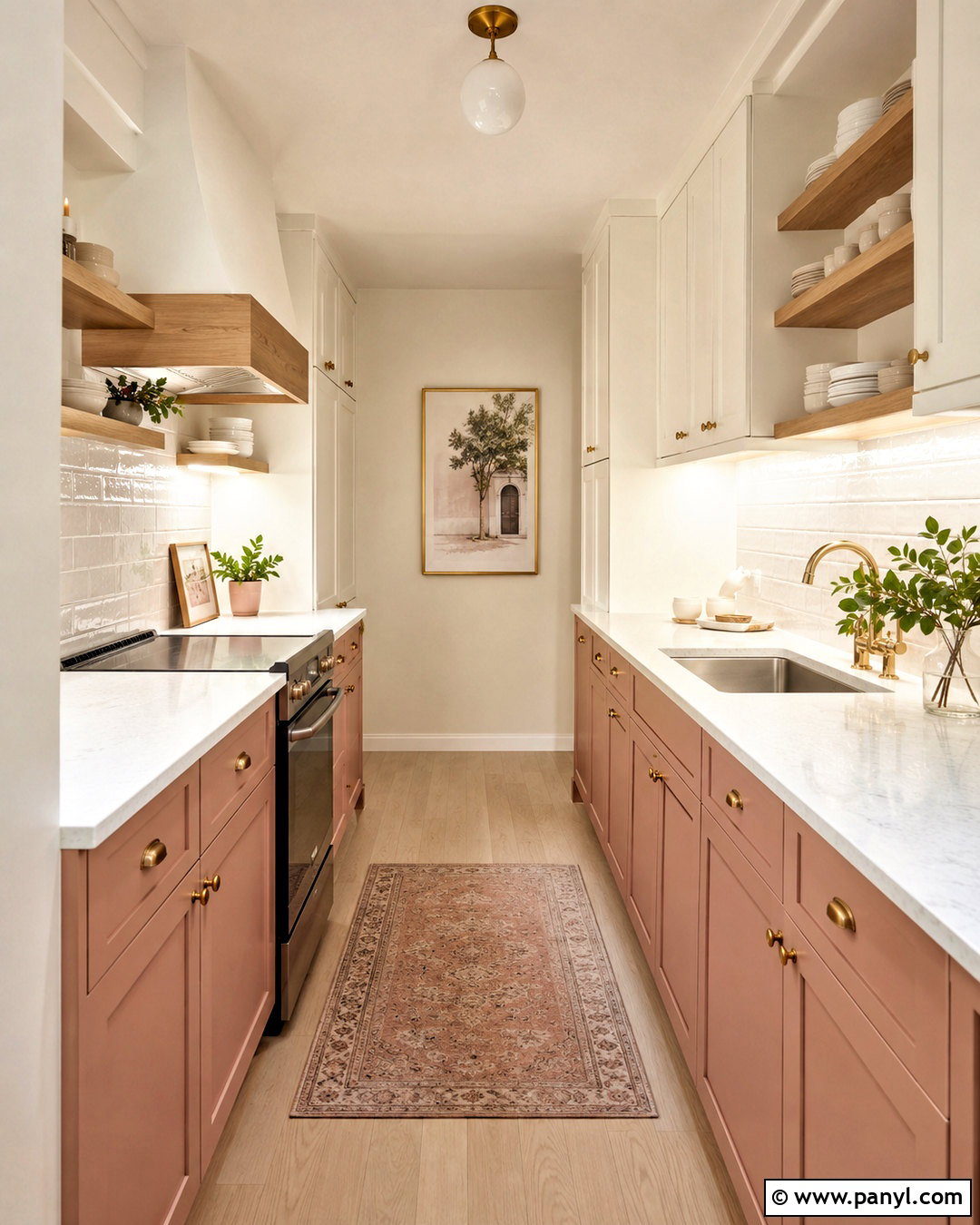
A narrow galley kitchen benefits from a carefully controlled dusty rose palette. Apply the color to the lower cabinets on both sides, but keep upper cabinetry warm white or replace part of it with open oak shelving. White quartz counters and glossy ivory backsplash tiles reflect available light, helping the passage feel wider. Use compact brass knobs instead of long handles that could catch clothing in the tight walkway. Pale wood or light stone-look flooring laid lengthwise visually extends the room. Install bright under-cabinet lighting and one simple flush-mount ceiling fixture for even illumination. At the far end, add a small framed print or green plant to create a focal point. The completed layout feels colorful and efficient without closing in the limited floor space.
18. Dusty Rose Kitchen Island
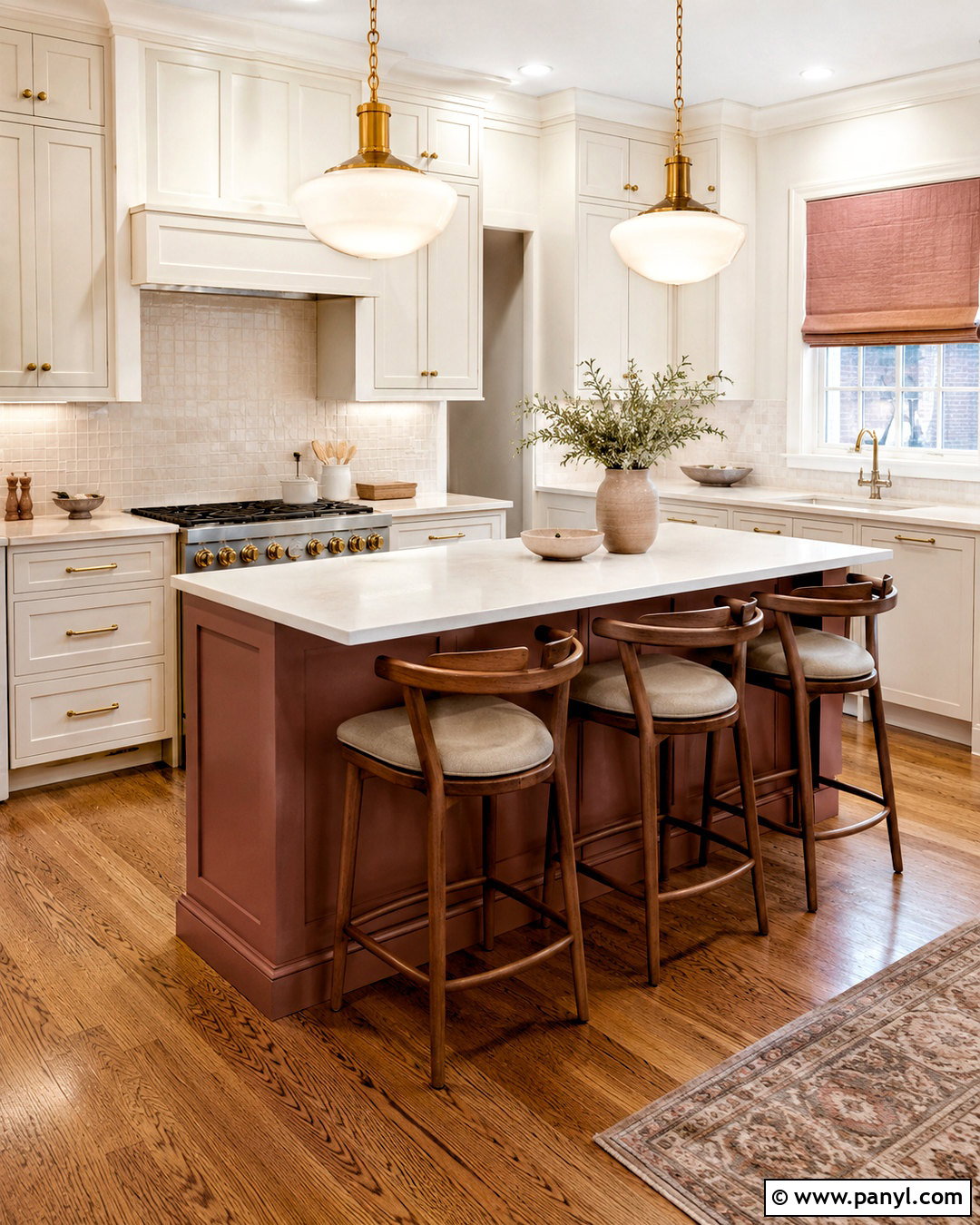
A dusty rose island is an approachable way to introduce color while keeping the perimeter cabinetry neutral. Paint the island a muted rose with gray undertones and surround it with warm white Shaker cabinets. Use white quartz across every counter so the separate cabinet colors still feel connected. Add a pale taupe or ivory backsplash, brushed brass hardware, and medium oak flooring. Three curved wood counter stools make the island comfortable for casual meals, while oversized milk glass pendants emphasize it as the room’s focal point. Repeat dusty rose once or twice through a Roman shade or small ceramic accessories, but avoid matching every object. This restrained repetition makes the island look intentional and allows it to enliven the room without dominating the complete kitchen design.
19. Dusty Rose Vintage Kitchen
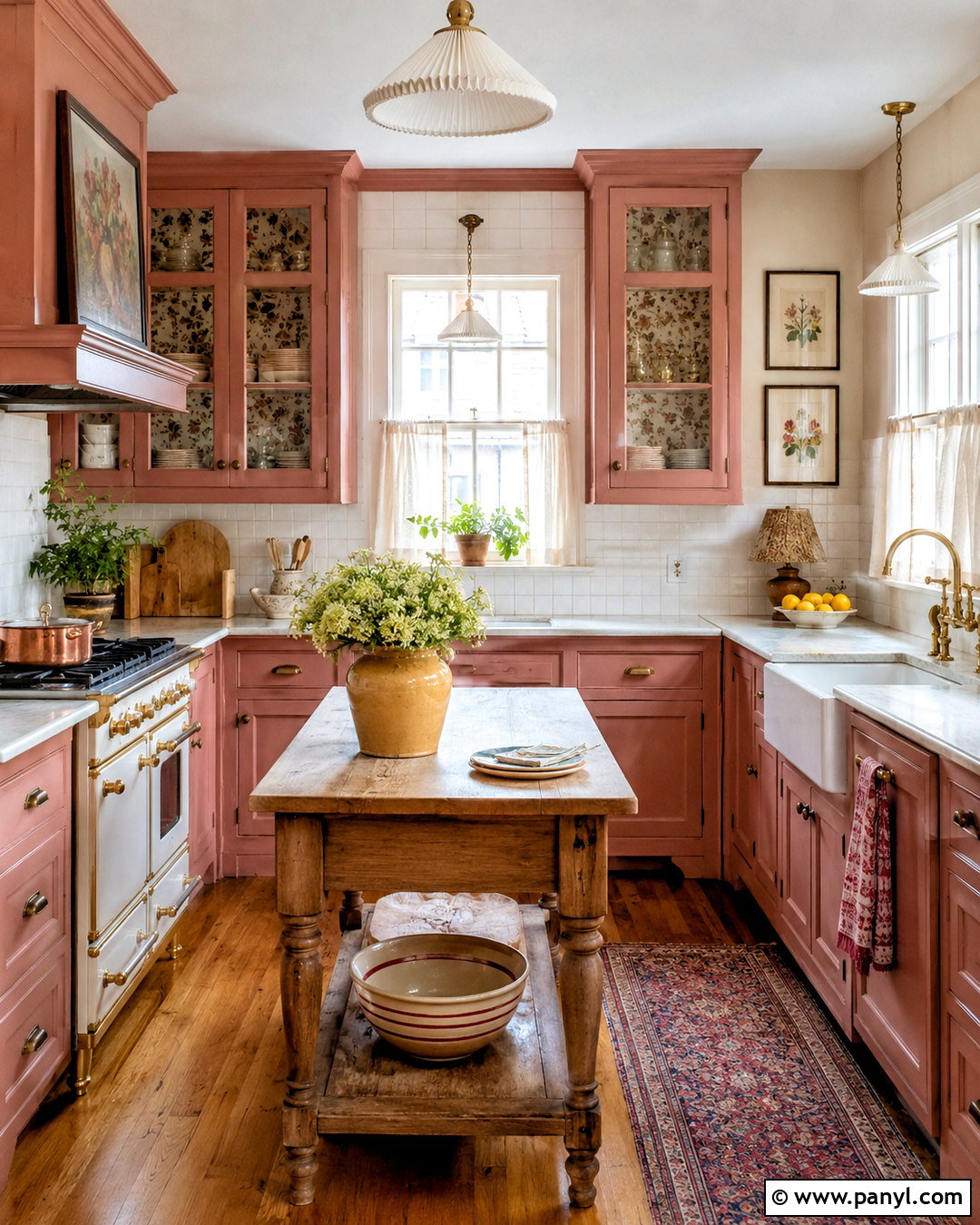
Vintage details bring depth and charm to dusty rose cabinetry. Choose traditional inset doors with visible hinges, brass latches, and glass-front display cupboards. Line the display cabinet backs with a small-scale botanical wallpaper in cream, faded green, and rose. Use lightly veined white stone counters and a cream square tile backsplash with darker grout for an established look. A classic range, bridge faucet, and fireclay sink reinforce the period character. Medium wood flooring and a freestanding worktable make the room feel collected rather than newly installed. Finish with pleated pendant shades, café curtains, framed artwork, and neatly displayed floral china. Keep modern appliances integrated behind cabinet panels where possible, allowing convenience to coexist with the kitchen’s nostalgic appearance.
20. Dusty Rose Kitchen On A Budget
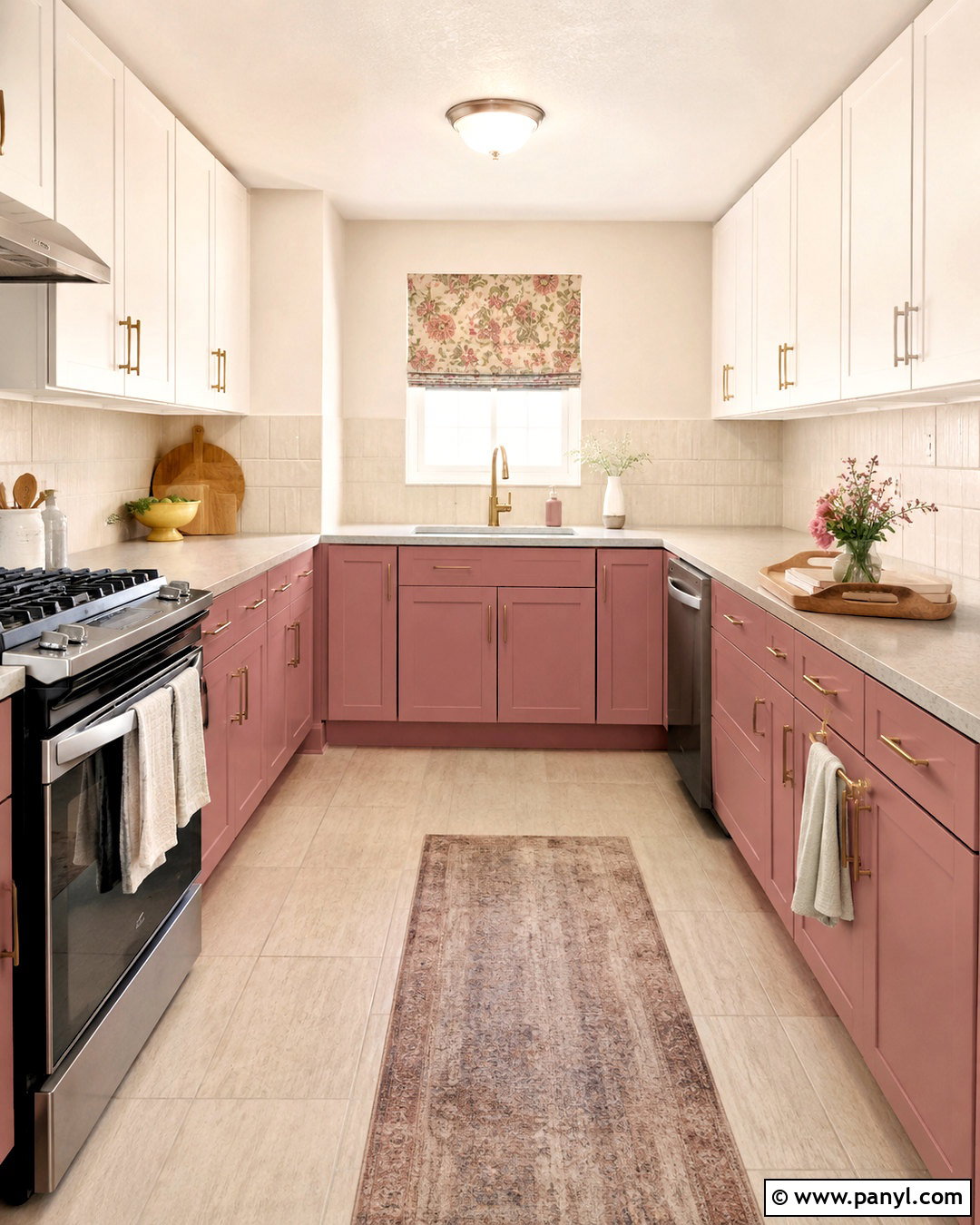
You do not need a full renovation to create a convincing dusty rose kitchen. Paint structurally sound lower cabinets in a durable muted rose satin, leaving existing white uppers in place. Replace dated hardware with simple brushed brass pulls and refresh the walls with warm white paint. A removable ivory tile backsplash or washable backsplash panel can brighten the work area without major construction. Keep existing neutral countertops unless they strongly clash with the new palette. Add a wood-look runner, linen towels, and a small Roman shade that combines rose with cream or sage. Declutter the counters and group practical items on one wooden tray. When these affordable changes are coordinated across the entire room, the kitchen looks intentional rather than temporarily decorated.
Conclusion:
The most successful dusty rose kitchen ideas treat pink as part of a complete, carefully balanced palette. White quartz, marble, cream tile, and warm walls can brighten the color, while oak, walnut, terracotta, and butcher block make it feel grounded. Sage green creates an organic combination, navy adds structure, and black accents give the room a sharper modern edge. Before choosing paint or cabinetry, view several samples throughout the day because natural and artificial light can reveal different undertones. You can embrace dusty rose across every cabinet, reserve it for the island, or introduce it through lower units and tile. Whichever approach you choose, repeat materials thoughtfully and keep the room practical, cohesive, and personal.

Related Ideas and Inspiration:
Leave a Reply