
Dusty rose is a muted pink with gentle gray, mauve, or beige undertones, giving it a softer and more sophisticated character than bright blush. It can behave like a warm neutral, support deeper statement colors, or bring calm color to an otherwise simple room. The key is building a complete palette with balanced proportions, varied textures, and finishes that reinforce the mood. Cream and natural wood create warmth, while navy, charcoal, or black add sharper contrast. Greens make dusty rose feel earthy and fresh. Metallic finishes can also shift it toward modern or traditional design. Whether you are decorating a bedroom, living room, kitchen, or bathroom, these 20 dusty rose color palette ideas offer practical combinations for creating a coordinated home.

1. Dusty Rose And Warm White
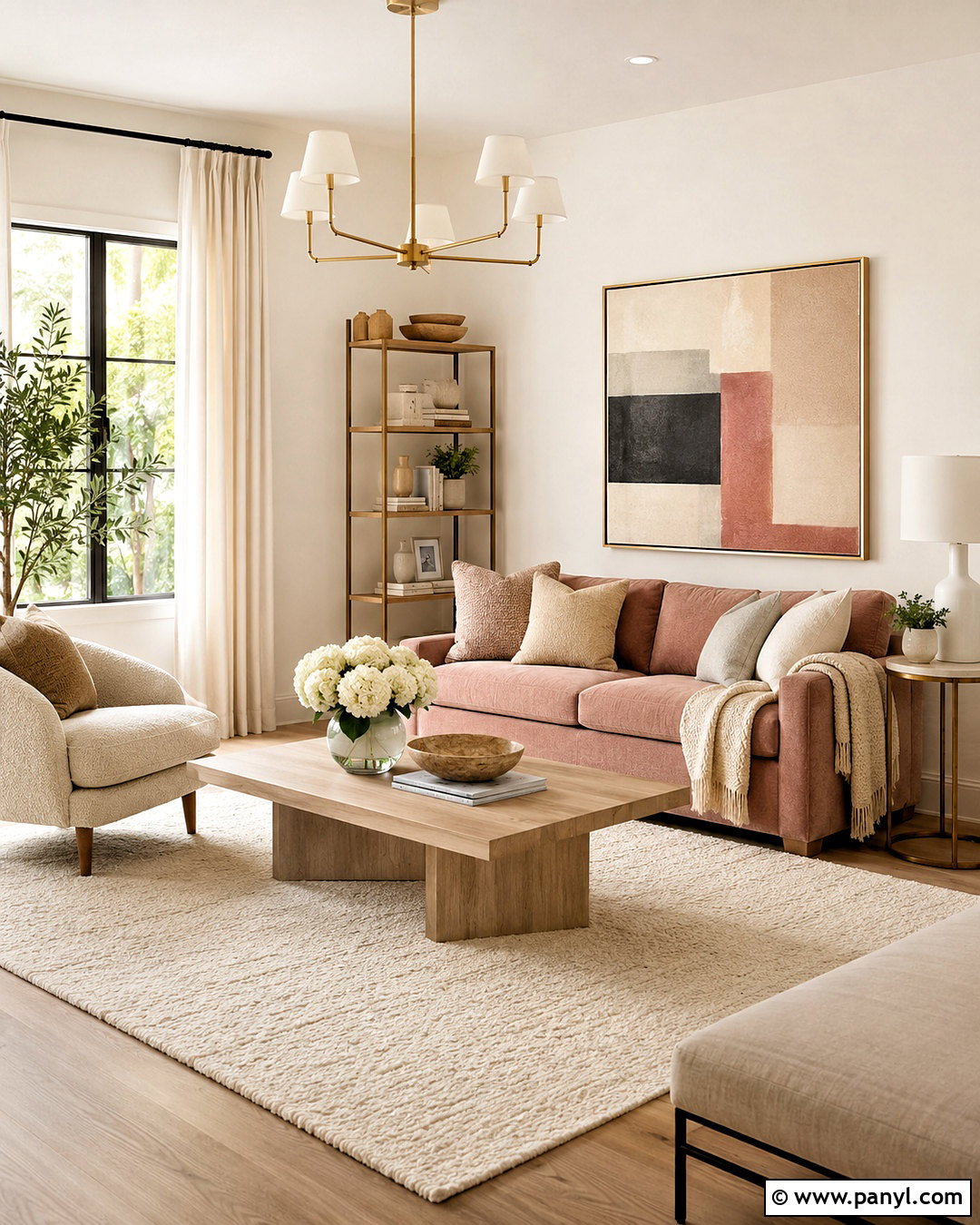
A warm white backdrop lets dusty rose feel colorful without making the room overly pink. In a relaxed living room, use creamy white on the walls, ceiling, and linen curtains. Choose a dusty rose sofa or two upholstered armchairs as the central color statement. An ivory wool rug keeps the floor light, while pale oak tables add natural warmth. Bring in small amounts of oatmeal beige through pillows and a woven throw. Brushed brass lighting gives the muted palette a polished glow without creating harsh contrast. For balance, include one or two matte black details, such as slim picture frames or a floor lamp. This complete palette feels airy, comfortable, and easy to update through the seasons.
2. Dusty Rose And Sage Green
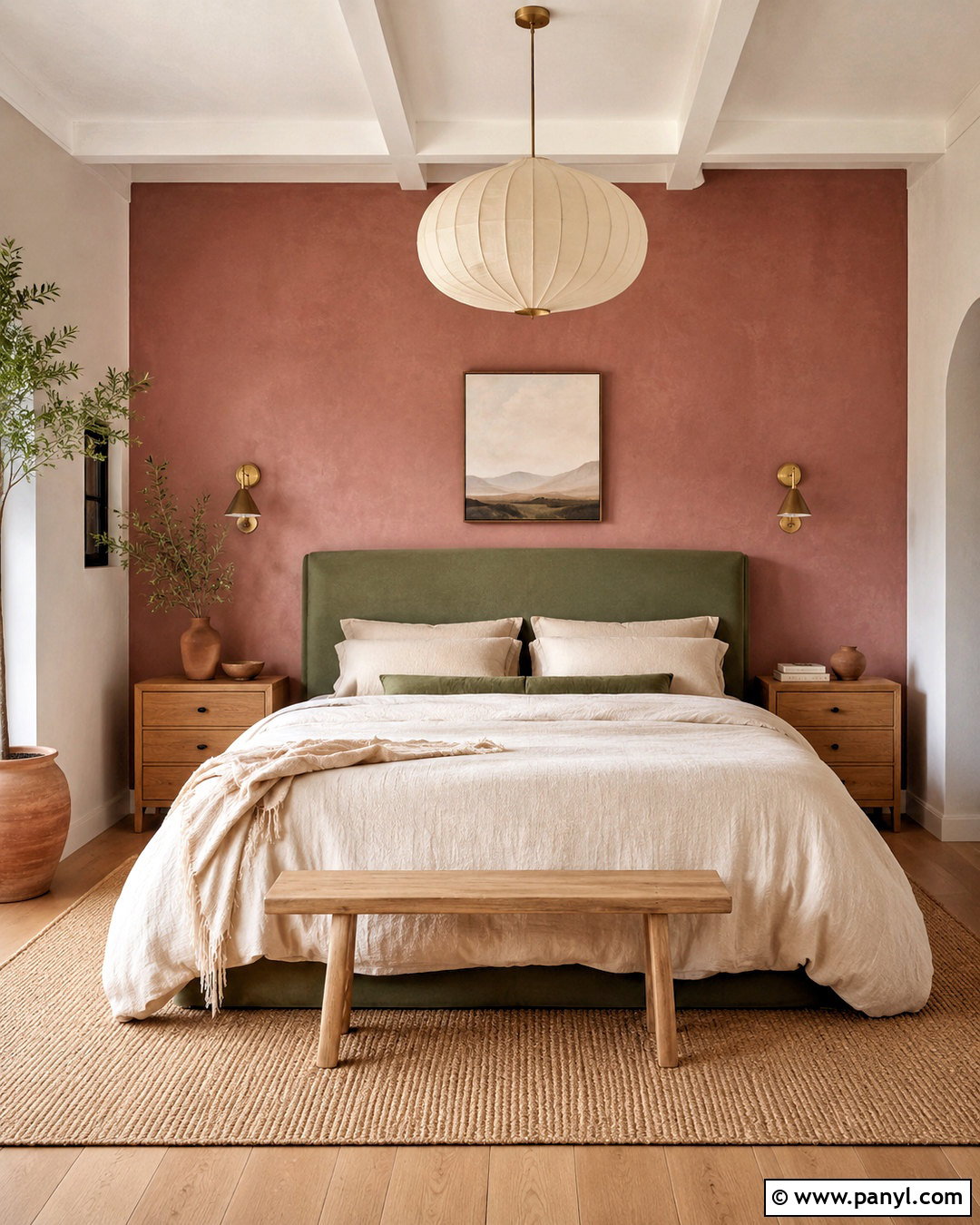
Dusty rose and sage green create an earthy bedroom palette inspired by faded flowers and soft garden foliage. Paint the wall behind the bed dusty rose, then keep the remaining walls a warm off-white. A sage green upholstered headboard provides gentle contrast, while cream bedding prevents the two colors from competing. Repeat green through a lightweight quilt and leafy plants in simple ceramic pots. Natural oak nightstands and a jute-blend rug strengthen the organic feeling. Finish the room with antique brass sconces and small touches of muted clay. Use rose as the dominant accent and sage as the supporting color rather than dividing them equally. The result is calm, grounded, and romantic without appearing overly delicate.
3. Dusty Rose And Charcoal Gray
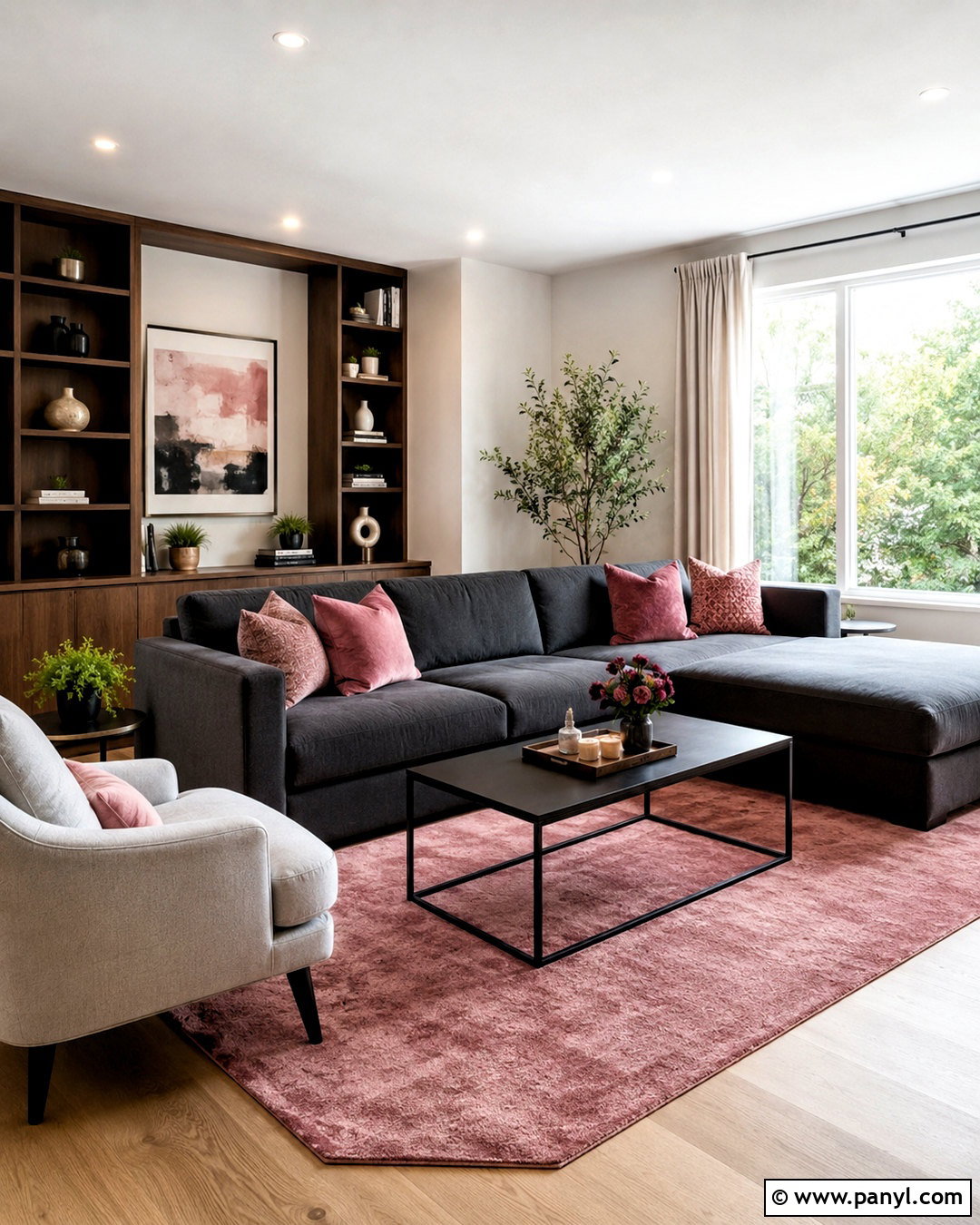
Looking for a dusty rose palette with stronger visual weight? Pair it with charcoal gray in a modern living room. Choose a deep charcoal sectional as the anchor, then soften its solid shape with dusty rose velvet pillows and a large rose-toned abstract rug. Warm white walls keep the darker furniture from closing in the room. Add a pale gray accent chair, a blackened metal coffee table, and walnut shelving to bridge the cool and warm colors. Dusty rose curtains can frame the windows, but select a linen texture so they feel relaxed rather than formal. A sculptural white pendant and brushed nickel accents provide brightness. This balanced scheme feels mature, tailored, and suitable for a shared family space.
4. Dusty Rose And Navy Blue
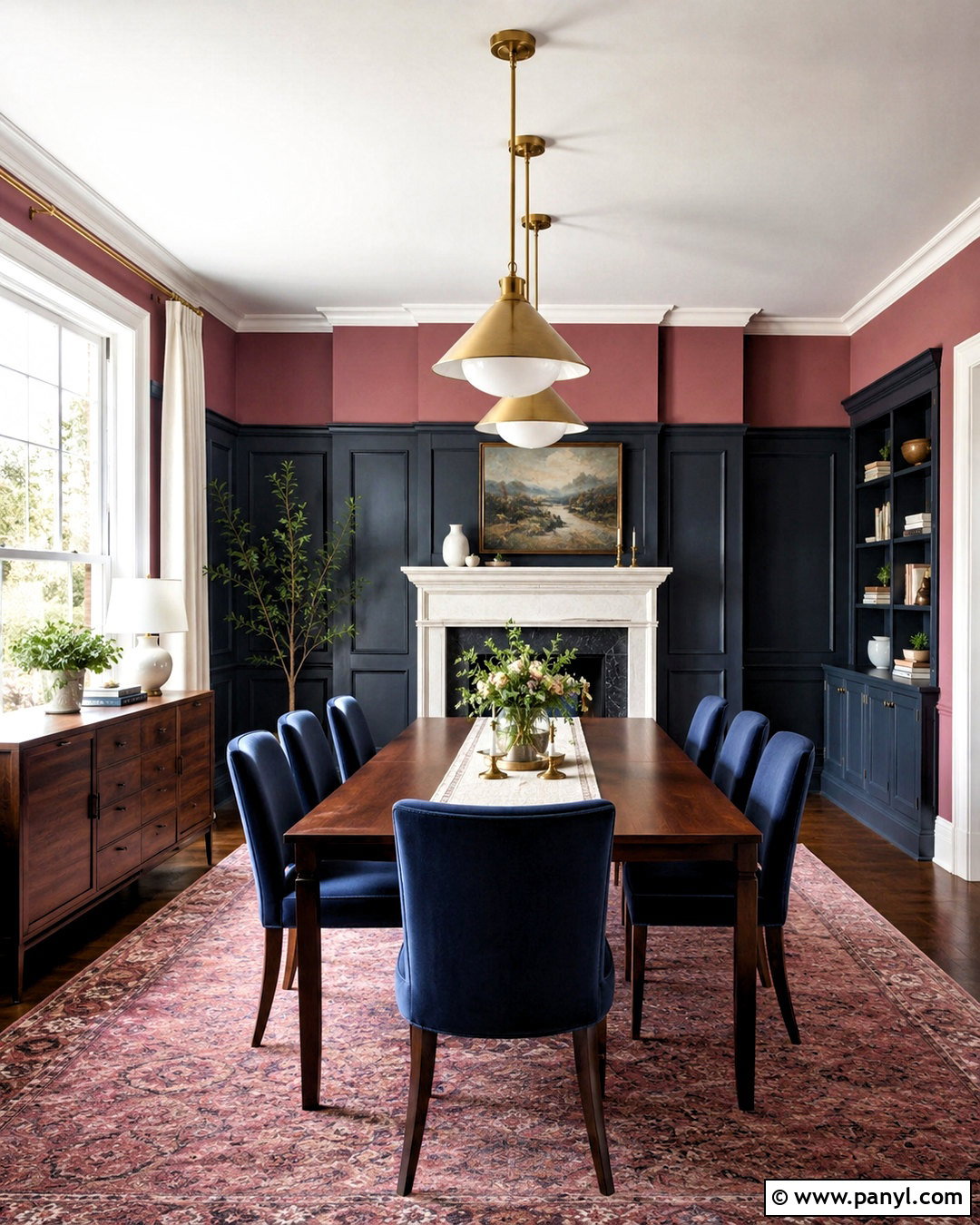
Navy blue gives dusty rose a crisp, classic quality that works beautifully in a dining room. Paint the lower wall paneling deep navy and use a soft dusty rose above it. A medium-tone walnut dining table adds warmth between the contrasting wall colors. Surround it with navy upholstered chairs, then place a muted rose rug underneath to connect the scheme. Warm white trim keeps the architectural details clear and bright. Add brass pendant lights, cream table linens, and blue-and-white ceramic pieces for a finished look. Keep accessories controlled because both main colors already make a strong statement. The combination feels formal enough for entertaining, yet the muted pink prevents the dark navy from making the dining area feel too serious.
5. Dusty Rose And Cream
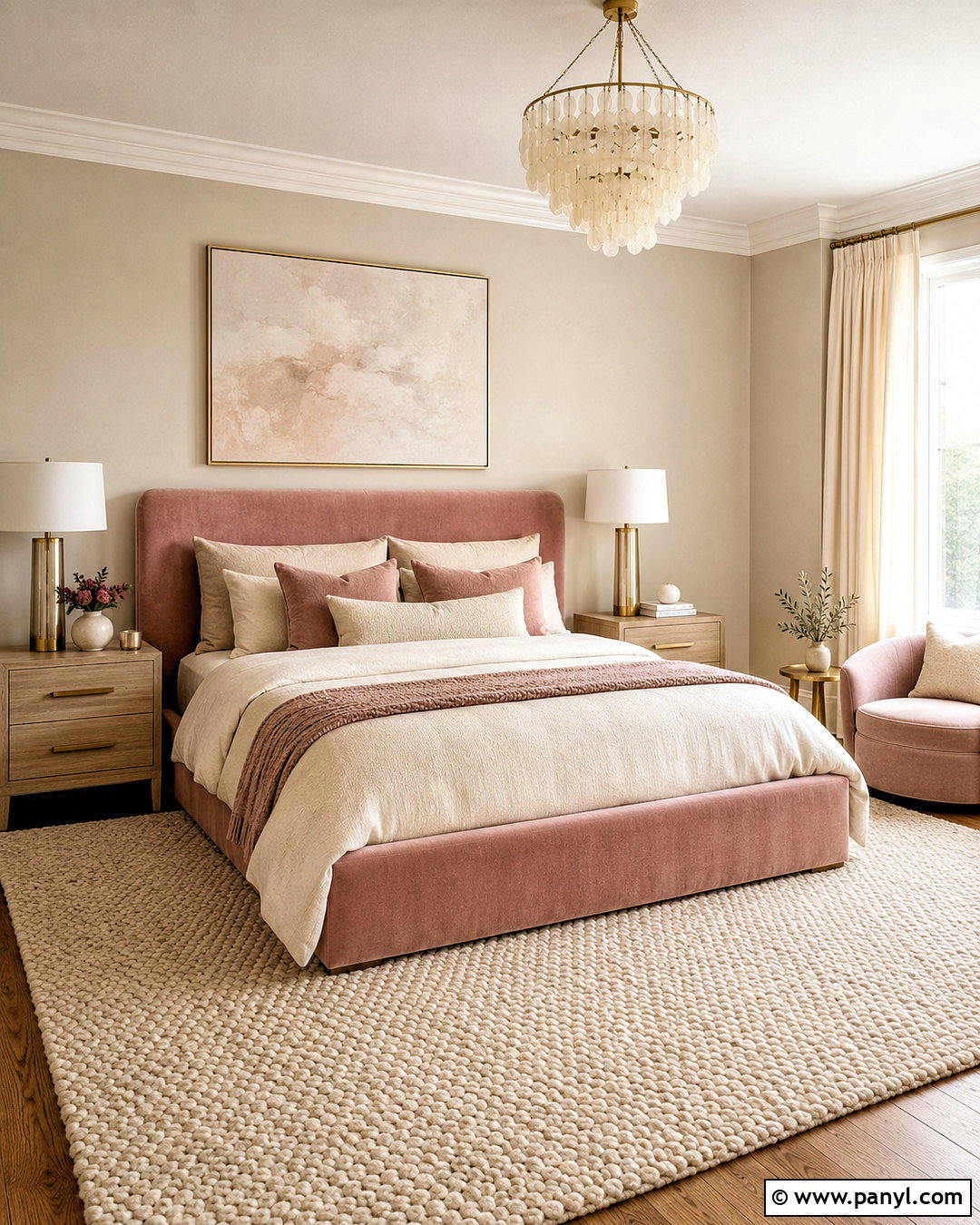
Soft layers of dusty rose and cream can turn a bedroom into a warm, restful retreat. Begin with creamy beige walls and a fully upholstered dusty rose bed. Dress it in ivory linen sheets, a cream quilt, and rose pillows in several subtle tones. Instead of adding a bold contrasting color, build depth through bouclé, velvet, washed linen, and woven wool. Light oak nightstands and a matching bench keep the room natural and understated. Hang full-length cream curtains and use a thick ivory rug to soften the floor. Champagne-colored metal lamps introduce a quiet reflective finish. A small amount of mushroom taupe in artwork or decorative cushions grounds the pale palette, creating a cozy room that still looks clean and sophisticated.
6. Dusty Rose And Terracotta
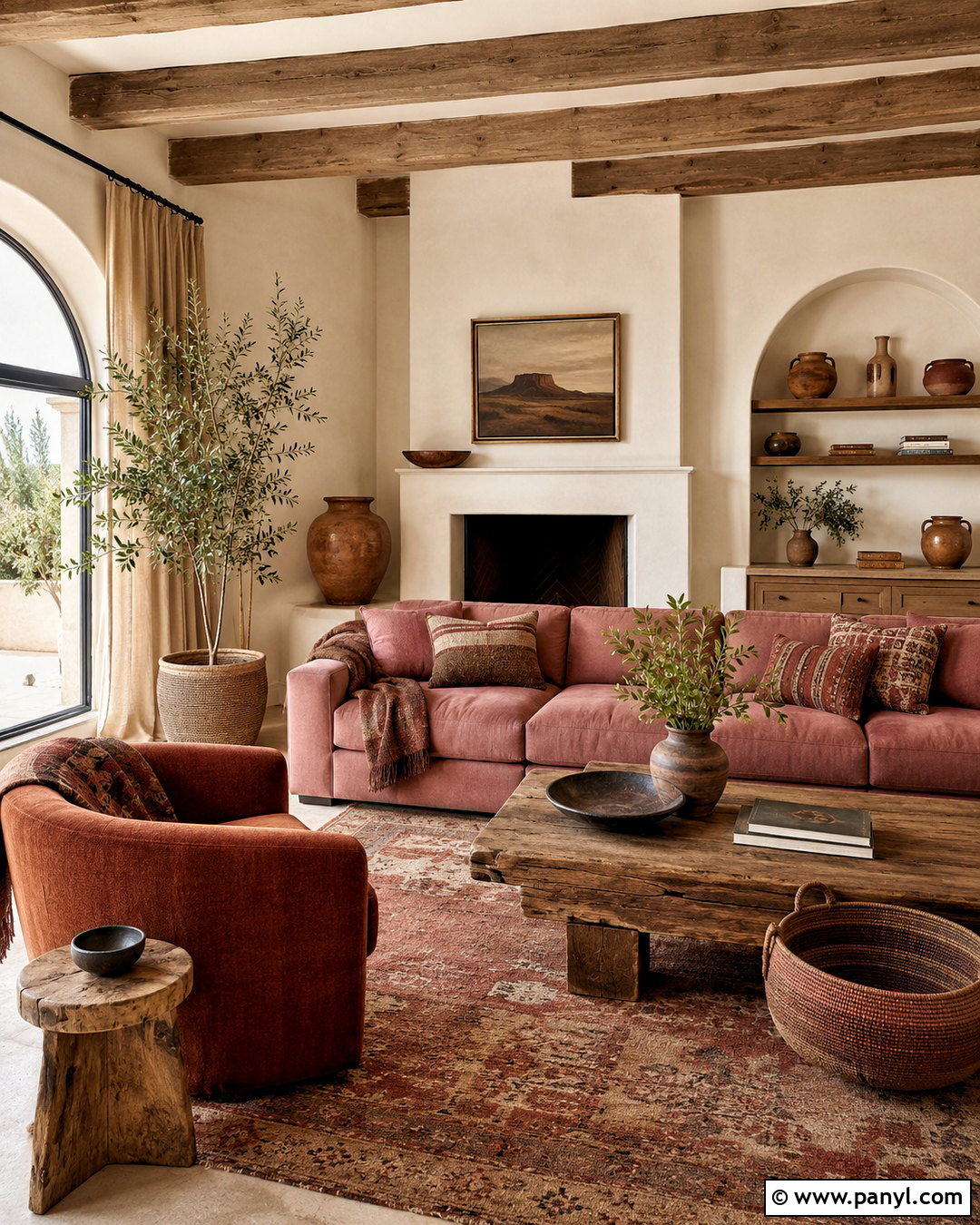
Warm terracotta brings out the earthy red undertones in dusty rose, making this combination ideal for a relaxed Southwestern living room. Use a sandy off-white wall color and choose a dusty rose sofa as the main upholstered piece. Add terracotta through patterned pillows, handmade pottery, and a clay-colored accent chair. A faded rug containing rose, rust, cream, and brown ties the colors together naturally. Choose medium oak or reclaimed wood tables with simple shapes. Woven baskets, linen curtains, and a leather ottoman add more tactile warmth. To keep the palette from becoming too orange, include small touches of muted olive and matte black. The finished room feels sun-washed, welcoming, and collected rather than heavily themed.
7. Dusty Rose And Olive Green
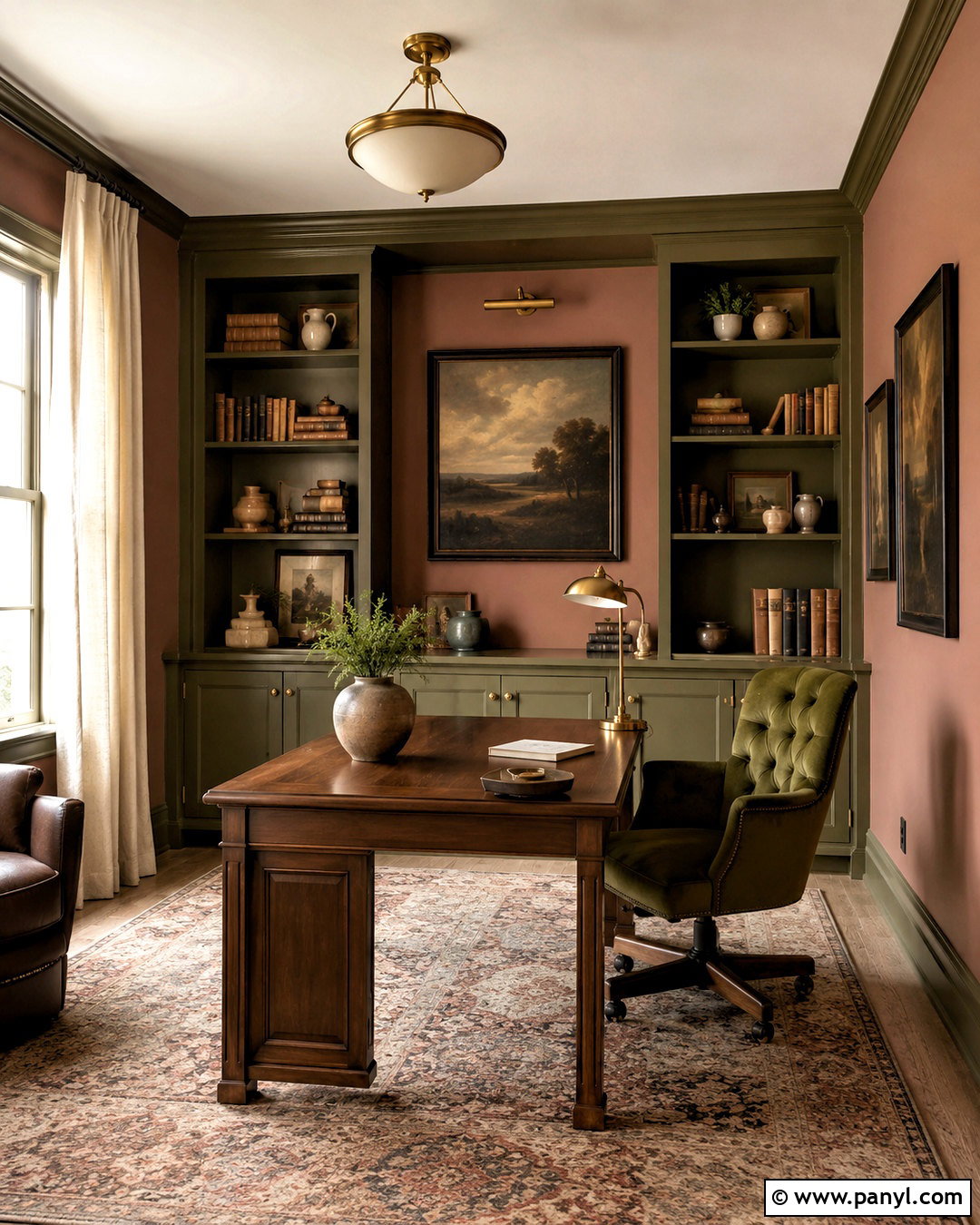
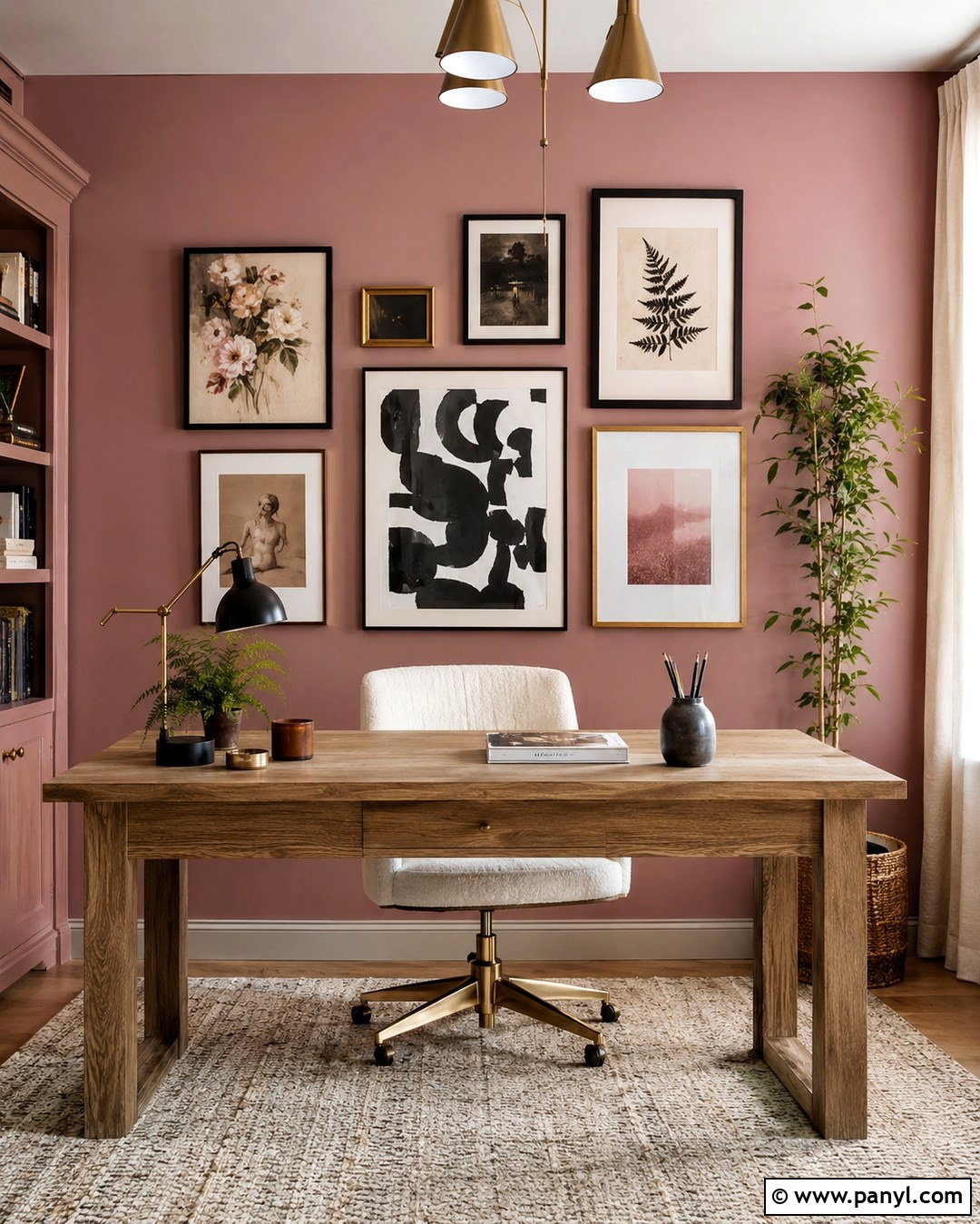
Dusty rose becomes richer and more dramatic beside deep olive green. In a home office, paint built-in shelves olive and use a muted dusty rose on the surrounding walls. Place a substantial walnut desk in the center, paired with an olive leather or fabric chair. A vintage-inspired rug containing rose, moss, tan, and cream will make the two dominant colors feel intentional. Use aged brass hardware and lighting to complement the warm undertones. Books, pottery, and framed artwork can introduce small amounts of burgundy and black. Keep the ceiling, window trim, and curtains warm white so the office remains bright enough for daily work. This layered palette creates a focused, sophisticated workspace with color, character, and a strong connection to nature.
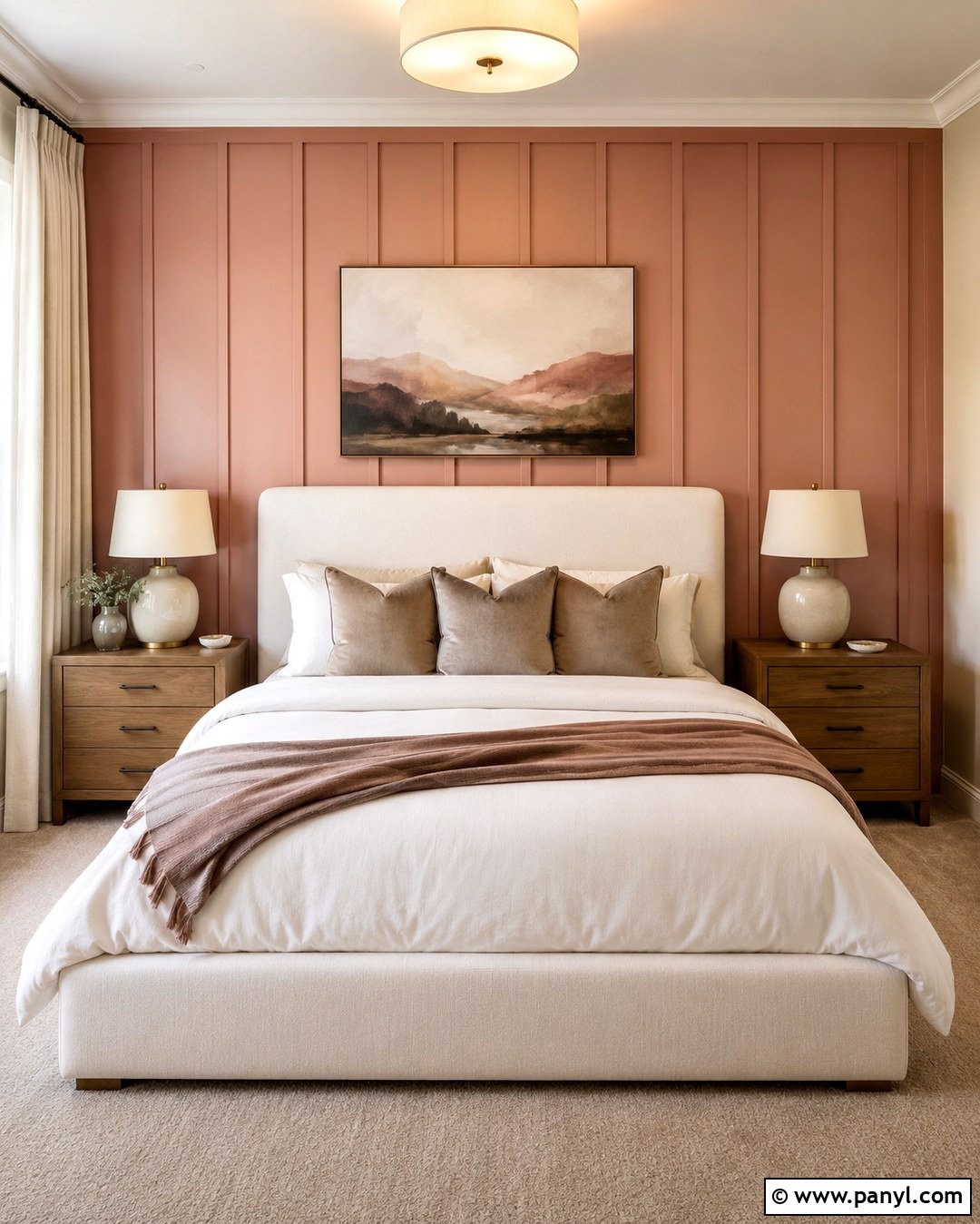
8. Dusty Rose And Taupe
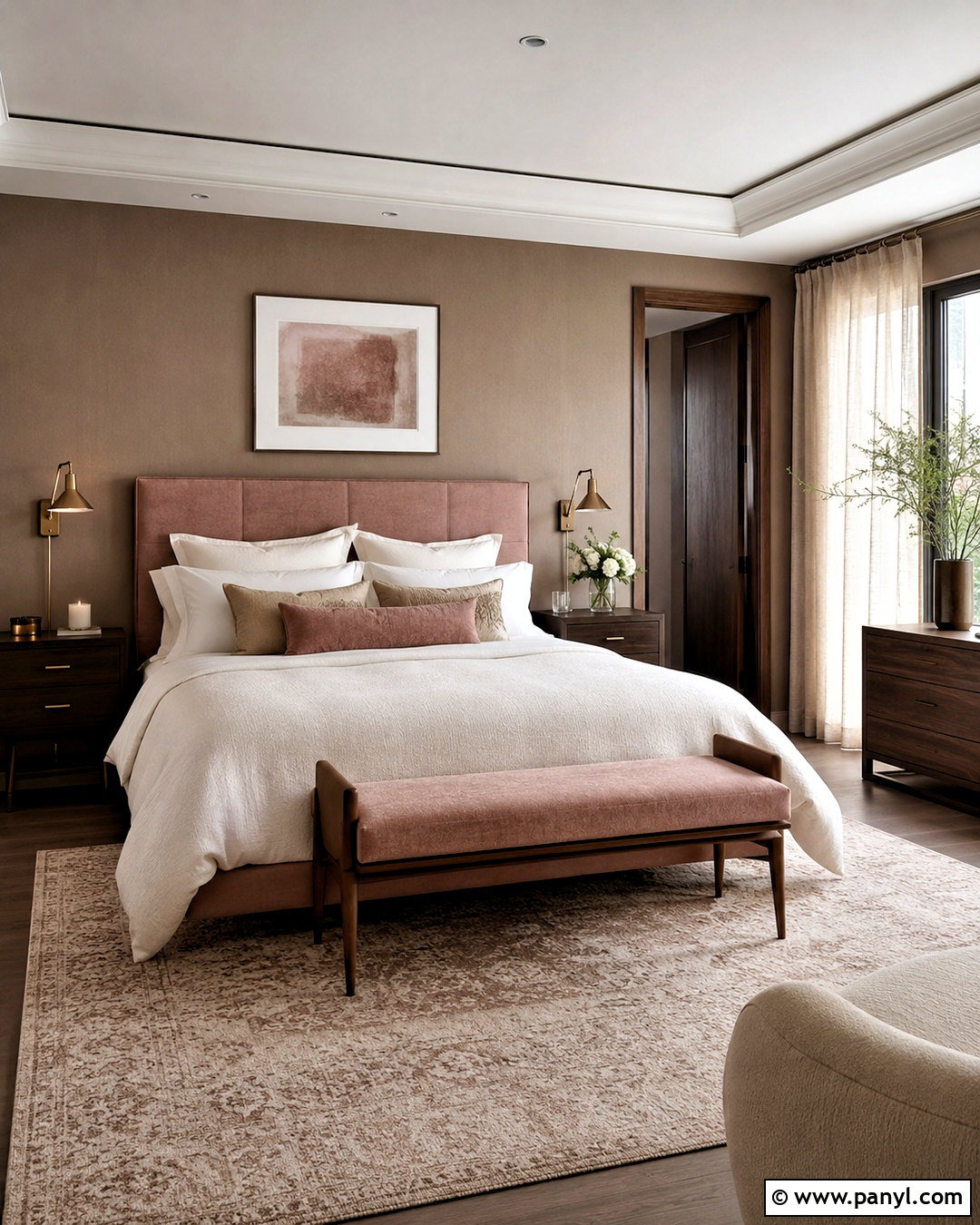
Dusty rose and taupe offer a quiet neutral palette for an elegant primary bedroom. Paint the walls a pale mushroom taupe and select dusty rose for the upholstered headboard, bench, and a few bedding layers. Choose warm white sheets and curtains to prevent the subdued colors from looking flat. Dark taupe nightstands create structure on either side of the bed, while a softly patterned beige rug adds movement underfoot. Mix linen, suede, wool, and matte ceramic finishes to build depth without introducing more colors. Bronze reading lights and medium walnut accents provide subtle definition. The dusty rose should appear in several places but at different intensities. This repetition makes the room feel professionally coordinated, comfortable, and calm rather than matched like a furniture showroom.
9. Dusty Rose And Burgundy
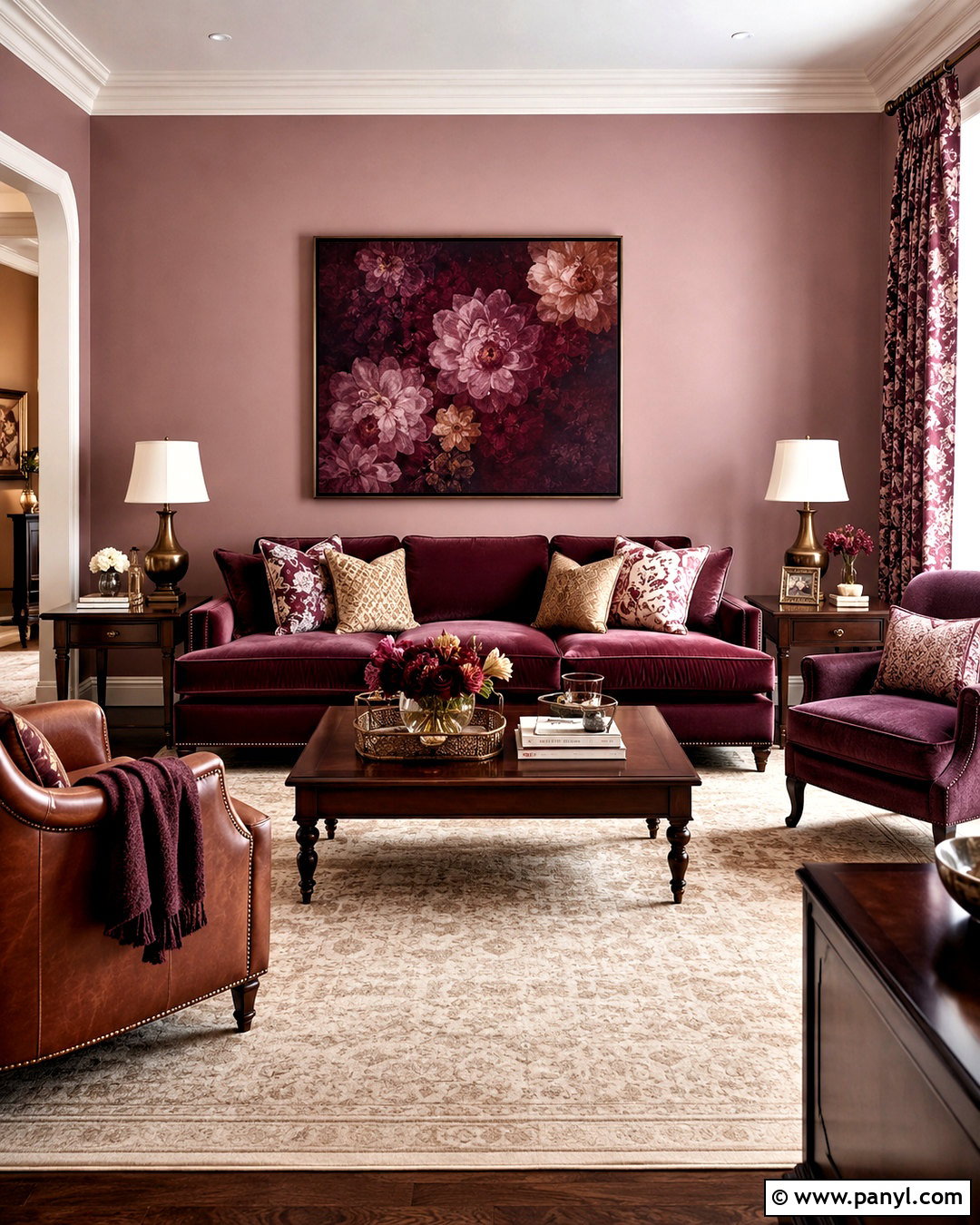
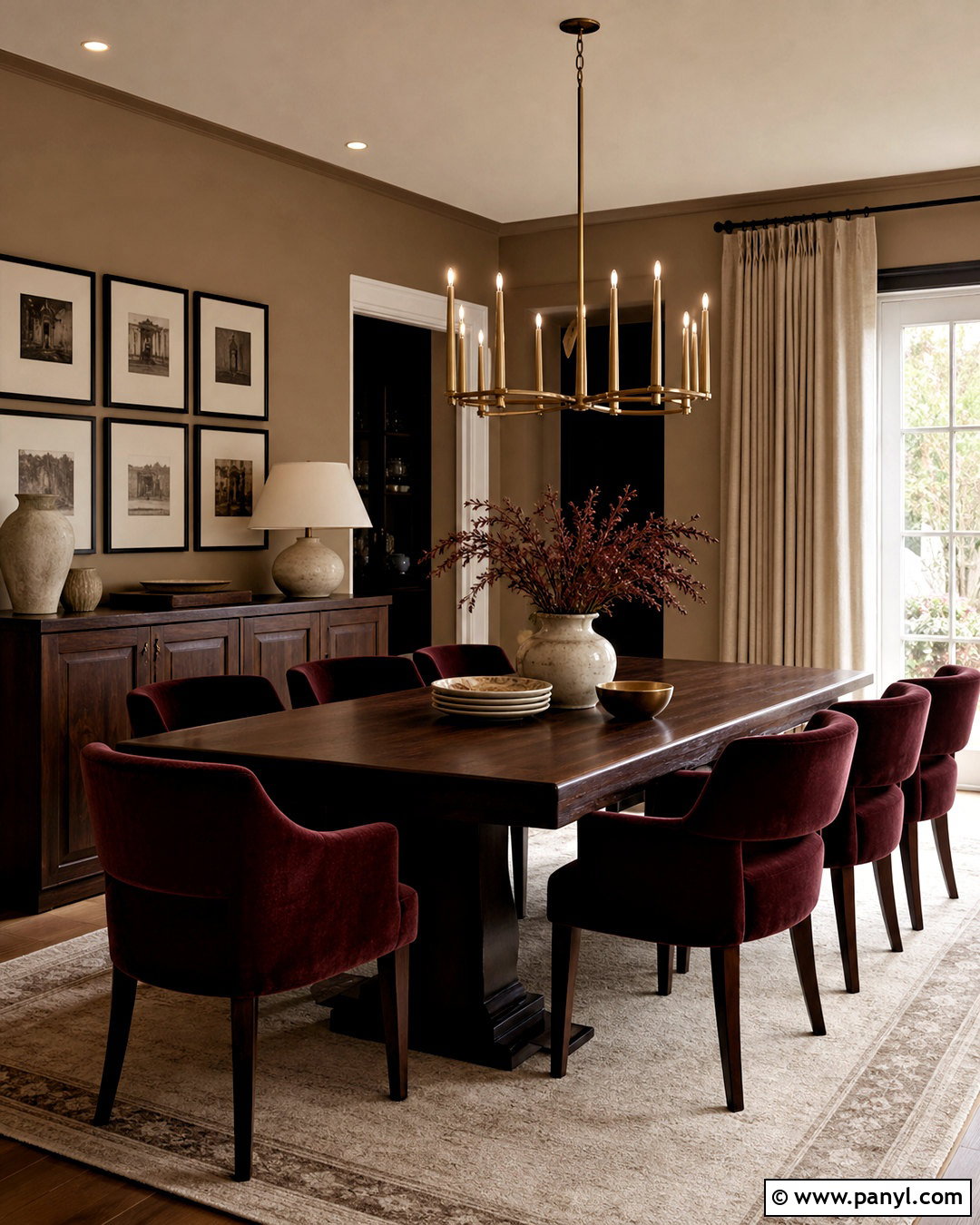
A tonal combination of dusty rose and burgundy can make a formal sitting room feel luxurious and enveloping. Cover the walls in muted dusty rose, then introduce burgundy through a velvet sofa or a pair of substantial lounge chairs. An ivory rug and warm white ceiling give the deeper red room to breathe. Use dark walnut side tables, antique brass lamps, and plum-toned artwork to connect the colors. Curtains in a rose-and-cream pattern can soften the windows without disappearing against the walls. Add caramel leather or cognac accents for another layer of warmth. Because burgundy carries visual weight, keep it below eye level and let dusty rose cover the larger surfaces. The finished palette feels dramatic, historic, and surprisingly comfortable.
10. Dusty Rose And Powder Blue
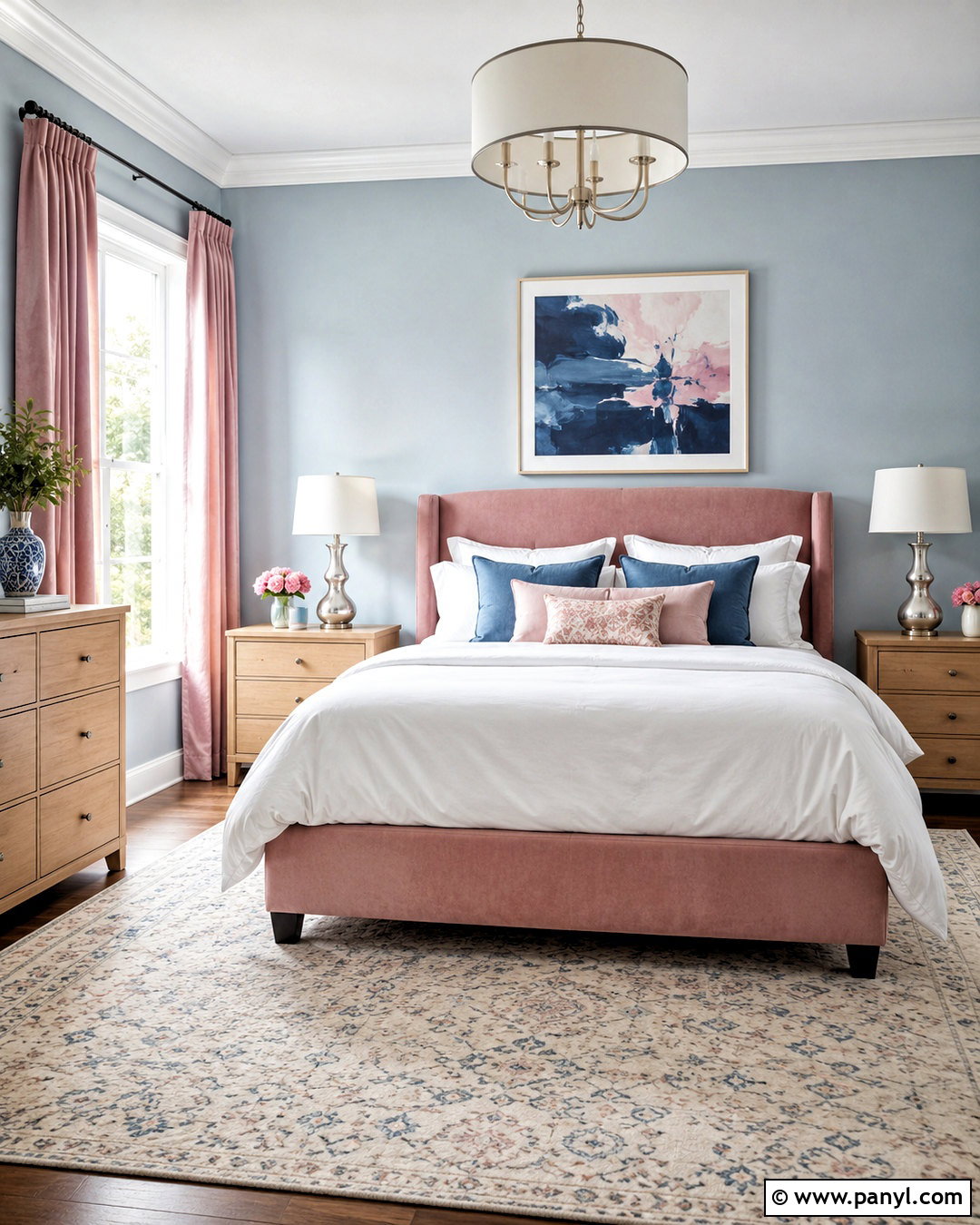
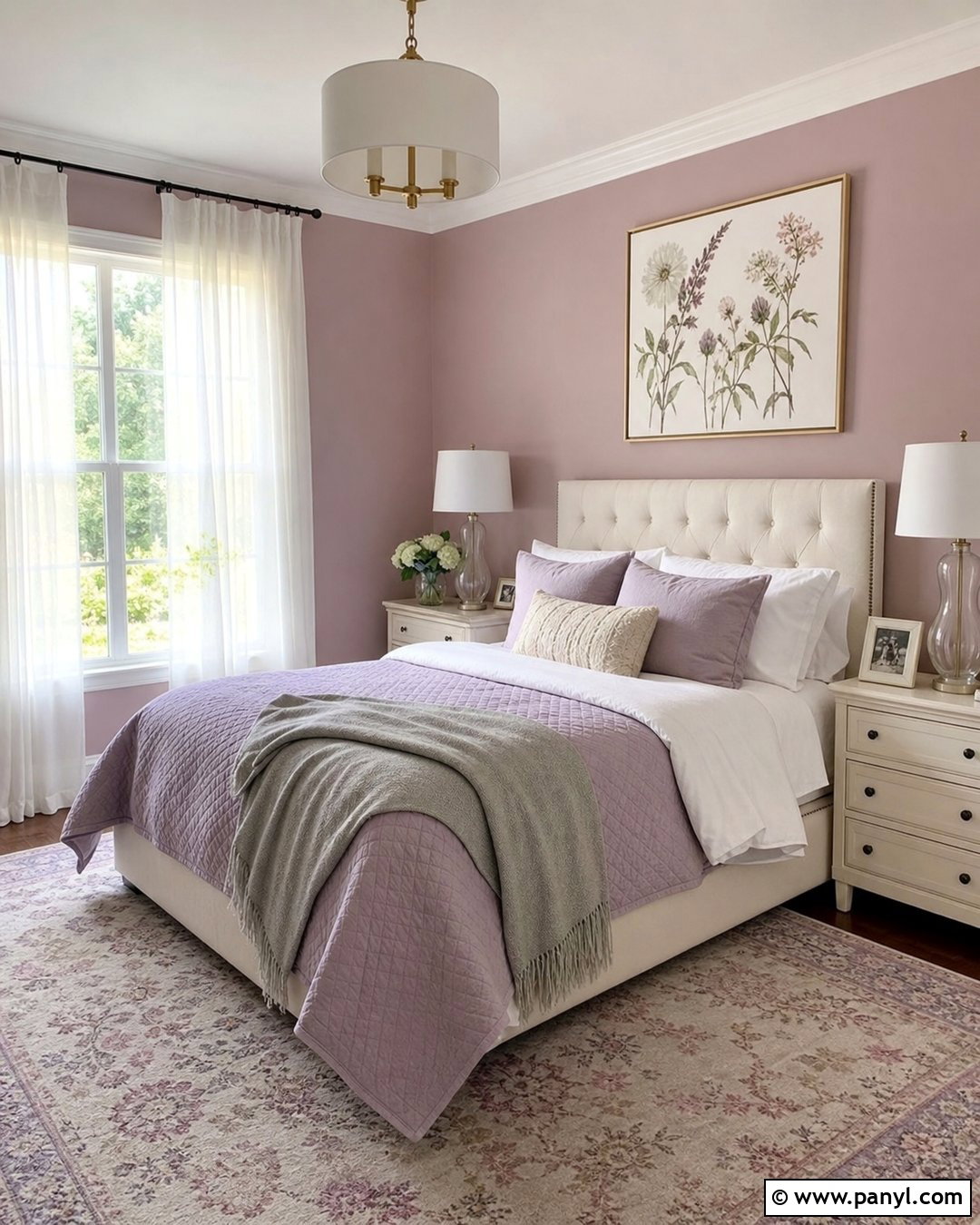
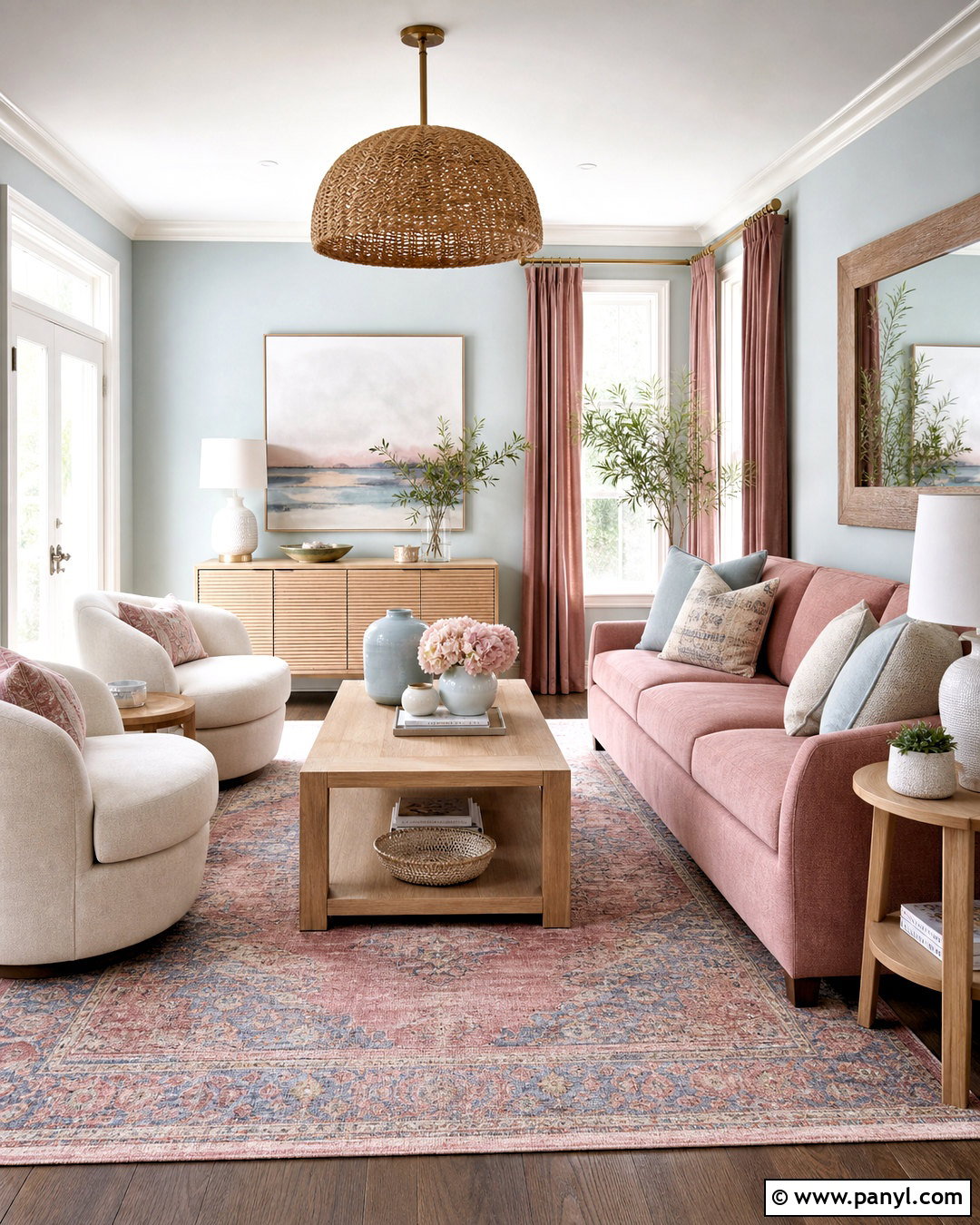
Powder blue cools dusty rose and creates a light, balanced palette for a guest bedroom. Choose powder blue walls with crisp warm white trim, then use a dusty rose quilt or upholstered bed as the main focal point. Add white bedding, pale blue pillows, and a rose-patterned lumbar cushion to repeat both colors. Light maple or white-painted furniture keeps the room casual and bright. A cream rug with small blue and rose details grounds the bed without adding visual clutter. Polished nickel lamps bring a clean finish that suits the cooler scheme. Include one or two navy accents in artwork or piping for definition. This complete room feels fresh and welcoming, with enough color to be memorable but not so much that guests feel overwhelmed.
11. Dusty Rose And Matte Black
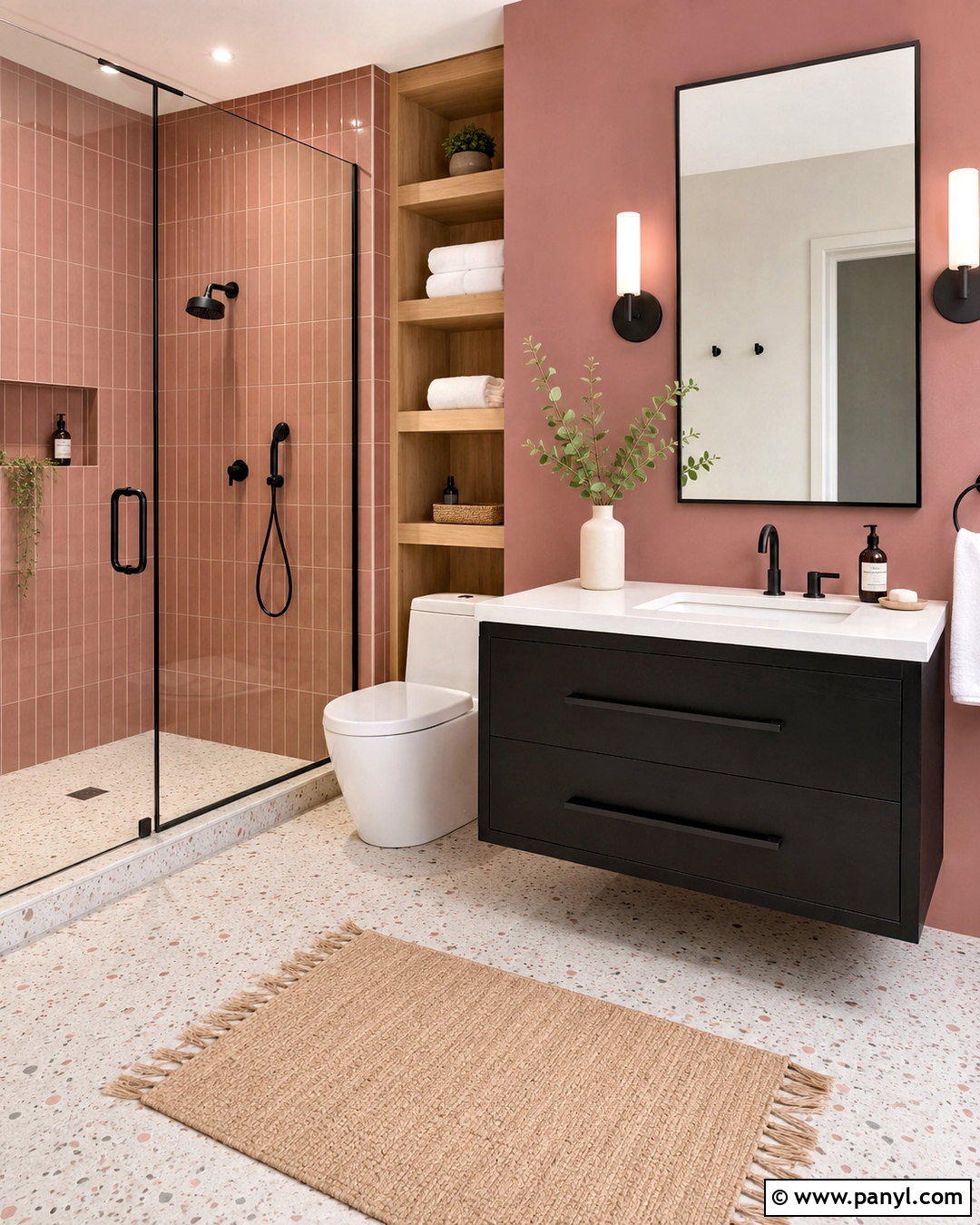
Can dusty rose look sharp and contemporary? Matte black gives it the contrast needed for a streamlined bathroom. Use dusty rose ceramic tile on the vanity wall or inside the walk-in shower, paired with warm white walls and a pale terrazzo floor. Select a black floating vanity, black-framed mirror, and matching faucets to outline the softer pink surfaces. A white quartz countertop keeps the work area practical and bright. Natural oak shelving can warm the transition between rose and black. Finish the room with white towels, smoky glass accessories, and one leafy plant. Keep black fixtures slim rather than bulky, particularly in a small bathroom. The resulting palette is clean and graphic, while dusty rose prevents the monochrome elements from feeling cold or severe.
12. Dusty Rose And Brushed Brass
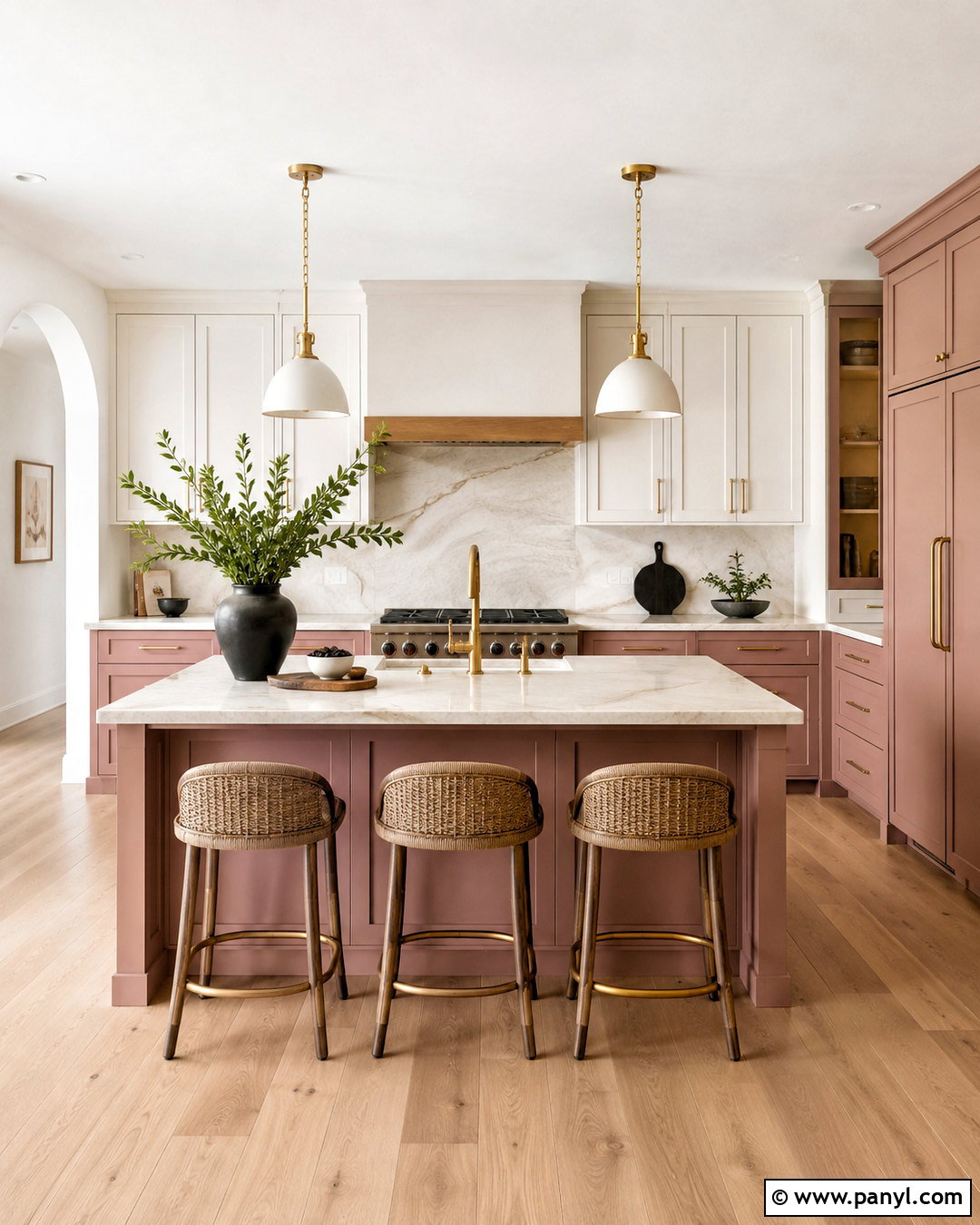
Brushed brass highlights the warmth of dusty rose and gives a kitchen a refined, welcoming finish. Use dusty rose on the lower cabinets or a central island, then balance it with warm white upper cabinets and walls. Cream quartz countertops and a softly veined stone backsplash create an understated background. Add brushed brass cabinet pulls, faucets, and pendant lights, repeating the metal consistently instead of mixing several finishes. Pale oak flooring introduces a natural transition between the white and pink cabinetry. Choose woven counter stools with cream upholstery and include a few charcoal accessories for contrast. Dusty rose should remain muted and slightly brown rather than candy pink. This full kitchen scheme feels current yet livable, with enough warmth to suit both modern and transitional homes.
13. Dusty Rose And Lavender
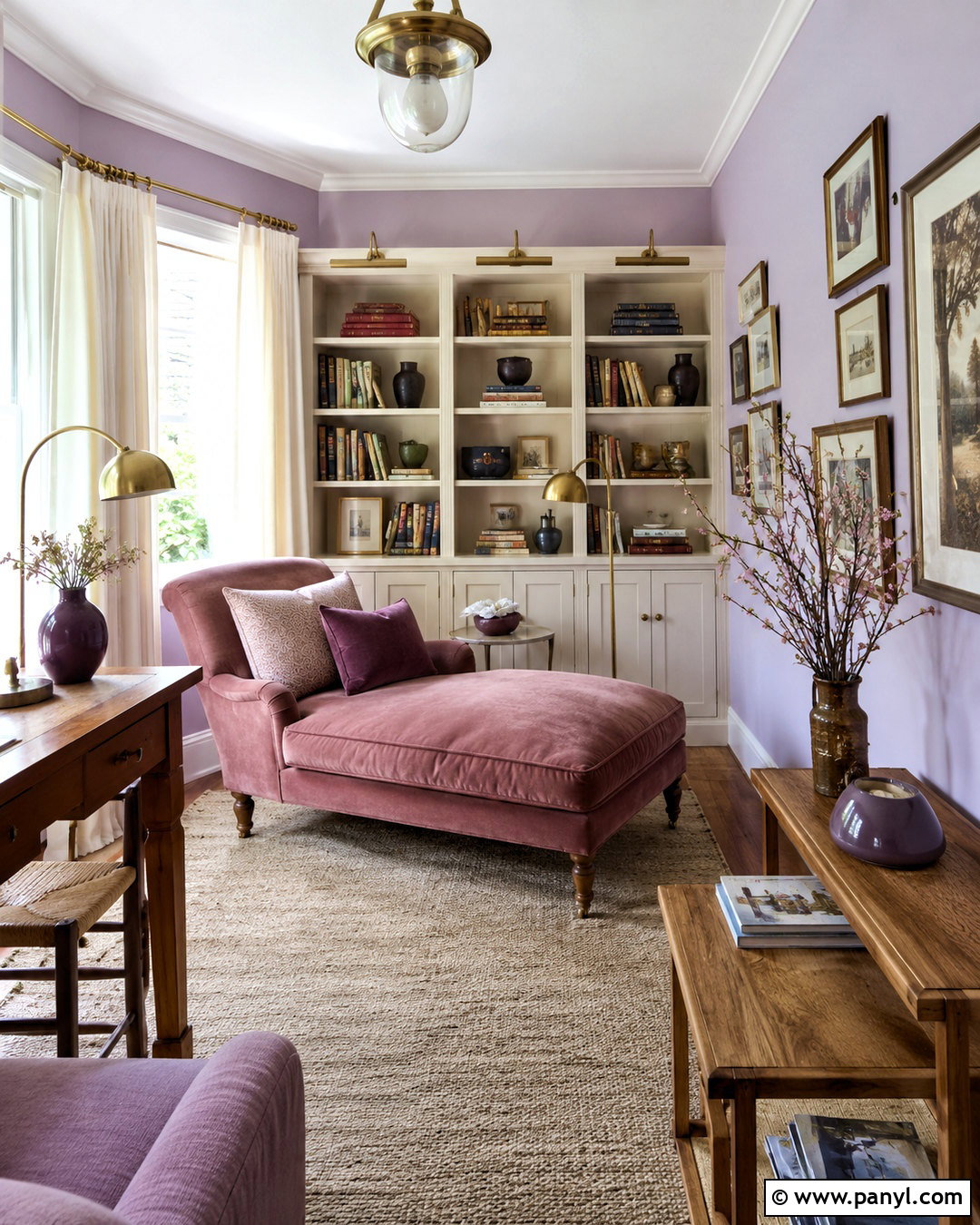
Dusty rose and lavender create a soft, layered palette when both colors have muted gray undertones. Use it in a reading room with pale lavender walls and a comfortable dusty rose chaise or loveseat. Place a cream bookcase against one wall and add an oatmeal rug to give the pastel colors a neutral foundation. Pillows can mix rose, lavender, mauve, and soft gray in simple patterns. Choose light oak side tables and antique brass reading lamps for warmth. Full-length ivory curtains will reflect daylight and keep the room from looking hazy. A small plum accent in artwork or a ceramic vase adds necessary depth. The overall design feels peaceful and expressive, making it especially effective for a quiet retreat, craft room, or personal library.
14. Dusty Rose And Teal
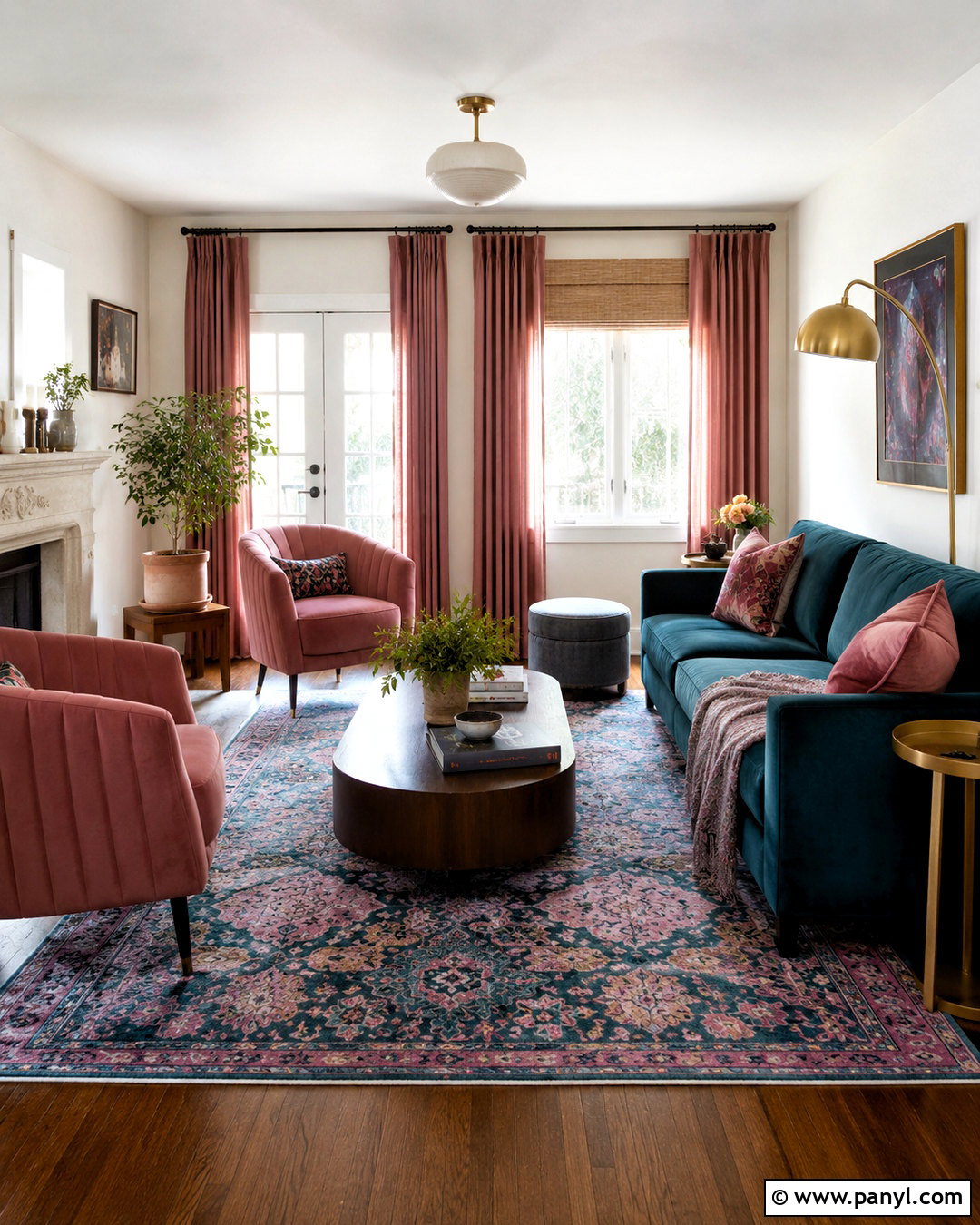
Teal creates energetic contrast with dusty rose while remaining sophisticated enough for everyday interiors. In an eclectic living room, start with warm white walls and a deep teal sofa. Add two dusty rose accent chairs positioned across from it to form a balanced conversation area. A patterned rug containing teal, rose, cream, and ochre can unite the furniture. Choose a walnut coffee table and brass floor lamps to continue the warm undertones. Repeat teal in one large artwork and use dusty rose curtains or Roman shades to distribute color around the room. Keep additional accessories mostly neutral, since the main pairing is already bold. The completed palette feels colorful and confident, yet the muted quality of dusty rose stops the contrast from becoming loud or visually tiring.
15. Dusty Rose And Chocolate Brown
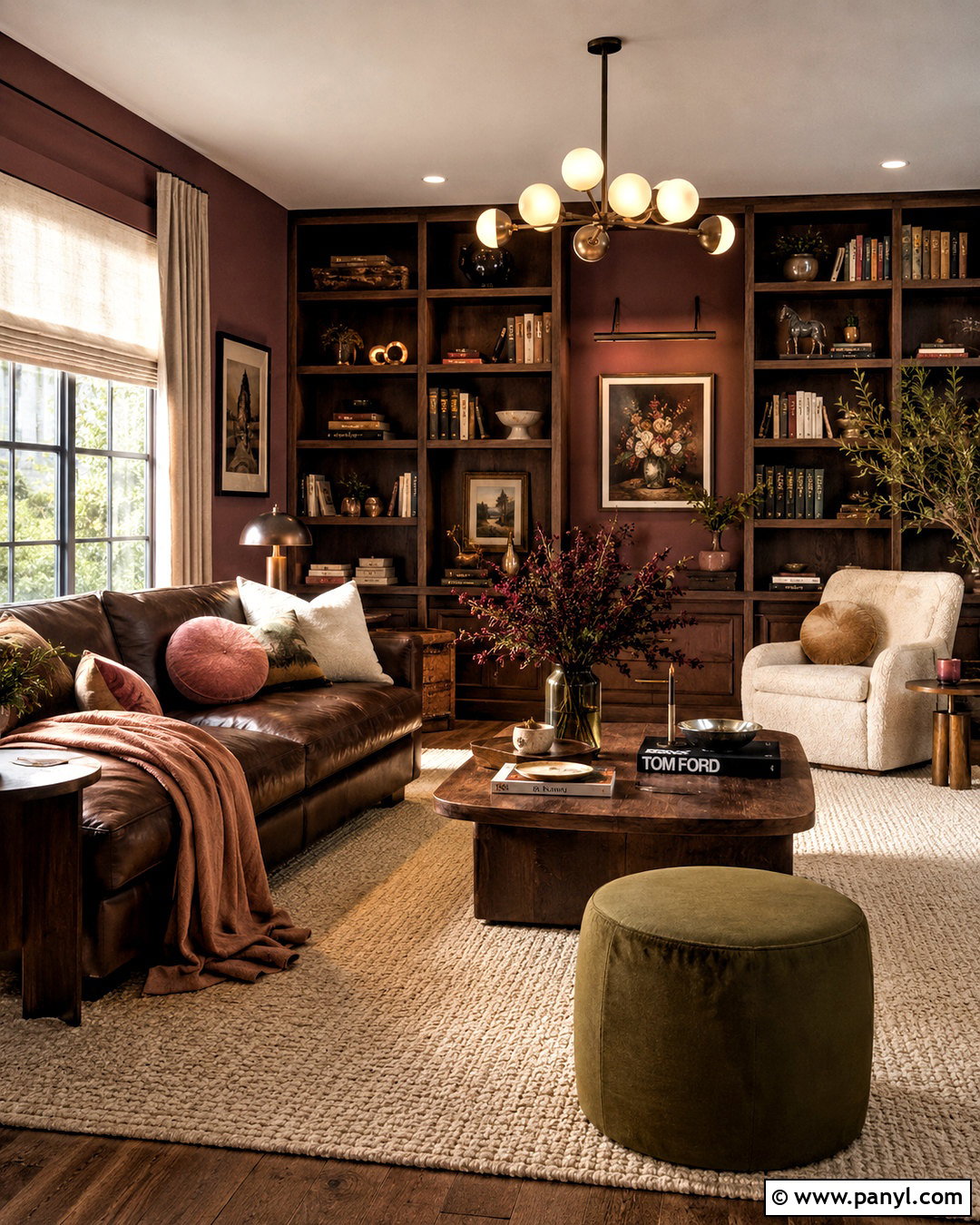
Chocolate brown makes dusty rose feel grounded, warm, and comfortably retro. Build a cozy den around a chocolate leather sofa, then paint the walls a muted dusty rose. Add a cream boucle chair and a thick oatmeal rug to lighten the darker seating. Walnut shelving, bronze lighting, and wood-framed artwork reinforce the brown tones without making every surface identical. Use rose, camel, and ivory pillows in varied fabrics to connect the walls with the furniture. A small dose of faded blue or olive can keep the warm palette from becoming one-dimensional. Choose warm white for the ceiling and trim to maintain a clear visual edge. This room feels settled and inviting, with a nostalgic quality that still works well in a modern home.
16. Dusty Rose And Mustard Yellow
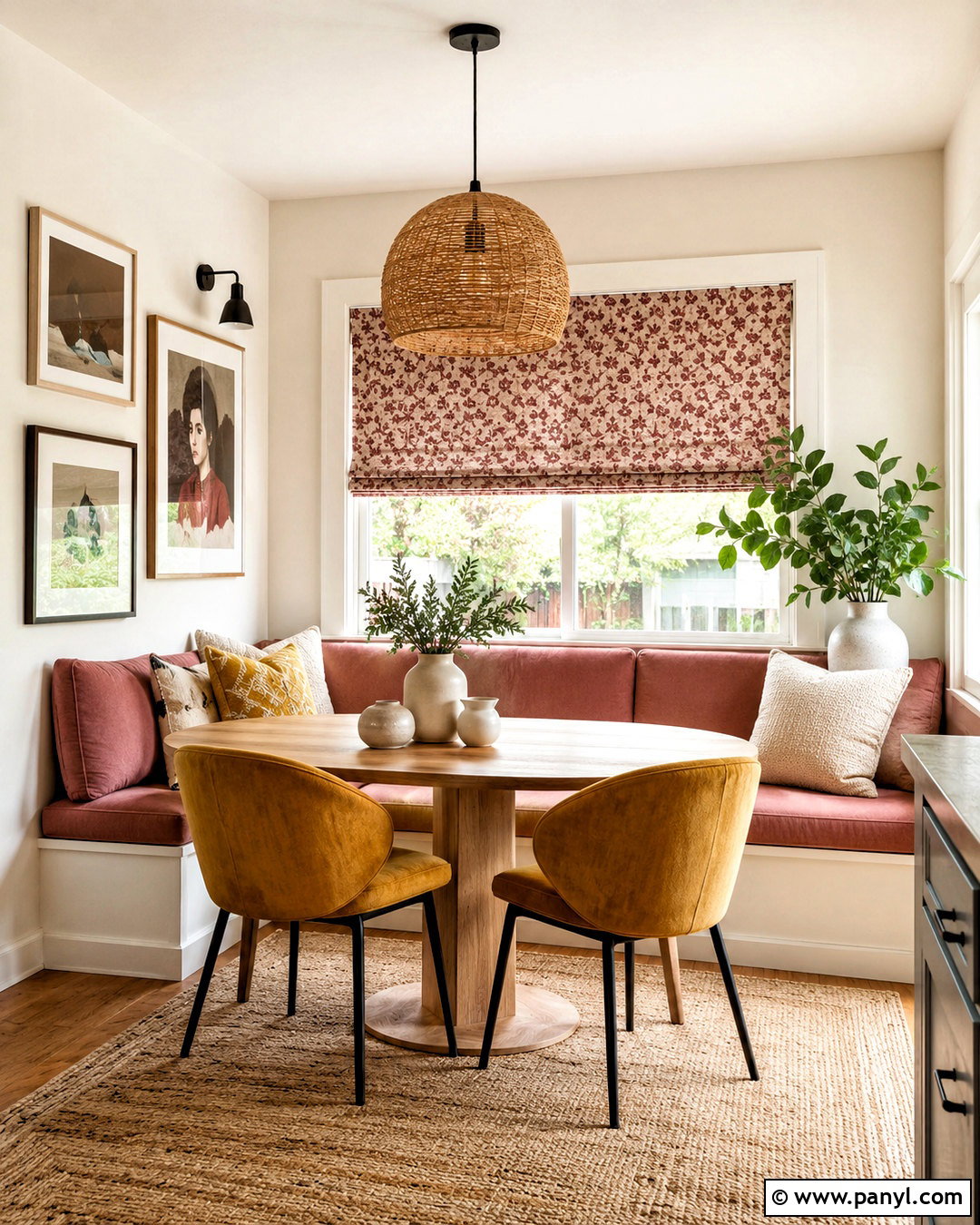
Mustard yellow adds cheerful warmth to dusty rose without producing the sugary appearance of brighter yellow and pink combinations. For a casual breakfast nook, use dusty rose banquette upholstery against creamy white walls. Add mustard yellow dining chairs or cushions, then ground the area with a natural oak table. A patterned Roman shade containing rose, mustard, beige, and olive can coordinate the stronger colors. Use a woven pendant, off-white ceramics, and a small jute rug to keep the setting relaxed. Matte black chair legs or window hardware provide a helpful line of contrast. Limit mustard to a few concentrated areas, allowing dusty rose to remain the calmer color. The finished nook feels sunny, friendly, and full of personality without becoming childish.
17. Dusty Rose And Soft Gray
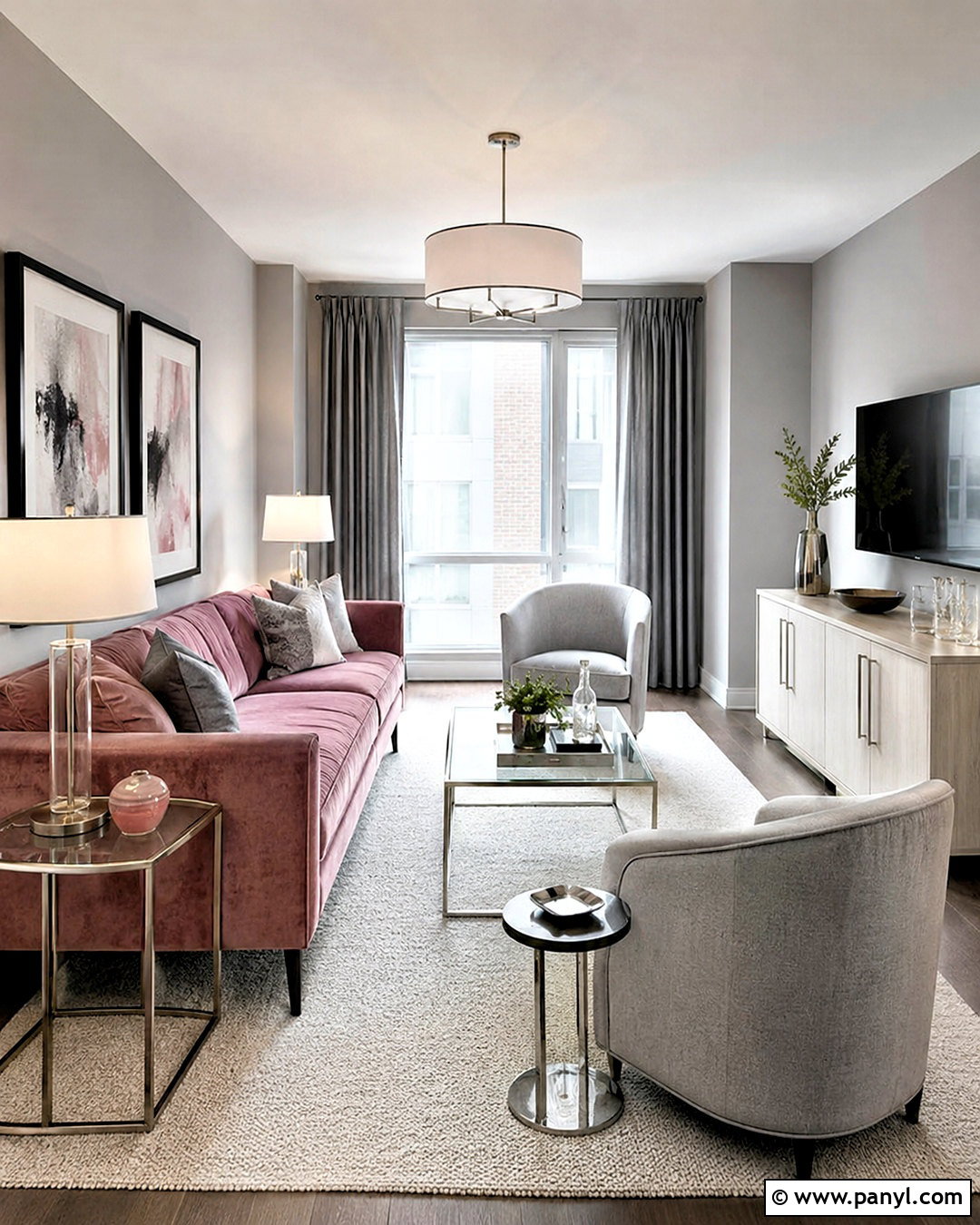
Soft gray brings a clean, adaptable foundation to dusty rose in a modern apartment living room. Paint the walls a warm light gray rather than a blue-based silver. Choose a dusty rose sofa as the room’s focal point, then add a cream rug and pale gray lounge chairs. A white oak media cabinet keeps the larger furniture visually light. Repeat rose in a small amount through artwork, while charcoal piping or black frames sharpen the pale palette. Curtains can match the wall color to make the windows appear wider. Add brushed nickel lighting and clear glass accessories for an uncluttered finish. The combination is especially useful in smaller homes because it introduces noticeable color without sacrificing brightness, flexibility, or a sense of open space.
18. Dusty Rose And Plum
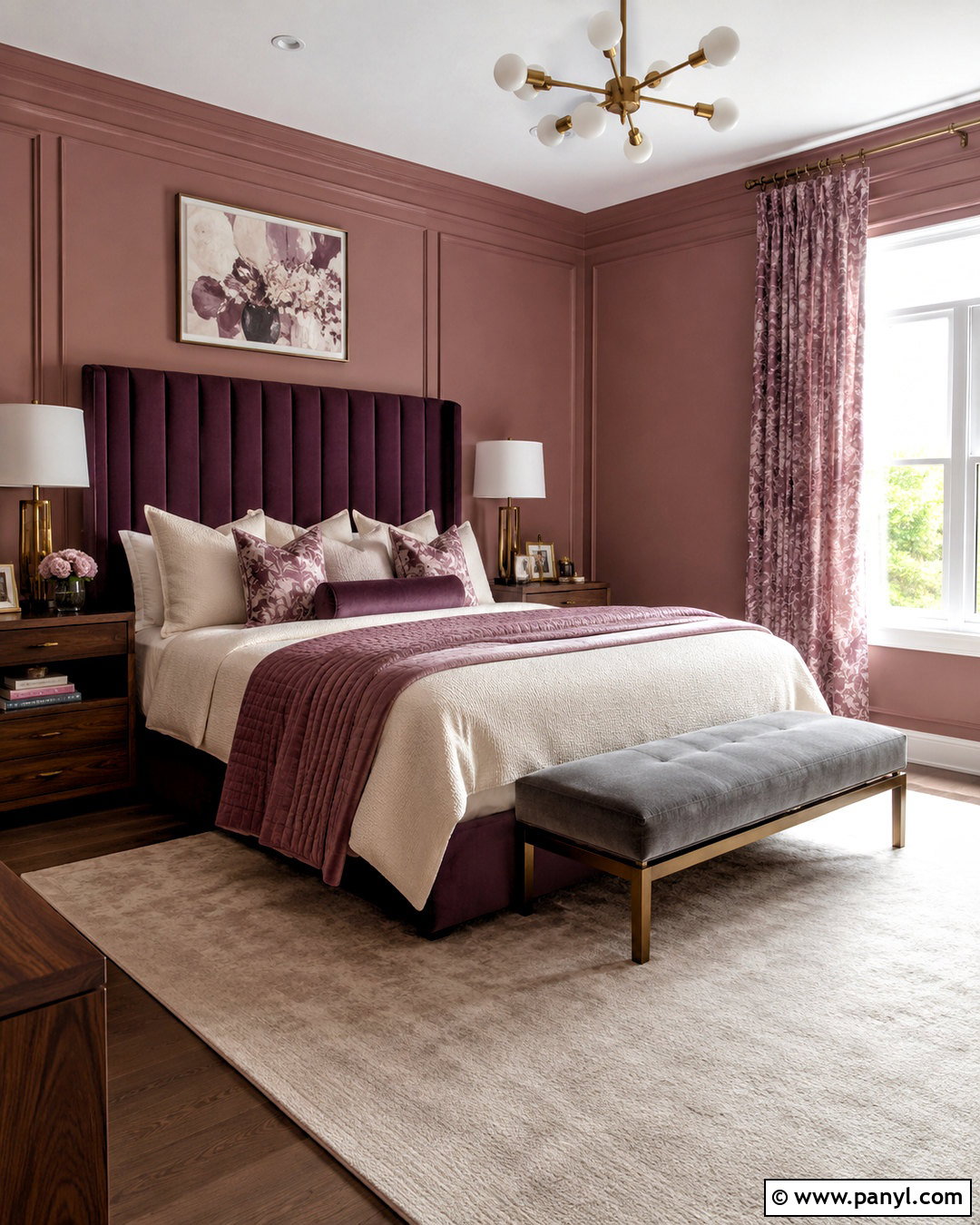
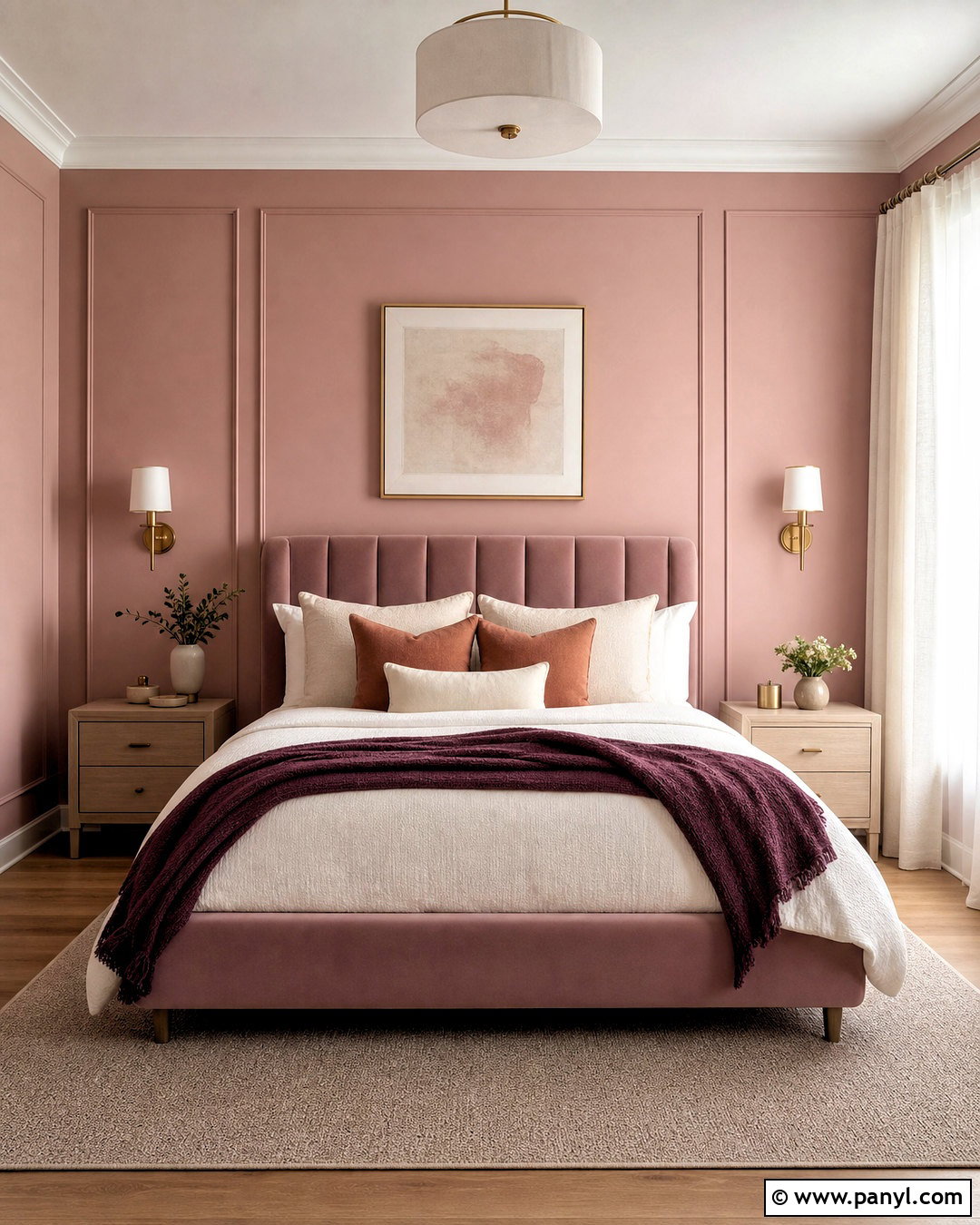
Plum deepens dusty rose into a dramatic bedroom palette that feels cozy rather than overly sweet. Use dusty rose walls and place a tall plum velvet headboard at the center of the room. Layer the bed with ivory sheets, a muted mauve coverlet, and plum accent pillows. Dark walnut nightstands and bronze lamps strengthen the rich color story. Choose an off-white rug to keep the lower half of the space from becoming too dark. Curtains can combine rose and cream in a subtle woven pattern. Add one medium gray element, such as a bench or blanket, to cool the warm reds slightly. With plum concentrated on the bed and dusty rose surrounding it, the finished room feels intimate, balanced, and suitable for a sophisticated primary suite.
19. Dusty Rose And Natural Wood
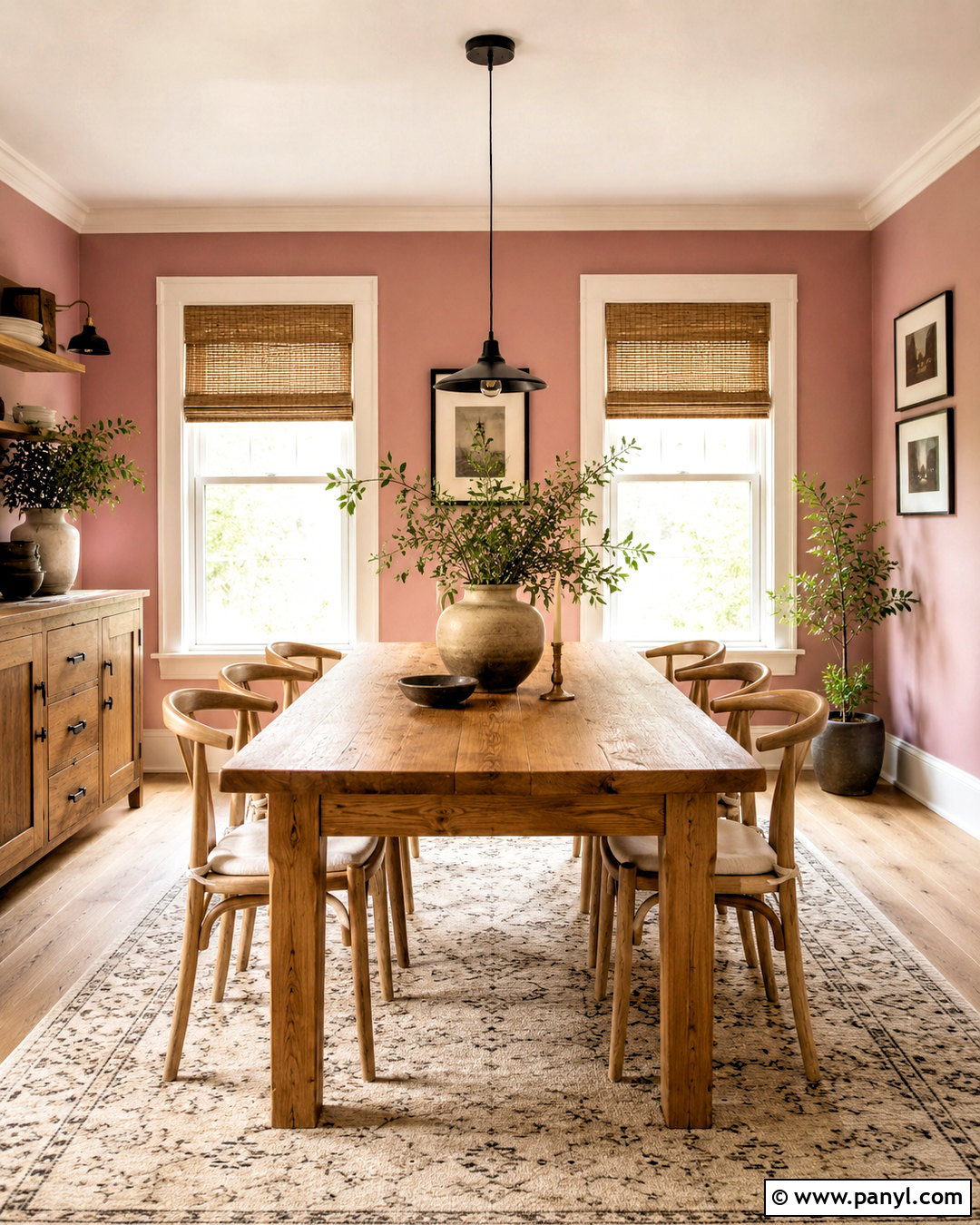
Natural wood gives dusty rose an easy, organic character that suits Scandinavian and modern farmhouse interiors. In a dining room, paint the walls a pale dusty rose and keep the trim warm white. Use a solid oak dining table with simple matching chairs, adding cream seat cushions for comfort. A flat-weave rug in beige, rose, and faded brown grounds the arrangement. Hang a linen pendant over the table and place woven shades at the windows. Black accents should be limited to slim chair details, picture frames, or candleholders. Display handmade ceramics and fresh greenery on open oak shelving. The complete palette feels warm but uncluttered, allowing the wood grain and muted wall color to provide most of the visual interest.
20. Monochromatic Dusty Rose Palette
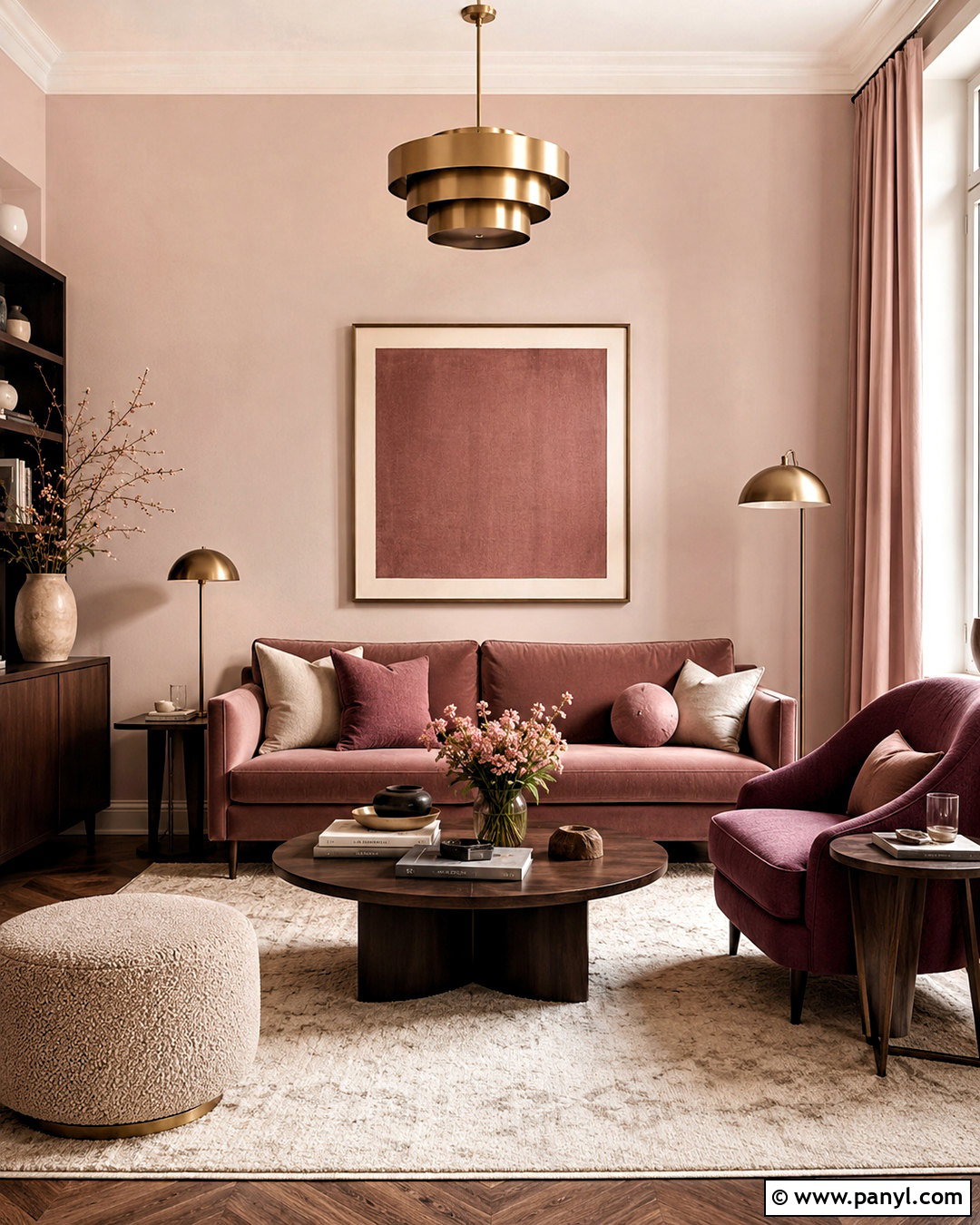
A monochromatic dusty rose room depends on tonal variation rather than a single repeated shade. Begin with pale rose-beige walls and add a sofa in a medium dusty rose fabric. Use deeper mauve-rose for an accent chair, then introduce very light blush through curtains and pillows. A cream rug and warm white ceiling provide breathing room between the pink tones. Choose walnut tables and aged brass lamps to add natural warmth without interrupting the palette. Velvet, linen, bouclé, wool, and matte-painted surfaces will keep similar colors visually distinct. Include one grounding shade, such as dark plum or charcoal, in small artwork and decorative details. The finished living room feels immersive and coordinated, with enough contrast and texture to avoid appearing flat or overly feminine.
Conclusion:
The best dusty rose color palette ideas balance this muted pink with colors, materials, and textures that shape a clear mood. Warm white, cream, taupe, and natural wood create light, comfortable rooms. Sage, olive, and teal add organic contrast, while navy, charcoal, plum, and burgundy produce a richer look. Brass can emphasize warmth, and matte black adds modern definition. Before committing, test dusty rose beside your flooring, furniture, and daylight because its undertones can shift between pink, mauve, and beige. Choose one dominant color, one supporting shade, and a smaller accent for the most cohesive result. With thoughtful repetition, dusty rose can feel calm, contemporary, traditional, or boldly expressive.

Related Ideas and Inspiration:
Leave a Reply