
The right bedroom palette does more than decorate the walls. It connects paint, furniture, bedding, flooring, lighting, and accessories into one restful design. Current bedroom color trends favor soft blues, muted greens, earthy neutrals, gentle pinks, and deeper cocooning shades, often balanced with warm wood or crisp white accents. () Before committing, consider the room’s natural light, existing flooring, and furniture undertones. Test samples on several walls because colors can shift from morning to evening. Whether you prefer airy neutrals, nature-inspired tones, or dramatic contrast, these complete schemes provide practical ways to coordinate every layer. Use the following 20 bedroom color combination ideas to create a space that feels comfortable, personal, and visually balanced.

1. Sage Green And Warm White Bedroom
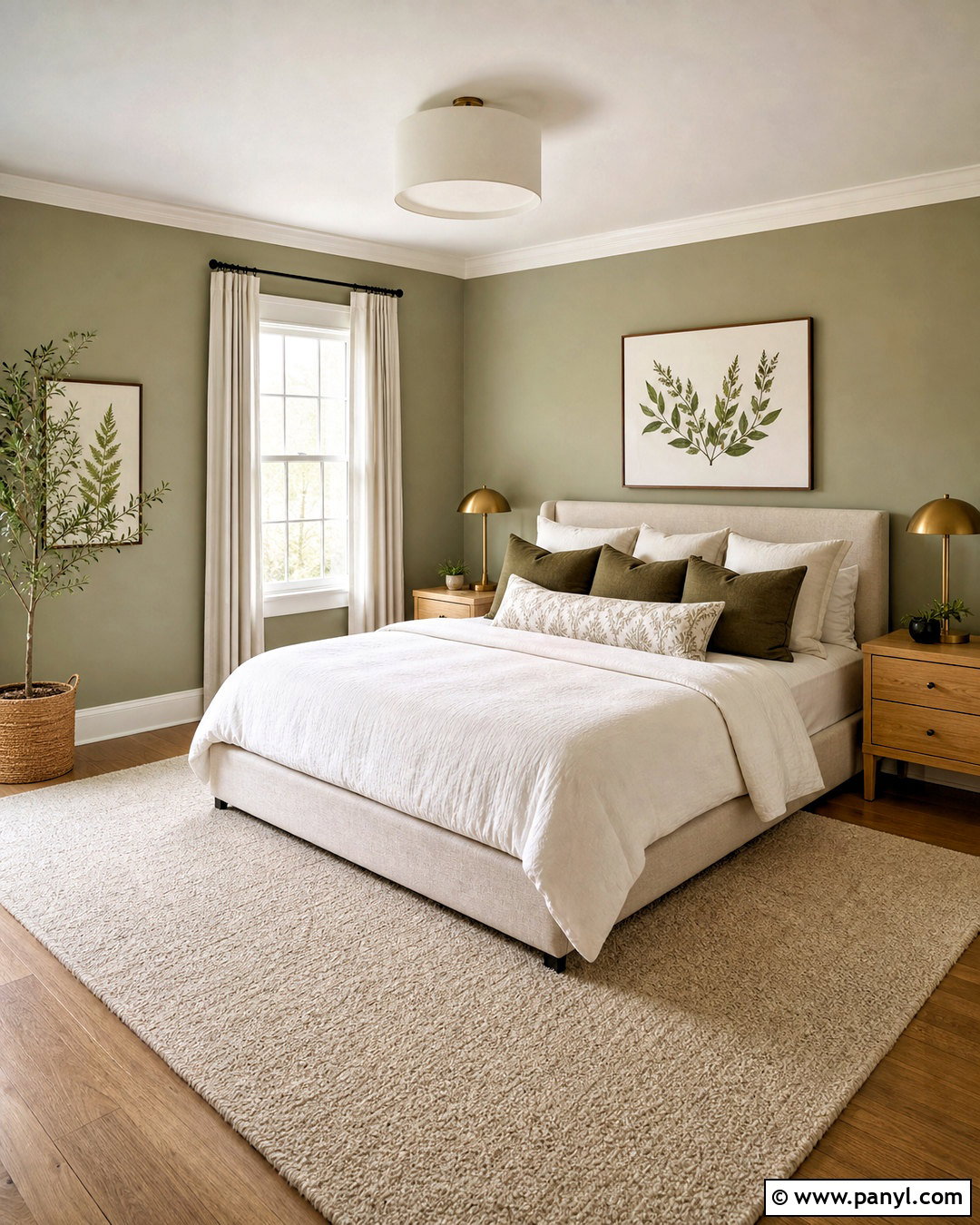
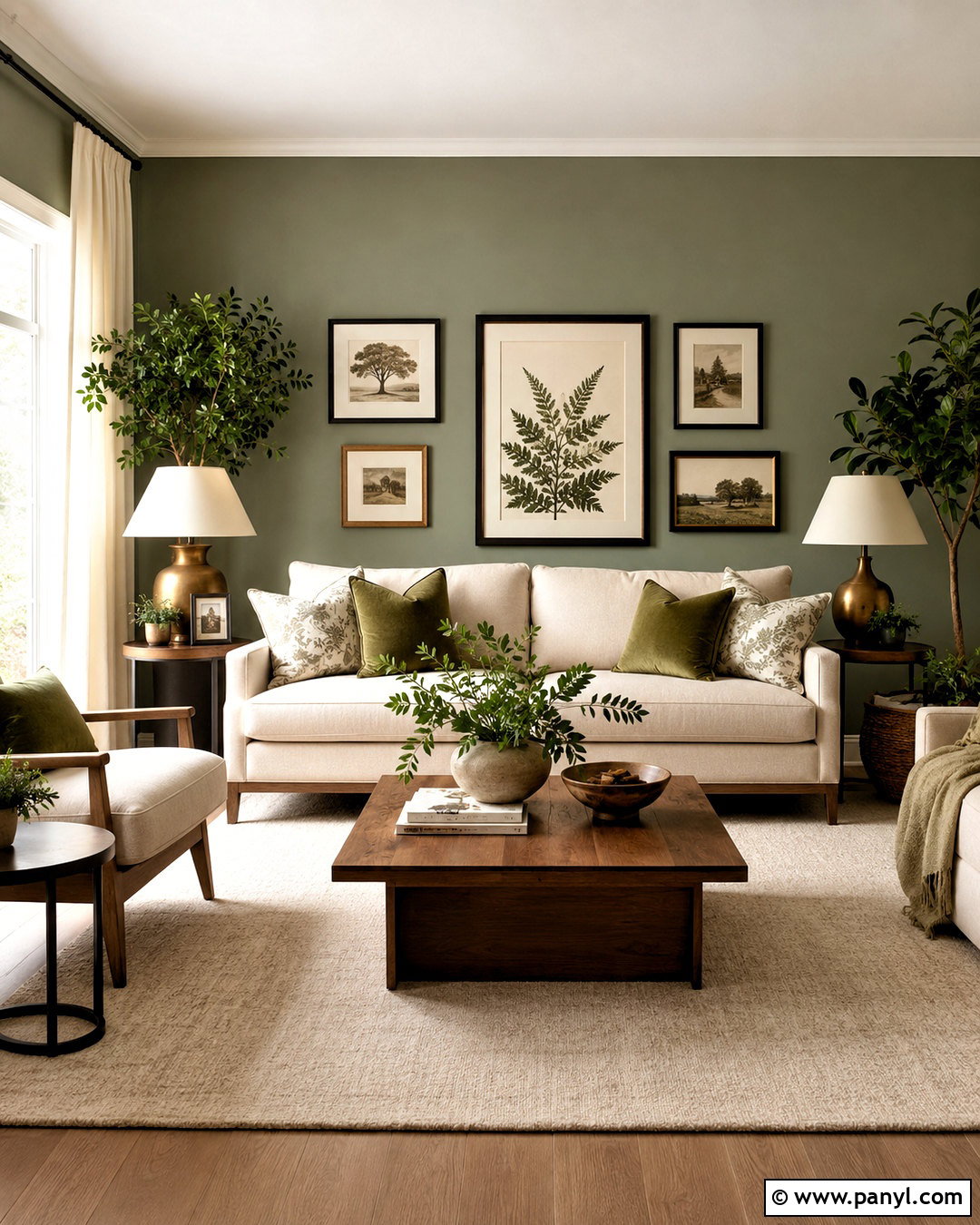
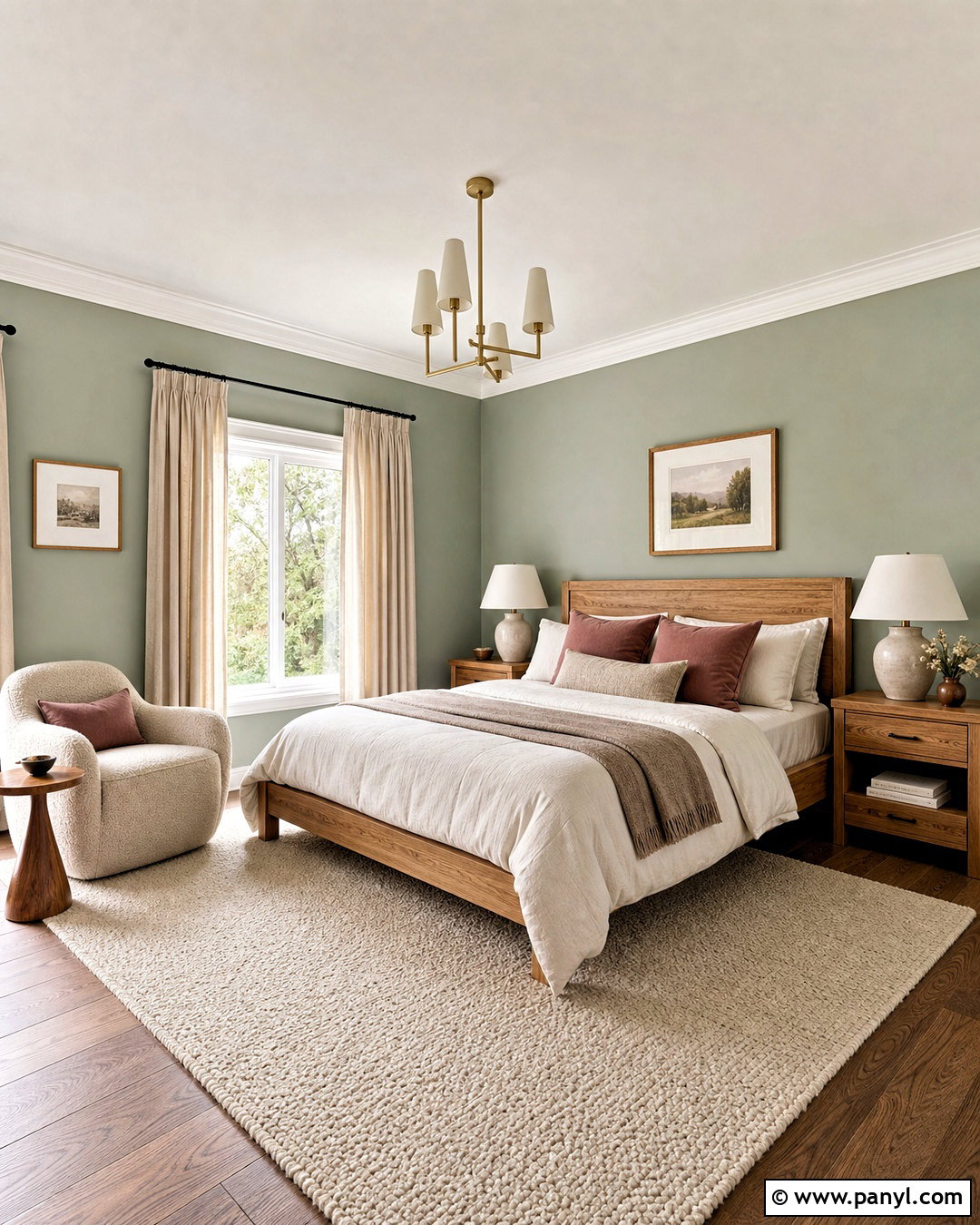
Sage green walls and warm white furnishings create a bedroom that feels fresh without appearing cold. Choose a muted sage with gray undertones for the main walls, then use creamy white on the ceiling, trim, and doors. An oatmeal upholstered bed softens the transition between these colors. Add white linen bedding, a sage quilt, and pillows in olive and natural flax. Light oak nightstands and a woven bench introduce warmth, while brushed brass lamps provide a subtle polished accent. Keep the flooring natural with pale wood or a beige wool rug. Botanical artwork can reinforce the green palette without making the room overly themed. This combination suits modern farmhouse, transitional, Scandinavian, and relaxed traditional bedrooms.
2. Navy Blue And Beige Bedroom
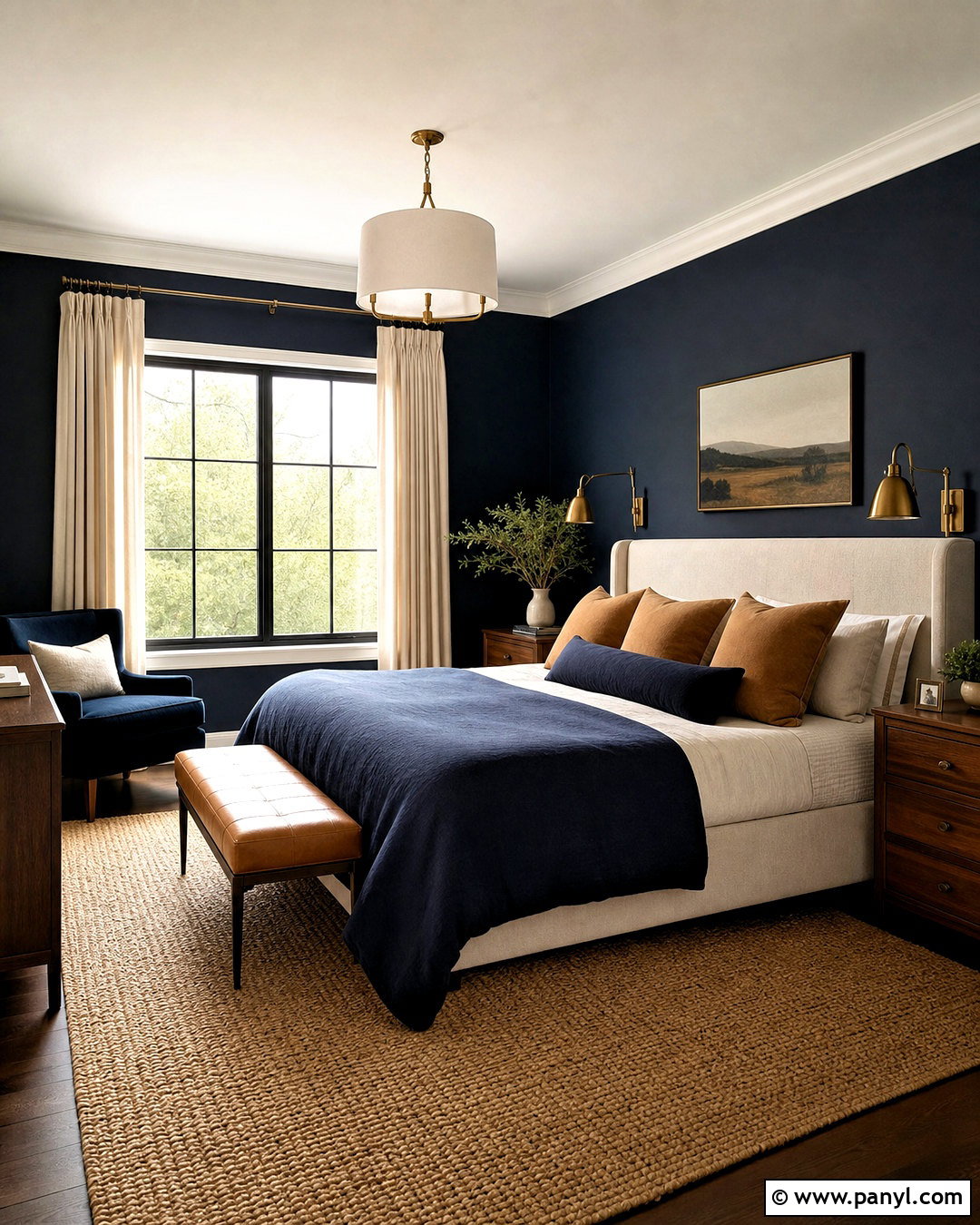
Deep navy blue and sandy beige produce a grounded bedroom with comfortable contrast. Use navy on the wall behind the bed or extend it across every wall for a more enveloping result. A beige linen headboard, oatmeal curtains, and natural woven rug prevent the dark paint from feeling heavy. Dress the bed with ivory sheets, a navy duvet, and camel-colored pillows. Walnut nightstands bring another warm note, while aged brass sconces stand out clearly against the blue. Keep the ceiling and architectural trim soft white to maintain definition. Simple landscape prints can connect the navy and beige tones. This full scheme works especially well in medium or large bedrooms with good natural light and substantial furniture.
3. Dusty Blue And Soft Gray Bedroom
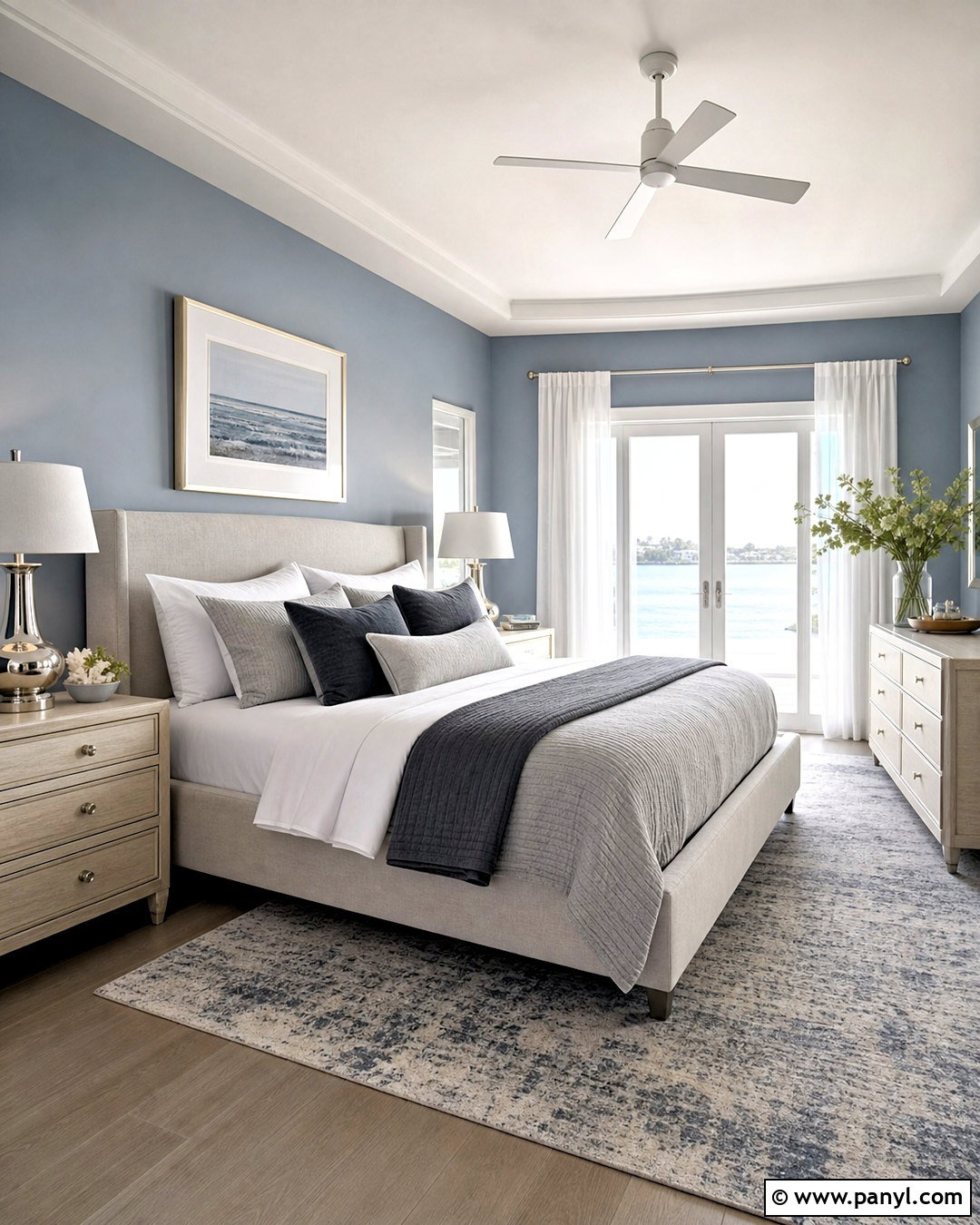
Imagine a quiet bedroom where cloudy blue walls meet layers of soft gray. Select a dusty blue paint with noticeable gray undertones, then repeat the shade through a blanket or patterned pillows. A pale gray upholstered bed creates gentle separation without strong contrast. Use crisp white sheets, a dove-gray duvet, and small charcoal accents for depth. White oak dressers and nightstands keep the palette light, while polished nickel lamps complement the cooler colors. Ground the room with a gray-and-ivory rug featuring a subtle pattern. Sheer white curtains can soften daylight, particularly in a smaller bedroom. The completed look feels clean and restful, making it suitable for coastal, contemporary, transitional, or minimalist interiors.
4. Terracotta And Cream Bedroom
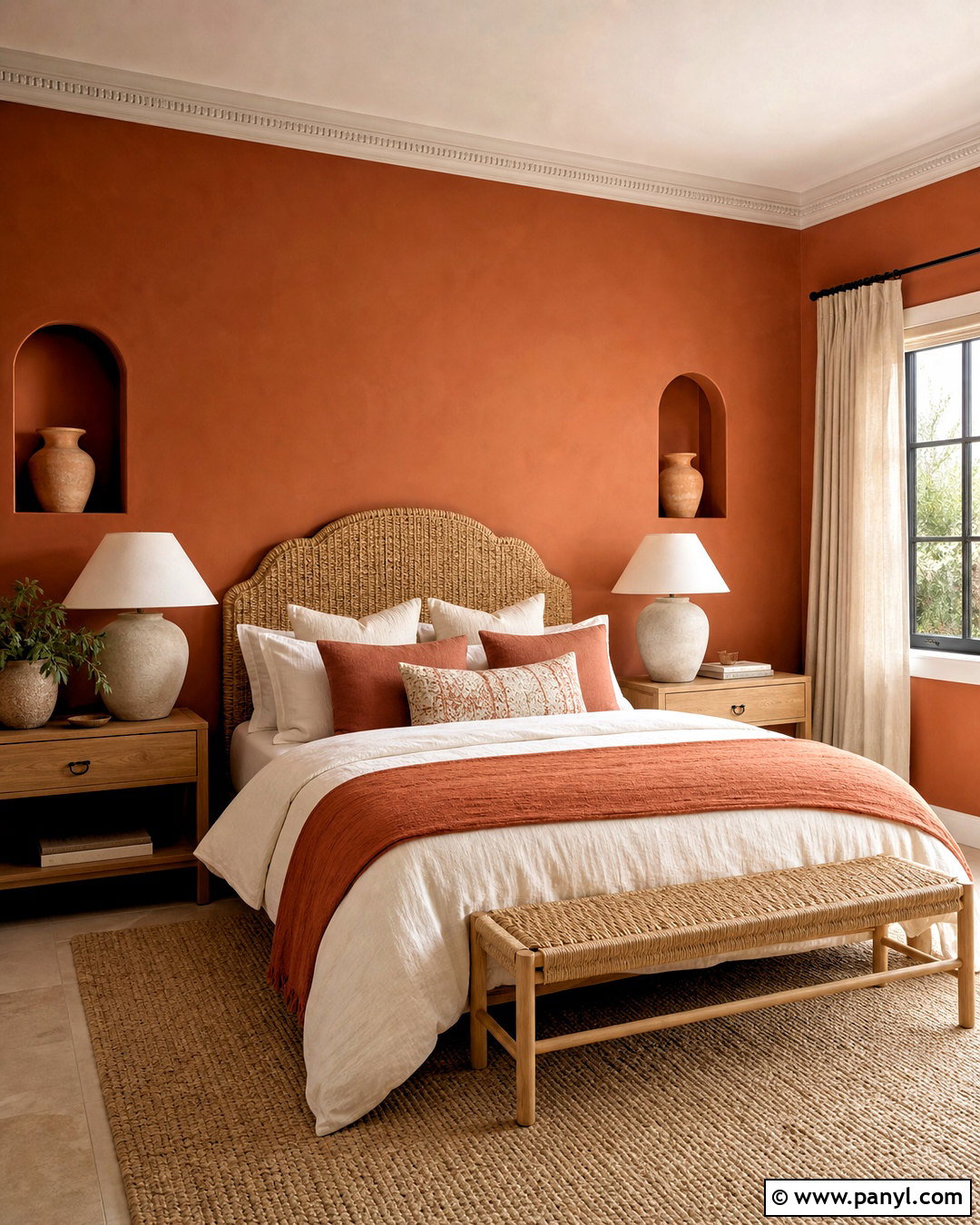
Terracotta and cream transform a plain bedroom into a warm, earthy retreat. Paint the walls a softened clay tone rather than a bright orange, and use creamy white across the ceiling, trim, and bedding. A natural oak bed or woven rattan headboard enhances the sunbaked character of the palette. Layer the mattress with ivory linens, a terracotta coverlet, and muted rust and tan pillows. Add light wood nightstands, ceramic lamps, and a textured beige rug. Olive branches or a few subdued green accessories provide a restrained complementary accent. Linen curtains in warm oatmeal filter the daylight beautifully. This complete color combination feels welcoming in bohemian, Mediterranean, Southwestern, organic modern, and casual contemporary bedrooms.
5. Blush Pink And Taupe Bedroom
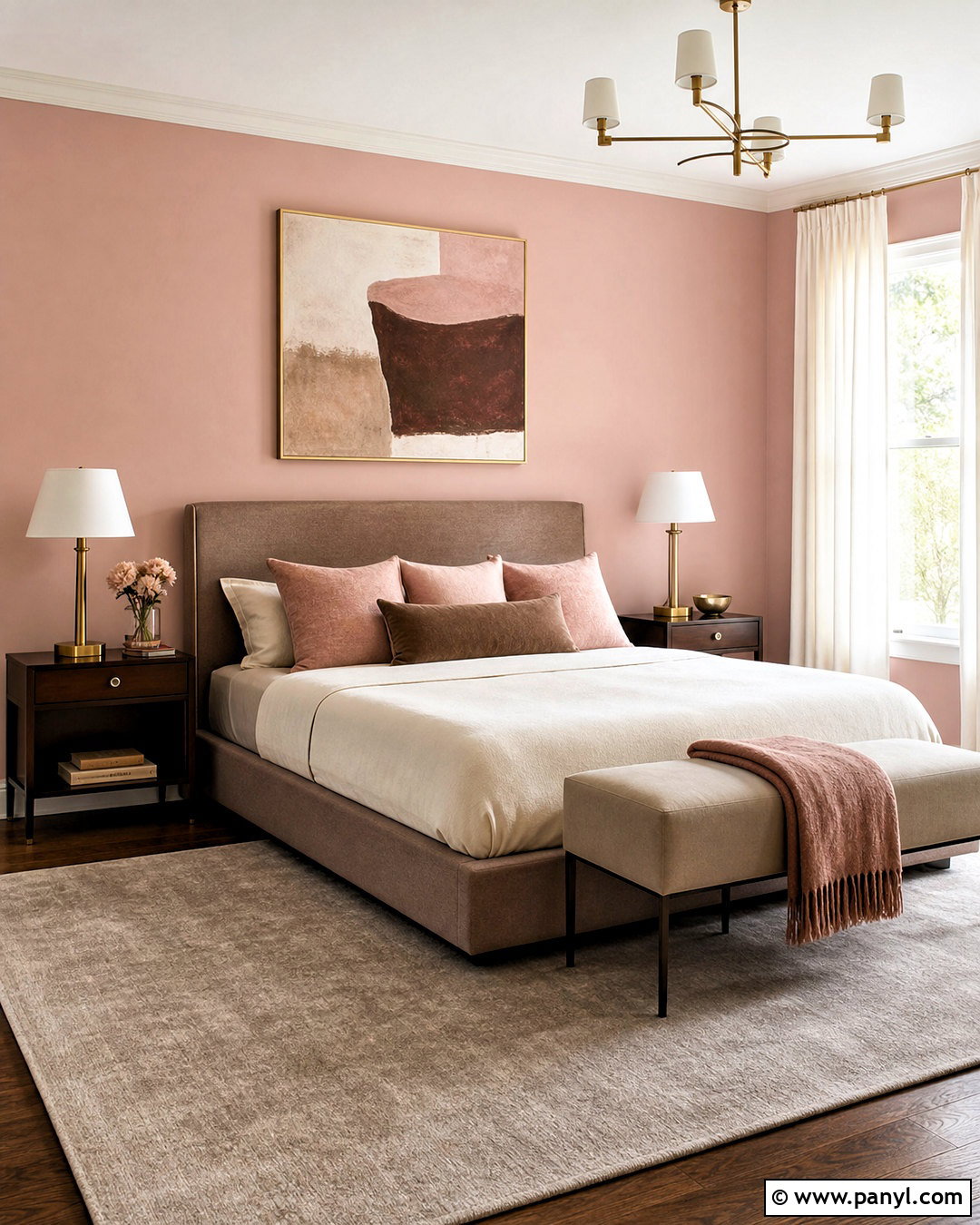
Blush pink can feel sophisticated when it is balanced with warm taupe and tailored furniture. Apply a dusty, brown-toned pink to the walls, then choose a taupe upholstered bed with a simple rectangular headboard. Cream bedding creates breathing room, while rose, mushroom, and cocoa pillows build a layered palette. Include walnut nightstands to deepen the room and brushed brass lamps for a gentle glow. A taupe wool rug should extend beyond the bed and visually connect the major furniture pieces. Instead of highly decorative accents, select abstract artwork containing pink, beige, and charcoal. Soft ivory curtains complete the windows. The result is refined rather than overly sweet, making the combination suitable for contemporary, transitional, or modern romantic bedrooms.
6. Olive Green And Natural Wood Bedroom

For a bedroom inspired by the outdoors, combine earthy olive green with medium-toned natural wood. Use olive paint across the walls or add matching painted paneling behind the bed for extra texture. A solid oak bed, simple nightstands, and a low wood dresser create a cohesive furniture foundation. Choose warm white bedding, an olive blanket, and accents in tan, black, and muted ochre. A flat-woven beige rug balances the darker walls and helps the room remain inviting. Matte black sconces and curtain rods introduce crisp definition. Finish with linen curtains and understated botanical prints. This coordinated scheme has enough color to feel distinctive while remaining practical for organic modern, rustic, midcentury, and contemporary bedroom settings.
7. Charcoal Gray And Ivory Bedroom
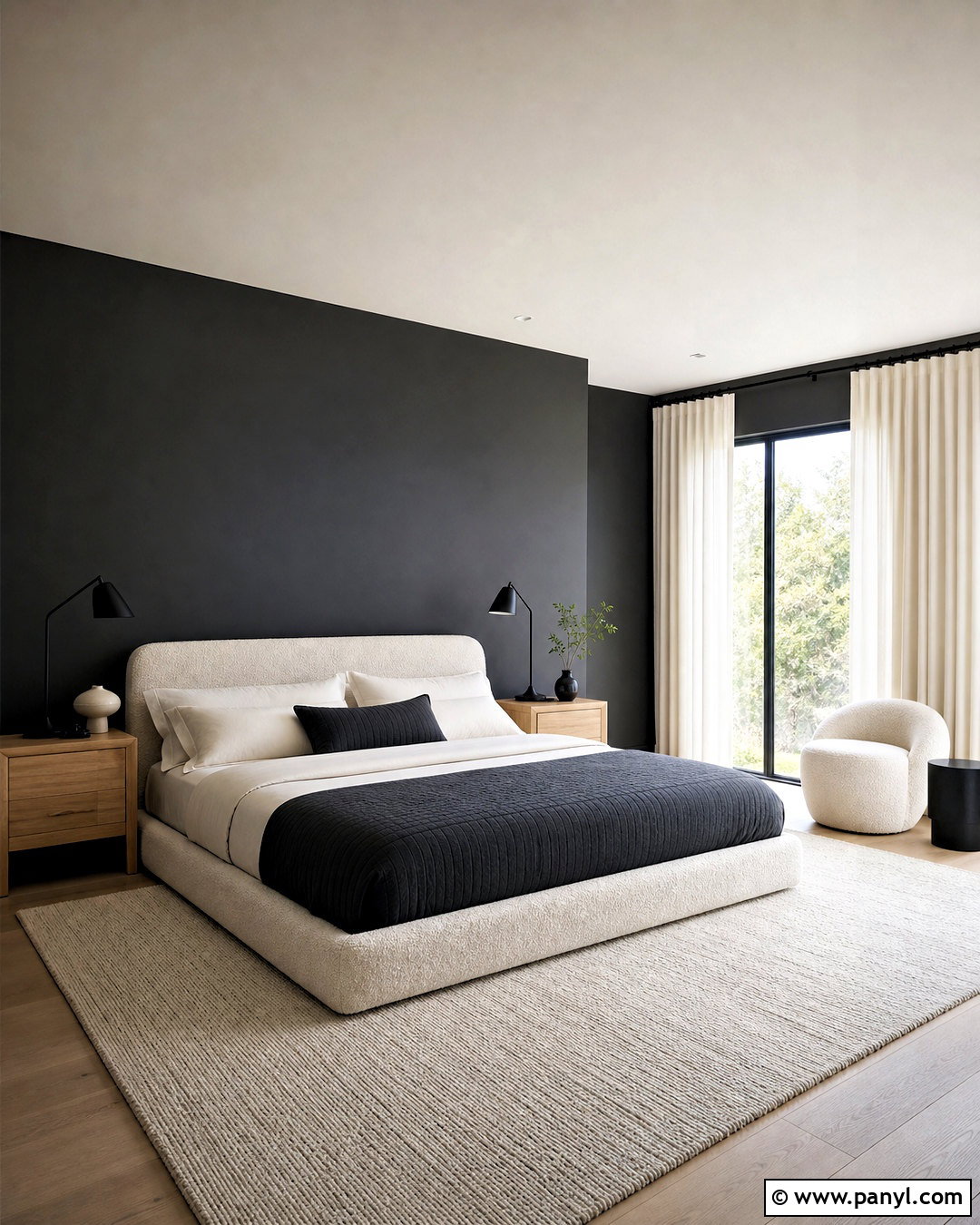
Charcoal gray walls can make a bedroom feel intimate when they are offset by generous layers of ivory. Paint every wall charcoal for a cocooning effect, but retain warm white on the ceiling to prevent the room from feeling compressed. Select an ivory bouclé or linen bed, then layer cream sheets, a charcoal quilt, and pillows in greige and black. Pale oak nightstands introduce warmth, while black metal lamps connect with the wall color. Hang full-length ivory curtains close to the ceiling to emphasize height. A large cream rug will brighten the floor and anchor the bed. Minimal monochrome artwork completes this dramatic yet comfortable look, which is ideal for modern, industrial, or streamlined transitional bedrooms.

8. Lavender And Warm Gray Bedroom
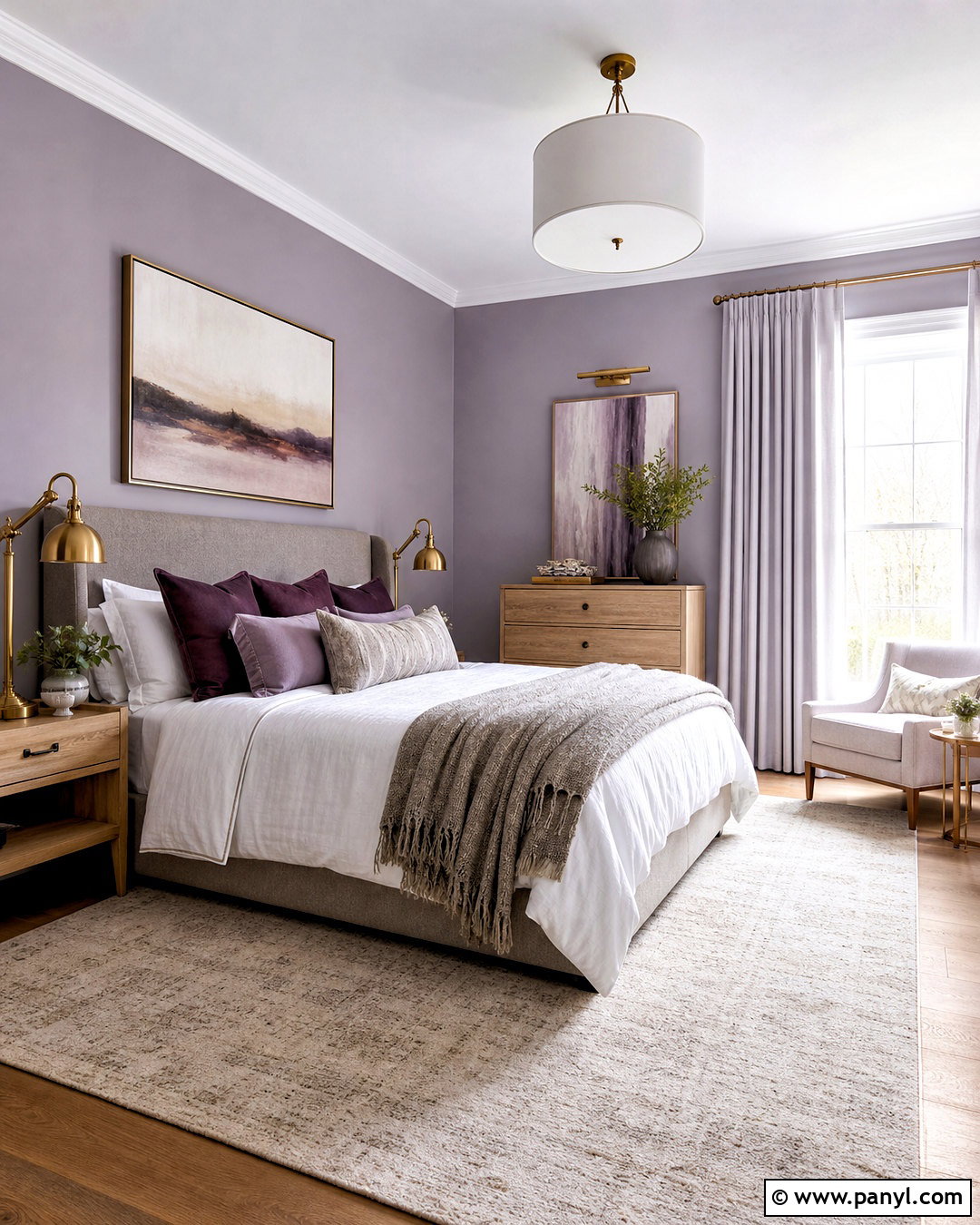
Soft lavender and warm gray create a bedroom with color that remains quiet and adaptable. Choose a muted lavender with gray undertones for the walls instead of a sugary purple. Pair it with a warm gray fabric headboard, light gray curtains, and an ivory area rug. White bedding keeps the center of the room bright, while lavender, plum, and mushroom pillows add controlled variation. Light oak furniture prevents the cool shades from becoming flat. Introduce aged brass lamps or picture frames for warmth, and choose abstract artwork that repeats lavender without dominating the room. This balanced palette can suit guest bedrooms, primary suites, and smaller rooms. It works particularly well with transitional, contemporary, and updated cottage furniture.
9. Teal And Soft White Bedroom
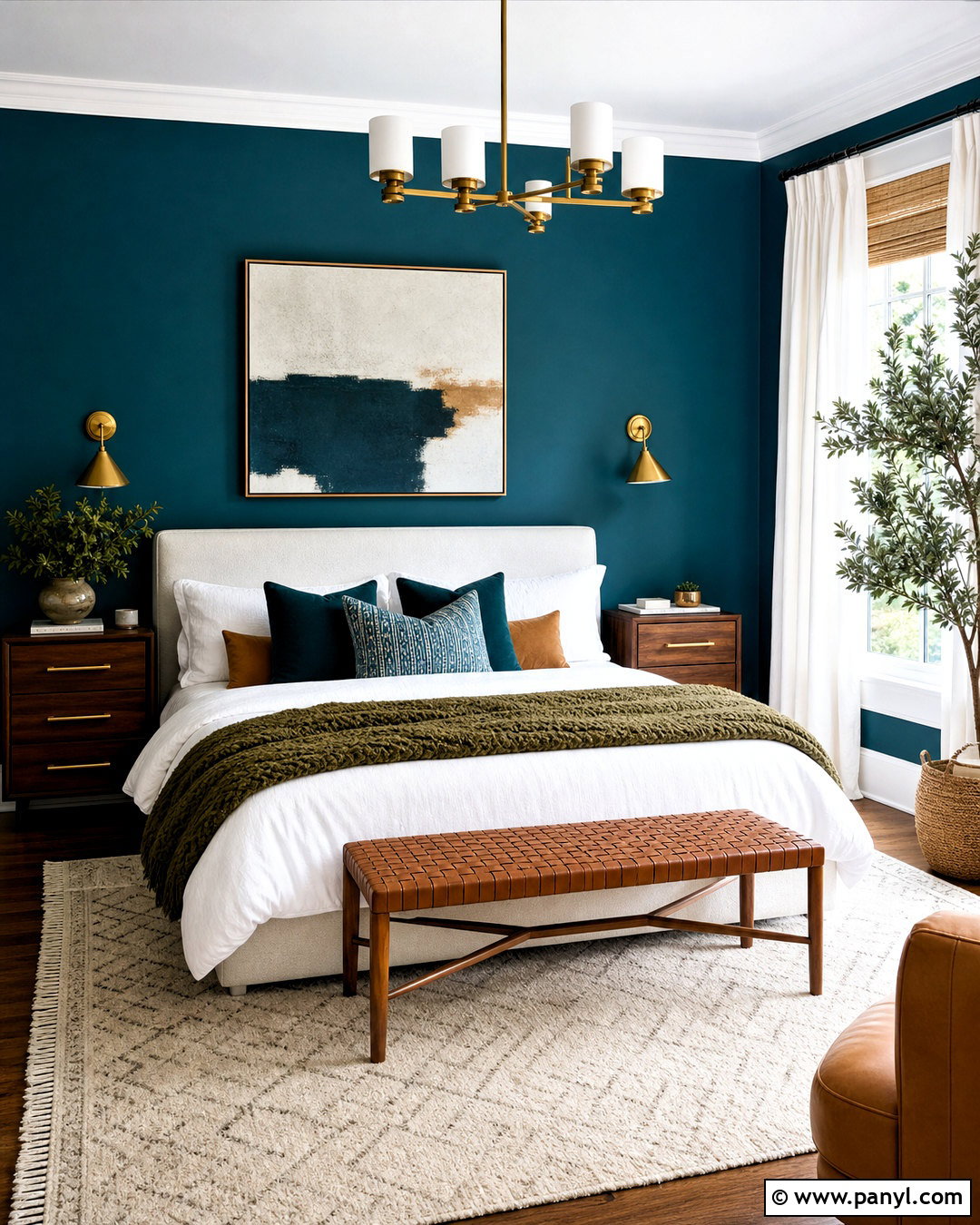
Rich teal and soft white offer bold personality without sacrificing a restful atmosphere. Cover the wall behind the bed in deep blue-green paint, or color-drench the room if ample daylight is available. Use a soft white upholstered bed and warm white linens to establish clean contrast. Add teal pillows, a moss green throw, and small camel accents to broaden the palette. Medium walnut nightstands deepen the design, while brass sconces bring warmth against the saturated walls. Select an ivory rug with a restrained teal pattern to unite the floor and bedding. White curtains should remain simple and full length. The finished bedroom feels colorful, polished, and comfortable, fitting modern eclectic, Art Deco-inspired, and contemporary interiors.
10. Greige And Crisp White Bedroom
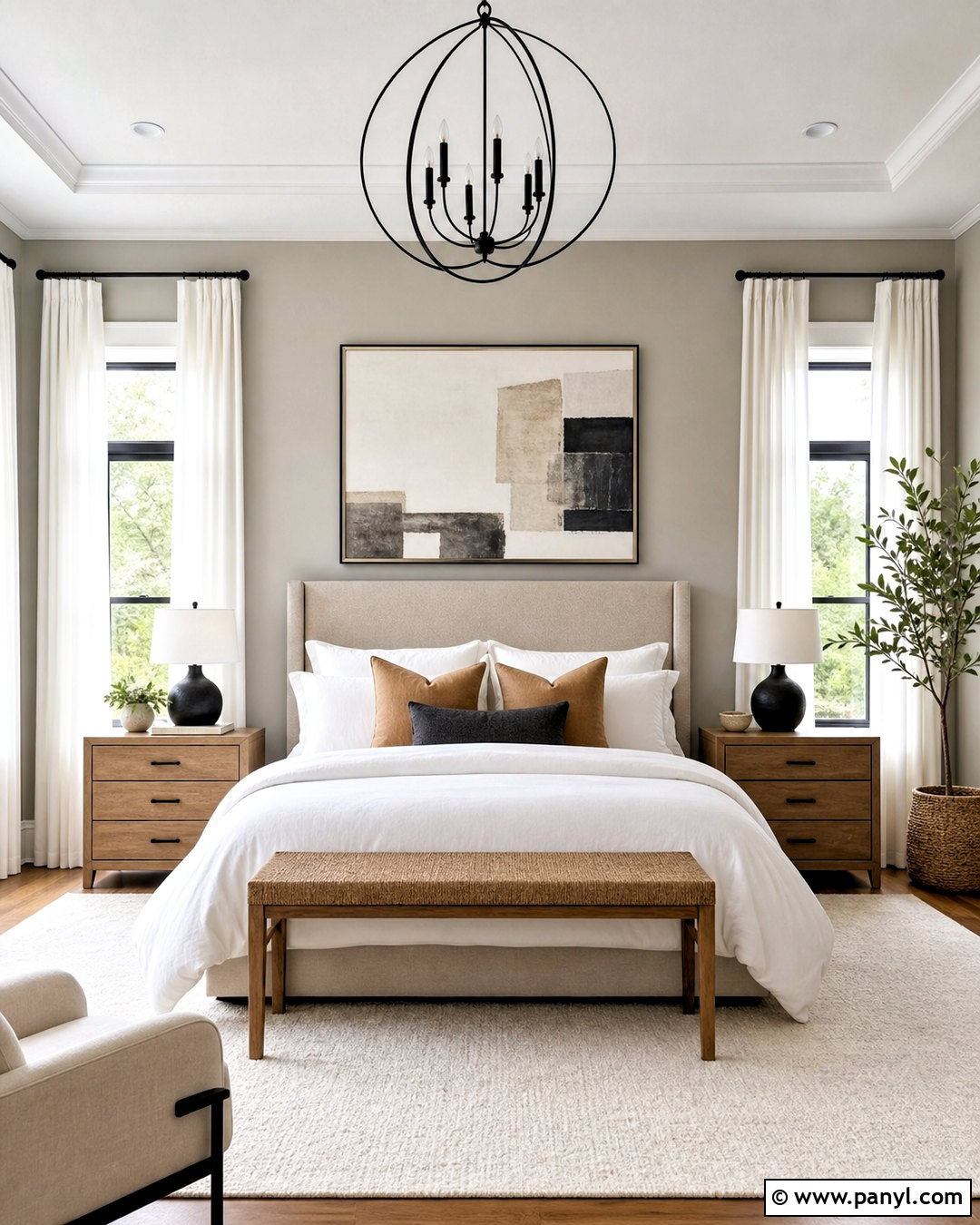
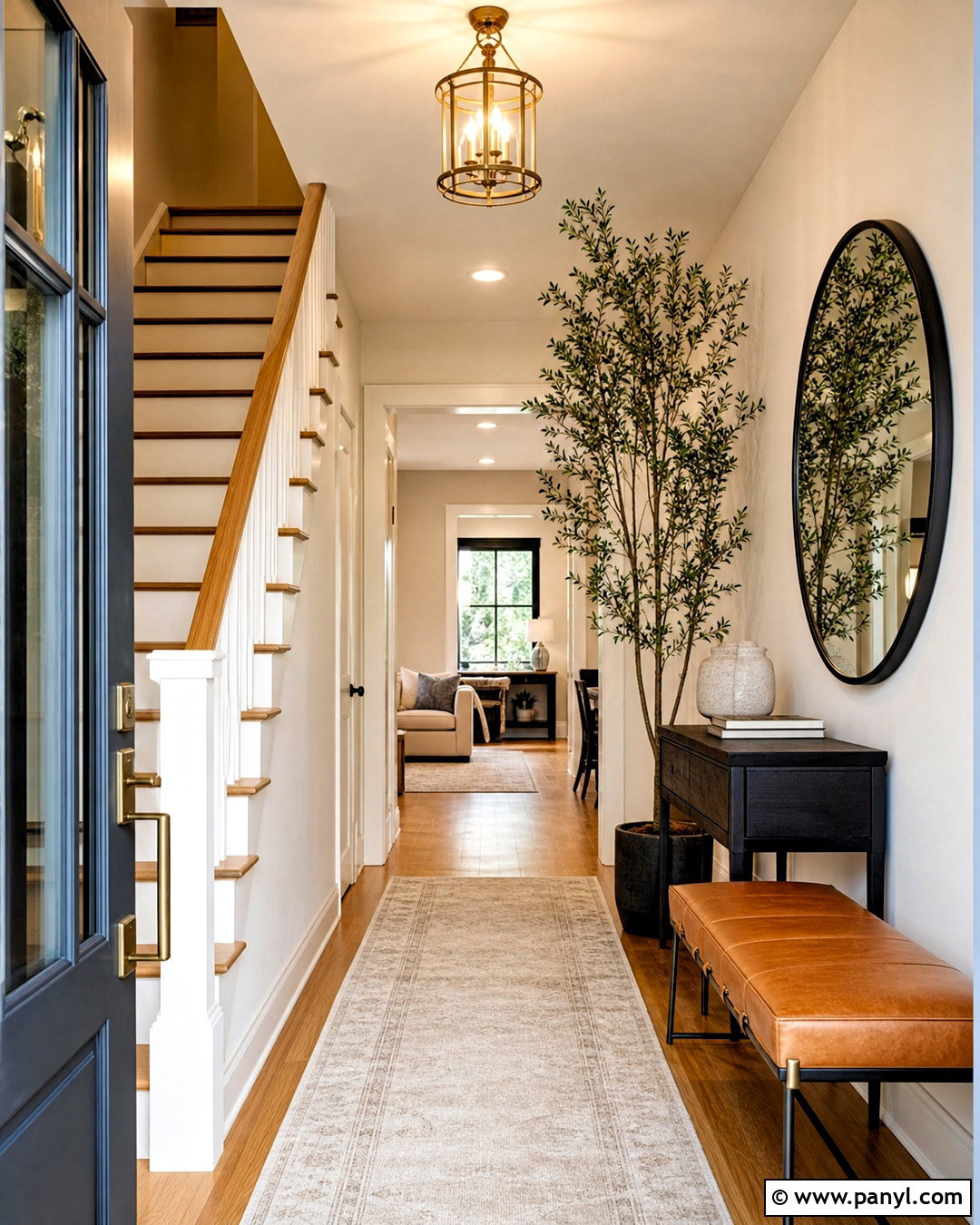
Greige and crisp white provide a flexible bedroom foundation that can evolve with changing accessories. Paint the walls a balanced greige that sits between warm beige and soft gray. Use crisp white for the ceiling, trim, curtains, and primary bedding to create fresh definition. A natural linen headboard introduces texture, while medium oak nightstands prevent the neutral room from appearing washed out. Layer the bed with white sheets, a greige duvet, and pillows in camel, charcoal, and cream. Add matte black lamps for structured contrast and a thick ivory rug for softness. One oversized abstract artwork can supply subtle movement. This complete scheme complements modern farmhouse, minimalist, transitional, contemporary, and Scandinavian bedroom furniture with equal ease.
11. Pale Blue And White Bedroom
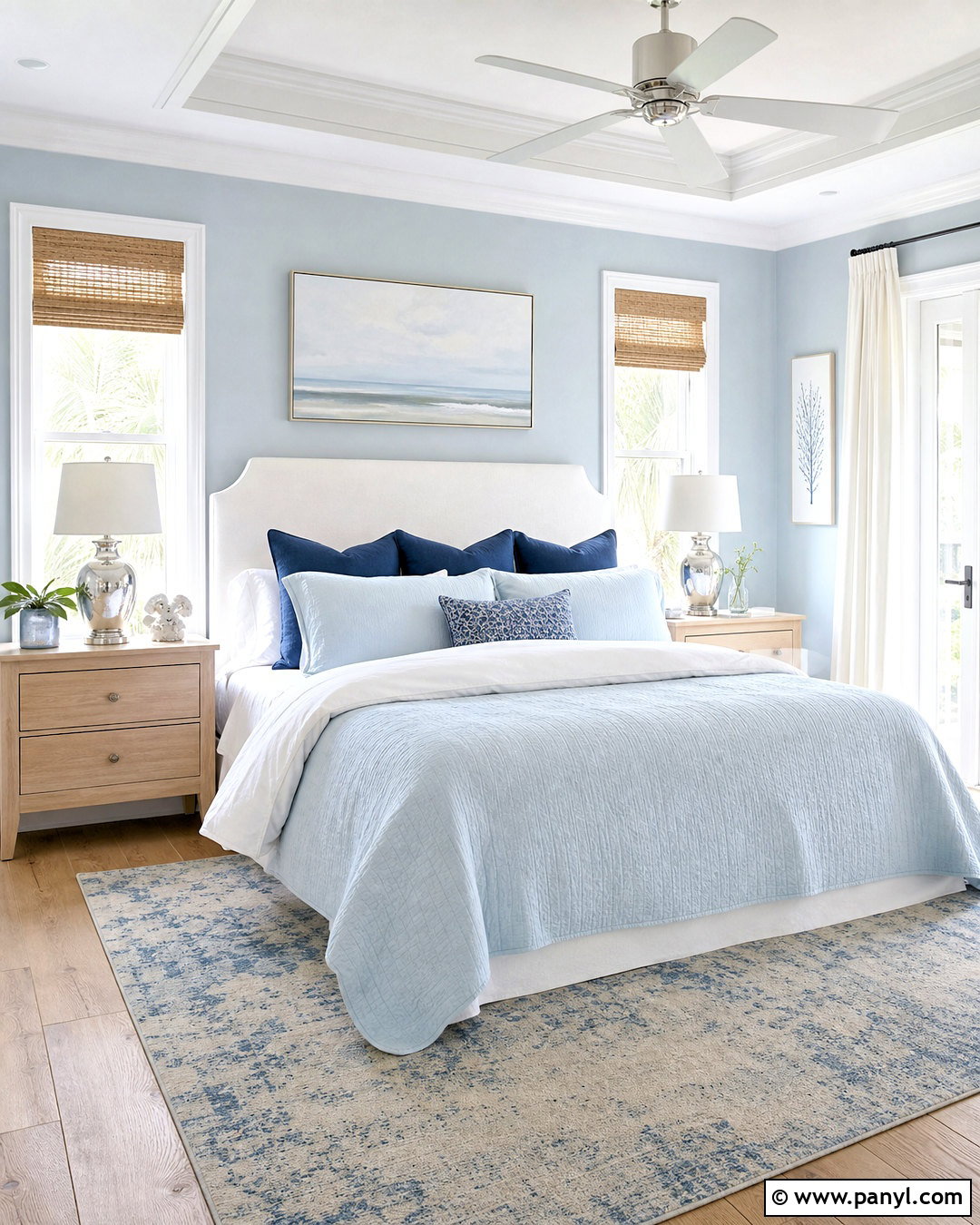
Pale blue walls and clean white layers make a bedroom feel open, breezy, and orderly. Select a blue with a slight gray undertone so the room remains calm rather than juvenile. Paint the trim and ceiling bright white, then use a white-painted wood bed or relaxed white linen headboard. Combine white bedding with a powder-blue quilt and pillows in navy, mist blue, and beige. Natural woven shades and pale oak nightstands keep the scheme from becoming too cool. Ground everything with an ivory-and-blue patterned rug. Clear glass or polished nickel lamps add lightness without competing for attention. This coordinated palette works beautifully in coastal, cottage, traditional, transitional, and smaller bedrooms that need a brighter visual character.
12. Forest Green And Camel Bedroom
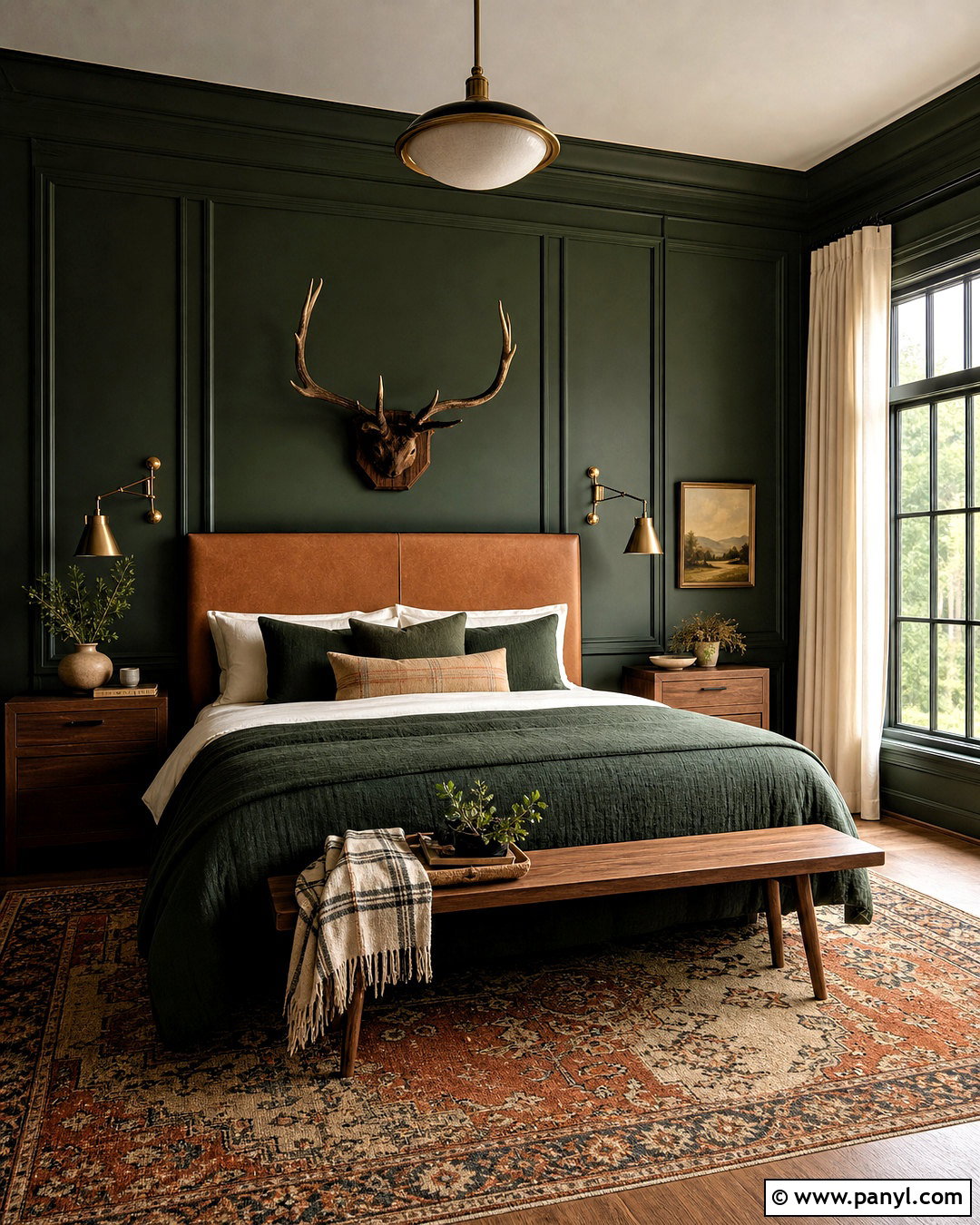
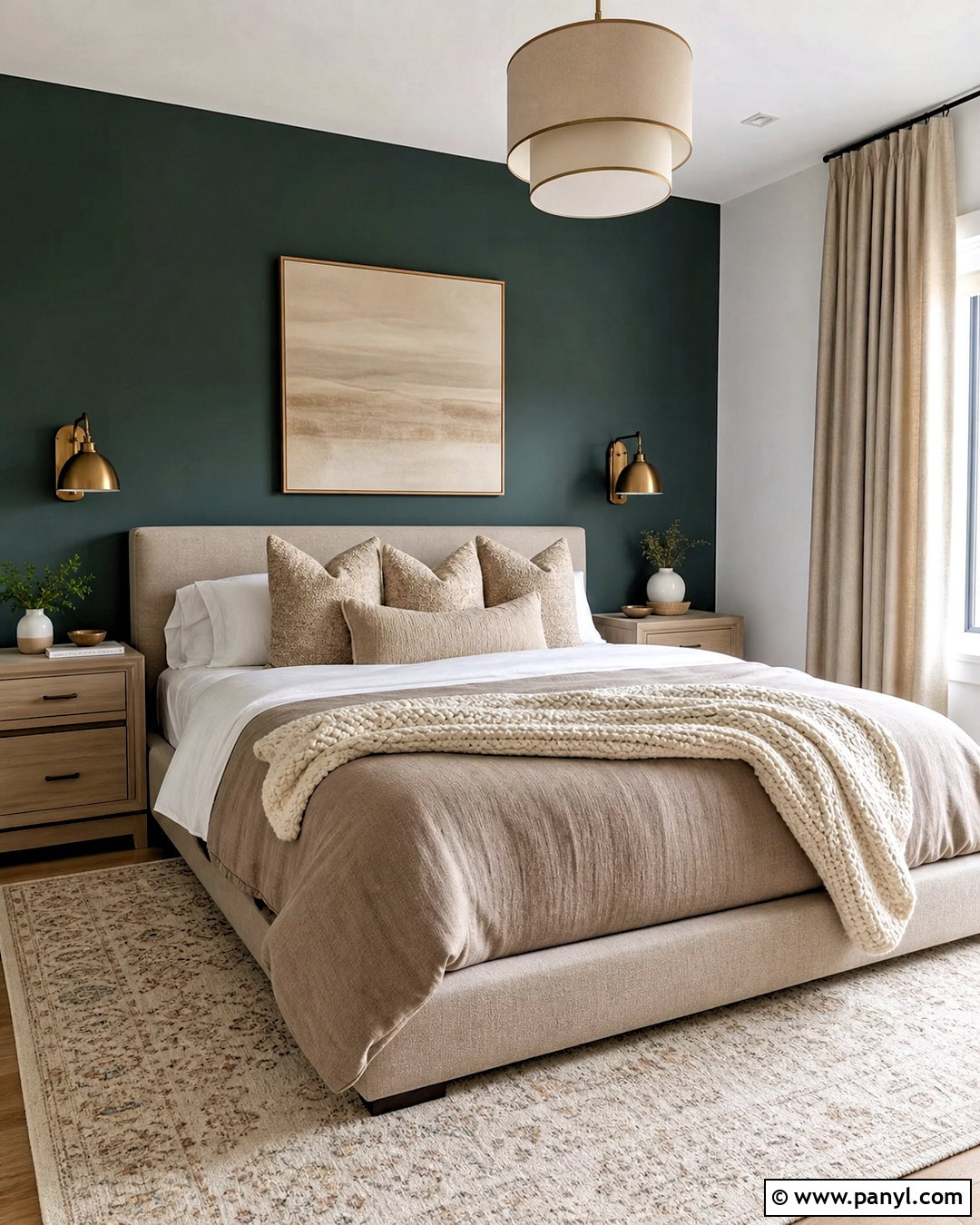
Forest green paired with camel creates a deep, tailored bedroom that feels both dramatic and warm. Use matte forest green paint on every wall, including the molding if you want a seamless, enveloping effect. Center the design on a camel leather or faux-leather headboard. Add ivory sheets, deep green bedding, and pillows in tan, cream, and restrained black. Walnut nightstands continue the richness, while antique brass reading lights stand out against the green background. Choose a vintage-inspired rug containing beige, rust, and dark green to connect the palette. Cream curtains provide softness around the windows. The completed scheme has a sophisticated, nature-based character that suits traditional, lodge-inspired, midcentury, and modern masculine bedrooms.
13. Chocolate Brown And Cream Bedroom

Chocolate brown and cream form a luxurious bedroom palette built around warmth rather than sharp contrast. Paint the walls a rich cocoa brown, or use brown grasscloth for added texture. Place a tall cream upholstered headboard against the darkest wall and dress it with ivory bedding. Add chocolate, caramel, and taupe pillows along with a textured camel throw. Dark walnut furniture blends smoothly into the background, allowing cream lampshades and brass hardware to stand out. An oversized beige rug lightens the lower half of the room. Keep curtains warm white and hang them from ceiling height. This coordinated brown bedroom feels grounded and inviting, especially when finished with soft lighting, simple artwork, and uncluttered surfaces.
14. Peach And Warm White Bedroom
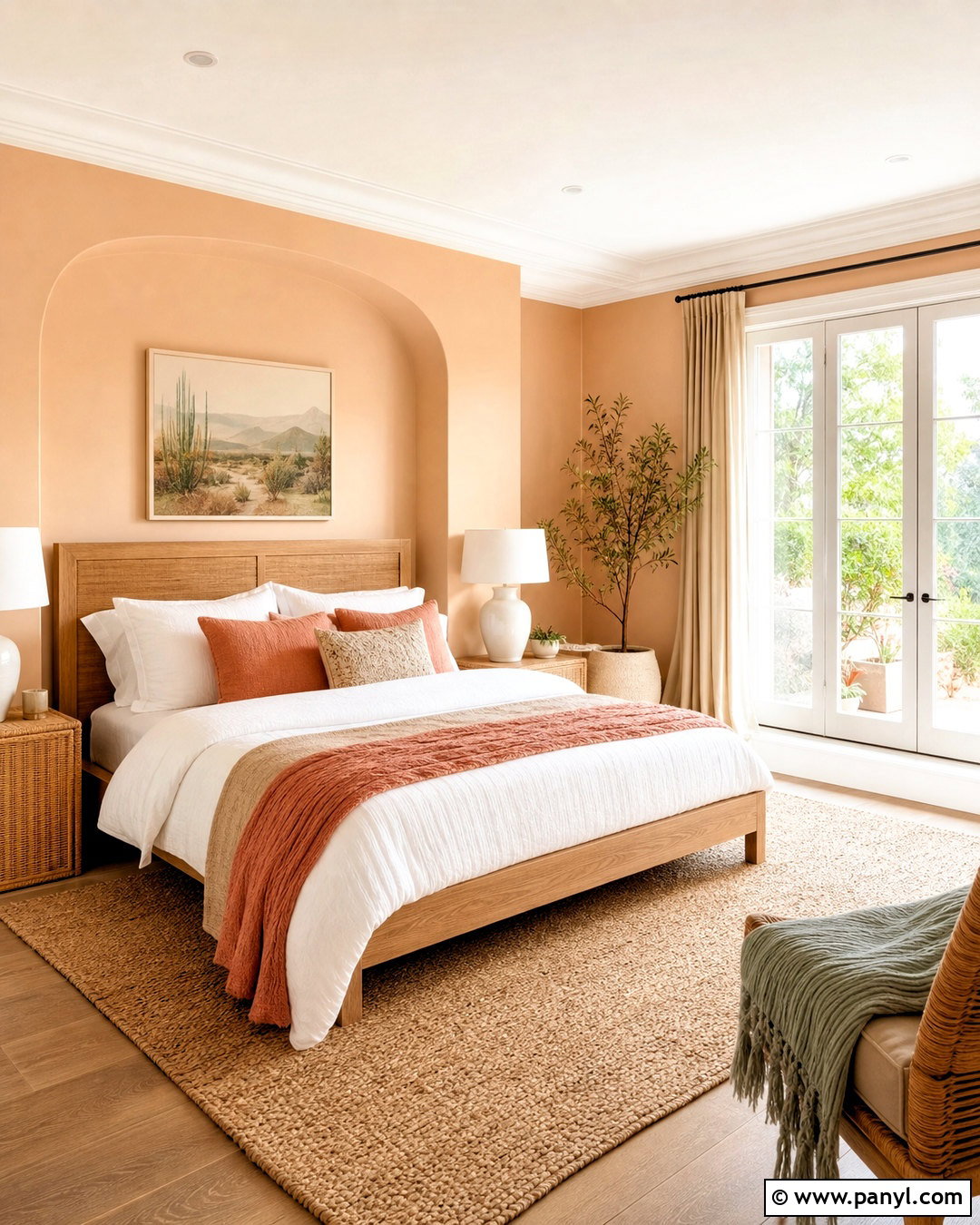
Could your bedroom use warmth without a dark or heavily saturated wall color? A muted peach and warm white palette provides a sunny alternative. Choose a plaster-like peach with beige undertones for the walls and creamy white for the trim and ceiling. Use a light oak bed or ivory upholstered headboard, then layer white linens with peach, coral, and sand-colored textiles. Woven nightstands and a natural jute-blend rug reinforce the casual warmth. Add white ceramic lamps and small touches of sage green through artwork or a bedside plant. Oatmeal linen curtains keep the room light and relaxed. The full scheme complements coastal, cottage, bohemian, Mediterranean, and cheerful contemporary bedrooms without looking overly bright or childish.
15. Burgundy And Dusty Pink Bedroom
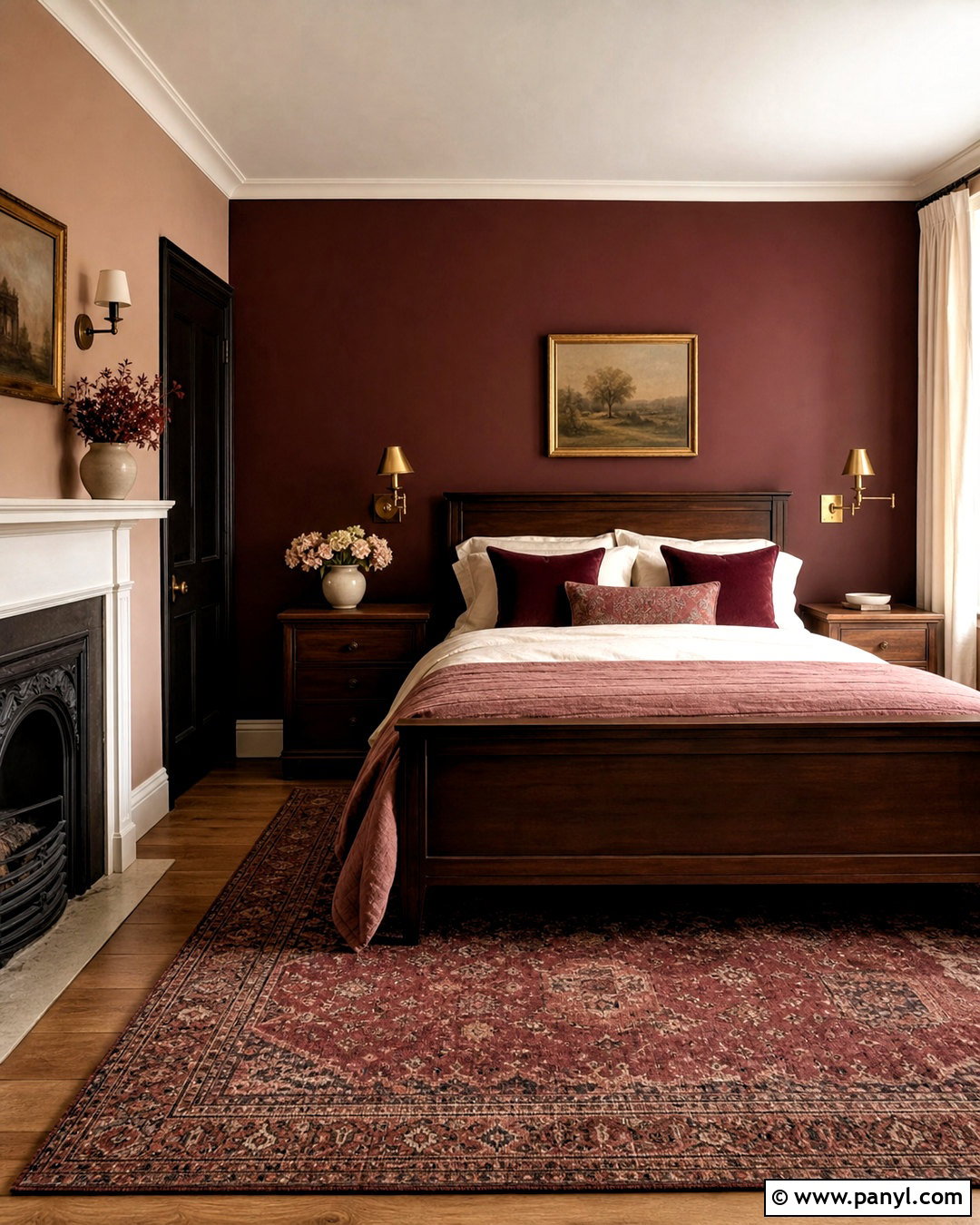
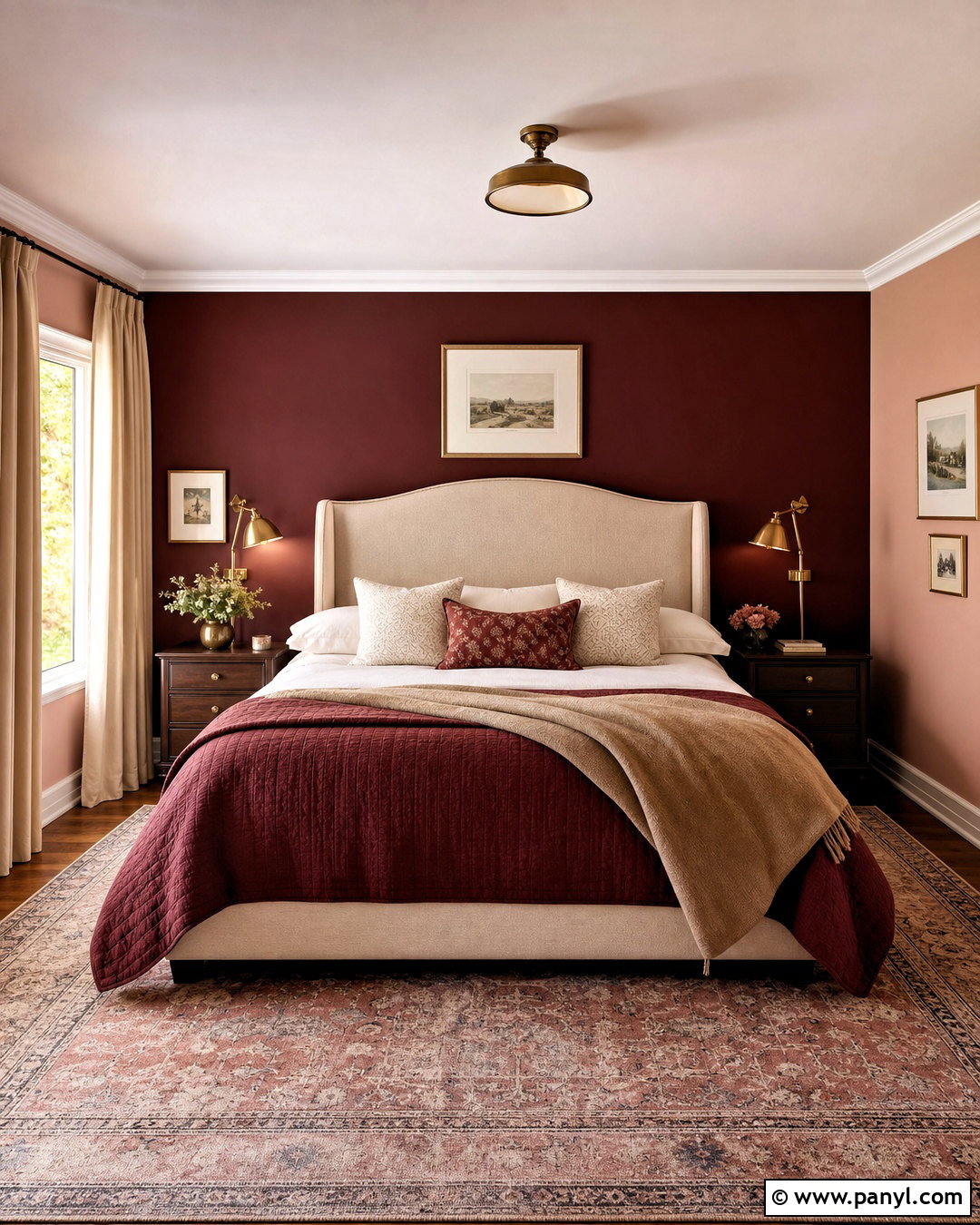
Burgundy and dusty pink create a layered bedroom with depth, softness, and vintage character. Use burgundy on the wall behind the bed, while painting the remaining walls a muted pink-beige to control the intensity. A dark wood bed establishes a strong focal point. Dress it with cream linens, a dusty rose duvet, and burgundy velvet pillows. Add walnut nightstands, aged brass sconces, and an antique-style rug containing faded red, tan, and charcoal. Warm white curtains soften the darker accent wall and balance the substantial furniture. Keep decorative pieces selective, such as one floral artwork and a ceramic vase. This complete combination works best in romantic traditional, eclectic, heritage-inspired, and richly layered contemporary bedrooms.
16. Black And Tan Bedroom

A black and tan bedroom can feel calm and architectural when each color is used with restraint. Paint the headboard wall matte black and keep the other walls a warm off-white. Choose a tan upholstered bed with clean lines, then add ivory sheets, black-and-cream patterned pillows, and a caramel throw. Light oak nightstands create warmth beside the dark wall, while matte black lamps repeat the accent color. Use a large natural fiber or beige wool rug to soften the room. Full-length off-white curtains maintain brightness and visually enlarge the windows. Simple framed photography and one sculptural ceramic piece are enough decoration. This high-contrast scheme suits industrial, modern, minimalist, and updated rustic bedrooms without feeling stark.
17. Mustard Yellow And Gray Bedroom

Mustard yellow brings energy to a bedroom, while soft gray keeps the overall look restful and mature. Paint the walls a light warm gray and introduce mustard through a velvet headboard, quilt, or generously sized bed blanket. Keep the sheets white, then add pillows in mustard, charcoal, cream, and muted olive. Walnut furniture supports the golden undertones, while black metal lamps provide definition. Choose a gray-and-ivory rug with a subtle geometric pattern to anchor the room. White curtains will keep daylight clean and balanced. Add artwork containing small touches of ochre rather than covering every surface with yellow. This coordinated palette works especially well in midcentury modern, contemporary, Scandinavian, and casual urban bedrooms.
18. Slate Blue And Rust Bedroom
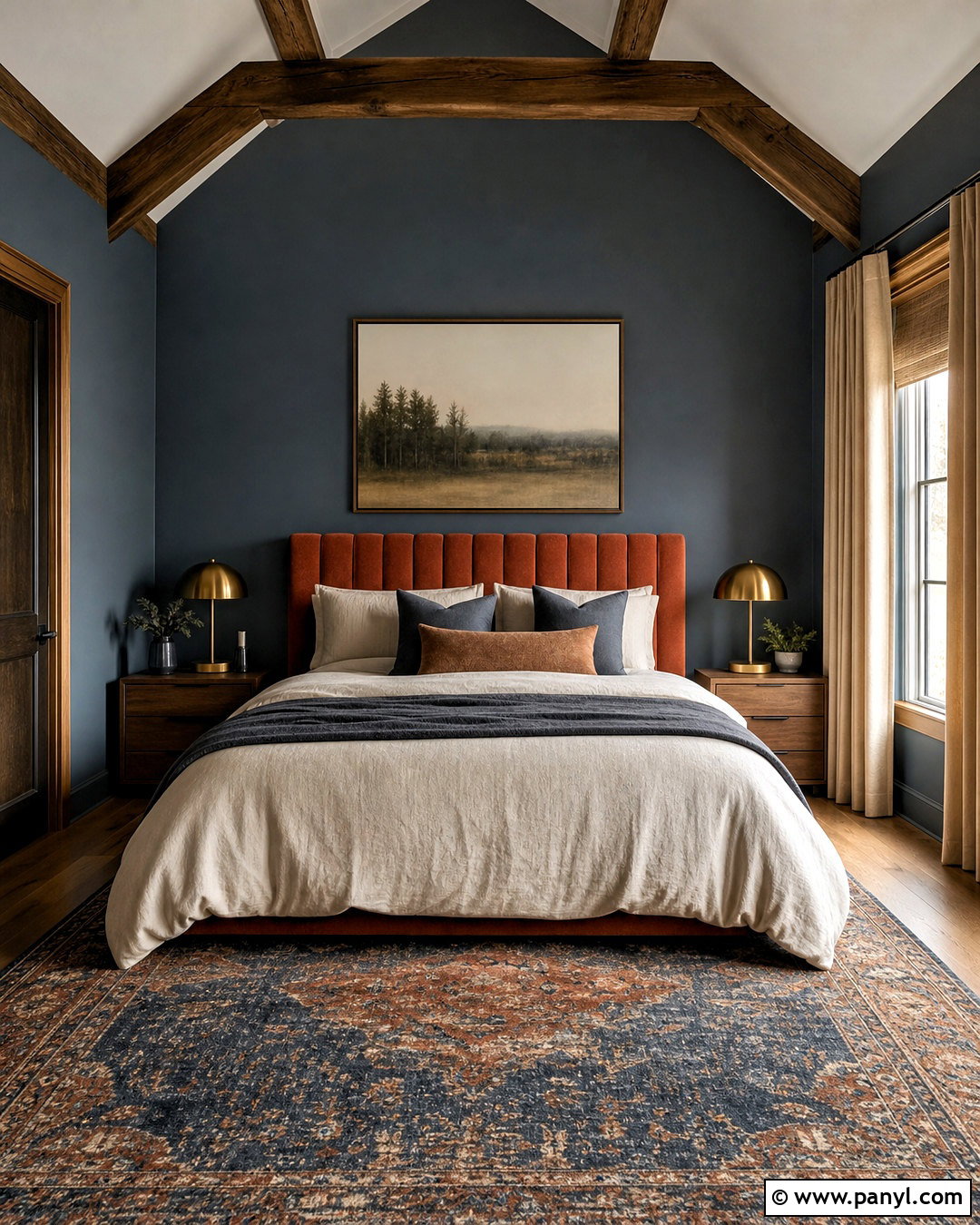
Slate blue and rust offer a balanced mix of cool and warm color. Cover the walls in a medium slate blue with smoky gray undertones, then introduce rust through the upholstered headboard, throw blanket, or patterned rug. White or pale oatmeal bedding creates a neutral break between the stronger shades. Use walnut nightstands, bronze lamps, and linen curtains in warm beige to support the earthy side of the palette. Pillows in slate, rust, ivory, and muted tan should repeat each color in controlled amounts. Choose simple abstract or landscape artwork that combines both dominant hues. The finished bedroom feels collected and grounded, making it a strong fit for modern rustic, transitional, Southwestern, and eclectic interiors.
19. Mint Green And Pale Pink Bedroom
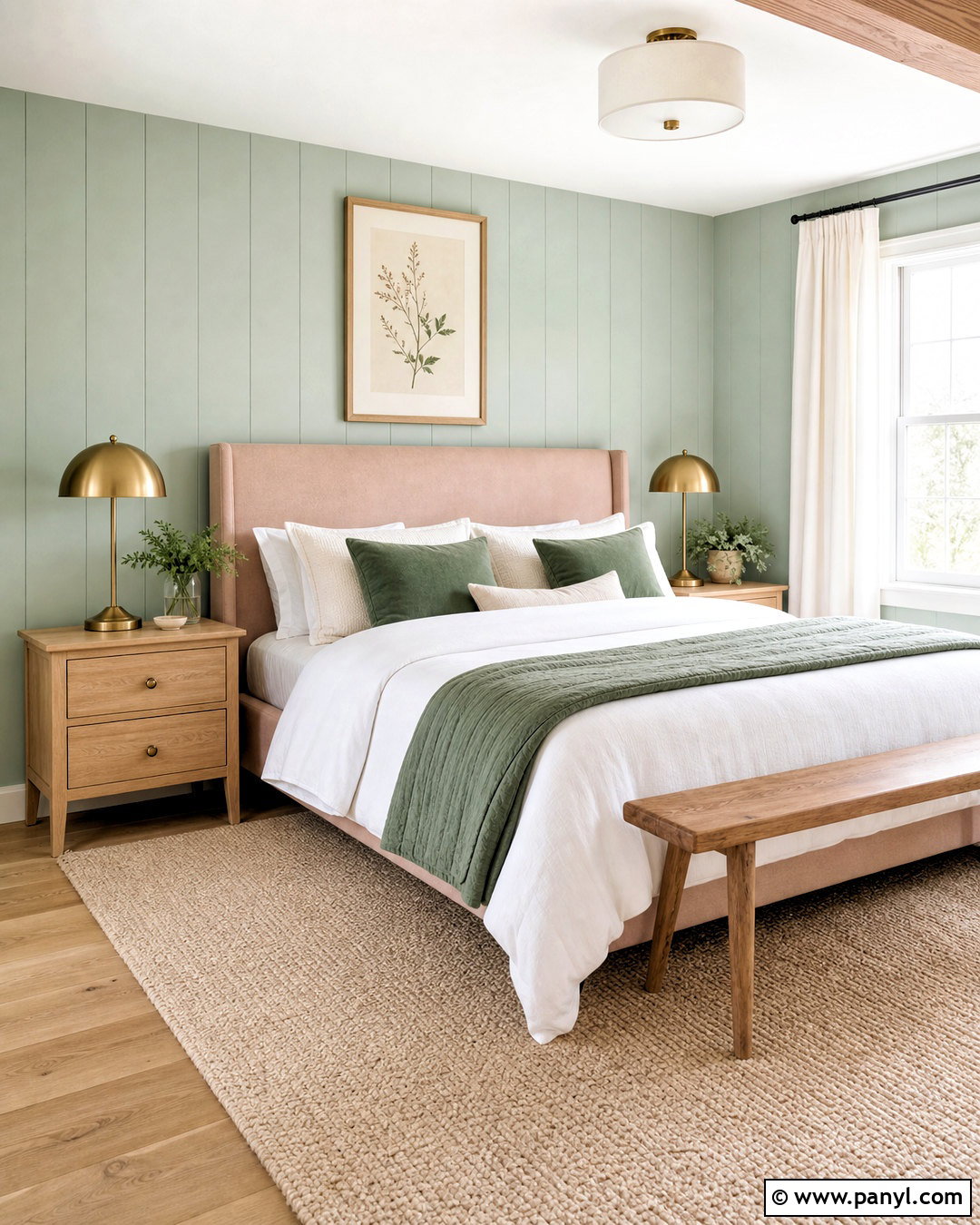
Mint green and pale pink can look fresh and grown-up when both colors are soft and slightly muted. Paint the walls a gray-toned mint, then use pale blush on the upholstered headboard or duvet. White sheets and curtains brighten the combination, while light oak furniture adds warmth and structure. Layer the bed with mint, blush, cream, and one or two deeper green accents. A beige wool rug prevents the pastel palette from feeling overly delicate. Select brushed brass lamps and uncomplicated botanical artwork for a polished finish. Keep decorative objects minimal and choose solid fabrics over busy prints. This complete color scheme is suitable for cottage, vintage modern, Scandinavian, transitional, and light contemporary bedrooms.
20. Burnt Orange And Deep Blue Bedroom
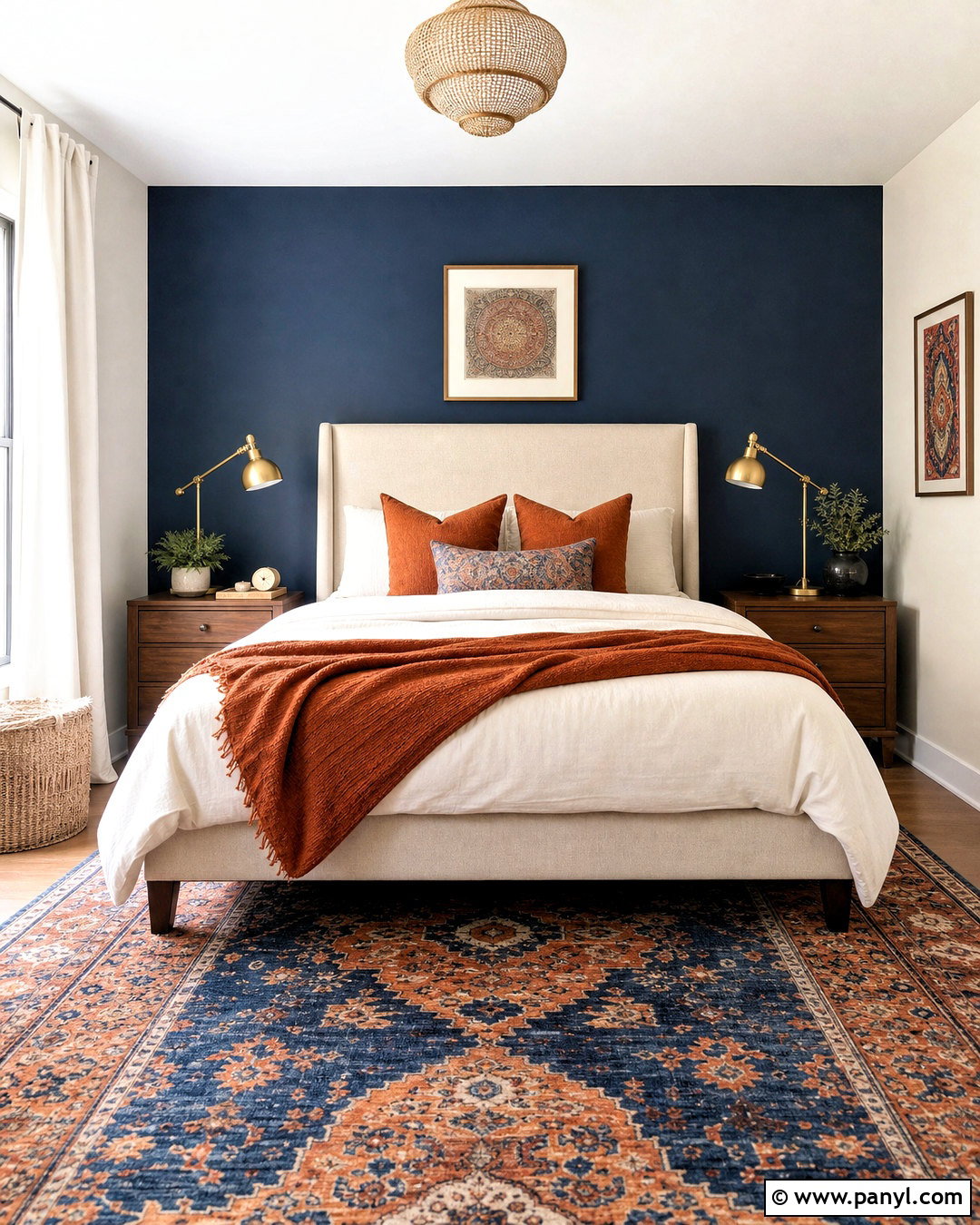
Burnt orange and deep blue create an expressive bedroom built around complementary contrast. Use deep blue paint behind the bed and a warm off-white across the other walls. Choose an oatmeal upholstered headboard, then layer ivory bedding with burnt orange pillows, a rust-colored throw, and smaller navy accents. Walnut nightstands connect naturally with the orange tones, while brass lamps add a refined finish. Place a patterned rug beneath the bed that includes blue, rust, cream, and muted tan. Warm white curtains balance the strong feature wall. Avoid adding several other bright colors; the existing contrast already provides plenty of interest. This full scheme suits modern eclectic, global-inspired, midcentury, and creative contemporary bedrooms.
Conclusion:
Successful bedroom color combinations depend on balance, repetition, and thoughtful placement. Begin with one dominant wall color, add a quieter supporting neutral, and repeat both shades through bedding, rugs, artwork, and accessories. Natural wood, woven fibers, and warm metallic finishes can soften cool palettes, while white or cream prevents deeper rooms from feeling oppressive. Consider the direction of your windows and test large paint samples before selecting the final shade. Most importantly, choose colors that make the room feel comfortable to you rather than following a trend without adjustment. These 20 bedroom color combination ideas offer complete starting points that can be personalized for different room sizes, furniture finishes, decorating preferences, and budgets.

Related Ideas and Inspiration:



Leave a Reply