
Choosing the right paint color can completely change how your living room feels, functions, and connects with the rest of your home. These 30 Interior Wall Colors Living Room Ideas cover light neutrals, calming blues, nature-inspired greens, warm earth tones, and dramatic dark shades. Current palettes are moving toward warm whites, muted teals, dusty pinks, earthy greens, and airy blues that feel expressive without becoming difficult to live with. () Each complete look also considers flooring, furniture, lighting, textiles, trim, and decorative accents. Before painting, sample your favorite shade on several walls and check it throughout the day. Whether you prefer timeless simplicity or deeper color, these 30 Interior Wall Colors Living Room Ideas offer a practical place to begin.

1. Warm White Living Room Wall Color
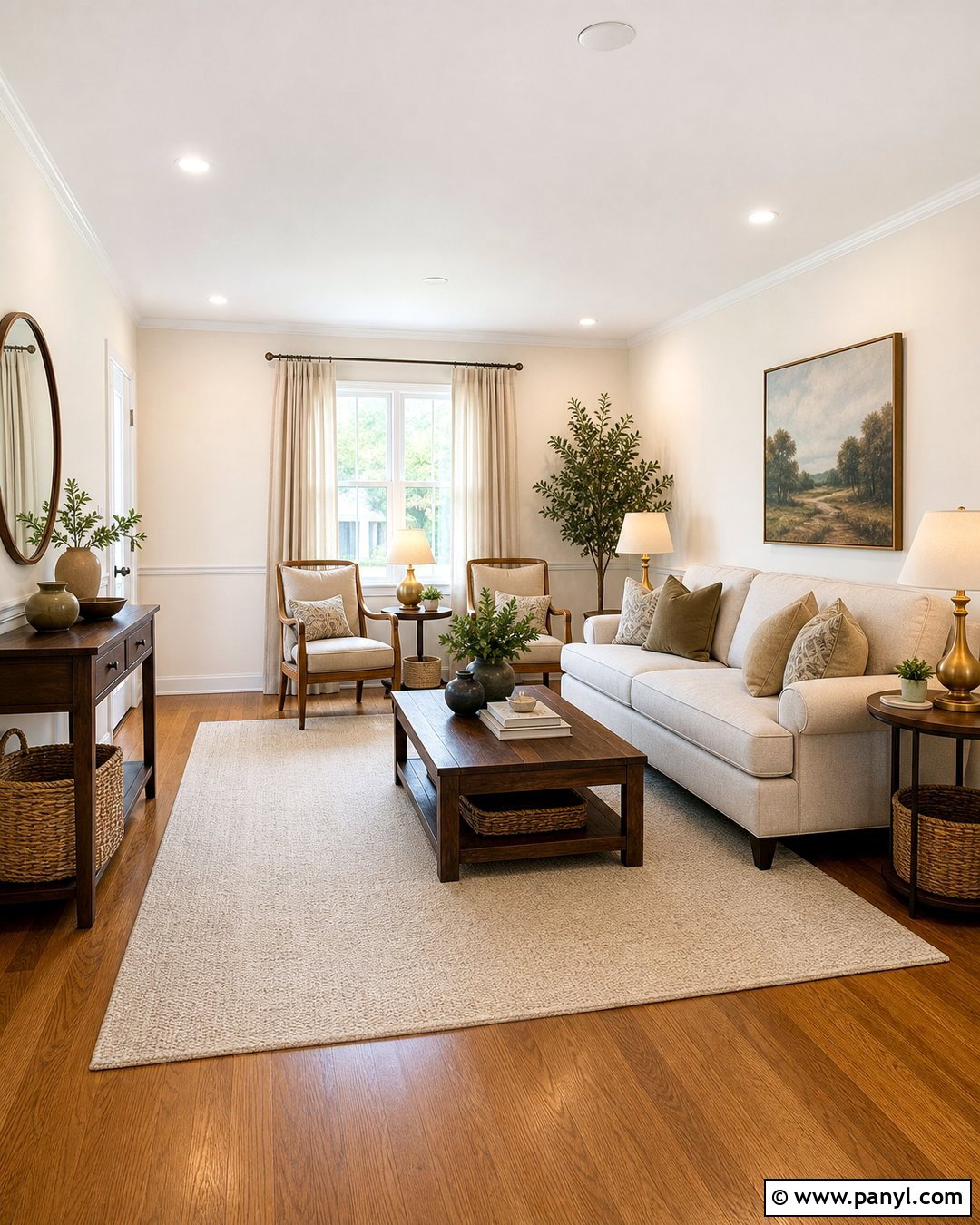
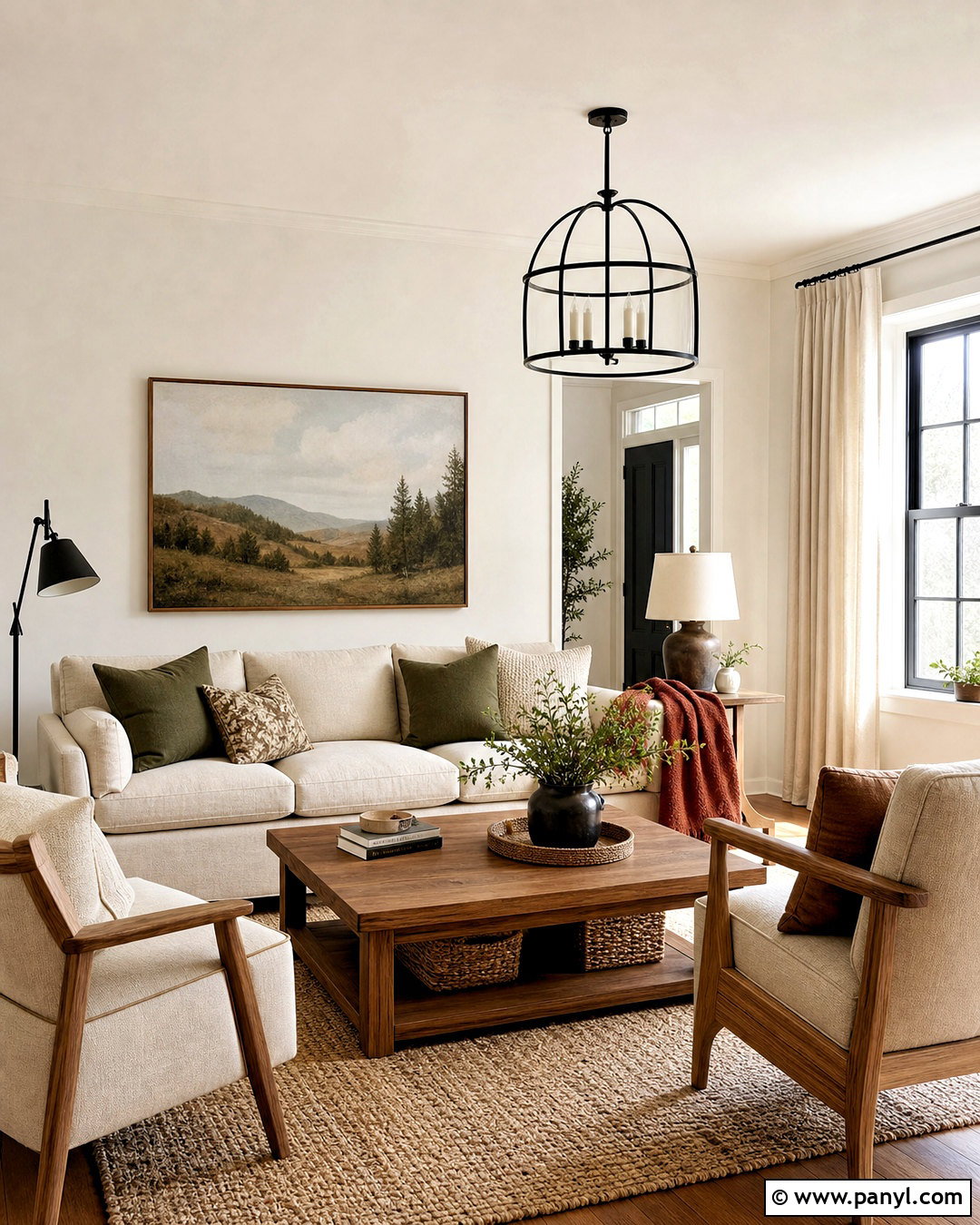
Warm white walls create a bright living room without the sharp, clinical feeling that can come from cooler whites. Choose a shade with soft cream or beige undertones, then pair it with natural oak flooring and an oatmeal-colored sofa. A textured ivory rug will define the seating area while keeping the palette light. Add a walnut coffee table, woven baskets, and linen curtains for gentle contrast. Brushed brass lamps bring warmth to the walls after sunset. For artwork, use earthy landscapes or simple abstract pieces in rust, tan, and muted green. Paint the trim in the same warm white with a slightly glossier finish. This complete scheme feels relaxed, open, and flexible enough to suit modern, farmhouse, or transitional homes.
2. Soft Greige Living Room Wall Color
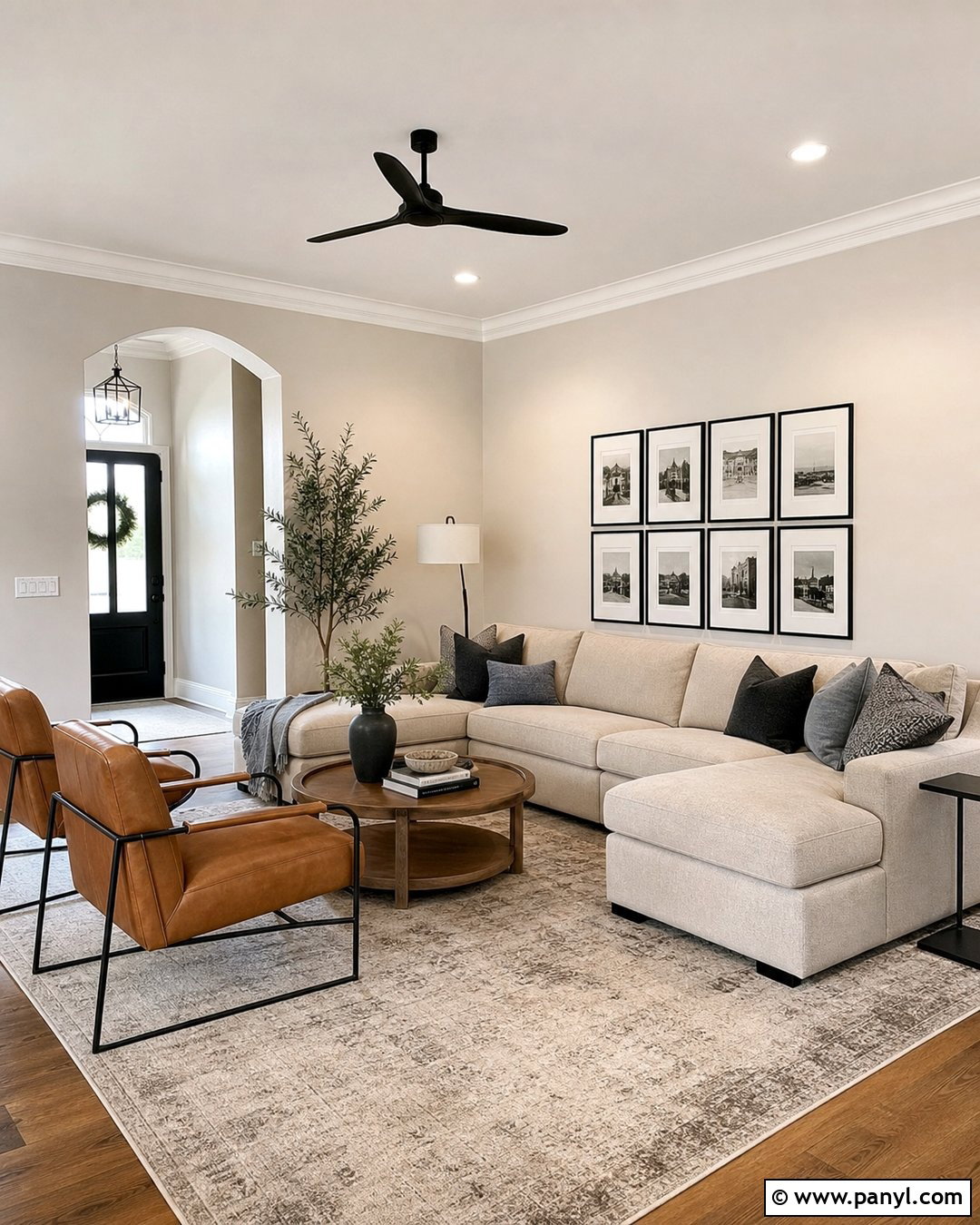
Soft greige combines the warmth of beige with the clean appearance of light gray. It works especially well in living rooms that need a neutral backdrop but still feel welcoming. Build the space around a cream sectional, medium-tone oak flooring, and a large ivory-and-taupe rug. Black-framed artwork and a slim black floor lamp provide definition without making the room feel harsh. Add camel leather chairs to strengthen the warm undertones in the walls. Pillows in charcoal, cream, and faded blue create a balanced palette. Use off-white curtains rather than bright white fabric, which may exaggerate the gray undertone. A round wood coffee table softens the straight furniture lines. The finished room looks polished, comfortable, and easy to update through different seasons.
3. Cream Living Room Wall Color
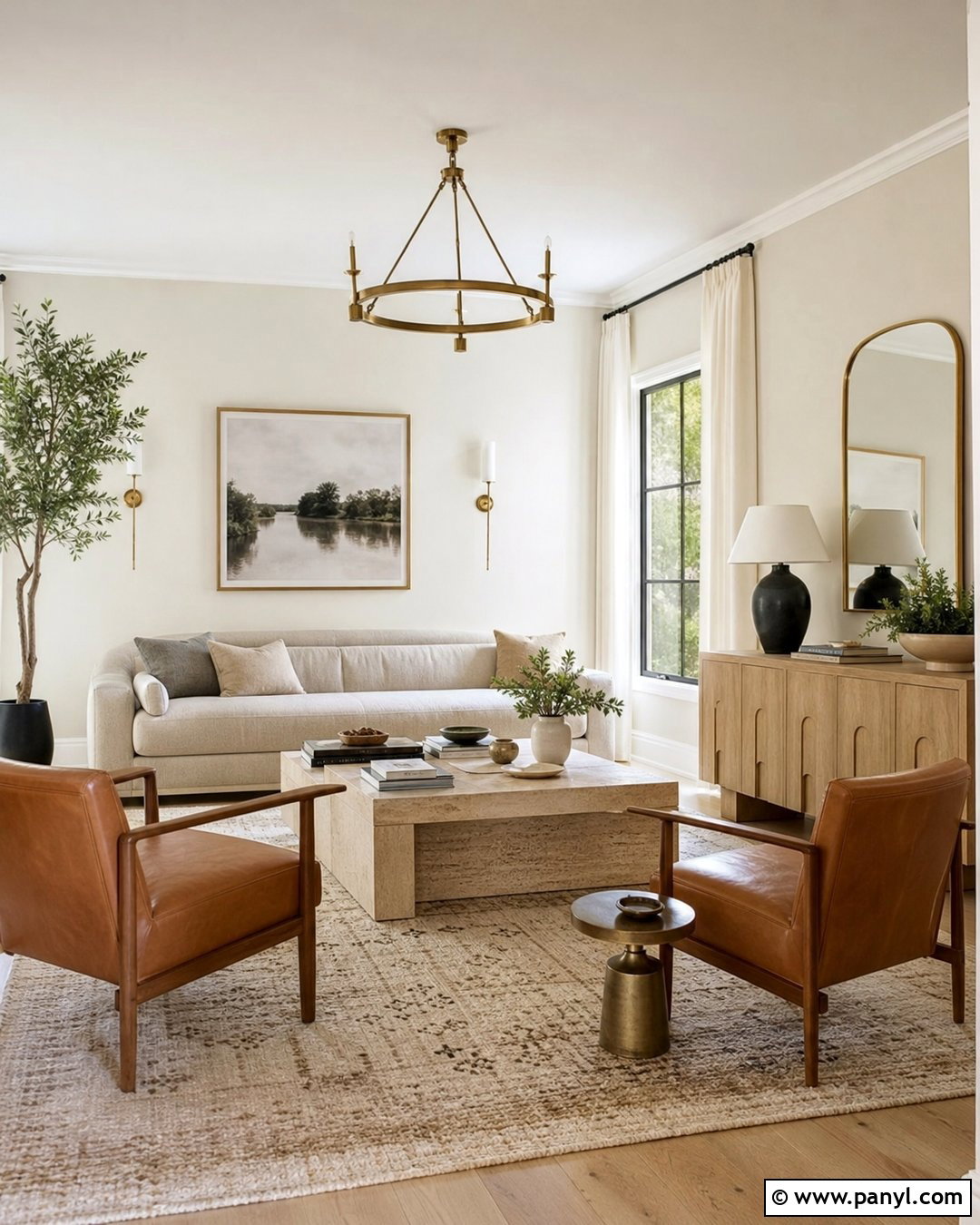
Cream walls give a living room a soft glow, particularly when the space receives warm afternoon sunlight. Keep the look fresh by combining creamy paint with crisp architectural details and natural materials. Choose a light beige sofa with clean lines, then add two cognac leather armchairs for contrast. A pale oak console and travertine coffee table continue the warm palette without creating too much sameness. Use ivory curtains with a subtle woven texture and an area rug containing cream, tan, and muted brown. Deep green plants prevent the room from appearing washed out. Antique brass lighting adds a traditional note, while simple black frames keep the decor current. The result is a layered neutral room that feels sunny, inviting, and thoughtfully finished rather than plain.
4. Light Taupe Living Room Wall Color
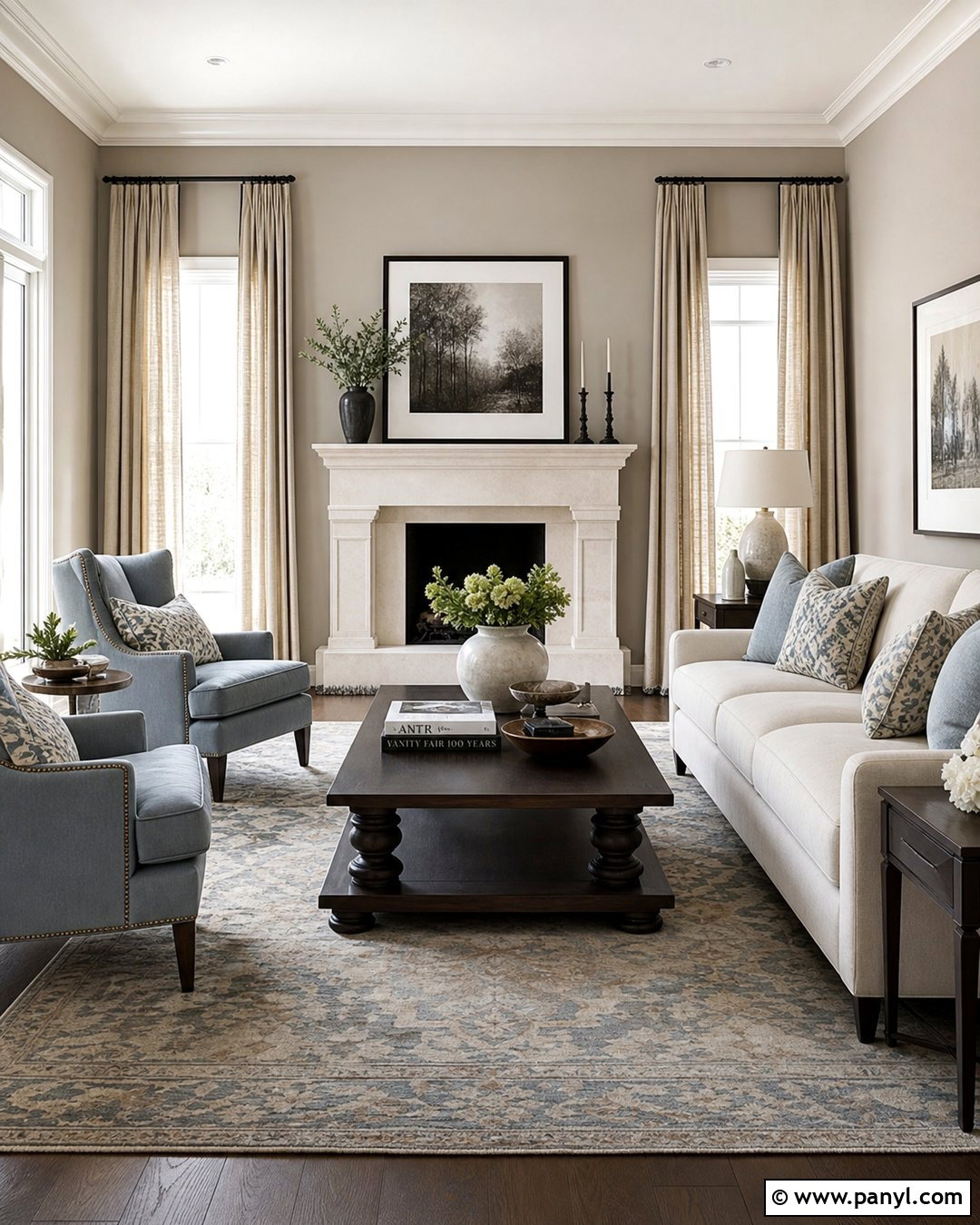
Light taupe walls offer more depth than beige while remaining neutral enough for everyday living. This color works beautifully with both warm wood and cooler stone finishes. Pair the walls with a soft ivory sofa, walnut side tables, and a substantial limestone fireplace surround. Use a patterned rug that blends taupe, faded blue, cream, and touches of brown. Dusty blue armchairs introduce quiet color without competing with the walls. Hang long natural linen curtains close to the ceiling to make the room feel taller. Matte black curtain rods and picture frames add crisp edges. Finish the arrangement with ceramic lamps, wool pillows, and a dark wood coffee table. This complete living room feels grounded and elegant, yet comfortable enough for family gatherings and casual evenings.
5. Mushroom Living Room Wall Color
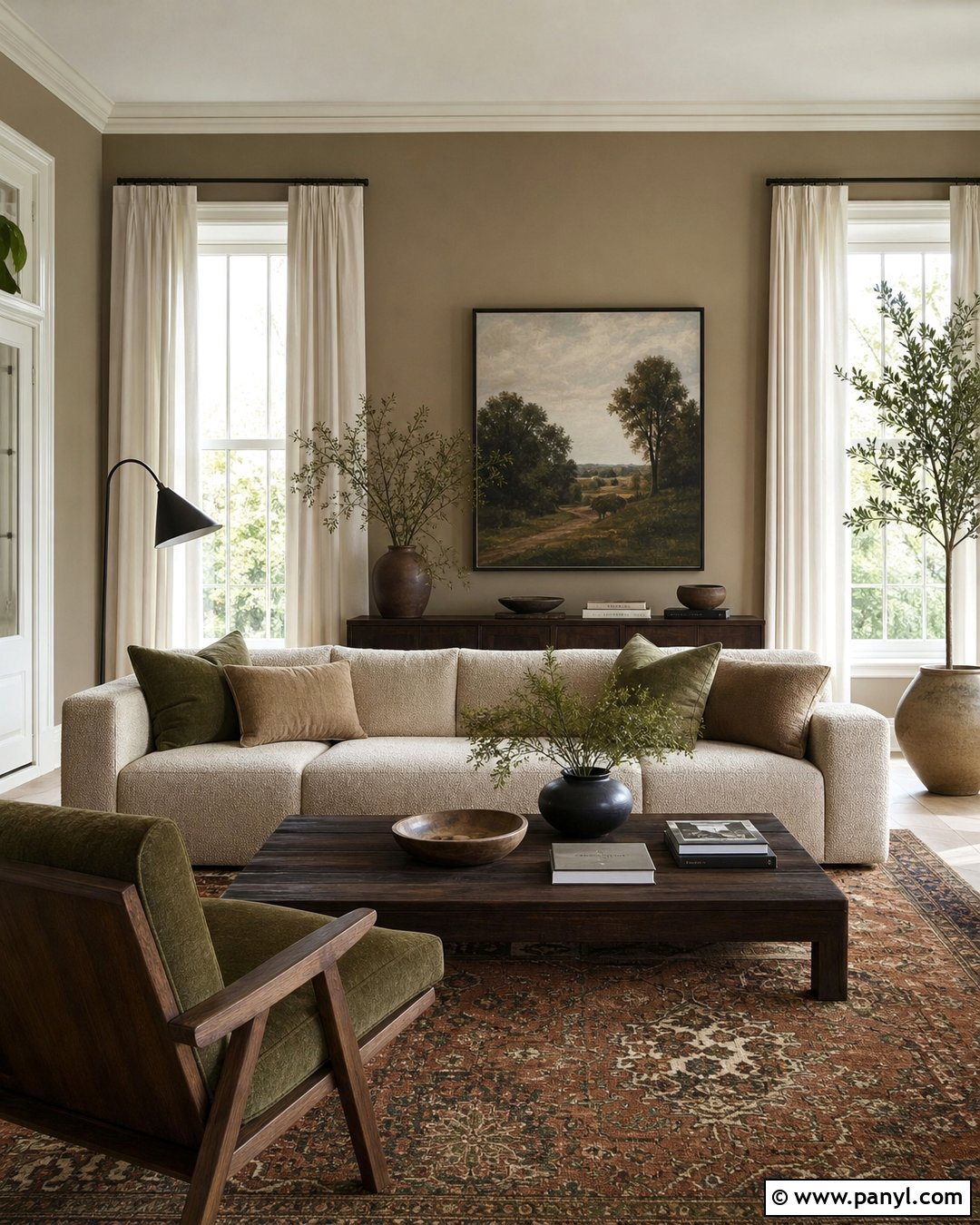
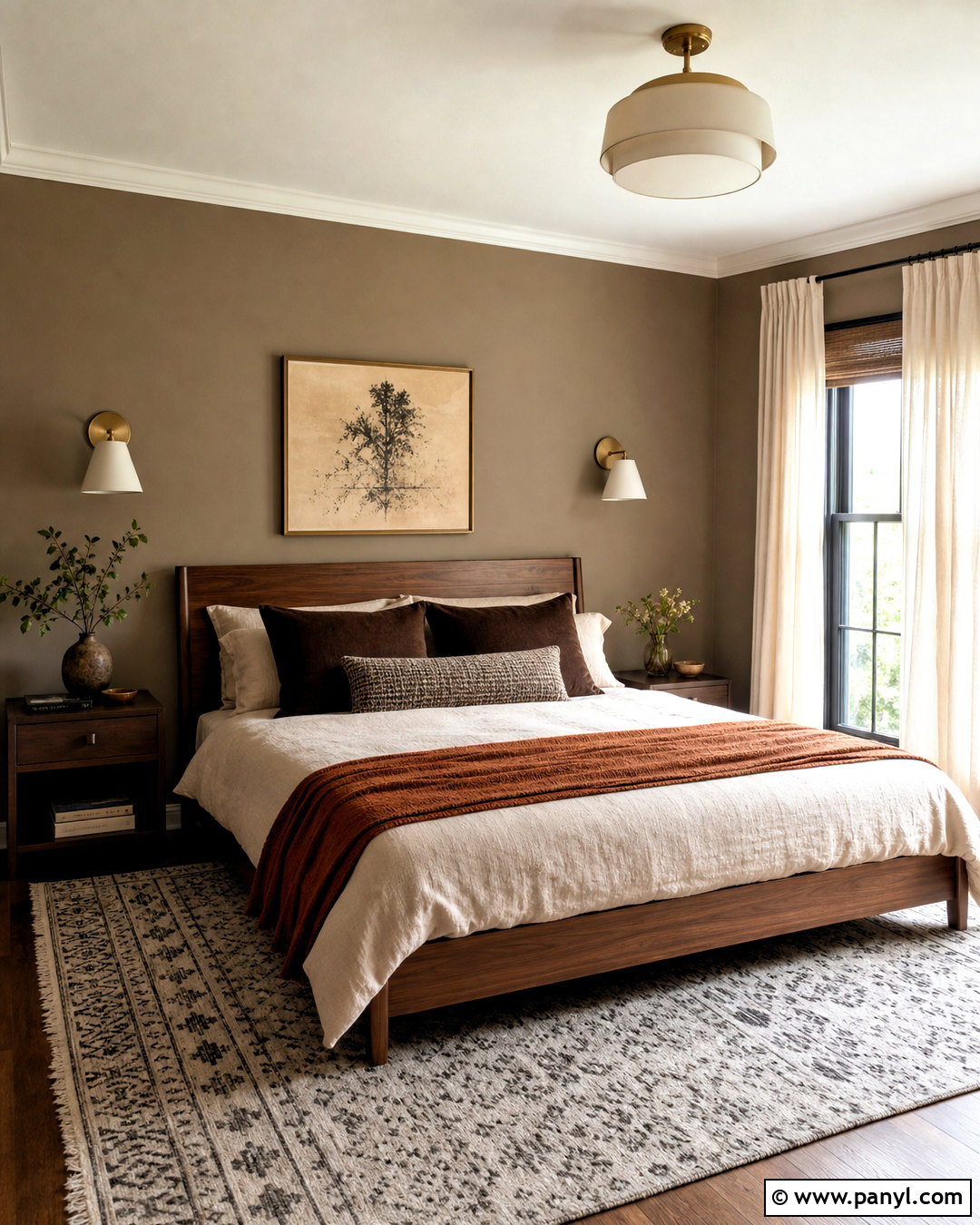
Mushroom paint has earthy gray-brown undertones that make a living room feel warm, calm, and connected to nature. Use it across every wall rather than limiting it to one feature area. Pair the color with an oatmeal bouclé sofa and dark walnut furniture for clear contrast. A vintage-style rug in faded rust, cream, olive, and brown will add pattern without overwhelming the restrained palette. Choose off-white drapes and paint the trim a soft cream to keep the edges gentle. A black metal floor lamp and dark-framed landscape artwork provide definition. Add pottery, woven trays, and olive-colored pillows to reinforce the organic mood. This palette is particularly effective in transitional rooms where modern furniture needs to feel softer and traditional architecture needs a cleaner update.
6. Pale Beige Living Room Wall Color
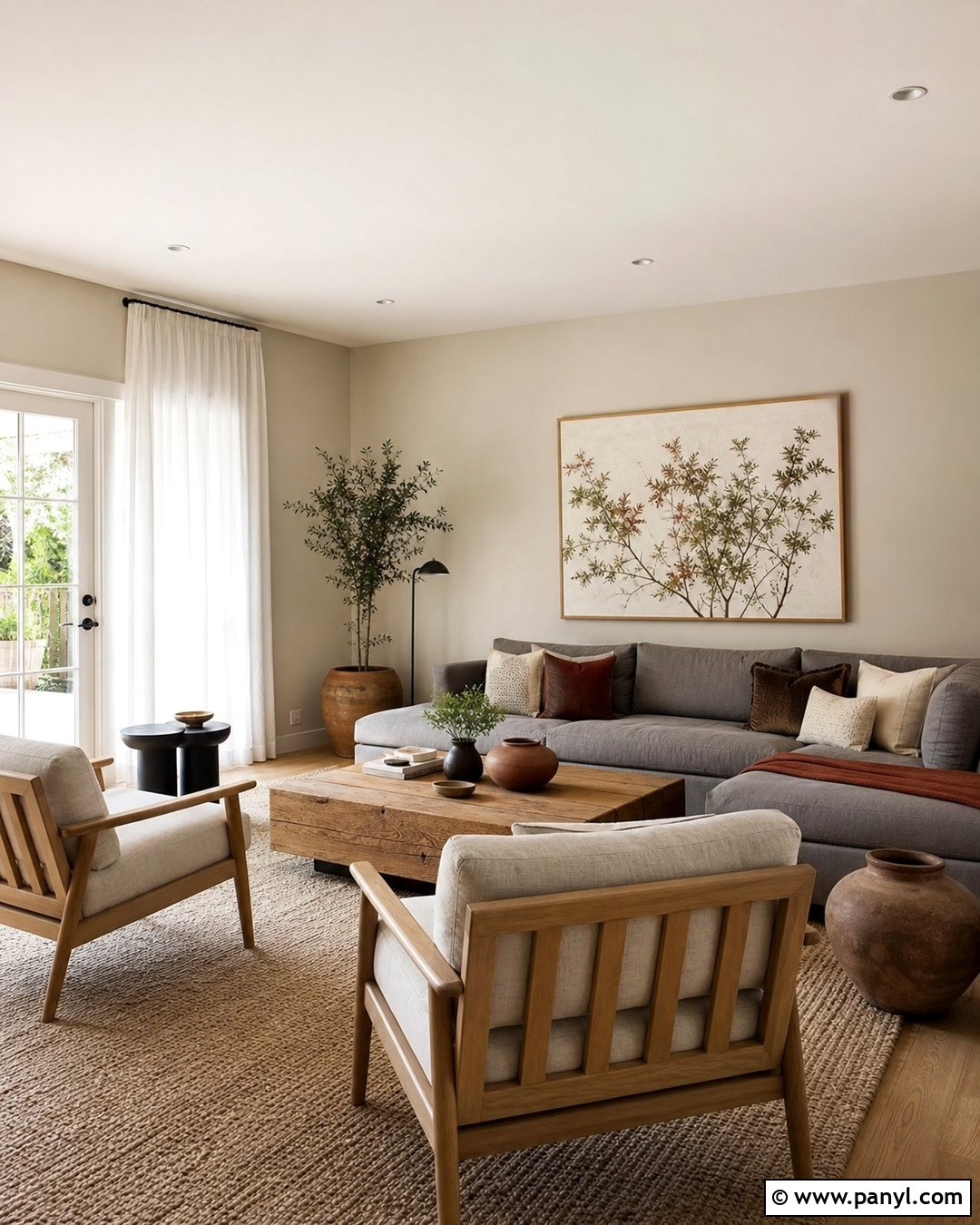
Pale beige walls can make an open living room feel bright, comfortable, and unified. The key is using enough texture and contrast so the neutral palette does not appear flat. Start with a warm gray sectional and a pair of light oak lounge chairs upholstered in ivory fabric. Place them around a chunky wood coffee table over a woven cream rug. Add floor-length white linen curtains to filter sunlight and emphasize the airy character of the paint. Terracotta pottery, camel pillows, and a rust-colored throw introduce warmth in small amounts. Use oversized botanical artwork with muted green details above the sofa. Matte black lighting and curtain hardware sharpen the scheme. The completed space feels uncomplicated, family-friendly, and more forgiving than an all-white living room.
7. Warm Gray Living Room Wall Color
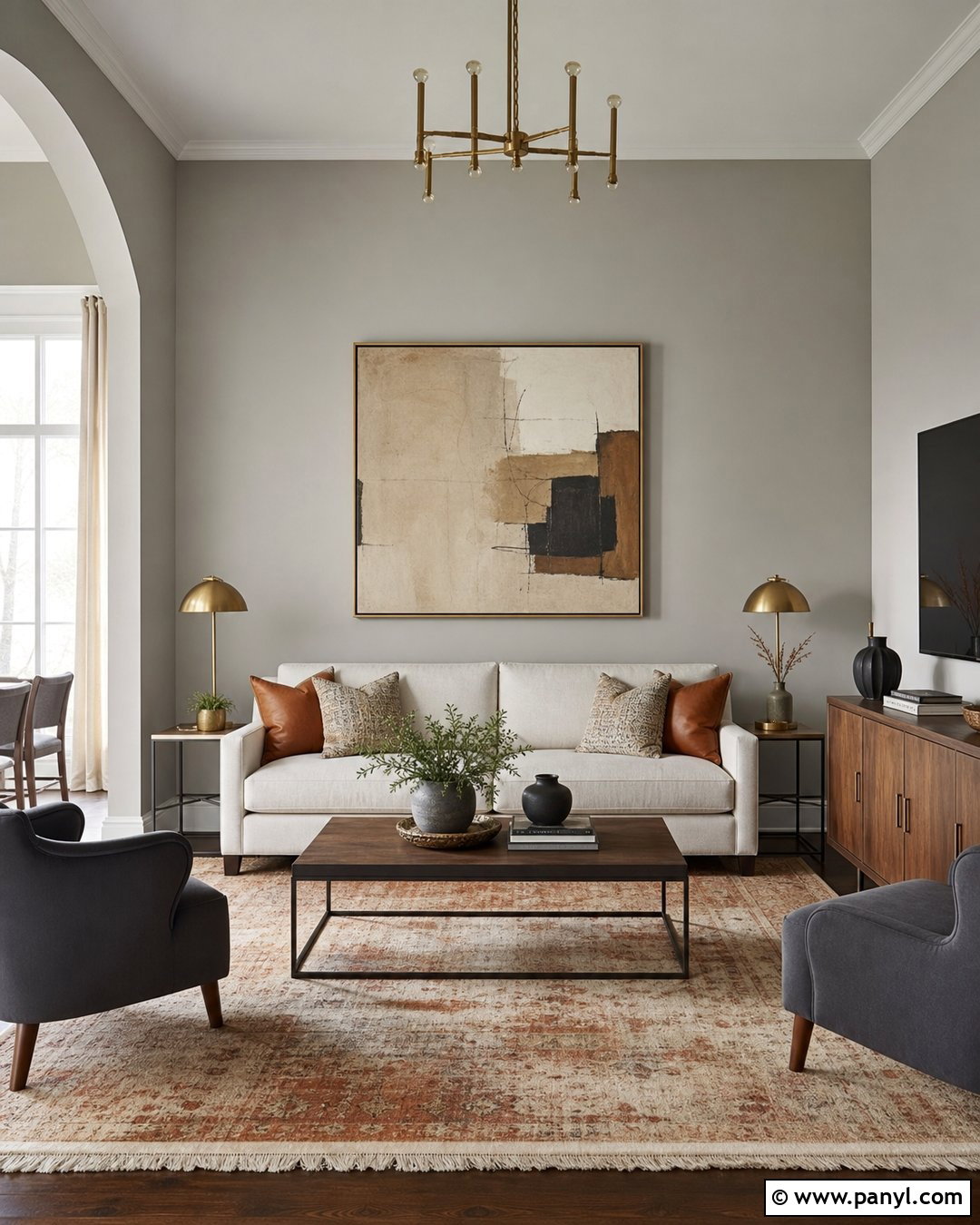
Warm gray walls provide a tailored background for living rooms with stone fireplaces, dark flooring, or contemporary furniture. Select a gray with visible beige undertones to avoid a cold appearance. Pair it with a cream sofa, charcoal accent chairs, and a walnut media console. A large rug in ivory, gray, and subtle rust will connect the light and dark elements. Introduce warmth through cognac leather pillows, brass table lamps, and natural wood accessories. White trim can create a crisp frame, but choose a soft white rather than a blue-based shade. Hang abstract artwork containing black, sand, and clay tones. Layer table lamps with ceiling lighting so the walls remain inviting at night. The final design looks modern and structured without feeling severe or overly monochromatic.
8. Powder Blue Living Room Wall Color
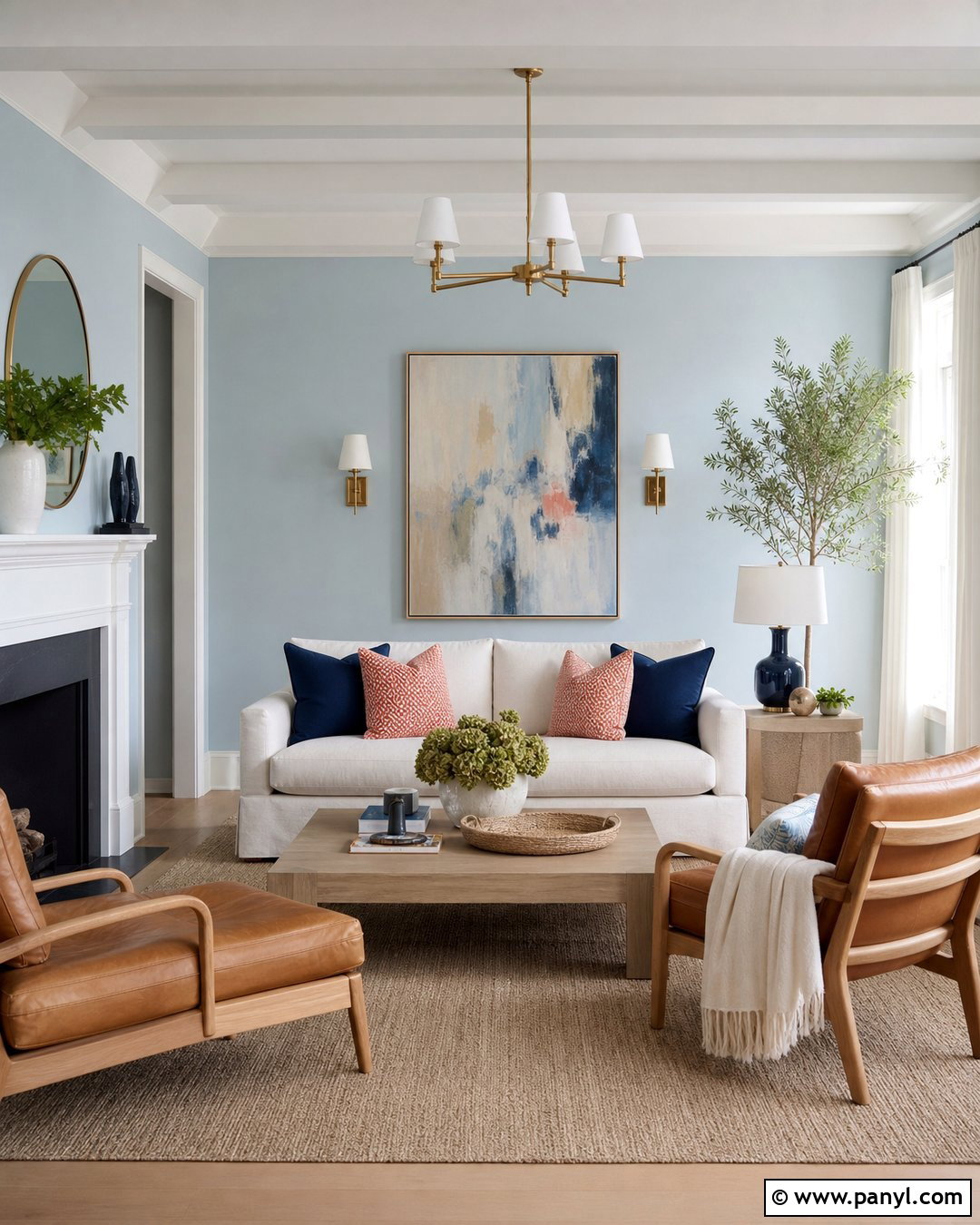
Powder blue walls bring an airy, peaceful quality to a living room while providing more personality than a standard neutral. Pair this gentle color with a warm white sofa, bleached oak furniture, and a pale natural-fiber rug. A pair of camel leather chairs adds needed warmth and keeps the scheme from feeling overly cool. Choose white linen curtains that allow the blue walls to remain visible around the windows. Use pillows in navy, cream, and muted coral for controlled contrast. Brass sconces or lamps complement the color more softly than chrome fixtures. Coastal artwork can work, but abstract prints and traditional landscapes prevent the room from becoming overly themed. The completed space feels fresh, light, and suitable for small rooms or homes with abundant natural sunlight.
9. Sky Blue Living Room Wall Color
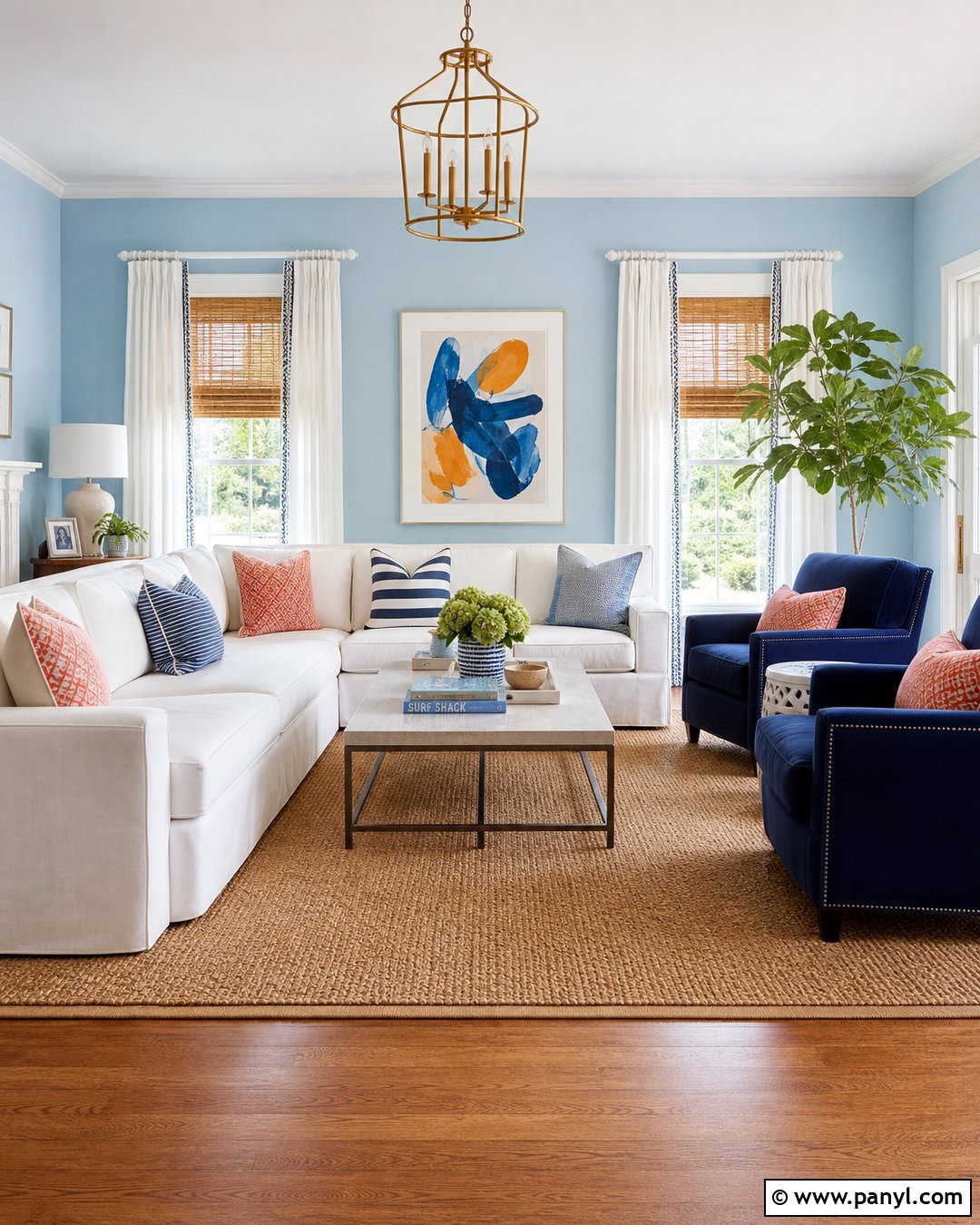
Clear sky blue walls can make a living room feel cheerful and visually spacious. Ground the brighter color with substantial furniture and warm natural finishes. A tailored white sectional creates a clean centerpiece, while medium oak flooring and a woven jute rug keep the room relaxed. Add a pair of navy armchairs to build depth within the blue palette. Coral pillows, striped textiles, and warm wood tables introduce lively contrast. Use simple white trim and ceiling paint to frame the wall color. Bamboo shades layered beneath white curtains add texture and control strong sunlight. A large abstract painting containing blue, ochre, and cream can tie the full scheme together. This living room looks upbeat and polished without relying on obvious coastal decorations or overly playful accessories.
10. Dusty Blue Living Room Wall Color
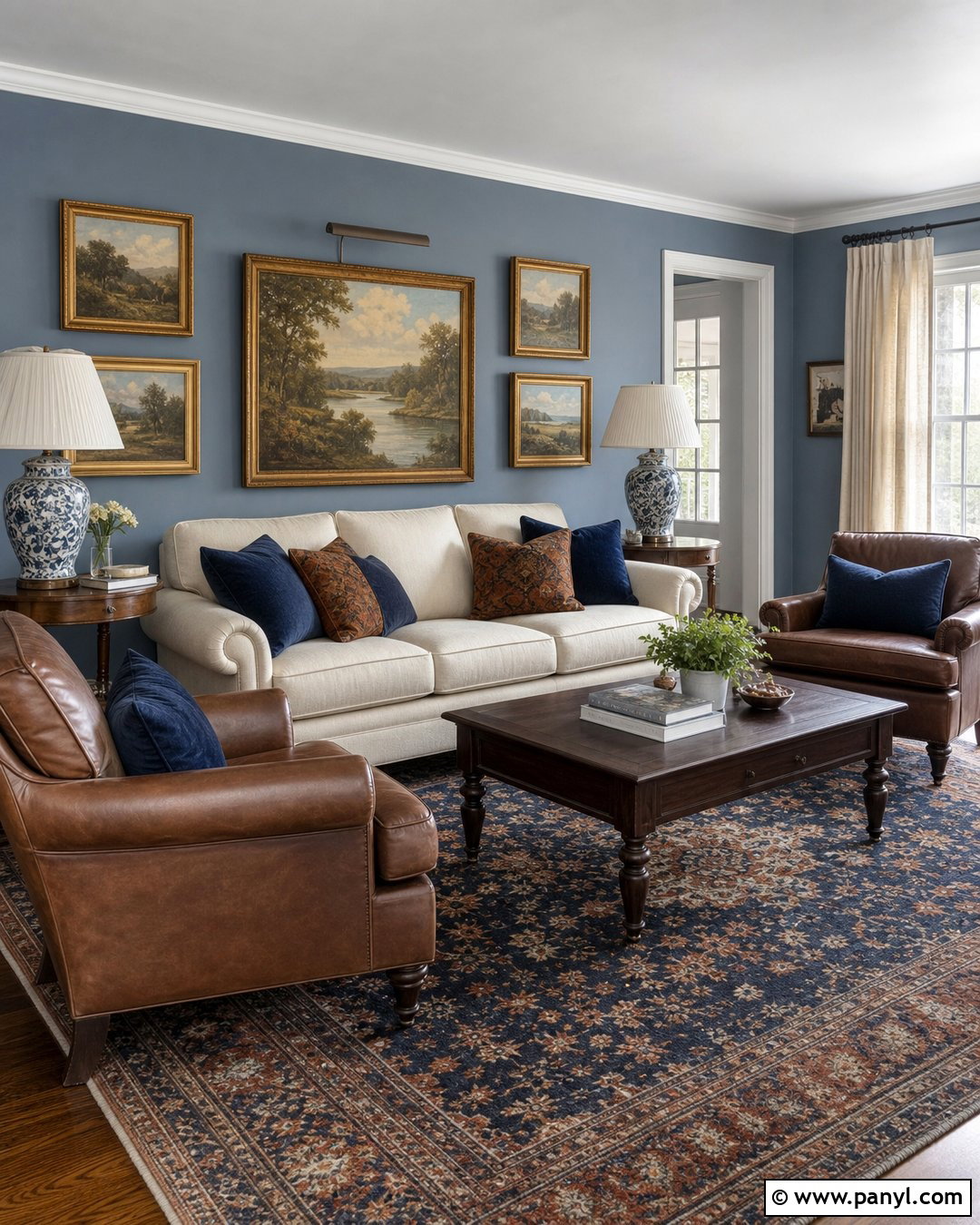
Dusty blue walls have a muted gray undertone that feels calm, mature, and easy to coordinate with traditional furnishings. Create a comfortable arrangement using a cream rolled-arm sofa, two brown leather chairs, and a dark wood coffee table. Choose a vintage rug with faded navy, rust, beige, and blue details to connect the furniture with the wall color. Off-white trim provides a gentle border, while natural linen curtains maintain the subdued mood. Hang framed landscapes or botanical prints in aged brass frames. Add ceramic table lamps, navy pillows, and a rust-colored throw for layered color. Warm bulbs are important in the evening because they prevent dusty blue from turning too cool. The finished room feels timeless, collected, and appropriate for both historic and newer homes.
11. Slate Blue Living Room Wall Color
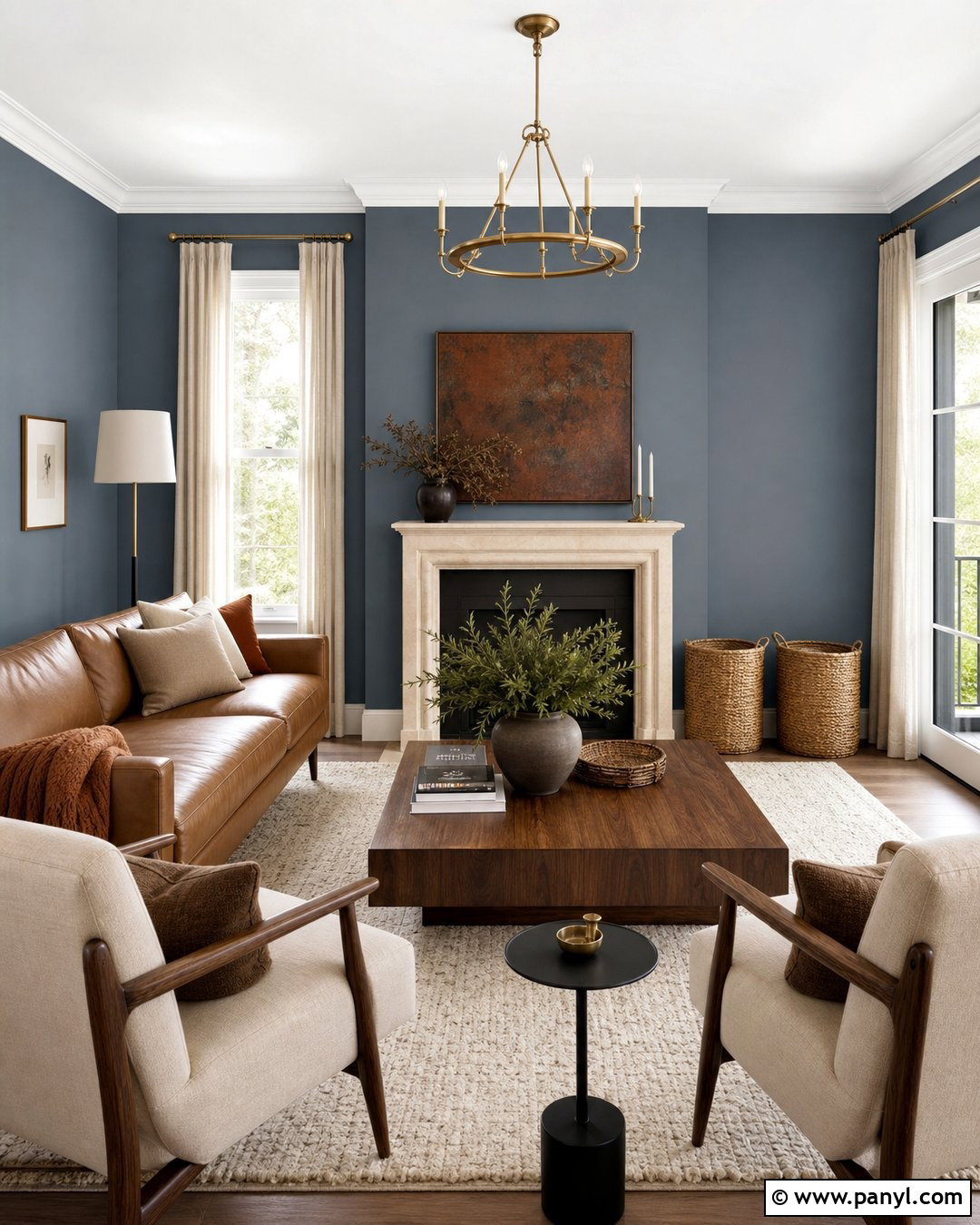
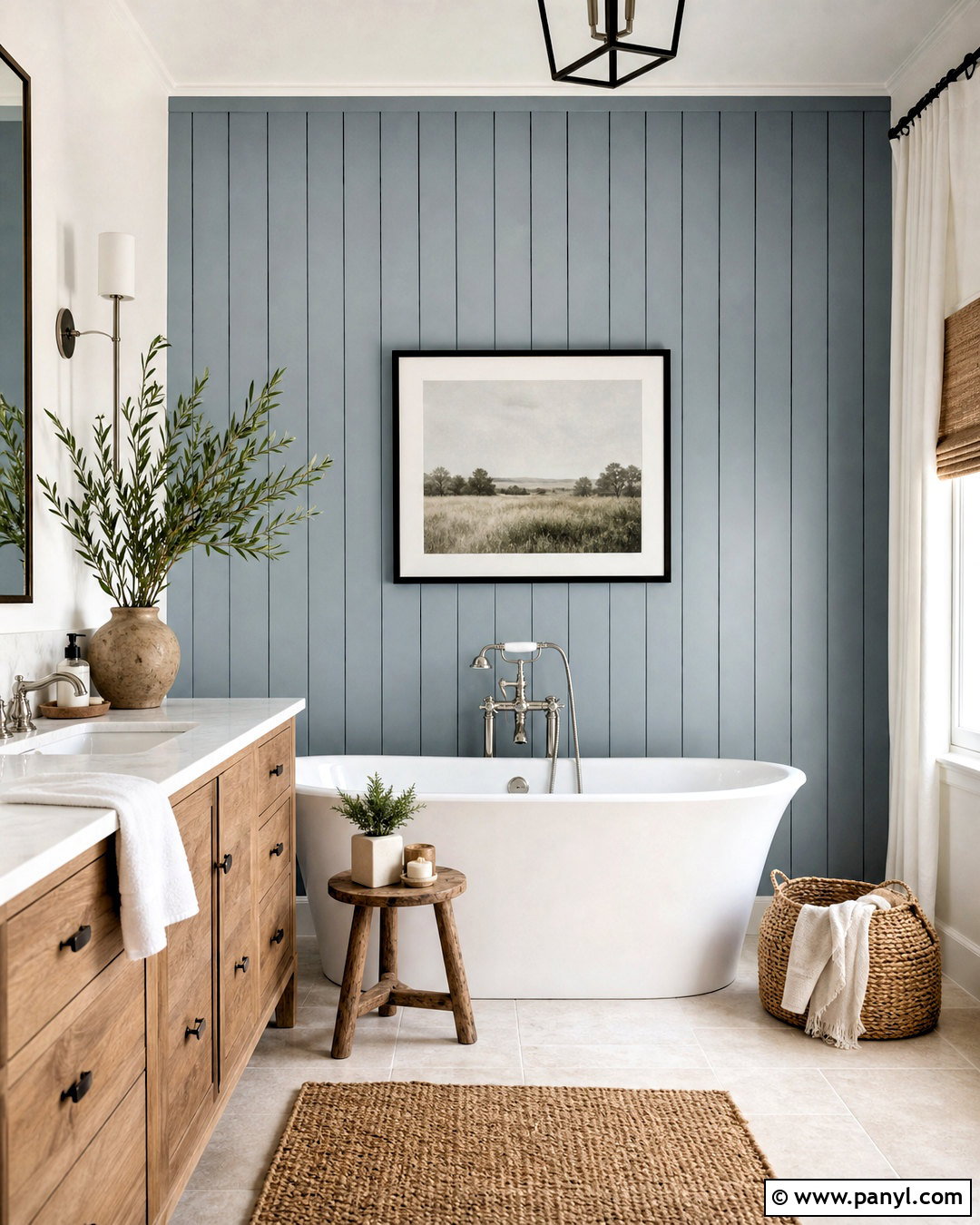
Slate blue walls create a stronger statement than pale blue but remain quieter than navy. This balanced shade works well in a living room with plenty of natural light and warm flooring. Pair it with a camel leather sofa, cream lounge chairs, and a walnut coffee table. Use an ivory wool rug to brighten the lower half of the room. Floor-length beige curtains soften the blue around large windows, while brass curtain rods add a warm metallic accent. Select artwork with rust, cream, and muted blue details to connect the palette. A limestone fireplace or pale wood media cabinet will stand out cleanly against the deeper walls. Finish with woven baskets and patterned pillows. The room will feel cozy and colorful without becoming dark, formal, or difficult to decorate.
12. Muted Teal Living Room Wall Color
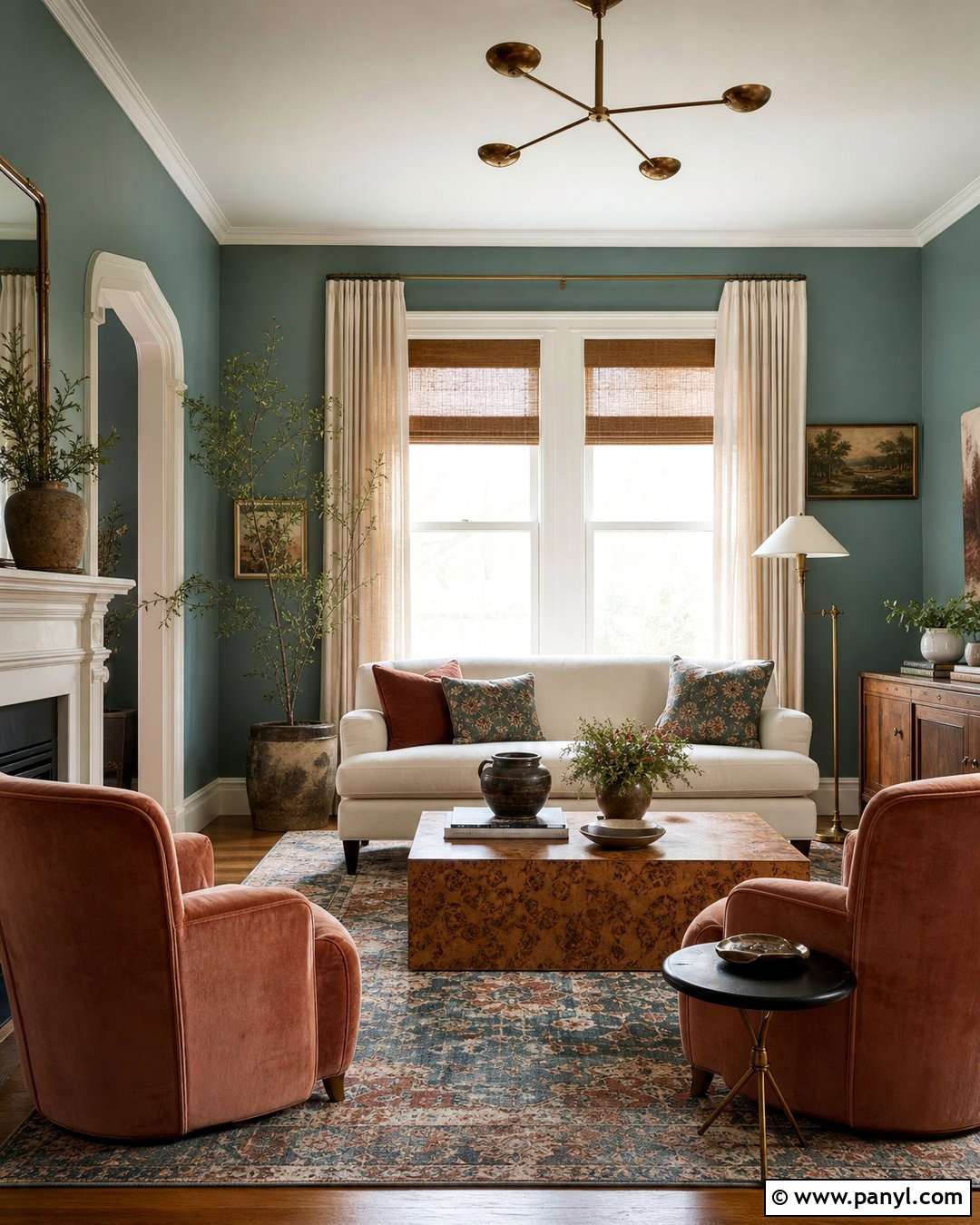
Muted teal walls blend blue and green, creating a living room that feels colorful, calming, and sophisticated. Choose a grayed teal rather than a highly saturated turquoise. Pair it with a cream sofa and two dusty rose accent chairs for a soft complementary contrast. A burl wood or walnut coffee table adds natural warmth, while a patterned vintage rug combines teal, pink, rust, and beige. Use warm white trim to keep the room from feeling too cool. Natural linen curtains and woven shades provide texture around the windows. Add aged brass lighting, sculptural pottery, and framed artwork with plenty of negative space. The complete look feels expressive but still livable. It is a strong choice for anyone who wants noticeable color without using an extremely dark wall shade.
13. Sage Green Living Room Wall Color
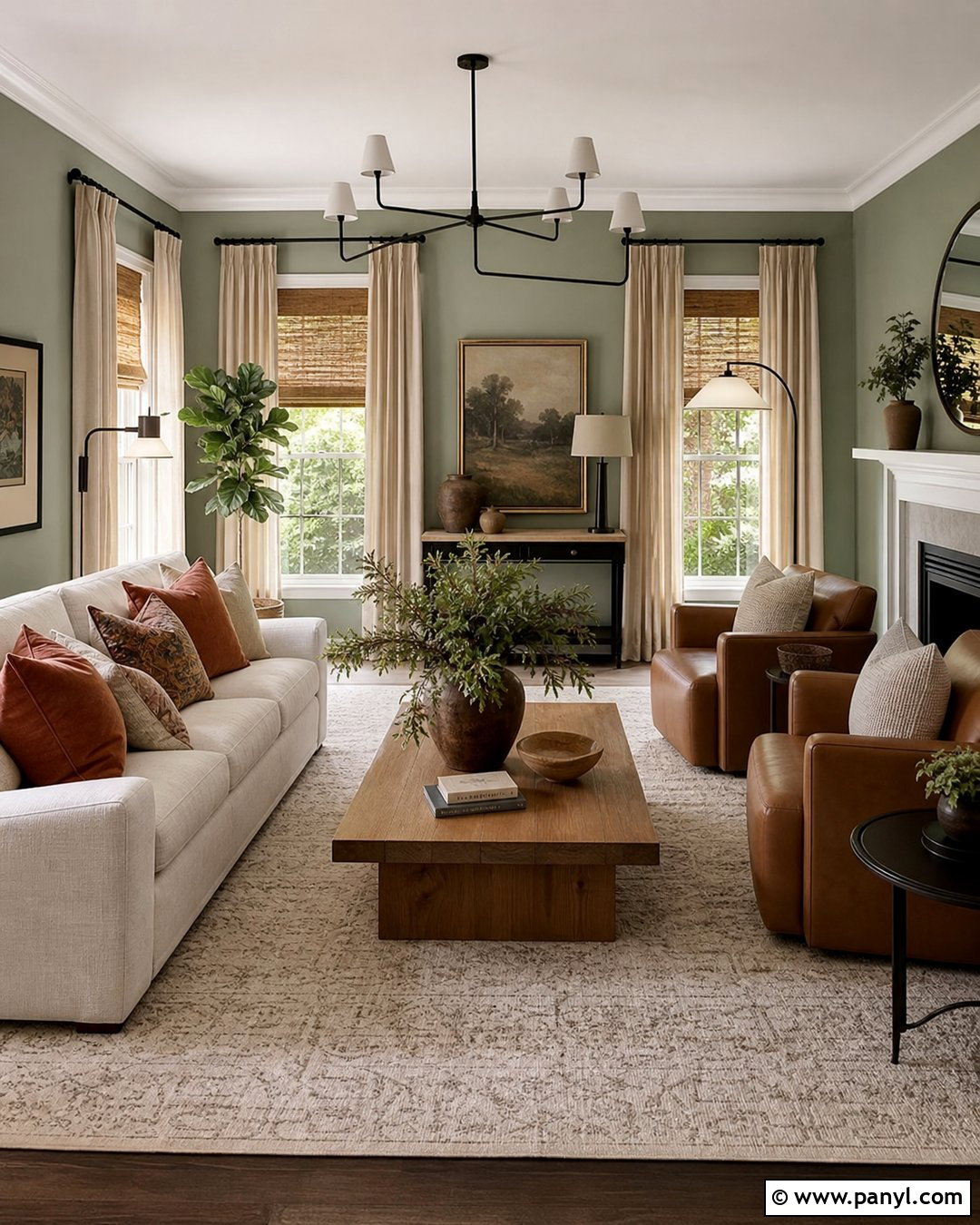
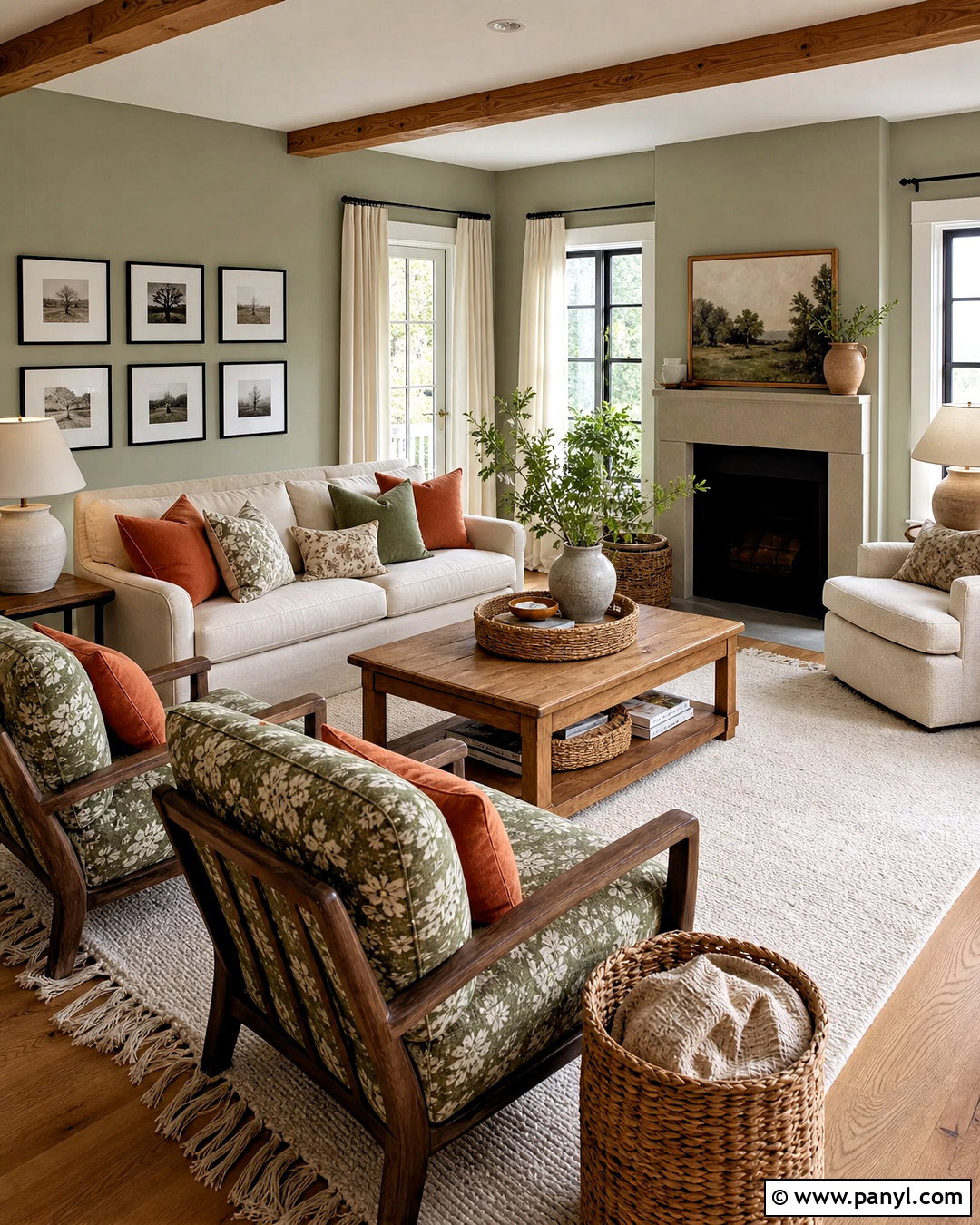
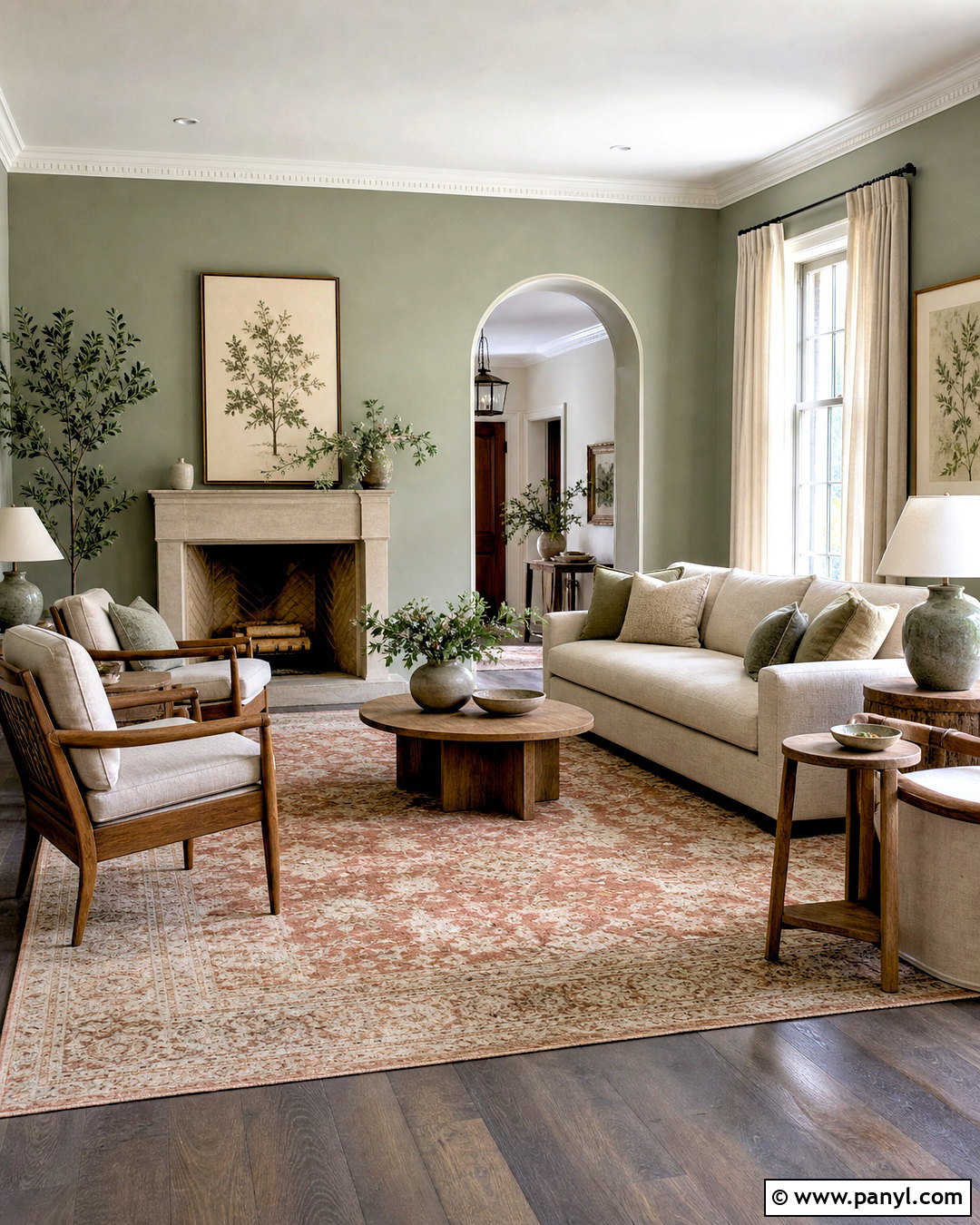
Sage green walls bring a gentle botanical character to a living room and coordinate easily with common wood tones. Create a relaxed design with an ivory linen sofa, oak coffee table, and two tan leather chairs. Layer a cream rug with a subtle green or brown pattern beneath the seating arrangement. Choose natural linen curtains and woven shades to complement the organic palette. Black metal lighting provides enough contrast to keep the room from looking overly soft. Add pillows in olive, rust, and cream, then display pottery and leafy plants in restrained amounts. Warm white trim will make the green appear clearer and fresher. This complete scheme works well in farmhouse, traditional, and modern rooms because sage behaves like a neutral while still adding visible color and personality.
14. Olive Green Living Room Wall Color
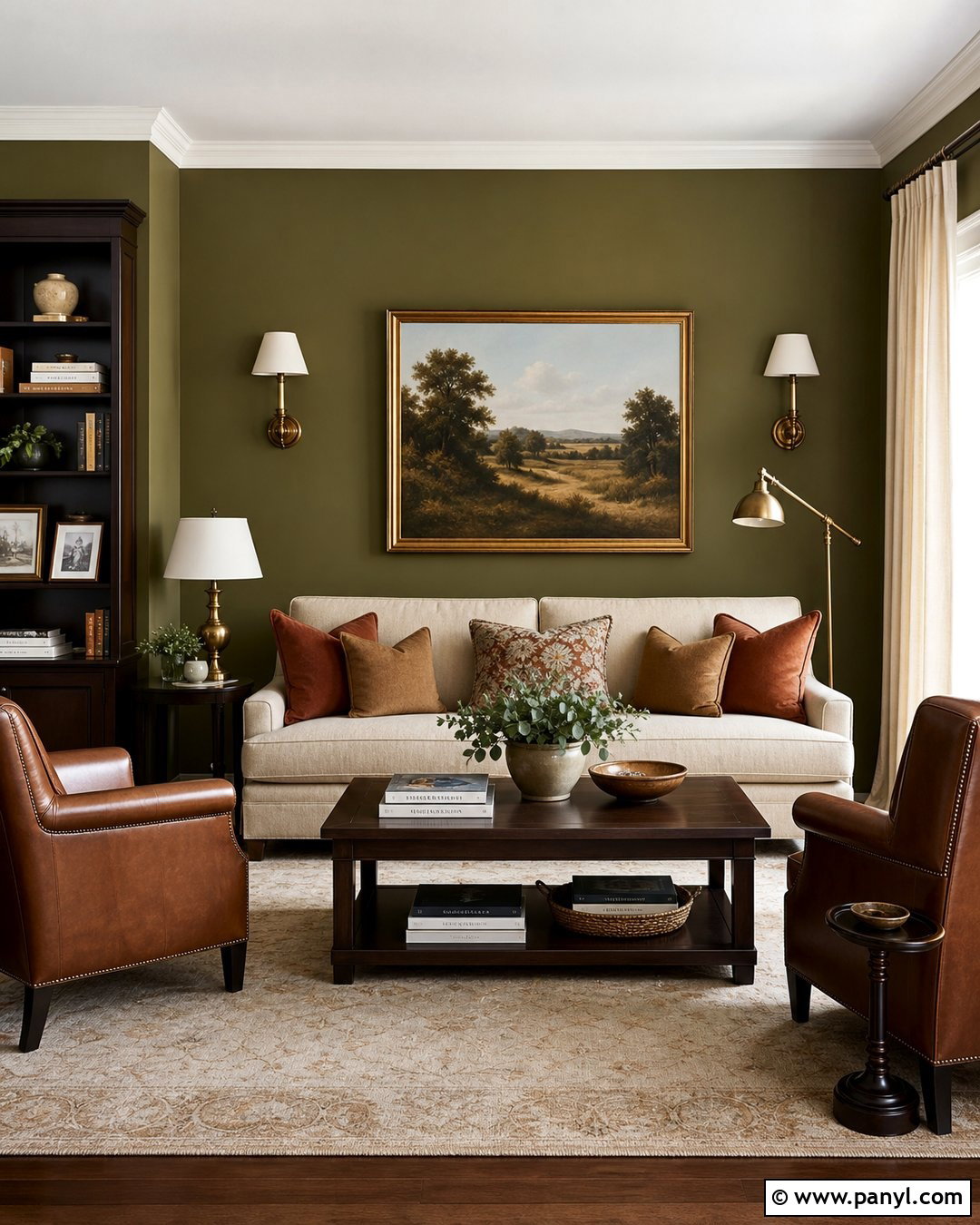
Olive green walls create an earthy and enveloping living room with more depth than lighter botanical shades. Balance the richness with an oatmeal sofa, cream curtains, and a pale wool rug. Dark walnut furniture reinforces the sophisticated mood, while cognac leather chairs bring out the warm undertones in the paint. Use antique brass lamps and picture frames instead of bright silver finishes. Artwork featuring landscapes, abstract shapes, or aged botanical studies will feel natural against the green. Add rust, camel, and deep brown pillows for a layered autumnal palette that works throughout the year. If the room is small, paint the trim olive as well to reduce visual breaks. The finished space feels grounded, comfortable, and thoughtfully designed rather than heavy or traditionally formal.
15. Eucalyptus Green Living Room Wall Color
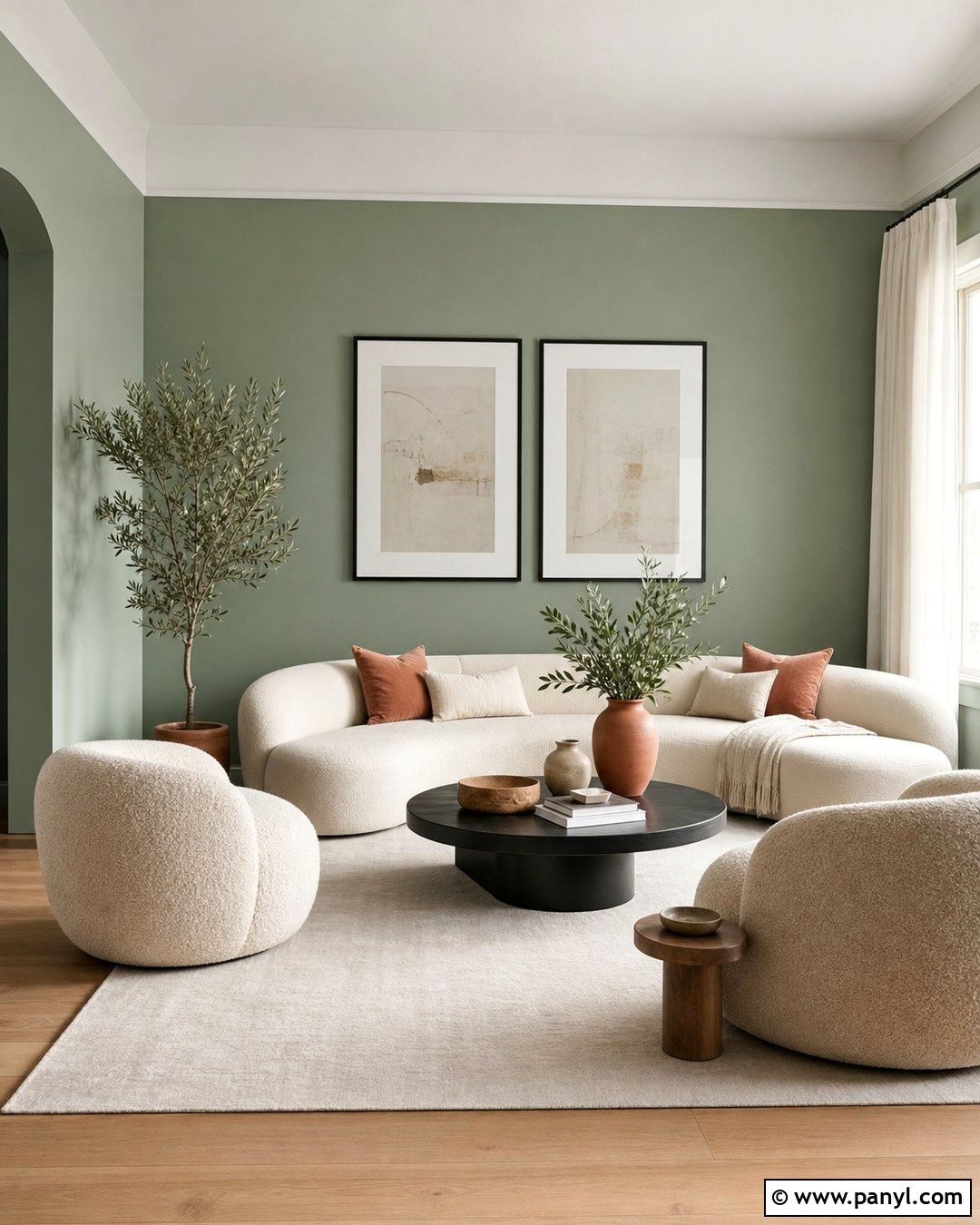
Eucalyptus green is softer and slightly cooler than sage, giving a living room a clean and restorative appearance. Pair the walls with light oak flooring, a warm white sectional, and curved accent chairs in textured beige fabric. A simple ivory rug will maintain the airy foundation. Add a slim black coffee table and black-framed artwork to create definition. Terracotta pots, pale wood accessories, and muted peach pillows introduce warmth without weakening the calm palette. Use white linen curtains to maximize daylight and emphasize the fresh green color. A few sculptural plants can support the natural look, but avoid filling every corner with foliage. The completed room feels modern, uncluttered, and quietly colorful, making it particularly effective in compact homes and casual contemporary interiors.
16. Forest Green Living Room Wall Color
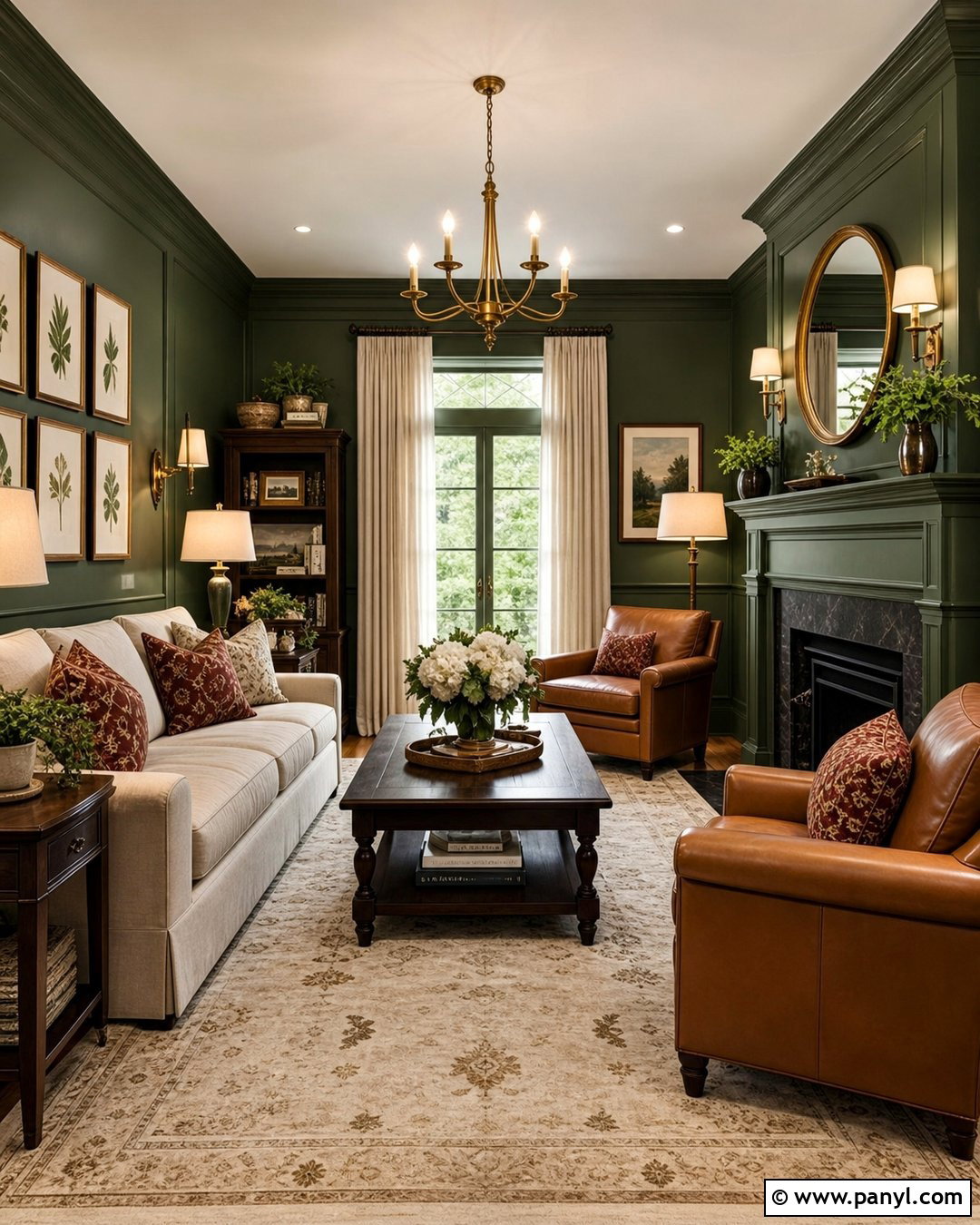
Forest green walls transform a bright living room into a dramatic, comfortable retreat. Use the color on every wall for a more intentional effect, then balance it with a cream sofa and a large ivory rug. A pair of caramel leather chairs will stand out beautifully against the deep green background. Choose dark wood tables, brass lamps, and warm white curtains to complete the rich palette. Add patterned pillows in burgundy, tan, green, and cream, but keep large furniture pieces relatively simple. Traditional landscape paintings and botanical artwork suit the color, while modern abstract pieces can produce a sharper look. Layer several light sources throughout the room. The finished space should feel enveloping and refined, not gloomy, with pale textiles providing brightness at seating level.
17. Dusty Rose Living Room Wall Color
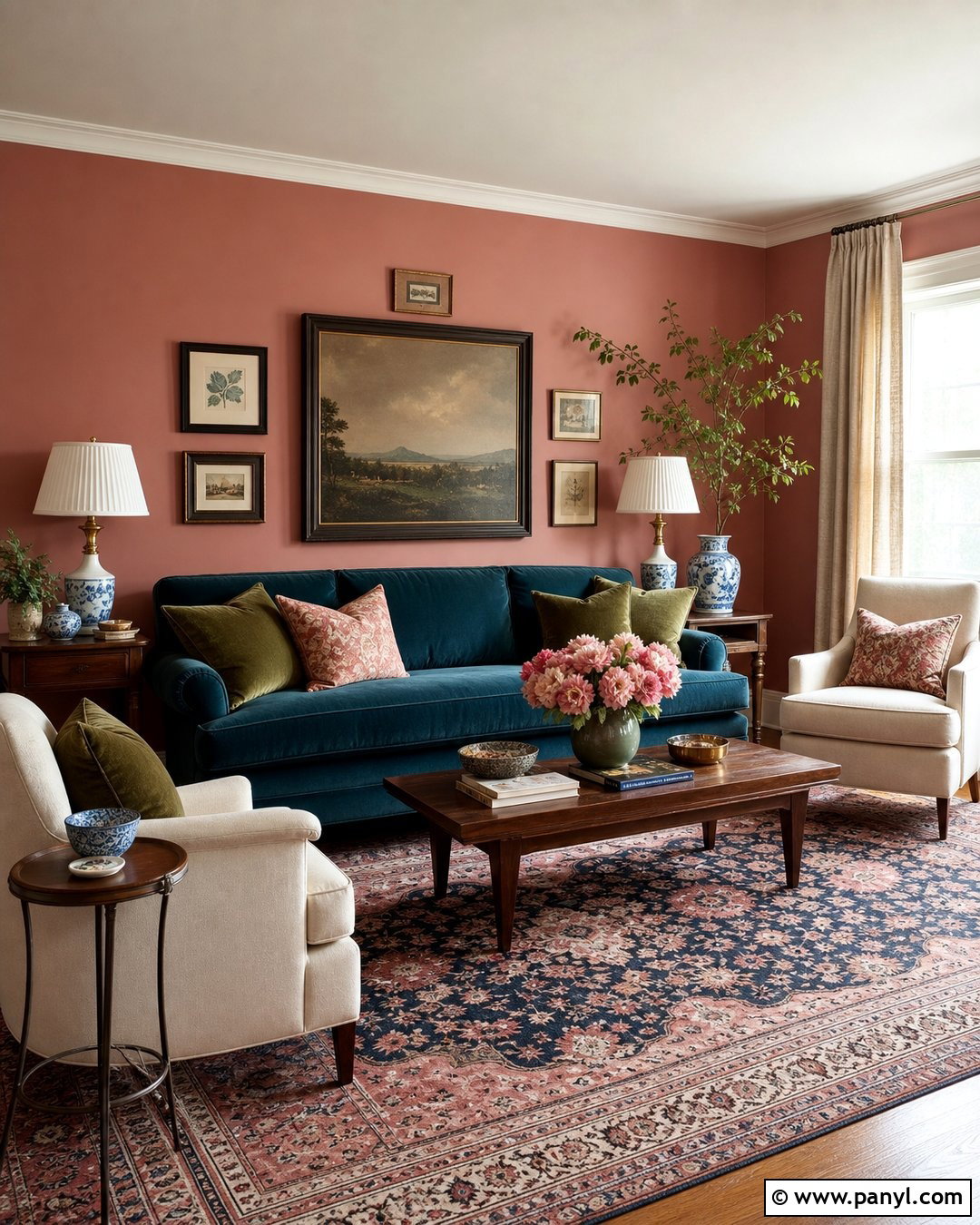
Dusty rose walls add warmth and personality while remaining subdued enough for an entire living room. Choose a pink with beige or gray undertones rather than a sugary pastel. Pair it with a deep teal sofa for confident contrast, then add cream accent chairs and a walnut coffee table. A vintage-inspired rug containing rose, navy, beige, and green will blend the colors naturally. Use warm white trim and flax linen curtains to soften the room’s edges. Brass table lamps, dark wood frames, and ceramic accessories give the pink a mature quality. Add olive or forest green pillows to keep the palette grounded. This complete room feels warm, collected, and creative, offering a colorful alternative to beige without becoming overly bright or limited to one decorating style.
18. Blush Pink Living Room Wall Color
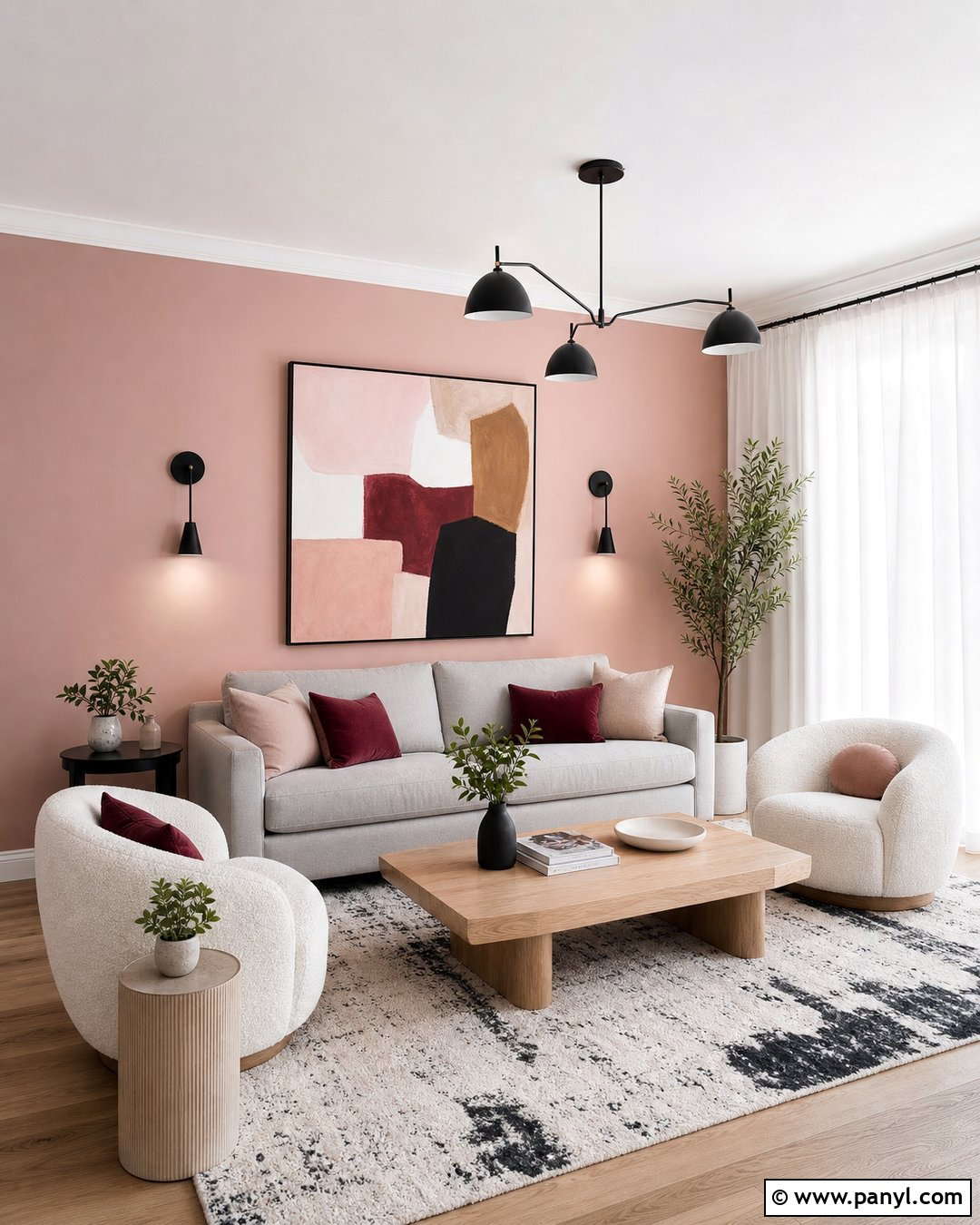
Blush pink walls can make a living room feel luminous and welcoming when the rest of the palette remains balanced. Combine the soft walls with a light gray sofa, ivory boucle chairs, and a pale oak coffee table. A cream rug with a subtle charcoal pattern will give the arrangement structure. Add burgundy pillows and a muted red throw for deeper tonal contrast. Matte black lighting, frames, and curtain rods prevent the room from appearing overly delicate. Use sheer white curtains to encourage daylight, which allows the blush shade to show its warmth. Abstract artwork featuring pink, tan, cream, and black can pull every element together. The final design feels fresh and contemporary, with enough dark detail to remain polished, practical, and visually interesting.
19. Terracotta Living Room Wall Color
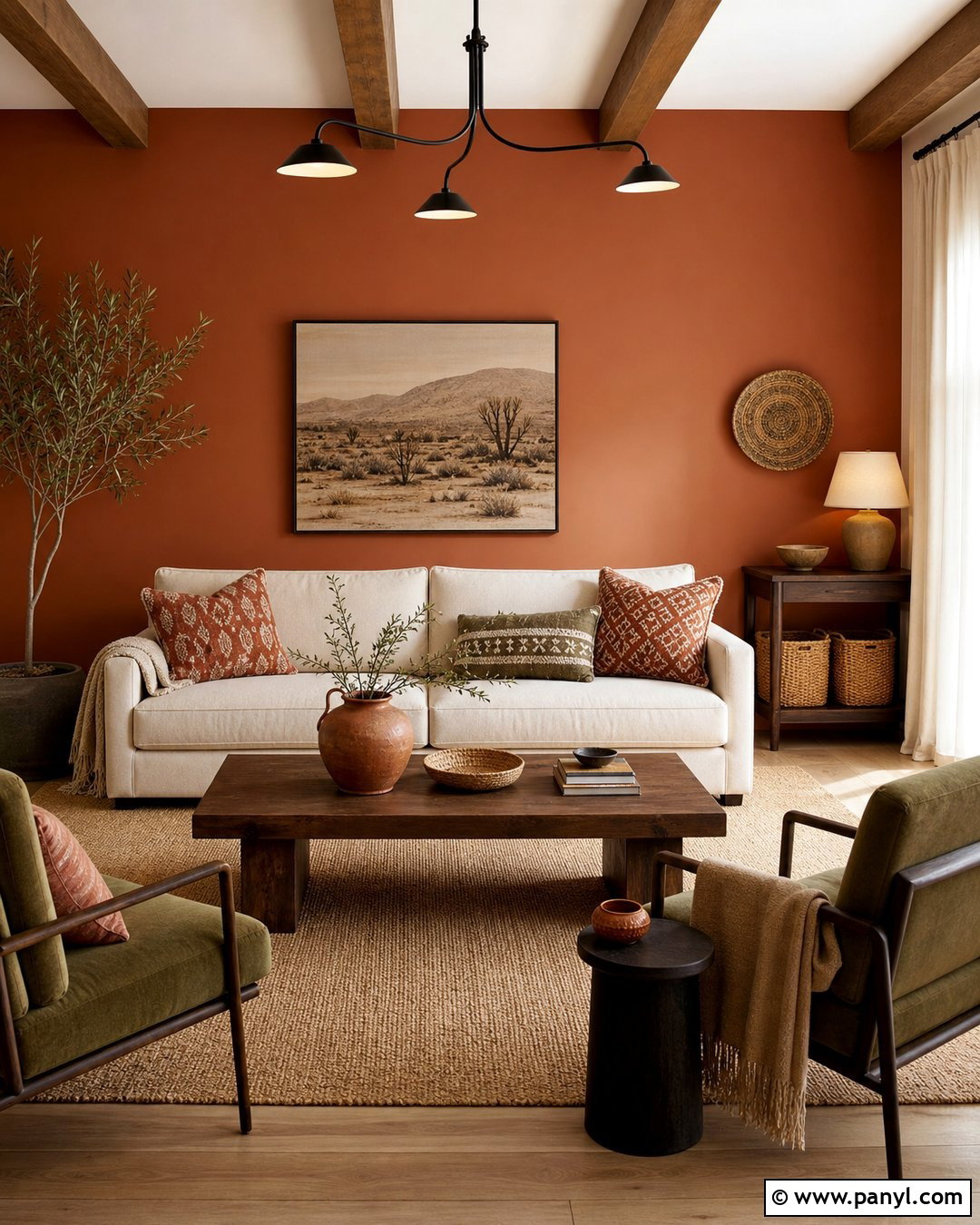
Terracotta walls create a sun-warmed living room filled with earthy character. Because the paint already has strong visual presence, balance it with a cream linen sofa and pale natural-fiber rug. Add dark walnut tables and two olive green chairs to create an organic, complementary palette. Off-white curtains will brighten the room while allowing the warm walls to remain dominant. Use black metal lighting and simple black frames for clean definition. Pillows in rust, tan, olive, and ivory can repeat the wall color in smaller doses. Handmade pottery and woven baskets fit naturally, but keep the arrangement edited to avoid a heavily themed look. The completed space feels cozy and grounded, working particularly well with desert modern, Mediterranean, bohemian, or relaxed contemporary interiors.
20. Soft Clay Living Room Wall Color
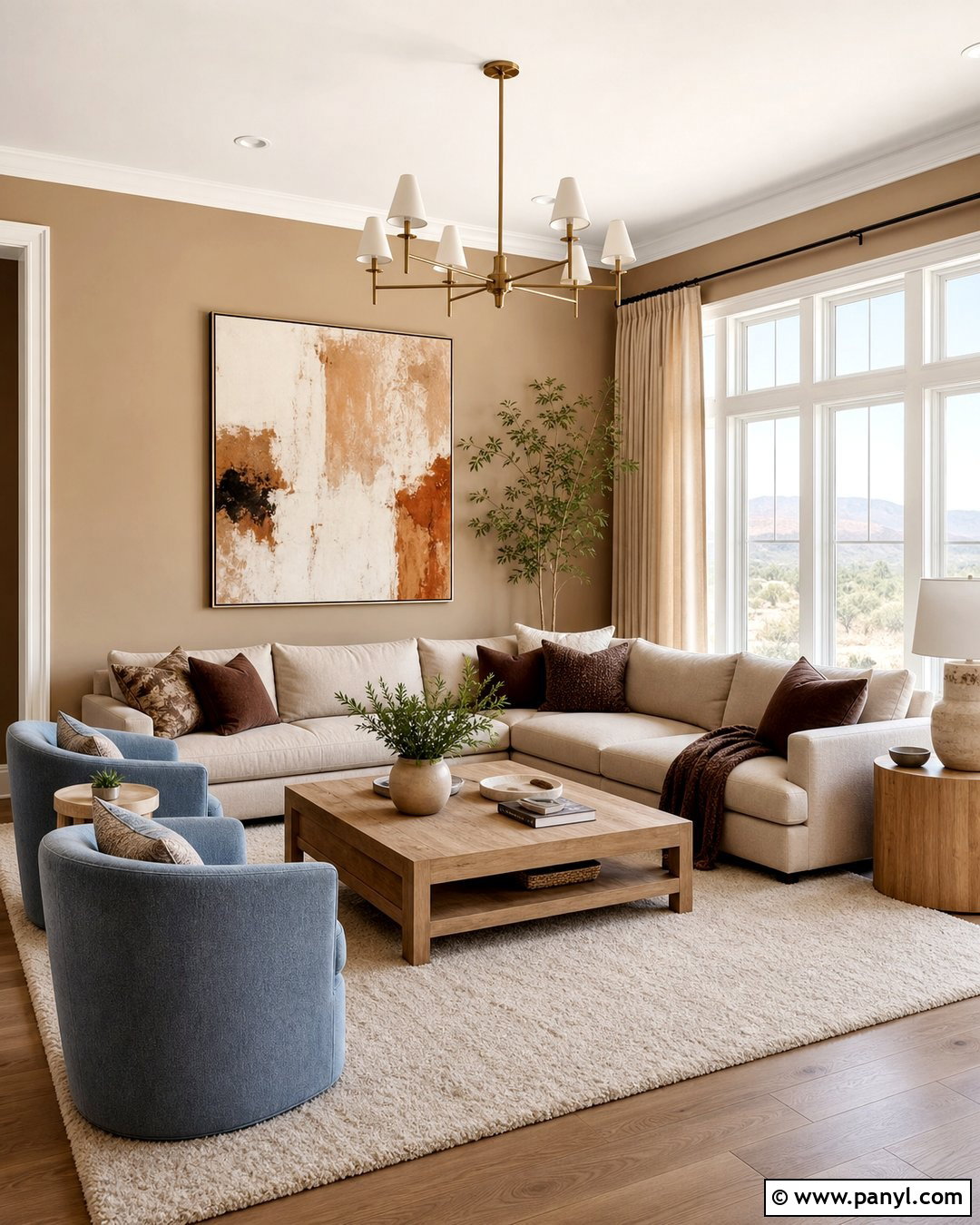
Soft clay walls deliver the warmth of terracotta in a quieter, more adaptable form. This muted orange-brown shade pairs naturally with a beige sectional, bleached oak tables, and a large ivory wool rug. Introduce a pair of dusty blue chairs to balance the wall color and create a calm warm-cool contrast. Choose flax linen curtains and warm white trim for a soft transition around windows and doors. Aged brass lighting will complement the clay undertone without looking overly polished. Display abstract artwork containing cream, charcoal, blue, and rust. Add dark brown pillows and a woven throw for depth. The final living room feels warm and modern, with enough color to look distinctive but enough neutrality to accommodate changing furniture, artwork, and accessories over time.
21. Muted Peach Living Room Wall Color
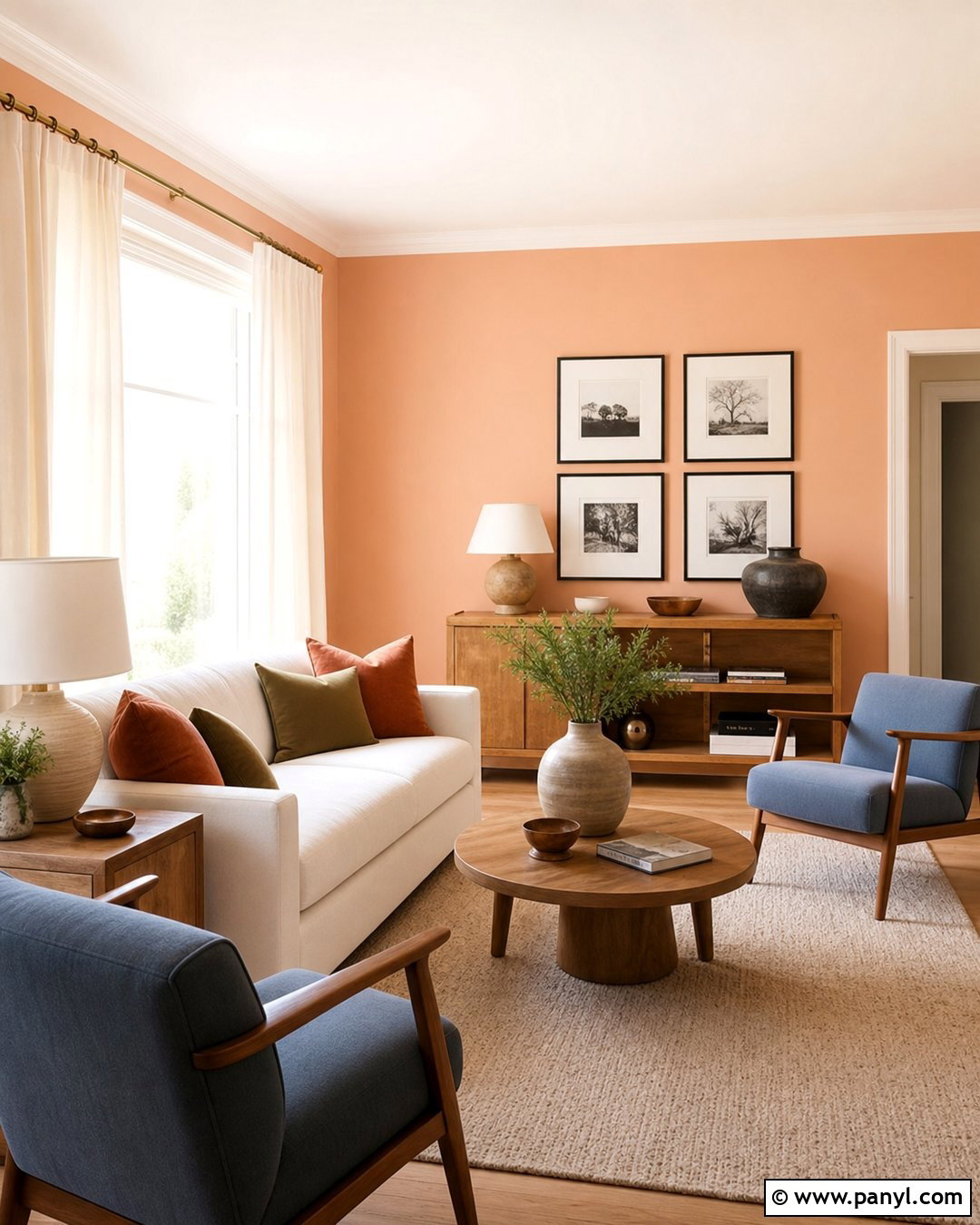
Muted peach walls reflect natural light beautifully and give a living room an easy, cheerful warmth. Avoid highly saturated orange shades and select a peach softened with beige or pink undertones. Pair it with a warm white sofa, light oak furniture, and a textured cream rug. Dusty blue accent chairs provide gentle contrast, while rust and olive pillows create a more layered palette. Hang ivory curtains from brass rods to reinforce the room’s bright character. Use black-framed artwork sparingly to add structure without interrupting the softness. Ceramic lamps and simple handmade pottery complete the relaxed design. This wall color works especially well in rooms with limited morning light, where it can create a pleasant glow and make neutral furniture feel less predictable.
22. Butter Yellow Living Room Wall Color
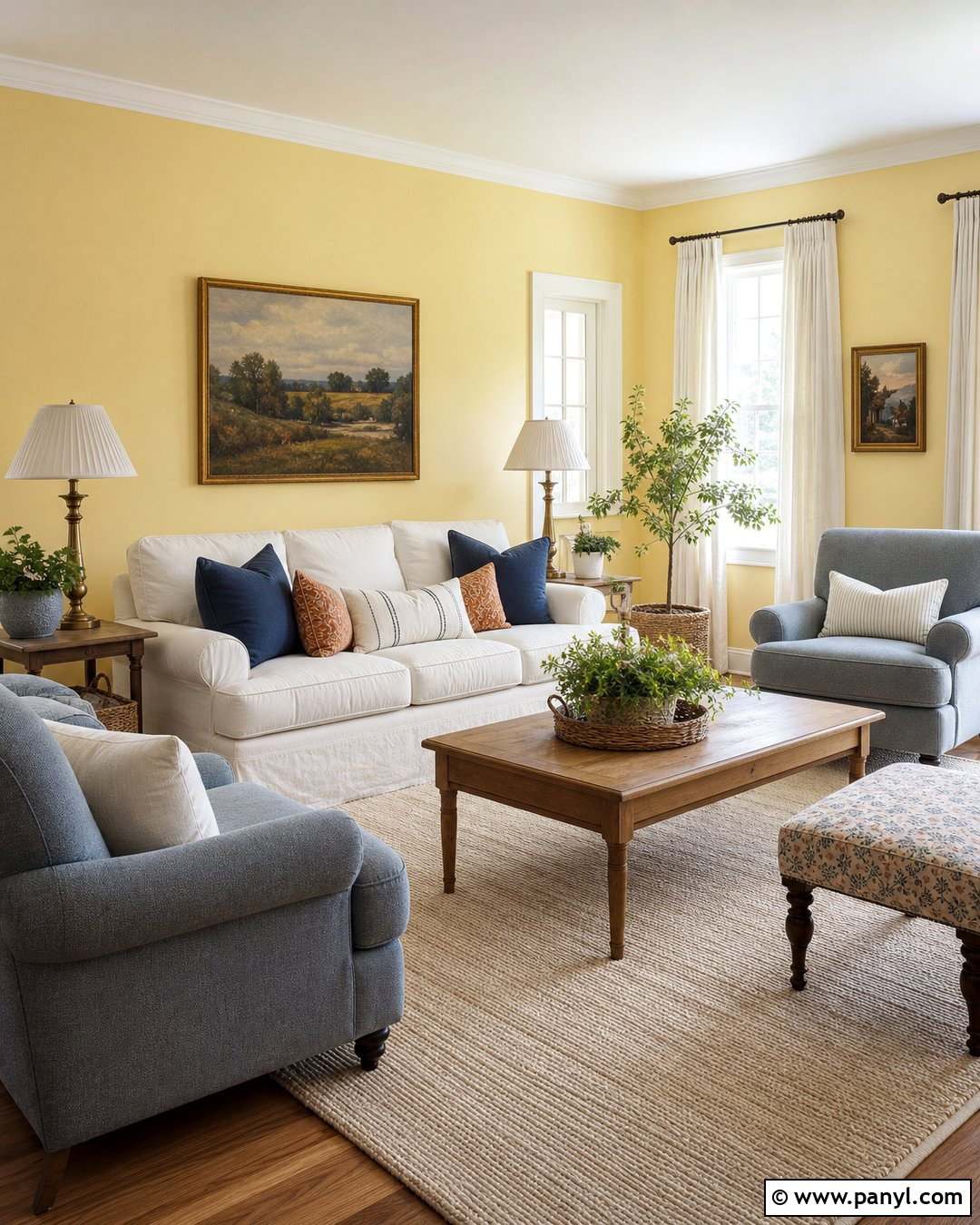
Butter yellow walls bring sunshine into a living room without the intensity of bright primary yellow. Keep the shade creamy and slightly muted, then pair it with a white slipcovered sofa and natural oak tables. A blue-gray armchair on each side of the seating area will balance the warmth. Choose a woven ivory rug and white linen curtains to maintain a light, casual foundation. Small accents in navy, rust, and soft green give the palette depth. Add aged brass lamps and framed vintage-style artwork for a collected appearance. Fresh greenery looks especially vivid against the yellow background. The completed room feels optimistic and comfortable, suiting cottages, traditional homes, and relaxed family spaces where a plain white or beige wall color might feel too restrained.
23. Warm Ochre Living Room Wall Color
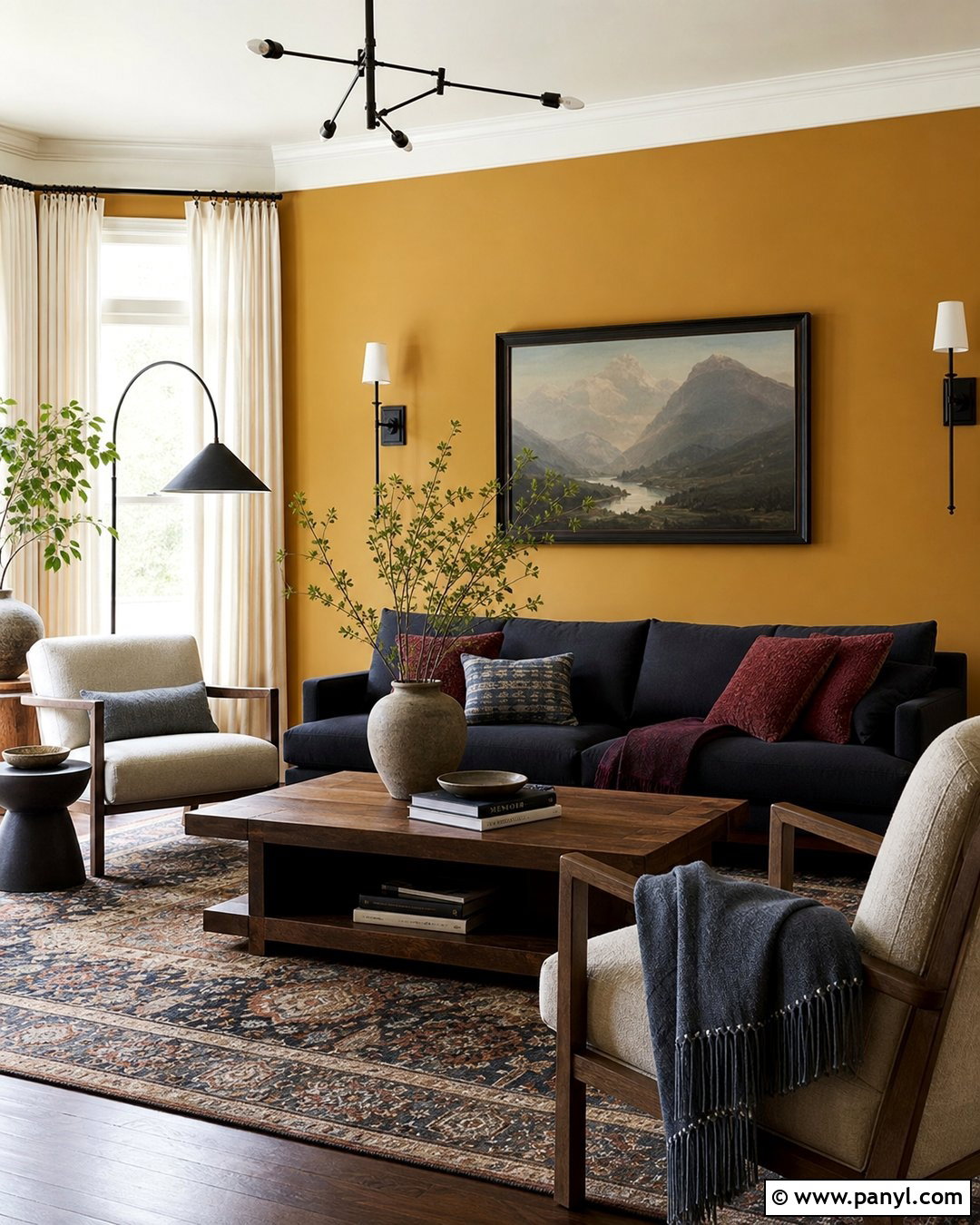
Warm ochre walls create a rich golden backdrop that feels earthy rather than overly bright. Use this color in a living room with generous daylight, then balance it with a deep charcoal sofa and two cream upholstered chairs. Dark walnut tables ground the palette, while a faded Persian-style rug adds rust, navy, tan, and gold beneath the seating. Choose soft white curtains to brighten the window area. Black metal lighting and simple dark frames will give the room a cleaner contemporary edge. Add cushions in burgundy, cream, and muted blue to create controlled contrast. Ochre works best when the surrounding materials have visible texture, including wool, linen, wood, and pottery. The finished design feels warm, confident, and layered without depending on excessive decoration.
24. Caramel Brown Living Room Wall Color
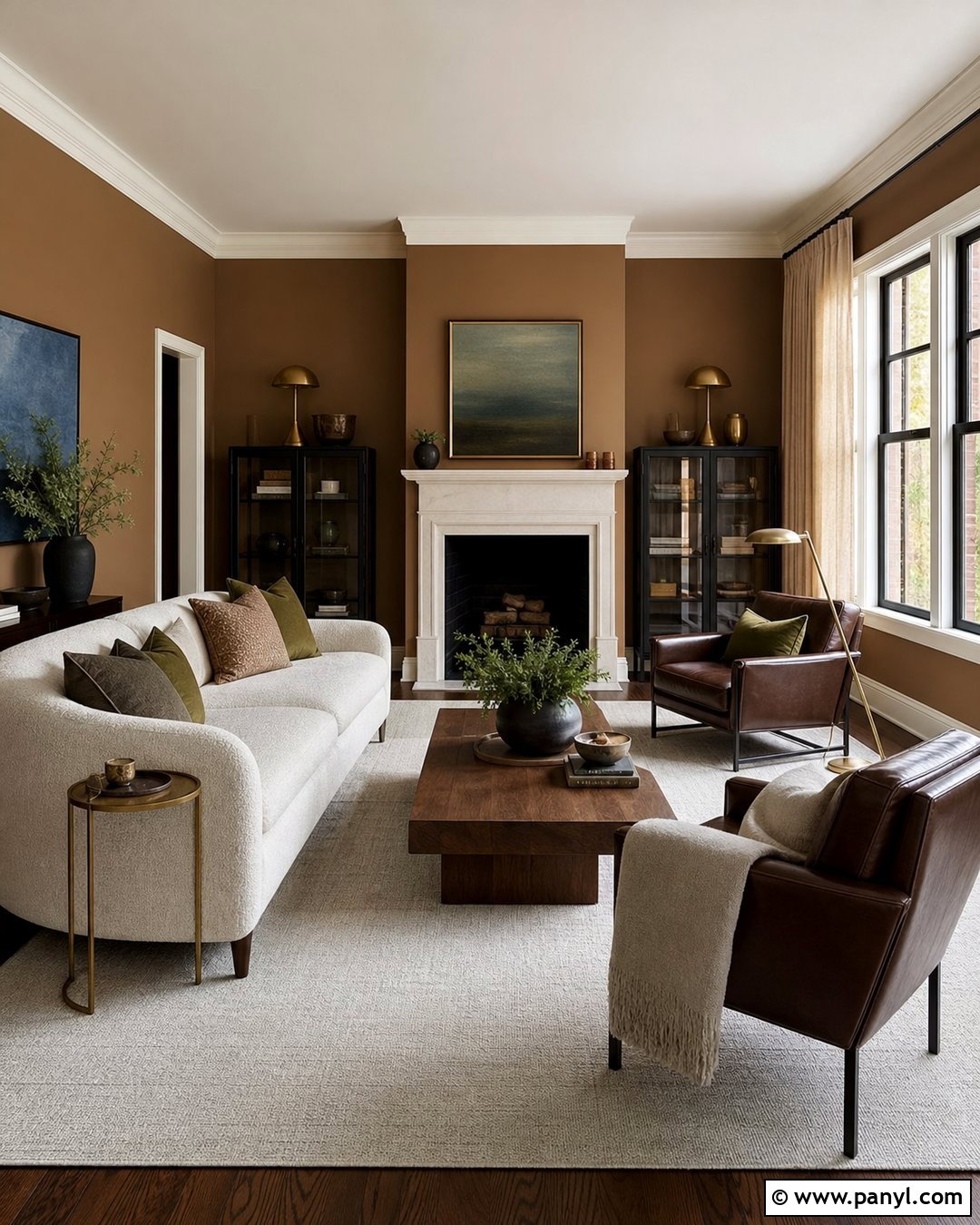
Caramel brown walls surround a living room with warmth while remaining lighter and more approachable than chocolate brown. Pair the shade with a cream boucle sofa, dark brown leather chairs, and a substantial walnut coffee table. An ivory rug will keep the floor area bright and prevent the palette from becoming visually heavy. Use natural linen curtains and warm white trim to soften the edges. Olive green pillows and artwork with blue-green details introduce a refreshing counterpoint to the brown. Select aged brass lamps for a gentle glow, then add black accents through frames or small tables. The completed room feels cozy and sophisticated, with a tonal range of cream, tan, caramel, and espresso. It is especially effective in spaces intended for quiet evenings and conversation.
25. Chocolate Brown Living Room Wall Color
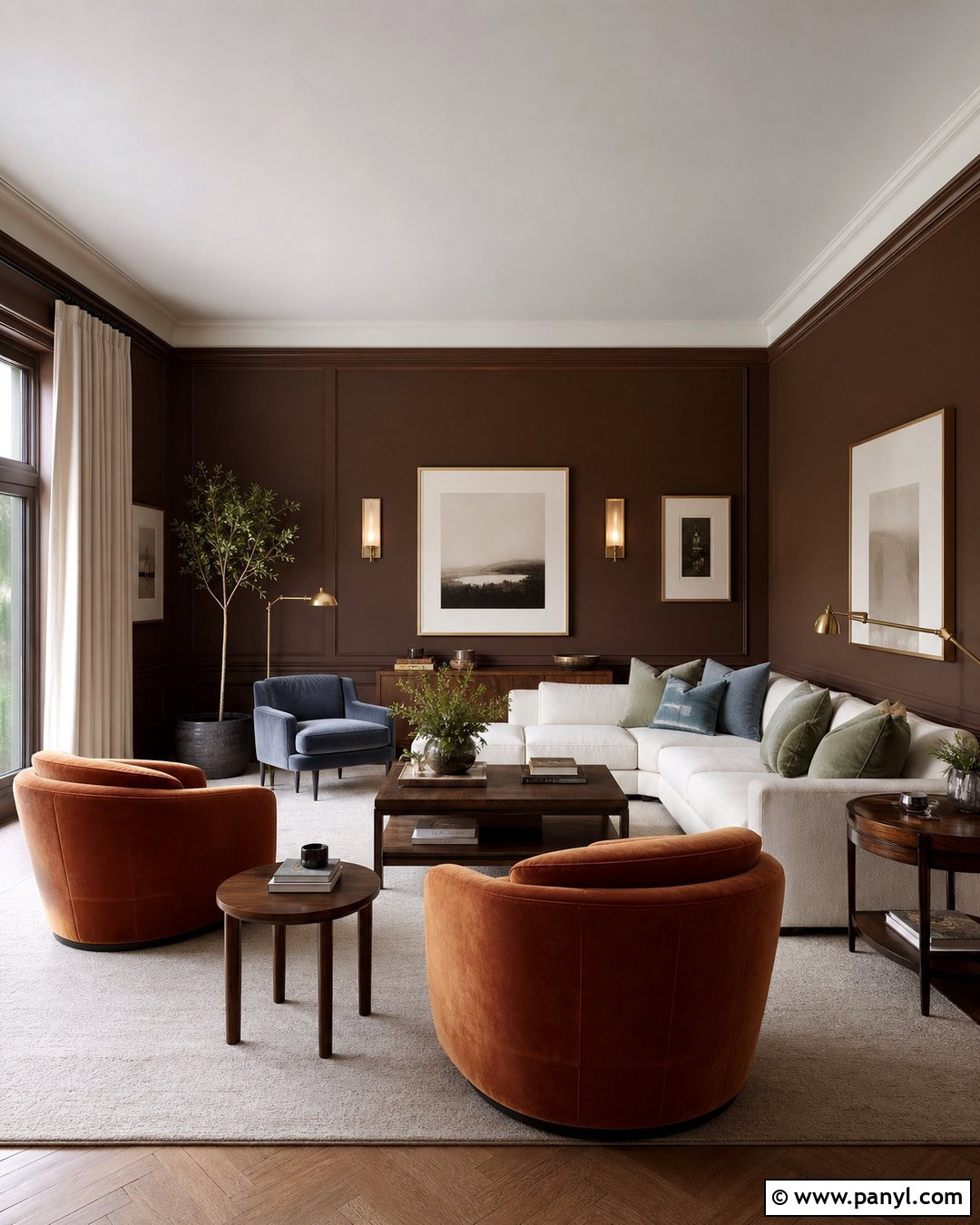
Chocolate brown walls can give a living room a luxurious, cocooning quality when balanced with enough light materials. Paint all the walls for a deliberate color-drenched effect, then place a large cream sofa against the dark backdrop. Add rust-colored velvet chairs, a pale wool rug, and medium-tone wood tables. Full-length ivory curtains create bright vertical areas around the windows. Use brass sconces, table lamps, and a central ceiling fixture to distribute light evenly. Artwork with cream mats will stand out clearly against the brown. Introduce muted blue or sage pillows to provide a cooler accent. The completed living room feels intimate and richly layered rather than dated. This look works best when texture, lighting, and pale upholstery receive as much attention as the dramatic paint.
26. Burgundy Living Room Wall Color
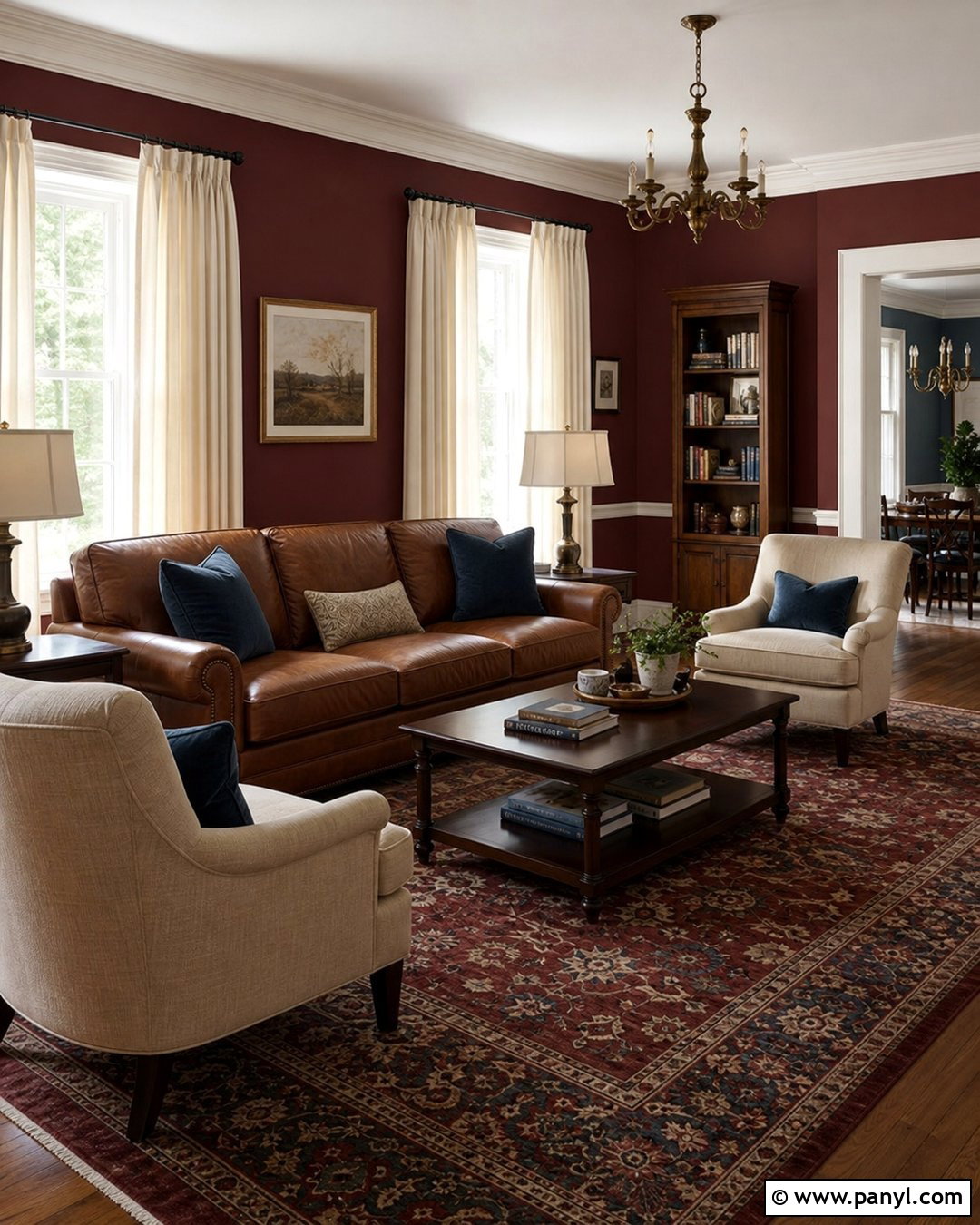
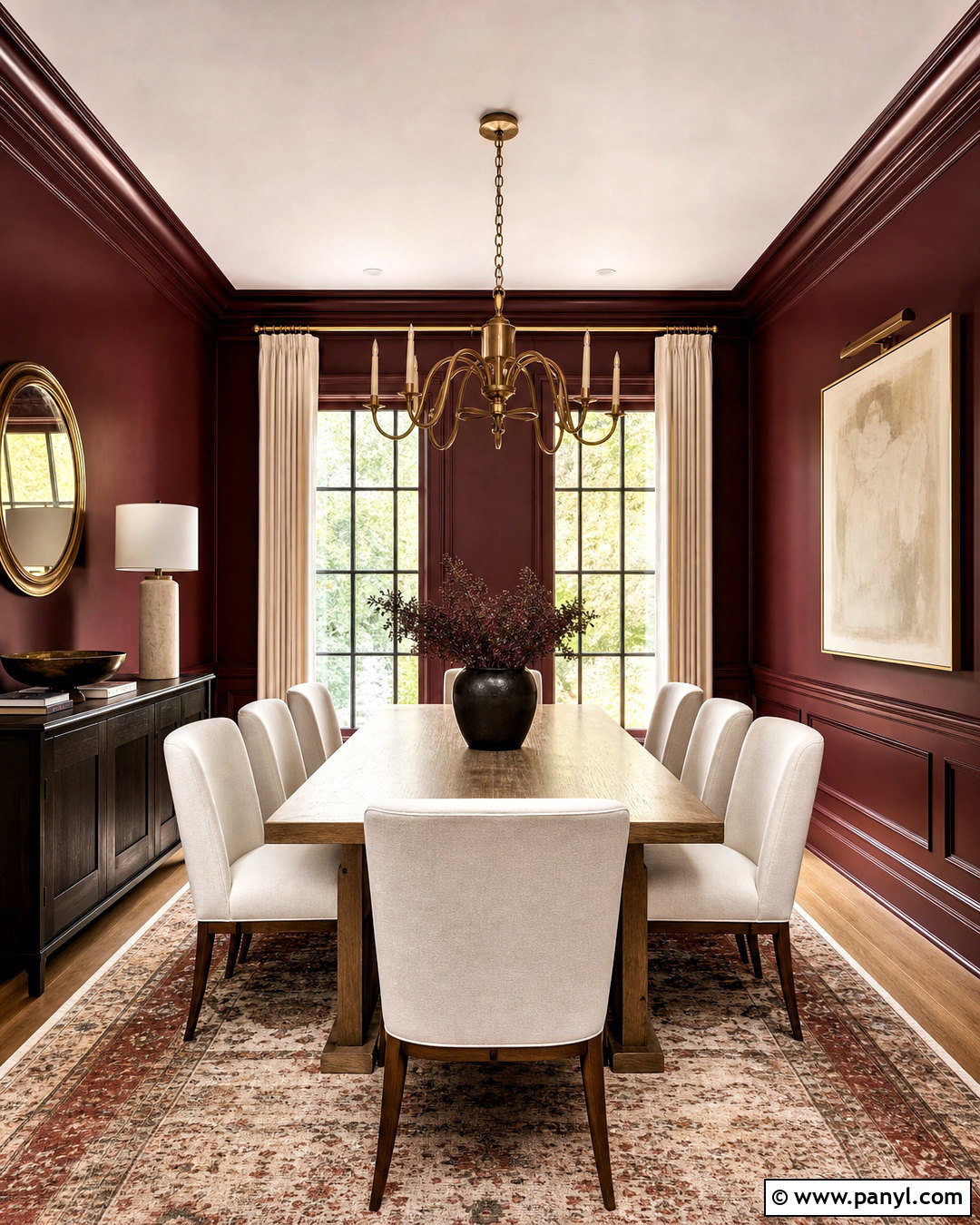
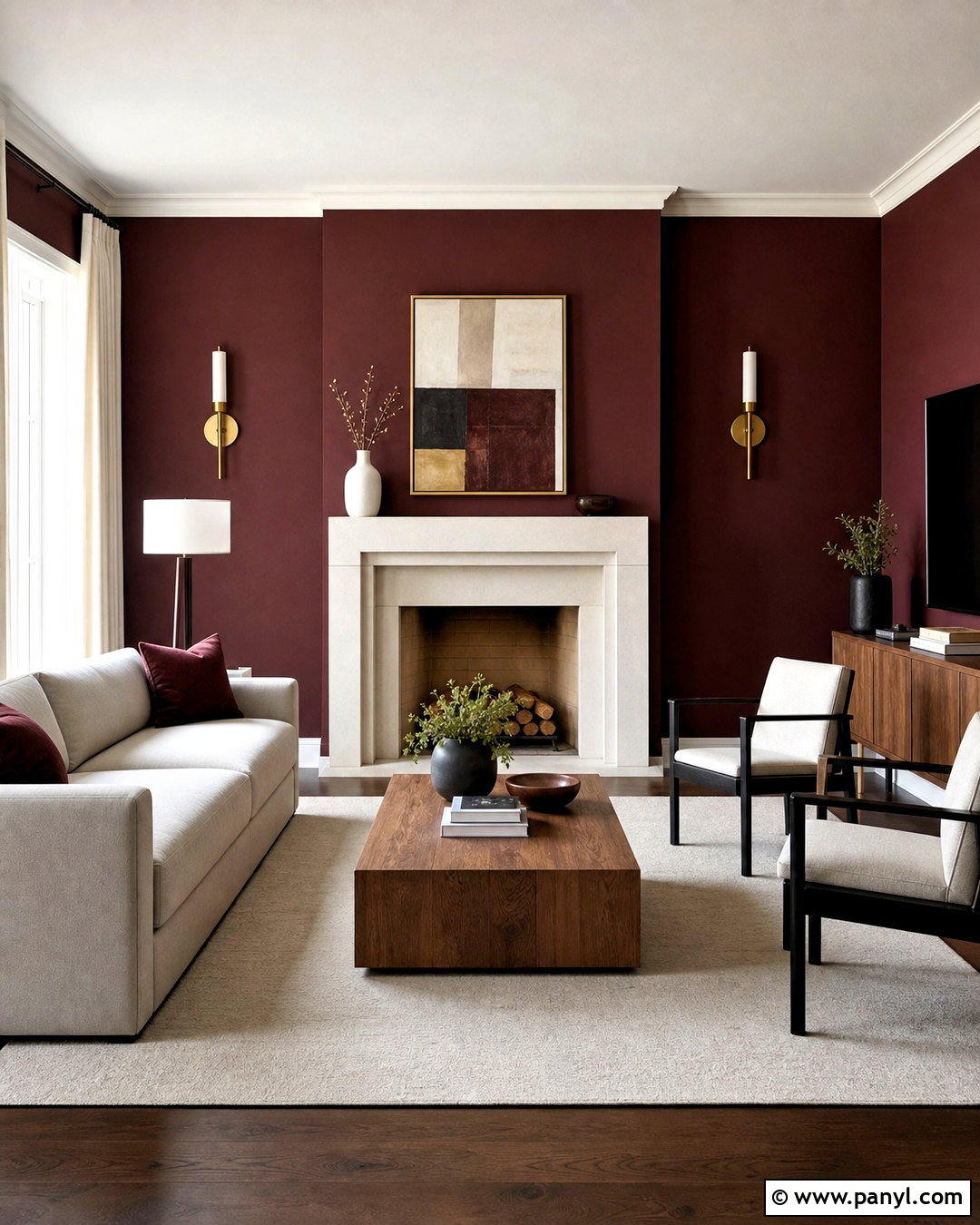
Burgundy walls establish an elegant and dramatic living room with warmth that deep navy or charcoal cannot provide. Pair the color with a camel leather sofa and two soft beige armchairs. A patterned rug containing burgundy, faded blue, cream, and brown will connect the seating arrangement to the walls. Use dark walnut tables and antique brass lighting to continue the rich palette. Warm white curtains provide necessary brightness around the windows, while cream-colored trim offers a traditional frame. Choose artwork with restrained colors and generous light backgrounds so it remains visible. Add pillows in dusty blue, tan, and burgundy. The finished space feels confident and comfortable, combining classic color with contemporary furniture shapes for a look that does not seem overly formal or themed.
27. Plum Living Room Wall Color
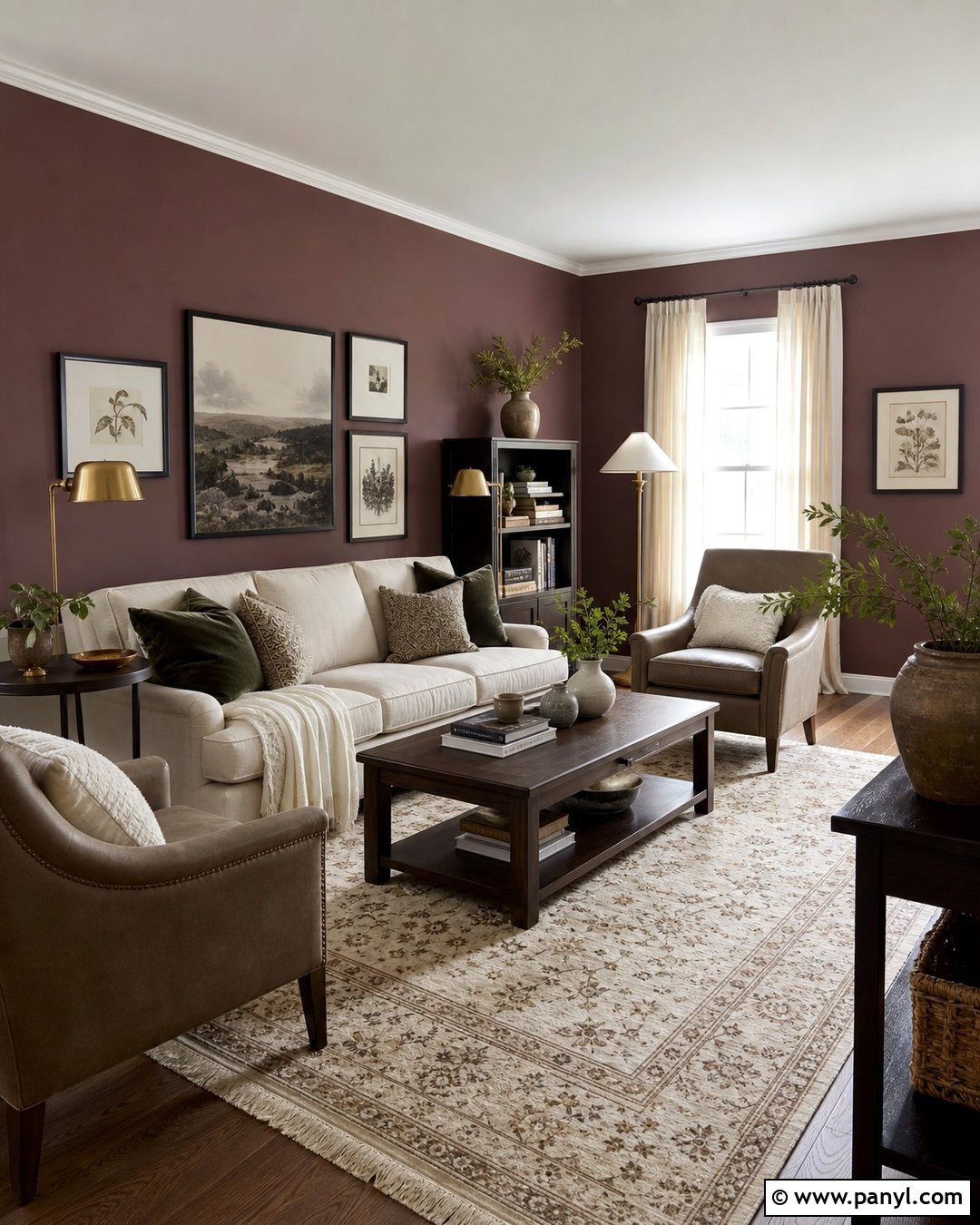
Plum walls give a living room an unexpected sense of depth and can look particularly refined beside warm neutrals. Choose a muted plum with brown or gray undertones rather than a vivid purple. Pair it with an oatmeal sofa, taupe armchairs, and dark wood tables. A cream rug with small burgundy and olive details will brighten the floor while supporting the wall color. Use natural linen curtains and antique brass lighting to emphasize warmth. Add olive green pillows for a grounded complementary accent, along with ivory throws and ceramic accessories. Black frames can define artwork without introducing another noticeable color. The finished room feels cozy, distinctive, and mature. It offers a practical way to use purple while maintaining a sophisticated palette suitable for everyday family living.
28. Lavender Gray Living Room Wall Color
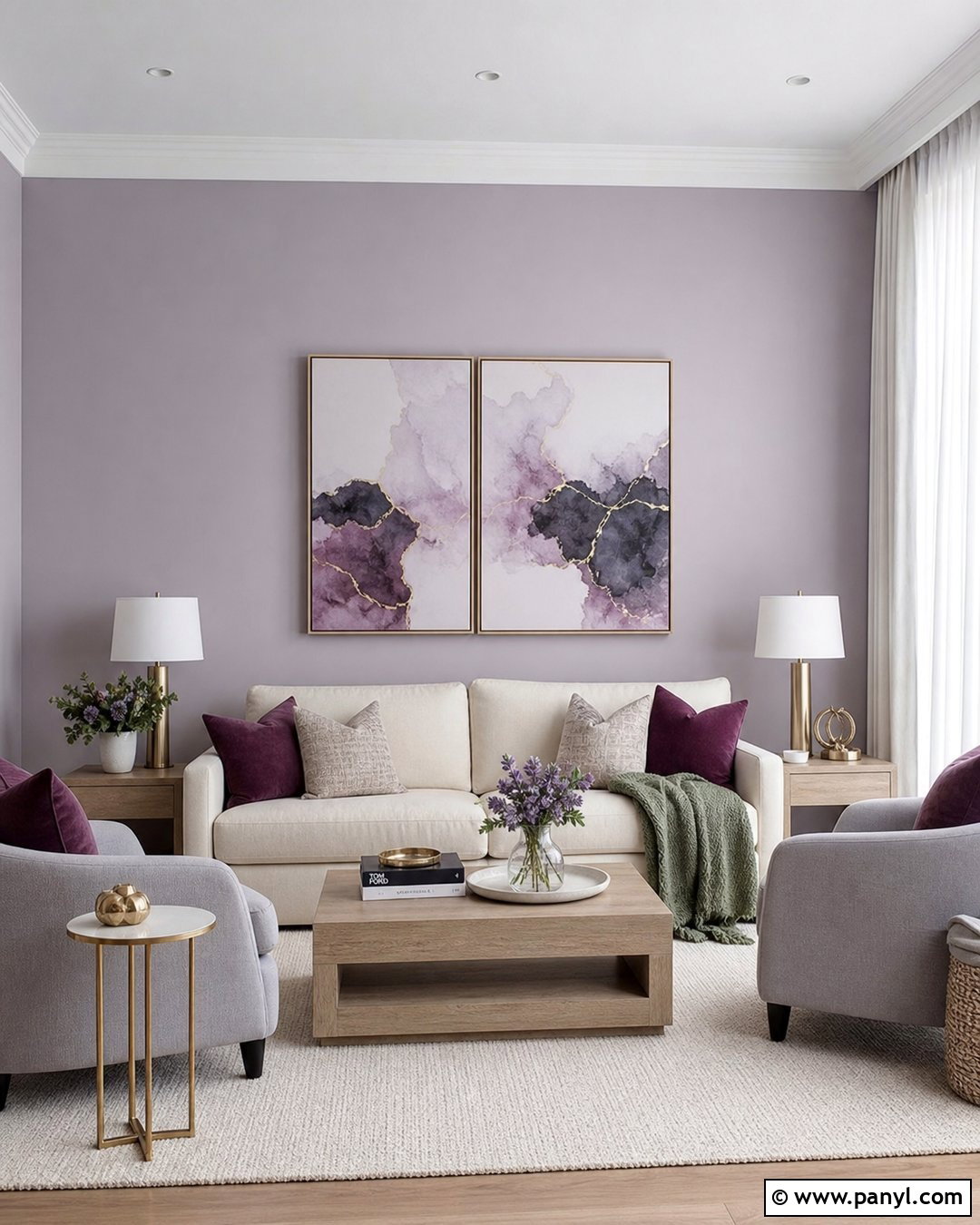
Lavender gray walls offer a soft hint of purple that changes subtly as daylight moves through the living room. Pair this gentle color with a cream sofa, pale gray chairs, and light oak furniture for an airy foundation. A warm ivory rug prevents the scheme from becoming too cool. Add plum pillows, a muted olive throw, and small brass accents to bring depth and warmth. Use soft white trim and sheer curtains to preserve the delicate appearance of the walls. Abstract artwork in lavender, charcoal, beige, and green can tie the palette together without looking overly coordinated. Keep accessories simple and sculptural. The completed living room feels peaceful and refined, making lavender gray an appealing alternative to standard pale blue, beige, or cool gray paint.
29. Charcoal Living Room Wall Color
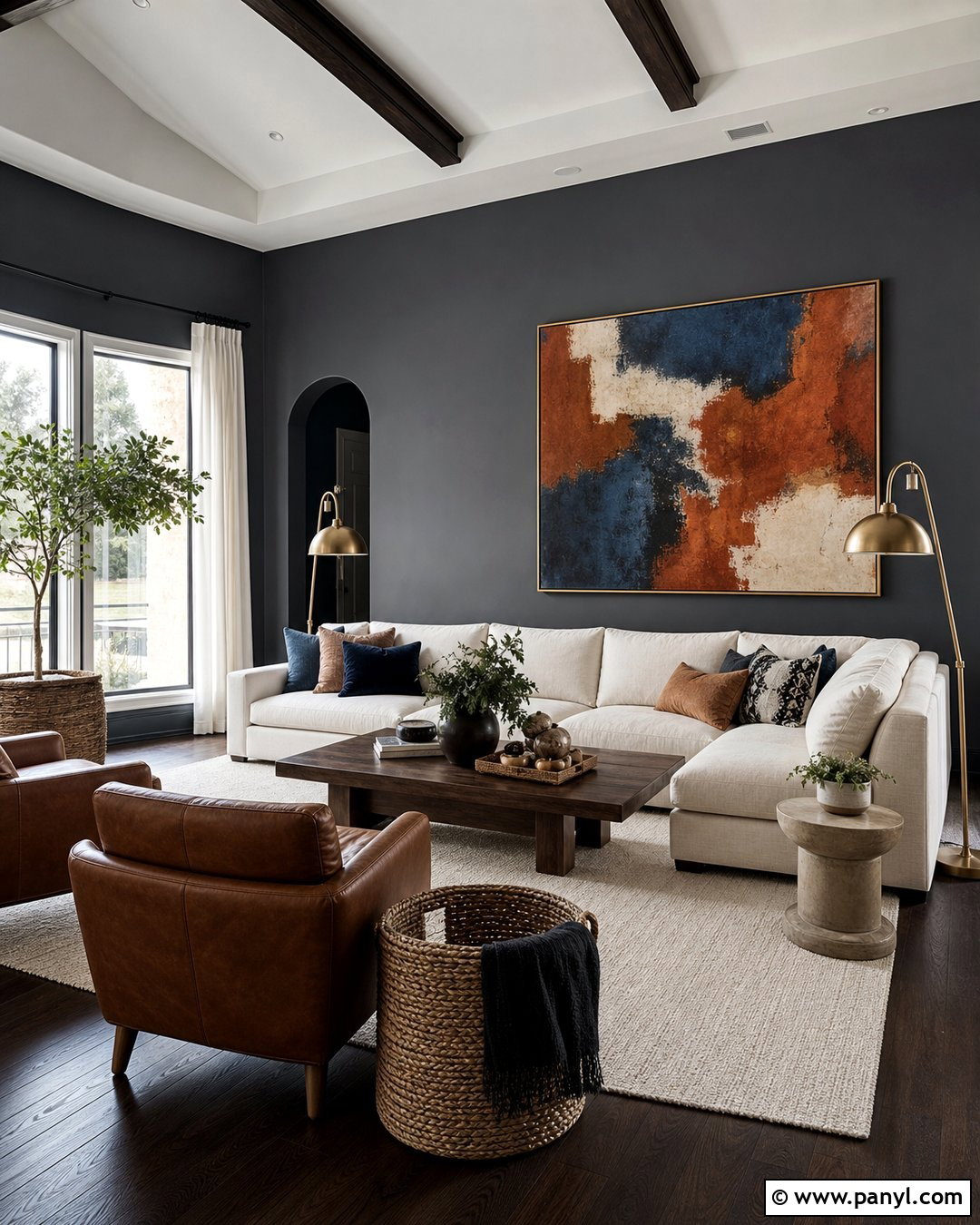
Charcoal walls make a strong architectural statement and create an effective background for pale furniture and artwork. Use the shade in a well-lit living room, then balance it with a large ivory sectional and a cream textured rug. Add cognac leather chairs and a medium walnut coffee table to warm the dark palette. White curtains provide bright contrast, while charcoal trim creates a seamless, contemporary frame. Choose oversized art with cream, rust, and muted blue details so it remains visible from across the room. Brass floor lamps and table lamps will add warmth after daylight fades. Incorporate greenery and woven baskets to soften the sharp contrast. The completed design feels modern and enveloping, with light upholstery ensuring the room remains comfortable rather than stark or cave-like.
30. Deep Navy Living Room Wall Color
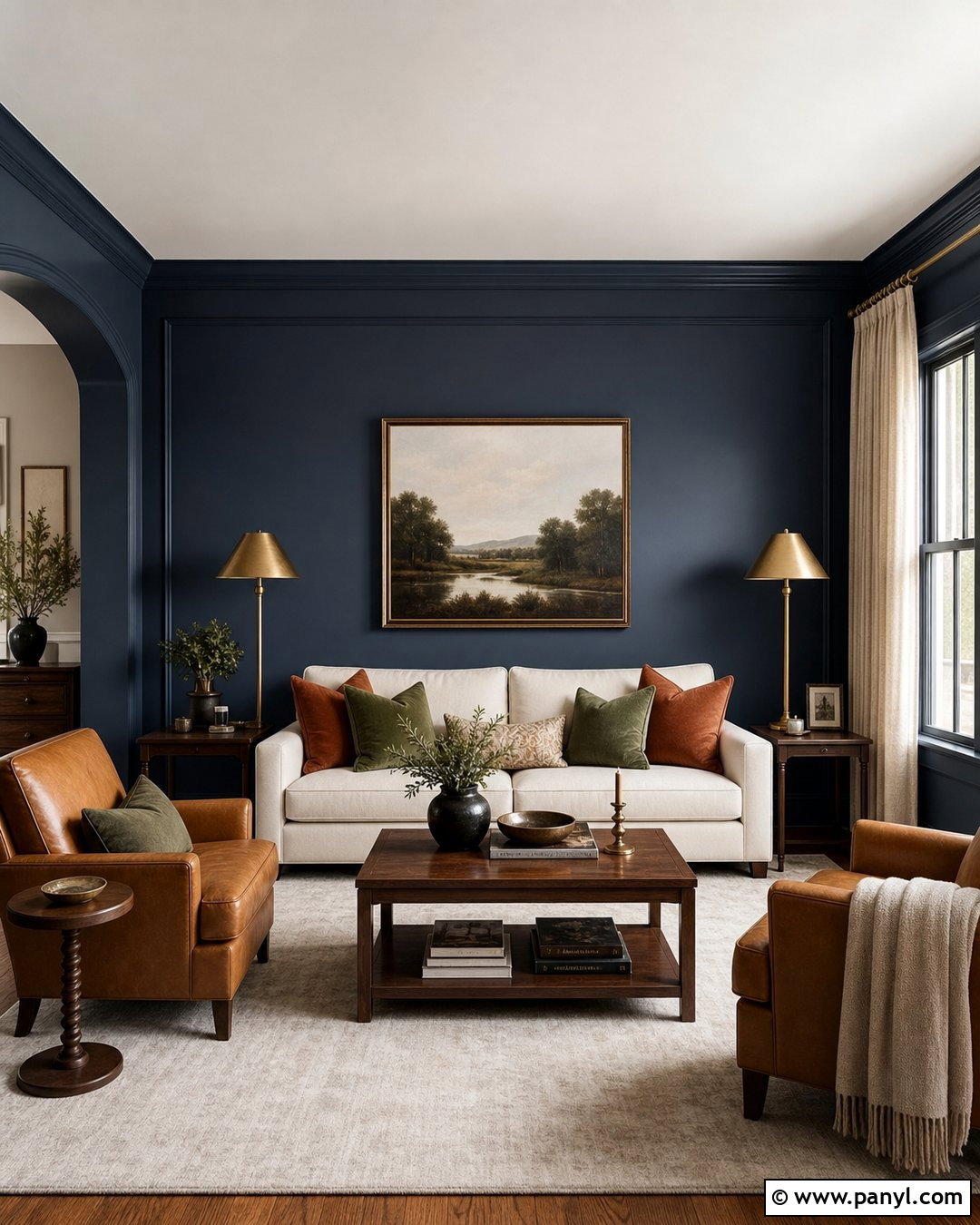
Deep navy walls create a classic living room that feels dramatic, calm, and highly adaptable. Pair the blue with a cream sofa, camel leather chairs, and warm walnut tables. A large ivory rug will brighten the seating area and provide strong contrast against the walls. Use white or flax-colored curtains to frame the windows, then add aged brass lamps and picture lights for warmth. Pillows in rust, tan, navy, and muted green give the room a layered, collected palette. Traditional landscapes, abstract artwork, and black-and-white photography can all work against navy. Consider painting the trim in the same color for a streamlined effect. The finished space feels substantial and welcoming, offering bold color without sacrificing the familiarity needed in a frequently used family room.
Conclusion:
The best living room paint color should support the room’s natural light, furniture, flooring, and everyday purpose. Light neutrals can create an open and flexible foundation, while blues and greens introduce calm color inspired by nature. Peach, clay, yellow, and brown make the room feel warmer. Burgundy, plum, charcoal, and navy offer a more enveloping result. Always test several large paint samples beside existing upholstery and view them during morning, afternoon, and evening light. Also consider how the chosen shade connects with nearby rooms. These 30 Interior Wall Colors Living Room Ideas show that a successful palette is not built around paint alone. It comes from coordinating every surface, furnishing, textile, and decorative accent.

Related Ideas and Inspiration:
Leave a Reply