
Plum is a rich, flexible color that can make a home feel cozy, polished, dramatic, or surprisingly fresh. Current interiors often balance deep purple tones with warm woods, quiet neutrals, and thoughtfully placed accents rather than using plum alone. () The right combination depends on the mood you want and the amount of natural light in your space. Cream and brass create elegance, while sage and oak feel earthy. Teal adds energy, blush brings softness, and charcoal produces modern contrast. These complete room palettes show how walls, furniture, flooring, textiles, and finishes can work together without becoming overwhelming. Explore these **20 plum color palette ideas** to find a balanced, practical look you can confidently recreate.
1. Plum Cream And Gold Palette
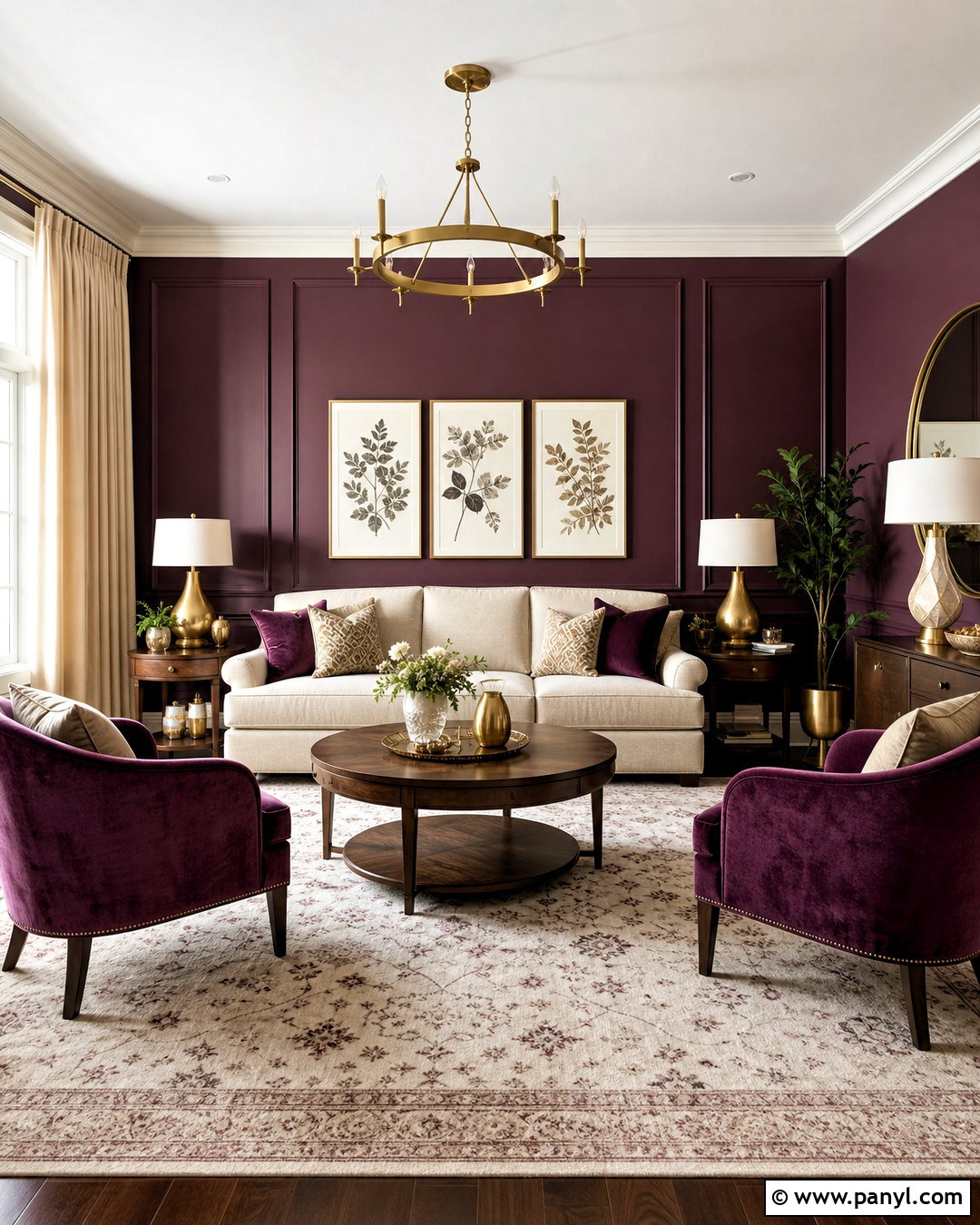
A plum, cream, and gold palette creates a refined room without feeling overly formal. Paint one focal wall deep plum and keep the remaining walls warm cream to preserve brightness. In a living room, choose a cream sofa, plum velvet chairs, and a softly patterned rug that repeats both colors. Add brushed gold through slim floor lamps, curtain rods, mirror frames, and small furniture details. Medium walnut tables prevent the metallic finish from looking too flashy. Ivory curtains and oatmeal pillows can soften the transitions between dark and light surfaces. Finish with simple botanical artwork and ceramic decor. This complete arrangement works especially well in rooms with traditional molding, tall windows, or a classic fireplace.
2. Plum Sage Green And Oak Palette
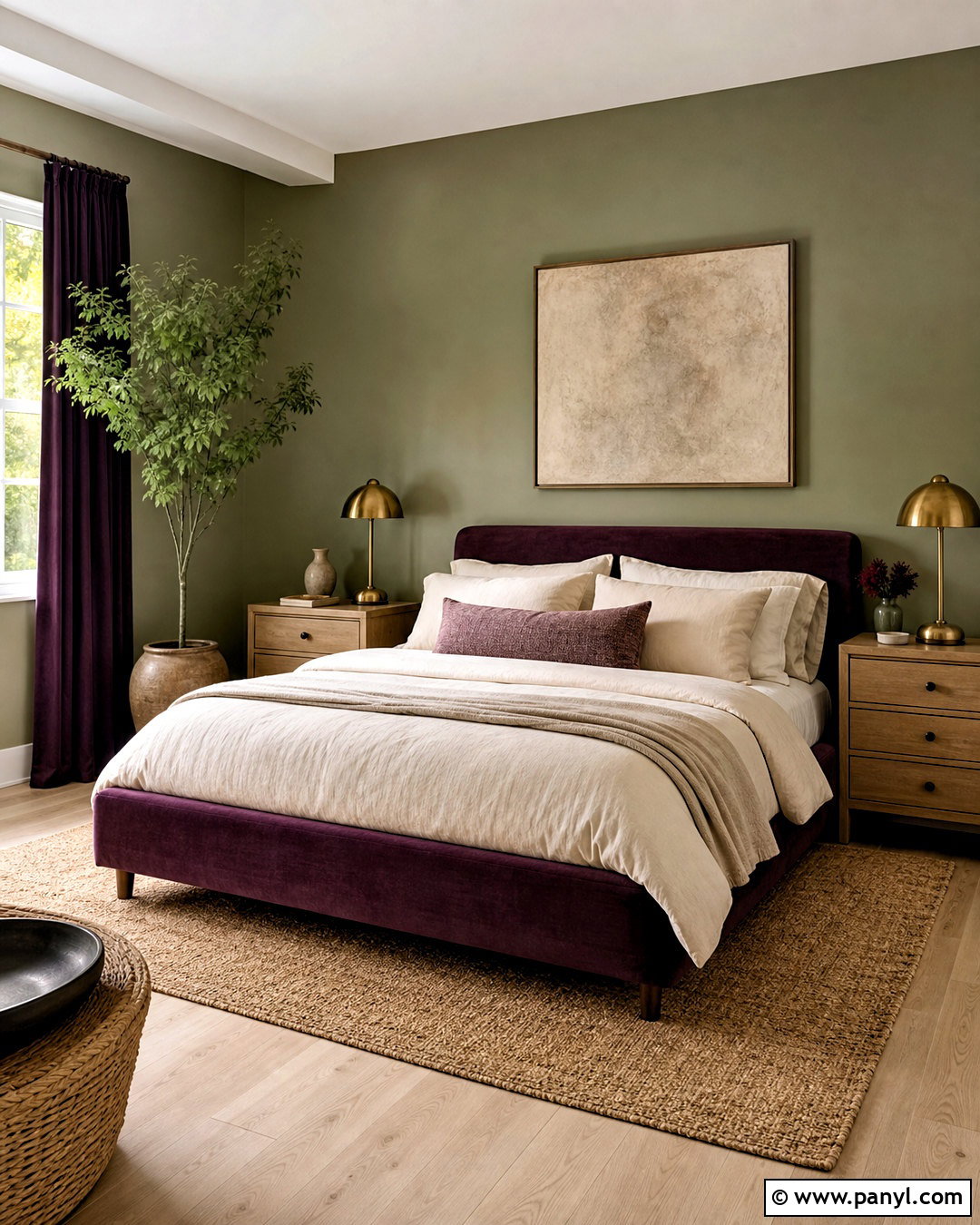
Imagine a quiet bedroom where deep plum feels grounded by soft, natural green. Use muted sage on most walls, then introduce plum through an upholstered bed, curtains, and a patterned bench. Light oak nightstands and pale wood flooring keep the room relaxed rather than heavy. Choose cream bedding as the main neutral, layering it with sage sheets and two plum accent pillows. A woven rug, linen shades, and matte ceramic lamps add comfortable texture. Small touches of antique brass can provide warmth without interrupting the earthy character. This palette is especially useful when you want noticeable color with a calm finish. Repeating sage and plum in different proportions helps the whole bedroom feel intentional.
3. Plum Blush Pink And Ivory Palette
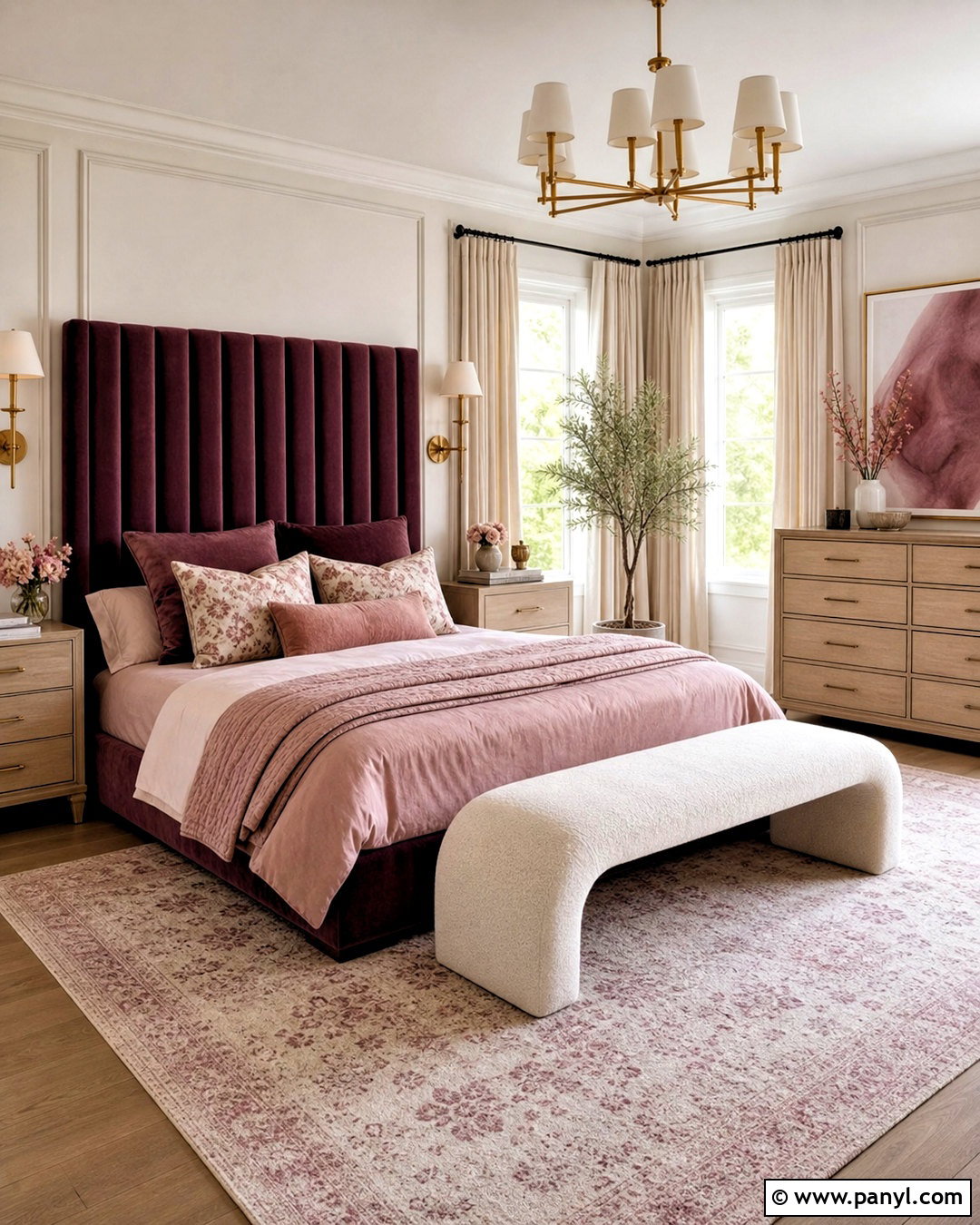
Soft blush gives plum a lighter, more romantic direction while ivory keeps the combination mature. For a complete bedroom, paint the walls a pale ivory and anchor the space with a tall plum headboard. Add blush bedding, ivory sheets, and a plum-edged coverlet to connect the main colors. Warm white oak furniture and a faded blush-and-plum rug create gentle contrast underfoot. Use aged brass sconces, creamy curtains, and a curved ivory bench for a polished finish. Avoid filling every surface with pink accessories. Instead, repeat blush through two or three larger textiles so it reads as part of the design. The final space feels warm, graceful, and colorful without resembling a themed room.
4. Plum Navy Blue And Brass Palette
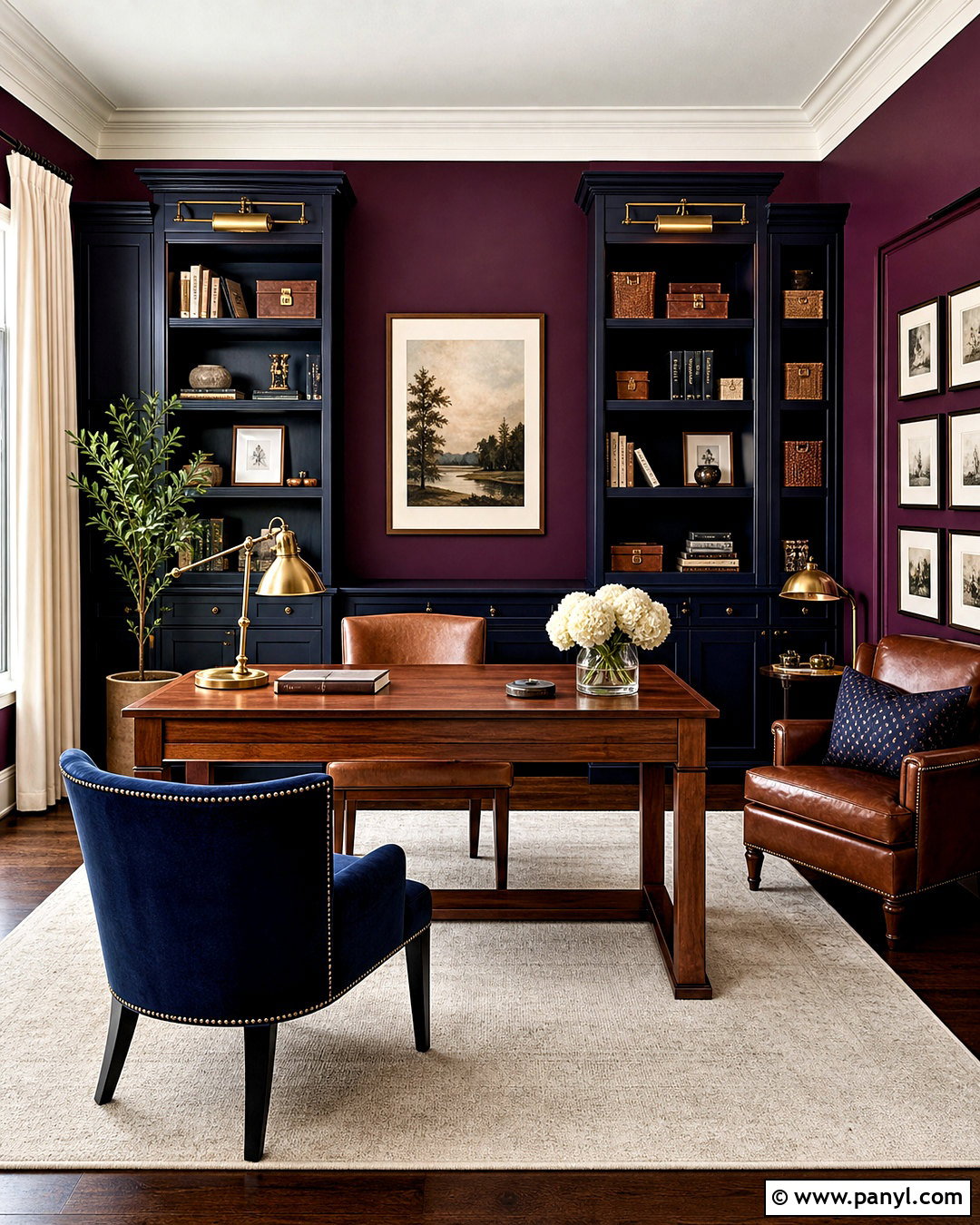
Plum and navy can produce a bold, tailored office when each dark color has a clear role. Cover built-in shelves or lower cabinets in navy, then paint the wall behind the desk a saturated plum. Choose a walnut desk, a navy upholstered chair, and a cream area rug to break up the deeper tones. Brass library lights and cabinet hardware provide a bright visual link across the room. Add ivory curtains and white matting around artwork to keep the upper walls from feeling enclosed. A few plum books, navy storage boxes, and warm leather accessories can complete the palette. This layered scheme works best with focused lighting and uncluttered surfaces, giving the office depth while maintaining an organized appearance.
5. Plum Charcoal And Soft Gray Palette
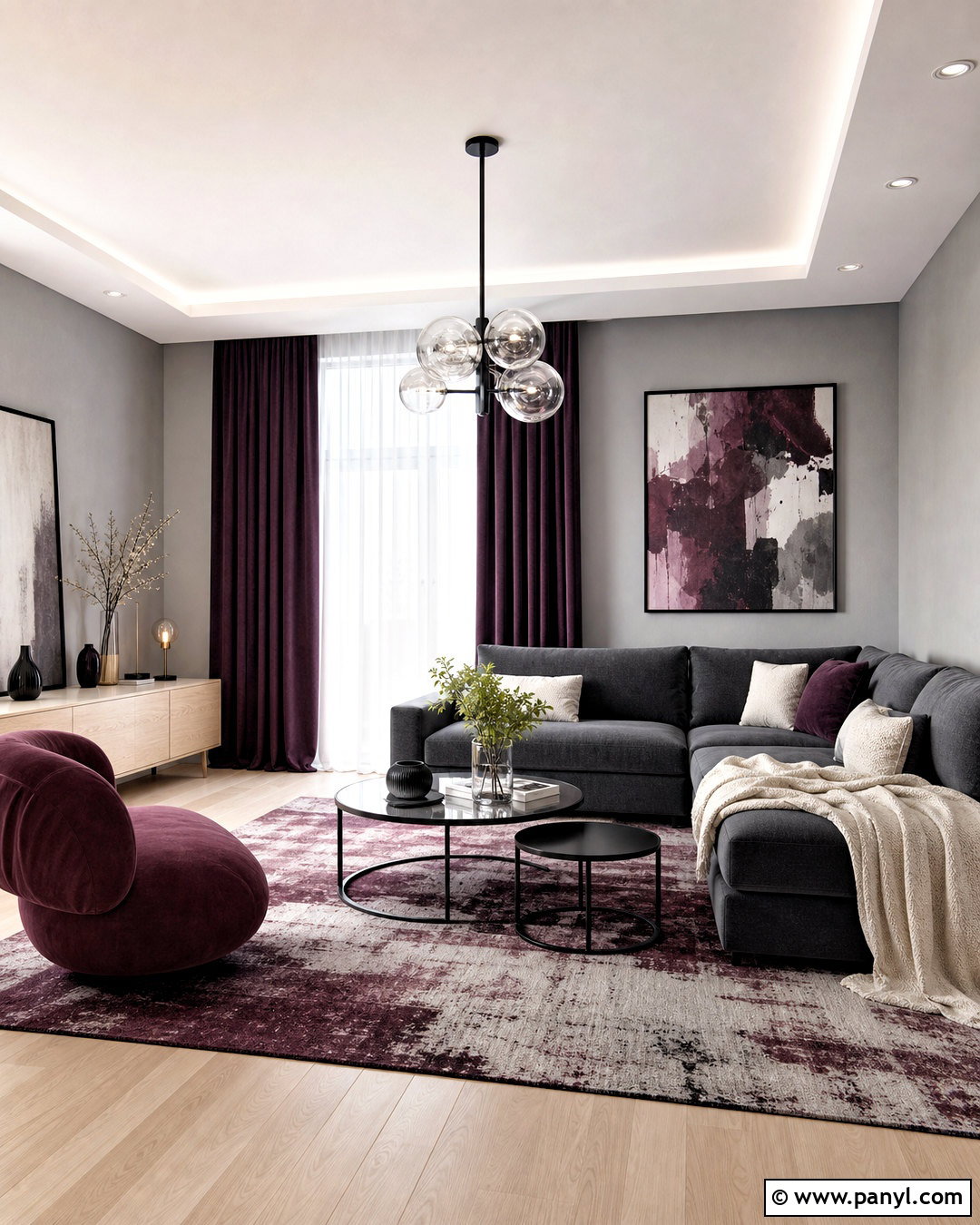
Do you prefer a modern room with restrained color? Pair plum with charcoal and soft gray for a clean living space that still has personality. Start with pale gray walls and a low charcoal sectional. Bring plum into the room through a generous area rug, full-length curtains, and one sculptural chair rather than scattering many tiny accents. Blackened metal tables and clear glass lighting strengthen the modern look. Add light gray pillows, a textured ivory throw, and abstract artwork containing plum and charcoal. Pale flooring or a light wood media console will prevent the darker furniture from dominating. The result is sleek but comfortable, with enough contrast to make every major element easy to distinguish.
6. Plum Teal And Taupe Palette
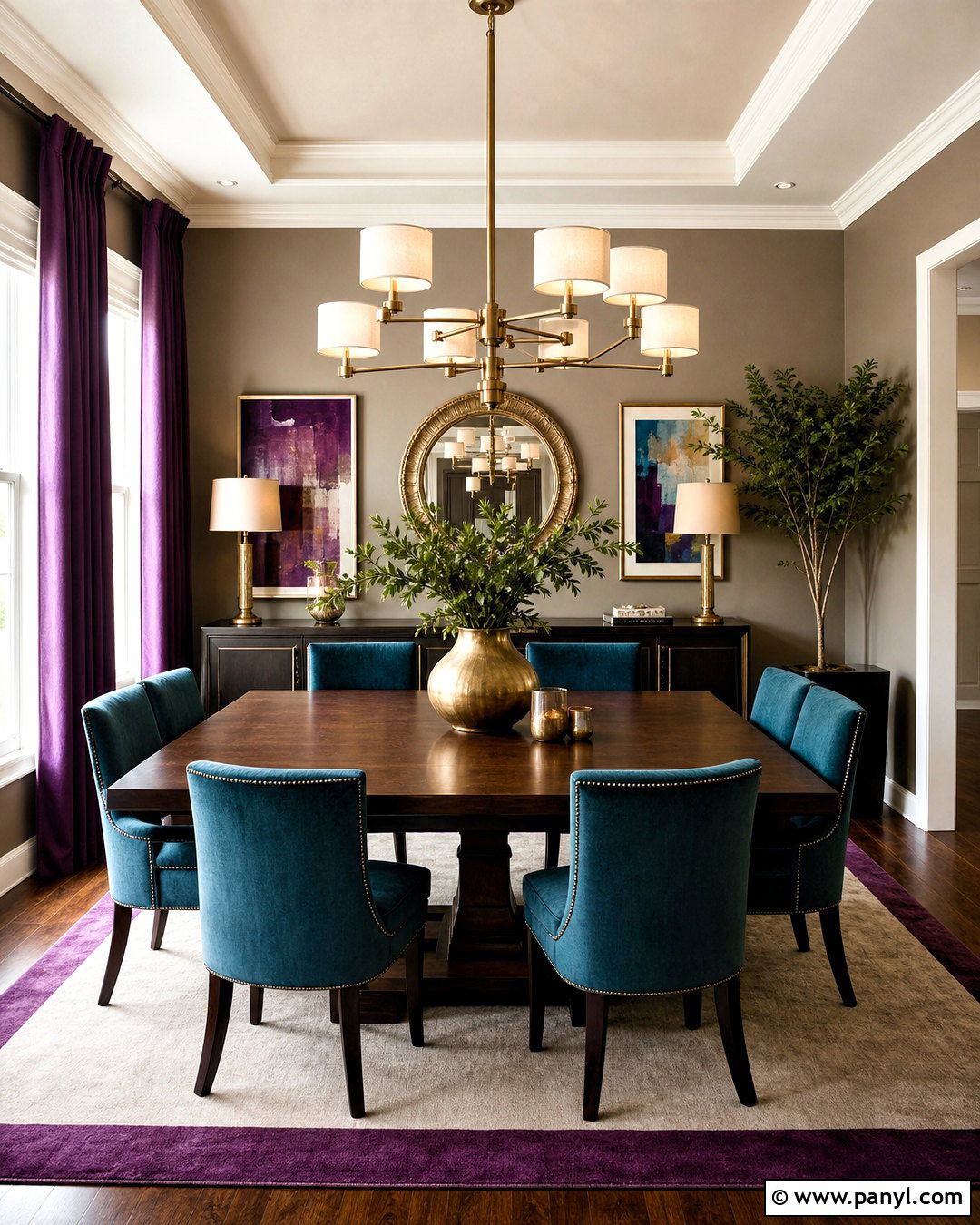
Teal, plum, and taupe create a rich dining room with color on every level. Paint the walls warm taupe so the stronger shades can stand forward without competing. Center the room around a teal upholstered dining banquette or teal chairs, then add plum curtains and a plum-bordered rug. A dark oak table provides structure, while cream dinnerware and linen-colored shades introduce necessary lightness. Deep teal and plum are often paired with taupe to create a layered, considered interior. () Repeat the colors in framed art rather than adding unrelated accessories. Aged brass lighting can warm the scheme, while simple greenery gives the saturated palette a natural finishing note. This arrangement feels dramatic yet usable for everyday meals.
7. Plum Mustard And Walnut Palette
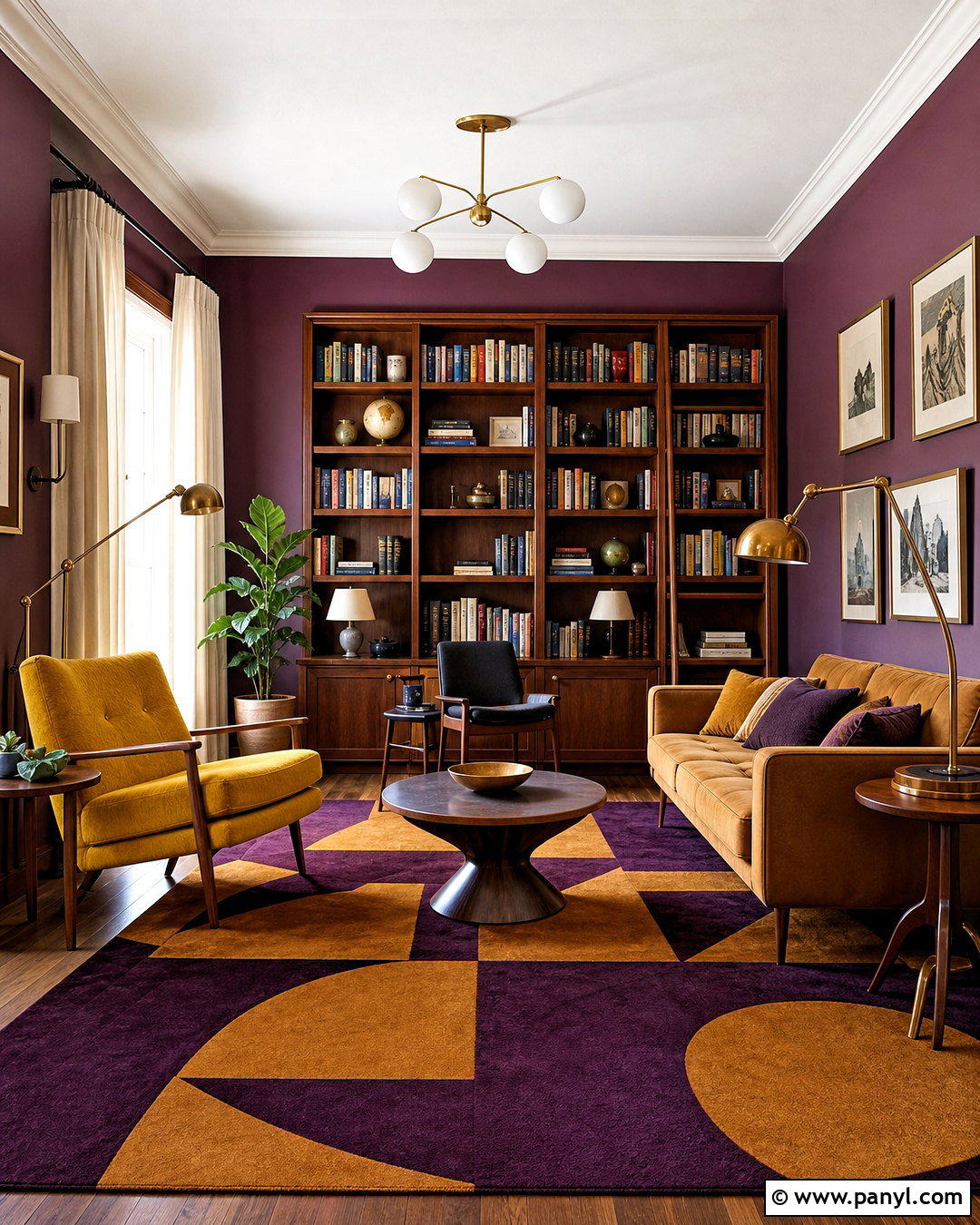
Plum and mustard deliver warmth, contrast, and a subtle retro influence when supported by walnut. Use a muted plum wall color in a reading room, then furnish it with a mustard lounge chair and a streamlined walnut bookcase. A camel or oatmeal sofa can act as the neutral anchor. Choose a geometric rug containing plum, mustard, beige, and brown so each large element feels connected. Walnut side tables, cream curtains, and antique brass lamps add depth without introducing another strong hue. Keep decorative objects simple and repeat mustard sparingly through a pillow and framed print. The completed room feels collected rather than overly coordinated, making this palette a practical choice for vintage, midcentury, or eclectic homes.
8. Plum Terracotta And Beige Palette
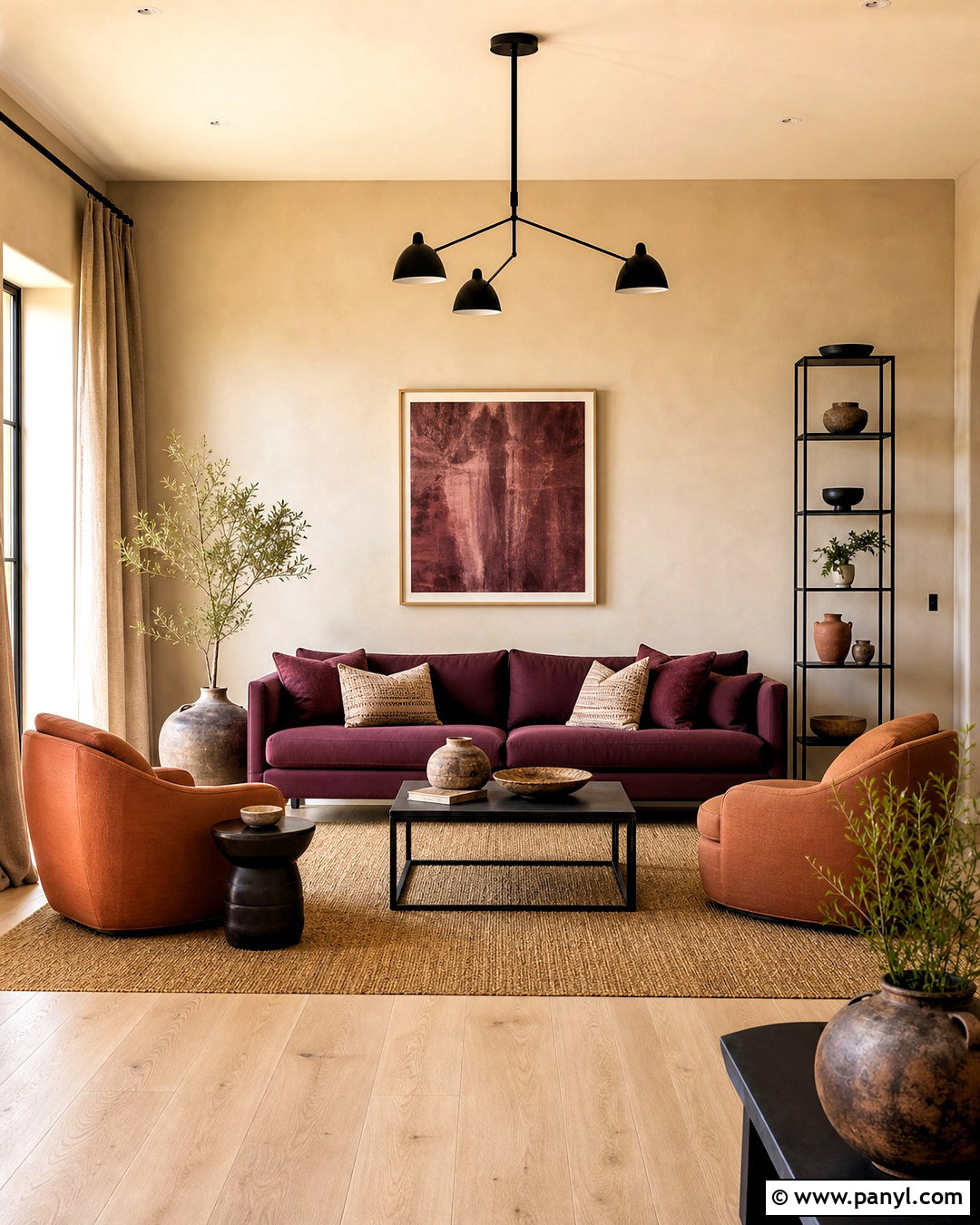
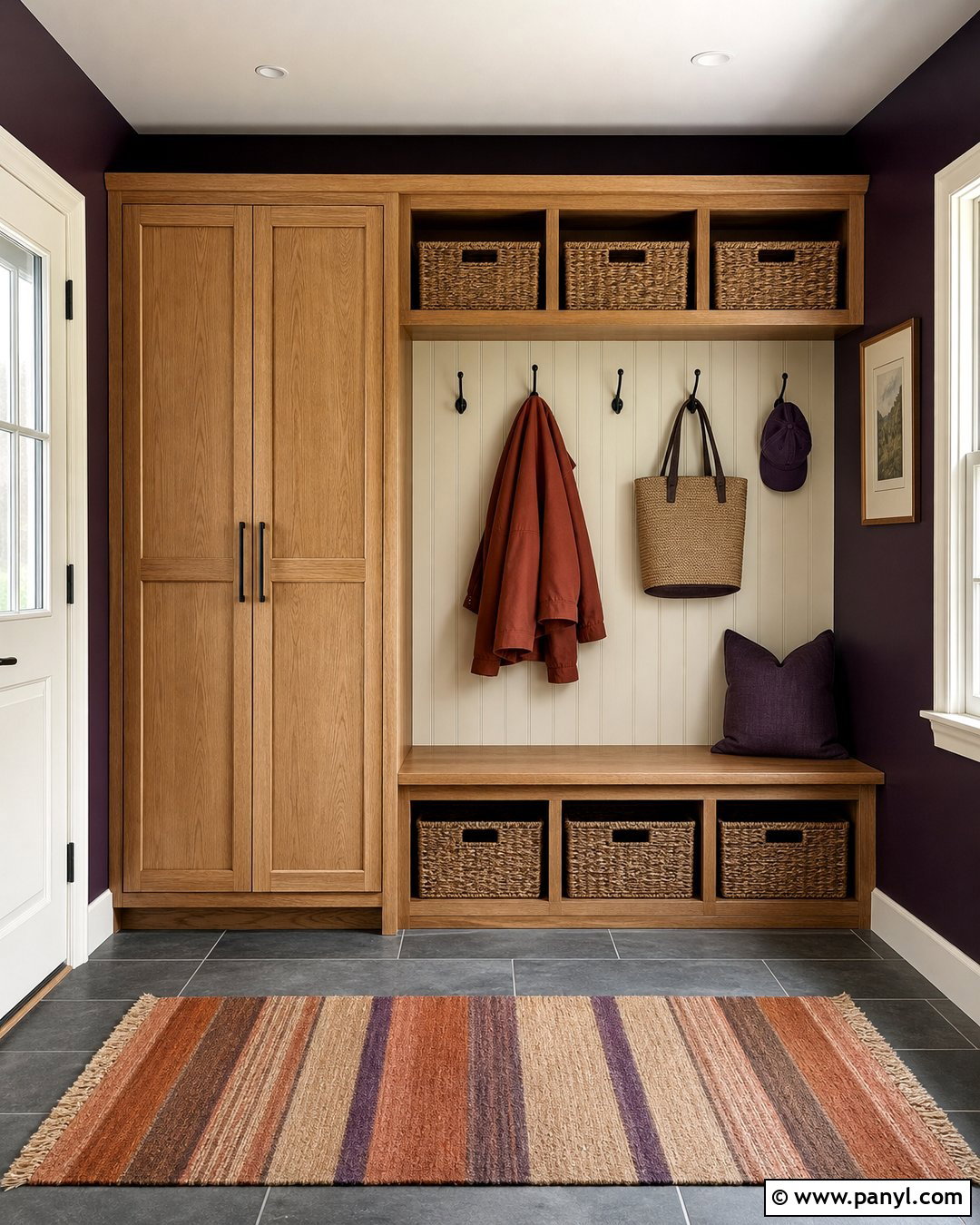
Warm terracotta changes plum from formal to earthy, especially when both colors are surrounded by sandy beige. In a sunroom or casual living room, begin with light beige walls and natural stone or pale wood flooring. Choose a plum sofa as the main focal point, then balance it with terracotta lounge chairs and clay-colored cushions. A large jute rug and linen curtains keep the scheme relaxed. Introduce black metal only in thin details, such as window frames or a simple coffee table base. Handmade pottery and abstract art can repeat plum and terracotta without making the room feel busy. The result is a welcoming, sun-warmed interior that works well with organic shapes, woven textures, and low-profile furniture.
9. Plum Olive Green And Camel Palette
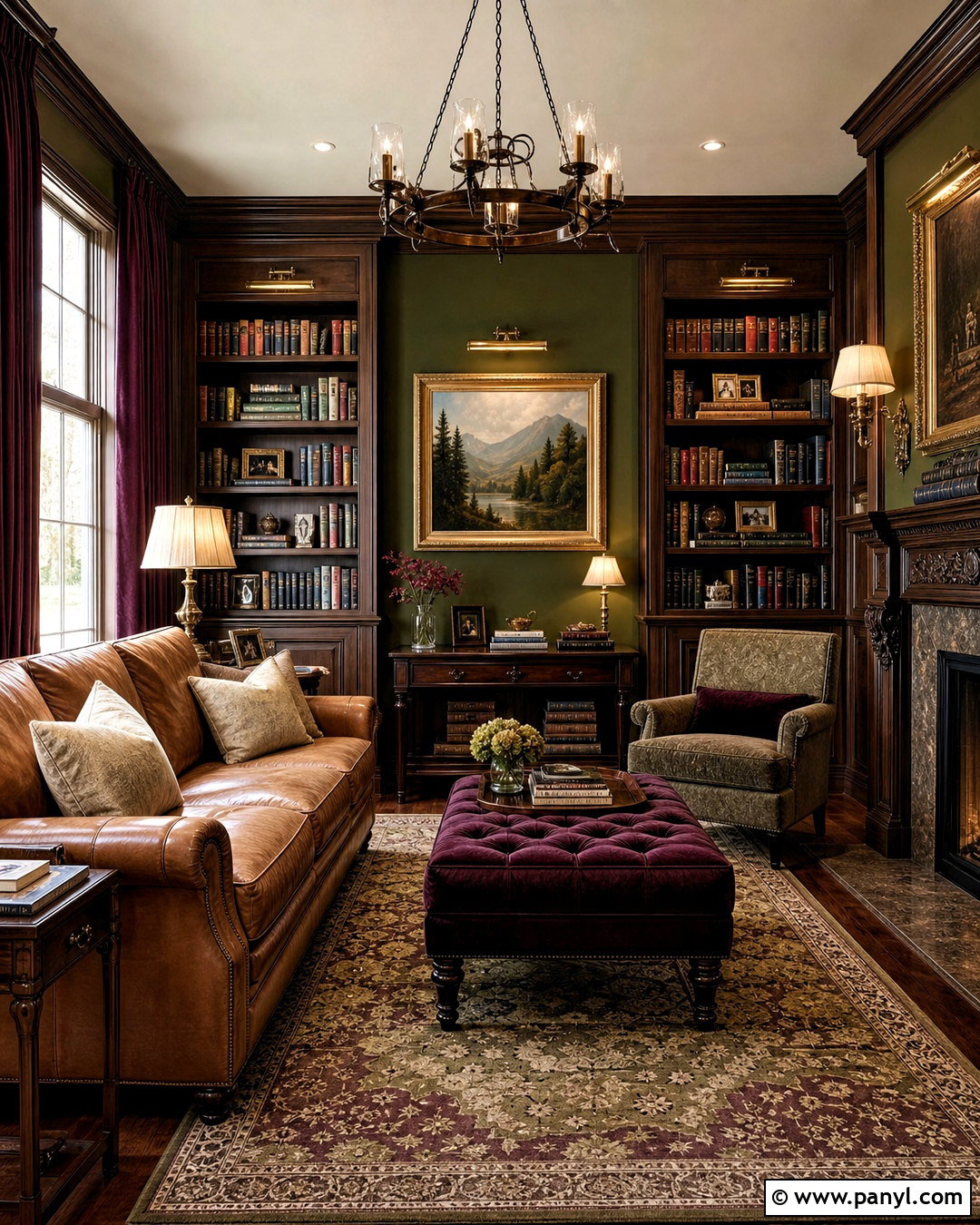
An olive, camel, and plum palette brings traditional warmth to a living room or home library. Cover the walls in a muted olive green and place a camel leather sofa at the center of the arrangement. Plum can appear through velvet curtains, an upholstered ottoman, and a large patterned rug. Dark walnut shelves and an aged brass picture light reinforce the classic character. Add parchment-colored lampshades and cream pillows to lift the darker background. Rather than using bright white, select warm off-white for the ceiling and trim. This keeps the transitions soft and cohesive. The completed room should feel layered and comfortable, with every color repeated through substantial surfaces instead of a random collection of small decorative pieces.
10. Plum Dusty Blue And White Palette
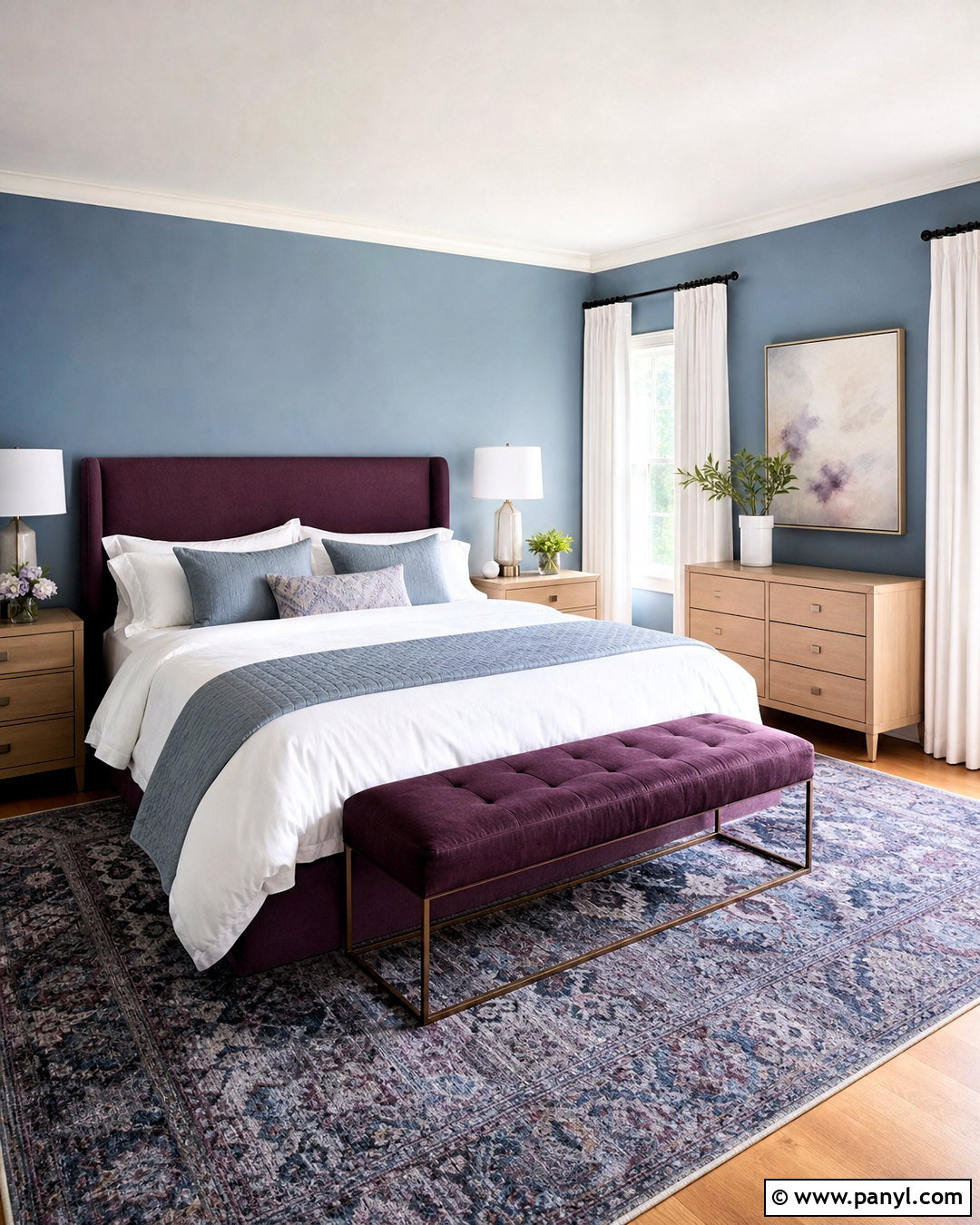
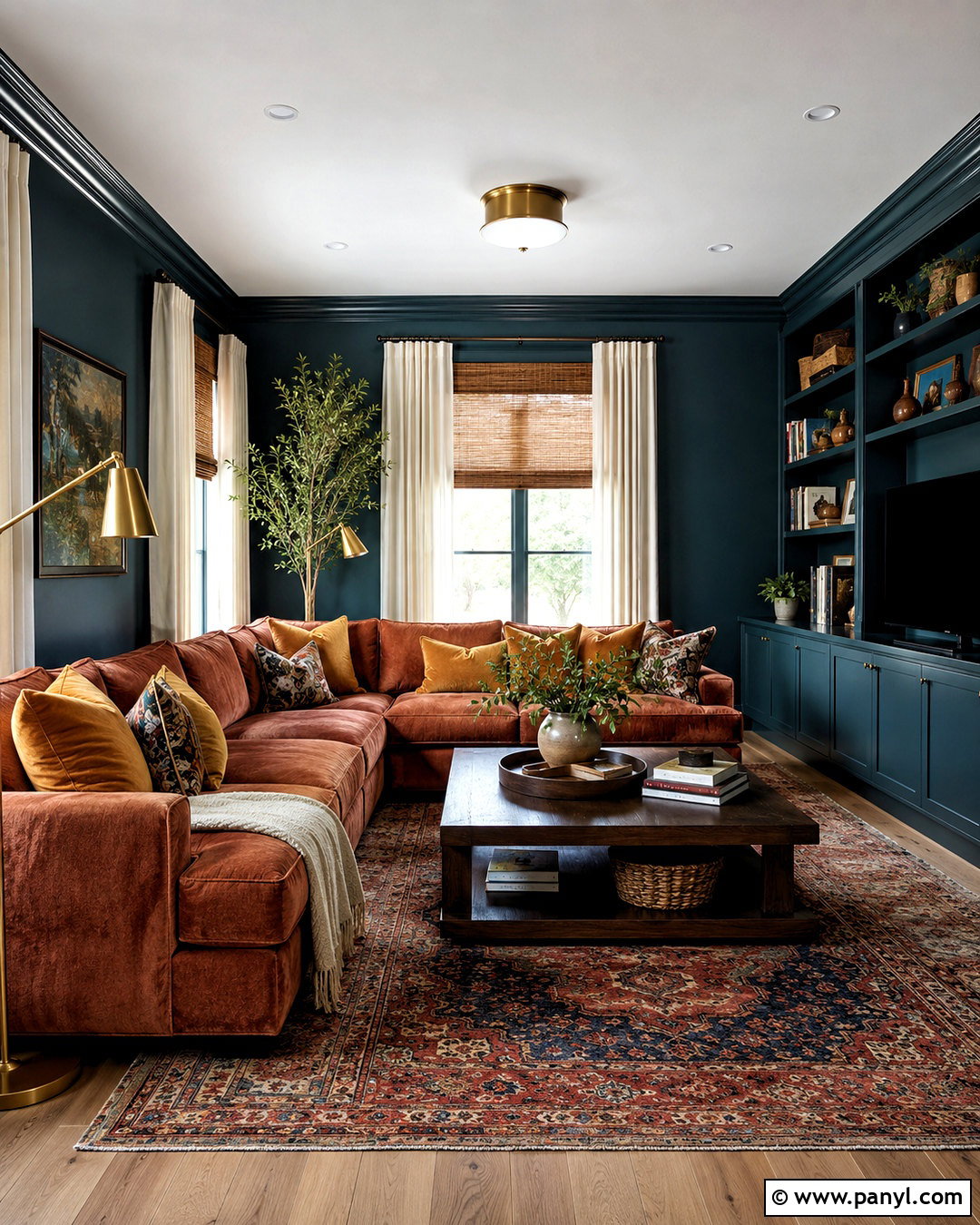
Dusty blue offers a cool, airy partner for plum, making this combination suitable for a bright guest bedroom. Paint the walls soft dusty blue and use crisp white for the ceiling, trim, and simple paneled closet doors. Center the room with a plum upholstered bed dressed in white bedding and a blue-gray quilt. Pale oak nightstands and a lightly patterned plum-and-blue rug add warmth without reducing freshness. Choose white curtains with a subtle blue border and brushed nickel lighting for a clean finish. A plum bench at the foot of the bed helps distribute the strongest color. This balanced layout feels colorful but open, particularly when natural light can reflect across the white and pale blue surfaces.
11. Plum Lavender And Silver Palette
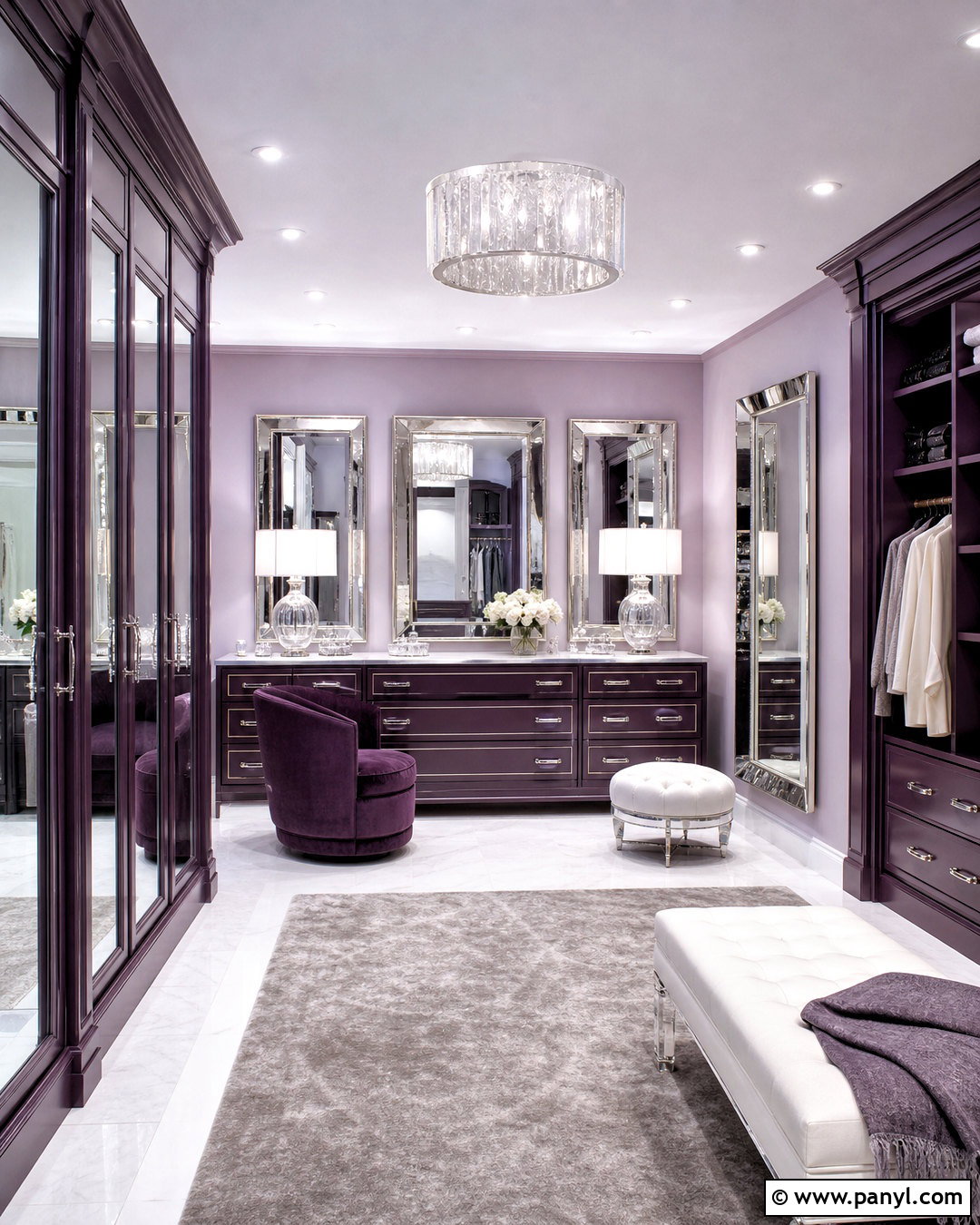
Layering plum with lavender creates a tonal purple room, while silver introduces a crisp contemporary edge. In a dressing room or bedroom, use pale lavender on the walls and reserve plum for built-in cabinetry, an upholstered chair, or the bed. Choose cool white flooring or a light gray rug to separate the purple surfaces. Polished nickel hardware, silver-framed mirrors, and clear glass lamps keep the room feeling bright. Add white bedding or seating with lavender piping to provide visual rest. Plum also works naturally with lavender, gray, and blue when a softer purple scheme is preferred. () Keep patterns restrained and allow texture to create interest through velvet, linen, wool, and subtle metallic finishes.
12. Plum Black And Warm White Palette
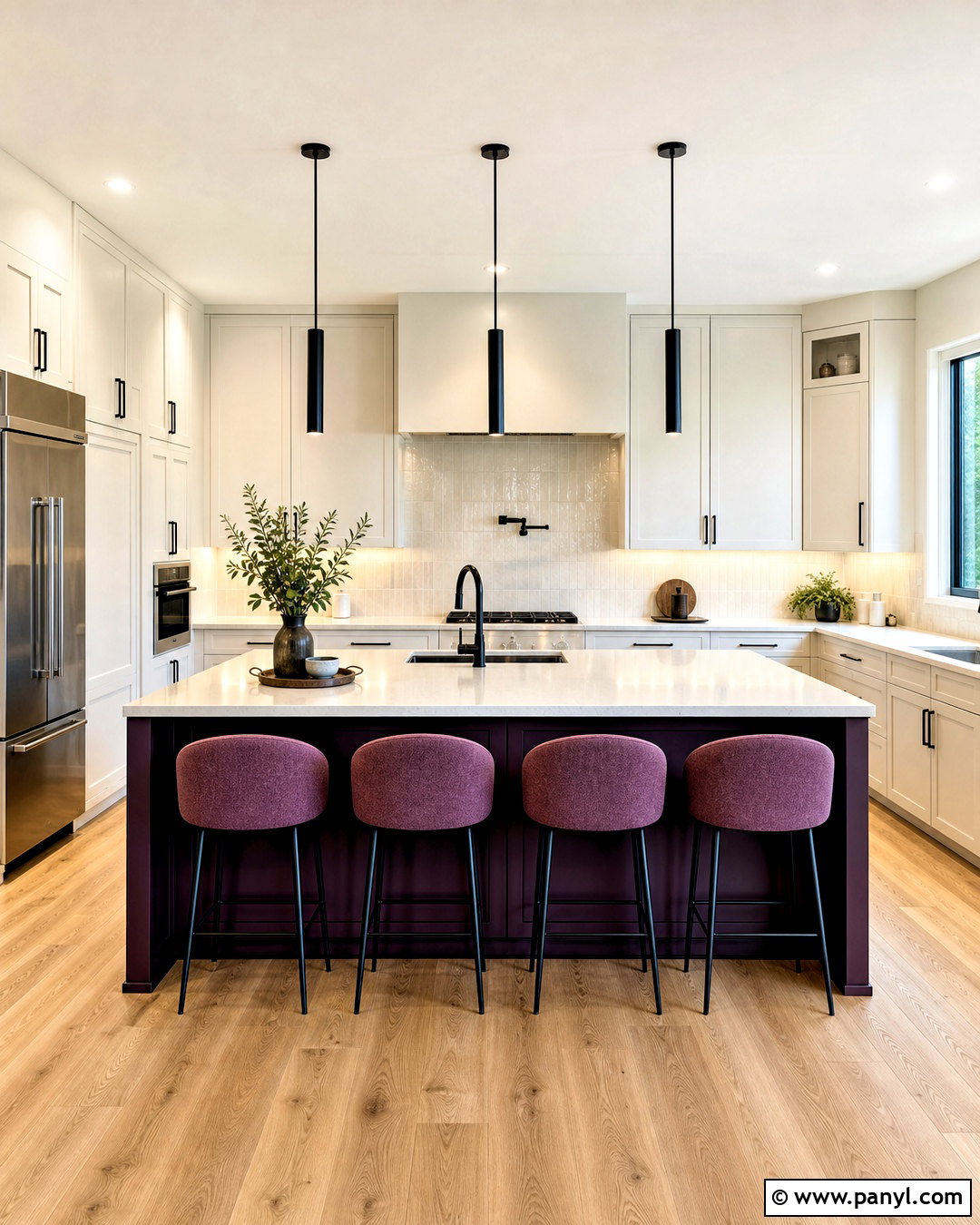
For strong contrast, combine plum with matte black and warm white in a modern kitchen. Paint the island a deep plum and use warm white cabinets around the perimeter. Matte black hardware, faucets, and slim pendant lights will frame the colorful island without competing with it. Select a creamy quartz countertop and a simple off-white tile backsplash to maintain brightness. Light oak flooring can soften the graphic color combination and make the kitchen feel more welcoming. Repeat plum through a small runner or upholstered counter stools rather than painting additional cabinetry. The finished palette looks clean and architectural because each hue has a defined purpose. It offers plenty of visual impact without depending on complicated patterns or excessive decorative accessories.
13. Plum Chocolate Brown And Tan Palette
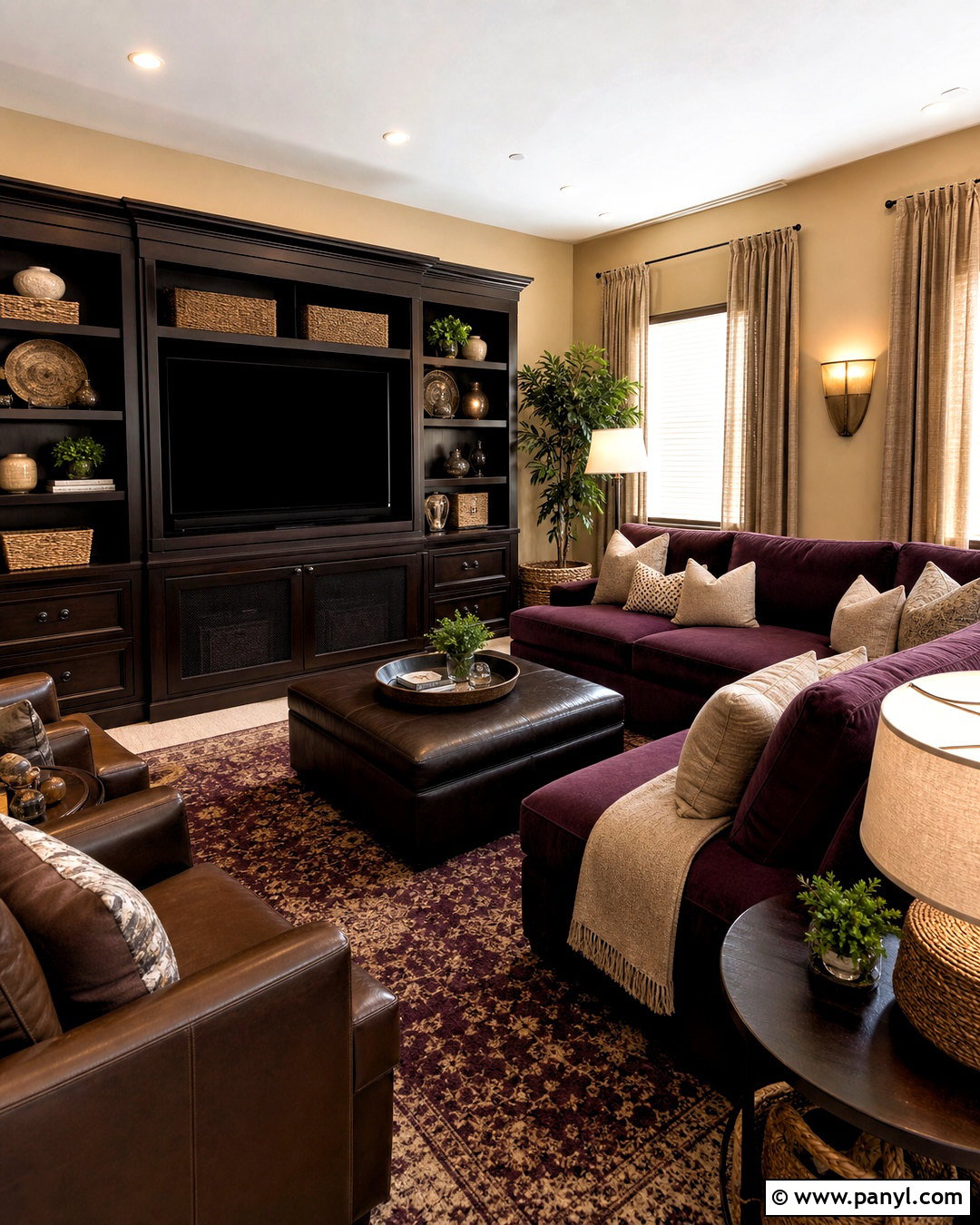
Chocolate brown gives plum an especially warm, enveloping character that suits a bedroom, den, or media room. Use tan walls as the lighter background, then add a plum sectional or upholstered bed as the central feature. Dark chocolate wood furniture, brown leather details, and a tonal brown-and-plum rug will create a strong foundation. Choose oatmeal curtains and cream lampshades to stop the space from becoming too dark. Bronze lighting works better here than cool silver because it supports the warmer undertones. Add texture through bouclé, velvet, linen, and woven baskets instead of introducing several new colors. This complete palette feels comfortable and substantial, making it useful for rooms intended for relaxing, reading, or quiet evenings at home.
14. Plum Emerald Green And Cream Palette
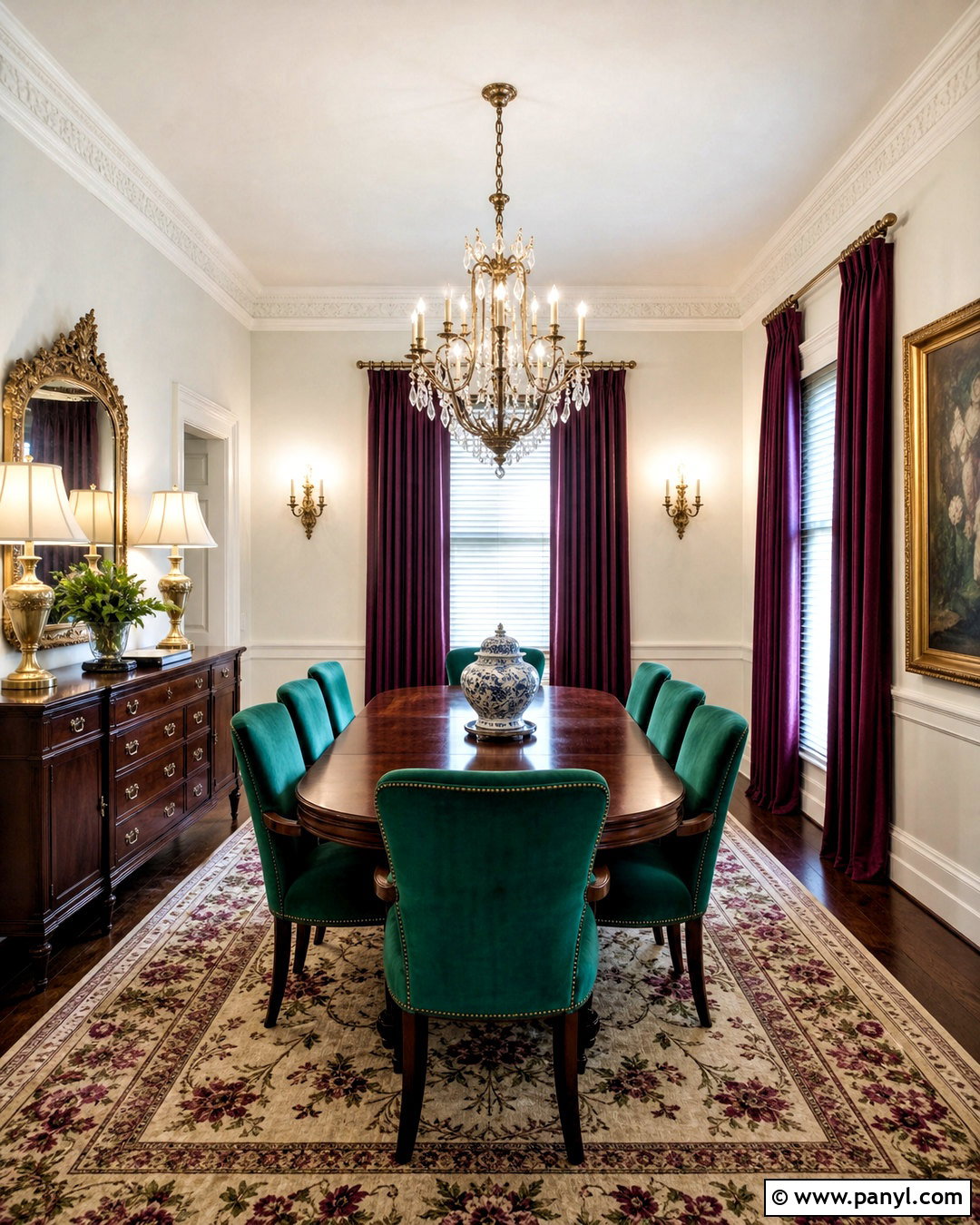
Emerald green and plum make a confident pairing for a formal dining room or colorful sitting area. Keep the walls creamy white so both jewel tones remain clear and distinct. Choose emerald dining chairs around a dark wood table, then frame the windows with full plum curtains. A cream rug with a restrained green-and-plum pattern can connect the major pieces. Use antique brass for the chandelier, mirror, and cabinet hardware to add warmth. Dark wood grounds the combination, while cream upholstery or table linens provide relief from the saturated colors. Limit decorative objects to a few substantial pieces, such as a ceramic centerpiece and large framed artwork. The finished room feels luxurious, balanced, and suitable for both everyday use and special gatherings.
15. Plum Coral And Peach Palette
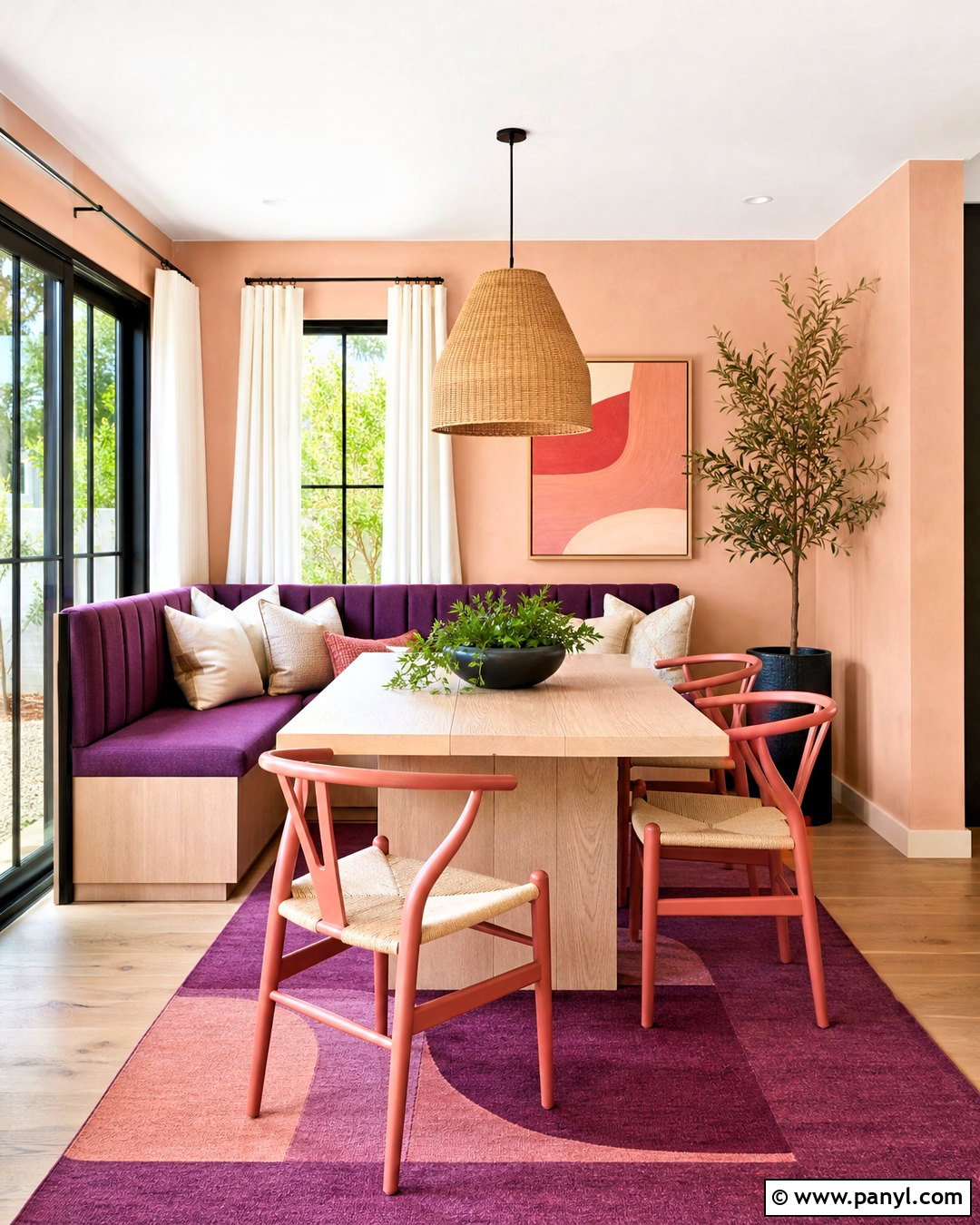
A playful plum palette does not need to feel dark. Coral and peach bring cheerful warmth to a breakfast nook, craft room, or casual family space. Paint the walls a light peach and install a built-in bench upholstered in plum. Add coral dining chairs, a pale wood table, and cream cushions to create a balanced seating arrangement. A washable rug containing plum, peach, and coral can unify the open floor area. Choose simple white curtains and natural rattan lighting so the bright colors remain approachable. Small black details can sharpen the scheme, but use them sparingly. This finished look feels upbeat and modern because plum provides enough depth to keep the lighter warm hues from appearing overly sweet or delicate.
16. Plum Greige And Natural Wood Palette
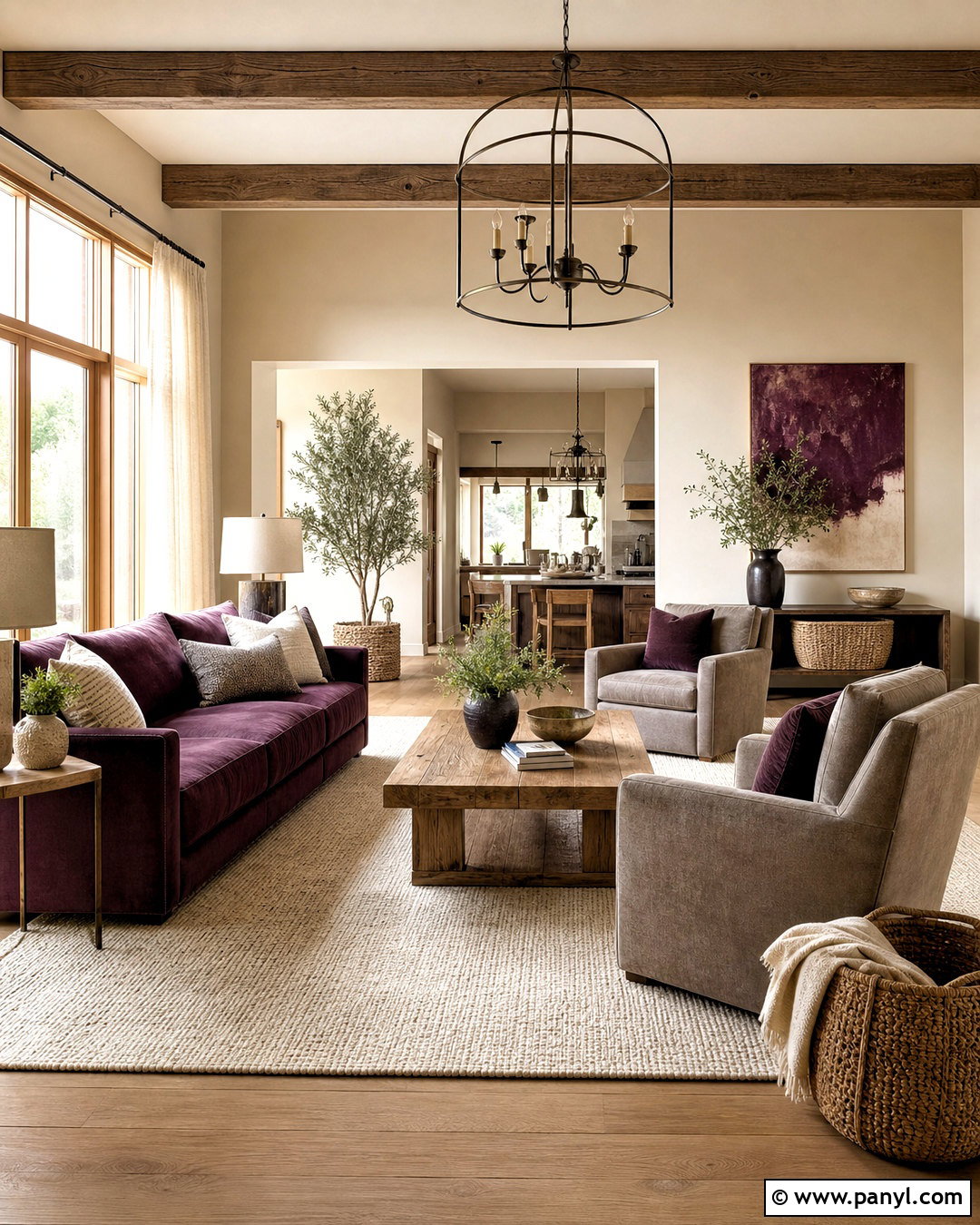
Greige is a practical foundation when you want plum to stand out without taking over an entire room. Cover the walls in a warm gray-beige and choose natural oak flooring for a comfortable, neutral base. In a living room, introduce a plum sofa, a large ivory rug, and two greige armchairs. Oak tables, linen curtains, and woven baskets add quiet texture throughout the arrangement. Use matte black or dark bronze for lighting to define the softer surfaces. Artwork can include restrained plum shapes against beige backgrounds, helping the sofa feel integrated rather than isolated. This palette works especially well in open-plan homes because the greige and wood can continue into adjoining spaces while plum identifies the main seating area.
17. Plum Powder Blue And Pale Gray Palette
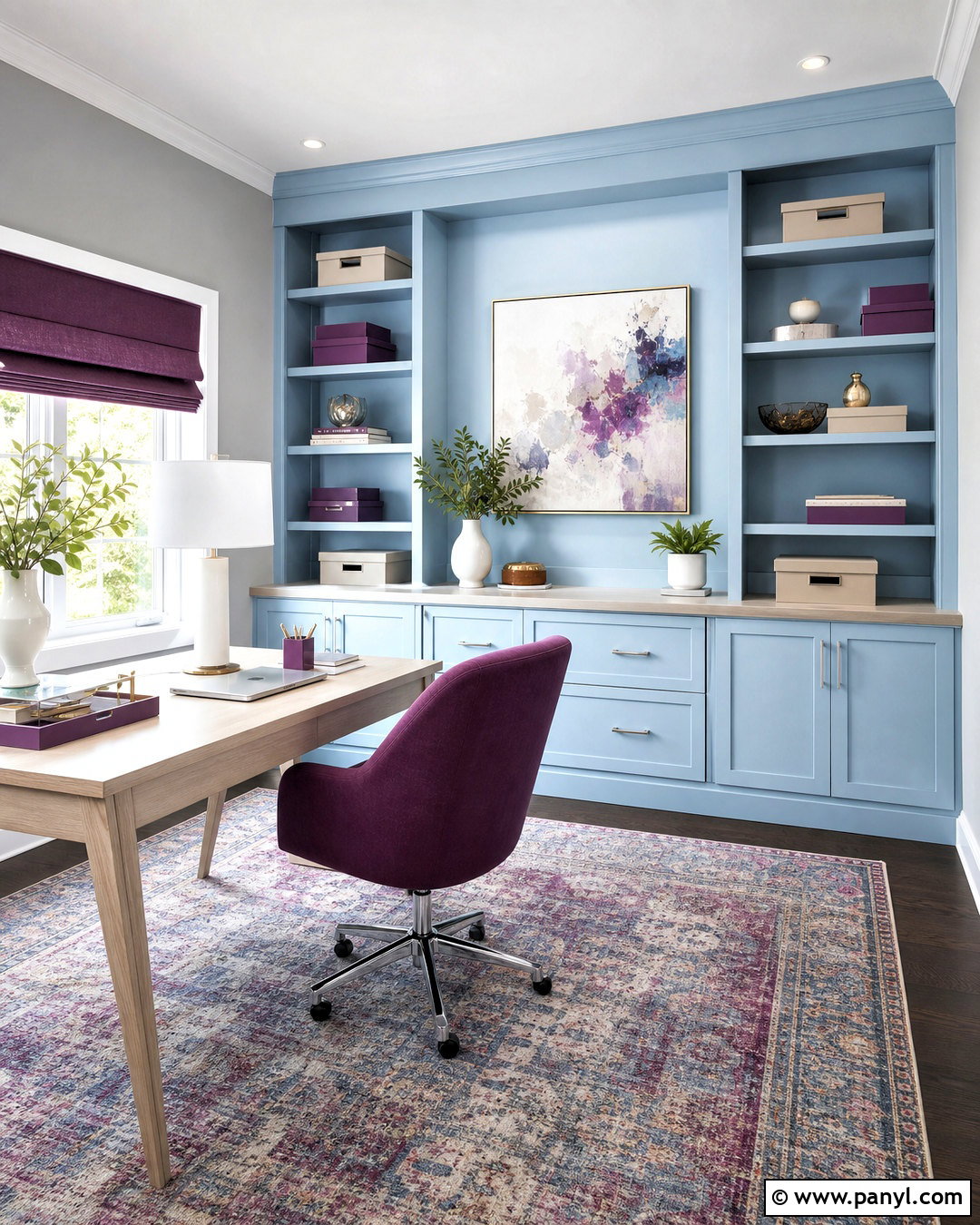
Powder blue makes deep plum appear lighter and more youthful, while pale gray keeps the pairing sophisticated. For a home office or creative studio, use powder blue cabinetry and light gray walls. Place a plum desk chair, plum window shade, and patterned rug in the center of the composition. A white oak desk and open shelves will warm the cool background without adding heaviness. Choose brushed nickel hardware and frosted white lighting to maintain a crisp finish. Storage boxes and artwork should repeat the three-color palette rather than introducing unrelated brights. The final workspace feels organized, fresh, and distinctive. Plum provides a strong visual anchor, while powder blue and gray help the room remain comfortable during long periods of use.
18. Plum Rust And Linen Palette
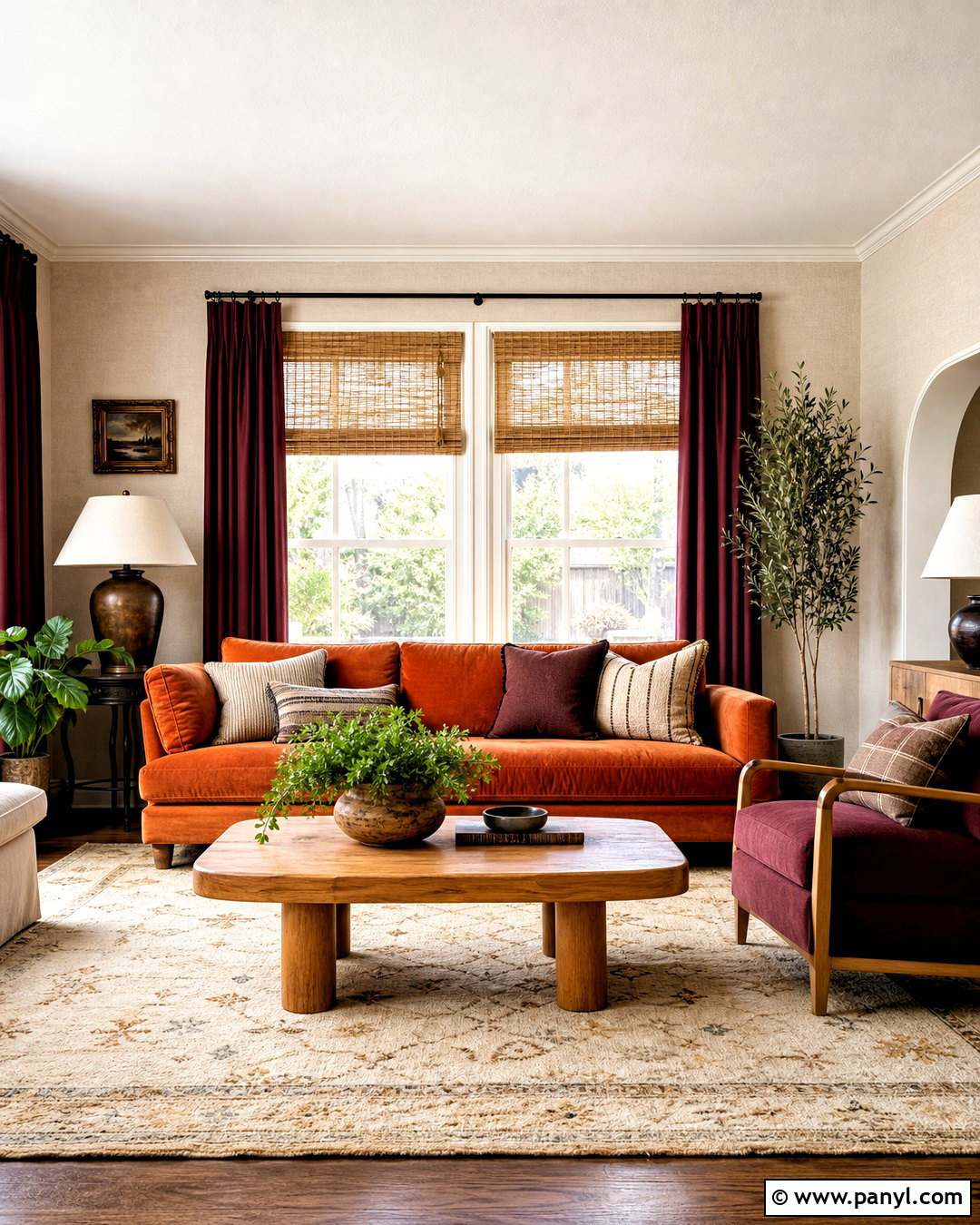
Plum and rust create a deep autumnal combination, but linen and pale wood can keep it suitable throughout the year. In a cozy living room, use linen-colored walls and a rust sofa as the warm central piece. Add plum curtains, a plum accent chair, and a patterned rug that blends both colors with cream. A light oak coffee table and woven shades prevent the room from feeling too dense. Select aged bronze lighting and handmade ceramic decor for an organic finish. Keep the ceiling, trim, and larger lampshades warm white. By spreading plum and rust across furniture and textiles, the palette appears deliberate and balanced. The complete room feels inviting, textured, and colorful without relying on seasonal decorations.
19. Plum White And Light Oak Palette
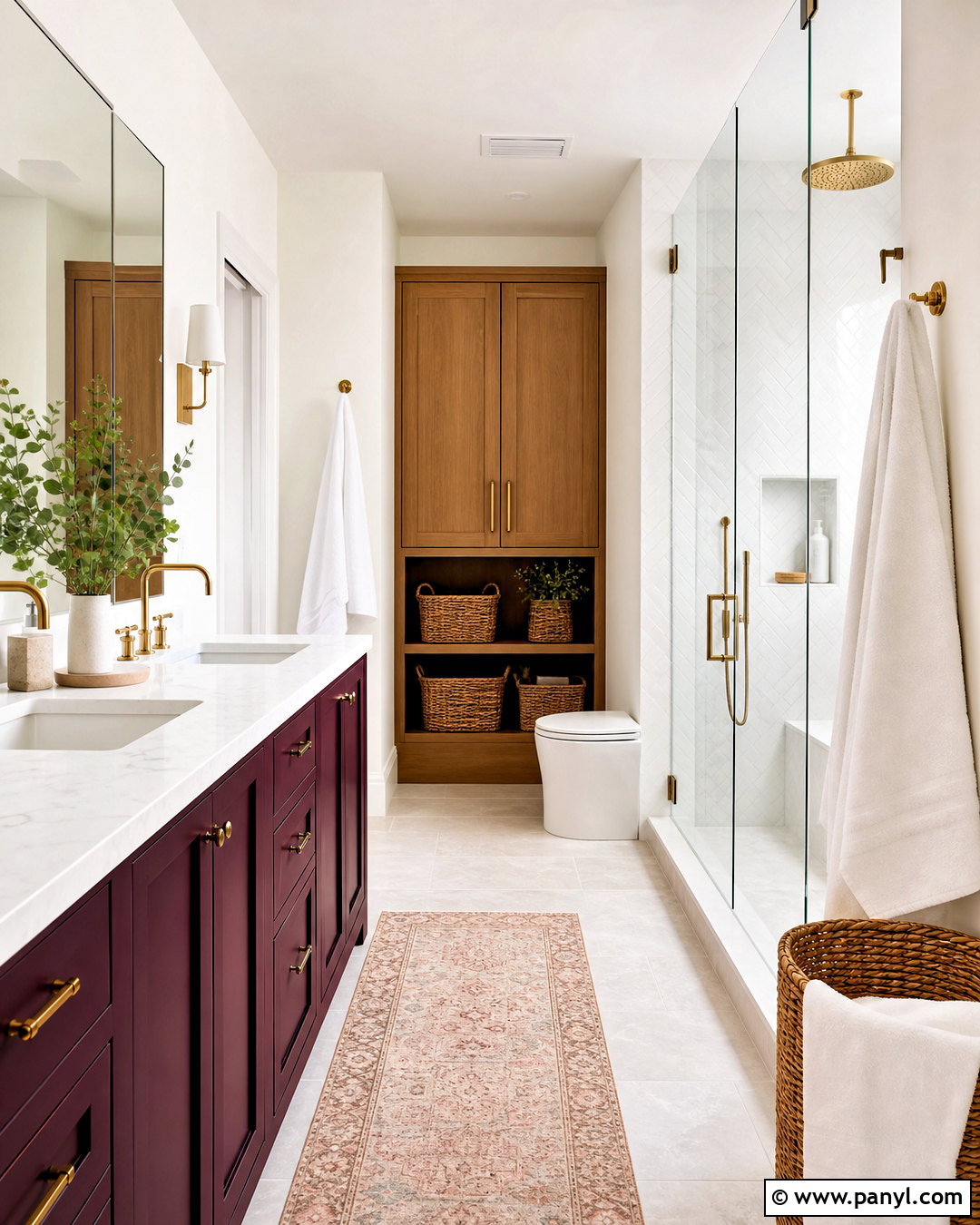
White and light oak provide the cleanest setting for a bold plum feature. In a bathroom, paint the vanity plum and surround it with warm white walls, pale stone tile, and a light oak storage cabinet. Use a white quartz counter and simple brushed brass fixtures to create a bright, finished appearance. A frameless mirror and clear glass shower enclosure will keep sightlines open. Repeat plum through one washable runner and a small framed print, avoiding too many matching accessories. White towels and natural woven baskets complete the practical side of the room. This palette is ideal for smaller spaces because the plum vanity supplies a memorable focal point while the lighter finishes preserve an open, uncluttered feeling.
20. Monochromatic Plum Mauve And Berry Palette
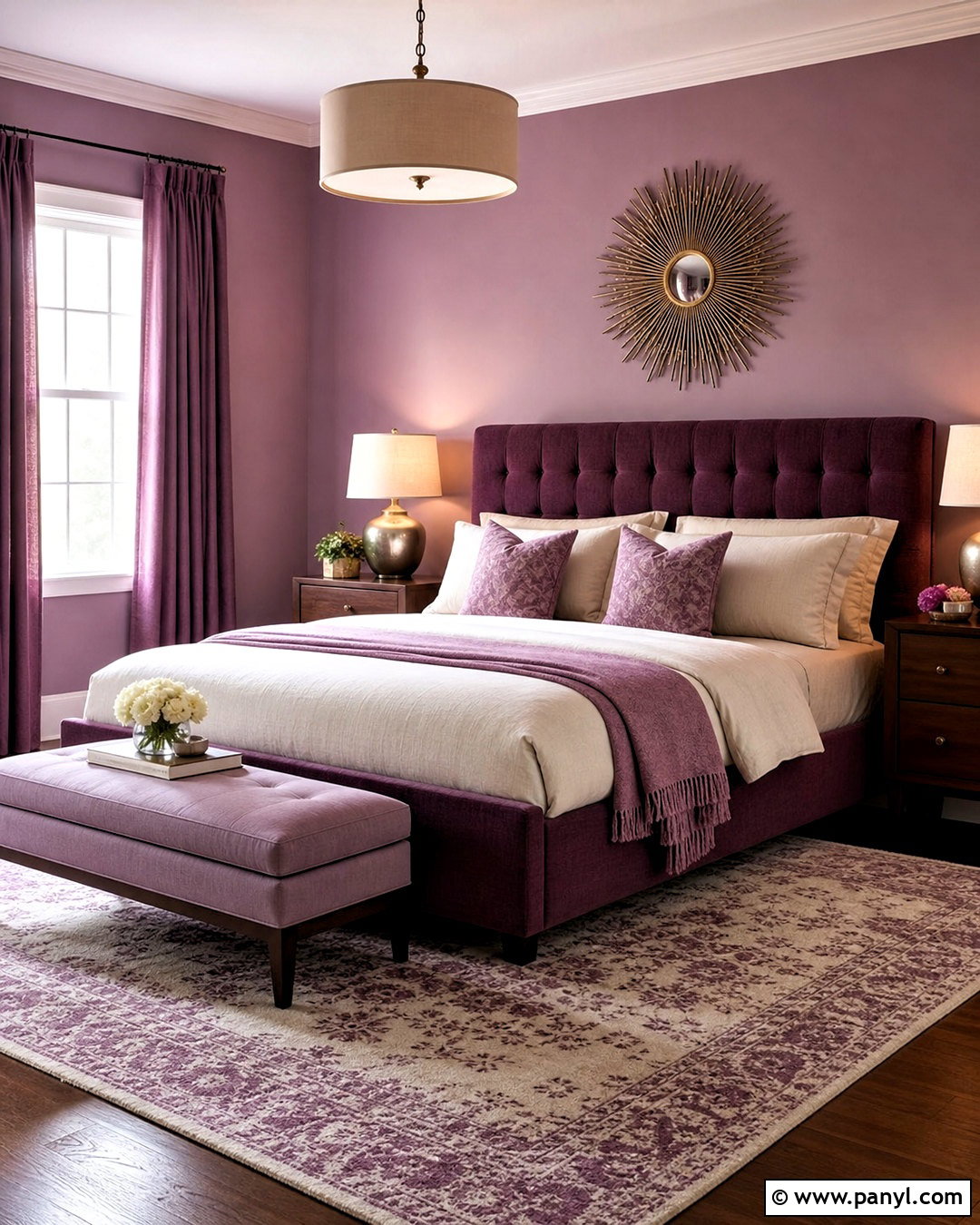
A tonal plum room can feel rich and cohesive when its shades vary clearly from light to dark. Start with soft mauve walls and add a deep plum sofa or upholstered bed. Use medium berry curtains, dusty purple pillows, and a patterned rug that includes cream for visual relief. Dark plum cabinetry or a small side table can add another level of depth without matching the main furniture exactly. Warm walnut and antique brass keep the purple family from appearing cold. Include several neutral surfaces, such as ivory bedding, a cream ceiling, or oatmeal lampshades. The finished design feels layered because color value, material, and texture change across the room, even though the overall palette remains closely connected.
Conclusion:
Plum can support far more than a dark, dramatic interior. It feels graceful with blush, grounded with sage, tailored with navy, energetic with coral, and clean beside white and light oak. The most successful schemes assign each color a clear role across walls, furniture, flooring, textiles, and finishes. Start with one main plum feature, choose a supporting color, and add a neutral that creates breathing room. Repeating the palette through a few substantial elements will look more intentional than filling the room with tiny matching accents. Whether your home feels modern, traditional, earthy, or eclectic, these **20 plum color palette ideas** offer complete looks that can be adjusted to suit your space.

Related Ideas and Inspiration:
Leave a Reply