
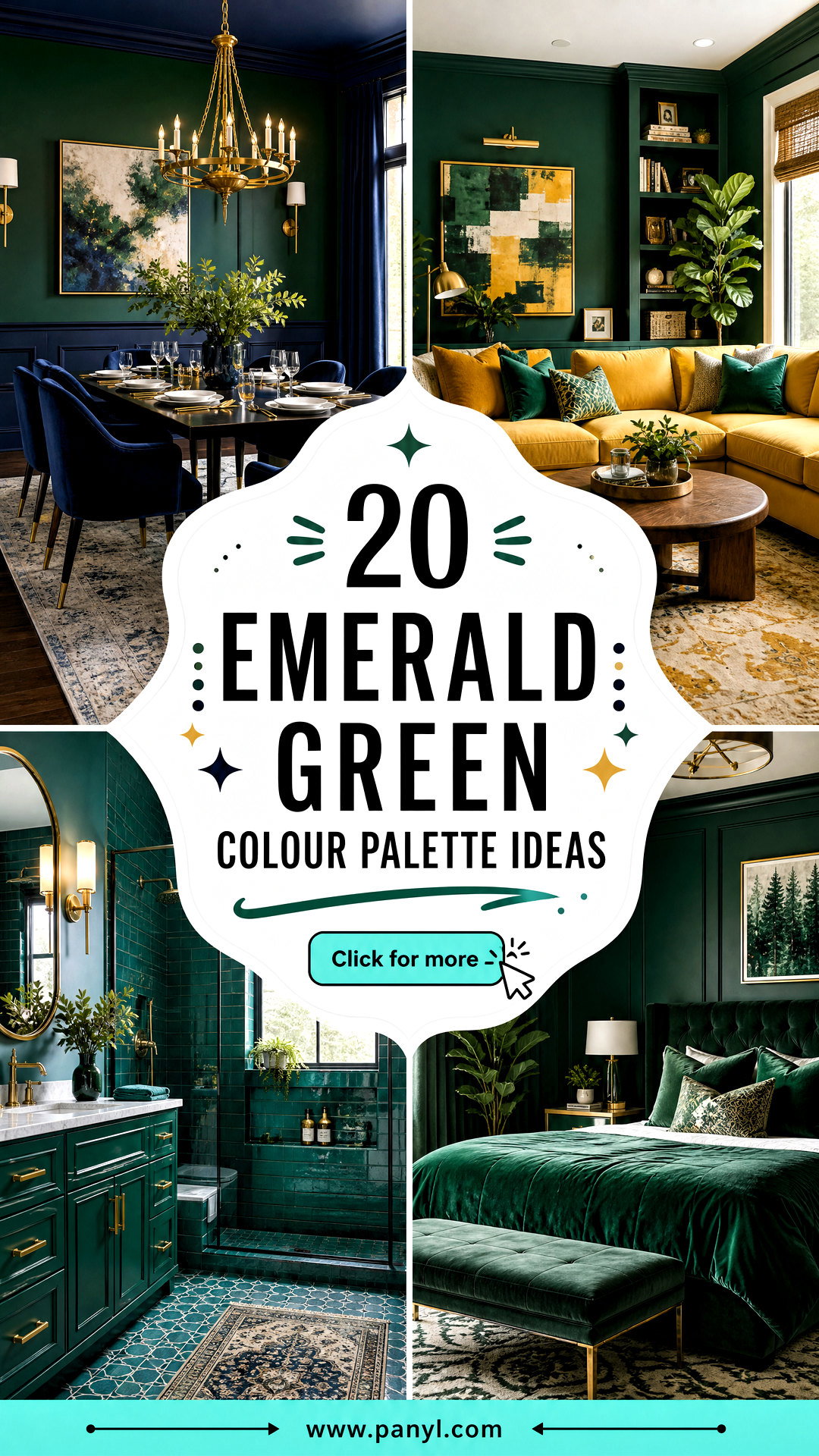
Emerald green brings the depth of a jewel tone and the freshness of nature into almost any home. It can look elegant beside brass, relaxed with warm wood, playful with pink, or dramatic against black. Current design guidance also shows how successfully emerald works with neutrals, metallics, complementary pinks, and layered jewel tones. () The key is deciding whether green will dominate the room or appear through furniture, textiles, and smaller accents. Each palette below creates a complete, usable look with coordinated walls, flooring, furniture, lighting, and decor. Whether you prefer modern simplicity, vintage warmth, or colorful maximalism, you can find a balanced direction among these 20 emerald green colour palette ideas.
1. Emerald Green And Warm White Living Room
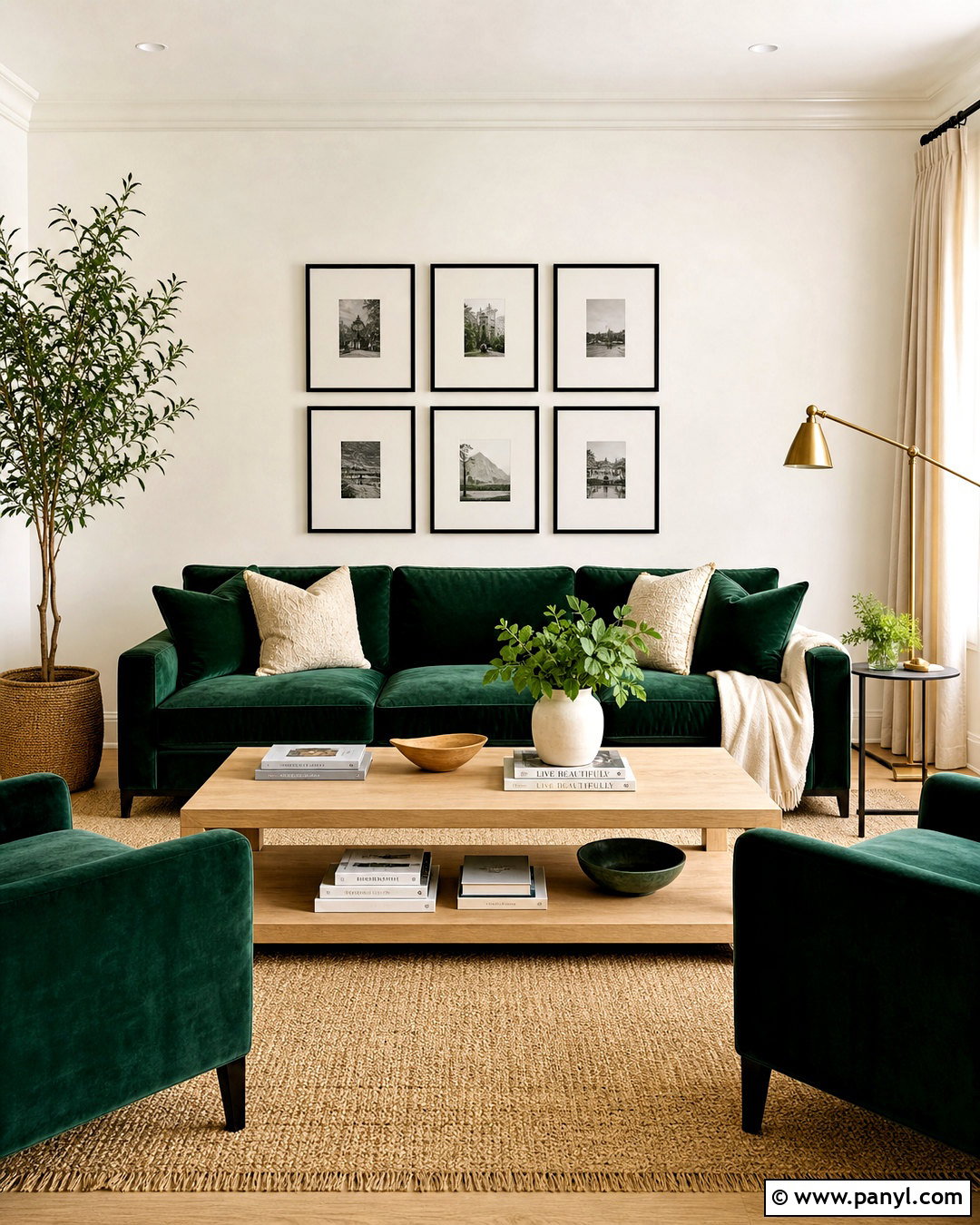
Warm white softens the intensity of emerald green while keeping the room bright and comfortable. Paint the walls a creamy white, then introduce emerald through a generous velvet sofa or a pair of upholstered armchairs. A natural oak coffee table and pale woven rug prevent the jewel tone from feeling overly formal. Add brushed brass floor lamps, ivory curtains, and cushions combining green, beige, and muted gold. Keep larger surfaces light so the emerald furniture remains the clear focal point. Small black accents, such as picture frames or a slim side table, provide definition. This complete palette works especially well in an average-sized living room where natural light can reveal the green sofa’s rich blue and yellow undertones.
2. Emerald Green And Blush Pink Bedroom
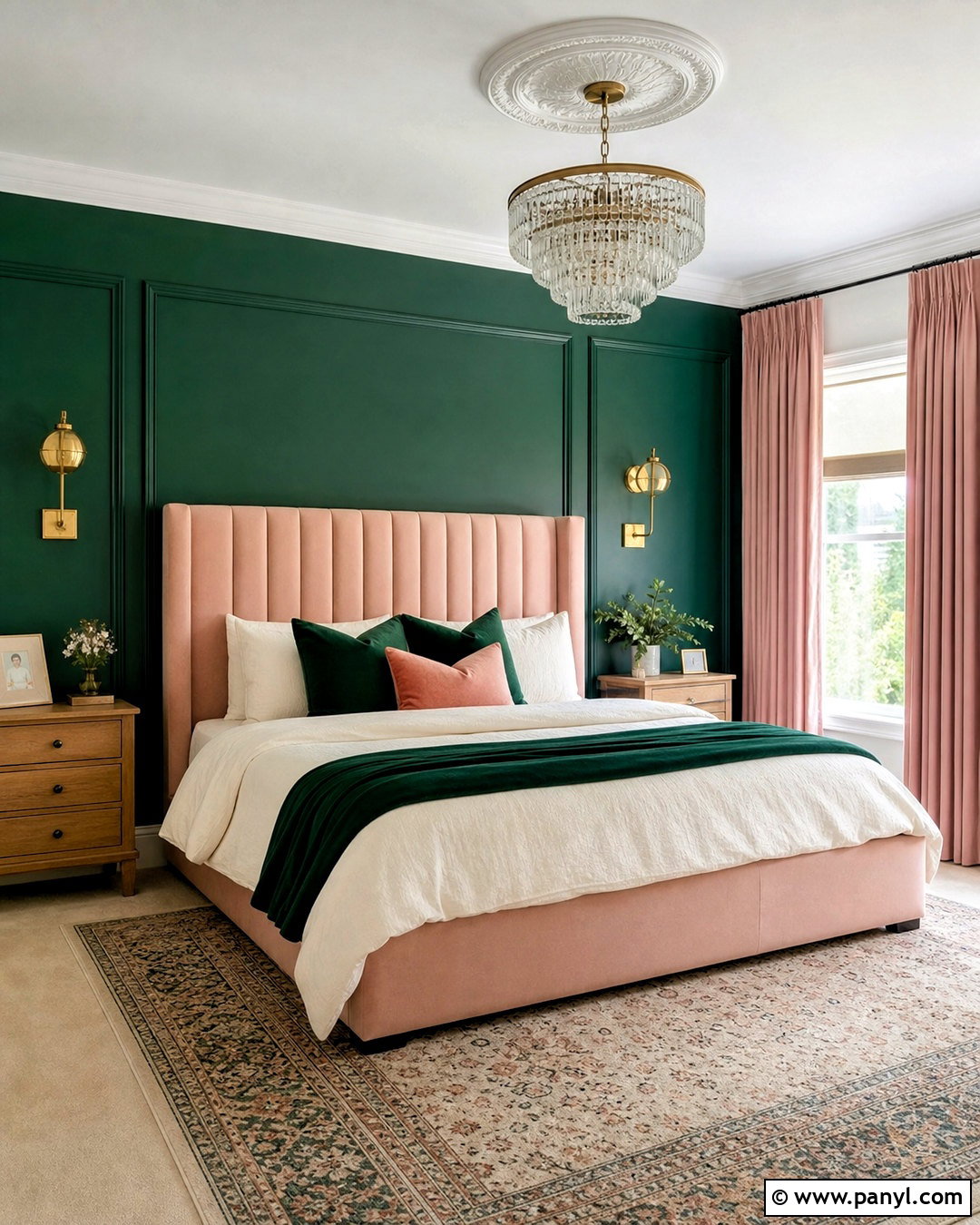
Soft blush pink gives emerald green a gentle, romantic contrast without making the bedroom feel overly sweet. Use emerald on the wall behind the bed, leaving the remaining walls warm white or pale cream. Choose an upholstered blush headboard, ivory bedding, and a green velvet throw folded across the foot of the bed. Light oak nightstands and a neutral wool rug add warmth, while antique brass sconces create a polished finish. Repeat both colors in floral artwork and patterned cushions, but keep the prints simple. Dusty rose curtains can frame the windows without competing with the feature wall. The finished bedroom feels colorful yet restful because deep green grounds the lighter pink, cream, and natural wood elements.
3. Emerald Green And Navy Blue Dining Room
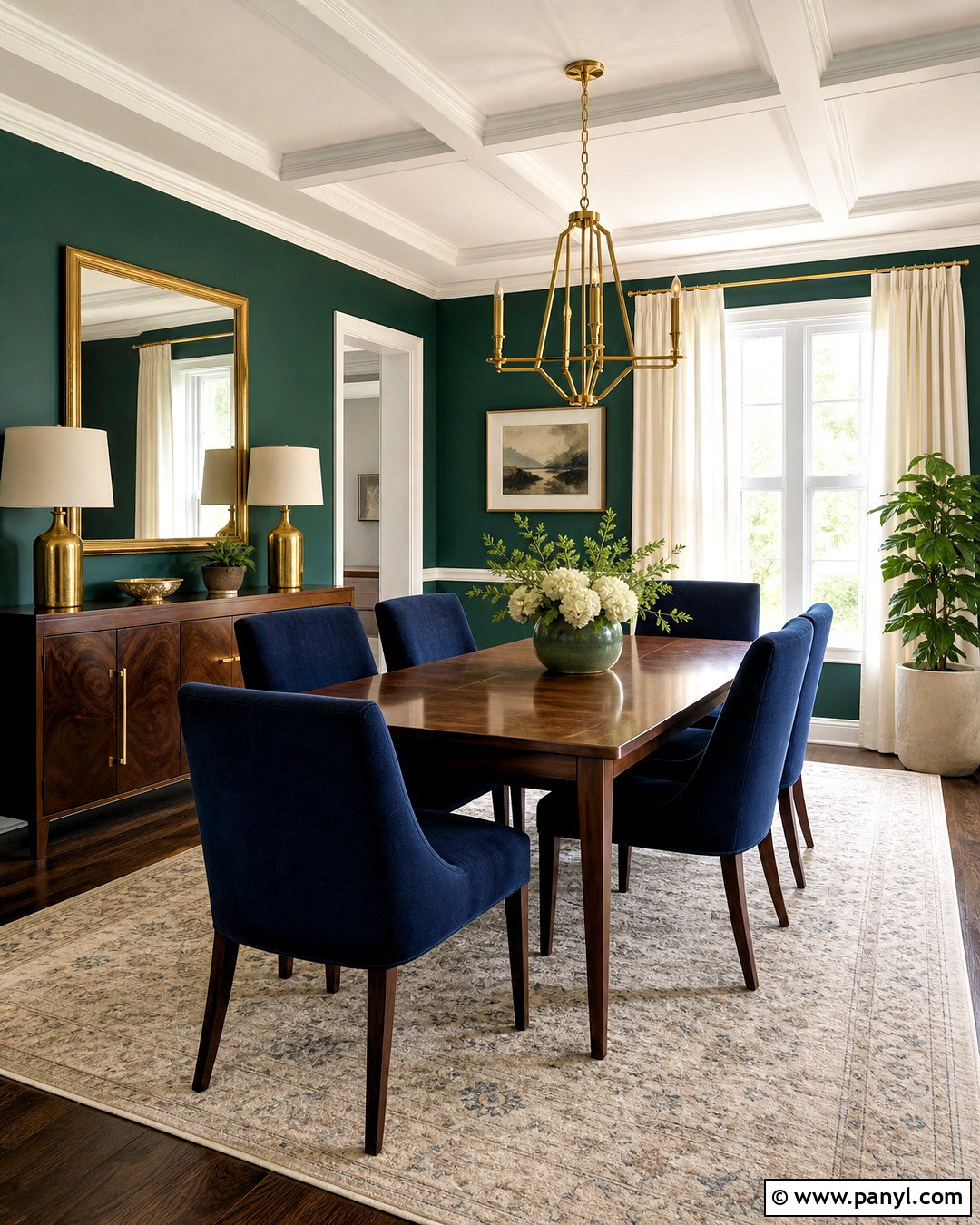
Emerald green and navy blue create a deep, tailored dining room with plenty of visual dimension. Cover the walls in emerald green and use navy on upholstered dining chairs or a built-in buffet. A medium walnut table introduces necessary warmth between the two cool colors. Choose an off-white ceiling, cream curtains, and a pale patterned rug to keep the darker palette from closing in. A brass chandelier and matching cabinet hardware add subtle shine without turning the room into a formal showpiece. White ceramic dishes and clear glass accessories provide crisp contrast. For balance, let emerald occupy the largest area, navy support it through furniture, and walnut and cream bridge the scheme. The result feels sophisticated, comfortable, and practical for regular meals.
4. Emerald Green And Black Kitchen
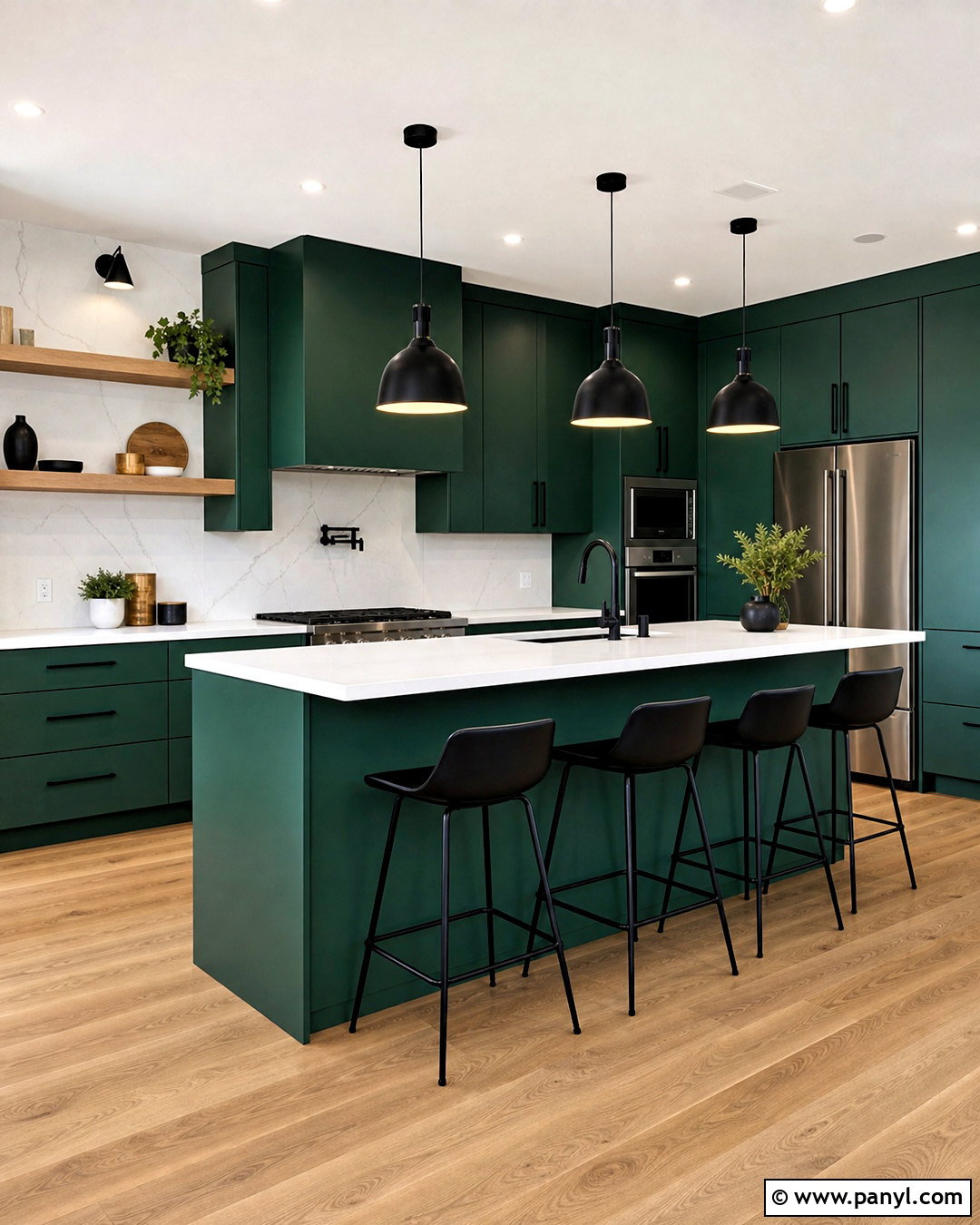
Do you want an emerald green kitchen that feels modern rather than traditional? Choose flat-panel green cabinets and anchor them with matte black hardware, black-framed windows, and slim black pendant lights. A white quartz countertop and backsplash will brighten the room and create a clean break between the saturated cabinets. Keep the flooring warm with medium oak planks instead of cool gray tile. Black can also appear on barstools and the faucet, but avoid using it across every major surface. Add open oak shelves, white stoneware, and a few simple plants to soften the stronger finishes. This complete kitchen palette feels graphic and contemporary, while the natural wood and bright countertops stop the emerald and black combination from becoming heavy.
5. Emerald Green And Terracotta Home Office
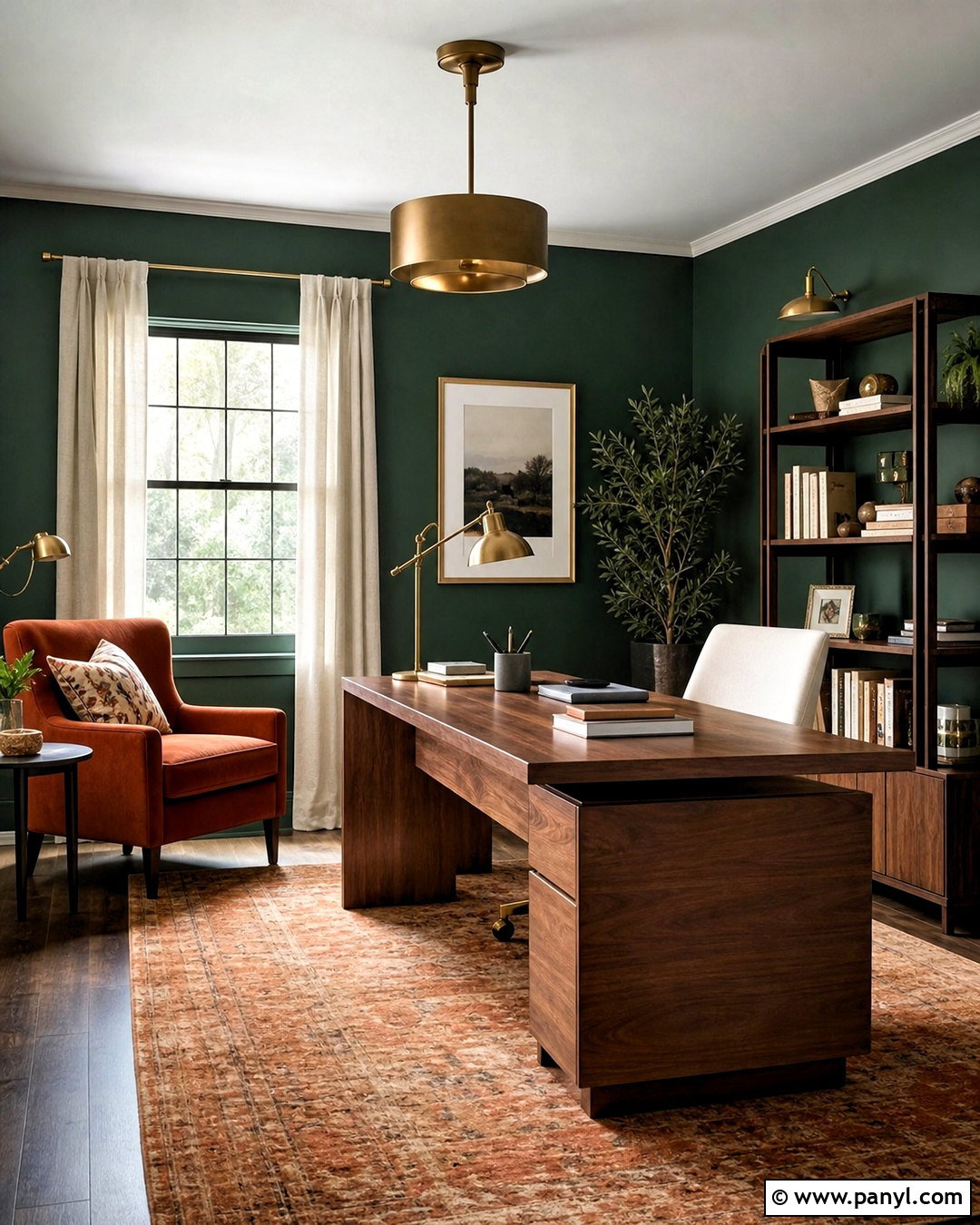
Warm terracotta makes an emerald green home office feel grounded, creative, and welcoming. Paint the walls emerald, then place a walnut desk against the strongest uninterrupted wall. Introduce terracotta through a low-pile rug, an upholstered reading chair, and ceramic planters. Natural linen curtains and a cream desk chair lighten the scheme, while aged brass lighting gives the workspace a collected quality. Shelves can combine dark wood, woven storage boxes, and a restrained mix of books and pottery. Keep the ceiling and trim warm white so the room maintains clear edges. Because terracotta contains earthy orange tones, it creates lively contrast with green without looking harsh. The finished office supports focused work while still feeling personal, warm, and connected to natural materials.
6. Emerald Green And Mustard Yellow Family Room
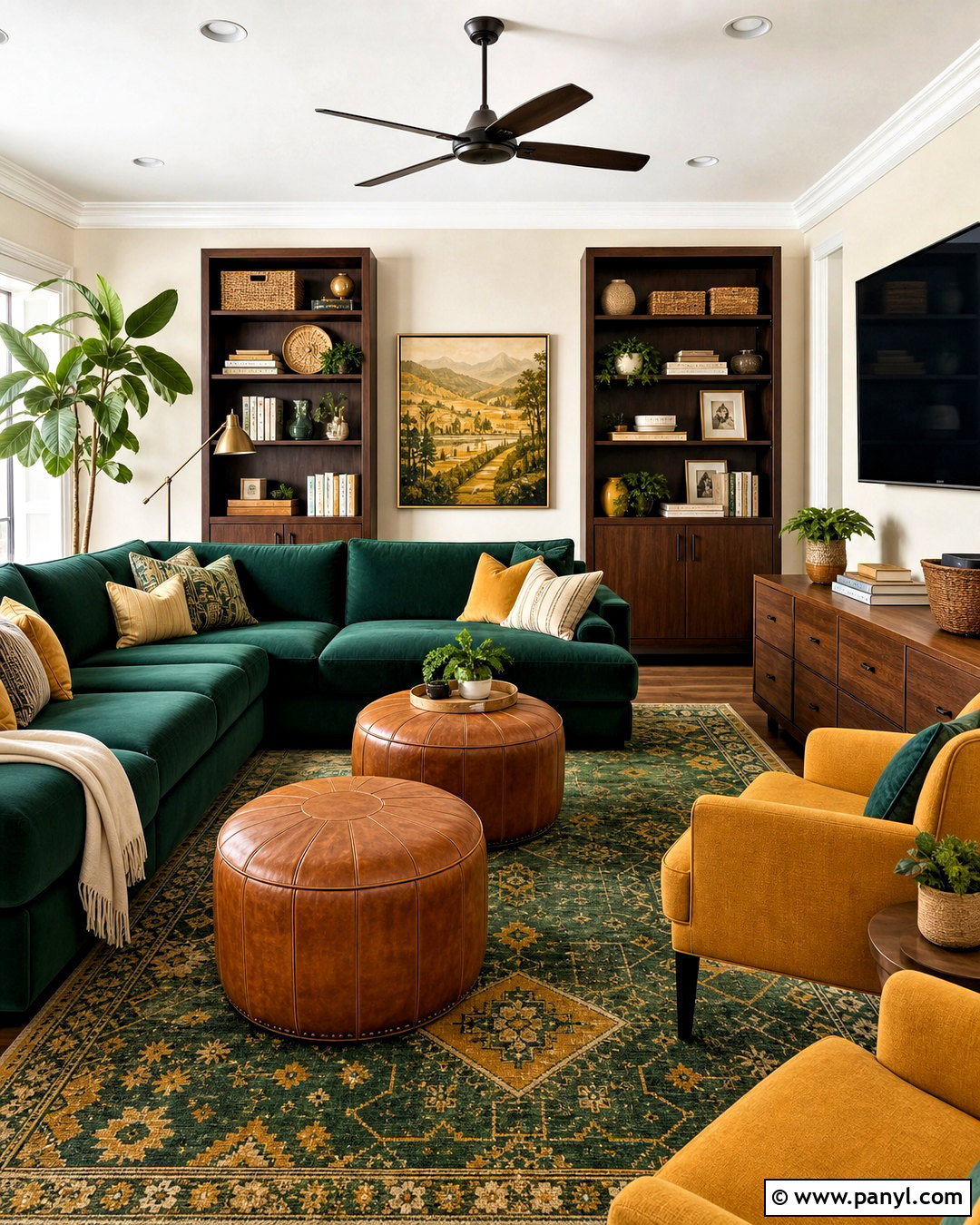
Emerald green and mustard yellow create an energetic family room that still feels mature. Start with a deep green sectional or washable sofa and place it against warm cream walls. Add mustard through a patterned area rug, two sturdy accent chairs, and a few durable cushions. Walnut storage cabinets, caramel leather ottomans, and woven baskets bring practical warmth to the palette. Use off-white curtains to maximize daylight, then add matte black lamps for stronger visual structure. Patterns should repeat green, mustard, cream, and brown rather than introducing several unrelated colors. This arrangement gives the room personality while preserving a comfortable everyday layout. The emerald sofa provides a forgiving foundation, and mustard accents make the space feel cheerful without dominating every surface.
7. Emerald Green And Sage Green Sunroom
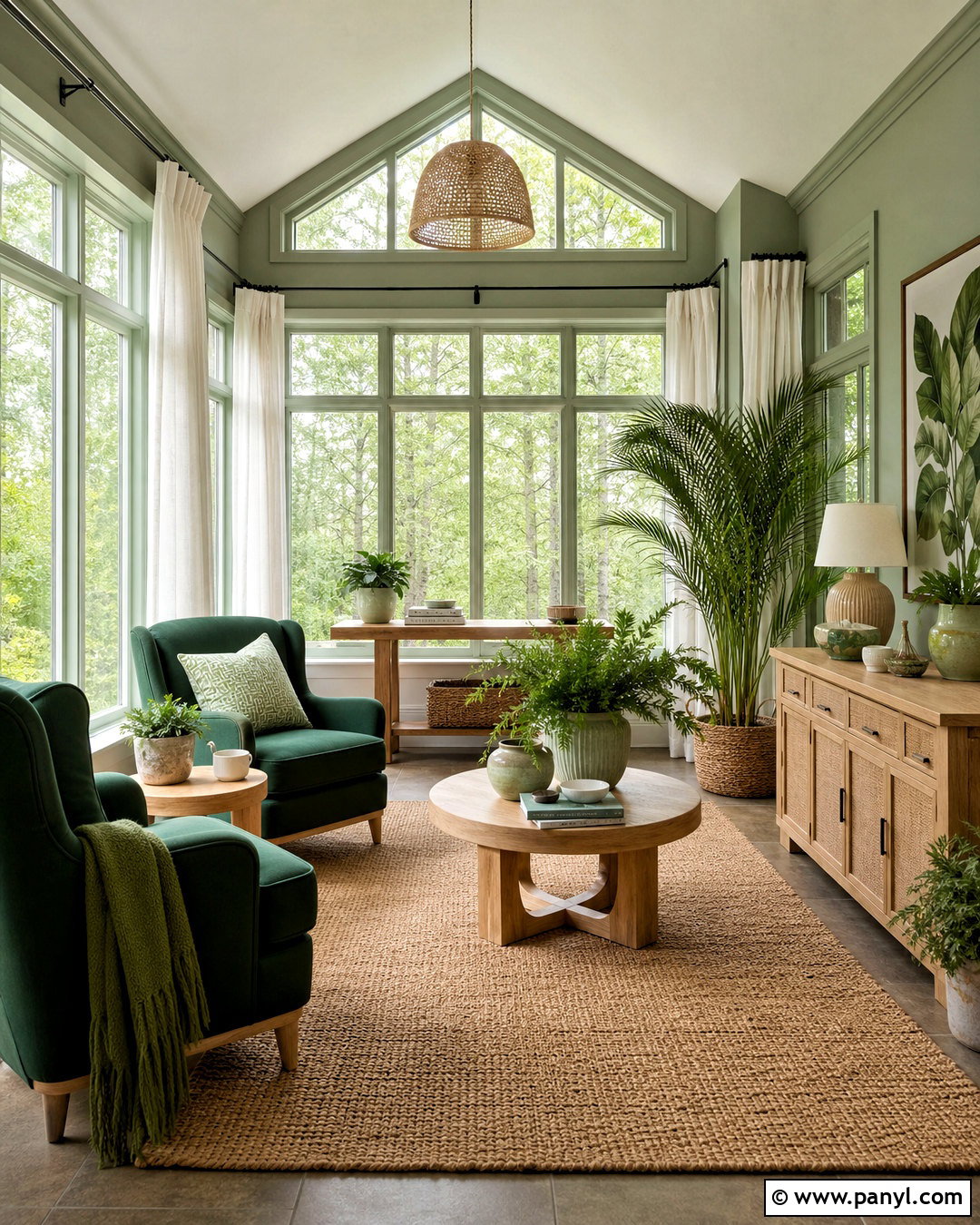
Layering emerald and sage creates a peaceful green palette inspired by garden foliage. Paint the sunroom walls soft sage, then use emerald green on a cushioned loveseat, window seat, or pair of lounge chairs. Choose pale oak furniture, a natural jute rug, and warm white curtains to keep the room airy. Botanical prints can combine several green tones, but use simple frames so the walls remain calm. Add cream cushions, moss-colored throws, and ceramic planters in chalky white or muted green. Black window frames offer crisp definition if the architecture allows it. Since both greens share a natural character, texture becomes especially important. Linen, rattan, velvet, and unfinished wood prevent the coordinated scheme from looking flat or overly matched.
8. Emerald Green And Teal Bathroom
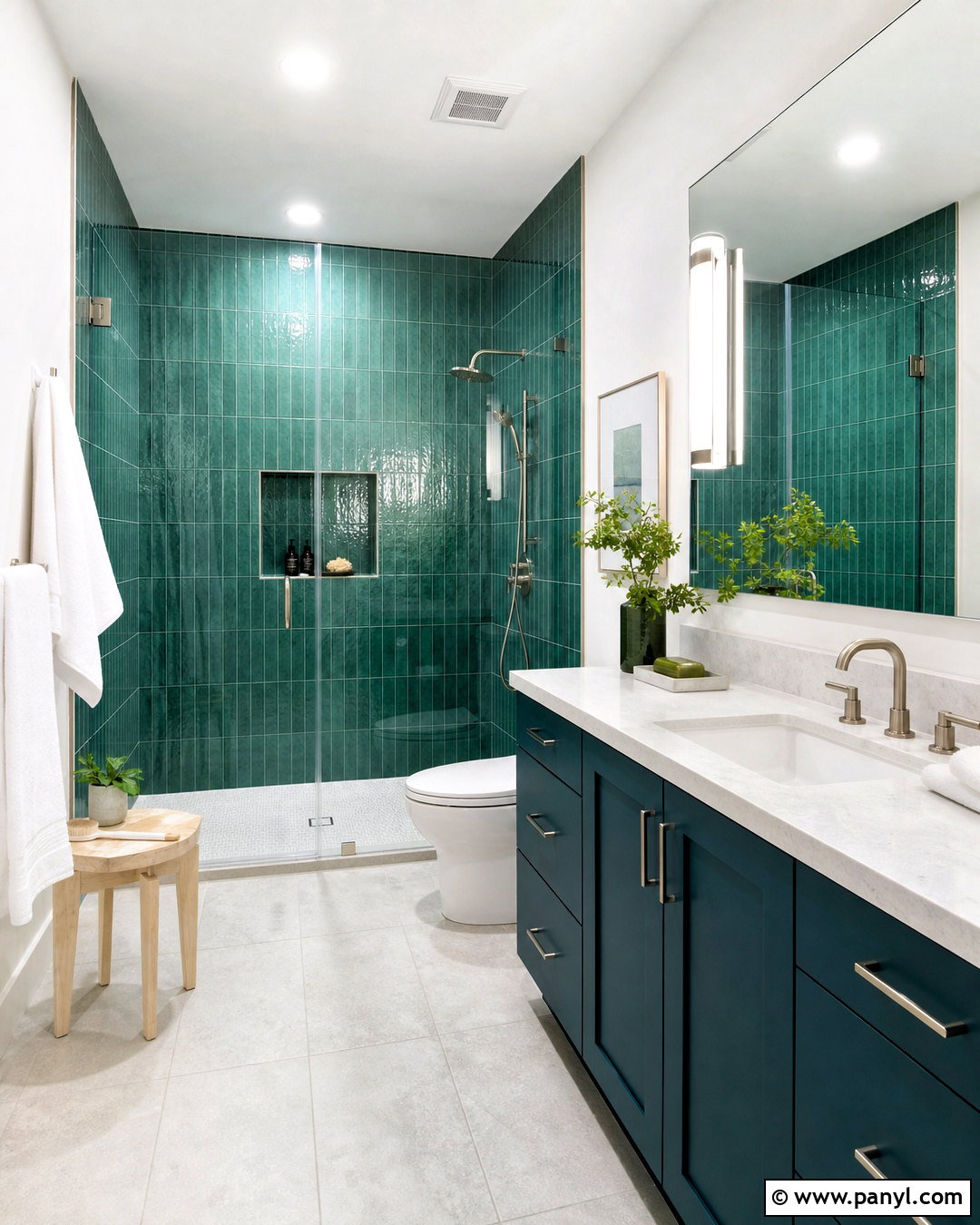
A small bathroom can handle emerald green and teal when the colors are separated by clean white surfaces. Use glossy emerald tile inside the shower and paint the vanity a deep blue-green teal. Balance these saturated finishes with white walls, a white countertop, and light gray floor tile. Brushed nickel hardware keeps the palette fresh, although restrained brass can create a warmer result. Install a large frameless mirror to reflect light and make the colored surfaces feel more spacious. White towels, clear glass accessories, and a pale wood stool complete the room without adding visual clutter. The subtle difference between emerald and teal creates depth, while their related undertones maintain harmony. This palette is bold, polished, and particularly effective in a compact guest bathroom.
9. Emerald Green And Lavender Guest Room
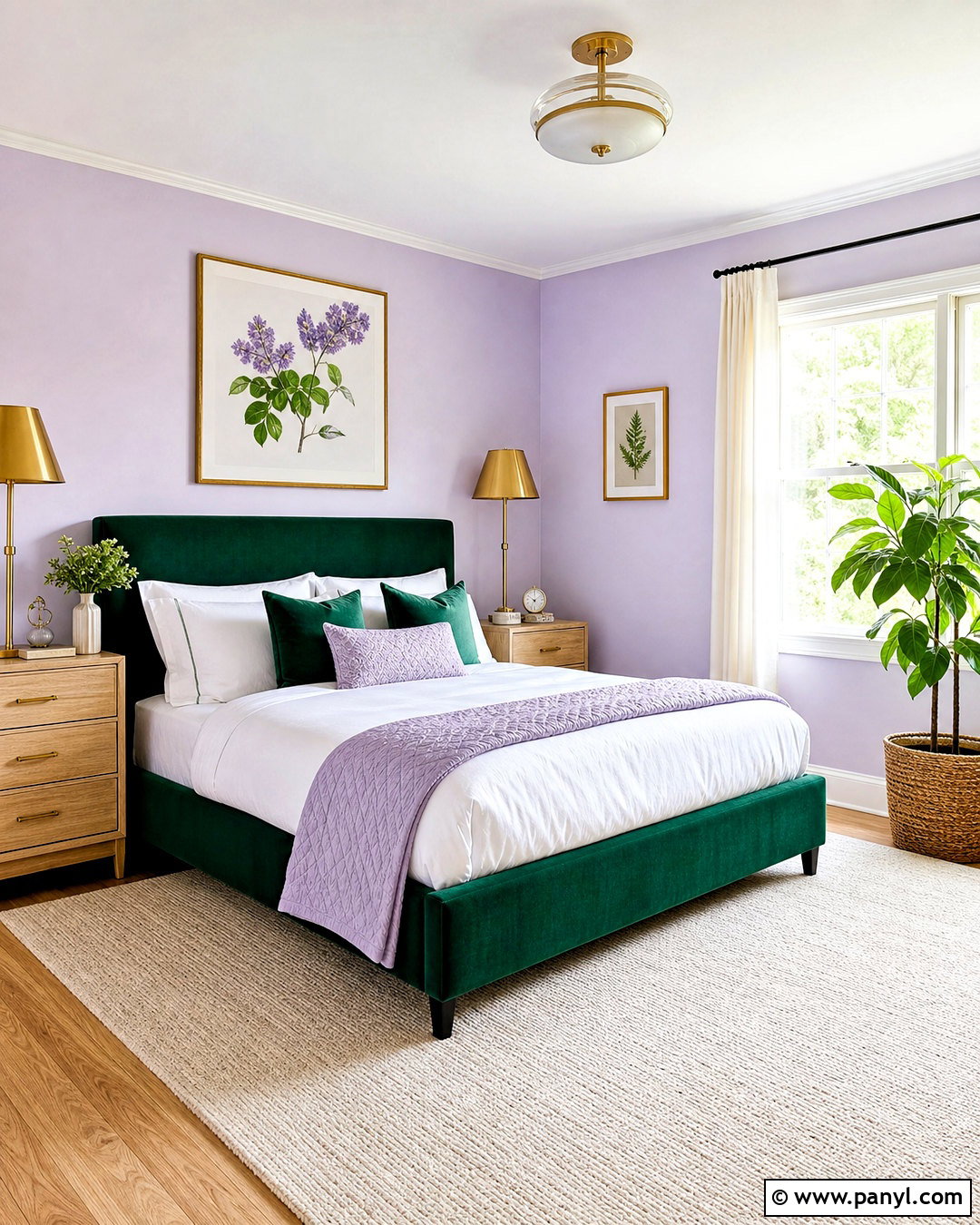
Lavender brings an unexpected softness to emerald green and gives a guest room a fresh, welcoming identity. Use pale lavender on the walls and place an emerald upholstered bed or headboard at the center of the room. Dress the bed in white cotton sheets, a lavender quilt, and cushions that combine green, lilac, and cream. Light oak nightstands and a natural wool rug add warmth without distracting from the color pairing. Choose brushed brass lamps for gentle contrast and hang simple botanical artwork above the bed. An emerald bench at the foot can repeat the headboard color if the room is large enough. The balance works best when lavender remains light and airy while emerald appears in fewer, larger pieces that visually ground the bedroom.
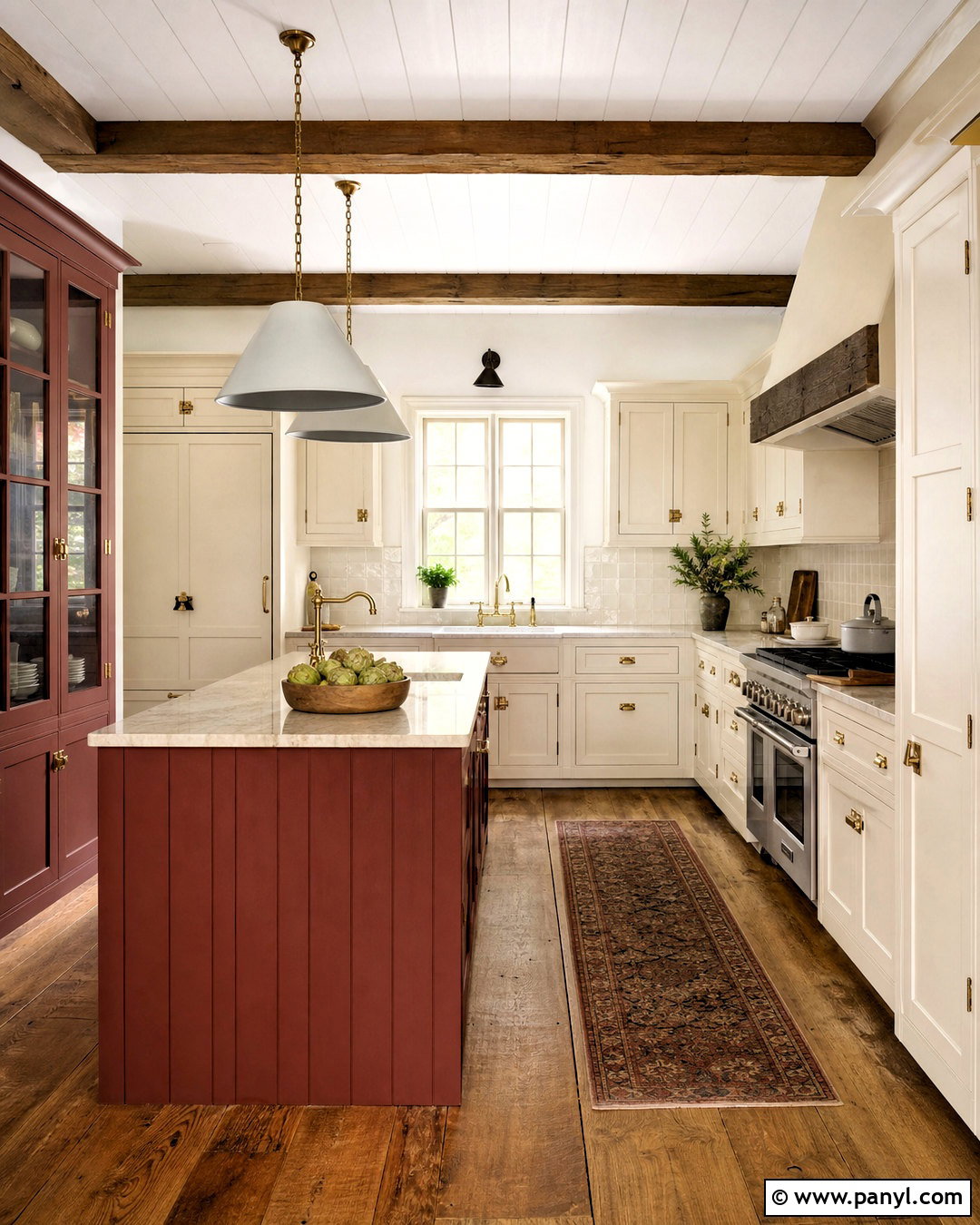
10. Emerald Green And Burgundy Library
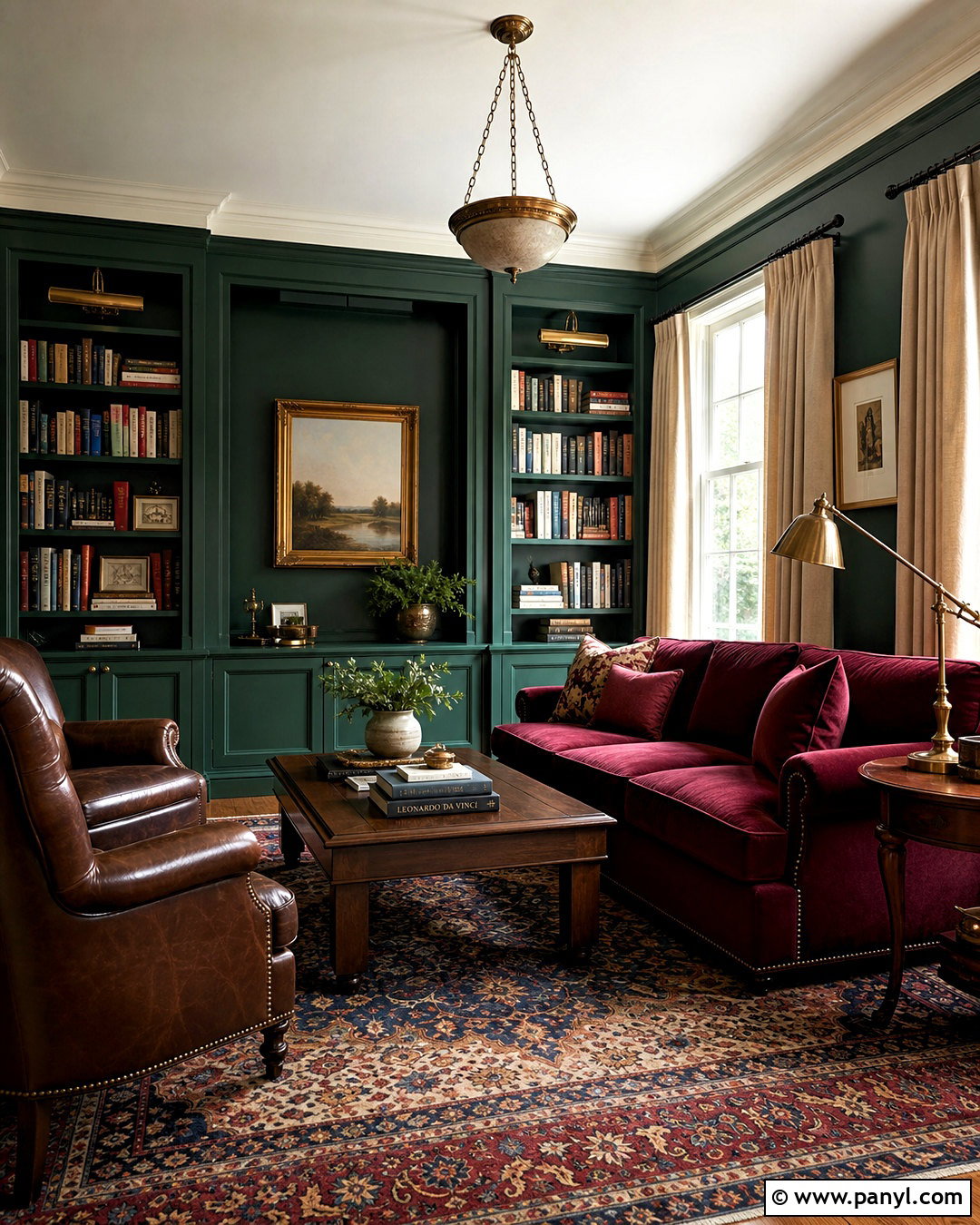
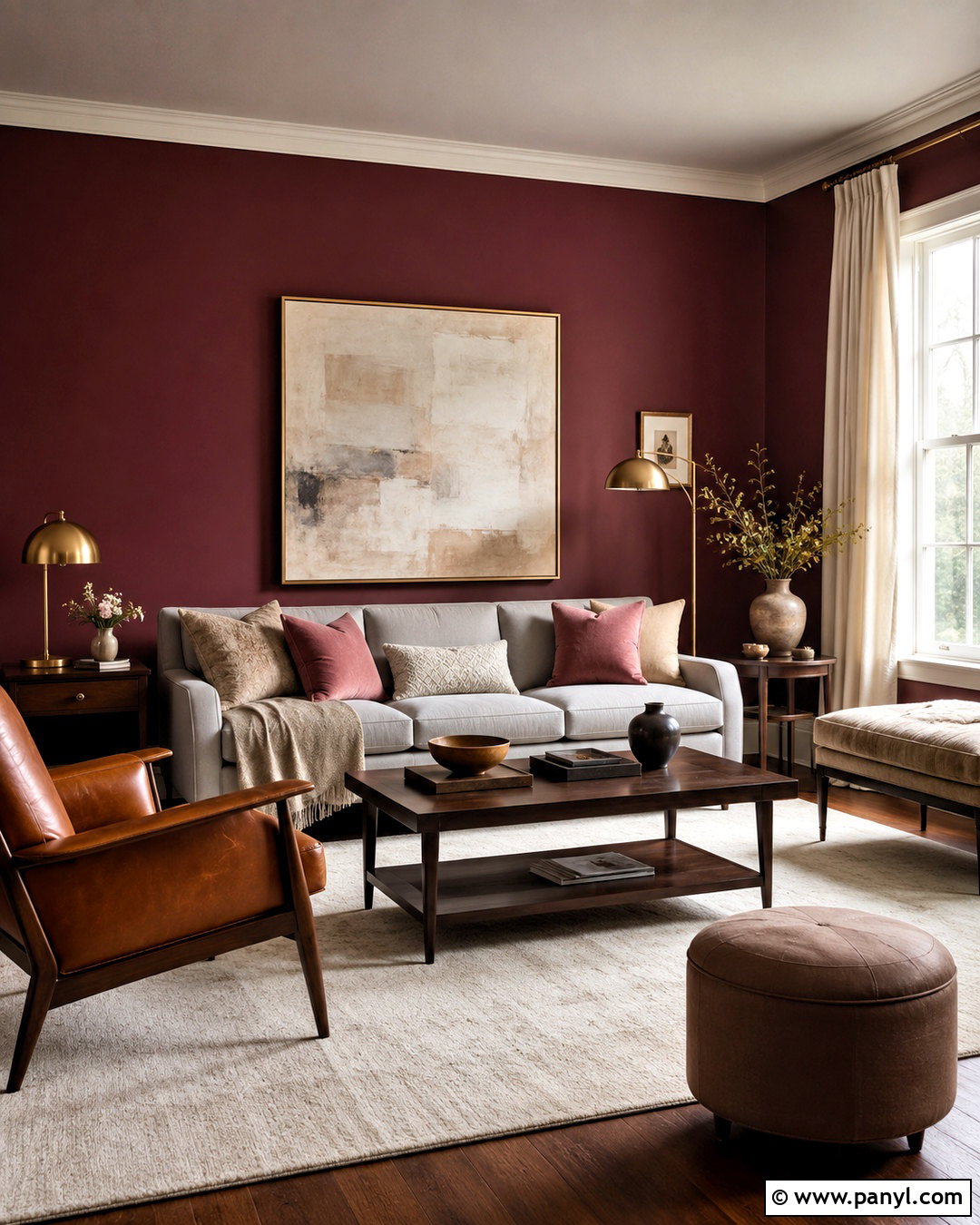
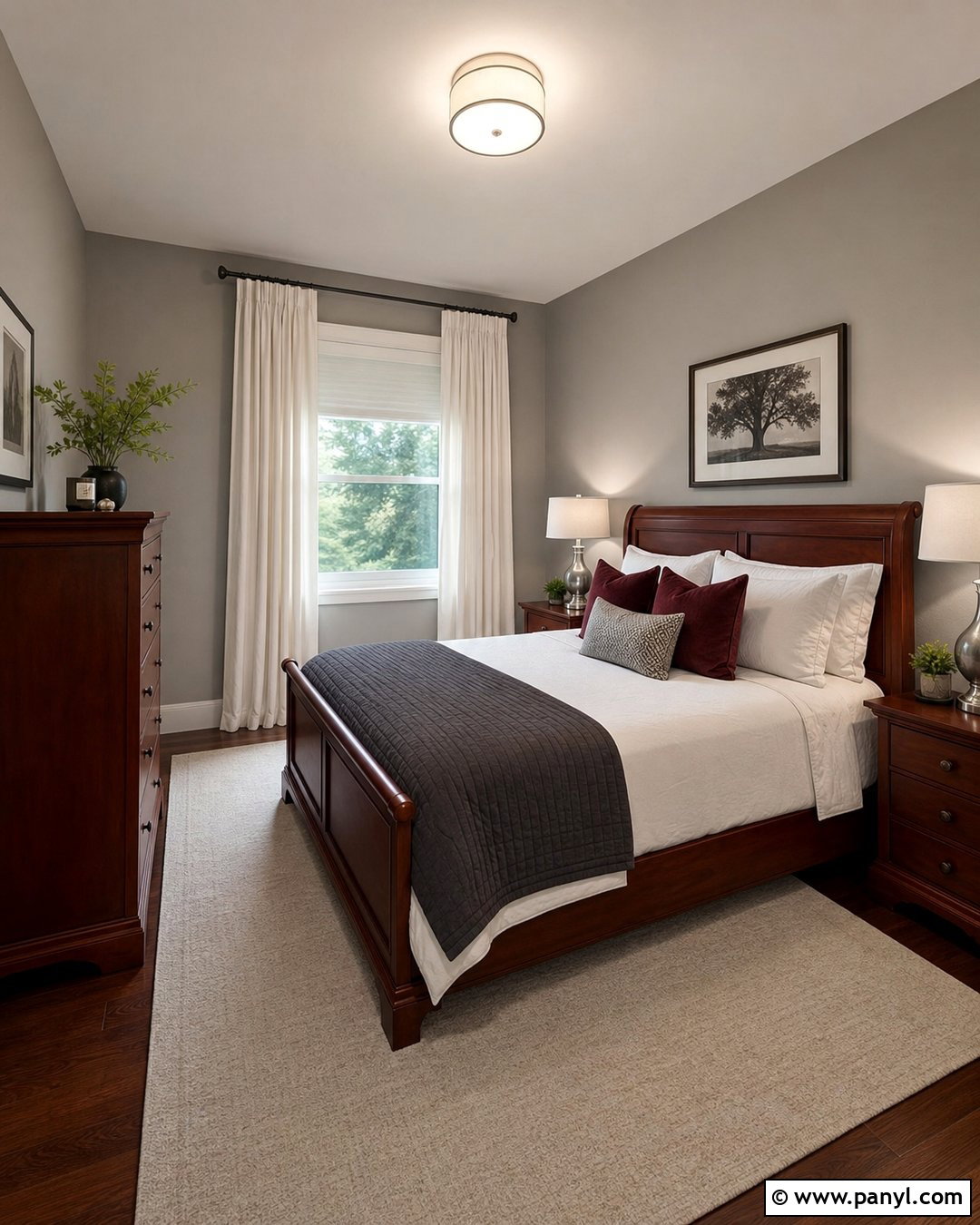
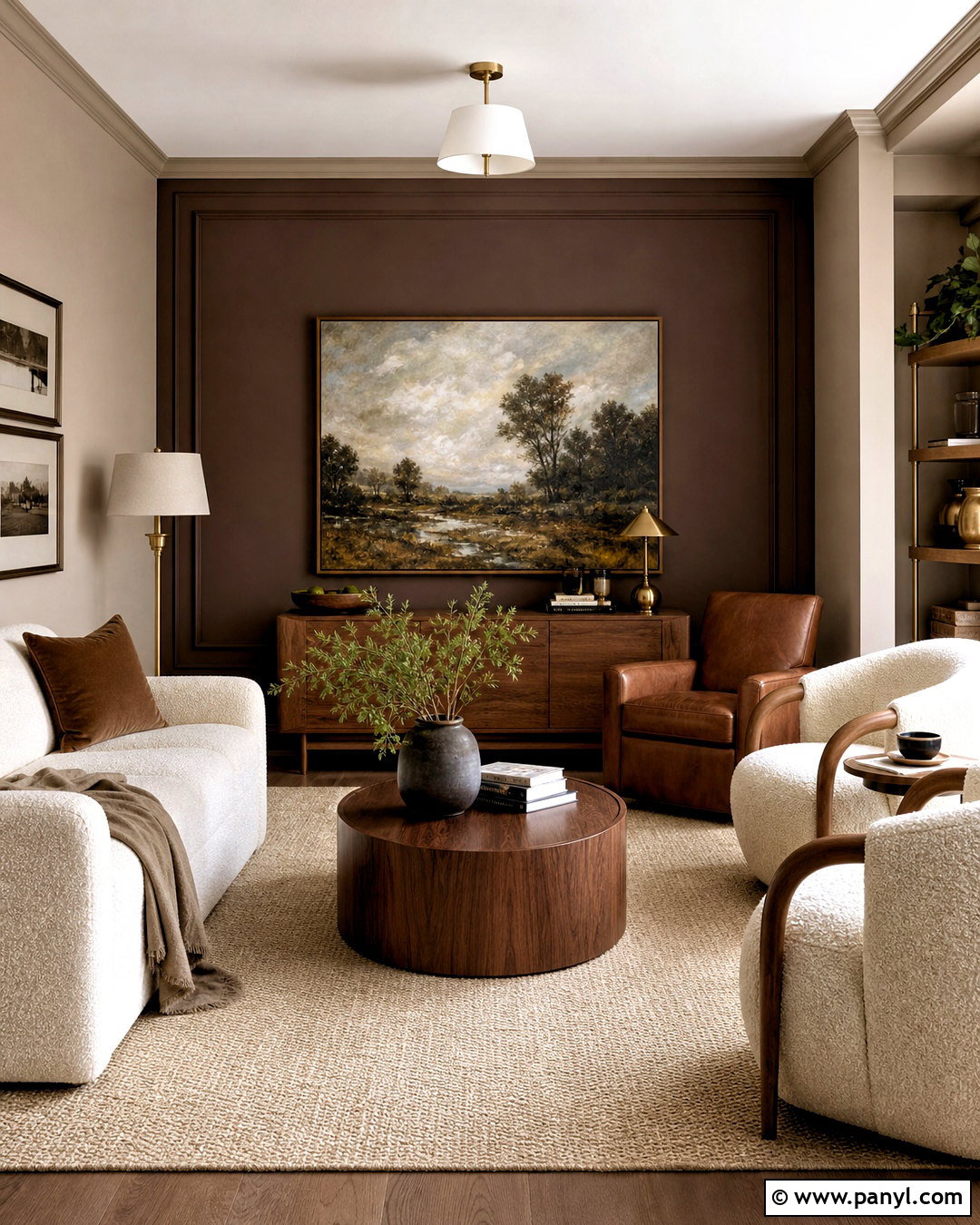
Emerald green and burgundy give a home library a traditional, enveloping atmosphere. Paint built-in bookcases emerald and leave the ceiling and trim a soft cream for contrast. Place a burgundy leather or velvet sofa in front of the shelving, then add a Persian-inspired rug containing green, wine red, beige, and navy. Dark walnut side tables and an antique brass reading lamp strengthen the classic character. Keep window treatments simple with oatmeal linen curtains that allow filtered daylight into the room. Books, framed artwork, and a few ceramic objects can fill the shelves, but leave some open space around each grouping. The finished library feels richly layered rather than dark because cream, linen, and warm metallic details interrupt the two saturated colors.
11. Emerald Green And Coral Living Room
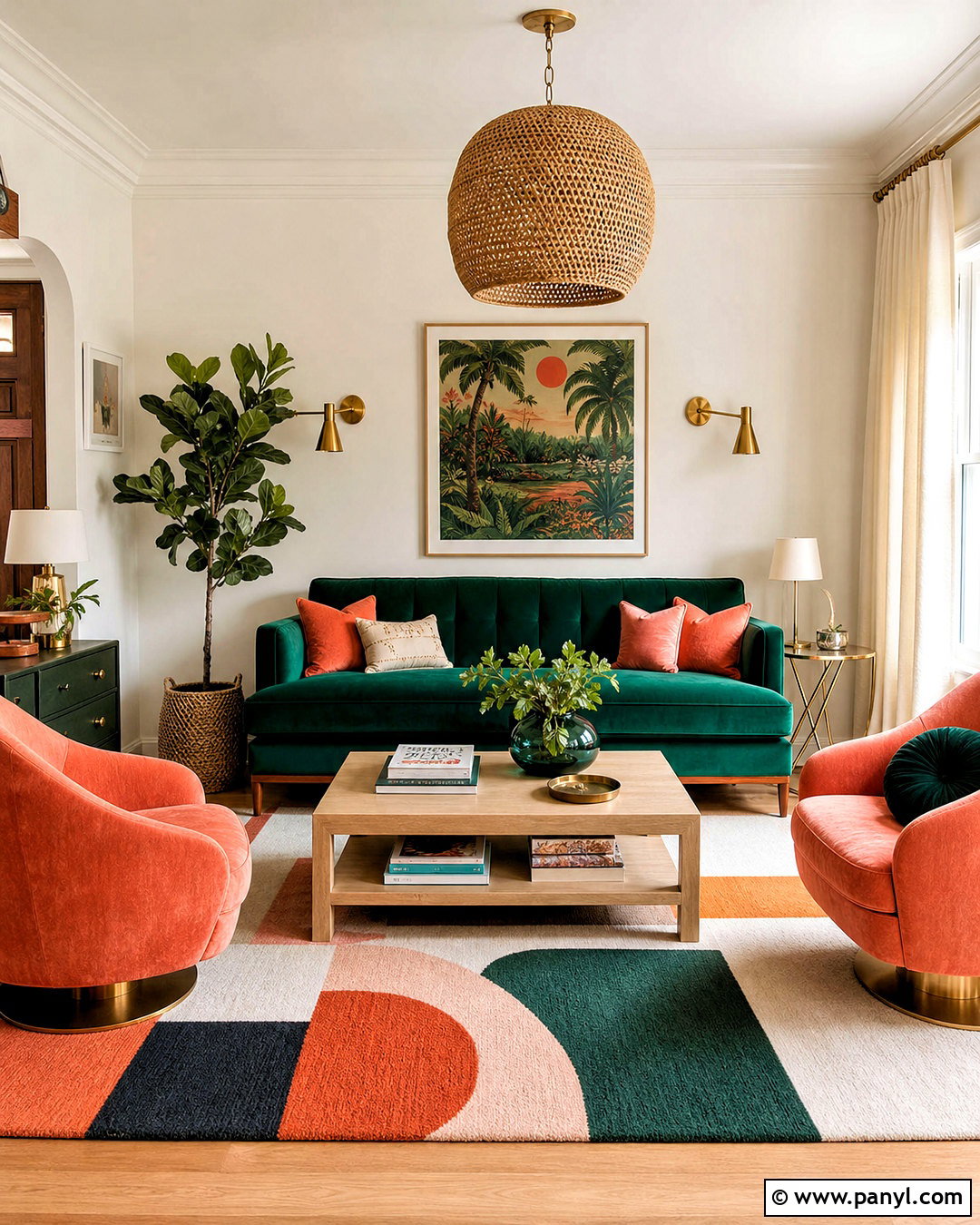
Coral gives emerald green a bright, social personality that suits an eclectic living room. Use a warm white background, then choose an emerald sofa as the room’s visual anchor. Add coral through two accent chairs, graphic cushions, and selected details in a patterned rug. A pale oak coffee table and woven pendant light keep the scheme casual, while small brass accents provide a polished connection between the warm and cool colors. Include white curtains and cream upholstery to create breathing room around the stronger pieces. Artwork can repeat emerald, coral, peach, and muted blue in controlled amounts. This palette works because the colors feel lively but not childish. Limiting coral to supporting furniture and textiles ensures that the emerald sofa remains prominent and balanced.
12. Emerald Green And Powder Blue Bedroom
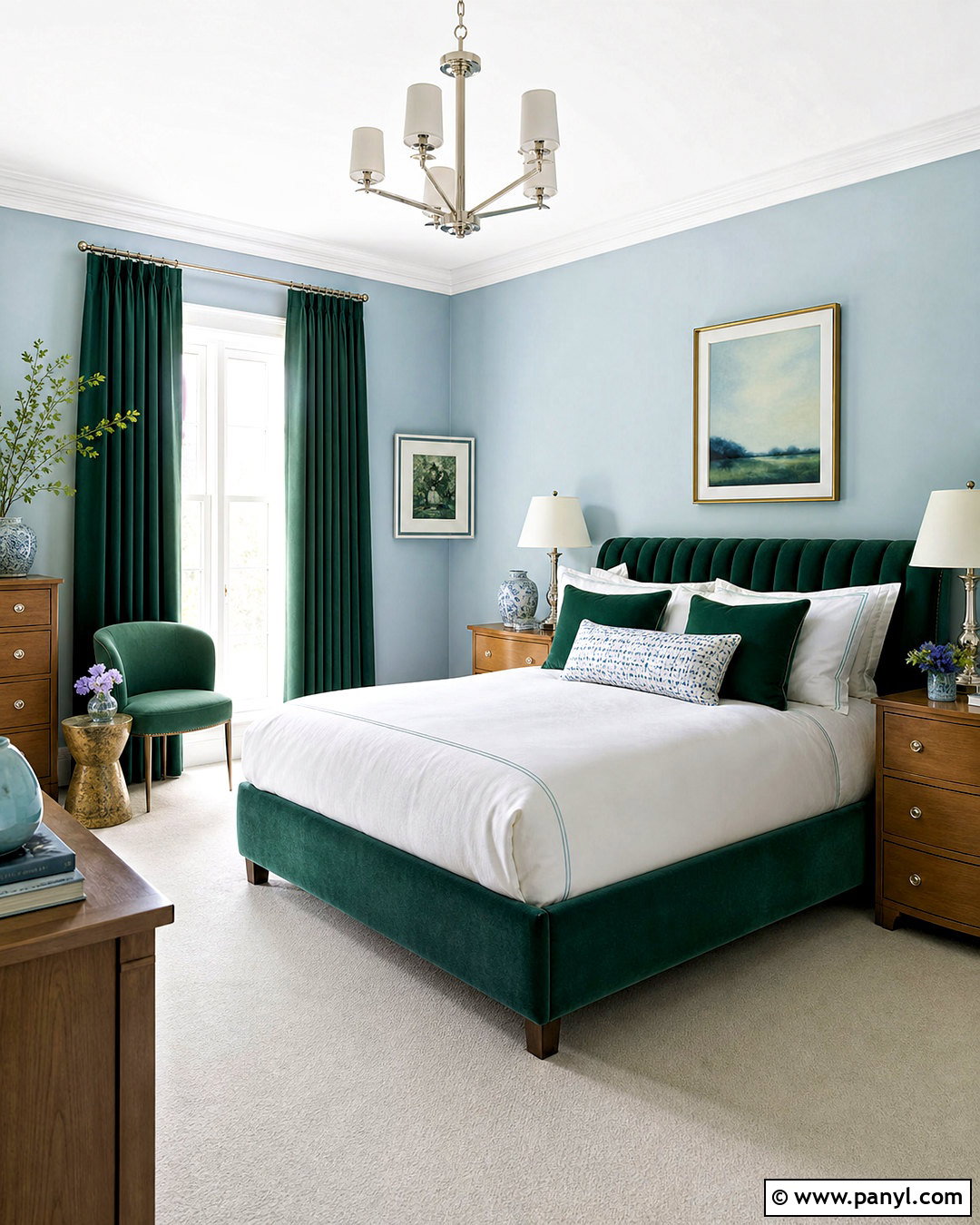
Imagine waking up in a room where deep emerald is surrounded by clear, airy blue. Paint the walls powder blue and introduce emerald through the bed frame, floor-length curtains, and one substantial throw. White bedding and ivory carpeting keep the palette light, while warm maple nightstands prevent the blues and greens from feeling cool or clinical. Add polished nickel lamps, pale blue ceramic accessories, and simple landscape artwork containing both colors. Avoid very dark furniture because it may compete with the emerald features. If more warmth is needed, include small amounts of camel or light tan in a bench or lumbar pillow. The resulting bedroom feels crisp and peaceful, with emerald providing depth and powder blue expanding the sense of space.
13. Emerald Green And Charcoal Gray Entryway
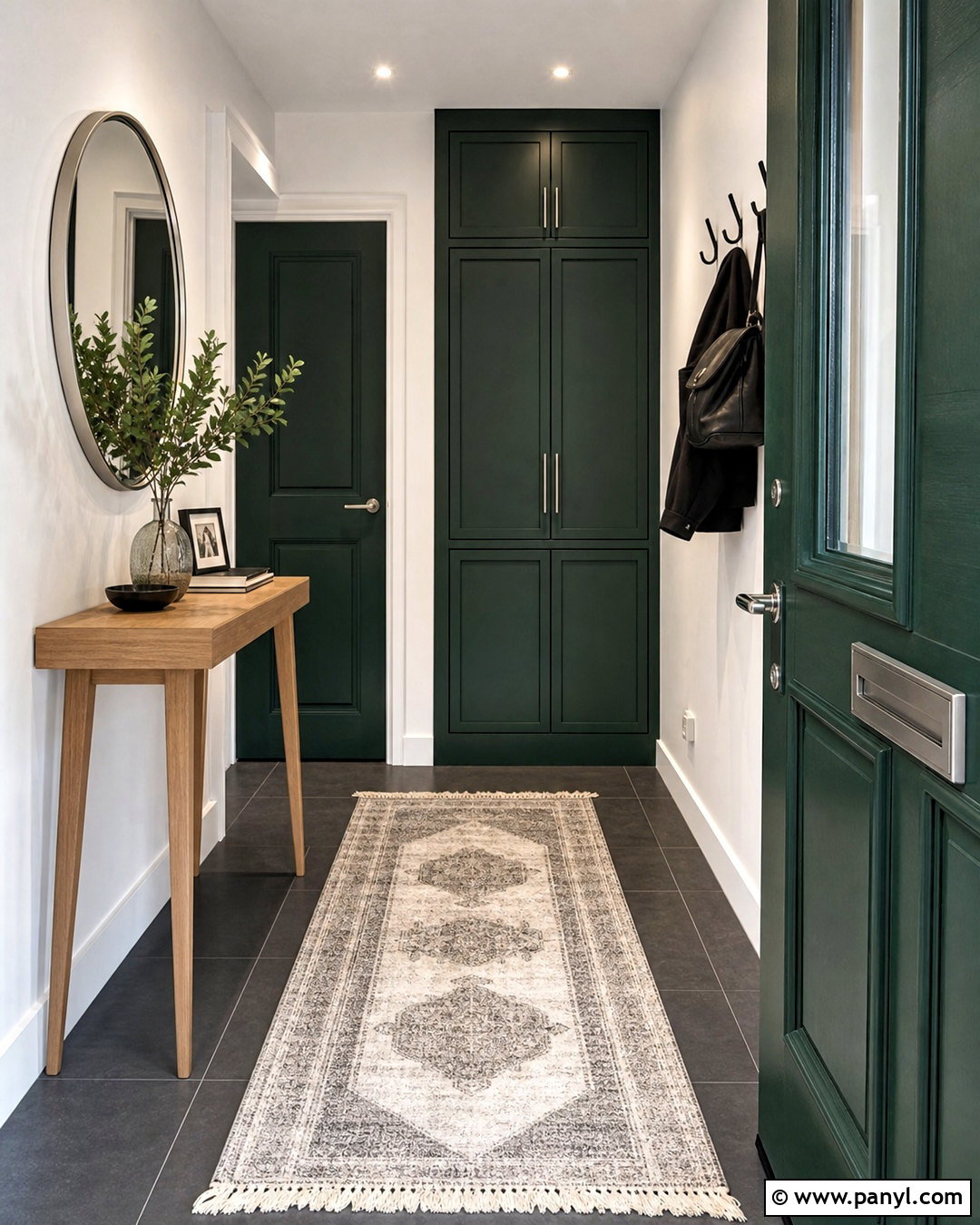
Charcoal gray gives emerald green a structured, architectural quality that works well in an entryway. Paint the front door or a full-height storage cabinet emerald, then use charcoal on the surrounding wall or durable floor tile. Keep the remaining walls bright white to prevent the entrance from feeling narrow. A slim oak console adds warmth, while a large round mirror and brushed silver light fixture reflect light across the darker finishes. Choose a runner that combines gray, cream, and subtle green, and include closed storage for shoes and everyday items. Matte black hooks can provide extra definition without introducing another dominant color. This palette creates a memorable arrival while remaining practical, tidy, and easy to connect with neutral rooms elsewhere in the home.
14. Emerald Green And Greige Open-Plan Room
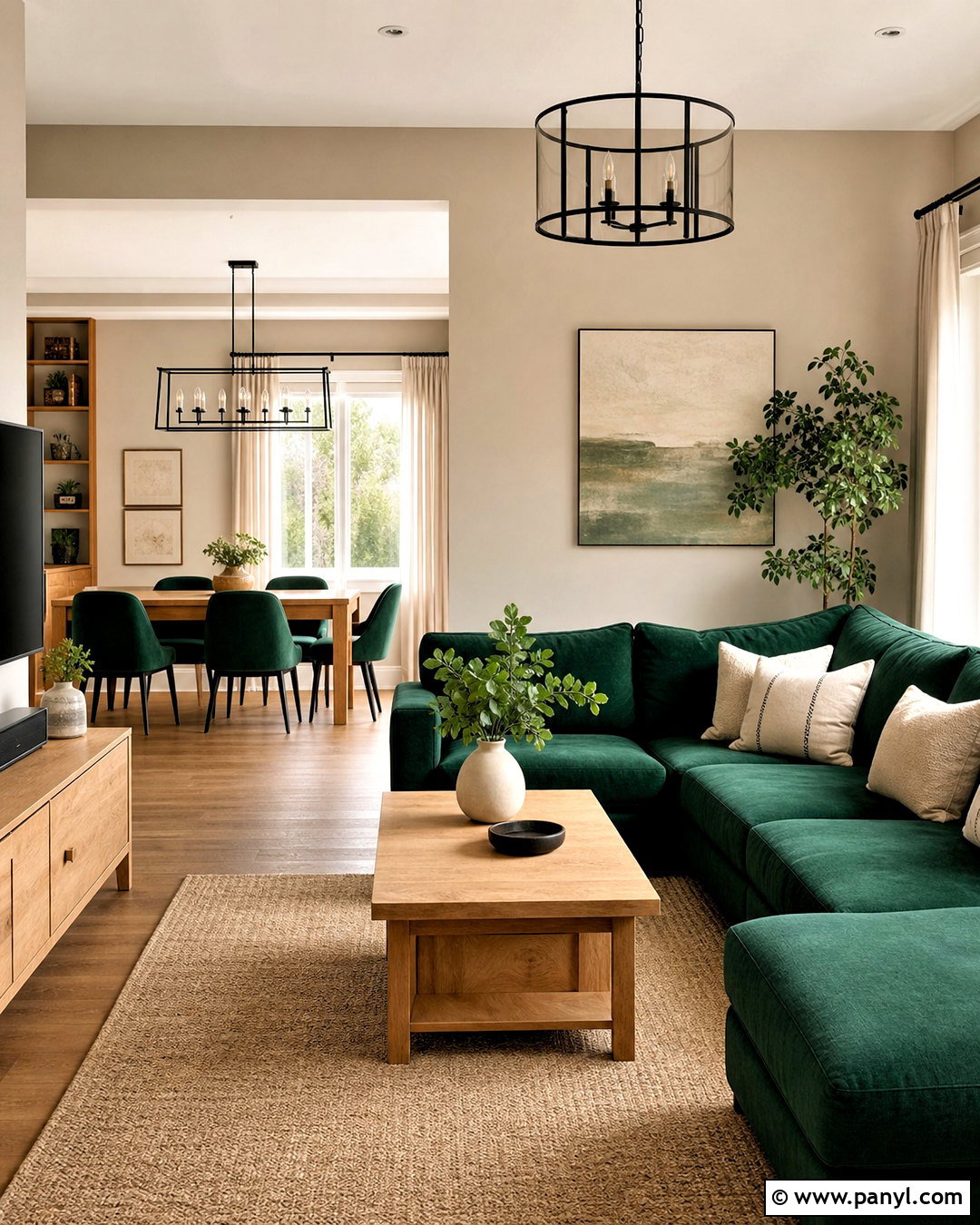
Greige provides a quiet foundation that lets emerald green define an open-plan living and dining area without overwhelming it. Cover the main walls in a warm gray-beige and use emerald on the living room sofa and dining chair upholstery. Repeat the neutral tone through a large textured rug, linen curtains, and stone-colored dining accessories. Medium oak flooring and furniture add warmth across both zones, while black-framed lighting helps visually connect them. Use cream cushions and ceramic lamps to keep the seating area soft. A small amount of brass can appear on cabinet handles or a dining pendant. By repeating emerald in two separate functional areas, the open layout feels intentional. Greige then provides enough visual continuity to make the entire space calm and cohesive.
15. Emerald Green And Chocolate Brown Den
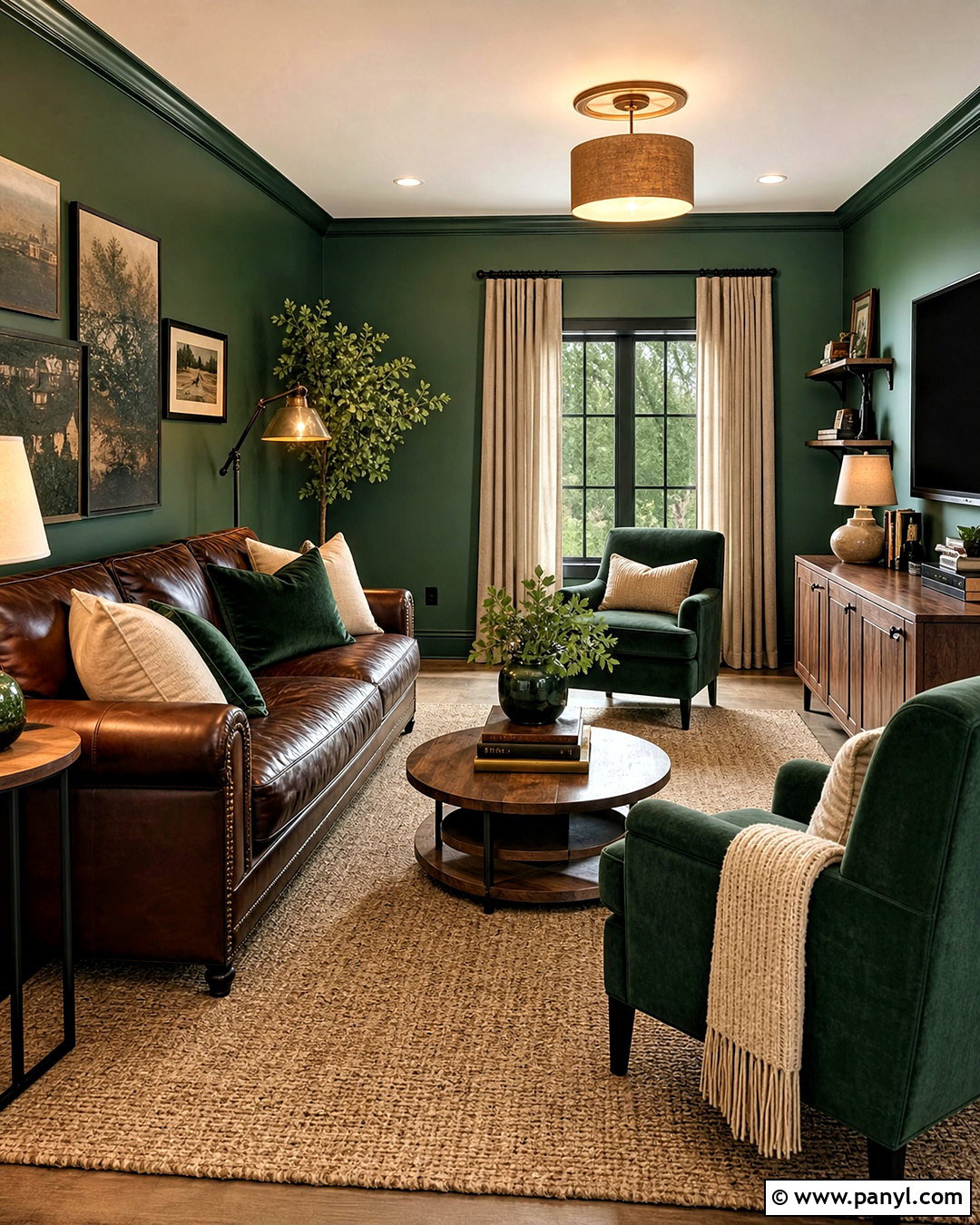
Emerald green and chocolate brown create a cozy den that feels grounded rather than overly glamorous. Paint the walls a muted emerald and furnish the room with a deep brown leather sofa. Add a tan wool rug, walnut media cabinet, and oatmeal curtains to introduce several lighter levels of brown. Green velvet cushions can connect the sofa to the walls, while cream pillows provide a brighter break. Choose warm brass or bronze lamps instead of shiny gold, and use framed nature photography for understated wall decor. A round wood coffee table will soften the stronger rectangular furniture. This complete palette is ideal for a television room or reading den because both main colors feel substantial, comfortable, and forgiving enough for frequent everyday use.
16. Emerald Green And Lemon Yellow Kitchen
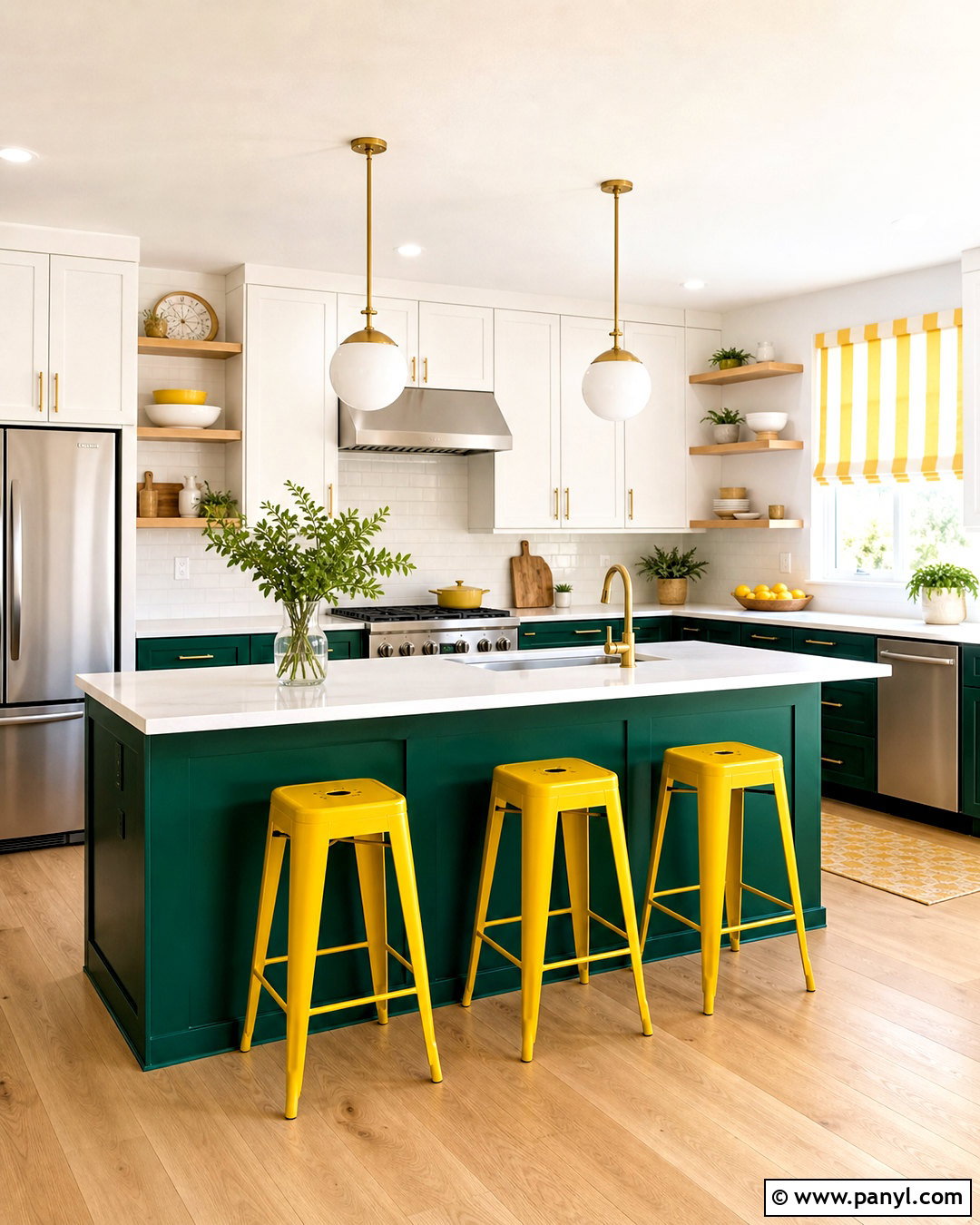
Lemon yellow brings a sunny lift to emerald green kitchen cabinets without making the space look overly themed. Keep the lower cabinets emerald and use warm white for the upper cabinets, walls, and quartz countertops. Introduce yellow through counter stools, a simple striped blind, and a few practical accessories rather than painting an entire wall. Pale oak flooring and open shelving help soften the vivid contrast. Choose brushed brass hardware because its warm tone connects naturally with the yellow details. A white backsplash with minimal grout lines keeps the kitchen looking clean and spacious. This palette works best when emerald remains the dominant color and lemon appears in smaller doses. The finished kitchen feels fresh, cheerful, and functional throughout the year.
17. Emerald Green And Dusty Rose Dining Room
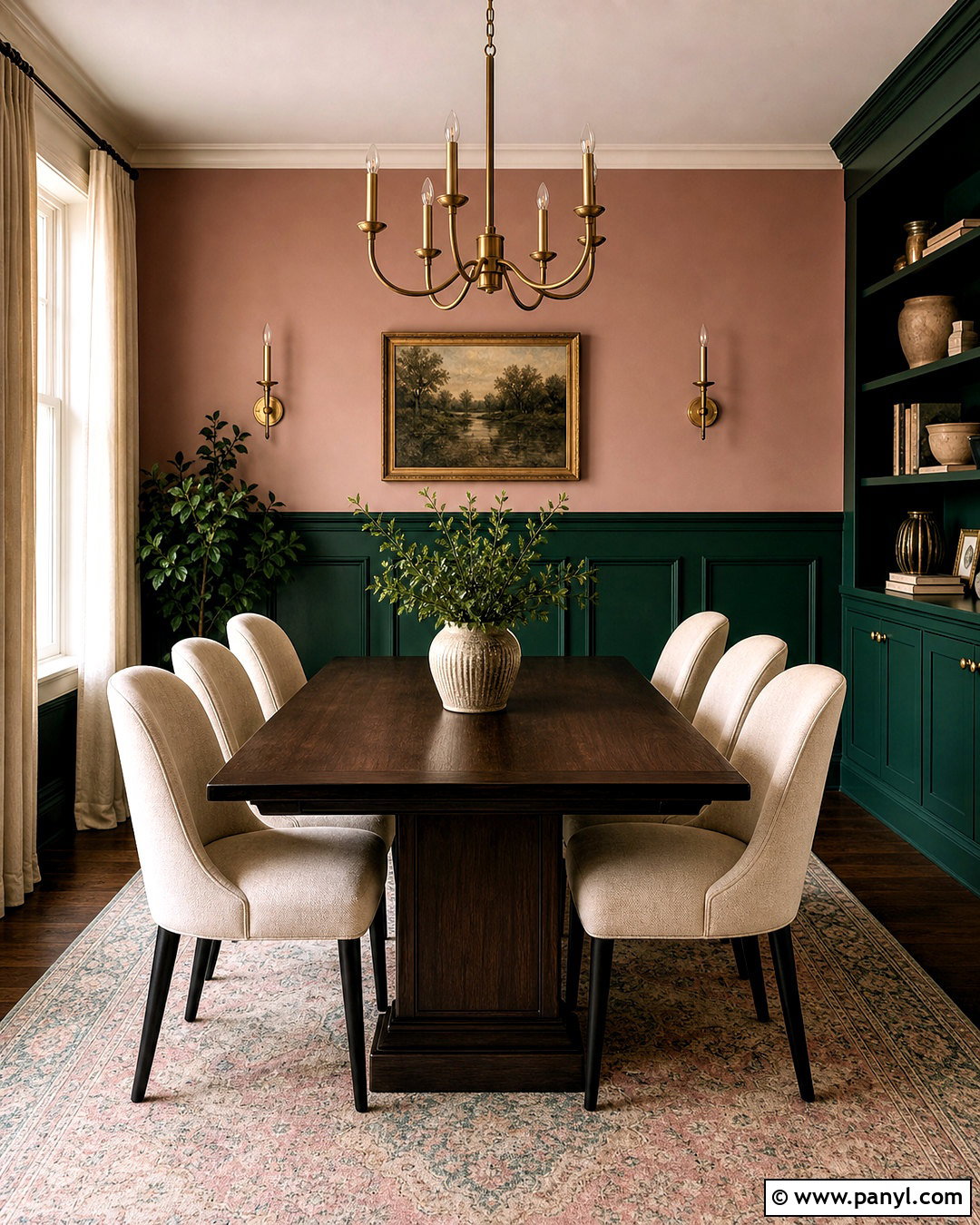
Dusty rose offers a more muted alternative to bright pink, creating an elegant emerald green dining room with vintage influence. Paint the lower walls or paneled sections emerald and use soft rose above them. A dark wood dining table grounds both colors, while cream upholstered chairs prevent the arrangement from becoming too saturated. Add an aged brass chandelier, off-white curtains, and a patterned rug that quietly repeats green, rose, tan, and brown. White tableware and clear glass keep the tabletop simple. For a modern finish, avoid overly ornate furniture and select clean, gently curved silhouettes instead. This two-tone wall treatment gives each shade enough presence, and the neutral upholstery creates a useful transition between the jewel-like green and subdued pink.
18. Emerald Green And Burnt Orange Lounge
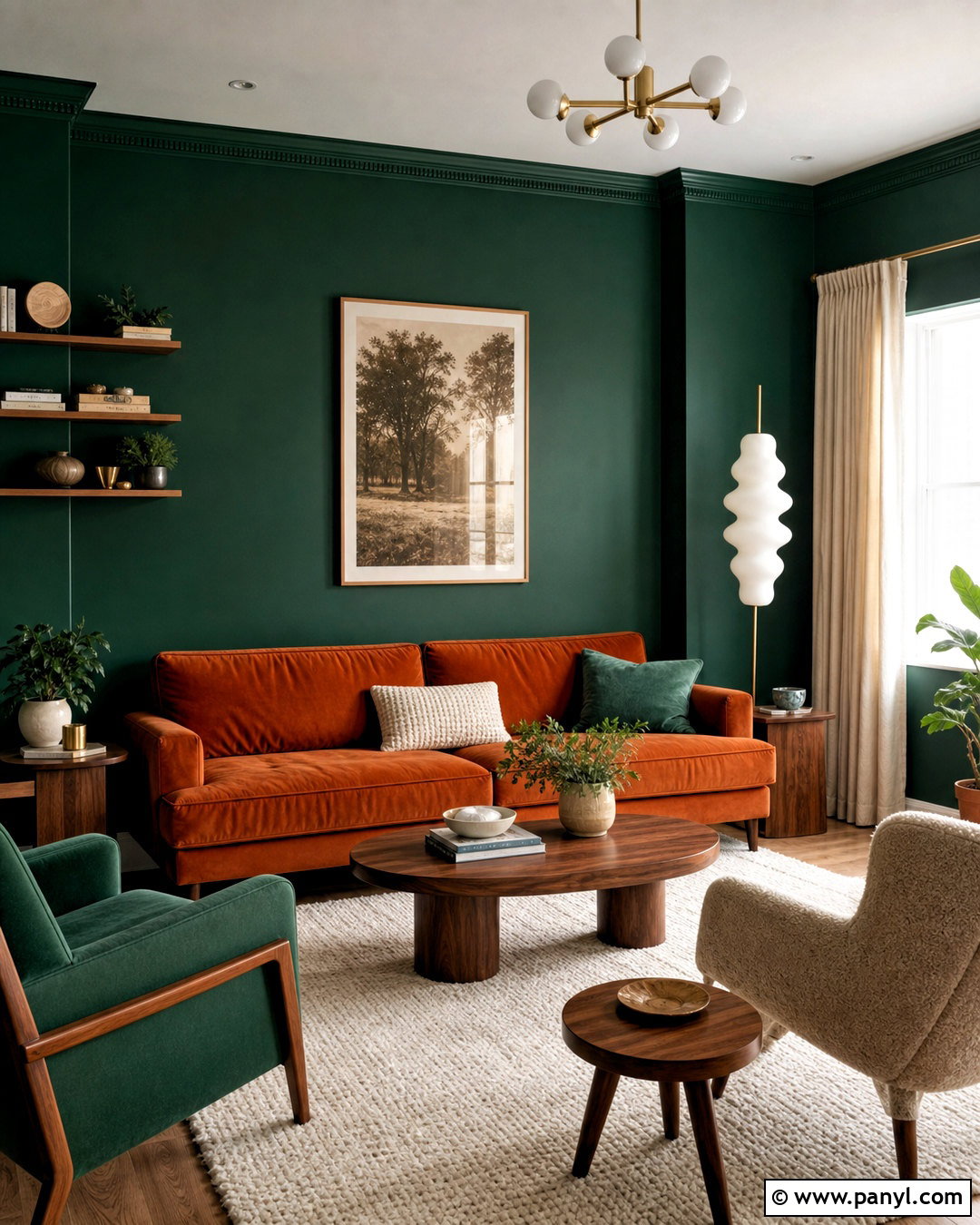
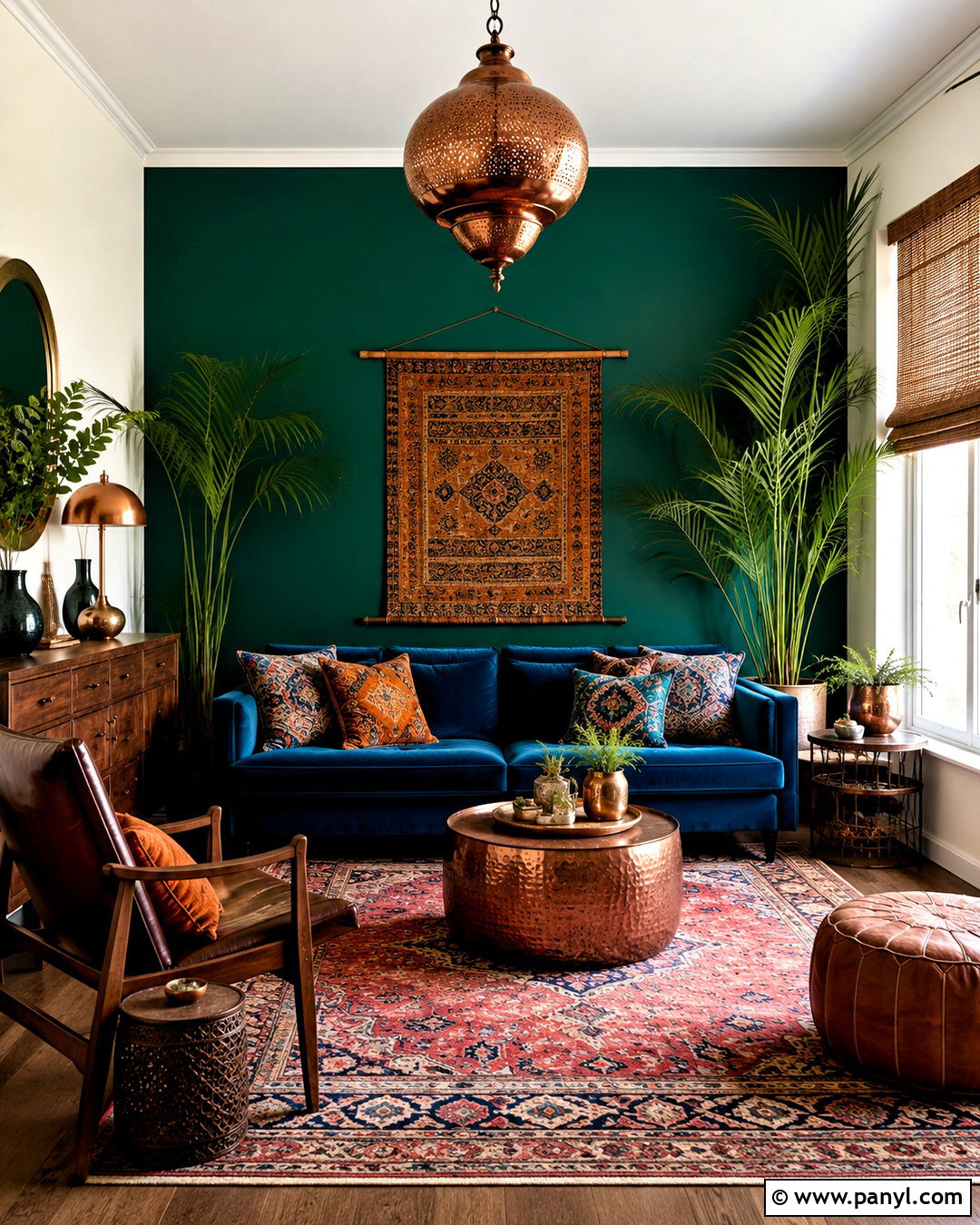
Burnt orange gives emerald green a warm, retro character that feels especially inviting in a lounge or conversation area. Use emerald on the walls and place a burnt orange sofa where it receives the most natural light. Add walnut side tables, a cream shag or wool rug, and textured cushions combining orange, green, beige, and muted gold. A sculptural white floor lamp can brighten the deeper palette, while antique brass accents reinforce its warmth. Keep curtains neutral and lightweight so the room does not become visually heavy. Rounded furniture and a low coffee table will support the relaxed look. The orange sofa creates a strong focal point, but emerald walls surround and balance it, producing a complete room that feels bold, nostalgic, and comfortable.
19. Emerald Green Monochromatic Bedroom
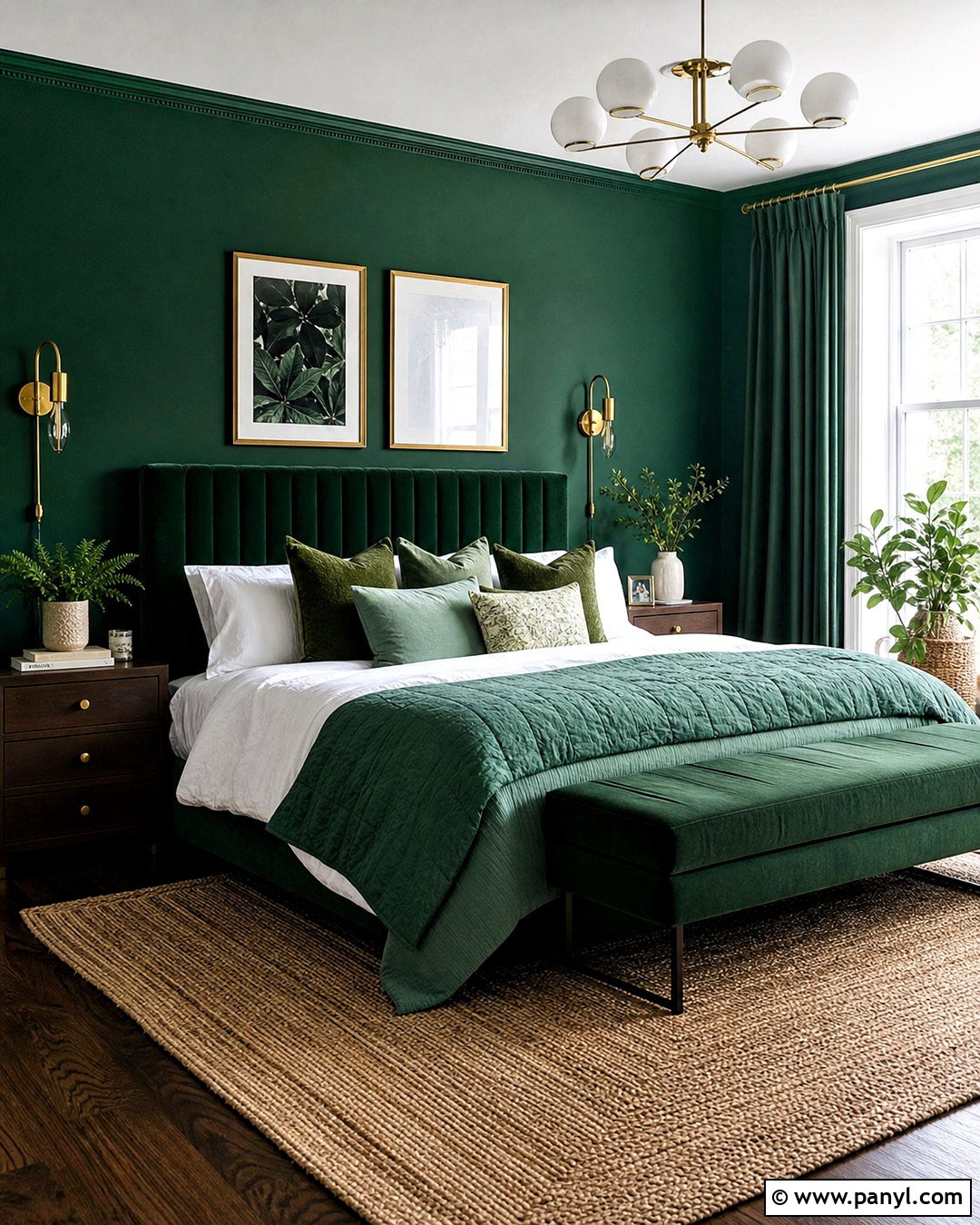
A monochromatic emerald green bedroom becomes interesting through variation in tone, finish, and texture. Paint the walls a deep emerald, then choose a slightly darker green upholstered headboard and softer jade bedding. Layer moss, mint, and blue-green cushions across crisp white sheets so each shade remains easy to distinguish. Dark oak nightstands and a natural fiber rug introduce earthy contrast without interrupting the green story. Use green curtains close to the wall color for an enveloping effect, but keep the ceiling warm white. Brass sconces and cream ceramic lamps provide small highlights throughout the room. This approach feels more intentional than matching every item exactly. The range of greens gives the bedroom depth while wood, white, and brass stop it from appearing one-dimensional.
20. Emerald Green Jewel Tone Living Room
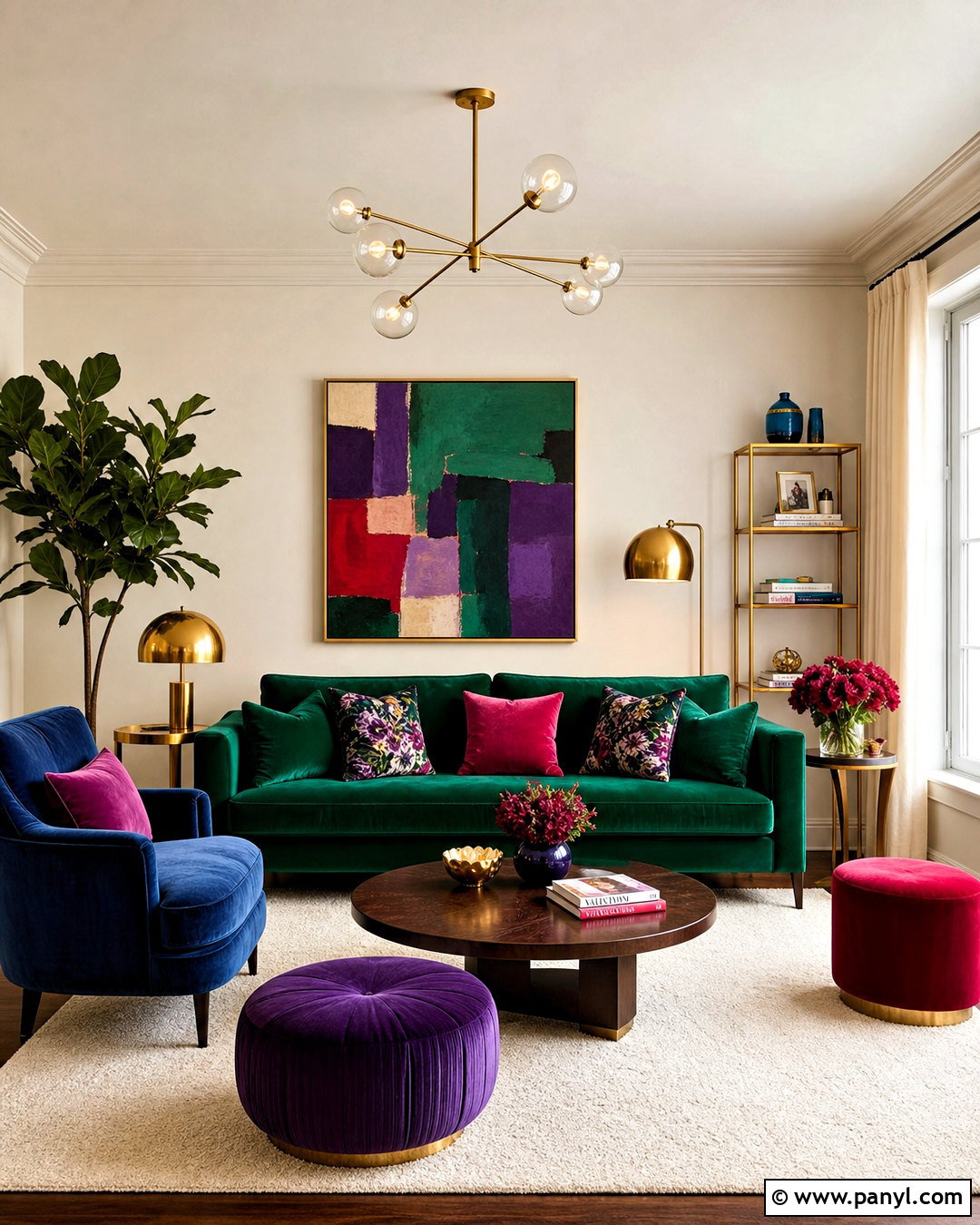
For a colorful interior with real depth, combine emerald green with restrained accents of sapphire blue, amethyst purple, and ruby red. Begin with an emerald sofa against warm ivory walls, then add one sapphire chair and a smaller amethyst ottoman. Introduce ruby through patterned cushions or artwork rather than another large furniture piece. A dark walnut coffee table and cream rug will visually ground the jewel tones, while brass lighting adds warmth and cohesion. Choose solid upholstery for the main furniture and reserve patterns for smaller textiles. This prevents the living room from feeling chaotic. The completed palette looks collected and expressive because every bold color has a clear role, while ivory, walnut, and cream provide essential space between the saturated elements.
Conclusion:
Emerald green can support far more than one dramatic decorating approach. It feels fresh with white, peaceful with blue, earthy with brown, and vibrant with coral or yellow. The most successful rooms give each color a clear role. Choose one dominant shade, one supporting color, and several quieter materials that connect them. Warm wood, cream textiles, natural fibers, and restrained metallic finishes can make even the boldest combination easier to live with. Before committing, test your chosen green in the room during daytime and evening lighting. Then repeat it thoughtfully across furniture, walls, and decor. Use these 20 emerald green colour palette ideas to create a complete home look that feels balanced, personal, and intentional.

Related Ideas and Inspiration:

Leave a Reply