
Choosing the right wall color can completely change how your living room looks, feels, and connects with the rest of your home. These 20 living room wall paint color ideas include light neutrals, nature-inspired greens, atmospheric blues, and richer shades for cozy rooms. Current color directions favor powder blue, plaster pink, chocolate brown, and softened gray-green, but a successful palette should also suit your furniture, natural light, and daily routines. () Before committing, paint large sample boards and view them beside flooring, upholstery, and trim throughout the day. Whether you want an airy retreat or an enveloping gathering place, the complete looks below offer practical, stylish 20 living room wall paint color ideas.

1. Warm White Living Room Walls
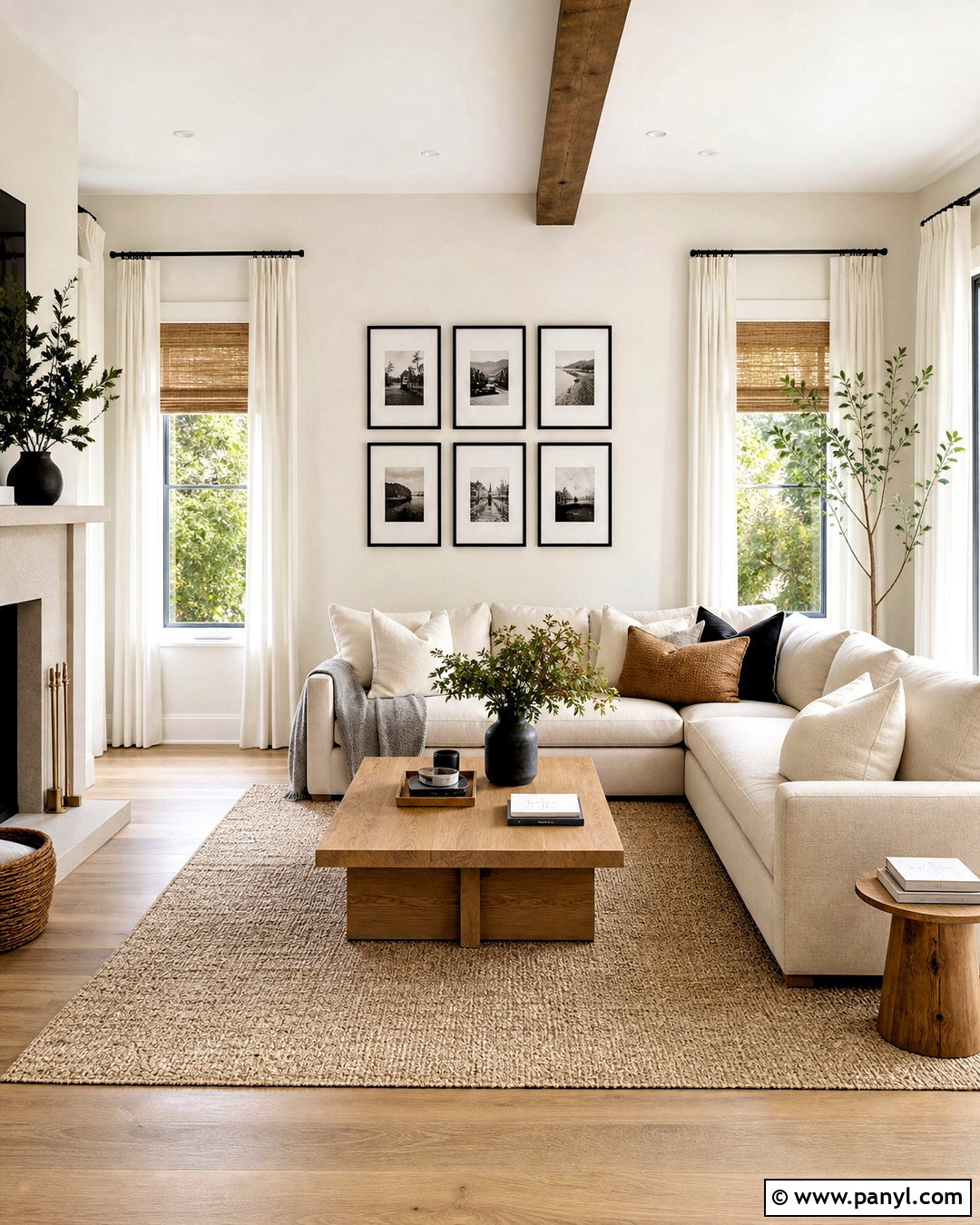
Warm white walls create a bright living room without the chilly appearance of a sharp, blue-based white. Choose a creamy shade with subtle beige or yellow undertones, then repeat that warmth through an oatmeal sofa, ivory curtains, and a light oak coffee table. Natural woven shades and a textured wool rug keep the neutral palette from looking flat. Use soft black on curtain rods, picture frames, and one slim floor lamp to add definition. Warm white also provides a flexible background for artwork, greenery, and seasonal accessories. Paint the ceiling and trim a cleaner white for gentle contrast, or use the same warm white throughout for a seamless finish. This complete look works especially well in casual, traditional, and organic modern living rooms.
2. Soft Greige Living Room Walls
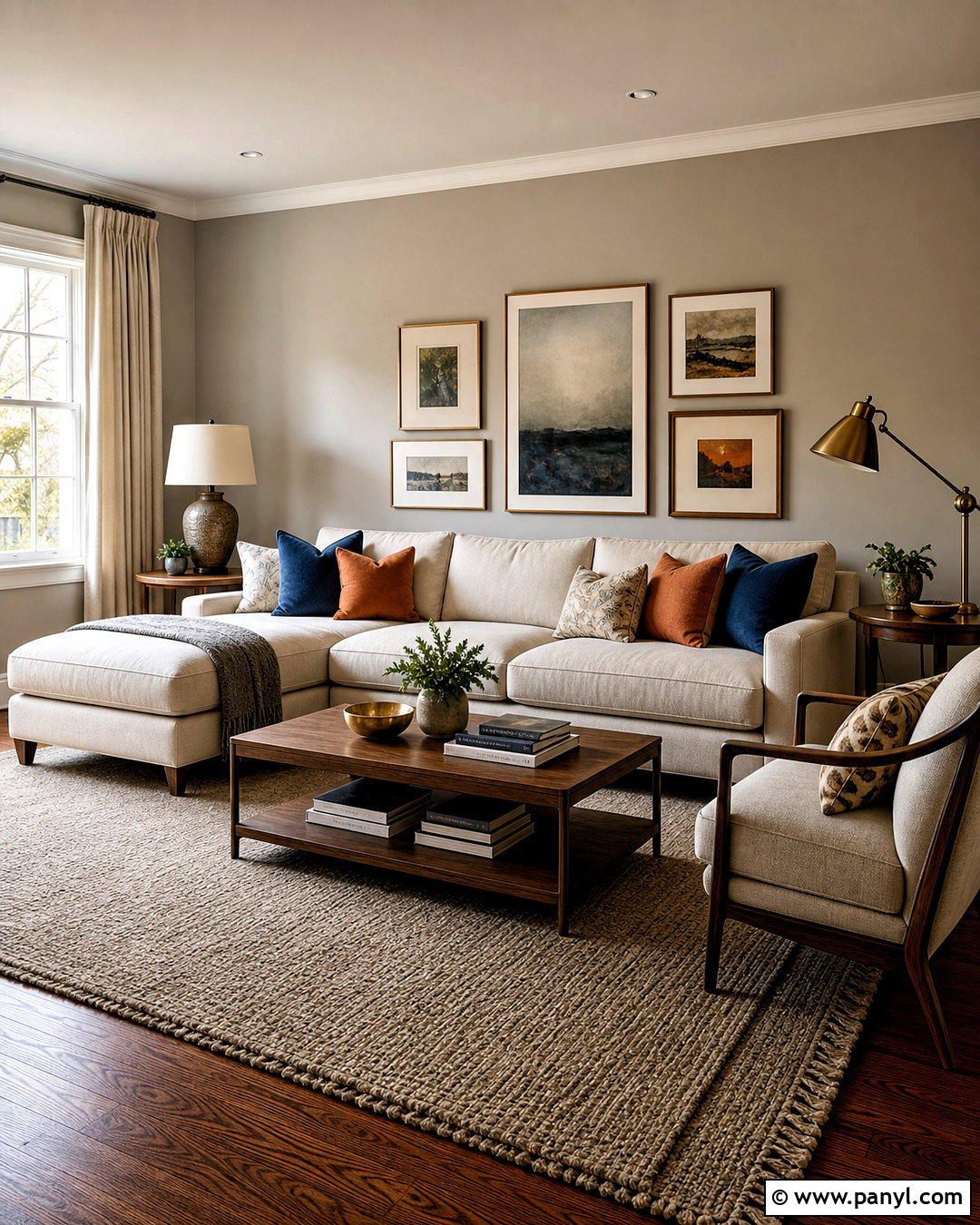
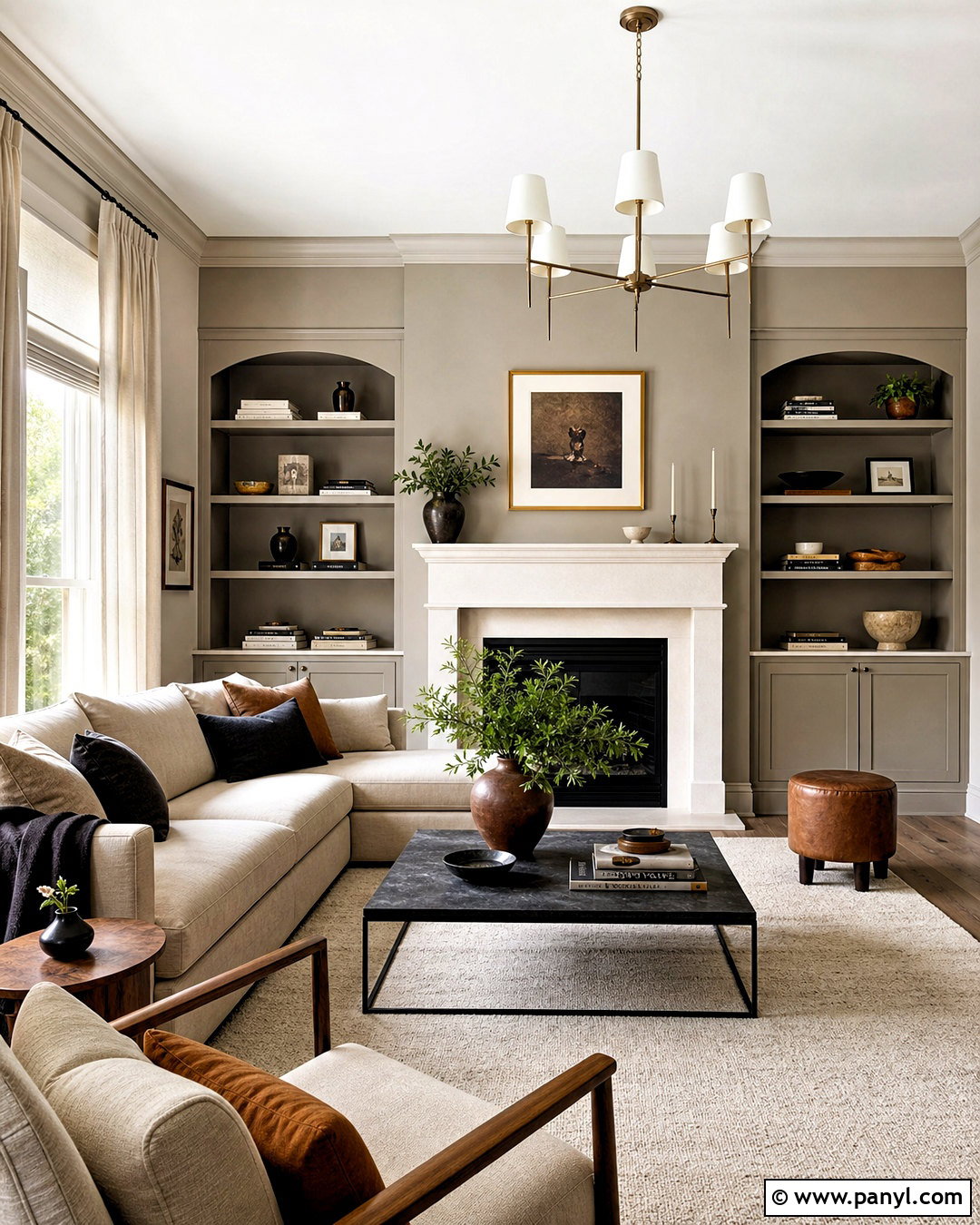
Can’t decide between gray and beige? Soft greige offers the calm appearance of gray while carrying enough warmth to coordinate with wood furniture and comfortable textiles. Cover every wall in a light, balanced greige and pair it with a cream sectional, walnut side tables, and a taupe wool rug. Add muted blue pillows and rust-colored accents for understated contrast. Linen drapes in a shade slightly lighter than the walls will soften the windows without disappearing completely. Choose aged brass lighting to bring warmth into the neutral scheme. A matte or eggshell wall finish keeps the color relaxed and minimizes distracting shine. In an open floor plan, greige can also connect the living room naturally with nearby beige, white, wood, or stone finishes.
3. Mushroom Beige Living Room Walls
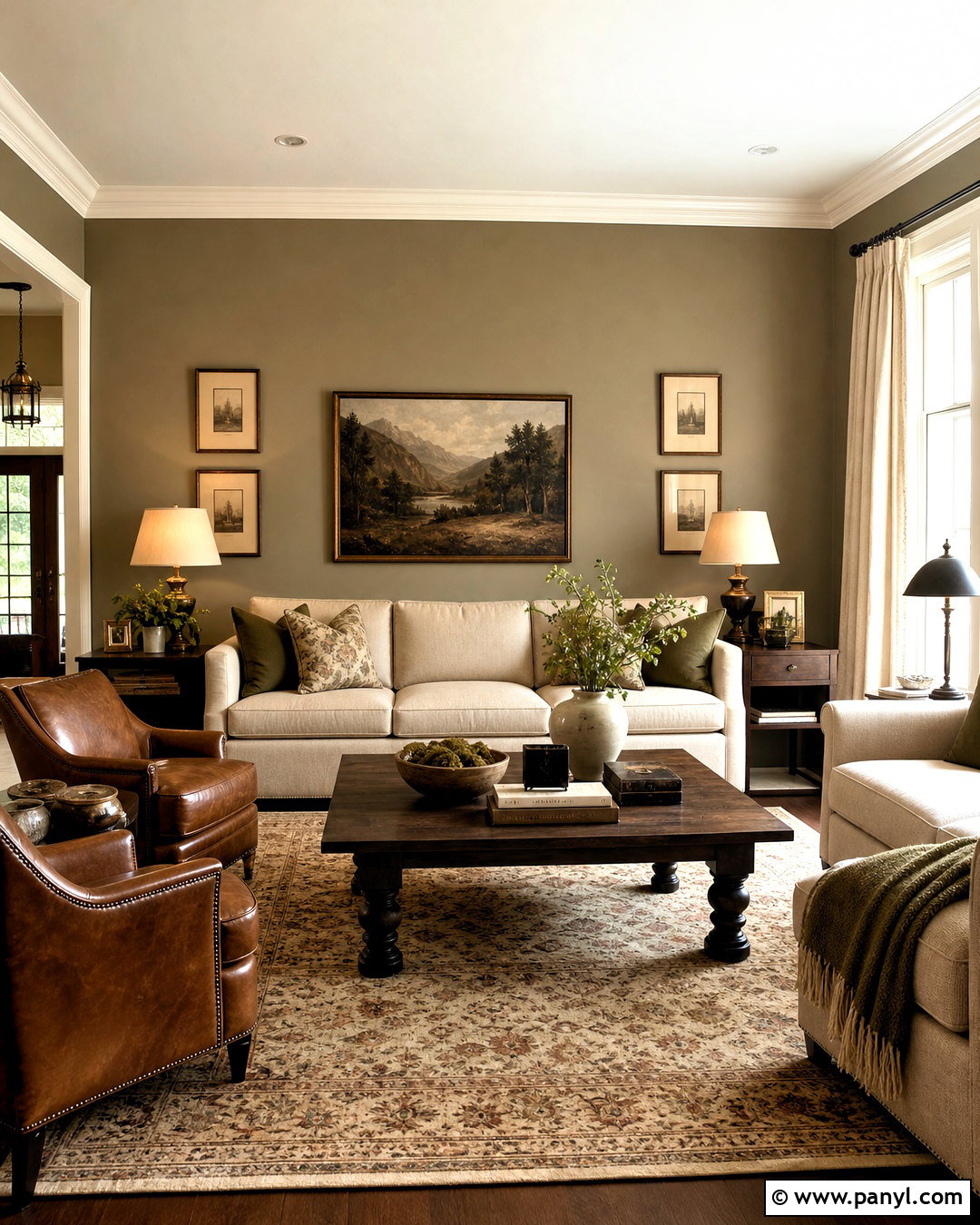
Mushroom beige gives a living room more character than standard builder beige. Its earthy gray-brown undertone feels grounded, making it an excellent partner for creamy upholstery, dark wood, and aged metal. Create a complete collected look with mushroom walls, a linen sofa, cognac leather chairs, and an antique-inspired patterned rug. Hang softly colored landscape artwork in walnut frames to reinforce the natural palette. Off-white trim keeps the room fresh, while bronze lamps and olive green pillows add depth. Because mushroom shades can shift considerably under different bulbs, test the paint near windows and in the darkest corner before deciding. This wall color is particularly effective in transitional rooms where modern furniture needs to blend comfortably with traditional architecture or vintage pieces.
4. Pale Taupe Living Room Walls
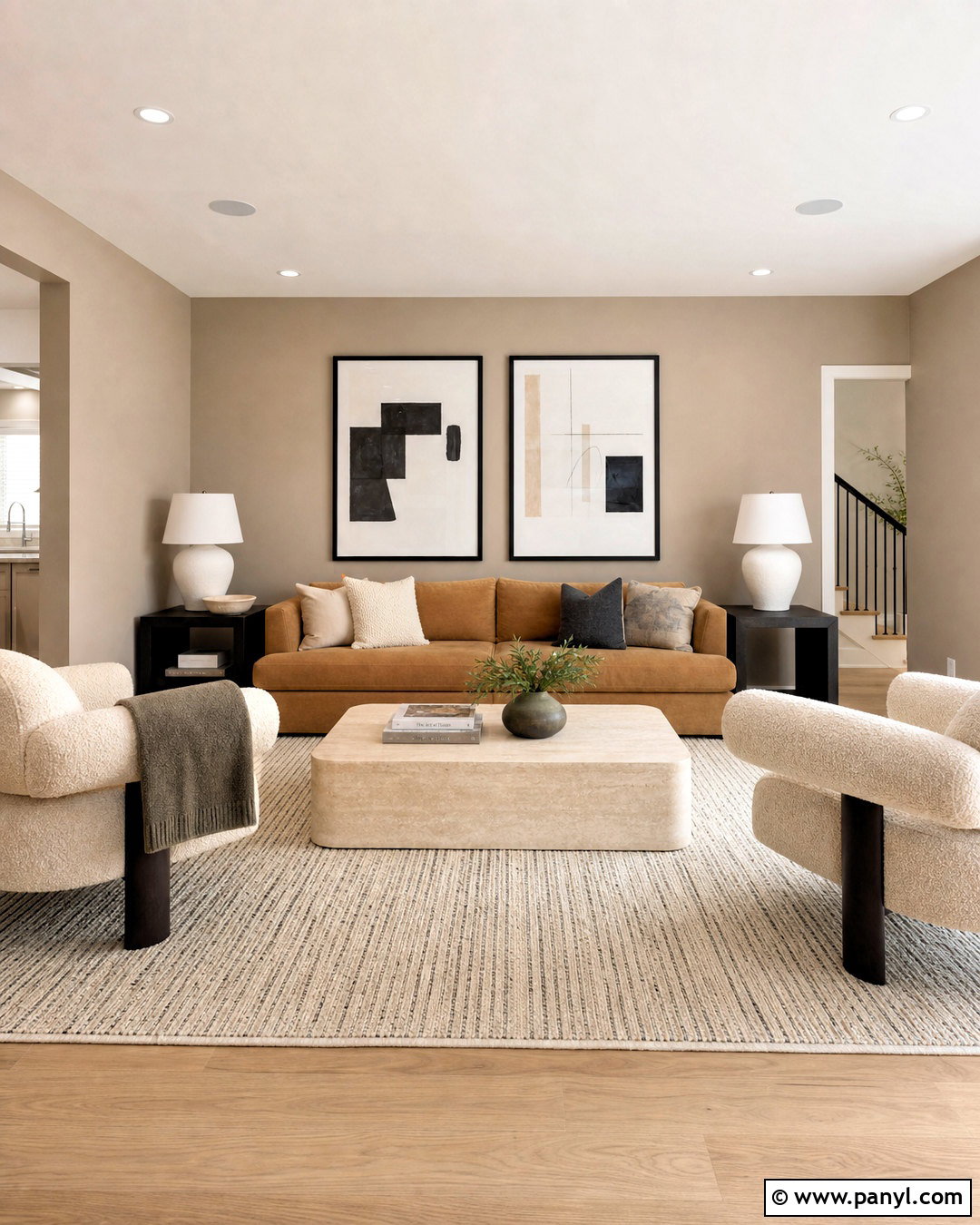
A pale taupe living room feels polished, welcoming, and quietly sophisticated. Unlike cooler gray, taupe contains brown or violet undertones that work beautifully with warm stone, medium oak, and beige upholstery. Use pale taupe across the walls, then arrange a camel sofa opposite two ivory bouclé chairs. A large cream-and-charcoal rug can anchor the seating area and introduce a simple pattern. Add sculptural ceramic lamps, black-framed artwork, and a travertine coffee table for a modern finish. Keep the ceiling soft white so the room remains open and balanced. If the space receives limited daylight, select a lighter taupe that does not turn muddy in shadow. Layering several related neutrals gives this restrained wall color enough texture and dimension to feel intentional.
5. Plaster Pink Living Room Walls
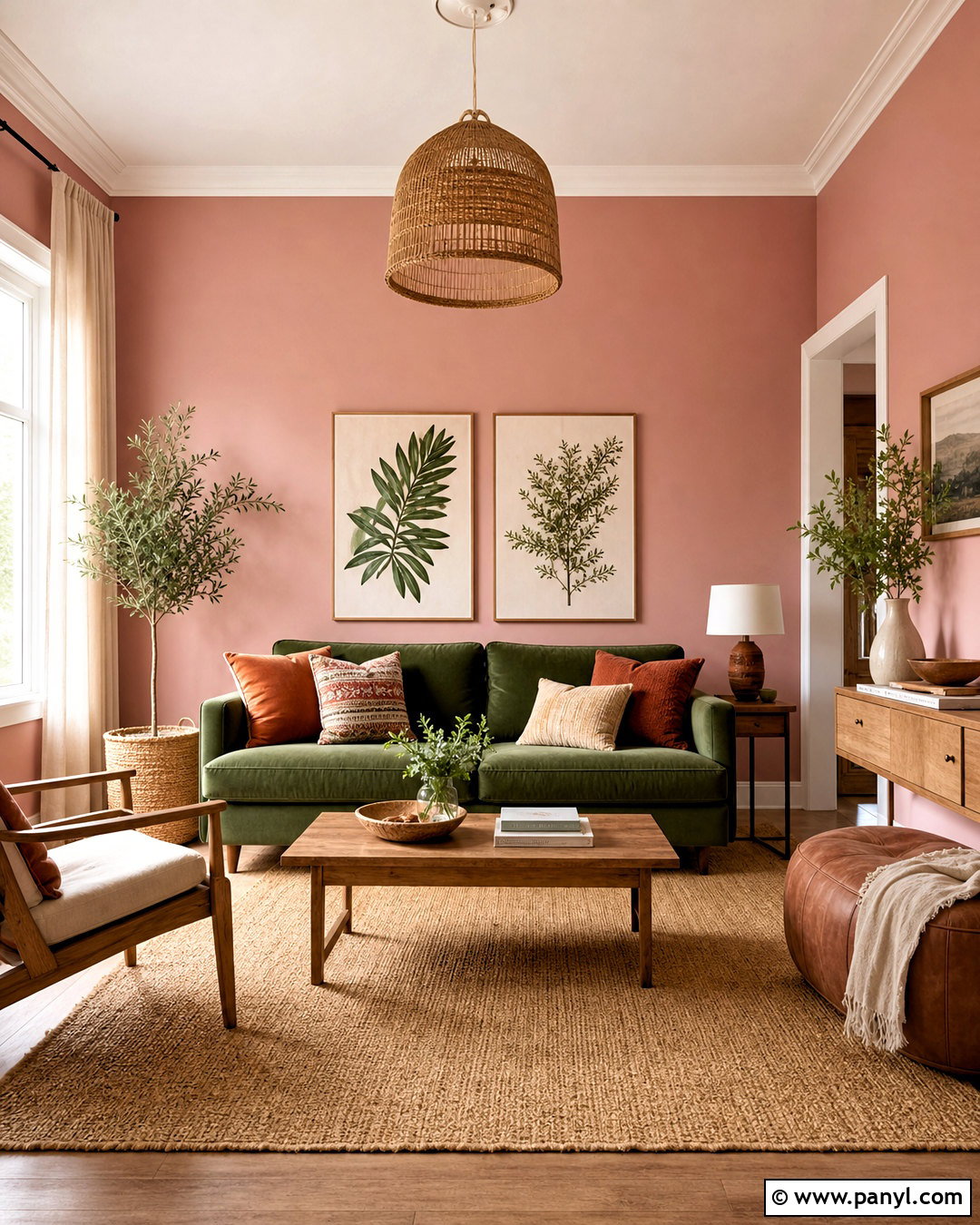
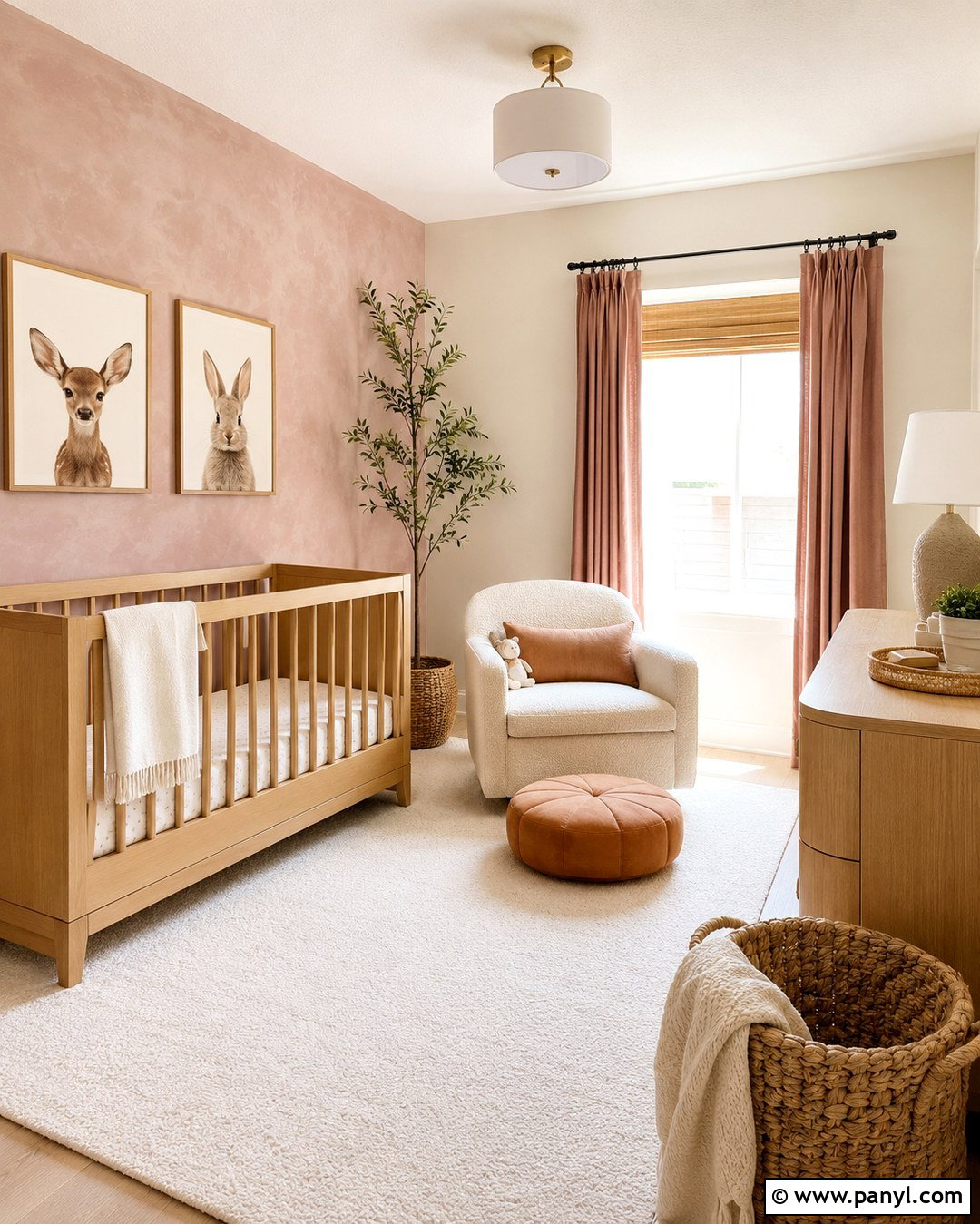
Plaster pink offers a softer, more livable alternative to sugary pastel pink. Look for a muted shade with beige, clay, or gray undertones, which will read as warm and sophisticated rather than overly sweet. Pair the walls with a moss green velvet sofa, rust-colored pillows, and a natural jute rug. Medium oak furniture and woven lighting strengthen the organic character of the room. For trim, choose creamy white or continue the pink over the moldings for a subtle color-drenched effect. Botanical prints, handmade pottery, and linen curtains complete the relaxed scheme. The result works well in bohemian, traditional, and modern interiors. In bright rooms, a dusty pink remains gentle, while in evening light it becomes warmer and more enveloping.
6. Powder Blue Living Room Walls
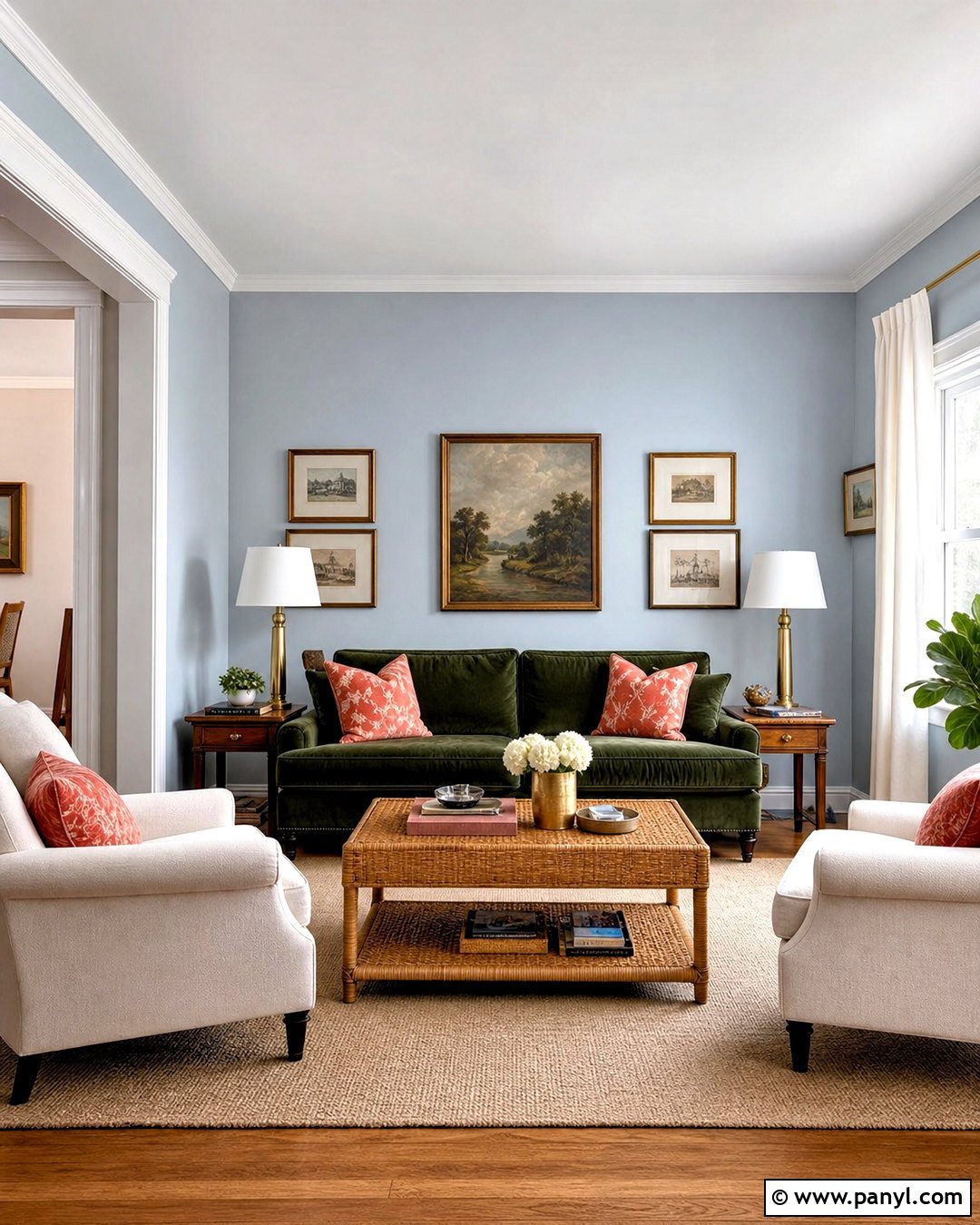
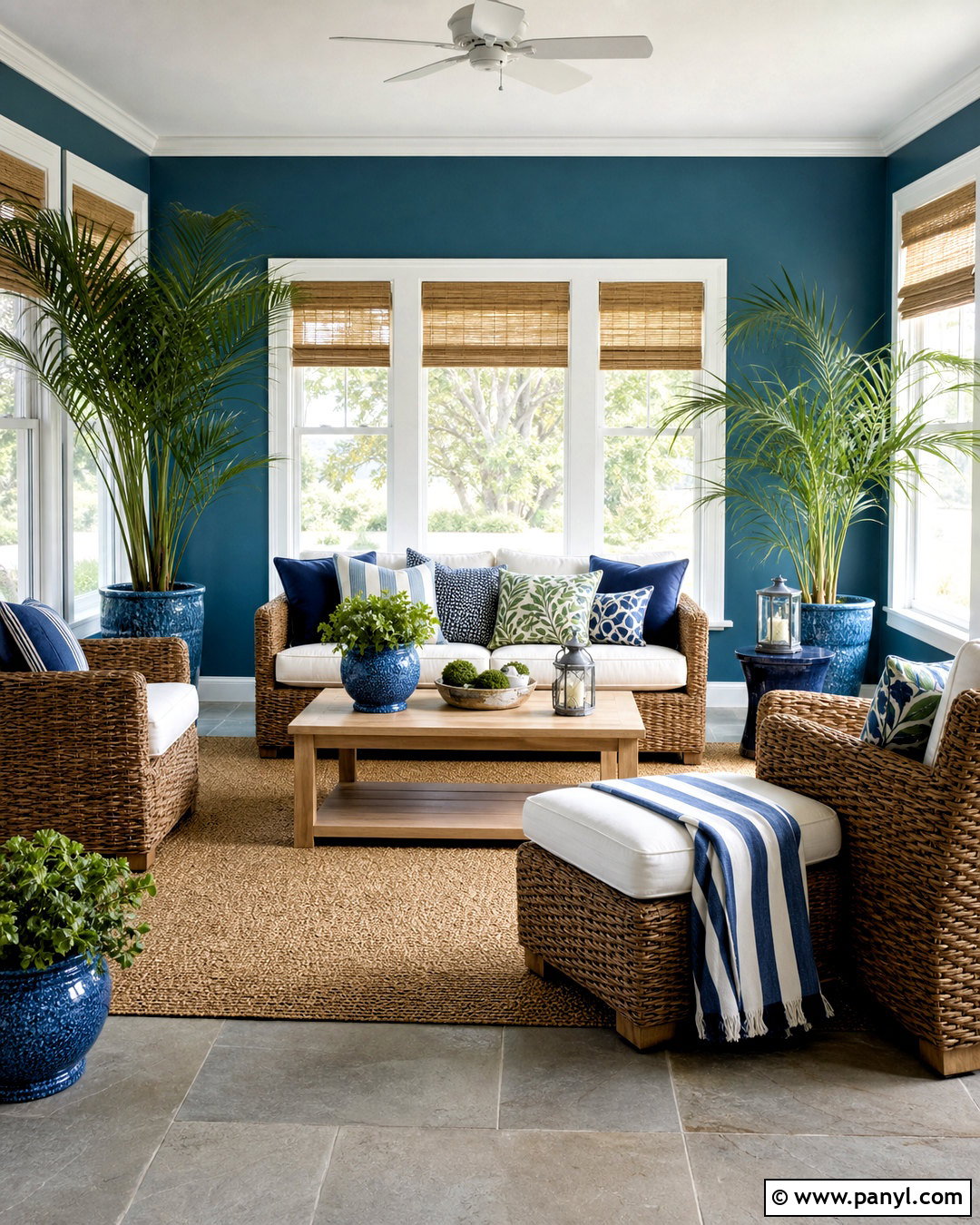
Powder blue walls can make a busy living room feel clear, calm, and breathable. Choose a softened blue with a hint of gray so it coordinates easily with both warm and cool furnishings. Build the room around a deep green sofa, ivory armchairs, and a light rattan coffee table. Coral or terracotta pillows add a small dose of warmth and prevent the palette from feeling chilly. Crisp white trim highlights windows and architectural details, while medium oak flooring grounds the lighter colors. Hang vintage artwork in brass and wood frames for a layered finish. Powder blue is increasingly being used as an adaptable alternative to conventional neutrals, particularly when paired with richer green and coral accents. ()
7. Dusty Blue Living Room Walls
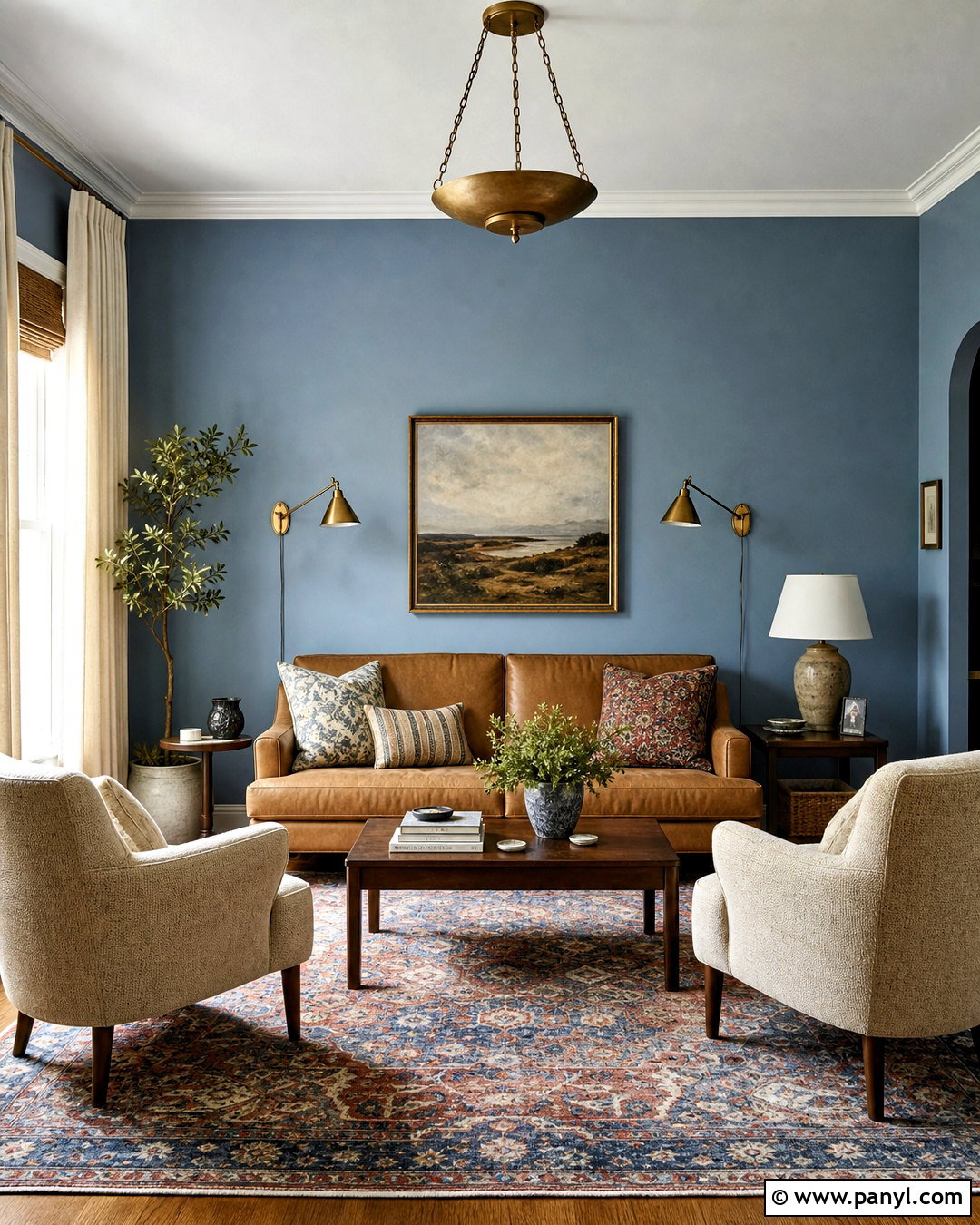
Imagine stepping into a living room that feels calm without looking pale or predictable. Dusty blue provides more depth than powder blue, yet its gray undertone keeps the color easy to live with. Use it on all four walls with warm white trim and a natural linen ceiling treatment or simple white ceiling. Pair the walls with a camel leather sofa, cream wool chairs, and a vintage red-and-blue rug. Walnut tables and aged brass lamps bring warmth to the cool background. Add patterned pillows that combine blue, rust, and oatmeal so the palette feels connected. This complete look suits traditional, coastal, and transitional homes. Dusty blue is also practical for rooms with mixed lighting because it remains distinctive without becoming intensely bright.
8. Navy Blue Living Room Walls
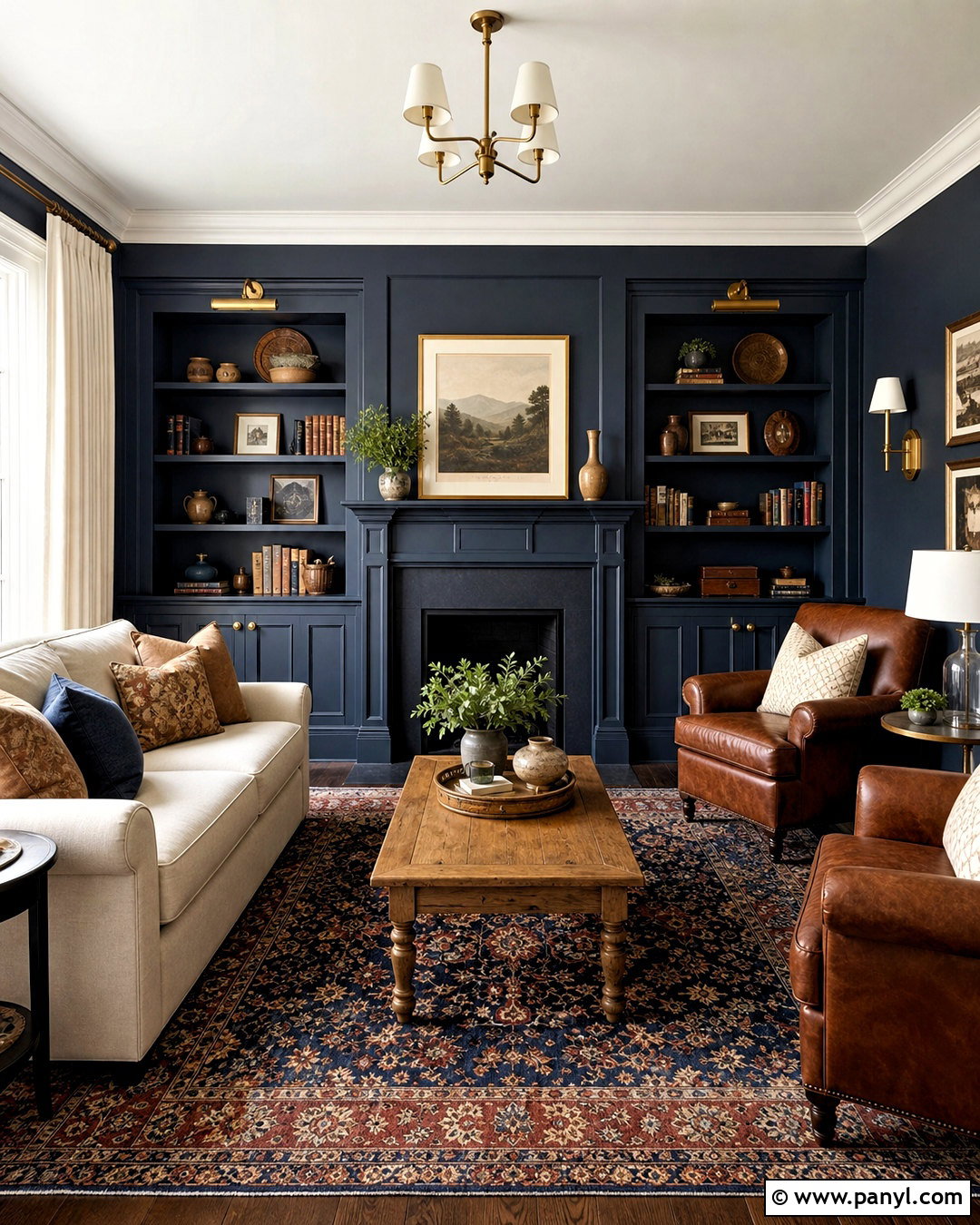
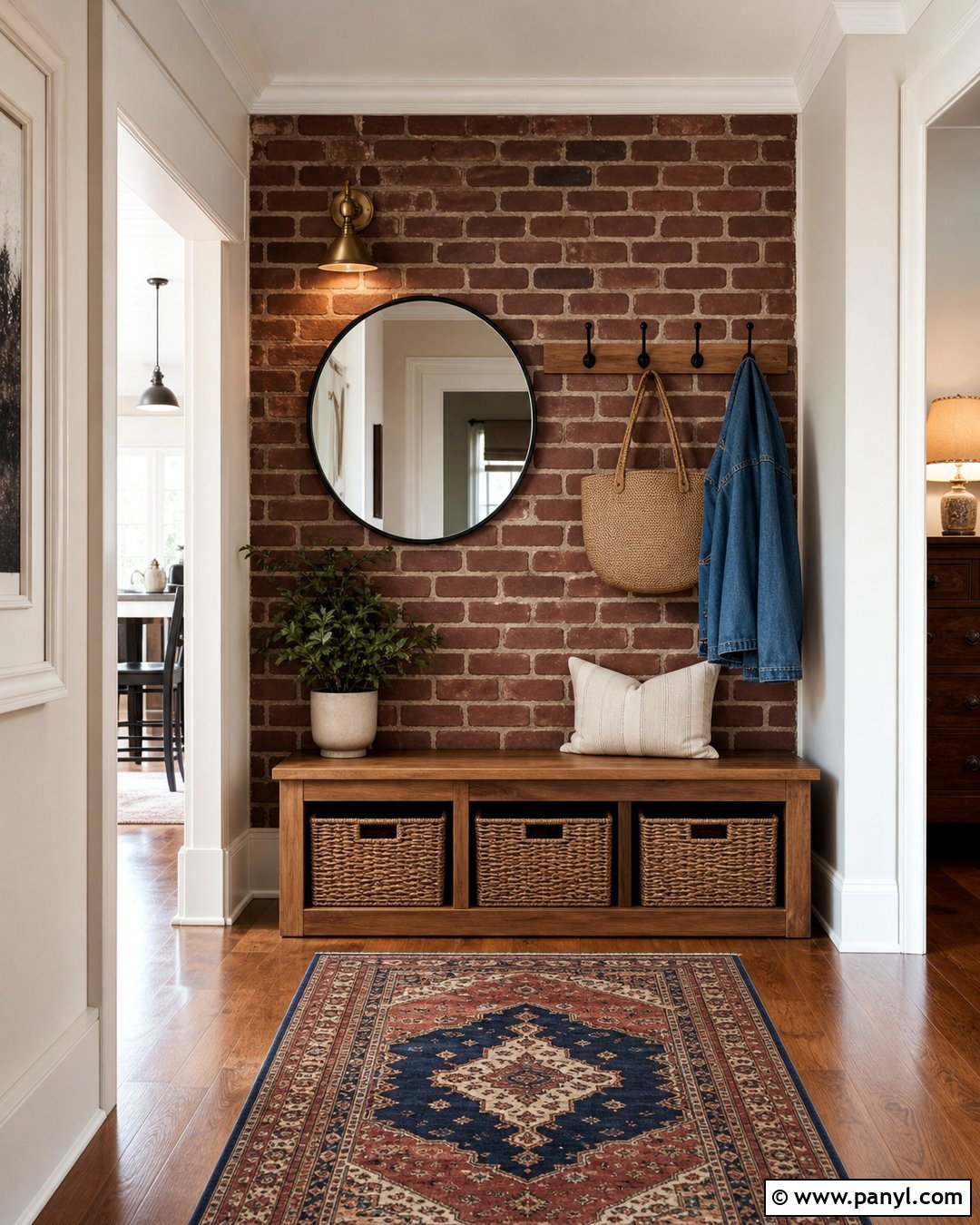
Navy blue walls turn a living room into a confident, cocooning retreat. Choose a slightly softened navy rather than an almost-black shade, especially if the room has limited natural light. Paint the walls and built-in bookcases the same color for a continuous background, then introduce a cream sofa, cognac leather chairs, and a warm oak coffee table. White ceilings and trim can keep the room crisp, while antique brass sconces provide a polished contrast. Use a faded Persian-style rug with red, beige, and blue details to connect the furniture and walls. Larger mirrors and light-colored curtains will help reflect daylight around the space. This balanced scheme allows navy to feel dramatic but still comfortable enough for everyday conversation, reading, and television viewing.
9. Slate Blue Living Room Walls
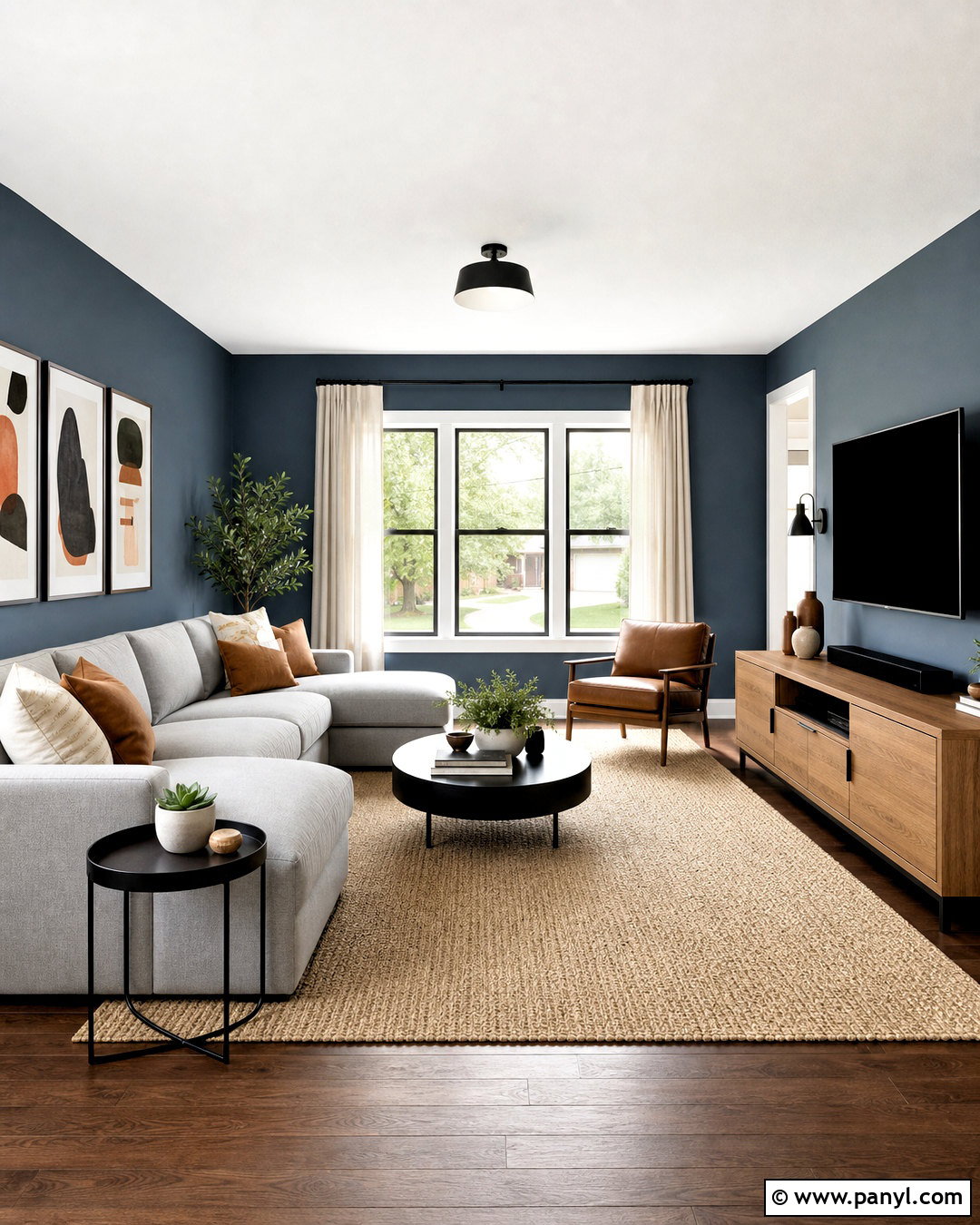
Slate blue combines the quiet character of gray with enough blue to make a living room feel distinctive. It works especially well in contemporary spaces filled with clean lines and natural textures. Paint the walls in a medium slate blue, then add a light gray sectional, black metal side tables, and an oak media console. Warm the arrangement with camel pillows, a cream woven rug, and off-white linen drapes. Matte black lighting reinforces the modern structure, while simple abstract artwork introduces blue, tan, and charcoal tones. Avoid filling the room with additional cool gray finishes, which may make the palette feel sterile. Instead, use leather, wood, wool, and woven baskets. The finished space will appear organized, comfortable, and visually grounded without becoming overly dark.
10. Sage Green Living Room Walls
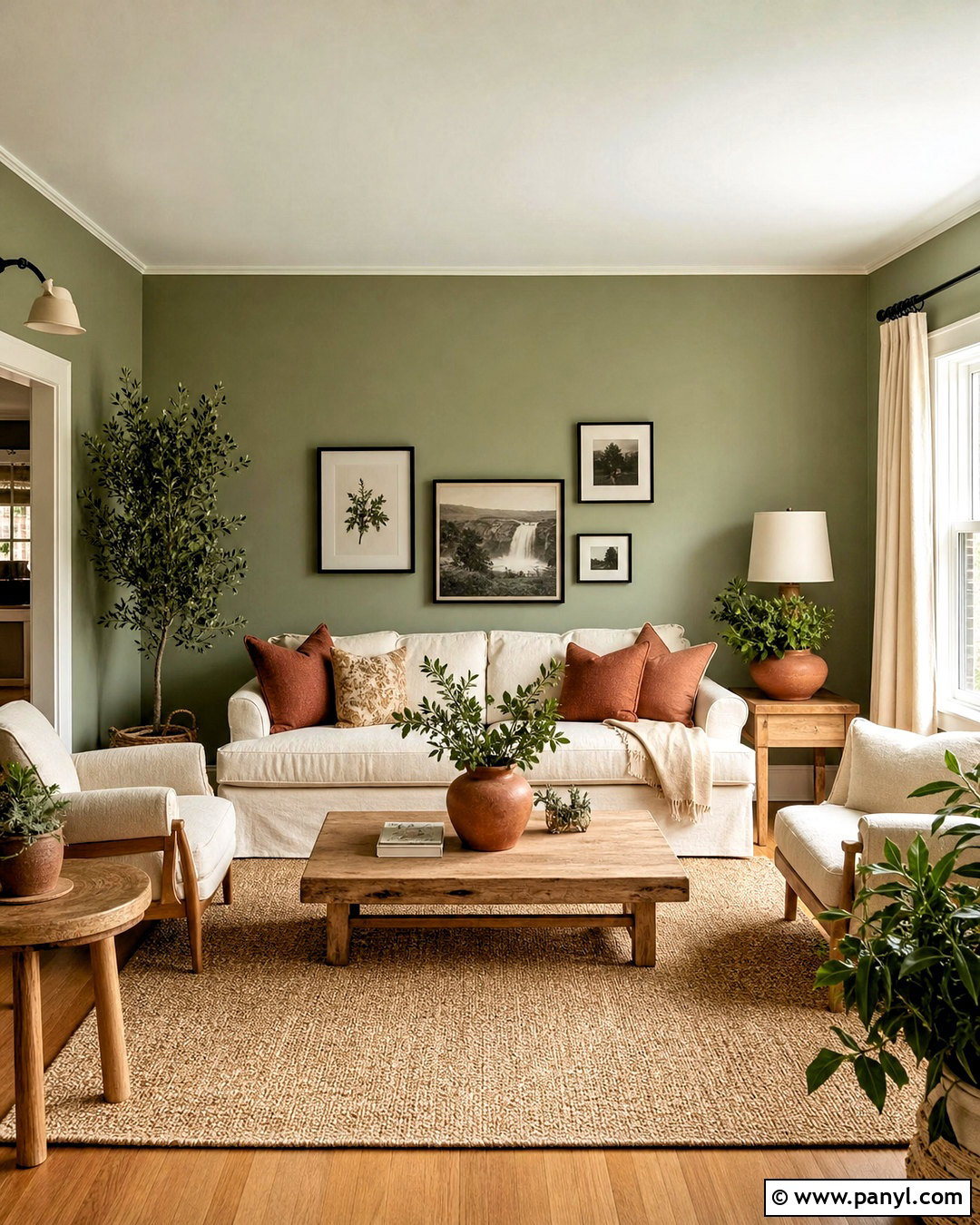
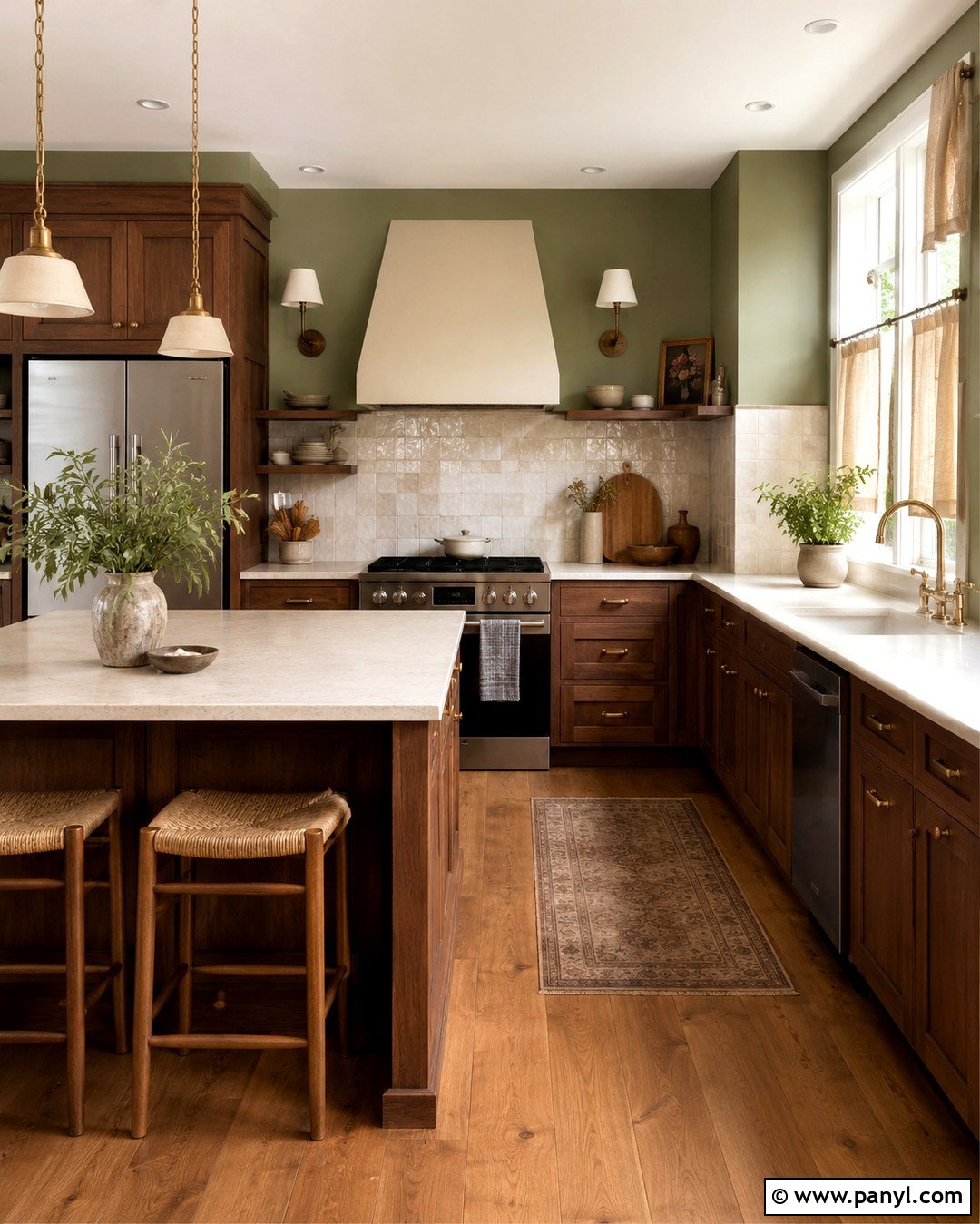
Soft sage green brings an easy connection to nature into the living room. Select a muted shade with warm gray undertones, then pair it with a cream slipcovered sofa, light oak tables, and oatmeal linen curtains. A sisal or jute rug reinforces the organic foundation, while terracotta pottery and rust-colored cushions add warmth. Use off-white on the ceiling and trim to maintain a clean boundary around the green. Plants can be included, but vary their leaf tones so they do not blend into the walls. Black picture frames and a slim iron floor lamp provide a small amount of contrast. This complete palette suits farmhouse, cottage, transitional, and organic modern interiors. It also transitions smoothly into kitchens or hallways featuring natural wood and warm neutral finishes.
11. Gray Green Living Room Walls
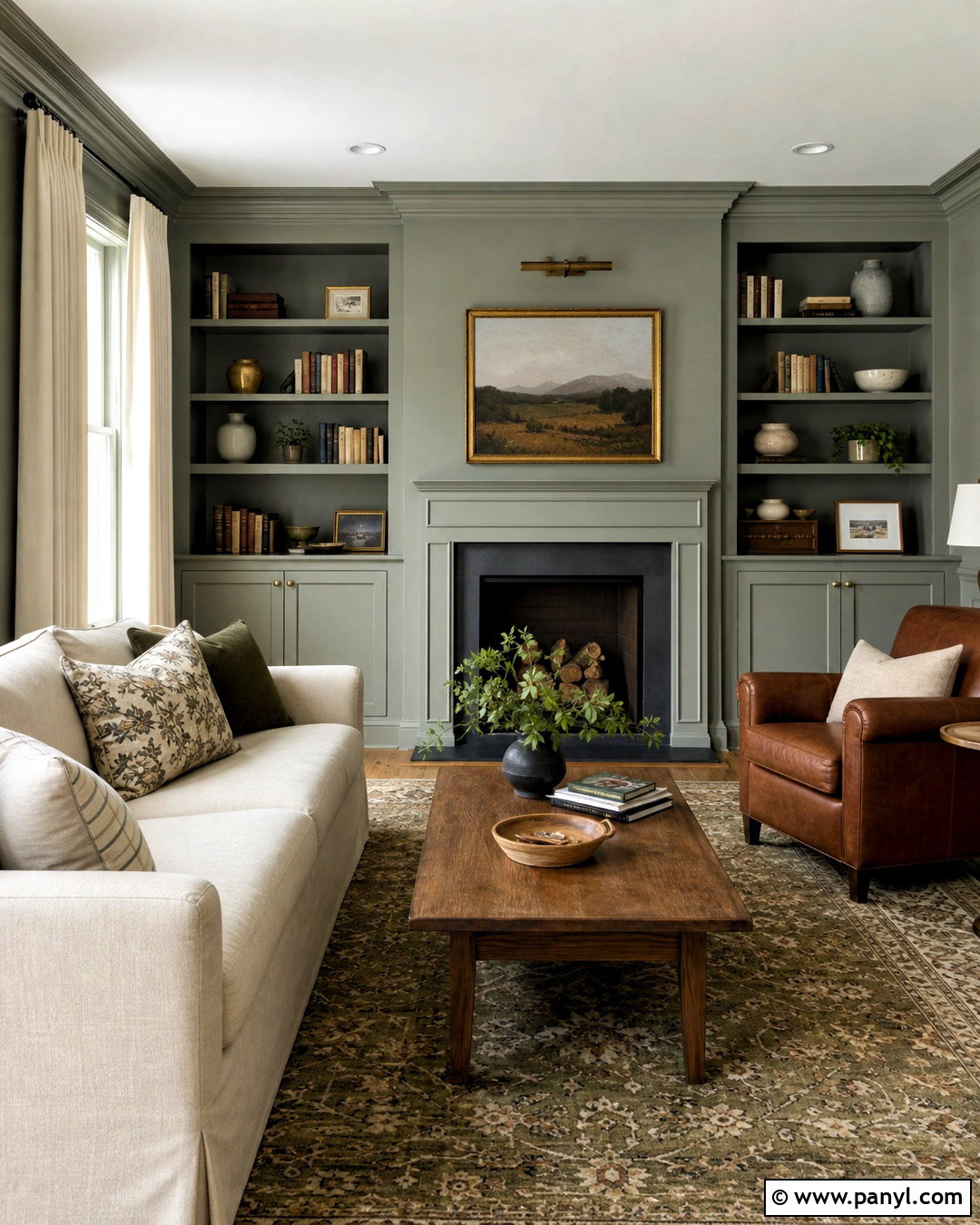
Gray-green walls create a quieter, more tailored room than brighter botanical greens. This balanced shade can appear green in daylight and more neutral under warm evening lamps, giving the space subtle movement. Combine it with an ivory sofa, a tobacco leather armchair, and a medium-toned wood coffee table. Use a patterned rug containing faded olive, tan, and charcoal to unify the seating area. Built-in shelving painted in the same gray-green will create a cohesive background for books and neutral ceramics. Cream curtains keep the windows light, while aged brass hardware introduces restrained warmth. Choose an eggshell finish for walls and a satin version of the same color for built-ins. The finished room feels comfortable and established, making it suitable for traditional and modern furnishings alike.
12. Olive Green Living Room Walls
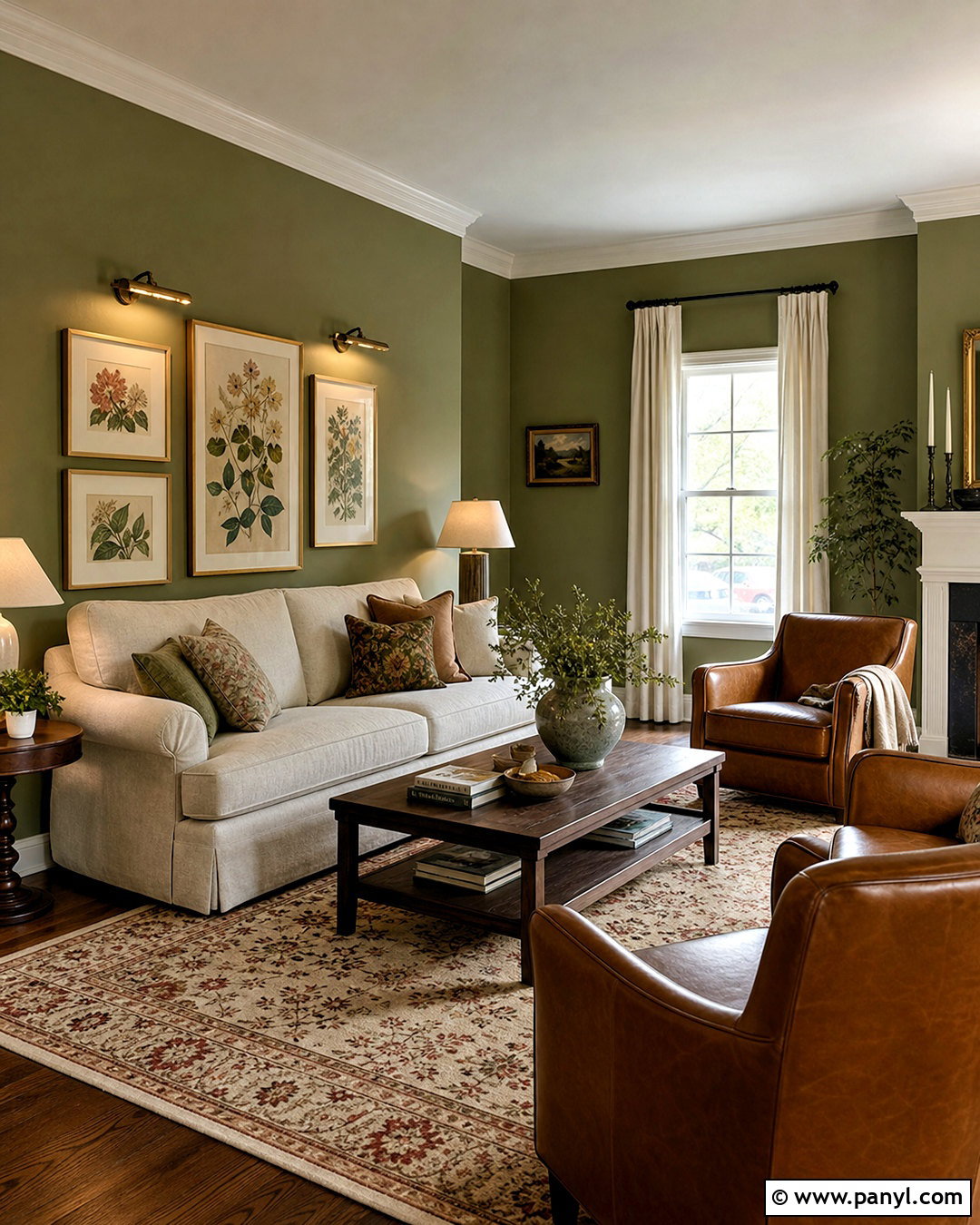
Olive green can give a living room remarkable depth when balanced with warm, lighter materials. Paint every wall in a medium olive, then furnish the space with a flax-colored linen sofa, camel leather chairs, and a dark walnut coffee table. Use a vintage-style rug that combines cream, muted red, and olive to soften the transition between walls and flooring. Brass picture lights and framed botanical artwork strengthen the classic character. Keep the ceiling warm white unless the room has generous height and strong daylight. In that case, extending olive overhead can create a sophisticated color-drenched effect. Avoid pairing this shade with too many cold grays. Natural wood, aged brass, linen, leather, and warm off-white finishes allow the green to look rich, inviting, and intentionally layered.
13. Deep Forest Green Living Room Walls
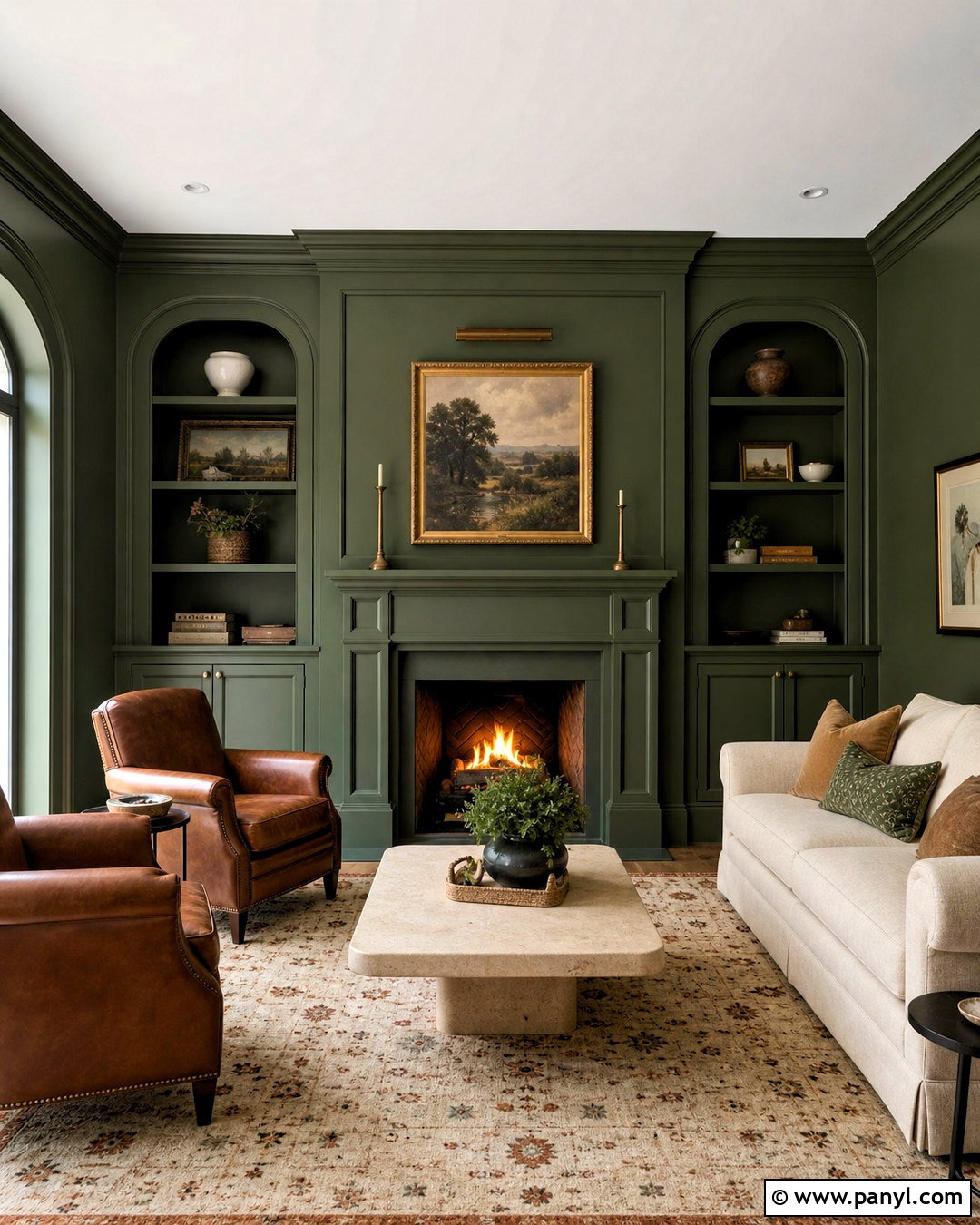
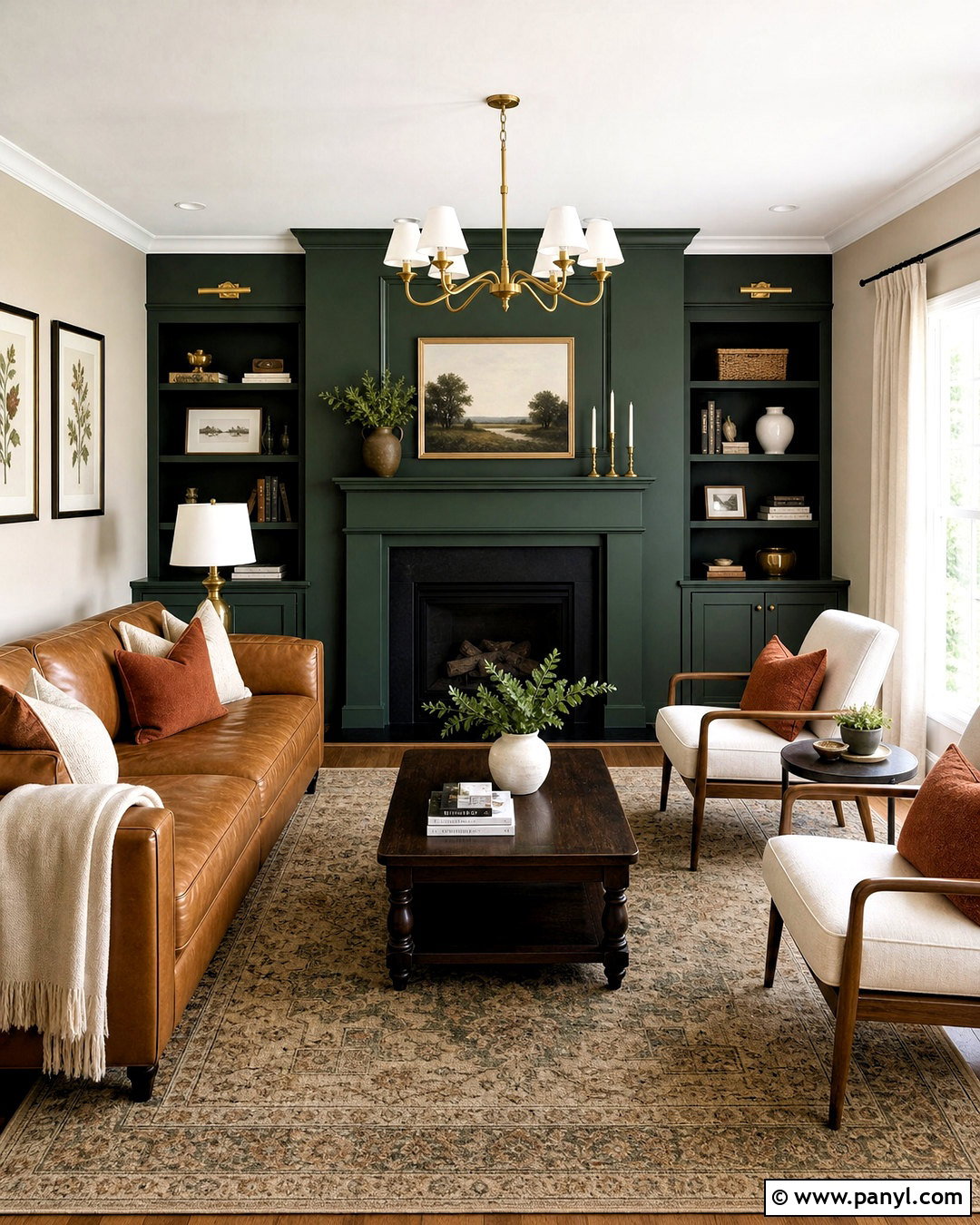
For a living room that feels intimate and memorable, consider deep forest green. This strong color is most successful when treated as the foundation of the entire room rather than a disconnected accent wall. Paint the walls, fireplace surround, and built-in shelving in the same deep green. Add a large oatmeal sofa, two cognac leather armchairs, and a pale stone coffee table to introduce visual relief. A patterned rug with cream, rust, and dark green will bridge the contrast. Use warm brass sconces and table lamps to brighten corners, while ivory curtains frame the windows. Keep decorative objects limited and substantial. Forest green already provides plenty of visual presence, so simple artwork, textured cushions, natural wood, and carefully arranged books are enough to complete the space.
14. Butter Yellow Living Room Walls
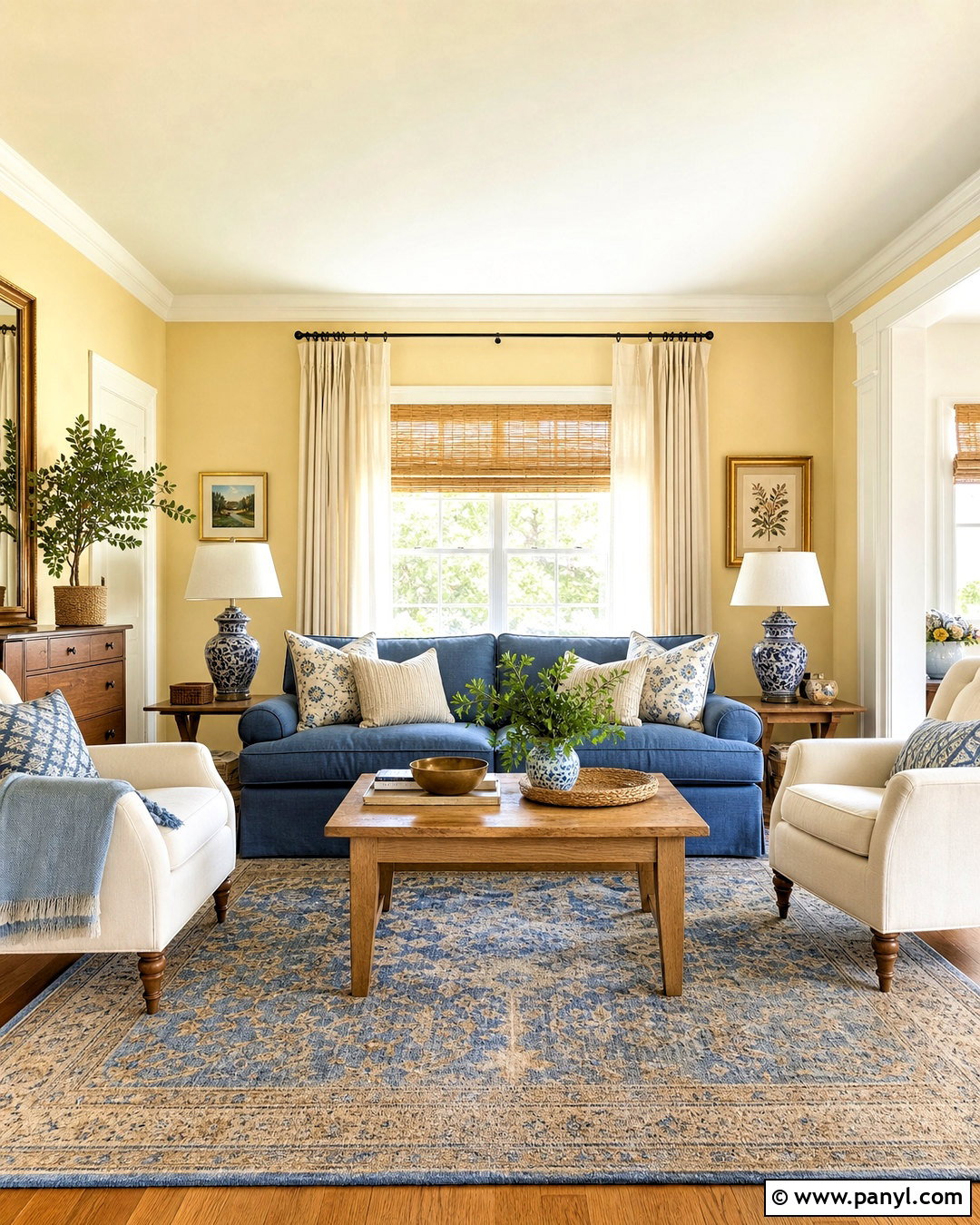
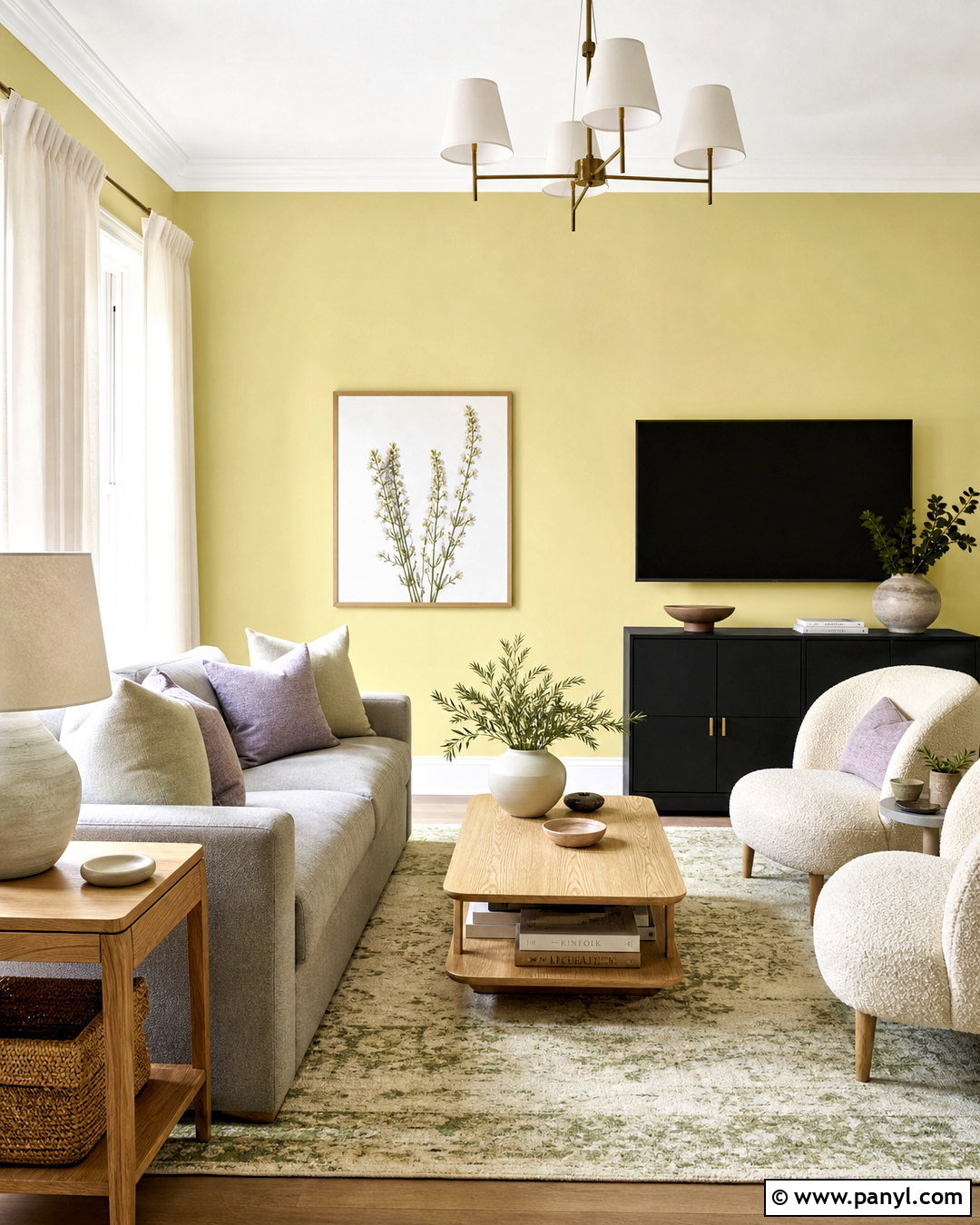
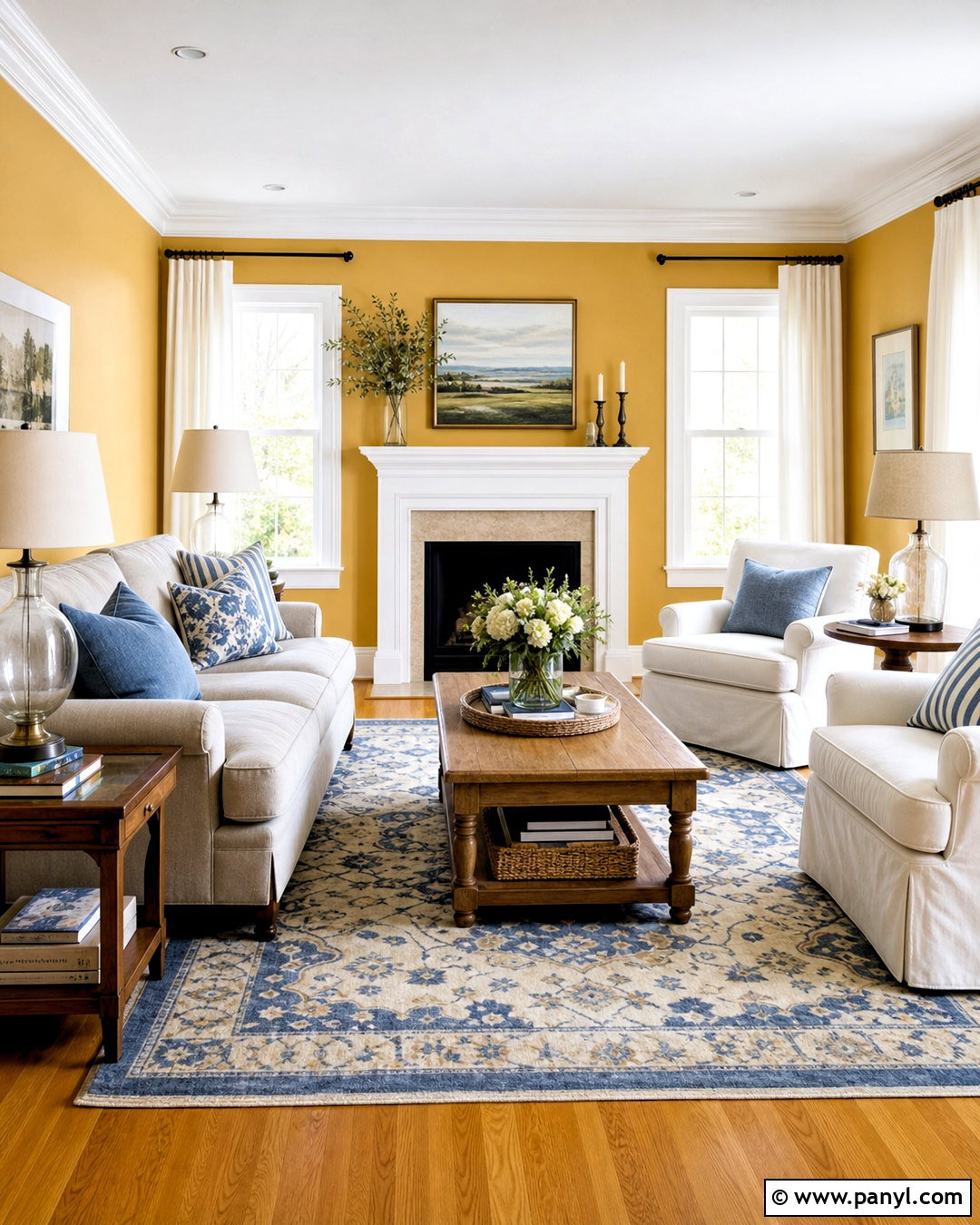
Butter yellow walls create warmth and energy without the intensity of a bright primary yellow. Choose a creamy, muted shade that looks soft beside natural daylight. Pair it with a blue-gray sofa, ivory accent chairs, and medium oak furniture for a balanced color story. A patterned rug containing faded blue, tan, and yellow will pull the entire seating arrangement together. Use warm white trim and ceiling paint to preserve the sunny effect. Woven shades, linen curtains, and ceramic table lamps add approachable texture. For a more traditional room, include floral or striped upholstery in restrained colors. Butter yellow is especially helpful in north-facing living rooms that need visual warmth. The finished scheme feels cheerful, relaxed, and suitable for both everyday family use and casual entertaining.
15. Terracotta Living Room Walls
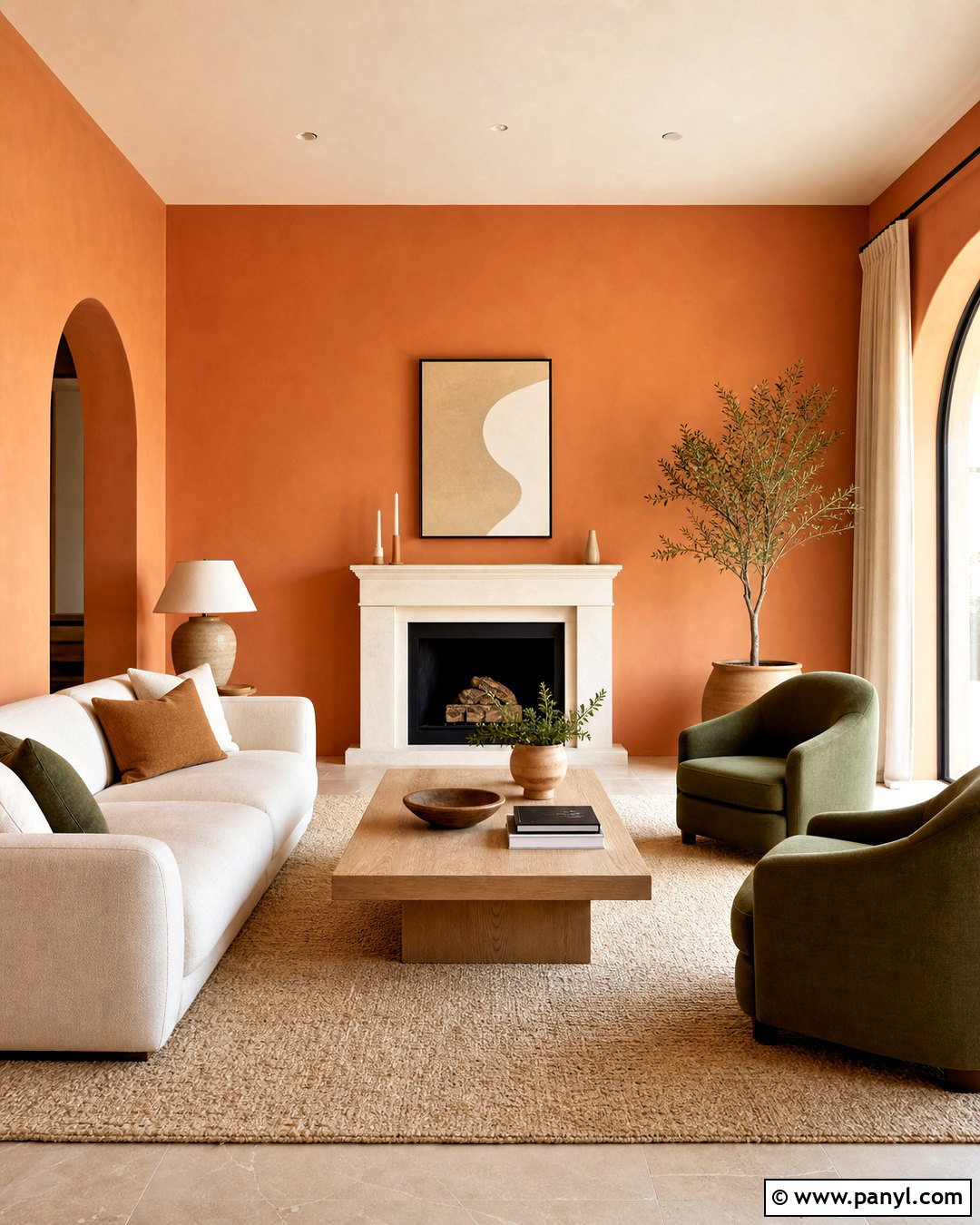
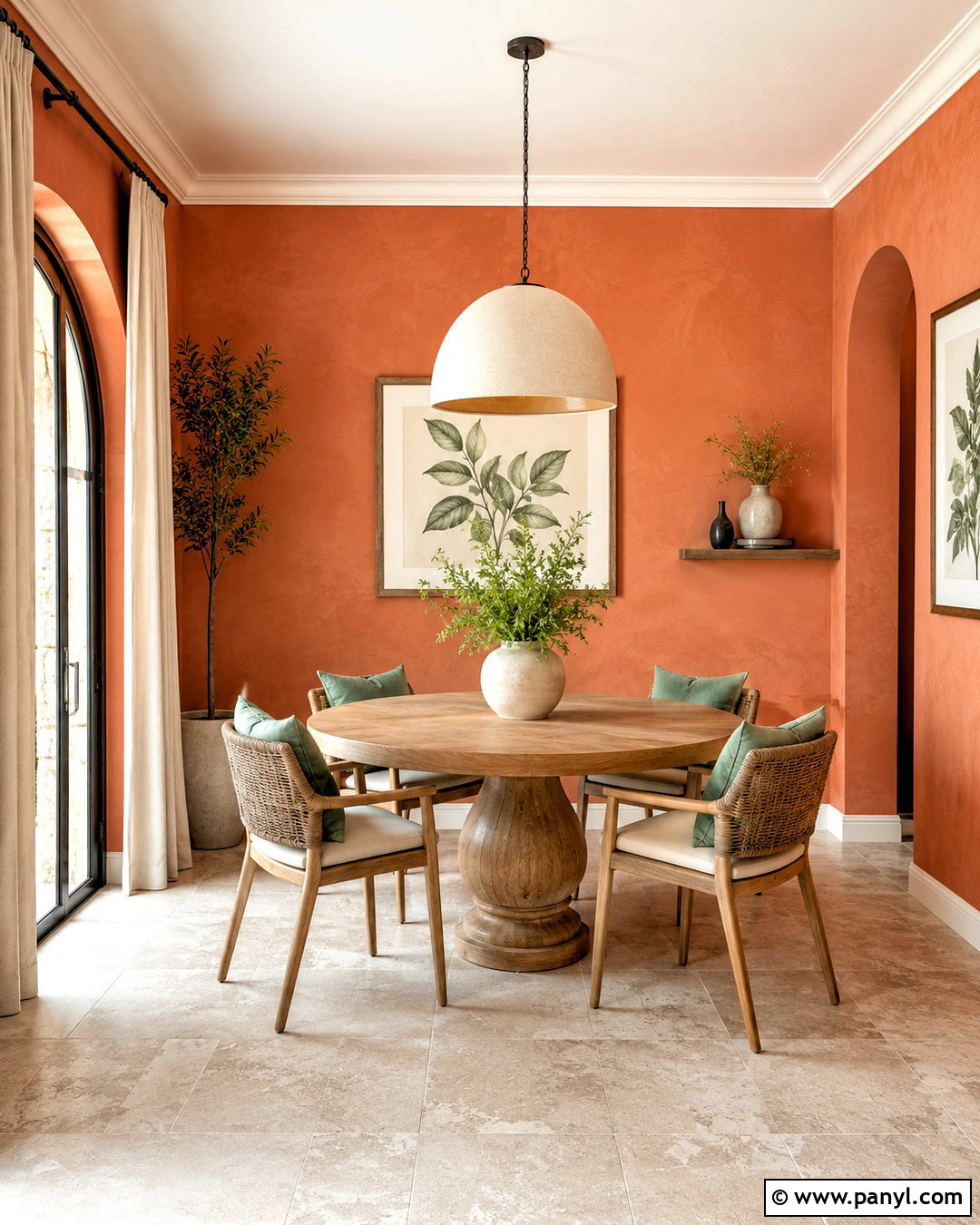
Terracotta walls surround a living room with earthy warmth and Mediterranean character. Choose a softened clay shade rather than a vivid orange, then balance it with a cream sofa, olive green chairs, and a pale oak coffee table. Natural linen curtains and a large beige wool rug will lighten the room while preserving its grounded mood. Add matte black fixtures, handmade pottery, and a few woven pieces for definition and texture. Warm white on the ceiling prevents the color from feeling heavy. If the living room contains a fireplace, finish the surround in light limestone or warm plaster so it becomes a gentle focal point. Terracotta looks especially cohesive beside brick, wood beams, or tan flooring, creating a complete interior that feels welcoming, sun-warmed, and comfortably lived in.
16. Rust Red Living Room Walls
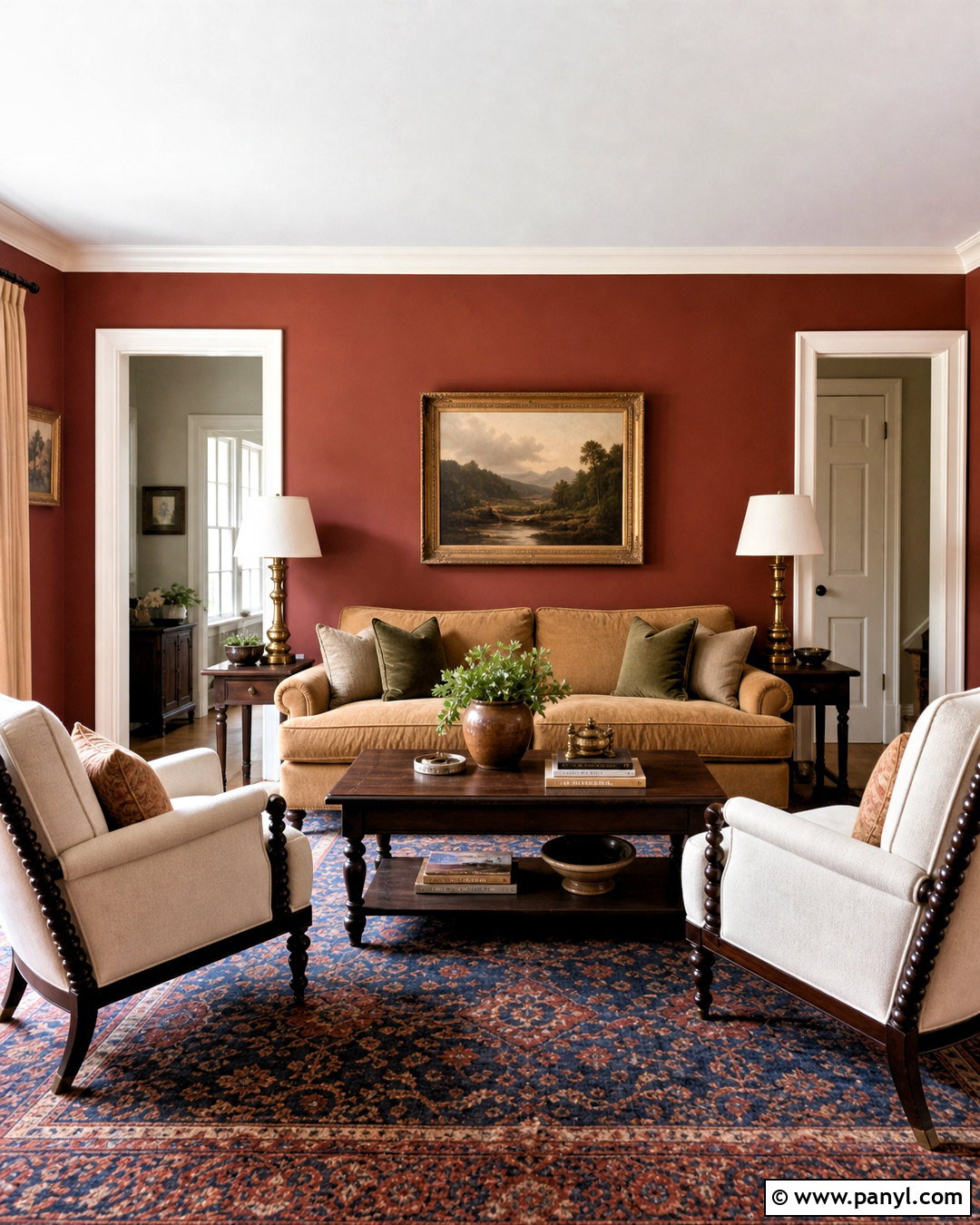
Rust red creates drama while feeling softer and more natural than a clear, vivid red. Cover the walls in a muted iron-rich shade and pair them with a camel sofa, dark wood tables, and cream upholstered chairs. A traditional rug featuring faded navy, beige, and rust will establish a cohesive foundation. Use antique brass lighting and warm white lampshades to enhance the room after sunset. Off-white trim creates contrast, while painting the trim rust produces a more enveloping, contemporary result. Keep large furniture shapes simple because the wall color already carries significant visual weight. Navy pillows, landscape artwork, and small olive accents can provide balance. This full scheme works best in living rooms meant for conversation, reading, and cozy evening gatherings rather than a bright, minimalist atmosphere.
17. Chocolate Brown Living Room Walls
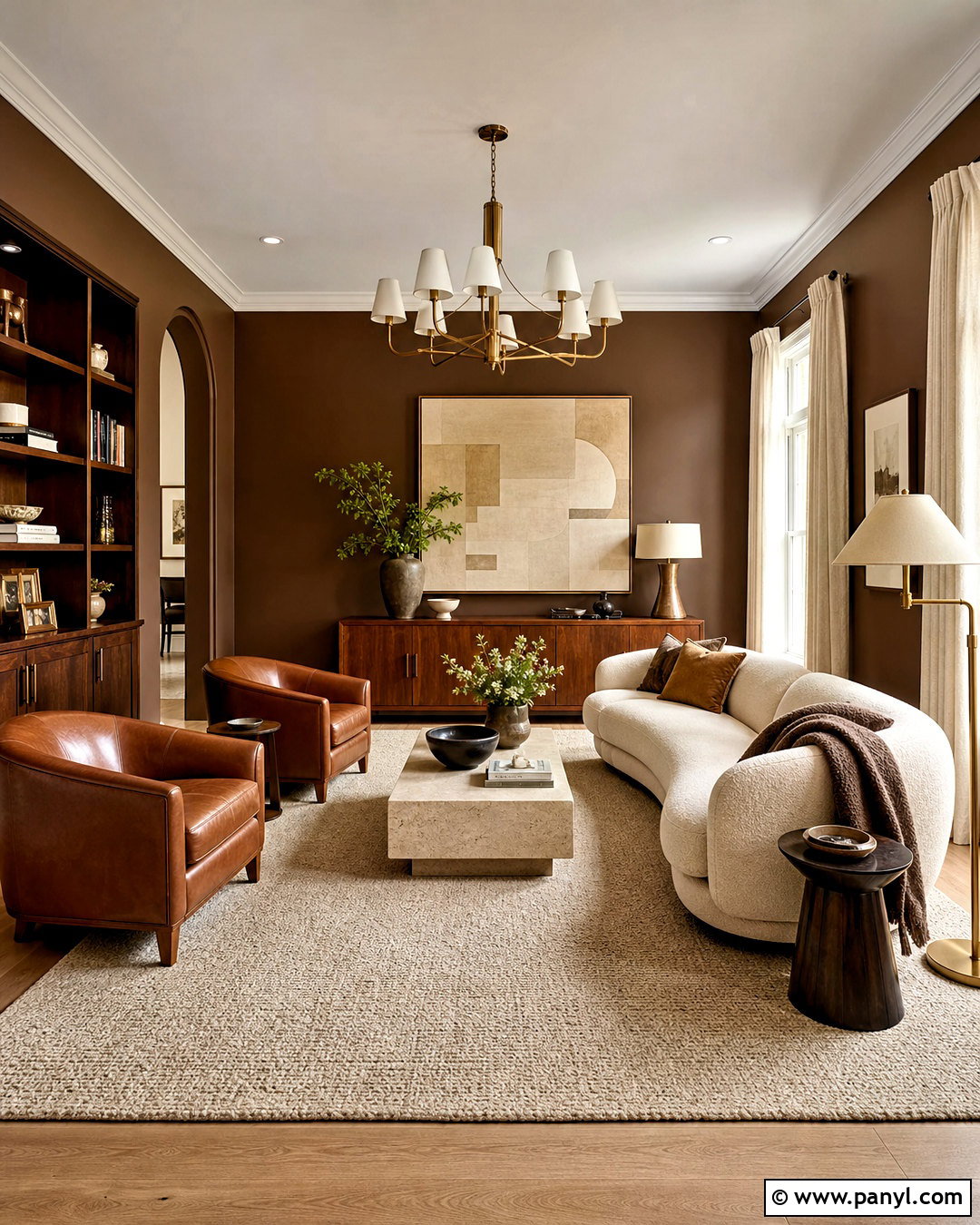
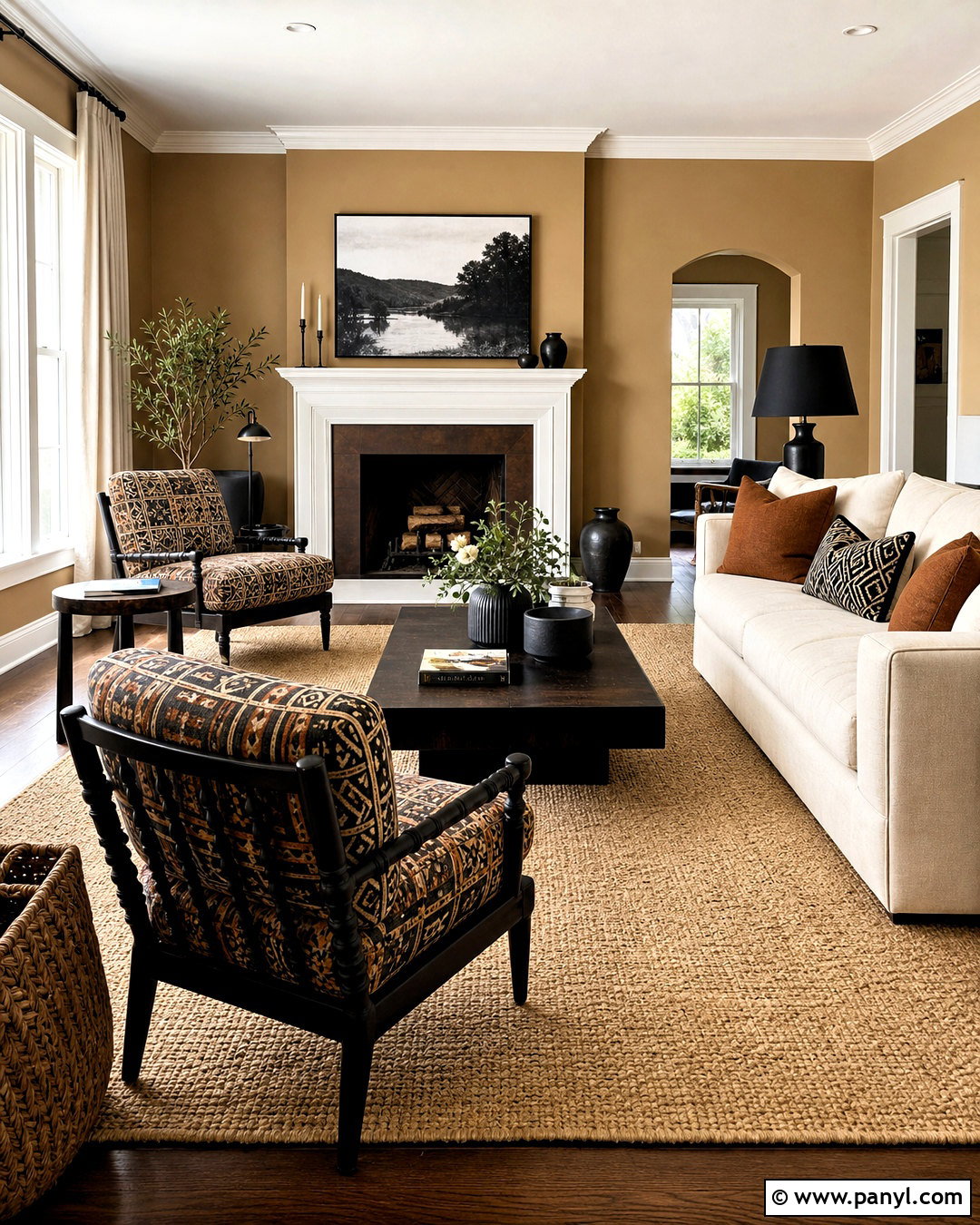
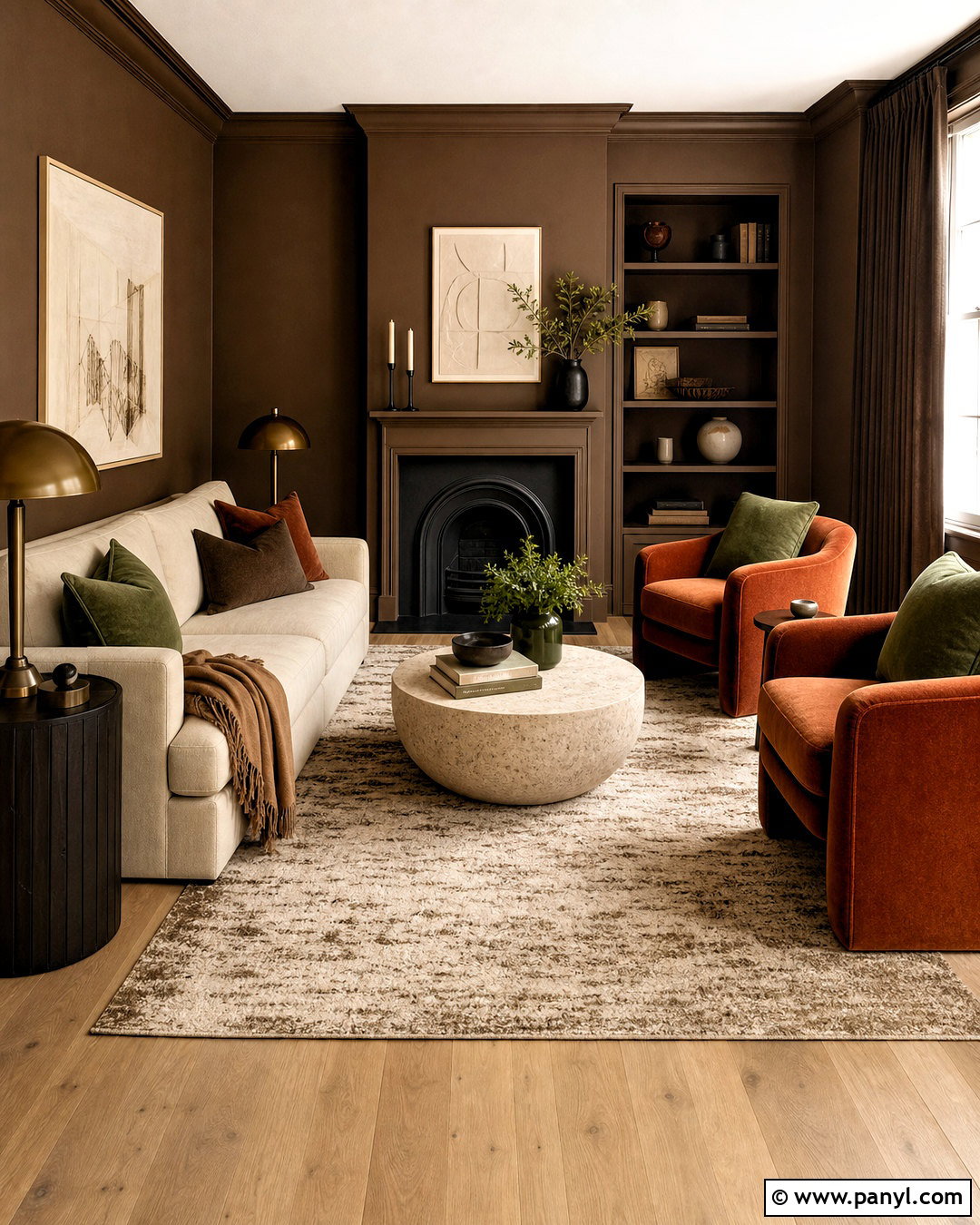
Chocolate brown walls can make a spacious living room feel warmer, richer, and more intimate. Look for a deep brown with warm coffee or cocoa undertones instead of a cooler shade that may appear nearly black. Combine it with an ivory bouclé sofa, caramel leather chairs, and a travertine coffee table. Cream curtains and a large oatmeal rug will lift the darker background. Add walnut shelving, amber-free white lighting, and brushed brass accents for a refined finish. Large-scale artwork with beige, rust, and muted blue can break up broad expanses of brown. This increasingly prominent color direction supports the renewed interest in layered, comforting interiors. () Use several lamps around the room so the deep walls retain dimension instead of falling into shadow.
18. Charcoal Gray Living Room Walls
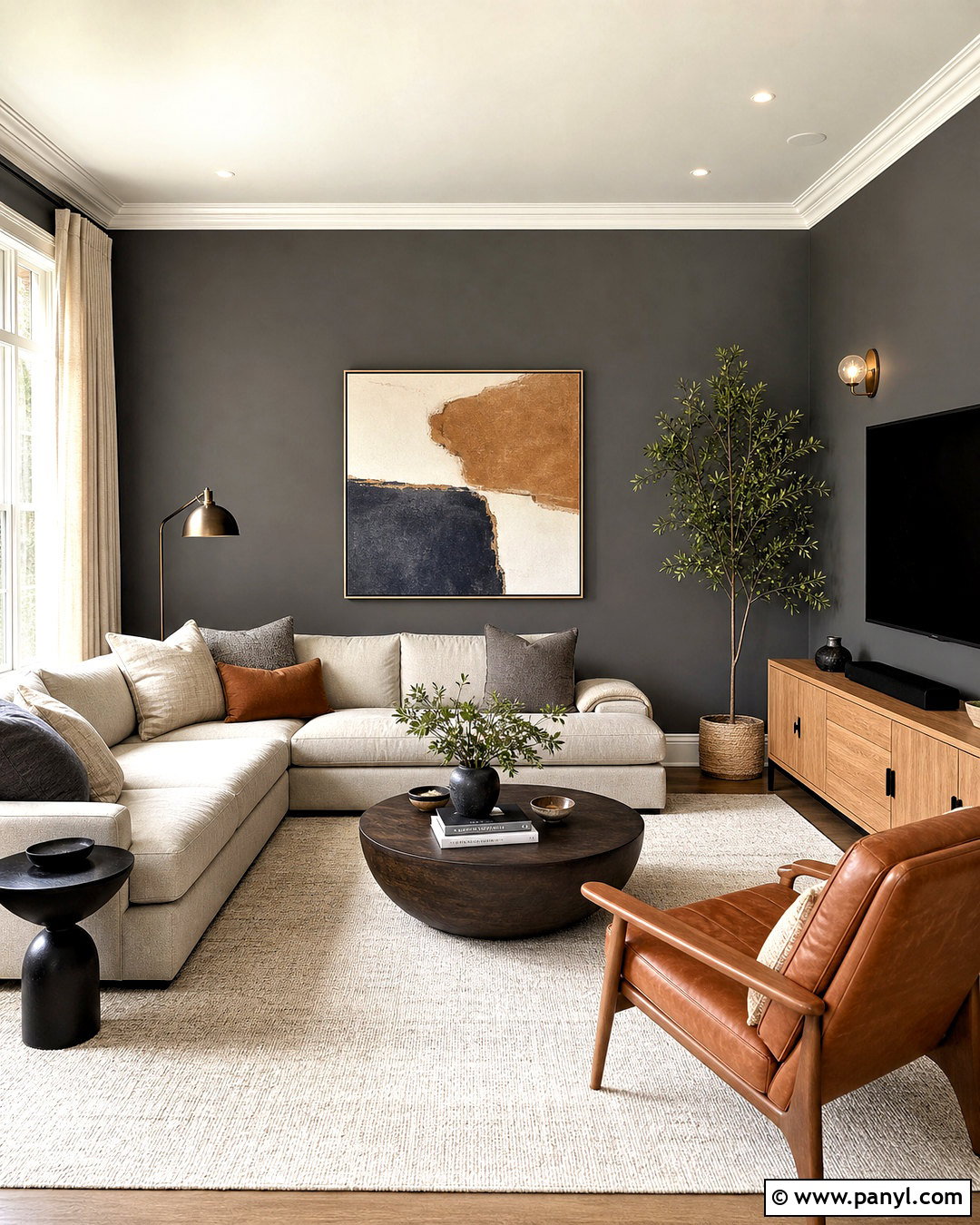
Charcoal gray creates a strong architectural background for a modern living room, but it needs warmth and contrast to remain inviting. Paint all walls in a softened charcoal with slightly brown undertones. Add a generous cream sectional, a cognac leather lounge chair, and a light oak media cabinet. A pale textured rug will define the seating zone and reflect more light into the room. Use linen curtains instead of heavy dark panels, and choose warm metal accents such as bronze or aged brass. Large abstract art can introduce clay, beige, and soft blue. Keep the ceiling and trim warm white for clear definition. With balanced materials and layered lighting, charcoal becomes sophisticated rather than severe, creating an ideal backdrop for contemporary furniture and uncluttered decor.
19. Soft Black Living Room Walls
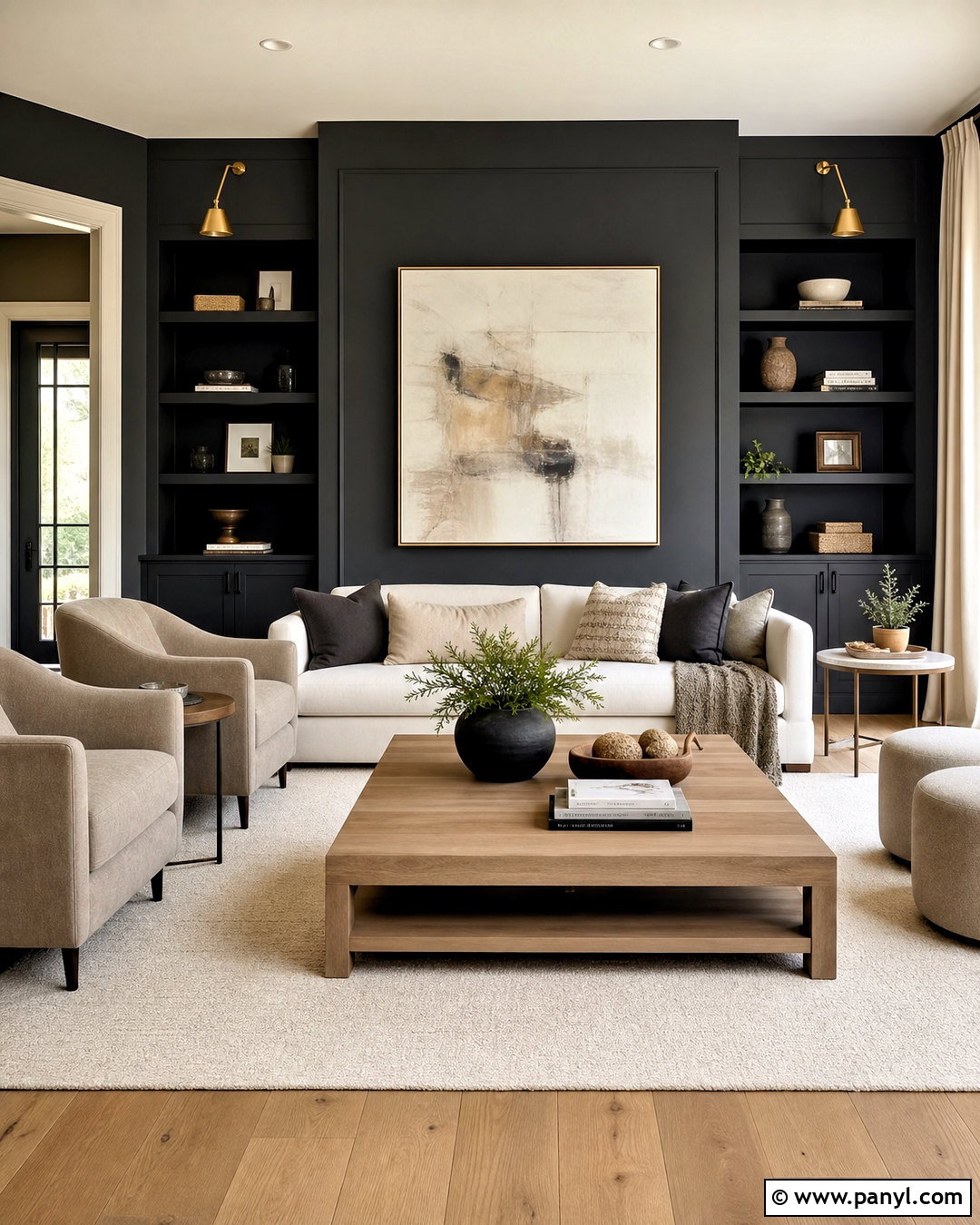
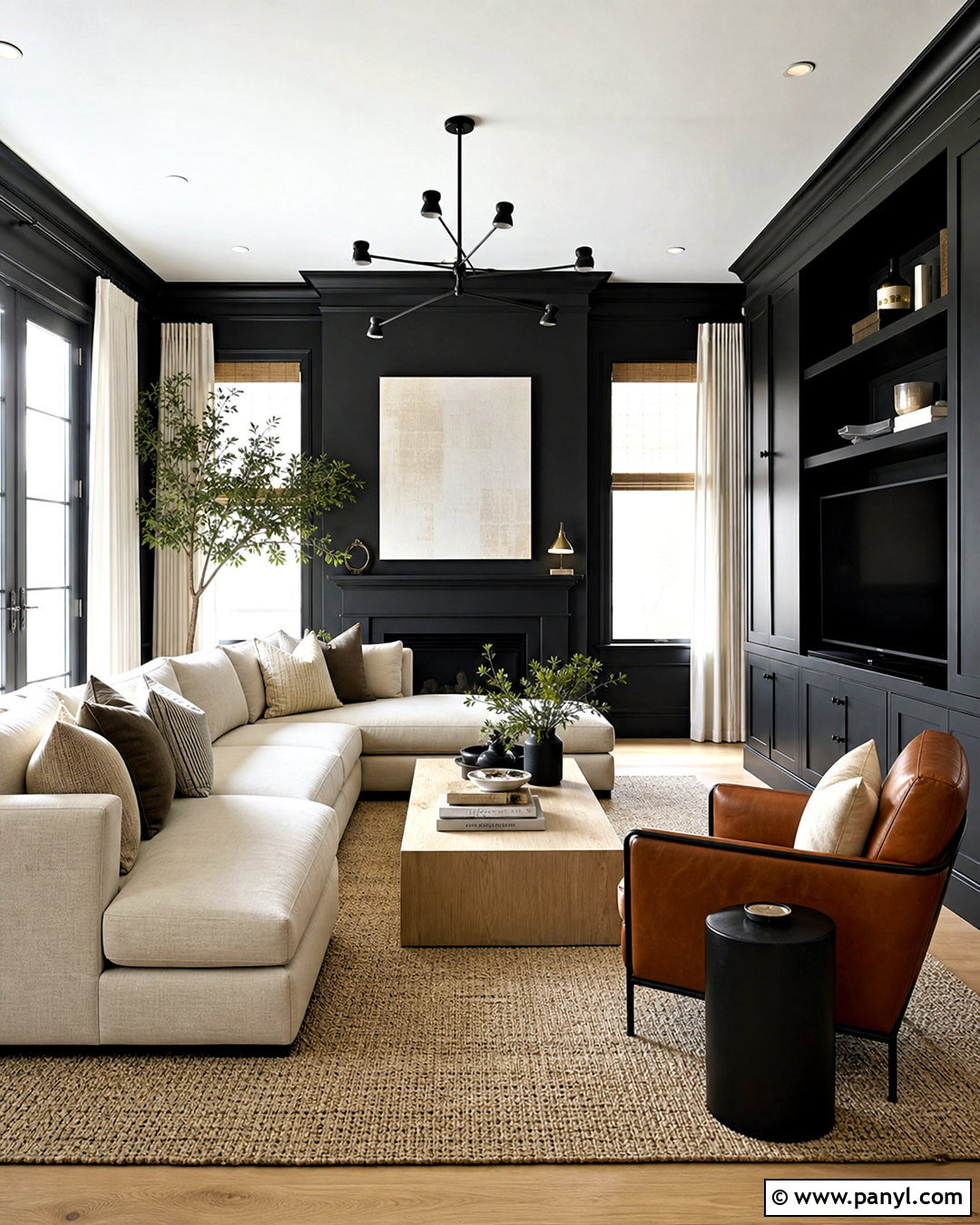
Would black walls make your living room feel too dark? A softened black with brown, blue, or charcoal undertones can actually create a refined background when paired with enough light-colored furnishings. Use the shade across the walls and built-ins, then introduce an ivory sofa, pale oak tables, and two oatmeal armchairs. Hang oversized artwork with generous areas of white or beige to interrupt the dark surface. A cream rug and light linen curtains will brighten the lower and outer edges of the room. Add polished nickel or brushed brass lighting for contrast, depending on the home’s existing finishes. Soft black works particularly well in rooms with large windows and substantial architectural details. The resulting look feels dramatic, organized, and intentional rather than gloomy or cramped.
20. Muted Lavender Living Room Walls
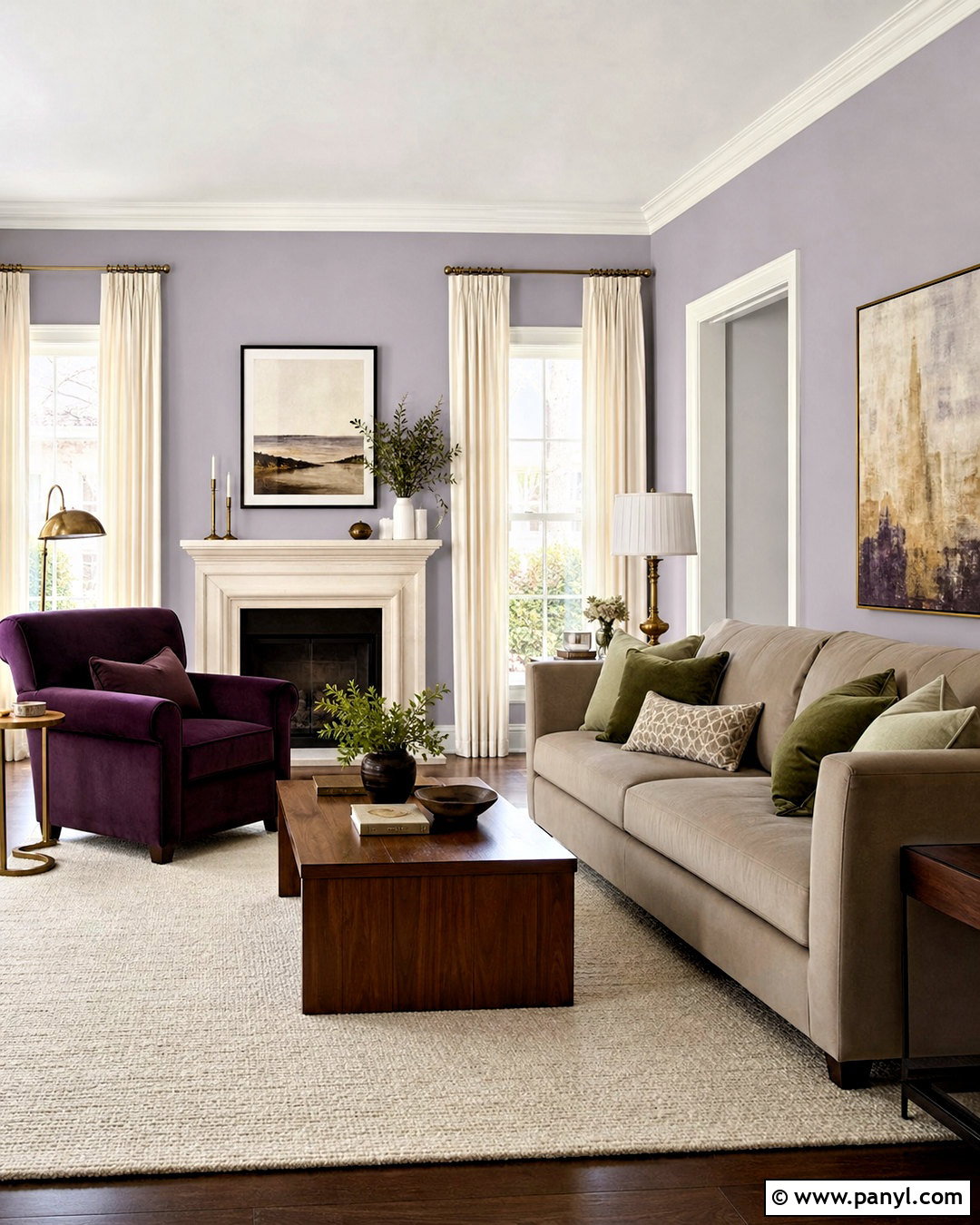
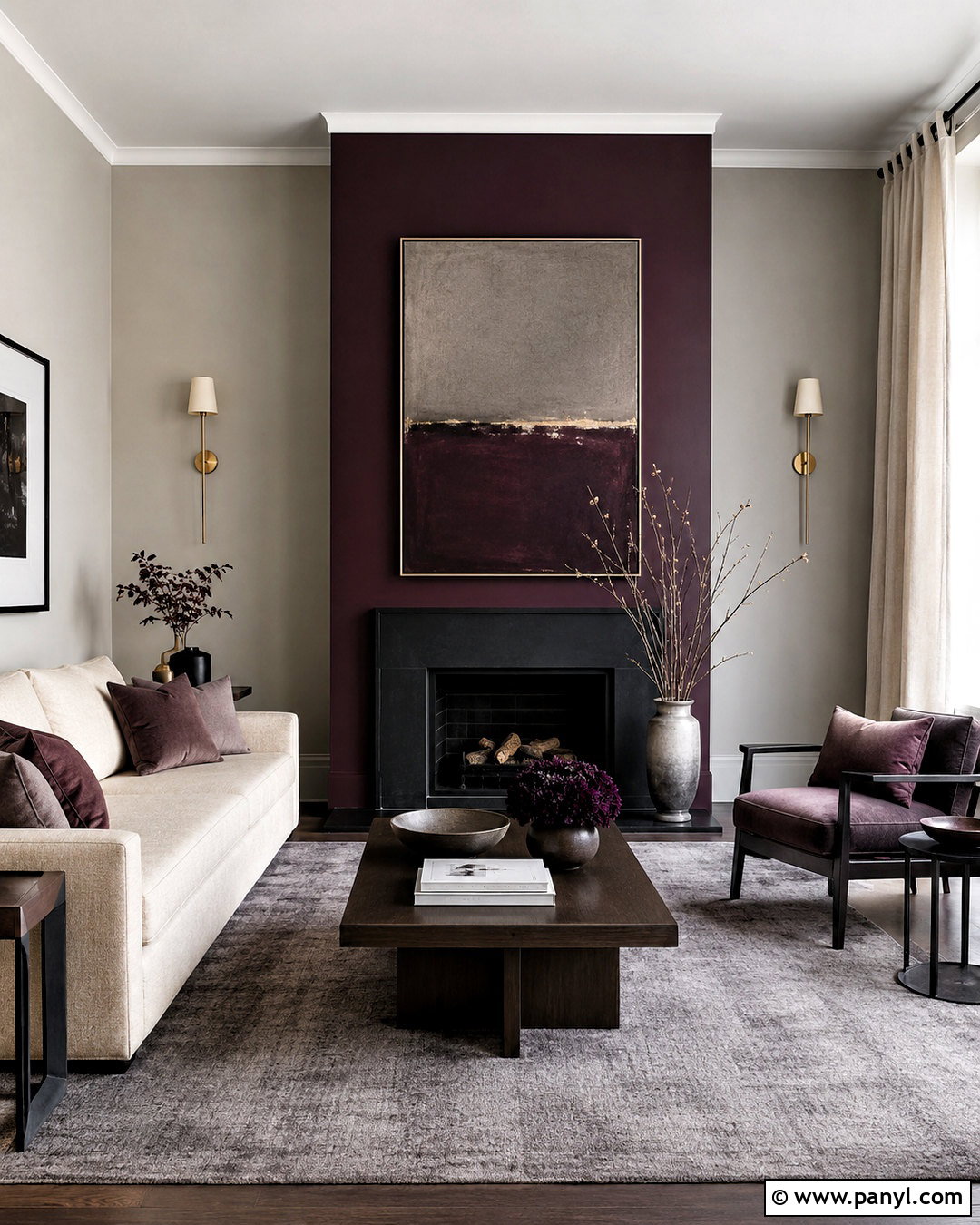
Muted lavender provides an unexpected alternative to pink, gray, or blue walls. Choose a dusty shade with noticeable gray undertones so the color feels mature and adaptable. Pair it with a taupe sofa, dark plum accent chair, and medium walnut coffee table. Ivory curtains and a cream wool rug will keep the room light, while aged brass lamps add warmth. Introduce small touches of olive green through pillows, artwork, or ceramics to create natural contrast. Paint the trim soft white for a crisp transition, or use a lighter lavender for a subtle tonal finish. Avoid shiny silver and overly sweet pastel accessories. With layered neutrals, dark wood, and restrained pattern, lavender becomes calm and sophisticated, offering gentle color without overpowering a compact or traditional living room.
Conclusion:
The best living room wall color does more than look attractive on a sample card. It should complement the room’s daylight, flooring, furniture, trim, and overall purpose. These 20 living room wall paint color ideas range from adaptable warm white and greige to expressive forest green, rust red, and soft black. Before buying several gallons, test large painted boards on different walls and observe them during the morning, afternoon, and evening. Compare each option with your sofa fabric, wood finishes, rugs, and artificial lighting. Once you find the right undertone, build a complete palette around it with coordinated textiles, furniture, artwork, and finishes. That thoughtful approach will make your finished living room feel balanced, personal, and comfortable.

Related Ideas and Inspiration:
Leave a Reply