
Choosing the right basement wall color can turn a dim lower level into one of the most inviting parts of your home. The best palette depends on natural light, ceiling height, flooring, furniture, and how you use the room. Light, warm colors can help offset limited daylight, while deeper shades can create a comfortable setting for movies, games, and relaxing. () Before painting, test large samples under every ceiling fixture and lamp because artificial lighting can change how undertones appear. Then coordinate the walls with practical flooring, layered lighting, and furnishings that make the entire room feel intentional. The complete looks below offer fresh, realistic, and stylish inspiration through 20 Wall Color For Basement Ideas.

1. Warm White Basement Wall Color
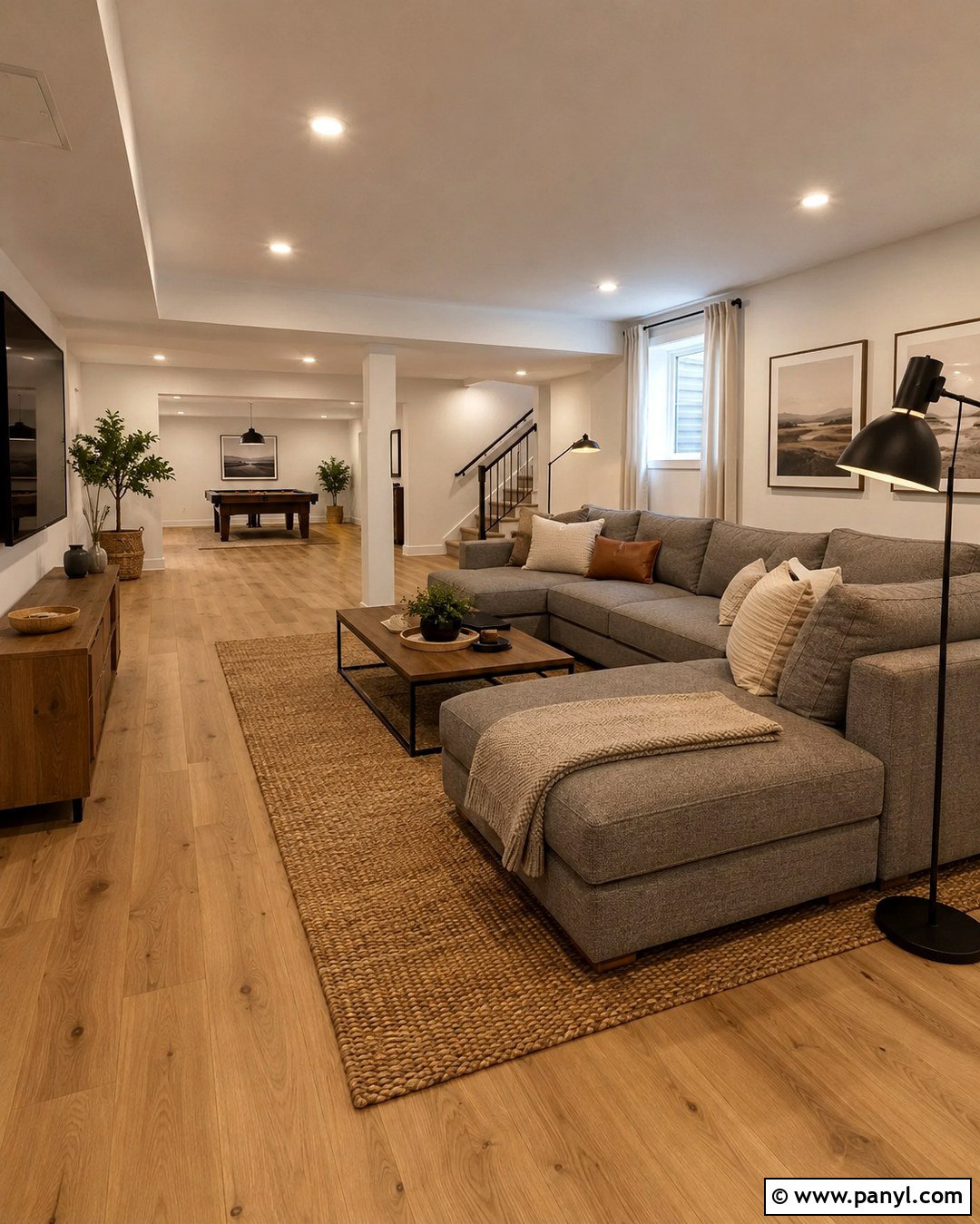
Warm white walls can brighten a basement without creating the cold, stark feeling of pure white. Choose a soft white with subtle cream or beige undertones, then continue it across the main walls for a clean backdrop. Paint the ceiling a slightly brighter white to visually lift the room. Light oak flooring, a medium-gray sectional, and a natural jute rug keep the family room comfortable and grounded. Add black metal floor lamps, oatmeal curtains, and framed neutral artwork for contrast. Recessed lights should provide even illumination, while table lamps make seating areas feel warmer. This complete palette suits a multipurpose basement because furniture, storage, and colorful accessories can change over time without clashing with the walls.
2. Cream Basement Wall Color
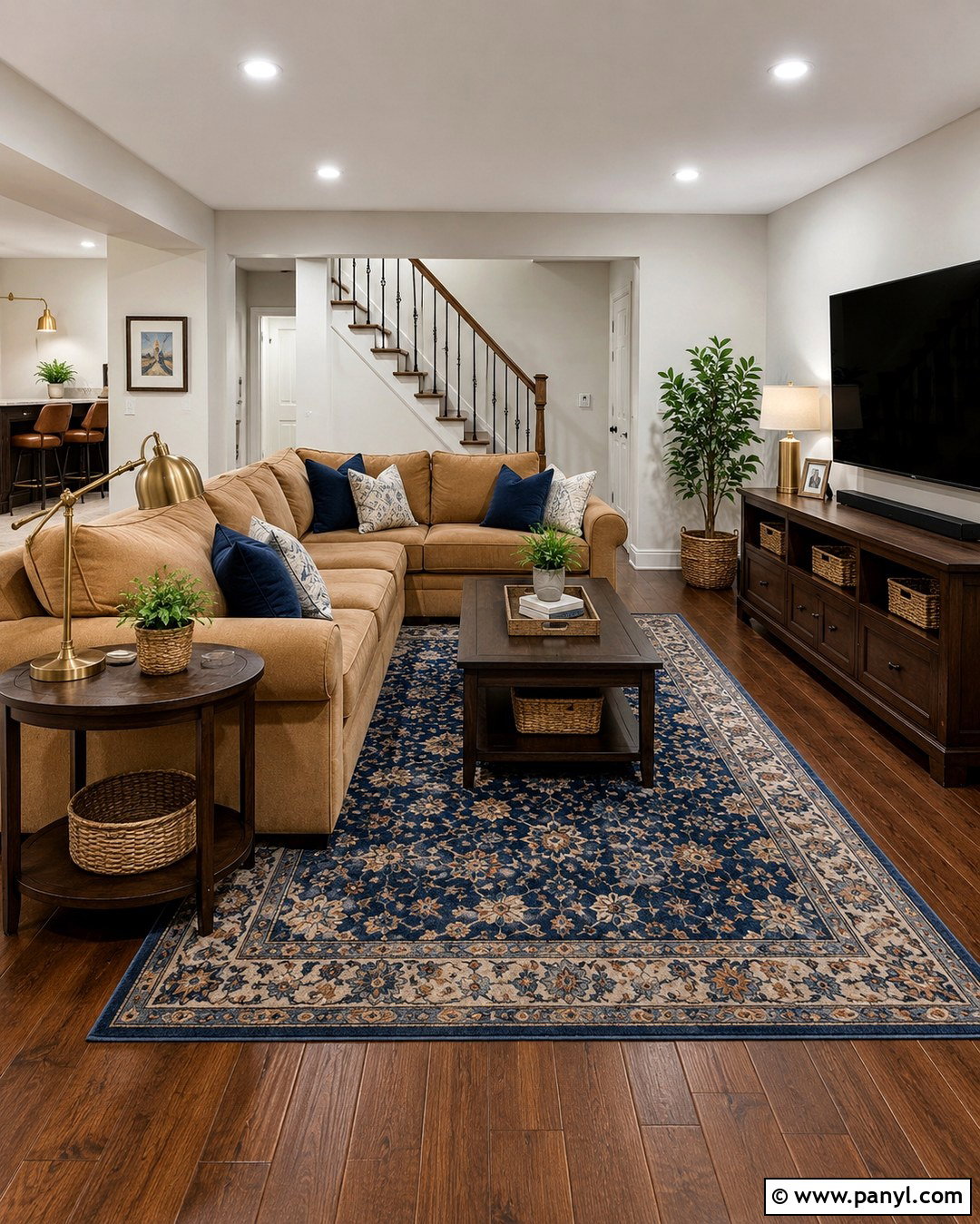
Cream walls give a basement a soft glow that works especially well with warm flooring and traditional furniture. Select a light buttery cream rather than a yellow-heavy shade, which may become stronger under artificial lighting. Pair it with crisp white baseboards, a white ceiling, and medium-tone walnut flooring. A camel-colored sofa, patterned blue rug, and dark wood media console create a balanced family room that feels finished rather than overly pale. Use brushed brass lamps and woven baskets to reinforce the warmth. Navy pillows and ceramic accessories add definition without making the room busy. This scheme is particularly useful for a basement with small windows because the layered neutrals create brightness while the darker furnishings prevent the finished space from looking washed out.
3. Light Greige Basement Wall Color
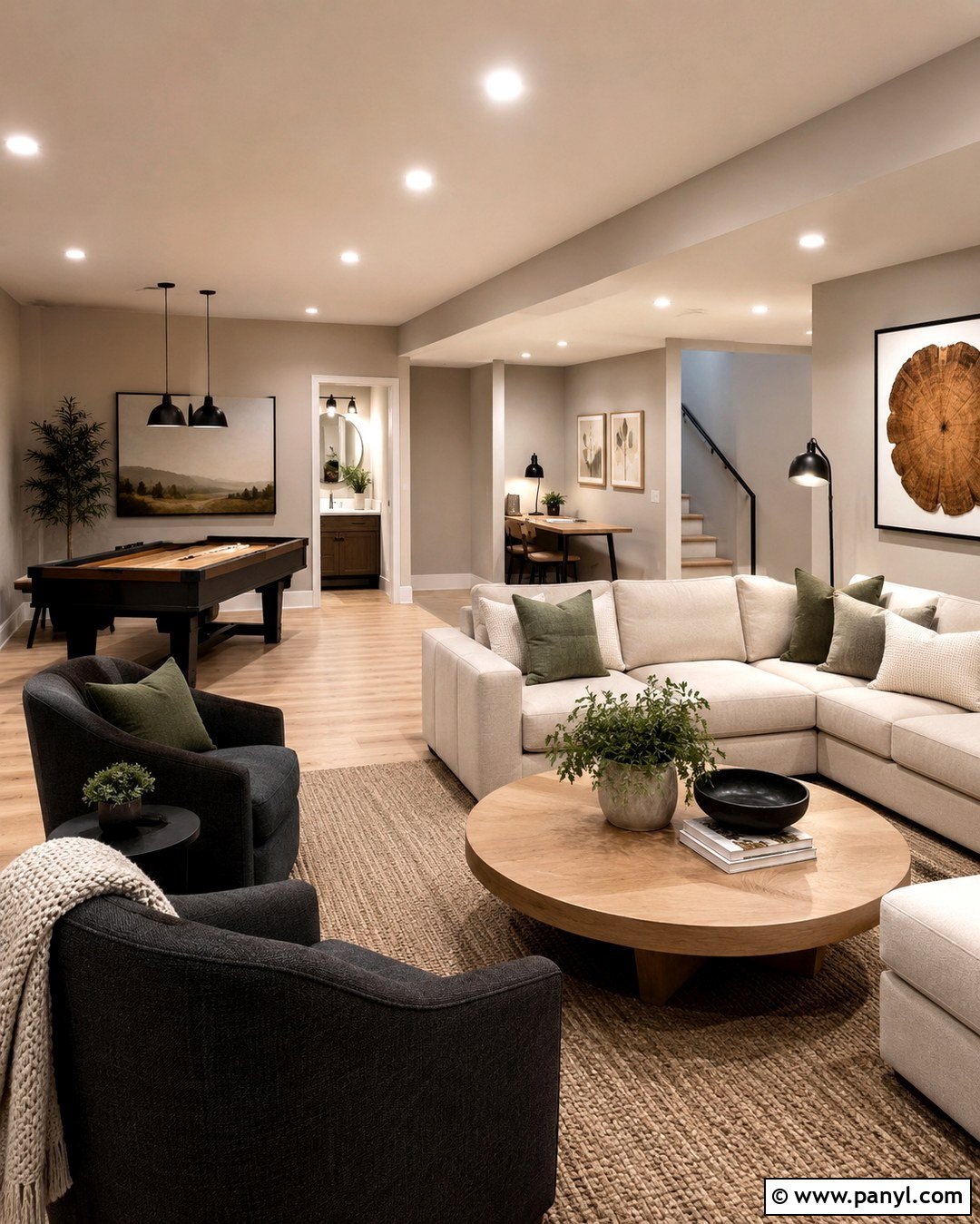
For a flexible basement that serves several purposes, light greige creates an easy connection between warm and cool finishes. Look for a pale beige-gray with a warm undertone, especially if the room has little natural light. Use the same wall color throughout the family area, homework zone, and hallway to make the floor plan feel continuous. A white ceiling and white trim provide a subtle boundary without harsh contrast. Complete the room with light oak luxury vinyl flooring, a cream sectional, charcoal accent chairs, and a textured tan rug. Matte black lighting and hardware add a modern edge. Soft green pillows, plants, and wood-framed artwork introduce natural color. The finished look feels organized, comfortable, and adaptable for everyday family activities or casual entertaining.
4. Soft Beige Basement Wall Color
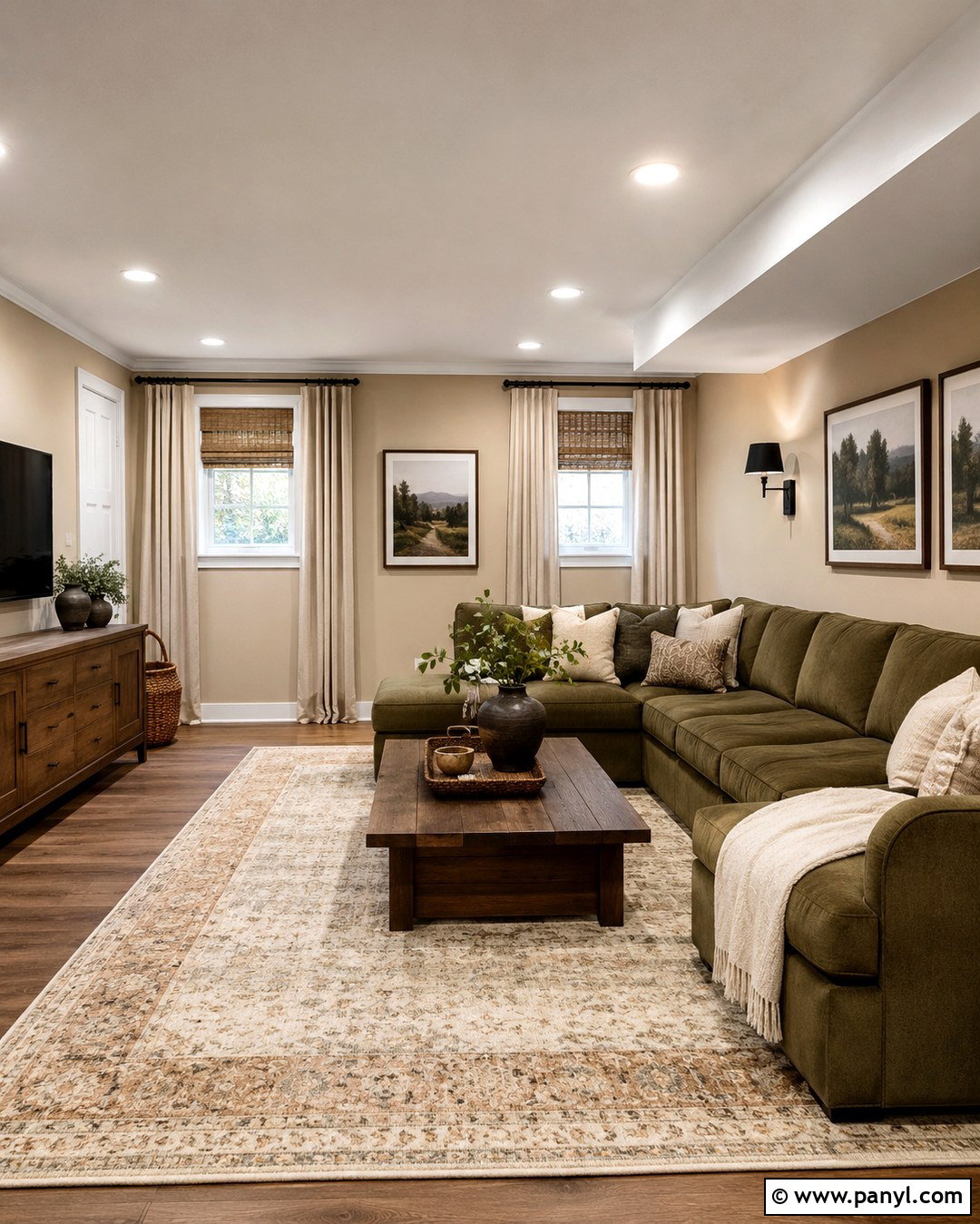
Soft beige can make a basement feel warmer and more welcoming while disguising minor scuffs better than bright white. Choose a balanced sandy beige that does not lean strongly orange or yellow. Pair the walls with creamy white trim, a matching light ceiling, and medium brown wood-look flooring. Build the room around an olive-green sectional, a walnut coffee table, and a large ivory-and-tan patterned rug. Woven shades soften small basement windows, while linen curtains hung near the ceiling make them appear larger. Include black sconces, pottery, baskets, and simple landscape prints for visual variety. This complete design works beautifully for a relaxed basement den because every element supports the earthy palette. The result feels comfortable and timeless without becoming dark, dated, or overly formal.
5. Pale Taupe Basement Wall Color
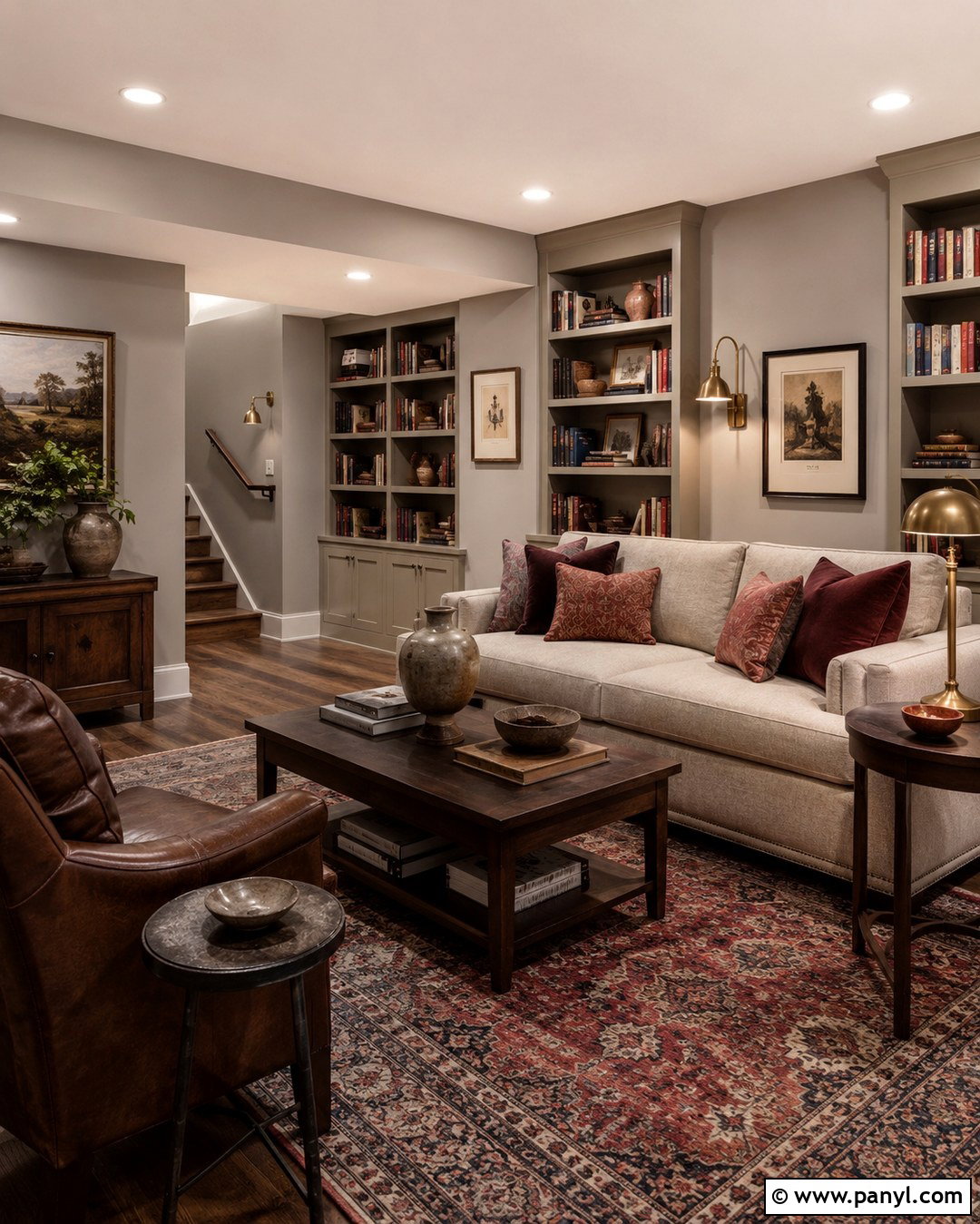
Pale taupe walls offer more depth than cream while remaining light enough for a basement with limited windows. Choose a soft mushroom tone with warm gray-brown undertones, then pair it with ivory trim and a clean white ceiling. A low-profile oatmeal sofa keeps the room open, while burgundy and muted rose pillows bring gentle richness. Use dark walnut side tables, an antique-brass floor lamp, and a faded Persian-style rug to create a cozy reading and conversation area. Built-in shelves painted in the same taupe can blend storage into the walls and reduce visual clutter. Add books, pottery, and framed prints sparingly. This finished palette feels especially appropriate for an adult basement retreat, guest sitting room, or quiet library where warmth matters more than maximum brightness.
6. Light Gray Basement Wall Color
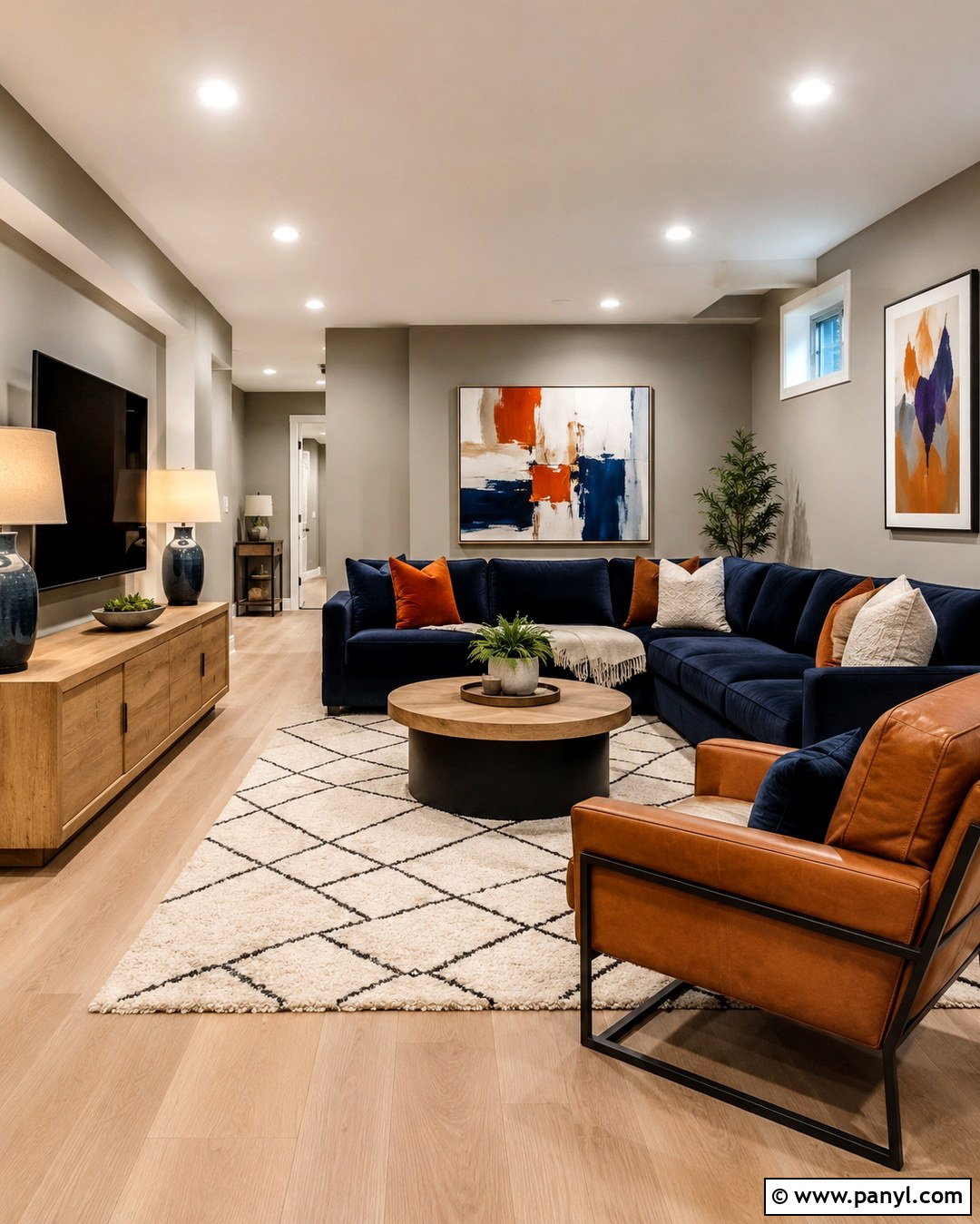
Light gray can still work in a basement when it has a warm undertone and is balanced with inviting materials. Avoid icy blue-gray shades in windowless spaces. Instead, choose a soft dove gray and combine it with bright white trim, a white ceiling, and pale natural-oak flooring. Furnish the room with a navy sectional, a cognac leather chair, and an ivory geometric rug. A light wood media console prevents the darker seating from making the room feel heavy. Add colorful abstract artwork, rust-colored pillows, and soft blue accessories for personality. Use recessed ceiling lights along with shaded table lamps to reduce flat shadows. This complete family-room design feels modern and practical, with enough contrast to look intentional while retaining an open, airy appearance.
7. Sage Green Basement Wall Color
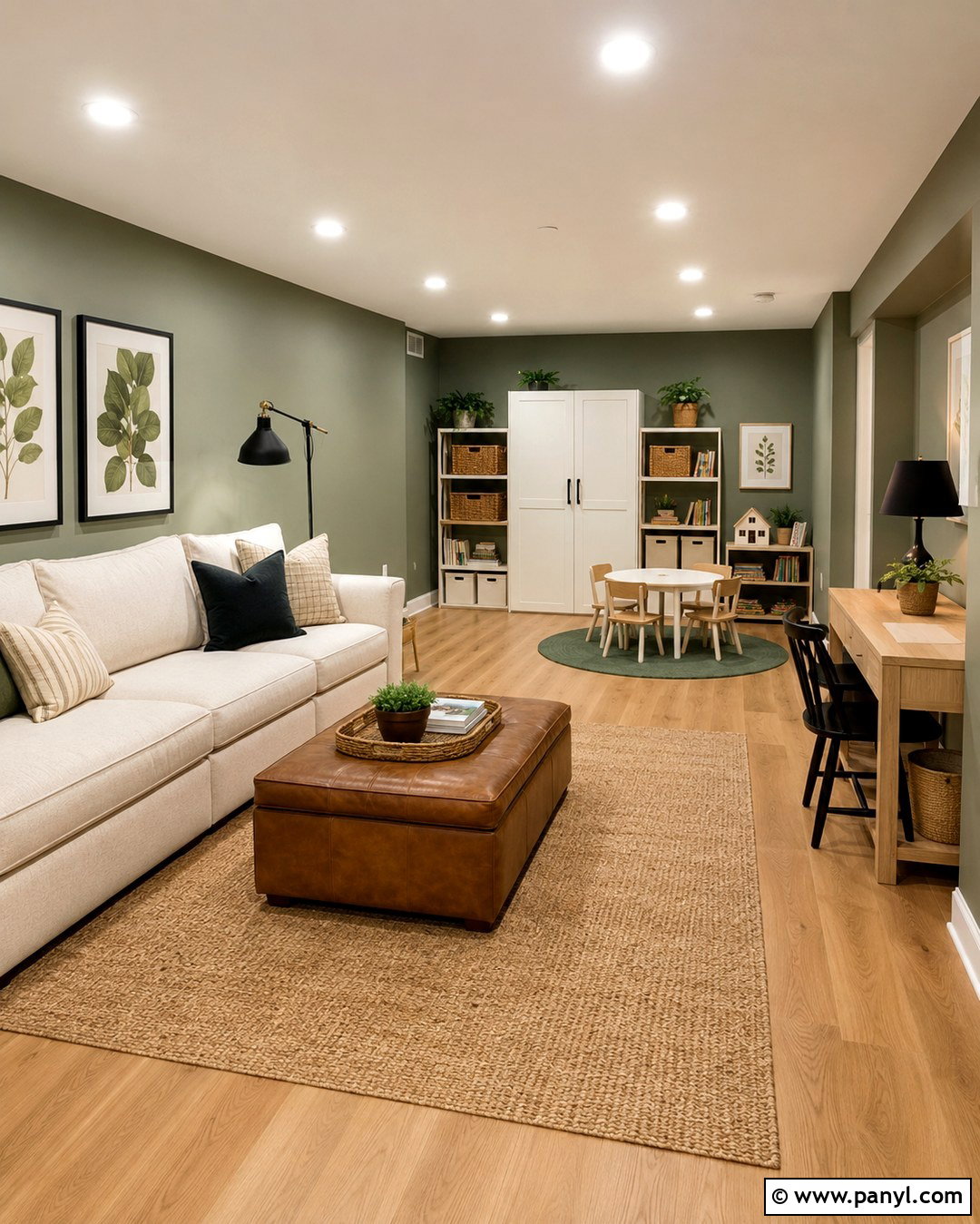
Muted sage green brings natural character to a basement while remaining calm enough for an entire room. Choose a light, gray-based sage rather than a deep or highly saturated green. Finish the scheme with warm white trim, a warm white ceiling, and honey-toned oak flooring. A cream sofa, caramel leather ottoman, and tan woven rug create a relaxed base. Add dark green pillows, botanical prints, and black metal lamps for definition. A pale wood desk placed near the window can establish a small work zone without disrupting the family-room layout. Closed cabinets painted warm white keep games and supplies organized. Sage is particularly effective in a basement playroom or family space because it adds noticeable color while coordinating easily with wood, neutral upholstery, and practical storage pieces.
8. Pale Olive Basement Wall Color
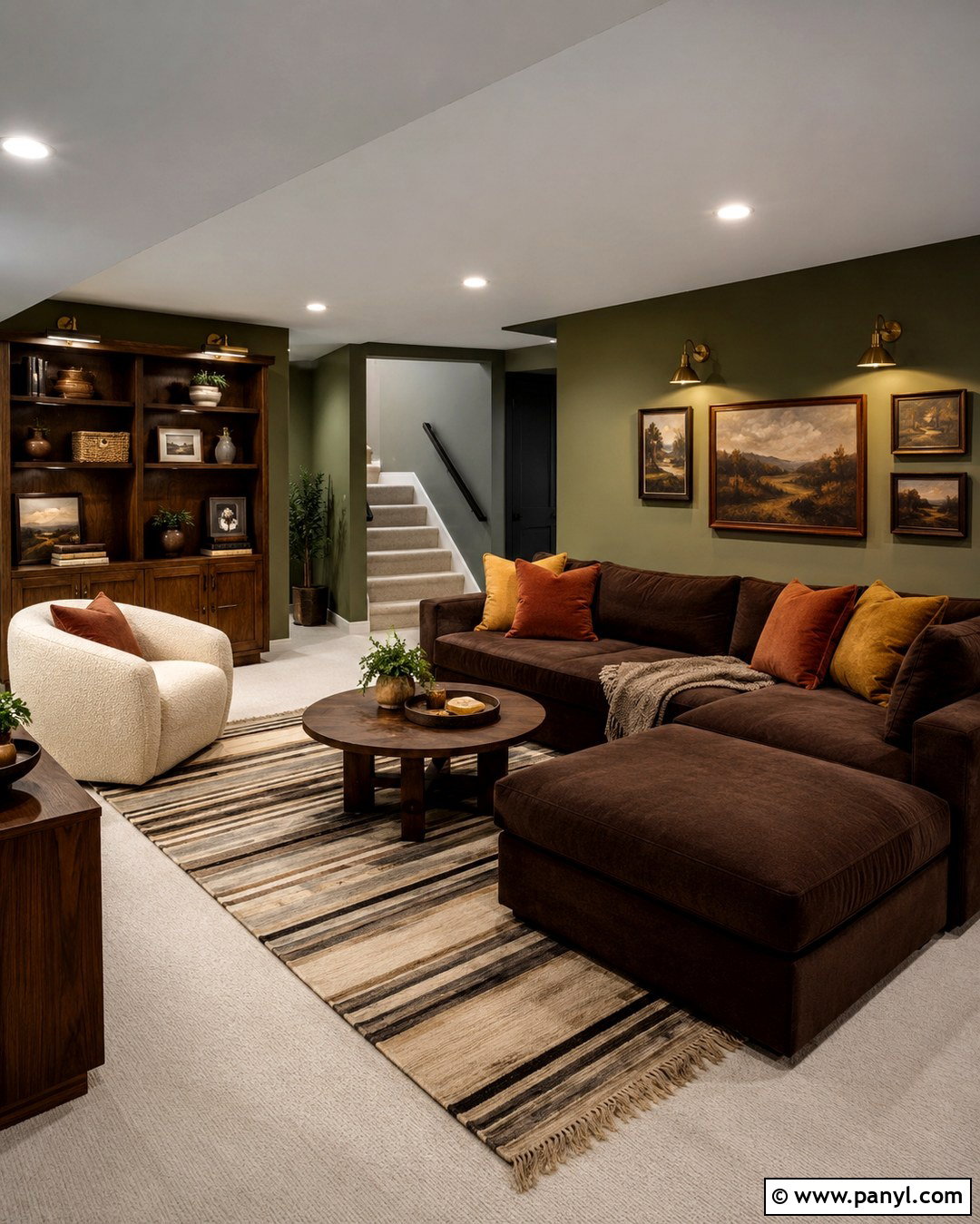
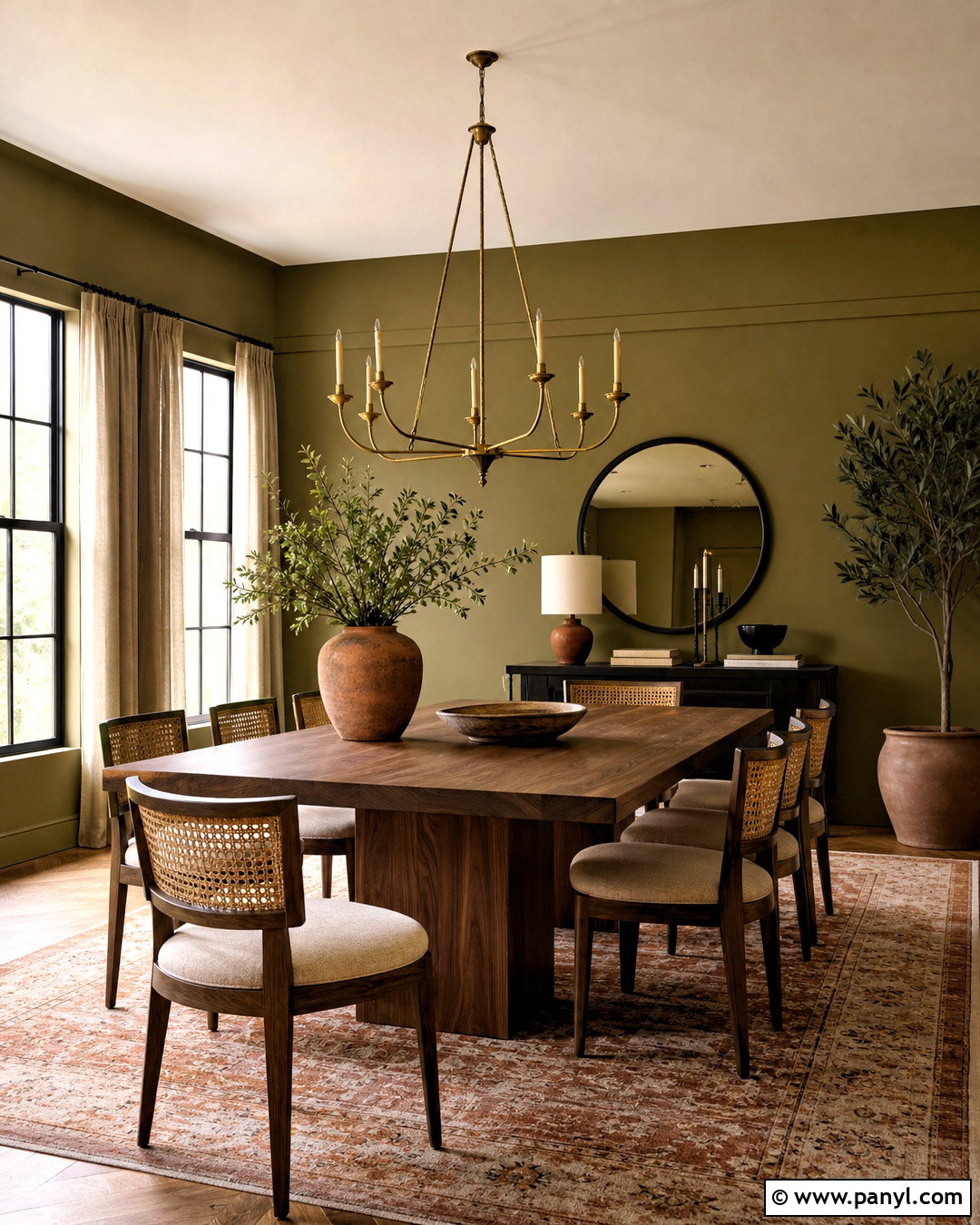
Pale olive walls create an earthy basement palette that feels richer than sage but lighter than forest green. Select a softened olive with warm yellow-gray undertones and use it on all four walls for a cohesive effect. Keep the ceiling and trim creamy white, then add light beige carpet or oak-look flooring to brighten the lower half of the room. A chocolate-brown sectional, cream boucle chair, and large striped rug make the space feel grounded. Include aged brass lighting, walnut shelving, and framed vintage landscape prints. Rust, ochre, and ivory pillows can repeat the warmth of the wall color. This complete look is well suited to a basement lounge where the goal is comfort, durability, and a collected appearance rather than a bright minimalist finish.
9. Dusty Blue Basement Wall Color
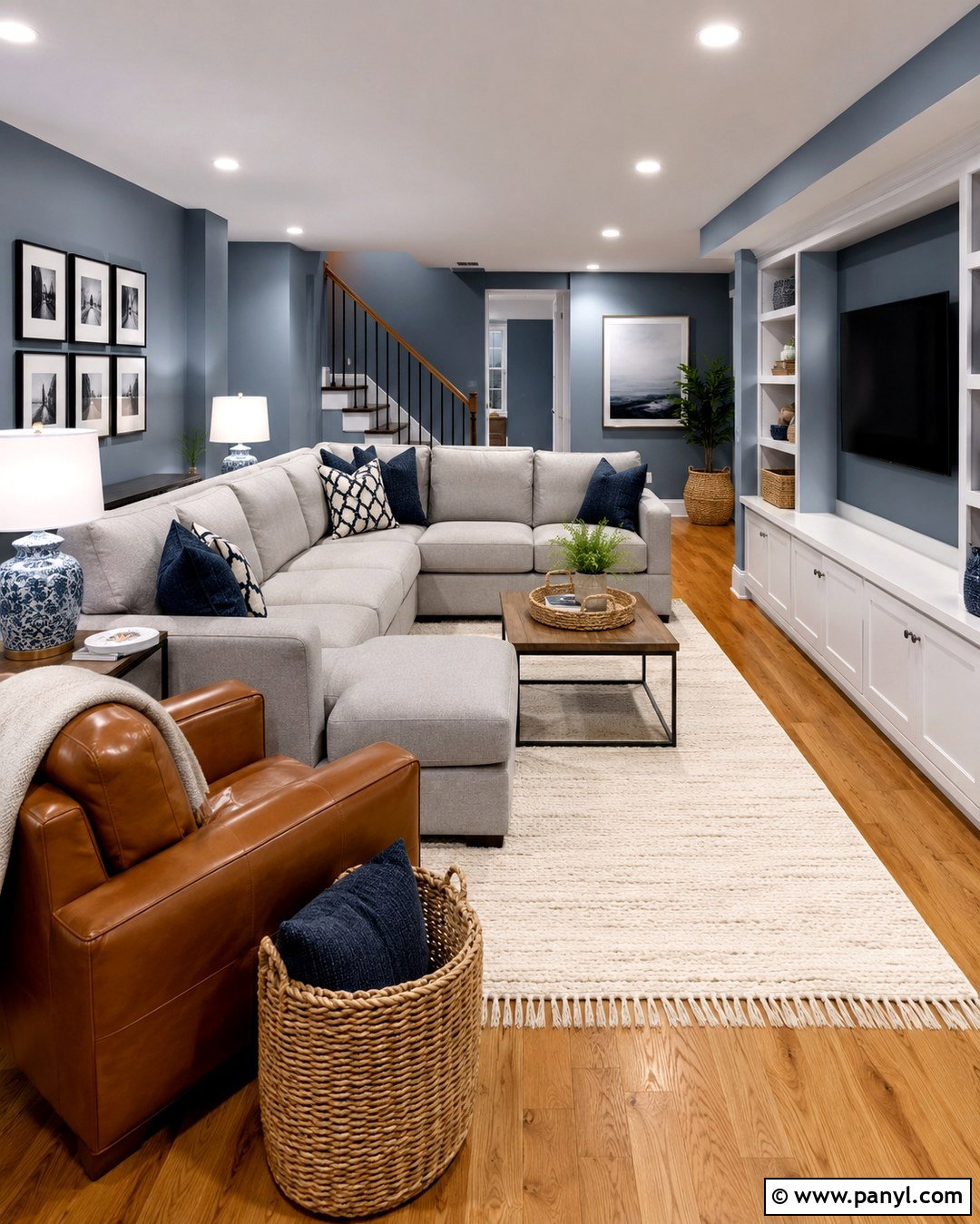
Dusty blue walls can give a basement a peaceful, finished appearance without making it feel childish or overly coastal. Choose a muted medium-light blue with gray undertones, then pair it with soft white trim and a bright white ceiling. Use warm oak flooring to counterbalance the cooler walls. A light gray sectional, cognac leather chair, and ivory rug create comfortable contrast. Add navy pillows, woven baskets, and simple black picture frames to connect the palette. A white media cabinet keeps the entertainment wall from appearing too heavy. Layer recessed lighting with ceramic table lamps to illuminate corners and reveal the blue clearly. This coordinated design works for a family room, guest lounge, or shared recreation space that needs calming color and practical everyday furniture.
10. Sky Blue Basement Wall Color
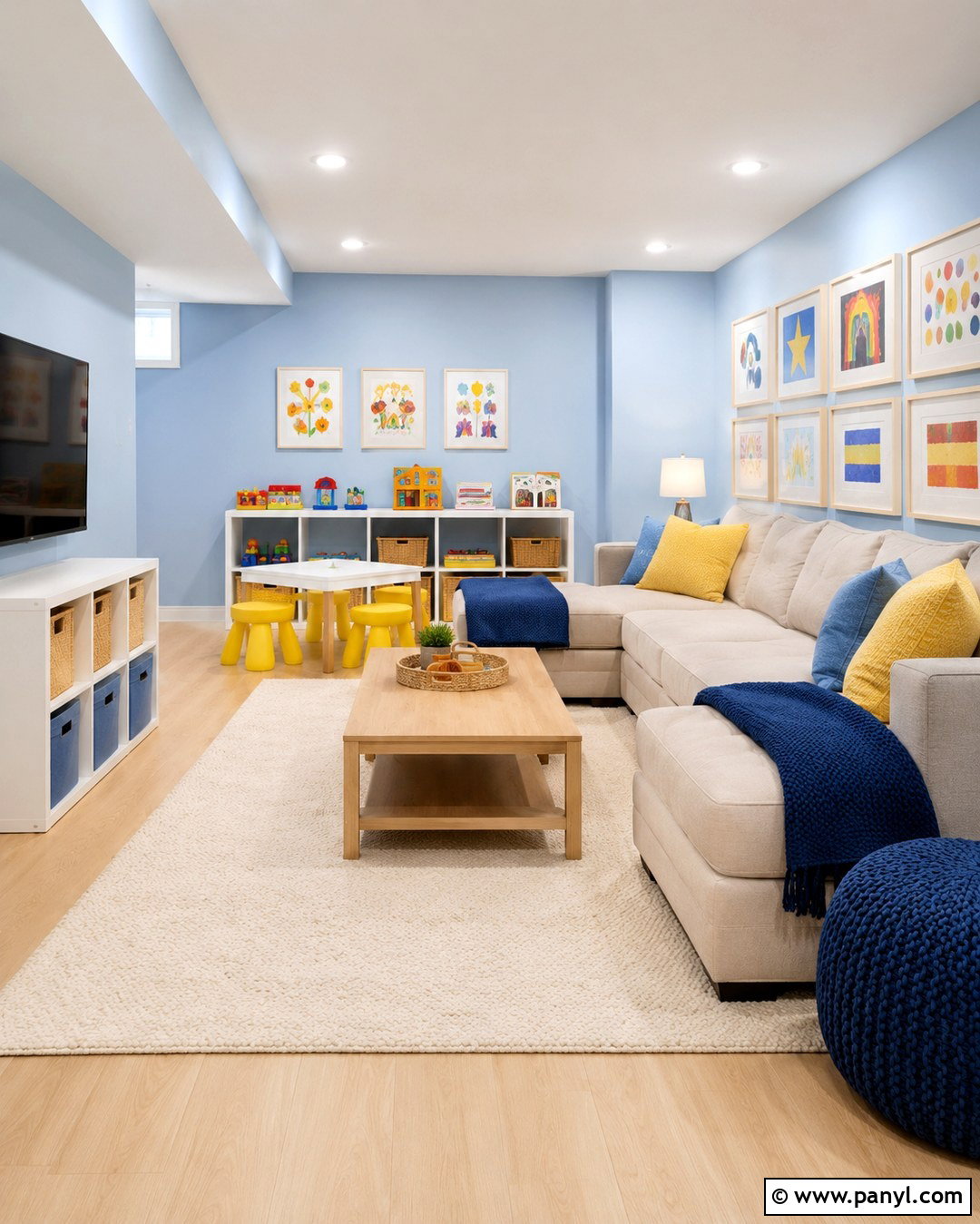
A soft sky blue can make a small basement feel fresh when the shade is light, clear, and gently muted. Paint the walls blue and keep the ceiling bright white so the room retains a sense of height. White baseboards, pale maple flooring, and a cream area rug continue the airy effect. Furnish the space with a compact oatmeal sectional, a light wood coffee table, and a white storage console. Introduce sunny yellow pillows, medium-blue throws, and colorful framed artwork to create an upbeat playroom or casual family zone. Use simple roller shades on small windows rather than heavy curtains. Bright recessed fixtures and a white floor lamp provide even lighting. The complete look feels cheerful and energetic while remaining organized, comfortable, and suitable for everyday use.
11. Blue Gray Basement Wall Color
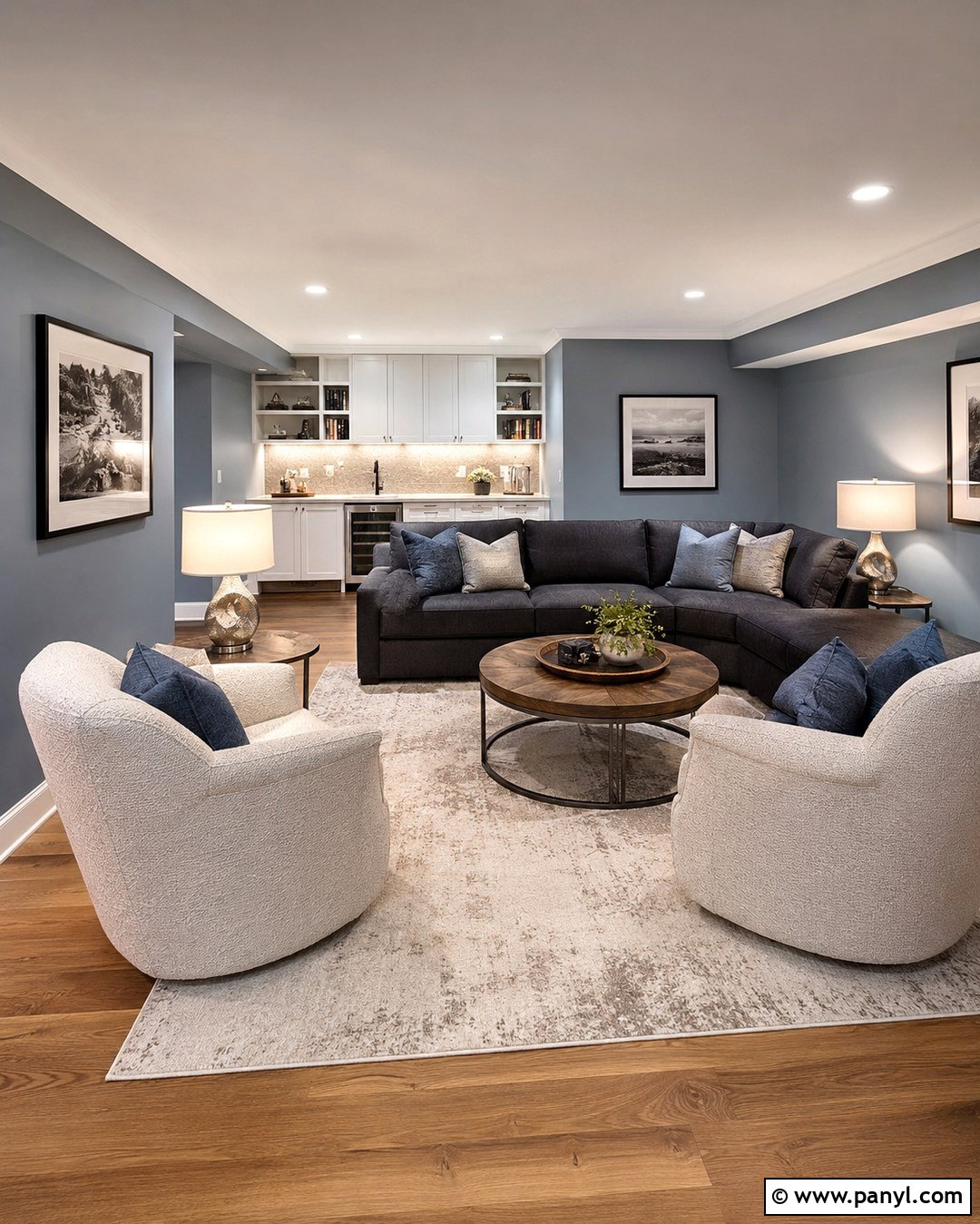
Blue-gray walls offer a sophisticated middle ground for homeowners who want color without a strong statement. Select a medium-light shade with enough blue to remain visible under recessed lighting. Pair it with warm white trim, a white ceiling, and medium oak flooring. A charcoal sectional and two cream swivel chairs form a conversation-friendly seating arrangement around a round wood coffee table. Use a beige rug to soften the contrast between the cool walls and dark sofa. Add muted blue pillows, brushed nickel lamps, and black-framed photography. Built-in cabinets painted warm white can hold media equipment and games without overwhelming the room. This complete scheme gives a basement family room a tailored look while preserving the relaxed atmosphere needed for movies, reading, and casual gatherings.
12. Muted Teal Basement Wall Color
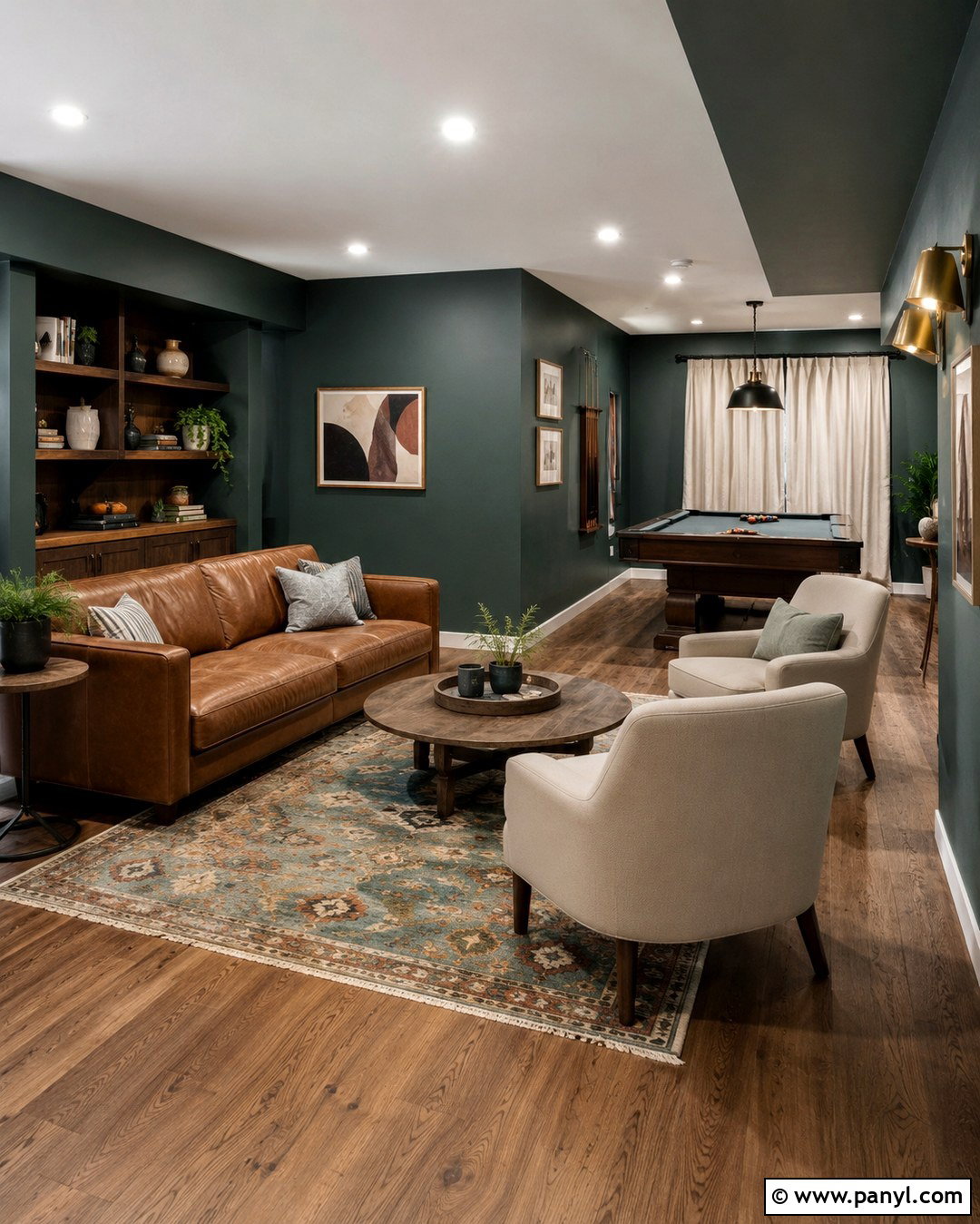
Muted teal creates an expressive basement without the intensity of a bright jewel tone. Choose a softened blue-green with gray undertones and apply it throughout a defined lounge or game area. Cream trim and a warm white ceiling provide a clean frame, while medium walnut flooring balances the cool wall color. Furnish the room with a camel leather sofa, two ivory chairs, and a vintage-inspired rug containing teal, rust, and beige. Add walnut shelving, aged brass sconces, and cream curtains for warmth. A dark wood game table can occupy one end of the room, leaving the main seating zone open. This finished design feels colorful and mature, proving that a basement can support stronger wall color when the lighting, furniture, and finishes are carefully coordinated.
13. Soft Peach Basement Wall Color
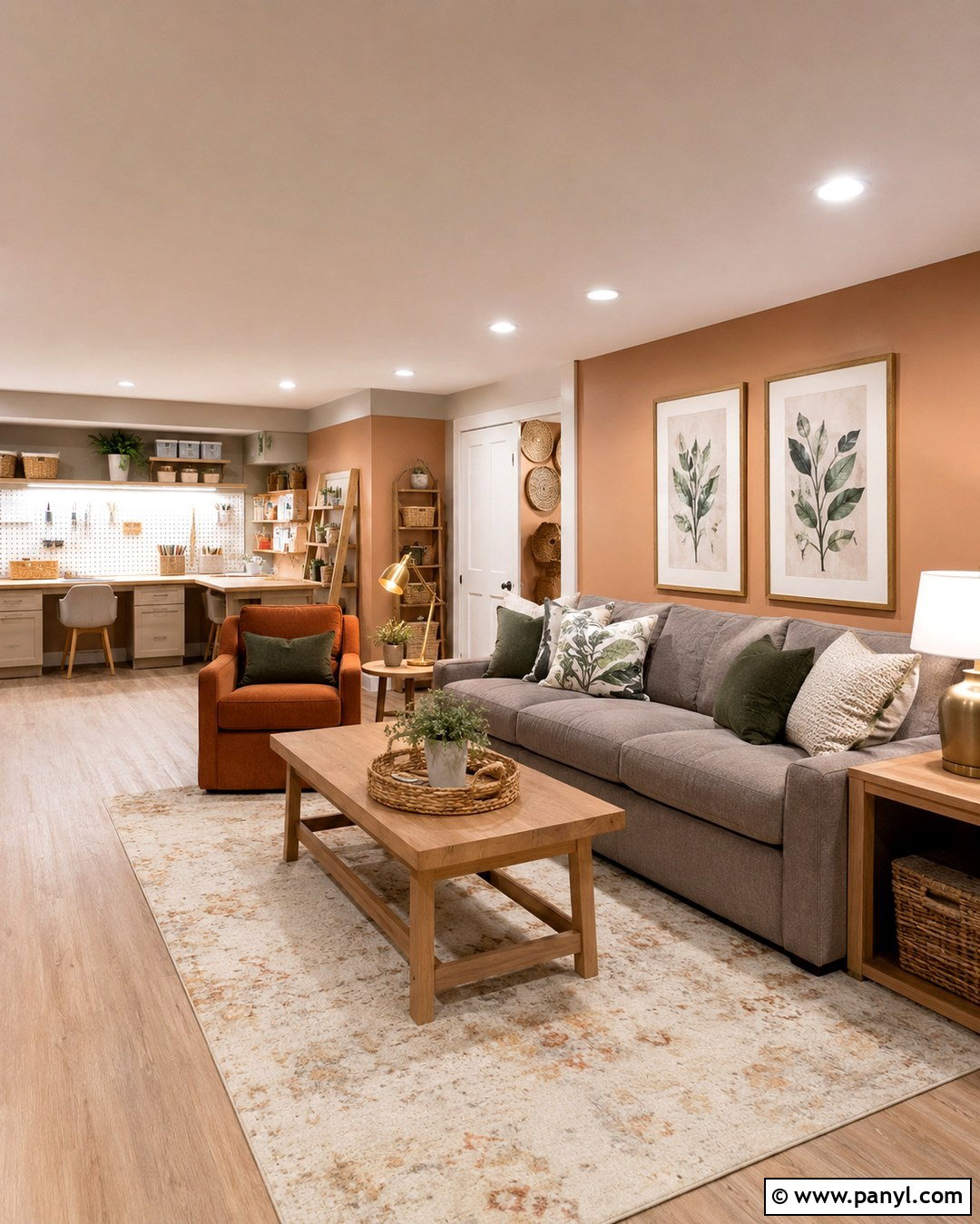
Soft peach walls can replace missing natural warmth in a basement, especially when the color is muted and slightly earthy. Avoid sugary pink-orange shades and select a pale peach with beige undertones. Pair it with creamy white trim, a light ceiling, and blond wood flooring. A warm gray sofa, rust-colored accent chair, and ivory rug create a grounded family-room arrangement. Use light oak tables, woven baskets, and brushed brass lamps to complement the walls. Sage green pillows and botanical artwork introduce a refreshing counterpoint. Keep window coverings simple and pale so every available bit of daylight enters the space. The complete palette feels warm, friendly, and distinctive, making it an excellent choice for a basement craft room, guest lounge, or comfortable gathering area.
14. Dusty Rose Basement Wall Color
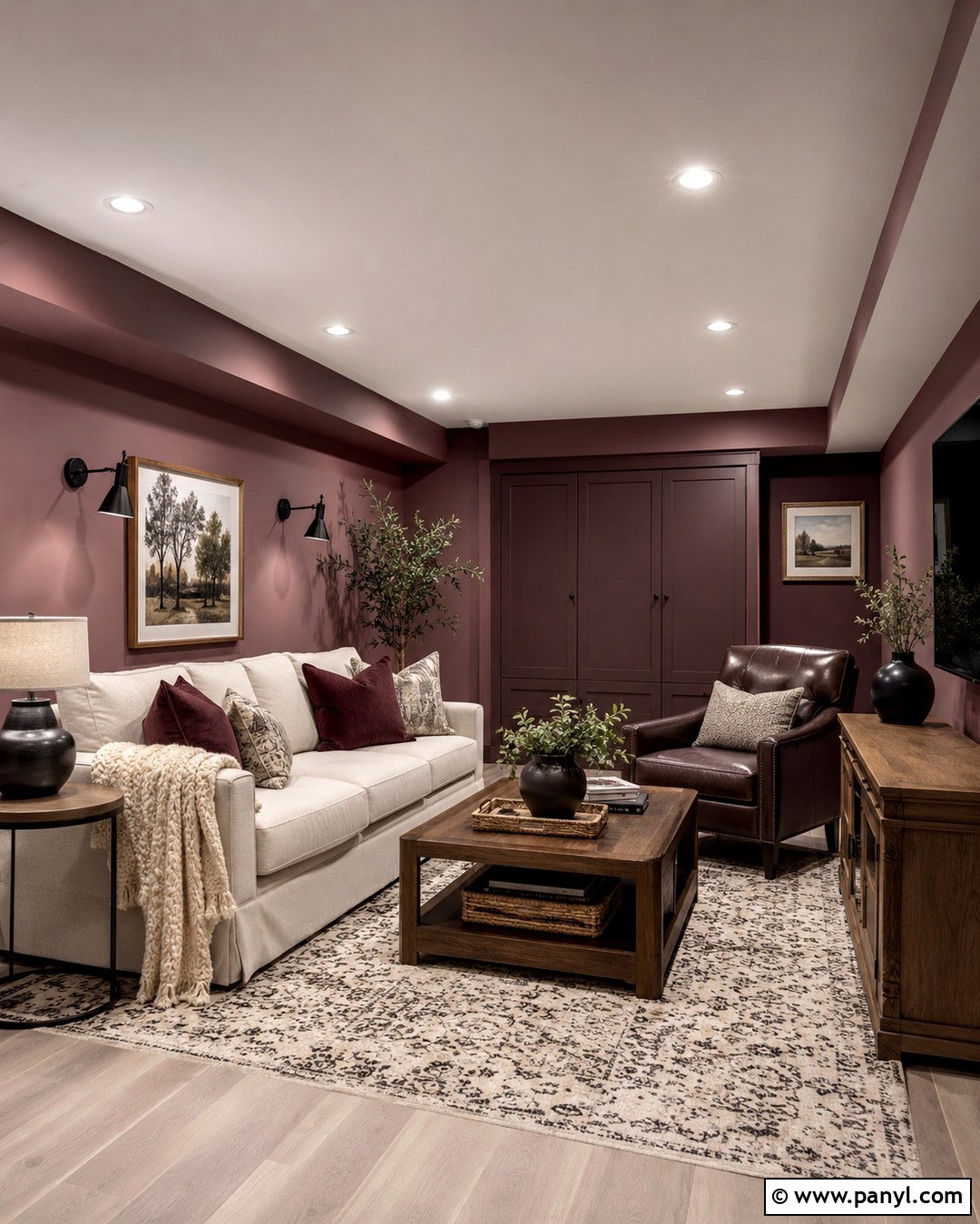
Dusty rose can create a polished basement retreat when balanced with neutral upholstery and darker wood. Choose a muted pink with taupe or clay undertones rather than a bright pastel. Continue it across every wall, then use warm white on the ceiling, doors, and trim. A cream sofa, walnut media cabinet, and deep brown leather chair establish a mature foundation. Layer an ivory-and-charcoal rug, burgundy pillows, and a soft beige throw for comfortable texture. Matte black picture frames and wall sconces sharpen the gentle palette. Add closed storage to keep the room visually calm. This complete design works well for a guest sitting room, hobby space, or quiet basement den, offering warmth and personality without making the lower level feel overly themed.
15. Pale Yellow Basement Wall Color
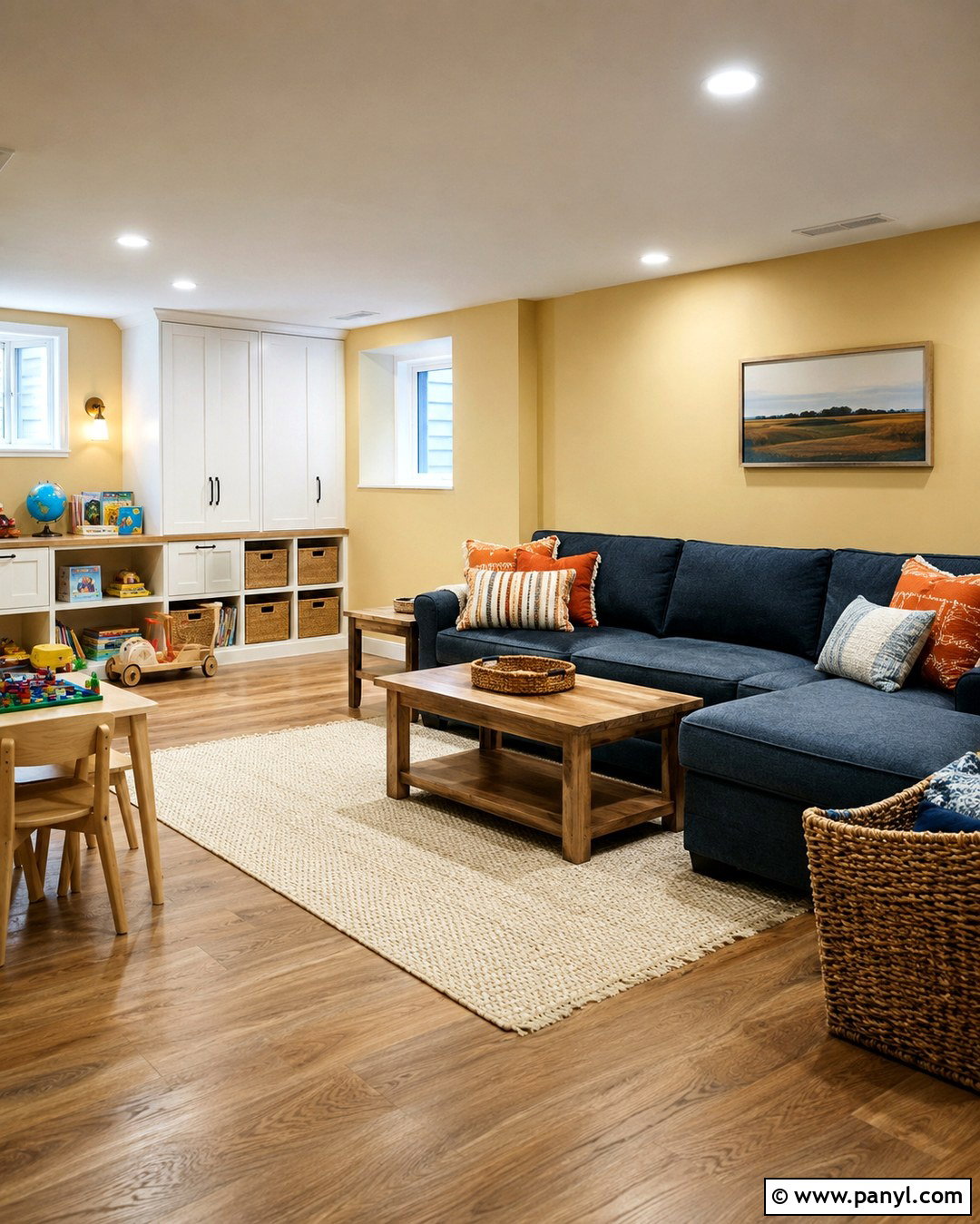
Pale yellow walls can make a basement feel sunny, but the shade should be soft and restrained. Select a creamy straw yellow that reads more neutral than bright lemon. Pair it with crisp white trim, a white ceiling, and warm medium-oak flooring. A denim-blue sectional gives the room strong contrast, while a cream rug and natural wood tables maintain balance. Add rust, white, and blue patterned pillows, woven storage bins, and simple landscape artwork. White built-in cabinets can organize toys, books, or craft supplies along one wall. Use evenly spaced recessed lighting to prevent shadowy corners from dulling the color. This complete basement playroom or family room feels cheerful and welcoming, with enough practical storage and durable furniture for frequent everyday use.
16. Muted Terracotta Basement Wall Color
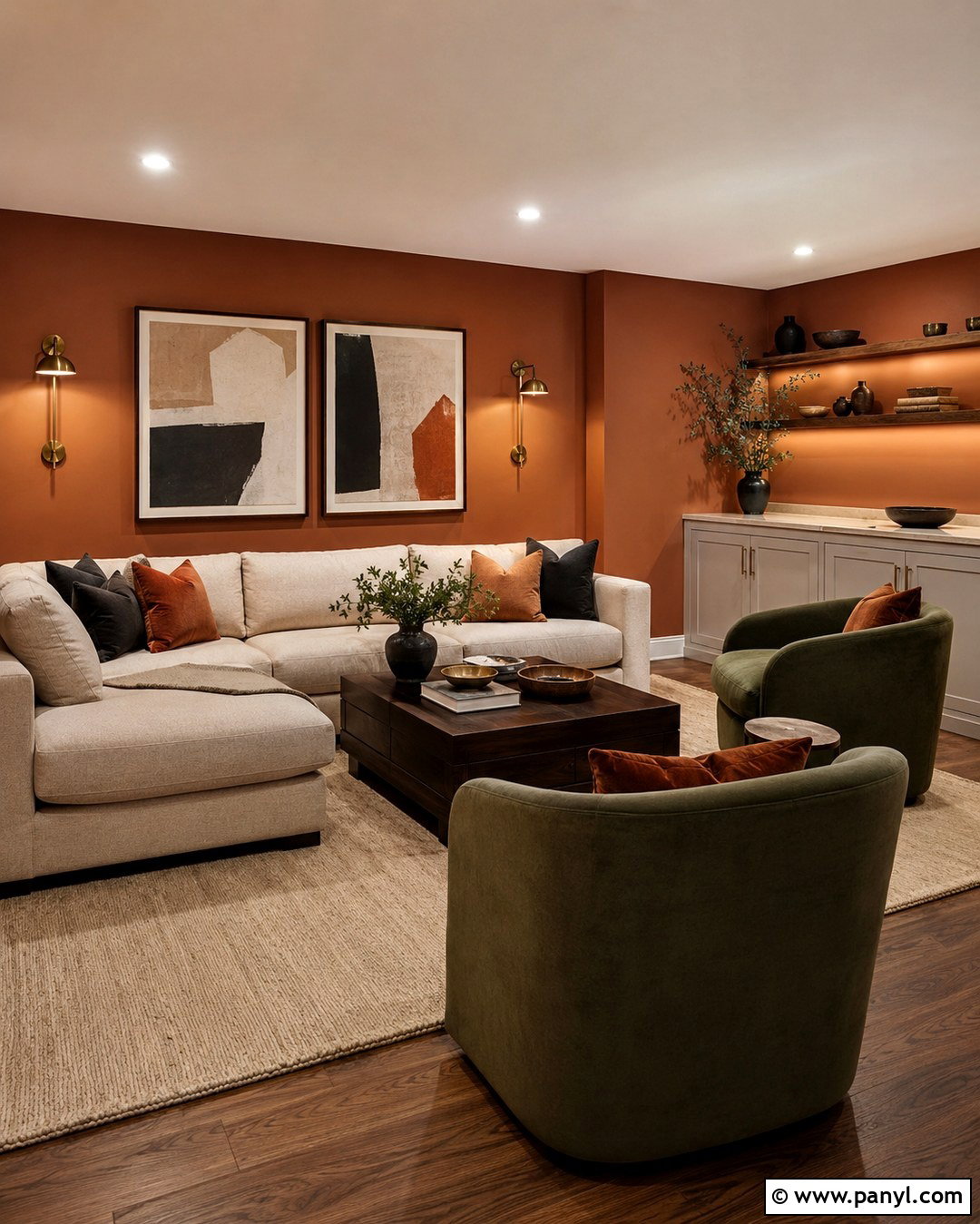
Muted terracotta walls bring enveloping warmth to a basement lounge, especially when the room is designed for conversation rather than maximum brightness. Choose a softened clay-orange shade with brown undertones and pair it with creamy white trim and ceiling paint. Medium walnut flooring, a beige sectional, and two olive-green chairs create a rich but balanced palette. Add a large neutral rug, dark wood coffee table, and aged brass lamps. Abstract artwork containing cream, rust, and charcoal can tie the colors together. Keep curtains and storage cabinetry light to prevent the room from becoming visually heavy. This complete look works best with generous artificial lighting and several lamps. It transforms a plain lower level into a warm, comfortable destination for reading, games, and relaxing.
17. Deep Navy Basement Wall Color
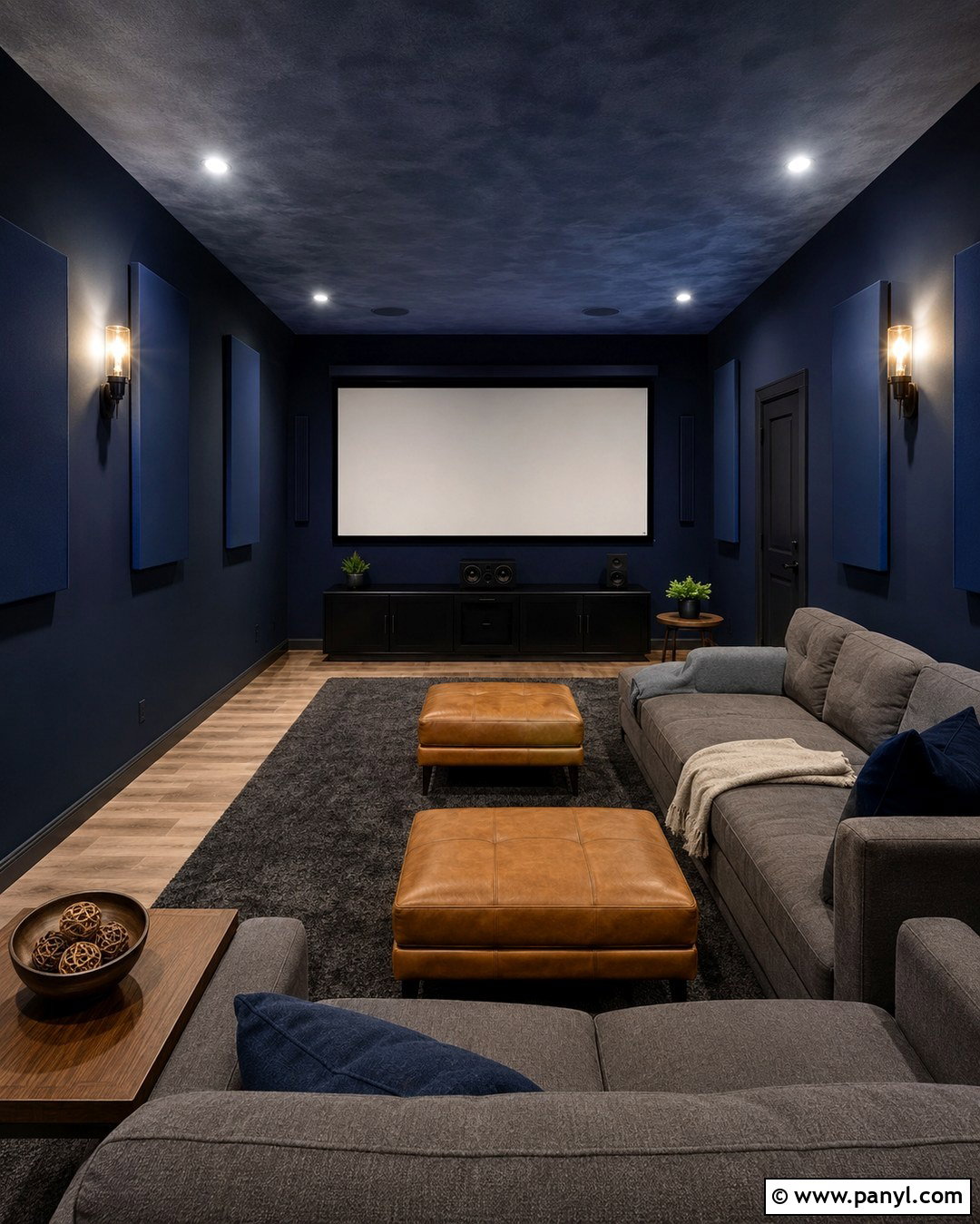
Deep navy walls can create an ideal basement movie room because the darker surface reduces visual distraction and supports a cozy atmosphere. Apply navy to every wall for a more intentional result than a single accent wall. Paint the ceiling a slightly lighter smoky navy or charcoal to disguise its low height, then use narrow off-white trim for controlled contrast. Complete the room with a medium-gray sectional, black media console, and large charcoal rug. Cognac leather ottomans and warm wood side tables prevent the palette from feeling cold. Add dimmable recessed fixtures and shielded wall sconces for flexible lighting. Acoustic panels covered in navy fabric can blend into the walls. The finished room feels immersive, comfortable, and designed specifically for movies and entertainment.
18. Charcoal Basement Wall Color
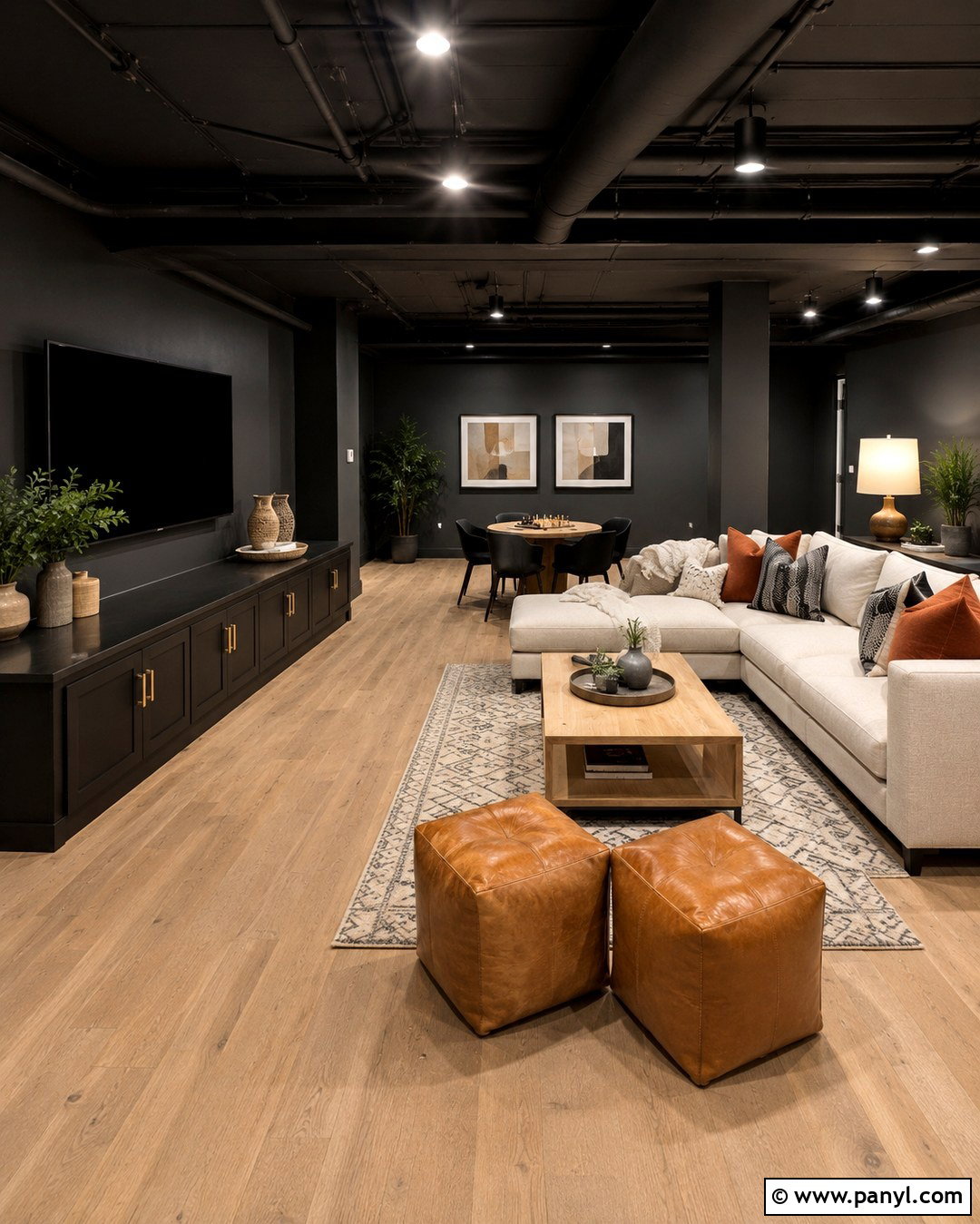
Charcoal walls give a basement media lounge a modern, cocooning quality when paired with lighter furnishings and thoughtful lighting. Choose a deep warm charcoal rather than a flat black, then continue the color across the walls and exposed ceiling for a seamless effect. Install light oak flooring to provide visual relief underfoot. A large cream sectional becomes the focal point, supported by tan leather poufs and a pale geometric rug. Use matte black media storage, light wood side tables, and bold rust-colored pillows. Track lighting, recessed fixtures, and floor lamps should illuminate separate zones instead of relying on one central fixture. This complete design makes pipes, beams, and low ceilings less noticeable while creating a comfortable basement for movies, music, and casual entertaining.
19. Forest Green Basement Wall Color
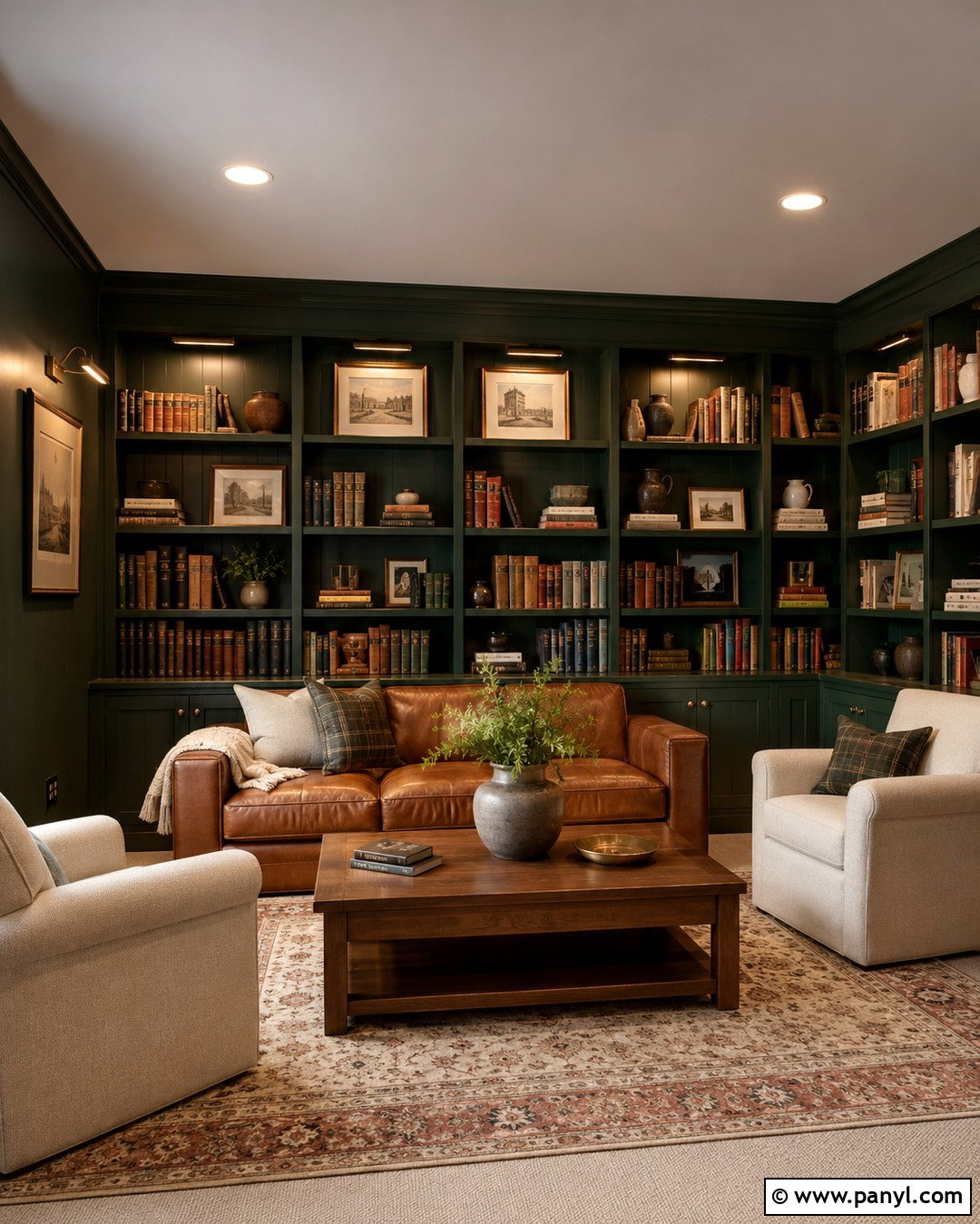
Forest green walls can turn a basement into a rich library-style retreat. Select a deep green with slightly warm undertones and use it on the walls, bookcases, and trim for a unified color-drenched finish. Keep the ceiling warm white if the room is very low, or use the same green when ample lighting is available. Furnish the space with a cognac leather sofa, oatmeal armchairs, and a walnut coffee table. A faded red-and-cream rug introduces pattern and warmth. Add brass picture lights, shaded floor lamps, and framed vintage prints. Shelves filled with books and simple pottery complete the room without excessive clutter. This coordinated look suits a reading room, home office, or adult basement lounge where depth, comfort, and character are more important than an airy appearance.
20. Two Tone Basement Wall Color
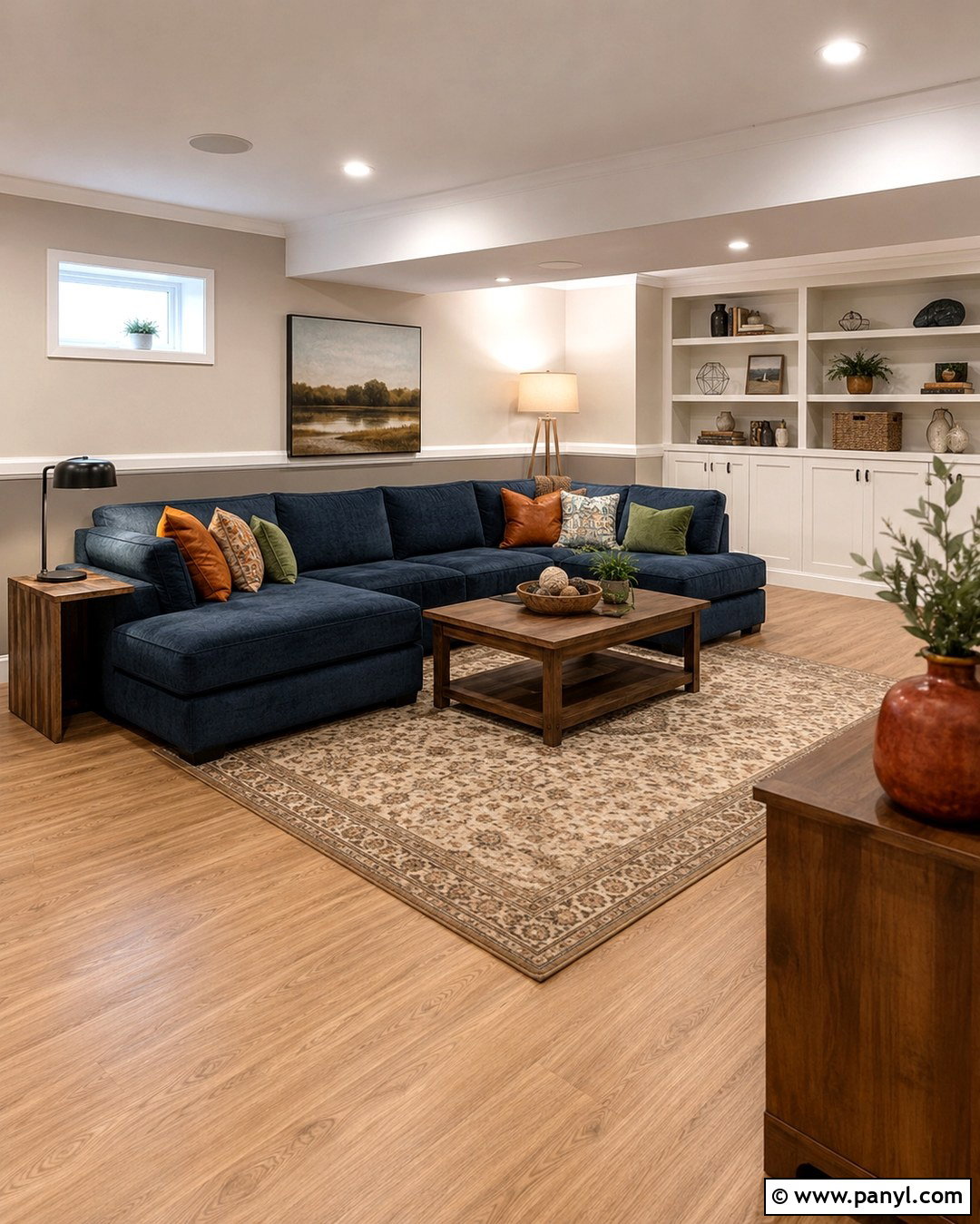
Two-tone walls offer a practical way to combine brightness with visual interest in a busy basement. Paint the upper two-thirds of the walls a warm creamy white, then use soft greige below a simple chair rail. The deeper lower color helps disguise everyday marks, while the pale upper section keeps the room open. Continue bright white across the ceiling, doors, trim, and chair rail for a crisp transition. Use light oak flooring, a medium-blue sectional, and a tan patterned rug in the main seating area. Add white storage cabinets, wood tables, and black metal lamps. Rust and sage accessories bring warmth and color. This complete family-room design is especially effective for playrooms, recreation spaces, and basement hallways that experience frequent traffic.
Conclusion:
A successful basement palette should do more than look attractive on a small sample. It needs to work with the room’s lighting, flooring, ceiling height, furniture, and daily purpose. Warm whites, greige, sage, and dusty blue can create an open setting, while navy, charcoal, forest green, and terracotta offer a more intimate finish. Always test paint on several walls and observe it beneath every fixture before making your final choice. Coordinate the selected shade with lighter ceilings, layered lighting, comfortable furniture, and practical storage for a complete room. With careful planning, these 20 Wall Color For Basement Ideas can help transform an overlooked lower level into a stylish and genuinely useful living space.

Related Ideas and Inspiration:
Leave a Reply