
Gallery wall ideas can turn an empty surface into a personal, layered focal point without changing the room’s footprint. The strongest displays feel connected to the furniture, colors, and architecture around them. Current gallery walls range from orderly grids to relaxed salon arrangements, with mixed media, dimensional objects, and picture rails adding fresh variety. () Before hanging anything, consider the wall’s size, the viewing distance, and the visual weight of nearby furniture. Then choose one unifying feature, such as a color palette, subject, frame finish, or consistent spacing. The complete room should feel intentional rather than crowded. Explore these practical, stylish, and easy-to-recreate **20 gallery wall ideas**.
1. Living Room Gallery Wall
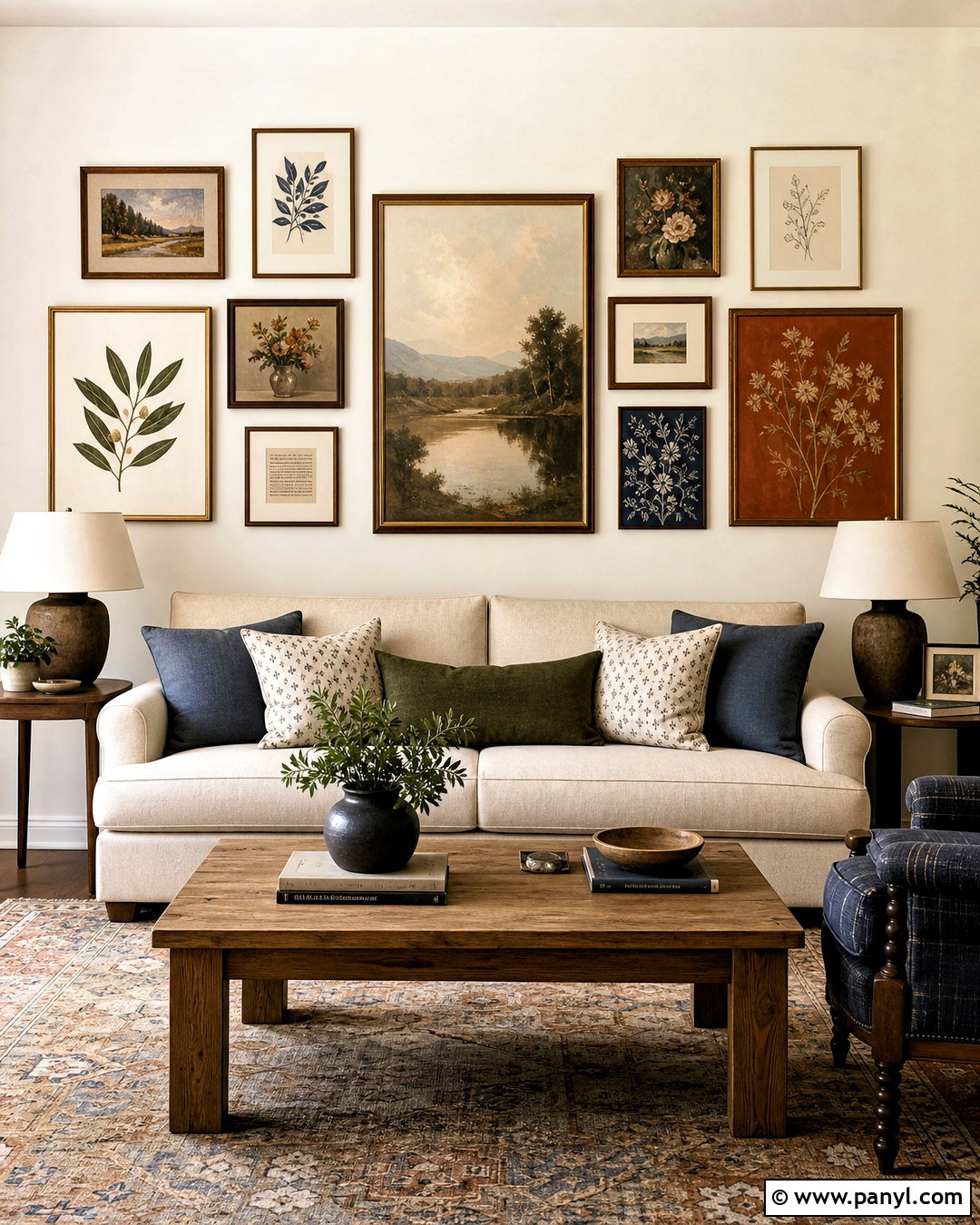
Build a comfortable living room display around the sofa using one large horizontal artwork as the visual anchor. Surround it with medium and small prints that repeat colors already present in the room, such as warm beige, dusty blue, olive green, and rust. Choose walnut and slim brass frames to complement a neutral sofa, oak coffee table, and textured area rug. Keep the overall arrangement slightly narrower than the sofa so the art feels connected to the furniture. Two table lamps or matching wall sconces can balance the composition. Add solid-colored pillows and one patterned throw below, allowing the gallery wall to provide most of the visual detail without making the entire room feel busy.
2. Black And White Gallery Wall
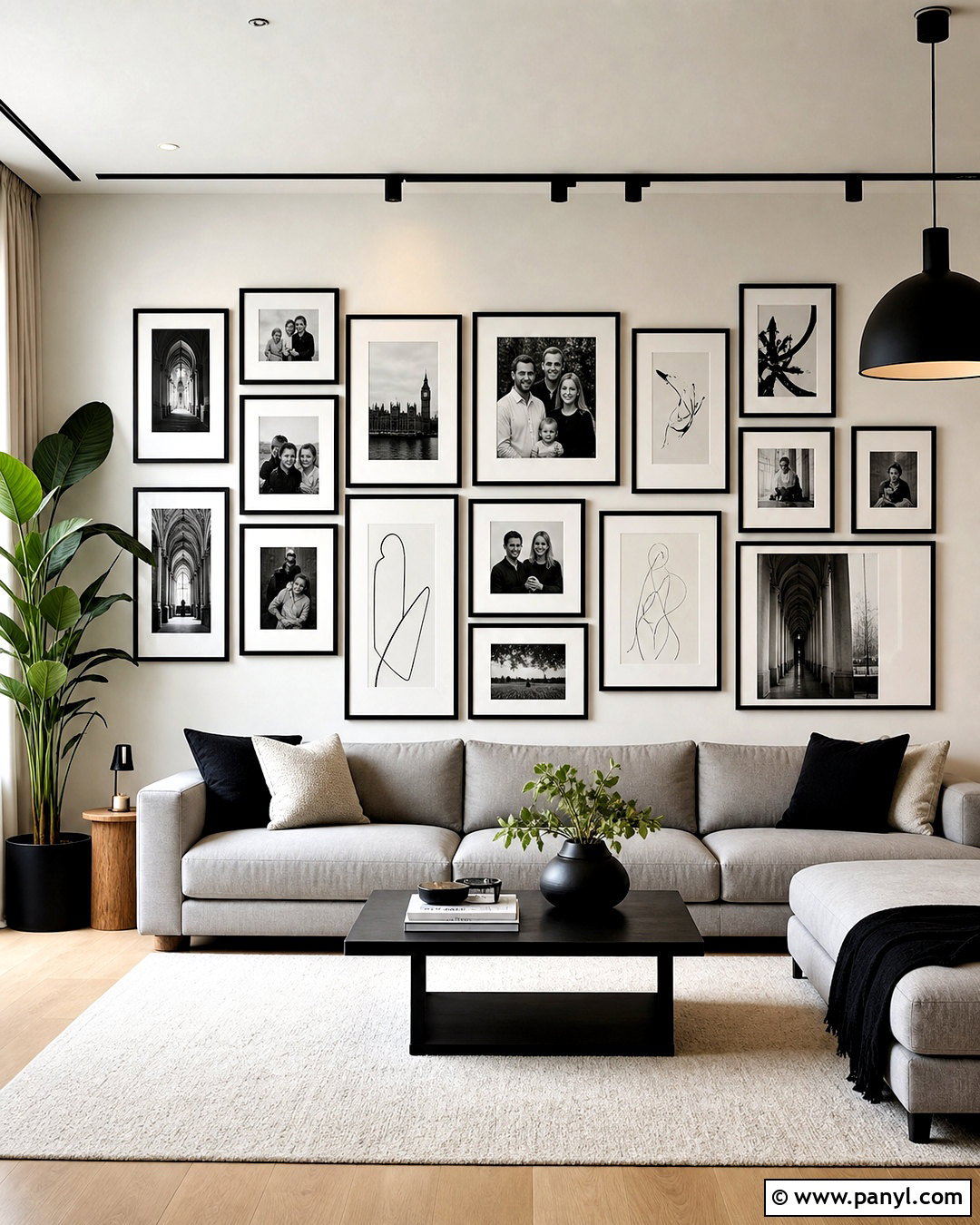
A black and white gallery wall creates a polished focal point while leaving plenty of flexibility for surrounding colors. Combine family photographs, architectural images, line drawings, and abstract prints in matte black frames with generous white mats. Arrange them in a balanced rectangular cluster above a charcoal console or light gray sofa. Soft white walls will produce crisp contrast, while pale oak flooring and a cream rug keep the room from feeling severe. Repeat black through a floor lamp, side table, and small decorative objects. Natural linen curtains and warm wood accessories introduce softness. Maintain consistent spacing between frames so the variety of images reads as one organized installation rather than a collection of unrelated photographs.
3. Family Photo Gallery Wall
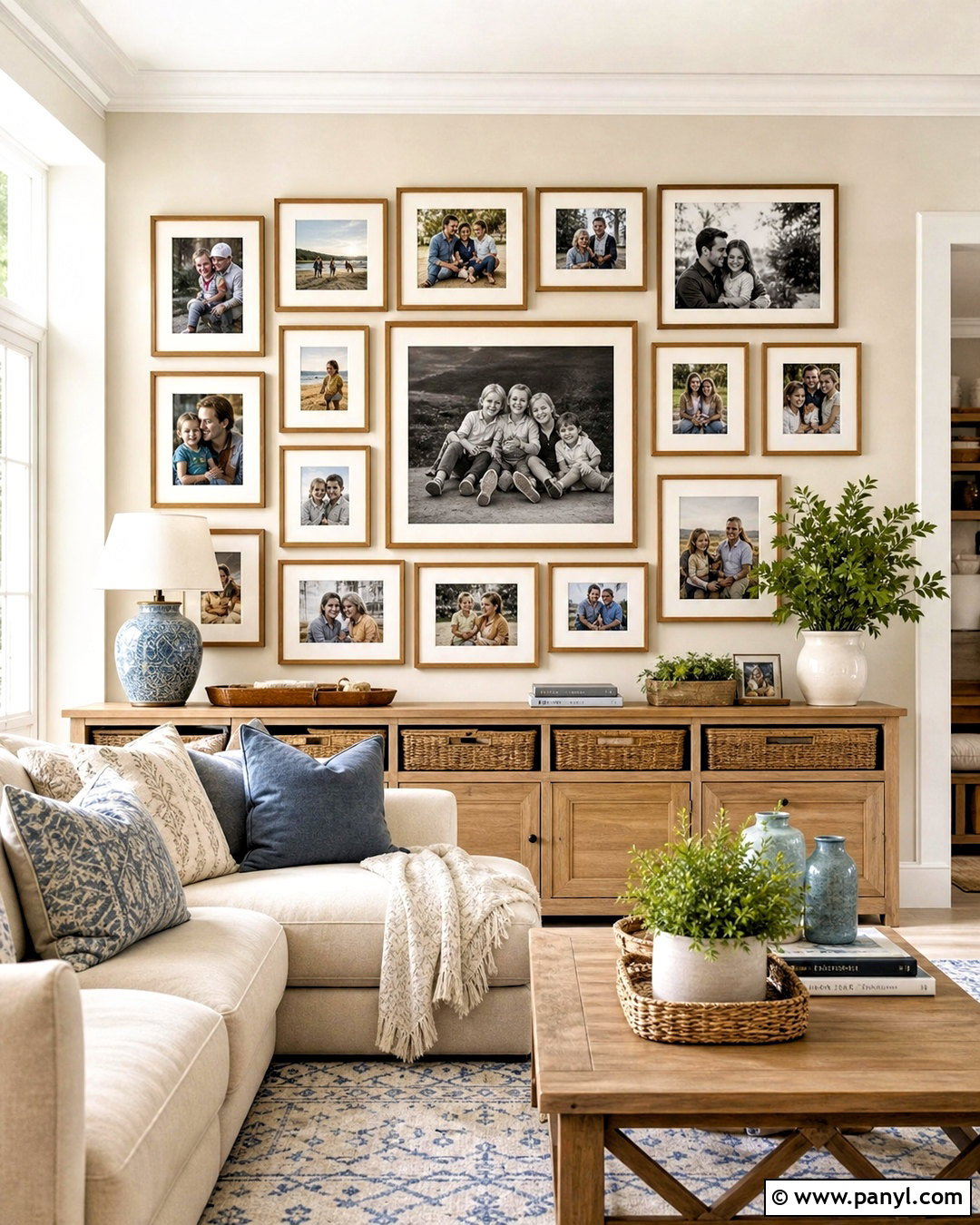
Turn meaningful photographs into an inviting family room feature by choosing images that share a similar tone. Use candid portraits, vacation scenes, childhood moments, and close-up details, editing them all in warm color or soft black and white. Place the photographs in matching medium-oak frames with wide ivory mats. A loose grid above a low storage cabinet keeps the display organized while allowing several frame sizes. Style the cabinet with a ceramic lamp, a woven basket, and two simple books to complete the scene. Warm white walls, a comfortable oatmeal sofa, and muted blue accents create a relaxed background. Leave room at one edge of the arrangement so new photographs can be added as the collection grows.
4. Staircase Gallery Wall
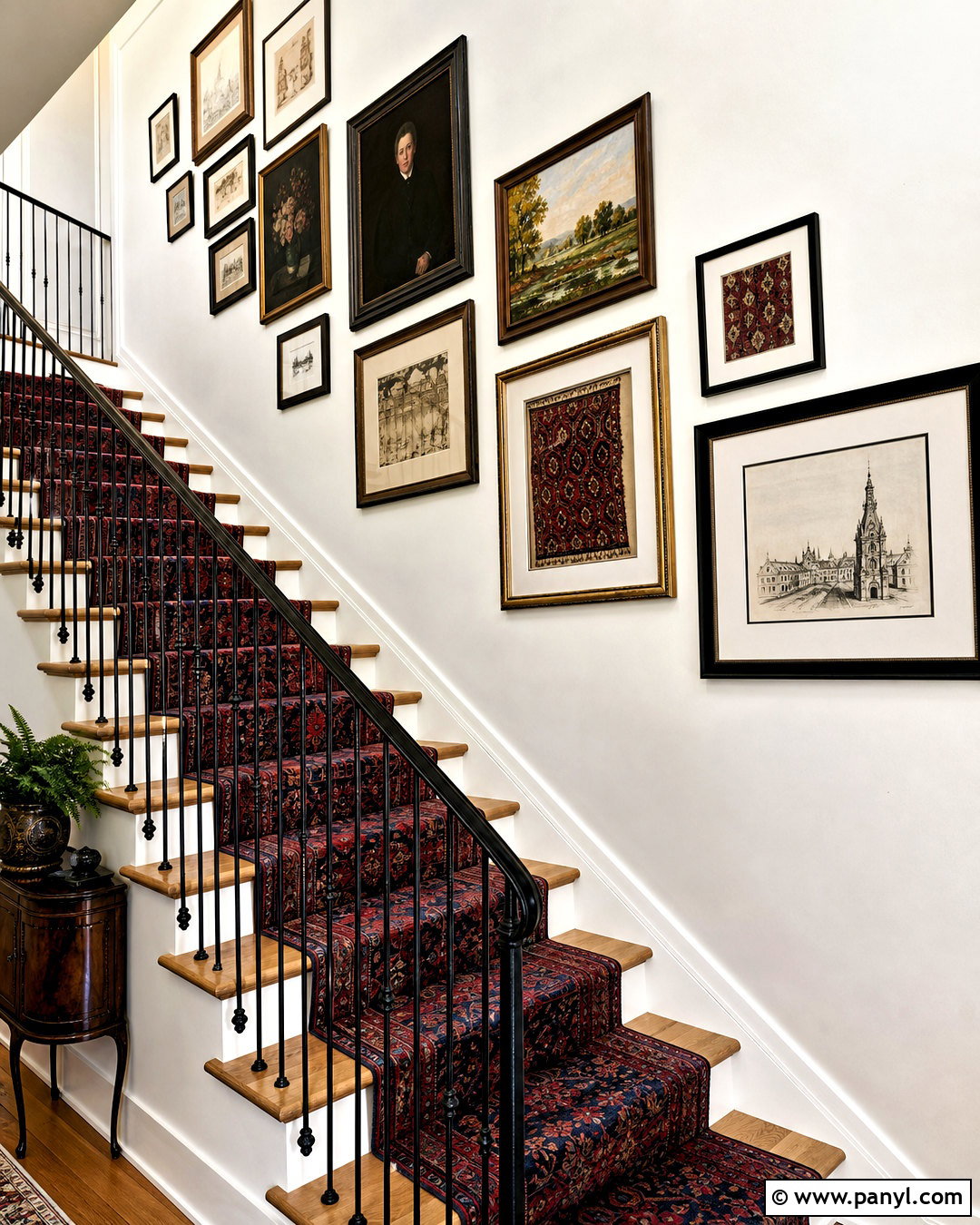
Follow the rising line of a staircase with a gallery wall that feels energetic but controlled. Begin with the largest frame near the lower steps, then continue upward using a mix of portraits, landscapes, sketches, and small textile pieces. Keep the center of the arrangement moving at the same angle as the handrail. Black, antique brass, and dark wood frames suit white walls, natural oak treads, and a black metal railing. Repeat a few frame finishes throughout the display to prevent the mixed arrangement from becoming chaotic. A runner in muted red, navy, and cream can connect the colors in the artwork. Planning the layout with paper templates helps establish a balanced path before making permanent holes. ()
5. Modern Grid Gallery Wall
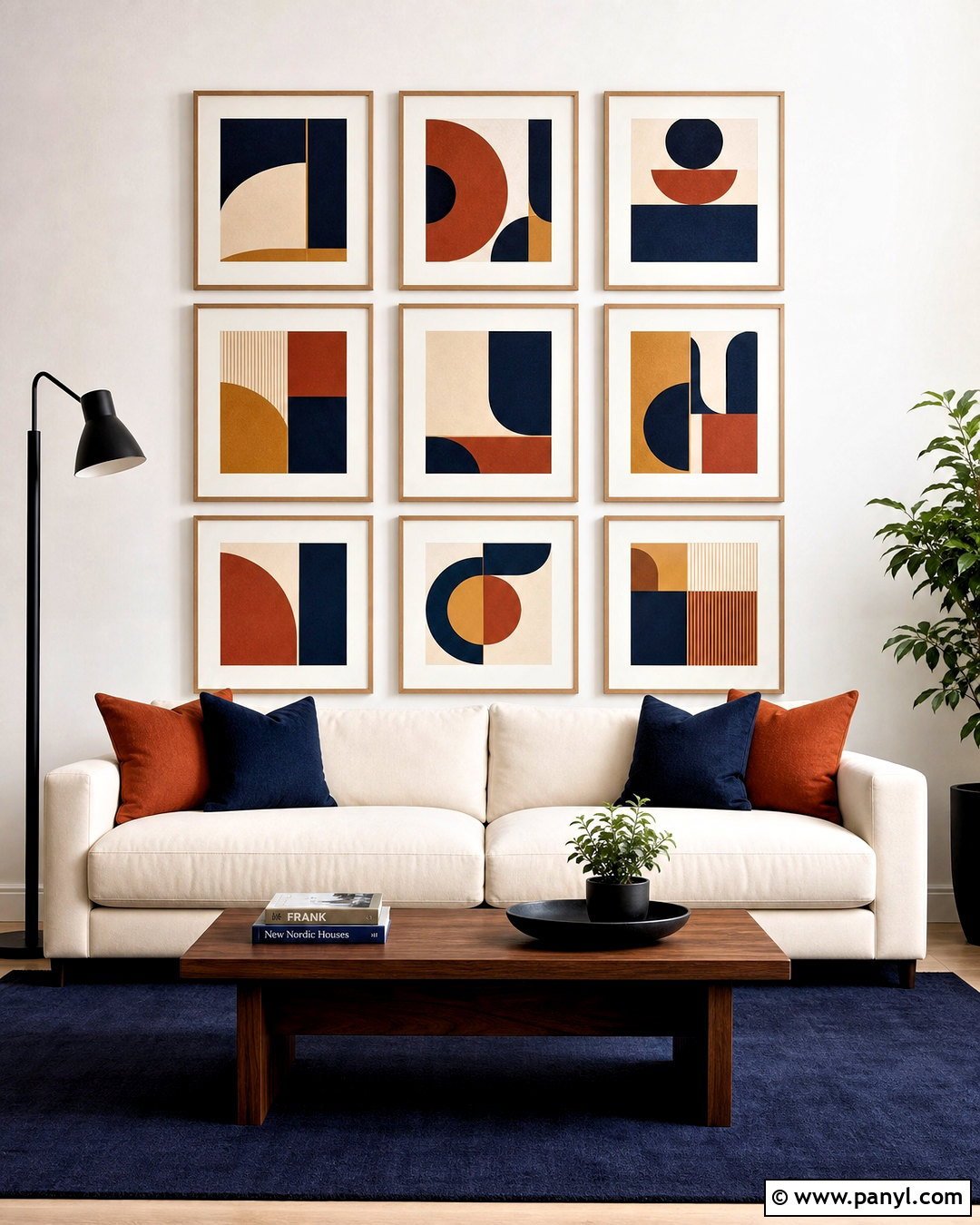
For a clean contemporary room, arrange nine equally sized pieces in a precise three-by-three grid. Select abstract prints with simple geometric shapes in terracotta, navy blue, cream, and muted mustard. Use thin natural-oak frames and oversized white mats to give every image breathing room. Place the grid above a streamlined cream sofa, keeping its edges aligned with the main seating area. A low walnut coffee table, sculptural black floor lamp, and solid navy rug will reinforce the modern look. Measure every gap carefully and use the same spacing horizontally and vertically. The repeated format creates calm, while the varied artwork keeps the wall interesting. Avoid extra wall decorations nearby so the grid remains the room’s clear focal point.
6. Eclectic Gallery Wall
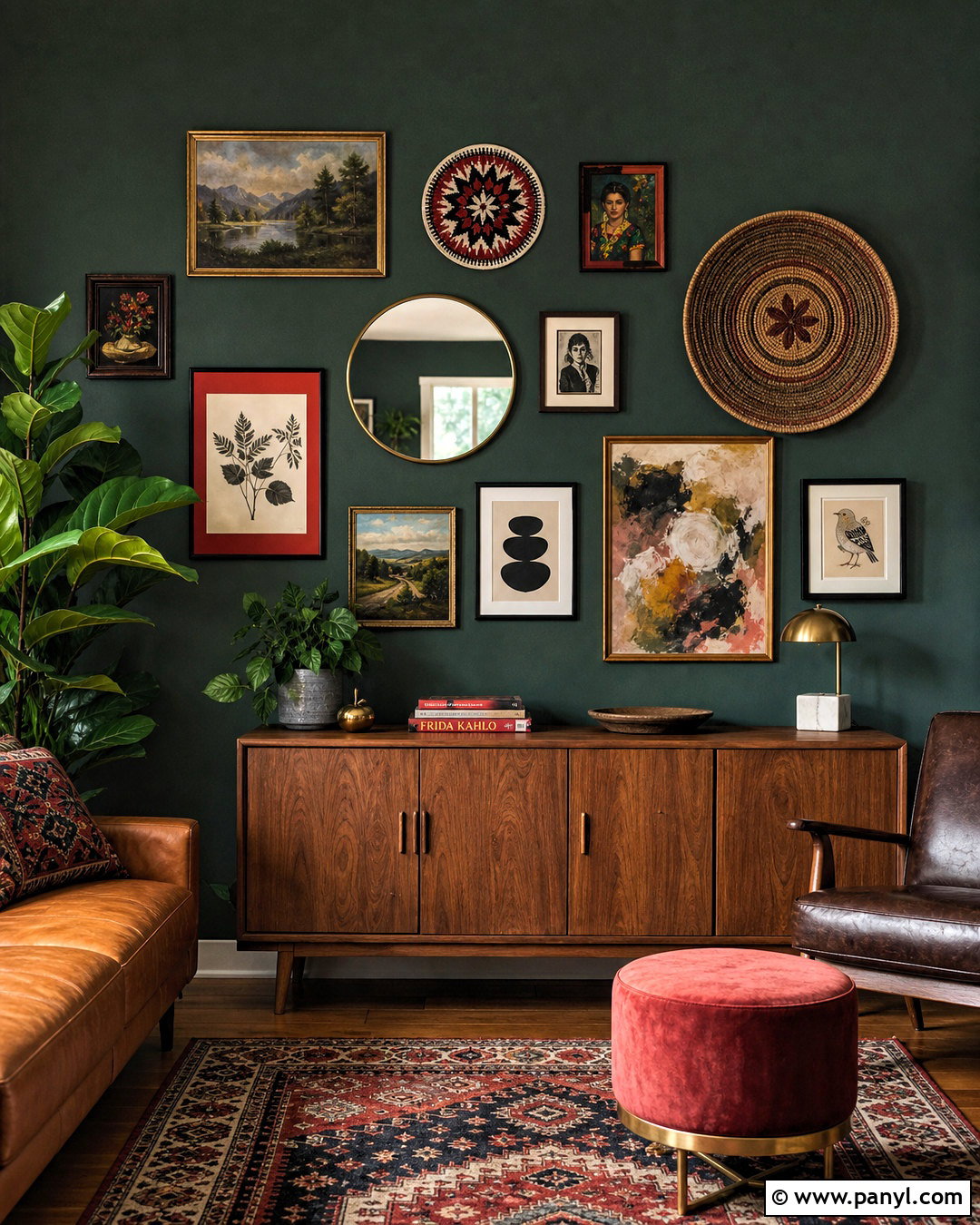
Create a collected look by combining artwork that appears to have been discovered gradually rather than purchased as one set. Mix colorful landscapes, small portraits, botanical studies, abstract prints, a round mirror, and one woven piece. Frames can include carved wood, painted red, aged gold, and matte black, but repeat each finish at least twice. Arrange the collection in a loose rectangle above a vintage wood sideboard. Deep green walls provide a rich backdrop, while a patterned rug and cognac leather chair support the layered character. Start with the largest artwork slightly off-center and build outward, distributing dark frames and bright colors evenly. Leave narrow but consistent gaps to make the varied pieces feel visually connected.
7. Minimalist Gallery Wall
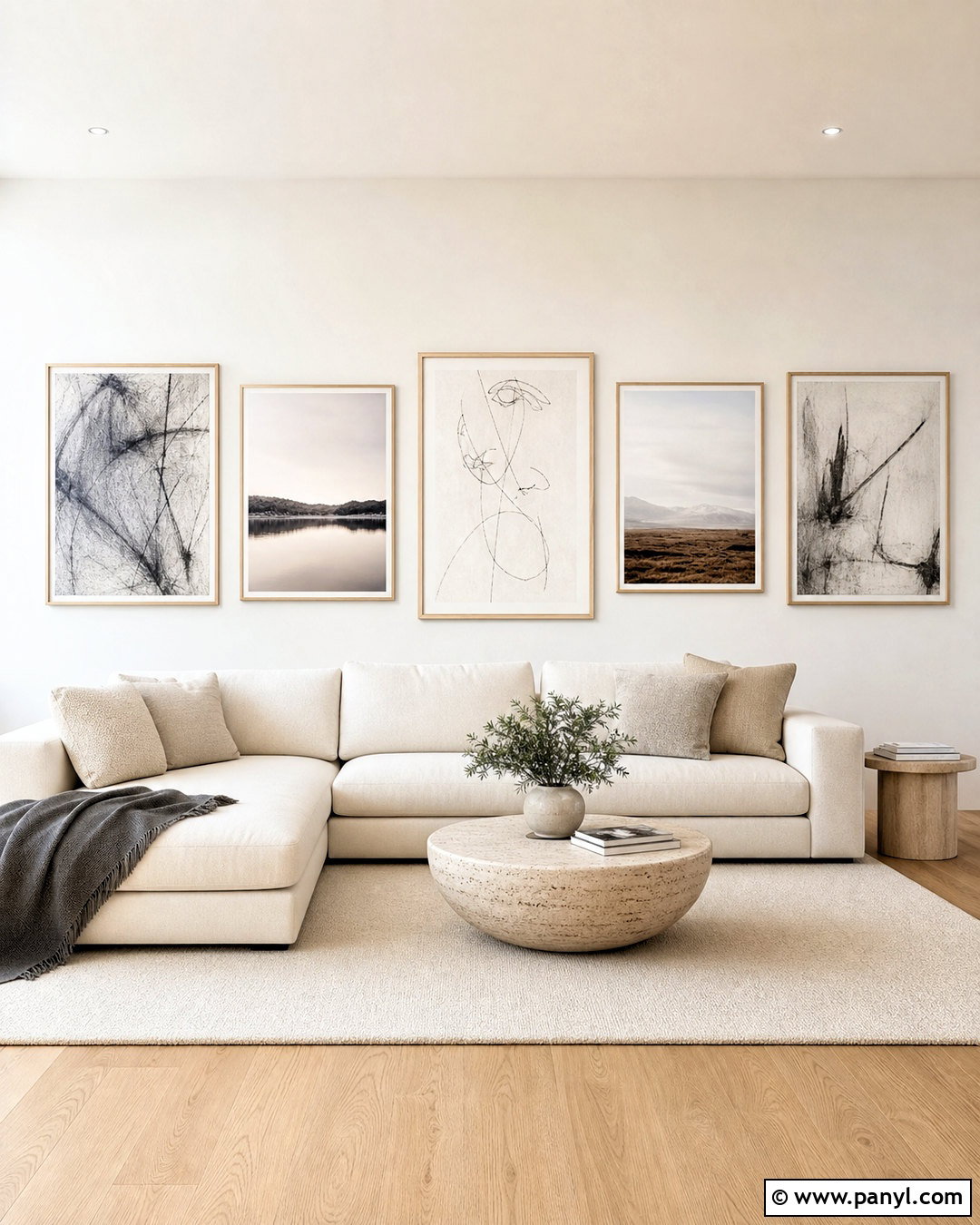
Could a gallery wall feel spacious instead of busy? Choose three or five large pieces rather than filling the surface with many small frames. Hang neutral abstract paintings, simple charcoal drawings, or softly toned landscape photographs in pale maple frames. Keep several inches between each piece and arrange them in one straight row above a low cream sofa. Warm white walls, light oak flooring, and an ivory wool rug will reinforce the calm atmosphere. Use restrained furnishings, including a round stone coffee table, one sculptural chair, and a slim floor lamp. The artwork should share a limited palette of beige, black, soft gray, and muted brown. This thoughtful repetition gives the entire living room a quiet, cohesive finish.
8. Vintage Gallery Wall
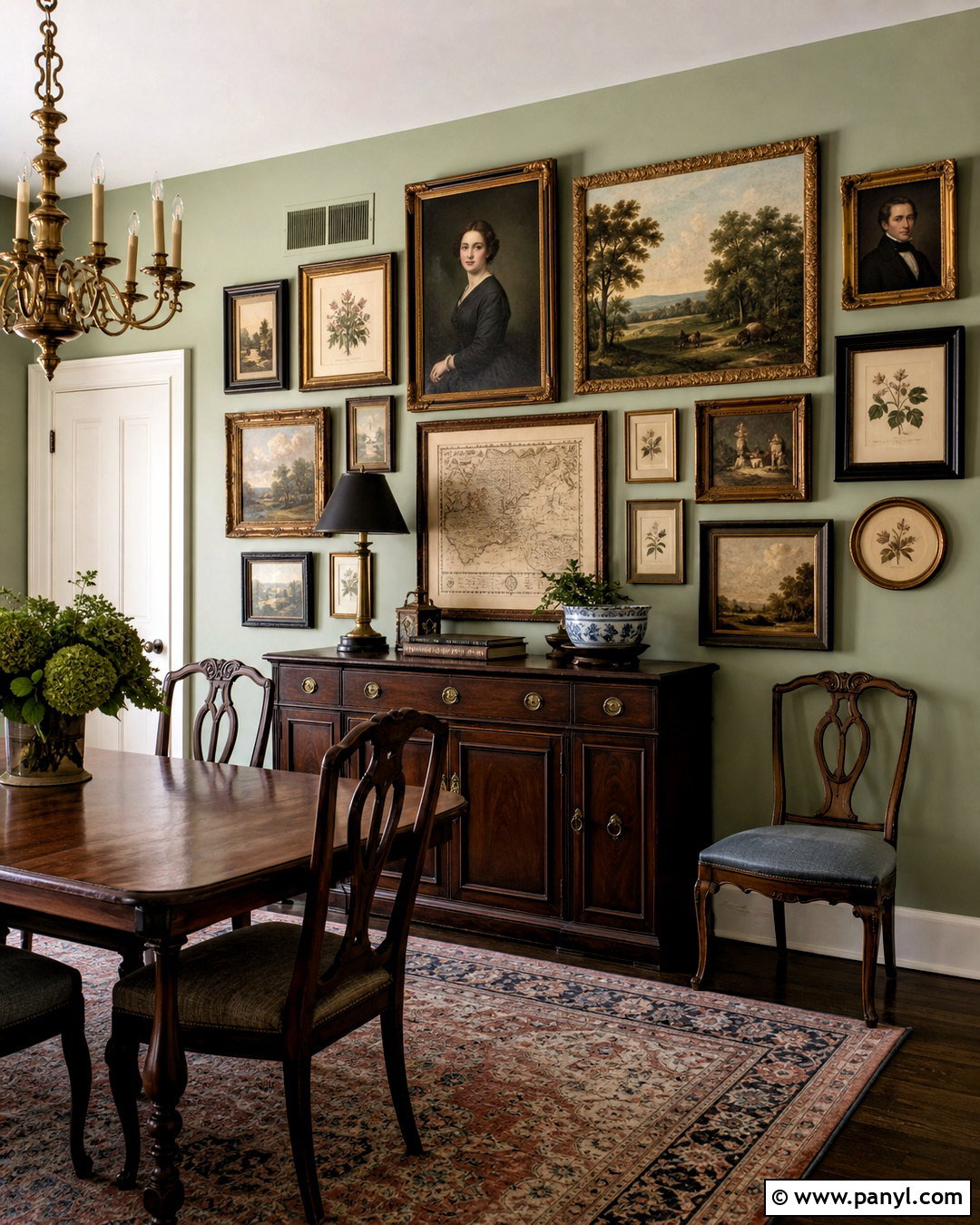
Give a dining room depth and personality with a gallery wall built from vintage-inspired artwork and timeworn finishes. Combine small oil portraits, pastoral landscapes, botanical illustrations, and antique maps in ornate gold, dark walnut, and distressed black frames. Arrange the pieces salon-style above a traditional sideboard, allowing the display to extend upward rather than spreading too far across the room. Paint the wall a muted sage green to enhance the aged frame finishes. Add a walnut dining table, spindle-back chairs, a faded patterned rug, and a classic brass chandelier. Two candlestick lamps on the sideboard can illuminate the lower artwork. Keep the largest frames near the center, balancing smaller pieces around them for a substantial but orderly composition.
9. Colorful Gallery Wall
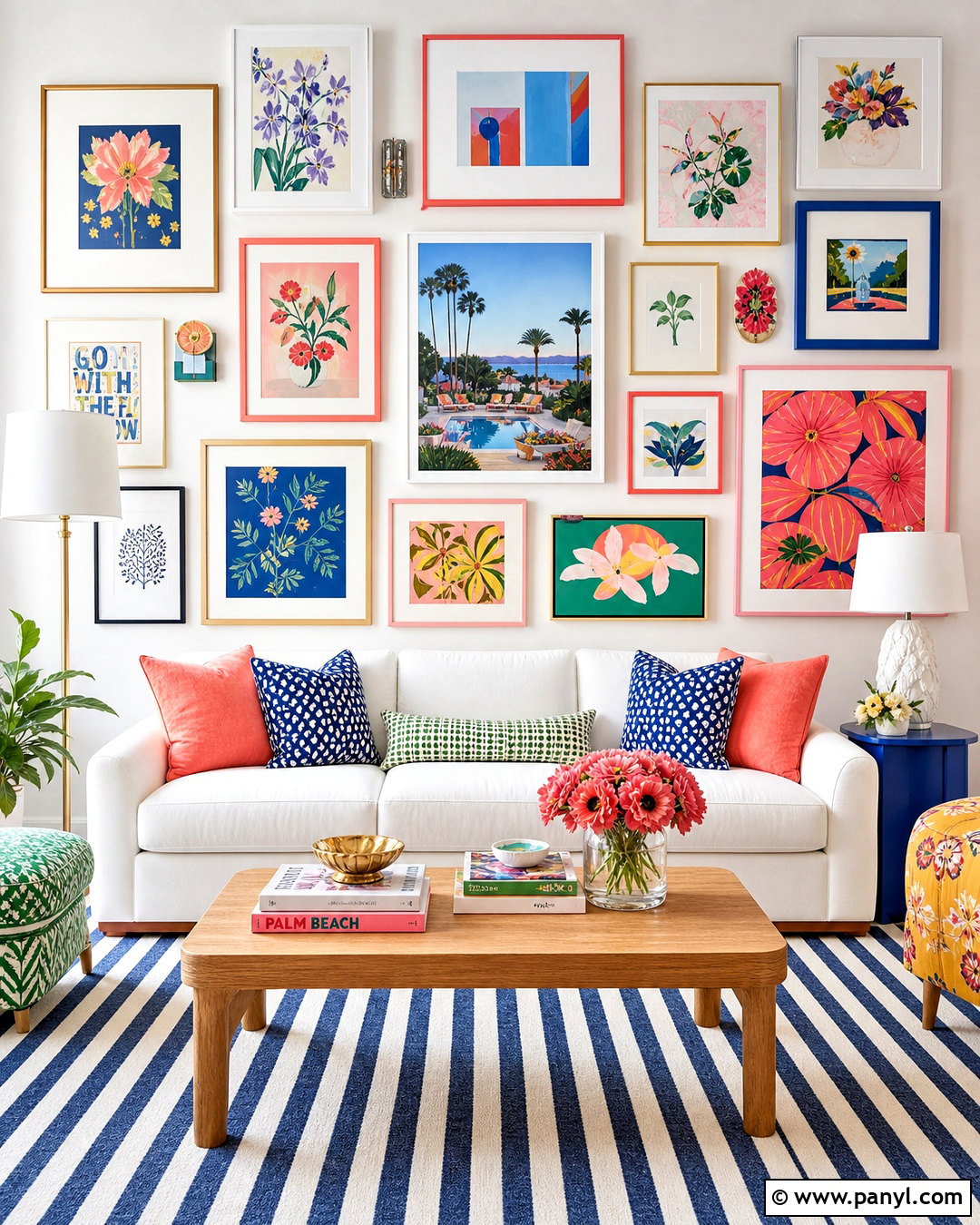
Bring energy to a neutral room with a gallery wall based on saturated, repeated colors. Select modern illustrations, playful abstracts, graphic florals, and landscape prints featuring coral, cobalt blue, sunny yellow, emerald green, and pink. Use white, red, blue, and natural-wood frames, distributing each color across the arrangement. Position the freeform display above a simple white sofa so the artwork remains the star. Complete the room with a cobalt side table, coral pillows, a striped rug, and a rounded oak coffee table. Keep the walls bright white and limit smaller accessories to a few solid-colored objects. Consistent spacing and repeated hues will unite the different prints, creating a cheerful design that still feels deliberate and suitable for everyday living.
10. Bedroom Gallery Wall
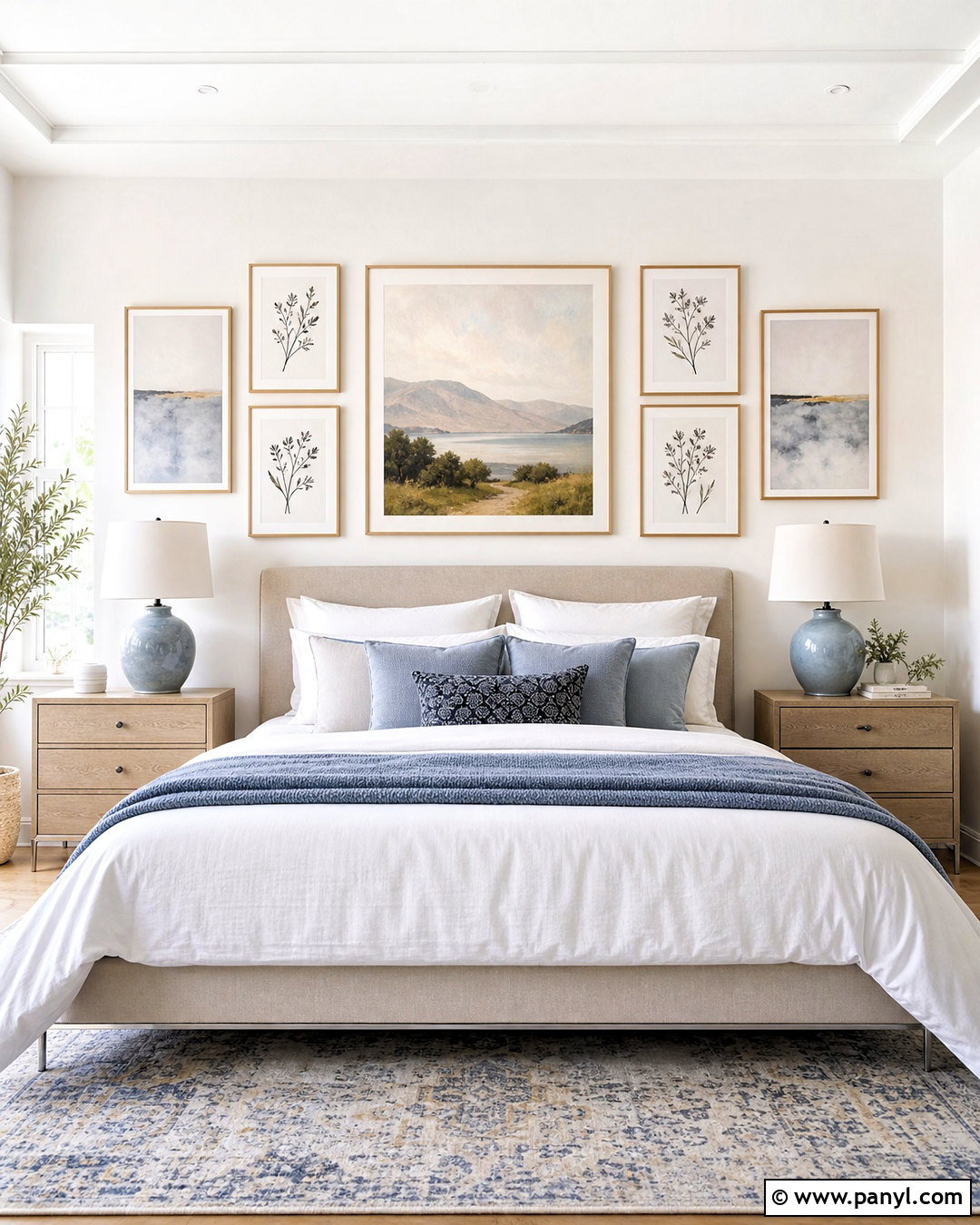
Design a restful gallery wall above the bed using soft colors and symmetrical placement. Center one medium landscape painting over the headboard, then flank it with paired botanical prints and two smaller abstract pieces. Choose light oak frames with cream mats to coordinate with an upholstered oatmeal headboard, white bedding, and pale wood nightstands. Dusty blue, sage green, blush, and warm beige artwork will introduce color without disrupting the peaceful mood. Matching ceramic lamps can anchor both ends of the arrangement. Keep the lowest frames safely above the headboard and avoid heavy projecting objects in this location. A natural woven rug and linen curtains complete the bedroom, making the gallery wall feel integrated with the entire soothing, layered design.
11. Hallway Gallery Wall
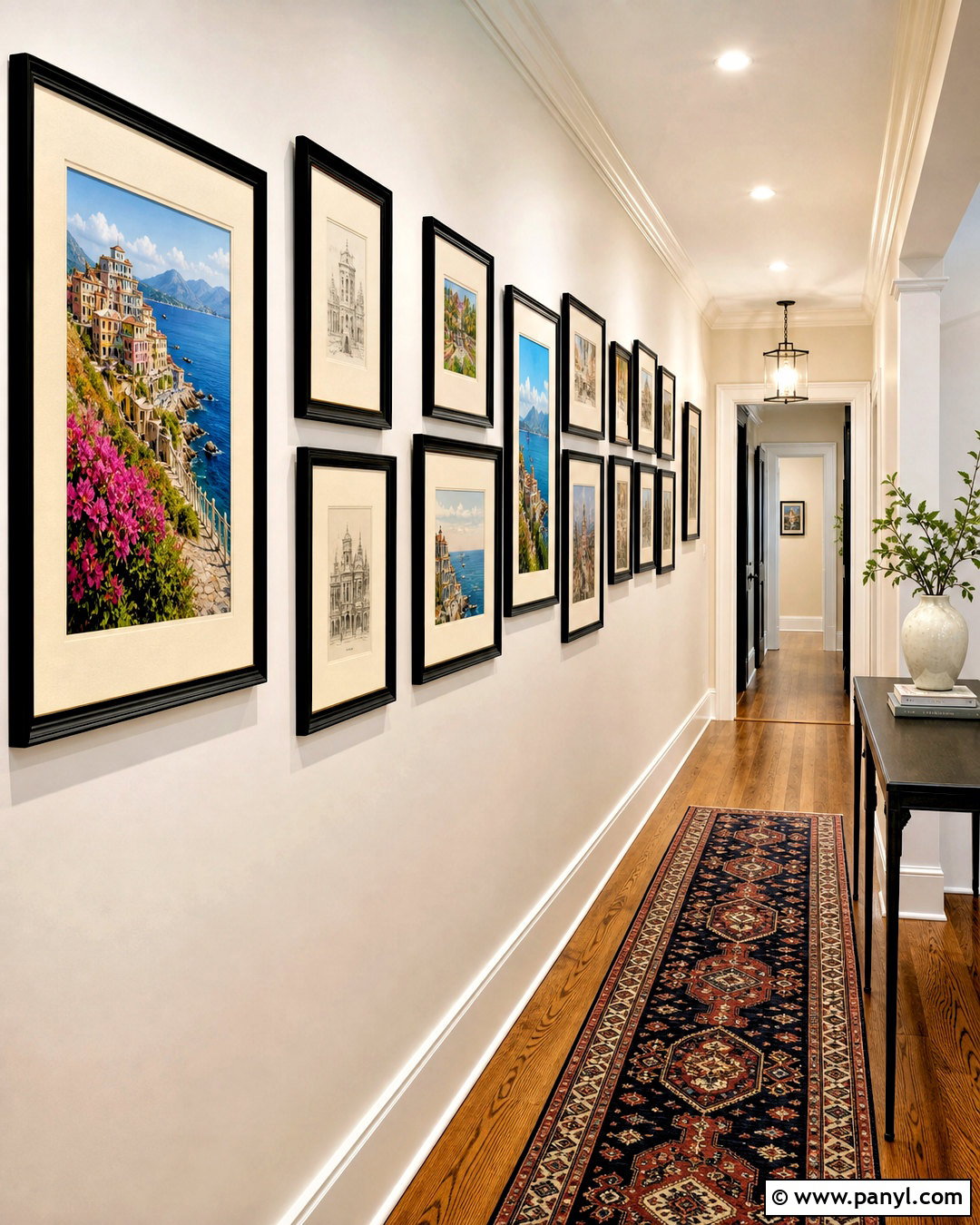
A long hallway provides the perfect setting for a gallery wall that unfolds as someone moves through the space. Install a single eye-level row of framed travel photographs, small paintings, and architectural sketches. Use matching black frames with cream mats for continuity, while alternating horizontal and vertical images to create rhythm. Warm white walls, medium-oak flooring, and a narrow vintage runner will keep the passage bright and welcoming. Add a slim console at the wider end of the hallway with a ceramic lamp and shallow decorative bowl. Picture lights or simple ceiling fixtures can improve visibility without crowding the walls. Maintain consistent frame heights and spacing, allowing the collection to guide the eye toward the room at the end.
12. Picture Ledge Gallery Wall
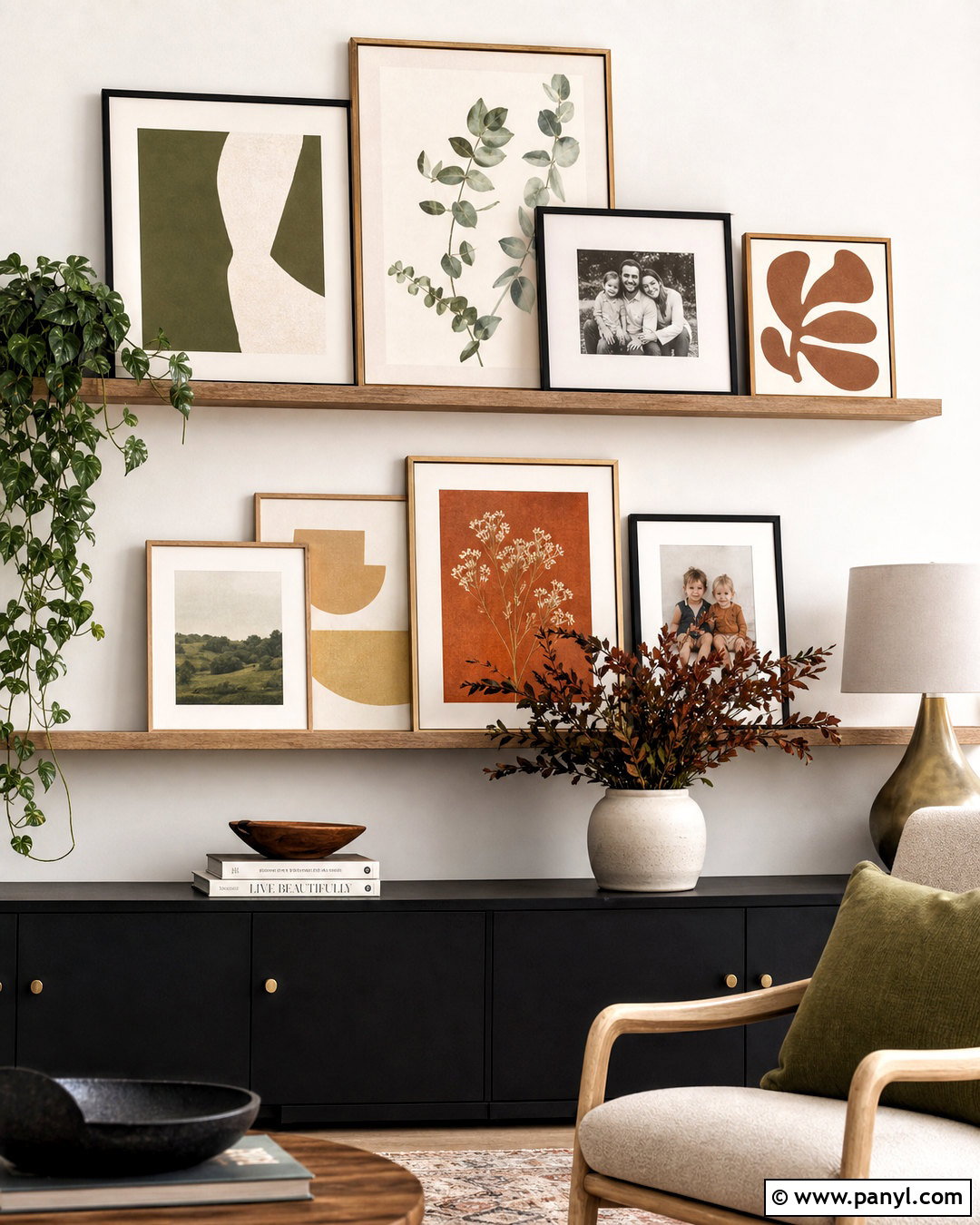
Picture ledges make it easy to build a layered gallery wall without committing to one permanent arrangement. Install two slim oak ledges above a low cabinet, spacing them far enough apart for medium and large frames. Lean abstract prints, family photographs, and botanical art against the wall, overlapping frame edges slightly for depth. Mix black, oak, and brushed brass frames while maintaining a palette of olive green, warm cream, rust, and charcoal. Include one small ceramic vase and a trailing plant, but keep objects limited so the artwork remains dominant. A soft greige wall, woven rug, and linen armchair create a comfortable setting. Picture ledges also allow artwork to be rearranged as the room, collection, or seasons change. ()
13. Mirror Gallery Wall
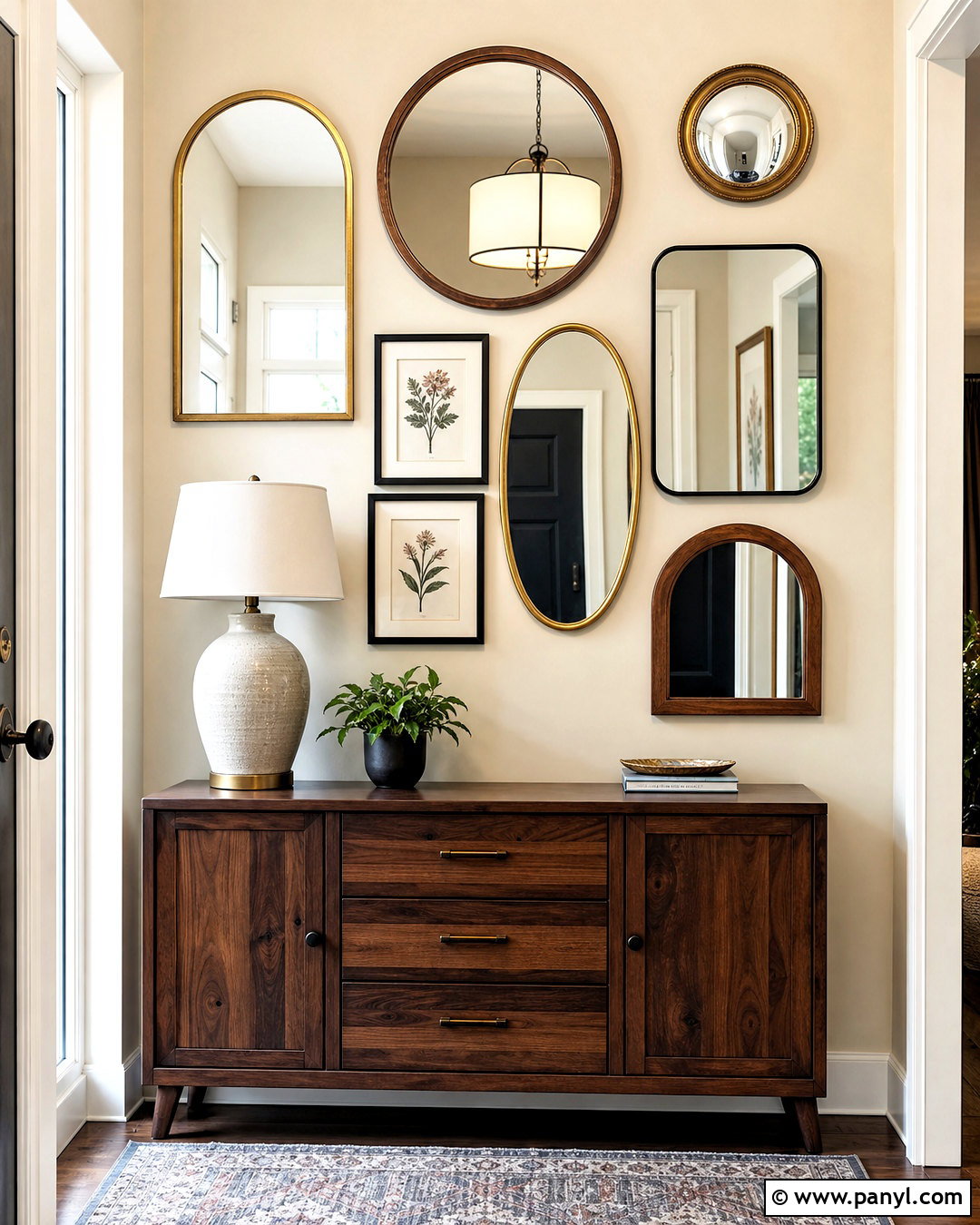
Brighten a small entryway with a gallery wall made from decorative mirrors and a few coordinating art pieces. Combine round, oval, arched, and rectangular mirrors in antique brass, matte black, and warm wood frames. Arrange them organically above a narrow walnut console, placing the largest mirror near the center to establish a focal point. Add two small botanical prints to prevent the display from feeling like a mirror showroom. Pale beige walls and a light runner will help reflect natural light throughout the entrance. Style the console with a white ceramic lamp, a shallow tray, and one leafy branch. Distribute frame shapes and finishes evenly, checking reflections carefully so each mirror captures an attractive part of the surrounding space.
14. Coastal Gallery Wall
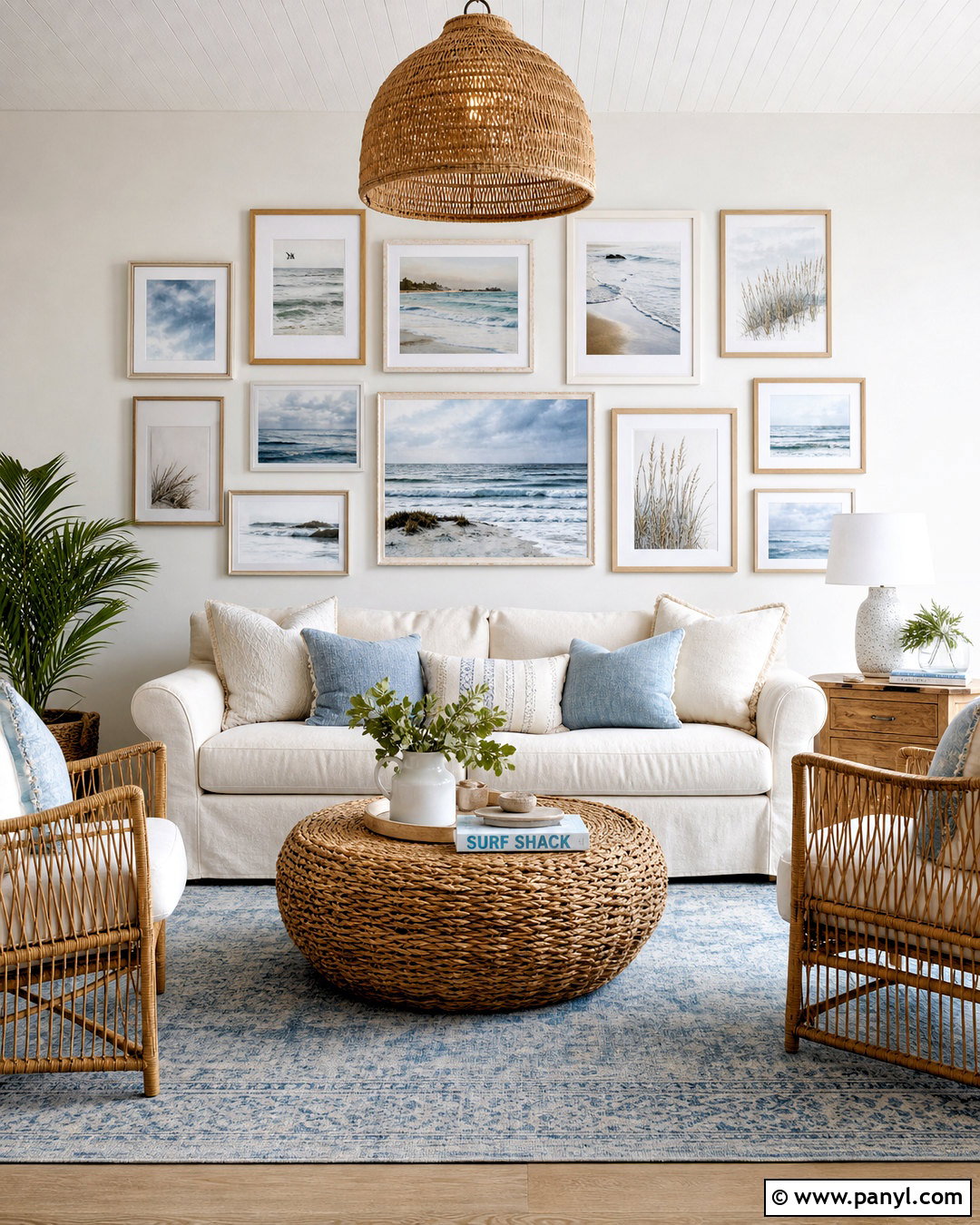
Create an airy coastal gallery wall without relying on obvious nautical decorations. Choose framed photographs of shorelines, pale blue abstracts, watercolor seascapes, and simple sketches of grasses or shells. Use whitewashed wood, pale oak, and thin white frames with wide mats. Arrange the collection in a relaxed grid above a slipcovered linen sofa. Soft white walls, a faded blue rug, woven side tables, and natural fiber lighting will support the breezy palette. Repeat misty blue, sandy beige, sea-glass green, and soft gray throughout the art and textiles. Keep decorative accessories minimal, using a ceramic vase and woven basket rather than themed objects. The finished room should feel fresh, casual, and connected to nature instead of overly decorated.
15. Boho Gallery Wall
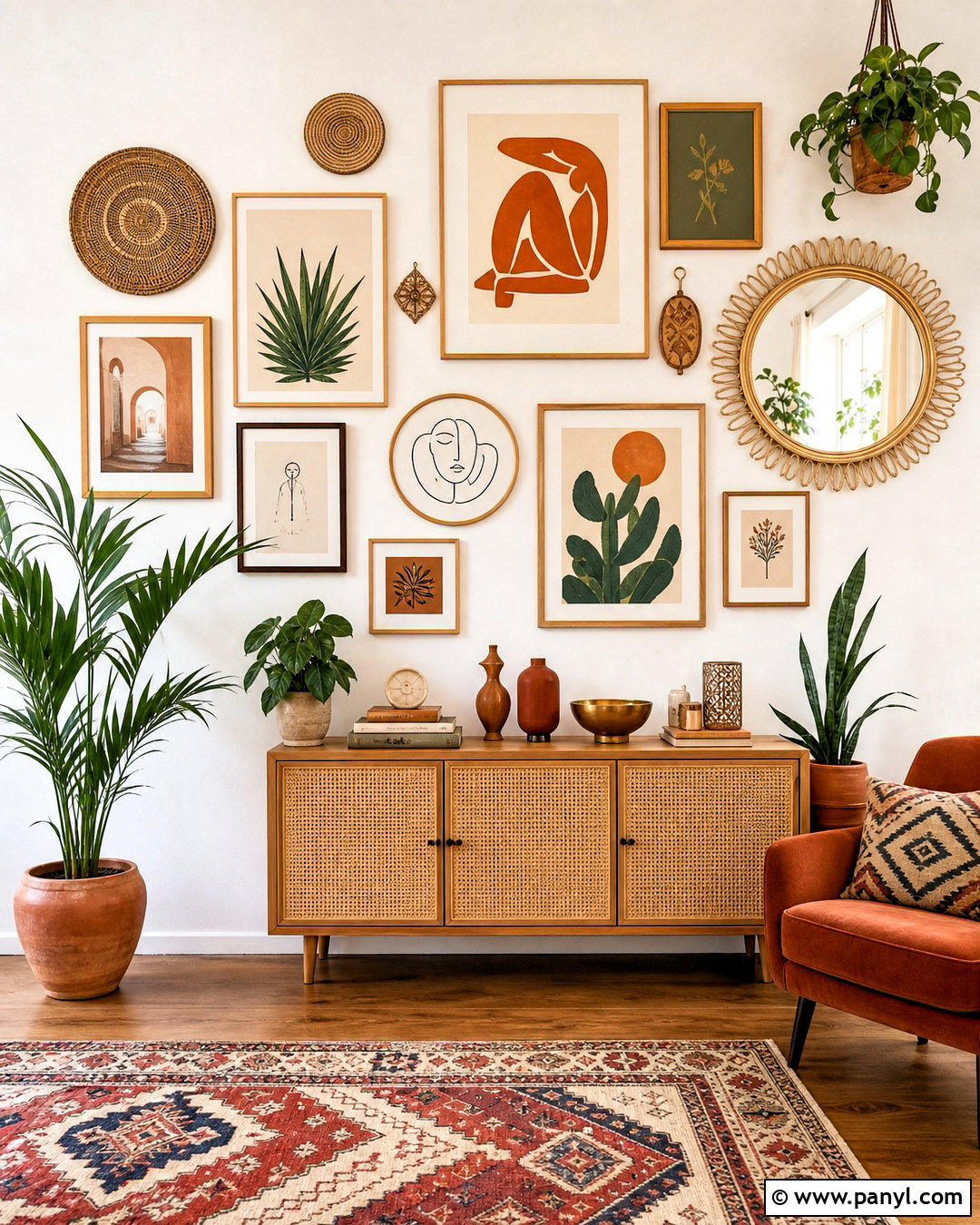
Layer artwork, natural materials, and handmade accents for a warm boho gallery wall. Begin with a large terracotta and cream abstract print, then surround it with botanical art, a small sunburst mirror, woven wall pieces, and framed line drawings. Use rattan, medium wood, aged brass, and painted cream frames to create variety. Hang the arrangement above a low cane-front cabinet against a warm white wall. Complete the room with a rust-colored chair, patterned floor cushions, a cream rug, and several leafy plants in clay pots. Keep the display asymmetrical but balance visual weight by spreading dark wood, round shapes, and bold colors across the wall. This approach feels personal and relaxed while remaining coordinated enough for a finished living space.
16. Farmhouse Gallery Wall
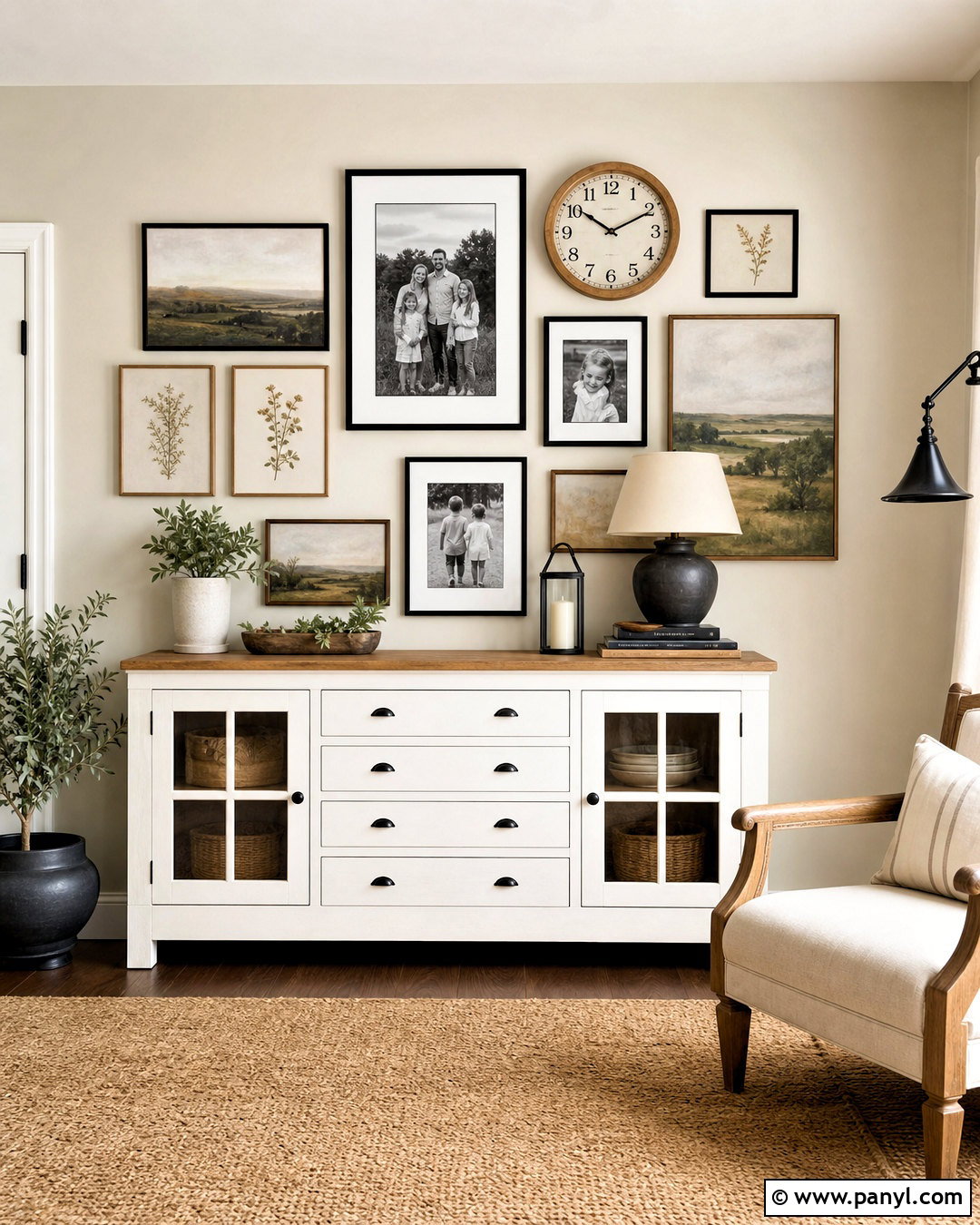
A farmhouse gallery wall feels most convincing when it combines simple artwork with warm, practical furnishings. Display muted landscapes, black-and-white family photographs, pressed botanicals, and one vintage-style clock in black and weathered oak frames. Arrange the collection in a balanced cluster above a white sideboard with natural wood doors. Soft greige walls create gentle contrast, while a jute rug, linen chair, and black metal lamp repeat the materials in the frames. Use creamy white, olive green, faded brown, and charcoal throughout the display. Avoid excessive signs or lettering, which can make the room feel themed. Instead, let traditional subjects, natural textures, and understated finishes create a comfortable farmhouse look that feels current, lived-in, and easy to maintain.
17. Small Gallery Wall
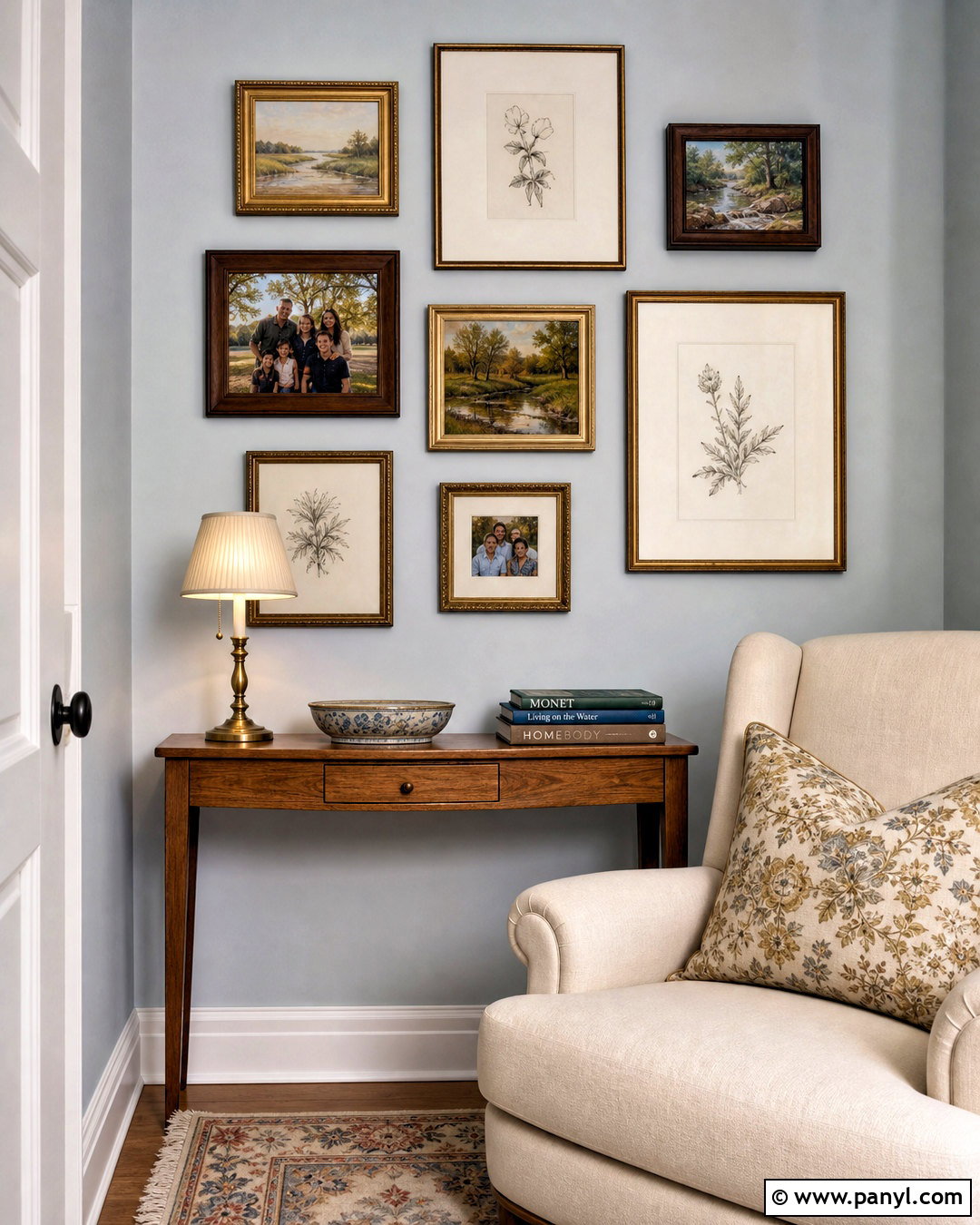
Even a narrow wall can hold a complete gallery arrangement when the scale is carefully controlled. Use five to seven small frames in a compact vertical cluster beside a reading chair, desk, or doorway. Include miniature landscapes, family photographs, and line drawings in walnut and antique brass frames. A soft blue-gray wall will create subtle contrast while helping the small artwork feel intentional. Below the display, place a slim oak table with a petite lamp and one ceramic bowl. Keep the gallery’s outside edges aligned in a narrow rectangle, using approximately equal gaps between pieces. The nearby chair, small rug, and wall light should share the artwork’s cream, brown, and muted blue palette, turning an overlooked corner into a finished decorative moment.
18. Dining Room Gallery Wall
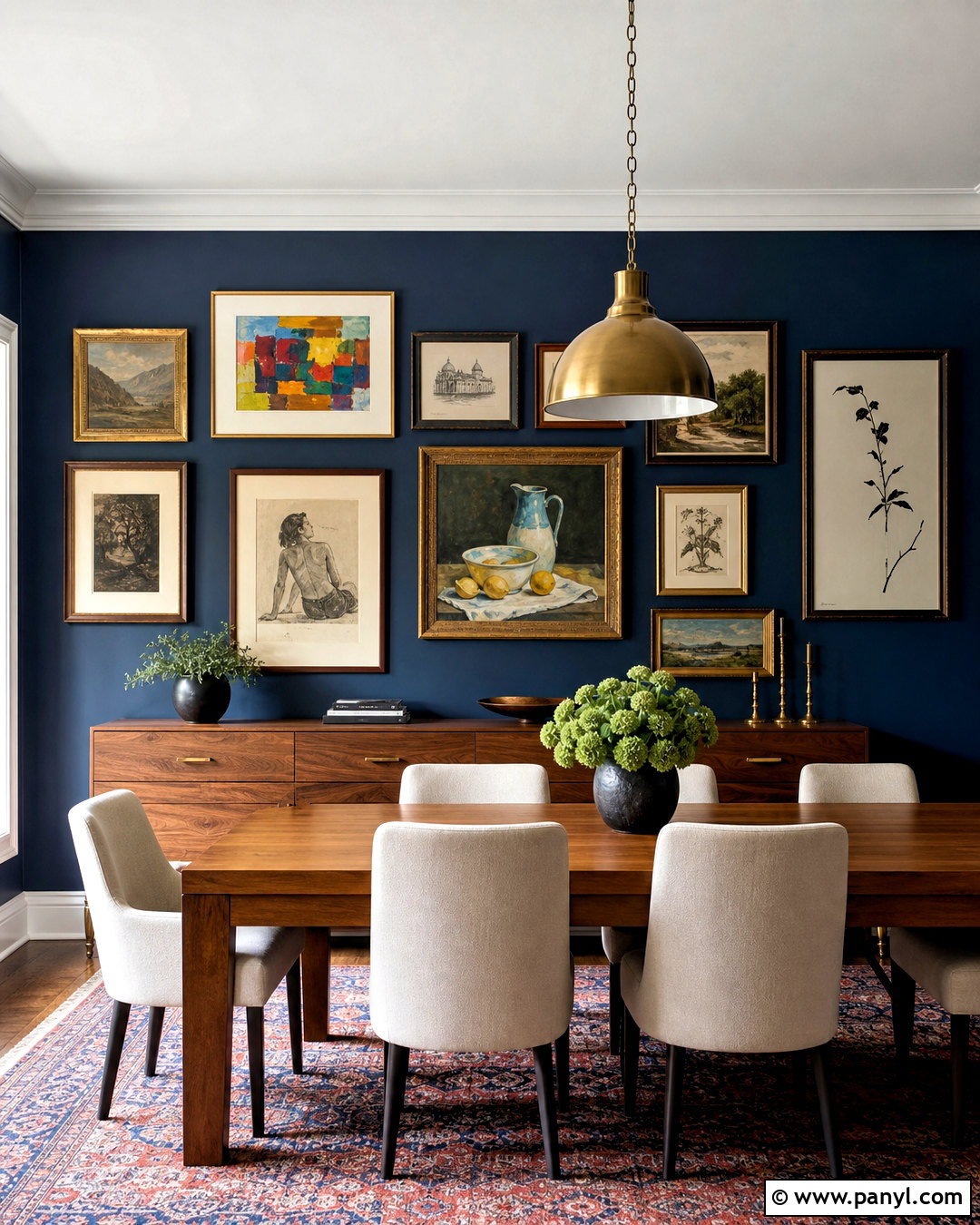
Set an inviting mood in the dining room with an art collection that complements long meals and conversation. Hang food-inspired still lifes, colorful abstracts, vintage landscapes, and simple ink drawings in dark wood and aged brass frames. Arrange them in a generous salon grouping above a walnut buffet. A deep navy wall will make warm reds, ochers, greens, and creams within the art appear richer. Pair the display with a rectangular oak table, upholstered cream chairs, a traditional patterned rug, and a sculptural brass pendant. Keep fragile frames and decorative objects away from serving surfaces. Place the largest artwork near the center and align the lower edge of the overall arrangement, giving the diverse collection a strong visual foundation.
19. Kids Room Gallery Wall
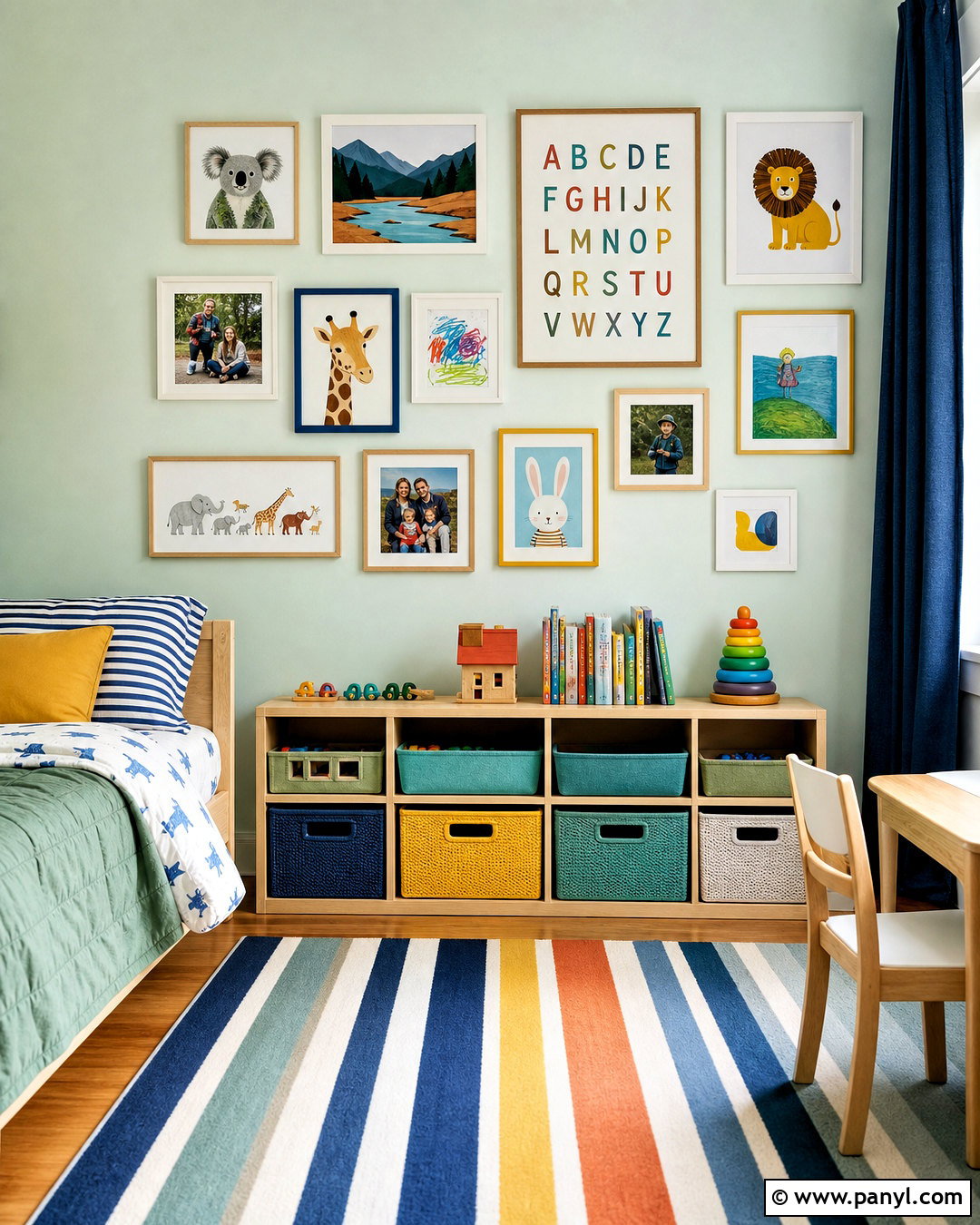
Make a child’s room feel playful and polished with a gallery wall that can evolve as interests change. Mix cheerful animal illustrations, alphabet art, imaginative landscapes, family photographs, and one framed piece of the child’s own artwork. Choose light wood, white, yellow, and soft blue frames, using acrylic glazing where possible for a lighter, practical finish. Arrange the collection above a low toy cabinet rather than directly over the bed. Pale mint walls, a washable striped rug, colorful storage baskets, and simple wood furniture complete the space. Maintain an orderly grid with a few varied frame sizes so the wall feels lively without becoming distracting. Leave one or two easy-to-reach frames available for rotating new creations.
20. Floor To Ceiling Gallery Wall
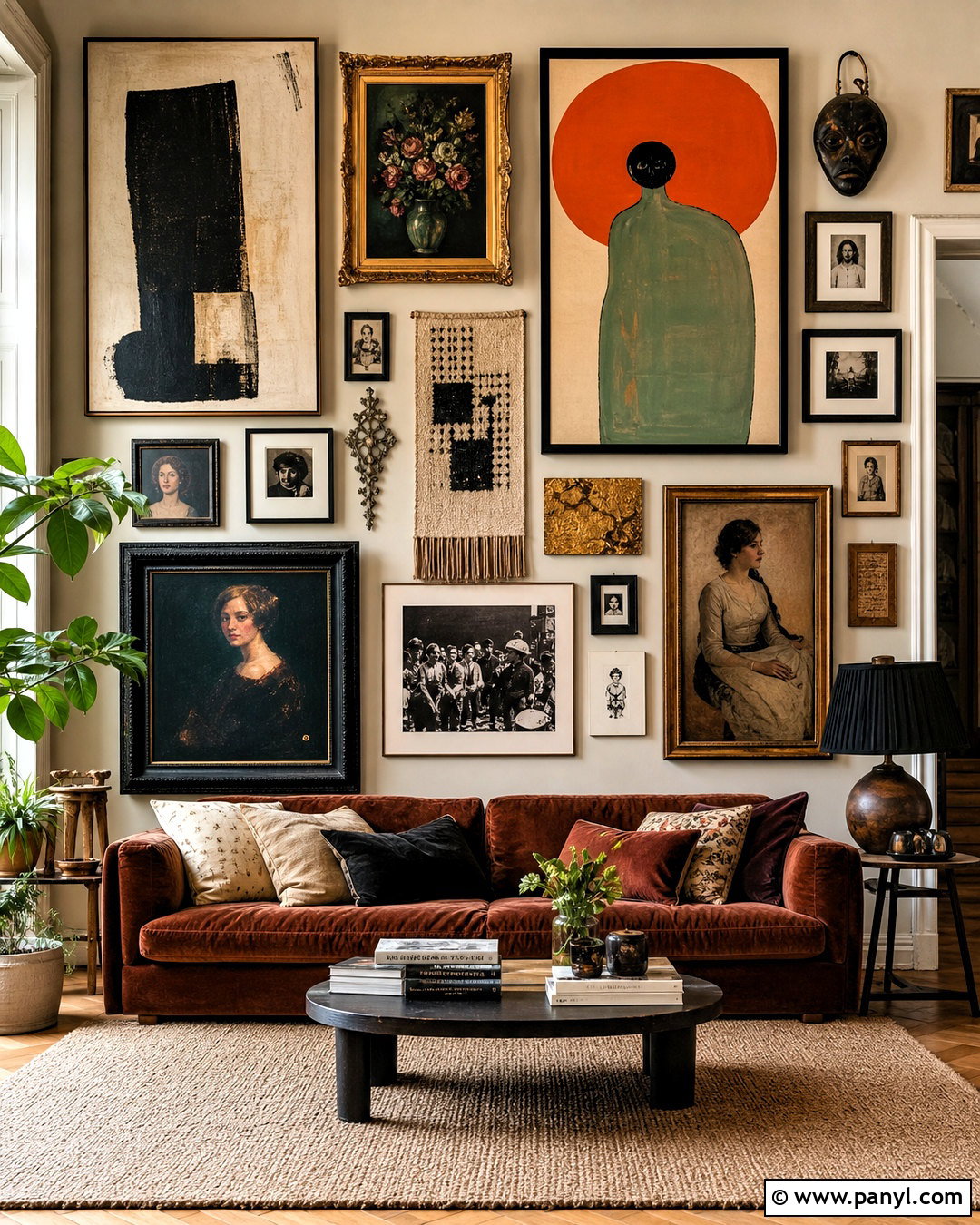
For maximum impact, transform one living room wall into a floor-to-ceiling art installation. Combine oversized paintings, medium photographs, tiny portraits, textile art, and small decorative objects within a dense salon arrangement. Use black, walnut, painted green, and aged gold frames to build a collected appearance. Deep warm white or muted clay walls will support the layered colors without competing with them. Position a low-profile velvet sofa in front of the display so enough artwork remains visible above and beside it. Balance the room with a simple rug, restrained side tables, and minimal accessories. Begin with the largest pieces, then fill gaps gradually, keeping the arrangement’s outer boundary controlled so abundance feels intentional rather than disorganized.
Conclusion:
The best gallery walls balance personal meaning with thoughtful design. Start by choosing a complete look that suits the room, whether that means a precise modern grid, a colorful family display, or a layered vintage collection. Connect the frames and artwork to nearby furniture, textiles, lighting, and architectural details. Before hanging, arrange everything on the floor or test the composition with paper templates. This simple step helps you adjust scale, spacing, and balance before making holes. () You can also leave space for future finds, photographs, or children’s artwork. With careful planning, these **20 gallery wall ideas** can make an ordinary blank wall feel distinctive, welcoming, and completely personal.

Related Ideas and Inspiration:
Leave a Reply