
Dark walls can make original wood trim feel intentional, warm, and surprisingly fresh. The best Dark Walls Unpainted Woodwork Ideas balance rich paint colors with natural grain, practical lighting, and lighter furnishings. Instead of treating brown trim as an outdated feature, these rooms use it to frame windows, doors, built-ins, and architectural details. Deep green, navy, charcoal, burgundy, and earthy brown all work beautifully when their undertones complement the wood. Pale ceilings, reflective accents, soft textiles, and thoughtful furniture placement keep the overall look from becoming heavy. Whether you have oak, walnut, chestnut, pine, or mahogany millwork, the following complete room schemes offer approachable inspiration. Explore these Dark Walls Unpainted Woodwork Ideas.

1. Dark Green Living Room With Wood Trim
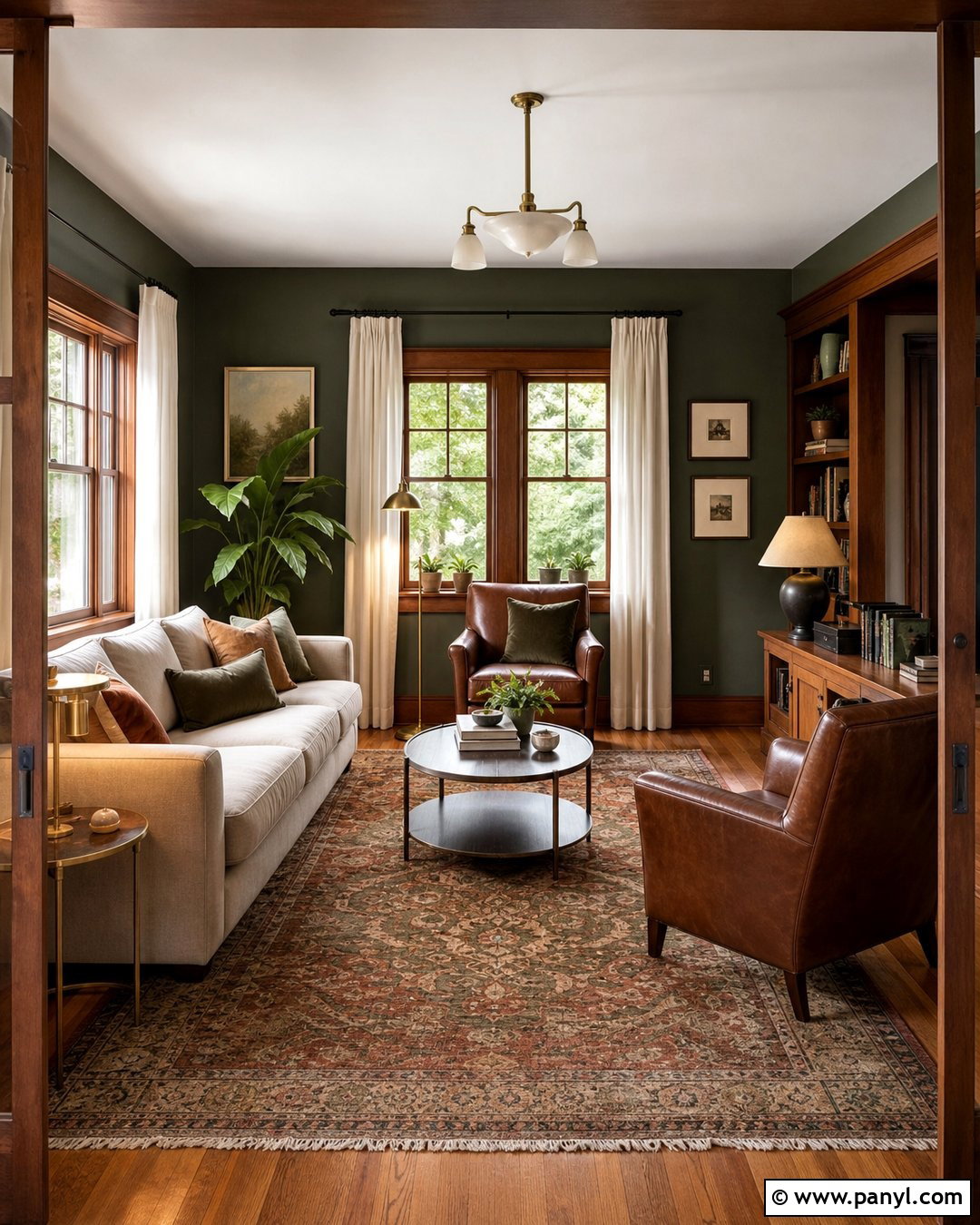
Deep forest green creates a natural backdrop for medium or dark brown woodwork. Use the color across every wall while leaving the ceiling a warm cream to preserve brightness. Position a light oatmeal sofa opposite the main window, then add cognac leather chairs and a faded rust-and-olive rug. Original window casings, baseboards, pocket doors, and built-in shelves should remain visible rather than hidden behind bulky furniture. Antique brass lamps add warm reflection without competing with the wood grain. Finish the room with linen curtains, simple landscape artwork, and a few leafy plants in aged ceramic pots. The completed space feels grounded and comfortable, with enough pale fabric and open floor area to balance the darker architectural surfaces.
2. Navy Dining Room With Natural Oak Trim
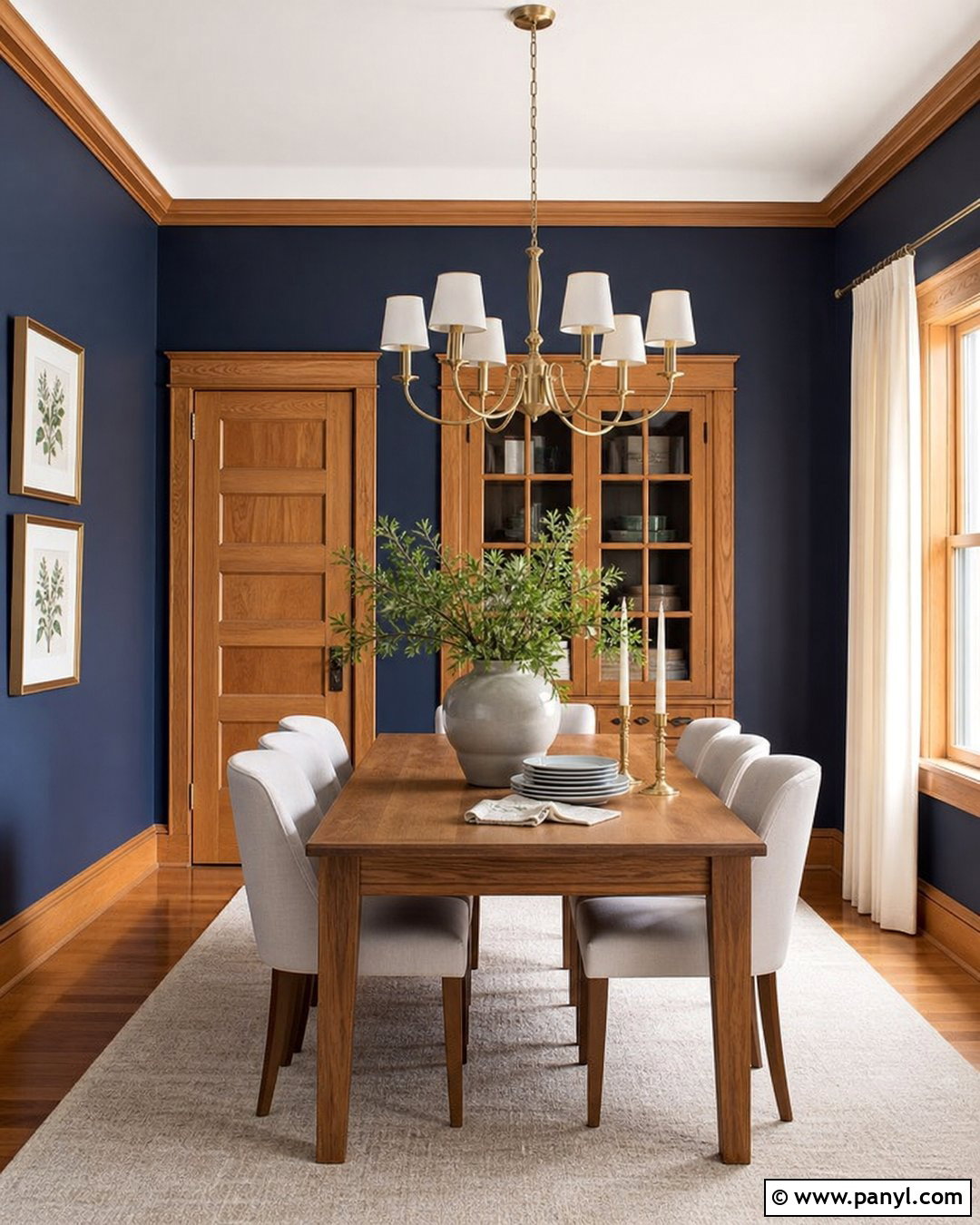
Imagine a dining room where inky navy walls make honey-toned oak trim appear brighter and more detailed. Center a rectangular oak table beneath a large aged-brass chandelier, then surround it with upholstered chairs in warm ivory performance fabric. Keep the original oak baseboards, window casings, doors, and built-in cabinet unpainted. A light neutral rug will define the dining area and separate the table from similarly toned hardwood flooring. Hang one oversized piece of botanical artwork with muted greens and creams instead of creating a busy gallery wall. Off-white linen curtains soften the contrast around the windows. Add a ceramic centerpiece, rechargeable table lamps, and a narrow sideboard to create a formal yet welcoming room suitable for everyday meals.
3. Charcoal Bedroom With Walnut Woodwork
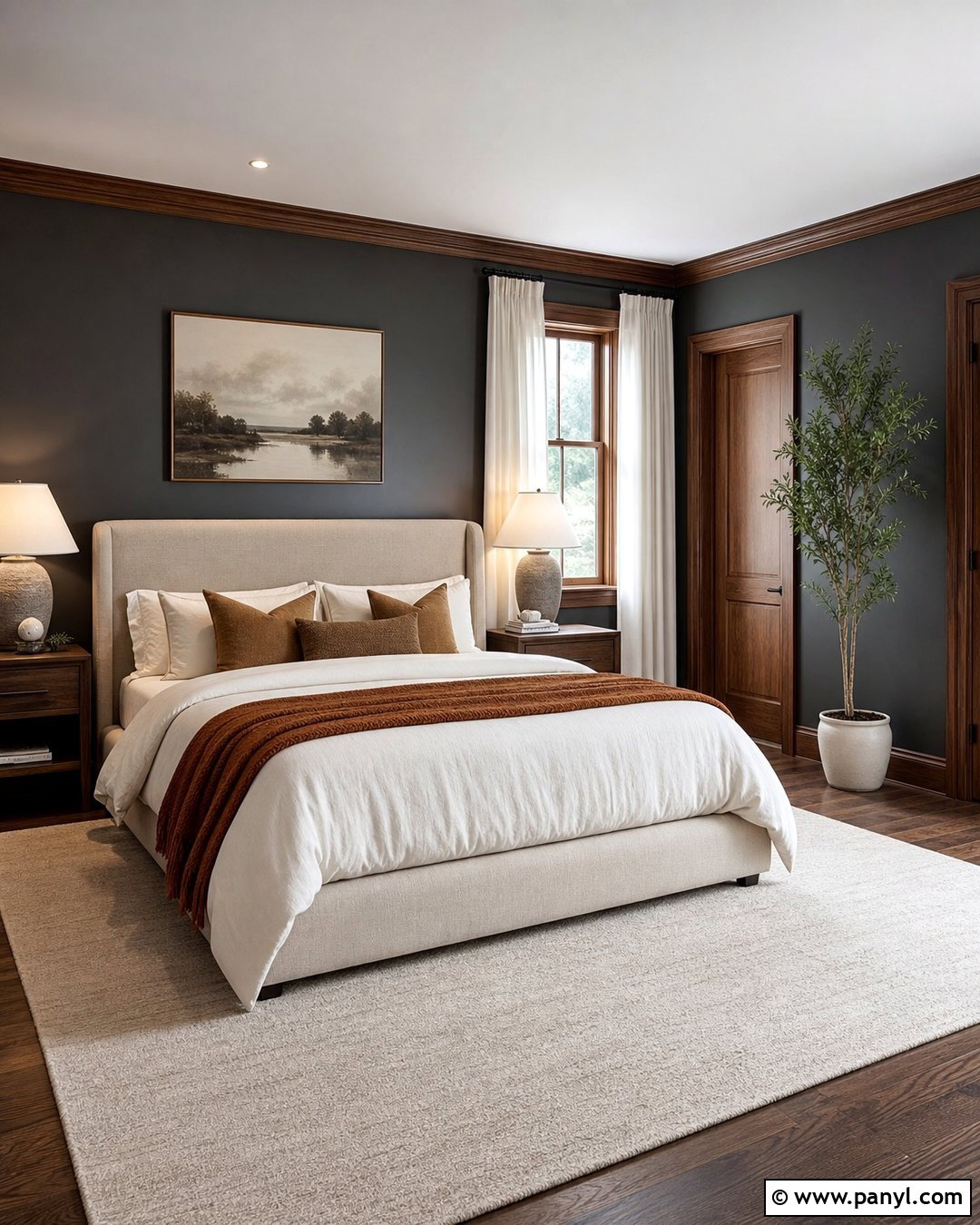
A charcoal bedroom can feel restful rather than gloomy when the dark walls are paired with walnut trim and generous layers of light bedding. Choose charcoal paint with a warm brown undertone, which will connect more naturally with the wood than a cool blue-gray. Place an upholstered oatmeal bed against the least interrupted wall and dress it with ivory linen, camel pillows, and a rust-colored throw. Preserve the walnut door, baseboards, window frames, and picture rail as strong architectural outlines. Use matching wooden nightstands with ceramic lamps to create symmetry. A pale wool rug will soften dark floors, while sheer curtains allow daylight to filter through. Minimal framed art and one tall plant complete this quiet, balanced retreat.
4. Black Dining Room With Craftsman Woodwork
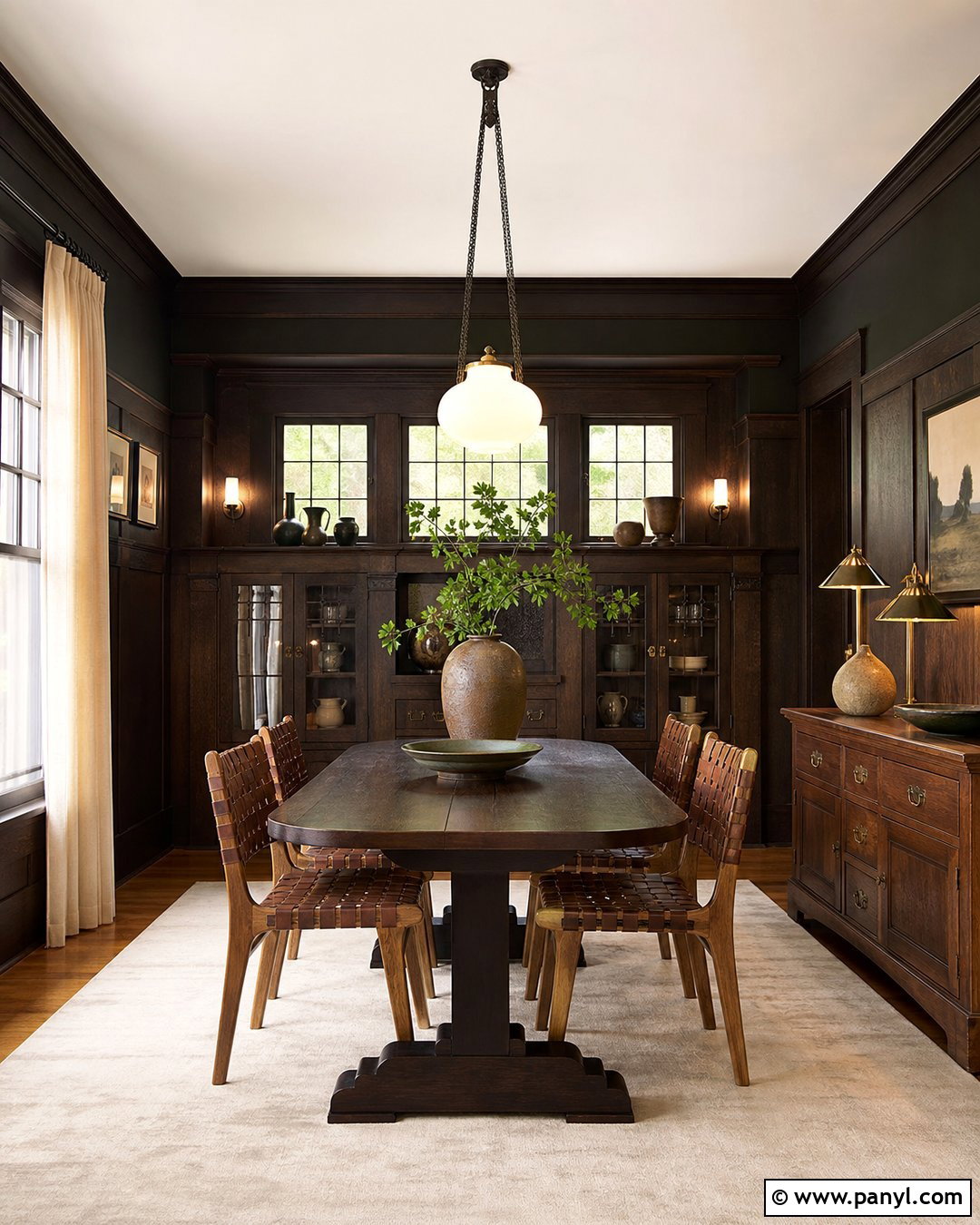
Could black walls work in a traditional Craftsman dining room? They can when the room includes substantial woodwork, large windows, and a carefully controlled palette. Select a softened black with warm undertones instead of a sharp blue-black. Let original quarter-sawn oak wainscoting, plate rails, built-ins, and window trim remain the room’s defining features. Choose a simple pedestal table and woven leather chairs to prevent the setting from feeling overly formal. A large cream rug introduces contrast beneath the furniture. Use an opal-glass pendant for bright, diffused light and place small brass lamps on the built-in buffet. Pale curtains, handmade pottery, and restrained greenery keep the complete room relaxed while respecting its historic architecture.
5. Deep Teal Office With Wood Trim
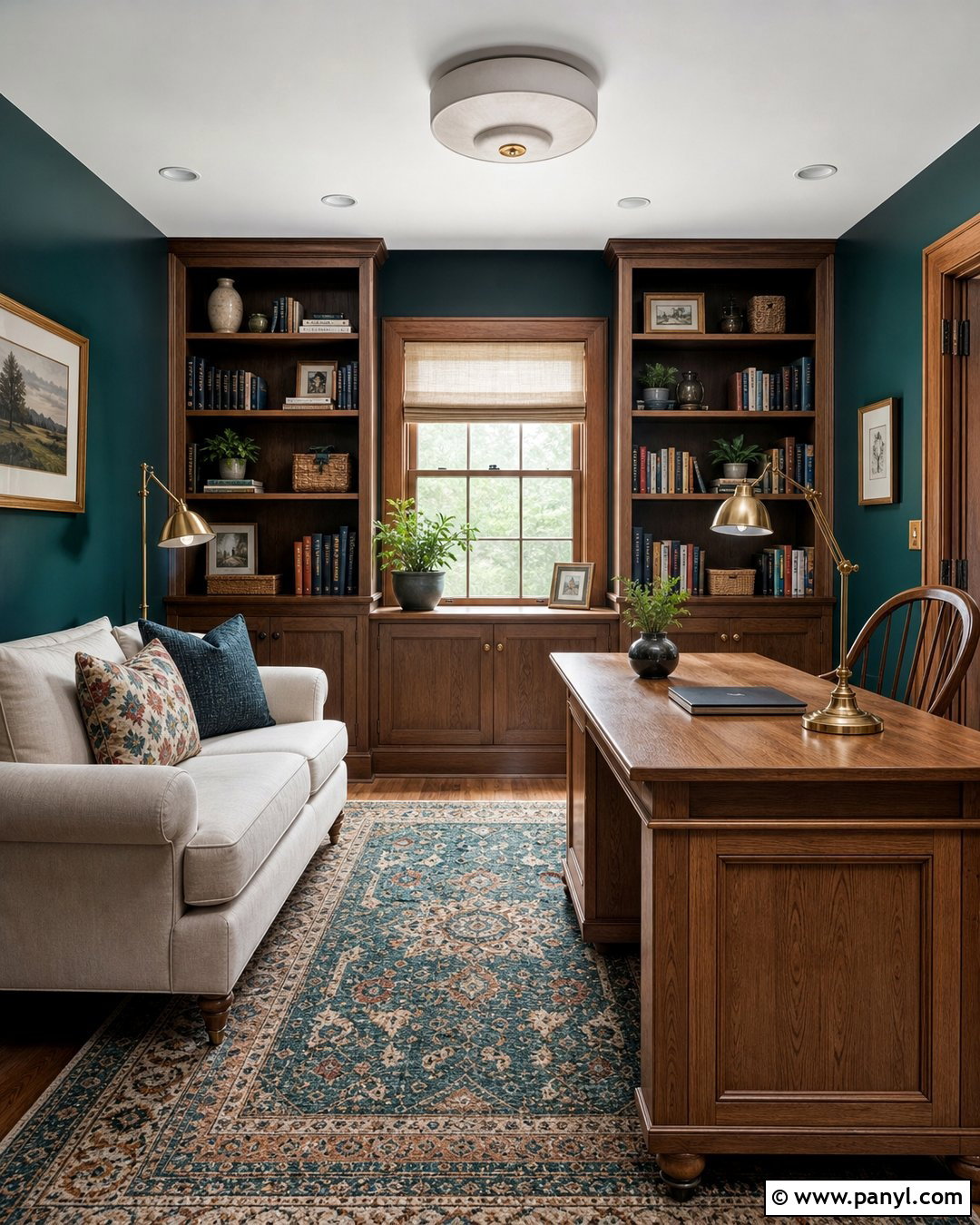
Rich teal walls can transform a home office with natural woodwork into a focused and polished workspace. Position a medium-toned oak desk near the window so daylight reaches the work surface without creating screen glare. Preserve the stained casings, baseboards, doors, and built-in bookshelves, then repeat their color through a wooden desk chair and picture frames. A compact cream loveseat provides a comfortable reading area and prevents the room from looking too businesslike. Lay down a patterned rug containing teal, tan, and muted red. Brass sconces or an adjustable desk lamp will add useful task lighting. Finish with linen shades, organized books, closed storage baskets, and a few sculptural objects for a complete office that feels collected but uncluttered.
6. Burgundy Library With Mahogany Trim
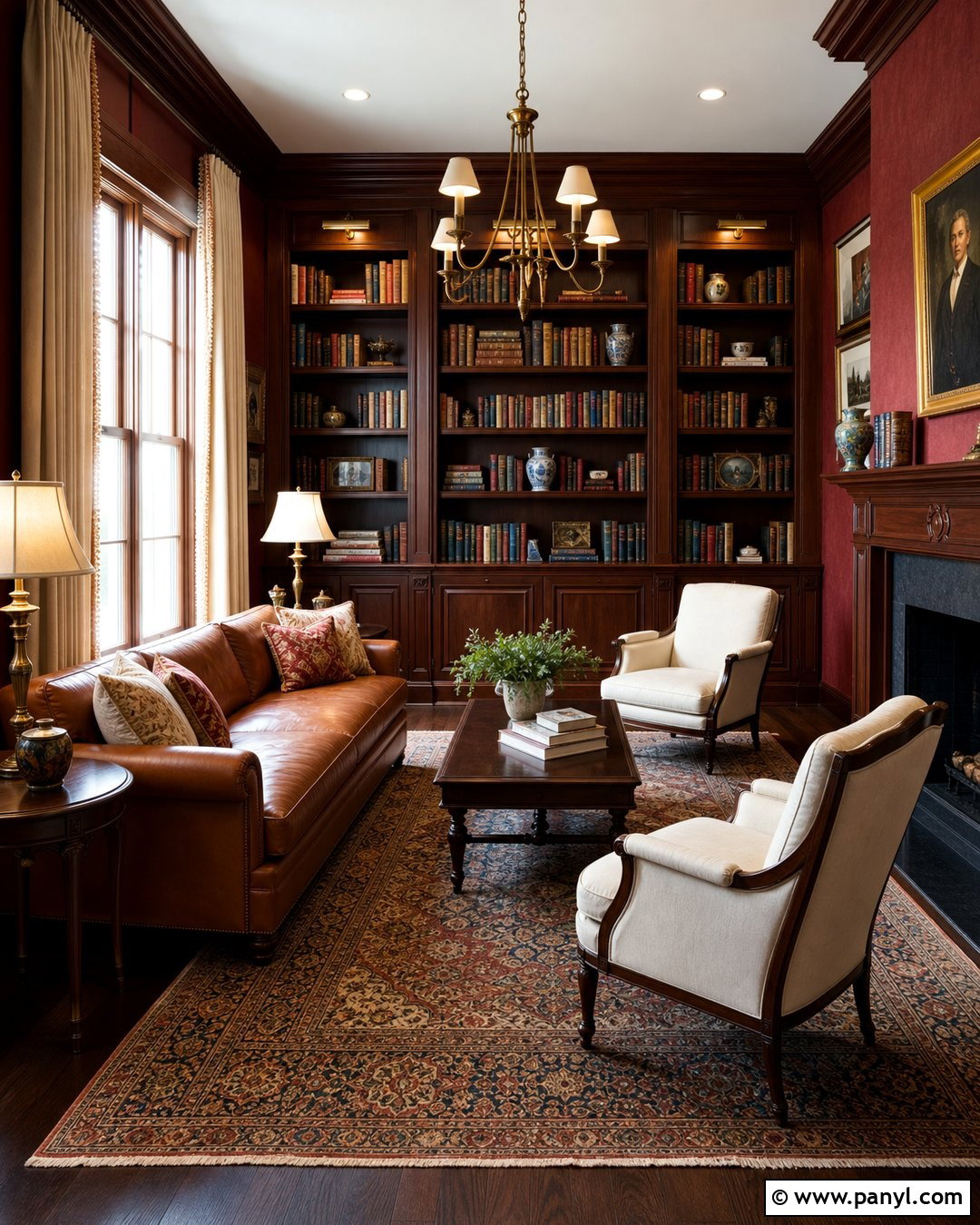
Velvety burgundy walls create a handsome library when paired with reddish mahogany woodwork. The key is to vary the surrounding values so the entire room does not become one dark block. Arrange a camel leather sofa and two cream upholstered armchairs around a low wooden table. Leave the mahogany bookcases, crown molding, door frames, and window casings untouched. Books introduce natural color, while a faded Persian-style rug adds navy, rust, and beige beneath the seating group. Use picture lights above artwork and shaded brass floor lamps beside the chairs to form multiple pools of practical light. Warm white curtains frame the windows without covering the trim. A few ceramic pieces and neatly stacked books complete the sophisticated, usable reading room.
7. Dark Blue Entryway With Oak Woodwork
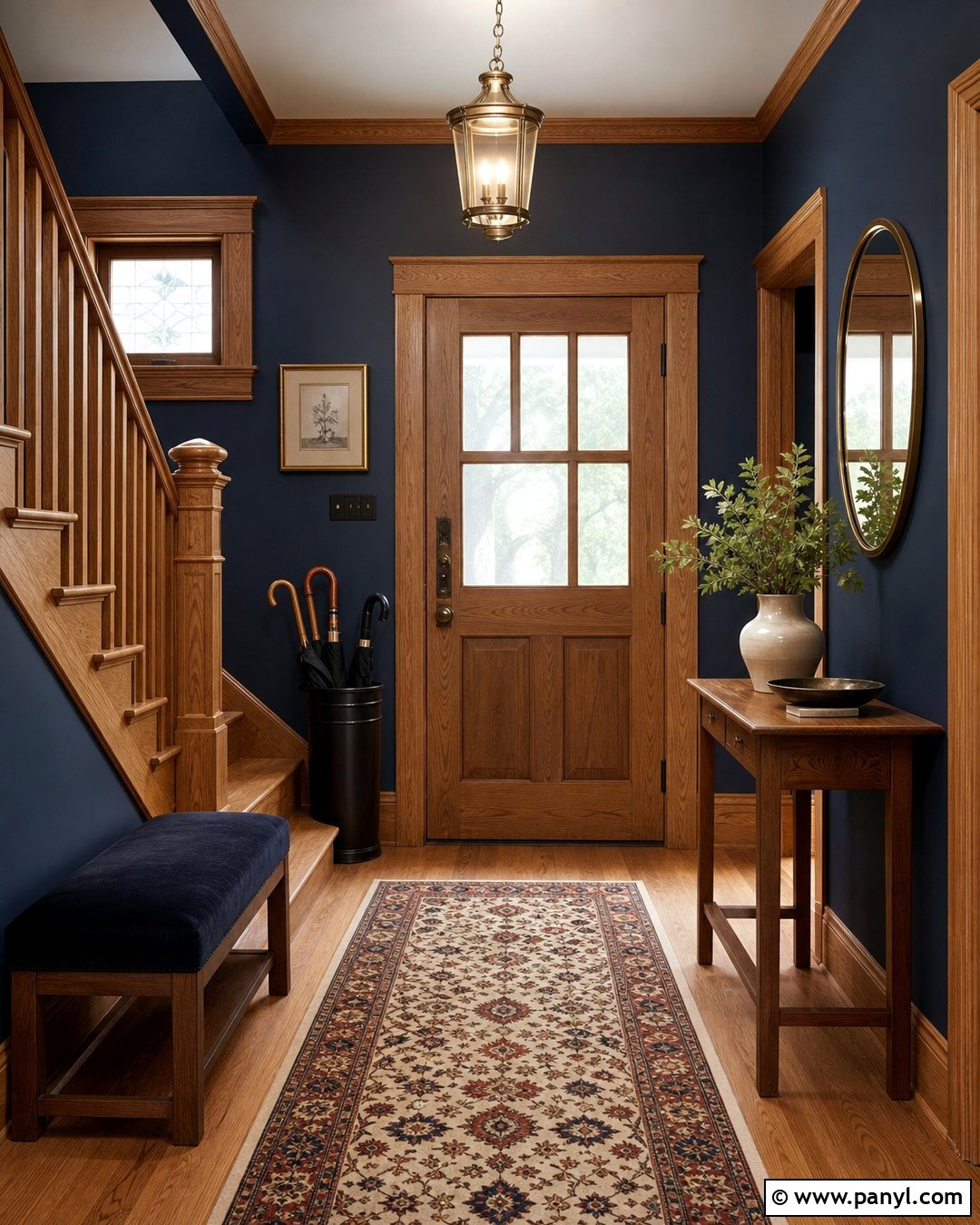
An entryway offers an ideal place to experiment with dark color because visitors experience it as a defined transition space. Paint the walls a saturated midnight blue and retain the original oak staircase, newel post, railings, doors, and wide baseboards. Place a narrow wooden console against an open wall, leaving enough clearance for comfortable movement. Above it, use a large round mirror to reflect light from the doorway. A durable runner with cream, muted red, and blue details will brighten the floor while handling regular foot traffic. Add a small upholstered bench, black umbrella stand, and brass ceiling lantern. The completed entry feels distinctive and functional, while the unpainted woodwork provides continuity with adjoining rooms and emphasizes the home’s craftsmanship.
8. Olive Green Kitchen With Natural Wood Cabinets
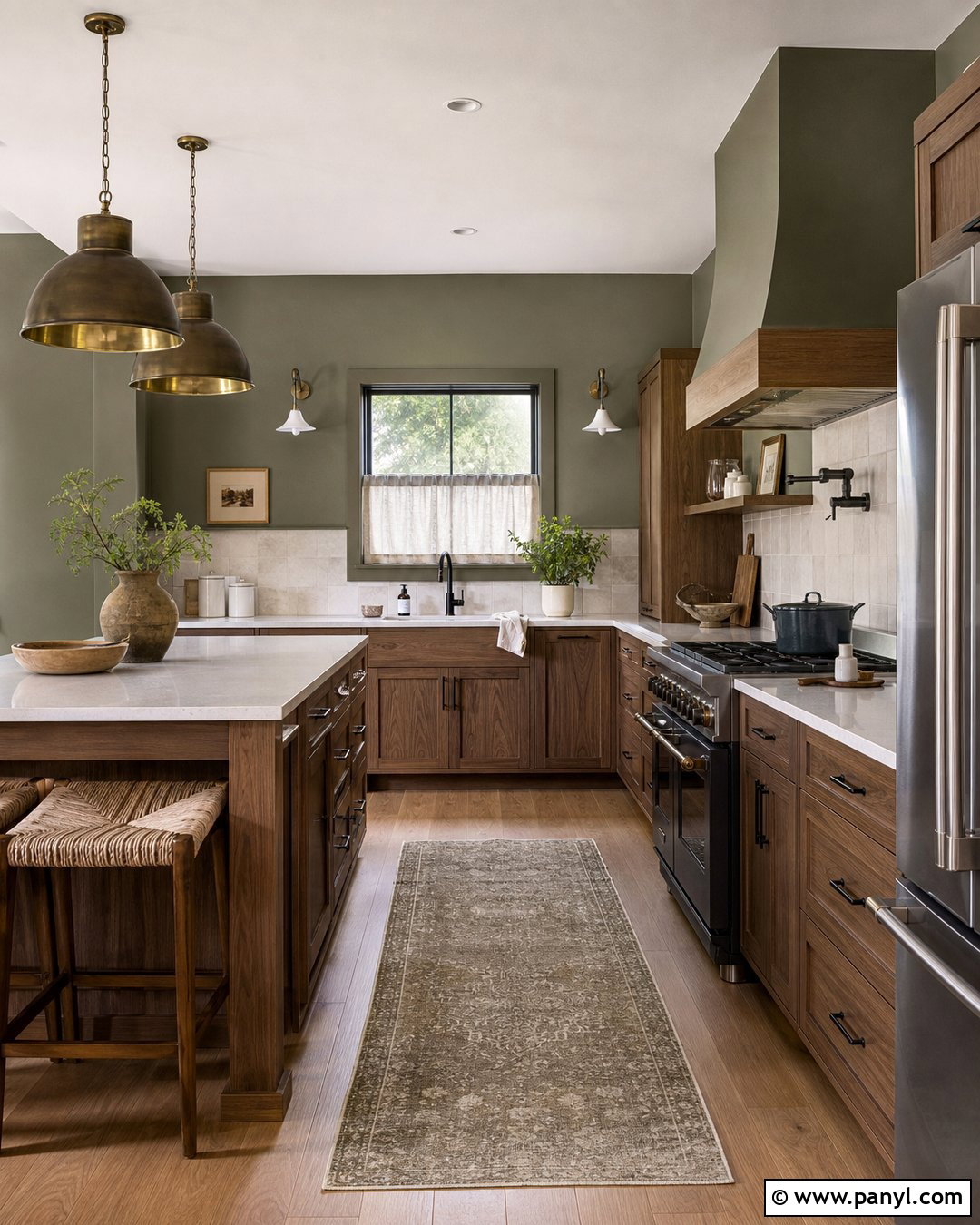
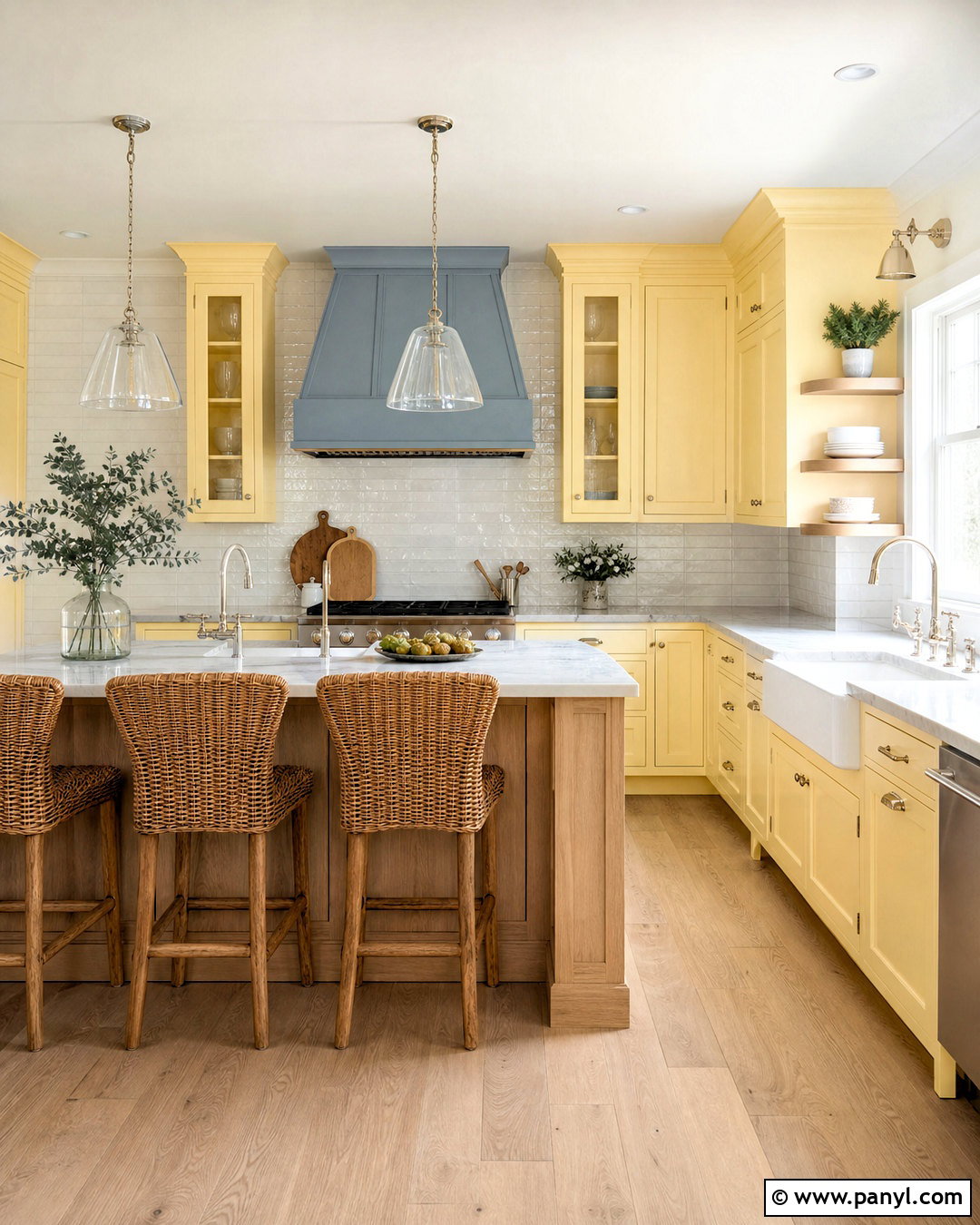
Muted olive walls are especially effective in a kitchen with unpainted oak or walnut cabinets. Instead of introducing another competing wood tone, choose a pale stone backsplash and creamy quartz counters with gentle veining. Keep the cabinet doors, window trim, baseboards, and pantry door in their natural finish. Matte black hardware offers definition, while aged-brass pendants bring subtle warmth above an island or worktable. Use counter stools with woven seats and dark frames to connect the green walls to the wood surfaces. An off-white ceiling helps distribute light throughout the room. Finish the complete look with linen café curtains, a washable neutral runner, ceramic canisters, and a few practical wooden accessories arranged neatly rather than covering every available counter.
9. Eggplant Bedroom With Dark Wood Trim
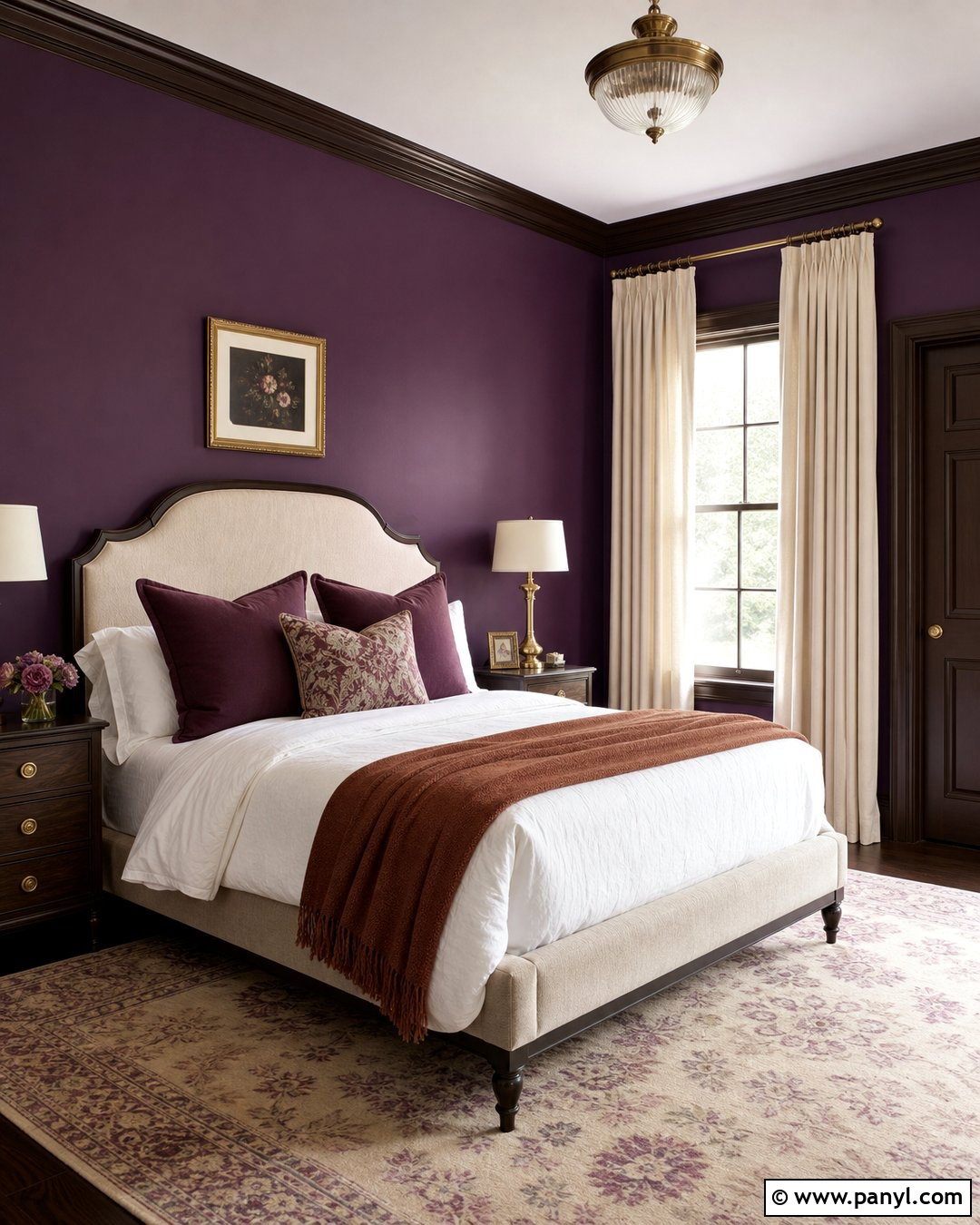
Deep eggplant offers a softer alternative to black or navy, particularly beside dark brown woodwork with reddish undertones. Cover the walls in the saturated purple shade but keep the ceiling pale blush-white for a gentle transition. Build the bedroom around a warm beige upholstered headboard, white bedding, plum accent pillows, and a cinnamon-colored throw. Existing wood doors, casings, baseboards, and crown molding become elegant frames around the darker walls. Choose compact nightstands that match the trim without copying it perfectly. Pleated cream lampshades, brushed-brass hardware, and a muted floral rug add brightness and detail. Finish with simple drapery mounted beyond the window frame so the fabric reveals rather than conceals the original unpainted woodwork.
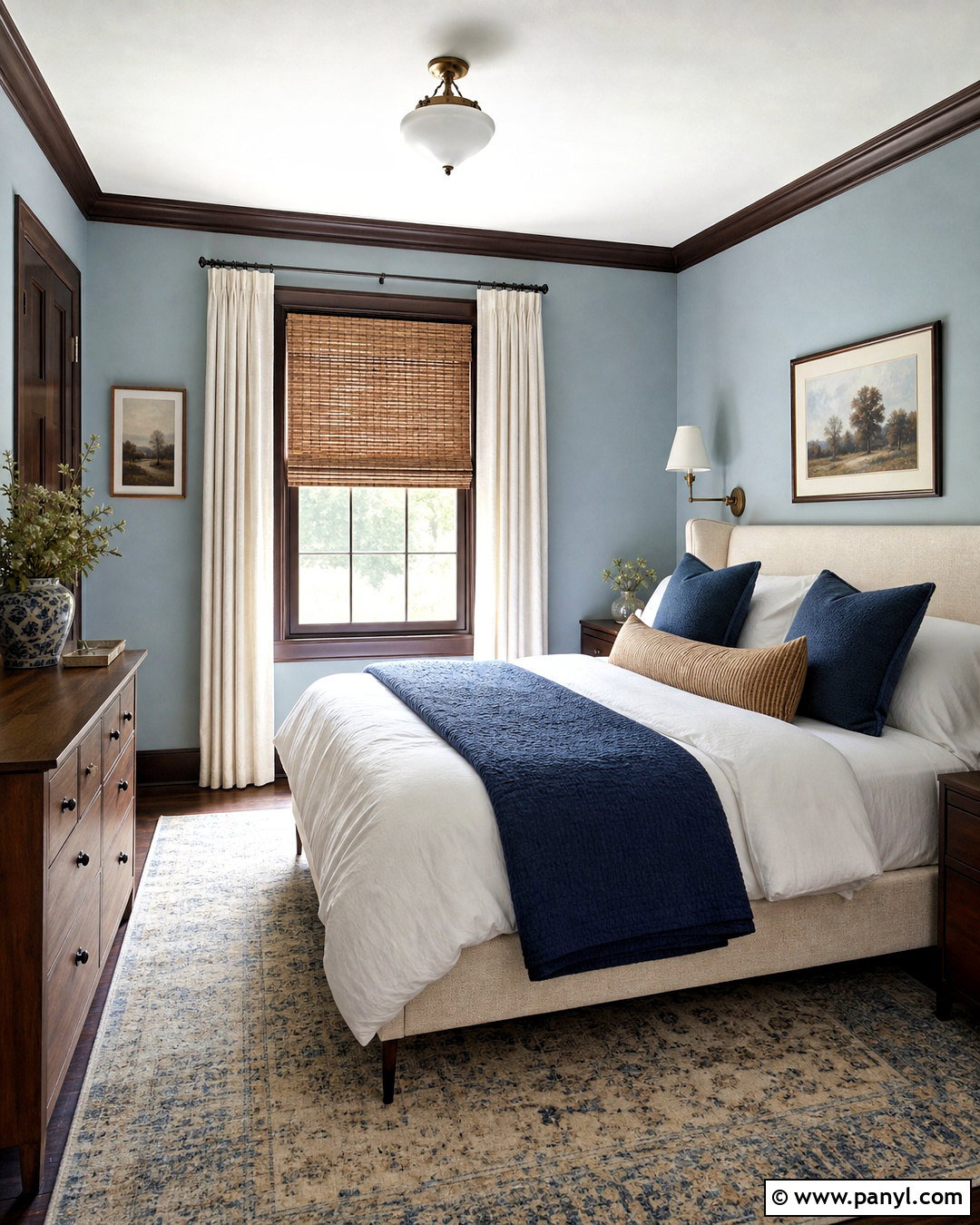
10. Dark Brown Living Room With Oak Trim
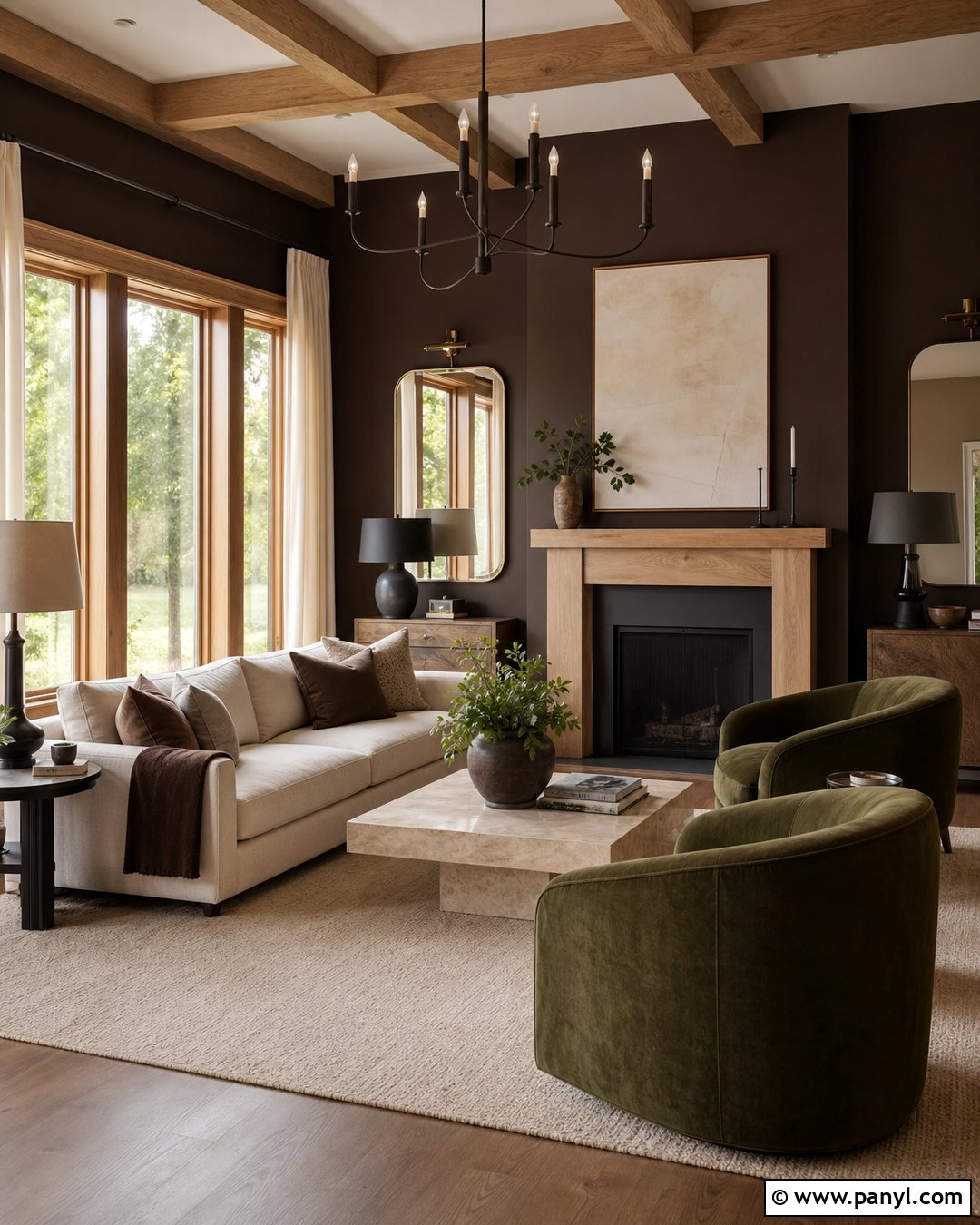
Chocolate brown walls can create a layered, earthy living room when they are intentionally separated from lighter oak trim. Choose a wall color that is several shades deeper than the wood so the architectural lines remain visible. Anchor the room with a cream sofa, olive velvet chairs, and a large beige rug containing subtle geometric texture. A travertine coffee table introduces stone, preventing the space from becoming dominated by wood. Keep the oak windows, door casings, baseboards, and fireplace mantel exposed. Add linen curtains, dark bronze lighting, and artwork featuring pale fields or abstract shapes. Fresh greenery brings life to the brown palette. The final arrangement feels warm and contemporary, with varied materials creating depth instead of visual heaviness.
11. Slate Blue Hallway With Wood Doors
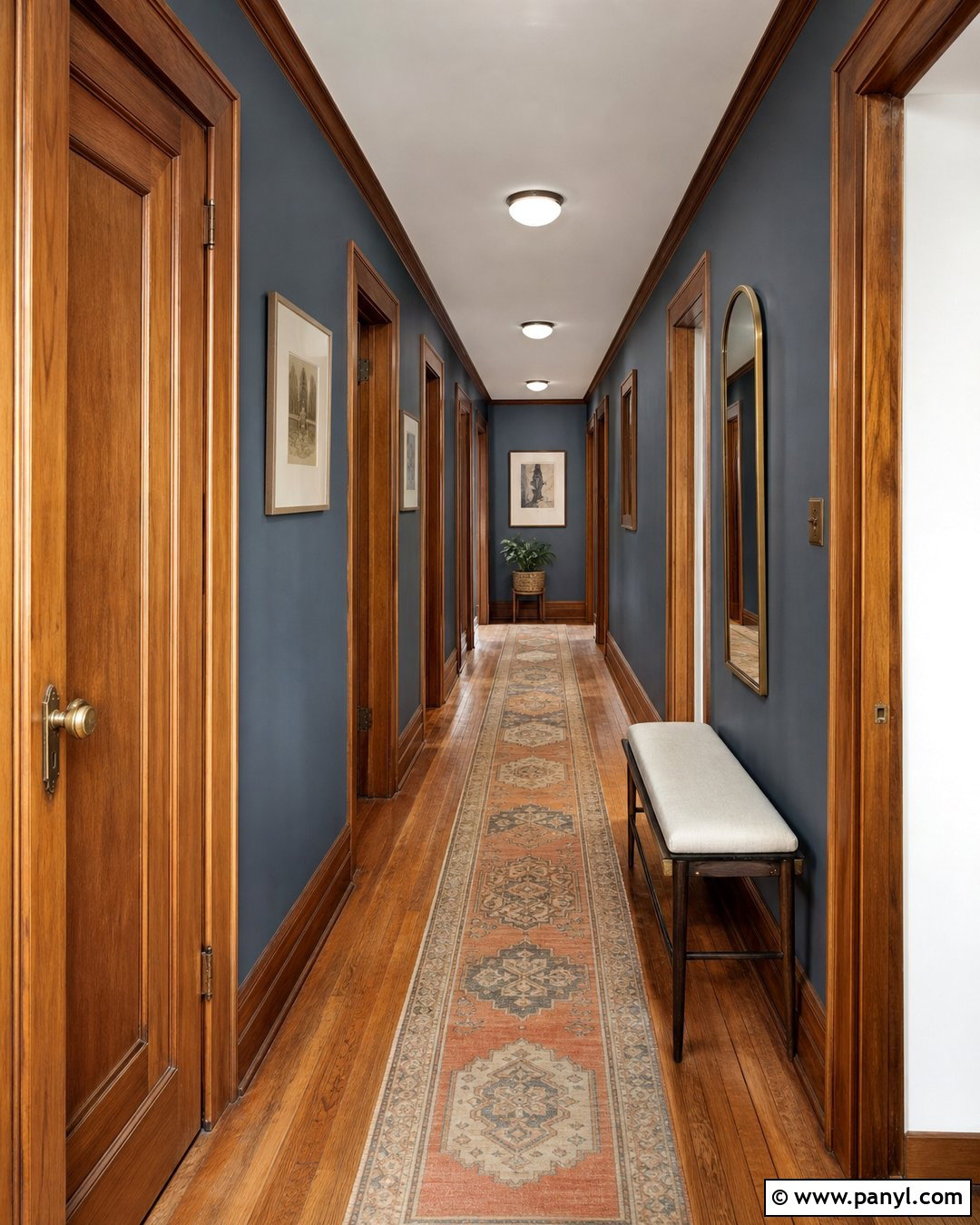
A long hallway becomes more inviting when slate blue walls connect a series of original wooden doors and casings. Use the color continuously from one end to the other, allowing the repeated wood frames to establish a steady architectural rhythm. Keep the ceiling a soft white and install evenly spaced flush-mount lights for consistent illumination. A washable runner in beige, faded blue, and terracotta softens the floor while visually shortening the passage. Hang a controlled row of framed prints at eye level, choosing light mats that stand out against the dark paint. A slim bench can fill a wider section without blocking circulation. Brass door hardware and a small mirror at the far end provide reflection, creating a finished hallway rather than a neglected connecting space.
12. Deep Gray Kitchen With Wood Cabinets
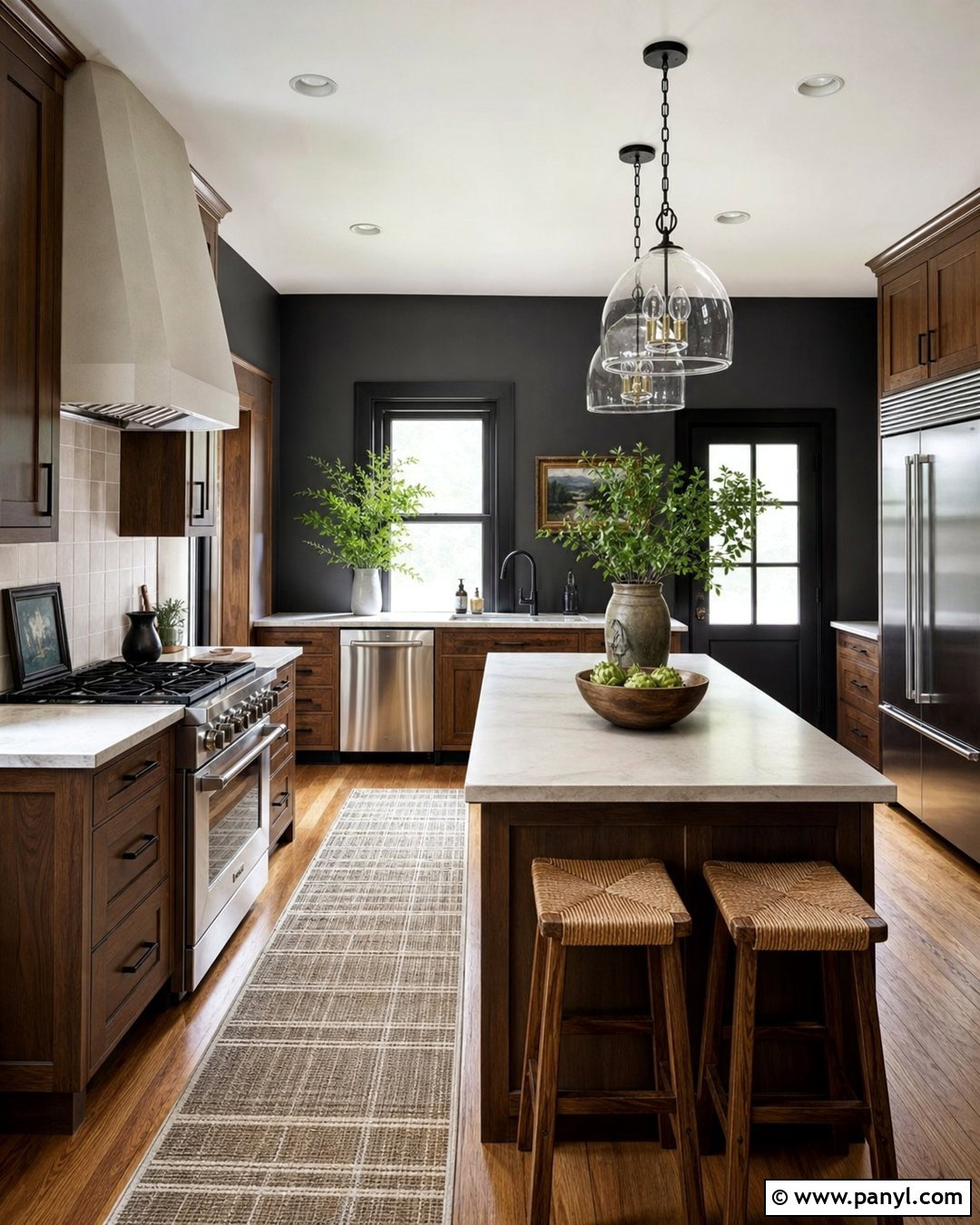
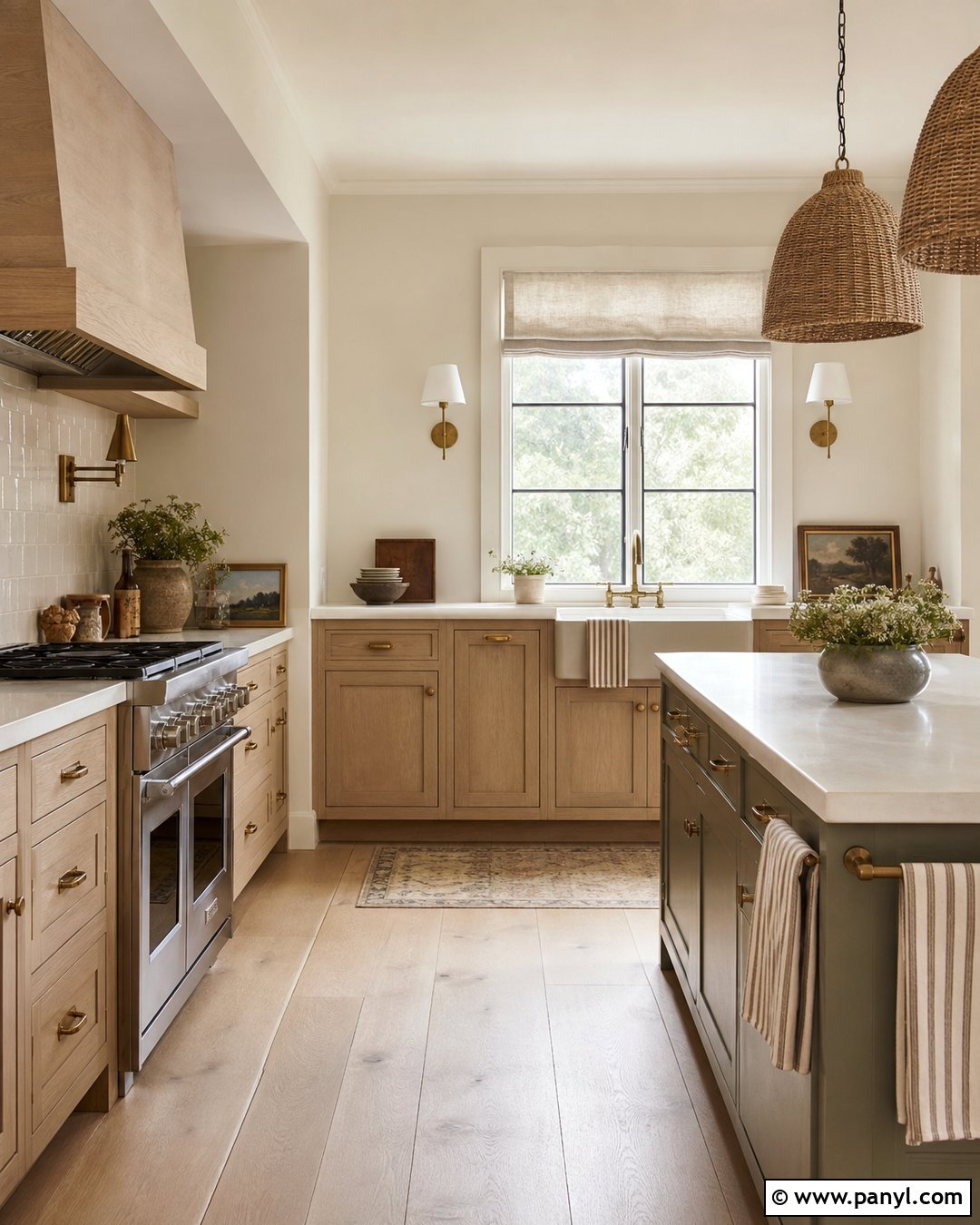
Deep warm gray walls give natural wood kitchen cabinets a cleaner, more modern setting without removing their character. Pair oak or walnut cabinetry with off-white counters and a handmade cream tile backsplash to provide a bright working surface. Continue the unpainted finish across window casings, baseboards, and interior doors for consistency. Black cabinet hardware, stainless-steel appliances, and a simple bridge faucet introduce crisp functional details. If space allows, place a narrow wooden island in the center with pale stone on top and two woven stools tucked underneath. Use clear-glass pendants to avoid blocking sightlines. A striped runner, white ceiling, minimal pottery, and practical task lighting complete a kitchen that feels updated while celebrating the existing woodwork.
13. Forest Green Dining Room With Wood Built-Ins
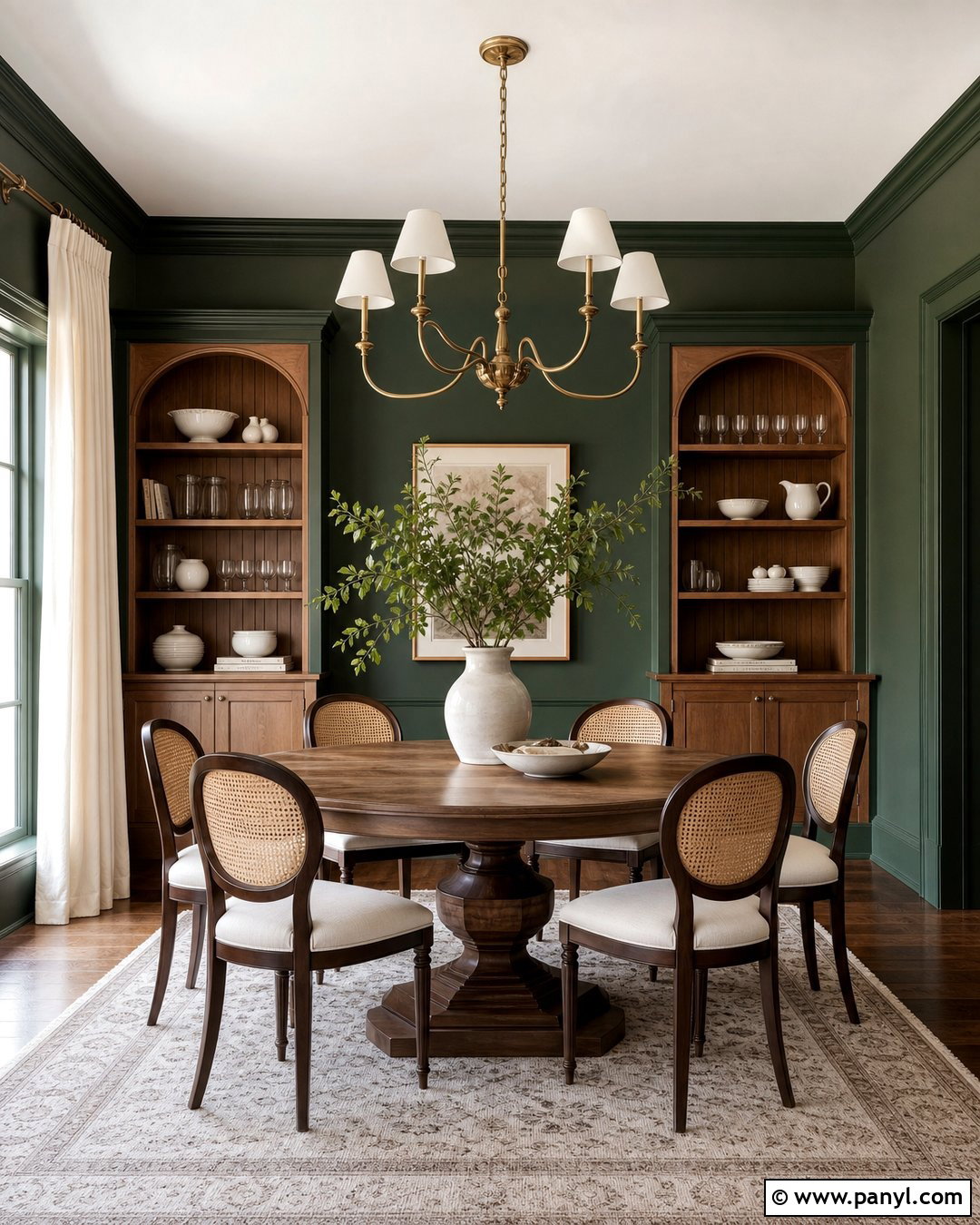
Original built-in cabinets deserve to lead the room rather than disappear behind unrelated decor. Paint the surrounding dining room walls forest green, leaving the cabinet doors, shelves, crown molding, and trim in their natural brown finish. Position a round pedestal table in the center so circulation remains open around the cabinetry. Chairs with cane backs and cream seats introduce texture without adding excessive visual weight. Display a restrained collection of white ceramics and clear glass inside the built-ins, allowing the wood grain to remain noticeable. A pale patterned rug and warm white curtains brighten the lower and outer edges of the room. Complete the setting with an aged-brass chandelier, one large framed print, and a leafy branch arrangement on the table.
14. Midnight Blue Bedroom With Pine Trim
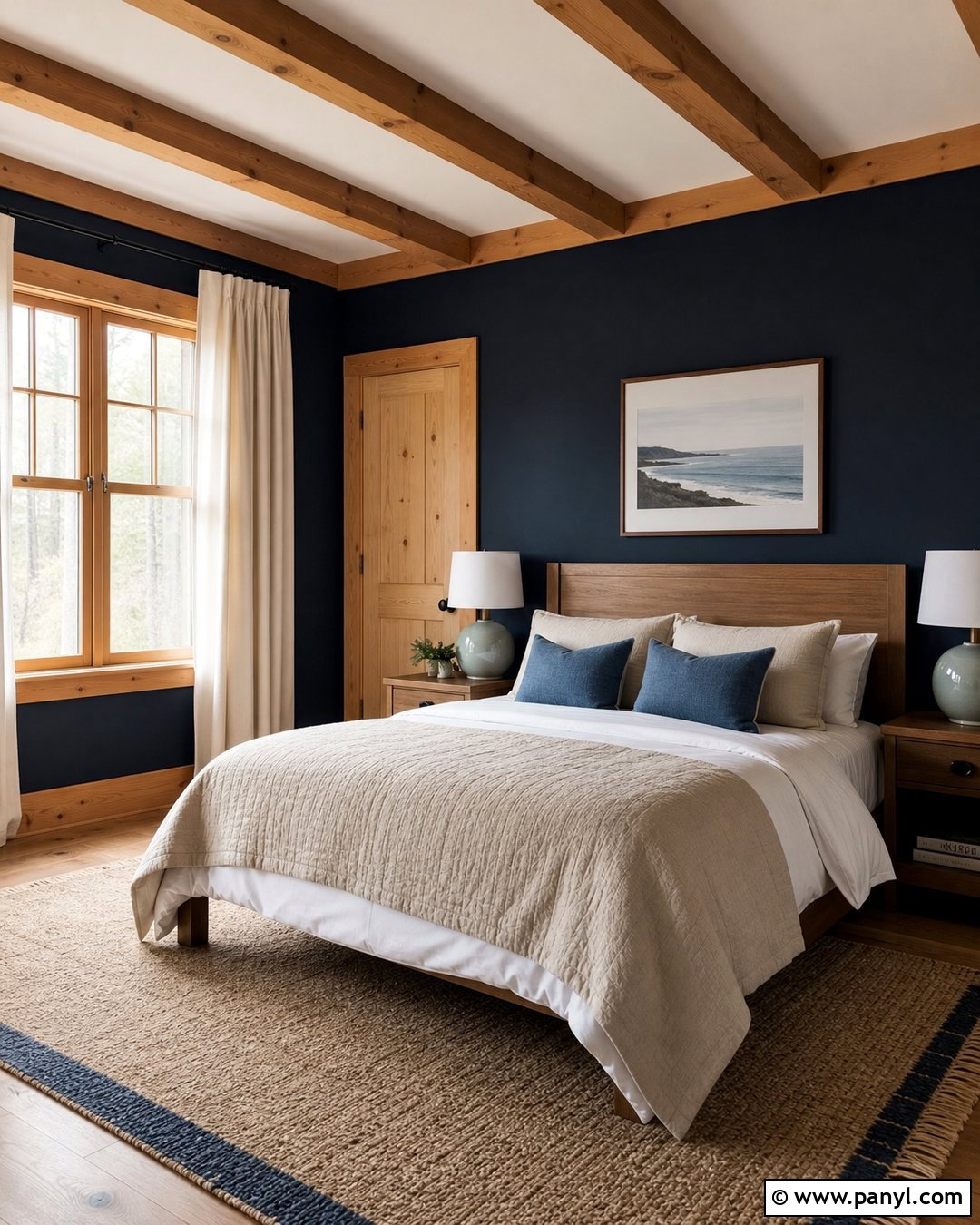
Golden pine trim gains welcome sophistication beside midnight blue walls. Rather than attempting to disguise the wood’s yellow undertone, repeat it selectively through woven textures, warm metals, and natural fibers. Center a simple oak or pine bed against the dark wall and layer it with white cotton bedding, a flax-colored quilt, and muted blue pillows. Keep the pine baseboards, window frames, door, and ceiling beams unpainted. Place a large jute-and-wool rug beneath the bed to lighten the floor and add softness. White ceramic lamps provide contrast on modest wooden nightstands. Finish with natural linen curtains, black curtain rods, and minimal coastal artwork. The room feels calm and current without forcing rustic woodwork into an overly themed design.
15. Dark Green Bathroom With Wood Trim
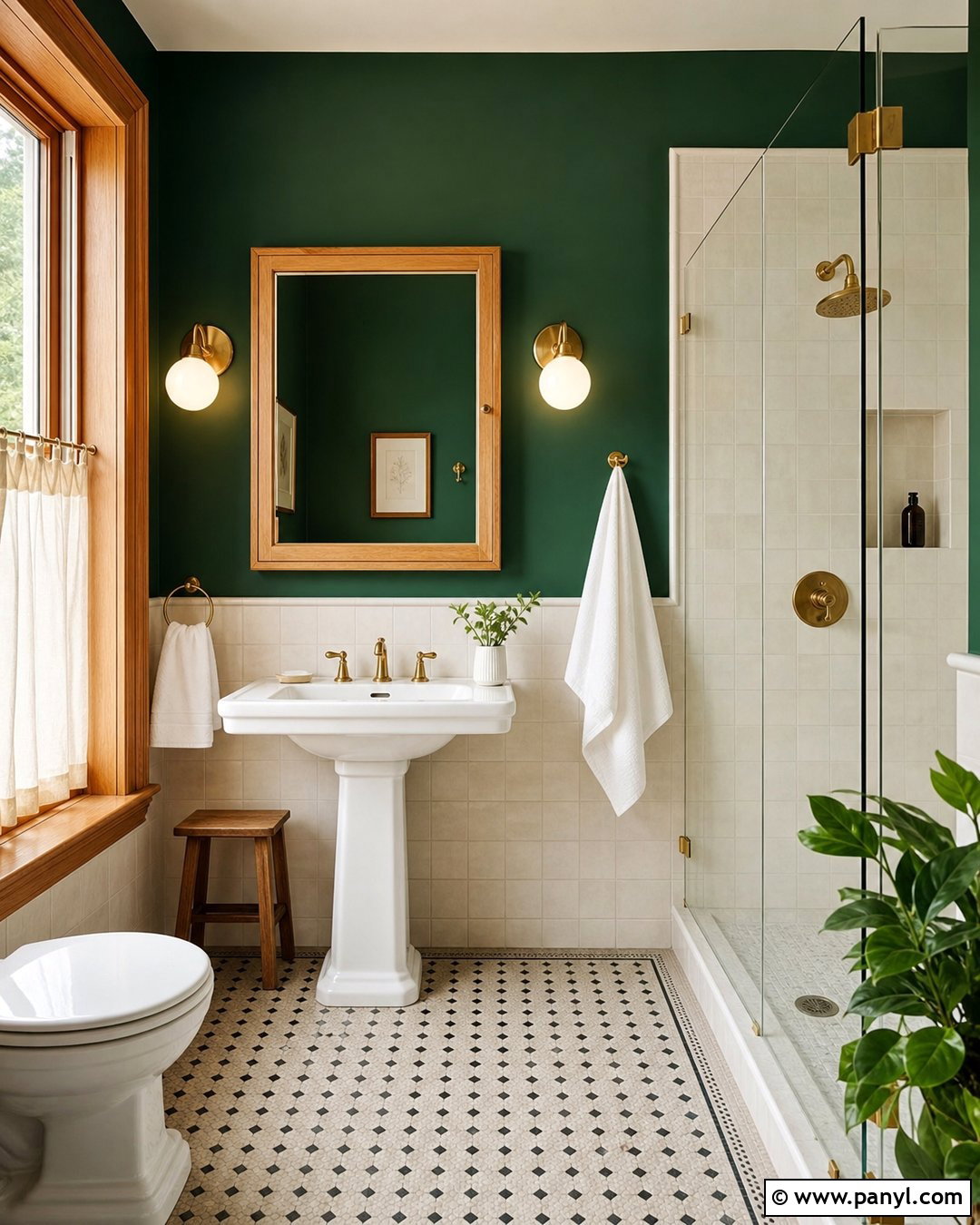
A small bathroom can support dark green walls when reflective and light-colored surfaces are distributed throughout the space. Use saturated green above a cream tile wainscot, preserving the natural wood window casing, door, mirror frame, and baseboards. Install a white pedestal sink or compact oak vanity with a pale stone top. A frameless glass shower enclosure keeps the layout visually open, while brushed-brass fixtures repeat the warmth of the wood. Choose a large mirror and bright globe sconces to spread clear light around the room. Patterned floor tile in cream and muted charcoal adds interest without introducing another strong color. White towels, a linen shower curtain, and one small plant complete this practical bathroom with a rich, carefully balanced palette.
16. Charcoal Fireplace Room With Wood Mantel
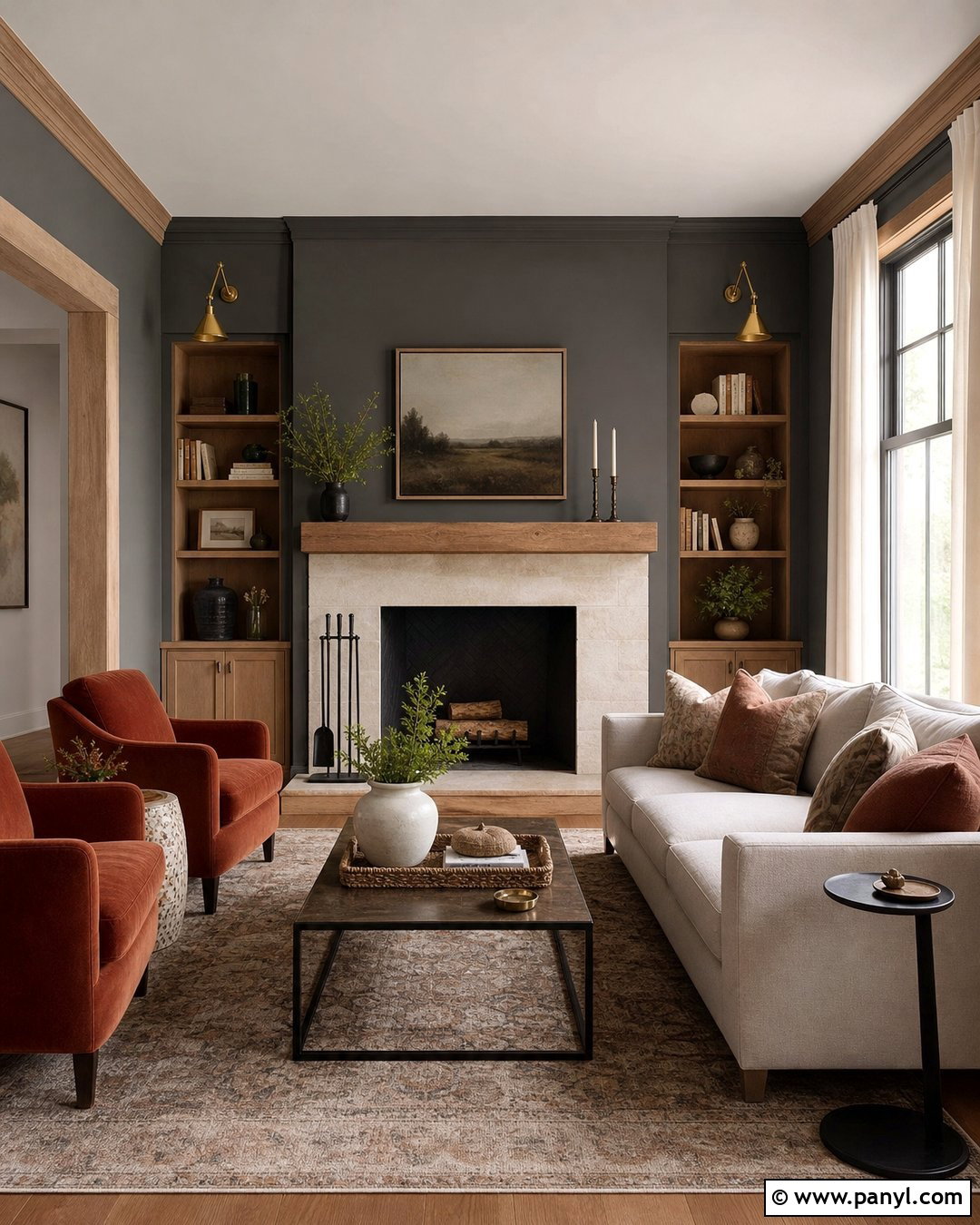
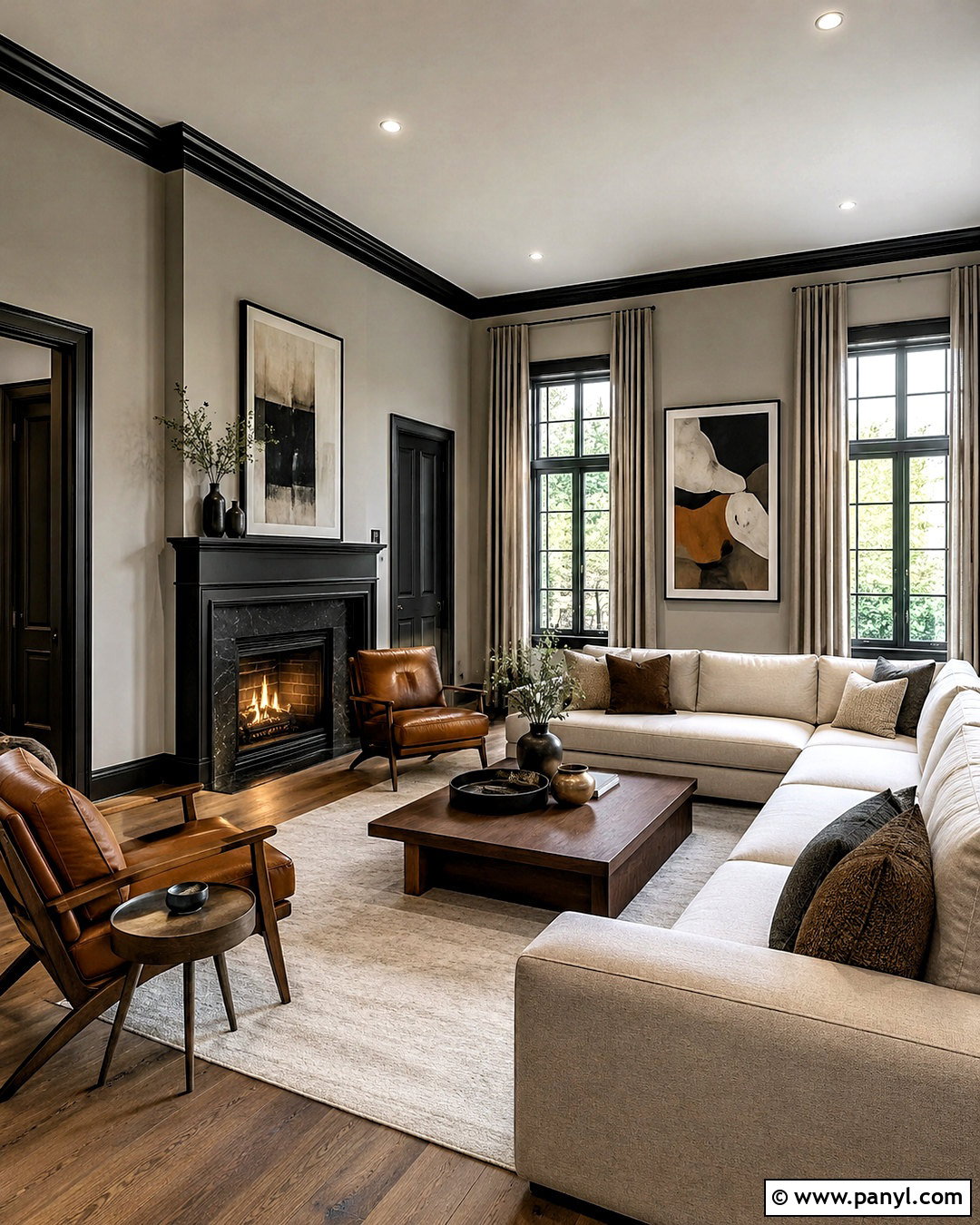
When a natural wood mantel is the room’s focal point, charcoal walls can sharpen its shape and highlight the grain. Paint the walls a warm graphite tone and keep the fireplace surround light with cream stone or handmade ivory tile. Leave the mantel, nearby built-ins, baseboards, and window casings unpainted. Arrange a pale gray sofa and two rust-colored armchairs toward the hearth, creating a comfortable conversation area. A large neutral rug keeps darker floors from blending into the walls. Add black iron fireplace tools, shaded brass sconces, and simple artwork above the mantel. Linen curtains and a few textured pillows soften the strong architectural contrast. The finished room feels cozy but remains clear, functional, and visually balanced.
17. Dark Red Dining Room With Walnut Trim
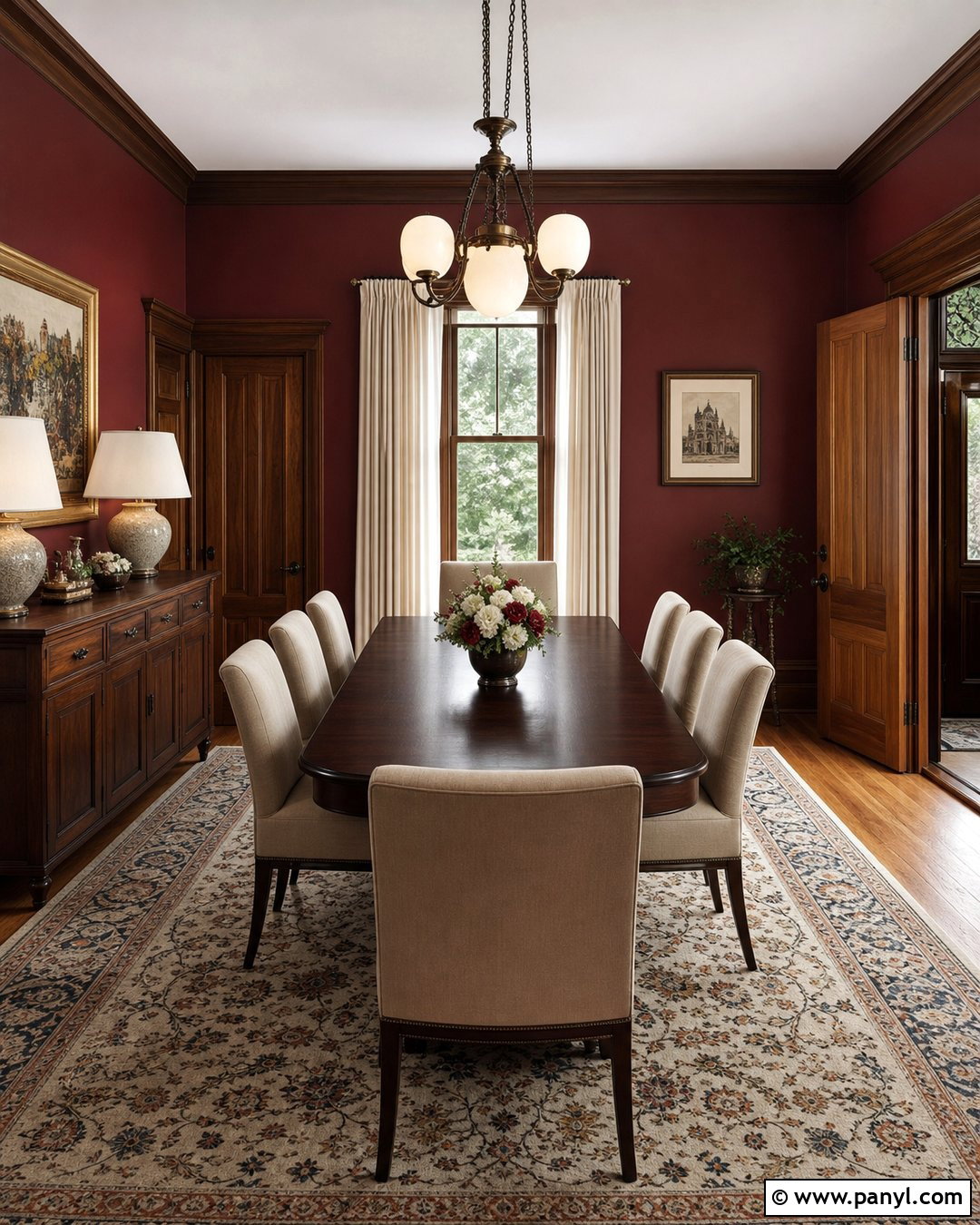
Historic dining rooms often handle saturated red especially well, but the shade should feel earthy rather than bright. Choose a deep brick or oxblood wall color that relates to the warm undertones of walnut doors, baseboards, and window trim. Center a dark wooden table beneath an opal-glass chandelier that provides broad, flattering light. Upholster the dining chairs in light beige fabric to prevent the table grouping from becoming visually dense. A traditional rug with cream, faded blue, and rust will bridge the walls and floor. Add off-white curtains, simple framed artwork, and a walnut sideboard topped with two ceramic lamps. This complete room feels formal enough for gatherings yet comfortable enough for daily use, with the original woodwork fully integrated into the palette.
18. Black Home Office With Oak Built-Ins
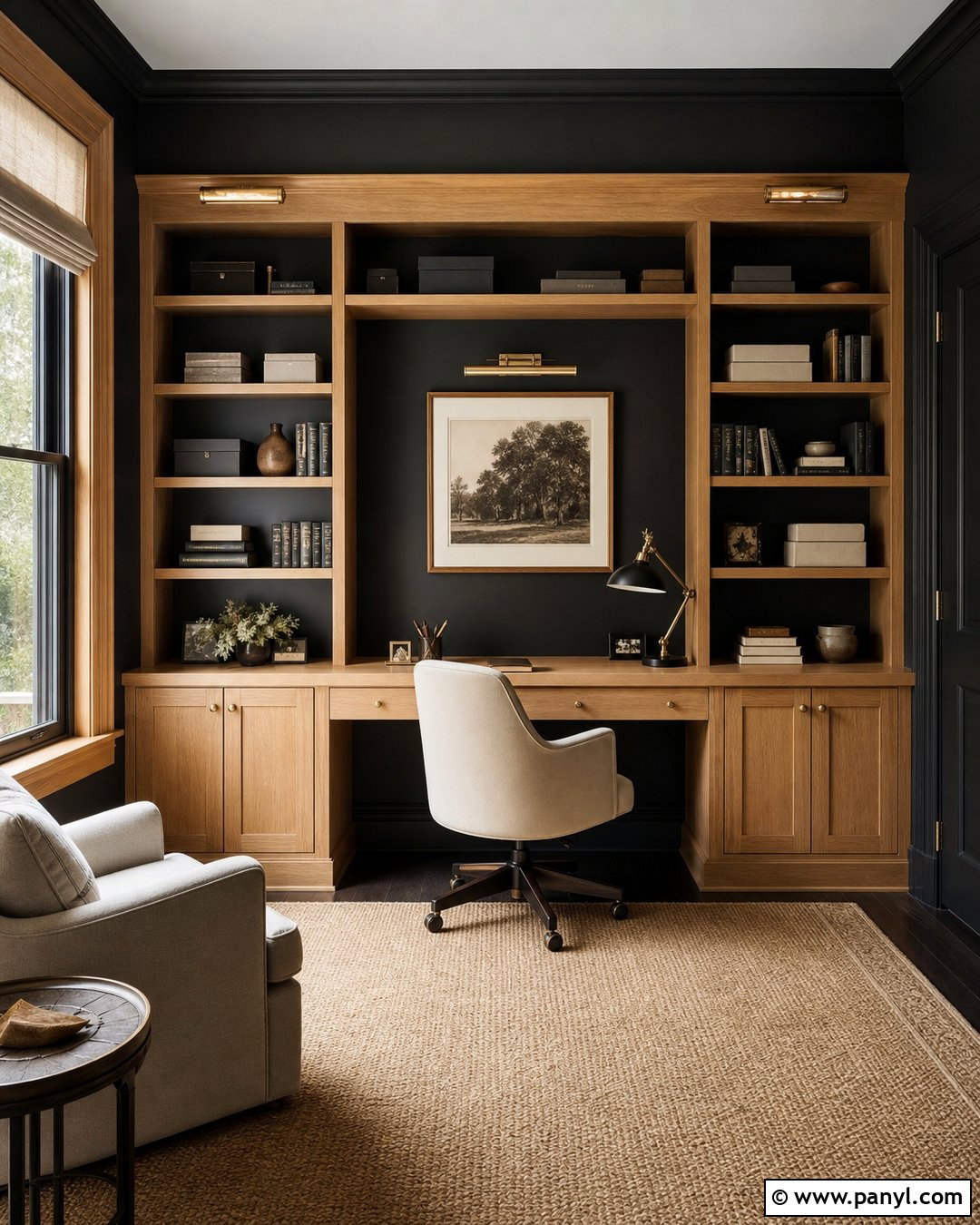
Crisp black walls can make oak built-ins look intentional and modern, especially in a bright home office. Keep the shelves, cabinet doors, desk surface, window trim, and baseboards in their natural finish. Use a matte black paint that minimizes glare, then introduce an ivory desk chair and a light woven rug for contrast. Organize the shelves with books, lidded boxes, and a limited number of sculptural accessories, leaving some open space around each group. Install brass picture lights above the shelving and a practical task lamp on the desk. White linen shades preserve daylight without hiding the wood casings. A compact lounge chair and side table create a secondary reading corner, completing an efficient workspace with strong architectural character.
19. Dark Teal Sunroom With Natural Wood Windows
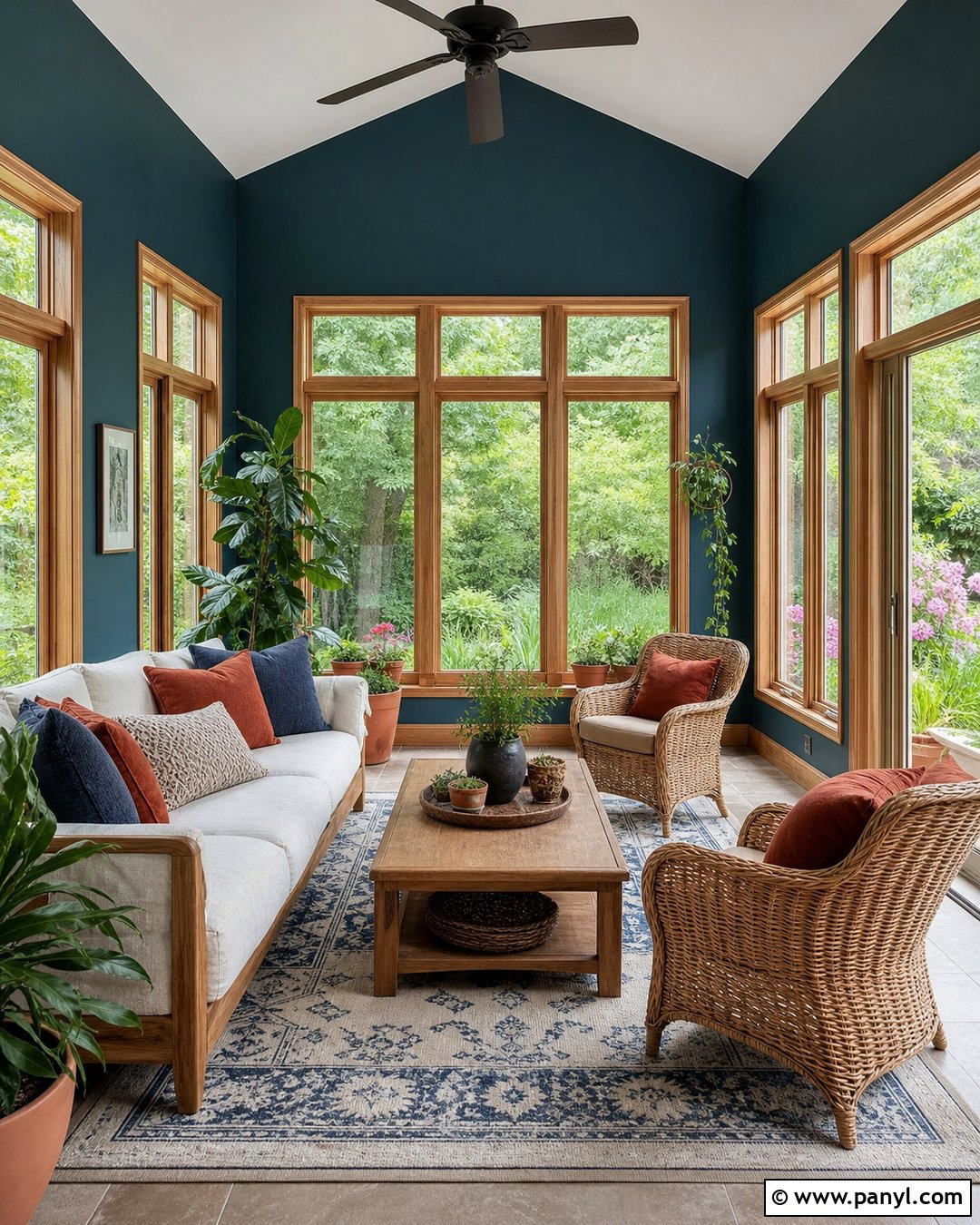
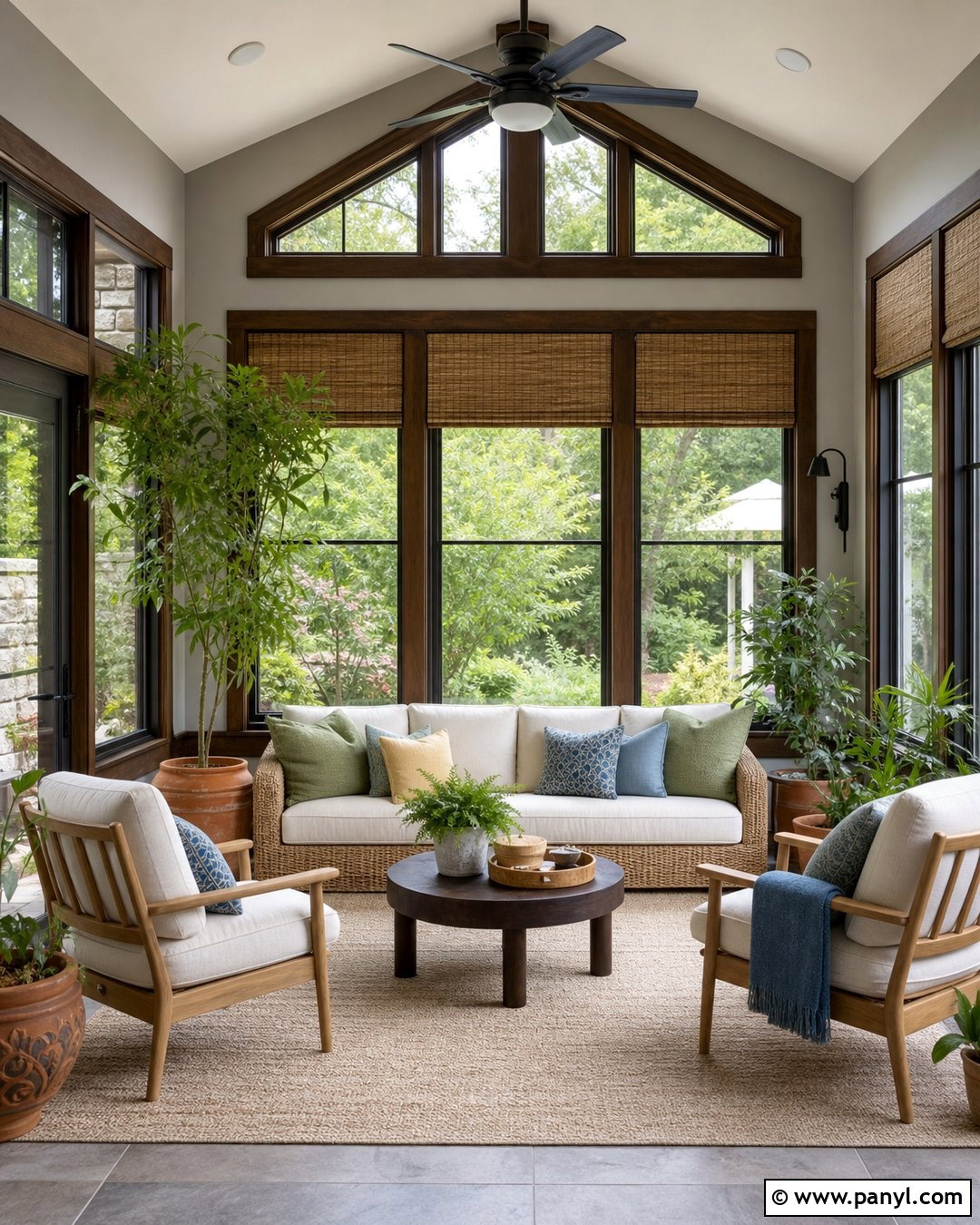
Sunrooms can carry intense color because abundant windows break up the painted wall area. Apply deep teal to the solid wall sections while preserving every natural wood window frame, sill, baseboard, and doorway. Arrange a light linen sofa and two woven rattan chairs around a simple oak coffee table. Use an indoor-outdoor rug in cream and muted blue to ground the seating without competing with the surrounding greenery. Hang minimal window treatments so sunlight and wood detailing remain visible. Terracotta planters, leafy plants, and rust-colored cushions connect the interior palette to the garden outside. Add a ceiling fan with a simple light and one adjustable floor lamp. The result is a lively, comfortable sunroom that feels connected to nature in every season.
20. Deep Blue Staircase With Unpainted Woodwork
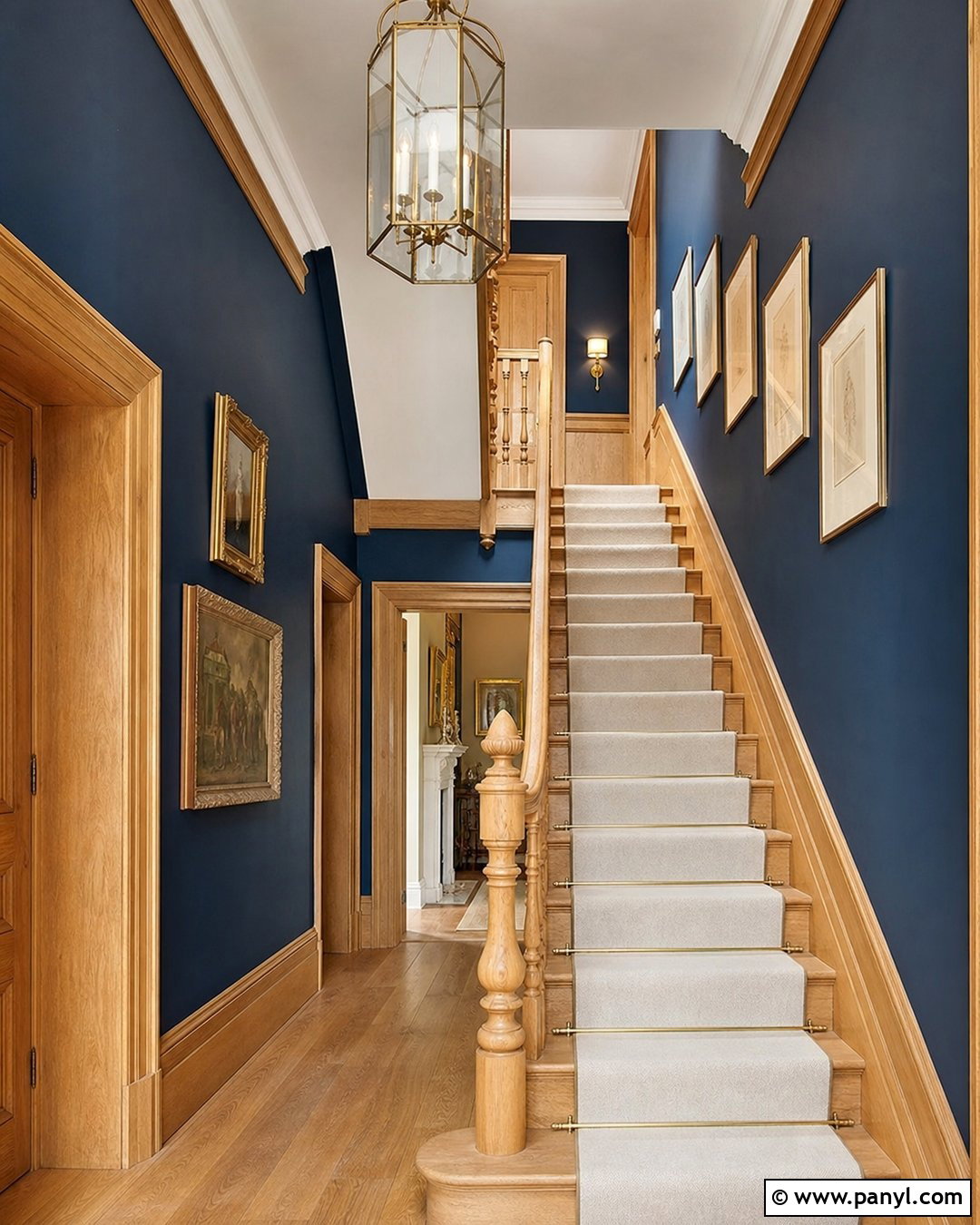
A staircase can become a complete architectural feature when deep blue walls surround original wood railings and trim. Paint the stairwell from the base to the upper landing in one consistent navy or blue-black shade. Leave the treads, handrail, newel post, balusters, baseboards, and door casings in their natural finish. Install a light beige runner secured with simple brass rods to soften footsteps and brighten the center of the stairs. A collection of framed artwork with wide cream mats can follow the rising angle without overwhelming the wall. Use a large glass lantern overhead and a matching sconce at the landing for strong illumination. The finished staircase feels dramatic and connected, while every handcrafted wooden detail remains clearly visible and appreciated.
Conclusion:
The most successful Dark Walls Unpainted Woodwork Ideas treat natural trim as an asset rather than a limitation. Start by identifying whether the wood has golden, red, neutral, or deep brown undertones. Then choose a dark wall color that either relates to that warmth or provides clear, intentional contrast. Light upholstery, pale ceilings, reflective hardware, layered lamps, and softly patterned rugs will prevent the finished space from feeling too heavy. Most importantly, create a complete palette before painting. Consider the floor, furniture, window treatments, and lighting alongside the walls. With thoughtful balance, dark paint can highlight original craftsmanship while making an older room feel comfortable, personal, and beautifully current.

Related Ideas and Inspiration:
Leave a Reply