
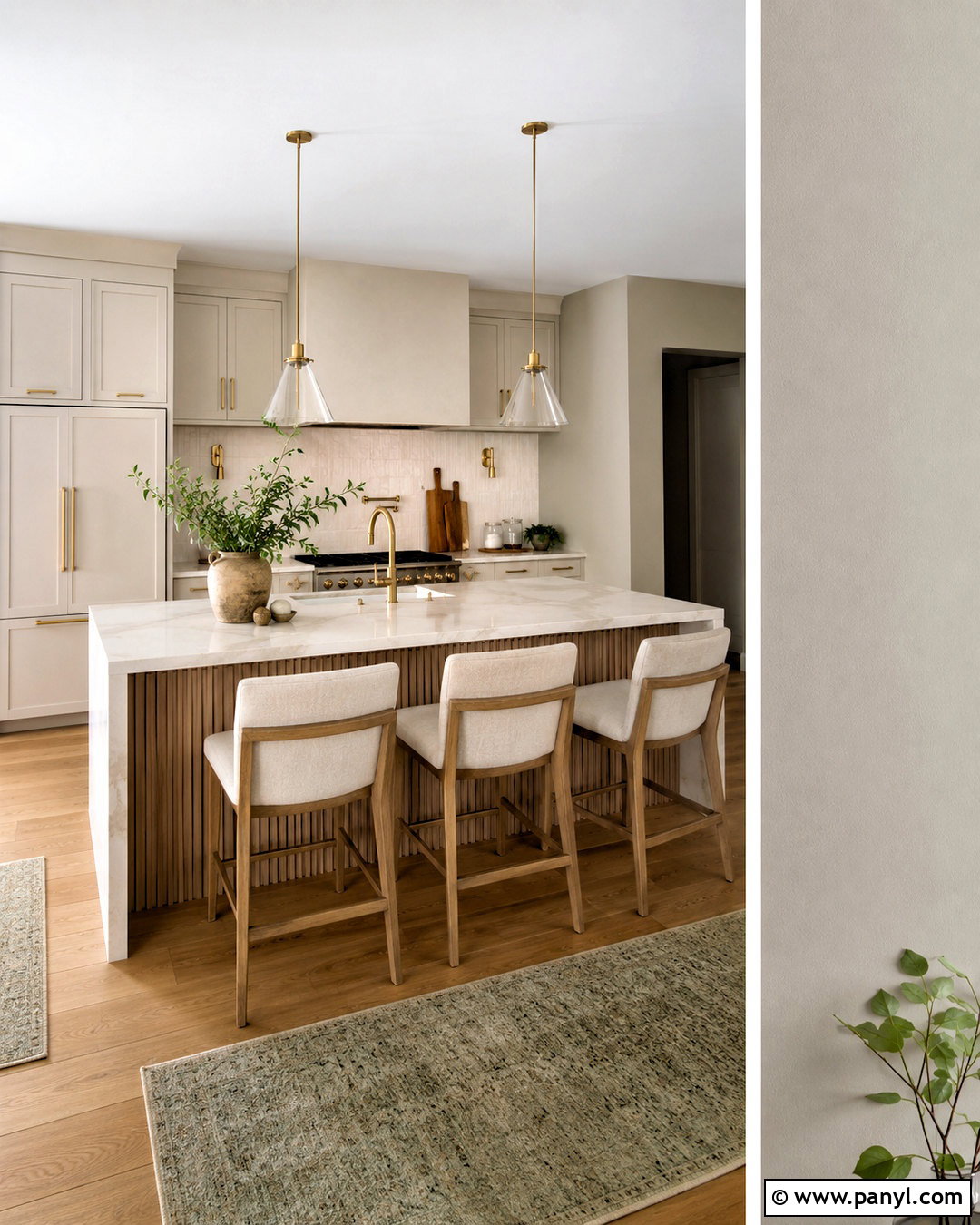
Terracotta kitchen cabinets bring sunbaked warmth, natural character, and an inviting sense of color to the heart of the home. Depending on the shade and surrounding finishes, they can feel Mediterranean, modern, rustic, traditional, or even softly Scandinavian. The most balanced kitchens pair this earthy cabinet color with natural wood, expressive stone, handcrafted tile, or quiet neutral surfaces that give it room to stand out. () You can also adjust the mood through hardware, lighting, flooring, and the amount of terracotta used. From color-drenched rooms to practical two-tone layouts, the following complete looks show how to create stylish, functional, and beautifully coordinated terracotta kitchen cabinets.

1. Terracotta Kitchen Cabinets With White Quartz
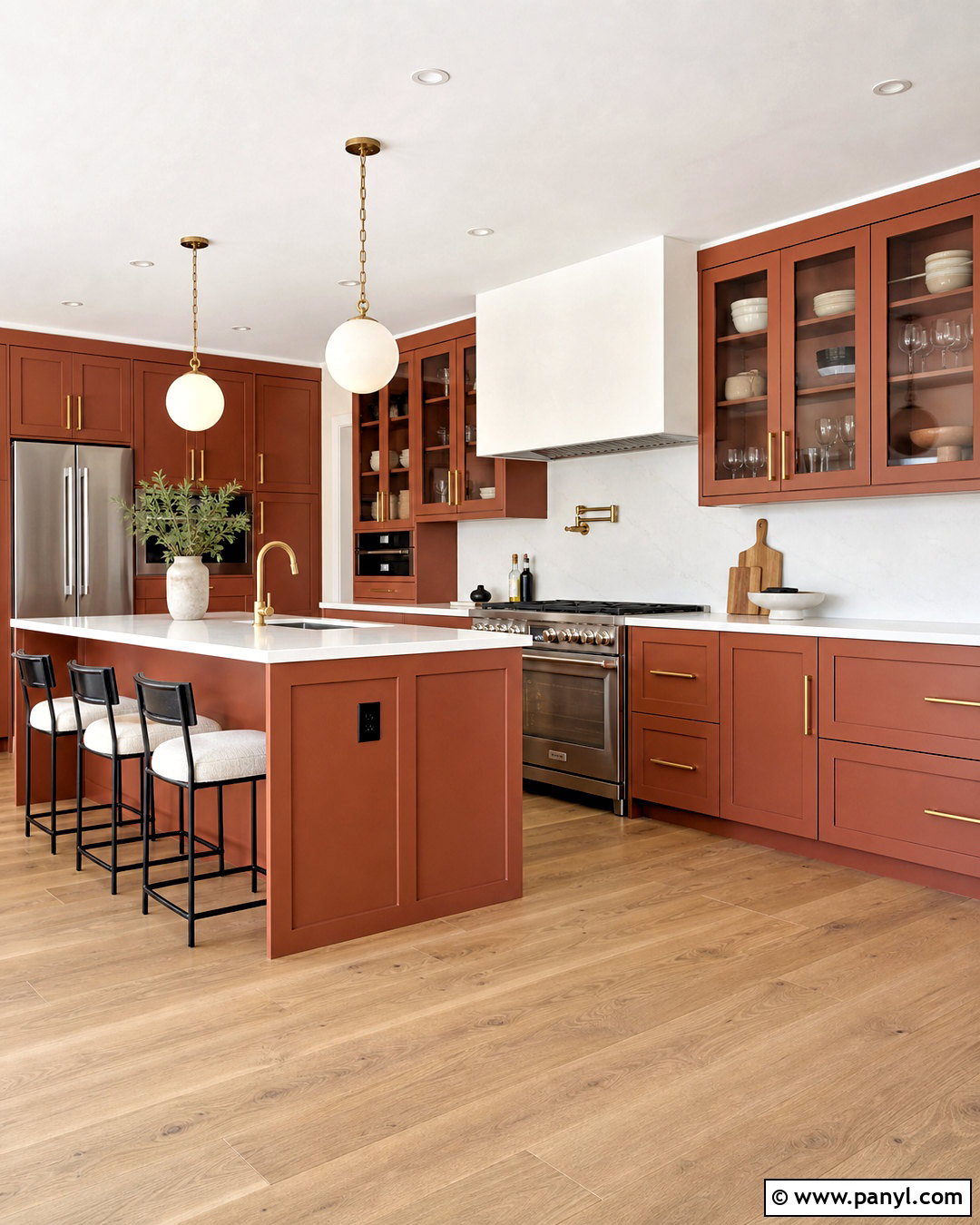
Crisp white quartz gives terracotta cabinetry a fresh, balanced appearance without making the kitchen feel cold. Choose muted clay-colored Shaker cabinets, simple white quartz countertops, and a matching quartz backsplash for an uncluttered foundation. Warm white walls will soften the contrast better than a stark blue-white paint. Add brushed brass knobs, a brass faucet, and creamy globe pendants to reinforce the cabinet color’s warm undertones. Natural white oak flooring keeps the room casual and comfortable. For the island, continue the terracotta finish so the cabinetry reads as one confident feature. A few cream ceramics, wooden cutting boards, and leafy herbs provide enough decoration. This combination works especially well in medium or small kitchens because the reflective white surfaces prevent the stronger cabinet color from overwhelming the layout.
2. Terracotta Kitchen Cabinets With Butcher Block Countertops
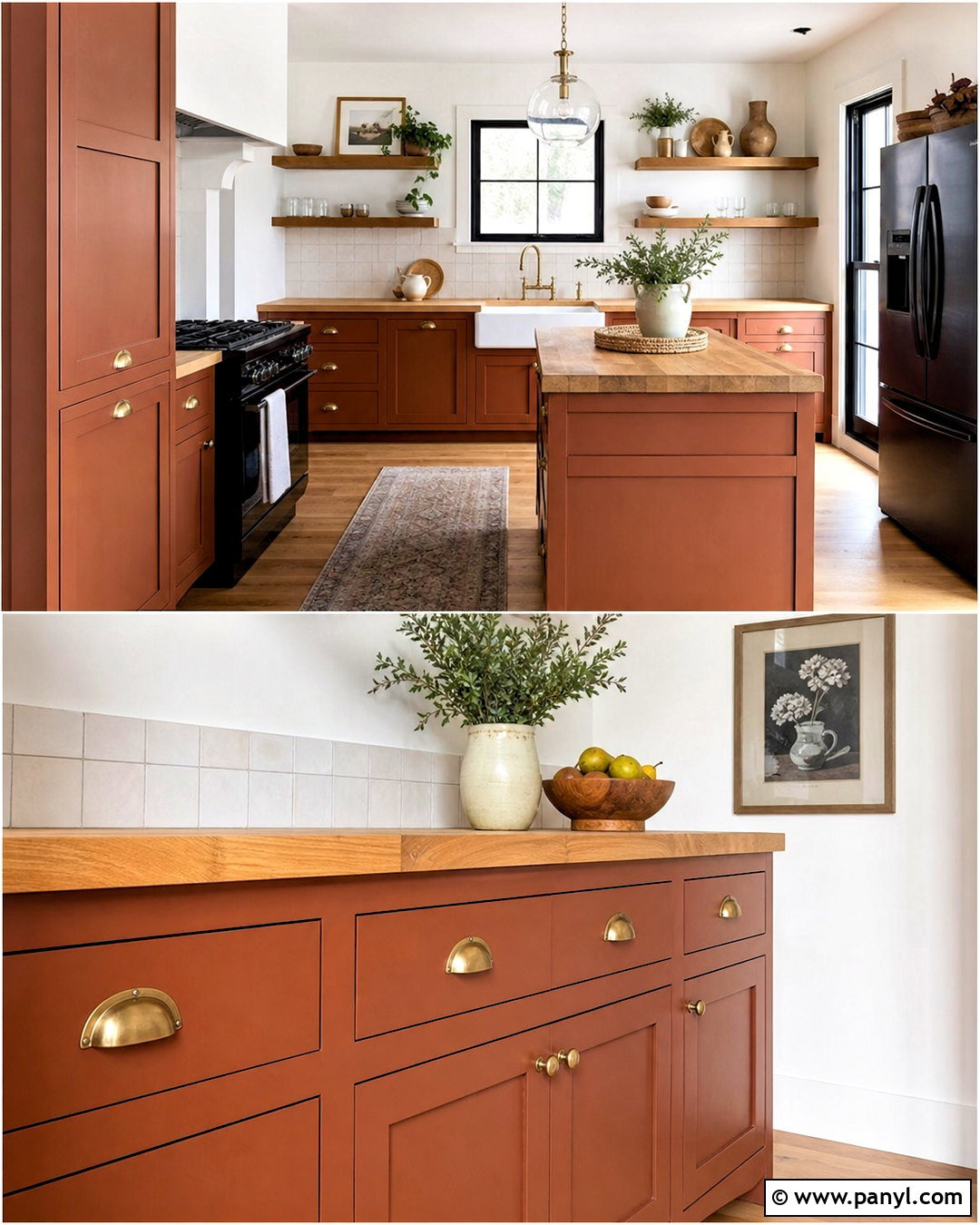
Imagine a relaxed kitchen where warm cabinet color and natural wood create an instantly welcoming atmosphere. Use medium terracotta base and wall cabinets with thick maple or white oak butcher block countertops. A creamy square-tile backsplash will break up the similar warm tones while preserving the cozy palette. Select aged brass cup pulls, a white farmhouse sink, and a bridge-style faucet for a simple country influence. Wide-plank oak flooring can work beautifully, but choose a slightly lighter or darker wood tone than the counters to avoid a matched appearance. Complete the room with open wooden shelves, white stoneware, woven shades, and clear glass pendants. Regularly seal countertops near the sink and range. This practical finish protects the wood while keeping the kitchen’s organic, approachable character intact.
3. Terracotta Kitchen Cabinets With Marble Backsplash
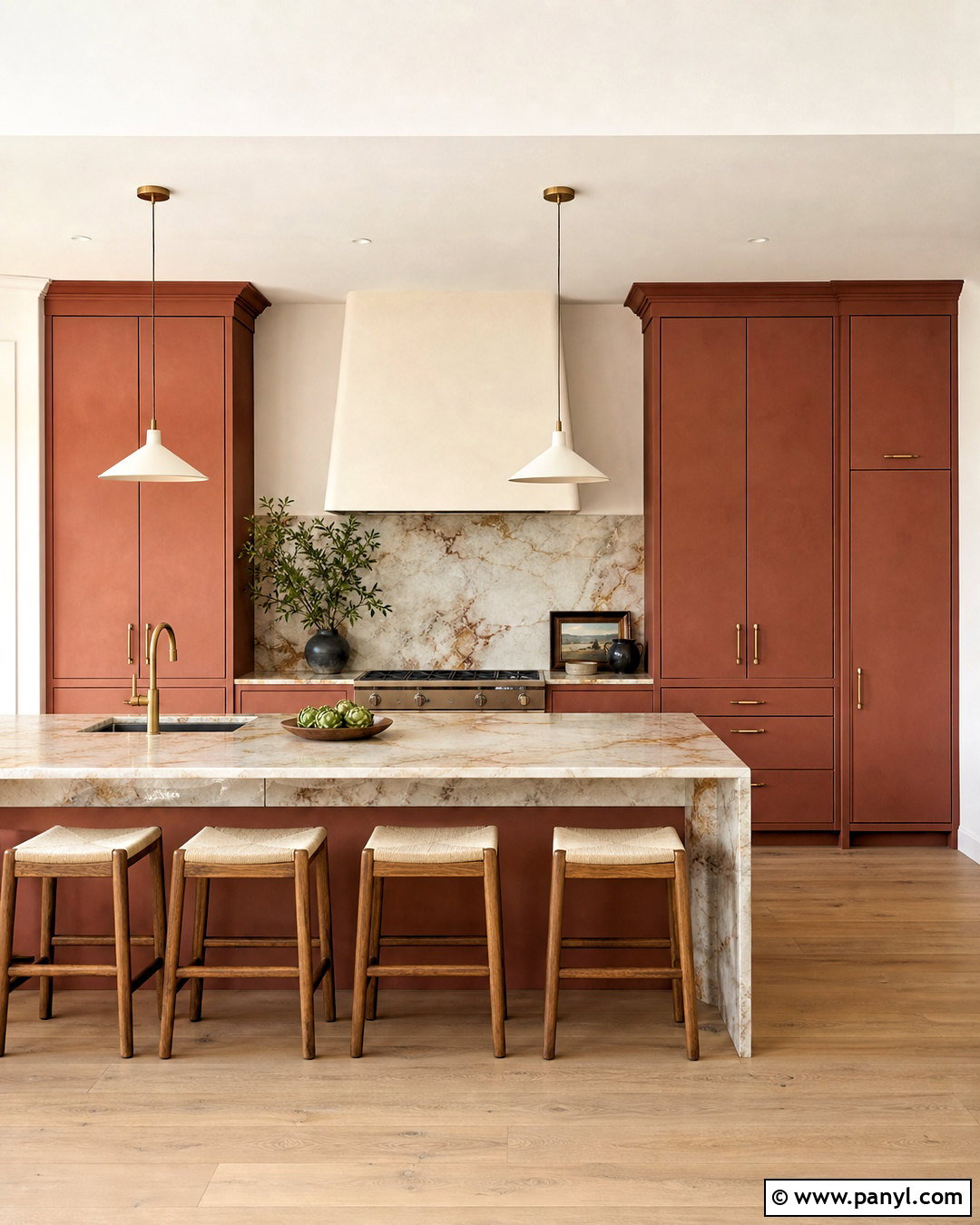
For a polished kitchen with earthy depth, combine reddish terracotta cabinets with marble carrying warm gray, taupe, or rusty veining. Run the marble from the countertop to the underside of the upper cabinets for a seamless, luxurious focal point. Flat-panel doors and slim bronze pulls will keep the design current rather than overly formal. Balance the dramatic surfaces with pale oak flooring, off-white walls, and a simple plaster range hood. If the marble pattern is strong, limit countertop accessories to a wooden tray, a stone bowl, and a few neutral containers. Use warm white under-cabinet lighting to reveal the natural veining and make food-preparation areas more functional. This complete scheme allows the cabinets and marble to share attention while maintaining a calm, coordinated look.
4. Terracotta Kitchen Cabinets With Sage Green
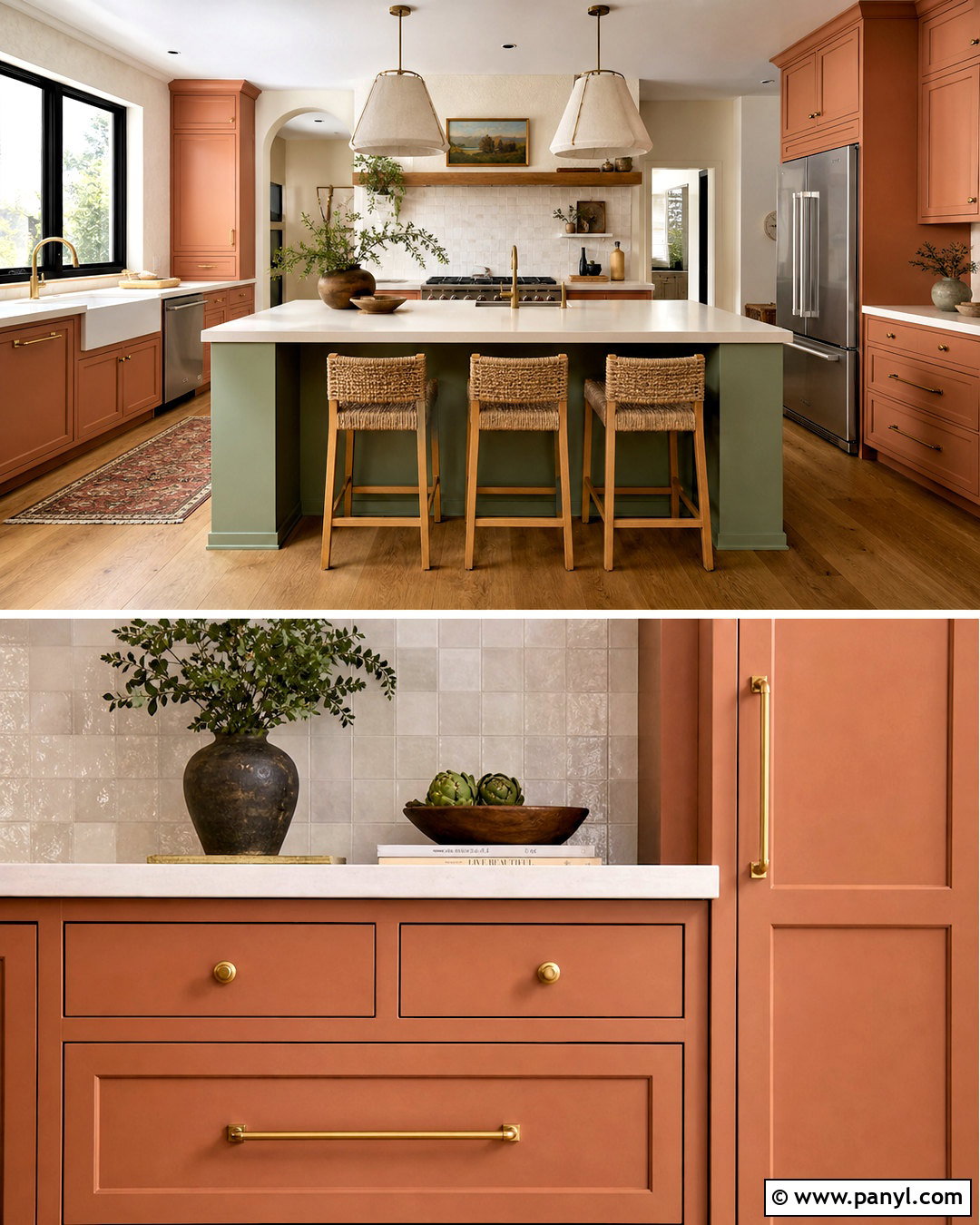
Terracotta and sage green create a nature-inspired palette that feels colorful without becoming loud. Paint the perimeter cabinets a softened terracotta, then use muted sage on a central island or tall pantry wall. Connect both colors with creamy quartz countertops and a lightly textured off-white backsplash. Unlacquered brass hardware adds warmth, while black accents on the range and window frames provide definition. Choose medium-tone oak flooring to support the organic mood. Three woven counter stools and linen pendant shades can make the island feel relaxed and useful for everyday meals. Keep walls warm white so the two cabinet colors remain clear and separate. Before committing, test large painted samples beside the countertop, backsplash, and flooring because artificial and natural light can noticeably shift both earthy colors.
5. Terracotta Kitchen Cabinets With Navy Blue Island
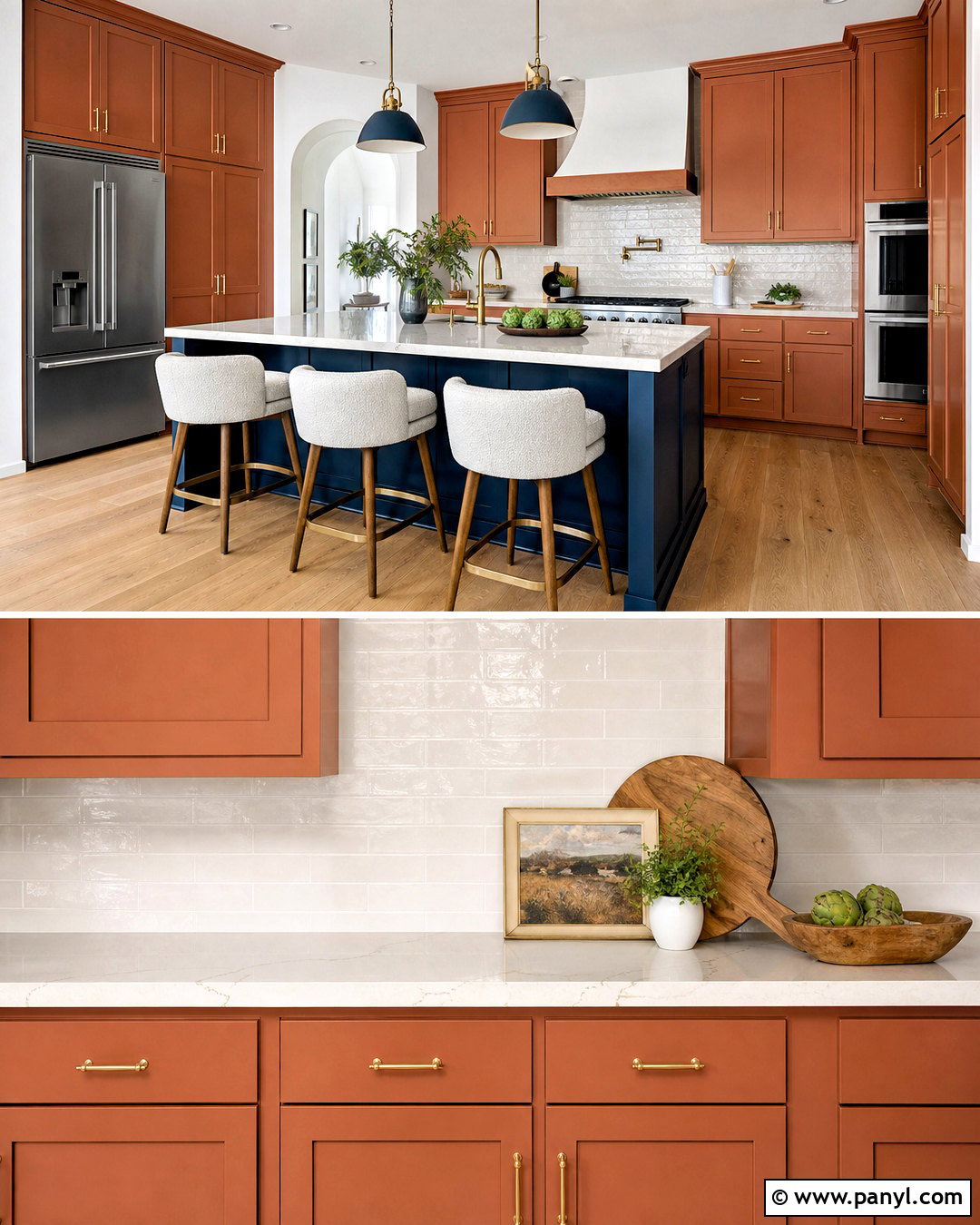
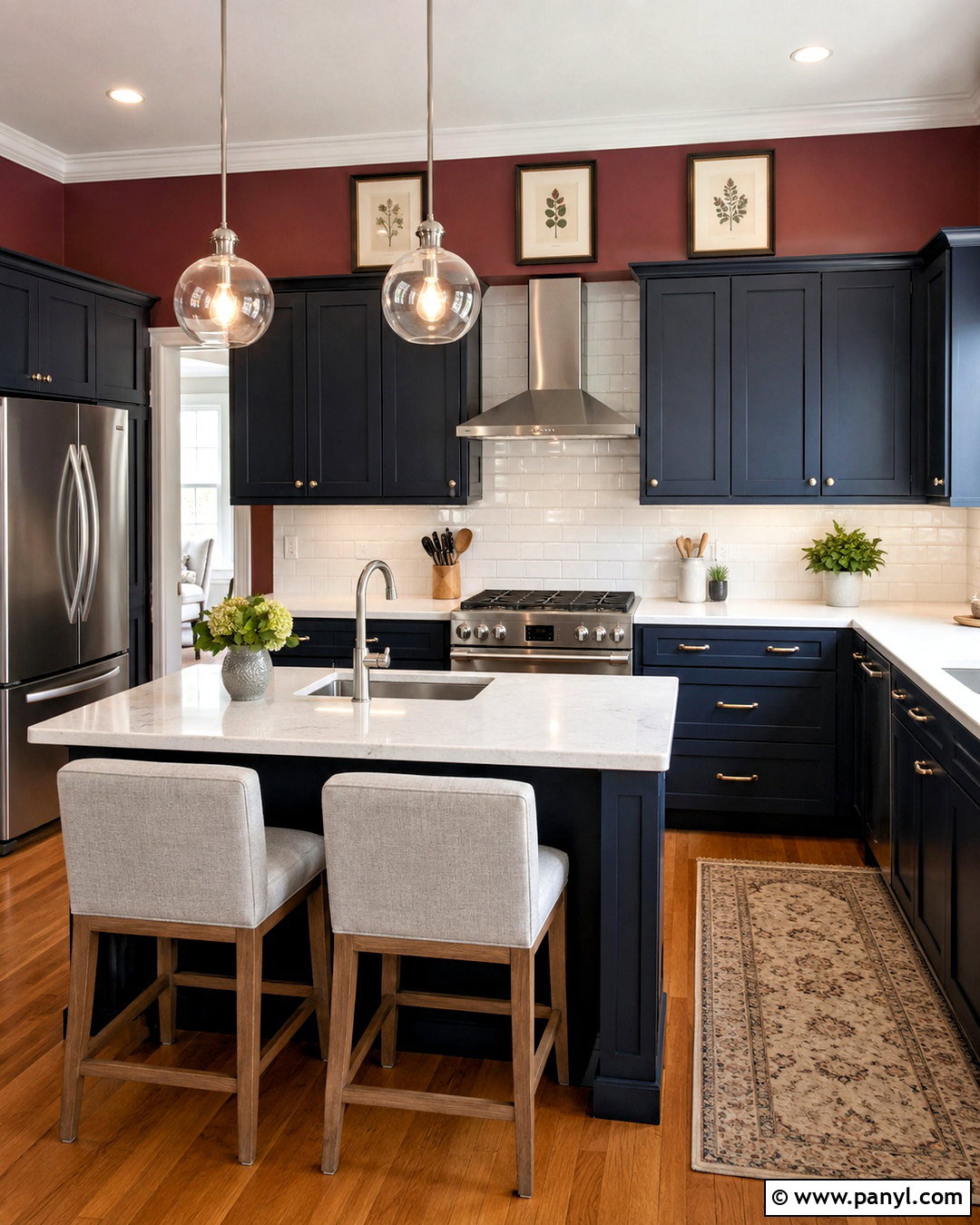
Would you like a richer color scheme with strong visual contrast? Surround a deep navy island with muted burnt-orange terracotta cabinets. The cool blue center will ground the warm perimeter while creating a natural gathering point. Use creamy marble-look quartz across both cabinet colors to unify the room. A glossy ivory subway backsplash reflects light and prevents the palette from feeling heavy. Add aged brass handles, navy-and-brass pendants, and medium oak flooring for a layered transitional finish. Upholster the island stools in oatmeal-colored fabric or tan leather for another warm neutral. Keep decorative items restrained, using white ceramics and one wooden bowl. This scheme is most successful in kitchens with generous daylight, although carefully placed recessed and under-cabinet lighting can make it work in enclosed rooms as well.
6. Terracotta Kitchen Cabinets With Black Hardware
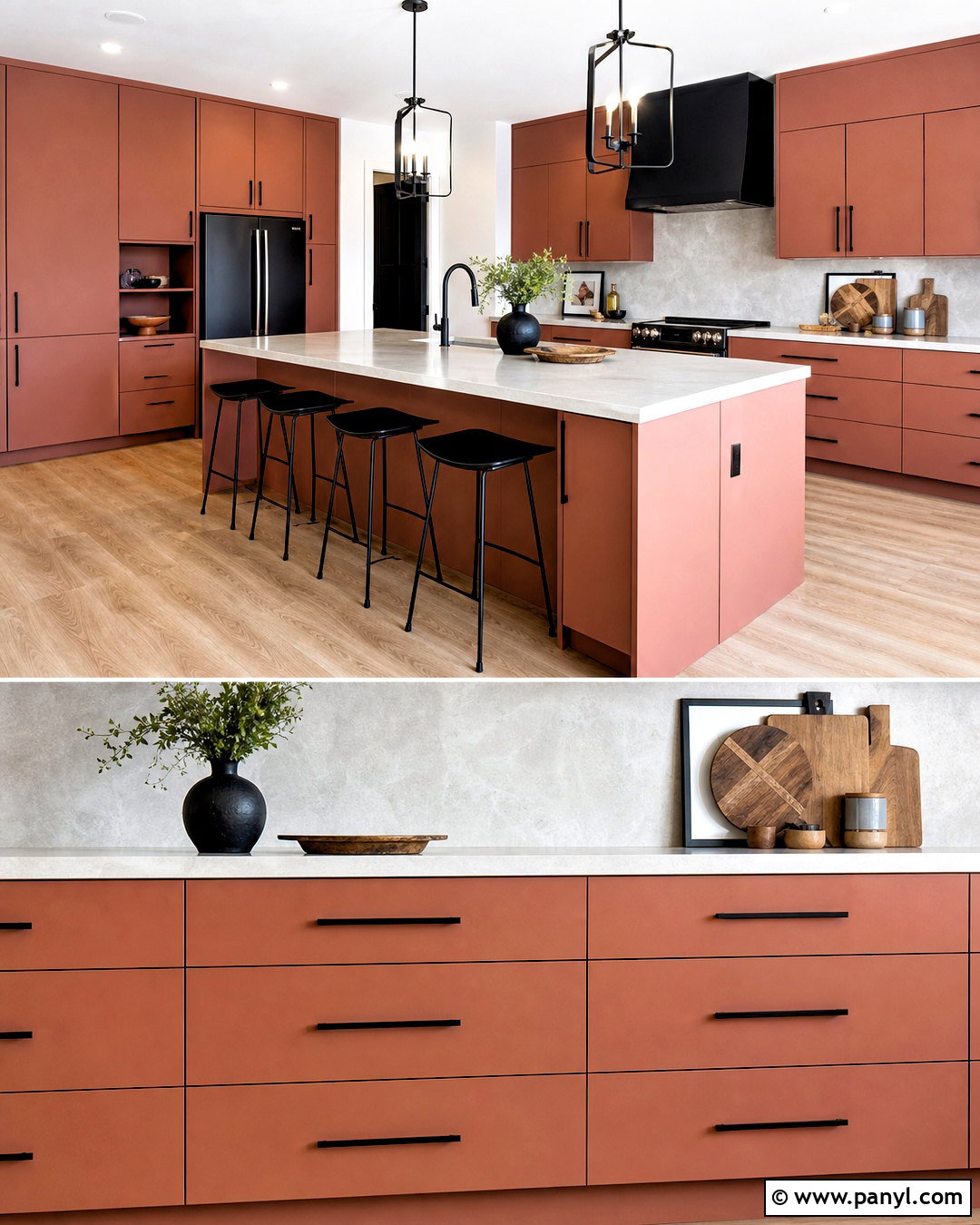
Matte black hardware brings clean definition to terracotta cabinets and gives the earthy color a sharper modern edge. Select slab-front or narrow Shaker doors in a subdued orange-brown terracotta. Add long black pulls, a matte black faucet, and black-framed pendant lights for consistent contrast. Pale concrete-look quartz countertops and a soft greige backsplash will keep the stronger colors balanced. Continue the streamlined look with light oak floors, integrated appliances, and a simple black range hood. An island in the same terracotta shade creates a cohesive, architectural layout. To stop the black details from appearing scattered, repeat them in at least three noticeable locations without using them on every surface. Warm white walls and minimal wooden accessories complete this practical contemporary kitchen while letting the cabinets remain the main attraction.
7. Terracotta Kitchen Cabinets With Brass Hardware
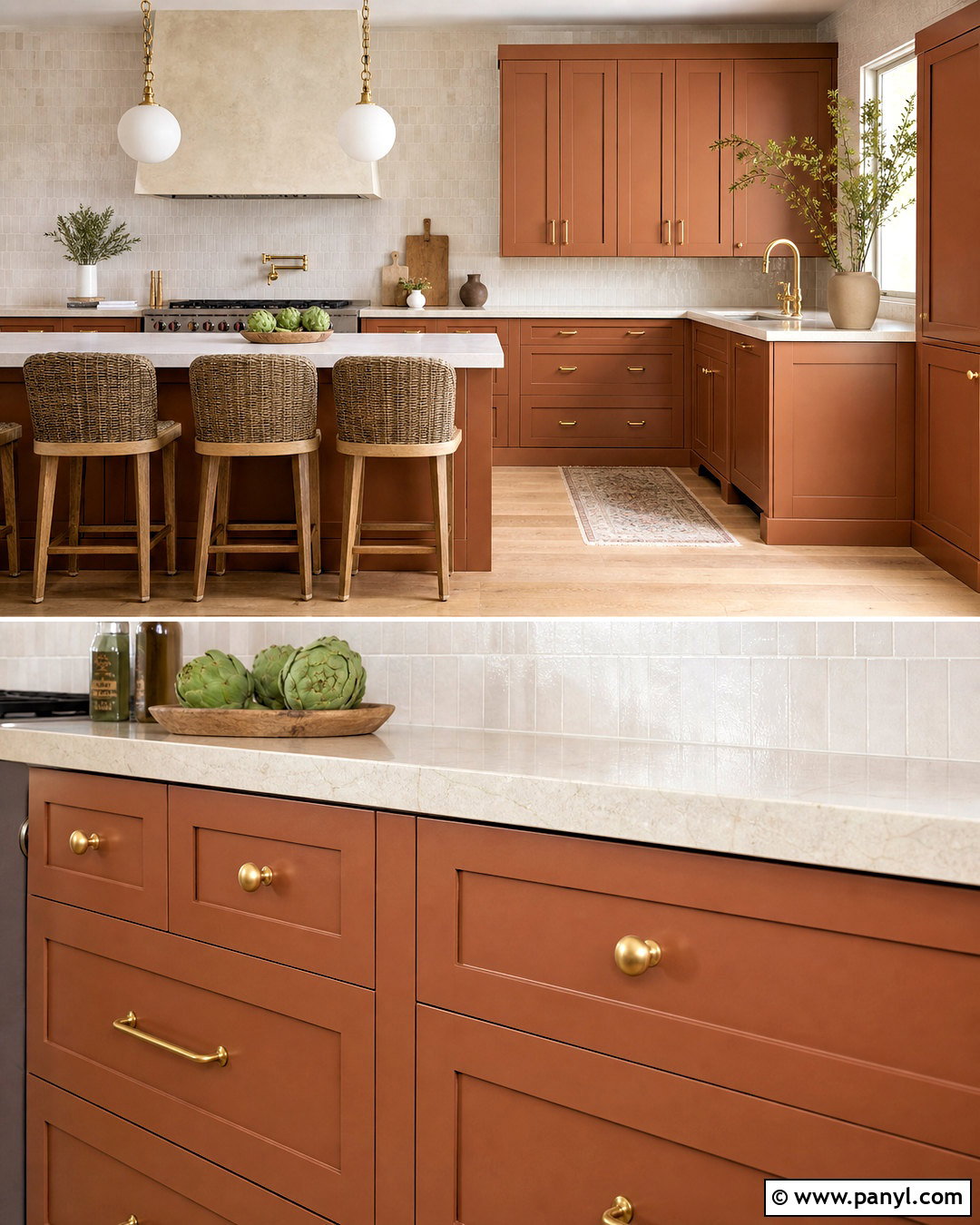
Soft brass details can make terracotta kitchen cabinets appear richer and more refined. Choose a medium clay shade with subtle brown undertones, then install brushed brass knobs on doors and matching pulls on drawers. Pair the cabinetry with creamy limestone-look quartz, a warm white zellige backsplash, and a curved brass faucet. A plaster range hood in light beige adds an architectural feature without competing with the cabinets. Finish the floor with pale oak planks and position two opal glass pendants above the island. The lighting should repeat small brass details but avoid highly polished finishes that may look overly bright. Style the room with wooden boards, ivory pottery, and woven counter stools. Together, these finishes produce a complete warm kitchen that feels elegant, comfortable, and suitable for everyday family use.
8. Terracotta Kitchen Cabinets With Stainless Steel
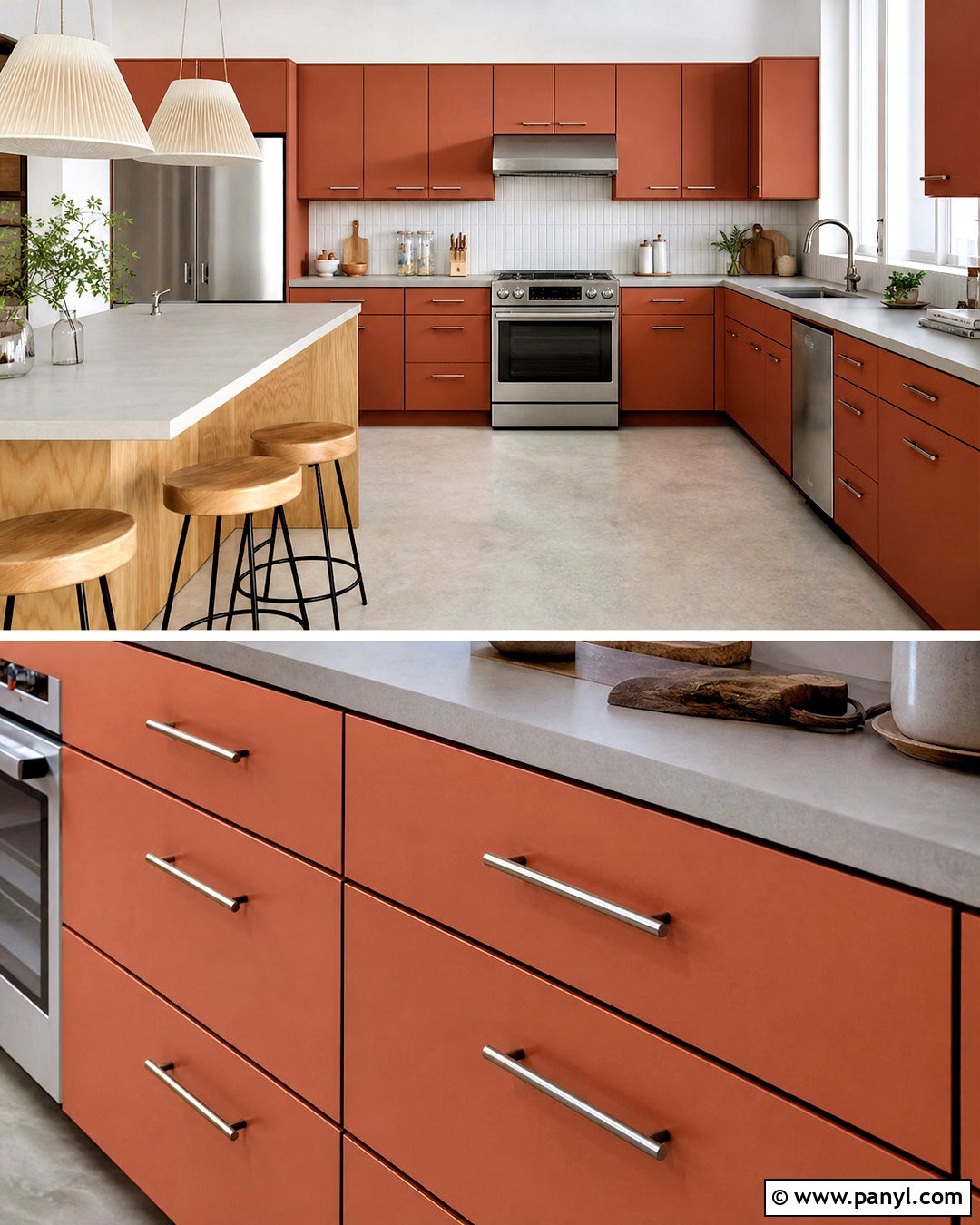
Stainless steel introduces a practical, slightly industrial note that prevents terracotta cabinetry from feeling too rustic. Use clean-lined flat-panel cabinets in a dusty red-orange finish, then add a stainless steel range, refrigerator, sink, and simple bar pulls. A pale gray quartz countertop will bridge the warm cabinets and cool appliances. Continue the restrained approach with a white vertical tile backsplash and smooth light concrete flooring. For warmth, include a white oak island, wooden stools, and one large linen pendant rather than adding more metal. Keep the walls creamy white and select bright, neutral task lighting so the terracotta stays true to color. This balanced arrangement works particularly well in urban apartments, renovated lofts, and modern family kitchens where durable surfaces and easy maintenance are major priorities.
9. Terracotta Kitchen Cabinets With Dark Countertops
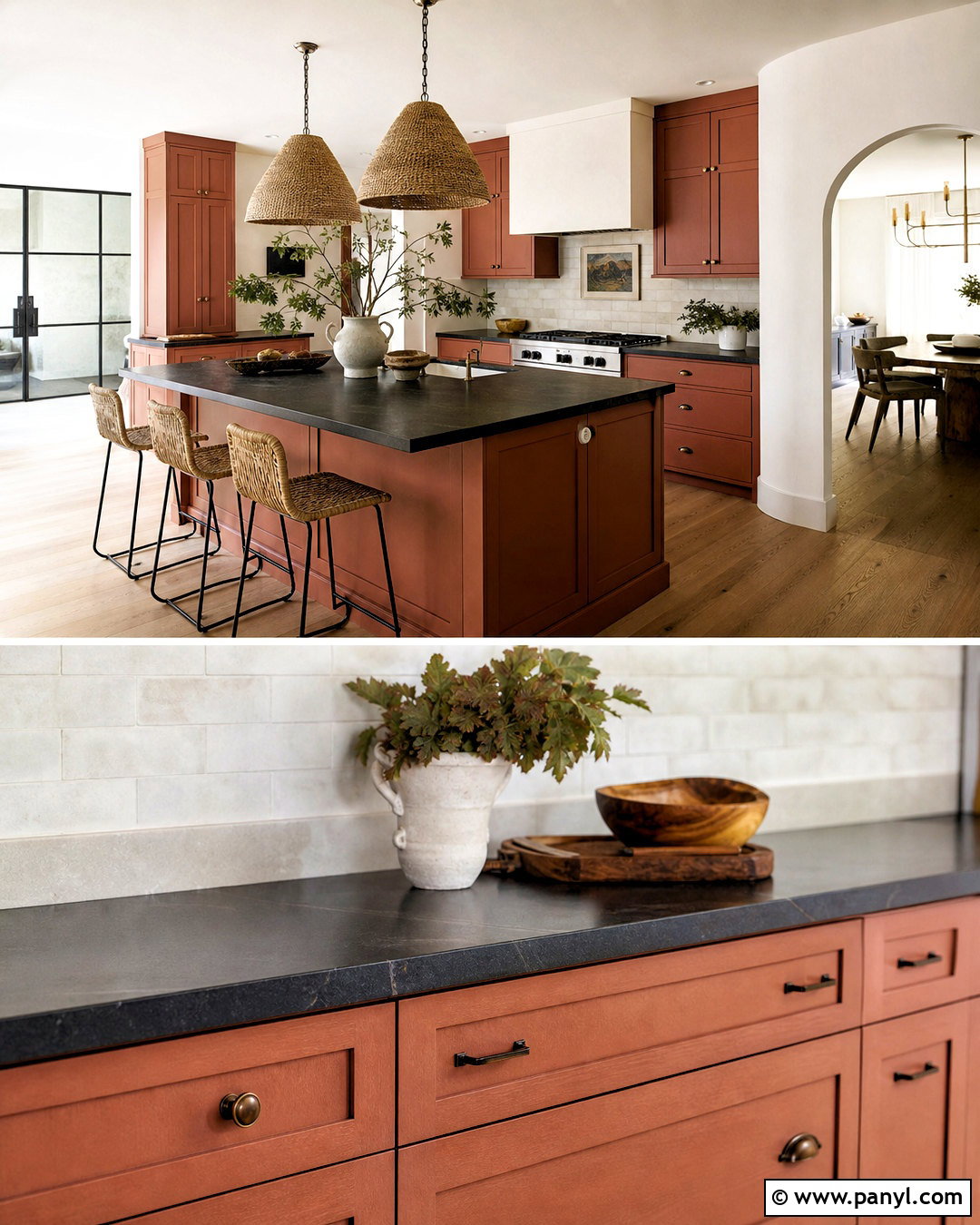
Deep charcoal countertops create a grounded, dramatic setting for lighter terracotta cabinets. Choose dusty clay Shaker doors, honed black granite or dark soapstone counters, and a warm white backsplash with minimal grout lines. Extend the dark stone onto a short backsplash ledge for a clean transition that also provides space for oils and utensils. Blackened bronze hardware will connect the counters to the cabinetry without creating a harsh contrast. Add pale wood flooring, cream walls, and woven pendant shades to lighten the room. If the kitchen has an island, keep its base terracotta but use a slightly thicker dark countertop to make it feel substantial. Bright recessed lighting and under-cabinet strips are important because dark horizontal surfaces absorb light and may otherwise make working areas feel shadowed.
10. Terracotta Kitchen Cabinets With Oak Island
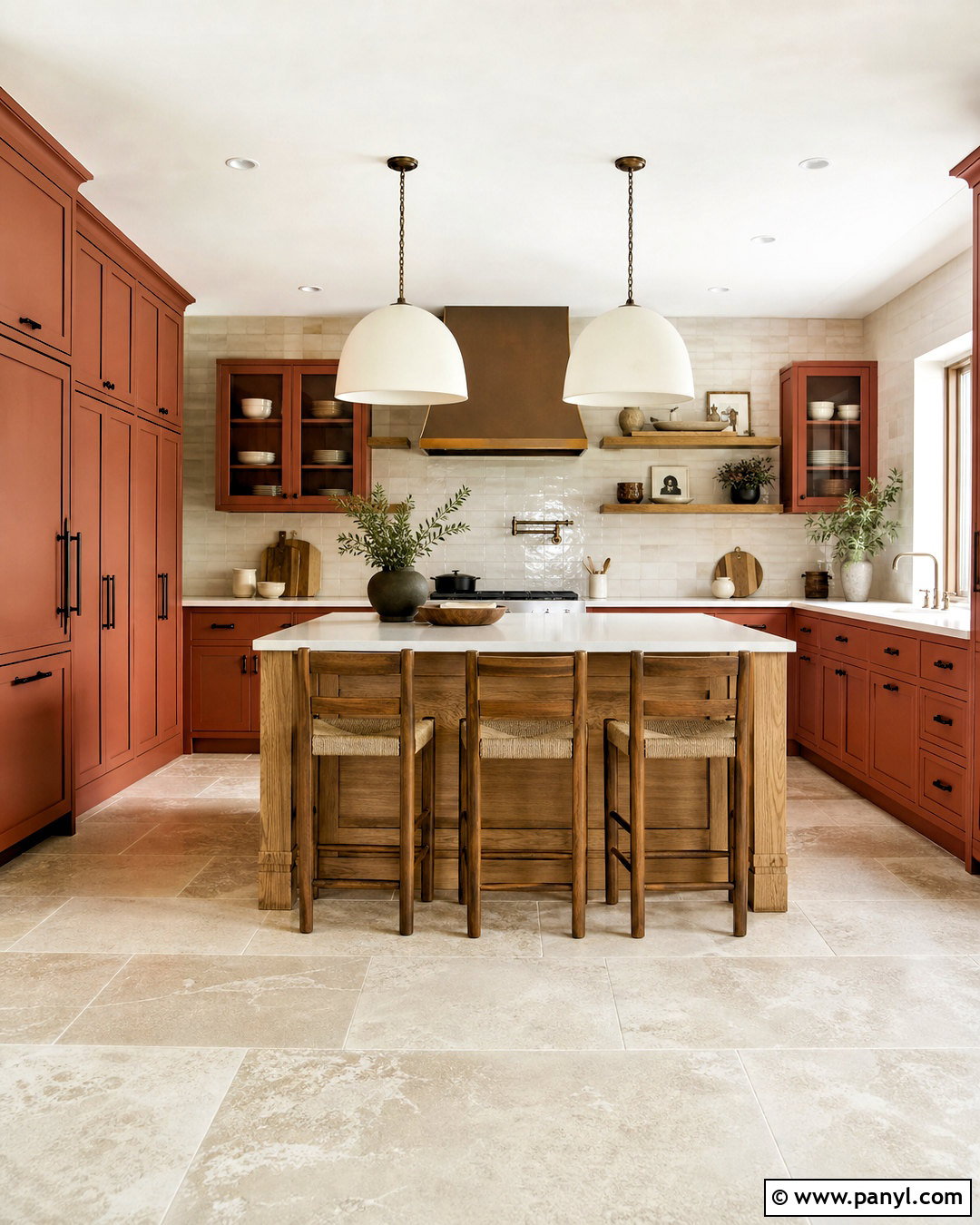
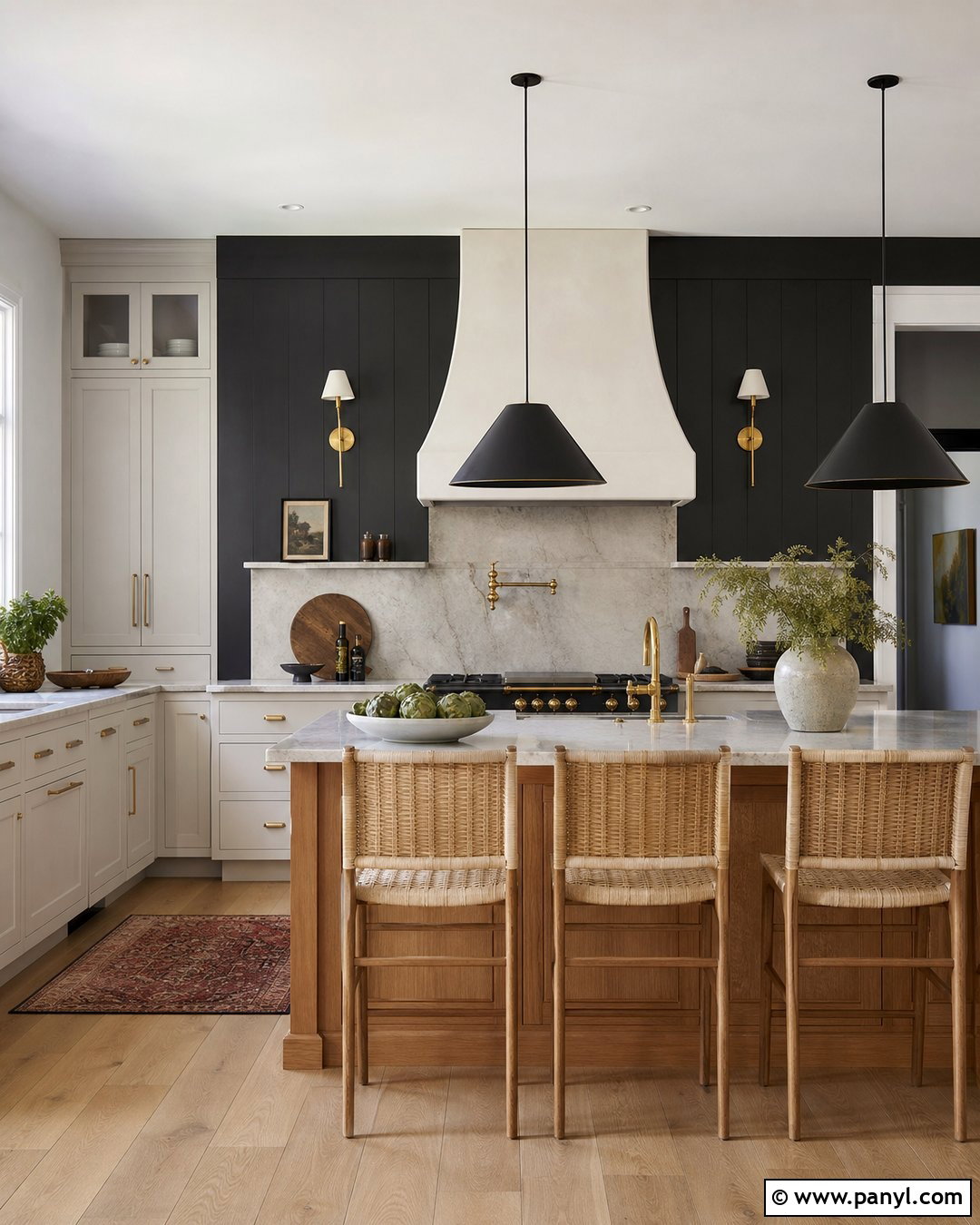
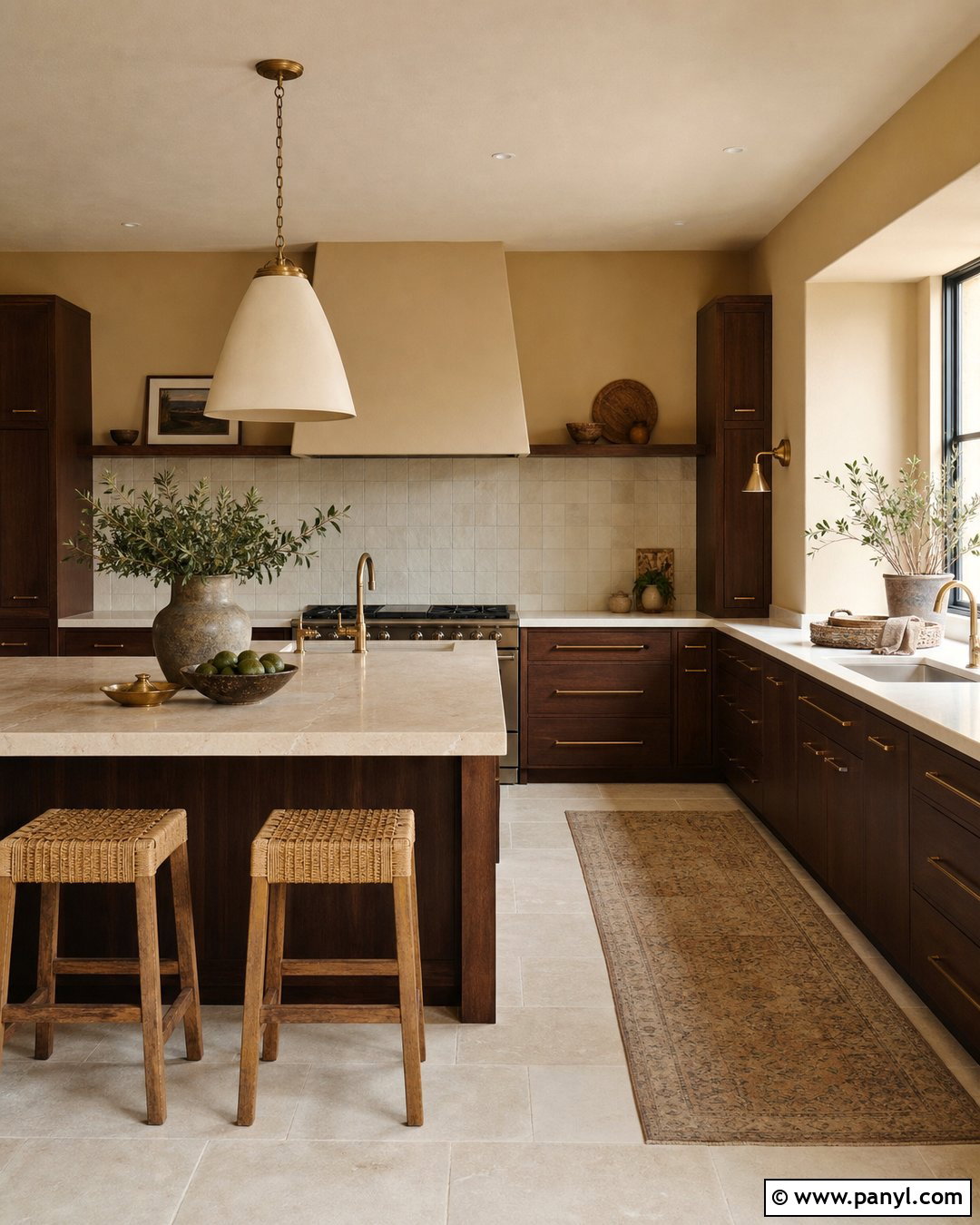
Mixing painted perimeter cabinets with a natural oak island creates warmth, texture, and an appealing sense of balance. Use deep terracotta around the walls, including tall pantry storage and the range area. Place a white oak island at the center with visible grain and comfortable seating for three. Cream quartz countertops across both finishes will keep the materials connected. Add a softly variegated ivory tile backsplash, aged bronze hardware, and dome-shaped cream pendants. Medium limestone floor tiles can provide a durable neutral base without introducing another wood tone. Repeat the island’s oak through two open shelves and a set of wooden cutting boards. This design gives terracotta a prominent role while allowing the natural island to visually open the center of the room and create a relaxed place for cooking and conversation.
11. Two-Tone Terracotta Kitchen Cabinets
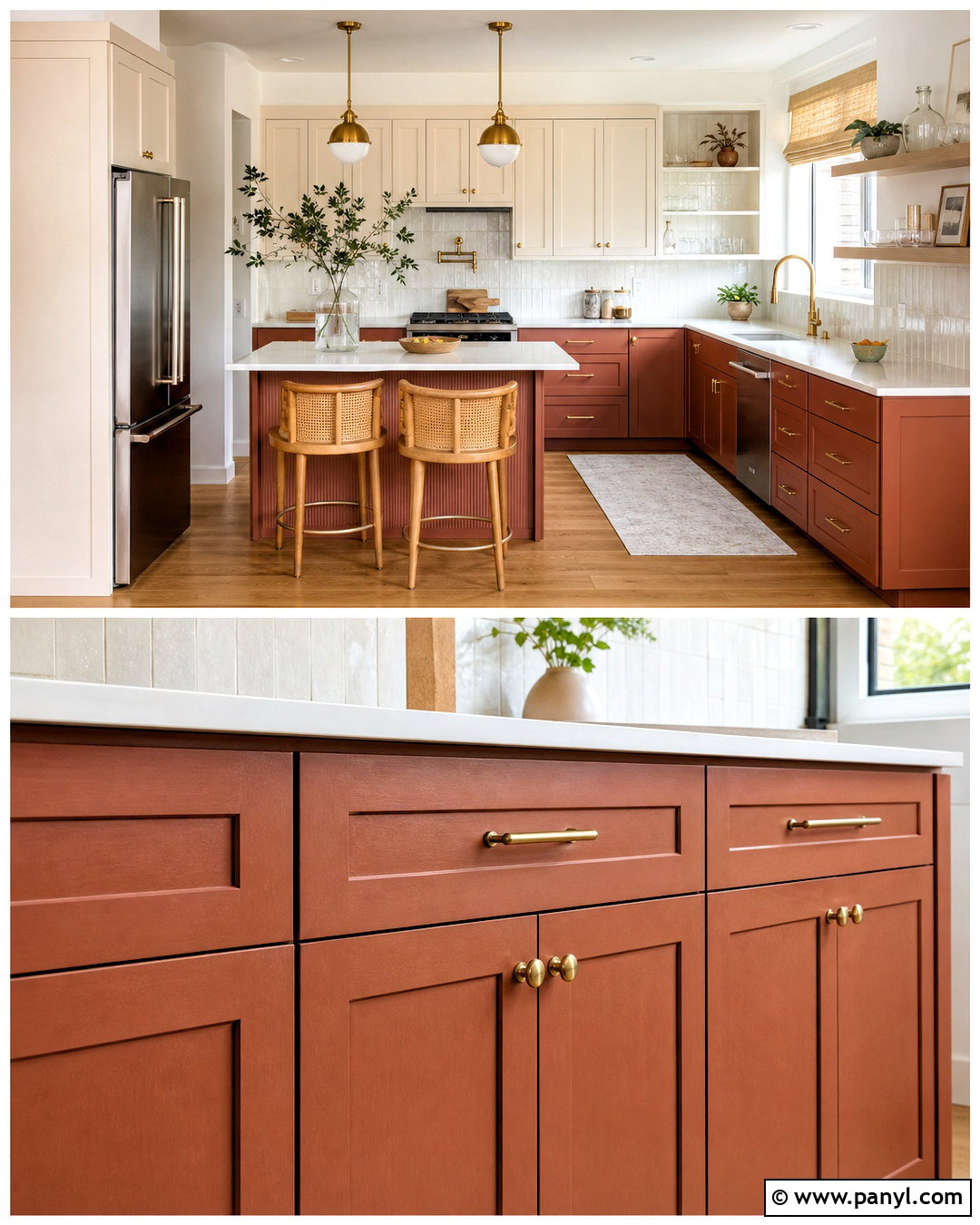
A two-tone layout is a practical way to enjoy terracotta without placing a strong color at eye level. Paint lower cabinets and the island a warm, muted terracotta while keeping upper cabinets soft cream. Use identical door profiles and brushed brass hardware on both colors to make the arrangement feel intentional. White quartz countertops and a handmade cream backsplash will brighten the transition between the upper and lower sections. Ground the kitchen with honey-toned oak flooring and add natural linen shades at the windows. Terracotta-colored grout or decorative accessories are unnecessary because the lower cabinets already provide enough warmth. Instead, bring in white ceramics, clear glass containers, and a few wooden tools. This balanced treatment suits compact kitchens, low-ceiling rooms, and homeowners who want color with a lighter overall impression.
12. Terracotta Kitchen Cabinets Without Upper Cabinets
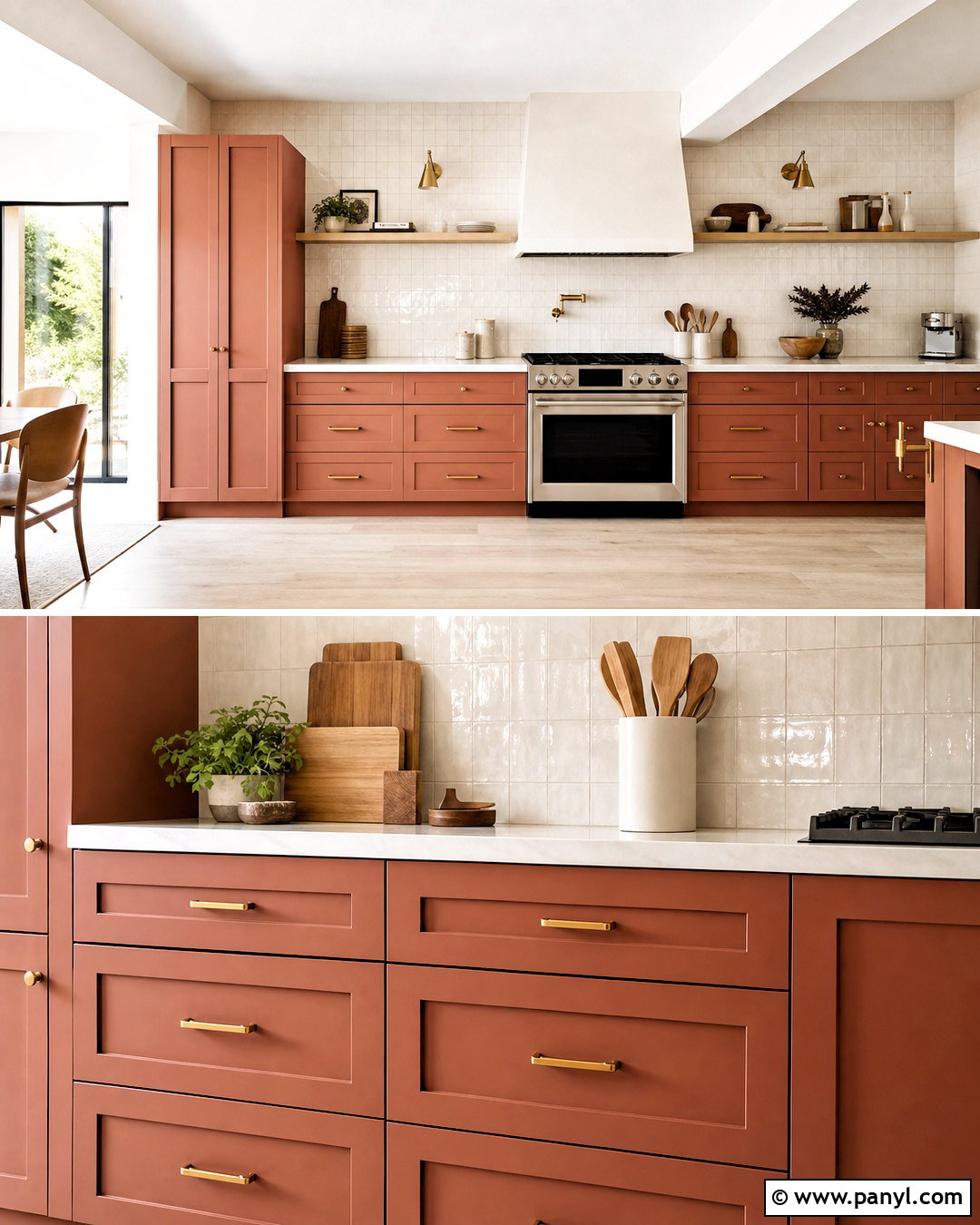
Removing upper cabinets can make terracotta cabinetry feel lighter and give a smaller kitchen more breathing space. Arrange deep drawers and full-height storage below the counter, then add one tall pantry cabinet near the refrigerator. Paint all lower units a medium earthy terracotta. Above them, install a full-height creamy zellige backsplash and two long white oak shelves for everyday dishes. Choose pale quartz counters, unlacquered brass hardware, and a simple white range hood. Light oak flooring and warm white walls will keep the open layout bright. Limit shelf displays to useful items in cream, clear glass, and natural wood so the room remains orderly. This design is especially effective along a single wall or in an L-shaped kitchen where efficient drawer storage can replace less-accessible overhead cabinets.
13. Terracotta Kitchen Cabinets With Open Shelves
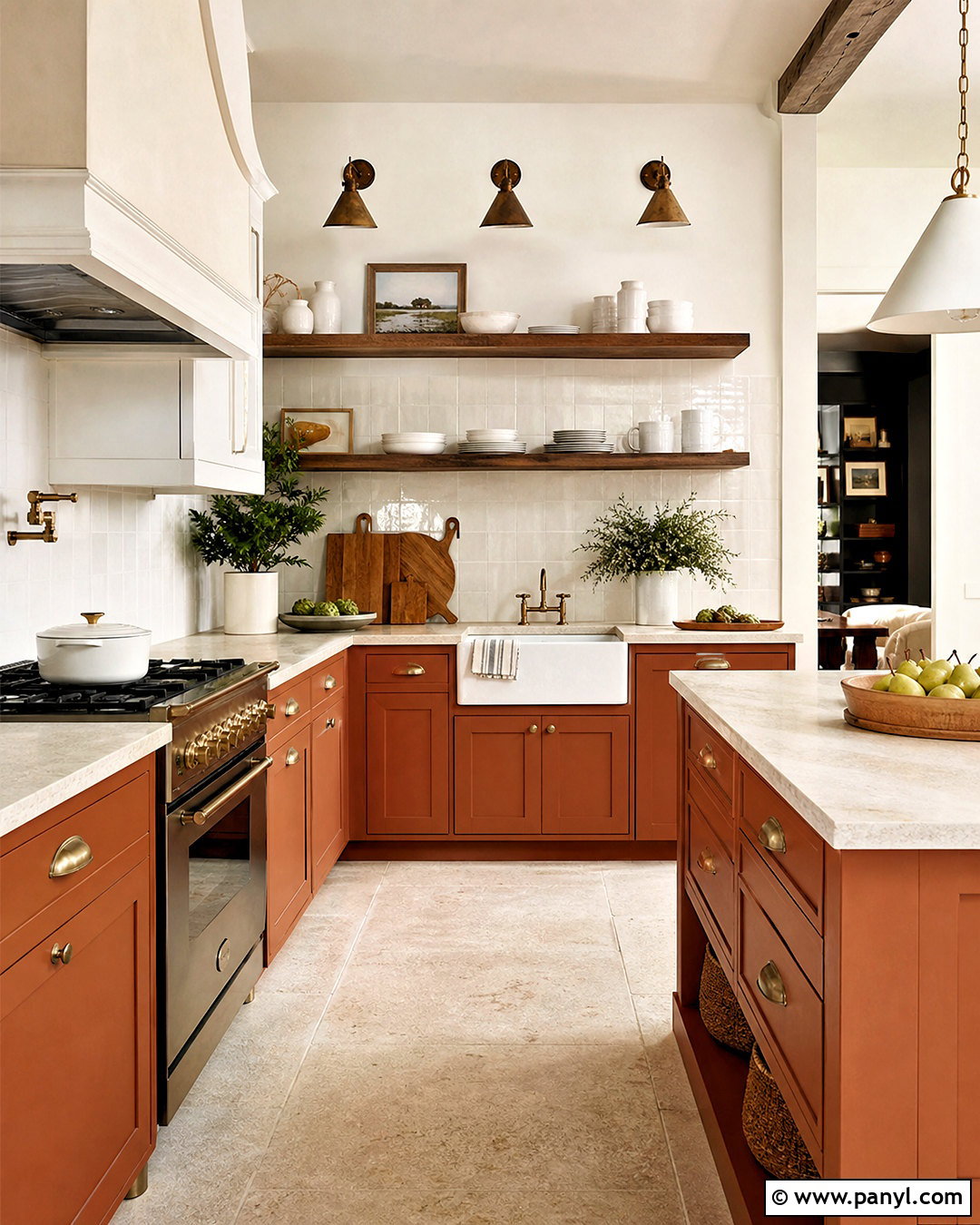
The tactile beauty of handmade pieces complements the natural warmth of terracotta cabinetry. Start with burnt-clay base cabinets and place matching tall storage at one end of the room. Replace standard uppers above the preparation area with thick walnut shelves. Cream stone countertops and a softly uneven white tile backsplash will prevent the darker wood from making the kitchen feel enclosed. Add antique brass cup pulls, a farmhouse sink, and two small bronze sconces above the shelves. Display a limited arrangement of white dishes, amber glass, cookbooks, and wooden bowls, leaving open space between groups. A limestone floor introduces another natural texture while remaining visually quiet. The result is a practical rustic-modern kitchen where open storage supports the complete design rather than appearing like an unrelated decorative feature.
14. Terracotta Kitchen Cabinets With Terracotta Floors
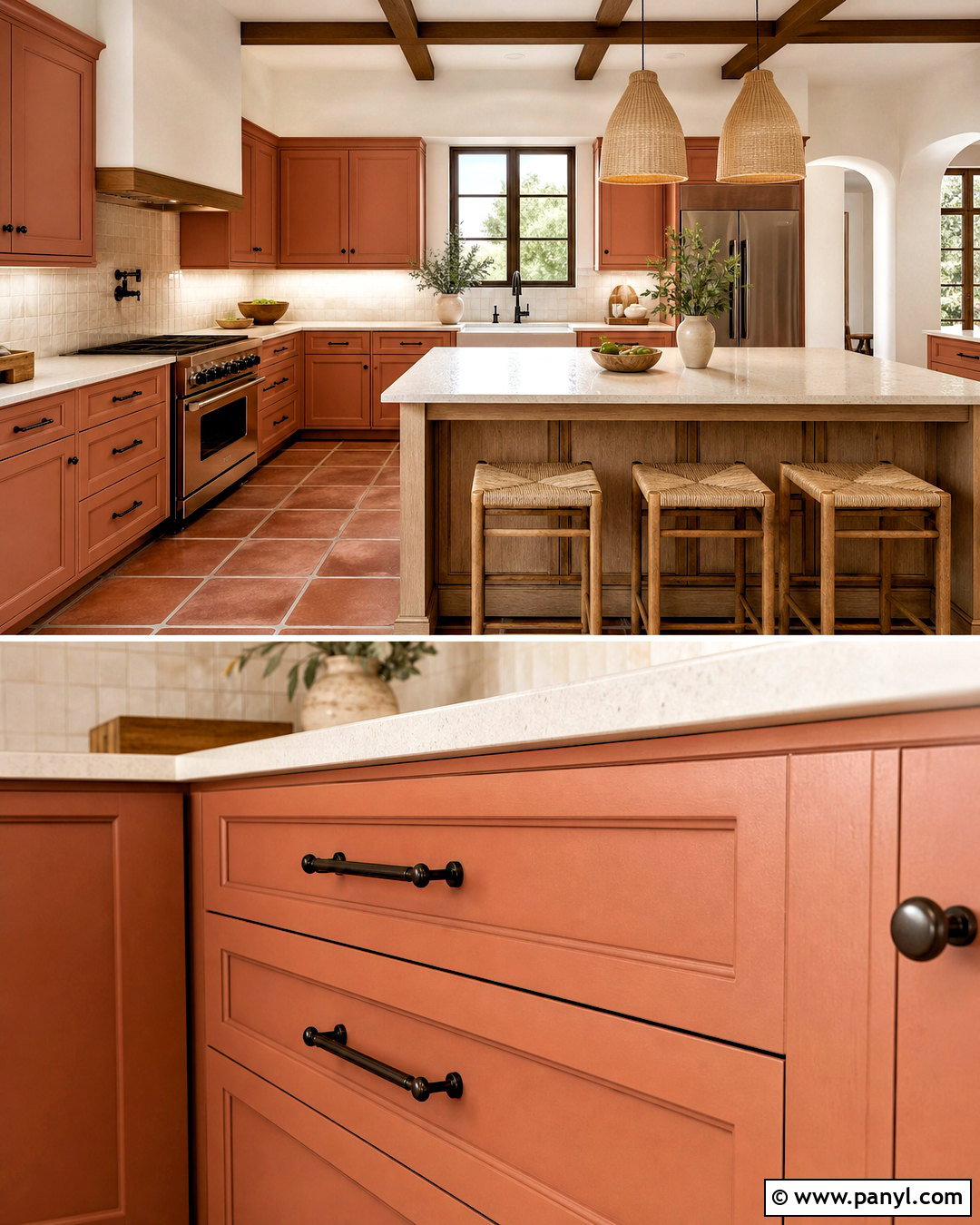
Using terracotta on cabinets and flooring requires thoughtful variation so the room does not become one solid orange block. Select dusty rose-terra-cotta cabinets with a smooth painted finish, then install traditional floor tiles in a deeper red-brown shade. Cream grout will define the floor pattern and add brightness. Separate the two surfaces with warm white quartz countertops and an ivory backsplash. A pale oak island can introduce welcome visual relief, while dark bronze hardware provides subtle definition. Keep walls and the plaster range hood soft white. Natural linen pendants, woven stools, and simple cream ceramics complete the Mediterranean-inspired room. The difference in tone, material, and texture allows both terracotta finishes to remain visible while producing a connected kitchen that feels layered rather than overly matched.
15. Terracotta Kitchen Cabinets With Patterned Tile
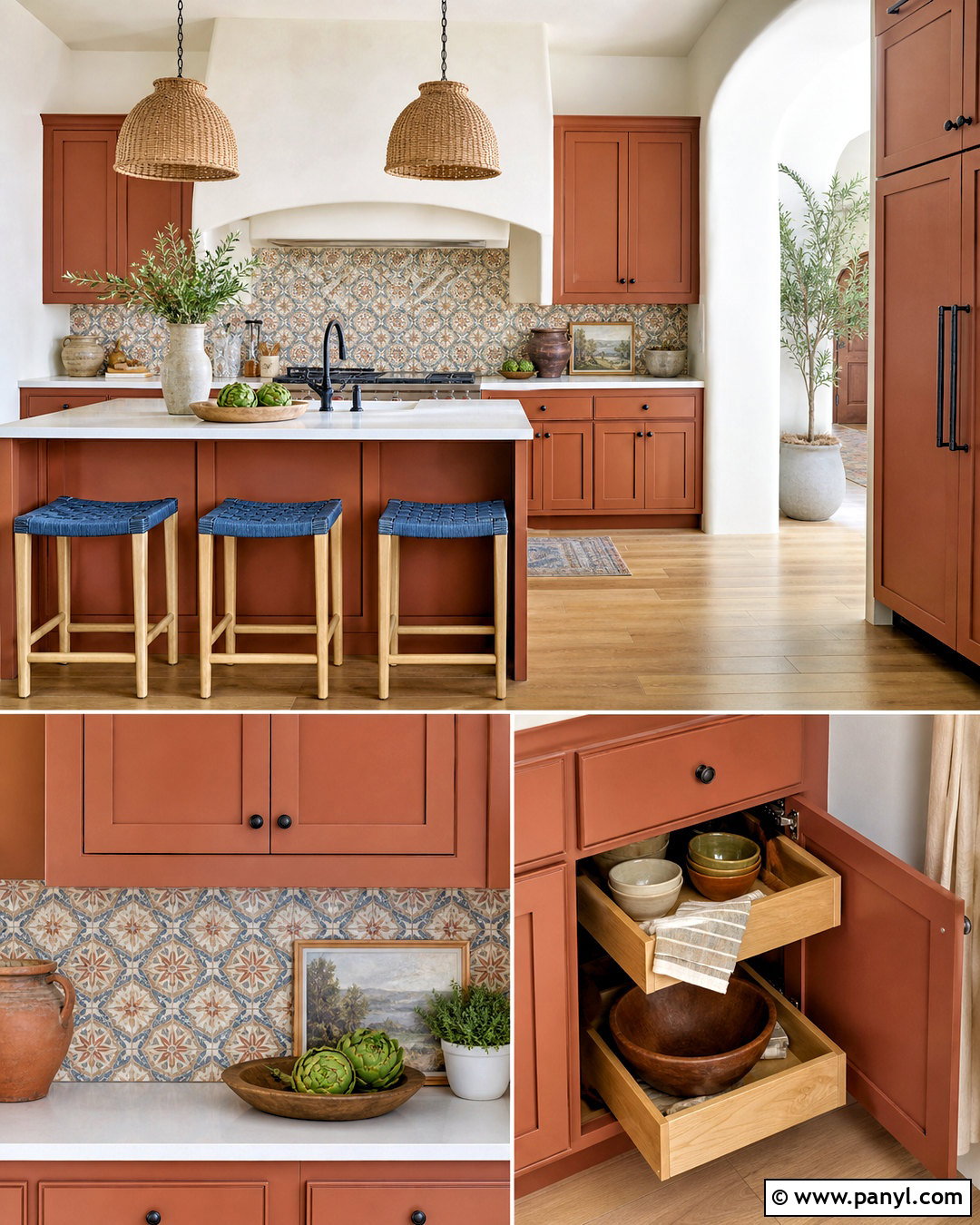
Patterned tile can bring personality to terracotta cabinetry when the colors are carefully controlled. Choose simple Shaker cabinets in a medium clay tone and pair them with a backsplash featuring cream, faded blue, and small terracotta details. Keep the countertops solid warm white so they create a visual pause between the cabinet color and pattern. Use dark bronze knobs, a white farmhouse sink, and an understated plaster hood. Honey oak flooring and woven pendant lights will support the handcrafted character without introducing another busy surface. Repeat the backsplash blue once through counter stools or a small runner, but avoid filling the room with matching accessories. This coordinated kitchen has a cheerful Spanish or Mediterranean influence while remaining comfortable and practical for a typical home rather than feeling heavily themed.
16. Modern Terracotta Kitchen Cabinets
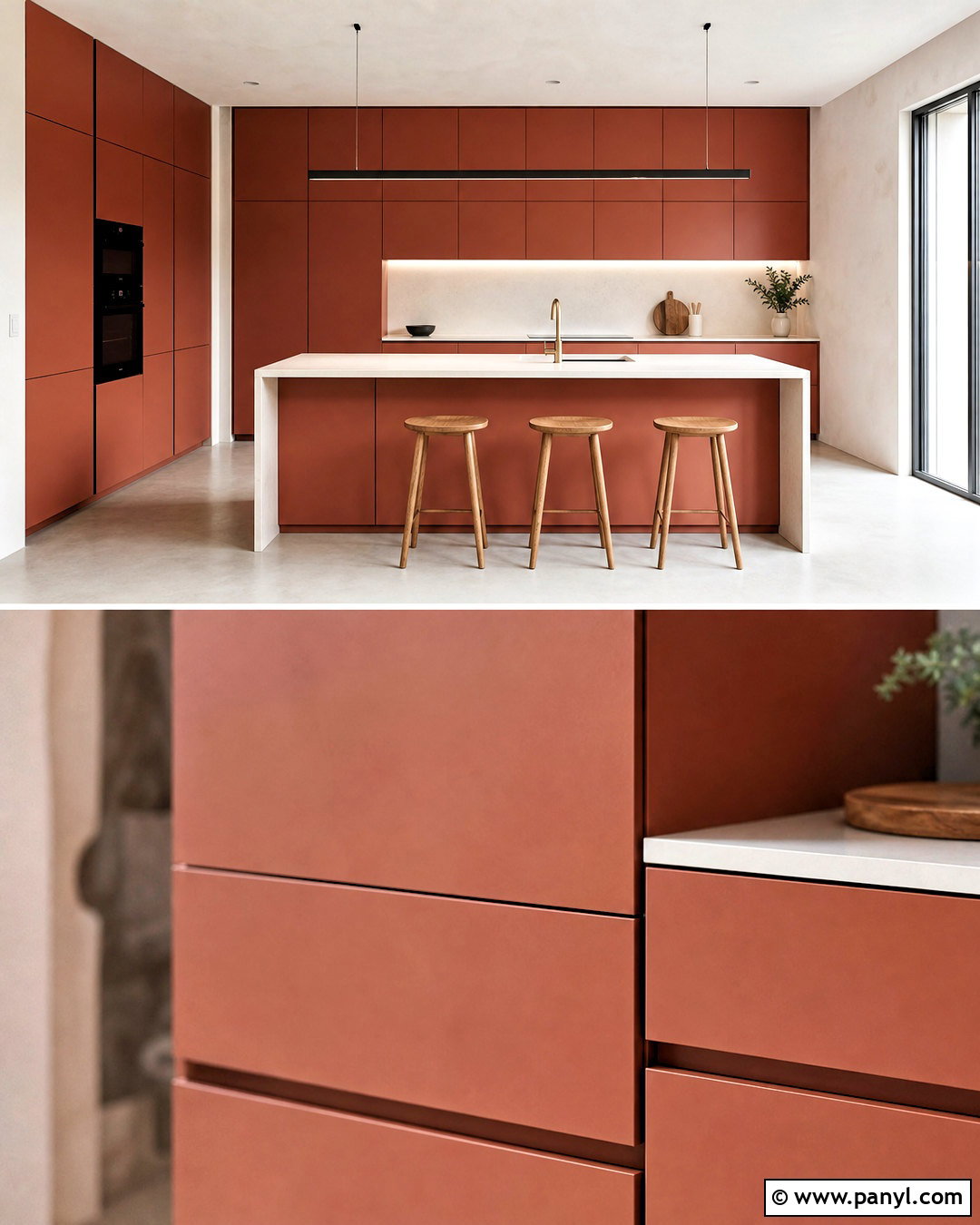
Clean geometry gives terracotta an entirely modern personality. Use handleless, flat-panel cabinets in a muted clay-red finish, with floor-to-ceiling storage forming one uninterrupted wall. Add a long island in the same color, topped with thin white quartz and a waterfall edge. A pale microcement backsplash and light concrete flooring provide calm, seamless surfaces around the cabinetry. Choose integrated appliances and a black induction cooktop to preserve the streamlined appearance. Three sculptural oak stools introduce softness without adding clutter. Instead of decorative pendants, install a slim linear fixture above the island and bright under-cabinet lighting along the work wall. Keep counters almost clear, with only a wooden bowl and one ceramic vessel. The finished kitchen feels precise and contemporary while retaining the welcoming warmth associated with earthy terracotta.
17. Farmhouse Terracotta Kitchen Cabinets
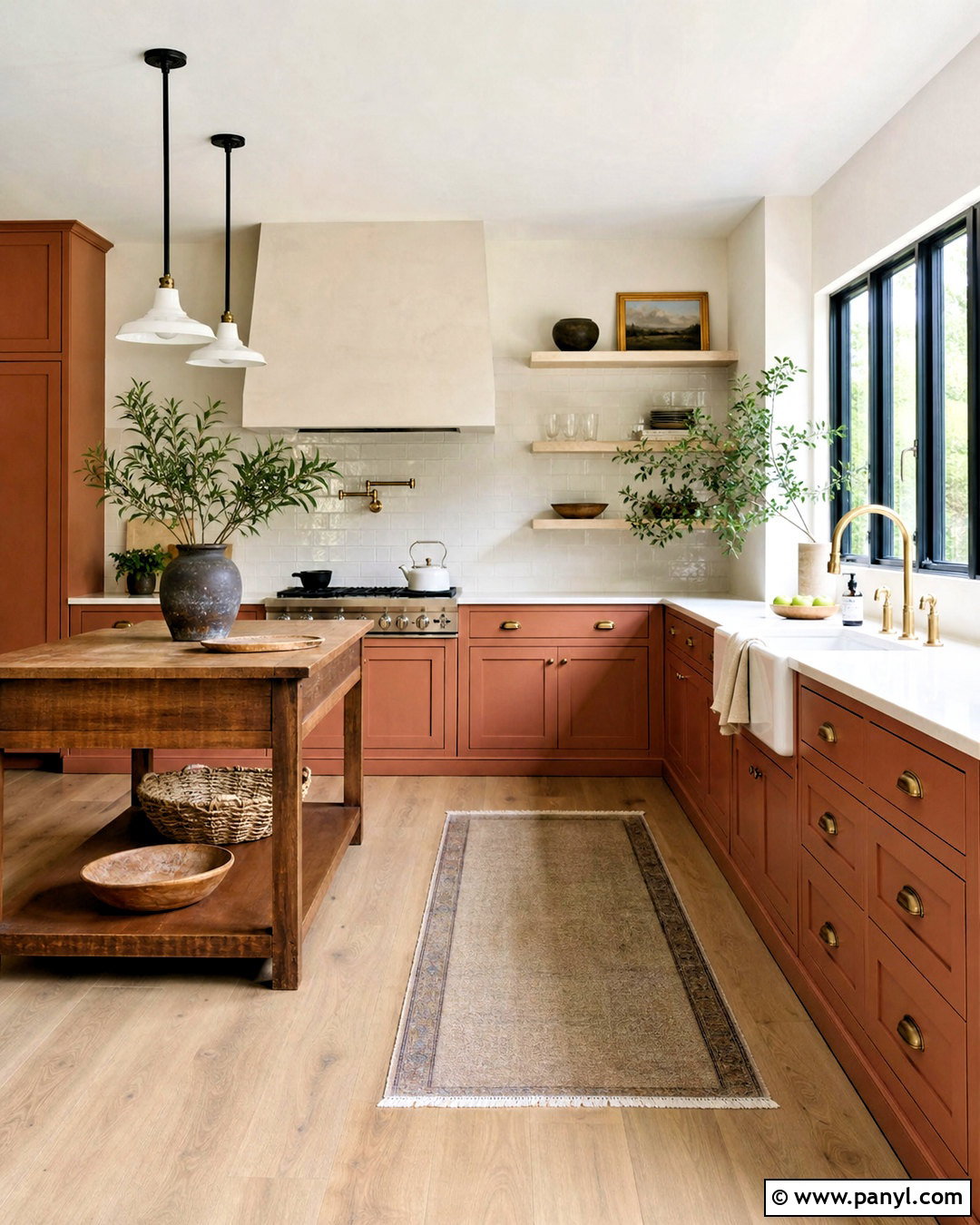
Warm terracotta can update a farmhouse kitchen while preserving its familiar, comfortable character. Select wide-frame Shaker cabinets in a slightly faded clay color, paired with creamy quartz or lightly veined stone countertops. Install a white apron-front sink beneath the window and frame the range with a simple off-white plaster hood. An ivory subway backsplash, aged brass cup pulls, and oak flooring will reinforce the traditional foundation. Add a freestanding worktable-style island in medium oak instead of a heavily built-in unit. Schoolhouse pendants, woven window shades, and striped linen textiles provide practical decoration. Avoid distressed paint and excessive vintage accessories, which can make the room feel staged. A cleaner collection of classic materials gives this complete farmhouse design a fresh appearance that can age gracefully with daily use.
18. Small Kitchen With Terracotta Cabinets
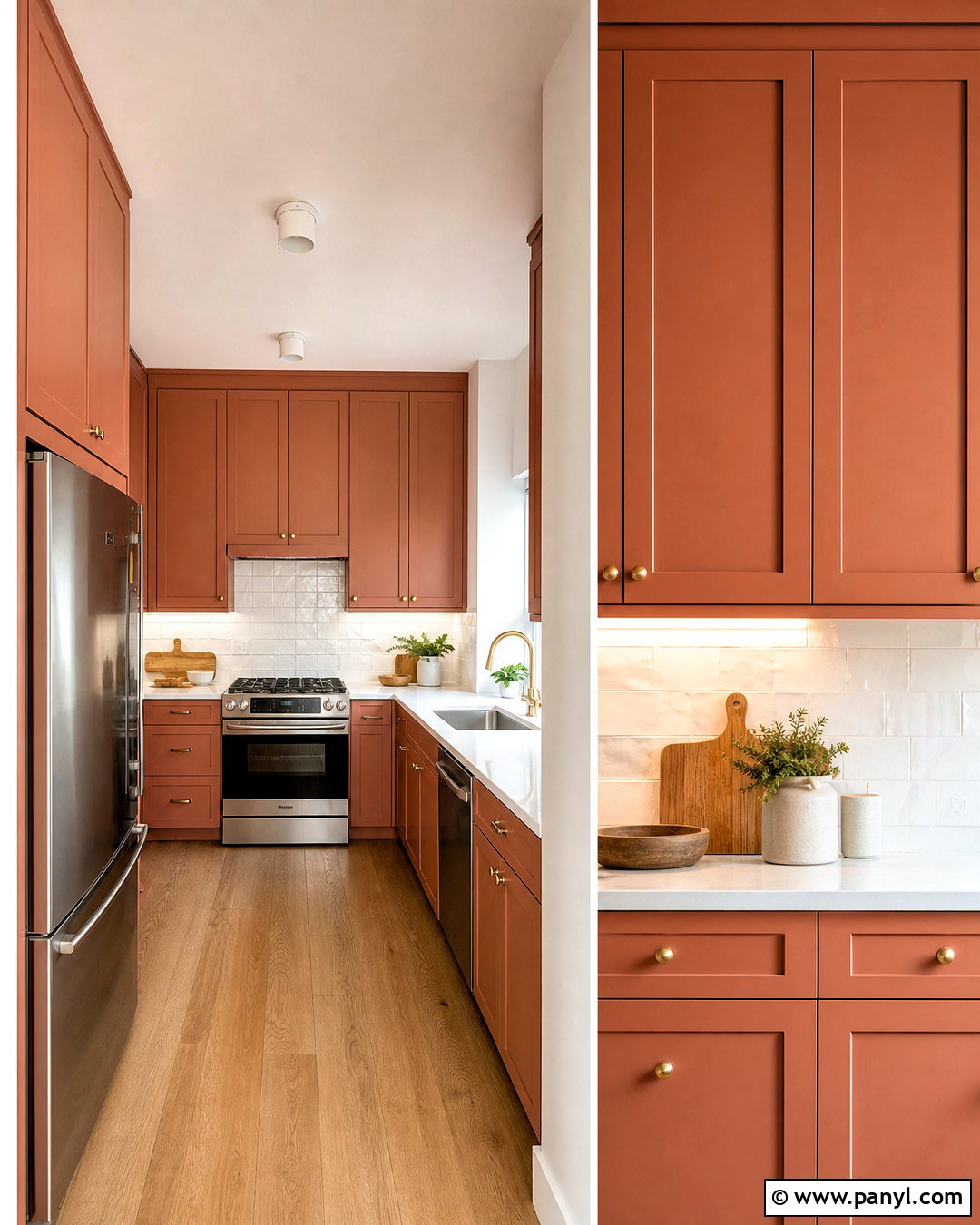
In a compact kitchen, terracotta works best when paired with bright surfaces and an efficient storage plan. Use a lighter peach-clay shade on simple flat-panel cabinets, including upper units that extend to the ceiling. White quartz counters and a glossy warm white backsplash will reflect light around the room. Choose small brass knobs rather than long pulls to keep the doors visually clean. Pale oak or light stone flooring can make the footprint feel more open. Under-cabinet lighting is essential for clear preparation areas, especially in a narrow galley layout. Include internal drawer organizers, a pullout pantry, and an integrated trash cabinet to reduce countertop clutter. One wooden board, a small herb pot, and neutral towels are enough decoration for a bright, functional kitchen that still has memorable color.
19. Terracotta Kitchen Cabinets With Wood Beams
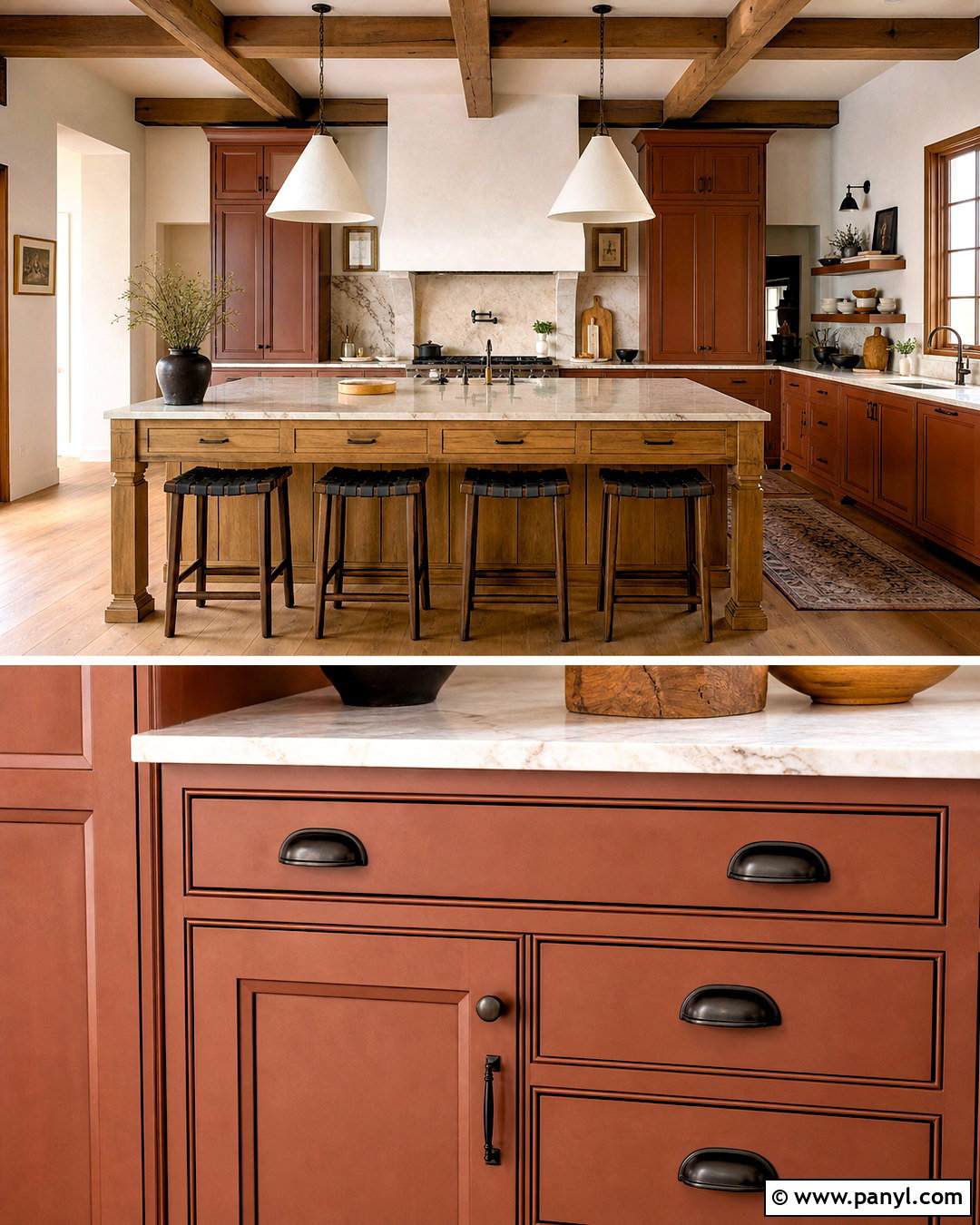
Exposed wood beams and terracotta cabinets can create an inviting rustic kitchen without sacrificing modern function. Paint the cabinetry a deep, brown-based terracotta and use warm cream quartzite or quartz for the countertops. Continue a simple cream backsplash behind a large plaster range hood. Medium oak ceiling beams should coordinate with, rather than exactly match, wide-plank flooring and the island stools. Use aged iron hardware and a dark bronze faucet for grounded contrast. A substantial oak island can provide storage, preparation space, and casual seating in the center of the room. Add large off-white pendants to brighten the work surface below the beams. Keep accessories simple and useful, including stoneware crocks, wooden boards, and linen towels, so the architectural details remain the strongest supporting features.
20. Color-Drenched Terracotta Kitchen Cabinets
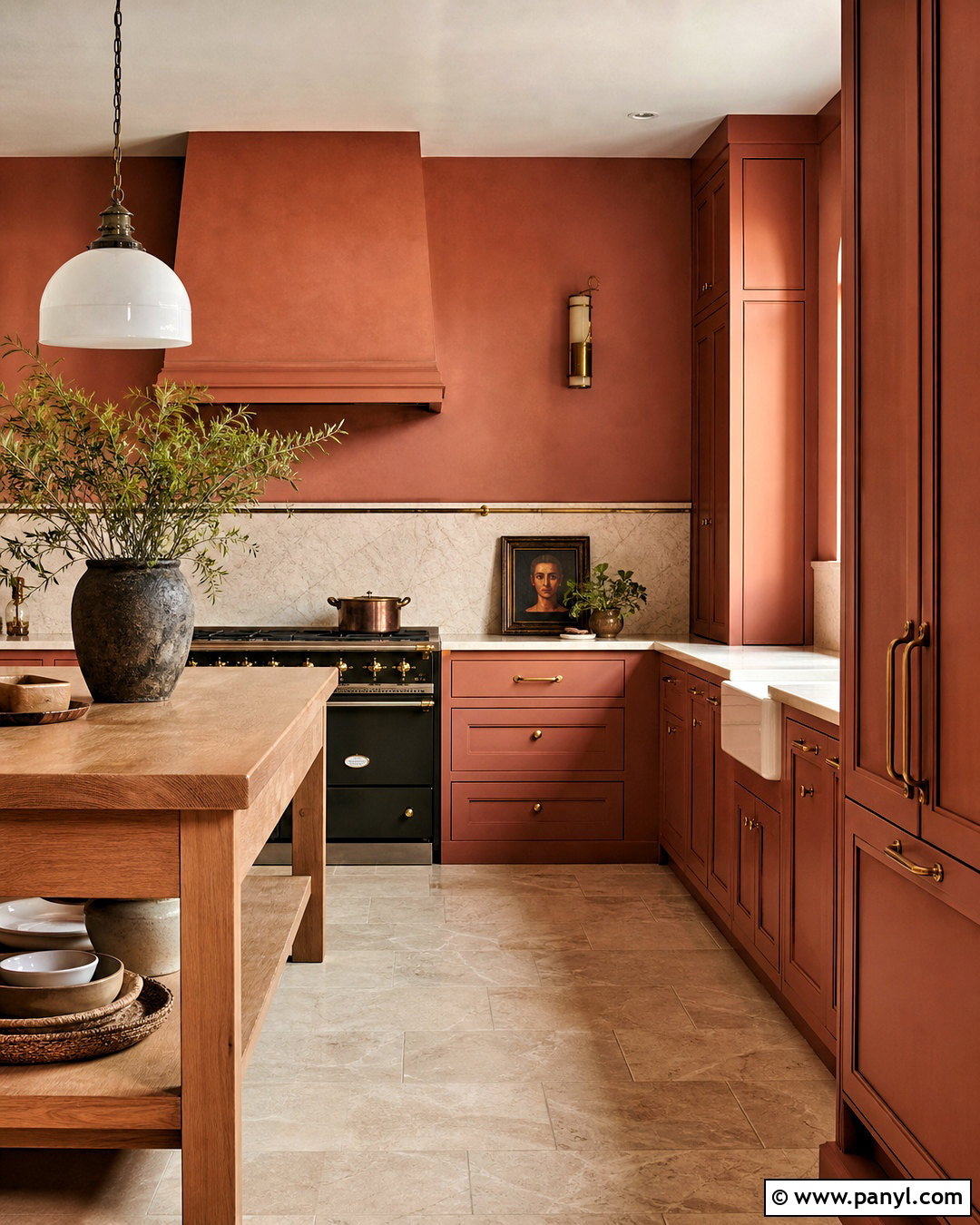
For a bold, enveloping result, carry terracotta beyond the cabinets onto the walls, trim, and range hood. Use one muted red-clay color throughout, but vary the sheen: satin on cabinetry, eggshell on walls, and a washable finish on trim. Cream marble or quartz countertops will create necessary breathing room, while a pale stone floor keeps the lower half from becoming too dark. Choose minimal aged brass hardware and matching warm metal pendants. Panel the refrigerator and dishwasher in terracotta so they blend into the continuous color. A natural oak dining table or island introduces an organic break in the scheme. Good daylight and layered artificial lighting are essential. The completed room feels immersive and confident, yet the restrained materials prevent the single-color approach from becoming visually chaotic.
Conclusion:
Terracotta kitchen cabinets can suit far more than one decorating direction. Their warm, earthy character works with streamlined modern layouts, welcoming farmhouse rooms, Mediterranean materials, and practical small kitchens. The key is to build a complete palette rather than selecting the cabinet color alone. Consider how the shade relates to countertops, backsplash tile, flooring, hardware, lighting, and nearby wood tones. Crisp white surfaces create freshness, dark stone adds drama, and sage or navy introduces controlled contrast. Test samples in your actual room before finalizing the finish because surrounding light can change the color significantly. With thoughtful balance and durable materials, terracotta kitchen cabinets can create a distinctive space that remains functional, comfortable, and inviting.

Related Ideas and Inspiration:
Leave a Reply