
Coral sits between pink, orange, and red, giving rooms warmth, energy, and a softer presence than a true primary color. Its appearance can shift from pale peach-coral to saturated red-coral, making it flexible enough for coastal, traditional, modern, bohemian, and earthy interiors. () The key is choosing supporting shades that control its mood. Cool blues create contrast, greens feel fresh, warm neutrals soften it, and deeper tones add sophistication. For a balanced room, repeat coral in several areas while allowing one quieter color to cover the largest surfaces. The following complete looks include practical paint, furniture, textile, material, and accent combinations, helping you confidently recreate these 20 coral color palette ideas.

1. Coral And Navy Living Room
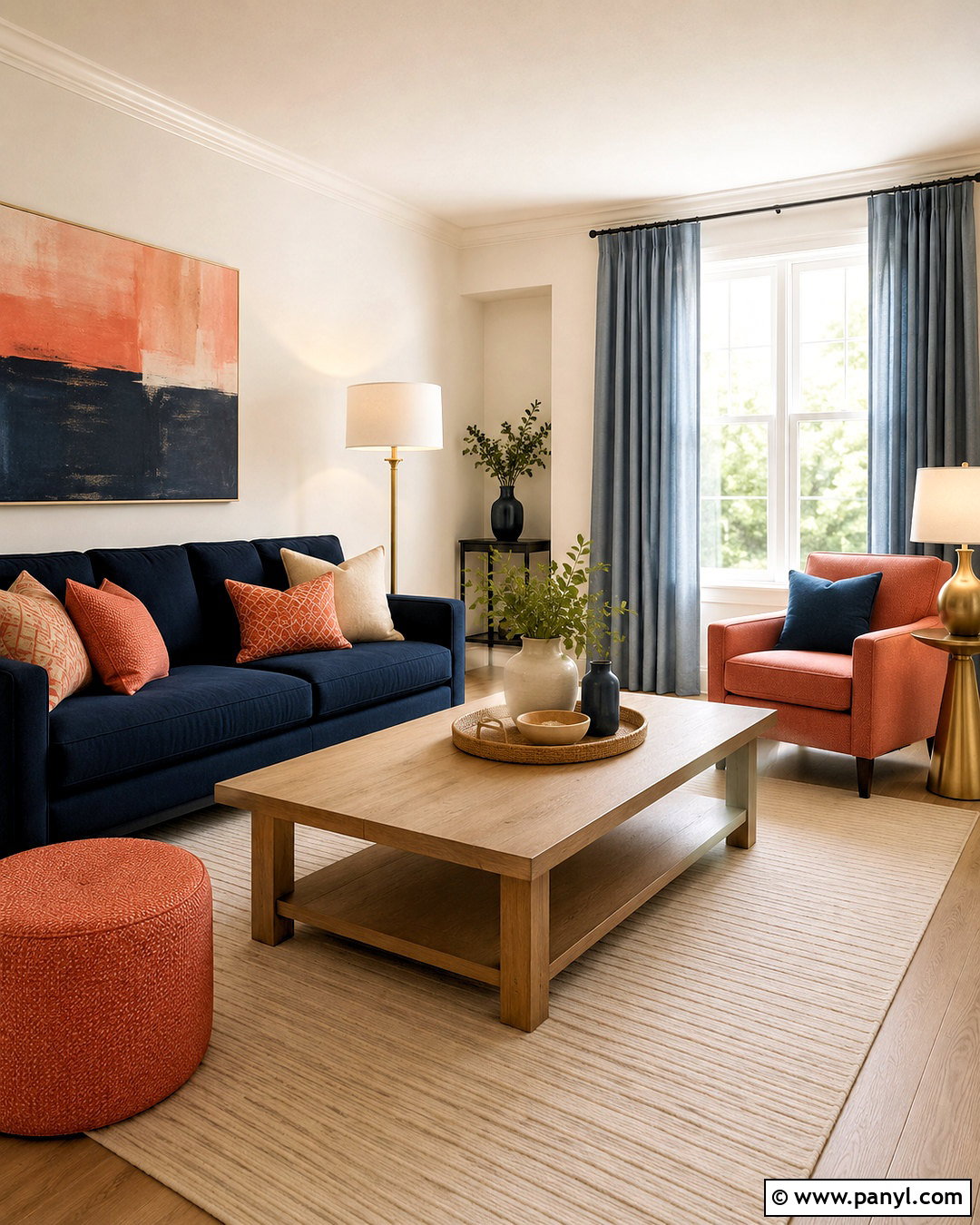
Coral and navy create a strong yet comfortable living room palette. Paint the walls warm white, then anchor the seating area with a deep navy sofa and a muted coral armchair. A natural oak coffee table keeps the darker blue from feeling heavy. Repeat coral through patterned pillows, ceramic lamps, and one large artwork rather than spreading tiny accents everywhere. Choose an ivory rug with thin navy lines to connect the furniture without adding visual clutter. Brushed brass lighting brings warmth, while pale blue-gray curtains soften the contrast around the windows. Keep shelves mostly neutral with white pottery, woven baskets, and medium-toned wood. This balanced combination works especially well in bright rooms where navy needs plenty of natural or layered light.
2. Coral And Sage Green Bedroom
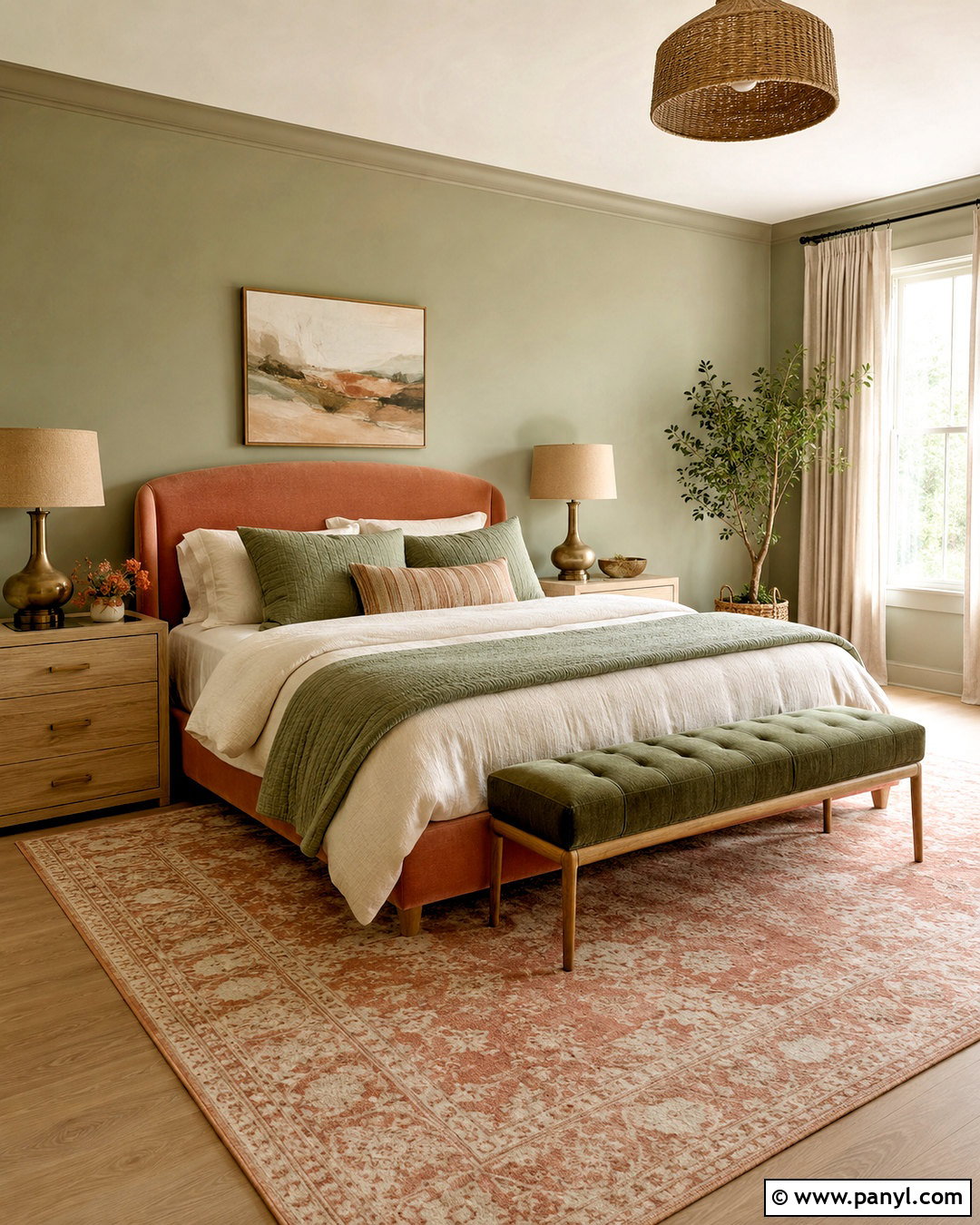
Imagine waking up in a room that feels fresh, warm, and quietly connected to nature. Use soft sage green on the walls, warm ivory for the ceiling and trim, and dusty coral on the upholstered headboard. Natural linen bedding can form the neutral foundation, layered with coral pillowcases, a sage quilt, and one botanical-print lumbar pillow. Add pale oak nightstands, woven shades, and aged brass lamps for an organic finish. A cream wool rug will keep the bedroom light while balancing the colorful furniture. Bring in deeper olive through a bench or ceramic planter so the scheme has dimension. Choose muted versions of both colors rather than highly saturated shades, creating a restful palette that remains colorful without becoming too stimulating.
3. Coral And Teal Dining Room
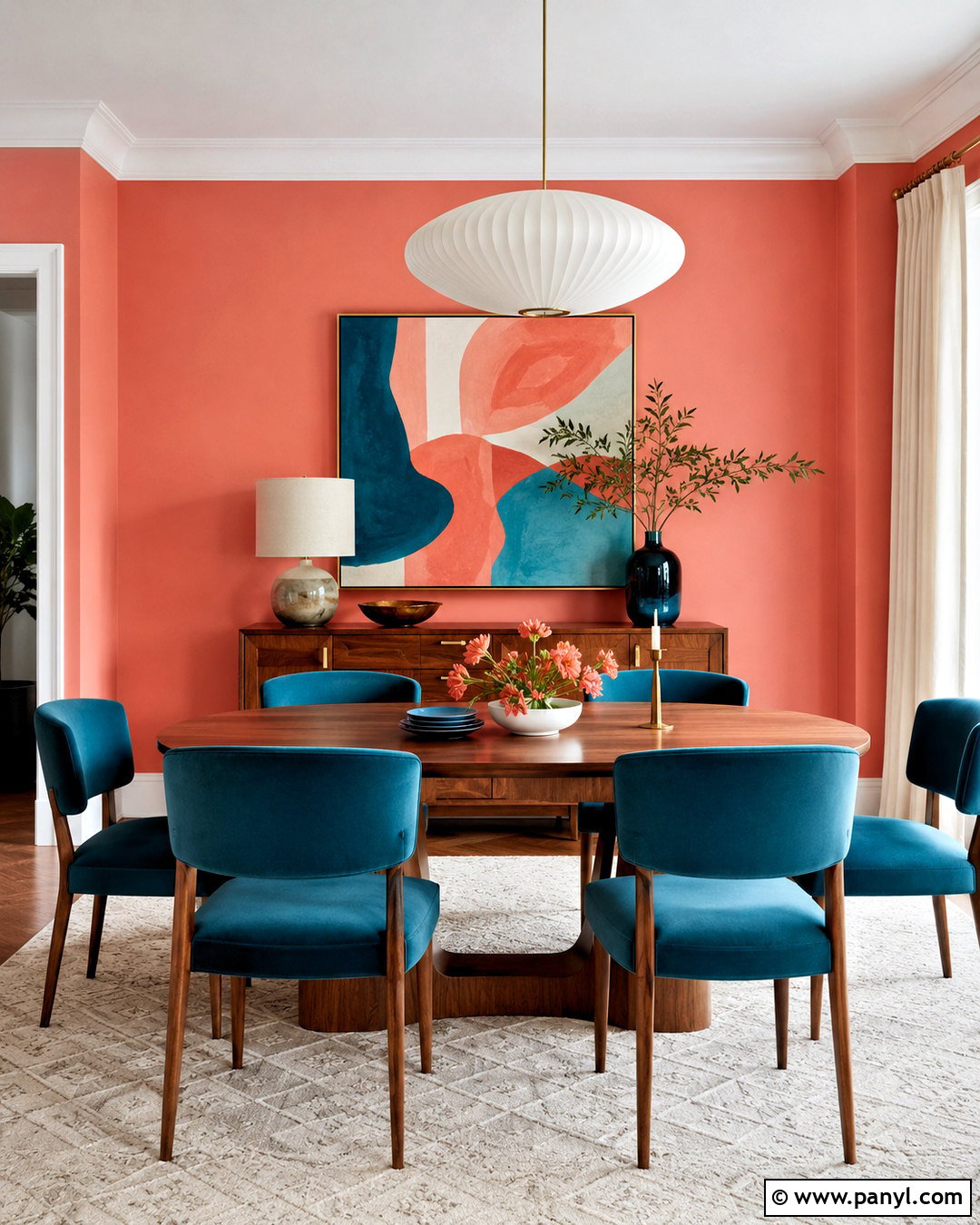
Coral and teal can turn an ordinary dining area into a cheerful, polished gathering space. Cover the walls in a pale coral paint, then introduce deep teal through a built-in cabinet, buffet, or upholstered dining chairs. A medium walnut table provides a dark natural anchor between the two saturated colors. Use an off-white pendant light, simple cream curtains, and a light neutral rug to give the bold shades room to breathe. Small brass details on cabinet hardware and candleholders add a refined finish. For artwork, select an abstract piece containing coral, teal, cream, and a touch of ochre. Keep the tableware mostly white with teal napkins and coral glassware, allowing the complete palette to feel coordinated rather than themed or overly tropical.
4. Coral And Cream Coastal Bedroom
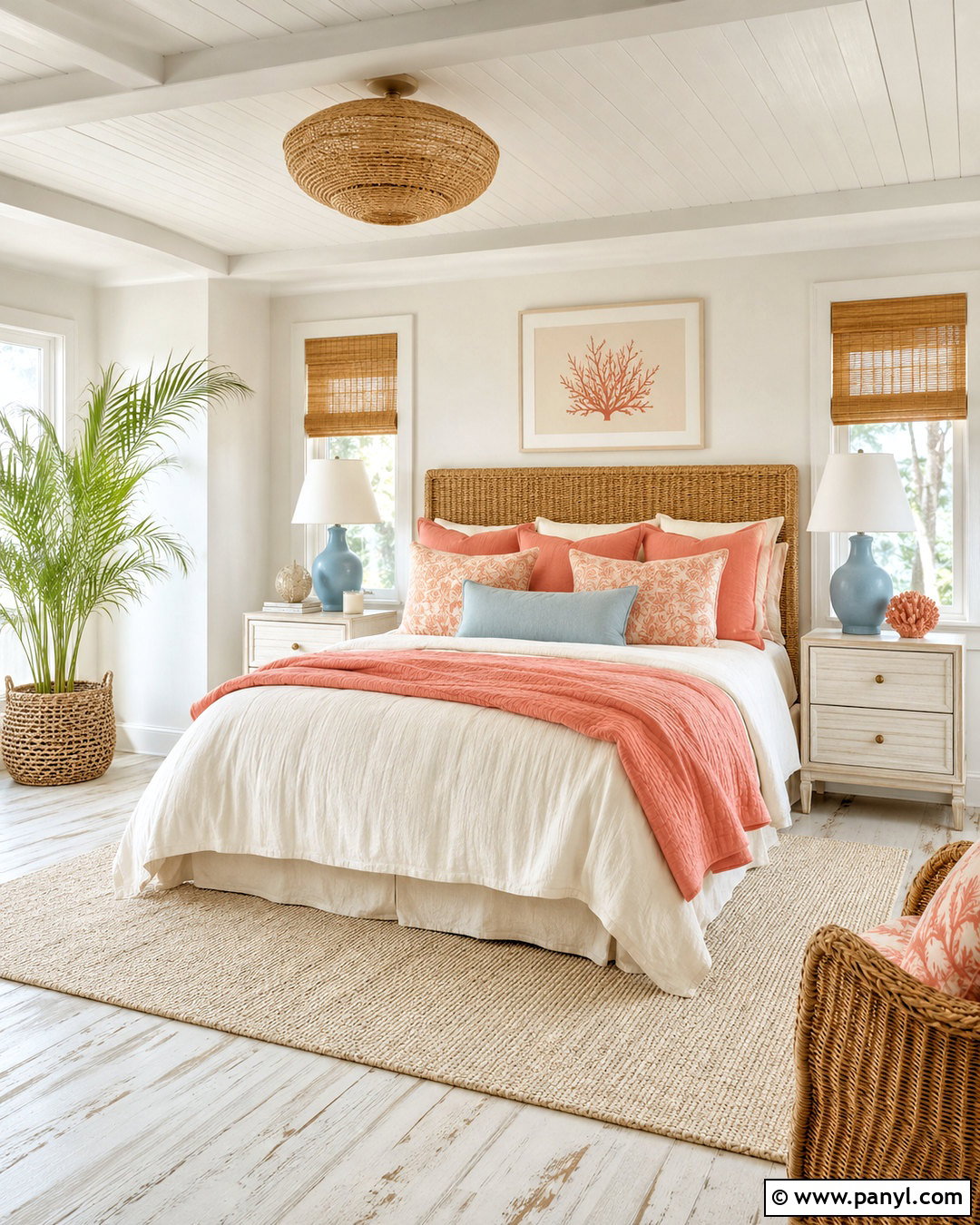
Soft colors and breezy materials give this coral coastal bedroom a relaxed character without relying on obvious beach decorations. Begin with creamy white walls, pale oak or whitewashed flooring, and a woven rattan headboard. Dress the bed in crisp ivory linen with coral-striped pillows, a faded coral coverlet, and a light sand-colored throw. Add powder blue through bedside lamps and one upholstered chair, creating a subtle connection to the coast. Natural-fiber shades and airy white curtains filter the sunlight. Use matte white nightstands or weathered wood pieces for an unfussy finish. A large cream-and-coral rug can define the sleeping area. Finish with simple landscape artwork, clear glass accents, and one leafy plant instead of shells, anchors, or heavily nautical accessories.
5. Coral And Charcoal Modern Office
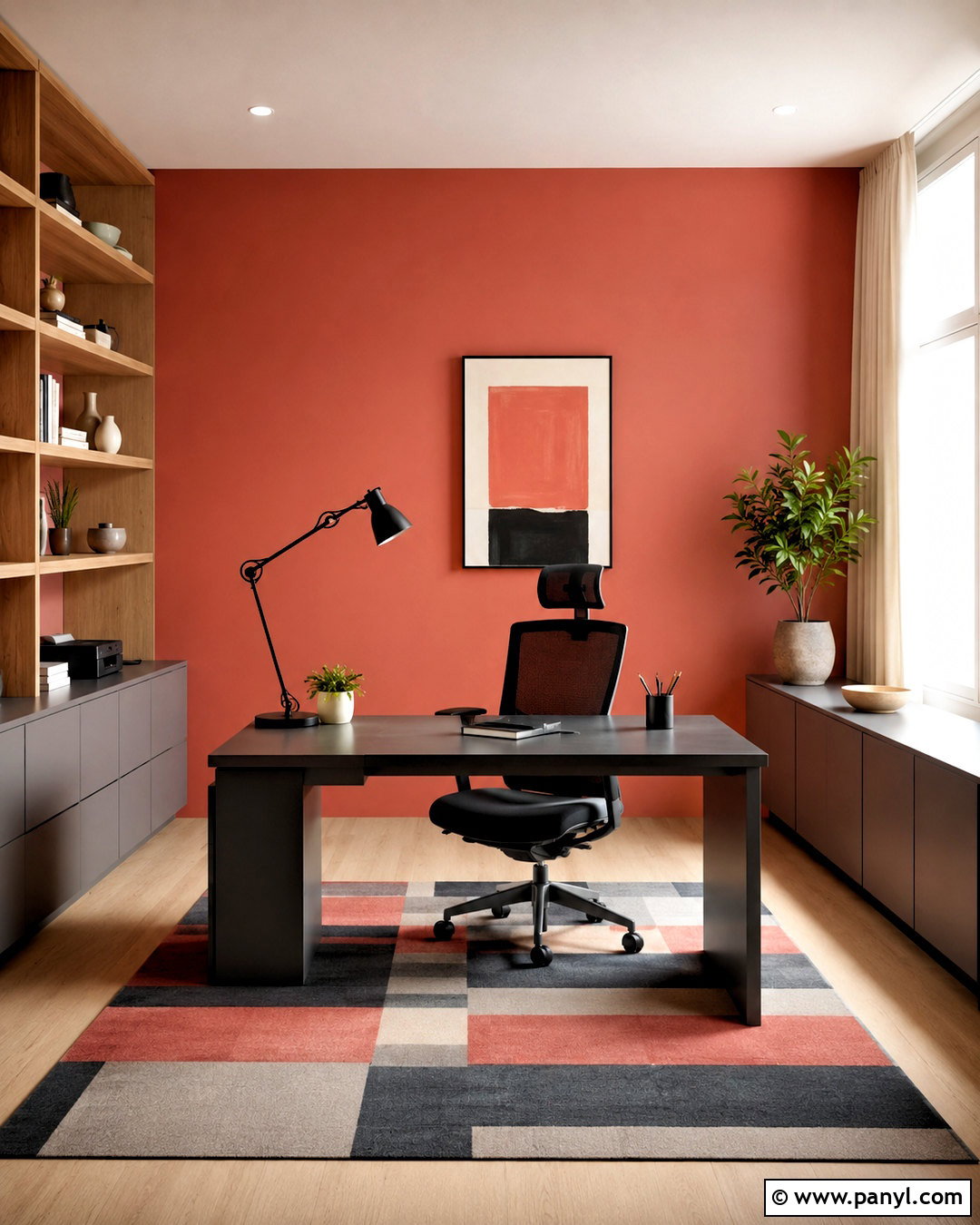
Need an energetic workspace that still looks focused and professional? Paint the wall behind the desk a rich coral and keep the remaining walls soft white. Choose a streamlined charcoal desk, a black ergonomic chair, and low charcoal storage cabinets to ground the warmer color. Pale oak shelving will prevent the darker furnishings from making the office feel severe. Add a flat-woven gray rug, matte black task lighting, and cream curtains with a subtle geometric pattern. Repeat coral in only two or three smaller places, such as a desk organizer, framed print, and seat cushion. White accessories maintain a clean surface, while one tall plant brings in natural green. The finished office feels lively enough for creative work but structured enough for video calls and daily concentration.
6. Coral And Mustard Family Room
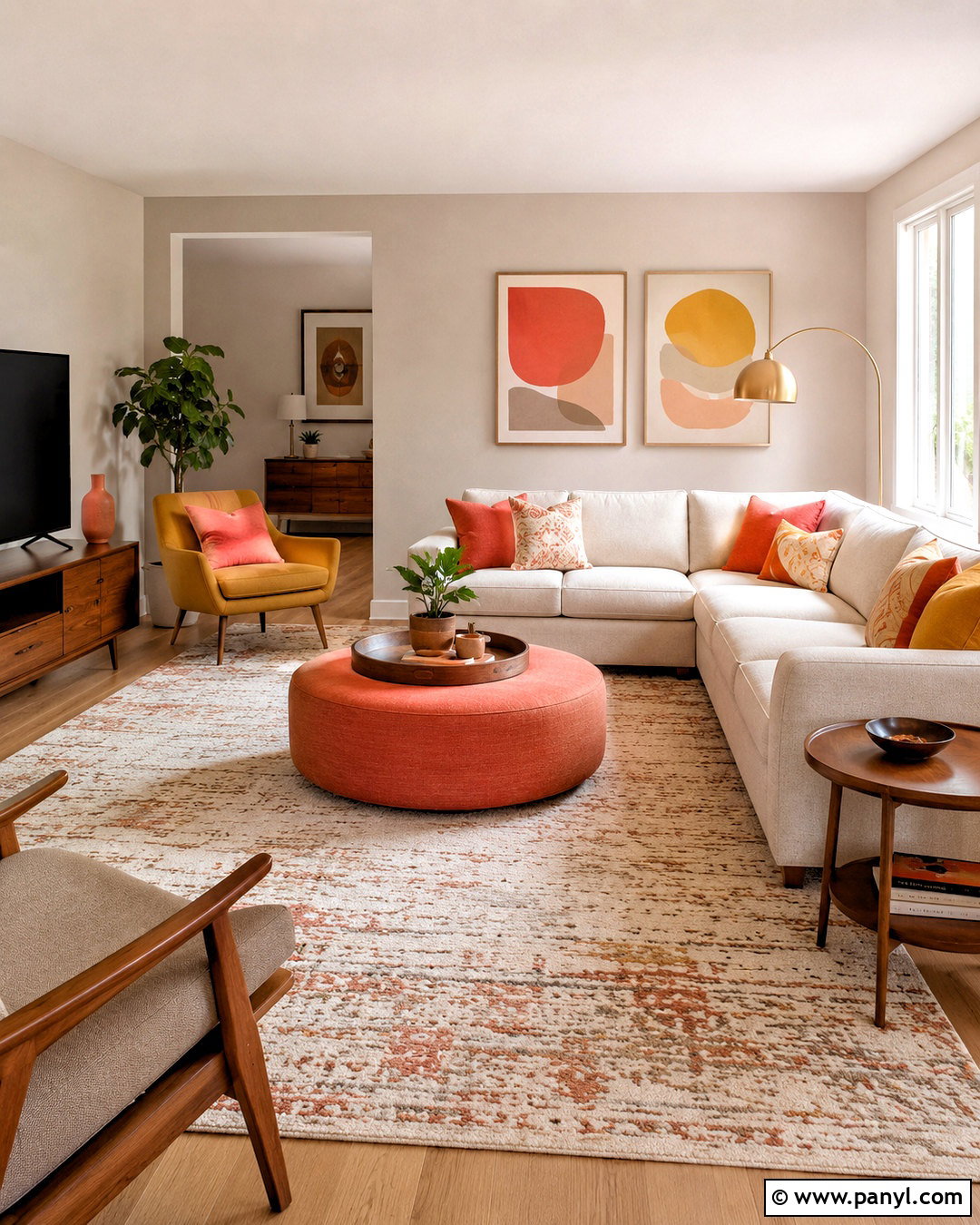
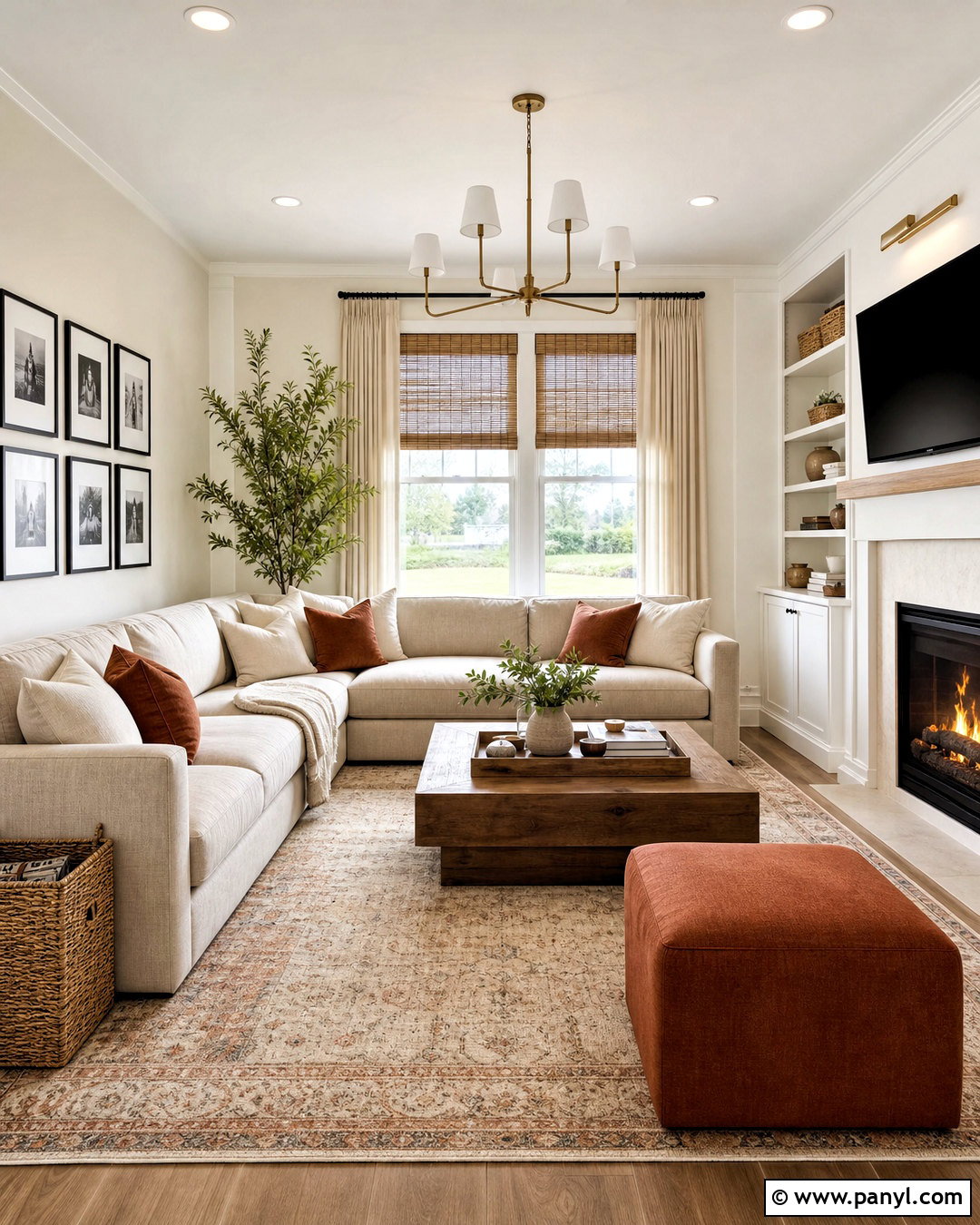
A lively family room benefits from colors that feel warm, forgiving, and easy to layer. Start with light greige walls and a practical oatmeal sectional. Add a substantial coral ottoman as the central feature, then introduce mustard yellow through curtains, patterned pillows, and a cozy reading chair. Walnut side tables and an aged brass floor lamp reinforce the palette’s warmth. Use a large cream rug with small coral, mustard, and brown details to hide everyday wear while connecting the furniture. A low wood media cabinet provides accessible storage for games, books, and electronics. Keep the largest upholstered piece neutral so the room can evolve over time. This cheerful combination suits busy spaces because the color appears intentional without overwhelming the comfortable, functional layout.
7. Coral And Lavender Nursery
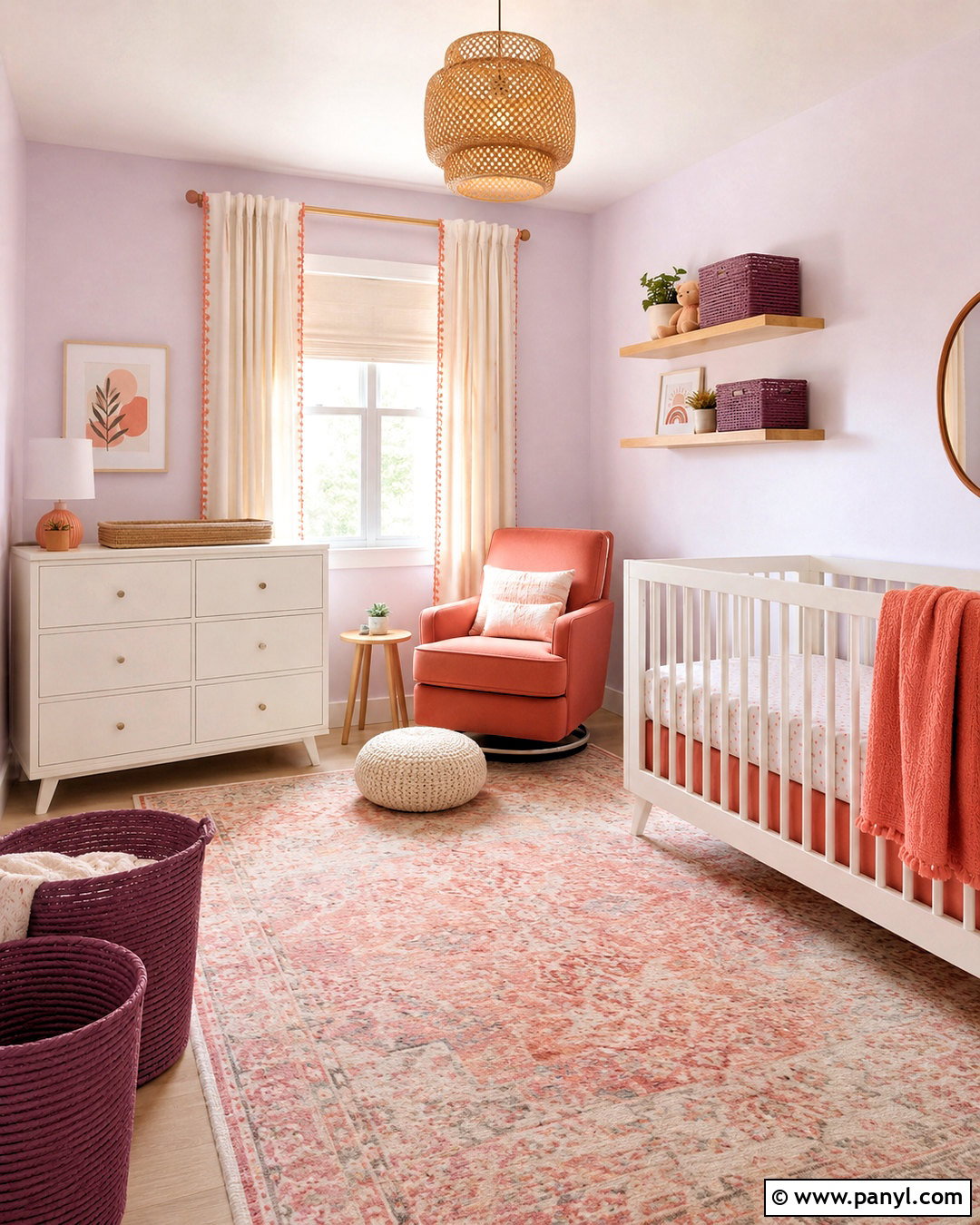
Coral and lavender form a gentle nursery palette that feels playful without becoming overly sweet. Paint the walls a very pale lavender and choose a warm white crib, dresser, and trim. A muted coral glider can serve as the room’s main color statement, supported by coral edging on the curtains and a washable area rug. Add deeper plum sparingly through storage baskets or one framed illustration to give the pastel colors definition. Natural maple shelving and a woven ceiling light introduce warmth and texture. Keep crib bedding simple and fitted, using white with a small lavender pattern. A cream blackout shade provides practical light control behind decorative curtains. The result is a calm, cohesive room that can easily transition into a child’s bedroom as furniture and accessories change.
8. Coral And Terracotta Sunroom
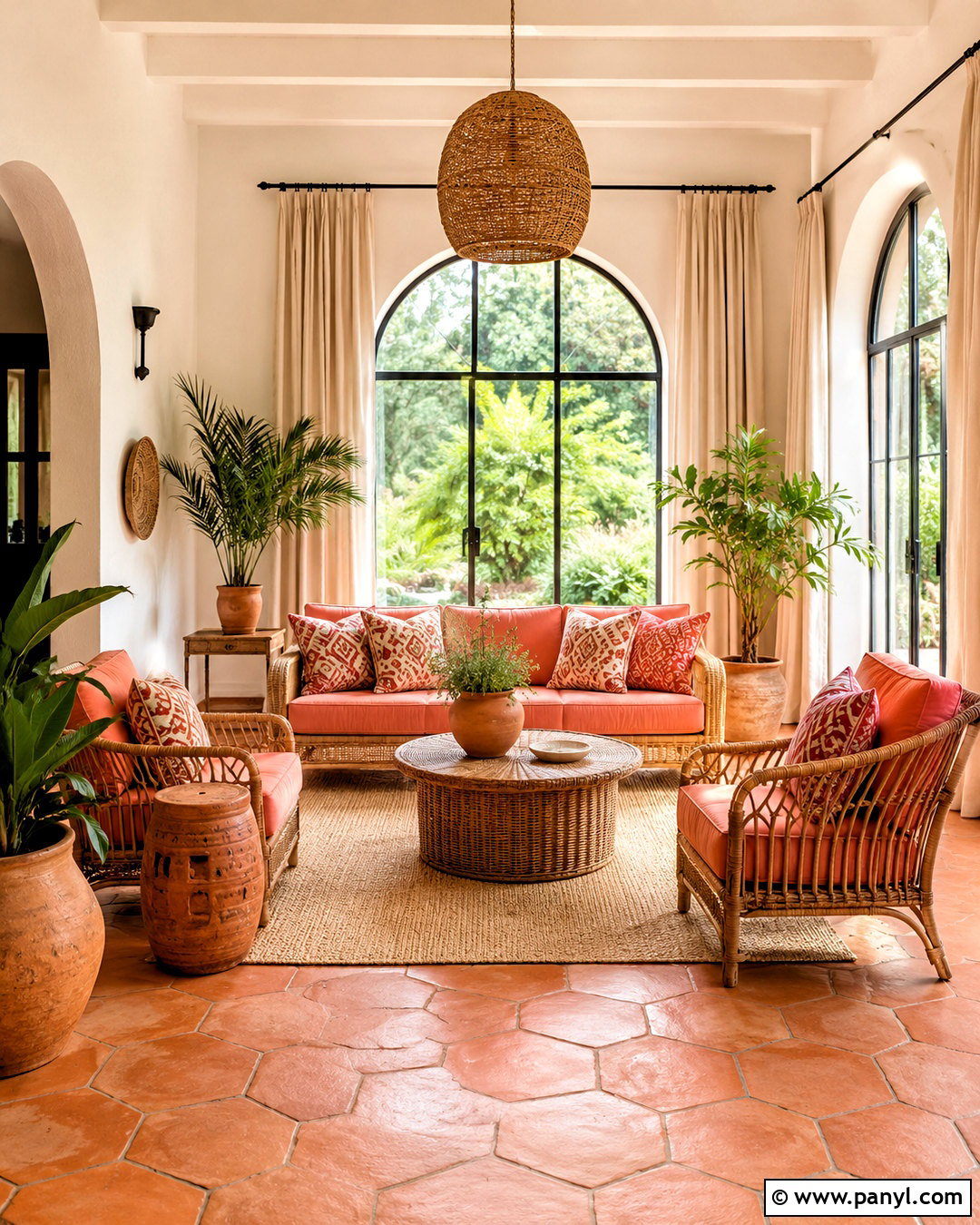
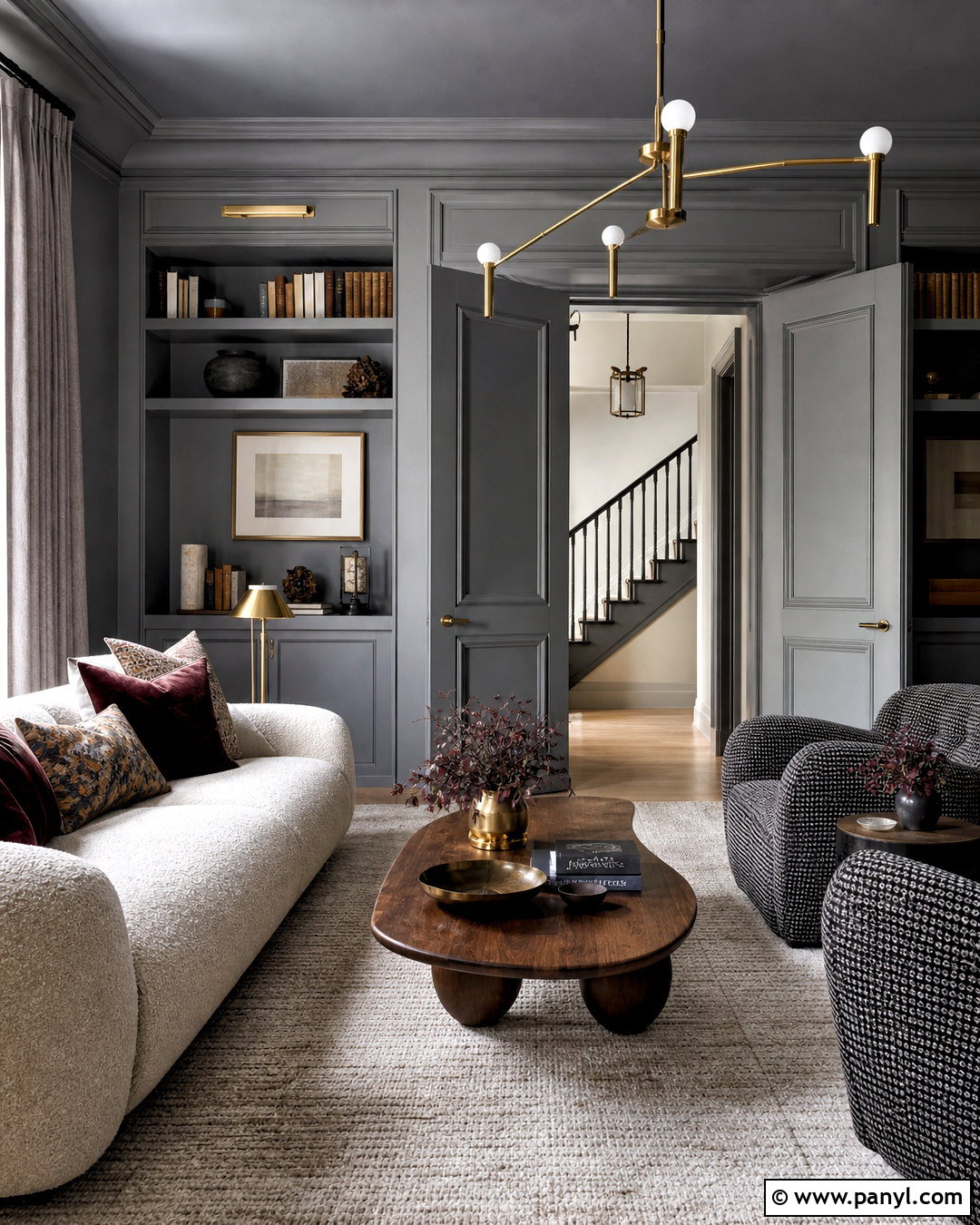
Sunlight brings out the earthy side of coral, especially when it is layered with terracotta and natural materials. Use warm white walls and terracotta floor tile as the foundation of the sunroom. Arrange a rattan sofa and two lounge chairs around a low wood table, adding coral seat cushions and clay-colored patterned pillows. Linen curtains in sandy beige soften the windows without blocking too much light. Fill substantial ceramic planters with leafy greenery, choosing olive and deep forest tones that balance the warm surfaces. A woven jute rug adds comfort while allowing the tile border to remain visible. Finish with rust-colored pottery and matte black lantern-style lighting. This complete scheme feels collected and garden-focused, with coral acting as a bridge between soft textiles and fired-clay finishes.
9. Coral And Cobalt Blue Kitchen
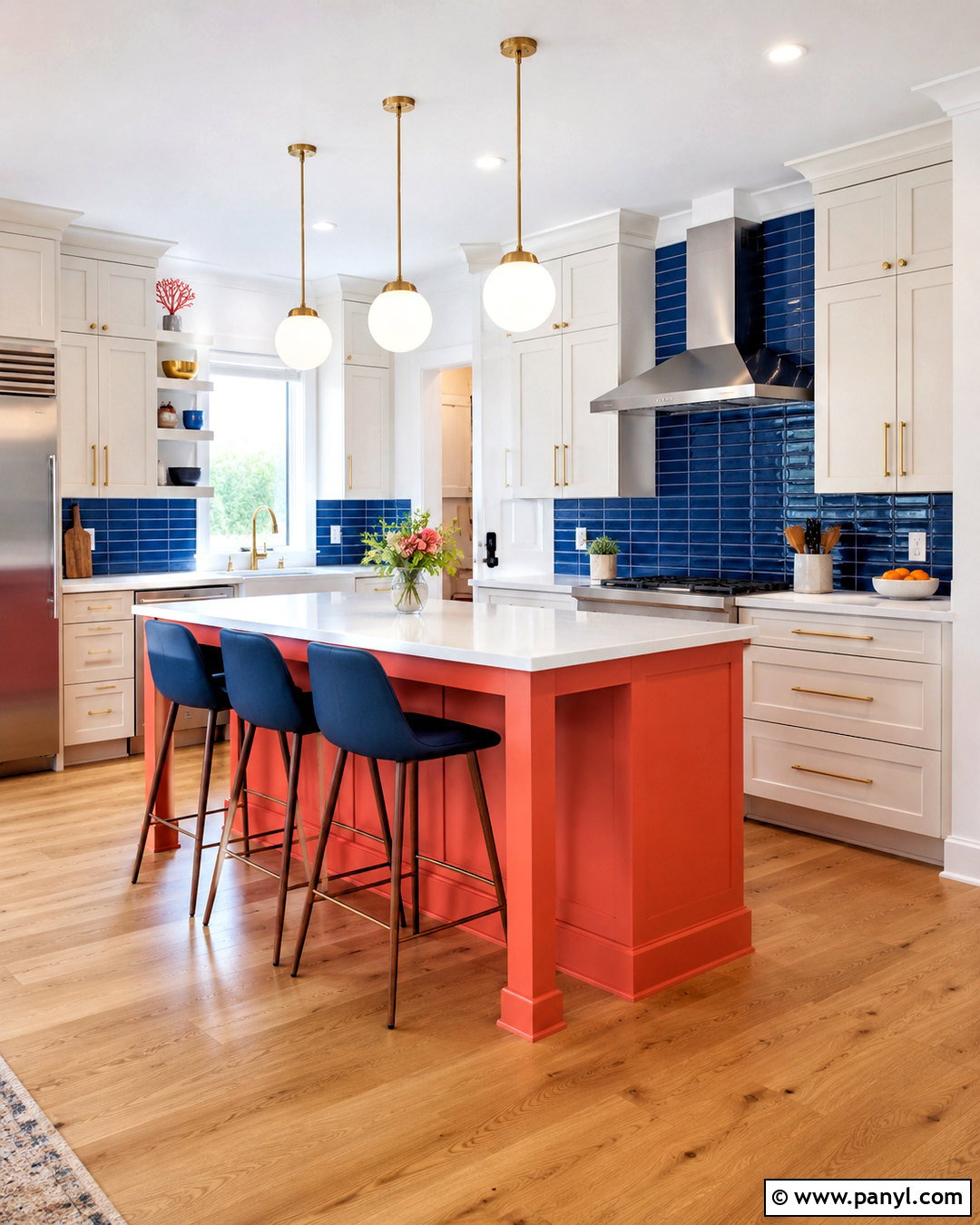
For a kitchen with confident color, pair vivid coral with clean cobalt blue and plenty of white. Paint the island coral while keeping the perimeter cabinets warm white. Introduce cobalt through a glazed tile backsplash, counter stools, or a compact pantry door. White quartz countertops will separate the two strong colors and make everyday cleaning areas feel crisp. Choose medium oak flooring for warmth and brushed nickel hardware for a quieter metallic finish. Simple globe pendants prevent the palette from looking too busy. Repeat both colors in controlled details, such as blue cookware and a coral runner, but leave countertops mostly open. This layout works best when coral covers one significant feature and cobalt appears in smaller repeated areas, allowing both shades to feel deliberate rather than competitive.
10. Coral And Aqua Bathroom
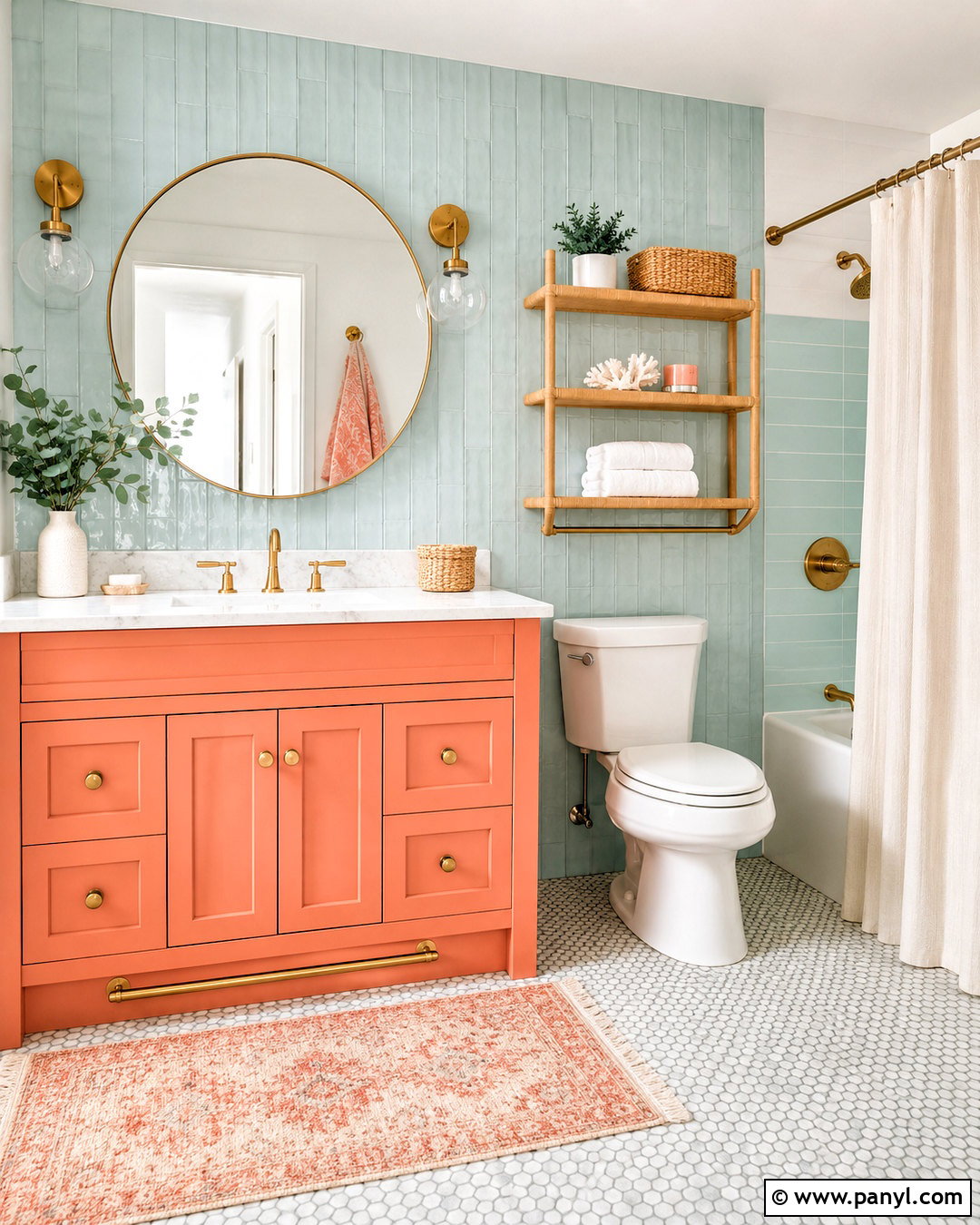
A coral and aqua bathroom can feel bright and refreshing when the surfaces are carefully balanced. Install pale aqua tile on the lower half of the walls and use warm white paint above it. Choose a coral vanity with simple slab-front doors, topped by white quartz or marble-look stone. Brushed brass faucets and mirror frames add warmth without competing with the colorful cabinetry. Keep the floor grounded with small white and gray mosaic tile. White towels, a cream shower curtain, and clear glass accessories provide visual breathing room. Repeat aqua in a small stool or framed print, then add one natural wood shelf for texture. The finished bathroom has a playful coastal quality, but its clean lines and restrained accessories keep it polished and suitable for everyday use.
11. Coral And Blush Bedroom
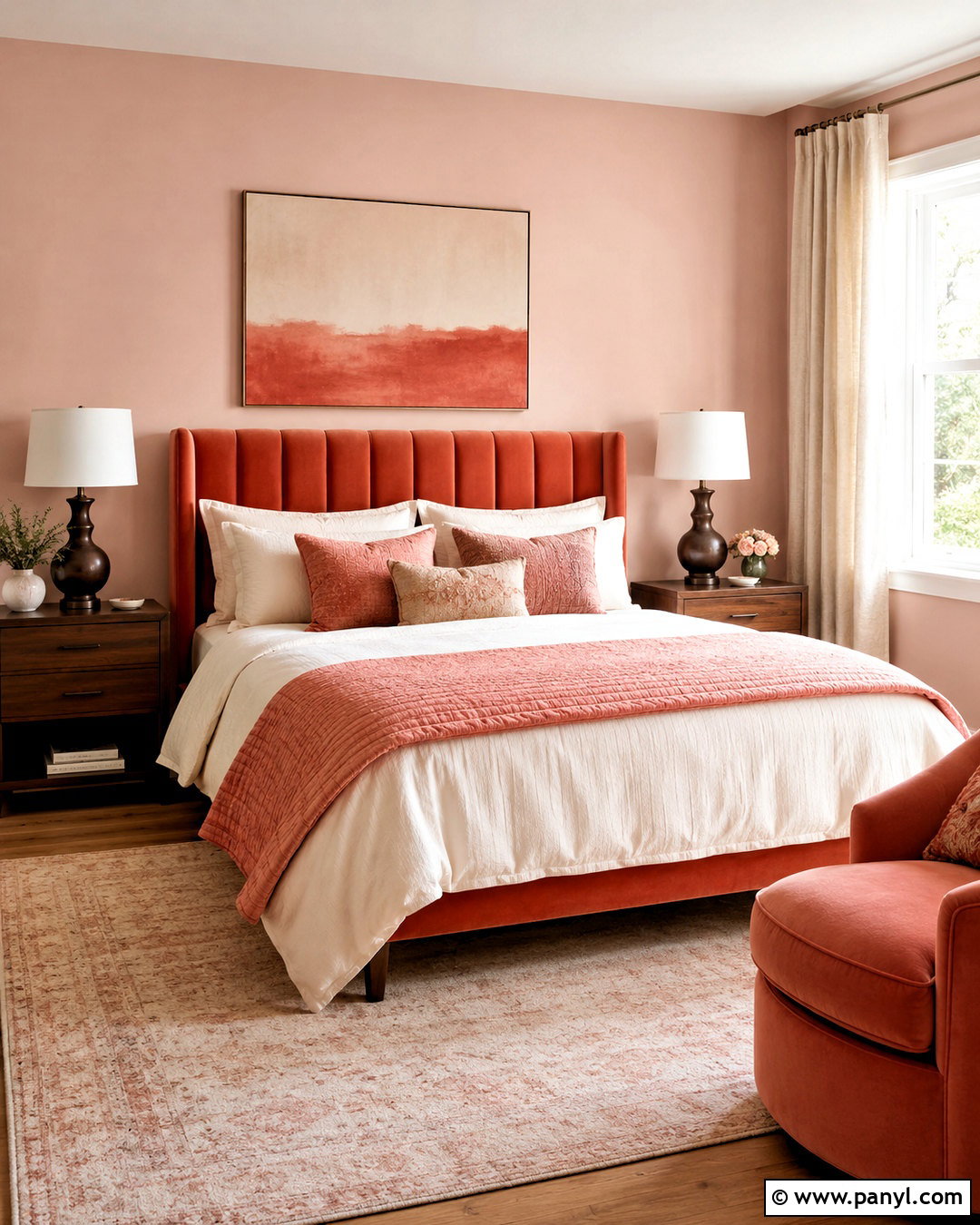
Layering coral with blush produces a warm tonal bedroom that can still feel grown-up and restful. Cover the walls in pale blush, then select a deeper coral velvet headboard as the central focal point. Use ivory bedding, a dusty rose quilt, and pillows that gradually move from cream to pink-coral. Walnut nightstands and dark bronze lamps provide necessary contrast, preventing the room from appearing washed out. Choose a large beige rug with a subtle faded pattern and hang oatmeal linen curtains from dark rods. Artwork can introduce small amounts of burgundy and warm brown for added depth. Keep decorative objects simple and sculptural. Varying the lightness, texture, and intensity of related colors creates a sophisticated room instead of a flat, overly matched pink scheme.
12. Coral And Olive Green Dining Room
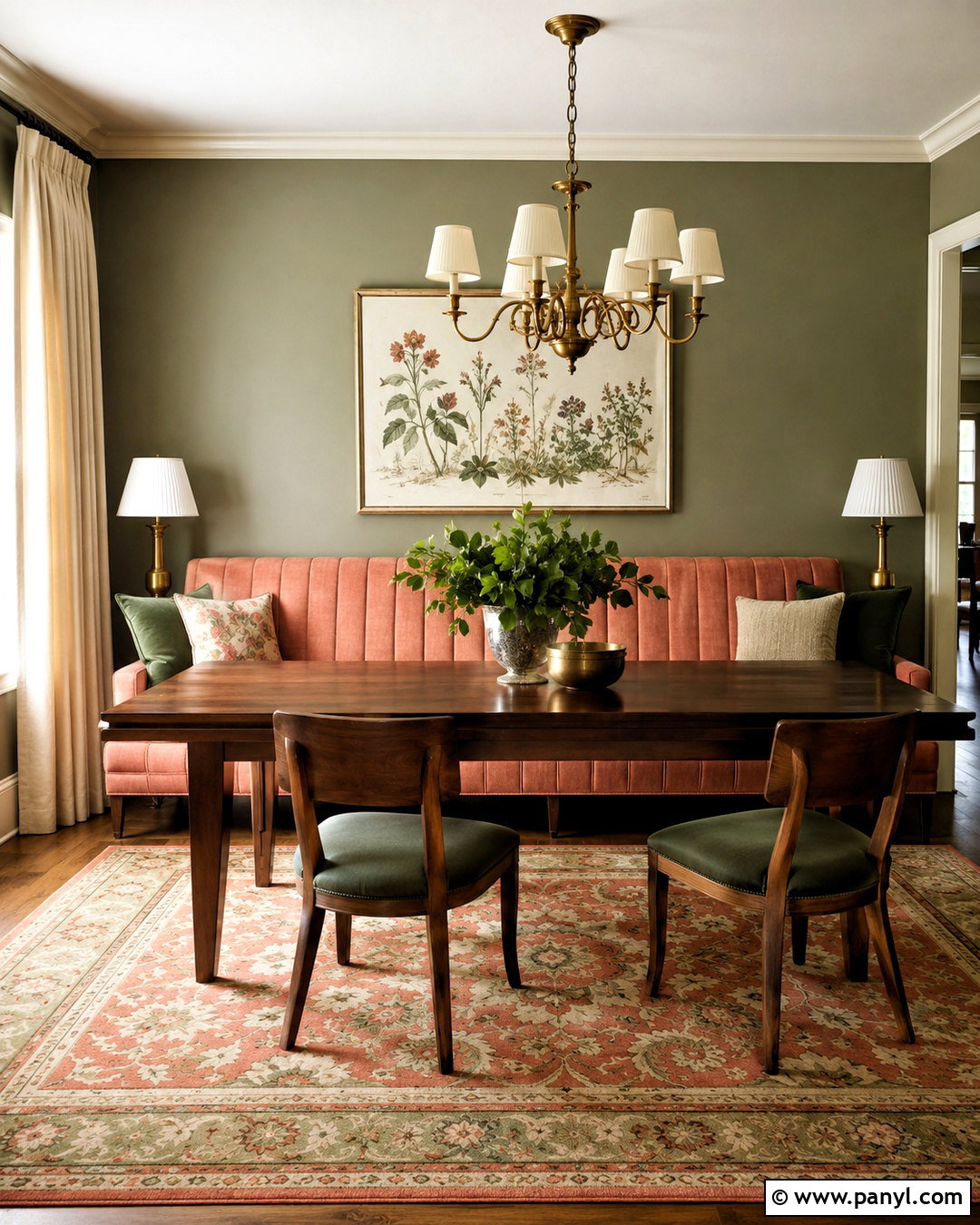
Earthy olive green gives coral a grounded, mature quality that works beautifully in a dining room. Paint the walls a soft olive and use a muted coral fabric on the dining chairs or built-in banquette. A dark walnut table establishes contrast, while cream curtains and an off-white ceiling prevent the room from becoming too enclosed. Add antique brass lighting and simple ceramic tableware in cream, rust, and green. A patterned wool rug can combine coral, olive, tan, and brown beneath the table, making the furniture arrangement feel unified. Include botanical artwork with dark wood frames, but avoid filling every wall. This palette looks strongest with natural finishes and slightly softened colors, creating a welcoming room that feels colorful, established, and appropriate for both everyday meals and special gatherings.
13. Coral Black And White Entryway
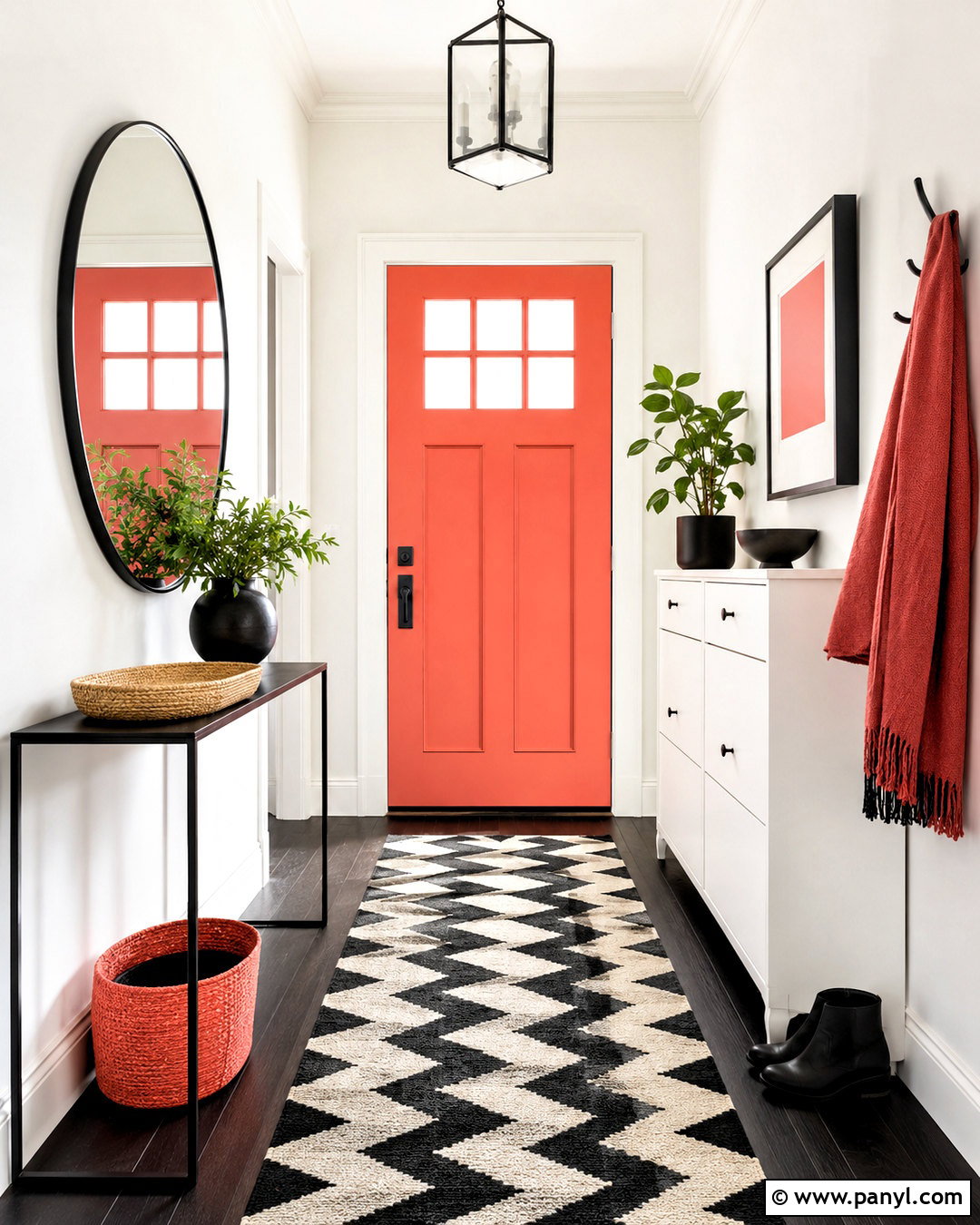
Crisp black and white details give coral a graphic, contemporary edge in a small entryway. Paint the front door or interior console wall a saturated coral, while keeping adjacent walls and trim bright white. Place a slim matte black console beneath a round black-framed mirror. A white lamp, woven tray, and coral ceramic bowl provide useful landing spots without crowding the surface. Choose a black-and-ivory runner with a simple geometric pattern, then add closed shoe storage in white or pale wood. One leafy plant softens the sharp contrast and introduces natural movement. Black hooks and a compact ceiling fixture help repeat the dark accents. The finished entrance feels bold and memorable, yet the limited palette keeps the small space organized, practical, and visually open.
14. Coral And Sky Blue Guest Room
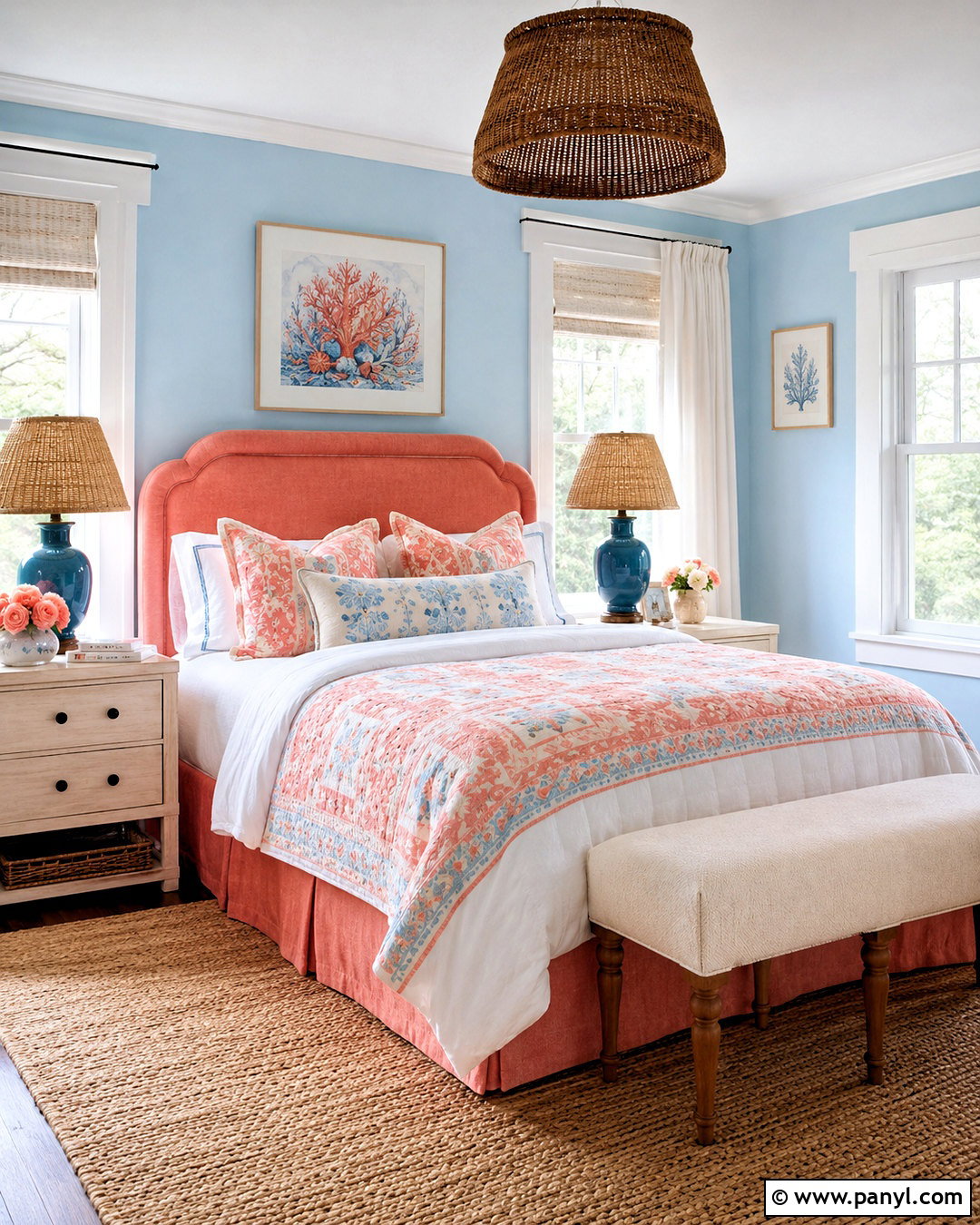
Coral and sky blue create an inviting guest room that feels cheerful from morning to evening. Use soft sky blue on the walls and place a coral-painted or upholstered bed against the longest uninterrupted wall. Crisp white bedding keeps the arrangement fresh, while a coral-and-blue block-print quilt adds pattern without requiring many accessories. Choose white oak nightstands, ceramic blue lamps, and natural woven shades. A cream upholstered bench can provide a useful place for luggage at the foot of the bed. Ground the space with a pale beige rug containing small faded blue details. White curtains, simple framed landscapes, and one coral vase complete the scheme. Balanced amounts of warm coral and cool blue make the bedroom feel comfortable across different seasons rather than tied to summer alone.
15. Coral And Chocolate Brown Living Room
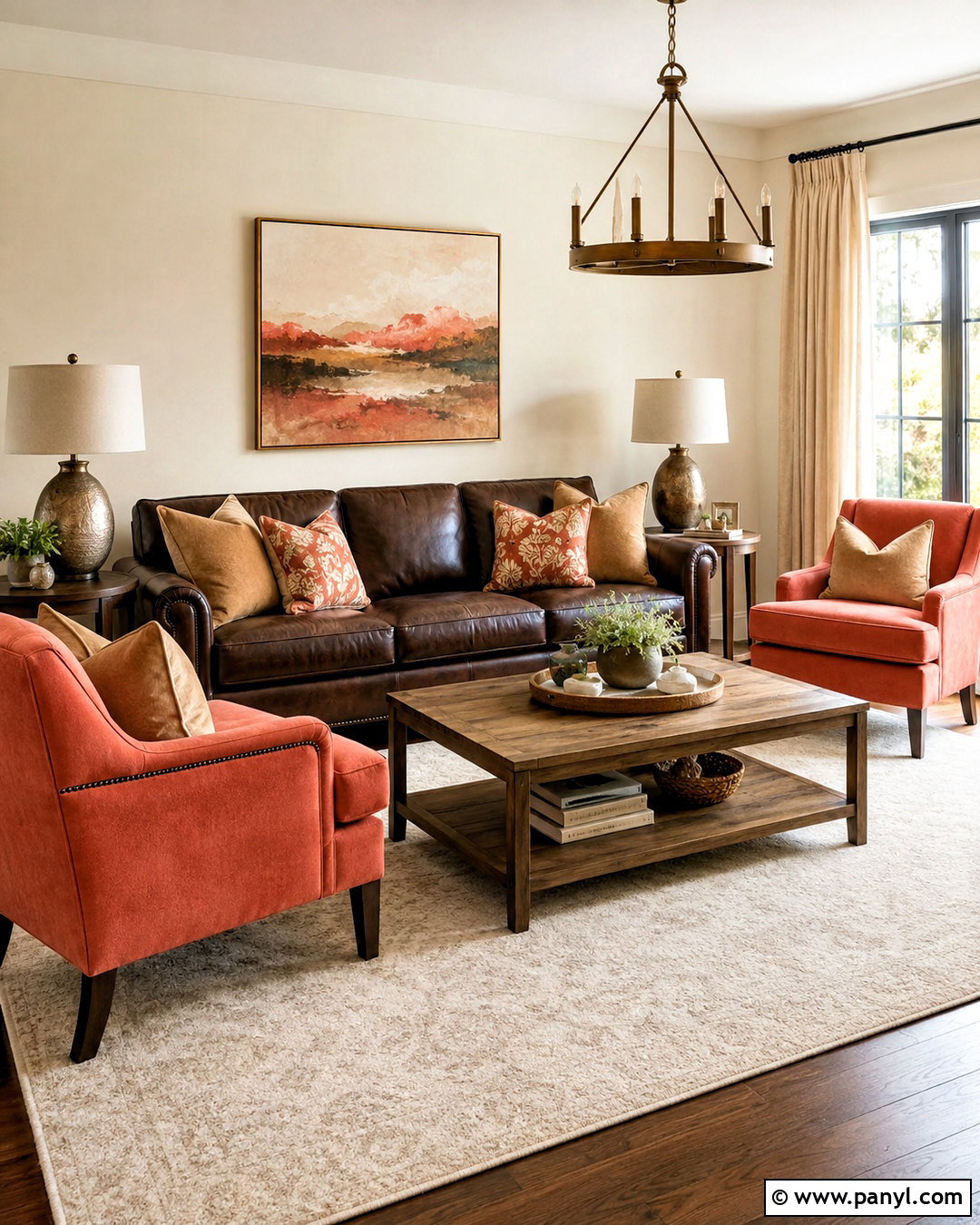
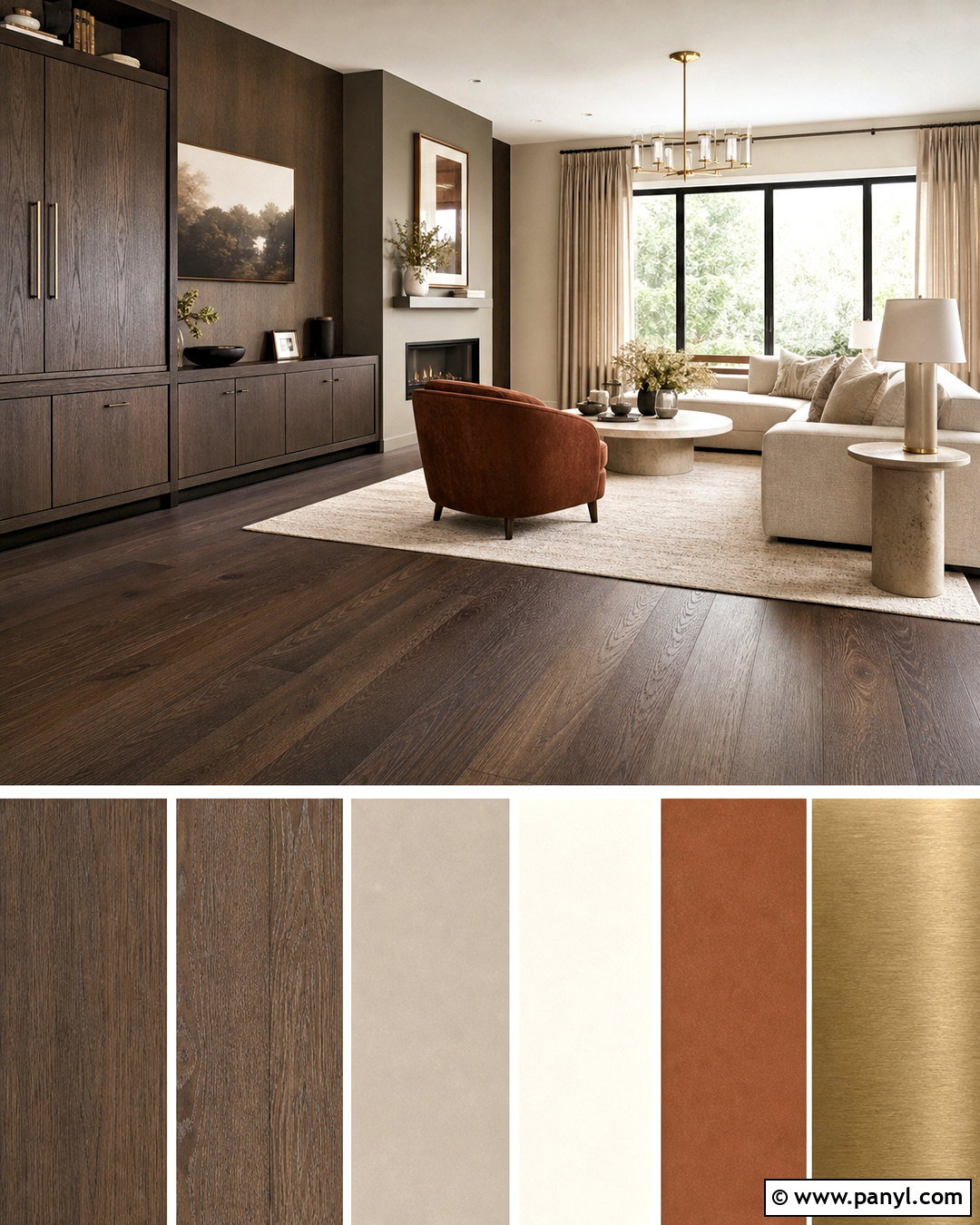
Chocolate brown can make coral feel richer, warmer, and more sophisticated. Begin with creamy walls and a deep brown leather sofa, then add two coral upholstered chairs to create a balanced conversation area. Use a medium-toned wood coffee table with rounded edges and a large ivory rug to brighten the center of the room. Pillows in coral, camel, cream, and rust will connect the leather to the accent seating. Choose bronze lighting, dark wood picture frames, and oatmeal curtains for a layered neutral background. A small amount of muted blue in artwork can provide cool relief. Because both coral and brown carry warmth, generous cream surfaces are important. The completed room feels comfortable and substantial, combining lively color with practical, durable furnishings.
16. Coral And Mint Green Kitchen
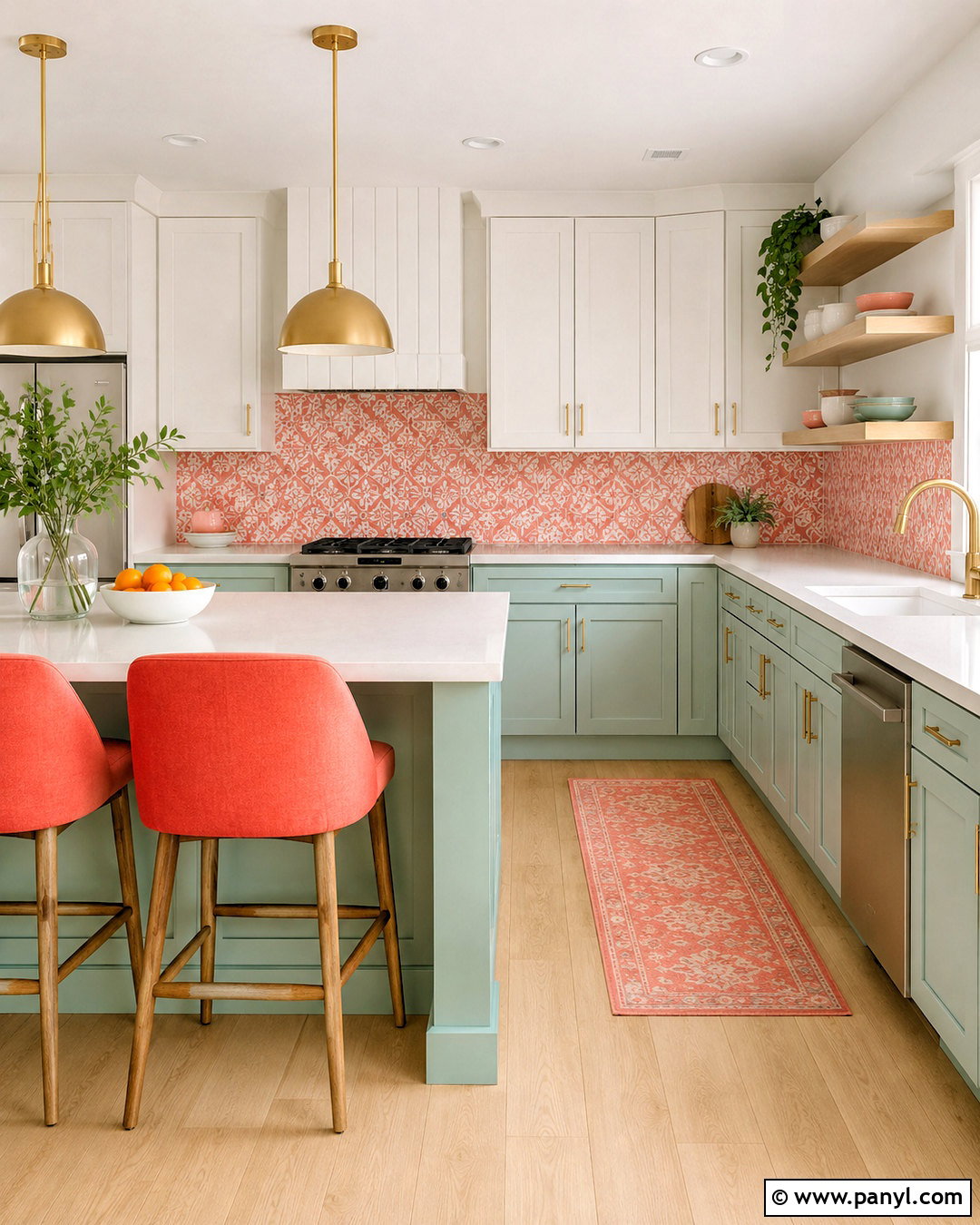
A coral and mint kitchen feels lighthearted, especially when both colors have soft, slightly muted undertones. Paint the lower cabinets mint green and keep the upper cabinets, walls, and countertops warm white. Bring in coral through the backsplash pattern, breakfast stools, and a washable runner rather than covering another major surface. Pale maple flooring and open wood shelves add natural warmth. Choose simple white tile behind cooking areas, reserving patterned coral tile for the breakfast nook or range surround. Brushed brass knobs and pendant lights complement both pastel colors. Keep appliances stainless steel or panel-ready to avoid another dominant finish. The finished kitchen feels colorful but orderly, with white space separating each shade and preventing the room from resembling a retro-themed set.
17. Coral And Burgundy Library
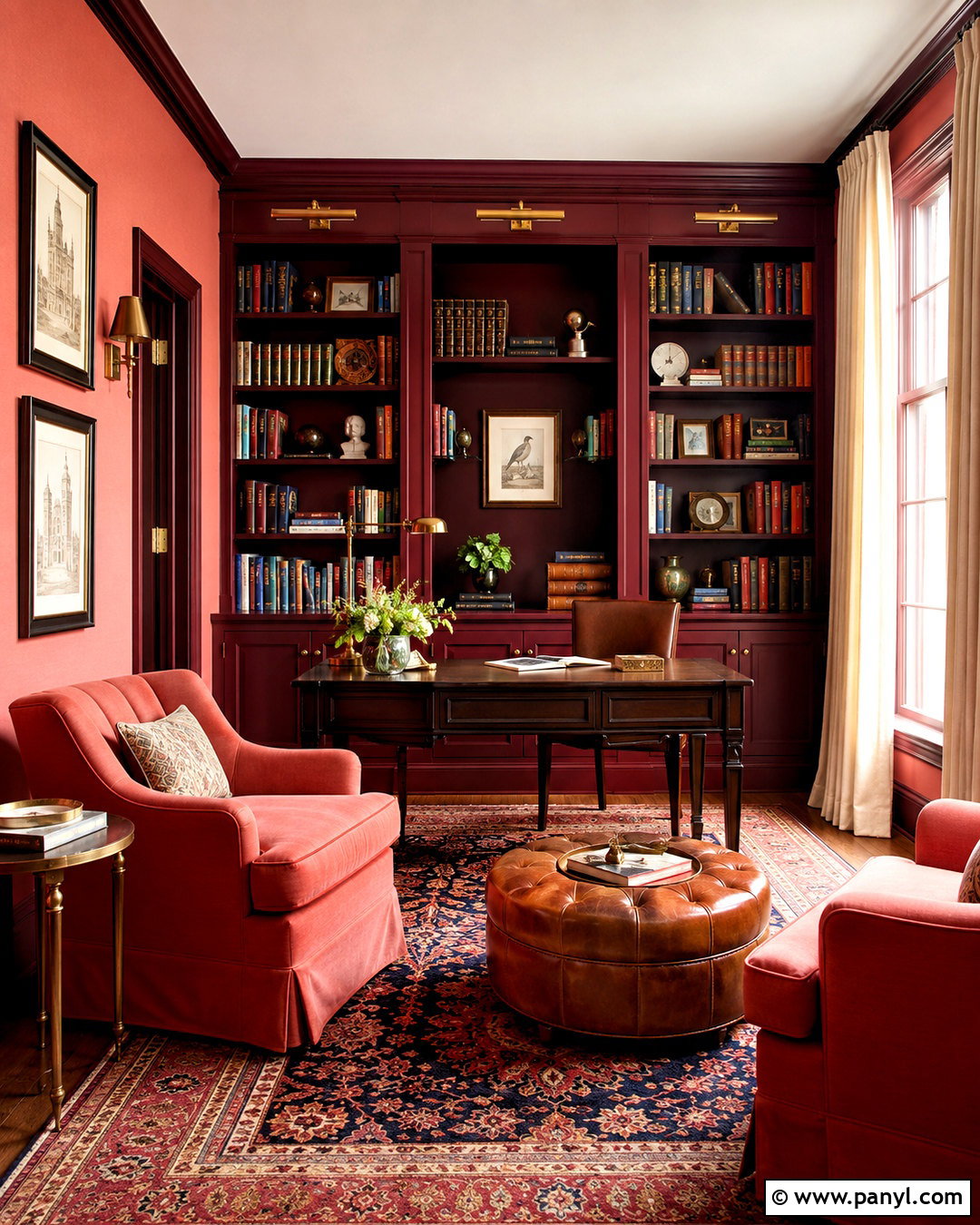
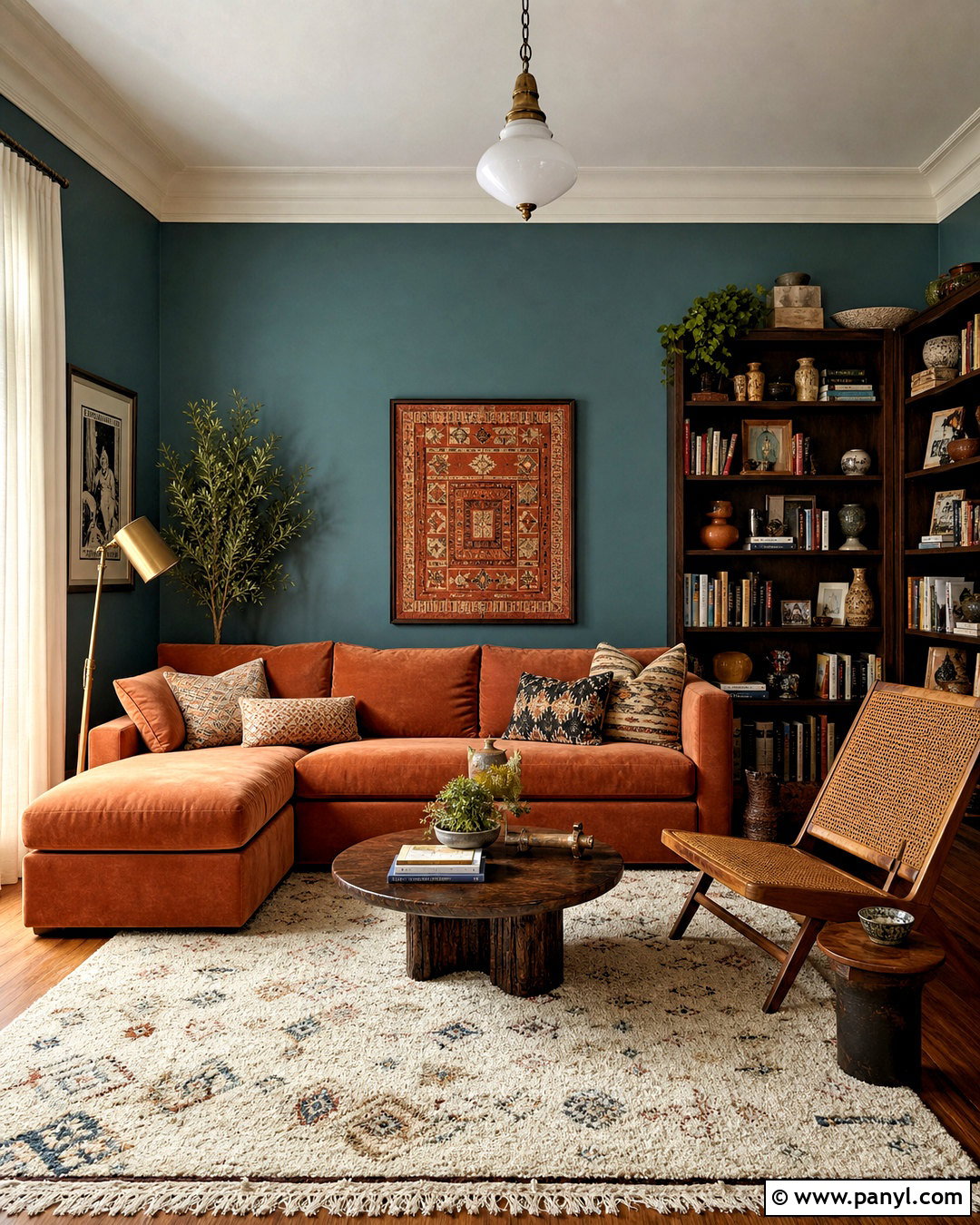
Rich burgundy transforms coral into a dramatic, refined color suitable for a library or reading room. Paint built-in bookcases deep burgundy and use soft coral on the walls or a pair of lounge chairs. A dark wood desk, cognac leather ottoman, and traditional patterned rug establish a comfortable foundation. Warm white on the ceiling and trim will frame the stronger colors and reflect light around the room. Add aged brass picture lights above the shelves, along with cream curtains and linen lampshades. Organize books in a natural mix rather than by color, filling open spaces with pottery and framed photographs. Coral should remain slightly muted so it complements the wine-red cabinetry. The completed space feels intimate and layered while remaining bright enough for reading and focused work.
18. Coral And Greige Living Room
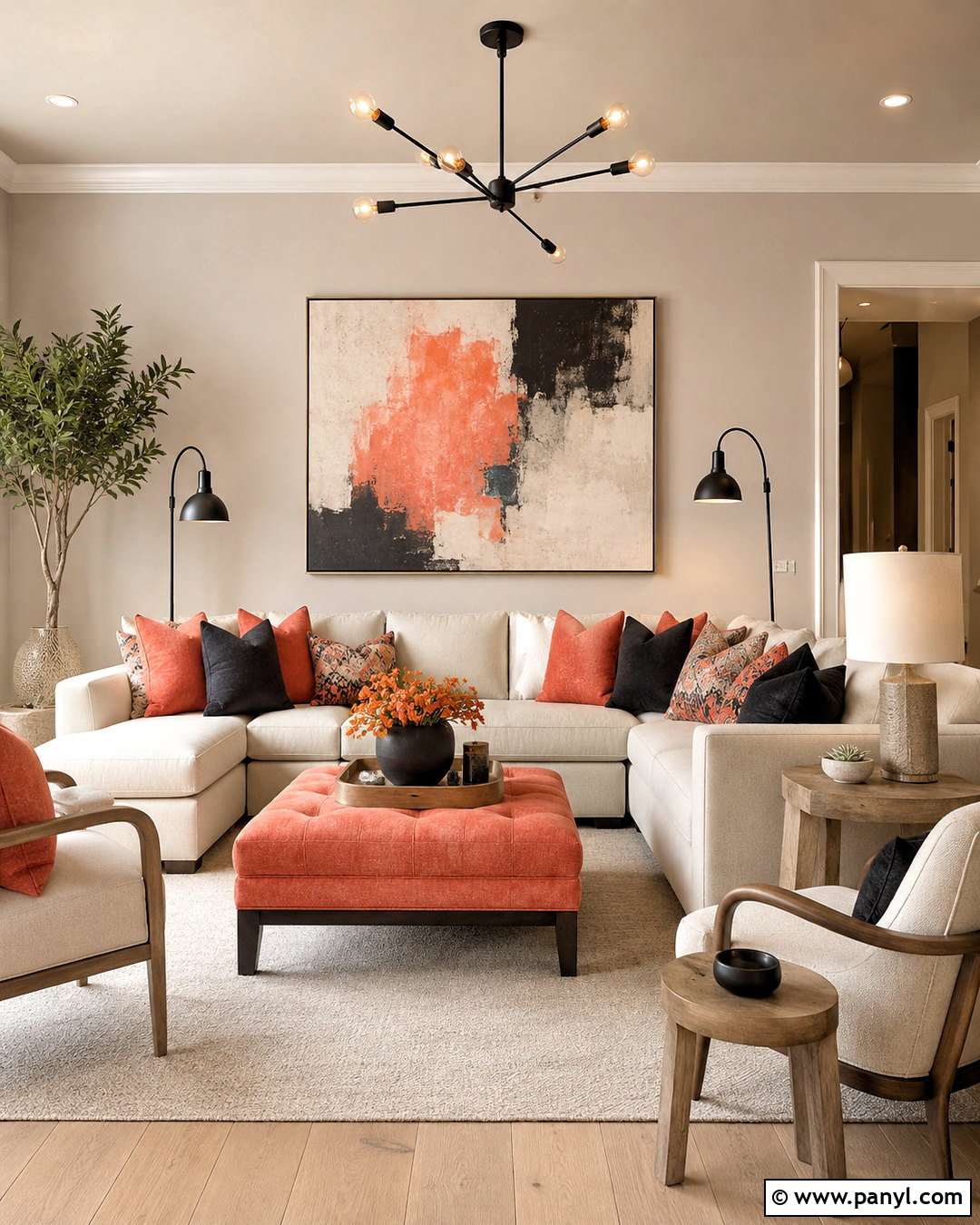
If bright color feels intimidating, coral and greige offer an easy, adaptable starting point. Paint the walls a warm greige and choose a comfortable ivory or taupe sofa. Use coral on one substantial piece, such as an upholstered ottoman, accent chair, or pair of curtains. Add pale oak tables, a cream textured rug, and black metal lighting to give the neutral room clear structure. Pillows can mix coral with tan, ivory, and a small amount of charcoal. Hang large artwork containing soft coral shapes against an off-white background, helping the accent color travel vertically through the room. Keep window treatments simple and avoid combining too many beige undertones. This restrained palette lets coral provide personality while the larger neutral surfaces preserve a calm, flexible atmosphere.
19. Coral And Plum Bedroom
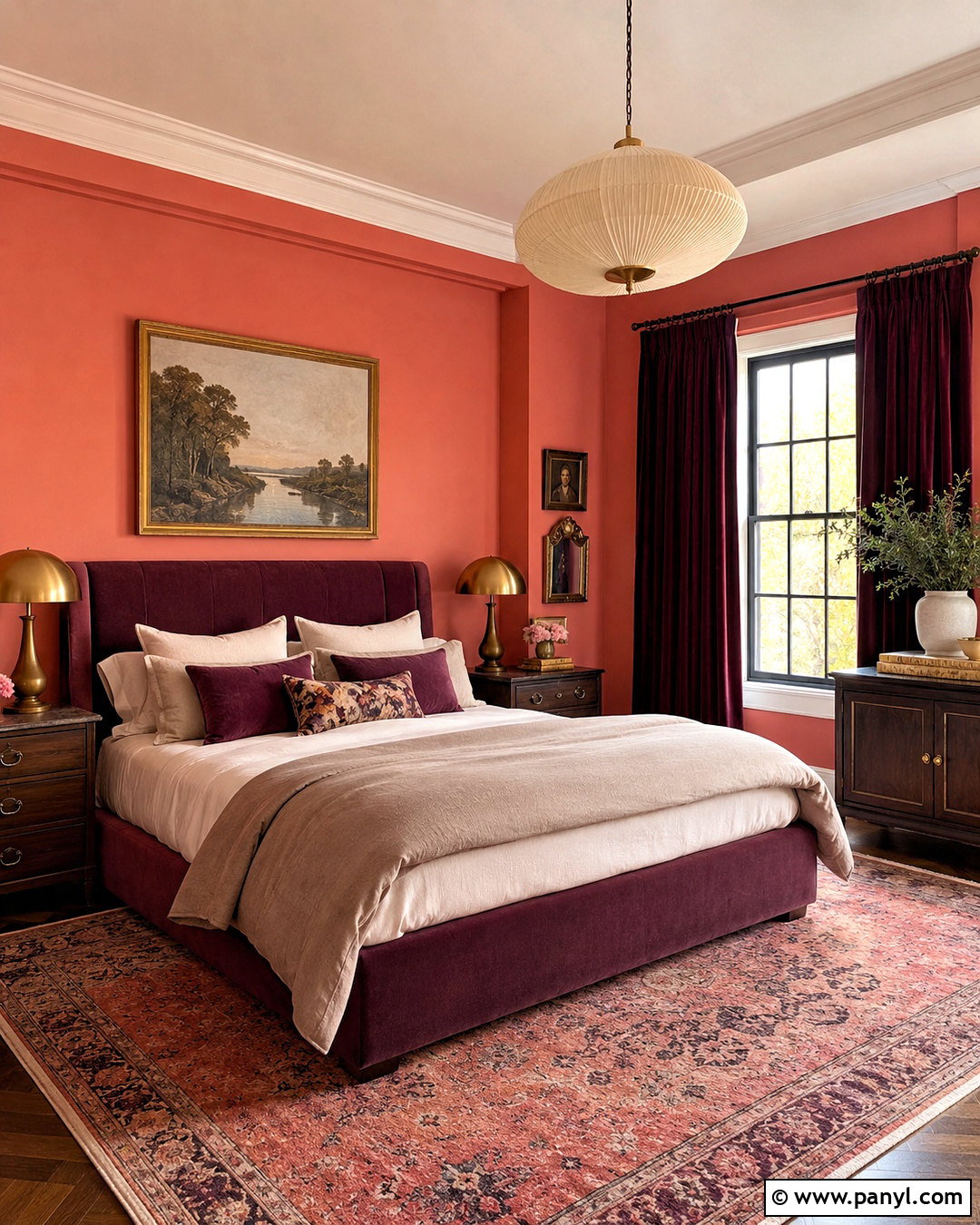
Coral and plum create an expressive bedroom with warmth, depth, and a touch of luxury. Paint the walls a muted coral, then use plum on an upholstered bed, blackout curtains, or a bench at the foot of the bed. Ivory sheets and a light taupe duvet will create separation between the two saturated shades. Add dark walnut nightstands and brushed brass lamps for a warm, substantial finish. A vintage-inspired rug containing faded coral, plum, cream, and blue can connect the whole palette. Choose artwork with large areas of white so the walls do not feel crowded. Small lavender pillows can soften the transition between coral and plum. Layer several light sources, including bedside lamps and a ceiling fixture, to keep the richer colors clear and welcoming.
20. Coral And Soft Yellow Breakfast Nook
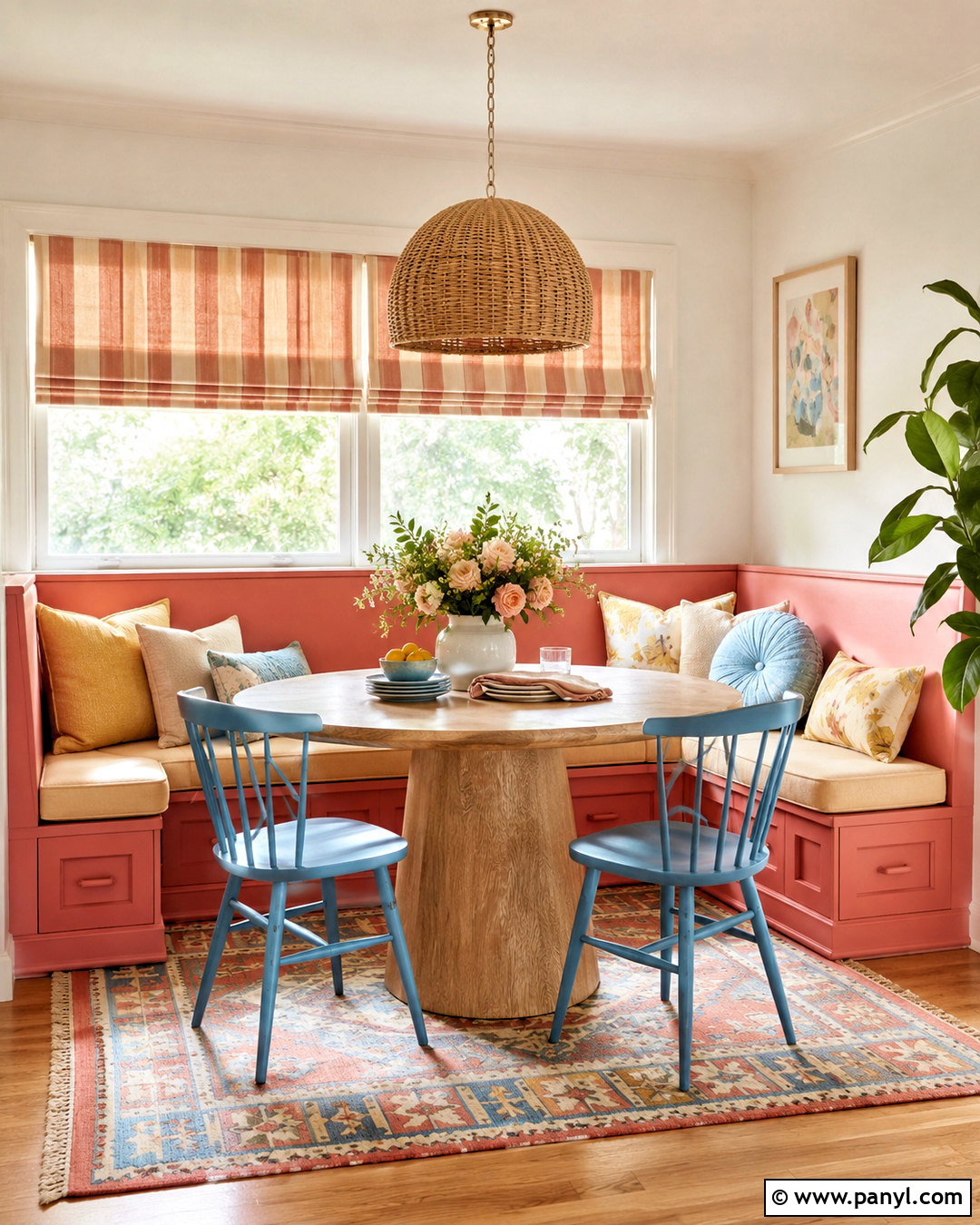
A sunny breakfast nook is an ideal place to combine coral with soft yellow. Paint the walls warm white and use coral on a built-in banquette or a set of simple café chairs. Add pale yellow seat cushions, striped Roman shades, and a small patterned rug beneath a round white or light oak table. Natural wood flooring and woven pendant lighting give the cheerful colors an organic foundation. Introduce sky blue through two pillows or a ceramic vase for a small cooling accent. Keep tableware mostly white so the space remains practical and uncluttered. Repeating coral and yellow at different heights helps the nook look intentional. The completed area feels welcoming in the morning, while softened shades ensure it stays comfortable under both daylight and evening lighting.
Conclusion:
The best 20 coral color palette ideas show just how adaptable this warm, energetic shade can be. Coral feels crisp beside navy, teal, and aqua, while sage, olive, and mint reveal its natural side. Cream, greige, and warm white make it easier to use in everyday rooms. Darker partners such as charcoal, chocolate, burgundy, and plum create more dramatic results. Whatever combination you choose, establish a dominant background, select one main coral feature, and repeat smaller accents across the room. Include wood, stone, woven fibers, or metal to add texture and prevent the palette from feeling flat. Testing colors together in the actual room will also help you create a balanced, lasting design.

Related Ideas and Inspiration:
Leave a Reply