
Paint can turn a dated vanity into the feature that defines the entire bathroom. The best painted bathroom vanity colors work with the room’s tile, countertop, lighting, hardware, and overall mood rather than standing alone. Current bathroom palettes range from warm neutrals and nature-inspired greens to rich blues, earthy reds, and sophisticated dark shades. () Before choosing, sample the paint directly on the cabinet and view it during the day and under vanity lighting. For lasting results, properly clean, sand, prime, and apply cabinet-grade paint in a durable satin or semi-gloss finish. () Whether you want a calm retreat, cheerful powder room, or dramatic primary bath, these complete looks showcase 35 painted bathroom vanity colors.
1. Warm White Bathroom Vanity
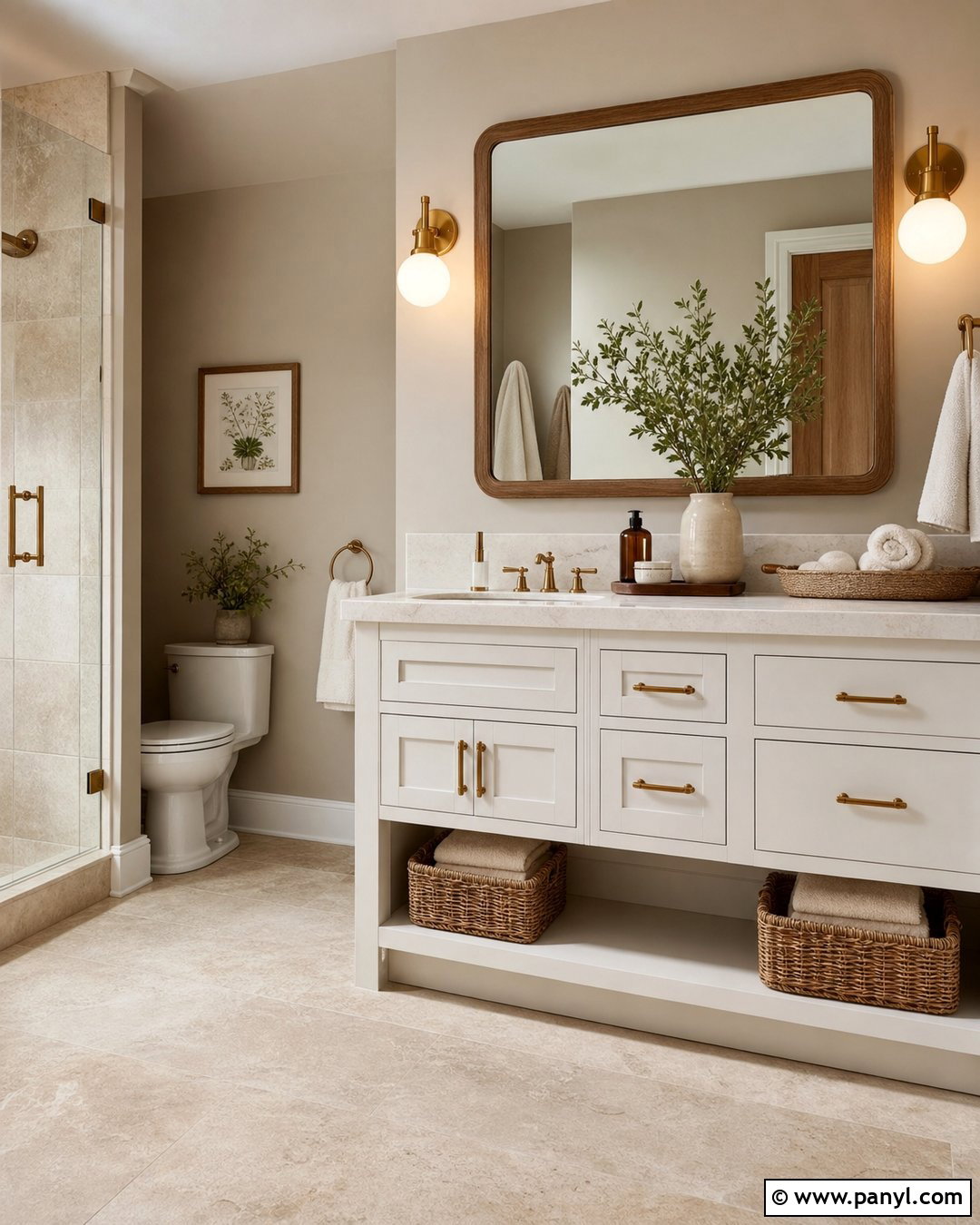
A warm white vanity creates a clean bathroom without making the room feel cold or clinical. Pair the painted cabinetry with creamy quartz, brushed brass pulls, and an off-white ceramic backsplash. Warm greige walls will provide gentle contrast while keeping the palette light. For the floor, use beige limestone-look porcelain tile or pale oak-look planks designed for wet spaces. A rounded wood-framed mirror adds an organic note, while simple globe sconces soften the structured cabinet lines. This color is especially useful in small bathrooms with limited daylight because it reflects light easily. Complete the look with ivory towels, a woven basket, and one leafy plant for a bathroom that feels relaxed, bright, and thoughtfully layered.
2. Crisp White Bathroom Vanity
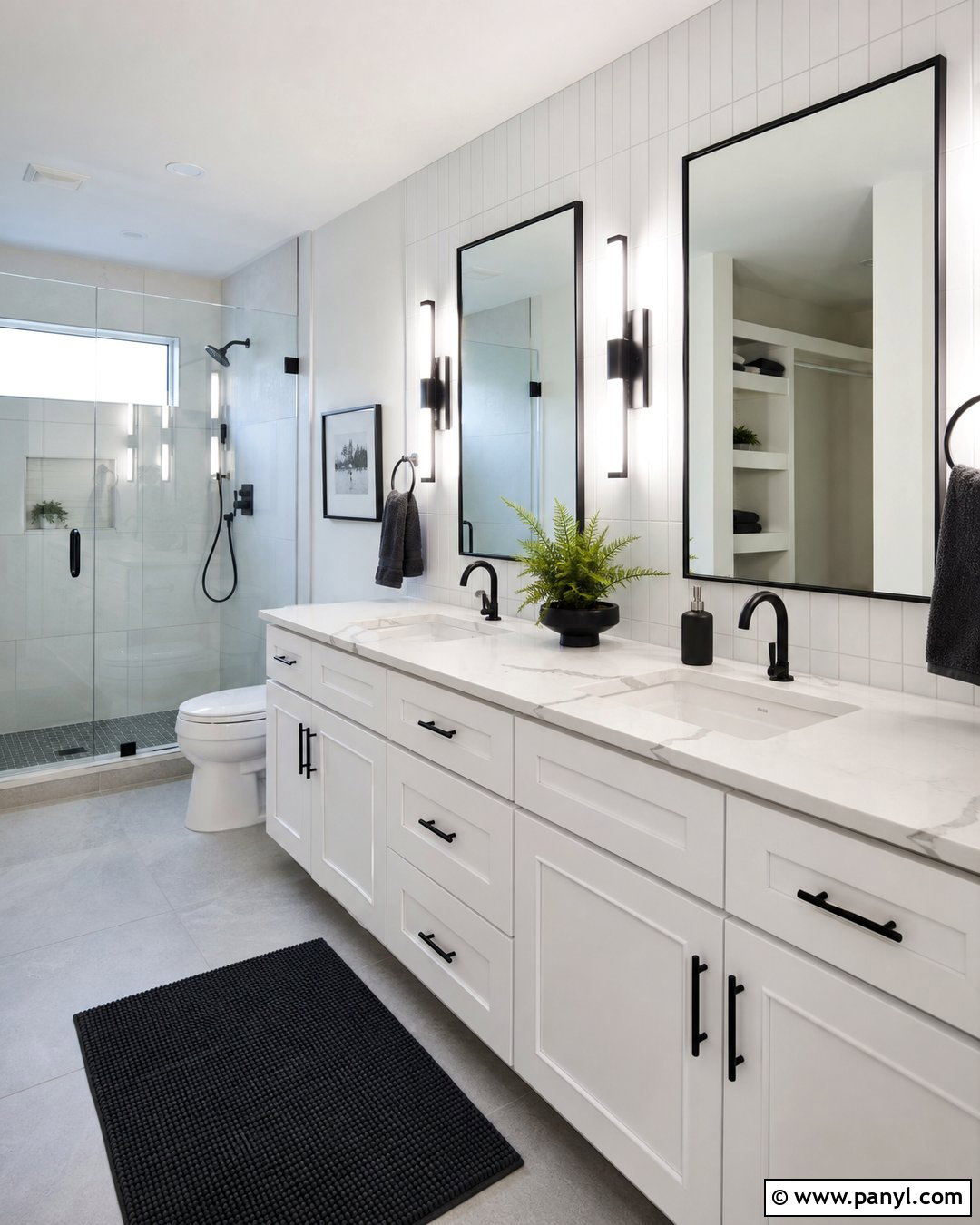
Choose a crisp white vanity when you want a sharp, modern bathroom with clear contrast. This color works beautifully on flat-panel cabinetry topped with white quartz featuring subtle gray veining. Add matte black faucets, slim black pulls, and black-framed mirrors to outline the pale surfaces. Large light-gray floor tiles give the space depth without competing with the vanity. Keep the walls a true white, but introduce texture through vertical white backsplash tile and ribbed glass sconces. A charcoal hand towel and a small black tray help repeat the hardware color. Because bright white can reveal grime and brush marks, smooth preparation is essential. The completed room feels fresh, graphic, uncluttered, and particularly suited to contemporary homes.
3. Ivory Bathroom Vanity
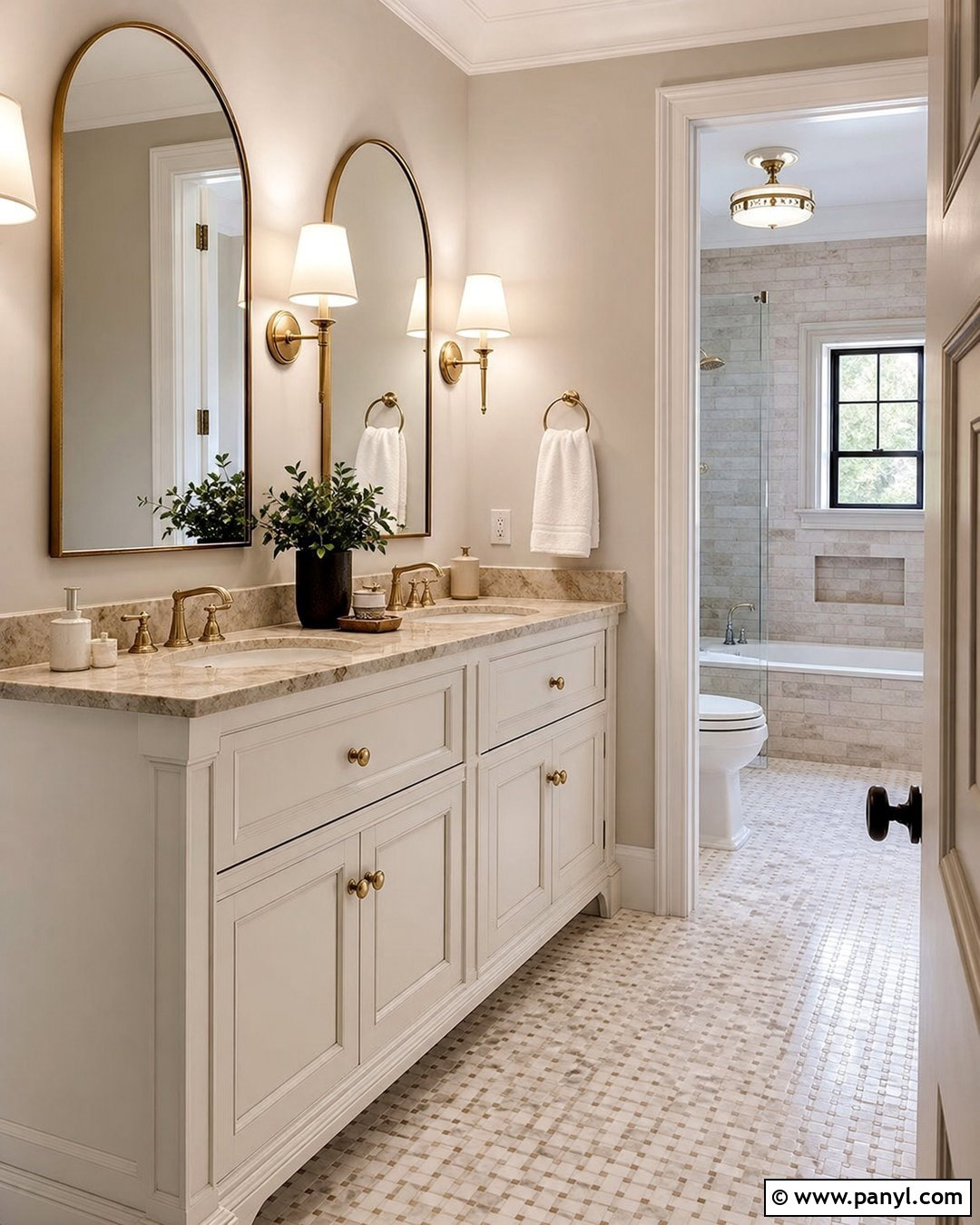
An ivory vanity brings softness to a traditional or transitional bathroom while still looking fresh. Use it with a warm marble or quartz countertop containing beige and faint gray veining. Antique brass knobs, a widespread brass faucet, and a gently arched mirror reinforce the classic character. Pale taupe walls prevent the ivory cabinetry from blending into the background. Underfoot, try small cream-and-tan mosaic tiles or limestone-look porcelain for subtle pattern. Shaker cabinet doors and simple furniture-style feet make the vanity feel like a finished piece rather than standard storage. Add white towels, a ceramic soap dish, and natural linen shades. This complete palette is elegant but approachable, making it suitable for a primary bathroom, guest bathroom, or updated older home.
4. Cream Bathroom Vanity
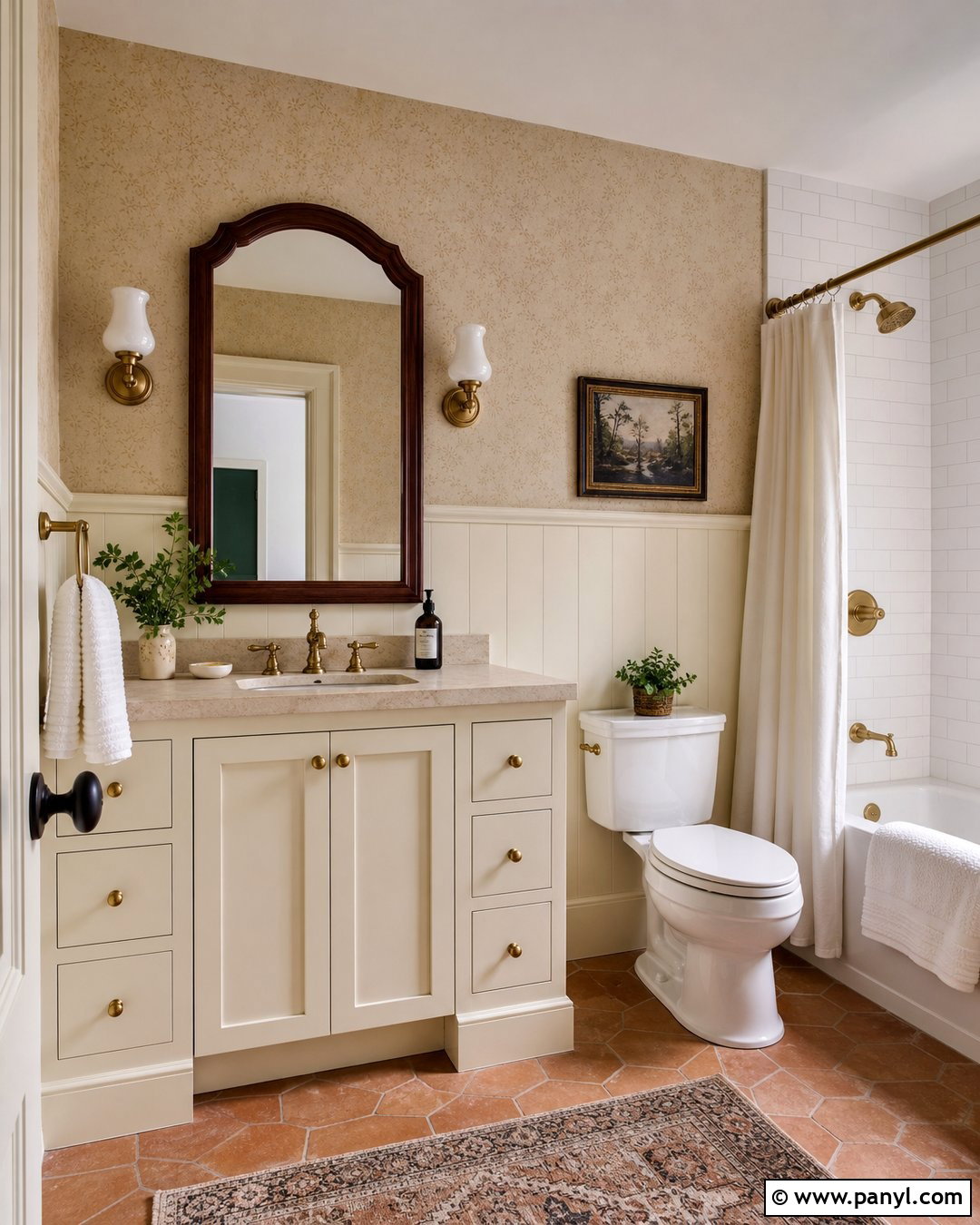
Cream-painted cabinetry creates a cozy, welcoming bathroom that pairs naturally with warm finishes. Place the vanity against softly patterned beige wallpaper or vertical tongue-and-groove paneling painted a slightly lighter cream. A honed travertine countertop and backsplash introduce natural movement, while aged brass hardware deepens the warmth. Terracotta-look floor tile provides earthy contrast without making the room feel overly rustic. Choose an oval walnut mirror to add a darker wood note, then install simple milk-glass sconces on either side. White sinks and towels keep the palette from becoming too yellow. This look works best when the paint has a gentle buttery undertone and the lighting uses a balanced warm-white temperature that preserves the true cabinet color.
5. Light Greige Bathroom Vanity
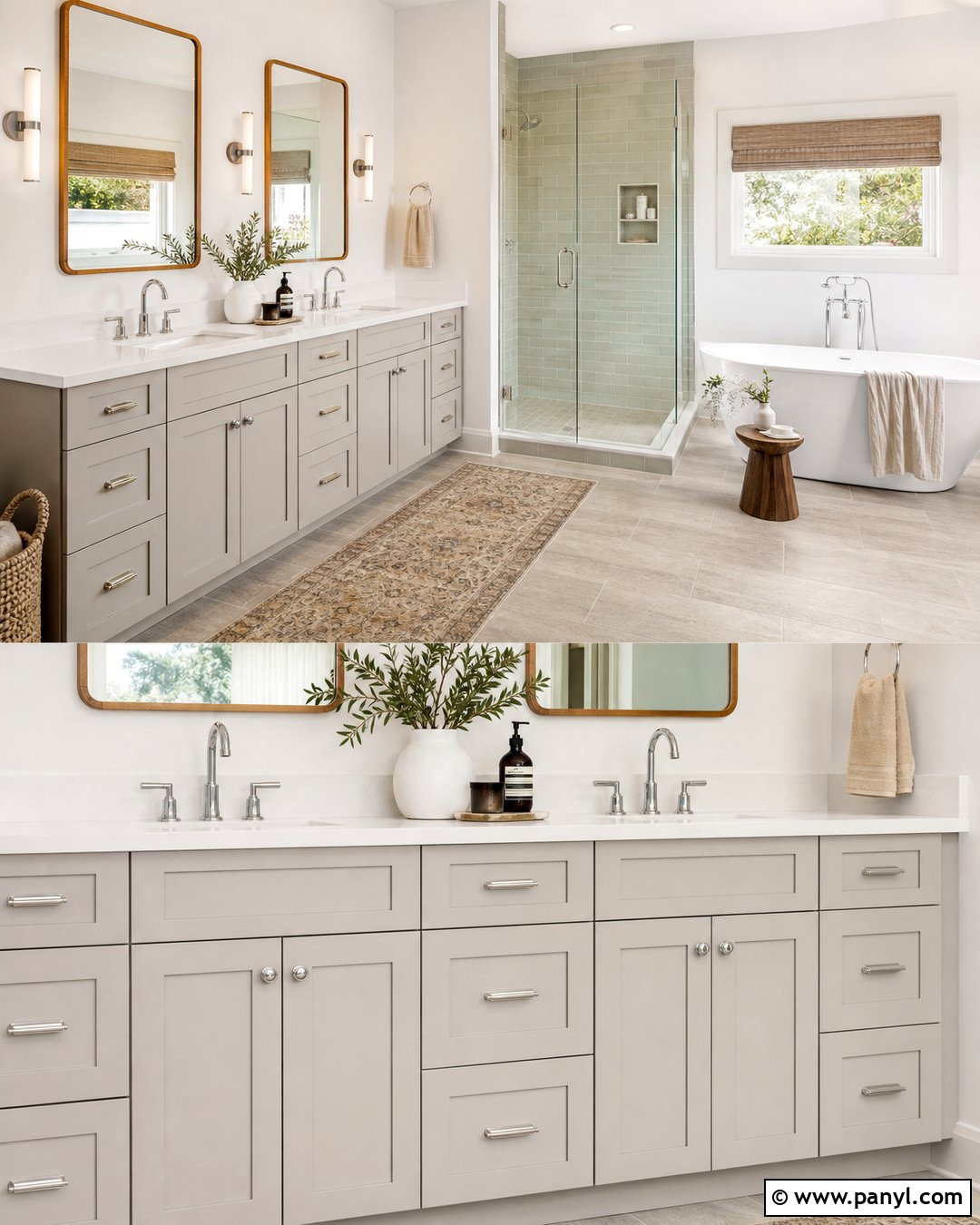
A light greige vanity sits comfortably between gray and beige, making it one of the easiest colors to coordinate with existing bathroom finishes. Pair it with a white quartz top, polished nickel faucet, and understated nickel knobs for a clean transitional look. Soft white walls and a pale gray subway tile backsplash keep the space airy. Add warmth with oak-framed mirrors, woven storage baskets, and sand-colored towels. Large-format stone-look floor tile can connect the vanity’s warm and cool undertones. This combination is especially practical when the bathroom contains both gray tile and beige elements that cannot be replaced. The resulting room feels balanced and updated, yet neutral enough to accommodate changing towels, artwork, and countertop accessories over time.
6. Warm Taupe Bathroom Vanity
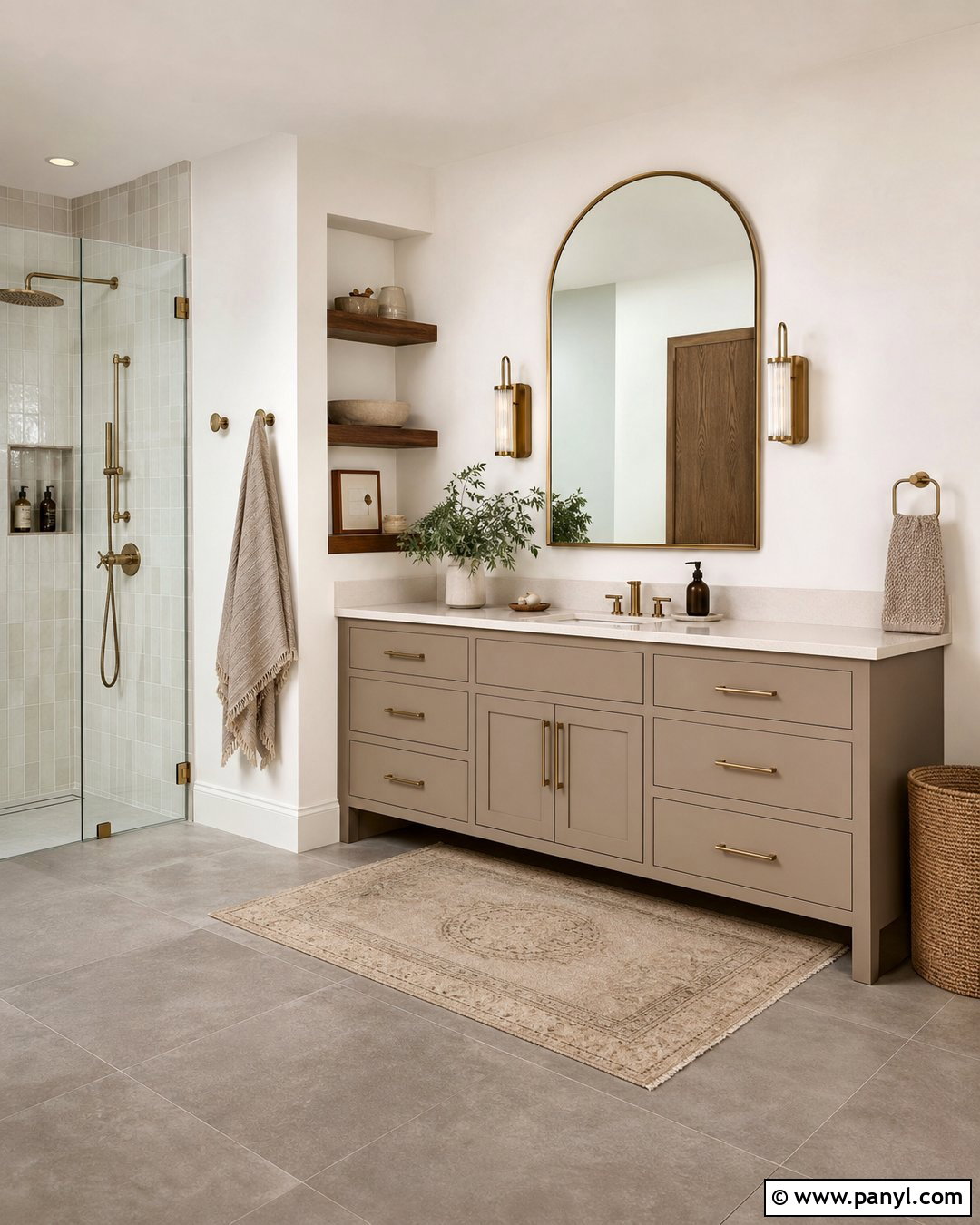
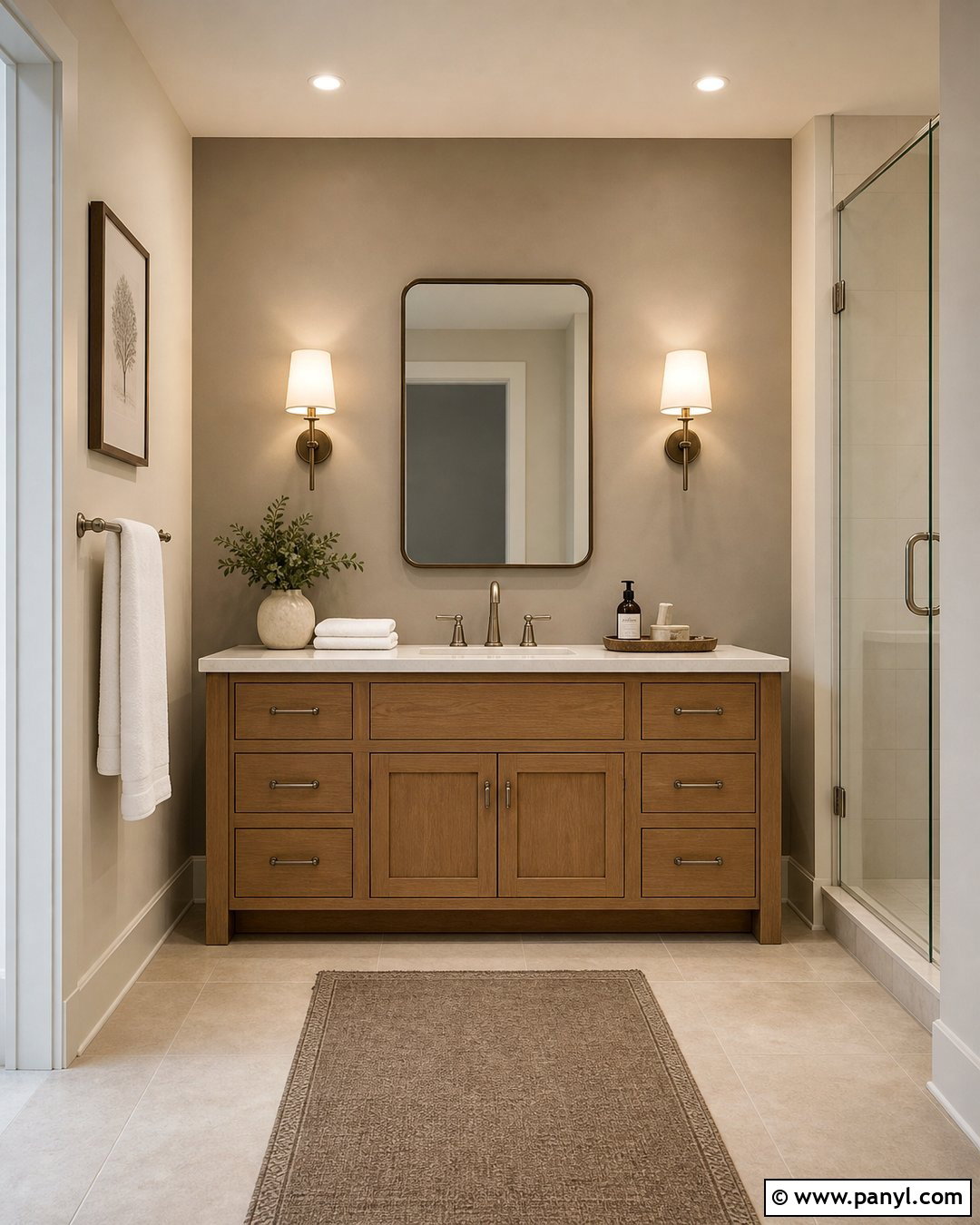
Warm taupe gives a bathroom vanity more presence than pale greige while remaining versatile and calming. Use this color on Shaker cabinetry with a creamy quartz countertop and champagne bronze pulls. Soft plaster-white walls highlight the cabinet without creating a harsh boundary. For the backsplash, select narrow handmade-look tiles in ivory, sand, and pale mushroom tones. A large arched mirror with a thin bronze frame will echo the hardware. Ground the design with warm gray porcelain flooring and add walnut shelves above the toilet for practical storage. Textured beige towels and a small stone tray complete the restrained palette. This vanity look works well in both windowless bathrooms and sunlit spaces because its balanced brown-gray base adapts to changing light.
7. Mushroom Bathroom Vanity
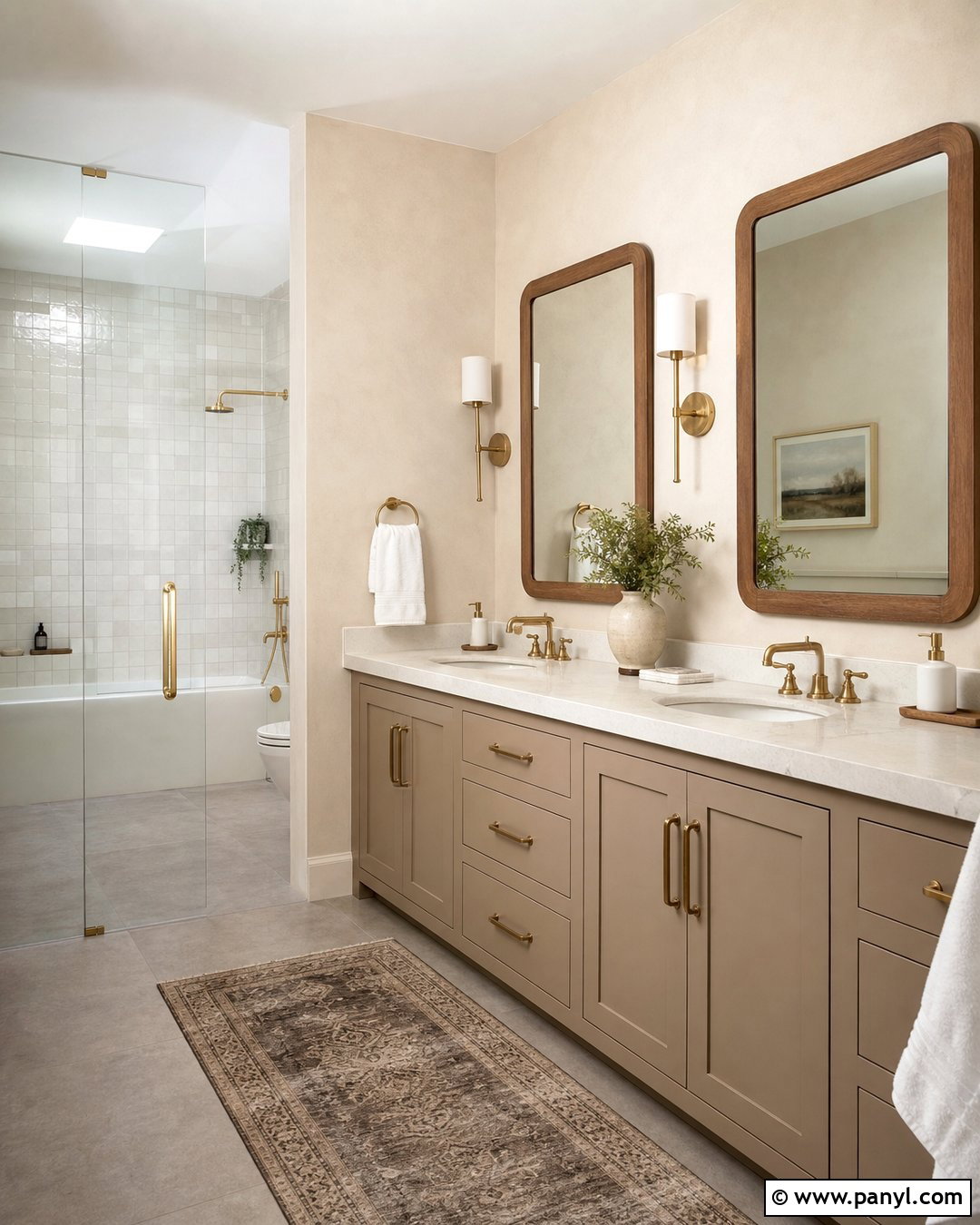
Mushroom paint gives vanity cabinets a rich earthy neutral that feels deeper and more organic than ordinary beige. Build the room around a medium mushroom vanity with an off-white stone counter, unlacquered brass handles, and a matching brass faucet. Use creamy limewash-style walls to create soft movement behind the cabinetry. A backsplash of handmade square tiles in muted putty adds texture while staying within the tonal palette. Dark oak mirrors and a warm gray floor keep the room grounded. Introduce contrast through crisp white sinks, folded towels, and simple ceramic accessories. The finished design feels quiet, natural, and subtly luxurious. It is an excellent choice when you want neutral cabinetry that still has enough character to become the bathroom’s visual anchor.
8. Dove Gray Bathroom Vanity
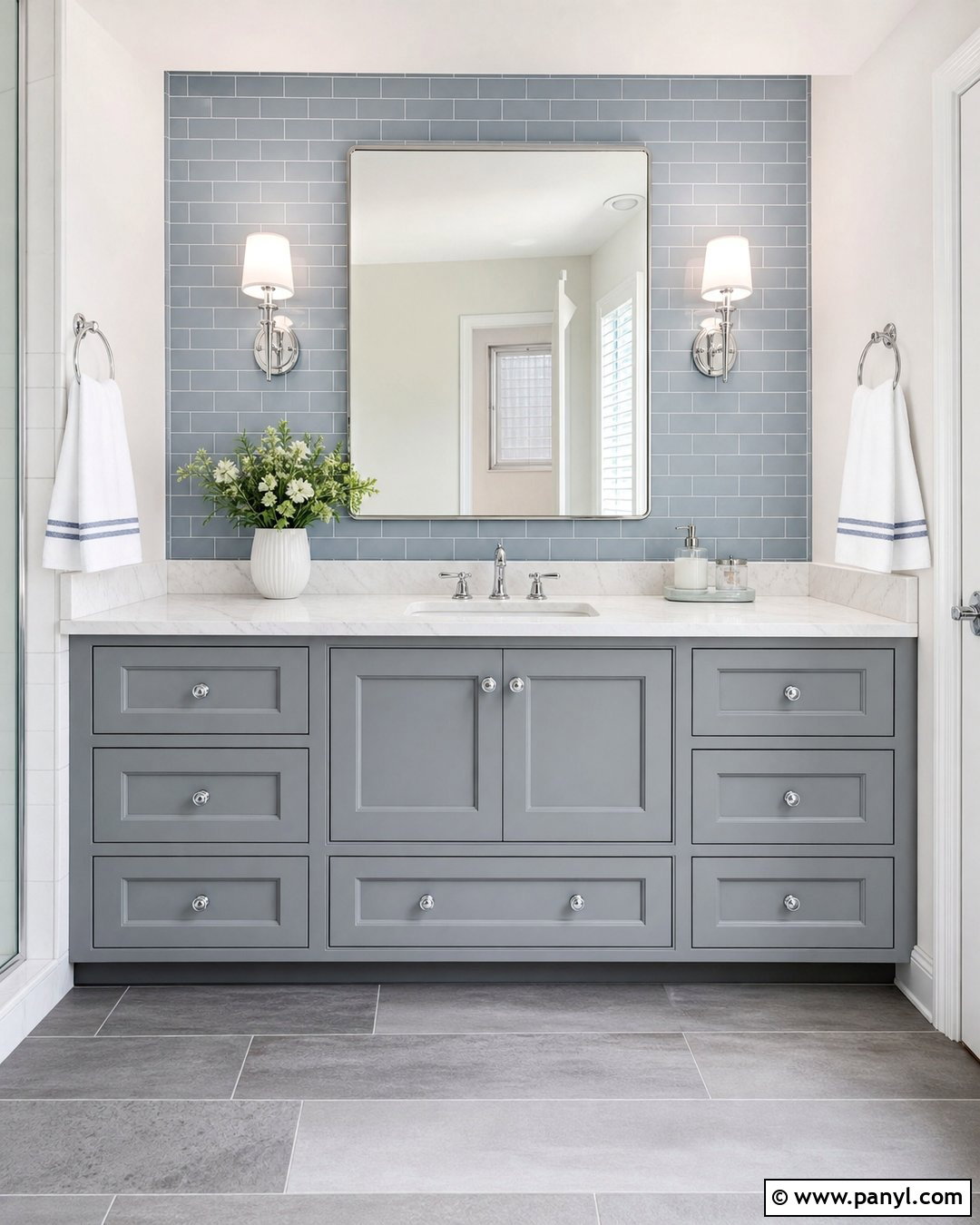
A dove gray vanity creates an airy, polished bathroom with a cooler undertone than greige. Pair the cabinet with white marble-look quartz, polished chrome hardware, and a clear glass shower enclosure. Soft white walls will keep the gray from appearing dull, while pale blue-gray subway tile adds restrained color behind the sink. Choose medium-tone gray floor tile so the vanity remains distinct from both the walls and flooring. A frameless rectangular mirror and streamlined chrome sconces support the clean design. White towels with narrow blue trim can tie the palette together without adding clutter. This complete look suits small bathrooms, coastal interiors, and contemporary homes. Test the gray carefully to ensure it does not turn lavender or blue beneath the room’s lighting.
9. Slate Gray Bathroom Vanity
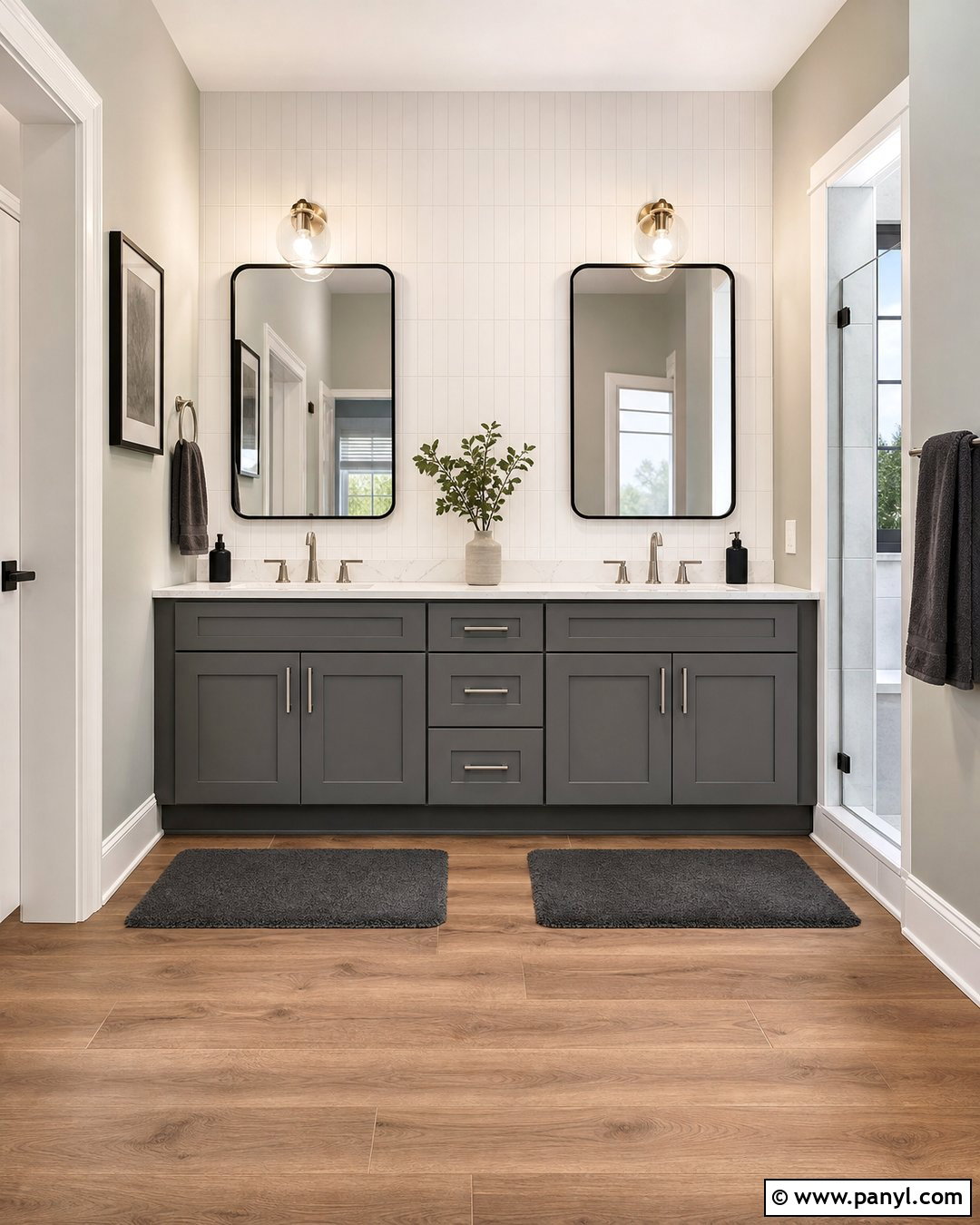
Slate gray cabinetry provides a strong foundation while feeling softer than black. Cover a wide double vanity in this blue-based gray, then balance it with a white quartz countertop and long brushed nickel pulls. Pale gray walls and white vertical tiles maintain brightness around the darker cabinet. Add a pair of thin black-framed mirrors to create definition, and use black-and-nickel sconces to connect the mixed metals. Medium oak flooring or wood-look porcelain introduces necessary warmth. Finish the room with white towels, charcoal bath mats, and restrained blue-gray accessories. The result is a tailored bathroom that feels substantial without becoming gloomy. Slate gray is particularly effective in larger spaces where the cabinetry needs enough visual weight to anchor broad walls and multiple fixtures.
10. Charcoal Bathroom Vanity
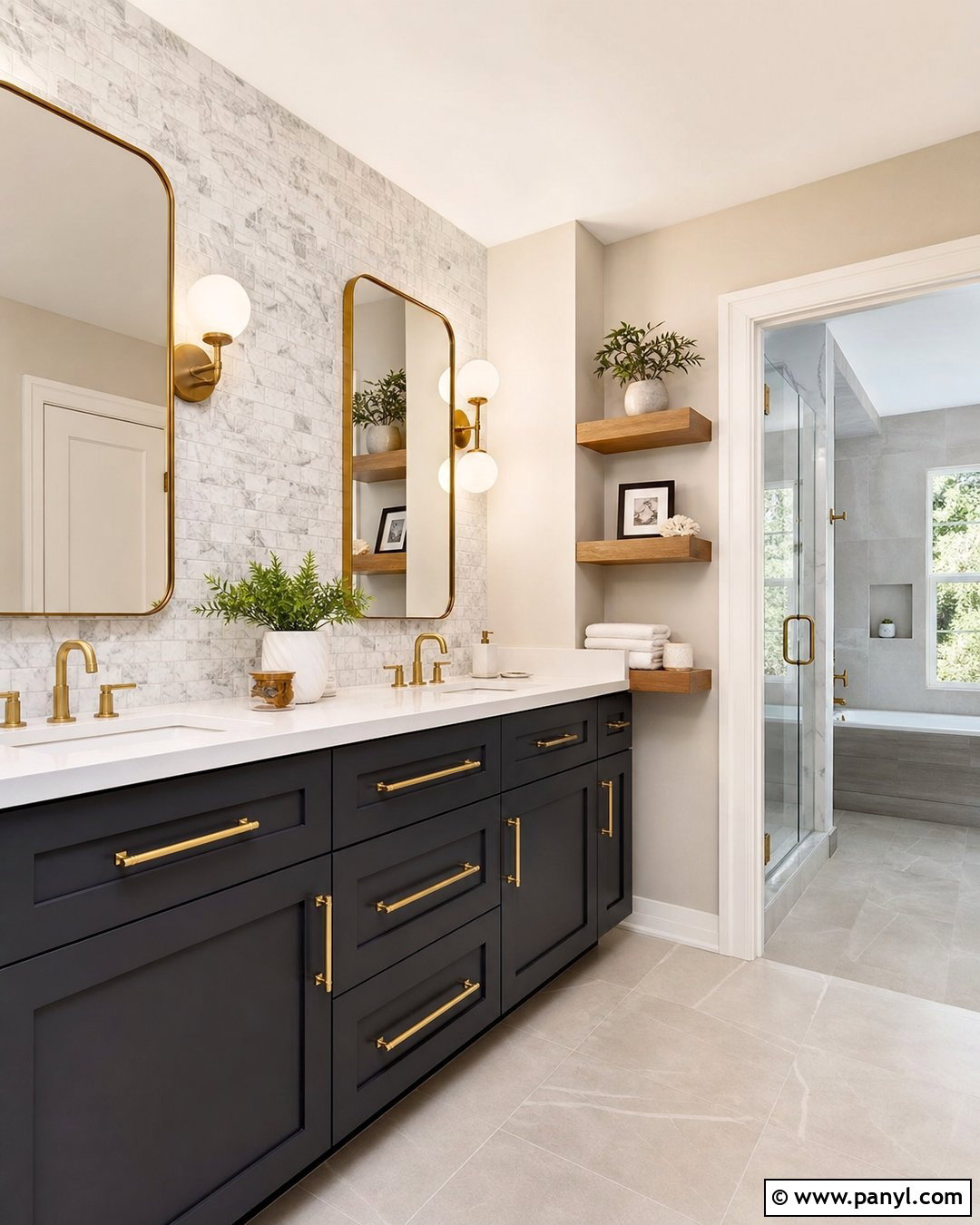
Deep charcoal transforms an ordinary vanity into a sophisticated architectural feature. For a balanced room, combine charcoal Shaker cabinets with a bright white quartz counter, brushed brass hardware, and a warm brass faucet. Install a marble mosaic backsplash with soft gray veining to bridge the dark cabinet and pale walls. A brass-framed mirror and creamy globe sconces add a gentle glow around the sink. Keep the floor light with warm white or pale greige porcelain tile. Natural oak shelves and tan textiles prevent the blackened gray from looking severe. This design works in compact powder rooms as well as spacious primary bathrooms, provided the surrounding surfaces remain bright. A satin cabinet finish will preserve the color’s depth while making everyday cleaning easier.
11. Soft Black Bathroom Vanity
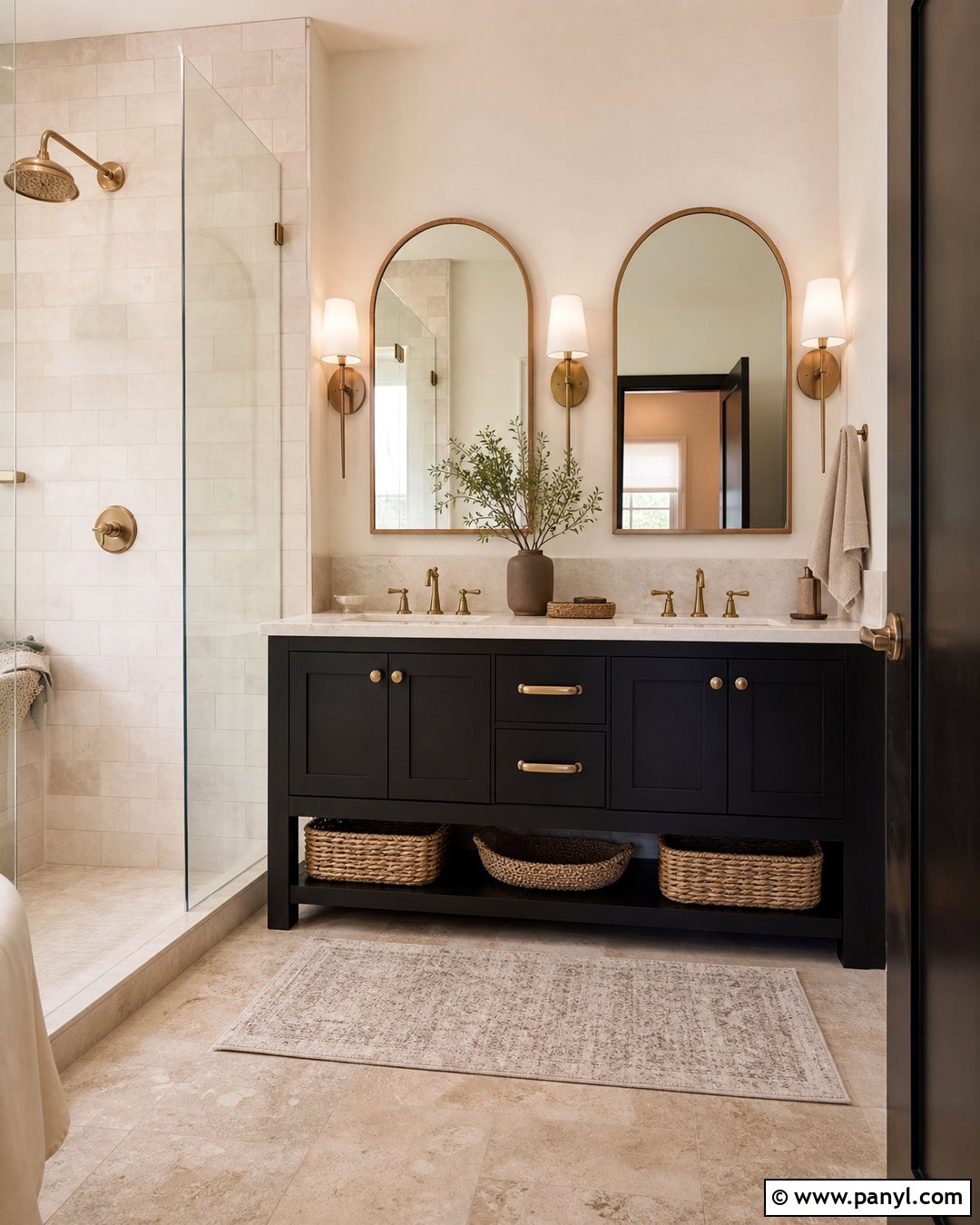
Soft black paint has subtle gray or brown undertones, giving a vanity drama without the starkness of pure black. Pair it with a warm white countertop, aged brass pulls, and a matching bridge-style faucet. Cream walls and beige stone flooring will reveal the cabinet’s softer undertones. Behind the vanity, install vertical zellige-style tile in a slightly varied ivory finish. A rounded oak mirror adds a natural counterpoint, while brass sconces bring warmth at eye level. Finish with oatmeal towels, a small amber-colored soap dispenser, and a light woven basket. This complete bathroom feels modern, grounded, and inviting. Soft black is also forgiving beside older cream fixtures because it creates intentional contrast instead of emphasizing small differences among white surfaces.
12. True Black Bathroom Vanity
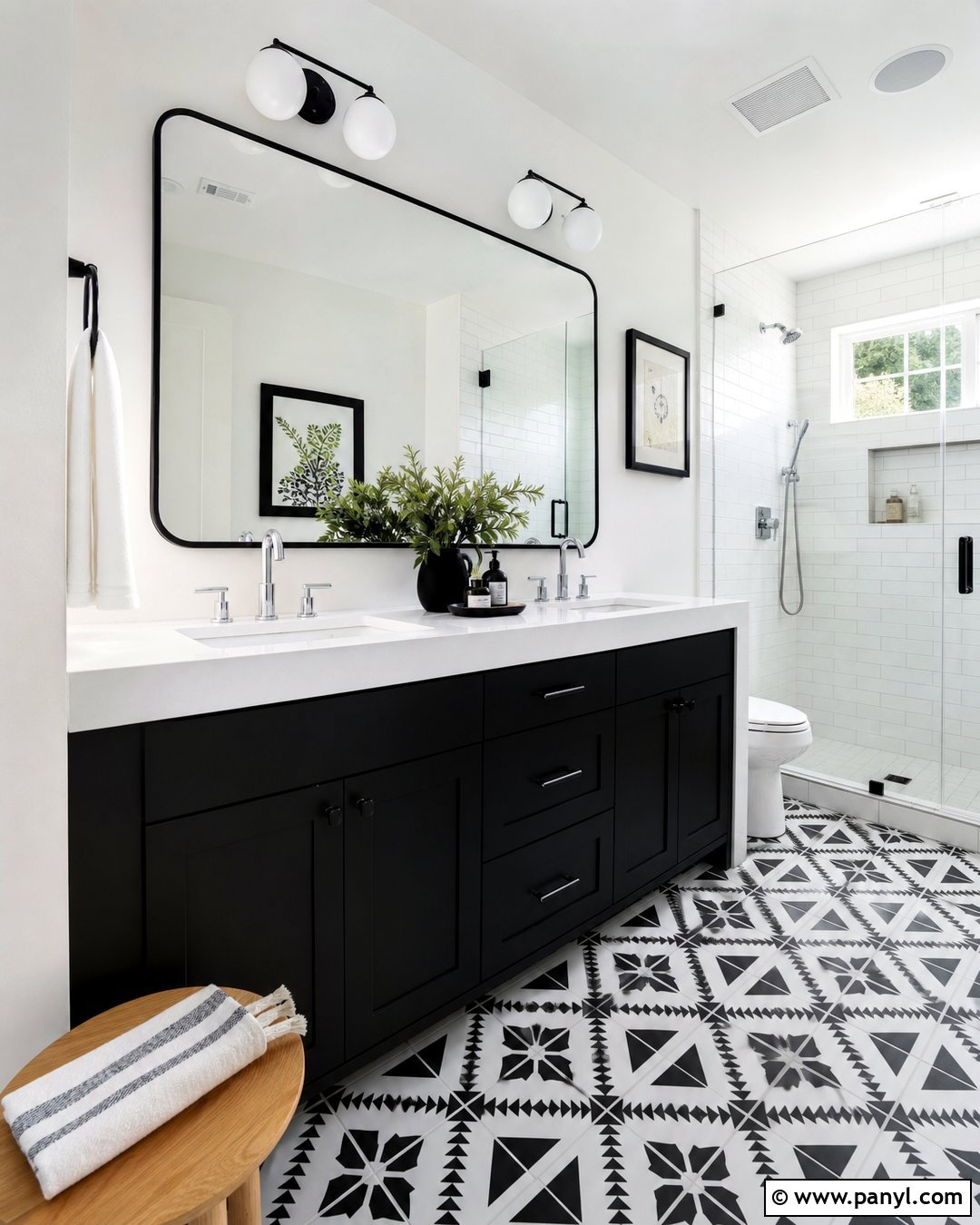
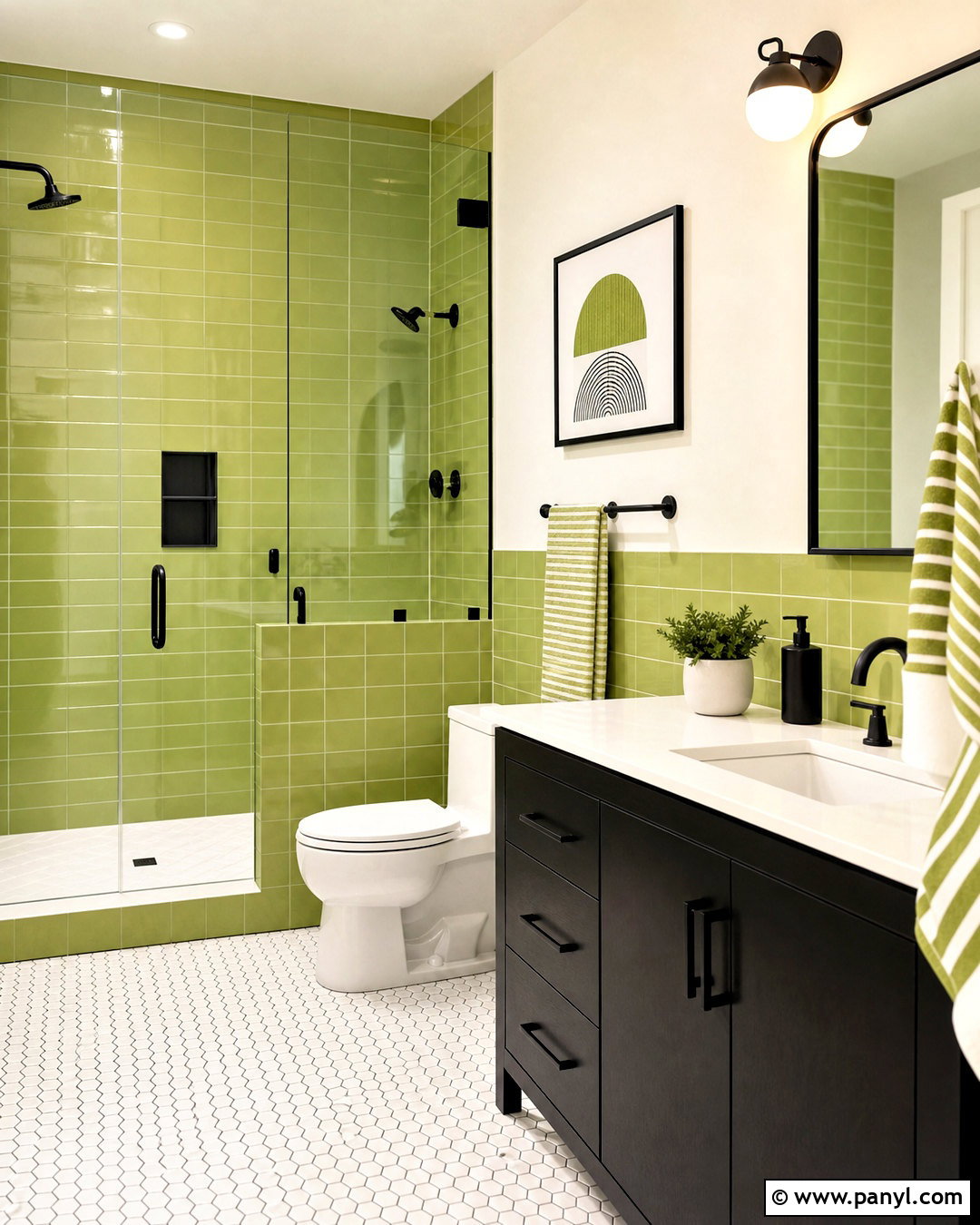
A true black vanity makes a confident statement in a high-contrast bathroom. Use sleek flat-panel cabinets with a white waterfall quartz top, minimal black pulls, and a polished chrome faucet. Bright white walls and large white tiles will frame the cabinetry clearly. Continue the black through a thin mirror frame, shower hardware, and geometric floor pattern, but avoid covering every surface in dark color. Clear glass and reflective metal help the room remain open. Add one light oak stool or shelf to soften the graphic palette. White towels and countertop accessories should stay simple and limited. The finished look is sharp and contemporary, making it ideal for a renovated powder room or modern primary bath with strong natural or artificial lighting.
13. Navy Blue Bathroom Vanity
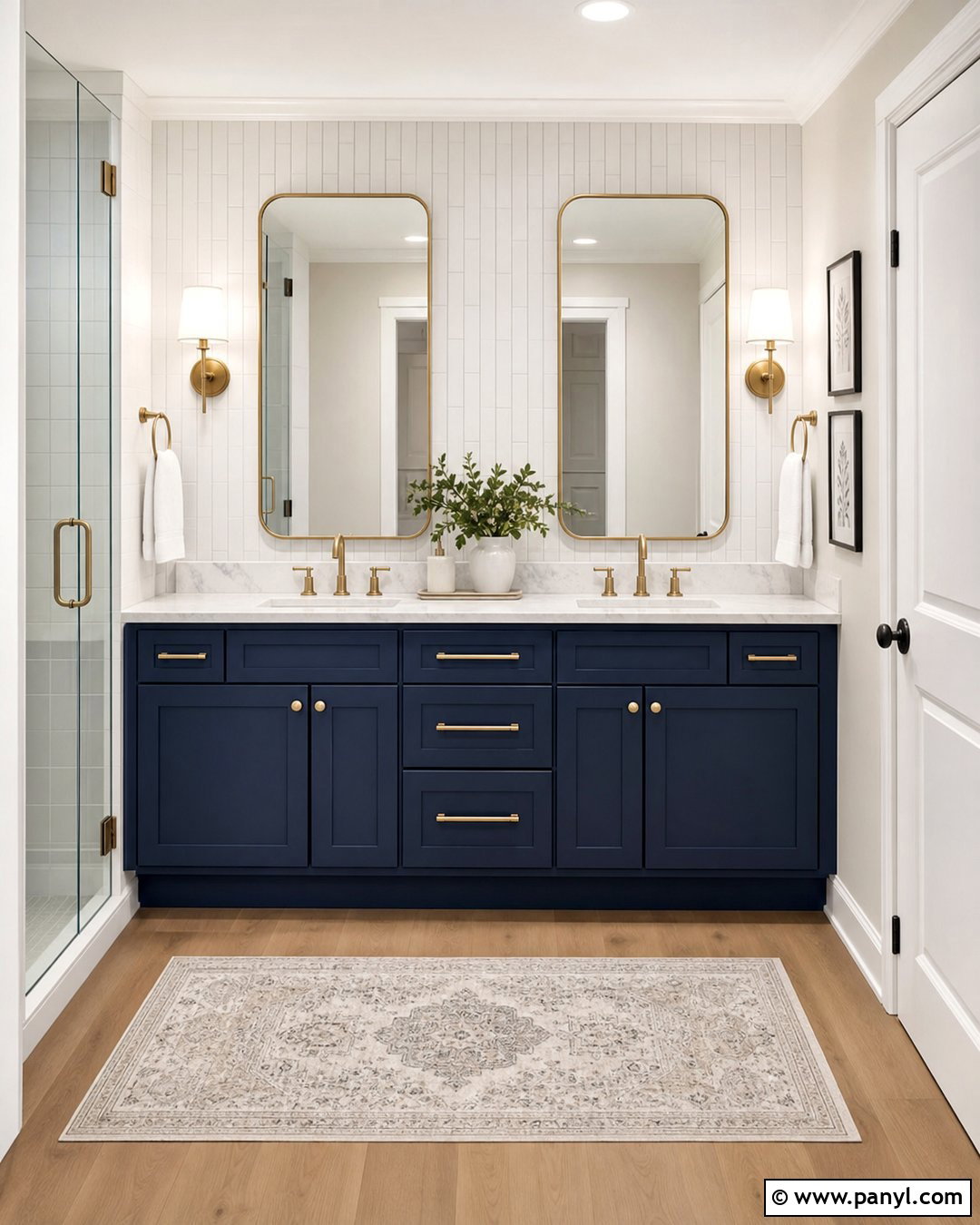
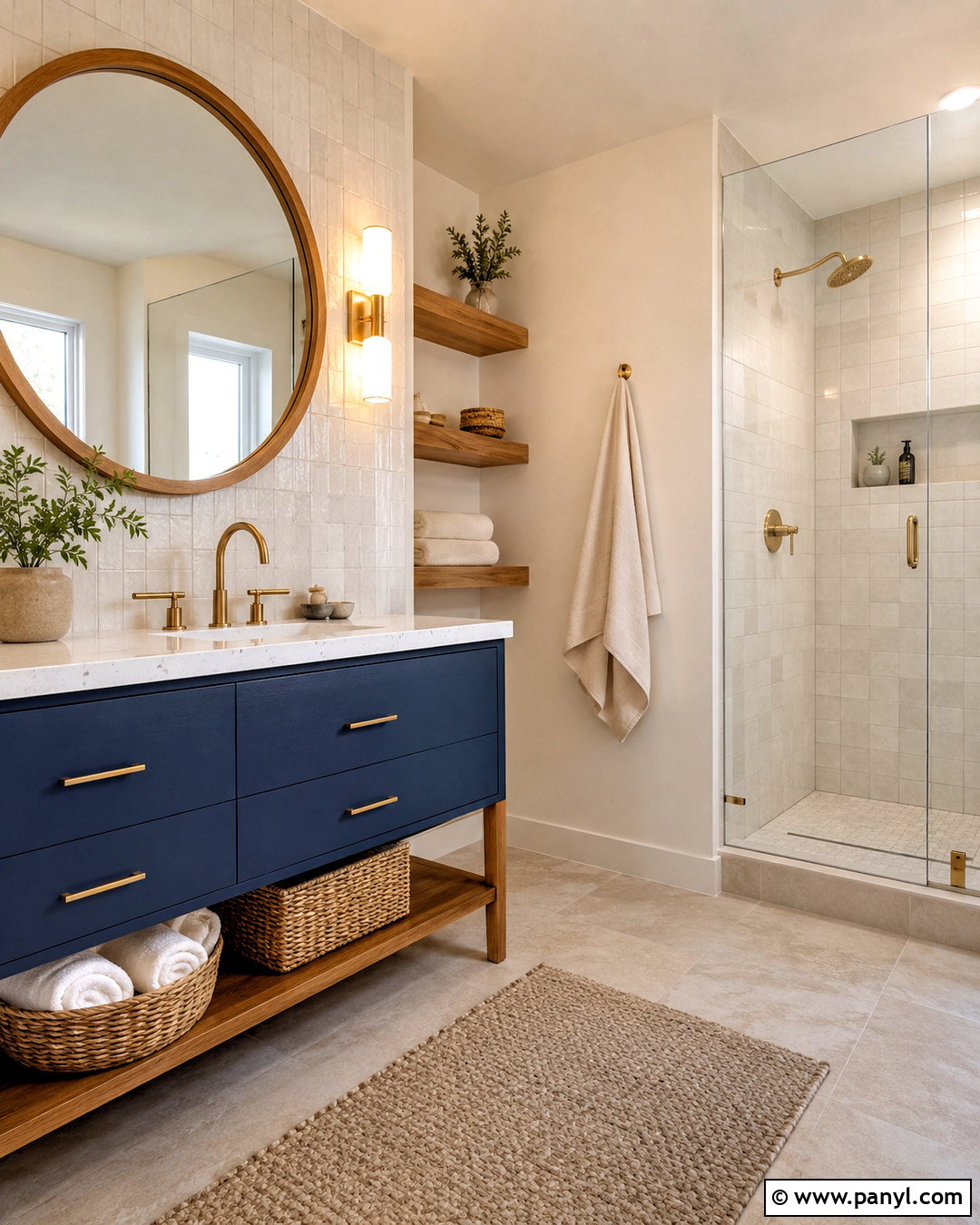
Navy blue is a classic vanity color that offers richness while coordinating easily with white, gray, and warm metallic finishes. Paint a substantial Shaker vanity deep navy, then add white marble-look quartz and brushed brass pulls. Use soft white walls and elongated white subway tile to brighten the surrounding area. Warm oak flooring or tan stone-look tile keeps the blue from feeling overly cool. Above the sinks, hang brass-framed mirrors with simple shaded sconces. Repeat navy sparingly through hand towels or a narrow border in the floor tile. The completed bathroom feels polished and timeless rather than nautical. Navy works especially well on a double vanity because the saturated color helps the large cabinet read as one cohesive, furniture-like feature.
14. Midnight Blue Bathroom Vanity
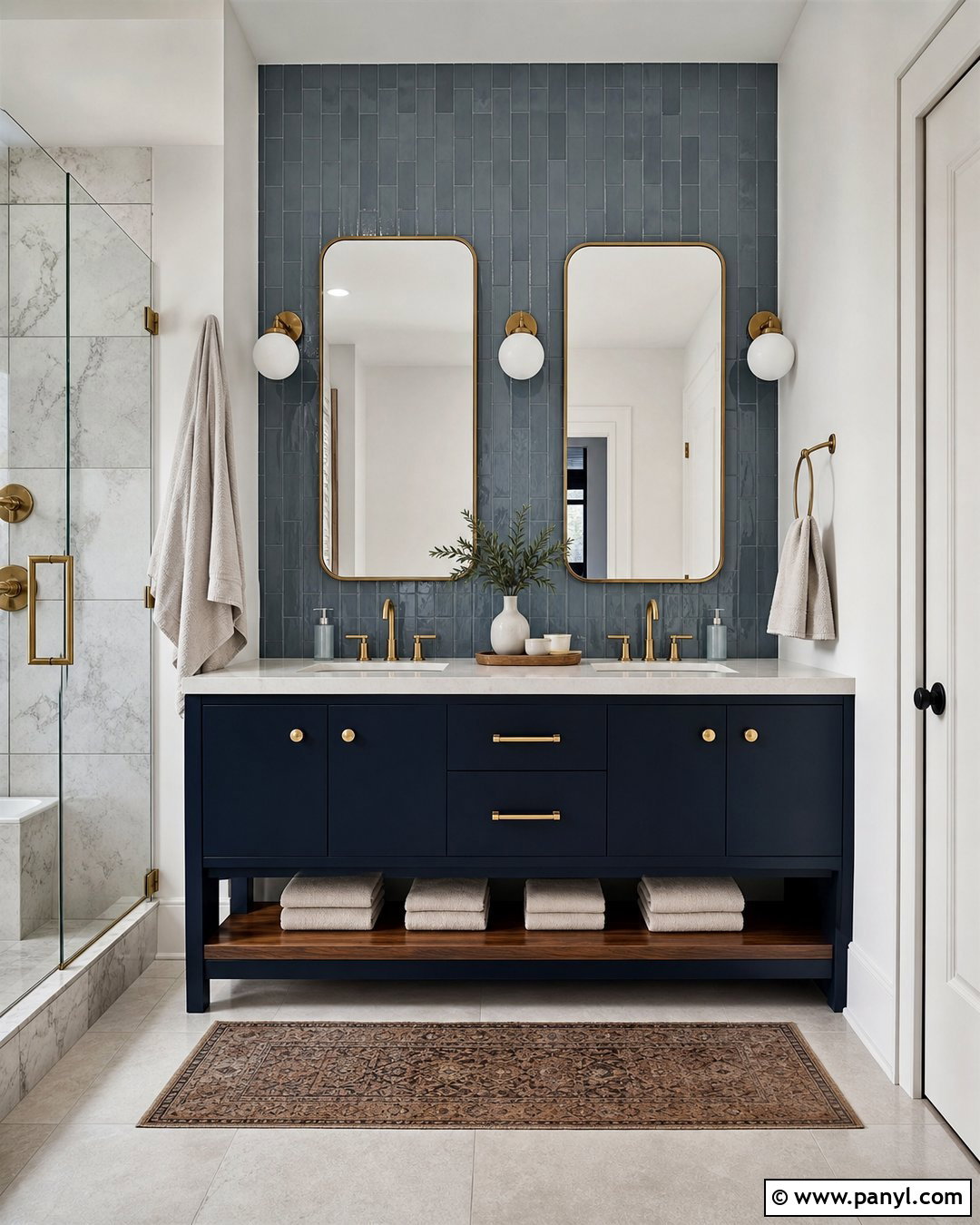
Midnight blue appears nearly black in low light but reveals a saturated blue character when illuminated. Make it the centerpiece of a dramatic bathroom with a pale quartz countertop, unlacquered brass hardware, and warm white walls. Add a backsplash of glossy blue-gray tiles that reflects light while creating a subtle tonal transition. A large brass-framed mirror and two globe sconces prevent the vanity wall from feeling heavy. Choose pale limestone-look flooring and natural linen towels to balance the deep cabinet color. A small walnut shelf can introduce additional warmth. This scheme works best with generous vanity lighting and at least one lighter surface directly beside the cabinet. The result is elegant, cocooning, and more colorful than a conventional black-and-white design.
15. Dusty Blue Bathroom Vanity
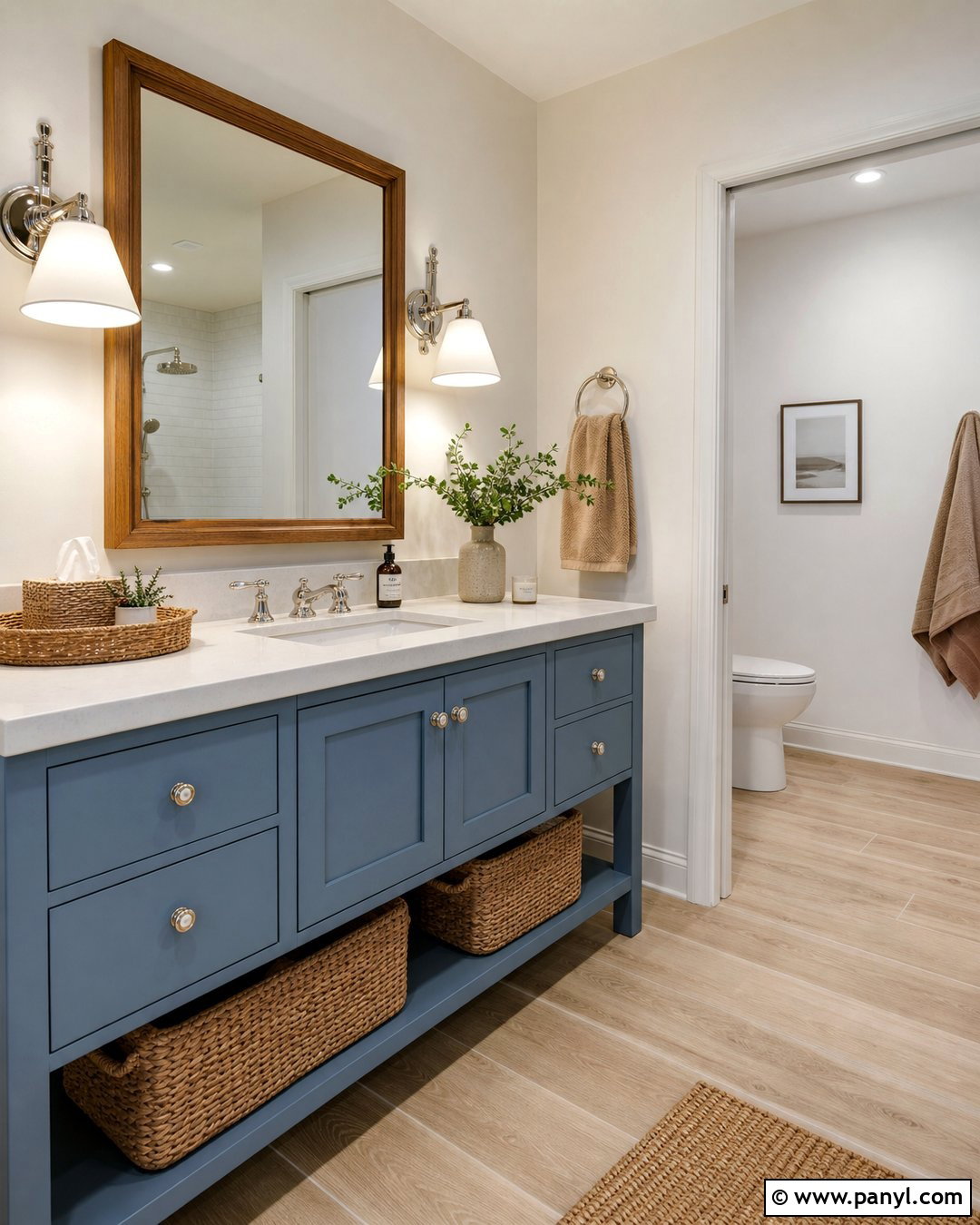
Dusty blue gives a bathroom gentle color without dominating the entire space. Pair a muted blue vanity with creamy quartz, polished nickel knobs, and a traditional nickel faucet. Warm white walls will keep the blue looking soft rather than icy. For the backsplash, use handmade white tiles with pale gray grout, then ground the room with light oak-look flooring. A natural oak mirror and woven baskets introduce warmth, while white and sand-colored towels maintain the relaxed palette. Shaker doors suit the color’s classic quality, although simple slab fronts can create a more modern result. This finished bathroom feels calm, comfortable, and lightly coastal without relying on obvious themed decor. It is particularly attractive in guest bathrooms and children’s bathrooms that need adaptable color.
16. Powder Blue Bathroom Vanity
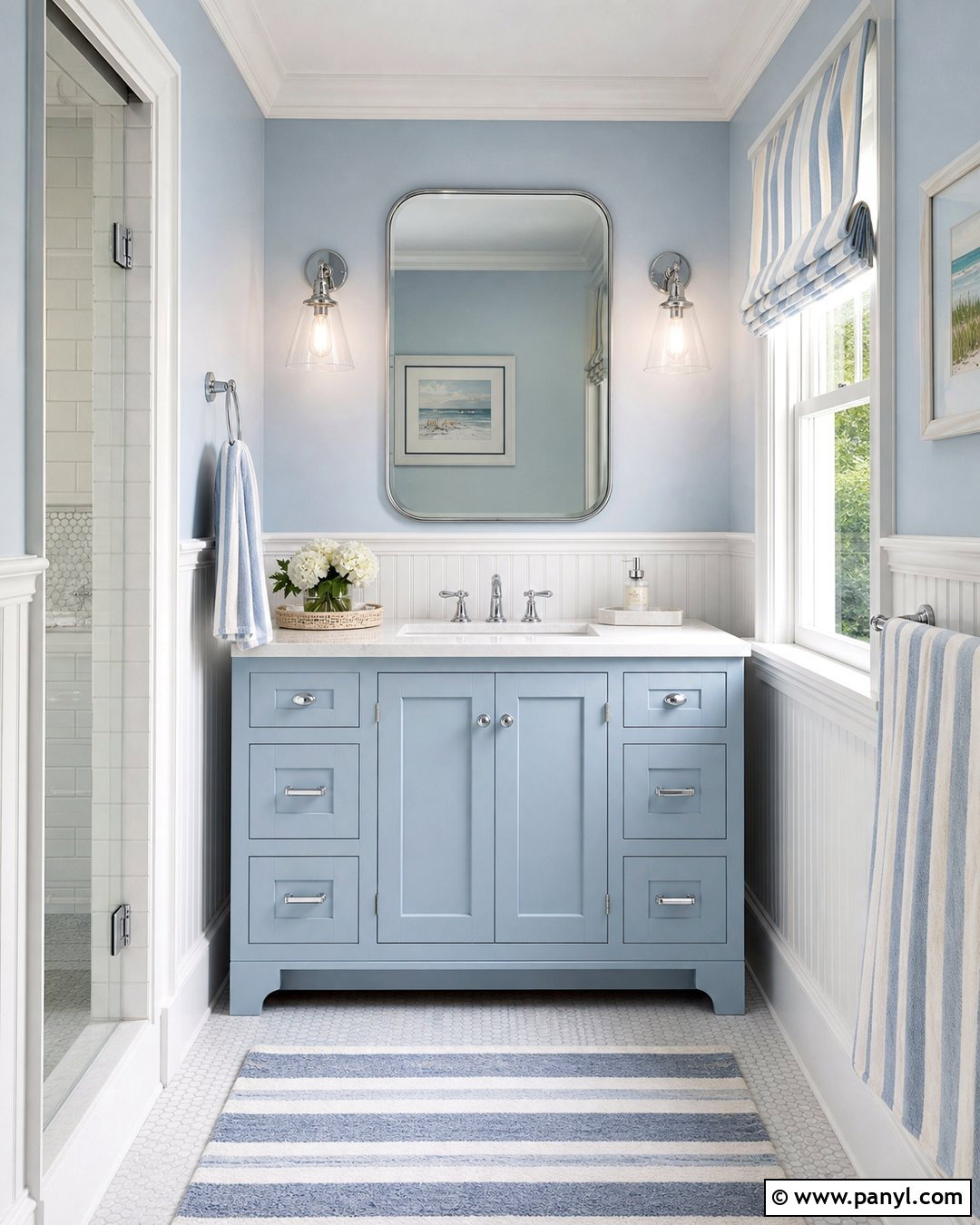
A powder blue vanity makes a compact bathroom feel cheerful and open. Use the color on a small furniture-style cabinet with a white quartz top, polished chrome faucet, and delicate chrome knobs. Surround it with white beadboard, pale gray-blue upper walls, and a clean white ceiling. Small white hexagonal floor tiles with soft gray grout add pattern while preserving brightness. Hang a rounded rectangular mirror above the sink and place clear glass sconces on both sides. White towels, a striped bath mat, and a simple ceramic planter complete the fresh design. The blue should be light but clearly visible against the white surfaces. This cohesive look works beautifully in a cottage bathroom, family bath, or narrow powder room that needs personality without visual heaviness.
17. Blue Gray Bathroom Vanity
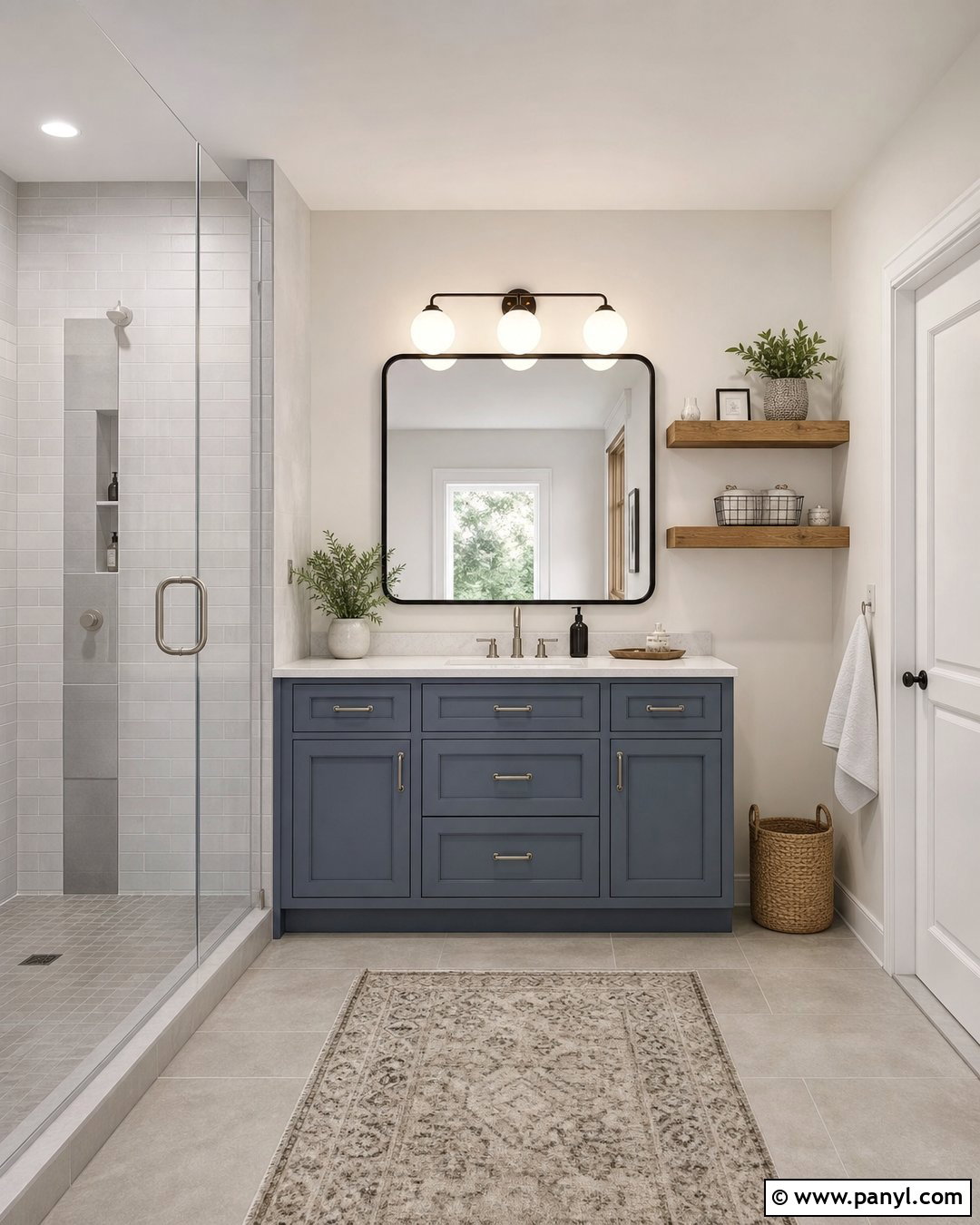
Blue-gray paint offers a calm middle ground between a colorful blue vanity and a conventional gray one. Pair it with a lightly veined white quartz counter, brushed nickel hardware, and a polished nickel faucet. Use warm white walls to reveal the cabinet’s blue undertone, then add a backsplash of pale gray rectangular tiles. Medium oak cabinetry accents or floating shelves will warm the scheme and keep it from becoming too cool. Large cream-gray floor tiles provide a neutral foundation. Choose a black-framed mirror for subtle definition and white globe lighting for softness. The completed bathroom feels tailored, peaceful, and easy to maintain. Blue gray is especially useful when existing tile contains both cool gray and muted blue notes that need visual connection.
18. Teal Bathroom Vanity
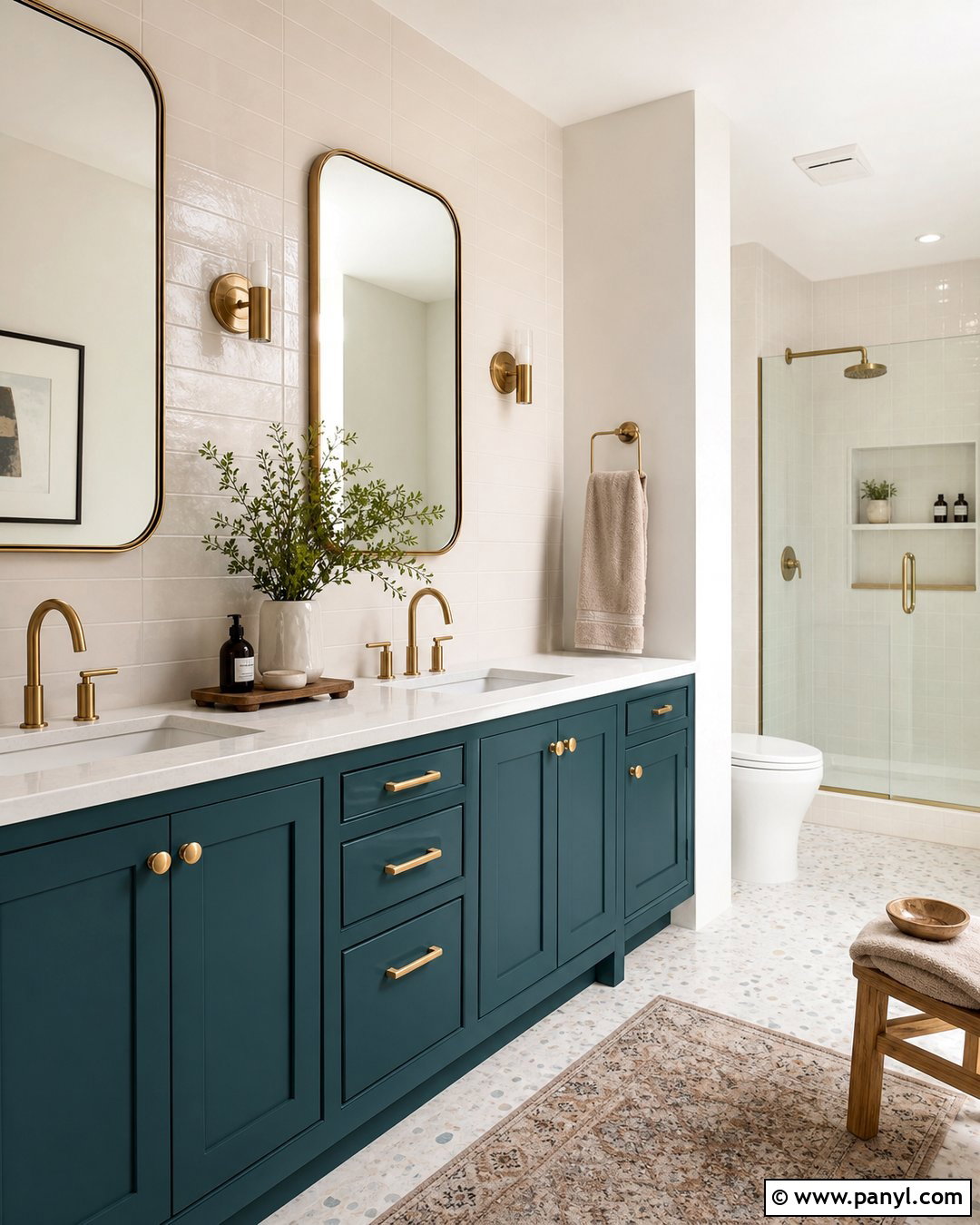
A teal vanity delivers saturated color while still feeling connected to water and nature. Use a deep blue-green shade on a streamlined cabinet with a white quartz top and brushed brass pulls. Add warm white walls and a backsplash of glossy ivory tiles to create clean contrast. Brass-framed mirrors and globe sconces reinforce the warm metallic details. For flooring, select pale terrazzo with small blue, green, and tan chips that subtly repeat the vanity color. Natural wood accessories and oatmeal towels keep the design balanced. Teal works particularly well in a powder room where a bold centerpiece can define the entire space. The finished bathroom should feel lively but controlled, with the cabinet remaining the only large saturated surface rather than competing with several unrelated colors.
19. Sage Green Bathroom Vanity
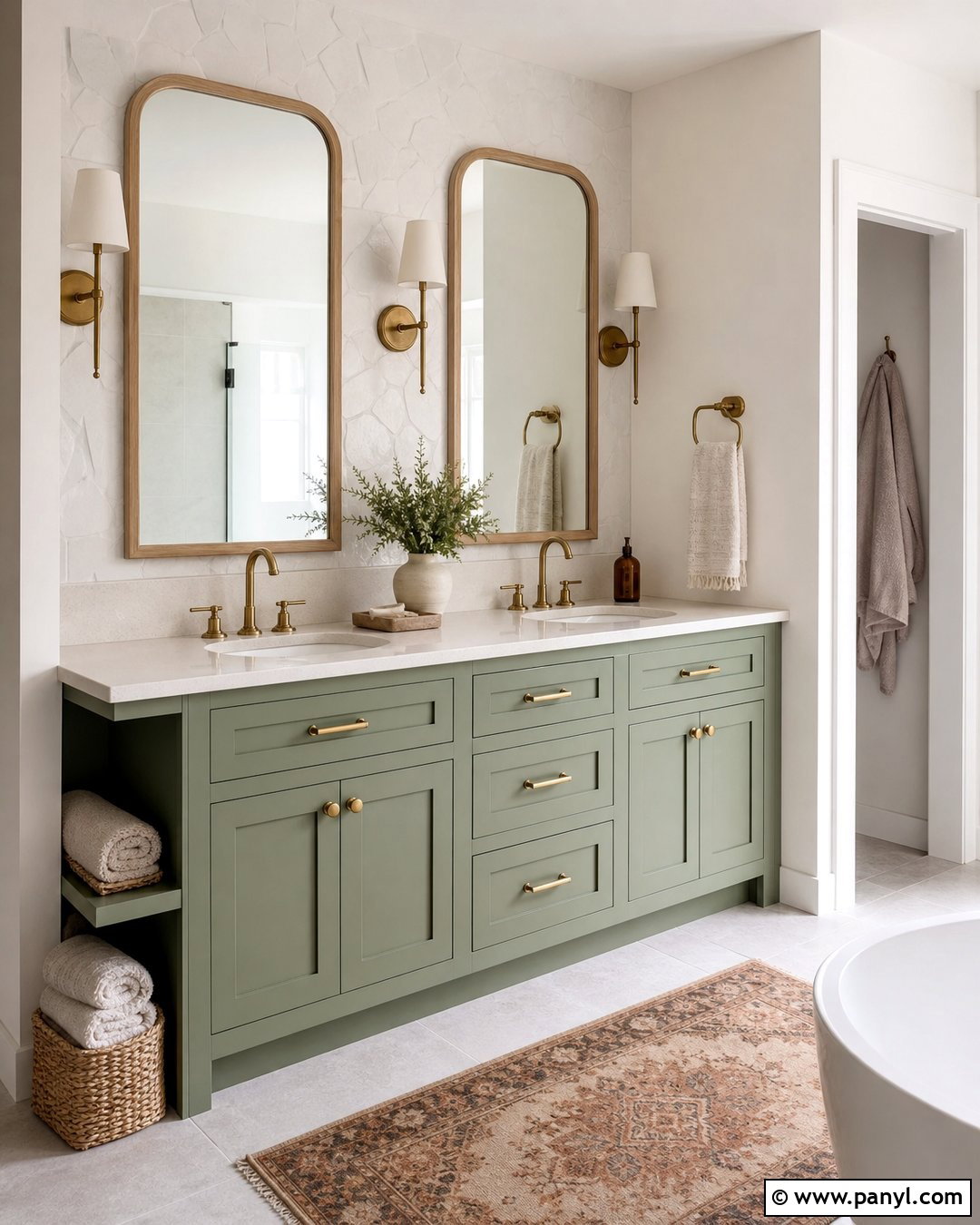
Sage green creates a restful vanity look that pairs beautifully with natural textures and warm neutrals. Paint Shaker cabinets a muted gray-green, then top them with cream quartz and brushed brass hardware. Use warm white walls and a softly irregular ivory tile backsplash to maintain an organic feeling. Pale oak mirrors, woven baskets, and linen towels add texture without distracting from the cabinetry. Underfoot, choose limestone-look porcelain in a light beige tone. A simple brass faucet and opal glass sconces will give the vanity area a finished appearance. This palette works in bathrooms of almost any size because sage introduces recognizable color without becoming overwhelming. The result feels fresh, grounded, and easy to coordinate with both contemporary and traditional architectural details.
20. Olive Green Bathroom Vanity
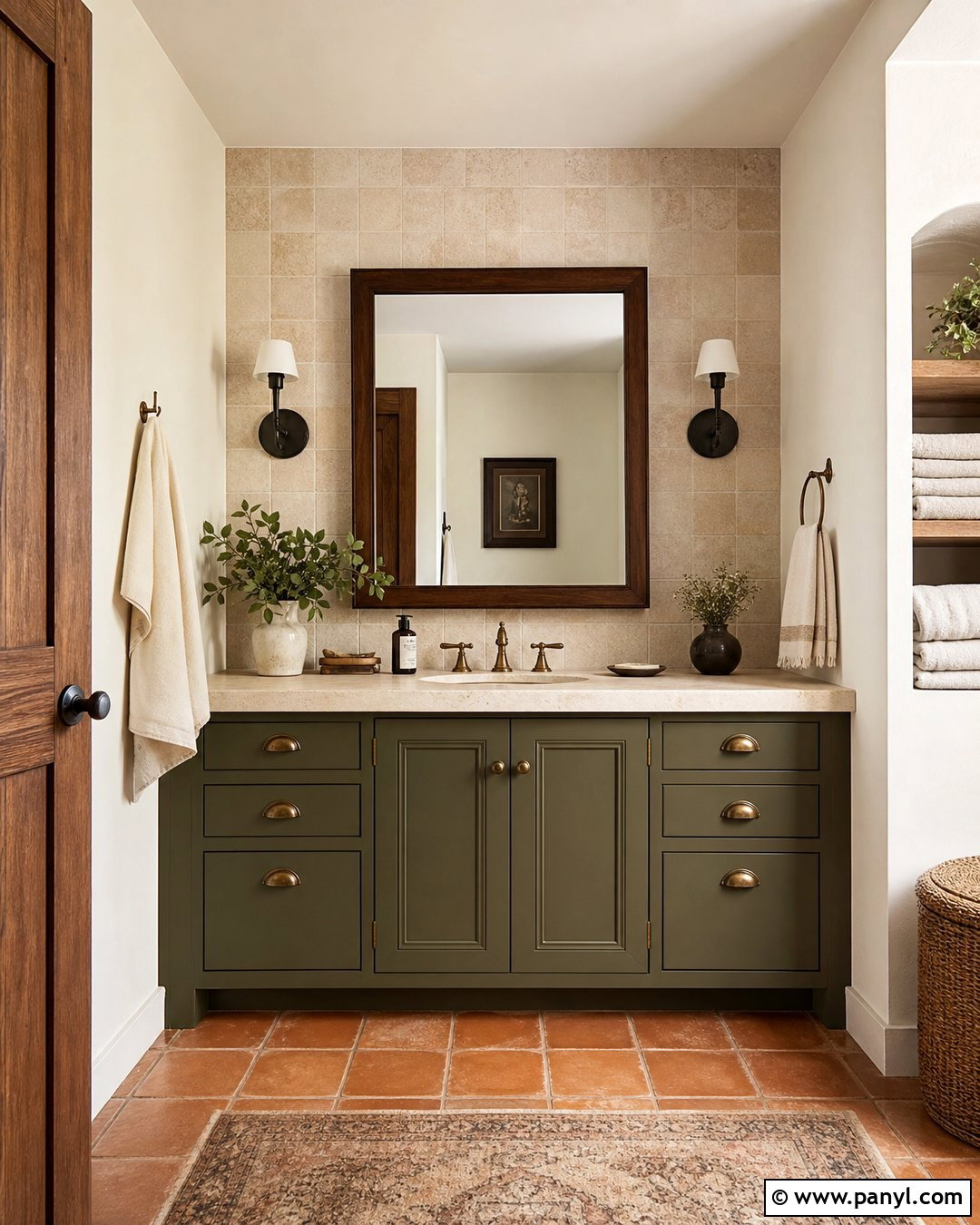
Olive green gives a vanity warmth, depth, and an earthy character that works especially well with aged finishes. Pair the painted cabinet with a creamy stone countertop, antique brass cup pulls, and a warm brass faucet. Walls in soft plaster white will create contrast while preserving the cozy atmosphere. Use handmade tan tiles behind the sink and terracotta-look porcelain on the floor. A dark walnut mirror helps frame the vanity and repeats the room’s warm undertones. Add ivory towels, a woven laundry basket, and minimal botanical decor. Because olive can shift noticeably under artificial light, sample several shades beside the actual countertop and tile. The completed bathroom feels collected and natural, with a subtle vintage influence rather than a trendy, overly themed appearance.
21. Moss Green Bathroom Vanity
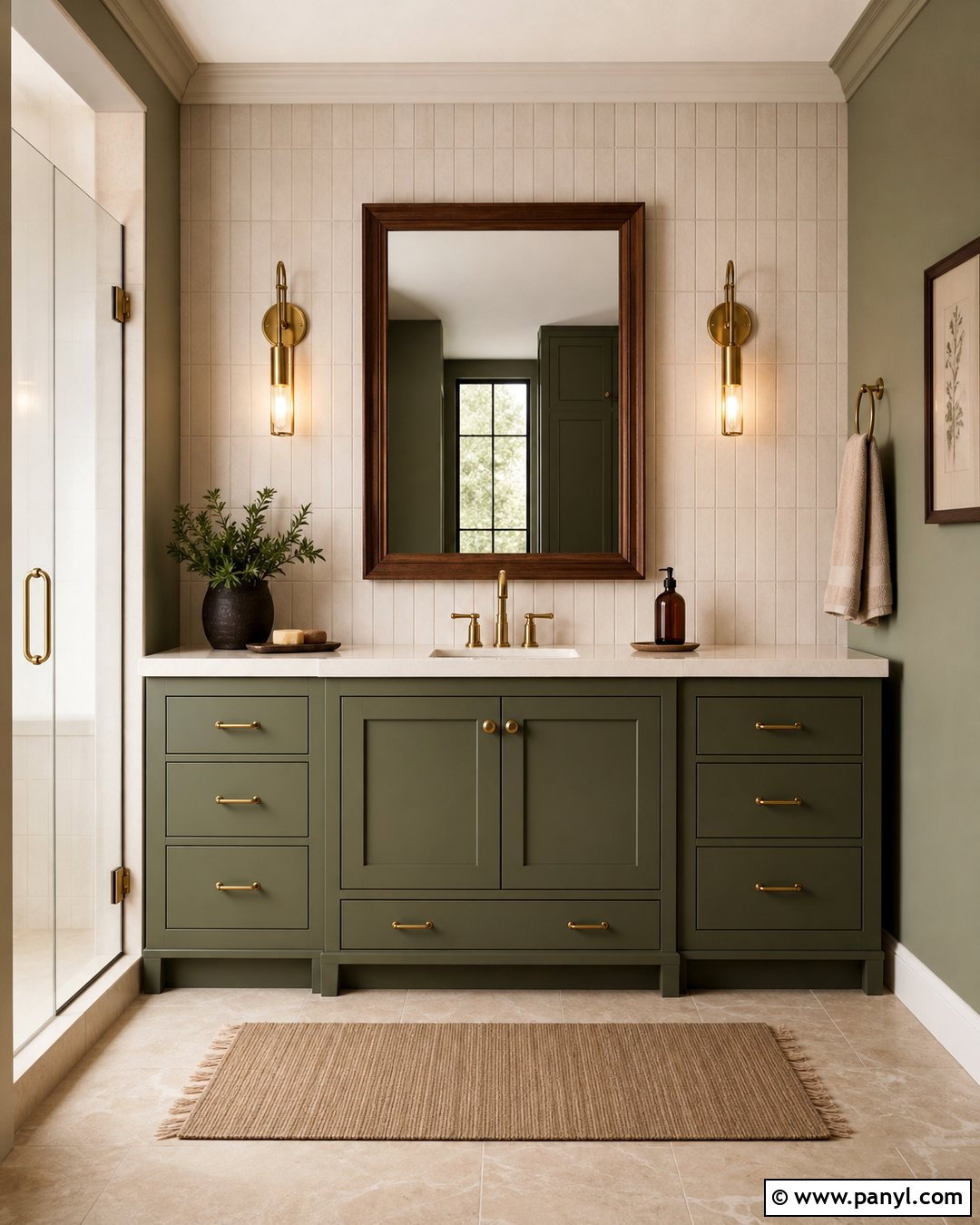
Moss green creates an enveloping bathroom palette inspired by woodland tones. Use the color on a medium-size vanity with visible panel details, then add a warm white quartz top and aged brass hardware. Continue a lighter green-gray across the walls for a gentle tonal effect rather than strong contrast. A cream vertical tile backsplash and pale stone flooring will keep the space bright. Choose a walnut-framed mirror, simple brass sconces, and natural linen towels. Small ceramic accessories in ivory and brown can reinforce the organic palette without adding clutter. This full look suits Craftsman, cottage, and transitional homes particularly well. Moss green has enough depth to anchor the room, yet its muted quality keeps the vanity calm and livable for everyday use.
22. Forest Green Bathroom Vanity
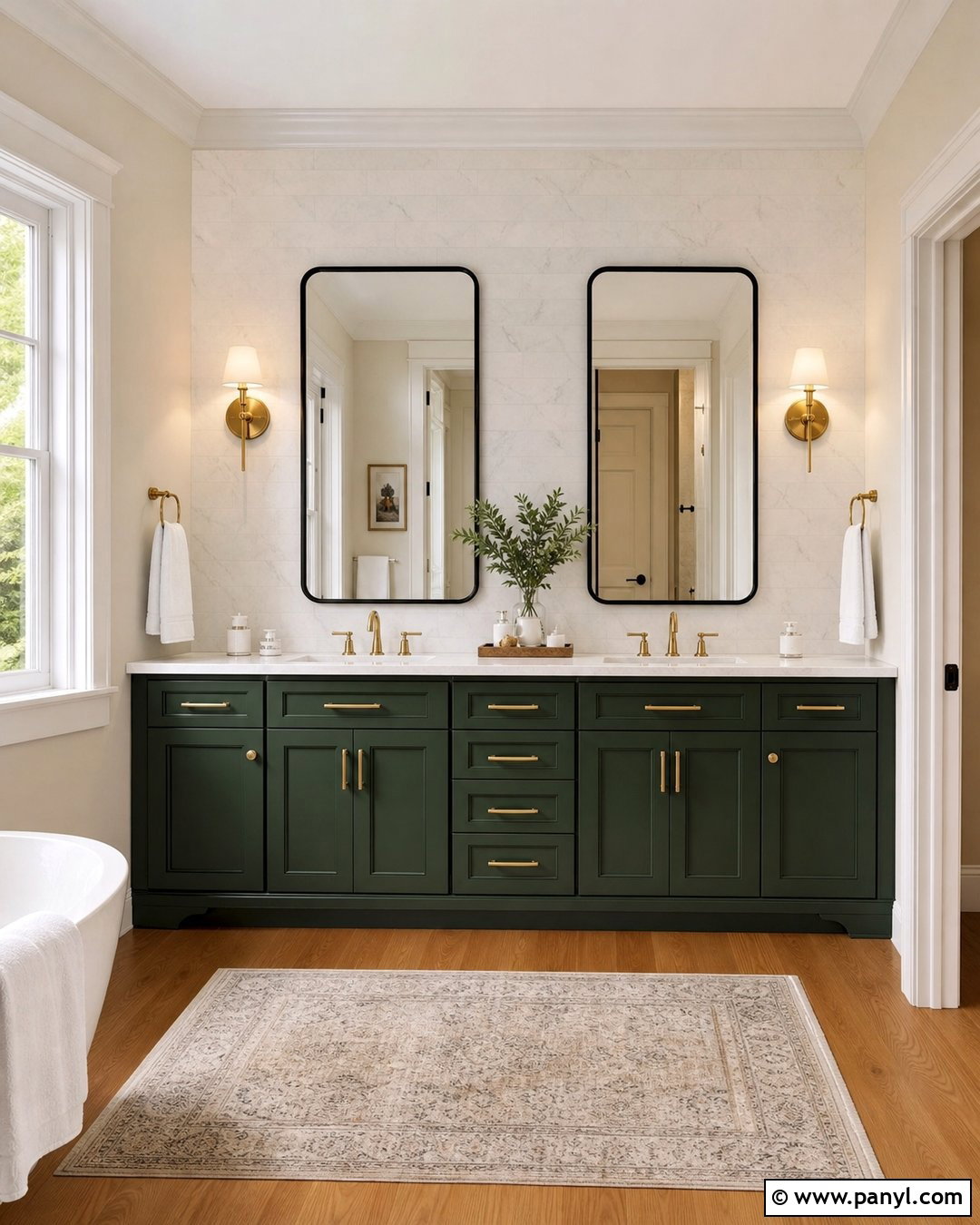
Forest green turns the vanity into a rich focal point with classic character. Pair deep green cabinetry with a white marble-look countertop, polished brass pulls, and a substantial brass faucet. Use creamy white walls to prevent the color from overwhelming the room. A white backsplash with faint green-gray veining can connect the surfaces subtly. Black-framed mirrors introduce crisp definition, while brass sconces soften the contrast. Choose warm oak flooring or beige stone-look porcelain to balance the cool green. White towels and a restrained patterned runner finish the design. Forest green is particularly effective on a wide double vanity or tall linen cabinet because the larger painted surface highlights its depth. The completed bathroom feels refined, memorable, and grounded in a traditional color combination.
23. Emerald Green Bathroom Vanity
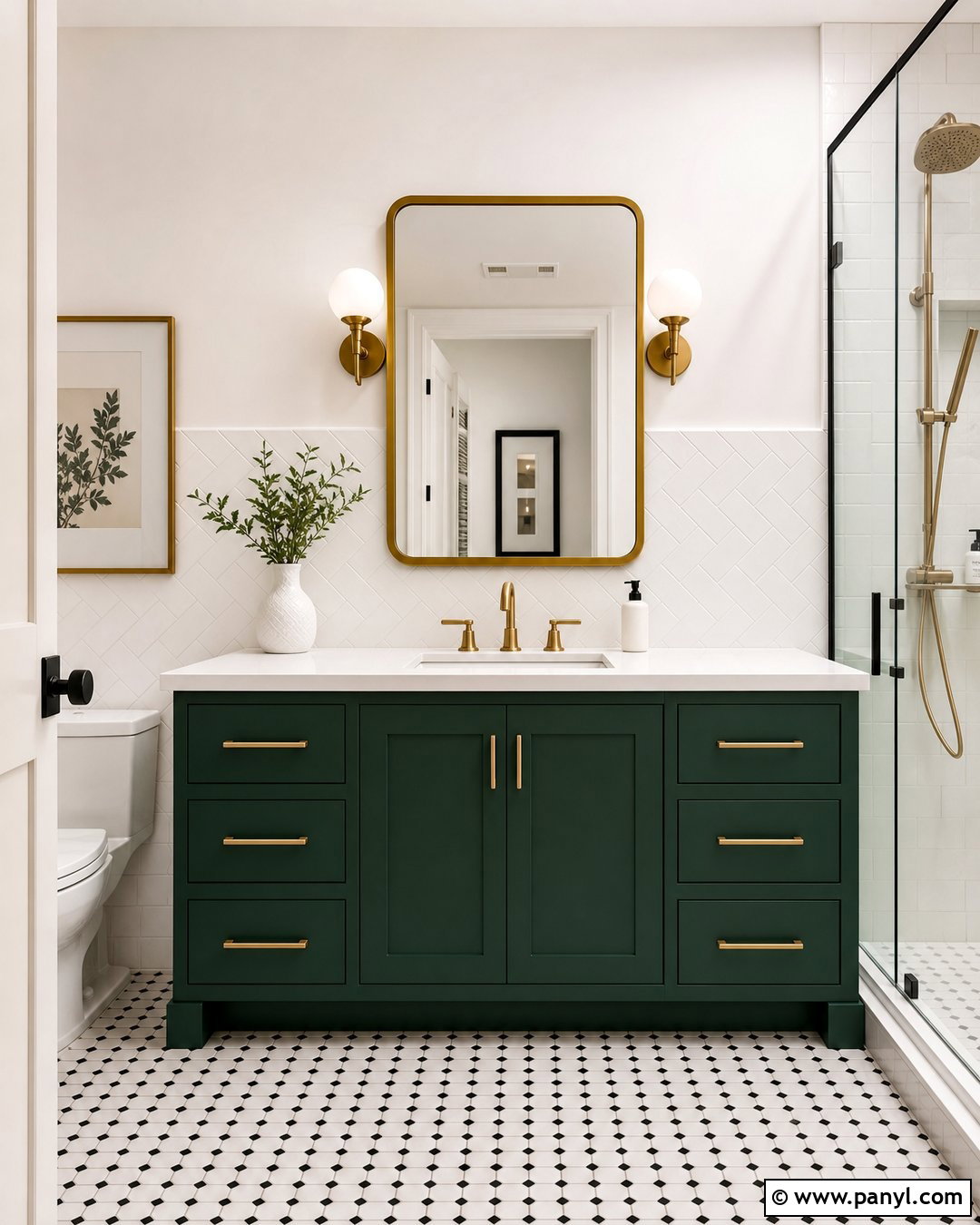
An emerald green vanity brings jewel-toned energy to a bathroom while maintaining a polished appearance. Use this saturated color on clean-lined cabinetry with white quartz, slim brass handles, and a modern brass faucet. Keep the walls soft white and add a backsplash of lightly textured white tile so the green remains the clear centerpiece. Black-and-white mosaic flooring provides graphic structure beneath the bold cabinet. A thin brass mirror frame and opal globe lights create a finished, upscale focal wall. Limit accessories to white towels, a black tray, and one small plant. Emerald is especially successful in powder rooms, where concentrated color can feel intentional and exciting. The complete design looks bold but organized because every surrounding element supports rather than competes with the vanity.
24. Mint Green Bathroom Vanity
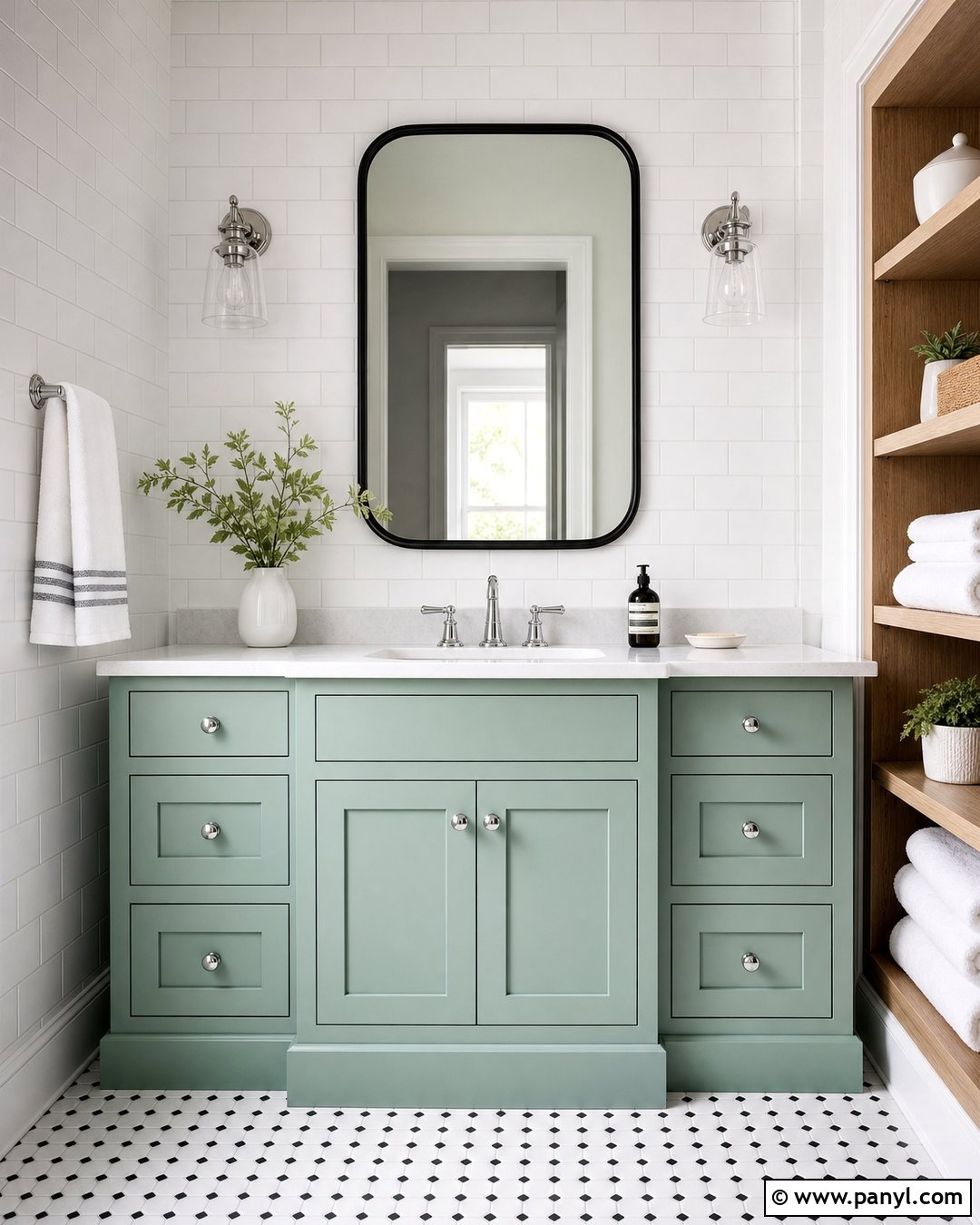
Mint green gives a painted vanity a lighthearted, clean quality that works well in vintage-inspired and family bathrooms. Pair a soft mint cabinet with a white quartz countertop, polished chrome knobs, and a classic chrome faucet. White subway tile and matching grout will keep the sink wall simple and bright. Add a black-and-white penny tile floor for contrast, then repeat black through a slim mirror frame. Clear glass sconces provide practical lighting without adding another strong color. Use white towels, pale wood storage, and one striped bath mat to complete the room. Choose a mint shade with a muted gray base rather than a sugary pastel undertone. The finished bathroom feels cheerful, crisp, and nostalgic while still functioning comfortably in a modern home.
25. Seafoam Green Bathroom Vanity
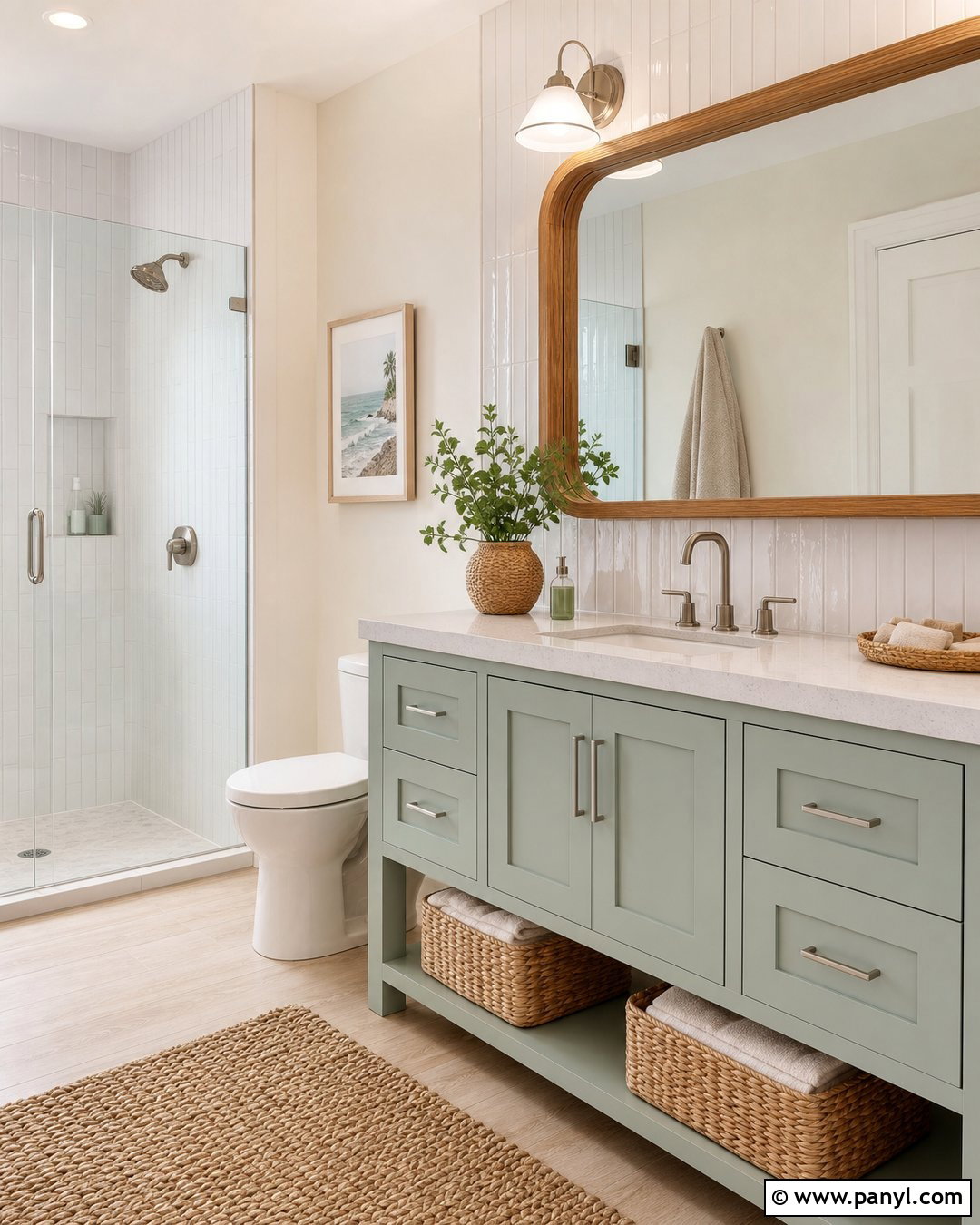
Seafoam green blends soft green and blue for a breezy bathroom with gentle coastal influence. Paint a simple vanity this watery shade and pair it with a white quartz top, brushed nickel pulls, and a polished nickel faucet. Warm white walls will prevent the room from feeling overly cool. Install glossy white vertical tiles behind the sink to reflect light, then choose pale sand-colored floor tile for natural contrast. A light oak mirror, woven baskets, and oatmeal towels introduce warmth and texture. Avoid obvious seashell accessories or themed artwork; the color can establish the relaxed atmosphere on its own. The completed look feels airy and sophisticated, making it suitable for a guest bath, beach-area home, or small bathroom that needs a subtle dose of color.
26. Blush Pink Bathroom Vanity
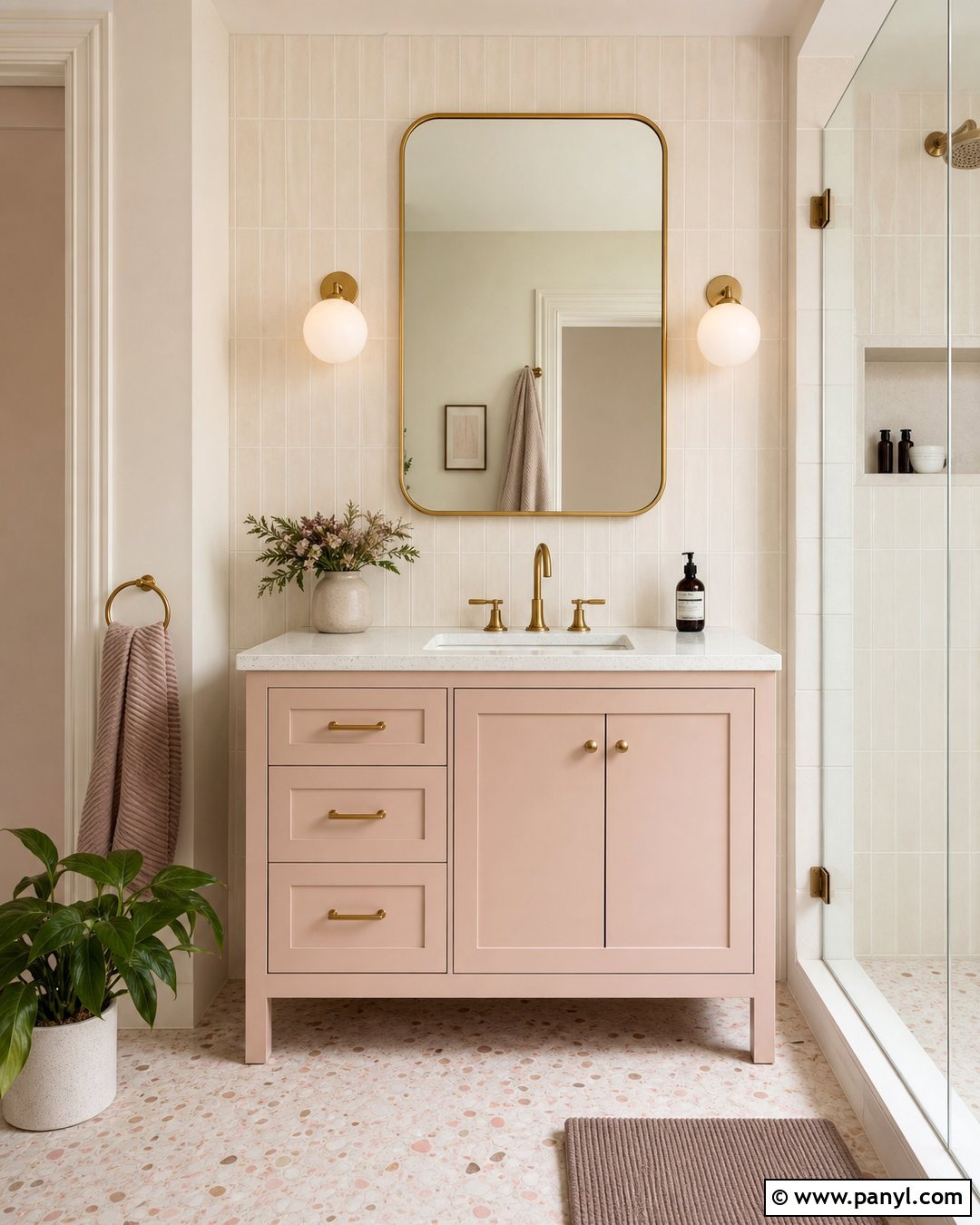
A blush pink vanity can feel mature and tailored when surrounded by warm neutrals and clean finishes. Use a muted, dusty blush on Shaker cabinetry with a white quartz countertop and brushed brass hardware. Pair it with creamy walls and ivory vertical tiles for a soft, cohesive background. A rounded brass mirror and opal glass sconces will continue the gentle shapes and warm metallic details. Choose pale terrazzo flooring with beige, gray, and faint pink chips to tie the palette together. Finish with white towels, a taupe bath mat, and minimal ceramic accessories. The pink should have an earthy undertone rather than a bright candy quality. This complete bathroom feels warm, welcoming, and distinctive without looking childish or overly decorative.
27. Dusty Rose Bathroom Vanity
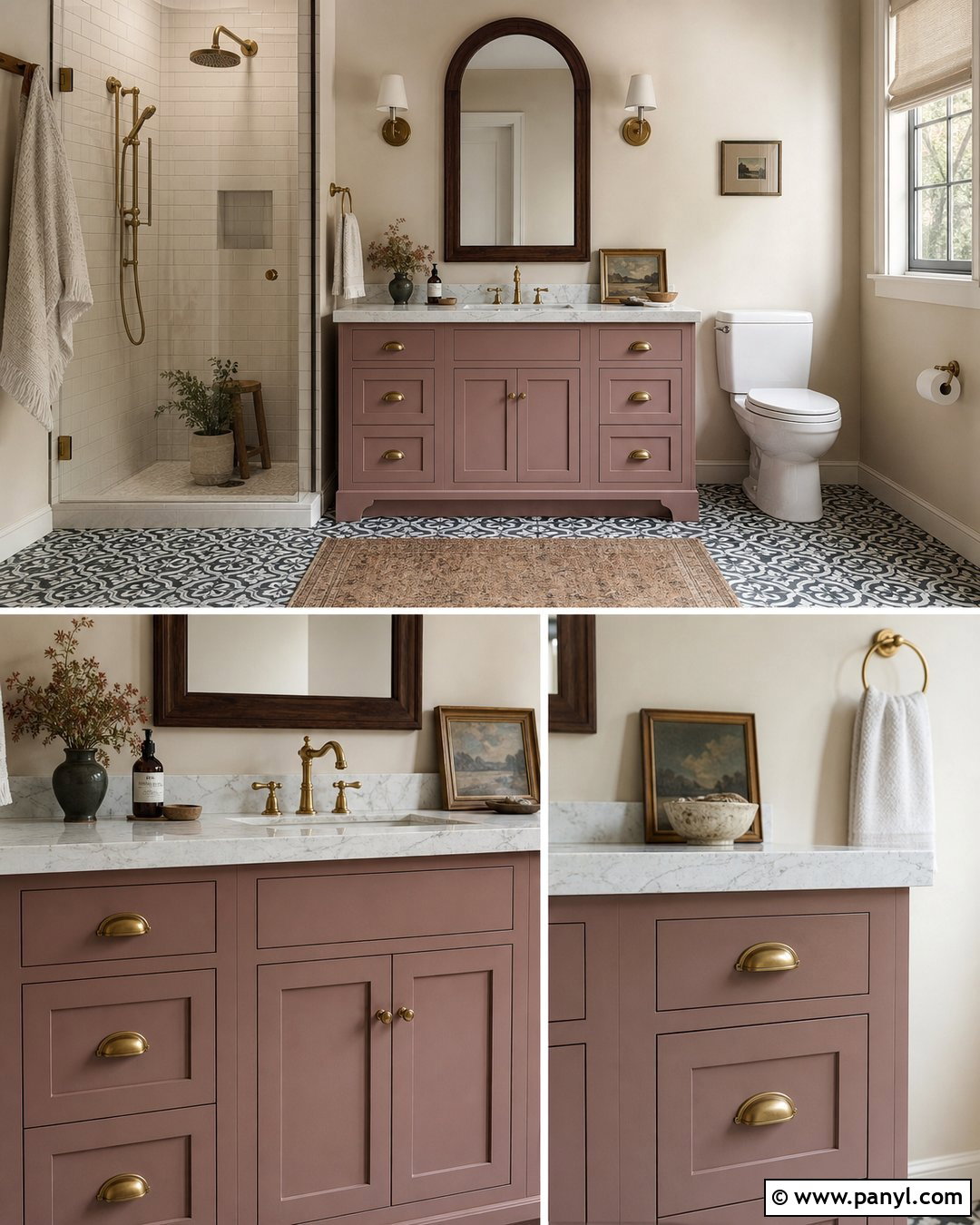
Dusty rose offers a deeper alternative to blush, giving the vanity warmth and vintage-inspired sophistication. Pair the muted rosy cabinetry with a creamy marble-look top, aged brass pulls, and a traditional brass faucet. Use soft beige walls to support the red-brown undertone. Behind the sink, install small ivory tiles with warm grout, then ground the room with charcoal-and-cream patterned flooring. A dark walnut mirror adds contrast and helps the color feel grown-up. Linen towels in ivory and taupe will soften the darker elements. This palette works especially well in a powder room or an older home with decorative trim. The final result feels collected, cozy, and intentional, combining color with neutral materials that make the vanity easy to live with.
28. Terracotta Bathroom Vanity
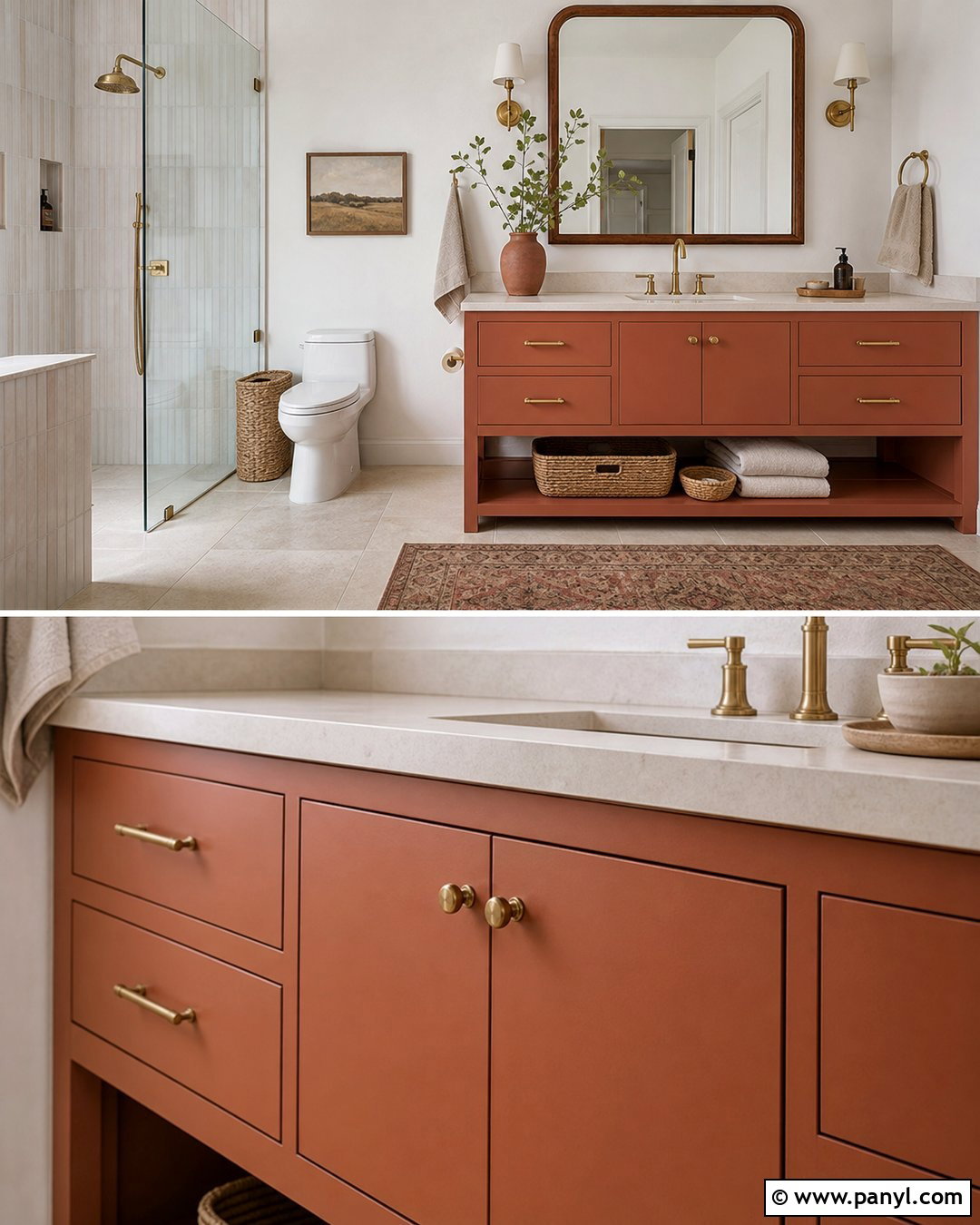
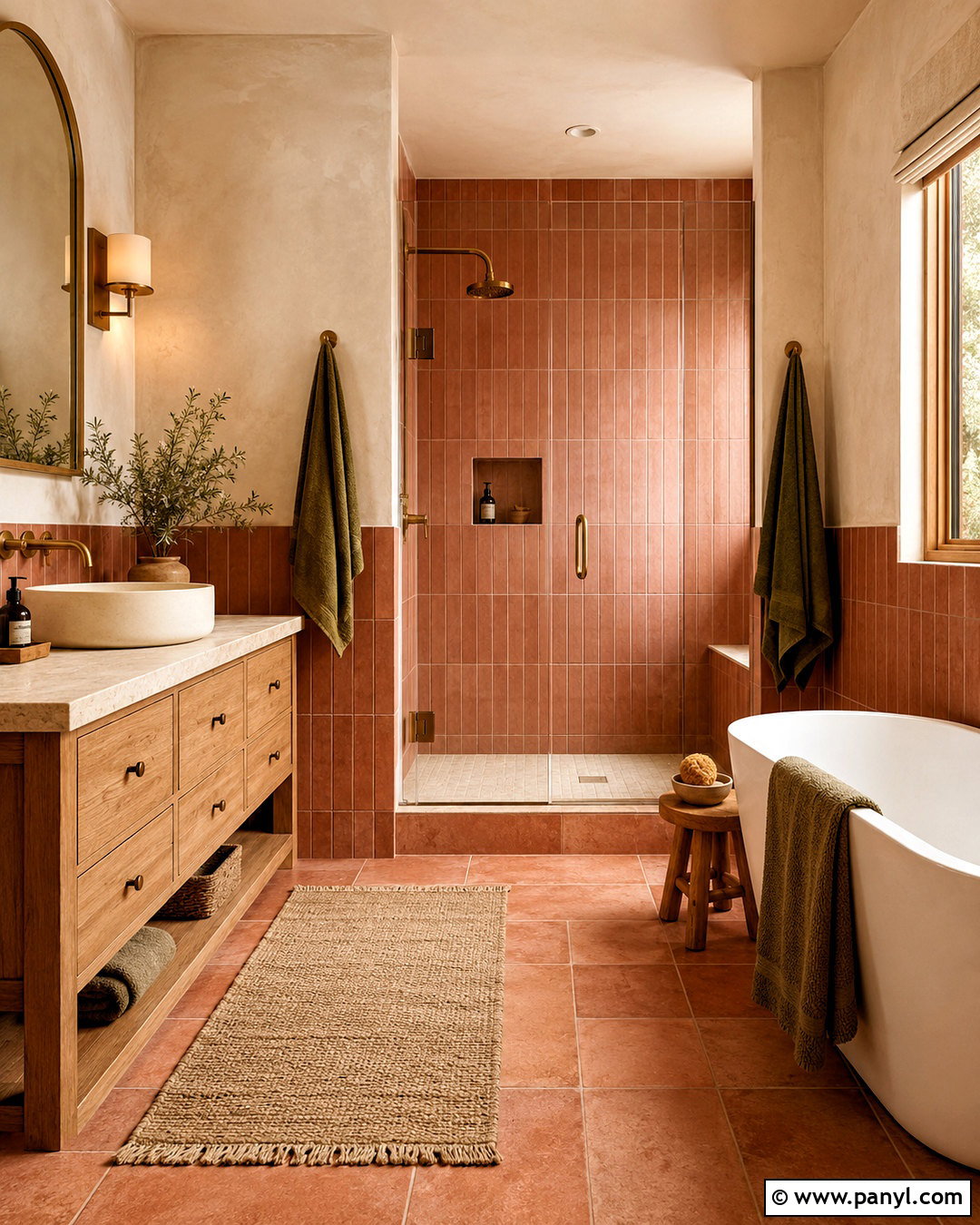
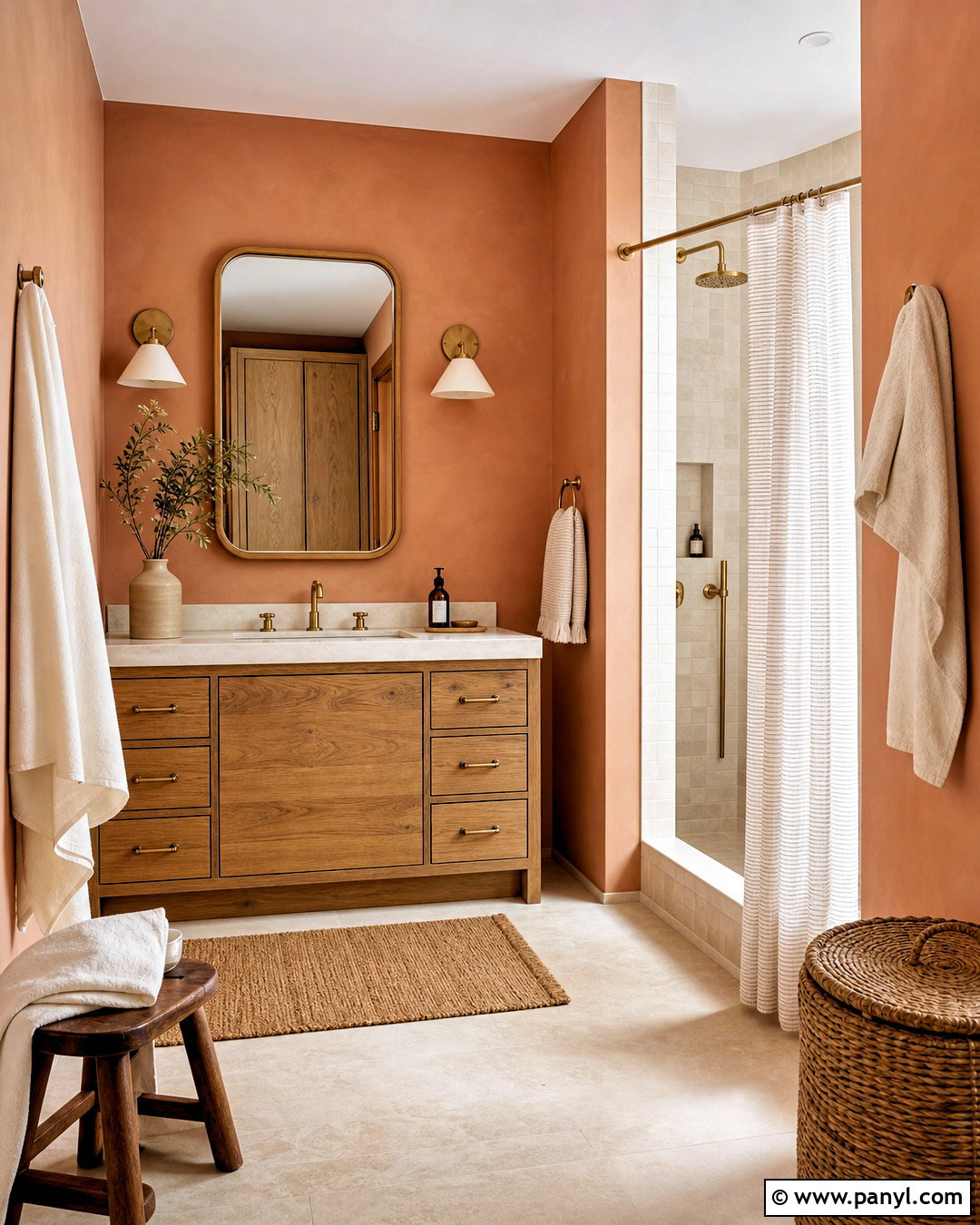
Terracotta paint turns a vanity into a warm, earthy statement that feels especially inviting in a bathroom with natural materials. Select a softened orange-brown shade and combine it with cream quartz, aged brass hardware, and a warm brass faucet. Use plaster-white walls and handmade ivory backsplash tile to brighten the saturated cabinet. Beige limestone-look flooring keeps the palette grounded, while a walnut mirror introduces a deeper organic tone. Add oatmeal towels, a woven basket, and simple clay accessories in slightly lighter shades. Avoid pairing the vanity with too many orange surfaces, which could flatten the design. The finished room feels sun-warmed and distinctive, with enough white and neutral space to keep the terracotta cabinetry visually balanced and easy to appreciate.
29. Clay Bathroom Vanity
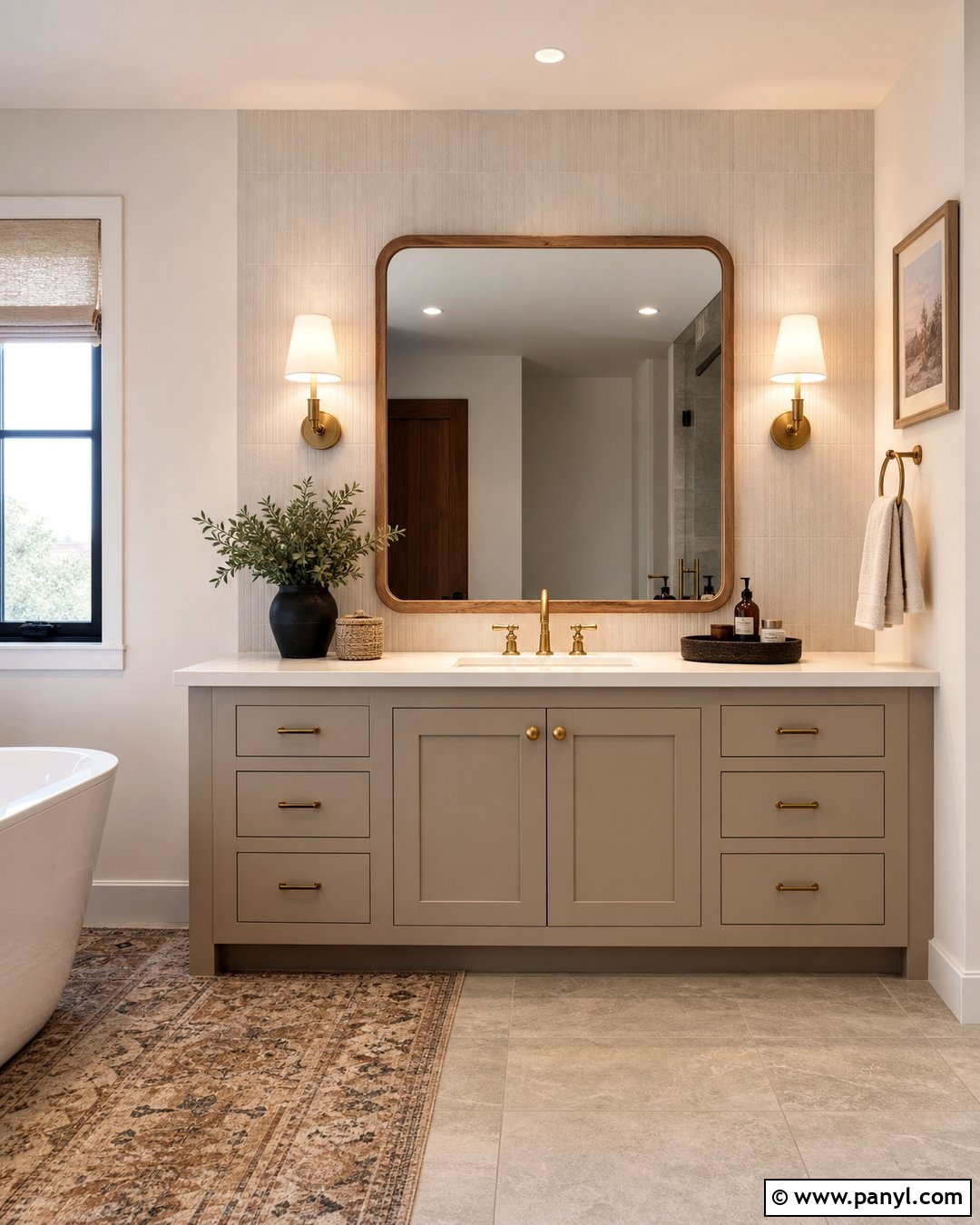
A clay-painted vanity provides the warmth of terracotta in a quieter, more neutral form. Choose a muted brown-pink shade for flat-panel or Shaker cabinetry, then add a creamy quartz top and antique brass pulls. Soft off-white walls allow the earthy color to stand out gently. Use a vertical backsplash of pale putty tile and warm gray stone-look flooring to build a tonal foundation. An oak-framed mirror and linen-shaded sconces reinforce the natural materials. Keep towels ivory, and add one dark brown tray for definition. This palette is ideal for anyone who wants color without a bright or strongly contrasting result. The completed bathroom feels calm, handcrafted, and contemporary, with the clay vanity connecting beige, brown, pink, and warm metallic details throughout the room.
30. Mustard Yellow Bathroom Vanity
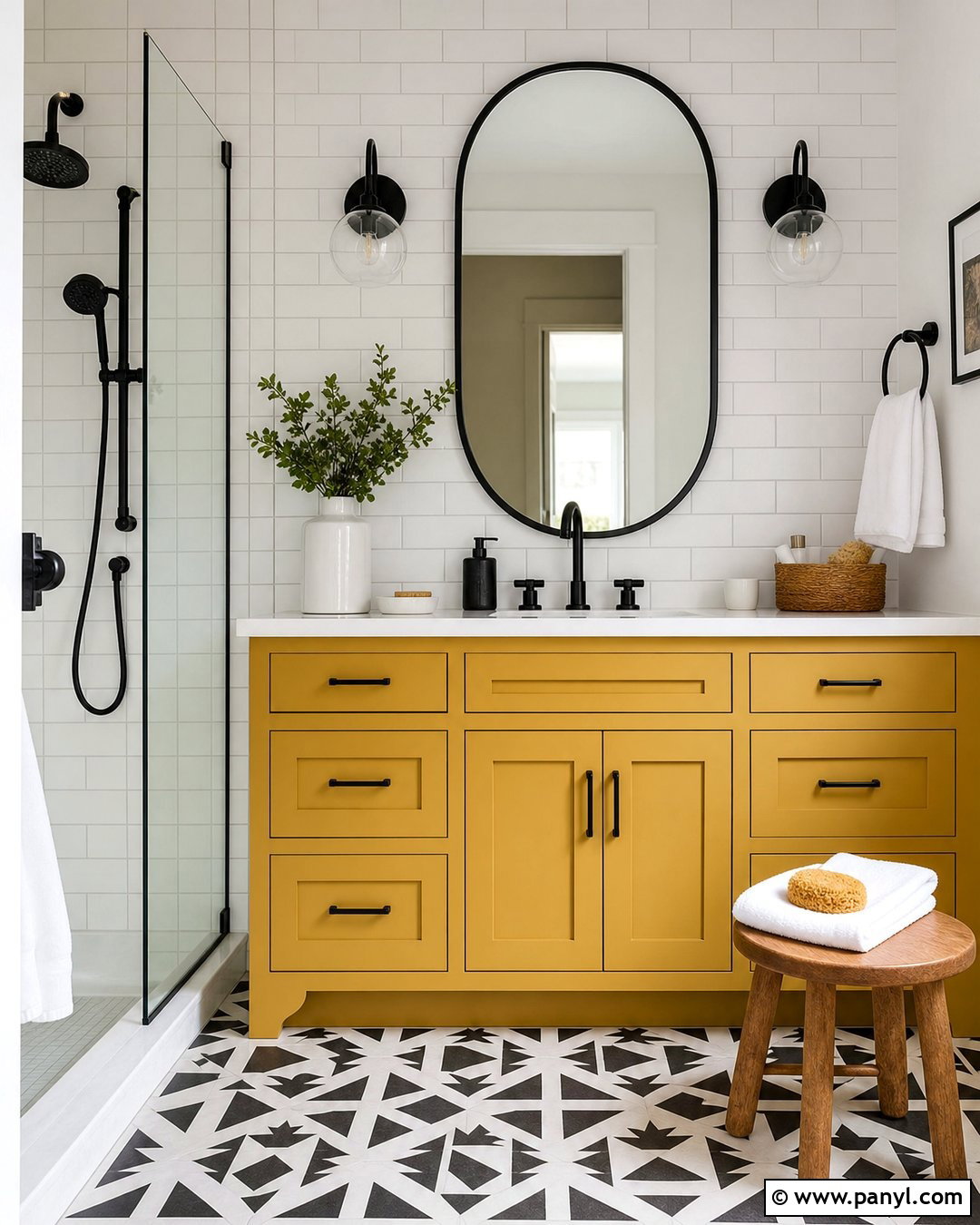
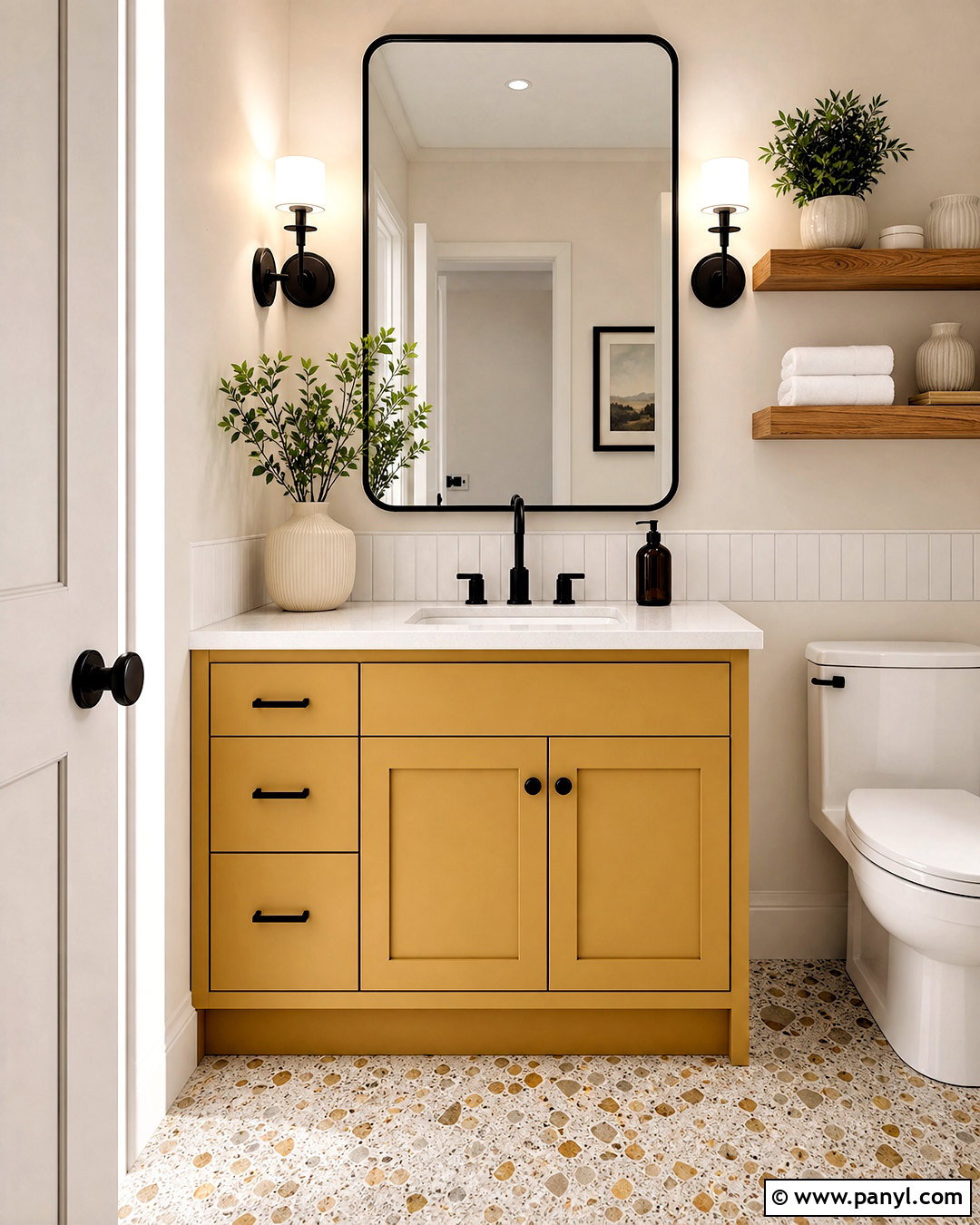
Mustard yellow gives a bathroom vanity lively warmth with a sophisticated, slightly retro character. Paint a compact cabinet a muted golden yellow, then pair it with a bright white quartz top and matte black hardware. White walls and simple white tile will provide enough breathing room around the strong color. Use black-and-white geometric floor tile to create structure and repeat the dark fixtures. A rounded black mirror and clear globe sconces keep the vanity wall crisp. Add white towels, a natural wood stool, and one olive-colored accessory for a restrained secondary color. Mustard works especially well in powder rooms and children’s bathrooms where a cheerful focal point is welcome. The completed space feels energetic, functional, and carefully controlled rather than overly playful.
31. Butter Yellow Bathroom Vanity
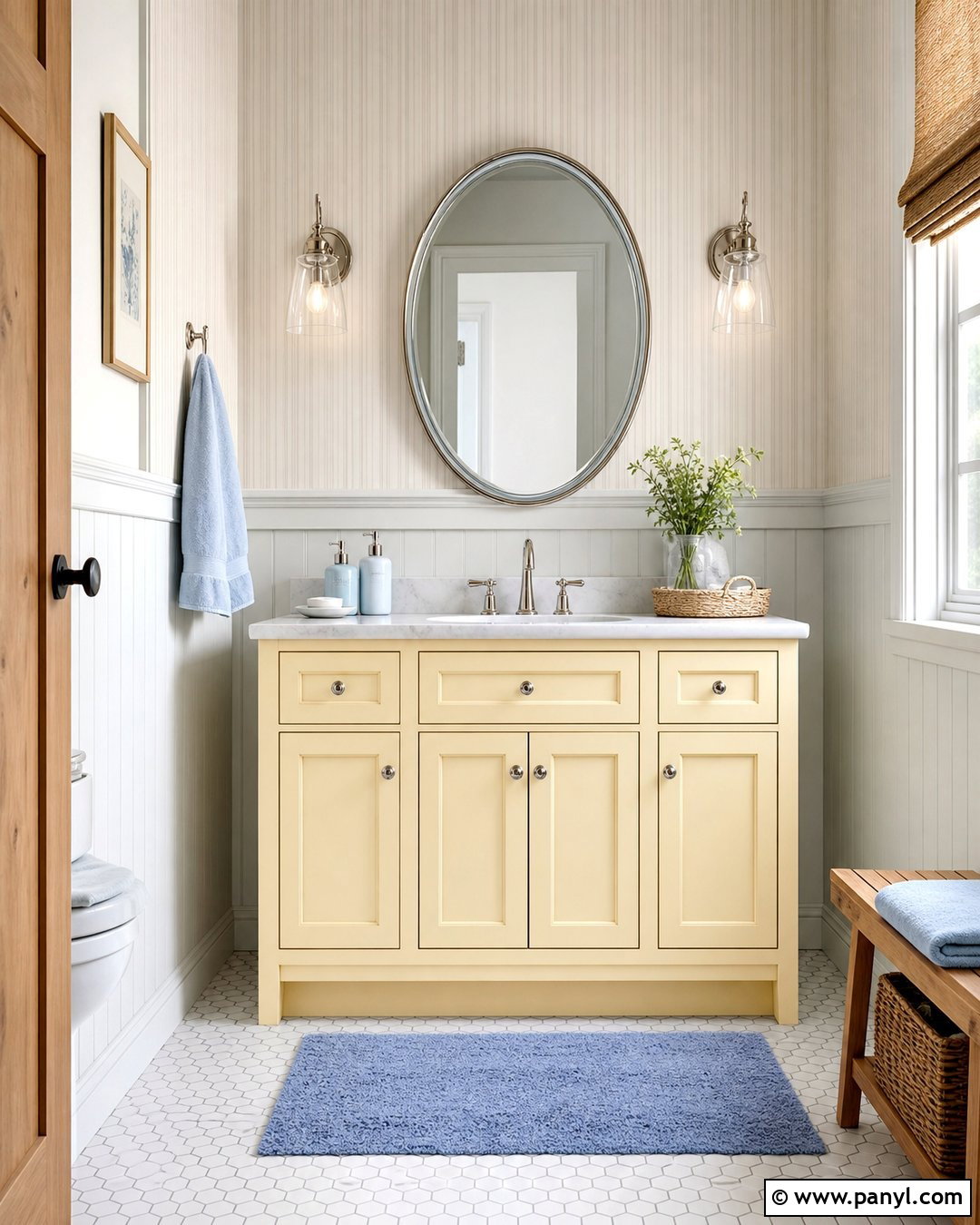
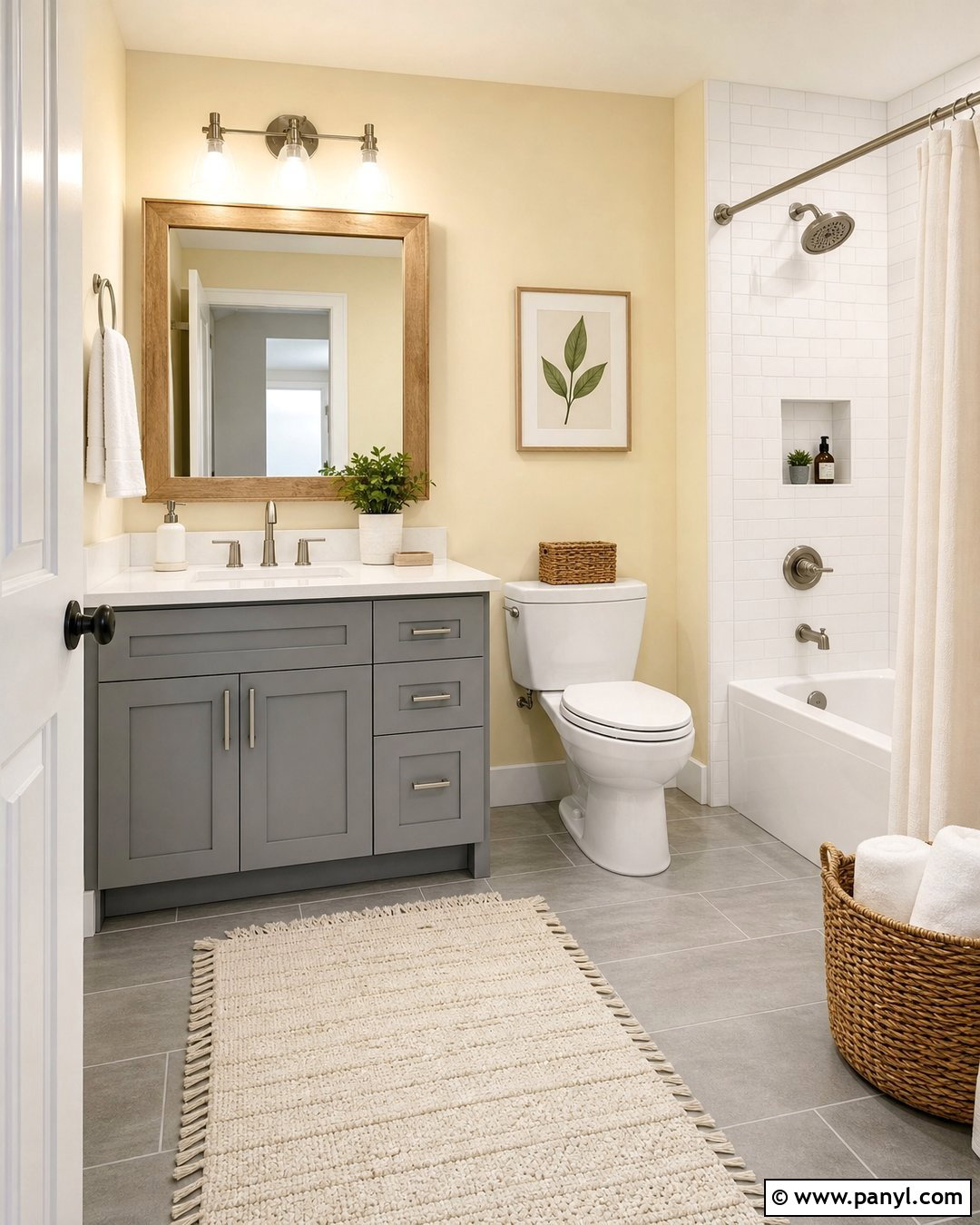
Butter yellow creates a sunny bathroom that still feels soft and relaxed. Use a pale creamy yellow on a traditional vanity with a white countertop, polished nickel knobs, and a classic nickel faucet. Pair it with warm white beadboard and subtle floral or striped wallpaper above for cottage character. Small white hexagonal floor tiles keep the room bright, while light oak accents add natural warmth. Hang an oval mirror with a thin nickel frame and install clear glass sconces to maximize light. White towels and pale blue accessories can provide a cool, gentle counterpoint. The yellow should be muted enough to read as warm in both daylight and artificial lighting. This finished look is cheerful, approachable, and especially suitable for a guest bathroom or family home.
32. Burgundy Bathroom Vanity
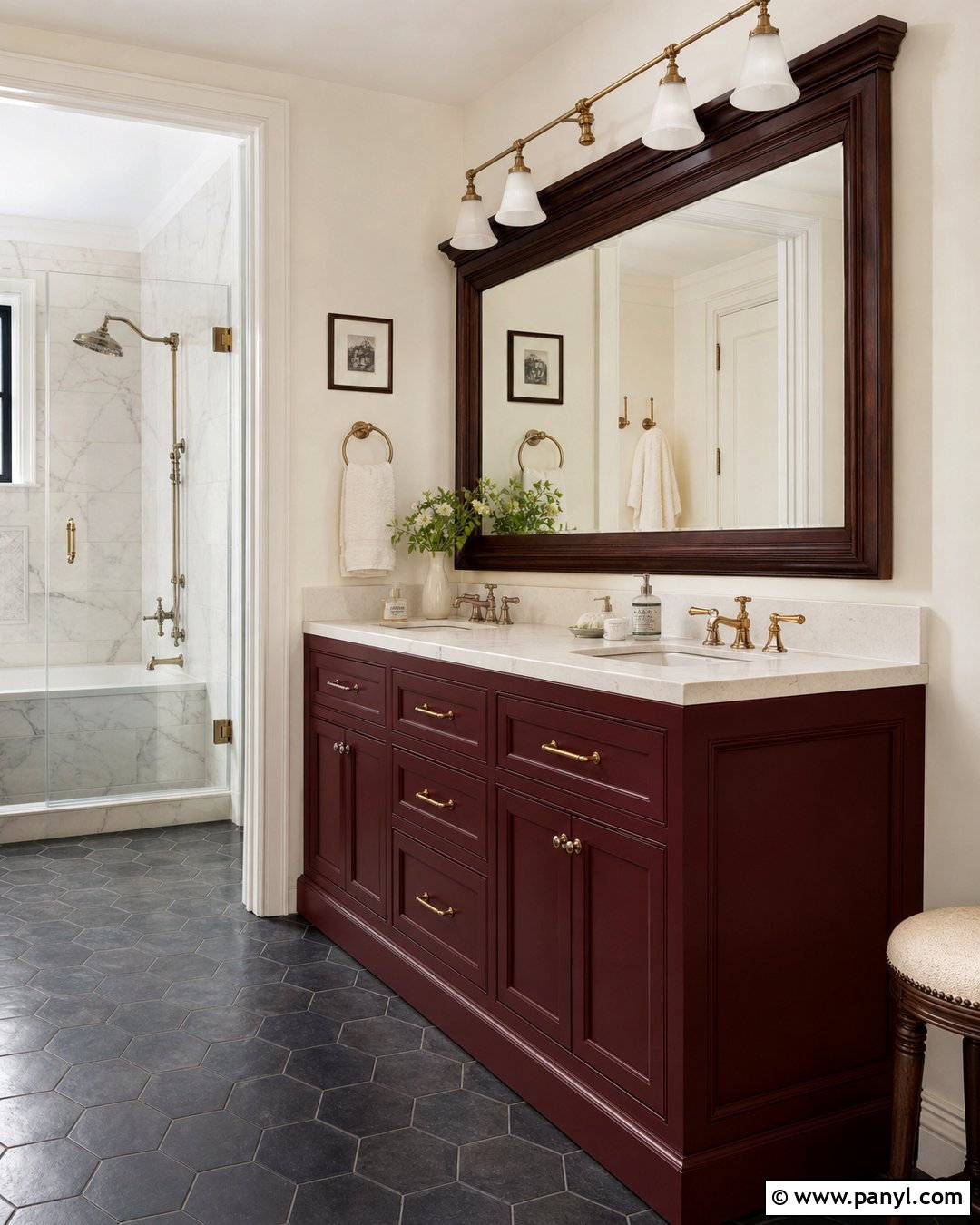
Burgundy creates a dramatic vanity with warmth that navy and black cannot provide. Use a deep wine-free red-brown shade on a furniture-style cabinet, then add cream quartz, antique brass handles, and a substantial brass faucet. Keep the walls warm white and install an ivory marble-look backsplash to brighten the focal area. Charcoal floor tile grounds the rich cabinetry, while a dark wood mirror strengthens the traditional mood. Add creamy towels and a small stone tray instead of introducing more saturated colors. Burgundy is best used on one main feature, allowing its depth to carry the design. The finished bathroom feels tailored, historic, and luxurious, making this palette particularly effective in a powder room, Victorian home, or traditional primary bathroom with strong architectural details.
33. Plum Bathroom Vanity
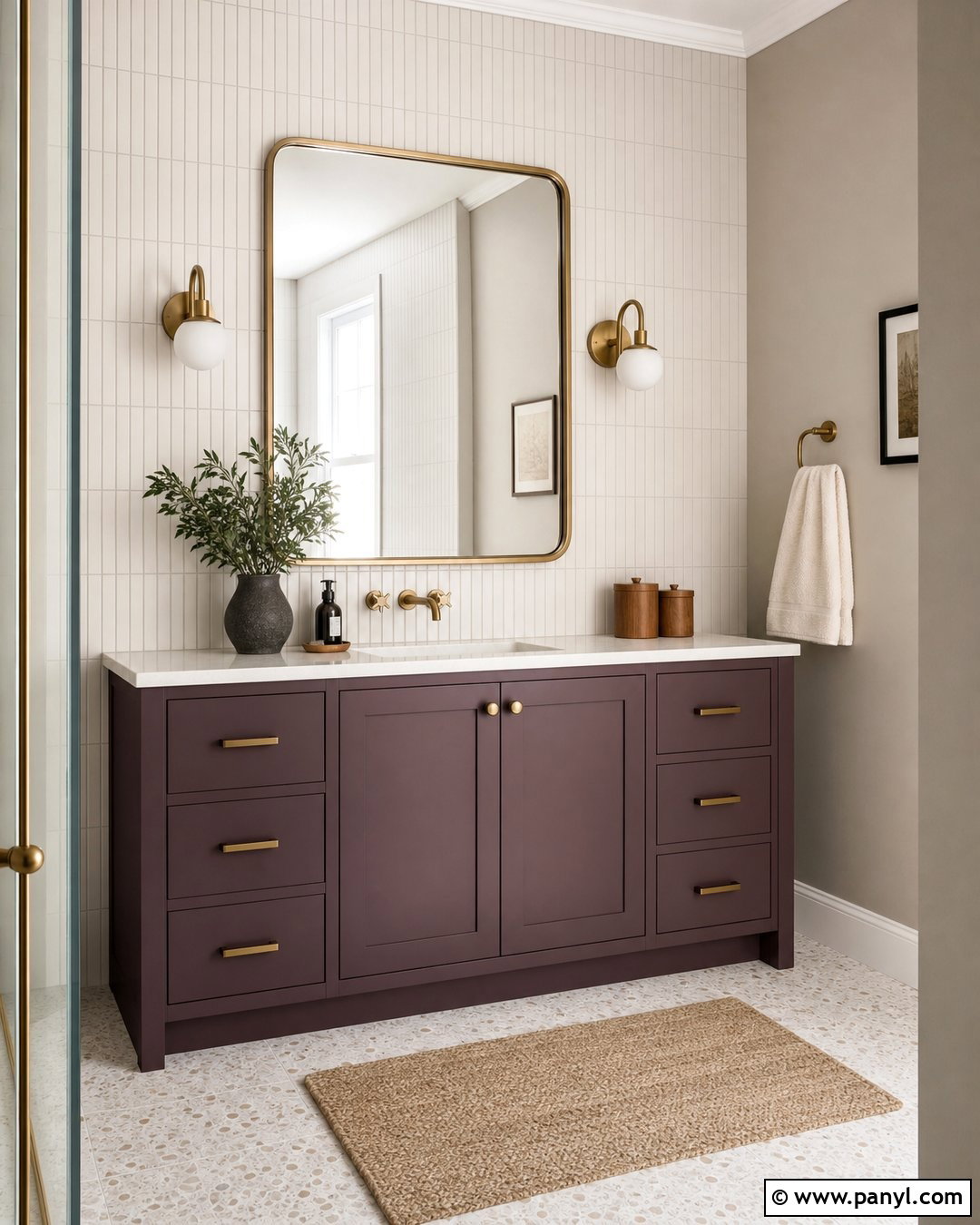
A plum vanity introduces unusual color while remaining deep enough to feel sophisticated. Choose a muted purple with brown or gray undertones, then pair it with white quartz, brushed brass pulls, and a warm brass faucet. Soft greige walls will calm the purple and connect it to neutral flooring. Use creamy vertical tiles behind the sink and pale terrazzo underfoot for subtle texture. A brass-framed mirror and opal globe sconces make the vanity wall feel complete. Keep towels ivory and accessories limited to stone, glass, or warm wood. Plum works best when it is treated like a rich neutral rather than repeated throughout the room. The finished design feels distinctive and polished, offering a memorable alternative to more familiar navy, green, or charcoal cabinetry.
34. Lavender Bathroom Vanity
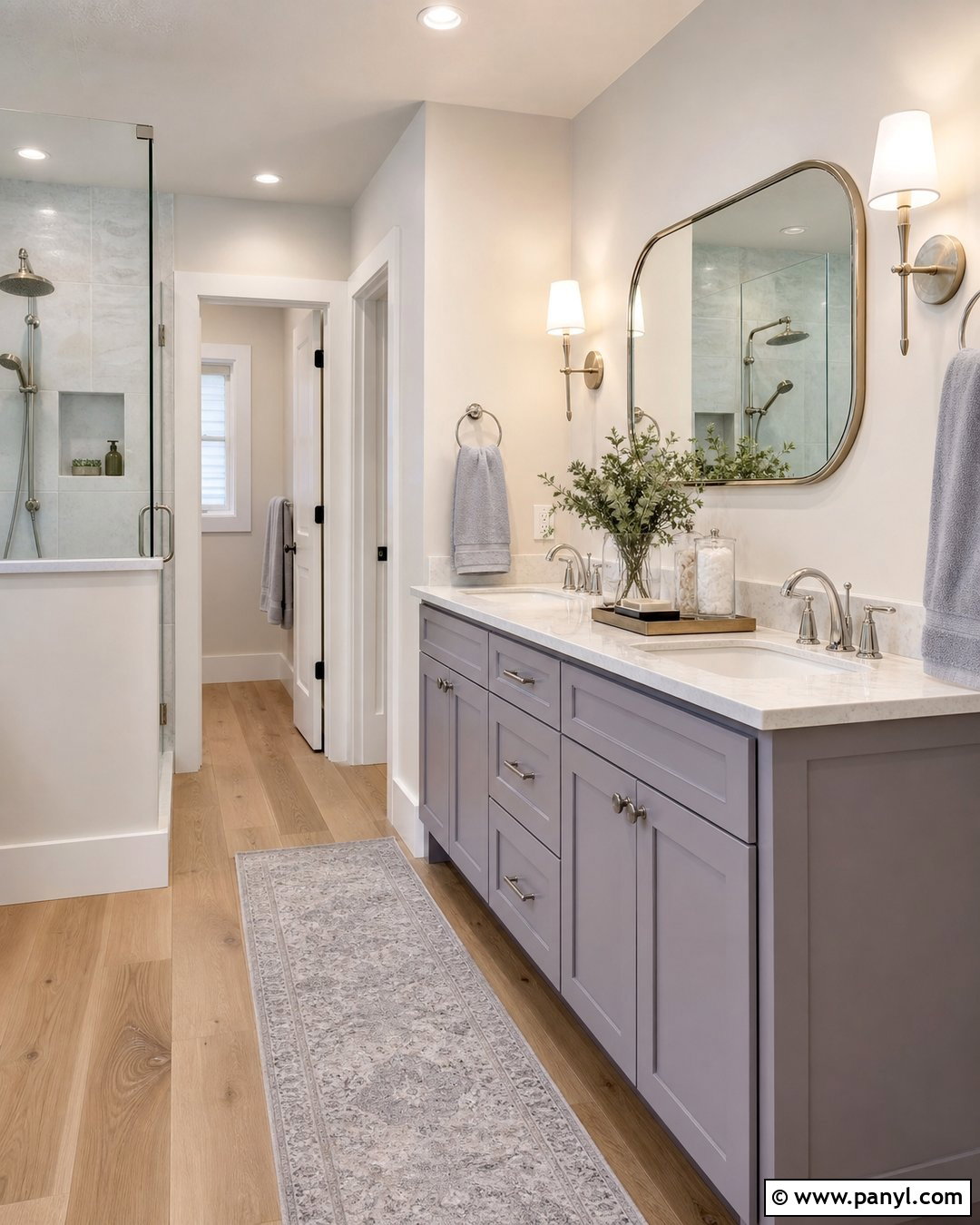
Lavender paint can create a serene, elegant vanity when the shade is muted and slightly gray. Pair the cabinetry with a white quartz countertop, polished nickel hardware, and a streamlined nickel faucet. Use warm white walls to prevent the purple from appearing cold. A backsplash of pale gray marble-look tile can connect the lavender undertone to the room’s neutral surfaces. Choose light oak flooring or warm beige porcelain tile for contrast. Above the vanity, install a rounded nickel mirror and simple white glass sconces. Finish with white towels, a pale gray bath mat, and minimal clear glass accessories. This complete look feels gentle and fresh without becoming overly feminine, making it suitable for a guest bathroom, quiet primary bath, or refined children’s space.
35. Chocolate Brown Bathroom Vanity
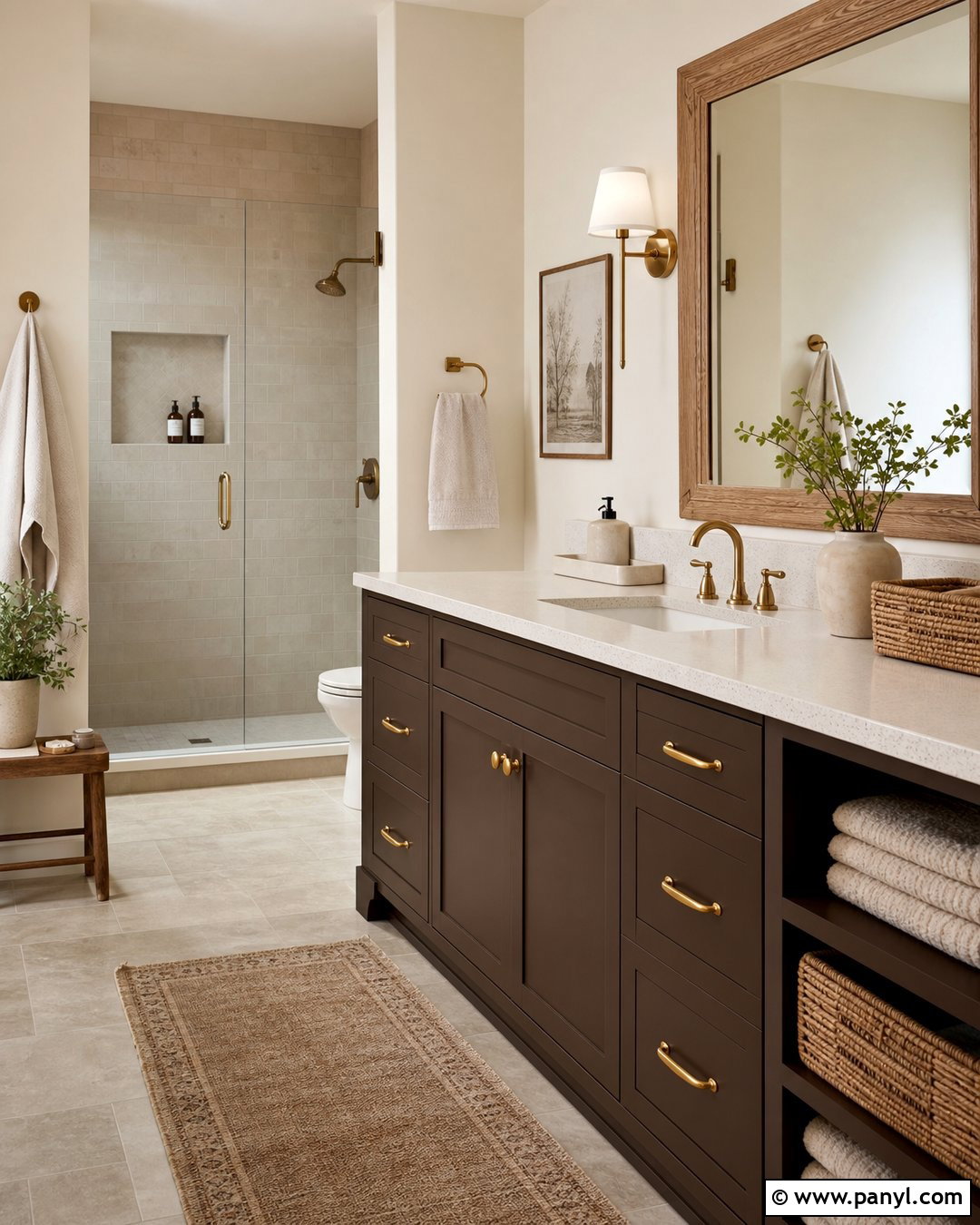
Chocolate brown gives a painted vanity the richness of dark wood while providing a smoother, more consistent finish. Pair deep brown cabinetry with creamy quartz, aged brass pulls, and a warm brass faucet. Use ivory walls and a light beige backsplash to create clear contrast around the cabinet. Pale limestone-look flooring keeps the bathroom from feeling too dark, while a medium oak mirror adds a lighter wood tone. Cream towels, woven storage, and simple stone accessories complete the earthy palette. Choose a brown with subtle warmth rather than a nearly black espresso shade so the color remains visible. The final bathroom feels grounded, comfortable, and enduring. It is an excellent option for traditional, organic modern, and transitional interiors that already contain warm neutral finishes.
Conclusion:
Choosing among these 35 painted bathroom vanity colors becomes easier when you consider the entire room instead of focusing on the cabinet alone. Compare each shade with your countertop, tile, walls, flooring, fixtures, and lighting before committing. Light neutrals can create an open, flexible backdrop, while blues and greens add calm color. Earthy pinks, yellows, and clay shades bring personality, and dark tones create a strong focal point. Always test large samples vertically because paint can shift under bathroom lighting. Proper cleaning, sanding, priming, and cabinet-grade paint will also improve durability. With a coordinated palette and careful preparation, a freshly painted vanity can make the whole bathroom feel intentional, updated, and complete.

Related Ideas and Inspiration:
Leave a Reply