
Orange walls can make a room feel warm, lively, and full of personality, but they need thoughtful balance. This guide to **20 How To Decorate With Orange Walls** explores complete room schemes using furniture, textiles, lighting, artwork, and natural materials. Crisp white and soft gray can quiet a vivid orange, while navy, teal, olive, and forest green create richer contrast. Cream upholstery, warm wood, woven textures, and earthy ceramics also work beautifully with terracotta or burnt orange. () The key is choosing one clear direction instead of adding several unrelated accent colors. Whether your walls are peach, pumpkin, rust, or coral, these approachable combinations will help you build a polished space. Start planning your room with these **20 How To Decorate With Orange Walls**.

1. Orange Walls With Cream Furniture
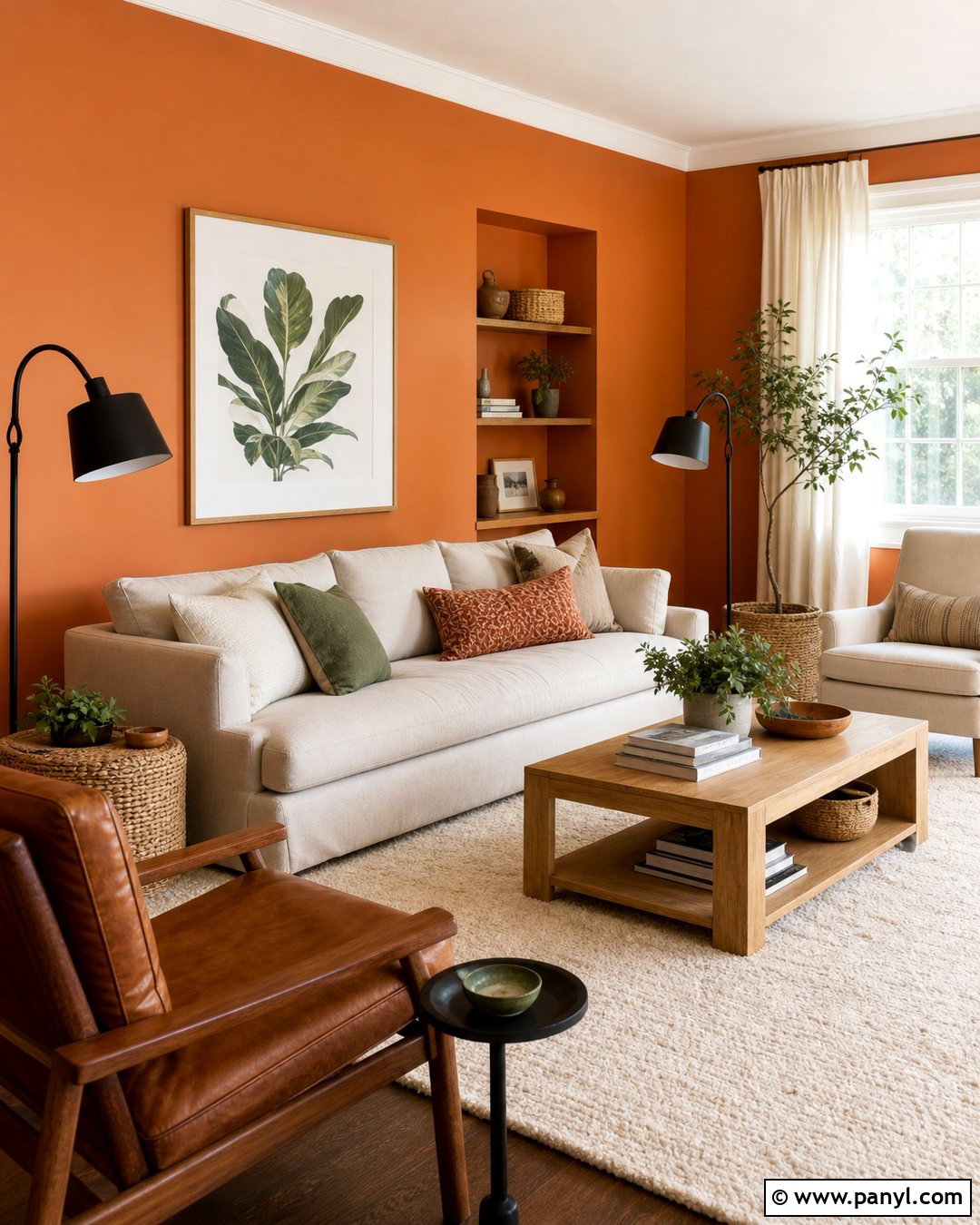
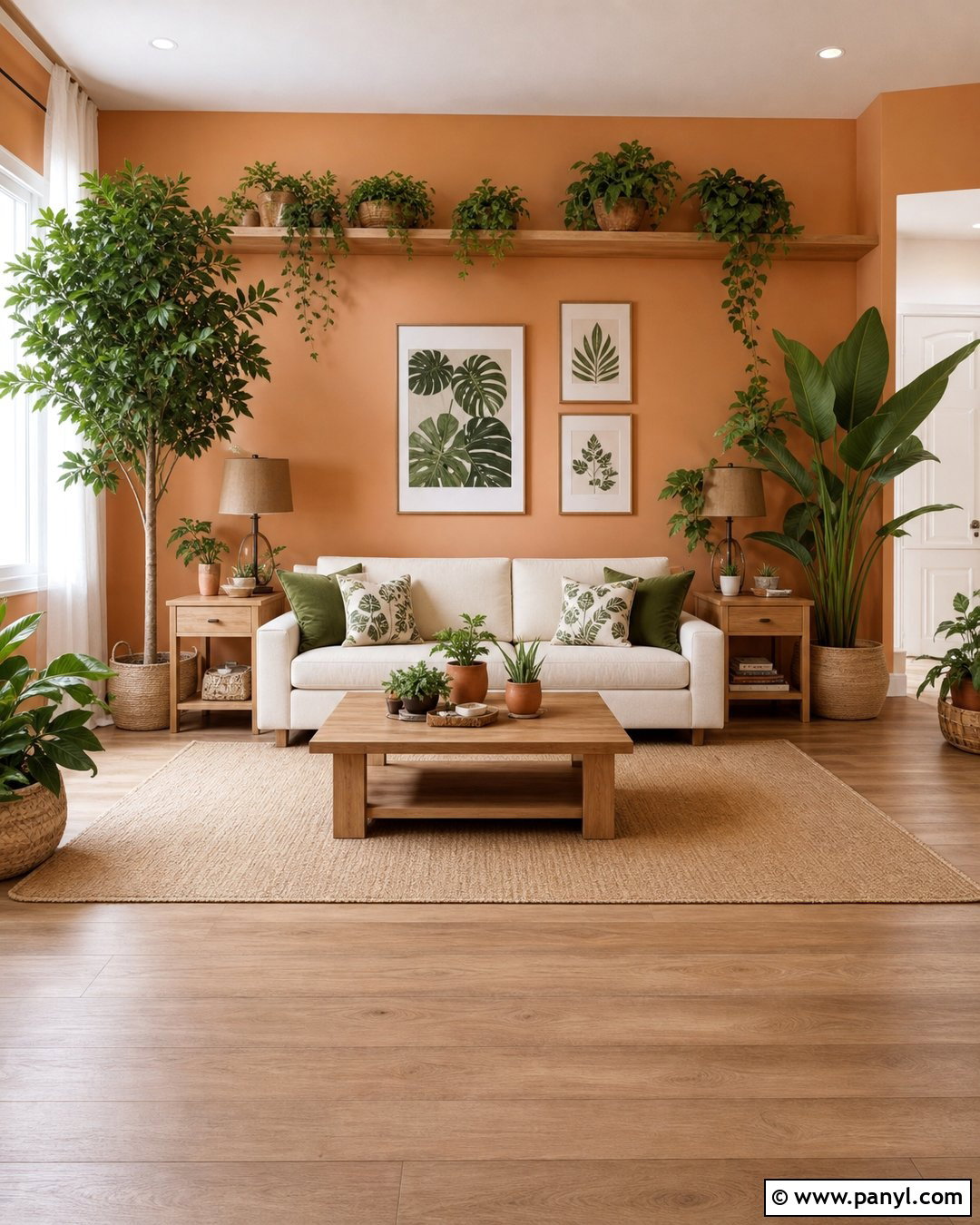
Cream furniture creates a soft, calming foundation around bold orange walls. Start with a generously sized cream sofa or upholstered bed, depending on the room. Add a warm ivory rug large enough to anchor the main furniture. Choose light oak tables, woven baskets, and off-white curtains to continue the relaxed palette. Small touches of cognac leather can deepen the design without competing with the walls. Use cushions in cream, tan, and muted orange patterns to connect the upholstery to the room color. Matte black lamps or picture frames provide a little definition. Complete the space with simple botanical artwork and one or two leafy plants. This combination works especially well with burnt orange, clay, and medium terracotta walls.
2. Orange Walls With Navy Blue Decor
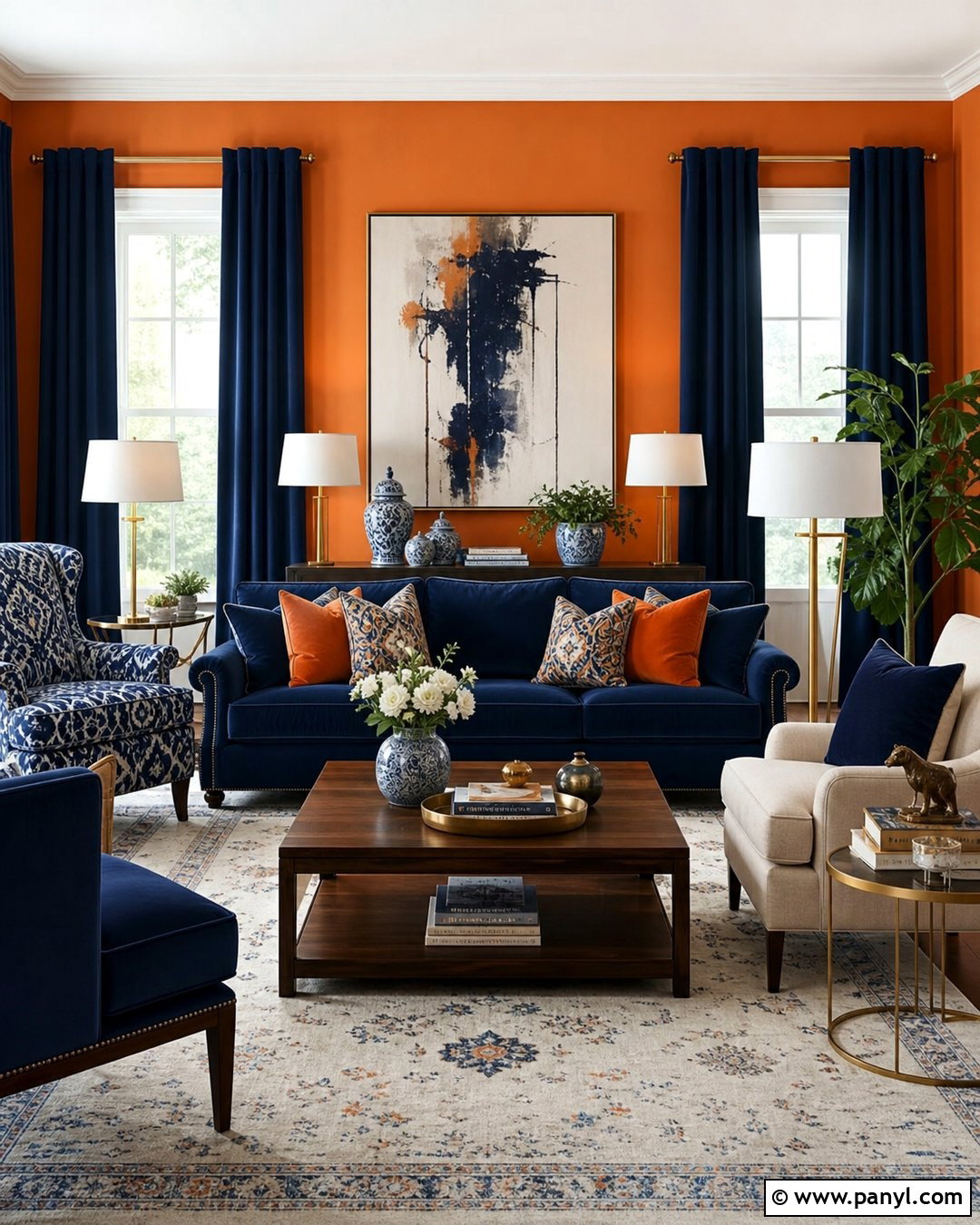
Navy blue gives orange walls a strong, sophisticated contrast that feels intentional rather than playful. In a living room, place a deep navy sofa against the orange backdrop and ground it with a cream rug featuring a subtle blue pattern. Add walnut side tables, navy curtains, and cushions combining orange, ivory, and blue. Brushed brass lamps introduce a warmer finish that complements both main colors. Keep the ceiling, baseboards, and window trim bright white so the room still feels open. Choose large artwork instead of many small accessories to reduce visual clutter. A navy-and-cream ceramic lamp or patterned ottoman can repeat the contrast elsewhere. This complete palette is particularly effective with rust, pumpkin, and saturated orange walls.
3. Orange Walls With Olive Green Furniture
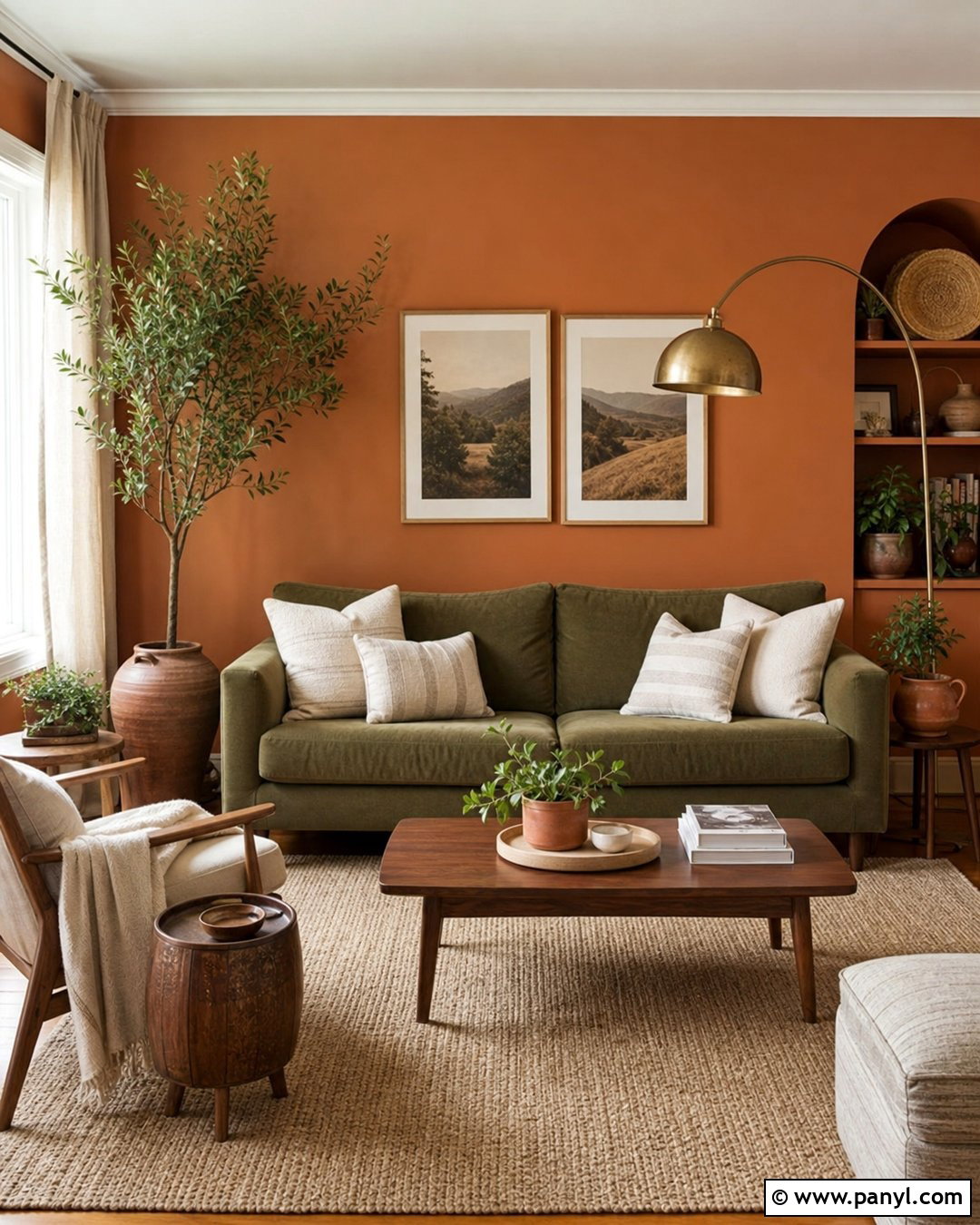
Earthy orange and olive green can create a comfortable, nature-inspired room when both colors are slightly muted. Pair terracotta-orange walls with an olive green sofa, lounge chair, or upholstered headboard. Introduce medium oak or walnut furniture to support the warm undertones. A beige wool rug and natural linen curtains prevent the darker colors from feeling heavy. Add cushions in olive, cream, rust, and small amounts of charcoal. Terracotta planters filled with healthy greenery strengthen the organic look without introducing another major color. Lighting should feel simple and grounded, such as ceramic table lamps with oatmeal shades. Finish with landscape prints, woven baskets, and aged brass details for a cohesive space that feels warm throughout the year.
4. Orange Walls With White Curtains
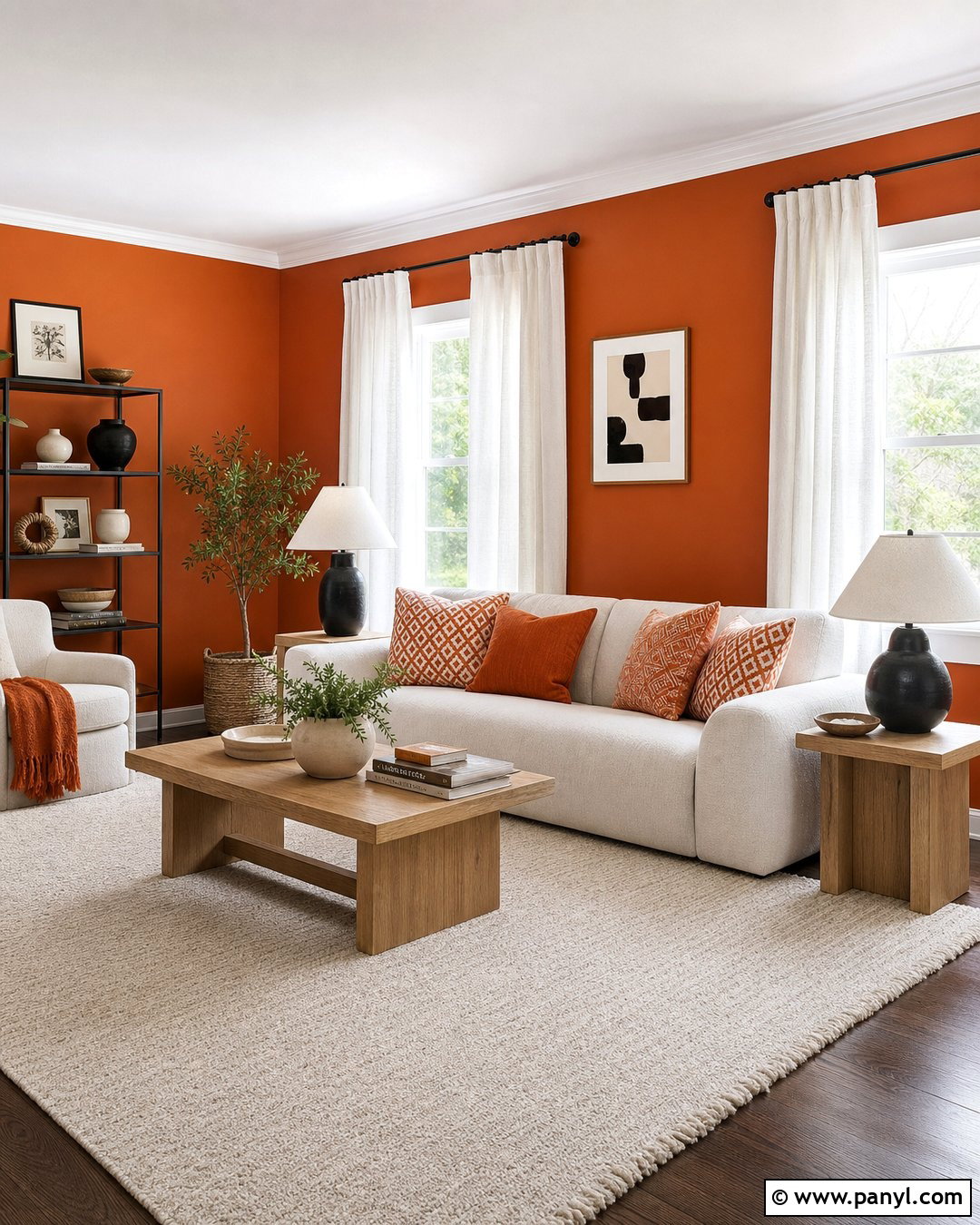
Long white curtains can brighten orange walls and make the entire room feel cleaner and less visually intense. Hang the curtain rod close to the ceiling, then allow the panels to reach the floor. Choose textured linen or cotton rather than shiny fabric for a softer finish. Continue the light contrast with an ivory sofa, pale wood tables, and a cream area rug. Add a few accessories that repeat the wall color, such as patterned cushions or a ceramic vase, so the orange feels connected to the furnishings. Black curtain rods, lamp bases, and narrow frames can define the room. This look is especially useful in compact living rooms and bedrooms because the uninterrupted white fabric adds height while balancing the surrounding color.
5. Burnt Orange Walls With Brown Leather
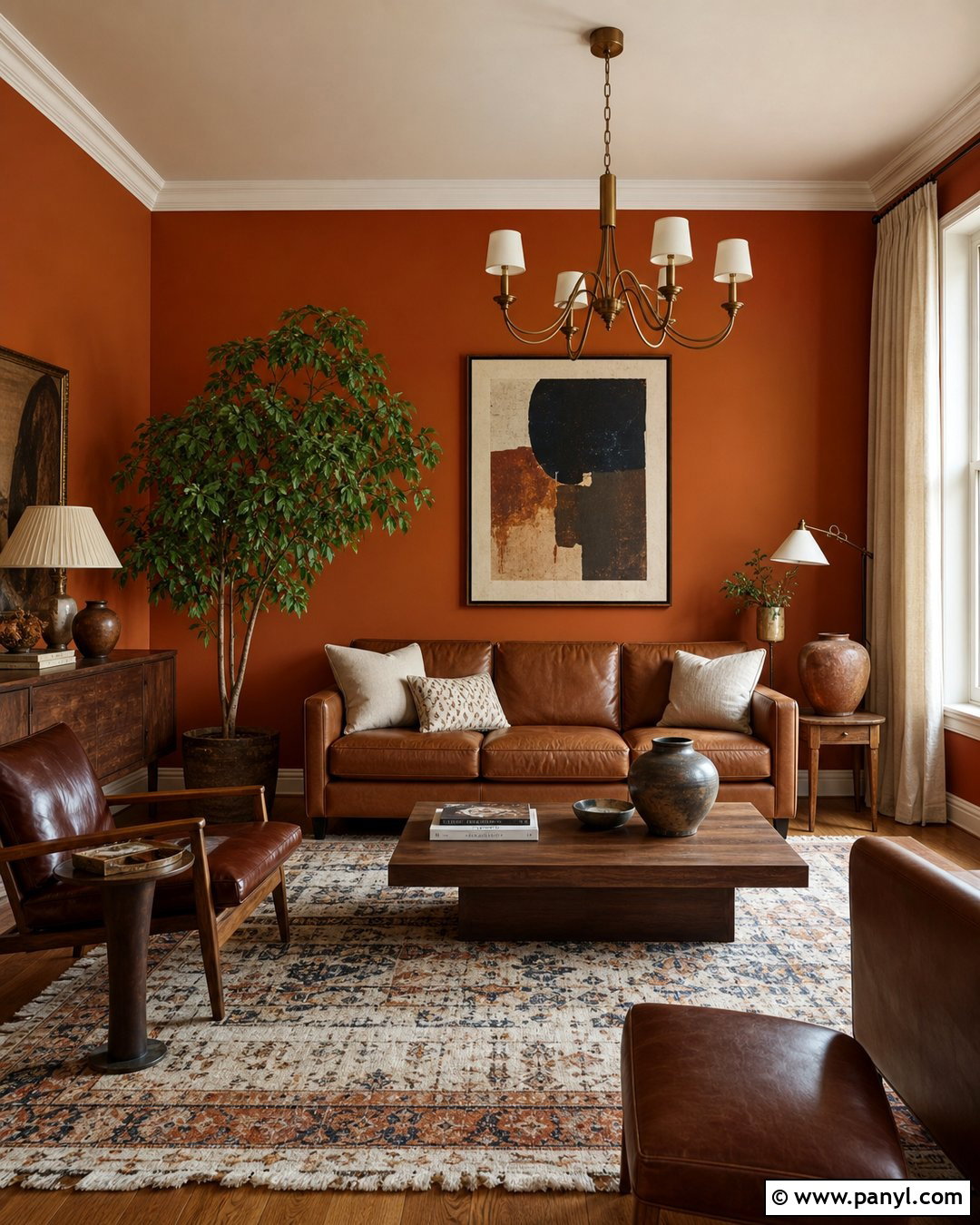
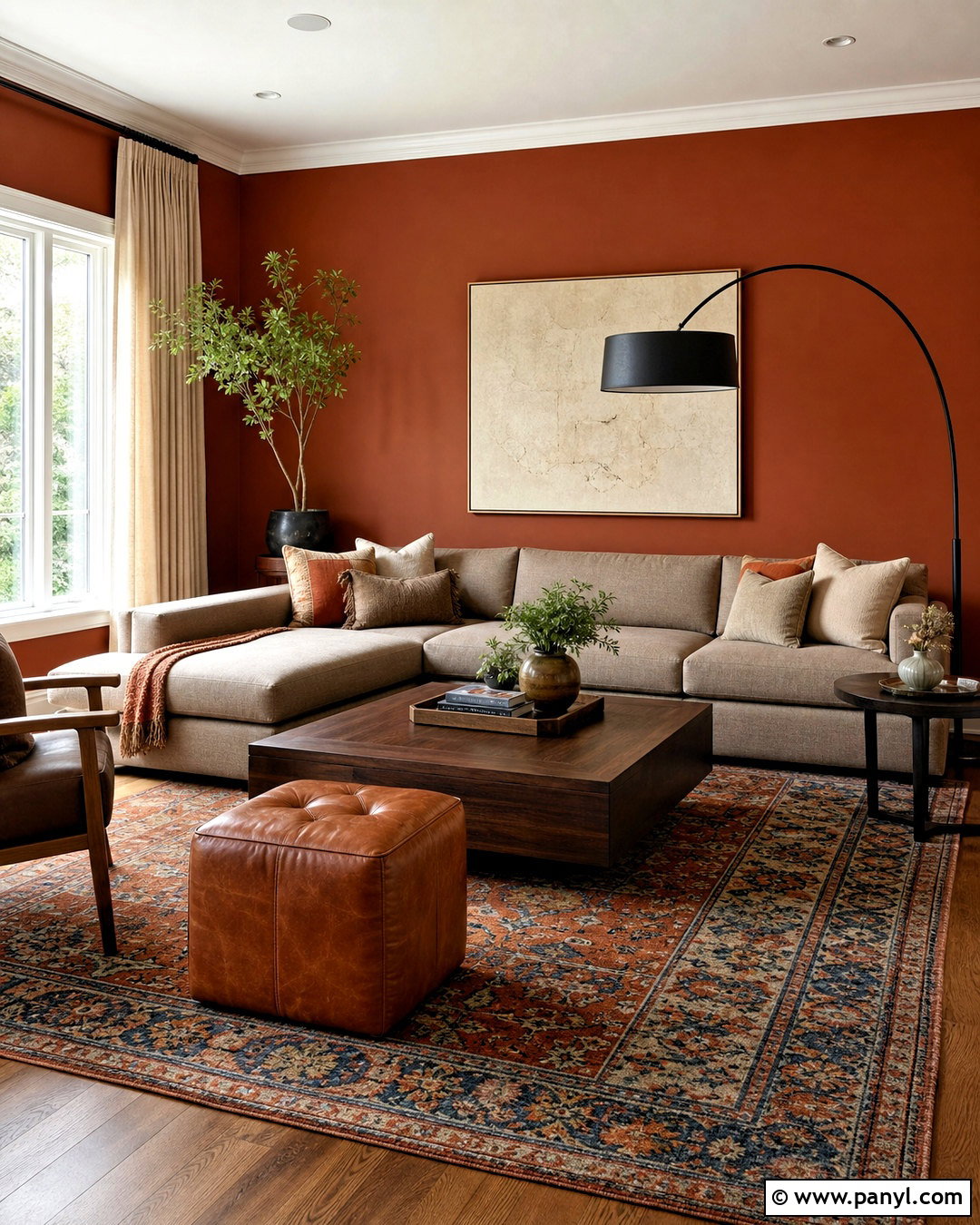
Burnt orange walls and brown leather create a rich, inviting room with an understated vintage character. Begin with a streamlined cognac or chocolate leather sofa rather than an oversized, heavily tufted design. Ground the seating area with a faded cream, rust, and navy rug. Walnut shelving, dark wood tables, and antique brass lighting can build depth while staying within the warm palette. Add oatmeal curtains and light-colored cushions to prevent the room from becoming too brown. A large abstract print with cream and muted blue offers a cooler visual break. Include one tall plant in a simple clay pot for natural contrast. The finished room should feel layered and comfortable, with enough pale surfaces to keep every warm element distinct.
6. Orange Walls With Gray Furniture
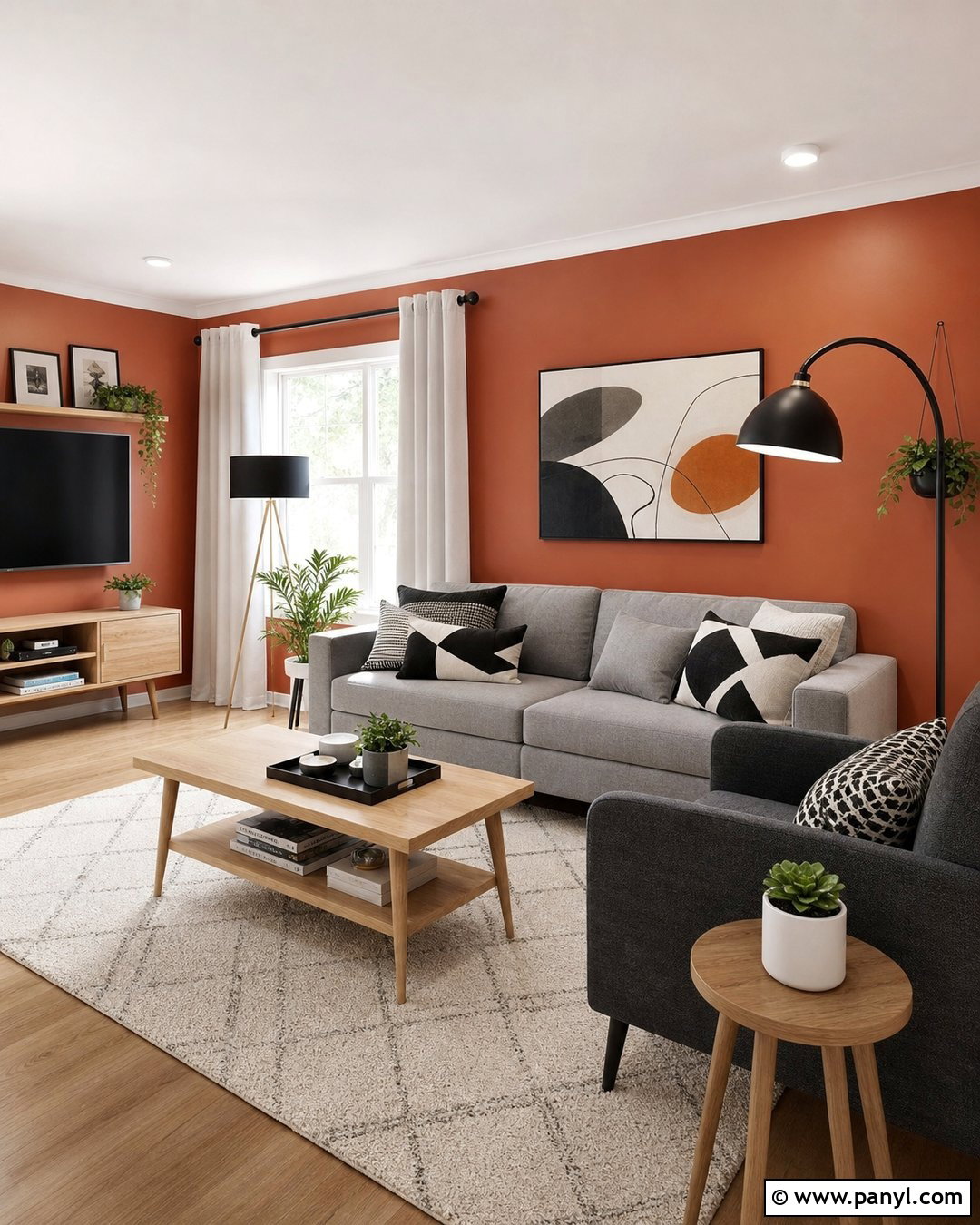
Gray furniture can tone down vivid orange walls while preserving their warmth and energy. Choose a medium-gray sofa with clean lines, then add a charcoal accent chair or ottoman for depth. A light gray and ivory rug will connect the seating without making the room feel cold. Use pale oak tables and white curtains to soften the transition between the cool furniture and warm walls. Cushions can combine gray, cream, and restrained orange patterns. Add matte black lighting and frames for definition, but keep these accents slim and minimal. Artwork containing both warm orange and cool gray will make the contrast feel deliberate. This practical arrangement suits contemporary family rooms, apartments, and home offices where durability and visual balance are equally important.
7. Orange Walls With Teal Accents
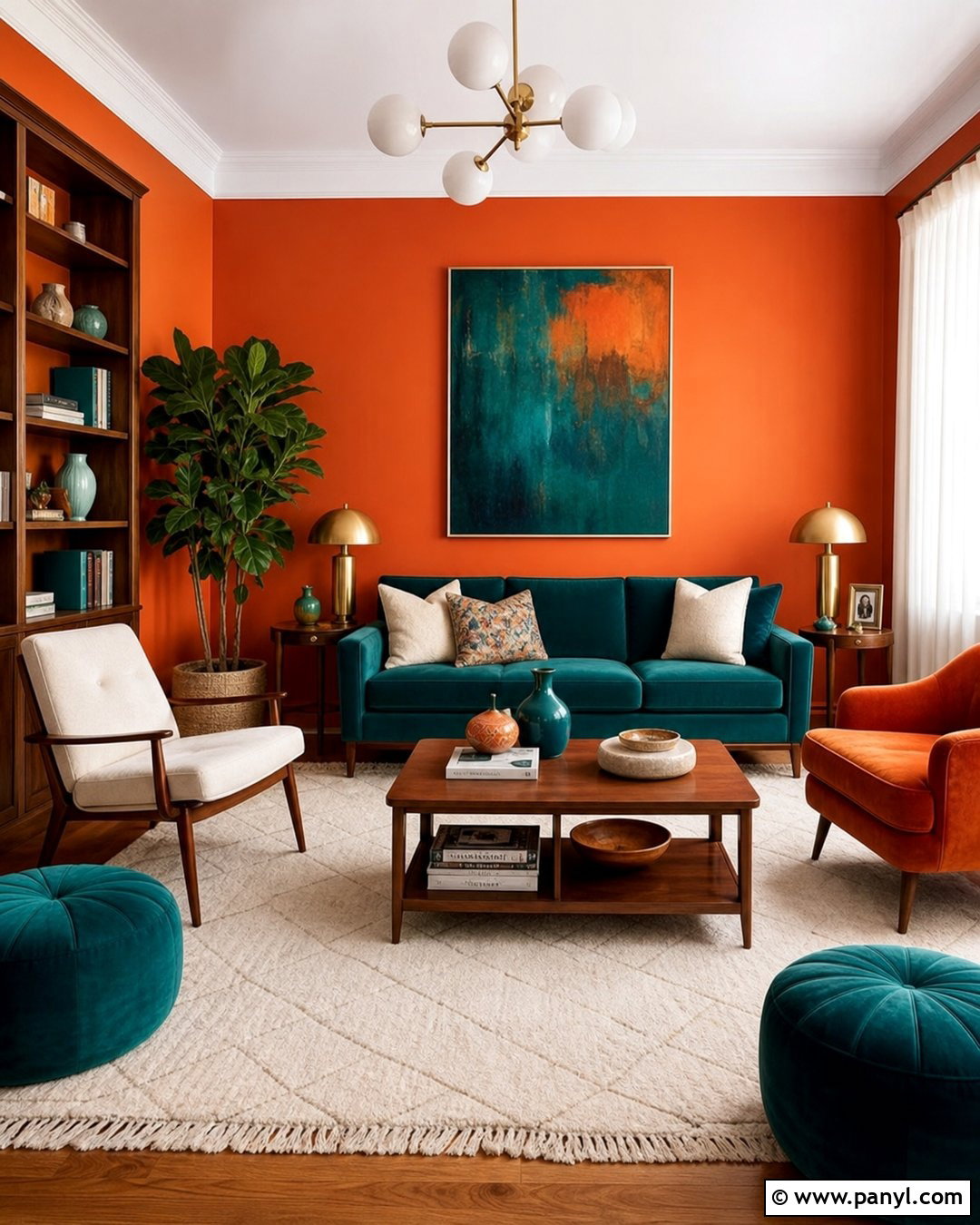
Teal can turn orange walls into a bold, energetic design, but the room needs neutral breathing space. Use a teal velvet sofa or two teal armchairs as the main contrasting feature. Keep the rug, curtains, and largest secondary surfaces cream or warm white. Walnut furniture supports the richness of the palette, while brushed brass hardware adds a polished finish. Repeat teal in only two or three smaller places, such as cushions, a ceramic lamp, or framed artwork. Avoid mixing in several additional jewel tones because the orange and teal already provide enough color. A large neutral coffee table and uncluttered shelving will steady the scheme. This look works particularly well in dining rooms, creative offices, and sociable living spaces.
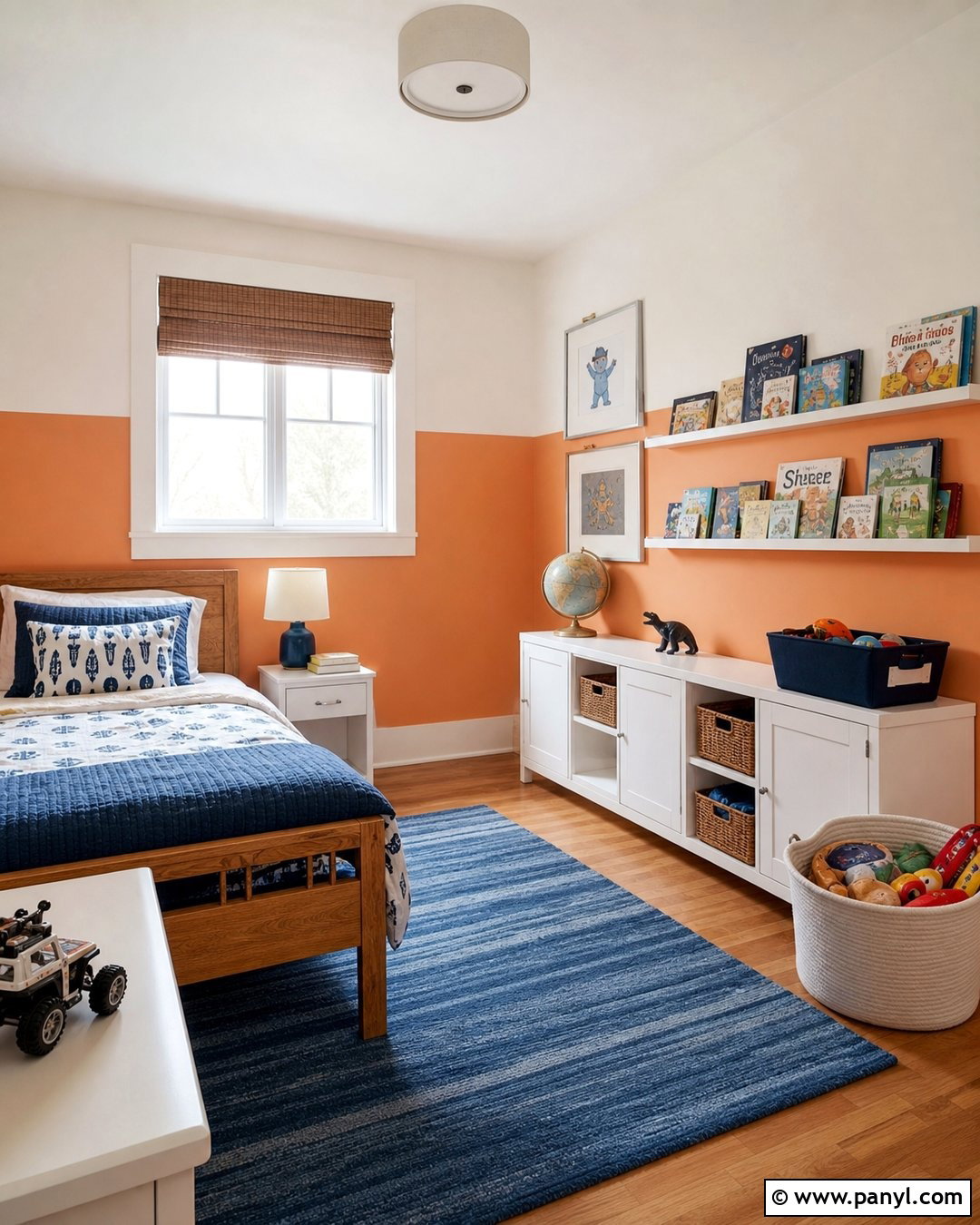
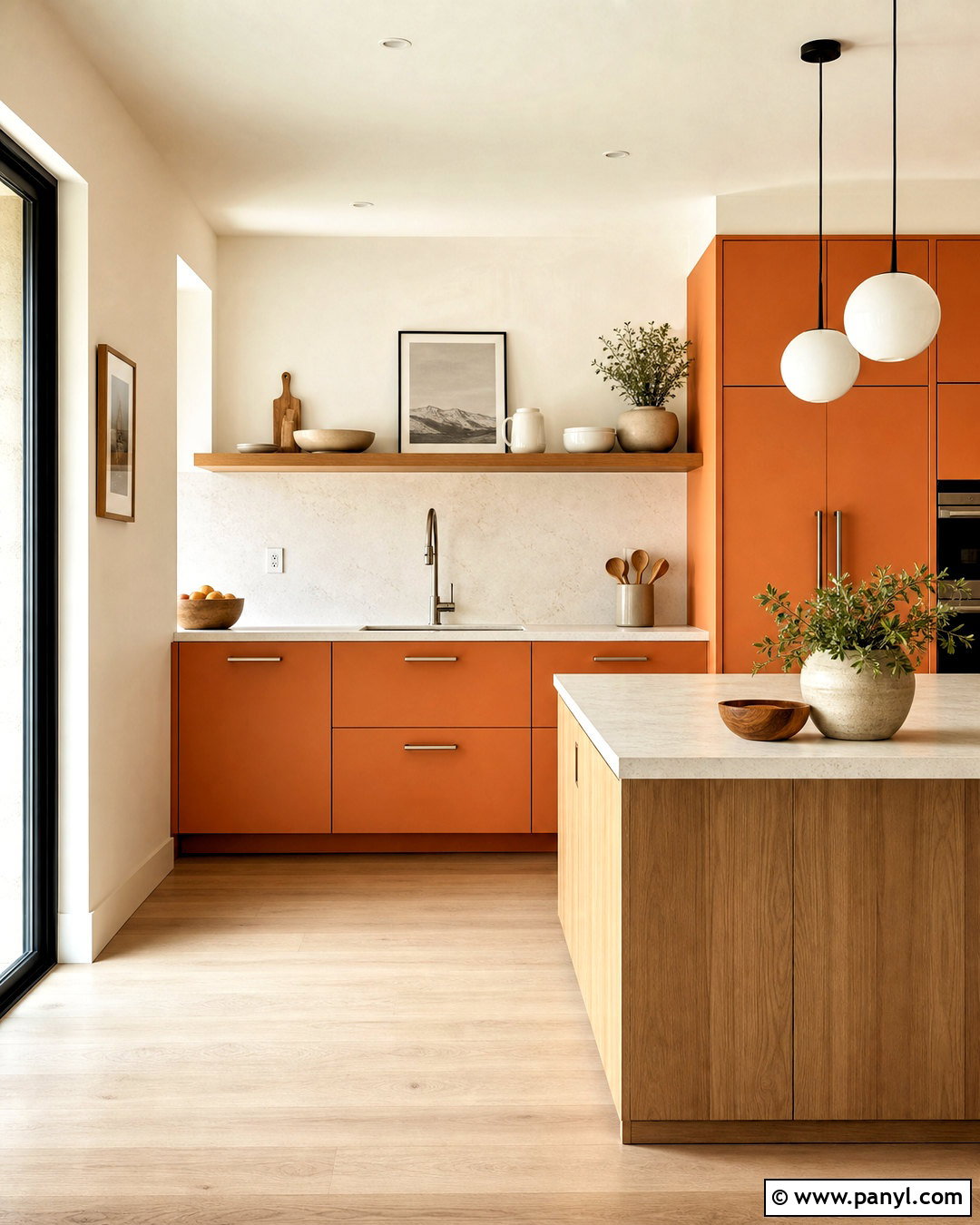
8. Orange Walls With Black And White Decor
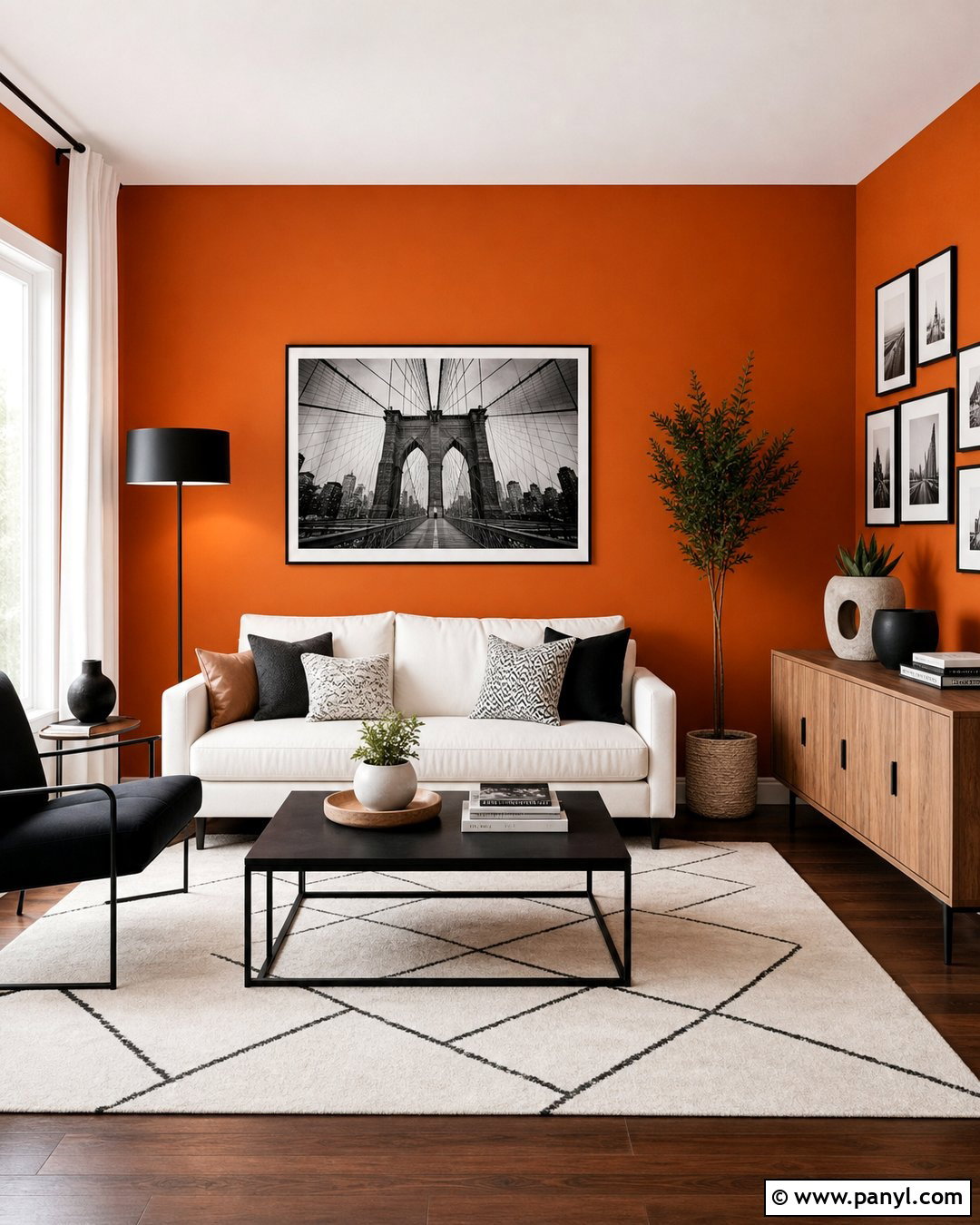
Black and white decor gives orange walls a crisp, graphic character that feels modern and controlled. Start with a white or light cream sofa, then introduce a black coffee table, slim floor lamp, and simple curtain rod. Use an ivory rug with a restrained black geometric pattern to connect the contrasting elements. Black-and-white photography looks especially clear against orange, whether displayed as one oversized piece or a carefully aligned gallery. Keep curtains solid white and avoid overly busy prints elsewhere. A few natural wood details can soften the sharp contrast and make the room more comfortable. Repeat the orange in only one small textile. This scheme allows the wall color to remain the visual focus without making the room look unfinished or overly colorful.
9. Terracotta Orange Walls With Natural Wood
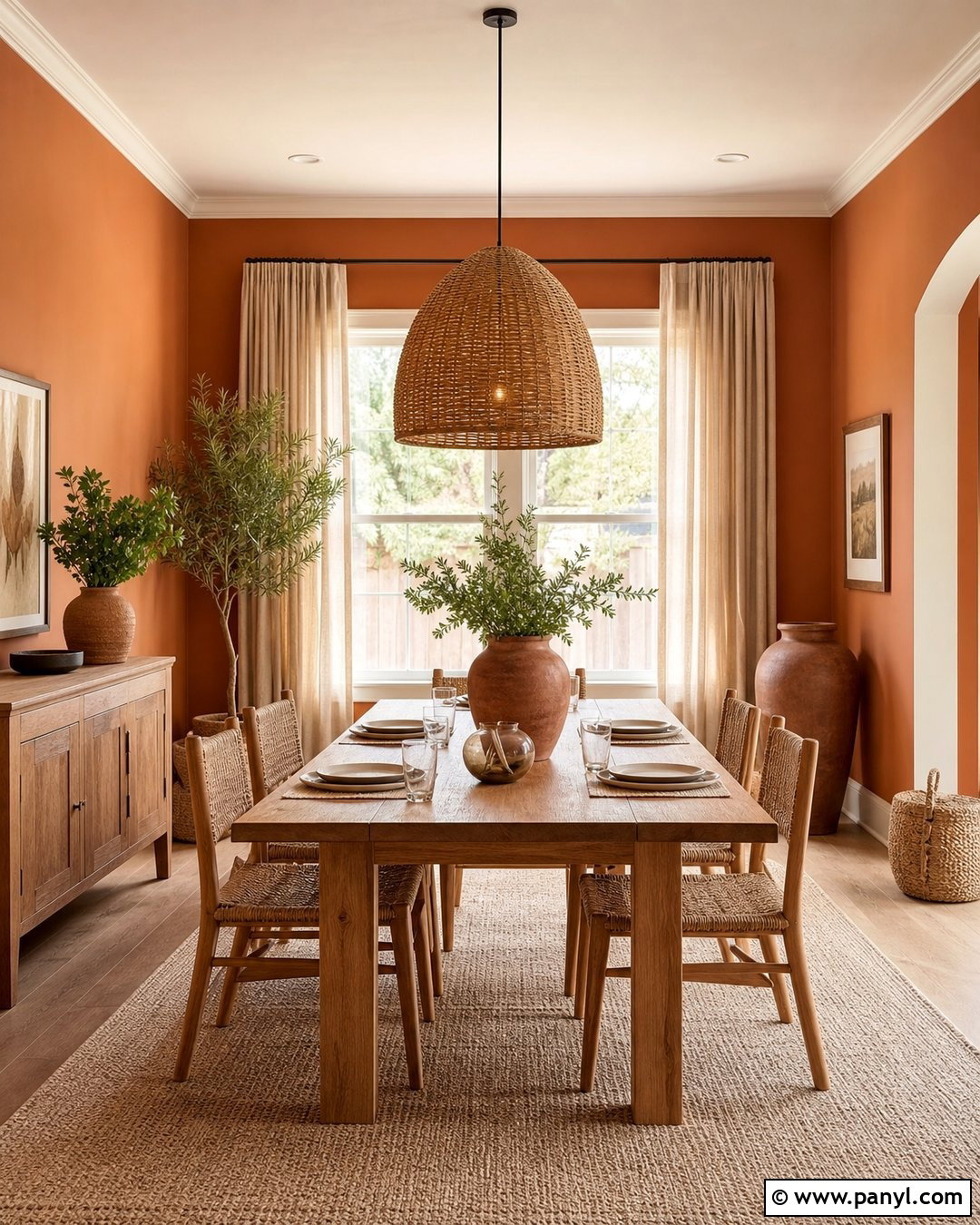
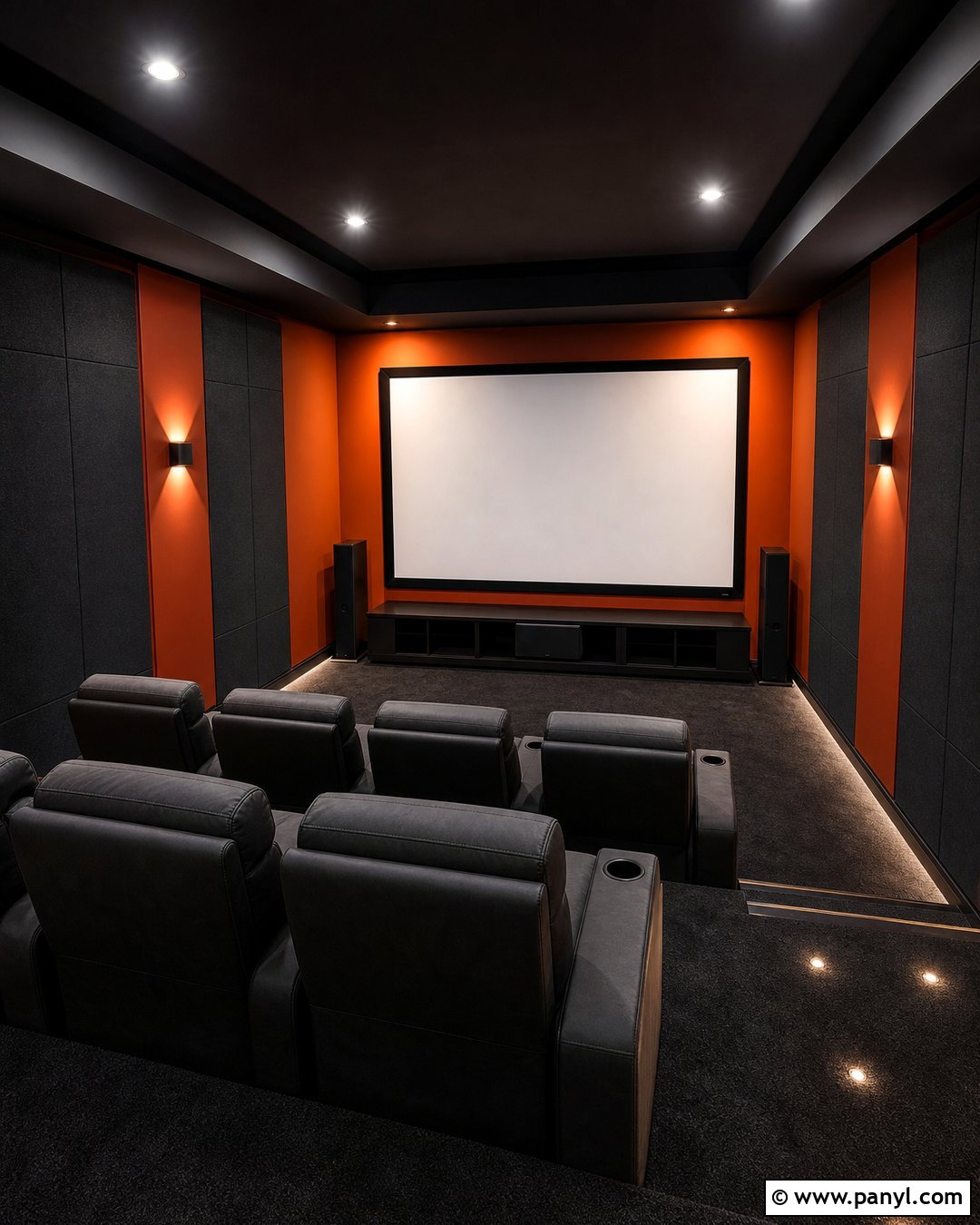
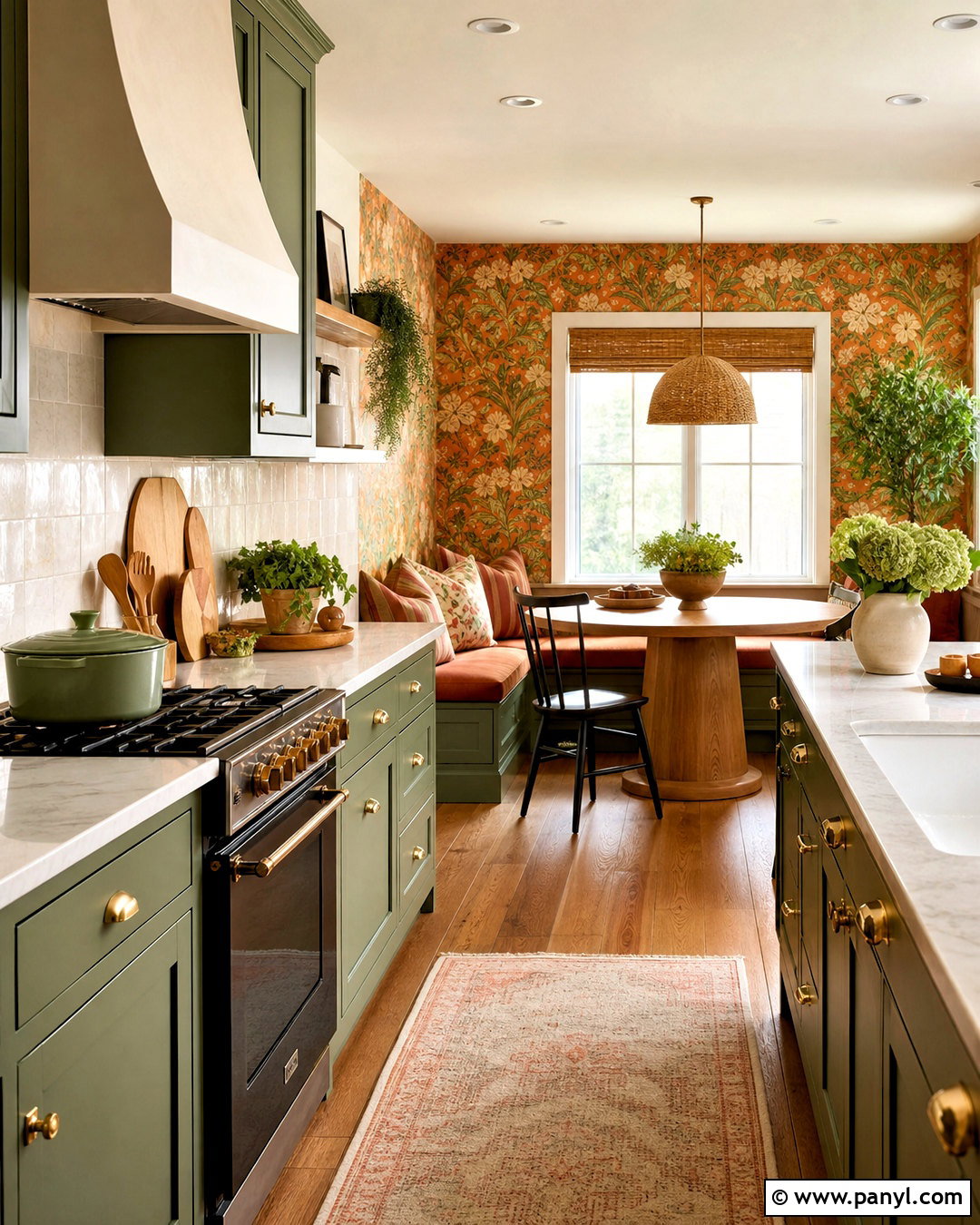
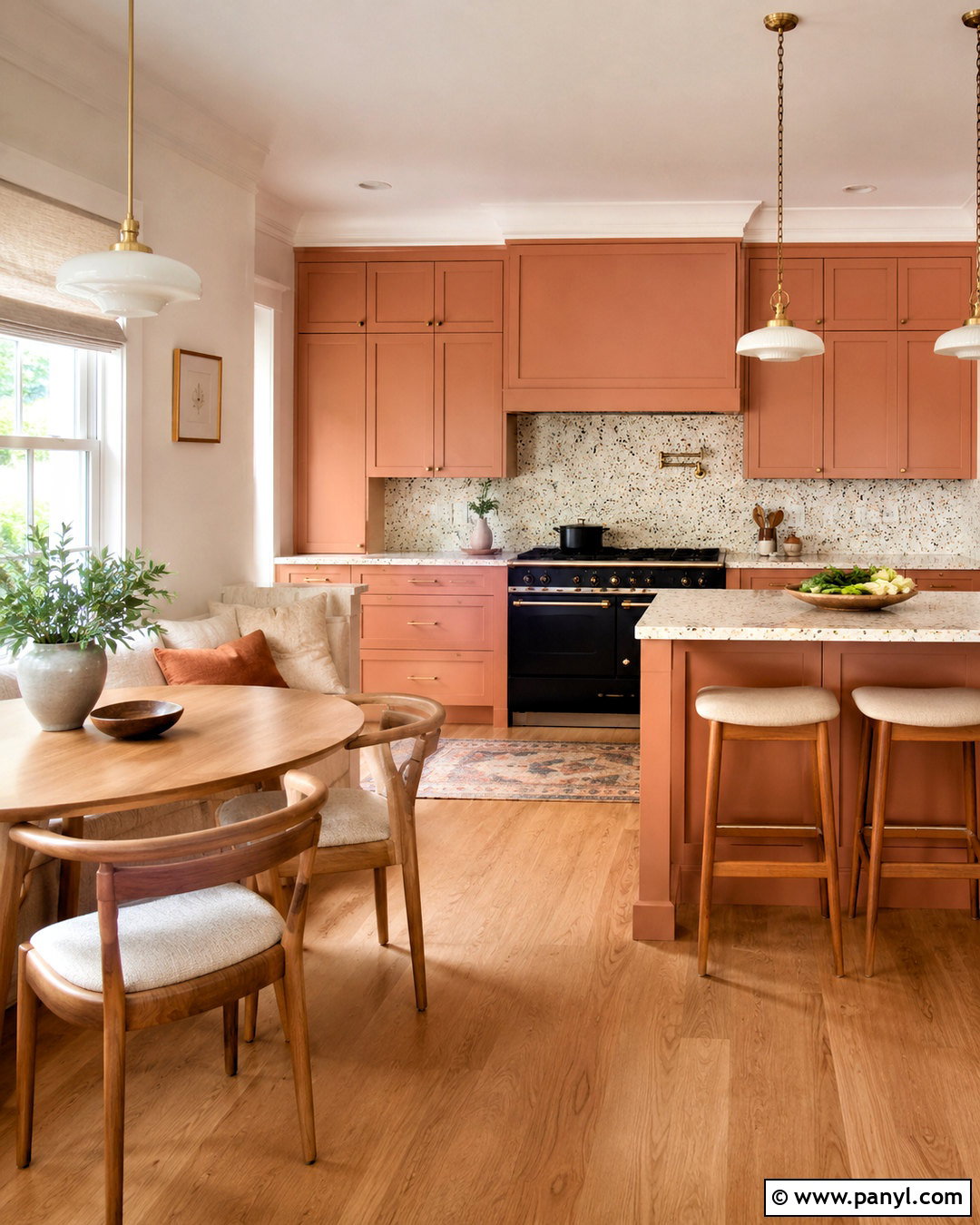
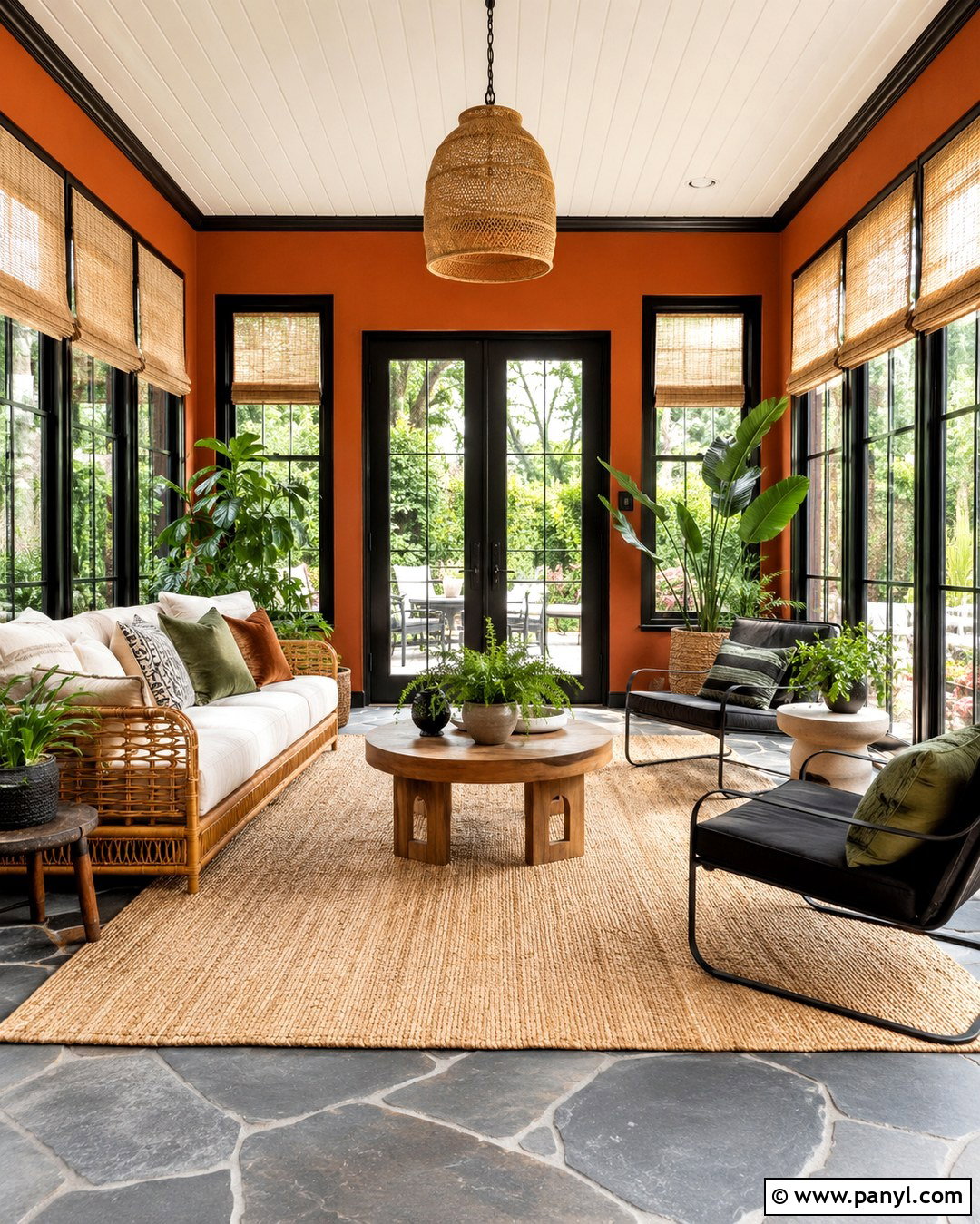
Terracotta orange walls pair naturally with wood because both bring warmth and earthy character into a room. Build the design around oak, teak, or walnut furniture with visible grain and simple shapes. In a dining room, use a substantial wood table, woven dining chairs, and a neutral flat-weave rug. In a bedroom, choose a wood bed, matching nightstands, and cream bedding. Add flax-colored curtains, clay pottery, woven lighting, and baskets for texture. Green plants provide fresh contrast and keep the warm palette from feeling flat. Limit polished metal and glossy plastic, which may interrupt the natural mood. Cream trim and a pale ceiling will add brightness. The result should feel grounded, welcoming, and connected rather than heavily themed.
10. Orange Walls With Beige And Tan Decor
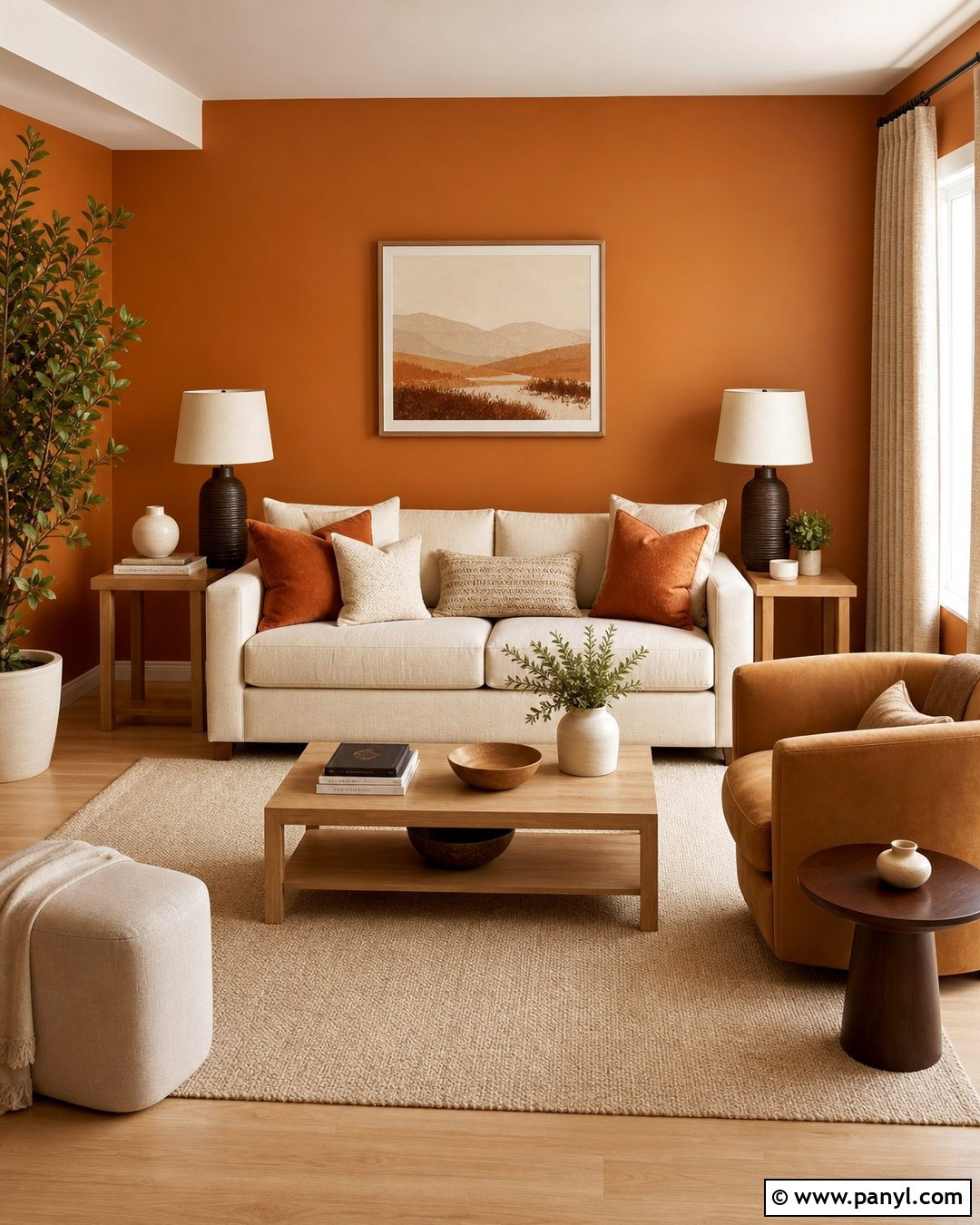
A beige and tan palette can make orange walls feel softer, calmer, and easier to decorate around. Choose a sand-colored sofa, camel accent chair, and large oatmeal rug as the room’s main foundation. Add pale wood tables and floor-length beige curtains with a visible linen texture. Cushions in cream, tan, muted rust, and a small geometric pattern will create depth without overwhelming the space. Use darker brown sparingly through lamp bases, picture frames, or furniture legs. Artwork should include plenty of negative space and gentle earth tones. A few ceramic pieces in ivory or sandy beige can finish shelves and tables. This balanced combination works well for open-plan rooms because the neutral furniture helps orange walls transition smoothly into nearby spaces.
11. Orange Walls With Light Blue Decor
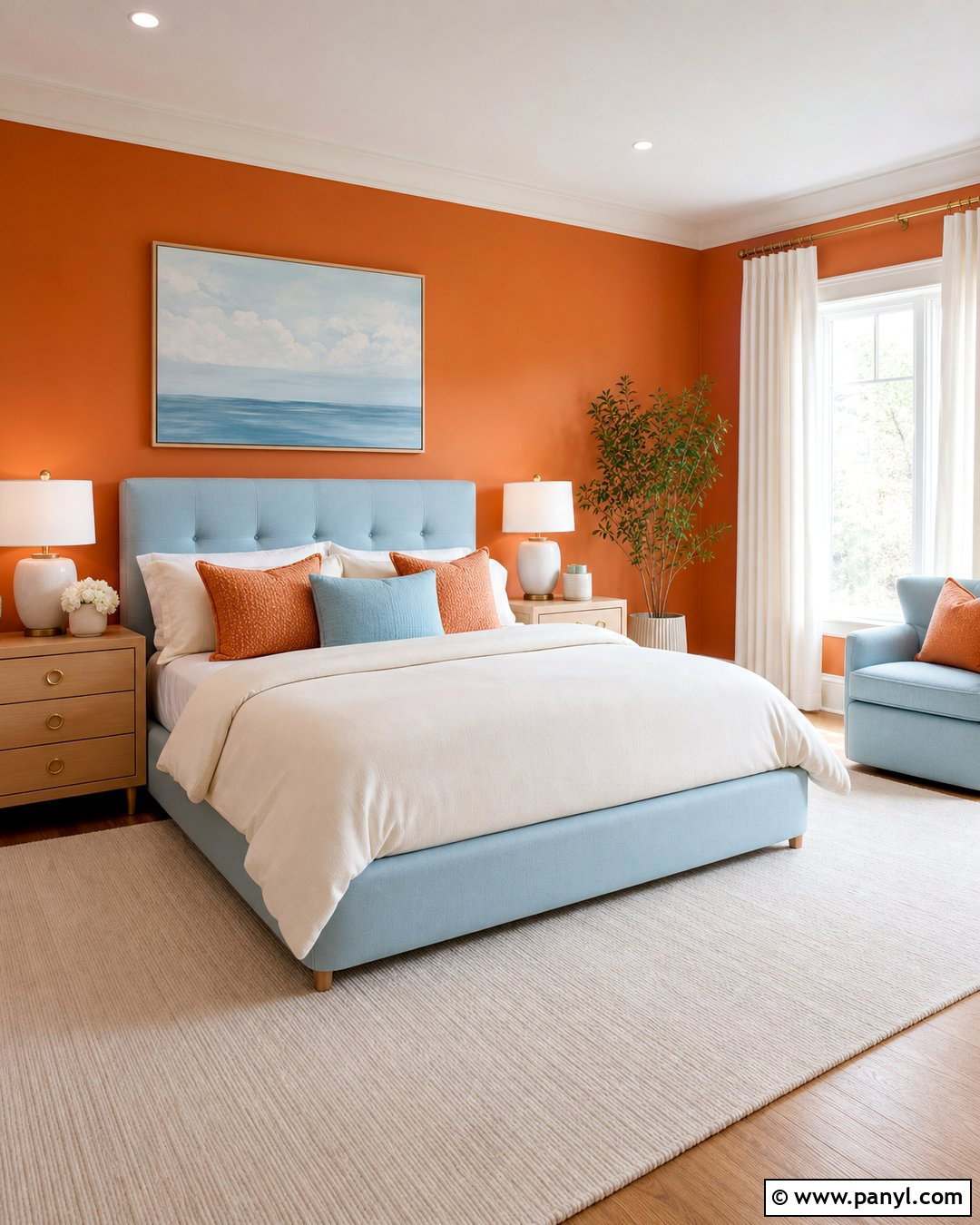
Light blue introduces an airy contrast that can make orange walls feel fresh rather than intense. Start with a pale blue sofa, upholstered bench, or bedding, depending on the room. Add white curtains and an ivory rug to provide plenty of visual space between the two colors. Furniture in blond oak keeps the overall look light, while small brass details add warmth. Choose cushions and artwork that include soft blue, cream, and restrained touches of orange. Avoid using highly saturated blue across every surface; the palest tones create a more relaxed effect. White ceramic lamps and clear glass accessories can continue the open feeling. This scheme is especially effective with peach-orange, coral, and medium clay walls in sunny bedrooms, breakfast areas, or family rooms.
12. Orange Walls With Pink Decor
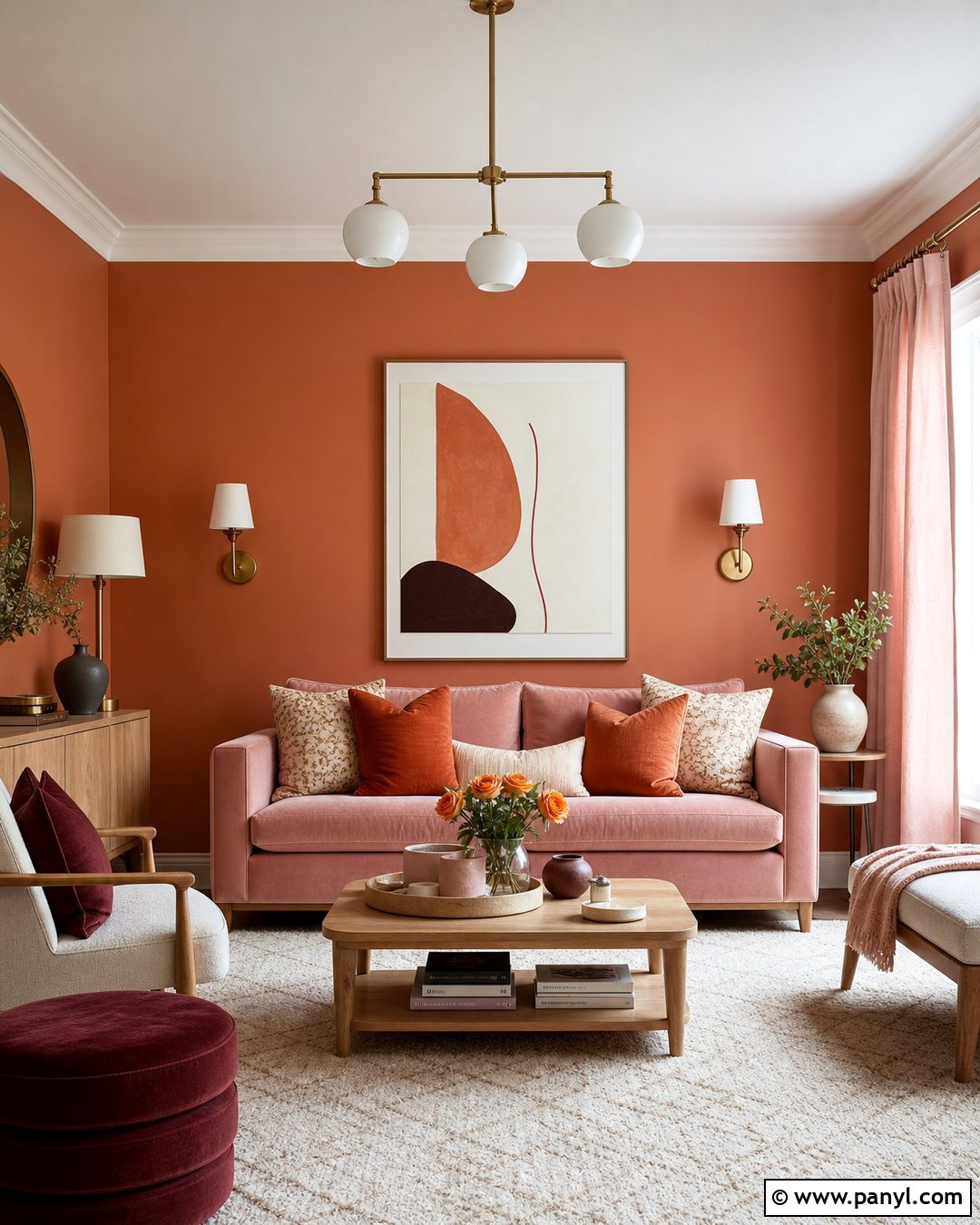
Orange and pink can produce a warm, cheerful room when their intensity levels are carefully coordinated. Pair muted terracotta walls with a dusty rose sofa, blush bedding, or pale pink dining chairs. Bring in cream through the rug, curtains, and larger decorative pieces to separate the related colors. Light oak furniture will keep the design approachable, while small burgundy or plum details can add depth. Select patterned textiles that include orange, rose, and ivory rather than using solid blocks everywhere. Soft brass lighting suits this palette better than cool chrome. Finish with abstract artwork and ceramic accessories in gentle, tonal shades. The final space should feel layered and grown-up, making this combination suitable for bedrooms, sitting rooms, and stylish home offices.
13. Orange Walls With Midcentury Modern Furniture
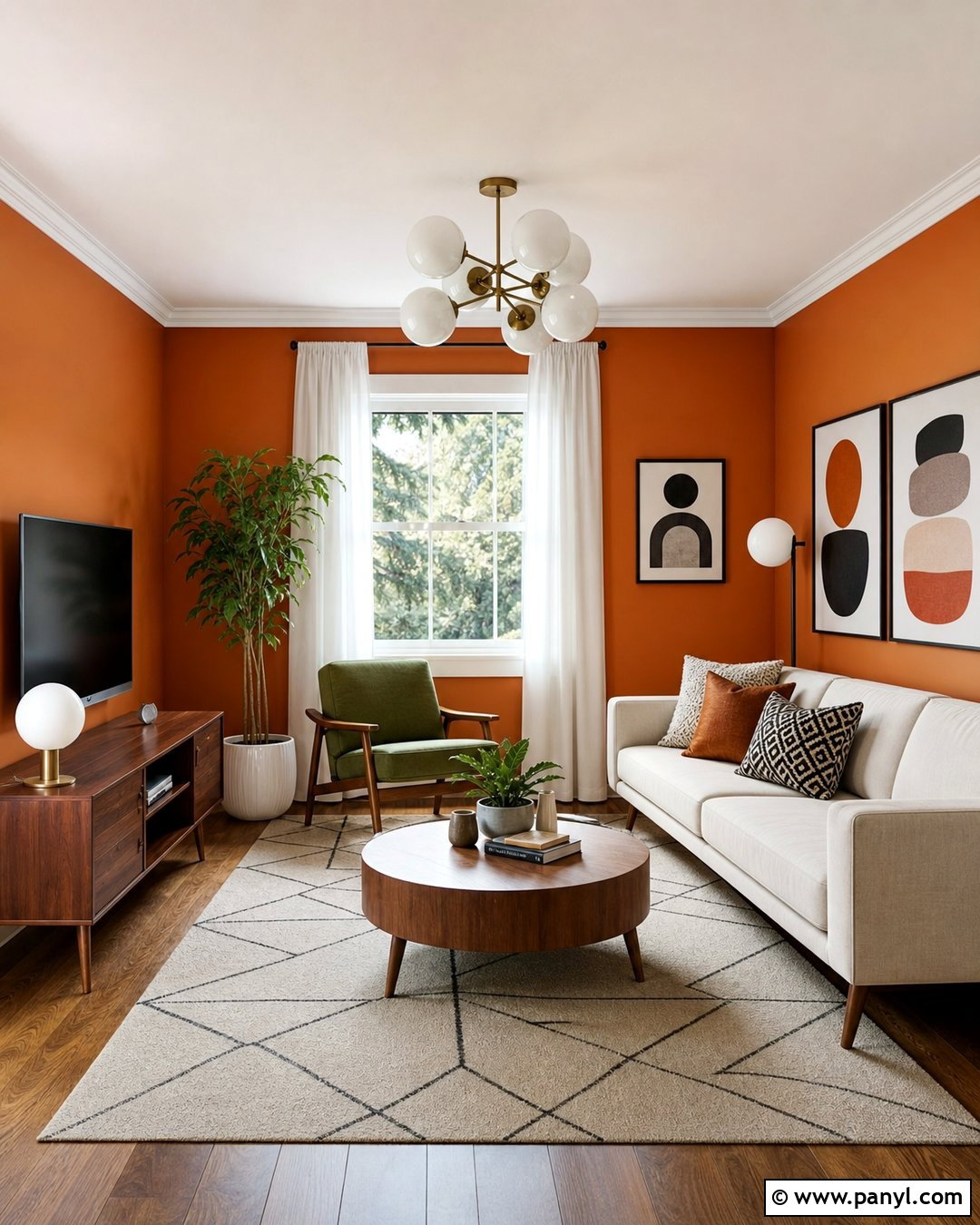
Orange walls fit naturally into a midcentury modern room when paired with streamlined furniture and a controlled retro palette. Choose a walnut media console, tapered-leg sofa, and one sculptural lounge chair in olive, cream, or dark teal. Anchor the layout with a low-pile geometric rug that combines warm neutrals and restrained orange details. Globe lighting, simple ceramics, and framed abstract prints can reinforce the period influence without making the space feel like a set. Use off-white curtains to balance the strong walls and dark wood. Keep surfaces mostly clear so the furniture shapes remain visible. A round wood coffee table and one tall plant complete the room. This design works best with pumpkin, persimmon, or burnt orange walls.
14. Orange Walls With Boho Decor
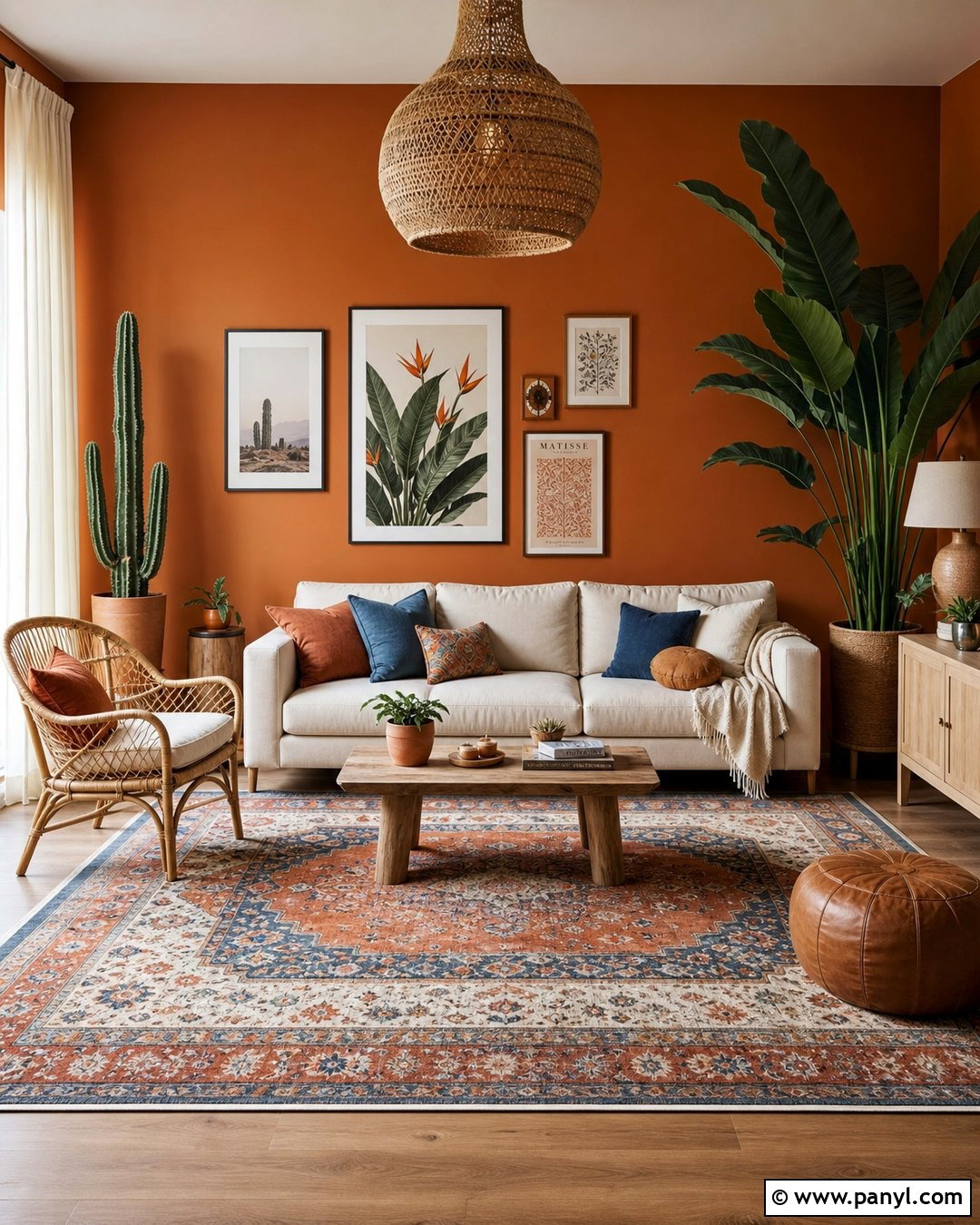
A boho room with orange walls should feel collected and comfortable, yet still have a clear visual structure. Begin with a cream sofa or low wood bed, then add a large vintage-inspired rug containing rust, tan, faded blue, and ivory. Layer woven cushions, a textured throw, and natural linen curtains without covering every surface. Rattan chairs, wood tables, and woven pendant lighting complement the warmth of the walls. Display plants at different heights in terracotta and neutral ceramic pots. Instead of filling the walls with many tiny objects, use one balanced gallery arrangement with wood and brass frames. Keep at least one major surface plain, such as the bedding or sofa upholstery. This creates a relaxed look without allowing pattern and color to become chaotic.
15. Orange Walls In A Small Living Room
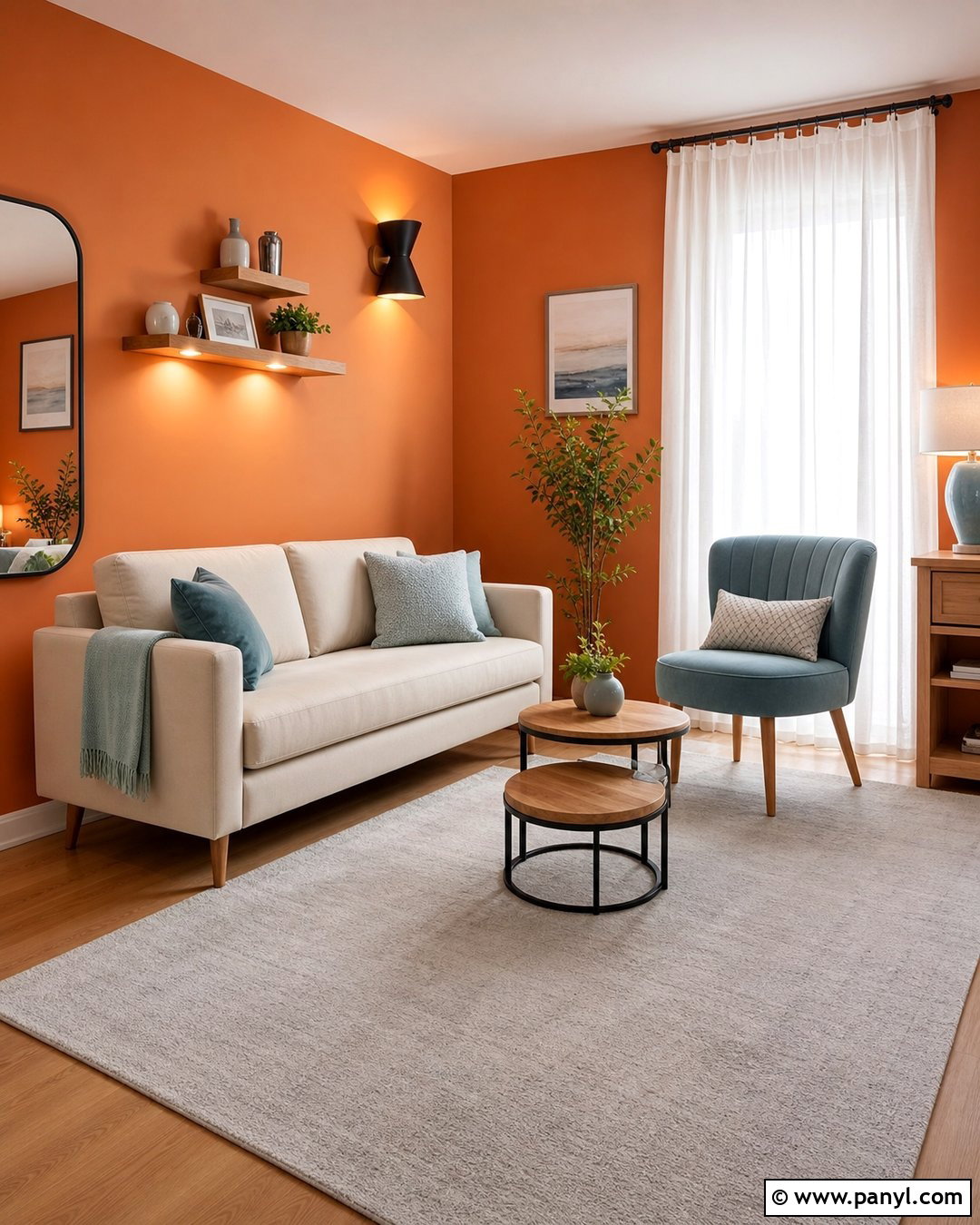
A small living room can handle orange walls when the furniture remains light, appropriately scaled, and visually open. Choose a compact cream sofa with raised legs and pair it with one slender accent chair. Use a large pale rug rather than a small dark one, which can divide the floor and make the layout feel tighter. Hang white curtains from near the ceiling and keep window areas unobstructed. Add nesting tables or a glass-topped coffee table to preserve useful walking space. One large mirror can reflect light and break up the wall color. Keep decorative accents limited to cream, light wood, and soft blue or green. Wall-mounted lighting and floating shelves provide function without crowding the room with additional furniture.
16. Orange Walls In A Bedroom
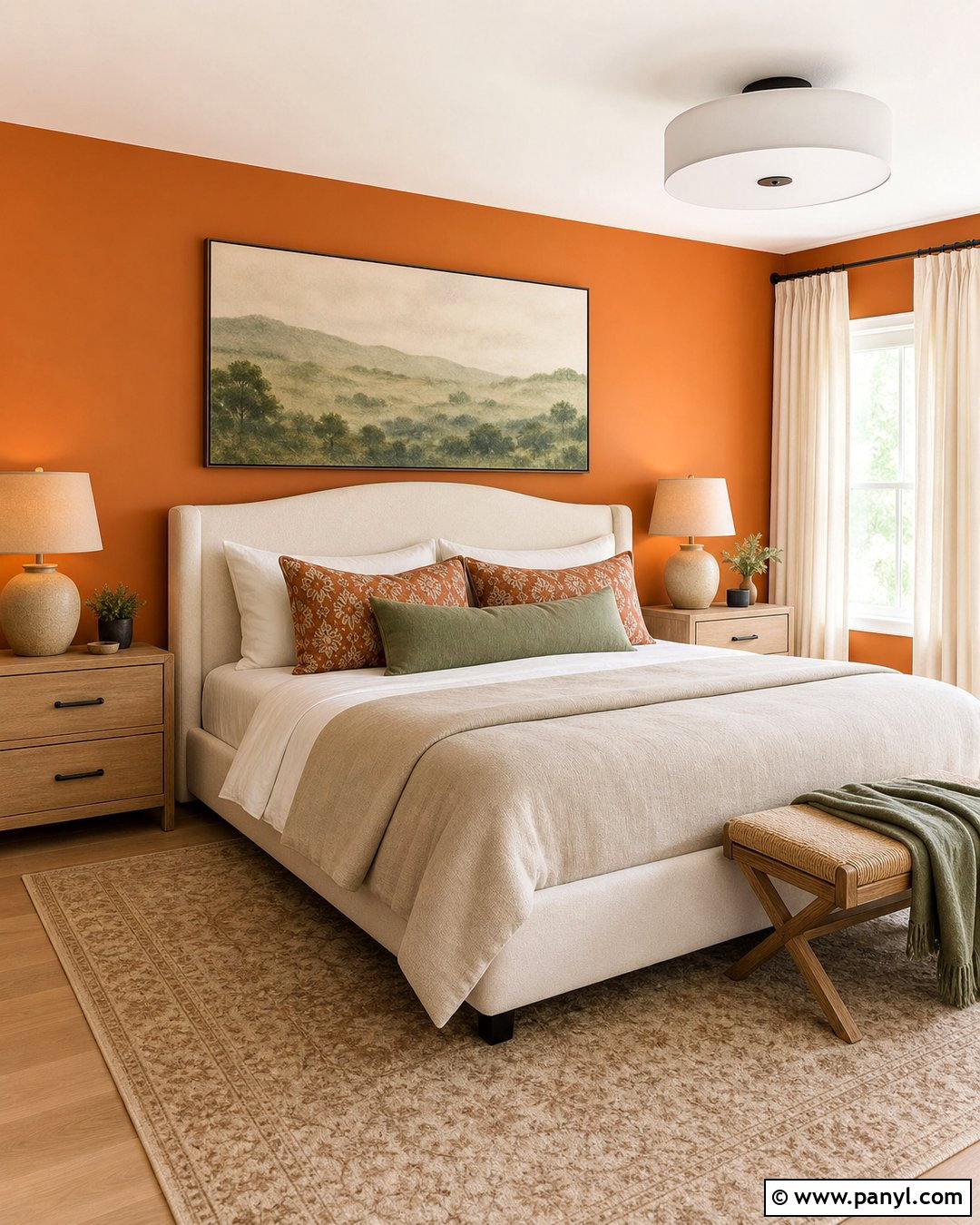
Orange bedroom walls can feel cozy and restful when surrounded by soft neutrals and simple natural materials. Position a cream upholstered bed against the main orange wall and dress it with white sheets, an oatmeal duvet, and rust-patterned cushions. Add light oak nightstands, warm ceramic lamps, and a large beige rug extending beyond the bed. Floor-length ivory curtains will lighten the room and soften the edges of the windows. Introduce one cooler note through sage green or dusty blue pillows, but keep it restrained. Artwork above the headboard should be wide enough to match the bed’s scale. Avoid filling every wall with decor. The finished bedroom will feel warm and enveloping while maintaining the calm, uncluttered atmosphere needed for rest.
17. Orange Walls In A Dining Room
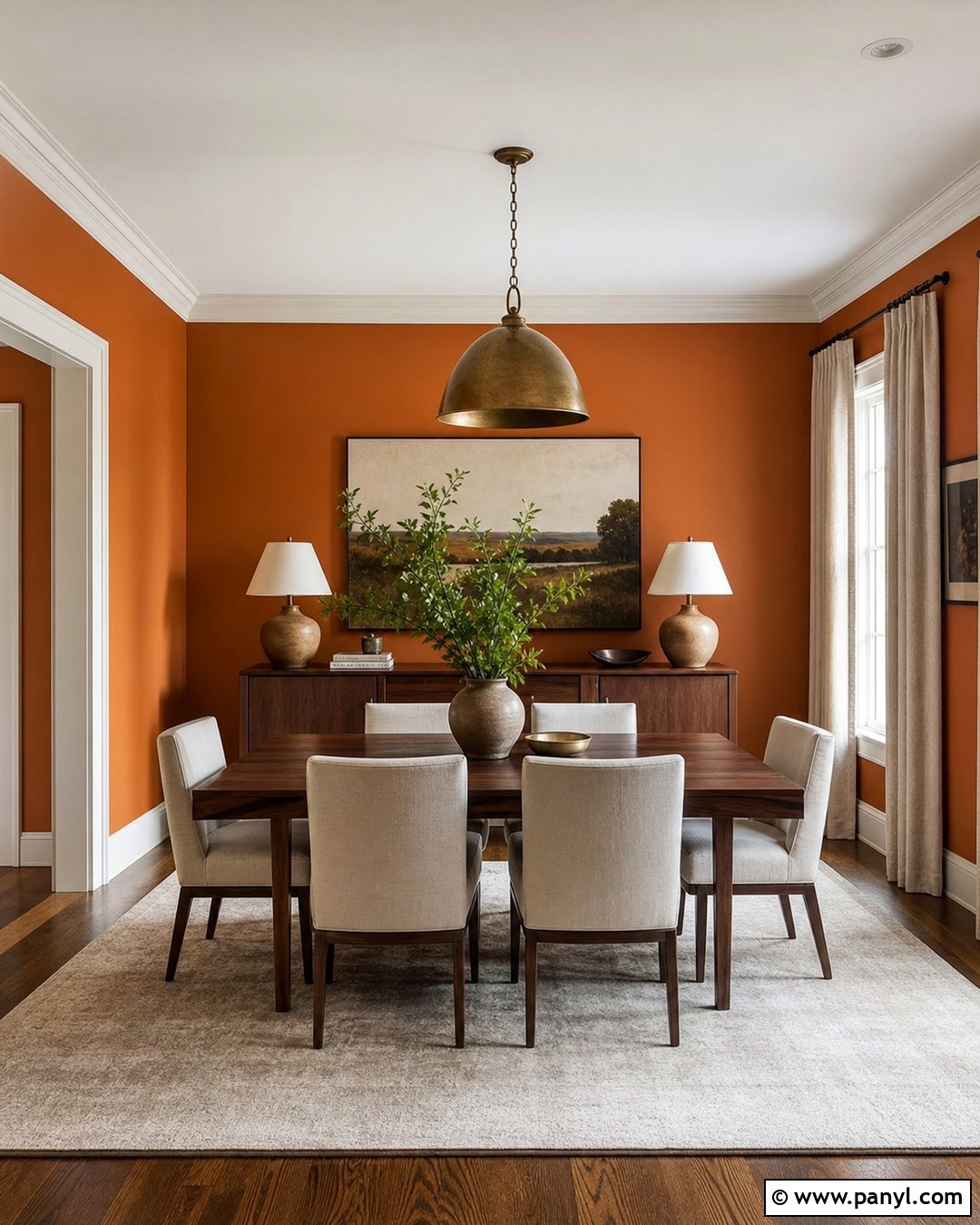
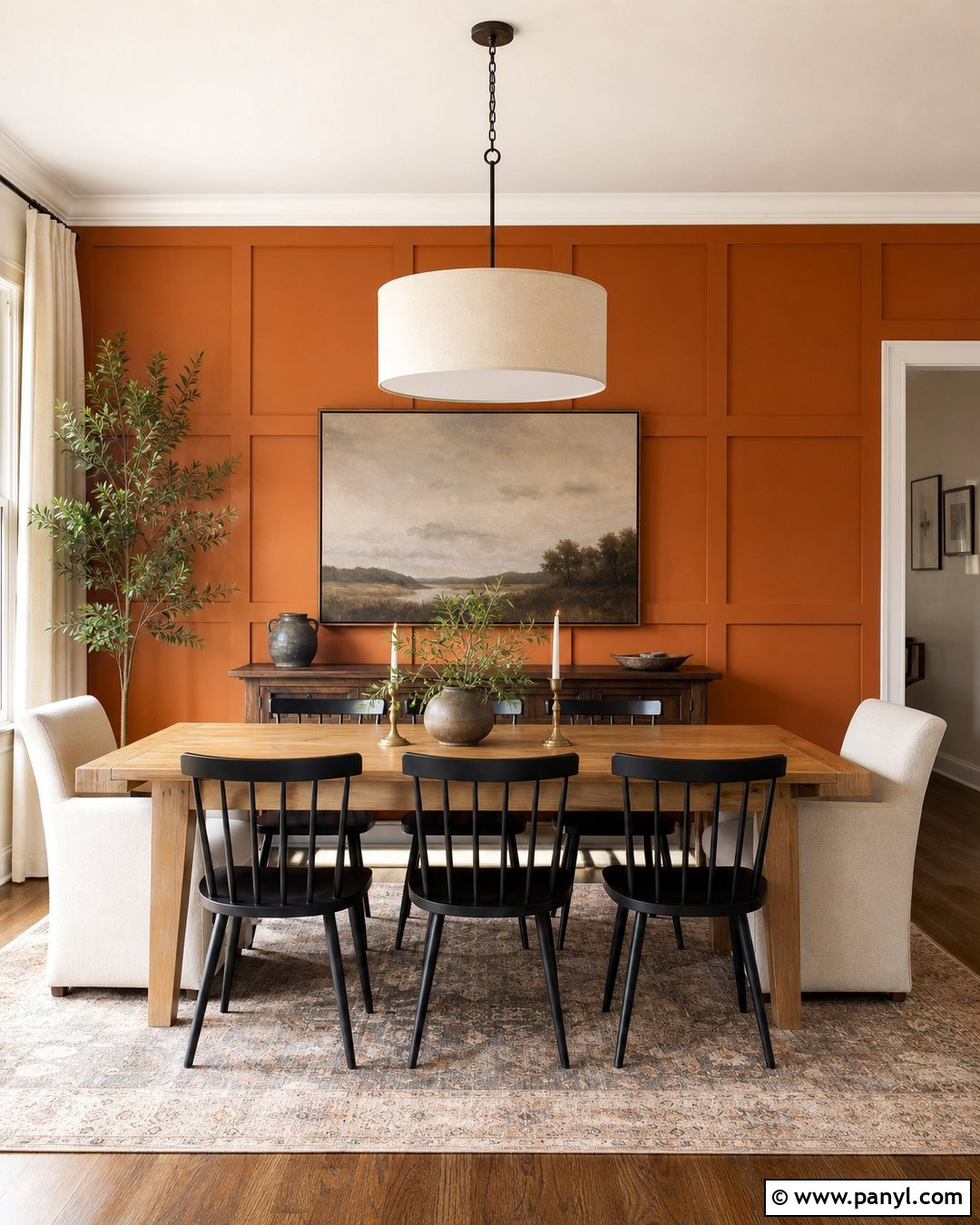
A dining room gives orange walls space to feel social, warm, and intentional. Center the design on a walnut or medium oak table with simple upholstered chairs in cream, olive, or charcoal. Place a neutral rug underneath, making sure it extends far enough for the chairs to remain on it when pulled out. A black or aged brass pendant can define the table and introduce contrast. Use white or oatmeal curtains to balance the surrounding color. Add one large landscape, abstract painting, or textile artwork rather than several small pieces. A wood sideboard styled with ceramic lamps and minimal pottery completes the room. Green branches or a leafy plant bring freshness to the palette without distracting from the orange walls and natural materials.
18. Orange Walls In A Home Office
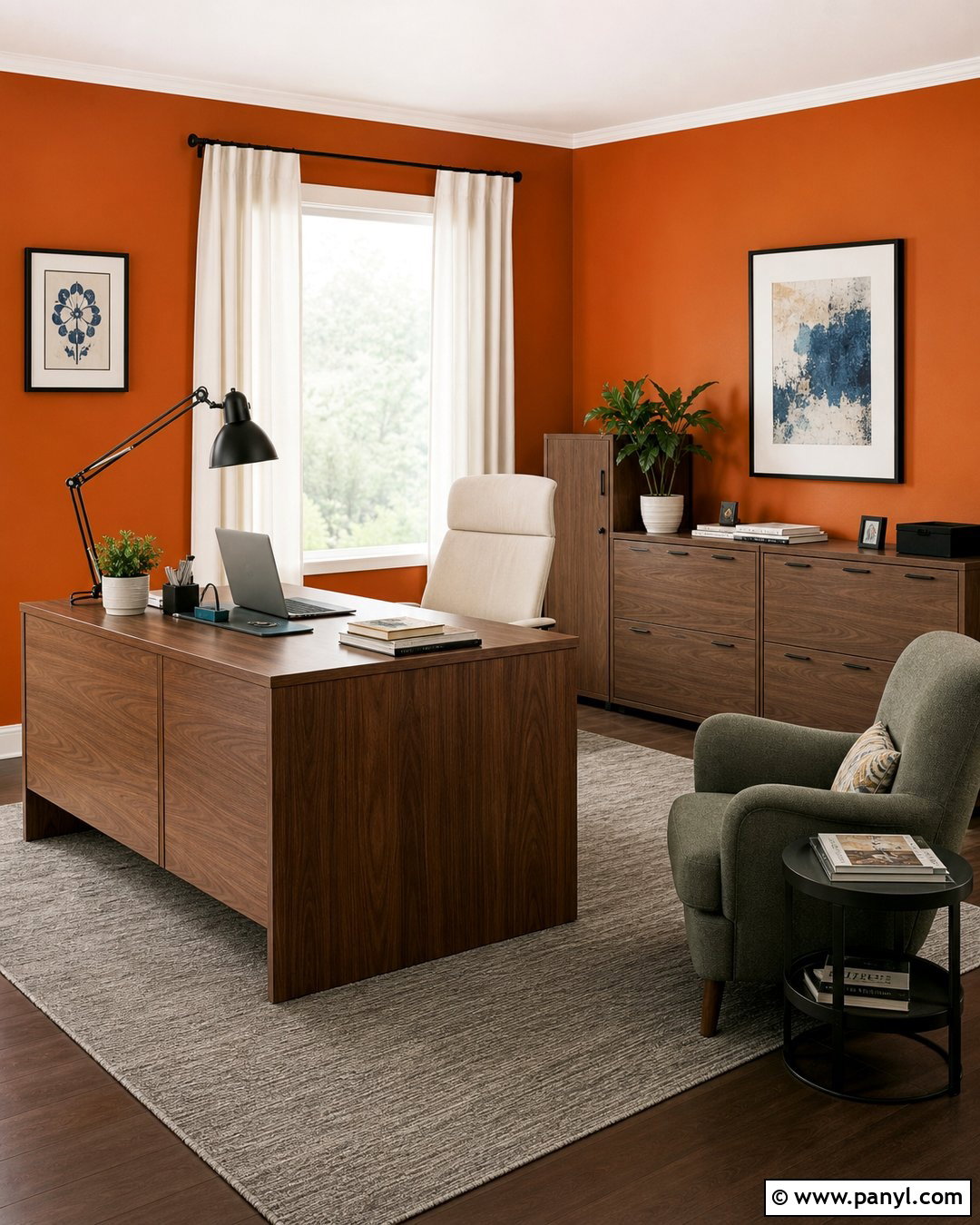
An orange home office can feel focused and creative when the workstation is clean and the supporting colors are restrained. Place a walnut or light oak desk against the orange wall, paired with an ergonomic chair in cream, charcoal, or muted green. Add a large neutral rug to soften sound and define the working area. Closed cabinets or matching wood shelves provide storage without creating visual clutter. Use white curtains or woven shades to filter bright daylight. A black task lamp, slim frames, and simple desk accessories add practical contrast. Choose artwork with cream, blue, or green details to break up the orange. Include one healthy plant and a comfortable reading chair if space allows. The room should remain functional first, with decoration supporting concentration.
19. Orange Walls In A Rental Apartment
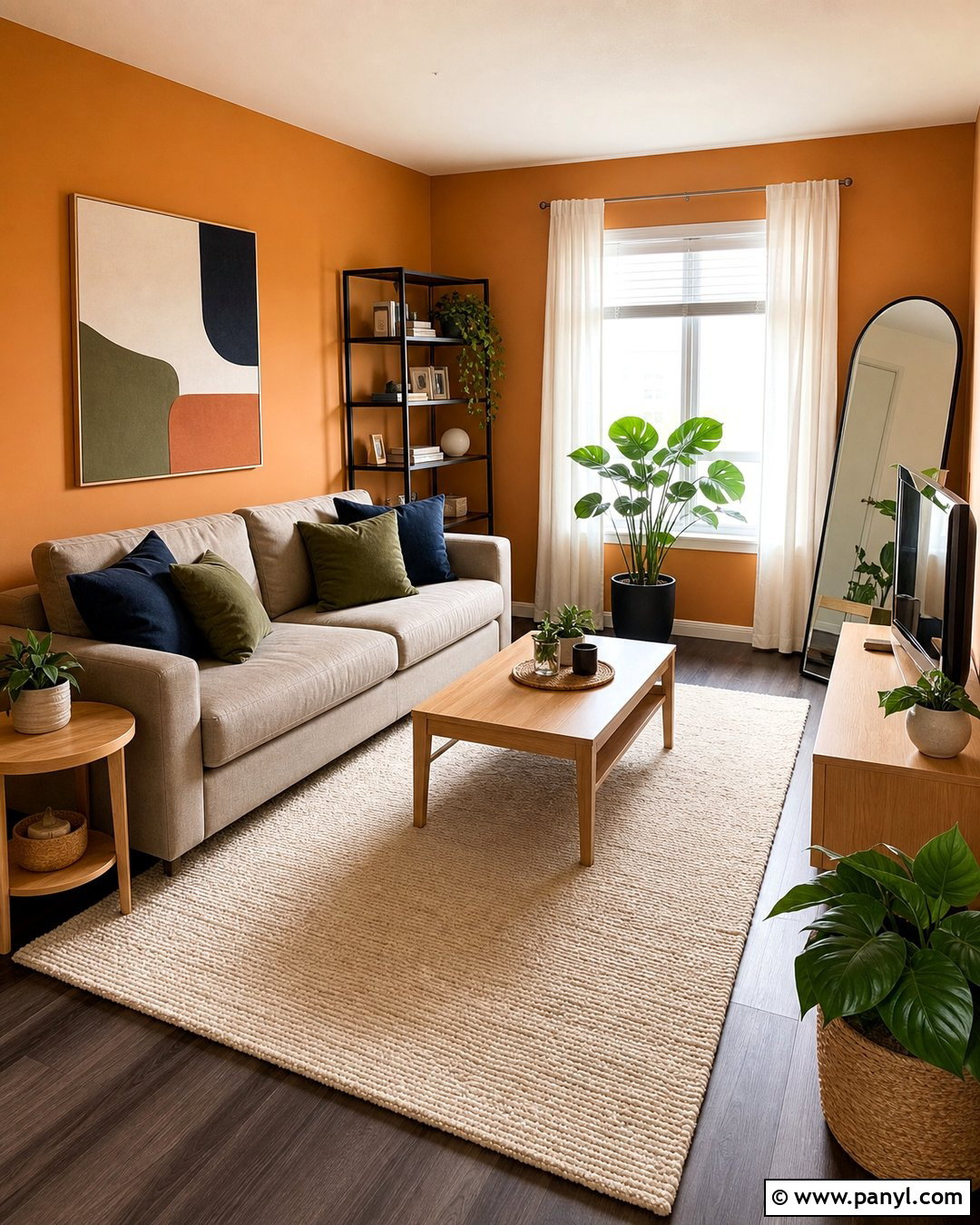
Rental orange walls can become part of a polished design without painting, drilling extensively, or making permanent changes. Cover some of the color with large removable artwork, a leaning floor mirror, or tall freestanding shelving. Choose a neutral sofa, cream rug, and white curtains to brighten the apartment. If curtain hardware cannot be changed, use renter-friendly brackets or an approved tension system where practical. Add light wood furniture and cushions that repeat a small amount of orange alongside olive, navy, or beige. Large plants can soften empty corners and visually interrupt long sections of wall. Keep accessories coordinated rather than trying to hide every orange surface. A cohesive neutral foundation will make the existing wall color look more intentional and less like a limitation.
20. Orange Accent Wall With Neutral Decor
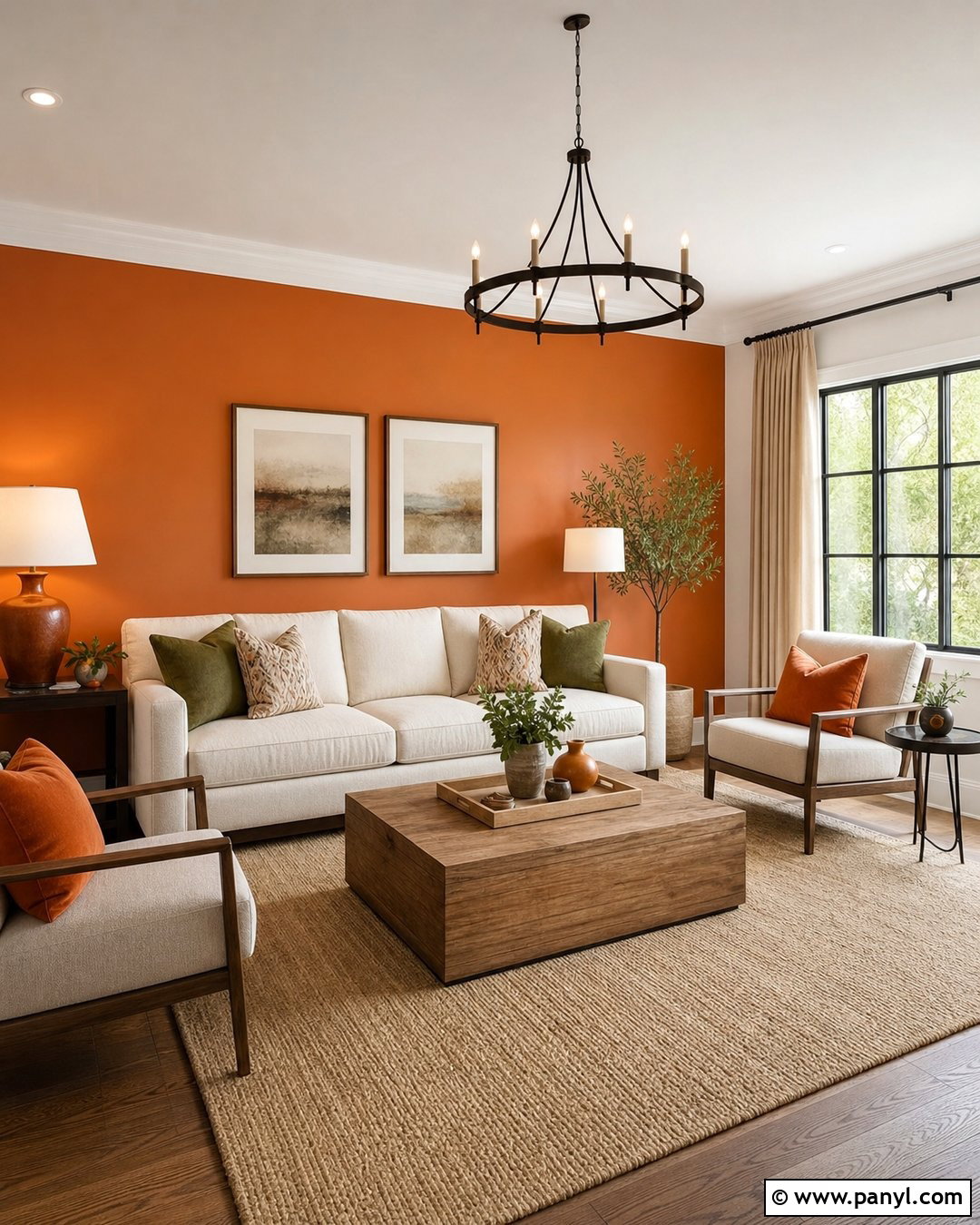
An orange accent wall needs enough support from the rest of the room to look connected rather than accidental. Place the main furniture against or directly facing the feature wall so it becomes part of the layout. Choose a cream sofa or upholstered bed, a warm beige rug, and wood tables as the neutral foundation. Repeat the orange in two or three modest details, such as a cushion pattern, framed print, or ceramic bowl. Keep the remaining walls warm white instead of stark blue-white, which may create an abrupt shift. Add black or dark bronze lighting for definition and floor-length oatmeal curtains for softness. One secondary accent, such as olive or navy, can provide depth. Avoid scattering numerous unrelated colors across the room.
Conclusion:
Learning **20 How To Decorate With Orange Walls** begins with treating the wall color as part of a complete palette, not an isolated feature. Cream, white, beige, and gray can soften orange, while navy, teal, olive, and light blue provide deliberate contrast. Natural wood, woven fibers, leather, ceramic pieces, and greenery help warmer shades feel grounded. Always consider the entire room, including furniture scale, curtain length, rug size, lighting, and artwork placement. Repeat the orange sparingly in a few accessories so the design feels connected. Most importantly, allow quiet surfaces to balance the stronger color. With a clear palette and thoughtful layout, orange walls can look warm, sophisticated, modern, and surprisingly versatile.

Related Ideas and Inspiration:
Leave a Reply