
Grey Tiles What Colour Walls is a common question because gray flooring can feel cool, warm, modern, rustic, or industrial depending on its undertone. Before choosing paint, study the tile beside your grout, cabinets, counters, and natural light. Warm gray tiles usually contain beige or brown notes, while cool gray tiles may lean blue or charcoal. Light also changes how wall colors appear throughout the day, so test large painted samples beside the tile before committing. Dark tiles often benefit from contrast, while pale tiles can support either soft neutrals or stronger color. () The following combinations create complete, practical rooms instead of treating paint as an isolated choice. Use these 20 coordinated looks to answer Grey Tiles What Colour Walls.

1. Grey Tiles With Warm White Walls
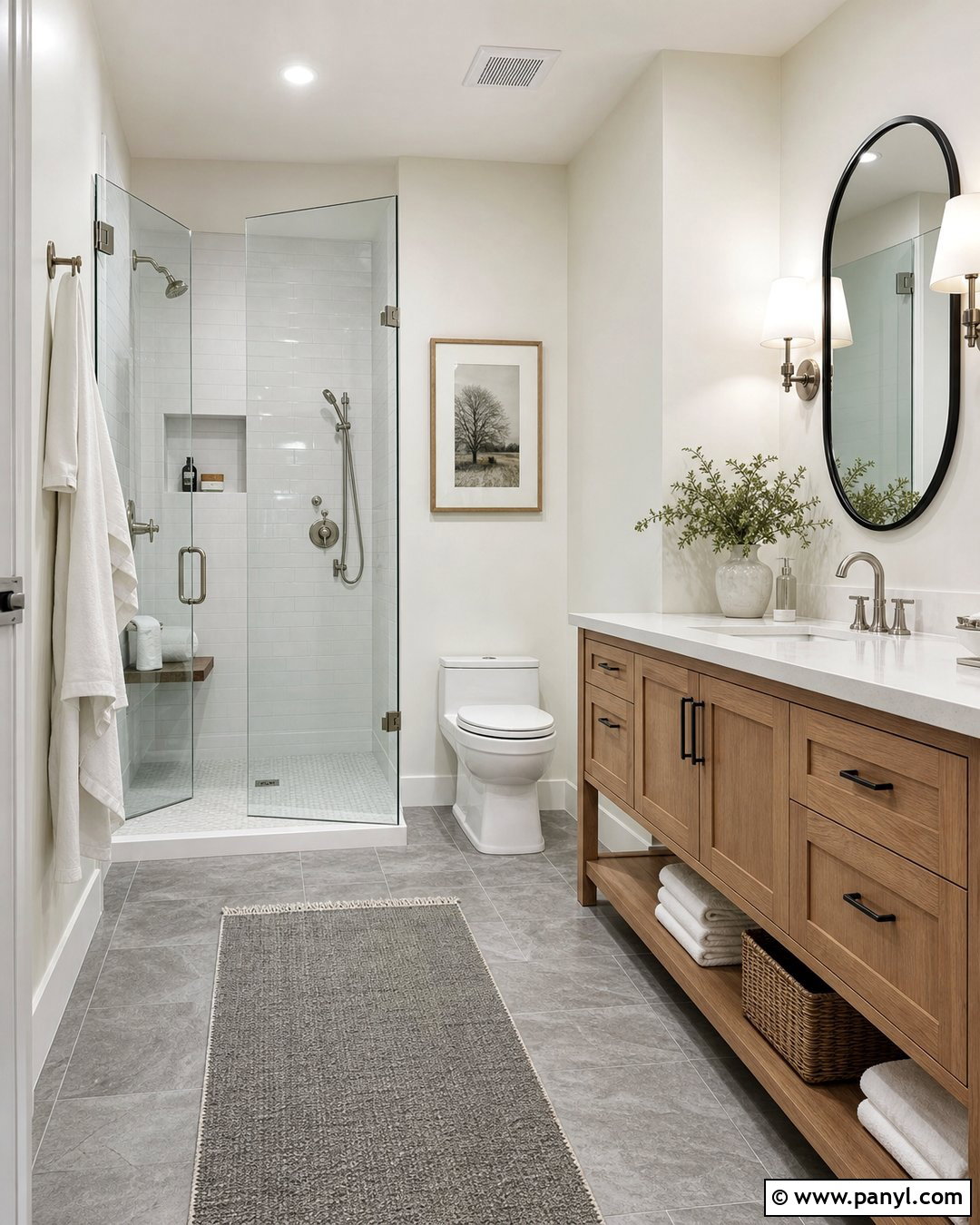
Warm white walls are a reliable match for medium or dark gray tiles because they brighten the room without making it feel stark. Choose white paint with a soft cream or beige undertone rather than a sharp blue base. Complete the look with a natural oak vanity, brushed nickel fixtures, white towels, and a simple glass shower enclosure in a bathroom. In a kitchen, use off-white cabinets, pale quartz counters, and light wood stools. Keep window treatments airy and repeat the tile color through small accessories, such as gray planters or framed artwork. This balanced scheme works especially well when the tiles have warm veining, taupe undertones, or a stone-like finish.
2. Grey Tiles With Crisp White Walls
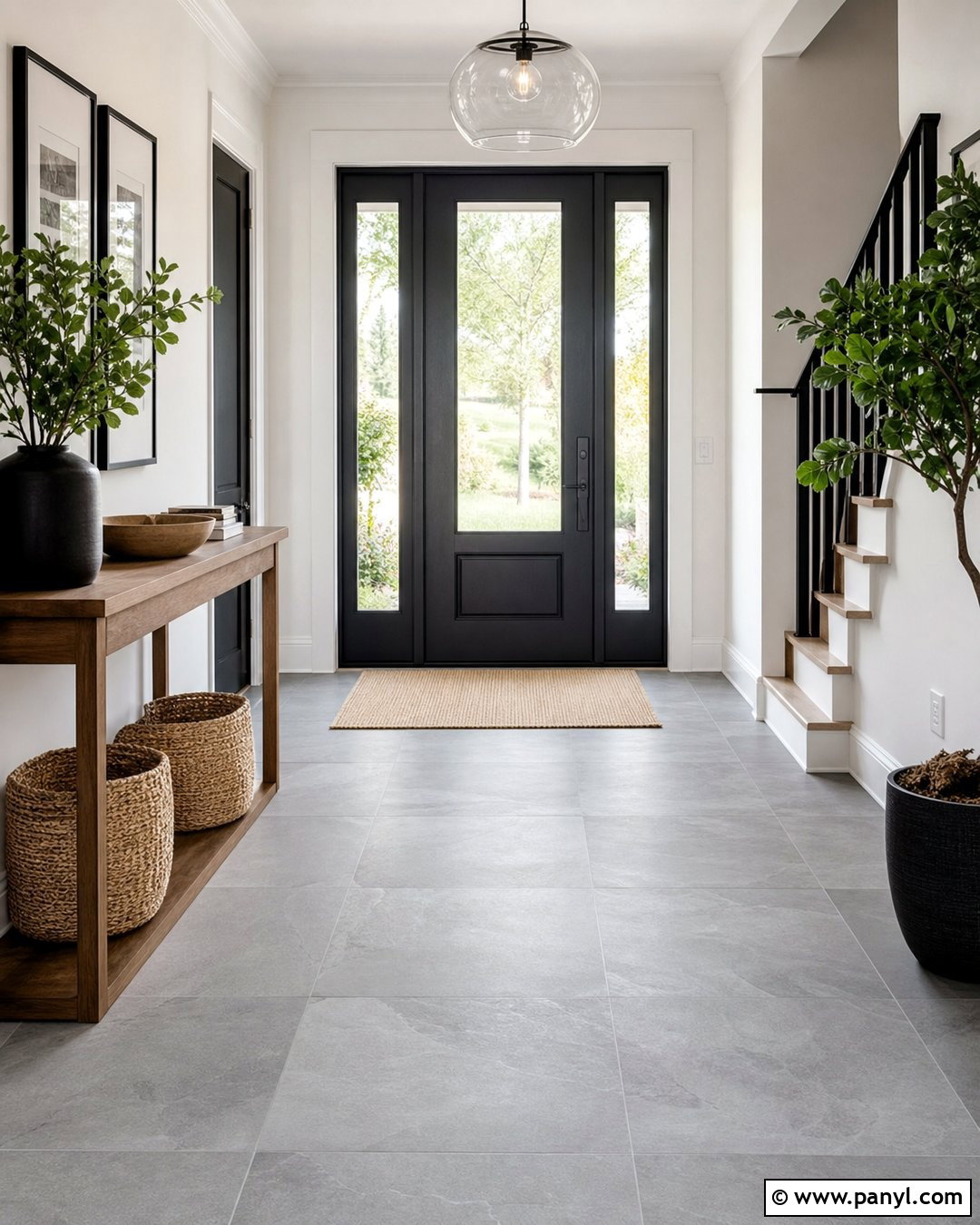
Crisp white walls give gray tiles a clean, defined appearance that suits modern kitchens, bathrooms, and entryways. This pairing works best with cool gray, slate, concrete-effect, or blue-gray tiles. Prevent the space from feeling clinical by adding medium-toned wood, woven baskets, textured towels, and a few leafy plants. Matte black hardware can outline the design, while polished chrome creates a lighter finish. If the room is large, repeat crisp white on the ceiling, trim, and cabinetry for visual continuity. Use simple furniture with straight lines and avoid filling every surface. The finished room should feel open and structured, with the gray floor providing depth beneath a fresh white background.
3. Grey Tiles With Cream Walls
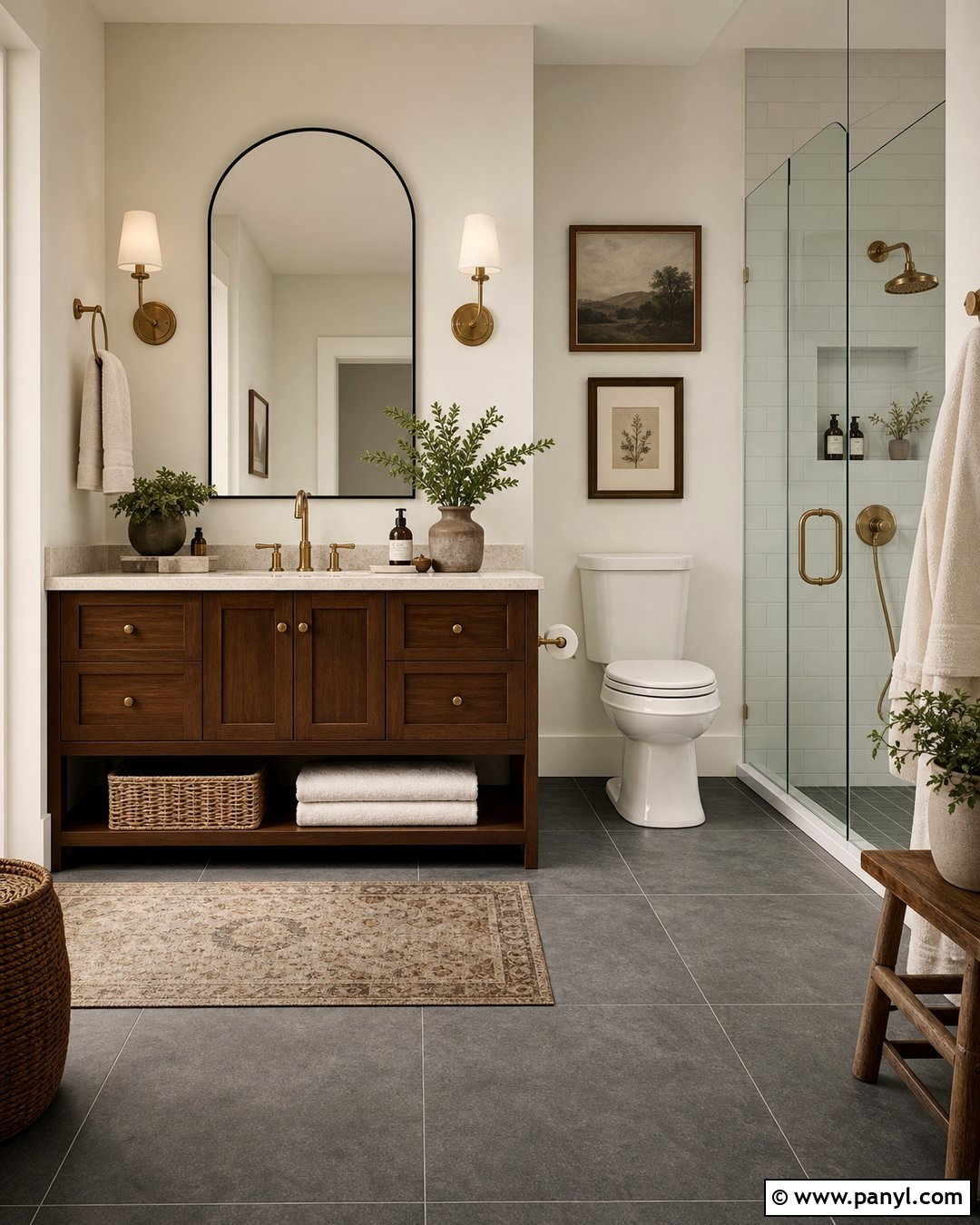
Cream walls soften gray tiles and create a warmer, more comfortable room than bright white paint. Look for a light cream without strong yellow undertones, particularly if the tiles are cool gray. Build the scheme with walnut or oak furniture, ivory textiles, aged brass hardware, and natural materials such as linen, cane, and stone. In a bathroom, combine cream walls with a wood vanity, an arched mirror, and warm white lighting. In an open living area, add a beige rug large enough to anchor the seating arrangement. Dark gray tiles can feel much less severe in this palette. The result is calm and inviting, with enough warmth to balance the tile while retaining a light neutral foundation.
4. Grey Tiles With Light Beige Walls
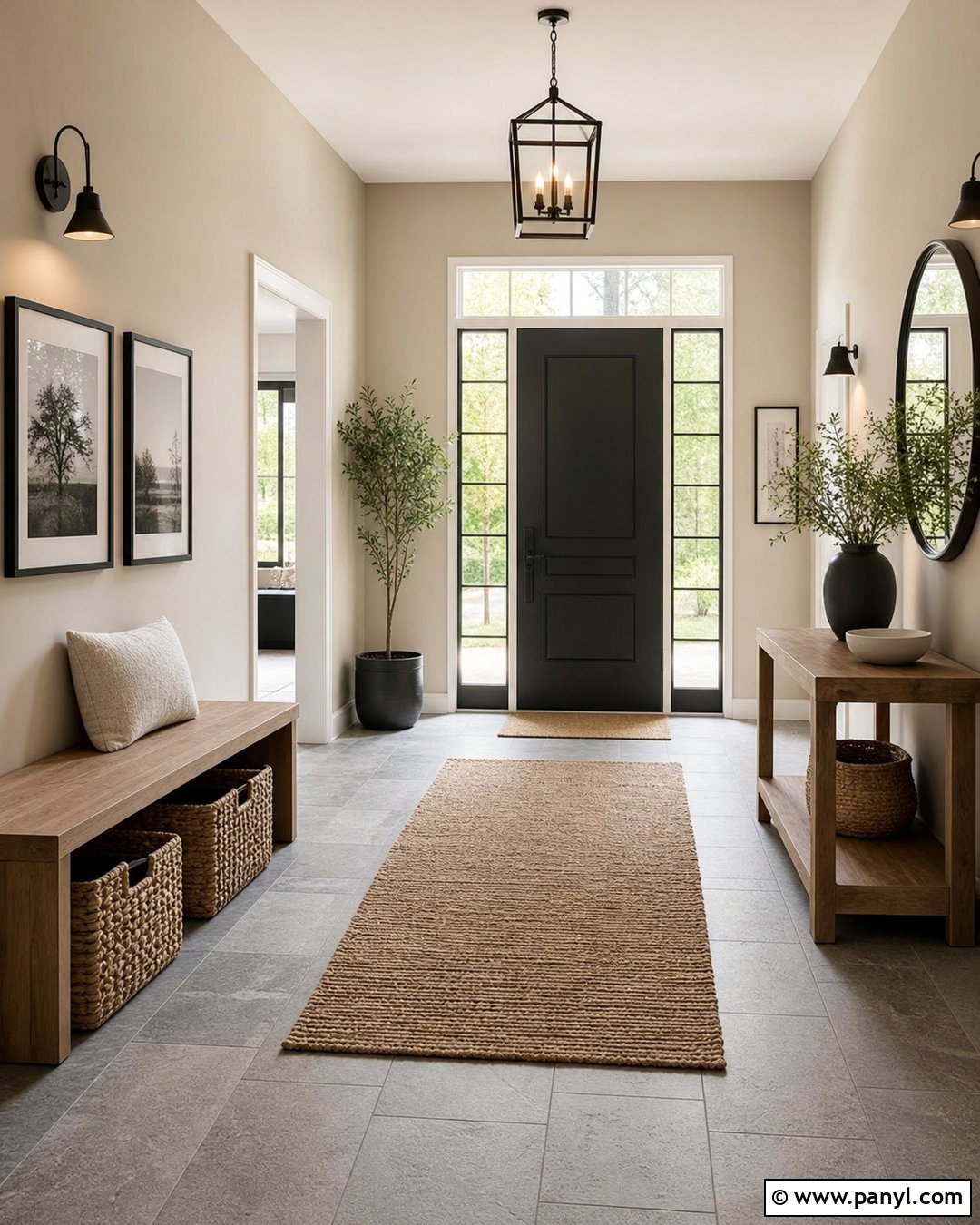
Light beige walls bring gentle warmth to gray tile floors while keeping the overall palette quiet and flexible. Select a balanced sandy beige rather than a deep golden shade, then connect the walls and floor with taupe upholstery, oatmeal curtains, and light oak furniture. A cream sofa or vanity adds brightness, while black or bronze accents give the room definition. For a bathroom, use beige walls above gray shower tiles and introduce a timber vanity with a pale stone counter. For a hallway, add a natural runner and simple black-framed artwork. This complete look is particularly helpful when gray tiles seem cold or when adjoining rooms already feature warm wood flooring and earthy neutral colors.
5. Grey Tiles With Greige Walls
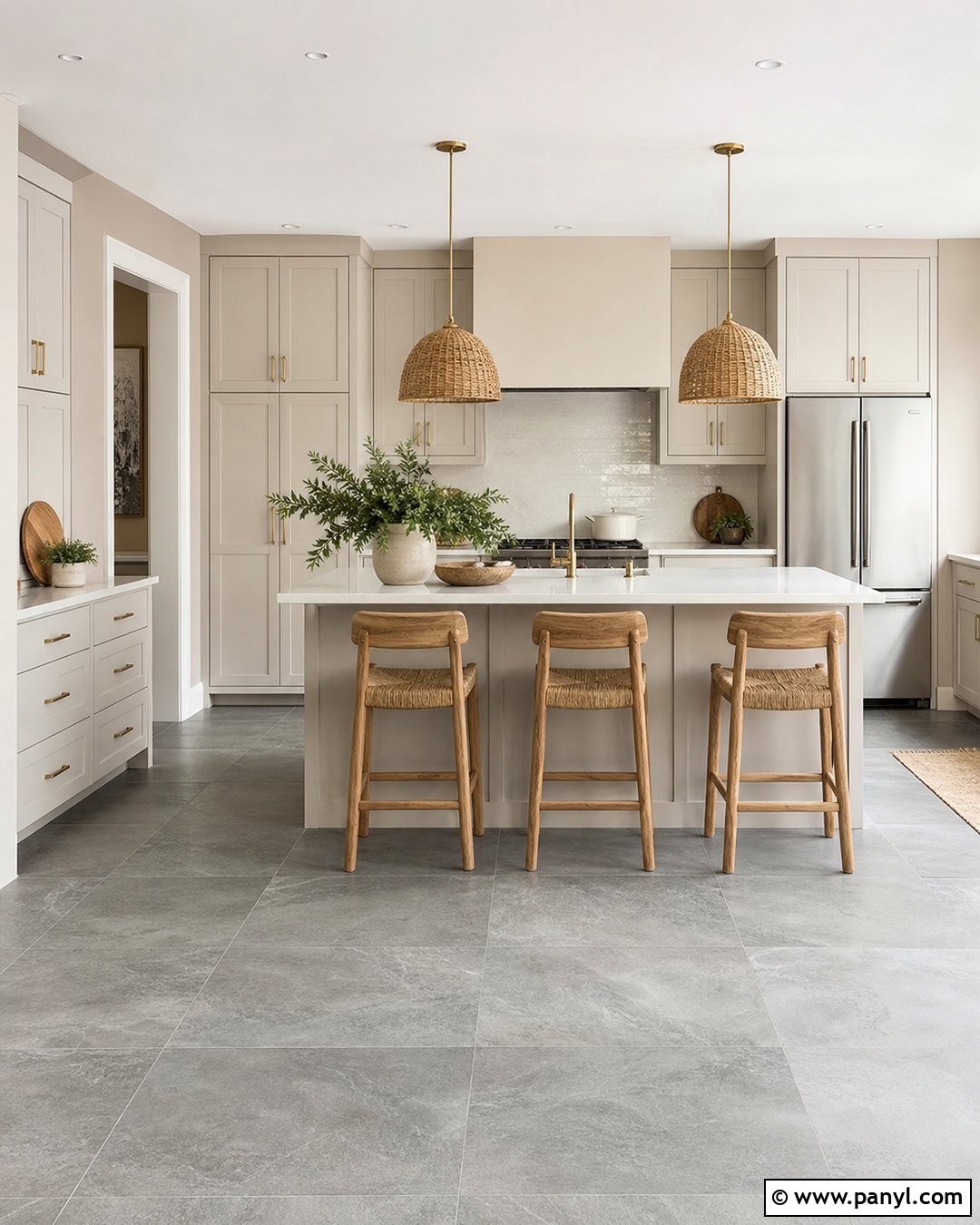
Greige walls blend gray and beige, making them an easy bridge between cool tile and warm furniture. The key is selecting a greige that remains visibly lighter than the floor so the room has contrast. Pair the combination with warm white trim, pale oak cabinetry, linen curtains, and brushed brass or soft black hardware. In a kitchen, use greige walls around off-white cabinets and add stools with woven seats. In a bathroom, include a floating oak vanity, creamy towels, and a rounded mirror. Avoid matching the wall and tile too precisely, which can flatten the design. Slight variation in tone creates layers while maintaining the seamless, understated appearance that makes greige so practical.
6. Grey Tiles With Pale Gray Walls
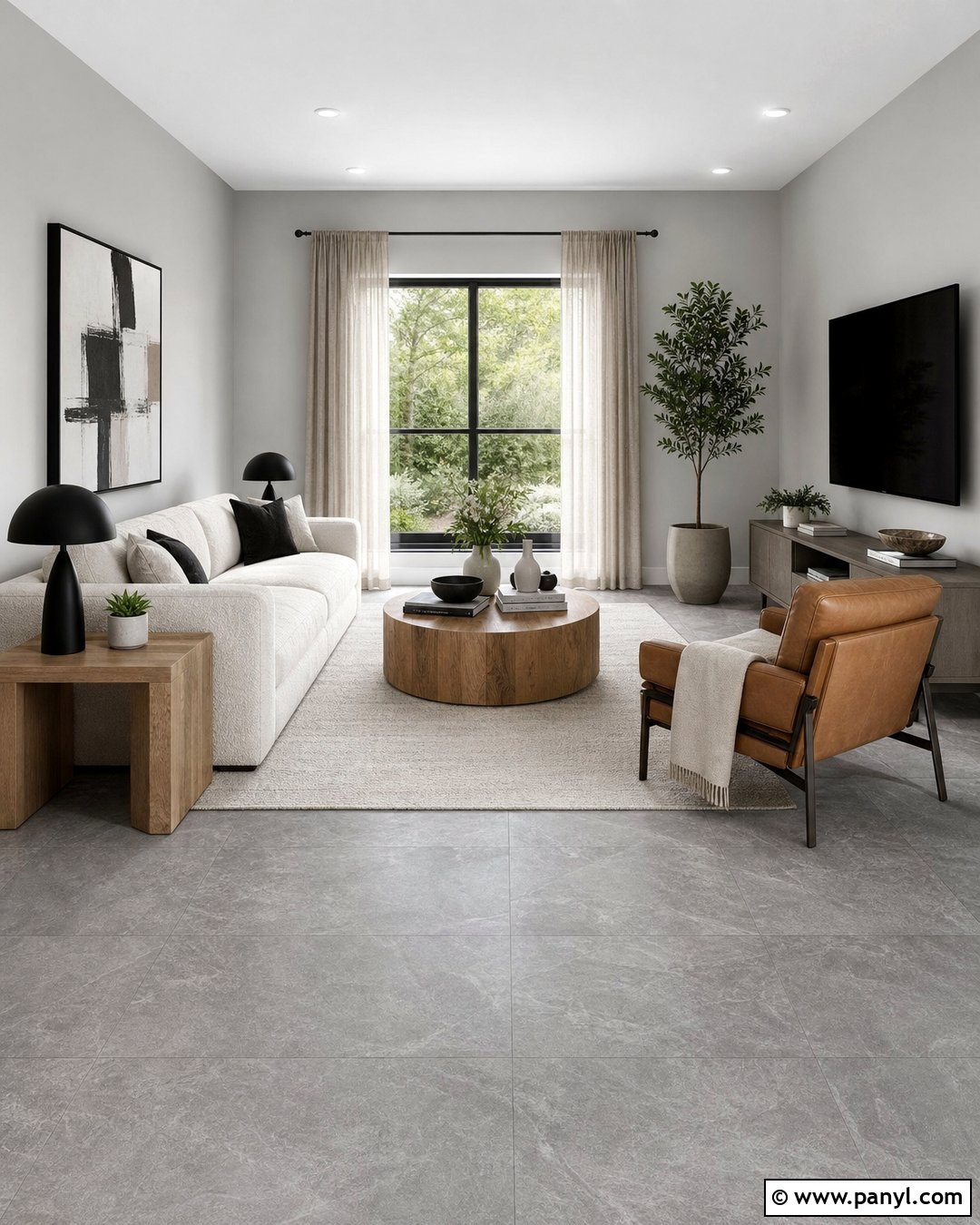
A pale gray wall can create a streamlined monochromatic room, provided the wall color is noticeably lighter than the tiles. Match the undertones carefully: blue-gray walls complement cool tile, while soft mushroom-gray paint works better with warm gray stone. Add contrast through white ceilings, charcoal accents, and natural wood furniture. In a bathroom, combine pale gray walls with a white vanity, chrome fixtures, and thick white towels. In a living space, layer an ivory rug over the tile and use a camel leather chair for warmth. Different textures are essential, so include linen, boucle, timber, glass, and ceramics. The finished design feels coordinated and spacious rather than flat or overwhelmingly gray.
7. Grey Tiles With Charcoal Walls
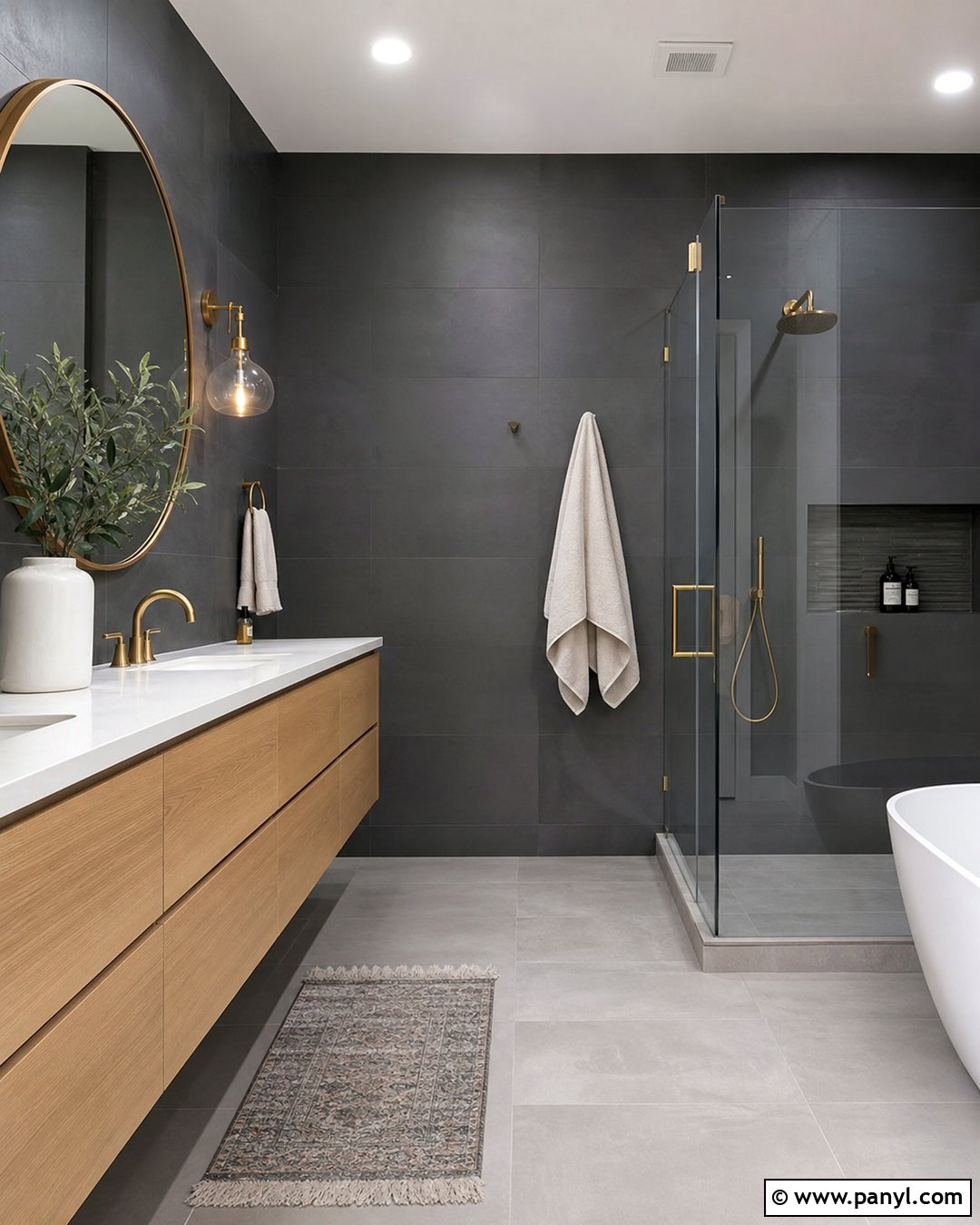
Charcoal walls can turn light gray tiles into a dramatic feature, especially in a powder room, large bathroom, or naturally bright kitchen. Choose a charcoal paint that shares the tile’s cool or warm undertone, then keep the ceiling and trim soft white. Balance the dark walls with a pale oak vanity, white countertop, large mirror, and generous layered lighting. Brushed brass fixtures introduce warmth, while black fixtures produce a more architectural look. Limit charcoal to the upper walls if gray tile already covers the shower or backsplash. Add cream towels, simple greenery, and light-colored artwork. This scheme feels intentional when every dark surface is offset by reflective finishes, pale furnishings, and uncluttered styling.
8. Grey Tiles With Black Walls
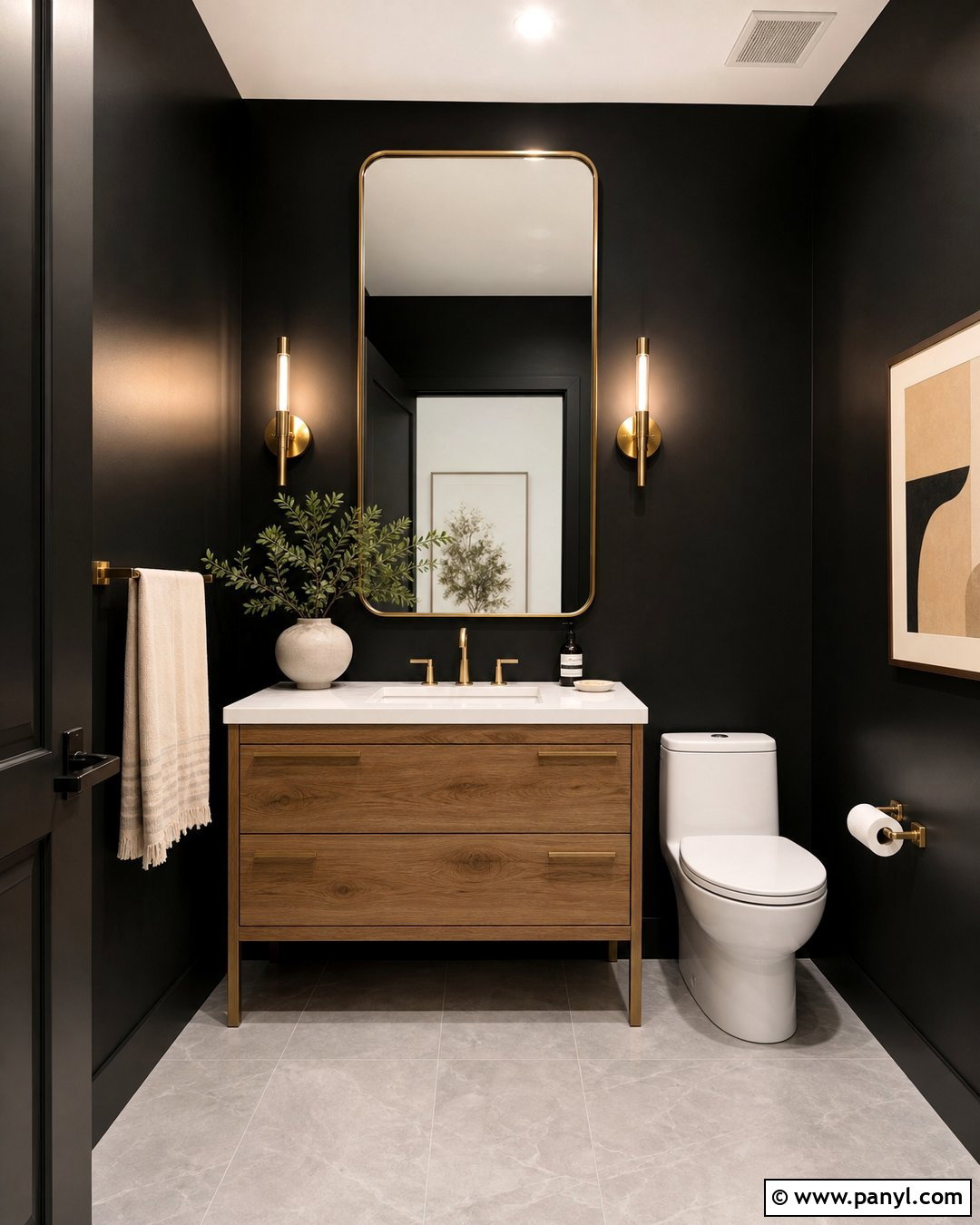
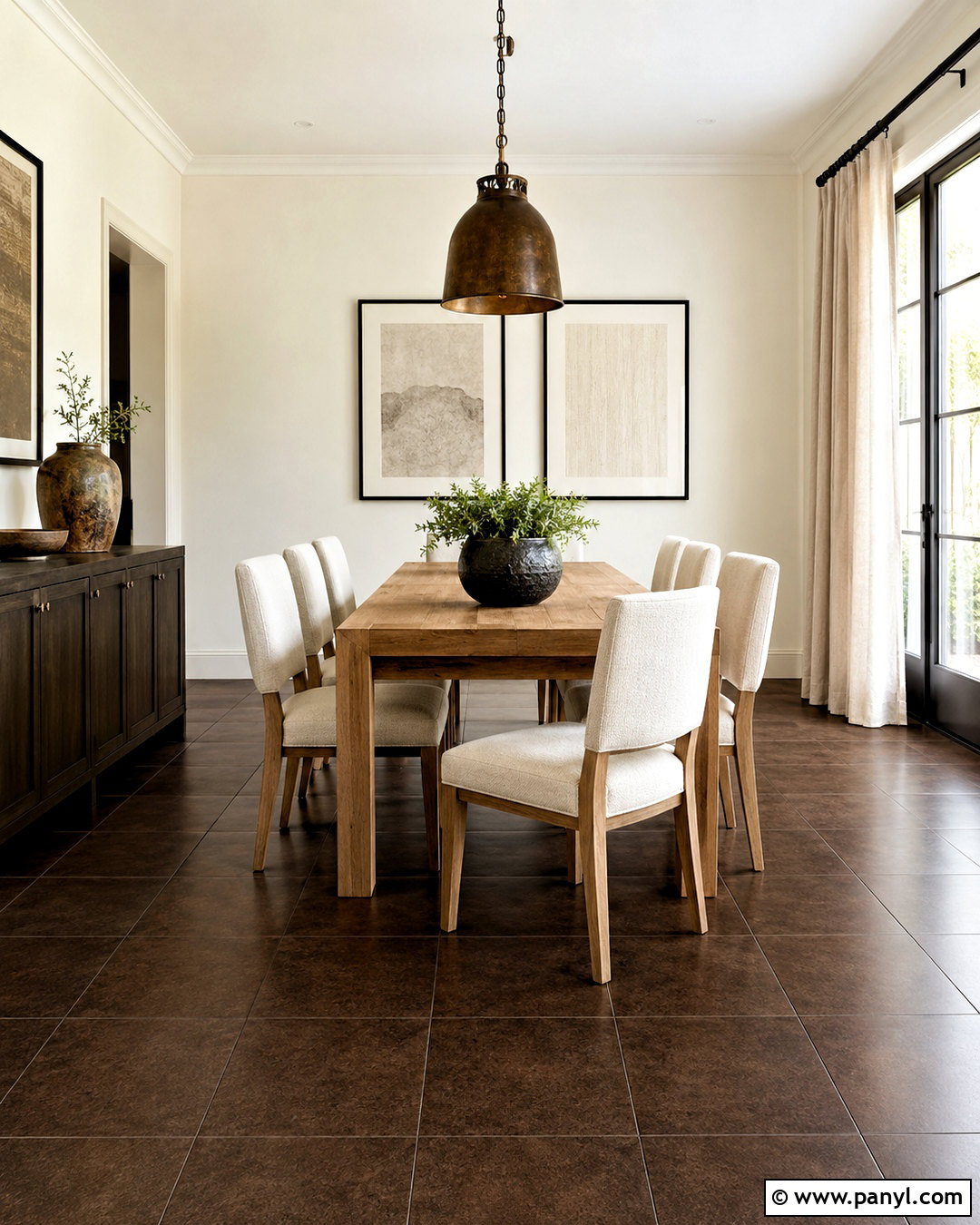
Would black walls make gray tile feel too dark? Not when the room has sufficient light and carefully placed pale surfaces. Use matte black paint on one main wall or above light gray half-height tiles, then add a white ceiling, white vanity top, and oversized mirror. Natural oak cabinetry prevents the palette from becoming cold, while brushed brass sconces introduce a warmer highlight. In a kitchen, black walls can frame gray flooring alongside light wood cabinets and creamy quartz counters. Keep textiles simple in white, stone, and charcoal. This high-contrast look works best with clean lines and limited accessories. The completed space should feel graphic and polished, not crowded or cave-like.
9. Grey Tiles With Navy Blue Walls
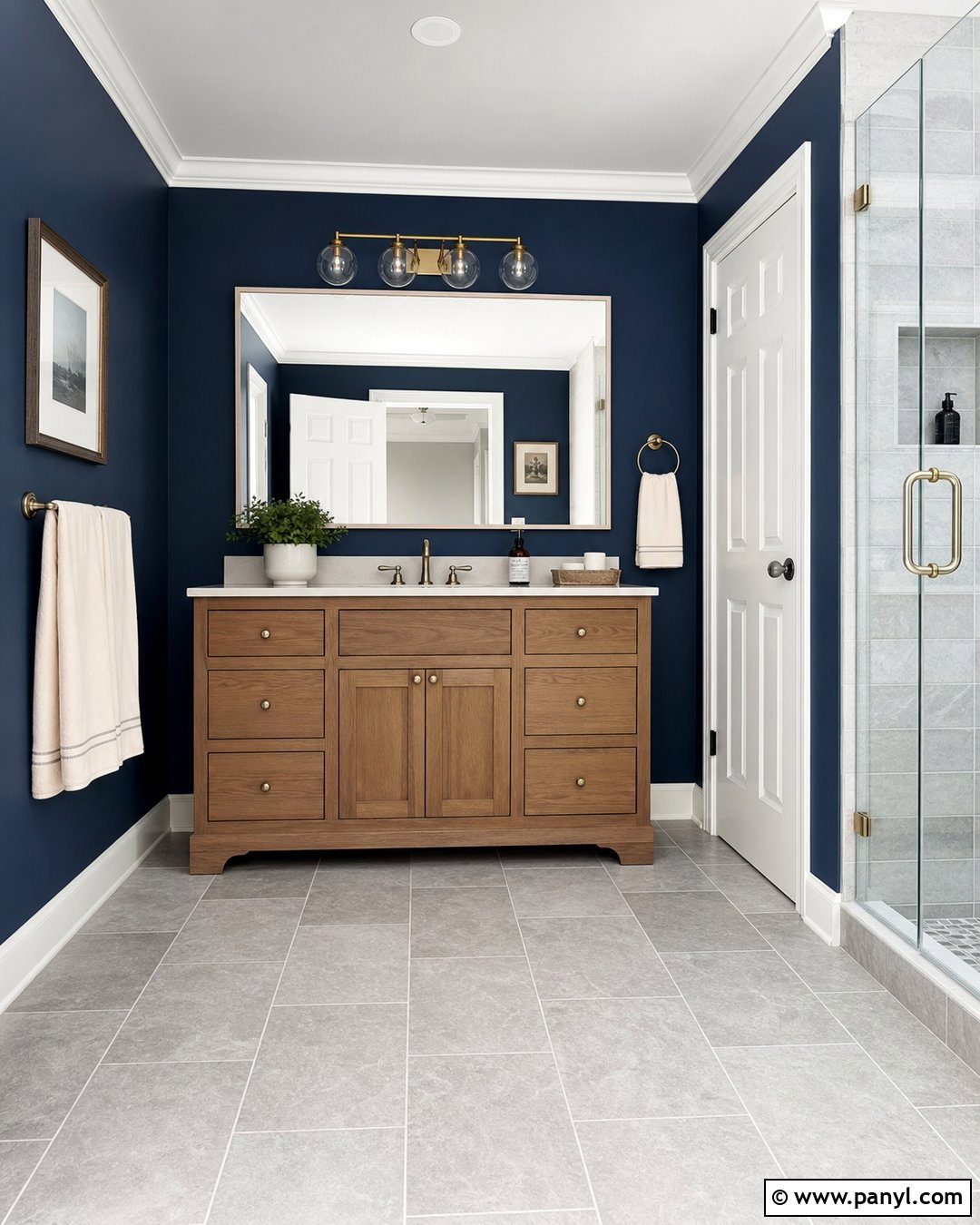
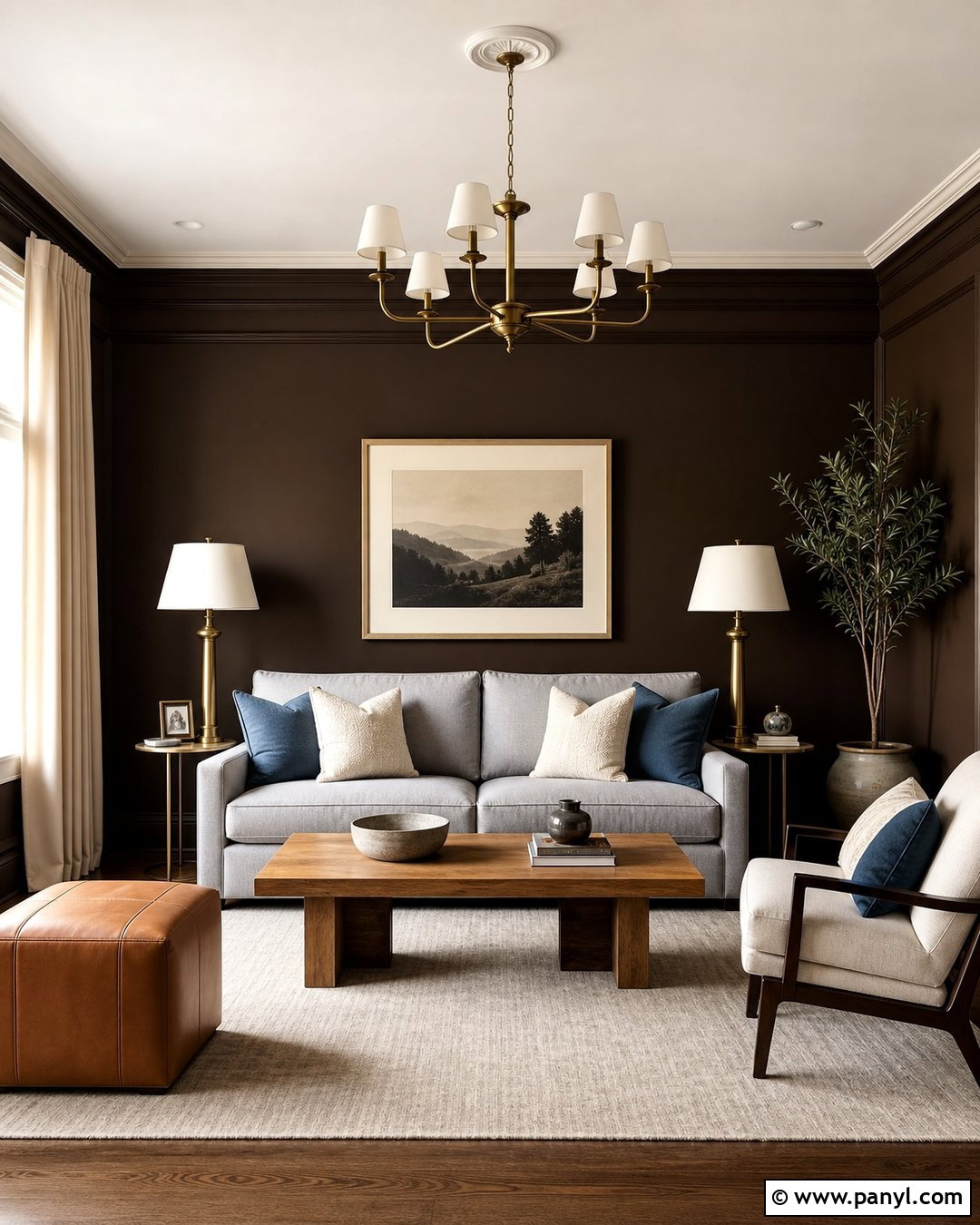
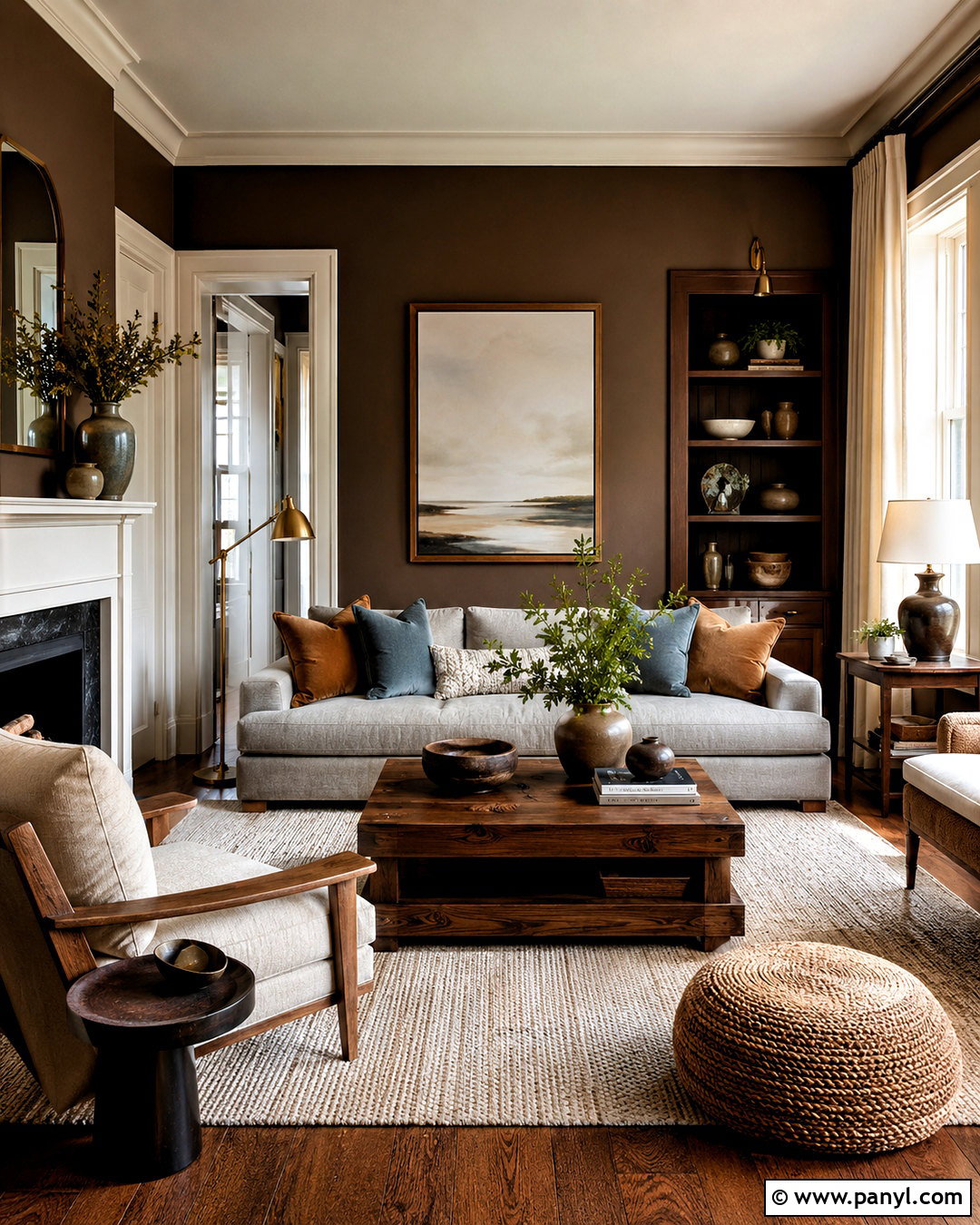
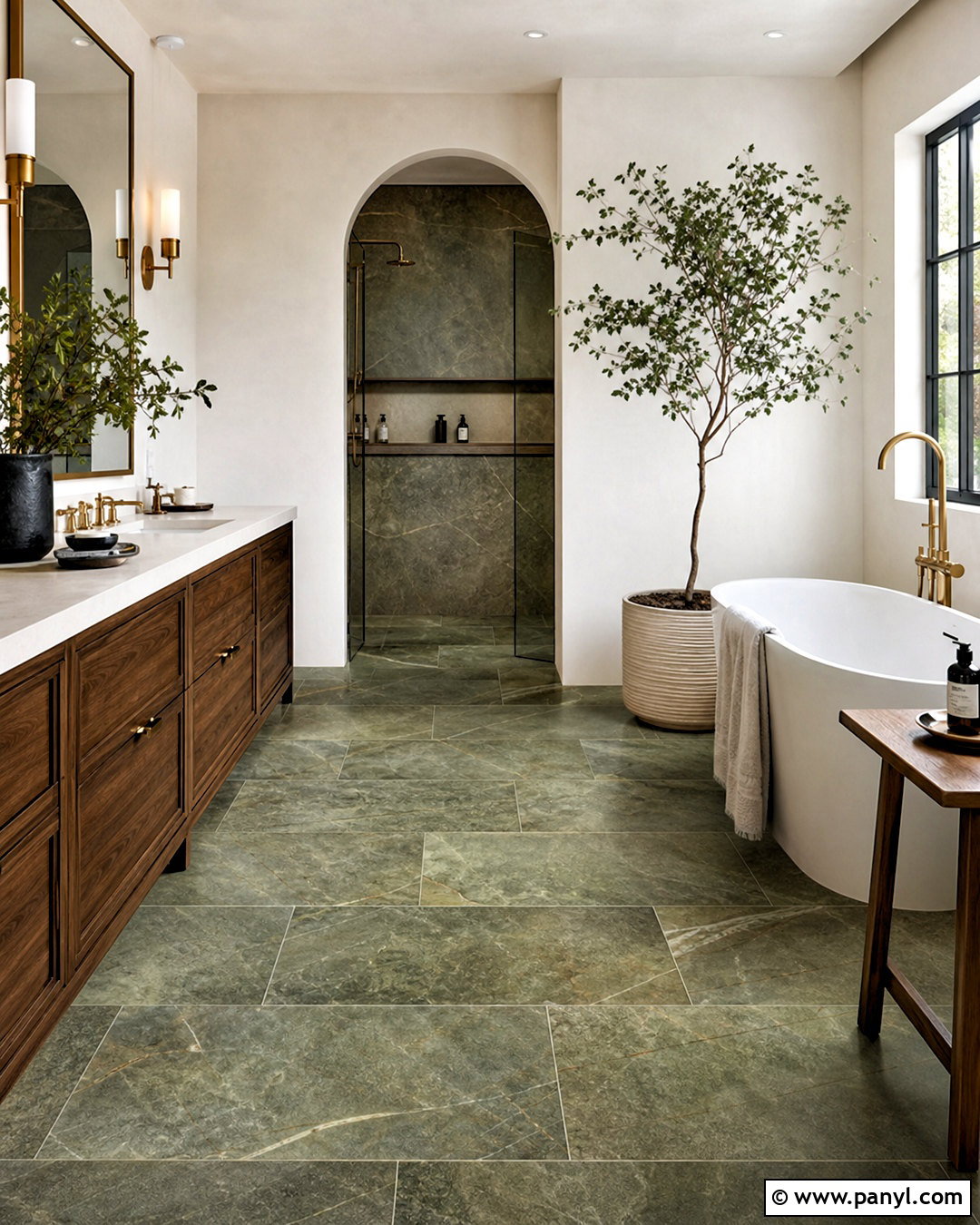
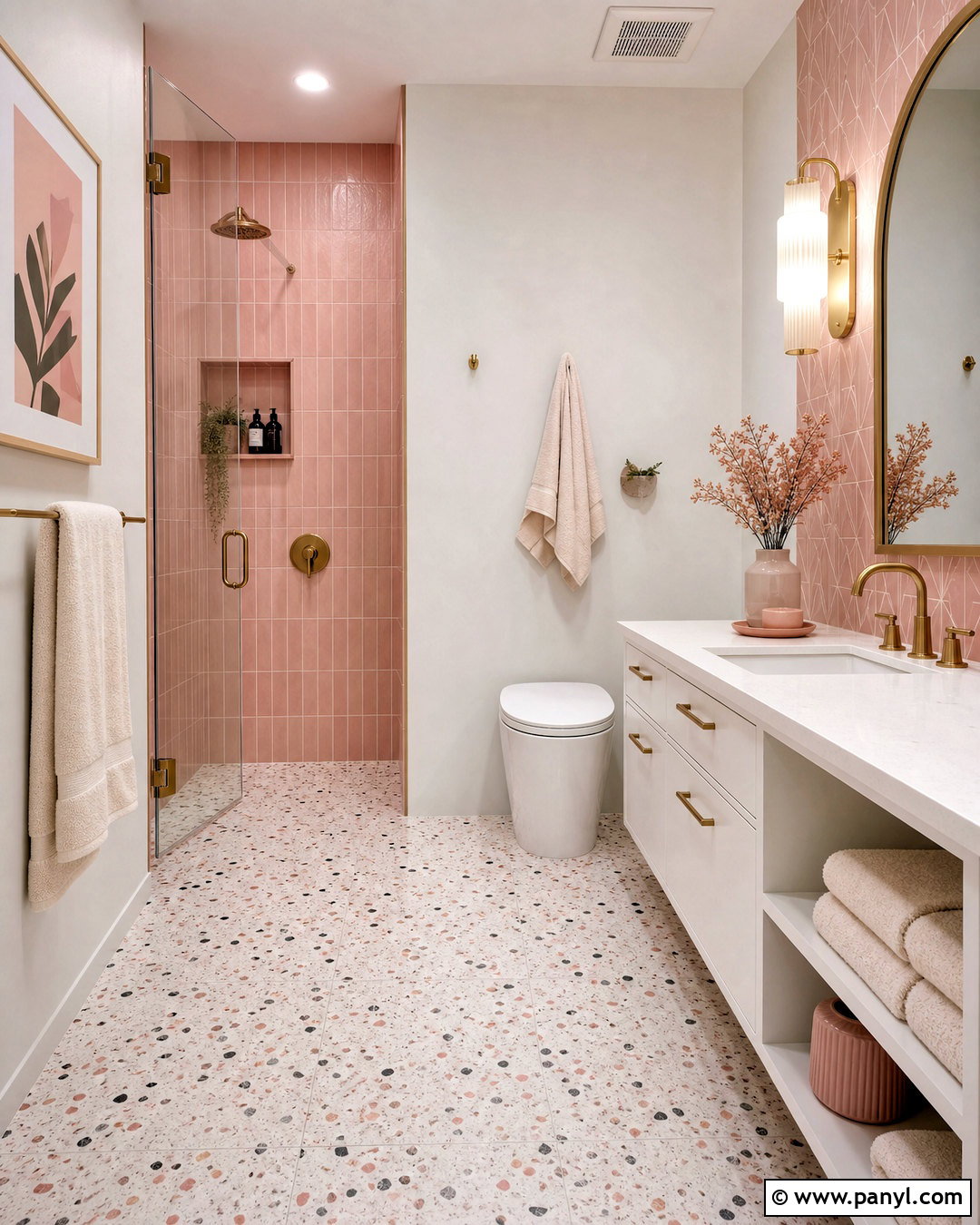
Navy blue walls add rich color to gray tiles while preserving a composed, classic atmosphere. Medium and pale gray tiles create the strongest contrast, although dark slate flooring can also work in a spacious room. Build the design with white trim, a medium oak vanity or console, polished nickel fixtures, and a large mirror to reflect light. In a kitchen, combine navy walls with white cabinetry, gray floor tiles, and warm wood shelving. Use cream towels, striped textiles, or pale upholstery to lighten the palette. A few brass details can keep navy and gray from appearing too cool. The final room feels grounded and sophisticated, with clear separation between the colored walls and neutral tiled surface.
10. Grey Tiles With Soft Blue Walls
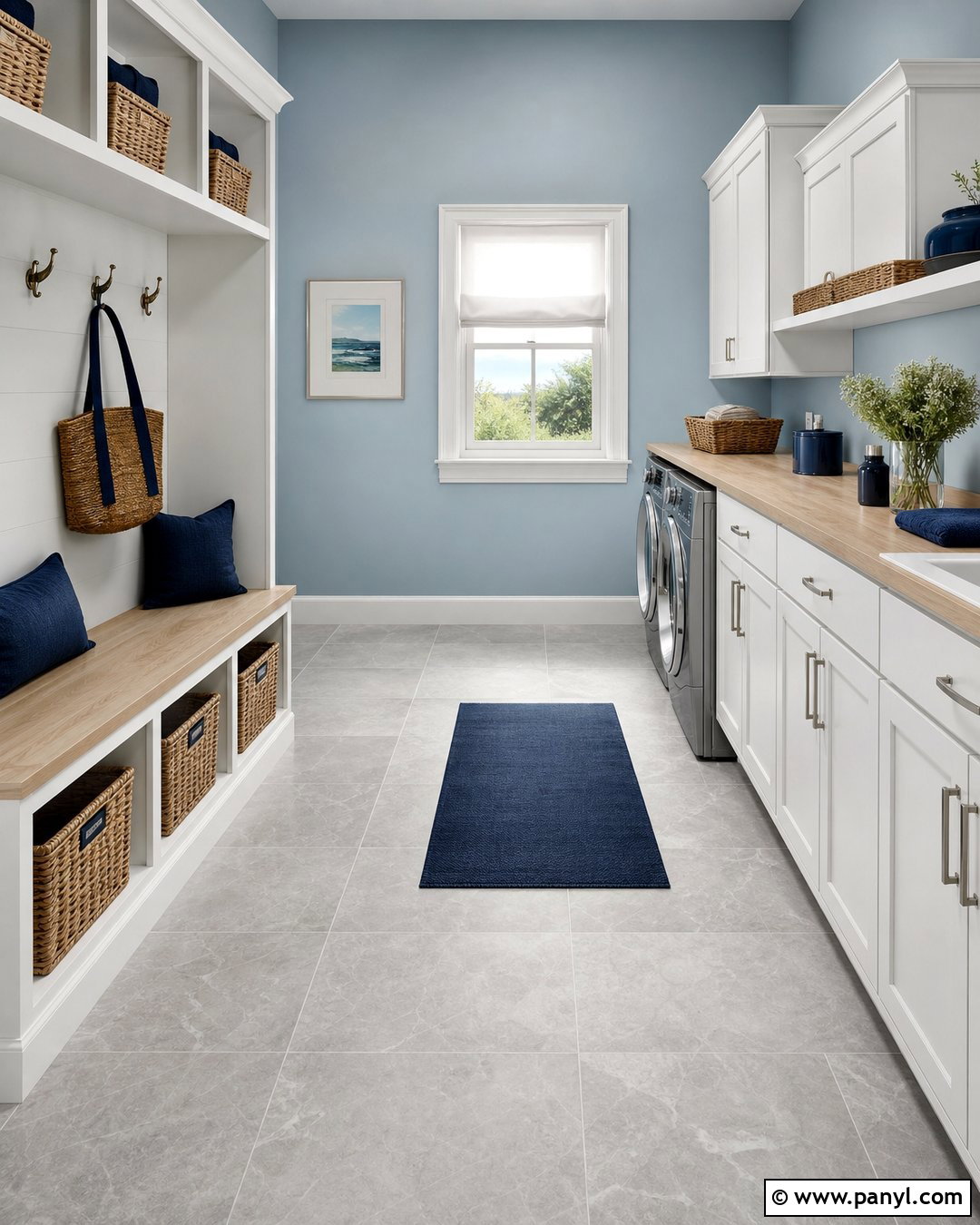
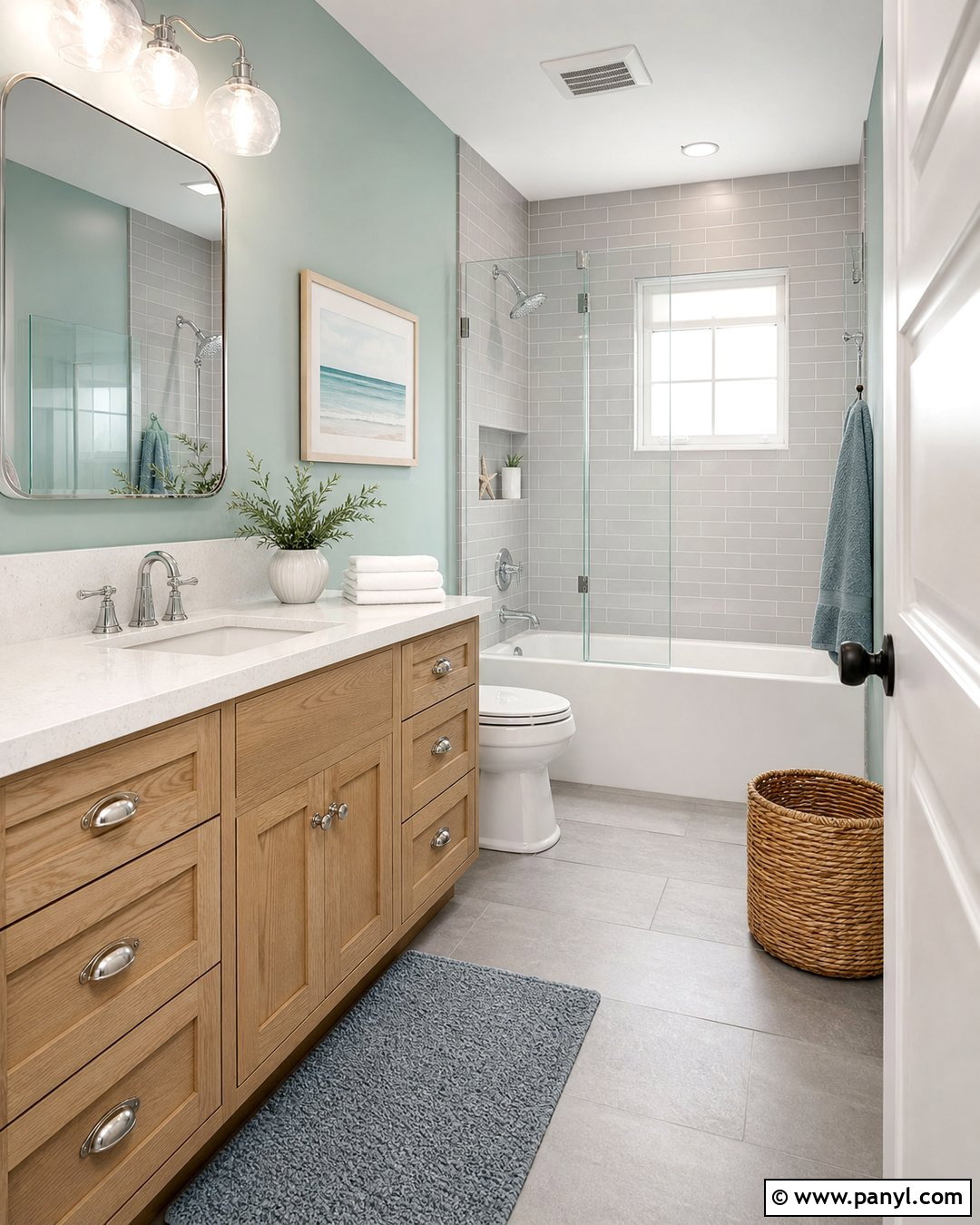
Soft blue walls bring an airy quality to gray tiles, making this pairing useful in small bathrooms, laundry rooms, and coastal-inspired kitchens. Choose a muted powder blue with a gray undertone rather than a bright pastel. Add white cabinetry, pale wood, brushed nickel hardware, and woven storage to create a complete relaxed setting. A shower curtain or window shade in white linen keeps the room light, while navy accents provide small moments of contrast. If the floor tile is patterned, keep the remaining decor restrained. Warm white bulbs and timber details will prevent the blue-gray palette from feeling chilly. The result is fresh and peaceful, with enough subtle color to distinguish the walls from the tile.
11. Grey Tiles With Teal Walls
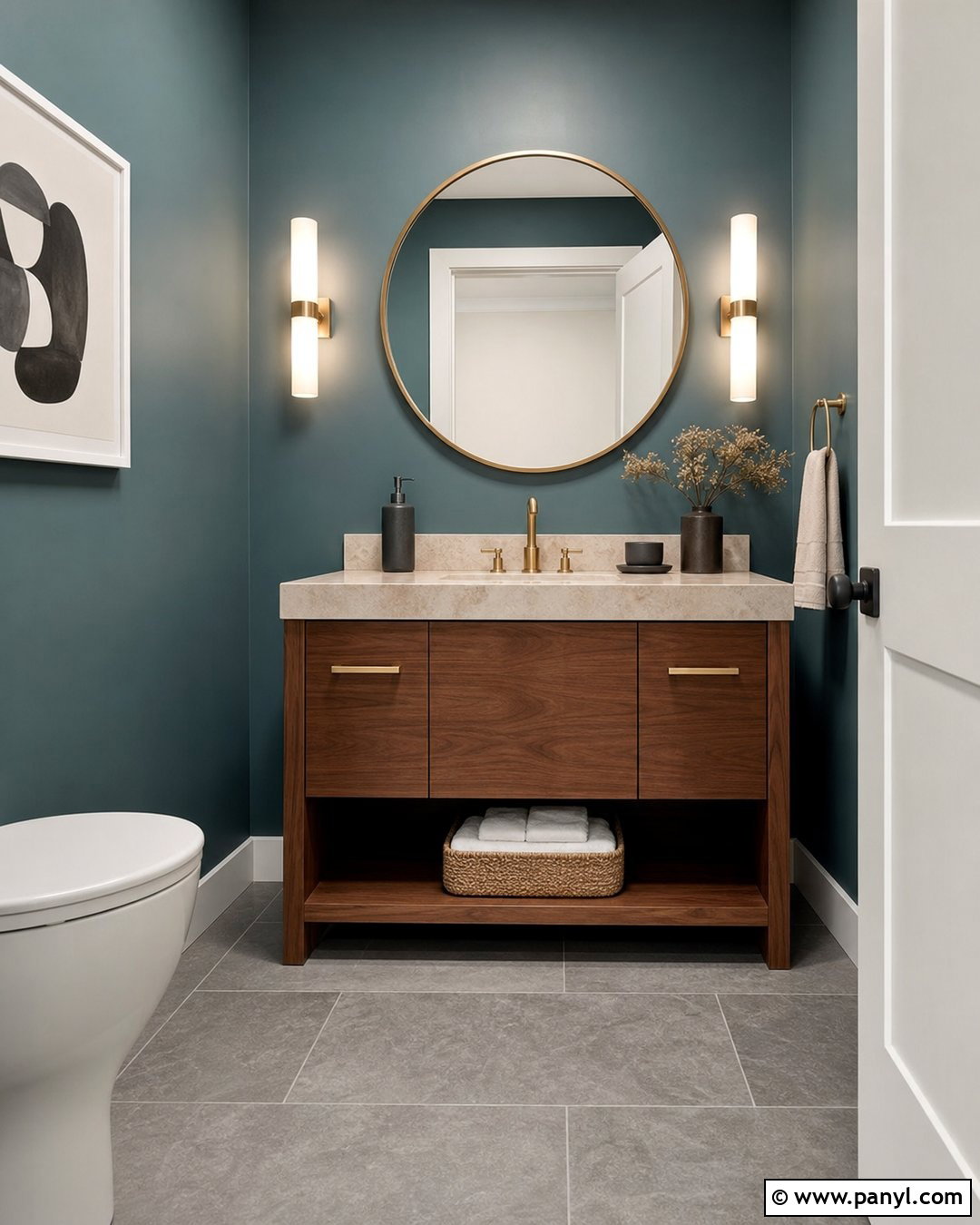
Deep teal walls create a colorful, confident backdrop for pale or medium gray tiles. The blue-green hue looks especially effective in a powder room, compact bathroom, or kitchen with plenty of white cabinetry. Support the scheme with walnut furniture, brushed brass fixtures, creamy countertops, and white trim. Add a large mirror or reflective backsplash to spread light around the room. Textiles should remain simple, using ivory, teal, and small touches of charcoal. If the gray tile has busy veining, choose a slightly muted teal rather than a saturated jewel tone. This complete palette feels bold but balanced because the floor stays neutral, the wood adds warmth, and the pale surfaces provide necessary visual breathing room.
12. Grey Tiles With Sage Green Walls
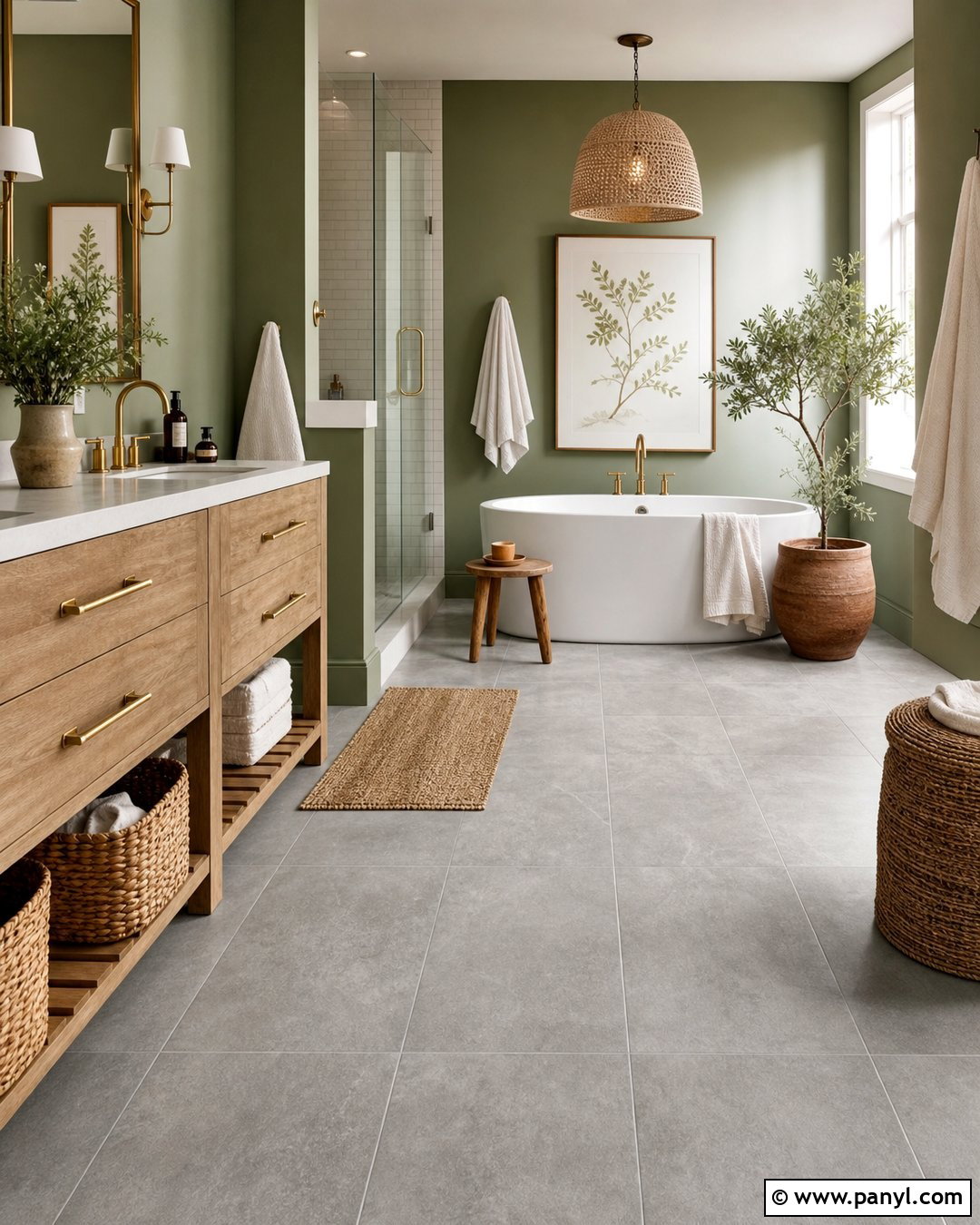
Sage green walls soften gray tiles with a natural color that feels restful and easy to decorate around. Select a dusty sage with gray undertones so the transition between the floor and walls remains gentle. Complete the room with light oak furniture, warm white cabinets, woven baskets, and aged brass or matte black hardware. In a bathroom, add an oak vanity, off-white towels, and simple botanical artwork. In a kitchen, pair sage walls with cream cabinets and pale stone counters. Terracotta planters or tan textiles can introduce restrained warmth. The combination works particularly well with concrete-effect and stone-look tiles, creating a calm, organic interior without relying entirely on beige or white neutrals.
13. Grey Tiles With Olive Green Walls
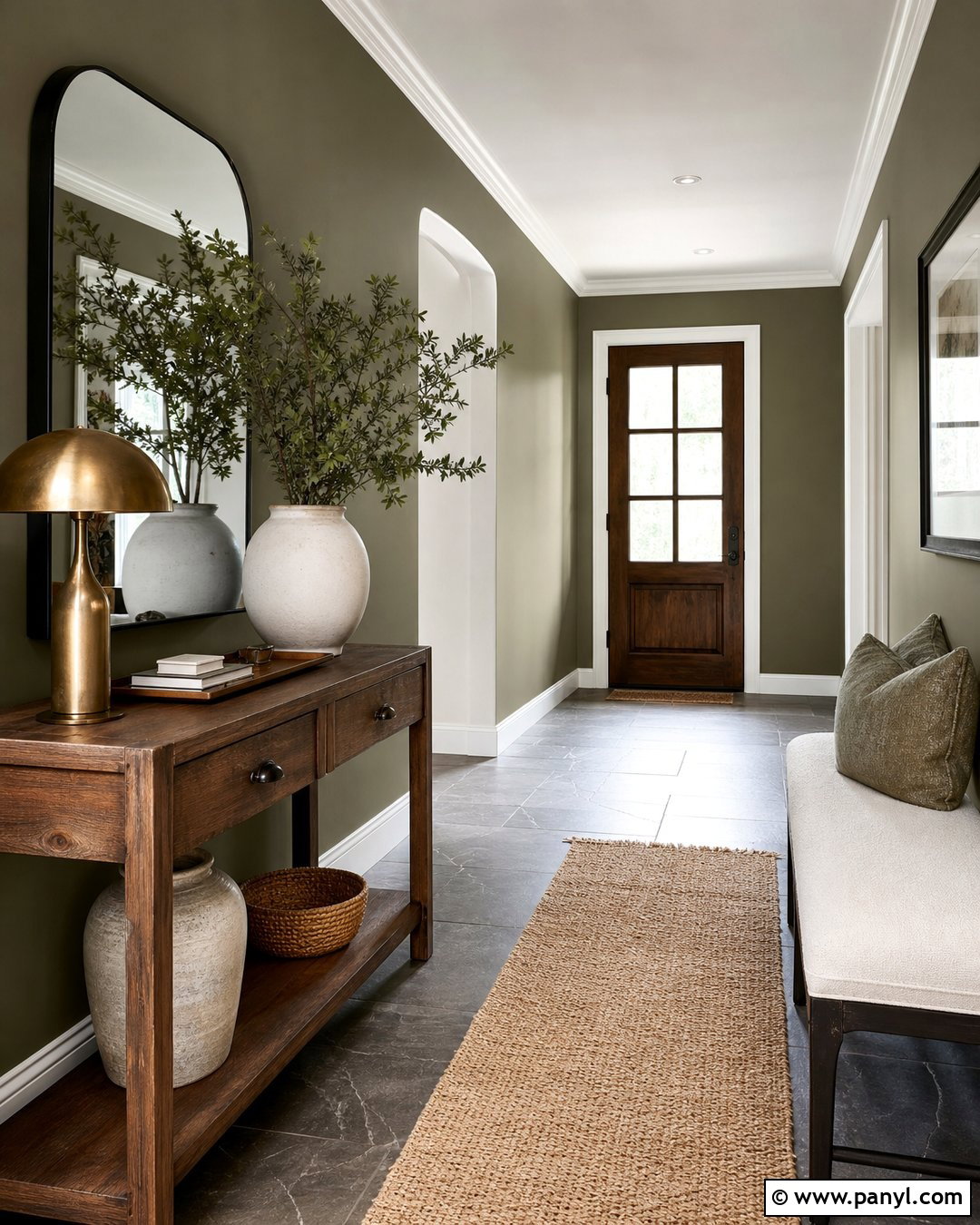
Olive green walls bring earthy depth to gray tiles and work particularly well when the flooring has warm taupe or brown undertones. Choose a muted olive rather than a vivid green, then layer the room with walnut wood, antique brass, cream upholstery, and natural woven textures. In an entryway, position a slim wooden console against the olive wall and add a large neutral rug over the gray tile. In a bathroom, use an off-white vanity counter and generous mirror to maintain brightness. Black frames and fixtures can sharpen the palette, but use them sparingly. This look feels warm, grounded, and established, with the gray tile acting as a quiet base for richer walls and traditional natural materials.
14. Grey Tiles With Forest Green Walls
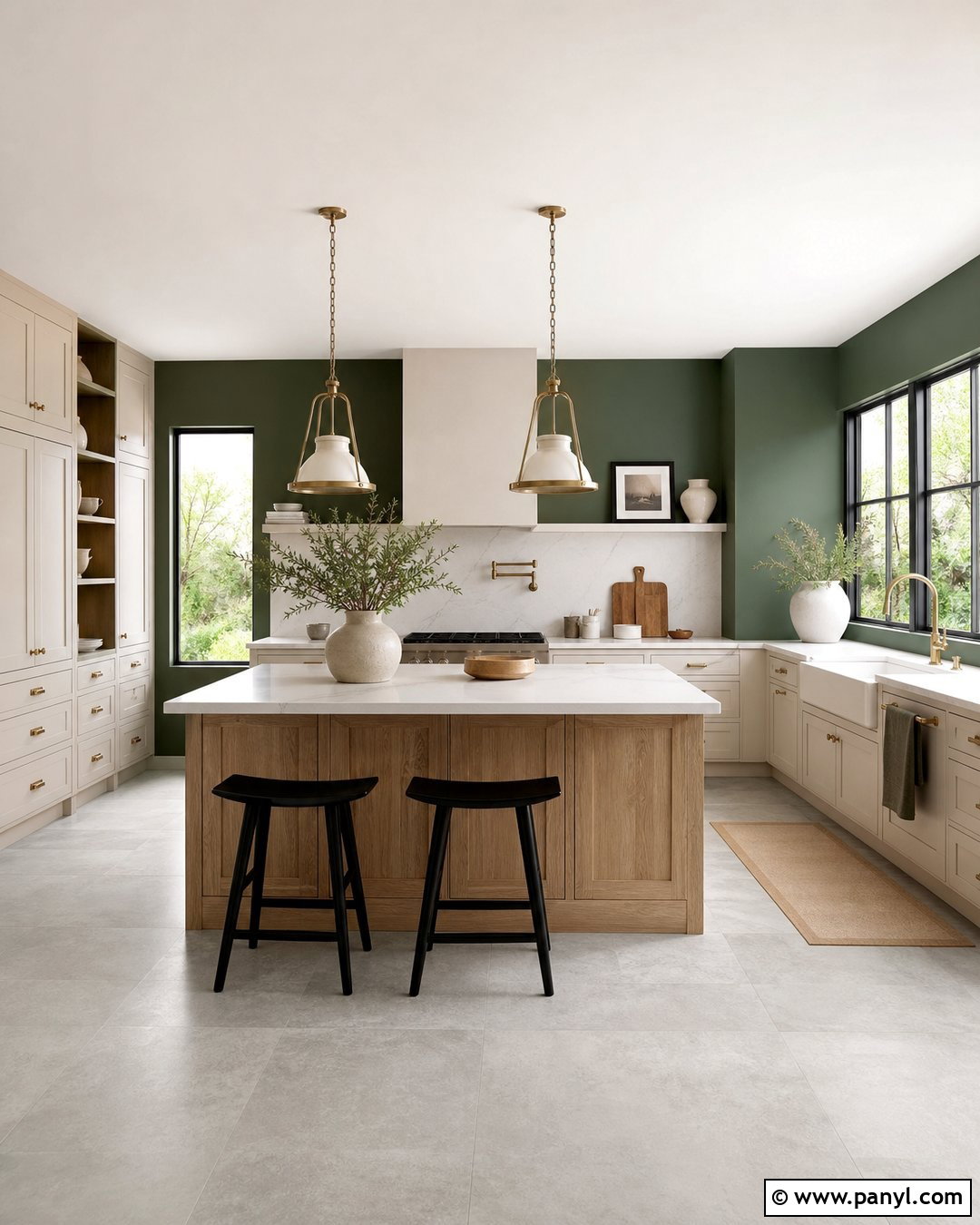
Forest green walls make pale gray tiles appear brighter and can create a striking bathroom, dining area, or modern kitchen. Keep the design balanced by painting the ceiling and trim warm white and selecting cabinetry in light oak or soft cream. Brass fixtures and lighting add warmth against the deep green background, while black accents can define mirrors and doors. Choose plain textiles in ivory and gray so they do not compete with the strong wall color. A large window, mirror, or multiple light sources will help the darker paint remain lively. The completed room has a rich, nature-inspired character, yet the cool gray floor prevents the green, brass, and timber combination from becoming overly rustic.
15. Grey Tiles With Blush Pink Walls
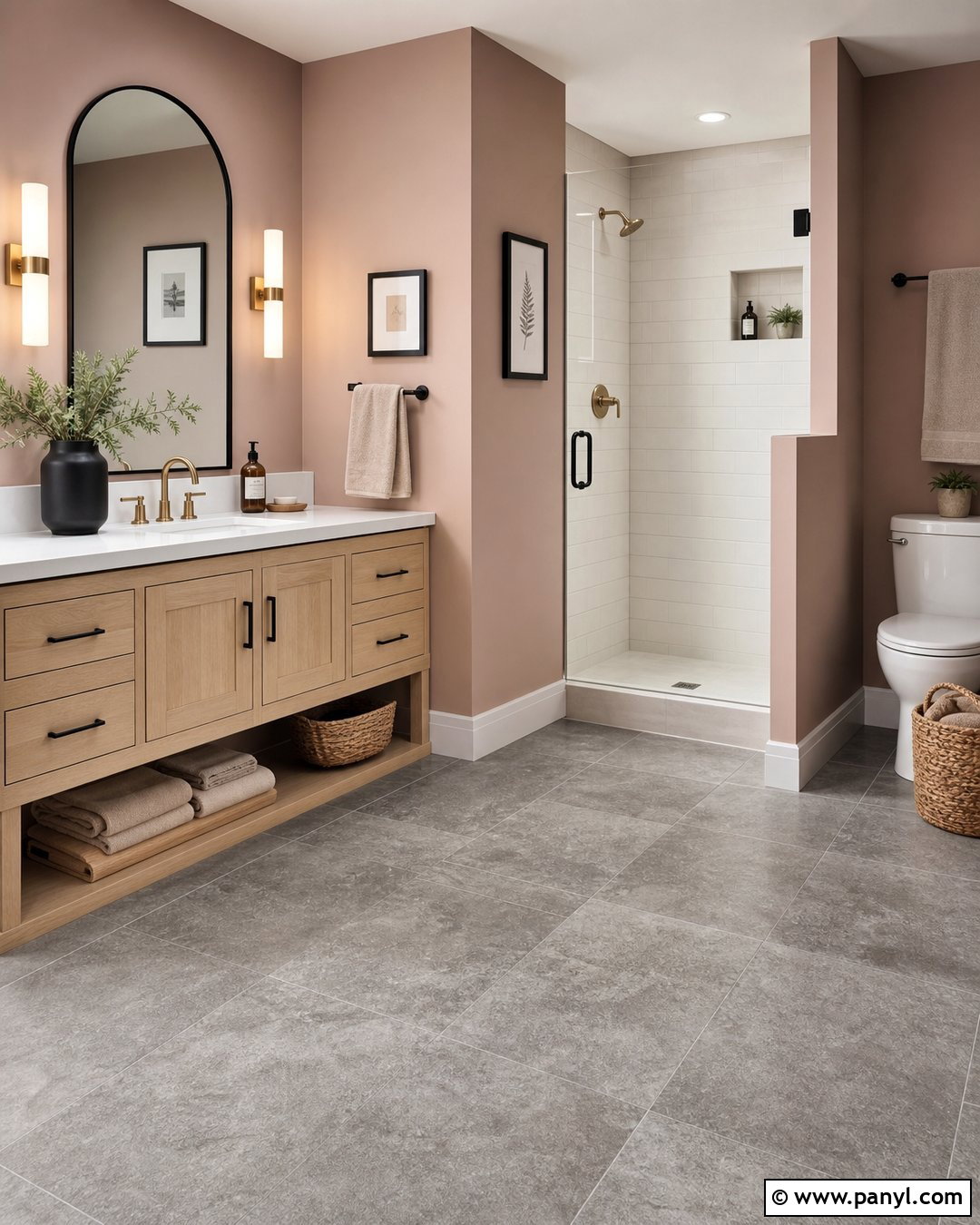
Blush pink walls can make gray tiles feel softer without turning the room overly sweet. Choose a dusty, beige-based pink rather than a bright bubblegum shade. Pair it with warm gray flooring, white or pale oak cabinetry, brushed brass hardware, and cream textiles. In a bathroom, an arched mirror and simple globe sconces complement the gentle color scheme. In a kitchen or utility room, use blush walls around white cabinets and introduce charcoal through handles or framed prints. Keep decorative pieces minimal and favor smooth ceramics, linen, and natural wood. This completed palette feels modern and welcoming because the muted pink adds warmth while the gray tiles supply structure and a practical neutral foundation.
16. Grey Tiles With Dusty Rose Walls
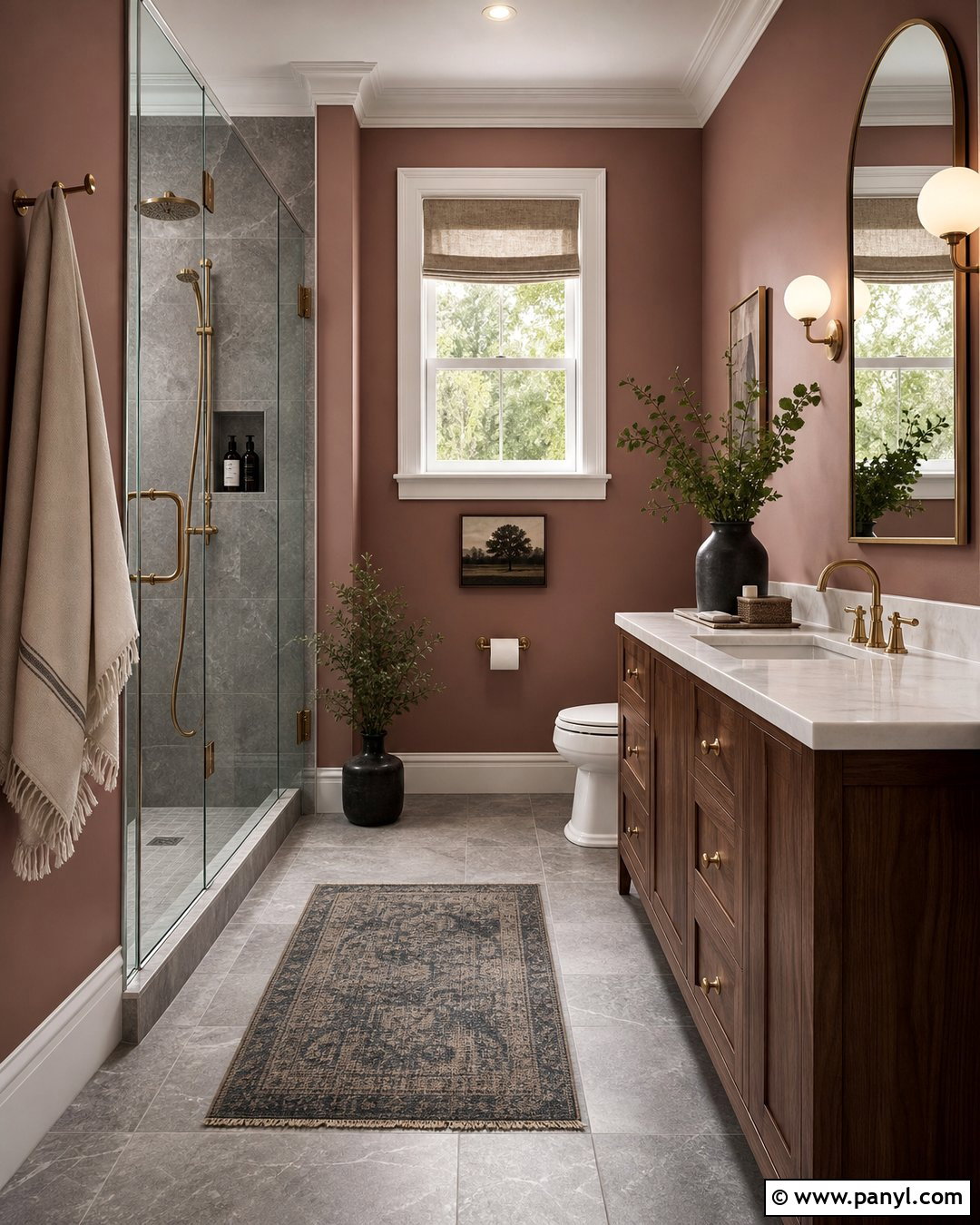
Dusty rose walls create more depth than pale blush and suit gray tiles in rooms that need warmth and personality. Look for a muted rose with brown or gray undertones, then combine it with walnut furniture, off-white trim, and antique brass accents. A cream vanity, sofa, or cabinet will keep the composition light. Charcoal towels, lamps, or picture frames can repeat the darker notes in the floor. In smaller spaces, apply dusty rose above gray wall tiles rather than covering every surface. Use soft white lighting to preserve the true wall color. The complete look feels comfortable and collected, balancing the mineral quality of gray tile with a restrained, warm color that remains easy to live with.
17. Grey Tiles With Terracotta Walls
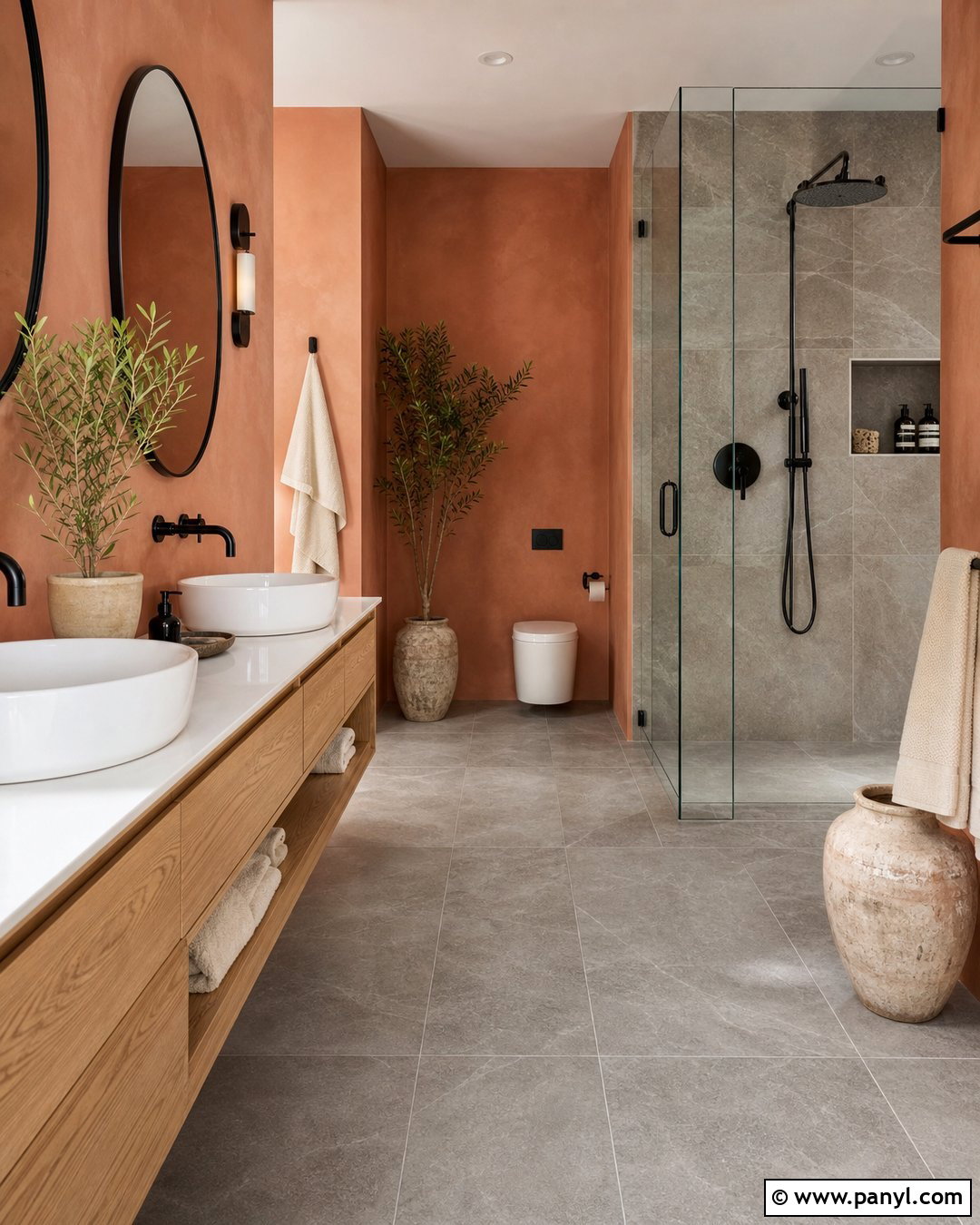
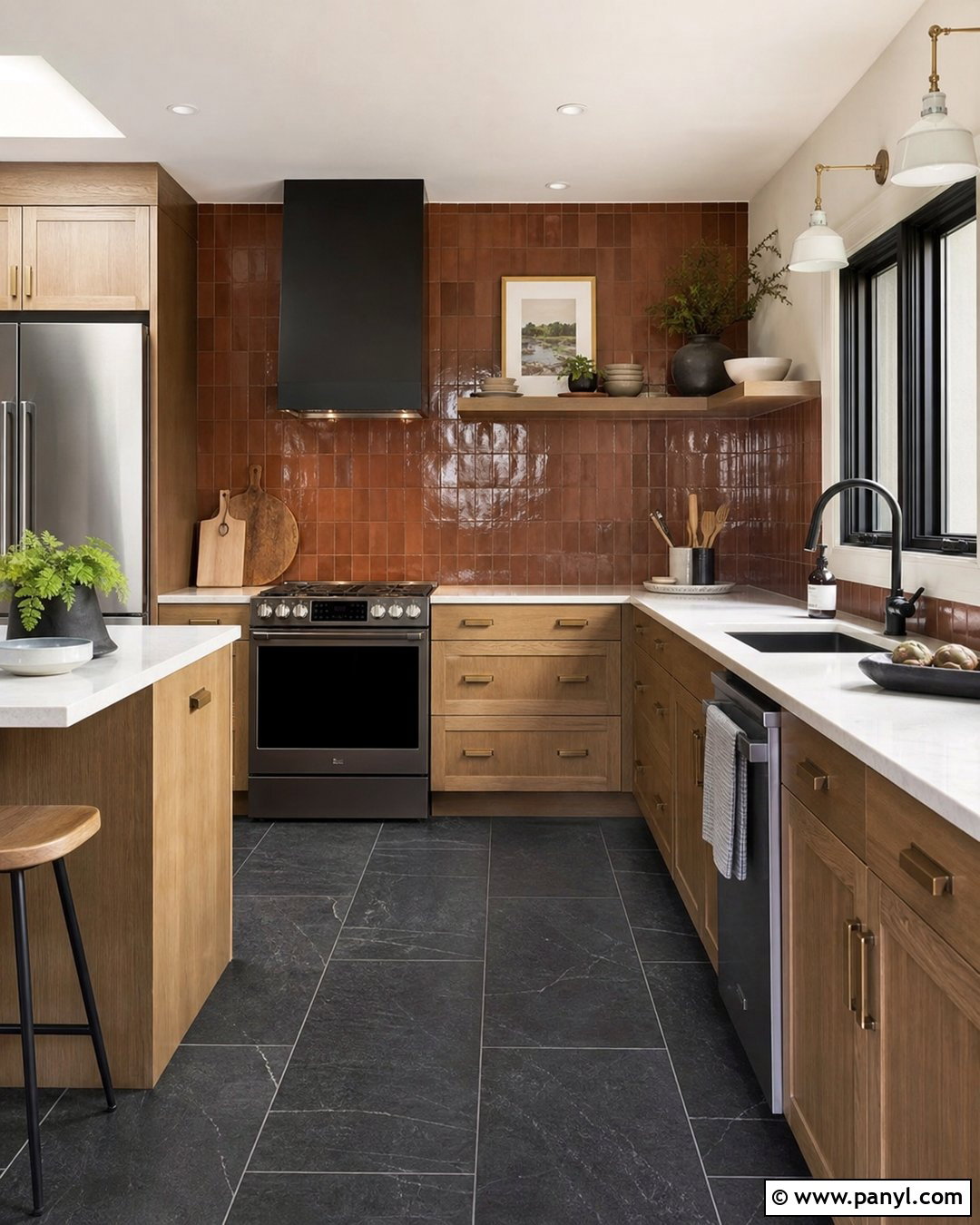
Terracotta walls provide a warm contrast to cool gray tiles and create an inviting, earthy interior. Choose a softened clay shade with muted orange-brown undertones instead of a highly saturated orange. Finish the room with natural oak or walnut furniture, cream textiles, black metal details, and handmade-looking ceramics. In a bathroom, use terracotta above gray stone-effect tiles and add a floating wood vanity with a white basin. In a kitchen, cream cabinets and pale counters will stop the palette from becoming visually heavy. Green plants add another natural layer without competing with the walls. This combination works because the gray floor grounds the stronger color, while light surfaces and warm timber connect the entire room.
18. Grey Tiles With Mustard Yellow Walls
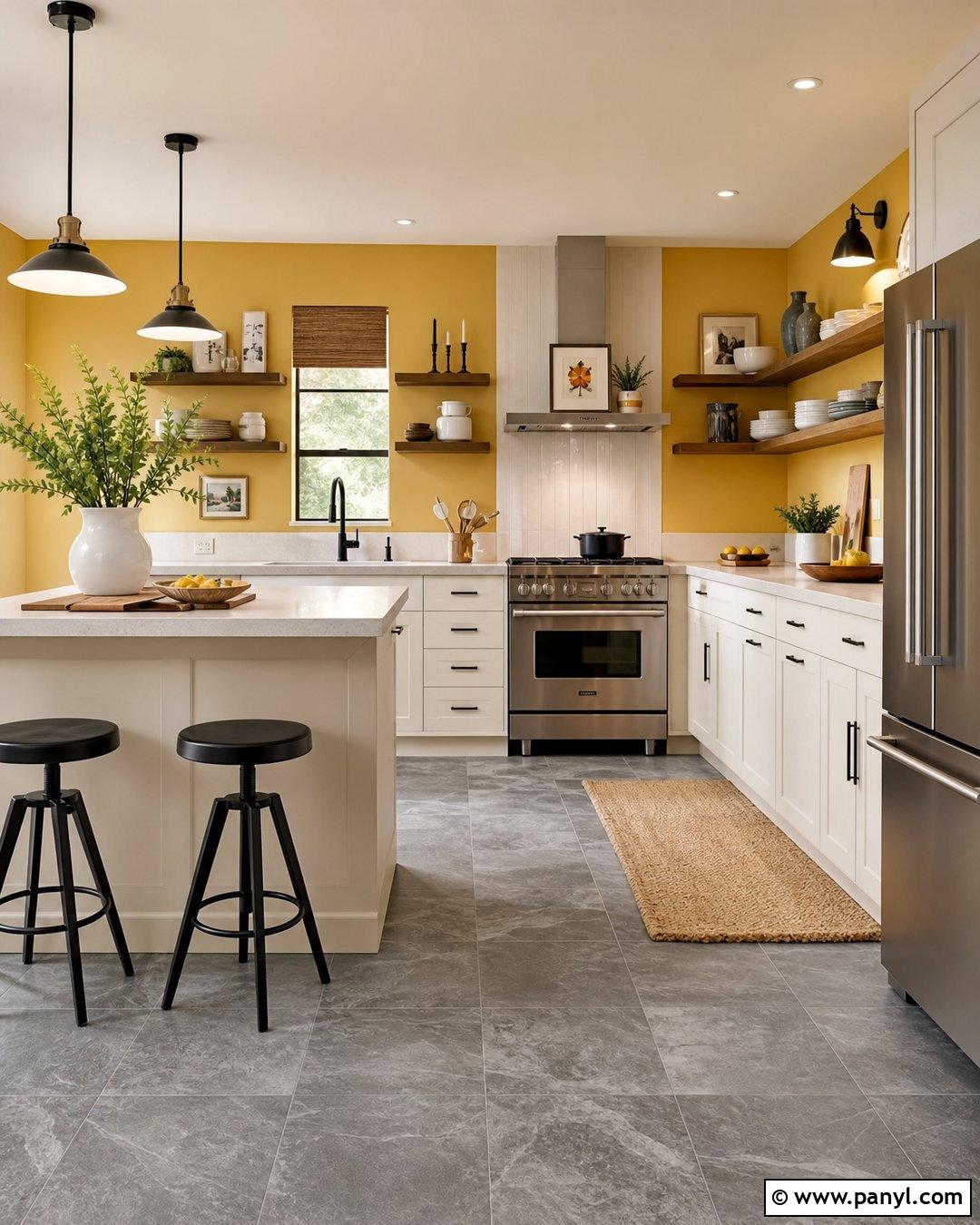
Mustard yellow walls can energize gray tiles, but the color works best when used with control. Select a muted ochre or earthy mustard and apply it to one wall or the area above gray wainscot tiles. Keep the remaining surfaces warm white to maintain brightness. Complete the room with walnut furniture, black hardware, cream fabrics, and a few gray accessories that echo the floor. In a kitchen, combine mustard walls with white cabinets and medium oak shelving. In a bathroom, use a simple white vanity and black-framed mirror. Avoid adding several other bright colors. A focused gray, mustard, white, and wood palette feels cheerful and modern while remaining visually balanced and practical.
19. Grey Tiles With Lavender Walls
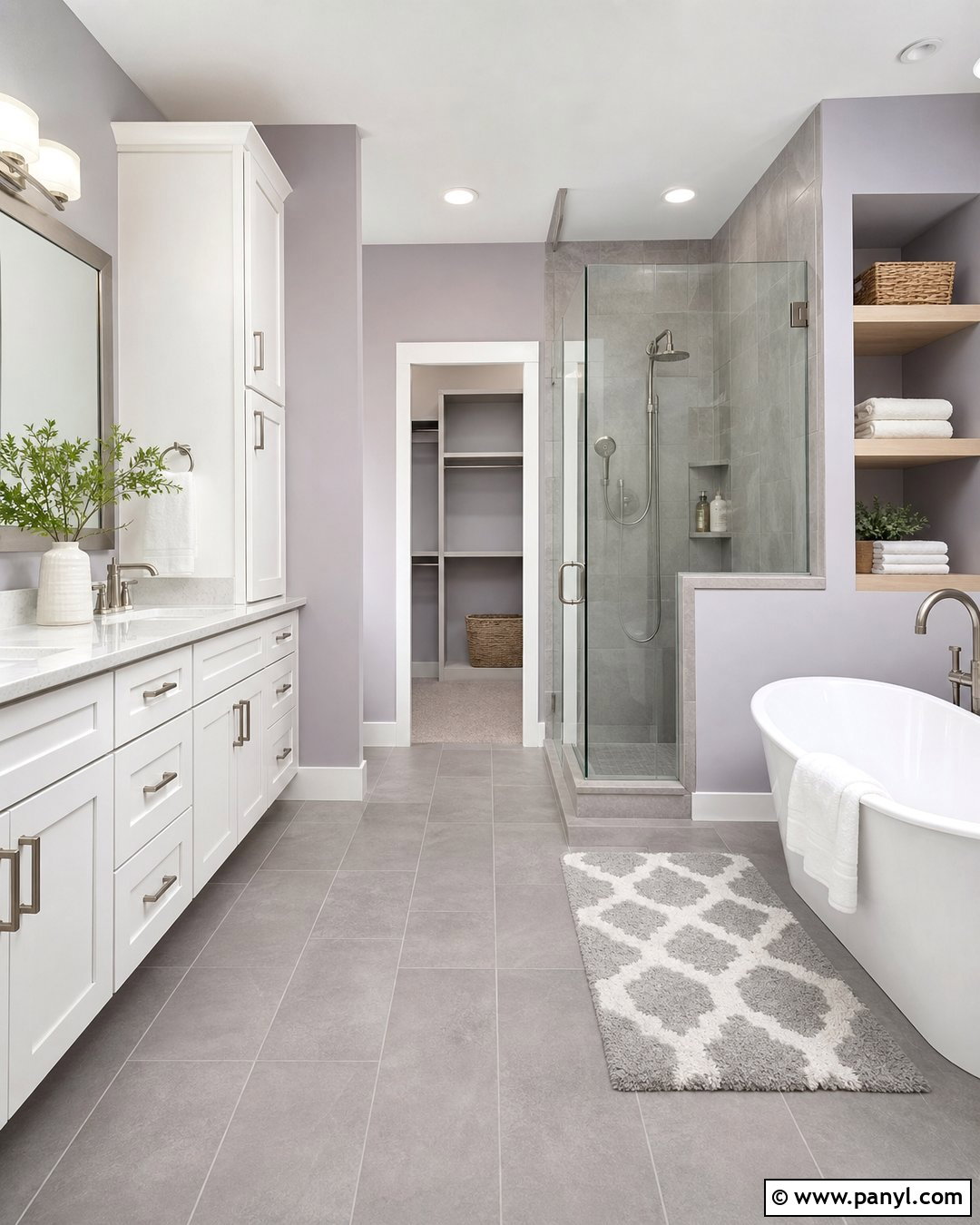
Soft lavender walls offer a gentle alternative to blue or pink when paired with cool gray tiles. Select a chalky lavender containing noticeable gray undertones, which will look sophisticated rather than overly pastel. Add white cabinetry, silver or brushed nickel hardware, and pale ash wood for a fresh, cohesive finish. In a bathroom, use fluffy white towels, a clear glass enclosure, and a simple gray-and-ivory mat. In a bedroom with tiled flooring, introduce an oversized cream rug and upholstered bed to soften the hard surfaces. Keep the ceiling bright white and avoid strongly yellow lighting. This complete look feels quiet and distinctive, with the lavender adding subtle character while the gray floor maintains a clean neutral base.
20. Grey Tiles With Taupe Walls
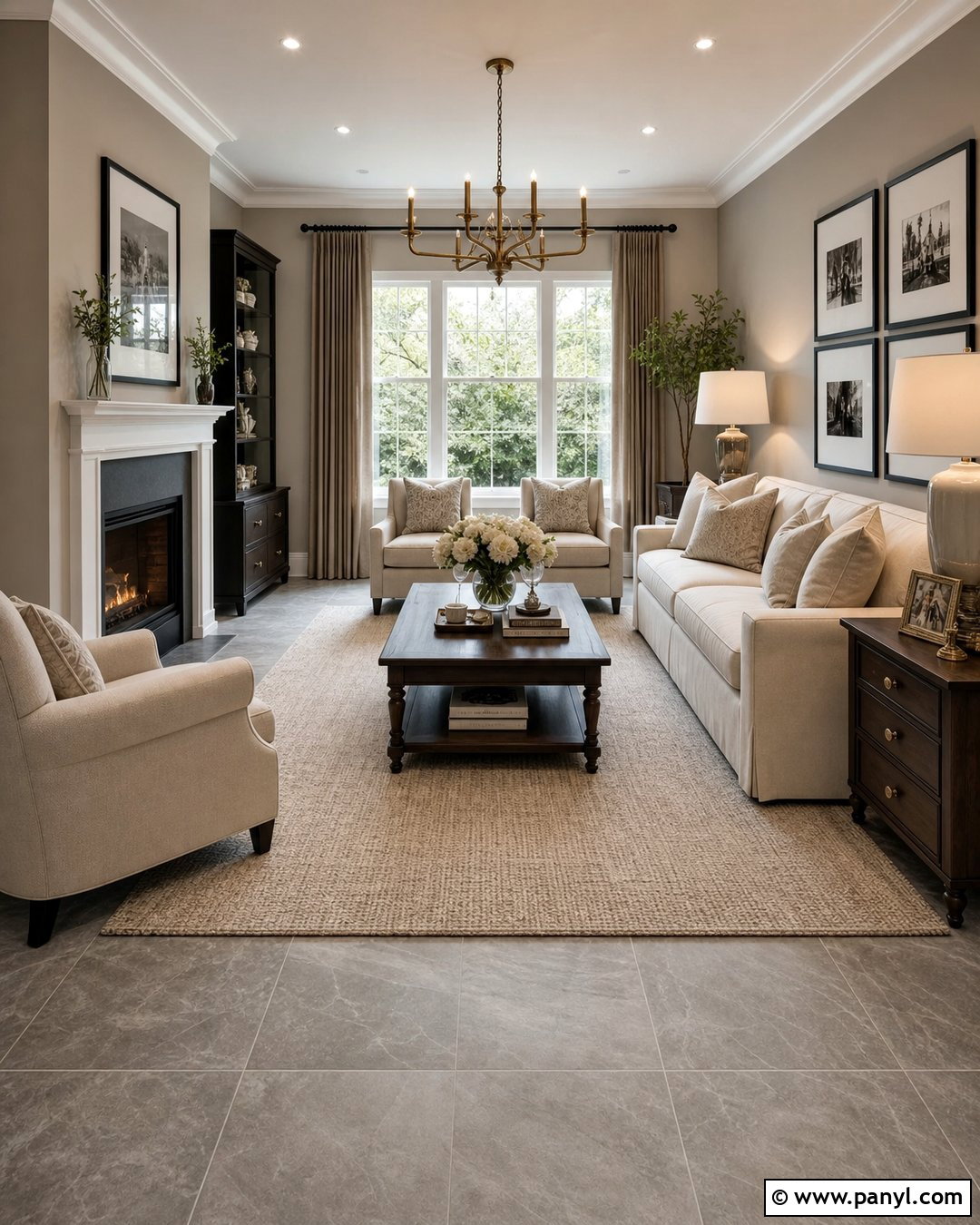
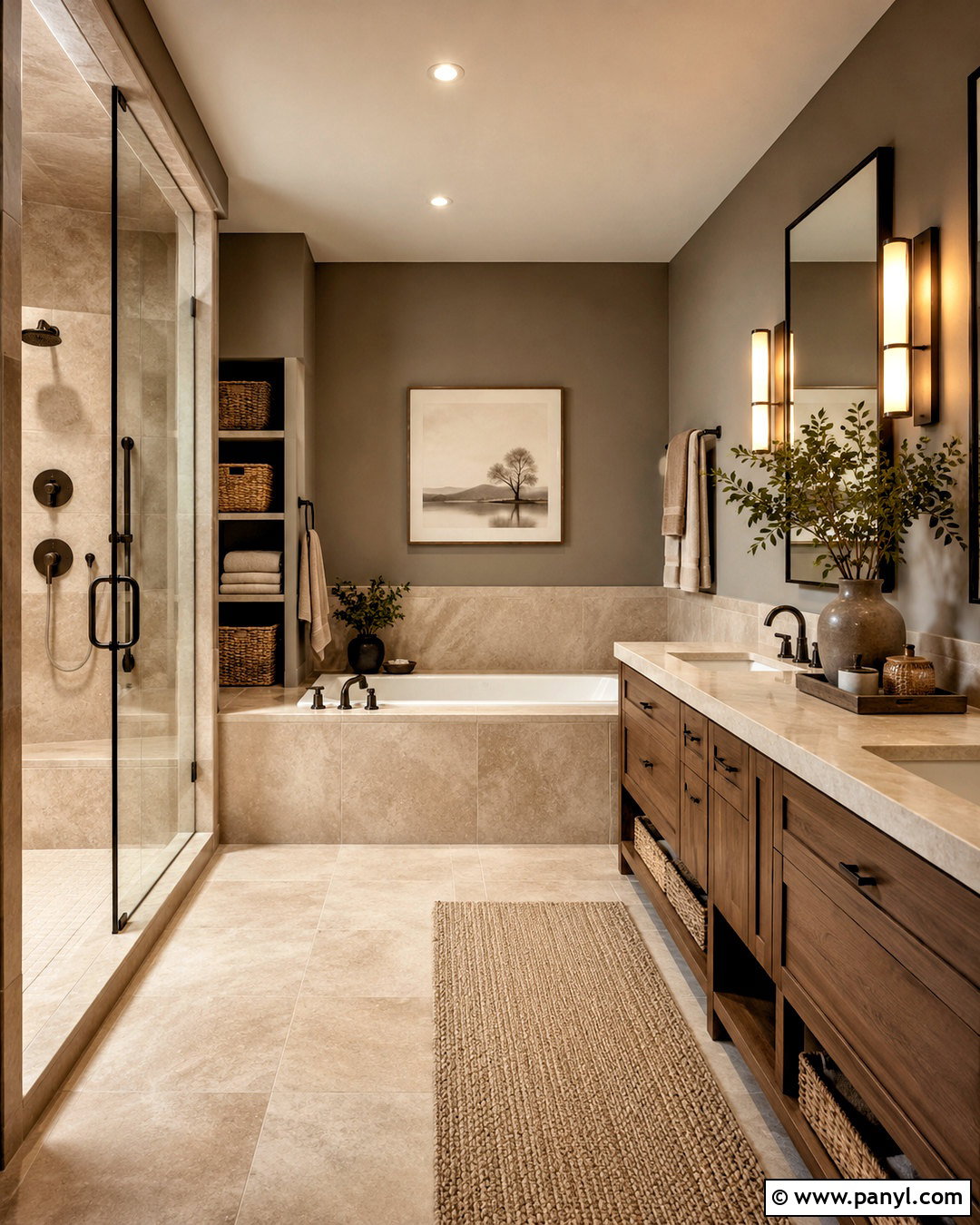
Taupe walls are particularly effective with warm gray tiles because both colors share soft brown or beige undertones. Choose a taupe that is lighter than the flooring, then build the room with cream upholstery, dark walnut furniture, and aged brass details. In a bathroom, pair taupe walls with gray stone tiles, an oak vanity, and an ivory countertop. In a living area, place a large oatmeal rug over the tiles and use curtains close to the wall color for a seamless effect. Black accents can provide definition through frames, handles, or lighting. This layered neutral design feels warmer than an all-gray room while staying understated, coordinated, and adaptable to both modern and traditional furnishings.
Conclusion:
The best answer to Grey Tiles What Colour Walls depends on the tile’s undertone, depth, finish, and surrounding light. Warm white, cream, beige, greige, and taupe create flexible neutral rooms. Blue and green walls introduce calm color, while blush, terracotta, mustard, and lavender add more personality. Charcoal, black, navy, and forest green can also work when balanced with pale counters, reflective mirrors, warm wood, and adequate lighting. Always place large paint samples beside the actual tile and check them during the morning, afternoon, and evening. Instead of choosing wall paint alone, coordinate the ceiling, trim, cabinetry, furniture, metals, textiles, and grout to create one complete, intentional room.

Related Ideas and Inspiration:
Leave a Reply