
Choosing the right palette can turn an ordinary sleeping space into a calm, polished retreat. These 20 two colour combination for bedroom walls pair restful neutrals, earthy tones, soft pastels, and deeper accents in ways that feel balanced and livable. Each complete bedroom look includes guidance for placing the colors, selecting furniture, layering bedding, and choosing finishes that support the overall mood. Before painting, test large samples beside the bed and observe them in morning, afternoon, and artificial light. Use the lighter shade to improve openness, while the stronger color can frame the bed or highlight architectural details. Whether your taste is modern, cozy, coastal, or traditional, you can find practical inspiration in these 20 two colour combination for bedroom walls.

1. Navy Blue And Warm White Bedroom Walls
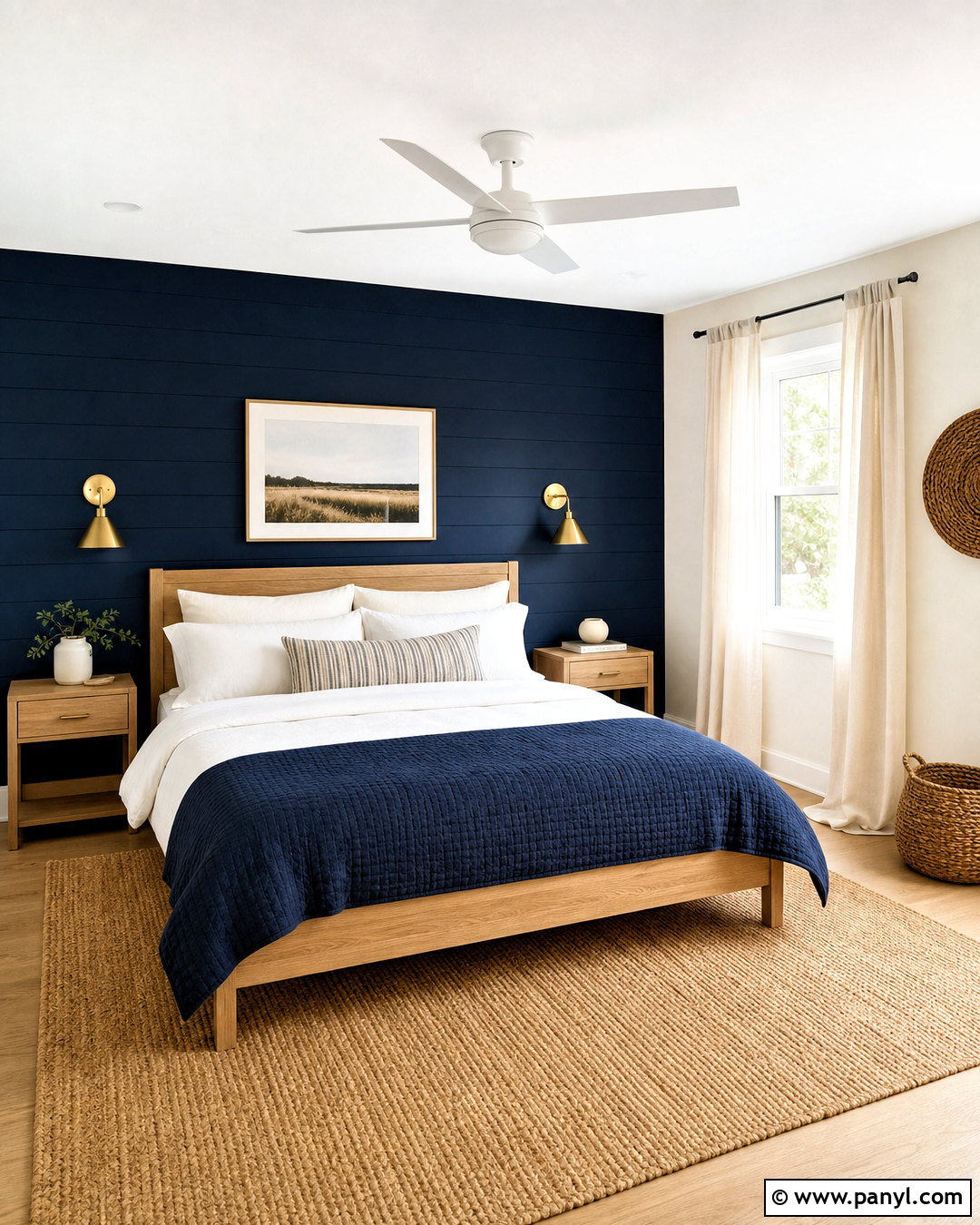
Navy blue and warm white create a bedroom that feels crisp, grounded, and comfortable. Paint the wall behind the bed navy, then use creamy white across the remaining walls and ceiling. This placement gives the bed a strong focal point without making the whole room feel dark. Choose a light oak bed, white linen bedding, and a navy quilt to connect both wall colors. Brushed brass sconces add warmth, while a natural jute rug prevents the scheme from looking overly formal. Keep window treatments soft and simple with ivory curtains. For a smaller bedroom, select a slightly muted navy rather than an inky shade. A few tan leather or woven accents will complete this relaxed modern bedroom without introducing unnecessary colors.
2. Sage Green And Cream Bedroom Walls
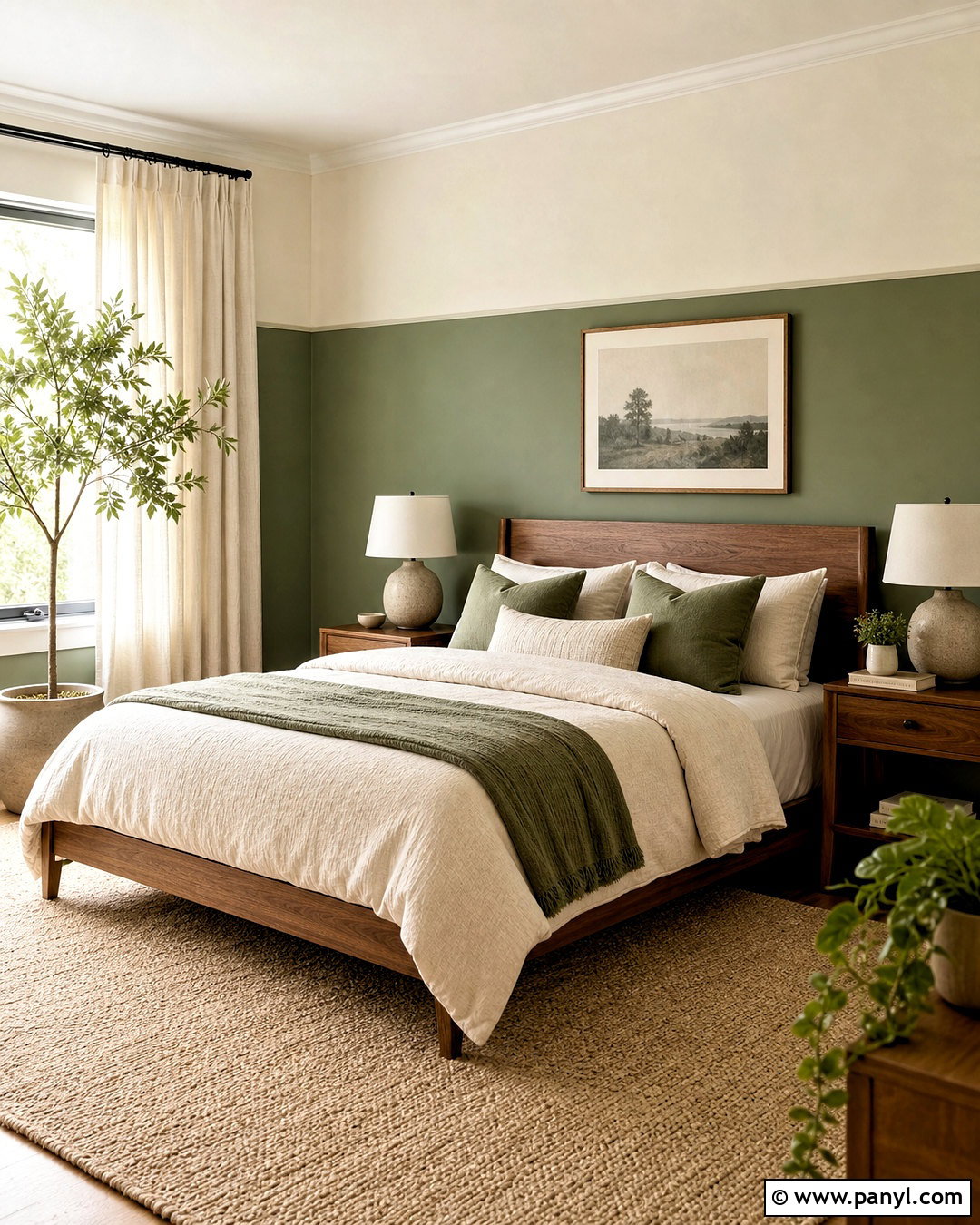
Soft sage green paired with cream brings a quiet, nature-inspired character to bedroom walls. Use sage on the lower two-thirds of the room and cream above it to visually raise the ceiling. A narrow painted line can create a clean transition without requiring molding. Furnish the room with a warm walnut bed, oatmeal bedding, and cream curtains that gently filter daylight. Add muted green pillows, ceramic lamps, and one or two leafy plants for subtle repetition. A beige wool rug will soften the floor and connect the palette. This combination works particularly well in rooms with warm natural light. Avoid stark white accessories because they may make the cream look yellow. Instead, choose ivory, flax, tan, and natural wood finishes.
3. Blush Pink And Soft Gray Bedroom Walls
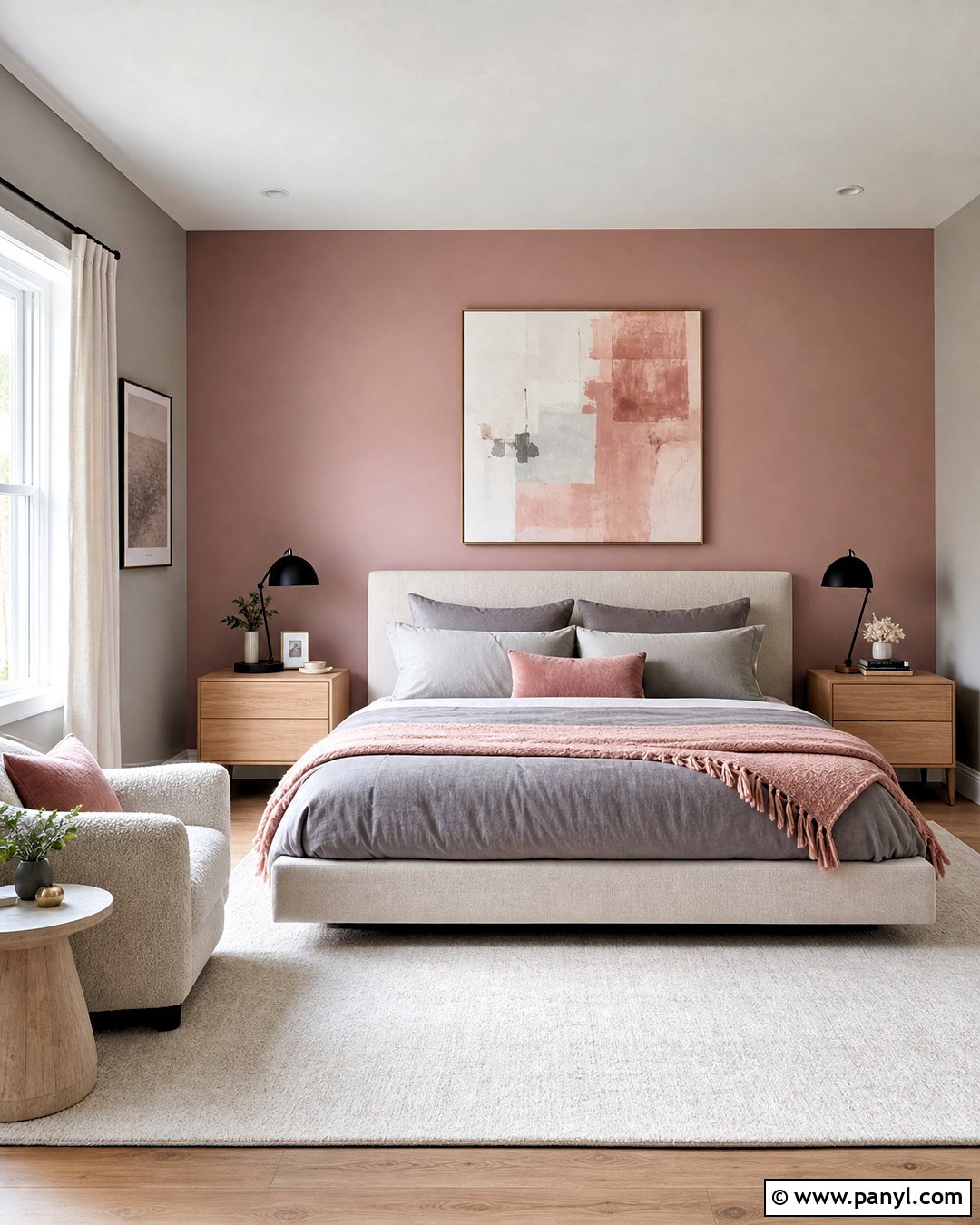
Blush pink and soft gray offer a calm, grown-up alternative to a heavily feminine pink bedroom. Cover the wall behind the bed in dusty blush, then paint the other walls a pale warm gray. The gray should have a slight beige undertone so it complements the softness of the pink. Build the room around an upholstered oatmeal bed, light gray bedding, and a muted rose throw. Matte black bedside lamps introduce definition, while pale oak nightstands keep the space approachable. Hang simple abstract artwork containing both wall colors above the headboard. White oak flooring or a cream rug will brighten the arrangement. Limit metallic details to one finish, such as brushed brass, for a clean bedroom that feels coordinated rather than overly decorated.
4. Terracotta And Beige Bedroom Walls
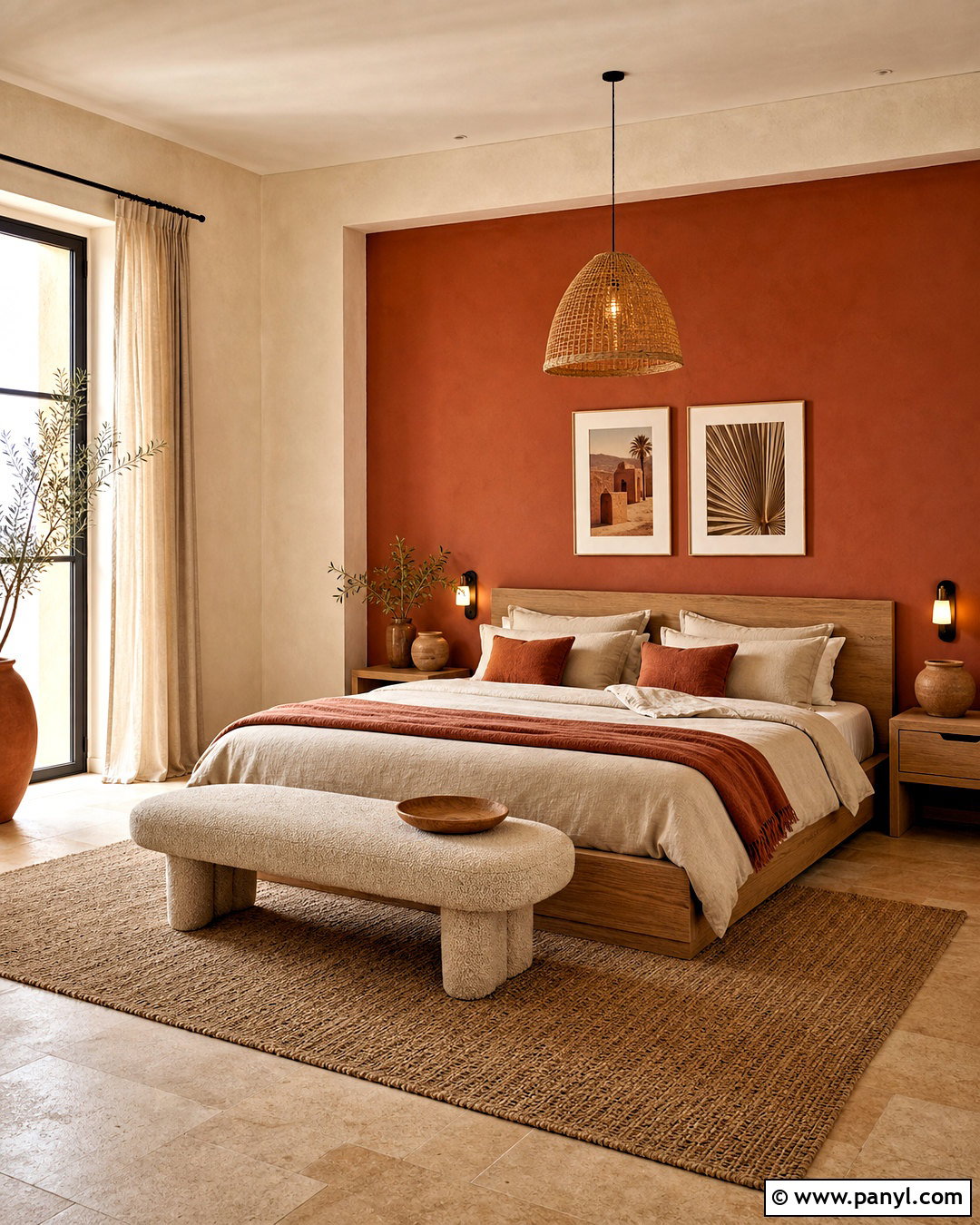
Imagine waking up in a bedroom filled with warm, earthy color. Muted terracotta and sandy beige create that welcoming effect without appearing too bright. Apply terracotta to the headboard wall and continue it onto a short section of the adjoining walls for a wrapped, cocooning look. Paint the rest of the room soft beige. Choose a low natural oak bed, flax linen bedding, and rust-colored cushions. A woven pendant light, clay pottery, and a cream boucle bench strengthen the organic character. Keep curtains close to the beige wall color so the windows blend smoothly into the room. Black accents should be used sparingly. Dark bronze or aged brass works better with the warm palette and gives the completed bedroom a relaxed Mediterranean influence.
5. Powder Blue And White Bedroom Walls
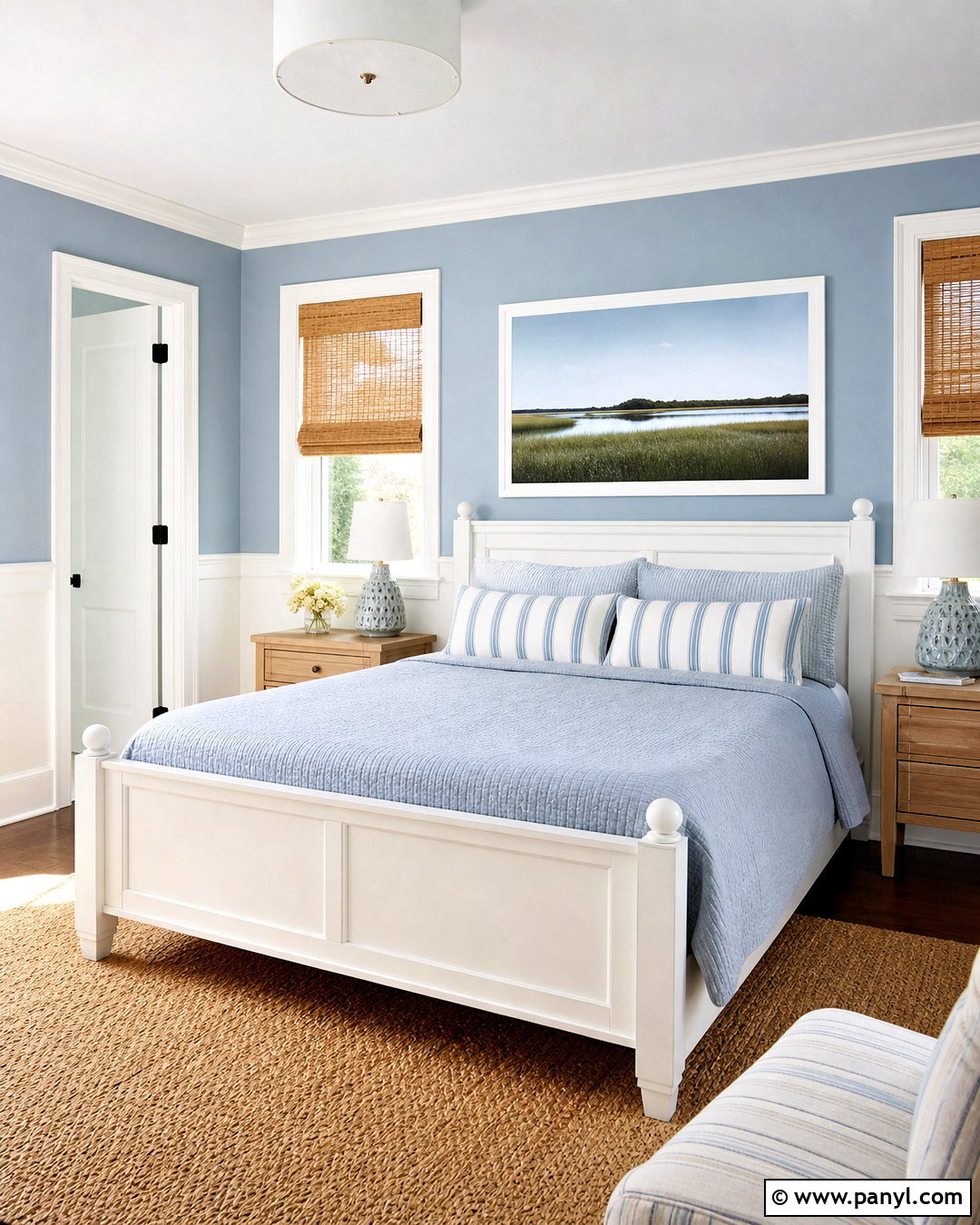
Powder blue and clean white make a bedroom feel airy, peaceful, and gently refreshed. Paint all four walls powder blue, then use white across the ceiling, trim, doors, and a wide painted border around the room. The white details will sharpen the pale blue without creating harsh contrast. Select a white wooden bed or a light beige upholstered frame. Layer white cotton sheets with a blue-gray coverlet and subtle striped pillows. Natural bamboo blinds, pale wood nightstands, and a woven rug bring needed warmth to the cool walls. Add one larger landscape print rather than several small accessories. This complete bedroom look suits compact spaces because the light colors reflect daylight, while the warm natural materials prevent the room from feeling cold or overly coastal.
6. Olive Green And Warm Taupe Bedroom Walls

Olive green and warm taupe create a sophisticated bedroom inspired by woodland shades. Use deep olive on the bed wall and warm taupe throughout the remaining space. If the ceiling is low, keep it a lighter version of the taupe to preserve height. Pair the walls with dark walnut furniture, a camel upholstered headboard, and layered bedding in cream, khaki, and brown. Antique brass lamps and framed botanical prints will reinforce the earthy mood without making the room feel themed. Introduce texture through a wool rug, linen curtains, and a knitted throw. Because olive can absorb light, include matching bedside lamps or wall sconces on both sides of the bed. The final result feels cozy, mature, and especially suited to a restful primary bedroom.
7. Lavender And Pale Gray Bedroom Walls
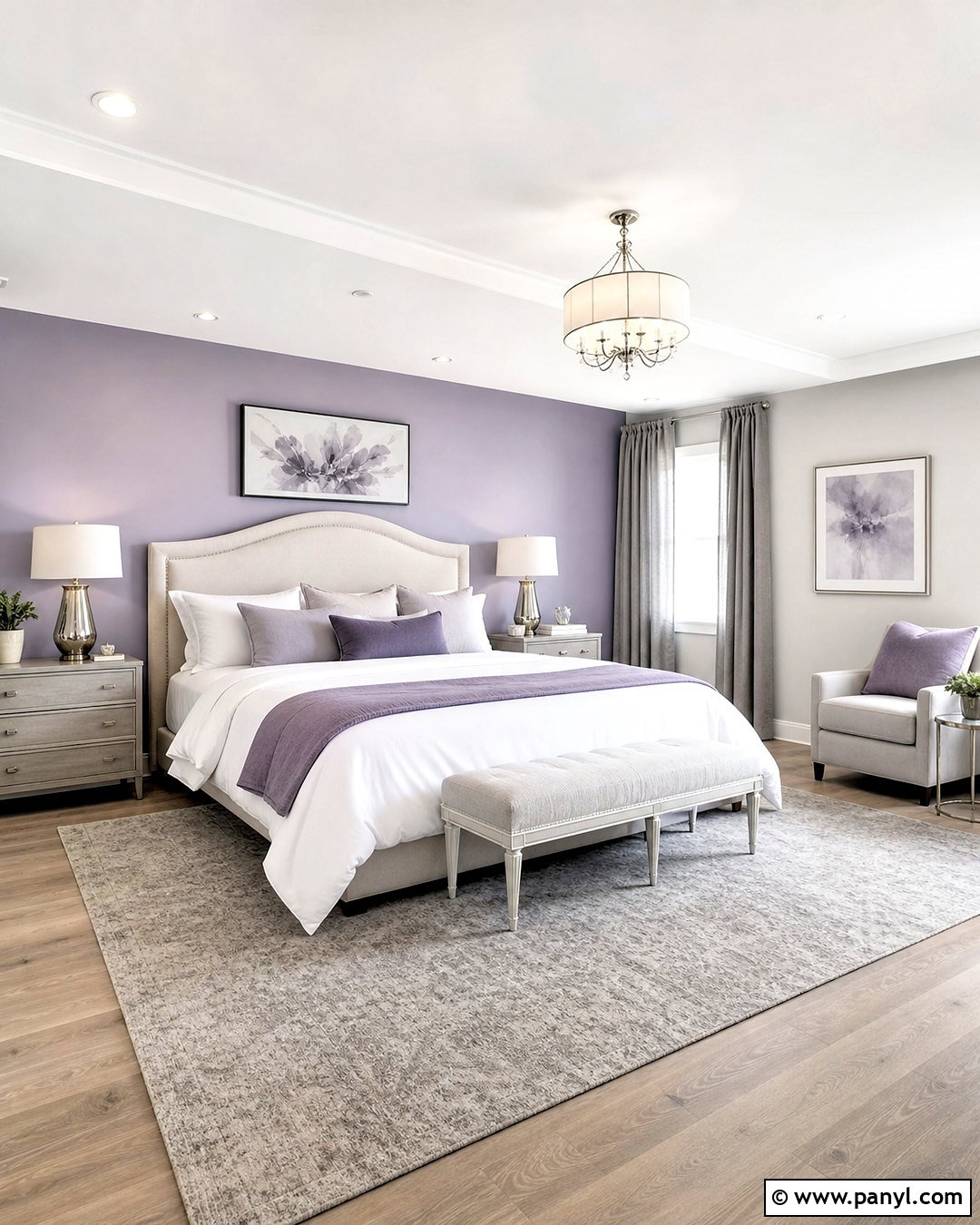
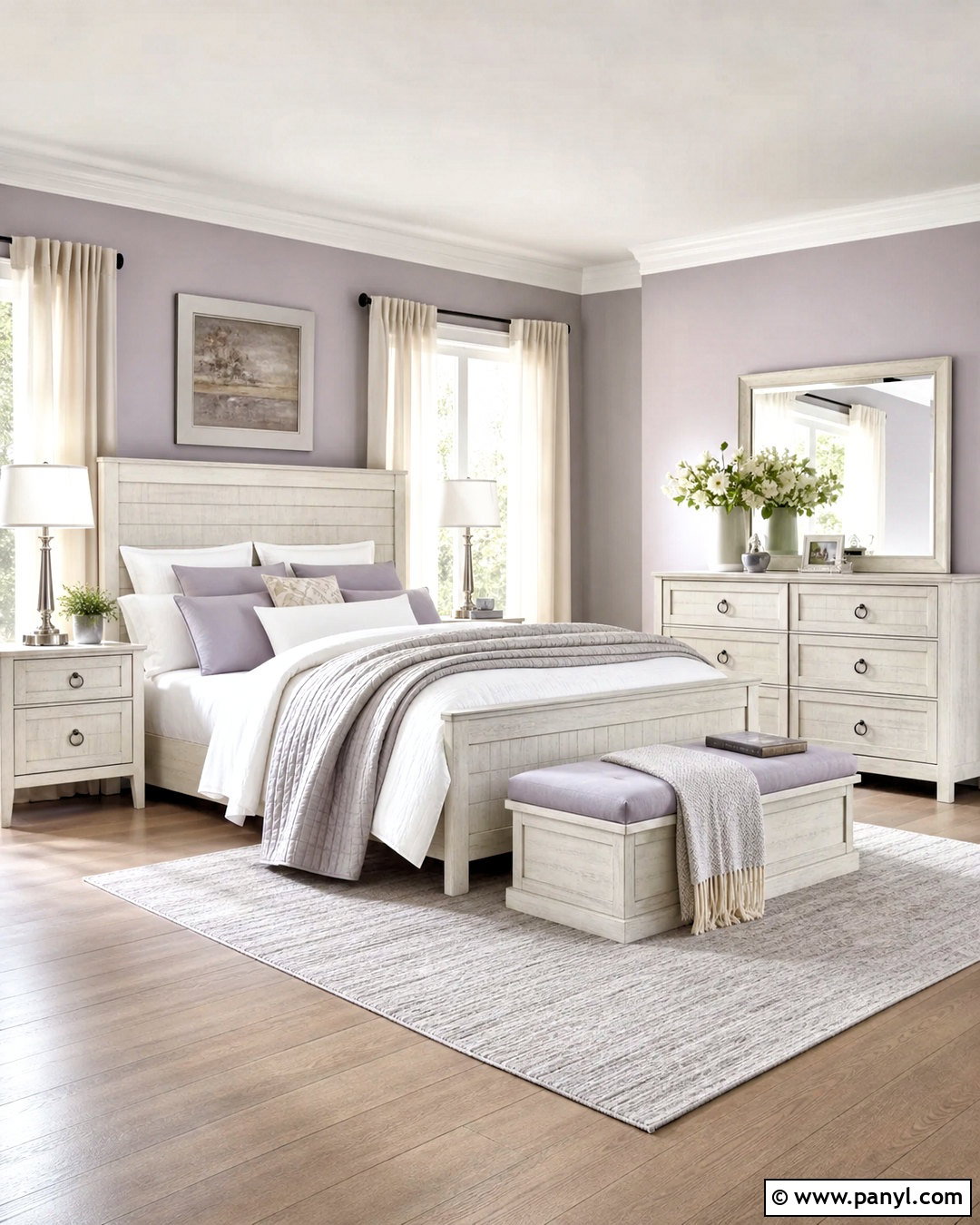
Lavender becomes soothing rather than sweet when it is paired with pale gray. Paint the wall behind the bed a muted, gray-based lavender and use a light dove gray on the surrounding walls. Continue the gray onto the ceiling for a softly wrapped effect, or use white when the room receives limited daylight. A curved cream headboard, pale ash nightstands, and white bedding will keep the design fresh. Add a lavender throw, charcoal piping, and silver-toned lamps for controlled contrast. Sheer white curtains can brighten the room, while heavier gray drapes provide privacy. Choose artwork with restrained purple, blue, and neutral tones. This pairing works beautifully in a modern bedroom because it has personality, yet remains gentle enough to support a quiet sleeping environment.
8. Teal And Greige Bedroom Walls
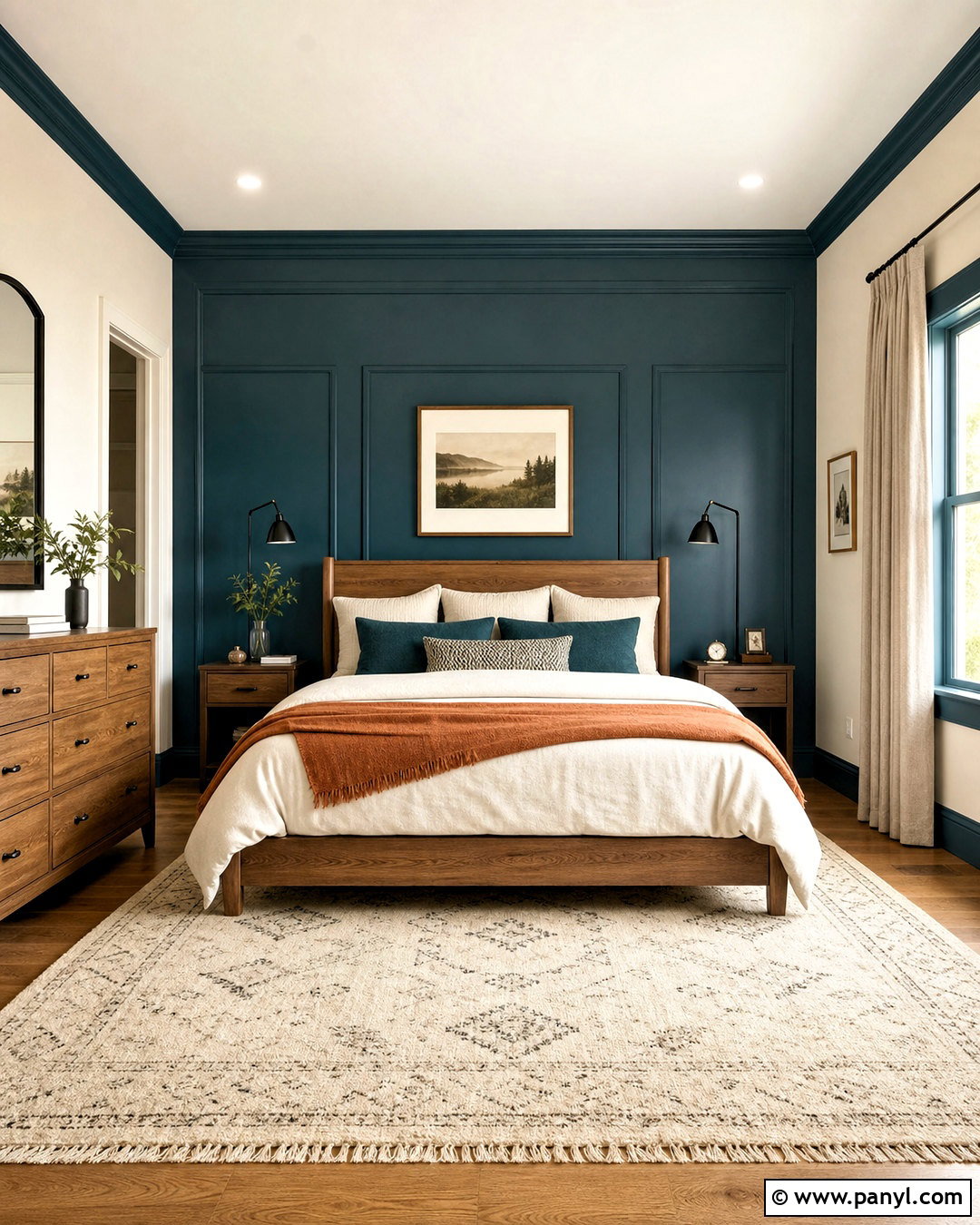
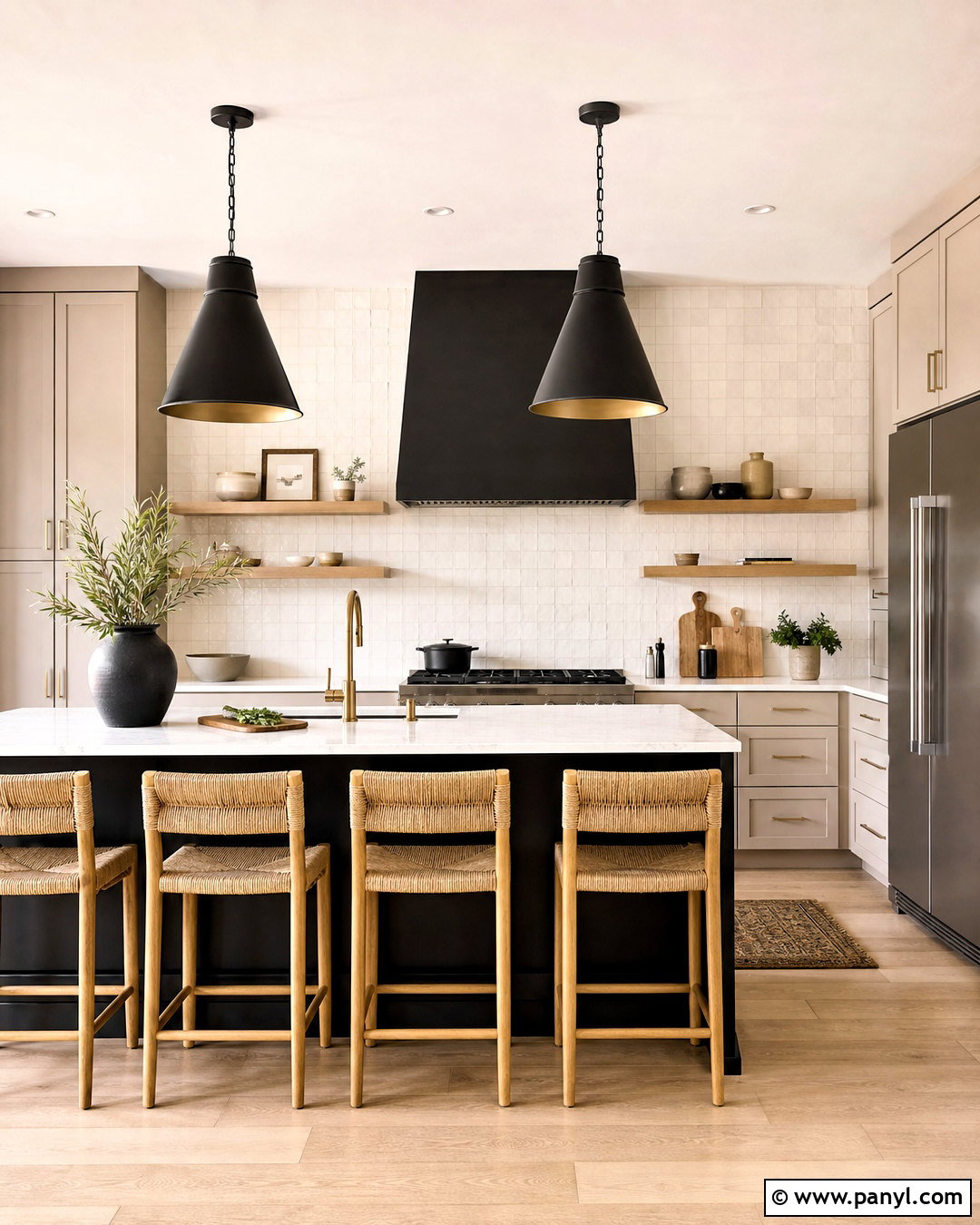
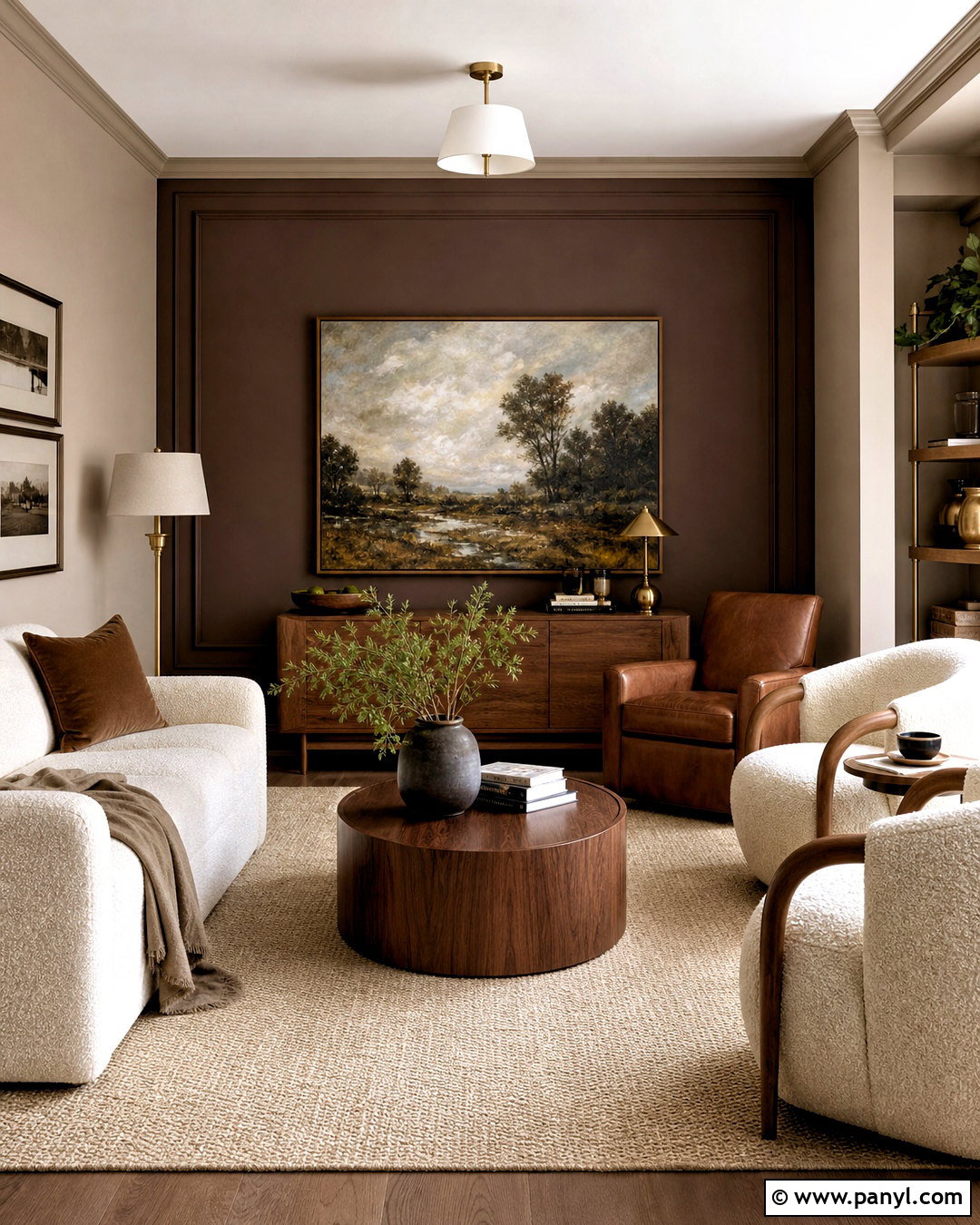
For deeper color without overwhelming the bedroom, combine rich teal with balanced greige. Place teal on the wall behind the bed, including the baseboards and trim on that wall, to create a seamless focal area. Paint the other walls and ceiling a warm greige that has neither strong pink nor cool blue undertones. Add a medium oak bed, ivory bedding, and teal accent pillows. A rust-colored throw can provide one small point of warmth, while black metal lamps add a modern outline. Select full-length greige curtains so they visually disappear against the walls. A cream and tan patterned rug will tie the furniture and paint together. This complete scheme feels contemporary and works particularly well in bedrooms with generous natural light.
9. Peach And Ivory Bedroom Walls
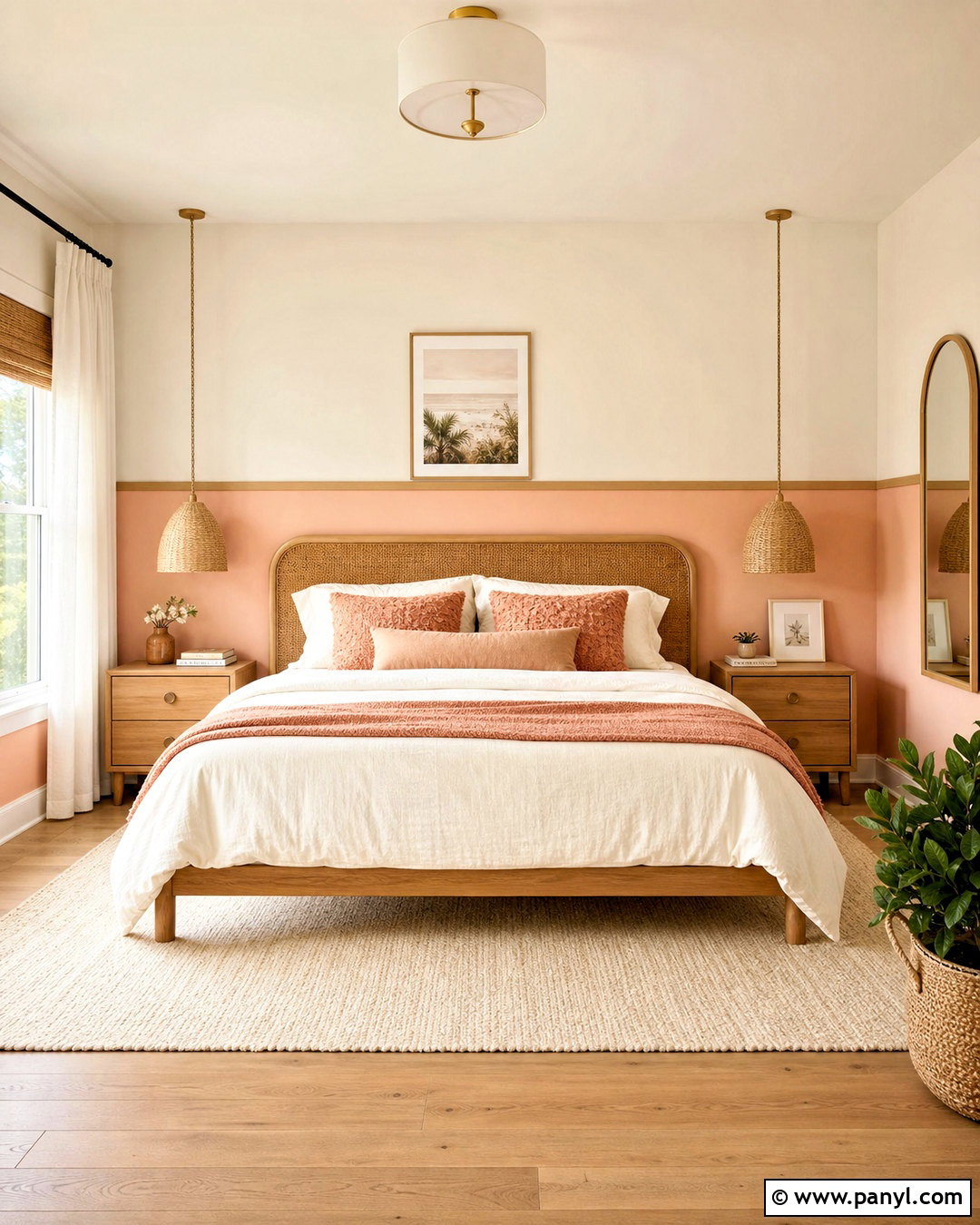
Peach and ivory can make a bedroom feel warm, bright, and inviting when both shades are slightly muted. Paint the lower half of the walls soft peach and the upper half ivory, placing the division just above the headboard. Add slim white or natural wood molding along the transition for a finished appearance. Choose a cane bed, ivory bedding, and peach pillows in different textures. Light oak nightstands, woven lamps, and a cream rug will support the sunny palette. Avoid pairing this combination with strong orange accessories, which can overpower the softness. Instead, introduce small touches of dusty rose, tan, and warm brass. The resulting bedroom feels cheerful in daylight and comfortably warm under soft white bedside lighting at night.

10. Charcoal And Off-White Bedroom Walls
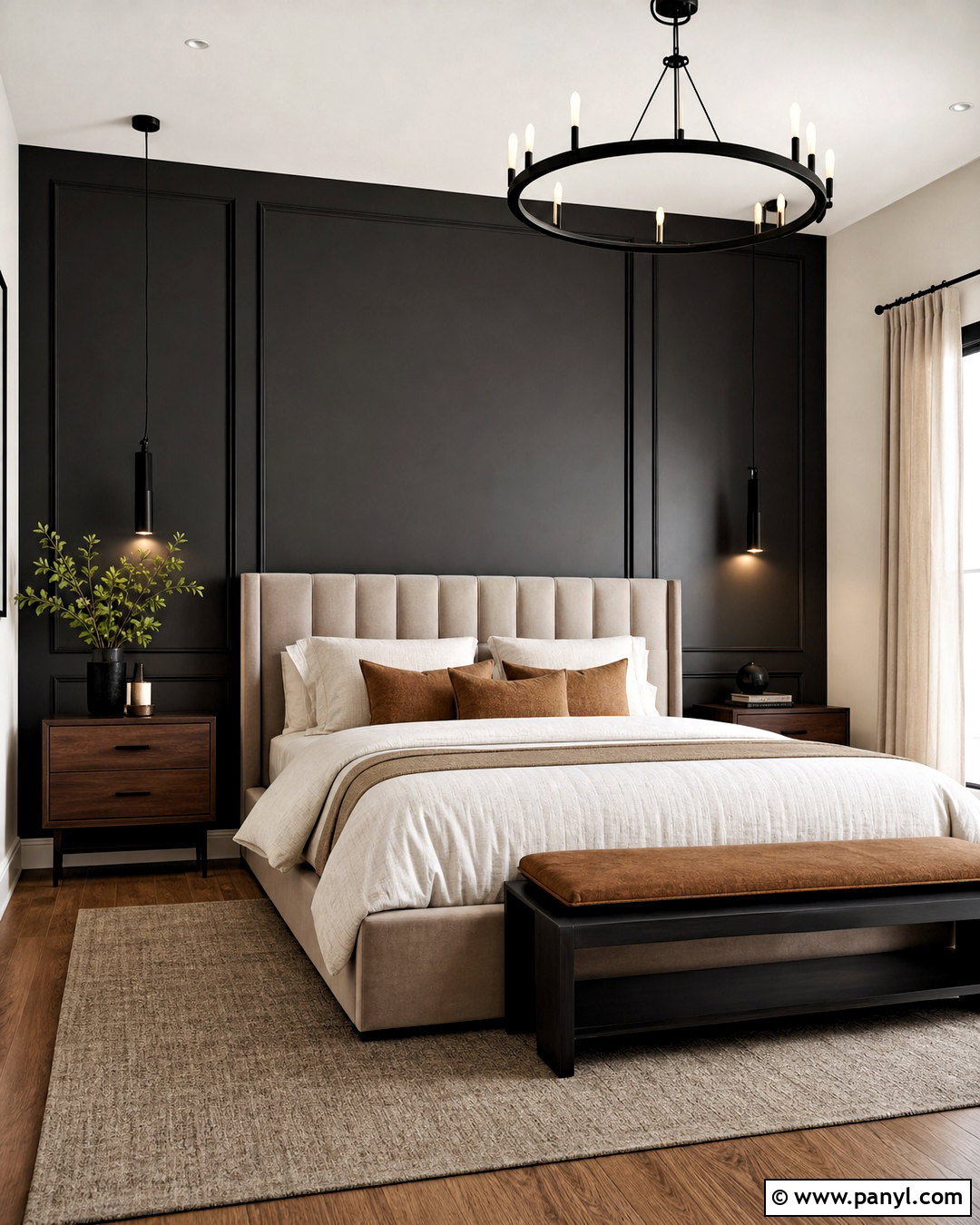
Charcoal and off-white produce a dramatic bedroom that still feels balanced and practical. Reserve charcoal for the headboard wall and paint the remaining surfaces a soft off-white. A tall beige upholstered bed will stand out clearly against the dark background, while pale bedding keeps the center of the room bright. Use matching black or dark wood nightstands to create symmetry. Warm the palette with caramel cushions, walnut details, and a taupe area rug. Curtains should match the off-white walls instead of the charcoal feature wall, helping the windows look larger. Add layered lighting through ceiling fixtures, bedside sconces, and a floor lamp. This design is especially successful in a larger bedroom where the dark focal wall can add depth without visually reducing the entire space.
11. Forest Green And Pale Beige Bedroom Walls
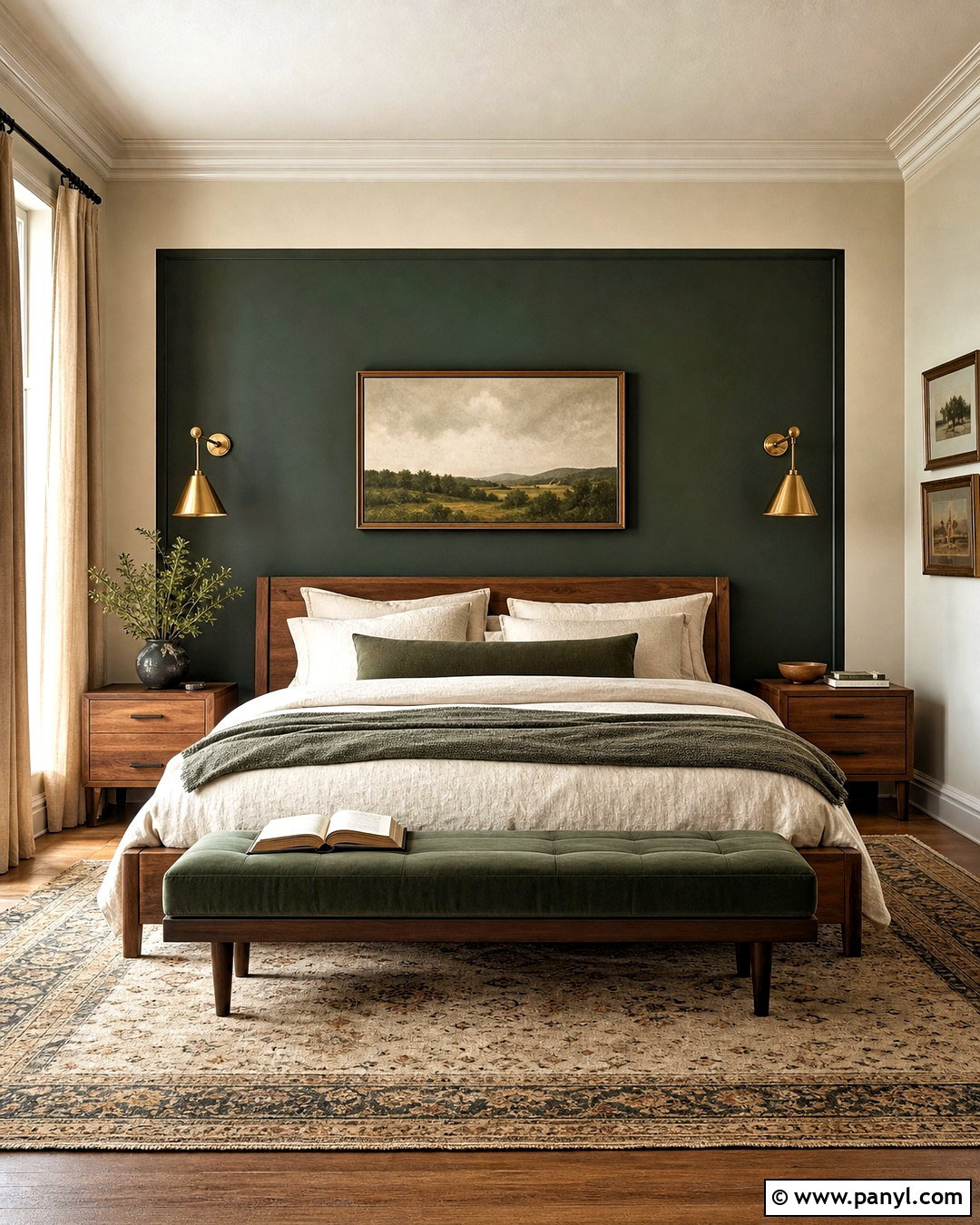
Forest green and pale beige bring a rich, tailored atmosphere to bedroom walls. Create a wide green color block behind the bed that extends slightly beyond both nightstands, rather than covering the entire wall. Paint the surrounding wall and the rest of the room pale beige. This approach frames the sleeping area while preserving plenty of light space. Add a walnut platform bed, cream linen bedding, and a forest green bench at the foot. Brass wall lamps, tan curtains, and a vintage-inspired rug will give the room depth. Keep decorative objects minimal and choose larger pieces, such as one landscape painting or a ceramic vase. The completed bedroom feels grounded and elegant, with enough contrast to look intentional but not excessively dark or formal.
12. Dusty Blue And Sand Bedroom Walls
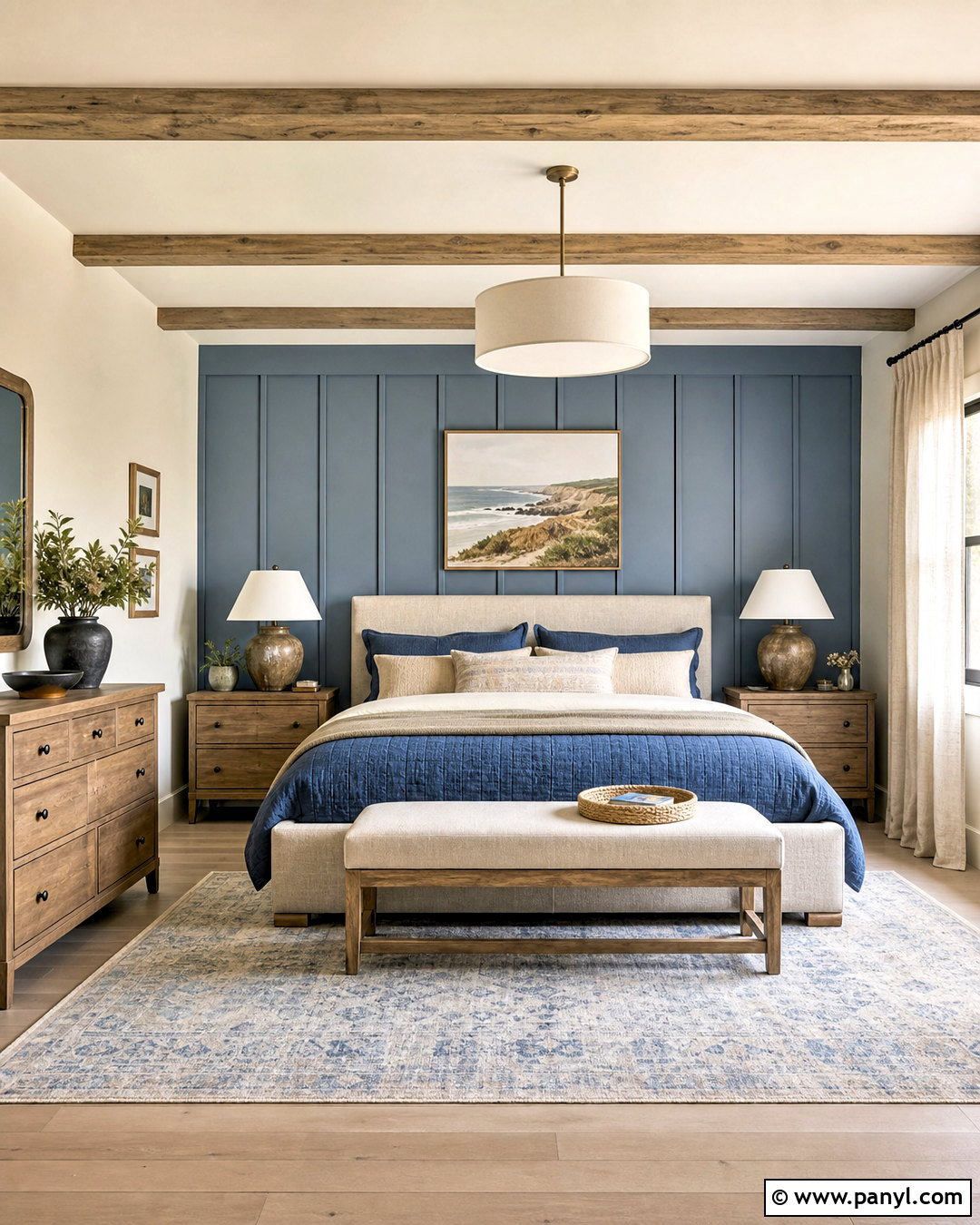
Dusty blue and sand form a relaxed bedroom palette that feels softer than a traditional blue-and-white scheme. Use sandy beige on three walls, then paint the bed wall a desaturated blue with gentle gray undertones. Choose an upholstered bed in natural linen and layer it with blue, cream, and tan bedding. Weathered oak furniture, ceramic table lamps, and a subtly patterned rug can provide texture without disturbing the calm color balance. Install flax curtains from ceiling to floor to make the bedroom appear taller. Coastal accessories are unnecessary; the combination can remain modern through simple artwork and streamlined furniture. Include a few dark bronze details for definition. This bedroom look works well in sunny rooms because the sandy walls warm the cooler blue feature area.
13. Burgundy And Soft Pink Bedroom Walls
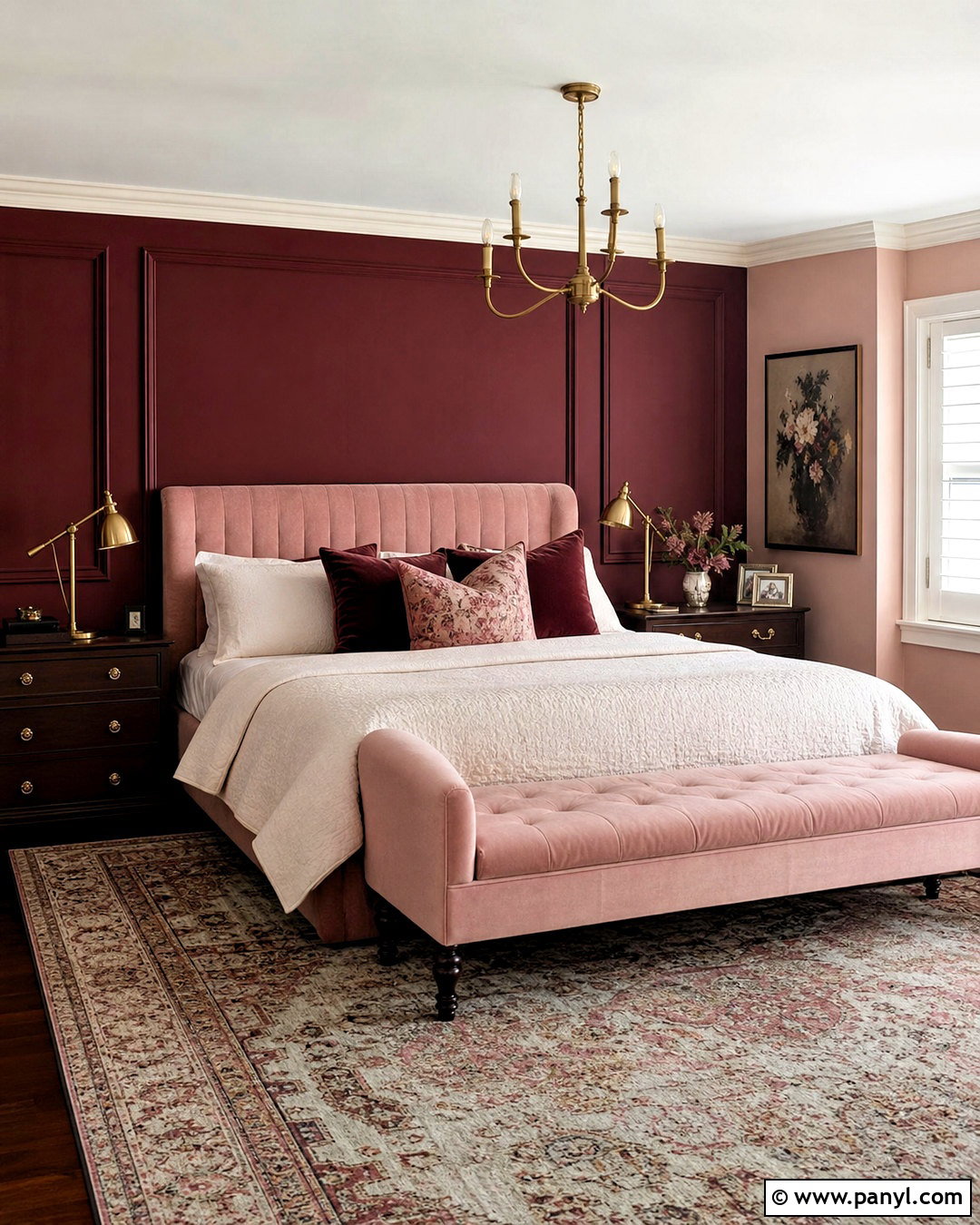
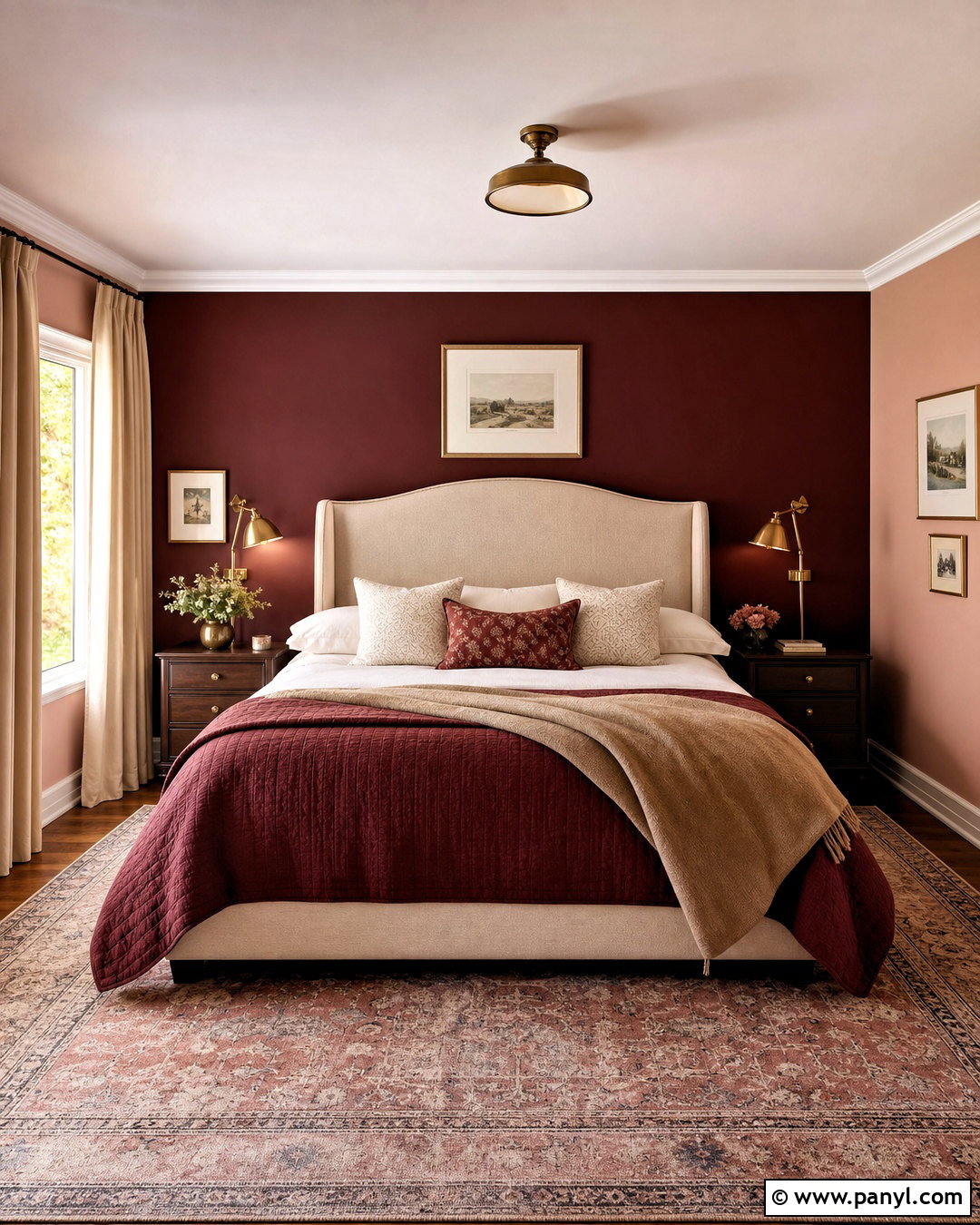
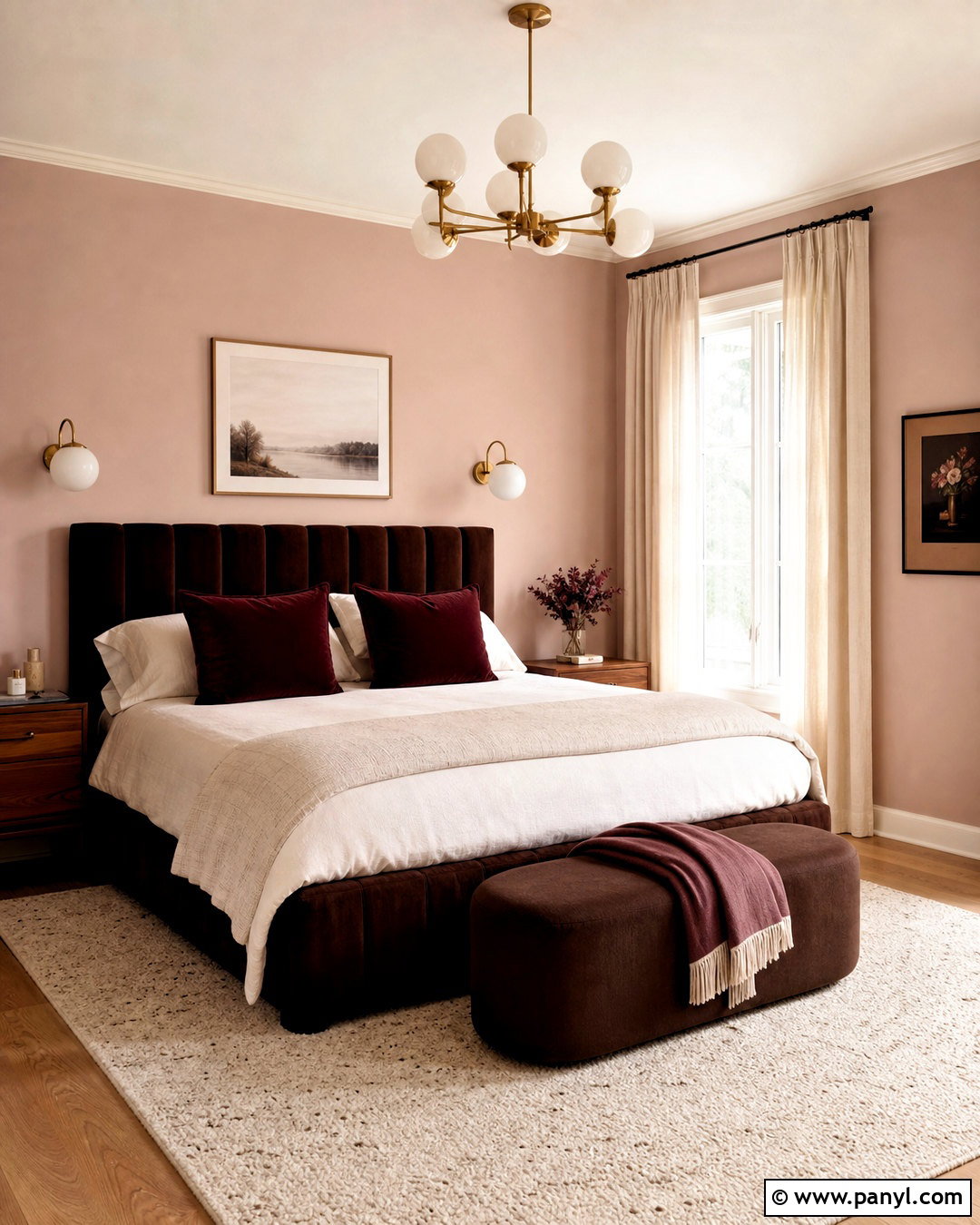
Burgundy and soft pink create an enveloping bedroom that feels luxurious without depending on elaborate furniture. Paint the wall behind the bed deep burgundy and use a muted plaster pink on the other walls. Select a blush upholstered headboard that creates a gentle tonal transition between the two shades. Layer the bed with ivory sheets, burgundy cushions, and a taupe throw. Dark wood nightstands provide visual weight, while aged brass lamps enhance the warmth of the palette. Keep the ceiling and trim a creamy white to prevent the room from closing in. A faded traditional rug can bring the colors together naturally. Limit additional patterns to one or two textiles, allowing the striking wall combination to remain the main feature of this comfortable, romantic bedroom.
14. Mustard Yellow And Warm White Bedroom Walls
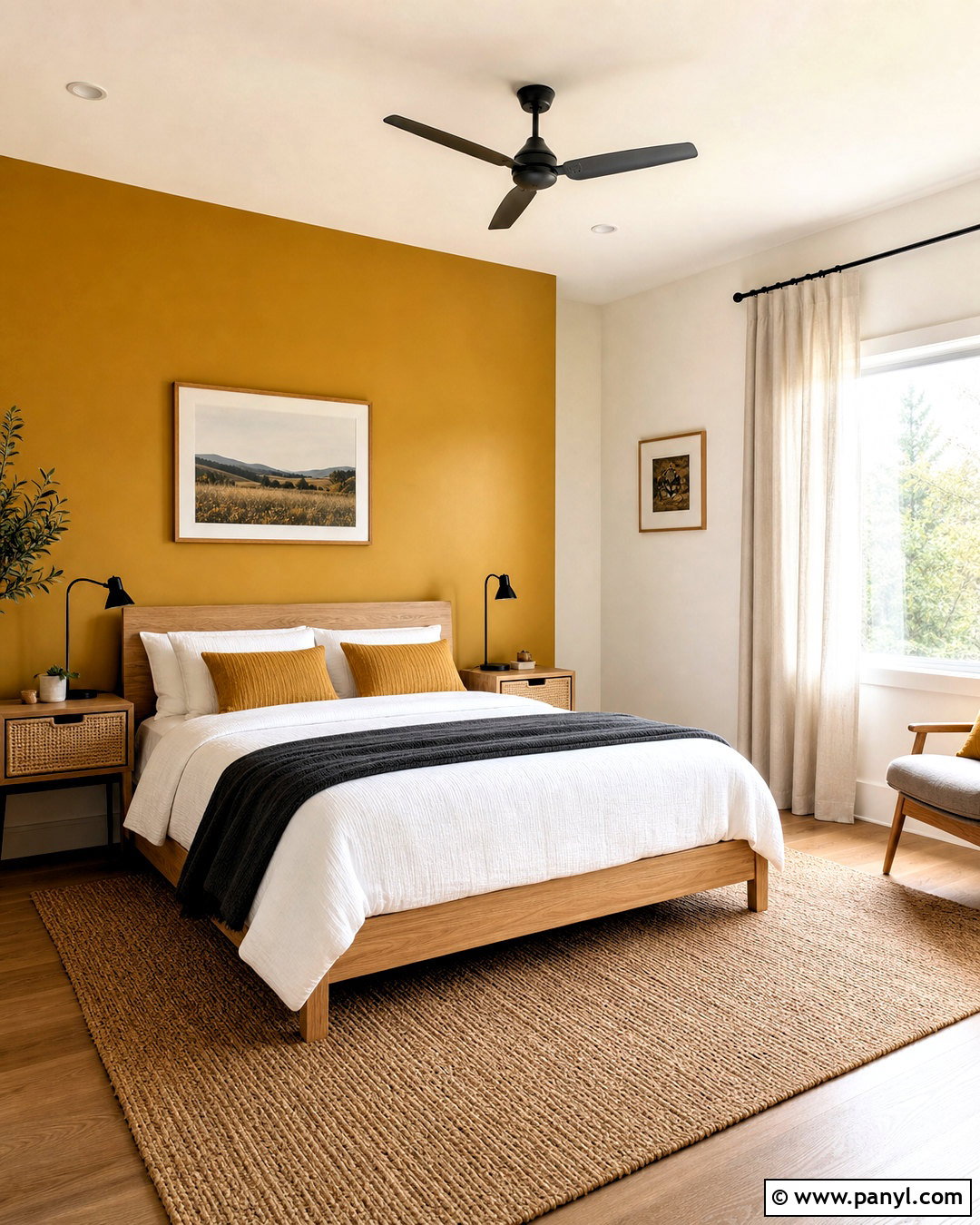
Could a bold yellow still feel restful? Muted mustard paired with warm white proves that it can. Use mustard on one wall behind the bed, while covering the remaining walls, trim, and ceiling in a creamy white. Balance the energetic color with a simple oak bed, white bedding, and a charcoal-gray blanket. Add woven bedside tables, black reading lights, and linen curtains for a relaxed modern look. Artwork featuring mustard, beige, and dark green can connect the feature wall to the rest of the space. Avoid glossy finishes because they may make yellow appear sharper. A matte or eggshell wall finish provides a softer effect. This bedroom palette is especially useful in north-facing rooms where warm colors can counteract cool or limited natural light.
15. Chocolate Brown And Cream Bedroom Walls

Chocolate brown and cream can make a bedroom feel deeply comfortable when balanced with light furnishings. Paint the lower half of every wall dark brown and use warm cream above, creating a grounded horizontal division. Add simple cream molding where the colors meet for architectural definition. Choose an upholstered bed in oatmeal fabric, walnut nightstands, and crisp cream bedding. Layer camel, brown, and beige cushions to reinforce the tonal scheme. A large light rug is essential if the floor is also dark. Use ceramic lamps with linen shades and hang one oversized neutral artwork above the bed. Keep window treatments cream to maintain brightness. The final bedroom feels refined and cocooning, combining traditional color placement with uncluttered furniture that keeps the look current and approachable.
16. Aqua Blue And Light Beige Bedroom Walls
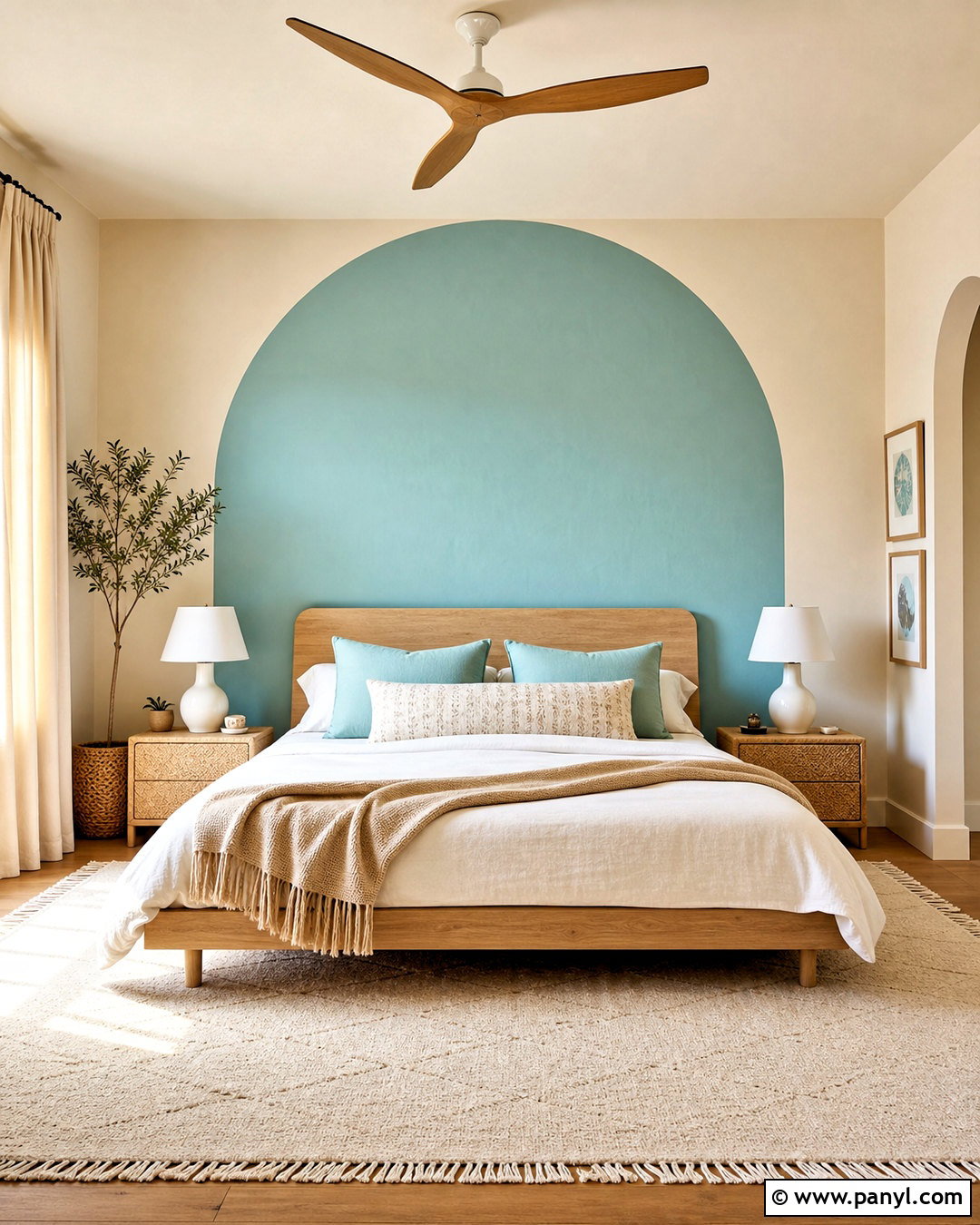
Aqua blue and light beige give a bedroom a refreshing character without making it look like a themed beach space. Paint a broad aqua arch behind the bed, extending it high enough to act as a visual headboard. Use light beige on the rest of the walls and ceiling. Position a low oak bed within the painted arch, then add cream bedding, aqua pillows, and a sand-colored throw. Woven nightstands and white ceramic lamps will maintain a light, relaxed feeling. Choose beige curtains and a textured ivory rug to soften the brighter feature. Simple abstract art and a few glass accessories are enough decoration. The arch creates clear structure, while the restrained furniture and natural finishes make this playful color pairing suitable for an adult bedroom.
17. Coral And Soft Greige Bedroom Walls

Coral and soft greige bring energy to a bedroom while maintaining a polished, balanced appearance. Choose a muted coral rather than a highly saturated orange-pink. Paint the headboard wall coral and use soft greige across the remaining walls, ceiling, and trim. A pale wood bed, creamy bedding, and greige curtains will quiet the stronger accent color. Repeat coral in only two or three details, such as a lumbar pillow, small artwork, or bedside vase. Add brushed brass lamps and a natural fiber rug to emphasize warmth. Furniture with rounded edges complements the gentle character of the palette. This complete look works well in a guest bedroom or cheerful primary bedroom, particularly when daylight makes the coral appear soft and glowing rather than intense.
18. Black And Warm Beige Bedroom Walls
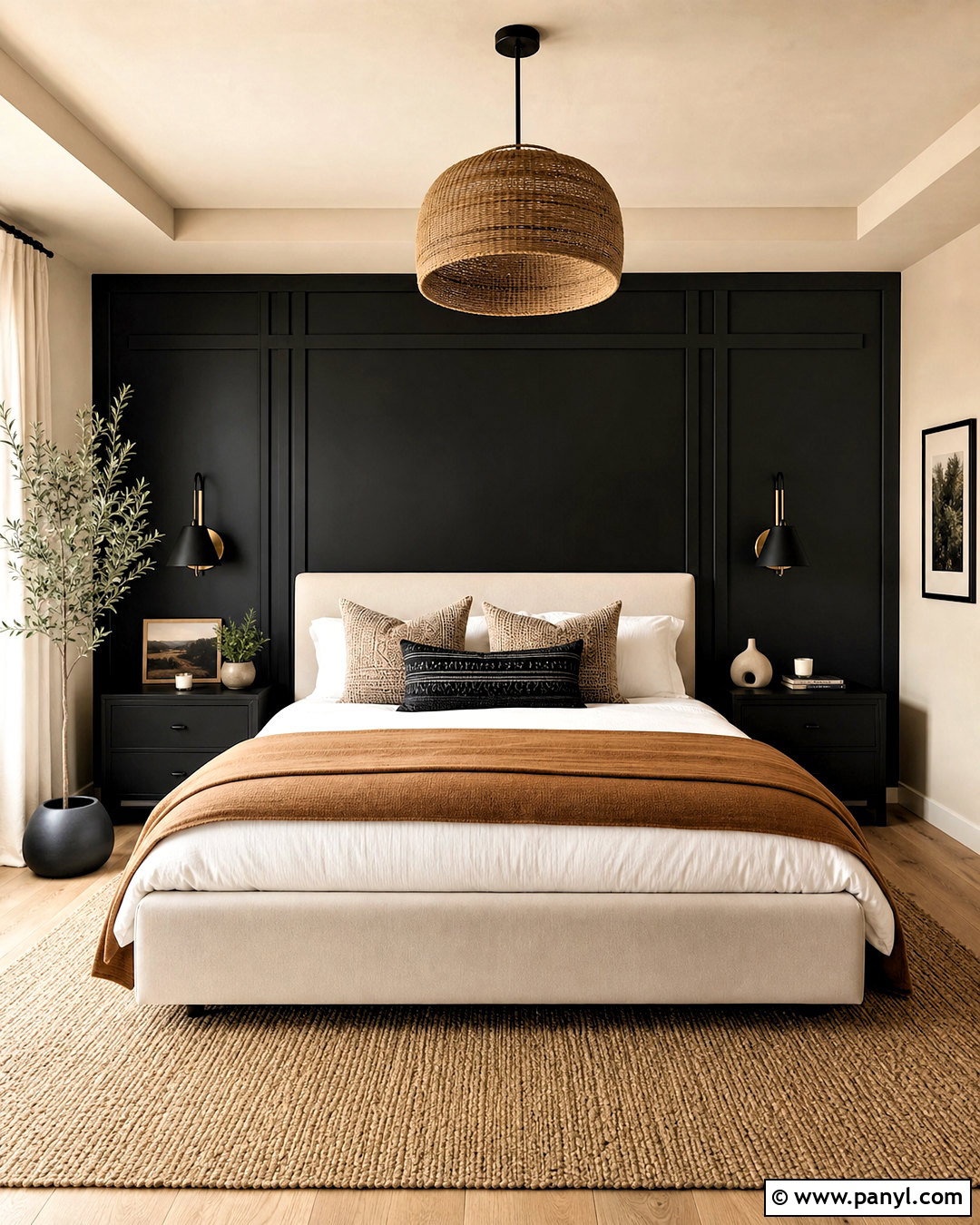
Black and warm beige can create a striking bedroom without sacrificing comfort. Instead of painting a full wall black, apply it to built-in paneling or a rectangular section behind the bed. Surround the feature with warm beige walls and a matching beige ceiling. Choose a light oak or upholstered cream bed so it stands out against the dark paint. Add white sheets, a camel blanket, and patterned pillows containing small black details. Matte black sconces can blend into the feature wall, while woven shades and a beige rug soften the contrast. Keep artwork minimal because the painted panel already serves as a strong focal point. This balanced approach gives the bedroom modern definition while ensuring that the majority of the room remains light, warm, and welcoming.
19. Plum And Mushroom Bedroom Walls

Plum and mushroom create a layered, restful bedroom with a subtle sense of drama. Use mushroom, a warm gray-brown, on most walls and apply deep plum behind the bed. The earthy undertone of mushroom helps the purple feel mature and easy to decorate around. Add a taupe upholstered bed, natural linen bedding, and plum velvet pillows for controlled richness. Dark walnut nightstands and bronze lamps will complement both colors. Choose a faded beige rug and full-length mushroom curtains to create a soft, continuous background. If the room is small, keep the ceiling warm white and use mirrors to reflect daylight. The completed bedroom feels cozy and sophisticated, making this pairing especially effective for anyone who wants distinctive color without a bright or highly energetic result.
20. Sky Blue And Clay Pink Bedroom Walls
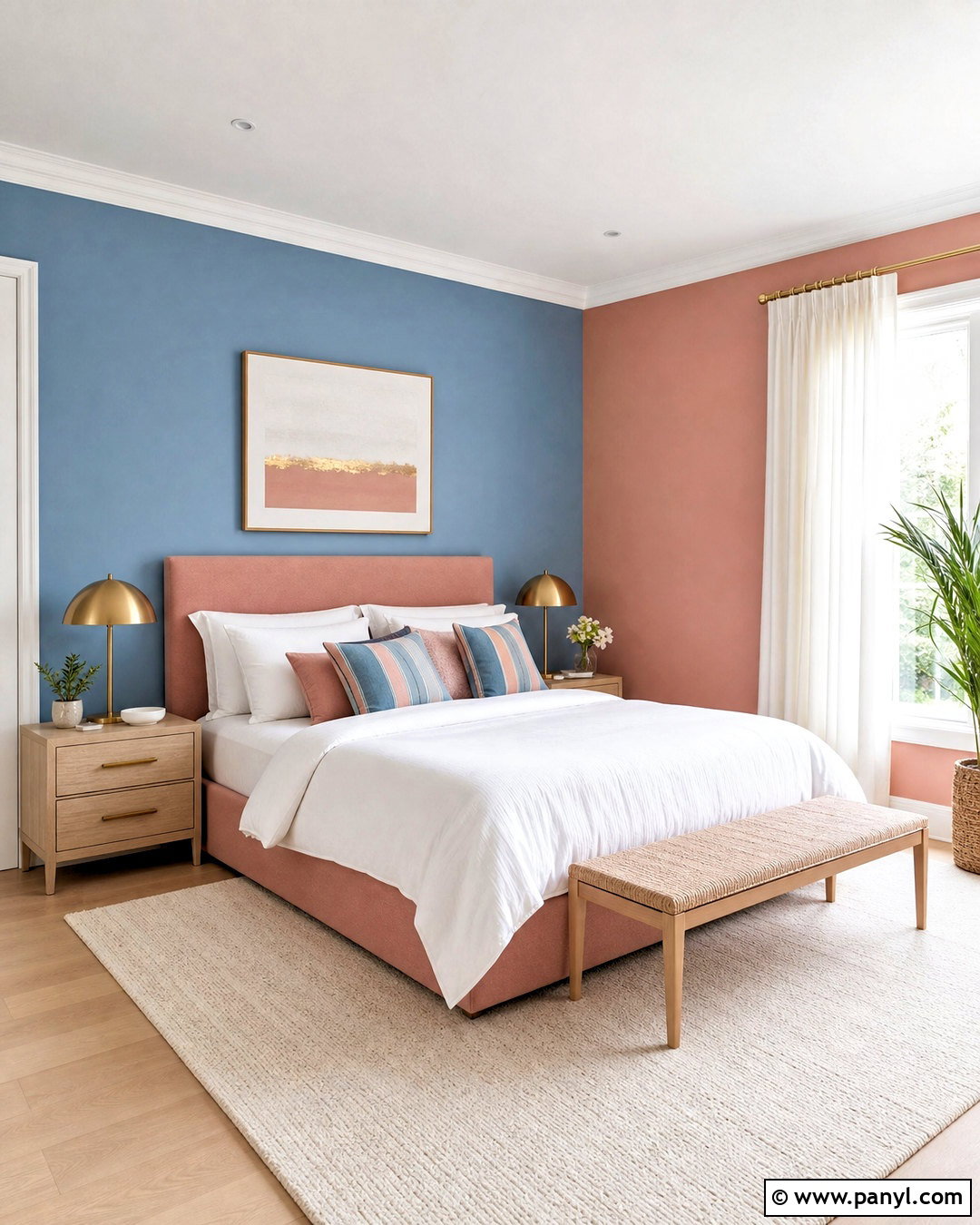
Sky blue and clay pink offer a fresh combination that feels playful, soothing, and unexpectedly balanced. Paint two adjoining walls a gentle sky blue and the other two a muted clay pink, keeping the transitions clean at the corners. Position the bed against a blue wall, then use a clay-colored upholstered headboard to connect both sides of the palette. Choose white bedding, pale wood nightstands, and a cream rug to provide visual breathing room. Add blue and pink accents through striped cushions and simple abstract art rather than numerous decorative objects. White curtains will maintain brightness, while brushed brass lamps supply warmth. The finished bedroom has clear personality, yet the softened shades ensure it remains calm enough for everyday rest and relaxation.
Conclusion:
A successful two-tone bedroom depends on more than selecting two attractive paint colors. Consider natural light, room size, flooring, furniture, and the mood you want to create before making a final choice. Lighter shades can open the space, while deeper colors frame the bed, highlight paneling, or add comforting depth. Repeat each wall color through a few textiles and accessories so the whole room feels connected. Always test paint on multiple walls because undertones can change throughout the day. Whether you prefer peaceful blues, earthy greens, warm neutrals, or dramatic accents, these 20 two colour combination for bedroom walls provide complete looks that can be adapted to bedrooms of different sizes, layouts, and decorating budgets.

Related Ideas and Inspiration:




Leave a Reply