
A sage green and gray palette can make a kitchen feel peaceful, polished, and full of character without becoming overly colorful. The secret is choosing shades with compatible undertones, then adding natural wood, warm metals, layered lighting, or textured tile to prevent the room from feeling flat. These 20 sage green and grey kitchen ideas cover complete looks for small kitchens, open layouts, farmhouse spaces, modern homes, and budget-friendly makeovers. You will find practical combinations for cabinets, walls, countertops, backsplashes, flooring, hardware, and decorative accents. Whether you prefer pale misty tones or deeper charcoal contrast, each scheme offers a balanced design you can adapt. Explore the following 20 sage green and grey kitchen ideas to find a look that fits your space.

1. Sage Green Cabinets With Gray Quartz Countertops
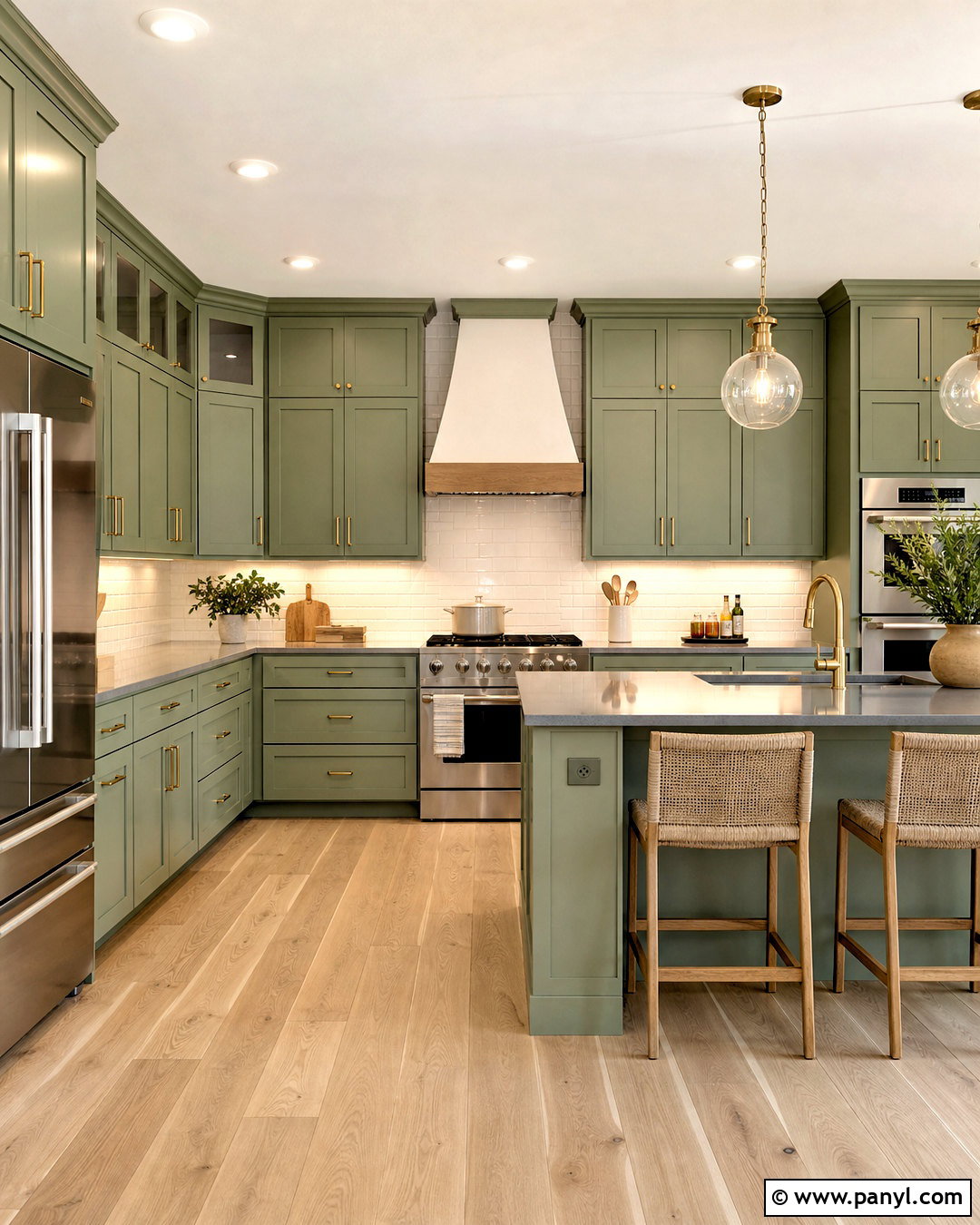
Soft sage green Shaker cabinets create a calm foundation, while medium-gray quartz countertops add practical contrast without making the kitchen feel dark. Continue the quartz across a simple island and use a warm white subway tile backsplash to keep the room bright. Brushed brass knobs, cup pulls, and a matching faucet bring needed warmth to the green-gray palette. Choose natural white oak flooring and woven counter stools for an organic layer. Glass pendant lights maintain an open feeling above the island. Complete the kitchen with warm white walls, linen Roman shades, and a few cream ceramic accessories. This balanced arrangement suits transitional homes because it blends classic cabinet doors with clean, understated finishes.
2. Sage Green Lower Cabinets With Light Gray Upper Cabinets
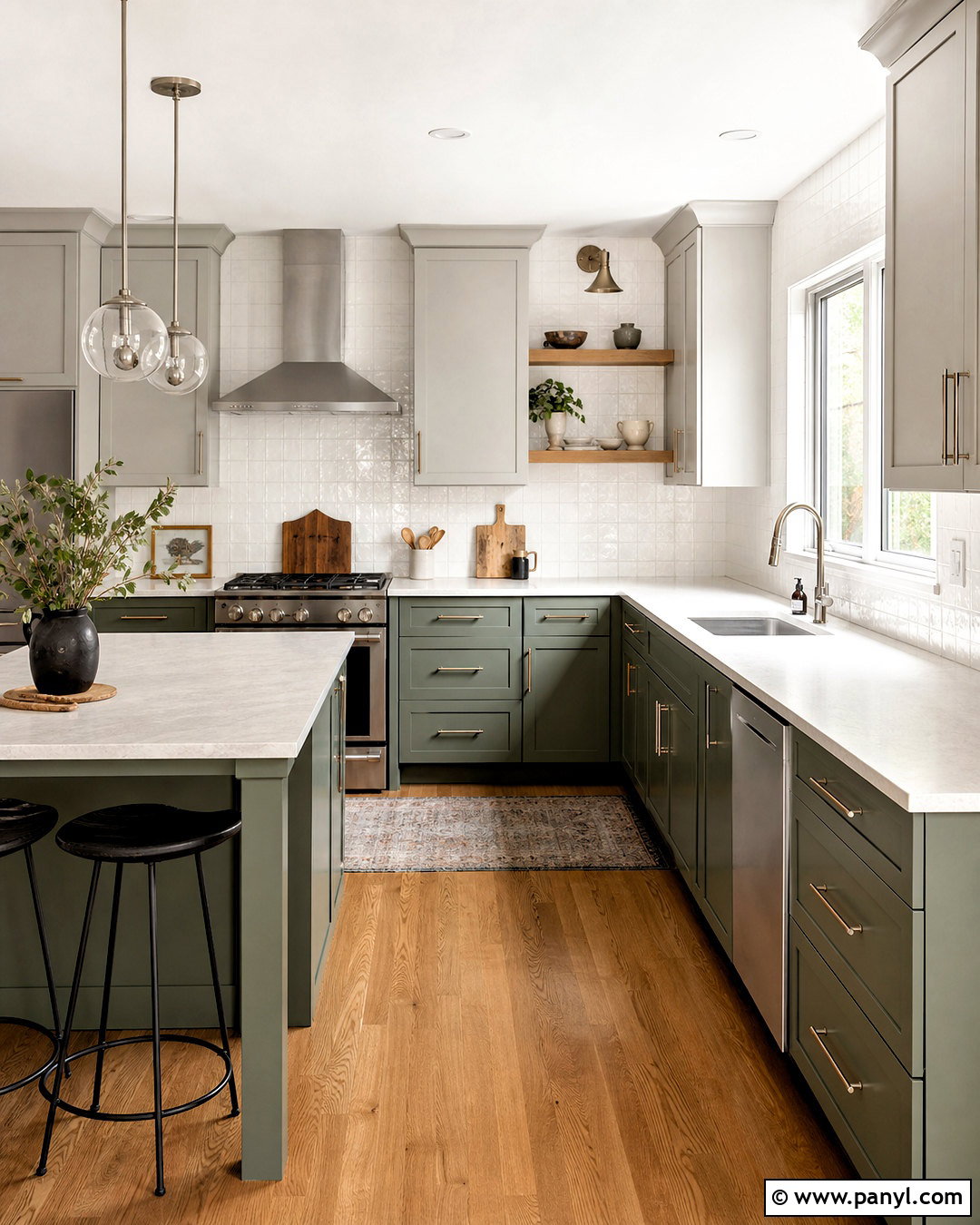
Two-tone cabinets can give a compact kitchen more depth while keeping the upper half visually light. Paint the base cabinets a muted sage green and use pale warm gray on the wall cabinets. A white quartz countertop connects both colors and reflects light around the room. Add a backsplash of handmade white tiles with subtle gray grout for gentle texture. Natural oak flooring, brushed nickel hardware, and stainless steel appliances create a clean, coordinated finish. Keep decorative accents simple with wooden boards, white stoneware, and one small potted herb. Under-cabinet lighting prevents the gray uppers from appearing dull. This complete scheme works especially well in kitchens that need color without heavy, floor-to-ceiling green cabinetry.
3. Sage Green Cabinets With Gray Subway Tile
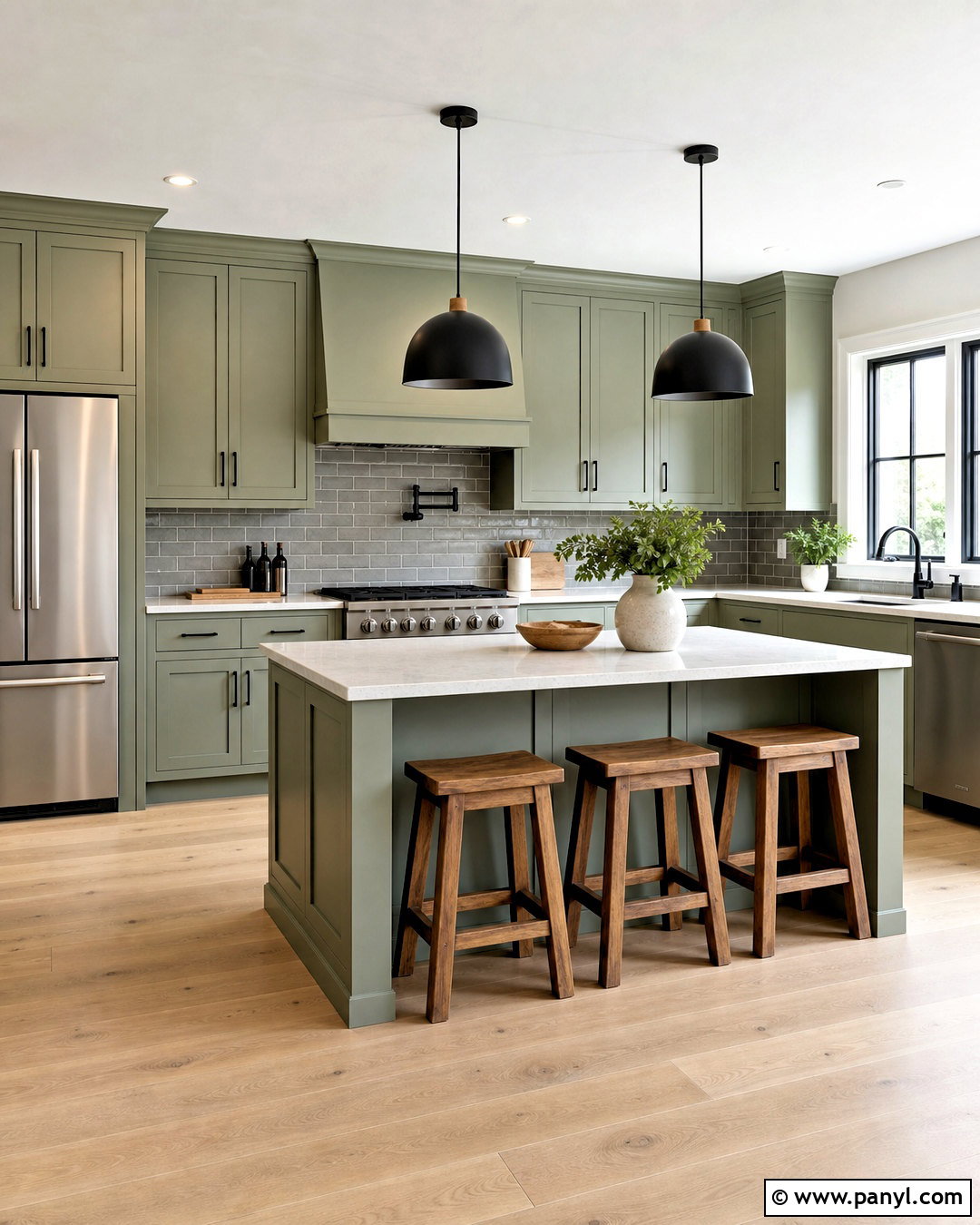
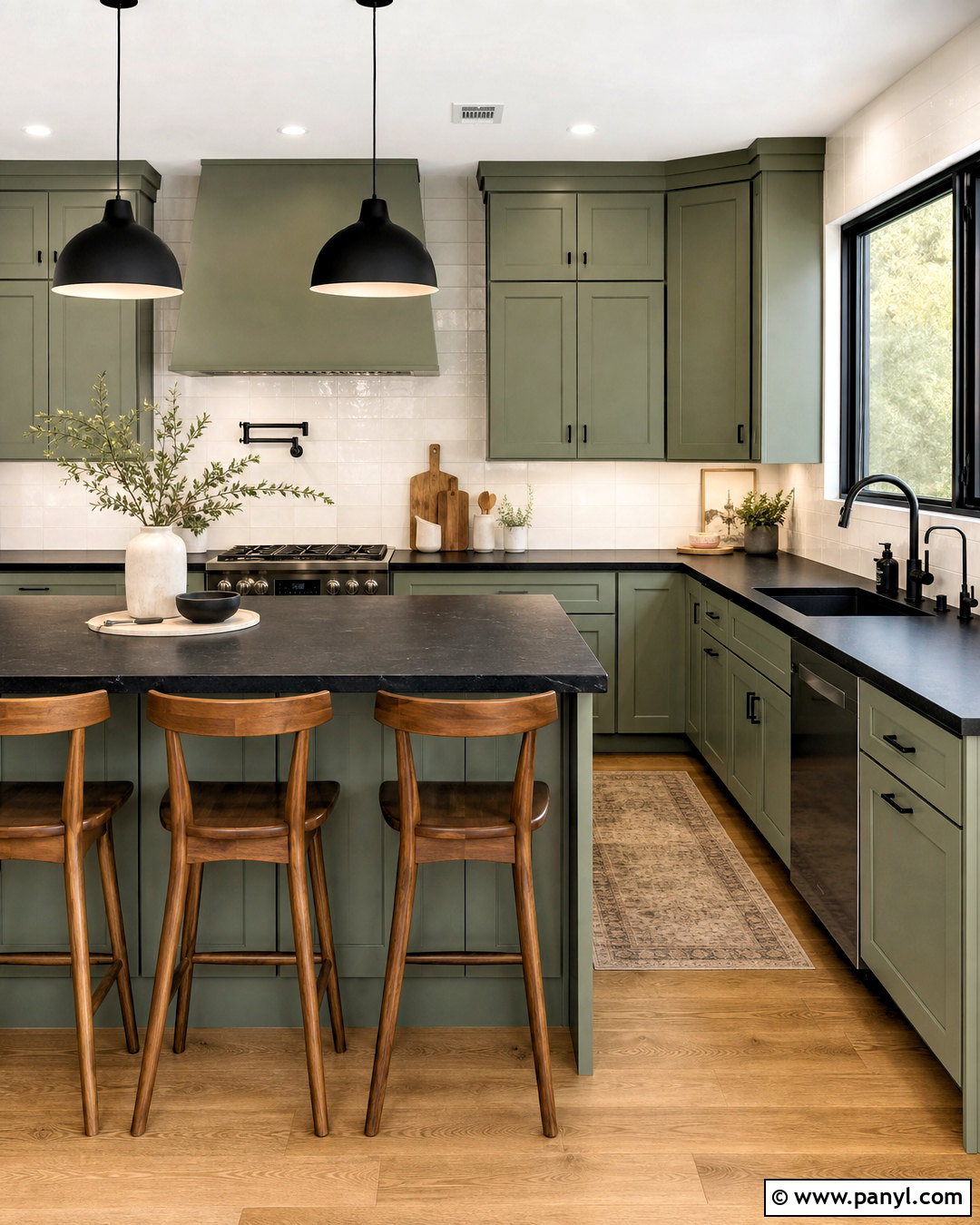
A smoky gray subway tile backsplash gives sage green cabinetry a stronger architectural edge. Choose satin-finish Shaker cabinets and install the tiles in a stacked pattern for a cleaner, more modern appearance. Cream quartz countertops soften the transition between the green cabinets and gray backsplash. Matte black handles, a black pull-down faucet, and slim black pendant lights add definition. Balance those dark details with pale oak floors and warm white walls. An island painted in the same sage shade keeps the room cohesive, while backless wood stools preserve open sightlines. Finish the design with clear glass canisters and off-white ceramics. The resulting kitchen feels tailored and contemporary but remains comfortable enough for everyday family use.
4. Gray Cabinets With Sage Green Walls
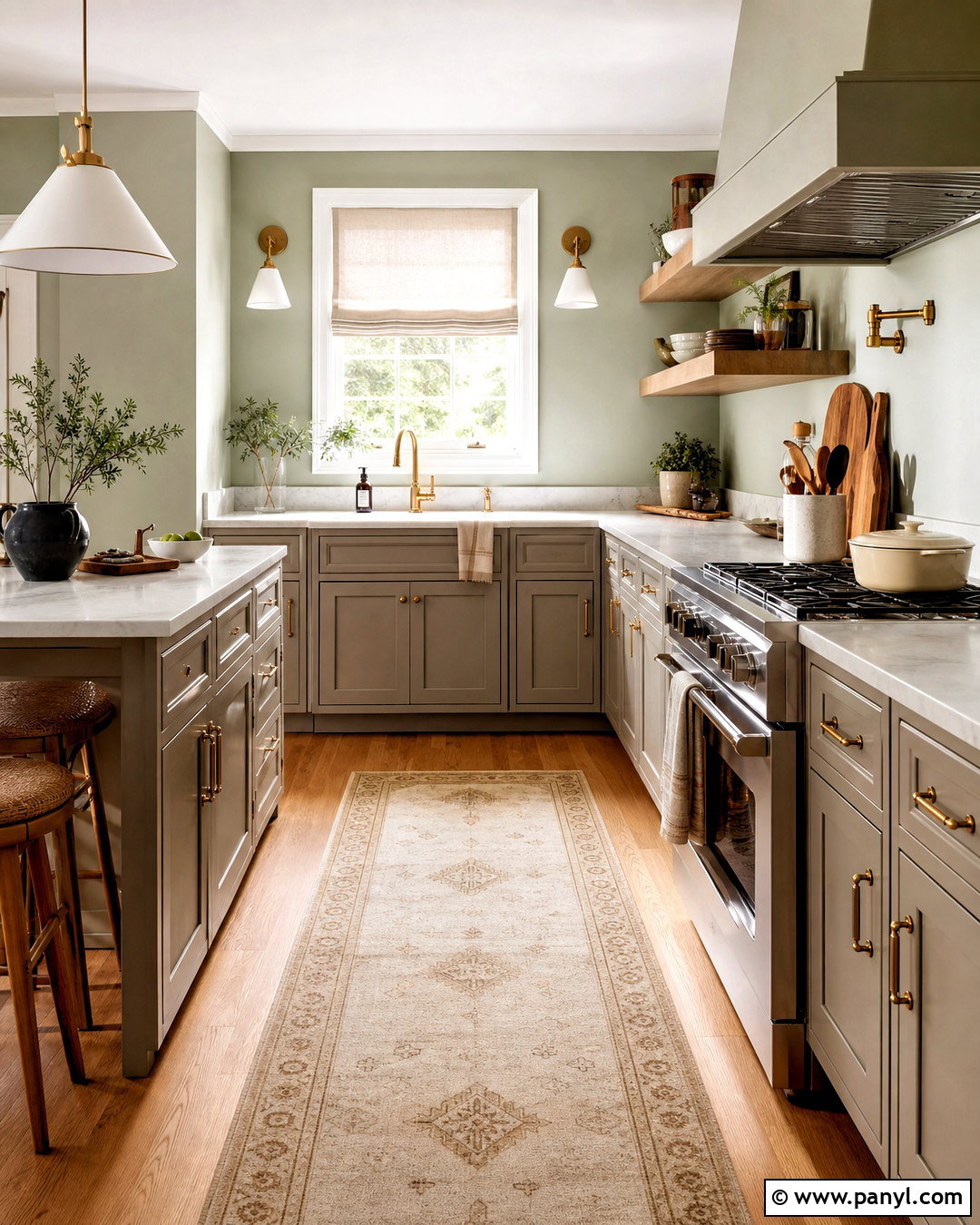
If replacing cabinetry is not practical, sage green walls can transform a kitchen with existing gray cabinets. Use a soft, earthy sage that complements warm light-gray doors rather than fighting their undertones. White marble-look quartz countertops and a matching low backsplash brighten the work surfaces. Introduce warmth through butcher-block shelving, oak flooring, and aged brass cabinet knobs. A cream runner with a subtle geometric pattern helps connect the gray, green, and wood tones. Paint the ceiling and trim warm white so the wall color looks fresh instead of muddy. Add linen shades and simple black-framed lighting for contrast. This design offers a manageable update while still creating a complete, intentional sage green and gray kitchen.
5. Sage Green Island With Gray Perimeter Cabinets
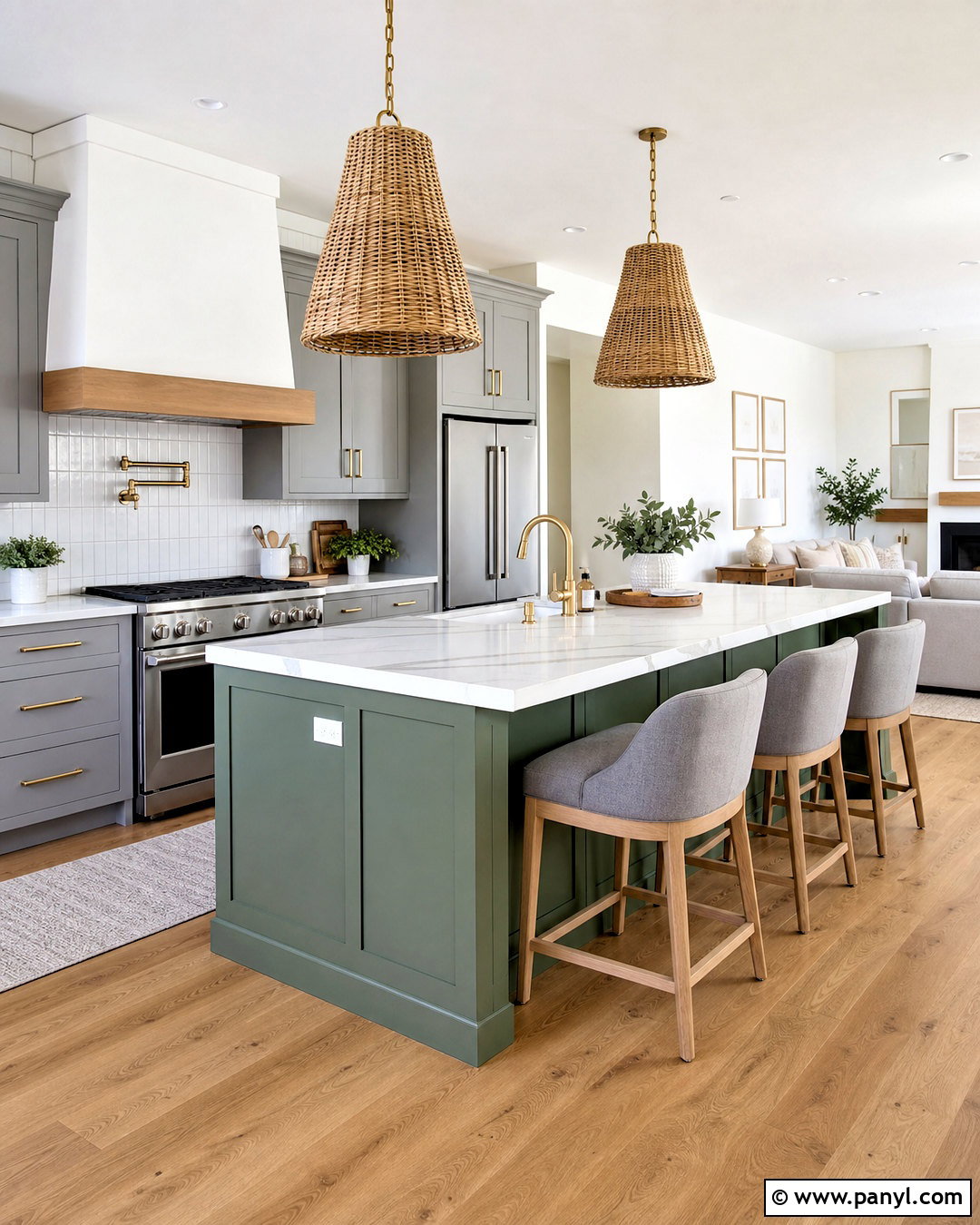
Make the island the focal point by painting it rich sage green and surrounding it with soft gray perimeter cabinetry. This arrangement adds color in a controlled way, making it ideal for an open kitchen connected to neutral living spaces. Top every cabinet with white quartz featuring delicate gray veining. Use a white vertical tile backsplash, brushed brass hardware, and warm oak flooring to prevent the cooler colors from dominating. Three woven pendant lights above the island introduce texture and visually separate the cooking area from the seating zone. Upholstered gray stools reinforce the perimeter color. Complete the room with warm white walls, wooden serving boards, and restrained greenery for a polished, family-friendly design.
6. Small Sage Green And Gray Kitchen
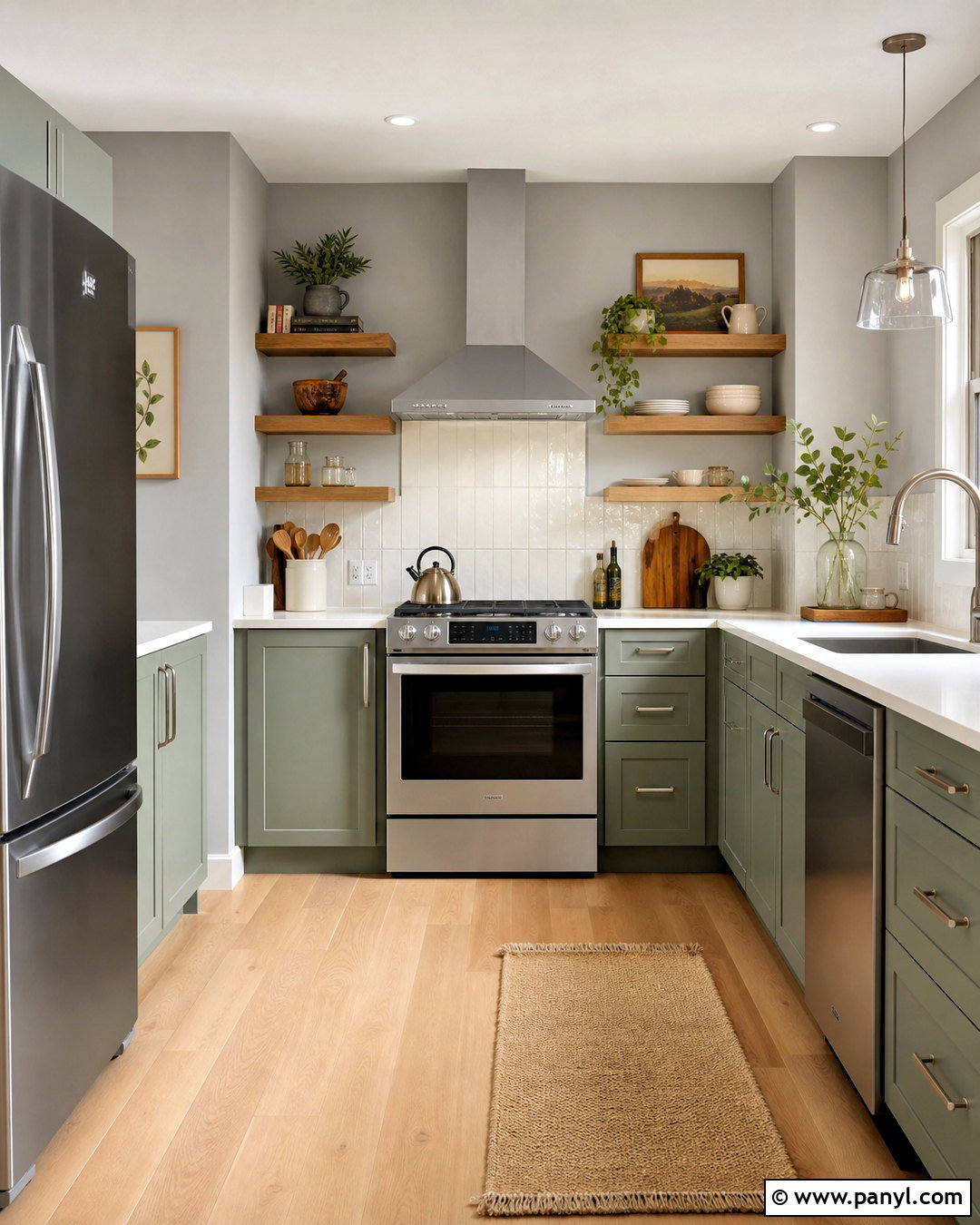
A small kitchen benefits from pale finishes and a layout that keeps visual interruptions to a minimum. Select light sage green base cabinets, warm gray walls, and a continuous white quartz worktop. Replace some upper cabinets with two slim oak shelves to make the room appear less enclosed. Use glossy off-white backsplash tiles to reflect daylight, and keep the grout pale gray for subtle definition. Compact stainless steel appliances and brushed nickel hardware support the cool-neutral palette without creating harsh contrast. Lay light oak-look flooring lengthwise to emphasize the room’s depth. Add a narrow gray runner and simple white ceramics rather than numerous accessories. This thoughtful combination gives a limited kitchen color, storage, and breathing room.
7. Modern Sage Green And Charcoal Gray Kitchen
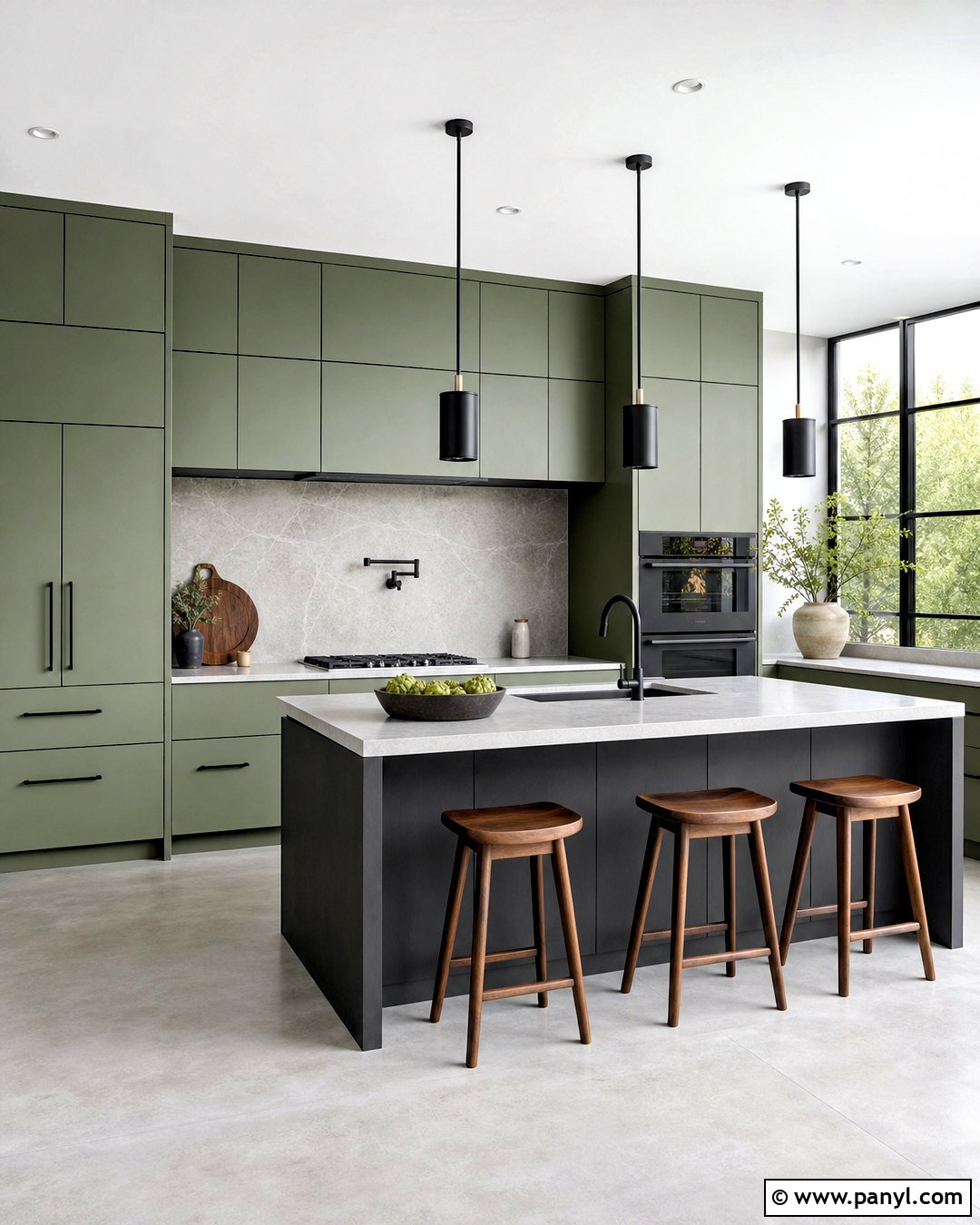
Flat-panel sage green cabinets take on a modern appearance when paired with a charcoal gray island and streamlined details. Use handleless doors or slim black edge pulls to preserve clean lines. Pale gray quartz countertops keep the darker island from overwhelming the room, while a full-height quartz backsplash creates a seamless finish. Large-format concrete-look floor tiles reinforce the contemporary direction. Add black-framed windows, cylindrical pendant lights, and integrated appliances for crisp visual structure. Warm the space with walnut counter stools and a few sculptural wood accessories. Keep the walls soft white and limit open decor to one ceramic bowl or vase. The result is bold and graphic, yet the muted sage prevents it from feeling stark.
8. Farmhouse Sage Green And Gray Kitchen
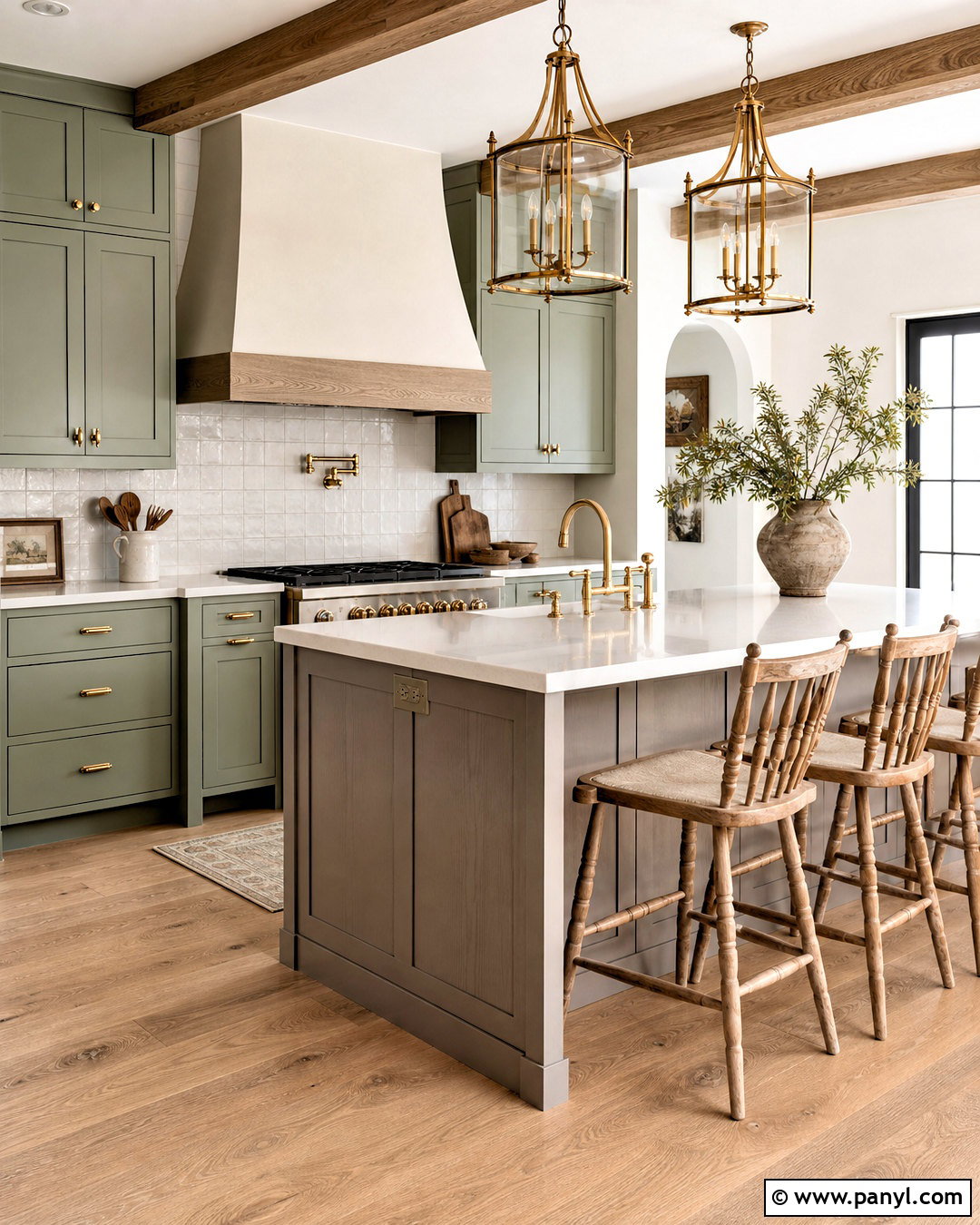
For a relaxed farmhouse kitchen, combine dusty sage Shaker cabinets with warm gray walls and a large gray-painted island. Choose white quartz countertops, a deep apron-front sink, and an antique-style brass bridge faucet. A backsplash of uneven cream subway tiles adds handcrafted character without competing with the cabinet color. Wide-plank oak flooring, spindle-back stools, and reclaimed wood shelves bring rustic warmth into the palette. Install simple brass lantern pendants above the island and use matching latches and cup pulls on the cabinetry. A washable vintage-pattern runner can include muted green, beige, and charcoal. Finish with stoneware crocks, cutting boards, and linen towels, keeping the counters organized so the layered farmhouse details remain welcoming rather than cluttered.
9. Scandinavian Sage Green And Gray Kitchen
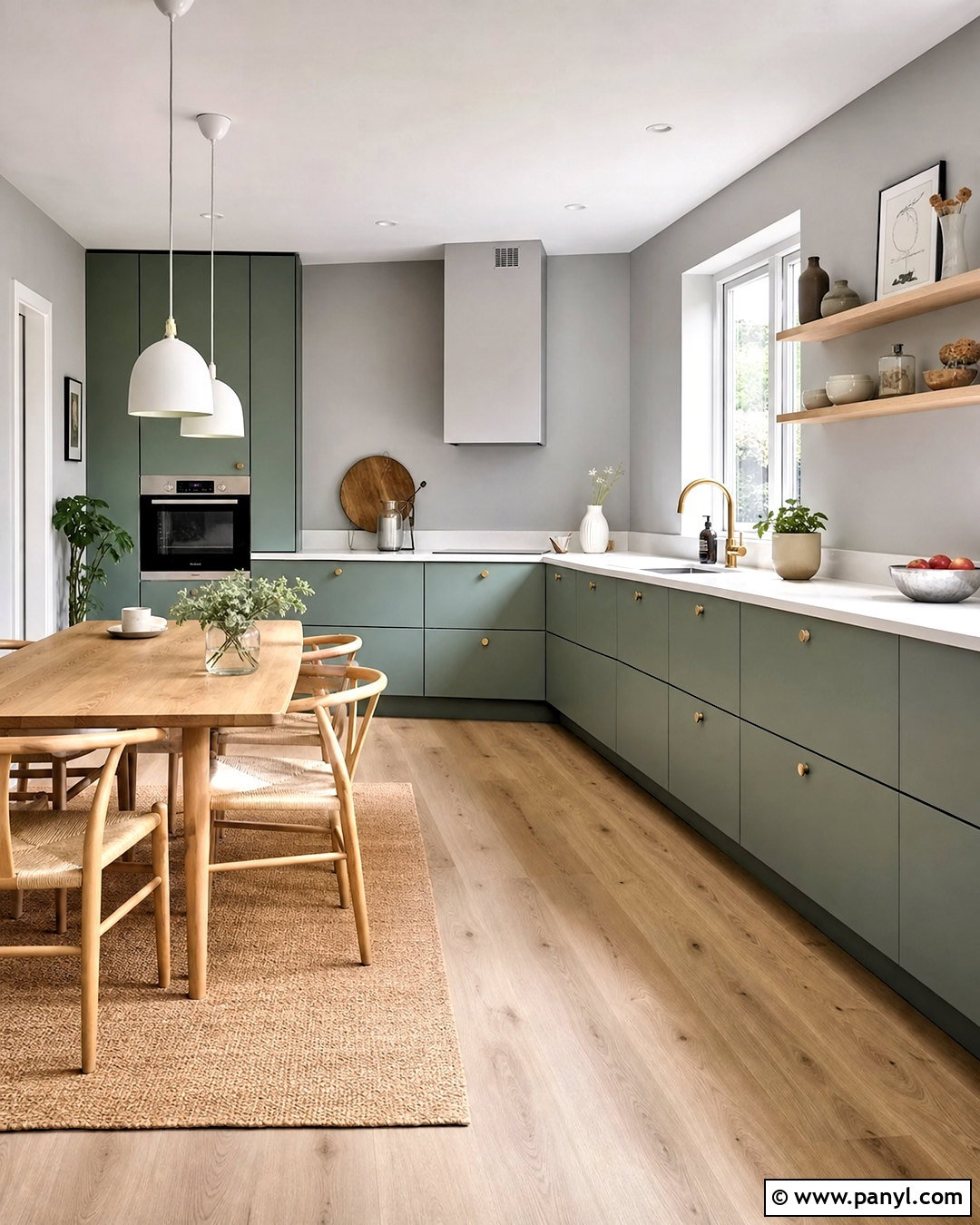
A Scandinavian-inspired kitchen feels airy when sage green cabinetry is mixed with pale gray walls, light wood, and simple shapes. Choose flat-front or narrow-frame cabinet doors with small oak knobs. Install white solid-surface countertops and a matching backsplash for a quiet, uninterrupted background. Pale oak floorboards and a compact wood dining table bring natural warmth into the cooler palette. Use open shelving sparingly, displaying only white dishes, clear glassware, and a few neutral ceramics. A pair of simple white pendant lights provides functional illumination without adding visual weight. Add gray linen seat cushions and a washable striped rug for softness. This uncluttered design is especially effective in open-plan apartments where the kitchen must blend naturally with nearby living areas.
10. Rustic Sage Green And Gray Kitchen
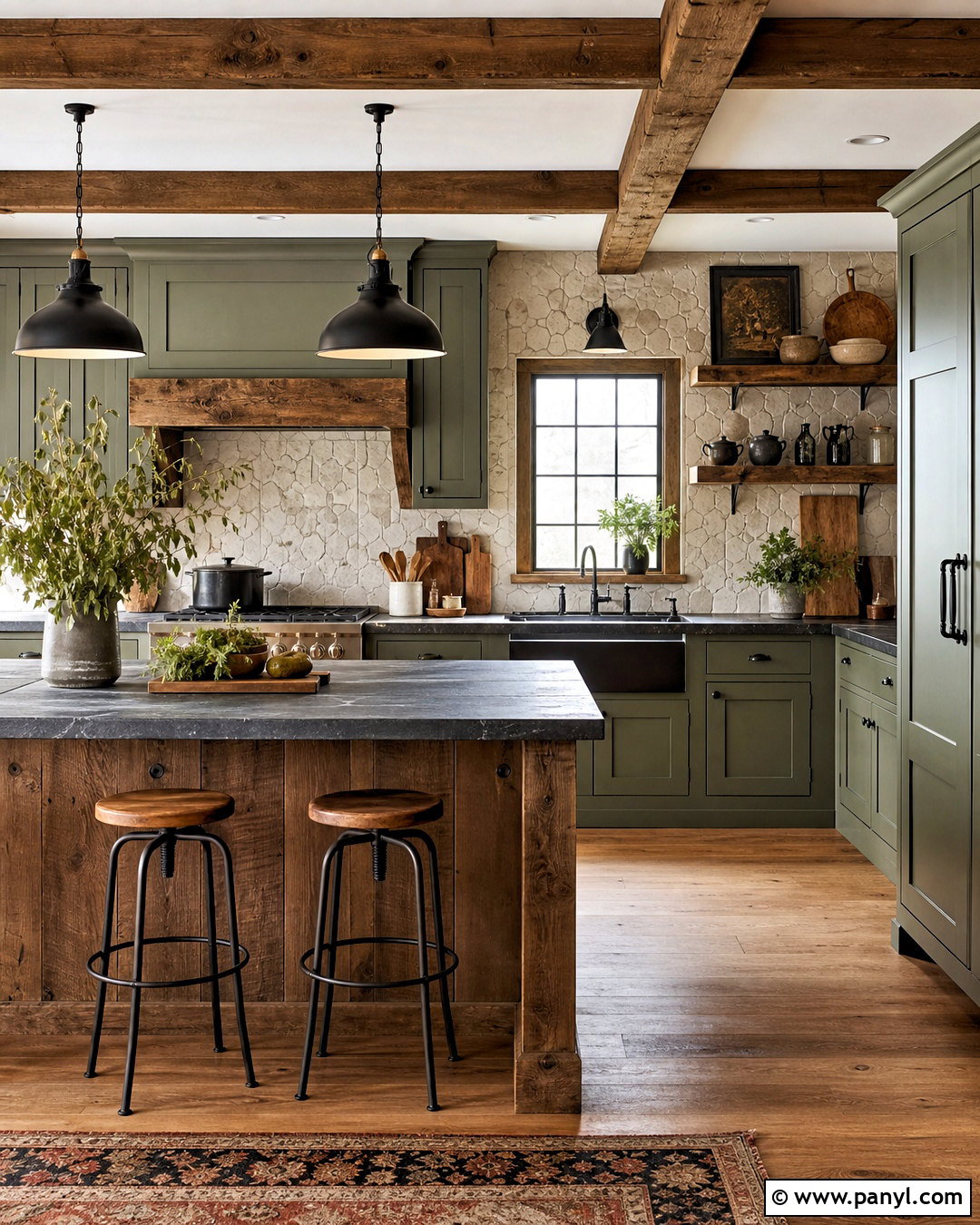
Weathered materials give sage green and gray a cozy, established quality. Start with muted sage Shaker cabinets and honed gray soapstone or soapstone-look quartz counters. Add a backsplash of irregular cream stone or handmade tile to soften the darker worktop. Exposed ceiling beams, reclaimed oak shelves, and medium-toned wood flooring create a warm rustic framework. Choose aged iron cabinet hardware and simple black metal pendants for definition. A sturdy wood island with a gray stone top can provide preparation space and casual seating. Keep the walls a pale greige so the room does not become too shadowy. Complete the look with woven baskets, stoneware, linen towels, and practical wooden utensils arranged in small, controlled groupings.
11. Sage Green Cabinets With Gray Marble Backsplash
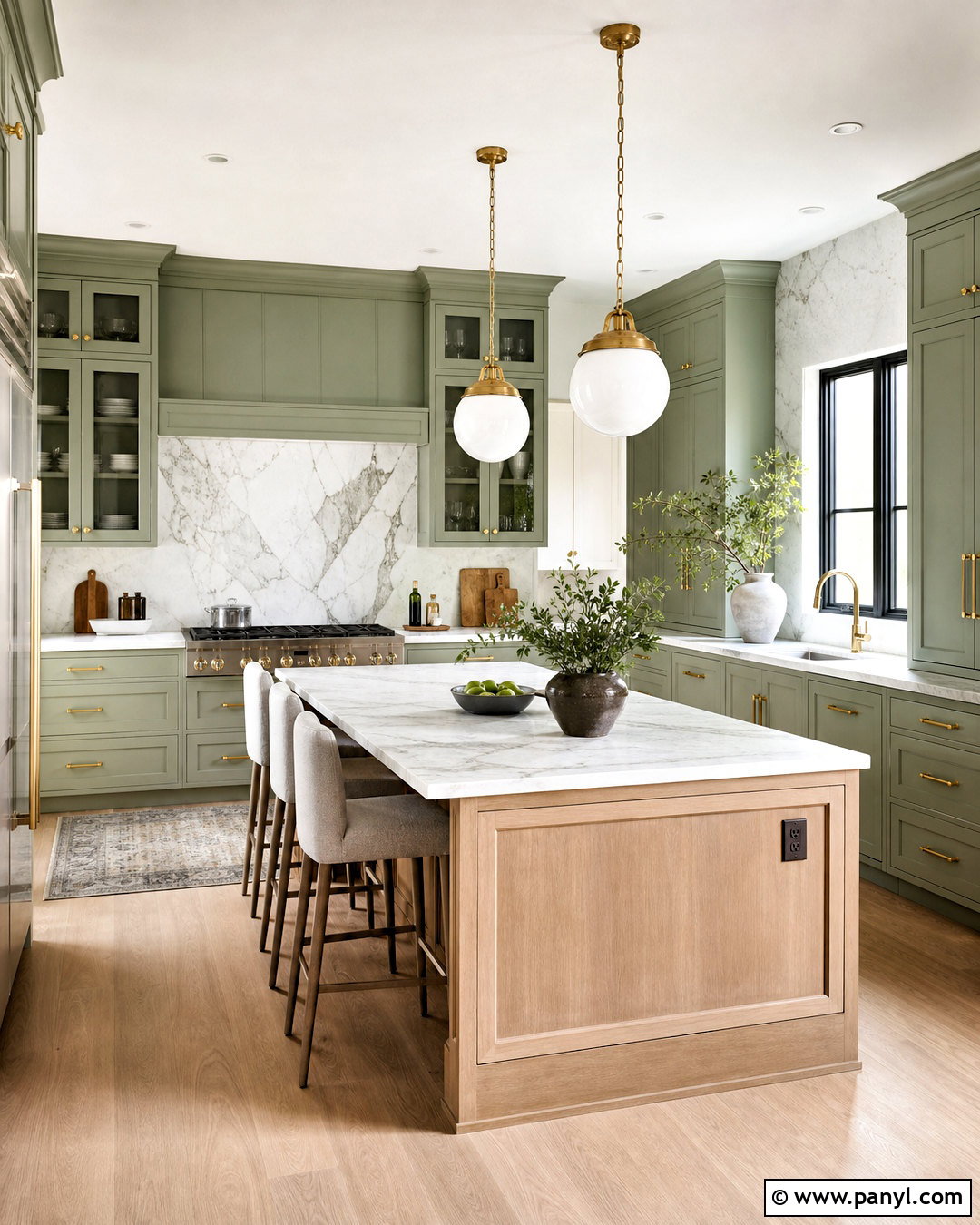
Gray-veined marble brings subtle movement to a kitchen with understated sage cabinetry. Use the stone for both the countertops and a full-height backsplash, allowing its delicate veining to become the main decorative feature. Select simple inset cabinet doors so the overall room feels elegant rather than busy. Brushed brass pulls, a matching faucet, and warm globe pendants highlight the green undertones. Pale oak flooring and a white oak island base add natural contrast to the painted cabinets. Keep the walls warm white and choose light gray upholstered stools with narrow frames. Minimal accessories, such as cream pottery and a wooden fruit bowl, protect the refined appearance. This complete look works well in both traditional and updated transitional homes.
12. Sage Green Cabinets With Gray Concrete Countertops
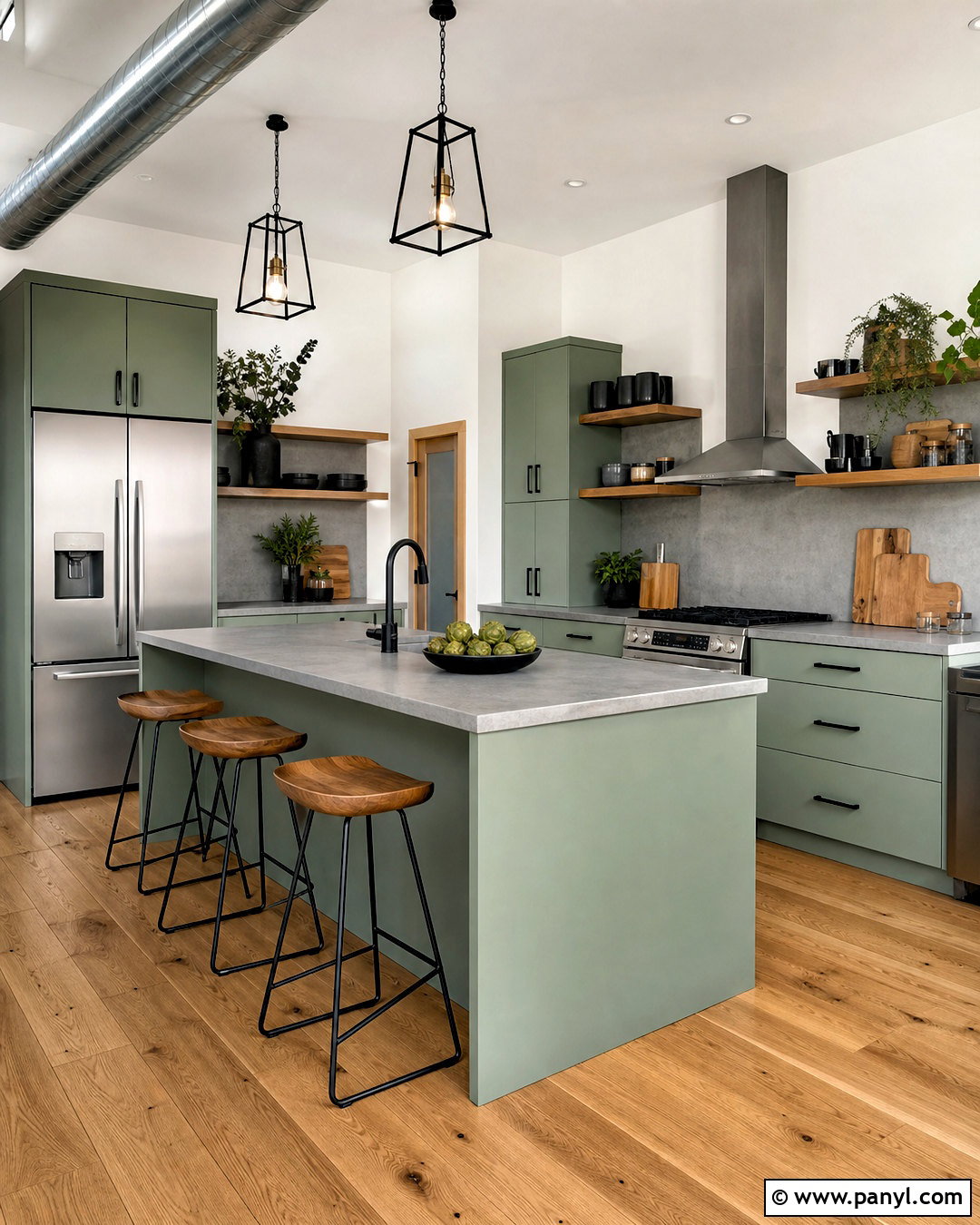
Concrete countertops give sage green cabinetry a casual, architectural character. Choose medium sage flat-panel cabinets and a smooth warm-gray concrete surface with softly rounded edges. Continue the concrete behind the range as a short backsplash, then use warm white paint above it. Matte black pulls, a black faucet, and black-framed pendant lights provide a strong outline. To keep the kitchen comfortable, add honey-toned oak flooring, wood bar stools, and open shelves with natural grain. Stainless steel appliances suit the utilitarian materials without distracting from the color scheme. Finish with cream dishware, woven storage baskets, and one leafy plant. The completed room feels modern and durable, but the wood and muted green prevent an overly industrial result.
13. Sage Green Kitchen With Gray Zellige Tile
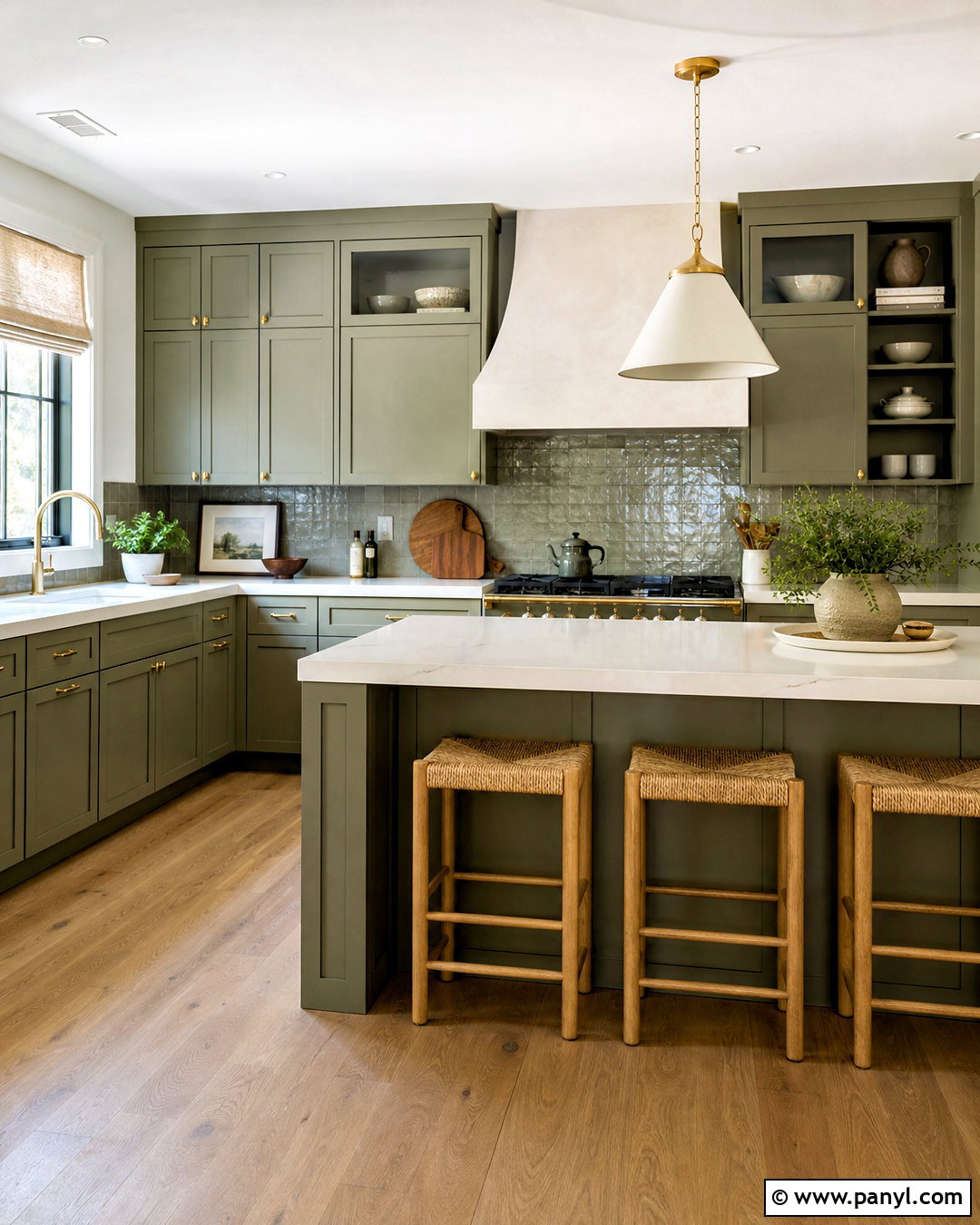
Handmade gray zellige tile adds variation and reflected light to a sage green kitchen. Choose a soft silver-gray tile with uneven edges and install it from the countertops to the upper cabinets. Pair it with medium sage Shaker cabinetry and creamy white quartz surfaces. Because the backsplash already provides movement, keep the hardware simple with slim brushed brass pulls. Add a plaster-style range hood painted warm white to create a calm focal point. Pale oak flooring, woven island stools, and linen window shades bring softness to the glossy tile. Use warm under-cabinet lighting to reveal its natural texture. Restrained accessories in cream, wood, and clear glass allow this layered kitchen to feel collected without becoming visually crowded.
14. Dark Gray Island With Sage Green Cabinets
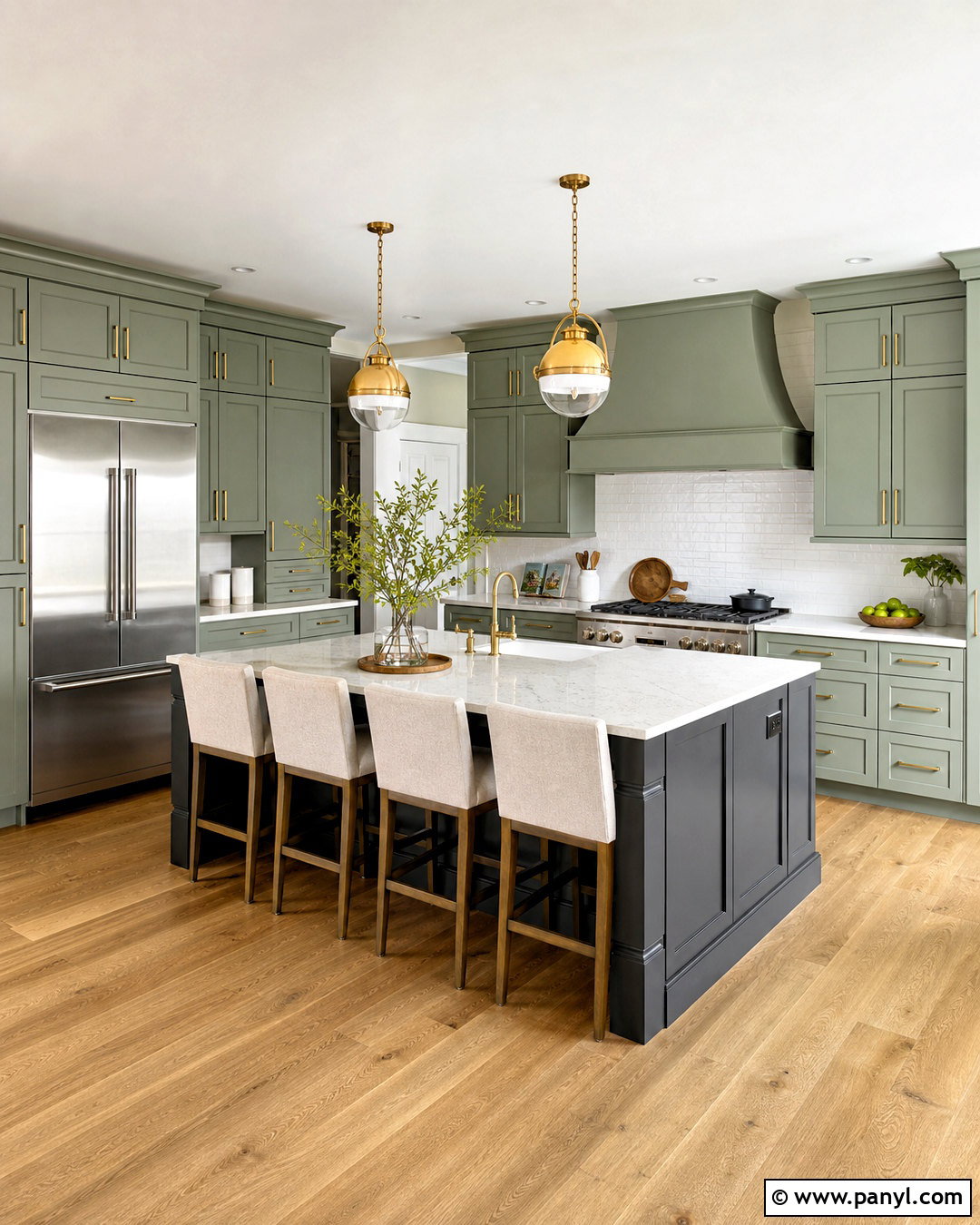
A dark gray island can anchor an expansive kitchen lined with light sage green cabinets. Select a charcoal shade with warm undertones so it coordinates with the muted green rather than appearing blue. Cover the island and perimeter cabinets with creamy quartz countertops containing fine gray veins. A white tile backsplash and warm white walls maintain brightness around the deeper center color. Use aged brass hardware, brass pendant lights, and medium oak flooring to warm the composition. Upholster the counter stools in durable oatmeal fabric for a softer seating area. Repeat charcoal in the range hood trim or window frames to distribute the contrast. This balanced layout gives a large room a clear focal point and strong visual structure.
15. Sage Green Kitchen With Gray Open Shelving
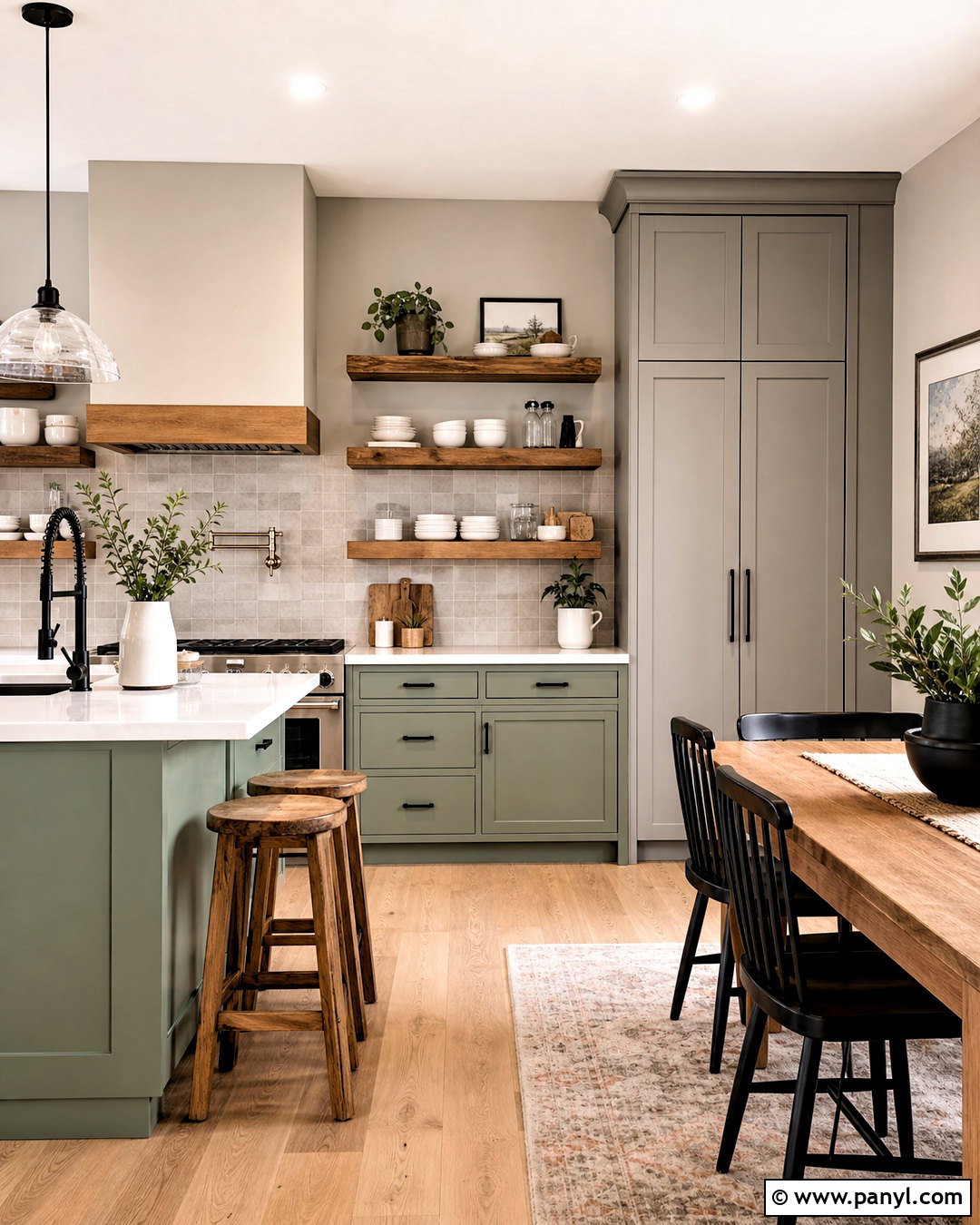
Open shelving can make a sage green and gray kitchen feel lighter when it is planned as part of the full room. Paint the lower cabinets medium sage and use soft gray on a tall pantry unit and walls. Install two thick oak shelves above a white quartz countertop and a pale gray tile backsplash. Display everyday white plates, clear glasses, and cream bowls rather than purely decorative clutter. Black shelf brackets can coordinate with matte black cabinet pulls and a black faucet. Choose light oak flooring and a simple wood table to repeat the shelf material. Under-shelf lights improve task visibility. A striped gray runner and a few small green plants complete this functional, casual kitchen without crowding the available surfaces.
16. Sage Green And Gray Galley Kitchen
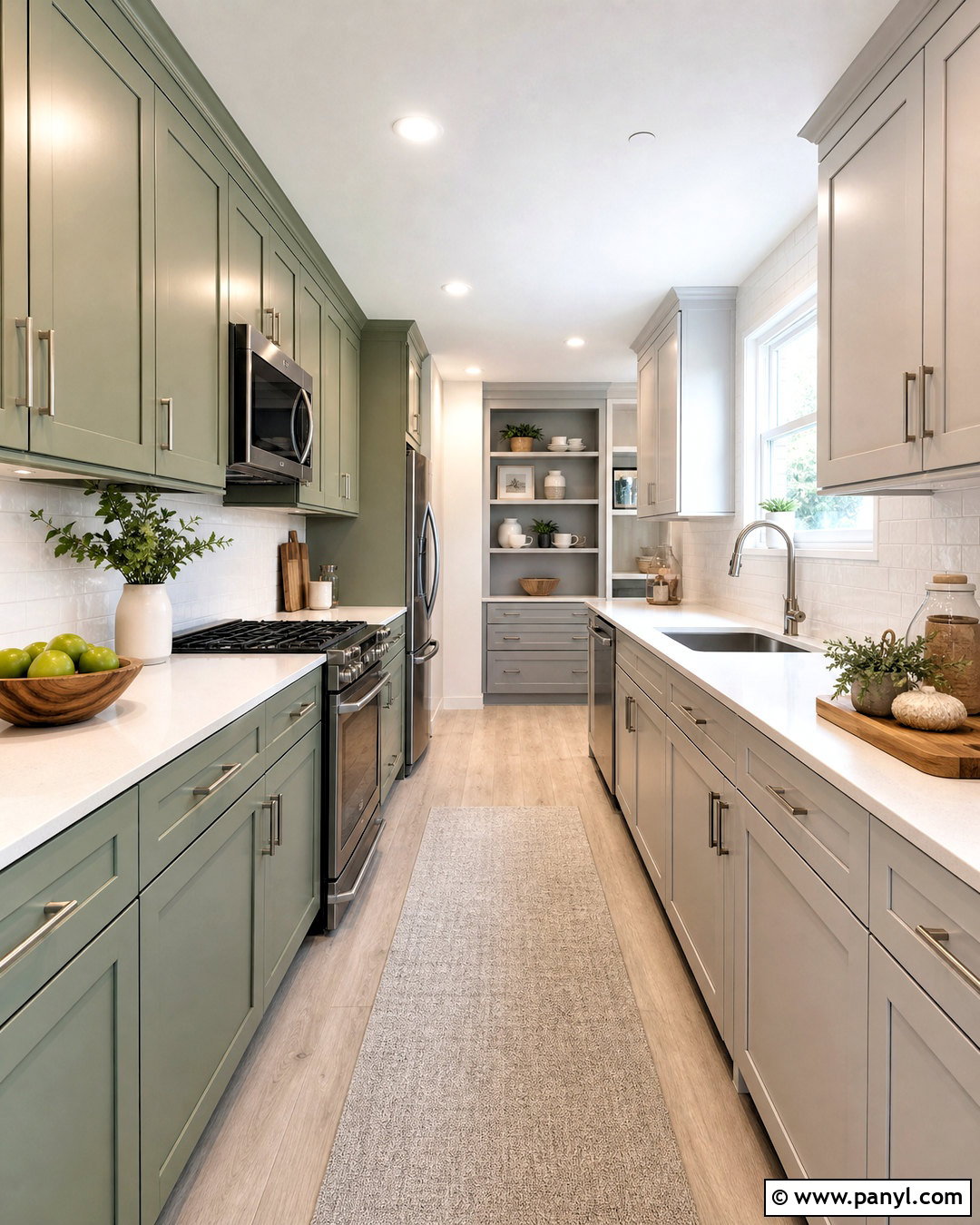
A galley layout needs a coordinated scheme that leads the eye through the narrow space. Use pale sage cabinetry on one side and warm light-gray cabinets on the opposite wall. Keeping both colors similar in depth prevents either side from feeling heavier. Run white quartz countertops along the full length and use a glossy white tile backsplash to reflect light. Slim brushed nickel pulls and stainless steel appliances create a clean, practical finish. Lay pale wood-look planks lengthwise to make the passage feel more continuous. Recessed ceiling lights and under-cabinet strips eliminate shadowy corners. Add a narrow gray washable runner and minimal counter decor. The finished kitchen feels balanced, organized, and visually wider without sacrificing storage or personality.
17. Coastal Sage Green And Gray Kitchen
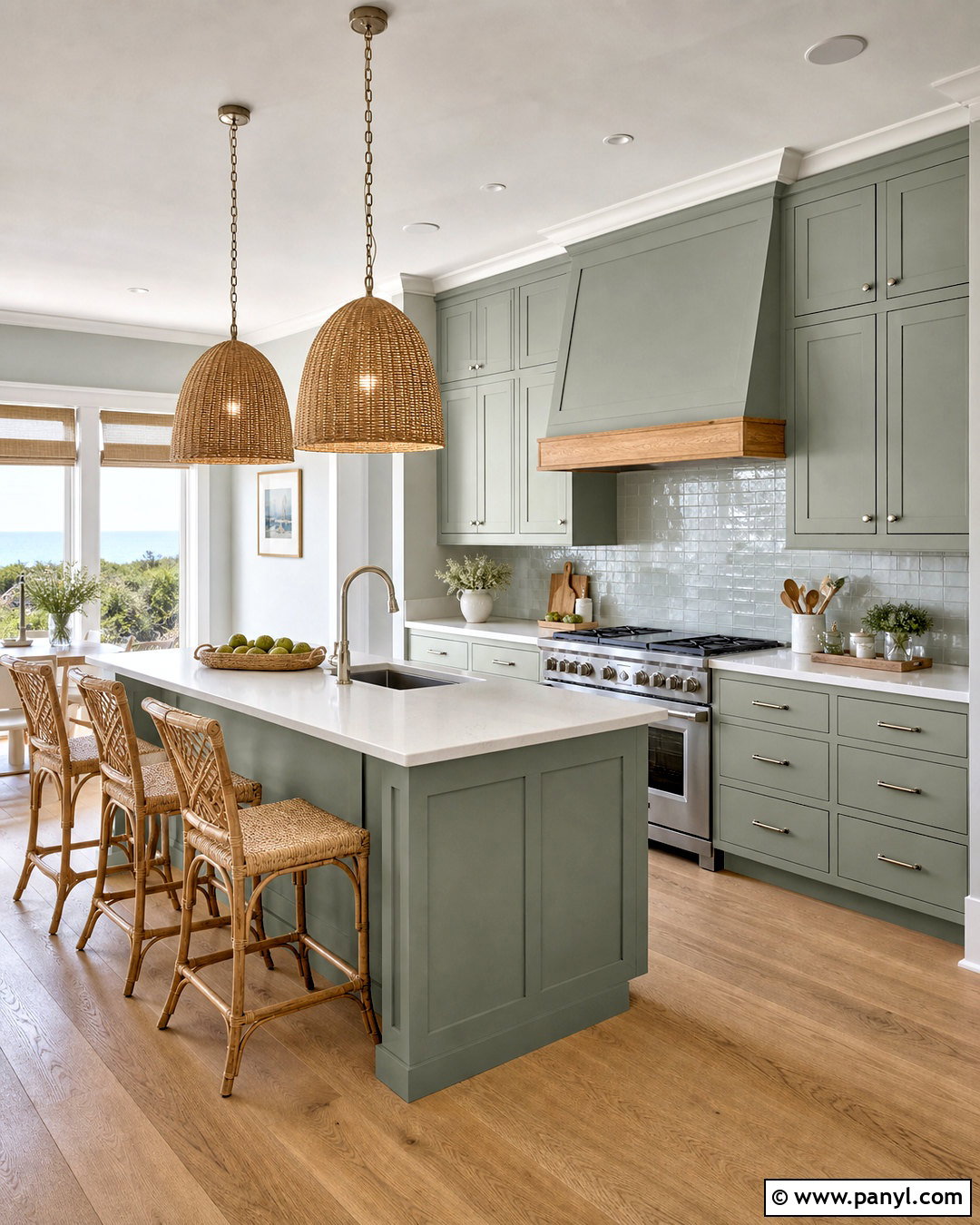
A coastal kitchen can use sage green and gray without relying on obvious nautical decorations. Choose light sage cabinetry, misty gray walls, and white quartz countertops for an airy base. Add a backsplash of glossy pale gray-blue tiles to suggest soft coastal color. White oak flooring, rattan counter stools, and woven pendant lights provide natural texture. Use polished nickel hardware and a matching faucet for a clean finish that reflects light. A white-painted island with a sage end panel can subtly break up the cabinetry. Dress windows with sheer linen shades and add a washable cream-and-gray striped runner. Keep accessories simple with clear glass, white ceramics, and light wood, creating a fresh coastal room that still feels appropriate year-round.
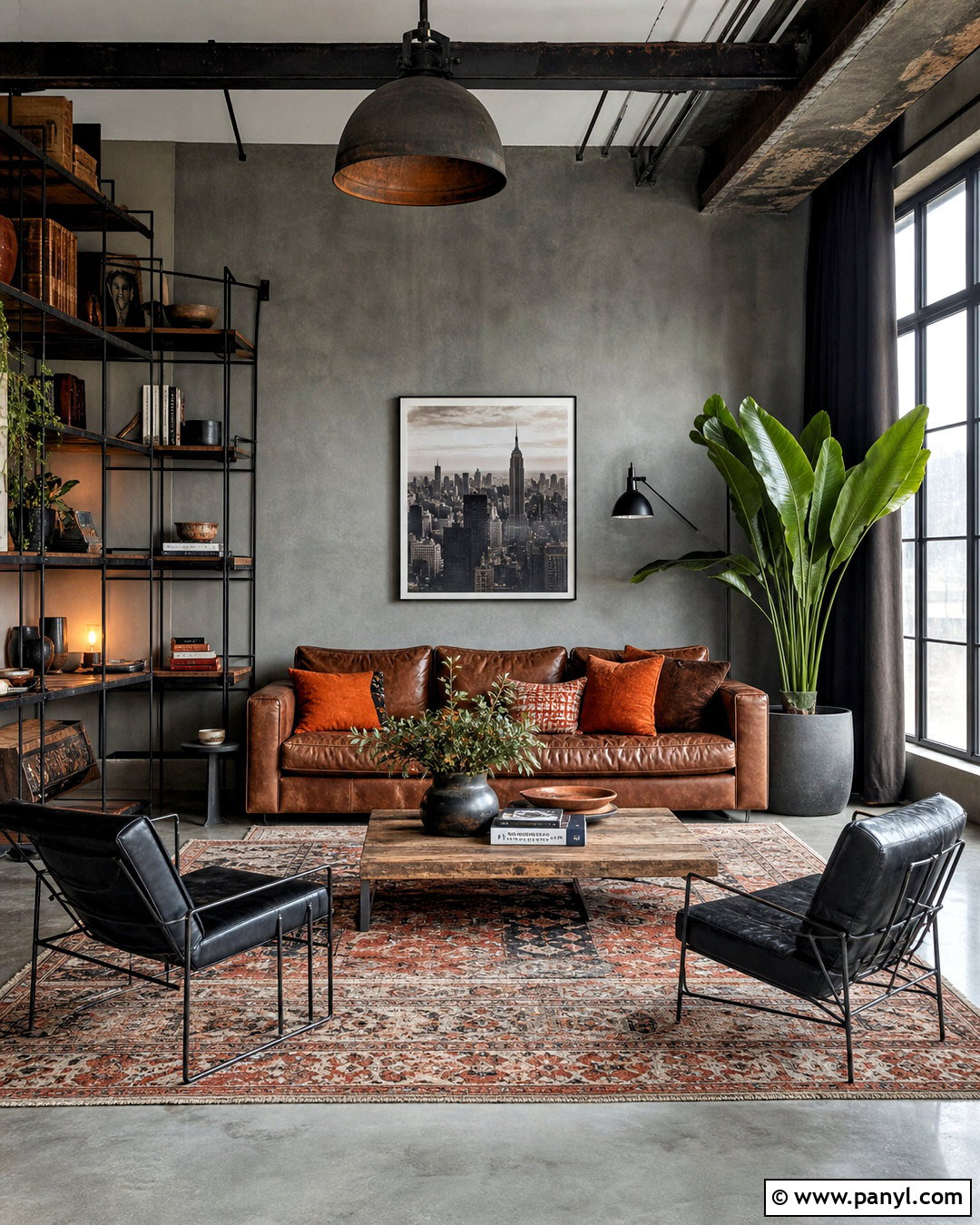
18. Industrial Sage Green And Gray Kitchen
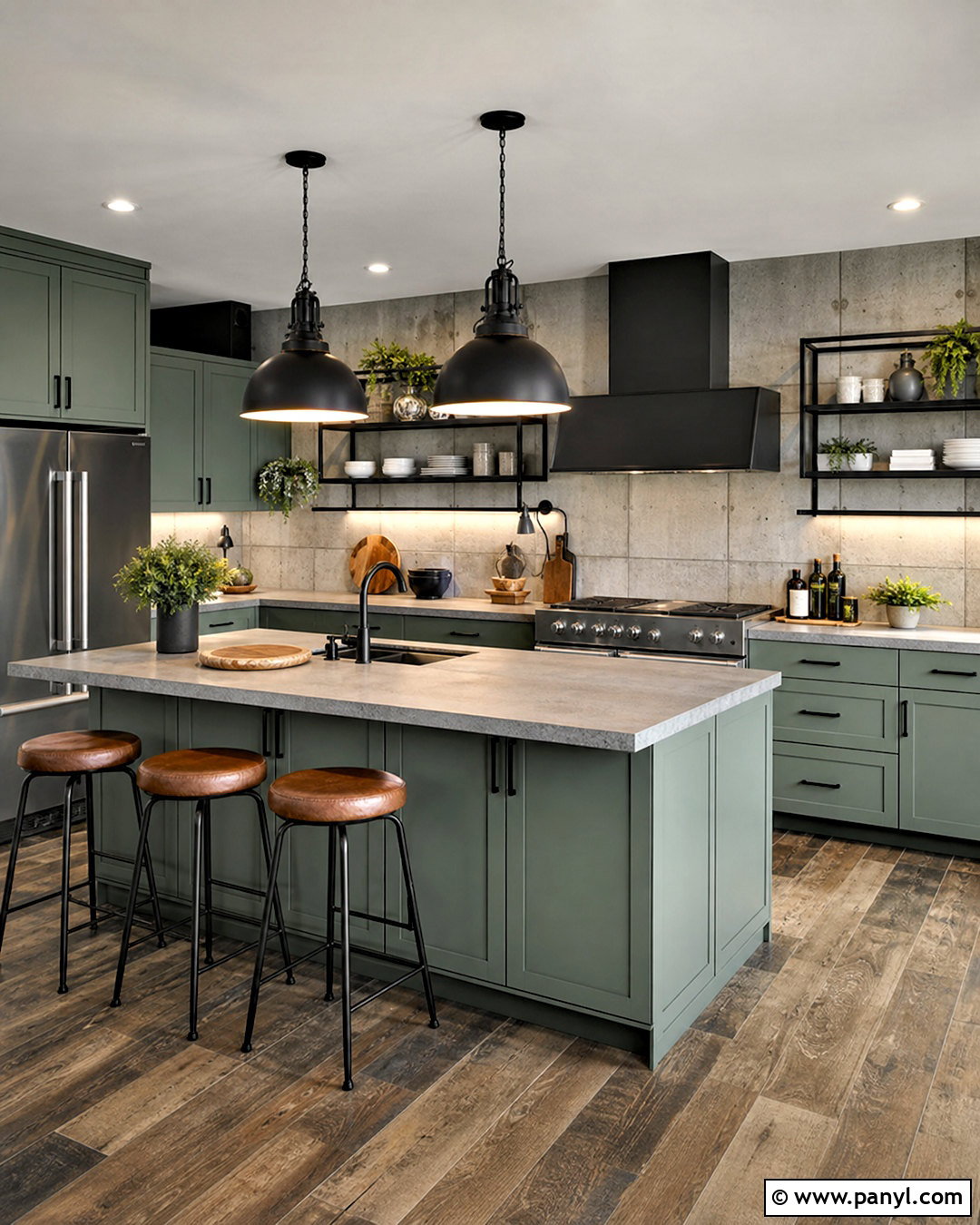
Muted sage cabinetry can soften an industrial kitchen built around concrete gray and black metal. Select simple slab-front cabinets, medium-gray quartz counters, and a concrete-look backsplash. Add black-framed open shelves, matte black pulls, and black factory-style pendant lights for structure. Stainless steel appliances fit naturally into the utilitarian palette. Rather than using more gray underfoot, choose warm reclaimed-look wood flooring to keep the space welcoming. A sturdy island with a sage base and thick gray countertop creates a practical work zone. Leather-look brown counter stools and wooden cutting boards add another warm layer without reducing the industrial character. Finish with a few cream ceramics and neatly stored cookware, allowing the strong materials and controlled colors to define the room.
19. Traditional Sage Green And Gray Kitchen
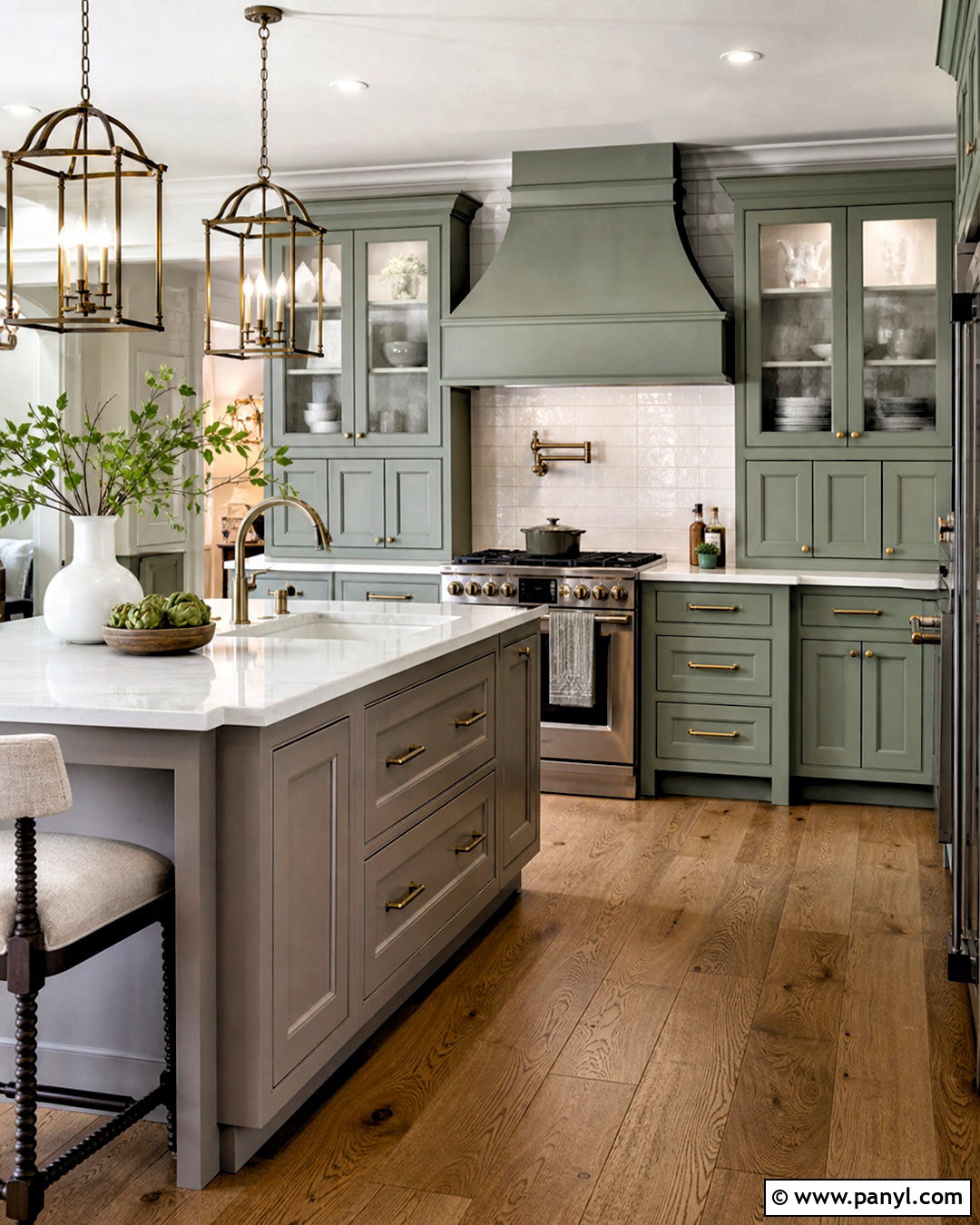
Inset sage green cabinetry, decorative crown molding, and a warm gray island create a traditional kitchen that feels updated rather than formal. Choose creamy marble-look quartz countertops and a soft white backsplash with subtle gray grout. A detailed range hood painted sage can establish a graceful focal point without introducing another color. Use antique brass knobs, cup pulls, and a bridge faucet for warmth and continuity. Medium oak flooring grounds the lighter cabinetry, while classic lantern pendants illuminate the island. Add gray upholstered stools and a muted patterned runner for comfort. Glass-front upper cabinets can display coordinated white dishes. By limiting ornament and using a restrained palette, this complete traditional scheme remains inviting, practical, and suitable for everyday living.
20. Budget Sage Green And Gray Kitchen Makeover
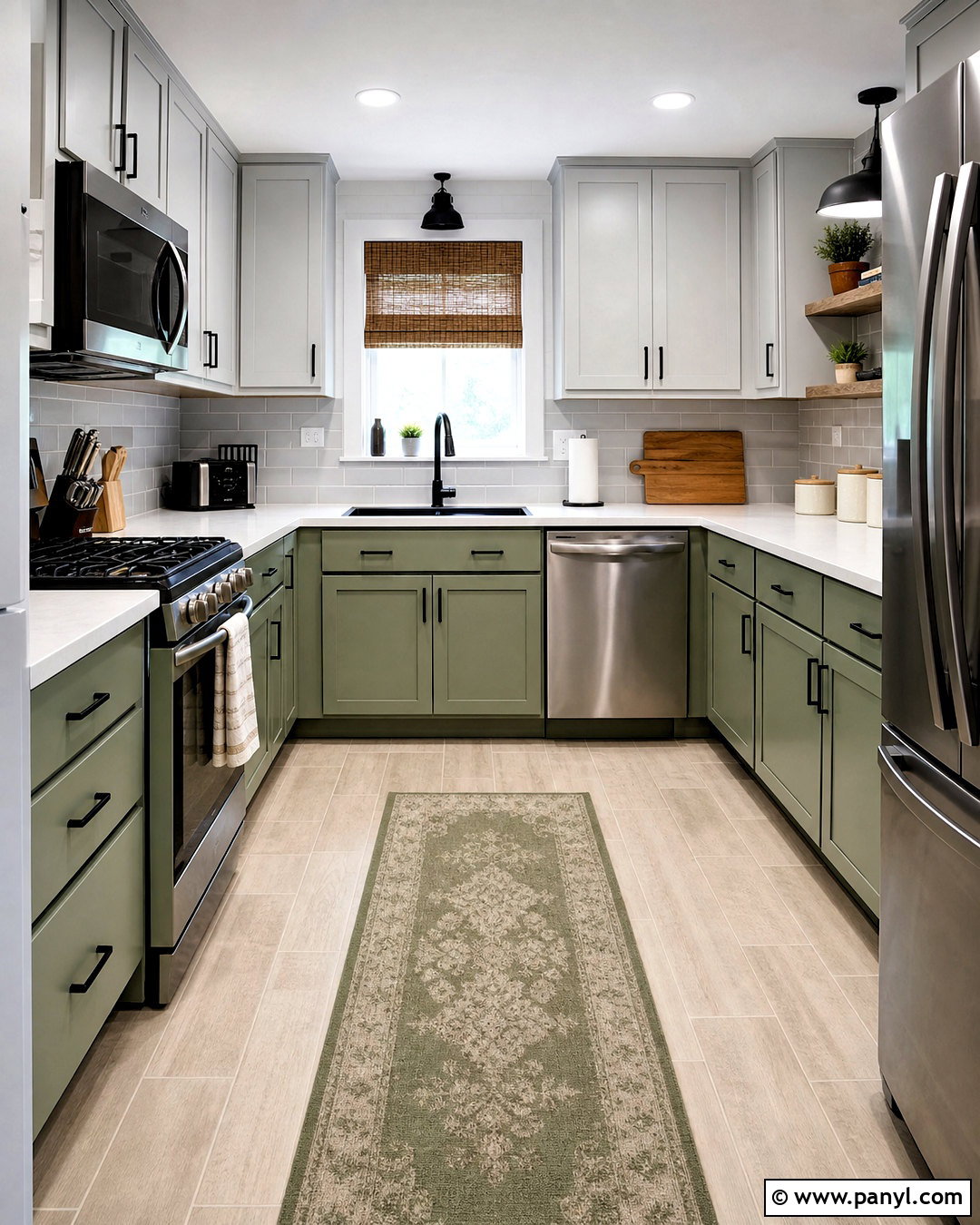
A budget-conscious makeover can create a complete sage green and gray kitchen without replacing every surface. Paint structurally sound lower cabinets sage green and leave upper cabinets warm light gray. Update worn counters with an affordable white laminate or butcher-block surface, then install a simple peel-and-stick backsplash in pale gray subway tile. Replace mismatched hardware with consistent matte black pulls and add a black faucet if the budget allows. Keep existing flooring, but introduce a washable runner containing sage, gray, and cream. Brighter ceiling bulbs and adhesive under-cabinet lights can improve the overall color balance. Finish with painted walls, decluttered countertops, wood cutting boards, and coordinated storage jars for an organized design that feels intentional rather than temporary.
Conclusion:
The most successful sage green and gray kitchens balance cool, muted colors with warmer materials and thoughtful lighting. Natural oak, brass, cream tile, woven textures, and warm white paint can keep the palette welcoming, while charcoal, black, or stainless steel details add useful definition. Before making a final choice, view cabinet, wall, tile, and countertop samples together in the kitchen during different times of day. This helps reveal undertones that may not be obvious in a showroom. Whether you are planning a full renovation or a simple painted-cabinet update, these 20 sage green and grey kitchen ideas offer adaptable combinations for creating a calm, functional, and visually connected space.

Related Ideas and Inspiration:
Leave a Reply