
An accent wall should do more than add a random block of color. It should strengthen the room’s focal point, support the furniture layout, and make the entire living area feel intentional. The best treatments now combine color with architectural character through wood slats, dimensional molding, natural stone, expressive wallpaper, and hand-finished plaster. () Whether you are decorating a compact apartment or updating a spacious family room, choose a wall that naturally attracts attention, such as the surface behind the sofa, fireplace, television, or built-ins. Then repeat its colors and materials through rugs, pillows, lighting, and furniture. The complete looks below offer practical guidance for recreating 20 accent wall for living room ideas.

1. Navy Blue Living Room Accent Wall
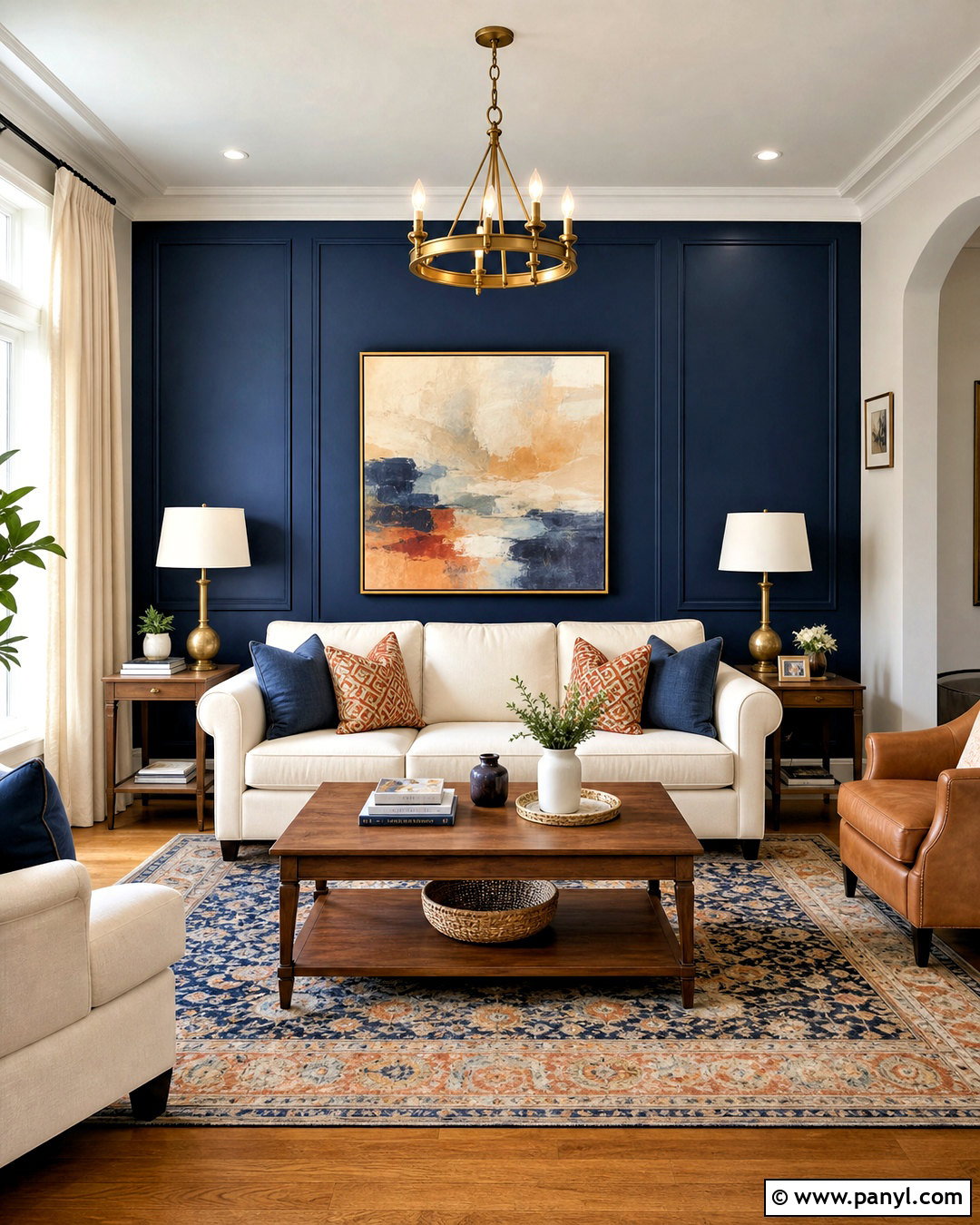
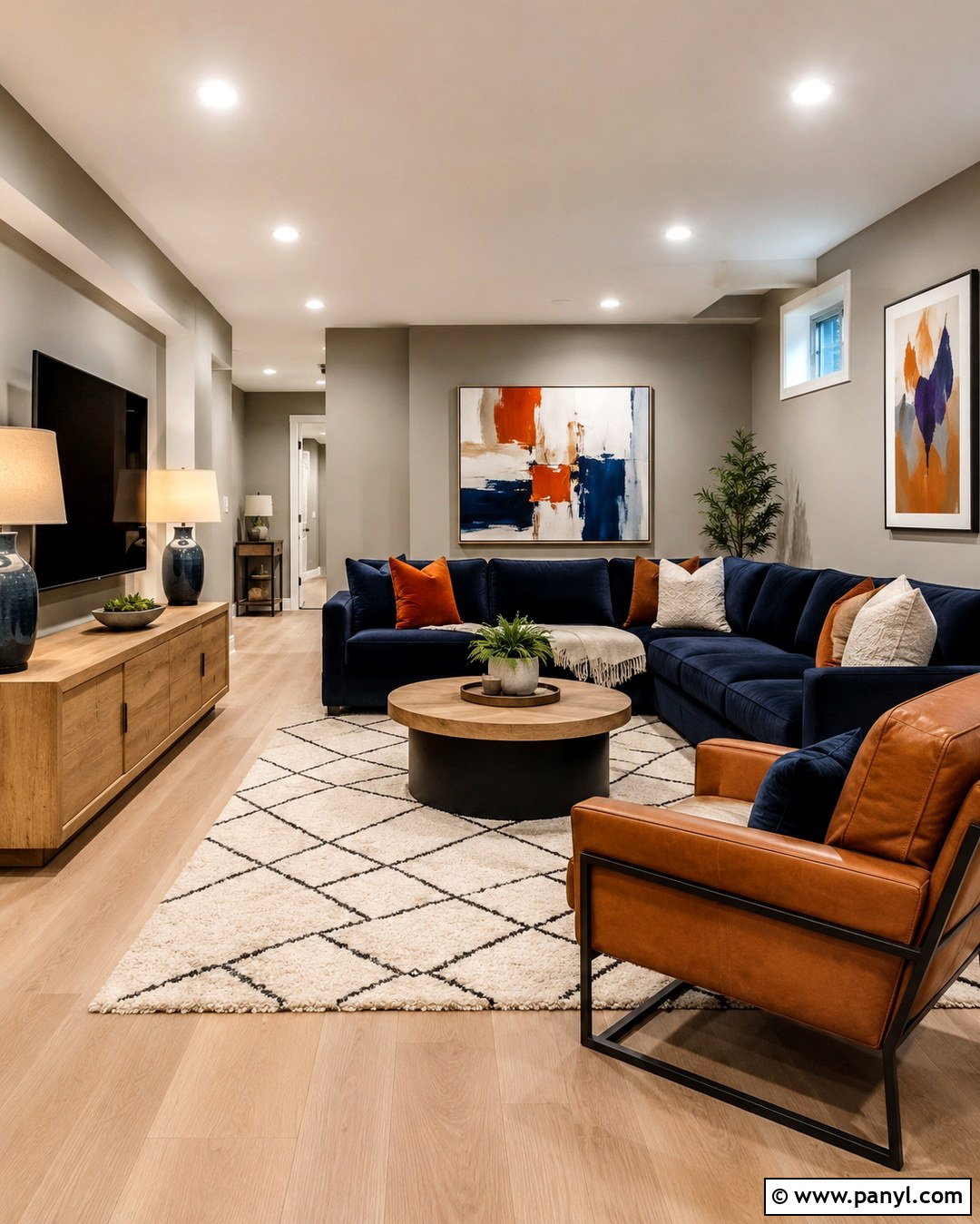
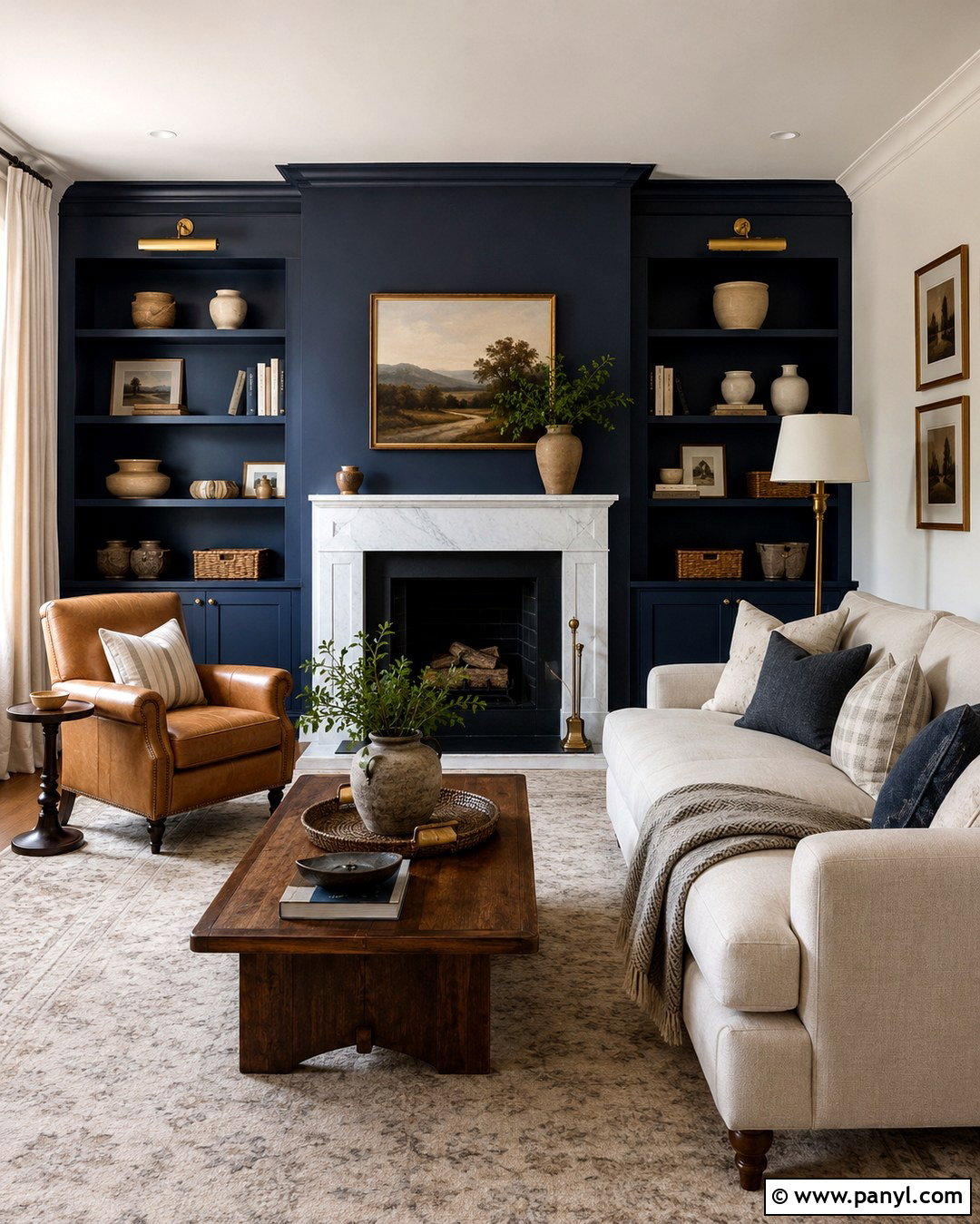
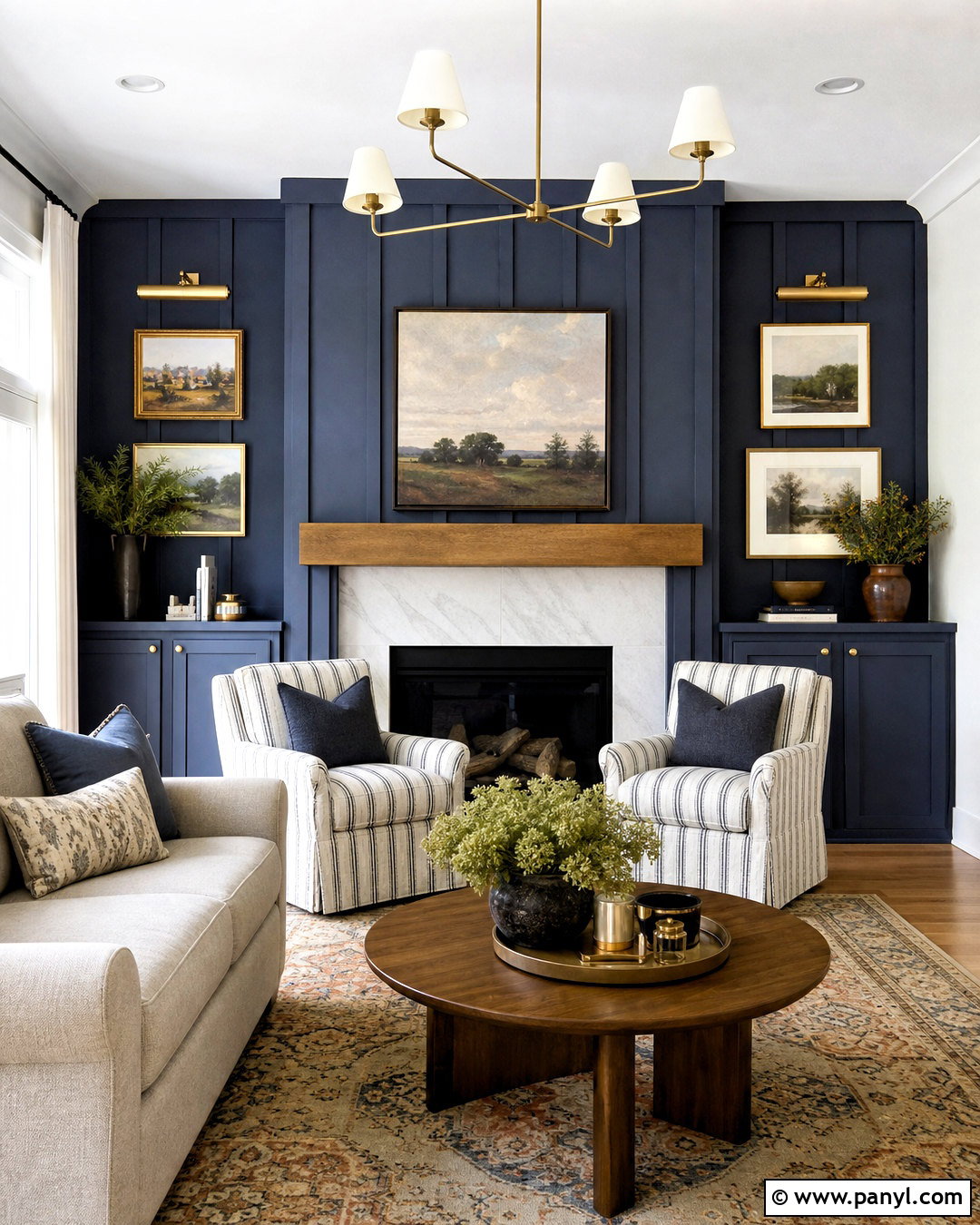
A deep navy blue wall can create a strong focal point without making the living room feel overly dramatic. Position it behind a cream or light gray sofa so the furniture stands out clearly. Keep the remaining walls warm white and introduce medium oak through the coffee table, side tables, or flooring. A patterned rug containing navy, beige, and muted rust will connect the wall to the seating area. Hang one oversized abstract artwork instead of several small pieces to maintain a clean appearance. Brushed brass lamps add warmth, while ivory curtains keep the windows bright. This complete scheme works especially well in traditional, transitional, and modern living rooms because the dark wall is balanced by soft upholstery and natural materials.
2. Walnut Slat Living Room Accent Wall
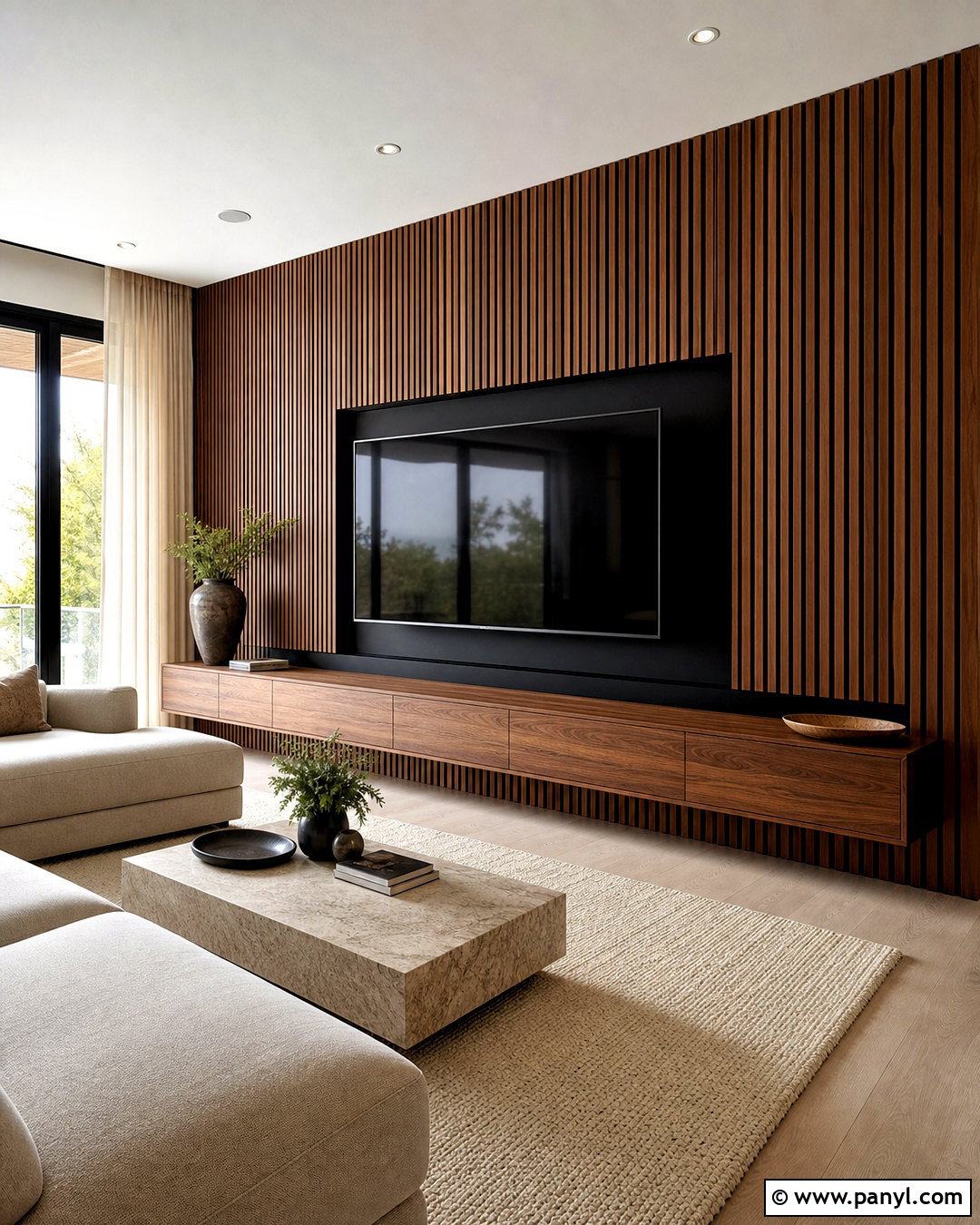
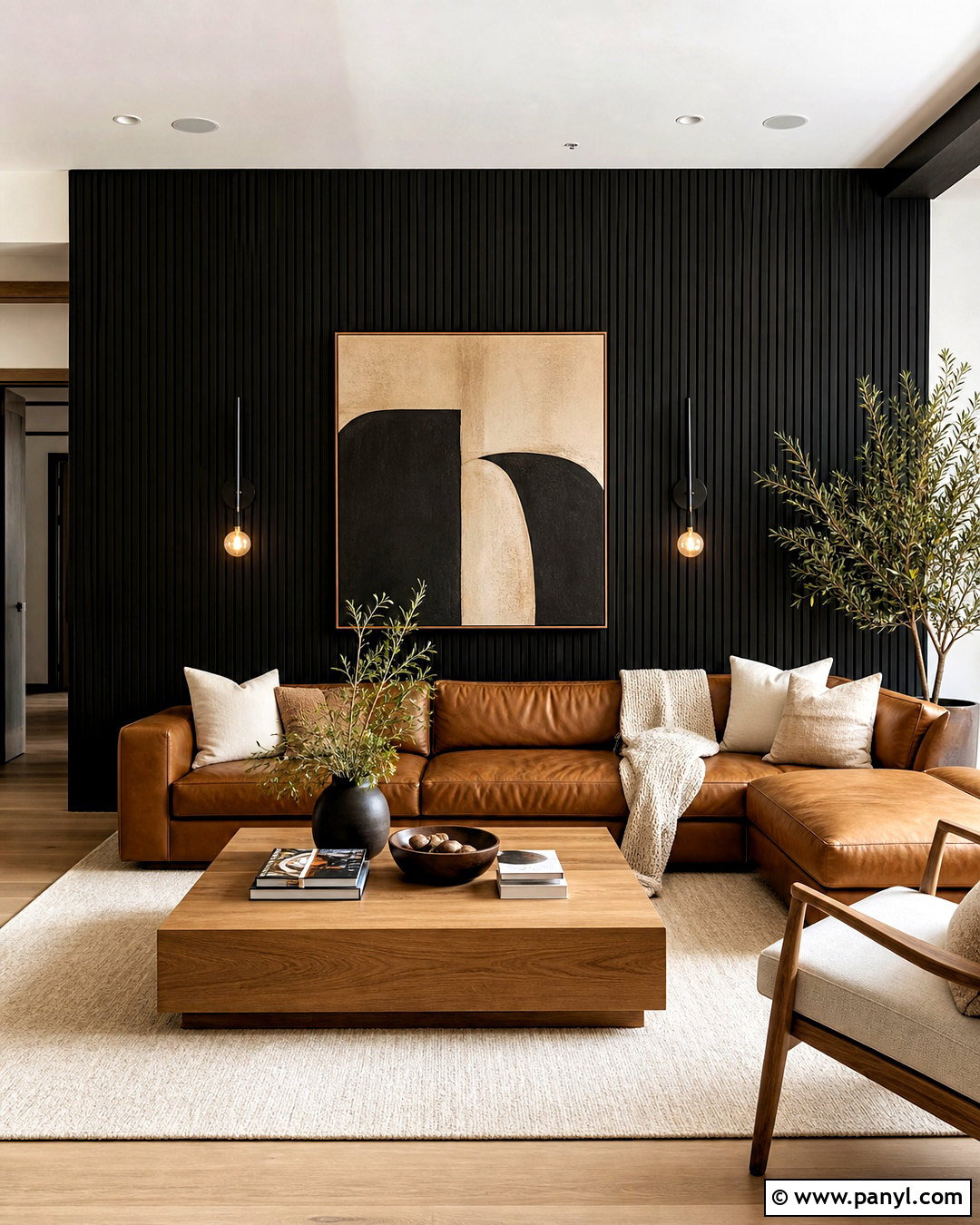
Vertical walnut slats give a plain living room warmth, rhythm, and architectural definition. Cover the television wall from floor to ceiling, placing the narrow wood strips over a charcoal or black backing. Add a low floating media cabinet in walnut or matte black to keep the arrangement streamlined. A light oatmeal sectional, round stone coffee table, and large cream wool rug will prevent the darker wood from overwhelming the space. Repeat walnut on one small side table rather than matching every piece. Soft linen curtains and sculptural ceramic decor complete the understated palette. Leave some open wall around the television and limit visible cords. The finished room feels contemporary and comfortable, with the accent wall supporting the layout rather than becoming unnecessary decoration.
3. Sage Green Board And Batten Accent Wall
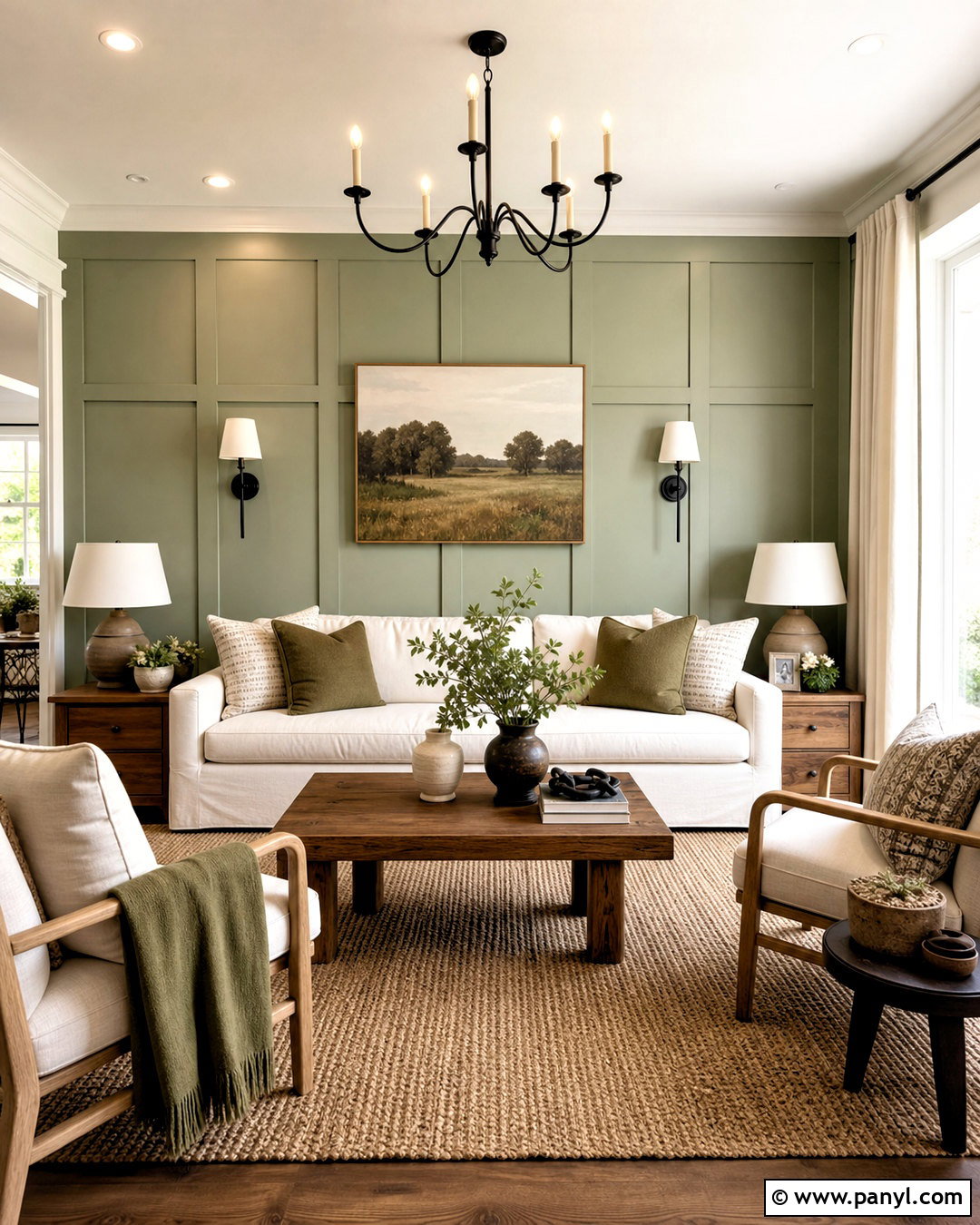
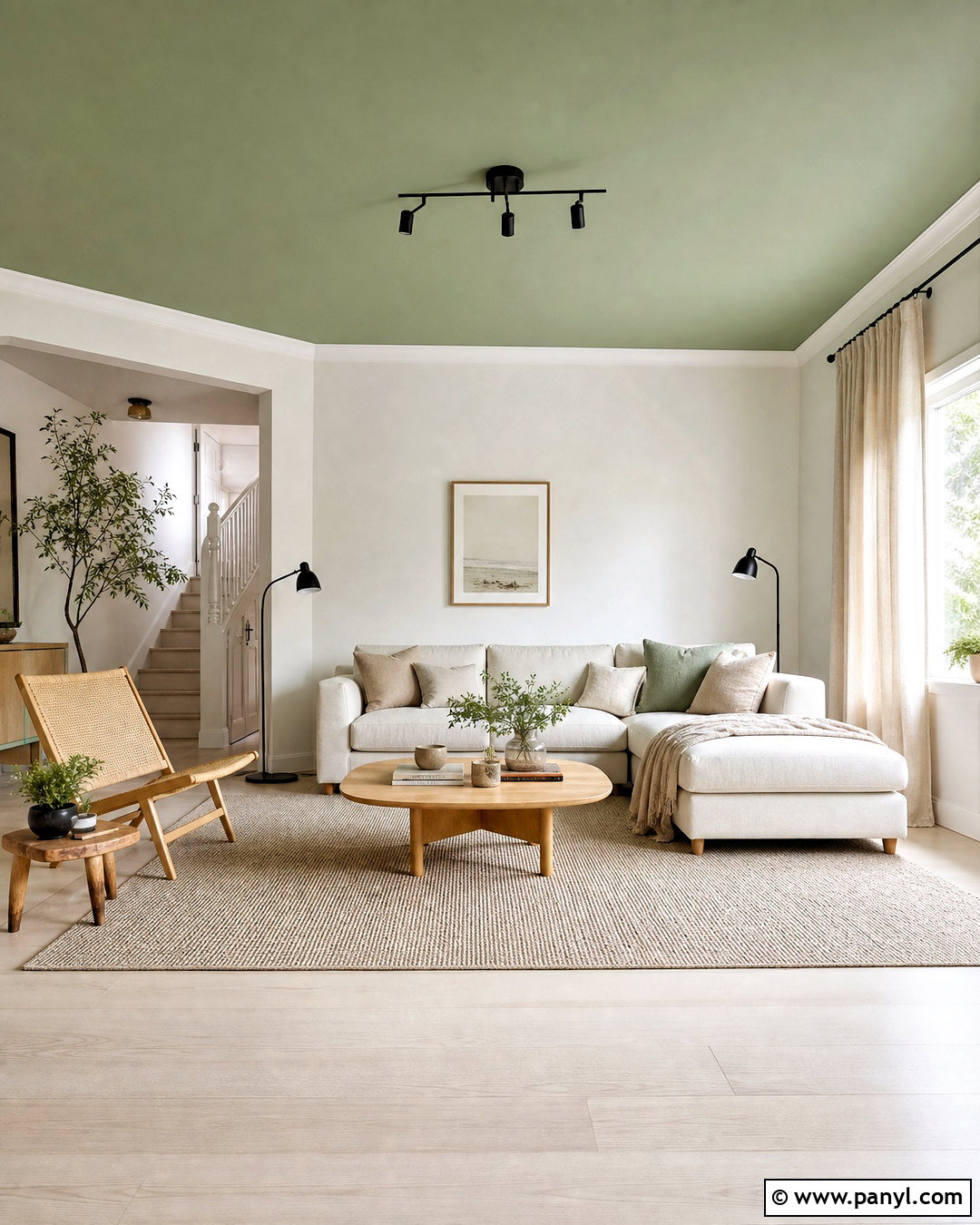
Soft sage green board and batten brings gentle color and traditional structure to a living room. Install evenly spaced vertical battens behind the main sofa, then paint the wall and trim in the same muted green finish. Pair it with an off-white sofa, warm oak tables, and a woven jute or wool rug. Cushions in olive, cream, and subtle botanical patterns can repeat the natural palette without making the room overly themed. Center a landscape painting or rounded wood-framed mirror above the seating. Black metal curtain rods and a simple black floor lamp provide useful contrast. This design suits cottage, farmhouse, and transitional interiors, yet its clean lines can also complement modern furniture. Keep surrounding walls creamy white for a light, coordinated result.
4. Warm Beige Limewash Accent Wall
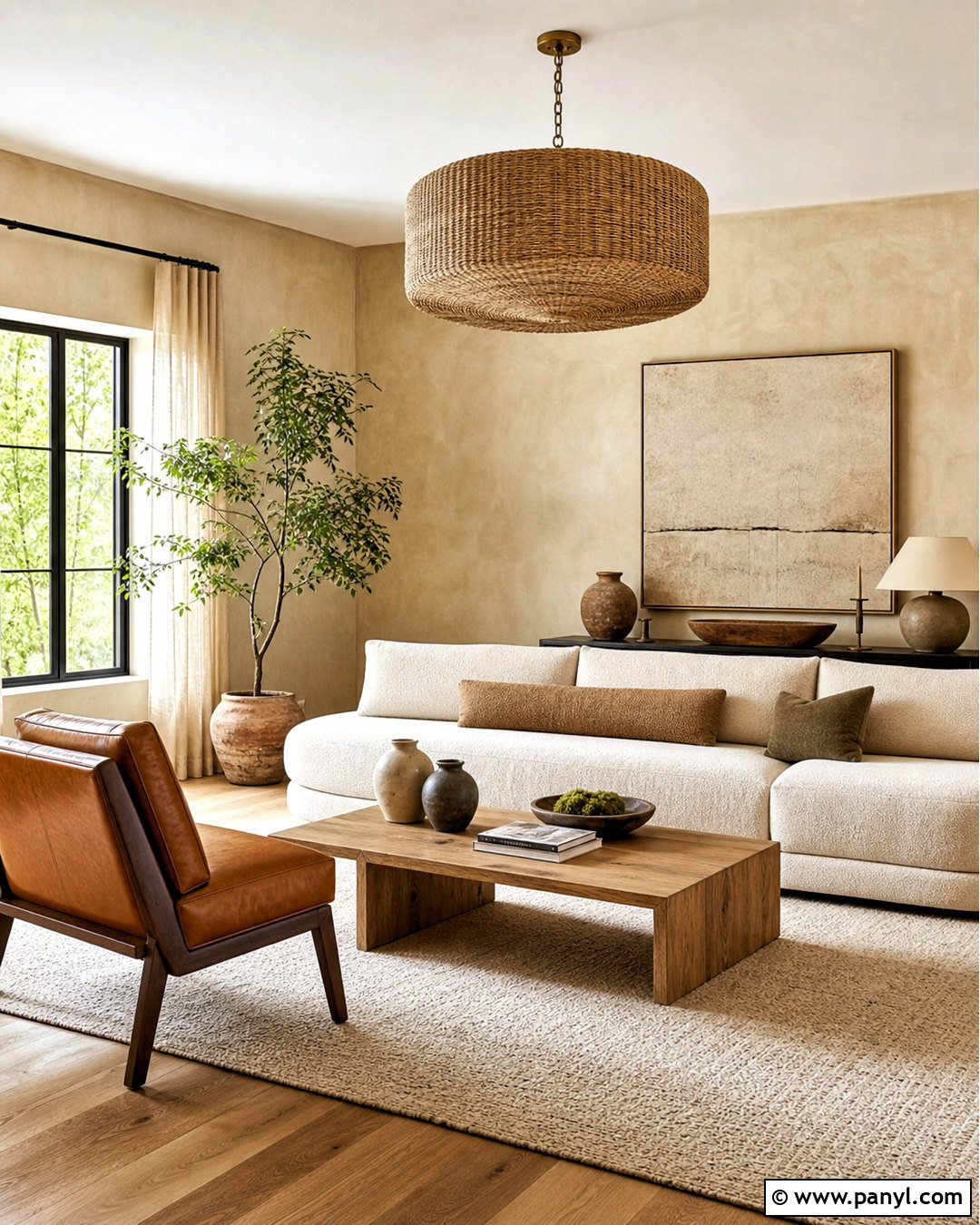
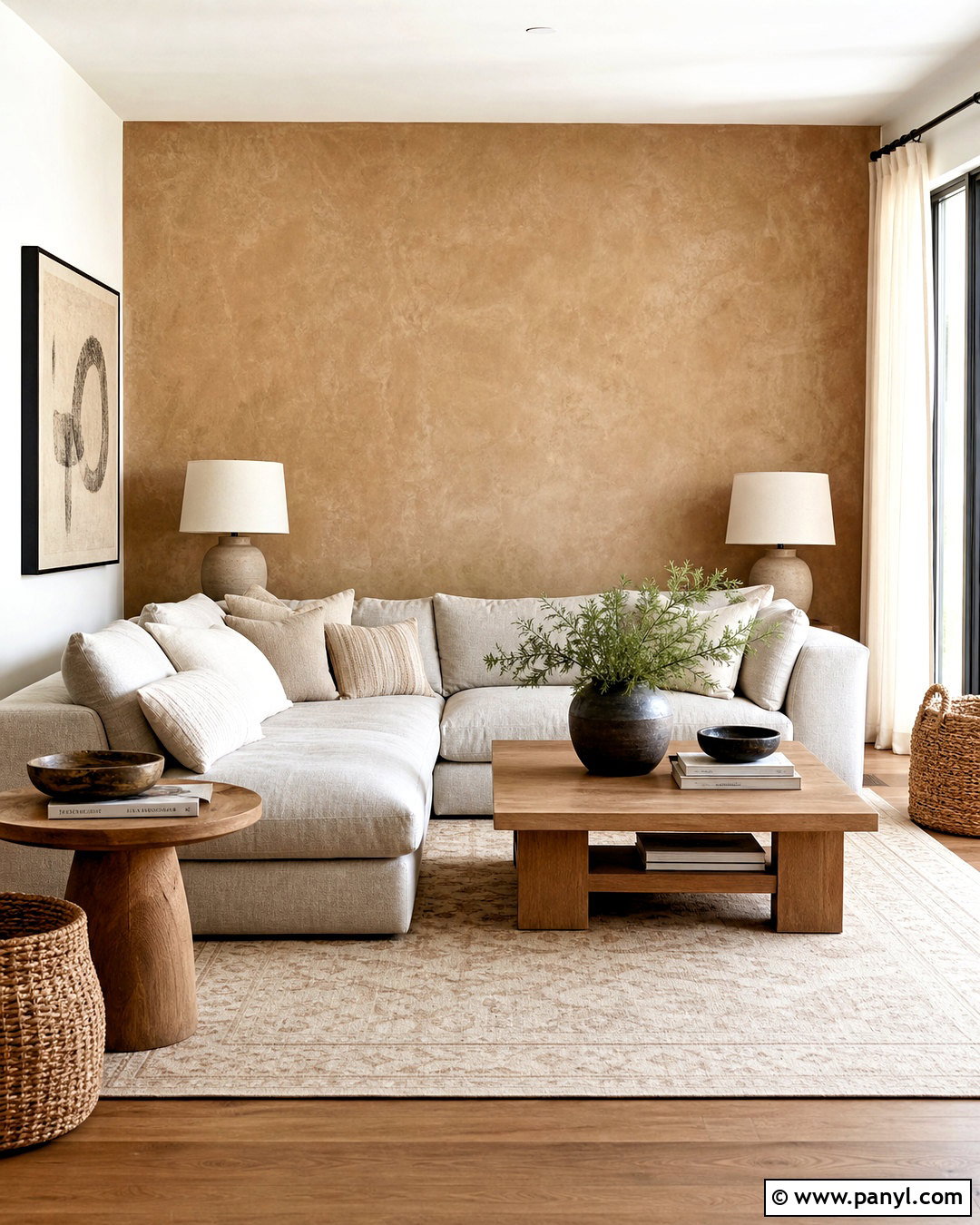
A warm beige limewash wall introduces movement and depth through its soft, cloudy finish. Use it behind a low-profile sofa or along the room’s fireplace wall, where daylight can reveal the subtle tonal variation. Furnish the space with a cream boucle sofa, caramel leather chair, and pale oak coffee table. Natural linen curtains, a textured ivory rug, and handmade ceramic vessels continue the relaxed, organic appearance. Instead of filling the wall with multiple decorations, display one large neutral artwork or a simple sculptural sconce. Keep the ceiling and adjoining walls in a warm white that shares the limewash undertone. This soothing design feels collected rather than stark, making it suitable for organic modern, Mediterranean, minimalist, and casual contemporary living rooms.
5. Stone Fireplace Living Room Accent Wall
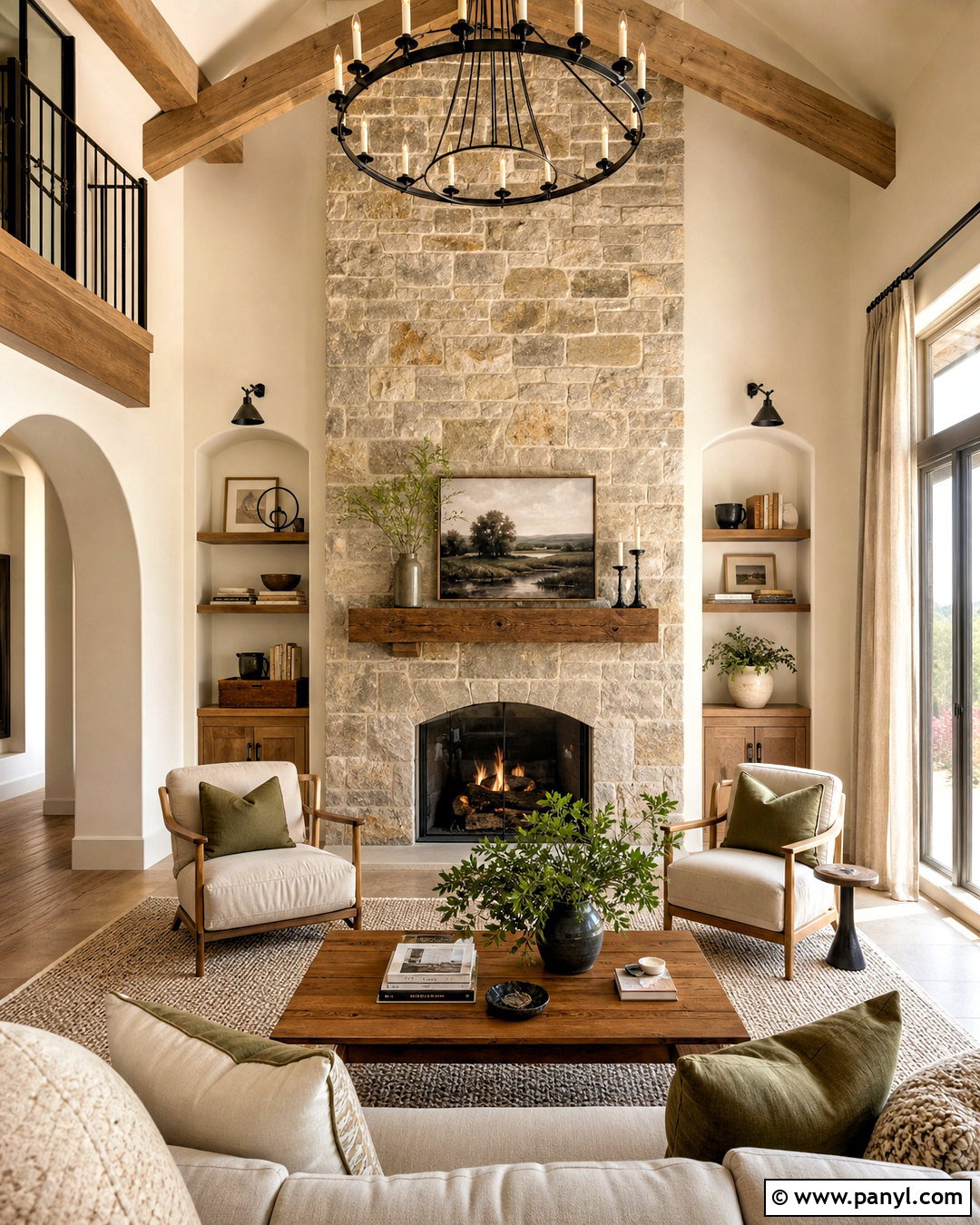
Turn the fireplace into a substantial accent wall by covering the full surface with natural-looking limestone or stacked stone. Choose warm gray, beige, and cream stones with subtle variation instead of highly contrasting pieces. A simple oak mantel can soften the masonry and provide space for a large framed artwork or rounded mirror. Arrange a neutral sofa and two comfortable chairs around a wood coffee table so the fireplace remains the room’s visual and functional center. Add a thick wool rug, linen curtains, and cushions in camel, olive, and charcoal. Keep nearby shelves lightly styled with pottery and greenery. Extending the stone to the ceiling creates stronger proportions, while restrained furniture prevents the finished living room from appearing heavy or overly rustic.
6. Botanical Wallpaper Living Room Accent Wall
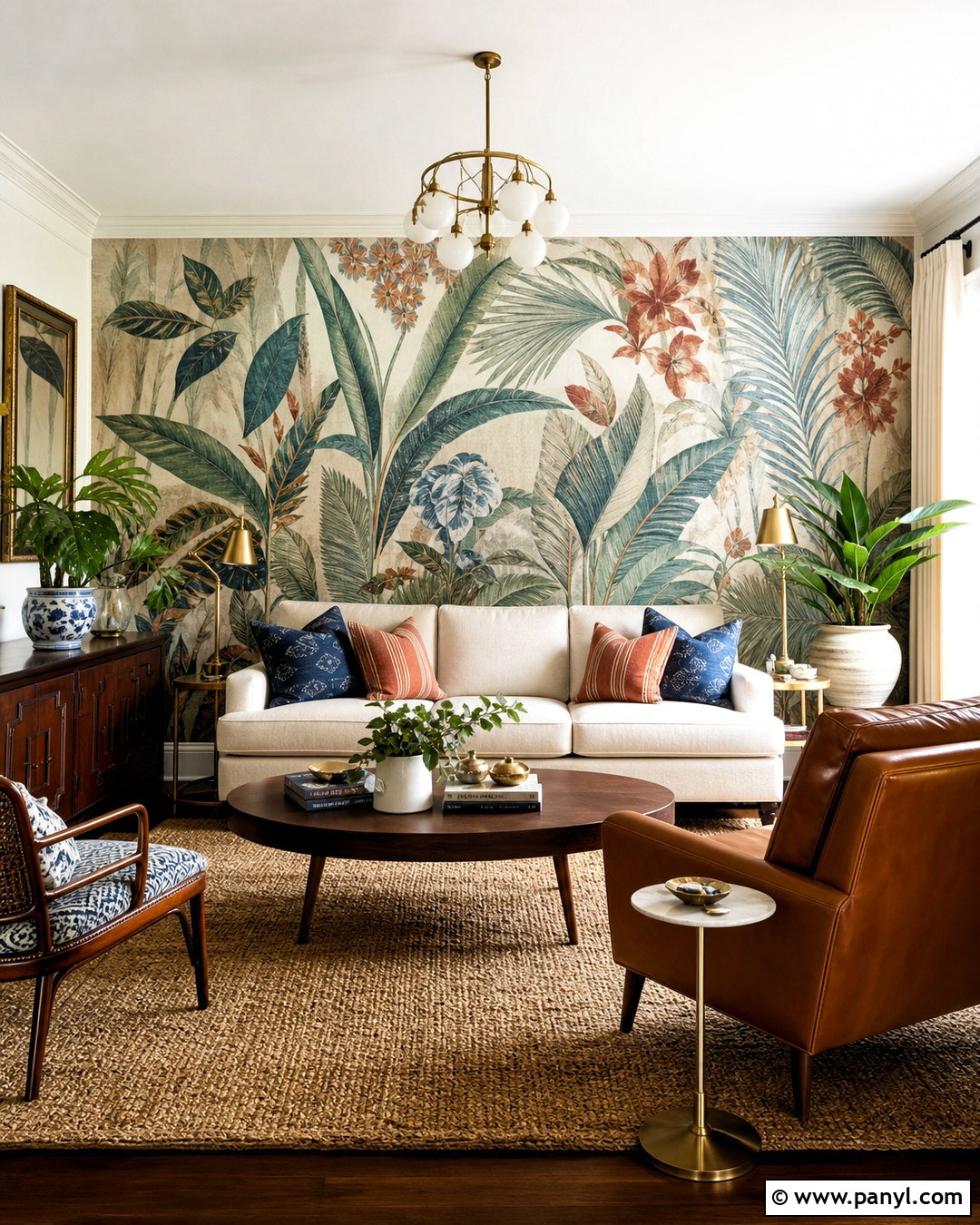
Large-scale botanical wallpaper can transform the wall behind a sofa into a layered, garden-inspired backdrop. Select a pattern with muted green leaves, warm cream space, and touches of dusty blue or terracotta. Use a solid-colored sofa so the furniture does not compete with the print. A camel leather chair, walnut coffee table, and natural fiber rug will ground the decorative wall. Pull two or three wallpaper colors into cushions and throws, but avoid matching every accessory. Warm white walls and simple linen curtains allow the pattern to remain the central feature. Finish the room with antique brass lamps and a few ceramic planters. This coordinated look brings personality to traditional, eclectic, cottage, or modern living rooms without creating visual clutter.
7. White Brick Living Room Accent Wall
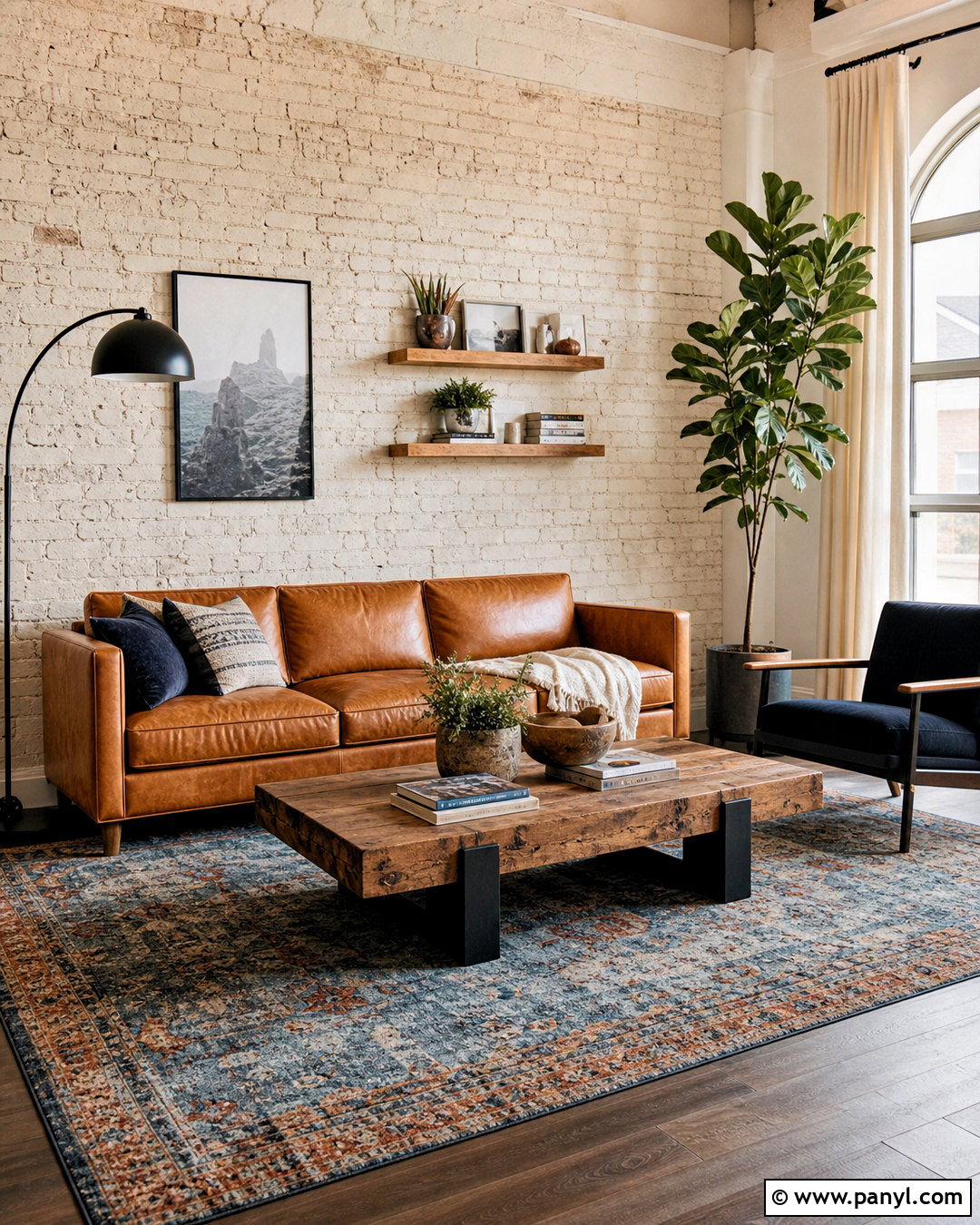
White brick adds texture while keeping a living room open, bright, and easy to decorate. Use authentic brick, thin brick veneer, or realistic panels on the wall behind the television or sofa. Choose a warm white finish that allows slight color variation and visible mortar lines. Pair the wall with a tan leather sofa, black metal lighting, and reclaimed or medium-toned wood tables. A faded blue and rust rug can soften the industrial edge, while linen curtains bring relaxed movement. Include one or two tall plants to introduce natural color against the pale masonry. Floating oak shelves may be added for books and pottery, but leave enough exposed brick to show the texture. The complete room feels casual, urban, and welcoming rather than cold.
8. Black Shiplap Living Room Accent Wall
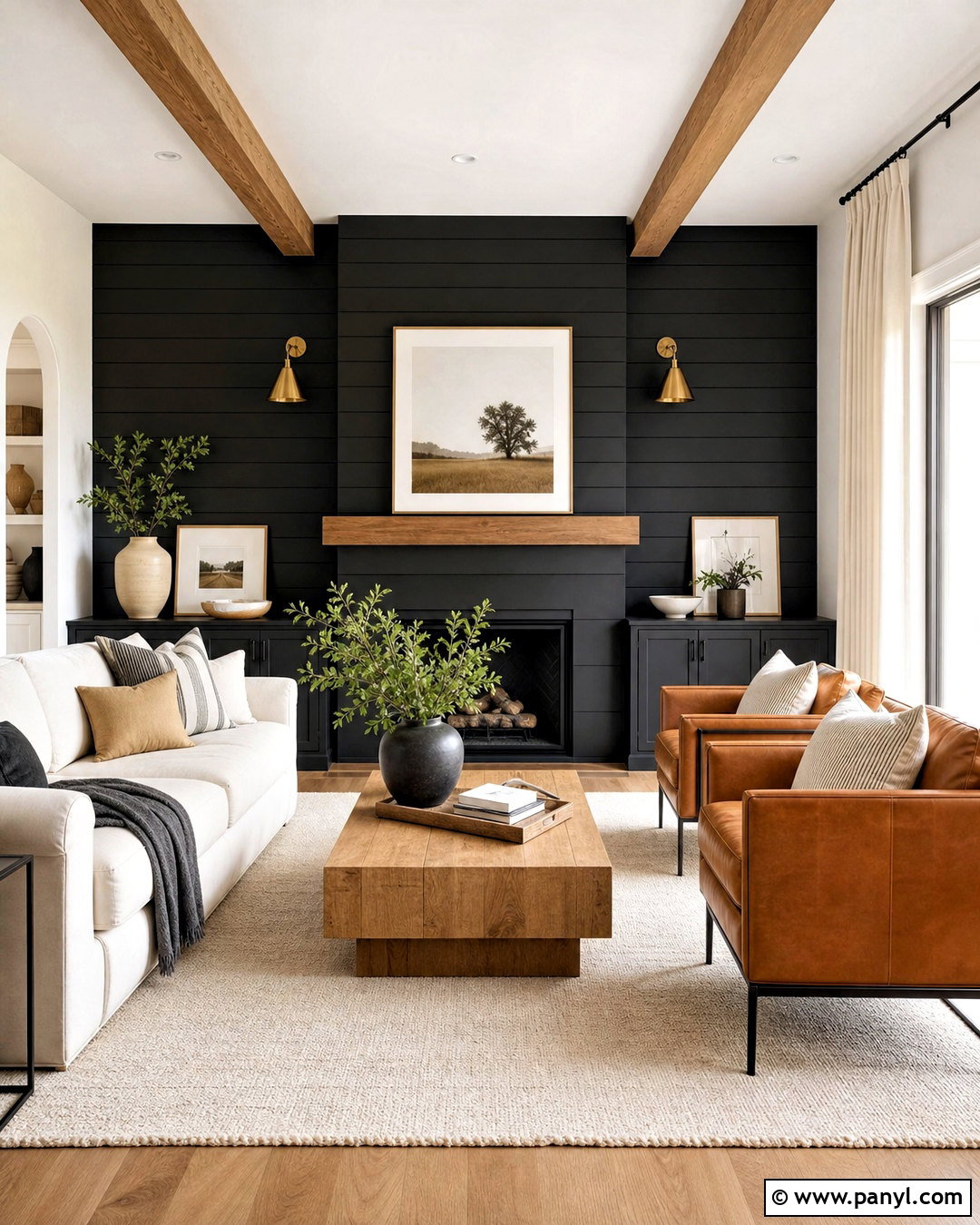
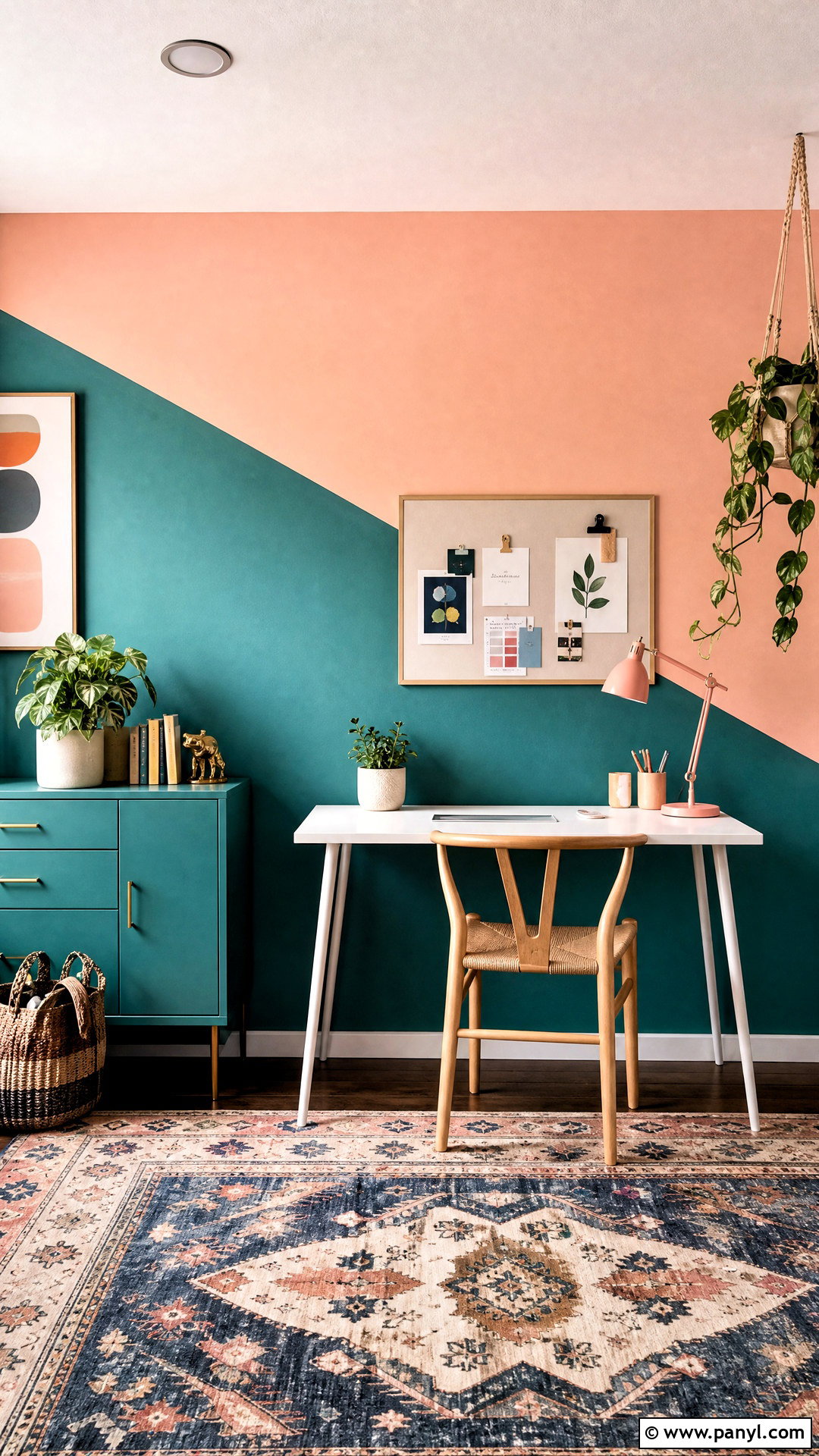
Matte black shiplap creates a bold background for a fireplace, media console, or light-colored sofa. Install wide horizontal boards to make the room feel broader, and paint the seams and trim for one consistent finish. Balance the wall with warm white upholstery, a natural oak coffee table, and a large ivory rug. Cognac leather chairs can introduce richness, while brass sconces prevent the black surface from feeling flat. Keep adjoining walls soft white and use full-length neutral curtains to preserve brightness. A few framed pieces with wide cream mats will remain visible without crowding the boards. This complete living room works best when natural light is generous and dark accents are repeated sparingly through window frames, lamps, or table legs.
9. Textured Plaster Living Room Accent Wall
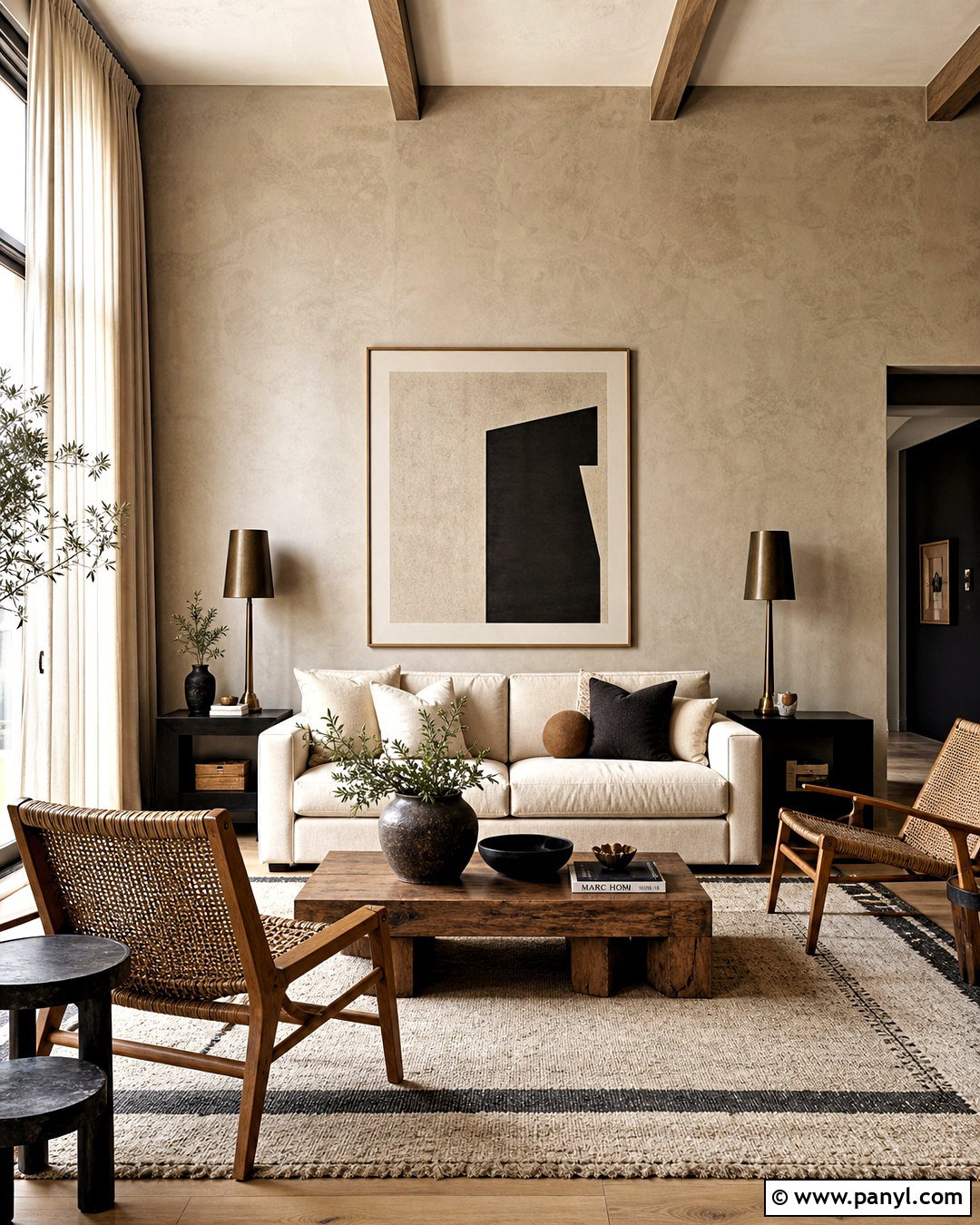
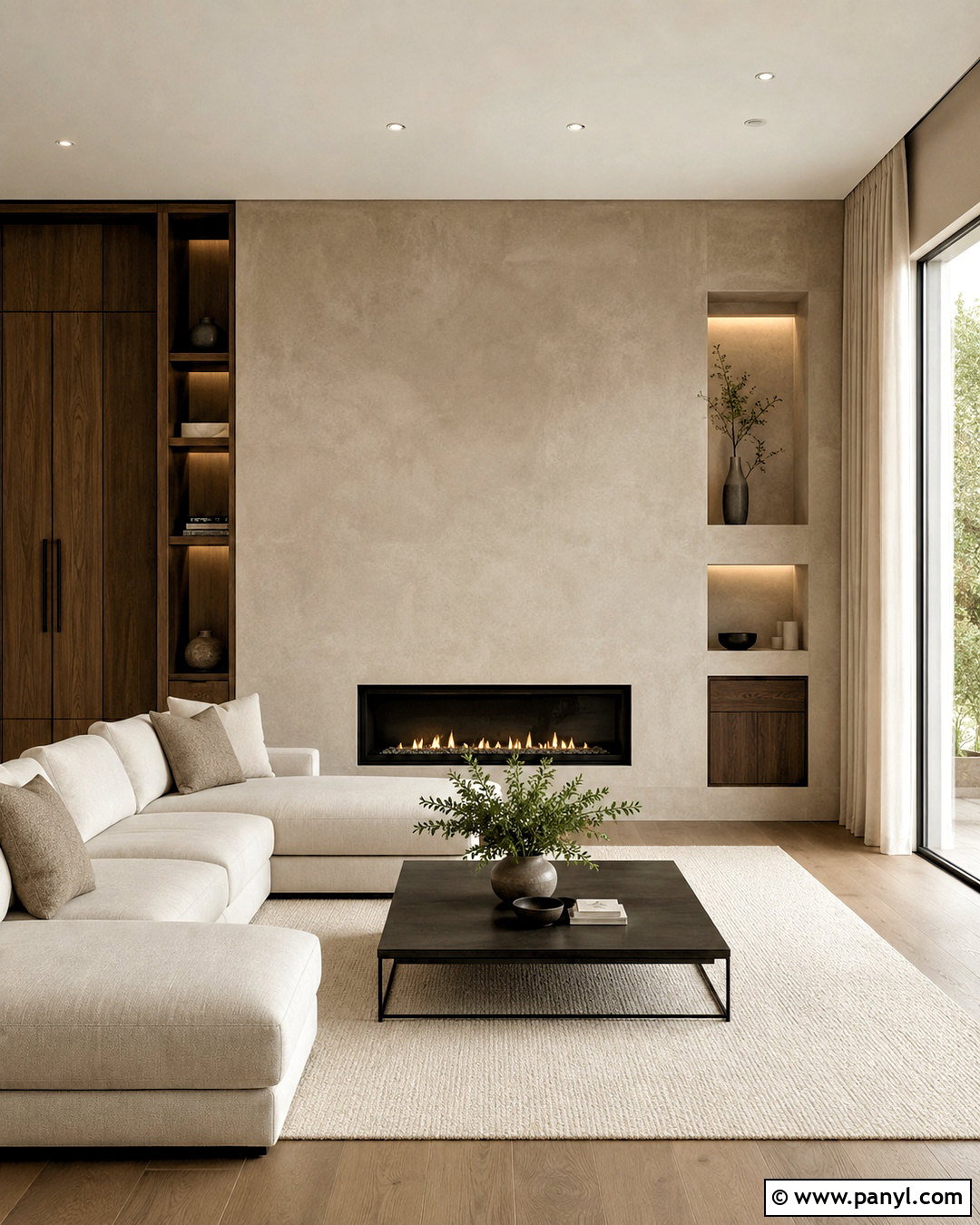
Textured plaster gives a living room accent wall the character of an old, carefully finished interior. Choose a warm greige, sandy taupe, or pale clay surface with gentle trowel marks and tonal variation. Place a streamlined sofa in cream or mushroom fabric against the wall, then add a chunky wood coffee table and two woven accent chairs. A low-pile rug in beige and charcoal can define the seating arrangement without distracting from the finish. Use minimal wall decor, such as one oversized canvas, a sculptural light, or a simple floating shelf. Blackened bronze details create contrast, while linen curtains continue the natural palette. The final room combines modern shapes with handcrafted texture, making the space feel quiet, warm, and visually substantial.
10. Geometric Paint Living Room Accent Wall
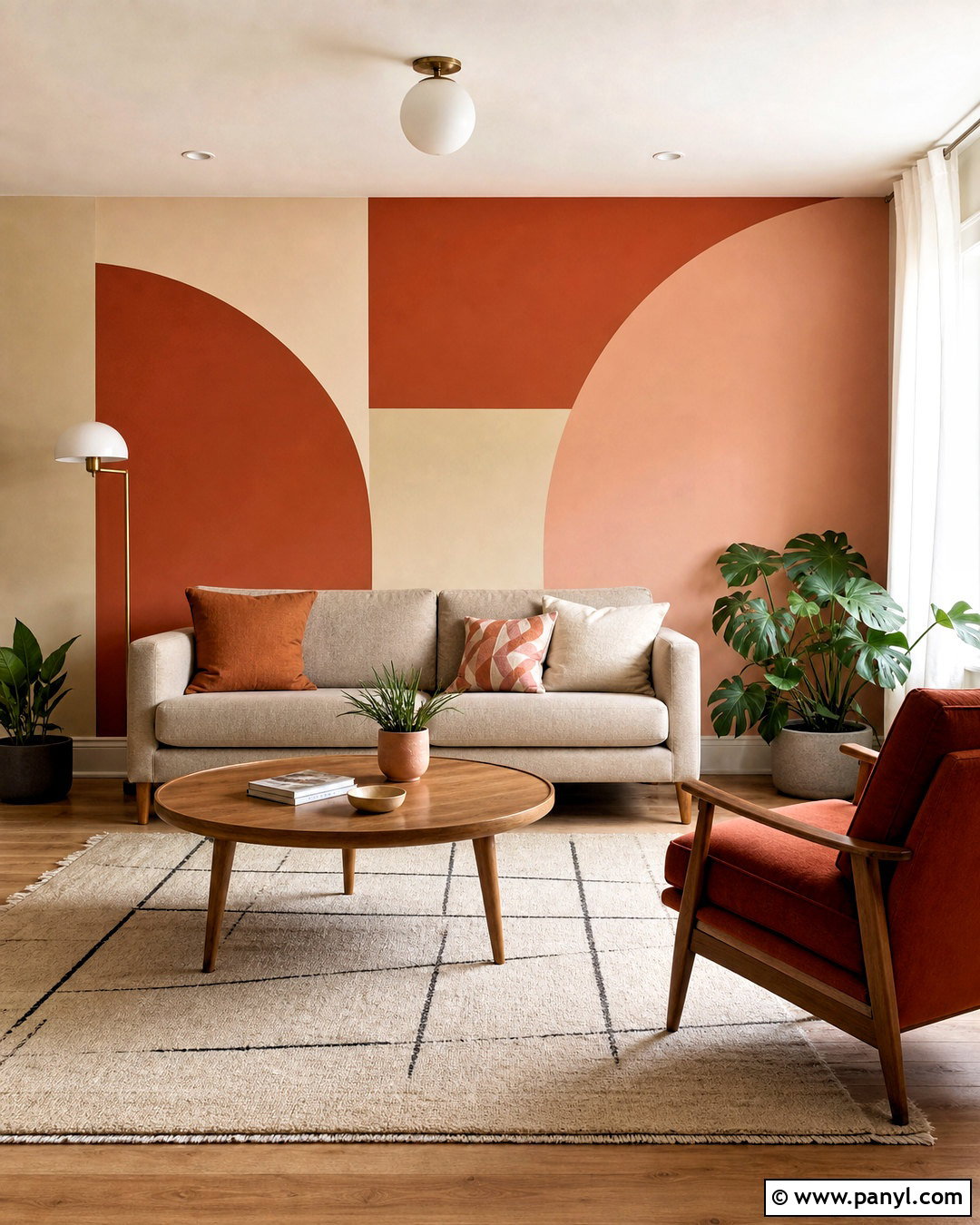
A geometric painted wall can add energy to a living room when the shapes and colors remain controlled. Create large overlapping blocks or arches in warm terracotta, dusty peach, muted beige, and soft cream. Place the composition behind a simple beige sofa so part of the pattern remains visible around the furniture. Choose a round oak coffee table, rust-colored lounge chair, and cream rug with a restrained linear pattern. Repeat only one wall color in the cushions to avoid an overly coordinated appearance. White walls, light curtains, and uncluttered surfaces will give the painted design room to breathe. This affordable treatment works well in apartments, creative family rooms, and midcentury-inspired spaces where architectural features may be limited but personality is welcome.
11. Built-In Shelving Living Room Accent Wall
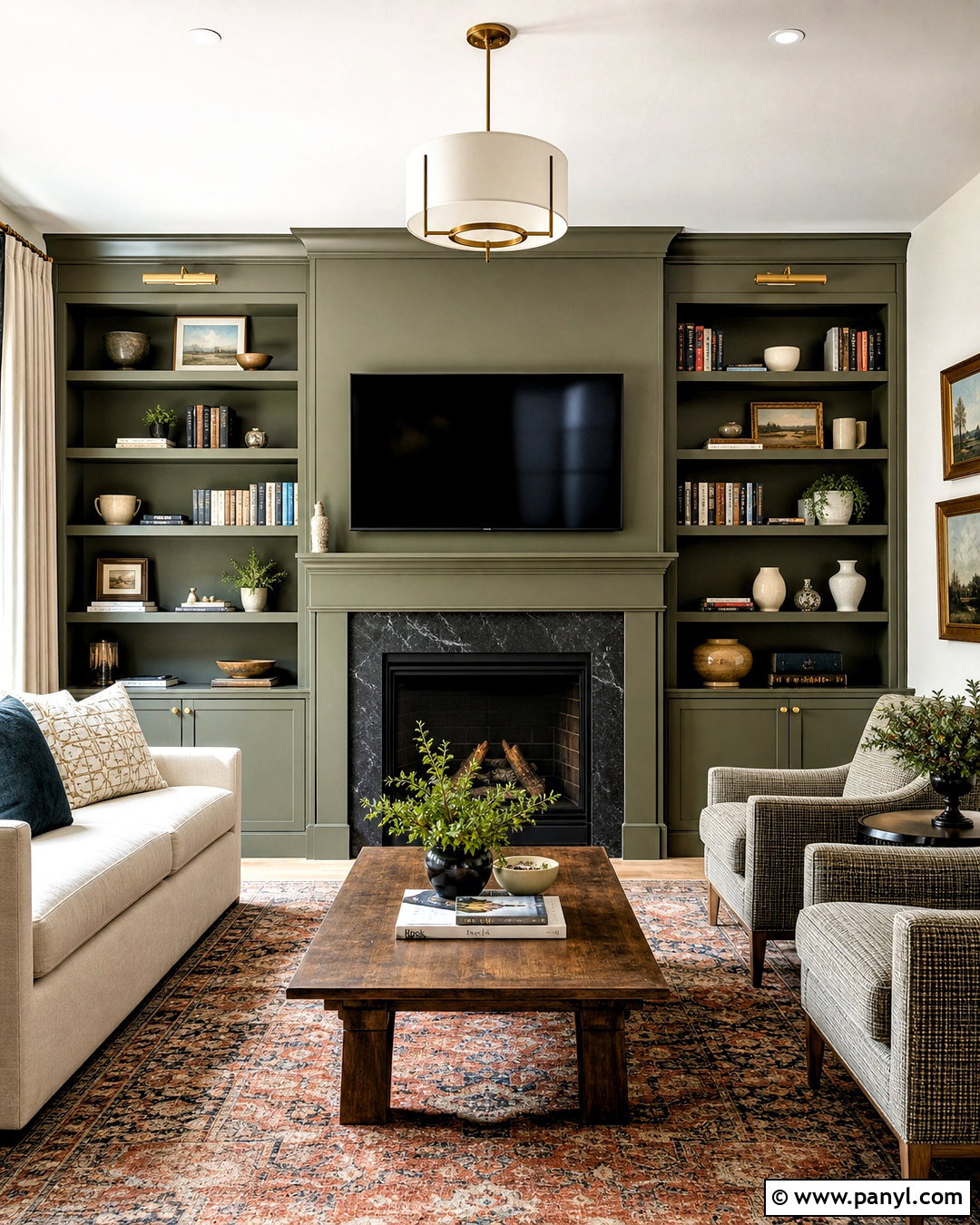
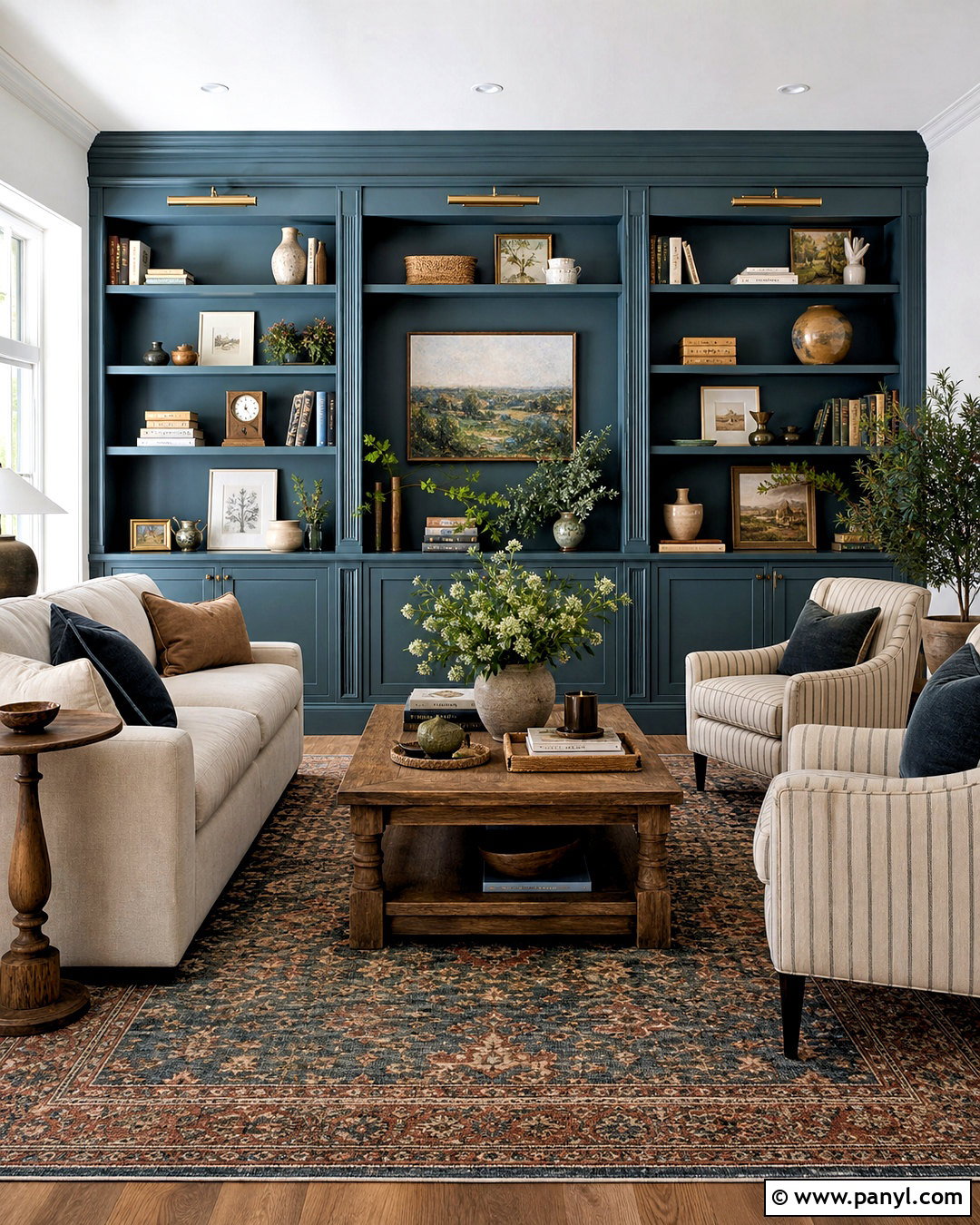
Floor-to-ceiling built-in shelving can make an entire wall functional while creating a polished focal point. Frame a fireplace or television with closed base cabinets and open shelves, then paint the complete installation in muted blue, olive green, or warm charcoal. Choose cabinet hardware in aged brass or matte black. Arrange the seating toward the built-ins using a light neutral sofa, two compact chairs, and a centered coffee table. Style shelves with a measured combination of books, framed art, pottery, and small plants, leaving open space around each grouping. A patterned rug can repeat the built-in color in smaller amounts. This design is especially effective in family rooms because it provides storage, display space, and architectural balance within one cohesive living room wall.
12. Picture Frame Molding Accent Wall
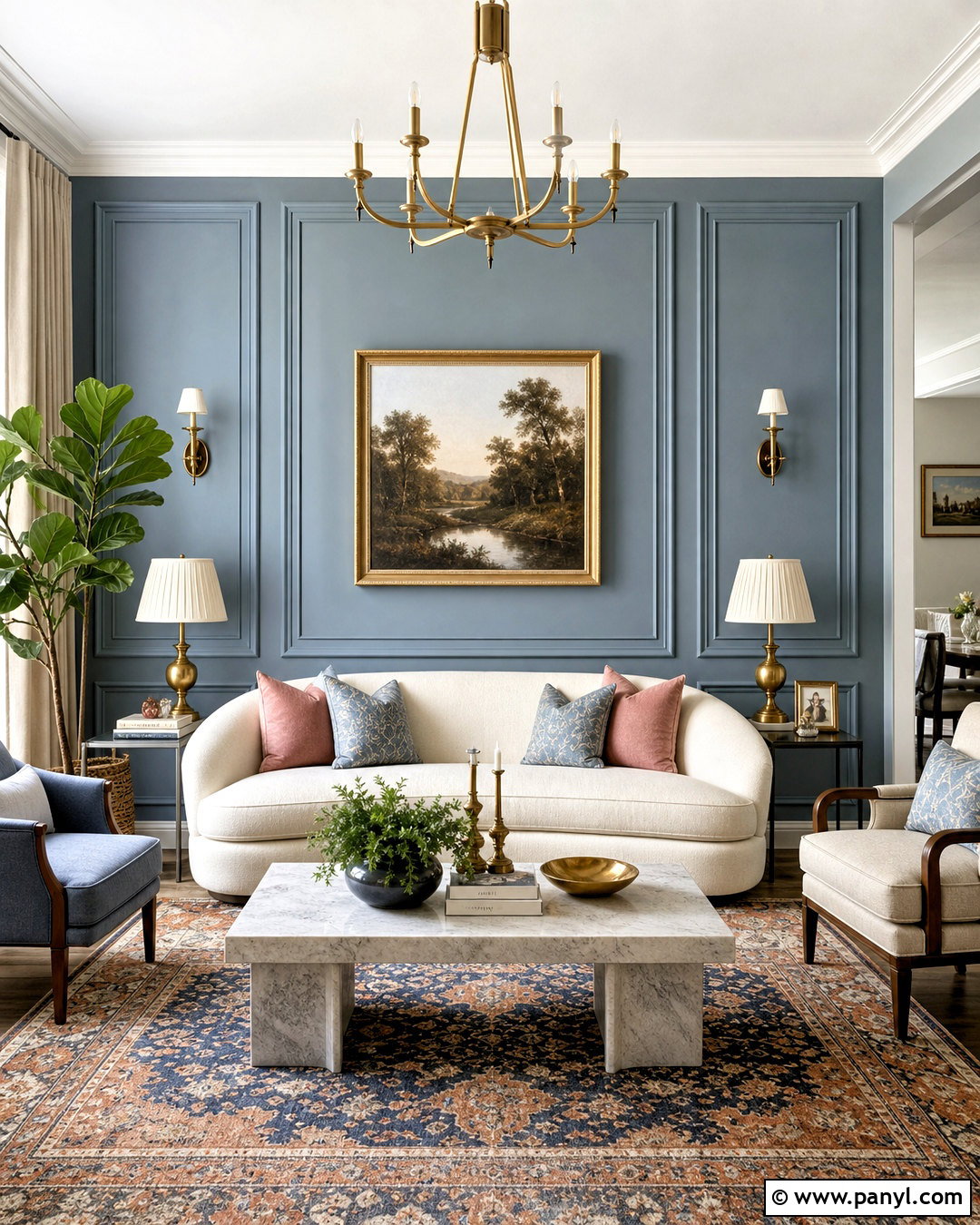
Picture frame molding gives the wall behind a sofa graceful structure without requiring a busy pattern. Create three or five large rectangular panels, adjusting their width to align with the furniture below. Paint the molding and wall together in warm greige, dusty blue, muted taupe, or soft green. Center one substantial artwork within the middle panel and leave the remaining sections mostly open. A curved cream sofa, marble or wood coffee table, and traditional patterned rug create a refined but comfortable seating area. Add pleated lampshades, brass details, and long linen curtains for softness. Because the molding supplies visual interest, accessories can remain simple. The finished wall complements Parisian, transitional, traditional, and contemporary living rooms without relying on temporary or overly decorative accents.
13. Cork Panel Living Room Accent Wall
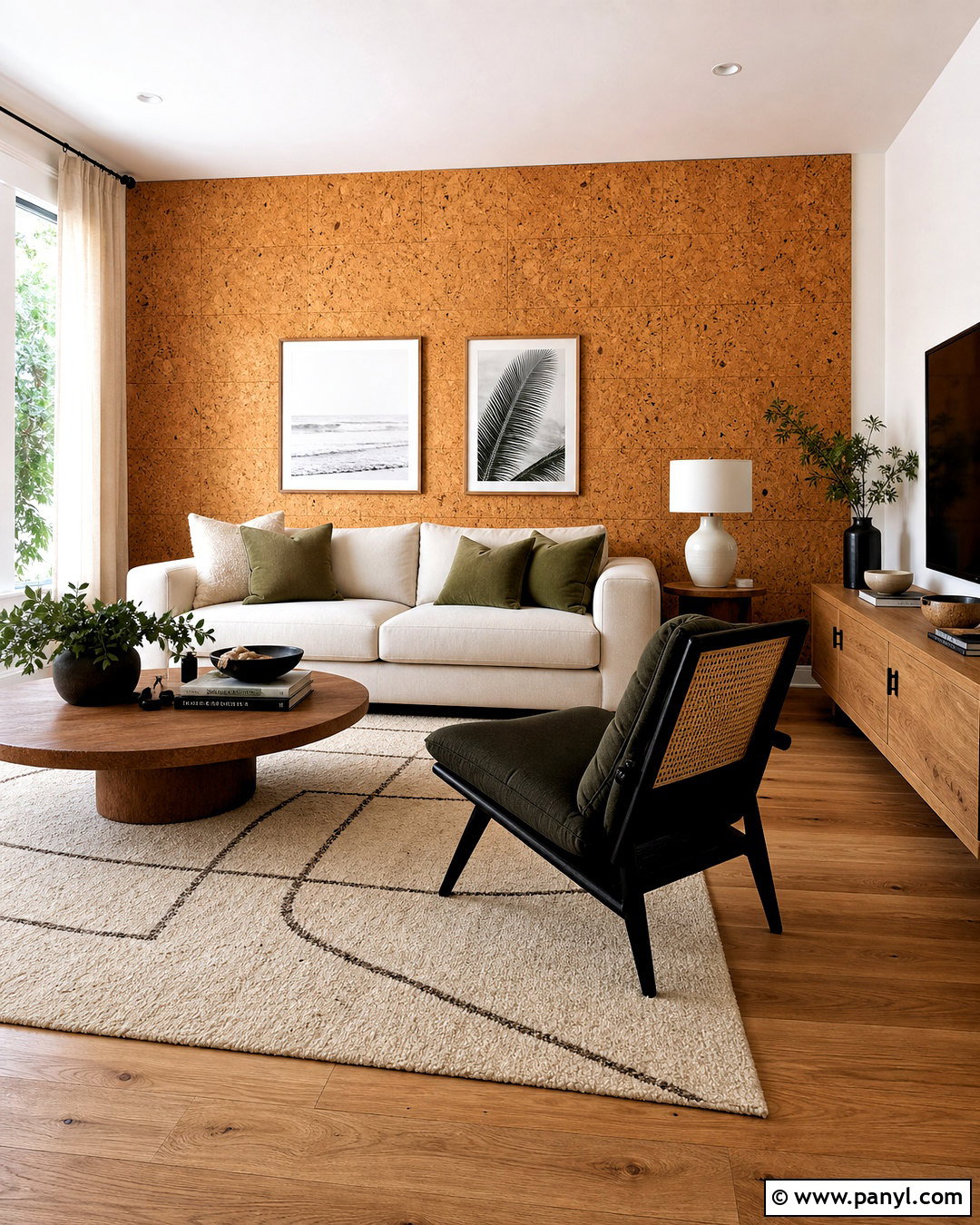
Natural cork panels provide earthy color, visible texture, and a relaxed background for modern living room furniture. Cover the main wall in large cork tiles rather than small office-style squares for a more intentional appearance. Pair the warm brown surface with an ivory sofa, black-framed lounge chair, and low oak media unit. A cream rug with subtle brown lines can connect the wall and seating area. Hang a few lightweight framed prints in a balanced arrangement, or leave much of the cork exposed. Add linen curtains, ceramic lamps, and olive green cushions to continue the nature-inspired palette. This complete design suits compact homes, reading-focused living rooms, and casual contemporary spaces. Keep surrounding finishes simple so the cork’s organic pattern remains the defining feature.
14. Marble Fireplace Accent Wall
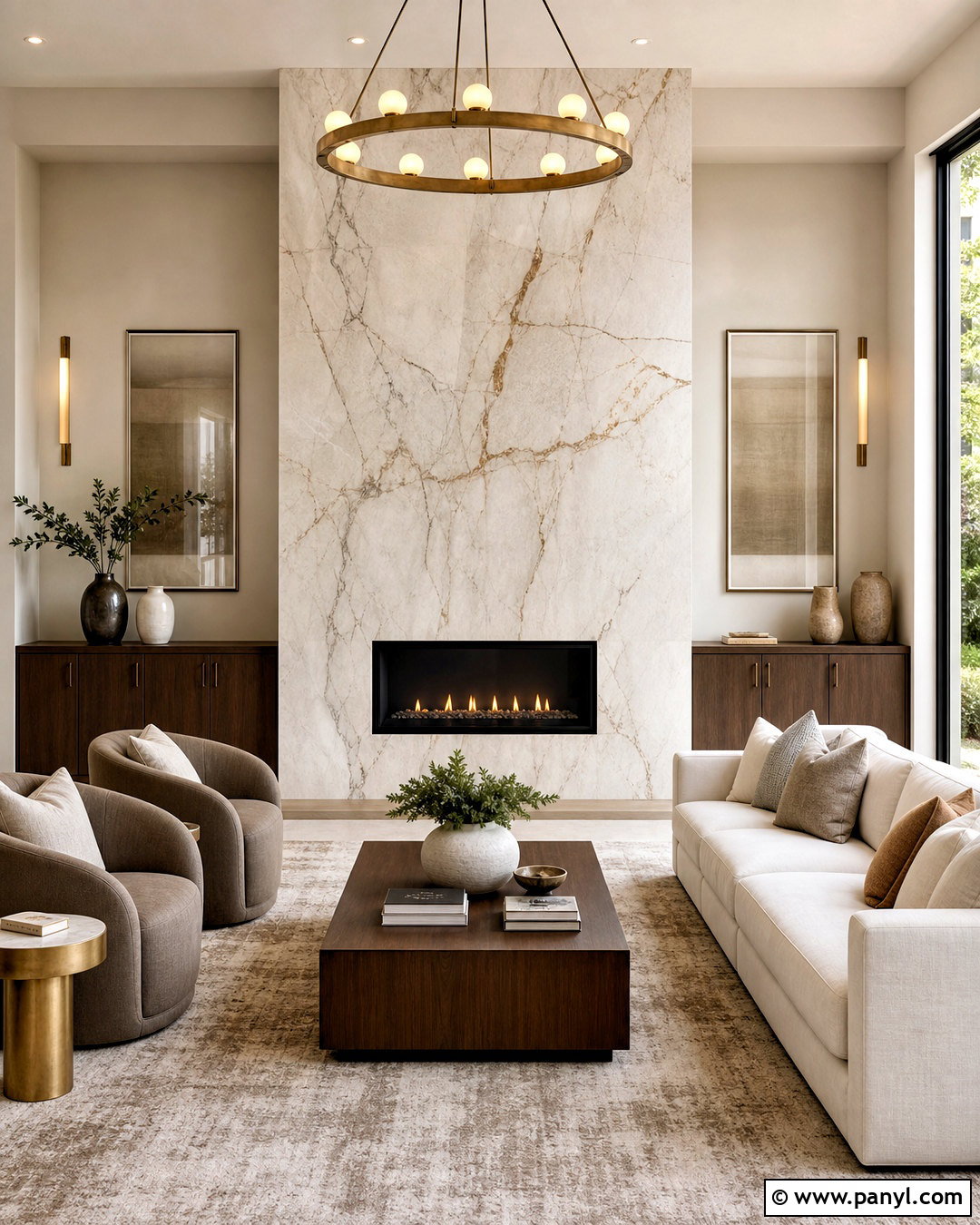
A marble fireplace wall can become a sophisticated living room centerpiece when its surrounding decor remains warm and restrained. Choose large-format marble or porcelain panels with a creamy base and soft gray, taupe, or bronze veining. Extend the material from the floor to the ceiling around a slim fireplace insert. Install a low walnut cabinet beside or beneath the feature to introduce natural contrast. Furnish the room with a warm white sofa, rounded taupe chairs, and a textured beige rug. Brushed brass lighting can highlight the warmer tones in the veining. Avoid excessive glossy accessories, which can make the design feel formal. Instead, use linen, wool, wood, and ceramic pieces to create a balanced living room that feels elegant but still comfortable.
15. Painted Arch Living Room Accent Wall
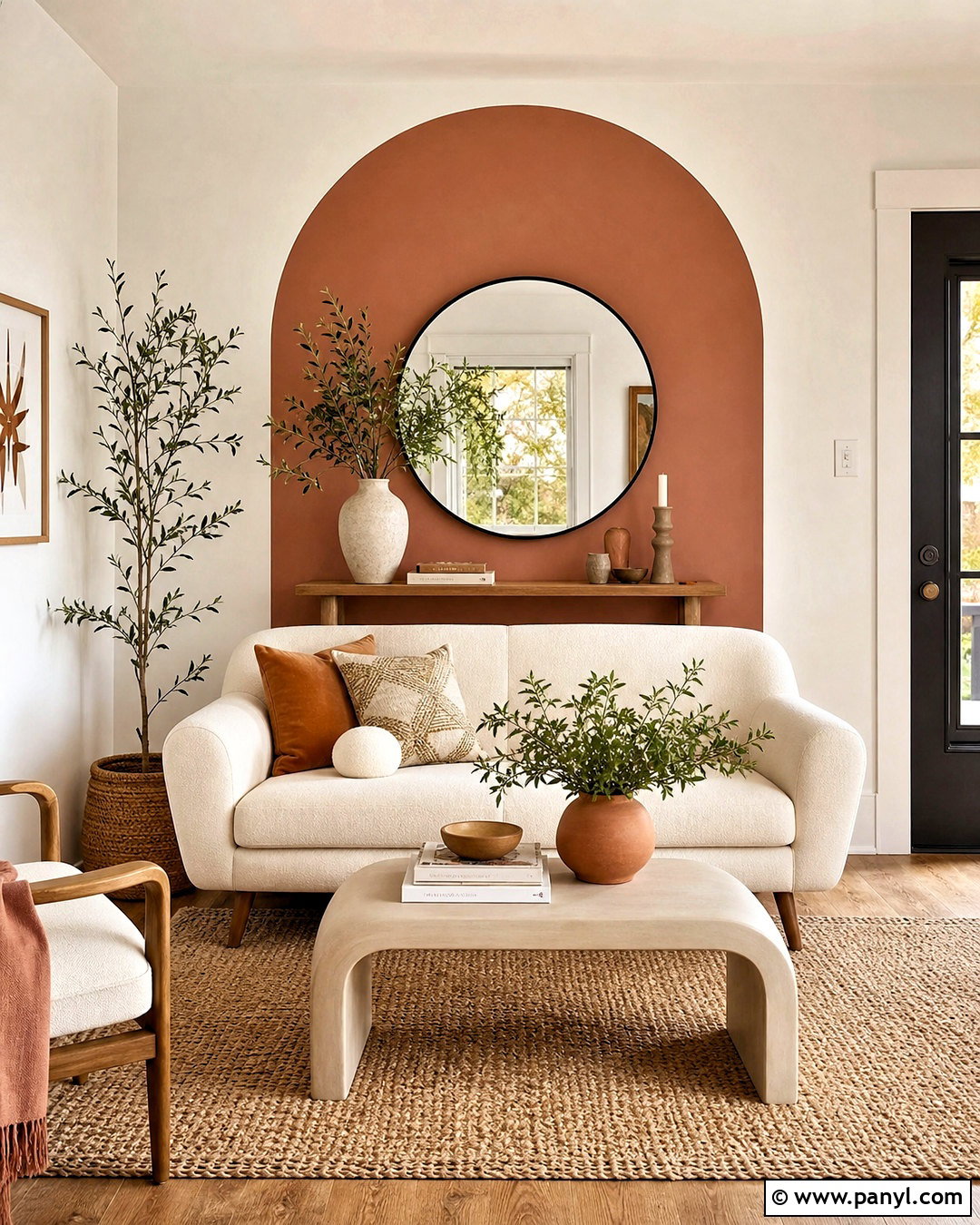
A large painted arch can define a living room focal point without covering the entire wall. Use warm terracotta, muted olive, dusty blue, or caramel paint to form a tall rounded shape behind a console, sofa, or reading corner. Keep the surrounding wall soft white so the arch remains crisp and visible. Position a narrow wood console or compact loveseat within the painted area, then add a round mirror, simple artwork, or wall-mounted light. A woven rug and curved coffee table will repeat the softer geometry. Use cushions and ceramics in related earthy shades to connect the feature with the rest of the room. This approachable design is particularly effective in rentals and smaller homes because it delivers impact with limited materials and can be repainted easily.
16. Fluted Panel Living Room Accent Wall
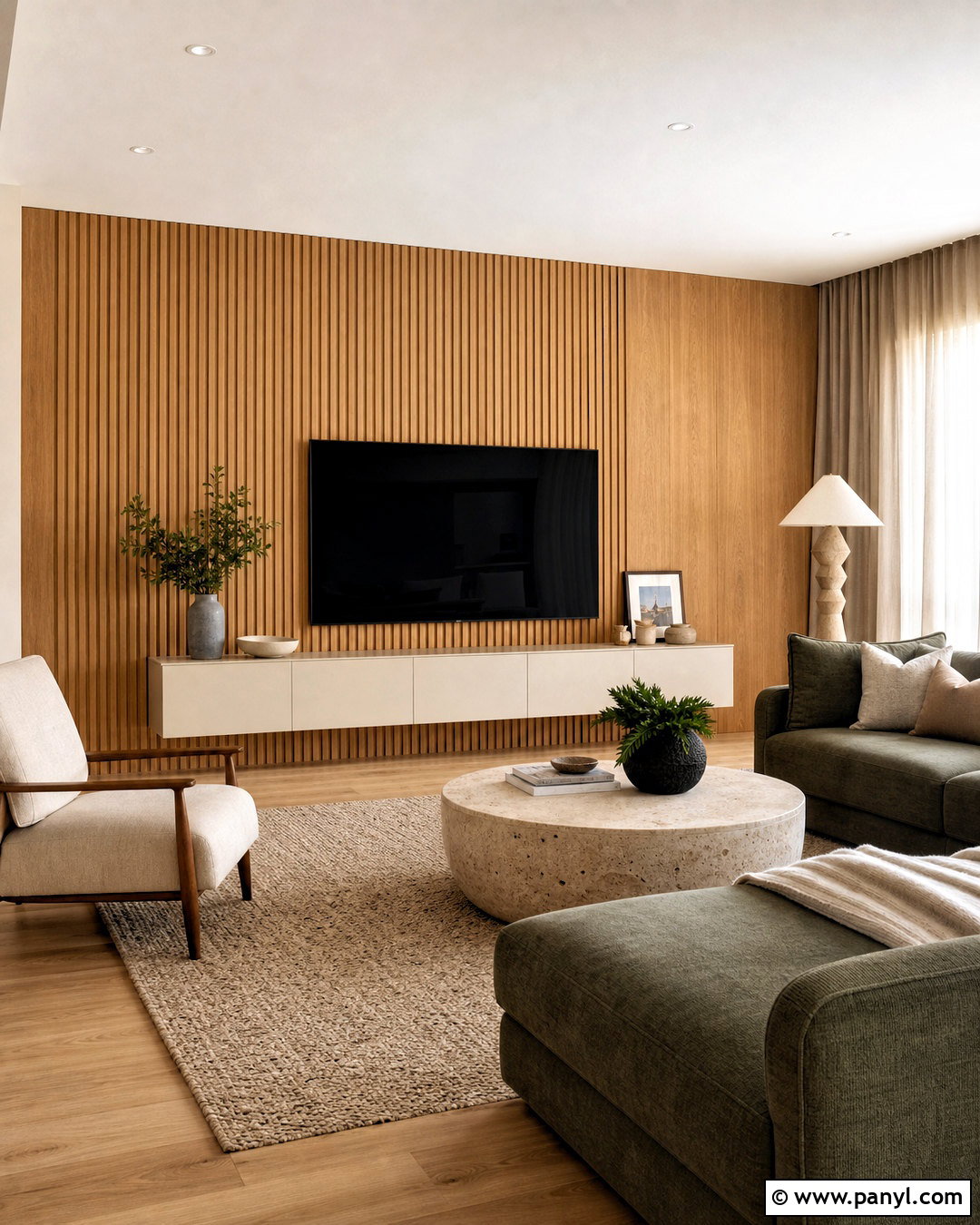
Wide fluted panels create smooth vertical shadows and a tailored architectural backdrop. Install them across the television or fireplace wall in painted MDF, oak veneer, or a durable composite finish. Warm taupe panels work beautifully with a cream sectional, while natural oak complements gray, olive, and off-white furniture. Choose a floating media unit with simple doors so the wall remains visually calm. Add a rounded stone coffee table, textured wool rug, and one sculptural floor lamp. Keep artwork minimal because the repeated grooves already supply detail. Full-height curtains can echo the panel lines and make the overall composition feel taller. The complete living room has a clean contemporary appearance, but warm textiles and curved furniture prevent the linear wall treatment from feeling rigid.
17. Wallpaper And Paneling Accent Wall
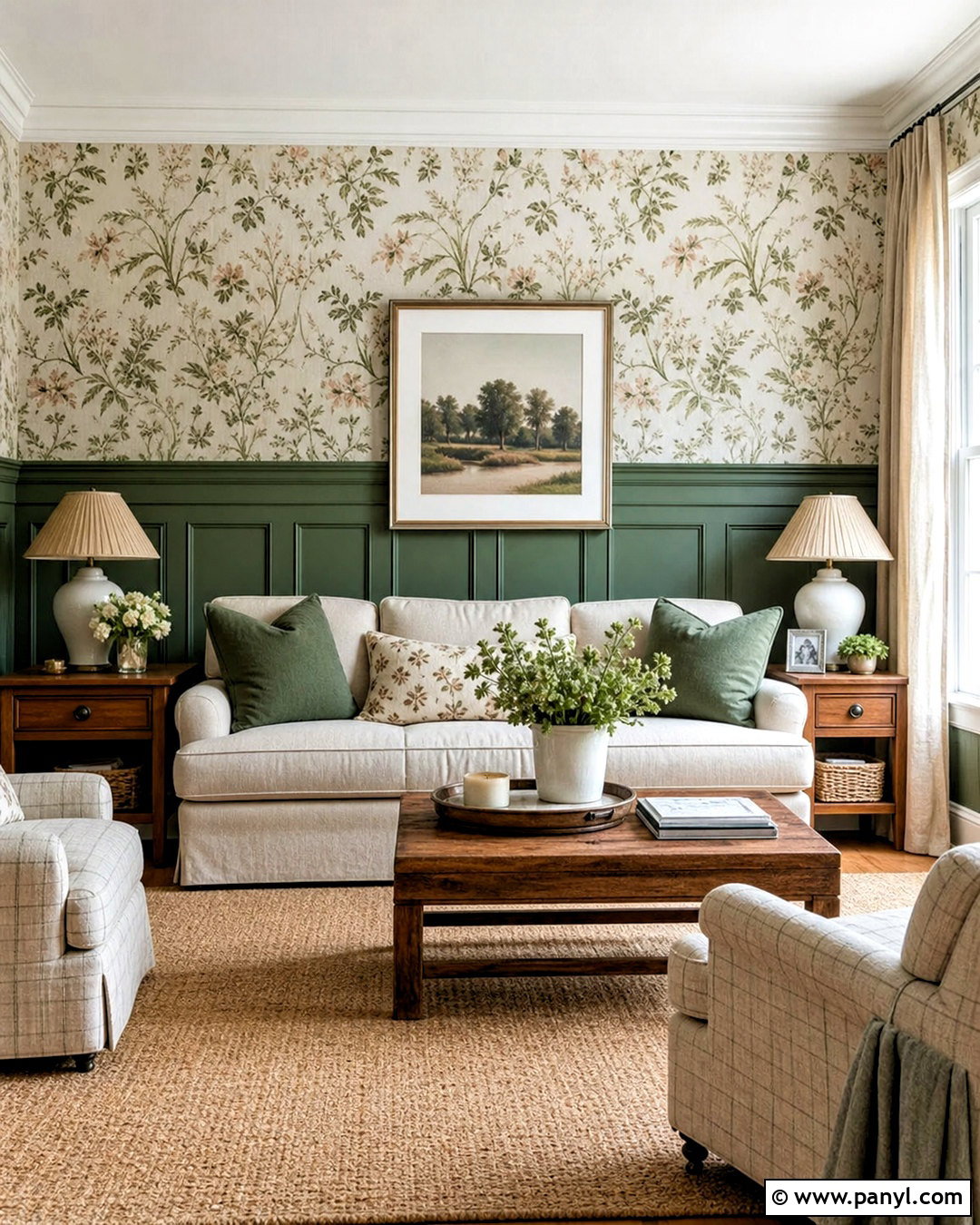
Combining wallpaper with lower-wall paneling produces a detailed accent wall that still feels balanced. Install painted board and batten or raised panel molding on the lower third of the wall, then apply patterned wallpaper above it. Try muted green paneling with a cream floral print, dusty blue with a subtle landscape, or warm beige with a small geometric design. Position a neutral sofa in front of the wall and use wood end tables that coordinate with the room’s flooring. Repeat the panel color through one chair or a few cushions. Traditional lamps, a woven rug, and linen curtains complete the layered look. This treatment works particularly well in cottage and transitional living rooms because it combines practical architectural structure with controlled pattern and approachable color.
18. Gallery Living Room Accent Wall
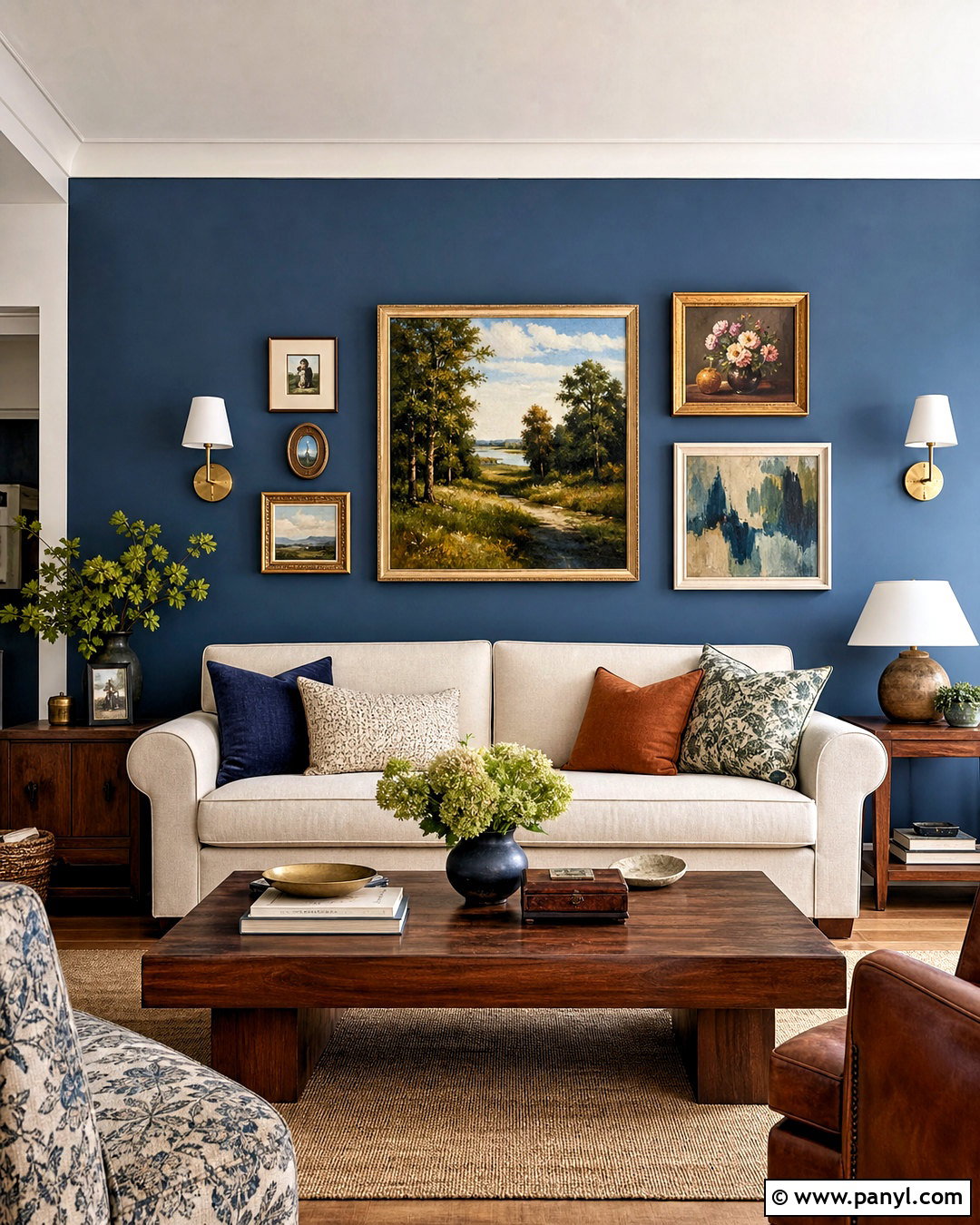
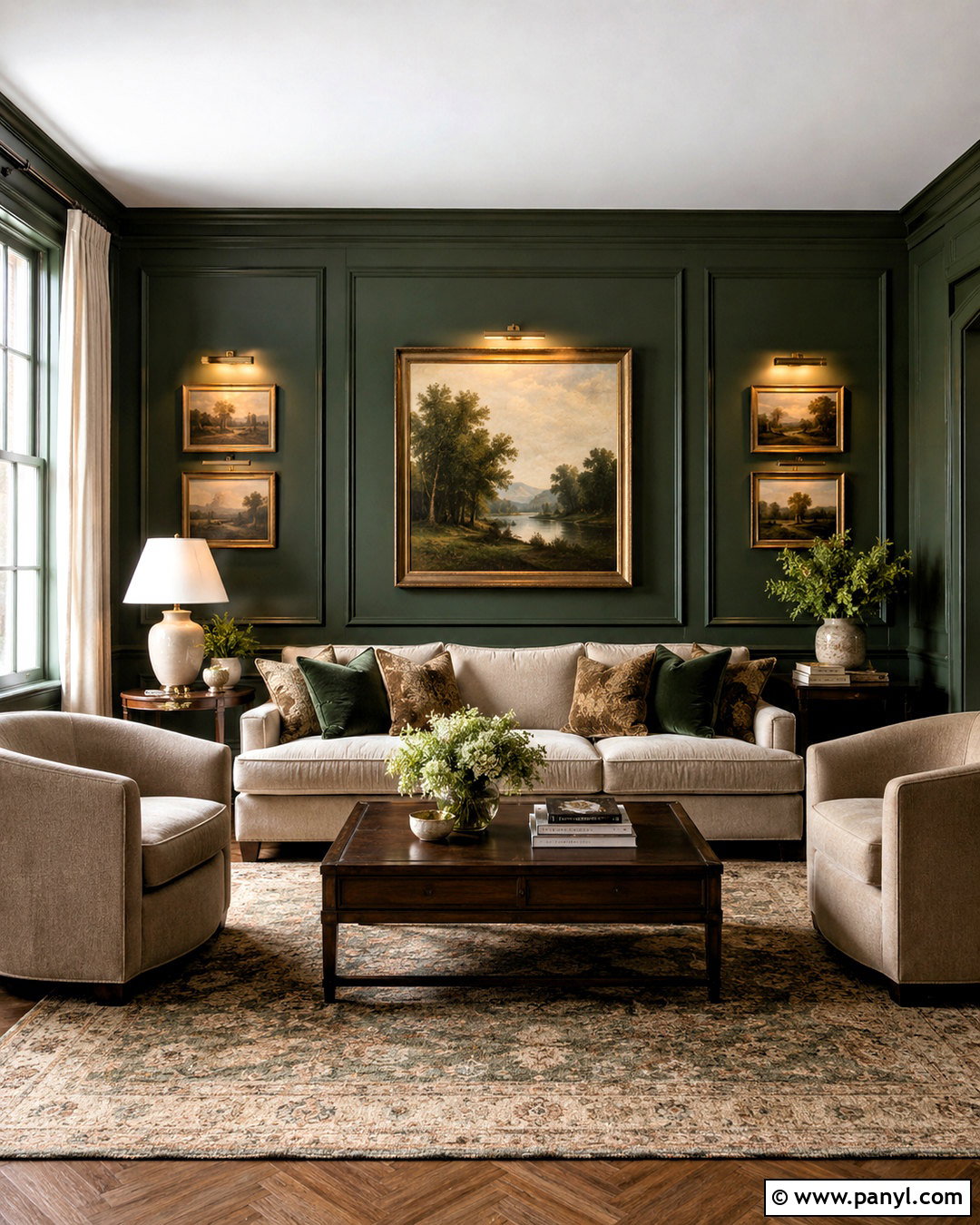
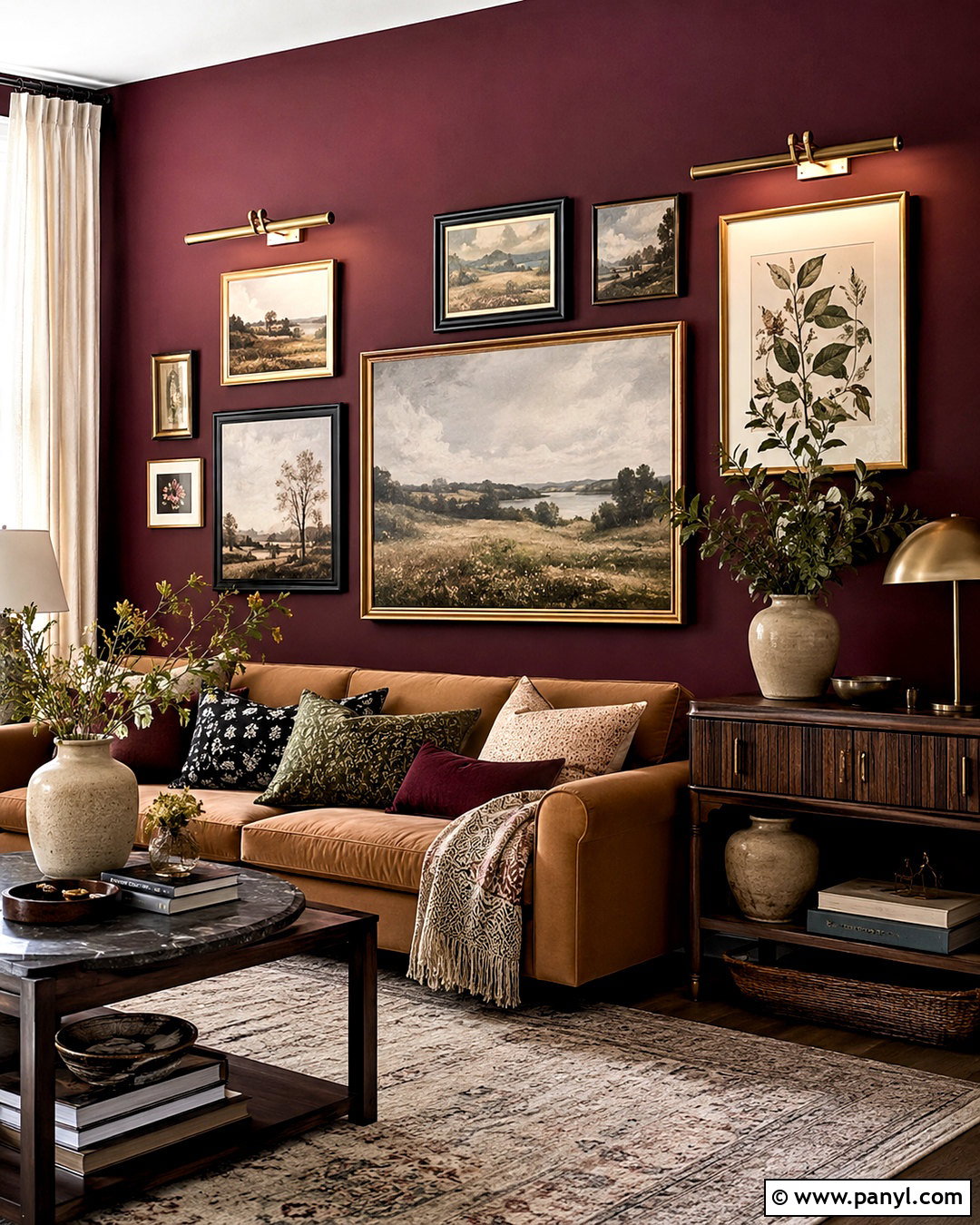
A gallery wall can become a complete living room feature when the frames, furniture, and background color are planned together. Paint the wall a muted olive, warm taupe, deep blue, or soft charcoal, then arrange artwork across the area above the sofa. Combine photographs, landscapes, abstracts, and simple sketches while limiting frames to two coordinated finishes, such as walnut and aged brass. Lay out the collection on the floor before hanging it, maintaining consistent spacing between pieces. Choose a solid cream or beige sofa and a restrained rug so the artwork remains prominent. Add picture lights or matching sconces for structure. Cushions can repeat small colors found in the art, helping the collection feel connected to the entire seating area instead of randomly assembled.
19. Concrete Living Room Accent Wall
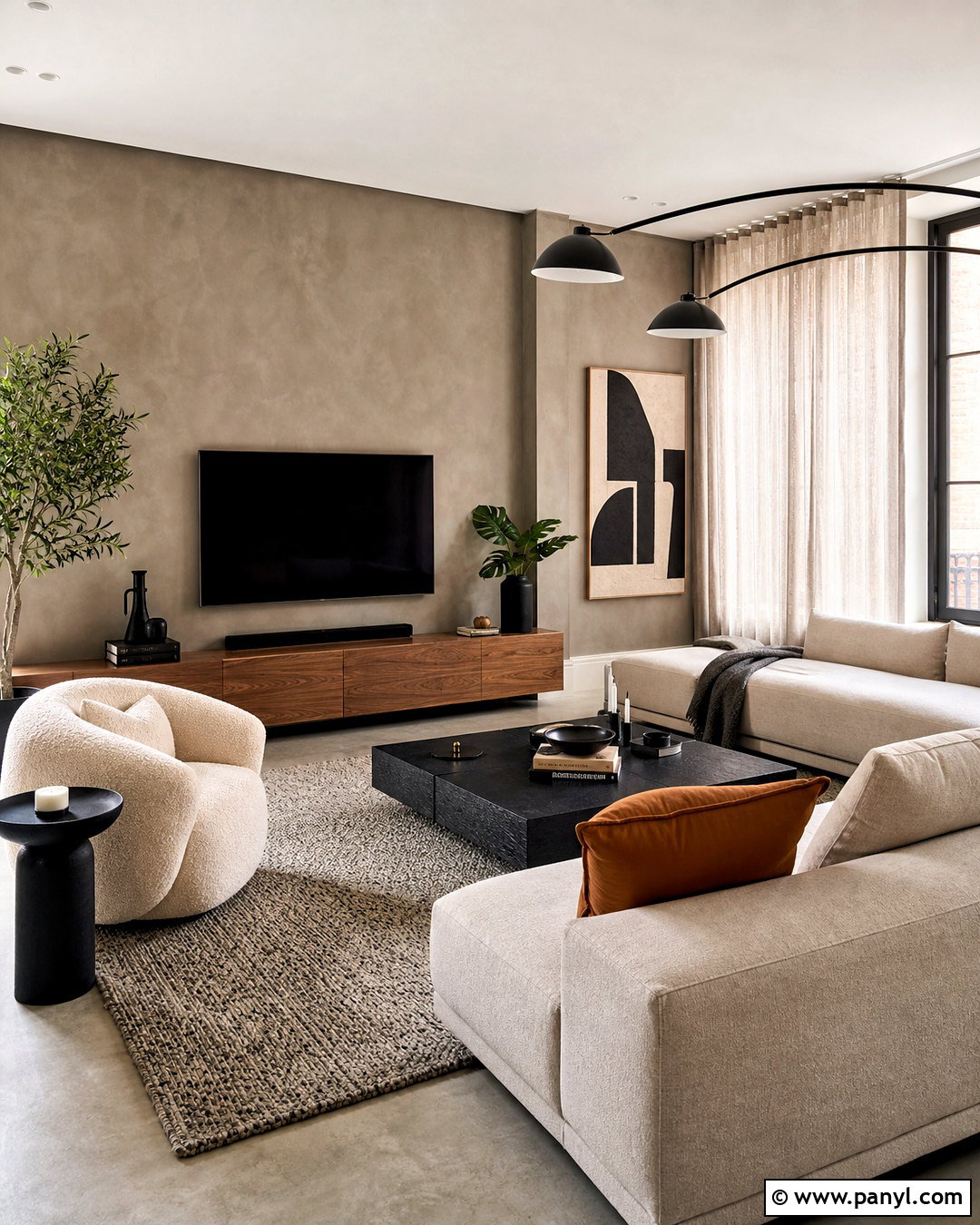
A concrete or microcement accent wall gives a living room an understated industrial foundation. Choose a medium warm gray finish with natural variation rather than a cold, flat slab appearance. Place it behind a television, linear fireplace, or low media cabinet in walnut wood. Soften the surface with a cream sectional, boucle chair, and thick woven rug. Black metal details can reinforce the contemporary look, but use them selectively in lighting and table frames. Add camel leather cushions, linen curtains, and indoor plants for warmth and color. One oversized abstract artwork can break up the gray without hiding the finish. This coordinated scheme works in lofts and modern homes, yet the combination of tactile fabrics and warm wood keeps the living room comfortable and inviting.
20. Terracotta Living Room Accent Wall
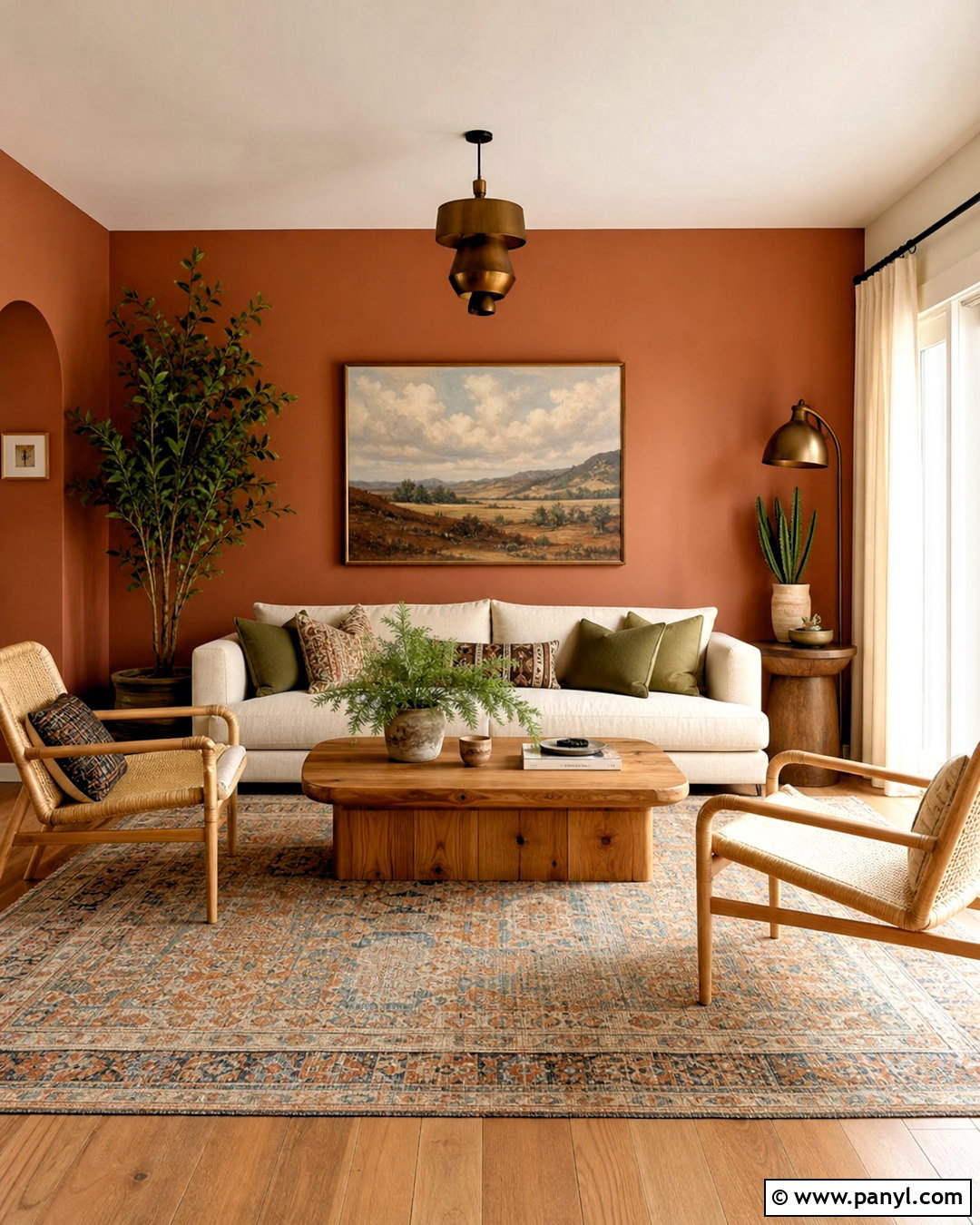
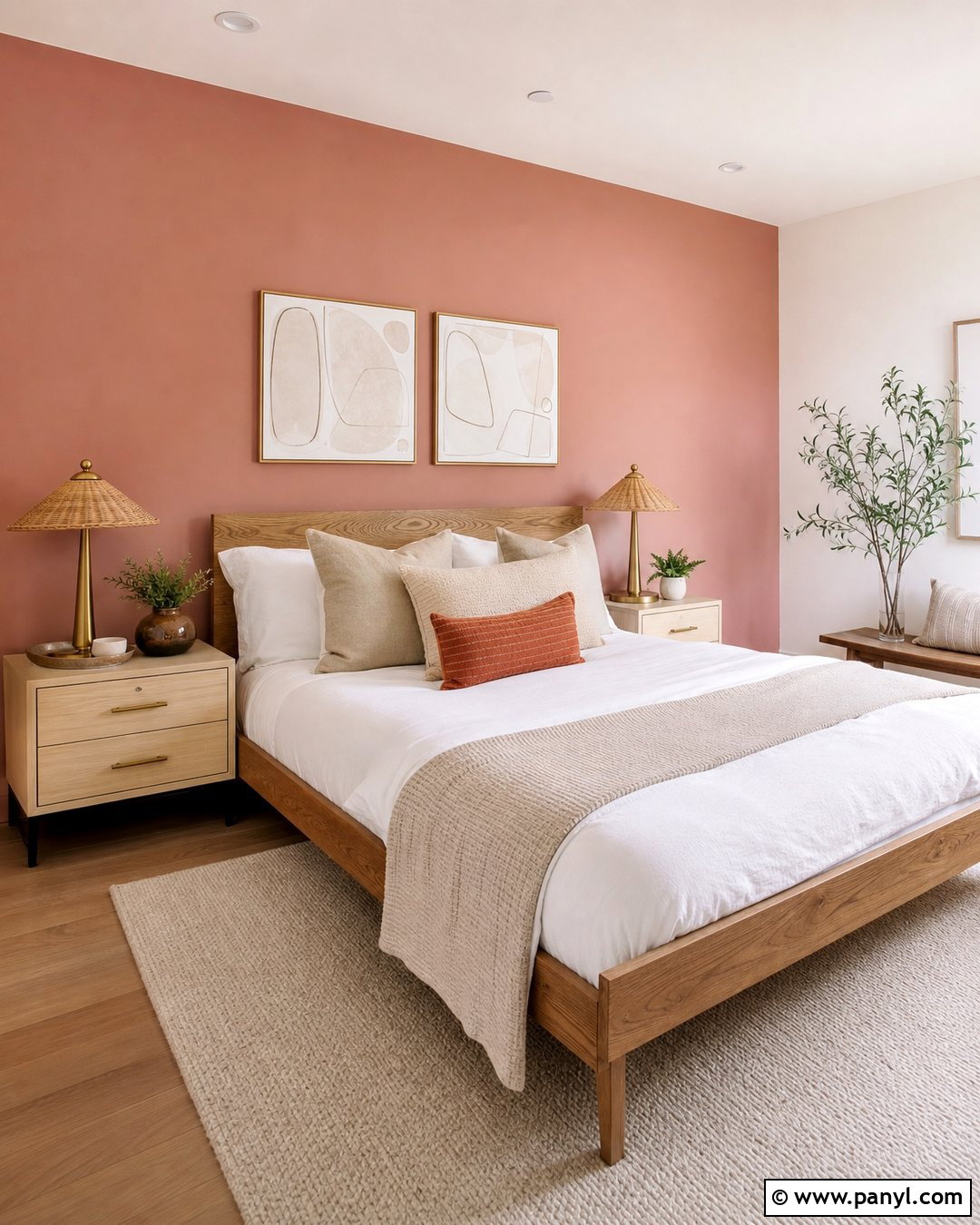
Terracotta brings earthy warmth to a living room and looks especially inviting beside natural wood and creamy fabrics. Paint the wall behind the sofa in a muted clay shade with brown or peach undertones rather than vivid orange. Pair it with an oatmeal sofa, oak coffee table, and woven chairs with cane or rush seats. Use a patterned rug containing terracotta, faded blue, and beige to anchor the arrangement. Olive green cushions and leafy plants provide a cooling contrast, while off-white curtains maintain a bright atmosphere. Decorate the wall with one large landscape, textile hanging, or simple group of ceramic plates. Warm white surrounding walls and dark bronze lighting complete a welcoming Southwestern, Mediterranean, bohemian, or organic modern living room.
Conclusion:
The most successful accent wall feels like a natural part of the living room rather than a separate decorating project. Begin with the room’s clearest focal point, then select a color, material, or pattern that supports the existing furniture and architecture. Paint offers an affordable transformation, while molding, wood, plaster, wallpaper, and stone add lasting dimension. Whatever treatment you choose, repeat its color or texture in small amounts through rugs, cushions, tables, or lighting. Keep the rest of the room balanced so the feature wall can stand out without dominating. These 20 accent wall for living room ideas provide complete, adaptable looks for modern, traditional, rustic, colorful, and budget-conscious homes.

Related Ideas and Inspiration:
Leave a Reply