
Plain white walls can feel fresh and flexible, but they need thoughtful layers to look finished rather than forgotten. The best 35 plain white wall ideas combine wall decor with furniture, lighting, textiles, and color so the entire room feels connected. Current decorating approaches favor oversized artwork, warm wood, sculptural lighting, dimensional trim, natural fibers, and personal collections because these details add character without taking away the clean white backdrop. () Whether you own your home or need renter-friendly updates, focus on scale, spacing, and repetition. Choose a clear palette, repeat materials around the room, and leave enough open wall space for visual balance. The complete looks below offer practical ways to recreate 35 plain white wall ideas.
1. White Wall Gallery Wall
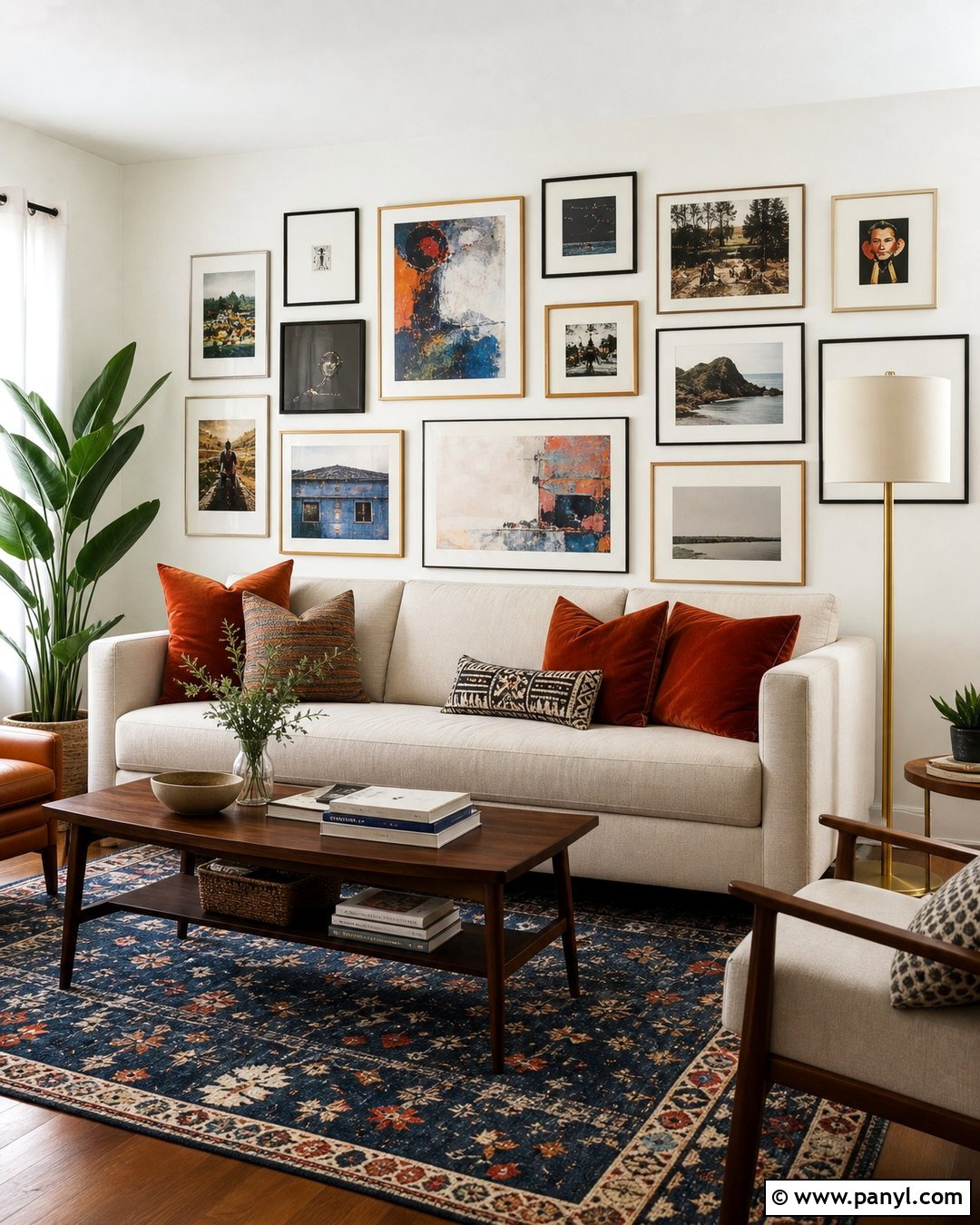
Turn a plain white living room wall into a personal focal point with a balanced gallery arrangement. Combine framed photography, abstract prints, landscapes, and simple sketches in two or three frame finishes. Light oak, matte black, and slim brass frames create variety without looking random. Center the collection above a neutral sofa and keep the lowest frames about six to eight inches above its back. Repeat colors from the artwork through rust pillows, a navy throw, and a patterned area rug. Add a walnut coffee table and a tall floor lamp to ground the space. Lay the arrangement on the floor before hanging it, maintaining consistent gaps between frames. The finished room should feel collected, colorful, and organized rather than crowded.
2. White Wall With Oversized Art
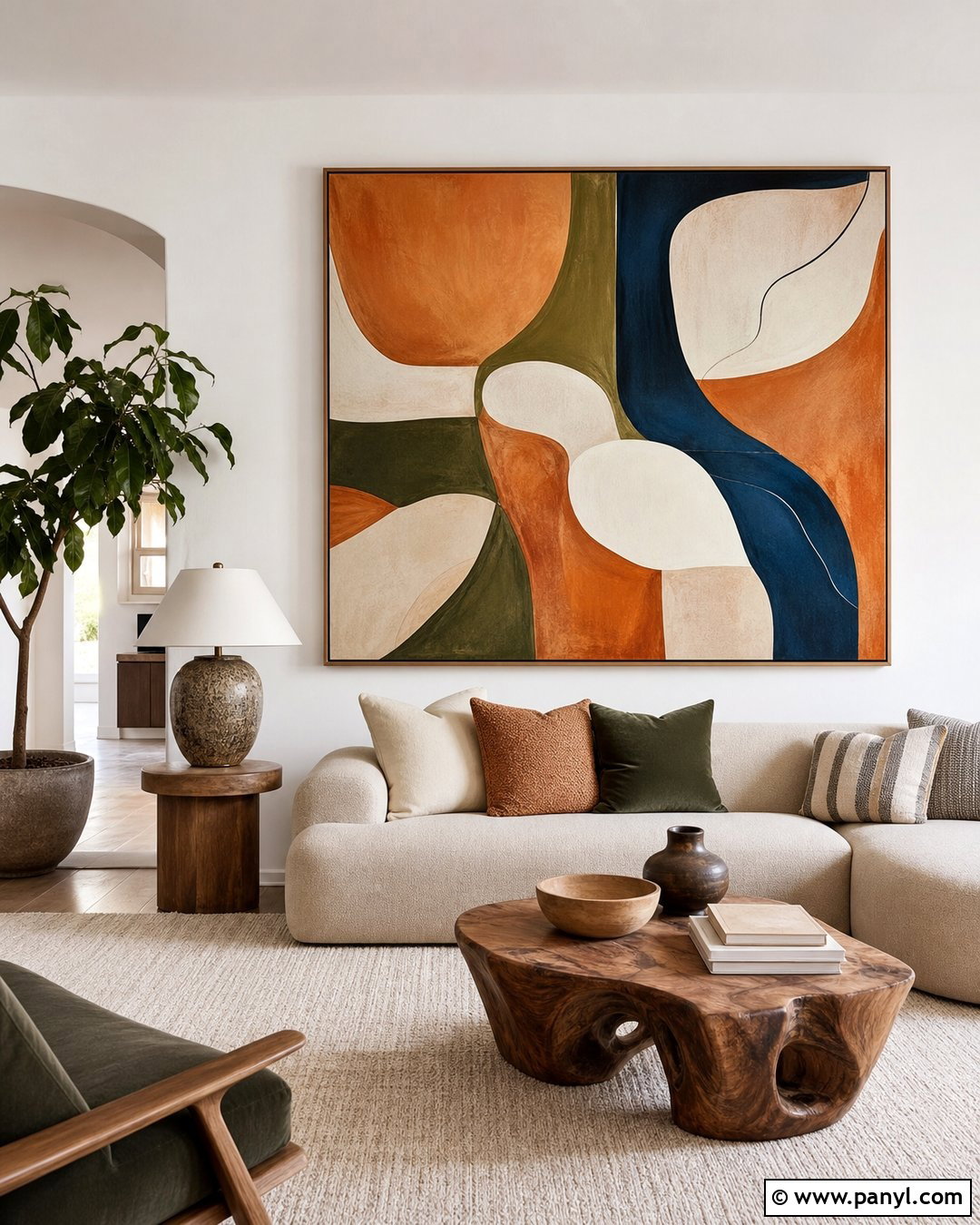
One large artwork can give a white wall more impact than several small decorations. Choose a canvas measuring roughly two-thirds the width of the sofa, bed, or console beneath it. An abstract painting with terracotta, deep blue, cream, and olive creates a strong palette for the rest of the room. Pair it with a low oatmeal sofa, sculptural wood coffee table, and textured wool rug. Keep surrounding accessories limited so the artwork remains the focal point. A ceramic lamp, two pillows, and one leafy plant are enough to complete the composition. Position the art at comfortable eye level instead of placing it close to the ceiling. This simple approach works especially well in modern living rooms with limited floor space and clean furniture lines.
3. White Wall Picture Ledge
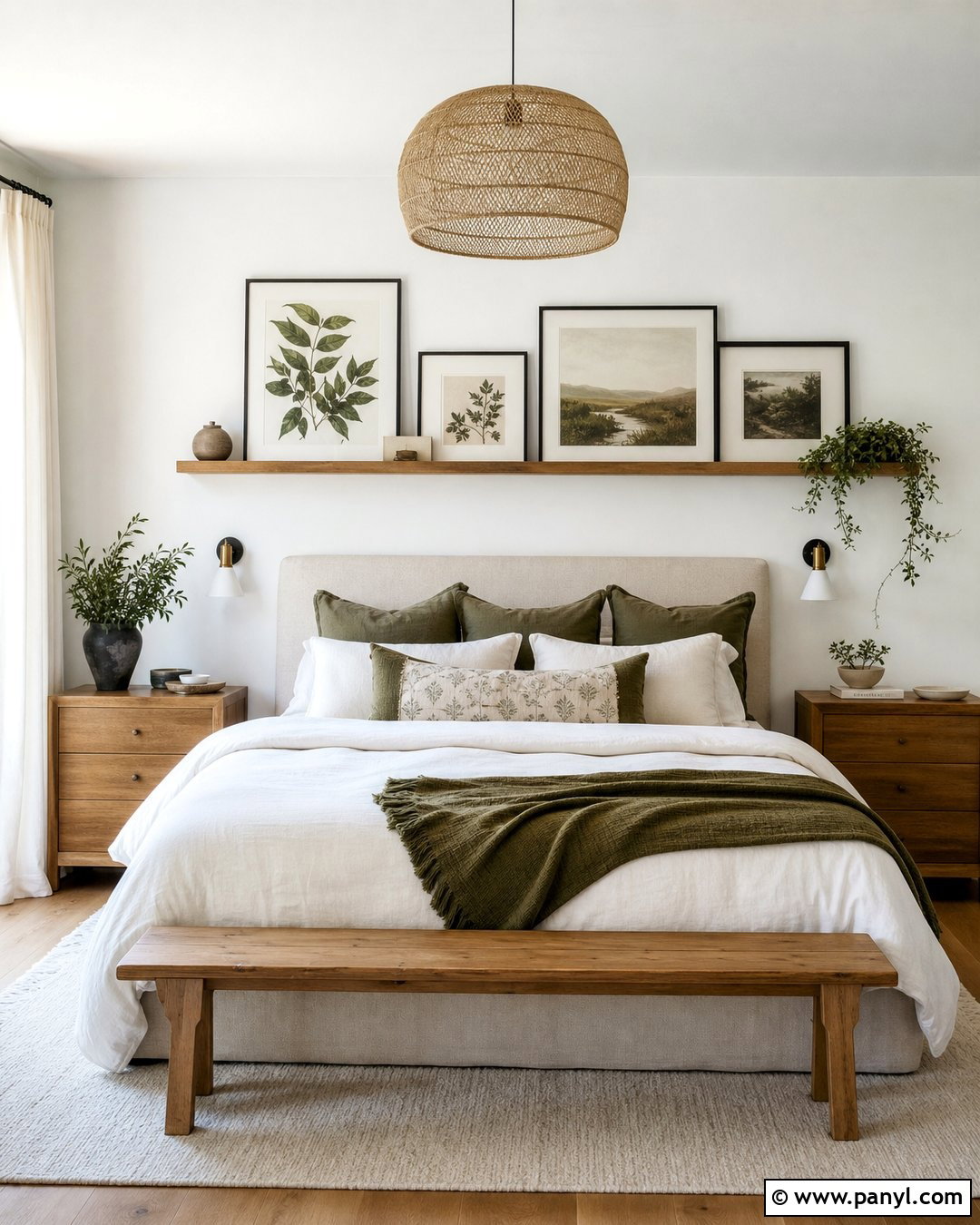
A long picture ledge offers flexible decoration without requiring a perfectly measured gallery wall. Install a slim oak ledge above a bedroom headboard, then layer framed prints in several sizes so they overlap slightly. Use botanical studies, soft landscapes, and abstract shapes in muted green, beige, and charcoal. Add one small trailing plant and a handmade ceramic piece for dimension, but avoid filling every inch. Below the display, choose a linen-upholstered bed, warm white bedding, olive pillows, and oak nightstands. Matching wall sconces create symmetry and leave the tables uncluttered. Keep the ledge and largest artwork narrower than the bed so the arrangement feels contained. This complete look makes a plain white bedroom feel relaxed, personal, and easy to update seasonally.
4. White Wall Floating Shelves
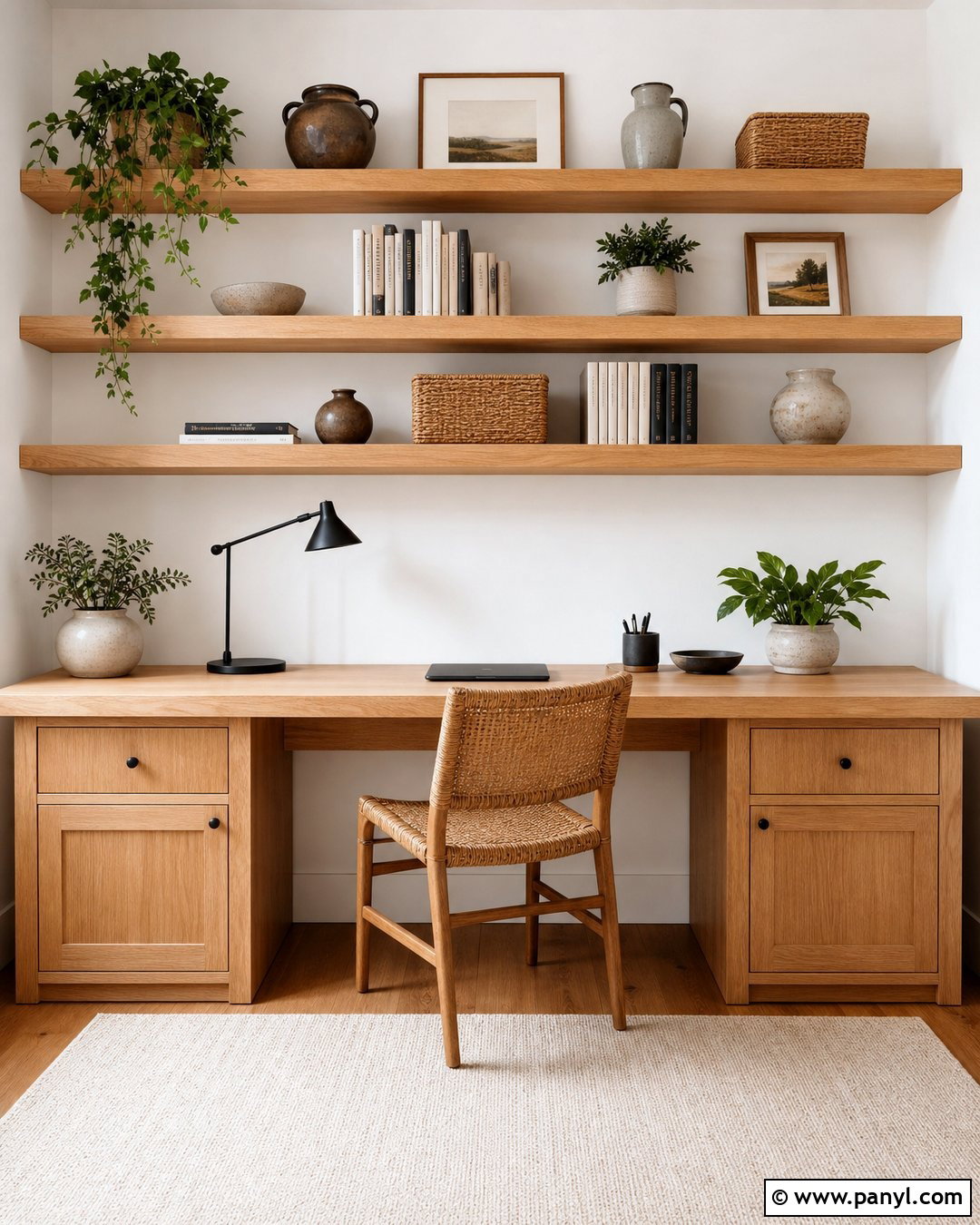
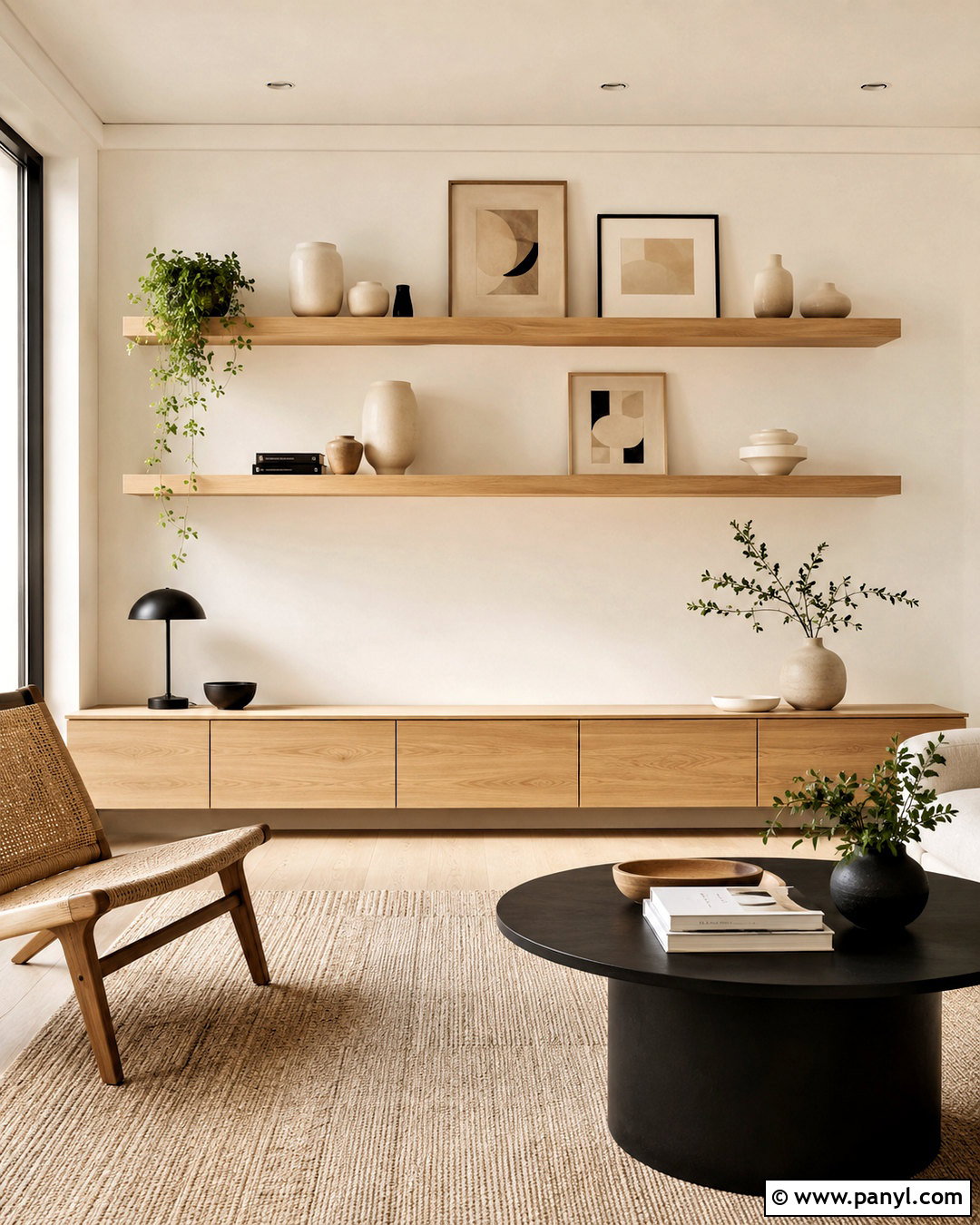
Floating shelves can transform a blank home office wall while providing useful storage. Mount three thick oak shelves above a streamlined desk, leaving enough vertical space for books, baskets, and artwork. Arrange objects in small groups rather than lining everything in a single row. Mix upright books, framed prints, stoneware vessels, and a trailing plant while leaving visible white space between collections. A natural oak desk, woven chair, cream rug, and matte black task lamp create a warm modern foundation. Hide paperwork in matching lidded boxes on the lowest shelf. Repeat black accents through frames and desk accessories to tie the look together. This layout keeps practical supplies within reach while making the workspace look polished, intentional, and visually lighter than a bulky wall cabinet.
5. White Wall With Black And White Photos
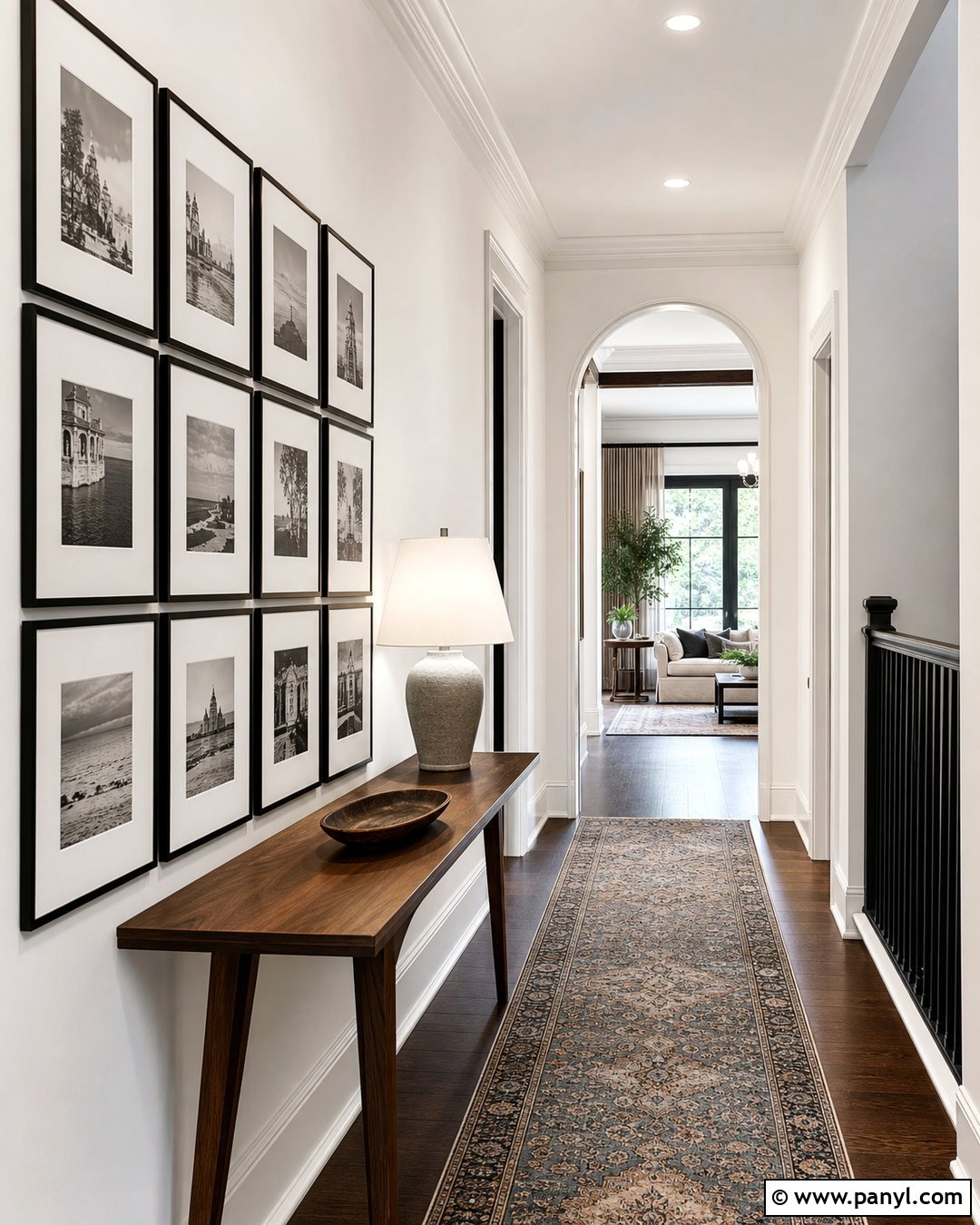
A hallway becomes more meaningful when its plain white walls display a unified collection of black-and-white photographs. Print family pictures, architectural images, or travel scenes in the same monochrome finish. Place them in identical thin black frames with generous white mats, then arrange the frames in a clean grid. Matching sizes produce a calm, orderly result in a narrow passage. Add a slim walnut console where space permits, along with a small lamp and shallow catchall tray. A vintage-style runner in charcoal, faded blue, and beige softens the floor and carries the photo palette through the hallway. Use warm white ceiling lights to prevent the black frames from feeling severe. The final look is personal and graphic, yet still simple enough for a busy circulation area.
6. White Wall With Arched Mirror
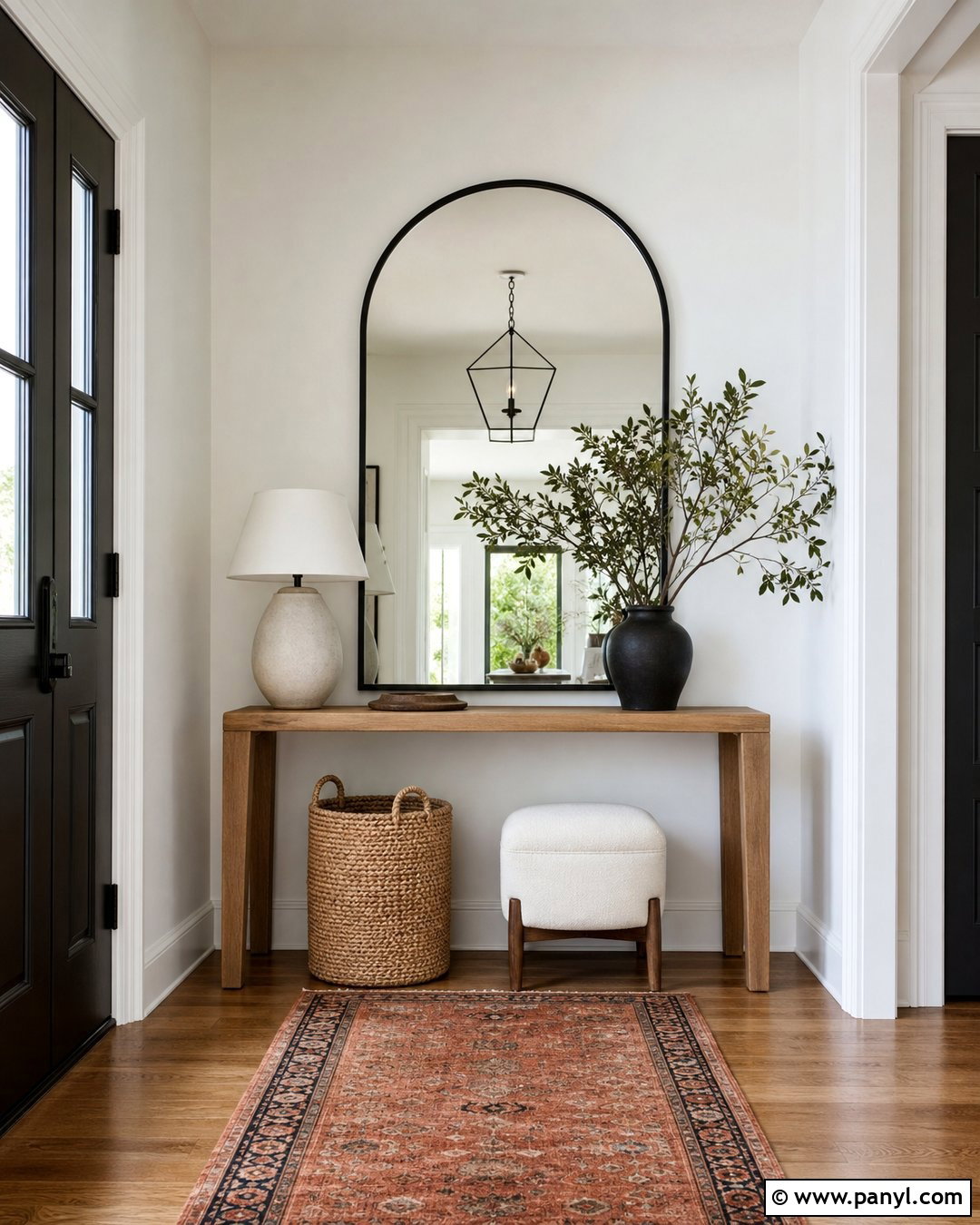
An oversized arched mirror gives an entryway depth while maintaining a bright, uncluttered appearance. Lean or securely mount a black-framed mirror above a narrow oak console, making sure its scale relates to both the wall and nearby doorway. Style the console with a ceramic lamp, shallow tray, and one vase filled with leafy branches. A woven storage basket underneath can hold shoes, scarves, or reusable bags. Introduce softness with a faded terracotta runner and a small upholstered stool. The contrast between the curved mirror, straight console, and crisp white wall creates a balanced composition. Keep the surrounding wall mostly open so reflected light becomes part of the design. This practical setup gives the entrance a clear focal point and provides a convenient place for everyday essentials.
7. White Wall With Round Mirror
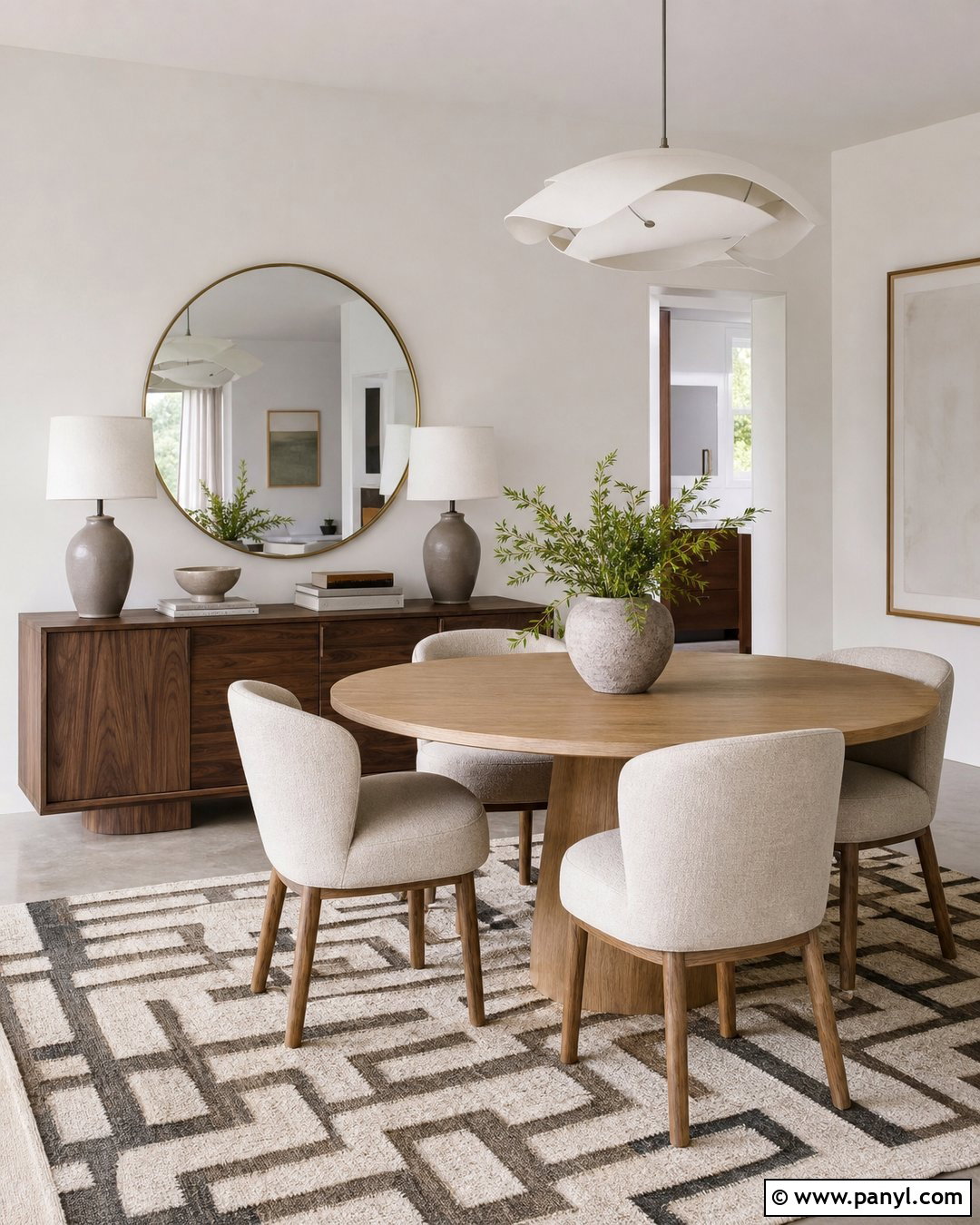
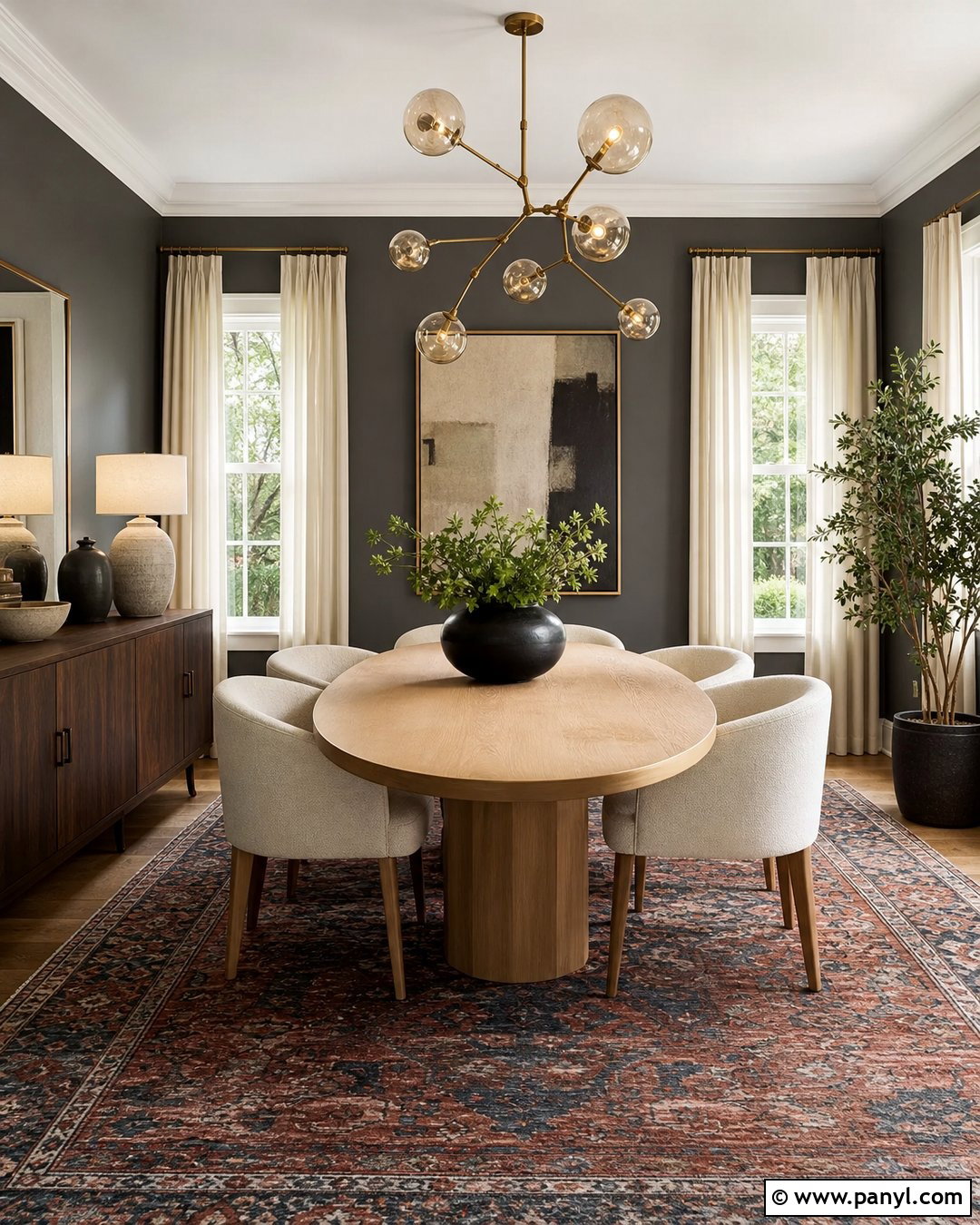
A round mirror can soften the hard corners found in a dining room filled with rectangular furniture. Hang a large brass-framed mirror above a walnut sideboard, centering it between the top of the furniture and the ceiling. Add two matching ceramic lamps or sconces to create gentle symmetry. Style the sideboard with a low bowl, stacked books, and a vase of greenery, keeping all objects below the mirror’s widest point. A round oak dining table reinforces the curved shape, while upholstered oatmeal chairs and a geometric rug add comfort. Choose a sculptural pendant with warm metal details to connect with the mirror frame. Against the plain white wall, these repeated curves and natural materials create an inviting dining space that feels finished without requiring many decorative objects.
8. White Wall Molding
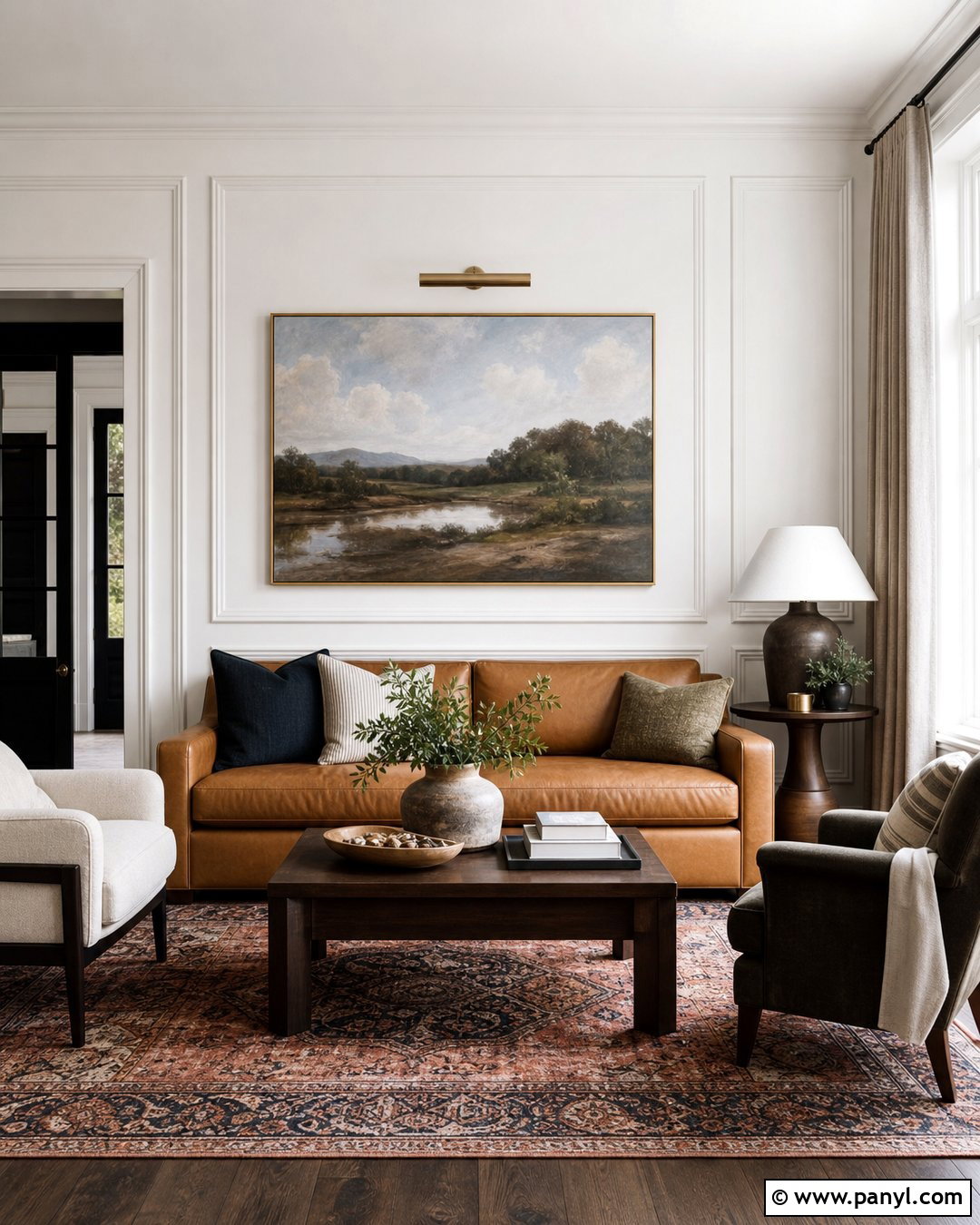
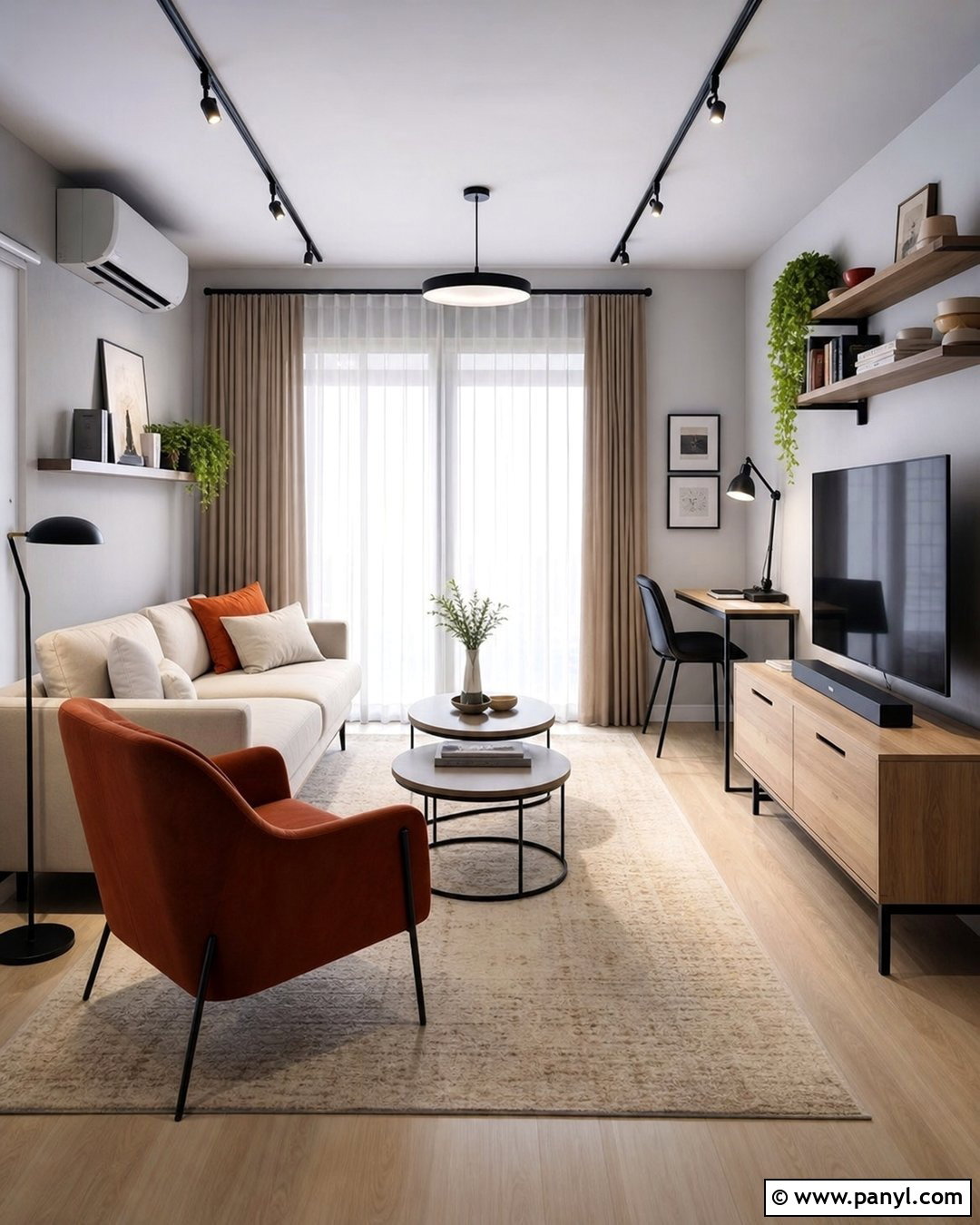
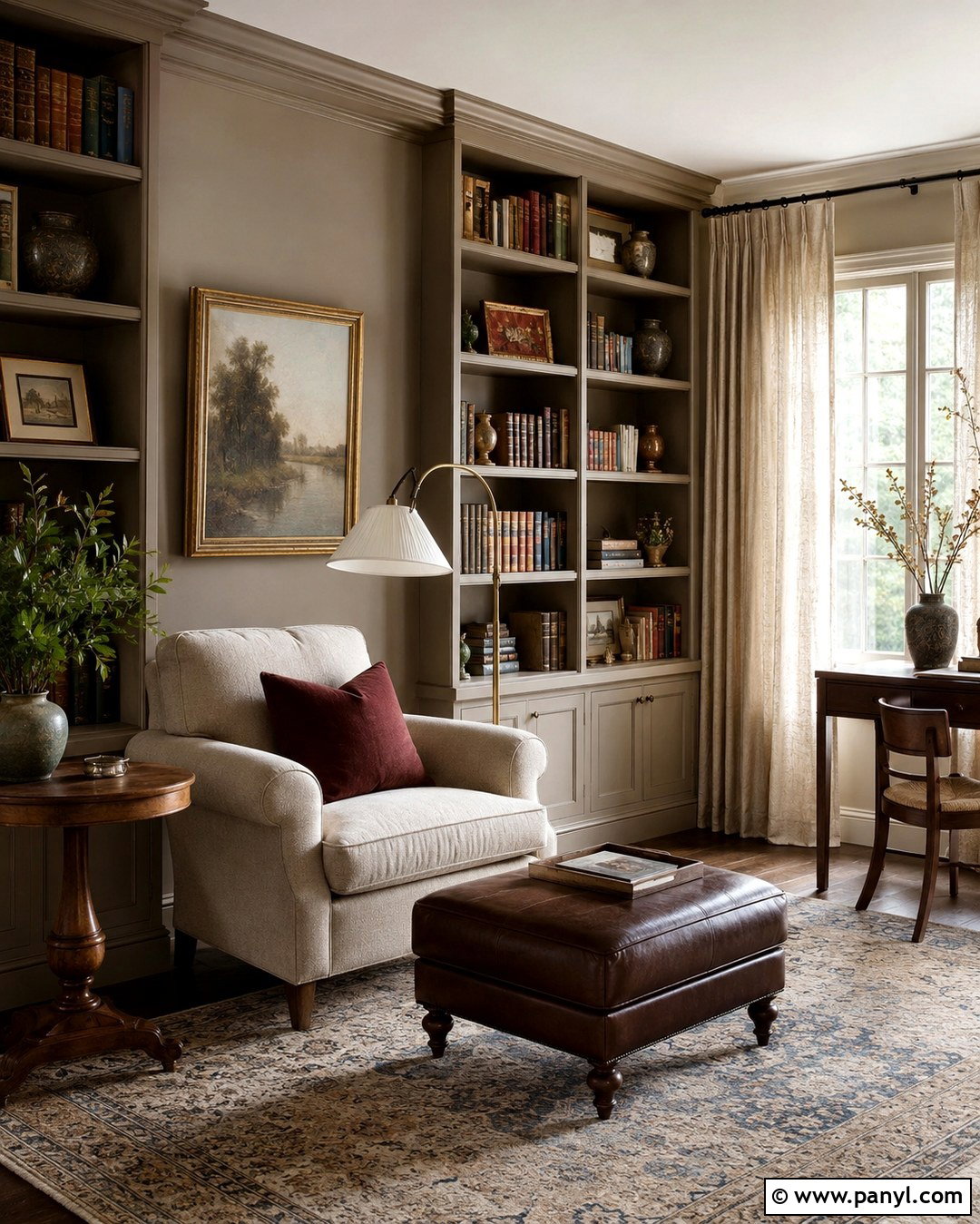
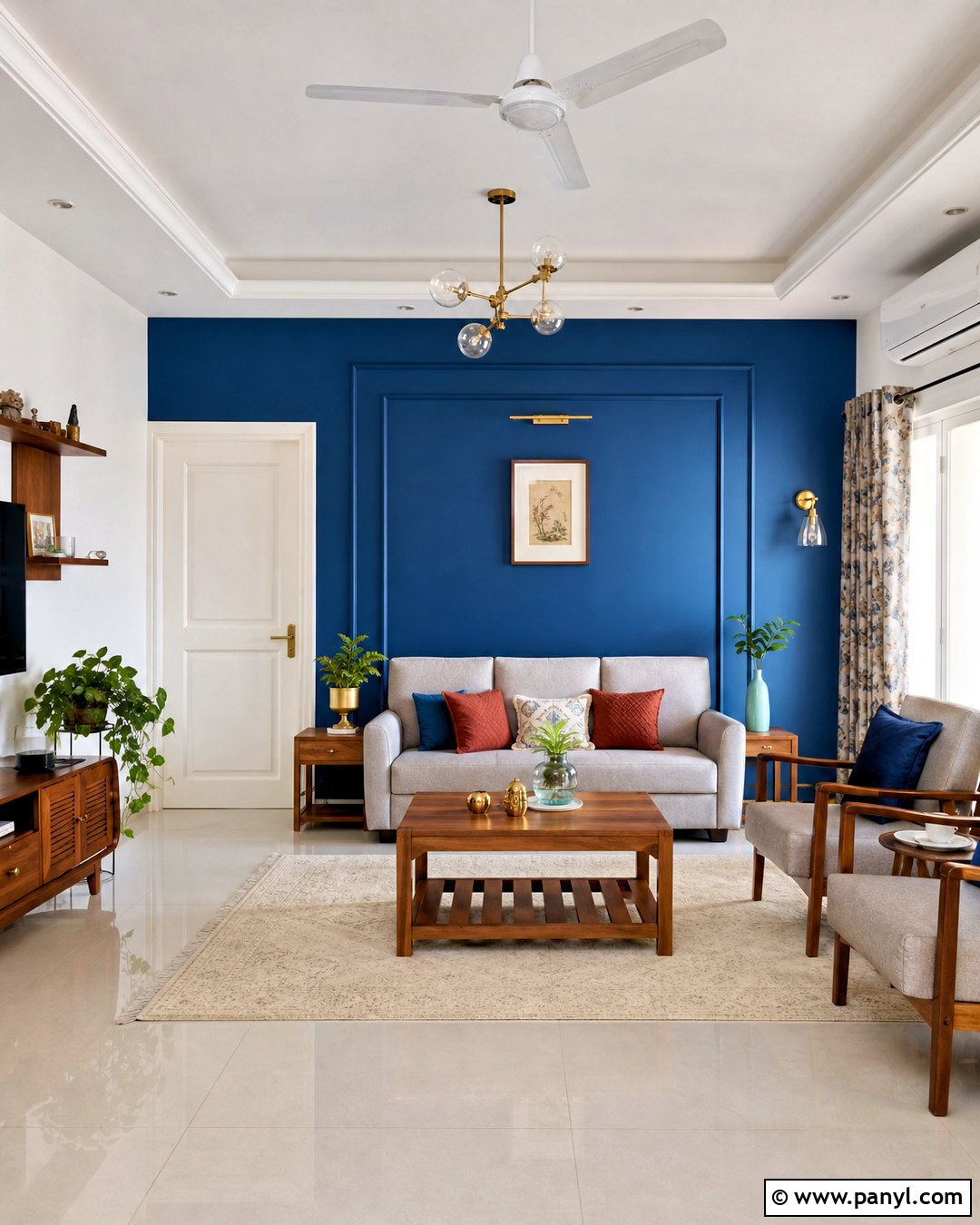
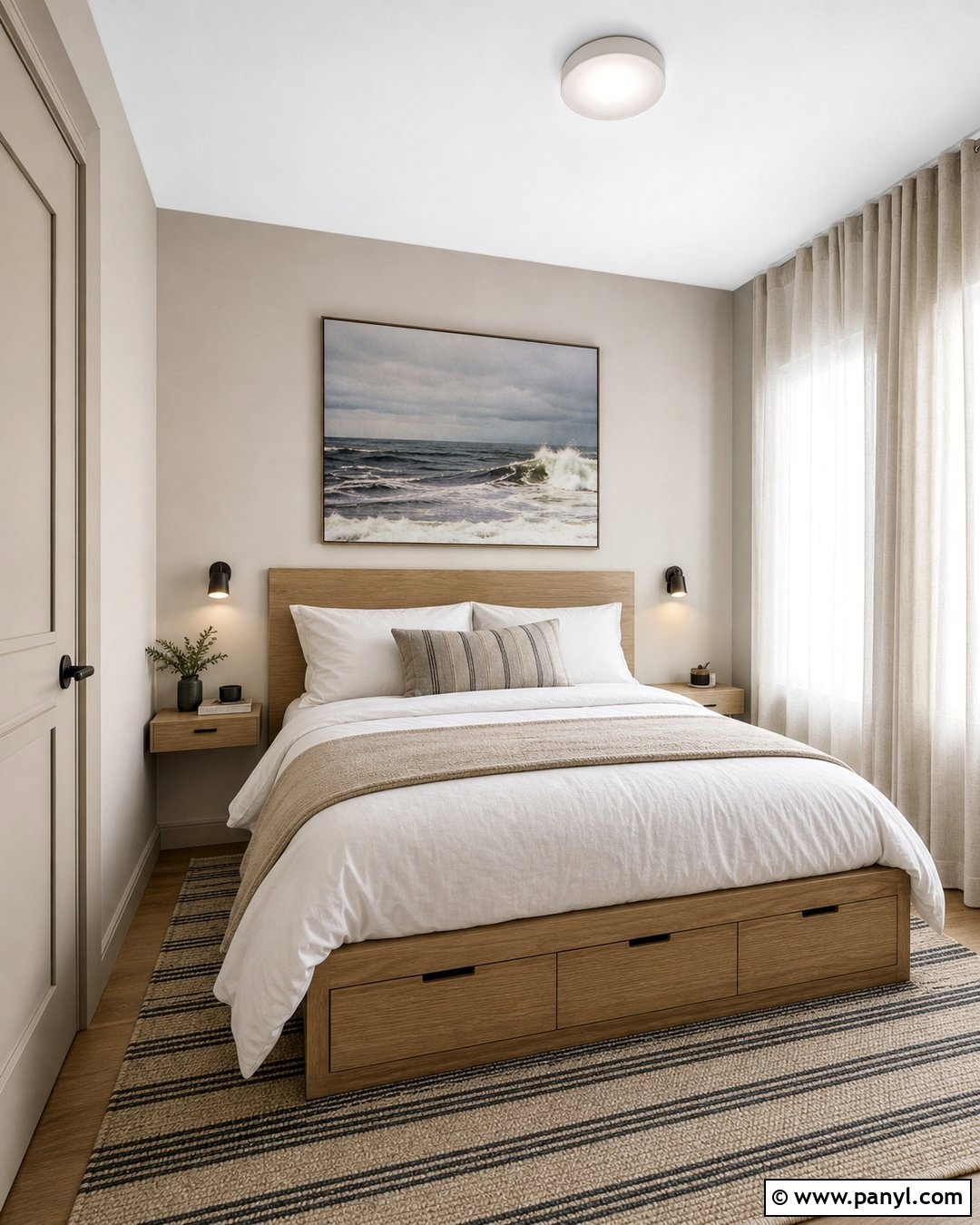
Applied molding gives a plain white living room wall architectural depth without introducing another color. Create evenly spaced rectangular frames using narrow wood trim, then paint the molding and wall in the same soft white finish. This tone-on-tone treatment produces subtle shadows that shift throughout the day. Place a camel leather sofa against the wall and center a wide landscape painting within the largest molding panel. Add linen curtains, a dark wood coffee table, and a vintage-inspired rug in faded red and navy. Brass picture lights or shaded sconces can highlight the artwork and emphasize the paneling. Keep furniture placement aligned with the wall’s molding pattern so the room looks orderly. The result combines traditional detailing with relaxed, contemporary furniture, making a basic room appear more established and thoughtfully designed.
9. White Wall Board And Batten
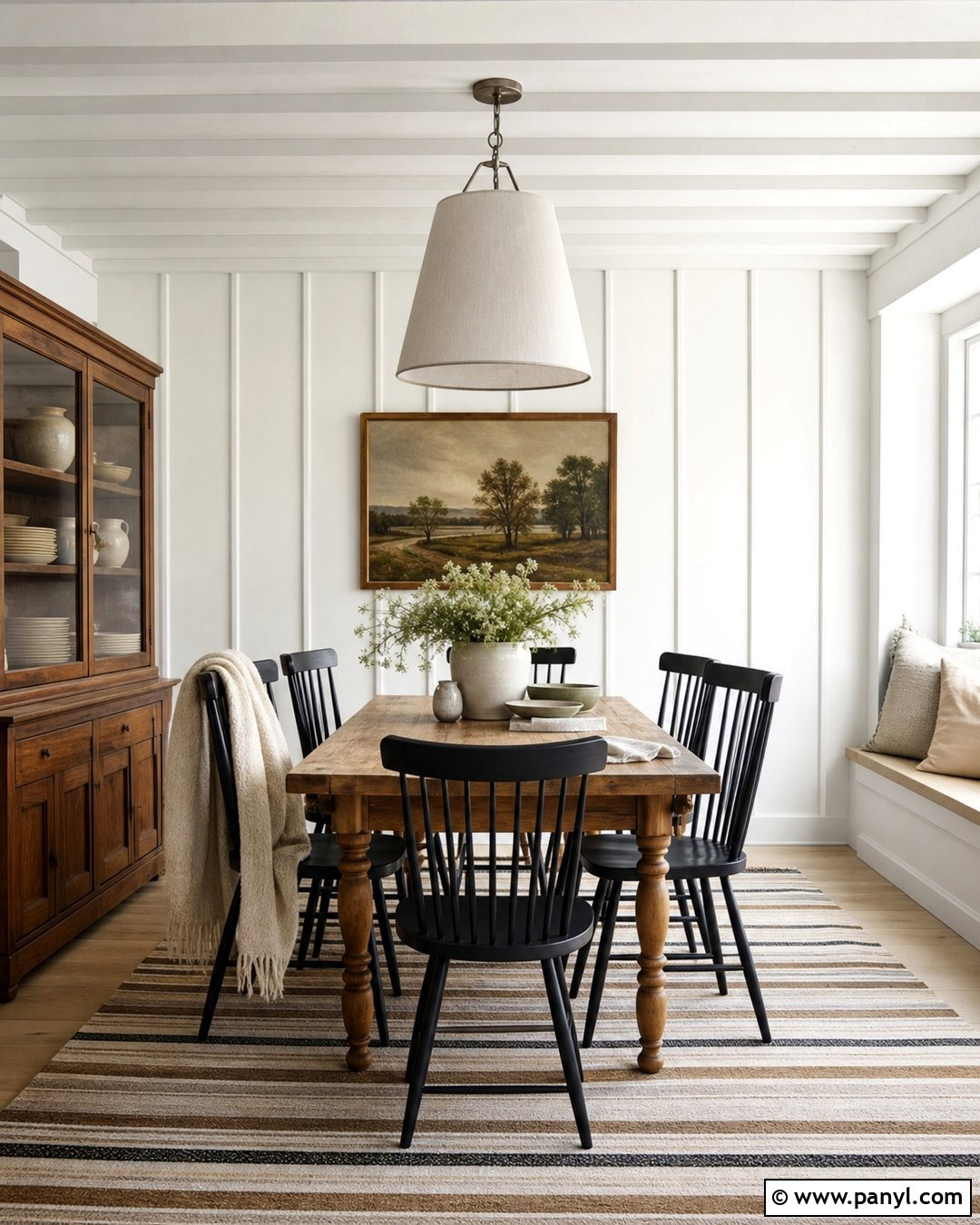
White board and batten can make a dining area feel detailed while preserving its bright neutral palette. Install vertical battens across the lower two-thirds of the wall and finish them with a shallow cap rail. Paint the boards, battens, and upper wall the same warm white for a seamless effect. Center a natural oak dining table in the room and surround it with black spindle-back chairs. A linen pendant introduces softness overhead, while a striped flat-weave rug defines the eating area. Hang one large pastoral artwork above the cap rail instead of covering every panel. Add a vintage wood cabinet for dishes and serving pieces. The combination of white millwork, black seating, and aged wood creates a modern farmhouse dining room that feels structured, comfortable, and more dimensional than an untreated white box.
10. White Wall With Wood Slats
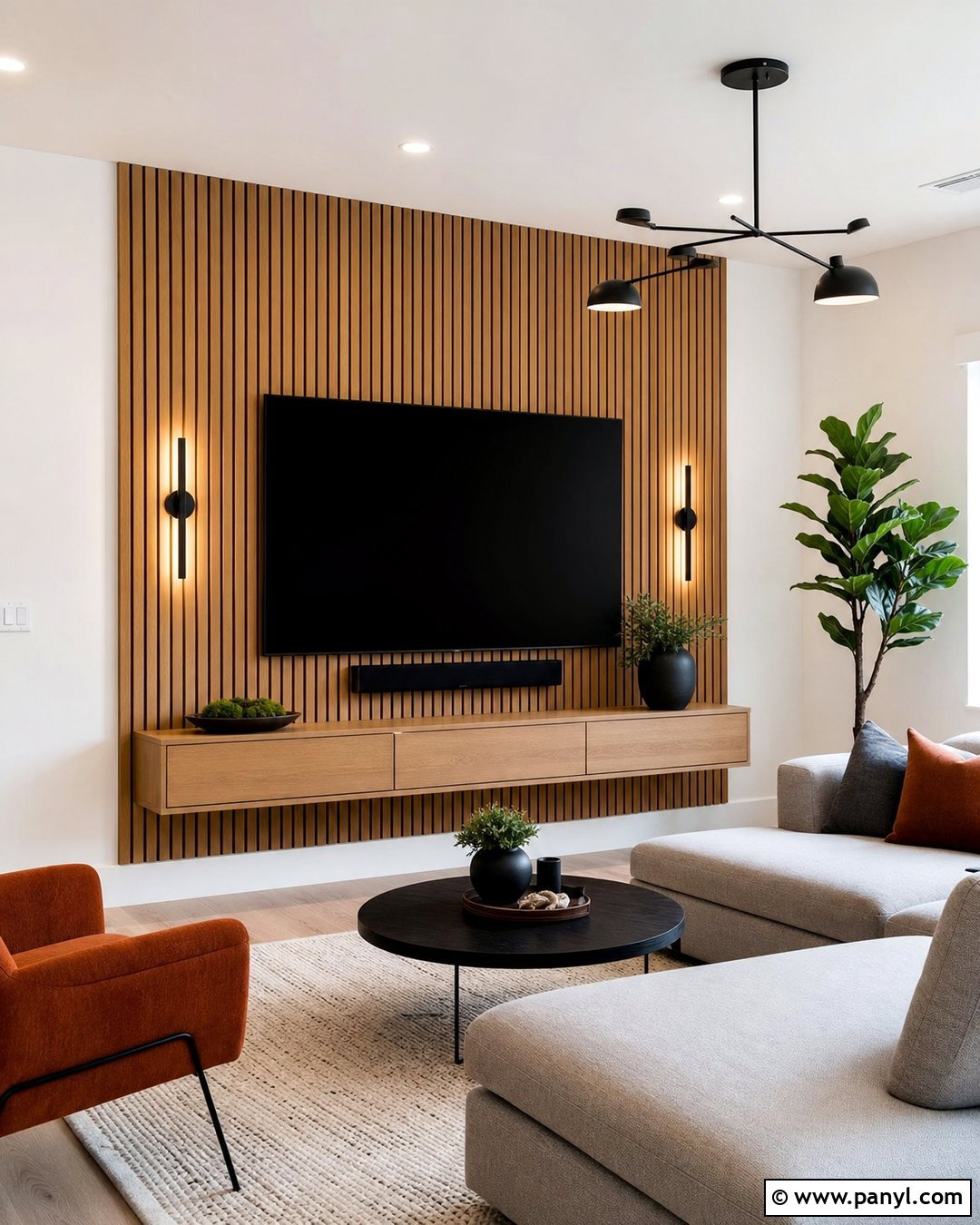
Vertical wood slats create a warm focal point around a television without covering the entire white wall. Install narrow oak slats across the central section, leaving broad white margins on both sides. Mount the television over a low floating oak console so cords remain hidden and the floor stays open. A soft gray sectional, rust accent chair, and textured cream rug complete the seating area. Add black metal lighting and a few charcoal accessories to connect with the screen when it is turned off. Keep shelves and decorations minimal around the television because the wood grain already provides movement. A tall plant beside the console balances the arrangement. This design turns necessary technology into a clean architectural feature while preserving the brightness and simplicity of the surrounding plain white walls.
11. White Wall With Removable Mural
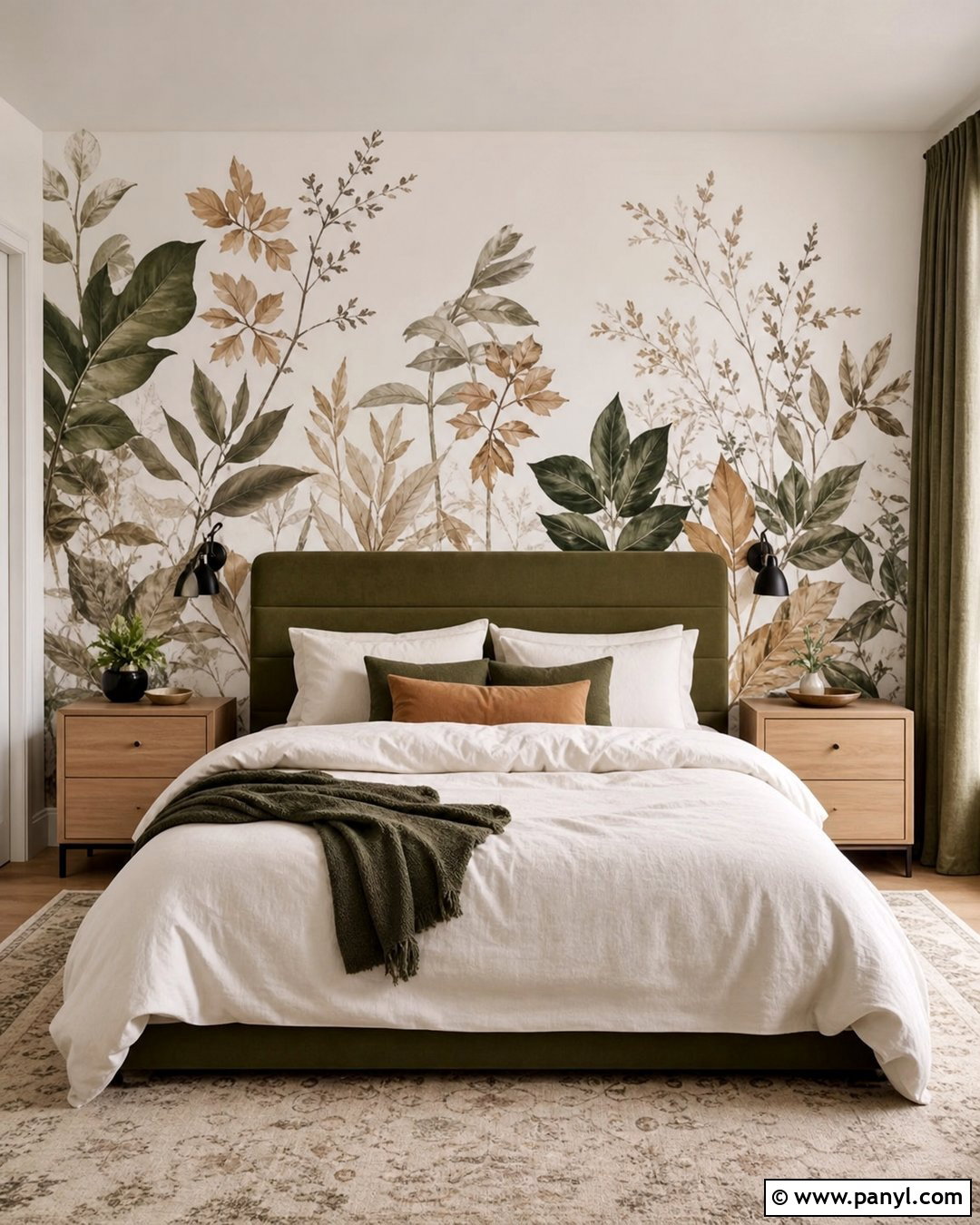
A removable mural can add a dramatic focal point while leaving most of the room’s white walls untouched. Choose a large botanical, landscape, or abstract mural in muted green, clay, cream, and charcoal. Apply it to the wall behind a bed or sofa, carefully aligning the pattern and smoothing the seams. Select furniture that echoes the mural without competing with it, such as an olive upholstered bed, pale oak nightstands, and warm white bedding. Use simple black sconces to frame the composition. Solid curtains and a lightly patterned rug prevent the room from becoming visually busy. Renters should confirm that the material is designed for clean removal and test a hidden area first. The mural should look like an intentional backdrop that anchors the full room rather than a disconnected patch of pattern.
12. White Wall Basket Display
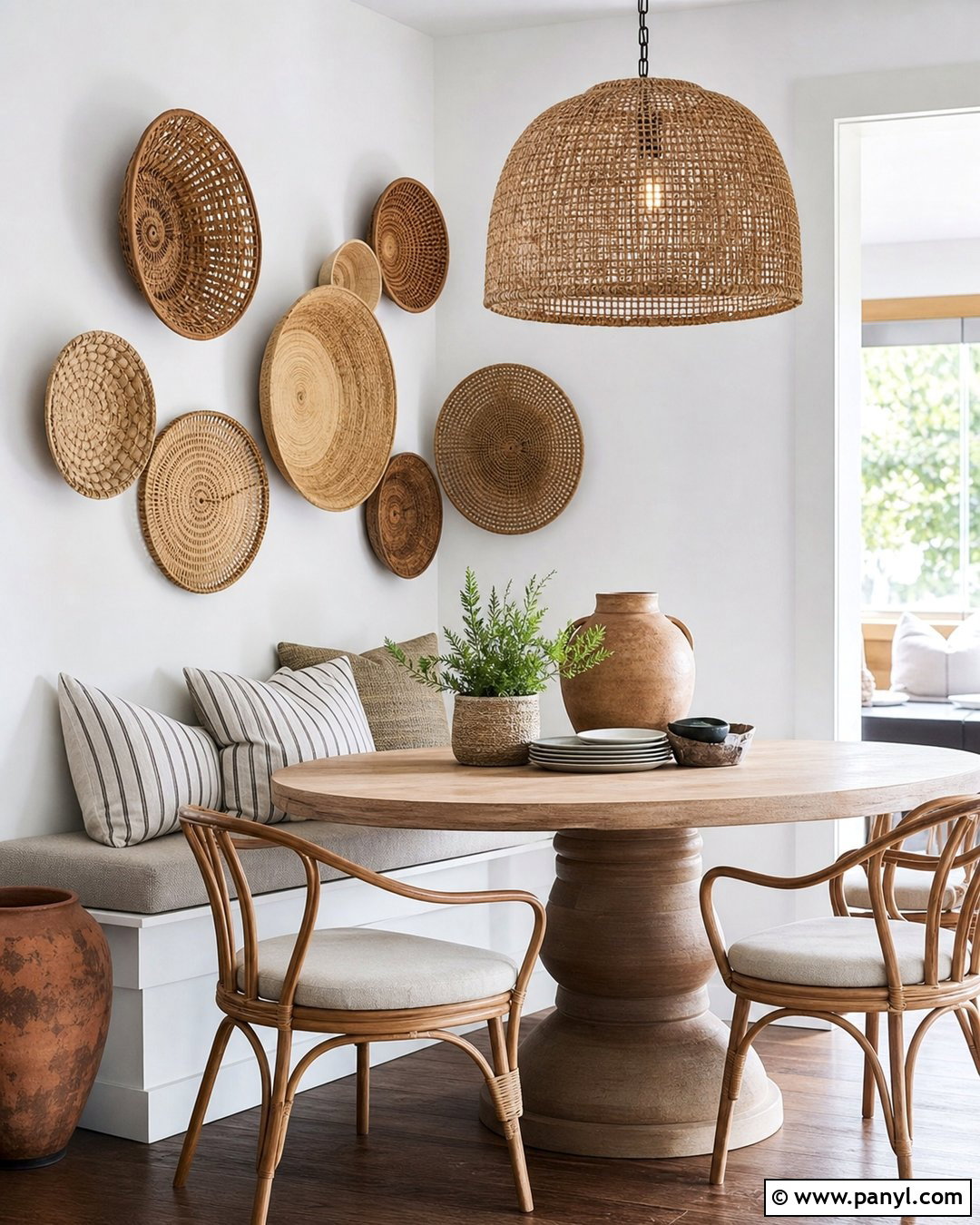
Woven baskets add natural texture to white walls and work especially well in a relaxed dining nook. Collect shallow baskets in several sizes and weave patterns, using materials such as seagrass, rattan, and pale bamboo. Arrange them in an asymmetrical cluster above a built-in bench, with the largest basket near the center. Keep the overall shape wider than it is tall to follow the seating below. Add oatmeal bench cushions, striped pillows, a round pedestal table, and curved wood chairs. A woven pendant repeats the wall texture without matching it exactly. Introduce earthy color through clay pottery and olive-green textiles. Because the baskets project slightly from the wall, they create soft shadows and dimension. This complete look feels warm, casual, and handcrafted while keeping the white backdrop visible.
13. White Wall Textile Hanging
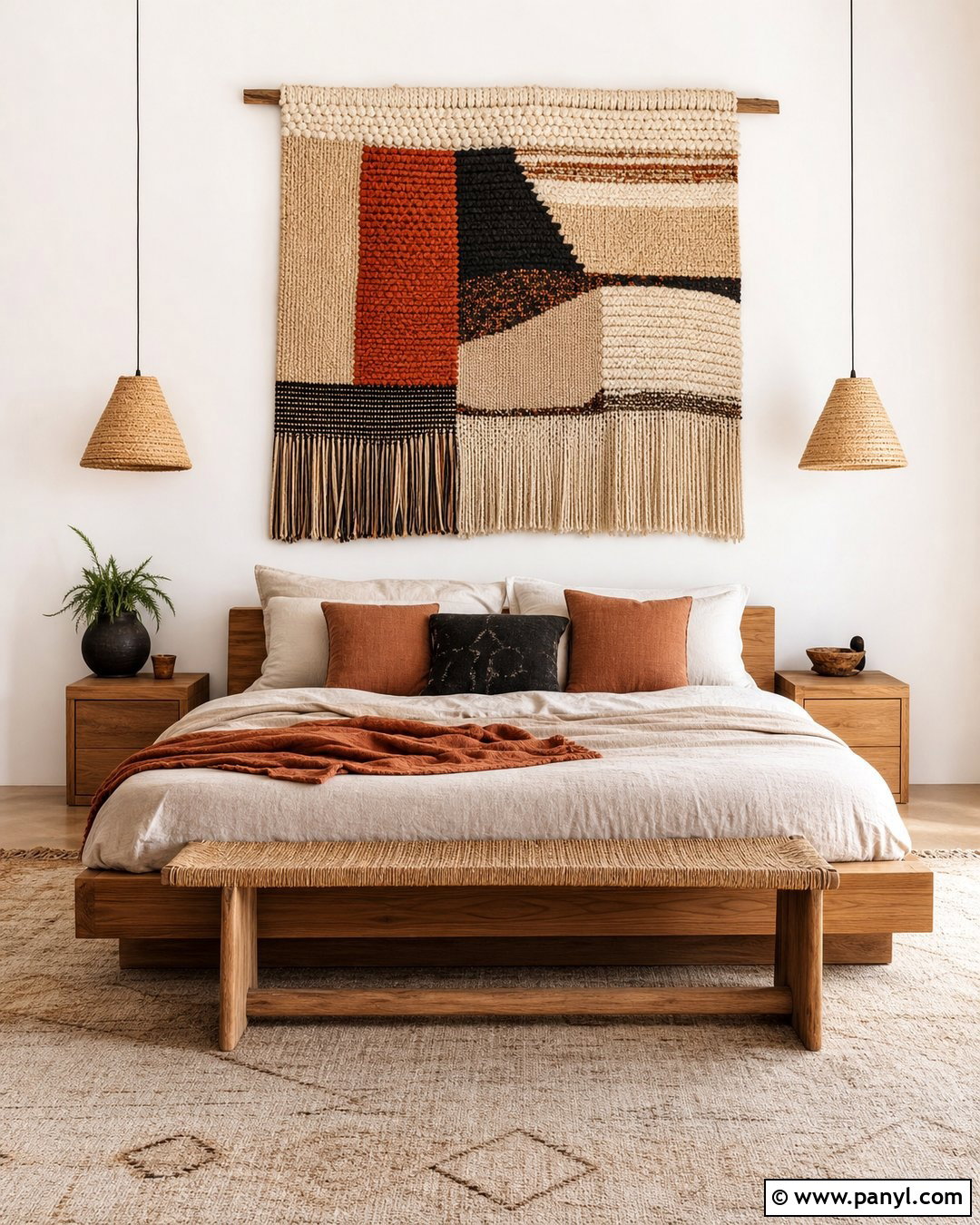
A large textile hanging can make a white bedroom feel softer and quieter than framed artwork. Choose a woven piece with visible fibers, subtle stripes, or an abstract pattern in oatmeal, rust, black, and cream. Hang it above the bed from a simple wood rod, ensuring it is wide enough to relate to the headboard. Pair the textile with a low oak bed, rumpled linen bedding, clay-colored pillows, and a thick wool rug. Add small pendant lights or sconces on each side to frame the wall without piercing the fabric. Repeat the woven texture through a bench or storage basket at the foot of the bed. The layered fibers absorb some of the visual sharpness of white paint, creating a comfortable retreat that feels collected without relying on numerous accessories.
14. White Wall Plate Display
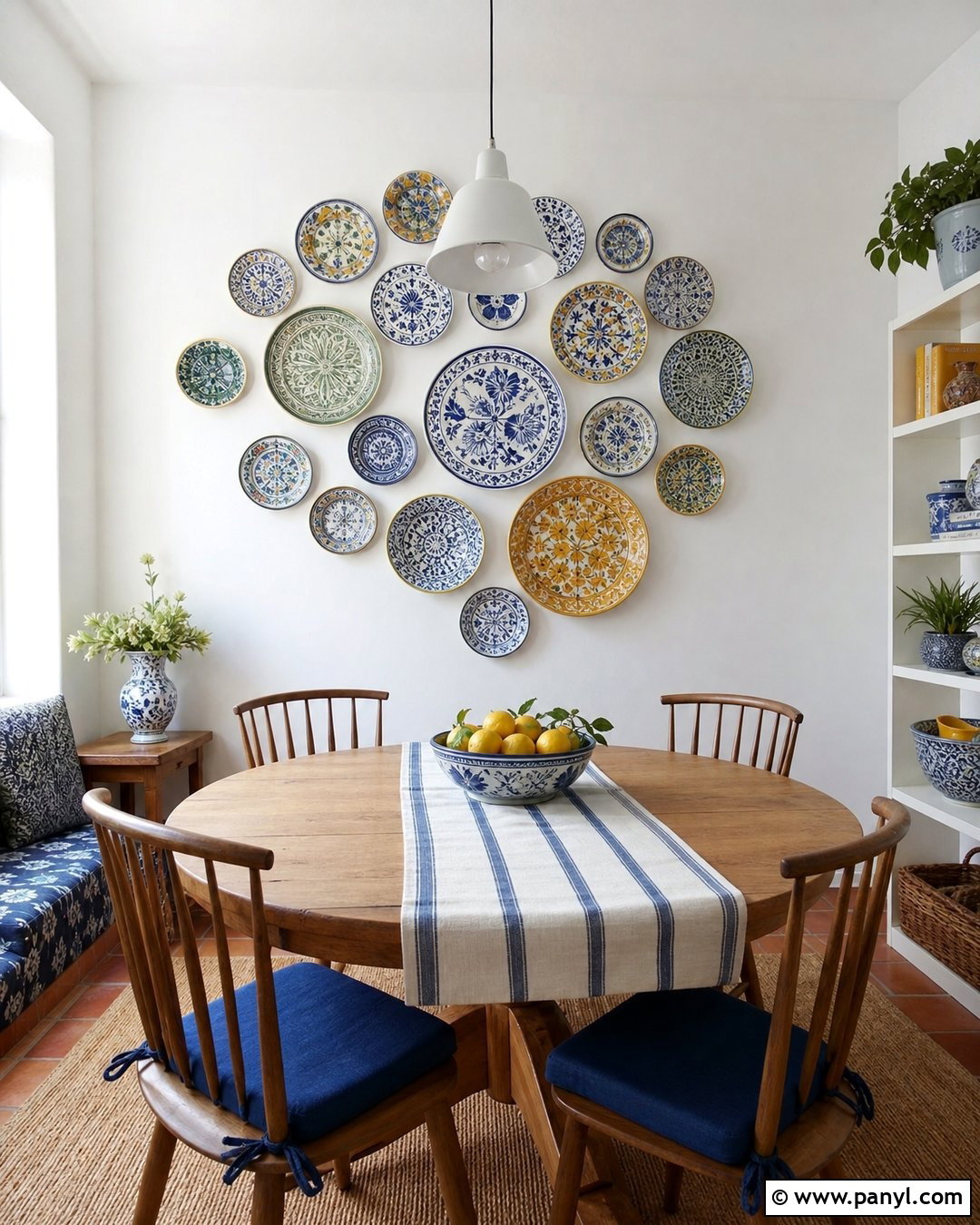
Decorative plates can turn a plain white kitchen or breakfast room wall into a colorful, personal feature. Choose ceramic plates in coordinating blue, green, and ochre patterns, mixing hand-painted designs with several solid pieces. Arrange them in a loose oval above a small dining table, starting with the largest plate and building outward. Use secure plate hangers suited to each piece’s size and weight. Continue the palette with blue seat cushions, a striped table runner, and simple stoneware on an open shelf. A round oak table and spindle chairs keep the room casual. Add a small pendant with a white or woven shade so it does not compete with the display. The completed space feels cheerful and collected, while the white wall provides enough breathing room for every pattern to remain visible.
15. White Wall With Indoor Plants
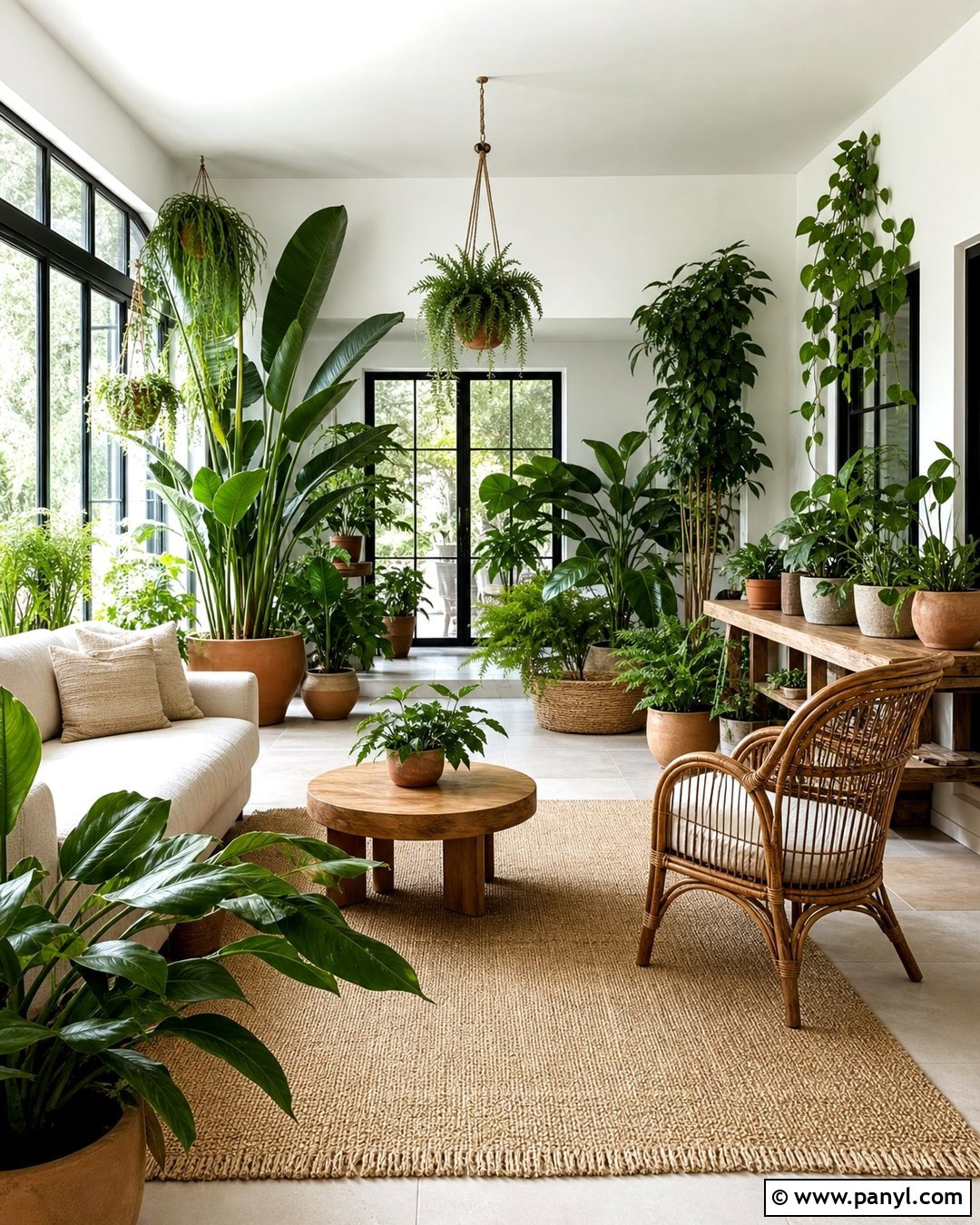
A layered plant display brings movement and natural color to a bright white sunroom or living room. Position a narrow wood console against the wall and arrange plants at several heights using floor pots, tabletop planters, and one ceiling-mounted trailing plant. Combine upright varieties, broad leaves, and delicate vines so the greenery does not form one solid block. Choose clay, cream, and dark green containers for a controlled palette. Add a light linen sofa, rattan chair, jute rug, and round wood coffee table to support the organic look. Keep the white wall visible behind the foliage, allowing leaves and shadows to create changing patterns. Select plants according to the room’s actual light and care conditions. The final design feels lively and relaxed rather than like a crowded indoor greenhouse.
16. White Wall With Sculptural Sconces
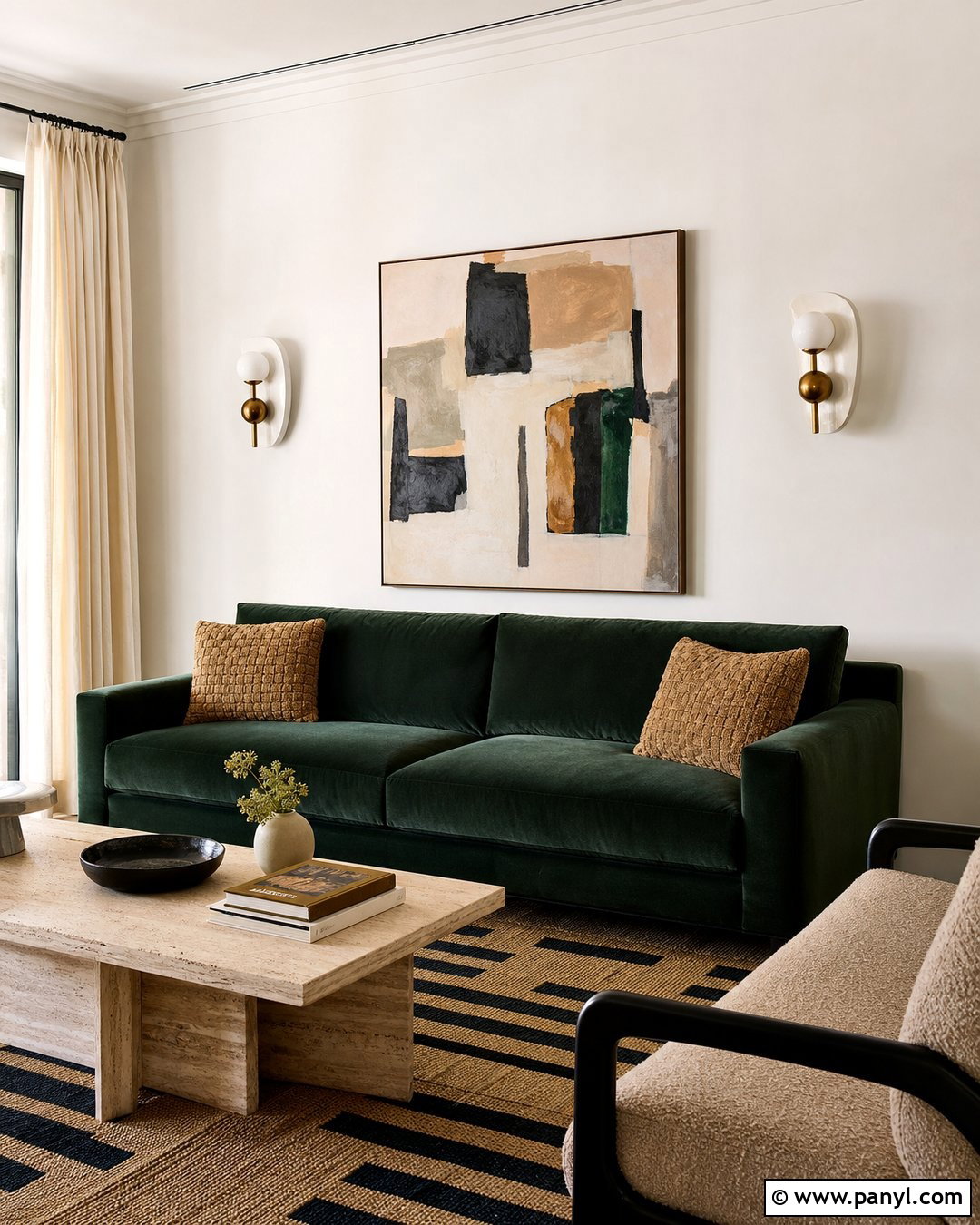
Sculptural wall sconces can decorate a plain white wall while improving the room’s evening lighting. Install a matching pair on either side of a low console, artwork, or fireplace. Choose fixtures with plaster, opal glass, or aged brass components so they remain attractive when switched off. In a modern living room, pair curved white sconces with an abstract canvas, a deep green sofa, and a travertine coffee table. Add cream curtains and a patterned rug with green, tan, and black details. Keep the sconces at equal heights and check that doors or artwork will not interfere with their projection. Use dimmable bulbs in a comfortable white tone. This arrangement gives the wall rhythm and symmetry while making the full seating area feel more welcoming, layered, and functional.
17. White Wall Bookshelves
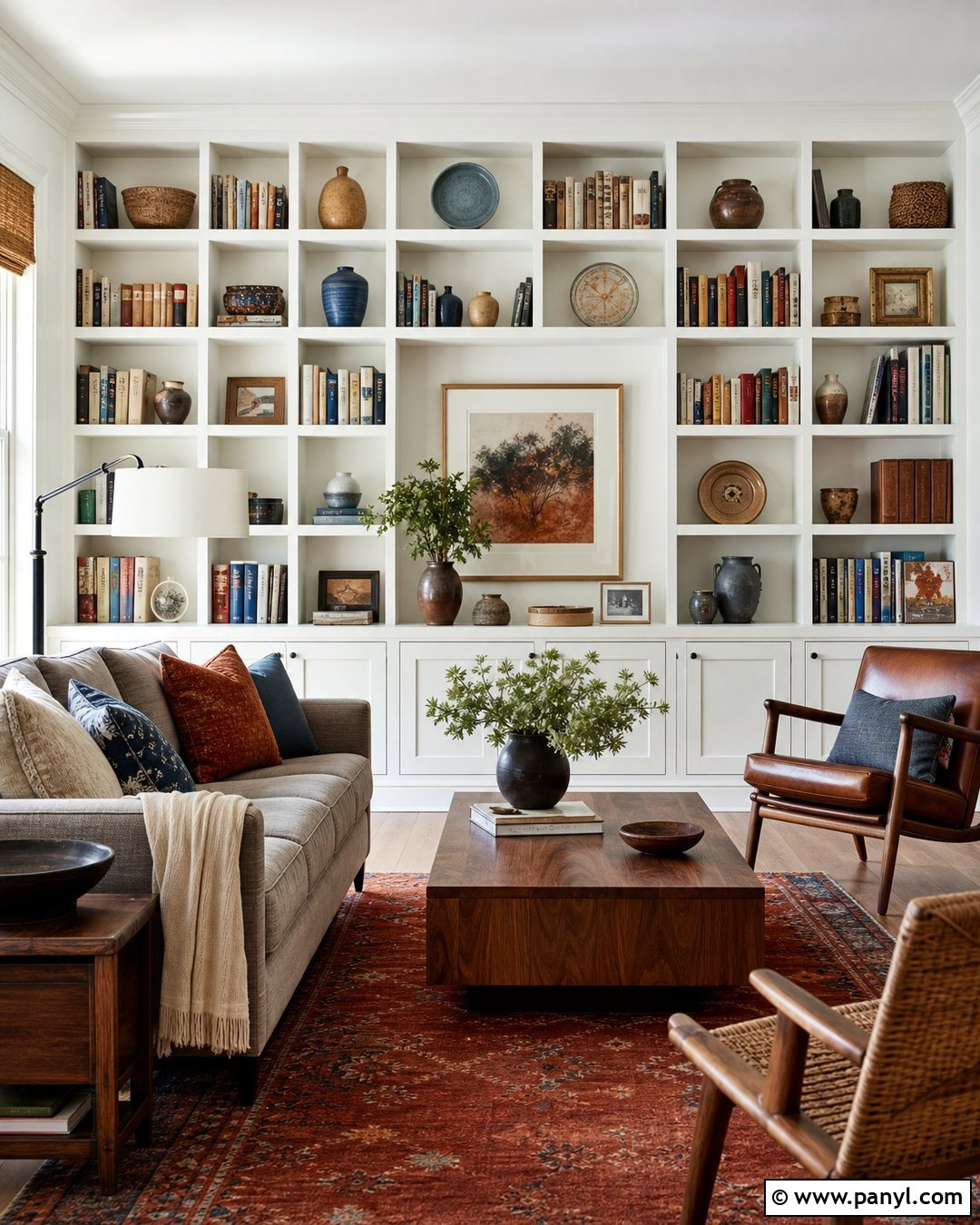
Wall-to-wall bookshelves can turn a plain white wall into organized storage and a strong architectural feature. Choose white built-ins if you want the shelves to blend into the background, then introduce contrast through books, pottery, framed art, and woven boxes. Leave some shelves partially empty so the display has breathing room. Position a comfortable reading chair and floor lamp near one end, adding a small side table for everyday use. A warm gray sofa, walnut coffee table, and rust-colored rug make the library area feel inviting. Arrange books both vertically and horizontally, but avoid excessive color coding if you prefer a natural, collected appearance. Closed cabinets along the bottom can conceal electronics and household clutter. The completed room combines practical storage, personal collections, and comfortable seating in one cohesive design.
18. White Wall Fireplace
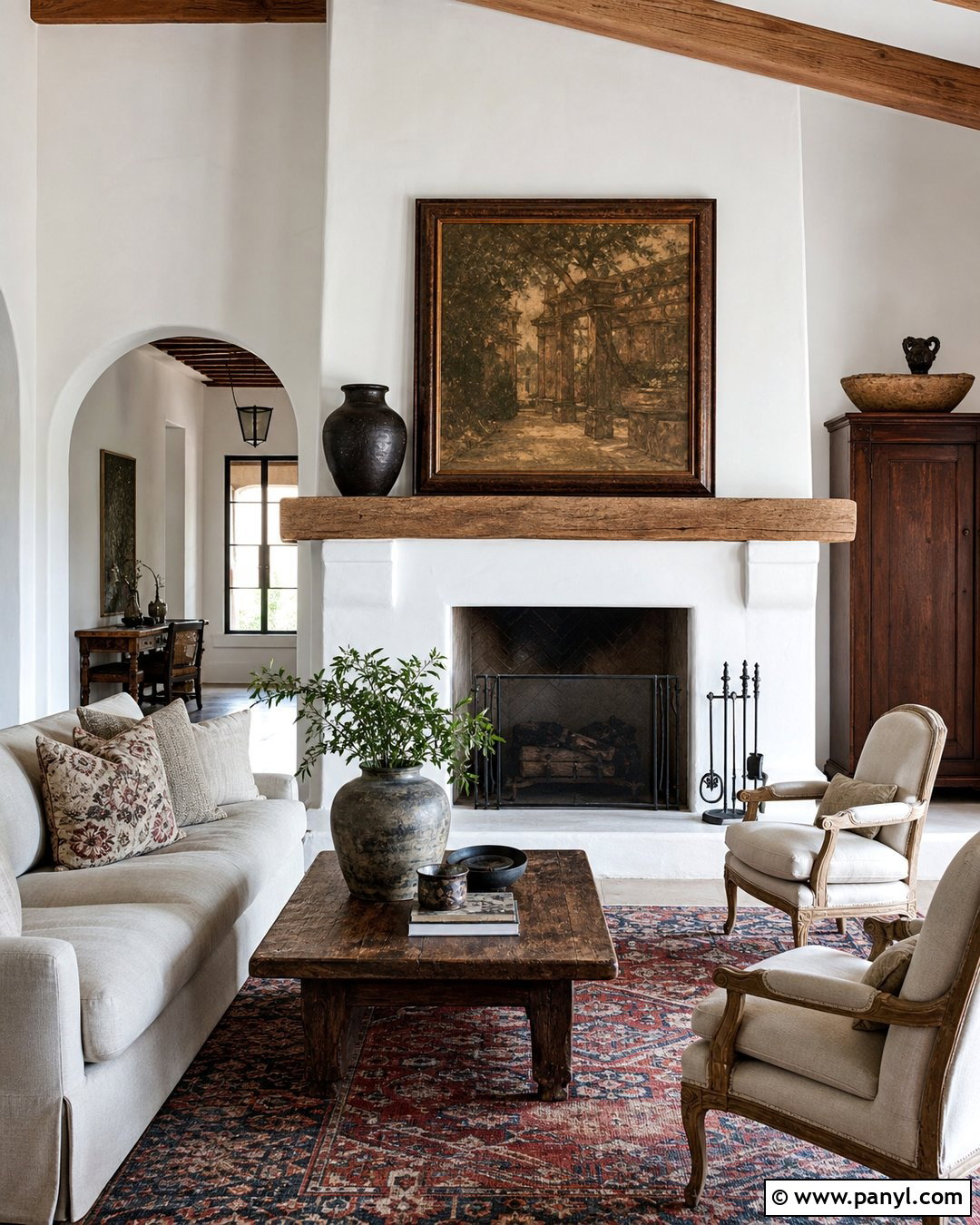
A fireplace can become the natural anchor of a white room when its materials and surrounding furniture are carefully coordinated. Use smooth white plaster or painted brick around the firebox, then add a thick reclaimed wood mantel for warmth. Hang one substantial artwork above it or lean a framed piece safely on the mantel. Balance the display with a ceramic vessel and a small sculptural object. Arrange two upholstered chairs and a neutral sofa around a central wood coffee table, keeping clear circulation paths. A vintage rug in faded burgundy and blue grounds the mostly white room. Black fireplace tools and a dark metal screen add crisp contrast. Rather than filling the entire wall, allow the clean white surface and natural mantel grain to highlight the fireplace’s shape and central position.
19. White Wall TV Gallery
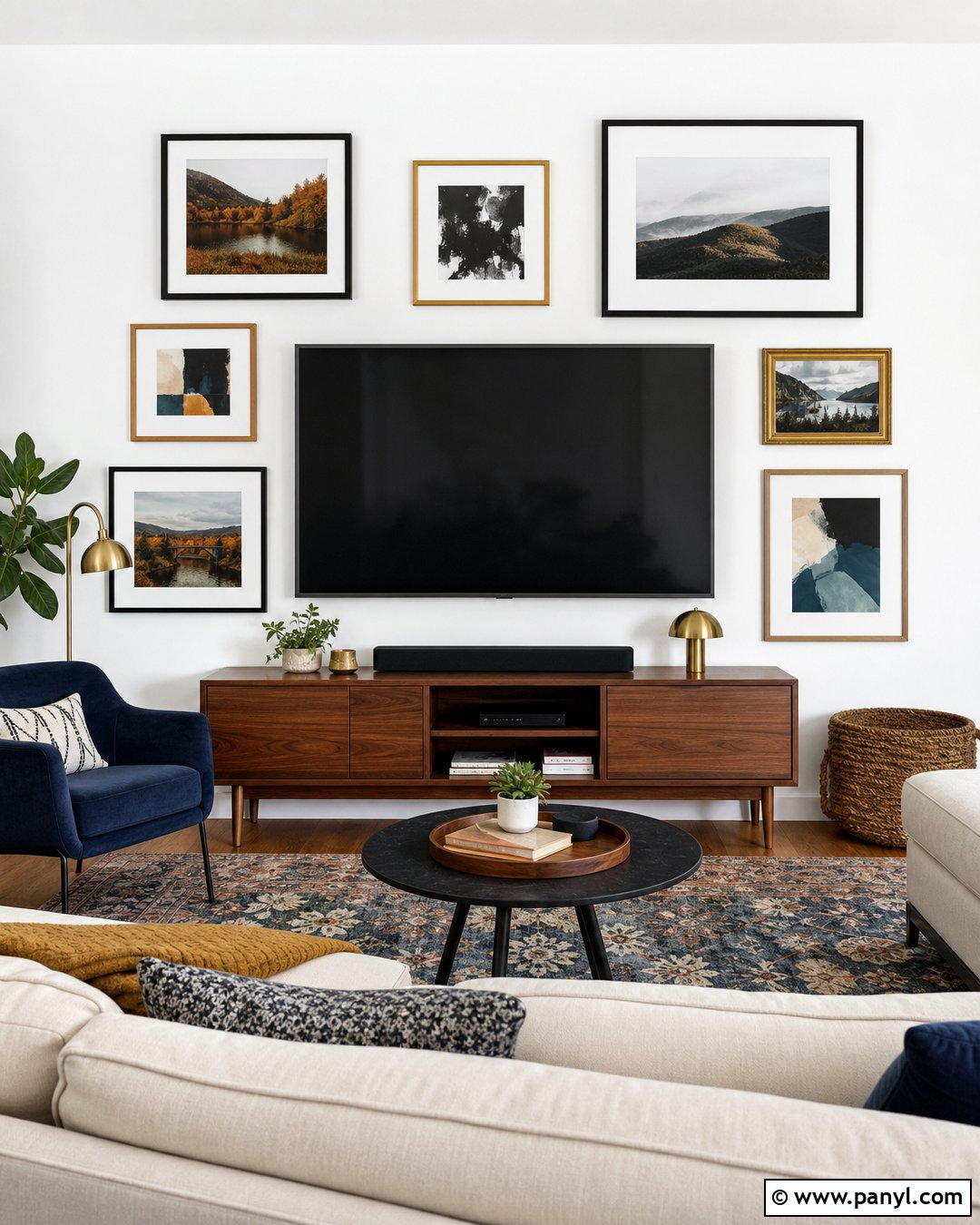
A television can blend more naturally into a white living room when it becomes part of a larger gallery arrangement. Mount the screen above a low walnut media cabinet, then add framed artwork around it in black, oak, and brass finishes. Choose prints with dark areas that visually connect to the television, along with lighter landscapes and drawings for balance. Keep frames several inches away from the screen vents and maintain consistent spacing. A modular cream sofa, navy chair, and patterned rug create a comfortable viewing area without making the room feel technology-focused. Add a shaded floor lamp and baskets for throws. Hide cords inside a wall-rated channel or behind the cabinet. The completed layout treats the television as one rectangular element within an intentional, colorful composition rather than an isolated black box.
20. White Wall Kids Art Display
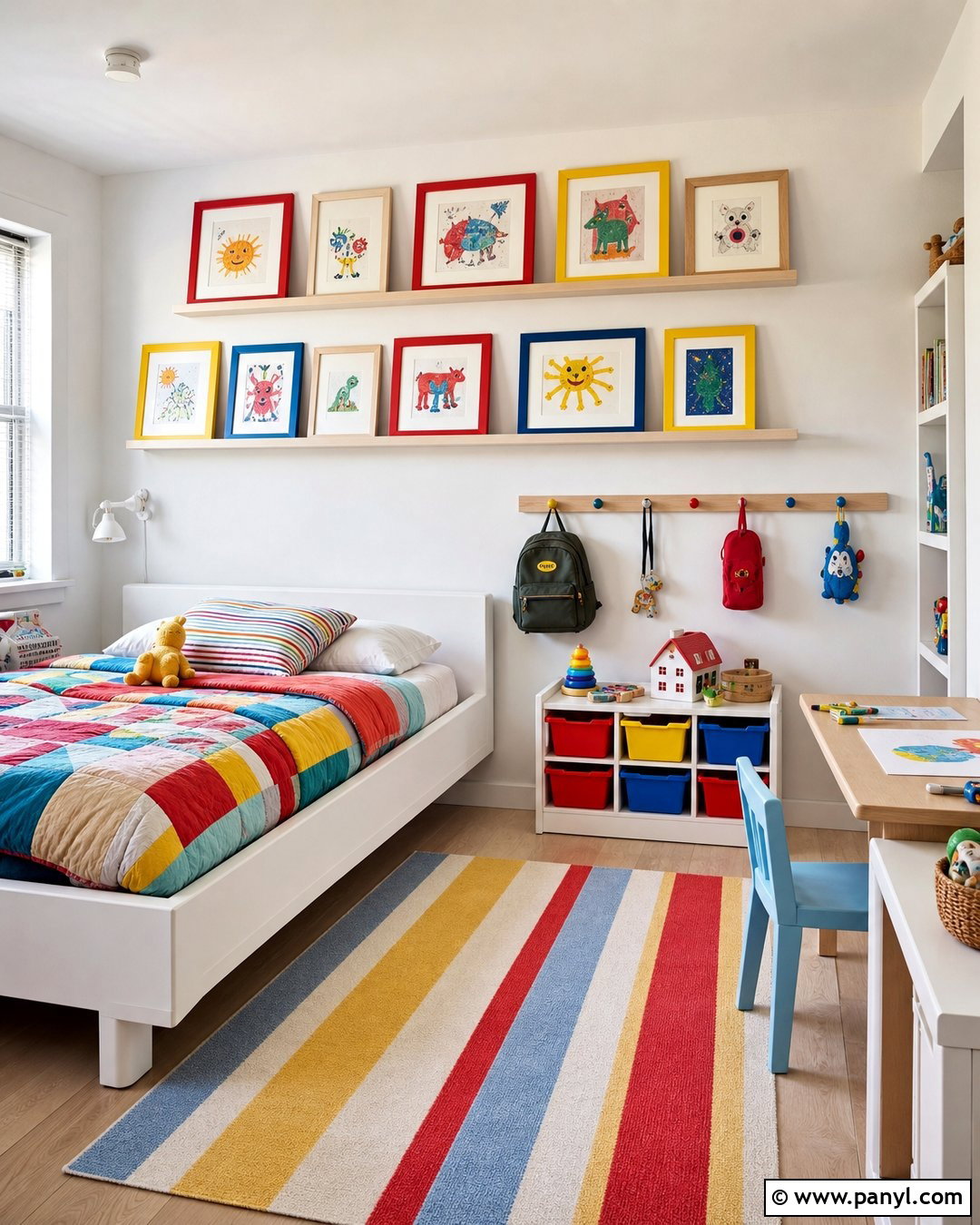
A child’s room can celebrate creativity without allowing papers to overwhelm every white wall. Install two or three long picture ledges at child-friendly viewing height, then display rotating artwork in lightweight frames and clear-front holders. Use frames in red, yellow, blue, and natural wood to create a playful but controlled palette. Pair the display with a low white bed, washable striped rug, colorful quilt, and accessible toy storage. Include a small table for drawing and a peg rail for aprons or supply bags. Keep the artwork concentrated on one wall while leaving the other walls calmer. This makes the room feel energetic without becoming chaotic. Secure every ledge properly and avoid heavy or breakable decorations above sleeping areas. The final room supports creativity, storage, play, and rest in equal measure.
21. White Wall Nursery Decals
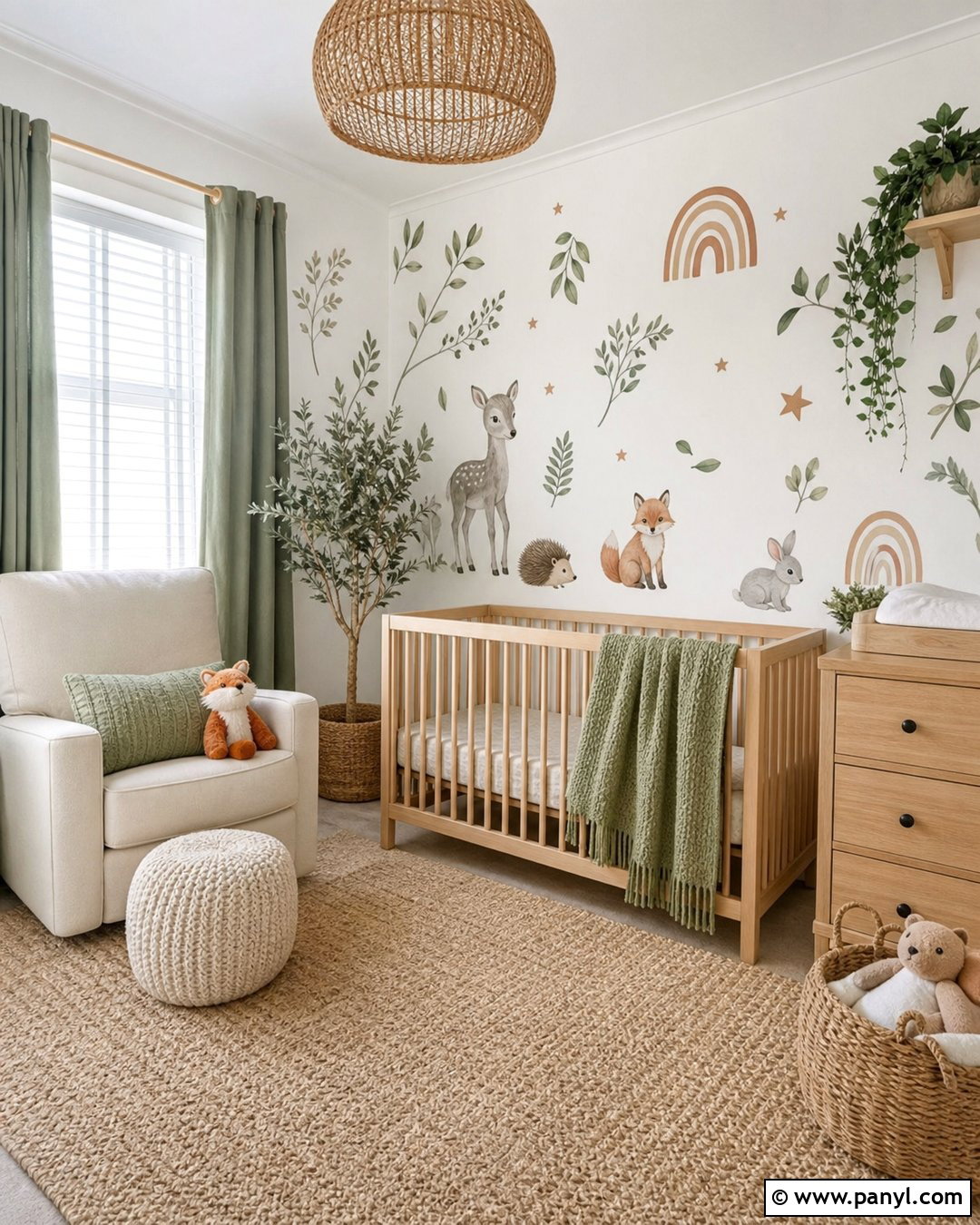
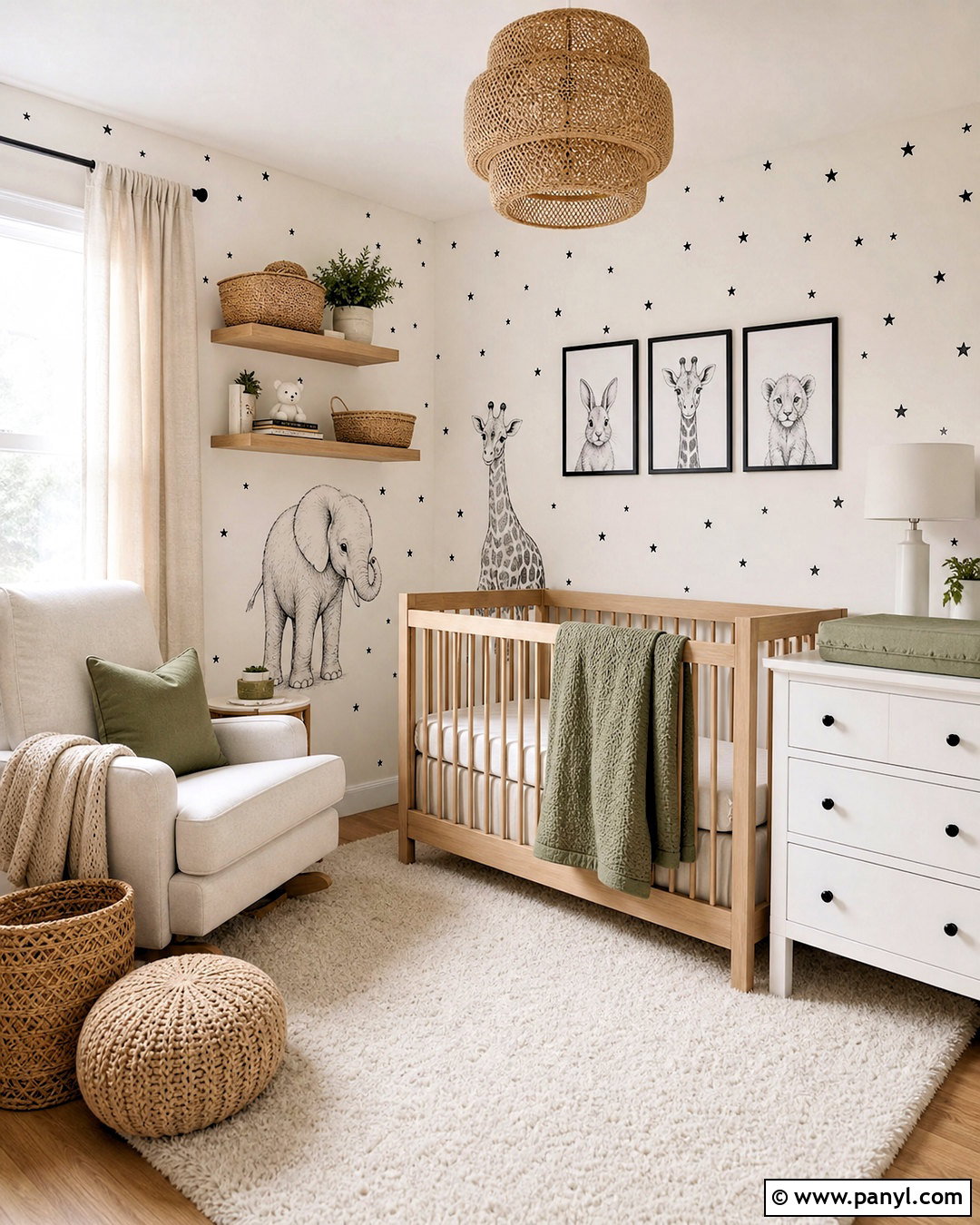
Removable decals create a gentle nursery feature without hiding the clean white background. Choose simple woodland trees, soft green leaves, muted rainbows, or small stars rather than an extremely dense pattern. Apply the decals across the crib wall, varying their height and spacing for a relaxed arrangement. Pair them with a natural wood crib, cream glider, washable wool rug, and light oak dresser. Introduce color through sage curtains, clay-colored cushions, and a knitted blanket. A woven ceiling light and lidded storage baskets make the space feel warm and practical. Keep decals, frames, cords, shelves, and other objects safely away from the crib’s interior and immediate reach. The finished nursery should feel peaceful and complete, with the decorated wall connecting the furniture and textiles instead of functioning as a separate theme.
22. White Wall Pegboard
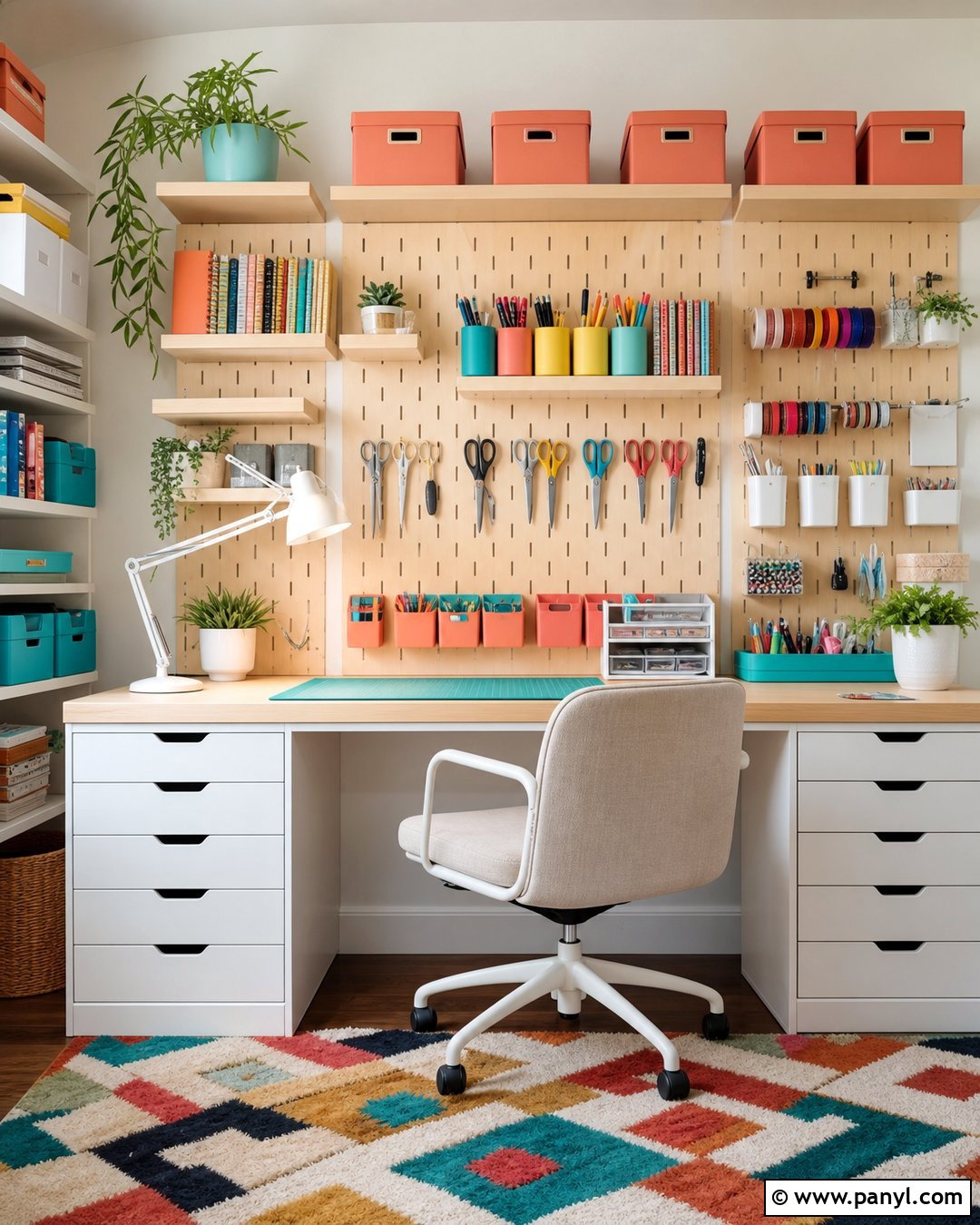
A large pegboard turns a blank craft room or home office wall into adjustable storage. Paint the pegboard white to blend with the wall, or choose pale birch for gentle contrast. Use matching hooks, shelves, cups, and small bins to organize scissors, ribbons, notebooks, and lightweight tools. Group supplies by task rather than filling every opening. Place the pegboard directly above a wide desk with drawer storage, leaving frequently used items within easy reach. Add a supportive chair, bright task lamp, and washable patterned rug. Coral, teal, and mustard containers can introduce controlled color against the white background. Include one small plant and a framed print to soften the practical setup. This complete workspace makes supplies visible, accessible, and simple to rearrange as projects and storage needs change.
23. White Wall Kitchen Rail
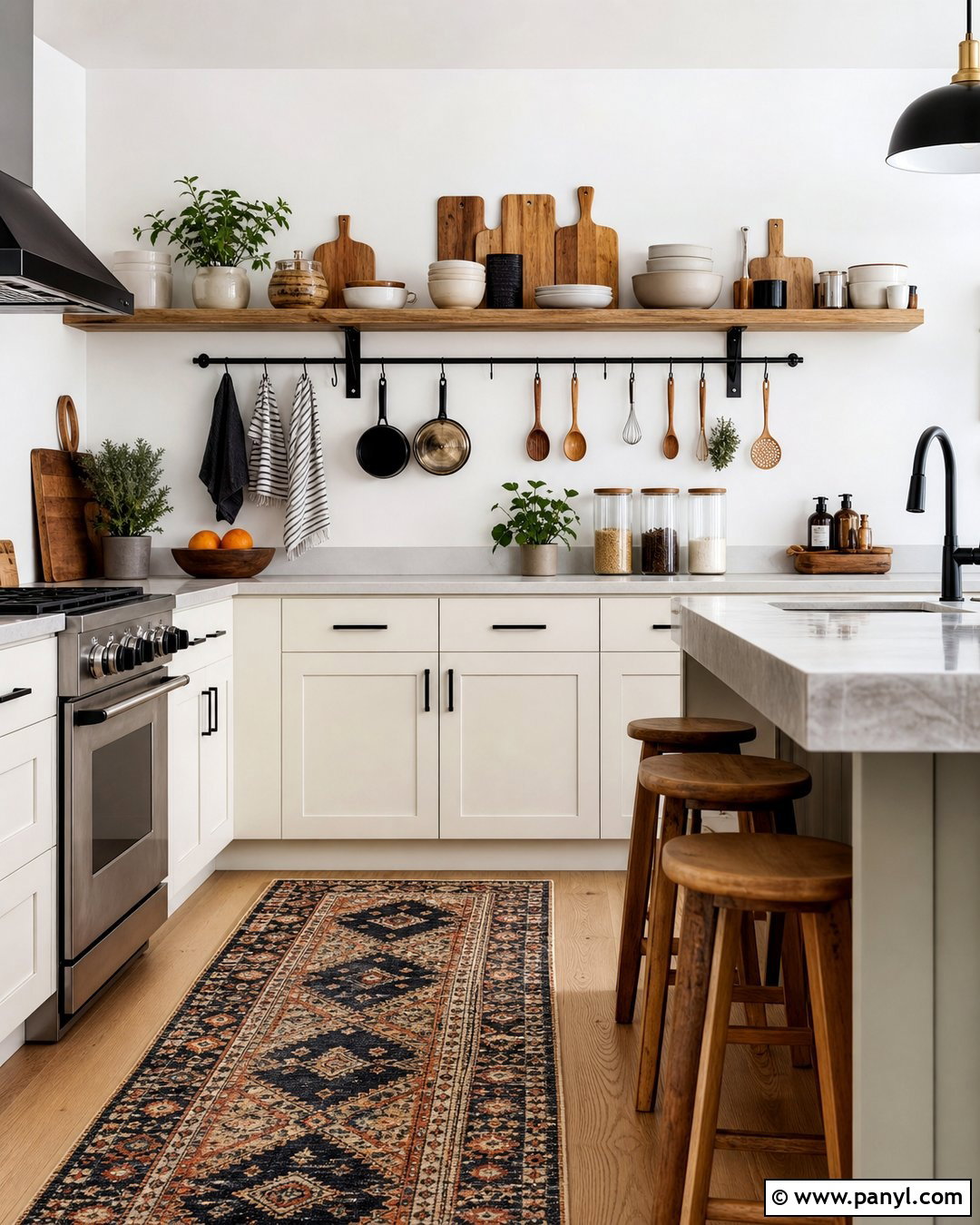
A wall-mounted kitchen rail and shelf can make an unused white wall more functional without adding bulky cabinets. Install a slim oak shelf above a matte black rail, positioning both near a preparation area but away from direct heat and water. Display everyday bowls, small cutting boards, and a few ceramic containers on the shelf. Use hooks below for lightweight utensils, towels, and measuring tools. Repeat the oak and black finishes through counter stools, cabinet hardware, and lighting. Warm white cabinets, pale stone counters, and a washable runner keep the room bright. Avoid overloading the rail or displaying items that rarely get cleaned. When the shelf is edited carefully, this setup adds useful storage, texture, and a casual working-kitchen character while maintaining the open feeling of the plain white wall.
24. White Wall Bathroom Shelves
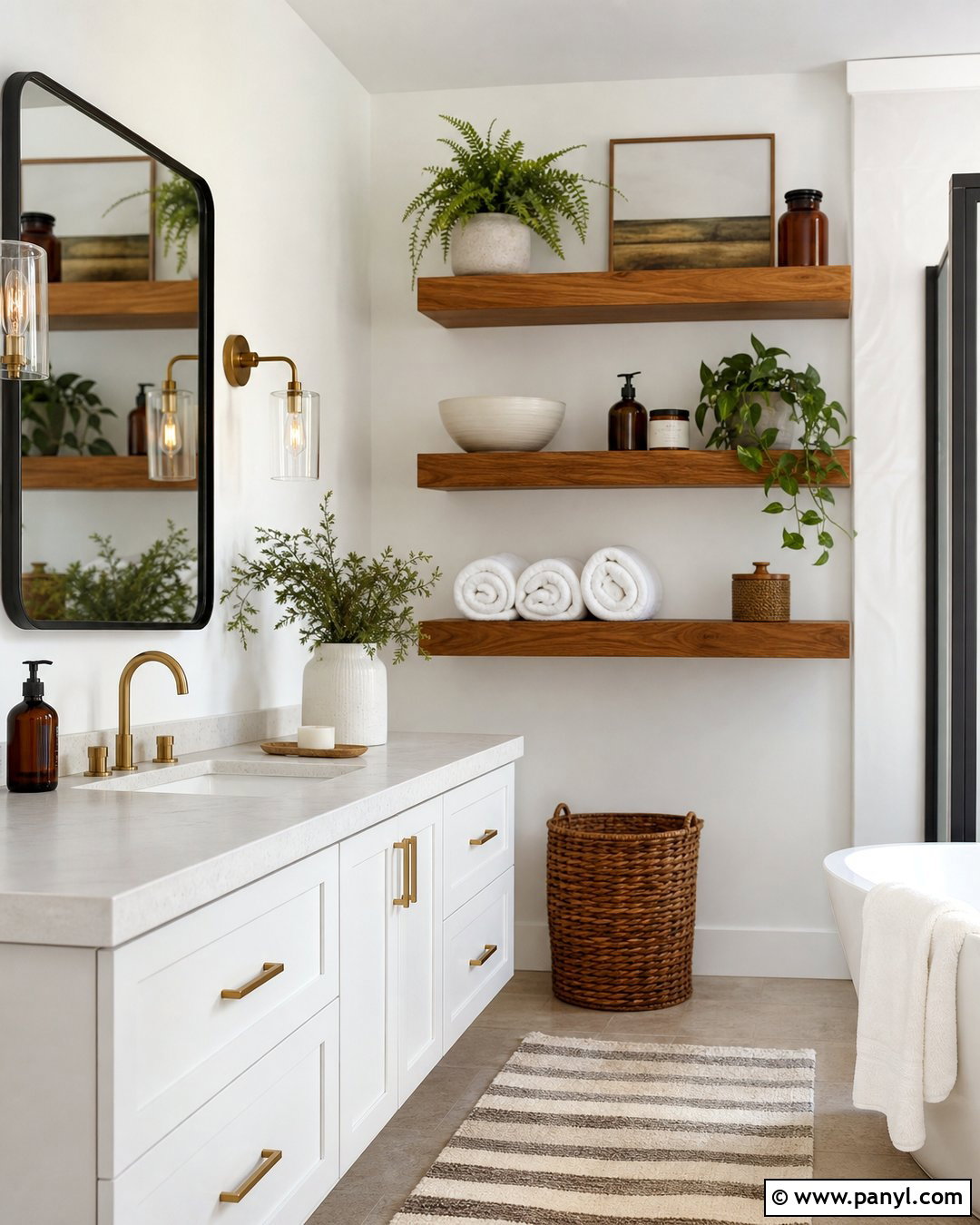
Two or three floating shelves can give a white bathroom wall storage and warmth. Install sealed oak shelves above the toilet or beside the vanity, using moisture-resistant hardware and finishes. Store rolled towels, closed containers, and frequently used toiletries in small groups. Add a framed print, leafy plant suited to humidity, and one decorative bowl, but keep the display easy to clean. Pair the shelves with a white vanity, pale stone countertop, brushed brass faucet, and matte black mirror for a layered mix of finishes. A striped bath mat introduces muted color underfoot. Use matching amber or opaque containers to reduce visual clutter from product packaging. The final bathroom remains light and practical, while the wood shelves and coordinated accessories prevent the plain white walls from feeling cold or unfinished.
25. White Wall Entryway Bench
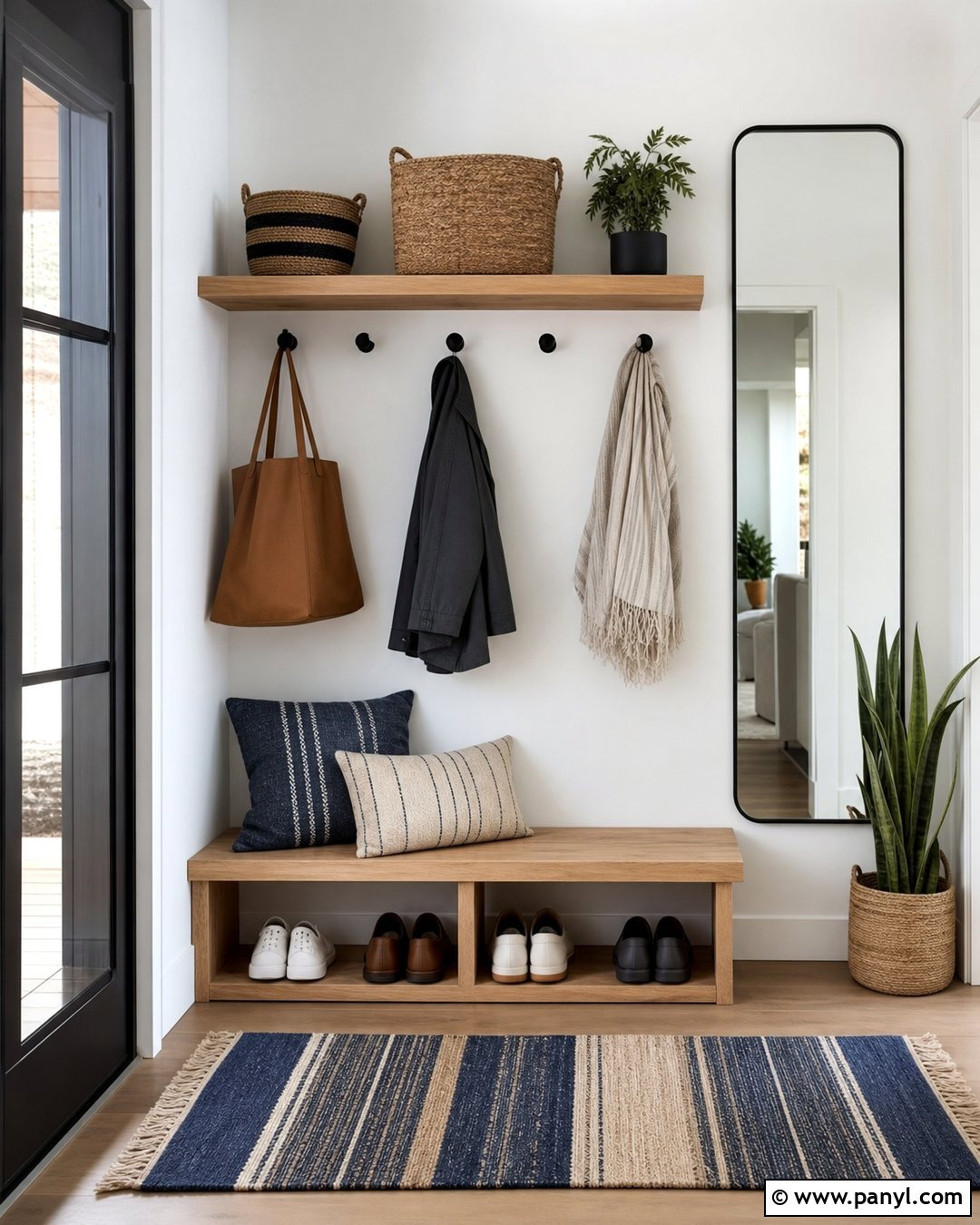
A complete entryway can be created along one blank white wall with a bench, hooks, and closed storage. Choose a simple oak bench with a lower shoe shelf and position a row of matte black hooks above it. Add two striped cushions and a small lumbar pillow for comfort. Install a narrow ledge over the hooks to hold baskets, framed artwork, or seasonal everyday accessories. A tall mirror at one end helps with quick checks and reflects light through the space. Ground the arrangement with a durable patterned runner in navy, tan, and cream. Use labeled interior bins inside baskets rather than adding visible wording to the display. The combination of open and concealed storage keeps shoes, bags, and outerwear organized while turning a formerly empty wall into a practical household landing zone.
26. White Wall Dining Room Art
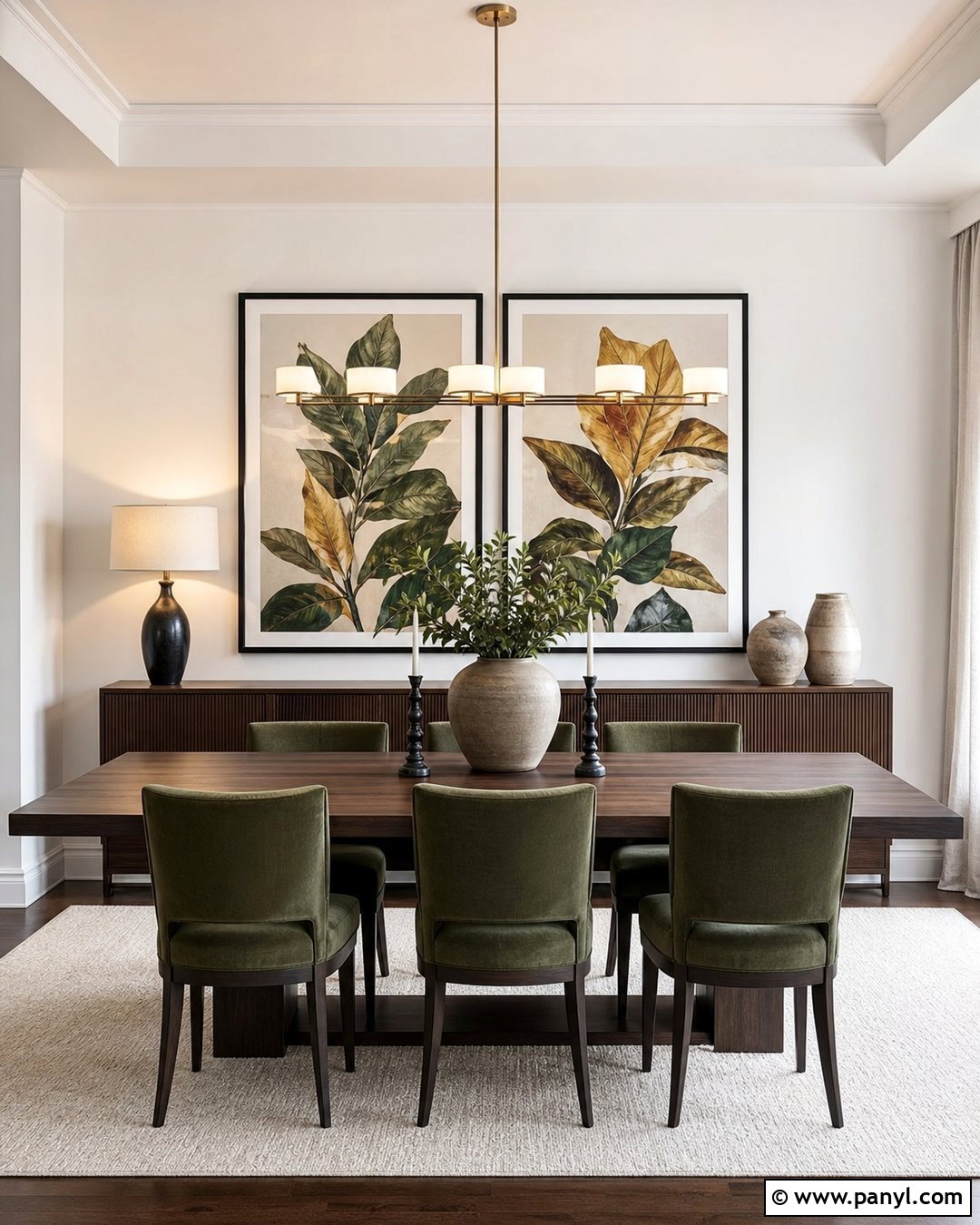
A coordinated pair of large artworks can bring structure to a long dining room wall. Choose two matching frames containing related botanical, landscape, or abstract prints. Hang them side by side above a low sideboard, leaving a narrow, even gap between them. Pull two or three colors from the artwork into the room through upholstered dining chairs, a table runner, and ceramic accessories. A dark walnut table creates contrast against the white walls, while a cream rug softens the room. Add a linear pendant centered over the table and a shaded lamp on the sideboard for layered lighting. Keep the remaining wall decor minimal so the artwork pair has room to breathe. This balanced setup looks more substantial than several undersized frames and helps visually organize a wide or open-plan dining area.
27. White Wall Staircase Gallery
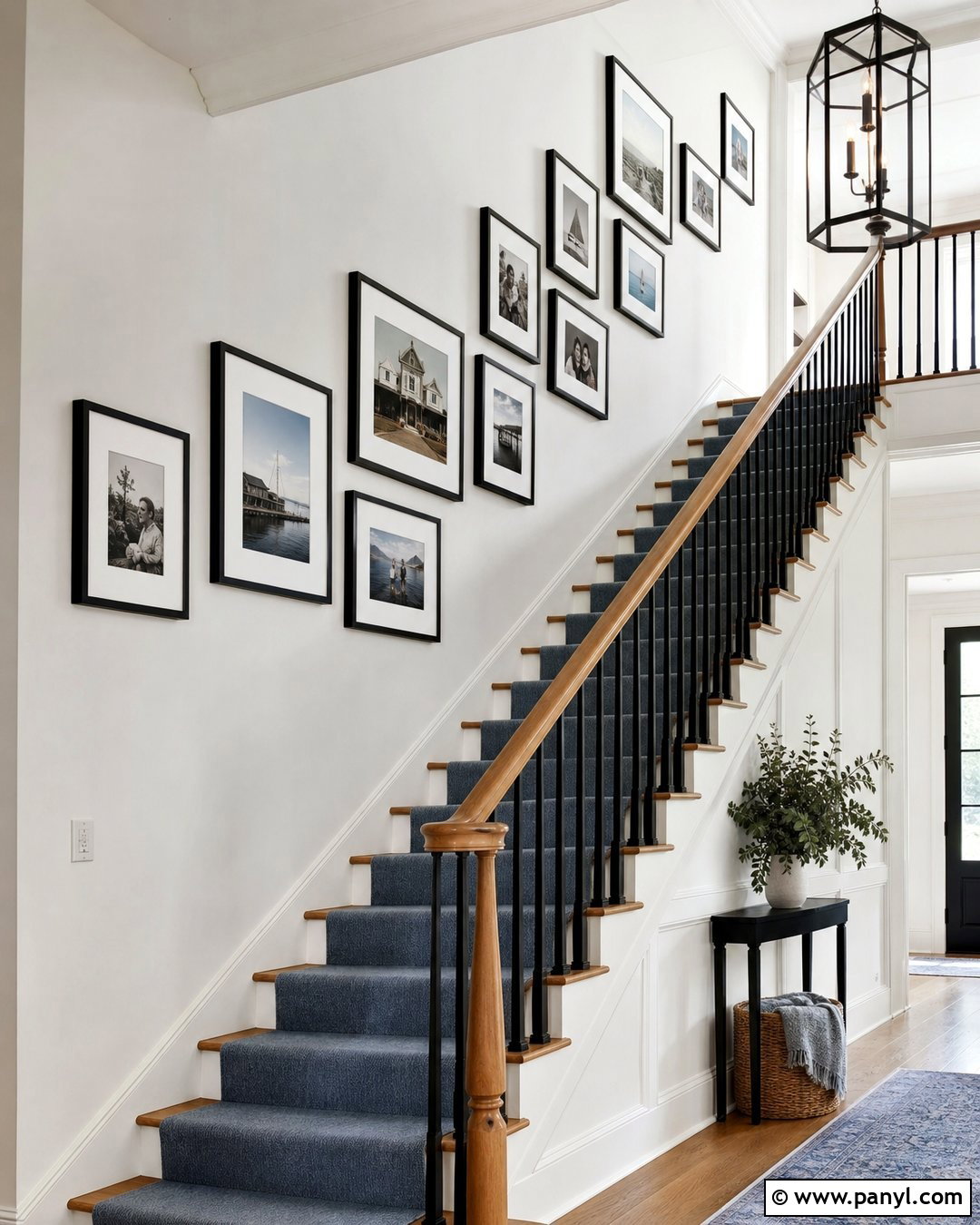
A staircase wall offers enough space for a gallery that grows gradually with a family or collection. Start by marking an imaginary line that follows the rise of the stairs, then arrange framed photographs and artwork around it. Use a mixture of medium and small pieces, but repeat one frame color to maintain order. Black frames with white mats create strong definition against the wall. Add a natural wood handrail, stair runner in muted blue, and a simple pendant visible from the landing. Keep lower frames safely above the railing and away from areas where shoulders or carried objects may strike them. Maintain consistent gaps even as frame sizes change. The finished staircase becomes an engaging transition between floors while still feeling coordinated with the architecture and nearby rooms.
28. White Wall Corner Gallery
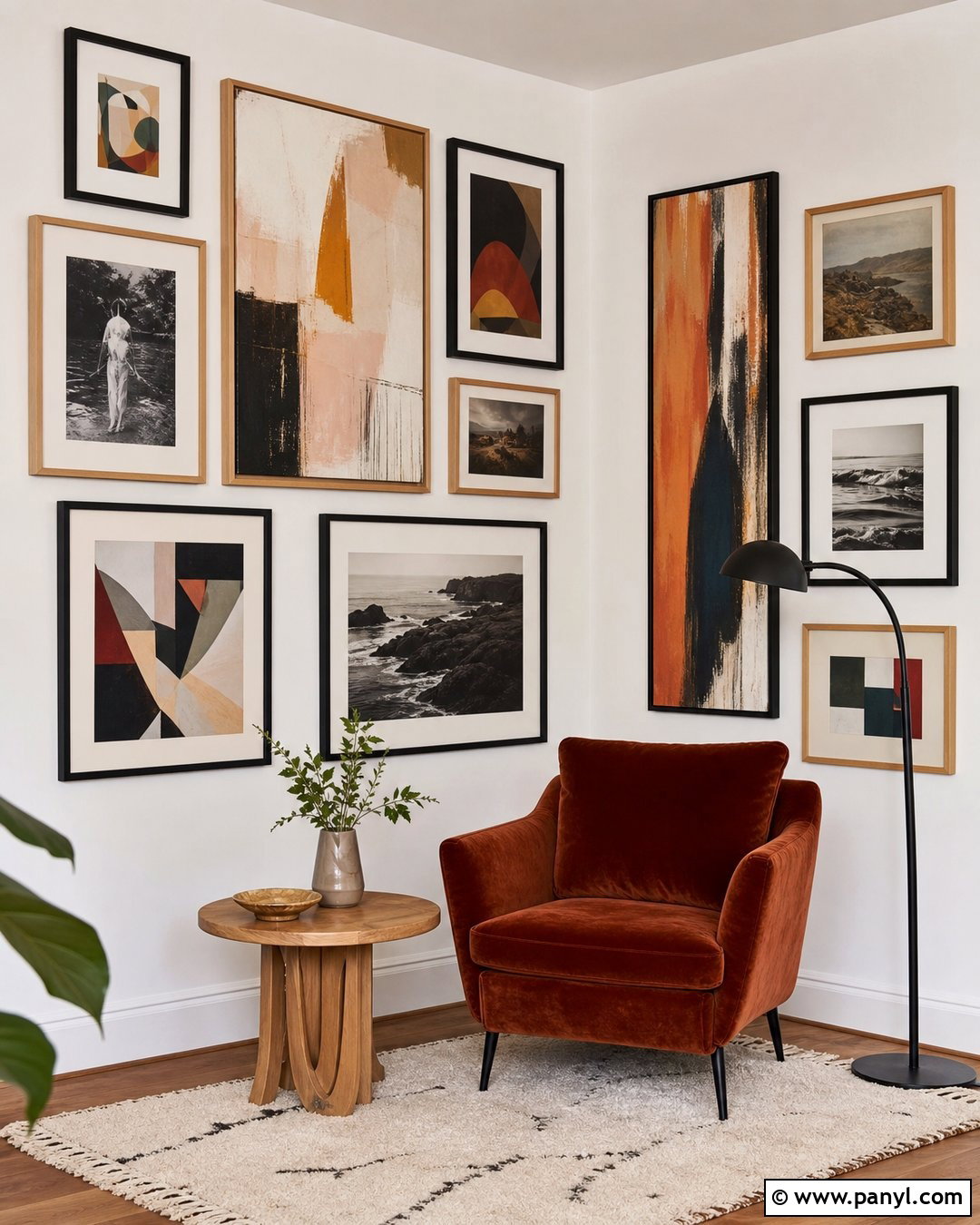
Wrapping artwork around a corner can connect two adjoining white walls and make an awkward area feel intentional. Begin with one larger frame on each wall, then build outward using smaller photography, illustrations, and abstract prints. Repeat colors and frame materials on both sides so the display reads as one composition. Place an accent chair diagonally in the corner with a small round table and floor lamp to create a compact reading area. A rust velvet chair, oak table, and cream rug add warmth against the white background. Include one narrow vertical artwork to emphasize ceiling height. Avoid hanging frames directly behind the lamp where they will be hidden. This approach works well in a living room or bedroom where a standard centered gallery would leave one wall looking disconnected.
29. White Wall Minimalist Art
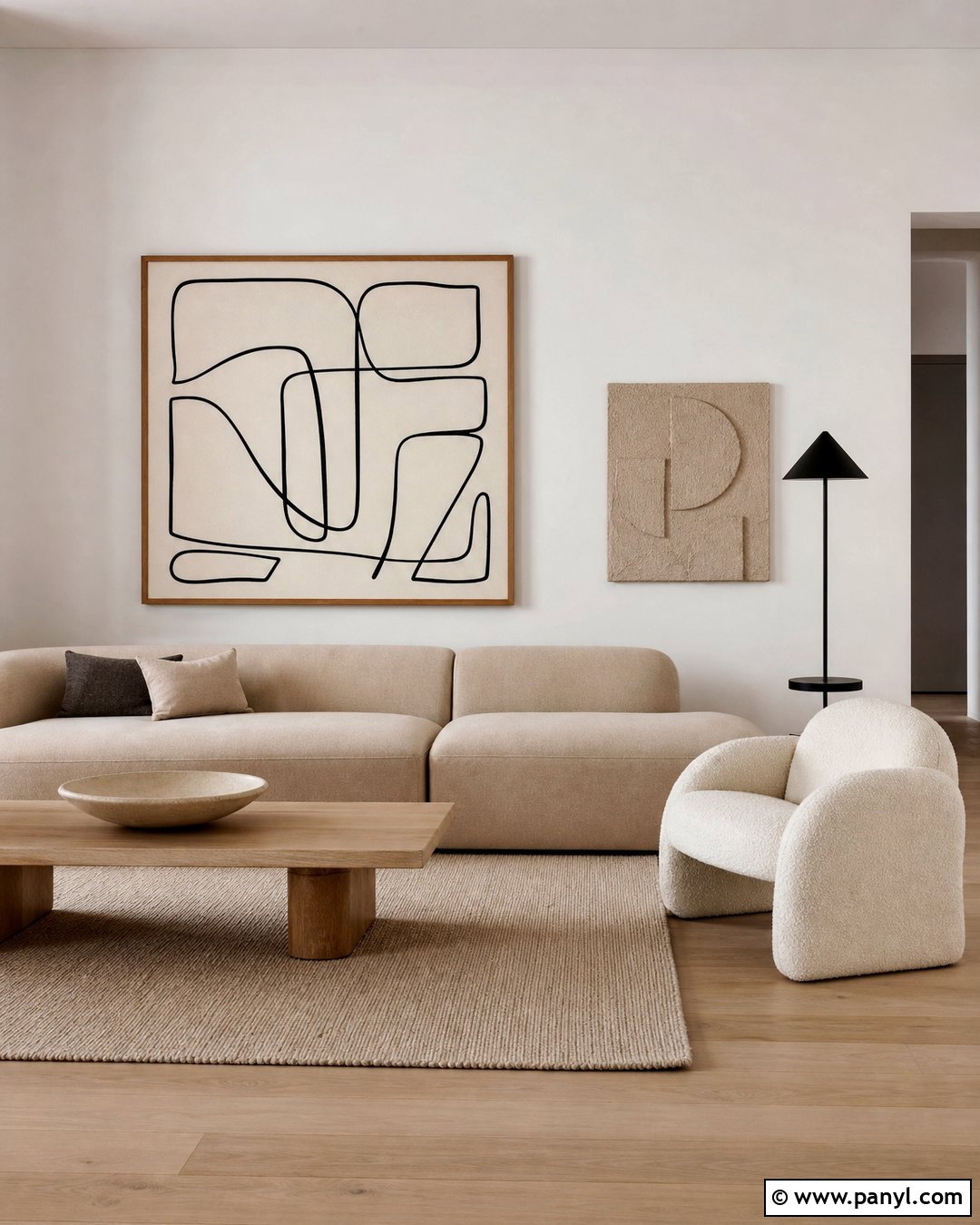
A minimalist room does not need to leave every white wall completely bare. Select one or two line drawings, relief artworks, or tonal abstract pieces with strong scale and quiet texture. Hang a large black-and-cream drawing above a low beige sofa, then place a smaller plaster relief near an adjacent chair. Choose slim oak or black frames and leave generous open wall space around each piece. Complete the room with a pale oak coffee table, sculptural cream chair, flat-weave rug, and simple black floor lamp. Limit accessories to a ceramic bowl, one book stack, and a leafy branch. Texture from boucle, linen, wood, and wool prevents the neutral palette from appearing flat. The finished space remains calm and uncluttered, but every object contributes to a deliberate, balanced composition.
30. White Wall Coastal Living Room
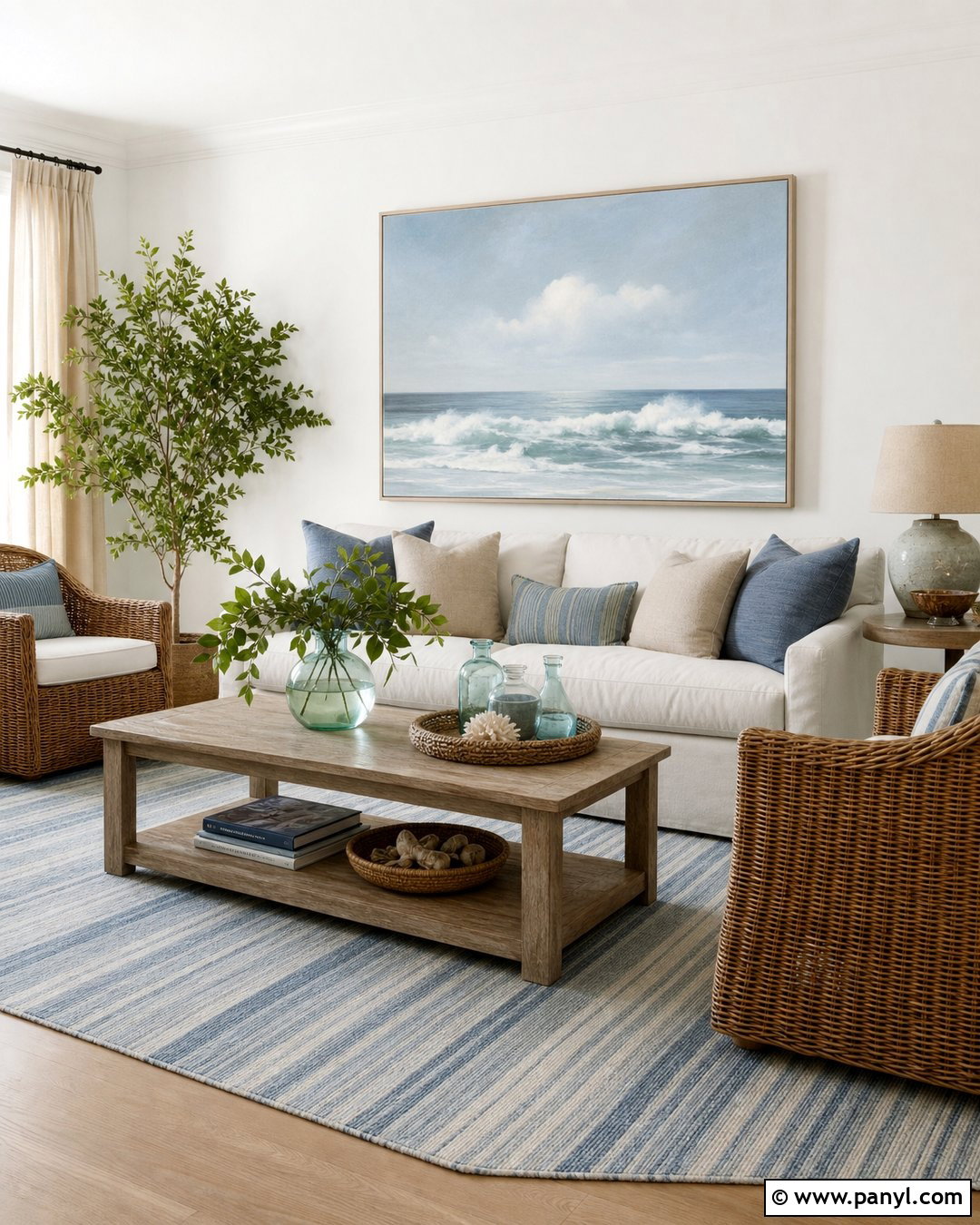
White walls suit a coastal living room when natural materials and restrained blue accents replace obvious themed decorations. Start with a slipcovered cream sofa and two woven rattan chairs arranged around a weathered oak coffee table. Hang a large seascape or abstract blue artwork above the sofa rather than filling the wall with small nautical objects. Add linen curtains, a blue-gray striped rug, and pillows in denim, sand, and soft white. A rope-free woven pendant provides texture without looking overly themed. Display driftwood-toned bowls, clear glass, and one leafy plant on a simple console. Keep the palette faded and comfortable rather than bright navy and stark white. The complete room should suggest an airy shoreline home while remaining appropriate for an everyday suburban house or apartment.
31. White Wall Boho Living Room
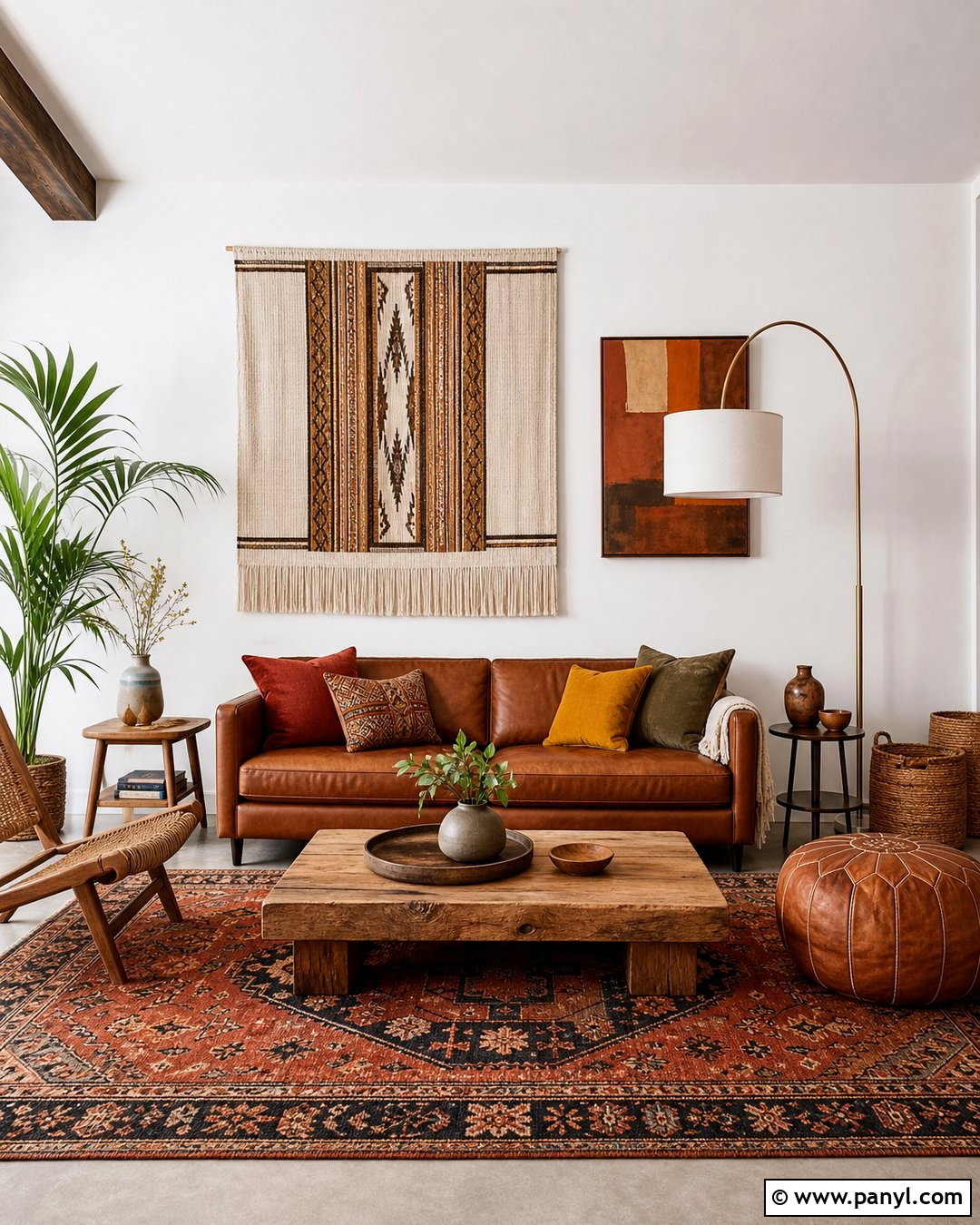
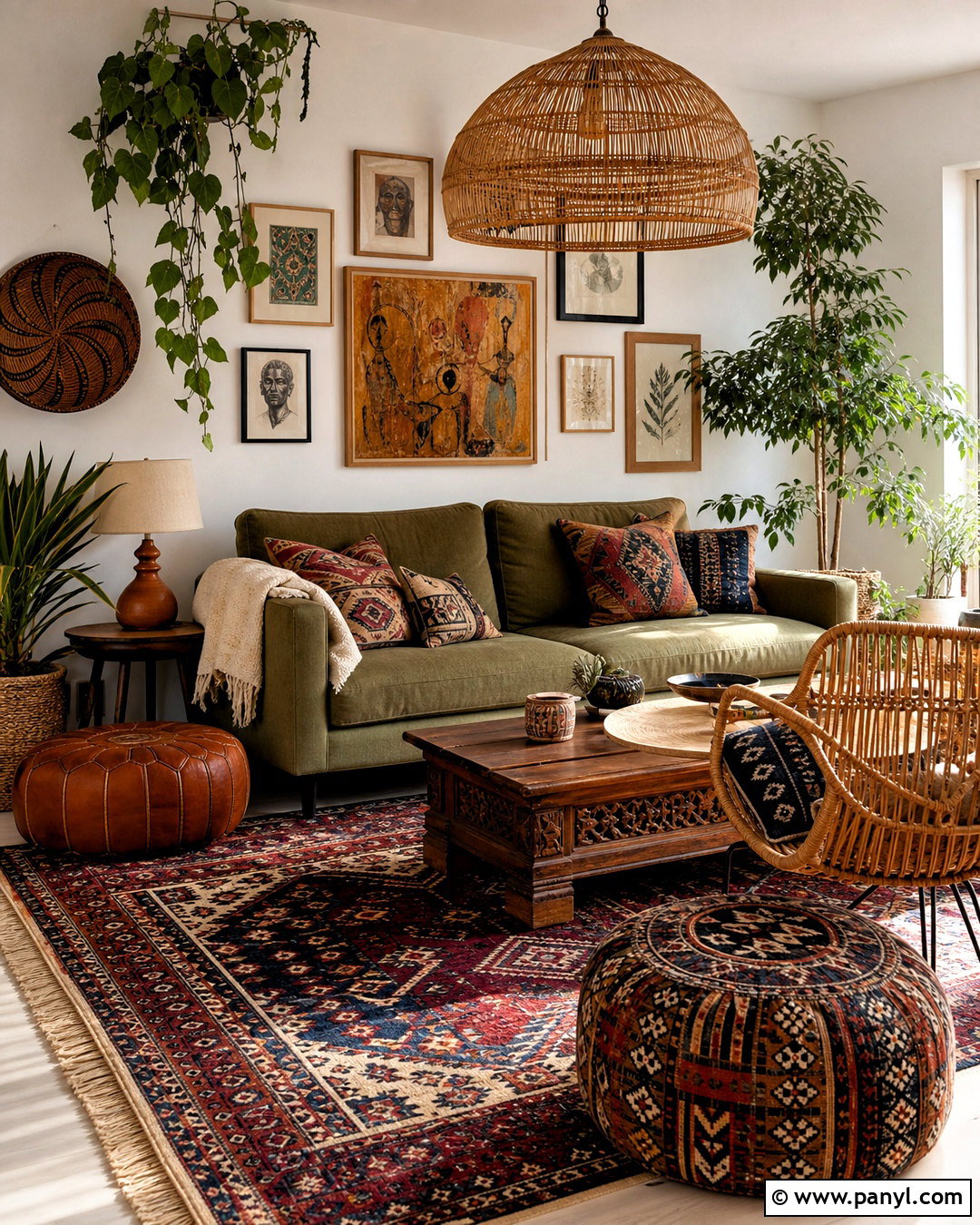
A boho living room can feel layered without covering every inch of its white walls. Center a large woven textile or warm-toned gallery wall above a caramel leather sofa. Add a low wood coffee table, vintage-style rug, patterned pillows, and a pair of mismatched side tables. Use rust, mustard, olive, cream, and black throughout the artwork and textiles so the many patterns feel connected. Place a tall plant near one end of the sofa and a curved floor lamp at the other for balance. Rattan baskets and handmade ceramics introduce more natural texture at floor and tabletop level. Maintain open white space around the main wall display to prevent visual overload. The final design should feel relaxed and collected over time, with every layer supporting a comfortable and functional seating arrangement.
32. White Wall Scandinavian Living Room
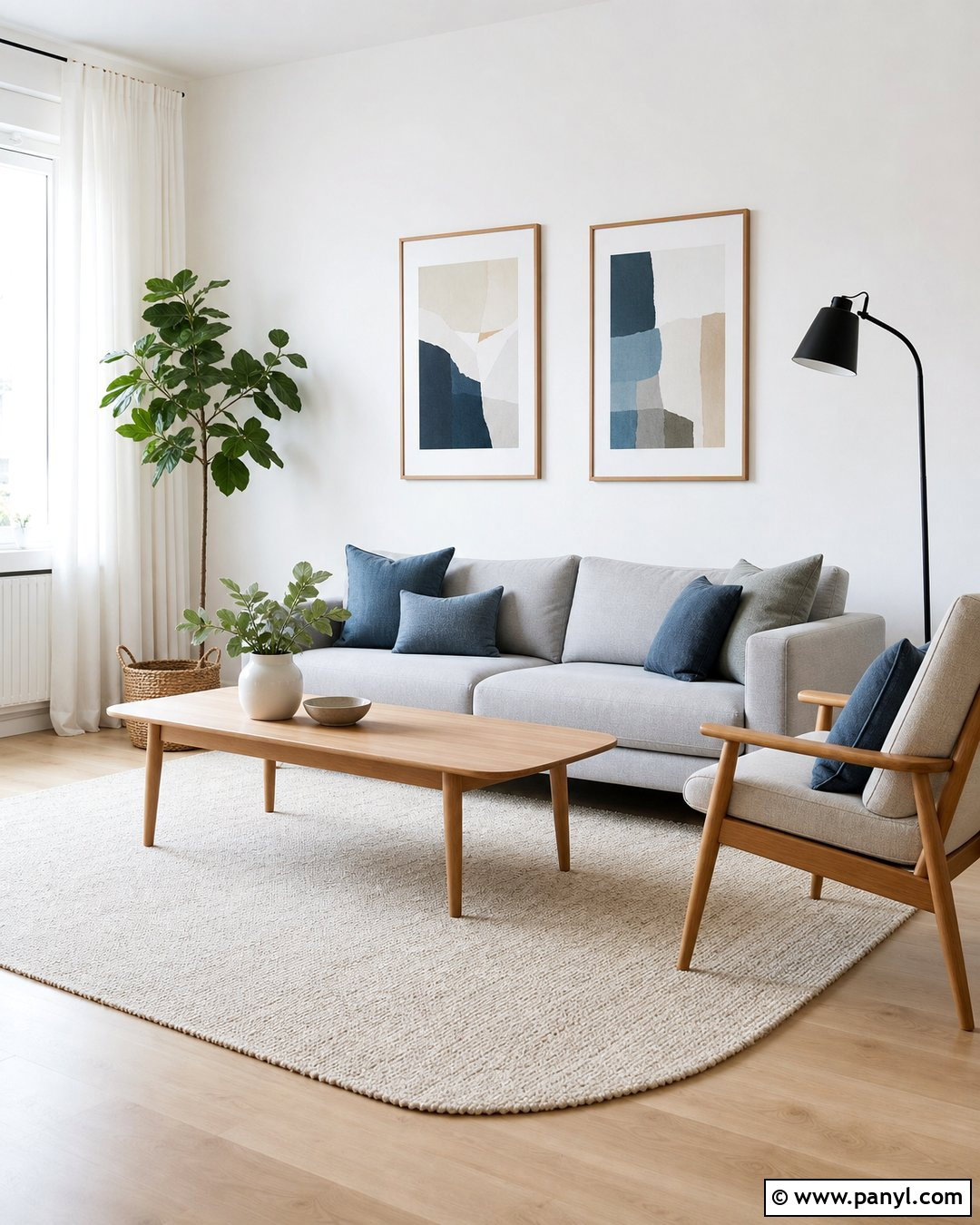
For a Scandinavian-inspired room, let white walls support clean furniture, pale wood, and soft functional layers. Position a light gray sofa beneath two understated abstract prints in thin oak frames. Add a pale wood coffee table, compact lounge chair, and cream wool rug with a subtle geometric pattern. Black accents from a floor lamp, frames, and small side table provide definition. Use muted blue or forest-green pillows for controlled color, then introduce warmth through a folded wool throw and natural linen curtains. Keep surfaces clear except for a ceramic vase, small tray, and a few books. A leafy plant near the window brings life to the restrained palette. This design feels bright and practical because the artwork, lighting, furniture, and textiles share simple forms and carefully repeated finishes.
33. White Wall Modern Farmhouse Living Room
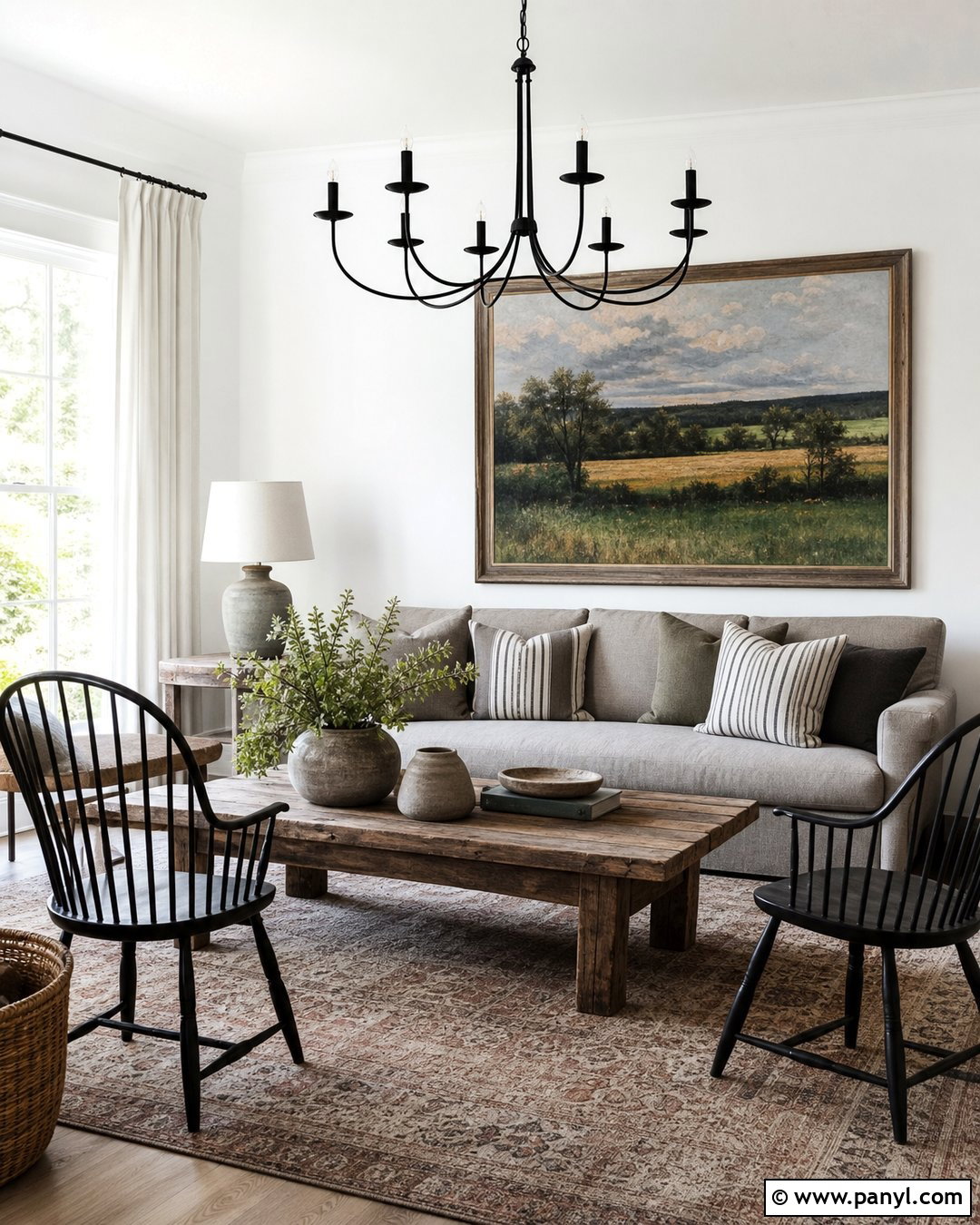
A modern farmhouse living room looks most convincing when white walls are paired with authentic texture instead of excessive decorative signs. Place a warm gray sofa beneath a large landscape painting in an aged wood frame. Add two black spindle chairs, a reclaimed wood coffee table, and a faded traditional rug. White linen curtains soften the windows, while a black metal chandelier introduces a clean graphic element overhead. Use striped pillows, a chunky cream throw, and simple stoneware to create comfort. If the room has a fireplace, repeat the aged wood through its mantel and keep the styling minimal. Avoid filling every wall with small rustic accessories. The balanced mix of white paint, darker metal, worn wood, and tailored upholstery creates a relaxed room that feels updated but not overly polished.
34. White Wall Colorful Living Room
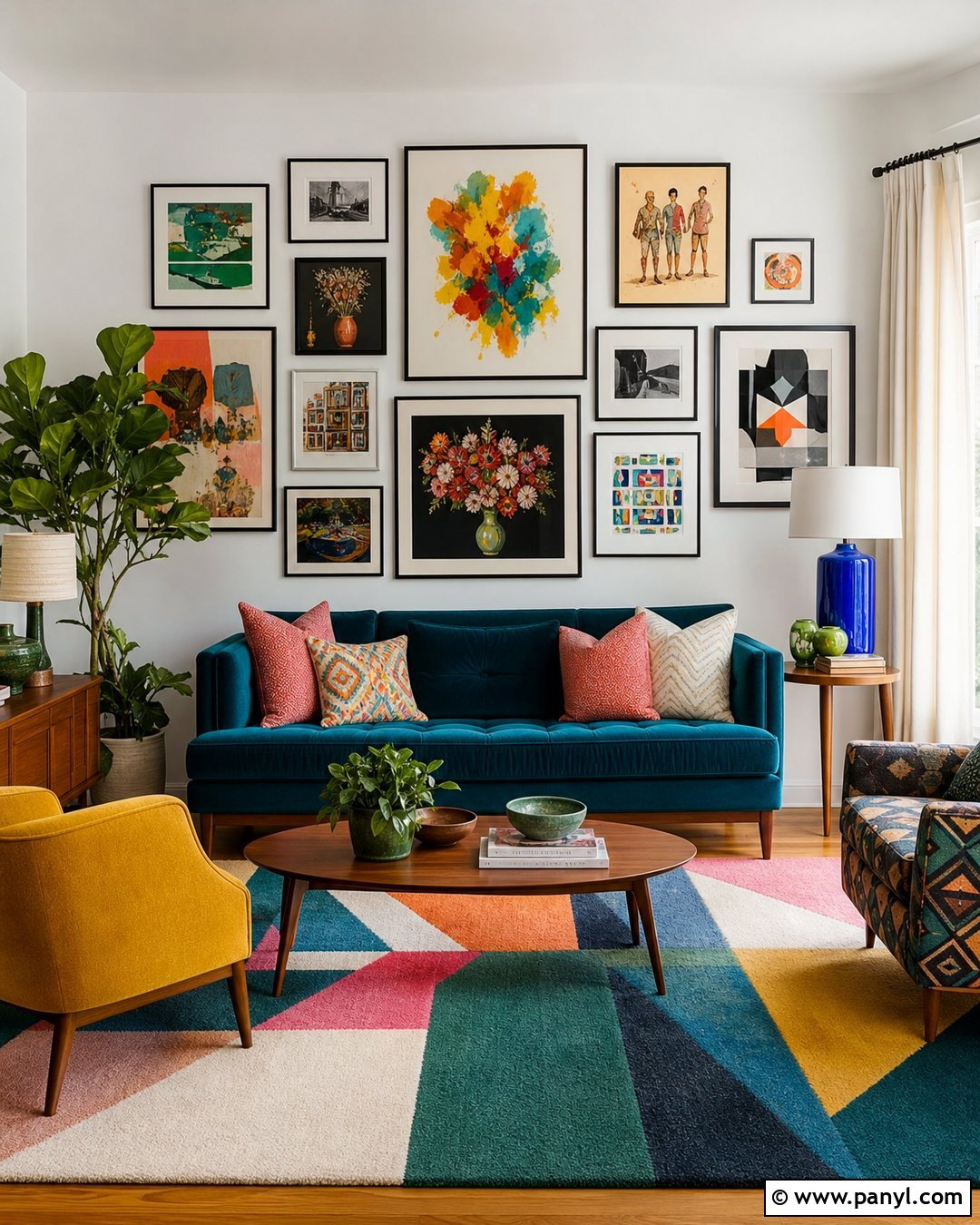
Plain white walls provide an excellent backdrop for a colorful living room when the palette repeats in deliberate places. Start with a deep teal sofa and add a mustard chair, coral pillows, and a multicolored geometric rug. Above the sofa, hang a lively gallery wall featuring abstract prints, photography, and illustrations that contain the same core hues. Use mostly black frames to unify the varied artwork. A walnut coffee table and cream curtains prevent the bold colors from feeling harsh. Add a cobalt lamp, green ceramic vase, and one sculptural pendant, but leave several surfaces undecorated. Balance the strongest colors around the room instead of concentrating them in one corner. The completed space feels joyful and expressive while the white background gives each furniture piece, textile, and artwork a clear visual outline.
35. White Wall Renter Decor
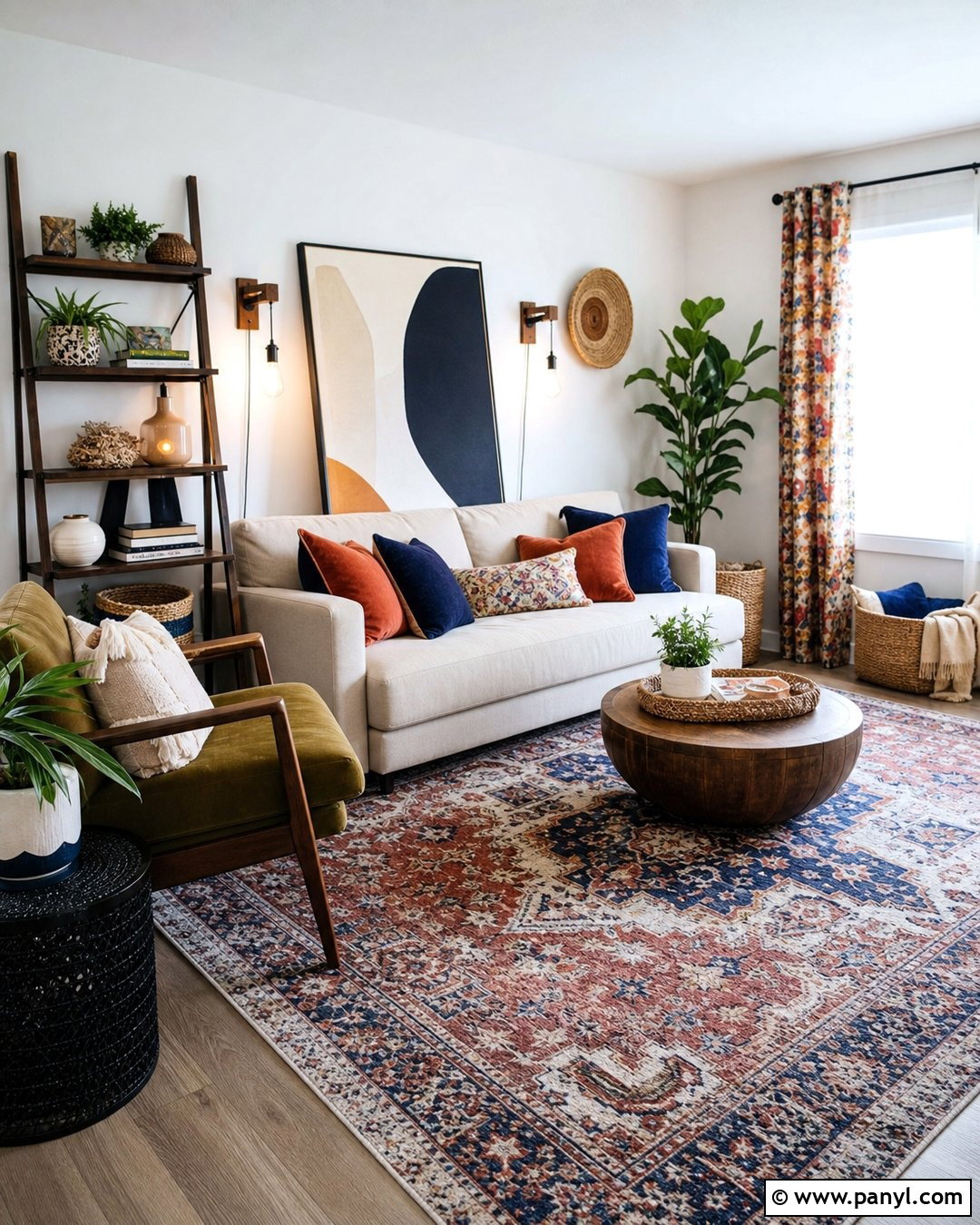
Renters can complete a plain white room using removable details and furniture-supported displays. Lean a large framed artwork on a low console or secure lightweight pieces with wall-safe hanging products appropriate for the surface. Add a freestanding ladder shelf for plants, books, and baskets instead of installing built-ins. A washable patterned rug, colorful curtains, and an upholstered chair bring personality without changing the paint. Choose a clear palette, such as olive, terracotta, navy, and cream, and repeat it across pillows, artwork, and accessories. Plug-in sconces can provide layered lighting when hardwiring is not possible, with cords routed neatly and safely. Always follow product weight limits and lease requirements. The finished room should look intentional and settled while allowing major decorative elements to move easily to the next home.
Conclusion:
The most effective 35 plain white wall ideas treat the wall as part of a complete room rather than an isolated decorating project. Begin with the area’s main function, then choose artwork, storage, mirrors, molding, plants, or textiles that support it. Scale is essential: one substantial feature often looks more polished than several undersized objects. Repeat a small group of colors and materials through furniture, lighting, rugs, and accessories to create connection. Warm woods and textured fabrics can soften bright white paint, while black or brass details provide definition. Whether you prefer minimalist, colorful, traditional, or renter-friendly decor, maintain some open wall space. That breathing room helps every carefully selected element look purposeful.

Related Ideas and Inspiration:
Leave a Reply