
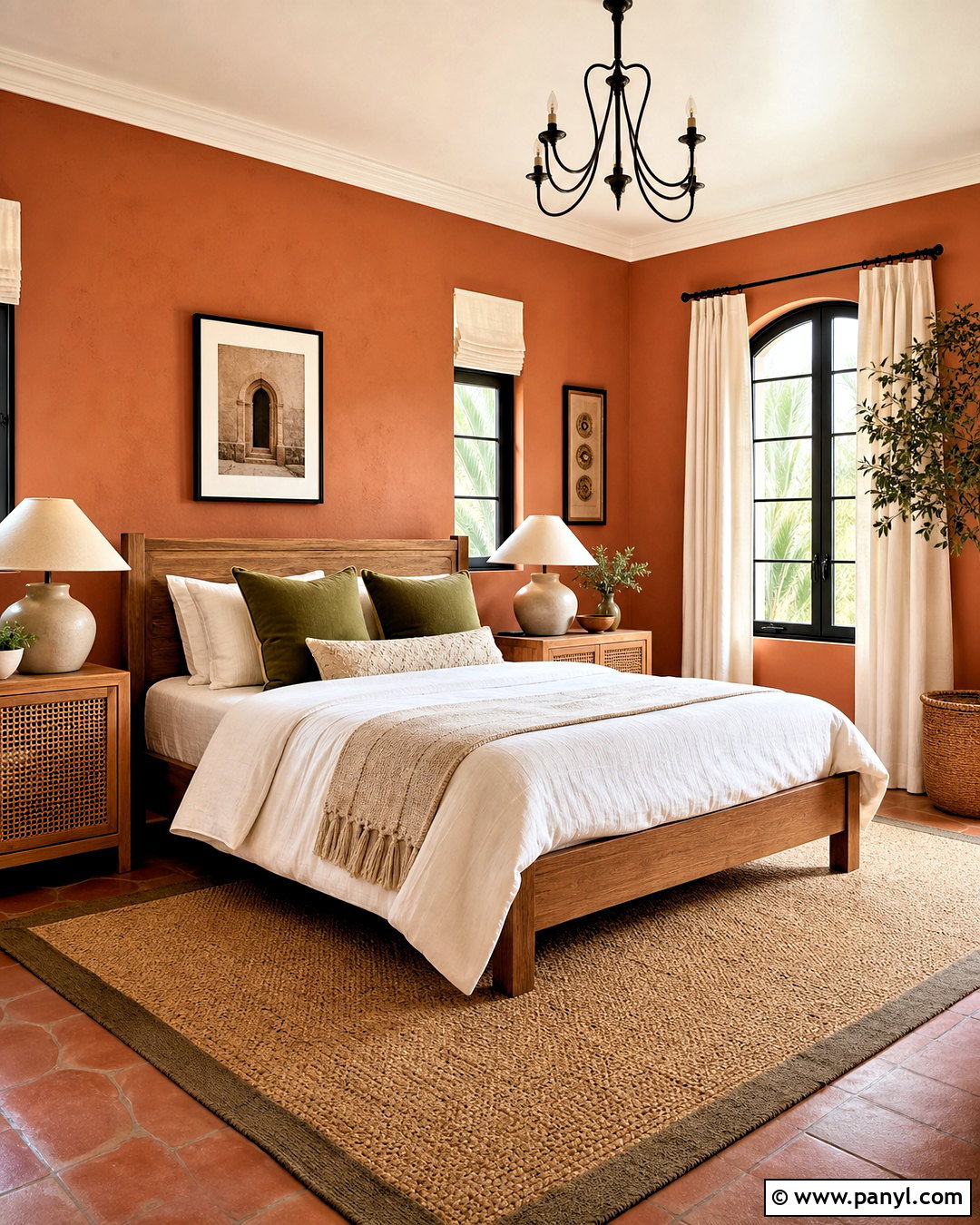
Terracotta brings the natural warmth of sunbaked clay into a bedroom, creating a space that feels grounded, comfortable, and full of character. These 20 terracotta color palette bedrooms explore how this earthy hue can work with creamy neutrals, greens, blues, pinks, browns, and dramatic dark tones. Terracotta generally falls between muted orange, rust red, and warm brown, so its appearance changes depending on the surrounding colors, textures, and lighting. () You can introduce it through painted walls, upholstered furniture, bedding, rugs, or smaller accents. Every look below combines color, furniture, lighting, and decor into a complete room you can realistically recreate. Explore these inviting 20 terracotta color palette bedrooms to find the right balance for your space.

1. Terracotta And Cream Bedroom
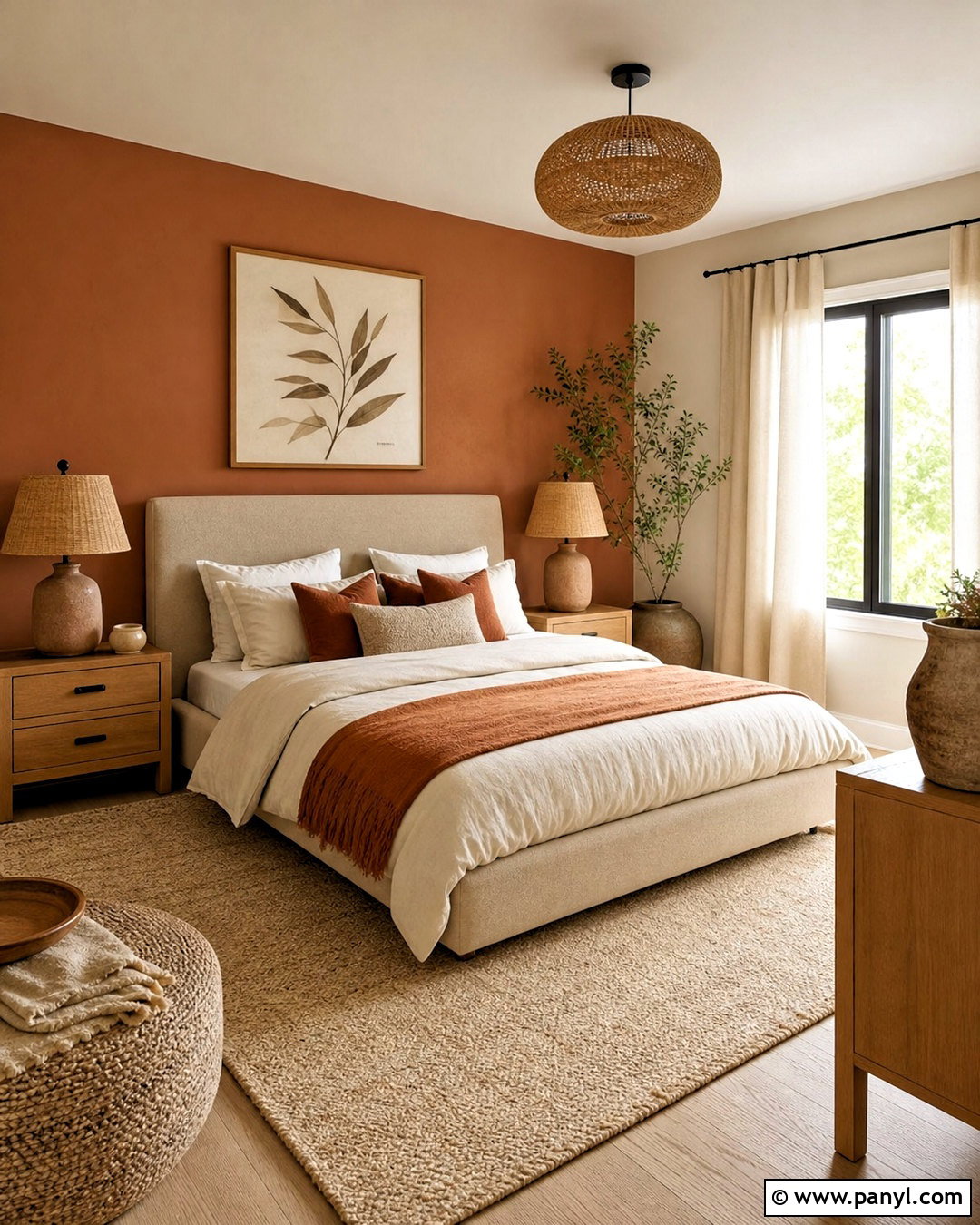
A creamy neutral backdrop gives terracotta room to feel warm without becoming visually heavy. Paint the walls soft ivory, then place a low oatmeal upholstered bed against a muted clay accent wall. Layer cream linen sheets with a terracotta quilt, striped rust pillows, and a chunky beige throw. Light oak nightstands keep the furniture relaxed, while ceramic lamps with woven shades add gentle texture. Choose a wool rug that combines sand, ivory, and faded orange beneath the bed. A curved boucle chair can complete an empty corner without competing with the color scheme. Finish the room with simple botanical artwork, off-white curtains, and a few handmade clay vessels. The result feels bright, restful, and easy to adapt to both large and small bedrooms.
2. Terracotta And Sage Green Bedroom
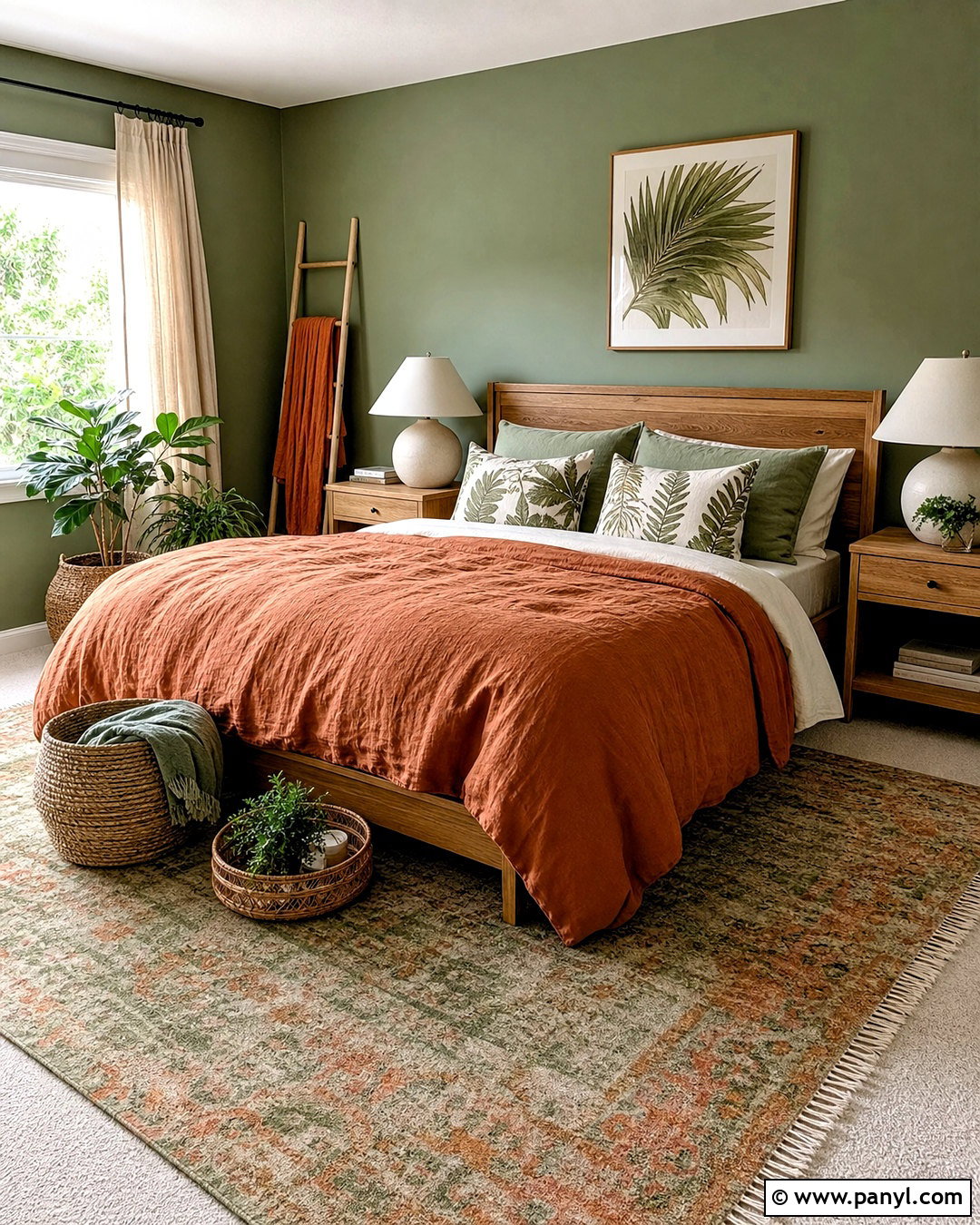
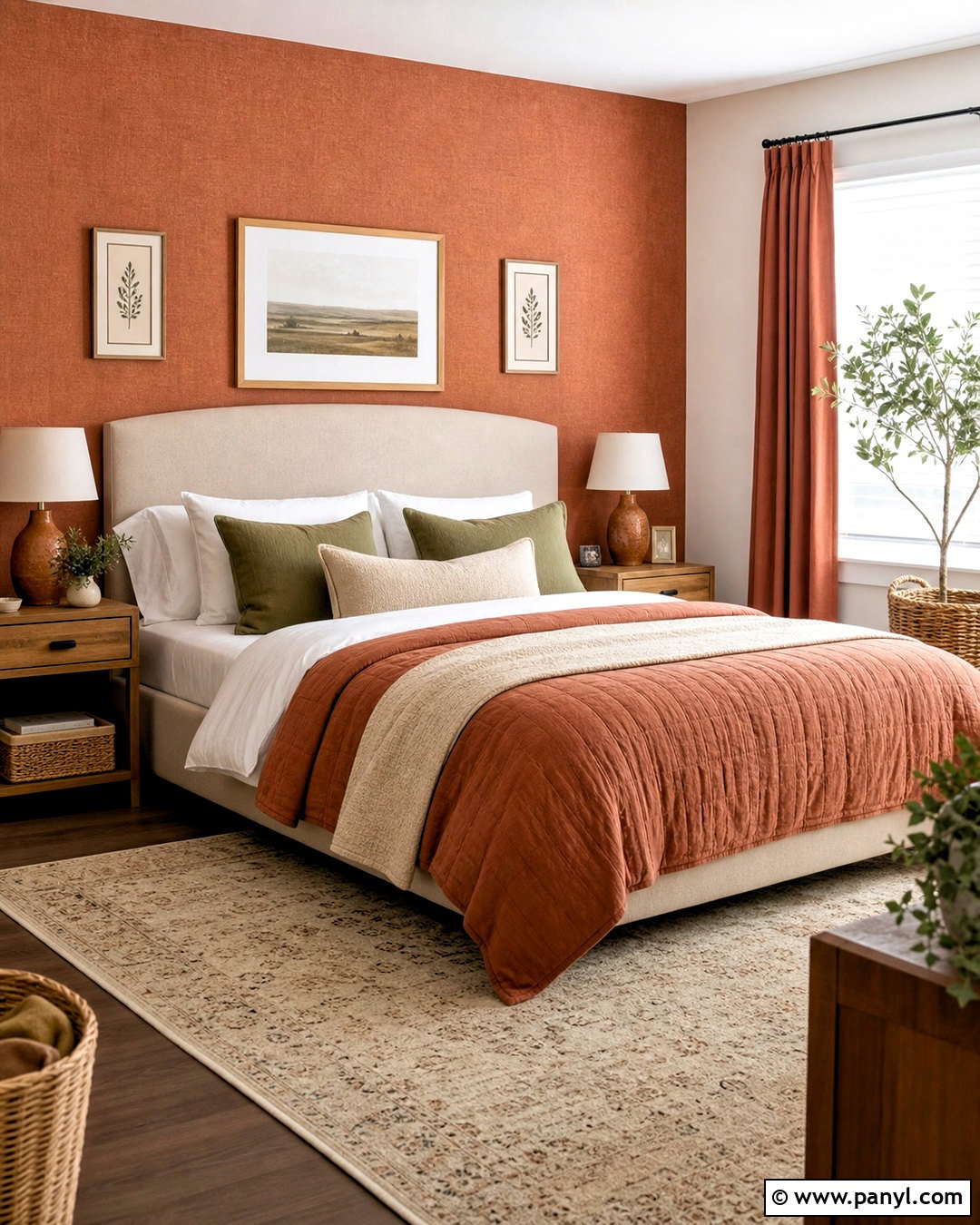
Terracotta and sage green create a balanced bedroom with both warmth and freshness. Begin with light sage walls and make the bed the main terracotta feature. Choose a rust-colored linen duvet, cream sheets, and pillows mixing muted green, clay, and subtle botanical patterns. A medium-tone oak bed frame reinforces the natural palette without making it too rustic. Place matching wooden nightstands on each side, topped with matte cream lamps and small leafy plants. Ground the arrangement with a faded Persian-style rug containing olive, beige, and burnt orange. Natural linen curtains soften the windows, while black curtain rods add a crisp outline. Use woven baskets and understated landscape prints as finishing touches. This complete palette works especially well in a calm bohemian or organic modern bedroom.
3. Terracotta And Navy Blue Bedroom
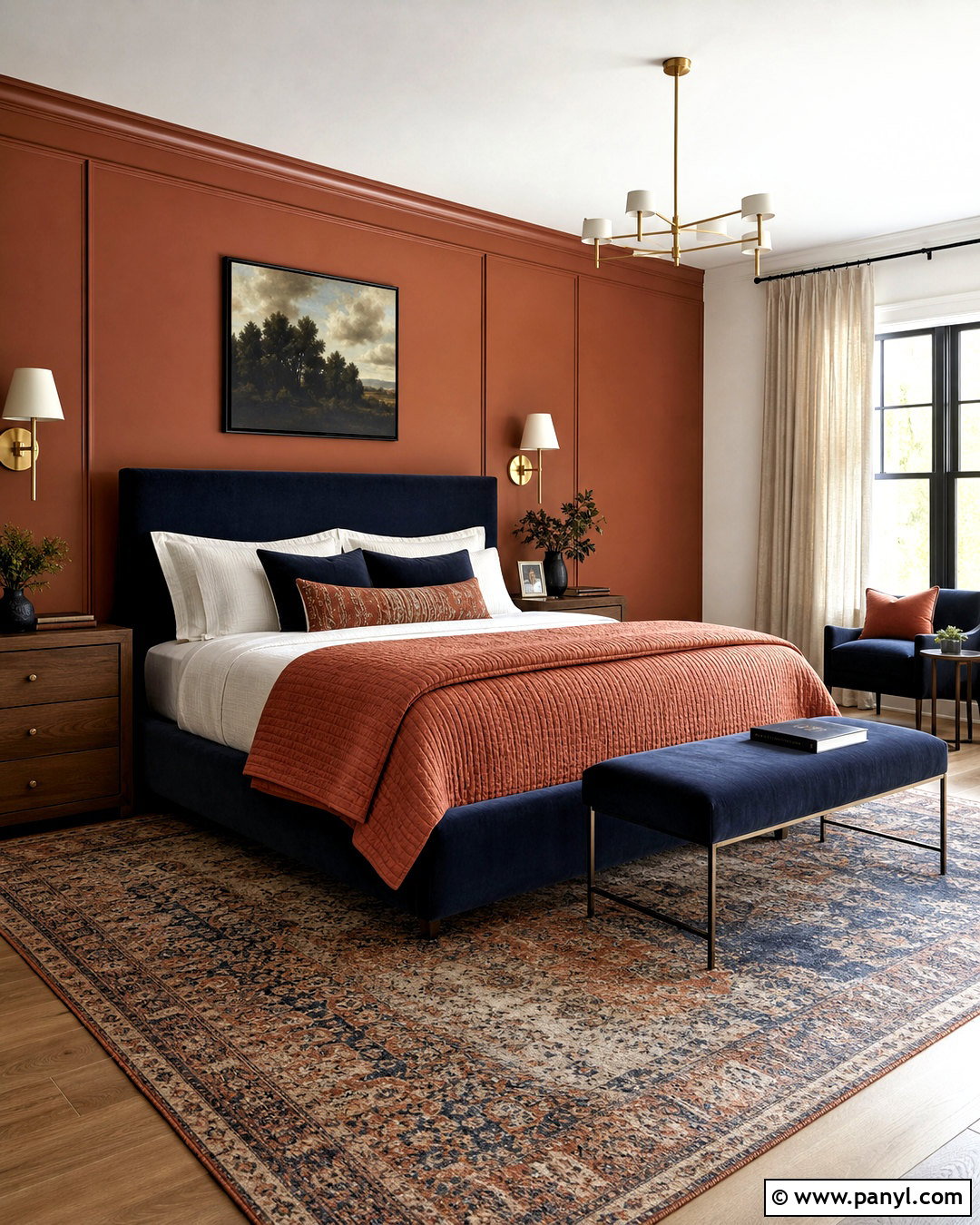
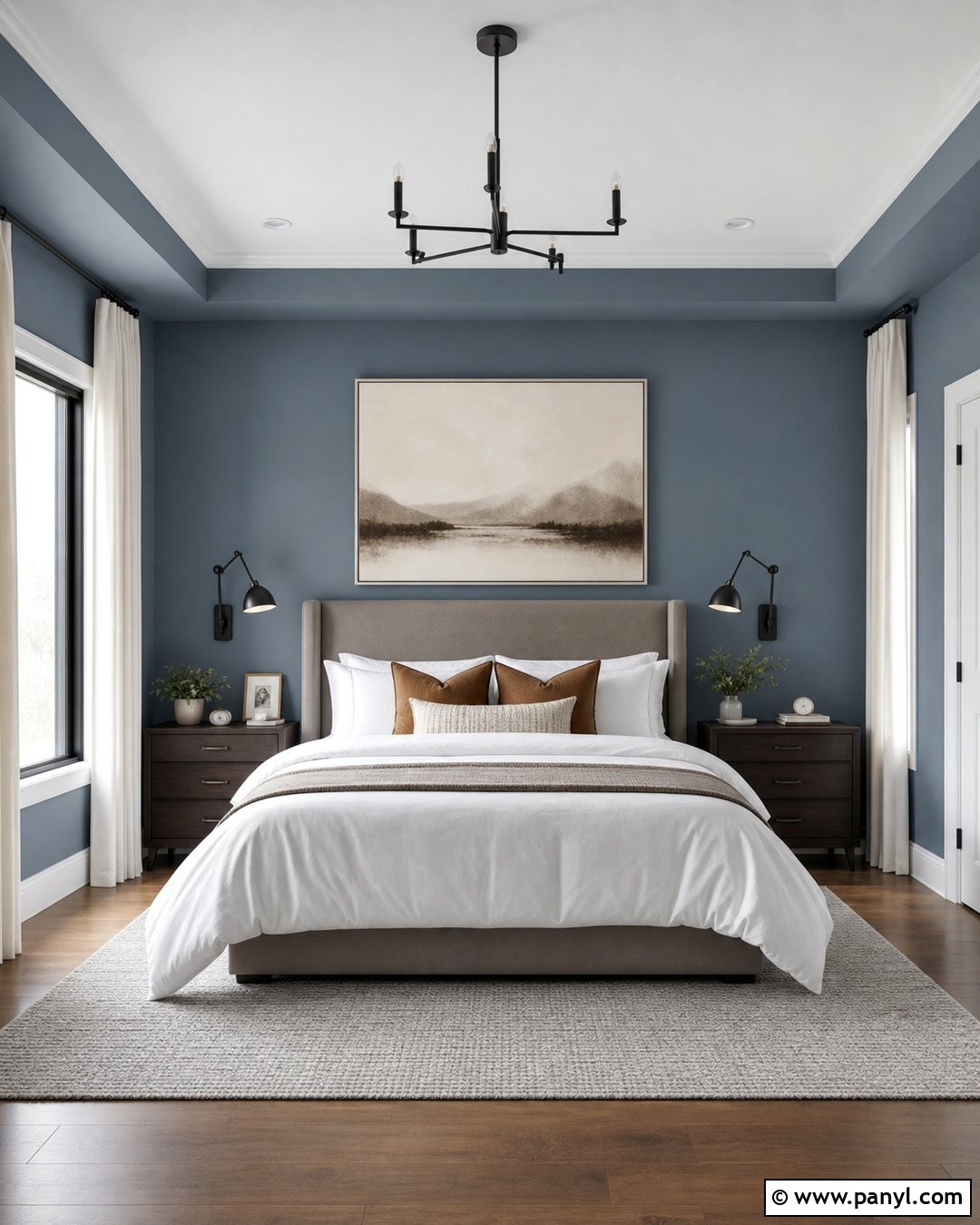
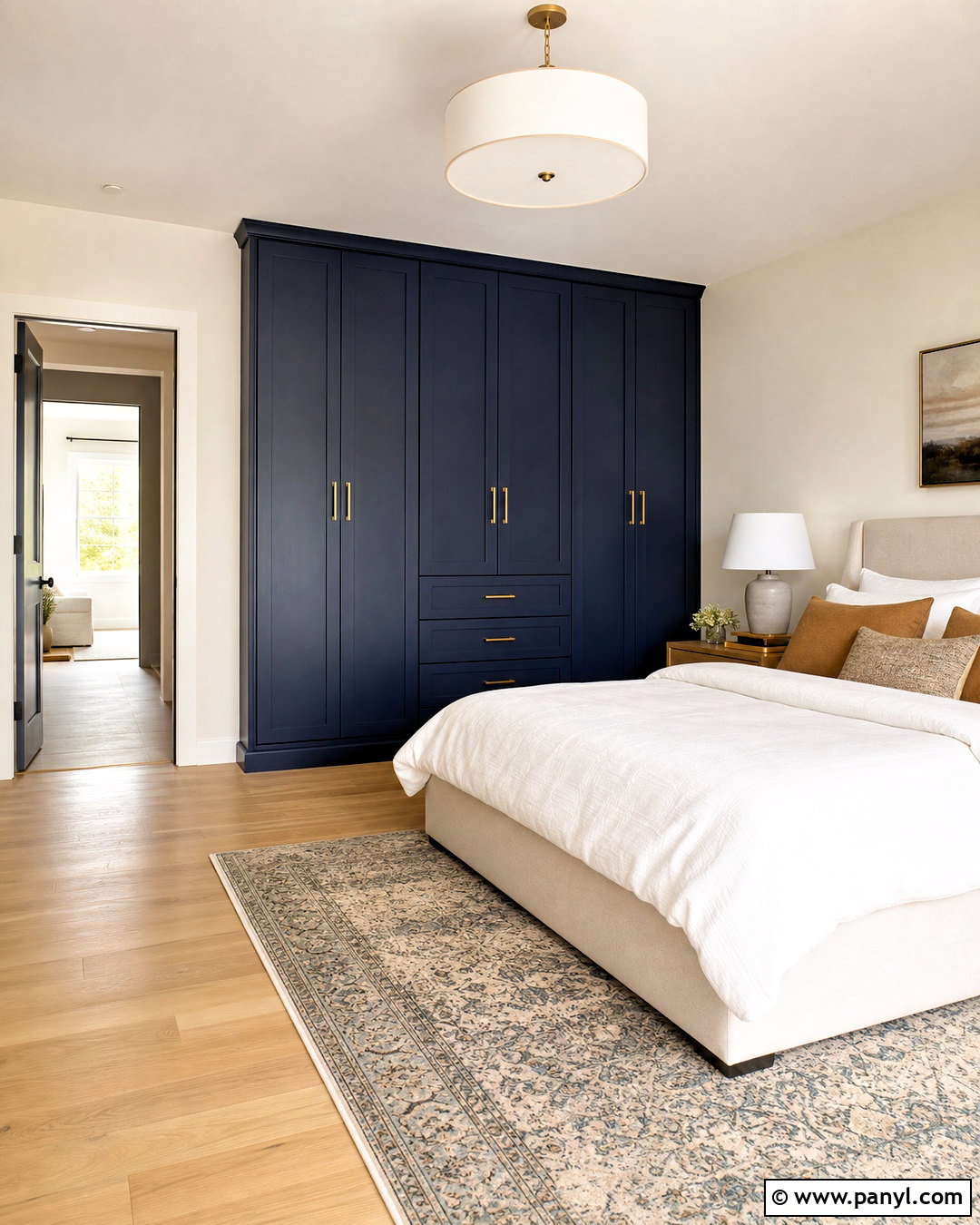
For a richer bedroom, pair earthy terracotta with deep navy blue. Paint the wall behind the bed a muted terracotta shade and keep the remaining walls warm white. A navy upholstered headboard creates strong contrast, while white sheets and a clay-colored coverlet prevent the bed from looking too dark. Add pillows in navy, rust, cream, and a small geometric pattern to connect the colors. Walnut nightstands introduce another deep tone, and brushed brass sconces provide a clean metallic accent. Choose a traditional rug with faded blue, red-orange, and beige details. White or natural flax curtains will maintain brightness around the windows. Complete the room with dark-framed artwork, a navy bench, and minimal pottery. The finished design feels tailored, cozy, and sophisticated without appearing overly formal.
4. Terracotta And Blush Pink Bedroom
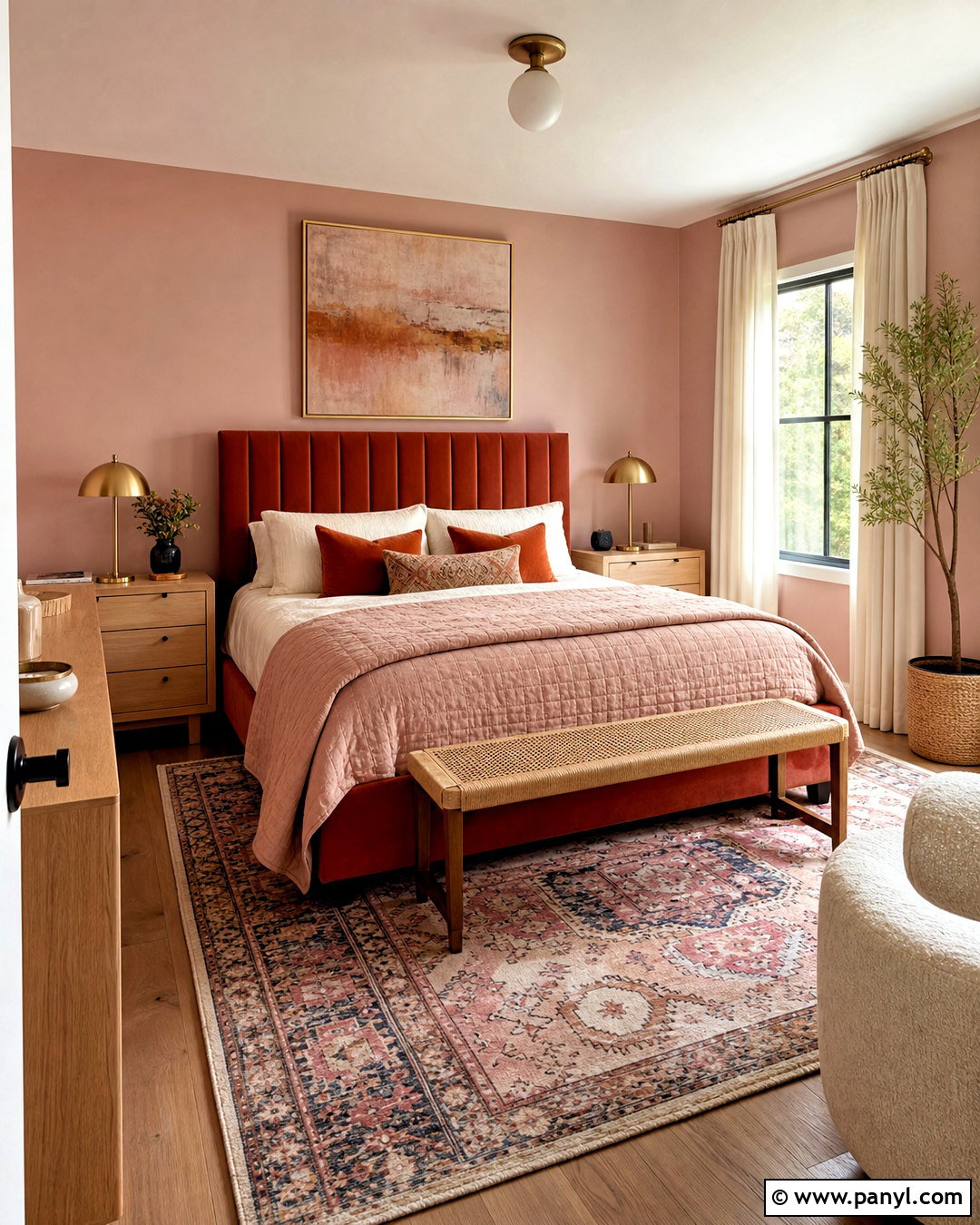
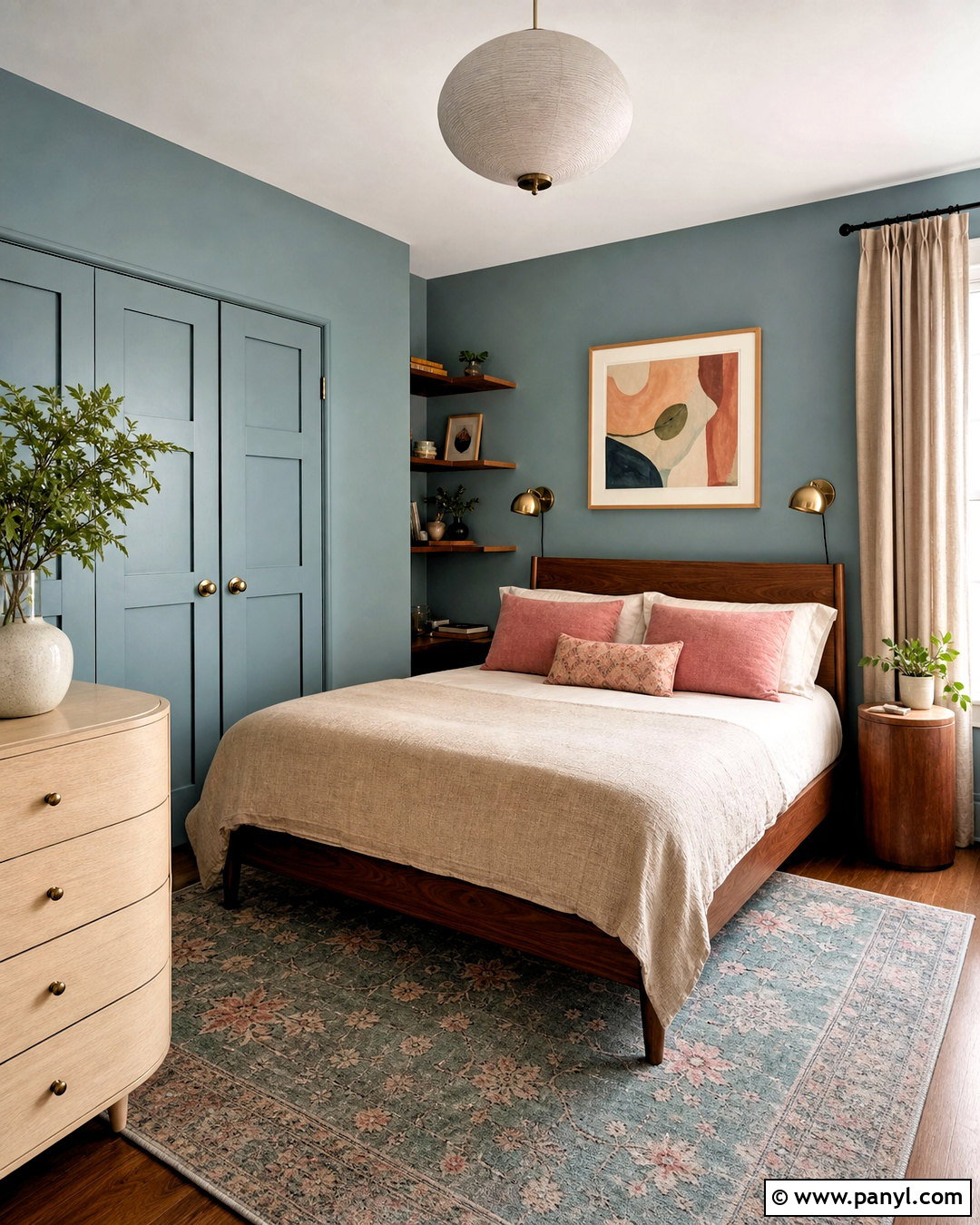
Soft blush pink brings out the gentler red undertones in terracotta. Use dusty blush on the walls, then anchor the room with a terracotta velvet headboard or upholstered bed. Dress it in warm white bedding, a pale pink quilt, and rust-colored accent pillows. Light wood nightstands and a natural cane bench keep the palette from becoming too sweet. Add a cream rug with a faded rose and clay pattern for color at floor level. Pleated off-white curtains create a soft frame around the windows, while brushed brass lamps provide a subtle glow. Keep the artwork modern and simple, using abstract shapes in peach, beige, brown, and muted red. A few dark wood details add necessary contrast. This bedroom feels romantic and grown-up while remaining welcoming, uncluttered, and practical.
5. Terracotta And Olive Green Bedroom
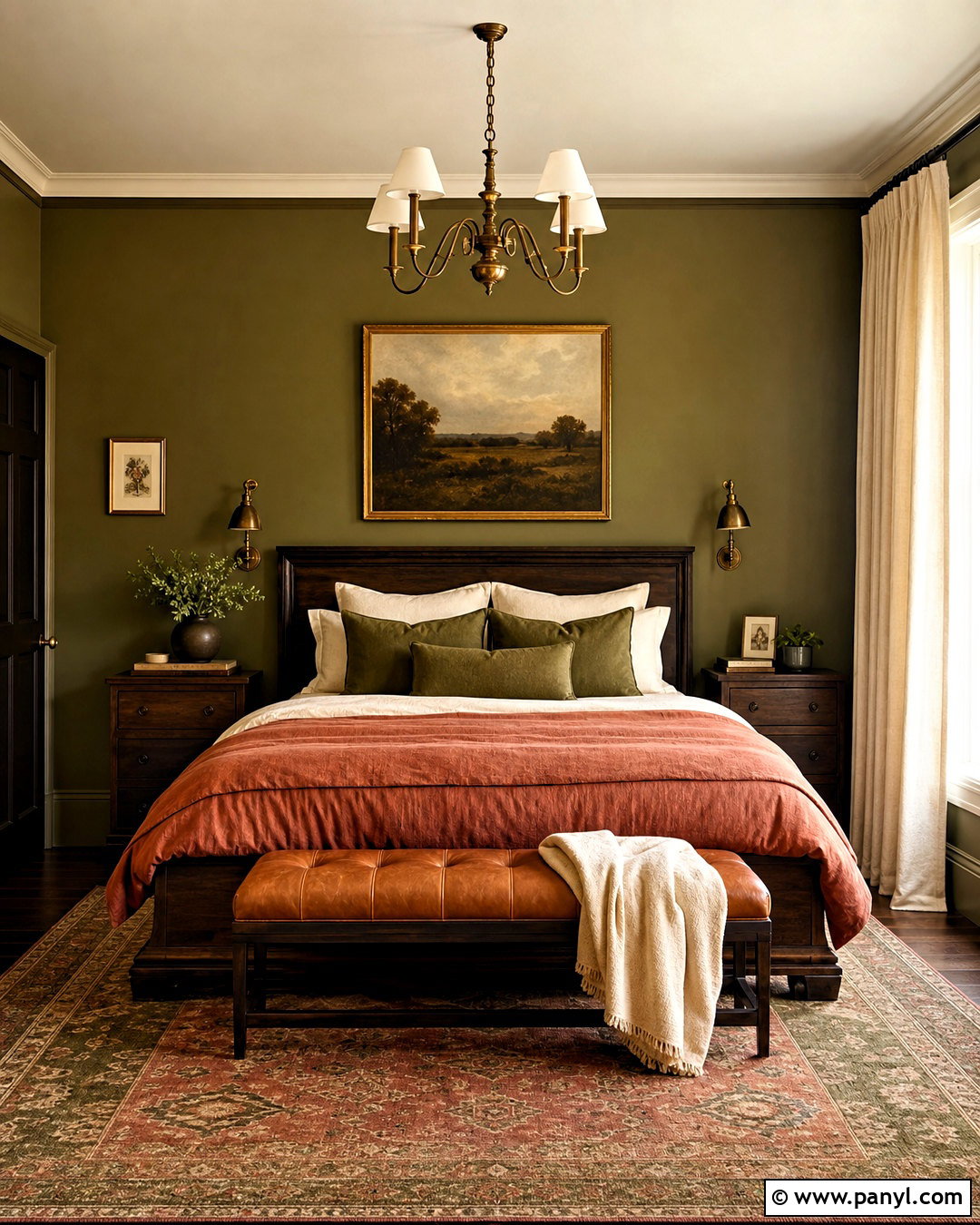
Deep olive green gives terracotta a grounded, heritage-inspired appearance. Paint the bedroom walls a muted olive and choose a warm walnut or dark oak bed with a substantial headboard. Keep the main bedding cream, then layer a terracotta duvet, olive cushions, and a patterned lumbar pillow containing both colors. A tan leather bench at the foot of the bed adds another earthy material without interrupting the palette. Use aged brass wall lights and dark wood nightstands for a collected finish. Underfoot, select a traditional rug with rust, olive, camel, and faded beige tones. Cream curtains will brighten the room and create relief from the darker walls. Complete the design with vintage landscape art, clay pottery, and one tall plant. The overall look feels comfortable, established, and naturally cohesive.
6. Terracotta And Charcoal Bedroom
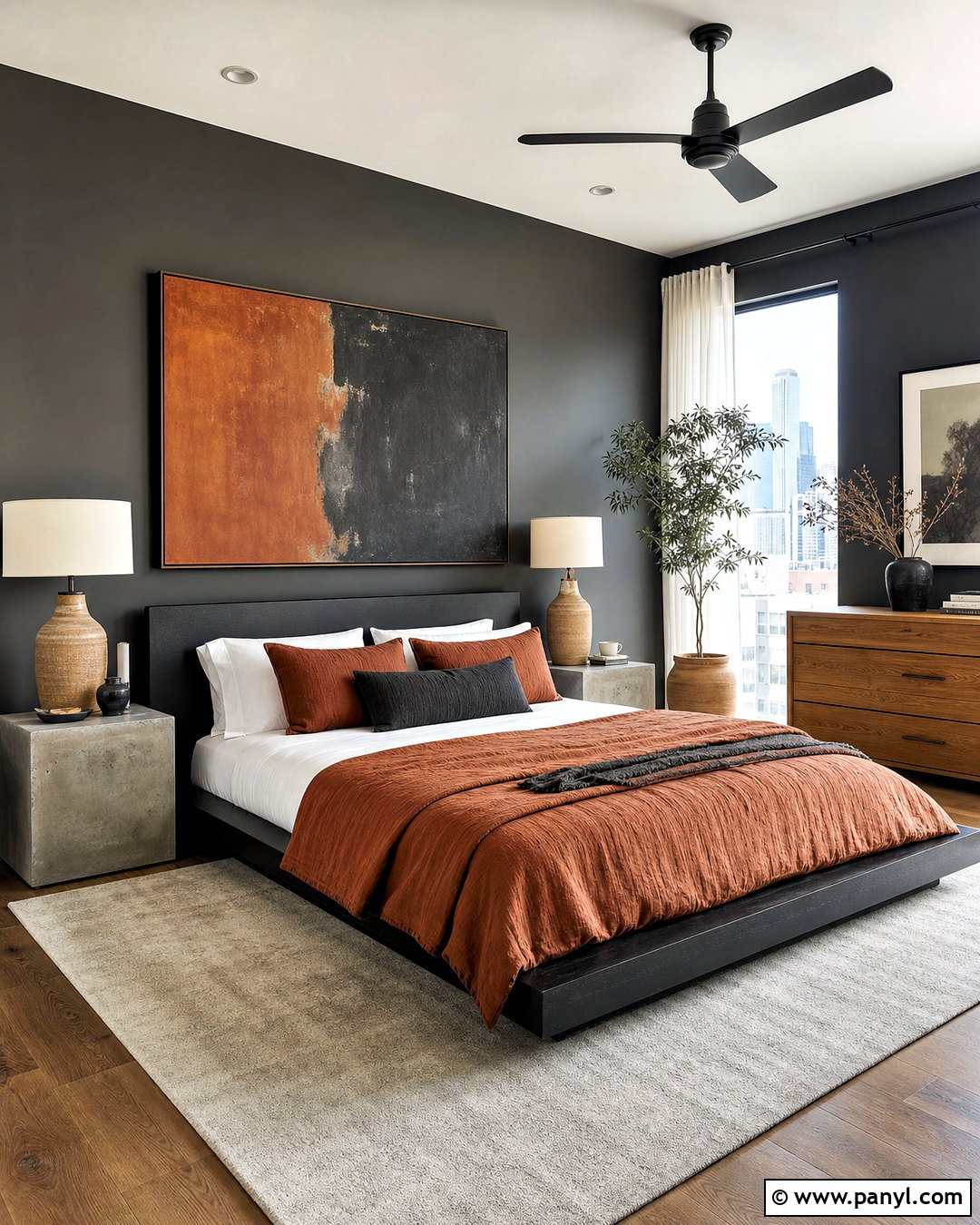
Would you prefer a bedroom with sharper contrast and an urban edge? Start with charcoal gray walls and use terracotta as the primary warming color. A streamlined black platform bed can hold white sheets, a rust duvet, and charcoal pillows with simple woven textures. Place concrete or black metal nightstands beside the bed, then soften them with rounded ceramic lamps in warm beige. A large light gray rug prevents the dark walls and furniture from overpowering the space. Hang one oversized abstract artwork featuring terracotta, cream, and graphite above the headboard. Sheer white curtains will filter daylight, while heavier gray curtain panels add privacy. Introduce medium oak through a dresser or bench for natural balance. The complete bedroom feels modern and dramatic, yet the clay textiles keep it comfortable rather than cold.
7. Terracotta And Mustard Yellow Bedroom
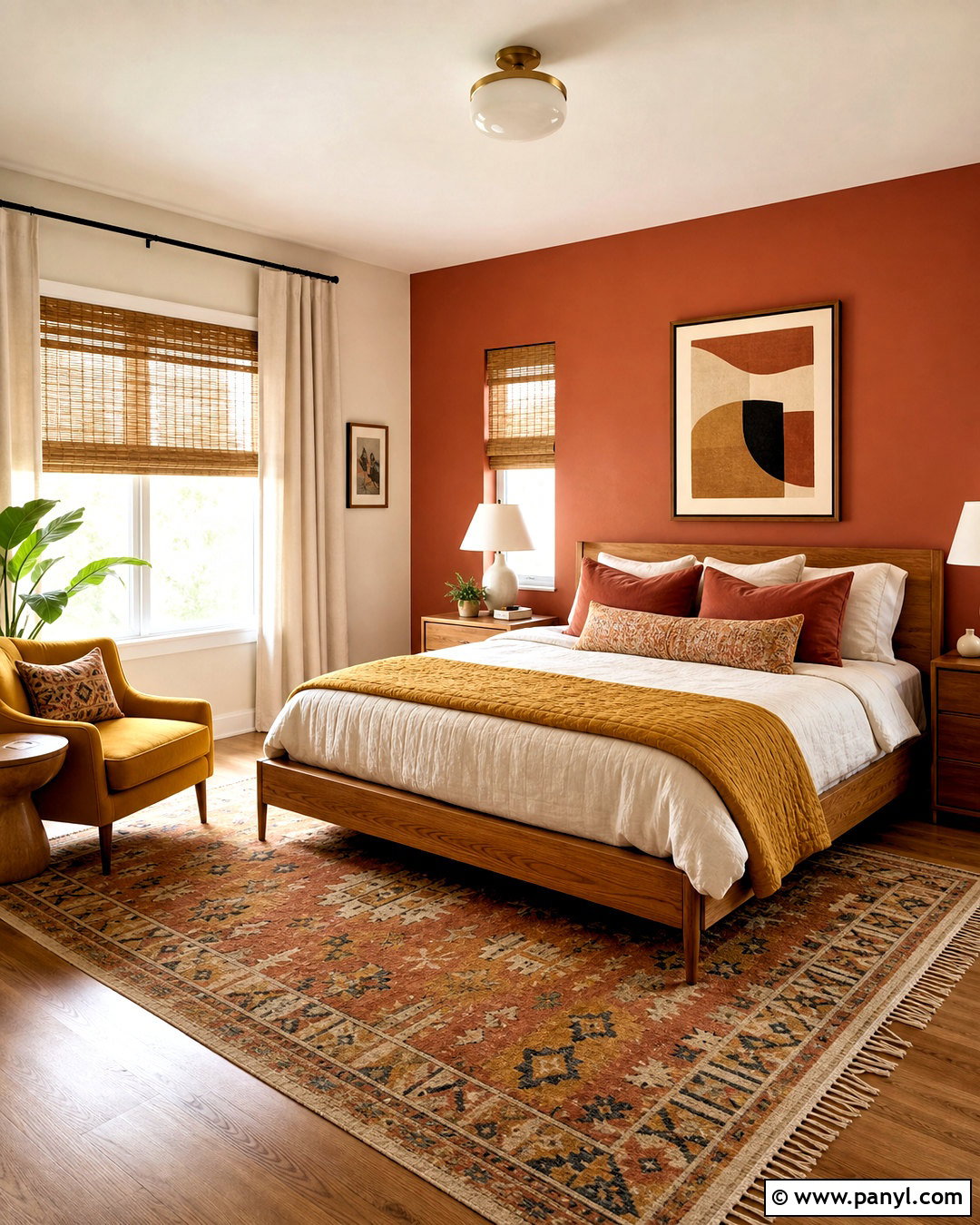
Warm mustard yellow can make a terracotta bedroom feel sunny, layered, and playful. Keep the walls a soft cream so the stronger colors remain controlled. Place a simple oak bed against a wide terracotta-painted feature wall and dress it with white cotton sheets, a mustard quilt, and clay-colored pillows. A patterned rug featuring rust, ochre, tan, and muted brown will pull the room together. Choose compact wood nightstands and dome-shaped lamps with warm white shades. Add mustard through one upholstered chair or window bench rather than scattering it everywhere. Woven blinds and cream curtain panels bring softness to the windows. Finish with graphic artwork, natural baskets, and a small collection of matte ceramics. Limiting the bold colors to several substantial features creates a cheerful bedroom that still feels restful.
8. Terracotta And Dusty Blue Bedroom
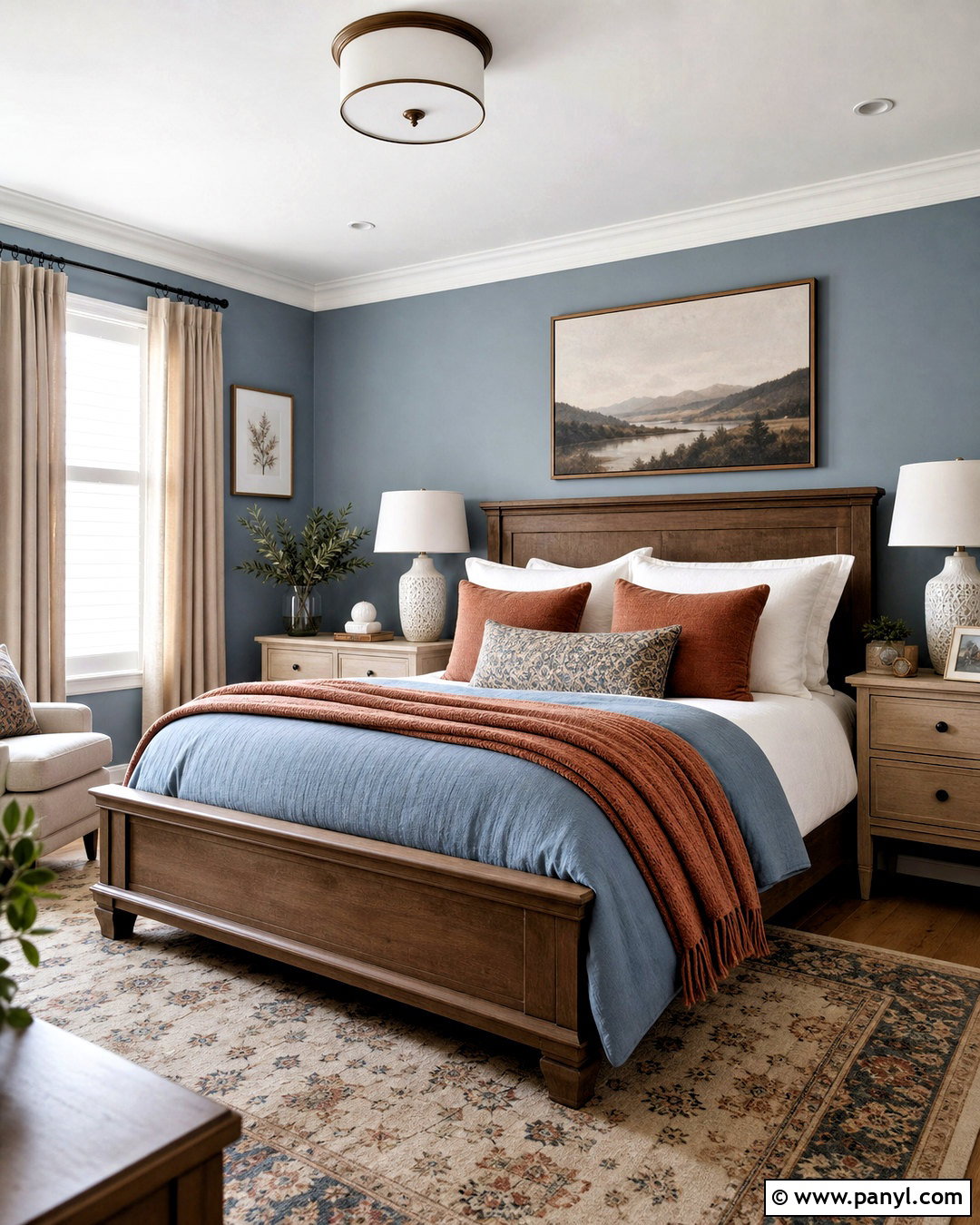
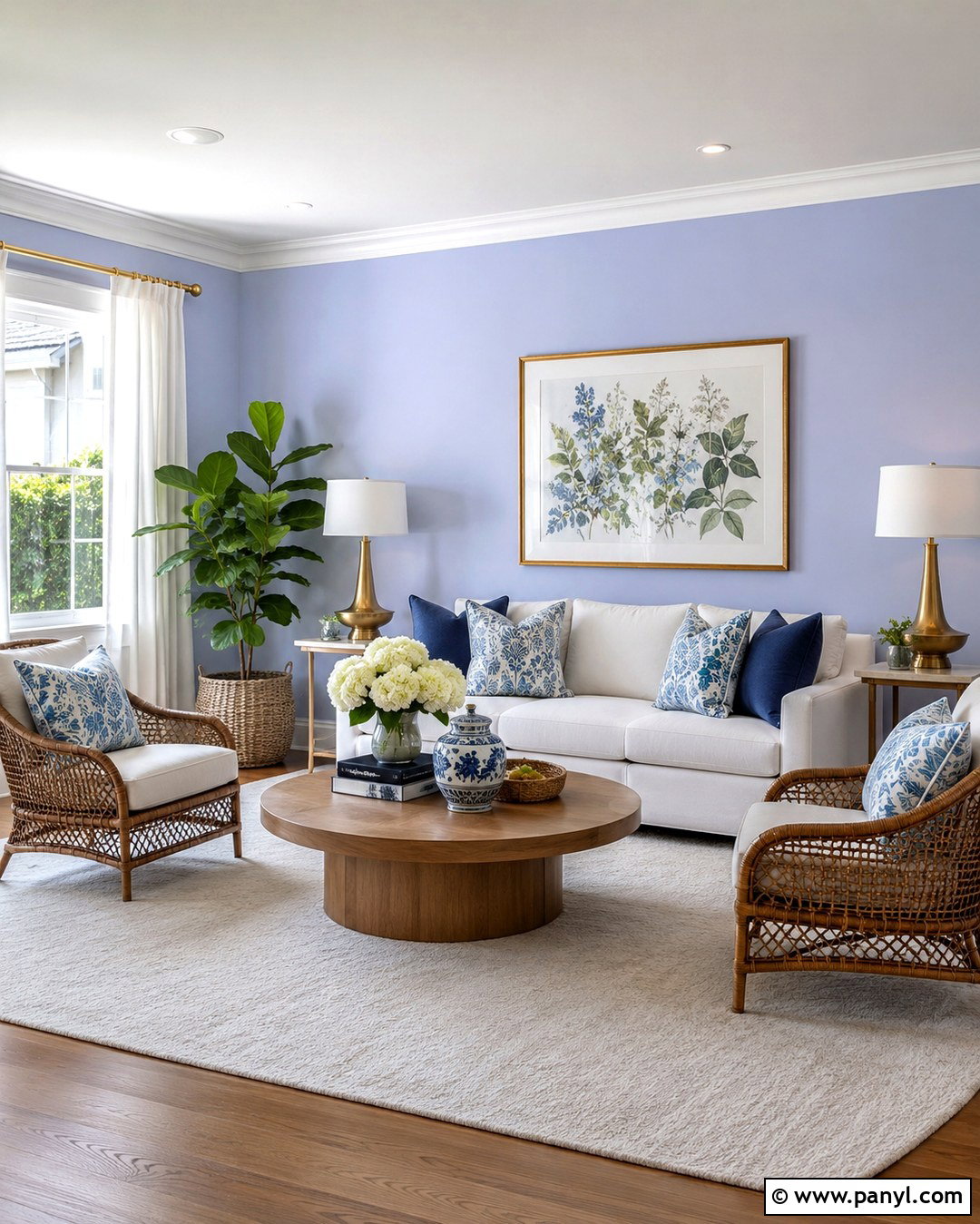
Cool dusty blue gently offsets terracotta’s orange warmth, resulting in a calm and approachable bedroom. Paint the walls a soft blue-gray and use a classic wooden bed as the central anchor. Layer the bed with creamy white sheets, a faded blue duvet, and terracotta pillows in solid and striped fabrics. A clay-colored throw across the foot adds warmth without covering the blue. Select a light beige rug with subtle blue and rust detailing, then add white oak nightstands and simple ceramic lamps. Natural flax curtains will connect the cool walls with the warmer furniture. Above the bed, display a quiet coastal or landscape print containing muted blue skies and reddish earth. Small black accents in frames and hardware sharpen the palette. This design feels airy, relaxed, and suitable for year-round use.
9. Terracotta And Chocolate Brown Bedroom
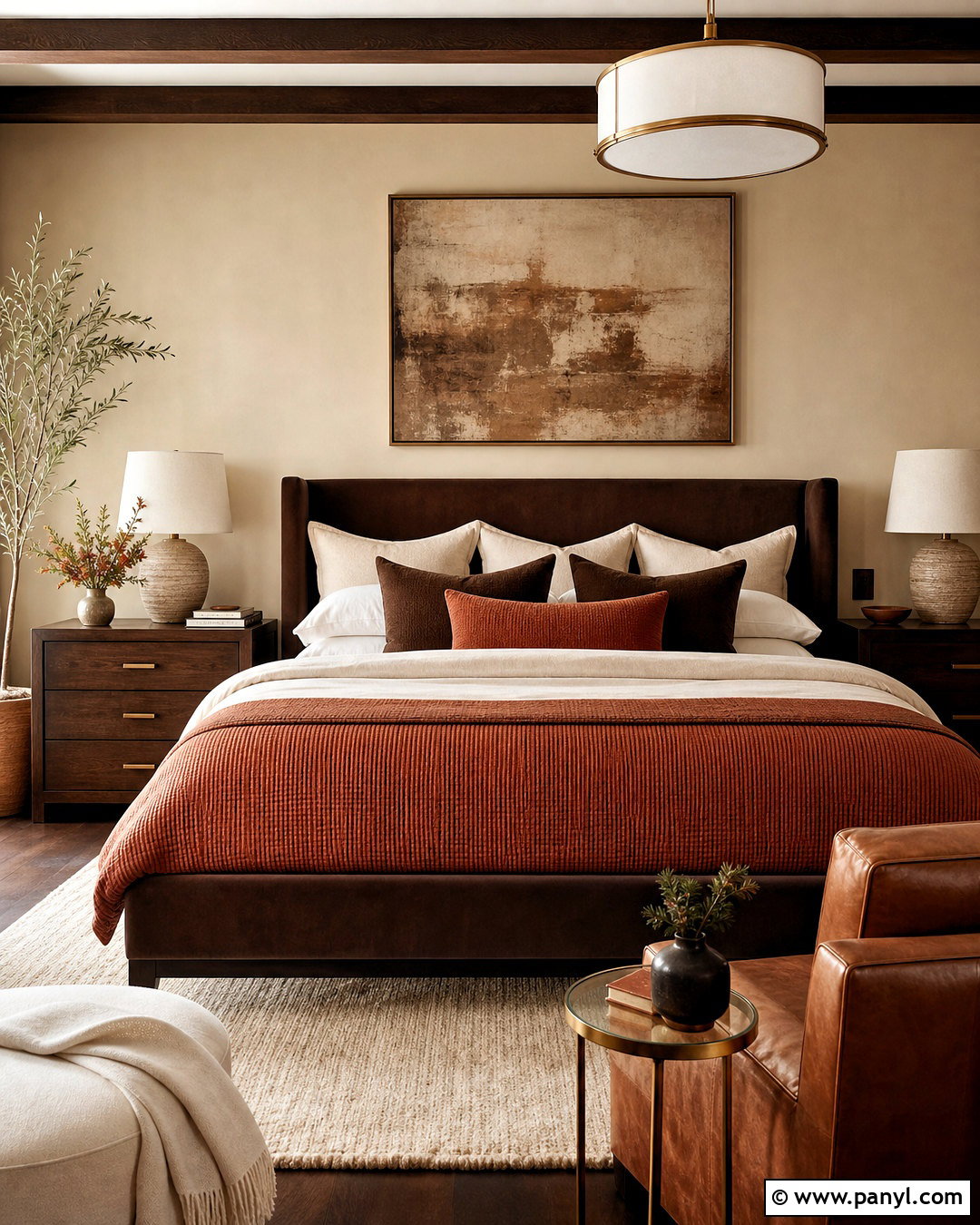
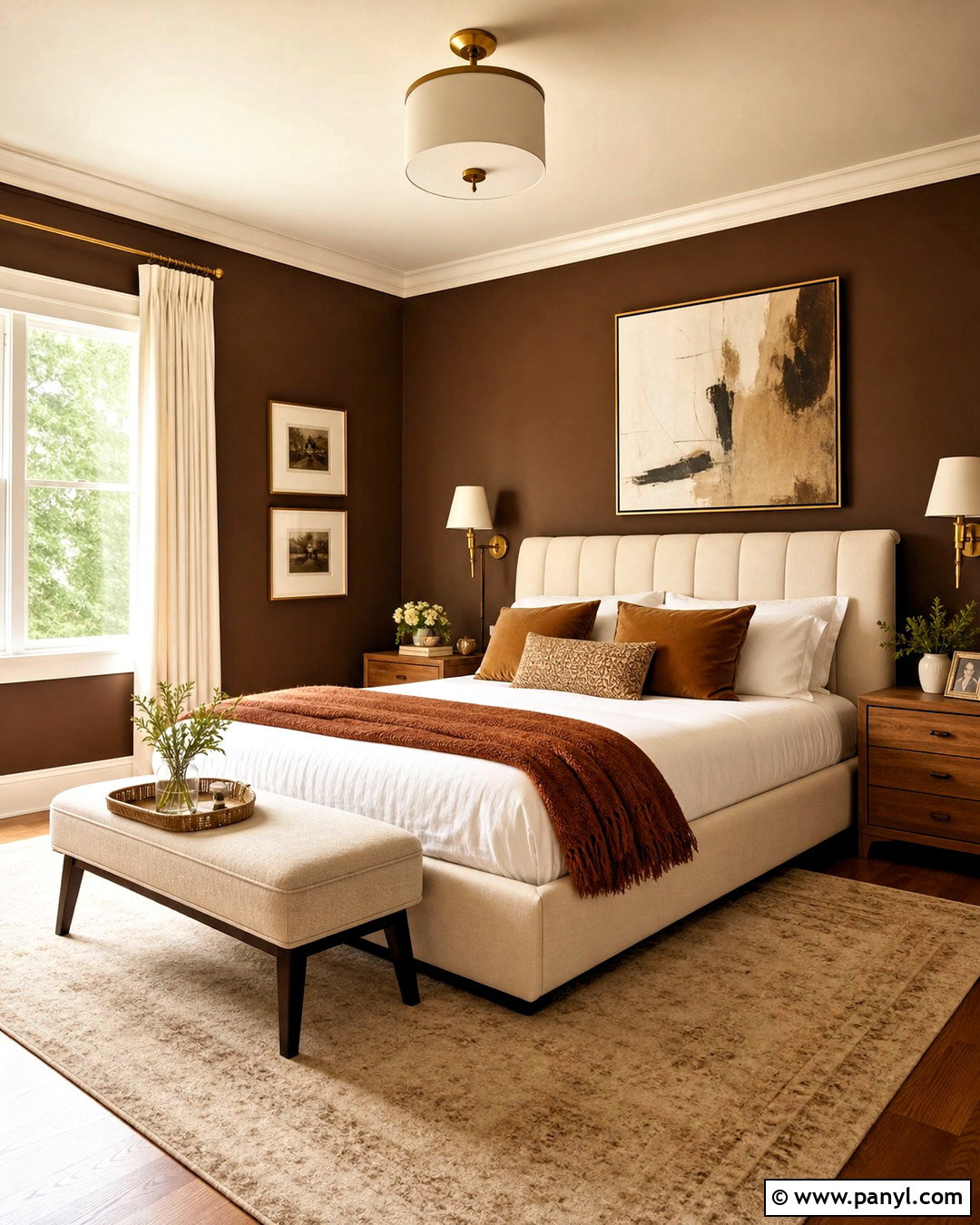
Chocolate brown creates a warm, cocooning foundation for terracotta. Use a deep brown upholstered headboard against warm beige walls, allowing the furniture to establish depth without darkening every surface. Dress the bed in ivory linen, a terracotta coverlet, and pillows mixing cinnamon, cocoa, and camel. Dark walnut nightstands can flank the bed, paired with cream ceramic lamps to brighten the arrangement. Choose a generous wool rug in oatmeal or light taupe so the lower half of the room does not feel too heavy. Hang textured neutral artwork or framed fiber pieces above the bed. Full-length beige curtains add softness, while a cognac leather chair introduces another variation of brown. A few brass accents and clay vessels finish this layered bedroom, creating an inviting look with an understated sense of luxury.
10. Terracotta And Warm White Bedroom
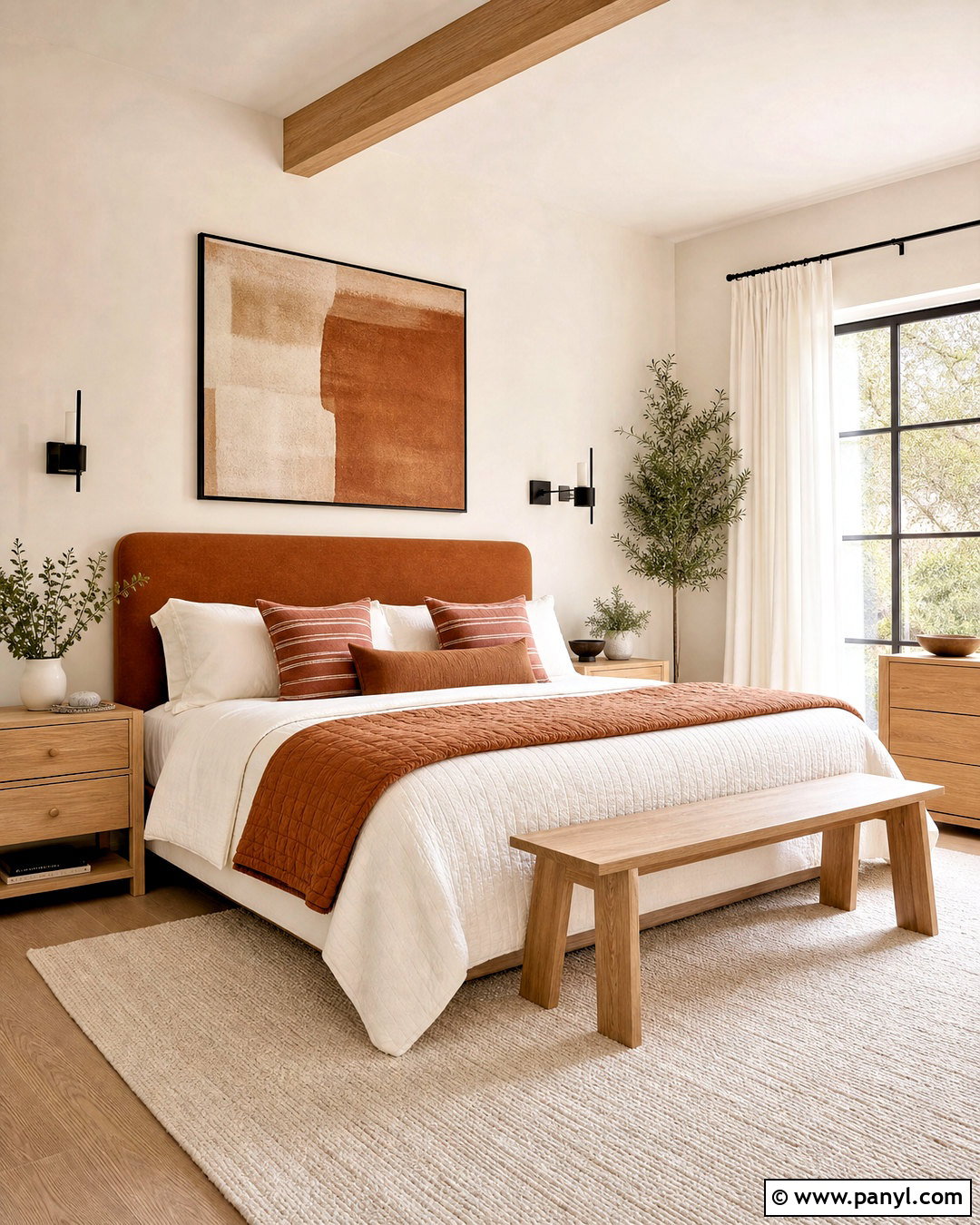
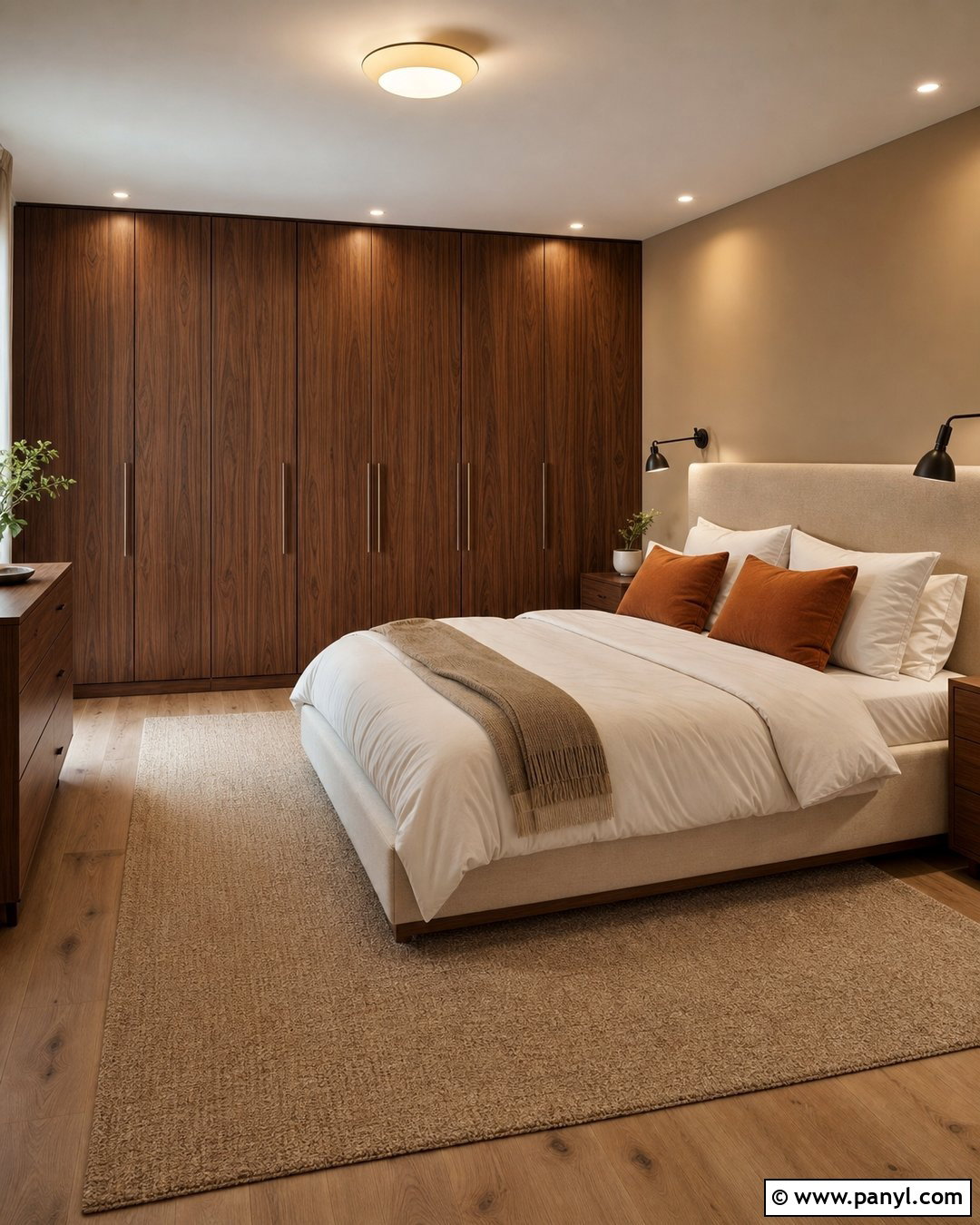
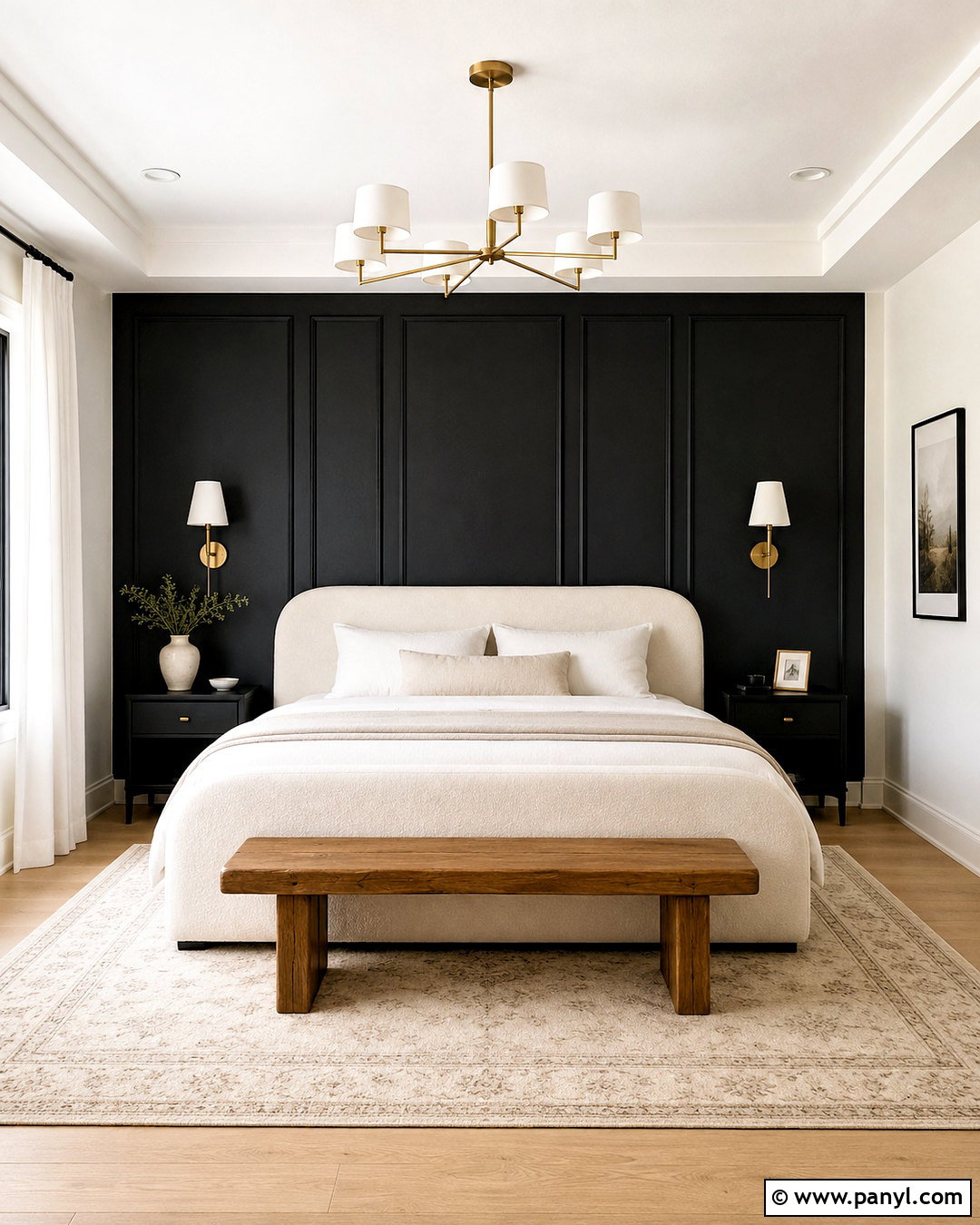
A warm white room is an ideal starting point when you want terracotta to appear clean and modern. Paint the walls and ceiling a creamy white, then use a terracotta upholstered headboard as the strongest focal point. Keep the bedding mostly white, adding a clay quilt, two striped cushions, and a light beige blanket for definition. Pale oak nightstands, a matching dresser, and a simple bench create a seamless furniture plan. Ground the bed with a large ivory rug that has a subtle rust border. Use slim black lamps or sconces to introduce contrast without clutter. White linen curtains preserve the bright atmosphere, while one oversized abstract print repeats the terracotta and tan tones. This restrained approach works well in smaller rooms because the light foundation keeps the earthy accents visually open.
11. Terracotta And Teal Bedroom
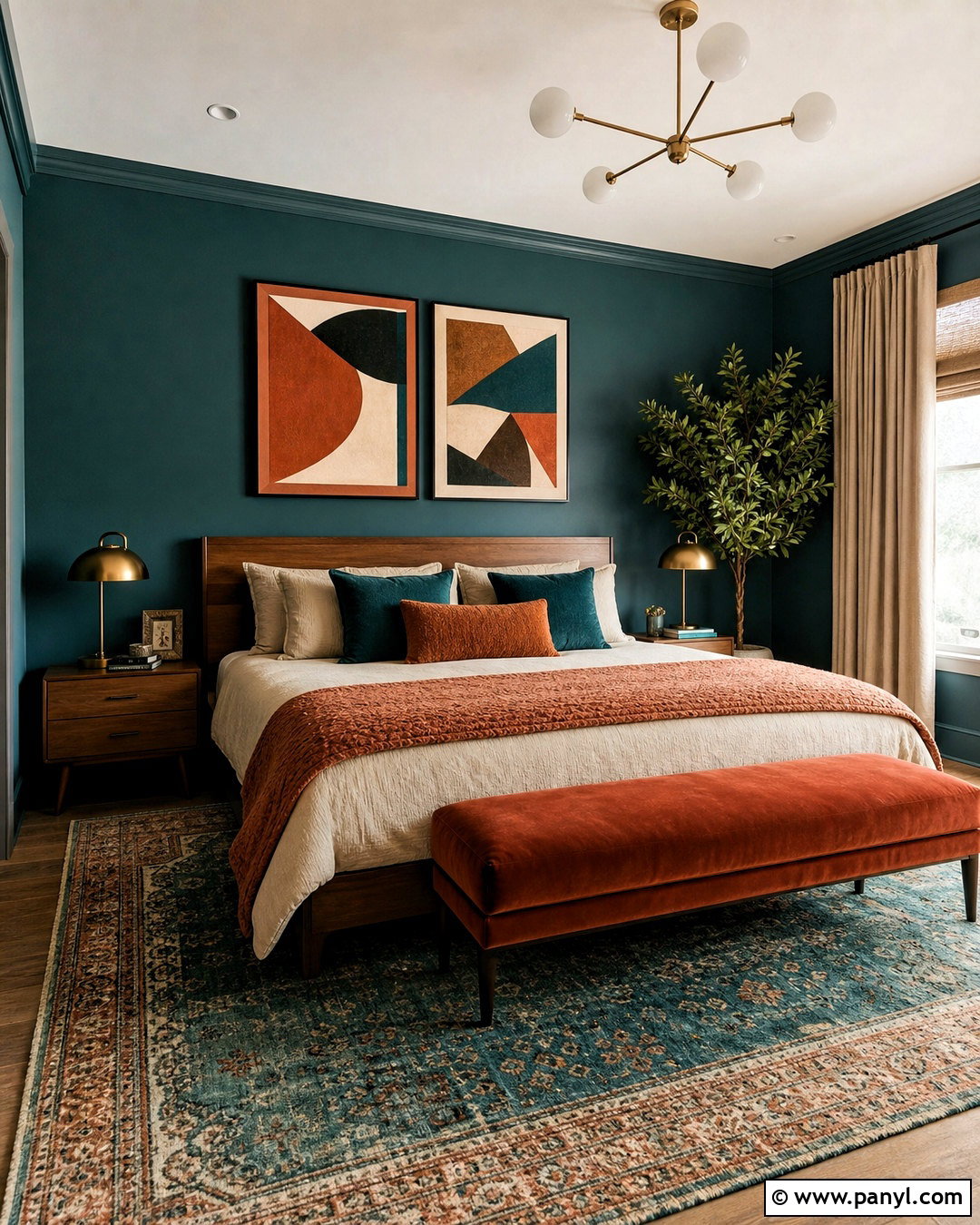
Teal provides a bold cool-toned contrast that makes terracotta look especially vibrant. Paint the headboard wall a deep, muted teal and leave the other walls soft beige. Choose a low wood bed with crisp cream bedding, then add a substantial terracotta quilt and teal accent pillows. A rust velvet bench at the foot of the bed reinforces the warm side of the palette. Use walnut nightstands and brushed brass lamps to bridge the two saturated colors. A vintage-inspired rug containing teal, clay, cream, and dark brown will make the combination feel deliberate. Hang neutral curtains rather than teal ones, allowing the feature wall to remain the main cool-colored element. Finish with framed geometric artwork, pottery, and one leafy plant. The result is colorful and confident but still orderly enough for a restful bedroom.
12. Terracotta And Greige Bedroom
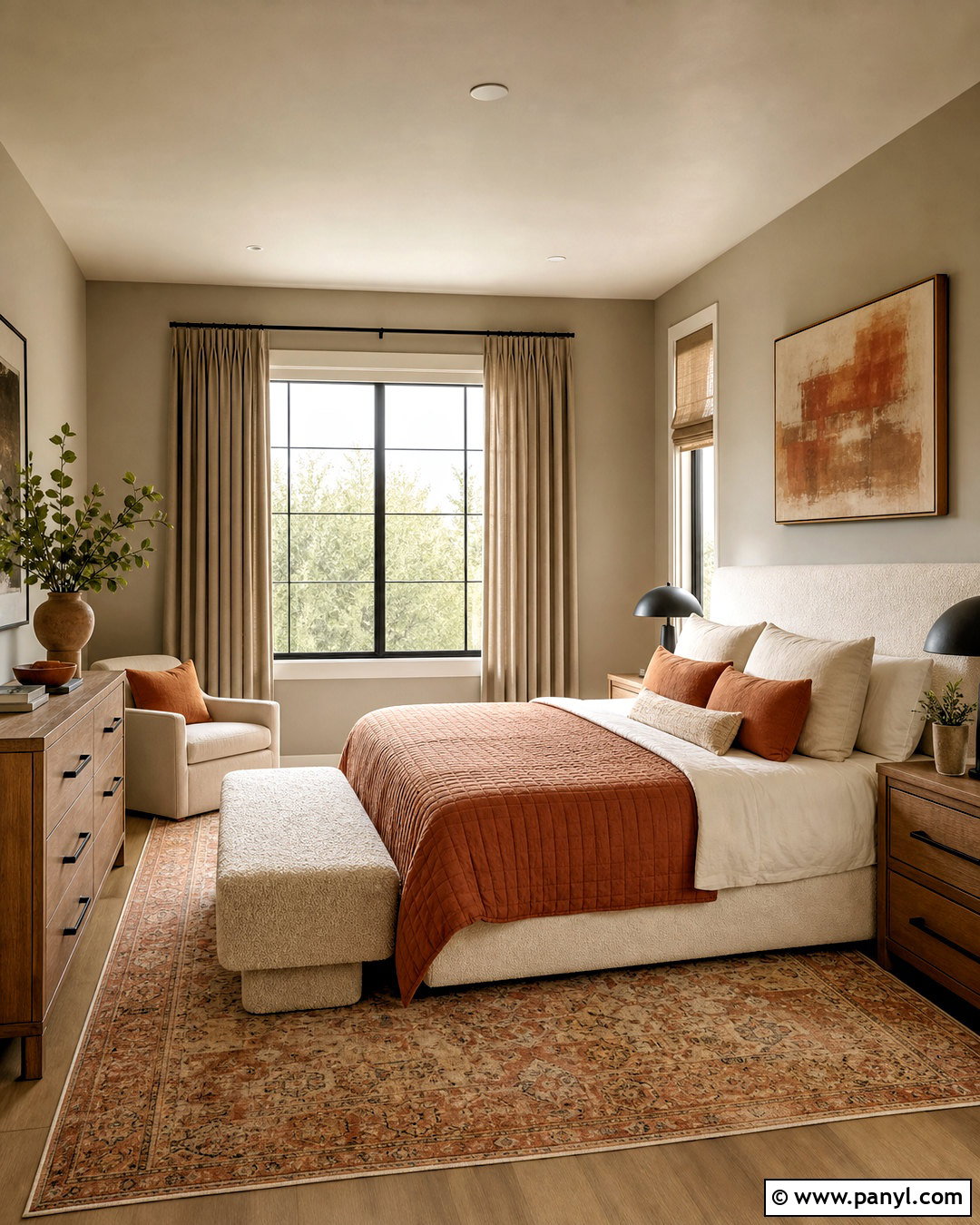
Greige offers a quieter way to use terracotta in a contemporary bedroom. Cover the walls in a warm gray-beige shade and choose a streamlined oatmeal fabric bed. Bring terracotta into the room through a quilted coverlet, two oversized pillows, and a patterned rug with faded clay details. Light walnut nightstands add warmth, while matte black lamps and slim picture frames create modern structure. Instead of filling every surface, place one ceramic vessel and a short stack of books on each bedside table. Choose full-length taupe curtains that sit close to the wall color for a smooth, spacious appearance. A textured cream bench can soften the foot of the bed. Complete the look with abstract artwork in rust, gray, tan, and off-white. The finished bedroom feels polished, peaceful, and easy to maintain.
13. Terracotta And Burgundy Bedroom
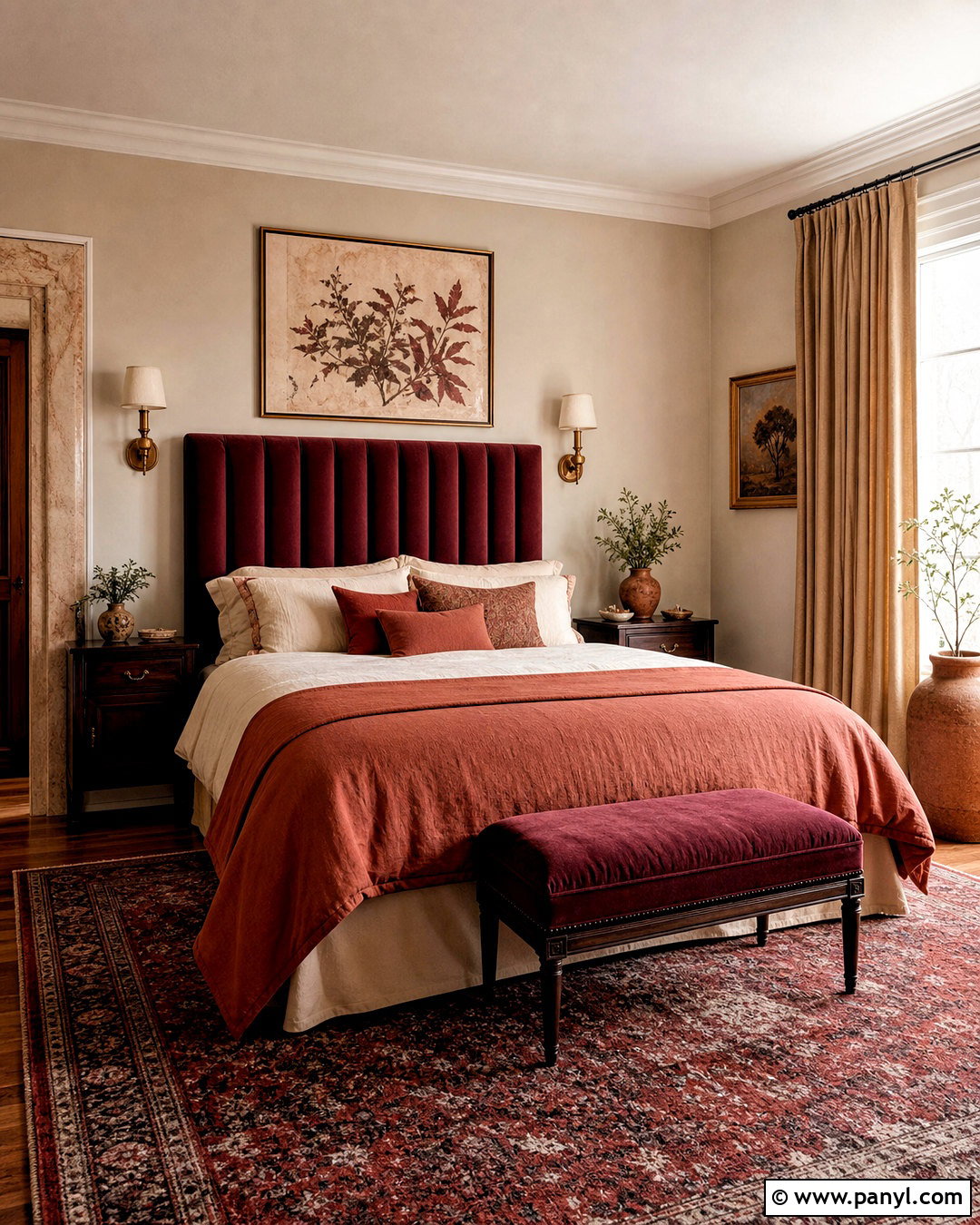
Terracotta and burgundy create a deep tonal palette with a refined, enveloping mood. Begin with soft beige walls to provide breathing room around the richer shades. Use a tall burgundy velvet headboard, then layer cream sheets with a terracotta duvet and cushions in wine-free reddish brown, rust, and muted rose. Dark wood nightstands support the dramatic palette, while aged brass wall sconces add a traditional detail. Select a vintage rug with faded garnet, burnt orange, camel, and ivory patterns. Hang linen curtains in warm stone rather than another dark color. Above the bed, use antique-style botanical art or a simple landscape with deep red and earthy brown notes. A terracotta ceramic lamp on a dresser repeats the main hue. This bedroom feels intimate and elegant without relying on excessive ornament.
14. Terracotta And Lavender Bedroom
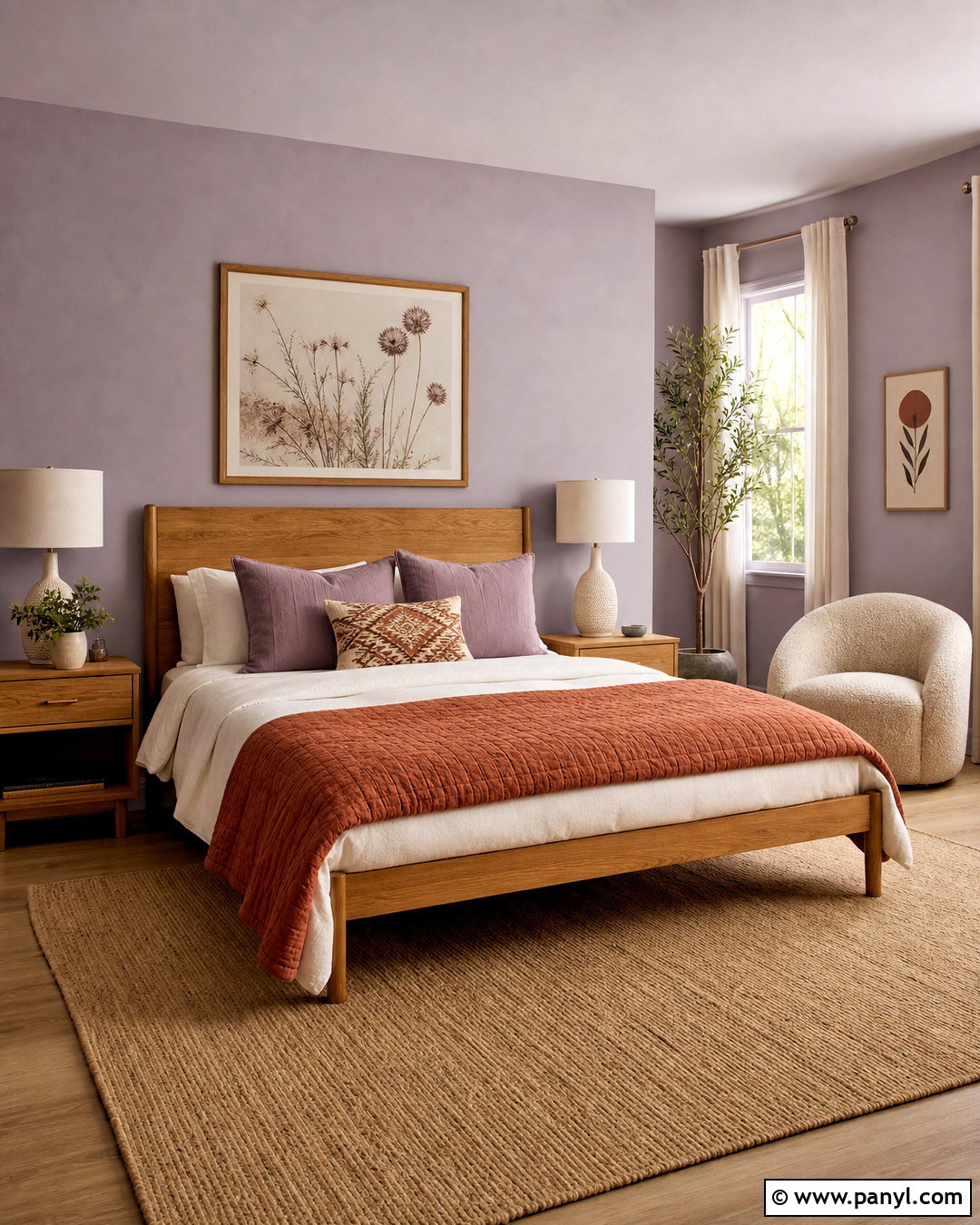
Muted lavender is an unexpected partner that can soften the boldness of terracotta. Choose a pale gray-lavender wall color with a dusty undertone rather than a bright purple. Place a natural oak bed at the center and use warm white bedding as the foundation. Add a terracotta quilt, lavender pillows, and one patterned cushion containing clay, mauve, and cream. A beige wool rug keeps the floor neutral, while light wood nightstands maintain an airy finish. Use white ceramic lamps with brushed brass bases for a small amount of shine. Hang gauzy ivory curtains and artwork featuring loose botanical shapes in muted purple and orange. A boucle chair in pale taupe can fill a reading corner. The room feels distinctive yet restful because both main colors remain softened and slightly earthy.
15. Terracotta And Black Bedroom
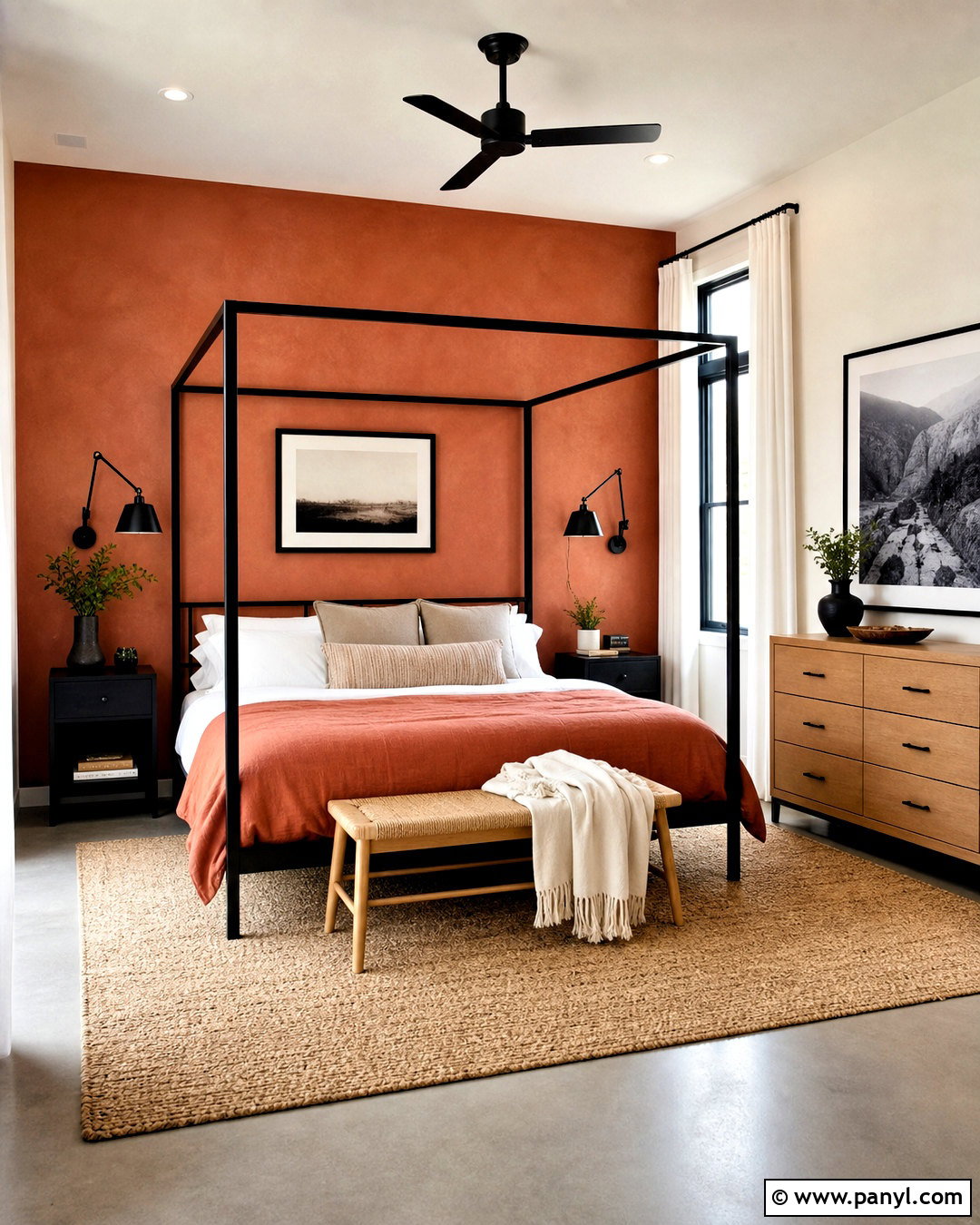
Black accents can give a terracotta bedroom crisp definition without making it feel harsh. Paint the wall behind the bed in a medium clay tone and keep the surrounding walls warm white. Choose a black metal canopy or slim spindle bed, then layer it with ivory sheets, terracotta linen, and beige cushions. Matching black nightstands and adjustable wall sconces repeat the strong outline. To soften the contrast, place a large natural jute or wool rug beneath the bed. Use pale oak for a dresser or bench so the design includes a lighter organic material. Simple black-framed artwork can feature cream backgrounds and rust-colored shapes. Add full-length white curtains and a few earthenware pots. This bedroom combines modern structure with earthy comfort, making the terracotta feel purposeful rather than overly rustic or bohemian.
16. Terracotta And Peach Bedroom
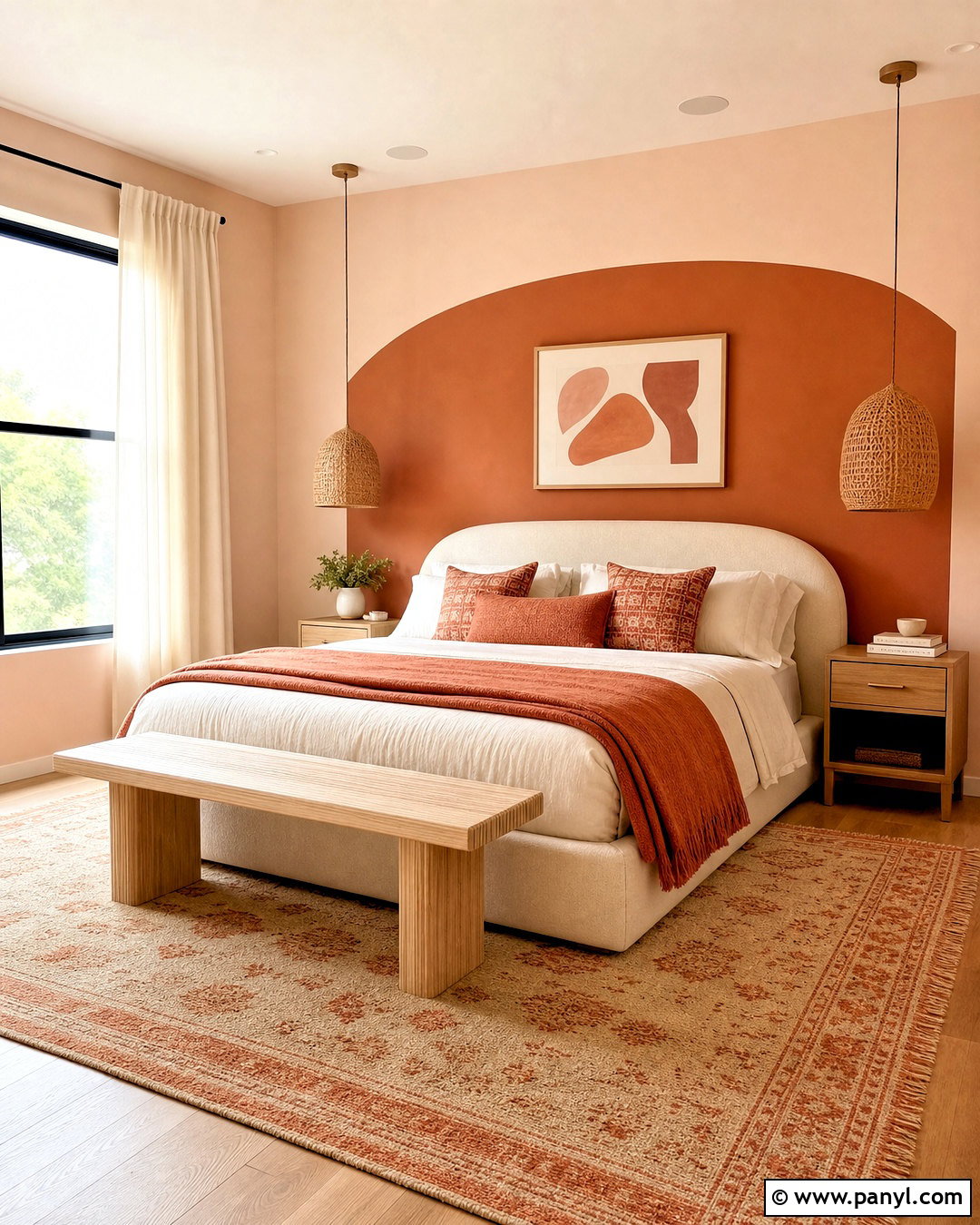
A tonal blend of peach and terracotta creates a bedroom that feels soft, warm, and gently sunlit. Paint the walls pale peach, then use a deeper terracotta shade on the lower wall or behind the headboard. Choose a curved cream upholstered bed and dress it with off-white sheets, a clay coverlet, and pillows in peach, coral, and rust. Light oak nightstands keep the room fresh, while woven pendant lights introduce natural texture. A beige rug with faded orange detailing anchors the furniture without adding another strong color. Use ivory curtains and bamboo shades to frame the windows. Keep accessories limited to simple ceramics, abstract art, and one pale wood bench. Because the colors are closely related, varying the fabric textures and shade depths prevents the complete bedroom from appearing flat.
17. Terracotta And Forest Green Bedroom
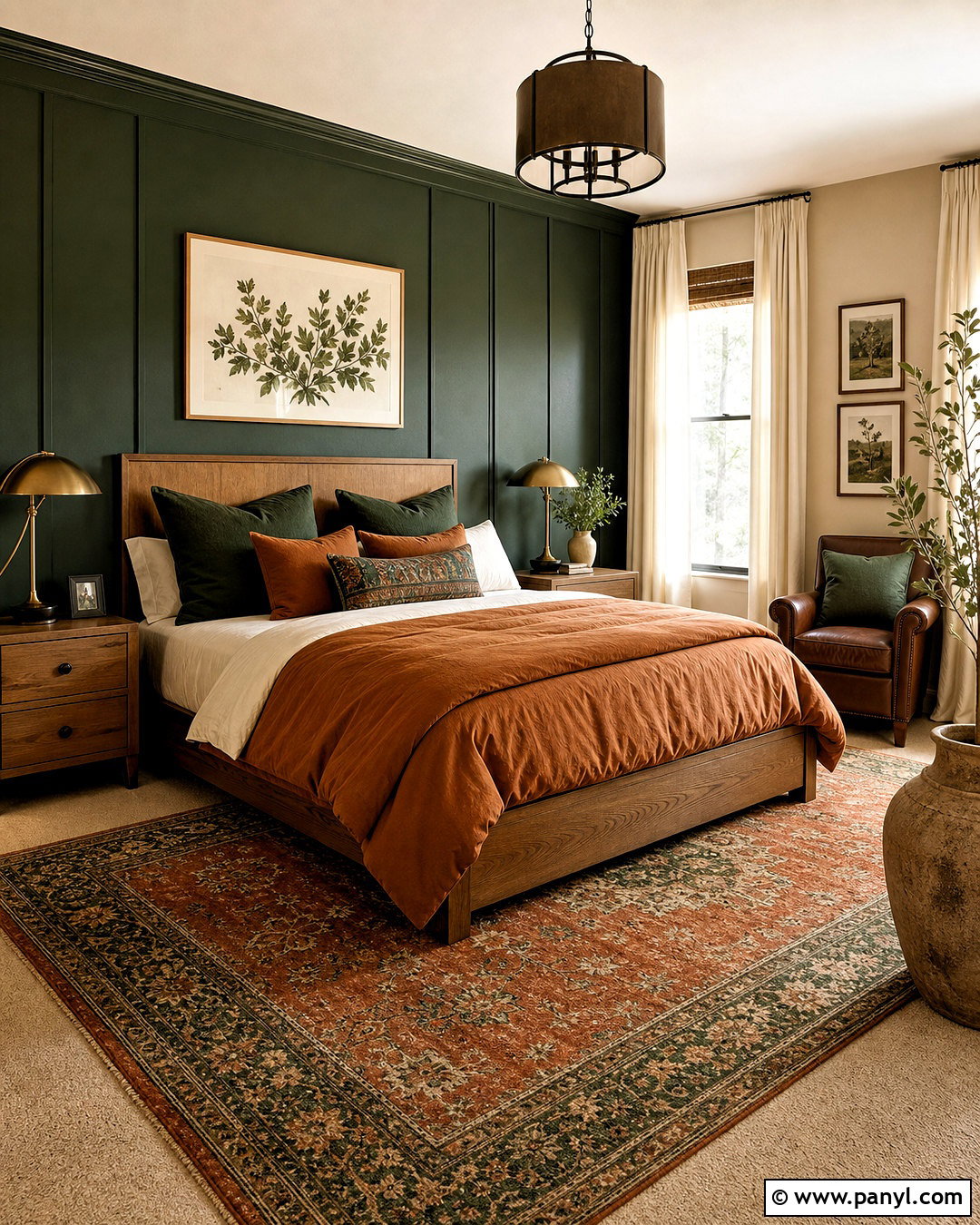
Rich forest green turns terracotta into a striking, nature-inspired statement. Cover the headboard wall in deep green and keep the remaining walls a soft warm neutral. A substantial wood bed with cream bedding will provide a calm center. Add a terracotta duvet, forest green cushions, and a patterned lumbar pillow with beige details. Choose dark oak nightstands and linen-shaded brass lamps for an earthy, tailored arrangement. A vintage rug combining rust, green, tan, and charcoal grounds the heavier colors. Cream curtains are important because they brighten the room and separate the palette from the windows. Use botanical artwork sparingly, focusing on one large piece rather than several small prints. A tan leather chair and clay floor pot complete the room. The overall design feels dramatic, organic, and comfortably grown-up.
18. Terracotta And Sky Blue Bedroom
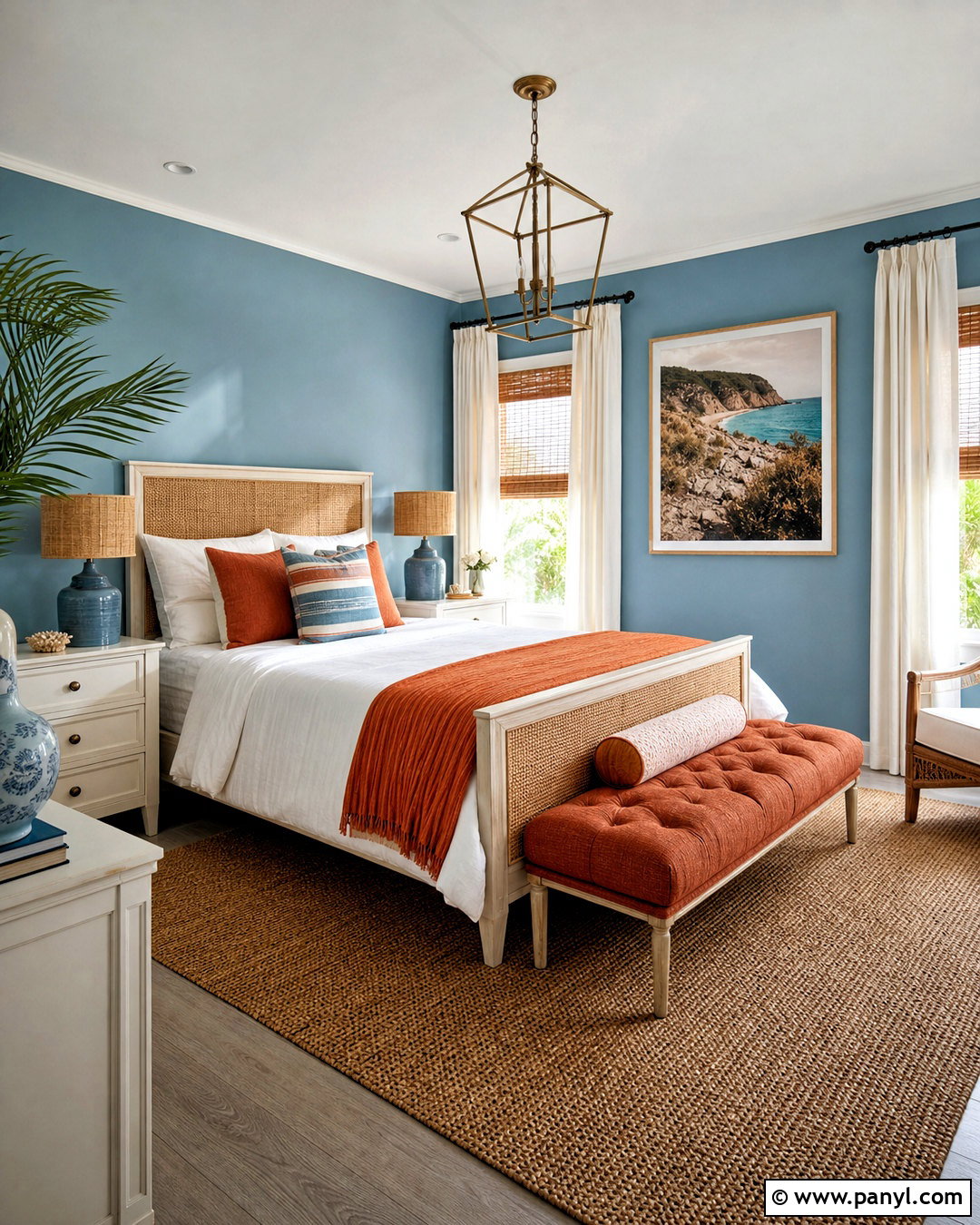
A pale sky blue backdrop can make terracotta feel light enough for a breezy, casual bedroom. Paint all four walls a softened blue and choose a white oak or cane bed with an open, airy frame. Use white bedding, a terracotta blanket, and cushions in dusty orange, blue, and cream stripes. A natural fiber rug establishes relaxed texture, while white nightstands prevent the warm accents from taking over. Select simple blue-gray ceramic lamps and woven window shades with lightweight ivory curtains. Coastal landscape artwork can connect the colors without creating an obvious theme. Add one clay-colored upholstered stool or bench near the foot of the bed. Small touches of matte black in frames and hardware will give the gentle palette structure. This complete look feels fresh, comfortable, and especially suitable for a sunny guest room.
19. Terracotta And Plum Bedroom
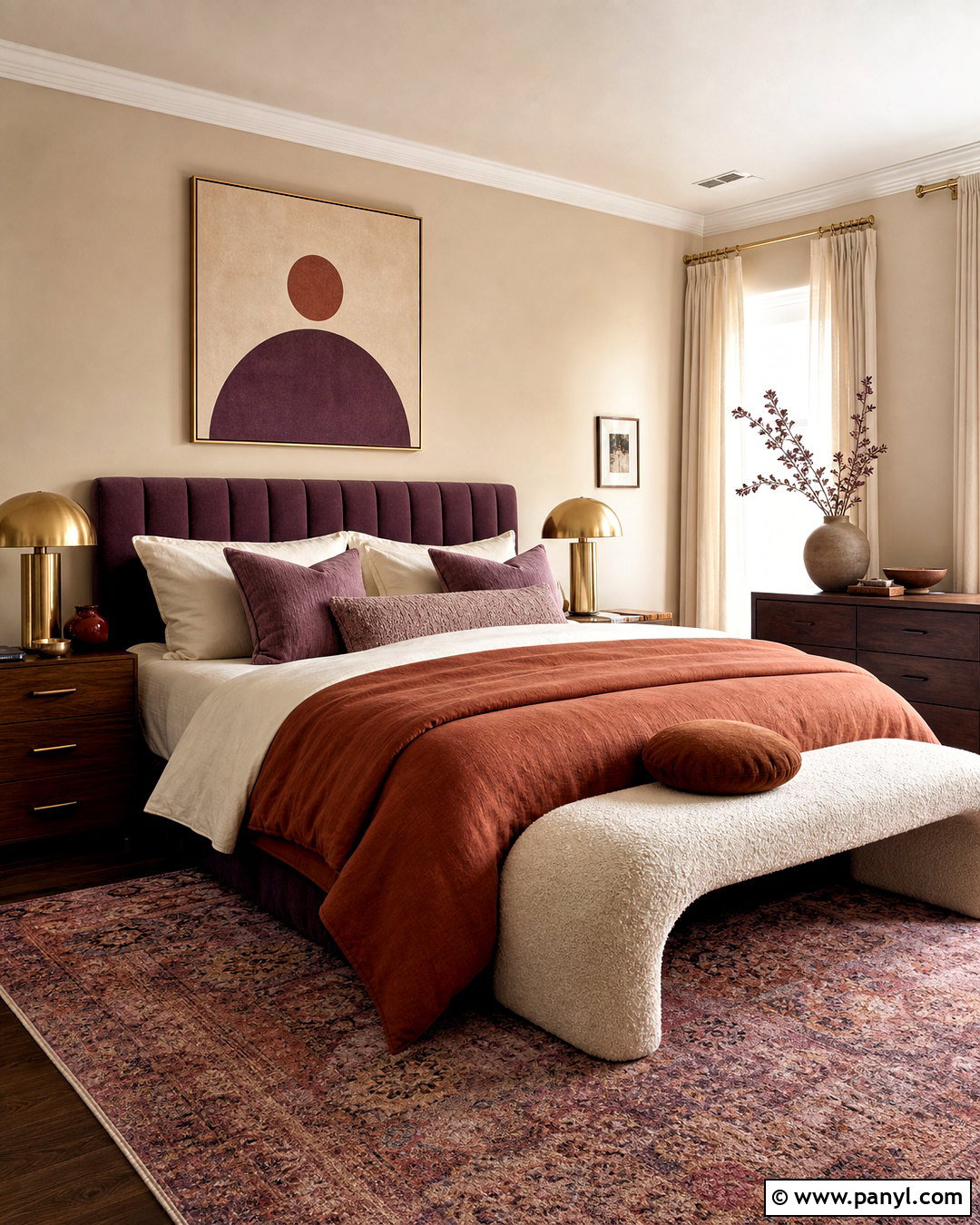
Plum and terracotta form a sophisticated palette that feels warm, expressive, and slightly unexpected. Keep the walls a muted mushroom beige, then introduce plum through a channel-tufted upholstered headboard. Layer the bed with cream sheets, a terracotta duvet, and pillows in dusty purple, clay, and taupe. Dark walnut furniture supports the depth of the headboard, while brass lamps prevent the room from looking dull. Choose a faded rug with plum, rust, beige, and soft gray detailing. Warm white curtains will balance the saturated textiles and reflect more daylight around the room. Hang one abstract artwork that uses both dominant colors in restrained amounts. Finish with a cream boucle bench and a few matte ceramic pieces. This approach delivers personality while keeping the bedroom composed, comfortable, and visually connected.
20. Monochromatic Terracotta Bedroom
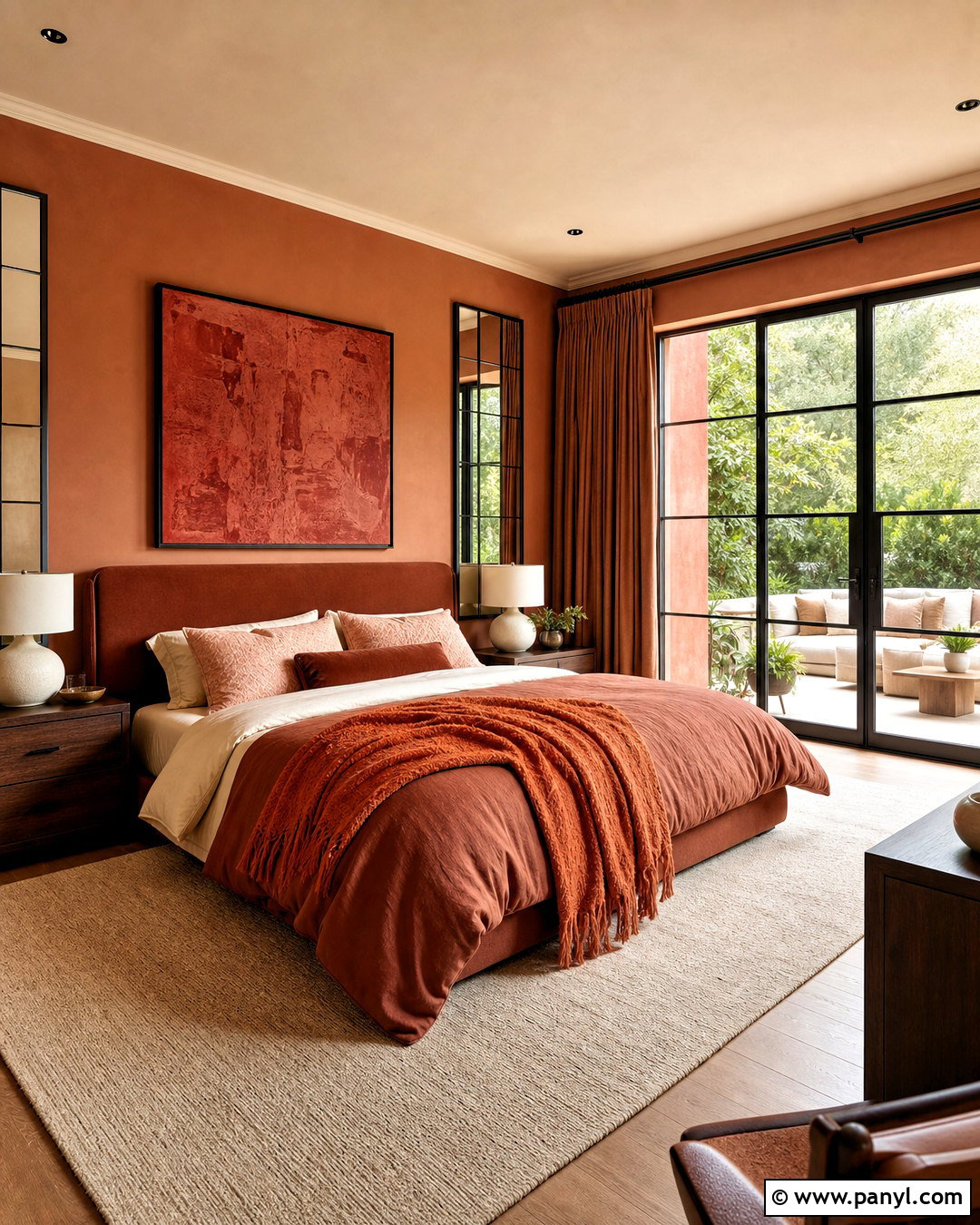
For maximum impact, build the entire bedroom around several carefully spaced terracotta tones. Paint the walls a medium dusty clay and use a slightly lighter shade on the ceiling for an enveloping finish. Choose a rust upholstered bed, then layer it with cream sheets, a cinnamon duvet, pale peach pillows, and a dark burnt-orange throw. Walnut nightstands introduce contrast while staying within the warm family. Use off-white lampshades and a large beige rug to create visual breaks between the red-orange surfaces. Linen curtains in a soft clay tint can blend into the walls without matching them exactly. Add artwork in cream, brown, and muted rust, plus black frames for definition. This color-drenched bedroom succeeds because light neutrals, varied textures, and darker outlines keep the tonal palette clear and dimensional.
Conclusion:
These 20 terracotta color palette bedrooms show how adaptable an earthy clay hue can be. Terracotta can look light and relaxed beside cream, sky blue, or peach. It becomes organic when combined with sage, olive, or forest green. Navy, charcoal, black, plum, and burgundy produce a deeper, more dramatic result. Whichever palette you choose, repeat terracotta in two or three substantial places and give it space through neutral bedding, rugs, or curtains. Wood, linen, wool, cane, ceramic, and aged metal will reinforce its natural character. Before painting, view samples throughout the day because surrounding light can noticeably affect the color. Most importantly, build one connected room rather than adding unrelated orange accents.

Related Ideas and Inspiration:
Leave a Reply