
Choosing a bedroom color is about more than finding a pretty paint swatch. The right palette should work with the room’s natural light, flooring, furniture, and the relaxing atmosphere you want to create. This guide to **20 best room colors bedrooms** explores soft neutrals, nature-inspired greens, gentle pastels, and deeper cocooning shades. Current bedroom palettes favor warmer, more personal colors over cold grays, while muted blues, earthy mauves, burgundy, and nuanced neutrals remain strong choices. () Each section gives you a complete bedroom look, including wall color, furnishings, textiles, finishes, and accents. Whether your space is small, spacious, bright, or naturally dim, you will find an approachable scheme worth recreating among these **20 best room colors bedrooms**.

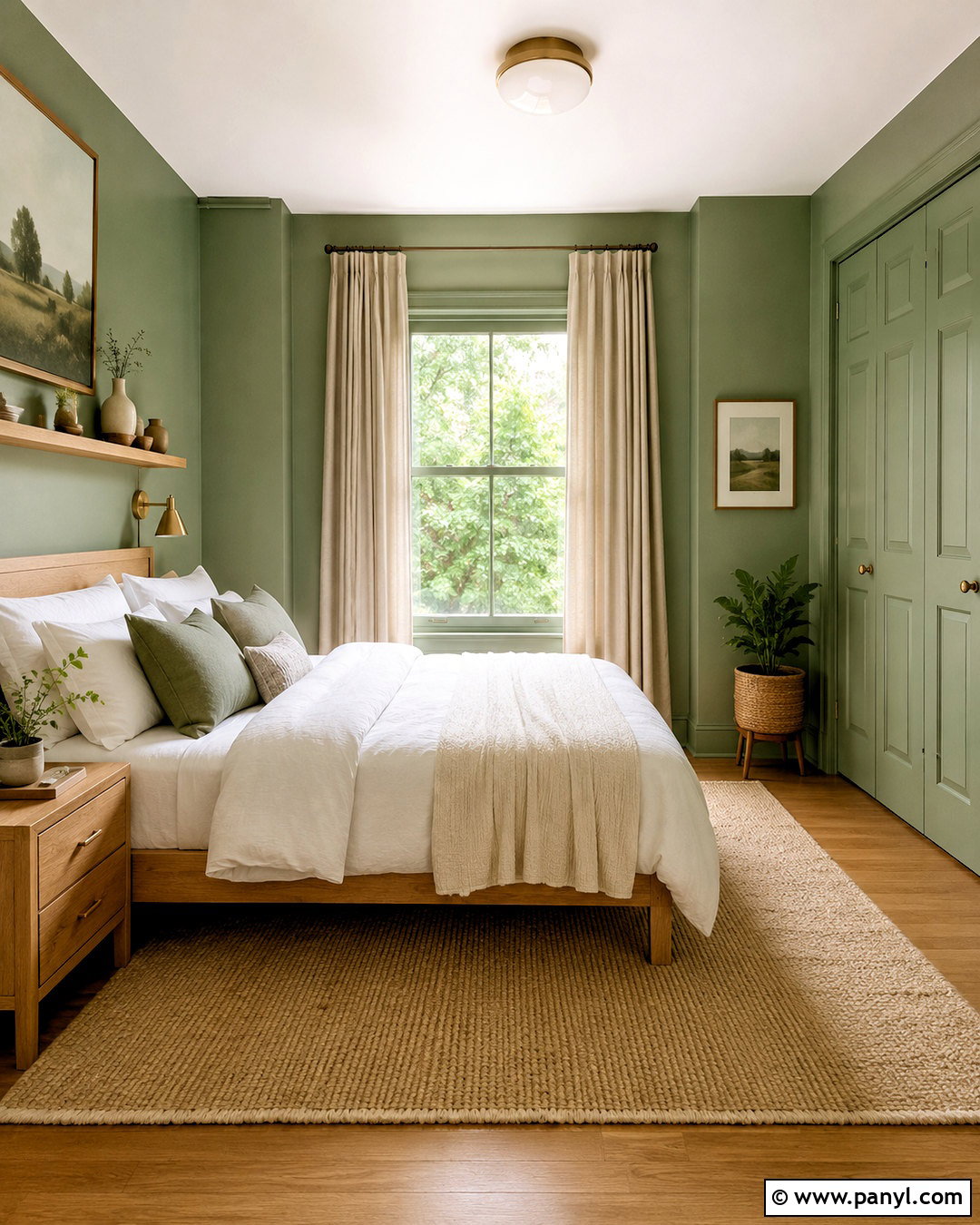
1. Sage Green Bedroom
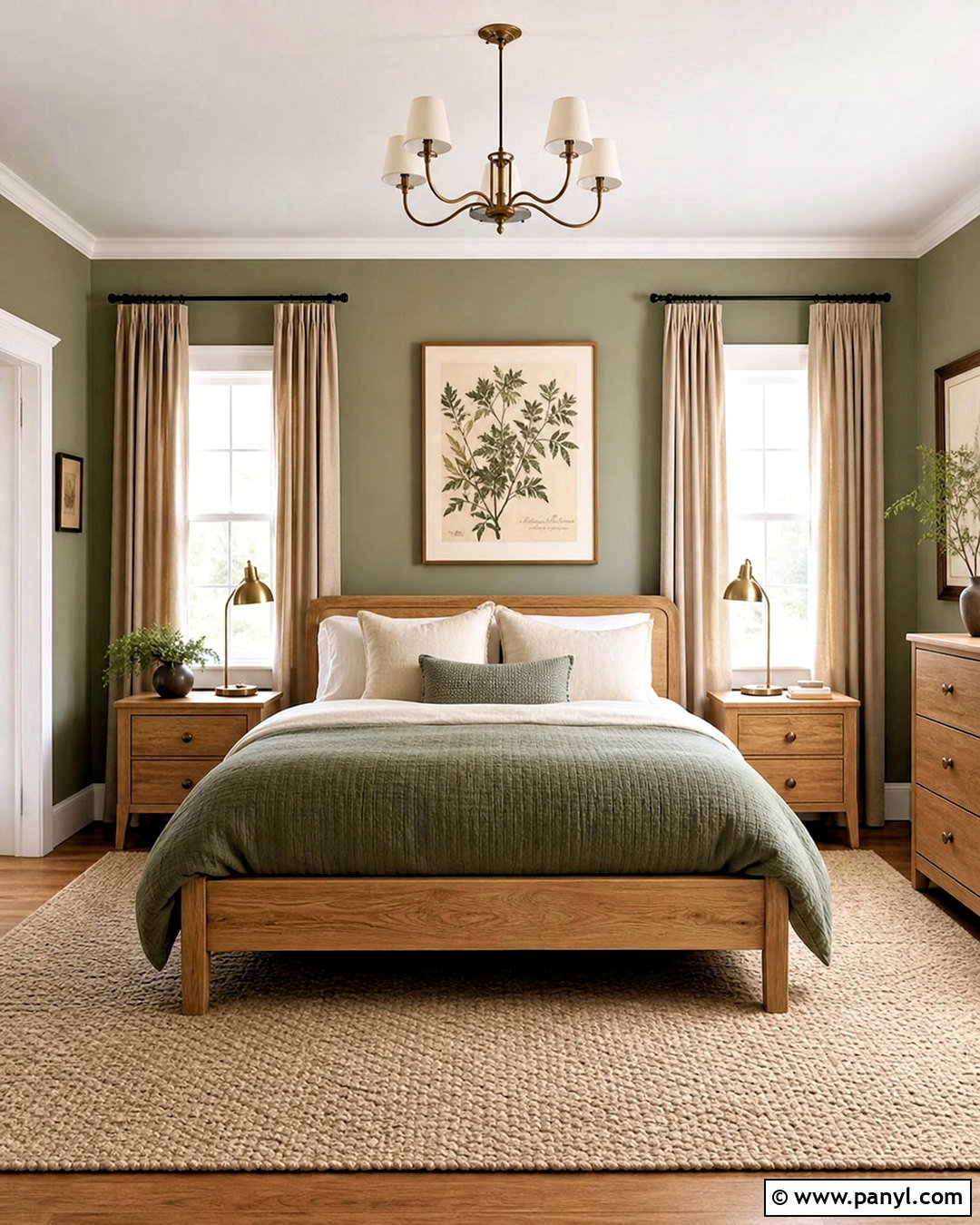
Warm sage green creates a calm bedroom that feels connected to nature without becoming overly rustic. Paint every wall sage, then add creamy white trim to keep the edges fresh and defined. An oak bed with a simple linen headboard brings warmth, while ivory bedding prevents the green from feeling heavy. Layer in a moss-colored quilt, striped beige pillows, and light-filtering flax curtains. Choose matching oak nightstands with ceramic lamps in soft white or sand. A woven wool rug can introduce subtle texture beneath the bed. Finish the complete look with botanical artwork, a small leafy plant, and brushed brass hardware. This balanced palette works especially well in bedrooms with warm wood floors and moderate natural light.
2. Powder Blue Bedroom
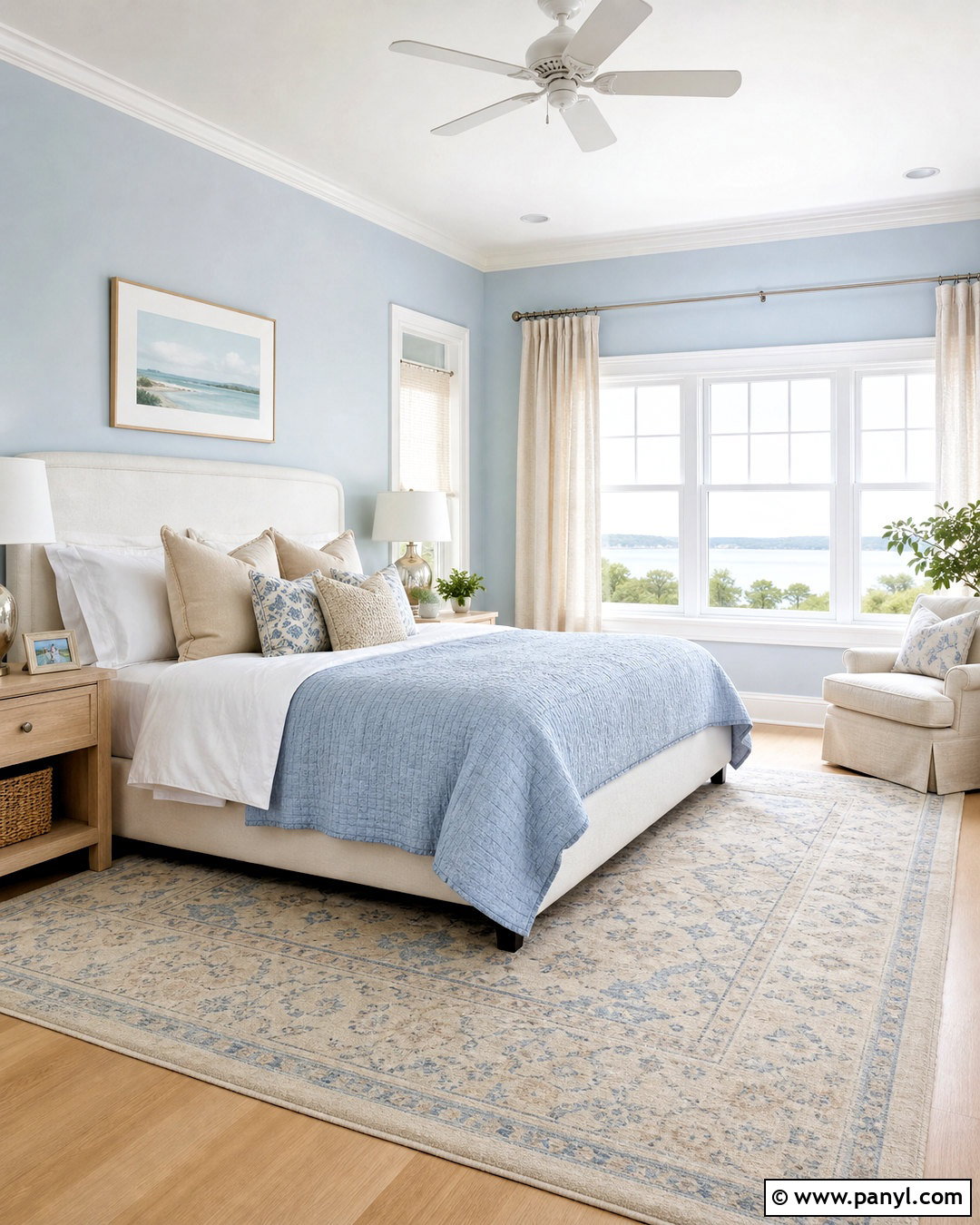
Imagine waking up in a bedroom that feels airy, quiet, and pleasantly cool. Powder blue walls provide that effect while offering more personality than plain white. Pair the color with crisp white trim, a white upholstered bed, and pale oak nightstands for a light foundation. Dress the bed with white cotton sheets, a faded blue quilt, and small beige accent pillows. Natural linen curtains soften the windows without blocking daylight. A cream rug with a delicate blue pattern can connect the furniture and walls. Add polished nickel lamps, framed coastal sketches, and one navy throw for contrast. Keep the ceiling bright white so the room remains open, making this complete scheme particularly helpful for compact or sun-filled bedrooms.
3. Soft Greige Bedroom
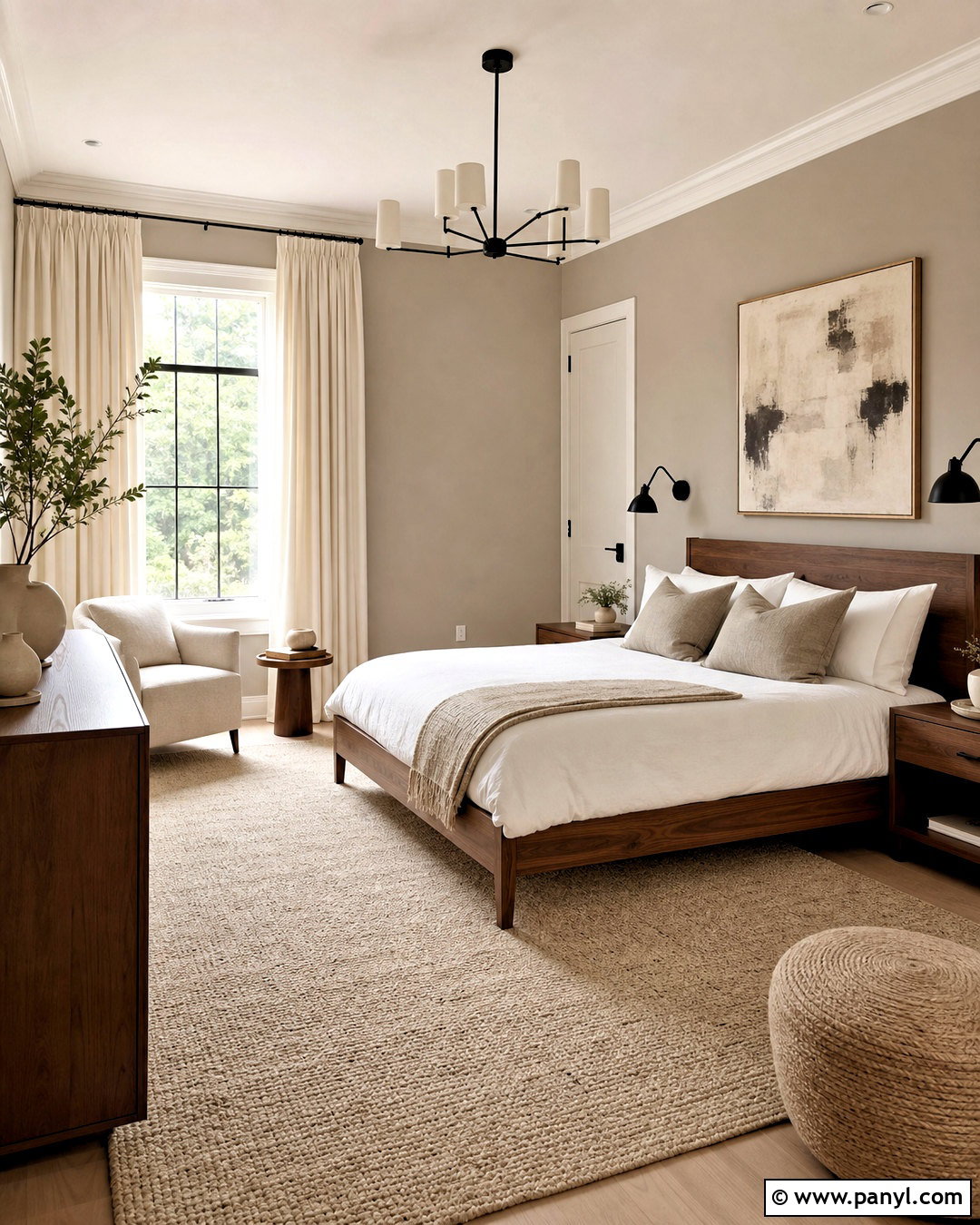
Soft greige combines the comfort of beige with the clean appearance of gray, making it easy to decorate around changing tastes. Select a greige with warm undertones, especially if the bedroom receives cool northern light. Continue the color across the walls, then use creamy white on the ceiling and trim. A walnut bed adds rich contrast without disturbing the neutral atmosphere. Layer white bedding with taupe pillows, a textured oatmeal blanket, and subtle charcoal piping. Place matching walnut nightstands beside the bed and add matte black reading lights for definition. Full-length ivory curtains and a large beige wool rug make the room feel softer. Complete the scheme with abstract artwork, ceramic accessories, and one muted olive accent for gentle color.
4. Creamy White Bedroom
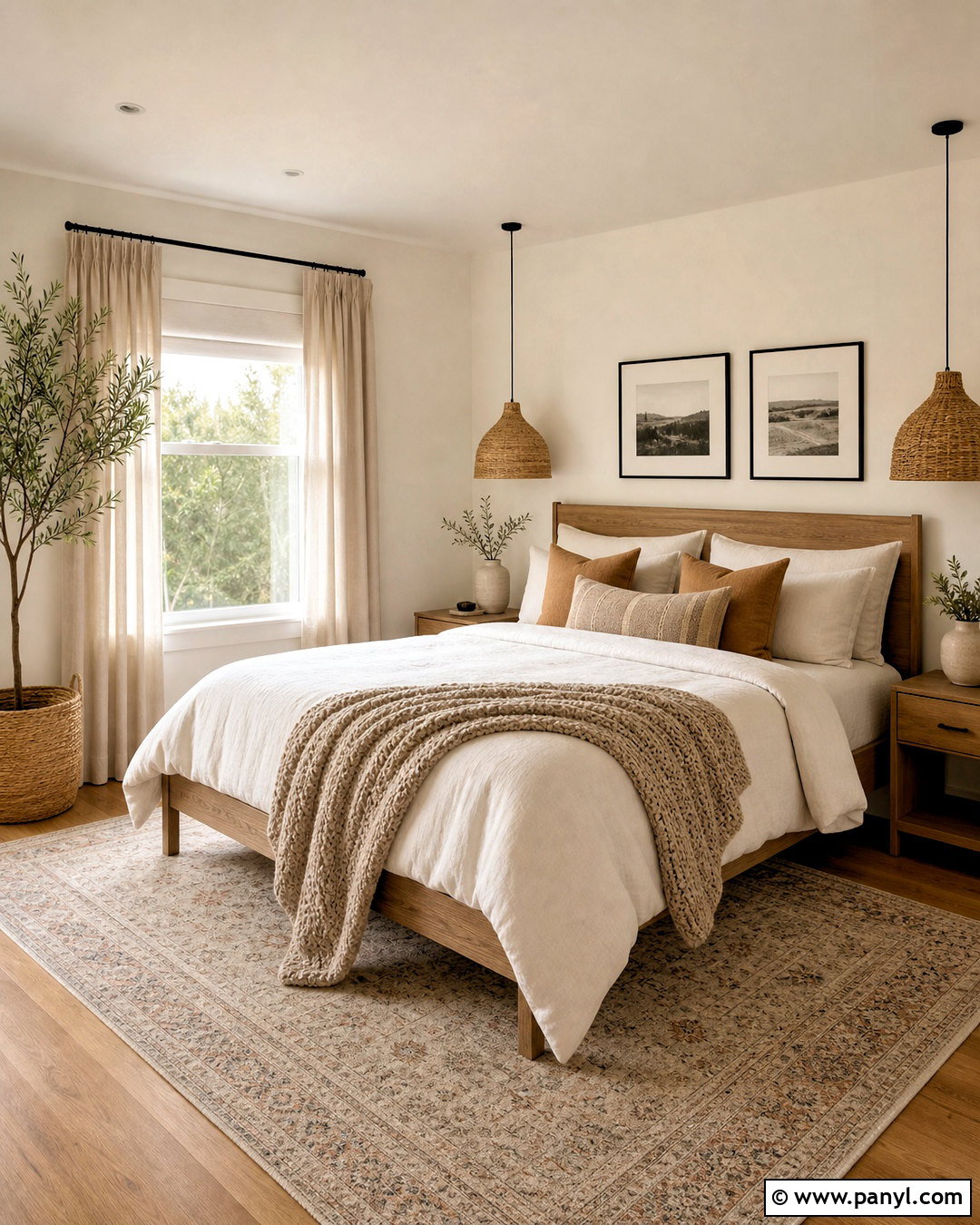
Not every white bedroom needs to look stark or unfinished. Creamy white walls create a warmer backdrop that reflects light while making wood, textiles, and artwork more noticeable. Use the same color on the trim in a satin finish for a seamless, modern effect. Center a medium oak bed against the main wall and dress it with ivory linen bedding, camel pillows, and a chunky beige throw. Add woven pendant lighting or plaster bedside lamps for natural texture. Light taupe curtains should reach from ceiling to floor, helping the windows look taller. A vintage-style rug in faded tan and rust grounds the room. Finish with black-framed art, a wooden bench, and a few dark accents that provide structure without reducing the peaceful brightness.
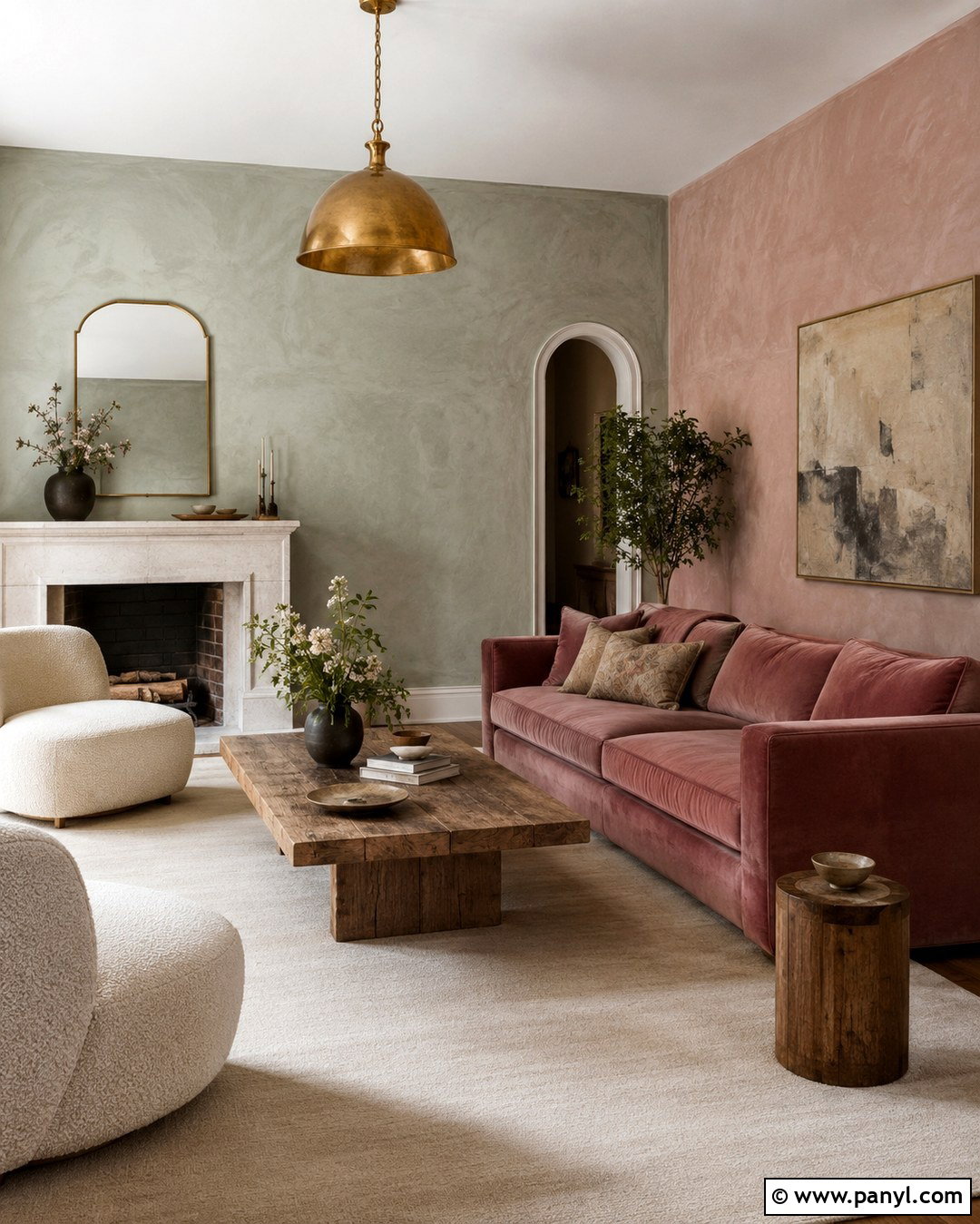
5. Dusty Rose Bedroom
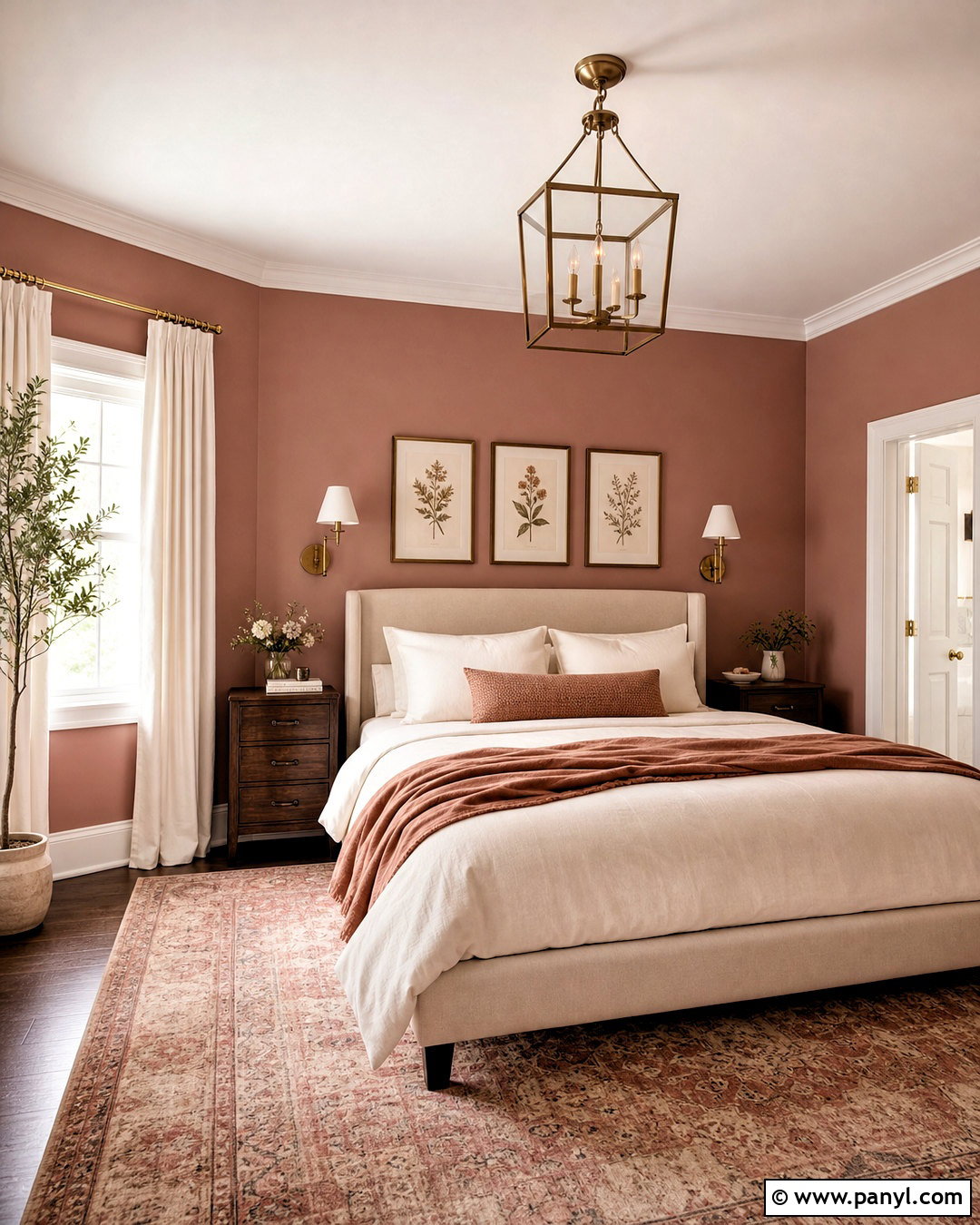
Dusty rose brings gentle warmth to a bedroom without creating an overly sweet or youthful appearance. Choose a muted rose with brown or gray undertones and pair it with soft white trim. A curved oatmeal upholstered bed gives the color a polished foundation. Use warm white sheets, a clay-colored coverlet, and patterned pillows that combine rose, cream, and olive. Dark wood nightstands introduce depth, while aged brass sconces add a subtle glow and classic character. Hang natural linen curtains and place a faded Persian-style rug beneath the bed. For a balanced finish, include botanical prints, handmade pottery, and a small amount of deep green. The resulting room feels comfortable, layered, and suitable for either a primary bedroom or welcoming guest space.
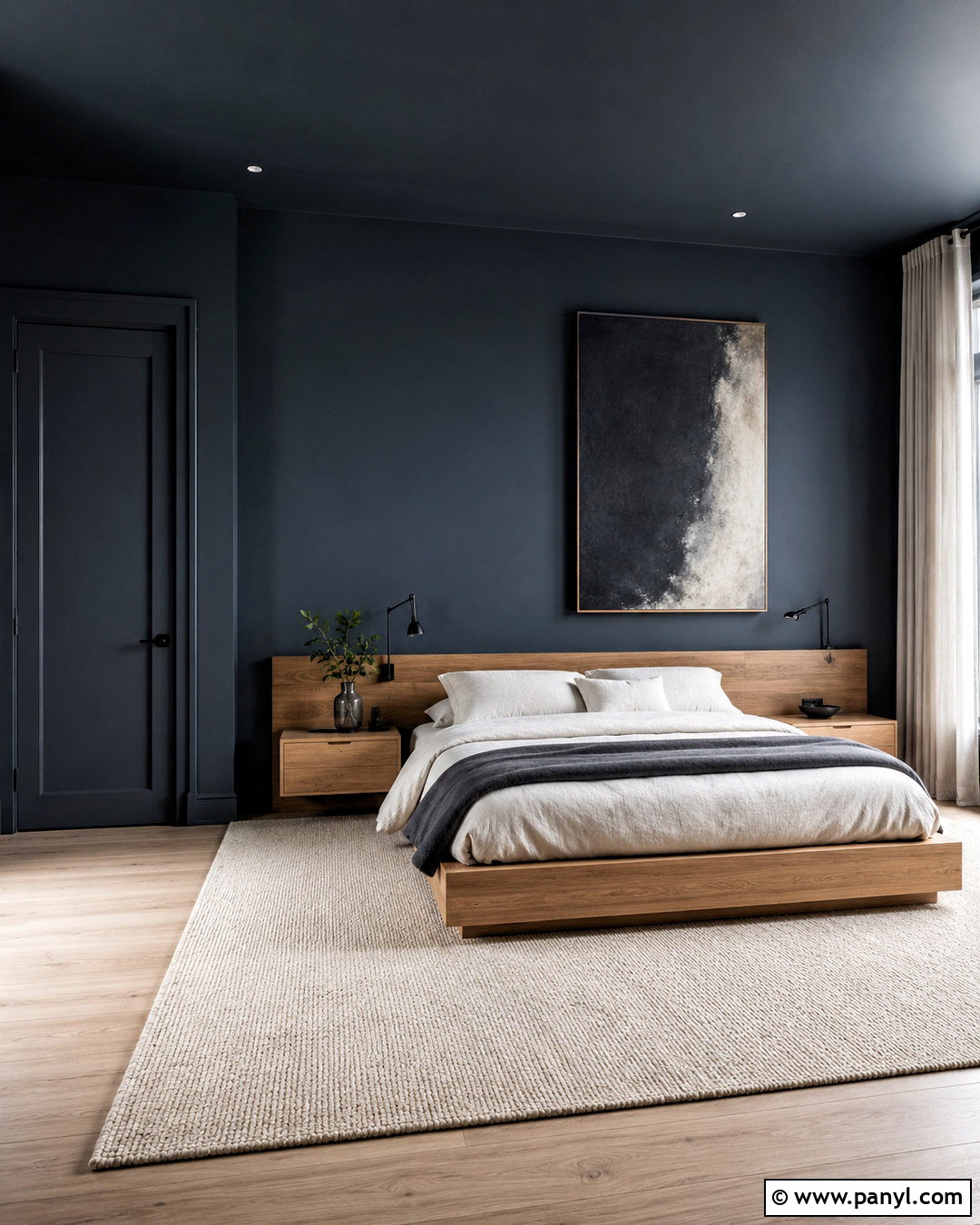
6. Deep Navy Bedroom
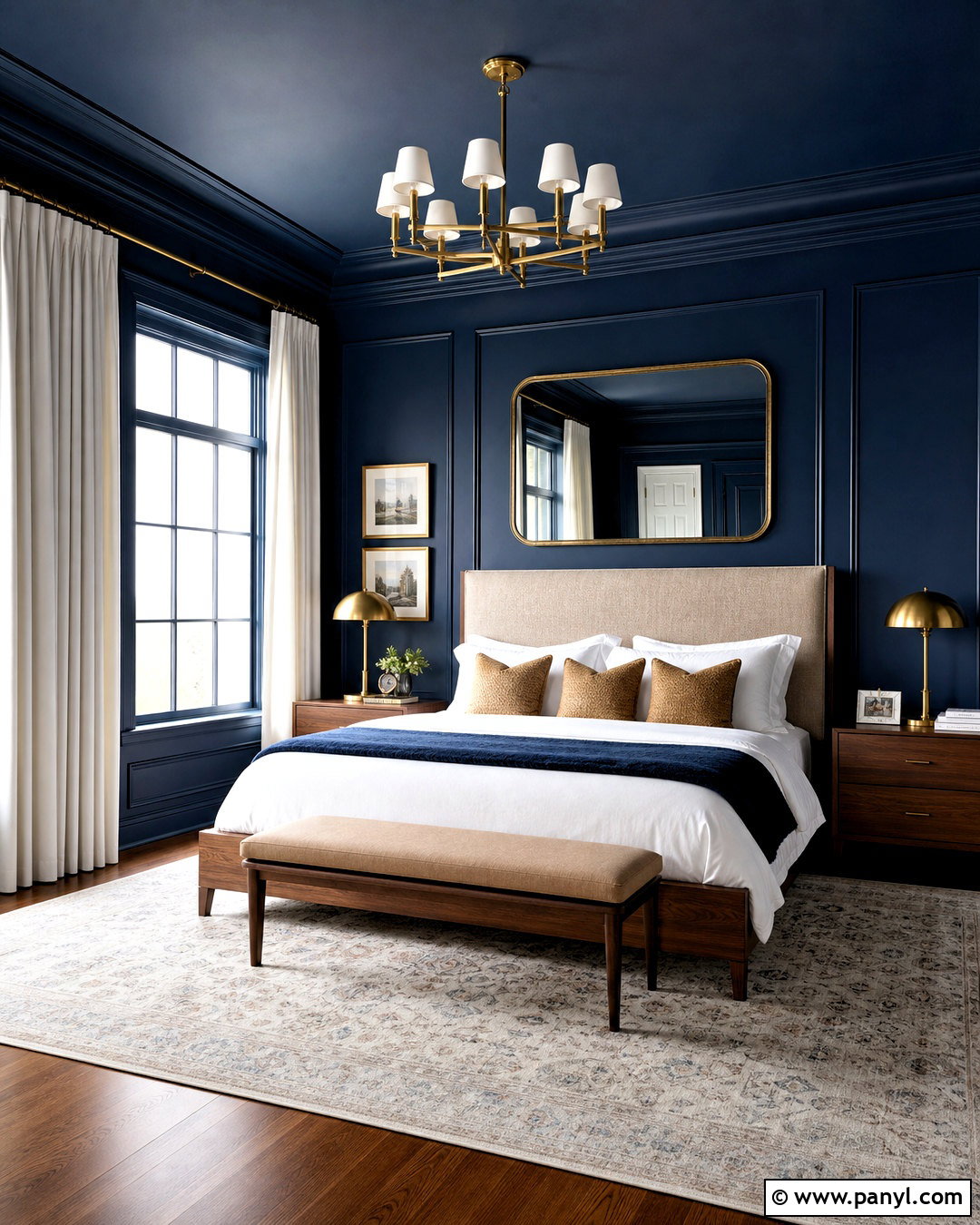
Deep navy can make a bedroom feel intimate and restful when the entire palette is carefully balanced. Paint the walls navy and use the same shade on the trim for a smooth, cocooning finish. Keep the ceiling soft white if the room is small, or continue the navy overhead in a larger bedroom. Choose a warm walnut bed with a tall upholstered headboard to break up the dark walls. White bedding, camel pillows, and a light gray blanket provide essential contrast. Add antique brass lamps and medium-toned wood nightstands for warmth. A pale patterned rug brightens the floor, while ivory curtains frame the windows. Finish with restrained artwork and a large mirror that reflects daylight instead of crowding the dramatic color scheme.
7. Muted Terracotta Bedroom

Sunbaked terracotta gives a bedroom an earthy warmth that feels inviting in every season. Look for a muted shade with clay or brown undertones rather than a vivid orange finish. Pair the walls with warm ivory trim and a low oak bed to maintain the natural character. Cream linen bedding provides a light base, while rust, ocher, and olive pillows develop a layered desert-inspired palette. Use woven wood shades beneath off-white curtains to control daylight. A jute and wool rug can add softness without hiding the organic materials. Complete the room with plaster lamps, black-framed landscape art, and an oak bench at the foot of the bed. The full scheme feels warm and expressive but remains quiet enough for everyday rest.

8. Smoky Blue Bedroom
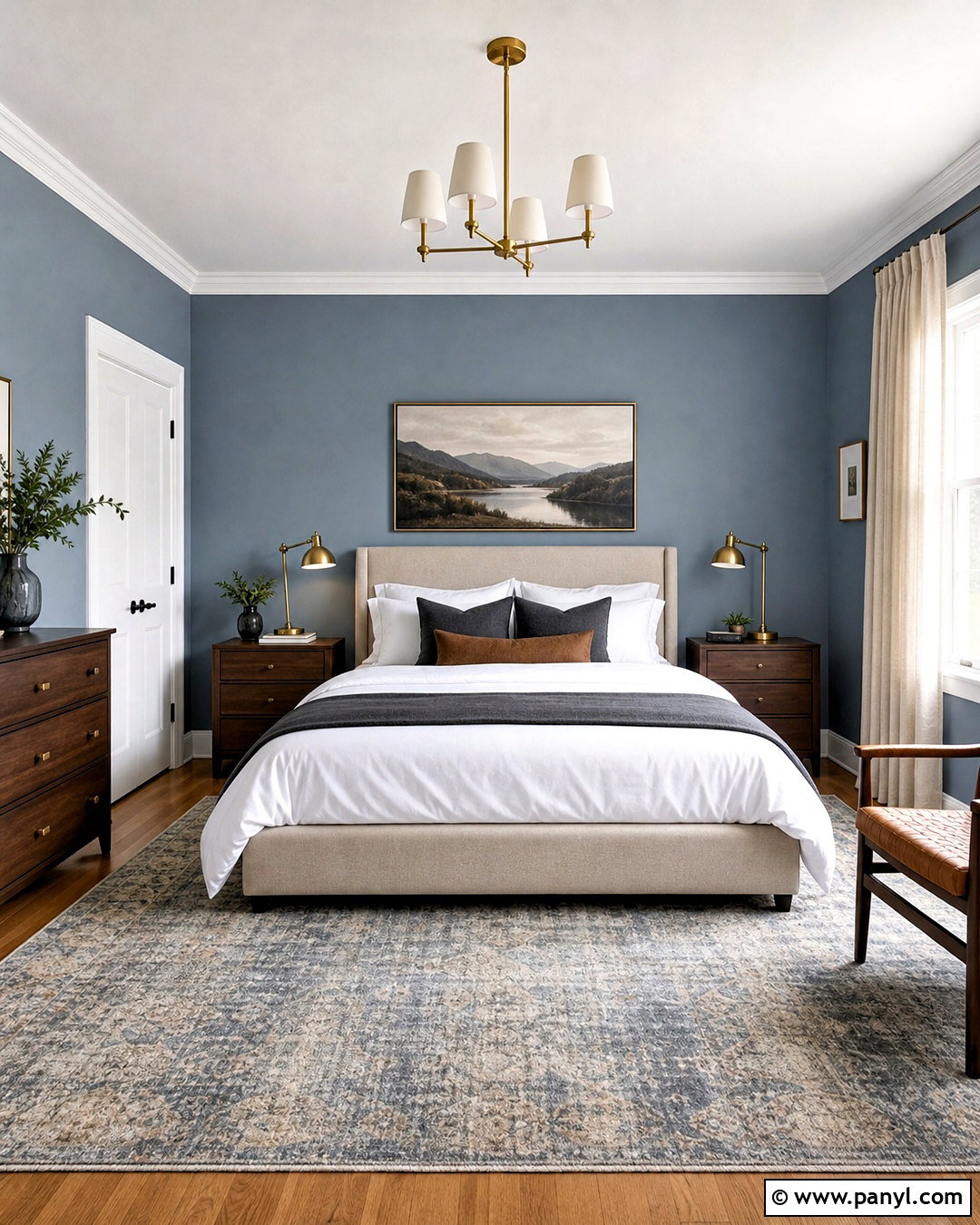
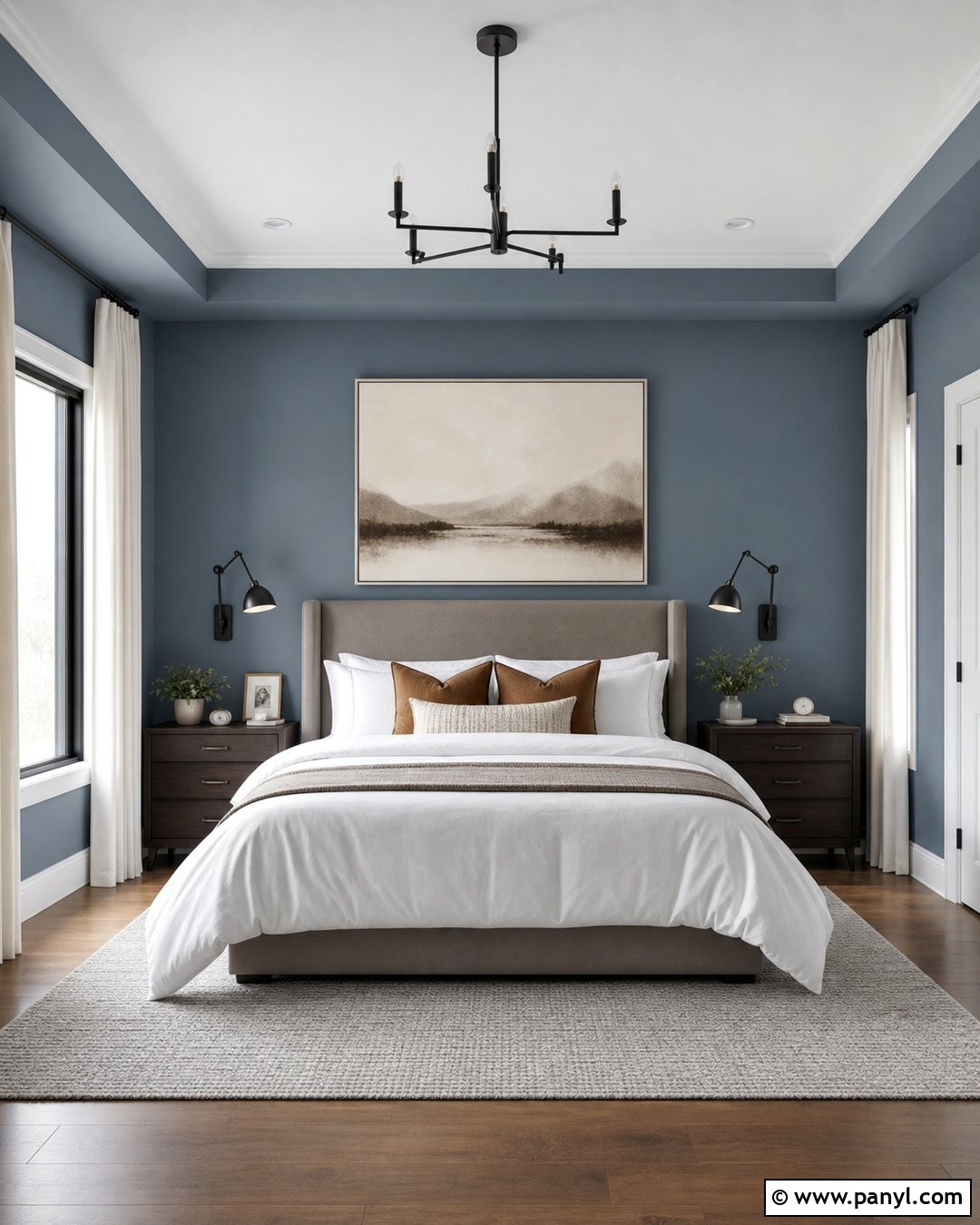
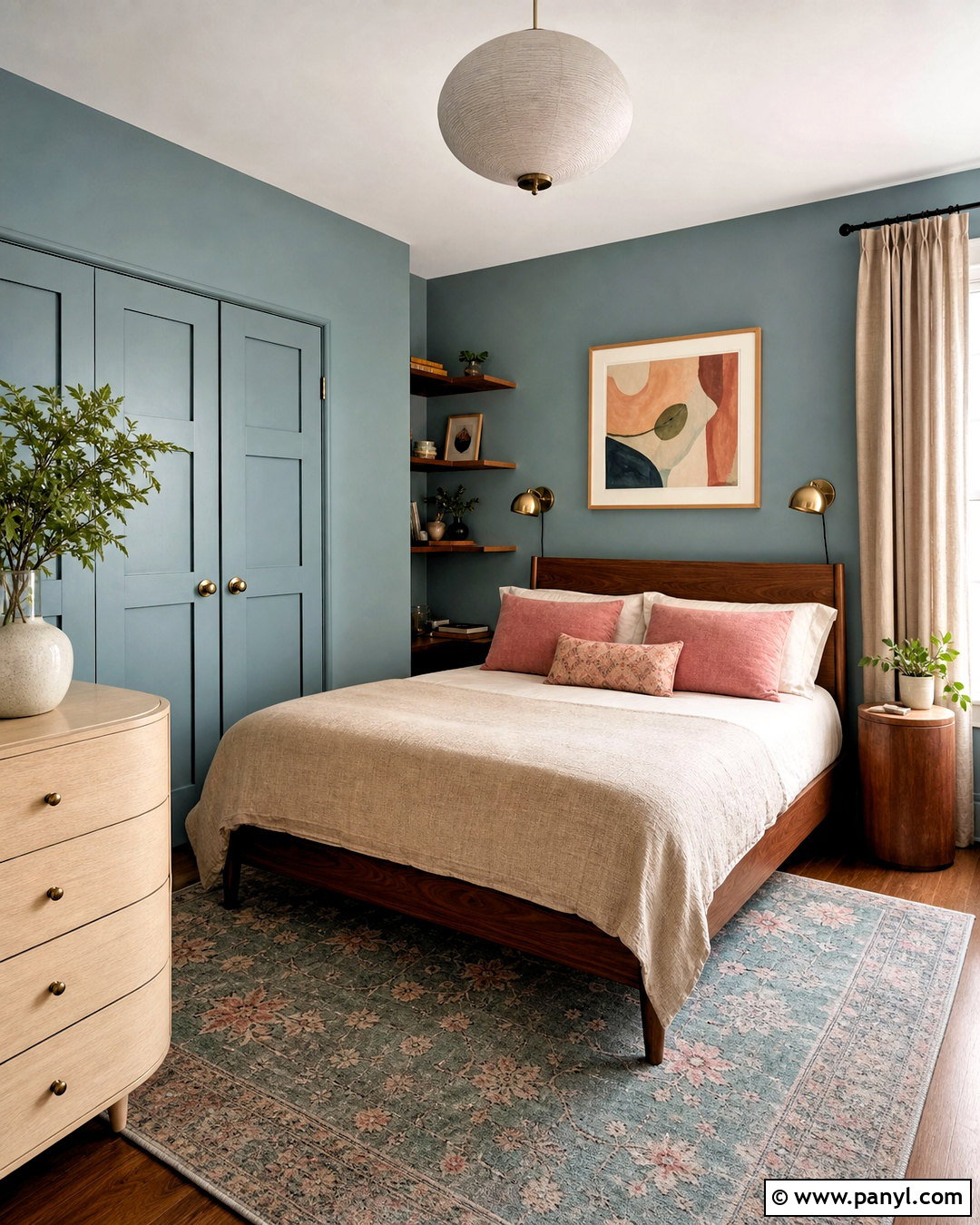
Smoky blue offers more depth than a pale pastel but remains softer than navy. It is an adaptable choice for creating a relaxed bedroom with traditional or modern details. Cover the walls in a desaturated blue with gray undertones, then add warm white trim for a clean border. Use a beige linen bed, walnut nightstands, and white bedding to prevent the cooler wall color from dominating. Introduce medium blue pillows, a charcoal throw, and touches of cognac leather. Warm brass lamps counterbalance the blue and make the room feel more welcoming after sunset. Choose oatmeal curtains and a faded blue-gray rug to complete the layered palette. Simple landscape artwork and ceramic decor will reinforce the room’s peaceful, understated character.
9. Olive Green Bedroom

Would you prefer a green bedroom with greater depth and a slightly more traditional character? Muted olive green can surround the space with rich color while still coordinating beautifully with natural materials. Paint the walls olive and use warm cream for the trim and ceiling. Position a dark walnut bed against the main wall, then layer it with ivory sheets, a beige quilt, and rust-colored pillows. Warm wood nightstands and aged brass lamps strengthen the earthy palette. Add floor-length oatmeal curtains and a patterned rug containing olive, tan, and faded red. Keep artwork simple, such as vintage botanical prints in dark frames. A leather bench or woven chair completes this grounded bedroom, making the deeper walls feel deliberate rather than overpowering.

10. Warm Taupe Bedroom
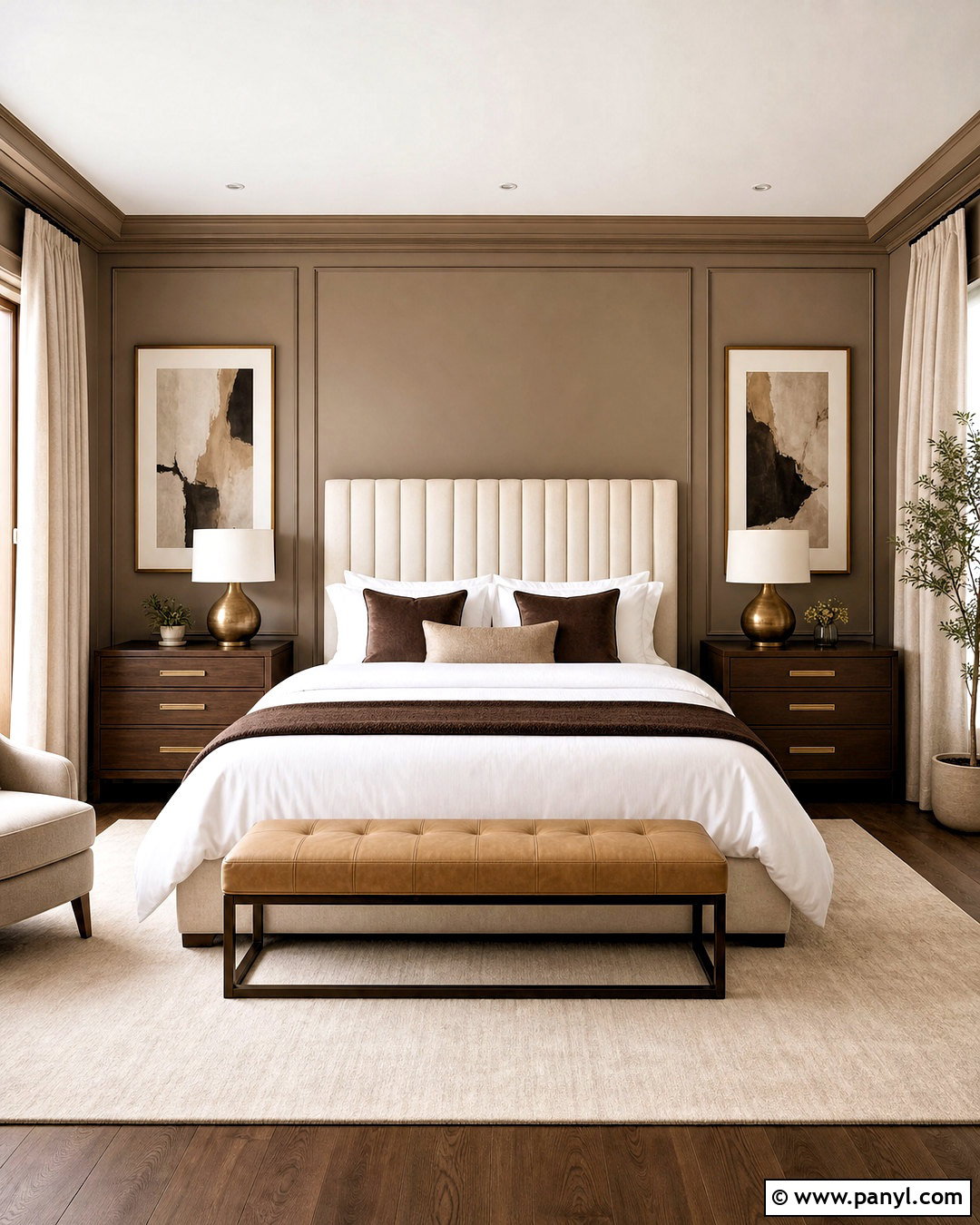
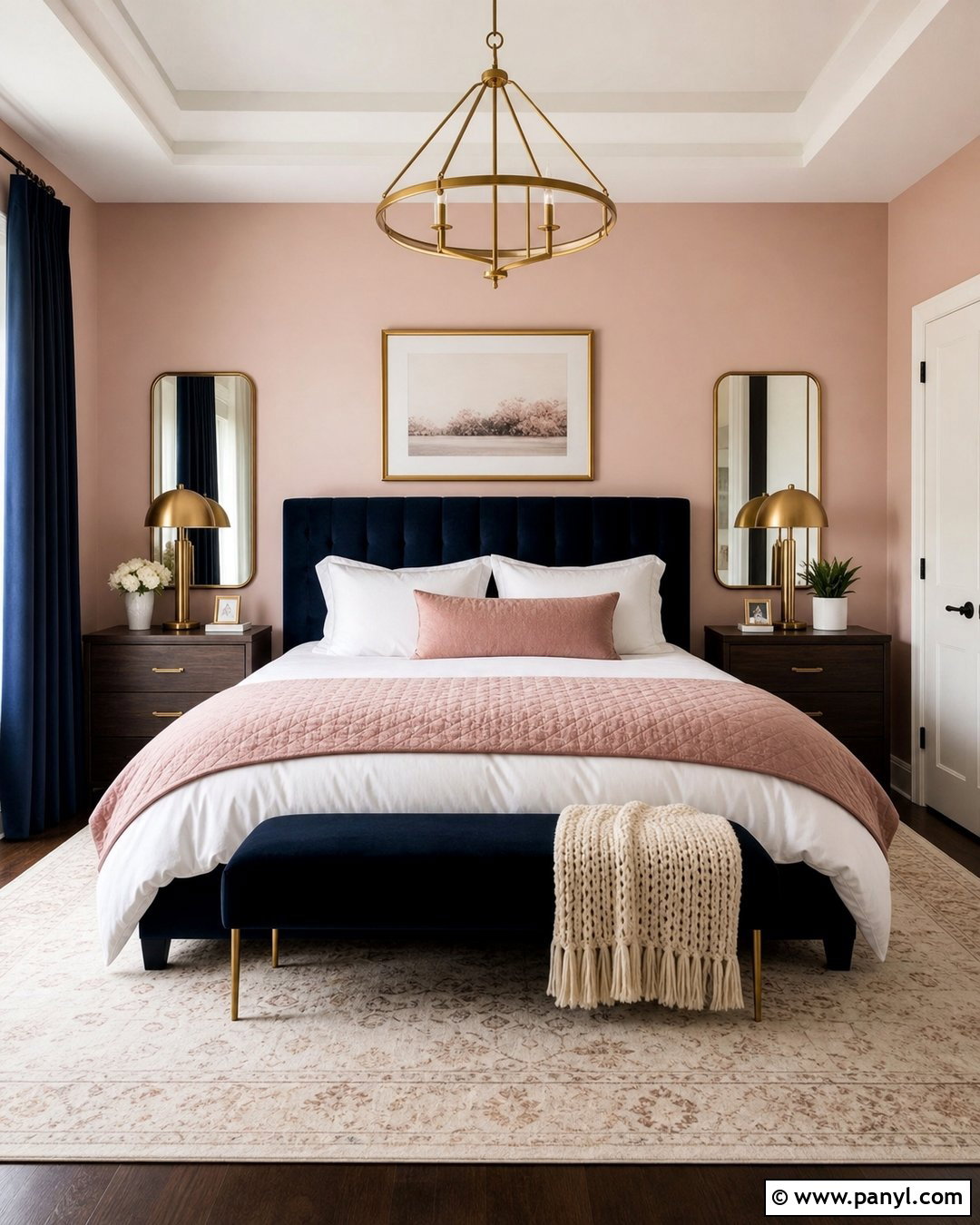
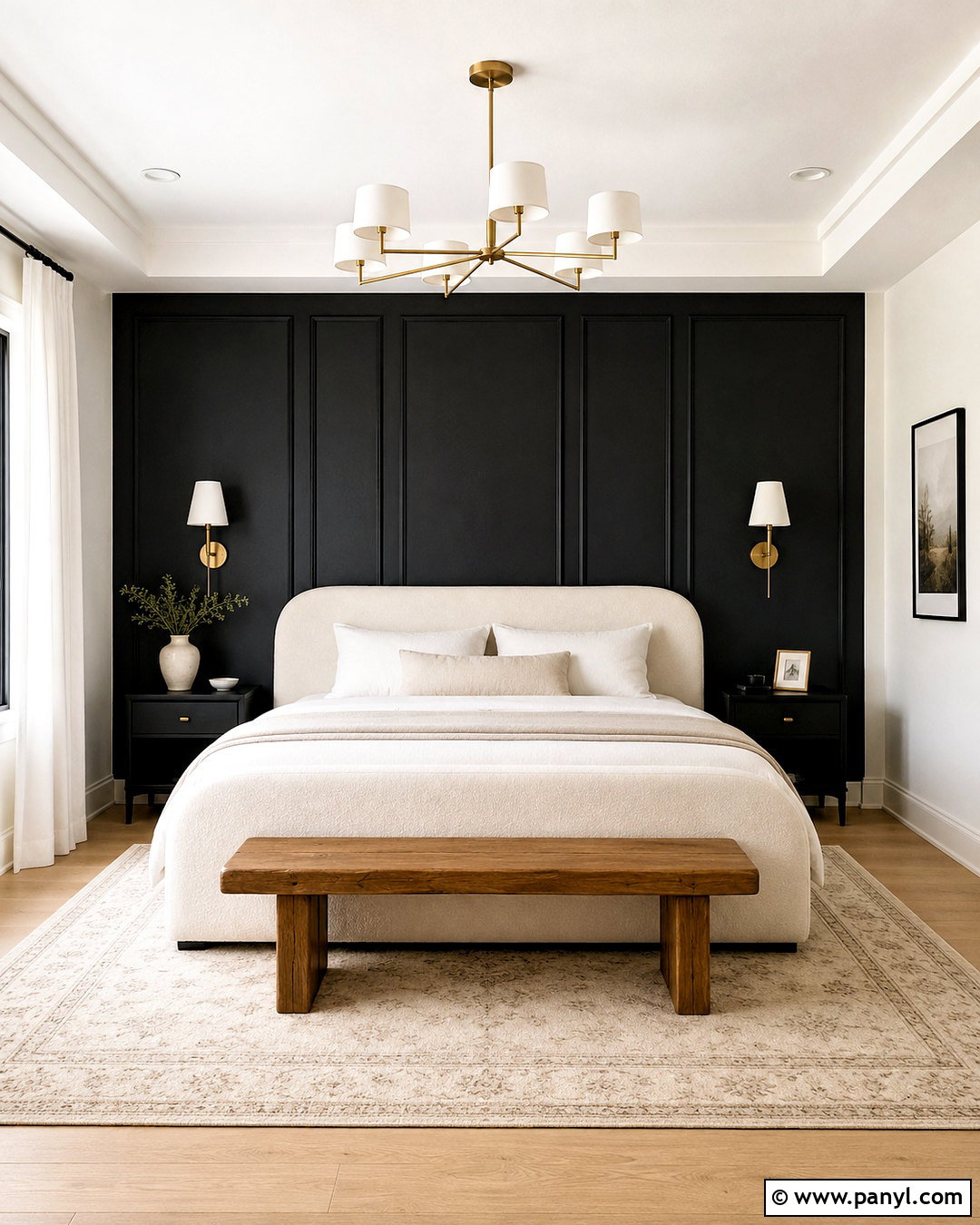
Warm taupe provides a refined neutral foundation for anyone who wants a cozy bedroom without obvious beige or gray walls. Choose a shade with subtle brown undertones and apply it to the walls and trim for a quietly enveloping effect. Pair it with a channel-tufted cream headboard, walnut nightstands, and an upholstered bench in camel fabric. White sheets keep the bed fresh, while taupe pillows and a chocolate-brown throw establish tonal depth. Hang textured ivory curtains and place a large wool rug in a lighter beige beneath the furniture. Bronze lamps, softly framed abstract art, and dark ceramic accessories add definition. Because the complete room relies on varied materials rather than strong color contrasts, it feels calm, comfortable, and visually sophisticated.
11. Earthy Mauve Bedroom
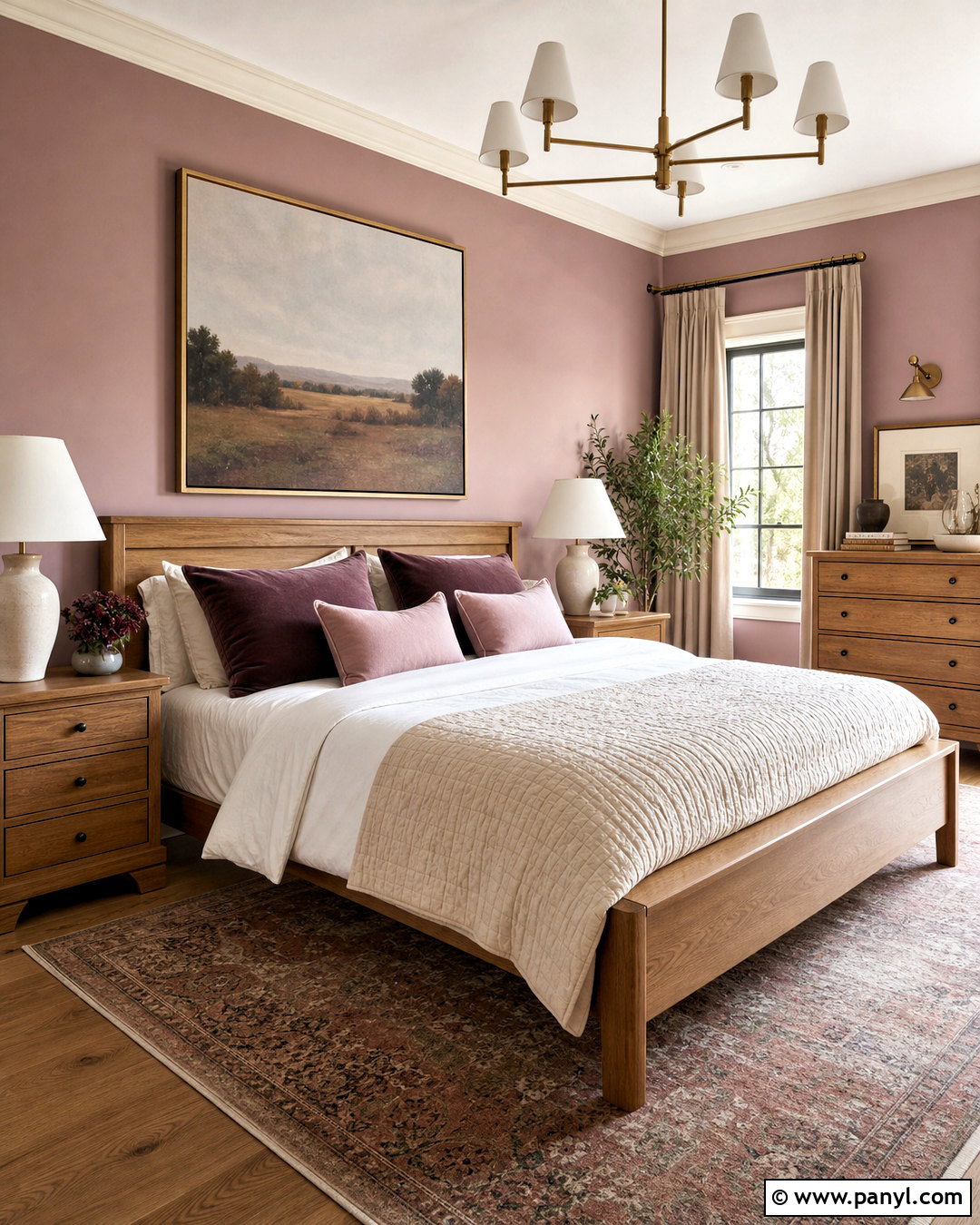
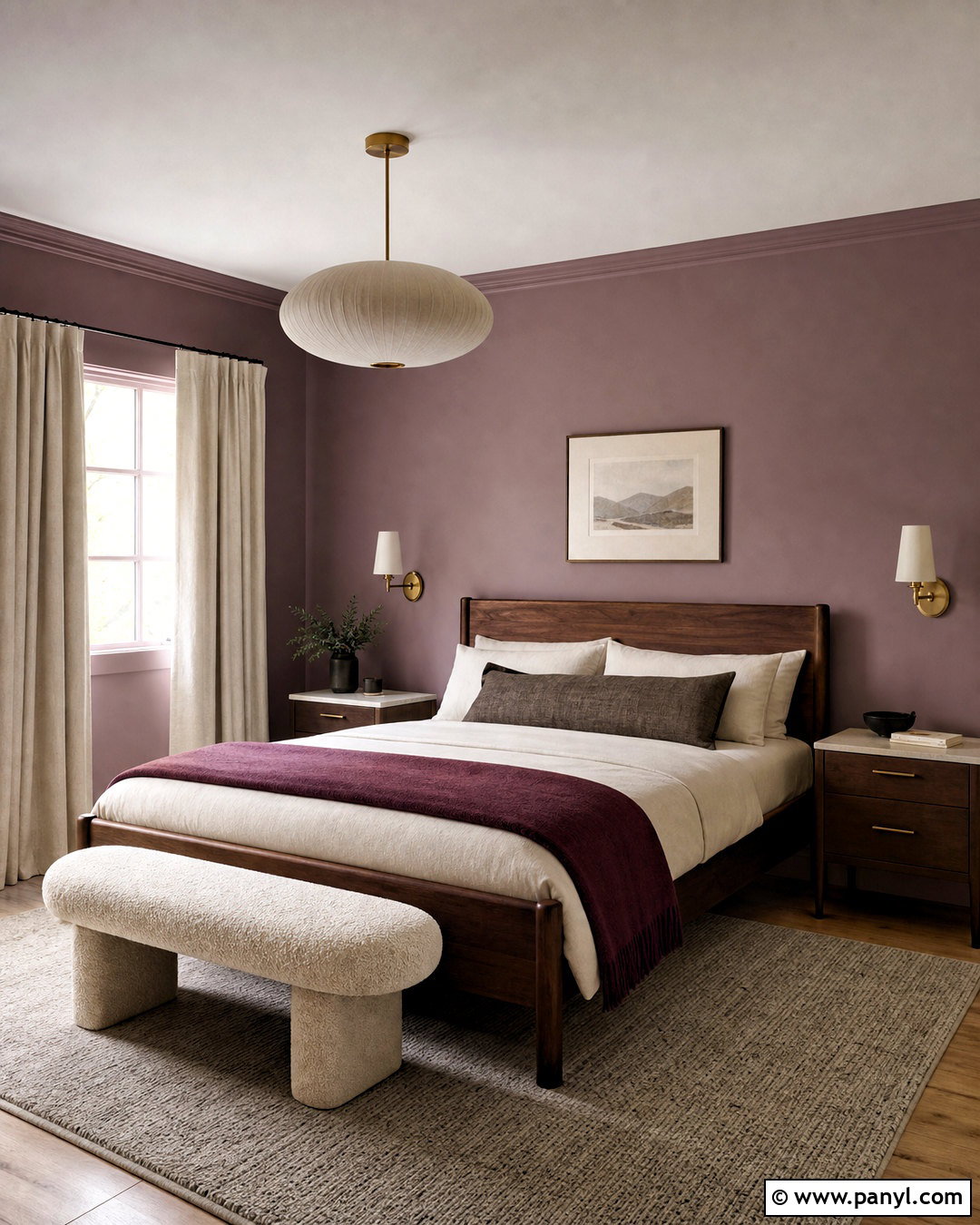
Earthy mauve sits between muted purple, dusty pink, and warm brown, producing a bedroom palette with subtle personality. Choose a low-saturation mauve for the walls and balance it with creamy trim. A natural oak bed keeps the room casual, while white linen bedding allows the wall color to remain the main feature. Layer plum, oatmeal, and muted blush pillows with a beige quilt. A vintage rug containing faded rose, brown, and blue can connect every shade. Place simple oak nightstands on either side of the bed and top them with warm white ceramic lamps. Flax curtains, brass accents, and minimal floral artwork complete the room. This coordinated look feels cozy and expressive without becoming excessively feminine or visually busy.
12. Burgundy Bedroom
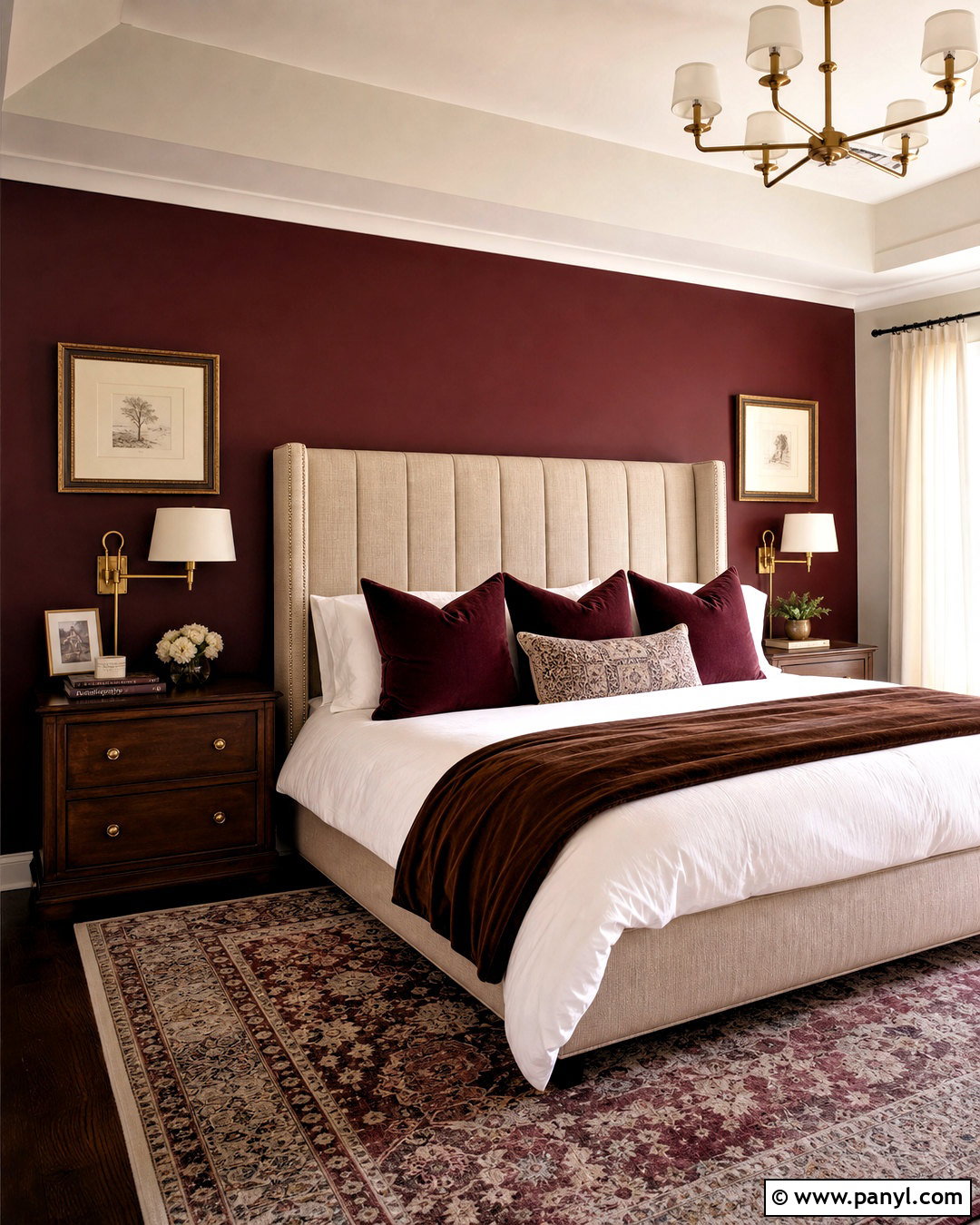
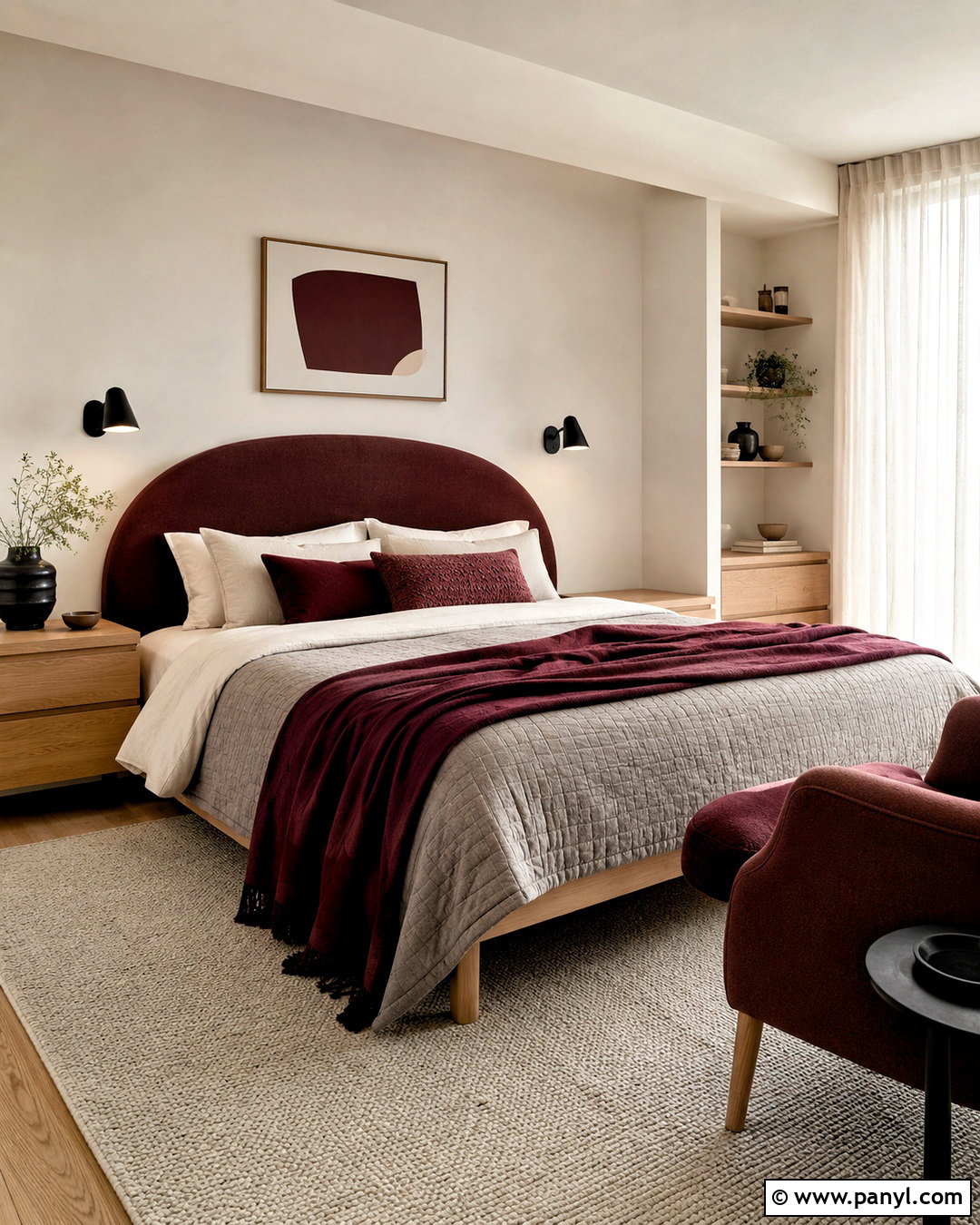
Burgundy creates a confident bedroom with warmth, depth, and an enveloping quality. It has become a notable choice for richer, more expressive bedroom palettes. () For an approachable application, paint the wall behind the bed burgundy and cover the remaining walls in warm ivory. A tall oatmeal headboard softens the contrast and keeps the dark color from feeling severe. Use crisp white bedding, burgundy accent pillows, and a brown velvet throw. Dark walnut nightstands, antique brass sconces, and a patterned traditional rug support the sophisticated palette. Add full ivory curtains to brighten the room and create a graceful frame around the windows. Complete the look with one large landscape painting and a wooden bench, avoiding excessive accessories that could compete with the strong feature wall.
13. Pale Lavender Bedroom
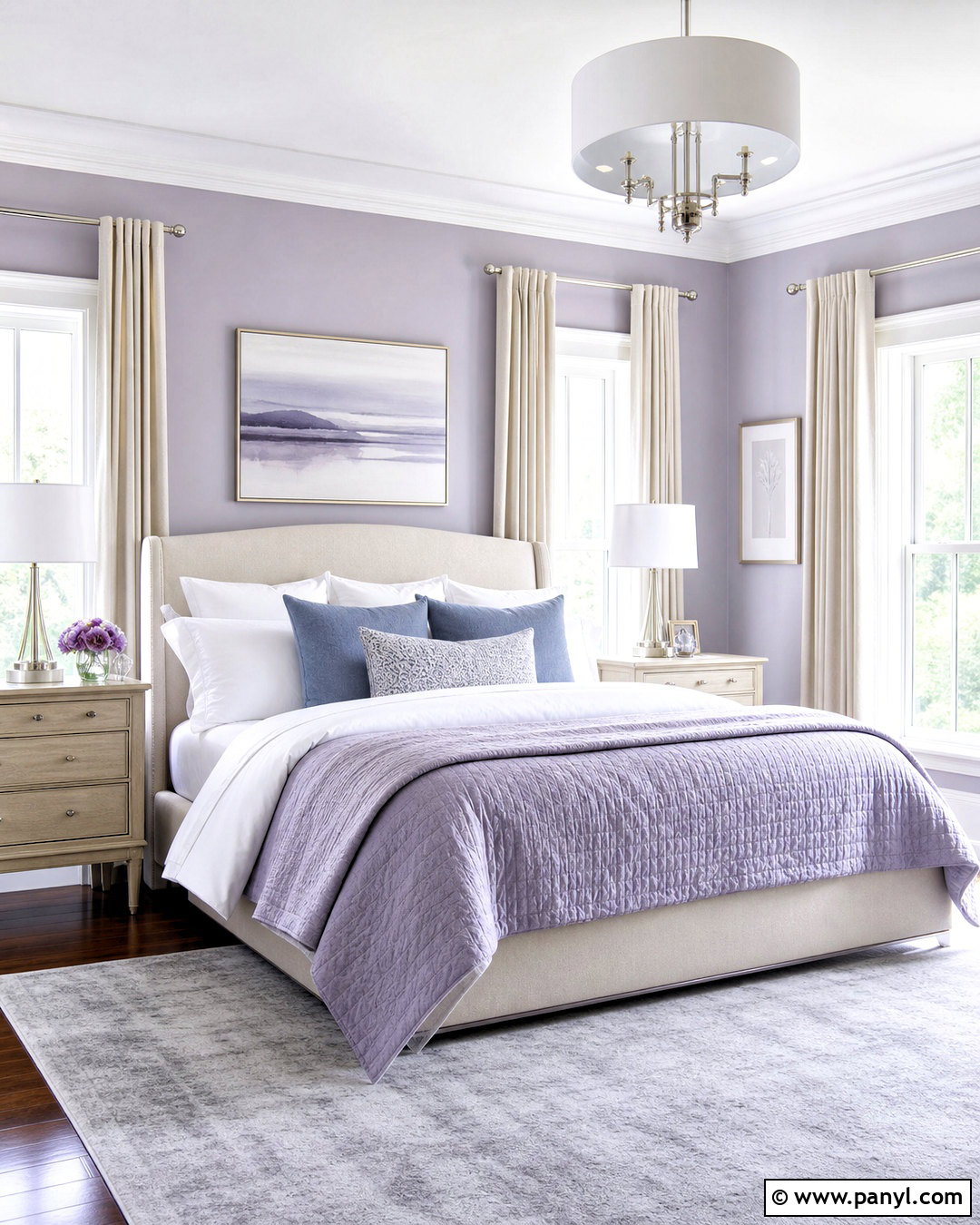
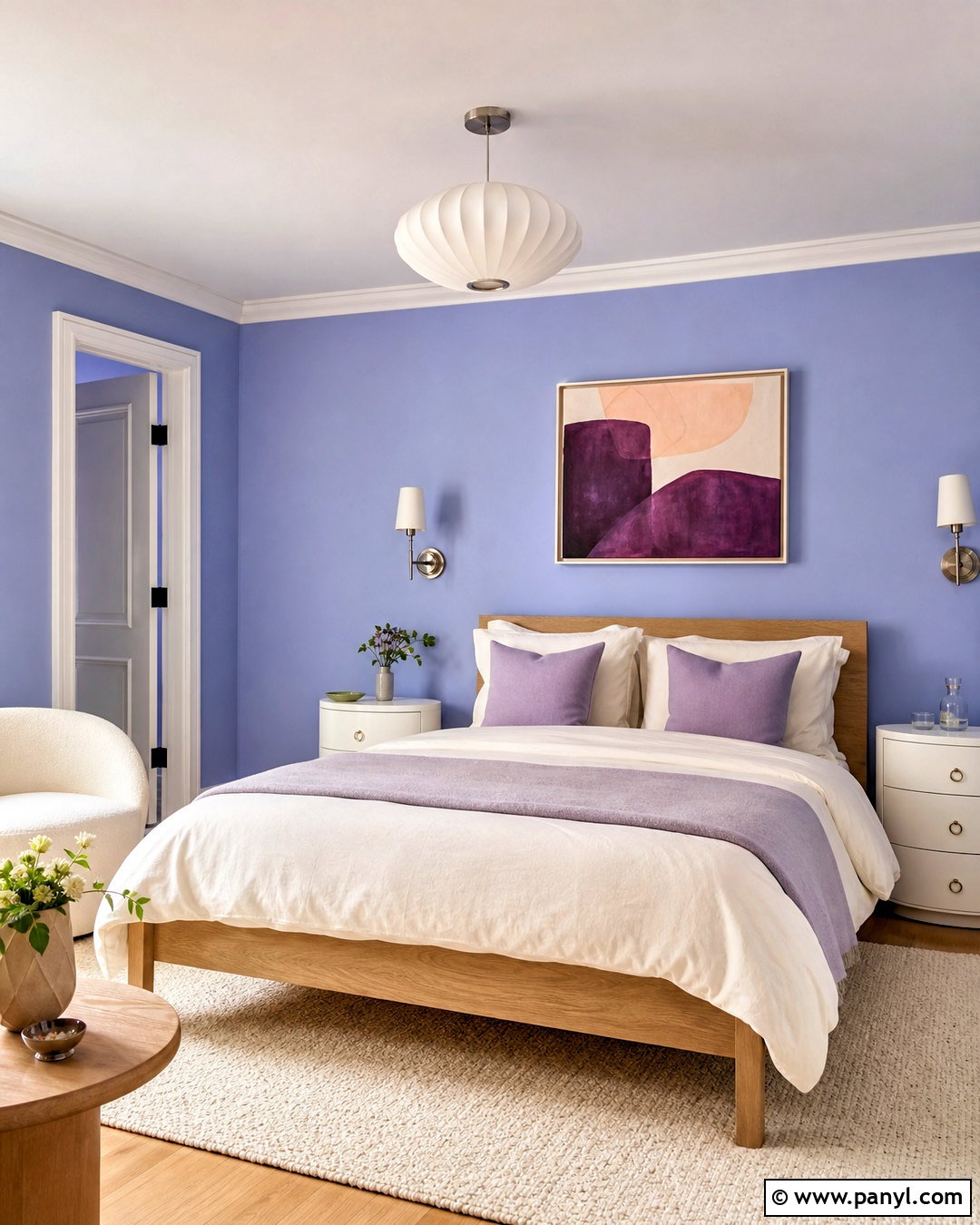
Pale lavender can make a bedroom feel delicate and peaceful while remaining more distinctive than white or beige. Select a grayed lavender rather than a sugary purple, then pair it with clean white trim and a pale wood floor. An ivory upholstered bed keeps the composition light. Dress it with white sheets, a lavender-gray quilt, and muted blue pillows for gentle variation. Choose bleached oak nightstands and brushed nickel lamps with simple linen shades. Sheer white curtains layered beneath heavier oatmeal drapes allow flexible light control. A soft gray rug provides a quiet foundation, while understated floral artwork references the wall color. Finish with clear glass, silver, and pale wood accessories so the completed room appears elegant, open, and restful rather than overly decorative.
14. Chocolate Brown Bedroom

Chocolate brown surrounds a bedroom with comforting depth and works especially well with warm neutrals and natural wood. Apply the color to every wall, then use a lighter brown or creamy beige on the ceiling to prevent a boxed-in appearance. Place a substantial cream upholstered bed against the deepest wall and add white sheets, caramel pillows, and a rust-colored throw. Medium oak nightstands will remain visible against the dark background, while brushed brass sconces contribute warmth. Choose ivory curtains and a large cream rug to balance the rich paint. Abstract artwork in tan, black, and off-white adds a modern focal point. The completed scheme feels grounded and luxurious, yet its uncomplicated furniture and natural materials keep it realistic for an average-sized bedroom.
15. Blue Green Bedroom

Blue green provides the relaxing character of blue with the organic quality of green, making it a versatile bedroom color. Choose a muted teal or softened sea-green shade rather than a bright tropical hue. Paint the walls and trim together for a contemporary color-drenched finish, then leave the ceiling warm white. Use a medium oak bed with woven cane panels to create natural contrast. White bedding, deep teal pillows, and a sandy beige blanket build a fresh coastal-inspired palette without obvious nautical decorations. Add cream curtains, ceramic lamps, and a light wool rug with a small geometric pattern. Brass hardware and simple black frames supply structure. Finish with restrained botanical art so the complete space feels immersive, balanced, and easy to personalize.
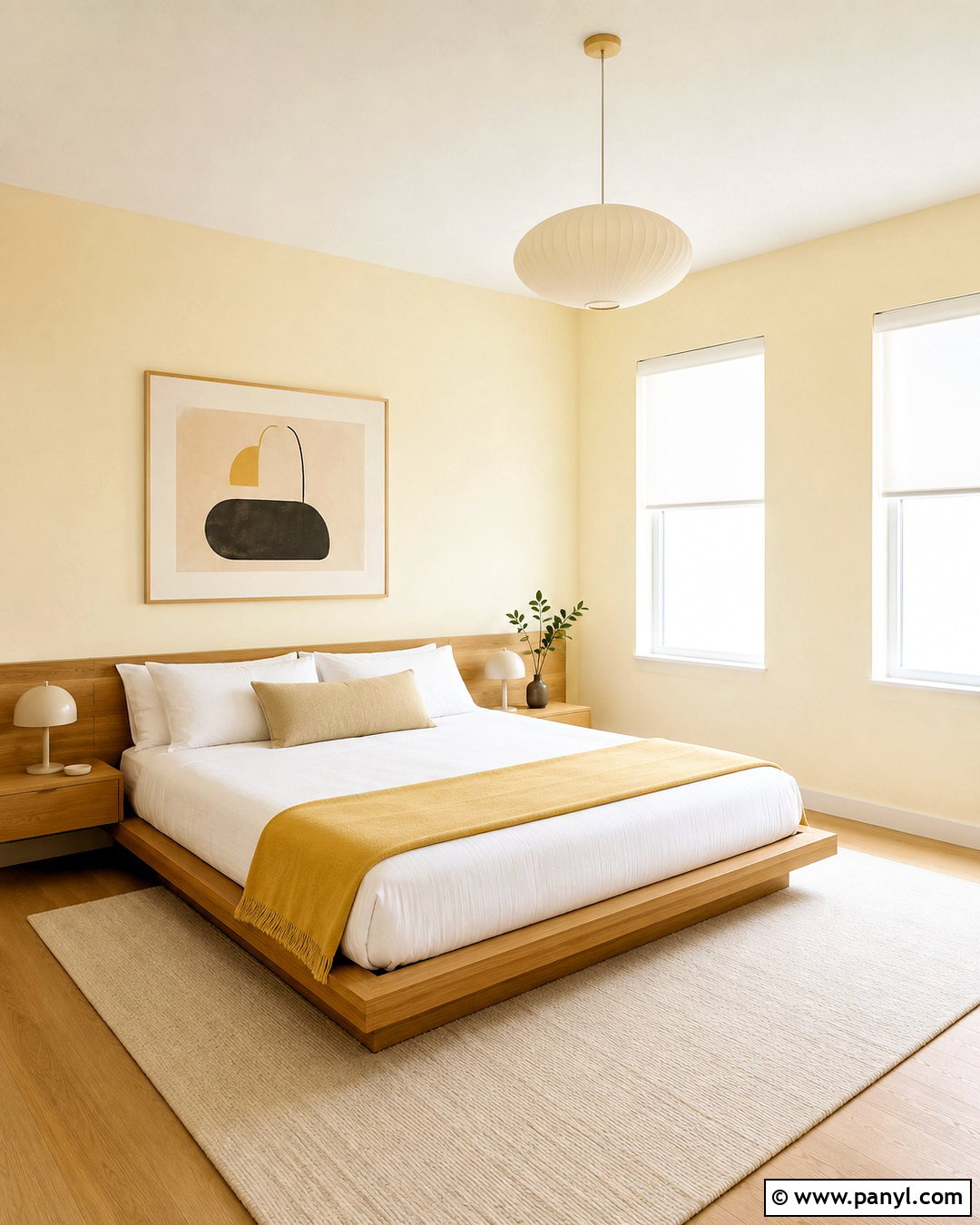
16. Butter Yellow Bedroom

Soft butter yellow can brighten a bedroom while maintaining a warm, restful appearance. The key is choosing a pale, creamy shade instead of a sharp lemon color. Pair the walls with warm white trim and a white-painted ceiling. An oak spindle bed gives the room an approachable cottage influence, while crisp white bedding keeps it from appearing dated. Layer in gingham beige pillows, a faded green quilt, and a small ocher cushion. Use white nightstands or light wood tables with simple ceramic lamps. Natural woven shades and ivory curtains filter strong sunlight beautifully. Complete the room with a small floral rug, framed landscape prints, and a wooden bench. Every element works together to create a cheerful space that still feels gentle at bedtime.
17. Charcoal Gray Bedroom
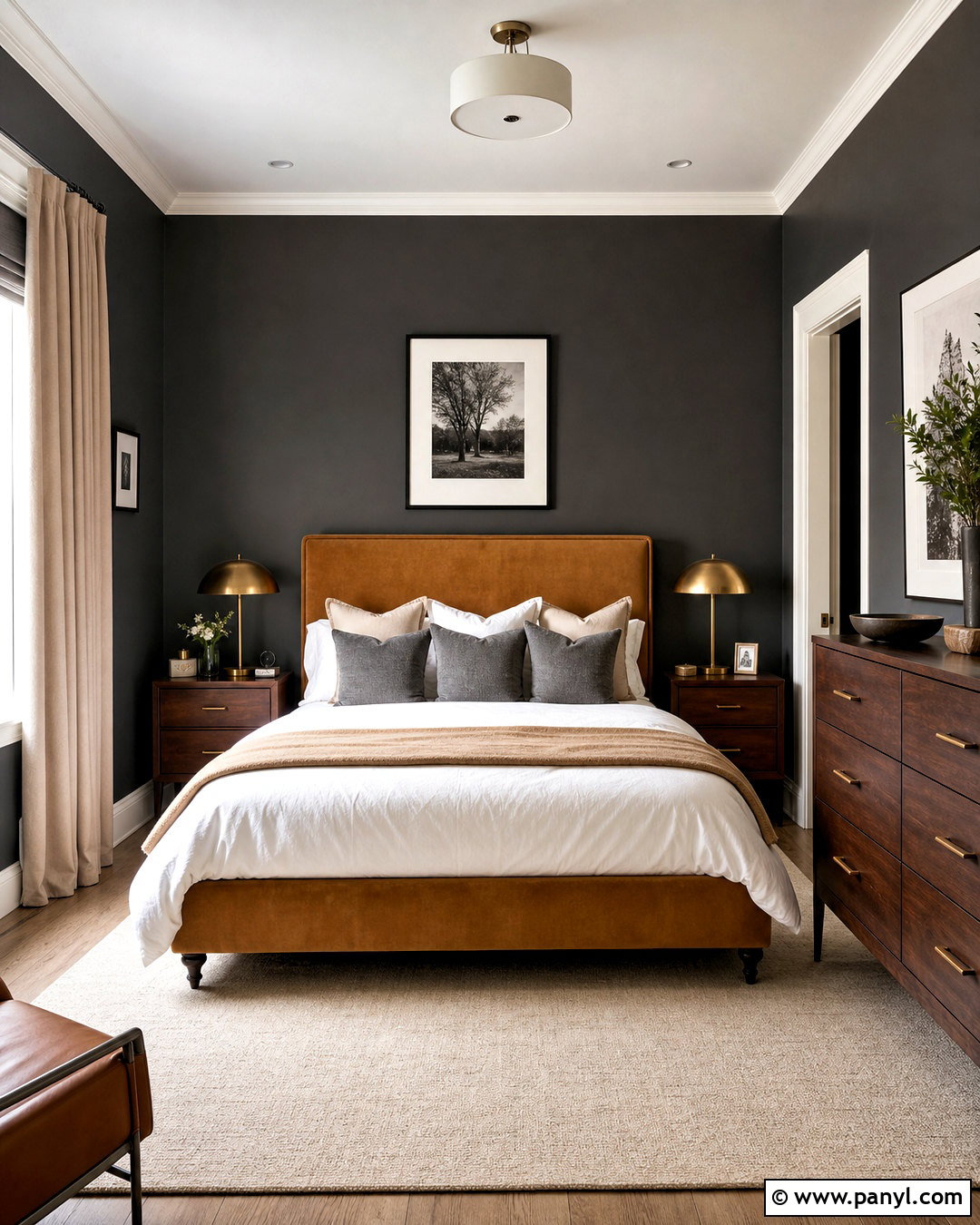
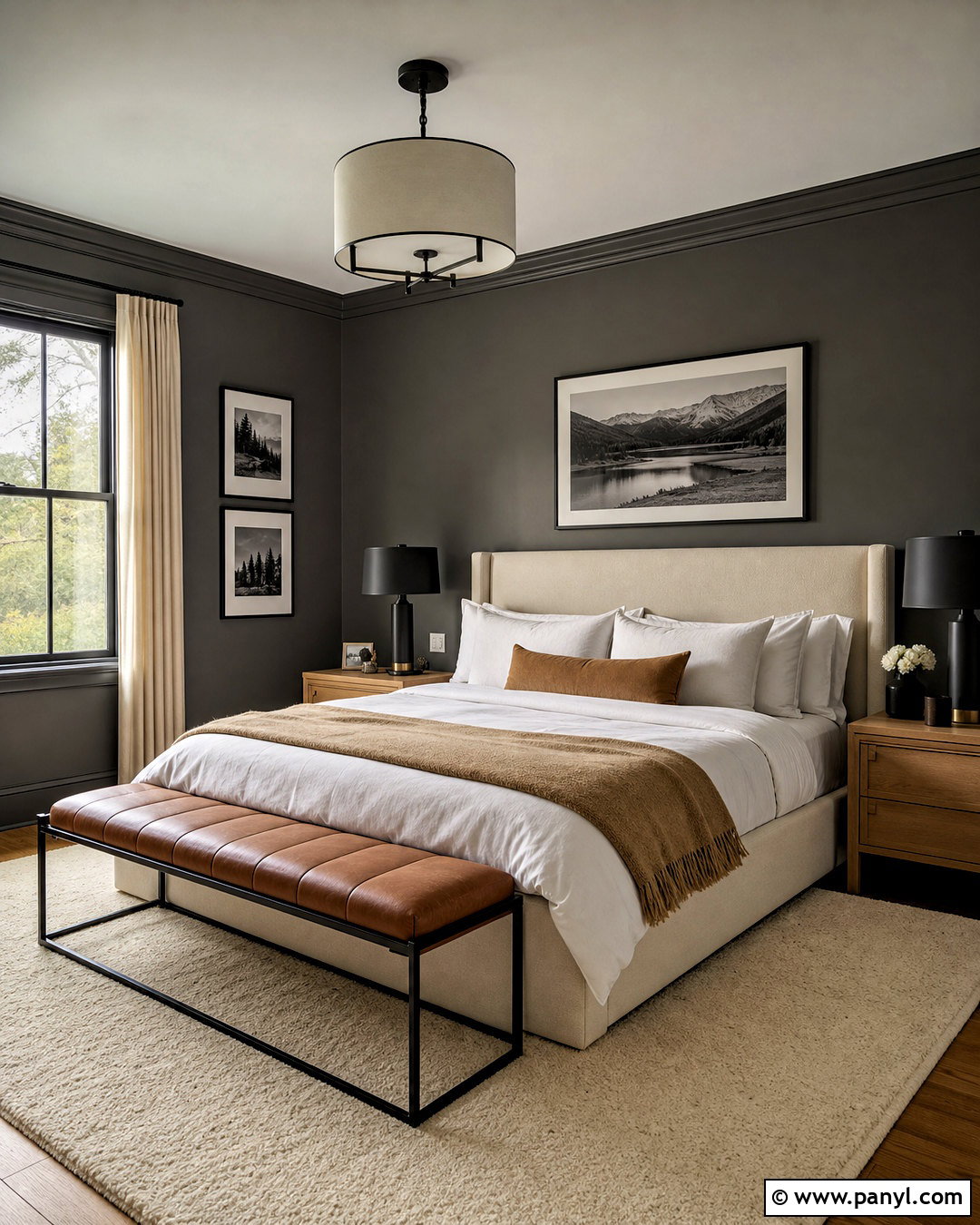
Charcoal gray can create a striking bedroom, but it needs warmth and sufficient contrast to avoid looking cold. Choose charcoal with brown undertones and apply it to the walls behind and beside the bed. Keep the ceiling and trim creamy white to preserve definition. Introduce a camel leather or warm beige upholstered bed as the central feature. Layer white sheets with gray pillows, a tan blanket, and one muted rust accent. Walnut nightstands and antique brass lamps add warmth against the dark background. Use oatmeal curtains and a pale wool rug to lighten the perimeter of the space. Minimal black-and-white artwork, a rounded mirror, and a simple wooden bench complete this contemporary scheme without allowing the darker surfaces to become visually overwhelming.
18. Soft Peach Bedroom
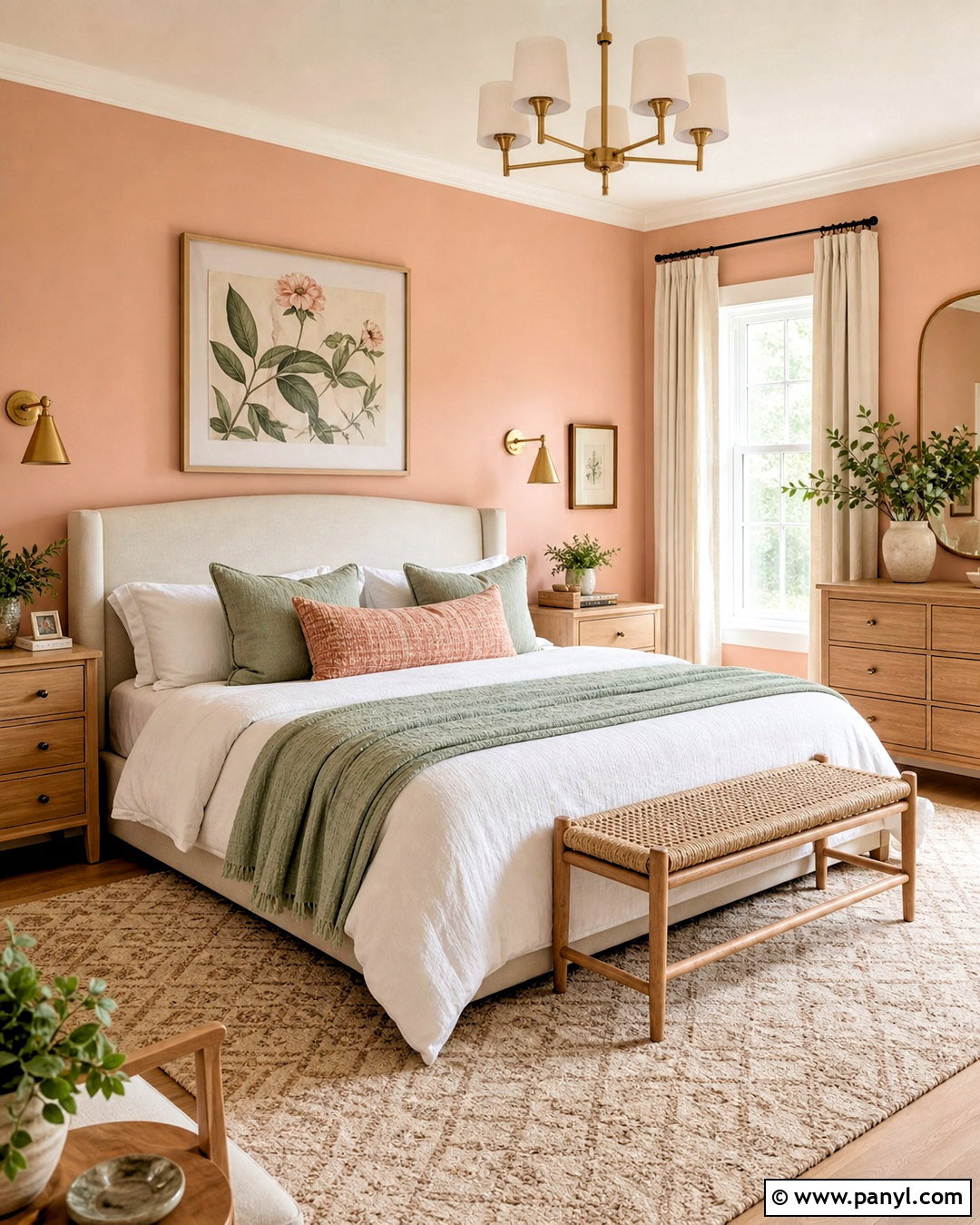
Soft peach fills a bedroom with flattering warmth and works particularly well in spaces that receive gentle morning light. Select a dusty peach with beige undertones, avoiding shades that appear neon or overly orange. Combine it with warm white trim, an ivory upholstered headboard, and light oak furniture. Use white sheets, a peach coverlet, and accent pillows in muted coral and sage green. A beige rug with a faint geometric pattern adds softness beneath the bed. Hang natural linen curtains and install aged brass wall lights to reinforce the warm palette. For finishing details, choose botanical artwork, pale ceramic vessels, and a woven bench. The completed bedroom feels bright, friendly, and relaxed, with enough natural contrast to keep the peach from dominating every surface.
19. Mushroom Beige Bedroom

Mushroom beige is a complex neutral that blends taupe, brown, and a small amount of gray. It gives a bedroom more depth than basic beige while remaining highly adaptable. Paint the walls mushroom and continue the shade onto the trim for a soft, uninterrupted background. Choose a dark oak bed to provide contrast, then layer ivory bedding with mocha pillows and an oatmeal throw. A boucle bench and wool rug introduce plush textures without adding unnecessary color. Place stone or ceramic lamps on matching dark wood nightstands. Floor-length cream curtains will lift the palette and diffuse daylight. Finish the room with abstract artwork in brown and ivory, matte black hardware, and a few natural branches. The complete result feels modern, calming, and comfortably lived in.
20. Clay Pink Bedroom
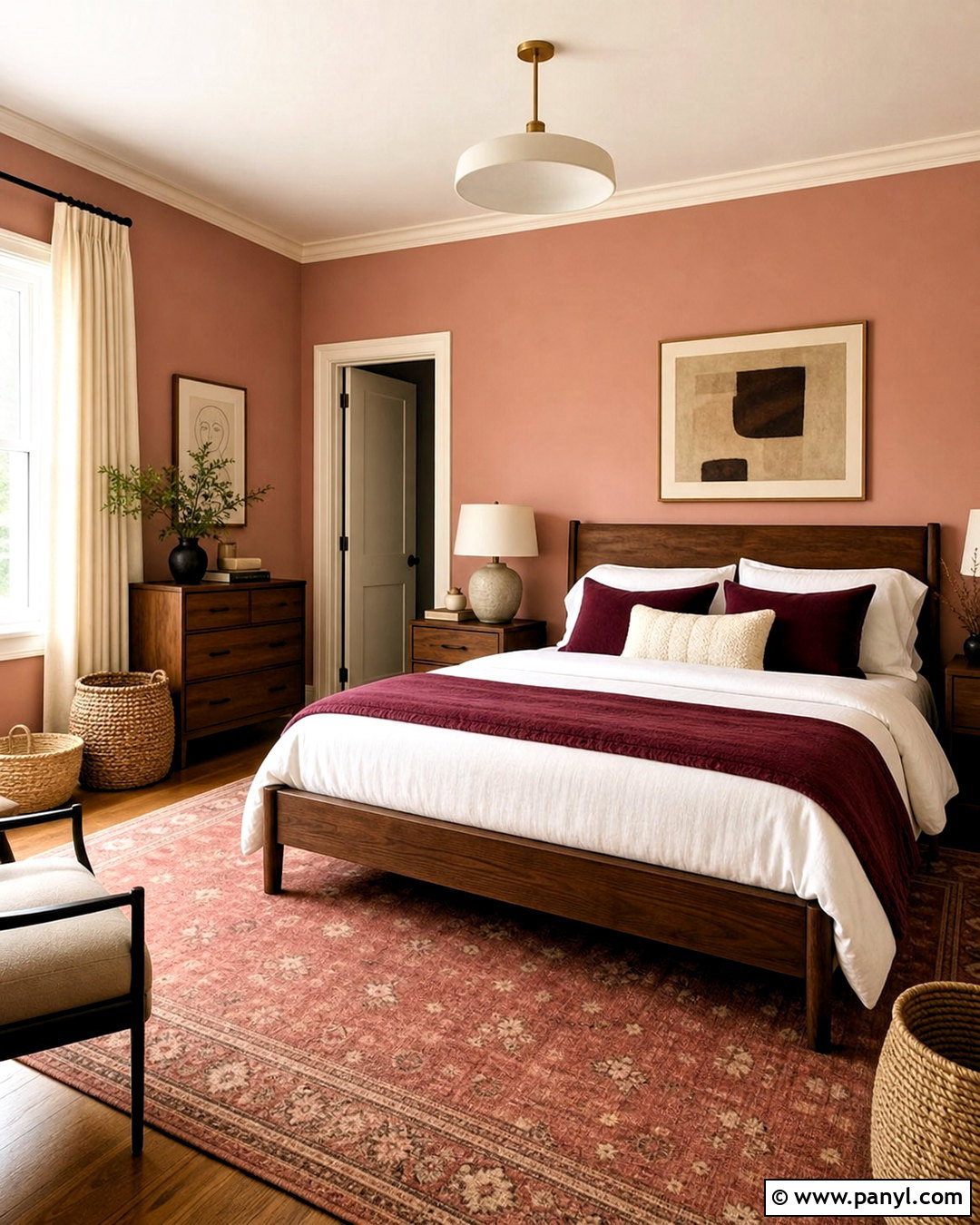
Clay pink combines the warmth of terracotta with the softness of dusty rose, creating an inviting bedroom that feels both current and enduring. Use it across the walls, then add ivory trim and a warm white ceiling. Anchor the space with a simple walnut bed or an oatmeal upholstered headboard. White linen bedding keeps the palette fresh, while clay, cream, and muted burgundy pillows create depth. Add medium wood nightstands, sculptural ceramic lamps, and a vintage-style rug containing faded red and tan. Natural linen curtains maintain the earthy character and soften direct sunlight. Complete the room with abstract art, woven storage baskets, and a narrow bench. The finished design has noticeable color, but its subdued tones still support a peaceful, comfortable atmosphere.
Conclusion:
The most successful bedroom palette supports rest while reflecting your personal taste and the room’s existing features. These **20 best room colors bedrooms** range from airy powder blue and creamy white to immersive navy, burgundy, and chocolate brown. Before committing, paint large samples on more than one wall and observe them in morning daylight, afternoon sun, and artificial evening light. Consider undertones in the flooring, headboard, curtains, and wood furniture at the same time. Once you choose a wall color, repeat it subtly through bedding, artwork, or a rug to create unity. With coordinated furniture, useful lighting, comfortable textiles, and restrained accessories, any of these colors can become a complete bedroom that feels polished, welcoming, and genuinely restful.

Related Ideas and Inspiration:




Leave a Reply