
Accent walls work best when they feel connected to the entire room rather than added as an afterthought. The right shade can define a seating area, frame a bed, highlight a fireplace, or bring depth to a plain hallway. This guide to **20 Cool Accent Wall Colors** includes dramatic dark tones, earthy midtones, warm neutrals, and playful pastels. Each color is paired with furniture, flooring, textiles, lighting, and decor so you can picture a complete, livable space. Before painting, test a large sample during daylight and under your evening lights because undertones can shift throughout the day. Whether your home feels modern, traditional, coastal, rustic, or eclectic, you will find a coordinated look among these **20 Cool Accent Wall Colors**.

1. Navy Blue Accent Wall
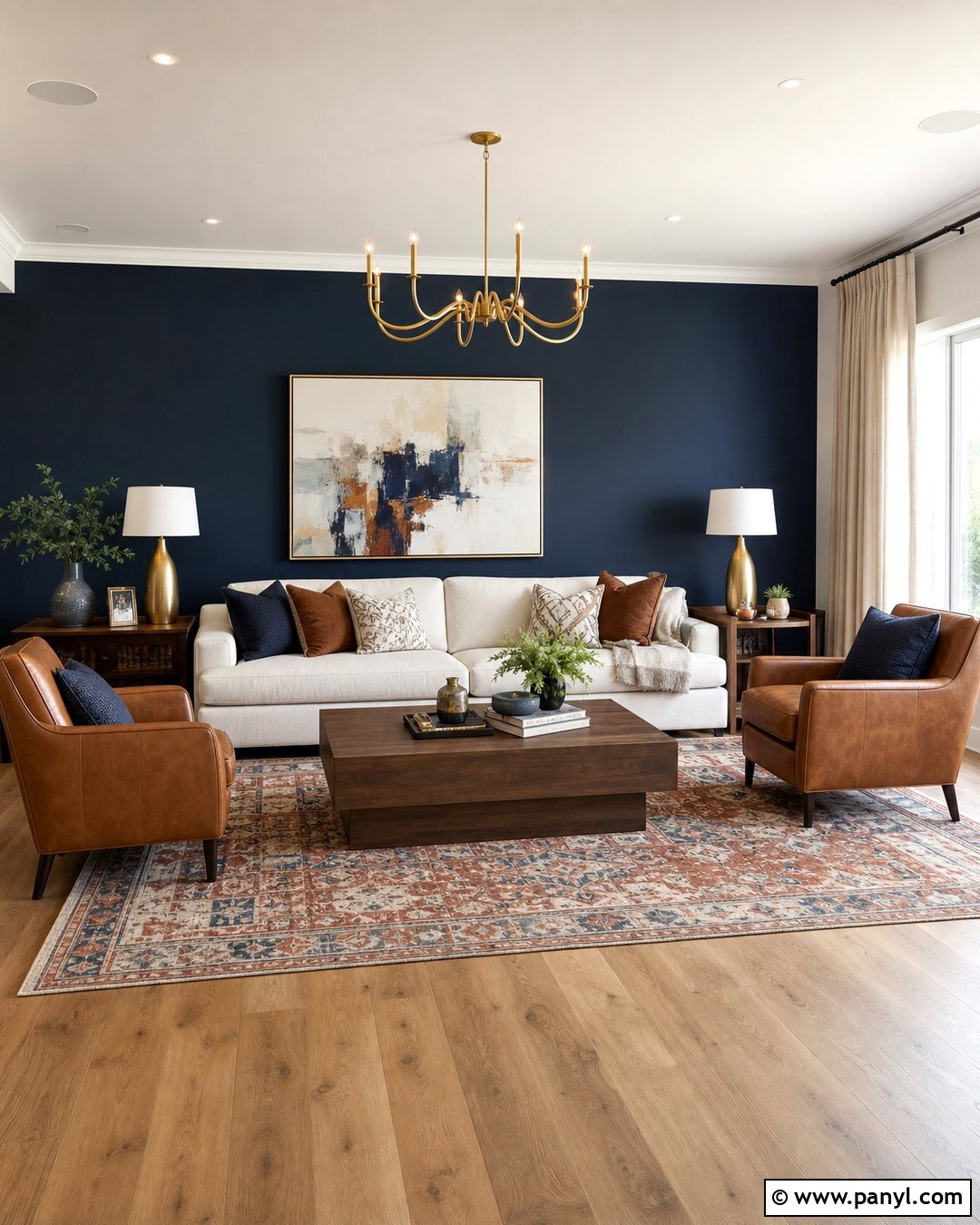
A navy blue accent wall creates a strong focal point without feeling as severe as black. Use it behind a warm ivory sofa in a living room with medium-tone oak flooring and creamy surrounding walls. Add cognac leather chairs, a faded rust-and-blue rug, and brushed brass lamps to balance the cool paint. Natural linen curtains keep the windows soft and bright. For artwork, choose one oversized abstract piece with ivory, ochre, and pale blue details. A walnut coffee table connects the deep wall to the flooring while adding richness. Repeat navy in two or three small accents, such as patterned pillows or ceramic vases. This complete palette feels polished, comfortable, and easy to update as seasons change.
2. Sage Green Accent Wall
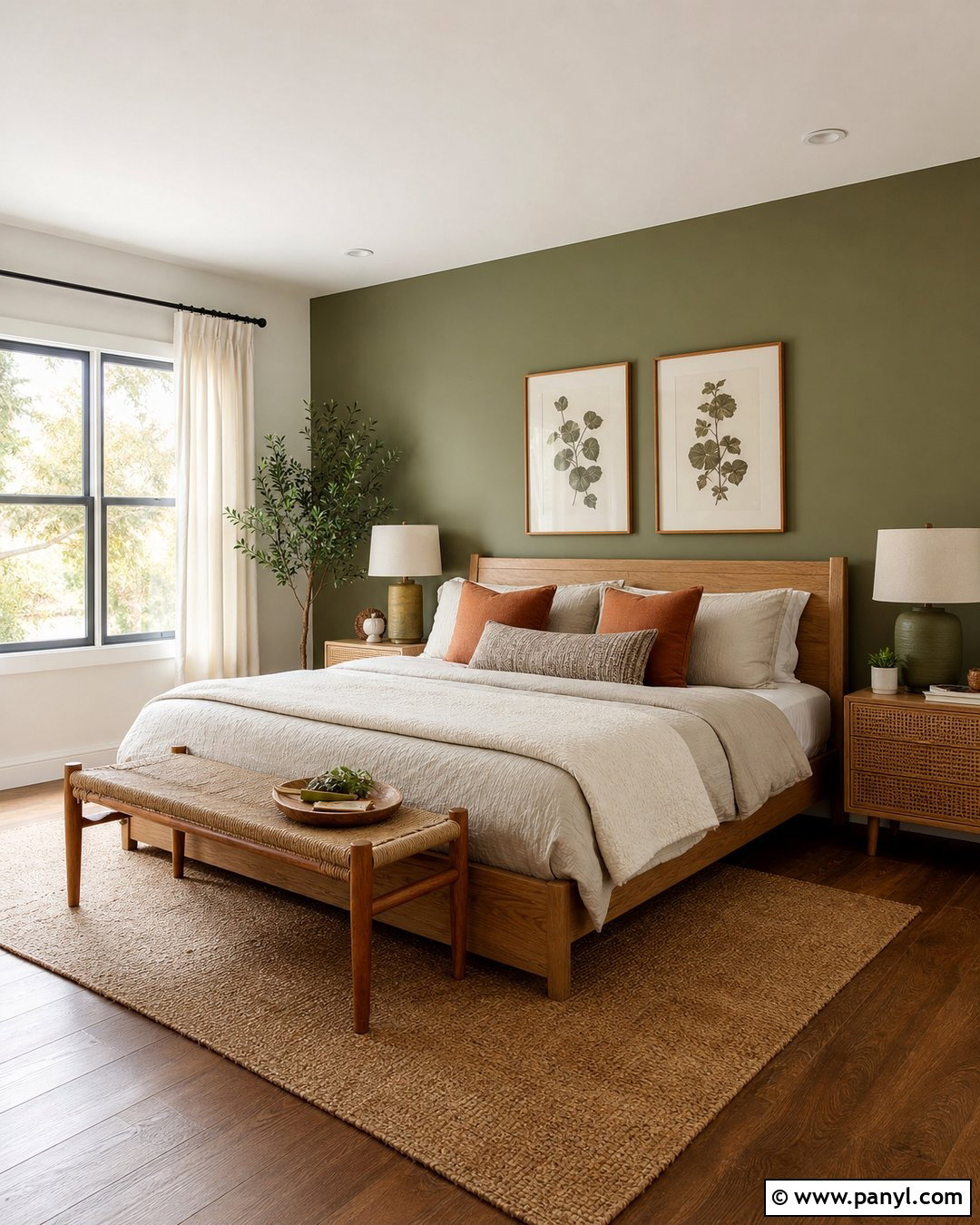
Sage green offers gentle color while keeping a room calm and highly livable. Paint the wall behind a light oak bed, then surround it with warm off-white walls and natural wood flooring. Choose oatmeal linen bedding, a quilted cream coverlet, and muted terracotta pillows for soft contrast. Woven nightstands and ceramic table lamps make the bedroom feel relaxed rather than overly formal. Simple botanical prints can echo the green without making the scheme feel themed. Add a jute rug beneath the bed and hang ivory cotton curtains near the windows. Matte black curtain rods or small hardware provide clean definition. This complete sage accent wall bedroom works especially well for anyone who wants a nature-inspired retreat with warmth, texture, and understated color.
3. Terracotta Accent Wall
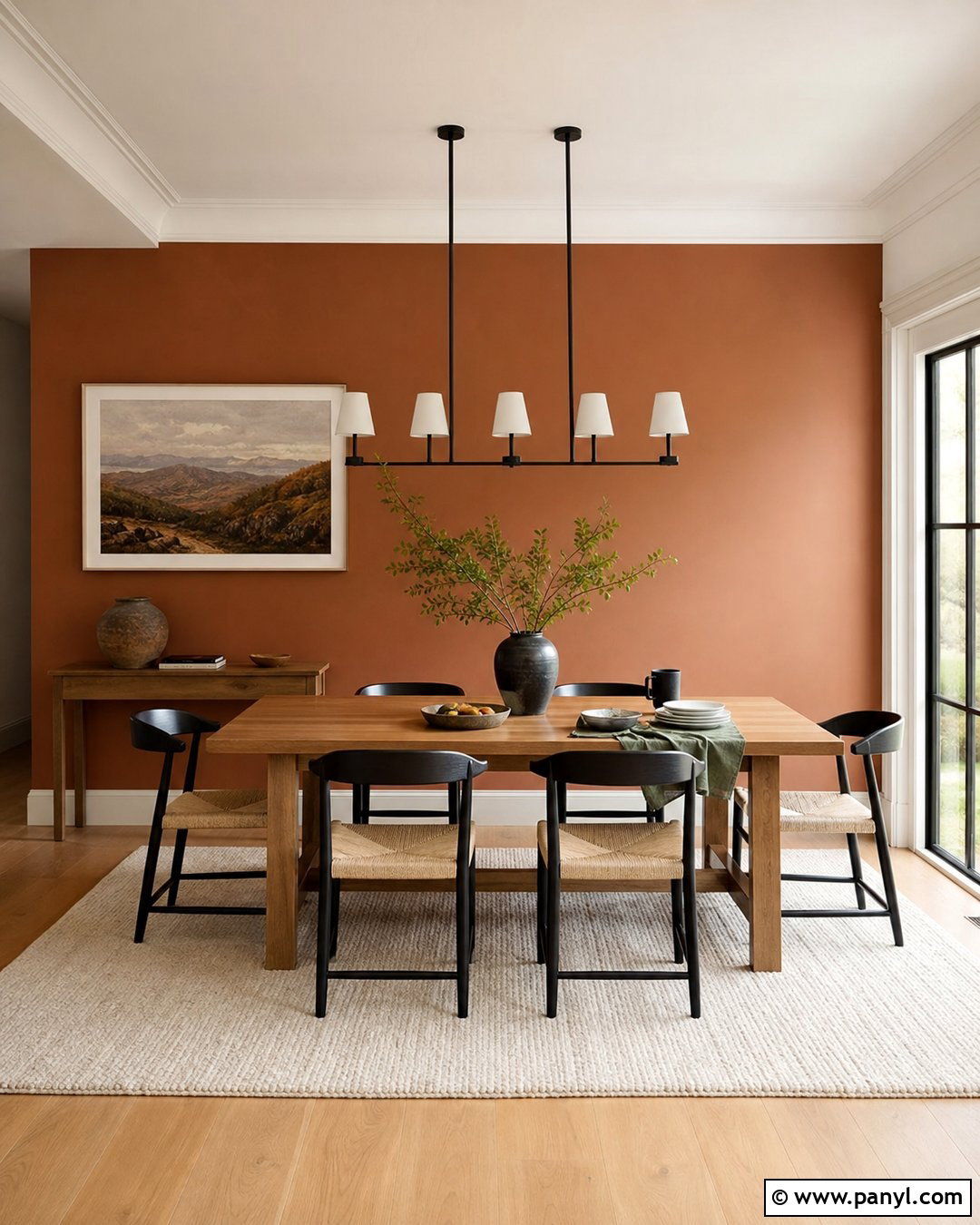
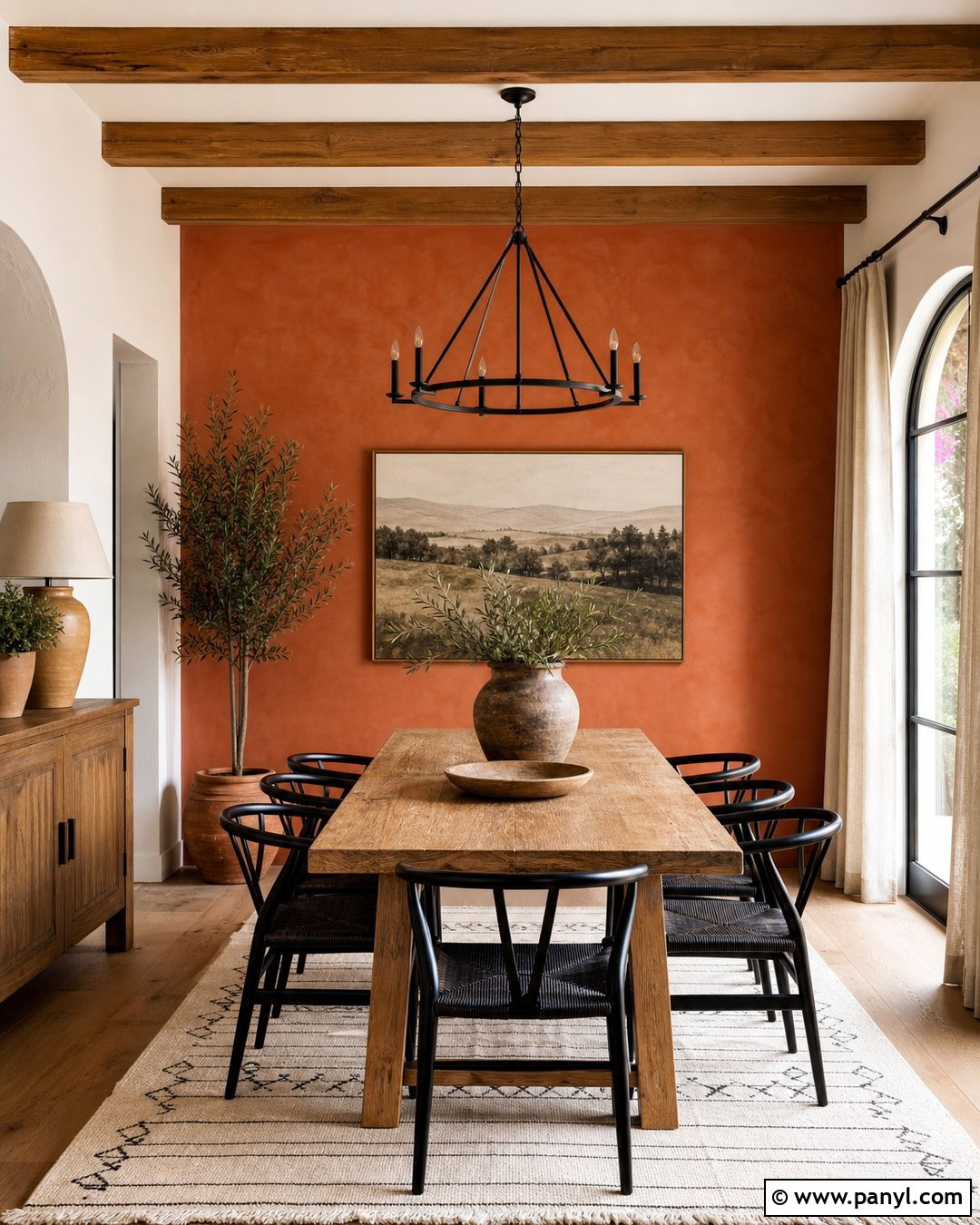
Warm terracotta can turn a plain dining room into an inviting place for everyday meals and casual gatherings. Place the painted wall behind a solid oak dining table with rounded corners and woven-seat chairs. Keep the remaining walls soft cream so the earthy orange-red tone looks warm rather than heavy. A large ivory wool rug helps define the table, while a black linear chandelier adds modern contrast. Decorate the accent wall with a wide landscape painting or a collection of neutral pottery on a slim wood console. Olive green napkins and linen curtains introduce a natural complementary color. Finish the room with aged brass candlesticks and a simple leafy plant. The result feels sun-washed, grounded, and welcoming throughout the year.
4. Charcoal Gray Accent Wall
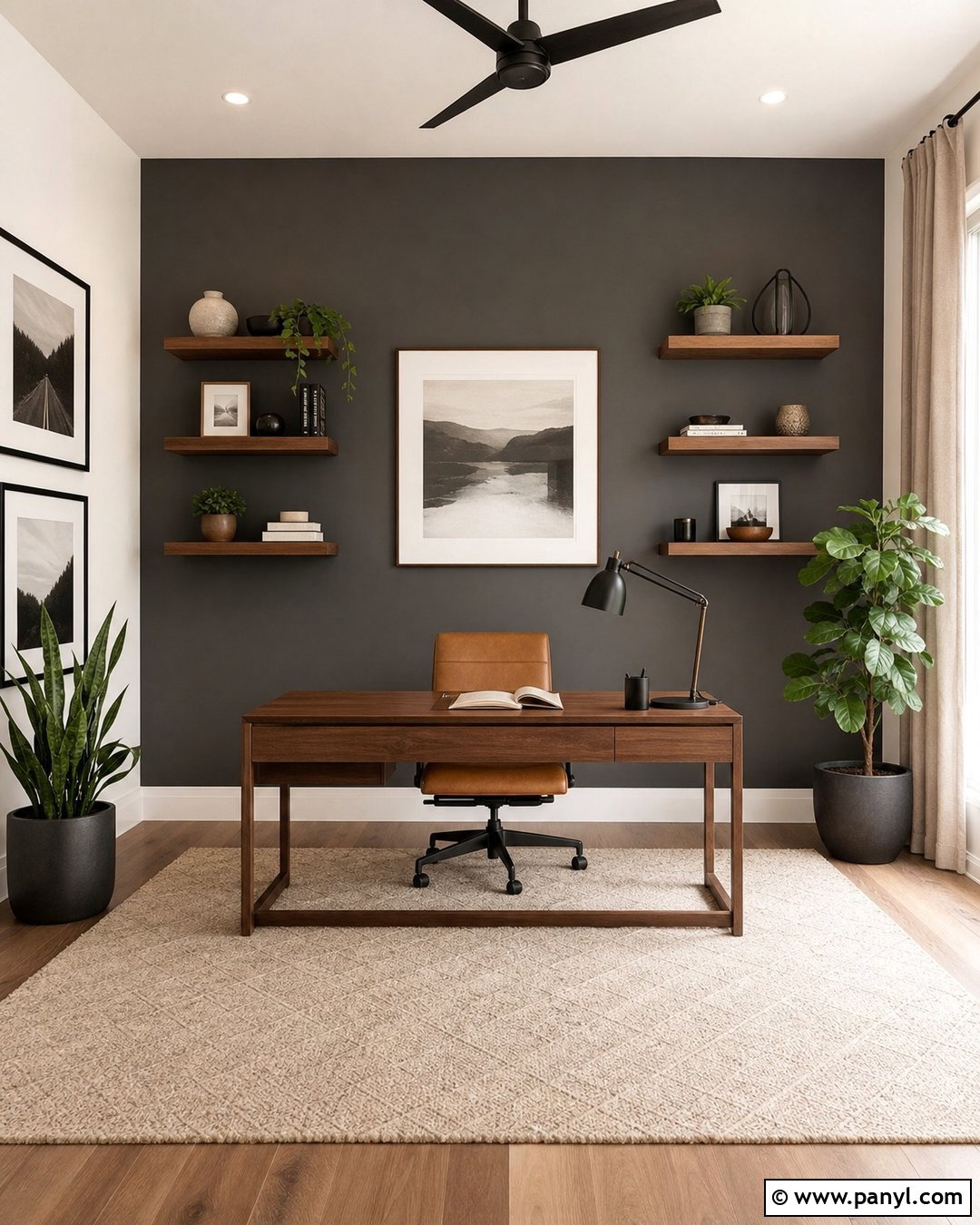
Charcoal gray brings depth to a home office and creates a focused background for furniture and shelving. Use the color on the wall behind a streamlined walnut desk, then paint the other walls a warm white with subtle beige undertones. Add a camel leather desk chair, a low cream rug, and matte black task lighting for a crisp modern mix. Floating walnut shelves can blend the workstation with the wall while holding books, framed art, and a few ceramic pieces. Keep window coverings light with natural linen panels or a simple woven shade. A large plant softens the strong contrast. This full office design feels professional but still comfortable, proving that dark gray works best when surrounded by warm wood, pale textiles, and generous light.
5. Dusty Blue Accent Wall
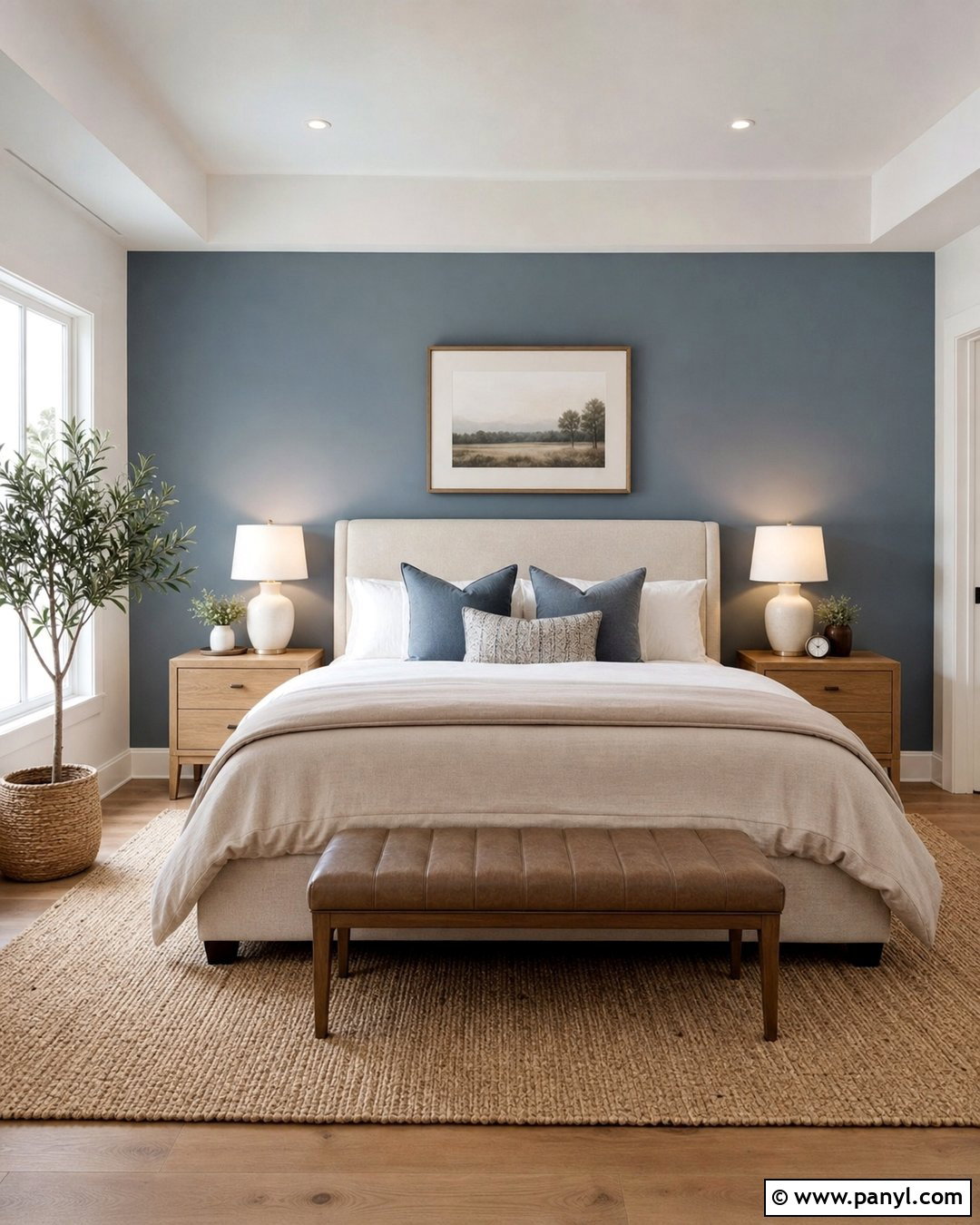
Dusty blue creates a quiet, airy bedroom without the chilly effect of a very pale or icy blue. Apply it behind an upholstered oatmeal headboard and pair it with warm white surrounding walls. Layer the bed with crisp white sheets, a sand-colored duvet, and muted blue-gray pillows. Light oak nightstands, ivory ceramic lamps, and a natural wool rug keep the room soft and approachable. Choose brushed nickel or pewter accents instead of shiny chrome for a subtle finish. A small bench in warm taupe can anchor the foot of the bed. Add framed coastal landscapes sparingly, avoiding an obvious beach theme. Together, the muted colors and tactile materials form a soothing, complete bedroom that feels fresh in daylight and restful in the evening.
6. Olive Green Accent Wall
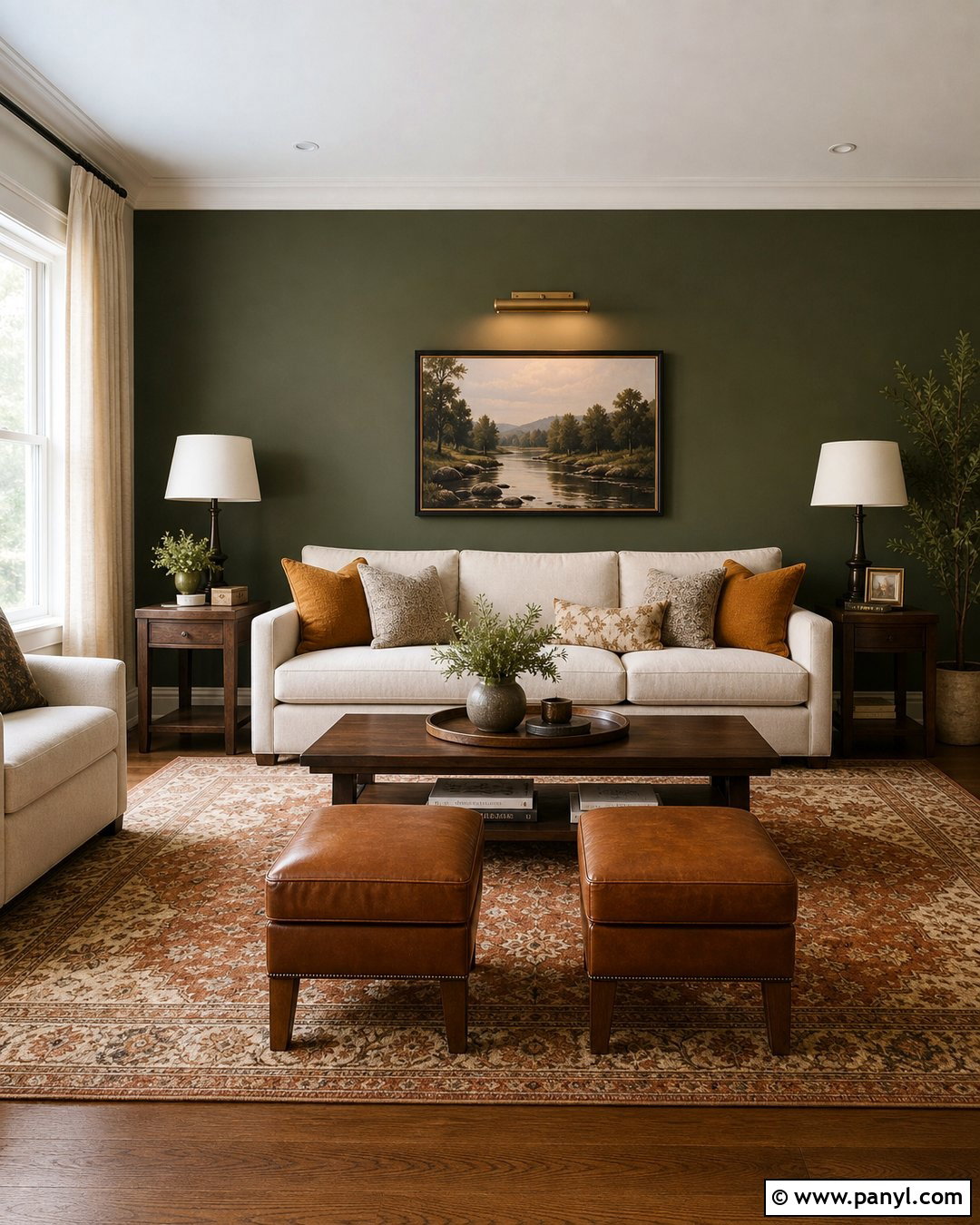
An olive green accent wall can give a living room an earthy, collected appearance. Center it behind a low-profile sofa upholstered in warm beige or flax linen. Add dark walnut side tables, a vintage-style rug with rust and cream details, and a pair of cognac leather stools. Keep the surrounding walls creamy white to prevent the palette from becoming too dark. Antique brass picture lights and framed landscape artwork reinforce the traditional character, while a simple black coffee table adds a modern line. Finish with textured pillows in ochre, brown, and muted green. Natural wood blinds or linen drapes complement the relaxed palette. This design feels layered and established, yet every element remains practical enough for a comfortable family living space.
7. Burgundy Accent Wall
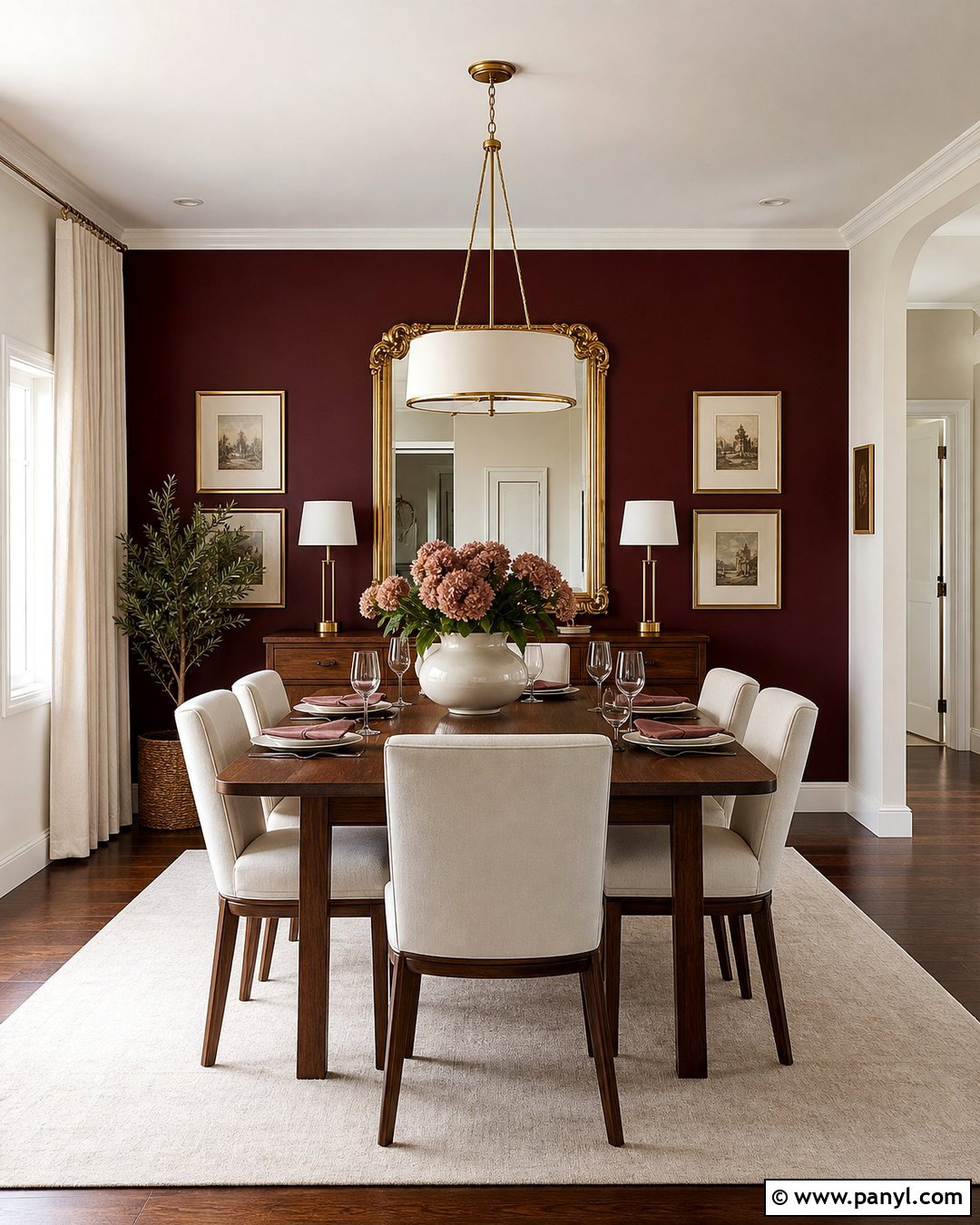
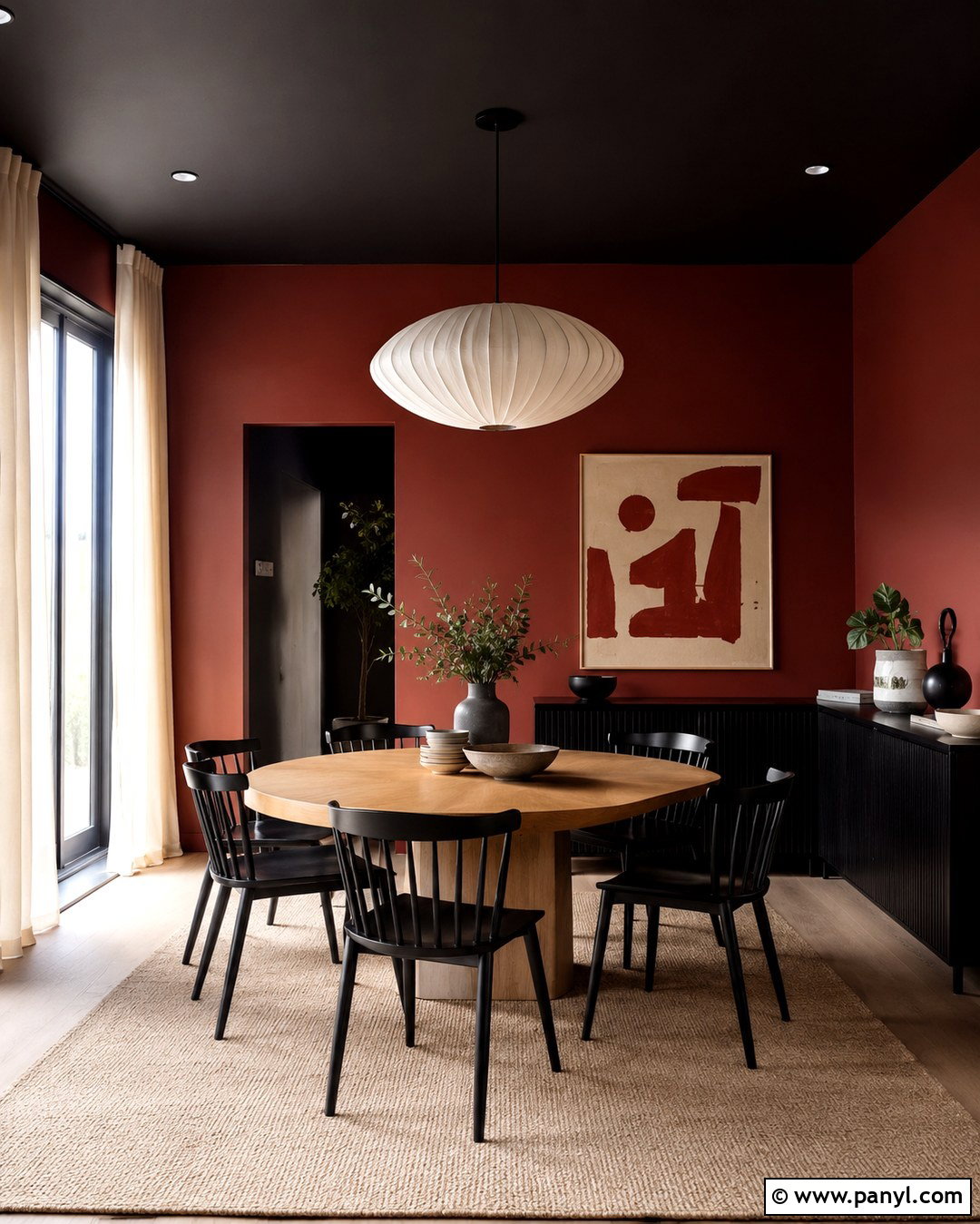
Burgundy makes a striking backdrop for a sophisticated dining room or intimate reading space. Balance its rich red undertones with a medium walnut table, cream upholstered chairs, and warm white walls. An aged brass pendant light brings brightness to the center of the room, while an ivory rug prevents the dark wall from dominating. Hang a large traditional still life, abstract canvas, or gilded mirror on the accent wall. Small touches of dusty pink and deep brown can soften the contrast through curtains, seat cushions, or table linens. Avoid filling the room with additional saturated colors. Instead, let natural wood, neutral fabric, and soft lighting support the burgundy. The finished space feels dramatic, elegant, and welcoming rather than overly formal or dated.
8. Deep Teal Accent Wall
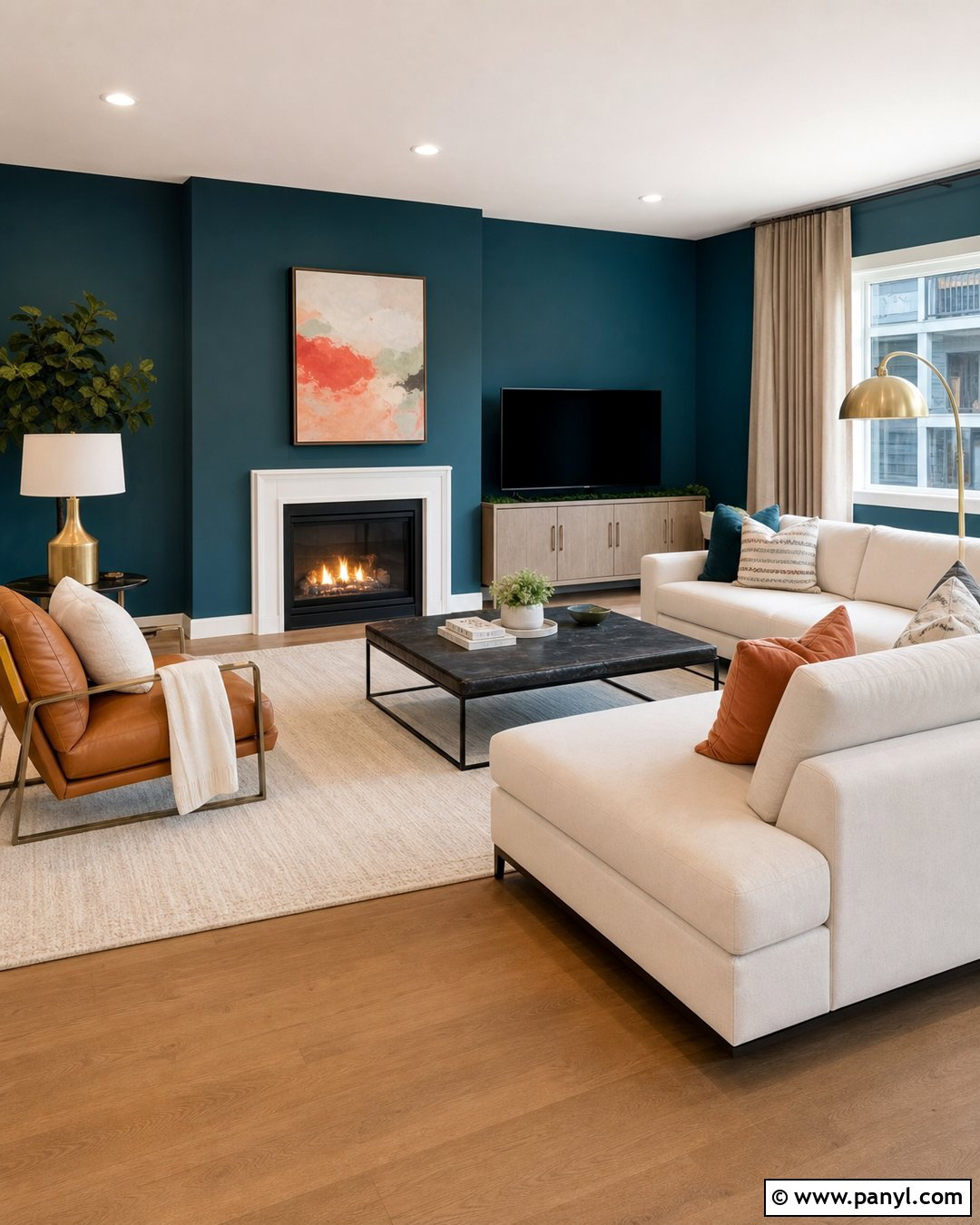
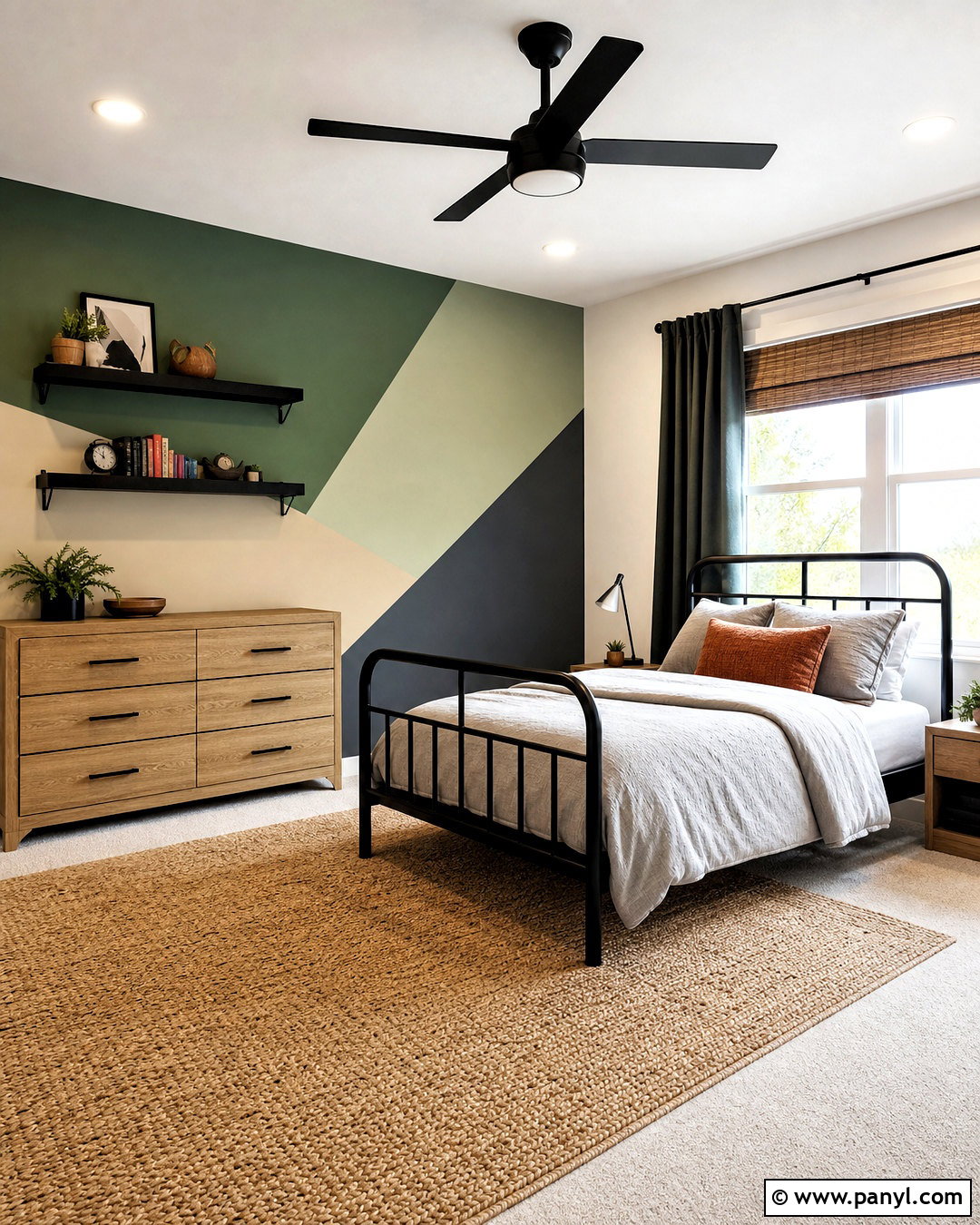
Deep teal combines the calm quality of blue with the organic richness of green. It works beautifully behind a fireplace, built-in media console, or main sofa in a bright living room. Pair the wall with an ivory sectional, warm oak flooring, and a light beige area rug. Introduce caramel leather through an accent chair or ottoman, then add brushed brass lamps for warmth. Curtains in natural flax allow the teal to remain the strongest color. Artwork containing coral, cream, and turquoise can connect the palette without matching it too closely. Use black sparingly in frames and furniture legs. This balanced room feels colorful but controlled, with enough pale upholstery and natural texture to make the saturated accent wall comfortable for daily living.
9. Chocolate Brown Accent Wall
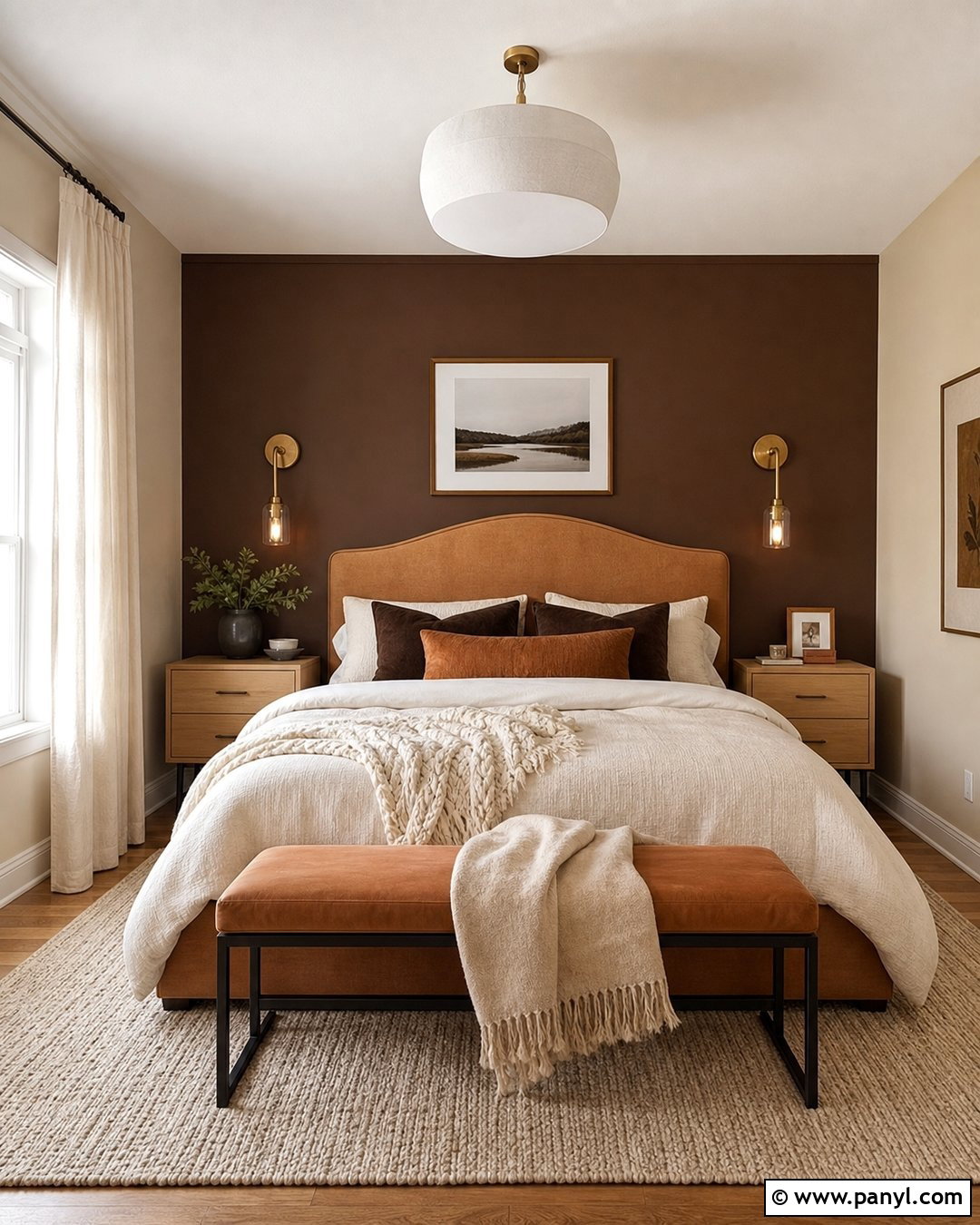
Chocolate brown gives a bedroom a cocooning quality while remaining warmer than charcoal or black. Paint the wall behind the bed and pair it with creamy beige walls, medium oak flooring, and a softly upholstered camel headboard. Layer ivory bedding with taupe, cinnamon, and cocoa-colored pillows for a tonal effect. Light wood nightstands prevent the design from feeling too dark, while bronze sconces provide a refined finish. An oatmeal wool rug adds softness beneath the bed. Choose simple abstract artwork featuring cream and muted rust, or allow the painted wall to remain mostly open. Sheer ivory curtains bring in plenty of daylight. The complete palette feels warm, restful, and grounded, with varied textures keeping the brown from appearing flat.
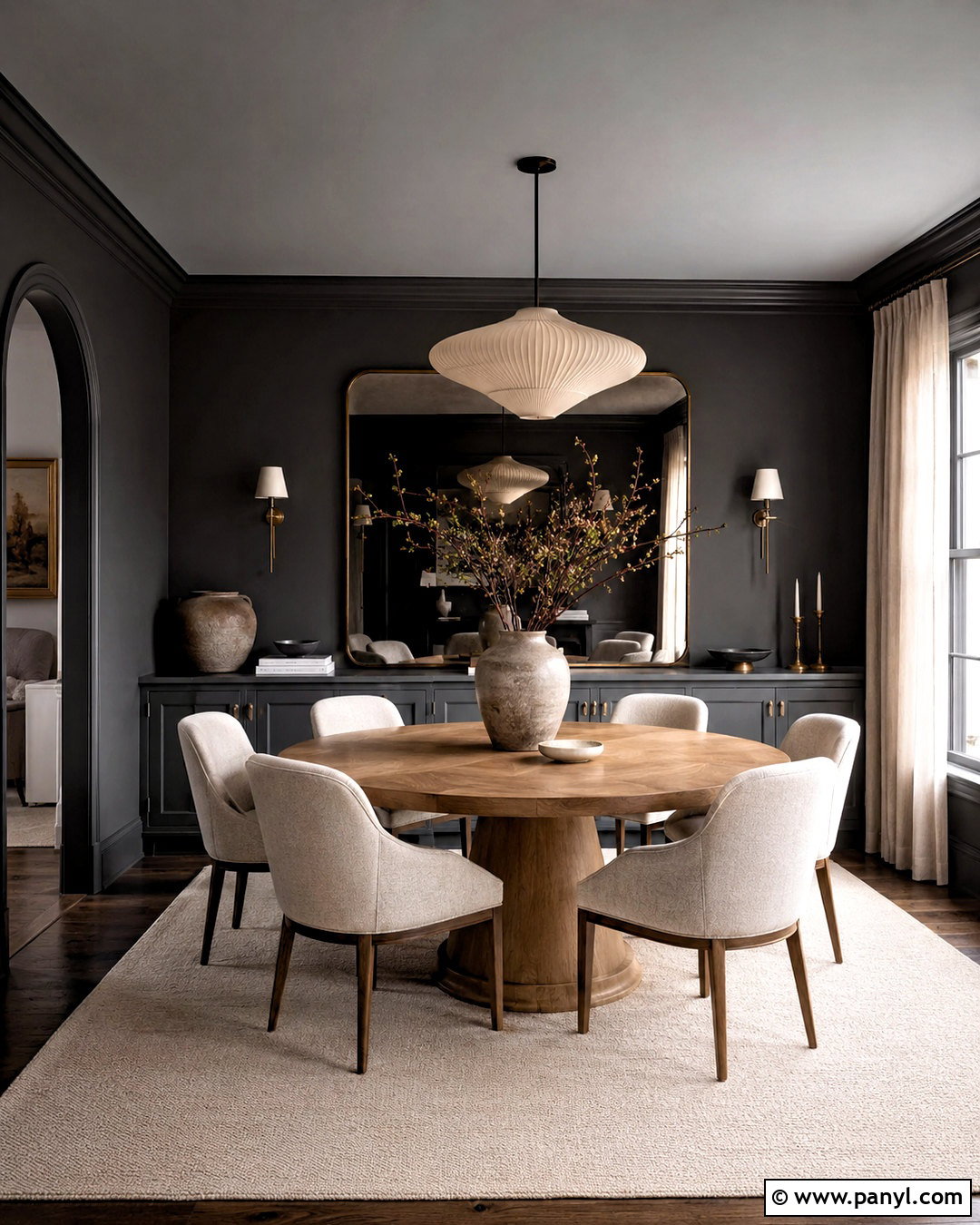
10. Soft Black Accent Wall
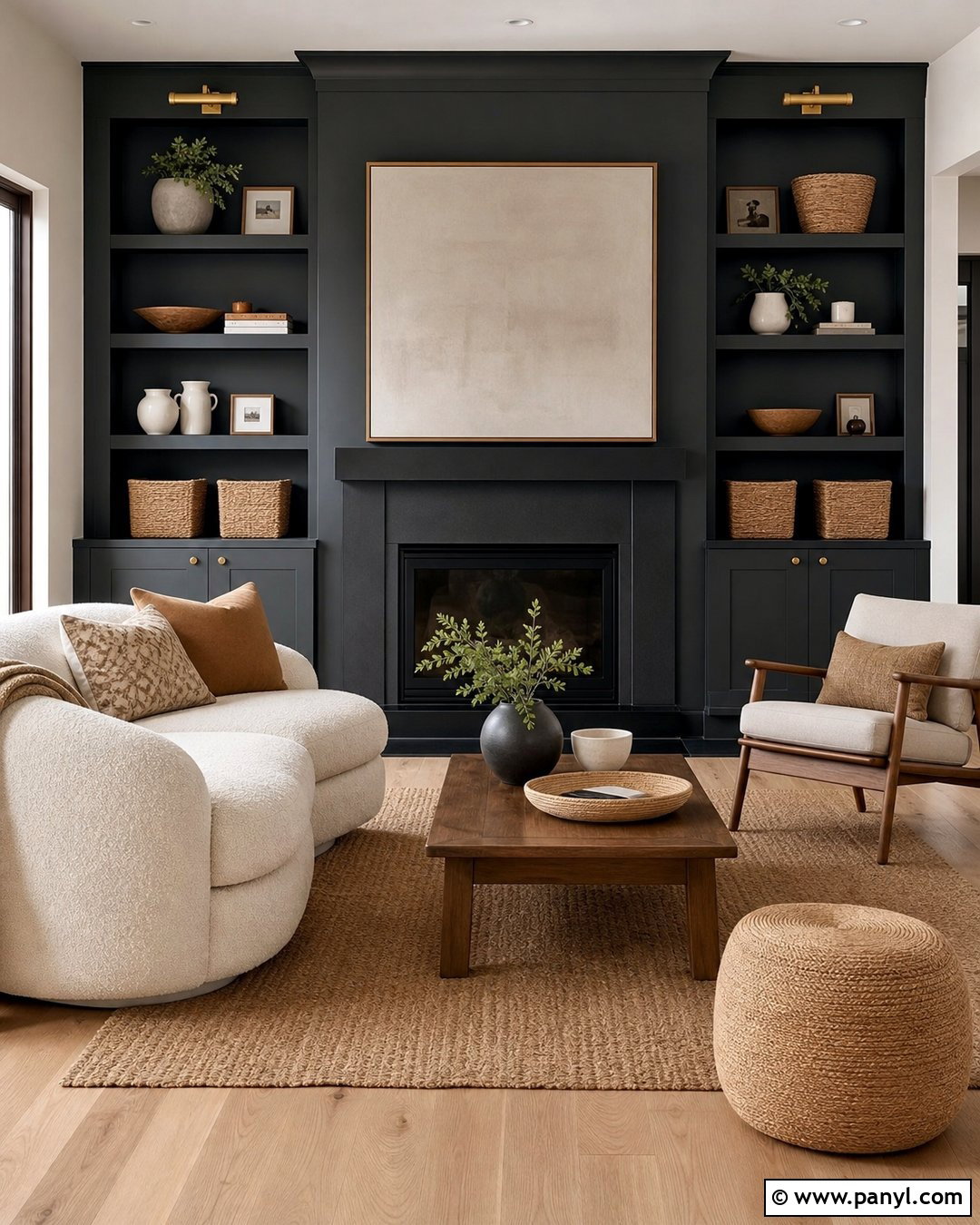
Soft black paint can highlight architectural details while feeling less harsh than a pure, blue-based black. Use it on a living room fireplace wall, including the mantel or built-in shelving for a unified focal point. Surround it with warm white walls, pale oak floors, and a cream boucle sofa. Add a walnut coffee table, woven baskets, and muted camel pillows to warm the strong contrast. Minimal brass sconces provide a small touch of shine. Keep artwork simple, or place one oversized neutral canvas above the mantel. A natural fiber rug can soften the modern palette and make it family-friendly. With thoughtful lighting and warm materials, a soft black accent wall looks intentional, dimensional, and surprisingly comfortable rather than stark or overpowering.
11. Mustard Yellow Accent Wall
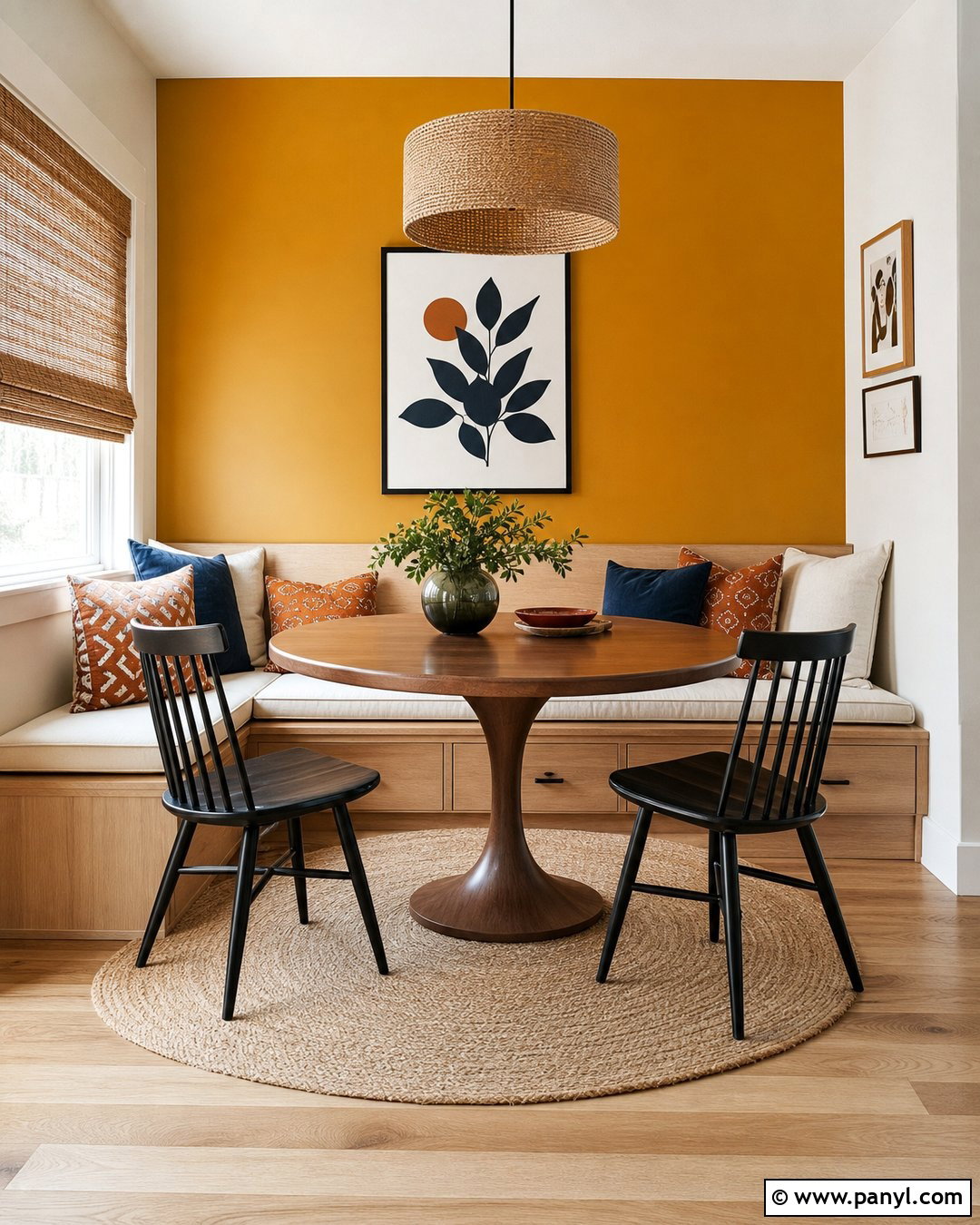
Mustard yellow brings cheerful warmth to a breakfast nook, playroom, or casual dining area. Paint the wall behind a built-in bench with a light oak seat and practical storage drawers. Keep neighboring walls warm white and use cream cushions to balance the bold color. A round walnut table and simple black chairs create a grounded, modern arrangement. Add patterned pillows in rust, navy, and ivory to connect the yellow with the rest of the room. A woven pendant light and natural bamboo shade reinforce the cozy atmosphere. Choose graphic artwork with clean shapes rather than adding many small decorations. This complete nook feels bright and energetic, yet the deeper mustard tone remains easier to live with than a sharp, highly saturated lemon yellow.
12. Clay Pink Accent Wall
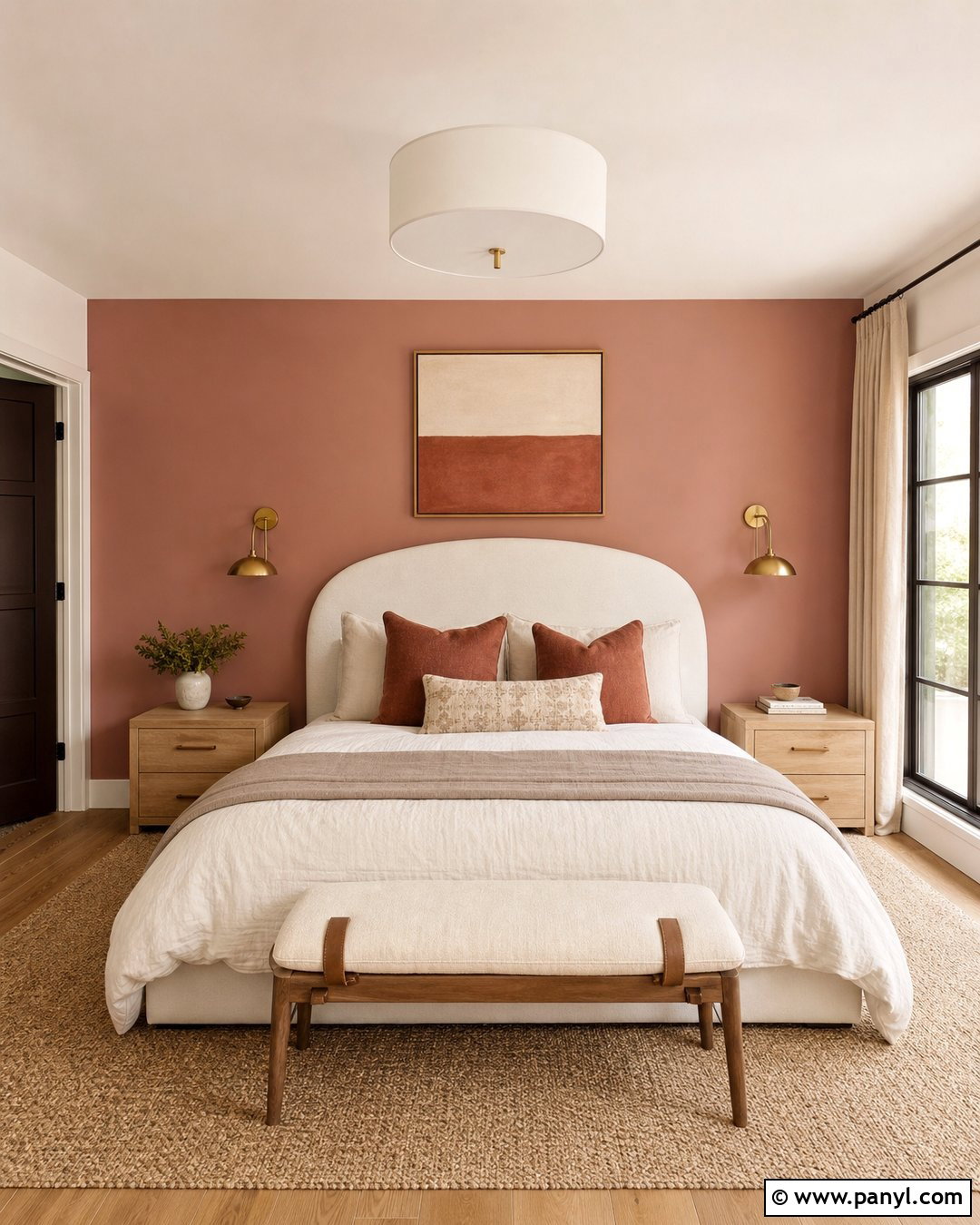
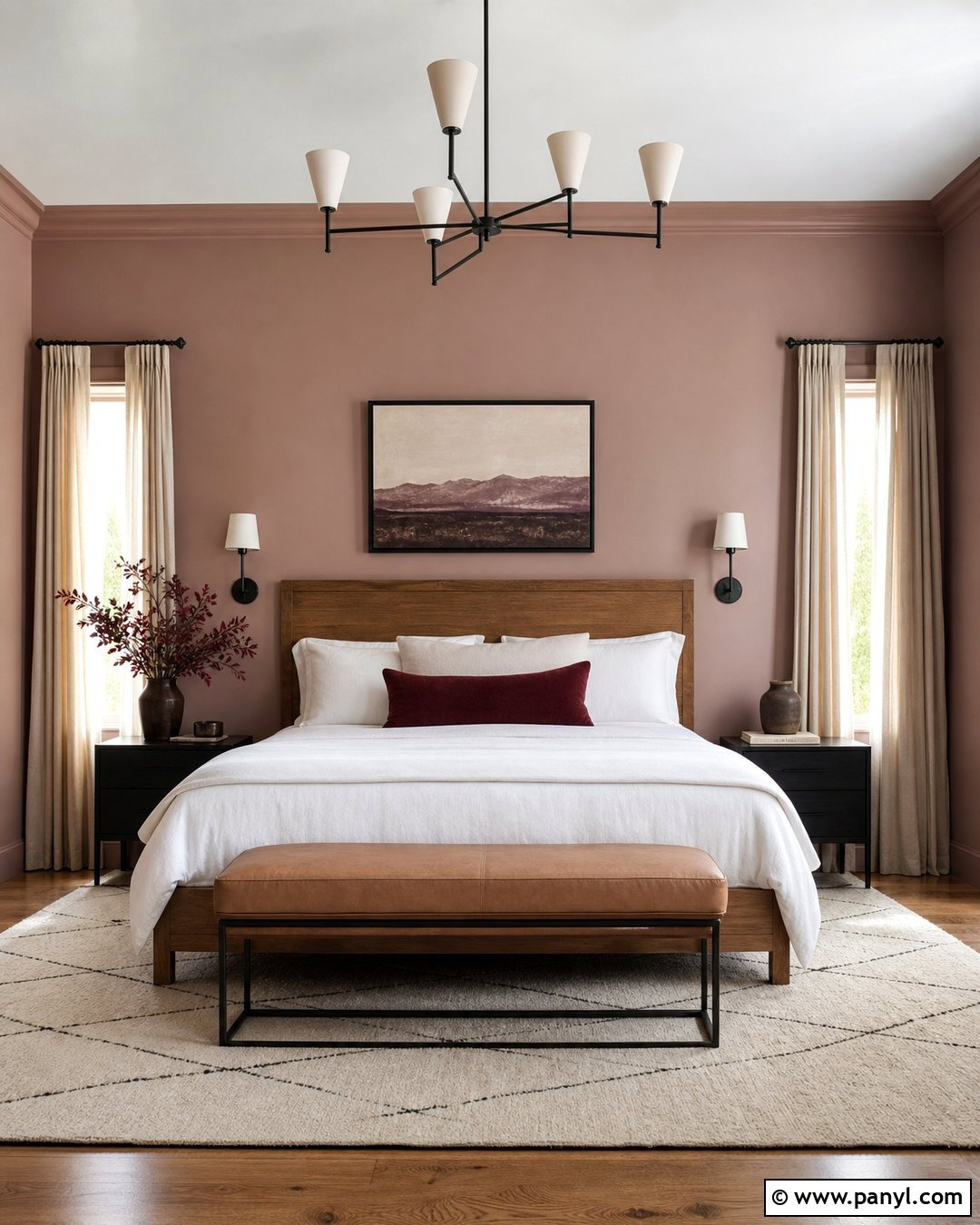
Clay pink has warm beige and earthy red undertones, making it a sophisticated choice for a bedroom or home office. Use it behind a curved cream headboard, then pair it with warm white walls and pale oak furniture. Linen bedding in ivory and soft taupe keeps the room relaxed, while rust-colored pillows deepen the palette. Add aged brass sconces, a woven rug, and simple ceramic accessories for texture. Dark brown frames or a slim walnut bench provide enough contrast to define the softer colors. Avoid overly sweet decorative details and choose abstract art or quiet landscapes instead. The finished bedroom feels warm, modern, and balanced. Clay pink delivers noticeable color while remaining muted enough to support natural materials and neutral furnishings.
13. Forest Green Accent Wall
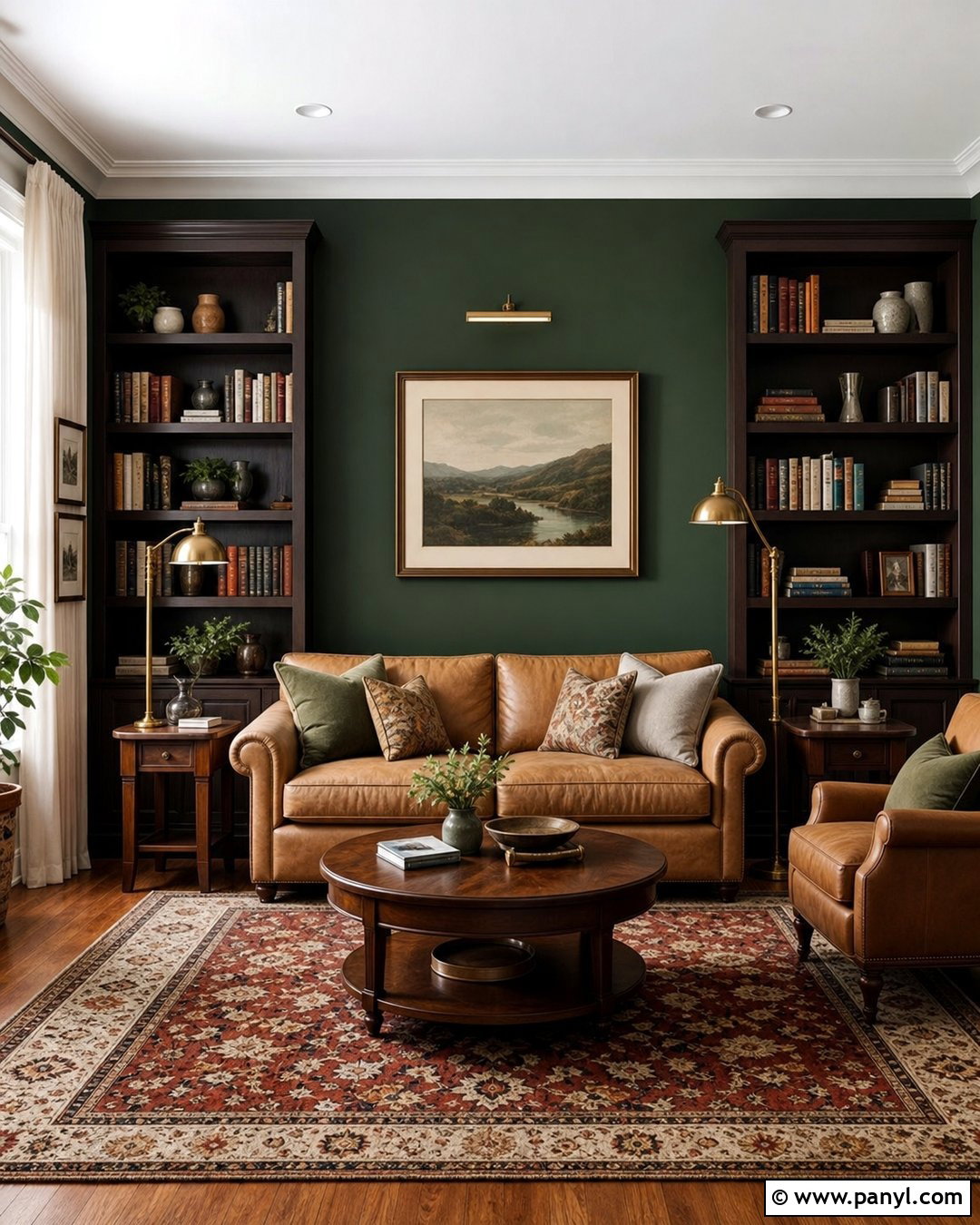
Forest green can anchor a library-inspired living room with depth and classic character. Paint the wall behind a substantial bookcase, reading chair, or fireplace. Pair it with warm ivory walls, dark oak flooring, and a camel leather sofa. A patterned rug in red, cream, and faded blue brings dimension without competing with the green. Choose antique brass floor lamps and walnut side tables to reinforce the rich palette. Books, pottery, and framed artwork can fill the shelving, but leave some open space to avoid clutter. Cream curtains and a light-colored ceiling help the room stay bright. The complete look feels established and comfortable, combining traditional colors with a simple furniture arrangement that suits both reading and everyday conversation.
14. Powder Blue Accent Wall
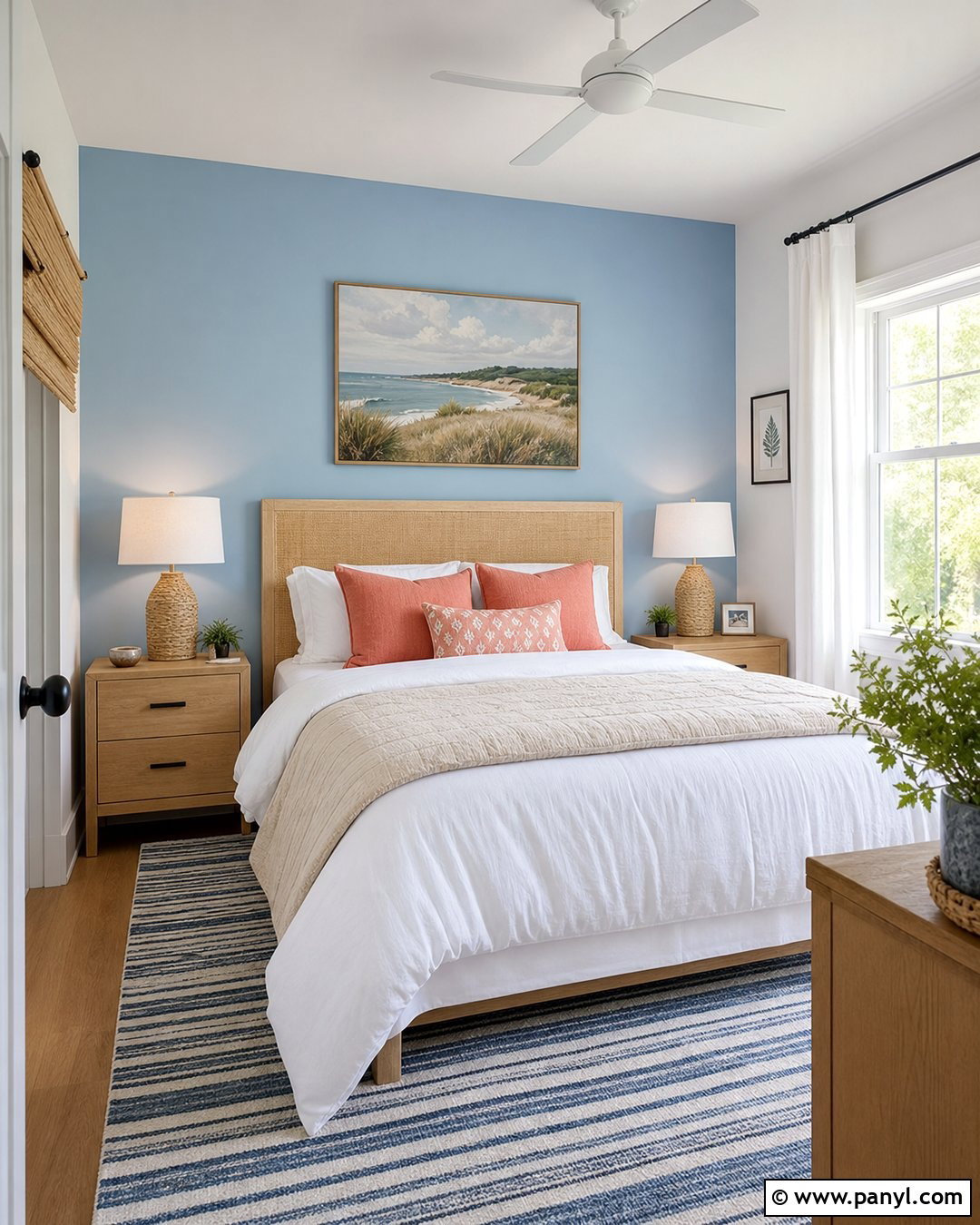
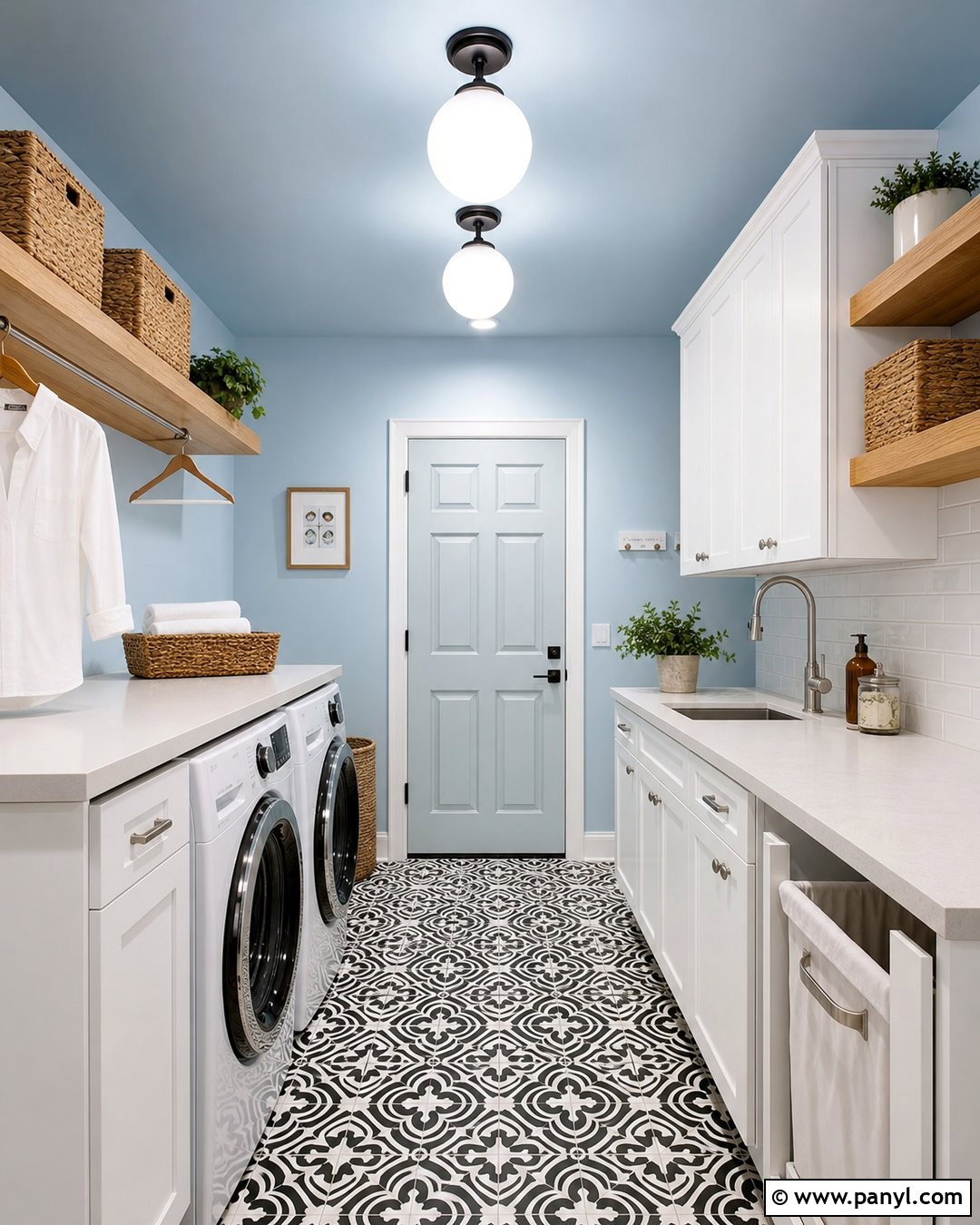
Powder blue creates a fresh, open feeling in a small bedroom, laundry room, or breakfast area. For a guest bedroom, paint the wall behind a natural cane headboard and keep the other walls creamy white. Layer the bed with white cotton bedding, a pale tan quilt, and small accents of coral or muted red. Light oak nightstands and woven lamps introduce warmth, preventing the blue from feeling too cool. Add a striped flat-weave rug and simple white curtains for an easy coastal influence. Artwork can feature soft landscapes or loose botanical shapes. Avoid filling the room with more blue furniture. The completed palette feels light, welcoming, and versatile, with enough warm texture to remain comfortable in every season.
15. Plum Accent Wall
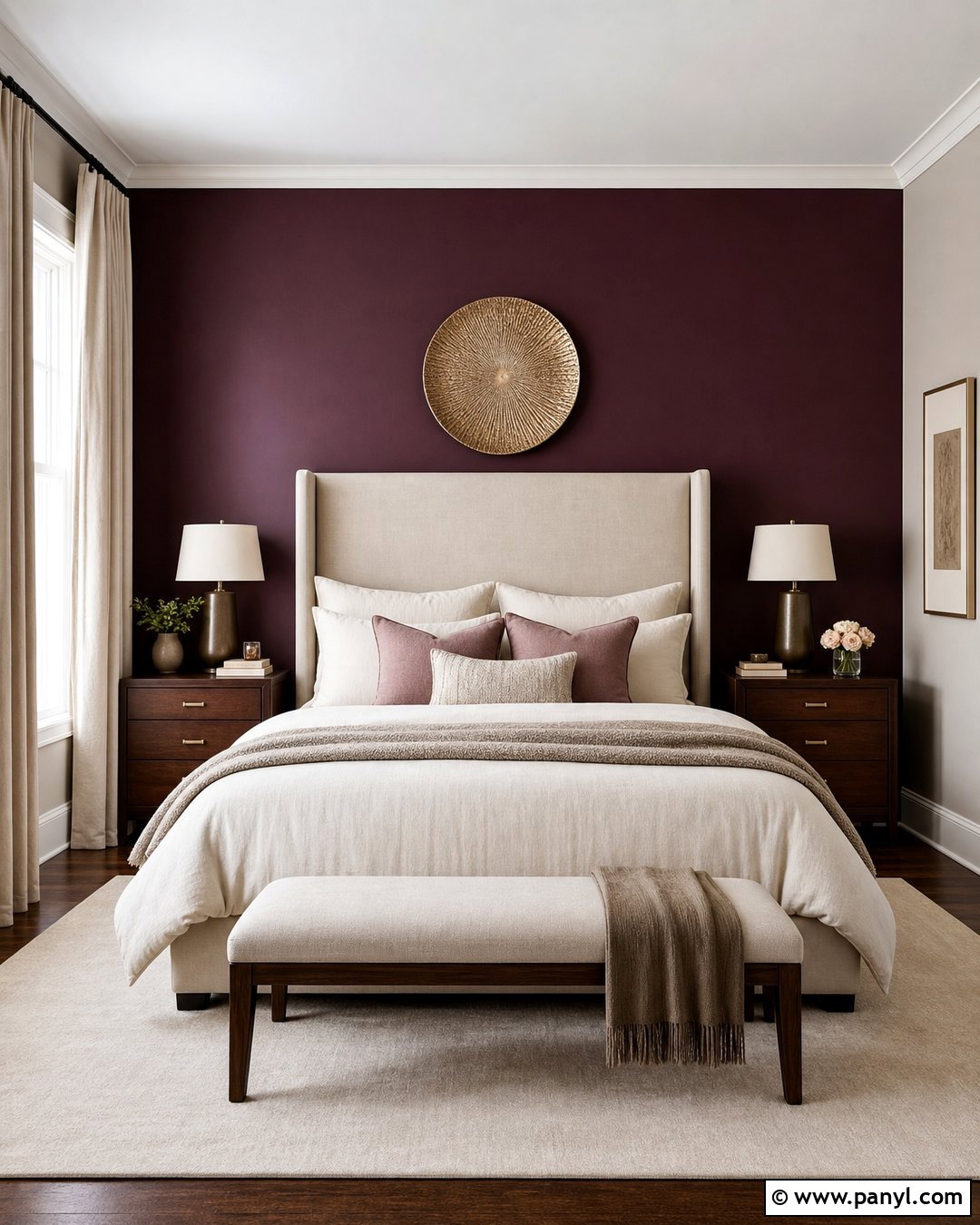
Plum creates a distinctive, cozy focal point in a bedroom without relying on the more common navy or green. Apply it behind a tall oatmeal headboard, then balance it with pale greige walls and light wood flooring. Dress the bed in ivory linen, dusty rose pillows, and a warm taupe blanket. Walnut nightstands and bronze lamps complement the red undertones in the paint. A cream rug keeps the darker wall from visually weighing down the room. Choose artwork with muted violet, brown, and beige details, or hang a sculptural brass piece above the bed. Natural linen curtains soften the windows. This coordinated design makes plum feel elegant and approachable, with neutral furnishings allowing its subtle richness to become the main attraction.
16. Burnt Orange Accent Wall
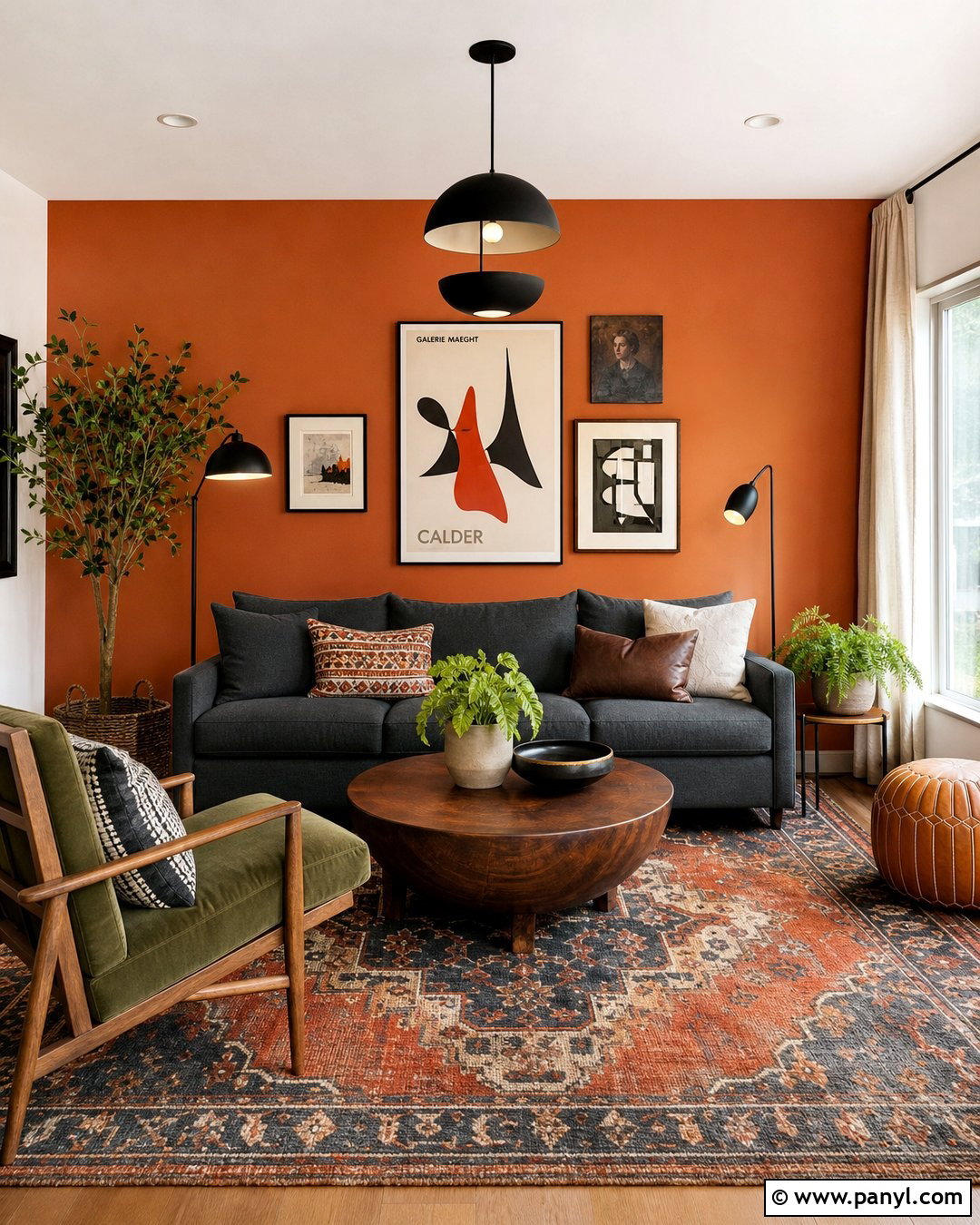
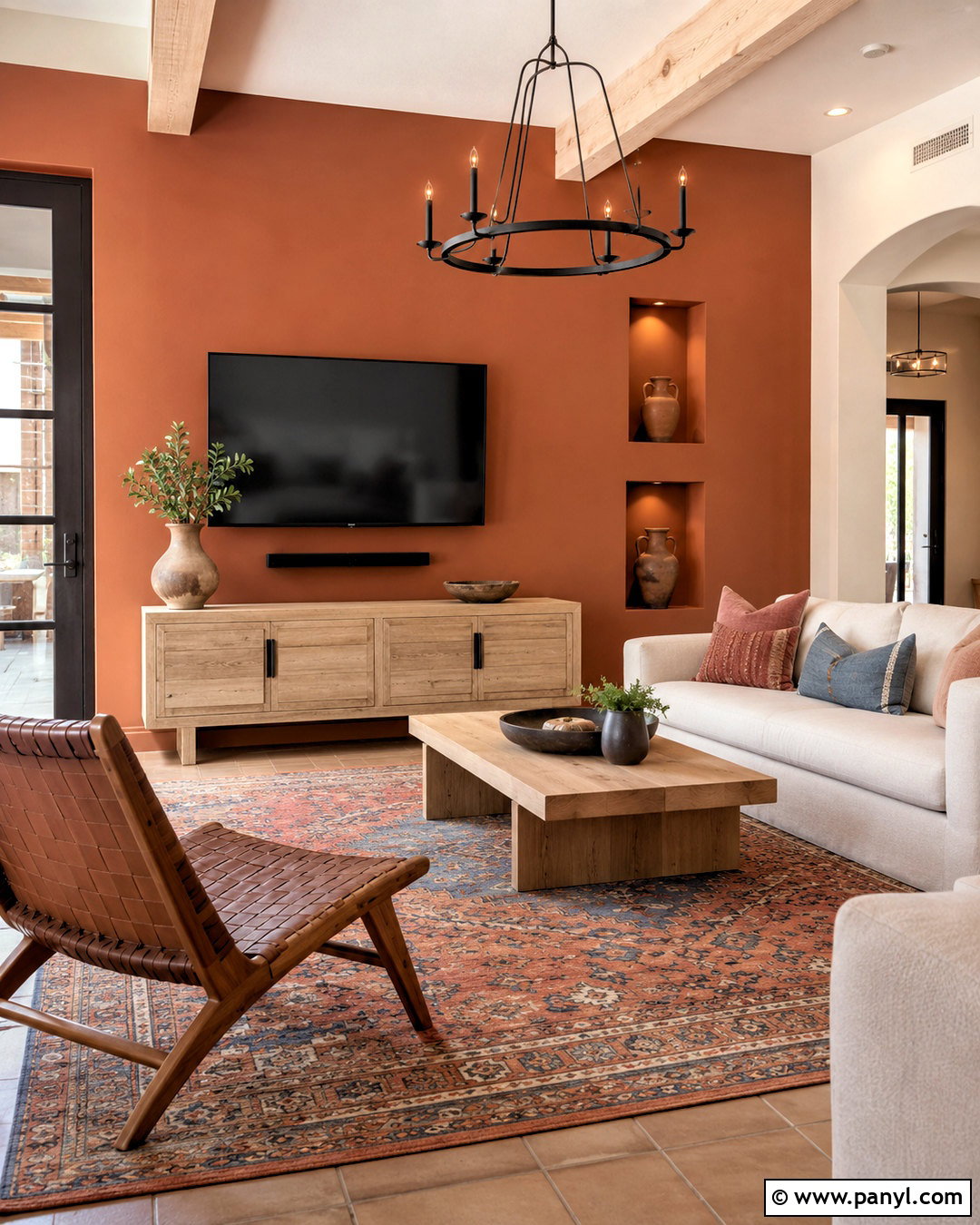
Burnt orange adds energy to a den or living room while retaining an earthy, natural quality. Use it behind a charcoal-gray sofa and pair it with warm cream walls. A vintage-style rug containing rust, tan, navy, and ivory can unite the room’s strongest colors. Choose walnut furniture, matte black lighting, and oatmeal curtains for a balanced mix of warmth and structure. Add olive green through a lounge chair, pillows, or a large plant. Keep the artwork simple and graphic so the room does not become visually busy. A round wood coffee table softens the arrangement and supports easy conversation. This complete design feels lively but grounded, making burnt orange a practical option for spaces that need personality and welcoming warmth.
17. Greige Accent Wall
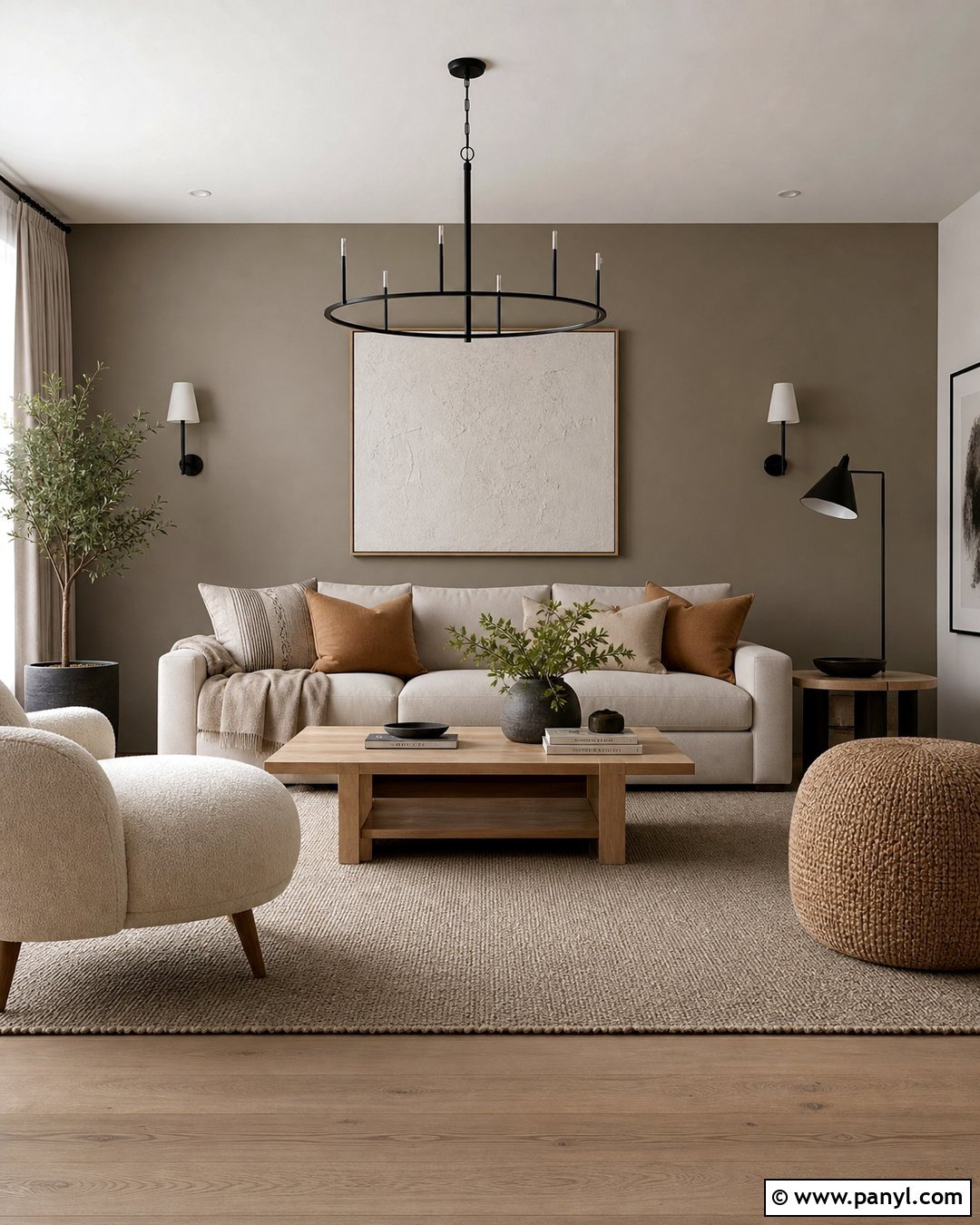
Greige may be subtle, but a deeper version can create quiet contrast in a neutral living room. Paint the focal wall two or three shades darker than the surrounding warm white walls. Place a cream sofa against it, then add pale oak tables, a taupe rug, and oatmeal linen curtains. Black metal lighting and thin picture frames give the soft palette needed definition. Layer pillows in camel, ivory, and muted brown rather than introducing a disconnected bright color. One oversized textural artwork can make the accent wall feel purposeful. Add a boucle chair or woven ottoman for extra dimension. This full room design suits open-plan homes because it defines one area gently, without interrupting the calm color flow shared with nearby spaces.
18. Peacock Blue Accent Wall
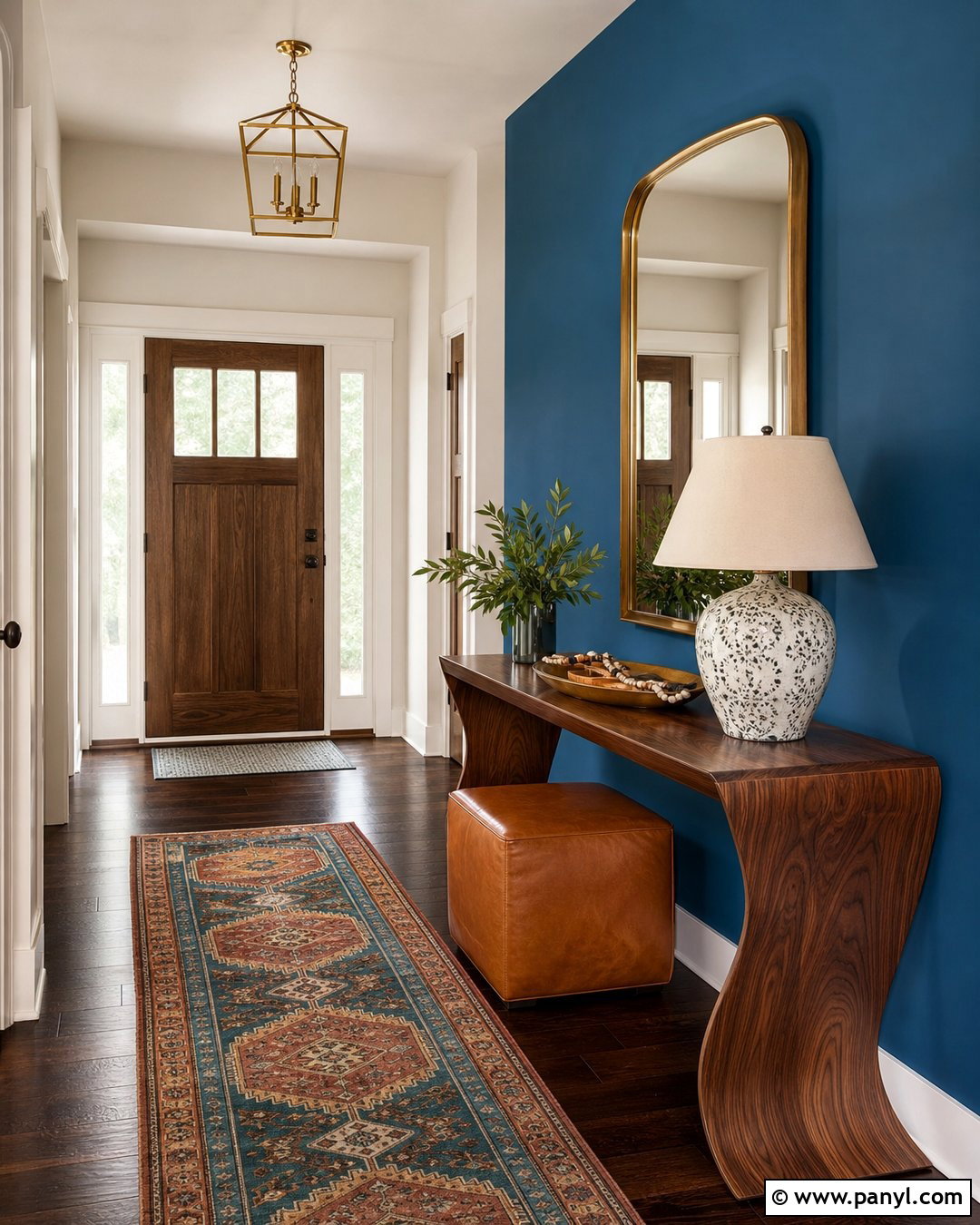
Peacock blue makes an expressive statement in an entryway, dining room, or eclectic living area. Use it behind a narrow walnut console with curved edges, then paint the remaining walls soft ivory. Hang a large brass-framed mirror to reflect light and break up the saturated surface. Add a patterned runner featuring teal, rust, gold, and cream for a collected look. A ceramic lamp with an off-white shade provides soft contrast, while a small cognac leather stool brings practical seating. Keep accessories limited to a tray, a vase, and one leafy plant. Dark wood flooring works especially well with this blue-green shade. The completed entry feels memorable and polished without sacrificing the practical simplicity needed near a home’s main door.
19. Warm Taupe Accent Wall
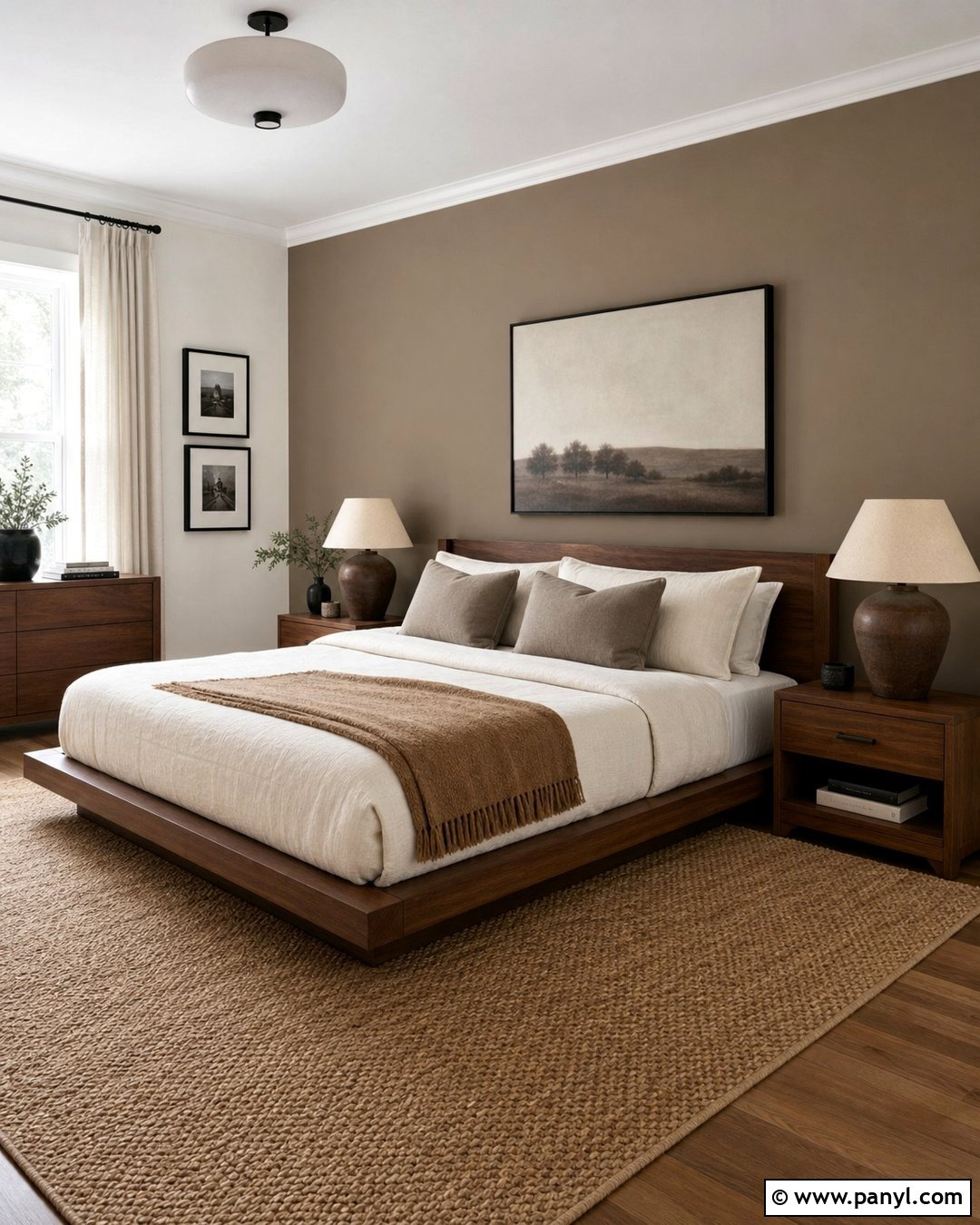
Warm taupe creates a restful accent wall that adds dimension without drawing too much attention. It is especially useful in a bedroom filled with soft neutrals and natural textures. Paint the wall behind a walnut platform bed, leaving the other walls creamy white. Use ivory bedding, mushroom-colored pillows, and a camel wool throw to build gentle tonal layers. Add linen lampshades, bronze hardware, and a large woven rug for subtle texture. Black can appear in narrow picture frames or small nightstand details, but it should not dominate. Hang one landscape print or a balanced pair of abstract works above the bed. This complete look feels calm and timeless, offering more warmth and definition than a standard beige bedroom.
20. Coral Accent Wall
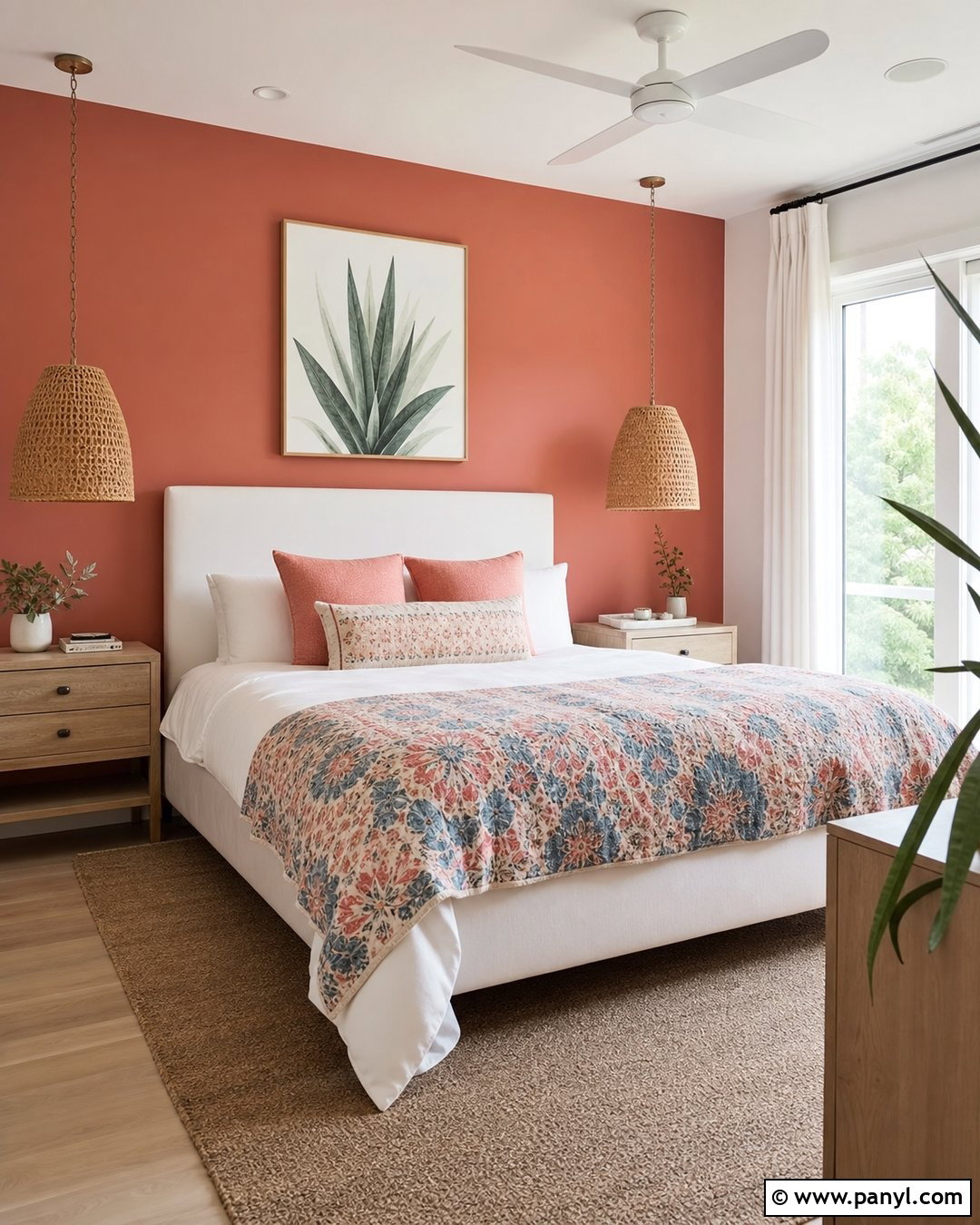
Coral gives a sunlit room a playful focal point while feeling softer and more livable than bright orange. Try it behind a white upholstered bed in a cheerful guest room with warm white surrounding walls. Add pale oak nightstands, crisp white bedding, and a quilt patterned with coral, soft blue, and sandy beige. Woven pendant lights and a natural jute rug introduce casual texture. Use sky-blue pillows sparingly to create a fresh contrast, then finish with light linen curtains and simple botanical artwork. Small brass or matte white hardware keeps the design polished. The finished room feels colorful, relaxed, and welcoming. Choosing a muted coral with earthy undertones helps the accent wall coordinate naturally with wood, neutrals, and everyday decor.
Conclusion:
The most successful accent wall is part of a complete color story. Consider the flooring, furniture, trim, natural light, and existing finishes before choosing your paint. Dark shades such as navy, chocolate, and forest green create depth, while sage, powder blue, and warm taupe offer softer definition. Earthy colors like terracotta, clay pink, and burnt orange bring warmth without requiring a full-room repaint. Whichever shade you prefer, sample it directly on the focal wall and view it at different times of day. Repeat the color through a few small details for a connected finish. These **20 Cool Accent Wall Colors** provide practical starting points for creating a balanced, personal, and inviting room.

Related Ideas and Inspiration:
Leave a Reply