
If you are searching for **20 setting plaster living room ideas**, this warm, muted pink-beige paint color offers a flexible starting point. Farrow & Ball’s Setting Plaster can feel peachy in bright daylight, softly pink in shaded rooms, or almost neutral beside cream, brown, and natural wood. The key is building a complete palette around its earthy warmth rather than treating it like a sugary pastel. It works with traditional antiques, streamlined modern furniture, relaxed cottage pieces, and colorful family-room decor. Lighting, flooring, trim, textiles, and accent colors will determine whether the finished space feels fresh, cozy, dramatic, or understated. The following complete room schemes provide practical layouts and coordinated details you can recreate from these **20 setting plaster living room ideas**.

1. Setting Plaster Living Room With Cream Furniture
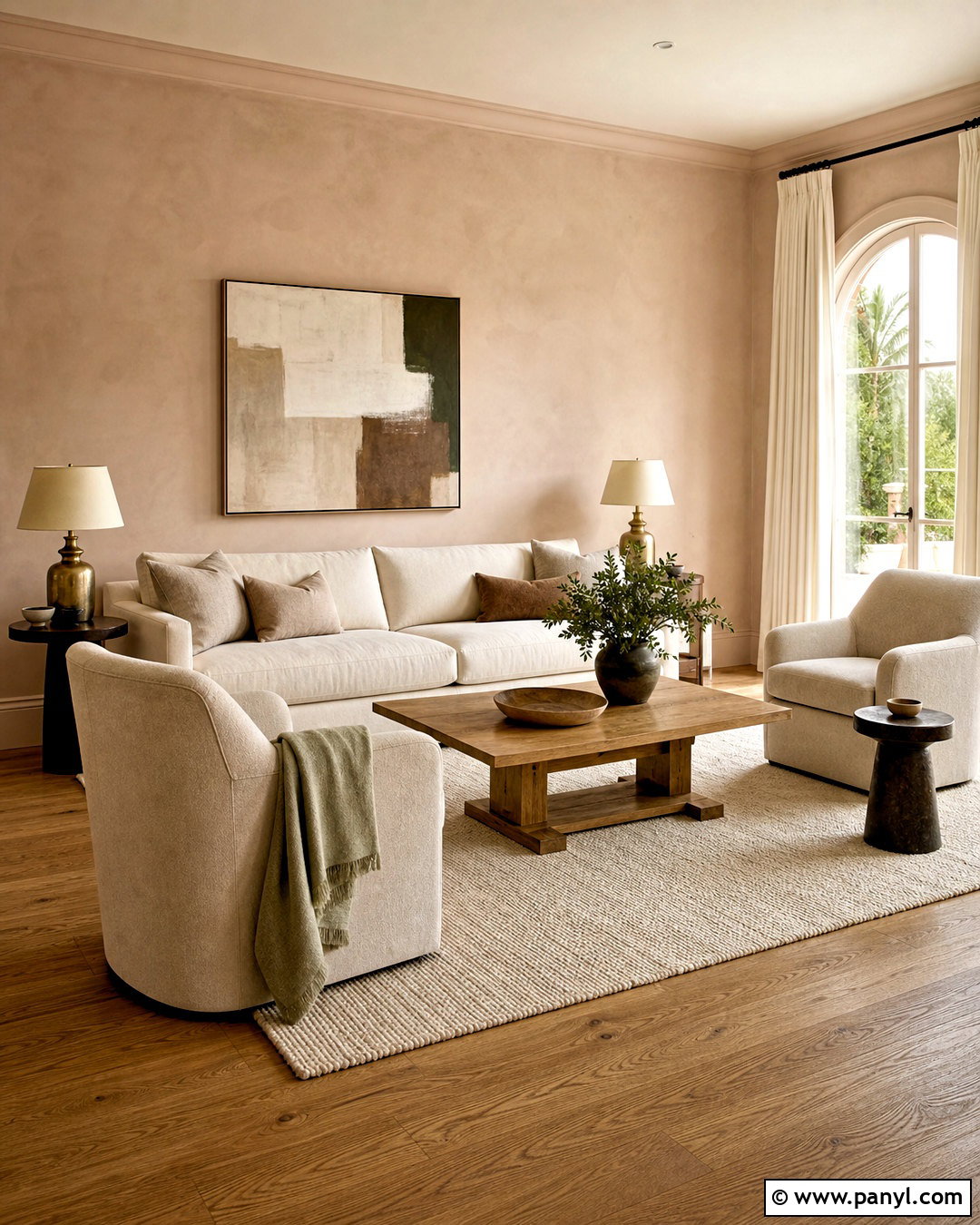
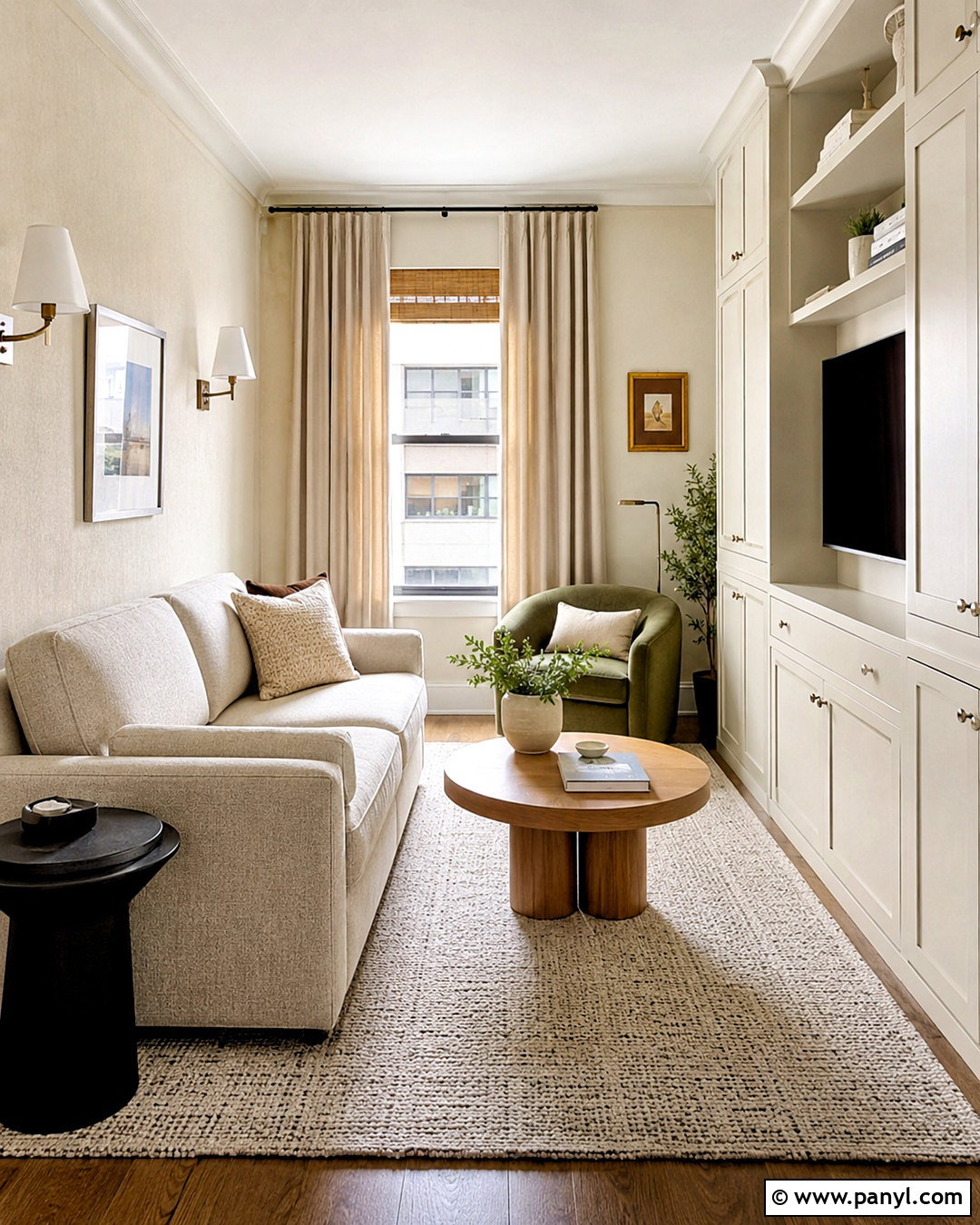
Cream upholstery creates a soft, seamless transition from Setting Plaster walls without making the room look overly pink. Start with a generously sized cream linen sofa facing a simple plaster or limestone fireplace. Add two oatmeal armchairs at right angles to establish a comfortable conversation area. A warm ivory wool rug will connect the seating while allowing medium oak flooring to remain visible around the edges. Choose an oak coffee table, aged brass floor lamp, and off-white curtains for gentle tonal variation. Small accents in rust, dusty rose, and chocolate brown give the pale palette definition. Finish with large abstract artwork containing cream, peach, and muted brown. This complete scheme feels relaxed and sophisticated while remaining bright enough for an everyday family living room.
2. Setting Plaster Living Room With Burgundy Accents
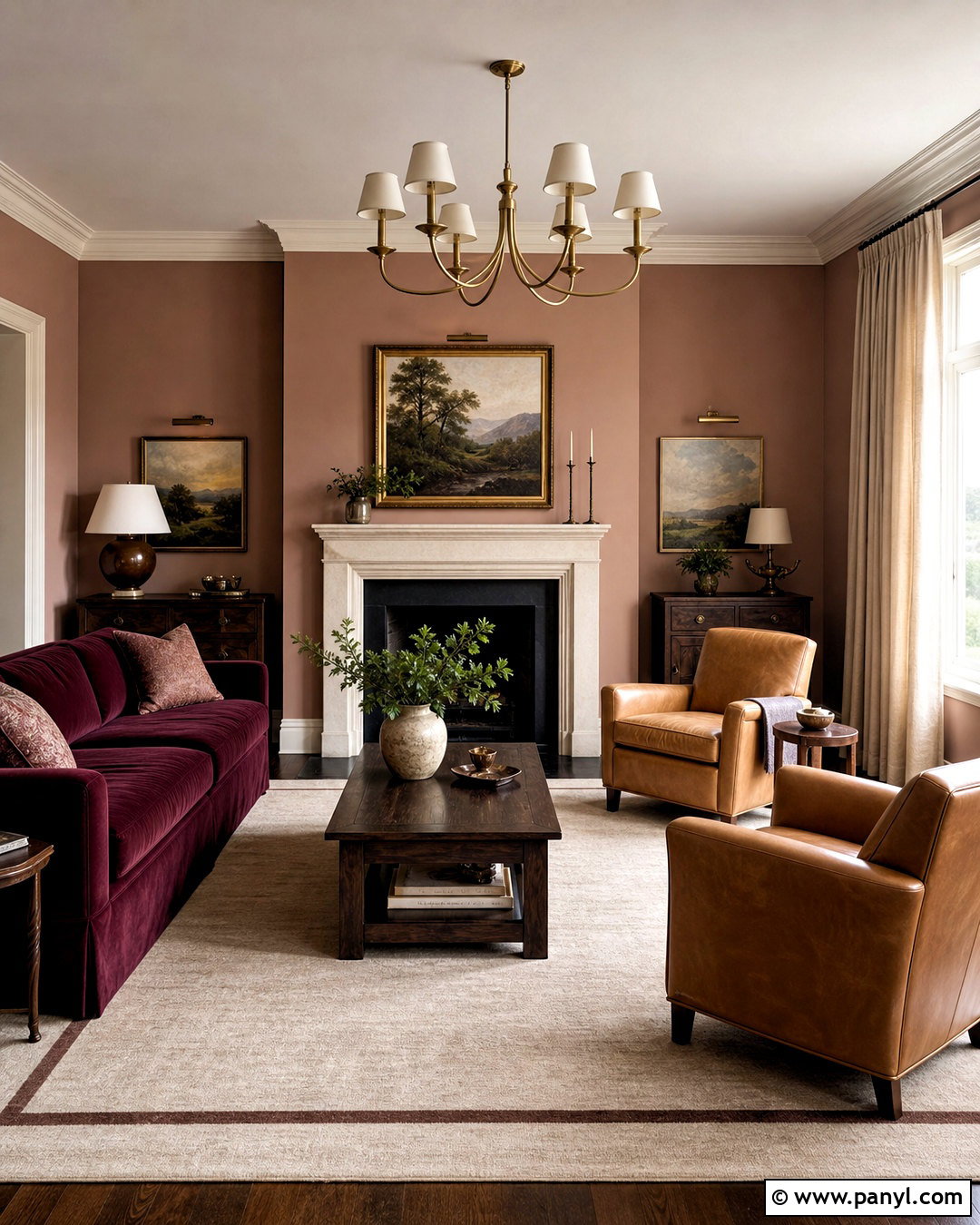
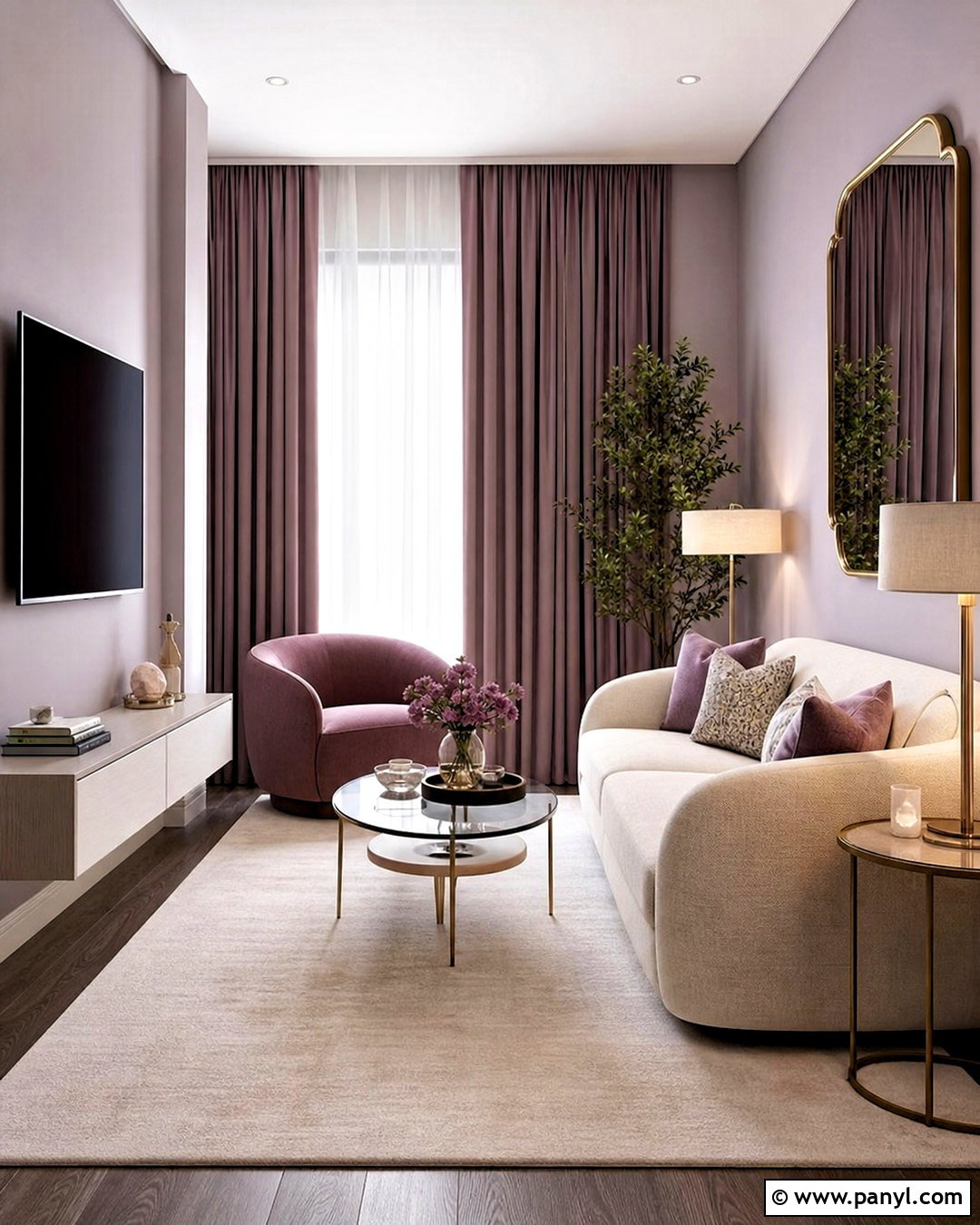
Deep burgundy brings structure and maturity to the earthy pink undertones of Setting Plaster. Use the wall color throughout the room, then introduce a burgundy velvet sofa as the visual anchor. Balance its strong color with two camel leather chairs and a large neutral rug featuring a subtle red border. Dark walnut nesting tables, an antique brass chandelier, and framed oil paintings reinforce the warm, grounded mood. Keep the ceiling creamy white so the room does not become visually heavy. Full-length curtains in oatmeal linen will soften the windows and prevent the red accents from feeling formal. Repeat burgundy sparingly through patterned pillows and ceramic lamps. The resulting living room feels cozy, collected, and welcoming rather than overly feminine or dominated by one color.
3. Setting Plaster Living Room With Navy Blue
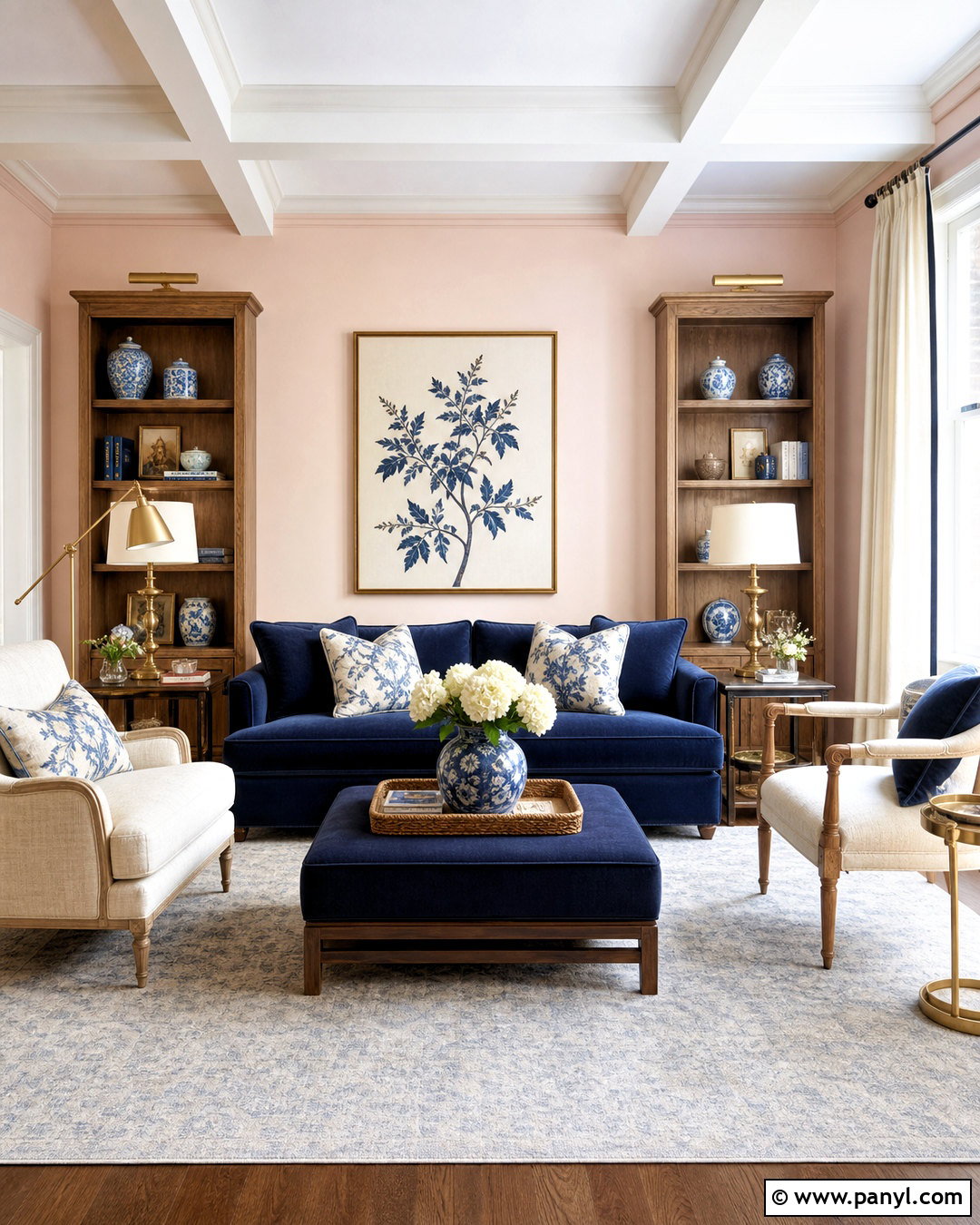
Navy blue gives a Setting Plaster living room crisp contrast while preserving its comfortable character. Place a tailored navy sofa against the longest wall and arrange two natural linen chairs opposite it. A pale patterned rug with blue, beige, and faded blush details will tie the furniture to the walls. Use medium-toned oak for the coffee table and built-in shelving, then introduce polished nickel or brushed brass lighting for a refined finish. White-painted trim keeps the boundaries clear and makes architectural details more noticeable. Add navy Roman shades beneath simple ivory curtain panels for flexible light control. Botanical artwork, blue-and-white ceramics, and a few olive green plants complete the room. This balanced palette suits both traditional homes and clean, contemporary interiors without looking nautical.
4. Setting Plaster Living Room With Sage Green
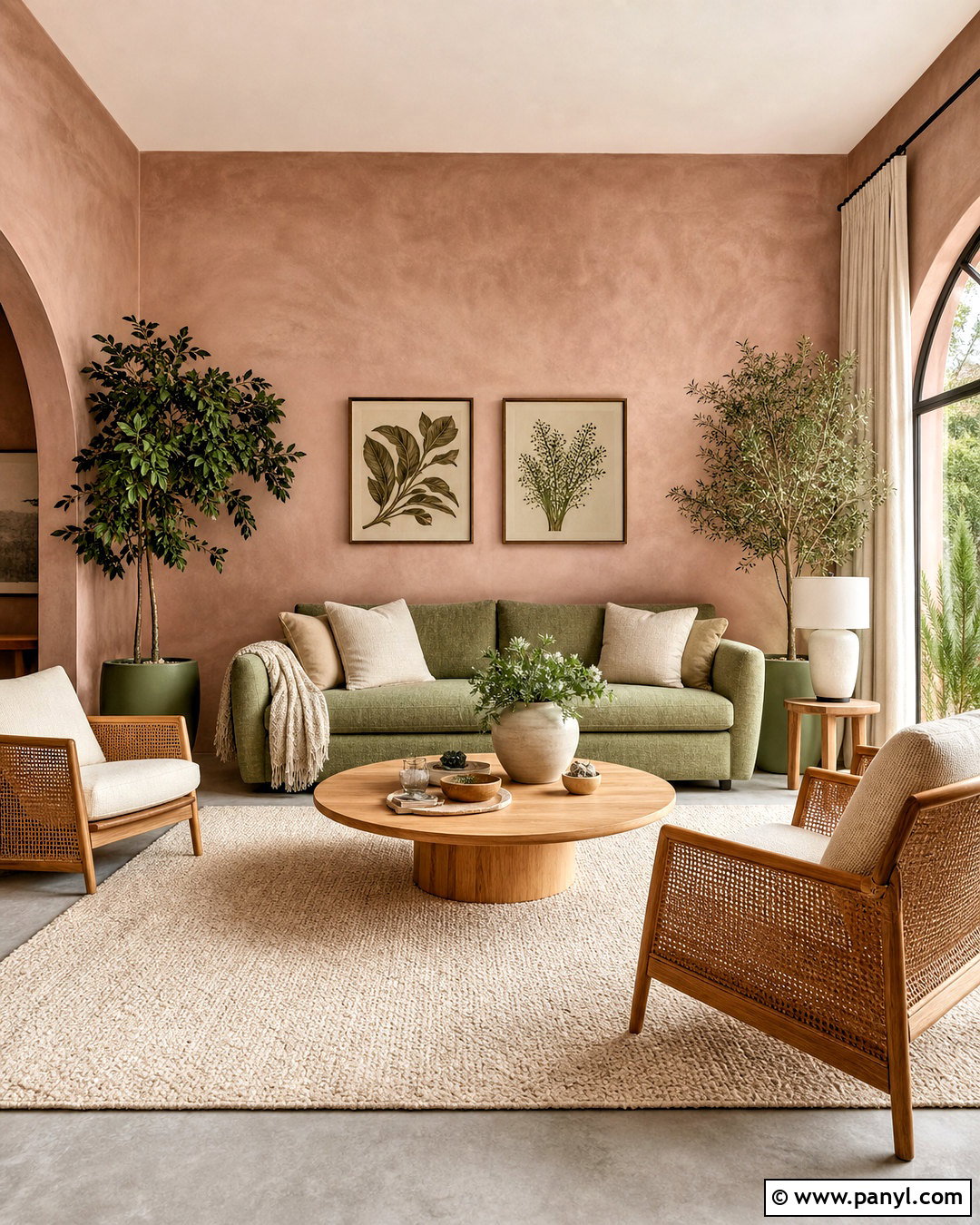
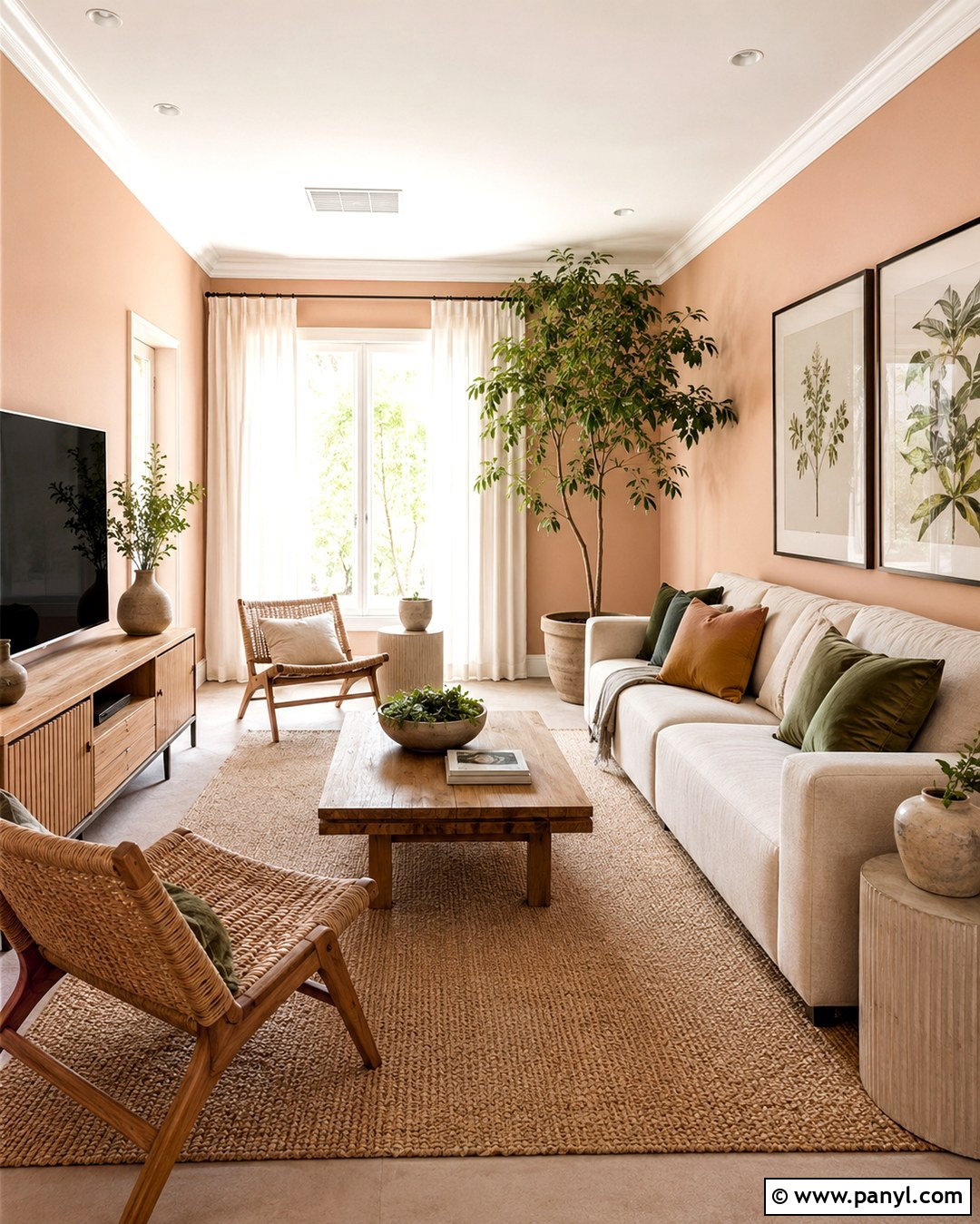
For a calm, nature-inspired room, combine Setting Plaster walls with soft sage green seating and pale wood. A sage linen sofa can sit opposite a pair of woven cane chairs with cream cushions, creating an airy conversational layout. Ground the arrangement with a textured ivory rug and a low oak coffee table with rounded edges. Choose unbleached linen curtains, ceramic table lamps, and simple botanical prints in light wood frames. A few darker green details, such as velvet pillows or glazed planters, add depth without interrupting the peaceful effect. Keep the ceiling and trim warm white rather than brilliant white. The restrained combination of dusty pink, muted green, cream, and oak feels organic and comfortable, making it especially effective for a quiet living room overlooking a garden.
5. Setting Plaster Living Room With Olive Green
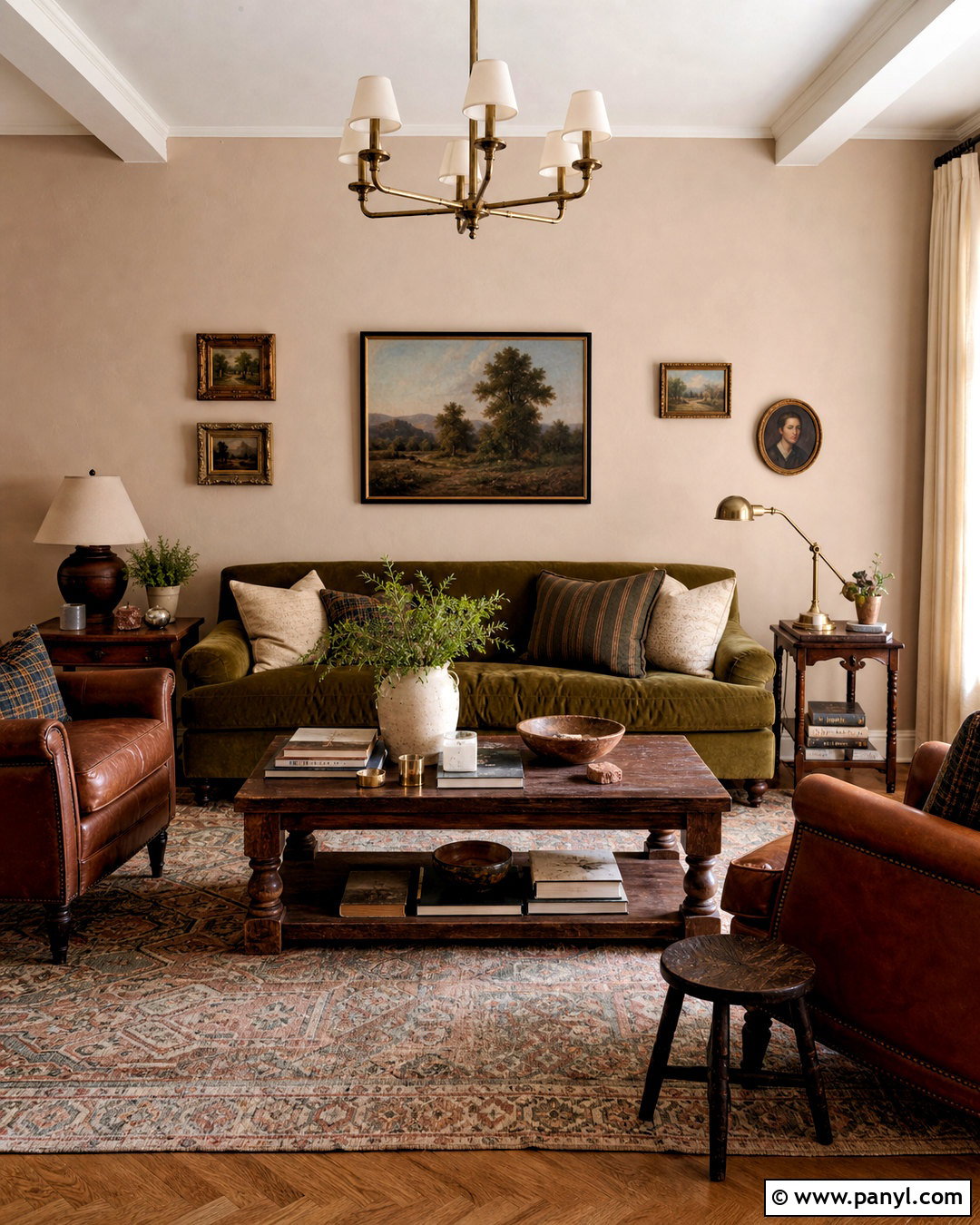
Olive green produces a richer, more grounded contrast than pale sage. Begin with Setting Plaster walls and an olive velvet sofa positioned beneath a large landscape painting. Add a pair of tobacco-colored leather chairs, placing them near the fireplace or angled toward the sofa. A faded Persian-style rug containing rust, olive, cream, and dusty pink will unite the entire palette. Dark oak side tables, antique brass lighting, and substantial linen curtains create warmth and visual weight. Paint built-in cabinetry olive green if the room can handle an additional block of color, but keep the shelves lightly arranged. Display pottery, books, and small framed artwork instead of numerous tiny accessories. This complete design feels established and layered, making it suitable for older homes or living rooms with traditional architectural details.
6. Setting Plaster Living Room With Charcoal Gray
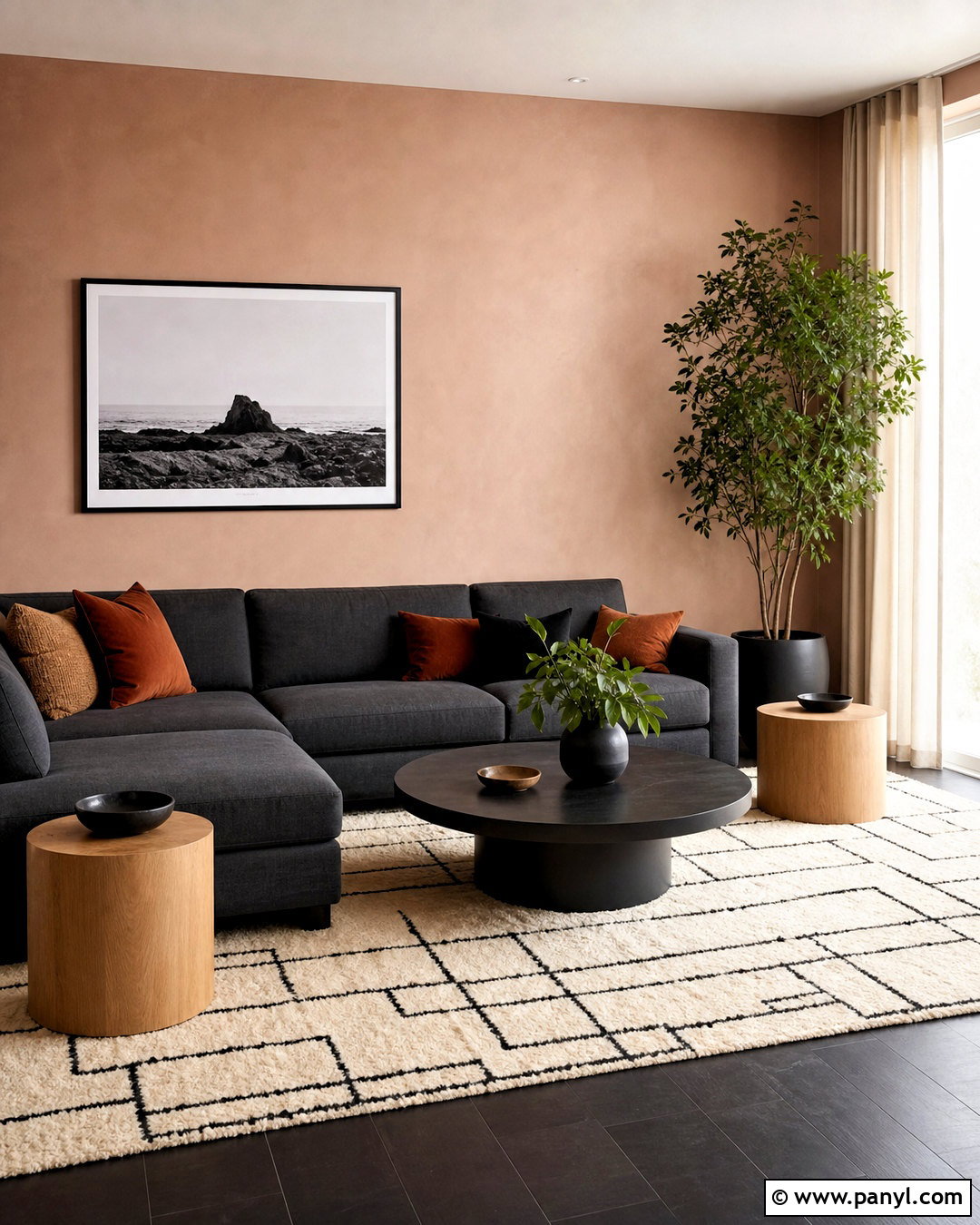
Charcoal gray can sharpen Setting Plaster without producing the cold effect sometimes associated with lighter gray. Choose a charcoal sectional with clean lines and place it on a large cream-and-black geometric rug. A round black coffee table will reinforce the modern contrast, while pale oak side tables prevent the arrangement from feeling severe. Keep window treatments simple with warm white linen curtains hung close to the ceiling. Matte black sconces, sculptural ceramic lamps, and monochrome photography add definition against the softly colored walls. Introduce warmth through camel pillows, a rust-colored throw, and one substantial green plant. The mix of earthy pink, dark gray, black, cream, and oak creates a practical contemporary living room that feels polished but still comfortable enough for daily use.
7. Setting Plaster Living Room With Chocolate Brown
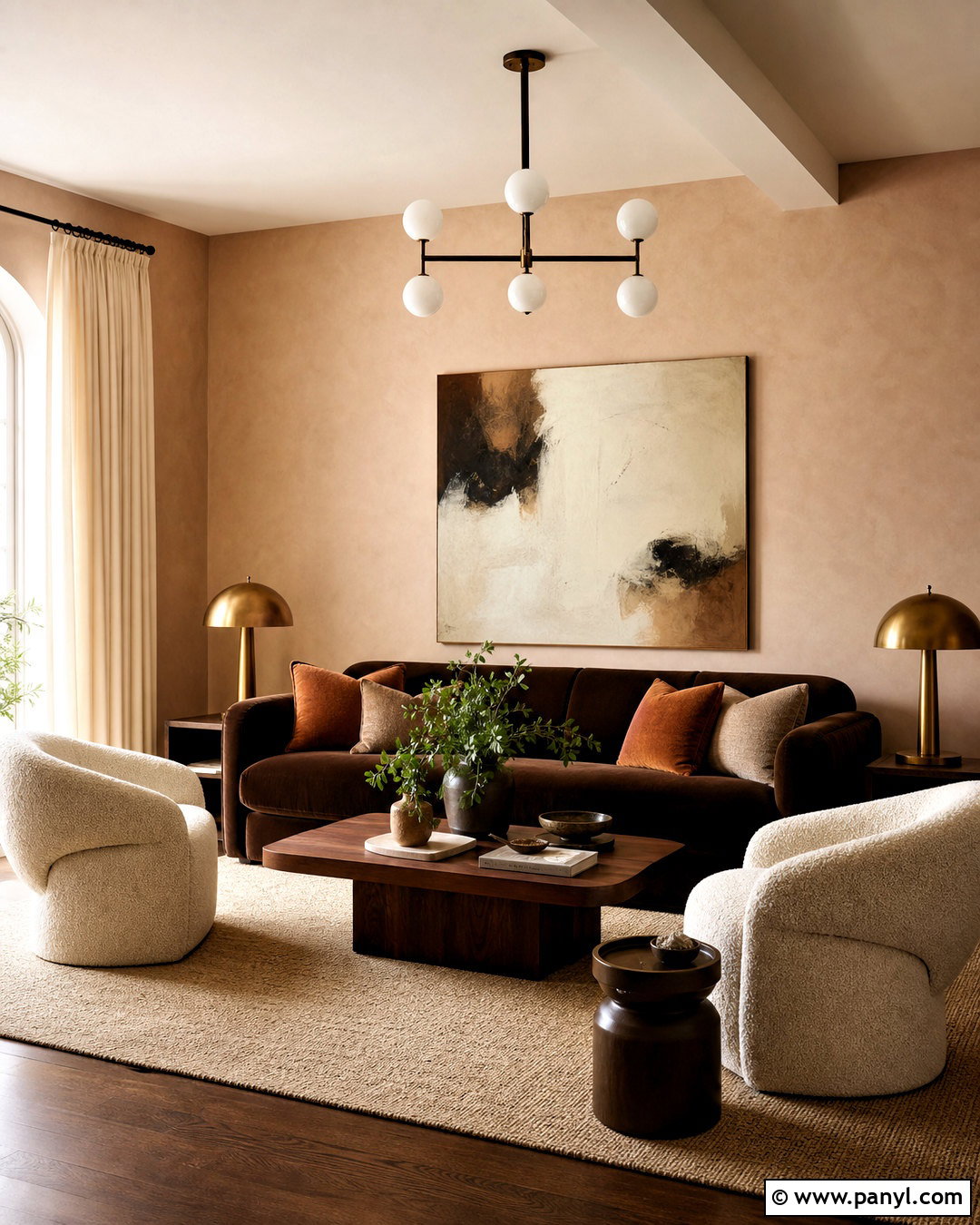
Imagine the comforting effect of warm cocoa tones beside softly plaster-pink walls. A deep chocolate brown sofa provides the foundation, especially when upholstered in velvet, brushed cotton, or supple leather. Pair it with two cream boucle chairs and a large oatmeal rug to keep the seating area from becoming too dark. Walnut furniture, including a rectangular coffee table and narrow console, will create a natural bridge between the walls and sofa. Choose bronze lighting and off-white curtains for a gentle finish. Pillows in cinnamon, blush, cream, and dark brown can repeat the full palette in smaller amounts. Add oversized artwork with earthy abstract shapes rather than several little pieces. This rich combination makes a larger living room feel intimate while giving Setting Plaster a neutral, grown-up appearance.
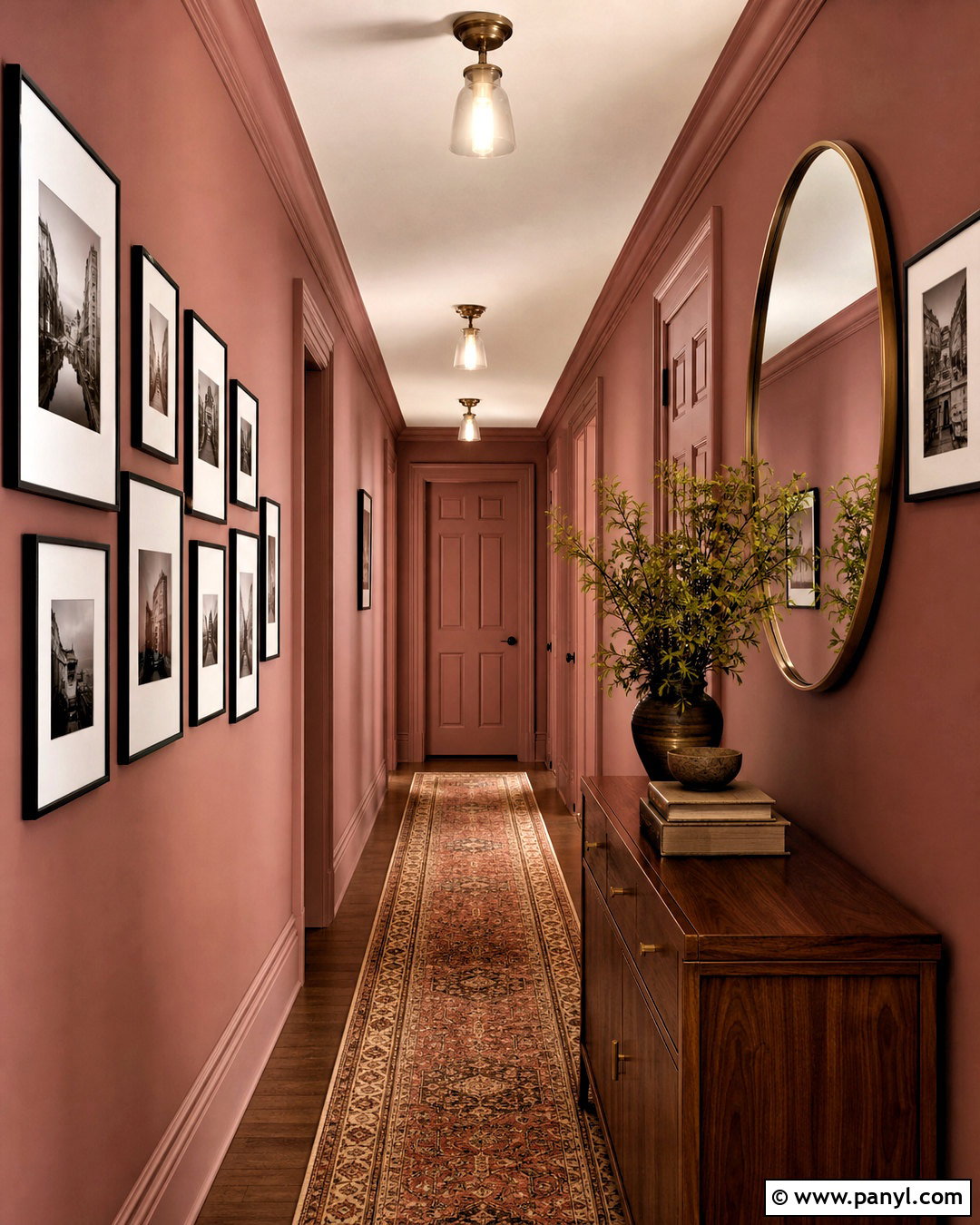
8. Setting Plaster Living Room With Terracotta Decor
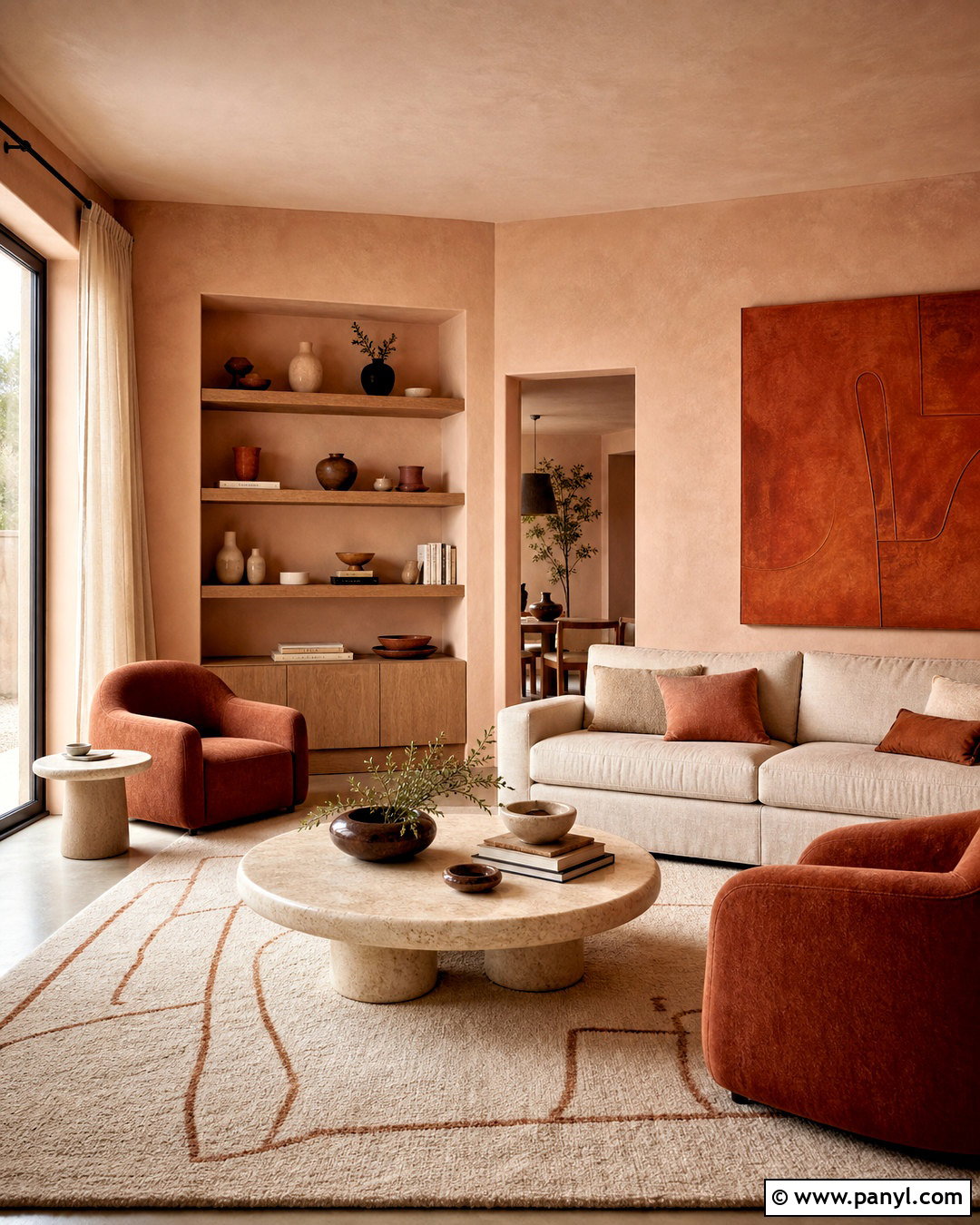
Setting Plaster and terracotta form a warm tonal scheme that feels sunny, earthy, and coordinated. Use a light beige sofa as the main seating piece, then add terracotta lounge chairs or a rust-colored upholstered bench. A cream rug with faded clay-colored lines will define the arrangement without competing with the walls. Bring in natural materials through a travertine coffee table, woven baskets, oak shelving, and linen curtains. Handmade pottery and abstract artwork can introduce deeper shades of burnt orange and red clay. Include a few dark brown accents, such as lamp bases or picture frames, to stop the palette from blending together. Soft white on the ceiling and trim provides necessary freshness. This cohesive living room works particularly well with abundant daylight and warm-toned wood flooring.
9. Setting Plaster Living Room With Light Blue
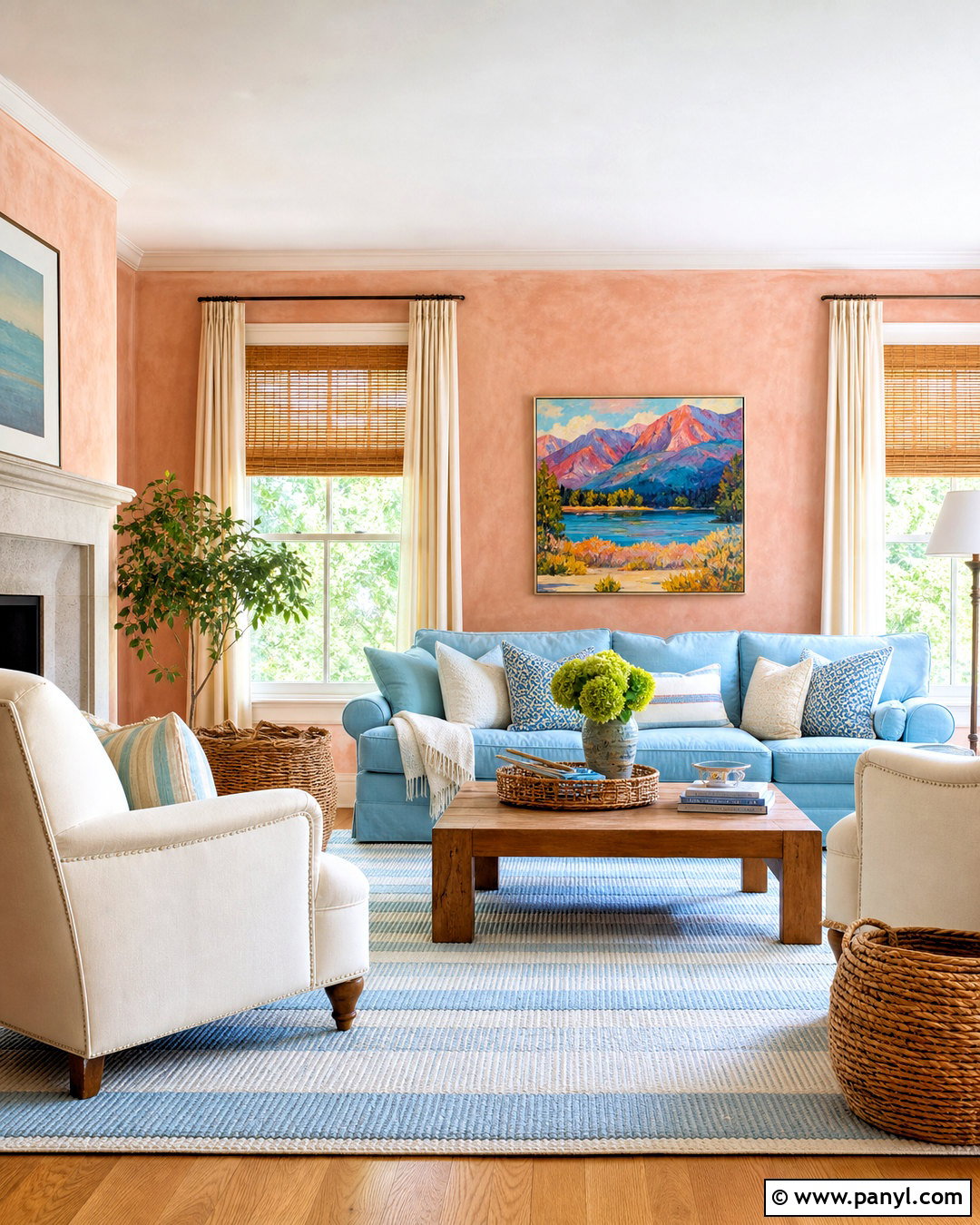
Light blue gives Setting Plaster a fresh, cheerful character that works well in a bright family room. Select a powder blue sofa with simple upholstery and combine it with two cream armchairs or a natural slipcovered loveseat. Use a pale blue-and-ivory striped rug to reinforce the relaxed palette. An oak coffee table, woven storage baskets, and bamboo blinds introduce texture without adding heavy color. Hang off-white curtains around the blinds to soften the windows and improve privacy. Artwork featuring sky blue, coral, cream, and muted green will connect the room’s contrasting hues. Add a few darker blue pillows so the design has clear focal points. The finished room feels light and approachable, with enough color to remain interesting while still supporting casual furniture and everyday family activities.
10. Setting Plaster Living Room With Teal Sofa
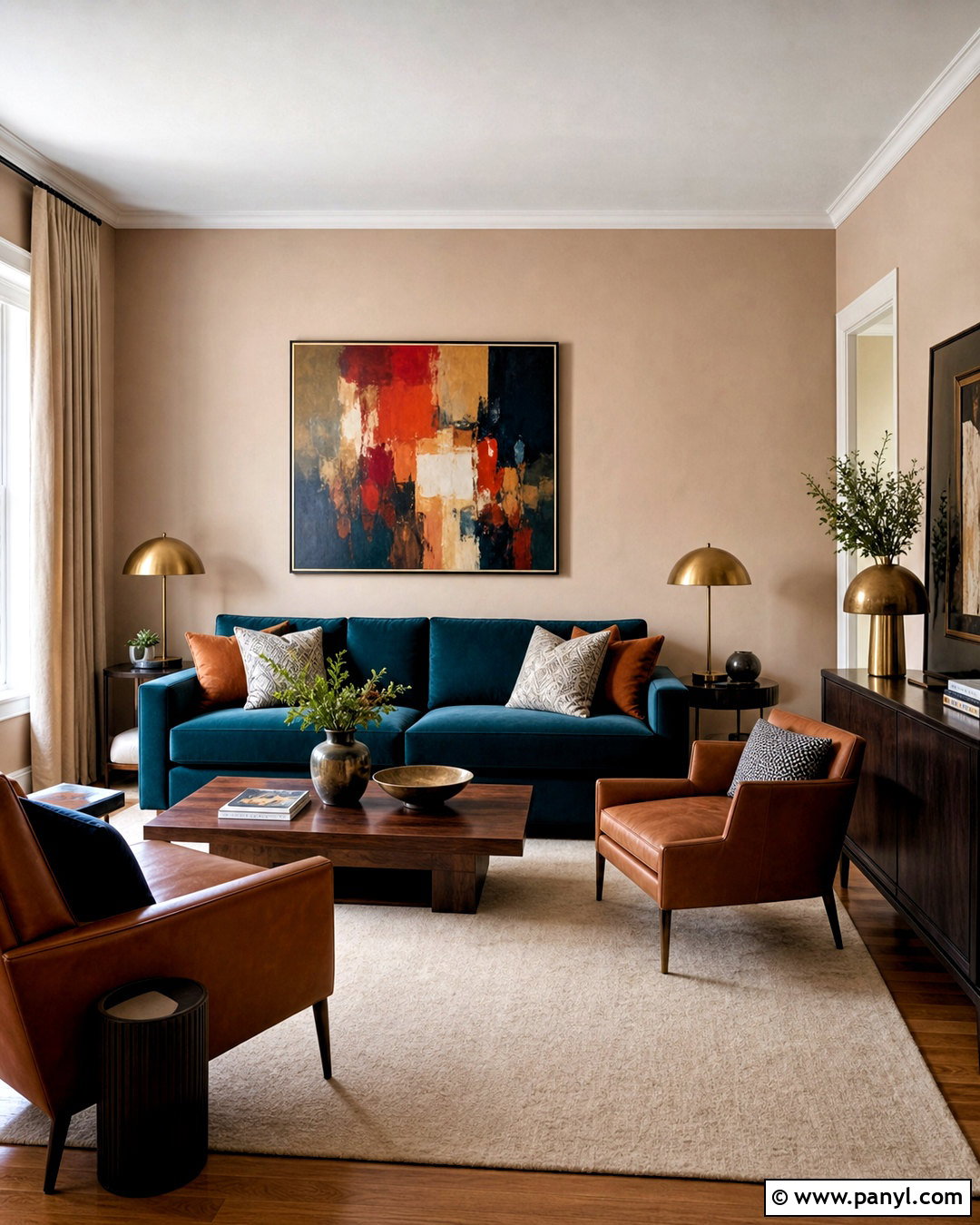
A teal sofa can become a striking centerpiece against Setting Plaster walls. Choose a deep blue-green upholstery with a matte or gently textured finish rather than a highly reflective fabric. Place two caramel leather chairs across from the sofa and center everything around a warm cream rug. A walnut coffee table and dark wood media console will ground the saturated color. Repeat teal through only one or two small details, such as a patterned pillow or ceramic vase, so the room remains balanced. Brass lamps and curtain hardware add warmth, while full-length natural linen curtains soften the windows. Finish with colorful artwork containing teal, pink, cream, and ochre. This complete scheme feels confident and contemporary, yet the earthy wall color prevents the stronger furniture from looking harsh or disconnected.
11. Setting Plaster Color-Drenched Living Room
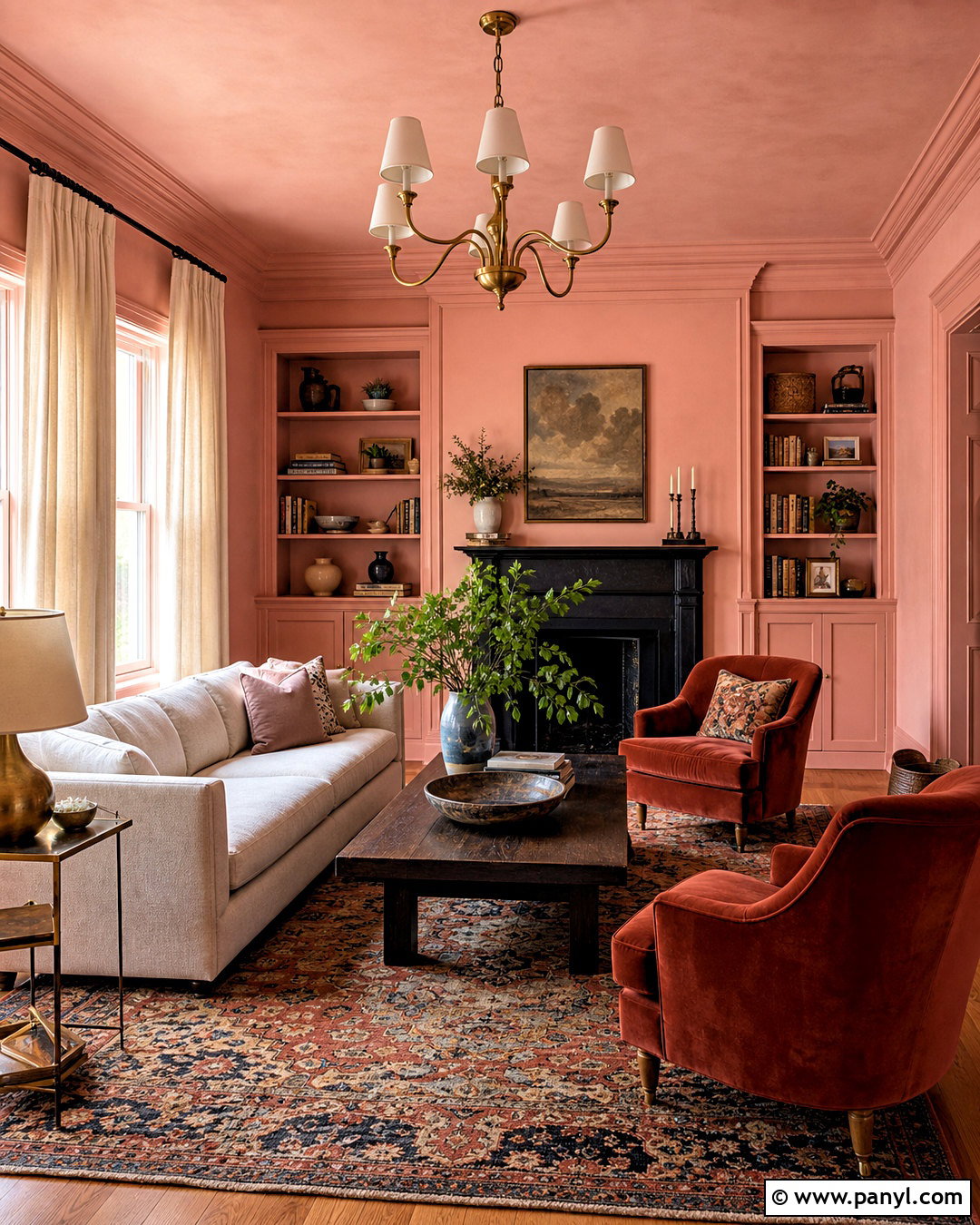
Color drenching creates an enveloping Setting Plaster living room by carrying the same shade across walls, trim, doors, built-ins, and ceiling. The continuous color reduces visual interruptions and can make awkward architectural features feel more intentional. Use varied finishes to retain subtle definition, such as flatter paint on walls and a slightly more durable finish on woodwork. Furnish the room with a cream sofa, rust velvet chairs, and a dark walnut coffee table. A patterned vintage rug can introduce burgundy, navy, and muted green for depth. Choose sculptural brass lighting and simple linen window panels close to the wall color. Keep accessories controlled because the painted envelope already makes a strong statement. The result feels warm, immersive, and modern while still complementing traditional moldings, paneled doors, or built-in bookcases.
12. Setting Plaster Living Room With White Trim
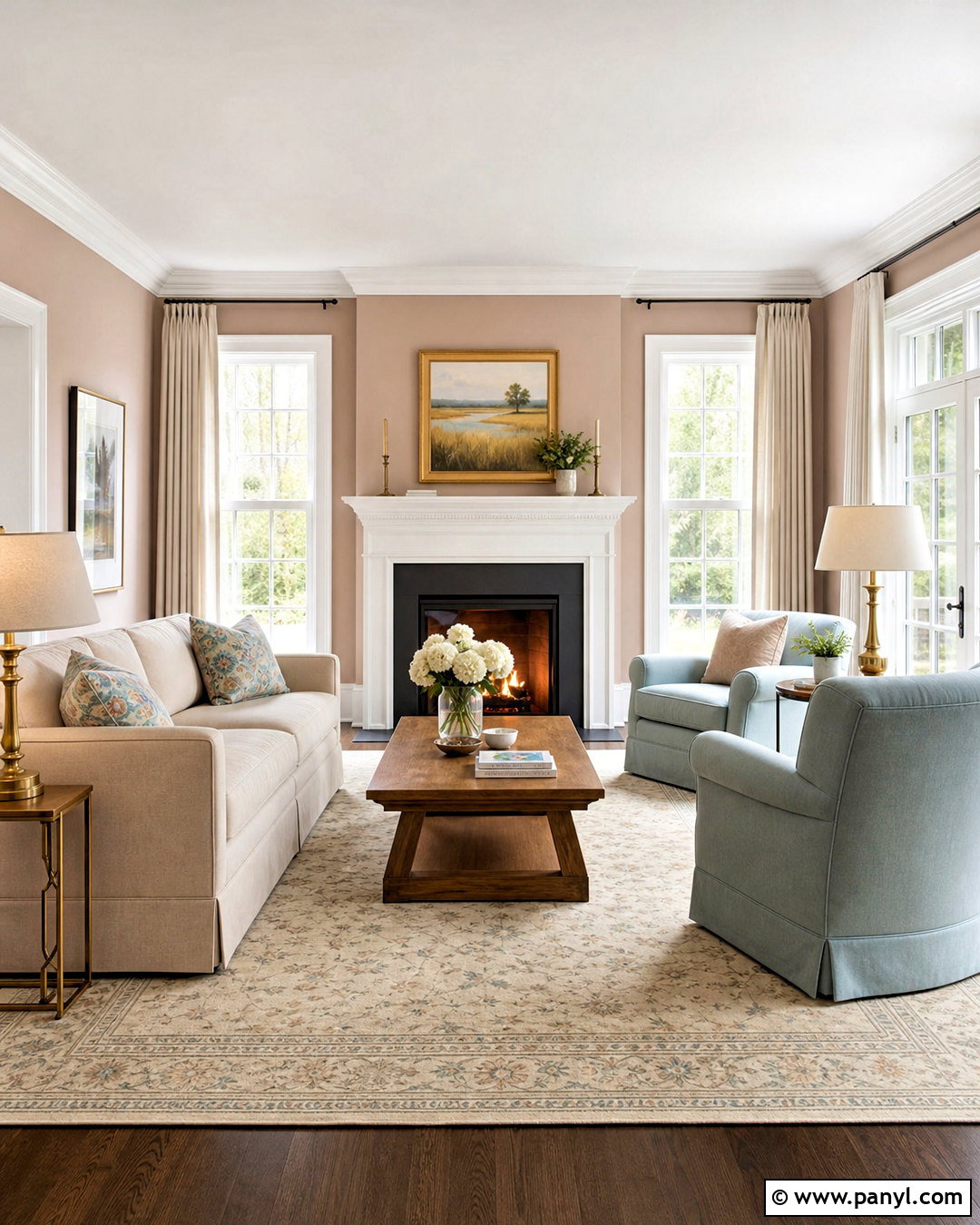
Crisp architectural definition can make Setting Plaster look lighter and more tailored. Paint the walls in the warm pink-beige shade, then use a soft white on the baseboards, window frames, crown molding, and fireplace surround. Avoid an icy blue-white, which may create an unnecessarily sharp contrast. Build the room around a beige sofa, two pale blue armchairs, and an ivory rug with a neat dark border. A medium oak coffee table and brass lamps contribute warmth. Hang neutral curtains outside the window frames so the white-painted trim remains visible. Traditional framed artwork and a large mirror above the mantel will emphasize the clean structure. This approachable scheme is ideal when you want to use color while maintaining a bright, familiar living room that coordinates easily with adjoining neutral spaces.
13. Setting Plaster Living Room With Dark Wood Antiques
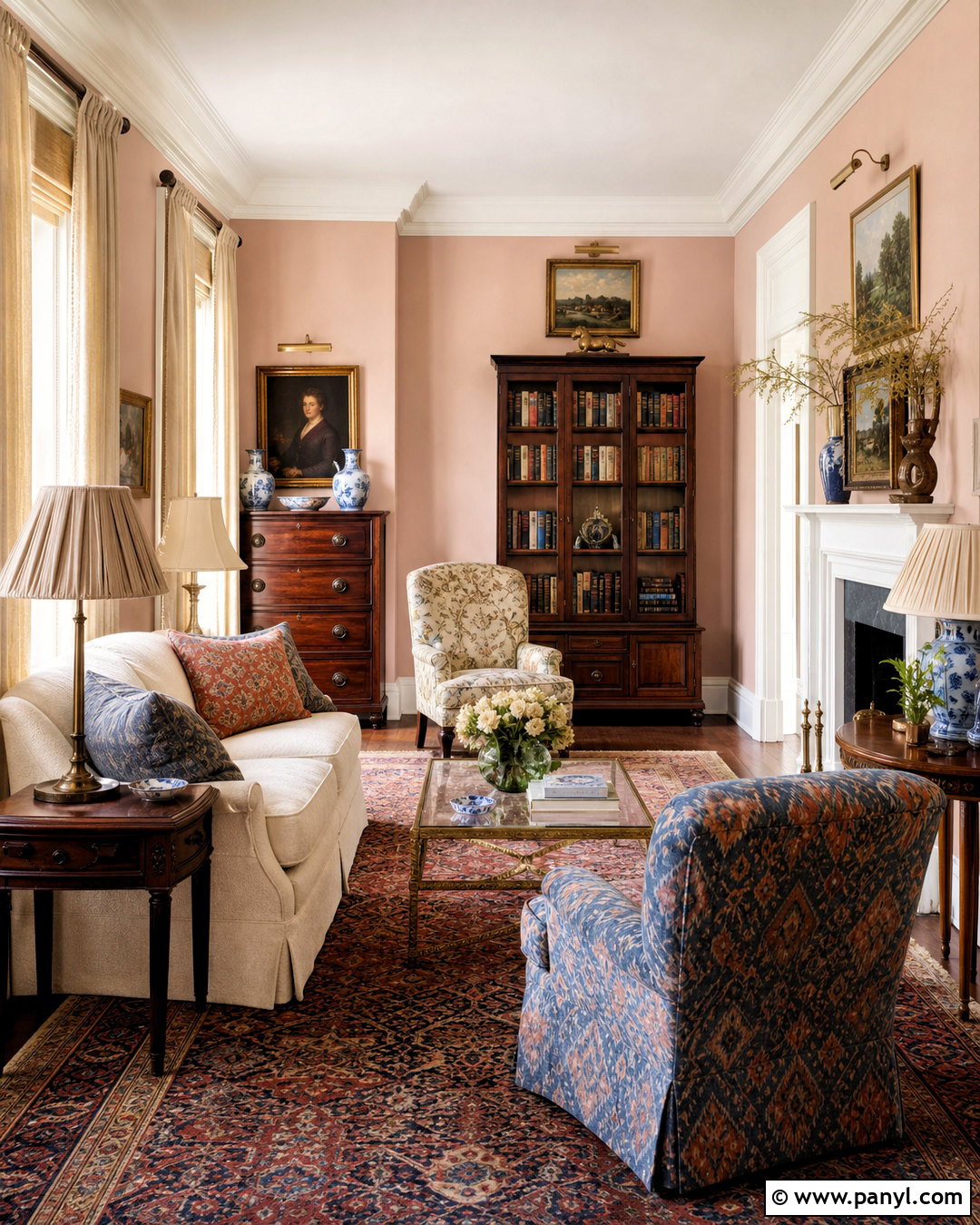
Dark wood antiques gain warmth and clarity when displayed against Setting Plaster walls. Arrange a mahogany chest, walnut bookcase, or dark oak sideboard where its shape can be appreciated without surrounding clutter. Pair these substantial pieces with a comfortable cream sofa and two patterned armchairs containing muted blue, olive, and blush. A traditional wool rug in faded red and navy will connect the antique furniture to the rest of the seating area. Use pleated lampshades, brass picture lights, and full-length linen curtains for a layered finish. Collections should be grouped deliberately on shelves and tabletops instead of scattered around the room. Add contemporary artwork or one streamlined coffee table to keep the design from looking like a period display. The final space feels personal, established, and comfortable.
14. Setting Plaster Living Room With Black Accents
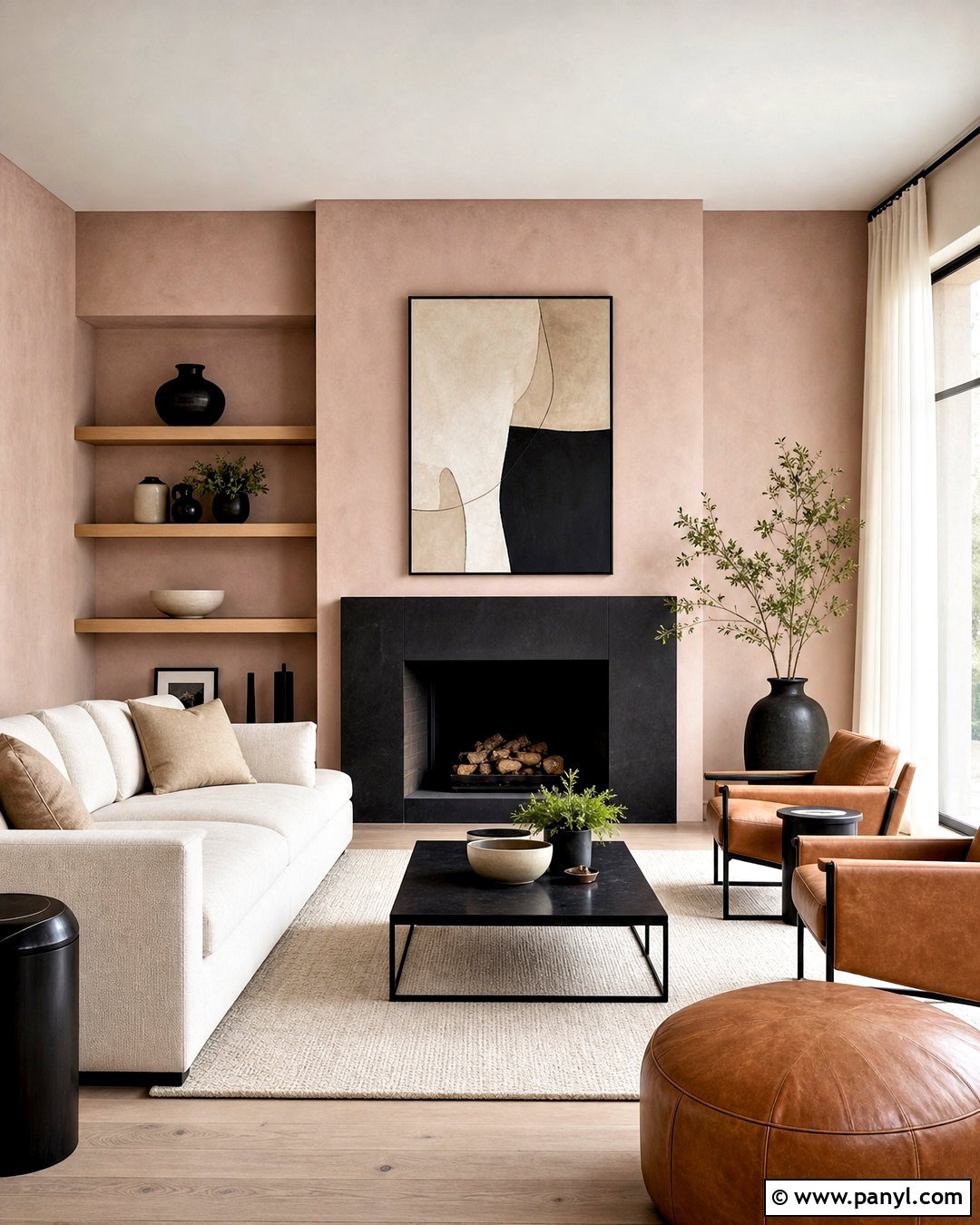
Small amounts of matte black give Setting Plaster a clean, graphic edge. Begin with the warm walls, then add slim black window frames, a black metal coffee table, and a simple black fireplace surround. Choose a low cream sofa and two tan leather chairs to keep the main furniture comfortable and inviting. A large ivory rug with narrow black lines can connect the darker details across the floor. Add pale oak shelving and side tables so black does not become the room’s dominant finish. Minimal abstract artwork, a black floor lamp, and off-white linen curtains complete the look. Use rounded furniture shapes to soften the contrast and echo the gentle character of the paint color. This balanced room feels modern and uncluttered without losing the warmth needed for relaxing or entertaining.
15. Setting Plaster Coastal Living Room
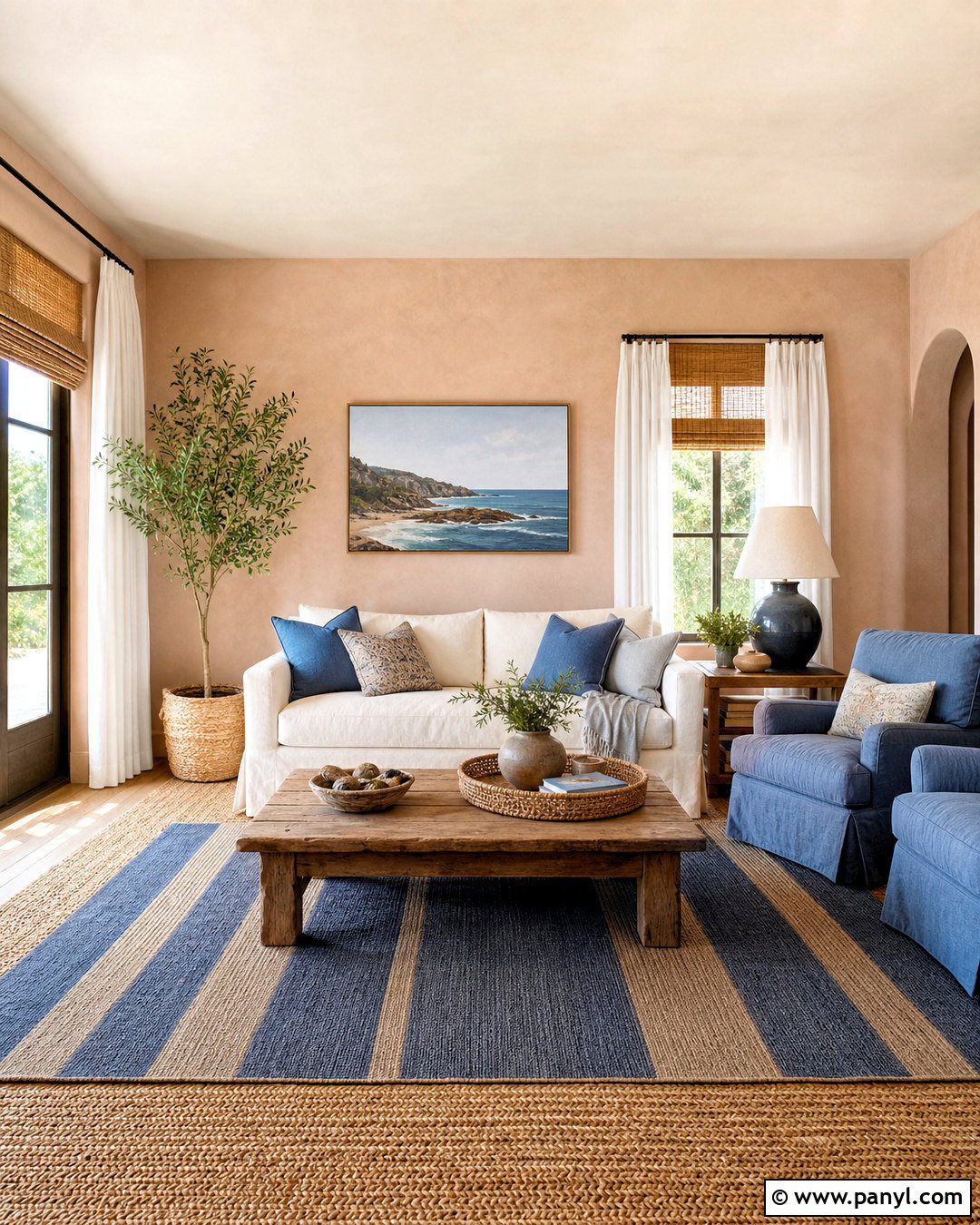
A subtle coastal scheme can use Setting Plaster as a warmer alternative to predictable white walls. Pair it with a relaxed cream slipcovered sofa, faded blue armchairs, and a natural jute rug layered beneath a smaller striped wool rug. Choose a weathered oak coffee table and woven side tables for texture, but avoid overly themed beach accessories. Airy white curtains and bamboo shades will filter sunlight while keeping the room casual. Introduce coastal color through washed navy pillows, pale blue pottery, and landscape artwork featuring muted sea and sand tones. Keep the fireplace surround and ceiling soft white for a clean contrast. A few branches or leafy plants provide natural movement. The finished room feels breezy and comfortable, yet the plaster-toned walls ensure it remains warm during cooler seasons.
16. Setting Plaster Cottage Living Room
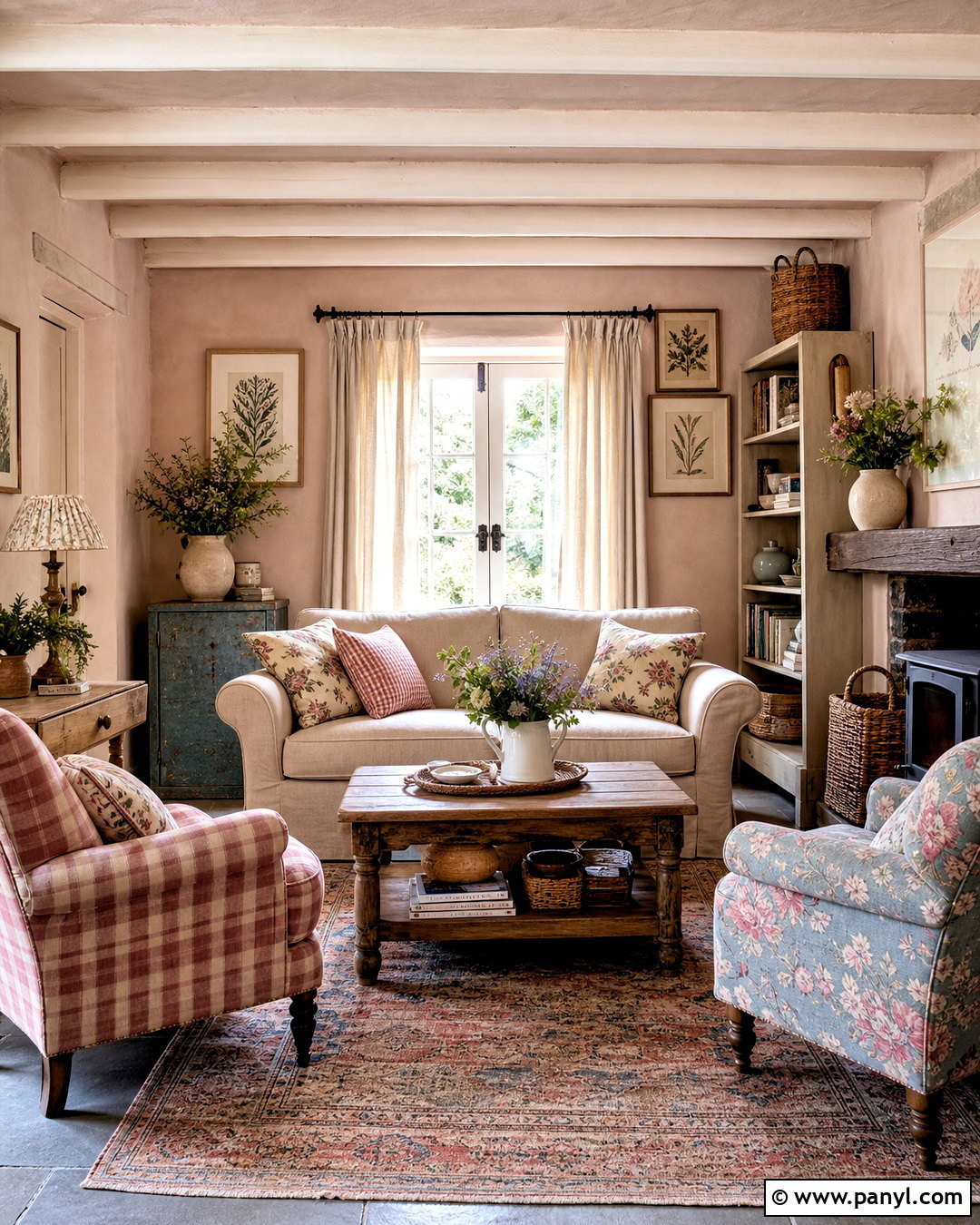
Low ceilings, layered textiles, and vintage furniture can make Setting Plaster feel especially at home in a cottage living room. Use the color on the walls while keeping ceiling beams natural or painting them creamy white. Position a compact oatmeal sofa near the fireplace and add mismatched armchairs in small-scale floral and checked fabrics. A vintage wood coffee table and faded patterned rug will establish a lived-in foundation. Hang relaxed linen curtains and display a controlled collection of landscapes, botanical prints, and handmade ceramics. Cushions in dusty blue, olive, burgundy, and cream provide variety without fighting the wall color. Include practical woven baskets for blankets and everyday storage. This complete look feels cozy and collected, but thoughtful spacing and a limited palette prevent the cottage details from appearing crowded.
17. Setting Plaster Minimalist Living Room
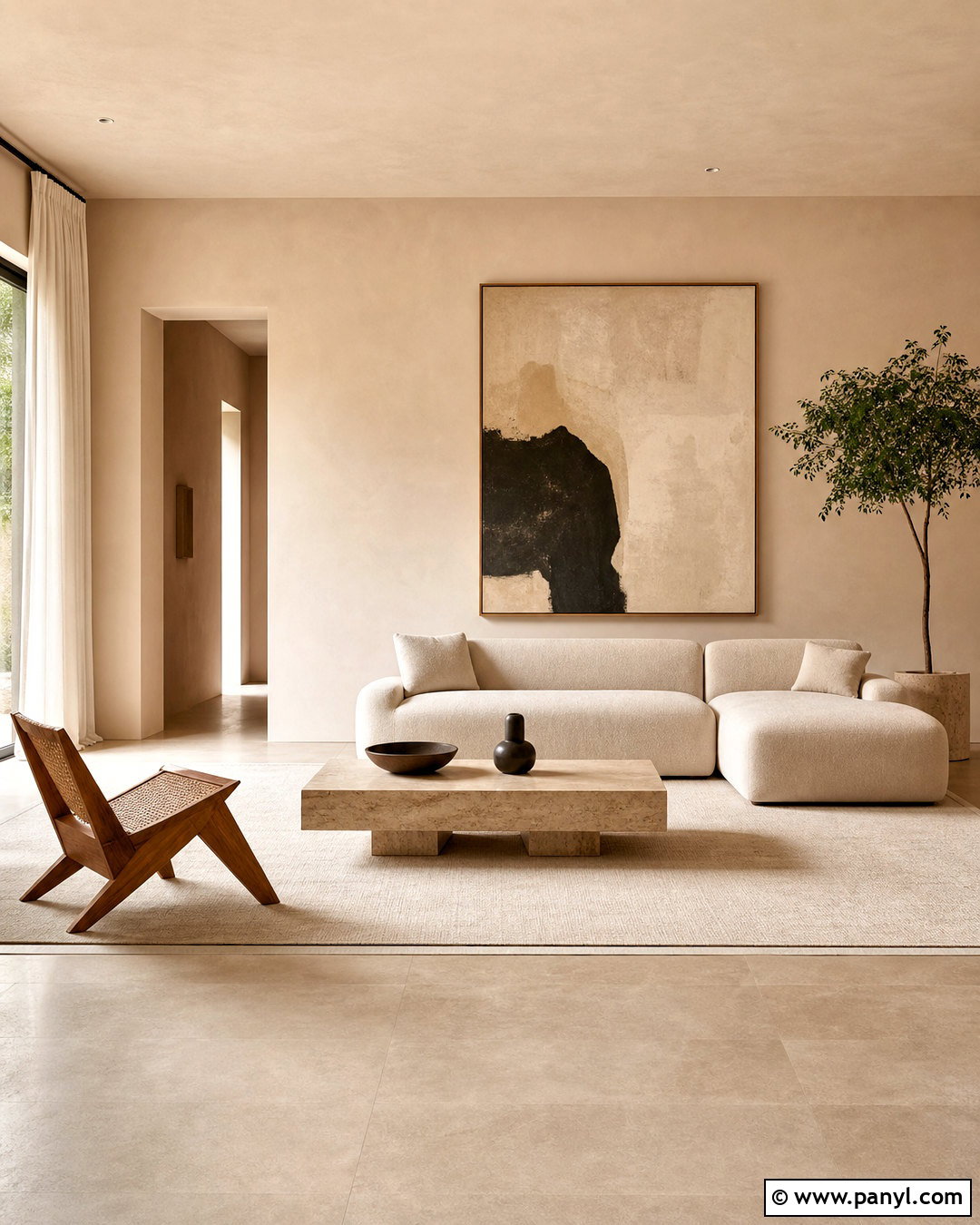
Can a pink-toned living room still feel quiet and minimal? Setting Plaster makes it possible when paired with restrained shapes and natural materials. Choose one low-profile cream sofa, a sculptural oak lounge chair, and a simple travertine coffee table. Place these pieces on a large, plain wool rug in warm ivory. Use the wall color across uninterrupted surfaces and limit decorative objects to a ceramic vessel, one large abstract painting, and a carefully positioned plant. Concealed storage will keep electronics and everyday items out of sight. Select simple white curtains or woven shades that blend with the room rather than creating another focal point. Black or bronze lighting can provide a small amount of contrast. The resulting space feels warm, spacious, and intentional instead of bare or impersonal.
18. Setting Plaster Maximalist Living Room
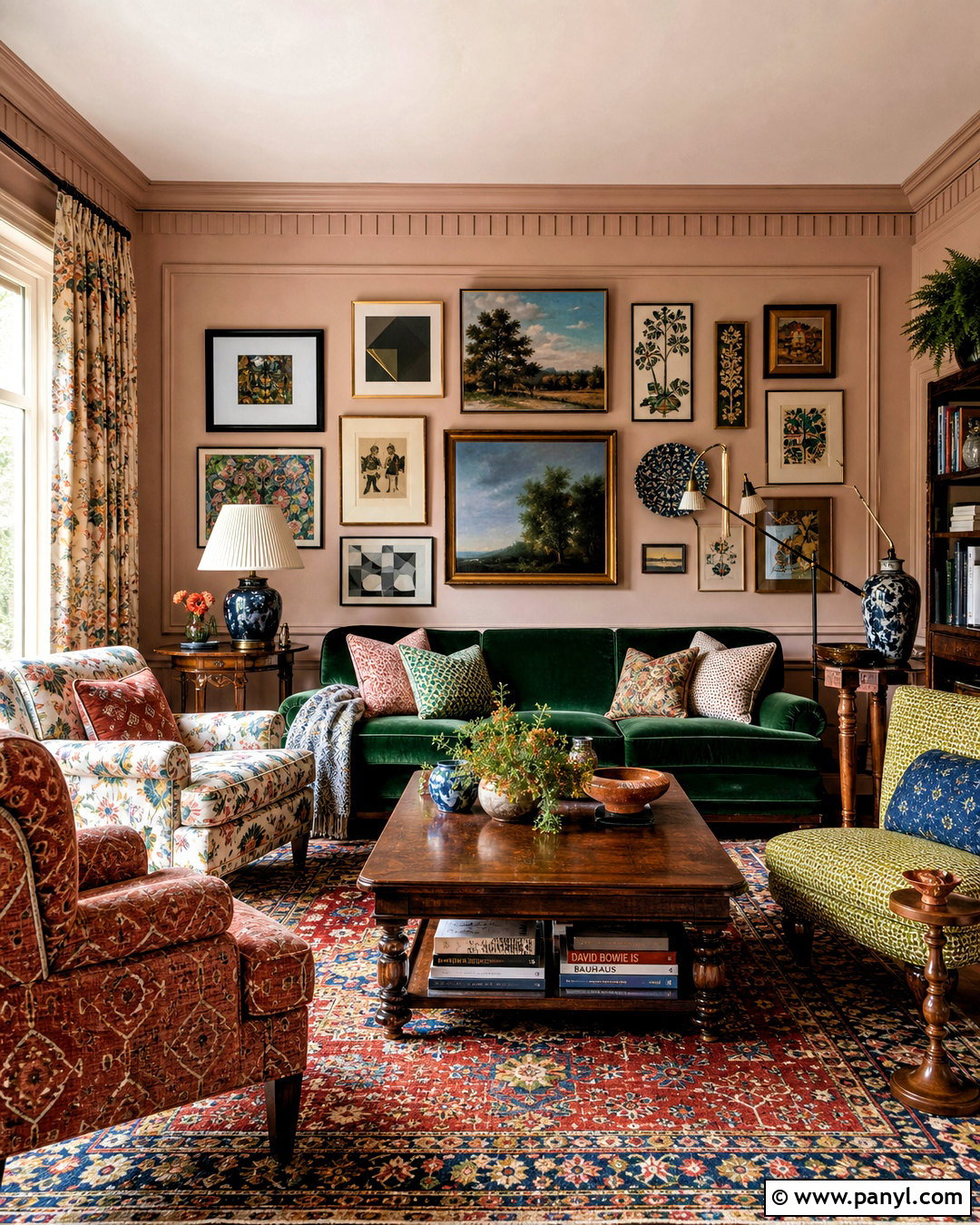
Setting Plaster can provide a calm foundation for a colorful, pattern-rich living room. Start with a deep green sofa, then add two armchairs in contrasting floral or geometric fabrics. Use a vintage rug containing red, blue, ochre, and cream to connect the varied upholstery. Dark wood tables and a painted bookcase will give the room visual weight, while layered artwork creates personality across the warm walls. Arrange pictures in a structured gallery rather than filling every available gap. Patterned curtains can work well when their background color repeats Setting Plaster or a related blush tone. Add striped pillows, ceramic lamps, books, and collected objects in a controlled palette. The finished design feels expressive and personal, yet repeated colors and a clear furniture arrangement keep it cohesive rather than chaotic.
19. Setting Plaster North-Facing Living Room
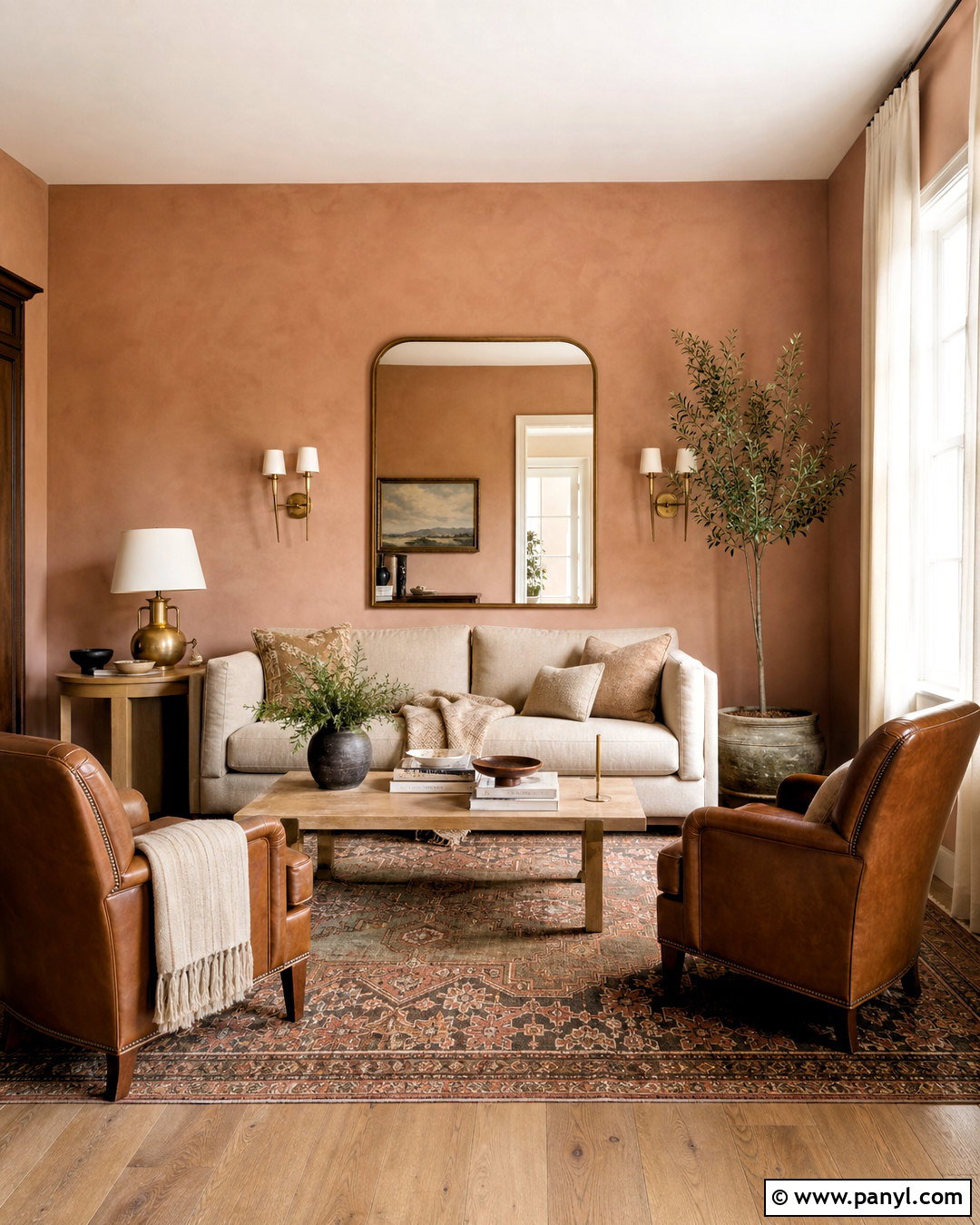
Cool northern light can bring out the deeper, earthier side of Setting Plaster. Support that warmth with an oatmeal sofa, camel leather chairs, and a softly patterned rug containing rust, cream, and muted olive. Light oak furniture will prevent the room from feeling heavy, while antique brass lamps create a gentle reflective element. Use several light sources at different heights, including table lamps, a floor lamp, and wall sconces, so the space remains inviting throughout the day. Warm white curtains and trim will blend more comfortably than stark white. Choose artwork with pale backgrounds and clear color to keep the walls visually open. A large mirror placed near, rather than directly opposite, the main window can spread available daylight. This thoughtful scheme makes a shaded living room feel deliberately cozy.
20. Setting Plaster South-Facing Living Room
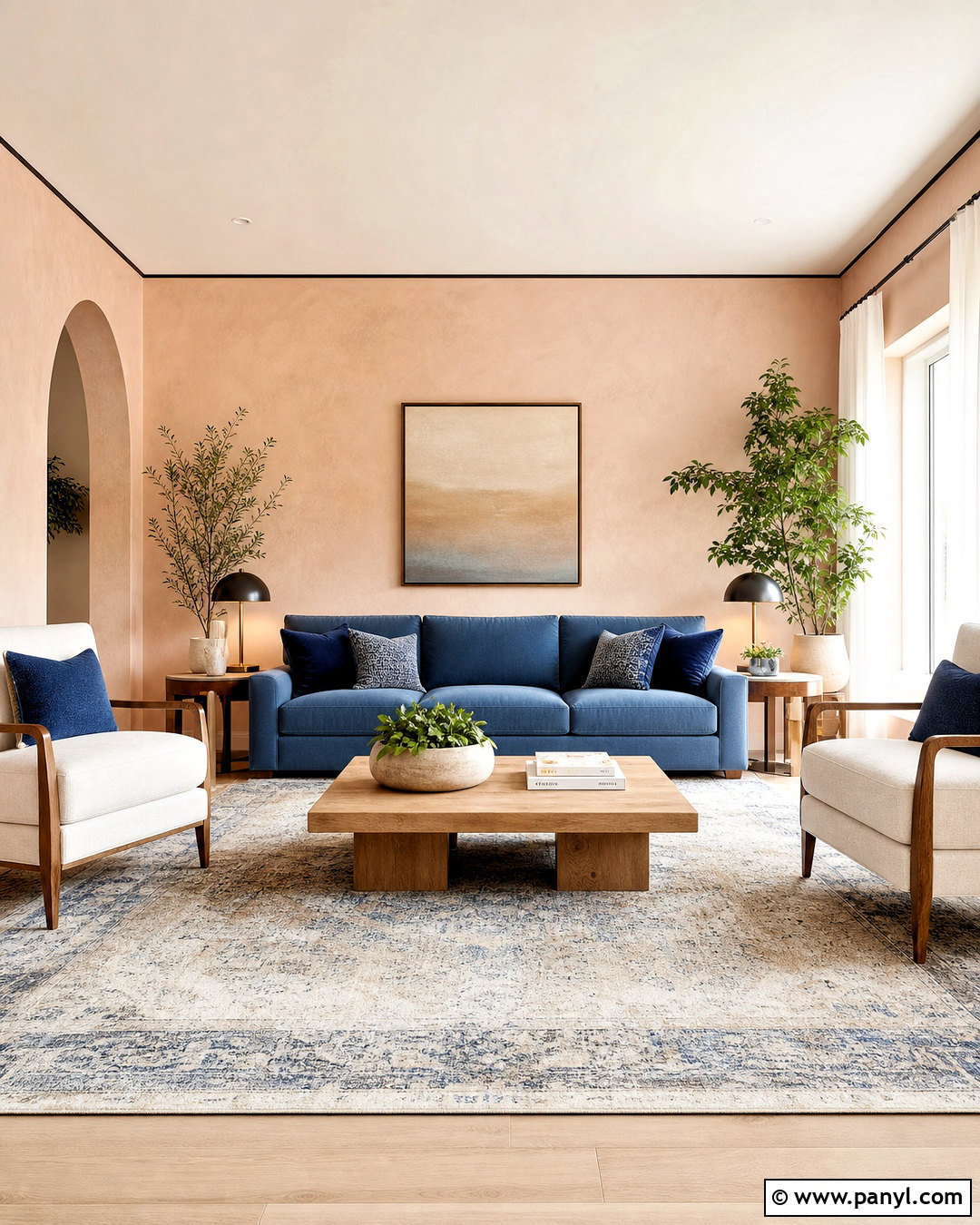
Strong southern daylight may make Setting Plaster appear paler, warmer, and more peach-toned. Balance that brightness with cooler furniture colors such as slate blue, muted teal, or soft green. A medium blue sofa and two ivory chairs create an adaptable seating arrangement around a pale oak coffee table. Ground the room with a cream rug carrying subtle blue-gray details. Use lightweight white linen curtains to soften direct sunlight without blocking it completely. Add darker accents through navy pillows, bronze lamps, and walnut picture frames. Green plants will remain fresh against the warm walls and connect the cooler furnishings. Keep the ceiling soft white and avoid filling every surface with decorative objects. The finished living room feels sunny and spacious, while its cooler details prevent the warm paint from becoming overly peachy.
Conclusion:
These **20 setting plaster living room ideas** show how easily this earthy pink-beige can adapt to different homes and decorating preferences. Pair it with cream and oak for a soft neutral room, or introduce navy, teal, burgundy, olive, and chocolate brown for stronger contrast. White trim creates crisp definition, while color drenching makes the space feel immersive and contemporary. Before committing, test a large painted sample on several walls and view it during morning, afternoon, and evening light. Consider existing flooring, upholstery, and adjoining rooms as part of the decision. With a coordinated palette, practical furniture arrangement, varied textures, and thoughtful lighting, Setting Plaster can produce a warm living room that feels distinctive, comfortable, and easy to personalize.

Related Ideas and Inspiration:
Leave a Reply