
Ivory wall paint ideas offer a softer alternative to stark white while keeping rooms bright, flexible, and welcoming. The best ivory shades may lean creamy yellow, muted beige, gentle peach, or balanced neutral, so the surrounding light and finishes matter. Sampling paint beside flooring, cabinetry, upholstery, and trim helps reveal those undertones before you commit. Ivory can anchor monochromatic rooms or balance stronger colors such as navy, sage, plum, and charcoal. It also works naturally with warm woods and layered textiles. () Whether your home feels modern, traditional, coastal, rustic, or eclectic, this versatile neutral can support a complete, personal look. Explore the following practical and polished 35 Ivory Wall Paint Ideas.

1. Ivory Living Room With Warm Wood
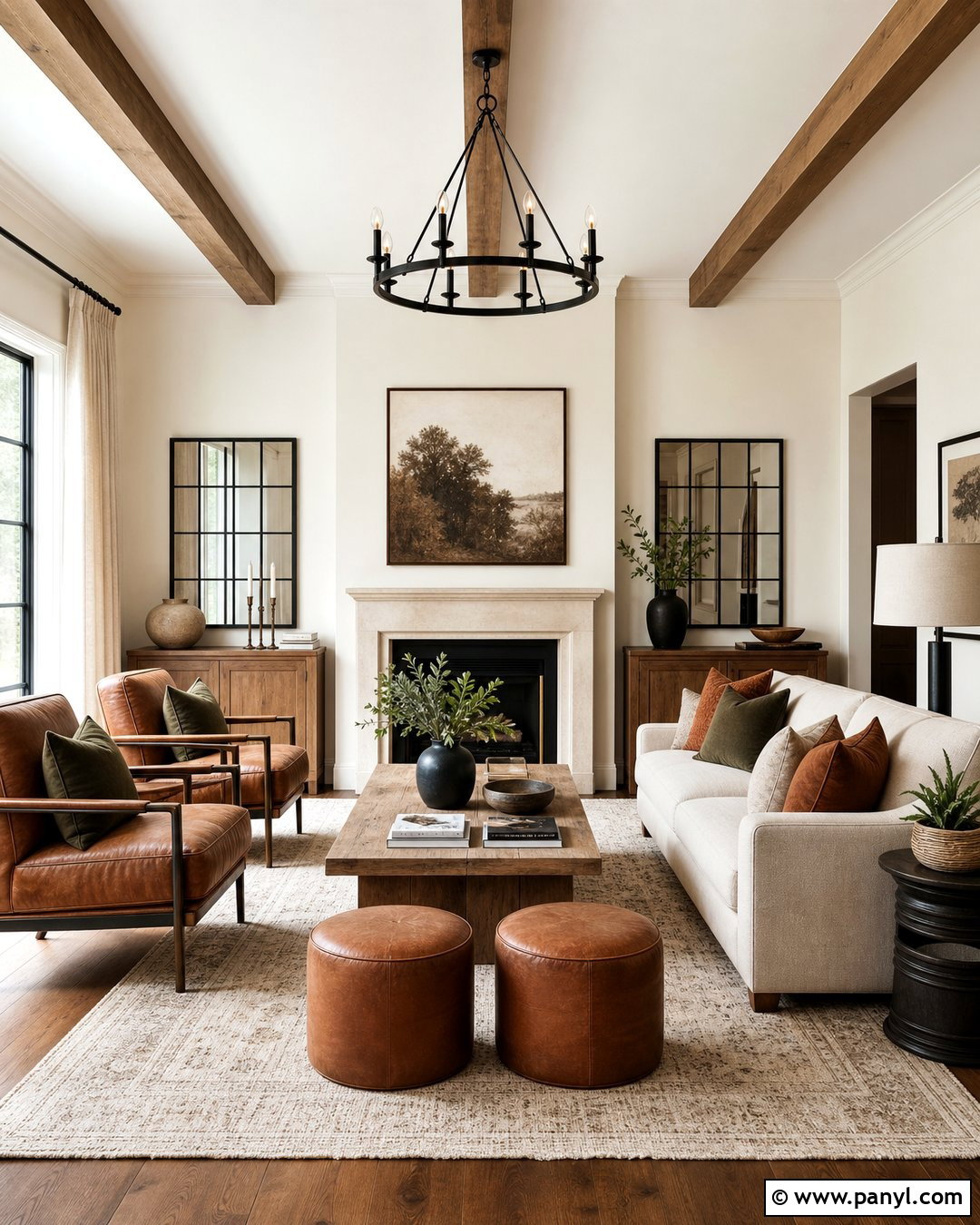
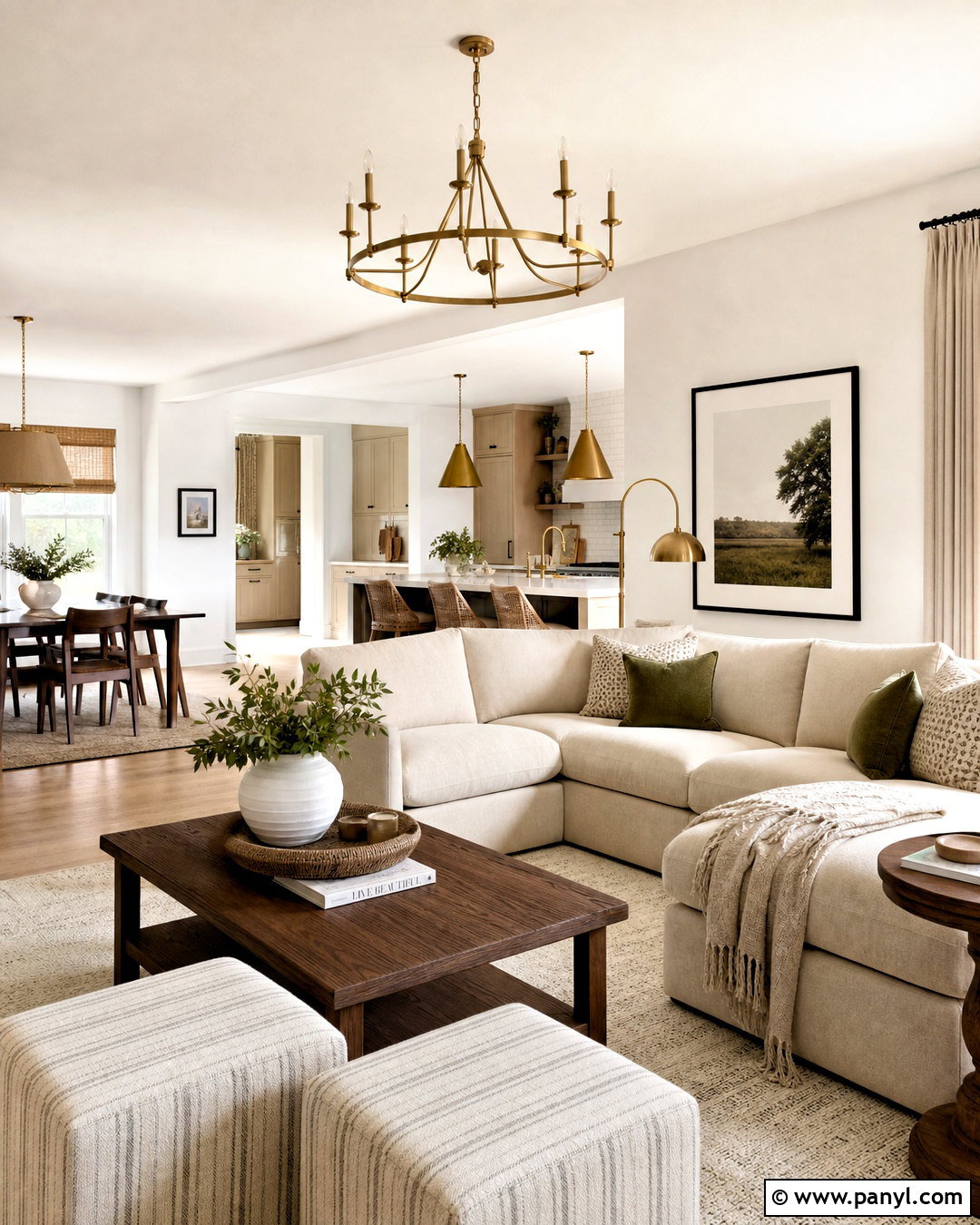
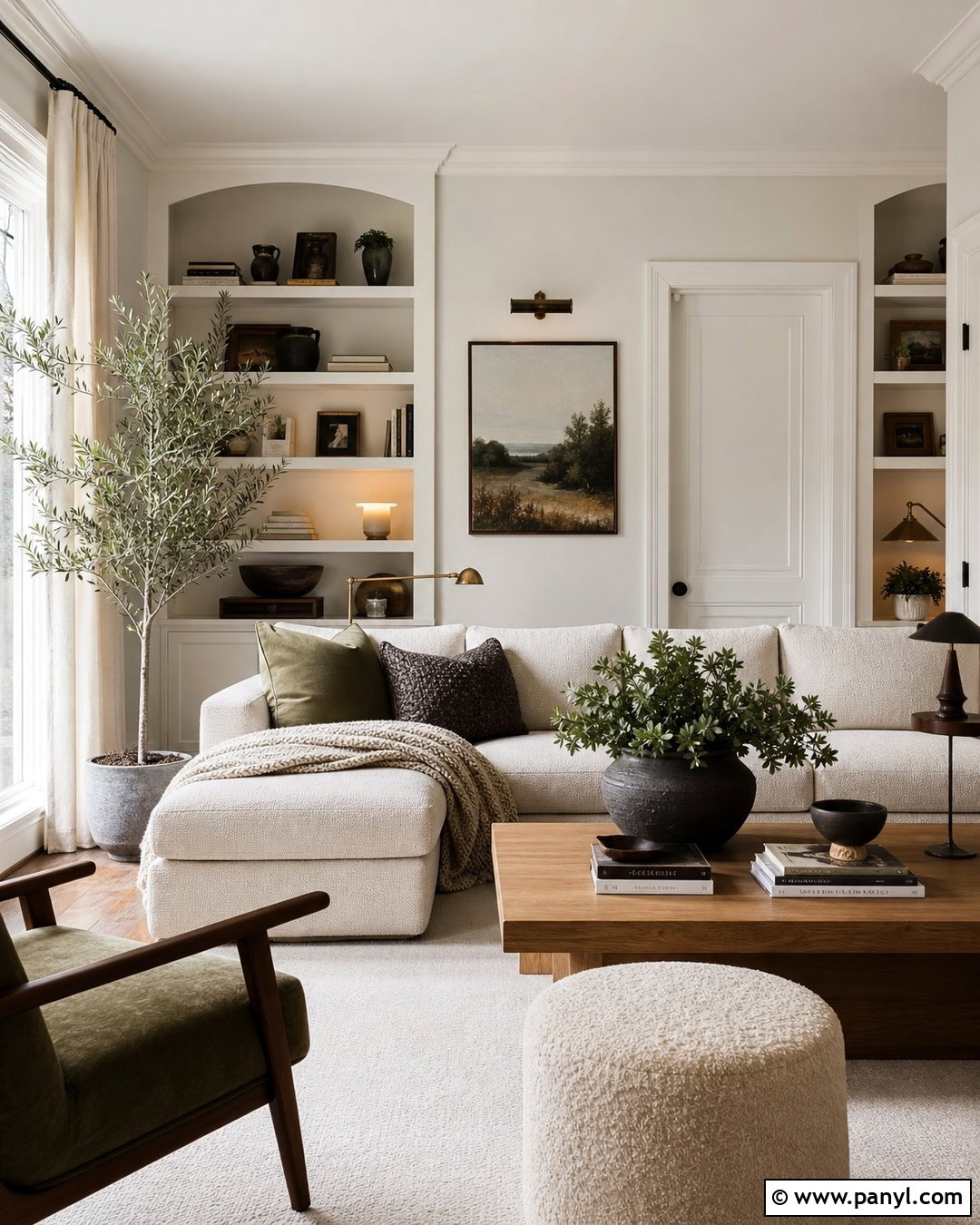
Create an inviting living room by placing warm ivory walls behind furniture made from oak, walnut, and woven natural materials. Choose a comfortable oatmeal sofa, then add cognac leather chairs to introduce depth without making the room feel heavy. A medium-tone oak coffee table and matching bookcase will connect the color palette. Keep the ceiling and trim soft white so the ivory remains noticeable but subtle. Ground the seating area with a cream-and-taupe patterned rug, and use rust, olive, and muted brown pillows for contrast. Linen curtains soften the windows, while black-framed artwork supplies a clean finishing detail. This complete scheme feels relaxed, timeless, and easy to update through the seasons.
2. Ivory Living Room With Navy Blue
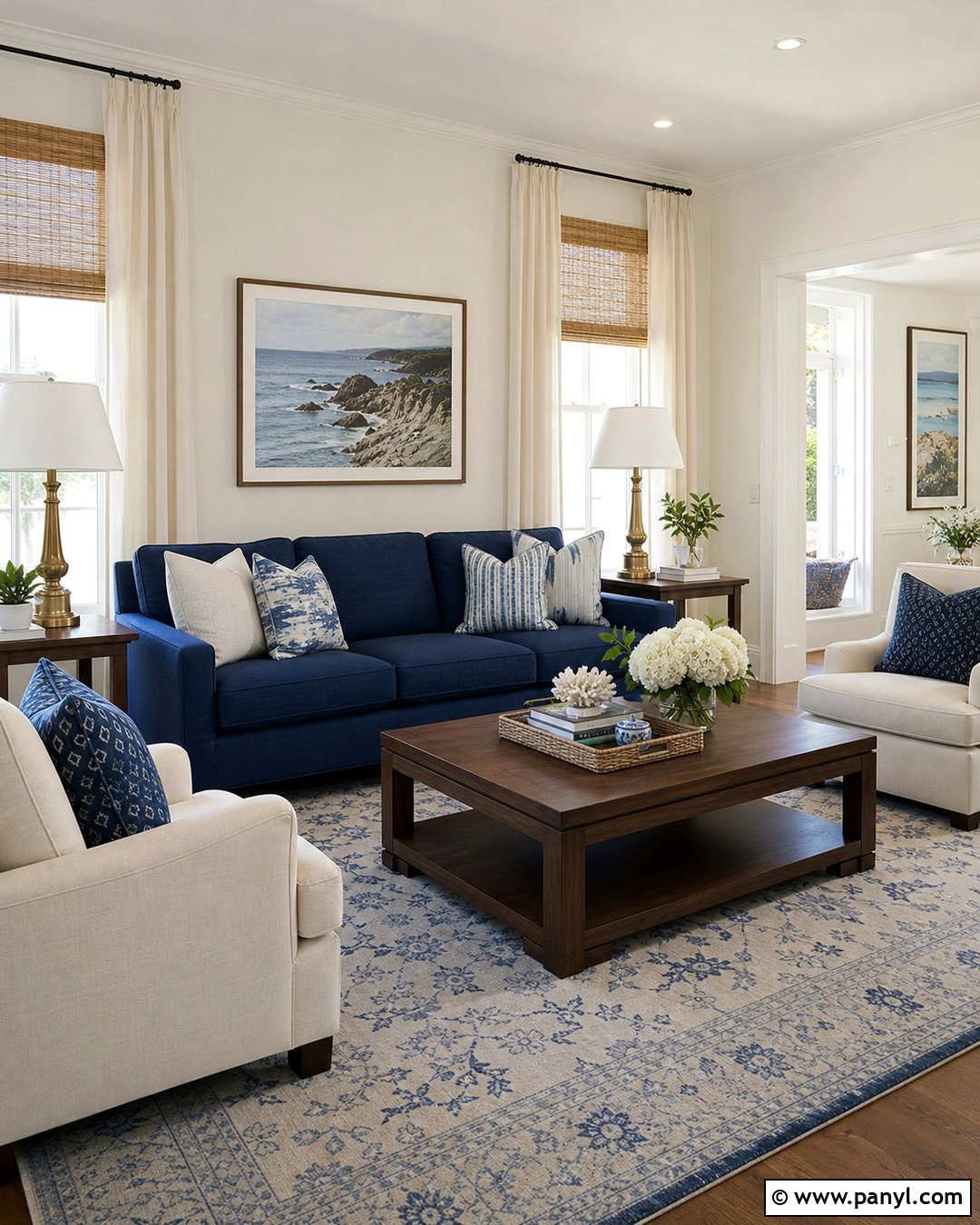
For a polished color combination, pair creamy ivory walls with a deep navy blue sofa and tailored blue-and-white accents. The warm wall color prevents navy furniture from making the room appear cold or overly formal. Add two light beige armchairs, a walnut coffee table, and a large rug featuring faded navy, ivory, and gray patterns. Crisp white trim gives the walls a defined edge, while brushed brass lamps bring warmth and understated shine. Hang simple coastal prints or abstract artwork above the sofa without overcrowding the space. Natural woven shades and ivory drapery complete the windows. This balanced living room works especially well in traditional, transitional, and updated coastal homes where strong color needs a softer backdrop.
3. Ivory Living Room With Sage Green
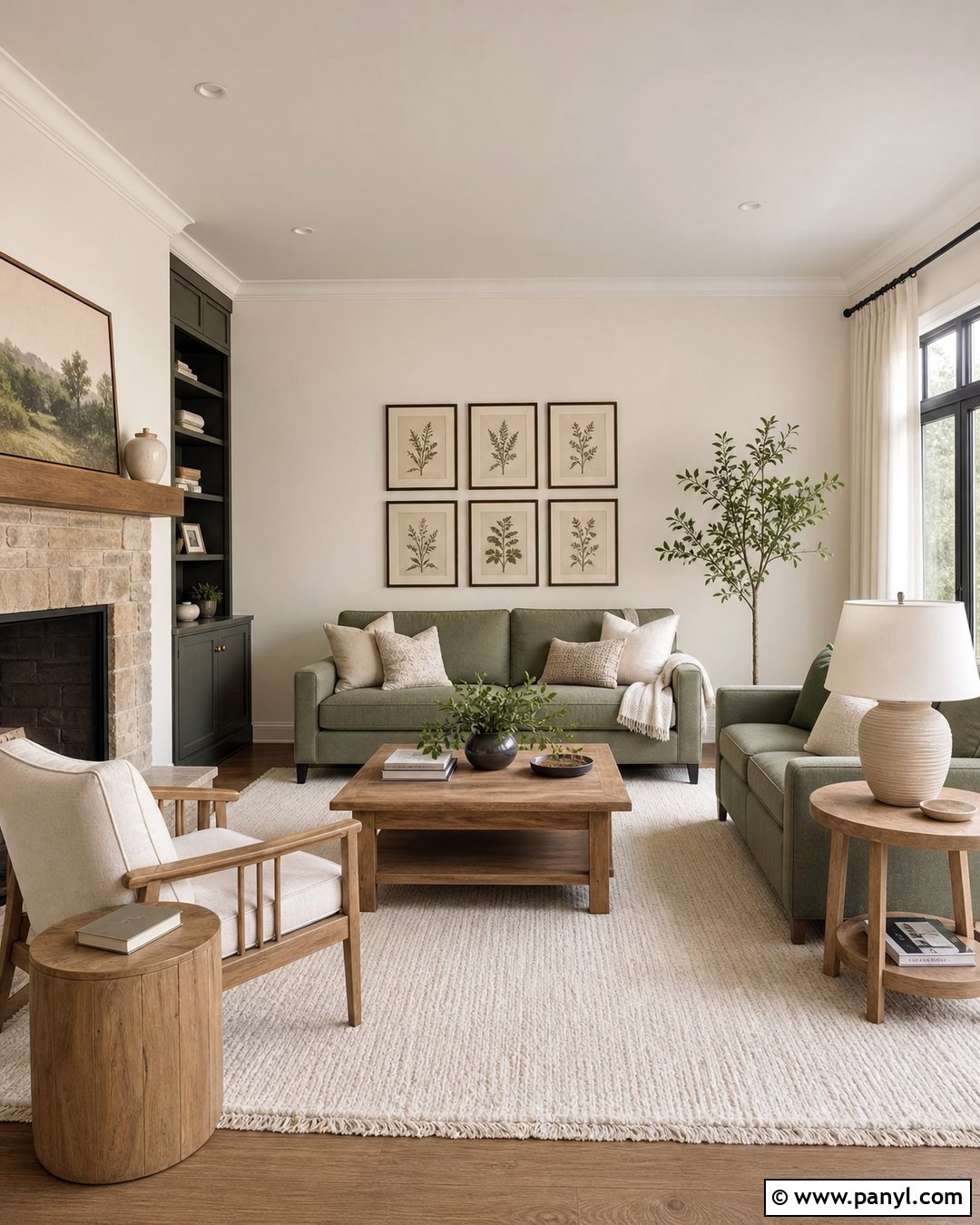
Soft sage green and ivory create a restful living room that feels connected to nature. Paint every main wall a balanced ivory, then bring sage into the room through a streamlined sofa, velvet accent chairs, or full-length curtains. Medium oak furniture complements both colors and keeps the palette comfortably warm. Use an ivory wool rug with a subtle green border to define the seating arrangement. A stone fireplace, ceramic table lamps, and botanical artwork add natural texture without turning the room into a themed space. Include a few matte black details, such as curtain rods or picture frames, for structure. The completed room feels fresh and current while remaining neutral enough for everyday family living and changing decor.
4. Ivory Living Room With Black Accents
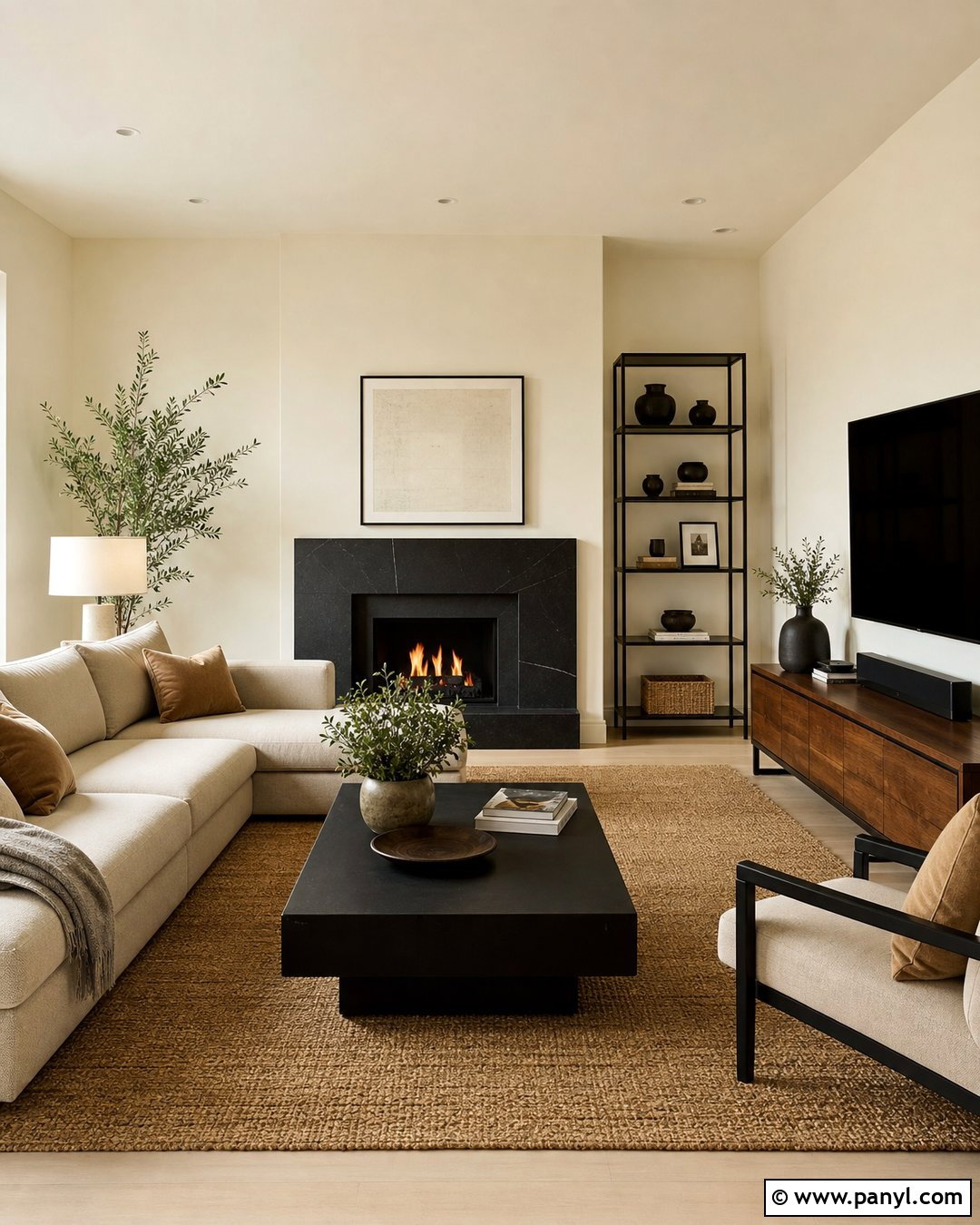
Can a light neutral room still feel bold? Ivory walls provide a warm foundation for sharp black accents without producing the harsh contrast often created by pure white. Start with a light beige sectional and position it around a matte black coffee table. Repeat black through window frames, slim floor lamps, picture frames, and a modern fireplace surround. Bring warmth back with a walnut media console, camel-colored pillows, and a woven tan rug. Keep accessories limited so the contrast remains intentional rather than busy. Soft white trim and a simple ivory ceiling maintain an open appearance. This full living room scheme suits modern, contemporary, and industrial-inspired homes while still feeling comfortable enough for daily use.
5. Ivory Living Room With Terracotta
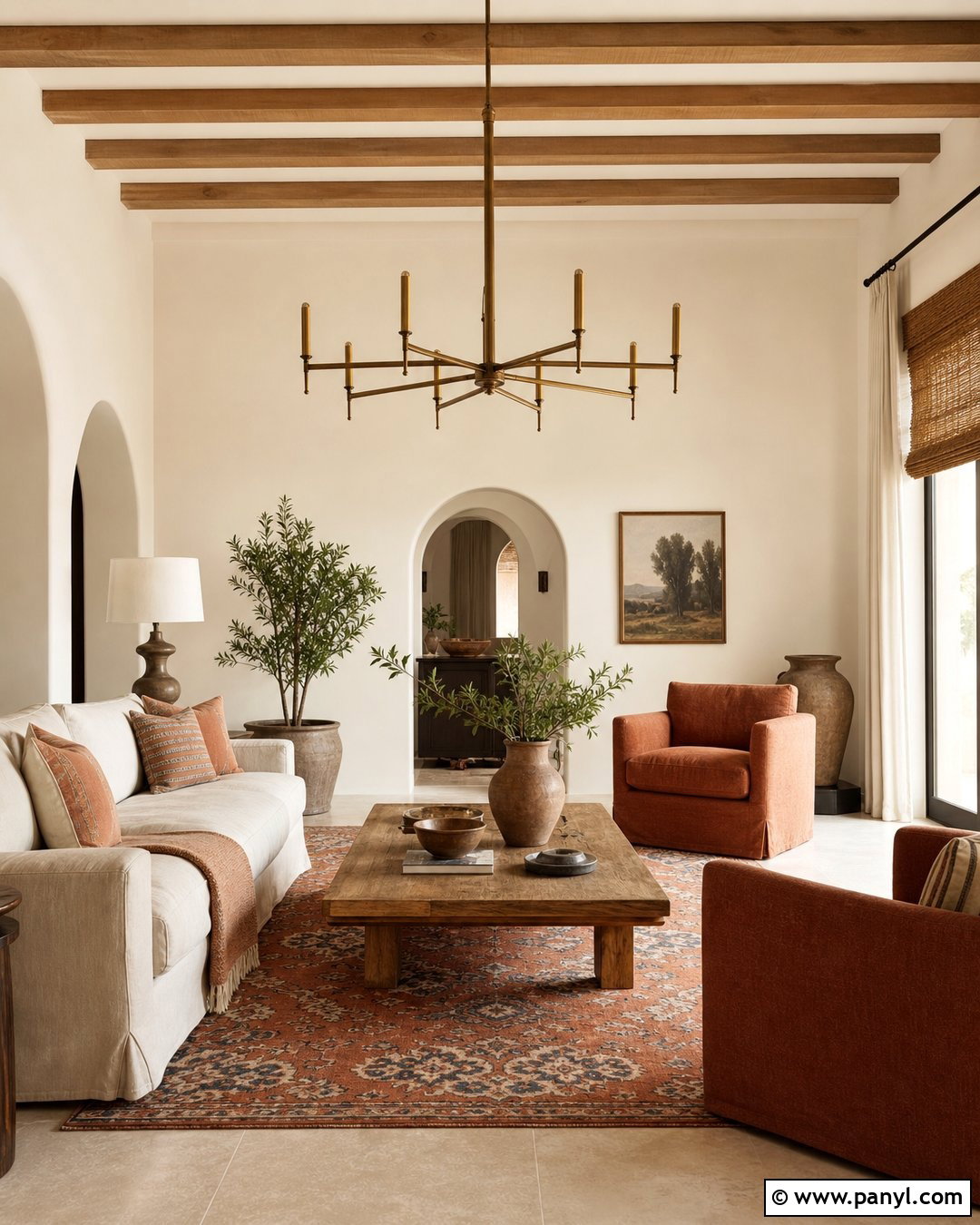
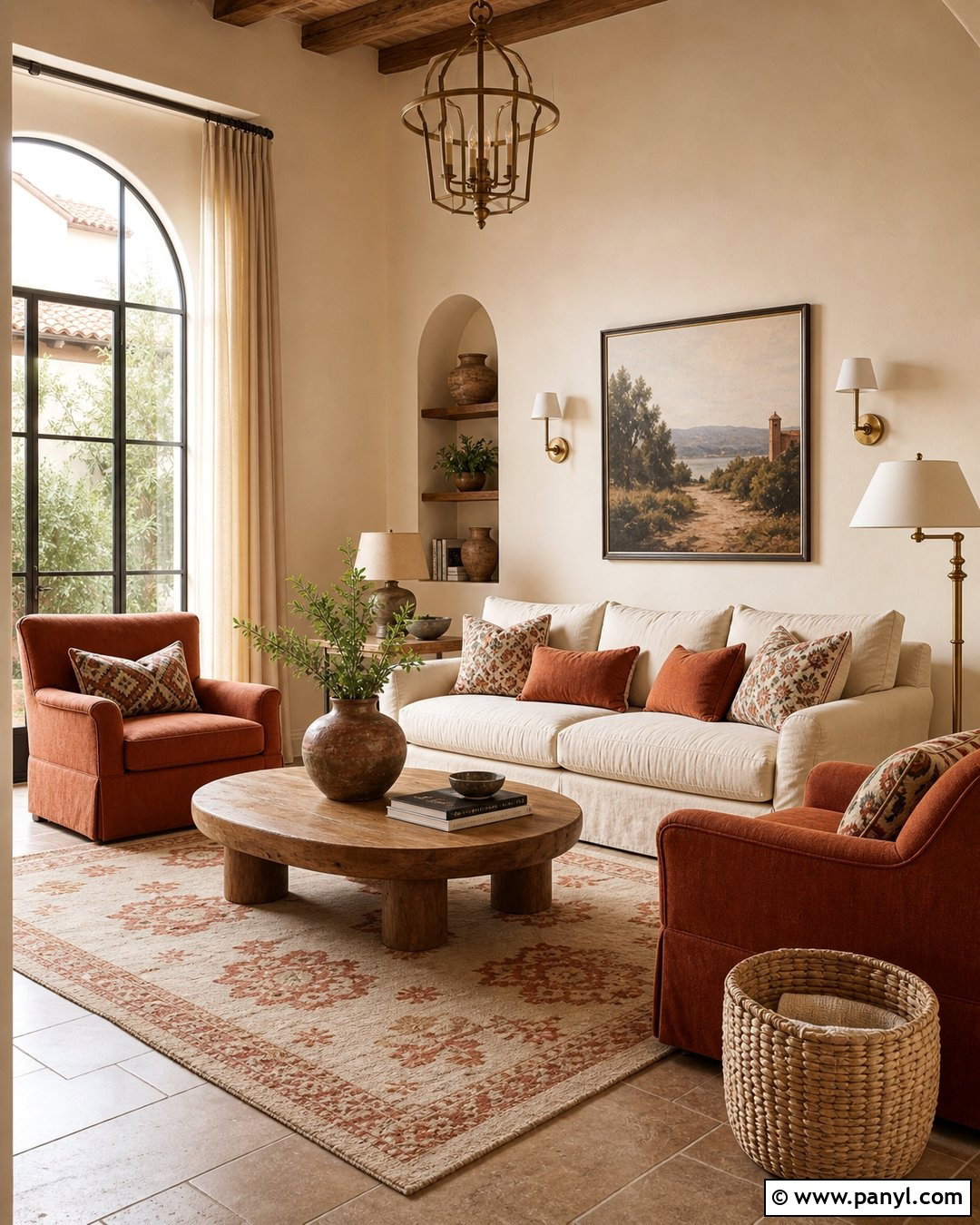
Sun-washed terracotta makes ivory walls look rich and welcoming. Begin with a warm ivory paint that has a restrained cream undertone rather than a strong yellow cast. Furnish the room with a natural linen sofa, two rust-colored lounge chairs, and a low oak coffee table. A patterned rug containing ivory, clay, faded blue, and brown will pull the palette together. Add handmade ceramic vessels, landscape artwork, and textured pillows in paprika and muted cinnamon. Woven bamboo shades strengthen the earthy character, while off-white curtains keep the windows airy. Use aged brass lighting instead of bright chrome. The finished space feels warm and collected, blending Mediterranean, desert-modern, and relaxed contemporary influences without becoming overly rustic.
6. Ivory Bedroom With Beige Layers
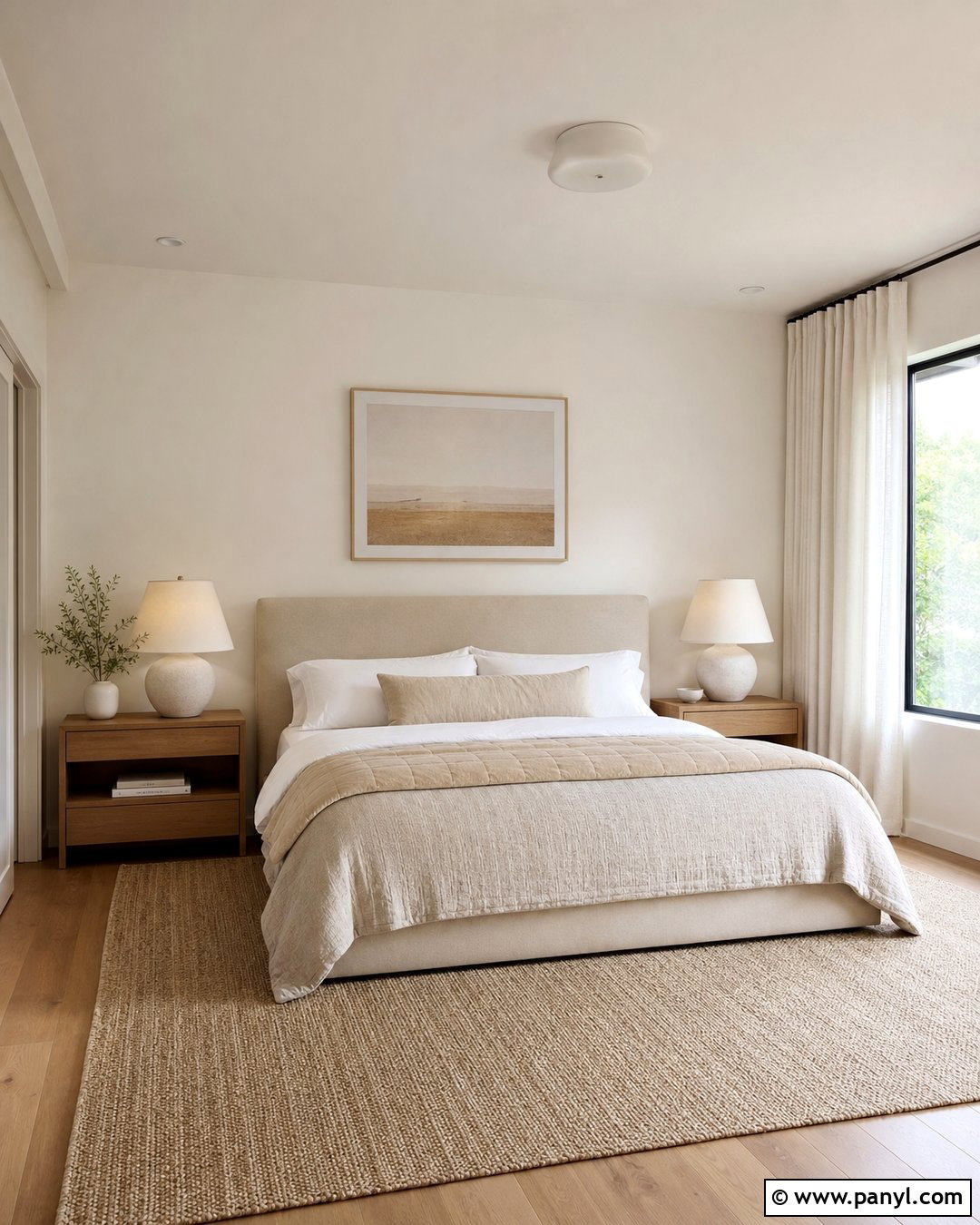
A tonal ivory and beige bedroom can feel soothing rather than plain when every surface has a distinct texture. Cover the walls in soft ivory and select an upholstered oatmeal bed with a tall, simple headboard. Layer the bedding with white cotton sheets, a beige quilt, and pillows in cream, flax, and mushroom brown. Light oak nightstands prevent the neutral palette from appearing too formal. Add ceramic lamps with linen shades and hang minimal artwork in pale wood frames. A large wool rug should extend beneath the bed to soften the flooring and anchor the layout. Finish the windows with ivory drapes over woven shades. The resulting bedroom feels quiet, comfortable, and thoughtfully coordinated from wall to wall.
7. Ivory Bedroom With Dusty Blue
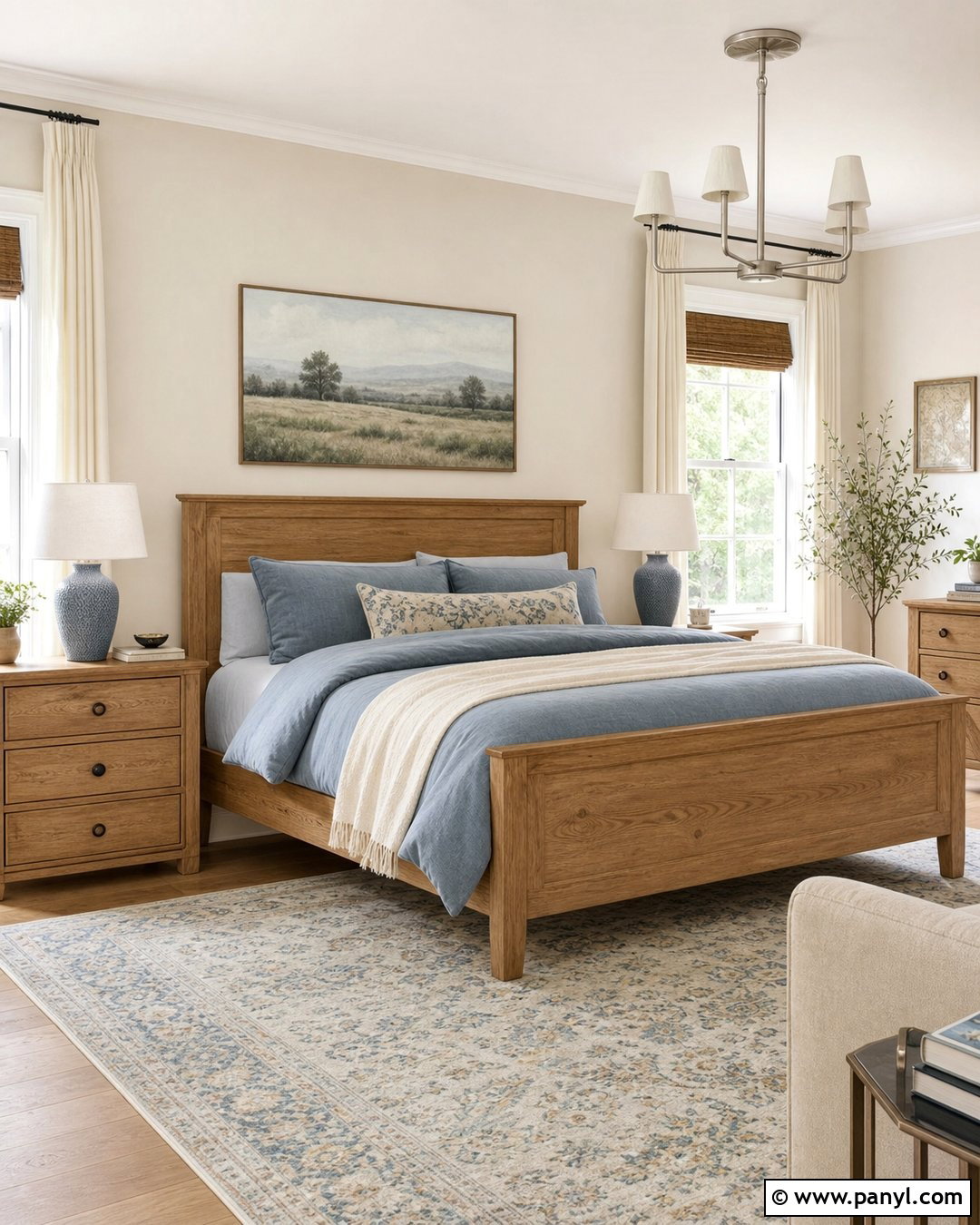
Dusty blue accents bring a peaceful, slightly cool note to warm ivory bedroom walls. Use ivory throughout the room, including any small alcoves, to create one continuous background. Choose a natural oak bed and dress it with white sheets, a muted blue duvet, and striped ivory-and-blue pillows. Place matching oak nightstands on either side, topped with ceramic lamps in a soft blue-gray glaze. A pale patterned rug can introduce touches of sand and deeper slate blue beneath the bed. Keep trim soft white and hardware brushed nickel or antique brass. Simple landscape artwork reinforces the calm palette. This complete look feels relaxed and refined, making it suitable for primary bedrooms, guest rooms, and compact sleeping spaces.
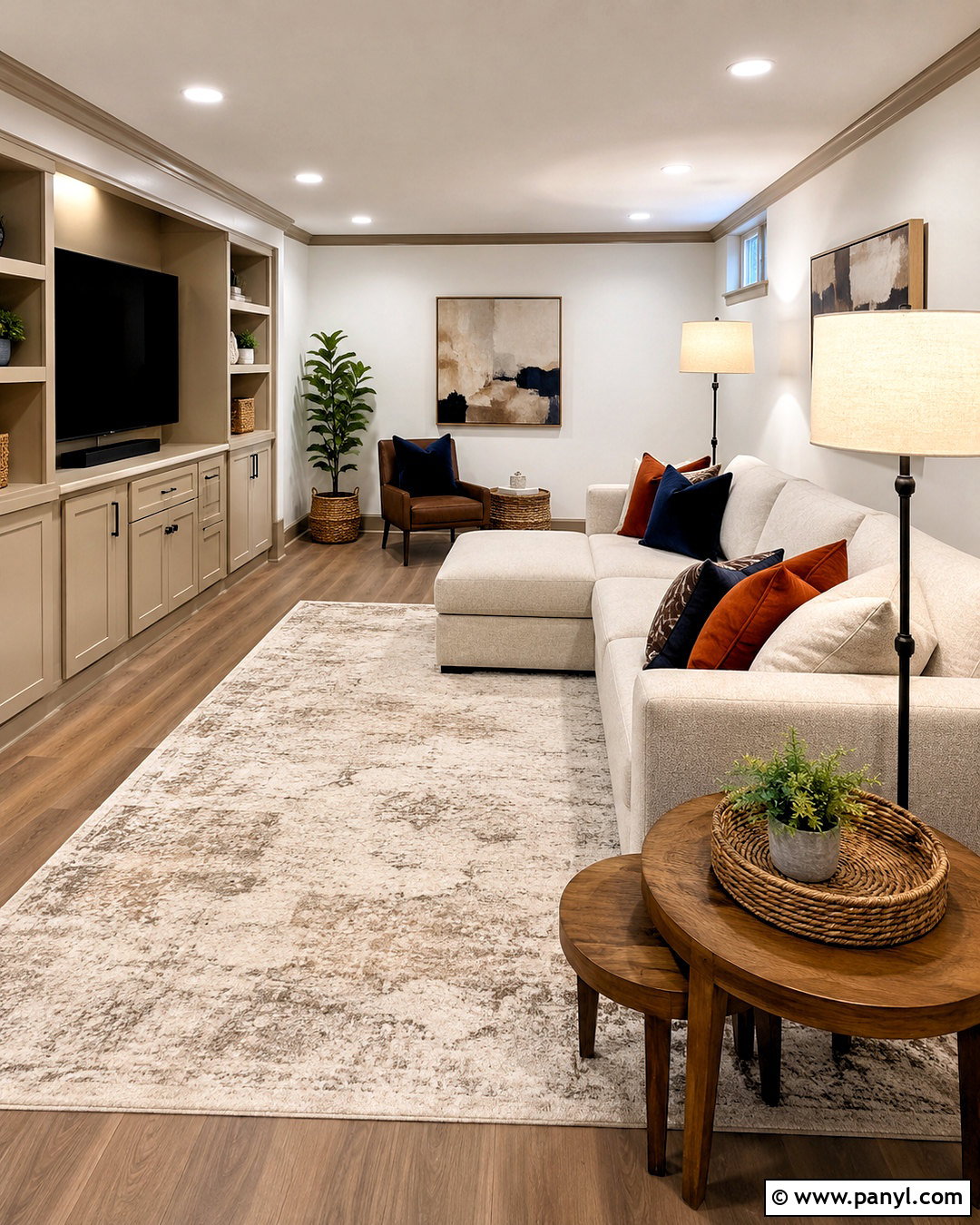
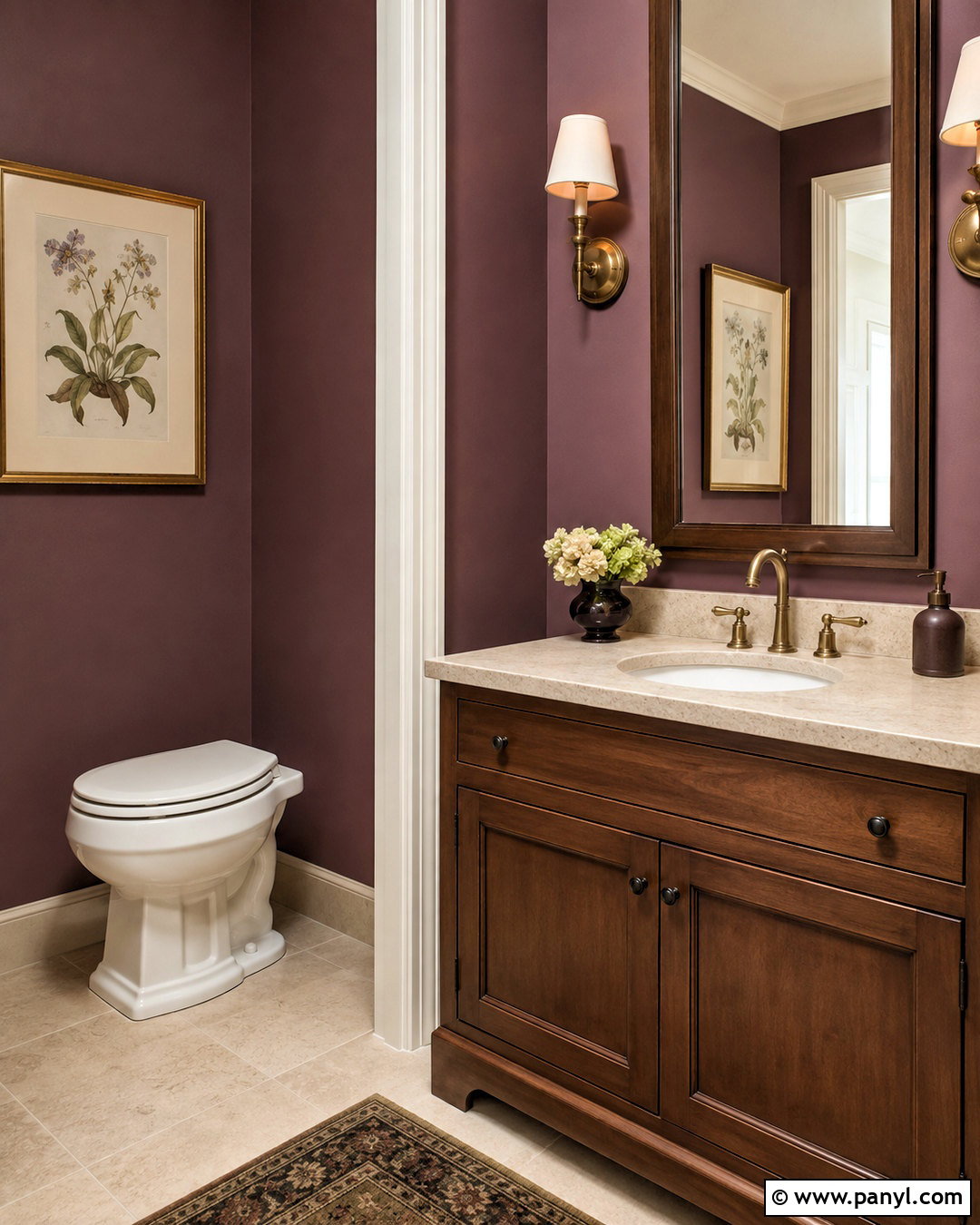
8. Ivory Bedroom With Dark Wood
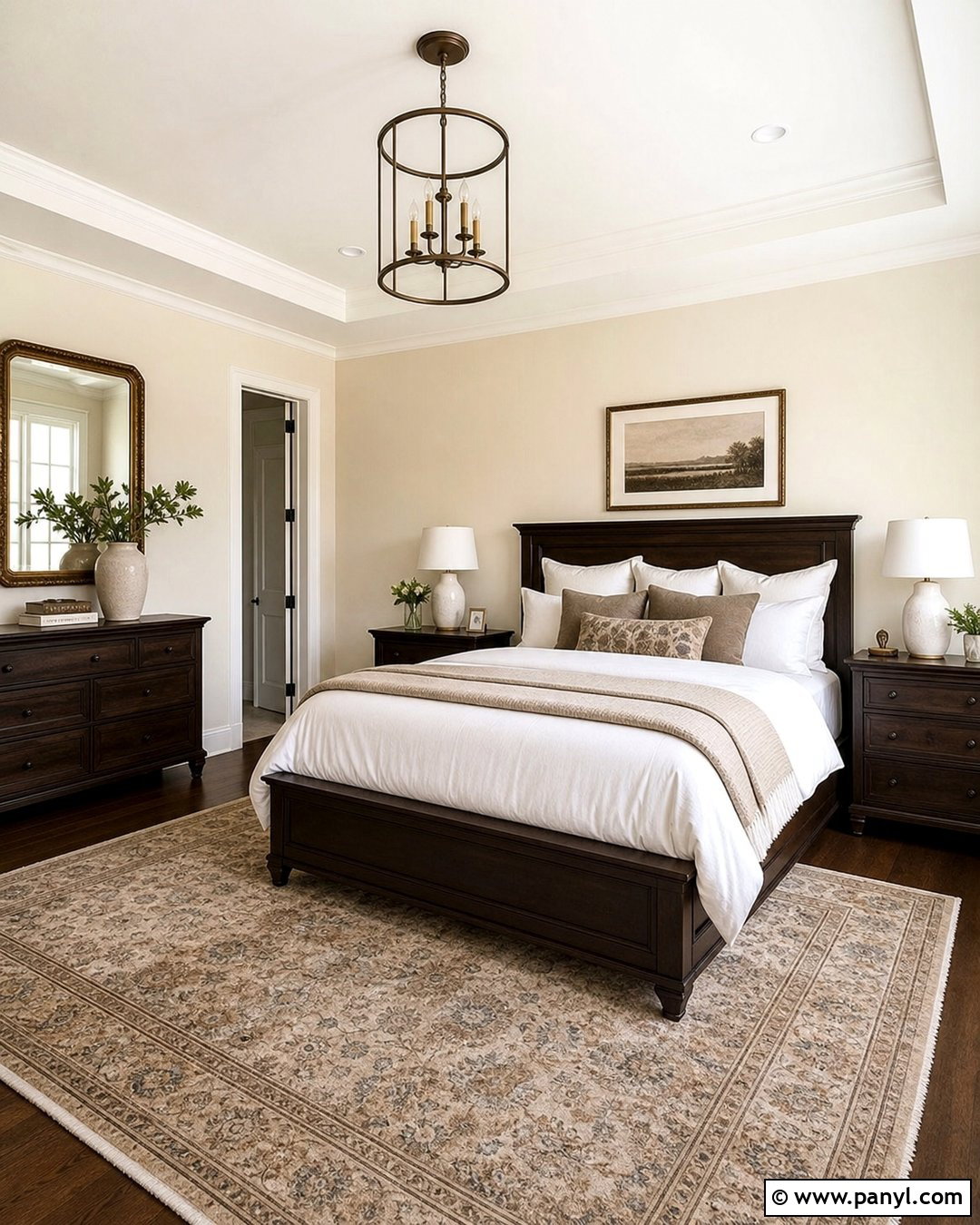
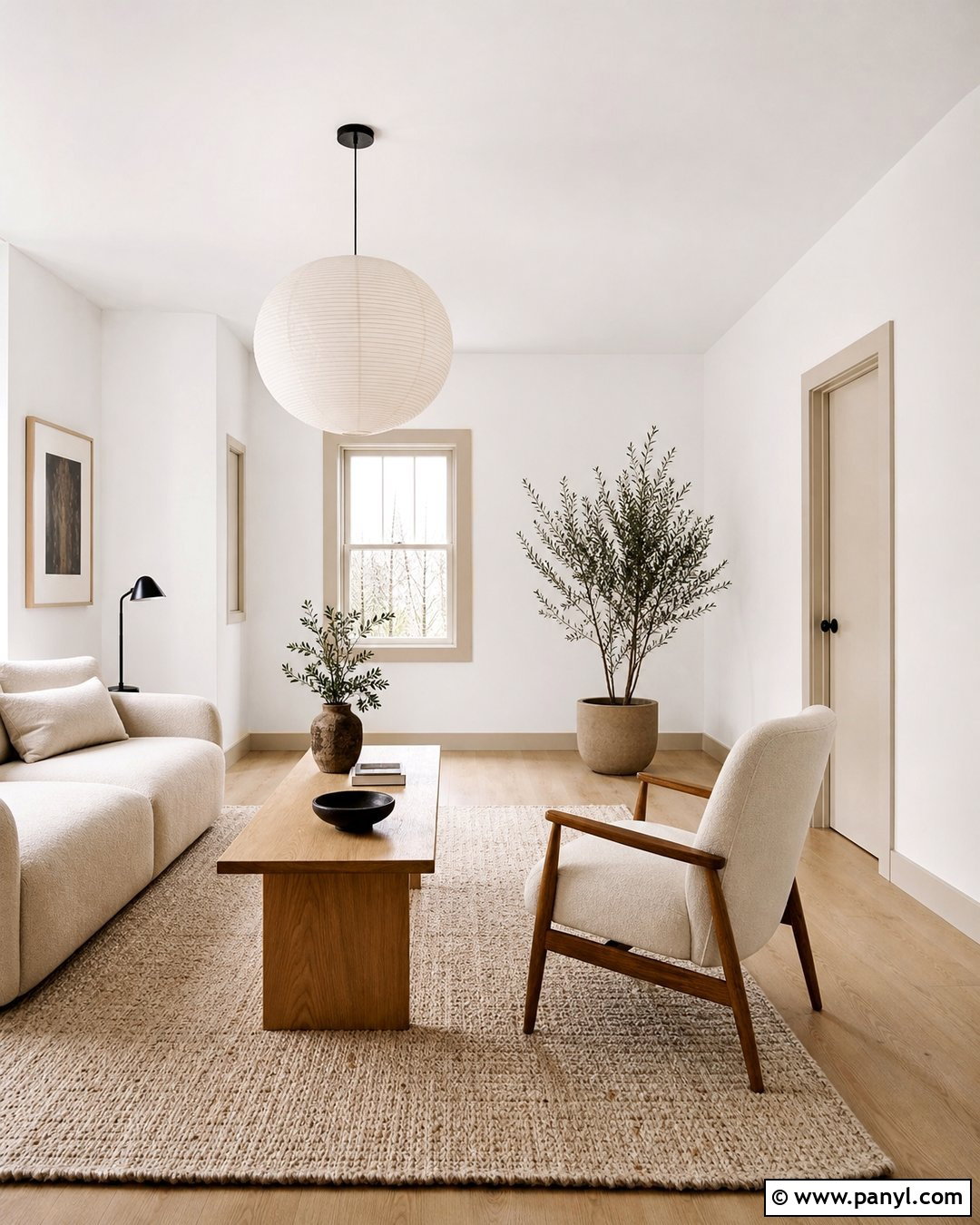
Dark wood furniture becomes noticeably softer when surrounded by warm ivory walls. Center the room around a walnut or espresso-stained bed with a substantial headboard, then balance its visual weight with light bedding in white, cream, and pale taupe. Use matching dark nightstands, but choose lamps with ivory ceramic bases and linen shades. An understated vintage-style rug containing faded brown, blue, and beige will bridge the contrast between the walls and furniture. Keep window treatments light and uncomplicated to preserve brightness. A bronze ceiling fixture and framed botanical sketches add traditional detail. This full bedroom arrangement works particularly well when you already own dark furniture and want the room to appear lighter without replacing major pieces.
9. Ivory Bedroom With Olive Green
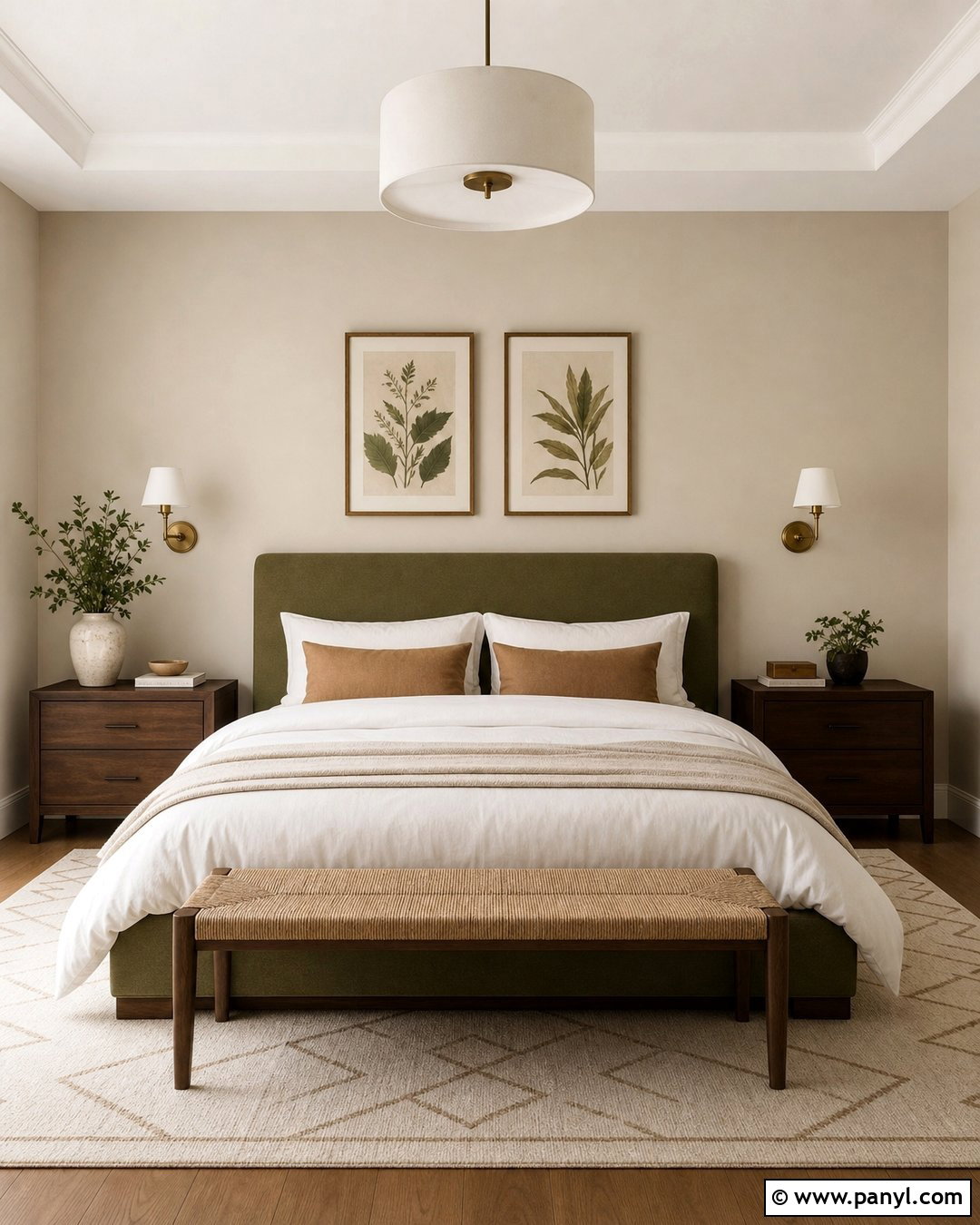
Ivory walls and olive green textiles create a bedroom that feels grounded, mature, and comfortable. Select an ivory shade with beige undertones, then use olive on the upholstered headboard or a substantial quilt. Add crisp white sheets and accent pillows in camel, chocolate brown, and muted gold. Warm walnut nightstands and aged brass sconces support the earthy palette. Underfoot, place a textured cream rug with a subtle geometric pattern. Framed landscape prints or vintage botanical artwork can fill the wall above the bed without overwhelming it. Linen curtains in a shade close to the wall color create a smooth, cohesive edge. This bedroom combines natural color and classic materials in a way that feels intentional but never excessively decorated.
10. Ivory Bedroom With Blush Pink
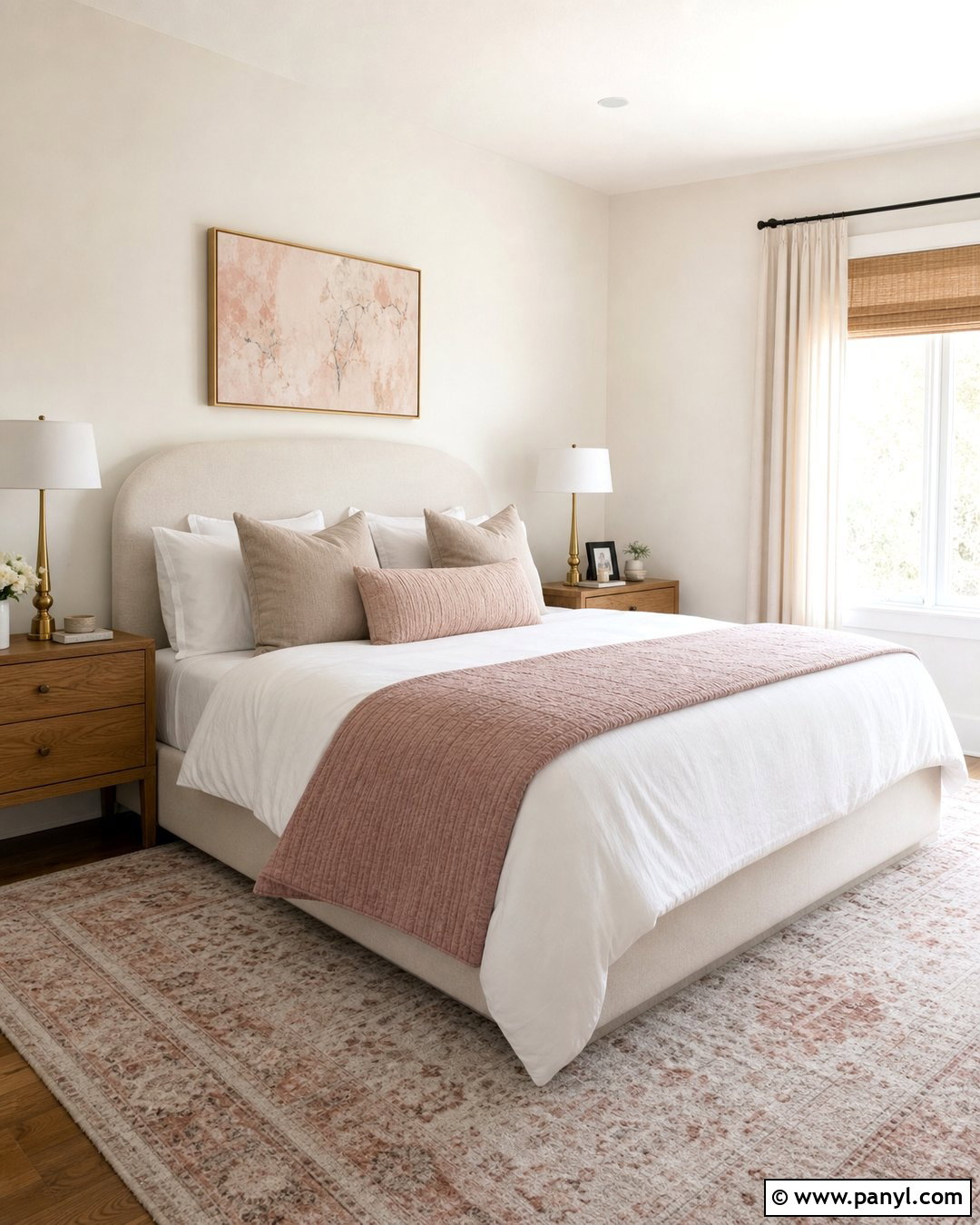
For a soft bedroom that does not feel overly sweet, combine neutral ivory walls with dusty blush and warm beige. Start with a curved oatmeal headboard and clean white bedding. Add a muted pink coverlet, mushroom-colored pillows, and one or two small burgundy accents for definition. Light oak nightstands keep the palette fresh, while brushed brass lamps introduce a subtle glow. Choose an ivory rug with a faint blush pattern to unify the floor and bed. Window treatments should remain simple, using natural woven shades beneath flowing cream curtains. Abstract artwork in pink, tan, and charcoal can modernize the arrangement. The completed room feels gentle and sophisticated, with enough neutral structure to remain flexible as preferences change.
11. Ivory Kitchen With White Cabinets
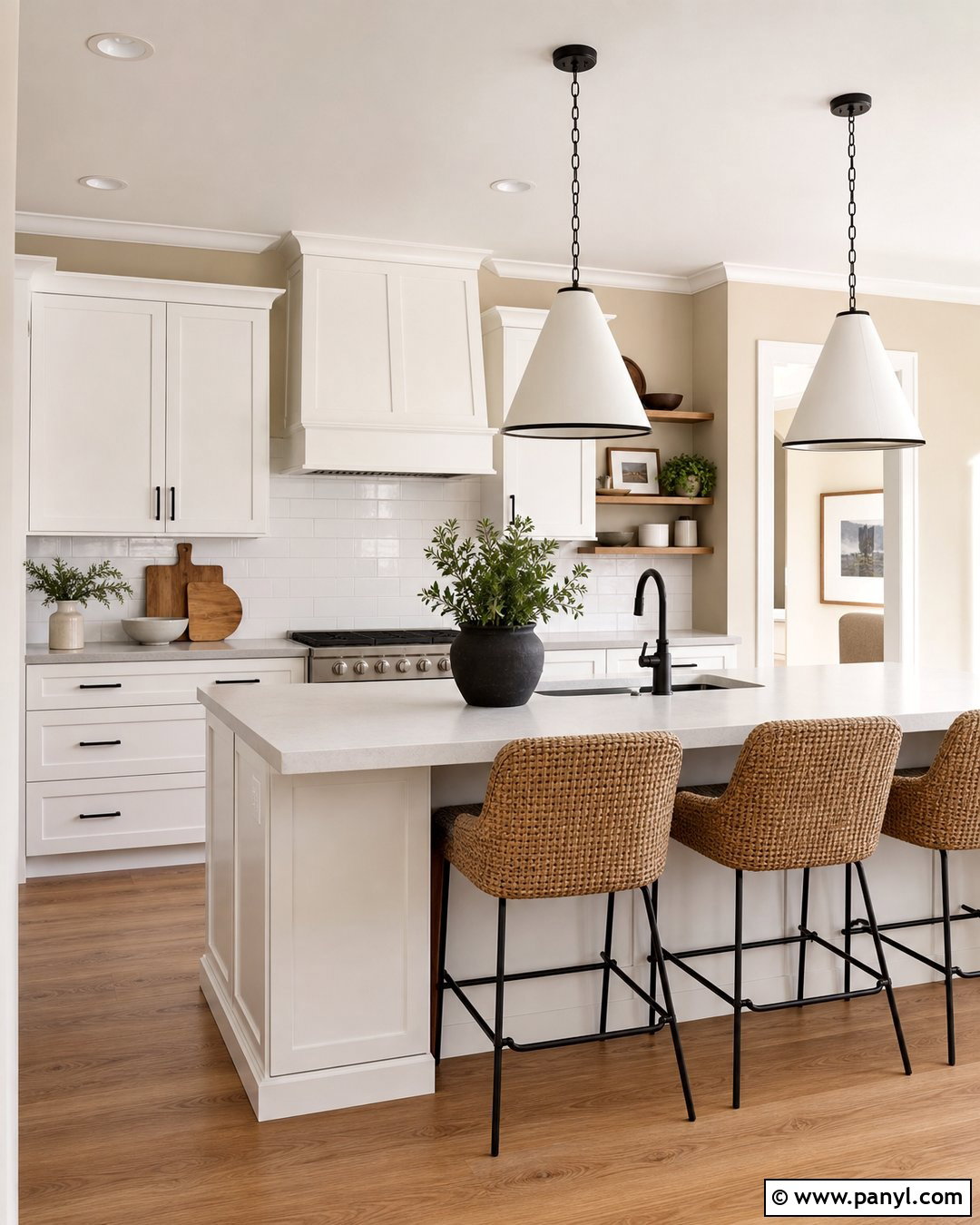
Ivory walls can warm up a kitchen filled with bright white cabinets. Choose a restrained ivory that remains clearly lighter than beige, allowing the cabinetry and trim to look crisp rather than mismatched. Complete the room with pale quartz countertops, a white subway tile backsplash, and medium oak flooring. Matte black cabinet hardware provides contrast, while woven counter stools introduce texture around an island or breakfast bar. Repeat black in simple pendant lights to keep the design balanced. Display only a few wood cutting boards, ceramic bowls, and green plants on the counters. The combination creates a clean kitchen with more softness than an all-white scheme, making it practical for open-concept homes where the kitchen connects directly to warmer living areas.
12. Ivory Kitchen With Wood Cabinets
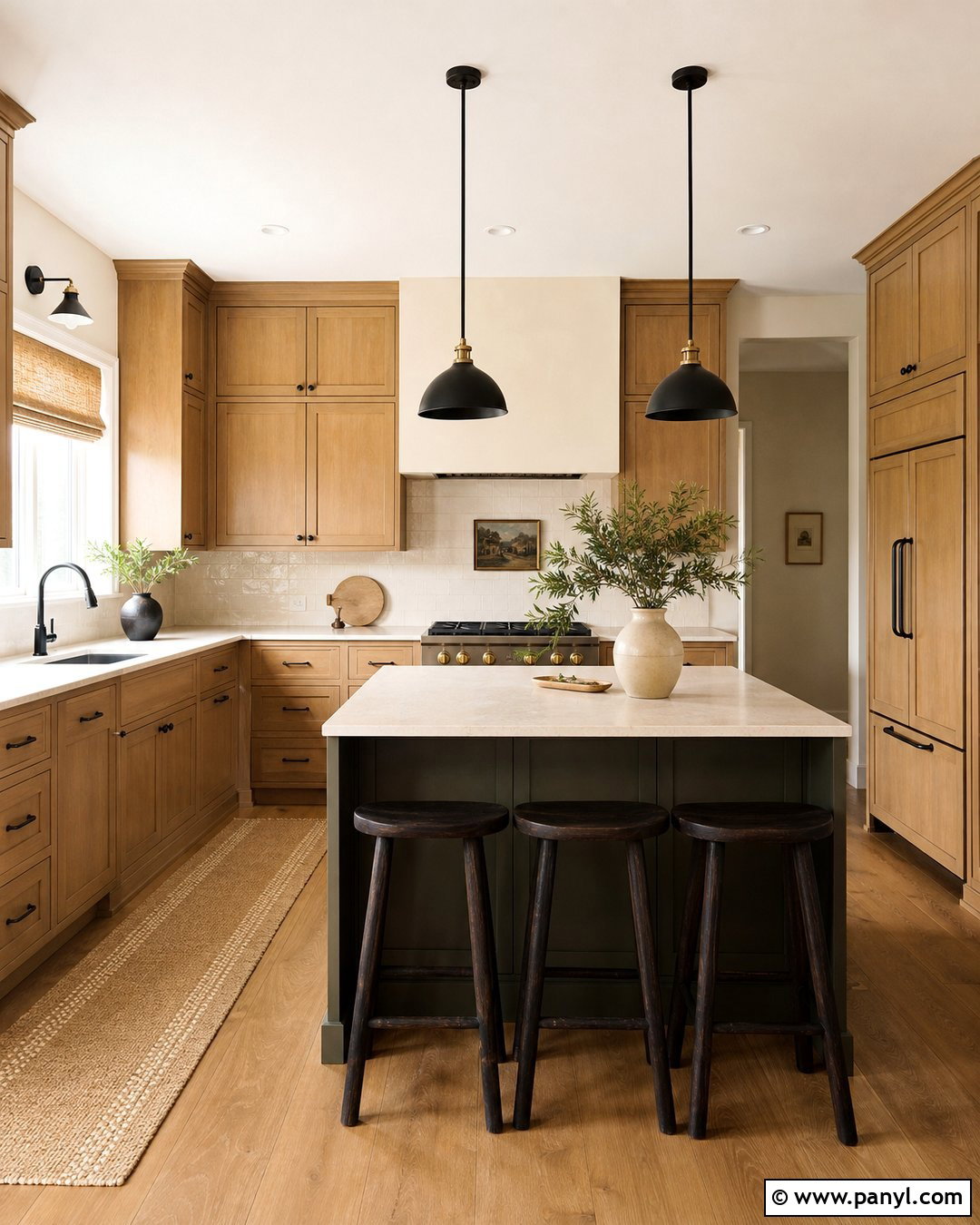
Golden oak and walnut cabinetry pair beautifully with ivory kitchen walls because both materials share a warm character. Use the paint on all exposed wall areas while keeping the ceiling a soft white. Add creamy quartz counters and a backsplash of handmade off-white tile for subtle variation. Brushed brass or bronze hardware will blend naturally with the cabinetry, while dark counter stools provide a grounding note. If the room includes an island, consider painting it muted taupe or deep olive to break up the wood. Keep window treatments light with woven shades or simple linen panels. The completed kitchen feels organic, welcoming, and layered, offering a modern alternative to spaces dominated by cool gray or brilliant white finishes.
13. Ivory Kitchen With Green Cabinets
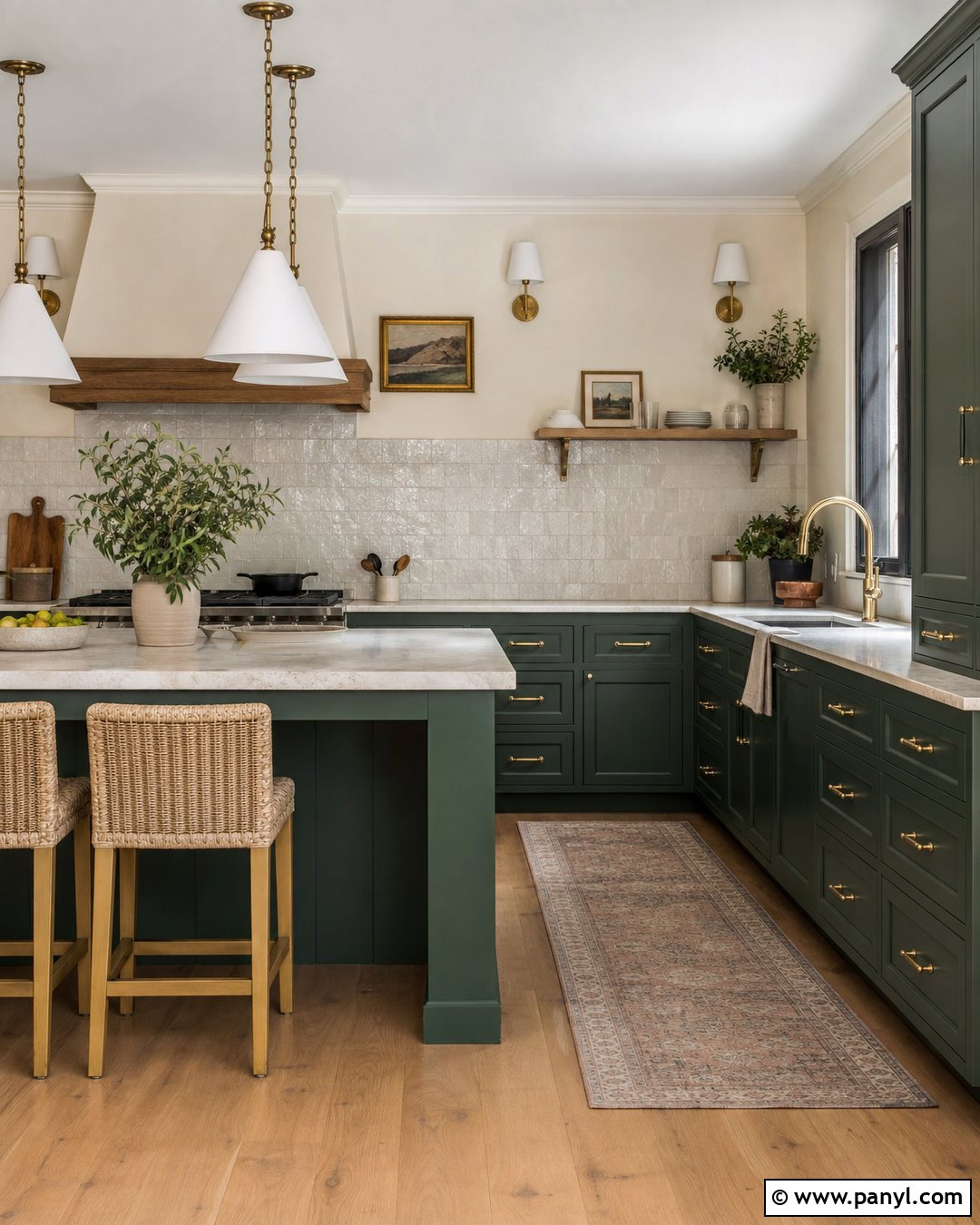
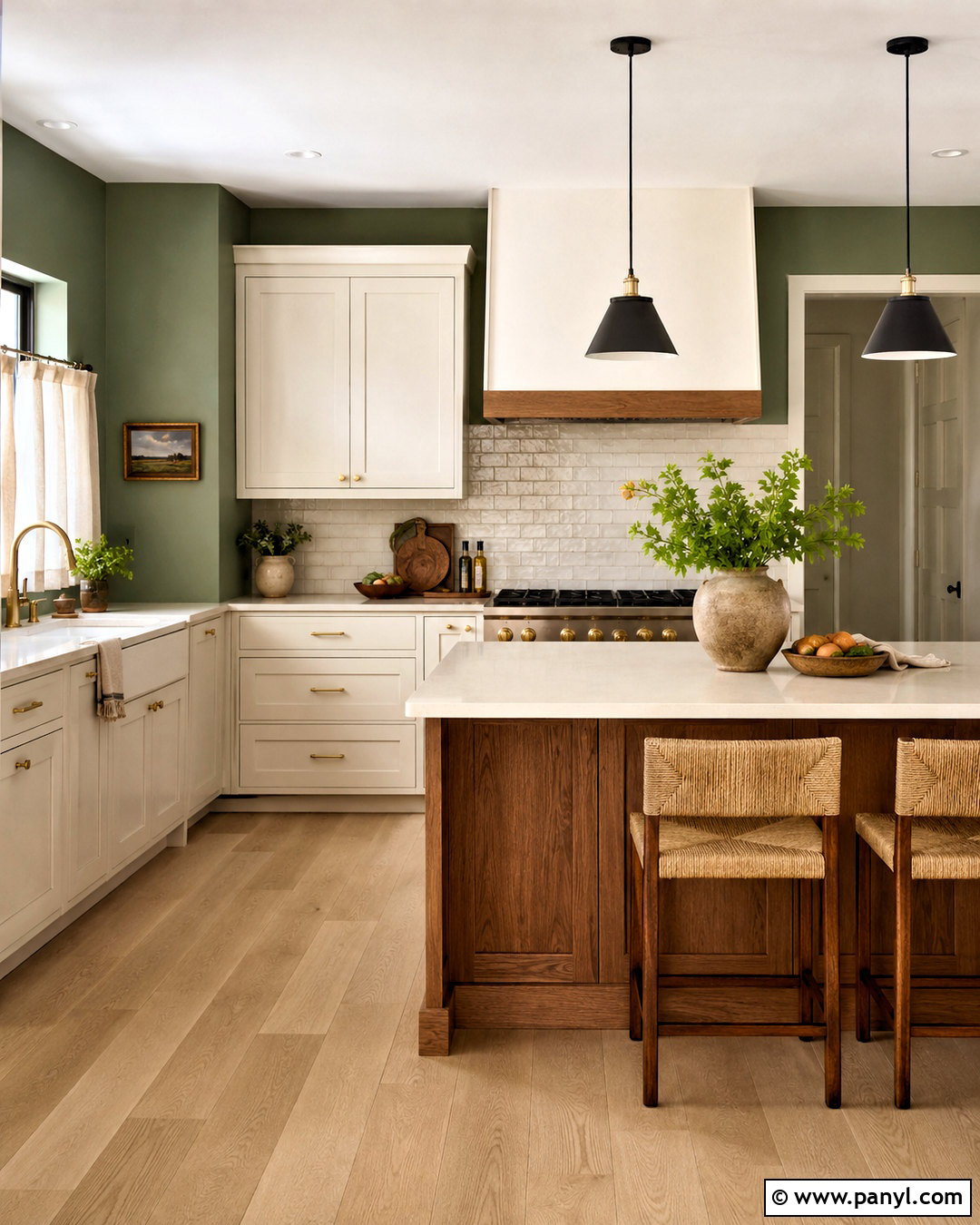
Deep green cabinetry looks calmer and more approachable when balanced by warm ivory walls. Choose forest, moss, or dark olive paint for the lower cabinets and island, then keep upper cabinets ivory or natural wood. Use creamy stone countertops and a lightly textured ivory backsplash to connect the surfaces. Aged brass handles and pendant lights add warmth, while medium oak flooring supports the natural color story. Include counter stools with woven seats and black frames for contrast. Minimal ceramics and wood accessories keep the room functional without hiding the cabinetry. This complete scheme works in traditional and modern kitchens alike. It offers substantial color while the ivory background preserves an open, comfortable appearance around work areas and gathering spaces.
14. Ivory Dining Room With Dark Furniture
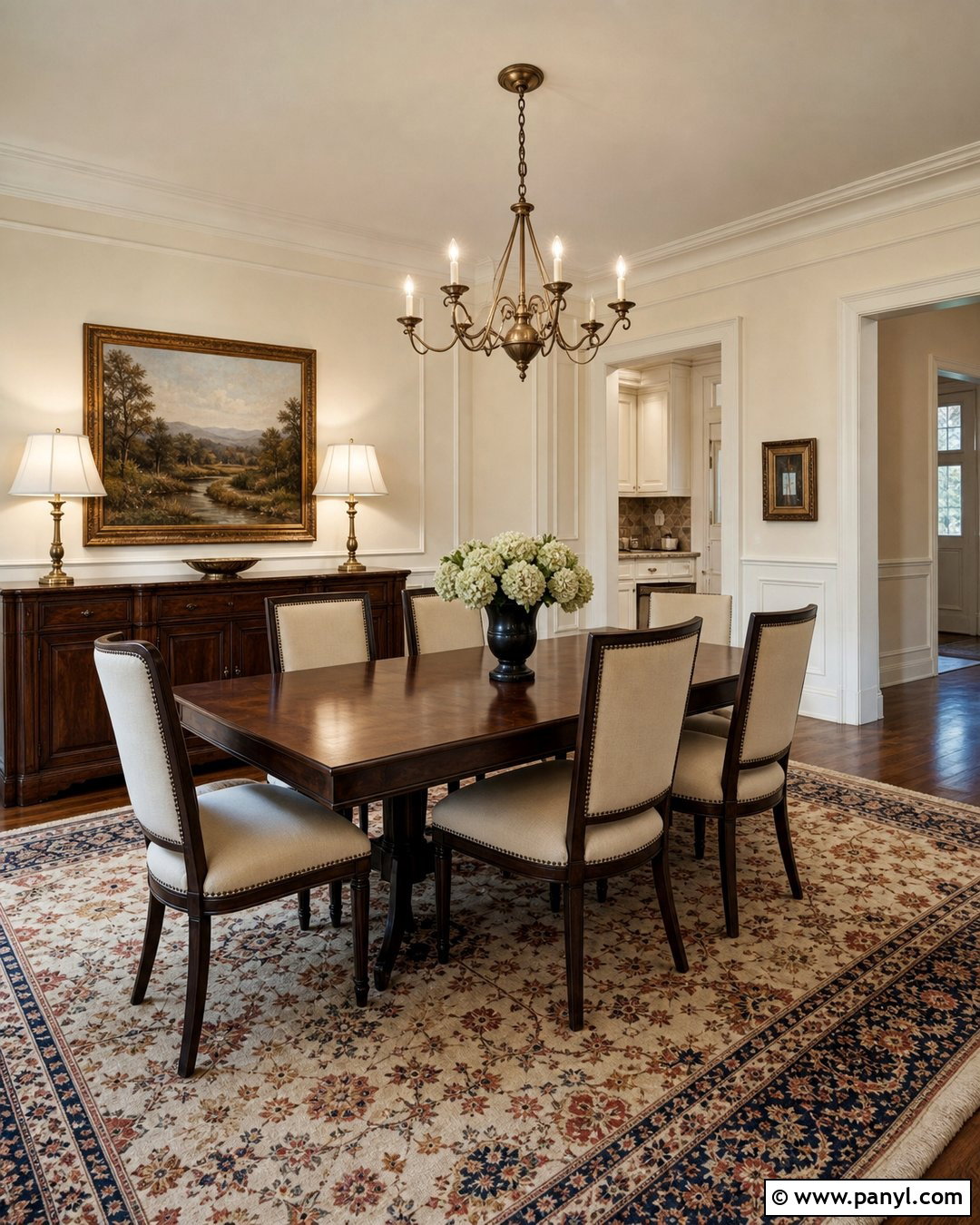
A formal dining room becomes warmer and less severe when dark furniture sits against ivory walls. Paint the room in a creamy ivory and keep the crown molding, baseboards, and ceiling soft white for subtle definition. Center a walnut or black-stained dining table beneath an aged brass chandelier. Upholstered chairs in oatmeal fabric will soften the table, while two darker host chairs can add structure. Choose a traditional rug with faded ivory, rust, navy, and brown details. A wood sideboard provides practical storage and space for simple ceramic lamps. Hang one large landscape or abstract piece instead of several small decorations. The completed dining room feels established and elegant but remains relaxed enough for everyday meals and casual gatherings.
15. Ivory Dining Room With Blue Trim
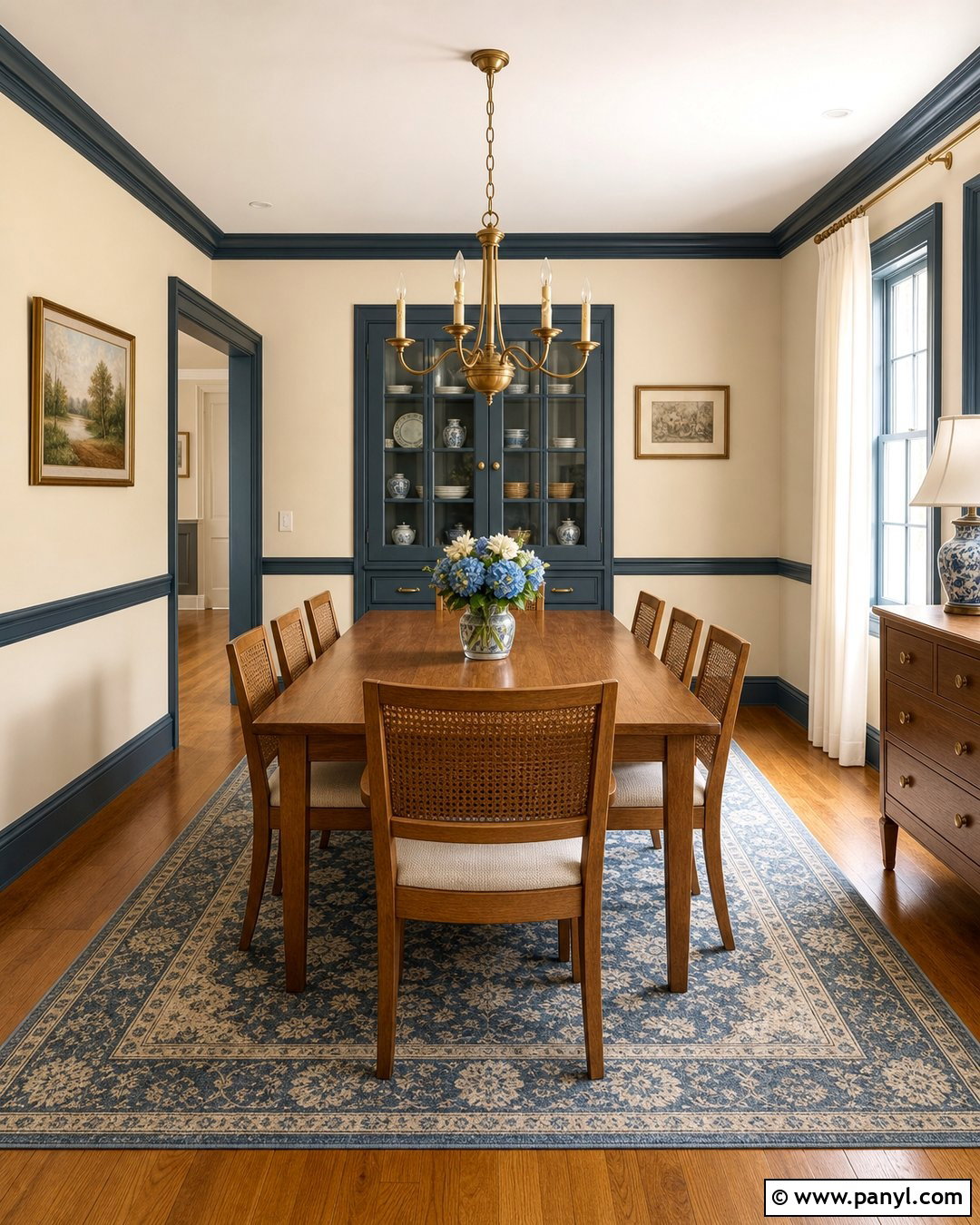
Blue-painted trim gives ivory dining room walls a distinctive architectural edge. Cover the main wall surfaces in warm ivory, then use muted slate blue on the baseboards, window casings, crown molding, and built-in cabinetry. A medium oak dining table and woven-back chairs prevent the color contrast from looking too formal. Add a blue-and-ivory patterned rug beneath the table and hang a simple brass chandelier overhead. White linen curtains keep the windows light, while blue ceramic lamps or serving pieces repeat the trim color. Use a natural wood sideboard rather than another painted item to maintain balance. This finished look adds personality to a traditional room while still feeling orderly, practical, and connected to the rest of a neutral home.
16. Ivory Dining Room With Picture Frame Molding
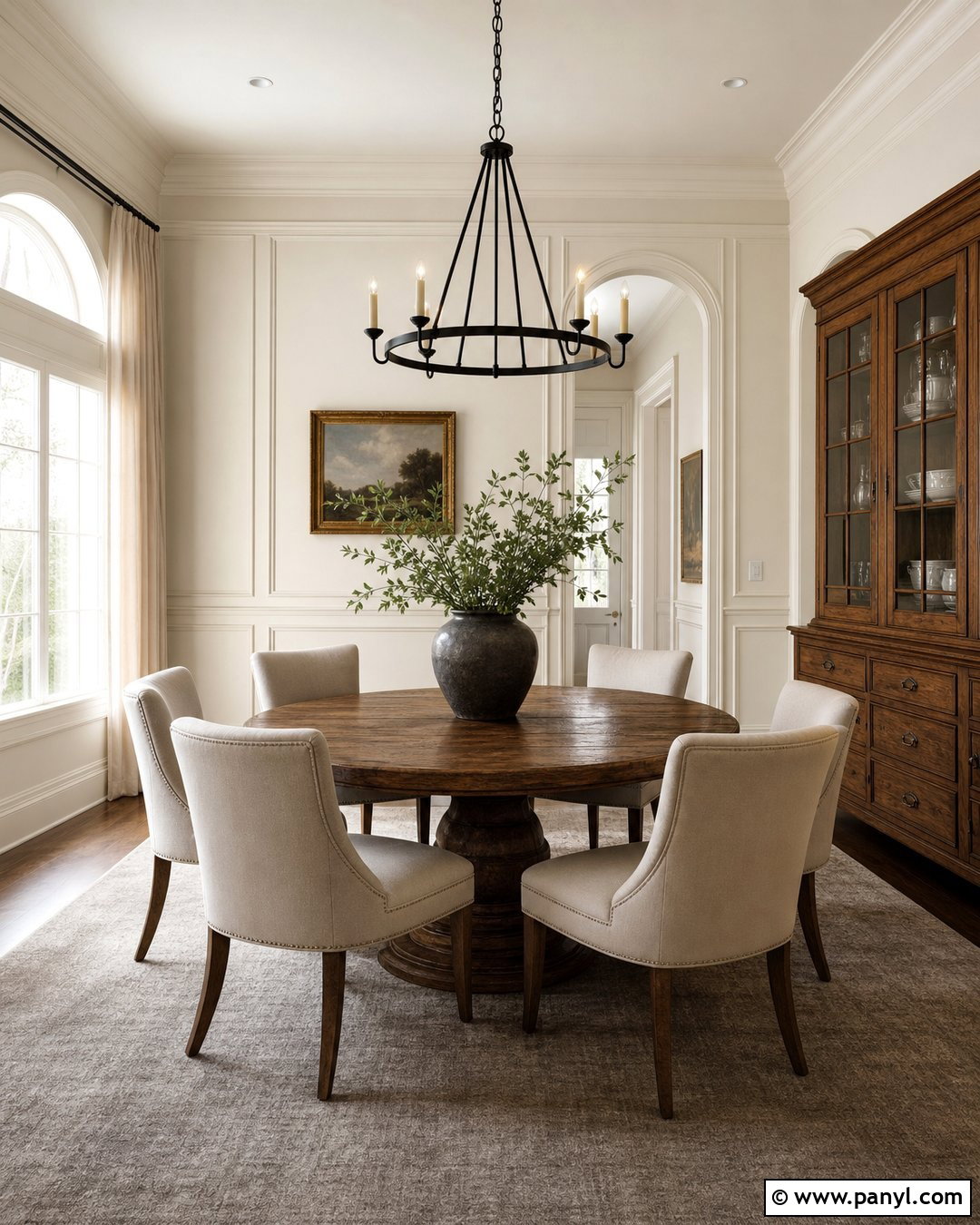
Picture frame molding adds depth to ivory walls without requiring a second paint color. Apply one consistent shade of ivory across the flat walls, decorative molding, and baseboards, using a slightly higher sheen on the woodwork. This tonal treatment emphasizes shadow and shape while keeping the room calm. Furnish the space with a round oak table, upholstered beige chairs, and a large warm-gray rug. A black iron chandelier provides contrast overhead, and long linen curtains frame the windows. Keep artwork simple so it does not compete with the wall detailing. An antique wood cabinet or console can add character. The complete dining room feels refined and architectural, yet the single-color treatment remains approachable and easier to coordinate.
17. Ivory Bathroom With Marble
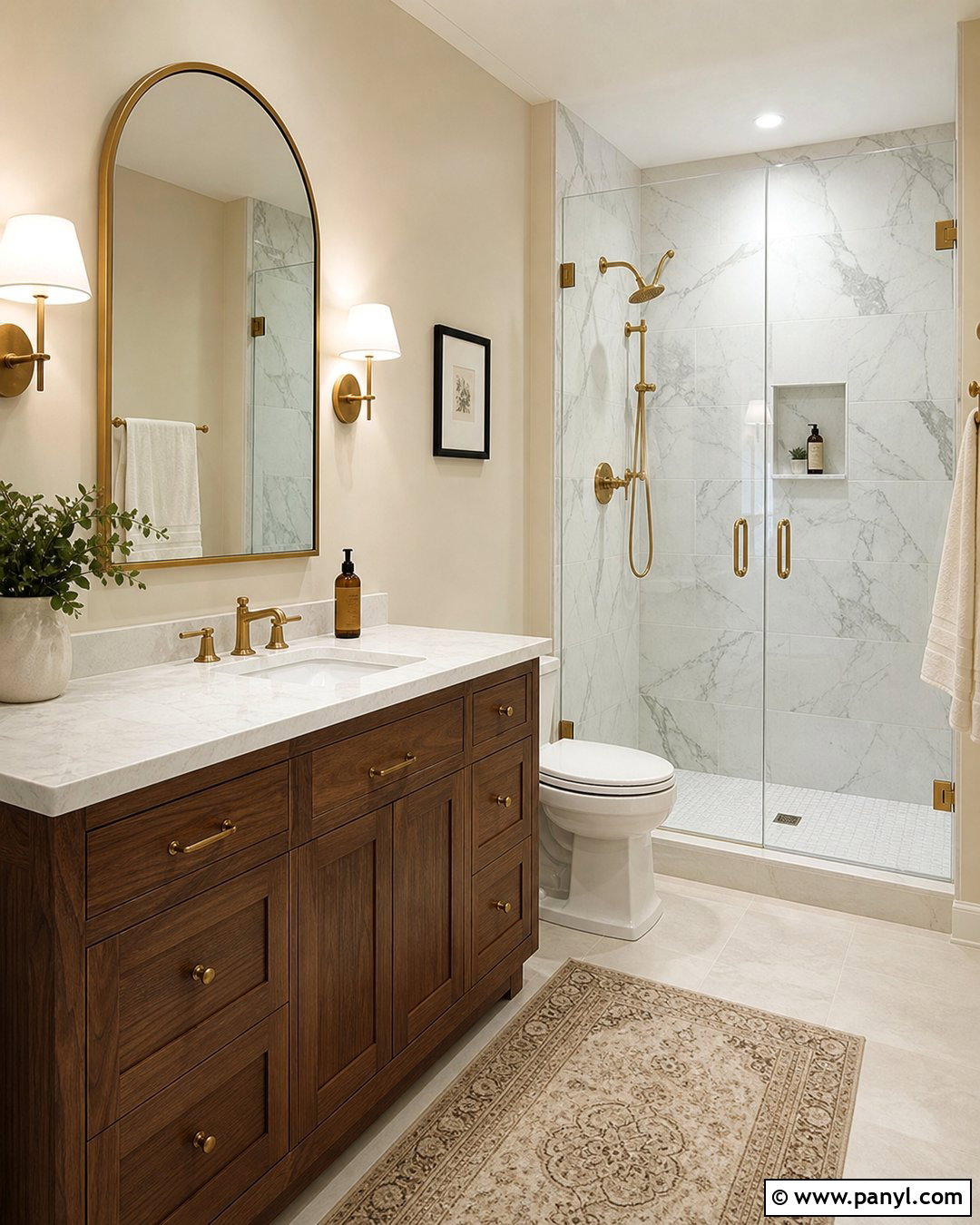
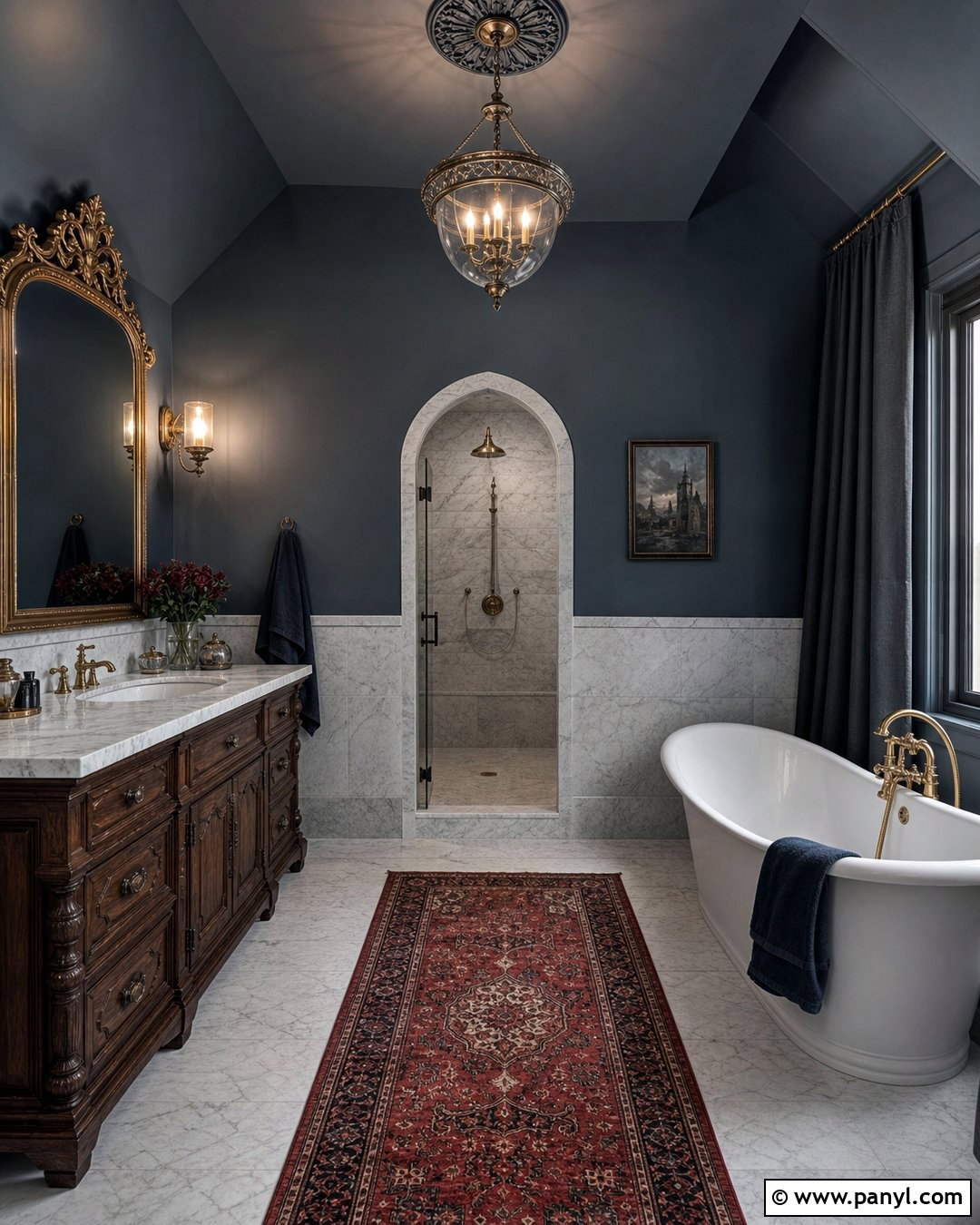
Ivory bathroom walls can soften the cool appearance of white and gray marble. Paint the upper walls in a warm, balanced ivory, then use marble tile around the shower or tub. A medium walnut vanity will add visual weight, while brushed brass faucets, sconces, and cabinet pulls supply a cohesive metallic finish. Choose an arched mirror with a slim brass frame and install simple white counters. Ivory towels, a small beige bath mat, and one ceramic planter complete the palette without introducing unnecessary color. Keep the ceiling and door trim soft white for a clean transition. This bathroom feels classic and gently luxurious, but the straightforward materials also work in an average-size home where every finish needs to serve a practical purpose.
18. Ivory Bathroom With Black Fixtures
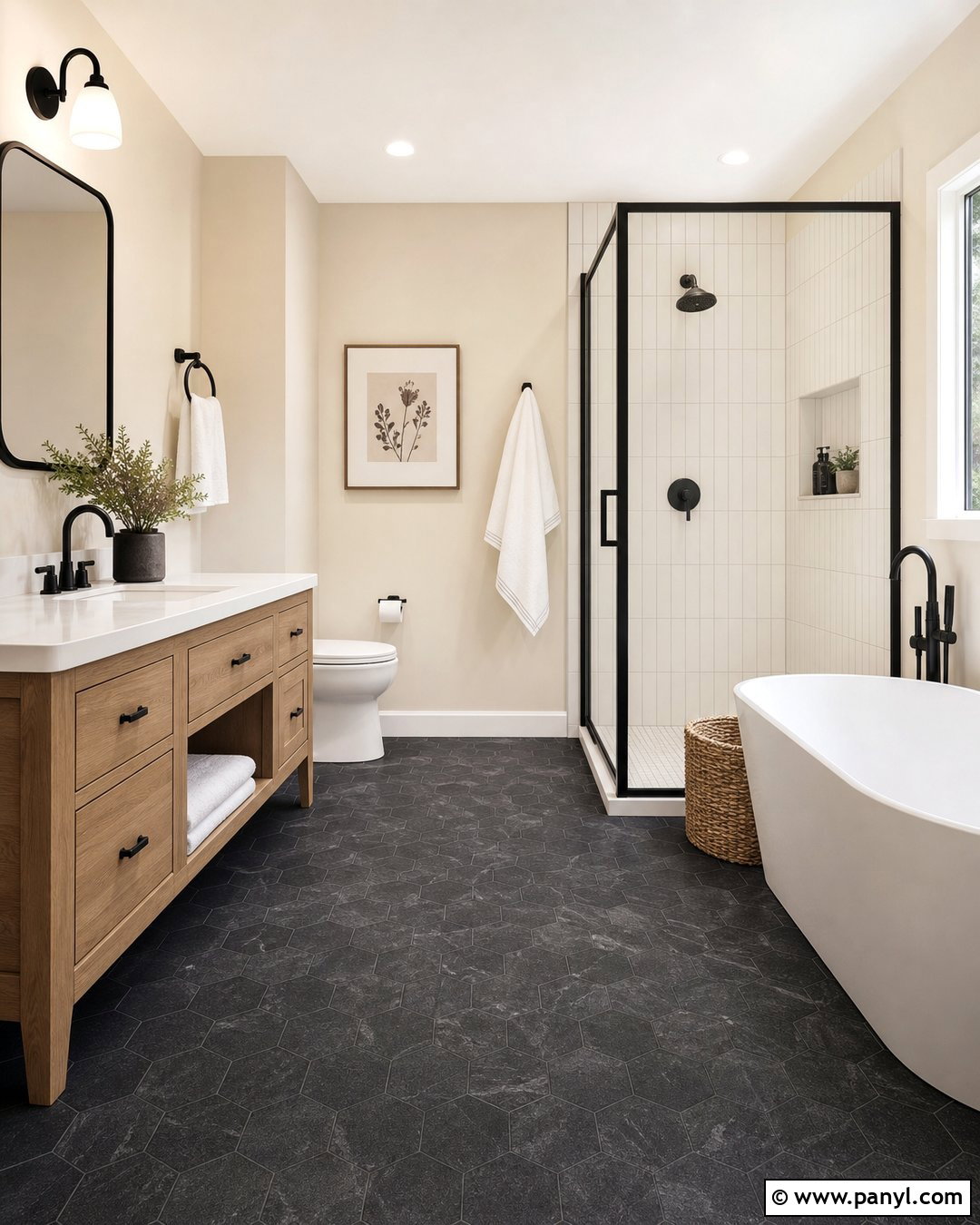
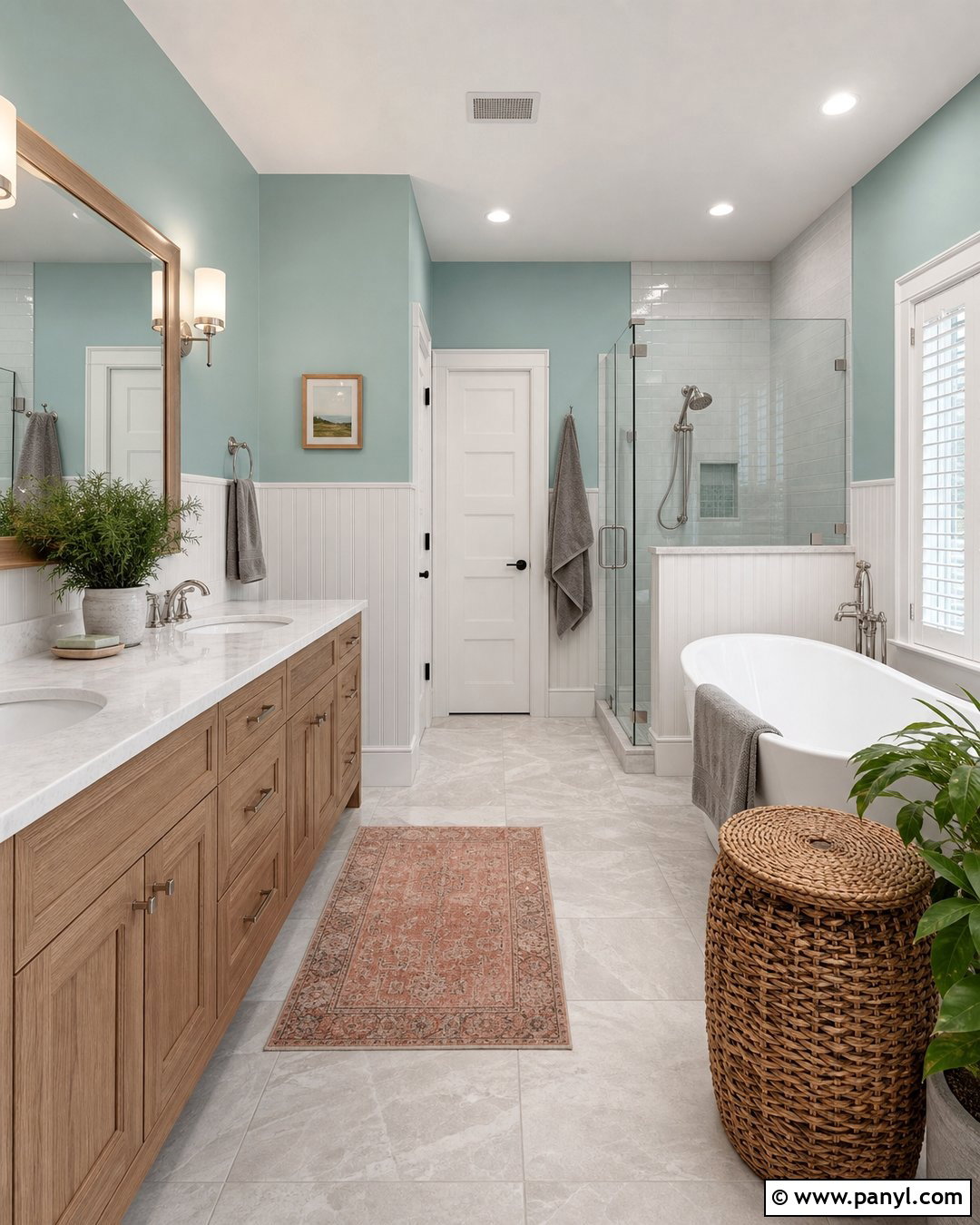
Matte black fixtures give ivory bathroom walls a crisp, modern outline. Use a clean ivory paint above white vertical tiles or simple beadboard, depending on the room’s style. Select a light oak vanity with a white countertop and black faucet. Repeat the finish through the mirror frame, sconces, shower hardware, and towel bars so the contrast appears intentional. A black-framed glass shower enclosure can become the primary focal point in a larger bathroom. Add white and beige towels, woven storage baskets, and a patterned floor tile containing ivory and charcoal. Keep accessories minimal to avoid breaking up the clear color relationship. The result is a bright, practical bathroom that feels warmer and more relaxed than a strictly black-and-white design.
19. Ivory Bathroom With Sage Vanity
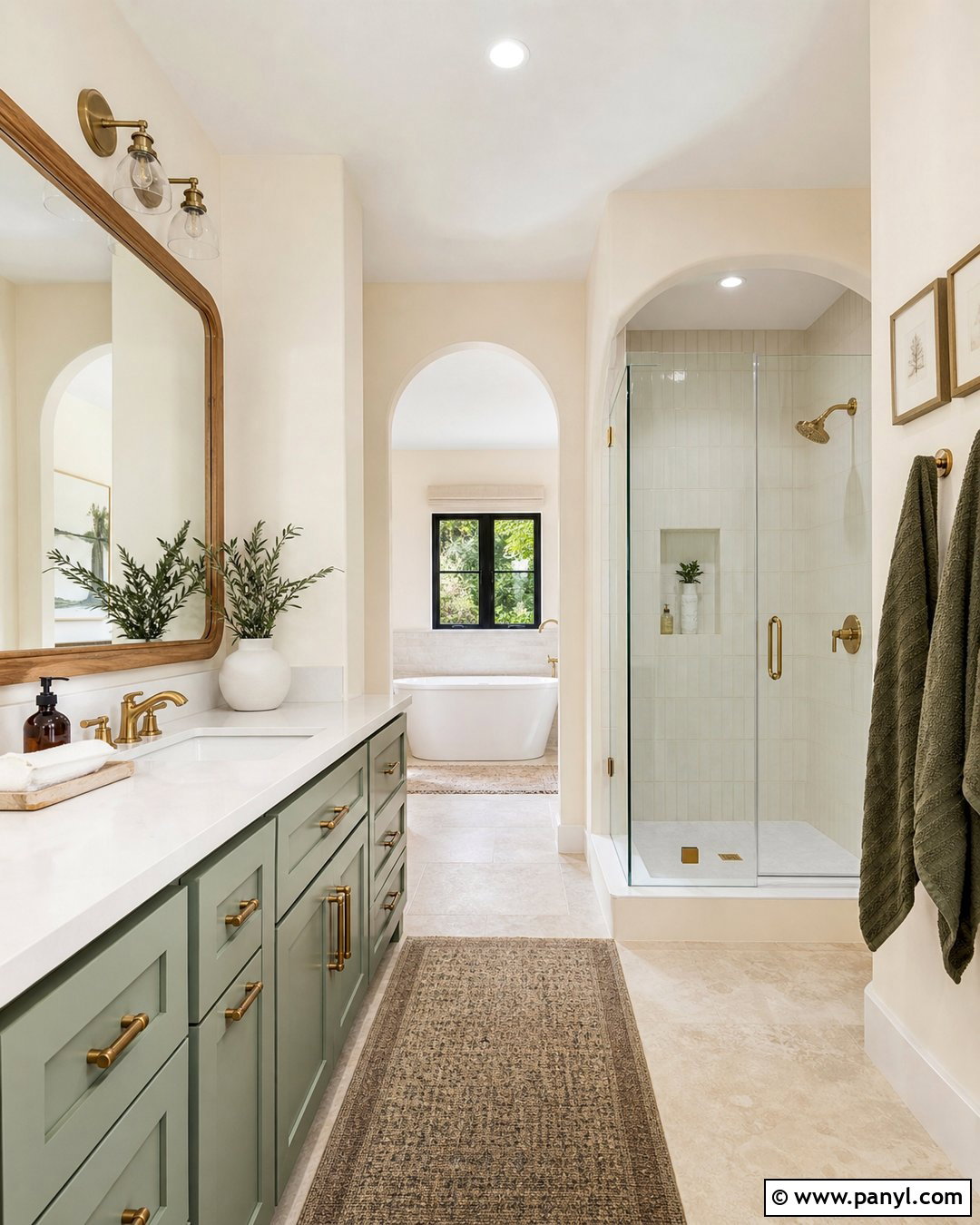
A sage green vanity introduces gentle color into an ivory bathroom without overpowering a small space. Paint all untiled walls in creamy ivory and choose a muted sage finish for the vanity. Add a white quartz counter, an ivory tile backsplash, and brushed brass hardware. An oak-framed mirror can warm the wall above the sink, while simple globe sconces provide a clean silhouette. Use pale stone-look flooring and keep shower tile white or warm cream. Towels in ivory, olive, and soft beige will repeat the palette. Include one woven basket for practical storage and texture. This complete bathroom design feels fresh and natural, with enough contrast to show each feature clearly while maintaining a calm, coordinated appearance.
20. Ivory Hallway With White Trim
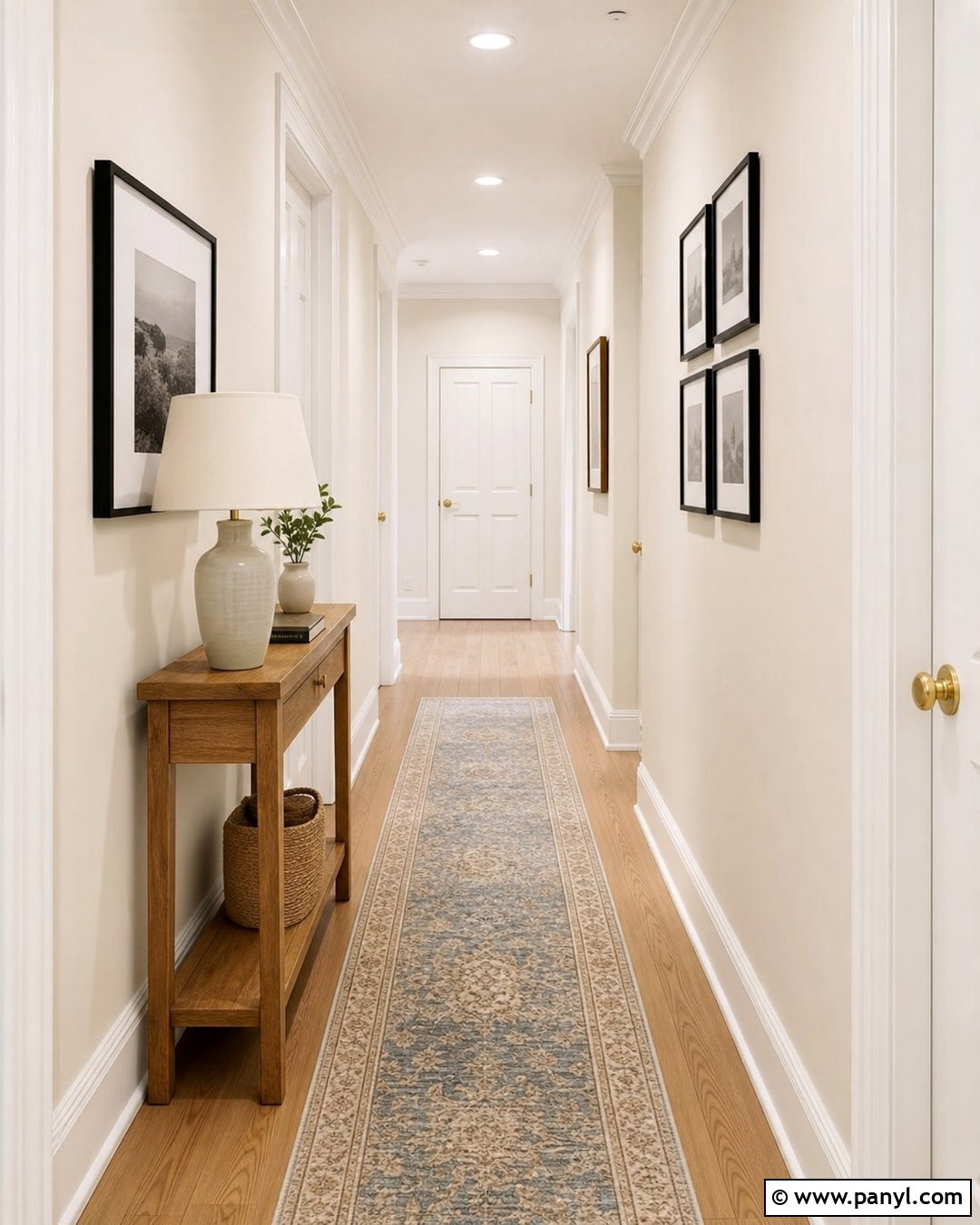
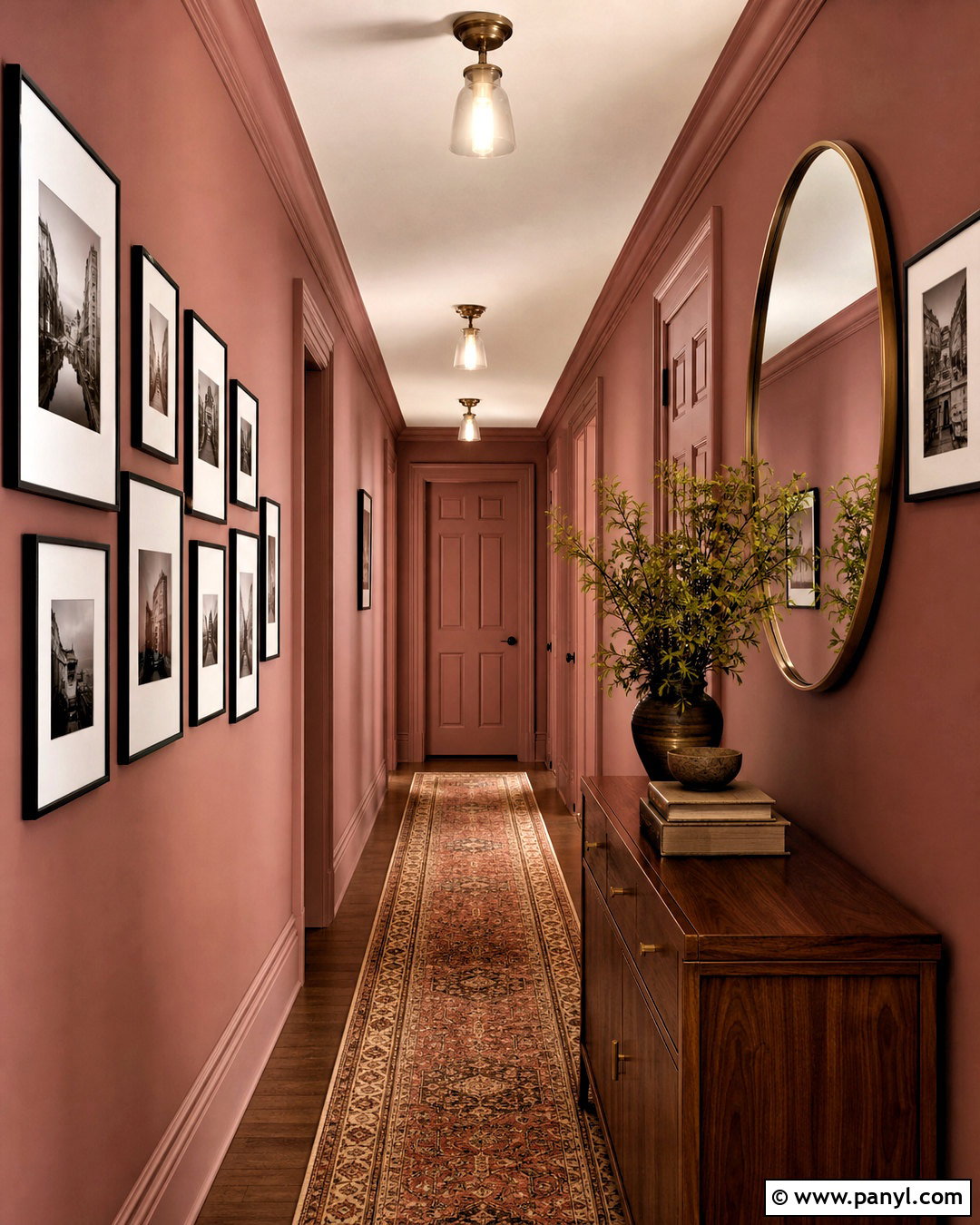
A narrow hallway benefits from a simple palette that creates continuity between surrounding rooms. Cover the walls in a light ivory and paint doors, casings, baseboards, and the ceiling soft white. The slight contrast will highlight architectural edges without making the hallway feel broken into separate sections. Add a slim oak console where space permits, topped with a ceramic lamp and shallow tray. A long vintage-style runner in beige, faded blue, and brown will introduce pattern underfoot. Hang a small series of black-framed photographs at consistent heights for an orderly look. Use matching brass or black door hardware throughout. This finished hallway feels connected, useful, and welcoming rather than functioning as an undecorated passage between more important rooms.
21. Ivory Entryway With Black Door
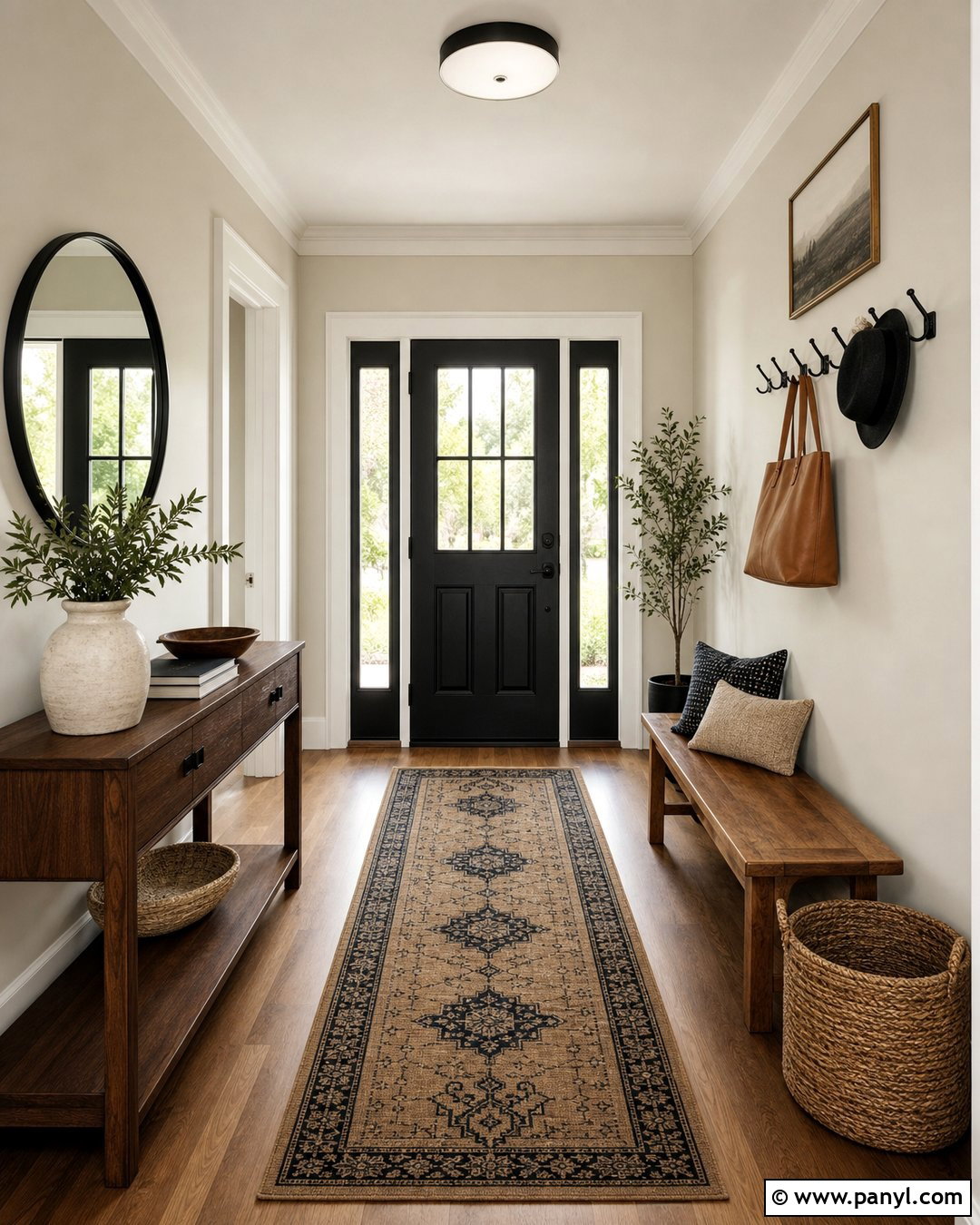
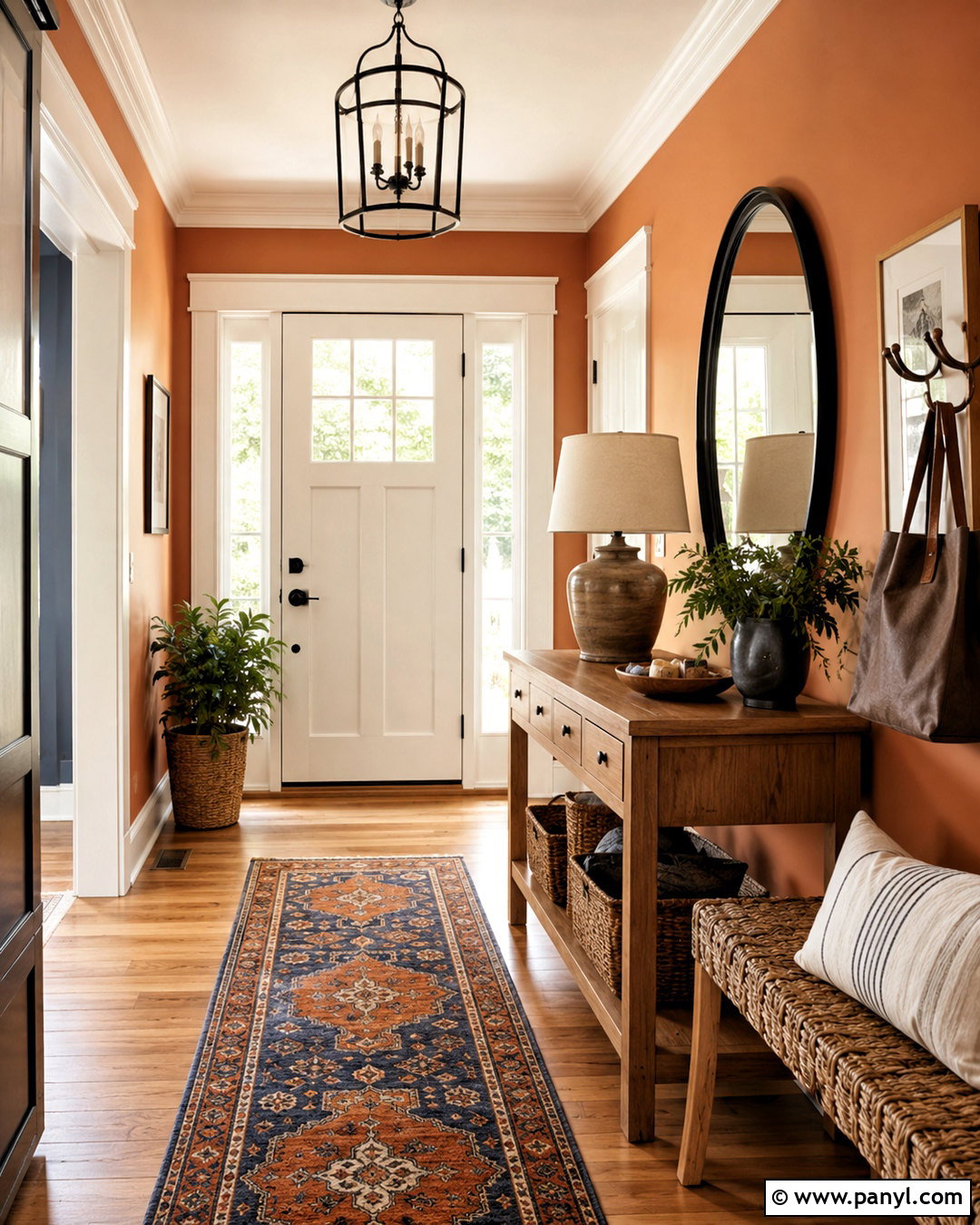
The first view into a home feels instantly defined when ivory walls surround a black front door. Choose warm ivory for the walls and soft white for the ceiling, trim, and any stair spindles. Place a narrow walnut console beside the entry, then add a round black-framed mirror and a ceramic table lamp. A washable runner containing ivory, camel, and charcoal can handle everyday traffic while supporting the color palette. Include a simple wood bench with woven baskets underneath if space allows. Black hooks or a black metal umbrella stand will repeat the door finish. The completed entryway feels polished but practical, creating a clear transition from the exterior while introducing the warm neutrals and darker accents used throughout the home.
22. Ivory Stairway With Wood Railing
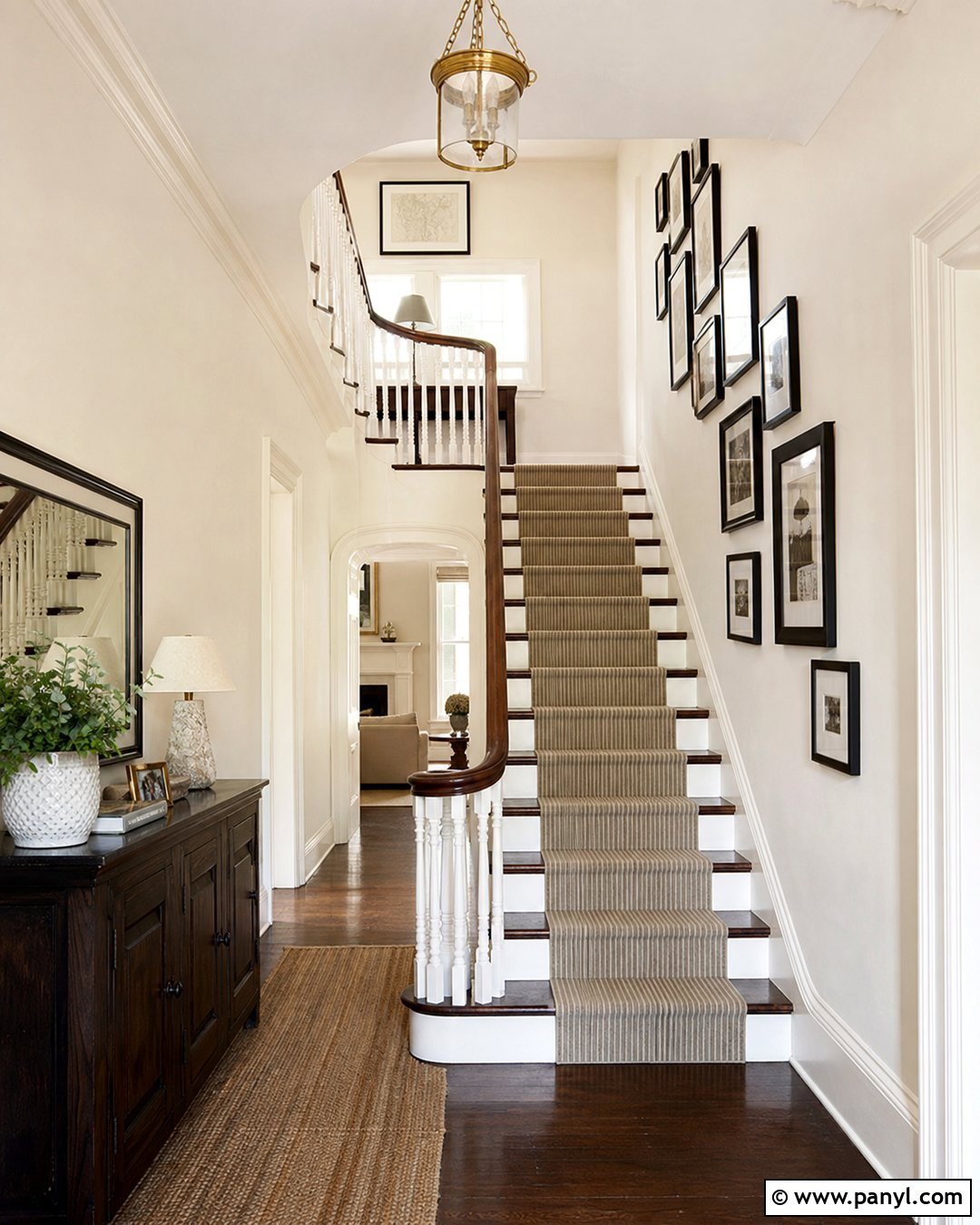
Ivory walls can brighten a stairway while allowing a natural wood railing to remain the central feature. Paint the full stairwell, including tall upper walls, in one consistent ivory shade. Keep risers, stringers, and trim soft white, then stain the handrail and stair treads medium walnut. A neutral runner in oatmeal or subtle stripes adds comfort and pattern without obscuring the wood. Hang a controlled gallery of black-framed artwork that follows the angle of the staircase. Use a simple brass or black pendant in the upper landing to tie the finishes together. This complete stairway scheme feels warm and architectural. It also connects floors smoothly, especially when nearby rooms contain similar woods, neutral upholstery, and dark metal accents.
23. Ivory Home Office With Built-In Shelves
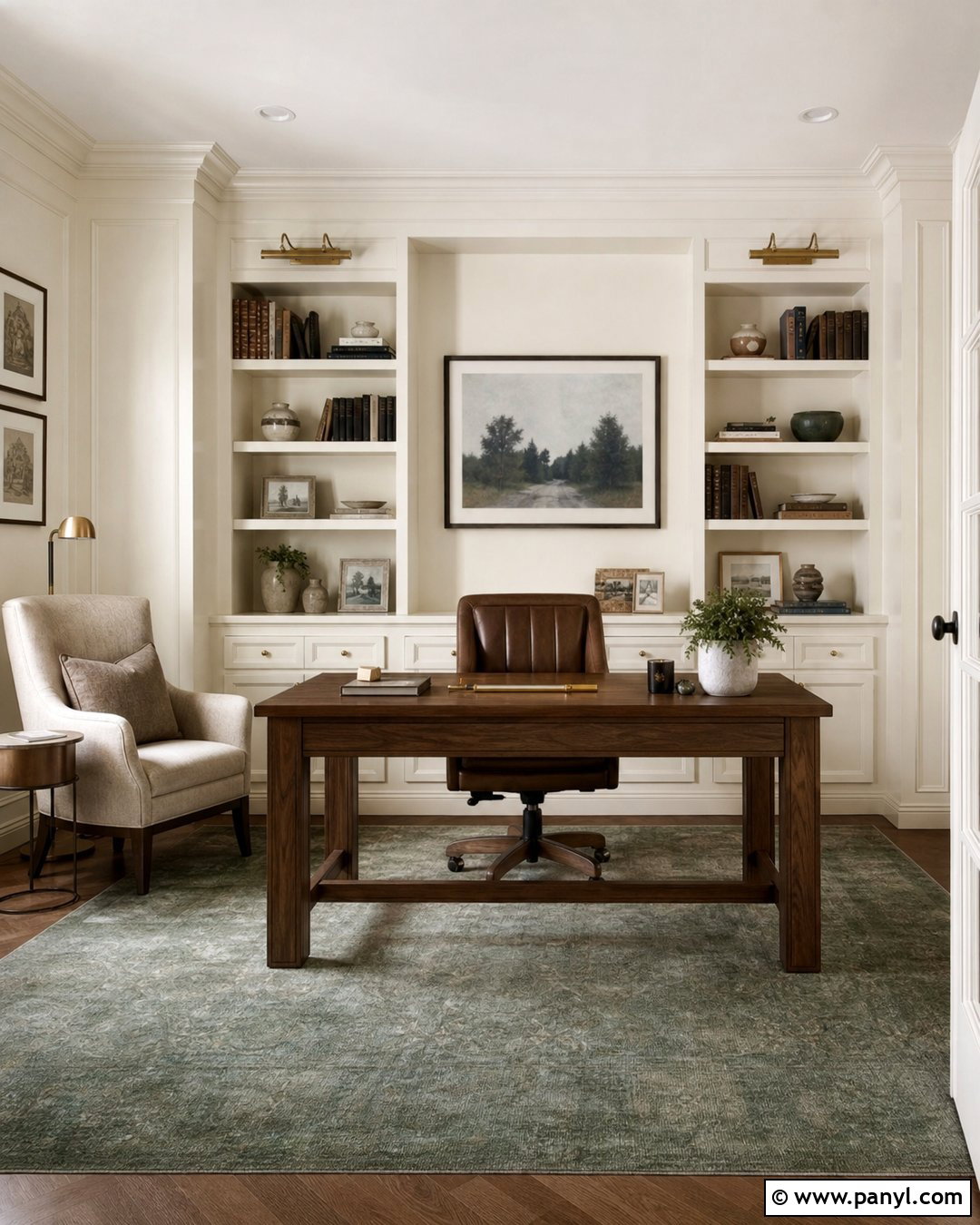
A focused home office does not need dark walls to feel substantial. Use ivory across the room, then paint built-in shelves in the same color with a satin finish for durability and gentle contrast. Position a walnut desk in front of the shelves or toward the center of the room. Add a camel leather desk chair and one comfortable beige reading chair near the window. A wool rug in ivory, brown, and muted green will soften the floor. Style the shelves with books, storage boxes, framed artwork, and ceramics while leaving open space around each grouping. Brass picture lights and a black task lamp complete the setup. The finished office feels organized, warm, and professional without looking overly corporate or visually crowded.
24. Ivory Home Office With Charcoal Accents
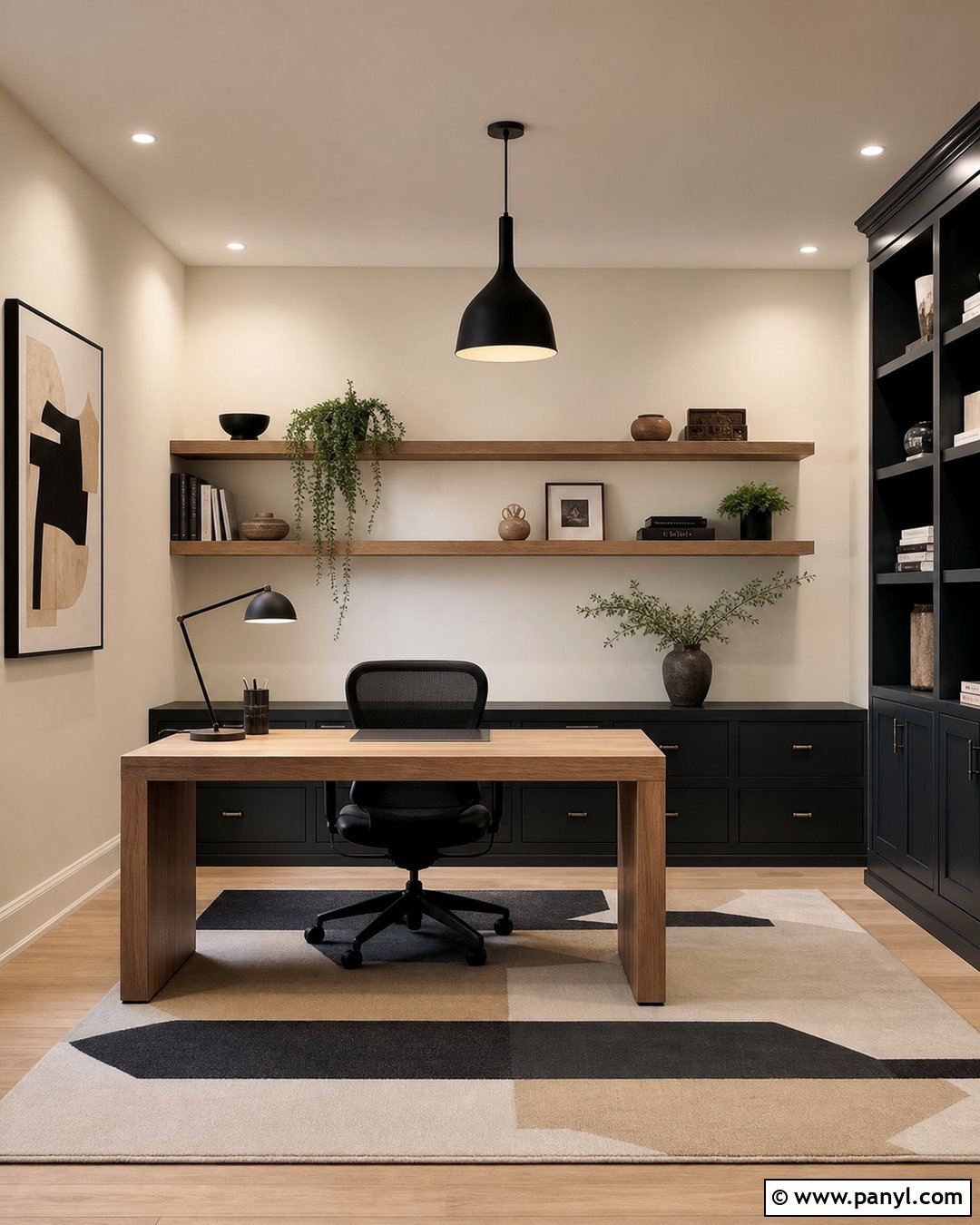
Charcoal details give an ivory home office a confident, contemporary appearance. Paint the main walls warm ivory and use deep charcoal on a single built-in cabinet, interior door, or window trim. Select a clean-lined oak desk and pair it with a black ergonomic chair. Storage should combine closed charcoal cabinetry with a few open wood shelves, keeping work supplies easy to reach but mostly concealed. Place a neutral geometric rug beneath the desk and hang large abstract artwork using ivory, gray, and muted brown. A matte black task light and simple ceiling fixture reinforce the darker accents. This complete workspace feels focused and modern, while the ivory background prevents the stronger colors and practical office furniture from making the room seem cramped.
25. Ivory Nursery With Natural Wood
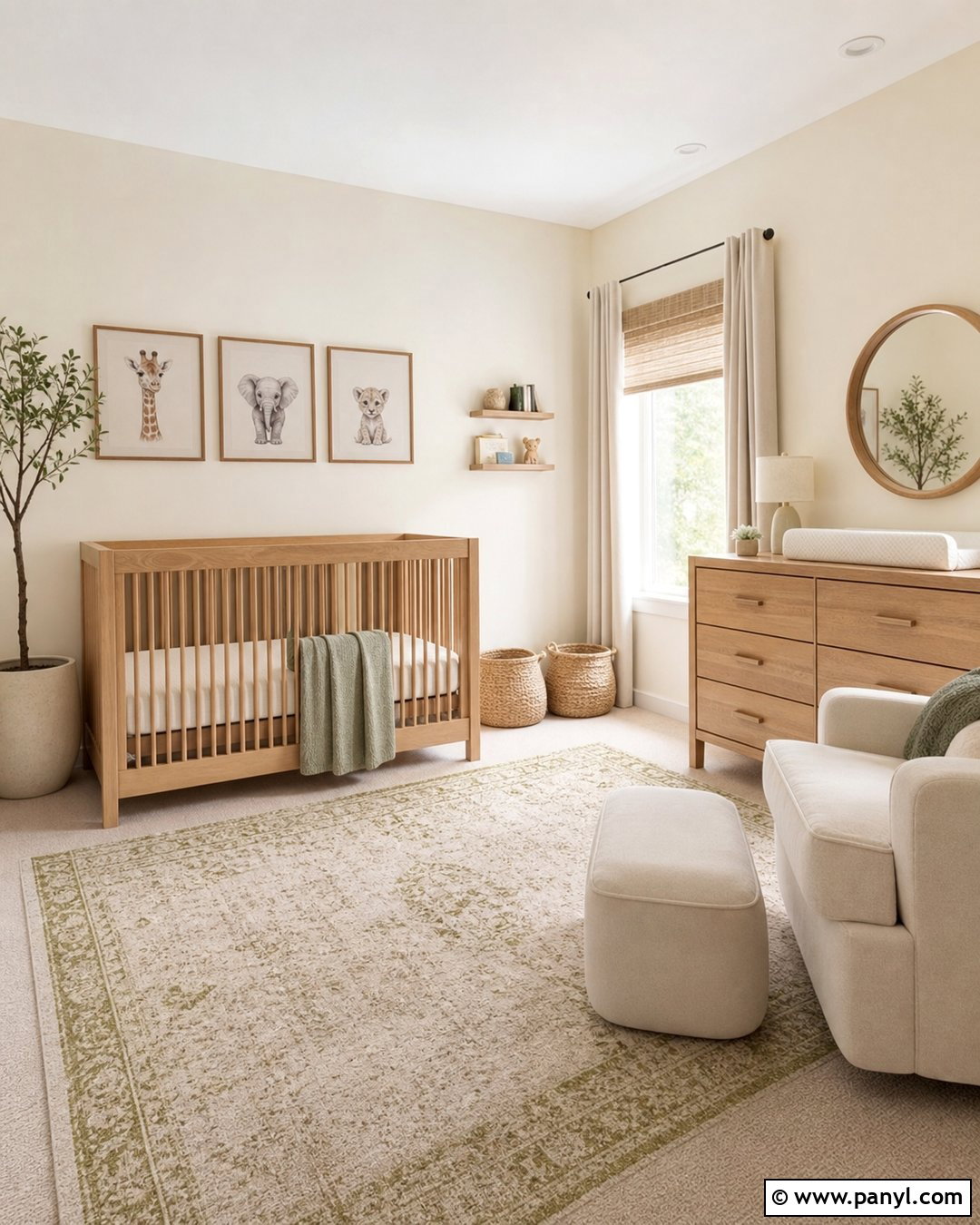
Warm ivory walls provide a gentle background for a nursery built around natural wood and washable textiles. Choose a light oak crib and matching dresser, positioning both where they remain easy to access. Add a comfortable cream glider with a small round wood side table for feeding and reading. A low-pile rug in ivory, beige, and muted sage will soften the center of the room. Use simple blackout curtains in oatmeal or pale green, layered over a cordless shade. Wall decor can include framed animal illustrations or a small natural wood shelf placed safely away from the crib. Woven storage baskets and a soft floor cushion complete the look. The room feels peaceful, adaptable, and suitable beyond the baby stage.
26. Ivory Kids Room With Muted Color
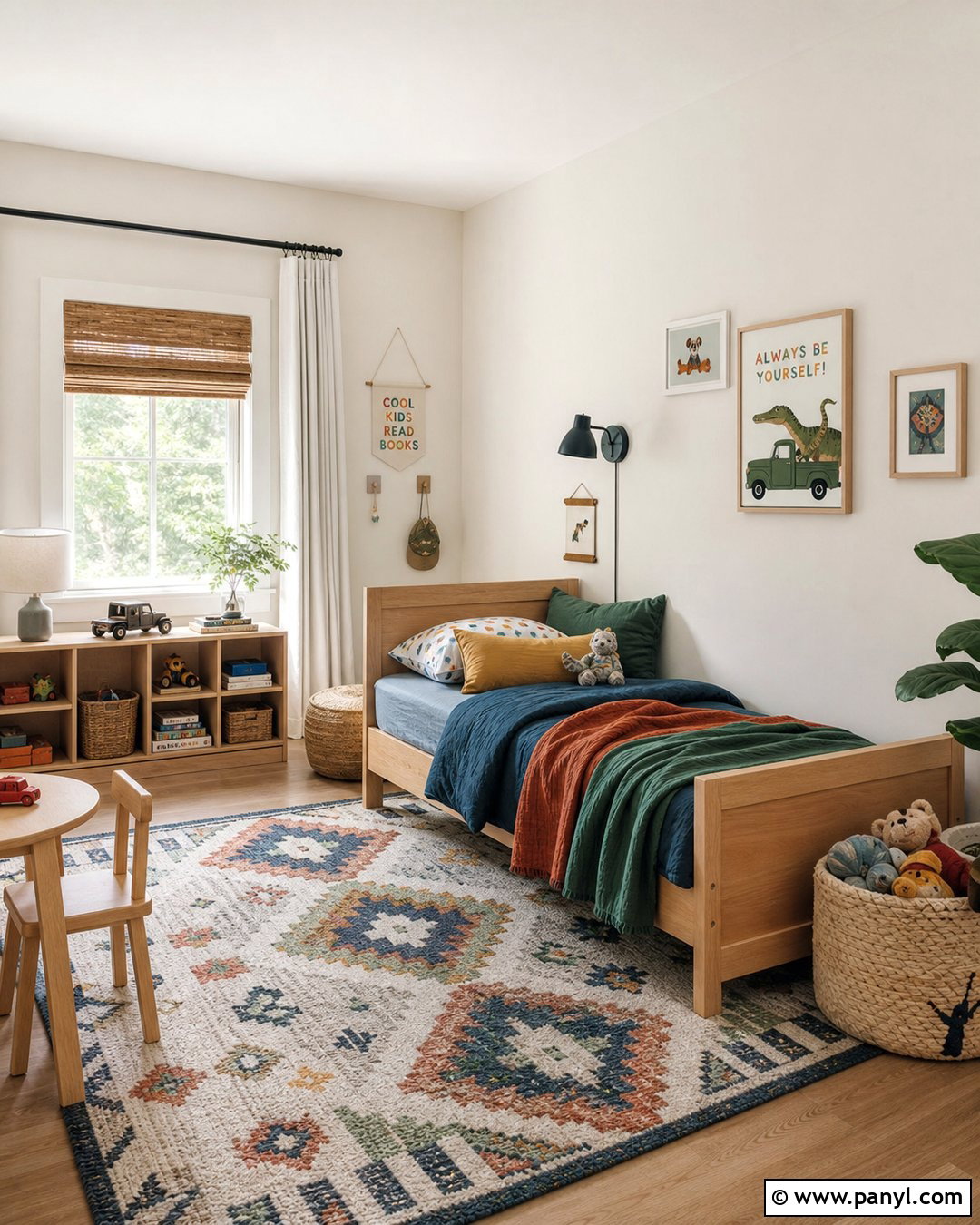
Ivory walls can support a colorful kids room without letting toys, bedding, and artwork overwhelm the design. Begin with a simple natural wood bed and add bedding in muted blue, rust, mustard, and green. Use one large washable rug that repeats those colors in a restrained pattern. A low white or oak storage unit keeps books and toys organized, while labeled baskets can contain smaller items. Hang a few cheerful framed prints in matching wood frames rather than covering every wall. Choose practical linen-look curtains in soft beige and install a simple white ceiling light. The completed room feels playful but controlled. As the child grows, the ivory background allows furniture, artwork, and accent colors to change without requiring another full repaint.
27. Ivory Laundry Room With Blue Cabinets
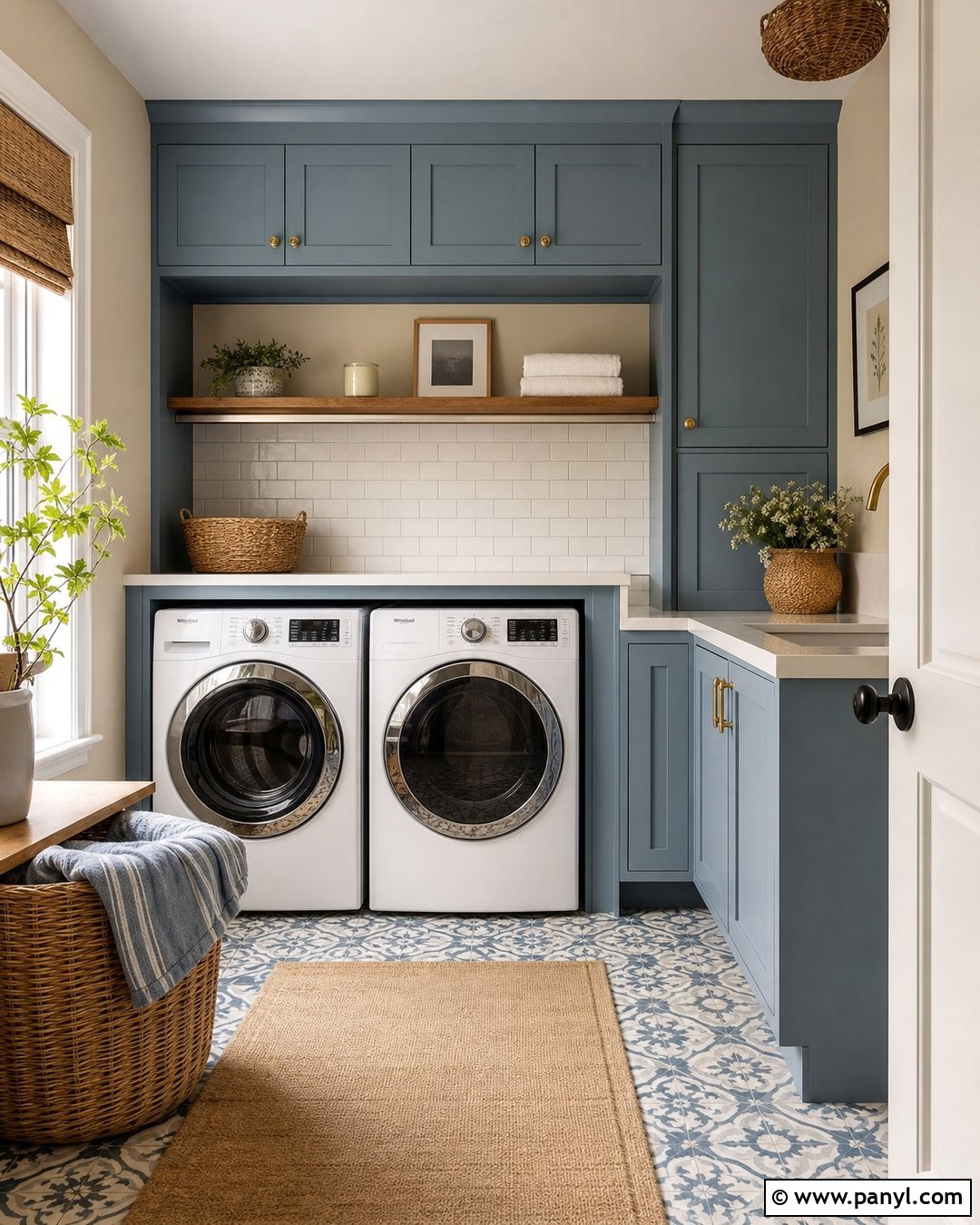
A compact laundry room can feel finished when ivory walls are paired with dusty blue storage. Paint upper and lower cabinets a muted blue-gray, then use warm ivory on exposed walls and around the doorway. Add a light quartz counter over front-loading machines to create a folding surface. White tile with warm grout makes a practical backsplash, while brushed brass or matte black cabinet pulls supply definition. Install a narrow wood shelf for baskets and everyday supplies. Patterned floor tile in ivory, gray, and faded blue can bring personality to the small footprint. Keep containers coordinated and counters mostly clear. This complete arrangement makes a hardworking room feel calm and connected to the home rather than hidden and purely utilitarian.
28. Ivory Mudroom With Green Storage
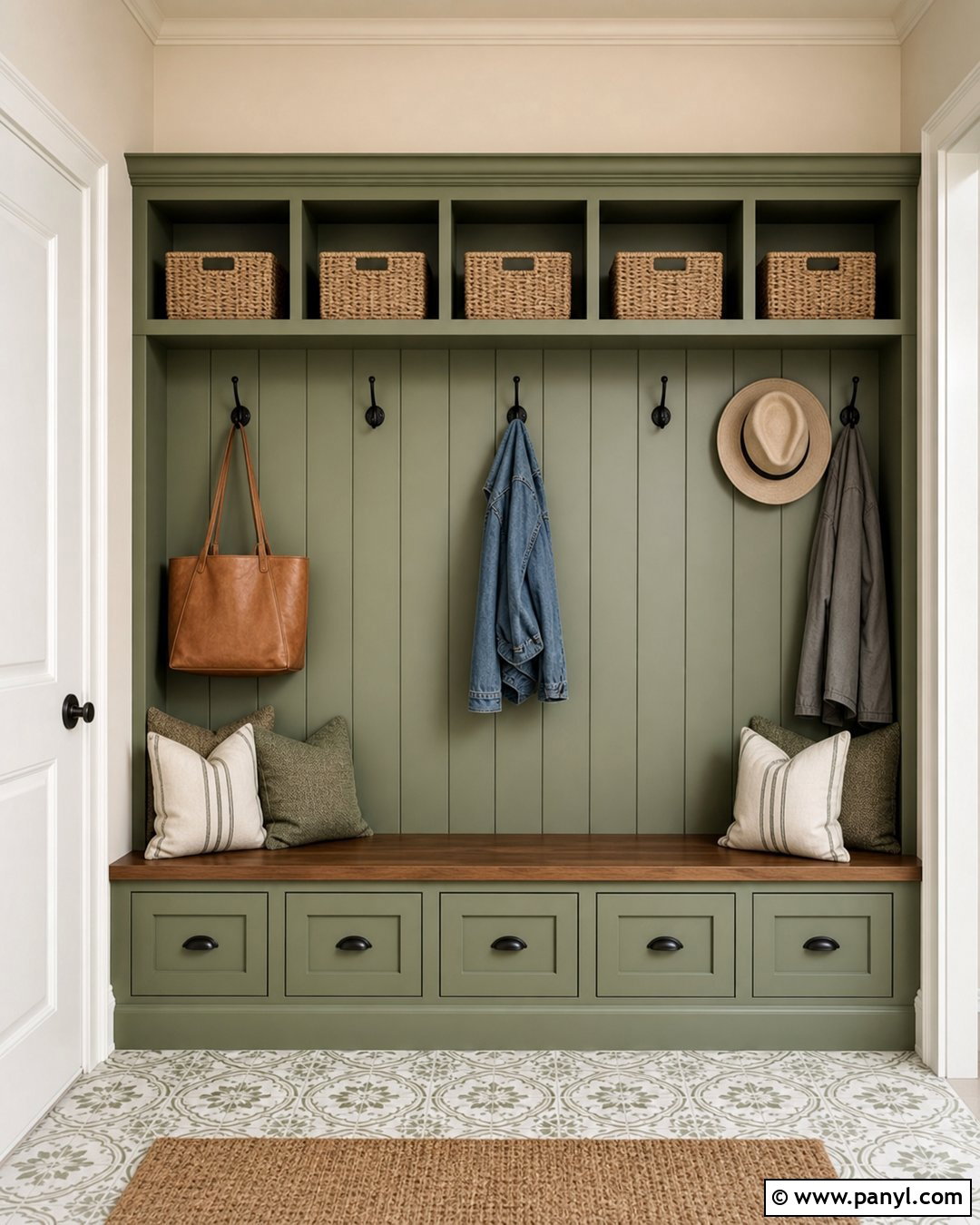
Ivory walls create a bright, forgiving background for olive or sage mudroom cabinetry. Place a built-in bench along one wall, combining green lower drawers, tall lockers, and upper cubbies. Use a natural oak or walnut seat to warm the painted storage. Black hooks and cabinet pulls offer sturdy visual contrast, while a brick, slate, or patterned porcelain floor handles the room’s practical character. Add striped seat cushions in ivory and muted brown, plus woven baskets for seasonal accessories. Keep the ceiling and doorway trim soft white. A simple flush-mount light completes the layout. The finished mudroom provides clear storage zones while looking like a thoughtful extension of the home’s design rather than a collection of unrelated organizers.
29. Ivory Sunroom With Woven Furniture
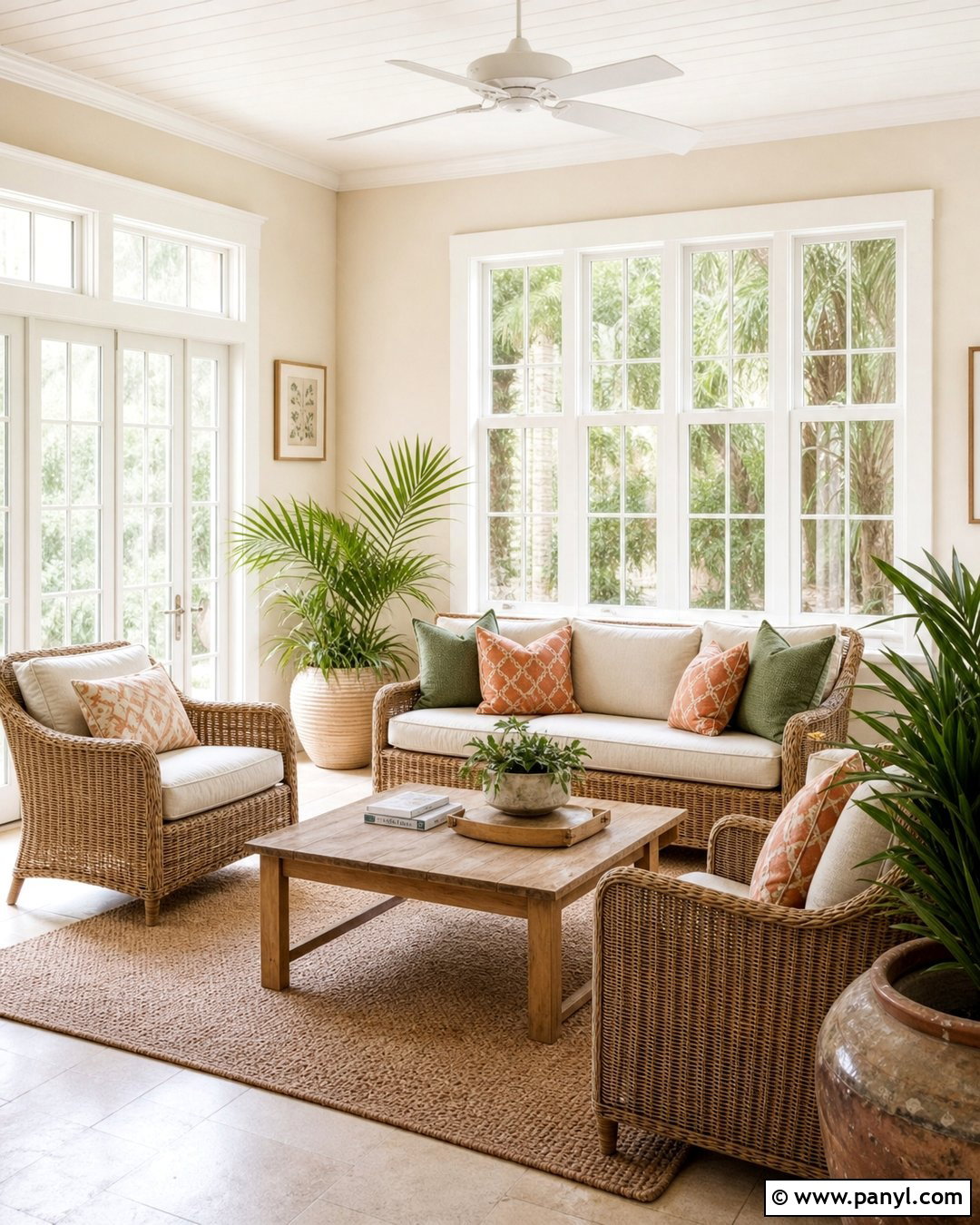
Sunlight brings out the creamy character of ivory walls, making this color especially suitable for a casual sunroom. Paint the walls ivory and keep window trim soft white to frame the outdoor views. Arrange a woven rattan sofa and two matching chairs around a light wood coffee table. Use thick seat cushions in oatmeal fabric, then add pillows in leafy green, faded blue, and terracotta. A flat-woven natural fiber rug will define the seating area without feeling too formal. Hang simple linen shades where glare control is needed. Large ceramic planters and a few healthy green plants connect the room to the garden. This full sunroom look feels airy, textural, and comfortable in every season.
30. Ivory Fireplace With Stone Surround
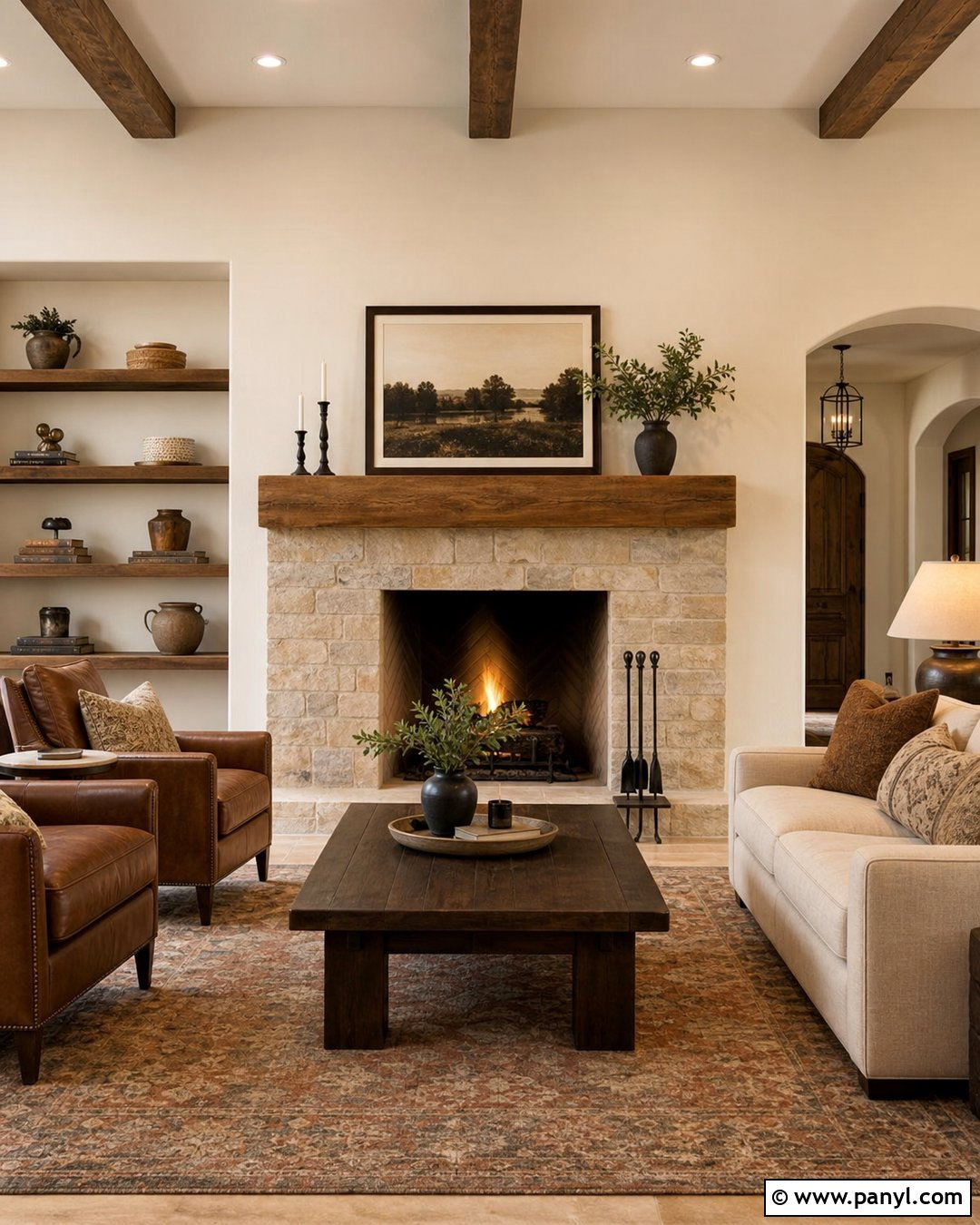
An ivory-painted living room can make a stone fireplace feel integrated rather than visually heavy. Select a warm ivory that complements the beige, cream, or gray tones within the stone. Keep the fireplace surround natural, then add a substantial oak mantel to create a clear focal point. Arrange a beige sofa and two brown leather chairs around a dark wood coffee table. A muted patterned rug should repeat the stone colors across the floor. Use black fireplace tools, curtain rods, and frames for definition. Minimal mantel decor, such as one large landscape and two ceramic vessels, keeps attention on the materials. The completed room feels grounded and cohesive, combining rustic texture with a cleaner, updated furniture arrangement.
31. Ivory Walls With Painted Ceiling
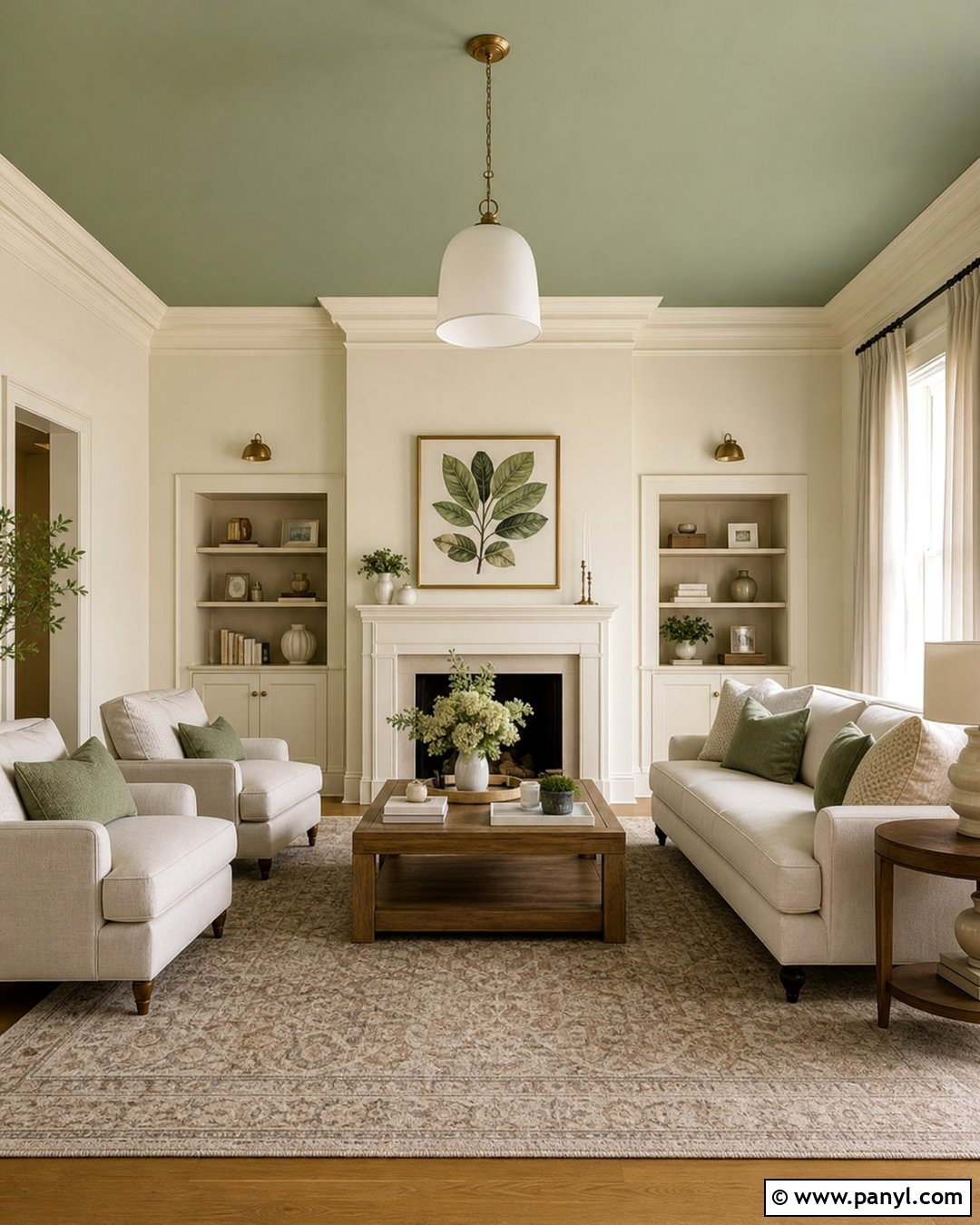
A colored ceiling can give ivory walls a more distinctive look without reducing their flexibility. Cover the walls and trim in a balanced ivory, then paint the ceiling pale blue, muted sage, or gentle taupe. Repeat the ceiling color through pillows, artwork, or a patterned rug so it appears connected to the room below. Choose light neutral seating and warm wood tables to maintain a comfortable foundation. A simple pendant or chandelier will draw the eye upward without hiding the painted surface. Keep window treatments near the wall color for continuity. This complete approach works well in bedrooms, dining rooms, and living rooms, adding character to a neutral scheme while leaving the main vertical surfaces bright and easy to decorate.
32. Ivory Walls With Matching Trim
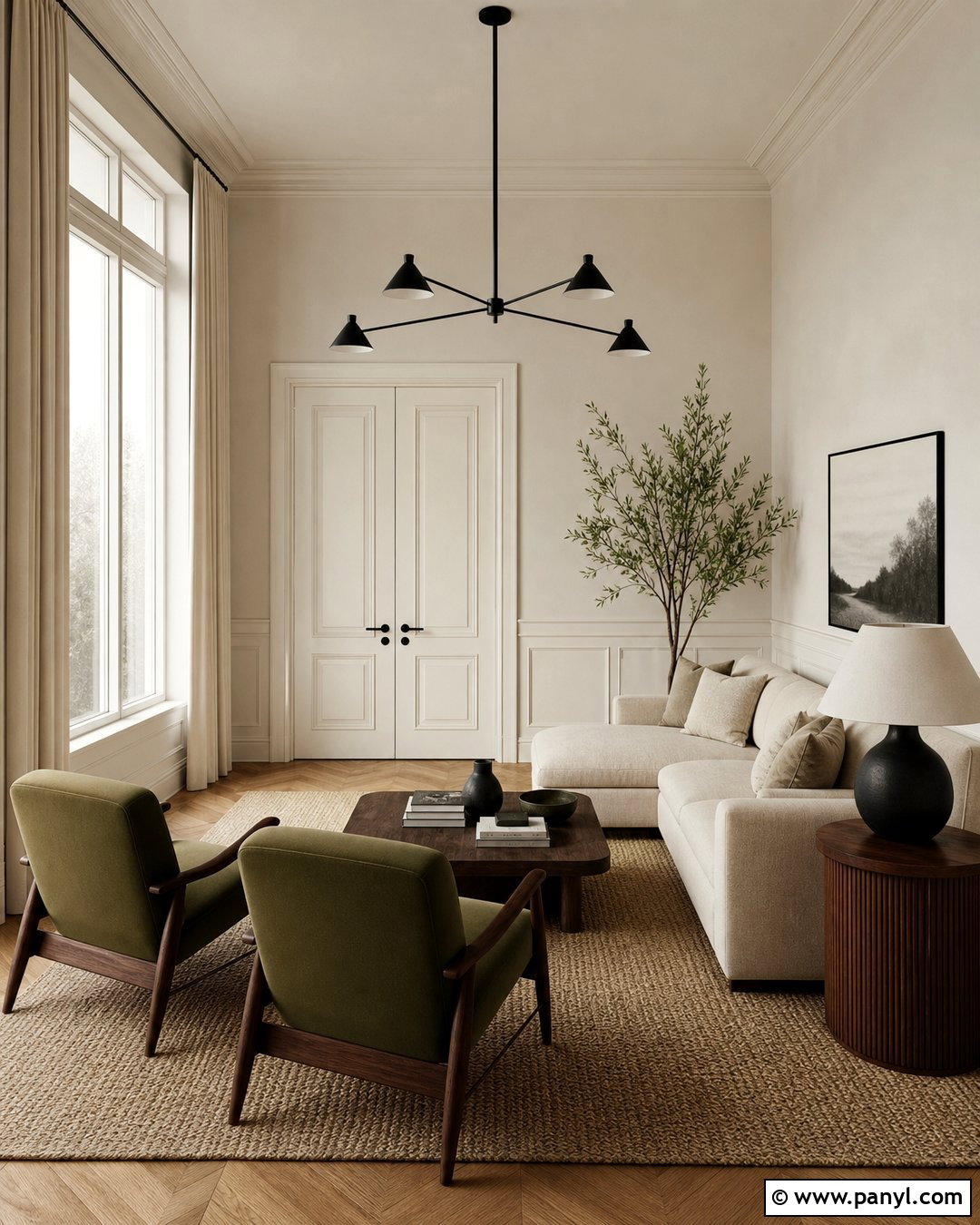
Painting walls and trim the same ivory creates a smooth, enveloping room with fewer visual interruptions. Apply matte or eggshell paint to the walls, then use the identical color in satin on doors, molding, and baseboards. The change in sheen will reveal the woodwork without introducing another shade. Furnish the space with a beige sofa, walnut tables, and accent chairs in olive or rust. Add a large textured rug and full-length curtains close to the ivory wall color. Black lighting and framed art provide small points of contrast. This complete tonal design is especially useful in rooms with abundant molding or several doors. It allows architectural detail to appear through light and shadow while keeping the overall atmosphere calm.
33. Ivory Walls With White Trim
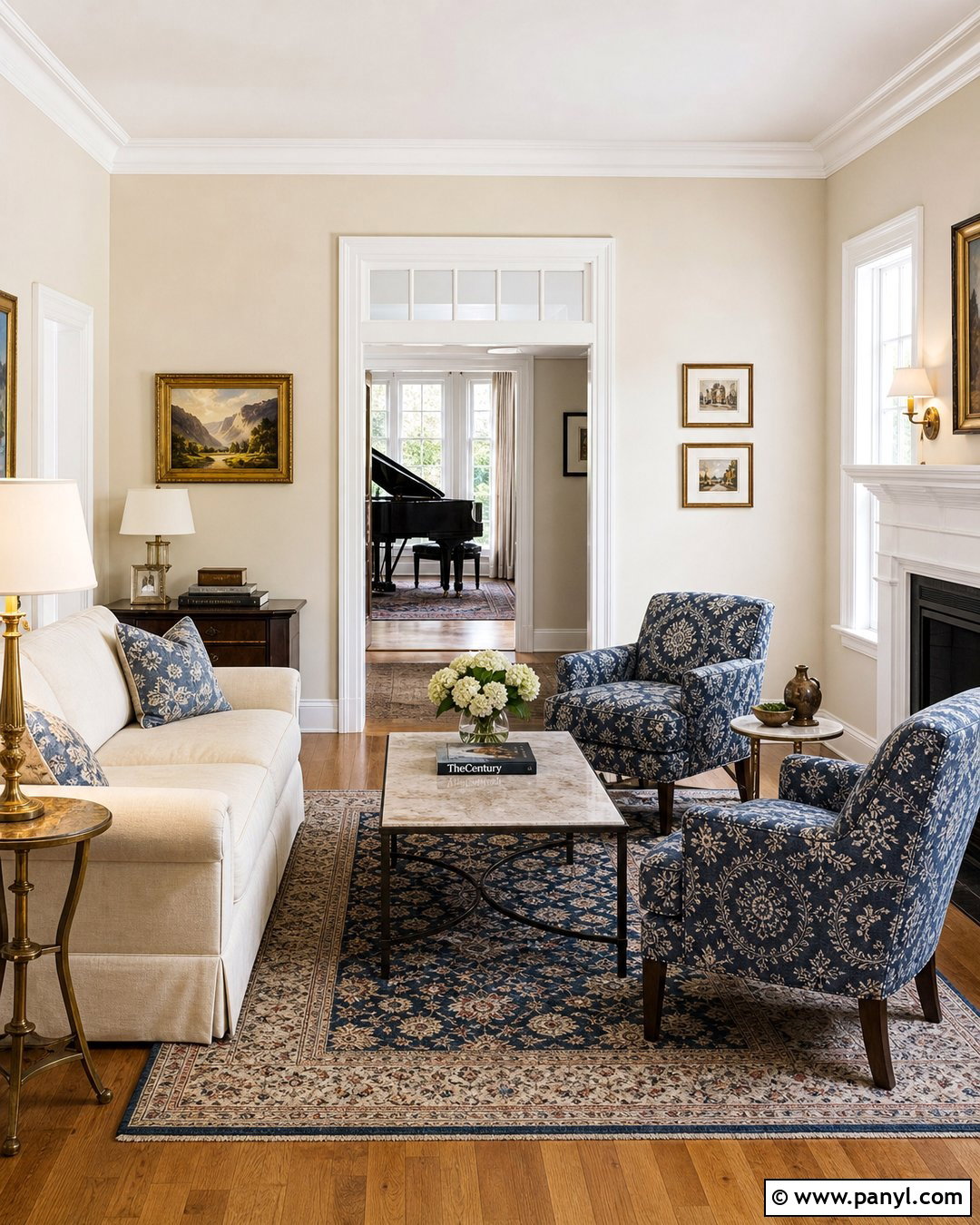
Crisp white trim makes ivory walls appear warmer and gives traditional architecture a clean outline. Use ivory on every main wall and reserve soft, neutral white for crown molding, baseboards, window casings, doors, and the ceiling. Avoid an extremely blue white, which can exaggerate yellow undertones in the ivory. Complete the room with medium oak flooring, a cream sofa, and patterned chairs in navy or muted green. A vintage-inspired rug can combine ivory, brown, and subtle color beneath the seating. Add brass lamps and black picture frames for a mix of warm and dark finishes. This classic arrangement suits almost any room, providing clear definition while remaining softer and more welcoming than a bright all-white interior.
34. Ivory Walls With Wallpaper Accent
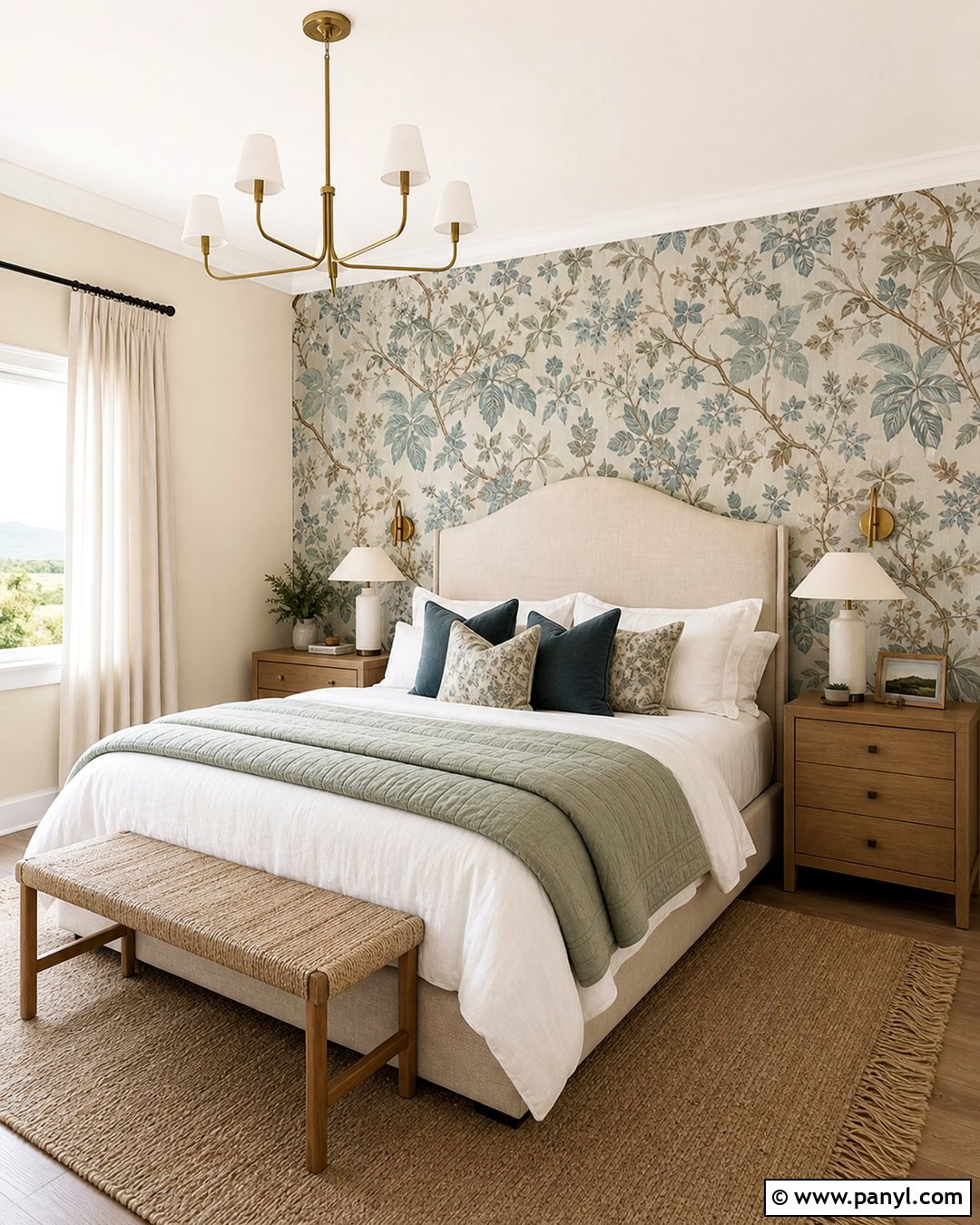
Patterned wallpaper can add depth to an ivory room when its background or details repeat the wall color. Use ivory on three walls, then select a wallpaper featuring botanical, geometric, or block-print motifs in ivory, sage, blue, and brown for the focal wall. Position the bed, sofa, or dining sideboard against that pattern so the feature has a clear purpose. Keep large furniture neutral and introduce the wallpaper colors through pillows, rugs, or curtains. Natural wood pieces prevent the combination from feeling overly coordinated. Choose understated brass or black lighting depending on the pattern’s character. This completed scheme delivers more visual interest than paint alone while preserving the calm, adaptable quality of an ivory-centered palette.
35. Ivory Open Concept Interior
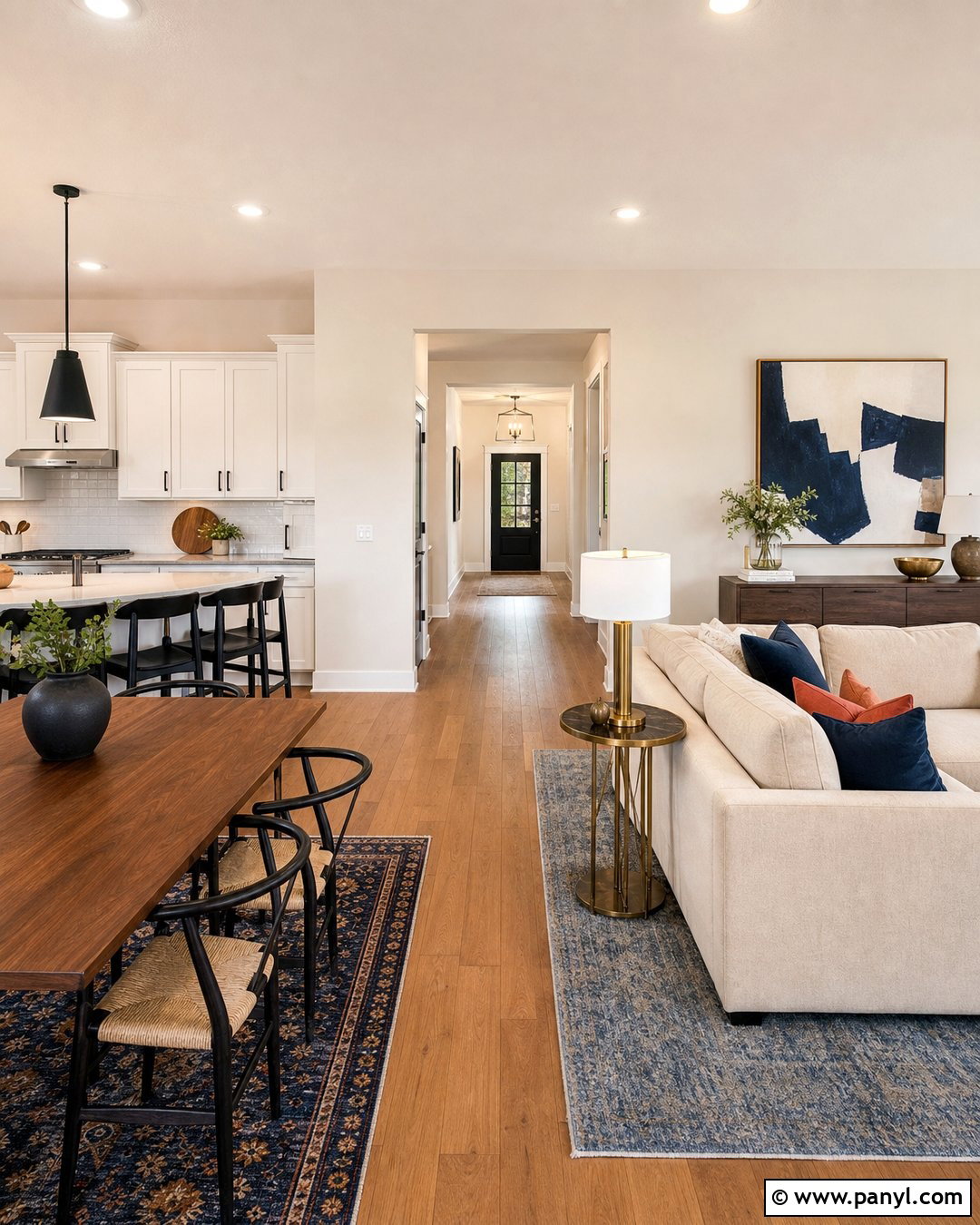
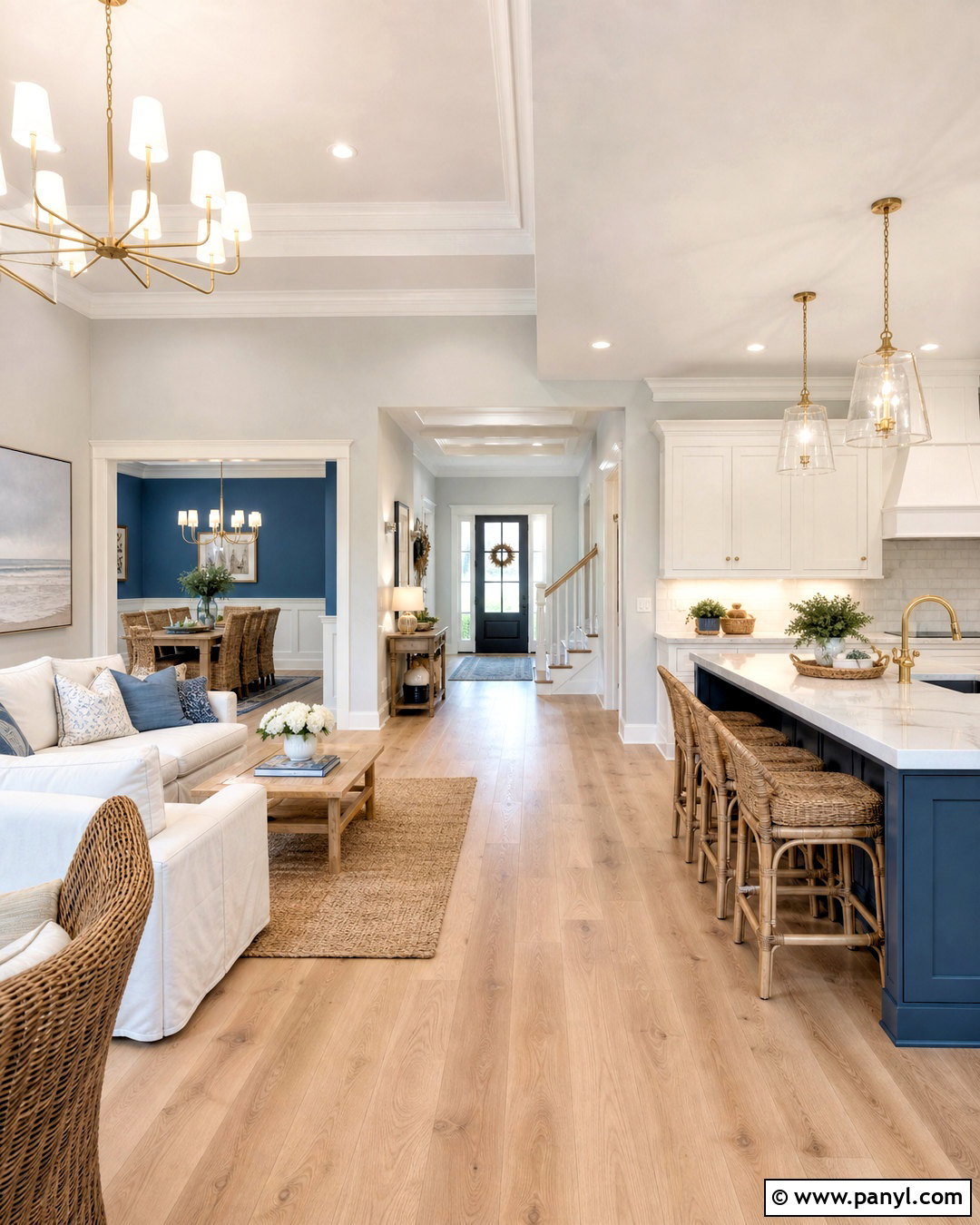
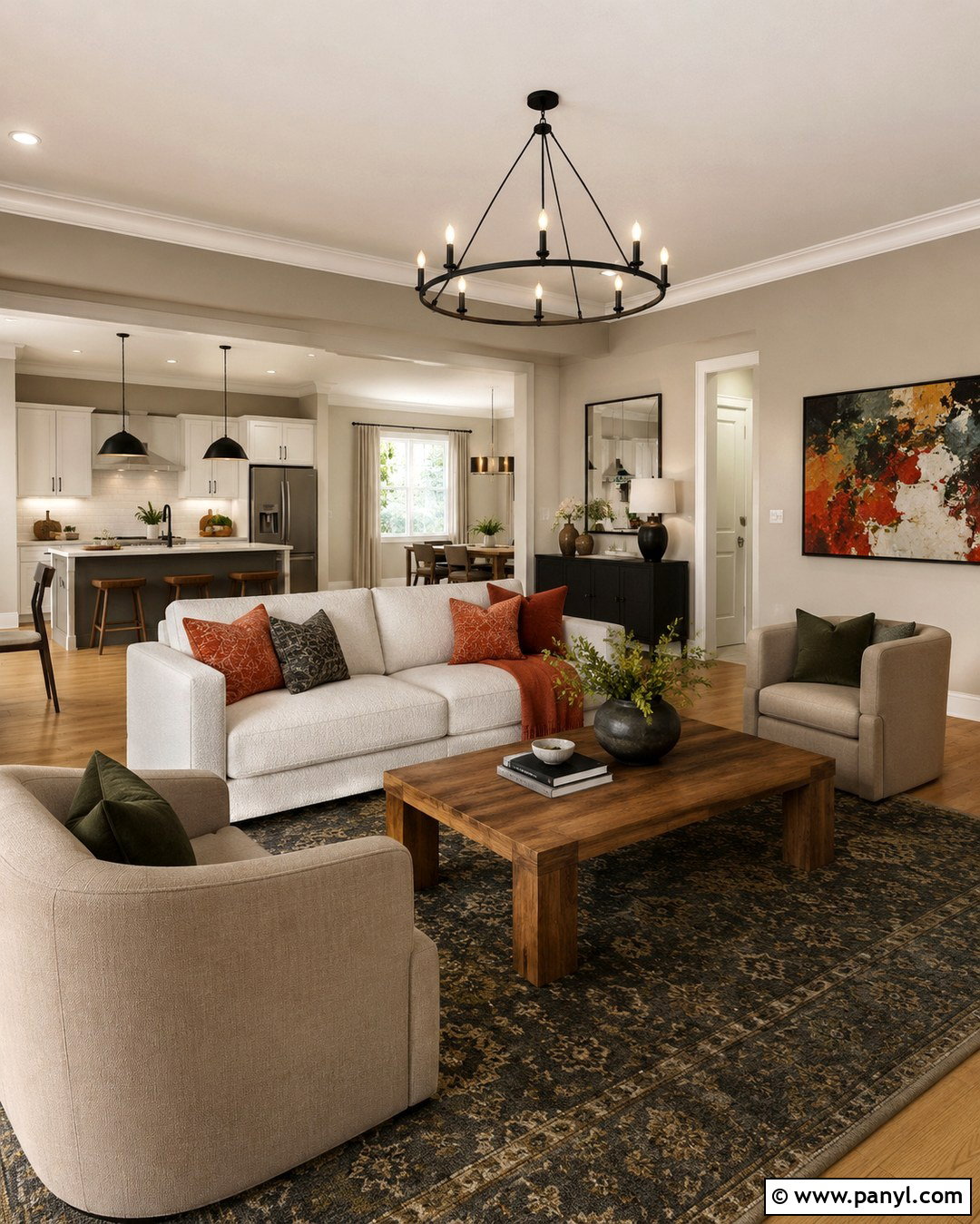
Open-concept rooms look more connected when one ivory paint color flows across the living, dining, and kitchen areas. Use the same wall shade throughout, then define each zone with furniture, rugs, and lighting rather than changing paint at awkward corners. Combine white kitchen cabinets, medium oak floors, and a walnut dining table with an oatmeal living room sectional. Repeat navy, olive, or terracotta accents in small amounts across all three areas. Choose coordinated metals, such as matte black lighting with a few brass accessories, to maintain consistency. Soft white trim can frame windows and doors without interrupting the overall flow. The finished interior feels unified and spacious while each functional area maintains its own clear arrangement and personality.
Conclusion:
The most successful Ivory Wall Paint Ideas treat ivory as the foundation of a complete room rather than an isolated color choice. Its undertone should relate to flooring, cabinetry, textiles, lighting, and fixed finishes. Warm woods, natural fibers, muted greens, dusty blues, terracotta, black, and navy can all give ivory a different personality. Matching trim produces a soft tonal effect, while white or colored trim creates stronger definition. Before painting an entire room, test several large samples on different walls and observe them throughout the day. With thoughtful layering and balanced contrast, ivory can make living rooms, bedrooms, kitchens, bathrooms, and connecting spaces feel warm, bright, cohesive, and comfortably timeless.

Related Ideas and Inspiration:

Leave a Reply