
Searching for **20 colors that go with mint green ideas** is a smart way to build a palette that feels fresh without becoming overly sweet or dated. Mint green can act as a soft background, a lively cabinet color, or a cheerful accent. The secret is pairing it with shades that provide enough warmth, depth, or contrast. Current interiors are revisiting mint while grounding it with richer colors, natural materials, and layered textures for a more balanced finish. () The combinations below cover calming bedrooms, practical kitchens, polished living rooms, playful bathrooms, and welcoming dining spaces. Each look includes furniture, finishes, and decor you can use to create a cohesive room. Explore these **20 colors that go with mint green ideas**.
1. Mint Green And Crisp White
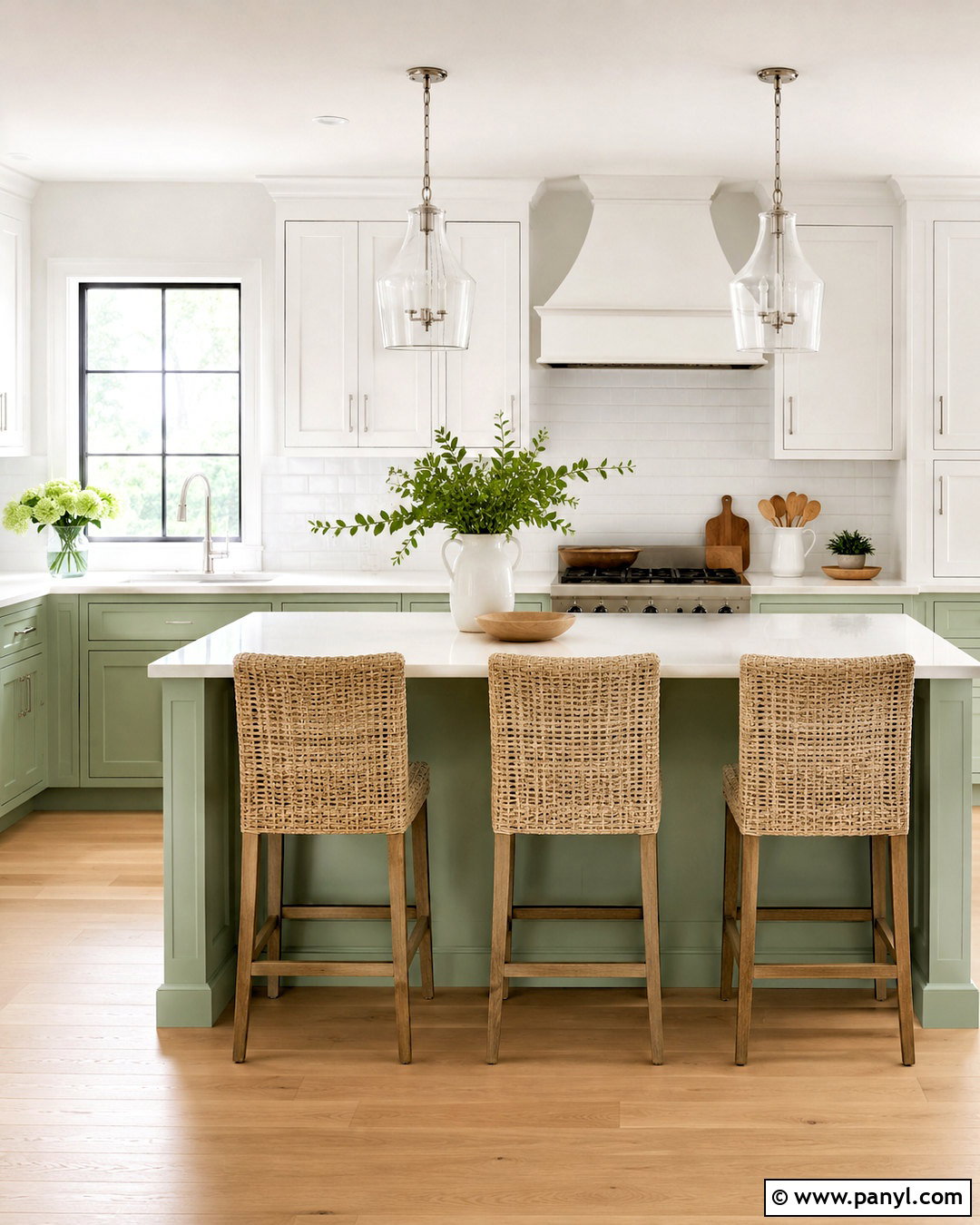
Crisp white gives mint green a clean, airy quality that works beautifully in a small kitchen. Paint the lower cabinets soft mint green and keep the upper cabinets bright white to open the room visually. White quartz countertops and a simple subway tile backsplash continue the fresh palette. Add pale oak flooring, brushed nickel hardware, and clear glass pendant lights for subtle warmth and shine. A white farmhouse sink can become the practical focal point without overwhelming the cabinetry. Bring in woven counter stools and two or three leafy plants to prevent the room from feeling clinical. This complete look is especially effective where natural light is limited because the white surfaces help the softer green appear brighter and clearer.
2. Mint Green And Warm Cream
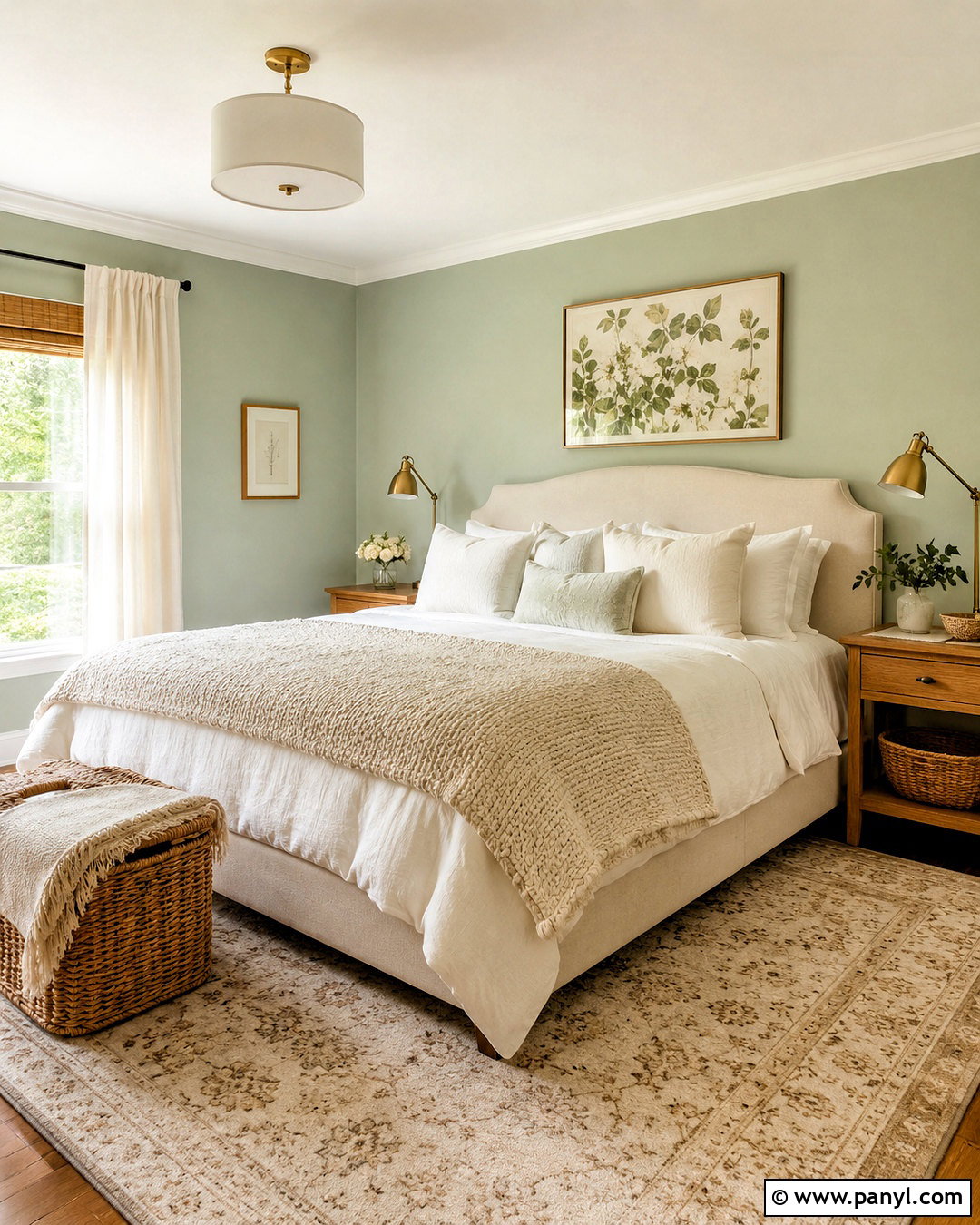
Warm cream softens mint green and creates a comfortable bedroom that feels relaxed rather than overly pastel. Use muted mint on the walls, then layer the bed with a cream upholstered headboard, ivory sheets, and a lightly textured oatmeal coverlet. Warm white curtains should hang near the ceiling to make the windows appear taller. Choose medium oak nightstands and ceramic lamps with cream linen shades. A patterned area rug containing mint, ivory, and light tan will connect the room without adding another strong color. Finish with antique brass frames, natural baskets, and simple botanical artwork. The yellow undertone in cream gently warms the cooler green, while wood and woven materials give the complete bedroom enough character and visual depth.
3. Mint Green And Soft Beige
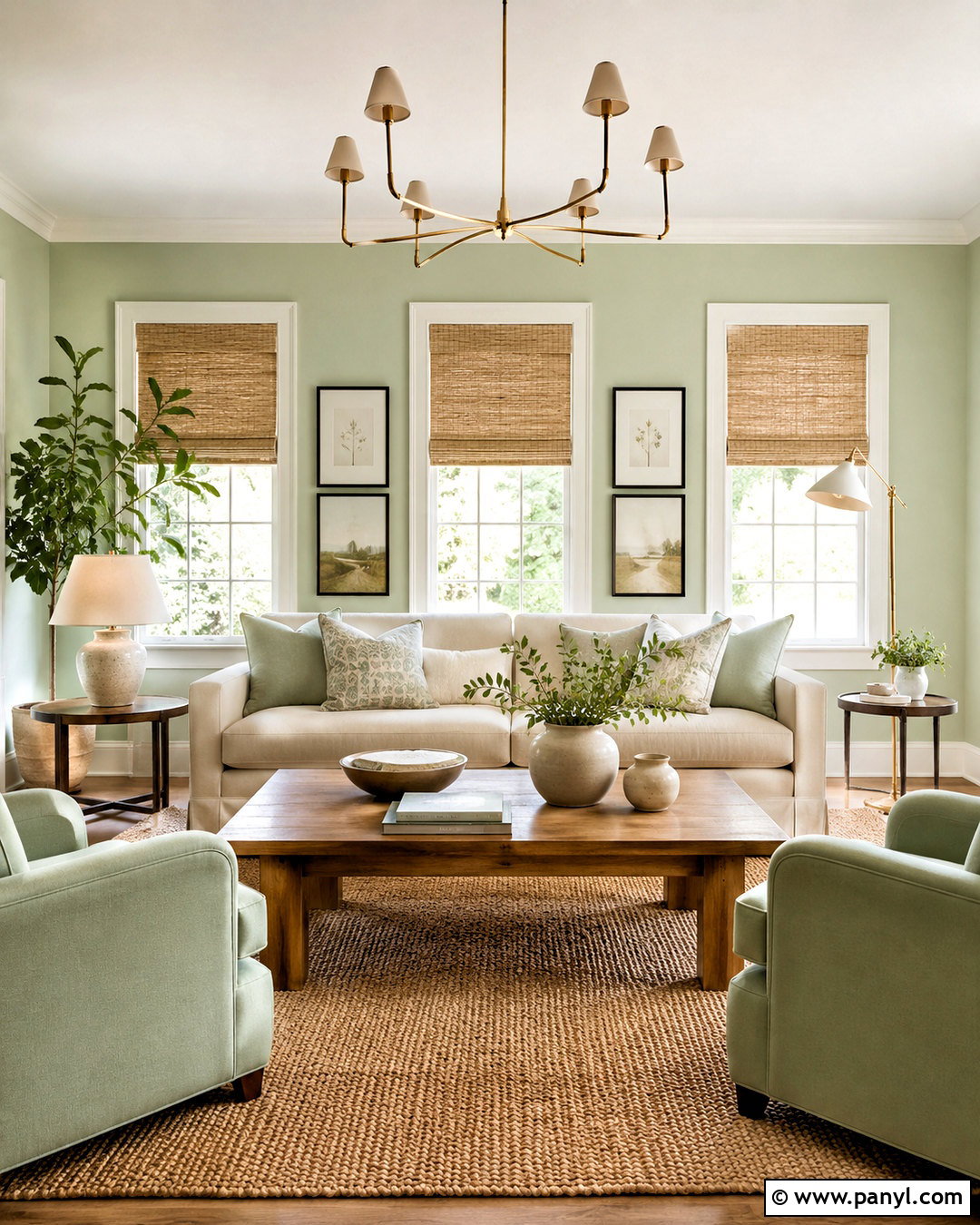
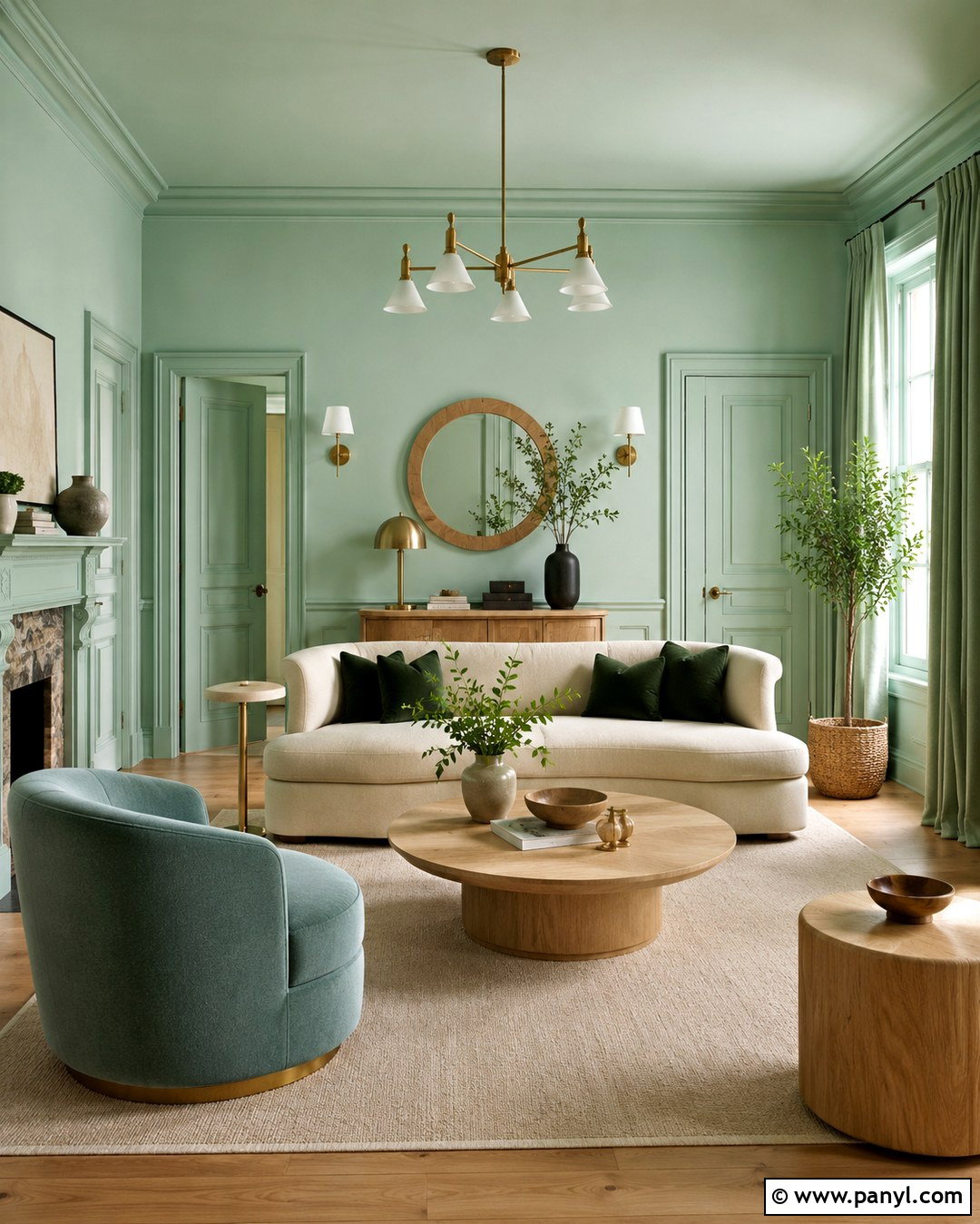
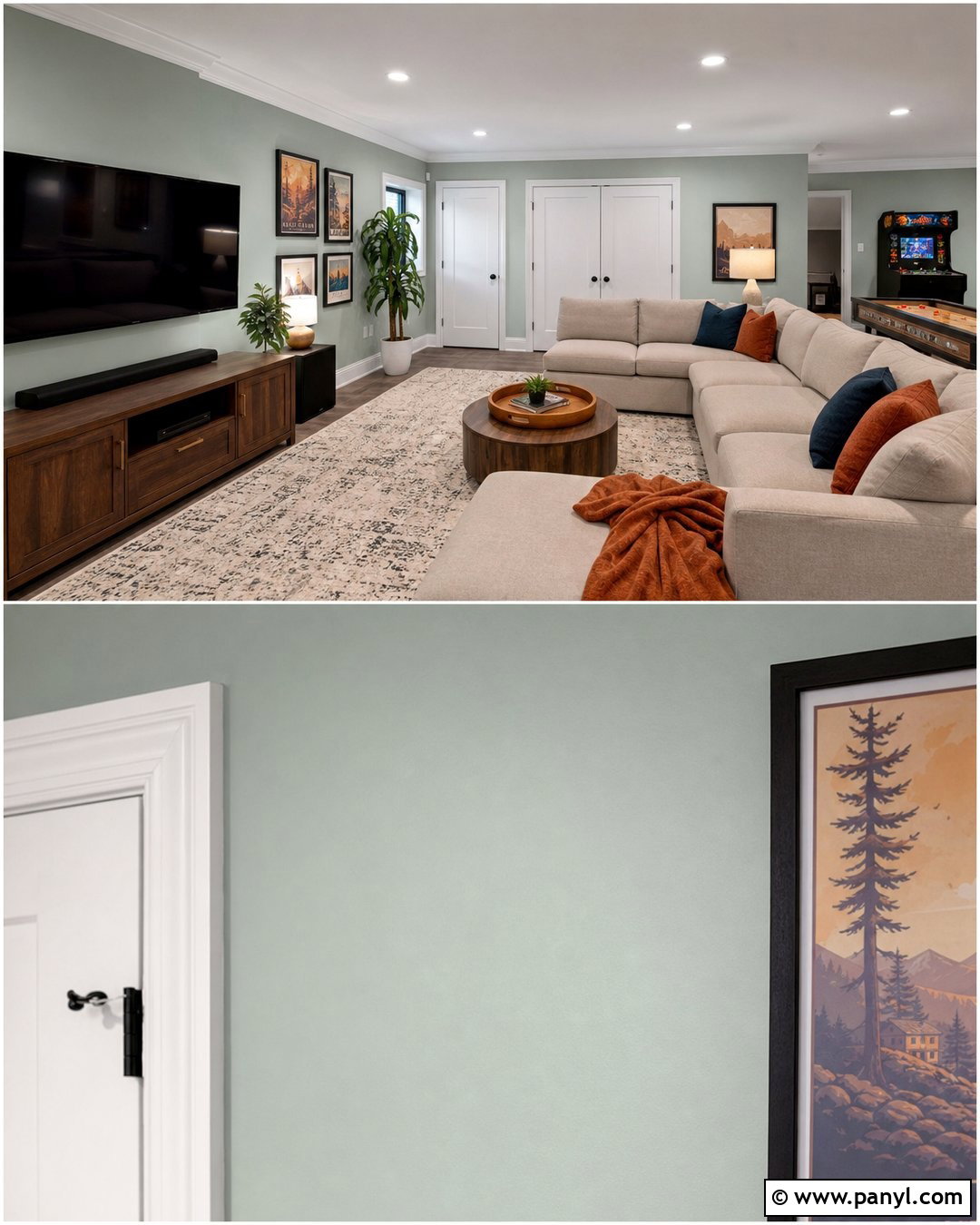
Imagine a quiet living room where pale mint walls meet comfortable beige upholstery and natural textures. Begin with a deep beige sofa instead of an extremely light one, making the space easier to maintain. Add two mint green armchairs or use mint through curtains and larger pillows when the walls are neutral. A jute rug, oak coffee table, and woven Roman shades create an organic foundation. Keep smaller accents simple with off-white ceramics, linen cushions, and matte brass lighting. A few black details, such as slim picture frames, can sharpen the pale palette without becoming dominant. This combination suits casual, transitional, and coastal homes because it balances gentle color with practical neutrals and creates a full room that feels easy to live in.
4. Mint Green And Light Gray
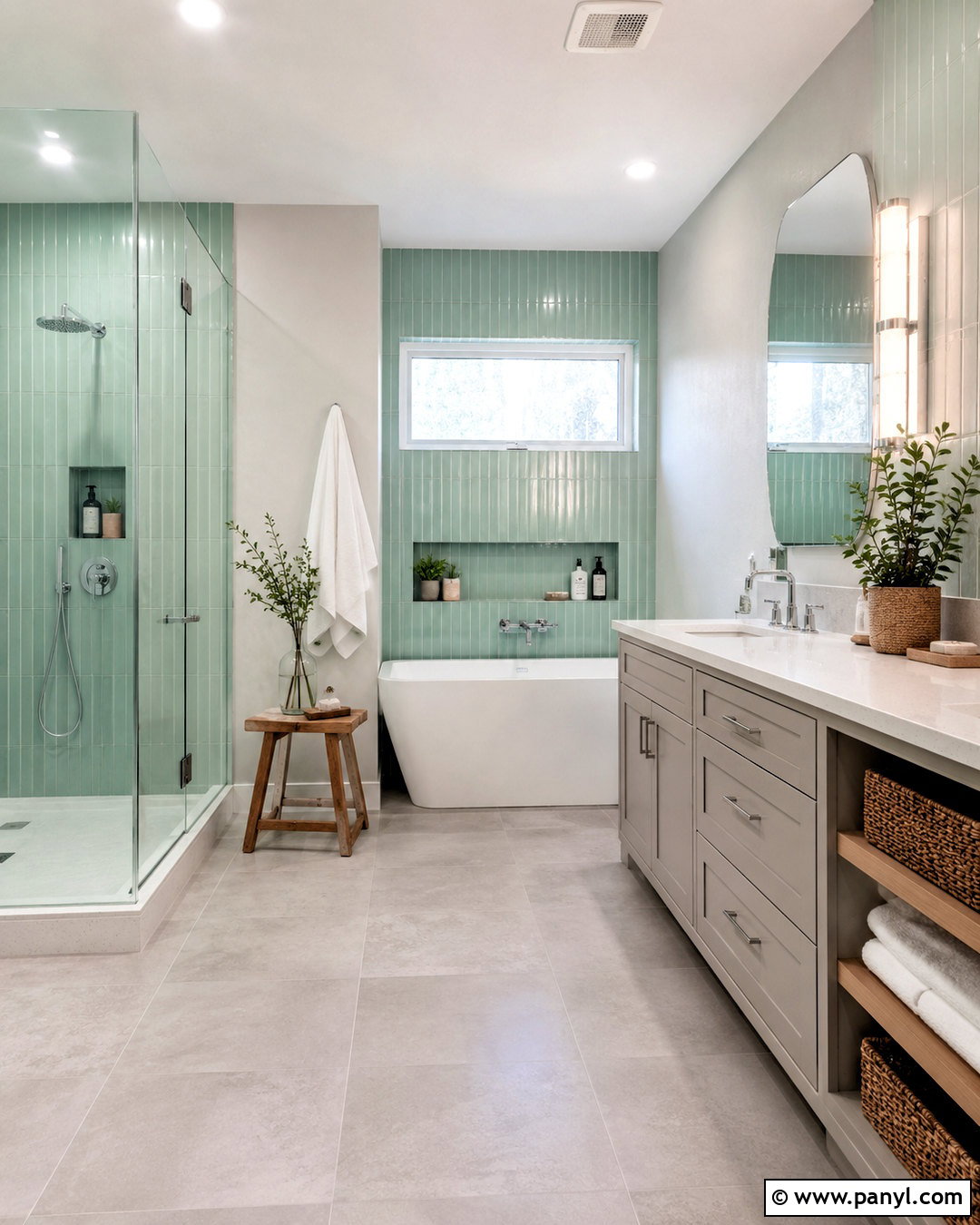
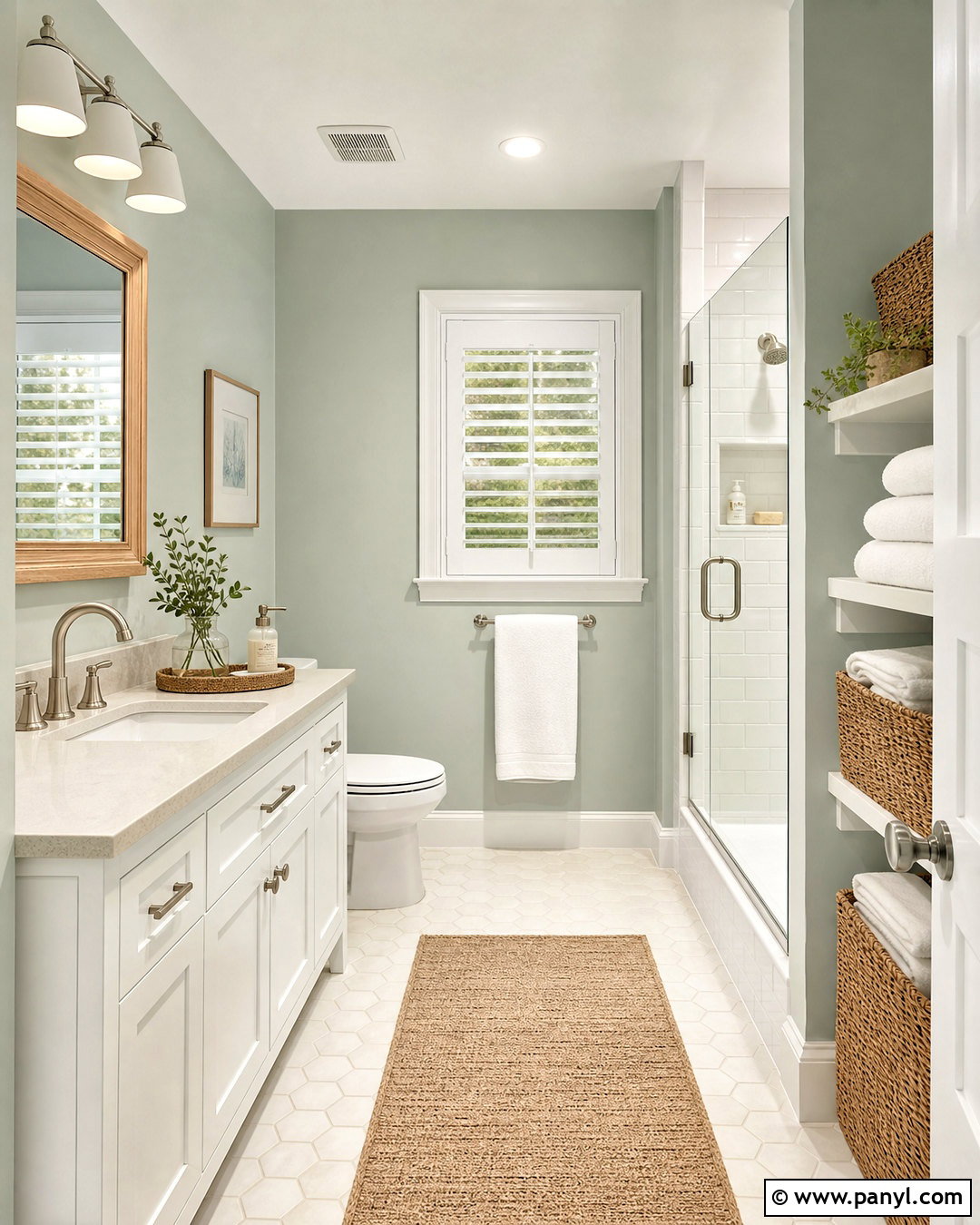
Mint green and light gray create a polished bathroom palette with a cool, refreshing appearance. Cover the lower portion of the walls with mint green vertical tile, then use pale gray paint above it. A light gray vanity with a white quartz counter provides storage while allowing the tile to remain the focal point. Choose large gray floor tiles with subtle variation to disguise everyday marks. Polished chrome fixtures, a frameless mirror, and white towels keep everything bright. Introduce warmth through a small oak stool, woven basket, and simple greenery. Avoid using too many blue-gray finishes, which can make the room feel cold. A few warmer gray textiles will balance the mint and produce a complete bathroom that feels current, calm, and functional.
5. Mint Green And Charcoal Gray
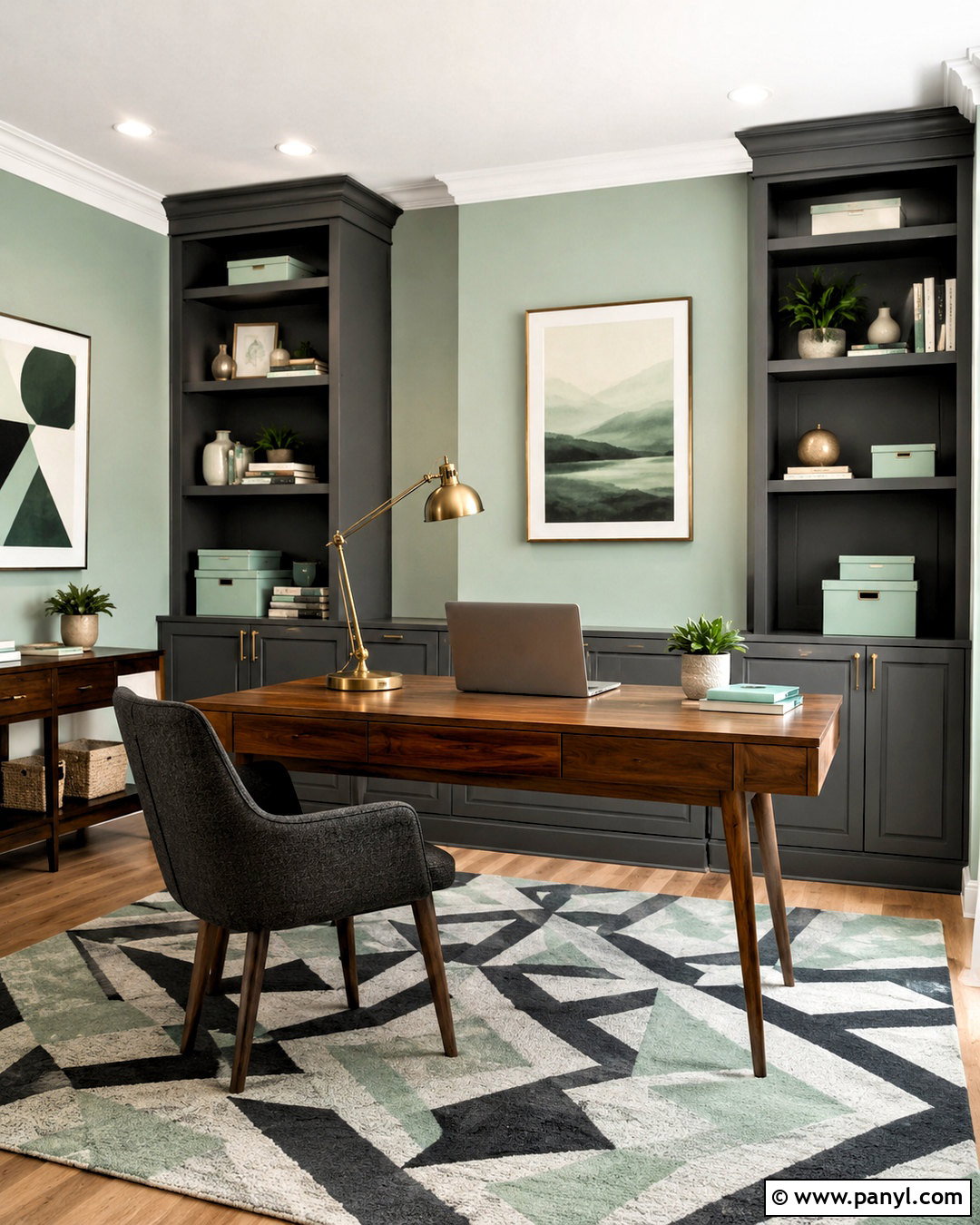
If mint green feels too delicate for your taste, charcoal gray can give it immediate strength and structure. Create a modern home office with charcoal built-in shelves surrounding a mint green painted wall behind the desk. Choose a streamlined walnut desk, a charcoal upholstered chair, and a graphic rug that repeats both colors. White trim will keep the darker cabinetry from closing in the space. Add task lighting in matte black or aged brass, depending on whether you prefer a cooler or warmer finish. Use mint storage boxes and charcoal frames to distribute the palette throughout the room. This high-contrast combination feels focused and sophisticated, while the lighter green prevents the office from becoming heavy, dull, or visually cramped.
6. Mint Green And Matte Black
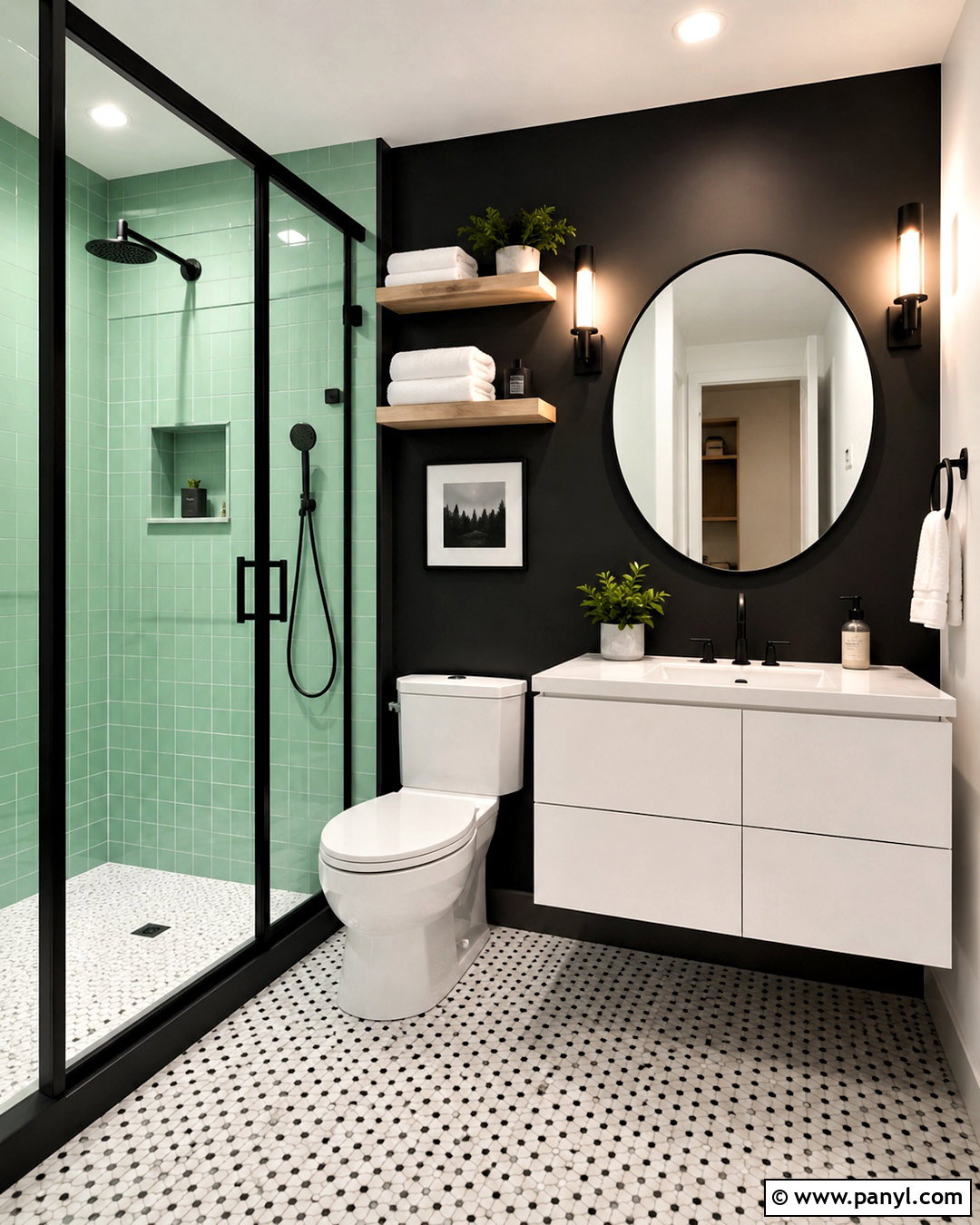
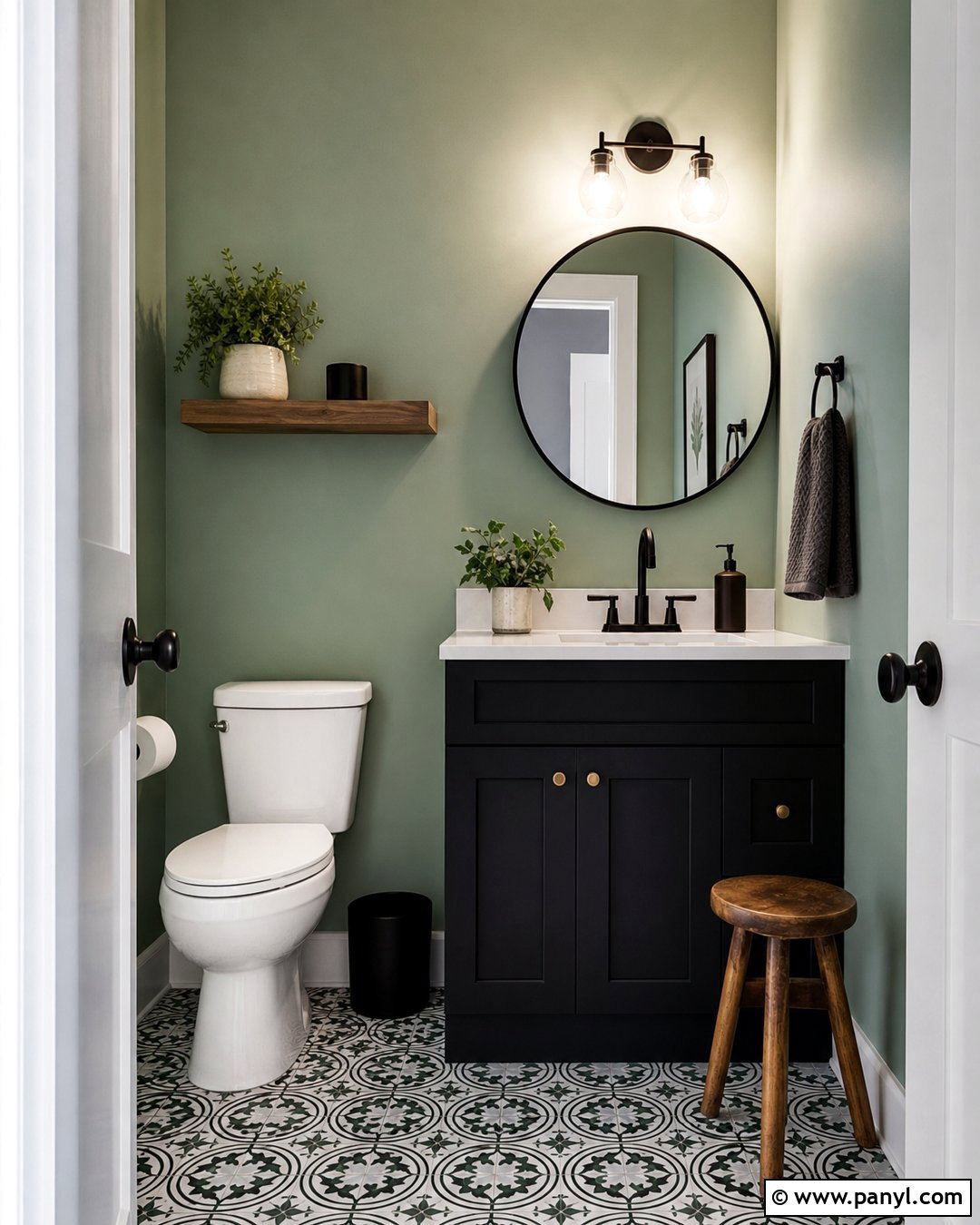
Matte black makes mint green appear sharper and more architectural, especially in a compact bathroom. Use mint green square tiles across the shower walls and continue them behind a floating white vanity. Frame the shower with slim black metal, then repeat black on the faucet, mirror, sconces, and cabinet pulls. Keep the floor simple with white-and-black mosaic tile so it supports the main combination. A pale wood vanity shelf and soft white towels will warm the harder surfaces. Limit decorative objects to a small plant, clear containers, and one framed print. Because black creates strong visual lines, careful repetition is important. The finished bathroom should look deliberate, with mint providing freshness and black defining each practical feature.
7. Mint Green And Navy Blue
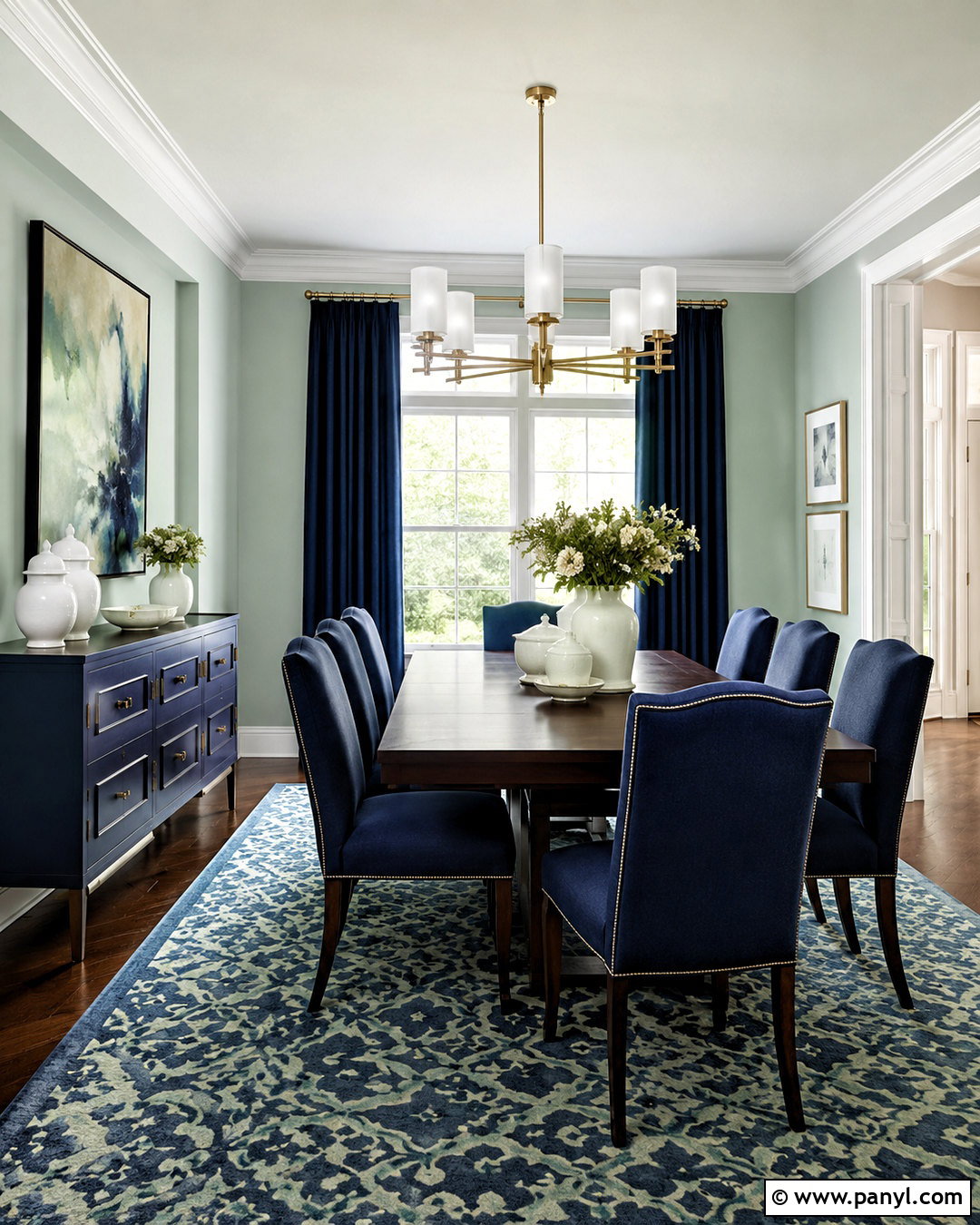
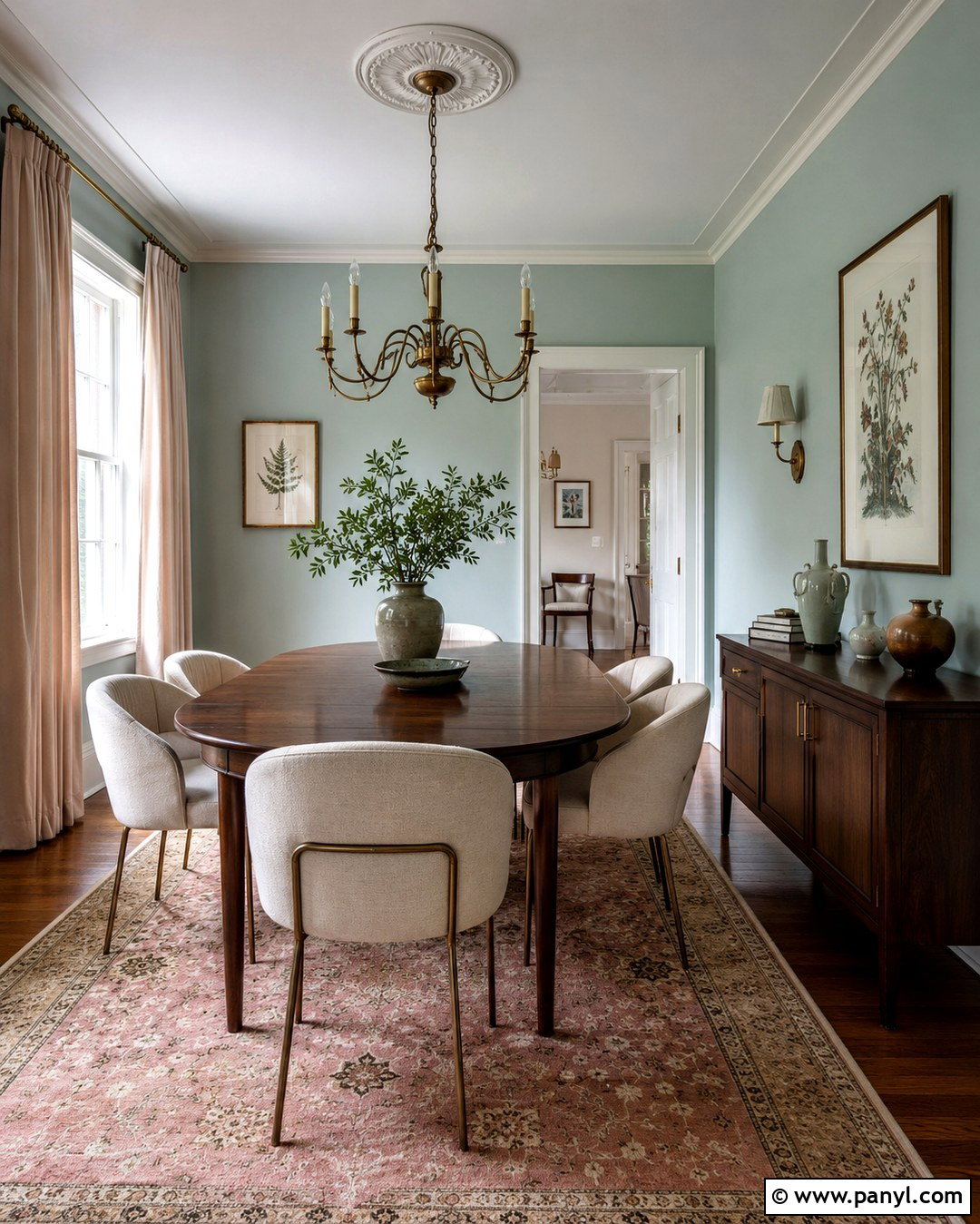
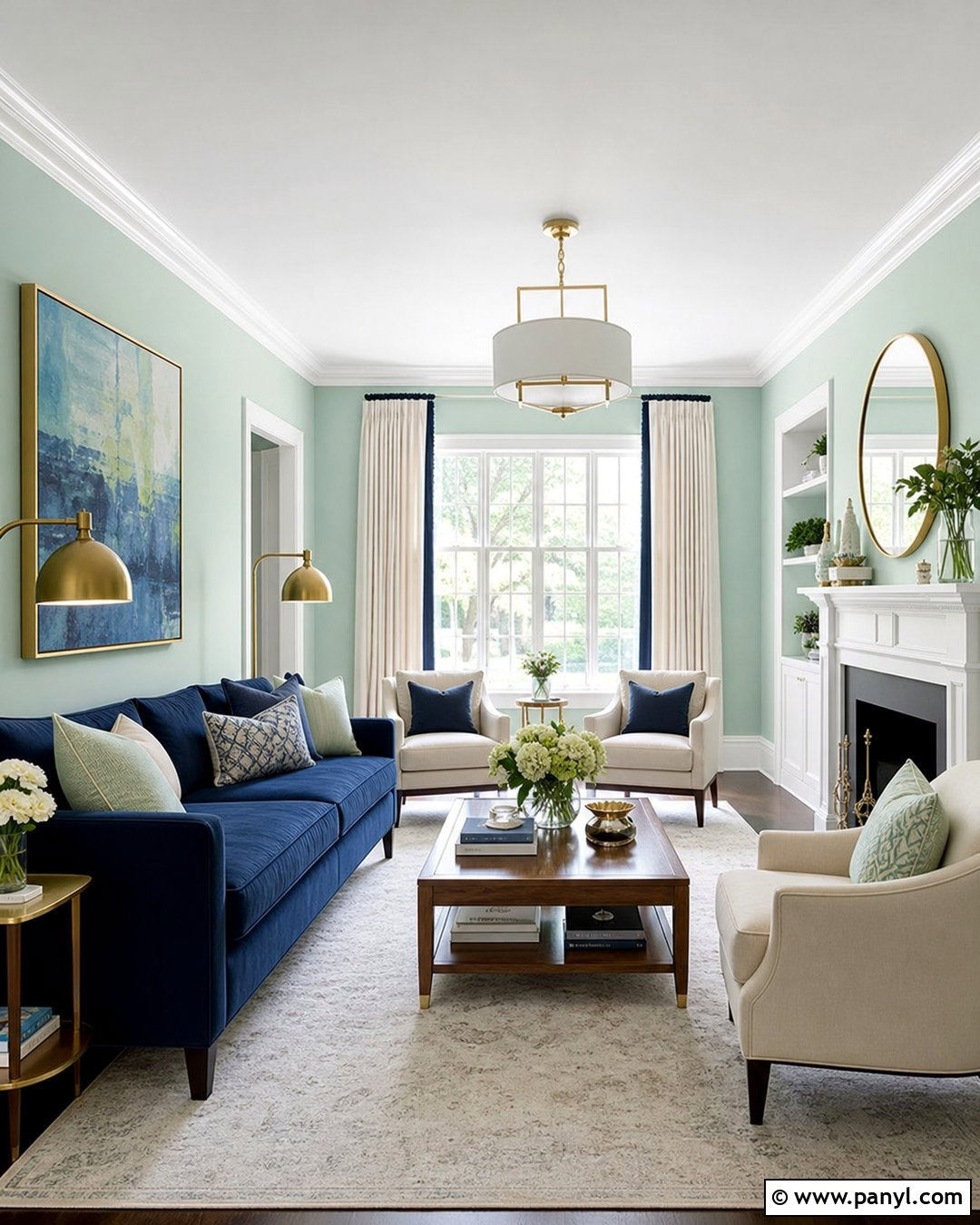
Navy blue adds depth to mint green and can turn a playful palette into an elegant dining room. Paint the walls a light mint, then introduce navy through upholstered dining chairs, full-length curtains, and a large patterned rug. A walnut dining table will bridge the cool colors with natural warmth. Choose a sculptural brass chandelier and matching curtain hardware for a refined finish. White trim and a white ceiling should remain visible to prevent the darker accents from dominating. Place a navy sideboard against one wall and style it with white ceramics, mint glassware, and simple artwork. The result feels balanced because pale mint brightens the room, navy anchors the furniture, and warm wood makes the complete dining area welcoming rather than formal or cold.
8. Mint Green And Powder Blue
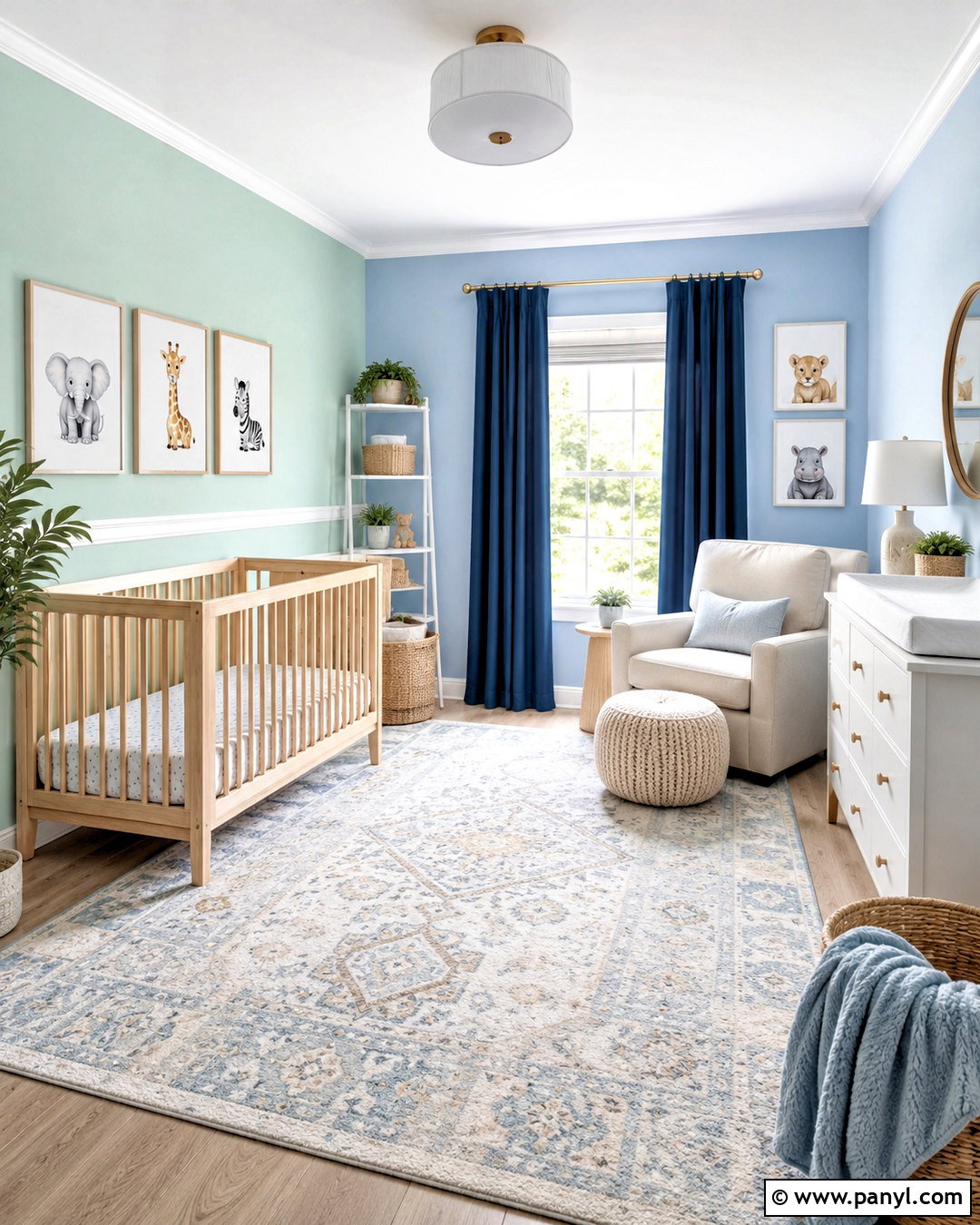
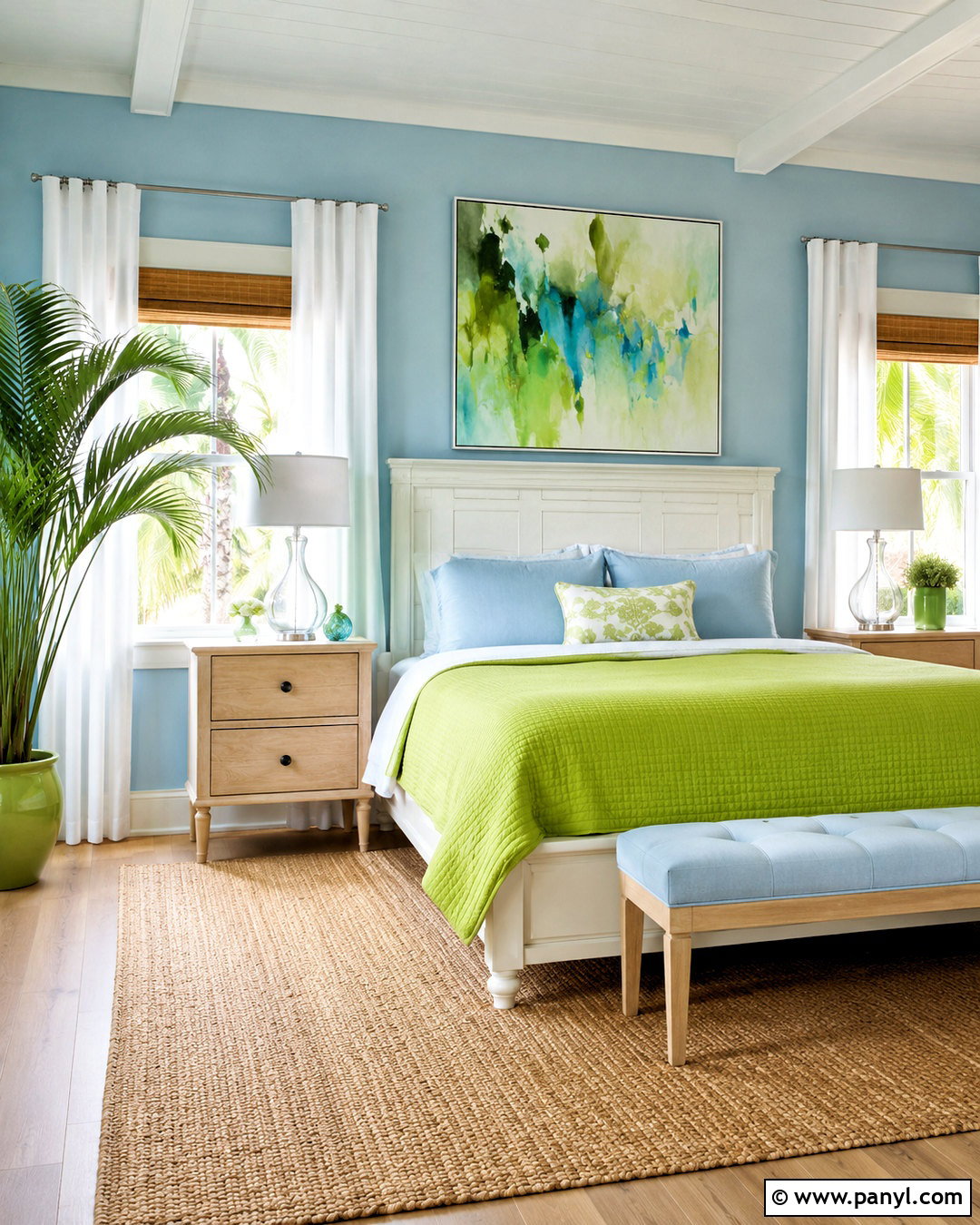
Mint green and powder blue create a soft, cheerful nursery that can adapt as a child grows. Use mint green on the lower half of the walls and powder blue above, separating the colors with narrow white molding. Choose a natural maple crib, white dresser, and comfortable cream glider to keep the main furniture flexible. A washable rug containing pale blue, mint, and warm beige will soften the floor and connect the palette. Add blackout curtains in a slightly deeper blue for better function and visual definition. Woven baskets, cloud-shaped decor, and simple animal artwork can complete the room without creating clutter. The two cool pastels feel cohesive, while natural wood and cream provide enough warmth to make the nursery comfortable and balanced.
9. Mint Green And Teal
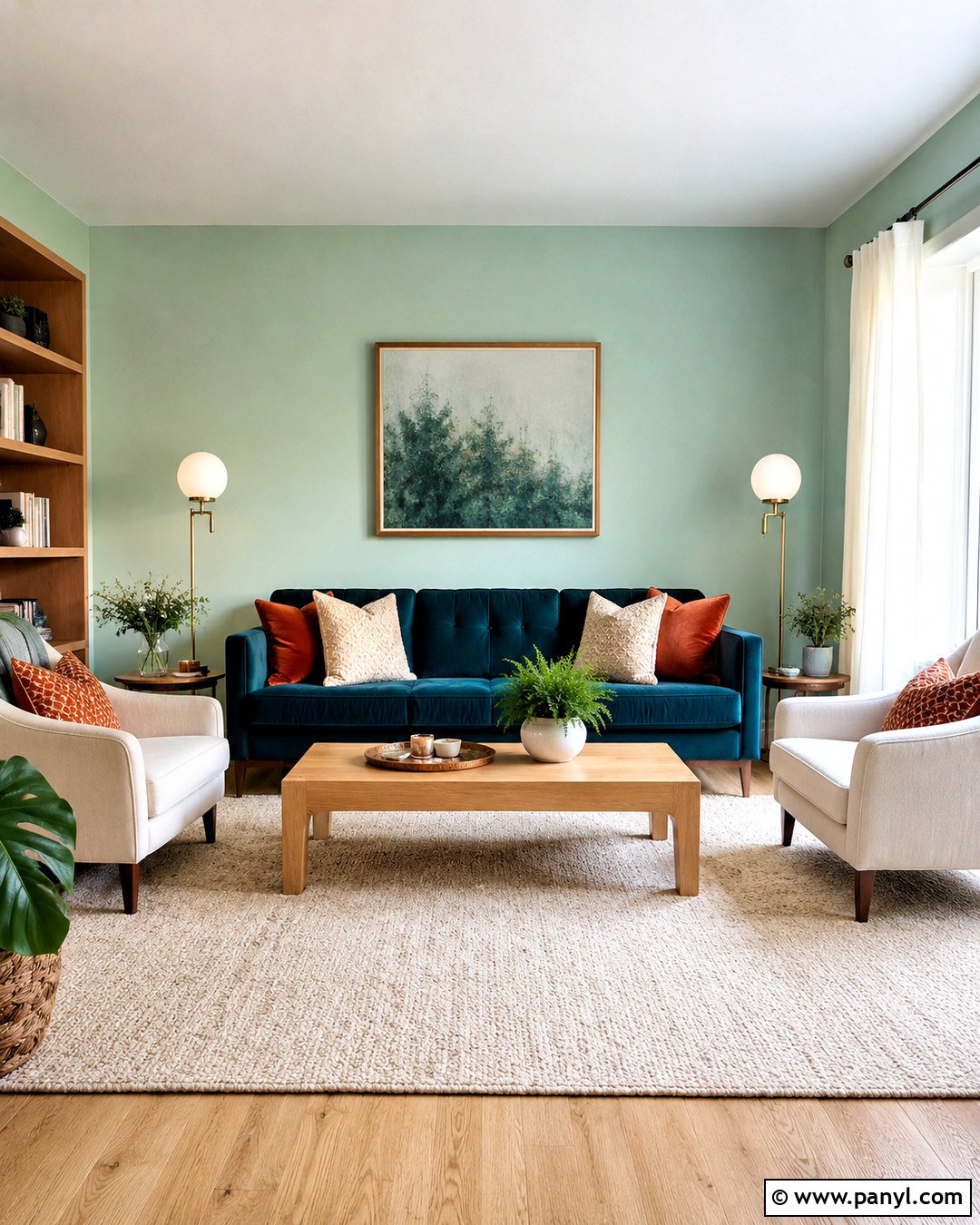
Layering mint green with teal creates a vibrant living room inspired by sea-glass colors without looking like a themed coastal space. Start with soft mint walls and place a rich teal velvet sofa at the center of the arrangement. Add cream armchairs, a light oak coffee table, and a large ivory rug to give the stronger color room to breathe. Patterned pillows can include mint, teal, pale blue, and small touches of rust. Use brushed brass floor lamps and warm wood frames to balance the cool palette. Sheer white curtains will maintain brightness and keep the teal from appearing too heavy. This tonal combination works best when the shades are clearly different, allowing the sofa to anchor the complete room while mint remains a calm background.
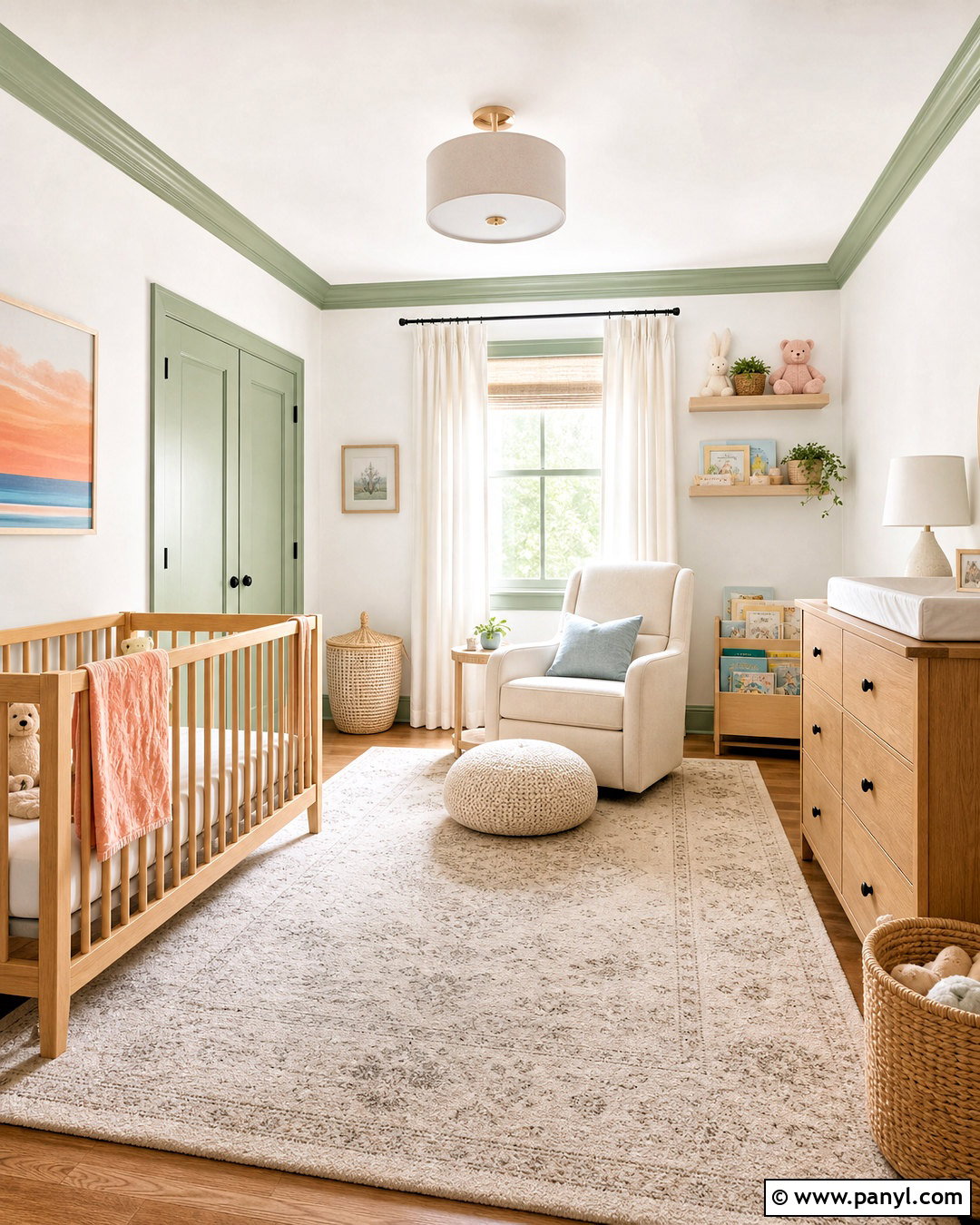
10. Mint Green And Blush Pink
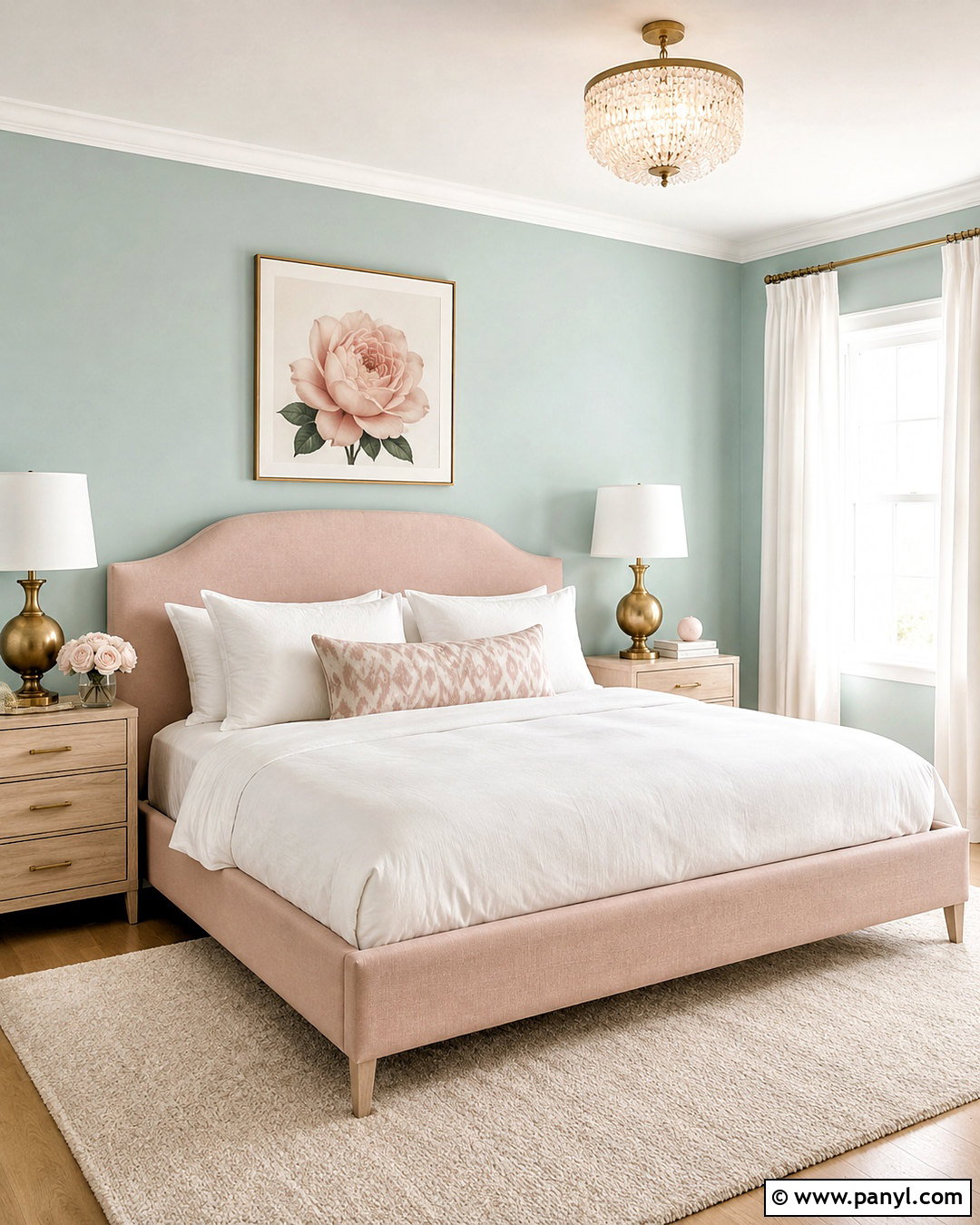
Blush pink brings warmth to mint green while preserving its light, delicate character. Build a welcoming guest bedroom around mint walls, a blush upholstered bed, and crisp white bedding. Add a mint-and-pink patterned lumbar pillow rather than covering the bed with many small cushions. Pale oak nightstands, a cream area rug, and white curtains will create a neutral bridge between the two pastels. Use brushed brass lamps and picture frames for a little glow. A deeper rose throw or piece of artwork can provide necessary contrast and keep the palette from appearing washed out. With clean furniture lines and restrained decor, this complete mint and blush bedroom feels sophisticated, comfortable, and suitable for adults instead of resembling a child’s room.
11. Mint Green And Coral
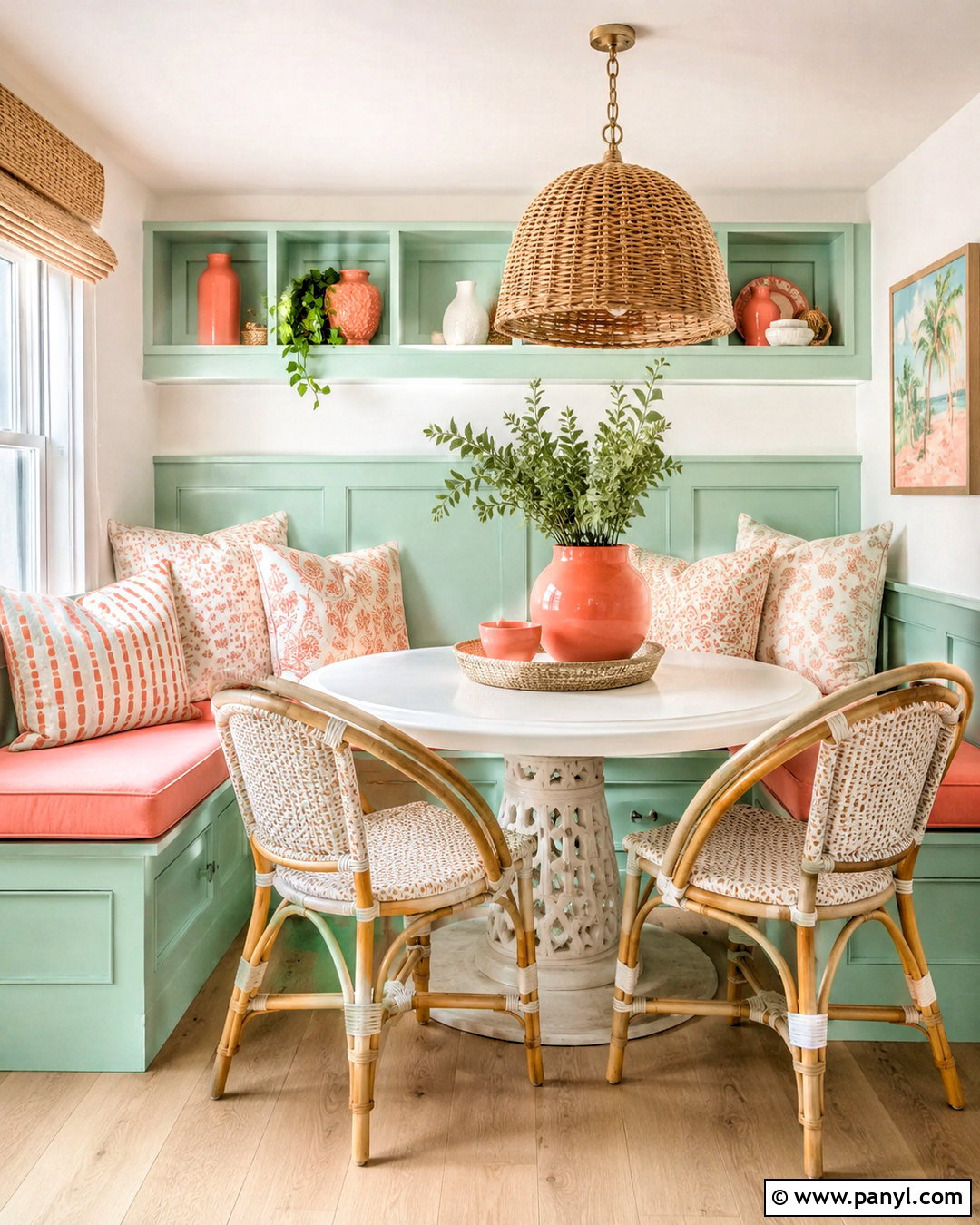
Would you like mint green to feel energetic and sunny? Coral provides lively warmth and makes an excellent accent in a mint green breakfast nook. Paint the built-in bench mint, then add coral seat cushions and patterned pillows containing cream, peach, and green. A round white table and natural rattan chairs will keep the compact area open and casual. Install a woven pendant light above the table and use pale wood flooring beneath it. Cream walls can surround the nook so the two colors remain concentrated and intentional. Repeat coral sparingly through a ceramic vase, framed artwork, or Roman shade trim. The finished look feels bright and friendly because mint cools the coral, while natural fibers prevent the colorful combination from becoming overwhelming.
12. Mint Green And Peach
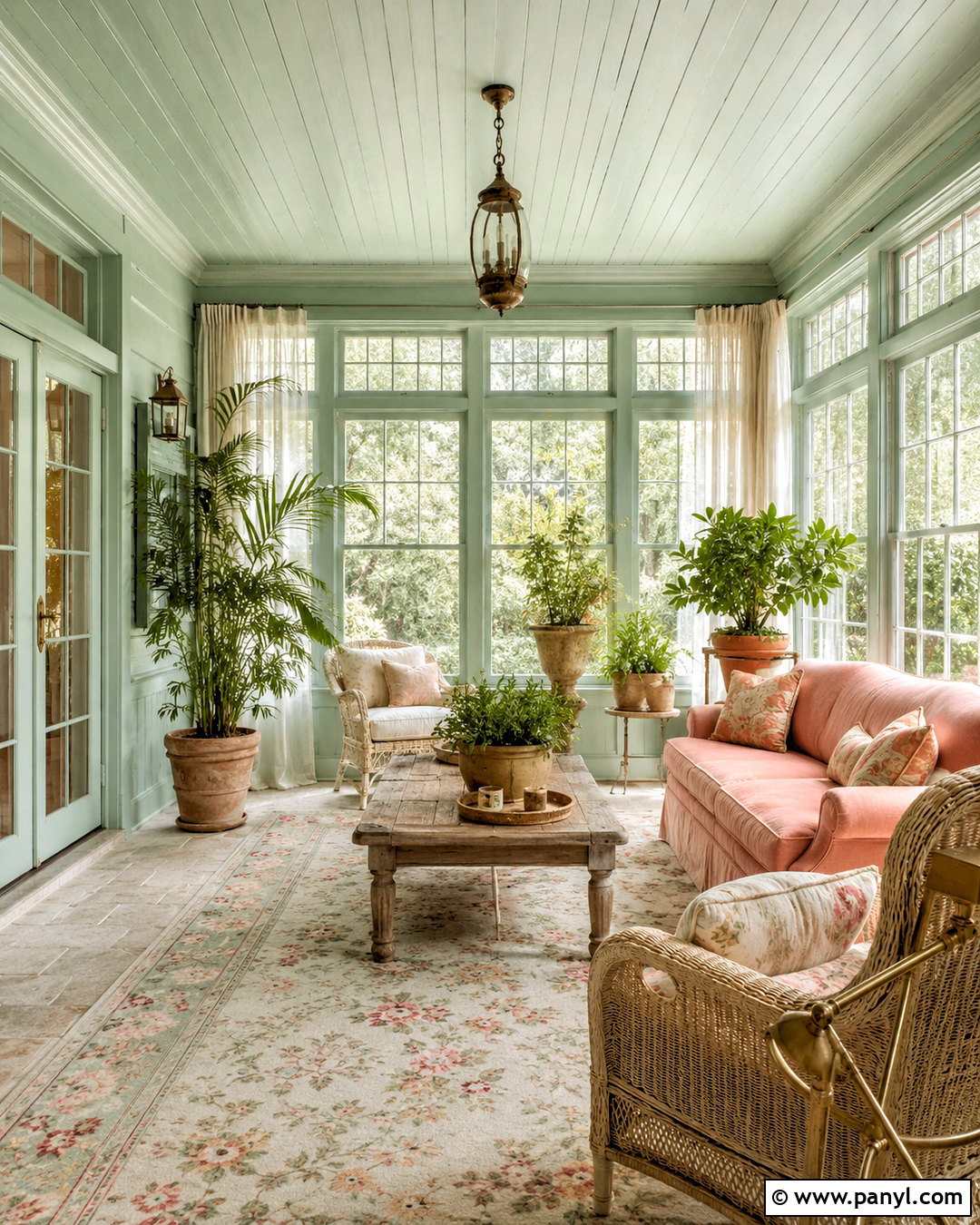
Mint green and peach can produce a warm, inviting sunroom with a gentle vintage influence. Use mint-painted window frames or walls as the foundation, then furnish the space with a peach linen sofa and two cream wicker chairs. Place a faded floral rug beneath the seating arrangement to combine mint, peach, ivory, and muted brown. White cotton curtains will filter strong sunlight while preserving the room’s airy feeling. Add a weathered oak coffee table, terracotta planters, and several leafy plants to reinforce the garden connection. Keep metals warm with aged brass or antique bronze. Peach introduces a soft glow that complements mint without creating harsh contrast, resulting in a complete sunroom suited to reading, relaxing, or casual conversations.
13. Mint Green And Terracotta
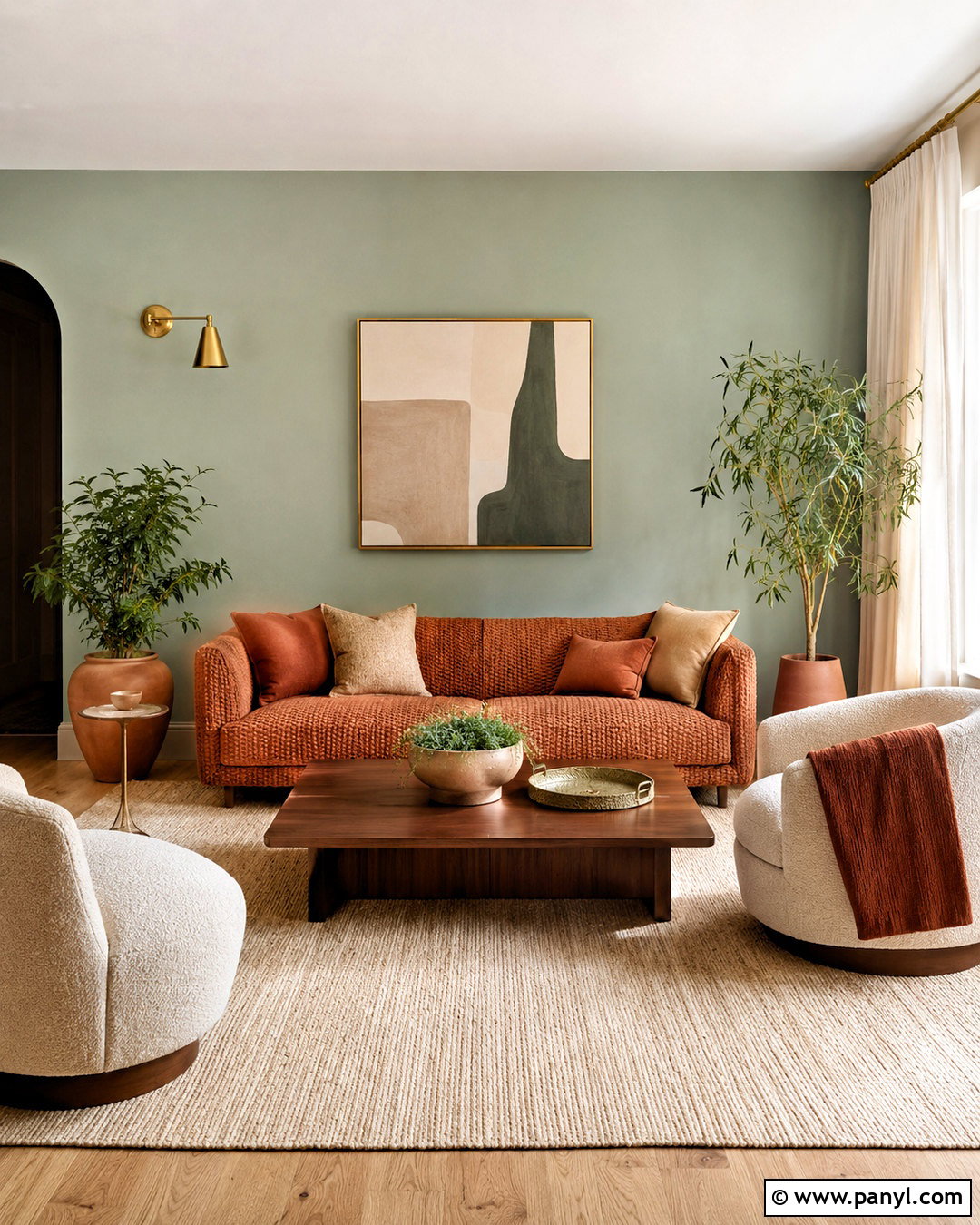
Earthy terracotta grounds mint green and gives it a natural, contemporary quality. For a living room, paint one broad wall muted mint and choose a terracotta-colored sofa with a durable woven fabric. Balance the sofa with cream boucle chairs, a warm beige rug, and a low walnut coffee table. Add rust, tan, and mint cushions in varied textures rather than busy patterns. Terracotta pots filled with large green plants will strengthen the connection between the two colors. Use off-white curtains and warm brass lighting to maintain brightness. The room should include enough neutral space around the stronger pieces so the palette can breathe. This complete scheme feels earthy and comfortable, with mint providing freshness and terracotta delivering warmth and weight.
14. Mint Green And Mustard Yellow
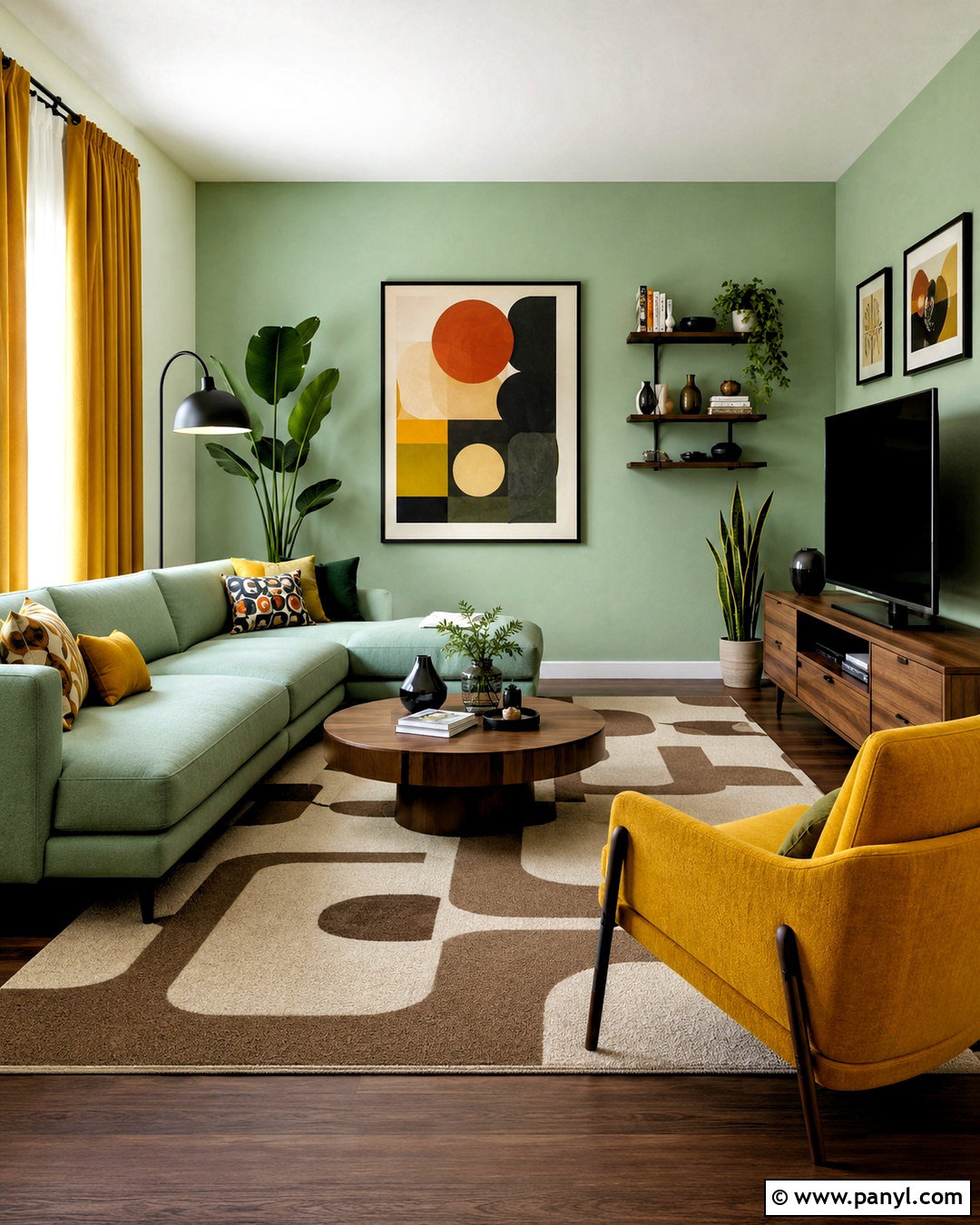
Mustard yellow gives mint green a cheerful retro edge that works well in a family room. Begin with a mint green sofa or sectional against warm white walls. Add a mustard armchair, mustard window panels, and a geometric rug containing both colors with cream and brown. Choose walnut side tables and a low media cabinet to support the slightly vintage character. Black picture frames and a black floor lamp can give the room cleaner modern lines. Use solid pillows alongside only one or two patterns to avoid visual overload. A large abstract print above the sofa should repeat mint and mustard in controlled amounts. This finished room feels upbeat and distinctive while remaining grounded by wood, cream, and small black details.
15. Mint Green And Lavender
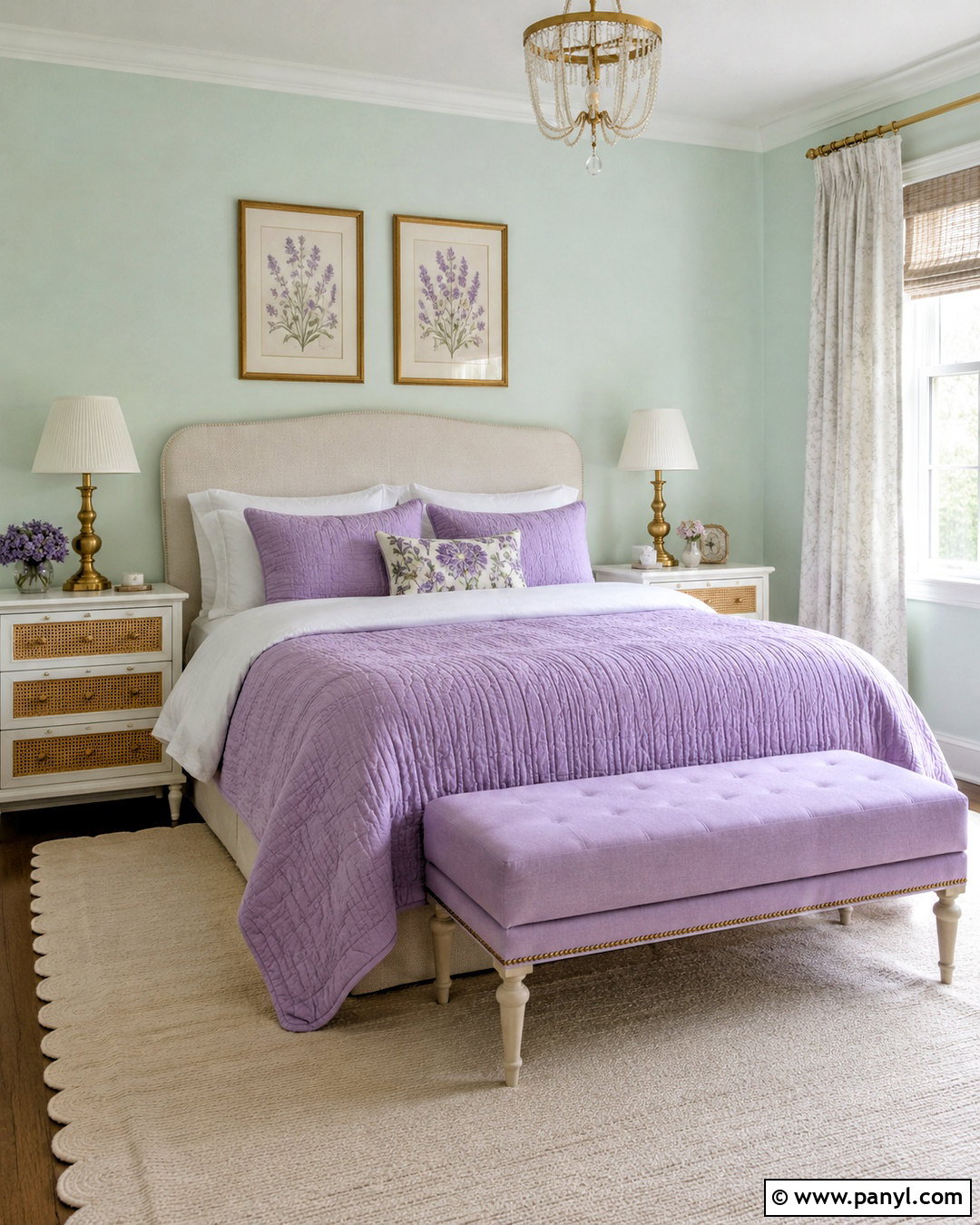
A combination of mint green and lavender can make a bedroom feel peaceful, airy, and subtly colorful. Paint the walls a very pale mint and use lavender on the quilt, upholstered bench, and one pair of curtains. White bedding and an ivory rug will prevent the pastels from blending into a single indistinct wash. Choose painted white nightstands, but add natural oak or cane details for warmth. Silver-toned lighting can work here, although soft brass will create a more welcoming effect. Select botanical artwork that includes green leaves and muted purple flowers to connect the colors naturally. The final bedroom should emphasize texture through linen, cotton, and woven materials, creating a complete restful space with enough contrast to remain visually interesting.
16. Mint Green And Plum
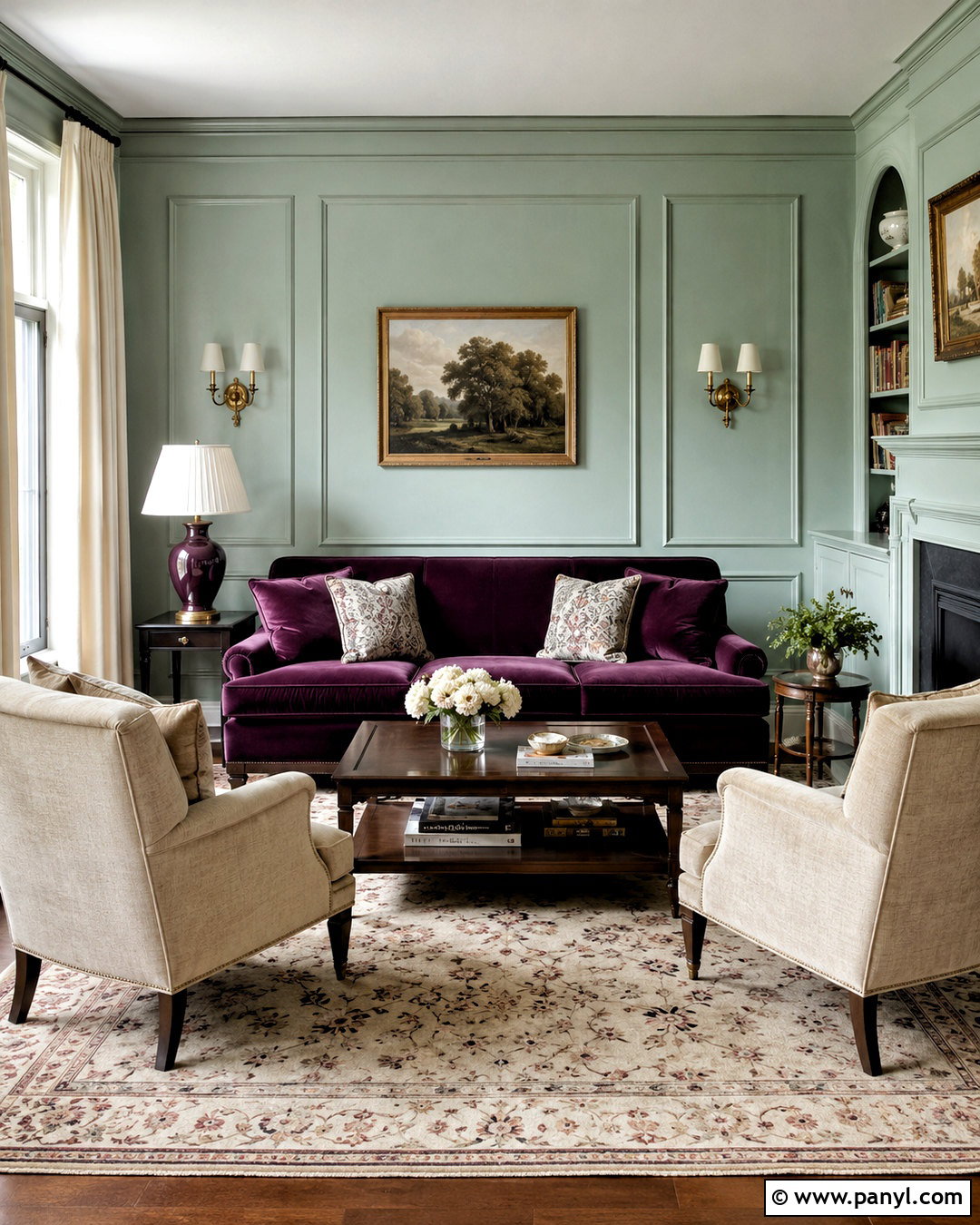
Deep plum gives mint green an unexpected, dramatic quality suitable for a formal sitting room. Use mint on paneled walls, then position a plum velvet sofa as the strongest feature. Add cream armchairs, a dark walnut coffee table, and an area rug combining plum, mint, ivory, and faded rose. Antique brass sconces and a statement ceiling fixture will add warmth and complement the rich upholstery. Hang curtains in a neutral linen rather than another saturated color. Smaller plum details can appear in artwork or a single ceramic lamp, but avoid repeating the shade everywhere. This complete palette succeeds through contrast: mint keeps the room fresh and open, while plum introduces richness, comfort, and a memorable focal point.
17. Mint Green And Chocolate Brown
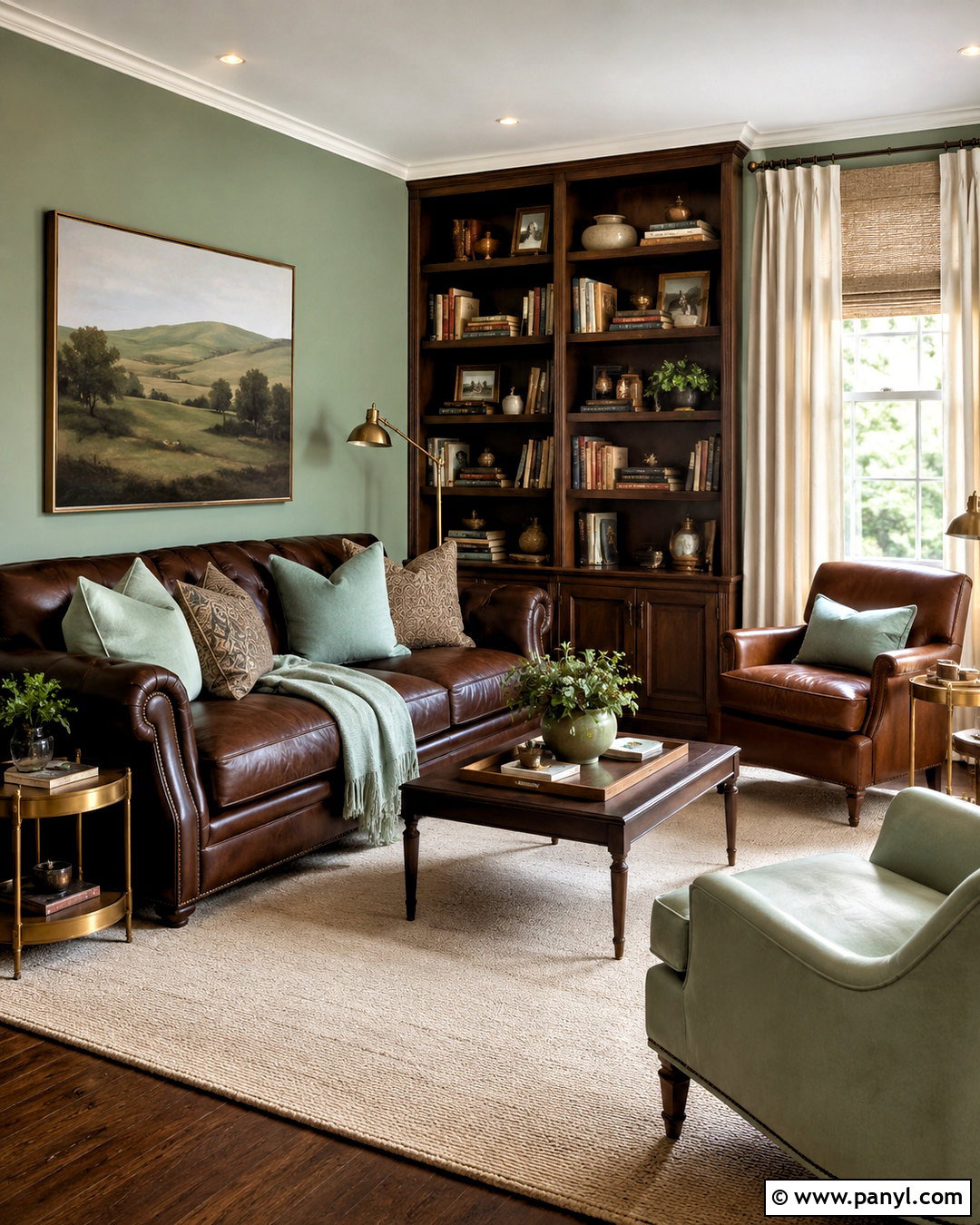
Chocolate brown brings warmth and stability to mint green, making the pairing ideal for a comfortable reading room. Paint the walls soft mint and choose a chocolate leather sofa or generously sized armchair. Add built-in walnut bookcases, a cream wool rug, and a warm white floor lamp beside the seating. Window treatments in oatmeal linen will soften the contrast between the green walls and dark furniture. Use pillows with mint, brown, tan, and muted blue to distribute color naturally. A brass side table and framed landscape art can provide restrained decorative detail. The brown elements should appear in several places rather than one heavy block. This creates a complete room that feels grounded, collected, and welcoming instead of overly pastel.
18. Mint Green And Olive Green
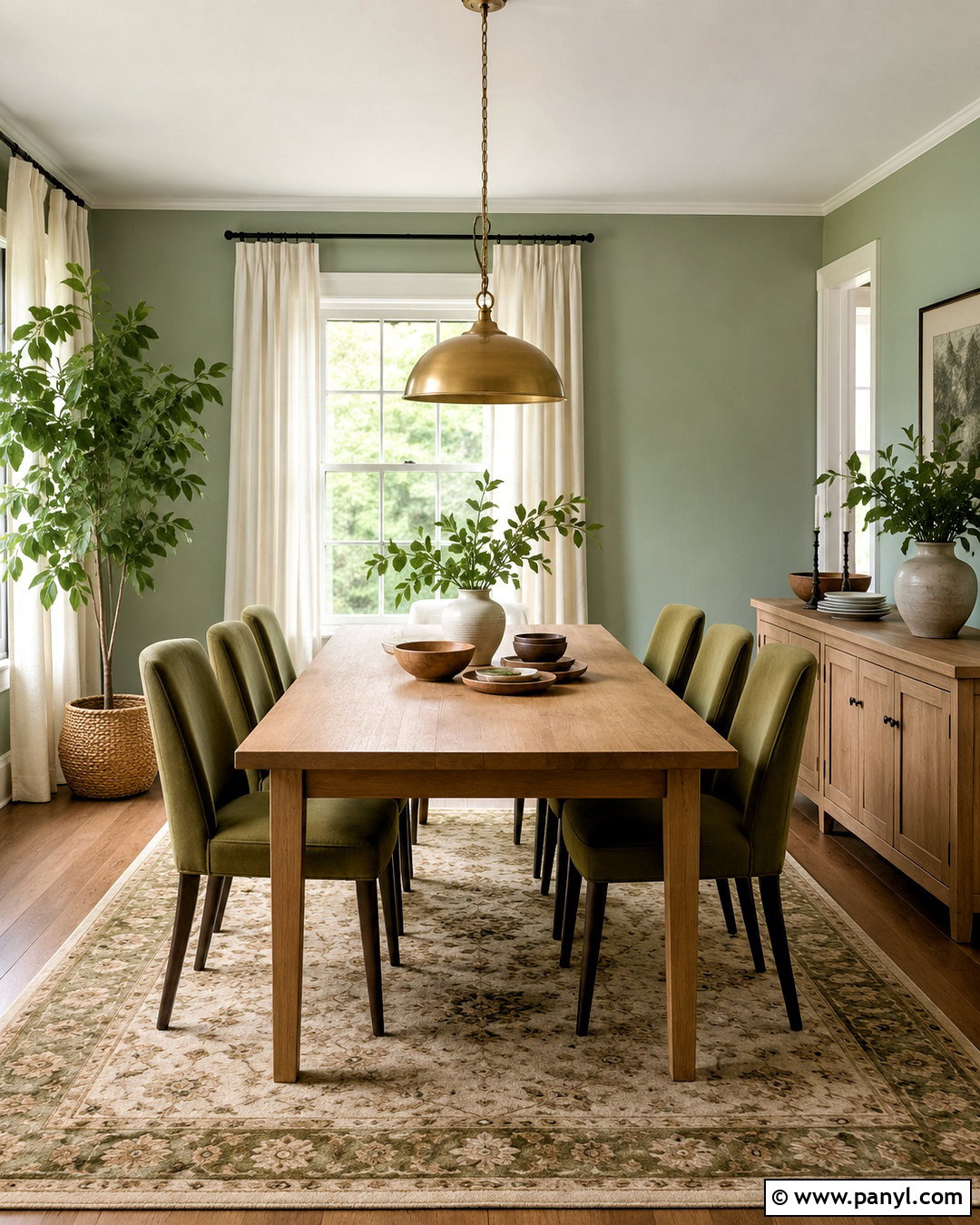
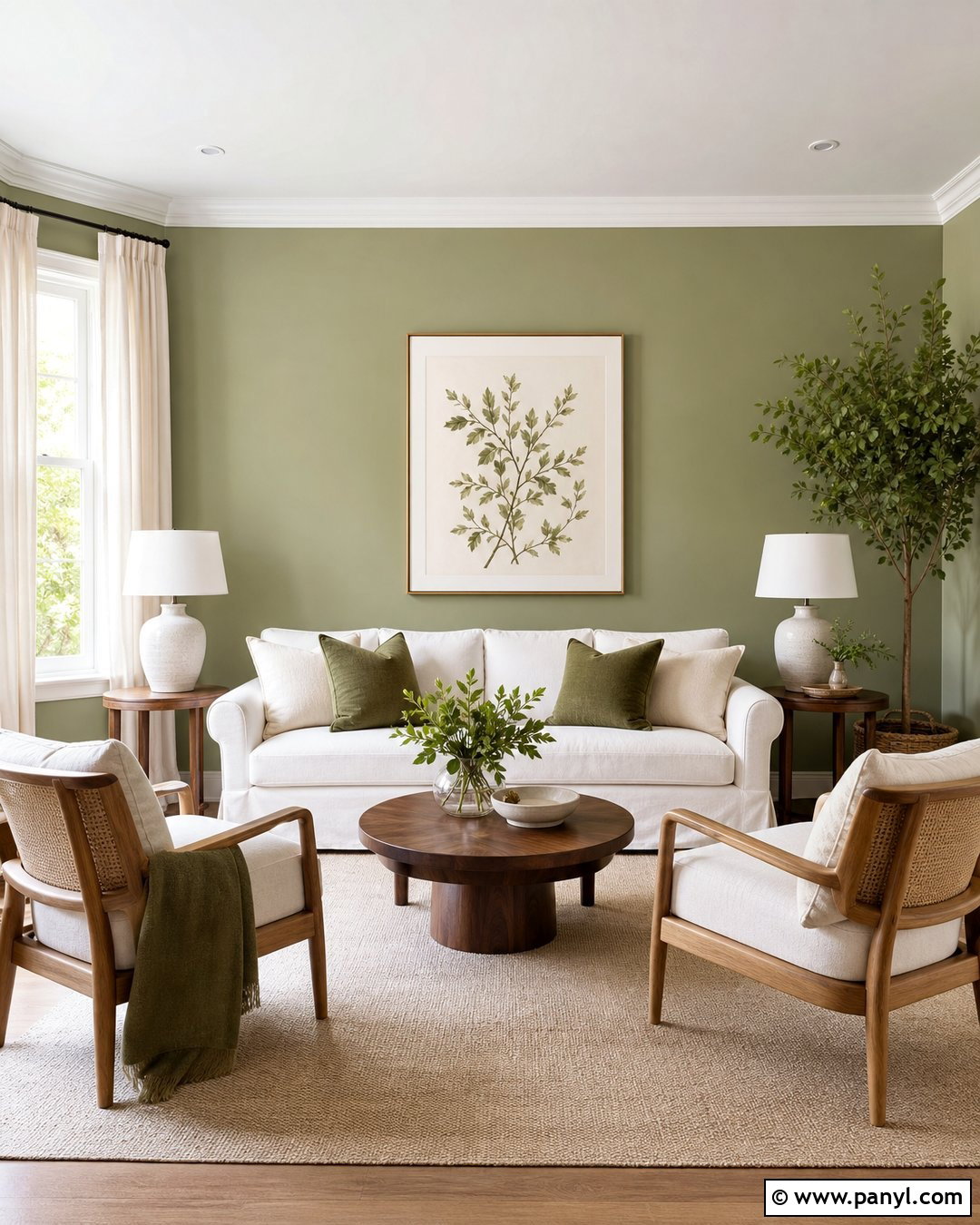
Pairing mint green with olive creates a layered botanical palette that feels calm but not colorless. Design a garden-inspired dining room with muted mint walls, olive upholstered chairs, and a natural oak table. A large rug containing cream, moss, and soft green will define the dining area. Choose linen curtains in warm off-white and install an aged brass pendant above the table. Dark green plants can add another level of natural variation without introducing a competing color. Use white ceramics and simple wood bowls on the table to keep the styling relaxed. Because both greens have different depths and undertones, the room gains dimension while remaining cohesive. Warm wood and cream keep the complete scheme from feeling too cool or monotonous.
19. Mint Green And Burgundy
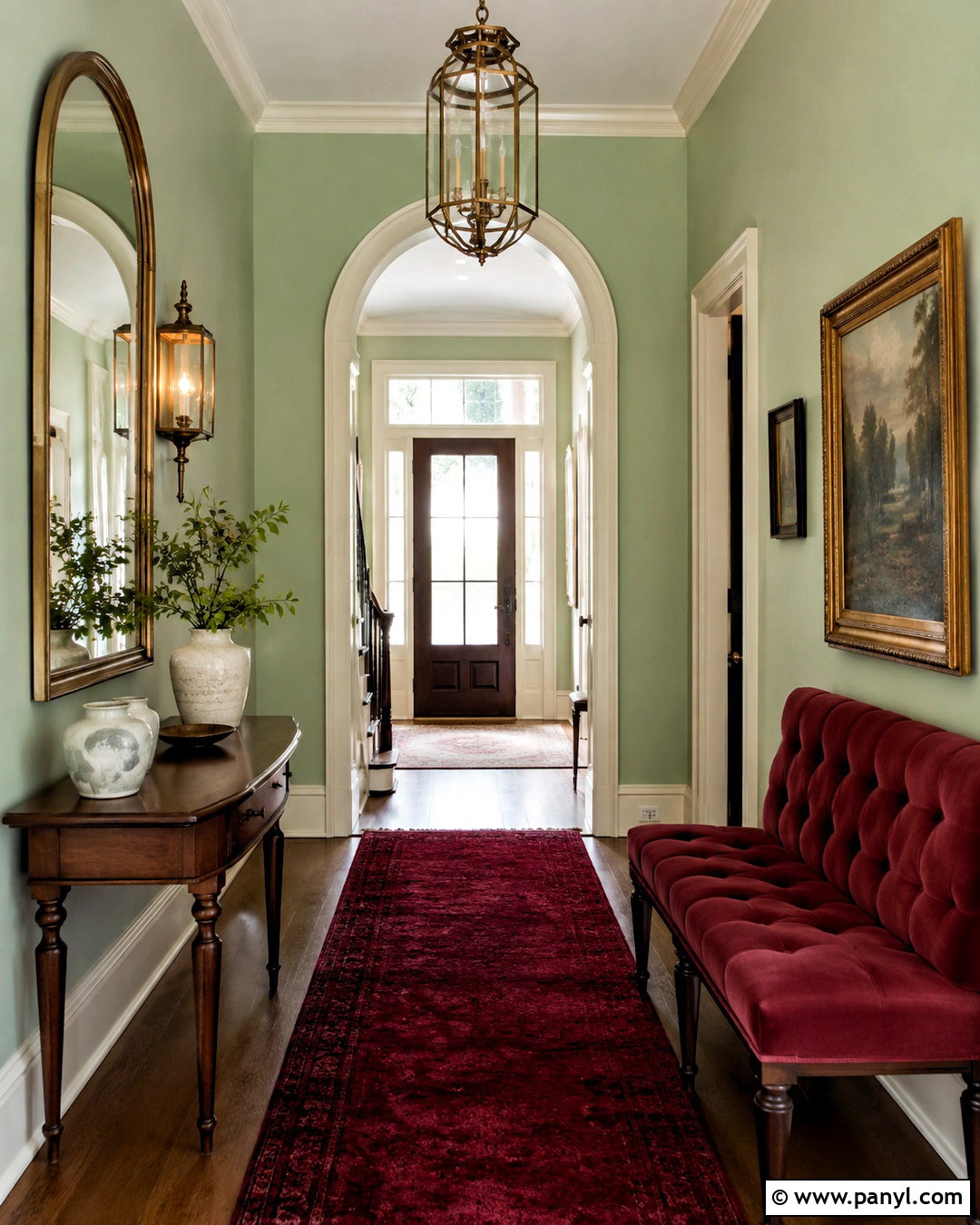
Burgundy can transform mint green into a confident palette with traditional character. Try the combination in an entryway with mint-painted walls, a burgundy runner, and a dark wood console. Add a burgundy upholstered bench where space allows, then place a large brass-framed mirror above it. Warm white trim will brighten the hallway and define doorways clearly. Choose artwork containing muted red, green, cream, and brown so the contrasting colors feel connected. A classic lantern light in aged brass can complete the space. Keep the burgundy concentrated near the floor and furniture, where it visually anchors the pale walls. The finished entry feels welcoming and substantial, showing that mint green can work with deeper, more formal colors.
20. Mint Green And Gold
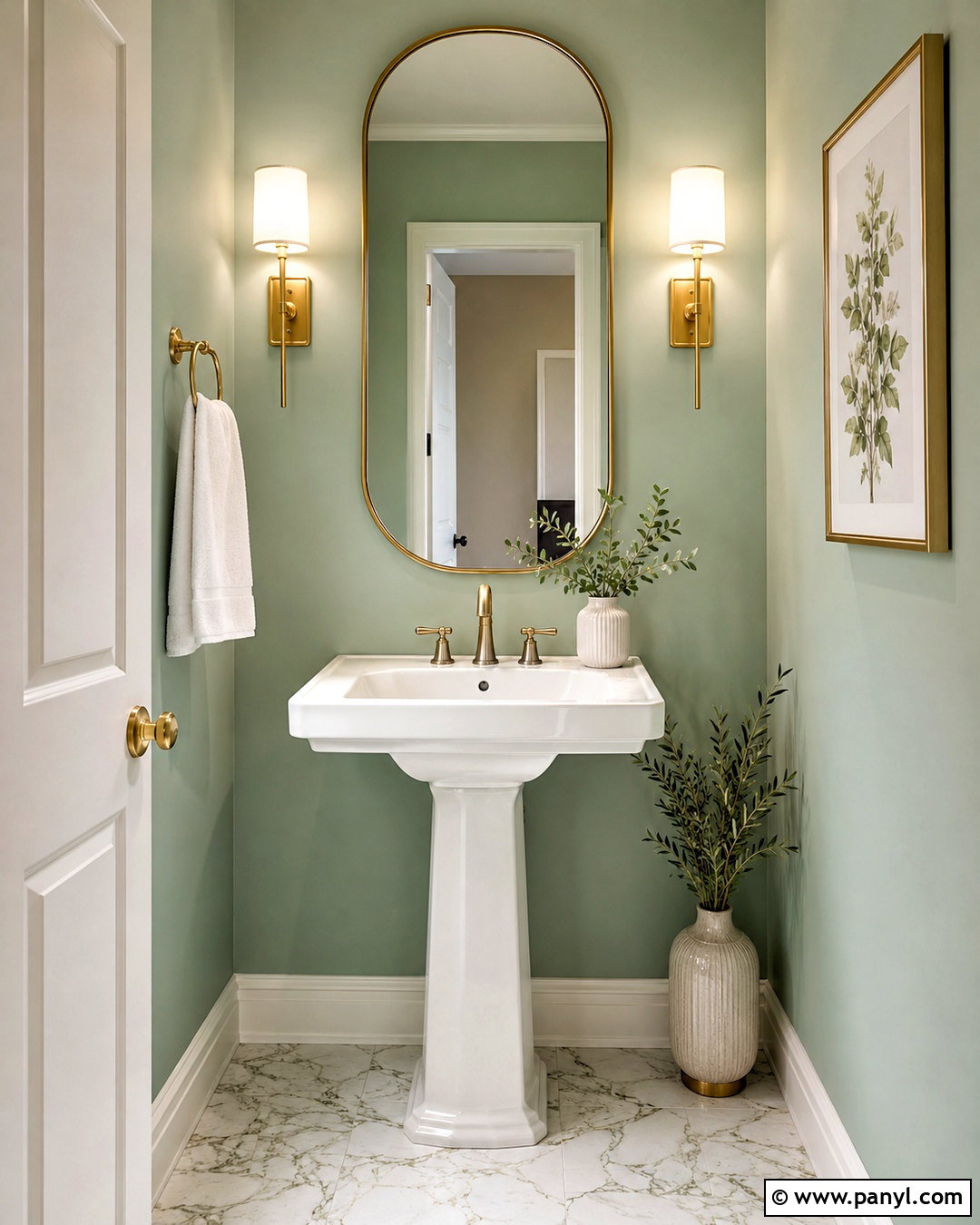
Gold adds warmth and a polished finish to mint green without requiring another dominant paint color. Create an elegant powder room with mint green wallpaper or painted walls, a white pedestal sink, and a rounded gold-framed mirror. Repeat the metallic finish through the faucet, wall sconces, towel ring, and small shelf brackets. Choose warm white trim and marble-look flooring with light gray veining to keep the room bright. A narrow piece of botanical art and one white ceramic vase are enough decoration. Select brushed or aged gold instead of an extremely shiny finish for a softer result. This complete powder room feels refined because mint provides color, white creates breathing room, and the gold details add controlled warmth and definition.
Conclusion:
These **20 colors that go with mint green ideas** show how flexible this refreshing shade can be throughout the home. Light neutrals such as white, cream, beige, and gray create calm, open rooms. Navy, charcoal, plum, and burgundy add stronger contrast and sophistication. Warmer shades, including coral, peach, terracotta, mustard, and blush, prevent mint from feeling cold. Natural wood tones, layered textiles, and consistent metal finishes can help every pairing feel intentional. Before decorating, compare your chosen colors in the room’s actual lighting and repeat each main shade in at least two places. Whether you prefer soft, earthy, playful, or dramatic interiors, mint green can support a complete and balanced palette.

Related Ideas and Inspiration:
Leave a Reply