
Choosing the right wall color can make a compact bedroom feel brighter, calmer, and far more intentional. These bedroom paint ideas for small rooms include airy neutrals, restful pastels, earthy mid-tones, and dramatic dark shades. Light colors can reflect available daylight, while a continuous wall-and-ceiling treatment can reduce visual boundaries. Deep colors also work when they are paired with thoughtful lighting, streamlined furniture, and balanced accents. () Before painting, test large samples beside the flooring, bedding, and window because undertones change throughout the day. Each look below combines wall color with trim, furnishings, textiles, and decor, giving you a complete plan rather than an isolated swatch. Explore these practical bedroom paint ideas for small rooms.

1. Warm White Small Bedroom
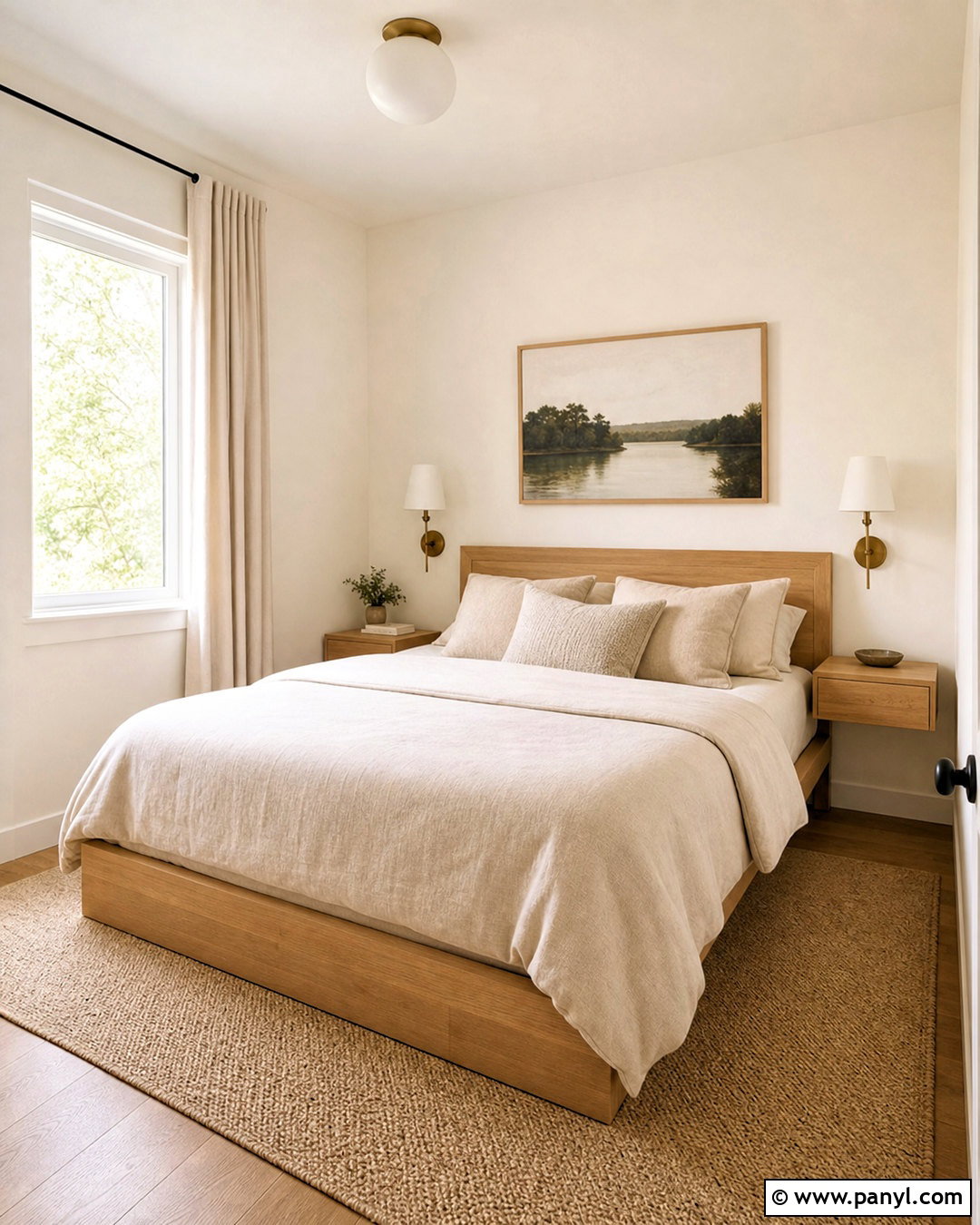
Warm white paint gives a tiny bedroom a clean appearance without the cold feeling of stark, blue-based white. Choose a creamy shade with subtle beige or yellow undertones for the walls and ceiling. Paint the trim in the same color using a satin finish to create quiet dimension while maintaining continuity. Add a low oak platform bed, oatmeal linen bedding, and compact floating nightstands. A pale woven rug keeps the floor light, while brushed brass sconces introduce gentle warmth without using table space. Hang ivory curtains close to the ceiling so the window feels taller. Finish the room with one landscape print, a small ceramic vase, and a light wood bench. The result feels sunny, comfortable, and visually uncluttered.
2. Soft Greige Small Bedroom
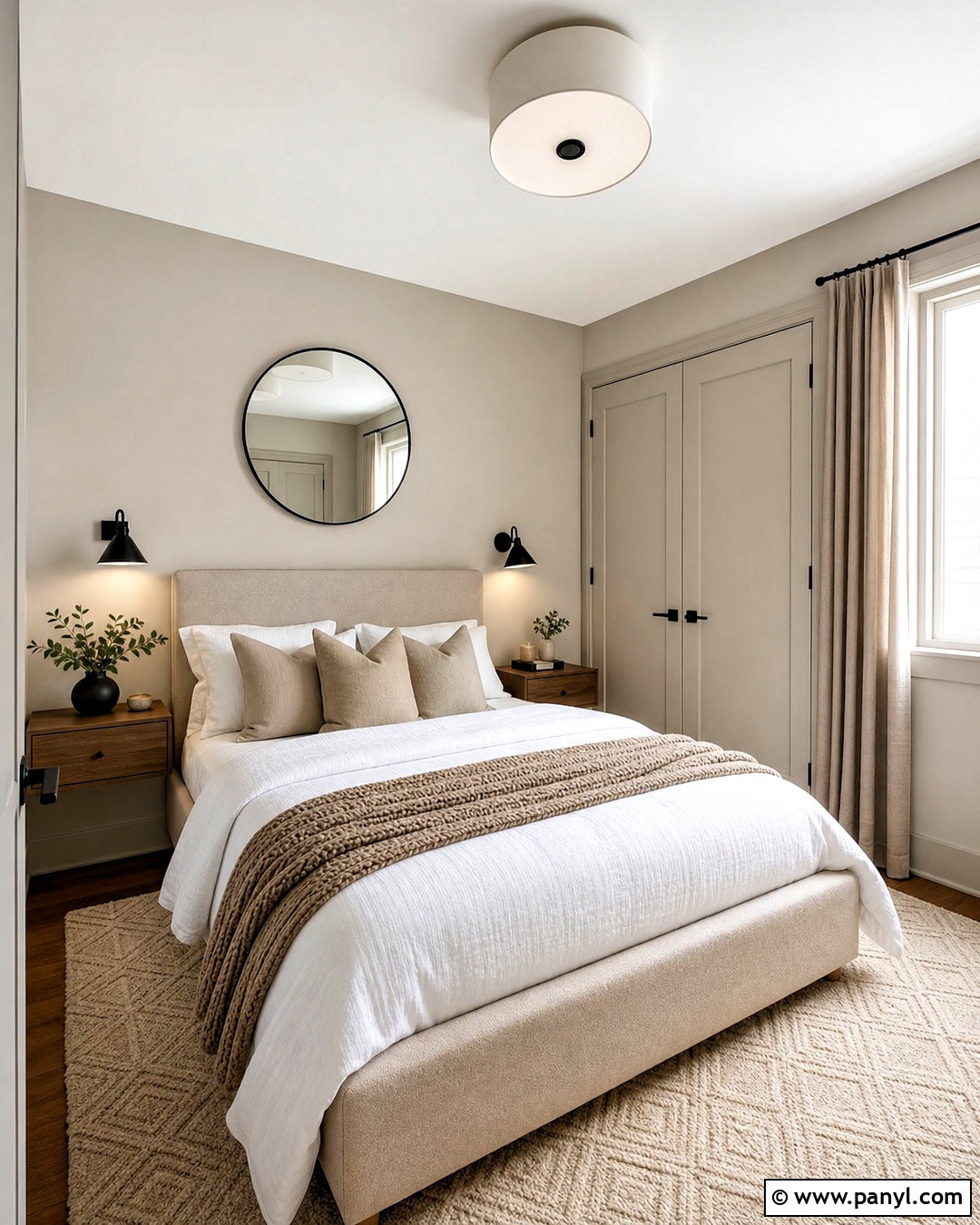
Soft greige delivers the warmth of beige and the modern simplicity of gray, making it useful when a small bedroom contains mixed materials. Select a pale greige that complements both warm wood flooring and cooler metal accents. Continue it across the walls, ceiling, and closet doors to minimize sharp visual breaks. Build the room around a simple upholstered bed in natural flax linen. Use walnut floating shelves as nightstands and add matte black reading sconces for definition. White bedding prevents the neutral palette from appearing muddy, while a taupe throw creates depth. Choose full-length off-white curtains and a cream rug with a subtle geometric pattern. A rounded mirror above a narrow dresser reflects light and softens the room’s straight lines.
3. Pale Blue Small Bedroom
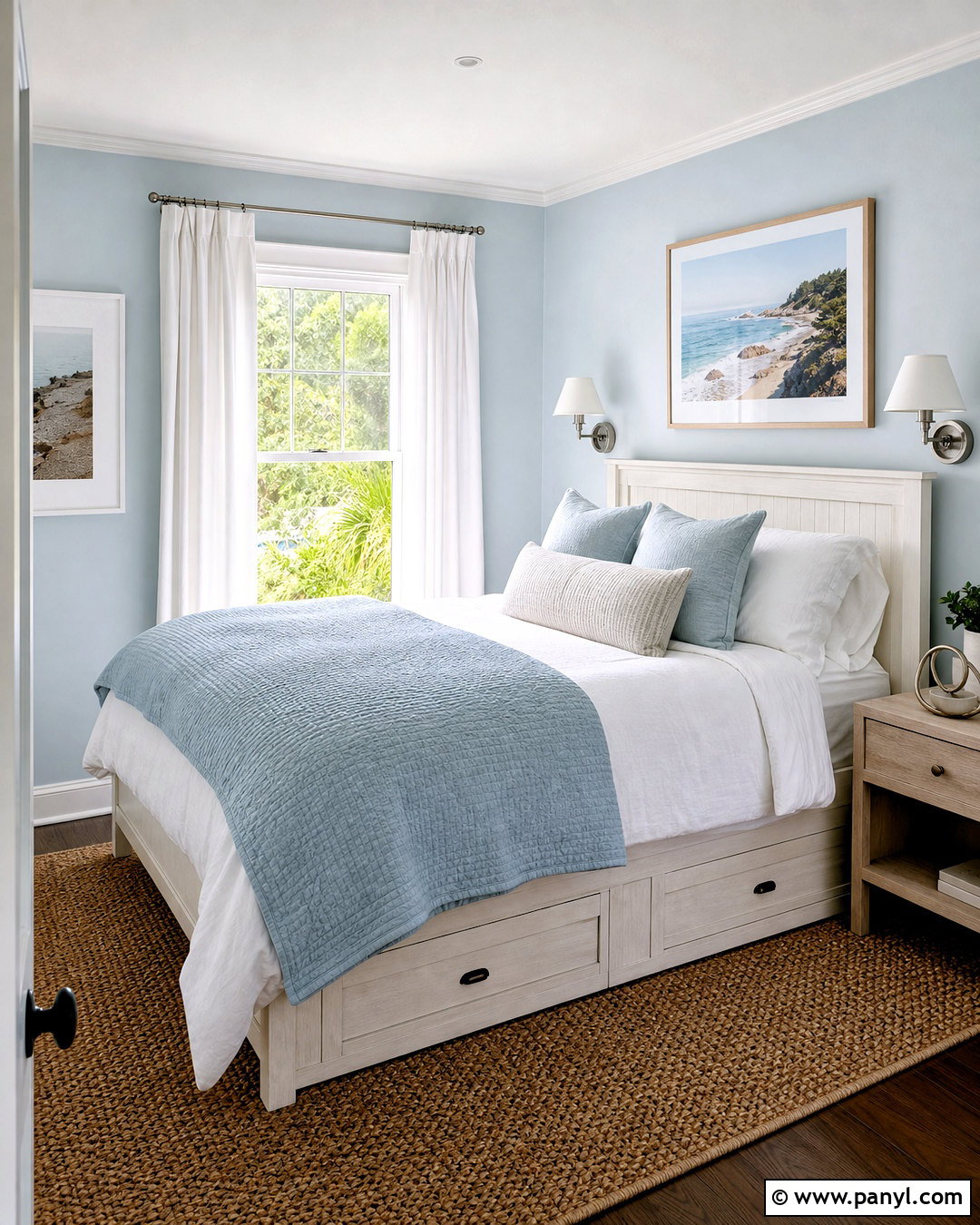
Imagine entering a small bedroom that feels fresh, open, and quietly restful. Pale blue paint can create that effect, especially in a sunny room where the color remains clear rather than gray. Apply a barely there sky blue to all four walls and use crisp soft white on the ceiling and trim. Pair the walls with a white oak bed, cloud-white bedding, and a dusty blue quilt. Keep storage practical with one narrow chest and under-bed drawers instead of multiple bulky pieces. White linen curtains filter sunlight while maintaining privacy. Add polished nickel sconces, a natural jute rug, and two small coastal landscape prints. Avoid overly themed accessories. Restrained materials and repeated blue tones create a complete bedroom that feels light and cohesive.
4. Sage Green Small Bedroom
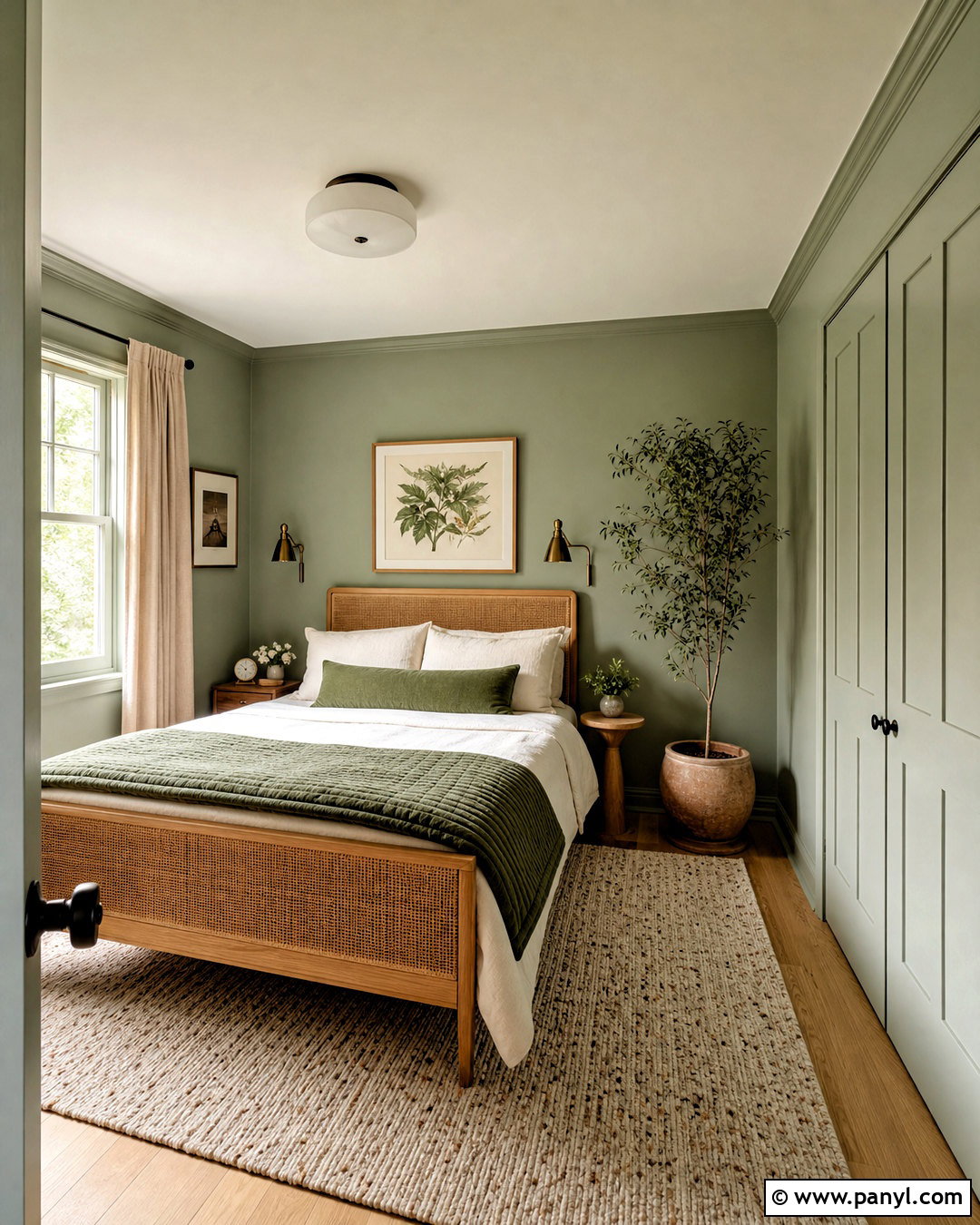
For a compact bedroom that feels connected to nature, muted sage green offers color without becoming overpowering. Choose a soft, gray-based sage and paint the walls, baseboards, and closet doors together. Keep the ceiling warm white to preserve an airy upper boundary. A slim oak bed with a woven cane headboard supports the organic palette without filling the room visually. Layer ivory sheets, a moss green quilt, and one subtle botanical pillow. Add light-filtering flax curtains and a small wool rug in cream and tan. Wall-mounted bronze lights free both nightstands for essentials. Complete the look with a simple framed leaf print and a terracotta planter. The repeated natural textures make the bedroom peaceful, finished, and comfortably grounded.
5. Dusty Blush Small Bedroom
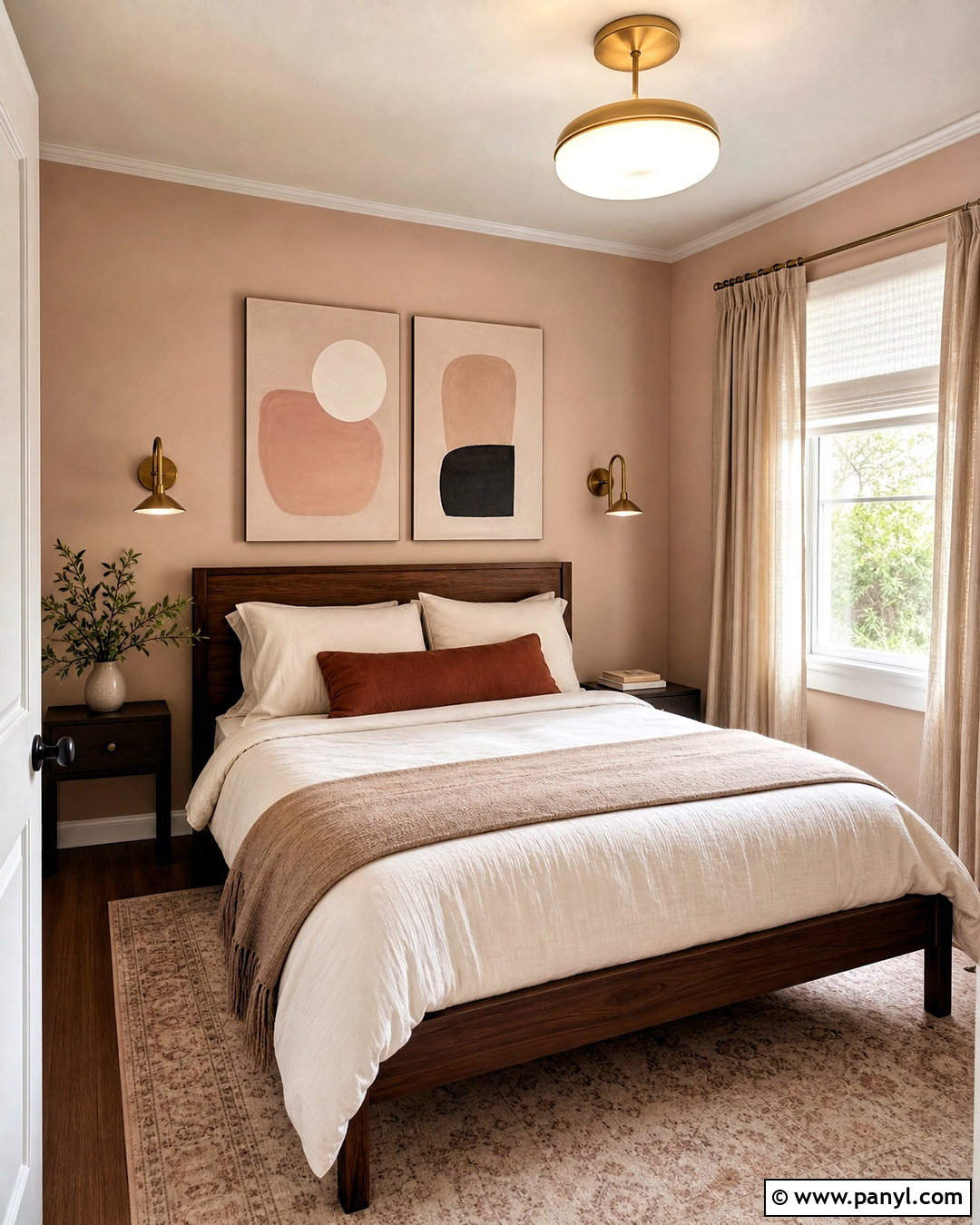
Dusty blush can warm a small bedroom while remaining calm enough for an adult, guest, or teenager’s space. Look for a subdued pink containing beige or gray undertones rather than a bright bubblegum shade. Paint the walls blush and keep the ceiling, doors, and trim creamy white. Ground the soft color with a walnut bed and matching narrow nightstands. Choose ivory bedding, a rust-colored lumbar pillow, and a textured taupe blanket to prevent the palette from feeling overly sweet. Brushed brass wall sconces add understated polish. Use a pale patterned rug and oatmeal curtains hung at ceiling height. A pair of abstract prints with blush, brown, and cream connects every color. Minimal accessories maintain breathing room around the furniture.
6. Cream Small Bedroom
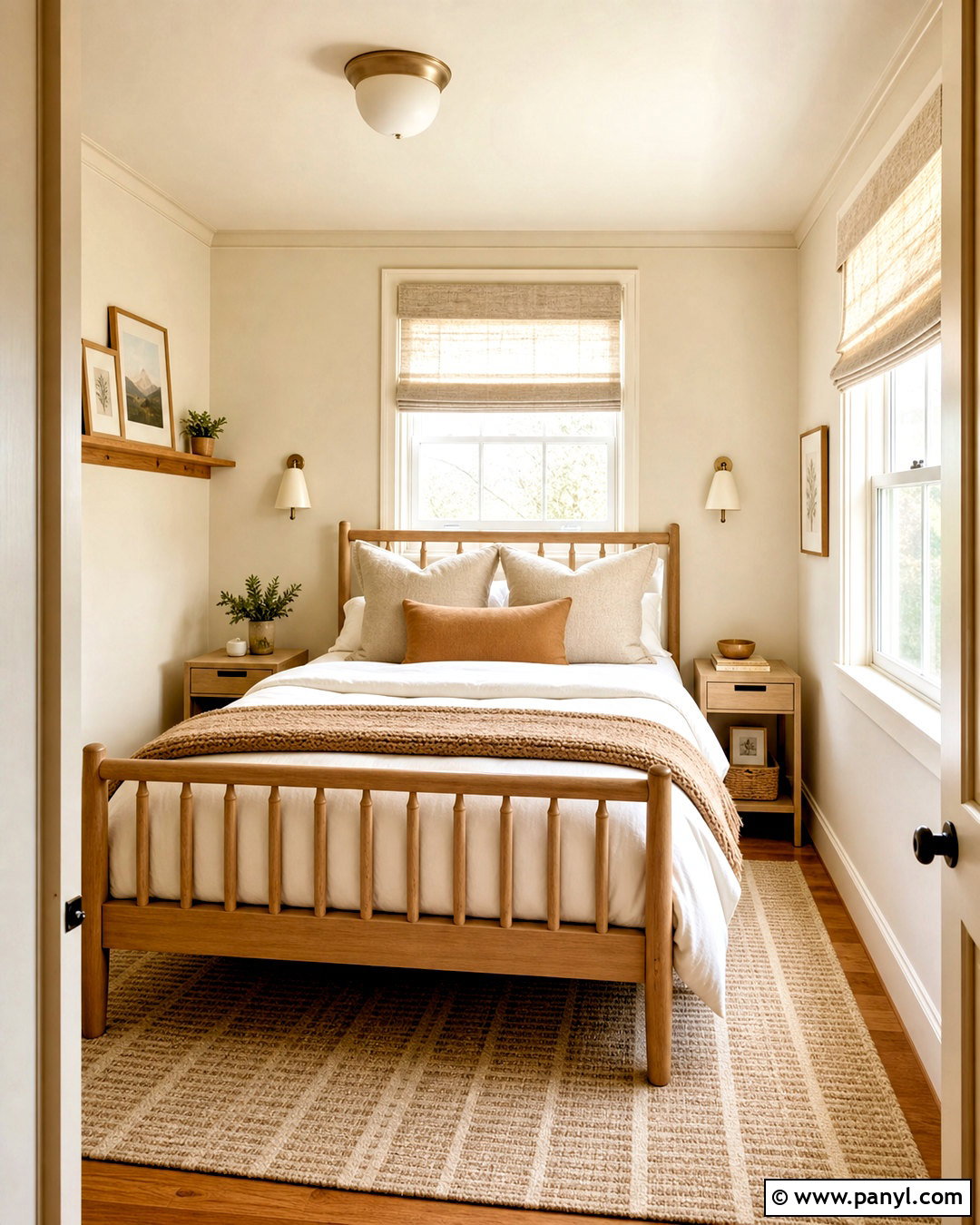
Does your small bedroom receive limited natural light? A gentle cream can add warmth where cool whites may look dull or shadowy. Paint the walls and ceiling in the same creamy tone, then distinguish the trim with a slightly glossier finish instead of a contrasting color. This approach creates a seamless envelope around the room. Add a light wood spindle bed, ivory cotton bedding, and a caramel knit throw. Choose compact nightstands with open bases so more flooring remains visible. A flat-woven rug in cream and faded tan introduces pattern without visual heaviness. Install linen Roman shades and simple ceramic wall lights. Finish with a narrow oak picture ledge holding two neutral artworks. The finished bedroom feels softly illuminated, cohesive, and easy to maintain.
7. Light Taupe Small Bedroom

Light taupe creates a sophisticated background when plain beige feels too warm and gray feels too cool. Select a mushroom-toned taupe with balanced undertones, then carry it across the walls and built-in storage. Use soft white on the ceiling to give the upper part of the room a slight lift. Place a low-profile cream bouclé bed against the longest uninterrupted wall. Add white sheets, chocolate brown accent pillows, and a camel throw for controlled contrast. Slim black sconces and a black-framed mirror sharpen the neutral scheme. Keep window treatments close to the wall color with full-length taupe curtains. A pale oak dresser and lightly patterned wool rug complete the space. This tonal design makes a compact room feel polished rather than crowded.
8. Lavender Gray Small Bedroom
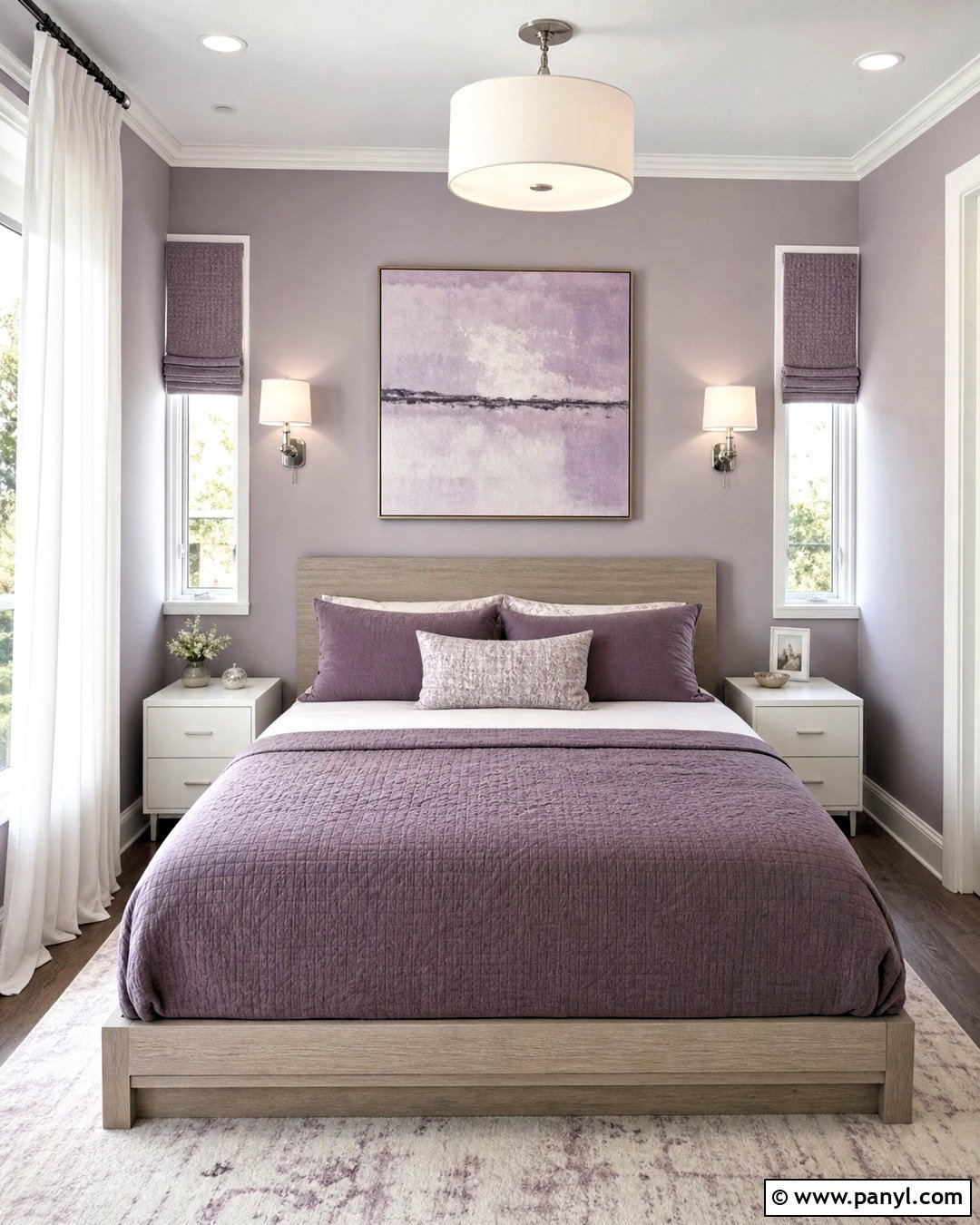
Lavender gray introduces gentle personality while behaving much like a versatile neutral. Choose a pale, muted purple with noticeable gray undertones so it looks restful in changing daylight. Cover the walls in lavender gray, then use a soft white ceiling and matching trim for a crisp edge. Pair the color with a light ash wood bed and streamlined white nightstands. Dress the bed in white linen, a plum-gray coverlet, and one dusty lilac pillow. Silver wall sconces support the cool palette, while a warm ivory rug prevents it from becoming chilly. Hang sheer white curtains beneath simple Roman shades for flexible light control. A small abstract artwork combining lavender, cream, and charcoal creates a balanced focal point without overwhelming the limited wall area.
9. Muted Peach Small Bedroom
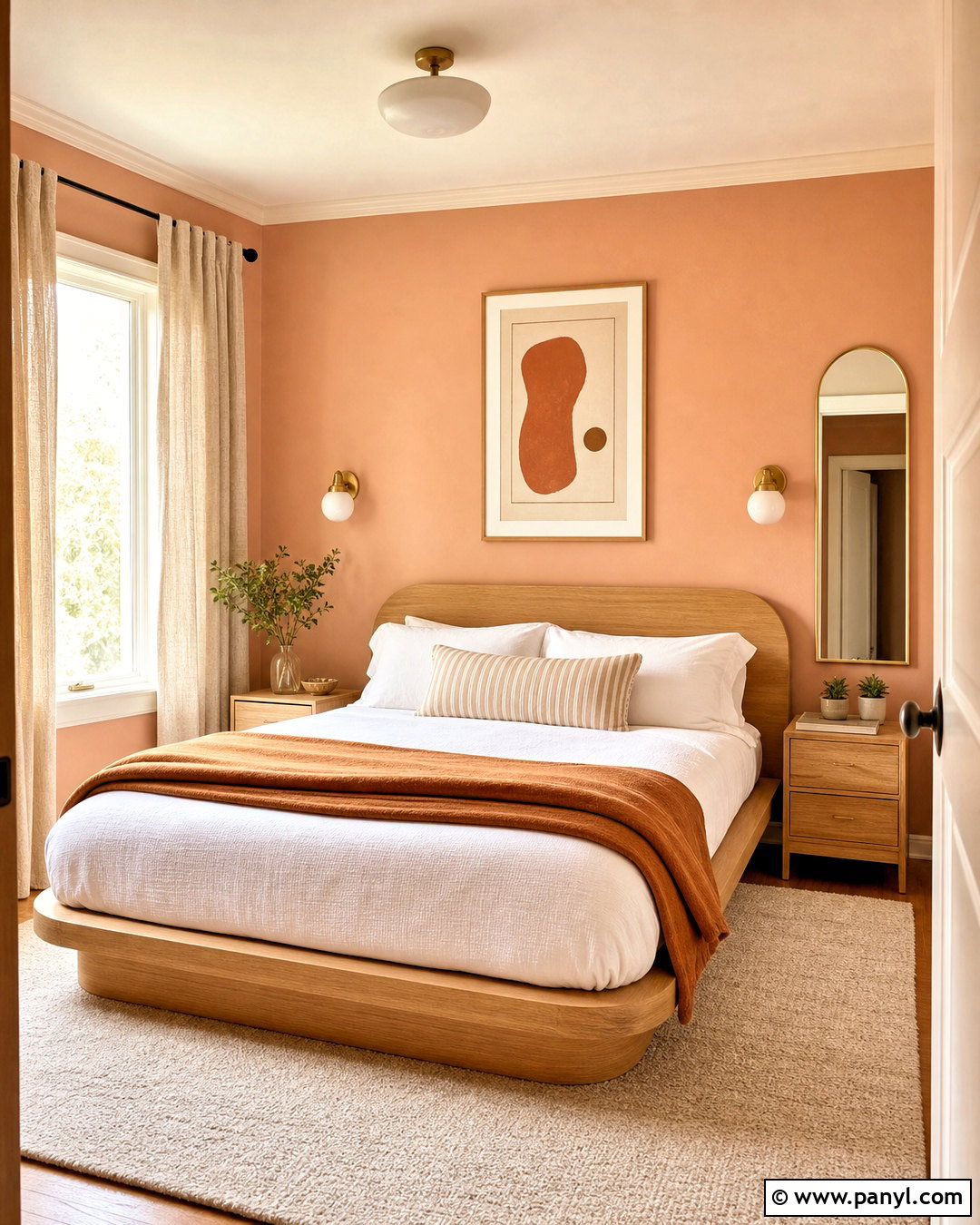
Muted peach paint can brighten a small bedroom with more warmth and character than ordinary off-white. Choose a soft clay-peach shade rather than a saturated orange, allowing it to function as a gentle background. Apply the color to the walls while keeping the ceiling and trim creamy white. Bring in a pale oak platform bed with rounded corners and matching floating shelves. White bedding, a cinnamon throw, and beige striped pillows repeat the room’s warm undertones. Add an ivory rug, natural linen curtains, and opal glass sconces with aged brass fittings. A narrow arched mirror visually opens one wall and reflects daylight. Finish with a small piece of abstract art containing peach and terracotta. The palette feels cheerful, sun-washed, and pleasantly relaxed.


10. Butter Yellow Small Bedroom
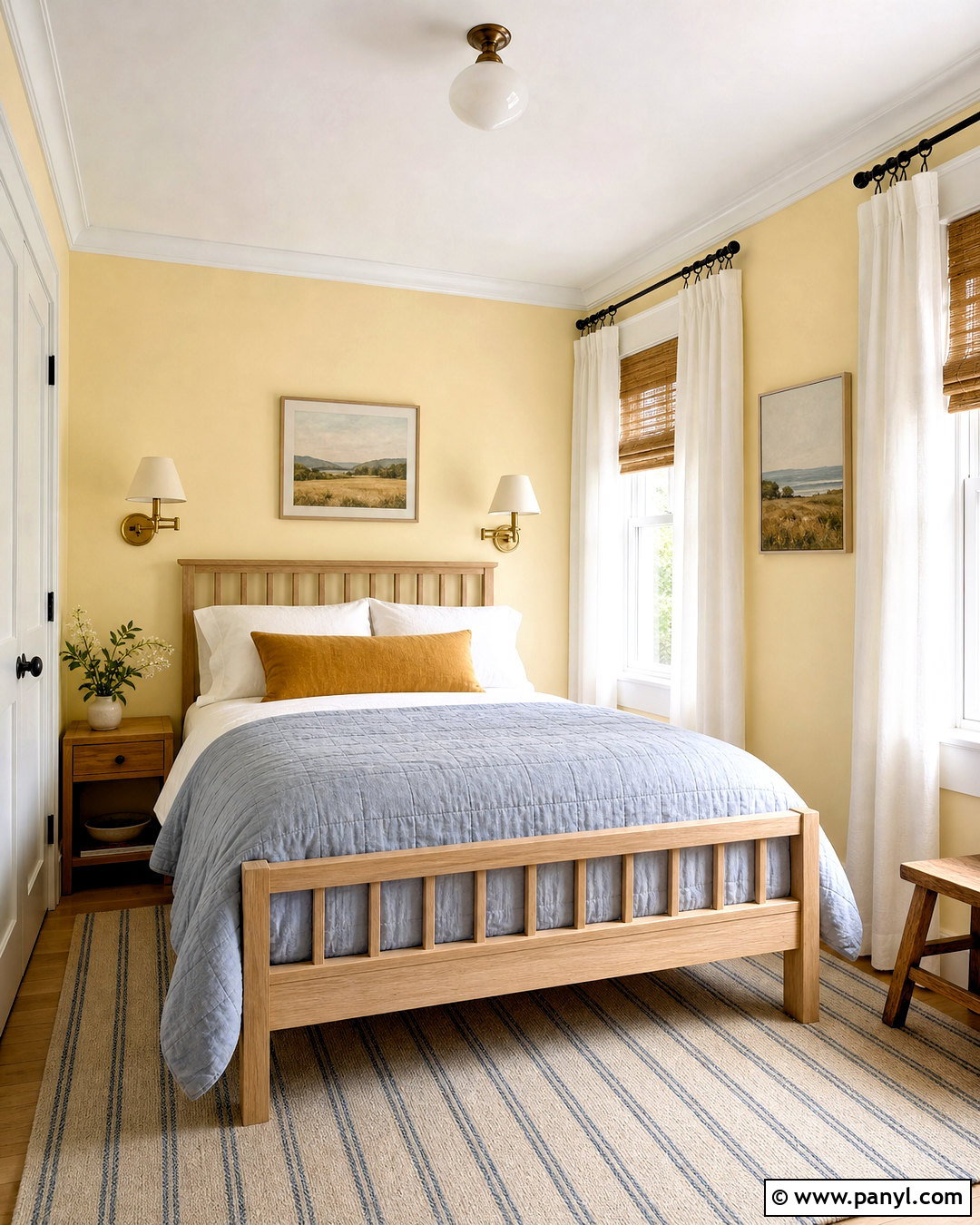
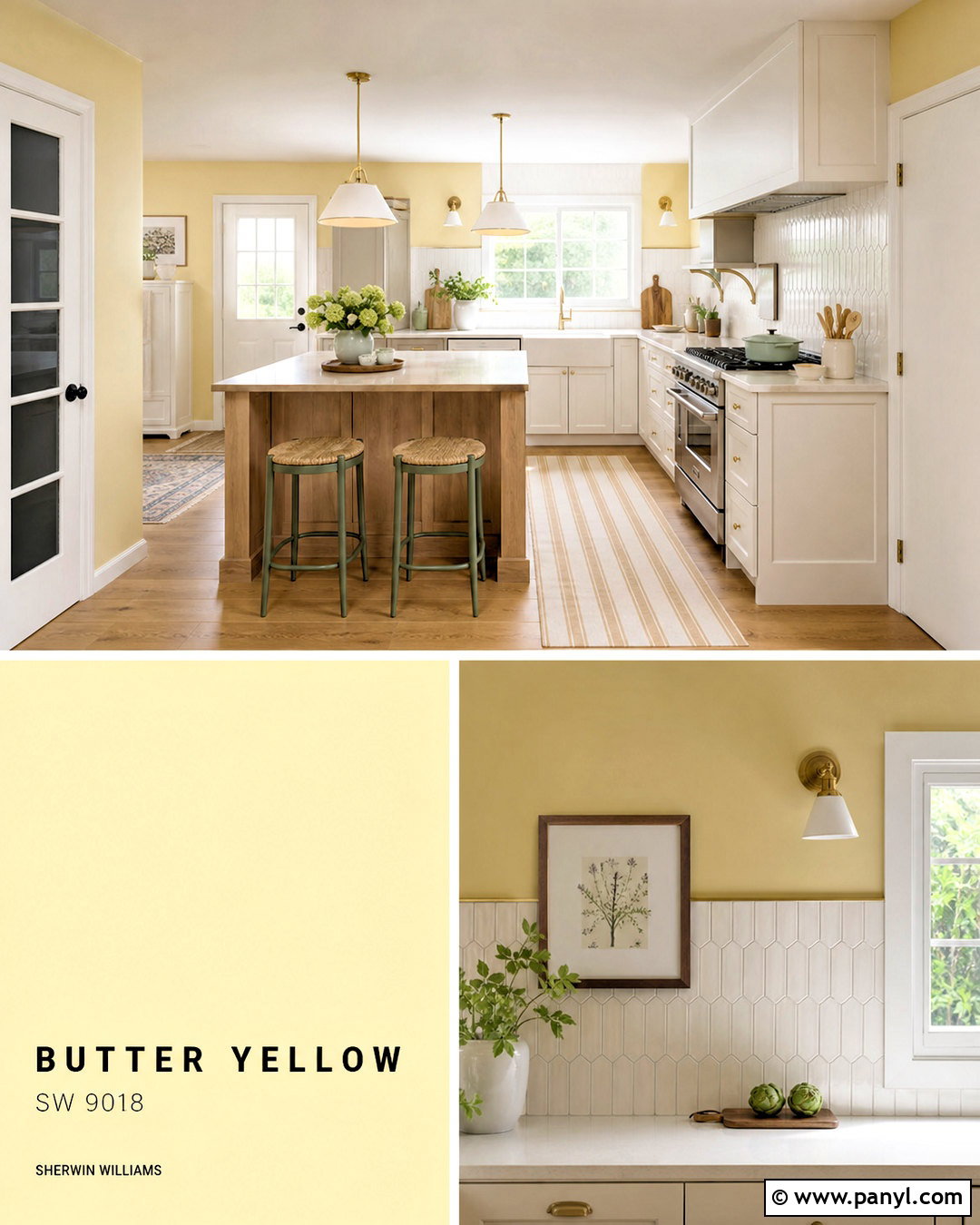
A restrained butter yellow can bring cheerful light into a compact bedroom without making it feel busy. Select a pale, creamy yellow with low saturation and paint the walls from baseboard to ceiling. Use warm white on the ceiling, trim, and door for subtle freshness. Balance the sunny walls with a white painted bed or a simple maple frame. Choose crisp white sheets, a soft blue-gray quilt, and one ochre accent pillow. Blue provides enough contrast to keep the yellow from dominating. Install woven shades beneath airy white curtains and use compact brass sconces for bedside lighting. A cream rug with thin blue stripes adds quiet structure. Limit decor to a framed landscape, a small wood bowl, and one leafy plant for an inviting finished look.
11. Blue Gray Small Bedroom
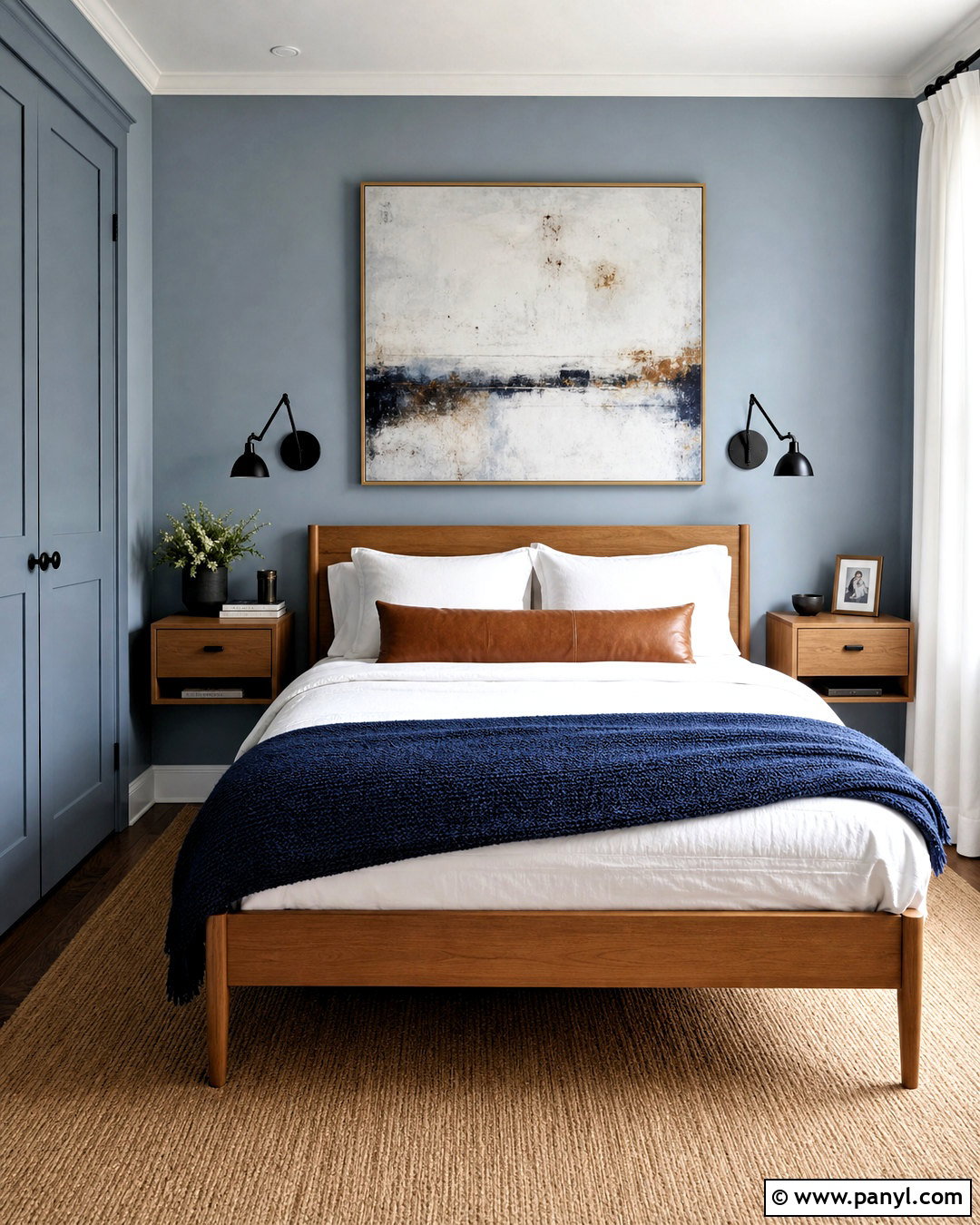
Blue-gray paint works especially well when you want a bedroom to feel cool, composed, and easy to decorate. Choose a light to medium shade that maintains visible blue undertones instead of turning flat gray. Paint the walls blue-gray and repeat the color on the closet doors to simplify the narrow footprint. Keep the ceiling and trim soft white. Add a natural oak bed, white bedding, and a navy woven blanket for depth. Warm leather drawer pulls and a tan rug balance the cooler wall color. Replace table lamps with adjustable black sconces, leaving room on two small floating nightstands. White curtains keep the window bright. Complete the room with one oversized abstract print that combines blue-gray, cream, tan, and a restrained touch of charcoal.
12. Seafoam Green Small Bedroom
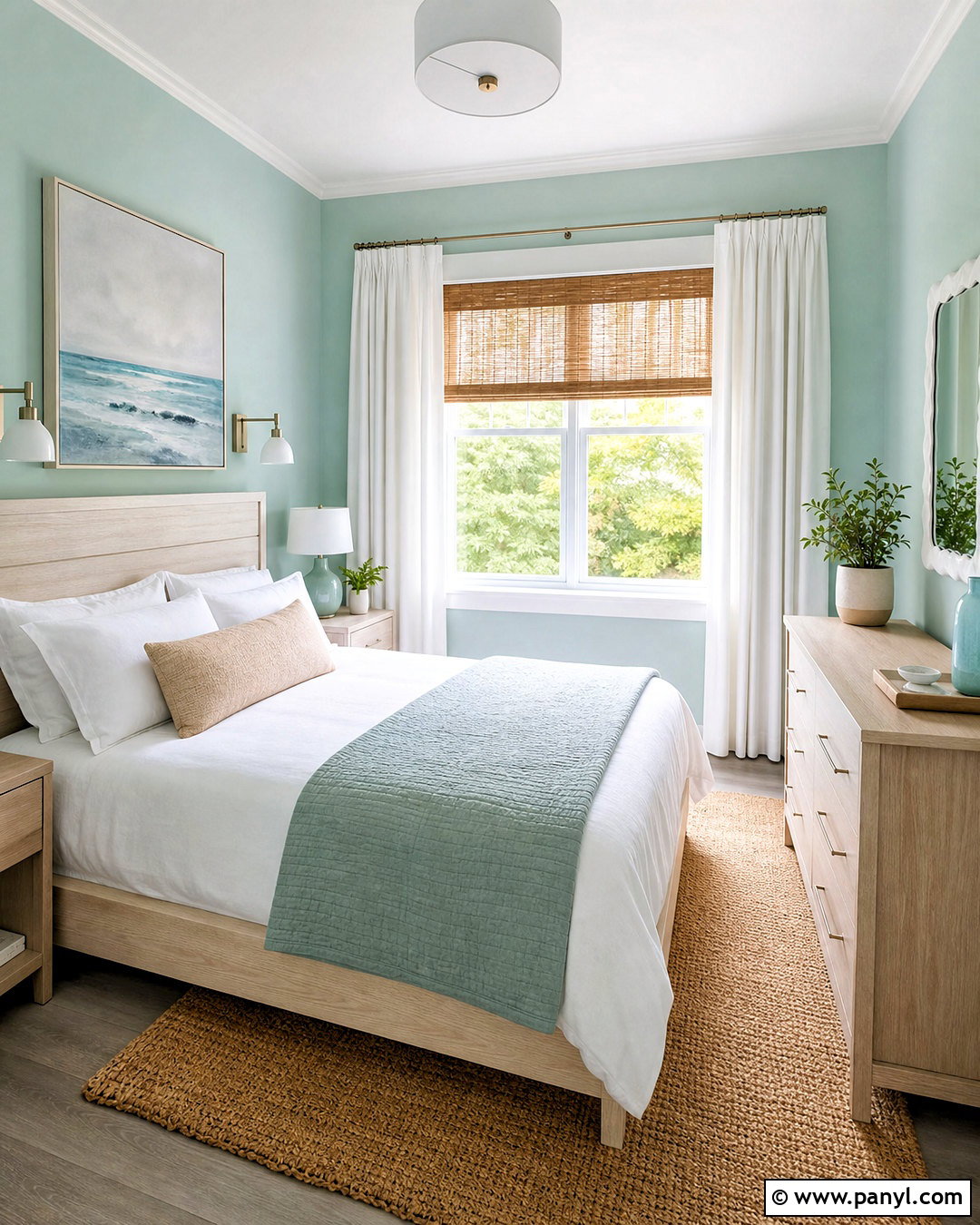
Seafoam green gives a compact bedroom a refreshing coastal character without requiring literal beach decor. Choose a pale green with a quiet blue undertone and apply it to the walls. Paint the ceiling and simple trim a clean warm white. A white oak bed, slim dresser, and floating nightstand preserve a light visual footprint. Layer the bed with white cotton sheets, a seafoam quilt, and a sand-colored lumbar pillow. Use woven natural shades paired with white curtains to add texture around the window. A pale jute rug supports the relaxed palette, while matte white sconces blend into the room. Finish with one abstract seascape and a small ceramic lamp on the dresser. The complete look feels breezy, modern, and intentionally restrained.
13. Terracotta Accent Wall Small Bedroom
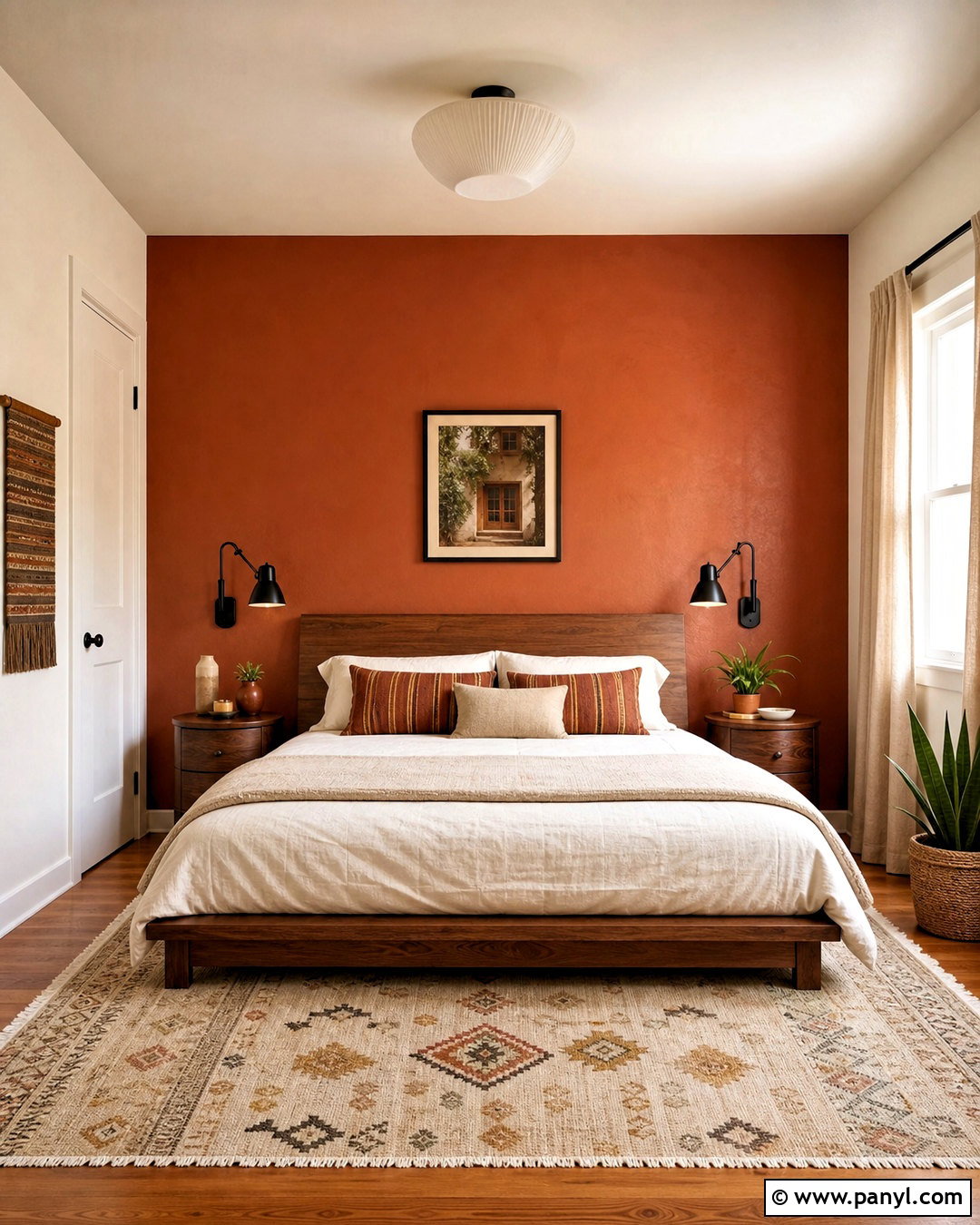
When you want warmth without surrounding a small bedroom in strong color, use muted terracotta behind the bed. Paint the remaining walls, ceiling, and trim a soft warm white so the accent wall becomes an organized focal point. Select earthy clay rather than bright orange for a calm, grounded effect. Place a low walnut bed against the terracotta wall and layer it with cream bedding, a beige coverlet, and rust-striped pillows. Choose small round nightstands and black swing-arm sconces to conserve space. A faded kilim-style rug can repeat the clay, brown, and ivory palette. Hang full-length natural linen curtains at the window. Keep artwork minimal because the painted wall already provides visual interest. The result feels warm, balanced, and thoughtfully composed.
14. Navy Blue Color Drenched Bedroom
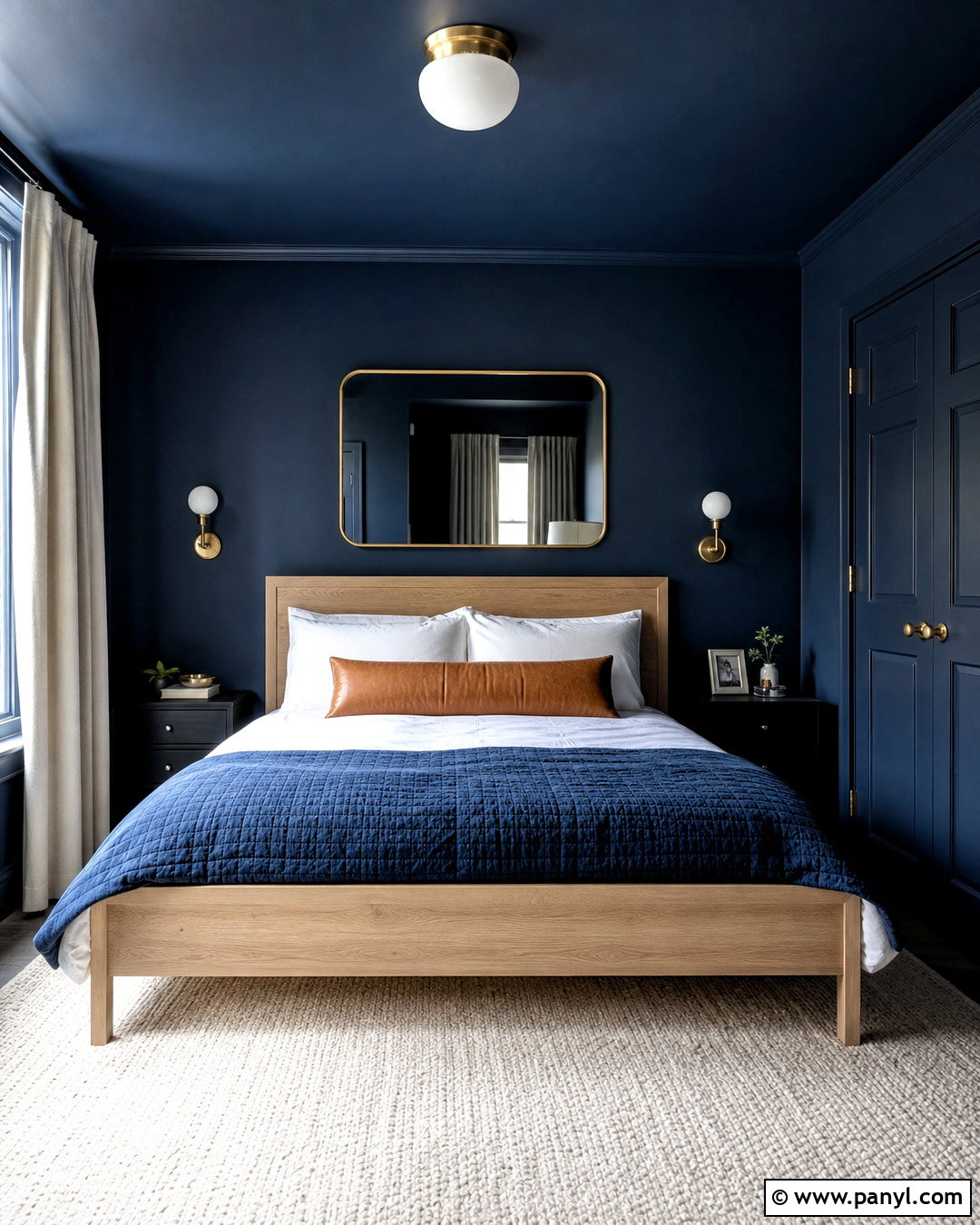
A tiny bedroom does not always need pale walls. Deep navy can make the limited dimensions feel deliberate, intimate, and enveloping. Paint the walls, trim, closet doors, and ceiling in the same velvety navy, using a slightly stronger sheen on the woodwork. Maintain balance with a light oak bed and generous white bedding. Add a denim-blue quilt and camel leather pillow for layered contrast. Install opal globe sconces that cast clear light across the dark walls. A cream wool rug brightens the floor, while white or pale gray curtains soften the window. Choose one brass-framed mirror to reflect available daylight and create a warm highlight. Avoid filling every wall with decor. The continuous color, simple furniture, and bright textiles keep the design sophisticated.
15. Forest Green Small Bedroom
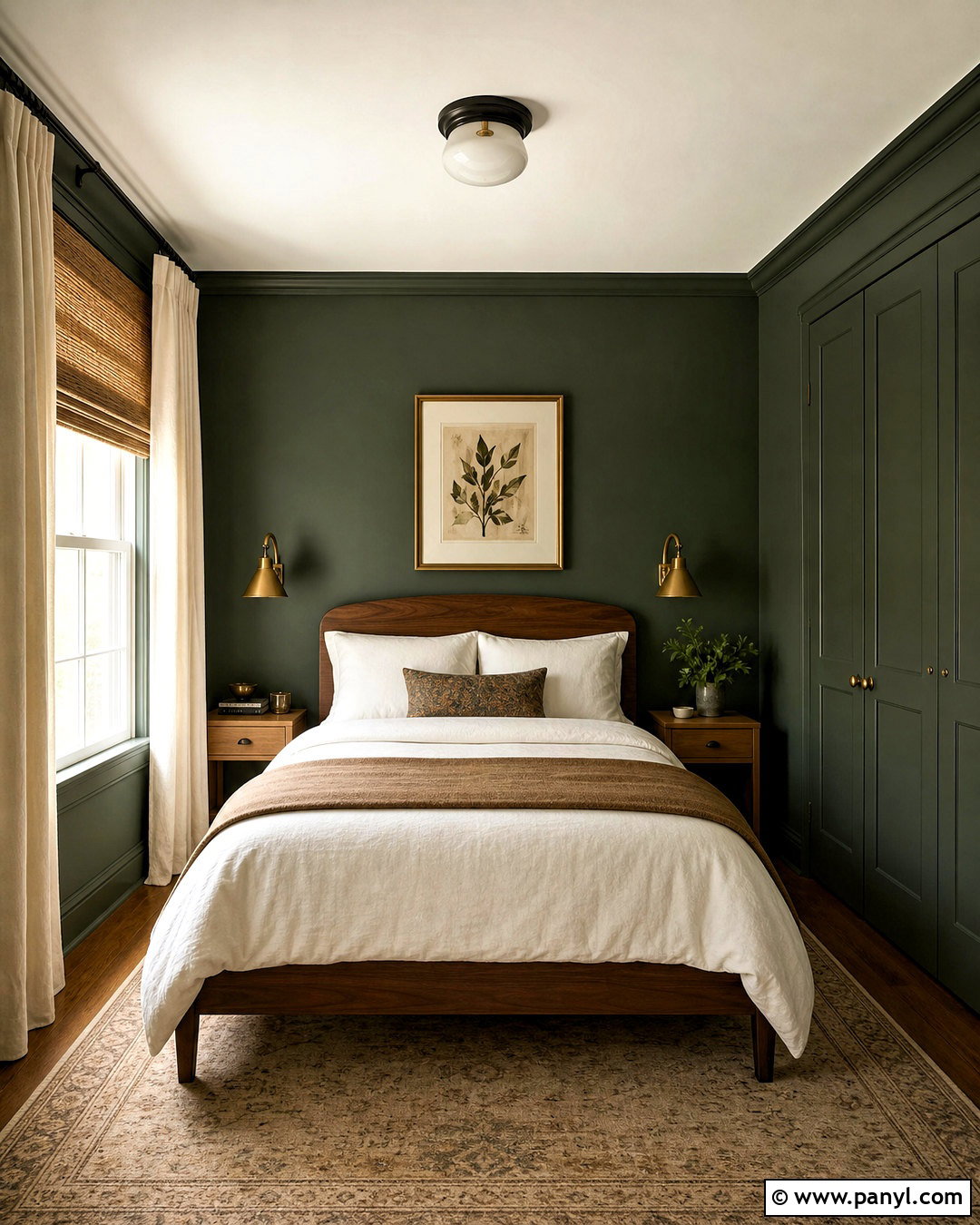
Forest green transforms a compact bedroom into a rich, restful retreat when the rest of the palette remains controlled. Use a deep green with muted undertones across the walls and built-in wardrobe. Keep the ceiling a warm off-white if the room has limited natural light. Position a simple oak or walnut bed against the main wall, then add ivory bedding and a tan wool blanket. Natural woven shades and cream curtains prevent the dark color from feeling severe. Antique brass sconces introduce warmth while preserving nightstand space. Place a faded beige rug beneath the bed to lighten the lower half of the room. One botanical artwork in a dark wood frame is enough decoration. The complete scheme feels grounded, cozy, and connected to natural materials.
16. Charcoal Gray Small Bedroom

Charcoal gray creates a strong modern bedroom when paired with soft materials and intentional lighting. Choose a warm charcoal rather than a blue-black gray, and paint the walls, trim, and closet doors for a seamless finish. Leave the ceiling creamy white to provide overhead contrast. Furnish the room with a low walnut platform bed and floating shelves instead of bulky nightstands. White bedding, a light gray quilt, and a camel lumbar pillow soften the darker background. Add black wall sconces with pale fabric shades for focused illumination. Full-length ivory curtains and a cream textured rug brighten the scheme. A large frameless mirror helps distribute light while keeping the room visually clean. Finish with one graphic artwork containing charcoal, tan, and off-white.
17. Chocolate Brown Small Bedroom

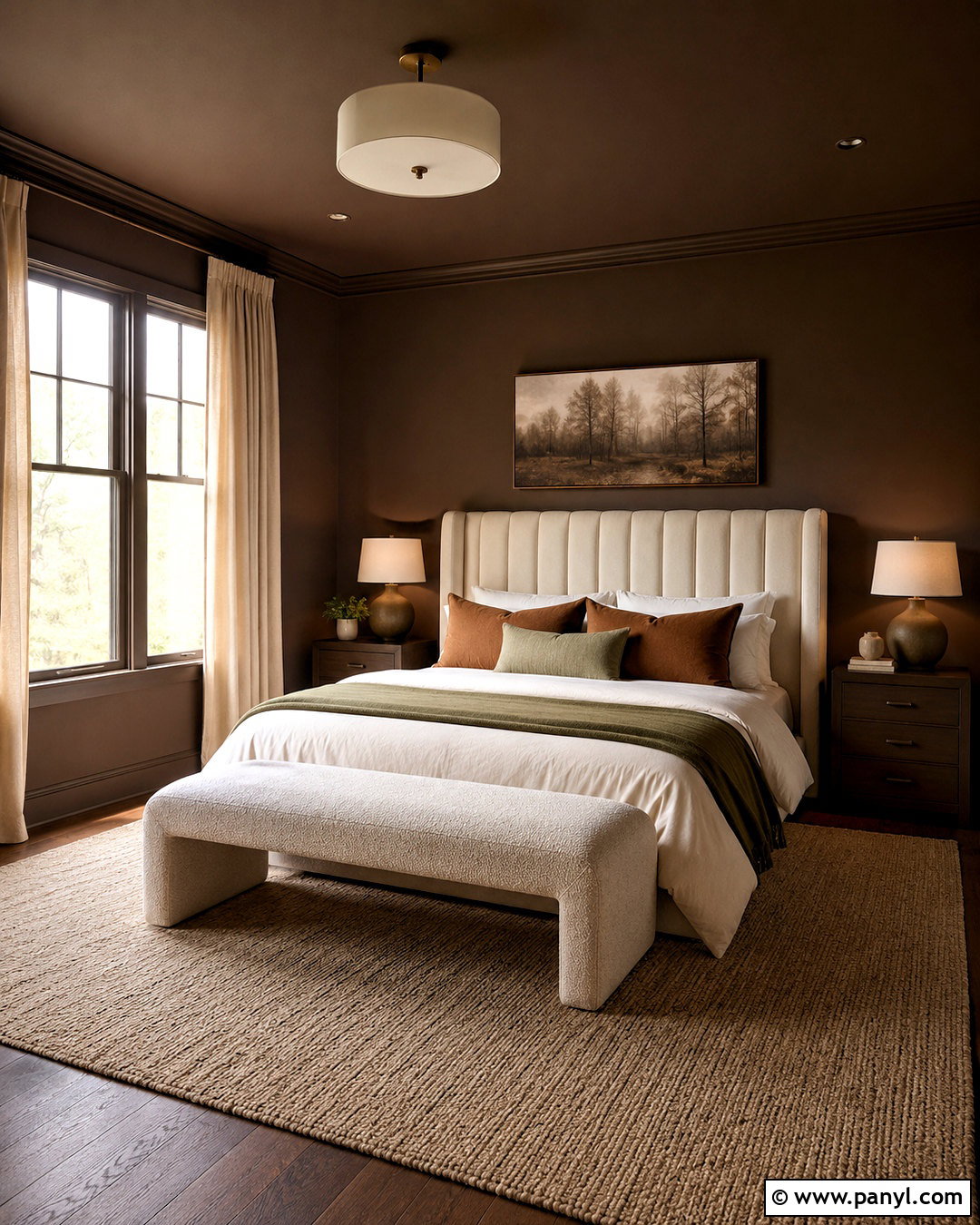
Rich chocolate brown can make a small bedroom feel tailored and comforting rather than enclosed. Pick a balanced brown with subtle red or gray undertones, then carry it across the walls and closet doors. Paint the ceiling a lighter cocoa or creamy beige to maintain tonal continuity without making it too dark. Add an upholstered bed in oatmeal linen and use white sheets with caramel and rust accents. Pale oak nightstands create contrast, while aged brass sconces provide warm metallic detail. Choose a large cream rug to reflect light upward and soften the floor. Full-length beige curtains should closely match the headboard. Complete the design with one landscape painting and a narrow bench. The limited earthy palette gives the compact room a luxurious, cohesive presence.
18. Two Tone Small Bedroom Walls
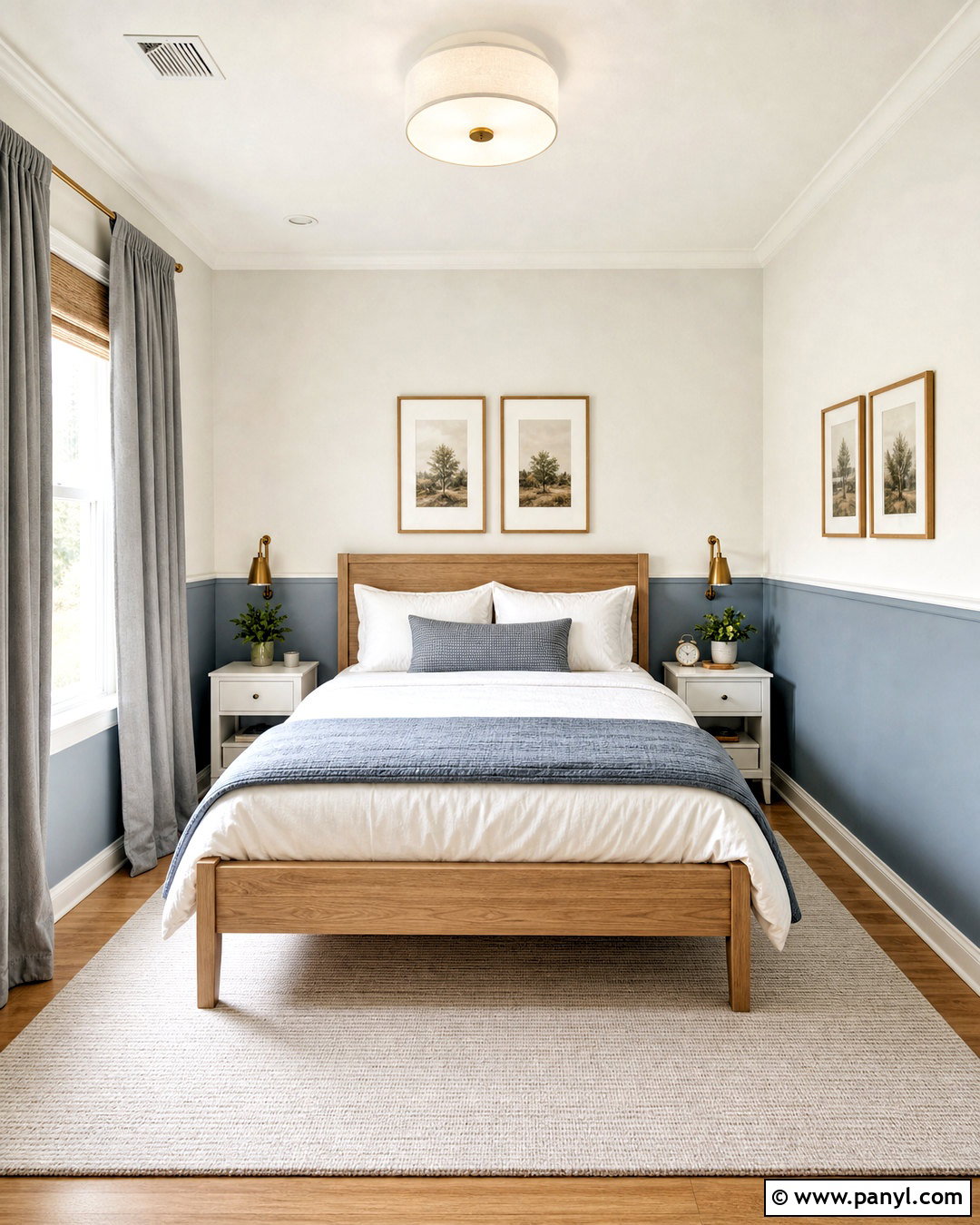
Two-tone walls can adjust the proportions of a small bedroom while introducing color in a controlled way. Paint the lower third in muted blue-gray and the upper walls in warm white. Continue the upper color across the ceiling so the room appears taller. Separate the shades with a slim painted molding rather than heavy paneling. Place a natural maple bed against the main wall and use white bedding with a blue-gray coverlet. Choose compact white nightstands and wall-mounted brass reading lights. A pale rug with fine linear detailing supports the clean geometry. Hang curtains in the upper wall color to avoid breaking the vertical flow. Add two small framed prints above the bed. This structured scheme feels airy, orderly, and more distinctive than plain white walls.
19. Painted Headboard Small Bedroom
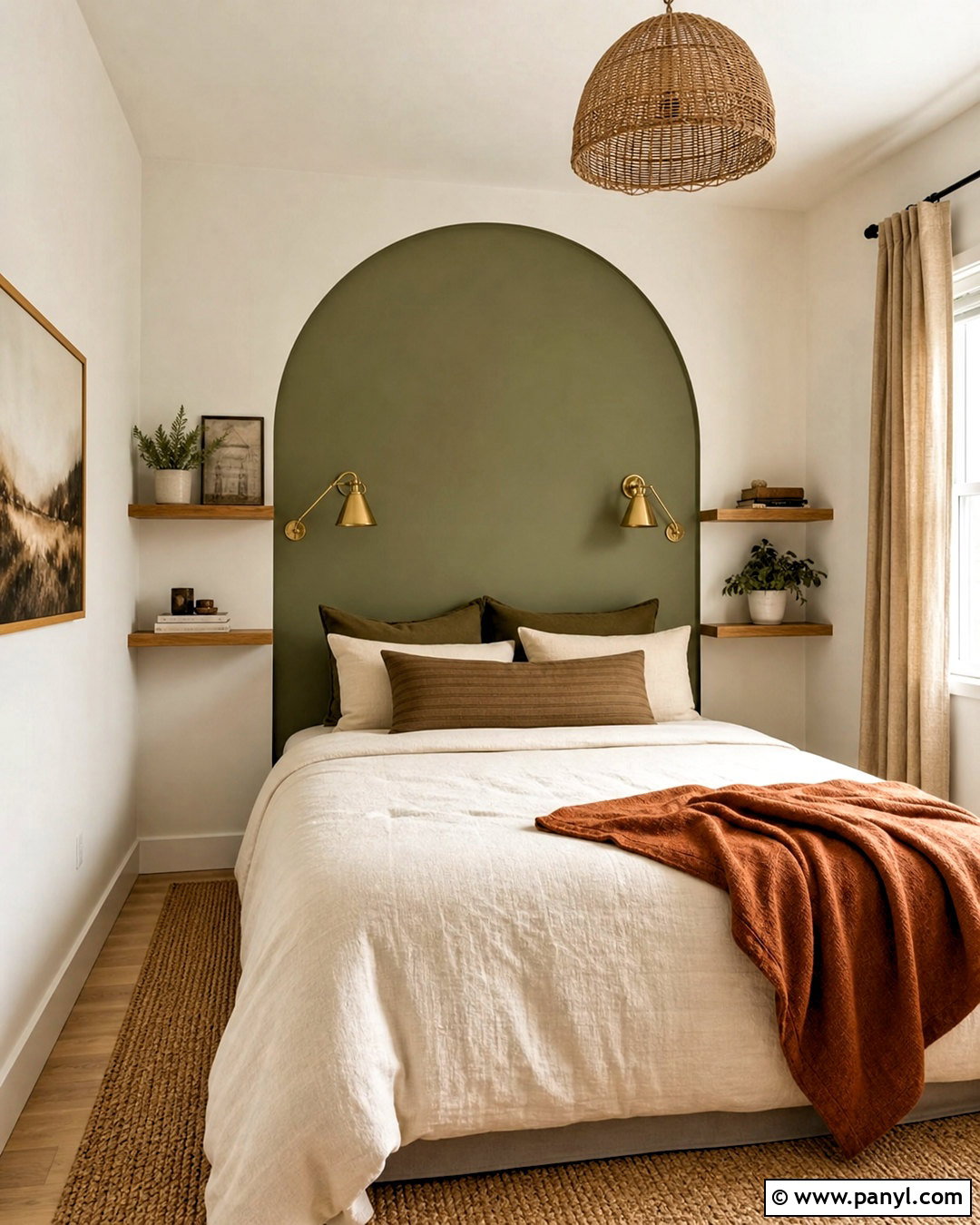
A painted headboard gives a small bedroom a focal point without taking up valuable floor depth. Start with warm white walls and create a wide arch or rectangle behind the bed in muted olive green. Extend the painted shape above the pillows but keep enough white visible around it for contrast. Use a simple bed base without a physical headboard, then layer cream bedding with olive and tan accents. Mount two small brass sconces within the painted area to strengthen the built-in appearance. Floating oak shelves provide compact bedside surfaces. Add oatmeal curtains, a natural fiber rug, and one rust-colored throw for warmth. Keep the painted edges clean and the remaining decor minimal. The final room feels customized, practical, and visually organized.
20. Soft Black Small Bedroom
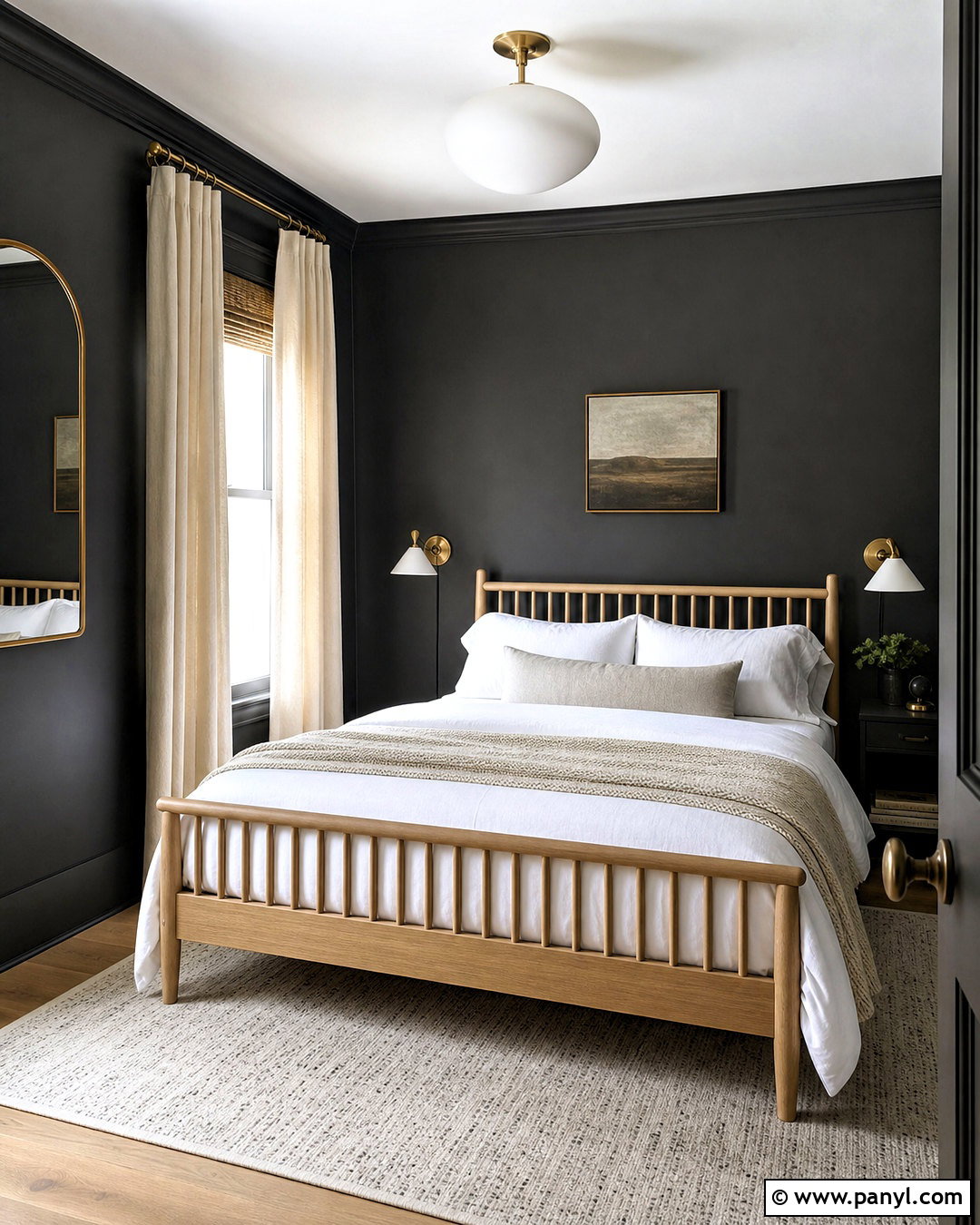
Soft black paint can give a small bedroom striking depth when it is balanced by pale finishes and abundant layered light. Choose an off-black with warm brown or charcoal undertones instead of a sharp jet black. Paint every wall and continue the shade across the trim for a smooth, modern envelope. Keep the ceiling soft white if daylight is limited. Introduce a light oak spindle bed, crisp white bedding, and an oatmeal textured blanket. Install large cream curtains from ceiling to floor and place a pale wool rug beneath the bed. Brass sconces and a warm metal-framed mirror add reflected highlights. Use only one or two pieces of simple artwork. The carefully limited contrast makes the dark color feel intentional, polished, and surprisingly comfortable.
Conclusion:
The most successful bedroom paint ideas for small rooms balance color, light, furniture, and texture as one complete design. Warm whites, greige, pale blue, sage, and cream support an airy look, while navy, forest green, chocolate brown, and soft black create purposeful coziness. Neither light nor dark paint works alone. Coordinate the ceiling, trim, flooring, curtains, bedding, and storage so the room reads as a unified space. Before committing, paint large sample boards and observe them in morning, afternoon, and artificial light. Check every color beside existing finishes. With careful testing and a restrained palette, even the smallest bedroom can feel comfortable, expressive, organized, and beautifully finished.

Related Ideas and Inspiration:








Leave a Reply