
Cream walls create a warm, flexible backdrop, while a sage green feature wall adds gentle color without overwhelming the room. Together, they work with modern, farmhouse, traditional, bohemian, and minimalist interiors. The key is choosing a sage tone that shares the cream paint’s undertone, then repeating both colors through furniture, textiles, artwork, and natural materials. Pale oak keeps the palette airy. Walnut adds richness, while black or brushed brass introduces definition. You can also use paneling, built-ins, tile, or limewash to give the green surface more character. Whether you are refreshing one room or building a connected whole-home palette, these 20 Cream Walls With Sage Green Accent Wall Ideas offer complete, practical looks you can recreate.

1. Sage Green Accent Wall Living Room
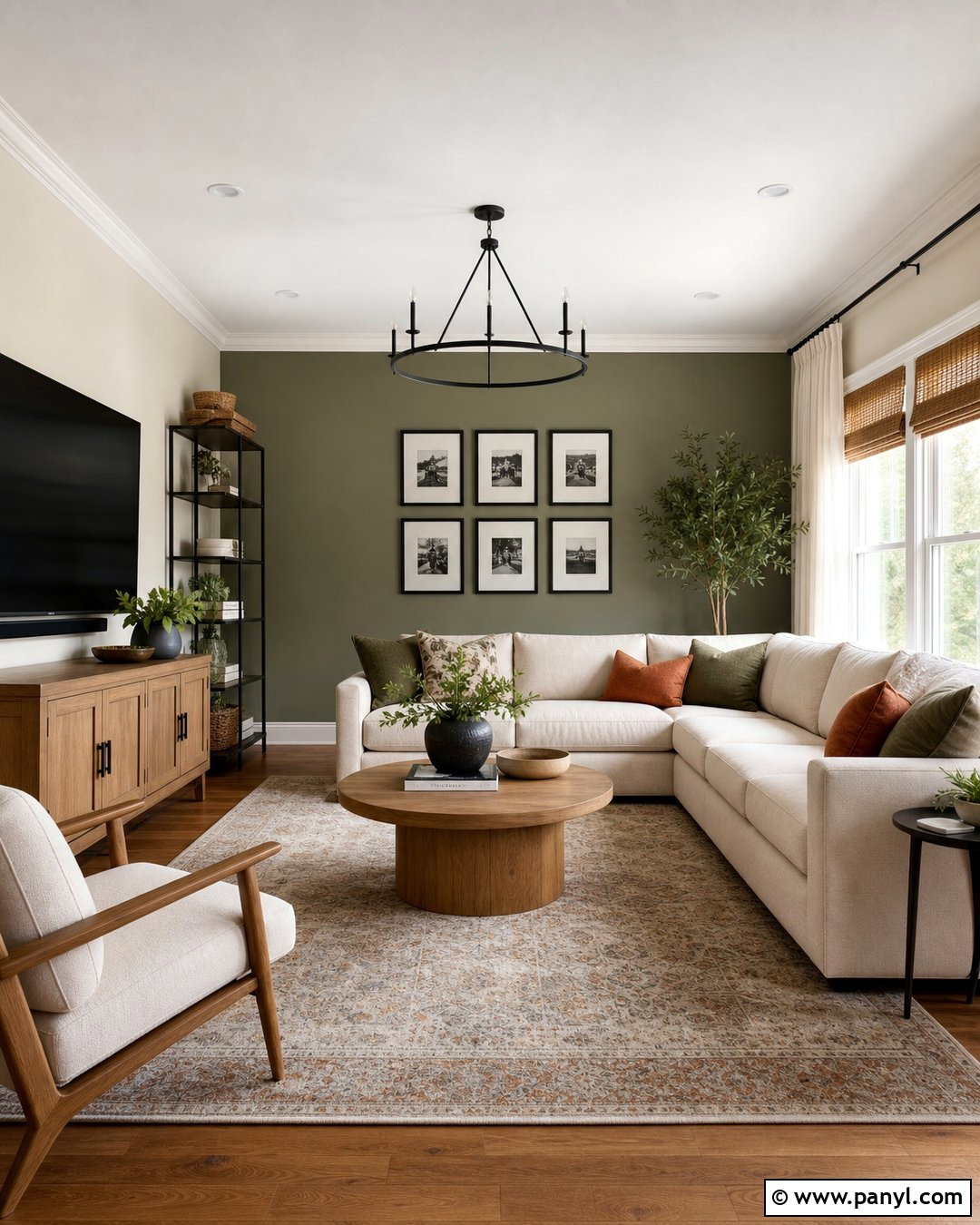
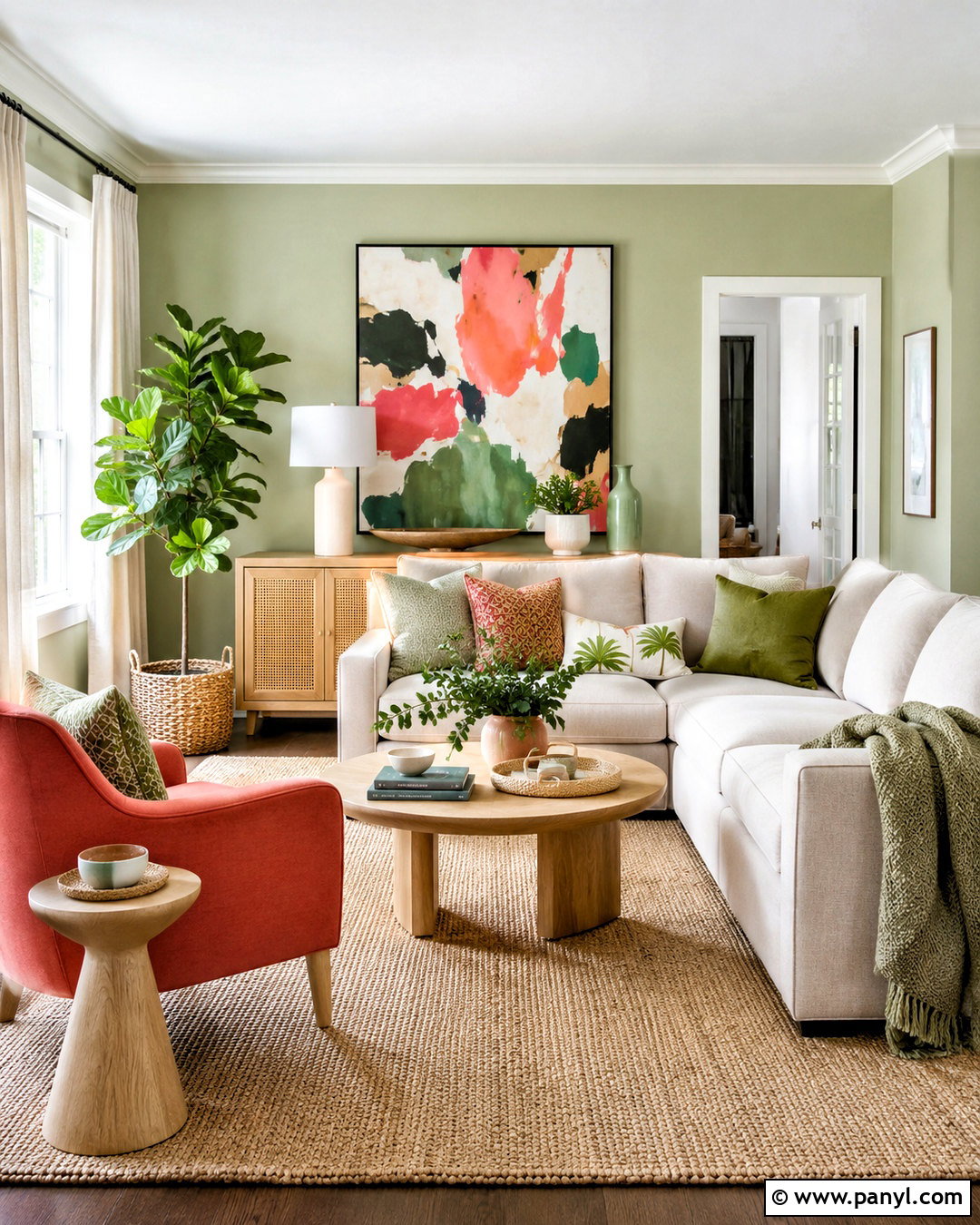
Create a comfortable living room by painting the longest uninterrupted wall in a muted, warm sage green. Keep the surrounding walls creamy rather than stark white so the contrast feels soft and connected. Place a light beige sectional against the green wall, then anchor the seating area with a cream, tan, and faded green rug. A round oak coffee table adds warmth without making the room feel heavy. Choose ivory curtains, woven shades, and a pair of ceramic table lamps for layered texture. Black picture frames and slim metal curtain rods provide just enough definition. Finish with rust-colored pillows, leafy plants, and simple landscape artwork that repeats the room’s earthy palette.
2. Sage Green Accent Wall Behind Cream Sofa
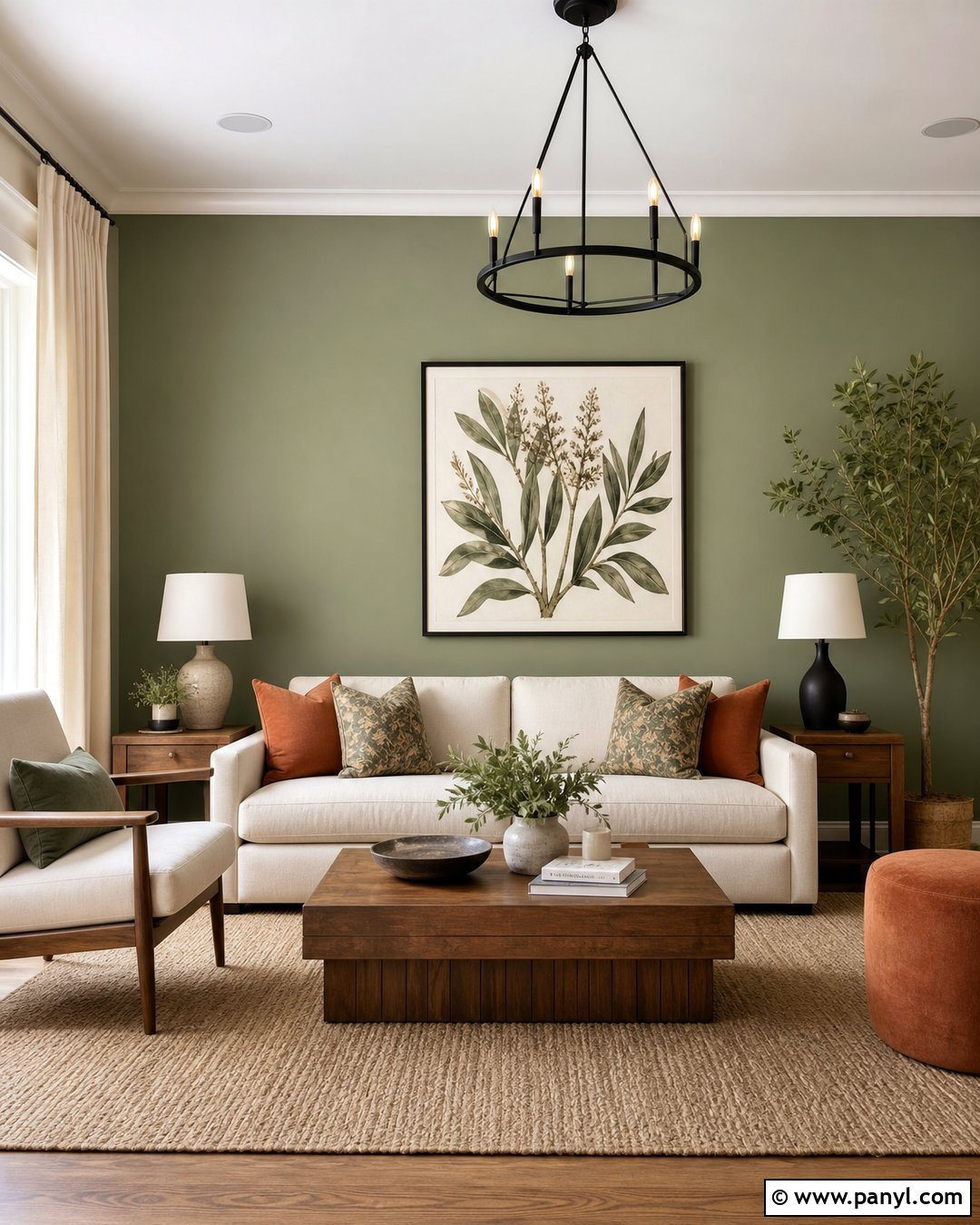
A cream sofa becomes a clear focal point when it sits against a slightly deeper sage green accent wall. Select an earthy green with gray undertones rather than a bright or minty shade. Add walnut end tables and a low rectangular coffee table to create warm contrast. Above the sofa, hang one oversized botanical print or a balanced arrangement of neutral artwork in medium wood frames. Use a textured oatmeal rug beneath the seating area, then add pillows in sage, tan, cream, and muted terracotta. Linen curtains should closely match the cream walls, helping the windows blend into the room. A black floor lamp and dark ceramic accessories keep the gentle color scheme from looking washed out.
3. Sage Green Fireplace Accent Wall
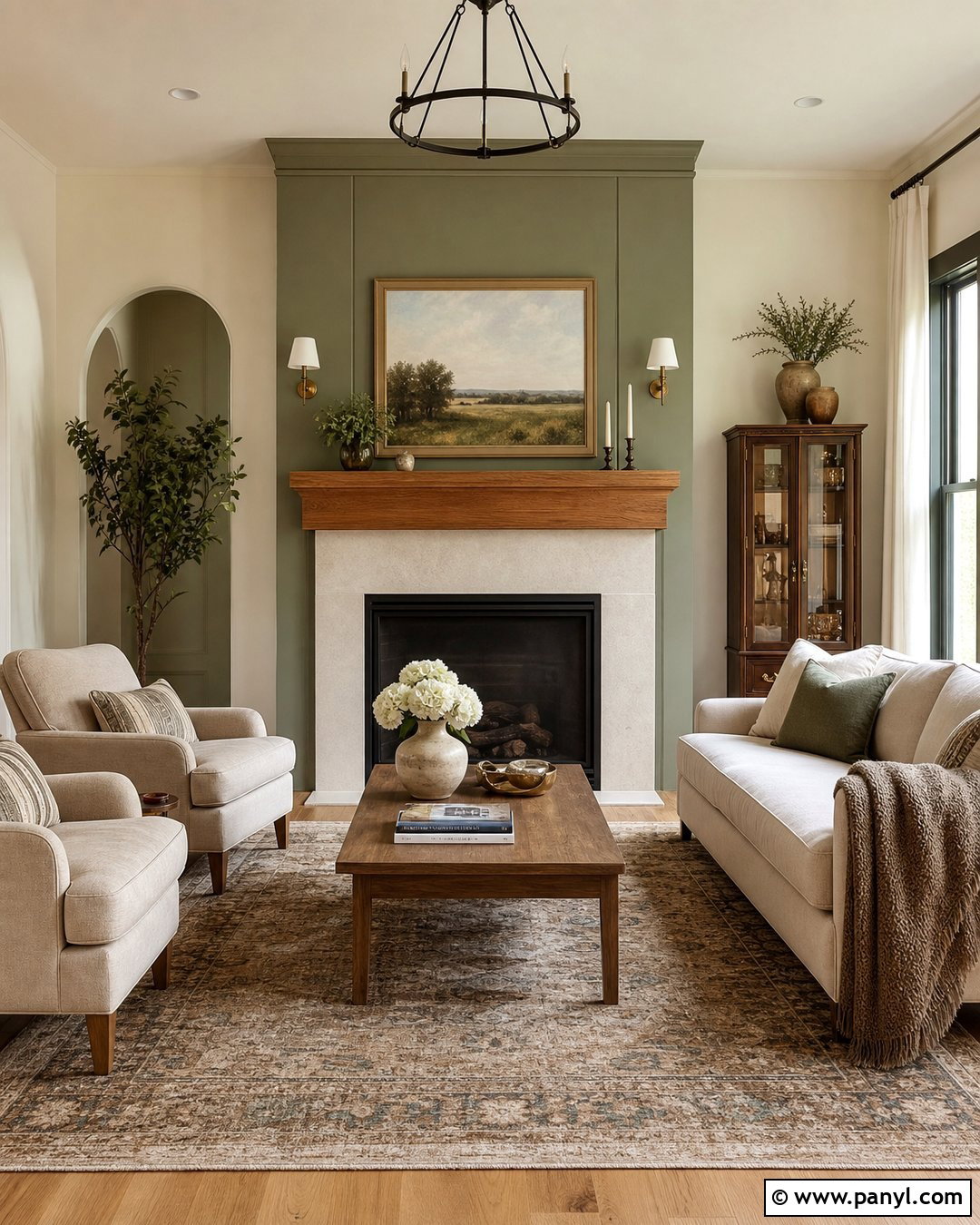
Turn the fireplace wall into a complete architectural feature by covering it in warm sage green from baseboard to ceiling. Paint the mantel the same color for a seamless look, or use natural oak when you want stronger material contrast. Keep the remaining walls soft cream and arrange two oatmeal armchairs opposite a neutral sofa to frame the fireplace. A pale stone or cream tile surround will connect naturally with the lighter walls. Place a large mirror, understated landscape painting, or sculptural vessel above the mantel. Ground the room with a vintage-inspired rug containing sage, beige, brown, and faded blue. Brushed brass sconces and a substantial wood coffee table complete the collected, welcoming design.
4. Sage Green TV Wall With Cream Walls
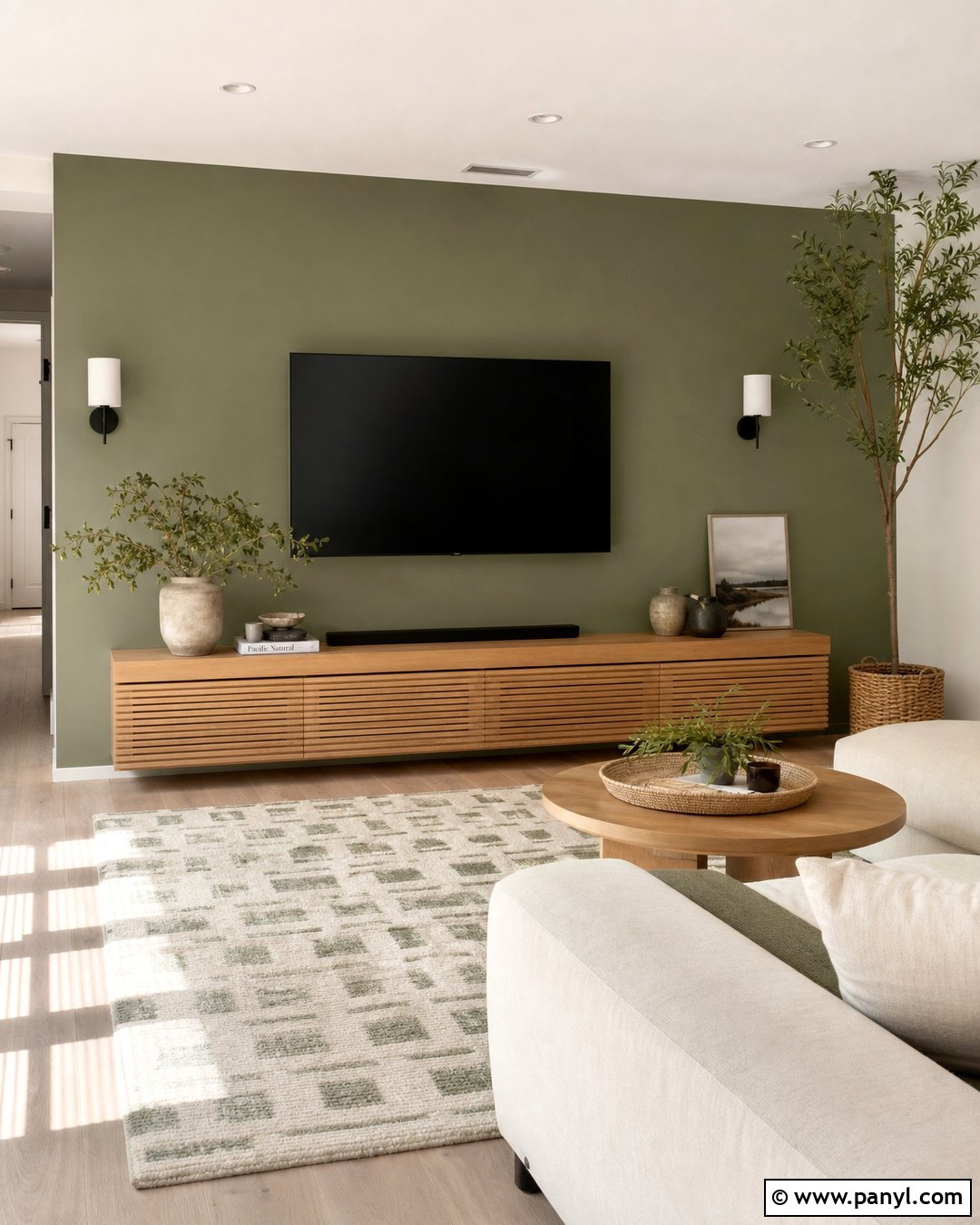
A sage green TV wall can help a large black screen feel less visually harsh. Choose a midtone sage with enough depth to support the television, then install a long oak media console beneath it. Keep cords hidden and leave open space around the screen for a clean result. The other walls should remain warm cream, with a cream sectional or two streamlined beige sofas facing the TV. Add a soft geometric rug in ivory, olive, and taupe to connect the contrasting surfaces. Black hardware can repeat the color of the screen without dominating the space. Finish the layout with low pottery, stacked books, woven baskets, and one tall indoor tree placed near the corner.
5. Sage Green Board And Batten Accent Wall
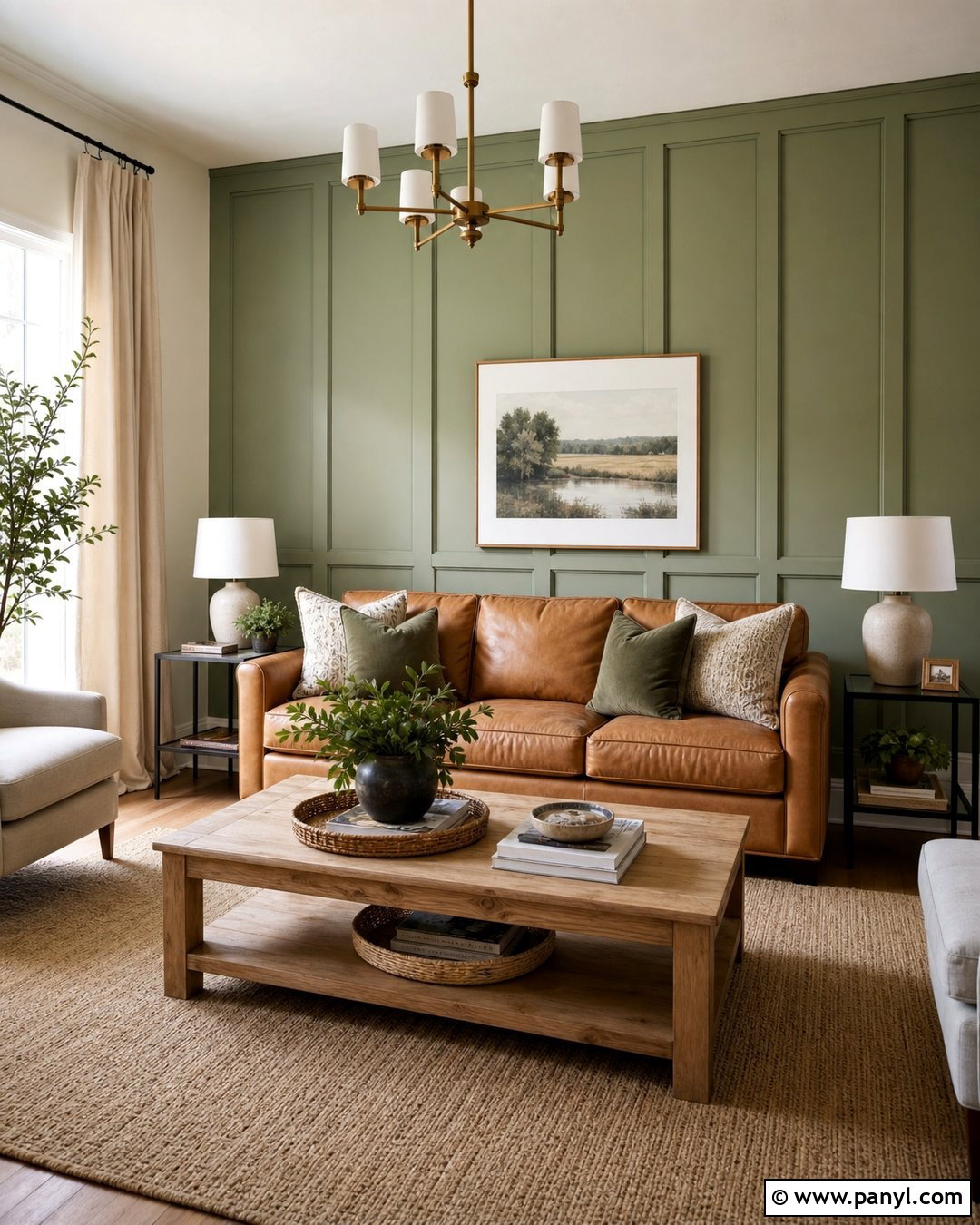
Board and batten gives a sage green accent wall dimension while preserving the calm character of the palette. Install simple vertical battens across the full wall, then paint the trim and wall surface in the same matte sage finish. Warm cream on the remaining walls keeps the room open and highlights the millwork. In a living room, place a camel leather sofa or cream linen couch in front of the paneling. Add an oak coffee table, a natural fiber rug, and neutral curtains with a relaxed drape. Artwork can be minimal because the wall already has texture. Aged brass lighting, black-framed side tables, and pillows in beige, olive, and warm brown create a polished yet approachable finish.
6. Sage Green Accent Wall Bedroom
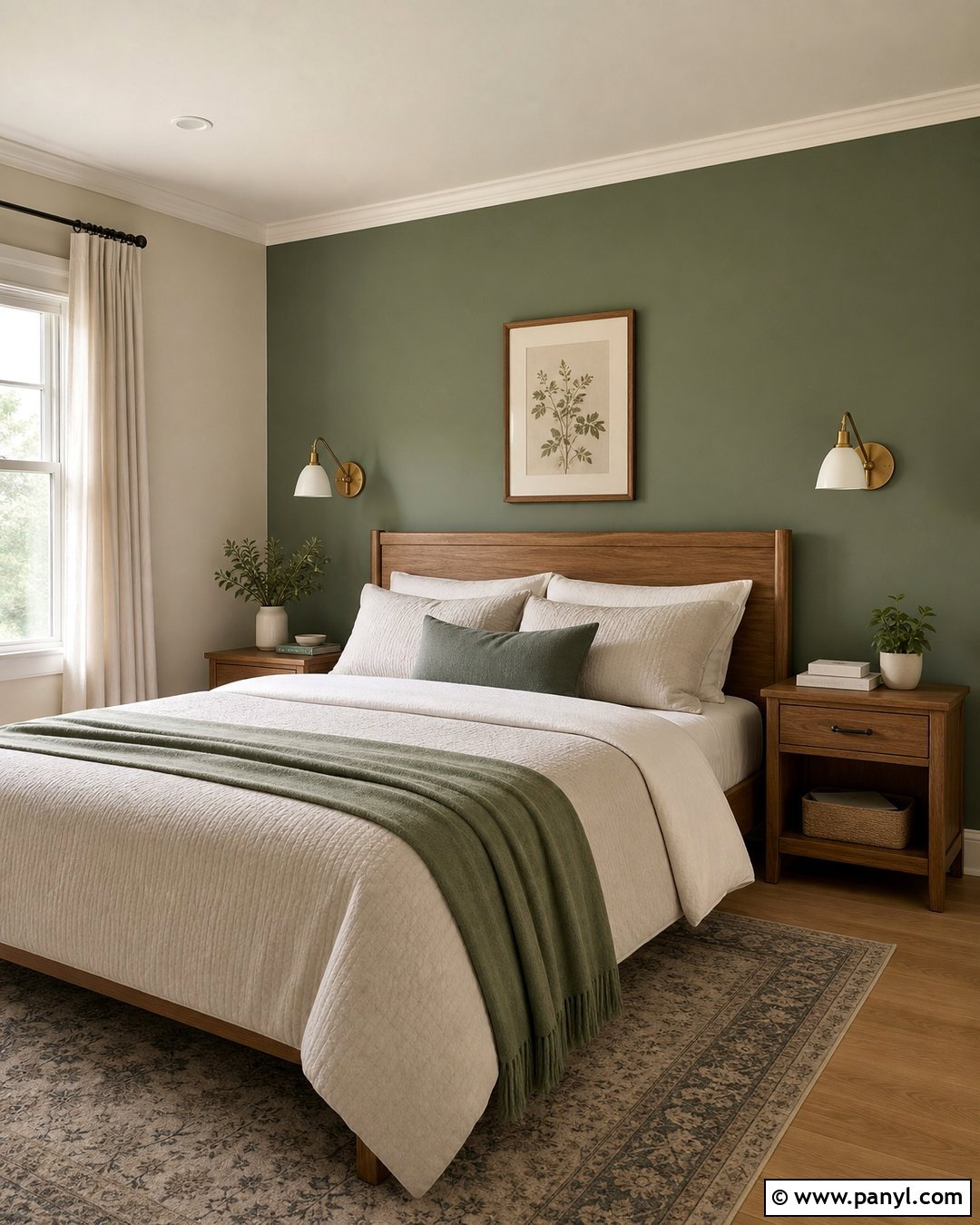
Position the sage green accent wall behind the bed so it establishes a natural focal point when you enter the bedroom. A medium sage works especially well with cream side walls, white oak flooring, and warm ivory bedding. Choose a low oak or upholstered beige headboard, then layer the bed with cream sheets, a taupe quilt, and a folded sage blanket. Matching wood nightstands will bring symmetry to the room, while brass or matte black sconces save surface space. Use full-length cream curtains to soften the windows and make the walls feel taller. Complete the design with a muted patterned rug, simple botanical artwork, and one rust or dusty rose pillow for a restrained touch of warmth.
7. Sage Green Wall With Cream Upholstered Bed
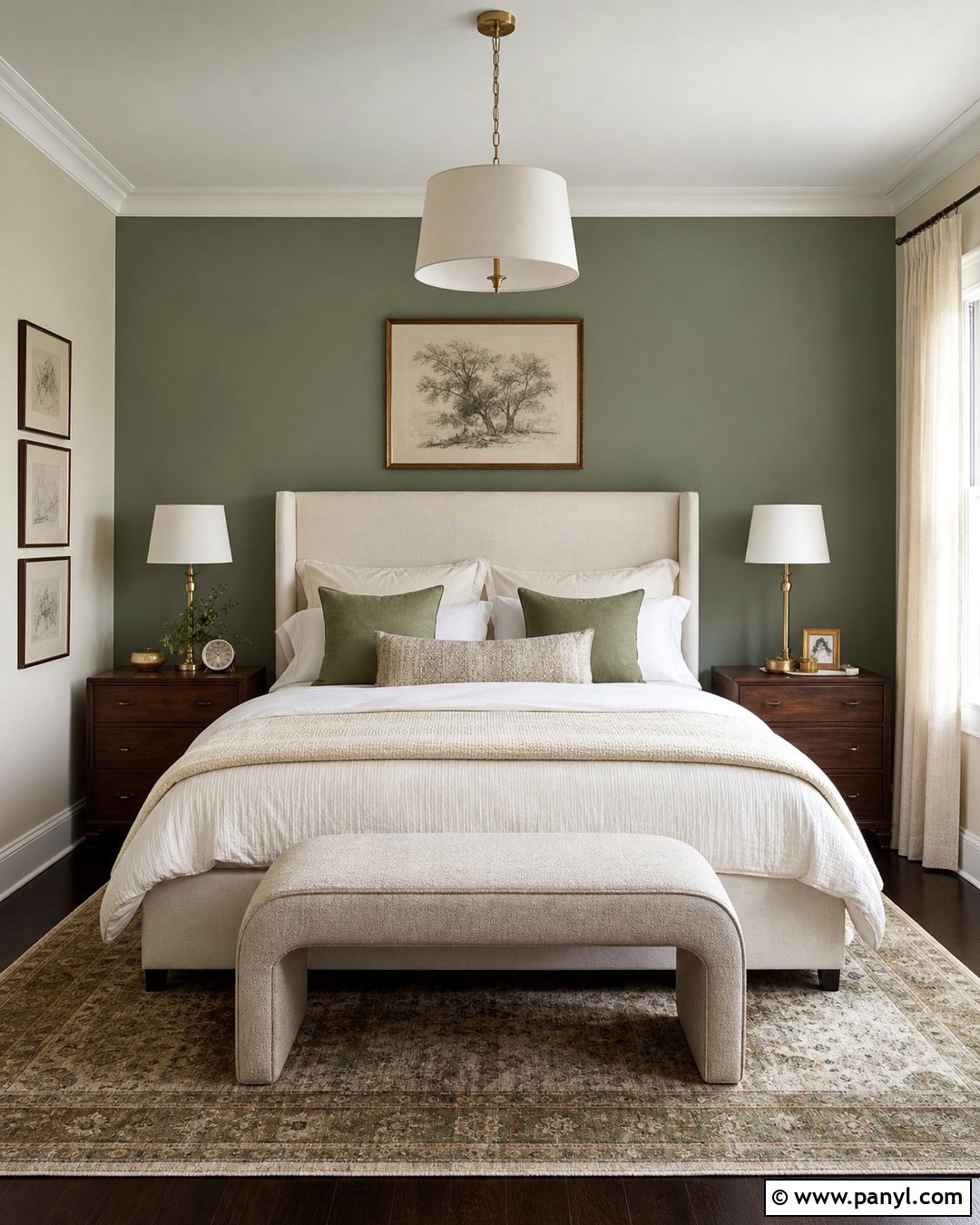
For a softer bedroom look, pair a tall cream upholstered bed with a subdued sage green wall. The contrast should remain gentle, so avoid greens that appear overly blue or saturated. Keep the side walls buttery cream and use natural linen curtains in a similar tone. Layer the bed with ivory bedding, sage pillows, and a beige woven throw to repeat the room’s two main colors. Medium walnut nightstands will prevent the pale upholstery from disappearing into the scheme. Add brass lamps, a vintage-style rug, and framed sketches with warm wood borders. A curved bench at the foot of the bed can provide function while echoing the bed’s upholstery and giving the entire arrangement a tailored, restful appearance.
8. Sage Green Nursery Accent Wall
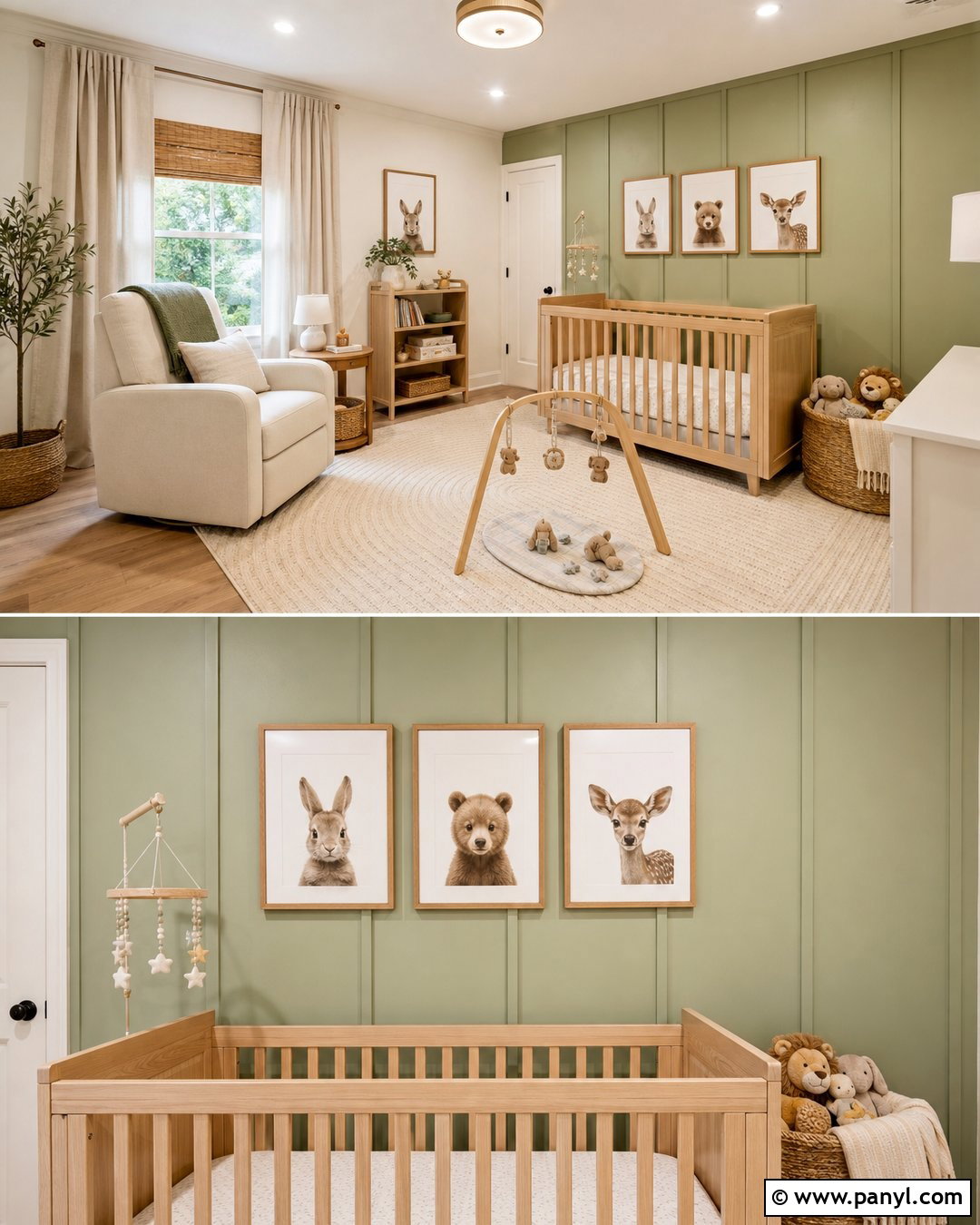
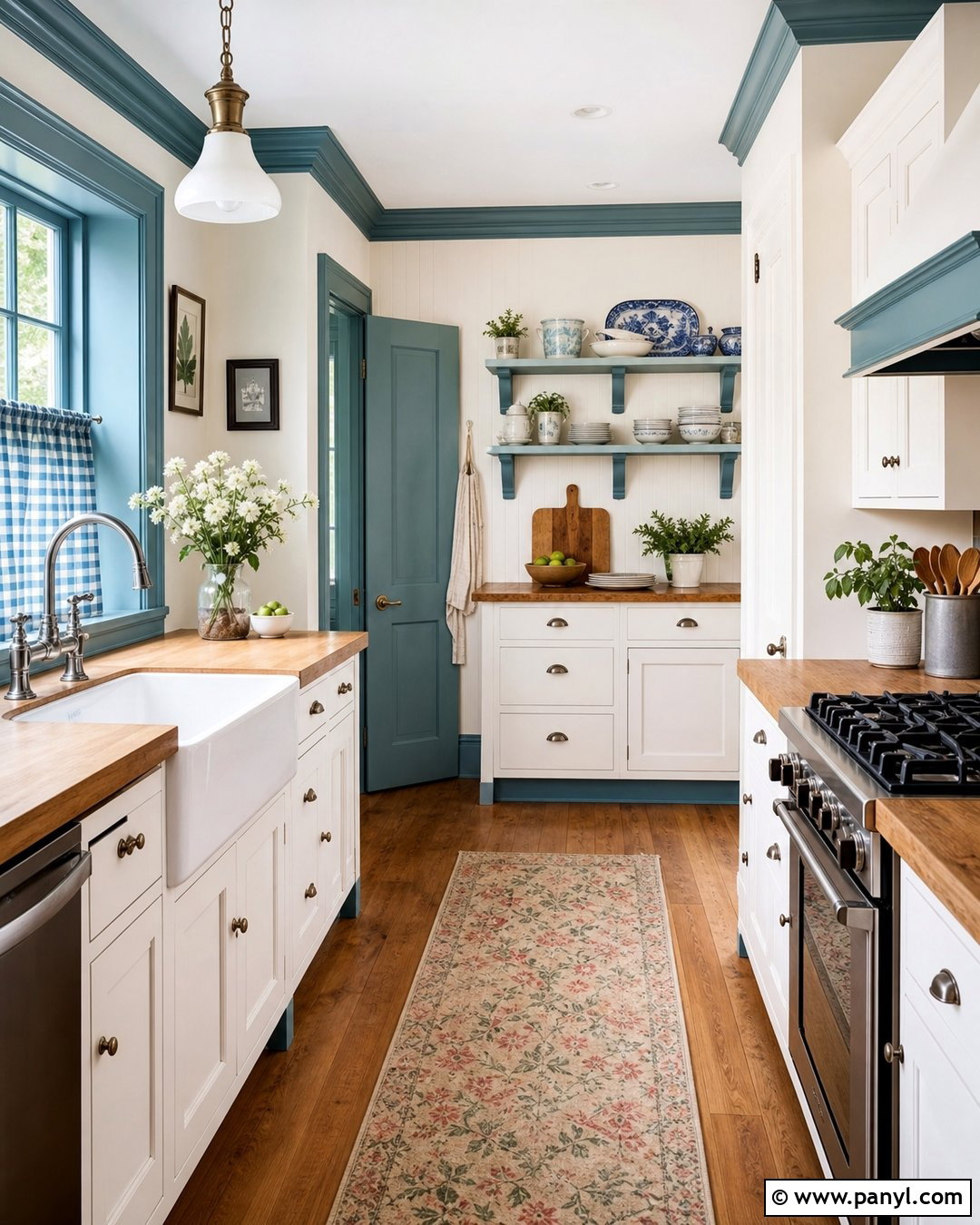
A pale sage green accent wall creates a flexible nursery that can grow with the child. Place a natural wood crib against the green surface, leaving enough clear space around it for safety and an uncluttered appearance. Paint the remaining walls a warm cream and choose a cream washable rug with a subtle tan pattern. An ivory glider, small oak side table, and simple dresser provide practical furniture without introducing too many colors. Use blackout curtains in oatmeal or cream, paired with a woven shade for texture. Decorate with framed animal illustrations, wooden toys, soft baskets, and a few muted mustard accents. Keep wall decor lightweight and securely installed so the finished nursery feels calm, useful, and thoughtfully organized.
9. Sage Green Guest Bedroom Accent Wall
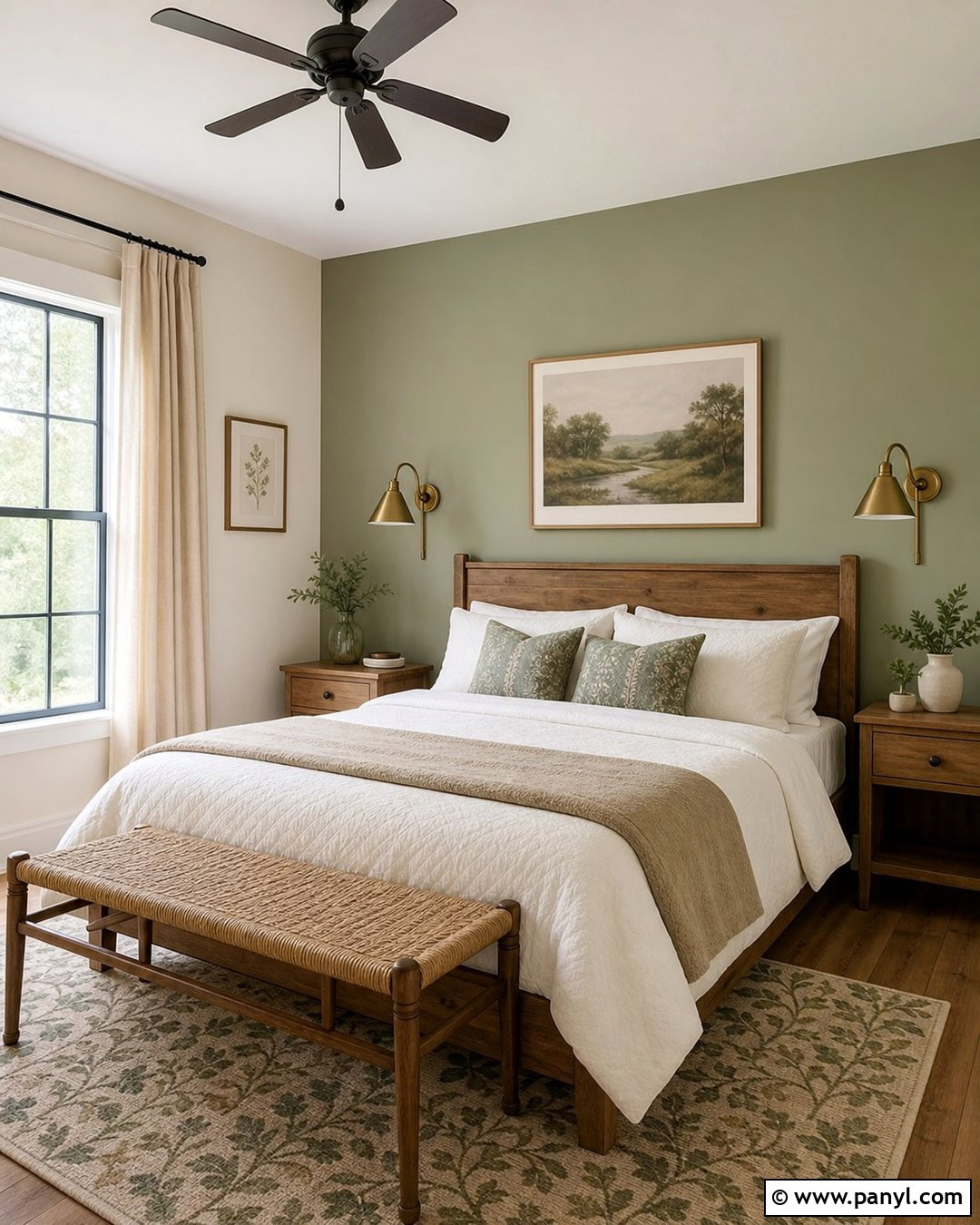
Make a guest bedroom feel welcoming by combining cream walls with a relaxed sage green feature behind the bed. A medium wood bed frame adds warmth and gives the space a familiar, comfortable character. Dress it with crisp cream sheets, a light beige coverlet, and sage or olive patterned pillows. Place compact oak nightstands on both sides and use wall-mounted brass lights to keep the surfaces open for guests. A small woven bench can hold bags or extra blankets. Add cream curtains, a faded botanical rug, and one understated landscape print above the headboard. Finish with a water carafe, reading materials, and an empty drawer so the complete room feels attractive while remaining genuinely convenient.
10. Sage Green Home Office Accent Wall
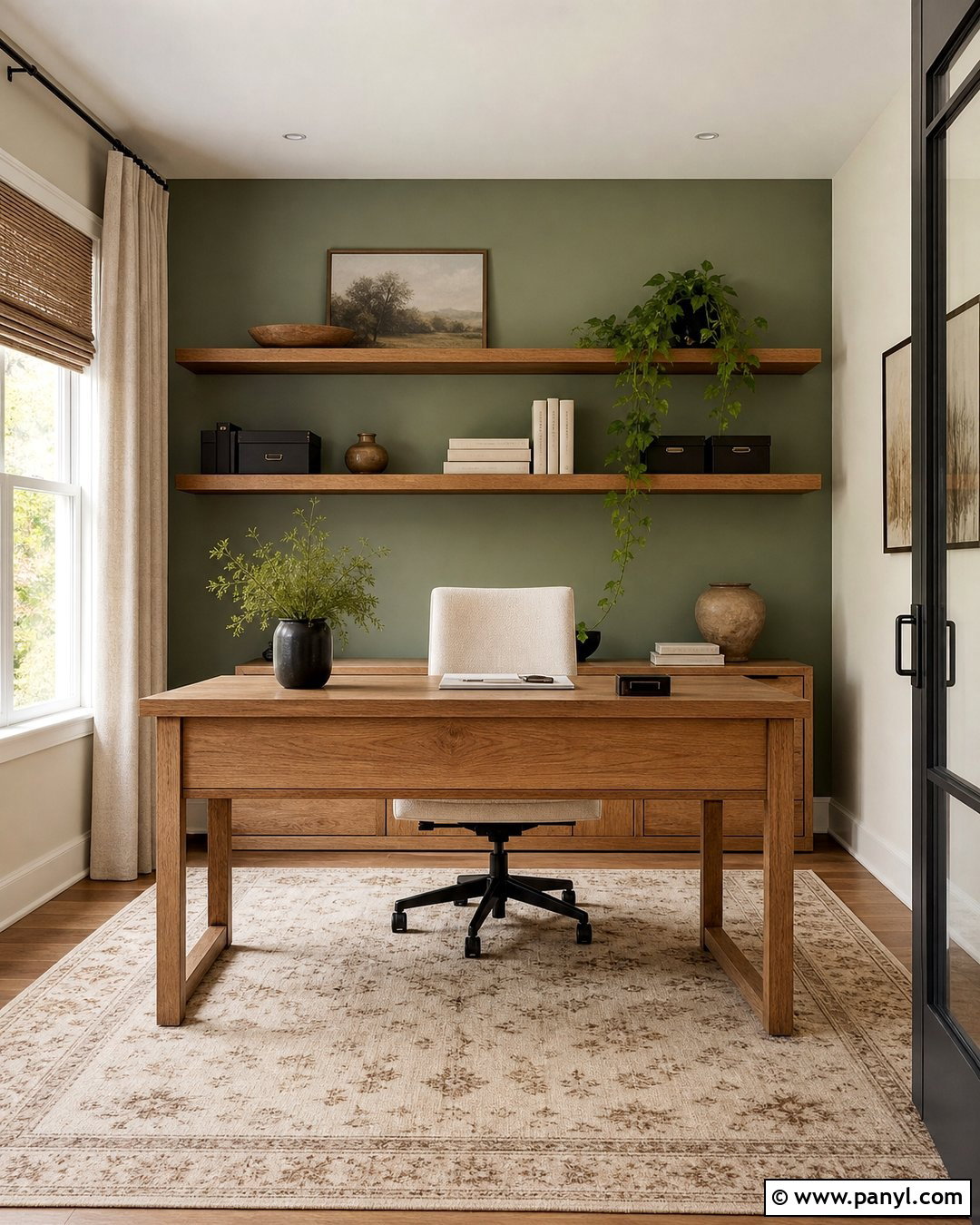
Paint the wall behind the desk sage green to give a home office a defined working zone without darkening the entire room. Keep the other walls creamy and use a streamlined oak desk with practical drawers. A comfortable oatmeal-colored chair will soften the workspace, while black metal legs or hardware add crisp contrast. Install two floating wood shelves above the desk and style them sparingly with books, closed storage boxes, pottery, and a trailing plant. A cream and tan rug helps control visual noise and separates the office area from nearby spaces. Add a focused black desk lamp, woven window shade, and linen curtains. This layout feels professional for video calls but remains warm enough for everyday home use.
11. Sage Green Dining Room Accent Wall
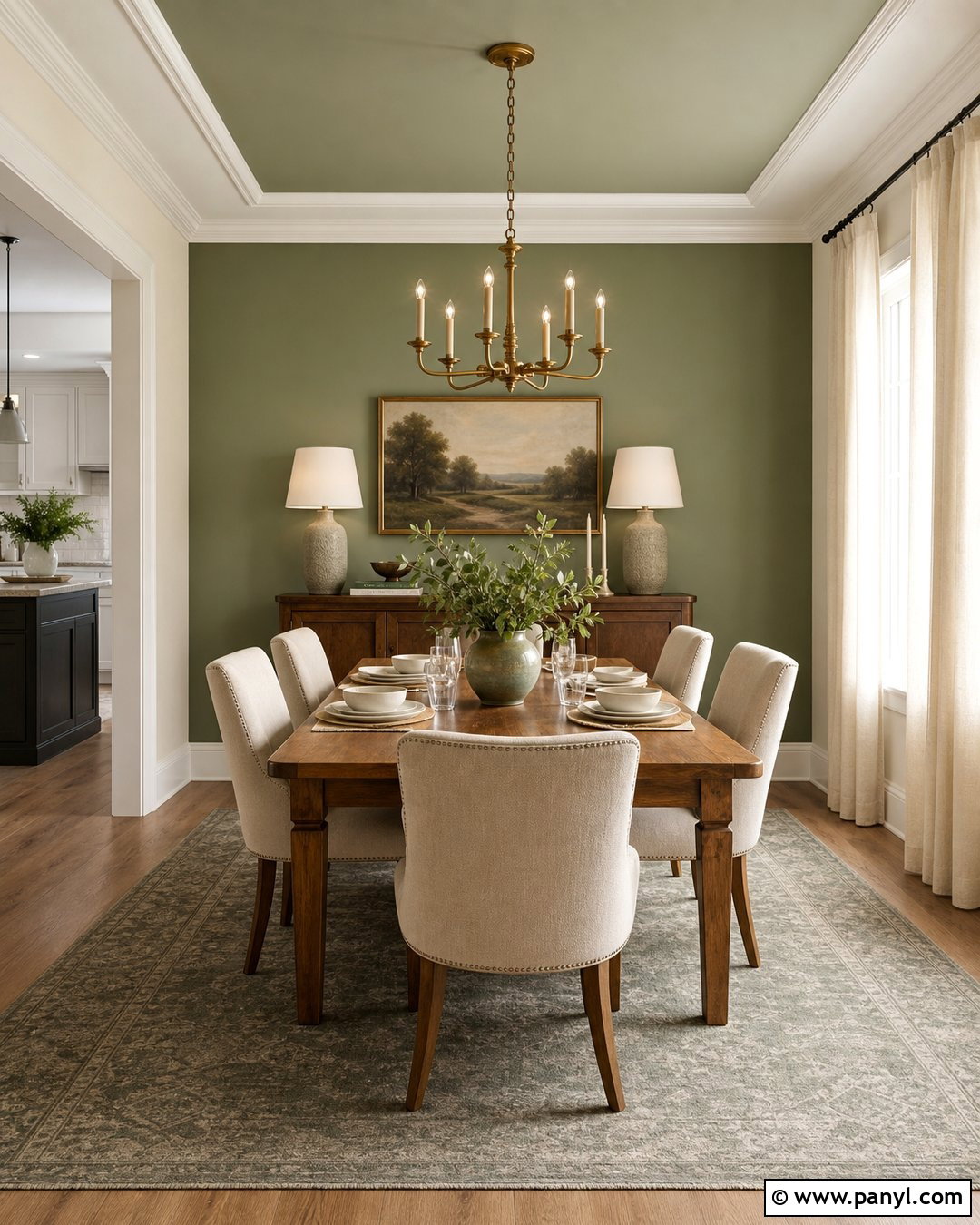
A sage green wall behind the dining table can make an open or traditional dining room feel more intentional. Center a medium oak table in front of the feature wall and surround it with cream upholstered chairs or simple wood seating. Keep the other walls warm cream, then hang a large landscape painting that combines green, tan, and muted blue. A brass chandelier provides a refined focal point without making the room overly formal. Under the table, use a low-pile rug in beige and faded sage for softness and easy movement. Add cream curtains, a walnut sideboard, and a pair of ceramic lamps. Simple greenery and neutral tableware complete this balanced dining setup for both daily meals and gatherings.
12. Sage Green Breakfast Nook Wall
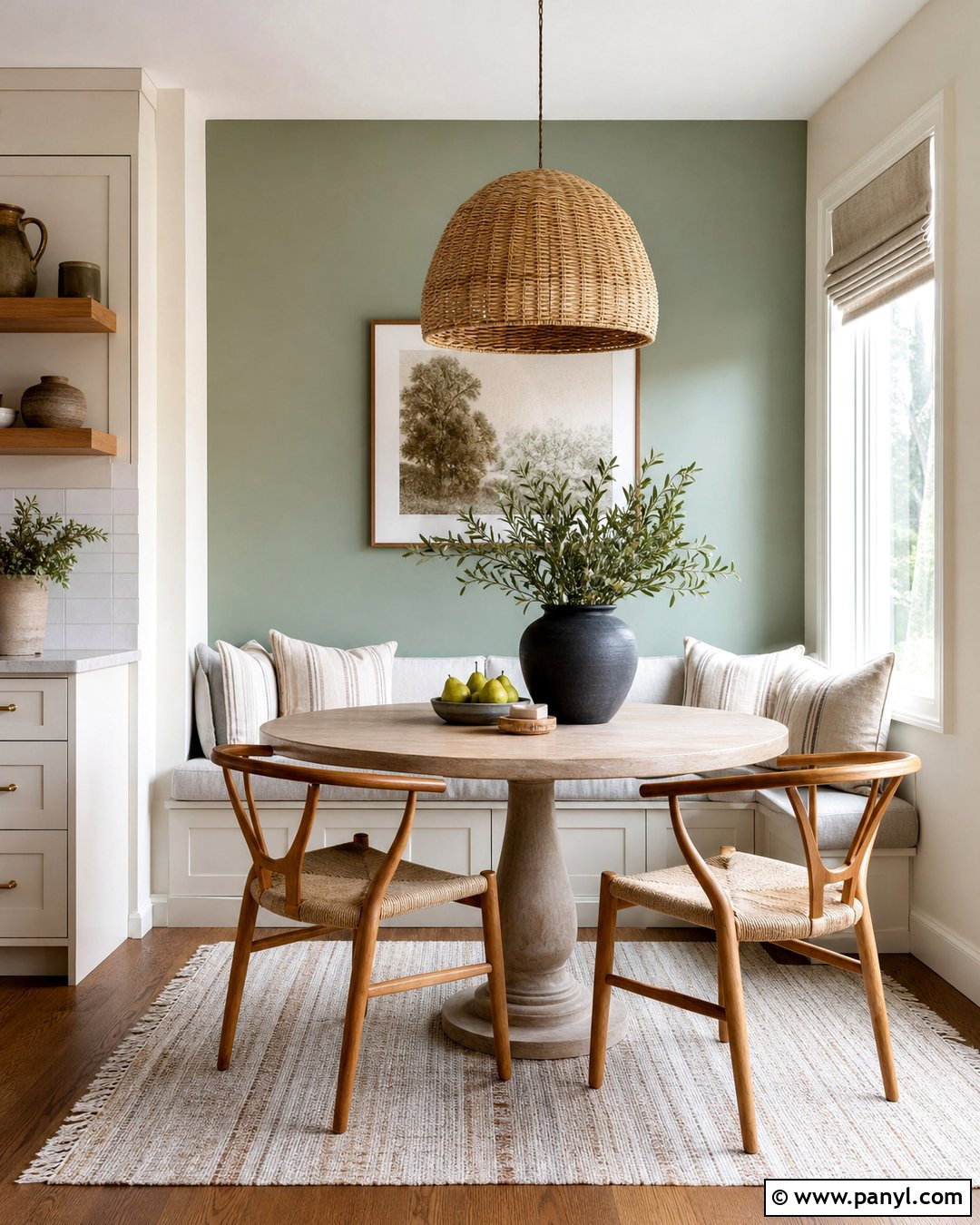
Bring definition to a small breakfast nook by painting the wall behind a built-in bench soft sage green. Continue cream paint throughout the adjoining kitchen so the nook feels connected rather than enclosed. Use a cream upholstered bench cushion with washable sage and striped pillows. A round pedestal table makes movement easier, while two curved oak chairs add enough seating without crowding the corner. Install a woven pendant above the table and use a natural fiber or flat-weave rug below. A simple framed print, shallow picture ledge, or small collection of pottery can decorate the green wall. Finish with Roman shades in cream linen and a compact vase of greenery for an easy, practical breakfast space.
13. Sage Green Kitchen Accent Wall
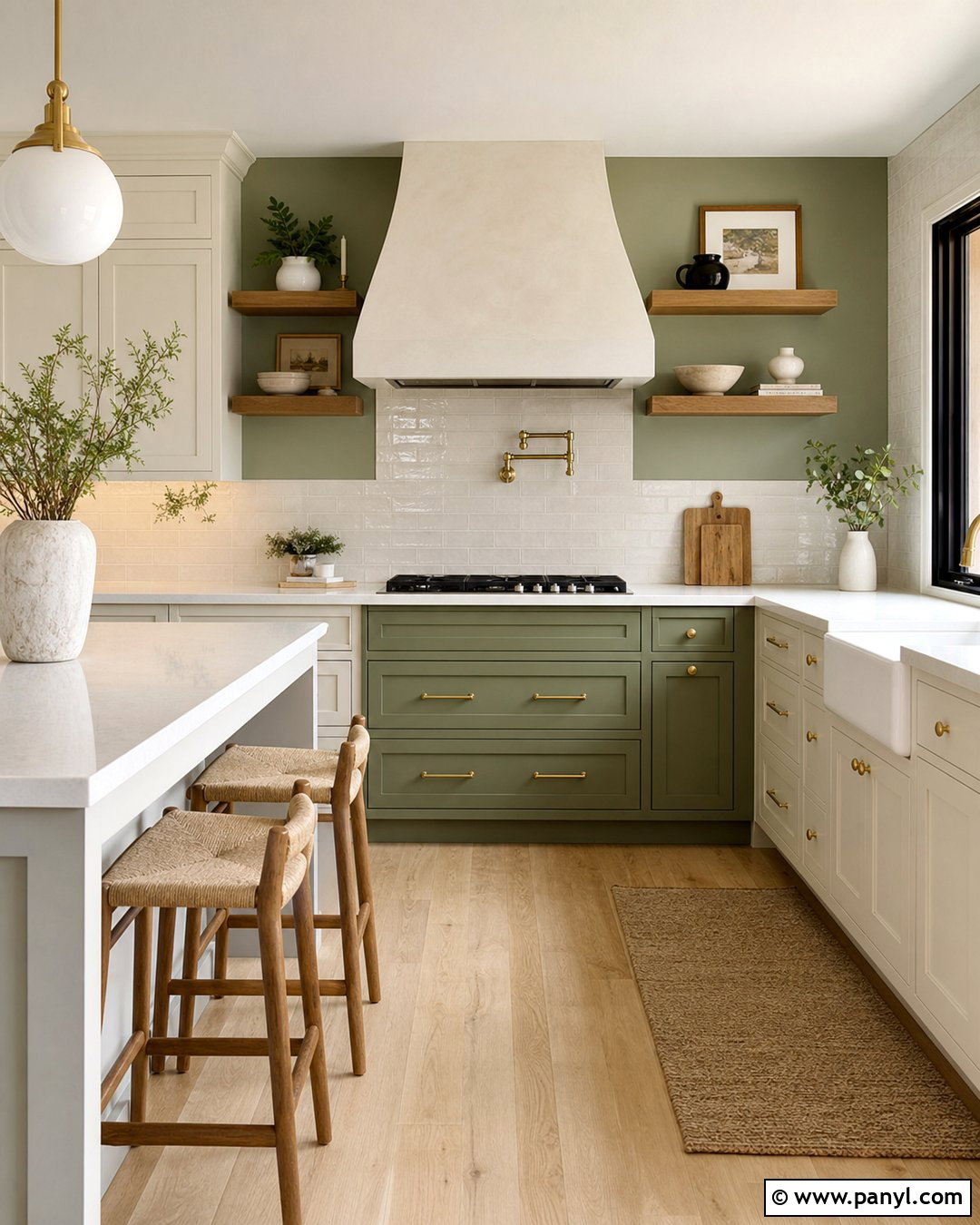
In a cream kitchen, reserve sage green for the main range wall or a short bank of cabinetry to create a purposeful focal point. Cream perimeter walls and cabinets keep the space bright, while the green section adds visual depth. Pair the palette with warm white quartz counters, a cream subway tile backsplash, and oak floating shelves. Brushed brass hardware brings out the warmth in both paint colors. Choose simple wood stools and pale oak flooring to prevent the kitchen from feeling overly decorated. A plaster or stainless range hood can provide a clean centerpiece. Repeat sage through a runner or small accessories, but keep countertops mostly clear so the color-blocked kitchen remains calm, functional, and visually organized.
14. Sage Green Entryway Accent Wall
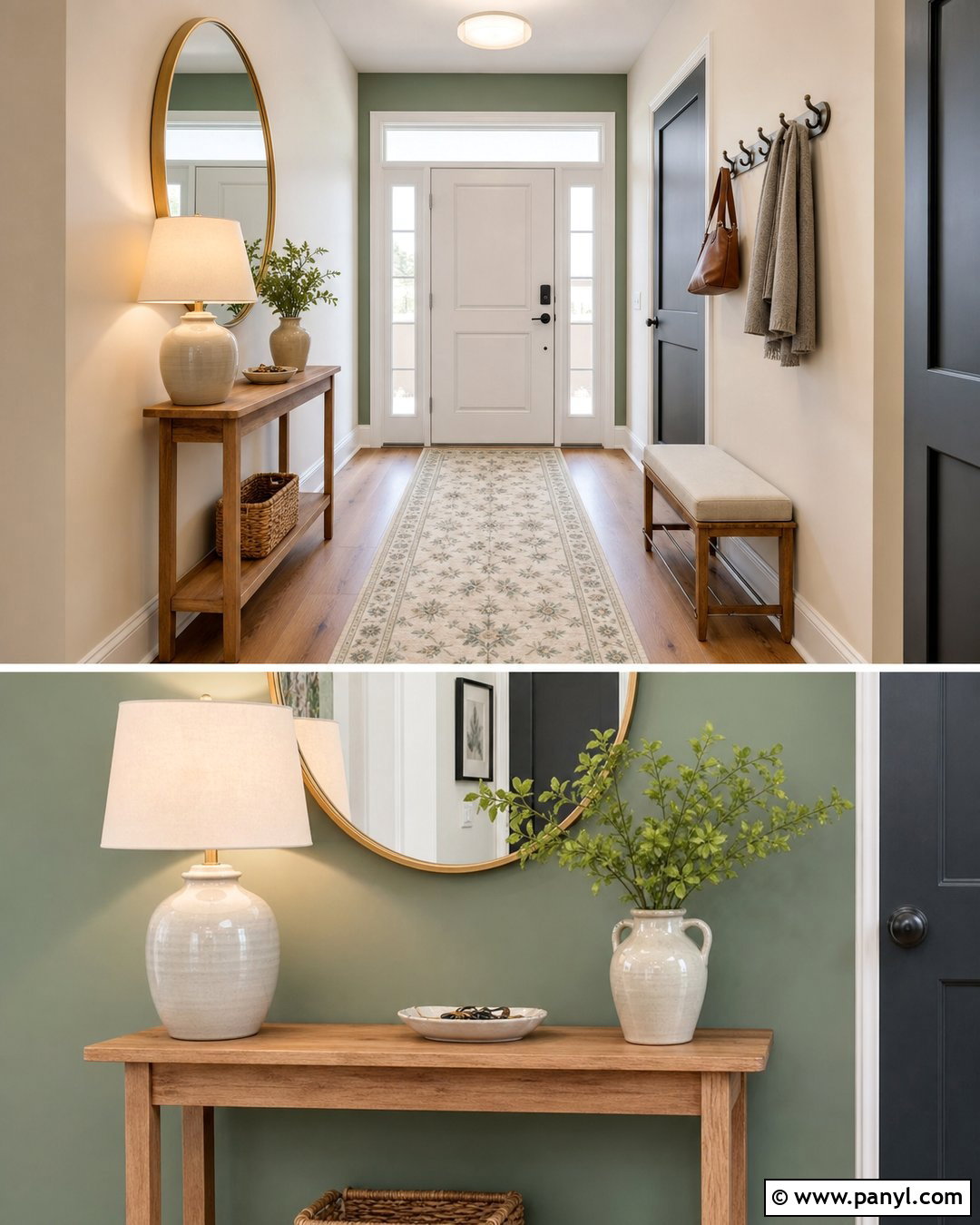
Give a small entryway a memorable focal point with sage green on the wall facing the front door. Keep adjoining hallways and side walls cream to preserve brightness. Place a narrow oak console against the accent wall, leaving enough walking room for everyday traffic. Above it, hang a round brass or black-framed mirror to reflect light and provide a useful last-minute checkpoint. A washable runner in cream, sage, and tan will visually guide people into the home. Add a ceramic lamp, lidded tray, and one bowl for keys. Wall hooks, a woven basket, or a compact bench can handle coats and shoes. The finished space should feel coordinated, welcoming, and easy to maintain.
15. Sage Green Hallway Accent Wall
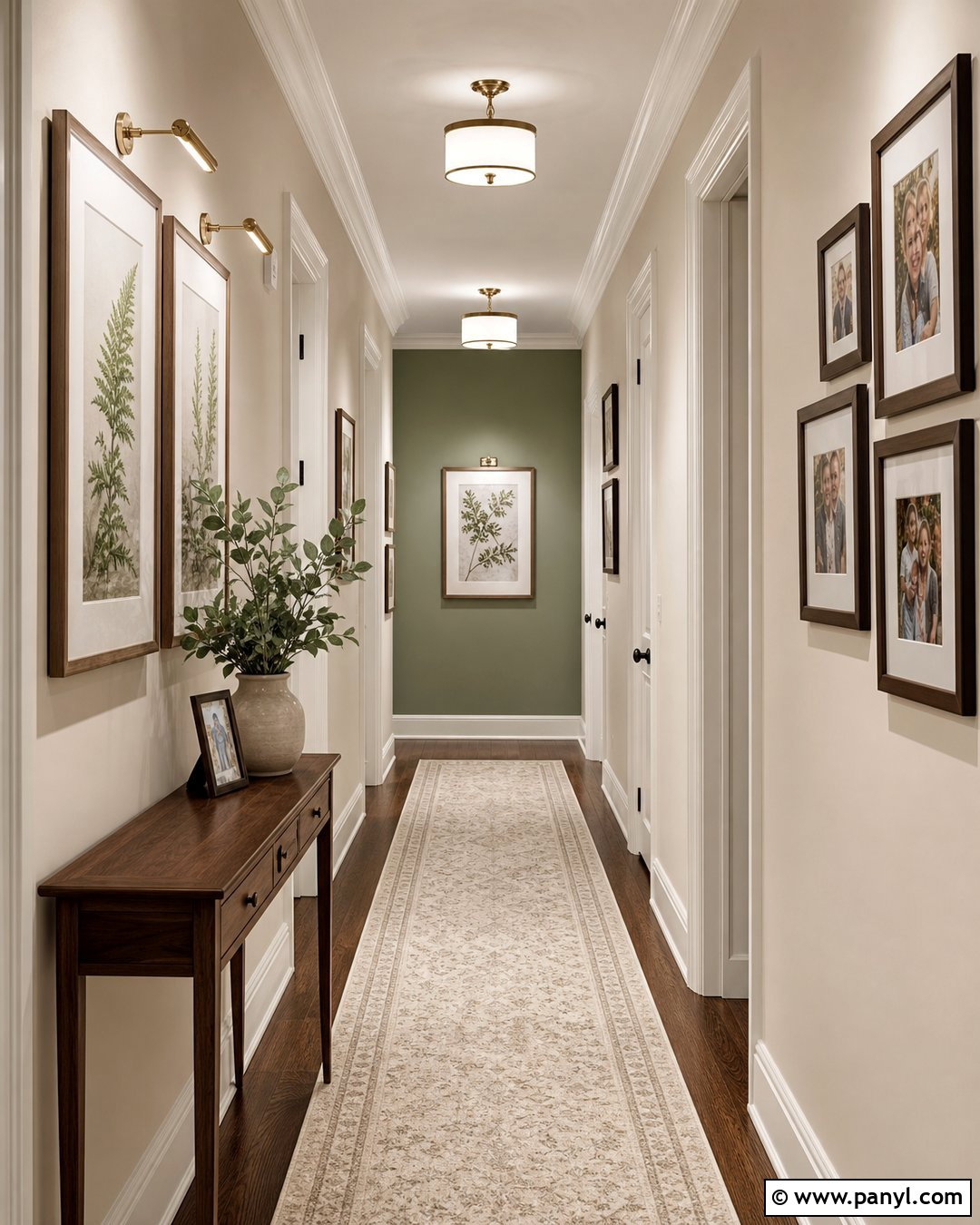
A long hallway can feel more designed when the end wall is painted sage green and the side walls remain cream. This placement draws attention forward without narrowing the full passage. Position a slim console, small bench, or framed artwork against the green wall, depending on the available depth. Use an oak or walnut piece to introduce warmth, then add a cream runner with a subtle linear pattern. Along the side walls, hang a restrained gallery of family photographs or nature prints in matching frames. Brass picture lights or simple ceiling fixtures provide polish. Keep doors and trim creamy white for continuity. The green endpoint, repeated through the runner and artwork, creates a clear and cohesive visual destination.
16. Sage Green Bathroom Accent Wall
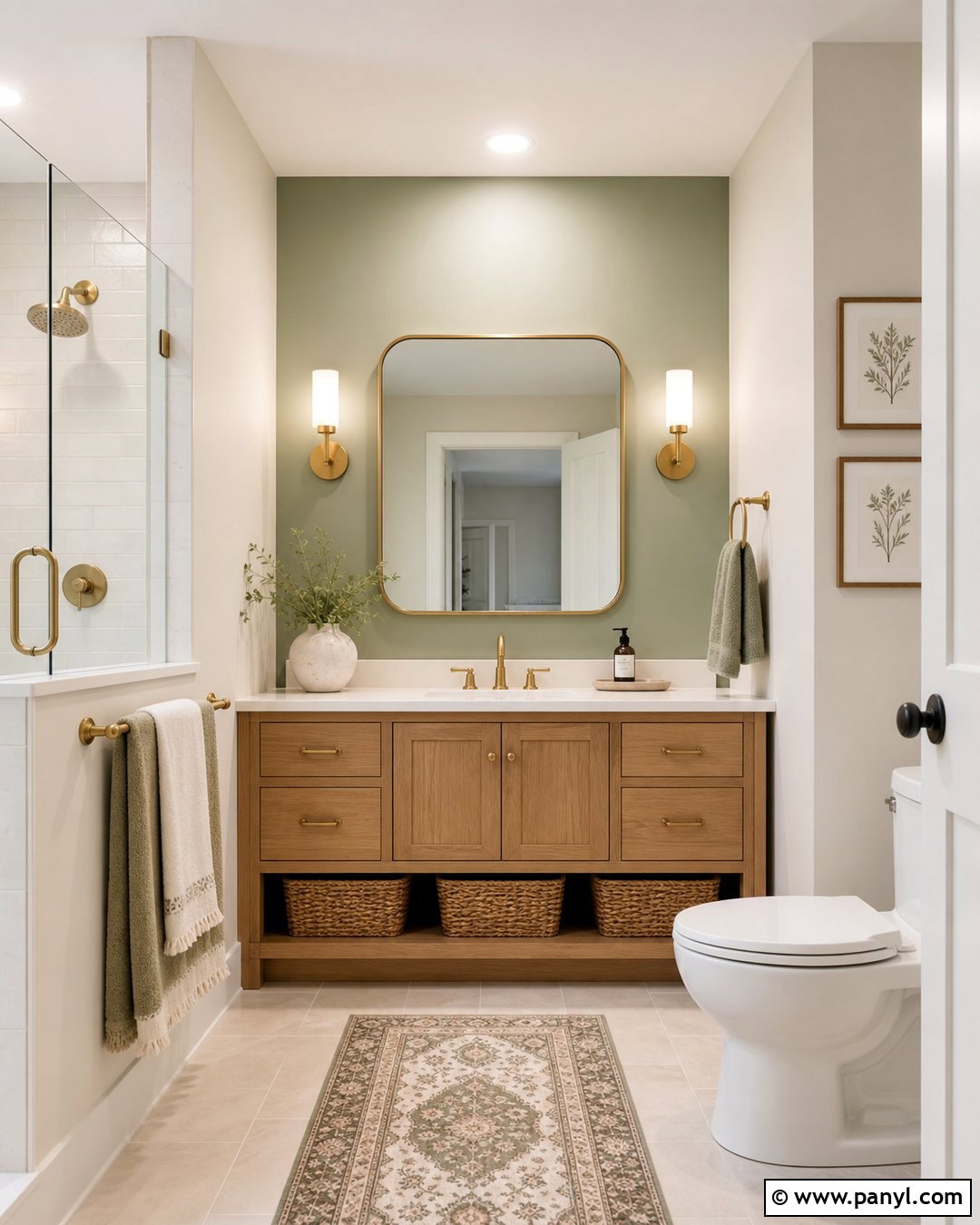
Use sage green on the vanity wall to add color to a cream bathroom without covering every surface. A light oak vanity with a warm white countertop looks fresh against the green background. Keep the other walls cream, and use ivory tile in the shower or around the tub for a connected finish. A rounded brass-framed mirror and matching sconces add warmth, while matte black hardware creates a more modern alternative. Choose towels in cream, beige, and soft sage, then add a washable patterned runner. Woven baskets can hold extra linens and toiletries. Limit countertop accessories to a soap dispenser, small tray, and simple greenery so the completed bathroom feels soothing, clean, and useful rather than overly themed.
17. Sage Green Laundry Room Accent Wall
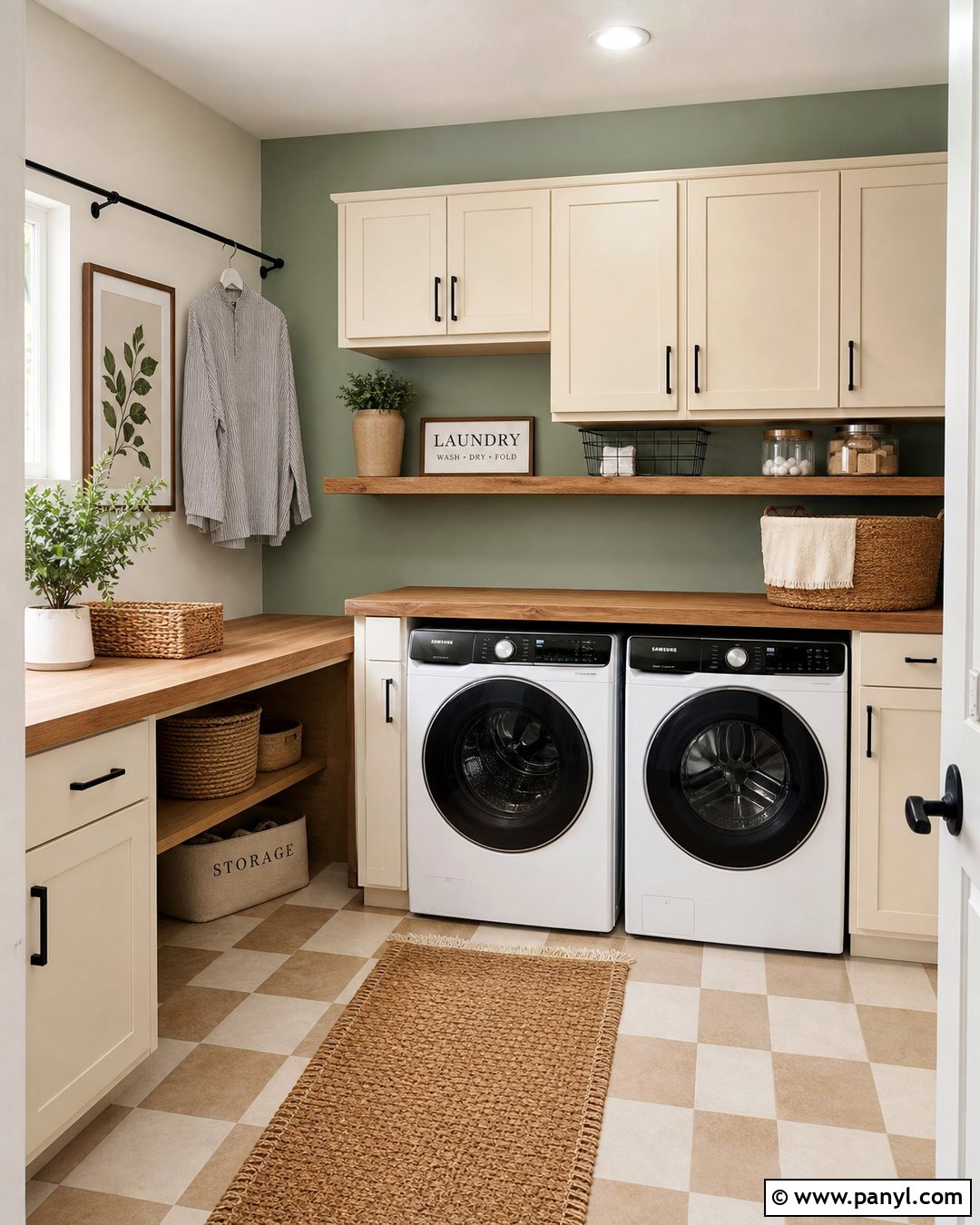
A sage green accent wall can turn a basic laundry room into a more organized and pleasant workspace. Paint the wall behind the washer and dryer green, while keeping the remaining walls warm cream. Install cream upper cabinets or open oak shelves for detergent, baskets, and folded linens. A light wood countertop above front-loading machines creates a useful folding surface. Use cream and tan checkerboard flooring or durable neutral tile to introduce subtle pattern. Black cabinet pulls and a matching hanging rod provide clean definition. Add labeled containers inside cabinets rather than filling every visible shelf. A small woven runner, framed botanical print, and practical wall hooks complete a laundry room that looks finished but still supports everyday household tasks.
18. Sage Green Mudroom Accent Wall
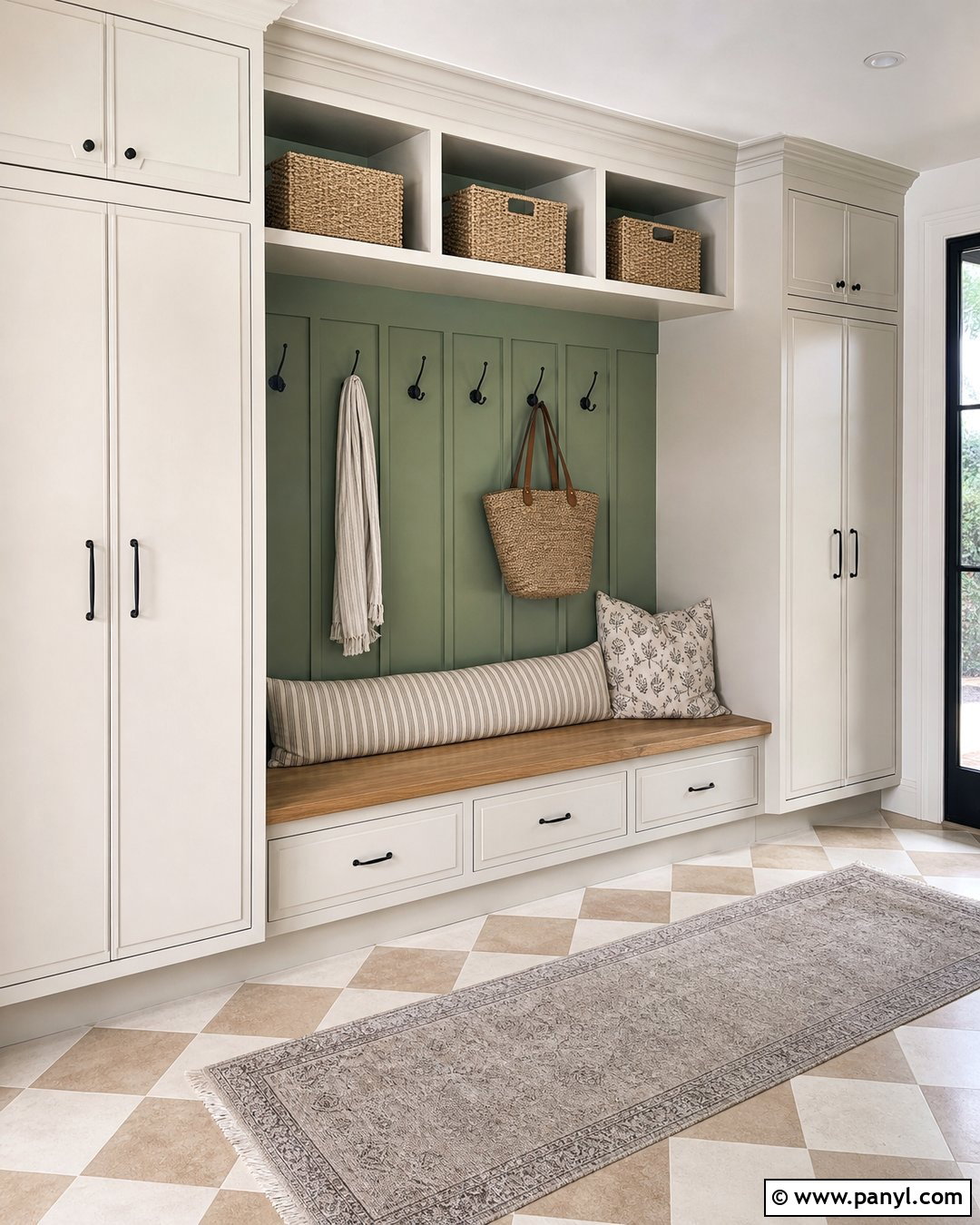
In a mudroom, sage green works beautifully on the wall behind built-in seating and storage. Paint the bench backing and upper wall green, then use cream cabinetry around it to keep the design light. An oak bench seat adds warmth and withstands daily use, while drawers below can hide shoes and outdoor gear. Install sturdy black hooks for bags, jackets, and hats. Use durable cream and taupe floor tile in a simple grid or checker pattern. A striped cushion, woven baskets, and one small patterned pillow bring comfort without creating clutter. Repeat sage in the runner or storage labels. This complete arrangement gives the transitional space a strong identity while making arrivals, departures, and seasonal organization easier.
19. Sage Green Reading Nook Wall
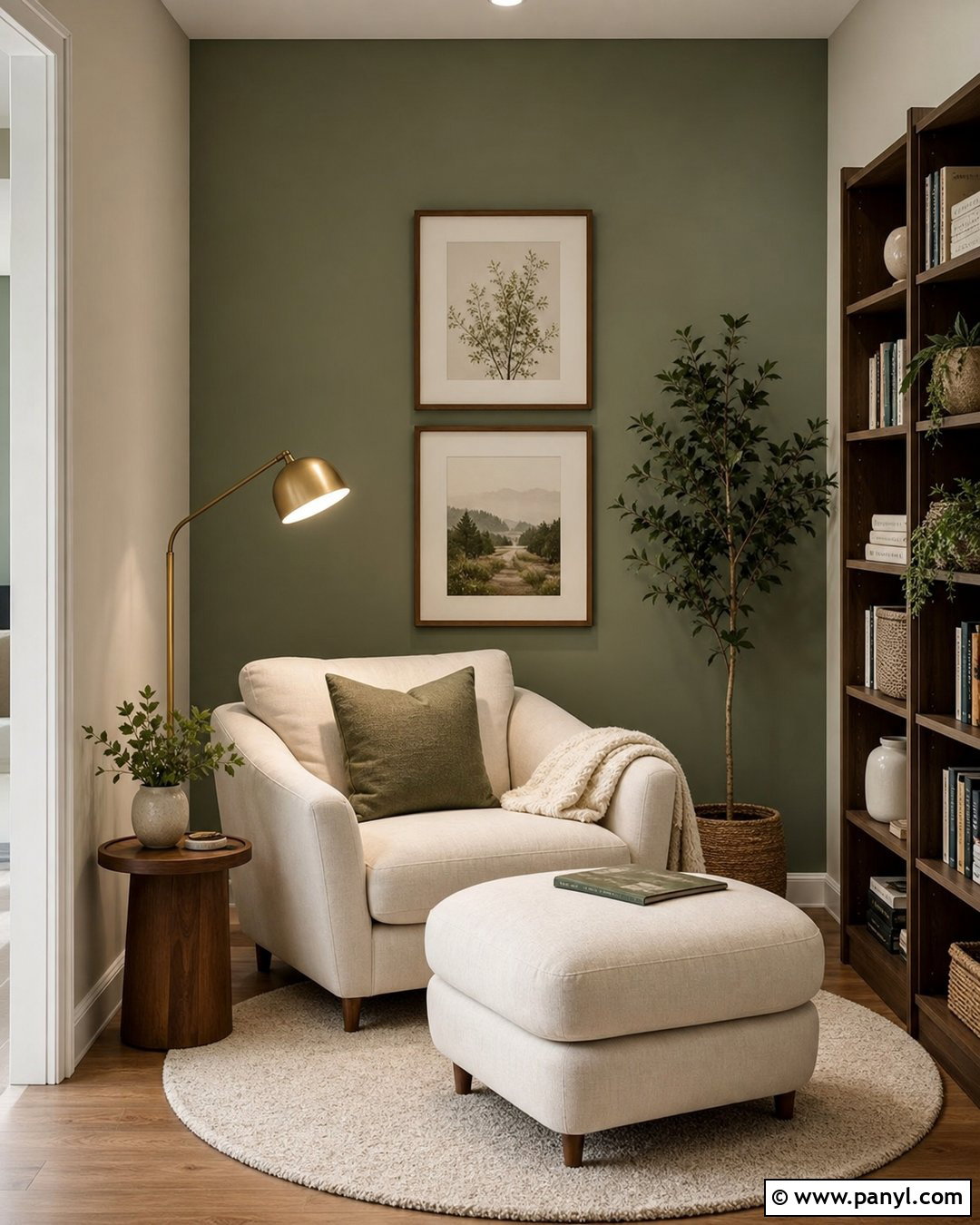
Transform an unused corner into a reading nook by painting the wall behind a comfortable chair muted sage green. Keep the surrounding room cream so the nook feels distinct but visually connected. Choose an oversized ivory armchair with a matching ottoman, then add a small walnut side table for books and drinks. A brass floor lamp provides focused light and introduces a warm metallic detail. Ground the corner with a round cream rug or a faded patterned design containing green and tan. Hang two small nature prints above the chair and add one tall plant nearby. A narrow bookcase can sit against the adjacent cream wall, creating a complete retreat that feels cozy without taking over the larger room.
20. Sage Green Accent Wall In Open Floor Plan
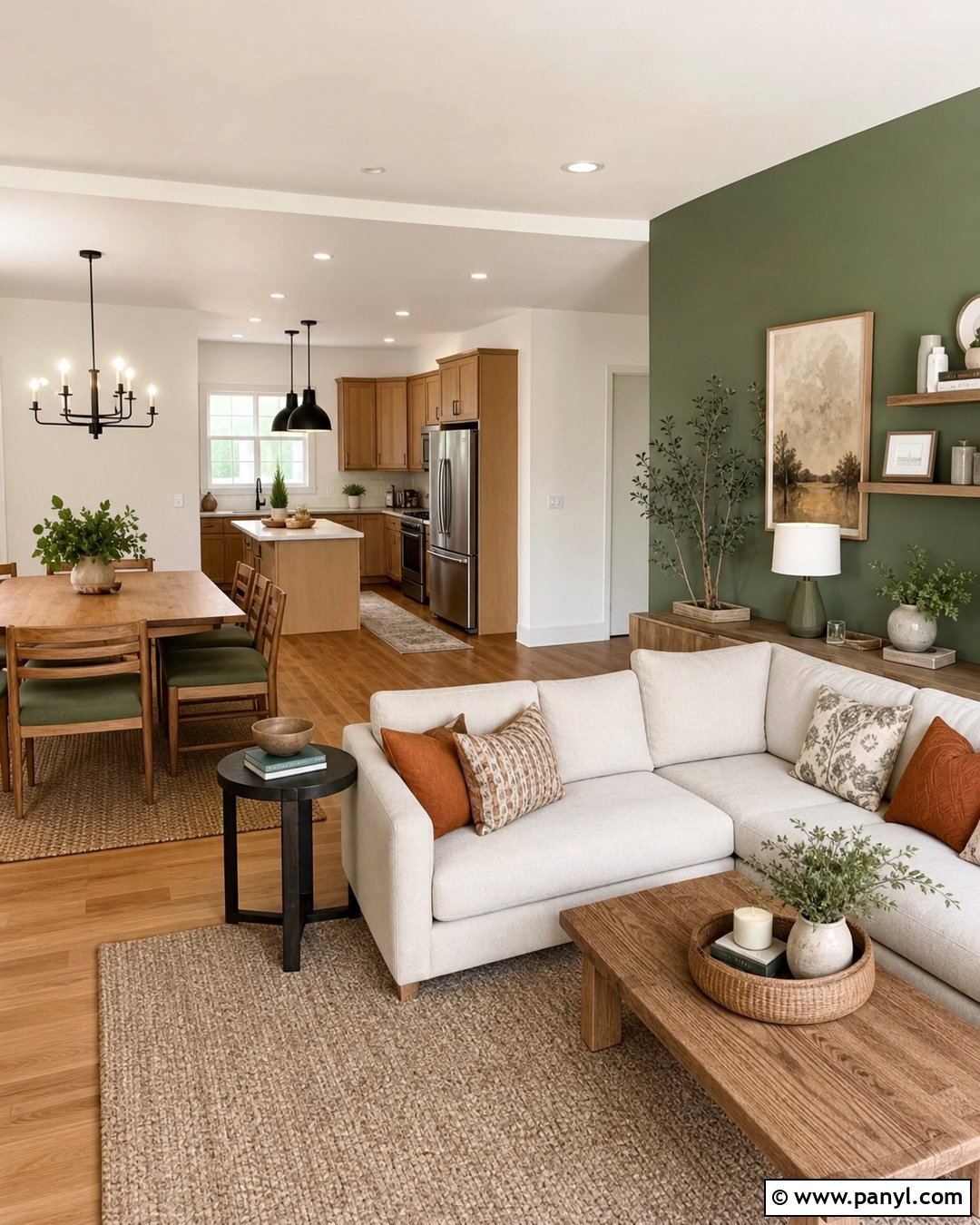
Use sage green strategically in an open floor plan to define one functional zone while keeping cream walls throughout the connected spaces. Paint the living room’s main sofa wall green, then repeat small amounts of sage in dining chair cushions, kitchen textiles, and artwork. A cream sectional, oak dining table, and light wood kitchen cabinetry will help the different areas feel related. Choose one large neutral rug for the seating area and a coordinating runner near the kitchen. Black lighting fixtures can provide a consistent finish across all zones. Avoid adding several competing accent colors. Instead, layer tan, rust, and natural textures so the green focal wall feels intentional within one balanced, continuous interior.
Conclusion:
These 20 Cream Walls With Sage Green Accent Wall Ideas show how one balanced color pairing can work throughout a home. Cream provides warmth and flexibility, while sage introduces enough contrast to define furniture, architecture, and functional zones. For the most cohesive result, compare paint samples in the room throughout the day and choose shades with compatible undertones. Repeat sage in small, controlled details, then use oak, walnut, linen, stone, brass, or black accents to add depth. Most importantly, treat the accent wall as part of the entire room rather than an isolated color feature. Coordinated furniture, lighting, textiles, and decor will make the finished space feel comfortable, polished, and intentional.

Related Ideas and Inspiration:
Leave a Reply